

-
1 accepted product
1) Программирование: принятый продукт (см. один из справочных примеров (reference examples) приложения А стандарта IEC 61499-2)2) Контроль качества: принятое изделие -
2 pneumatically actuated diverter
Программирование: пневматический сталкиватель (см. один из справочных примеров (reference examples) приложения А стандарта IEC 61499-2)Универсальный англо-русский словарь > pneumatically actuated diverter
-
3 rejected product
1) Экономика: бракованное изделие, забракованное изделие2) Метрология: отбракованное изделие3) Программирование: бракованный продукт, брак (см. один из справочных примеров (reference examples) приложения А стандарта IEC 61499-2)4) Макаров: брак, отбракованный продукт -
4 business letter format
бизн. формат делового письма, формат служебного письма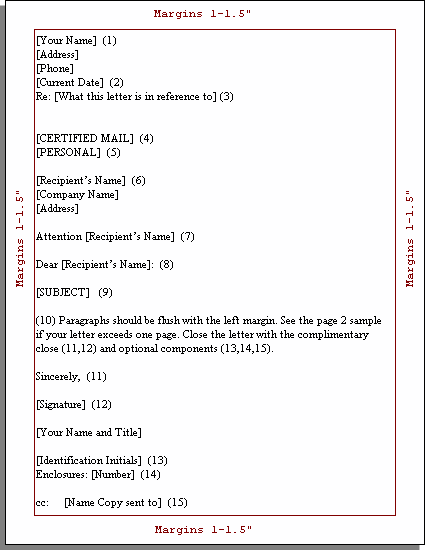 Комментарии к формату (см. рис.)If your stationery includes a letterhead, skip this block. Type your name and address along with other relevant contact information such as e-mail or fax number.If your stationery includes a letterhead, type the date from 2 to 6 lines under the letterhead. Otherwise type it under the return address.Use this block to identify what the letter is in regards to. Examples are: "Re: Invoice 12345" or "Re: Your letter dated January 15, 2010.".Always in caps. Examples include SPECIAL DELIVERY, CERTIFIED MAIL, AIRMAIL, VIA FACSIMILE.Notation on private correspondence if needed such as PERSONAL or CONFIDENTIAL. This goes just above the recipient.Type the name and address of the person and / or company. If you are using an attention line (block 7) then skip the person's name. Address the envelope similarly.Type the name of the personType the recipient's name. Use Mr. or Ms. [Last Name] to show respect, but don't try to guess spelling or gender if you are not sure. Some common salutations are: "Dear [Full Name]:", "To Whom it May Concern:".Type a short description on what the letter is about. If you used a reference line, then you likely do not need a subject line.Type two spaces between sentences.Completing the LetterIt depends on the tone and degree of formality as to what you write here. Can vary from the very formal "Respectfully yours" to the typical "Sincerely" to the friendly "Cordially yours".Leave four blank lines after the Complimentary Close (block 11) to sign your name. Type your name and (optional) title under that signature.If someone else has typed the letter for you, it is common for them to indicate so with initials. Typically it is your initials in upper case followed by the other initials in lower case. For example "BCT/gt". If you typed your own letter, skip this block.If you are including other things with the letter such as brochures, this line tells the reader how many to expect. Common styles include "Enclosures: 3".If you are distributing copies of the letter to others, indicate so using a copies block. the code "cc:" used to indicate carbon copies but now is commonly called courtesy copies.Don't type the brackets. The brackets [ ] in the examples are for narrative purposes only.Try to keep your letters to one page.Use letterhead only for the first page. Just use a blank sheet of paper for continuation pages.You have some freedom in how many blank lines to use between blocks and in the margin sizes in order to fit a letter onto a single page.Not all letters need every block identified in this article. If you leave one out, do not leave blank lines where the blocks would have been.
Англо-русский универсальный дополнительный практический переводческий словарь И. Мостицкого > business letter format
-
5 must
must [mʌst]1. modal verba. (obligation)━━━━━━━━━━━━━━━━━► When must expresses obligation, it is translated either by the impersonal expression il faut que, which is followed by the subjunctive, or by devoir, followed by the infinitive; il faut que is more emphatic.━━━━━━━━━━━━━━━━━• I must see him! il faut absolument que je le voie !• why must you always be so pessimistic? pourquoi faut-il toujours que tu sois si pessimiste ?• it must not be forgotten that... il ne faut pas oublier que...• "the windows must not be opened" « défense d'ouvrir les fenêtres »► I must say or admit• this came as a surprise, I must say je dois avouer que cela m'a surprisb. (invitations, suggestions)━━━━━━━━━━━━━━━━━► When you must is used to make invitations and suggestions more forceful, the imperative may be used in French.━━━━━━━━━━━━━━━━━► you mustn't ( = don't)• he must be regretting it, mustn't he? il le regrette sûrement• he must be mad! il est fou !• you must be joking! vous plaisantez !━━━━━━━━━━━━━━━━━━━━━━━━━━━━━━━━━━► must have made/had/been etc━━━━━━━━━━━━━━━━━► The perfect tense of devoir + infinitive is generally used to translate must have + past participle.━━━━━━━━━━━━━━━━━• was he disappointed? -- he must have been! est-ce qu'il a été déçu ? -- sûrement !2. noun• a must for all students! un must pour les étudiants !3. compounds* * *Note: When must indicates obligation or necessity, French tends to use either the verb devoir or the impersonal construction il faut que + subjunctive: I must go = je dois partir, il faut que je parte. For examples and particular usages see I 1 and I 3 below. See also have II 1 and the related usage noteWhen must expresses assumption or probability, the verb devoir is always used: it must strike you as odd that = ça doit te sembler bizarre que (+ subj). See I 7 below for further examplesFor the conjugation of devoir, see the French verb tables[mʌst, məst] 1.1) (indicating obligation, prohibition)you mustn't mention this to anyone — il ne faut en parler à personne, tu ne dois en parler à personne
withdrawals must not exceed £200 — les retraits ne doivent pas dépasser 200 livres sterling
2) (indicating requirement, condition)to gain a licence you must spend 40 hours in the air — pour obtenir son brevet il faut avoir 40 heures de vol
3) (stressing importance, necessity)you must be patient — il faut que tu sois patient, tu dois être patient
I feel I must tell you that... — je pense devoir te dire que...
very nice, I must say! — iron très gentil vraiment! iron
4) ( expressing intention)I must check the reference — je dois vérifier la référence, il faut que je vérifie la référence
5) ( indicating irritation)well, come in if you must — bon, entre si tu y tiens
he's ill, if you must know — il est malade si tu veux vraiment le savoir
6) (in invitations, suggestions)7) (expressing assumption, probability)8) (expressing strong interest, desire)2.this film is a must — ce film est à voir or à ne pas rater
-
6 must
I.II.must, [transcription][m\\@st]❢ When must indicates obligation or necessity, French tends to use either the verb devoir or the impersonal construction il faut que + subjunctive: I must go = je dois partir, il faut que je parte. For examples and particular usages see A 1 and A 3 below. See also have B 1 and the related usage note.When must expresses assumptions or probability, the verb devoir is always used: it must strike you as odd that = ça doit te sembler bizarre que (+ subj). See A 7 below for further examples. For the conjugation of devoir, see the French verb tables.1 (indicating obligation, prohibition) you must check your rearview mirror before indicating il faut regarder dans le rétroviseur avant de mettre son clignotant ; the feeding bottles must be sterilized les biberons doivent être stérilisés ; they said she must be consulted first ils ont dit qu'il fallait d'abord la consulter ; must we really be up by 7 am? est-ce qu'il faut vraiment qu'on soit levé pour 7 heures? ; you mustn't mention this to anyone il ne faut en parler à personne, tu ne dois en parler à personne ; all visitors must leave the premises tous les visiteurs doivent quitter les lieux ; the loan must be repaid in one year le prêt est remboursable en un an ; withdrawals must not exceed £200 les retraits ne doivent pas dépasser 200 livres sterling ; they begin, as all parents must, to adapt comme tous les parents, ils commencent à s'habituer ; it must eventually have an effect ça doit finir par avoir des conséquences ;2 (indicating requirement, condition) candidates must be EU nationals les candidats doivent être ressortissants d'un des pays de l'UE ; applicants must have spent at least one year abroad les candidats doivent avoir passé au moins un an à l'étranger ; to gain a licence you must spend 40 hours in the air pour obtenir son brevet il faut avoir 40 heures de vol ;3 (stressing importance, necessity) children must be alerted to the dangers les enfants doivent être avertis des dangers, il faut que les enfants soient avertis des dangers ; we must do more to improve standards il faut faire plus or nous devons faire plus pour améliorer le niveau ; immigrants must not become scapegoats il ne faut pas que les immigrés deviennent des boucs émissaires, les immigrés ne doivent pas devenir des boucs émissaires ; you must be patient il faut que tu sois patient, tu dois être patient ; tell her she mustn't worry dis-lui de ne pas s'inquiéter ; we must never forget il ne faut jamais oublier ; I must ask you not to smoke je dois vous demander de ne pas fumer ; it's very odd I must admit c'est très étrange je dois l'avouer ; I feel I must tell you that je pense devoir te dire que ; it must be said that il faut dire que ; I must apologize for being late je vous demande d'excuser mon retard ; I must say I was impressed je dois dire que j'étais impressionné ; that was pretty rude I must say! je dois dire que c'était assez impoli! ; very nice, I must say! iron très gentil vraiment! iron ;4 ( expressing intention) we must ask them about it soon il faut que nous leur demandions bientôt ; I must check the reference je dois vérifier la référence, il faut que je vérifie la référence ; we mustn't forget to let the cat out il ne faut pas or nous ne devons pas oublier de laisser sortir le chat ;5 ( indicating irritation) well, come in if you must bon, entre si tu insistes ; why must she always be so cynical? pourquoi faut-il toujours qu'elle soit si cynique? ; he's ill, if you must know il est malade si tu veux vraiment le savoir ; must you make such a mess? est-ce que tu as vraiment besoin de mettre le désordre? ;6 (in invitations, suggestions) you must come and visit us! il faut vraiment que vous veniez nous voir! ; we really must get together soon il faudrait vraiment qu'on se voie bientôt ; you must meet Flora Brown il faut absolument que tu fasses la connaissance de Flora Brown ;7 (expressing assumption, probability) it must be difficult living there ça doit être difficile de vivre là-bas ; it must have been very interesting for you to do ça a dû être très intéressant pour toi de faire ; there must be some mistake! il doit y avoir une erreur! ; they must be wondering what happened to us ils doivent se demander ce qui nous est arrivé ; what must people think? qu'est-ce que les gens doivent penser? ; viewers must have been surprised les téléspectateurs ont dû être surpris ; that must mean we're at the terminus ça doit vouloir dire que nous sommes au terminus ; that must be Marie-Hélène's tea ça doit être le thé de Marie-Hélène ; because he said nothing people thought he must be shy comme il ne disait rien les gens pensaient qu'il devait être timide ; they must really detest each other ils doivent vraiment se détester ; they must be even richer than we thought ils doivent être encore plus riches qu'on ne le pensait ; ‘he said so’-‘oh well it MUST be right, mustn't it?’ iron ‘c'est ce qu'il a dit’-‘ça doit être vrai alors!’ ; anyone who believes her must be naïve il faut vraiment être naïf pour la croire ; you must be out of your mind! tu es fou! ;8 (expressing strong interest, desire) this I must see! il faut que je voie ça! ; we simply must get away from here! il faut à tout prix que nous sortions d'ici!B n it's a must c'est indispensable (for pour) ; the book is a must for all gardeners ce livre est indispensable or est un must ○ pour tous les amateurs de jardinage ; Latin is no longer a must for access to university le latin n'est plus indispensable pour entrer à l'université ; this film is a must ce film est à voir or à ne pas rater ; if you're going to Paris, a visit to the Louvre is a must si vous allez à Paris une visite au Louvre s'impose. -
7 point
pɔɪnt
1. сущ.
1) точка The freezing point of water is 32 degrees Fahrenheit. ≈ Точка замерзания воды - 32 градуса по Фаренгейту. focal point ≈ фокус, фокальная точка, фокусная точка salient point ≈ мат. точка излома
2) пункт, момент, вопрос;
дело to argue a point ≈ обсуждать вопрос, спорить по поводу чего-л. to belabor, labor a point ≈ разрабатывать, исследовать вопрос to bring up, raise a point ≈ ставить, поднимать вопрос to concede, yield a point ≈ уступить, сдаться в каком-л. вопросе to cover, discuss a point ≈ обсуждать вопрос to drive, hammer, press a point home ≈ доводить вопрос до сведения to emphasize, stress, underscore a point ≈ акцентировать, подчеркивать, вопрос to review a point ≈ делать обзор вопроса to speak to the point ≈ говорить по существу to strain, stretch a point in smb.'s favour ≈ истолковать дело/вопрос в чью-л. пользу She made the point that further resistance was useless. ≈ Она решила, что дальнейшее сопротивление бесполезно. talking point ≈ вопрос, могущий быть предметом разговора;
(подходящая) тема для разговора;
аргумент controversial point ≈ спорный вопрос, момент - beside the point - on this point - to the point - point of honour make a point of smth. Syn: item>, detail, particular, aspect, feature
3) а) суть, сущность;
"соль" (рассказа, шутки) I think I missed the point of his story. ≈ По-видимому, я прозевал суть его истории. Syn: gist, essence, heart, kernel, pith, core б) смысл, основание, повод There's no point in arguing further. ≈ Нет никакого резона продолжать дальнейший спор. Syn: sense, reason, cause, object
4) точка, место, пункт;
амер. станция assembly point ≈ сборный пункт to make one's point ≈ бежать прямо к намеченному месту (о собаках и т. п.)
5) момент (времени) At that point the audience got up to leave. ≈ В этот момент зрители поднялись, чтобы уходить. Syn: instant, moment, time, very minute
6) очко points verdict, points decision спорт ≈ присуждение победы по очкам (в боксе и т. д.) The team won by two points. ≈ Команда выиграла с перевесом в два очка. Syn: score, tally
7) достоинство, преимущество;
отличительная черта, особенность Tact isn't my strong point. ≈ Тактичность не является моей отличительной чертой..
8) (нечто, похожее на острый конец) а) кончик, острие;
наконечник б) ответвление оленьего рога в) (гравировальная) игла, резец( гравера) г) ж.-д. перо/остряк (стрелочного перевода) ;
стрелочный перевод д) мыс, выступающая морская коса;
стрелка
9) вершина горы
10) деление шкалы
11) единица продовольственной или промтоварной карточки (в Англии во время второй мировой войны и в послевоенные годы)
12) вид кружева
13) мор. румб
14) мор. редька( оплетенный конец снасти)
15) ист. шнурок с наконечником (заменявший пуговицы)
16) а) стать, статья( животного) ;
мн. экстерьер( животного) б) охот. стойка (собаки) to come/make a point ≈ делать стойку
17) воен. головной/тыльный дозор
18) полигр. пункт ∙
2. гл.
1) показывать пальцем;
указывать (тж. point out;
at, to) It's rude to point at people. ≈ Некрасиво указывать на человека пальцем.
2) а) направлять, наводить (оружие и т. п.) (at) ;
целиться, прицеливаться Never point a gun at someone, even in fun. ≈ Никогда ни в кого не прицеливайся, даже в шутку. б) быть обращенным, направленным (в какую-л. сторону) ∙ Syn: aim, train, direct
3) а) указывать, обращать( чье-л.) внимание;
отмечать, подчеркивать When asked to explain where all the housekeeping money had gone, Mary pointed to the rising prices. ≈ Когда ее попросили объяснить, куда ушли все деньги, выделенные на ведение хозяйства, Мери указала на повышение цен. б) указывать, говорить, свидетельствовать( to - о чем-л.) The Minister's remarks seemed to be pointing at an early election. ≈ Казалось, что замечания министра касались досрочных выборов. All the signs point to/towards an early election. ≈ Все признаки указывают на досрочные выборы. Syn: indicate, suggest, imply, signify, intimate, hint at
4) иметь целью, стремиться
5) точить;
заострить, наточить;
чинить (карандаш)
6) оживлять, придавать остроту
7) ставить знаки препинания
8) делать стойку (о собаке)
9) строит. расшивать швы ∙ point down point off point out point up точка - (full) * точка (знак препинания) - interrogation * (американизм) вопросительный знак - decimal * точка, отделяющая десятичную дробь от целого числа (соответствует запятой в русском языке) - five * six (
5.
6) пять целых и шесть десятых (5,
6) (математика) точка - * of tangency точка касания - * of contact точка соприкосновения - the * of intersection of two lines точка пересечения двух линий - * target( военное) точечная цель - * load (техническое) сосредоточенная нагрузка - * source( физическое) точечный источник( излучения) (физическое) стадия, критическая точка;
температура - * of solidification температура затвердевания - neutral * нейтральная /нулевая/ точка - freezing * точка /температура/ замерзания (специальное) точка, отметка;
точка деления( шкалы) - * of reference (геодезия) репер, отметка условного ууровня - the temperature has gone up two *s температура поднялась на два деления (морское) румб - cardinal * страна света;
главный румб - * of the compass компасный румб точка (в рельефно-точечном шрифте Брайля для слепых) след, отметина - her sharp heels left *s in the carpet от ее острых каблуков на ковре остались вмятины место, пункт, точка - * of destination место назначения - * of departure пункт отправления;
исходная точка - his * of departure is not clear его отправная точка /исходная позиция/ неясна - * of delivery( коммерческое) место сдачи;
место доставки - * of draw (автомобильное) заправочный пункт - assembly /rallying/ * место сбора;
сборный пункт - * fire (военное) сосредоточенный огонь - to make one's * (охота) бежать прямо к намеченному месту (о собаках и т. п.) - * of tenderness (медицина) болезненная точка - at all *s повсюду полицейский пост( разговорное) станция;
граница тарифного участка (на трамвайной, автобусной и т. п. линиях) момент (времени) - turning * поворотный пункт;
кризис( болезни) - at any * в любой момент - at this * he paused a few seconds тут он остановился на несколько секунд - when it came to the *, hee refused his help когда настало время (действовать), он отказался помочь порог;
край;
грань - at /on/ the * of death при смерти - to be on /at, upon/ the * of doing smth. собираться что-л. сделать - to be on the * of departure собраться /быть готовым/ уехать( спортивное) очко - *s for style оценка за технику прыжка (лыжный спорт) - * winner победитель по очкам - * decision /verdict/ присуждение победы по очкам (бокс, борьба) - to give *s to давать несколько очков вперед;
превзойти;
за пояс заткнуть - he can give *s to any opponent любому противнику он может дать несколько очков вперед - to win on *s победить по очкам (бокс, борьба) - what *s shall we play? до какого счета будем играть? - he scored 20 *s он выиграл /набрал/ 20 очков - he got 85 *s out of aa possible 100 он набрал 85 оччков из 100 возможных (американизм) единица, очко (при учете количества прослушанных лекций, проделанных лабораторных работ и т. п.) талон;
купон;
единица продовольственной или промтоварной карточки (в Англии по время второй мировой войны и в послевоенные годы) - cereal products are on *s крупы (продаются) только по карточкам (биржевое) пункт - ten *s off скидка в десять пунктов (полиграфия) пункт нужный результат, требуемое число( при игре в кости) (карточное) очко - what *s shall we play? по сколько будем играть? одно из 12-ти делений на доске для игры в триктрак место принимающего игрока (крикет) принимающий игрок (крикет) уровень, стандарт - moral has reached a low * мораль совсем упала - the highest * of splendour высшая степень /предел/ роскоши степень, ступень - frankness to the * of insult откровенность, граничащая с оскорблением (электротехника) точка присоединения потребляющего прибора;
штепсельная розетка пойнт (единица веса в ювелирном деле, равная
0. 01 карата) толщина бумаги (
0. 01 дюйма) (редкое) конец;
заключение пункт;
момент - *s in a speech пункты речи /выступления/ - * by * пункт за пунктом;
по пунктам;
подробно, детально - * of order вопрос по порядку ведения (собрания и т. п.), процедурный вопрос - to rise to a * of order просить слово по порядку ведения собрания - to raise a * of order выступить по порядку ведения заседания - from * to * (устаревшее) со всеми подробностями, во всех деталях - at all *s по всем пунктам;
во всех отношениях - *s of defence (юридическое) возражения ответчика по иску - we differ /disagree/ on these *s мы расходимся по этим пунктам вопрос, дело - * at issue спорный вопрос - sore * больной вопрос - fine * деталь, подробность;
тонкость - the main * is... главное дело /-ый вопрос/ в том... - * of conscience дело совести - a * of honour вопрос чести( особ. при вызове на дуэль) - a case in * дело, относящееся к данному вопросу или обсуждаемой теме главное, суть, смысл, "соль" - off /away from, beside/ the * не по существу, не на тему, некстати - in * подходящий,, уместный - the * of a joke смысл /"соль"/ шутки - I don't see the * я не понимаю "соли" - to come to the * дойти до главного /до сути дела/ - to keep to the * говорить по существу - keep /speak/ to the *! ближе к делу! - your answer is not to the * ваш ответ не по существу - you've missed the whole * вы упустили самое главное - that's the * вот в чем дело /суть/ - that's not the * суть /дело/ не в этом мысль;
позиция, точка зрения - * of view точка зрения - what's your *? что вы думаете по этому поводу? - I see /take/ your * я понимаю вас;
я вижу, что вы хотите сказать /куда вы клоните/ - he has a * there! он здесь прав! цель, намерение - to gain /to carry/ one's * достичь цели, добиться своего - what's your * in coming? какова ццель вашего прихода? - there is no * in doing that нет никакого смысла делать это - I can't see the * of your writing to him не понимаю, зачем вы ему пишете отличительная, характерная черта - weak * слабое место, недостаток - * of interest интересная /любопытная/ особенность - the best * in his character самое лучшее в его характере - the good and bad *s of a man положительные и отрицательные черты характера - singing is not his strong * он не силен в пении - he has got *s он не лишен достоинств стать, статья (животного) pl экстерьер (животного) сила, мощь - hee writes with * он сильно /здорово/ пишет колкость, язвительность указывание - he added with a smile and a * at his wife добавил он, засмеявшись, и указал (пальцем) на жену намек;
совет, предложение - *s on getting a job советы, как найти работу (устаревшее) сигнал - * of war боевой сигнал кончик;
острие, острый конец;
наконечник - the * of a sword острие шпаги - the * of a knife кончик /острие/ ножа - the * of the tongue кончик языка - on the *s of one's toes на цыпочках - to give a * to a pencil очинить карандаш кончик подбородка (бокс) (американизм) (металлическое) перо (морское) редька (на конце троса) штычок ледоруба (альпинизм) зуб кошки( альпинизм) укол (фехтование) - * touche туше (получение укола или удара) (военное) удар штыком мыс, выступающая морская коса;
стрелка вершина( горы) гравировальная игла,, резец (гравера) (железнодорожное) перо или остряк (стрелочного перевода) (железнодорожное) обыкн. pl стрелочный перевод отросток оленьего рога (охота) стойка - to come to /to make/ a * делать стойку прямой полет вверх( сокола) (историческое) шнурок с металлическими наконечниками (заменявший пуговицы) (военное) головной или тыльный дозор положение( пастуха) впереди стада (игольное) кружево;
кружево, вязанное на спицах - Brussels * брюссельское кружево стежок( на канве, холсте и т. п.) (спортивное) кросс положение на пуантах (балет) - * shoes балетные туфли( электротехника) контактный прерыватель( в двигателе автомашины) (геральдика) часть щита (определяющая фигуру) > the P. Уэст-Пойнт (военное училище в США) > in * of в отношении;
что касается;
по вопросу о > in * of fact в действительности, фактически > to make a * of smth. обратить особое внимание на что-л.;
особо подчернуть важность чего-л., придавать чему-л. большое значение;
тщательно рассмотреть что-л.;
удостовериться, проследить;
взять себе за правило > * of no return (авиация) критическая точка (откуда самолет не может вернуться на базу при наличном запасе топлива) ;
критический, решающий момент;
решение, отрезающее путь назад;
бесповоротный шаг > to pass the * of no return перейти роковую черту > armed at all *s во всеоружии > at the swords' *s готовый к враждебным действиям;
на ножах > at the * of the sword силой оружия;
под давлением, под нажимом > to come to *s обнажить шпаги, начать борьбу > to put too fine a * upon излишне деликатничать > not to put a fine * upon говорить правду напрямик > to strain /to stretch/ a * не так строго соблюдать правила;
делать большие уступки > to score a * off /against/ smb. переспорить кого-л.;
посрамить кого-л. > to give * to smth. обострить что-л., придать остроту чему-л. > figures that give * to his argument цифры, подтверждающие его правоту > potatoes and * картошка да вода - вот и вся еда (обыкн. at, to) указывать, показывать (пальцем, рукой и т. п.;
тж. * out) - to * one's finger at one object указывать пальцем на какой-л. предмет - to * the finger of scorn at smb. (образное) показывать пальцем на кого-л., насмехаться над кем-л., презрительно о ком-л. отзываться - to * to /out/ a door указать на дверь - it is rude to * пальцем показывать невежливо - the hands of the clock *ed to half past one стрелки часов показывали половину второго (at) указывать (на кого-л.), выделять - he was *ed at by all the mothers as an example of what a son should be все матери ставили его в пример как образцового сына указывать (на что-л.), выделять (какой-л. предмет из группы других;
часто * out) - to * out mistakes указывать ошибки - he *ed out the finest pictures to me он показал мне самые лучшие картины - * me out the thing you want покажите, что вы хотите указывать, обращать (чье-л.) внимание;
отмечать, подчеркивать (часто * out) - he *ed out that there were certain formalities to be observed он подчернул, что необходимо соблюсти некоторые формальности наводить, направлять (оружие) ;
прицеливаться, целиться - to * a gun at smb. прицелиться в кого-л.;
навести /направить/ на кого-л. пистолет быть обращенным, направленным (в какую-л. сторону) ;
смотреть - the vane *s to the north флюгер повернут /смотрит/ на север - the house *s to the east дом обращен (фасадом) на восток - the sign *s east указатель показывает на восток (to) указывать, свидетельствовать, говорить (о чем-л.) - all the evidence *s to his guilt все показания свидетельствуют о его виновности - everything *s to your being wrong все говорит о том, что вы неправы иметь целью, стремиться - his actions *ed towards that result его действия были направлены на достижение этой цели (за) точить, заострить - to * a dart заострить стрелу - to * a pencil очинить карандаш оживлять;
заострять, придавать остроту ( словам, выражениям;
часто * up) - to * up the necessity for caution (еще раз) подчернуть необходимость соблюдения осторожности - he *ed everything he said with good examples он иллюстрировал свою речь яркими примерами (морское) обделывать конец "редькой" (медицина) созревать( о нарыве) (охота) делать стойку (о собаке) (строительство) расшивать швы кирпичной или каменной кладки ставить знаки препинания;
ставить точки (в стенографических знаках, в словах семитских языков) намечать что-л. точками (музыкальное) делать разметку( на хоровой партитуре) делать паузы (в речи, при чтении) отделять десятичную дробь точкой (тж. * off) (морское) идти крутой бейдевинд (по) ставить ногу на пуанты;
танцевать на пуантах натаскивать, готовить кого-л. (к соревнованиям) (искусство) переносить размеры с макета на камень( просверливая отверстия требуемой глубины) рационировать, выдавать что-л. по карточкам (сельскохозяйственное) закапывать (навоз) в землю (тж. * in) заострять, острить конец (прутка, катанки и т. п.) (редкое) вставлять белые волоски (в мех) addressable ~ вчт. адресуемая точка at all ~s повсюду;
armed at all points во всеоружии;
at point готовый( к чему-л.) ;
to be on the point of doing (smth.) собираться (сделать что-л.) assumed decimal ~ вчт. подразумеваемая запятая at all ~s во всех отношениях at all ~s повсюду;
armed at all points во всеоружии;
at point готовый (к чему-л.) ;
to be on the point of doing (smth.) собираться (сделать что-л.) at all ~s повсюду;
armed at all points во всеоружии;
at point готовый (к чему-л.) ;
to be on the point of doing (smth.) собираться (сделать что-л.) ~ момент (времени) ;
at this point he went out в этот момент он вышел;
at the point of death при смерти ~ attr.: points verdict спорт. присуждение победы по очкам (в боксе и т. д.) ;
point of view точка зрения;
at the point of the sword силой оружия ~ момент (времени) ;
at this point he went out в этот момент он вышел;
at the point of death при смерти basis ~ исходная точка at all ~s повсюду;
armed at all points во всеоружии;
at point готовый (к чему-л.) ;
to be on the point of doing (smth.) собираться (сделать что-л.) billing ~ пункт выписки счетов boom or bust ~ точка резкого подъема или спада break ~ вчт. останов break ~ вчт. прерывание break ~ вчт. точка прерывания break-even ~ уровень безубыточности breakeven ~ точка безубыточности breakeven ~ точка критического объема производства breakeven ~ точка самоокупаемости ~ ответвление оленьего рога;
a buck of eight points олень с рогами, имеющими восемь ответвлений check ~ вчт. контрольная точка choice ~ вчт. точка выбора ~ охот. стойка (собаки) ;
to come to (или to make) a point делать стойку he does not see my ~ он не понимает меня;
to come to the point дойти до главного, до сути дела connecting ~ точка соединения control ~ вчт. опорная точка controversial ~ спорный пункт corner ~ крайняя точка corner ~ угловая точка corner ~ экстремальная точка critical ~ критическая точка crucial ~ переломный момент culminating ~ кульминационный пункт culminating ~ наивысшая точка decimal ~ character десятичная точка entry ~ пункт пересечения границы entry ~ вчт. точка входа equilibrium ~ точка равновесия ~ точка;
four point six (
4.
6) четыре и шесть десятых (4,
6) ;
full point точка (знак препинания) ;
exclamation point амер. восклицательный знак exit ~ вчт. выход fixed ~ вчт. неподвижная точка floating decimal ~ вчт. плавающая десятичная запятая floating ~ вчт. плавающая десятичная запятая floating ~ вчт. плавающая точка ~ точка;
four point six (
4.
6) четыре и шесть десятых (4,
6) ;
full point точка (знак препинания) ;
exclamation point амер. восклицательный знак ~ ист. единица продовольственной или промтоварной карточки;
free from points ненормированный ~ точка;
four point six (
4.
6) четыре и шесть десятых (4,
6) ;
full point точка (знак препинания) ;
exclamation point амер. восклицательный знак to carry one's ~ отстоять свои позиции;
добиться своего;
to gain one's point достичь цели;
off the point некстати ~ очко;
to give points to давать несколько очков вперед;
перен. = заткнуть за пояс global saddle ~ глобальная седловая точка he does not see my ~ он не понимает меня;
to come to the point дойти до главного, до сути дела ~ преимущество, достоинство;
he has got points у него есть достоинства;
singing was not his strong point он не был силен в пении hot ~ вчт. последняя точка to the ~ вплоть до (of) ;
in point подходящий;
in point of в отношении;
to make a point доказать положение to the ~ вплоть до (of) ;
in point подходящий;
in point of в отношении;
to make a point доказать положение initial ~ исходная точка insertion ~ вчт. точка вставки jumping off ~ стартовая площадка kill ~ вчт. этап критического анализа limit ~ предельная точка limiting ~ предельная точка low cyclical ~ самая низкая точка экономического цикла lower intervention ~ нижний уровень вмешательства в экономику to make a ~ (of smth.) считать( что-л.) обязательным для себя;
not to put too fine a point upon it говоря напрямик to the ~ вплоть до (of) ;
in point подходящий;
in point of в отношении;
to make a point доказать положение moot ~ спорный вопрос to make a ~ (of smth.) считать (что-л.) обязательным для себя;
not to put too fine a point upon it говоря напрямик ~ пункт, момент, вопрос;
дело;
fine point деталь, мелочь;
тонкость;
point of honour дело чести;
on this point на этот счет peg ~ курс валюты, при достижении которого начинаются интервенционистские меры percentage ~ процентная точка plotted ~ точка на графике point быть направленным ~ вершина горы ~ вид кружева ~ вопрос ~ главное, суть;
смысл;
"соль" (рассказа, шутки) ;
that is just the point в этом-то и дело ~ говорить, свидетельствовать (to - о) ~ воен. головной или тыльный дозор ~ делать стойку (о собаке) ~ деление шкалы ~ ист. единица продовольственной или промтоварной карточки;
free from points ненормированный ~ (гравировальная) игла, резец (гравера) ~ кончик;
острие, острый конец;
наконечник ~ место ~ момент (времени) ;
at this point he went out в этот момент он вышел;
at the point of death при смерти ~ момент ~ мыс, выступающая морская коса;
стрелка ~ направлять (оружие;
at) ;
наводить, целиться, прицеливаться ~ одна десятитысячная валютного курса ~ оживлять;
придавать остроту ~ особенность ~ ответвление оленьего рога;
a buck of eight points олень с рогами, имеющими восемь ответвлений ~ очко;
to give points to давать несколько очков вперед;
перен. = заткнуть за пояс ~ очко ~ ж.-д. перо или остряк (стрелочного перевода) ;
стрелочный перевод ~ показывать пальцем;
указывать (тж. point out;
at, to) ~ преимущество, достоинство;
he has got points у него есть достоинства;
singing was not his strong point он не был силен в пении ~ полигр. пункт ~ пункт, момент, вопрос;
дело;
fine point деталь, мелочь;
тонкость;
point of honour дело чести;
on this point на этот счет ~ пункт ~ стр. расшивать швы;
point off отделять точкой;
point out указывать;
показывать;
обращать (чье-л.) внимание ~ мор. редька (оплетенный конец снасти) ~ мор. румб ~ ставить знаки препинания ~ статья (животного) ;
pl экстерьер (животного) ~ статья ~ охот. стойка (собаки) ;
to come to (или to make) a point делать стойку ~ существо дела ~ (за) точить, (за) острить;
наточить ~ точка, место, пункт;
амер. станция;
a point of departure пункт отправления ~ точка;
four point six (
4.
6) четыре и шесть десятых (4,
6) ;
full point точка (знак препинания) ;
exclamation point амер. восклицательный знак ~ вчт. точка ~ точка ~ указать ~ характерная черта ~ чинить (карандаш) ~ ист. шнурок с наконечником (заменявший пуговицы) ~ attr.: points verdict спорт. присуждение победы по очкам (в боксе и т. д.) ;
point of view точка зрения;
at the point of the sword силой оружия there is no ~ in doing that не имеет смысла делать это;
the point is that... дело в том, что... ~ of contact коллизионная привязка ~ of culmination кульминационный пункт ~ точка, место, пункт;
амер. станция;
a point of departure пункт отправления ~ of departure пункт вылета ~ of departure пункт отправления ~ of law вопрос права ~ of no return вчт. точка необратимости ~ of origin начало координат ~ of reference базисный пункт ~ of reference исходная точка ~ of reference контрольная точка ~ of reference опорная точка ~ of sale (POS) место продажи ~ of sale (POS) терминал для производства платежей в месте совершения покупки ~ of sale (POS) торговая точка ~ of time момент времени ~ attr.: points verdict спорт. присуждение победы по очкам (в боксе и т. д.) ;
point of view точка зрения;
at the point of the sword силой оружия ~ of view точка зрения ~ стр. расшивать швы;
point off отделять точкой;
point out указывать;
показывать;
обращать (чье-л.) внимание ~ стр. расшивать швы;
point off отделять точкой;
point out указывать;
показывать;
обращать (чье-л.) внимание ~ to ~ вчт. двухточечный ~ attr.: points verdict спорт. присуждение победы по очкам (в боксе и т. д.) ;
point of view точка зрения;
at the point of the sword силой оружия preliminary ~ предварительная проблема preliminary ~ предварительный вопрос price ~ пункт курса ценных бумаг principal ~ основной вопрос principal ~ основной момент reentery ~ вчт. точка повторного перехода reentry ~ вчт. точка повторного входа reference ~ базисная точка reference ~ исходная точка reference ~ вчт. опорная точка reference ~ опорная точка reference ~ точка отсчета reference: ~ attr. справочный;
reference book справочник;
reference library справочная библиотека( без выдачи книг на дом) ;
reference point ориентир rescue ~ вчт. контрольная точка restart ~ вчт. точка возобновления return ~ вчт. точка перезапуска saddle ~ седловая точка sales ~ торговая точка sample ~ выборочная точка sample ~ элемент выборки selling ~ коммерческий аргумент sequence ~ точка оценки service ~ станция обслуживания significance ~ уровень значимости silver ~ рисунок серебряным карандашом ~ преимущество, достоинство;
he has got points у него есть достоинства;
singing was not his strong point он не был силен в пении specie ~ золотая точка( уровень валютного курса, при котором происходит международное перемещение золота) spy ~ вчт. контрольная точка starting ~ отправная точка starting ~ отправной пункт strong ~ воен. опорный пункт strong ~ перен. сильное место suboptimal ~ точка локального оптимума subsidiary ~ дополнительный вопрос support ~ интервенционная точка support ~ уровень поддержки ~ главное, суть;
смысл;
"соль" (рассказа, шутки) ;
that is just the point в этом-то и дело there is no ~ in doing that не имеет смысла делать это;
the point is that... дело в том, что... to the ~ вплоть до (of) ;
in point подходящий;
in point of в отношении;
to make a point доказать положение to the ~ кстати, уместно transit ~ физ. точка перехода turnig ~ вчт. точка возврата turning ~ поворотная точка экономического цикла turning ~ поворотный пункт turning ~ решающий момент upper intervention ~ верхний уровень вмешательства в экономику upper turning ~ верхняя точка поворота экономического цикла upper turning ~ начало кризиса view ~ точка наблюдения witness ~ место для дачи свидетельских показаний в суде -
8 Wren, Sir Christopher
SUBJECT AREA: Architecture and building[br]b. 20 October 1632 East Knoyle, Wiltshire, Englandd. 25 February 1723 London, England[br]English architect whose background in scientific research and achievement enhanced his handling of many near-intractable architectural problems.[br]Born into a High Church and Royalist family, the young Wren early showed outstanding intellectual ability and at Oxford in 1654 was described as "that miracle of a youth". Educated at Westminster School, he went up to Oxford, where he graduated at the age of 19 and obtained his master's degree two years later. From this time onwards his interests were in science, primarily astronomy but also physics, engineering and meteorology. While still at college he developed theories about and experimentally solved some fifty varied problems. At the age of 25 Wren was appointed to the Chair of Astronomy at Gresham College in London, but he soon returned to Oxford as Savilian Professor of Astronomy there. At the same time he became one of the founder members of the Society of Experimental Philosophy at Oxford, which was awarded its Royal Charter soon after the Restoration of 1660; Wren, together with such men as Isaac Newton, Robert Hooke, John Evelyn and Robert Boyle, then found himself a member of the Royal Society.Wren's architectural career began with the classical chapel that he built, at the request of his uncle, the Bishop of Ely, for Pembroke College, Cambridge (1663). From this time onwards, until he died at the age of 91, he was fully occupied with a wide and taxing variety of architectural problems which he faced in the execution of all the great building schemes of the day. His scientific background and inventive mind stood him in good stead in solving such difficulties with an often unusual approach and concept. Nowhere was this more apparent than in his rebuilding of fifty-one churches in the City of London after the Great Fire, in the construction of the new St Paul's Cathedral and in the grand layout of the Royal Hospital at Greenwich.The first instance of Wren's approach to constructional problems was in his building of the Sheldonian Theatre in Oxford (1664–9). He based his design upon that of the Roman Theatre of Marcellus (13–11 BC), which he had studied from drawings in Serlio's book of architecture. Wren's reputation as an architect was greatly enhanced by his solution to the roofing problem here. The original theatre in Rome, like all Roman-theatres, was a circular building open to the sky; this would be unsuitable in the climate of Oxford and Wren wished to cover the English counterpart without using supporting columns, which would have obscured the view of the stage. He solved this difficulty mathematically, with the aid of his colleague Dr Wallis, the Professor of Geometry, by means of a timber-trussed roof supporting a painted ceiling which represented the open sky.The City of London's churches were rebuilt over a period of nearly fifty years; the first to be completed and reopened was St Mary-at-Hill in 1676, and the last St Michael Cornhill in 1722, when Wren was 89. They had to be rebuilt upon the original medieval sites and they illustrate, perhaps more clearly than any other examples of Wren's work, the fertility of his imagination and his ability to solve the most intractable problems of site, limitation of space and variation in style and material. None of the churches is like any other. Of the varied sites, few are level or possess right-angled corners or parallel sides of equal length, and nearly all were hedged in by other, often larger, buildings. Nowhere is his versatility and inventiveness shown more clearly than in his designs for the steeples. There was no English precedent for a classical steeple, though he did draw upon the Dutch examples of the 1630s, because the London examples had been medieval, therefore Roman Catholic and Gothic, churches. Many of Wren's steeples are, therefore, Gothic steeples in classical dress, but many were of the greatest originality and delicate beauty: for example, St Mary-le-Bow in Cheapside; the "wedding cake" St Bride in Fleet Street; and the temple diminuendo concept of Christ Church in Newgate Street.In St Paul's Cathedral Wren showed his ingenuity in adapting the incongruous Royal Warrant Design of 1675. Among his gradual and successful amendments were the intriguing upper lighting of his two-storey choir and the supporting of the lantern by a brick cone inserted between the inner and outer dome shells. The layout of the Royal Hospital at Greenwich illustrates Wren's qualities as an overall large-scale planner and designer. His terms of reference insisted upon the incorporation of the earlier existing Queen's House, erected by Inigo Jones, and of John Webb's King Charles II block. The Queen's House, in particular, created a difficult problem as its smaller size rendered it out of scale with the newer structures. Wren's solution was to make it the focal centre of a great vista between the main flanking larger buildings; this was a masterstroke.[br]Principal Honours and DistinctionsKnighted 1673. President, Royal Society 1681–3. Member of Parliament 1685–7 and 1701–2. Surveyor, Greenwich Hospital 1696. Surveyor, Westminster Abbey 1699.Surveyor-General 1669–1712.Further ReadingR.Dutton, 1951, The Age of Wren, Batsford.M.Briggs, 1953, Wren the Incomparable, Allen \& Unwin. M.Whinney, 1971, Wren, Thames \& Hudson.K.Downes, 1971, Christopher Wren, Allen Lane.G.Beard, 1982, The Work of Sir Christopher Wren, Bartholomew.DY -
9 be
'bi: ɡi:( abbreviation) (Bachelor of Engineering; first degree in Engineering.) licenciatura en Ingenieríabe vb1. serwhat time is it? It's 3 o'clock ¿qué hora es? Son las treswho is it? It's me ¿quién es? Soy yo2. estarhow are you? I'm fine ¿cómo estás? estoy bienwhere is Pauline? ¿dónde está Pauline?how far is it? ¿a qué distancia está?what day is it today? ¿qué día es hoy? / ¿a qué día estamos?3. tenerhow old are you? I'm 16 ¿cuántos años tienes? tengo 16 años4. costar / valer / serhow much is it? ¿cuánto cuesta? / ¿cuánto vale? / ¿cuánto es?the tickets are £15 each las entradas valen 15 libras cada una5. hacer6. haberhow many children are there? ¿cuántos niños hay?Se usa también para construir el tiempo verbal llamado present continuous que indica una acción que está pasando en estos momentoswhat are you doing? ¿qué estás haciendo? / ¿qué haces?look, it's snowing mira, está nevando
be sustantivo femenino: name of the letter b, often called be largaor grande to distinguish it from v 'be' also found in these entries: Spanish: A - abasto - abate - abismo - abotargarse - abreviar - abrirse - absoluta - absoluto - abultar - abundar - aburrir - aburrirse - acabose - acariciar - acaso - acertar - achantarse - acometer - acostada - acostado - acostumbrar - acostumbrada - acostumbrado - acreditar - activa - activo - adelantar - adelantarse - adentro - adivinarse - admirarse - adolecer - aferrarse - afianzarse - aficionada - aficionado - afligirse - agonizar - agotarse - agradecer - agua - ahogarse - ahora - aire - ajo - ala - alarmarse - alcanzar - alegrarse English: aback - abate - about - absent - accordance - account for - accountable - accustom - acquaint - action - addicted - address - adequate - adjust - admit - affiliated - afford - afraid - agenda - agree - agreement - ahead - air - airsick - alert - alive - alone - along - aloof - alphabetically - always - am - ambition - amenable - amusing - anathema - annoyance - anomaly - anxious - apologetic - appal - appall - are - arm - around - arrears - as - ashamed - aspire - assertbetr[biː]intransitive verb (pres 1ª pers am, 2ª pers sing y todas del pl are, 3ª pers sing is; pt 1ª y 3ª pers sing was, 2ª pers sing y todas del pl; pp been)2 (essential quality) ser3 (nationality) ser4 (occupation) ser5 (origin) ser6 (ownership) ser7 (authorship) ser8 (composition) ser9 (use) ser10 (location) estar11 (temporary state) estar■ how are you? ¿cómo estás?12 (age) tener13 (price) costar, valer■ a single ticket is £9.50 un billete de ida cuesta £9.5014 tener■ he's hot/cold tiene calor/frío■ we're hungry/thirsty tenemos hambre/sed1 (passive) ser■ she was arrested at the border fue detenida en la frontera, la detuvieron en la frontera■ he's hated by everybody es odiado por todos, todos lo odian■ he was discharged fue dado de alta, lo dieron de alta■ the house has been sold la casa ha sido vendida, la casa se ha vendido, han vendido la casa■ thirty children were injured treinta niños fueron heridos, treinta niños resultaron heridos■ the two areas of the town are divided by a wall las dos zonas de la ciudad están divididas por un muro1 (obligation) deber, tener que1 (future)phrase there is / there are1 hay■ is there much traffic ¿hay mucho tráfico?1 había■ were there many people? ¿había mucha gente?1 habrá1 habría■ if Mike came, there would be ten of us si viniera Mike, seríamos diez\SMALLIDIOMATIC EXPRESSION/SMALLto be about to «+ inf» estar para + inf, estar a punto de + infto be or not to be ser o no serbe ['bi:] v, was ['wəz, 'wɑz] ; were ['wər] ; been ['bɪn] ; being ; am ['æm] ; is ['ɪz] ; are ['ɑr] viJosé is a doctor: José es doctorI'm Ana's sister: soy la hermana de Anathe tree is tall: el árbol es altoyou're silly!: ¡eres tonto!she's from Managua: es de Managuait's mine: es míomy mother is at home: mi madre está en casathe cups are on the table: las tazas están en la mesato be or not to be: ser, o no serI think, therefore I am: pienso, luego existohow are you?: ¿cómo estás?I'm cold: tengo fríoshe's 10 years old: tiene 10 añosthey're both sick: están enfermos los dosbe v impersit's eight o'clock: son las ochoit's Friday: hoy es viernesit's sunny: hace solit's very dark outside: está bien oscuro afuerabe v auxwhat are you doing? -I'm working: ¿qué haces? -estoy trabajandoit was finished yesterday: fue acabado ayer, se acabó ayerit was cooked in the oven: se cocinó en el hornocan she be trusted?: ¿se puede confiar en ella?you are to stay here: debes quedarte aquíhe was to come yesterday: se esperaba que viniese ayerbev.(§ p.,p.p.: was, were, been) = estar v.(§pres: estoy, estás...) pret: estuv-•)• ser v.(§pres: soy, eres, es, somos, sois, son) subj: se-imp: er-fu-•)biːˌ weak form bi
1.
2)a) (followed by an adjective)she's French/intelligent — es francesa/inteligente
he's worried/furious — está preocupado/furioso
he's blind — es or (Esp tb) está ciego
have you never had gazpacho? it's delicious! — ¿nunca has comido gazpacho? es delicioso!
the gazpacho is delicious, did you make it yourself? — el gazpacho está delicioso ¿lo hiciste tú?
she was very rude to me — estuvo or fue muy grosera conmigo
Tony is married/divorced/single — Tony está or (esp AmL) es casado/divorciado/soltero
to be married to somebody — estar* casado con alguien
3)a) (followed by a noun) ser*who was Prime Minister at the time? — ¿quién era Primer Ministro en ese momento?
it's me/Daniel — soy yo/es Daniel
if I were you, I'd stay — yo que tú or yo en tu lugar me quedaría
b) ( play the role of) hacer* de4)how are you? — ¿cómo estás?
I'm much better — estoy or me encuentro mucho mejor
she's pregnant/tired — está embarazada/cansada
I'm cold/hot/hungry/thirsty/sleepy — tengo frío/calor/hambre/sed/sueño
b) ( talking about age) tener*how old are you? — ¿cuántos años tienes?
he's a lot older/younger — es mucho mayor/menor
c) (giving cost, measurement, weight)how much is that? - that'll be $15, please — ¿cuánto es? - (son) 15 dólares, por favor
they are $15 each — cuestan or valen 15 dólares cada una
how tall/heavy is he? — ¿cuánto mide/pesa?
5)a) (exist, live)I think, therefore I am — pienso, luego existo
to let something/somebody be — dejar tranquilo or en paz algo/a alguien
b) ( in expressions of time)don't be too long — no tardes mucho, no (te) demores mucho (esp AmL)
I'm drying my hair, I won't be long — me estoy secando el pelo, enseguida estoy
how long will dinner be? — ¿cuánto falta para la cena?
c) ( take place) ser*6) (be situated, present) estar*where is the library? — ¿dónde está or queda la biblioteca?
where are you? — ¿dónde estás?
what's in that box? — ¿qué hay en esa caja?
who's in the movie? — ¿quién actúa or trabaja en la película?
how long are you in Chicago (for)? — (colloq) ¿cuánto (tiempo) te vas a quedar en Chicago ?
7) (only in perfect tenses) ( visit) estar*have you been to the exhibition yet? — ¿ya has estado en or has ido a la exposición?
2.
v impers1)a) (talking about physical conditions, circumstances)it's sunny/cold/hot — hace sol/frío/calor
it's so noisy/quiet in here! — qué ruido/silencio hay aquí!
I have enough problems as it is, without you... — yo ya tengo suficientes problemas sin que tú encima...
b) ( in expressions of time) ser*hi, Joe, it's been a long time — qué tal, Joe, tanto tiempo (sin verte)
c) ( talking about distance) estar*it's 500 miles from here to Detroit — Detroit queda or está a 500 millas de aquí
2)a) (introducing person, object) ser*it was me who told them — fui yo quien se lo dije or dijo, fui yo el que se lo dije or dijo
b) (in conditional use) ser*if it hadn't been o had it not been for Juan, we would have been killed — si no hubiera sido por Juan or de no ser por Juan, nos habríamos matado
3.
v aux1) to be -inga) ( used to describe action in progress) estar* + gerwhat was I saying? — ¿qué estaba diciendo?
she was leaving when... — se iba cuando...
how long have you been waiting? — ¿cuánto (tiempo) hace que esperas?, ¿cuánto (tiempo) llevas esperando?
b) ( with future reference)he is o will be arriving tomorrow — llega mañana
when are you seeing her? — ¿cuándo la vas a ver or la verás?
2) (in the passive voice) ser* [The passive voice, however, is less common in Spanish than it is in English]it was built in 1903 — fue construido en 1903, se construyó en 1903, lo construyeron en 1903
she was told that... — le dijeron or se le dijo que...
it is known that... — se sabe que...
3) to be to + infa) ( with future reference)if a solution is to be found... — si se quiere encontrar or si se ha de encontrar una solución...
b) ( expressing possibility)what are we to do? — ¿qué podemos hacer?
c) ( expressing obligation) deber* + inf, tener* que + inf, haber* de + inftell her she's to stay here — dile que debe quedarse or tiene que quedarse aquí, dile que se quede aquí
am I to understand that... ? — ¿debo entender que... ?
4) ( in hypotheses)what would happen if she were o was to die? — ¿qué pasaría si ella muriera?
5)she's right, isn't she? — tiene razón, ¿no? or ¿verdad? or ¿no es cierto?
so that's what you think, is it? — de manera que eso es lo que piensas
are you disappointed? - yes, I am/no, I'm not — ¿estás desilusionado? - sí (, lo estoy)/no (, no lo estoy)
she was told the news, and so was he/but I wasn't — a ella le dieron la noticia, y también a él/pero a mí no
[biː] (present am, is or are pt was or were pp been)I'm surprised, are/aren't you? — estoy sorprendido, ¿y tú?/¿tú no?
1. INTRANSITIVE VERB1) (linking nouns, noun phrases, pronouns) serit's me! — ¡soy yo!
who wants to be Hamlet? — ¿quién quiere hacer de or ser Hamlet?
if I were you... — yo en tu lugar..., yo que tú... *
2) (possession) serUse [estar] with past participles used as adjectives describing the results of an action or process:it's round/enormous — es redondo/enorme
4) (changeable or temporary state) estarshe's bored/ill — está aburrida/enferma
how are you? — ¿cómo estás?, ¿qué tal estás?
how are you now? — ¿qué tal te encuentras ahora?
In certain expressions where English uses [be] + adjective to describe feelings ([be cold]/[hot]/[hungry]/[thirsty]), Spanish uses [tener] with a noun:I'm very well, thanks — estoy muy bien, gracias
I'm cold/hot — tengo frío/calor
I'm hungry/thirsty — tengo hambre/sed
afraid, sleepy, rightbe good! — ¡pórtate bien!
5) (age)"how old is she?" - "she's nine" — -¿cuántos años tiene? -tiene nueve años
6) (=take place) ser7) (=be situated) estarit's on the table — está sobre or en la mesa
where is the Town Hall? — ¿dónde está or queda el ayuntamiento?
it's 5 km to the village — el pueblo está or queda a 5 kilómetros
we've been here for ages — hace mucho tiempo que estamos aquí, llevamos aquí mucho tiempo, estamos aquí desde hace mucho tiempo
•
here you are(, take it) — aquí tienes(, tómalo)•
there's the church — ahí está la iglesiaa) (referring to weather) hacerit's hot/cold — hace calor/frío
b) (referring to time, date etc) serwake up, it's morning — despierta, es de día
what's the date (today)? — ¿qué fecha es hoy?
But note the following alternatives with [estar]:it's 3 May or the 3rd of May — es 3 de mayo
it's 3 May or the 3rd of May — estamos a 3 de mayo
c) (asking and giving opinion) seris it certain that...? — ¿es verdad or cierto que...?
is it fair that she should be punished while...? — ¿es justo que se la castigue mientras que...?
it is possible that he'll come — es posible que venga, puede (ser) que venga
it is unbelievable that... — es increíble que...
it's not clear whether... — no está claro si...
d) (emphatic) serwhy is it that she's so successful? — ¿cómo es que tiene tanto éxito?, ¿por qué tiene tanto éxito?
it was then that... — fue entonces cuando...
9) (=exist) haberthere is/are — hay
what is (there) in that room? — ¿qué hay en esa habitación?
is there anyone at home? — ¿hay alguien en casa?
there being no alternative solution... — al no haber or no habiendo otra solución...
let there be light! — ¡hágase la luz!
See:THERE IS, THERE ARE in there10) (=cost)how much was it? — ¿cuánto costó?
the book is £20 — el libro vale or cuesta 20 libras
how much is it? — ¿cuánto es?; (when paying) ¿qué le debo? frm
11) (=visit)has the postman been? — ¿ha venido el cartero?
have you ever been to Glasgow? — ¿has estado en Glasgow alguna vez?
12) (in noun compounds) futuro•
my wife to be — mi futura esposa•
been and * —you've been and done it now! — ¡buena la has hecho! *
that dog of yours has been and dug up my flowers! — ¡tu perro ha ido y me ha destrozado las flores!
•
you're busy enough as it is — estás bastante ocupado ya con lo que tienes, ya tienes suficiente trabajo•
if it hadn't been for..., if it hadn't been for you or frm had it not been for you, we would have lost — si no hubiera sido por ti or de no haber sido por ti, habríamos perdido•
let me be! — ¡déjame en paz!•
if that's what you want to do, then so be it — si eso es lo que quieres hacer, adelante•
what is it to you? * — ¿a ti qué te importa?2. AUXILIARY VERB1) (forming passive) serThe passive is not used as often in Spanish as in English, active and reflexive constructions often being preferred:it is said that... — dicen que..., se dice que...
she was killed in a car crash — murió en un accidente de coche, resultó muerta en un accidente de coche frm
what's to be done? — ¿qué hay que hacer?
•
it's a film not to be missed — es una película que no hay que perderse•
we searched everywhere for him, but he was nowhere to be seen — lo buscamos por todas partes pero no lo encontramos en ningún sitio2) (forming continuous) estarUse the present simple to talk about planned future events and the construction to talk about intention:what are you doing? — ¿qué estás haciendo?, ¿qué haces?
"it's a pity you aren't coming with us" - "but I am coming!" — -¡qué pena que no vengas con nosotros! -¡sí que voy!
will you be seeing her tomorrow? — ¿la verás or la vas a ver mañana?
will you be needing more? — ¿vas a necesitar más?
The imperfect tense can be used for continuous action in the past: for, sinceI'll be seeing you — hasta luego, nos vemos (esp LAm)
a)"he's going to complain about you" - "oh, is he?" — -va a quejarse de ti -¿ah, sí?
"I'm worried" - "so am I" — -estoy preocupado -yo también
"I'm not ready" - "neither am I" — -no estoy listo -yo tampoco
"you're tired" - "no, I'm not" — -estás cansado -no, ¡qué va!
"you're not eating enough" - "yes I am" — -no comes lo suficiente -que sí
"they're getting married" - "oh, are they?" — (showing surprise) -se casan -¿ah, sí? or -¡no me digas!
"he isn't very happy" - "oh, isn't he?" — -no está muy contento -¿ah, no?
"he's always late, isn't he?" - "yes, he is" — -siempre llega tarde, ¿verdad? -(pues) sí
"is it what you expected?" - "no, it isn't" — -¿es esto lo que esperabas? -(pues) no
"she's pretty" - "no, she isn't" — -es guapa -¡qué va!
he's handsome, isn't he? — es guapo, ¿verdad?, es guapo, ¿no?, es guapo, ¿no es cierto?
it was fun, wasn't it? — fue divertido, ¿verdad?, fue divertido, ¿no?
she wasn't happy, was she? — no era feliz, ¿verdad?
so he's back again, is he? — así que ha vuelto, ¿eh?
you're not ill, are you? — ¿no estarás enfermo?
3. MODAL VERB(with infinitive construction)1) (=must, have to)he's not to open it — no debe abrirlo, que no lo abra
I am to do it — he de hacerlo yo, soy yo el que debe hacerlo
I wasn't to tell you his name — no podía or debía decirte su nombre
2) (=should) deberam I to understand that...? — ¿debo entender que...?
she wrote "My Life", not to be confused with Bernstein's book of the same name — escribió "Mi Vida", que no debe confundirse con la obra de Bernstein que lleva el mismo título
he was to have come yesterday — tenía que or debía haber venido ayer
3) (=will)4) (=can)if it was or were to snow... — si nevase or nevara...
BEif I were to leave the job, would you replace me? — si yo dejara el puesto, ¿me sustituirías?
"Ser" or "estar"?
You can use "ser": ► when defining or identifying by linking two nouns or noun phrases:
Paris is the capital of France París es la capital de Francia
He was the most hated man in the village Era el hombre más odiado del pueblo ► to describe essential or inherent characteristics (e.g. colour, material, nationality, race, shape, size {etc}):
His mother is German Su madre es alemana
She was blonde Era rubia ► with most impersonal expressions not involving past participles:
It is important to be on time Es importante llegar a tiempo
Está claro que is an exception:
It is obvious you don't understand Está claro que no lo entiendes ► when telling the time or talking about time or age:
It is ten o'clock Son las diez
It's very late. Let's go home Es muy tarde. Vamos a casa
He lived in the country when he was young Vivió en el campo cuando era joven ► to indicate possession or duty:
It's mine Es mío
This is your responsibility Este asunto es responsabilidad tuya ► with events in the sense of "take place":
The 1992 Olympic Games were in Barcelona Los Juegos Olímpicos de 1992 fueron en Barcelona
"Where is the exam?" - "It's in Room 1" "¿Dónde es el examen?" - "Es en el Aula Número 1" NOTE: Compare this usage with that of estar (see below) to talk about location of places, objects and people.
You can use "estar": ► to talk about location of places, objects and people:
"Where is Zaragoza?" - "It's in Spain" "¿Dónde está Zaragoza?" - "Está en España"
Your glasses are on the bedside table Tus gafas están en la mesilla de noche NOTE: But use ser with events in the sense of "take place" (see above)}. ► to talk about changeable state, condition or mood:
The teacher is ill La profesora está enferma
The coffee's cold El café está frío
How happy I am! ¡Qué contento estoy! NOTE: Feliz, however, which is seen as more permanent than contento, is used mainly with ser. ► to form progressive tenses:
We're having lunch. Is it ok if I call you later? Estamos comiendo. Te llamaré luego, ¿vale?
Both "ser" and "estar" can be used with past participles ► Use ser in {passive} constructions:
This play was written by Lorca Esta obra fue escrita por Lorca
He was shot dead (by a terrorist group) Fue asesinado a tiros (por un grupo terrorista) NOTE: The passive is not used as often in Spanish as it is in English. ► Use estar with past participles to describe the {results} of a previous action or event:
We threw them away because they were broken Los tiramos a la basura porque estaban rotos
He's dead Está muerto ► Compare the use of ser + ((past participle)) which describes {action} and estar + ((past participle)) which describes {result} in the following:
The window was broken by the firemen La ventana fue rota por los bomberos
The window was broken La ventana estaba rota
It was painted around 1925 Fue pintado hacia 1925
The floor is painted a dark colour El suelo está pintado de color oscuro ► Ser and estar are both used in impersonal expressions with past participles. As above, the use of ser implies {action} while the use of estar implies {result}:
It is understood that the work was never finished Es sabido que el trabajo nunca se llegó a terminar
It is a proven fact that vaccinations save many lives Está demostrado que las vacunas salvan muchas vidas
"Ser" and "estar" with adjectives ► Some adjectives can be used with both ser and estar but the meaning changes completely depending on the verb:
He's clever Es listo
Are you ready? ¿Estás listo?
Chemistry is boring La química es aburrida
I'm bored Estoy aburrido ► Other adjectives can also be used with both verbs but the use of ser describes a {characteristic} while the use of estar implies a {change}:
He's very handsome Es muy guapo
You look great in that dress! Estás muy guapa con ese vestido
He's slim Es delgado
You're (looking) very slim ¡Estás muy delgada! For further uses and examples, see main entry* * *[biːˌ] weak form [bi]
1.
2)a) (followed by an adjective)she's French/intelligent — es francesa/inteligente
he's worried/furious — está preocupado/furioso
he's blind — es or (Esp tb) está ciego
have you never had gazpacho? it's delicious! — ¿nunca has comido gazpacho? es delicioso!
the gazpacho is delicious, did you make it yourself? — el gazpacho está delicioso ¿lo hiciste tú?
she was very rude to me — estuvo or fue muy grosera conmigo
Tony is married/divorced/single — Tony está or (esp AmL) es casado/divorciado/soltero
to be married to somebody — estar* casado con alguien
3)a) (followed by a noun) ser*who was Prime Minister at the time? — ¿quién era Primer Ministro en ese momento?
it's me/Daniel — soy yo/es Daniel
if I were you, I'd stay — yo que tú or yo en tu lugar me quedaría
b) ( play the role of) hacer* de4)how are you? — ¿cómo estás?
I'm much better — estoy or me encuentro mucho mejor
she's pregnant/tired — está embarazada/cansada
I'm cold/hot/hungry/thirsty/sleepy — tengo frío/calor/hambre/sed/sueño
b) ( talking about age) tener*how old are you? — ¿cuántos años tienes?
he's a lot older/younger — es mucho mayor/menor
c) (giving cost, measurement, weight)how much is that? - that'll be $15, please — ¿cuánto es? - (son) 15 dólares, por favor
they are $15 each — cuestan or valen 15 dólares cada una
how tall/heavy is he? — ¿cuánto mide/pesa?
5)a) (exist, live)I think, therefore I am — pienso, luego existo
to let something/somebody be — dejar tranquilo or en paz algo/a alguien
b) ( in expressions of time)don't be too long — no tardes mucho, no (te) demores mucho (esp AmL)
I'm drying my hair, I won't be long — me estoy secando el pelo, enseguida estoy
how long will dinner be? — ¿cuánto falta para la cena?
c) ( take place) ser*6) (be situated, present) estar*where is the library? — ¿dónde está or queda la biblioteca?
where are you? — ¿dónde estás?
what's in that box? — ¿qué hay en esa caja?
who's in the movie? — ¿quién actúa or trabaja en la película?
how long are you in Chicago (for)? — (colloq) ¿cuánto (tiempo) te vas a quedar en Chicago ?
7) (only in perfect tenses) ( visit) estar*have you been to the exhibition yet? — ¿ya has estado en or has ido a la exposición?
2.
v impers1)a) (talking about physical conditions, circumstances)it's sunny/cold/hot — hace sol/frío/calor
it's so noisy/quiet in here! — qué ruido/silencio hay aquí!
I have enough problems as it is, without you... — yo ya tengo suficientes problemas sin que tú encima...
b) ( in expressions of time) ser*hi, Joe, it's been a long time — qué tal, Joe, tanto tiempo (sin verte)
c) ( talking about distance) estar*it's 500 miles from here to Detroit — Detroit queda or está a 500 millas de aquí
2)a) (introducing person, object) ser*it was me who told them — fui yo quien se lo dije or dijo, fui yo el que se lo dije or dijo
b) (in conditional use) ser*if it hadn't been o had it not been for Juan, we would have been killed — si no hubiera sido por Juan or de no ser por Juan, nos habríamos matado
3.
v aux1) to be -inga) ( used to describe action in progress) estar* + gerwhat was I saying? — ¿qué estaba diciendo?
she was leaving when... — se iba cuando...
how long have you been waiting? — ¿cuánto (tiempo) hace que esperas?, ¿cuánto (tiempo) llevas esperando?
b) ( with future reference)he is o will be arriving tomorrow — llega mañana
when are you seeing her? — ¿cuándo la vas a ver or la verás?
2) (in the passive voice) ser* [The passive voice, however, is less common in Spanish than it is in English]it was built in 1903 — fue construido en 1903, se construyó en 1903, lo construyeron en 1903
she was told that... — le dijeron or se le dijo que...
it is known that... — se sabe que...
3) to be to + infa) ( with future reference)if a solution is to be found... — si se quiere encontrar or si se ha de encontrar una solución...
b) ( expressing possibility)what are we to do? — ¿qué podemos hacer?
c) ( expressing obligation) deber* + inf, tener* que + inf, haber* de + inftell her she's to stay here — dile que debe quedarse or tiene que quedarse aquí, dile que se quede aquí
am I to understand that... ? — ¿debo entender que... ?
4) ( in hypotheses)what would happen if she were o was to die? — ¿qué pasaría si ella muriera?
5)she's right, isn't she? — tiene razón, ¿no? or ¿verdad? or ¿no es cierto?
so that's what you think, is it? — de manera que eso es lo que piensas
are you disappointed? - yes, I am/no, I'm not — ¿estás desilusionado? - sí (, lo estoy)/no (, no lo estoy)
she was told the news, and so was he/but I wasn't — a ella le dieron la noticia, y también a él/pero a mí no
I'm surprised, are/aren't you? — estoy sorprendido, ¿y tú?/¿tú no?
-
10 SS
- шумоподобный
- шлакоулавливающий пучок труб
- чувствительность ненагруженного резерва
- характерный для данной площадки
- установка для отбора проб
- успешный пуск
- услуга сеансового уровня
- температура воды на поверхности моря
- телемеханический пуск (агрегата)
- телемеханический останов (агрегата)
- твёрдотельный (о схеме)
- система электроснабжения
- система отбора и анализа проб
- сверхчувствительный
- режим оперативных переключений
- расширение спектра
- прямолинейный участок
- пригодность площадки
- подстанция
- переключатель быстродействия
- пакет пароперегревателя
- односторонний диск (с записью на одной стороне)
- одноканальная контрольная точка на компонентном входе элемента сети CWDM
- объем пробы
- объем выборки
- набор решений
- меры безопасности и охрана (ядерного объекта)
- контрольная точка одноканального источника
- контрольная точка одиночного канала на потоковом входе элемента сети DWDM
- живучесть системы
- дополнительная услуга
- выбор сигнала
- второй контур ядерного реактора
- взвешенные твёрдые частицы
- важный для безопасности АЭС
- безопасный останов
- безопасность на площадке АЭС
безопасность на площадке АЭС
—
[А.С.Гольдберг. Англо-русский энергетический словарь. 2006 г.]Тематики
EN
безопасный останов
(напр. турбины, ядерного реактора)
[А.С.Гольдберг. Англо-русский энергетический словарь. 2006 г.]Тематики
EN
важный для безопасности АЭС
(напр. о системе)
[А.С.Гольдберг. Англо-русский энергетический словарь. 2006 г.]Тематики
EN
взвешенные твёрдые частицы
—
[А.С.Гольдберг. Англо-русский энергетический словарь. 2006 г.]Тематики
EN
второй контур ядерного реактора
—
[А.С.Гольдберг. Англо-русский энергетический словарь. 2006 г.]Тематики
EN
дополнительная услуга
Услуга, которая изменяет или дополняет базовую услугу электросвязи. Следовательно, она не может быть предоставлена пользователю как самостоятельная услуга. Она должна предоставляться вместе с базовой услугой электросвязи или в сочетании с ней. Одна и та же дополнительная услуга может быть общей для нескольких базовых услуг электросвязи. (МСЭ-Т Q.1741).
[ http://www.iks-media.ru/glossary/index.html?glossid=2400324]Тематики
- электросвязь, основные понятия
EN
контрольная точка одиночного канала на потоковом входе элемента сети DWDM
(МСЭ-Т G.698.1).
[ http://www.iks-media.ru/glossary/index.html?glossid=2400324]Тематики
- электросвязь, основные понятия
EN
- single-channel reference point at the DWDM network element tributary input
- Ss
контрольная точка одноканального источника
(МСЭ-Т G.959.1).
[ http://www.iks-media.ru/glossary/index.html?glossid=2400324]Тематики
- электросвязь, основные понятия
EN
меры безопасности и охрана (ядерного объекта)
—
[А.С.Гольдберг. Англо-русский энергетический словарь. 2006 г.]Тематики
EN
набор решений
(МСЭ-Т Q.1741).
[ http://www.iks-media.ru/glossary/index.html?glossid=2400324]Тематики
- электросвязь, основные понятия
EN
объем пробы
(напр. воды, дымовых газов)
[А.С.Гольдберг. Англо-русский энергетический словарь. 2006 г.]Тематики
EN
одноканальная контрольная точка на компонентном входе элемента сети CWDM
(МСЭ-Т G.695).
[ http://www.iks-media.ru/glossary/index.html?glossid=2400324]Тематики
- электросвязь, основные понятия
EN
- single-channel reference point at the CWDM network element tributary input
- Ss
односторонний диск (с записью на одной стороне)
—
[Е.С.Алексеев, А.А.Мячев. Англо-русский толковый словарь по системотехнике ЭВМ. Москва 1993]Тематики
EN
пакет пароперегревателя
—
[А.С.Гольдберг. Англо-русский энергетический словарь. 2006 г.]Тематики
EN
переключатель быстродействия
Служит для задания тактовой частоты, с которой должен работать процессор (например, для 80386 – 25 или 8 МГц).
[Е.С.Алексеев, А.А.Мячев. Англо-русский толковый словарь по системотехнике ЭВМ. Москва 1993]Тематики
EN
подстанция
Электроустановка, предназначенная для преобразования и распределения электрической энергии.
[ ГОСТ 19431-84]
подстанция
Подстанцией (ПС) называется электроустановка, служащая для преобразования и распределения электроэнергии и состоящая из трансформаторов или других преобразователей энергии, распределительных устройств, устройств управления и вспомогательных сооружений.
[РД 34.20.185-94]
подстанция
Электроустановка, предназначенная для приема, преобразования и распределения электрической энергии, состоящая из трансформаторов или других преобразователей электрической энергии, устройств управления, распределительных и вспомогательных устройств по ГОСТ 19431.
[ ГОСТ 24291-90]
подстанция электрическая
Группа установок и оборудования, размещаемая в здании или на открытой площадке, предназначенная для преобразования параметров передаваемой электроэнергии или распределения её
[Терминологический словарь по строительству на 12 языках (ВНИИИС Госстроя СССР)]
электрическая подстанция
Электроустановка, предназначенная для преобразования и распределения электрической энергии.
[ПОТ Р М-016-2001]
[РД 153-34.0-03.150-00]EN
substation (of a power system)
a part of an electrical system, con-fined to a given area, mainly including ends of transmission or distribution lines, electrical switchgear and controlgear, buildings and transformers. A substation generally includes safety or control devices (for example protection)
NOTE – The substation can be qualified according to the designation of the system of which it forms a part. Examples: transmission substation (transmission system), distribution substation, 400 kV or 20 kV substation.
[IEV number 601-03-02 ]FR
poste (d'un réseau électrique)
partie d'un réseau électrique, située en un même lieu, comprenant principalement les extrémités des lignes de transport ou de distribution, de l'appareillage électrique, des bâtiments, et, éventuellement, des transformateurs. Un poste comprend généralement les dispositifs destinés à la sécurité et à la conduite du réseau (par exemple les protections)
NOTE – Selon le type de réseau auquel appartient le poste, il peut être qualifié par la désignation du réseau. Exemples: poste de transport (réseau de transport), poste de distribution, poste à 400 kV, poste à 20 kV.
[IEV number 601-03-02 ]Подстанции с трансформаторами, преобразующие электрическую энергию только по напряжению, называются трансформаторными; а преобразующие электроэнергию по напряжению и другим параметрам (изменение частоты, выпрямление тока), — преобразовательными. На ПС могут устанавливаться два и более, как правило, трехфазных трансформатора. Установка более двух трансформаторов принимается на основе технико-экономических расчетов, а также в случаях, когда на ПС применяется два средних напряжения. При отсутствии трехфазного трансформатора необходимой мощности, а также при транспортных ограничениях возможно применение группы однофазных трансформаторов. Подстанция, как правило, состоит из нескольких РУ разных ступеней напряжения, соединенных между собой трансформаторной (автотрансформаторной) связью;
[ http://energy-ua.com/elektricheskie-p/klassifikatsiya.html]Тематики
Синонимы
EN
- electric power substation
- electric substation
- SS
- station
- sub
- substation
- substation (of a power system)
- switching station
- switching substation
DE
FR
- poste (d`un reseau electrique)
- sous-station électrique
пригодность площадки
(напр. для ТЭС, АЭС)
[А.С.Гольдберг. Англо-русский энергетический словарь. 2006 г.]Тематики
EN
прямолинейный участок
(напр. трубопроводов)
[А.С.Гольдберг. Англо-русский энергетический словарь. 2006 г.]Тематики
EN
расширение спектра
(МСЭ-Т J.240).
[ http://www.iks-media.ru/glossary/index.html?glossid=2400324]Тематики
- электросвязь, основные понятия
EN
режим оперативных переключений
—
[Я.Н.Лугинский, М.С.Фези-Жилинская, Ю.С.Кабиров. Англо-русский словарь по электротехнике и электроэнергетике, Москва, 1999 г.]Тематики
- электротехника, основные понятия
EN
система отбора и анализа проб
—
[А.С.Гольдберг. Англо-русский энергетический словарь. 2006 г.]Тематики
EN
система электроснабжения
Совокупность взаимосвязанных энергоустановок, осуществляющих электроснабжение района, города, предприятия.
[ ГОСТ 19431-84]
система электроснабжения
Совокупность электроустановок, предназначенная для обеспечения потребителей электрической энергией.
[ОСТ 45.55-99]2.14. В проектной практике имеет место деление системы электроснабжения энергоемкого промышленного предприятия на внешнее электроснабжение (электрические сети энергосистемы до приемных пунктов электроэнергии на предприятии) и внутреннее электроснабжение (от приемных пунктов до потребителя предприятия)....
2.15. Система электроснабжения промышленного предприятия должна учитывать очередность его сооружения. Сооружение последующих очередей строительства не должно приводить к нарушению или снижению надежности электроснабжения действующих производств.
Система электроснабжения должна обеспечивать возможность роста потребления электроэнергии предприятием без коренной реконструкции системы электроснабжения.2.17. При проектировании системы электроснабжения промышленного предприятия следует учитывать потребность в электроэнергии сторонних близлежащих потребителей во избежание нерациональных затрат на их локальное электроснабжение.
3.5. Надежность электроснабжения промышленного предприятия со сложным непрерывным технологическим процессом (НТП), требующим длительного времени на восстановление рабочего режима при нарушении системы электроснабжения, определяется помимо требуемой степени резервирования длительностью перерыва питания при нарушениях в системе электроснабжения и ее сопоставлением с предельно допустимым временем перерыва электроснабжения, при котором возможно сохранение НТП данного производства.4.4.3. Мощности независимых источников питания в послеаварийном режиме определяются исходя из требуемой степени резервирования системы электроснабжения предприятия.
6.1.2. Системы электроснабжения с двумя приемными пунктами электроэнергии следует применять:
- при повышенных требованиях к надежности питания электроприемников I категории;
- при двух обособленных группах потребителей на площадке предприятия;
- при поэтапном развитии предприятия в тех случаях, когда для питания нагрузок второй очереди целесообразно сооружение отдельного приемного пункта электроэнергии;
- во всех случаях, когда применение двух приемных пунктов экономически целесообразно.
В указанных случаях приемные пункты должны быть территориально разобщены и размещаться, как правило, по разные стороны предприятия.
Должна быть исключена возможность одновременного попадания приемных пунктов в факел загрязнения.
6.1.3. При построении системы электроснабжения предприятия во всех случаях, где это возможно, следует применять схемы глубоких вводов 110-330 кВ как наиболее экономичной и надежной системы распределения электроэнергии.6.2.6. При построении системы электроснабжения на напряжении 35 кВ для...
8.7. При проектировании системы электроснабжения промышленного предприятия, имеющего в своем составе электроприемники, чувствительные к изменениям показателей качества электроэнергии, следует...
9.8.1. Регулирование напряжение в системах электроснабжения промышленных предприятий, в основном, должно обеспечиваться применением трансформаторов и автотрансформаторов с автоматическим регулированием напряжения под нагрузкой и выбором оптимальных ответвлений у нерегулируемых под нагрузкой трансформаторов.
10.4. Выбор компенсирующих устройств должен производиться одновременно с выбором других основных элементов системы электроснабжения предприятия с учетом динамики роста электрических нагрузок и поэтапного развития системы.
[НТП ЭПП-94]
1.11 Система электроснабжения должна обеспечивать в условиях послеаварийного режима путем соответствующих переключений питание электроэнергией тех электроприемников, работа которых необходима для продолжения производства.
1.12. При определении объема резервирования и пропускной способности системы электроснабжения не следует учитывать возможность совпадения планового ремонта элементов электрооборудования и аварии в системе электроснабжения, за исключением случаев питания электроприемников особой группы.
При проектировании системы электроснабжения необходимо определять допустимое снижение нагрузки на время послеаварийного режима и планово-предупредительного ремонта.
2.2. Основными источниками питания должны служить электростанции и сети районных энергосистем. Исключение представляют большие предприятия с большим теплопотреблением, где основным источником питания может быть собственная электростанция (ТЭЦ). Но и в этом случае обязательно должна предусматриваться связь системы электроснабжения предприятия с сетью энергосистемы.
5.1. Напряжение каждого звена системы электроснабжения должно выбираться с учетом напряжений смежных звеньев.
[СН 174-75]
Тематики
Действия
- нарушение системы электроснабжения
- проектирование системы электроснабжения
- регулирование напряжения в системе электроснабжения
- резервирование системы электроснабжения
Сопутствующие термины
- внешнее электроснабжение
- внутреннее электроснабжение
- основные элементы системы электроснабжения
- пропускная способность системы электроснабжения
- система электроснабжения промышленного предприятия
- система электроснабжения сдвумя приемными пунктами электроэнергии
- степень резервирования системы электроснабжения
EN
твёрдотельный (о схеме)
—
[А.С.Гольдберг. Англо-русский энергетический словарь. 2006 г.]Тематики
EN
телемеханический останов (агрегата)
—
[А.С.Гольдберг. Англо-русский энергетический словарь. 2006 г.]Тематики
EN
телемеханический пуск (агрегата)
—
[А.С.Гольдберг. Англо-русский энергетический словарь. 2006 г.]Тематики
EN
температура воды на поверхности моря
—
[ http://www.oceanographers.ru/index.php?option=com_glossary&Itemid=238]Тематики
EN
услуга сеансового уровня
—
[Л.Г.Суменко. Англо-русский словарь по информационным технологиям. М.: ГП ЦНИИС, 2003.]Тематики
EN
успешный пуск
(напр. турбины)
[А.С.Гольдберг. Англо-русский энергетический словарь. 2006 г.]Тематики
EN
установка для отбора проб
—
[А.С.Гольдберг. Англо-русский энергетический словарь. 2006 г.]Тематики
EN
характерный для данной площадки
—
[А.С.Гольдберг. Англо-русский энергетический словарь. 2006 г.]Тематики
EN
чувствительность ненагруженного резерва
—
[А.С.Гольдберг. Англо-русский энергетический словарь. 2006 г.]Тематики
EN
шлакоулавливающий пучок труб
Пучок экранных труб, расположенный между камерой сгорания и камерой дожигания и служащий для улавливания золы и шлака, выносимых дымовыми газами из камеры сгорания; состоит из нескольких керамических стержней, на которые оседают расплавленные частицы золы
[А.С.Гольдберг. Англо-русский энергетический словарь. 2006 г.]Тематики
EN
шумоподобный
с расширенным спектром
широкополосный
—
[Л.Г.Суменко. Англо-русский словарь по информационным технологиям. М.: ГП ЦНИИС, 2003.]Тематики
Синонимы
EN
Англо-русский словарь нормативно-технической терминологии > SS
-
11 current limiting circuitbreaker
токоограничивающий автоматический выключатель
Выключатель с чрезвычайно малым временем отключения, в течение которого ток короткого замыкания не успевает достичь своего максимального значения.
[МЭК 60947-1]En
current-limiting circuit breaker
Circuit-breaker with a break-time short enough to prevent the short-circuit current reaching its otherwise attainable peak value.
[< size="2">IEC 60077-3, ed. 1.0 (2001-12)]
Circuit-breaker that, within a specified range of current, prevents the let-through current reaching the prospective peak value and which limits the let-through energy (I2t) to a value less than the let-through energy of a half-cycle wave of the symmetrical prospective current
NOTE 1 - Reference may be made to either the symmetrical or asymmetrical prospective peak value of let-through current.
NOTE 2 - The let-through current is also referred to as the cut-off current (see IEV 441-17-12).
NOTE 3 - Templates for the graphical representation of the cut-off current characteristic and the let-through energy characteristic are given in Figures K.2 to K.5 and examples of the use of the templates in Figures K.6 and K.7.
[IEC 60947-2, ed. 4.0, amd. 1 (2009-01)]Fr
disjoncteur limiteur de courant
Disjoncteur dont la durée de coupure est particulièrement brève en vue d’obtenir que le courant de court-circuit ne puisse atteindre son amplitude maximale
[< size="2">IEC 60077-3, ed. 1.0 (2001-12)]
Disjoncteur qui, à l'intérieur d'un domaine de courant spécifié, empêche le courant coupé limité d'atteindre la valeur crête présumée et qui limite l'énergie limitée (I2t) à une valeur inférieure à l'énergie limitée d'une demi-période du courant présumé symétrique
NOTE 1 Il peut être fait référence à la valeur crête présumée symétrique ou assymétrique du courant coupé limité.
NOTE 2 Le courant coupé limité (let-through current) est aussi nommé "cut-off current" (voir VEI 441-17-12).
NOTE 3 Les modèles de représentation graphique des caractéristiques de courant coupé limité et d'énergie limitée sont illustrés dans les Figures K.2 à K.5 et les exemples d'utilisation des modèles dans les Figures K.6 et K.7.
[IEC 60947-2, ed. 4.0, amd. 1 (2009-01)]Токоограничивающий автоматический выключатель имеет чрезвычайно малое время отключения, в течение которого ток КЗ не успевает достичь максимального значения.
Токоограничивающие автоматические выключатели ограничивают ток КЗ с помощью быстрого введения в цепь дополнительного сопротивления электрической дуги (в первый же полупериод, до того, как ток КЗ значительно возрастет) и последующего быстрого отключения КЗ, при этом ток КЗ не достигает ожидаемого расчетного максимального значения. Токоограничение начинается с некоторого значения тока, определяемого характеристикой токоогранияения.
В токоограничивающих автоматических выключателях при больших ожидаемых токах КЗ контакты, сразу же отбрасываются электродинамическими силами, вводя в цепь сопротивление дуги, и затем уже не соприкасаются, так как своевременно срабатывает электромагнитный расцепитель.
При малых токах КЗ контакты не отбрасываются, а отключение производится электромагнитным расцепителем.
[А.В.Беляев. Выбор аппаратуры, защит и кабелей в сетях 0,4 кВ. - Л.: Энергоатомиздат. 1988.]Тематики
Классификация
>>>Обобщающие термины
EN
- current limiting circuitbreaker
- current-limiting circuit breaker
- current-limiting circuit-breaker
- limiting circuit breaker
- limiting circuit-breaker
DE
FR
Англо-русский словарь нормативно-технической терминологии > current limiting circuitbreaker
-
12 current-limiting circuit breaker
токоограничивающий автоматический выключатель
Выключатель с чрезвычайно малым временем отключения, в течение которого ток короткого замыкания не успевает достичь своего максимального значения.
[МЭК 60947-1]En
current-limiting circuit breaker
Circuit-breaker with a break-time short enough to prevent the short-circuit current reaching its otherwise attainable peak value.
[< size="2">IEC 60077-3, ed. 1.0 (2001-12)]
Circuit-breaker that, within a specified range of current, prevents the let-through current reaching the prospective peak value and which limits the let-through energy (I2t) to a value less than the let-through energy of a half-cycle wave of the symmetrical prospective current
NOTE 1 - Reference may be made to either the symmetrical or asymmetrical prospective peak value of let-through current.
NOTE 2 - The let-through current is also referred to as the cut-off current (see IEV 441-17-12).
NOTE 3 - Templates for the graphical representation of the cut-off current characteristic and the let-through energy characteristic are given in Figures K.2 to K.5 and examples of the use of the templates in Figures K.6 and K.7.
[IEC 60947-2, ed. 4.0, amd. 1 (2009-01)]Fr
disjoncteur limiteur de courant
Disjoncteur dont la durée de coupure est particulièrement brève en vue d’obtenir que le courant de court-circuit ne puisse atteindre son amplitude maximale
[< size="2">IEC 60077-3, ed. 1.0 (2001-12)]
Disjoncteur qui, à l'intérieur d'un domaine de courant spécifié, empêche le courant coupé limité d'atteindre la valeur crête présumée et qui limite l'énergie limitée (I2t) à une valeur inférieure à l'énergie limitée d'une demi-période du courant présumé symétrique
NOTE 1 Il peut être fait référence à la valeur crête présumée symétrique ou assymétrique du courant coupé limité.
NOTE 2 Le courant coupé limité (let-through current) est aussi nommé "cut-off current" (voir VEI 441-17-12).
NOTE 3 Les modèles de représentation graphique des caractéristiques de courant coupé limité et d'énergie limitée sont illustrés dans les Figures K.2 à K.5 et les exemples d'utilisation des modèles dans les Figures K.6 et K.7.
[IEC 60947-2, ed. 4.0, amd. 1 (2009-01)]Токоограничивающий автоматический выключатель имеет чрезвычайно малое время отключения, в течение которого ток КЗ не успевает достичь максимального значения.
Токоограничивающие автоматические выключатели ограничивают ток КЗ с помощью быстрого введения в цепь дополнительного сопротивления электрической дуги (в первый же полупериод, до того, как ток КЗ значительно возрастет) и последующего быстрого отключения КЗ, при этом ток КЗ не достигает ожидаемого расчетного максимального значения. Токоограничение начинается с некоторого значения тока, определяемого характеристикой токоогранияения.
В токоограничивающих автоматических выключателях при больших ожидаемых токах КЗ контакты, сразу же отбрасываются электродинамическими силами, вводя в цепь сопротивление дуги, и затем уже не соприкасаются, так как своевременно срабатывает электромагнитный расцепитель.
При малых токах КЗ контакты не отбрасываются, а отключение производится электромагнитным расцепителем.
[А.В.Беляев. Выбор аппаратуры, защит и кабелей в сетях 0,4 кВ. - Л.: Энергоатомиздат. 1988.]Тематики
Классификация
>>>Обобщающие термины
EN
- current limiting circuitbreaker
- current-limiting circuit breaker
- current-limiting circuit-breaker
- limiting circuit breaker
- limiting circuit-breaker
DE
FR
Англо-русский словарь нормативно-технической терминологии > current-limiting circuit breaker
-
13 current-limiting circuit-breaker
токоограничивающий автоматический выключатель
Выключатель с чрезвычайно малым временем отключения, в течение которого ток короткого замыкания не успевает достичь своего максимального значения.
[МЭК 60947-1]En
current-limiting circuit breaker
Circuit-breaker with a break-time short enough to prevent the short-circuit current reaching its otherwise attainable peak value.
[< size="2">IEC 60077-3, ed. 1.0 (2001-12)]
Circuit-breaker that, within a specified range of current, prevents the let-through current reaching the prospective peak value and which limits the let-through energy (I2t) to a value less than the let-through energy of a half-cycle wave of the symmetrical prospective current
NOTE 1 - Reference may be made to either the symmetrical or asymmetrical prospective peak value of let-through current.
NOTE 2 - The let-through current is also referred to as the cut-off current (see IEV 441-17-12).
NOTE 3 - Templates for the graphical representation of the cut-off current characteristic and the let-through energy characteristic are given in Figures K.2 to K.5 and examples of the use of the templates in Figures K.6 and K.7.
[IEC 60947-2, ed. 4.0, amd. 1 (2009-01)]Fr
disjoncteur limiteur de courant
Disjoncteur dont la durée de coupure est particulièrement brève en vue d’obtenir que le courant de court-circuit ne puisse atteindre son amplitude maximale
[< size="2">IEC 60077-3, ed. 1.0 (2001-12)]
Disjoncteur qui, à l'intérieur d'un domaine de courant spécifié, empêche le courant coupé limité d'atteindre la valeur crête présumée et qui limite l'énergie limitée (I2t) à une valeur inférieure à l'énergie limitée d'une demi-période du courant présumé symétrique
NOTE 1 Il peut être fait référence à la valeur crête présumée symétrique ou assymétrique du courant coupé limité.
NOTE 2 Le courant coupé limité (let-through current) est aussi nommé "cut-off current" (voir VEI 441-17-12).
NOTE 3 Les modèles de représentation graphique des caractéristiques de courant coupé limité et d'énergie limitée sont illustrés dans les Figures K.2 à K.5 et les exemples d'utilisation des modèles dans les Figures K.6 et K.7.
[IEC 60947-2, ed. 4.0, amd. 1 (2009-01)]Токоограничивающий автоматический выключатель имеет чрезвычайно малое время отключения, в течение которого ток КЗ не успевает достичь максимального значения.
Токоограничивающие автоматические выключатели ограничивают ток КЗ с помощью быстрого введения в цепь дополнительного сопротивления электрической дуги (в первый же полупериод, до того, как ток КЗ значительно возрастет) и последующего быстрого отключения КЗ, при этом ток КЗ не достигает ожидаемого расчетного максимального значения. Токоограничение начинается с некоторого значения тока, определяемого характеристикой токоогранияения.
В токоограничивающих автоматических выключателях при больших ожидаемых токах КЗ контакты, сразу же отбрасываются электродинамическими силами, вводя в цепь сопротивление дуги, и затем уже не соприкасаются, так как своевременно срабатывает электромагнитный расцепитель.
При малых токах КЗ контакты не отбрасываются, а отключение производится электромагнитным расцепителем.
[А.В.Беляев. Выбор аппаратуры, защит и кабелей в сетях 0,4 кВ. - Л.: Энергоатомиздат. 1988.]Тематики
Классификация
>>>Обобщающие термины
EN
- current limiting circuitbreaker
- current-limiting circuit breaker
- current-limiting circuit-breaker
- limiting circuit breaker
- limiting circuit-breaker
DE
FR
2.3 токоограничивающий выключатель (current-limiting circuit-breaker): Выключатель с временем отключения достаточно малым, чтобы предотвратить достижение током короткого замыкания его ожидаемого максимального значения.
[МЭС 441-14-21] [1]
Источник: ГОСТ Р 50030.2-2010: Аппаратура распределения и управления низковольтная. Часть 2. Автоматические выключатели оригинал документа
Англо-русский словарь нормативно-технической терминологии > current-limiting circuit-breaker
-
14 limiting circuit breaker
токоограничивающий автоматический выключатель
Выключатель с чрезвычайно малым временем отключения, в течение которого ток короткого замыкания не успевает достичь своего максимального значения.
[МЭК 60947-1]En
current-limiting circuit breaker
Circuit-breaker with a break-time short enough to prevent the short-circuit current reaching its otherwise attainable peak value.
[< size="2">IEC 60077-3, ed. 1.0 (2001-12)]
Circuit-breaker that, within a specified range of current, prevents the let-through current reaching the prospective peak value and which limits the let-through energy (I2t) to a value less than the let-through energy of a half-cycle wave of the symmetrical prospective current
NOTE 1 - Reference may be made to either the symmetrical or asymmetrical prospective peak value of let-through current.
NOTE 2 - The let-through current is also referred to as the cut-off current (see IEV 441-17-12).
NOTE 3 - Templates for the graphical representation of the cut-off current characteristic and the let-through energy characteristic are given in Figures K.2 to K.5 and examples of the use of the templates in Figures K.6 and K.7.
[IEC 60947-2, ed. 4.0, amd. 1 (2009-01)]Fr
disjoncteur limiteur de courant
Disjoncteur dont la durée de coupure est particulièrement brève en vue d’obtenir que le courant de court-circuit ne puisse atteindre son amplitude maximale
[< size="2">IEC 60077-3, ed. 1.0 (2001-12)]
Disjoncteur qui, à l'intérieur d'un domaine de courant spécifié, empêche le courant coupé limité d'atteindre la valeur crête présumée et qui limite l'énergie limitée (I2t) à une valeur inférieure à l'énergie limitée d'une demi-période du courant présumé symétrique
NOTE 1 Il peut être fait référence à la valeur crête présumée symétrique ou assymétrique du courant coupé limité.
NOTE 2 Le courant coupé limité (let-through current) est aussi nommé "cut-off current" (voir VEI 441-17-12).
NOTE 3 Les modèles de représentation graphique des caractéristiques de courant coupé limité et d'énergie limitée sont illustrés dans les Figures K.2 à K.5 et les exemples d'utilisation des modèles dans les Figures K.6 et K.7.
[IEC 60947-2, ed. 4.0, amd. 1 (2009-01)]Токоограничивающий автоматический выключатель имеет чрезвычайно малое время отключения, в течение которого ток КЗ не успевает достичь максимального значения.
Токоограничивающие автоматические выключатели ограничивают ток КЗ с помощью быстрого введения в цепь дополнительного сопротивления электрической дуги (в первый же полупериод, до того, как ток КЗ значительно возрастет) и последующего быстрого отключения КЗ, при этом ток КЗ не достигает ожидаемого расчетного максимального значения. Токоограничение начинается с некоторого значения тока, определяемого характеристикой токоогранияения.
В токоограничивающих автоматических выключателях при больших ожидаемых токах КЗ контакты, сразу же отбрасываются электродинамическими силами, вводя в цепь сопротивление дуги, и затем уже не соприкасаются, так как своевременно срабатывает электромагнитный расцепитель.
При малых токах КЗ контакты не отбрасываются, а отключение производится электромагнитным расцепителем.
[А.В.Беляев. Выбор аппаратуры, защит и кабелей в сетях 0,4 кВ. - Л.: Энергоатомиздат. 1988.]Тематики
Классификация
>>>Обобщающие термины
EN
- current limiting circuitbreaker
- current-limiting circuit breaker
- current-limiting circuit-breaker
- limiting circuit breaker
- limiting circuit-breaker
DE
FR
Англо-русский словарь нормативно-технической терминологии > limiting circuit breaker
-
15 limiting circuit-breaker
токоограничивающий автоматический выключатель
Выключатель с чрезвычайно малым временем отключения, в течение которого ток короткого замыкания не успевает достичь своего максимального значения.
[МЭК 60947-1]En
current-limiting circuit breaker
Circuit-breaker with a break-time short enough to prevent the short-circuit current reaching its otherwise attainable peak value.
[< size="2">IEC 60077-3, ed. 1.0 (2001-12)]
Circuit-breaker that, within a specified range of current, prevents the let-through current reaching the prospective peak value and which limits the let-through energy (I2t) to a value less than the let-through energy of a half-cycle wave of the symmetrical prospective current
NOTE 1 - Reference may be made to either the symmetrical or asymmetrical prospective peak value of let-through current.
NOTE 2 - The let-through current is also referred to as the cut-off current (see IEV 441-17-12).
NOTE 3 - Templates for the graphical representation of the cut-off current characteristic and the let-through energy characteristic are given in Figures K.2 to K.5 and examples of the use of the templates in Figures K.6 and K.7.
[IEC 60947-2, ed. 4.0, amd. 1 (2009-01)]Fr
disjoncteur limiteur de courant
Disjoncteur dont la durée de coupure est particulièrement brève en vue d’obtenir que le courant de court-circuit ne puisse atteindre son amplitude maximale
[< size="2">IEC 60077-3, ed. 1.0 (2001-12)]
Disjoncteur qui, à l'intérieur d'un domaine de courant spécifié, empêche le courant coupé limité d'atteindre la valeur crête présumée et qui limite l'énergie limitée (I2t) à une valeur inférieure à l'énergie limitée d'une demi-période du courant présumé symétrique
NOTE 1 Il peut être fait référence à la valeur crête présumée symétrique ou assymétrique du courant coupé limité.
NOTE 2 Le courant coupé limité (let-through current) est aussi nommé "cut-off current" (voir VEI 441-17-12).
NOTE 3 Les modèles de représentation graphique des caractéristiques de courant coupé limité et d'énergie limitée sont illustrés dans les Figures K.2 à K.5 et les exemples d'utilisation des modèles dans les Figures K.6 et K.7.
[IEC 60947-2, ed. 4.0, amd. 1 (2009-01)]Токоограничивающий автоматический выключатель имеет чрезвычайно малое время отключения, в течение которого ток КЗ не успевает достичь максимального значения.
Токоограничивающие автоматические выключатели ограничивают ток КЗ с помощью быстрого введения в цепь дополнительного сопротивления электрической дуги (в первый же полупериод, до того, как ток КЗ значительно возрастет) и последующего быстрого отключения КЗ, при этом ток КЗ не достигает ожидаемого расчетного максимального значения. Токоограничение начинается с некоторого значения тока, определяемого характеристикой токоогранияения.
В токоограничивающих автоматических выключателях при больших ожидаемых токах КЗ контакты, сразу же отбрасываются электродинамическими силами, вводя в цепь сопротивление дуги, и затем уже не соприкасаются, так как своевременно срабатывает электромагнитный расцепитель.
При малых токах КЗ контакты не отбрасываются, а отключение производится электромагнитным расцепителем.
[А.В.Беляев. Выбор аппаратуры, защит и кабелей в сетях 0,4 кВ. - Л.: Энергоатомиздат. 1988.]Тематики
Классификация
>>>Обобщающие термины
EN
- current limiting circuitbreaker
- current-limiting circuit breaker
- current-limiting circuit-breaker
- limiting circuit breaker
- limiting circuit-breaker
DE
FR
Англо-русский словарь нормативно-технической терминологии > limiting circuit-breaker
-
16 set
set
1. сущ.
1) некоторая совокупность вещей, составляющих целое а) комплект, набор б) собрание сочинений, коллекция в) гарнитур, сервиз г) прибор (туалетный и т. п.) ∙ to break, break up a set ≈ разрознить/нарушить комплект to make up a set ≈ составлять комплект carving set ≈ набор инструментов для резьбы по дереву chemistry set ≈ набор химикатов tea set ≈ чайный сервиз a set of Shakespeare's plays ≈ собрание произведений Шекспира
2) цикл, серия( лекций, докладов и т. п.), ряд( домов и т. п.)
3) круг людей, связанных общими интересами: группа, компания, шайка и т. п. jet set ≈ элита, сливки общества;
'денежные мешки' smart set ≈ фешенебельное общество Syn: clique
4) (радио) приемник;
телевизор radio set ≈ радиоприемник television set, TV set ≈ телевизор
5) декорации;
съемочная площадка
6) сет( в теннисе) to play a set ≈ сыграть сет to lose a set ≈ проиграть сет to win a set ≈ выиграть сет
7) общие очертания, конфигурация, строение;
осанка I don't like the set of his coat. ≈ Мне не нравится, как на нем сидит пальто.
8) направление( течения, ветра)
9) направление, направленность, тенденция
10) поэт. закат
11) псих. настрой
12) а) саженец;
посадочный материал б) молодой побег( растения)
13) укладка (волос)
14) стойка (собаки)
15) горн. оклад крепи
16) тех. ширина развода (пилы)
17) строит. осадка
18) тех. остаточная деформация
19) тех. обжимка
20) текст. съем ∙ make a dead set
2. прил.
1) неподвижный, застывший( о взгляде, улыбке, лице)
2) а) обдуманный( о намерении) б) заранее приготовленный, составленный( о речи) Syn: ready
3) а) установленный, назначенный;
предписанный б) заранее установленный, оговоренный в) установившийся;
постоянный, неизменный set fair ≈ установившийся (о погоде)
4) настойчивый, решительный, твердый;
упрямый
5) разг. решившийся достичь( чего-л.), горящий желанием (сделать что-л.)
6) построенный, встроенный
3. гл.
1) ставить, класть;
расставлять, размещать, располагать Set the package on the table. ≈ Поставь пакет на стол. Syn: put, place
2) а) налаживать, устанавливать б) пригонять;
вправлять, прикреплять ∙ Syn: fix, adjust, regulate
3) точить, разводить( пилу)
4) а) сажать (растение) б) сажать (курицу на яйца)
5) вставлять в раму или оправу;
оправлять( драгоценные камни)
6) направлять, поворачивать to set one's mind/brain on/to smth. ≈ сосредоточить мысль на чем-л.
7) двигаться в определенном направлении;
иметь склонность
8) подносить, приближать, приставлять
9) садиться, заходить (о солнце, луне;
тж. перен.) His star has set. ≈ Eго звезда закатилась.
10) назначать, устанавливать, определять (цену, время и т. п.)
11) ставить (задачу, цель и т. п.) ;
задавать( работу, задание и т. п.)
12) подавать (пример) to set a good (bad) example to smb. ≈ показывать хороший (плохой, дурной) пример кому-л.
13) затвердевать, застывать;
делаться густым, прочным;
схватываться( о цементе, бетоне) Let the pudding set. ≈ Пусть пуддинг затвердеет. Syn: harden, become hard or firm
14) застывать в стойке (о собаке)
15) укладывать (волосы), делать укладку
16) стискивать, сжимать( зубы) ;
становиться неподвижным (о лице, взгляде и т. п.)
17) оформиться, сложиться;
принять определенные очертания
18) сидеть (о платье)
19) положить на музыку (тж. set to music) to be set to music ≈ сочинить музыку к (стихам и т. п.), положить на музыку (стихи и т. п.)
20) завязываться( о плоде)
21) в сочетании с прилагательным, наречием или предложным оборотом означает: приводить в какое-л. состояние: to set in motion ≈ приводить в движение to set free ≈ освобождать to set one's hat (tie, etc.) straight/right ≈ поправить шляпу (галстук и т. п.) to set on fire ≈ поджигать The news set her heart beating. ≈ При этом известии у нее забилось сердце. The answer set the audience in a roar.≈ Услышав ответ, все присутствующие разразились хохотом. to set fire/light/a match to smth. ≈ поджечь что-л. to set measures to smth. ≈ ограничивать что-л. We have to set measures to our spending if we are to save for our old age. ≈ Коль скоро нужно откладывать на старость, мы должны ограничить себя в тратах. set at rest set right
22) мор. пеленговать
23) мор. тянуть (такелаж)
24) полигр. набирать
25) строит. производить кладку ∙ set about set above set against set ahead set apart set aside set at set back set before set beside set by set down set forth set forward set in set off set on set out set over set straight set to set up set upon set with to set up home/house ≈ заводить свое хозяйство комплект, набор;
коллекция - in *s в комплектах, в наборах - a * of chessmen шахматы - a * of stamps комплект марок - a * of sails( морское) комплект парусов - well-chosen * хорошо подобранная коллекция сервиз - a * of china фарфоровый сервиз гарнитур - a * of furniture гарнитур мебели прибор - toilet /dressing table/ * туалетный прибор - writing /desk/ * письменный прибор - razor * бритвенный прибор (полный) комплект издания - a * of Dickens (полное) собрание сочинений Диккенса серия, ряд - a * of houses ряд домов - a * of lectures цикл лекций - a * of rules список правил совокупность - a * of observations совокупность наблюдений группа (лиц) ;
состав - a * of men группа людей - a poor * of players плохая команда, плохие игроки - four *s of dancers /partners/ четыре пары танцоров набор, состав (учащихся, студентов и т. п.) компания, круг - the political * политические круги общество - gambling * картежники, завсегдатаи игорных домов - they have got into a bad * они попали в плохую компанию банда, шайка - a * of hooligans банда хулиганов - a * of thieves шайка воров (театроведение) (кинематографический) декорация - * designer художник по декорациям;
художник кинофильма - * dresser( кинематографический) декоратор( кинематографический) съемочная площадка - on the * на съемочной площадке (специальное) прибор, аппарат;
установка, агрегат приемник - radio * радиоприемник - TV * телевизор фигура( в танце) ;
последовательность фигур - a * of quadrilles (все) фигуры кадрили завивка и укладка волос сюита духовной музыки (месса и т. п.) (редкое) меблированная квартира( дорожностроительное) брусчатка, каменная шашка( спортивное) партия (часть матча) ;
сет (теннис) (спортивное) расстановка игроков (геология) свита( пород) (горное) оклад крепи (математика) множество - theory of *s теория множеств( математика) семейство( кривых) (полиграфия) гарнитура шрифта;
набор (карточное) недобор взяток (бридж) (тк. в ед. ч.) общие очертания, линия - the * of the drapery линия драпировки строение;
конфигурация;
(тело) сложение - a * of the features черты лица - the * of smb.'s head посадка головы - of a manly * мужественного телосложения направление;
направленность;
тенденция - the * of a tide направление прилива (психологическое) направленность, установка (на принятие наркотика) наклон, отклонение - a * to the right отклонение /наклон/ вправо заход, закат ( солнца) - at the * of sun на заходе солнца - the * of day конец дня - at the * of life на склоне лет музыкальный вечер( особ. джазовой музыки) (садоводчество) молодой побег (растения) ;
завязь( плода) - a * of blackthorn побег терна (сельскохозяйственное) (ботаника) лук-севок (Allium cepa) (сельскохозяйственное) посадочный материал( клубни картофеля и т. п.) (охота) стойка (техническое) разводка для пил, развод зубьев пилы, ширина развода (строительство) осадка (сооружений) (техническое) остаточная деформация( техническое) обжимка, державка( полиграфия) толщина (литеры) > to be at a dead * завязнуть, застрять неподвижный;
застывший - * smile застывшая улыбка - * stare неподвижный взор определенный, твердо установленный, постоянный - * price твердая цена - * hand установившийся почерк неизменный, постоянный;
незыблемый - * pattern штамп - a very * creed крайний догматизм - * rules незыблемые правила шаблонный, стереотипный - * phrase клише установленный (законом, традицией) - a * form of oath установленная форма присяги заранее установленный, оговоренный - at a * time в (заранее) назначенное время - at * hours в установленные часы - * speech заранее подготовленная речь упрямый, настойчивый;
упорный - * rains непрекращающиеся /упорные/ дожди - * mouth упрямо сжатый рот умышленный, преднамеренный - of * purpose с умыслом - on * purpose (устаревшее) нарочно( разговорное) готовый, горящий желанием ( сделать что-л.) - all * в полной боевой готовности - is everyone *? все готовы? встроенный, прикрепленный > * affair вечеринка с очень хорошим угощением > * dinner званый обед;
обед за общим столом (в ресторане) ;
общий обед, не включающий порцционные блюда (в ресторане) > to be keen * on страстно желать( чего-л.) > to be hard * находиться в затруднительном положении /в стесненных обстоятельствах/ > to be hard * for money крайне нуждаться в деньгах > to be sharp * быть голодным, проголодаться > to get * толстеть, терять стройность ставить, помещать, класть;
положить, поставить - to * a cup (down) on the table (по) ставить чашку на стол - to * the suitcase down опустить чемодан( на землю) - to * a trap /snare/ поставить силки - to * poison for rats положить отраву для крыс - to * an ambush( военное) устроить засаду - to * a crown on smb.'s head возложить корону на чью-л. голову - to * smb. on a pedestal возвести кого-л. на пьедестал - he took off his hat and * it on the floor он снял шляпу и положил ее на пол ставить на какое-л. место;
придавать( то или иное) значение - to * Vergil before Homer ставить /считать/ Вергилия выше Гомера - to * smb.'s good advice at naught пренебречь чьим-л. разумным советом - to * much /a great deal/ on smth. придавать чему-л. большое значение обыкн. pass помещаться, располагаться - a house * in a beautiful garden дом, стоящий в прекрасном саду - a little town * north of London маленький городок, расположенный к северу от Лондона - a little door * in a wall маленькая дверь в стене сажать, усаживать - to * smb. by the fire усадить кого-л. у камина /у костра/ - to * smb. on horseback посадить кого-л. на лошадь - to * a king on a throne посадить /возвести/ короля на трон насаживать, надевать - to * the wheel on the axle насадить колесо на ось - to * a butterfly наколоть бабочку на булавку (in) вставлять - to * glass in a window вставлять стекло (в окно) - to * one's foot in the stirrup вложить ногу в стремя направлять;
поворачивать - to * one's face towards the sun повернуться лицом к солнцу - to * a map ориентировать карту - to * against the wind идти против ветра иметь (то или иное) направление, (ту или иную) тенденцию - public opinion is *ing with him общественное мнение за него, общественное мнение складывается в его пользу подготавливать;
снаряжать;
приводить в состояние готовности - to * a palette подготовить палитру - to * a piano настроить пианино - *! (спортивное) внимание!, приготовиться! устанавливать, определять, назначать - to * standards устанавливать нормы (диалектизм) часто( ироничное) идти, быть к лицу - do you think this bonnet *s me? как вы думаете, идет мне эта шляпка? (редкое) сидеть (о платье) - to * well хорошо сидеть( на ком-л.) - the jacket *s badly жакет плохо сидит (техническое) устанавливать, регулировать - to * a tool устанавливать резец - to * the camera lens to infinity (фотографическое) устанавливать объектив на бесконечность - to * the spark-gap( автомобильное) отрегулировать искровой промежуток - to * the pace регулировать скорость( морское) пеленговать (строительство) производить кладку садиться, заходить (о небесных светилах) - the sun is *ting солнце заходит - his star has /is/ * (образное) его звезда закатилась - the glory of Troy had * слава Трои померкла ставить (стрелку, часы и т. п.) - to * a clock /a watch/, to * the hands of a clock (по) ставить часы (правильно) - to * one's watch by the town clock ставить свои часы по городским - to * an alarm-clock поставить /завести/ будильник - to * the speedometer to zero (автомобильное) установить спидометр на нуль часы по моим ставить (задачи, цели и т. п.) - to * a goal поставить цель - to * a task поставить задачу - to * oneself an ideal создать себе идеал задавать (уроки, вопросы и т. п.) - to * a sum задать задачу - to * the lessons for tomorrow задать уроки на завтра подавать (пример) - to * good examples подавать хорошие примеры вводить( моду) - to * the fashion быть законодателем мод вводить, внедрять (модель и т. п.) - to * a new model внедрять новую модель /-ый образец/ стискивать, сжимать( зубы, губы) - to * one's teeth стискивать зубы;
принять твердое решение;
упрямо стоять на своем, заупрямиться - he * his teeth doggedly он упрямо стиснул зубы застывать, становиться неподвижным (о лице, глазах и т. п.) - his face * его лицо окаменело твердеть( о гипсе) (строительство) схватываться( о цементе, бетоне) - the mortar joining these bricks hasn't * yet известковый раствор, скрепляющий эти кирпичи, еще не затвердел застывать (о желе, креме) - the jelly has * желе застыло заставлять твердеть или застывать (известь и т. п.) загустеть;
свертываться( о крови, белке) ;
створаживаться( о молоке) сгущать (кровь и т. п.) ;
створаживать (молоко) оформиться, сформироваться( о фигуре, характере) - her figure is hardly * yet у нее еще не оформилась фигура формировать( характер и т. п.) ;
развивать( мускулатуру) ставить (рекорд) - he * a record for the half mile он установил рекорд (в беге) на полмили накрывать( на стол - he quickly * the table (for three) он быстро накрыл стол (на три персоны) - the table was * for dinner стол был накрыт к обеду - the hostess ordered to have a place * for the guest хозяйка распорядилась поставить прибор для (нового) гостя вправлять (кости, суставы) - to * a bone вправить кость - to * a broken leg вправить ногу срастаться( о кости) вставлять в оправу( драгоценные камни) - a ring * with rubies кольцо с рубинами - a ruby * in gold рубин в золотой оправе приводить в порядок, поправлять( шляпу, платок, галстук, волосы) - to * one's cap поправить кепку - * your hat straight поправьте вашу шляпу укладывать( волосы) ;
сделать укладку - to * one's hair делать прическу, укладывать волосы положить (слова на музыку или музыку на слова) - to * a song to music класть песню на музыку - to * music to words писать музыку на слова (музыкальное) аранжировать подавать (сигнал) точить (нож, бритву и т. п.) - to * a razor править бритву - to * a saw разводить пилу выставлять( часовых и т. п.) - to * the guard( военное) выставлять караул - to * guards расставить караульных высаживать( на берег, остров и т. п.;
тж. * ashore) - to * troops on shore высаживать войска на берег возлагать (надежды) - to * one's hopes on smb. возлагать надежды на кого-л. накладывать (запрет, наказание и т. п.) - to * a veto on smth. наложить запрет на что-л. - to * a punishment накладывать взыскание ставить, прикладывать (печать) - to * a seal поставить печать;
наложить отпечаток - it * a seal on all his life это наложило отпечаток на всю его жизнь сажать (растения, семена) - to * seed сажать семена - the young plants should be * (out) at intervals of six inches молодые растения следует высаживать на расстоянии шести дюймов друг от друга приниматься( о деревьях) (ботаника) завязываться, образовывать завязи (о плодах, цветах) - fruit *s плоды завязываются разрабатывать, составлять ( экзаменационные материалы) - they had to * fresh papers им пришлось составлять новую письменную работу определиться( о направлении ветра, течения и т. п.) - the tide *s to the west течение идет на запад - the wind *s from the south ветер дует с юга - the tide has * in his favour его акции поднимаются заставлять двигаться (в каком-л. направлении) - the current * them northward течение понесло их на север( редкое) устанавливаться( о погоде) (специальное) растягивать( кожу) (полиграфия) набирать (шрифт;
тж. * up) налаживать (станок) (техническое) осаживать( заклепку) в сочетании с последующим прилагательным, наречием или предложным оборотом означает приведение в какое-л. состояние - to * free освободить - to * the dog loose спустить собаку в сочетании с герундием или предложным оборотом означает побуждение к какому-л. действию - to * the company вызвать всеобщих смех > to * foot somewhere ходить куда-л., появляться где-л. > he was forbidden to * foot there ему запретили туда ходить > not to * foot in smb.'s house не переступать порога чьего-л. дома > to * foot on shore ступить на землю /на берег/ > to * one's feet on the path пуститься в путь /дорогу/ > to * one's heart on smth. стремиться к чему-л., страстно желать чего-л. > to * one's heart on doing smth. стремиться сделать что-л. > he * his heart on going to the South он очень хотел /твердо решил/ поехать на юг > he has * his heart on seeing Moscow его заветной мечтой было повидать Москву > why should it be that man she has * her heart upon? почему она полюбила именно этого человека? > to * one's wits to smb.'s (wits) поспорить /помериться силами/ с кем-л. > to * one's wits to smth. пытаться( раз) решить что-л.;
шевелить мозгами > to * one's wits to work ломать себе голову над чем-л. > to * people by the ears /at variance, at loggerheads/ ссорить, натравливать людей друг на друга > he likes to * people by the ears он любит ссорить людей между собой > to * (one's life) on a chance ставить (жизнь) на карту > to * an axe to приниматься за уничтожение( чего-л.) > to * smth. on fire, to * fire /a light/ to smth. сжечь /поджечь, зажечь/ что-л. > to have smb. * схватить кого-л. за горло, прижать кого-л. к стенке > to * the law at defiance бросать вызов закону > the scene was * for the tragedy все предвещало трагедию alphabetic character ~ вчт. набор буквенных символов alphanumeric character ~ вчт. набор буквенно-цифровых символов the answer ~ the audience in a roar услышав ответ, все присутствующие разразились хохотом;
to set a machine going пускать машину attainable ~ вчт. достижимое множество be ~ вчт. быть установленным board ~ вчт. набор плат carry ~ вчт. есть перенос cataloged data ~ вчт. каталогизированный набор данных change ~ вчт. массив изменений character ~ алфавит character ~ вчт. множество символов character ~ набор знаков ~ набор, комплект;
a chess set шахматы;
a set of golf-clubs комплект клюшек для гольфа;
a dressing-table set туалетный прибор chip ~ вчт. микропроцессорный набор coin box ~ копилка constraint ~ вчт. множество ограничений data ~ вчт. комплект данных data ~ вчт. набор данных data ~ вчт. файл данных delete ~ вчт. набор исключений ~ набор, комплект;
a chess set шахматы;
a set of golf-clubs комплект клюшек для гольфа;
a dressing-table set туалетный прибор exhaustive ~ вчт. полное множество extremal ~ экстремальное множество feasible ~ допустимое множество feature ~ вчт. набор признаков file ~ вчт. набор файлов ~ off выделять(ся) ;
оттенять;
the frame sets off the picture картина в этой раме выигрывает full ~ полное множество fuzzy ~ нечеткое множество he ~ people at once on their ease with him людям в его присутствии сразу становилось легко ~ up тренировать;
физически развивать;
set up for выдавать себя( за кого-л.) ;
he sets up for a scholar он претендует на ученость ~ сложенный;
a heavy set man человек плотного сложения ~ оформиться, сложиться;
принять определенные очертания;
his character has (или is) set у него уже вполне сложившийся характер ~ садиться, заходить (о солнце, луне;
тж. перен.) ;
his star has set его звезда закатилась I don't like the ~ of his coat мне не нравится, как на нем сидит пальто imprimitive ~ импримитивное множество imprimitive ~ циклическое множество information ~ информационное множество instruction ~ вчт. система команд ~ твердеть, застывать, затвердевать;
схватываться (о цементе, бетоне) ;
the jelly has (или is) set желе застыло to ~ laughing рассмешить;
to set on fire поджигать;
the news set her heart beating при этом известии у нее забилось сердце nonempty ~ непустое множество nonvoid ~ непустое множество not to ~ foot in (smb.'s) house не переступать порога (чьего-л.) дома numeric character ~ вчт. набор цифр ~ саженец;
посадочный материал;
onion sets лук-саженец open ~ открытое множество ~ двигаться в известном направлении;
иметь склонность;
to set course лечь на курс;
opinion is setting against it общественное мнение против этого optimal ~ оптимальное множество order ~ вчт. набор команд ordered ~ упорядоченное множество permissible ~ допустимое множество power ~ множество всех подмножеств primitive ~ ациклическое множество primitive ~ примитивное множество priority ~ вчт. система приоритетов quasi-ordered ~ полуупорядоченное множество rain ~ in пошел обложной дождь;
установилась дождливая погода;
winter has set in наступила зима reference ~ вчт. множество элементарных событий response ~ вчт. множество ответных реакций set аренда ~ внедрять ~ вправлять (кость) ~ вставлять в раму или оправу;
оправлять (драгоценные камни) ~ двигаться в известном направлении;
иметь склонность;
to set course лечь на курс;
opinion is setting against it общественное мнение против этого ~ декорации;
съемочная площадка ~ делать стойку (о собаке) ~ делать твердым, густым, прочным;
to set milk for cheese створаживать молоко для сыра ~ завязываться (о плоде) ~ задавать (работу, задачу) ;
to set to work усадить за дело;
you have set me a difficult job вы задали мне трудную задачу ~ поэт. закат ~ заранее приготовленный, составленный (о речи) ~ затвердевший( о цементе) ~ зашедший( о солнце) ~ комплект ~ конфигурация, очертания;
строение;
линии;
осанка;
the set of one's shoulders линия плеч;
the set of one's head посадка головы ~ коробиться ~ круг людей, связанных общими интересами;
the smart set фешенебельное общество;
the fast set картежники ~ вчт. множество ~ молодой побег (растения) ~ полигр. набирать ~ набор, комплект;
a chess set шахматы;
a set of golf-clubs комплект клюшек для гольфа;
a dressing-table set туалетный прибор ~ вчт. набор ~ назначать, устанавливать, определять (цену, время и т. п.) ;
to set the value( of smth.) at a certain sum оценить( что-л.) ;
установить цену (чего-л.) ~ направление (течения, ветра) ~ направленность, тенденция ~ психол. настрой ~ неподвижный, застывший (о взгляде, улыбке) ~ обдуманный (о намерении) ;
of set purpose с умыслом;
предумышленный ~ тех. обжимка ~ горн. оклад крепи ~ стр. осадка ~ тех. остаточная деформация ~ оформиться, сложиться;
принять определенные очертания;
his character has (или is) set у него уже вполне сложившийся характер ~ мор. пеленговать ~ повернуть, направить;
to set one's face towards the sun повернуться лицом к солнцу ~ подавать (пример) ~ подносить, приставлять, приближать;
to set a glass to one's lips поднести стакан к губам;
to set a pen to paper начать писать;
to set aseal to ставить печать ~ положить на музыку (тж. set to music) ~ помещать ~ посадить (курицу на яйца) ~ построенный ~ приводить в определенное состояние;
to set in motion приводить в движение;
to set in order приводить в порядок ~ приводить в состояние готовности ~ пригонять;
вправлять, прикреплять ~ стр. производить кладку ~ пускать в действие ~ радиоприемник;
телевизор ~ решившийся достичь (on, upon - чего-л.) ~ садиться, заходить (о солнце, луне;
тж. перен.) ;
his star has set его звезда закатилась ~ сажать (растение) ~ саженец;
посадочный материал;
onion sets лук-саженец ~ свернувшийся( о молоке) ~ сет (в теннисе) ~ сидеть (о платье) ~ сложенный;
a heavy set man человек плотного сложения ~ ставить, класть, помещать;
расставлять, устанавливать;
располагать, размещать;
to set foot (on smth.) наступить( на что-л.) ~ ставить ~ стискивать, сжимать (зубы) ~ стойка (собаки) ~ текст. съем ~ твердеть, застывать, затвердевать;
схватываться (о цементе, бетоне) ;
the jelly has (или is) set желе застыло ~ твердый, решительный, непоколебимый ~ точить, разводить (пилу) ~ мор. тянуть (такелаж) ~ укладка (волос) ~ укладывать (волосы) ~ устанавливать, налаживать;
to set the hands of a clock установить стрелки часов;
to set a razor править бритву ~ устанавливать ~ установившийся;
set fair установившийся (о погоде) ~ установленный, назначенный;
предписанный ~ тех. ширина развода (пилы) ~ подносить, приставлять, приближать;
to set a glass to one's lips поднести стакан к губам;
to set a pen to paper начать писать;
to set aseal to ставить печать the answer ~ the audience in a roar услышав ответ, все присутствующие разразились хохотом;
to set a machine going пускать машину ~ подносить, приставлять, приближать;
to set a glass to one's lips поднести стакан к губам;
to set a pen to paper начать писать;
to set aseal to ставить печать ~ устанавливать, налаживать;
to set the hands of a clock установить стрелки часов;
to set a razor править бритву ~ about напасть, начать драку ( с кем-л.) ~ about начинать, приступать( к чему-л.) ~ about побуждать( кого-л.) начать ~ about распространять (слух) ~ against восстанавливать( против кого-л.) ~ against противопоставлять ~ подносить, приставлять, приближать;
to set a glass to one's lips поднести стакан к губам;
to set a pen to paper начать писать;
to set aseal to ставить печать ~ at нападать, набрасываться на ~ at натравливать на to ~ (smb.) at (his) ease успокоить, ободрить( кого-л.) to ~ at rest уладить (вопрос) ;
to set at variance поссорить;
вызвать конфликт;
to set free освобождать;
to set loose отпускать to ~ at rest успокоить to ~ at rest уладить( вопрос) ;
to set at variance поссорить;
вызвать конфликт;
to set free освобождать;
to set loose отпускать variance: to be at ~ быть в ссоре;
to set at variance вызывать конфликт, приводить к столкновению;
ссорить ~ back переводить назад стрелки часов;
set before представлять, излагать (факты) ;
set by откладывать, приберегать ~ back препятствовать, задерживать ~ back переводить назад стрелки часов;
set before представлять, излагать (факты) ;
set by откладывать, приберегать to ~ bounds (to) ограничивать;
to set a limit (to) положить предел, пресечь ~ back переводить назад стрелки часов;
set before представлять, излагать (факты) ;
set by откладывать, приберегать ~ двигаться в известном направлении;
иметь склонность;
to set course лечь на курс;
opinion is setting against it общественное мнение против этого ~ down высаживать (пассажира) ~ down заносить в список дел к слушанию ~ down записывать, письменно излагать ~ down класть ~ down разг. осадить, обрезать( кого-л.) ~ down отложить ~ down положить, бросить( на землю) ~ down приписывать( to - чему-л.) ~ down ставить ~ down as считать (чем-л.) this man will never ~ the Thames on fire = этот человек пороха не выдумает;
to set eyes on увидеть ~ установившийся;
set fair установившийся (о погоде) ~ ставить, класть, помещать;
расставлять, устанавливать;
располагать, размещать;
to set foot (on smth.) наступить (на что-л.) ~ forth выставлять (напоказ) ~ forth излагать, объяснять ~ forth отправляться ~ forward выдвигать (предложение) ~ forward отправляться;
set in начинаться;
наступать;
устанавливаться;
the tide set in начался прилив ~ forward отправляться;
set in начинаться;
наступать;
устанавливаться;
the tide set in начался прилив ~ in наступать ~ in начинаться ~ приводить в определенное состояние;
to set in motion приводить в движение;
to set in order приводить в порядок to ~ laughing рассмешить;
to set on fire поджигать;
the news set her heart beating при этом известии у нее забилось сердце to ~ much (by smth.) (высоко) ценить( что-л.) ;
to ~ little (by smth.) быть невысокого мнения( о чем-л.) to ~ at rest уладить (вопрос) ;
to set at variance поссорить;
вызвать конфликт;
to set free освобождать;
to set loose отпускать ~ делать твердым, густым, прочным;
to set milk for cheese створаживать молоко для сыра to ~ much (by smth.) (высоко) ценить (что-л.) ;
to ~ little (by smth.) быть невысокого мнения (о чем-л.) a ~ of false teeth вставные зубы;
вставная челюсть;
a set of Shakespeare's plays собрание произведений Шекспира ~ набор, комплект;
a chess set шахматы;
a set of golf-clubs комплект клюшек для гольфа;
a dressing-table set туалетный прибор ~ of inequalities система неравенств ~ of monetary policy instruments набор средств денежной политики ~ of observations набор наблюдений ~ конфигурация, очертания;
строение;
линии;
осанка;
the set of one's shoulders линия плеч;
the set of one's head посадка головы ~ конфигурация, очертания;
строение;
линии;
осанка;
the set of one's shoulders линия плеч;
the set of one's head посадка головы ~ of preferences вчт. набор предпочтений a ~ of false teeth вставные зубы;
вставная челюсть;
a set of Shakespeare's plays собрание произведений Шекспира ~ of statistical data совокупность статистических данных ~ of strategies вчт. множество стратегий ~ of tools вчт. инструментарий ~ of variables вчт. совокупность переменных ~ off выделять(ся) ;
оттенять;
the frame sets off the picture картина в этой раме выигрывает ~ off выделять ~ off засчитывать сумму ~ off компенсировать ~ off начинать ~ off откладывать ~ off отмечать;
размечать ~ off отправлять(ся) ~ off побудить( к чему-л.) ;
to set off laughing рассмешить ~ off побуждать ~ off противопоставлять ~ off пускать (ракету) ~ off уравновешивать ~ off побудить (к чему-л.) ;
to set off laughing рассмешить ~ on навести( на след) ~ on нападать ~ on подстрекать;
натравливать ~ upon = ~ on;
~ with усыпать( блестками, цветами и т. п.) to ~ oneself against (a proposal, etc.) решительно воспротивиться( принятию предложения и т. п.) ;
to set on foot пустить в ход, начать, организовать to ~ (smb.) on his feet поставить (кого-л.) на ноги;
помочь( кому-л.) в делах;
to set one's mind (on smth.) страстно желать (чего-л.) ;
стремиться (к чему-л.) to ~ to zero привести к нулю;
to set on stake ставить на карту;
to set one's name (или hand) to a document поставить свою подпись под документом ~ повернуть, направить;
to set one's face towards the sun повернуться лицом к солнцу to ~ right выводить из заблуждения;
to set one's hat (tie, etc.) straight (или right) поправить шляпу (галстук и т. п.) to ~ one's hopes (on smb., smth.) возлагать надежды (на кого-л., что-л.) ;
to set one's life on a chance рисковать жизнью to ~ one's hopes (on smb., smth.) возлагать надежды (на кого-л., что-л.) ;
to set one's life on a chance рисковать жизнью to ~ (smb.) on his feet поставить (кого-л.) на ноги;
помочь (кому-л.) в делах;
to set one's mind (on smth.) страстно желать (чего-л.) ;
стремиться (к чему-л.) to ~ one's mind (или brain) (on (или to) smth.) сосредоточить мысль (на чем-л.) to ~ to zero привести к нулю;
to set on stake ставить на карту;
to set one's name (или hand) to a document поставить свою подпись под документом ~ to браться за( работу, еду) ;
to set oneself (to smth.) приниматься (за что-л.) to ~ oneself a task поставить перед собой задачу to ~ oneself against (a proposal, etc.) решительно воспротивиться (принятию предложения и т. п.) ;
to set on foot пустить в ход, начать, организовать ~ out выставлять на продажу ~ out выставлять напоказ ~ out излагать ~ out намереваться;
set over ставить во главе ~ out отправиться, выехать, вылететь ~ out помещать ~ out раскладывать товары ~ out ставить ~ out намереваться;
set over ставить во главе to ~ right выводить из заблуждения;
to set one's hat (tie, etc.) straight (или right) поправить шляпу (галстук и т. п.) to ~ right приводить в порядок, исправлять ~ устанавливать, налаживать;
to set the hands of a clock установить стрелки часов;
to set a razor править бритву to ~ sail пускаться в плавание;
to set the signal подать, установить сигнал;
to set the table накрывать на стол to ~ sail пускаться в плавание;
to set the signal подать, установить сигнал;
to set the table накрывать на стол ~ назначать, устанавливать, определять (цену, время и т. п.) ;
to set the value (of smth.) at a certain sum оценить (что-л.) ;
установить цену (чего-л.) ~ to браться за (работу, еду) ;
to set oneself (to smth.) приниматься (за что-л.) ~ to вступать в бой ~ задавать (работу, задачу) ;
to set to work усадить за дело;
you have set me a difficult job вы задали мне трудную задачу work: in ~ имеющий работу;
out of work безработный;
to set (smb.) to work дать работу, засадить за работу to set (или to get) to ~ приняться за дело;
to have one's work cut out for one иметь много дел, забот, работы to ~ to zero привести к нулю;
to set on stake ставить на карту;
to set one's name (или hand) to a document поставить свою подпись под документом to ~ to zero установить на нуль ~ up возвысить(ся) (over - над кем-л.) ~ up воздвигать ~ up восстанавливать силы, оживлять ~ up выдвигать (теорию) ~ up вызывать (что-л.) ;
причинять (боль и т. п.) ~ up класть ~ up полигр. набирать ~ up обеспечивать ~ up основывать, открывать( дело, предприятие и т. п.) ~ up основывать ~ up открывать дело ~ up поднимать (шум) ~ up поднимать ~ up помещать ~ up снабжать, обеспечивать (in, with - чем-л.) ~ up снабжать ~ up ставить ~ up тренировать;
физически развивать;
set up for выдавать себя (за кого-л.) ;
he sets up for a scholar он претендует на ученость ~ up вчт. устанавливать ~ up вчт. установить ~ up учреждать ~ up тренировать;
физически развивать;
set up for выдавать себя (за кого-л.) ;
he sets up for a scholar он претендует на ученость ~ upon = ~ on;
~ with усыпать( блестками, цветами и т. п.) ~ upon = ~ on;
~ with усыпать (блестками, цветами и т. п.) ~ круг людей, связанных общими интересами;
the smart set фешенебельное общество;
the fast set картежники smart: ~ щеголеватый;
нарядный;
модный;
the smart set разг. фешенебельное общество;
a smart few довольно много solution ~ множество решений test ~ вчт. набор тестов this man will never ~ the Thames on fire = этот человек пороха не выдумает;
to set eyes on увидеть ~ forward отправляться;
set in начинаться;
наступать;
устанавливаться;
the tide set in начался прилив universal ~ генеральная совокупность rain ~ in пошел обложной дождь;
установилась дождливая погода;
winter has set in наступила зима working ~ рабочее множество ~ задавать (работу, задачу) ;
to set to work усадить за дело;
you have set me a difficult job вы задали мне трудную задачу -
17 point
1. [pɔınt] nI1. 1) точкаinterrogation [exclamation] point - амер. вопросительный [восклицательный] знак
decimal point - точка, отделяющая десятичную дробь от целого числа ( соответствует запятой в русском языке)
five point six (5.6) - пять целых и шесть десятых (5,6)
2) мат. точкаpoint target - воен. точечная цель
point load - тех. сосредоточенная нагрузка
point source - физ. точечный источник (излучения)
3) физ. стадия, критическая точка; температураneutral point - нейтральная /нулевая/ точка
freezing [boiling] point - точка /температура/ замерзания [кипения]
4) спец. точка, отметка; точка деления ( шкалы)point of reference - геод. репер, отметка условного уровня
the temperature has gone up two points - температура поднялась на два деления
5) мор. румбcardinal point - страна света; главный румб
6) точка ( в рельефно-точечном шрифте для слепых Брайля)7) след, отметинаher sharp heels left points in the carpet - от её острых каблуков на ковре остались вмятины
2. 1) место, пункт, точкаpoint of departure - а) пункт отправления; б) исходная точка
his point of departure is not clear - его отправная точка /исходная позиция/ неясна
point of delivery - ком. а) место сдачи; б) место доставки
point of draw - авт. заправочный пункт
assembly /rallying/ point - место сбора; сборный пункт
point fire - воен. сосредоточенный огонь
to make one's point - охот. бежать прямо к намеченному месту (о собаках и т. п.)
point of tenderness - мед. болезненная точка
at all points - повсюду [см. тж. II 1, 1)]
2) полицейский пост3. разг. станция; граница тарифного участка (на трамвайной, автобусной и т. п. линиях)4. 1) момент ( времени)turning point - а) поворотный пункт; б) кризис ( болезни)
at this point he paused a few seconds - тут он остановился на несколько секунд
when it came to the point, he refused his help - когда настало время (действовать), он отказался помочь
2) порог; край; граньat /on/ the point of death - при смерти
to be on /at, upon/ the point of doing smth. - собираться что-л. сделать
to be on the point of departure - собраться /быть готовым/ уехать
5. 1) спорт. очкоpoint decision /verdict/ - присуждение победы по очкам (бокс, борьба)
to give points to - а) давать несколько очков вперёд; he can give points to any opponent - любому противнику он может дать несколько очков вперёд; б) превзойти; ≅ за пояс заткнуть [ср. тж. ♢ ]
to win [to loose] on points - победить [проиграть] по очкам (бокс, борьба)
what points shall we play? - до какого счёта будем играть? [см. тж. 7)]
he scored 20 points - он выиграл /набрал/ 20 очков
he got 85 points out of a possible 100 - он набрал 85 очков из 100 возможных
2) амер. единица, очко (при учёте количества прослушанных лекций, проделанных лабораторных работ и т. п.)3) талон; купон; единица продовольственной или промтоварной карточки ( в Англии во время второй мировой войны и в послевоенные годы)4) бирж. пунктten points off [on] - скидка [надбавка] в десять пунктов
5) полигр. пункт6) нужный результат, требуемое число ( при игре в кости)7) карт. очкоwhat points shall we play? - по сколько будем играть? [см. тж. I 5, 1)]
8) одно из 12-ти делений на доске для игры в триктрак6. 1) место принимающего игрока ( крикет)2) принимающий игрок ( крикет)7. 1) уровень, стандартthe highest point of splendour - высшая степень /предел/ роскоши
2) степень, ступеньfrankness to the point of insult - откровенность, граничащая с оскорблением
8. эл. точка присоединения потребляющего прибора; штепсельная розетка9. 1) пойнт (единица веса в ювелирном деле; = 0,01 карата)2) толщина бумаги (= 0,01 дюйма)10. редк. конец; заключениеII1. 1) пункт; моментpoints in a speech - пункты речи /выступления/
point by point - пункт за пунктом; по пунктам; подробно, детально
point of order - вопрос по порядку ведения (собрания и т. п.), процедурный вопрос
from point to point - уст. со всеми подробностями, во всех деталях
at all points - а) по всем пунктам; б) во всех отношениях; [см. тж. I 2, 1)]
points of defence - юр. возражения ответчика по иску
we differ /disagree/ on these points - мы расходимся по этим пунктам
2) вопрос, делоfine point - деталь, подробность; тонкость
the main point is... - главное дело /-ый вопрос/ в том...
a point of honour - вопрос чести (особ. при вызове на дуэль)
a case in point - дело, относящееся к данному вопросу или обсуждаемой теме
2. 1) главное, суть, смысл, «соль»off /away from, beside/ the point - не по существу, не на тему, некстати
in point - подходящий, уместный
the point of a joke - смысл /«соль»/ шутки
I don't see the point - я не понимаю «соли»
to come to the point - дойти до главного /до сути дела/
keep /speak/ to the point! - ближе к делу!
that's the point - вот в чём дело /суть/
that's not the point - суть /дело/ не в этом
2) мысль; позиция, точка зренияwhat's your point? - что вы думаете по этому поводу?
I see /take/ your point - я понимаю вас; я вижу, что вы хотите сказать /куда вы клоните/
he has a point there! - он здесь прав!
3. цель, намерениеto gain /to carry/ one's point - достичь цели, добиться своего
what's your point in coming? - какова цель вашего прихода?
I can't see the point of your writing to him - не понимаю, зачем вы ему пишете
4. 1) отличительная, характерная чертаweak point - слабое место, недостаток
point of interest - интересная /любопытная/ особенность
the good and bad points of a man - положительные и отрицательные черты характера
2) стать, статья ( животного)3) pl экстерьер ( животного)5. 1) сила, мощьhe writes with point - он сильно /здорово/ пишет
2) колкость, язвительность6. 1) указываниеhe added with a smile and a point at his wife - добавил он, засмеявшись, и указал (пальцем) на жену
2) намёк; совет, предложениеpoints on getting a job - советы, как найти работу
7. арх. сигналIII1. 1) кончик; остриё, острый конец; наконечникthe point of a sword [of a spear, of a bayonet] - остриё шпаги [копья, штыка]
the point of a knife [of a needle, of a pin] - кончик /остриё/ ножа [иголки, булавки]
the point of the tongue [of the nose] - кончик языка [носа]
to give a point to a pencil [tool] - очинить карандаш [заточить инструмент]
2) кончик подбородка ( бокс)2. амер. (металлическое) перо3. мор. редька ( на конце троса)4. 1) штычок ледоруба ( альпинизм)2) зуб кошки ( альпинизм)5. 1) укол ( фехтование)2) воен. удар штыком6. мыс, выступающая морская коса; стрелка7. вершина ( горы)8. гравировальная игла, резец ( гравёра)9. ж.-д.1) перо или остряк ( стрелочного перевода)2) обыкн. pl стрелочный перевод10. отросток оленьего рога11. охот.1) стойкаto come to /to make/ a point - делать стойку
2) прямой полёт вверх ( сокола)12. ист. шнурок с металлическими наконечниками ( заменявший пуговицы)13. воен. головной или тыльный дозор14. положение (пастуха) впереди стада15. 1) (игольное) кружево; кружево, вязанное на спицах2) стежок (на канве, холсте и т. п.)16. спорт. кросс17. положение на пуантах ( балет)18. эл. контактный прерыватель ( в двигателе автомашины)19. геральд. часть щита ( определяющая фигуру)♢
in point of - в отношении; что касается; по вопросу о
in point of fact - в действительности, фактически
to make a point of smth. - а) обратить особое внимание на что-л.; особо подчеркнуть важность чего-л., придавать чему-л. большое значение; б) тщательно рассмотреть что-л.; удостовериться, проследить; в) взять себе за правило
point of no return - а) ав. критическая точка ( откуда самолёт не может вернуться на базу при наличном запасе топлива); б) критический, решающий момент; решение, отрезающее путь назад; бесповоротный шаг
to pass the point of no return - ≅ перейти роковую черту
at the swords' points - а) готовый к враждебным действиям; б) на ножах
at the point of the sword - силой оружия; под давлением, под нажимом
to come to points - обнажить шпаги, начать борьбу
to strain /to stretch/ a point - не так строго соблюдать правила; делать большие уступки
to score a point off /against/ smb. - а) переспорить кого-л.; б) посрамить кого-л.
to give point to smth. - обострить что-л., придать остроту чему-л. [ср. тж. I 5, 1)]
figures that give point to his argument - цифры, подтверждающие его правоту
2. [pɔınt] vpotatoes [bread] and point - ≅ картошка [хлеб] да вода - вот и вся еда
1. 1) (обыкн. at, to) указывать, показывать (пальцем, рукой и т. п.; тж. point out)to point one's finger at an object - указывать пальцем на какой-л. предмет
to point the finger of scorn at smb. - образн. показывать пальцем на кого-л., насмехаться над кем-л., презрительно о ком-л. отзываться
to point to /out/ a door - указать на дверь
the hands of the clock pointed to half past one - стрелки часов показывали половину второго
2) (at) указывать (на кого-л.), выделятьhe was pointed at by all the mothers as an example of what a son should be - все матери ставили его в пример как образцового сына
he pointed out the finest pictures to me - он показал мне самые лучшие картины
point me out the thing you want - покажите, что вы хотите
4) указывать, обращать (чьё-л.) внимание; отмечать, подчёркивать ( часто point out)he pointed out that there were certain formalities to be observed - он подчеркнул, что необходимо соблюсти некоторые формальности
2. наводить, направлять ( оружие); прицеливаться, целитьсяto point a gun at smb. - прицелиться в кого-л.; навести /направить/ на кого-л. пистолет
3. быть обращённым, направленным (в какую-л. сторону); смотретьthe vane points to the north - флюгер повёрнут /смотрит/ на север
4. (to) указывать, свидетельствовать, говорить (о чём-л.)all the evidence points to his guilt - все показания свидетельствуют о его виновности
everything points to your being wrong - всё говорит о том, что вы неправы
5. иметь целью, стремитьсяhis actions pointed towards that result - его действия были направлены на достижение этой цели
6. 1) (за)точить, заострить2) оживлять; заострять, придавать остроту (словам, выражениям; часто point up)to point up the necessity for caution - (ещё раз) подчеркнуть необходимость соблюдения осторожности
he pointed everything he said with good examples - он иллюстрировал свою речь яркими примерами
3) мор. обделывать конец «редькой»7. мед. созревать ( о нарыве)8. охот. делать стойку ( о собаке)9. стр. расшивать швы кирпичной или каменной кладки10. 1) ставить знаки препинания2) ставить точки (в стенографических знаках, в словах семитских языков)3) намечать что-л. точками4) муз. делать разметку ( на хоровой партитуре)5) делать паузы (в речи, при чтении)11. отделять десятичную дробь точкой (тж. point off)12. мор. идти крутой бейдевинд13. 1) (по)ставить ногу на пуанты2) танцевать на пуантах14. натаскивать, готовить кого-л. ( к соревнованиям)15. иск. переносить размеры с макета на камень ( просверливая отверстия требуемой глубины)16. рационировать, выдавать что-л. по карточкам17. с.-х. закапывать (навоз) в землю (тж. point in)18. метал. заострять, острить конец (прутка, катанки и т. п.)19. редк. вставлять белые волоски ( в мех) -
18 -nomics
http:www.worldwidewords.org/topicalwords/tw-nom1.htmPoor old Thomas Carlyle, permanently and irretrievably burdened with having described economics as “the dismal science”. He was really talking about political economy, at the time a slightly different beast. But whatever one’s view of economics (I failed the only exam I ever took in the subject, so may be considered biased), lexicographically speaking it has been a fruitful term.These opaque musings were prompted by what journalists have started to call Enronomics, in reference to the accounting practices of the failed US corporation Enron and their implications for the Bush administration. It’s not as popular yet as Enrongate for the same imbroglio, but shows slight signs of fashionableness, having appeared in several US newspapers recently, and having even made it across the Atlantic to a British Sunday newspaper within hours. However, its chances of taking a permanent place in the language seem vanishingly small.Before we tar journalists too heavily with the brush of knee-jerk word invention for the sake of novelty, in fairness it has to be said that people have been borrowing that ending for at least 150 years. Agronomics, for example, was coined in the 1860s as a term for what is now often called agronomy, and ergonomics was invented about 1950.The Greek original of economics splits nicely in two to make -nomics, since its source was oikos, house, plus nemein, to manage (so economics literally means “household management”, which really brings it back to earth, or at least to home and hearth).But its move into the overtly political arena really dates from late 1969, when Nixonomics was invented as an umbrella term for the economic policies of President Richard Milhous Nixon. But the word which settled its popularity—Reaganomics—arrived in the early eighties; it was followed in the early nineties by Clintonomics. In the eighties, Britain briefly had Thatchernomics, though it was never very popular; New Zealand’s former Minister of Finance, Roger Douglas, provoked Rogernomics (a rare case of a politician’s first name rather than family name being borrowed). Other British politicians have had it applied to them in a half-hearted and short-lived way (Majornomics, Haguenomics) and Americans may remember Dolenomics from 1996.These examples settled the ending firmly into the grab-bags of topical writers. A sign of its acceptance is that it now pops up from time to time attached to words other than politicians’ names. Back in 1996, a report by Kleinwort Benson described the policies of Malaysia as Noddynomics, which greatly displeased that country’s government. Burgernomics has been applied to the global economic policies and impact of certain fast-food firms. Cybernomics has been used for the economic implications of the digital economy. And so on.So we ought not to be surprised that Enronomics has popped up, though it is unusual in being attached to the name of a corporation. -
19 near cash
!гос. фин. The resource budget contains a separate control total for “near cash” expenditure, that is expenditure such as pay and current grants which impacts directly on the measure of the golden rule.This paper provides background information on the framework for the planning and control of public expenditure in the UK which has been operated since the 1998 Comprehensive Spending Review (CSR). It sets out the different classifications of spending for budgeting purposes and why these distinctions have been adopted. It discusses how the public expenditure framework is designed to ensure both sound public finances and an outcome-focused approach to public expenditure.The UK's public spending framework is based on several key principles:"consistency with a long-term, prudent and transparent regime for managing the public finances as a whole;" "the judgement of success by policy outcomes rather than resource inputs;" "strong incentives for departments and their partners in service delivery to plan over several years and plan together where appropriate so as to deliver better public services with greater cost effectiveness; and"the proper costing and management of capital assets to provide the right incentives for public investment.The Government sets policy to meet two firm fiscal rules:"the Golden Rule states that over the economic cycle, the Government will borrow only to invest and not to fund current spending; and"the Sustainable Investment Rule states that net public debt as a proportion of GDP will be held over the economic cycle at a stable and prudent level. Other things being equal, net debt will be maintained below 40 per cent of GDP over the economic cycle.Achievement of the fiscal rules is assessed by reference to the national accounts, which are produced by the Office for National Statistics, acting as an independent agency. The Government sets its spending envelope to comply with these fiscal rules.Departmental Expenditure Limits ( DEL) and Annually Managed Expenditure (AME)"Departmental Expenditure Limit ( DEL) spending, which is planned and controlled on a three year basis in Spending Reviews; and"Annually Managed Expenditure ( AME), which is expenditure which cannot reasonably be subject to firm, multi-year limits in the same way as DEL. AME includes social security benefits, local authority self-financed expenditure, debt interest, and payments to EU institutions.More information about DEL and AME is set out below.In Spending Reviews, firm DEL plans are set for departments for three years. To ensure consistency with the Government's fiscal rules departments are set separate resource (current) and capital budgets. The resource budget contains a separate control total for “near cash” expenditure, that is expenditure such as pay and current grants which impacts directly on the measure of the golden rule.To encourage departments to plan over the medium term departments may carry forward unspent DEL provision from one year into the next and, subject to the normal tests for tautness and realism of plans, may be drawn down in future years. This end-year flexibility also removes any incentive for departments to use up their provision as the year end approaches with less regard to value for money. For the full benefits of this flexibility and of three year plans to feed through into improved public service delivery, end-year flexibility and three year budgets should be cascaded from departments to executive agencies and other budget holders.Three year budgets and end-year flexibility give those managing public services the stability to plan their operations on a sensible time scale. Further, the system means that departments cannot seek to bid up funds each year (before 1997, three year plans were set and reviewed in annual Public Expenditure Surveys). So the credibility of medium-term plans has been enhanced at both central and departmental level.Departments have certainty over the budgetary allocation over the medium term and these multi-year DEL plans are strictly enforced. Departments are expected to prioritise competing pressures and fund these within their overall annual limits, as set in Spending Reviews. So the DEL system provides a strong incentive to control costs and maximise value for money.There is a small centrally held DEL Reserve. Support from the Reserve is available only for genuinely unforeseeable contingencies which departments cannot be expected to manage within their DEL.AME typically consists of programmes which are large, volatile and demand-led, and which therefore cannot reasonably be subject to firm multi-year limits. The biggest single element is social security spending. Other items include tax credits, Local Authority Self Financed Expenditure, Scottish Executive spending financed by non-domestic rates, and spending financed from the proceeds of the National Lottery.AME is reviewed twice a year as part of the Budget and Pre-Budget Report process reflecting the close integration of the tax and benefit system, which was enhanced by the introduction of tax credits.AME is not subject to the same three year expenditure limits as DEL, but is still part of the overall envelope for public expenditure. Affordability is taken into account when policy decisions affecting AME are made. The Government has committed itself not to take policy measures which are likely to have the effect of increasing social security or other elements of AME without taking steps to ensure that the effects of those decisions can be accommodated prudently within the Government's fiscal rules.Given an overall envelope for public spending, forecasts of AME affect the level of resources available for DEL spending. Cautious estimates and the AME margin are built in to these AME forecasts and reduce the risk of overspending on AME.Together, DEL plus AME sum to Total Managed Expenditure (TME). TME is a measure drawn from national accounts. It represents the current and capital spending of the public sector. The public sector is made up of central government, local government and public corporations.Resource and Capital Budgets are set in terms of accruals information. Accruals information measures resources as they are consumed rather than when the cash is paid. So for example the Resource Budget includes a charge for depreciation, a measure of the consumption or wearing out of capital assets."Non cash charges in budgets do not impact directly on the fiscal framework. That may be because the national accounts use a different way of measuring the same thing, for example in the case of the depreciation of departmental assets. Or it may be that the national accounts measure something different: for example, resource budgets include a cost of capital charge reflecting the opportunity cost of holding capital; the national accounts include debt interest."Within the Resource Budget DEL, departments have separate controls on:"Near cash spending, the sub set of Resource Budgets which impacts directly on the Golden Rule; and"The amount of their Resource Budget DEL that departments may spend on running themselves (e.g. paying most civil servants’ salaries) is limited by Administration Budgets, which are set in Spending Reviews. Administration Budgets are used to ensure that as much money as practicable is available for front line services and programmes. These budgets also help to drive efficiency improvements in departments’ own activities. Administration Budgets exclude the costs of frontline services delivered directly by departments.The Budget preceding a Spending Review sets an overall envelope for public spending that is consistent with the fiscal rules for the period covered by the Spending Review. In the Spending Review, the Budget AME forecast for year one of the Spending Review period is updated, and AME forecasts are made for the later years of the Spending Review period.The 1998 Comprehensive Spending Review ( CSR), which was published in July 1998, was a comprehensive review of departmental aims and objectives alongside a zero-based analysis of each spending programme to determine the best way of delivering the Government's objectives. The 1998 CSR allocated substantial additional resources to the Government's key priorities, particularly education and health, for the three year period from 1999-2000 to 2001-02.Delivering better public services does not just depend on how much money the Government spends, but also on how well it spends it. Therefore the 1998 CSR introduced Public Service Agreements (PSAs). Each major government department was given its own PSA setting out clear targets for achievements in terms of public service improvements.The 1998 CSR also introduced the DEL/ AME framework for the control of public spending, and made other framework changes. Building on the investment and reforms delivered by the 1998 CSR, successive spending reviews in 2000, 2002 and 2004 have:"provided significant increase in resources for the Government’s priorities, in particular health and education, and cross-cutting themes such as raising productivity; extending opportunity; and building strong and secure communities;" "enabled the Government significantly to increase investment in public assets and address the legacy of under investment from past decades. Departmental Investment Strategies were introduced in SR2000. As a result there has been a steady increase in public sector net investment from less than ¾ of a per cent of GDP in 1997-98 to 2¼ per cent of GDP in 2005-06, providing better infrastructure across public services;" "introduced further refinements to the performance management framework. PSA targets have been reduced in number over successive spending reviews from around 300 to 110 to give greater focus to the Government’s highest priorities. The targets have become increasingly outcome-focused to deliver further improvements in key areas of public service delivery across Government. They have also been refined in line with the conclusions of the Devolving Decision Making Review to provide a framework which encourages greater devolution and local flexibility. Technical Notes were introduced in SR2000 explaining how performance against each PSA target will be measured; and"not only allocated near cash spending to departments, but also – since SR2002 - set Resource DEL plans for non cash spending.To identify what further investments and reforms are needed to equip the UK for the global challenges of the decade ahead, on 19 July 2005 the Chief Secretary to the Treasury announced that the Government intends to launch a second Comprehensive Spending Review (CSR) reporting in 2007.A decade on from the first CSR, the 2007 CSR will represent a long-term and fundamental review of government expenditure. It will cover departmental allocations for 2008-09, 2009-10 and 2010 11. Allocations for 2007-08 will be held to the agreed figures already announced by the 2004 Spending Review. To provide a rigorous analytical framework for these departmental allocations, the Government will be taking forward a programme of preparatory work over 2006 involving:"an assessment of what the sustained increases in spending and reforms to public service delivery have achieved since the first CSR. The assessment will inform the setting of new objectives for the decade ahead;" "an examination of the key long-term trends and challenges that will shape the next decade – including demographic and socio-economic change, globalisation, climate and environmental change, global insecurity and technological change – together with an assessment of how public services will need to respond;" "to release the resources needed to address these challenges, and to continue to secure maximum value for money from public spending over the CSR period, a set of zero-based reviews of departments’ baseline expenditure to assess its effectiveness in delivering the Government’s long-term objectives; together with"further development of the efficiency programme, building on the cross cutting areas identified in the Gershon Review, to embed and extend ongoing efficiency savings into departmental expenditure planning.The 2007 CSR also offers the opportunity to continue to refine the PSA framework so that it drives effective delivery and the attainment of ambitious national standards.Public Service Agreements (PSAs) were introduced in the 1998 CSR. They set out agreed targets detailing the outputs and outcomes departments are expected to deliver with the resources allocated to them. The new spending regime places a strong emphasis on outcome targets, for example in providing for better health and higher educational standards or service standards. The introduction in SR2004 of PSA ‘standards’ will ensure that high standards in priority areas are maintained.The Government monitors progress against PSA targets, and departments report in detail twice a year in their annual Departmental Reports (published in spring) and in their autumn performance reports. These reports provide Parliament and the public with regular updates on departments’ performance against their targets.Technical Notes explain how performance against each PSA target will be measured.To make the most of both new investment and existing assets, there needs to be a coherent long term strategy against which investment decisions are taken. Departmental Investment Strategies (DIS) set out each department's plans to deliver the scale and quality of capital stock needed to underpin its objectives. The DIS includes information about the department's existing capital stock and future plans for that stock, as well as plans for new investment. It also sets out the systems that the department has in place to ensure that it delivers its capital programmes effectively.This document was updated on 19 December 2005.Near-cash resource expenditure that has a related cash implication, even though the timing of the cash payment may be slightly different. For example, expenditure on gas or electricity supply is incurred as the fuel is used, though the cash payment might be made in arrears on aquarterly basis. Other examples of near-cash expenditure are: pay, rental.Net cash requirement the upper limit agreed by Parliament on the cash which a department may draw from theConsolidated Fund to finance the expenditure within the ambit of its Request forResources. It is equal to the agreed amount of net resources and net capital less non-cashitems and working capital.Non-cash cost costs where there is no cash transaction but which are included in a body’s accounts (or taken into account in charging for a service) to establish the true cost of all the resourcesused.Non-departmental a body which has a role in the processes of government, but is not a government public body, NDPBdepartment or part of one. NDPBs accordingly operate at arm’s length from governmentMinisters.Notional cost of a cost which is taken into account in setting fees and charges to improve comparability with insuranceprivate sector service providers.The charge takes account of the fact that public bodies donot generally pay an insurance premium to a commercial insurer.the independent body responsible for collecting and publishing official statistics about theUK’s society and economy. (At the time of going to print legislation was progressing tochange this body to the Statistics Board).Office of Government an office of the Treasury, with a status similar to that of an agency, which aims to maximise Commerce, OGCthe government’s purchasing power for routine items and combine professional expertiseto bear on capital projects.Office of the the government department responsible for discharging the Paymaster General’s statutoryPaymaster General,responsibilities to hold accounts and make payments for government departments and OPGother public bodies.Orange bookthe informal title for Management of Risks: Principles and Concepts, which is published by theTreasury for the guidance of public sector bodies.Office for NationalStatistics, ONS60Managing Public Money————————————————————————————————————————"GLOSSARYOverdraftan account with a negative balance.Parliament’s formal agreement to authorise an activity or expenditure.Prerogative powerspowers exercisable under the Royal Prerogative, ie powers which are unique to the Crown,as contrasted with common-law powers which may be available to the Crown on the samebasis as to natural persons.Primary legislationActs which have been passed by the Westminster Parliament and, where they haveappropriate powers, the Scottish Parliament and the Northern Ireland Assembly. Begin asBills until they have received Royal Assent.arrangements under which a public sector organisation contracts with a private sectorentity to construct a facility and provide associated services of a specified quality over asustained period. See annex 7.5.Proprietythe principle that patterns of resource consumption should respect Parliament’s intentions,conventions and control procedures, including any laid down by the PAC. See box 2.4.Public Accountssee Committee of Public Accounts.CommitteePublic corporationa trading body controlled by central government, local authority or other publiccorporation that has substantial day to day operating independence. See section 7.8.Public Dividend finance provided by government to public sector bodies as an equity stake; an alternative to Capital, PDCloan finance.Public Service sets out what the public can expect the government to deliver with its resources. EveryAgreement, PSAlarge government department has PSA(s) which specify deliverables as targets or aimsrelated to objectives.a structured arrangement between a public sector and a private sector organisation tosecure an outcome delivering good value for money for the public sector. It is classified tothe public or private sector according to which has more control.Rate of returnthe financial remuneration delivered by a particular project or enterprise, expressed as apercentage of the net assets employed.Regularitythe principle that resource consumption should accord with the relevant legislation, therelevant delegated authority and this document. See box 2.4.Request for the functional level into which departmental Estimates may be split. RfRs contain a number Resources, RfRof functions being carried out by the department in pursuit of one or more of thatdepartment’s objectives.Resource accountan accruals account produced in line with the Financial Reporting Manual (FReM).Resource accountingthe system under which budgets, Estimates and accounts are constructed in a similar wayto commercial audited accounts, so that both plans and records of expenditure allow in fullfor the goods and services which are to be, or have been, consumed – ie not just the cashexpended.Resource budgetthe means by which the government plans and controls the expenditure of resources tomeet its objectives.Restitutiona legal concept which allows money and property to be returned to its rightful owner. Ittypically operates where another person can be said to have been unjustly enriched byreceiving such monies.Return on capital the ratio of profit to capital employed of an accounting entity during an identified period.employed, ROCEVarious measures of profit and of capital employed may be used in calculating the ratio.Public Privatepartnership, PPPPrivate Finance Initiative, PFIParliamentaryauthority61Managing Public Money"————————————————————————————————————————GLOSSARYRoyal charterthe document setting out the powers and constitution of a corporation established underprerogative power of the monarch acting on Privy Council advice.Second readingthe second formal time that a House of Parliament may debate a bill, although in practicethe first substantive debate on its content. If successful, it is deemed to denoteParliamentary approval of the principle of the proposed legislation.Secondary legislationlaws, including orders and regulations, which are made using powers in primary legislation.Normally used to set out technical and administrative provision in greater detail thanprimary legislation, they are subject to a less intense level of scrutiny in Parliament.European legislation is,however,often implemented in secondary legislation using powers inthe European Communities Act 1972.Service-level agreement between parties, setting out in detail the level of service to be performed.agreementWhere agreements are between central government bodies, they are not legally a contractbut have a similar function.Shareholder Executive a body created to improve the government’s performance as a shareholder in businesses.Spending reviewsets out the key improvements in public services that the public can expect over a givenperiod. It includes a thorough review of departmental aims and objectives to find the bestway of delivering the government’s objectives, and sets out the spending plans for the givenperiod.State aidstate support for a domestic body or company which could distort EU competition and sois not usually allowed. See annex 4.9.Statement of Excessa formal statement detailing departments’ overspends prepared by the Comptroller andAuditor General as a result of undertaking annual audits.Statement on Internal an annual statement that Accounting Officers are required to make as part of the accounts Control, SICon a range of risk and control issues.Subheadindividual elements of departmental expenditure identifiable in Estimates as single cells, forexample cell A1 being administration costs within a particular line of departmental spending.Supplyresources voted by Parliament in response to Estimates, for expenditure by governmentdepartments.Supply Estimatesa statement of the resources the government needs in the coming financial year, and forwhat purpose(s), by which Parliamentary authority is sought for the planned level ofexpenditure and income.Target rate of returnthe rate of return required of a project or enterprise over a given period, usually at least a year.Third sectorprivate sector bodies which do not act commercially,including charities,social and voluntaryorganisations and other not-for-profit collectives. See annex 7.7.Total Managed a Treasury budgeting term which covers all current and capital spending carried out by the Expenditure,TMEpublic sector (ie not just by central departments).Trading fundan organisation (either within a government department or forming one) which is largely orwholly financed from commercial revenue generated by its activities. Its Estimate shows itsnet impact, allowing its income from receipts to be devoted entirely to its business.Treasury Minutea formal administrative document drawn up by the Treasury, which may serve a wide varietyof purposes including seeking Parliamentary approval for the use of receipts asappropriations in aid, a remission of some or all of the principal of voted loans, andresponding on behalf of the government to reports by the Public Accounts Committee(PAC).62Managing Public Money————————————————————————————————————————GLOSSARY63Managing Public MoneyValue for moneythe process under which organisation’s procurement, projects and processes aresystematically evaluated and assessed to provide confidence about suitability, effectiveness,prudence,quality,value and avoidance of error and other waste,judged for the public sectoras a whole.Virementthe process through which funds are moved between subheads such that additionalexpenditure on one is met by savings on one or more others.Votethe process by which Parliament approves funds in response to supply Estimates.Voted expenditureprovision for expenditure that has been authorised by Parliament. Parliament ‘votes’authority for public expenditure through the Supply Estimates process. Most expenditureby central government departments is authorised in this way.Wider market activity activities undertaken by central government organisations outside their statutory duties,using spare capacity and aimed at generating a commercial profit. See annex 7.6.Windfallmonies received by a department which were not anticipated in the spending review.———————————————————————————————————————— -
20 get
get [get]━━━━━━━━━━━━━━━━━3. compounds━━━━━━━━━━━━━━━━━━━━━━━━━━━━━━━━━━━━━━━━━━━━━━━━━━━━━━━━━━━━━━━━━━━━a. ( = have, receive, obtain) avoir━━━━━━━━━━━━━━━━━━━━━━━━━━━━━━━━━━━━━━━━━━━━━━━━━━━► Some get + noun combinations may take a more specific French verb.━━━━━━━━━━━━━━━━━• first I need to get a better idea of the situation je dois d'abord me faire une meilleure idée de la situation► have/has got• how many have you got? combien en avez-vous ?• I've got it! ( = have safely) (ça y est) je l'ai !• you're okay, I've got you! ne t'en fais pas, je te tiens !b. ( = find) trouver• it's difficult to get a hotel room in August c'est difficile de trouver une chambre d'hôtel en août• you get different kinds of... on trouve plusieurs sortes de...c. ( = buy) acheter• where do they get their raw materials? où est-ce qu'ils achètent leurs matières premières ?d. ( = fetch, pick up) aller chercher• can you get my coat from the cleaners? est-ce que tu peux aller chercher mon manteau au pressing ?• can I get you a drink? est-ce que je peux vous offrir quelque chose ?e. ( = take) prendref. ( = call in) appelerg. ( = prepare) préparerh. ( = catch) [+ disease, fugitive] attraper ; [+ name, details] comprendre• we'll get them yet! on leur revaudra ça !• he'll get you for that! qu'est-ce que tu vas prendre ! (inf)• you've got it in one! (inf) tu as tout compris !• let me get this right, you're saying that... alors, si je comprends bien, tu dis que...j. ( = answer) can you get the phone? est-ce que tu peux répondre ?• I'll get it! j'y vais !► to get + adjective━━━━━━━━━━━━━━━━━► This construction is often translated by a verb alone. Look up the relevant adjective.━━━━━━━━━━━━━━━━━• when do you think you'll get it finished? ( = when will you finish it) quand penses-tu avoir fini ?• you can't get anything done round here ( = do anything) il est impossible de travailler ici► to get sb/sth to do sth━━━━━━━━━━━━━━━━━━━━━━━━━━━━━━━━━━• to get sth going [+ machine] faire marcher qch► to get sb/sth somewhere• how can we get it home? comment faire pour l'apporter à la maison ?• to get sth upstairs monter qch► to get sb/sth + preposition• to get o.s. into a difficult position se mettre dans une situation délicate• how do you get there? comment fait-on pour y aller ?• can you get there from London by bus? est-ce qu'on peut y aller de Londres en bus ?• what time do you get to Sheffield? à quelle heure arrivez-vous à Sheffield ?► to get + adverb/preposition• how did that box get here? comment cette boîte est-elle arrivée ici ?• what's got into him? qu'est-ce qui lui prend ?• now we're getting somewhere! (inf) enfin du progrès !• how's your thesis going? -- I'm getting there où en es-tu avec ta thèse ? -- ça avance• where did you get to? où étais-tu donc passé ?• where can he have got to? où est-il passé ?• where have you got to? (in book, work) où en êtes-vous ?► to get + adjective━━━━━━━━━━━━━━━━━► This construction is often translated by a verb alone.━━━━━━━━━━━━━━━━━• how stupid can you get? il faut vraiment être stupide !• to get used to sth/to doing s'habituer à qch/à faire► to get + past participle (passive)━━━━━━━━━━━━━━━━━► Reflexive verbs are used when the sense is not passive.━━━━━━━━━━━━━━━━━► to get to + infinitive• students only get to use the library between 2pm and 8pm les étudiants ne peuvent utiliser la bibliothèque qu'entre 14 heures et 20 heures► have got to + infinitive ( = must)• have you got to go and see her? est-ce que vous êtes obligé d'aller la voir ?• you've got to be joking! tu plaisantes !► to get + -ing ( = begin)• I got to thinking that... (inf) je me suis dit que...3. compounds• he's got lots of get-up-and-go il est très dynamique ► get-well card noun carte f de vœux (pour un prompt rétablissement)a. ( = move about) se déplacer• he gets about with a stick/on crutches il marche avec une canne/des béquilles• she gets about quite well despite her handicap elle arrive assez bien à se déplacer malgré son handicapb. ( = travel) voyagerc. [news] circuler• the story had got about that... des rumeurs circulaient selon lesquelles...• it has got about that... le bruit court que...• I don't want it to get about je ne veux pas que ça s'ébruite► get above inseparable transitive verb• to get above o.s. avoir la grosse tête (inf)• you're getting above yourself! pour qui te prends-tu ?► get across[person crossing] traverser ; [meaning, message] passer• the message is getting across that people must... les gens commencent à comprendre qu'il faut...b. ( = manage) se débrouiller• to get along without sth/sb se débrouiller sans qch/qnc. ( = progress) [work] avancer ; [student, invalid] faire des progrèsd. ( = be on good terms) (bien) s'entendre→ get about→ get rounda. [+ object, person, place] atteindreb. [+ facts, truth] découvrirc. ( = suggest) what are you getting at? où voulez-vous en venir ?d. (British) ( = attack) s'en prendre àa. ( = leave) partir• we are not going to be able to get away this year nous n'allons pas pouvoir partir en vacances cette année• get away (with you)! (inf) à d'autres !b. ( = escape) s'échapper• she moved here to get away from the stress of city life elle est venue s'installer ici pour échapper au stress de la vie citadine• he went to the Bahamas to get away from it all il est allé aux Bahamas pour laisser tous ses problèmes derrière lui( = suffer no consequences)• you'll never get away with that! on ne te laissera pas passer ça ! (inf)a. ( = return) revenir• let's get back to why you didn't come yesterday revenons à la question de savoir pourquoi vous n'êtes pas venu hier• can I get back to you on that? (inf) puis-je vous recontacter à ce sujet ? ; (on phone) puis-je vous rappeler à ce sujet ?b. ( = move backwards) reculer• get back! reculez !a. ( = recover) [+ sth lent, sth lost, stolen] récupérer ; [+ strength] reprendre ; [+ one's husband, partner] faire revenirb. ( = return) rendre• I'll get it back to you as soon as I can je vous le rendrai dès que possible► get back at (inf) inseparable transitive verb( = retaliate against) prendre sa revanche sura. ( = pass) passerb. ( = manage) arriver à s'en sortir (inf)• may I get down? (at table) est-ce que je peux sortir de table ?• get down! ( = climb down) descends ! ; ( = lie down) couche-toi !c. ( = make note of) noterd. ( = depress) déprimer• when you get down to it there's not much difference between them en y regardant de plus près il n'y a pas grande différence entre euxa. [person] ( = enter) entrer ; ( = be admitted to university, school) être admis• do you think we'll get in? tu crois qu'on réussira à entrer ?b. ( = arrive) [train, bus, plane] arriverc. ( = be elected) [member] être élu ; [party] accéder au pouvoira. [+ harvest] rentrer• did you get your essay in on time? as-tu rendu ta dissertation à temps ?b. ( = buy) acheterc. ( = fit in) glisser• he managed to get in a game of golf il a réussi à trouver le temps de faire une partie de golf► get into inseparable transitive verba. ( = enter) [+ house, park] entrer dans ; [+ car, train] monter dans• to get into the way of doing sth ( = make a habit of) prendre l'habitude de faire qchb. [+ clothes] mettre• I can't get into these jeans any more je ne peux plus rentrer dans ce jean► get in with inseparable transitive verba. ( = gain favour of) (réussir à) se faire bien voir deb. ( = become friendly with) se mettre à fréquenter• he got in with local drug dealers il s'est mis à fréquenter les trafiquants de drogue du quartier► get off• to get off to a good start [project, discussion] bien partirc. ( = escape) s'en tirerd. ( = leave work) finir ; ( = take time off) se libérera. [+ bus, train] descendre deb. [+ clothes, shoes] enleverc. ( = dispatch) I'll phone you once I've got the children off to school je t'appellerai une fois que les enfants seront partis à l'écoled. ( = save from punishment) faire acquittera. to get off a bus/a bike descendre d'un bus/de vélo• get off the floor! levez-vous !b. ( = be excused) (inf) to get off gym se faire dispenser des cours de gym► get off with (inf) inseparable transitive verb► get onb. ( = advance, make progress) avancer• how are you getting on? comment ça marche ? (inf)• how did you get on? comment ça s'est passé ?c. ( = succeed) réussir• if you want to get on, you must... si tu veux réussir, tu dois...d. ( = agree) s'entendre( = put on) [+ clothes, shoes] mettrea. ( = get in touch with) se mettre en rapport avec ; ( = speak to) parler à ; ( = ring up) téléphoner àb. ( = start talking about) aborder• we got on to (the subject of) money nous avons abordé la question de l'argent► get on with inseparable transitive verba. ( = continue) continuer• while they talked she got on with her work pendant qu'ils parlaient, elle a continué à travaillerb. ( = start on) se mettre à• I'd better get on with the job! il faut que je m'y mette !► get out• get out! sortez !• let's get out of here! sortons d'ici !b. ( = escape) s'échapper (of de)• you'll have to do it, you can't get out of it il faut que tu le fasses, tu ne peux pas y échapper• some people will do anything to get out of paying taxes certaines personnes feraient n'importe quoi pour éviter de payer des impôts• he's trying to get out of going to the funeral il essaie de trouver une excuse pour ne pas aller à l'enterrementc. [news] se répandre ; [secret] être éventé• wait till the news gets out! attends que la nouvelle soit ébruitée !a. ( = bring out) [+ object] sortirb. ( = remove) [+ nail, tooth] arracher ; [+ stain] enleverc. ( = free) [+ person] faire sortirb. ( = recover from) to get over an illness se remettre d'une maladie• I can't get over the fact that... je n'en reviens pas que... + subja. [+ person, animal, vehicle] faire passerb. ( = communicate) faire comprendre ; [+ ideas] communiquer► get over with separable transitive verb( = have done with) en finir• I was glad to get the injections over with j'étais content d'en avoir fini avec ces piqûres► get round= get abouta. [+ obstacle, difficulty, law] contourner• I don't think I'll get round to it before next week je ne pense pas trouver le temps de m'en occuper avant la semaine prochaine► get throughb. ( = be accepted, pass) [candidate] être reçu ; [motion, bill] passer• I phoned you several times but couldn't get through je t'ai appelé plusieurs fois mais je n'ai pas pu t'avoird. ( = communicate with) to get through to sb communiquer avec qna. [+ hole, window] passer par ; [+ hedge] passer à travers ; [+ crowd] se frayer un chemin à traversb. ( = do) [+ work] faire ; [+ book] lire (en entier)• we get through £150 per week nous dépensons 150 livres par semained. ( = survive) how are they going to get through the winter? comment vont-ils passer l'hiver ?• we couldn't get through a day without arguing pas un jour ne se passait sans que nous ne nous disputionsa. [+ person, object] faire passer• to get the message through to sb that... faire comprendre à qn que...• this is the only place where villagers can get together c'est le seul endroit où les gens du village peuvent se réunir[+ people, ideas, money] rassembler ; [+ group] former( = pass underneath) passer par-dessous• to get under a fence/a rope passer sous une barrière/une corde► get up• what time did you get up? à quelle heure t'es-tu levé ?b. (on a chair, on stage) montera. we eventually got the truck up the hill on a finalement réussi à faire monter le camion jusqu'en haut de la côtea. ( = catch up with) rattraperb. ( = reach) arriver à• where did we get up to last week? où en sommes-nous arrivés la semaine dernière ?• do you realize what they've been getting up to? tu sais ce qu'ils ont trouvé le moyen de faire ?• what have you been getting up to lately? qu'est-ce que tu deviens ?* * *Note: This much-used verb has no multi-purpose equivalent in French and therefore is very often translated by choosing a synonym: to get lunch = to prepare lunch = préparer le déjeunerget is used in many idiomatic expressions ( to get something off one's chest etc) and translations will be found in the appropriate entry (chest etc). This is also true of offensive comments ( get lost etc) where the appropriate entry would be lostRemember that when get is used to express the idea that a job is done not by you but by somebody else ( to get a room painted etc) faire is used in French followed by an infinitive ( faire repeindre une pièce etc)When get has the meaning of become and is followed by an adjective (to get rich/drunk etc) devenir is sometimes useful but check the appropriate entry (rich, drunk etc) as a single verb often suffices ( s'enrichir, s'enivrer etc)For examples and further uses of get see the entry below[get] 1.1) ( receive) recevoir [letter, grant]; recevoir, percevoir [salary, pension]; Television, Radio capter [channel]2) ( inherit)to get something from somebody — lit hériter quelque chose de quelqu'un [article, money]; fig tenir quelque chose de quelqu'un [trait, feature]
3) ( obtain) ( by applying) obtenir [permission, divorce, licence]; trouver [job]; ( by contacting) trouver [plumber]; appeler [taxi]; ( by buying) acheter [item] ( from chez); avoir [ticket]to get something for nothing/at a discount — avoir quelque chose gratuitement/avec une réduction
to get somebody something —
to get something for somebody — ( by buying) acheter quelque chose à quelqu'un
4) ( subscribe to) acheter [newspaper]5) ( acquire) se faire [reputation]6) ( achieve) obtenir [grade, mark, answer]he got it right — ( of calculation) il a obtenu le bon résultat; ( of answer) il a répondu juste
7) ( fetch) chercher [object, person, help]to get somebody something —
8) (manoeuvre, move)to get somebody/something upstairs/downstairs — faire monter/descendre quelqu'un/quelque chose
can you get between the truck and the wall? — est-ce que tu peux te glisser entre le camion et le mur?
9) ( help progress)10) ( contact)11) ( deal with)I'll get it — ( of phone) je réponds; ( of doorbell) j'y vais
12) ( prepare) préparer [breakfast, lunch etc]13) ( take hold of) attraper [person] (by par)I've got you, don't worry — je te tiens, ne t'inquiète pas
to get something from ou off — prendre quelque chose sur [shelf, table]
to get something from ou out of — prendre quelque chose dans [drawer, cupboard]
14) (colloq) ( oblige to give)to get something from ou out of somebody — faire sortir quelque chose à quelqu'un [money]; fig obtenir quelque chose de quelqu'un [truth]
15) (colloq) ( catch) gen arrêter [escapee]got you! — gen je t'ai eu!; ( caught in act) vu!
16) Medicine attraper [disease]17) ( use as transport) prendre [bus, train]18) ( have)to have got — avoir [object, money, friend etc]
19) ( start to have)to get (hold of) the idea ou impression that — se mettre dans la tête que
20) ( suffer)21) ( be given as punishment) prendre [five years etc]; avoir [fine]22) ( hit)to get somebody/something with — toucher quelqu'un/quelque chose avec [stone, arrow]
23) (understand, hear) comprendrenow let me get this right... — alors si je comprends bien...
‘where did you hear that?’ - ‘I got it from Paul’ — ‘où est-ce que tu as entendu ça?’ - ‘c'est Paul qui me l'a dit’
24) (colloq) (annoy, affect)what gets me is... — ce qui m'agace c'est que...
25) (learn, learn of)to get to do — (colloq) finir par faire
how did you get to know ou hear of our organization? — comment avez-vous entendu parler de notre organisation?
26) ( have opportunity)to get to do — avoir l'occasion de faire, pouvoir faire
27) ( start)to get to doing — (colloq) commencer à faire
then I got to thinking that... — puis je me suis dit que...
28) ( must)to have got to do — devoir faire [homework, chore]
you've got to realize that... — il faut que tu te rendes compte que...
29) ( persuade)30) ( have somebody do)31) ( cause)2.1) ( become) devenir [suspicious, old]how lucky/stupid can you get! — il y en a qui ont de la chance/qui sont vraiment stupides!
2) ( forming passive)3) ( become involved in)to get into — (colloq) ( as hobby) se mettre à; ( as job) commencer dans; fig
4) ( arrive)how did you get here? — ( by what miracle) comment est-ce que tu es arrivé là?; ( by what means) comment est-ce que tu es venu?
5) ( progress)6) (colloq) ( put on)to get into — mettre, enfiler (colloq) [pyjamas, overalls]
•Phrasal Verbs:- get at- get away- get back- get by- get down- get in- get into- get off- get on- get onto- get out- get over- get up••get along with you! — (colloq) ne sois pas ridicule!
get away with you! — (colloq) arrête de raconter n'importe quoi! (colloq)
I'll get you (colloq) for that — je vais te le faire payer (colloq)
he's got it bad — (colloq) il est vraiment mordu
to get it together — (colloq) se ressaisir
to get with it — (colloq) se mettre dans le coup (colloq)
- 1
- 2
См. также в других словарях:
reference work — noun A compendium of information, which is not intended to be read from beginning to end, and is compiled for ease of reference. Examples include encyclopedias and dictionaries … Wiktionary
Reference range — Reference ranges edit in: blood urine CSF feces In health related fields, a reference range or reference interval usually describes the variations of a measurement or value in healthy i … Wikipedia
Reference management software — Reference management software, citation management software or personal bibliographic management software is software for scholars and authors to use for recording and utilising bibliographic citations (references). Once a citation has been… … Wikipedia
Reference design — refers to a technical blueprint of a system that is intended for others to copy. It contains the essential elements of the system; however, third parties may enhance or modify the design as required.Reference Design Packages enable a fast track… … Wikipedia
Reference model — is a notion used in standard conceptual computing models. It is an abstract representation of the entities and relationships involved in a problem space, and forms the conceptual basis for the development of more concrete models of the space, and … Wikipedia
Reference (computer science) — This article is about a general notion of reference in computing. For the more specific notion of reference used in C++, see Reference (C++). In computer science, a reference is a value that enables a program to indirectly access a particular… … Wikipedia
Reference rate — A reference rate is a rate that determines pay offs in a financial contract and that is outside the control of the parties to the contract. It is often some form of LIBOR rate, but it can take many forms, such as a consumer price index, a house… … Wikipedia
Reference counting — In computer science, reference counting is a technique of storing the number of references, pointers, or handles to a resource such as an object or block of memory. It is typically used as a means of deallocating objects which are no longer… … Wikipedia
Reference — For help in citing references, see Wikipedia:Citing sources. For the Wikipedia Reference Desk, see Wikipedia:Reference desk. Reference is derived from Middle English referren, from Middle French rèférer, from Latin referre, to carry back , formed … Wikipedia
Reference (C++) — In the C++ programming language, a reference is a simple reference datatype that is less powerful but safer than the pointer type inherited from C. The name C++ reference may cause confusion, as in computer science a reference is a general… … Wikipedia
Reference work — This article is about a kind of publication. Reference work may also refer to the work that librarians perform at a library reference desk. A reference work is a compendium of information, usually of a specific type, compiled in a book for ease… … Wikipedia
