

-
1 Source Control Explorer
A window that is used to view and manage Team Foundation source control items which can include team projects folders and files. -
2 System View window
"A simple browser providing an outline view of available applications and systems used as a drag source to create references to Application Systems on the Application Connection Designer, System Designer and the System Deployment Designer." -
3 data source view
Майкрософт: представление источника данных -
4 from
preposition1) (expr. starting point) von; (from within) aus[come] from Paris/Munich — aus Paris/München [kommen]
2) (expr. beginning) vonfrom the year 1972 we never saw him again — seit 1972 haben wir ihn nie mehr [wieder]gesehen
from tomorrow [until...] — von morgen an [bis...]
start work from 2 August — am 2. August anfangen zu arbeiten
3) (expr. lower limit) vonblouses [ranging] from £2 to £5 — Blusen [im Preis] zwischen 2 und 5 Pfund
dresses from £20 [upwards] — Kleider von 20 Pfund aufwärts od. ab 20 Pfund
from 4 to 6 eggs — 4 bis 6 Eier
from the age of 18 [upwards] — ab 18 Jahre od. Jahren
from a child — (since childhood) schon als Kind
4) (expr. distance) von5) (expr. removal, avoidance) von; (expr. escape) vor (+ Dat.)6) (expr. change) vonfrom... to... — von... zu...; (relating to price) von... auf...
from crisis to crisis, from one crisis to another — von einer Krise zur anderen
7) (expr. source, origin) ausbuy everything from the same shop — alles im selben Laden kaufen
where do you come from?, where are you from? — woher kommen Sie?
8) (expr. viewpoint) von [... aus]9) (expr. giver, sender) vontake it from me that... — lass dir gesagt sein, dass...
10) (after the model of)painted from life/nature — nach dem Leben/nach der Natur gemalt
11) (expr. reason, cause)she was weak from hunger/tired from so much work — sie war schwach vor Hunger/müde von der vielen Arbeit
from what I can see/have heard... — wie ich das sehe/wie ich gehört habe,...
12) with adv. von [unten, oben, innen, außen]13) with prep.from behind/under[neath] something — hinter/unter etwas (Dat.) hervor
* * *[from]1) (used before the place, thing, person, time etc that is the point at which an action, journey, period of time etc begins: from Europe to Asia; from Monday to Friday; a letter from her father.) von2) (used to indicate that from which something or someone comes: a quotation from Shakespeare.) von3) (used to indicate separation: Take it from him.) von4) (used to indicate a cause or reason: He is suffering from a cold.) an,von* * *[frɒm, frəm, AM frɑ:m, frəm]he took a handkerchief \from his pocket er nahm ein Taschentuch aus seiner HosentascheI'm so happy that the baby eats \from the table already ich bin so froh, dass das Baby jetzt schon am Tisch isstyou can see the island \from here von hier aus kann man die Insel sehen; ( fig)she was talking \from her own experience of the problem sie sprach aus eigener Erfahrung mit dem Problem\from sb's point of view aus jds Sichtthe wind comes \from the north der Wind kommt von Nordena flight leaving \from the nearest airport ein Flug vom nächstgelegenen Flughafenthe flight \from Amsterdam der Flug von Amsterdamthe water bubbled out \from the spring das Wasser sprudelte aus der Quellemy dad goes often \from Washington to Florida mein Vater reist oft von Washington nach Florida; (indicating desultoriness) von etw dat in etw datthe woman walked \from room to room die Frau lief vom einen Raum in den anderen, ab + datthe price will rise by 3p a litre \from tomorrow der Preis steigt ab morgen um 3 Pence pro Liter\from the thirteenth century aus dem dreizehnten Jahrhundertthe show will run \from 10 a.m. to 2 p.m. die Show dauert von 10.00 Uhr bis 14.00 Uhr\from start to finish vom Anfang bis zum Ende\from day to day von Tag zu Tag, täglichher strength improved steadily \from day to day sie wurden jeden Tag ein bisschen stärker\from hour to hour von Stunde zu Stunde, stündlich\from time to time von Zeit zu Zeit, ab und zu\from that day [or time] on[wards] von diesem Tag [an], seitdemthey were friends \from that day on seit diesem Tag sind sie Freunde\from now/then on von da an, seitheras \from 1 January, a free market will be created ab dem 1. Januar haben wir einen freien Marktprices start \from £2.99 die Preise beginnen bei 2,99 Pfundthe number has risen \from 25 to 200 in three years die Anzahl ist in drei Jahren von 25 auf 200 gestiegenshe translated into German \from the Latin text sie übersetzte aus dem Lateinischen ins Deutschethings went \from bad to worse die Situation wurde noch schlimmer\from strength to strength immer bessershe has gone \from strength to strength sie eilte von Erfolg zu Erfolgtickets will cost \from $10 to $45 die Karten kosten zwischen 10 und 45 Dollar\from soup to nuts alles zusammenthe whole dinner, \from soup to nuts, costs $55 das ganze Essen mit allem drum und dran kostet 55 Dollaranything \from geography to history alles von A bis Zwe're about a mile \from home wir sind ca. eine Meile von zu Hause entfernta day's walk \from her camping spot eine Tageswanderung von ihrem Zeltplatzit's about two kilometres \from the airport to your hotel der Flughafen ist rund zwei Kilometer vom Hotel entferntthough \from working-class parents, he made it to the Fortune 500 list obwohl er als Arbeiterkind aufwuchs, ist er heute unter den 500 Reichsten der Weltmy mother is \from France meine Mutter stammt aus FrankreichI'm \from New York ich komme aus New Yorkdaylight comes \from the sun das Tageslicht kommt von der Sonne, aus + dathe hasn't returned \from work yet er ist noch nicht von der Arbeit zurückshe called him \from the hotel sie rief mich aus dem Hotel anthey're here fresh \from the States sie sind gerade aus den USA angekommenhis return \from the army was celebrated seine Rückkehr aus der Armee wurde gefeiertthey sent someone \from the local newspaper sie schickten jemanden von der örtlichen Zeitungcan I borrow $10 \from you? kann ich mir 10 Dollar von dir leihen?the vegetables come \from an organic farm das Gemüse kommt von einem Biobauernhof▪ sth \from sb [to sb/sth] etw von jdm (für jdn/etw)I wonder who this card is \from ich frage mich, von wem wohl diese Karte istthis is a present \from me to you das ist ein Geschenk von mir für dich10. (made of)the seats are made \from leather die Sitze sind aus Lederin America, most people buy toys \from plastic in Amerika kaufen die meisten Leute Spielzeug aus Plastikto extract usable fuel \from crude oil verwertbaren Brennstoff aus Rohöl gewinnenthey took the child \from its parents sie nahmen das Kind von seinen Eltern weghe knows right \from wrong er kann gut und böse unterscheidenthree \from sixteen is thirteen sechzehn minus drei ist dreizehn, wegen + gento conclude \from the evidence that aufgrund des Beweismaterials zu dem Schluss kommen, dassto make a conclusion from sth wegen einer S. gen zu einem Schluss kommeninformation obtained \from papers and books Informationen aus Zeitungen und Büchern\from looking at the clouds, I would say it's going to rain wenn ich mir die Wolken so ansehe, würde ich sagen, es wird Regen gebenhe died \from his injuries er starb an seinen Verletzungenshe suffers \from arthritis sie leidet unter Arthritishe did it \from jealousy er hat es aus Eifersucht getanshe made her fortune \from investing in property sie hat ihr Vermögen durch Investitionen in Grundstücke gemachtto get sick \from salmonella sich akk mit Salmonellen infizierento reduce the risk \from radiation das Risiko einer Verstrahlung reduzierenthey got a lot of happiness \from hearing the news sie haben sich über die Neuigkeiten unheimlich gefreutto guard sb \from sth jdn vor etw dat schützenthey insulated their house \from the cold sie dämmten ihr Haus gegen die Kältethey found shelter \from the storm sie fanden Schutz vor dem Sturmthe truth was kept \from the public die Wahrheit wurde vor der Öffentlichkeit geheim gehaltenthe bank loan saved her company \from bankruptcy das Bankdarlehen rettete die Firma vor der Pleitehe saved him \from death er rettete ihm das Lebenhe has been banned \from driving for six months er darf sechs Monate lang nicht Auto fahrenhe boss tried to discourage her \from looking for a new job ihr Chef versuchte, sie davon abzubringen, nach einem neuen Job zu suchenconditions vary \from one employer to another die Bedingungen sind von Arbeitgeber zu Arbeitgeber unterschiedlichhe knows his friends \from his enemies er kann seine Freunde von seinen Feinden unterscheidenhis opinion could hardly be more different \from mine unsere Meinungen könnten kaum noch unterschiedlicher sein17.▶ \from the bottom of one's heart aus tiefstem Herzen* * *[frɒm]prephe/the train has come from London — er/der Zug ist von London gekommen
he/it comes or is from Germany — er/es kommt or ist aus Deutschland
where have you come from today? — von wo sind Sie heute gekommen?
where does he come from?, where is he from? — woher kommt or stammt er?
a representative from the company — ein Vertreter/eine Vertreterin der Firma
from... on — ab...
from now on — von jetzt an, ab jetzt
from then on — von da an; (in past also) seither
from his childhood — von Kindheit an, von klein auf
as from the 6th May — vom 6. Mai an, ab (dem) 6. Mai
the house is 10 km from the coast — das Haus ist 10 km von der Küste entfernt
4) (indicating sender, giver) von (+dat)tell him from me —
to take/grab etc sth from sb — jdm etw wegnehmen/wegreißen etc
he took it from the top/middle/bottom of the pile — er nahm es oben vom Stapel/aus der Mitte des Stapels/unten vom Stapel weg
where did you get that from? — wo hast du das her?, woher hast du das?
I got it from the supermarket/the library/Kathy — ich habe es aus dem Supermarkt/aus der Bücherei/von Kathy
to drink from a stream/glass — aus einem Bach/Glas trinken
quotation from "Hamlet"/the Bible/Shakespeare — Zitat nt aus "Hamlet"/aus der Bibel/nach Shakespeare
made from... — aus... hergestellt
7) (= modelled on) nach (+dat)8) (indicating lowest amount) ab (+dat)from £2/the age of 16 (upwards) — ab £ 2/16 Jahren (aufwärts)
dresses (ranging) from £60 to £80 — Kleider pl zwischen £ 60 und £ 80
9)he fled from the enemy — er floh vor dem Feind10)things went from bad to worse — es wurde immer schlimmer11)he is quite different from the others — er ist ganz anders als die andernI like all sports, from swimming to wrestling — ich mag alle Sportarten, von Schwimmen bis Ringen
12)(= because of, due to)
to act from compassion — aus Mitleid handeln13)(= on the basis of)
from experience — aus Erfahrungto judge from recent reports... — nach neueren Berichten zu urteilen...
to conclude from the information — aus den Informationen einen Schluss ziehen, von den Informationen schließen
from what I heard —
from what I can see... — nach dem, was ich sehen kann...
from the look of things... — (so) wie die Sache aussieht...
14) (MATH)£10 will be deducted from your account — £ 10 werden von Ihrem Konto abgebucht
15)to prevent/stop sb from doing sth — jdn daran hindern/davon zurückhalten, etw zu tunhe prevented me from coming — er hielt mich davon ab, zu kommen
to suffer from sth — an etw (dat) leiden
to protect sb from sth — jdn vor etw (dat) schützen
16) +adv vonfrom inside/underneath — von innen/unten
17) +prepfrom above or over/across sth — über etw (acc) hinweg
from beneath or underneath sth — unter etw (dat) hervor
from out of sth —
from inside/outside the house — von drinnen/draußen
* * *from the well aus dem Brunnen;from the sky vom Himmel;from crisis to crisis von einer Krise in die andere2. von, von … an, seit:from 2 to 4 o’clock von 2 bis 4 Uhr;from day to day von Tag zu Tag;a month from today heute in einem Monat;3. von … an:I saw from 10 to 20 boats ich sah 10 bis 20 Boote;good wines from £5 gute Weine von 5 Pfund an (aufwärts)4. (weg oder entfernt) von:ten miles from Rome 10 Meilen von Rom (weg oder entfernt)5. von, aus, aus … heraus:he took it from me er nahm es mir weg;stolen from the shop (the table) aus dem Laden (vom Tisch) gestohlen;they released him from prison sie entließen ihn aus dem Gefängnis6. von, aus (Wandlung):change from red to green von Rot zu Grün übergehen;from dishwasher to millionaire vom Tellerwäscher zum Millionär;an increase from 5 to 8 per cent eine Steigerung von 5 auf 8 Prozent7. von (Unterscheidung):he does not know black from white er kann Schwarz und Weiß nicht auseinanderhalten, er kann Schwarz und oder von Weiß nicht unterscheiden; → academic.ru/637/Adam">Adam, different 2, tell A 88. von, aus, aus … heraus (Quelle):draw a conclusion from the evidence einen Schluss aus dem Beweismaterial ziehen;from what he said nach dem, was er sagte;a quotation from Shakespeare ein Zitat aus Shakespeare;he has three children from previous marriages aus früheren Ehen;four points from four games SPORT vier Punkte aus vier Spielen9. von, von … aus (Stellung):from his point of view von seinem Standpunkt (aus)10. von (Geben etc):a gift from his son ein Geschenk seines Sohnes oder von seinem Sohn11. nach:painted from nature nach der Natur gemalt;from a novel by … ( FILM, TV) nach einem Roman von …12. aus, vor (dat), wegen (gen), infolge von, an (dat) (Grund):he died from fatigue er starb vor Erschöpfung13. siehe die Verbindungen mit den einzelnen Verben etcf. abk4. feminine5. following6. foot8. fromfm abk1. fathom2. fromfr. abk1. fragment2. franc3. from* * *preposition1) (expr. starting point) von; (from within) aus[come] from Paris/Munich — aus Paris/München [kommen]
2) (expr. beginning) vonfrom the year 1972 we never saw him again — seit 1972 haben wir ihn nie mehr [wieder]gesehen
from tomorrow [until...] — von morgen an [bis...]
start work from 2 August — am 2. August anfangen zu arbeiten
3) (expr. lower limit) vonblouses [ranging] from £2 to £5 — Blusen [im Preis] zwischen 2 und 5 Pfund
dresses from £20 [upwards] — Kleider von 20 Pfund aufwärts od. ab 20 Pfund
from the age of 18 [upwards] — ab 18 Jahre od. Jahren
from a child — (since childhood) schon als Kind
4) (expr. distance) von5) (expr. removal, avoidance) von; (expr. escape) vor (+ Dat.)6) (expr. change) vonfrom... to... — von... zu...; (relating to price) von... auf...
from crisis to crisis, from one crisis to another — von einer Krise zur anderen
7) (expr. source, origin) auswhere do you come from?, where are you from? — woher kommen Sie?
8) (expr. viewpoint) von [... aus]9) (expr. giver, sender) vontake it from me that... — lass dir gesagt sein, dass...
painted from life/nature — nach dem Leben/nach der Natur gemalt
11) (expr. reason, cause)she was weak from hunger/tired from so much work — sie war schwach vor Hunger/müde von der vielen Arbeit
from what I can see/have heard... — wie ich das sehe/wie ich gehört habe,...
12) with adv. von [unten, oben, innen, außen]13) with prep.from behind/under[neath] something — hinter/unter etwas (Dat.) hervor
* * *prep.aus präp.von präp.vor präp. -
5 conducting part
проводящая часть
Часть, способная проводить ток, но не обязательно предназначенная для проведения рабочего тока в условиях эксплуатации.
(МЭС 441-11-09).
[ ГОСТ Р 50030. 1-2000 ( МЭК 60947-1-99)]
проводящая часть
Часть, которая способна проводить электрический ток
[ ГОСТ Р МЭК 60050-826-2009]
проводящая часть
Часть, способная проводить электрический ток.
Проводящая часть представляет собой часть электрооборудования, электроустановки здания или здания, которая способна проводить электрический ток. К проводящим частям электрооборудования и электроустановки здания относятся жилы проводов и кабелей, шины и другие проводники, а также иные проводящие части электрооборудования, например – их проводящие оболочки.
В зданиях также имеются многочисленные проводящие части, не относящиеся к их электроустановкам. Это металлические конструкции, например, балки, колонны, арматура и др., и оборудование, например, металлические трубы водопроводов, систем отопления и газопроводов, металлические газовые плиты, отопительные котлы и теплообменники и др.
[ http://www.volt-m.ru/glossary/letter/%CF/view/53/]EN
conductive part
a part which is capable of conducting current although it may not necessarily be used for carrying service current
[IEV number 441-11-09]
conductive part
part which can carry electric current
Source: 195-01-06
[IEV number 826-12-09]FR
partie conductrice
partie capable de conduire du courant, bien qu'elle ne soit pas nécessairement utilisée pour conduire du courant en service normal
[IEV number 441-11-09]
partie conductrice, f
partie capable de conduire un courant électrique
Source: 195-01-06
[IEV number 826-12-09]Недопустимые, нерекомендуемые
Примечание(1)- Мнение автора карточкиТематики
EN
DE
FR
токоведущая часть
Проводник или проводящая часть, находящиеся под напряжением в нормальных условиях эксплуатации, в том числе нулевой рабочий проводник, но не проводник PEN (защитный нулевой проводник).
(МЭС 826-12-08).
Примечание. Термин не обязательно подразумевает опасность поражения электрическим током.
[ ГОСТ Р 50030. 1-2000 ( МЭК 60947-1-99)]
токоведущая часть
Проводник или проводящая часть, предназначенный(ая) для работы под напряжением в нормальных условиях эксплуатации, включая нейтральный проводник (нулевой рабочий проводник), но, как правило, не PEN-проводник или РЕМ-проводник, или PEL-проводник.
[ ГОСТ Р 50571. 1-2009 ( МЭК 60364-1: 2005)]
токоведущая часть
Проводник или проводящая часть, включая нейтральный провод (но не РЕМ-провод), предназначенные для пропускания тока при нормальной эксплуатации.
Примечания.- Части, соответствующие 8.1.4, независимо от того доступны они или нет, не считают токоведущими частями.
- PEN-провод – защитный заземляющий нейтральный провод, выполняющий комбинированные функции как защитного, так и нейтрального провода.
токоведущая часть
ЭлектропроводящаяПроводящая часть электроустановки, находящаяся в процессе ее работы под рабочим напряжением.
[ ГОСТ Р 50669-94]
токоведущая часть
Нрк. часть, находящаяся под напряжением
Проводник или проводящая часть, предназначенный(ная) находиться под напряжением при нормальных условиях эксплуатации, включая нейтральный проводник, но, как правило, не PEN-проводник или РЕМ-проводник, или PEL-проводник.
Примечание - Эта концепция необязательно подразумевает риск поражения электрическим током.
[ ГОСТ Р МЭК 60050-826-2009]
часть токоведущая
Часть электроустановки, нормально находящаяся под напряжением.
[ПОТ Р М-016-2001]
[РД 153-34.0-03.150-00]
токоведущая часть
Провод или электропроводящая часть, находящиеся под напряжением при нормальной работе, а также нулевой провод, за исключением, при определенных условиях, провода PEN.
Примечание.
Этот термин не подразумевает в обязательном порядке риск поражения электрическим током.
[ ГОСТ Р МЭК 60204-1-2007]
токоведущая часть
Проводящая часть, предназначенная находиться под напряжением при нормальных условиях, включая нейтральный и средний проводники, но, как правило, не PEN-проводник или PEM-проводник, или PEL-проводник.
Примечание – В Международном электротехническом словаре этот термин назван частью, находящейся под напряжением. В национальной нормативной и правовой документации, распространяющейся на низковольтные электроустановки, термин «токоведущая часть» следует заменить термином «часть, находящаяся под напряжением».
Токоведущая часть представляет собой проводящую часть, которая находиться под напряжением в нормальном режиме электроустановки здания. К токоведущим частям относят фазные и нейтральные проводники электрических цепей переменного тока, полюсные и средние проводники электрических цепей постоянного тока, а также другие проводящие части электроустановки здания, электрически соединённые с указанными проводниками и имеющие при нормальных условиях электрический потенциал, существенно отличающийся от потенциала эталонной земли.
Защитные проводники не относят к токоведущим частям, поскольку в нормальном режиме электроустановки здания они находятся под электрическим потенциалом, практически равным потенциалу локальной земли. PEN-проводники, PEM-проводники и PEL-проводники, обычно не рассматривают в качестве токоведущих частей несмотря на то, что эти проводники выполняют функции нейтральных проводников, средних проводников и линейных проводников.
[ http://www.volt-m.ru/glossary/letter/%D2/view/80/]
находящаяся под напряжениемтоковедущая часть
Провод илитокопроводящая часть, находящаяся под напряжением при нормальной работе, а также нулевой провод, за исключением, при определенных условиях, PEN-провод (совмещенный нулевой рабочий и защитный провод).
Примечание - Под этим термином необязательно понимаютриск от удараопасность поражения электрическим током.
[ГОСТ ЕН 1070-2003]EN
live part
conductor or conductive part intended to be energized in normal operation, including a neutral conductor, but by convention not a PEN conductor or PEM conductor or PEL conductor
NOTE – This concept does not necessarily imply a risk of electric shock.
Source: 195-02-19
[IEV number 826-12-08]
live part
conductor or conductive part intended to be energized in normal use, including a neutral conductor, but, by convention, not the combined protective and neutral conductor (PEN)
NOTE – This concept does not necessarily imply a risk of electric shock.
Source: 826-03-01 MOD
[IEV number 442-01-40]FR
partie active, f
conducteur ou partie conductrice destiné à être sous tension en service normal, y compris le conducteur de neutre, mais par convention, excepté le conducteur PEN, le conducteur PEM ou le conducteur PEL
NOTE – La notion n'implique pas nécessairement un risque de choc électrique.
Source: 195-02-19
[IEV number 826-12-08]
partie active
conducteur ou partie conductrice destiné à être sous tension en service normal, ainsi que le conducteur neutre mais, par convention, pas le conducteur combiné de protection et de neutre (PEN)
NOTE – Cette notion n'implique pas nécessairement un risque de choc électrique.
Source: 826-03-01 MOD
[IEV number 442-01-40]Недопустимые, нерекомендуемые
- часть, находящаяся под напряжением
Тематики
EN
DE
FR
Англо-русский словарь нормативно-технической терминологии > conducting part
-
6 conductive part
проводящая часть
Часть, способная проводить ток, но не обязательно предназначенная для проведения рабочего тока в условиях эксплуатации.
(МЭС 441-11-09).
[ ГОСТ Р 50030. 1-2000 ( МЭК 60947-1-99)]
проводящая часть
Часть, которая способна проводить электрический ток
[ ГОСТ Р МЭК 60050-826-2009]
проводящая часть
Часть, способная проводить электрический ток.
Проводящая часть представляет собой часть электрооборудования, электроустановки здания или здания, которая способна проводить электрический ток. К проводящим частям электрооборудования и электроустановки здания относятся жилы проводов и кабелей, шины и другие проводники, а также иные проводящие части электрооборудования, например – их проводящие оболочки.
В зданиях также имеются многочисленные проводящие части, не относящиеся к их электроустановкам. Это металлические конструкции, например, балки, колонны, арматура и др., и оборудование, например, металлические трубы водопроводов, систем отопления и газопроводов, металлические газовые плиты, отопительные котлы и теплообменники и др.
[ http://www.volt-m.ru/glossary/letter/%CF/view/53/]EN
conductive part
a part which is capable of conducting current although it may not necessarily be used for carrying service current
[IEV number 441-11-09]
conductive part
part which can carry electric current
Source: 195-01-06
[IEV number 826-12-09]FR
partie conductrice
partie capable de conduire du courant, bien qu'elle ne soit pas nécessairement utilisée pour conduire du courant en service normal
[IEV number 441-11-09]
partie conductrice, f
partie capable de conduire un courant électrique
Source: 195-01-06
[IEV number 826-12-09]Недопустимые, нерекомендуемые
Примечание(1)- Мнение автора карточкиТематики
EN
DE
FR
токоведущая часть
Проводник или проводящая часть, находящиеся под напряжением в нормальных условиях эксплуатации, в том числе нулевой рабочий проводник, но не проводник PEN (защитный нулевой проводник).
(МЭС 826-12-08).
Примечание. Термин не обязательно подразумевает опасность поражения электрическим током.
[ ГОСТ Р 50030. 1-2000 ( МЭК 60947-1-99)]
токоведущая часть
Проводник или проводящая часть, предназначенный(ая) для работы под напряжением в нормальных условиях эксплуатации, включая нейтральный проводник (нулевой рабочий проводник), но, как правило, не PEN-проводник или РЕМ-проводник, или PEL-проводник.
[ ГОСТ Р 50571. 1-2009 ( МЭК 60364-1: 2005)]
токоведущая часть
Проводник или проводящая часть, включая нейтральный провод (но не РЕМ-провод), предназначенные для пропускания тока при нормальной эксплуатации.
Примечания.- Части, соответствующие 8.1.4, независимо от того доступны они или нет, не считают токоведущими частями.
- PEN-провод – защитный заземляющий нейтральный провод, выполняющий комбинированные функции как защитного, так и нейтрального провода.
токоведущая часть
ЭлектропроводящаяПроводящая часть электроустановки, находящаяся в процессе ее работы под рабочим напряжением.
[ ГОСТ Р 50669-94]
токоведущая часть
Нрк. часть, находящаяся под напряжением
Проводник или проводящая часть, предназначенный(ная) находиться под напряжением при нормальных условиях эксплуатации, включая нейтральный проводник, но, как правило, не PEN-проводник или РЕМ-проводник, или PEL-проводник.
Примечание - Эта концепция необязательно подразумевает риск поражения электрическим током.
[ ГОСТ Р МЭК 60050-826-2009]
часть токоведущая
Часть электроустановки, нормально находящаяся под напряжением.
[ПОТ Р М-016-2001]
[РД 153-34.0-03.150-00]
токоведущая часть
Провод или электропроводящая часть, находящиеся под напряжением при нормальной работе, а также нулевой провод, за исключением, при определенных условиях, провода PEN.
Примечание.
Этот термин не подразумевает в обязательном порядке риск поражения электрическим током.
[ ГОСТ Р МЭК 60204-1-2007]
токоведущая часть
Проводящая часть, предназначенная находиться под напряжением при нормальных условиях, включая нейтральный и средний проводники, но, как правило, не PEN-проводник или PEM-проводник, или PEL-проводник.
Примечание – В Международном электротехническом словаре этот термин назван частью, находящейся под напряжением. В национальной нормативной и правовой документации, распространяющейся на низковольтные электроустановки, термин «токоведущая часть» следует заменить термином «часть, находящаяся под напряжением».
Токоведущая часть представляет собой проводящую часть, которая находиться под напряжением в нормальном режиме электроустановки здания. К токоведущим частям относят фазные и нейтральные проводники электрических цепей переменного тока, полюсные и средние проводники электрических цепей постоянного тока, а также другие проводящие части электроустановки здания, электрически соединённые с указанными проводниками и имеющие при нормальных условиях электрический потенциал, существенно отличающийся от потенциала эталонной земли.
Защитные проводники не относят к токоведущим частям, поскольку в нормальном режиме электроустановки здания они находятся под электрическим потенциалом, практически равным потенциалу локальной земли. PEN-проводники, PEM-проводники и PEL-проводники, обычно не рассматривают в качестве токоведущих частей несмотря на то, что эти проводники выполняют функции нейтральных проводников, средних проводников и линейных проводников.
[ http://www.volt-m.ru/glossary/letter/%D2/view/80/]
находящаяся под напряжениемтоковедущая часть
Провод илитокопроводящая часть, находящаяся под напряжением при нормальной работе, а также нулевой провод, за исключением, при определенных условиях, PEN-провод (совмещенный нулевой рабочий и защитный провод).
Примечание - Под этим термином необязательно понимаютриск от удараопасность поражения электрическим током.
[ГОСТ ЕН 1070-2003]EN
live part
conductor or conductive part intended to be energized in normal operation, including a neutral conductor, but by convention not a PEN conductor or PEM conductor or PEL conductor
NOTE – This concept does not necessarily imply a risk of electric shock.
Source: 195-02-19
[IEV number 826-12-08]
live part
conductor or conductive part intended to be energized in normal use, including a neutral conductor, but, by convention, not the combined protective and neutral conductor (PEN)
NOTE – This concept does not necessarily imply a risk of electric shock.
Source: 826-03-01 MOD
[IEV number 442-01-40]FR
partie active, f
conducteur ou partie conductrice destiné à être sous tension en service normal, y compris le conducteur de neutre, mais par convention, excepté le conducteur PEN, le conducteur PEM ou le conducteur PEL
NOTE – La notion n'implique pas nécessairement un risque de choc électrique.
Source: 195-02-19
[IEV number 826-12-08]
partie active
conducteur ou partie conductrice destiné à être sous tension en service normal, ainsi que le conducteur neutre mais, par convention, pas le conducteur combiné de protection et de neutre (PEN)
NOTE – Cette notion n'implique pas nécessairement un risque de choc électrique.
Source: 826-03-01 MOD
[IEV number 442-01-40]Недопустимые, нерекомендуемые
- часть, находящаяся под напряжением
Тематики
EN
DE
FR
3.10 токопроводящая часть (conductive part): Часть конструкции, способная проводить электрический ток, которая при нормальном использовании может стать причиной поражения электрическим током.
Источник: ГОСТ Р 54111.3-2011: Дорожные транспортные средства на топливных элементах. Требования техники безопасности. Часть 3. Защита людей от поражения электрическим током оригинал документа
3.3.10 токопроводящая часть (conductive part): Часть, способная проводить ток, но не обязательно предназначенная для проведения тока в нормальных условиях эксплуатации.
Источник: ГОСТ Р 50345-2010: Аппаратура малогабаритная электрическая. Автоматические выключатели для защиты от сверхтоков бытового и аналогичного назначения. Часть 1. Автоматические выключатели для переменного тока оригинал документа
3.1.7 токопроводящая часть (conductive part): Часть, способная проводить ток, но не обязательно предназначенная для проведения рабочего тока в условиях эксплуатации.
[МЭК 60050(441-11-09)]
Источник: ГОСТ Р 51731-2010: Контакторы электромеханические бытового и аналогичного назначения оригинал документа
Англо-русский словарь нормативно-технической терминологии > conductive part
-
7 field
1) поле (1. физическое поле (напр. электромагнитное) 2. величина, характеризующая физическое поле 3. (открытое) пространство; область; зона 4. тлв вчт полукадр (в системах отображения с чересстрочной развёрткой) 5. вчт поименованная группа данных; элемент данных; столбец данных 6. вчт обрабатываемая отдельно группа разрядов 7. вчт кольцо с ненулевыми элементами, образующими абелеву группу по операции умножения 8. сфера деятельности; область интересов) || полевой; относящийся к полю2) опт. поле зрения4) рлк карта местности ( на экране индикатора)5) полигон6) поле боя (напр. в компьютерных играх)•- fields of atom
- field of complex numbers
- field of events
- field of force
- field of functions
- field of order N-
- field of quotients
- field of relations
- field of search
- field of selection
- field of values
- field of view
- field of vision
- field without sources
- field without vortices
- field with sources
- field with vortices
- Abelian field
- ac field
- accelerating field
- acoustoelectric field
- address field
- affine field
- aiding drift field
- alphanumeric field
- alternate fields
- alternating-gradient field
- angular field of view
- anisotropy field
- antenna field
- aperture field
- applied field
- authentication field
- auxiliary field
- avalanche field
- axial field
- backscattered field
- backward field
- base field
- base sweeping field
- bias magnetic field
- biasing magnetic field
- biomagnetic fields
- bit field
- block information field
- blue field
- breakdown field
- built-in field
- calculated field
- canonical field
- card field
- caustic field
- central field
- chain field
- character field
- charge-separation field
- chiral field
- circuital field
- coercive field
- collapse field
- color field
- compressing field
- computed field
- confining field
- conservative field
- constant field
- containing field
- control field
- Coulomb field
- countable field
- counterrotating field
- coupled fields
- critical field
- CRC field
- crossed fields
- crystal field
- crystal lattice field
- crystalline field
- curl field
- curling field
- cusped magnetic field
- cutoff field
- cyclic redundancy check field
- cylinder number field
- data field
- dc field
- decelerating field
- deflection field
- degaussing field
- demagnetizing field
- derived field
- destination field
- diffracted field
- dipole field
- dipole sound field
- display field
- disturbed field
- disturbing field
- domain erasing field
- domain nucleation field
- drift field
- dynamic field
- dynamic threshold field
- E-field
- Earth's electric field
- Earth's magnetic field
- edge diffracted field
- effective field
- effective field of magnetic anisotropy
- electric field
- electromagnetic field
- electrostatic field
- EM field
- emit field
- entrance field
- equilibrium field
- erasure field
- even field
- evoked magnetic fields of brain
- exchange field
- extension field
- external field
- extraneous field
- far field
- far-radiated field
- far-scattered field
- far-zone field
- Fermat field
- file field
- finite field
- first field
- first critical field
- fixed-length field
- flag field
- focusing field
- force-free magnetic field
- forward field
- frame number field
- Fraunhofer field
- free field
- free-space field
- Fresnel field
- fringing field
- fringing field of junction
- frozen field
- gage field
- Galois field
- Galois field pn
- gate-to-drain field
- geometrical optics field
- gradient field
- gravitational field
- green field
- guide field
- guiding field
- H-field
- halaxy magnetic field
- Hall field
- Hall electric field
- harmonic field
- head number field
- heating field
- heating electric field
- helical field
- heliotron magnetic field
- high-frequency field
- holographically reconstructed field
- homogeneous field
- hyperfine field
- I-field
- ID field
- identifier field
- illuminating field
- impressed field
- incident field
- inducing field
- induction field
- infinite field
- information field
- inhomogeneous field
- in-plane field
- instruction field
- integer field
- interlaced field
- internal field
- interplanetary magnetic field
- irrotational field
- jack field
- junction field
- Kerr field
- key field
- label field
- lamellar field
- laser field
- lateral field
- leakage field
- local field
- localized field
- local receptive field
- macroscopic field
- magnetic field
- magnetic fields of eye
- magnetic bias field
- magnetic mirror field
- magnetization reversal field
- magnetizing field
- magnetostatic field
- magnetron critical field
- maximum permeability field
- Mersenne field
- message field
- microscopic field
- mirror field
- modulating field
- modulation field
- molecular field
- monochromatic field
- multibeam field
- multidimensional field
- near field
- near-zone field
- noise field
- noncircuital field
- nonstationary field
- nonuniform field
- normal-mode field
- nucleation field
- numeric field
- nutation field
- object field
- odd field
- orderable field
- ordered field
- operand field
- operation field
- particle switching field
- penumbra field
- periodic field
- perpendicular critical field
- perturbed field
- physical optics field
- piezoelectric field
- polarization field
- poloidal field
- potential field
- primary color field
- prime field
- privilege field
- proper field
- protected field
- pseudoscalar field
- pump field
- pumping field
- punched-card field
- quadrupolar field
- quadrupolar field with X neutral point
- quadrupolar field with X -type neutral point
- quantum field
- quasi-potential field
- quotent field
- radial field
- radiated field
- radiation field
- radio-frequency field
- radio influence field
- reactive field
- receptive field
- reconstructed field
- red field
- rediffracted field
- reference field
- reflected field
- repeating field
- reradiated field
- residual field
- residue class field
- resonance field
- retarding field
- RF field
- rotating field
- rotational field
- satellite's field of view
- scalar field
- scattered field
- second field
- second critical field
- sector number field
- seed field
- self-consistent field
- shadow field
- shaping field
- signal field
- skipped field
- solenoidal field
- sort field
- sound field
- source field
- source-to-drain field
- space-charge field
- spinor field
- spontaneous magnetic fields of brain
- starting field
- static field
- stationary field
- stochastic field
- stray field
- superposed field
- surface superconducting field
- sweeping field
- switching field
- symbol field
- tag field
- television field
- tensor field
- thermal field
- thermal radiation field
- third critical field
- threshold field
- topological field
- transient field
- transition field
- trapped field
- traveling field
- tunneling field
- two-turn field
- uniform field
- unit electric field
- unperturbed field
- vanishing field
- variable field
- variable-length field
- variant field
- vector field
- visual field
- vortex field
- wall creation field
- wave field
- waveguide field
- write field
- zero-approximation field -
8 field
1) поле (1. физическое поле (напр. электромагнитное) 2. величина, характеризующая физическое поле 3. (открытое) пространство; область: зона 4. тлв.; вчт. полукадр (в системах отображения с чересстрочной развёрткой) 5. вчт. поименованная группа данных; элемент данных; столбец данных 6. вчт. обрабатываемая отдельно группа разрядов 7. вчт. кольцо с ненулевыми элементами, образующими абелеву группу по операции умножения 8. сфера деятельности; область интересов) || полевой; относящийся к полю2) опт. поле зрения4) рлк. карта местности ( на экране индикатора)5) полигон6) поле боя (напр. в компьютерных играх)•- ac field
- accelerating field
- acoustoelectric field
- address field
- affine field
- aiding drift field
- alphanumeric field
- alternate fields
- alternating-gradient field
- angular field of view
- anisotropy field
- antenna field
- aperture field
- applied field
- authentication field
- auxiliary field
- avalanche field
- axial field
- backscattered field
- backward field
- base field
- base sweeping field
- bias magnetic field
- biasing magnetic field
- biomagnetic fields
- bit field
- block information field
- blue field
- breakdown field
- built-in field
- calculated field
- canonical field
- card field
- caustic field
- central field
- chain field
- character field
- charge-separation field
- chiral field
- circuital field
- coercive field
- collapse field
- color field
- compressing field
- computed field
- confining field
- conservative field
- constant field
- containing field
- control field
- Coulomb field
- countable field
- counterrotating field
- coupled fields
- CRC field
- critical field
- crossed fields
- crystal field
- crystal lattice field
- crystalline field
- curl field
- curling field
- cusped magnetic field
- cutoff field
- cyclic redundancy check field
- cylinder number field
- data field
- dc field
- decelerating field
- deflection field
- degaussing field
- demagnetizing field
- derived field
- destination field
- diffracted field
- dipole field
- dipole sound field
- display field
- disturbed field
- disturbing field
- domain erasing field
- domain nucleation field
- drift field
- dynamic field
- dynamic threshold field
- E field
- Earth's electric field
- Earth's magnetic field
- edge diffracted field
- effective field of magnetic anisotropy
- effective field
- electric field
- electromagnetic field
- electrostatic field
- EM field
- emit field
- entrance field
- equilibrium field
- erasure field
- even field
- evoked magnetic fields of brain
- exchange field
- extension field
- external field
- extraneous field
- far field
- far-radiated field
- far-scattered field
- far-zone field
- Fermat field
- field of algebraic numbers
- field of complex numbers
- field of events
- field of force
- field of functions
- field of order N
- field of quotients
- field of relations
- field of search
- field of selection
- field of values
- field of view
- field of vision
- field with sources
- field with vortices
- field without sources
- field without vortices
- fields of atom
- file field
- finite field
- first critical field
- first field
- fixed-length field
- flag field
- focusing field
- force-free magnetic field
- forward field
- frame number field
- Fraunhofer field
- free field
- free-space field
- Fresnel field
- fringing field of junction
- fringing field
- frozen field
- gage field
- Galois field pn
- Galois field
- gate-to-drain field
- geometrical optics field
- gradient field
- gravitational field
- green field
- guide field
- guiding field
- H field
- halaxy magnetic field
- Hall electric field
- Hall field
- harmonic field
- head number field
- heating electric field
- heating field
- helical field
- heliotron magnetic field
- high-frequency field
- holographically reconstructed field
- homogeneous field
- hyperfine field
- ID field
- identifier field
- I-field
- illuminating field
- impressed field
- incident field
- inducing field
- induction field
- infinite field
- information field
- inhomogeneous field
- in-plane field
- instruction field
- integer field
- interlaced field
- internal field
- interplanetary magnetic field
- irrotational field
- jack field
- junction field
- Kerr field
- key field
- label field
- lamellar field
- laser field
- lateral field
- leakage field
- local field
- local receptive field
- localized field
- macroscopic field
- magnetic bias field
- magnetic field
- magnetic fields of eye
- magnetic mirror field
- magnetization reversal field
- magnetizing field
- magnetostatic field
- magnetron critical field
- maximum permeability field
- Mersenne field
- message field
- microscopic field
- mirror field
- modulating field
- modulation field
- molecular field
- monochromatic field
- multibeam field
- multidimensional field
- near field
- near-zone field
- noise field
- noncircuital field
- nonstationary field
- nonuniform field
- normal-mode field
- nucleation field
- numeric field
- nutation field
- object field
- odd field
- operand field
- operation field
- orderable field
- ordered field
- particle switching field
- penumbra field
- periodic field
- perpendicular critical field
- perturbed field
- physical optics field
- piezoelectric field
- polarization field
- poloidal field
- potential field
- primary color field
- prime field
- privilege field
- proper field
- protected field
- pseudoscalar field
- pump field
- pumping field
- punched-card field
- quadrupolar field with X neutral point
- quadrupolar field with X-type neutral point
- quadrupolar field
- quantum field
- quasi-potential field
- quotent field
- radial field
- radiated field
- radiation field
- radio influence field
- radio-frequency field
- reactive field
- receptive field
- reconstructed field
- red field
- rediffracted field
- reference field
- reflected field
- repeating field
- reradiated field
- residual field
- residue class field
- resonance field
- retarding field
- RF field
- rotating field
- rotational field
- satellite's field of view
- scalar field
- scattered field
- second critical field
- second field
- sector number field
- seed field
- self-consistent field
- shadow field
- shaping field
- signal field
- skipped field
- solenoidal field
- sort field
- sound field
- source field
- source-to-drain field
- space-charge field
- spinor field
- spontaneous magnetic fields of brain
- starting field
- static field
- stationary field
- stochastic field
- stray field
- superposed field
- surface superconducting field
- sweeping field
- switching field
- symbol field
- tag field
- television field
- tensor field
- thermal field
- thermal radiation field
- third critical field
- threshold field
- topological field
- transient field
- transition field
- trapped field
- traveling field
- tunneling field
- two-turn field
- uniform field
- unit electric field
- unperturbed field
- vanishing field - variant field
- vector field
- visual field
- vortex field
- wall creation field
- wave field
- waveguide field
- write field
- zero-approximation fieldThe New English-Russian Dictionary of Radio-electronics > field
-
9 point
point [pɔɪnt]pointe ⇒ 1 (a) point ⇒ 1 (b), 1 (c), 1 (e), 1 (f),1(i)-(l), 1 (n), 1 (o) endroit ⇒ 1 (c) moment ⇒ 1 (d) essentiel ⇒ 1 (g) but ⇒ 1 (h) virgule ⇒ 1 (m) diriger ⇒ 2 (a) pointer ⇒ 2 (a) indiquer ⇒ 2 (b) montrer du doigt ⇒ 3 (a)1 noun(a) (tip → of sword, nail, pencil etc) pointe f;∎ trim one end of the stick into a point taillez un des bouts de la branche en pointe;∎ his beard ended in a neat point sa barbe était soigneusement taillée en pointe;∎ draw a star with five points dessinez une étoile à cinq branches;∎ a dog with white points un chien aux pattes et aux oreilles blanches;∎ an eight-point stag un cerf huit cors;∎ to dance on points faire des pointes;∎ on (full) point (ballet dancer) sur la pointe;∎ on demi-point (ballet dancer) sur la demi-pointe;∎ not to put too fine a point on it… pour dire les choses clairement…(b) (small dot) point m;∎ a tiny point of light un minuscule point de lumière(c) (specific place) point m, endroit m, lieu m;∎ intersection point point m d'intersection;∎ meeting point (sign) point rencontre;∎ the runners have passed the halfway point les coureurs ont dépassé la mi-parcours;∎ we're back to our point of departure or our starting point nous sommes revenus au ou à notre point de départ;∎ the point where the accident occurred l'endroit où l'accident a eu lieu;∎ at that point you'll see a church on the left à ce moment-là, vous verrez une église sur votre gauche;∎ the terrorists claim they can strike at any point in the country les terroristes prétendent qu'ils peuvent frapper n'importe où dans le pays;∎ the bus service to Dayton and points west le service de bus à destination de Dayton et des villes situées plus à l'ouest;∎ points south of here get little rainfall les régions situées au sud d'ici n'ont pas une grande pluviosité∎ the country is at a critical point in its development le pays traverse une période ou phase critique de son développement;∎ we are at a critical point nous voici à un point critique;∎ there comes a point when a decision has to be made il arrive un moment où il faut prendre une décision;∎ when it comes to the point of actually doing it quand vient le moment de passer à l'acte;∎ when it came to the point quand le moment critique est arrivé;∎ at one point in the discussion à un moment de la discussion;∎ at one point in my travels au cours de mes voyages;∎ at one point, I thought the roof was going to cave in à un moment (donné), j'ai cru que le toit allait s'effondrer;∎ at one point in the book à un moment donné dans le livre;∎ at this point the phone rang c'est alors que le téléphone a sonné, à ce moment-là le téléphone a sonné;∎ at that point, I was still undecided à ce moment-là, je n'avais pas encore pris de décision;∎ at that point in China's history à ce moment précis de l'histoire de la Chine;∎ it's too late by this point il est déjà trop tard à l'heure qu'il est;∎ by that point, I was too tired to move j'étais alors tellement fatigué que je ne pouvais plus bouger(e) (stage in development or process) point m;∎ she had reached the point of wanting a divorce elle en était (arrivée) au point de vouloir divorcer;∎ thank God we haven't reached that point! Dieu merci, nous n'en sommes pas (encore arrivés) là!;∎ to reach the point of no return atteindre le point de non-retour;∎ to be at the point of death être sur le point de mourir;∎ the conflict has gone beyond the point where negotiations are possible le conflit a atteint le stade où toute négociation est impossible;∎ the regime is on the point of collapse le régime est au bord de l'effondrement;∎ I was on the point of admitting everything j'étais sur le point de tout avouer;∎ she had worked to the point of exhaustion elle avait travaillé jusqu'à l'épuisement;∎ he was jealous to the point of madness sa jalousie confinait à la folie;∎ he stuffed himself to the point of being sick il s'est gavé à en être malade(f) (for discussion or debate) point m;∎ a seven-point memorandum un mémorandum en sept points;∎ let's go on to the next point passons à la question suivante ou au point suivant;∎ on this point we disagree sur ce point nous ne sommes pas d'accord;∎ I want to emphasize this point je voudrais insister sur ce point;∎ are there any points I haven't covered? y a-t-il des questions que je n'ai pas abordées?;∎ to make or to raise a point faire une remarque;∎ to make the point that… faire remarquer que… + indicative;∎ my point or the point I'm making is that… là où je veux en venir c'est que…;∎ all right, you've made your point! d'accord, on a compris!;∎ the points raised in her article les points qu'elle soulève dans son article;∎ the main points to keep in mind les principaux points à garder à l'esprit;∎ let me illustrate my point laissez-moi illustrer mon propos;∎ to prove his point he showed us a photo pour prouver ses affirmations, il nous a montré une photo;∎ I see or take your point je vois ce que vous voulez dire ou où vous voulez en venir;∎ point taken! c'est juste!;∎ he may not be home - you've got a point there! il n'est peut-être pas chez lui - ça c'est vrai!;∎ the fact that he went to the police is a point in his favour/a point against him le fait qu'il soit allé à la police est un bon/mauvais point pour lui;∎ I corrected her on a point of grammar je l'ai corrigée sur un point de grammaire;∎ she was disqualified on a technical point elle a été disqualifiée pour ou sur une faute technique;∎ to make a point of doing sth tenir à faire qch;∎ he made a point of speaking to her il a tenu à lui adresser la parole;∎ kindly make a point of remembering next time faites-moi le plaisir de ne pas oublier la prochaine fois∎ I get the point je comprends, je vois;∎ the point is (that) we're overloaded with work le fait est que nous sommes débordés de travail;∎ we're getting off or away from the point nous nous éloignons ou écartons du sujet;∎ that's the (whole) point! (that's the problem) c'est là (tout) le problème!; (that's the aim) c'est ça, le but!;∎ that's not the point! là n'est pas la question!;∎ the money is/your feelings are beside the point l'argent n'a/vos sentiments n'ont rien à voir là-dedans;∎ get or come to the point! dites ce que vous avez à dire!, ne tournez pas autour du pot!;∎ I'll come straight to the point je serai bref;∎ to keep to the point ne pas s'écarter du sujet∎ the point of the game is to get rid of all your cards le but du jeu est de se débarrasser de toutes ses cartes;∎ there's no point in asking him now ça ne sert à rien ou ce n'est pas la peine de le lui demander maintenant;∎ what's the point of all this? à quoi ça sert tout ça?;∎ I don't see the point (of re-doing it) je ne vois pas l'intérêt (de le refaire);∎ oh, what's the point anyway! oh, et puis à quoi bon, après tout!(i) (feature, characteristic) point m;∎ the boss has his good points le patron a ses bons côtés;∎ it's my weak/strong point c'est mon point faible/fort;∎ her strong point is her sense of humour son point fort, c'est son sens de l'humour;∎ tact has never been one of your strong points la délicatesse n'a jamais été ton fort∎ the Dow Jones index is up/down two points l'indice Dow Jones a augmenté/baissé de deux points;∎ who scored the winning point? qui a marqué le point gagnant?;∎ an ace is worth 4 points un as vaut 4 points;∎ to win/to lead on points (in boxing) gagner/mener aux points;∎ American familiar to make points with sb (find favour with) faire bonne impression à qn□ ;∎ School merit points bons points mpl;∎ points competition (in cycling) classement m par points(k) (on compass) point m;∎ the four points of the compass les quatre points mpl cardinaux;∎ the 32 points of the compass les 32 points mpl de la rose des vents;∎ to alter course 16 points venir de 16 quarts;∎ our people were scattered to all points of the compass notre peuple s'est retrouvé éparpillé aux quatre coins du monde∎ a straight line between two points une droite reliant deux points(m) (in decimals) virgule f;∎ five point one cinq virgule un(n) (punctuation mark) point m;∎ three or ellipsis points points mpl de suspension∎ 6-point type caractères mpl de 6 points∎ (power) point prise f (de courant);∎ eight-point distributor (in engine) distributeur m (d'allumage) à huit plots∎ points aiguillage m(t) (on backgammon board) flèche f, pointe f(a) (direct, aim → vehicle) diriger; (→ flashlight, hose) pointer, braquer; (→ finger) pointer, tendre; (→ telescope) diriger, braquer;∎ to point one's finger at sb/sth montrer qn/qch du doigt;∎ he pointed his finger accusingly at Gus il pointa un doigt accusateur vers Gus, il montra ou désigna Gus d'un doigt accusateur;∎ to point a gun at sb braquer une arme sur qn;∎ he pointed the rifle/the camera at me il braqua le fusil/l'appareil photo sur moi;∎ she pointed the truck towards the garage elle tourna le camion vers le garage;∎ he pointed the boat out to sea il a mis le cap vers le large;∎ if anybody shows up, just point them in my direction si quelqu'un arrive, tu n'as qu'à me l'envoyer;∎ just point me in the right direction dites-moi simplement quelle direction je dois prendre;∎ just point him to the nearest bar tu n'as qu'à lui indiquer le chemin du bar le plus proche∎ to point the way indiquer la direction ou le chemin; figurative montrer le chemin, indiquer la direction à suivre;∎ he pointed the way to future success il a montré le chemin de la réussite;∎ her research points the way to a better understanding of the phenomenon ses recherches vont permettre une meilleure compréhension du phénomène;∎ they point the way (in) which reform must go ils indiquent la direction dans laquelle les réformes doivent aller∎ to point one's toes tendre le pied(e) (sharpen → stick, pencil) tailler(f) Linguistics mettre des signes diacritiques à∎ to point at or to or towards sth montrer qch du doigt;∎ she pointed left elle fit un signe vers la gauche;∎ he pointed back down the corridor il fit un signe vers le fond du couloir;∎ he pointed at or to me with his pencil il pointa son crayon vers moi;∎ he was pointing at me son doigt était pointé vers moi;∎ it's rude to point ce n'est pas poli de montrer du doigt(b) (road sign, needle on dial)∎ the signpost points up the hill le panneau est tourné vers le haut de la colline;∎ a compass needle always points north l'aiguille d'une boussole indique toujours le nord;∎ the weather vane is pointing north la girouette est orientée au nord;∎ when the big hand points to twelve quand la grande aiguille est sur le douze∎ hold the gun with the barrel pointing downwards tenez le canon de l'arme pointé vers le bas;∎ the rifle/the camera was pointing straight at me la carabine/la caméra était braquée sur moi;∎ point your flashlight over there éclaire là-bas;∎ insert the disk with the arrow pointing right insérez la disquette, la flèche pointée ou pointant vers la droite;∎ the aerial should be pointing in the direction of the transmitter l'antenne devrait être tournée dans la direction de ou tournée vers l'émetteur;∎ he walks with his feet pointing outwards il marche les pieds en dehorspour l'instant;∎ no more details are available at this point in time pour l'instant, nous ne disposons pas d'autres détailsen fait, à vrai direpertinentjusqu'à un certain point;∎ did the strategy succeed? - up to a point est-ce que la stratégie a réussi? - dans une certaine mesure;∎ productivity can be increased up to a point la productivité peut être augmentée jusqu'à un certain point;∎ she can be persuaded, but only up to a point il est possible de la convaincre, mais seulement jusqu'à un certain point►► Marketing point of delivery lieu m de livraison;British point duty (of police officer, traffic warden) service m de la circulation;∎ to be on point duty diriger la circulation;point guard (in basketball) meneur(euse) m,f;point of intersection point m d'intersection;point of order point m de procédure;∎ he rose on a point of order il a demandé la parole pour soulever un point de procédure;American point man (in the forefront) précurseur m;Computing point of presence point m de présence, point m d'accès;Marketing point of purchase lieu m d'achat, lieu m de vente;point of reference point m de référence;Marketing point of sale lieu m de vente, point m de vente;∎ at the point of sale sur le lieu de vente;point shoes (for ballet) (chaussons mpl à) pointes fpl;Typography & Computing point size corps m;point source source f ponctuelle;point of view Television & Cinema angle m du regard; (opinion) point m de vue, opinion f;∎ from my point of view, it doesn't make much difference en ce qui me concerne, ça ne change pas grand-chose;∎ to consider sth from all points of view considérer qch sous tous ses aspects;point work (of ballet dancer) pointes fplMathematics (decimals) séparer par une virgule(a) (indicate) indiquer, montrer;∎ I'll point the church out to you as we go by je vous montrerai ou vous indiquerai l'église quand nous passerons devant∎ she pointed out several mistakes to us elle nous a signalé plusieurs erreurs, elle a attiré notre attention sur plusieurs erreurs;∎ I'd like to point out that it was my idea in the first place je vous ferai remarquer que l'idée est de moi;∎ might I point out that…? permettez-moi de vous faire observer ou remarquer que…;∎ he pointed out that two people were missing il fit remarquer qu'il manquait deux personnes∎ the facts point to only one conclusion les faits ne permettent qu'une seule conclusion;∎ all the evidence points to him toutes les preuves indiquent que c'est lui;∎ everything points to CIA involvement tout indique que la CIA est impliquée(b) (call attention to) attirer l'attention sur;∎ ecologists point to the destruction of forest land les écologistes attirent notre attention sur la destruction des forêts;∎ they proudly point to the government's record ils invoquent avec fierté le bilan du gouvernement(of person, report) souligner, mettre l'accent sur; (of event) faire ressortir;∎ his account points up the irony of the defeat son exposé met l'accent sur l'ironie de la défaite;∎ the accident points up the need for closer cooperation l'accident fait ressortir le besoin d'une coopération plus étroite -
10 fault
- ток повреждения
- сверхток
- сброс
- сбой
- разлом
- повреждение (цепи, линии, устройства)
- повреждение (во взрывозащите)
- повреждение
- ошибка
- отказ
- ненормальный режим работы
- неисправность
- неисправное состояние
- нарушение
- короткое замыкание
- дизъюктивное нарушение
- дефект
- выход из строя
- аварийное сообщение
аварийное сообщение
-Параллельные тексты EN-RU
The system offers diagnostic and statistics functions and configurable warnings and faults, allowing better prediction of component maintenance, and provides data to continuously improve the entire system.
[Schneider Electric]Система (управления электродвигателем) предоставляет оператору различную диагностическую и статистическую информацию и позволяет сконфигурировать предупредительные и аварийные сообщения, что дает возможность лучше планировать техническое обслуживание и постоянно улучшать систему в целом.
[Перевод Интент]Various alarm notifications are available to indicate a compromised security state such as forced entry and door position.
[APC]Устройство может формировать различные аварийные сообщения о нарушении защиты, например, о несанкционированном проникновении или об изменении положения двери.
[Перевод Интент]
Тематики
EN
выход из строя
—
[Я.Н.Лугинский, М.С.Фези-Жилинская, Ю.С.Кабиров. Англо-русский словарь по электротехнике и электроэнергетике, Москва, 1999 г.]
выход системы из строя
вследствие отказа аппаратного или программного обеспечения либо средств связи
[Англо-русский толковый словарь терминов и сокращений по ВТ, Интернету и программированию. © 1998-2007 гг., Э.М. Пройдаков, Л.А. Теплицкий. 13,8 тыс. статей.]
выход из строя
-
[Интент]Единичные выходы из строя в процессе испытаний элементов электронной техники (микросхем, электровакуумных и полупроводниковых приборов, конденсаторов, резисторов, кварцевых резонаторов и т.д.), а также ламп накаливания и предохранителей не могут служить основанием для прекращения испытаний, если это не вызвано недостатком конструкции прибора.
При повторных выходах из строя тех же элементов испытания следует считать неудовлетворительными.
[ ГОСТ 24314-80]При выходе из строя отдельно стоящих вентиляторов на двигателях мельниц, дымососов, мельничных вентиляторов, вентиляторов первичного воздуха и т.д. необходимо при первой возможности, но не позже чем его допускается заводской инструкцией, отключить двигатель 6 кВ для ремонта вентилятора охлаждения двигателя.
[РД 34.20.565]Судовая электрическая сеть, предназначенная для передачи электроэнергии при выходе из строя линий электропередачи силовой сети или исчезновении напряжения
[ ГОСТ 22652-77]Тематики
Синонимы
EN
дизъюктивное нарушение
Относительное перемещение частей пластов вдоль плоскости их разрыва (геол.)
[ http://slovarionline.ru/anglo_russkiy_slovar_neftegazovoy_promyishlennosti/]Тематики
EN
короткое замыкание
Случайное или намеренное соединение резистором или импедансом со сравнительно низким сопротивлением двух или более точек в цепи, нормально находящихся под различным напряжением.
Случайное или намеренное низкоимпедансное или низкоомное соединение двух или более точек электрической цепи, нормально находящихся под разными электрическими потенциалами. (вариант компании Интент)
МЭК 60050(151-03-41) [2].
[ ГОСТ Р 50030. 1-2000 ( МЭК 60947-1-99)]
короткое замыкание
Случайный или преднамеренный проводящий путь между двумя или более проводящими частями, принуждающий различия электрических потенциалов между этими проводящими частями становиться равными или близкими к нулю.
Короткое замыкание обычно возникает в аварийном режиме электроустановки здания при повреждении изоляции токоведущих частей, находящихся под разными электрическими потенциалами, и возникновении между этими частями электрического контакта, имеющего пренебрежимо малое полное сопротивление. Короткое замыкание также может быть следствием ошибочных действий, совершаемых персоналом при монтаже и эксплуатации электроустановки здания, когда соединяют между собой проводящие части, которые в нормальном режиме находятся под разными электрическими потенциалами.
Короткое замыкание характеризуется током короткого замыкания, который, многократно превышая номинальный ток электрической цепи, может вызвать возгорание её элементов и явиться причиной пожара в здании. Поэтому в электроустановках зданий всегда проводят мероприятия, направленные на снижение вероятности возникновения короткого замыкания, а также выполняют защиту от короткого замыкания с помощью устройств защиты от сверхтока.
[ http://www.volt-m.ru/glossary/letter/%CA/view/27/]
короткое замыкание
Случайное или преднамеренное соединение двух или более проводящих частей, вызывающее снижение разности электрических потенциалов между этими частями до нуля или значения, близкого к нулю.
[ ГОСТ Р МЭК 60050-195-2005]
короткое замыкание
КЗ
замыкание, при котором токи в ветвях электроустановки, примыкающих к месту его возникновения, резко возрастают, превышая наибольший допустимый ток продолжительного режима
[Методические указания по защите распределительных электрических сетей напряжением 0,4-10 кВ от грозовых перенапряжений]EN
short-circuit
accidental or intentional conductive path between two or more conductive parts forcing the electric potential differences between these conductive parts to be equal to or close to zero
Source: 151-03-41 MOD
[IEV number 195-04-11]FR
court-circuit
chemin conducteur accidentel ou intentionnel entre deux ou plusieurs parties conductrices forçant les différences de potentiel électriques entre ces parties conductrices à être nulles ou proches de zéro
Source: 151-03-41 MOD
[IEV number 195-04-11]Параллельные тексты EN-RU
A short-circuit is a low impedance connection between two conductors at different voltages.
[ABB]Короткое замыкание представляет собой низкоомное соединение двух проводников, находящихся под разными потенциалами.
[Перевод Интент]Тематики
- электробезопасность
- электротехника, основные понятия
Синонимы
- КЗ
EN
DE
FR
нарушение
[Департамент лингвистических услуг Оргкомитета «Сочи 2014». Глоссарий терминов]EN
fault
Another term for offense.
[Департамент лингвистических услуг Оргкомитета «Сочи 2014». Глоссарий терминов]
Тематики
EN
неисправное состояние
Состояние объекта, при котором он не соответствует хотя бы одному из требований нормативно-технической и (или) конструкторской (проектной) документации.
[ ГОСТ 27.002-89]
[ОСТ 45.152-99]
неисправное состояние
неисправность
По ГОСТ 13377-75
[ ГОСТ 24166-80]
неисправное состояние
Состояние системы тревожной сигнализации, препятствующее реагированию системы на наличие опасности в соответствии с требованиями стандартов.
[ ГОСТ Р 50775-95]
[МЭК 839-1-1-88]Тематики
- надежность, основные понятия
- ремонт судов
- системы охраны и безопасности
- тех. обсл. и ремонт средств электросвязи
Обобщающие термины
Синонимы
EN
DE
FR
неисправность
отказ в работе
Состояние машины, характеризующееся неспособностью выполнять заданную функцию, исключая случаи проведения профилактического технического обслуживания, других запланированных действий или недостаток внешних ресурсов (например, отключение энергоснабжения).
Примечание 1
Неисправность часто является результатом повреждения самой машины, однако она может иметь место и без повреждения.
Примечание 2
На практике термины «неисправность», «отказ» и «повреждение» часто используются как синонимы.
[ ГОСТ Р ИСО 12100-1:2007]
неисправность
Состояние оборудования, характеризуемое его неспособностью выполнять требуемую функцию, исключая профилактическое обслуживание или другие планово-предупредительные действия, а также исключая неспособность выполнять требуемую функцию из-за недостатка внешних ресурсов.
Примечание - Неисправность часто является следствием отказа самого оборудования, но может существовать и без предварительного отказа.
[ГОСТ ЕН 1070-2003]
неисправность
Состояние технического объекта (элемента), характеризуемое его неспособностью выполнять требуемую функцию, исключая периоды профилактического технического обслуживания или другие планово-предупредительные действия, или в результате недостатка внешних ресурсов.
Примечания
1 Неисправность является часто следствием отказа самого технического объекта, но может существовать и без предварительного отказа.
2 Английский термин «fault» и его определение идентичны данному в МЭК 60050-191 (МЭС 191-05-01) [1]. В машиностроении чаще применяют французский термин «defaut» или немецкий термин «Fehler», чем термины «panne» и «Fehlzusstand», которые употребляют с этим определением.
[ ГОСТ Р ИСО 13849-1-2003]Тематики
EN
- abnormality
- abort
- abortion
- breakage
- breakdown
- bug
- defect
- disease
- disrepair
- disturbance
- fail
- failure
- failure occurrence
- fault
- faultiness
- fouling
- health problem
- layup
- malfunction
- problem
- shutdown
- trouble
DE
FR
ненормальный режим работы электротехнического изделия
Режим работы электротехнического изделия (электротехнического устройства, электрооборудования), при котором значение хотя бы одного из параметров режима выходит за пределы наибольшего или наименьшего рабочего значения.
[ ГОСТ 18311-80]
К ненормальным относятся режимы, связанные с отклонениями от допустимых значений величин тока, напряжения и частоты, опасные для оборудования или устойчивой работы энергосистемы.
Рассмотрим наиболее характерные ненормальные режимы.а) Перегрузка оборудования, вызванная увеличением тока сверх номинального значения. Номинальным называется максимальный ток, допускаемый для данного оборудования в течение неограниченного времени.
Если ток, проходящий по оборудованию, превышает номинальное значение, то за счет выделяемого им дополнительного тепла температура токоведущих частей и изоляции через некоторое время превосходит допустимую величину, что приводит к ускоренному износу изоляции и ее повреждению. Время, допустимое для прохождения повышенных токов, зависит от их величины. Характер этой зависимости показан на рис. 1-3 и определяется конструкцией оборудования и типом изоляционных материалов. Для предупреждения повреждения оборудования при его перегрузке необходимо принять меры к разгрузке или отключению оборудования.б) Качания в системах возникают при выходе из синхронизма работающих параллельно генераторов (или электростанций) А и В (рис. 1-2, б). При качаниях в каждой точке системы происходит периодическое изменение («качание») тока и напряжения. Ток во всех элементах сети, связывающих вышедшие из синхронизма генераторы А и В, колеблется от нуля до максимального значения, во много раз превышающего нормальную величину. Напряжение падает от нормального до некоторого минимального значения, имеющего разную величину в каждой точке сети. В точке С, называемой электрическим центром качаний, оно снижается до нуля, в остальных точках сети напряжение падает, но остается больше нуля, нарастая от центра качания С к источникам питания А и В. По характеру изменения тока и напряжения качания похожи на к. з. Возрастание тока вызывает нагревание оборудования, а уменьшение напряжения нарушает работу всех потребителей системы. Качание — очень опасный ненормальный режим, отражающийся на работе всей энергосистемы.
в) Повышение напряжения сверх допустимого значения возникает обычно на гидрогенераторах при внезапном отключении их нагрузки. Разгрузившийся гидрогенератор увеличивает частоту вращения, что вызывает возрастание э. д. с. статора до опасных для его изоляции значений. Защита в таких случаях должна снизить ток возбуждения генератора или отключить его.
Опасное для изоляции оборудования повышение напряжения может возникнуть также при одностороннем отключении или включении длинных линий электропередачи с большой емкостной проводимостью.
Кроме отмеченных ненормальных режимов, имеются и другие, ликвидация которых возможна при помощи релейной защиты.[Чернобровов Н. В. Релейная защита. Учебное пособие для техникумов]
Тематики
- изделие электротехническое
- релейная защита
- электротехника, основные понятия
Синонимы
EN
отказ
Нарушение способности оборудования выполнять требуемую функцию.
Примечания
1. После отказа оборудование находится в неисправном состоянии.
2. «Отказ» является событием, в отличие от «неисправности», которая является состоянием.
3. Это понятие, как оно определено, не применяют коборудованиюобъекту, состоящему только из программных средств.
4. На практике термины «отказ» и «неисправность» часто используют как синонимы.
[ГОСТ ЕН 1070-2003]
[ ГОСТ Р ИСО 13849-1-2003]
[ ГОСТ Р МЭК 60204-1-2007]
отказ
Событие, заключающееся в нарушении работоспособного состояния объекта.
[ ГОСТ 27.002-89]
[ОСТ 45.153-99]
[СТО Газпром РД 2.5-141-2005]
[СО 34.21.307-2005]
отказ
Событие, заключающееся в нарушении работоспособного состояния машины и (или) оборудования вследствие конструктивных нарушений при проектировании, несоблюдения установленного процесса производства или ремонта, невыполнения правил или инструкций по эксплуатации.
[Технический регламент о безопасности машин и оборудования]EN
failure
the termination of the ability of an item to perform a required function
NOTE 1 – After failure the item has a fault.
NOTE 2 – "Failure" is an event, as distinguished from "fault", which is a state.
NOTE 3 – This concept as defined does not apply to items consisting of software only.
[IEV number 191-04-01]
NOTE 4 - In practice, the terms fault and failure are often used synonymously
[IEC 60204-1-2006]FR
défaillance
cessation de l'aptitude d'une entité à accomplir une fonction requise
NOTE 1 – Après défaillance d'une entité, cette entité est en état de panne.
NOTE 2 – Une défaillance est un passage d'un état à un autre, par opposition à une panne, qui est un état.
NOTE 3 – La notion de défaillance, telle qu'elle est définie, ne s'applique pas à une entité constituée seulement de logiciel.
[IEV number 191-04-01]Тематики
- безопасность в целом
- безопасность гидротехнических сооружений
- безопасность машин и труда в целом
- газораспределение
- надежность средств электросвязи
- надежность, основные понятия
Обобщающие термины
EN
DE
FR
повреждение
Повреждение любого элемента, разделения, изоляции или соединения между элементами, не являющихся неповреждаемыми по МЭК 60079-11 [8], при проведении испытаний на искробезопасность.
[ ГОСТ Р МЭК 60050-426-2006]
Тематики
EN
повреждение (цепи, линии, устройства)
-
[Интент]Тематики
- выключатель автоматический
- релейная защита
- электротехника, основные понятия
EN
разлом
—
[ http://www.eionet.europa.eu/gemet/alphabetic?langcode=en]EN
fault
A fracture or a zone of fractures along which there has been displacement of the sides relative to one another parallel to the fracture. (Source: BJGEO)
[http://www.eionet.europa.eu/gemet/alphabetic?langcode=en]Тематики
EN
DE
FR
сбой
Самоустраняющийся отказ или однократный отказ, устраняемый незначительным вмешательством оператора.
[ ГОСТ 27.002-89]
[ОСТ 45.153-99]
[СТО Газпром РД 2.5-141-2005]
сбой
Ненормальный режим, который может вызвать уменьшение или потерю способности функционального блока выполнять требуемую функцию.
Примечание
МЭС 191-05-01 определяет «сбой» как состояние, характеризуемое неспособностью выполнить необходимую функцию, исключая неспособности, возникающие во время профилактического ухода или других плановых мероприятий, либо в результате недостатка внешних ресурсов. Иллюстрация к этим двум точкам зрения показана на рисунке [ ИСО / МЭК 2382-14-01-10].
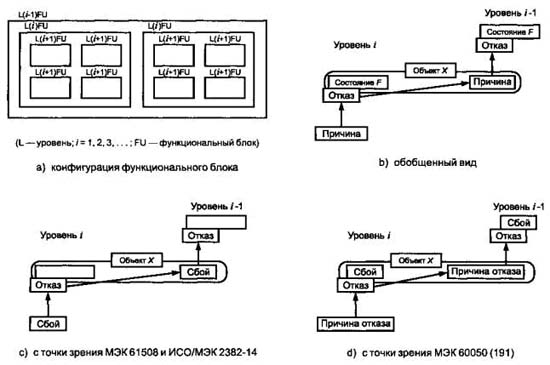
[ ГОСТ Р МЭК 61508-4-2007]Тематики
- газораспределение
- надежность средств электросвязи
- надежность, основные понятия
Обобщающие термины
EN
сброс
Разрывное нарушение, при котором сместитель падает в сторону опущенного крыла (висячее крыло опущено относительно лежачего).
[ Словарь геологических терминов и понятий. Томский Государственный Университет]Тематики
- геология, геофизика
Обобщающие термины
EN
сверхток
Любой ток, превышающий номинальный
МЭК 60050(441-11-06).
[ ГОСТ Р 50030. 1-2000 ( МЭК 60947-1-99)]
[ ГОСТ Р 50345-99( МЭК 60898-95)]
сверхток
Электрический ток, превышающий номинальный электрический ток.
Сверхток представляет собой любой электрический ток, величина которого превышает номинальный ток какого-либо элемента электроустановки здания или используемого в ней электрооборудования, например: номинальный ток электрической цепи, допустимый длительный ток проводника, номинальный ток автоматического выключателя и т. д. В нормативной и правовой документации различают два основных вида сверхтока – ток перегрузки и ток короткого замыкания.
Появление сверхтока в каком-либо элементе электроустановки здания может привести к его перегреву, возгоранию и, как следствие, к возникновению пожара в здании. Поэтому в электроустановках зданий выполняют защиту от сверхтока.
[ http://www.volt-m.ru/glossary/letter/%D1/view/59/]
сверхток
сверхток в электротехническом изделии
Ток, значение которого превосходит наибольшее рабочее значение тока электротехнического изделия (устройства).
[ ГОСТ 18311-80]
сверхток
Электрический ток, превышающий номинальный электрический ток.
Примечание - Для проводников номинальный ток считается равным длительному допустимому току.
[ ГОСТ Р МЭК 60050-826-2009]
Сверхток может оказывать или может не оказывать вредные воздействия в зависимости от его величины и продолжительности. Сверхтоки могут возникать в результате перегрузок в электроприемниках или при повреждениях, таких как короткие замыкания или замыканиях на землю
[ ГОСТ Р 50571. 1-2009 ( МЭК 60364-1: 2005)]
сверхток
Любой ток, превышающий номинальное значение. Для проводов номинальным значением является допустимый ток.
[ ГОСТ Р МЭК 60204-1-2007]EN
overcurrent
electric current exceeding the rated electric current
NOTE – For conductors, the rated current is considered as equal to the current-carrying capacity
[IEV number 826-11-14]
over-current
<>current exceeding the rated current
<>[IEC 61095, ed. 2.0 (2009-02)]
over-current
electric current the value of which exceeds a specified limiting value
[IEV number 151-15-28]
[IEV number 442-01-20]FR
surintensité, f
courant électrique supérieur au courant électrique assigné
NOTE – Pour des conducteurs, on considère que le courant assigné est égal au courant admissible.
[IEV number 826-11-14]
surintensité
courant supérieur au courant assigné
[IEC 61095, ed. 2.0 (2009-02)]
[IEV number 442-01-20]
surintensité, f
courant électrique dont la valeur dépasse une valeur limite spécifiée
[IEV number 151-15-28]Параллельные тексты EN-RU The design of LV installations leads to basic protection devices being fitted for three types of faults:
-
overloads
-
short-circuits
-
insulation faults
Низковольтные электроустановки должны быть оснащены устройствами защиты трех типов:
-
от перегрузки;
-
от короткого замыкания;
- от токов утечки.
[Перевод Интент]
Примечание.
Слово fault в данном случае пришлось опустить, поскольку:
- его нельзя перевести как "неисправность", т. к. возникновение перегрузки ( overload) не является неисправностью;
- его нельзя перевести как "сверхток", т. к. ток утечки не является сверхтоком.The chosen switchgear must withstand and eliminate faults at optimised cost with respect to the necessary performance.
[Schneider Electric]Выбранная аппаратура распределения должна иметь такие характеристики, чтобы рентабельно выдерживать и ограничивать сверхтоки.
[Перевод Интент]Тематики
Синонимы
EN
DE
FR
ток повреждения
Ток, возникающий в результате пробоя или перекрытия изоляции.
[ ГОСТ Р 51321. 1-2000 ( МЭК 60439-1-92)]
ток повреждения
Ток, который протекает через данную точку повреждения в результате повреждения изоляции.
[ ГОСТ Р МЭК 60050-826-2009]EN
fault current
current resulting from an insulation failure, the bridging of insulation or incorrect connection in an electrical circuit
[IEC 61439-1, ed. 2.0 (2011-08)]
fault current
current which flows across a given point of fault resulting from an insulation fault
[IEV number 826-11-11]FR
courant de défaut
courant résultant d'un défaut de l'isolation, du contournement de l’isolation ou d’un raccordement incorrect dans un circuit électrique
[IEC 61439-1, ed. 2.0 (2011-08)]
courant de défaut, m
courant s'écoulant en un point de défaut donné, consécutivement à un défaut de l'isolation
[IEV number 826-11-11]Тематики
EN
DE
- Fehlerstrom, m
FR
- courant de défaut, m
3.7.2 повреждение (fault): Повреждение любого элемента, разделения, изоляции или соединения между элементами, не являющимися по настоящему стандарту не повреждаемыми, от которых зависит искробезопасность цепи.
Источник: ГОСТ Р 52350.11-2005: Электрооборудование для взрывоопасных газовых сред. Часть 11. Искробезопасная электрическая цепь "I" оригинал документа
3.16 неисправность (fault): Состояние объекта, характеризующееся неспособностью исполнять требуемую функцию, исключая время профилактического технического обслуживания или других запланированных действий, или простои из-за недостатка внешних ресурсов
Примечание - Неисправность часто является результатом отказа объекта, но может существовать и без отказа.
Источник: ГОСТ Р 51901.6-2005: Менеджмент риска. Программа повышения надежности оригинал документа
3.6 неисправность (fault): Состояние элемента, характеризующееся неспособностью исполнять требуемую функцию, исключая период технического обслуживания, ремонта или других запланированных действий, а также из-за недостатка внешних ресурсов.
Примечание - Неисправность часто является результатом отказа элемента, но может существовать и без предшествующего отказа.
Источник: ГОСТ Р 51901.5-2005: Менеджмент риска. Руководство по применению методов анализа надежности оригинал документа
3.5 неисправность (fault): Состояние объекта, когда один из его элементов или группа элементов проявляют признаки деградации или нарушения работы, что может привести к отказу машины.
Примечания
1 Неисправность часто является следствием отказа, но может иметь место и при его отсутствии.
2 Состояние объекта не рассматривают как неисправное, если оно возникло вследствие запланированных процедур или нехватки внешних ресурсов.
Источник: ГОСТ Р ИСО 13379-2009: Контроль состояния и диагностика машин. Руководство по интерпретации данных и методам диагностирования оригинал документа
3.3 неисправность (fault): Состояние объекта, при котором он не способен выполнять требуемую функцию, за исключением такой неспособности при техническом обслуживании или других плановых мероприятиях или вследствие нехватки внешних ресурсов.
Примечания
1 Неисправность часто является следствием отказа объекта, но может иметь место и без него.
2 В настоящем стандарте термин «неисправность» используется наряду с термином «отказ» по историческим причинам.
Источник: ГОСТ Р 51901.12-2007: Менеджмент риска. Метод анализа видов и последствий отказов оригинал документа
3.1.30 ошибка (fault): Разность между погрешностью весоизмерительного датчика и основной погрешностью весоизмерительного датчика (см. 3.1.34).
Источник: ГОСТ Р 8.726-2010: Государственная система обеспечения единства измерений. Датчики весоизмерительные. Общие технические требования. Методы испытаний оригинал документа
3.6 дефект (fault): Неисправность или ошибка в компоненте технического обеспечения, программного обеспечения или системы
[МЭК 61513, пункт 3.22]
Примечание 1 - Дефекты могут подразделяться на случайные, например, в результате ухудшения аппаратных средств из-за старения, и систематические, например, ошибки в программном обеспечении, которые вытекают из погрешностей проектирования.
Примечание 2 - Дефект (в особенности дефект проекта) может остаться необнаруженным в системе до тех пор, пока не окажется, что полученный результат не соответствует намеченной функции, то есть возникает отказ.
Примечание 3 - См. также «ошибка программного обеспечения» и «случайный дефект».
Источник: ГОСТ Р МЭК 62340-2011: Атомные станции. Системы контроля и управления, важные для безопасности. Требования по предотвращению отказов по общей причине оригинал документа
3.2 неисправность (fault): Состояние объекта, когда один из его элементов или группа элементов проявляет признаки деградации или нарушения работы, что может привести к отказу машины.
Примечание - Неисправность может привести к отказу.
Источник: ГОСТ Р ИСО 17359-2009: Контроль состояния и диагностика машин. Общее руководство по организации контроля состояния и диагностирования оригинал документа
3.17 дефект (fault): Неисправность или ошибка в компоненте технического обеспечения, программного обеспечения или системы.
[МЭК 61513, пункт 3.22]
Источник: ГОСТ Р МЭК 60880-2010: Атомные электростанции. Системы контроля и управления, важные для безопасности. Программное обеспечение компьютерных систем, выполняющих функции категории А оригинал документа
3.6.1 сбой (fault): Ненормальный режим, который может вызвать уменьшение или потерю способности функционального блока выполнять требуемую функцию.
Примечание - МЭС 191-05-01 определяет «сбой» как состояние, характеризуемое неспособностью выполнить необходимую функцию, исключая неспособности, возникающие во время профилактического ухода или других плановых мероприятий, либо в результате недостатка внешних ресурсов. Иллюстрация к этим двум точкам зрения показана на рисунке 4 [ИСО/МЭК 2382-14-01-10].
Источник: ГОСТ Р МЭК 61508-4-2007: Функциональная безопасность систем электрических, электронных, программируемых электронных, связанных с безопасностью. Часть 4. Термины и определения оригинал документа
3.22 дефект (fault): Дефект в аппаратуре, программном обеспечении или в компоненте системы (см. рисунок 3).
Примечание 1 -Дефекты могут быть результатом случайных отказов, которые возникают, например, из-за деградации аппаратуры в результате старения; возможны систематические дефекты, например, в результате дефектов в программном обеспечении, возникающих из-за ошибок при проектировании.
Примечание 2 - Дефект (особенно дефекты, связанные с проектированием) может оставаться незамеченным, пока сохраняются условия, при которых он не отражается на выполнении функции, т.е. пока не произойдет отказ.
Примечание 3 - См. также «дефект программного обеспечения».
Источник: ГОСТ Р МЭК 61513-2011: Атомные станции. Системы контроля и управления, важные для безопасности. Общие требования оригинал документа
4.10.1 ошибка (fault): Разность между погрешностью показаний и погрешностью прибора.
Источник: ГОСТ Р ЕН 1434-1-2011: Теплосчетчики. Часть 1. Общие требования
Англо-русский словарь нормативно-технической терминологии > fault
-
11 point
pɔɪnt
1. сущ.
1) точка The freezing point of water is 32 degrees Fahrenheit. ≈ Точка замерзания воды - 32 градуса по Фаренгейту. focal point ≈ фокус, фокальная точка, фокусная точка salient point ≈ мат. точка излома
2) пункт, момент, вопрос;
дело to argue a point ≈ обсуждать вопрос, спорить по поводу чего-л. to belabor, labor a point ≈ разрабатывать, исследовать вопрос to bring up, raise a point ≈ ставить, поднимать вопрос to concede, yield a point ≈ уступить, сдаться в каком-л. вопросе to cover, discuss a point ≈ обсуждать вопрос to drive, hammer, press a point home ≈ доводить вопрос до сведения to emphasize, stress, underscore a point ≈ акцентировать, подчеркивать, вопрос to review a point ≈ делать обзор вопроса to speak to the point ≈ говорить по существу to strain, stretch a point in smb.'s favour ≈ истолковать дело/вопрос в чью-л. пользу She made the point that further resistance was useless. ≈ Она решила, что дальнейшее сопротивление бесполезно. talking point ≈ вопрос, могущий быть предметом разговора;
(подходящая) тема для разговора;
аргумент controversial point ≈ спорный вопрос, момент - beside the point - on this point - to the point - point of honour make a point of smth. Syn: item>, detail, particular, aspect, feature
3) а) суть, сущность;
"соль" (рассказа, шутки) I think I missed the point of his story. ≈ По-видимому, я прозевал суть его истории. Syn: gist, essence, heart, kernel, pith, core б) смысл, основание, повод There's no point in arguing further. ≈ Нет никакого резона продолжать дальнейший спор. Syn: sense, reason, cause, object
4) точка, место, пункт;
амер. станция assembly point ≈ сборный пункт to make one's point ≈ бежать прямо к намеченному месту (о собаках и т. п.)
5) момент (времени) At that point the audience got up to leave. ≈ В этот момент зрители поднялись, чтобы уходить. Syn: instant, moment, time, very minute
6) очко points verdict, points decision спорт ≈ присуждение победы по очкам (в боксе и т. д.) The team won by two points. ≈ Команда выиграла с перевесом в два очка. Syn: score, tally
7) достоинство, преимущество;
отличительная черта, особенность Tact isn't my strong point. ≈ Тактичность не является моей отличительной чертой..
8) (нечто, похожее на острый конец) а) кончик, острие;
наконечник б) ответвление оленьего рога в) (гравировальная) игла, резец( гравера) г) ж.-д. перо/остряк (стрелочного перевода) ;
стрелочный перевод д) мыс, выступающая морская коса;
стрелка
9) вершина горы
10) деление шкалы
11) единица продовольственной или промтоварной карточки (в Англии во время второй мировой войны и в послевоенные годы)
12) вид кружева
13) мор. румб
14) мор. редька( оплетенный конец снасти)
15) ист. шнурок с наконечником (заменявший пуговицы)
16) а) стать, статья( животного) ;
мн. экстерьер( животного) б) охот. стойка (собаки) to come/make a point ≈ делать стойку
17) воен. головной/тыльный дозор
18) полигр. пункт ∙
2. гл.
1) показывать пальцем;
указывать (тж. point out;
at, to) It's rude to point at people. ≈ Некрасиво указывать на человека пальцем.
2) а) направлять, наводить (оружие и т. п.) (at) ;
целиться, прицеливаться Never point a gun at someone, even in fun. ≈ Никогда ни в кого не прицеливайся, даже в шутку. б) быть обращенным, направленным (в какую-л. сторону) ∙ Syn: aim, train, direct
3) а) указывать, обращать( чье-л.) внимание;
отмечать, подчеркивать When asked to explain where all the housekeeping money had gone, Mary pointed to the rising prices. ≈ Когда ее попросили объяснить, куда ушли все деньги, выделенные на ведение хозяйства, Мери указала на повышение цен. б) указывать, говорить, свидетельствовать( to - о чем-л.) The Minister's remarks seemed to be pointing at an early election. ≈ Казалось, что замечания министра касались досрочных выборов. All the signs point to/towards an early election. ≈ Все признаки указывают на досрочные выборы. Syn: indicate, suggest, imply, signify, intimate, hint at
4) иметь целью, стремиться
5) точить;
заострить, наточить;
чинить (карандаш)
6) оживлять, придавать остроту
7) ставить знаки препинания
8) делать стойку (о собаке)
9) строит. расшивать швы ∙ point down point off point out point up точка - (full) * точка (знак препинания) - interrogation * (американизм) вопросительный знак - decimal * точка, отделяющая десятичную дробь от целого числа (соответствует запятой в русском языке) - five * six (
5.
6) пять целых и шесть десятых (5,
6) (математика) точка - * of tangency точка касания - * of contact точка соприкосновения - the * of intersection of two lines точка пересечения двух линий - * target( военное) точечная цель - * load (техническое) сосредоточенная нагрузка - * source( физическое) точечный источник( излучения) (физическое) стадия, критическая точка;
температура - * of solidification температура затвердевания - neutral * нейтральная /нулевая/ точка - freezing * точка /температура/ замерзания (специальное) точка, отметка;
точка деления( шкалы) - * of reference (геодезия) репер, отметка условного ууровня - the temperature has gone up two *s температура поднялась на два деления (морское) румб - cardinal * страна света;
главный румб - * of the compass компасный румб точка (в рельефно-точечном шрифте Брайля для слепых) след, отметина - her sharp heels left *s in the carpet от ее острых каблуков на ковре остались вмятины место, пункт, точка - * of destination место назначения - * of departure пункт отправления;
исходная точка - his * of departure is not clear его отправная точка /исходная позиция/ неясна - * of delivery( коммерческое) место сдачи;
место доставки - * of draw (автомобильное) заправочный пункт - assembly /rallying/ * место сбора;
сборный пункт - * fire (военное) сосредоточенный огонь - to make one's * (охота) бежать прямо к намеченному месту (о собаках и т. п.) - * of tenderness (медицина) болезненная точка - at all *s повсюду полицейский пост( разговорное) станция;
граница тарифного участка (на трамвайной, автобусной и т. п. линиях) момент (времени) - turning * поворотный пункт;
кризис( болезни) - at any * в любой момент - at this * he paused a few seconds тут он остановился на несколько секунд - when it came to the *, hee refused his help когда настало время (действовать), он отказался помочь порог;
край;
грань - at /on/ the * of death при смерти - to be on /at, upon/ the * of doing smth. собираться что-л. сделать - to be on the * of departure собраться /быть готовым/ уехать( спортивное) очко - *s for style оценка за технику прыжка (лыжный спорт) - * winner победитель по очкам - * decision /verdict/ присуждение победы по очкам (бокс, борьба) - to give *s to давать несколько очков вперед;
превзойти;
за пояс заткнуть - he can give *s to any opponent любому противнику он может дать несколько очков вперед - to win on *s победить по очкам (бокс, борьба) - what *s shall we play? до какого счета будем играть? - he scored 20 *s он выиграл /набрал/ 20 очков - he got 85 *s out of aa possible 100 он набрал 85 оччков из 100 возможных (американизм) единица, очко (при учете количества прослушанных лекций, проделанных лабораторных работ и т. п.) талон;
купон;
единица продовольственной или промтоварной карточки (в Англии по время второй мировой войны и в послевоенные годы) - cereal products are on *s крупы (продаются) только по карточкам (биржевое) пункт - ten *s off скидка в десять пунктов (полиграфия) пункт нужный результат, требуемое число( при игре в кости) (карточное) очко - what *s shall we play? по сколько будем играть? одно из 12-ти делений на доске для игры в триктрак место принимающего игрока (крикет) принимающий игрок (крикет) уровень, стандарт - moral has reached a low * мораль совсем упала - the highest * of splendour высшая степень /предел/ роскоши степень, ступень - frankness to the * of insult откровенность, граничащая с оскорблением (электротехника) точка присоединения потребляющего прибора;
штепсельная розетка пойнт (единица веса в ювелирном деле, равная
0. 01 карата) толщина бумаги (
0. 01 дюйма) (редкое) конец;
заключение пункт;
момент - *s in a speech пункты речи /выступления/ - * by * пункт за пунктом;
по пунктам;
подробно, детально - * of order вопрос по порядку ведения (собрания и т. п.), процедурный вопрос - to rise to a * of order просить слово по порядку ведения собрания - to raise a * of order выступить по порядку ведения заседания - from * to * (устаревшее) со всеми подробностями, во всех деталях - at all *s по всем пунктам;
во всех отношениях - *s of defence (юридическое) возражения ответчика по иску - we differ /disagree/ on these *s мы расходимся по этим пунктам вопрос, дело - * at issue спорный вопрос - sore * больной вопрос - fine * деталь, подробность;
тонкость - the main * is... главное дело /-ый вопрос/ в том... - * of conscience дело совести - a * of honour вопрос чести( особ. при вызове на дуэль) - a case in * дело, относящееся к данному вопросу или обсуждаемой теме главное, суть, смысл, "соль" - off /away from, beside/ the * не по существу, не на тему, некстати - in * подходящий,, уместный - the * of a joke смысл /"соль"/ шутки - I don't see the * я не понимаю "соли" - to come to the * дойти до главного /до сути дела/ - to keep to the * говорить по существу - keep /speak/ to the *! ближе к делу! - your answer is not to the * ваш ответ не по существу - you've missed the whole * вы упустили самое главное - that's the * вот в чем дело /суть/ - that's not the * суть /дело/ не в этом мысль;
позиция, точка зрения - * of view точка зрения - what's your *? что вы думаете по этому поводу? - I see /take/ your * я понимаю вас;
я вижу, что вы хотите сказать /куда вы клоните/ - he has a * there! он здесь прав! цель, намерение - to gain /to carry/ one's * достичь цели, добиться своего - what's your * in coming? какова ццель вашего прихода? - there is no * in doing that нет никакого смысла делать это - I can't see the * of your writing to him не понимаю, зачем вы ему пишете отличительная, характерная черта - weak * слабое место, недостаток - * of interest интересная /любопытная/ особенность - the best * in his character самое лучшее в его характере - the good and bad *s of a man положительные и отрицательные черты характера - singing is not his strong * он не силен в пении - he has got *s он не лишен достоинств стать, статья (животного) pl экстерьер (животного) сила, мощь - hee writes with * он сильно /здорово/ пишет колкость, язвительность указывание - he added with a smile and a * at his wife добавил он, засмеявшись, и указал (пальцем) на жену намек;
совет, предложение - *s on getting a job советы, как найти работу (устаревшее) сигнал - * of war боевой сигнал кончик;
острие, острый конец;
наконечник - the * of a sword острие шпаги - the * of a knife кончик /острие/ ножа - the * of the tongue кончик языка - on the *s of one's toes на цыпочках - to give a * to a pencil очинить карандаш кончик подбородка (бокс) (американизм) (металлическое) перо (морское) редька (на конце троса) штычок ледоруба (альпинизм) зуб кошки( альпинизм) укол (фехтование) - * touche туше (получение укола или удара) (военное) удар штыком мыс, выступающая морская коса;
стрелка вершина( горы) гравировальная игла,, резец (гравера) (железнодорожное) перо или остряк (стрелочного перевода) (железнодорожное) обыкн. pl стрелочный перевод отросток оленьего рога (охота) стойка - to come to /to make/ a * делать стойку прямой полет вверх( сокола) (историческое) шнурок с металлическими наконечниками (заменявший пуговицы) (военное) головной или тыльный дозор положение( пастуха) впереди стада (игольное) кружево;
кружево, вязанное на спицах - Brussels * брюссельское кружево стежок( на канве, холсте и т. п.) (спортивное) кросс положение на пуантах (балет) - * shoes балетные туфли( электротехника) контактный прерыватель( в двигателе автомашины) (геральдика) часть щита (определяющая фигуру) > the P. Уэст-Пойнт (военное училище в США) > in * of в отношении;
что касается;
по вопросу о > in * of fact в действительности, фактически > to make a * of smth. обратить особое внимание на что-л.;
особо подчернуть важность чего-л., придавать чему-л. большое значение;
тщательно рассмотреть что-л.;
удостовериться, проследить;
взять себе за правило > * of no return (авиация) критическая точка (откуда самолет не может вернуться на базу при наличном запасе топлива) ;
критический, решающий момент;
решение, отрезающее путь назад;
бесповоротный шаг > to pass the * of no return перейти роковую черту > armed at all *s во всеоружии > at the swords' *s готовый к враждебным действиям;
на ножах > at the * of the sword силой оружия;
под давлением, под нажимом > to come to *s обнажить шпаги, начать борьбу > to put too fine a * upon излишне деликатничать > not to put a fine * upon говорить правду напрямик > to strain /to stretch/ a * не так строго соблюдать правила;
делать большие уступки > to score a * off /against/ smb. переспорить кого-л.;
посрамить кого-л. > to give * to smth. обострить что-л., придать остроту чему-л. > figures that give * to his argument цифры, подтверждающие его правоту > potatoes and * картошка да вода - вот и вся еда (обыкн. at, to) указывать, показывать (пальцем, рукой и т. п.;
тж. * out) - to * one's finger at one object указывать пальцем на какой-л. предмет - to * the finger of scorn at smb. (образное) показывать пальцем на кого-л., насмехаться над кем-л., презрительно о ком-л. отзываться - to * to /out/ a door указать на дверь - it is rude to * пальцем показывать невежливо - the hands of the clock *ed to half past one стрелки часов показывали половину второго (at) указывать (на кого-л.), выделять - he was *ed at by all the mothers as an example of what a son should be все матери ставили его в пример как образцового сына указывать (на что-л.), выделять (какой-л. предмет из группы других;
часто * out) - to * out mistakes указывать ошибки - he *ed out the finest pictures to me он показал мне самые лучшие картины - * me out the thing you want покажите, что вы хотите указывать, обращать (чье-л.) внимание;
отмечать, подчеркивать (часто * out) - he *ed out that there were certain formalities to be observed он подчернул, что необходимо соблюсти некоторые формальности наводить, направлять (оружие) ;
прицеливаться, целиться - to * a gun at smb. прицелиться в кого-л.;
навести /направить/ на кого-л. пистолет быть обращенным, направленным (в какую-л. сторону) ;
смотреть - the vane *s to the north флюгер повернут /смотрит/ на север - the house *s to the east дом обращен (фасадом) на восток - the sign *s east указатель показывает на восток (to) указывать, свидетельствовать, говорить (о чем-л.) - all the evidence *s to his guilt все показания свидетельствуют о его виновности - everything *s to your being wrong все говорит о том, что вы неправы иметь целью, стремиться - his actions *ed towards that result его действия были направлены на достижение этой цели (за) точить, заострить - to * a dart заострить стрелу - to * a pencil очинить карандаш оживлять;
заострять, придавать остроту ( словам, выражениям;
часто * up) - to * up the necessity for caution (еще раз) подчернуть необходимость соблюдения осторожности - he *ed everything he said with good examples он иллюстрировал свою речь яркими примерами (морское) обделывать конец "редькой" (медицина) созревать( о нарыве) (охота) делать стойку (о собаке) (строительство) расшивать швы кирпичной или каменной кладки ставить знаки препинания;
ставить точки (в стенографических знаках, в словах семитских языков) намечать что-л. точками (музыкальное) делать разметку( на хоровой партитуре) делать паузы (в речи, при чтении) отделять десятичную дробь точкой (тж. * off) (морское) идти крутой бейдевинд (по) ставить ногу на пуанты;
танцевать на пуантах натаскивать, готовить кого-л. (к соревнованиям) (искусство) переносить размеры с макета на камень( просверливая отверстия требуемой глубины) рационировать, выдавать что-л. по карточкам (сельскохозяйственное) закапывать (навоз) в землю (тж. * in) заострять, острить конец (прутка, катанки и т. п.) (редкое) вставлять белые волоски (в мех) addressable ~ вчт. адресуемая точка at all ~s повсюду;
armed at all points во всеоружии;
at point готовый( к чему-л.) ;
to be on the point of doing (smth.) собираться (сделать что-л.) assumed decimal ~ вчт. подразумеваемая запятая at all ~s во всех отношениях at all ~s повсюду;
armed at all points во всеоружии;
at point готовый (к чему-л.) ;
to be on the point of doing (smth.) собираться (сделать что-л.) at all ~s повсюду;
armed at all points во всеоружии;
at point готовый (к чему-л.) ;
to be on the point of doing (smth.) собираться (сделать что-л.) ~ момент (времени) ;
at this point he went out в этот момент он вышел;
at the point of death при смерти ~ attr.: points verdict спорт. присуждение победы по очкам (в боксе и т. д.) ;
point of view точка зрения;
at the point of the sword силой оружия ~ момент (времени) ;
at this point he went out в этот момент он вышел;
at the point of death при смерти basis ~ исходная точка at all ~s повсюду;
armed at all points во всеоружии;
at point готовый (к чему-л.) ;
to be on the point of doing (smth.) собираться (сделать что-л.) billing ~ пункт выписки счетов boom or bust ~ точка резкого подъема или спада break ~ вчт. останов break ~ вчт. прерывание break ~ вчт. точка прерывания break-even ~ уровень безубыточности breakeven ~ точка безубыточности breakeven ~ точка критического объема производства breakeven ~ точка самоокупаемости ~ ответвление оленьего рога;
a buck of eight points олень с рогами, имеющими восемь ответвлений check ~ вчт. контрольная точка choice ~ вчт. точка выбора ~ охот. стойка (собаки) ;
to come to (или to make) a point делать стойку he does not see my ~ он не понимает меня;
to come to the point дойти до главного, до сути дела connecting ~ точка соединения control ~ вчт. опорная точка controversial ~ спорный пункт corner ~ крайняя точка corner ~ угловая точка corner ~ экстремальная точка critical ~ критическая точка crucial ~ переломный момент culminating ~ кульминационный пункт culminating ~ наивысшая точка decimal ~ character десятичная точка entry ~ пункт пересечения границы entry ~ вчт. точка входа equilibrium ~ точка равновесия ~ точка;
four point six (
4.
6) четыре и шесть десятых (4,
6) ;
full point точка (знак препинания) ;
exclamation point амер. восклицательный знак exit ~ вчт. выход fixed ~ вчт. неподвижная точка floating decimal ~ вчт. плавающая десятичная запятая floating ~ вчт. плавающая десятичная запятая floating ~ вчт. плавающая точка ~ точка;
four point six (
4.
6) четыре и шесть десятых (4,
6) ;
full point точка (знак препинания) ;
exclamation point амер. восклицательный знак ~ ист. единица продовольственной или промтоварной карточки;
free from points ненормированный ~ точка;
four point six (
4.
6) четыре и шесть десятых (4,
6) ;
full point точка (знак препинания) ;
exclamation point амер. восклицательный знак to carry one's ~ отстоять свои позиции;
добиться своего;
to gain one's point достичь цели;
off the point некстати ~ очко;
to give points to давать несколько очков вперед;
перен. = заткнуть за пояс global saddle ~ глобальная седловая точка he does not see my ~ он не понимает меня;
to come to the point дойти до главного, до сути дела ~ преимущество, достоинство;
he has got points у него есть достоинства;
singing was not his strong point он не был силен в пении hot ~ вчт. последняя точка to the ~ вплоть до (of) ;
in point подходящий;
in point of в отношении;
to make a point доказать положение to the ~ вплоть до (of) ;
in point подходящий;
in point of в отношении;
to make a point доказать положение initial ~ исходная точка insertion ~ вчт. точка вставки jumping off ~ стартовая площадка kill ~ вчт. этап критического анализа limit ~ предельная точка limiting ~ предельная точка low cyclical ~ самая низкая точка экономического цикла lower intervention ~ нижний уровень вмешательства в экономику to make a ~ (of smth.) считать( что-л.) обязательным для себя;
not to put too fine a point upon it говоря напрямик to the ~ вплоть до (of) ;
in point подходящий;
in point of в отношении;
to make a point доказать положение moot ~ спорный вопрос to make a ~ (of smth.) считать (что-л.) обязательным для себя;
not to put too fine a point upon it говоря напрямик ~ пункт, момент, вопрос;
дело;
fine point деталь, мелочь;
тонкость;
point of honour дело чести;
on this point на этот счет peg ~ курс валюты, при достижении которого начинаются интервенционистские меры percentage ~ процентная точка plotted ~ точка на графике point быть направленным ~ вершина горы ~ вид кружева ~ вопрос ~ главное, суть;
смысл;
"соль" (рассказа, шутки) ;
that is just the point в этом-то и дело ~ говорить, свидетельствовать (to - о) ~ воен. головной или тыльный дозор ~ делать стойку (о собаке) ~ деление шкалы ~ ист. единица продовольственной или промтоварной карточки;
free from points ненормированный ~ (гравировальная) игла, резец (гравера) ~ кончик;
острие, острый конец;
наконечник ~ место ~ момент (времени) ;
at this point he went out в этот момент он вышел;
at the point of death при смерти ~ момент ~ мыс, выступающая морская коса;
стрелка ~ направлять (оружие;
at) ;
наводить, целиться, прицеливаться ~ одна десятитысячная валютного курса ~ оживлять;
придавать остроту ~ особенность ~ ответвление оленьего рога;
a buck of eight points олень с рогами, имеющими восемь ответвлений ~ очко;
to give points to давать несколько очков вперед;
перен. = заткнуть за пояс ~ очко ~ ж.-д. перо или остряк (стрелочного перевода) ;
стрелочный перевод ~ показывать пальцем;
указывать (тж. point out;
at, to) ~ преимущество, достоинство;
he has got points у него есть достоинства;
singing was not his strong point он не был силен в пении ~ полигр. пункт ~ пункт, момент, вопрос;
дело;
fine point деталь, мелочь;
тонкость;
point of honour дело чести;
on this point на этот счет ~ пункт ~ стр. расшивать швы;
point off отделять точкой;
point out указывать;
показывать;
обращать (чье-л.) внимание ~ мор. редька (оплетенный конец снасти) ~ мор. румб ~ ставить знаки препинания ~ статья (животного) ;
pl экстерьер (животного) ~ статья ~ охот. стойка (собаки) ;
to come to (или to make) a point делать стойку ~ существо дела ~ (за) точить, (за) острить;
наточить ~ точка, место, пункт;
амер. станция;
a point of departure пункт отправления ~ точка;
four point six (
4.
6) четыре и шесть десятых (4,
6) ;
full point точка (знак препинания) ;
exclamation point амер. восклицательный знак ~ вчт. точка ~ точка ~ указать ~ характерная черта ~ чинить (карандаш) ~ ист. шнурок с наконечником (заменявший пуговицы) ~ attr.: points verdict спорт. присуждение победы по очкам (в боксе и т. д.) ;
point of view точка зрения;
at the point of the sword силой оружия there is no ~ in doing that не имеет смысла делать это;
the point is that... дело в том, что... ~ of contact коллизионная привязка ~ of culmination кульминационный пункт ~ точка, место, пункт;
амер. станция;
a point of departure пункт отправления ~ of departure пункт вылета ~ of departure пункт отправления ~ of law вопрос права ~ of no return вчт. точка необратимости ~ of origin начало координат ~ of reference базисный пункт ~ of reference исходная точка ~ of reference контрольная точка ~ of reference опорная точка ~ of sale (POS) место продажи ~ of sale (POS) терминал для производства платежей в месте совершения покупки ~ of sale (POS) торговая точка ~ of time момент времени ~ attr.: points verdict спорт. присуждение победы по очкам (в боксе и т. д.) ;
point of view точка зрения;
at the point of the sword силой оружия ~ of view точка зрения ~ стр. расшивать швы;
point off отделять точкой;
point out указывать;
показывать;
обращать (чье-л.) внимание ~ стр. расшивать швы;
point off отделять точкой;
point out указывать;
показывать;
обращать (чье-л.) внимание ~ to ~ вчт. двухточечный ~ attr.: points verdict спорт. присуждение победы по очкам (в боксе и т. д.) ;
point of view точка зрения;
at the point of the sword силой оружия preliminary ~ предварительная проблема preliminary ~ предварительный вопрос price ~ пункт курса ценных бумаг principal ~ основной вопрос principal ~ основной момент reentery ~ вчт. точка повторного перехода reentry ~ вчт. точка повторного входа reference ~ базисная точка reference ~ исходная точка reference ~ вчт. опорная точка reference ~ опорная точка reference ~ точка отсчета reference: ~ attr. справочный;
reference book справочник;
reference library справочная библиотека( без выдачи книг на дом) ;
reference point ориентир rescue ~ вчт. контрольная точка restart ~ вчт. точка возобновления return ~ вчт. точка перезапуска saddle ~ седловая точка sales ~ торговая точка sample ~ выборочная точка sample ~ элемент выборки selling ~ коммерческий аргумент sequence ~ точка оценки service ~ станция обслуживания significance ~ уровень значимости silver ~ рисунок серебряным карандашом ~ преимущество, достоинство;
he has got points у него есть достоинства;
singing was not his strong point он не был силен в пении specie ~ золотая точка( уровень валютного курса, при котором происходит международное перемещение золота) spy ~ вчт. контрольная точка starting ~ отправная точка starting ~ отправной пункт strong ~ воен. опорный пункт strong ~ перен. сильное место suboptimal ~ точка локального оптимума subsidiary ~ дополнительный вопрос support ~ интервенционная точка support ~ уровень поддержки ~ главное, суть;
смысл;
"соль" (рассказа, шутки) ;
that is just the point в этом-то и дело there is no ~ in doing that не имеет смысла делать это;
the point is that... дело в том, что... to the ~ вплоть до (of) ;
in point подходящий;
in point of в отношении;
to make a point доказать положение to the ~ кстати, уместно transit ~ физ. точка перехода turnig ~ вчт. точка возврата turning ~ поворотная точка экономического цикла turning ~ поворотный пункт turning ~ решающий момент upper intervention ~ верхний уровень вмешательства в экономику upper turning ~ верхняя точка поворота экономического цикла upper turning ~ начало кризиса view ~ точка наблюдения witness ~ место для дачи свидетельских показаний в суде -
12 field
fi:ld
1. сущ.
1) а) поле;
луг The horses were turned loose in the field. ≈ Лошадей пустили пастись на луг. in a field ≈ в поле to plow a field ≈ пахать поле to till, work a field ≈ возделывать землю corn field ≈ поле wheat field ≈ пшеничное поле Syn: meadow, grassland, pasture, grazing land, lea, mead;
lawn, green, common, yard, acreage;
heath, clearing б) большое, широкое пространство, протяжение dune field ≈ дюны;
пустыня ice field ≈ ледяное поле field of clouds ≈ большое скопление облаков в) пространство, область (по отношению к нематериальным объектам) the whole field of English history ≈ вся английская история He discloses to us the whole field of his ignorance. ≈ Он раскрывает нам всю глубину своего невежества.
2) спорт а) поле, спортивная площадка Soccer is played on a rectangular field. ≈ В футбол играют на прямоугольном поле. to take the field ≈ занять площадку baseball field ≈ бейсбольное поле football field, soccer field ≈ футбольное поле playing field ≈ игровое поле Syn: arena, turf, court, course, diamond;
lists б) участники состязания: все или за исключением сильнейших
3) поле сражения, поле боя;
театр военных действий;
редк. битва, сражение The general serves better in the field than at a desk. ≈ Генерал приносит больше пользы на поле битвы, чем за столом. in the field ≈ на войне, в походе;
в полевых условиях to hold the field ≈ удерживать позиции to keep the field ≈ продолжать сражение to leave the field ≈ отступить hard-fought field ≈ серьезное сражение conquer the field enter the field field of honour Syn: battlefield, battle-ground, front, theater of war
4) аэродром on the field ≈ на взлетной полосе flying field ≈ летное поле
5) геол. месторождение( преим. в сложных словах, напр., diamond-fields, gold-fields) coal field ≈ угольное месторождение gold field ≈ золотой прииск oil field ≈ нефтяное месторождение
6) область, сфера, поле деятельности She is a leader in the field of cosmetics. ≈ Она является лидером в области косметики. in the field of science ≈ в области науки Syn: realm, domain, province, territory, region, area, sphere, department;
occupation, profession, calling, line
7) поле действия The optometrist will examine your field of vision. ≈ Оптик измерит ваше поле зрения. magnetic field ≈ магнитное поле visual field, field of view ≈ поле зрения Syn: scope, range, area, extent, reach, expanse, sweep, stretch, orbit, circle, spectrum
8) а) геральдика поле или часть поля( щита) б) фон, грунт( картины и т. п.) в) гладкая сторона монеты
2. прил.
1) полевой;
производимый в полевых условиях Our teachers took us on field trips to observe plants and animals, firsthand. ≈ Наши учителя водили нас на экскурсии в поля, чтобы мы вели наблюдения, прежде всего, за растениями и животными.
2) полевой (растущий в поле или имеющий поле в качестве места обитания) field flowers ≈ полевые цветы
3. гл.
1) поймать мяч и отбросить своему игроку (в крикете)
2) выпускать на поле field a team ≈ выпустить команду на поле field an army ≈ выдвигать армию (в район сражения)
3) а) выставлять( на соревнования, в кандидаты) б) играть полевым игроком (в крикете)
4) отвечать экспромтом The senator fielded the reporters' questions. ≈ Сенатор не задумываясь отвечал на вопросы репортеров. поле, луг - * of wheat поле пшеницы - flowers of the * полевые цветы - in the *s в поле большое пространство - * of ice ледяное поле - *s of snow снежные поля площадка, участок (для какой-л. цели) - flying * летное поле;
аэродром - auxiliary * вспомогательный аэродром - stage * промежуточный аэродром - bleaching * площадка для отбелки холста (спортивное) площадка - athletic стадион, спортивная площадка - jumping * дорожка для прыжков - the teams are coming onto the * команды выходят на площадку /на поле/ (собирательнле) (спортивное) игроки, участники состязания - to bet /to back, to lay/ against the * держать пари, делать ставку( на лошадь и т. п.) - were you among the *? вы были среди участников? (геология) месторождение - diamond *s алмазные копи - gold *s золотые прииски поле сражения, поле битвы - in the * в походе, на войне;
в действующей армии, в полевых условиях - to take the * начинать военные действия - to hold the * удерживать позиции - to hold the * against smb. (образное) оставить за собой поле боя, не сдаться - to lose the * проигрывать сражение - to pitch /to set/ a * выбрать поле сражения;
расположить войска для себя - to withdraw from the * отступить с поля сражения;
оставить поле сражения - * of honour (возвышенно) поле чести (о месте дуэли или поле сражения) битва, сражение - a hard-fought * жестокая битва - to win the * одержать победу;
взять верх - to enter the * вступать в борьбу /в соревнование/;
вступать в спор - to leave smb. the * потерпеть поражение в споре или состязании с кем-л. (военное) район развертывания область, сфера деятельности - * of action поле деятельности - a wide * for trade широкие возможности для торговли - to be eminent in one's * быть выдающимся человеком в своей области - he's the best man in his * он лучший специалист в своей области - this is not my * это не моя область /специальность/ - what's your *? какова ваша специальность? (специальное) поле, область - * of attraction поле притяжения - * of definition (математика) поле определения - * of events( математика) поле событий - * of a relation( математика) поле отношения - * of view поле зрения - magnetic * магнитное поле - the * of a telescope поле зрения телескопа - * of vision поле зрения (оптического прибора) ;
зона видимости (геральдика) поле щита (искусство) фон, грунт (картины) гладкая сторона монеты (телевидение) кадр > fair * and no favour равные шансы для всех;
игра или борьба на равных условиях > to leave smb. a clear * предоставить кому-л. свободу действий > to leave the * open воздерживаться от вмешательства > out in left * (американизм) рехнувшийся;
не в своем уме > to lead the * идти или ехать верхом во главе охотников > to be late in the * опоздать, прийти слишком поздно;
прийти к шапочному разбору полевой - * flowers полевые цветы - * crop (сельскохозяйственное) полевая культура - * stack( сельскохозяйственное) хлебный скирд производимый в полевых условиях - * test внелабораторное, полевое испытание эксплуатационные исследования периферийный, работающий на периферии выездной;
разъездной - * arrangement организация работы на местах - * agent местный агент( разведки и т. п.) (военное) (военно-) полевой - * army полевая армия - * hygiene военно-полевая гигиена, военно-санитарное дело - * force(s) (военное) полевые войска;
действующая армия - * fortification полевое укрепление - * firing боевые стрельбы - * jacket полевая куртка - * order боевой приказ - * security контрразведка в действующих войсках - * service служба в действующей армии;
обслуживание войск - * message боевое распоряжение - * base /depot/ полевой склад - * dressing первая перевязка на поле боя (спортивное) относящийся к легкой атлетике принимать мяч (крикет) сушить (зерно и т. п.) на открытом воздухе выставлять, выдвигать - to * candidates for elections выдвигать кандидатов на выборах делать ставку (на лошадь и т. п.) ;
держать пари отвечать без подготовки, экспромтом - to * questions отвечать на вопросы, особ. неожиданные (о докладчике, лекторе) - to * numerous phone calls tactfully тактично отделываться от многочисленных звонков по телефону( спортивное) выпустить на поле, выставить( игроков) - the school *s two football teams от школы выступают две футбольные команды address ~ вчт. поле адреса alphanumeric ~ вчт. алфавитно-цифровое поле analog ~ вчт. аналоговая техника argument ~ вчт. поле операнда bias ~ вчт. поле подмагничивания byte index ~ вчт. поле индекса байта command ~ вчт. поле команды comments ~ вчт. поле комментариев common ~ вчт. общее поле ~ of honour поле битвы;
to conquer the field одержать победу;
перен. тж. взять верх в споре control ~ вчт. контрольное поле control-data ~ вчт. поле управляющих данных count ~ вчт. поле счета data ~ вчт. поле данных decrement ~ вчт. поле декремента derived ~ вчт. производное поле destination ~ вчт. поле адреса digital ~ вчт. цифровая техника discrete ~ вчт. дискретное устройство display ~ вчт. поле экрана edit ~ вчт. поле редактирования to enter the ~ вступать в борьбу;
перен. тж. вступать в соревнование, вступать в спор;
to hold the field удерживать позиции extension ~ вчт. поле расширения field эл. возбуждение( тока) ~ все участники состязания или все, за ислючением сильнейших ~ геол. месторождение (преим. в сложных словах, напр., diamond-fields, goldfields) ~ месторождение ~ область, сфера деятельности, наблюдения;
in the whole field of our history на всем протяжении нашей истории ~ область, сфера деятельности ~ область деятельности ~ периферия бизнеса ~ поле;
луг;
большое пространство ~ вчт. поле ~ поле ~ поле действия;
field of view (или vision) поле зрения;
magnetic field магнитное поле ~ геральд. поле или часть поля (щита) ~ поле сражения;
сражение;
a hard-fought field серьезное сражение;
in the field на войне, в походе;
в полевых условиях ~ полевой;
field force(s) действующая армия;
field fortification(s) полевые укрепления ~ район сбыта ~ спортивная площадка ~ участок ~ фон, грунт (картины и т. п.) ~ ambulance воен. медицинский отряд ~ ambulance воен. санитарная машина ~ equipment кинопередвижка ~ equipment полевое оборудование ~ equipment походное снаряжение;
field service(s) воен. хозяйственные подразделения ~ events pl соревнования по легкоатлетическим видам спорта (исключая бег) ~ полевой;
field force(s) действующая армия;
field fortification(s) полевые укрепления ~ полевой;
field force(s) действующая армия;
field fortification(s) полевые укрепления ~ magnet возбуждающий магнит;
field theory мат. теория поля ~ of activity поле деятельности ~ of activity сфера деятельности ~ of application область применения ~ of honour место дуэли ~ of honour поле битвы;
to conquer the field одержать победу;
перен. тж. взять верх в споре ~ of law область права ~ of study область изучения ~ поле действия;
field of view (или vision) поле зрения;
magnetic field магнитное поле ~ security контрразведка в действующей армии ~ equipment походное снаряжение;
field service(s) воен. хозяйственные подразделения service: field ~ обслуживание на месте продажи ~ magnet возбуждающий магнит;
field theory мат. теория поля ~ trial испытания служебных собак в полевых условиях fixed-length ~ вчт. поле фиксированной длины flag ~ вчт. поле признака free ~ вчт. поле произвольных размеров ~ поле сражения;
сражение;
a hard-fought field серьезное сражение;
in the field на войне, в походе;
в полевых условиях to enter the ~ вступать в борьбу;
перен. тж. вступать в соревнование, вступать в спор;
to hold the field удерживать позиции hollerith ~ вчт. поле текстовых данных housing ~ полит.эк. район жилой застройки image ~ вчт. поле изображения ~ поле сражения;
сражение;
a hard-fought field серьезное сражение;
in the field на войне, в походе;
в полевых условиях ~ область, сфера деятельности, наблюдения;
in the whole field of our history на всем протяжении нашей истории input ~ вчт. область ввода instruction ~ вчт. поле команды insurance ~ область страхования integer ~ вчт. поле целых чисел intrinsic ~ вчт. внутреннее поле jack ~ вчт. наборное поле to keep the ~ продолжать сражение;
to leave the field отступить;
потерпеть поражение key ~ вчт. ключевое поле key ~ вчт. поле ключа label ~ вчт. поле метки landing ~ посадочная площадка;
аэродром to keep the ~ продолжать сражение;
to leave the field отступить;
потерпеть поражение ~ поле действия;
field of view (или vision) поле зрения;
magnetic field магнитное поле mining ~ минное поле numeric ~ вчт. числовое поле oil ~ месторождение нефти oil ~ нефтяной промысел operand ~ вчт. поле операнда operation ~ вчт. поле команды outlying ~ далекое поле picture ~ вчт. поле изображения protected ~ вчт. защищенное поле scalar ~ вчт. скалярное поле source ~ вчт. исходное поле tag ~ вчт. поле признака unprotected ~ вчт. незащищенное поле variable ~ вчт. поле переменной variable ~ вчт. поле переменной длины variable-length ~ вчт. поле переменной длины variant ~ вчт. поле признака -
13 spring
1. noun1) (season) Frühling, derin spring 1969, in the spring of 1969 — im Frühjahr 1969
in early/late spring — zu Anfang/Ende des Frühjahrs
last/next spring — letzten/nächsten Frühling
in [the] spring — im Frühling od. Frühjahr
2) (source, lit. or fig.) Quelle, die3) (Mech.) Feder, die4) (jump) Sprung, dermake a spring at somebody/at an animal — sich auf jemanden/ein Tier stürzen
5) (elasticity) Elastizität, die2. intransitive verb,walk with a spring in one's step — mit beschwingten Schritten gehen
1) (jump) springenspring [up] from something — von etwas aufspringen
spring to somebody's assistance/defence — jemandem beispringen
spring to life — (fig.) [plötzlich] zum Leben erwachen
3) (recoil)3. transitive verb,spring to or shut — [Tür, Falle, Deckel:] zuschnappen
sprang or (Amer.) sprung, sprung1) (make known suddenly)2) aufspringen lassen [Schloss]; zuschnappen lassen [Falle]Phrasal Verbs:- academic.ru/91981/spring_back">spring back* * *[spriŋ] 1. past tense - sprang; verb2) (to arise or result from: His bravery springs from his love of adventure.) entspringen3) (to (cause a trap to) close violently: The trap must have sprung when the hare stepped in it.) zuschnappen2. noun1) (a coil of wire or other similar device which can be compressed or squeezed down but returns to its original shape when released: a watch-spring; the springs in a chair.) die Feder2) (the season of the year between winter and summer when plants begin to flower or grow leaves: Spring is my favourite season.) der Frühling3) (a leap or sudden movement: The lion made a sudden spring on its prey.) der Sprung4) (the ability to stretch and spring back again: There's not a lot of spring in this old trampoline.) die Elastizität5) (a small stream flowing out from the ground.) die Quelle•- springy- springiness
- sprung
- springboard
- spring cleaning
- springtime
- spring up* * *[sprɪŋ]I. nin the \spring im Frühling\spring thaw Frühlingstauwetter nt2. (of water source) (water) Quell-3. (with springs) (seat) gefedert\spring mattress Federkernmatratze f veraltendIII. vi1. (move quickly) springento \spring into action den Betrieb aufnehmento \spring to sb's defence zu jds Verteidigung eilento \spring to one's feet aufspringento \spring open aufspringento \spring shut zufallen2. (suddenly appear) auftauchenwhere did you \spring from? wo kommst du denn plötzlich her?to \spring to mind in den Kopf schießen▪ to \spring on [or upon] sb jdn angreifen4. (have as source)IV. vt▪ to \spring sth1. (operate) etw auslösento \spring a trap eine Falle zuschnappen lassen2. (suddenly do)to \spring the news on sb jdn mit Neuigkeiten überfallen3. (provide with springs)▪ to \spring sth etw federn5. (leaking)* * *[sprɪŋ] vb: pret sprang or ( US) sprung, ptp sprung1. nin (the) spring —
spring is in the air in the spring of his life — der Frühling liegt in der Luft, der Lenz hält seinen Einzug (poet) im Frühling seines Lebens, im Lenz des Lebens (poet)
3) (= leap) Sprung m, Satz mto make a spring at sb/sth — sich auf jdn/etw stürzen
2. adj attr1) (seasonal) Frühlings-2) (= with springs) gefedert3. vt1) (= leap over) überspringen, springen über (+acc)2) (= put springs in) federnto spring a leak (pipe) — (plötzlich) undicht werden; (ship) (plötzlich) ein Leck bekommen
to spring sth on sb ( fig, idea, decision ) — jdn mit etw konfrontieren
4. vito spring open —
to spring out of bed — aus dem Bett hüpfen
his hand sprang to his gun — er griff (schnell) zur Waffe
to spring into action — aktiv werden; (police, fire brigade etc) in Aktion treten
to spring to sb's aid/defence — jdm zu Hilfe eilen
the debate sprang (in)to life — es kam plötzlich Leben in die Debatte
2) (= issue also spring forth liter water, blood) (hervor)quellen (from aus); (fire, sparks) sprühen (from aus); (shoot) (hervor)sprießen (from aus); (from family etc) abstammen (from von); (fig, idea) entstehen (from aus); (interest, irritability etc) herrühren (from von)where did you spring from? (inf) — wo kommst du denn her?
* * *spring [sprıŋ]A v/i prät sprang [spræŋ], US auch sprung [sprʌŋ], pperf sprung1. springen:spring at sich stürzen auf (akk);spring to one’s feet aufspringen;he sprang to life fig plötzlich kam Leben in ihn3. (dahin-)springen, (-)schnellen, hüpfenthe door (lid) sprang open die Tür (der Deckel) sprang auf;the trap sprang die Falle schnappte zua) herausschießen, (-)sprudeln (Wasser, Blut etc),b) (heraus)sprühen, springen (Funken etc)a) (plötzlich) aufkommen (Wind etc),7. aufschießen (Pflanzen etc)a) quellen (aus)b) fig herkommen, stammen (von):his actions sprang from a false conviction seine Handlungen entsprangen einer falschen Überzeugung;where did you spring from? wo kommst du plötzlich her?9. abstammen ( from von)11. (hoch) aufragen12. auffliegen (Rebhühner etc)13. TECHa) sich werfen oder biegenb) springen, aufplatzen (Holz)B v/t1. springen lassen2. etwas zurückschnellen lassen3. eine Falle zuschnappen lassen4. ein Werkzeugteil etc herausspringen lassen5. zerbrechen, spalten7. (mit Gewalt) biegen9. fig mit einer Neuigkeit etc herausplatzen umg:a) jemandem etwas plötzlich eröffnen,b) jemanden mit etwas überraschen;spring an offer on sb jemandem ein überraschendes Angebot machen10. eine Quelle etc freilegen11. JAGD aufscheuchen14. Br umg Geld etc springen lassenC s1. Sprung m, Satz m:make a spring at sich stürzen auf (akk)2. Zurückschnellen n3. Elastizität f:there is not much spring in it es ist nicht sehr elastisch, es federt nicht gut;with a spring in one’s step beschwingt4. fig (geistige) Spannkraft5. a) Sprung m, Riss m, Spalt mb) Krümmung f (eines Brettes etc)7. fig Quelle f, Ursprung m8. fig Triebfeder f, Beweggrund m9. ARCHa) (Bogen)Wölbung fb) Gewölbeanfang m11. Frühling m (auch fig), Frühjahr n:in spring im FrühlingD adj1. Frühlings…2. a) federnd, elastischb) Feder…3. Sprung…4. Schwung…* * *1. noun1) (season) Frühling, derin spring 1969, in the spring of 1969 — im Frühjahr 1969
in early/late spring — zu Anfang/Ende des Frühjahrs
last/next spring — letzten/nächsten Frühling
in [the] spring — im Frühling od. Frühjahr
2) (source, lit. or fig.) Quelle, die3) (Mech.) Feder, diesprings — (vehicle suspension) Federung, die
4) (jump) Sprung, dermake a spring at somebody/at an animal — sich auf jemanden/ein Tier stürzen
5) (elasticity) Elastizität, die2. intransitive verb,1) (jump) springenspring [up] from something — von etwas aufspringen
spring to somebody's assistance/defence — jemandem beispringen
spring to life — (fig.) [plötzlich] zum Leben erwachen
3) (recoil)3. transitive verb,spring to or shut — [Tür, Falle, Deckel:] zuschnappen
sprang or (Amer.) sprung, sprung2) aufspringen lassen [Schloss]; zuschnappen lassen [Falle]Phrasal Verbs:* * *n.Feder -n f.Frühjahr -e n.Frühling -e m.Lenz -e m.Quelle -n f.Sprung -¨e m. (from) v.herstammen (von) v. v.(§ p.,p.p.: sprang)or p.p.: sprung•) = schnellen v.springen v. -
14 original
əˈrɪdʒənl
1. сущ.
1) редк., архаич. происхождение;
начало Syn: origination, derivation, descent, extraction, parentage
2) редк., архаич. источник, первопричина;
автор, создатель, творец Syn: source, cause
1., originator, author
3) а) подлинное произведение (картина и т. п.) ;
оригинал, подлинник б) язык оригинала (язык, на котором создано литературное произведение) to read (a book) in the original ≈ читать( книгу) в оригинале, на языке оригинала в) мастер-копия (оригинальный негатив или аудиопленка, с которых производится тиражирование) ;
кадр или кадры, отпечатанные непосредственно с негатива г) единичная модель, оригинал (платье или одежда от-кутюр, изготовленная для показа или специально после на заказ)
4) первоисточник, прототип( художественного произведения и т. п.) Syn: source, origin, prototype
5) а) изобретательный, деятельный, самобытный( в творческом плане) человек;
оригинал б) оригинал;
эксцентричный, странноватый тип;
чудак, чудик Syn: oddity
2), eccentric
2., weirdo
6) редк. первопоселенцы;
первые жители, обитатели Syn: settler
1), pioneer
1.
2. прил.
1) а) начальный, первый;
первичный, исходный the original part of the house ≈ самая старая часть дома to buy at the original price ≈ купить по исходной цене by the original scheme ≈ по первоначальному варианту original sin ≈ первородный грех Syn: first, primary, primitive, innate, initial, earliest б) являющийся( перво) источником (чего-л.) ;
первоначальный, основной original writ ≈ первичный свод законов Syn: primary
2., originative, initial, starting
2) истинный;
настоящий, подлинный;
оригинальный the original picture ≈ подлинник картины original print ≈ подлинный отпечаток (сделанный с оригинального штампа) Syn: first-hand
3) новый, свежий;
своеобразный;
незаимствованный original opinion/point of view/remark ≈ оригинальное, собственное мнение/точка зрения/замечание Syn: new
1., own
1., underived, independent
4) (о человеке) а) незаурядный, самобытный;
творческий, оригинальный;
находчивый, изобретательный original painter/composer/writer/thinker ≈ самобытный, оригинальный художник/композитор/писатель/мыслитель a person of an original mind ≈ человек самобытного склада ума Syn: distinctive, inventive, creative б) странноватый, чудаковатый;
смешной He was a very original man and with an extremely original behaviour. ≈ Он был весьма странен и вел себя более чем странно. Syn: funny I
1., funny-looking, weird
2.
3)
5) прирожденный, обладающий( чем-л.) с рождения He was an original rogue. ≈ Он был мошенник с самого рождения. Syn: born, natural-born оригинал, подлинник;
подлинное произведение;
- to take a copy from the * снять копию с подлинника язык оригинала;
язык, на котором создано произведение;
- to read Homer in the * читать Гомера в подлиннике;
- to study Don Quixote in the * изучать "Дон Кихота" на испанском языке первоисточник прототип, оригинал (художественного произведения) незаурядный, необыкновенный человек чудак;
оригинал;
- the man is a real * этот человек - настоящий оригинал;
- he was looked upon as an * его считали чудаком почтовая марка из первого издания( редкое) происхождение;
начало (редкое) автор, создатель pl (редкое) первые жители или поселенцы первый, первоначальный;
исконный;
- the * edition первое издание;
- the * edition первой издание;
- * home родина;
- * sin (религия) первородный грех;
- the * laws of a country первые законы страны;
- * rock (горное) коренная порода;
- * scheme первоначальный вариант оригинальный, подлинный;
- the * picture подлинник картины;
- the * document подлинный документ оригинальный, незаимствованный;
- * plan оригинальный план новый, свежий;
- * thought свежая мысль;
- * remark оригинальное замечание;
- an * * point of view иная точка зрения творческий, незаурядный, самобытный;
- * writer незаурядный писатель;
- an * thinker оригинальный мыслитель (редкое) врожденный;
наследственный;
- * disposition наследственная склонность( к чему-л.) странный, своеобразный;
чудаковатый;
- an * man странный человек;
чудак, оригинал;
- * behaviour необычное поведение ~ подлинник, оригинал;
in the original в оригинале master ~ первый оригинал original оригинал, подлинник ~ оригинал ~ оригинальный, подлинный ~ оригинальный, новый, свежий ~ оригинальный ~ первоисточник ~ первоначальный ~ первоначальный;
исходный;
the original edition первое издание;
original sin рел. первородный грех ~ первый ~ подлинник, оригинал;
in the original в оригинале ~ подлинник ~ подлинный ~ подлинный;
the original picture подлинник картины ~ свежий ~ творческий, самобытный;
original scientist ученый-новатор ~ творческий ~ чудак, оригинал ~ первоначальный;
исходный;
the original edition первое издание;
original sin рел. первородный грех ~ подлинный;
the original picture подлинник картины ~ творческий, самобытный;
original scientist ученый-новатор ~ первоначальный;
исходный;
the original edition первое издание;
original sin рел. первородный грехБольшой англо-русский и русско-английский словарь > original
-
15 SV
1) Общая лексика: structuur vennootschap2) Компьютерная техника: Storage Violation3) Биология: simian virus4) Авиация: ремонт в цеху5) Медицина: контрольный объем (sample volume), ударный объём (stroke volume)6) Спорт: Short Vertical, Stay Vicious7) Латинский язык: Sub Verbum, Sub Verso8) Военный термин: Secure Voice, Sighting Vessel, Sniper Version, Special Vehicle, Special View, security violation, self-verification, space vehicle, supervelocity9) Техника: Socony vacuum oil company, saturation voltage, scan velocity, scattering volume, shared variables, shear velocity, shuttle vehicle, solenoid valve, state vector, stop valve, surface varactor, secondary variable10) Химия: Stochastic Volatility11) Математика: источник изменчивости (source of variability), переменная остановки (stopping variable)12) Железнодорожный термин: Greater Shenandoah Valley Development Company - Shenandoah Valley Railroad13) Юридический термин: Societal Value14) Бухгалтерия: Sales Volume15) Политика: Svalbard16) Сокращение: El Salvador, Sacs Vides ((empty mail bags) international mail category - see IMM), Surface Visibility (replaced TIMES, 2007), Swedish, safety valve, self-ventilated, side view, solenoid valve, электромагнитный клапан17) Физика: Short Vector19) Кардиология: single ventricle (единый желудочек)20) Онкология: Splice Variant, Start Value21) Космонавтика: КА, космический аппарат22) Транспорт: Sailing Vessel, Sport Veloce, Standard Vehicle, Stroke Volume, Suzuki Vee23) Пищевая промышленность: Straight Vanilla, Sweet Vermouth24) Фирменный знак: Spectrol, Strayer Voigt25) Холодильная техника: полувертикальная витрина, semi-vertical cabinet26) СМИ: Signature Version, Silent Version27) Деловая лексика: Super Value28) SAP. surrender value29) Полимеры: saponification value, specific volume30) Программирование: Save Video, Scalar Value, Simulate And View31) Сахалин Р: Swab Valve32) Океанография: Sea View33) Химическое оружие: schedule variance34) Нефть и газ: current phase step number, setpoint of flow rate, setpoint value35) Электротехника: synchronous voltage36) Чат: Stink Value37) Правительство: Saginaw Valley, Sierra Vista, Silicon Valley, Sudden Valley38) НАСА: Saturn V Rocket, Standard Velocity39) Программное обеспечение: Smart Vu, Super Version40) Федеральное бюро расследований: Savannah Field Office -
16 Sv
1) Общая лексика: structuur vennootschap2) Компьютерная техника: Storage Violation3) Биология: simian virus4) Авиация: ремонт в цеху5) Медицина: контрольный объем (sample volume), ударный объём (stroke volume)6) Спорт: Short Vertical, Stay Vicious7) Латинский язык: Sub Verbum, Sub Verso8) Военный термин: Secure Voice, Sighting Vessel, Sniper Version, Special Vehicle, Special View, security violation, self-verification, space vehicle, supervelocity9) Техника: Socony vacuum oil company, saturation voltage, scan velocity, scattering volume, shared variables, shear velocity, shuttle vehicle, solenoid valve, state vector, stop valve, surface varactor, secondary variable10) Химия: Stochastic Volatility11) Математика: источник изменчивости (source of variability), переменная остановки (stopping variable)12) Железнодорожный термин: Greater Shenandoah Valley Development Company - Shenandoah Valley Railroad13) Юридический термин: Societal Value14) Бухгалтерия: Sales Volume15) Политика: Svalbard16) Сокращение: El Salvador, Sacs Vides ((empty mail bags) international mail category - see IMM), Surface Visibility (replaced TIMES, 2007), Swedish, safety valve, self-ventilated, side view, solenoid valve, электромагнитный клапан17) Физика: Short Vector19) Кардиология: single ventricle (единый желудочек)20) Онкология: Splice Variant, Start Value21) Космонавтика: КА, космический аппарат22) Транспорт: Sailing Vessel, Sport Veloce, Standard Vehicle, Stroke Volume, Suzuki Vee23) Пищевая промышленность: Straight Vanilla, Sweet Vermouth24) Фирменный знак: Spectrol, Strayer Voigt25) Холодильная техника: полувертикальная витрина, semi-vertical cabinet26) СМИ: Signature Version, Silent Version27) Деловая лексика: Super Value28) SAP. surrender value29) Полимеры: saponification value, specific volume30) Программирование: Save Video, Scalar Value, Simulate And View31) Сахалин Р: Swab Valve32) Океанография: Sea View33) Химическое оружие: schedule variance34) Нефть и газ: current phase step number, setpoint of flow rate, setpoint value35) Электротехника: synchronous voltage36) Чат: Stink Value37) Правительство: Saginaw Valley, Sierra Vista, Silicon Valley, Sudden Valley38) НАСА: Saturn V Rocket, Standard Velocity39) Программное обеспечение: Smart Vu, Super Version40) Федеральное бюро расследований: Savannah Field Office -
17 sv
1) Общая лексика: structuur vennootschap2) Компьютерная техника: Storage Violation3) Биология: simian virus4) Авиация: ремонт в цеху5) Медицина: контрольный объем (sample volume), ударный объём (stroke volume)6) Спорт: Short Vertical, Stay Vicious7) Латинский язык: Sub Verbum, Sub Verso8) Военный термин: Secure Voice, Sighting Vessel, Sniper Version, Special Vehicle, Special View, security violation, self-verification, space vehicle, supervelocity9) Техника: Socony vacuum oil company, saturation voltage, scan velocity, scattering volume, shared variables, shear velocity, shuttle vehicle, solenoid valve, state vector, stop valve, surface varactor, secondary variable10) Химия: Stochastic Volatility11) Математика: источник изменчивости (source of variability), переменная остановки (stopping variable)12) Железнодорожный термин: Greater Shenandoah Valley Development Company - Shenandoah Valley Railroad13) Юридический термин: Societal Value14) Бухгалтерия: Sales Volume15) Политика: Svalbard16) Сокращение: El Salvador, Sacs Vides ((empty mail bags) international mail category - see IMM), Surface Visibility (replaced TIMES, 2007), Swedish, safety valve, self-ventilated, side view, solenoid valve, электромагнитный клапан17) Физика: Short Vector19) Кардиология: single ventricle (единый желудочек)20) Онкология: Splice Variant, Start Value21) Космонавтика: КА, космический аппарат22) Транспорт: Sailing Vessel, Sport Veloce, Standard Vehicle, Stroke Volume, Suzuki Vee23) Пищевая промышленность: Straight Vanilla, Sweet Vermouth24) Фирменный знак: Spectrol, Strayer Voigt25) Холодильная техника: полувертикальная витрина, semi-vertical cabinet26) СМИ: Signature Version, Silent Version27) Деловая лексика: Super Value28) SAP. surrender value29) Полимеры: saponification value, specific volume30) Программирование: Save Video, Scalar Value, Simulate And View31) Сахалин Р: Swab Valve32) Океанография: Sea View33) Химическое оружие: schedule variance34) Нефть и газ: current phase step number, setpoint of flow rate, setpoint value35) Электротехника: synchronous voltage36) Чат: Stink Value37) Правительство: Saginaw Valley, Sierra Vista, Silicon Valley, Sudden Valley38) НАСА: Saturn V Rocket, Standard Velocity39) Программное обеспечение: Smart Vu, Super Version40) Федеральное бюро расследований: Savannah Field Office -
18 from
from1) (used before the place, thing, person, time etc that is the point at which an action, journey, period of time etc begins: from Europe to Asia; from Monday to Friday; a letter from her father.) de2) (used to indicate that from which something or someone comes: a quotation from Shakespeare.) de3) (used to indicate separation: Take it from him.) de4) (used to indicate a cause or reason: He is suffering from a cold.) defrom prep1. de2. de / desde3. de / con / a partir detr[frɒm]1 (starting at) de; (train, plane) procedente de■ what time does he get home from work? ¿a qué hora llega del trabajo?2 (origin, source) de, desde■ where are you from? ¿de dónde eres?3 (number, price, etc) de, desde, a partir de■ prices start from $10 precios a partir de 10 dólares■ it's reduced from £25 to £20 está rebajado de 25 a 20 libras4 (time) de, desde■ we work from 9.00 until 5.00 trabajamos de 9.00 a 5.005 (sent or given by) de■ this is Mr Singh from the Council es el Sr. Singh del Ayuntamiento6 (using, out of) de, con7 (distance) de8 (indicating separation, removal, etc) de; (subtraction) a9 (because of) por, a causa de10 (considering, according to) según, por■ from the look of him, I'd say he's a tramp por su aspecto, diría que es indigente11 (indicating difference) de; (when distinguishing) entre■ how different is Catalan from Spanish? ¿en qué se diferencia el catalán del español?12 (indicating position) desde■ from above, you can see the whole stadium desde encima, se puede ver todo el estadiofrom ['frʌm, 'frɑm] prepfrom Cali to Bogota: de Cali a Bogotáwhere are you from?: ¿de dónde eres?from that time onward: desde entoncesfrom tomorrow: a partir de mañanaa letter from my friend: una carta de mi amigaa quote from Shakespeare: una cita de Shakespeare10 feet from the entrance: a 10 pies de la entradared from crying: rojos de llorarhe died from the cold: murió del frío5) off, out of: deshe took it from the drawer: lo sacó del cajónfrom above: desde arribafrom among: de entreprep.• a partir de prep.• de prep.• de parte de prep.• desde prep.• según prep.frɑːm, frɒm, weak form frəm1)a) ( indicating starting point) desde; ( indicating origin) deT-shirts from $15 — camisetas desde or a partir de $l5
b) ( indicating distance)2)a) ( after)from today — a partir de hoy, desde hoy
50 years/an hour from now — dentro de 50 años/una hora
b) ( before)3) ( indicating source) dethat's enough from you! — basta!, cállate!
have you heard from her? — ¿has tenido noticias suyas?
we heard from Sam that... — nos enteramos por Sam de que...
4)from... to...; they flew from New York to Lima volaron de Nueva York a Lima; they stretch from Derbyshire to the borders of Scotland se extienden desde el condado de Derbyshire hasta el sur de Escocia; from door to door de puerta en puerta; we work from nine to five trabajamos de nueve a cinco; I'll be in Europe from June 20 to 29 voy a estar en Europa desde el 20 hasta el 29 de junio; from $50 to $100 — entre 50 y 100 dólares
5) ( as a result of) defrom experience I would say that... — según mi experiencia diría que...
6)a) (out of, off) defrom the cupboard/shelf — del armario/estante
b) ( Math)7) (with preps & advs)from above/below — desde arriba/abajo
[frɒm]PREP1) (indicating starting place) de, desdewhere are you from? — ¿de dónde eres?
where has he come from? — ¿de dónde ha venido?
the train from Madrid — el tren de Madrid, el tren procedente de Madrid
from A to Z — de A a Z, desde A hasta Z
2) (indicating time) de, desdefrom one o'clock to or until two — desde la una hasta las dos
from a child, from childhood — desde niño
3) (indicating distance) de, desde4) (indicating sender etc) dea telephone call from Mr Smith — una llamada de parte del Sr. Smith
5) (indicating source) deto drink from a stream/from the bottle — beber de un arroyo/de la botella
where did you get that from? — ¿de dónde has sacado or sacaste eso?
take the gun from him! — ¡quítale el revólver!
one of the best performances we have seen from him — uno de los mejores papeles que le hayamos visto
6) (indicating price, number etc) desde, a partir dewe have shirts from £8 (upwards) — tenemos camisas desde or a partir de 8 libras
prices range from £10 to £50 — los precios varían entre 10 y 50 libras
the interest rate increased from 6% to 10% — la tasa de interés ha subido del 6 al 10 por ciento
to know good from bad — saber distinguir entre el bien y el mal, saber distinguir el bien del mal
9) (=because of, on the basis of) porfrom what he says — por lo que dice, según lo que dice
10) (=away from)to escape from sth/sb — escapar de algo/algn
11) (with prep, adv)from beneath or underneath — desde abajo
from inside/outside the house — desde dentro/fuera de la casa
* * *[frɑːm, frɒm], weak form [frəm]1)a) ( indicating starting point) desde; ( indicating origin) deT-shirts from $15 — camisetas desde or a partir de $l5
b) ( indicating distance)2)a) ( after)from today — a partir de hoy, desde hoy
50 years/an hour from now — dentro de 50 años/una hora
b) ( before)3) ( indicating source) dethat's enough from you! — basta!, cállate!
have you heard from her? — ¿has tenido noticias suyas?
we heard from Sam that... — nos enteramos por Sam de que...
4)from... to...; they flew from New York to Lima volaron de Nueva York a Lima; they stretch from Derbyshire to the borders of Scotland se extienden desde el condado de Derbyshire hasta el sur de Escocia; from door to door de puerta en puerta; we work from nine to five trabajamos de nueve a cinco; I'll be in Europe from June 20 to 29 voy a estar en Europa desde el 20 hasta el 29 de junio; from $50 to $100 — entre 50 y 100 dólares
5) ( as a result of) defrom experience I would say that... — según mi experiencia diría que...
6)a) (out of, off) defrom the cupboard/shelf — del armario/estante
b) ( Math)7) (with preps & advs)from above/below — desde arriba/abajo
-
19 of
acknowledgement of receiptподтверждение приемаactual time of arrivalфактическое время прибытияaerodrome of callаэродром выхода на радиосвязьaerodrome of departureаэродром вылетаaerodrome of intended landingаэродром предполагаемой посадкиaerodrome of originаэродром припискиaircraft center - of - gravityцентровка воздушного суднаairport of departureаэропорт вылетаairport of destinationаэропорт назначенияairport of entryаэропорт прилетаallocation of dutiesраспределение обязанностейallocation of frequenciesраспределение частотallotment of frequenciesвыделение частотalternative means of communicationрезервные средства связиamount of controlsстепень использованияamount of feedbackстепень обратной связиamount of precipitationколичество осадковangle of allowanceугол упрежденияangle of approachугол захода на посадкуangle of approach lightугол набора высотыangle of ascentугол набора высотыangle of attackугол атакиangle of climbугол набора высотыangle of coverageугол действияangle of crabугол сносаangle of descentугол сниженияangle of deviationугол отклоненияangle of dipугол магнитного склоненияangle of diveугол пикированияangle of downwashугол скоса потока внизangle of elevationугол местаangle of exitугол сходаangle of glideугол планированияangle of incidenceугол атакиangle of indraftугол входа воздушной массыangle of lagугол отставанияangle of landingпосадочный уголangle of pitchугол тангажаangle of rollугол кренаangle - of - sideslip transmitterдатчик угла скольженияangle of sightугол прицеливанияangle of slopeугол наклона глиссадыangle of stallугол сваливанияangle of turnугол разворотаangle of upwashугол скоса потока вверхangle of visibilityугол обзораangle of yawугол рысканияantimeridian of Greenwichмеридиан, противоположный Гринвичскомуapparent drift of the gyroкажущийся уход гироскопаapplication of tariffsприменение тарифовapproach rate of descentскорость снижения при заходе на посадкуarc of a pathдуга траекторииarc of equal bearingsдуга равных азимутовarea of coverageзона действияarea of coverage of the forecastsрайон обеспечения прогнозамиarea of occurenceрайон происшествияarea of responsibilityзона ответственностиarrest the development of the stallпрепятствовать сваливаниюassessment of costsустановление размеров расходовassignment of dutiesраспределение обязанностейAssociation of European AirlinesАссоциация европейских авиакомпанийAssociation of South Pacific AirlinesАссоциация авиакомпаний южной части Тихого океанаassumption of control messageприем экипажем диспетчерского указанияat a speed ofна скоростиat the end ofв конце циклаat the end of segmentв конце участка(полета) at the end of strokeв конце хода(поршня) at the start of cycleв начале циклаat the start of segmentв начале участка(полета) aviation-to-aviation type of interferenceпомехи от авиационных объектовavoidance of collisionsпредотвращение столкновенийavoidance of hazardous conditionsпредупреждение опасных условий полетаaxial of bankпродольная осьaxis of precessionось прецессии гироскопаaxis of rollпродольная осьaxis of rotationось вращенияaxis of yawвертикальная осьbackward movement of the stickвзятие ручки на себяbe out of trimбыть разбалансированнымbest rate of climbнаибольшая скороподъемностьbias out of viewвыходить из поля зренияbill of entryтаможенная декларацияbill of ladingгрузовая накладнаяblanketing of controlsзатенение рулейbody of compass cardдиск картушки компасаboundary of the areaграница зоныBureau of Administration and ServicesАдминистративно-хозяйственное управлениеcamber of a profileкривизна профиляcare of passengersобслуживание пассажировcarriage of passengersперевозка пассажировcarry out a circuit of the aerodromeвыполнять круг полета над аэродромомcause of aircraft troubleпричина неисправности воздушного суднаcenter of air pressureцентр аэродинамического давленияcenter of depressionцентр низкого давленияcenter of forceцентр приложения силыcenter of gravityцентр тяжестиcenter of massцентр массcenter of pressureцентр давленияCentral Agency of Air ServiceГлавное агентство воздушных сообщенийcertificate of revaccinationсертификат ревакцинацииcertificate of safety for flightсвидетельство о допуске к полетамcertificate of vaccinationсертификат вакцинацииchoice of fieldвыбор посадочной площадкиclass of liftкласс посадкиclearance of goodsтаможенное разрешение на провозclearance of obstaclesбезопасная высота пролета препятствийclearance of the aircraftразрешение воздушному суднуcoefficient of heat transferкоэффициент теплопередачиcome clear of the groundотрываться от землиcomplex type of aircraftкомбинированный тип воздушного суднаcomposition of a crewсостав экипажаconcept of separationэшелонированиеconditions of carriageусловия перевозокcone of raysпучок лучейcongestion of informationнасыщенность информацииcontinuity of guidanceнепрерывность наведенияcontour of perceived noiseконтур воспринимаемого шумаcontrol of an investigationконтроль за ходом расследованияcorrelation of levelsприведение эшелонов в соответствиеcountry of arrivalстрана прилетаcountry of originстрана вылетаcourse of trainingкурс подготовкиcoverage of the chartкартографируемый районcurve of equal bearingsлиния равных азимутовdanger of collisionsопасность столкновенияdegree of accuracyстепень точностиdegree of freedomстепень свободыdegree of skillуровень квалификацииdegree of stabilityстепень устойчивостиdenial of carriageотказ в перевозкеDepartment of TransportationМинистерство транспортаderivation of operating dataрасчет эксплуатационных параметровdetermination of causeустановление причиныdetermine amount of the errorопределять величину девиацииdetermine the extent of damageопределять степень поврежденияdetermine the sign of deviationопределять знак девиацииdevelopment of the stallпроцесс сваливанияdirection of approachнаправление захода на посадкуdirection of rotationнаправление вращенияdirection of turnнаправление разворотаduration of noise effectпродолжительность воздействия шумаelevation of the stripпревышение летной полосыelevation setting of light unitsустановка углов возвышения глиссадных огнейeliminate the cause ofустранять причинуeliminate the source of dangerустранять источник опасности(для воздушного движения) end of runwayначало ВППenforce rules of the airобеспечивать соблюдение правил полетовen-route change of levelизменение эшелона на маршрутеerection of the gyroвосстановление гироскопаestimated position of aircraftрасчетное положение воздушного суднаestimated time of arrivalрасчетное время прибытияestimated time of departureрасчетное время вылетаestimated time of flightрасчетное время полетаeven use of fuelравномерная выработка топливаextension of ticket validityпродление срока годности билетаextent of damageстепень поврежденияfacilitate rapid clearance ofобеспечивать быстрое освобождениеfactor of safetyуровень безопасностиfiling of statistical dataпредставление статистических данныхfirst freedom of the airпервая степень свободы воздухаfirst type of occurenceпервый тип событияflow of air trafficпоток воздушного движенияfly under the supervision ofлетать под контролемfor reasons of safetyв целях безопасностиfreedom of actionсвобода действийfreedom of the airстепень свободы воздухаfrequency of operationsчастота полетовgathering of informationсбор информацииgeneral conditions of carriageосновные условия перевозкиGeneral Conference of Weights and MeasureГенеральная конференция по мерам и весамGeneral Department of International Air Services of AeroflotЦентральное управление международных воздушных сообщений гражданской авиацииget out of controlтерять управлениеgiven conditions of flightзаданные условия полетаgo out of controlстановиться неуправляемымgo out of the spinвыходить из штопораgrade of serviceкатегория обслуживанияgrade of the pilot licenceкласс пилотского свидетельстваgrading of runwayнивелирование ВППheight at start of retractionвысота начала уборкиhover at the height ofзависать на высотеidentification of signalsопознавание сигналовinconventional type of aircraftнестандартный тип воздушного суднаincrease a camber of the profileувеличивать кривизну профиляindication of a requestобозначение запросаin interests of safetyв интересах безопасностиinitial rate of climbначальная скороподъемностьinitial stage of go-aroundначальный участок ухода на второй кругinlet angle of attackугол атаки заборного устройстваintake angle of attackугол атаки воздухозаборникаintegrated system of airspace controlкомплексная система контроля воздушного пространстваinterception of civil aircraftперехват гражданского воздушного суднаInternational Co-ordinating Council of Aerospace Industries AssociationМеждународный координационный совет ассоциаций авиакосмической промышленностиInternational Council of Aircraft Owner and Pilot AssociationsМеждународный совет ассоциаций владельцев воздушных судов и пилотовInternational Federation of Air Line Pilots' AssociationsМеждународная федерация ассоциаций линейных пилотовInternational Federation of Air Traffic Controllers' AssociationsМеждународная федерация ассоциаций авиадиспетчеровInternational Relations Department of the Ministry of Civil AviationУправление внешних сношений Министерства гражданской авиацииinterpretation of the signalрасшифровка сигналаinterpretation of weather chartчтение метеорологической картыintersection of air routesпересечение воздушных трассin the case of delayв случае задержкиin the event of a mishapв случае происшествияin the event of malfunctionв случая отказаintroduction of the correctionsввод поправокkeep clear of rotor bladesостерегаться лопастей несущего винтаkeep clear of the aircraftдержаться на безопасном расстоянии от воздушного суднаkeep out of the wayне занимать трассуlayout of aerodrome markingsмаркировка аэродромаlayout of controlsрасположение органов управленияlessee of an aircraftарендатор воздушного суднаlevel of airworthinessуровень летной годностиlevel of safetyуровень безопасностиlevel of speech interferenceуровень помех речевой связиlimiting range of massпредел ограничения массыline of flightлиния полетаline of positionлиния положенияline of sightлиния визированияlocation of distressрайон бедствияloss of controlпотеря управленияloss of pressurizationразгерметизацияloss of strengthпотеря прочностиmagnetic orientation of runwayориентировка ВПП по магнитному меридиануmargin of errorдопуск на погрешностьmargin of liftзапас подъемной силыmargin of safetyдопустимый уровень безопасностиmargin of stabilityзапас устойчивостиmarking of pavementsмаркировка покрытияmean scale of the chartсредний масштаб картыmeans of communicationсредства связиmeans of identificationсредства опознаванияmeridian of Greenwichгринвичский меридианmethod of steepest descentспособ резкого сниженияmode of flightрежим полетаmoment of inertiaмомент инерцииmoment of momentumмомент количества движенияname-code of the routeкодирование названия маршрутаonset of windрезкий порыв ветраoperation of aircraftэксплуатация воздушного суднаout of ground effectвне зоны влияния землиout of serviceизъятый из эксплуатацииovershoot capture of the glide slopeпоздний захват глиссадного лучаperiod of rating currencyпериод действия квалифицированной отметкиpersonal property of passengersличные вещи пассажировpilot's field of viewполе зрения пилотаplane of rotationплоскость вращенияplane of symmetry of the aeroplaneплоскость симметрии самолетаpoint of arrivalпункт прилетаpoint of callпункт выхода на связьpoint of departureпункт вылетаpoint of destinationпункт назначенияpoint of discontinuityточка разрываpoint of intersectionточка пересеченияpoint of loadingпункт погрузкиpoint of no returnрубеж возвратаpoint of originпункт вылетаpoint of turn-aroundрубеж разворотаpoint of unloadingпункт выгрузкиportion of a flightотрезок полетаportion of a runwayучасток ВППprevention of collisionsпредотвращение столкновенийprimary element of structureосновной элемент конструкцииprohibition of landingзапрещение посадкиprolongation of the ratingпродление срока действия квалификационной отметкиpromotion of safetyобеспечение безопасности полетовproof of complianceдоказательство соответствияpropagation of soundраспространение шумаprotection of evidenceсохранение вещественных доказательствpull out of the spinвыводить из штопораpull the aircraft out ofбрать штурвал на себяradar transfer of controlпередача радиолокационного диспетчерского управленияradius of curvatureрадиус кривизныrange of coverageрадиус действияrange of motionдиапазон отклоненияrange of revolutionsдиапазон оборотовrange of visibilityдальность видимостиrange of visionдальность обзораrate of climbскороподъемностьrate of closureскорость сближенияrate of descentскорость сниженияrate of disagreementскорость рассогласованияrate of dutyскорость таможенной пошлиныrate of exchangeкурс обмена валютыrate of flaps motionскорость отклонения закрылковrate of growthтемп ростаrate of pitchскорость по тангажуrate of rollскорость кренаrate of sideslipскорость бокового скольженияrate of trimскорость балансировкиrate of turnскорость разворотаrate of yawскорость рысканияreception of telephonyприем телефонных сообщенийrecord of amendmentsлист учета поправокrecord of revisionsвнесение поправокregularity of operationsрегулярность полетовrelay of messagesпередача сообщенийrelease of controlпередача управленияremoval of aircraftудаление воздушного суднаremoval of limitationsотмена ограниченийreplacement of partsзамена деталейrepresentative of a carrierпредставитель перевозчикаreservation of a seatбронирование местаretirement of aircraftсписание воздушного суднаright - of - entryпреимущественное право входаroll out of the turnвыходить из разворотаrules of the airправила полетовsafe handling of an aircraftбезопасное управление воздушным судномsecond freedom of the airвторая степень свободы воздухаsecond type of occurenceвторой тип событияselection of engine modeвыбор режима работы двигателяsequence of fuel usageочередность выработки топлива(по группам баков) sequence of operationпоследовательность выполнения операцийshowers of rain and snowливневый дождь со снегомsimultaneous use of runwaysодновременная эксплуатация нескольких ВППsite of occurrenceместо происшествияslope of levelнаклон кривой уровня(шумов) source of dangerисточник опасностиStanding Committee of PerformanceПостоянный комитет по летно-техническим характеристикамstart of leveloffначало выравниванияstart of takeoffначало разбега при взлетеstate of aircraft manufactureгосударство - изготовитель воздушного суднаstate of dischargeстепень разряженности(аккумулятора) state of emergencyаварийное состояниеstate of occurenceгосударство места событияstate of transitгосударство транзитаsteadiness of approachустойчивость при заходе на посадкуsteady rate of climbустановившаяся скорость набора высотыstructure of frontsструктура атмосферных фронтовsubmission of a flight planпредставление плана полетаsystem of monitoring visual aidsсистема контроля за работой визуальных средств(на аэродроме) system of unitsсистема единиц(измерения) table of cruising levelsтаблица крейсерских эшелоновtable of intensity settingsтаблица регулировки интенсивностиtable of limitsтаблица ограниченийtable of toleranceтаблица допусковtake out of serviceснимать с эксплуатацииtarget level of safetyзаданный уровень безопасности полетовtemporary loss of controlвременная потеря управляемостиtermination of controlпрекращение диспетчерского обслуживанияtheory of flightтеория полетаtime of lagвремя запаздыванияtime of originвремя отправленияtitl of the gyroзавал гироскопаtop of climbконечный участок набора высотыtransfer of controlпередача диспетчерского управленияtransmission of telephonyпередача радиотелефонных сообщенийtransmit on frequency ofвести передачу на частотеtriangle of velocitiesтреугольник скоростейunder any kind of engine failureпри любом отказе двигателяuneven use of fuelнеравномерная выработка топливаunit of measurementединица измеренияvelocity of soundскорость звукаwall of overpressureфронт избыточного давленияwarn of dangerпредупреждать об опасностиwithin the frame ofв пределахworking language of ICAOрабочий язык ИКАОzone of intersectionзона пересеченияzone of silenceзона молчания -
20 Bibliography
■ Aitchison, J. (1987). Noam Chomsky: Consensus and controversy. New York: Falmer Press.■ Anderson, J. R. (1980). Cognitive psychology and its implications. San Francisco: W. H. Freeman.■ Anderson, J. R. (1983). The architecture of cognition. Cambridge, MA: Harvard University Press.■ Anderson, J. R. (1995). Cognitive psychology and its implications (4th ed.). New York: W. H. Freeman.■ Archilochus (1971). In M. L. West (Ed.), Iambi et elegi graeci (Vol. 1). Oxford: Oxford University Press.■ Armstrong, D. M. (1990). The causal theory of the mind. In W. G. Lycan (Ed.), Mind and cognition: A reader (pp. 37-47). Cambridge, MA: Basil Blackwell. (Originally published in 1981 in The nature of mind and other essays, Ithaca, NY: University Press).■ Atkins, P. W. (1992). Creation revisited. Oxford: W. H. Freeman & Company.■ Austin, J. L. (1962). How to do things with words. Cambridge, MA: Harvard University Press.■ Bacon, F. (1878). Of the proficience and advancement of learning divine and human. In The works of Francis Bacon (Vol. 1). Cambridge, MA: Hurd & Houghton.■ Bacon, R. (1928). Opus majus (Vol. 2). R. B. Burke (Trans.). Philadelphia, PA: University of Pennsylvania Press.■ Bar-Hillel, Y. (1960). The present status of automatic translation of languages. In F. L. Alt (Ed.), Advances in computers (Vol. 1). New York: Academic Press.■ Barr, A., & E. A. Feigenbaum (Eds.) (1981). The handbook of artificial intelligence (Vol. 1). Reading, MA: Addison-Wesley.■ Barr, A., & E. A. Feigenbaum (Eds.) (1982). The handbook of artificial intelligence (Vol. 2). Los Altos, CA: William Kaufman.■ Barron, F. X. (1963). The needs for order and for disorder as motives in creative activity. In C. W. Taylor & F. X. Barron (Eds.), Scientific creativity: Its rec ognition and development (pp. 153-160). New York: Wiley.■ Bartlett, F. C. (1932). Remembering: A study in experimental and social psychology. Cambridge: Cambridge University Press.■ Bartley, S. H. (1969). Principles of perception. London: Harper & Row.■ Barzun, J. (1959). The house of intellect. New York: Harper & Row.■ Beach, F. A., D. O. Hebb, C. T. Morgan & H. W. Nissen (Eds.) (1960). The neu ropsychology of Lashley. New York: McGraw-Hill.■ Berkeley, G. (1996). Principles of human knowledge: Three Dialogues. Oxford: Oxford University Press. (Originally published in 1710.)■ Berlin, I. (1953). The hedgehog and the fox: An essay on Tolstoy's view of history. NY: Simon & Schuster.■ Bierwisch, J. (1970). Semantics. In J. Lyons (Ed.), New horizons in linguistics. Baltimore: Penguin Books.■ Black, H. C. (1951). Black's law dictionary. St. Paul, MN: West Publishing.■ Bloom, A. (1981). The linguistic shaping of thought: A study in the impact of language on thinking in China and the West. Hillsdale, NJ: Erlbaum.■ Bobrow, D. G., & D. A. Norman (1975). Some principles of memory schemata. In D. G. Bobrow & A. Collins (Eds.), Representation and understanding: Stud ies in Cognitive Science (pp. 131-149). New York: Academic Press.■ Boden, M. A. (1977). Artificial intelligence and natural man. New York: Basic Books.■ Boden, M. A. (1981). Minds and mechanisms. Ithaca, NY: Cornell University Press.■ Boden, M. A. (1990a). The creative mind: Myths and mechanisms. London: Cardinal.■ Boden, M. A. (1990b). The philosophy of artificial intelligence. Oxford: Oxford University Press.■ Boden, M. A. (1994). Precis of The creative mind: Myths and mechanisms. Behavioral and brain sciences 17, 519-570.■ Boden, M. (1996). Creativity. In M. Boden (Ed.), Artificial Intelligence (2nd ed.). San Diego: Academic Press.■ Bolter, J. D. (1984). Turing's man: Western culture in the computer age. Chapel Hill, NC: University of North Carolina Press.■ Bolton, N. (1972). The psychology of thinking. London: Methuen.■ Bourne, L. E. (1973). Some forms of cognition: A critical analysis of several papers. In R. Solso (Ed.), Contemporary issues in cognitive psychology (pp. 313324). Loyola Symposium on Cognitive Psychology (Chicago 1972). Washington, DC: Winston.■ Bransford, J. D., N. S. McCarrell, J. J. Franks & K. E. Nitsch (1977). Toward unexplaining memory. In R. Shaw & J. D. Bransford (Eds.), Perceiving, acting, and knowing (pp. 431-466). Hillsdale, NJ: Lawrence Erlbaum Associates.■ Breger, L. (1981). Freud's unfinished journey. London: Routledge & Kegan Paul.■ Brehmer, B. (1986). In one word: Not from experience. In H. R. Arkes & K. Hammond (Eds.), Judgment and decision making: An interdisciplinary reader (pp. 705-719). Cambridge: Cambridge University Press.■ Bresnan, J. (1978). A realistic transformational grammar. In M. Halle, J. Bresnan & G. A. Miller (Eds.), Linguistic theory and psychological reality (pp. 1-59). Cambridge, MA: MIT Press.■ Brislin, R. W., W. J. Lonner & R. M. Thorndike (Eds.) (1973). Cross- cultural research methods. New York: Wiley.■ Bronowski, J. (1977). A sense of the future: Essays in natural philosophy. P. E. Ariotti with R. Bronowski (Eds.). Cambridge, MA: MIT Press.■ Bronowski, J. (1978). The origins of knowledge and imagination. New Haven, CT: Yale University Press.■ Brown, R. O. (1973). A first language: The early stages. Cambridge, MA: Harvard University Press.■ Brown, T. (1970). Lectures on the philosophy of the human mind. In R. Brown (Ed.), Between Hume and Mill: An anthology of British philosophy- 1749- 1843 (pp. 330-387). New York: Random House/Modern Library.■ Bruner, J. S., J. Goodnow & G. Austin (1956). A study of thinking. New York: Wiley.■ Calvin, W. H. (1990). The cerebral symphony: Seashore reflections on the structure of consciousness. New York: Bantam.■ Campbell, J. (1982). Grammatical man: Information, entropy, language, and life. New York: Simon & Schuster.■ Campbell, J. (1989). The improbable machine. New York: Simon & Schuster.■ Carlyle, T. (1966). On heroes, hero- worship and the heroic in history. Lincoln: University of Nebraska Press. (Originally published in 1841.)■ Carnap, R. (1959). The elimination of metaphysics through logical analysis of language [Ueberwindung der Metaphysik durch logische Analyse der Sprache]. In A. J. Ayer (Ed.), Logical positivism (pp. 60-81) A. Pap (Trans). New York: Free Press. (Originally published in 1932.)■ Cassirer, E. (1946). Language and myth. New York: Harper and Brothers. Reprinted. New York: Dover Publications, 1953.■ Cattell, R. B., & H. J. Butcher (1970). Creativity and personality. In P. E. Vernon (Ed.), Creativity. Harmondsworth, England: Penguin Books.■ Caudill, M., & C. Butler (1990). Naturally intelligent systems. Cambridge, MA: MIT Press/Bradford Books.■ Chandrasekaran, B. (1990). What kind of information processing is intelligence? A perspective on AI paradigms and a proposal. In D. Partridge & R. Wilks (Eds.), The foundations of artificial intelligence: A sourcebook (pp. 14-46). Cambridge: Cambridge University Press.■ Charniak, E., & McDermott, D. (1985). Introduction to artificial intelligence. Reading, MA: Addison-Wesley.■ Chase, W. G., & H. A. Simon (1988). The mind's eye in chess. In A. Collins & E. E. Smith (Eds.), Readings in cognitive science: A perspective from psychology and artificial intelligence (pp. 461-493). San Mateo, CA: Kaufmann.■ Cheney, D. L., & R. M. Seyfarth (1990). How monkeys see the world: Inside the mind of another species. Chicago: University of Chicago Press.■ Chi, M.T.H., R. Glaser & E. Rees (1982). Expertise in problem solving. In R. J. Sternberg (Ed.), Advances in the psychology of human intelligence (pp. 7-73). Hillsdale, NJ: Lawrence Erlbaum Associates.■ Chomsky, N. (1957). Syntactic structures. The Hague: Mouton. Janua Linguarum.■ Chomsky, N. (1964). A transformational approach to syntax. In J. A. Fodor & J. J. Katz (Eds.), The structure of language: Readings in the philosophy of lan guage (pp. 211-245). Englewood Cliffs, NJ: Prentice-Hall.■ Chomsky, N. (1965). Aspects of the theory of syntax. Cambridge, MA: MIT Press.■ Chomsky, N. (1972). Language and mind (enlarged ed.). New York: Harcourt Brace Jovanovich.■ Chomsky, N. (1979). Language and responsibility. New York: Pantheon.■ Chomsky, N. (1986). Knowledge of language: Its nature, origin and use. New York: Praeger Special Studies.■ Churchland, P. (1979). Scientific realism and the plasticity of mind. New York: Cambridge University Press.■ Churchland, P. M. (1989). A neurocomputational perspective: The nature of mind and the structure of science. Cambridge, MA: MIT Press.■ Churchland, P. S. (1986). Neurophilosophy. Cambridge, MA: MIT Press/Bradford Books.■ Clark, A. (1996). Philosophical Foundations. In M. A. Boden (Ed.), Artificial in telligence (2nd ed.). San Diego: Academic Press.■ Clark, H. H., & T. B. Carlson (1981). Context for comprehension. In J. Long & A. Baddeley (Eds.), Attention and performance (Vol. 9, pp. 313-330). Hillsdale, NJ: Lawrence Erlbaum Associates.■ Clarke, A. C. (1984). Profiles of the future: An inquiry into the limits of the possible. New York: Holt, Rinehart & Winston.■ Claxton, G. (1980). Cognitive psychology: A suitable case for what sort of treatment? In G. Claxton (Ed.), Cognitive psychology: New directions (pp. 1-25). London: Routledge & Kegan Paul.■ Code, M. (1985). Order and organism. Albany, NY: State University of New York Press.■ Collingwood, R. G. (1972). The idea of history. New York: Oxford University Press.■ Coopersmith, S. (1967). The antecedents of self- esteem. San Francisco: W. H. Freeman.■ Copland, A. (1952). Music and imagination. London: Oxford University Press.■ Coren, S. (1994). The intelligence of dogs. New York: Bantam Books.■ Cottingham, J. (Ed.) (1996). Western philosophy: An anthology. Oxford: Blackwell Publishers.■ Cox, C. (1926). The early mental traits of three hundred geniuses. Stanford, CA: Stanford University Press.■ Craik, K.J.W. (1943). The nature of explanation. Cambridge: Cambridge University Press.■ Cronbach, L. J. (1990). Essentials of psychological testing (5th ed.). New York: HarperCollins.■ Cronbach, L. J., & R. E. Snow (1977). Aptitudes and instructional methods. New York: Irvington. Paperback edition, 1981.■ Csikszentmihalyi, M. (1993). The evolving self. New York: Harper Perennial.■ Culler, J. (1976). Ferdinand de Saussure. New York: Penguin Books.■ Curtius, E. R. (1973). European literature and the Latin Middle Ages. W. R. Trask (Trans.). Princeton, NJ: Princeton University Press.■ D'Alembert, J.L.R. (1963). Preliminary discourse to the encyclopedia of Diderot. R. N. Schwab (Trans.). Indianapolis: Bobbs-Merrill.■ Dampier, W. C. (1966). A history of modern science. Cambridge: Cambridge University Press.■ Darwin, C. (1911). The life and letters of Charles Darwin (Vol. 1). Francis Darwin (Ed.). New York: Appleton.■ Davidson, D. (1970) Mental events. In L. Foster & J. W. Swanson (Eds.), Experience and theory (pp. 79-101). Amherst: University of Massachussetts Press.■ Davies, P. (1995). About time: Einstein's unfinished revolution. New York: Simon & Schuster/Touchstone.■ Davis, R., & J. J. King (1977). An overview of production systems. In E. Elcock & D. Michie (Eds.), Machine intelligence 8. Chichester, England: Ellis Horwood.■ Davis, R., & D. B. Lenat (1982). Knowledge- based systems in artificial intelligence. New York: McGraw-Hill.■ Dawkins, R. (1982). The extended phenotype: The gene as the unit of selection. Oxford: W. H. Freeman.■ deKleer, J., & J. S. Brown (1983). Assumptions and ambiguities in mechanistic mental models (1983). In D. Gentner & A. L. Stevens (Eds.), Mental modes (pp. 155-190). Hillsdale, NJ: Lawrence Erlbaum Associates.■ Dennett, D. C. (1978a). Brainstorms: Philosophical essays on mind and psychology. Montgomery, VT: Bradford Books.■ Dennett, D. C. (1978b). Toward a cognitive theory of consciousness. In D. C. Dennett, Brainstorms: Philosophical Essays on Mind and Psychology. Montgomery, VT: Bradford Books.■ Dennett, D. C. (1995). Darwin's dangerous idea: Evolution and the meanings of life. New York: Simon & Schuster/Touchstone.■ Descartes, R. (1897-1910). Traite de l'homme. In Oeuvres de Descartes (Vol. 11, pp. 119-215). Paris: Charles Adam & Paul Tannery. (Originally published in 1634.)■ Descartes, R. (1950). Discourse on method. L. J. Lafleur (Trans.). New York: Liberal Arts Press. (Originally published in 1637.)■ Descartes, R. (1951). Meditation on first philosophy. L. J. Lafleur (Trans.). New York: Liberal Arts Press. (Originally published in 1641.)■ Descartes, R. (1955). The philosophical works of Descartes. E. S. Haldane and G.R.T. Ross (Trans.). New York: Dover. (Originally published in 1911 by Cambridge University Press.)■ Descartes, R. (1967). Discourse on method (Pt. V). In E. S. Haldane and G.R.T. Ross (Eds.), The philosophical works of Descartes (Vol. 1, pp. 106-118). Cambridge: Cambridge University Press. (Originally published in 1637.)■ Descartes, R. (1970a). Discourse on method. In E. S. Haldane & G.R.T. Ross (Eds.), The philosophical works of Descartes (Vol. 1, pp. 181-200). Cambridge: Cambridge University Press. (Originally published in 1637.)■ Descartes, R. (1970b). Principles of philosophy. In E. S. Haldane & G.R.T. Ross (Eds.), The philosophical works of Descartes (Vol. 1, pp. 178-291). Cambridge: Cambridge University Press. (Originally published in 1644.)■ Descartes, R. (1984). Meditations on first philosophy. In J. Cottingham, R. Stoothoff & D. Murduch (Trans.), The philosophical works of Descartes (Vol. 2). Cambridge: Cambridge University Press. (Originally published in 1641.)■ Descartes, R. (1986). Meditations on first philosophy. J. Cottingham (Trans.). Cambridge: Cambridge University Press. (Originally published in 1641 as Med itationes de prima philosophia.)■ deWulf, M. (1956). An introduction to scholastic philosophy. Mineola, NY: Dover Books.■ Dixon, N. F. (1981). Preconscious processing. London: Wiley.■ Doyle, A. C. (1986). The Boscombe Valley mystery. In Sherlock Holmes: The com plete novels and stories (Vol. 1). New York: Bantam.■ Dreyfus, H., & S. Dreyfus (1986). Mind over machine. New York: Free Press.■ Dreyfus, H. L. (1972). What computers can't do: The limits of artificial intelligence (revised ed.). New York: Harper & Row.■ Dreyfus, H. L., & S. E. Dreyfus (1986). Mind over machine: The power of human intuition and expertise in the era of the computer. New York: Free Press.■ Edelman, G. M. (1992). Bright air, brilliant fire: On the matter of the mind. New York: Basic Books.■ Ehrenzweig, A. (1967). The hidden order of art. London: Weidenfeld & Nicolson.■ Einstein, A., & L. Infeld (1938). The evolution of physics. New York: Simon & Schuster.■ Eisenstein, S. (1947). Film sense. New York: Harcourt, Brace & World.■ Everdell, W. R. (1997). The first moderns. Chicago: University of Chicago Press.■ Eysenck, M. W. (1977). Human memory: Theory, research and individual difference. Oxford: Pergamon.■ Eysenck, M. W. (1982). Attention and arousal: Cognition and performance. Berlin: Springer.■ Eysenck, M. W. (1984). A handbook of cognitive psychology. Hillsdale, NJ: Lawrence Erlbaum Associates.■ Fancher, R. E. (1979). Pioneers of psychology. New York: W. W. Norton.■ Farrell, B. A. (1981). The standing of psychoanalysis. New York: Oxford University Press.■ Feldman, D. H. (1980). Beyond universals in cognitive development. Norwood, NJ: Ablex.■ Fetzer, J. H. (1996). Philosophy and cognitive science (2nd ed.). New York: Paragon House.■ Finke, R. A. (1990). Creative imagery: Discoveries and inventions in visualization. Hillsdale, NJ: Lawrence Erlbaum Associates.■ Flanagan, O. (1991). The science of the mind. Cambridge MA: MIT Press/Bradford Books.■ Fodor, J. (1983). The modularity of mind. Cambridge, MA: MIT Press/Bradford Books.■ Frege, G. (1972). Conceptual notation. T. W. Bynum (Trans.). Oxford: Clarendon Press. (Originally published in 1879.)■ Frege, G. (1979). Logic. In H. Hermes, F. Kambartel & F. Kaulbach (Eds.), Gottlob Frege: Posthumous writings. Chicago: University of Chicago Press. (Originally published in 1879-1891.)■ Freud, S. (1959). Creative writers and day-dreaming. In J. Strachey (Ed.), The standard edition of the complete psychological works of Sigmund Freud (Vol. 9, pp. 143-153). London: Hogarth Press.■ Freud, S. (1966). Project for a scientific psychology. In J. Strachey (Ed.), The stan dard edition of the complete psychological works of Sigmund Freud (Vol. 1, pp. 295-398). London: Hogarth Press. (Originally published in 1950 as Aus den AnfaЁngen der Psychoanalyse, in London by Imago Publishing.)■ Freud, S. (1976). Lecture 18-Fixation to traumas-the unconscious. In J. Strachey (Ed.), The standard edition of the complete psychological works of Sigmund Freud (Vol. 16, p. 285). London: Hogarth Press.■ Galileo, G. (1990). Il saggiatore [The assayer]. In S. Drake (Ed.), Discoveries and opinions of Galileo. New York: Anchor Books. (Originally published in 1623.)■ Gassendi, P. (1970). Letter to Descartes. In "Objections and replies." In E. S. Haldane & G.R.T. Ross (Eds.), The philosophical works of Descartes (Vol. 2, pp. 179-240). Cambridge: Cambridge University Press. (Originally published in 1641.)■ Gazzaniga, M. S. (1988). Mind matters: How mind and brain interact to create our conscious lives. Boston: Houghton Mifflin in association with MIT Press/Bradford Books.■ Genesereth, M. R., & N. J. Nilsson (1987). Logical foundations of artificial intelligence. Palo Alto, CA: Morgan Kaufmann.■ Ghiselin, B. (1952). The creative process. New York: Mentor.■ Ghiselin, B. (1985). The creative process. Berkeley, CA: University of California Press. (Originally published in 1952.)■ Gilhooly, K. J. (1996). Thinking: Directed, undirected and creative (3rd ed.). London: Academic Press.■ Glass, A. L., K. J. Holyoak & J. L. Santa (1979). Cognition. Reading, MA: AddisonWesley.■ Goody, J. (1977). The domestication of the savage mind. Cambridge: Cambridge University Press.■ Gruber, H. E. (1980). Darwin on man: A psychological study of scientific creativity (2nd ed.). Chicago: University of Chicago Press.■ Gruber, H. E., & S. Davis (1988). Inching our way up Mount Olympus: The evolving systems approach to creative thinking. In R. J. Sternberg (Ed.), The nature of creativity: Contemporary psychological perspectives. Cambridge: Cambridge University Press.■ Guthrie, E. R. (1972). The psychology of learning. New York: Harper. (Originally published in 1935.)■ Habermas, J. (1972). Knowledge and human interests. Boston: Beacon Press.■ Hadamard, J. (1945). The psychology of invention in the mathematical field. Princeton, NJ: Princeton University Press.■ Hand, D. J. (1985). Artificial intelligence and psychiatry. Cambridge: Cambridge University Press.■ Harris, M. (1981). The language myth. London: Duckworth.■ Haugeland, J. (Ed.) (1981). Mind design: Philosophy, psychology, artificial intelligence. Cambridge, MA: MIT Press/Bradford Books.■ Haugeland, J. (1981a). The nature and plausibility of cognitivism. In J. Haugeland (Ed.), Mind design: Philosophy, psychology, artificial intelligence (pp. 243-281). Cambridge, MA: MIT Press.■ Haugeland, J. (1981b). Semantic engines: An introduction to mind design. In J. Haugeland (Ed.), Mind design: Philosophy, psychology, artificial intelligence (pp. 1-34). Cambridge, MA: MIT Press/Bradford Books.■ Haugeland, J. (1985). Artificial intelligence: The very idea. Cambridge, MA: MIT Press.■ Hawkes, T. (1977). Structuralism and semiotics. Berkeley: University of California Press.■ Hebb, D. O. (1949). The organisation of behaviour. New York: Wiley.■ Hebb, D. O. (1958). A textbook of psychology. Philadelphia: Saunders.■ Hegel, G.W.F. (1910). The phenomenology of mind. J. B. Baille (Trans.). London: Sonnenschein. (Originally published as Phaenomenologie des Geistes, 1807.)■ Heisenberg, W. (1958). Physics and philosophy. New York: Harper & Row.■ Hempel, C. G. (1966). Philosophy of natural science. Englewood Cliffs, NJ: PrenticeHall.■ Herman, A. (1997). The idea of decline in Western history. New York: Free Press.■ Herrnstein, R. J., & E. G. Boring (Eds.) (1965). A source book in the history of psy chology. Cambridge, MA: Harvard University Press.■ Herzmann, E. (1964). Mozart's creative process. In P. H. Lang (Ed.), The creative world of Mozart (pp. 17-30). London: Oldbourne Press.■ Hilgard, E. R. (1957). Introduction to psychology. London: Methuen.■ Hobbes, T. (1651). Leviathan. London: Crooke.■ Holliday, S. G., & M. J. Chandler (1986). Wisdom: Explorations in adult competence. Basel, Switzerland: Karger.■ Horn, J. L. (1986). In R. J. Sternberg (Ed.), Advances in the psychology of human intelligence (Vol. 3). Hillsdale, NJ: Erlbaum.■ Hull, C. (1943). Principles of behavior. New York: Appleton-Century-Crofts.■ Hume, D. (1955). An inquiry concerning human understanding. New York: Liberal Arts Press. (Originally published in 1748.)■ Hume, D. (1975). An enquiry concerning human understanding. In L. A. SelbyBigge (Ed.), Hume's enquiries (3rd. ed., revised P. H. Nidditch). Oxford: Clarendon. (Spelling and punctuation revised.) (Originally published in 1748.)■ Hume, D. (1978). A treatise of human nature. L. A. Selby-Bigge (Ed.), Hume's enquiries (3rd. ed., revised P. H. Nidditch). Oxford: Clarendon. (With some modifications of spelling and punctuation.) (Originally published in 1690.)■ Hunt, E. (1973). The memory we must have. In R. C. Schank & K. M. Colby (Eds.), Computer models of thought and language. (pp. 343-371) San Francisco: W. H. Freeman.■ Husserl, E. (1960). Cartesian meditations. The Hague: Martinus Nijhoff.■ Inhelder, B., & J. Piaget (1958). The growth of logical thinking from childhood to adolescence. New York: Basic Books. (Originally published in 1955 as De la logique de l'enfant a` la logique de l'adolescent. [Paris: Presses Universitaire de France])■ James, W. (1890a). The principles of psychology (Vol. 1). New York: Dover Books.■ James, W. (1890b). The principles of psychology. New York: Henry Holt.■ Jevons, W. S. (1900). The principles of science (2nd ed.). London: Macmillan.■ Johnson, G. (1986). Machinery of the mind: Inside the new science of artificial intelli gence. New York: Random House.■ Johnson-Laird, P. N. (1983). Mental models: Toward a cognitive science of language, inference, and consciousness. Cambridge, MA: Harvard University Press.■ Johnson-Laird, P. N. (1988). The computer and the mind: An introduction to cognitive science. Cambridge, MA: Harvard University Press.■ Jones, E. (1961). The life and work of Sigmund Freud. L. Trilling & S. Marcus (Eds.). London: Hogarth.■ Jones, R. V. (1985). Complementarity as a way of life. In A. P. French & P. J. Kennedy (Eds.), Niels Bohr: A centenary volume. Cambridge, MA: Harvard University Press.■ Kant, I. (1933). Critique of Pure Reason (2nd ed.). N. K. Smith (Trans.). London: Macmillan. (Originally published in 1781 as Kritik der reinen Vernunft.)■ Kant, I. (1891). Solution of the general problems of the Prolegomena. In E. Belfort (Trans.), Kant's Prolegomena. London: Bell. (With minor modifications.) (Originally published in 1783.)■ Katona, G. (1940). Organizing and memorizing: Studies in the psychology of learning and teaching. New York: Columbia University Press.■ Kaufman, A. S. (1979). Intelligent testing with the WISC-R. New York: Wiley.■ Koestler, A. (1964). The act of creation. New York: Arkana (Penguin).■ Kohlberg, L. (1971). From is to ought. In T. Mischel (Ed.), Cognitive development and epistemology. (pp. 151-235) New York: Academic Press.■ KoЁhler, W. (1925). The mentality of apes. New York: Liveright.■ KoЁhler, W. (1927). The mentality of apes (2nd ed.). Ella Winter (Trans.). London: Routledge & Kegan Paul.■ KoЁhler, W. (1930). Gestalt psychology. London: G. Bell.■ KoЁhler, W. (1947). Gestalt psychology. New York: Liveright.■ KoЁhler, W. (1969). The task of Gestalt psychology. Princeton, NJ: Princeton University Press.■ Kuhn, T. (1970). The structure of scientific revolutions (2nd ed.). Chicago: University of Chicago Press.■ Langer, E. J. (1989). Mindfulness. Reading, MA: Addison-Wesley.■ Langer, S. (1962). Philosophical sketches. Baltimore: Johns Hopkins University Press.■ Langley, P., H. A. Simon, G. L. Bradshaw & J. M. Zytkow (1987). Scientific dis covery: Computational explorations of the creative process. Cambridge, MA: MIT Press.■ Lashley, K. S. (1951). The problem of serial order in behavior. In L. A. Jeffress (Ed.), Cerebral mechanisms in behavior, the Hixon Symposium (pp. 112-146) New York: Wiley.■ LeDoux, J. E., & W. Hirst (1986). Mind and brain: Dialogues in cognitive neuroscience. Cambridge: Cambridge University Press.■ Lehnert, W. (1978). The process of question answering. Hillsdale, NJ: Lawrence Erlbaum Associates.■ Leiber, J. (1991). Invitation to cognitive science. Oxford: Blackwell.■ Lenat, D. B., & G. Harris (1978). Designing a rule system that searches for scientific discoveries. In D. A. Waterman & F. Hayes-Roth (Eds.), Pattern directed inference systems (pp. 25-52) New York: Academic Press.■ Levenson, T. (1995). Measure for measure: A musical history of science. New York: Touchstone. (Originally published in 1994.)■ Leґvi-Strauss, C. (1963). Structural anthropology. C. Jacobson & B. Grundfest Schoepf (Trans.). New York: Basic Books. (Originally published in 1958.)■ Levine, M. W., & J. M. Schefner (1981). Fundamentals of sensation and perception. London: Addison-Wesley.■ Lewis, C. I. (1946). An analysis of knowledge and valuation. LaSalle, IL: Open Court.■ Lighthill, J. (1972). A report on artificial intelligence. Unpublished manuscript, Science Research Council.■ Lipman, M., A. M. Sharp & F. S. Oscanyan (1980). Philosophy in the classroom. Philadelphia: Temple University Press.■ Lippmann, W. (1965). Public opinion. New York: Free Press. (Originally published in 1922.)■ Locke, J. (1956). An essay concerning human understanding. Chicago: Henry Regnery Co. (Originally published in 1690.)■ Locke, J. (1975). An essay concerning human understanding. P. H. Nidditch (Ed.). Oxford: Clarendon. (Originally published in 1690.) (With spelling and punctuation modernized and some minor modifications of phrasing.)■ Lopate, P. (1994). The art of the personal essay. New York: Doubleday/Anchor Books.■ Lorimer, F. (1929). The growth of reason. London: Kegan Paul. Machlup, F., & U. Mansfield (Eds.) (1983). The study of information. New York: Wiley.■ Manguel, A. (1996). A history of reading. New York: Viking.■ Markey, J. F. (1928). The symbolic process. London: Kegan Paul.■ Martin, R. M. (1969). On Ziff's "Natural and formal languages." In S. Hook (Ed.), Language and philosophy: A symposium (pp. 249-263). New York: New York University Press.■ Mazlish, B. (1993). The fourth discontinuity: the co- evolution of humans and machines. New Haven, CT: Yale University Press.■ McCarthy, J., & P. J. Hayes (1969). Some philosophical problems from the standpoint of artificial intelligence. In B. Meltzer & D. Michie (Eds.), Machine intelligence 4. Edinburgh: Edinburgh University Press.■ McClelland, J. L., D. E. Rumelhart & G. E. Hinton (1986). The appeal of parallel distributed processing. In D. E. Rumelhart, J. L. McClelland & the PDP Research Group (Eds.), Parallel distributed processing: Explorations in the mi crostructure of cognition (Vol. 1, pp. 3-40). Cambridge, MA: MIT Press/ Bradford Books.■ McCorduck, P. (1979). Machines who think. San Francisco: W. H. Freeman.■ McLaughlin, T. (1970). Music and communication. London: Faber & Faber.■ Mednick, S. A. (1962). The associative basis of the creative process. Psychological Review 69, 431-436.■ Meehl, P. E., & C. J. Golden (1982). Taxometric methods. In Kendall, P. C., & Butcher, J. N. (Eds.), Handbook of research methods in clinical psychology (pp. 127-182). New York: Wiley.■ Mehler, J., E.C.T. Walker & M. Garrett (Eds.) (1982). Perspectives on mental rep resentation: Experimental and theoretical studies of cognitive processes and ca pacities. Hillsdale, NJ: Lawrence Erlbaum Associates.■ Mill, J. S. (1900). A system of logic, ratiocinative and inductive: Being a connected view of the principles of evidence and the methods of scientific investigation. London: Longmans, Green.■ Miller, G. A. (1979, June). A very personal history. Talk to the Cognitive Science Workshop, Cambridge, MA.■ Miller, J. (1983). States of mind. New York: Pantheon Books.■ Minsky, M. (1975). A framework for representing knowledge. In P. H. Winston (Ed.), The psychology of computer vision (pp. 211-277). New York: McGrawHill.■ Minsky, M., & S. Papert (1973). Artificial intelligence. Condon Lectures, Oregon State System of Higher Education, Eugene, Oregon.■ Minsky, M. L. (1986). The society of mind. New York: Simon & Schuster.■ Mischel, T. (1976). Psychological explanations and their vicissitudes. In J. K. Cole & W. J. Arnold (Eds.), Nebraska Symposium on motivation (Vol. 23). Lincoln, NB: University of Nebraska Press.■ Morford, M.P.O., & R. J. Lenardon (1995). Classical mythology (5th ed.). New York: Longman.■ Murdoch, I. (1954). Under the net. New York: Penguin.■ Nagel, E. (1959). Methodological issues in psychoanalytic theory. In S. Hook (Ed.), Psychoanalysis, scientific method, and philosophy: A symposium. New York: New York University Press.■ Nagel, T. (1979). Mortal questions. London: Cambridge University Press.■ Nagel, T. (1986). The view from nowhere. Oxford: Oxford University Press.■ Neisser, U. (1967). Cognitive psychology. New York: Appleton-Century-Crofts.■ Neisser, U. (1972). Changing conceptions of imagery. In P. W. Sheehan (Ed.), The function and nature of imagery (pp. 233-251). London: Academic Press.■ Neisser, U. (1976). Cognition and reality. San Francisco: W. H. Freeman.■ Neisser, U. (1978). Memory: What are the important questions? In M. M. Gruneberg, P. E. Morris & R. N. Sykes (Eds.), Practical aspects of memory (pp. 3-24). London: Academic Press.■ Neisser, U. (1979). The concept of intelligence. In R. J. Sternberg & D. K. Detterman (Eds.), Human intelligence: Perspectives on its theory and measurement (pp. 179-190). Norwood, NJ: Ablex.■ Nersessian, N. (1992). How do scientists think? Capturing the dynamics of conceptual change in science. In R. N. Giere (Ed.), Cognitive models of science (pp. 3-44). Minneapolis: University of Minnesota Press.■ Newell, A. (1973a). Artificial intelligence and the concept of mind. In R. C. Schank & K. M. Colby (Eds.), Computer models of thought and language (pp. 1-60). San Francisco: W. H. Freeman.■ Newell, A. (1973b). You can't play 20 questions with nature and win. In W. G. Chase (Ed.), Visual information processing (pp. 283-310). New York: Academic Press.■ Newell, A., & H. A. Simon (1963). GPS: A program that simulates human thought. In E. A. Feigenbaum & J. Feldman (Eds.), Computers and thought (pp. 279-293). New York & McGraw-Hill.■ Newell, A., & H. A. Simon (1972). Human problem solving. Englewood Cliffs, NJ: Prentice-Hall.■ Nietzsche, F. (1966). Beyond good and evil. W. Kaufmann (Trans.). New York: Vintage. (Originally published in 1885.)■ Nilsson, N. J. (1971). Problem- solving methods in artificial intelligence. New York: McGraw-Hill.■ Nussbaum, M. C. (1978). Aristotle's Princeton University Press. De Motu Anamalium. Princeton, NJ:■ Oersted, H. C. (1920). Thermo-electricity. In Kirstine Meyer (Ed.), H. C. Oersted, Natuurvidenskabelige Skrifter (Vol. 2). Copenhagen: n.p. (Originally published in 1830 in The Edinburgh encyclopaedia.)■ Ong, W. J. (1982). Orality and literacy: The technologizing of the word. London: Methuen.■ Onians, R. B. (1954). The origins of European thought. Cambridge, MA: Cambridge University Press.■ Osgood, C. E. (1960). Method and theory in experimental psychology. New York: Oxford University Press. (Originally published in 1953.)■ Osgood, C. E. (1966). Language universals and psycholinguistics. In J. H. Greenberg (Ed.), Universals of language (2nd ed., pp. 299-322). Cambridge, MA: MIT Press.■ Palmer, R. E. (1969). Hermeneutics. Evanston, IL: Northwestern University Press.■ Peirce, C. S. (1934). Some consequences of four incapacities-Man, a sign. In C. Hartsborne & P. Weiss (Eds.), Collected papers of Charles Saunders Peirce (Vol. 5, pp. 185-189). Cambridge, MA: Harvard University Press.■ Penfield, W. (1959). In W. Penfield & L. Roberts, Speech and brain mechanisms. Princeton, NJ: Princeton University Press.■ Penrose, R. (1994). Shadows of the mind: A search for the missing science of conscious ness. Oxford: Oxford University Press.■ Perkins, D. N. (1981). The mind's best work. Cambridge, MA: Harvard University Press.■ Peterfreund, E. (1986). The heuristic approach to psychoanalytic therapy. In■ J. Reppen (Ed.), Analysts at work, (pp. 127-144). Hillsdale, NJ: Analytic Press.■ Piaget, J. (1952). The origin of intelligence in children. New York: International Universities Press. (Originally published in 1936.)■ Piaget, J. (1954). Le langage et les opeґrations intellectuelles. Proble` mes de psycho linguistique. Symposium de l'Association de Psychologie Scientifique de Langue Francёaise. Paris: Presses Universitaires de France.■ Piaget, J. (1977). Problems of equilibration. In H. E. Gruber & J. J. Voneche (Eds.), The essential Piaget (pp. 838-841). London: Routlege & Kegan Paul. (Originally published in 1975 as L'eґquilibration des structures cognitives [Paris: Presses Universitaires de France].)■ Piaget, J., & B. Inhelder. (1973). Memory and intelligence. New York: Basic Books.■ Pinker, S. (1994). The language instinct. New York: Morrow.■ Pinker, S. (1996). Facts about human language relevant to its evolution. In J.-P. Changeux & J. Chavaillon (Eds.), Origins of the human brain. A symposium of the Fyssen foundation (pp. 262-283). Oxford: Clarendon Press. Planck, M. (1949). Scientific autobiography and other papers. F. Gaynor (Trans.). New York: Philosophical Library.■ Planck, M. (1990). Wissenschaftliche Selbstbiographie. W. Berg (Ed.). Halle, Germany: Deutsche Akademie der Naturforscher Leopoldina.■ Plato (1892). Meno. In The Dialogues of Plato (B. Jowett, Trans.; Vol. 2). New York: Clarendon. (Originally published circa 380 B.C.)■ Poincareґ, H. (1913). Mathematical creation. In The foundations of science. G. B. Halsted (Trans.). New York: Science Press.■ Poincareґ, H. (1921). The foundations of science: Science and hypothesis, the value of science, science and method. G. B. Halstead (Trans.). New York: Science Press.■ Poincareґ, H. (1929). The foundations of science: Science and hypothesis, the value of science, science and method. New York: Science Press.■ Poincareґ, H. (1952). Science and method. F. Maitland (Trans.) New York: Dover.■ Polya, G. (1945). How to solve it. Princeton, NJ: Princeton University Press.■ Polanyi, M. (1958). Personal knowledge. London: Routledge & Kegan Paul.■ Popper, K. (1968). Conjectures and refutations: The growth of scientific knowledge. New York: Harper & Row/Basic Books.■ Popper, K., & J. Eccles (1977). The self and its brain. New York: Springer-Verlag.■ Popper, K. R. (1959). The logic of scientific discovery. London: Hutchinson.■ Putnam, H. (1975). Mind, language and reality: Philosophical papers (Vol. 2). Cambridge: Cambridge University Press.■ Putnam, H. (1987). The faces of realism. LaSalle, IL: Open Court.■ Pylyshyn, Z. W. (1981). The imagery debate: Analog media versus tacit knowledge. In N. Block (Ed.), Imagery (pp. 151-206). Cambridge, MA: MIT Press.■ Pylyshyn, Z. W. (1984). Computation and cognition: Towards a foundation for cog nitive science. Cambridge, MA: MIT Press/Bradford Books.■ Quillian, M. R. (1968). Semantic memory. In M. Minsky (Ed.), Semantic information processing (pp. 216-260). Cambridge, MA: MIT Press.■ Quine, W.V.O. (1960). Word and object. Cambridge, MA: Harvard University Press.■ Rabbitt, P.M.A., & S. Dornic (Eds.). Attention and performance (Vol. 5). London: Academic Press.■ Rawlins, G.J.E. (1997). Slaves of the Machine: The quickening of computer technology. Cambridge, MA: MIT Press/Bradford Books.■ Reid, T. (1970). An inquiry into the human mind on the principles of common sense. In R. Brown (Ed.), Between Hume and Mill: An anthology of British philosophy- 1749- 1843 (pp. 151-178). New York: Random House/Modern Library.■ Reitman, W. (1970). What does it take to remember? In D. A. Norman (Ed.), Models of human memory (pp. 470-510). London: Academic Press.■ Ricoeur, P. (1974). Structure and hermeneutics. In D. I. Ihde (Ed.), The conflict of interpretations: Essays in hermeneutics (pp. 27-61). Evanston, IL: Northwestern University Press.■ Robinson, D. N. (1986). An intellectual history of psychology. Madison: University of Wisconsin Press.■ Rorty, R. (1979). Philosophy and the mirror of nature. Princeton, NJ: Princeton University Press.■ Rosch, E. (1977). Human categorization. In N. Warren (Ed.), Studies in cross cultural psychology (Vol. 1, pp. 1-49) London: Academic Press.■ Rosch, E. (1978). Principles of categorization. In E. Rosch & B. B. Lloyd (Eds.), Cognition and categorization (pp. 27-48). Hillsdale, NJ: Lawrence Erlbaum Associates.■ Rosch, E., & B. B. Lloyd (1978). Principles of categorization. In E. Rosch & B. B. Lloyd (Eds.), Cognition and categorization. Hillsdale, NJ: Lawrence Erlbaum Associates.■ Rose, S. (1970). The chemistry of life. Baltimore: Penguin Books.■ Rose, S. (1976). The conscious brain (updated ed.). New York: Random House.■ Rose, S. (1993). The making of memory: From molecules to mind. New York: Anchor Books. (Originally published in 1992)■ Roszak, T. (1994). The cult of information: A neo- Luddite treatise on high- tech, artificial intelligence, and the true art of thinking (2nd ed.). Berkeley: University of California Press.■ Royce, J. R., & W. W. Rozeboom (Eds.) (1972). The psychology of knowing. New York: Gordon & Breach.■ Rumelhart, D. E. (1977). Introduction to human information processing. New York: Wiley.■ Rumelhart, D. E. (1980). Schemata: The building blocks of cognition. In R. J. Spiro, B. Bruce & W. F. Brewer (Eds.), Theoretical issues in reading comprehension. Hillsdale, NJ: Lawrence Erlbaum Associates.■ Rumelhart, D. E., & J. L. McClelland (1986). On learning the past tenses of English verbs. In J. L. McClelland & D. E. Rumelhart (Eds.), Parallel distributed processing: Explorations in the microstructure of cognition (Vol. 2). Cambridge, MA: MIT Press.■ Rumelhart, D. E., P. Smolensky, J. L. McClelland & G. E. Hinton (1986). Schemata and sequential thought processes in PDP models. In J. L. McClelland, D. E. Rumelhart & the PDP Research Group (Eds.), Parallel Distributed Processing (Vol. 2, pp. 7-57). Cambridge, MA: MIT Press.■ Russell, B. (1927). An outline of philosophy. London: G. Allen & Unwin.■ Russell, B. (1961). History of Western philosophy. London: George Allen & Unwin.■ Russell, B. (1965). How I write. In Portraits from memory and other essays. London: Allen & Unwin.■ Russell, B. (1992). In N. Griffin (Ed.), The selected letters of Bertrand Russell (Vol. 1), The private years, 1884- 1914. Boston: Houghton Mifflin. Ryecroft, C. (1966). Psychoanalysis observed. London: Constable.■ Sagan, C. (1978). The dragons of Eden: Speculations on the evolution of human intel ligence. New York: Ballantine Books.■ Salthouse, T. A. (1992). Expertise as the circumvention of human processing limitations. In K. A. Ericsson & J. Smith (Eds.), Toward a general theory of expertise: Prospects and limits (pp. 172-194). Cambridge: Cambridge University Press.■ Sanford, A. J. (1987). The mind of man: Models of human understanding. New Haven, CT: Yale University Press.■ Sapir, E. (1921). Language. New York: Harcourt, Brace, and World.■ Sapir, E. (1964). Culture, language, and personality. Berkeley: University of California Press. (Originally published in 1941.)■ Sapir, E. (1985). The status of linguistics as a science. In D. G. Mandelbaum (Ed.), Selected writings of Edward Sapir in language, culture and personality (pp. 160166). Berkeley: University of California Press. (Originally published in 1929).■ Scardmalia, M., & C. Bereiter (1992). Literate expertise. In K. A. Ericsson & J. Smith (Eds.), Toward a general theory of expertise: Prospects and limits (pp. 172-194). Cambridge: Cambridge University Press.■ Schafer, R. (1954). Psychoanalytic interpretation in Rorschach testing. New York: Grune & Stratten.■ Schank, R. C. (1973). Identification of conceptualizations underlying natural language. In R. C. Schank & K. M. Colby (Eds.), Computer models of thought and language (pp. 187-248). San Francisco: W. H. Freeman.■ Schank, R. C. (1976). The role of memory in language processing. In C. N. Cofer (Ed.), The structure of human memory. (pp. 162-189) San Francisco: W. H. Freeman.■ Schank, R. C. (1986). Explanation patterns: Understanding mechanically and creatively. Hillsdale, NJ: Lawrence Erlbaum Associates.■ Schank, R. C., & R. P. Abelson (1977). Scripts, plans, goals, and understanding. Hillsdale, NJ: Lawrence Erlbaum Associates.■ SchroЁdinger, E. (1951). Science and humanism. Cambridge: Cambridge University Press.■ Searle, J. R. (1981a). Minds, brains, and programs. In J. Haugeland (Ed.), Mind design: Philosophy, psychology, artificial intelligence (pp. 282-306). Cambridge, MA: MIT Press.■ Searle, J. R. (1981b). Minds, brains and programs. In D. Hofstadter & D. Dennett (Eds.), The mind's I (pp. 353-373). New York: Basic Books.■ Searle, J. R. (1983). Intentionality. New York: Cambridge University Press.■ Serres, M. (1982). The origin of language: Biology, information theory, and thermodynamics. M. Anderson (Trans.). In J. V. Harari & D. F. Bell (Eds.), Hermes: Literature, science, philosophy (pp. 71-83). Baltimore: Johns Hopkins University Press.■ Simon, H. A. (1966). Scientific discovery and the psychology of problem solving. In R. G. Colodny (Ed.), Mind and cosmos: Essays in contemporary science and philosophy (pp. 22-40). Pittsburgh: University of Pittsburgh Press.■ Simon, H. A. (1979). Models of thought. New Haven, CT: Yale University Press.■ Simon, H. A. (1989). The scientist as a problem solver. In D. Klahr & K. Kotovsky (Eds.), Complex information processing: The impact of Herbert Simon. Hillsdale, N.J.: Lawrence Erlbaum Associates.■ Simon, H. A., & C. Kaplan (1989). Foundations of cognitive science. In M. Posner (Ed.), Foundations of cognitive science (pp. 1-47). Cambridge, MA: MIT Press.■ Simonton, D. K. (1988). Creativity, leadership and chance. In R. J. Sternberg (Ed.), The nature of creativity. Cambridge: Cambridge University Press.■ Skinner, B. F. (1974). About behaviorism. New York: Knopf.■ Smith, E. E. (1988). Concepts and thought. In J. Sternberg & E. E. Smith (Eds.), The psychology of human thought (pp. 19-49). Cambridge: Cambridge University Press.■ Smith, E. E. (1990). Thinking: Introduction. In D. N. Osherson & E. E. Smith (Eds.), Thinking. An invitation to cognitive science. (Vol. 3, pp. 1-2). Cambridge, MA: MIT Press.■ Socrates. (1958). Meno. In E. H. Warmington & P. O. Rouse (Eds.), Great dialogues of Plato W.H.D. Rouse (Trans.). New York: New American Library. (Original publication date unknown.)■ Solso, R. L. (1974). Theories of retrieval. In R. L. Solso (Ed.), Theories in cognitive psychology. Potomac, MD: Lawrence Erlbaum Associates.■ Spencer, H. (1896). The principles of psychology. New York: Appleton-CenturyCrofts.■ Steiner, G. (1975). After Babel: Aspects of language and translation. New York: Oxford University Press.■ Sternberg, R. J. (1977). Intelligence, information processing, and analogical reasoning. Hillsdale, NJ: Lawrence Erlbaum Associates.■ Sternberg, R. J. (1994). Intelligence. In R. J. Sternberg, Thinking and problem solving. San Diego: Academic Press.■ Sternberg, R. J., & J. E. Davidson (1985). Cognitive development in gifted and talented. In F. D. Horowitz & M. O'Brien (Eds.), The gifted and talented (pp. 103-135). Washington, DC: American Psychological Association.■ Storr, A. (1993). The dynamics of creation. New York: Ballantine Books. (Originally published in 1972.)■ Stumpf, S. E. (1994). Philosophy: History and problems (5th ed.). New York: McGraw-Hill.■ Sulloway, F. J. (1996). Born to rebel: Birth order, family dynamics, and creative lives. New York: Random House/Vintage Books.■ Thorndike, E. L. (1906). Principles of teaching. New York: A. G. Seiler.■ Thorndike, E. L. (1970). Animal intelligence: Experimental studies. Darien, CT: Hafner Publishing Co. (Originally published in 1911.)■ Titchener, E. B. (1910). A textbook of psychology. New York: Macmillan.■ Titchener, E. B. (1914). A primer of psychology. New York: Macmillan.■ Toulmin, S. (1957). The philosophy of science. London: Hutchinson.■ Tulving, E. (1972). Episodic and semantic memory. In E. Tulving & W. Donaldson (Eds.), Organisation of memory. London: Academic Press.■ Turing, A. (1946). In B. E. Carpenter & R. W. Doran (Eds.), ACE reports of 1946 and other papers. Cambridge, MA: MIT Press.■ Turkle, S. (1984). Computers and the second self: Computers and the human spirit. New York: Simon & Schuster.■ Tyler, S. A. (1978). The said and the unsaid: Mind, meaning, and culture. New York: Academic Press.■ van Heijenoort (Ed.) (1967). From Frege to Goedel. Cambridge: Harvard University Press.■ Varela, F. J. (1984). The creative circle: Sketches on the natural history of circularity. In P. Watzlawick (Ed.), The invented reality (pp. 309-324). New York: W. W. Norton.■ Voltaire (1961). On the Penseґs of M. Pascal. In Philosophical letters (pp. 119-146). E. Dilworth (Trans.). Indianapolis: Bobbs-Merrill.■ Wagman, M. (1991a). Artificial intelligence and human cognition: A theoretical inter comparison of two realms of intellect. Westport, CT: Praeger.■ Wagman, M. (1991b). Cognitive science and concepts of mind: Toward a general theory of human and artificial intelligence. Westport, CT: Praeger.■ Wagman, M. (1993). Cognitive psychology and artificial intelligence: Theory and re search in cognitive science. Westport, CT: Praeger.■ Wagman, M. (1995). The sciences of cognition: Theory and research in psychology and artificial intelligence. Westport, CT: Praeger.■ Wagman, M. (1996). Human intellect and cognitive science: Toward a general unified theory of intelligence. Westport, CT: Praeger.■ Wagman, M. (1997a). Cognitive science and the symbolic operations of human and artificial intelligence: Theory and research into the intellective processes. Westport, CT: Praeger.■ Wagman, M. (1997b). The general unified theory of intelligence: Central conceptions and specific application to domains of cognitive science. Westport, CT: Praeger.■ Wagman, M. (1998a). Cognitive science and the mind- body problem: From philosophy to psychology to artificial intelligence to imaging of the brain. Westport, CT: Praeger.■ Wagman, M. (1998b). Language and thought in humans and computers: Theory and research in psychology, artificial intelligence, and neural science. Westport, CT: Praeger.■ Wagman, M. (1998c). The ultimate objectives of artificial intelligence: Theoretical and research foundations, philosophical and psychological implications. Westport, CT: Praeger.■ Wagman, M. (1999). The human mind according to artificial intelligence: Theory, re search, and implications. Westport, CT: Praeger.■ Wagman, M. (2000). Scientific discovery processes in humans and computers: Theory and research in psychology and artificial intelligence. Westport, CT: Praeger.■ Wall, R. (1972). Introduction to mathematical linguistics. Englewood Cliffs, NJ: Prentice-Hall.■ Wallas, G. (1926). The Art of Thought. New York: Harcourt, Brace & Co.■ Wason, P. (1977). Self contradictions. In P. Johnson-Laird & P. Wason (Eds.), Thinking: Readings in cognitive science. Cambridge: Cambridge University Press.■ Wason, P. C., & P. N. Johnson-Laird. (1972). Psychology of reasoning: Structure and content. Cambridge, MA: Harvard University Press.■ Watson, J. (1930). Behaviorism. New York: W. W. Norton.■ Watzlawick, P. (1984). Epilogue. In P. Watzlawick (Ed.), The invented reality. New York: W. W. Norton, 1984.■ Weinberg, S. (1977). The first three minutes: A modern view of the origin of the uni verse. New York: Basic Books.■ Weisberg, R. W. (1986). Creativity: Genius and other myths. New York: W. H. Freeman.■ Weizenbaum, J. (1976). Computer power and human reason: From judgment to cal culation. San Francisco: W. H. Freeman.■ Wertheimer, M. (1945). Productive thinking. New York: Harper & Bros.■ Whitehead, A. N. (1925). Science and the modern world. New York: Macmillan.■ Whorf, B. L. (1956). In J. B. Carroll (Ed.), Language, thought and reality: Selected writings of Benjamin Lee Whorf. Cambridge, MA: MIT Press.■ Whyte, L. L. (1962). The unconscious before Freud. New York: Anchor Books.■ Wiener, N. (1954). The human use of human beings. Boston: Houghton Mifflin.■ Wiener, N. (1964). God & Golem, Inc.: A comment on certain points where cybernetics impinges on religion. Cambridge, MA: MIT Press.■ Winograd, T. (1972). Understanding natural language. New York: Academic Press.■ Winston, P. H. (1987). Artificial intelligence: A perspective. In E. L. Grimson & R. S. Patil (Eds.), AI in the 1980s and beyond (pp. 1-12). Cambridge, MA: MIT Press.■ Winston, P. H. (Ed.) (1975). The psychology of computer vision. New York: McGrawHill.■ Wittgenstein, L. (1953). Philosophical investigations. Oxford: Basil Blackwell.■ Wittgenstein, L. (1958). The blue and brown books. New York: Harper Colophon.■ Woods, W. A. (1975). What's in a link: Foundations for semantic networks. In D. G. Bobrow & A. Collins (Eds.), Representations and understanding: Studies in cognitive science (pp. 35-84). New York: Academic Press.■ Woodworth, R. S. (1938). Experimental psychology. New York: Holt; London: Methuen (1939).■ Wundt, W. (1904). Principles of physiological psychology (Vol. 1). E. B. Titchener (Trans.). New York: Macmillan.■ Wundt, W. (1907). Lectures on human and animal psychology. J. E. Creighton & E. B. Titchener (Trans.). New York: Macmillan.■ Young, J. Z. (1978). Programs of the brain. New York: Oxford University Press.■ Ziman, J. (1978). Reliable knowledge: An exploration of the grounds for belief in science. Cambridge: Cambridge University Press.Historical dictionary of quotations in cognitive science > Bibliography
См. также в других словарях:
View-source — (англ.Просмотр источника) это URL схема используемая некоторыми браузерами для построения URL адреса web страницы, который ссылается на источник данного ресурса (то есть исходного кода страницы, адреса картинок и т.п.). Данный URL получается… … Википедия
View-source — The view source protocol is a URI scheme used in HTML to create links which display the source code of a web page (usually in a popup window). For example, this URL shows the source of the Wikipedia home page:view source:http://www.wikipedia.org/ … Wikipedia
Source literature — is a term with different meanings. Literature (understood as printed texts) is one kind of information source. In a way is all literature a kind of source literature . It might, for example, be cited and used as sources in academic writings.… … Wikipedia
Source Engine — Логотип Source и скриншоты из игр Team Fortress 2 и Half Life 2: Episode Two … Википедия
Source SDK — Source Engine Логотип Source и скриншоты из игр Team Fortress 2 и Half Life 2: Episode Two … Википедия
Source engine — Логотип Source и скриншоты из игр Team Fortress 2 и Half Life 2: Episode Two … Википедия
View-Master — reg; is a trademark for a device for viewing seven 3 D images (also known as stereo images) on a paper disk. Although it is now considered a children s toy, it was not originally marketed as such. =HistoryMary Ann Wolfgang Sell and Charley Van… … Wikipedia
View of the Hebrews — is an 1823 book written by Ethan Smith (December 19, 1762 – August 29, 1849) which argues that native Americans were descended from the Hebrews. Numerous commentators on Mormon doctrine, from LDS Church general authority B. H. Roberts to… … Wikipedia
Source (game engine) — Source engine … Wikipedia
View (Buddhism) — View or position (Pali diṭṭhi, Sanskrit dṛṣṭi) is a central idea in Buddhism.[1] In Buddhist thought, in contrast with the commonsense understanding, a view is not a simple, abstract collection of propositions, but a charged interpretation of… … Wikipedia
Source Cable — Infobox Company company name = Source Cable company company type = Private Company foundation = Hamilton, Ontario (formerly Southmount Cable) location = Hamilton, Greater Toronto Area, Niagara Region key people = industry = Media and… … Wikipedia
