

-
1 world
wə:ld
1. сущ.
1) мир, свет;
вселенная around, round the world ≈ вокруг света to travel around the world ≈ путешествовать вокруг света, путешествовать по миру to bring into the world ≈ произвести на свет, родить to see the world ≈ повидать мир New World ≈ Новый свет, Америка Old World ≈ Старый свет world over ≈ во всем мире, в целом мире, по всему миру outside world ≈ внешний мир next world ≈ потусторонний мир worlds apart ≈ очень далеко world at large, whole world, entire world ≈ весь мир
2) общество great world ≈ светское общество
3) определенная сфера деятельности, мир the world of letters ≈ литературный мир the world of music ≈ мир музыки the world of sport ≈ спортивный мир financial world ≈ деловой мир scientific world ≈ научный мир
4) мир, царство the animal world ≈ животный мир the vegetable world ≈ растительный мир
5) период истории There are many problems in the modern world. ≈ В современном мире очень много проблем. ancient world ≈ древний мир medieval world ≈ средневековье modern world ≈ современность
6) кругозор, мир His world is a very narrow one. ≈ Его кругозор очень узок.
7) куча, множество He has had a world of troubles. ≈ У него была пропасть хлопот.
8) служит для усиления a world too ≈ слишком What in the world does he mean? ≈ Что, наконец, он хочет сказать? ∙ to come down in the world ≈ опуститься, утратить былое положение to come up in the world, to rise in the world ≈ сделать карьеру to think the world (of smb.) ≈ быть очень высокого мнения о ком-л. he would give the world to know ≈ он бы все отдал, только бы узнать all the world and his wife ≈ все без исключения;
все светское общество for all the world like ≈ похожий во всех отношениях for all the world as if ≈ точно так, как если бы how goes the world with you? ≈ как ваши дела?
2. прил.
1) всемирный, мировой;
охватывающий весь мир world championship ≈ первенство мира world line-up ≈ расстановка сил в мире world market ≈ мировой рынок world outlook, view ≈ мировоззрение, миропонимание world peace ≈ мир во всем мире world problems ≈ мировые проблемы world trade ≈ международная торговля
2) известный во всем мире world scientist ≈ ученый с мировым именем мир, свет, земля, земной шар - the whole /entire/ * весь мир - to bring into the * произвести на свет, родить - to come into the * появиться на свет, родиться - a citizen of the * гражданин мира, космополит - the * over, all over the * во всем мире, по всему миру - a journey round the * кругосветное путешествие - *'s fair всемирная выставка планета - are there any other inhabited *s? есть ли еще обитаемые миры, кроме нашего? мир, вселенная часть земного шара - the Third W. countries страны "третьего мира" - the Old W. Старый Свет - the New W. Новый Свет население земного шара, человечество сфера, область - the * of books мир книг - the scientific * научный мир - the * of commerce мир коммерции мир, царство - the animal * животный мир период истории - the ancient * древний мир жизнь( человека) - to begin the * вступить в жизнь - to begin the * anew начать новую жизнь - to have the * before one иметь перед собой всю жизнь;
у него все впереди - to take the * as it is /as one finds it/ приспосабливаться к жизни;
воспринимать мир таким, каков он есть - to let the * slide не стараться переделать жизнь /мир/, не идти против течения;
пренебрегать условностями - to know the * иметь опыт, знать жизнь - to come up /to rise, to make one's way/ in the * сделать карьеру, преуспеть в жизни - to come /to go/ down in the * утратить прежнее положение в обществе - how is the * using you?, how goes the * with you? (разговорное) как дела?, как живете? - the * goes very well with me( разговорное) у меня все в порядке, я живу хорошо - so goes /wags/ the * (разговорное) такова жизнь окружающая среда;
мир, мирок;
круг (знакомых и т. п.) - her middle-class * ее мещанский мирок, ее мелкобуржуазное окружение - I do not move in his * я не принадлежу к его кругу общество - the great *, the * of fashion высший свет - all the * and his wife "весь свет" - he lives out of the * он редко бывает в обществе - what will the * say? какова будет реакция общественности? - all the * knows that... всем известно, что... (разговорное) множество, масса, уйма - a * of faults уйма недостатков - a * of waters необозримая водная гладь /ширь/ - a * of money бешеные деньги - to bring upon oneself a * of trouble навлечь на себя массу неприятностей - to think the * of smb. быть чрезвычайно высокого мнения о ком-л. - the holiday did me a * /worlds/ of good отпуск принес мне огромную пользу - it makes a * of difference это совсем иное дело - they are *s apart между ними лежит пропасть (религия) мир, свет - to forsake the * отказаться /уйти/ от мира;
постричься в монахи - to go to a better * уйти в лучший мир /на тот свет/ - the other /the next/ *, the * to come тот свет, загробная жизнь - this * этот свет, этот (бренный) мир (в противоп. потустороннему миру) - in this * and the next на этом и на том свете - he is not long for this * он не жилец на этом свете - the lower /the nether/ * преисподняя, ад;
земля (в противоп. небесам) ;
этот свет в эмоц.-усил. значении: - what in the * did he mean? что же он хотел сказать? - who in the * is that fellow? кто бы это мог быть? - I do not know what in the * to do with it ума не приложу, что с этим делать - for all the * like похожий во всех отношениях - for all the * as if точно так, как если бы - to the * крайне, чрезвычайно - tired to the * устал до смерти - drunk to the * мертвецки пьян > on top of the * на вершине счастья;
вне себя от радости и т. п. > out of this * необычайный, изумительный, замечательный > her voice is simply out of this * у нее великолепный голос > she had a figure which was out of this * такой фигуры, как у нее, свет не видывал > * without end (церковное) во веки веков > not for the * ни в коем случае;
ни за что на свете > he would give the * to know that он отдал бы все на свете, чтобы узнать это;
ему страстно хочется узнать об этом > to make the best of both *s иметь и то, и другое (без необходимости выбора) > to carry the * before one преуспеть в жизни;
добиться быстрого и полного успеха > dead to the * ничего не замечающий;
не реагирующий на окружающее( о спящем, пьяном и т. п.) > the * is his oyster перед ним открыты все двери > it's a small * мир тесен относящийся ко всему миру, всемирный, мировой - a * championship первенство мира охватывающий весь мир - * peace мир во всем мире известный во всем мире - * scientist ученый с мировым именем ~ мир, царство;
the animal (vegetable) world животный (растительный) мир ~ outlook (или view) мировоззрение, миропонимание;
to begin the world вступать в новую жизнь;
not for the world ни за что на свете ~ мир, свет;
вселенная;
to bring into the world произвести на свет, родить;
the Old World Старый свет;
the New World Новый свет business ~ деловой мир to come up( или to rise) in the ~ сделать карьеру;
out of this world разг. великолепный corporate ~ деловой мир developing ~ развивающиеся страны the lower ~ преисподняя, ад;
to the world sl. крайне, совершенно;
drunk to the world = мертвецки пьян financial ~ финансовые круги for all the ~ as if точно так, как если бы;
how goes the world with you? как ваши дела?;
to know the world иметь опыт all the ~ and his wife все светское общество;
for all the world like похожий во всех отношениях fourth ~ страны с крайне низким уровнем жизни fourth ~ четвертый мир ~ общество;
the great world светское общество ~ множество, куча;
he has had a world of troubles у него была пропасть хлопот not of this ~ = не от мира сего;
he would give the world to know он бы все отдал, только бы узнать world мир, кругозор;
his world is a very narrow one его кругозор (или мирок) очень узок for all the ~ as if точно так, как если бы;
how goes the world with you? как ваши дела?;
to know the world иметь опыт for all the ~ as if точно так, как если бы;
how goes the world with you? как ваши дела?;
to know the world иметь опыт the lower ~ преисподняя, ад;
to the world sl. крайне, совершенно;
drunk to the world = мертвецки пьян not of this ~ = не от мира сего;
he would give the world to know он бы все отдал, только бы узнать to come up (или to rise) in the ~ сделать карьеру;
out of this world разг. великолепный so goes (или wags) the ~ такова жизнь;
to come down in the world опуститься, утратить былое положение to think the ~ (of smb.) быть очень высокого мнения (о ком-л.) ;
world without end на веки вечные third ~ развивающиеся страны third ~ третий мир the lower ~ преисподняя, ад;
to the world sl. крайне, совершенно;
drunk to the world = мертвецки пьян western ~ западный мир ~ служит для усиления: what in the world does he mean? что, наконец, он хочет сказать?;
a world too слишком world мир, кругозор;
his world is a very narrow one его кругозор (или мирок) очень узок ~ мир, царство;
the animal (vegetable) world животный (растительный) мир ~ мир, свет;
вселенная;
to bring into the world произвести на свет, родить;
the Old World Старый свет;
the New World Новый свет ~ мир ~ множество, куча;
he has had a world of troubles у него была пропасть хлопот ~ общество;
the great world светское общество ~ определенная сфера деятельности, мир;
the world of letters (of sport) литературный (спортивный) мир ~ служит для усиления: what in the world does he mean? что, наконец, он хочет сказать?;
a world too слишком the ~ at large весь мир;
the world over во всем мире, в целом мире ~ attr. мировой, всемирный;
world problems мировые проблемы;
world peace мир во всем мире ~ line-up расстановка сил в мире;
world market мировой рынок;
world trade международная торговля ~ определенная сфера деятельности, мир;
the world of letters (of sport) литературный (спортивный) мир ~ outlook (или view) мировоззрение, миропонимание;
to begin the world вступать в новую жизнь;
not for the world ни за что на свете the ~ at large весь мир;
the world over во всем мире, в целом мире ~ attr. мировой, всемирный;
world problems мировые проблемы;
world peace мир во всем мире ~ attr. мировой, всемирный;
world problems мировые проблемы;
world peace мир во всем мире ~ служит для усиления: what in the world does he mean? что, наконец, он хочет сказать?;
a world too слишком to think the ~ (of smb.) быть очень высокого мнения (о ком-л.) ;
world without end на веки вечные WorldBanking World "Банковский мир" (журнал, издаваемый в Великобритании) -
2 DOL
- эффект операционного рычага
- пускатель прямого действия
- прямой пуск вращающегося электродвигателя
- Министерство труда (США)
- концентрация растворённого кислорода
концентрация растворённого кислорода
—
[А.С.Гольдберг. Англо-русский энергетический словарь. 2006 г.]Тематики
EN
Министерство труда (США)
—
[А.С.Гольдберг. Англо-русский энергетический словарь. 2006 г.]Тематики
EN
прямой пуск вращающегося электродвигателя
Пуск вращающегося электродвигателя путем непосредственного подключения его к питающей сети.
[ ГОСТ 27471-87]EN
direct-on-line starting
across-the-line starting (US)
the process of starting a motor by connecting it directly to the supply at rated voltage
[IEV number 411-52-15]FR
démarrage direct
mode de démarrage d'un moteur, consistant à lui appliquer directement sa pleine tension assignée
[IEV number 411-52-15]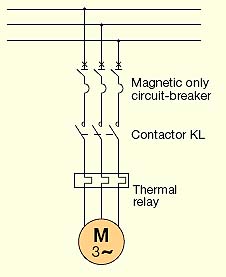
Рис. ABB
Схема прямого пуска электродвигателяMagnetic only circuit-breaker - Автоматический выключатель с электромагнитным расцепителем
Contactor KL - Контактор KL
Thermal relay - Тепловое реле
Параллельные тексты EN-RU
Direct-on-line starting
Direct-on-line starting, which is often abbreviated as DOL, is perhaps the most traditional system and consists in connecting the motor directly to the supply network, thus carrying out starting at full voltage.Direct-on-line starting represents the simplest and the most economical system to start a squirrel-cage asynchronous motor and it is the most used.
As represented in Figure 5, it provides the direct connection to the supply network and therefore starting is carried out at full voltage and with constant frequency, developing a high starting torque with very reduced acceleration times.
The typical applications are relevant to small power motors also with full load starting.
These advantages are linked to some problems such as, for example, the high inrush current, which - in the first instants - can reach values of about 10 to 12 times the rated current, then can decrease to about 6 to 8 times the rated current and can persist to reach the maximum torque speed.The effects of such currents can be identified with the high electro-dynamical stresses on the motor connection cables and could affect also the windings of the motor itself; besides, the high inrush torques can cause violent accelerations which stress the transmission components (belts and joints) generating distribution problems with a reduction in the mechanical life of these elements.
Finally, also the possible electrical problems due to voltage drops on the supply line of the motor or of the connected equipment must be taken into consideration.
[ABB]Прямой пуск
Прямой пуск, который по-английски часто сокращенно обозначают как DOL, является, пожалуй наиболее распространенным способом пуска. Он заключается в непосредственном (т. е. прямом) подключении двигателя к питающей сети. Это означает, что пуск двигателя осуществляется при полном напряжении.Схема прямого пуска является наиболее простым, экономичным и чаще всего применяемым решением для электродвигателей с короткозамкнутым ротором.
Схема прямого подключения к сети представлена на рисунке 5. Пуск осуществляется при полном напряжении и постоянной частоте сети. Электродвигатель развивает высокий пусковой момент при коротком времени разгона.
Типичные области применения – маломощные электродвигатели, в том числе с пуском при полной нагрузке.
Однако, наряду с преимуществами имеются и определенные недостатки, например, бросок пускового тока, достигающий в первоначальный момент 10…12-кратного значения от номинального тока электродвигателя. Затем ток двигателя уменьшается примерно до 6…8-кратного значения номинального тока и будет держаться на этом уровне до тех пор, пока скорость двигателя не достигнет максимального значения.
Такое изменение тока оказывает значительное электродинамическое воздействие на кабель, подключенный к двигателю. Кроме того пусковой ток воздействует на обмотки двигателя. Высокий начальный пусковой момент может привести к значительному ускорению и следовательно к значительной нагрузке элементов привода (ремней, крепления узлов), что вызывает сокращение их срока службы.
И, наконец, следует принять во внимание возможное возникновение проблем, связанных с падением напряжения в линии питания двигателя и подключенного к этой линии оборудования.
[Перевод Интент]
Тематики
Синонимы
EN
- across-the-line starting (US)
- direct line starting
- direct operation of a motor
- direct starting
- direct-on-line starting
- DOL
- full voltage starter application
DE
FR
пускатель прямого действия
Пускатель, одноступенчато подающий сетевое напряжение на выводы двигателя.
(МЭС 441-14-40)
[ ГОСТ Р 50030.4.1-2002 (МЭК 60947-4-1-2000)]
Пускатели переменного тока для прямого непосредственного пуска (с полным напряжением)
Пускатели, предназначенные для пуска двигателя, разгона его до номинальной скорости, защиты двигателя и подключенных к нему цепей от рабочих перегрузок и отключения питания двигателя.
[ ГОСТ Р 50030.4.1-2002 (МЭК 60947-4-1-2000)]EN
direct-on-line starter
a starter which connects the line voltage across the motor terminals in one step
[IEV number 441-14-40]FR
démarreur direct
démarreur qui applique la tension d'alimentation sur les bornes du moteur en une seule manoeuvre
[IEV number 441-14-40]Параллельные тексты EN-RU
Direct-on-line starters
Starters which connect the line voltage across the motor terminals in one step, intended to start and accelerate a motor to normal speed.
They shall ensure switching and protection functions as prescribed in the general definition.
[ABB]Пускатели прямого действия
Пускатели, одноступенчато подающие сетевое напряжение на зажимы двигателя и предназначенные для его пуска и разгона до номинальной скорости.
Кроме того, они должны обеспечивать коммутацию и защиту в соответствии с общим определением.
[Перевод Интент]Тематики
EN
DE
FR
эффект операционного рычага
эффект производственного рычага
Эффект операционного рычага - выражение того факта, что любое изменение выручки от реализации порождает изменение прибыли. Сила воздействия операционного рычага вычисляется как частное от деления выручки от реализации после возмещения переменных затрат на прибыль.
[ http://www.lexikon.ru/dict/fin/a.html]Тематики
Синонимы
EN
Англо-русский словарь нормативно-технической терминологии > DOL
-
3 direct starting
прямой пуск
—
[Я.Н.Лугинский, М.С.Фези-Жилинская, Ю.С.Кабиров. Англо-русский словарь по электротехнике и электроэнергетике, Москва, 1999 г.]Тематики
- электротехника, основные понятия
EN
прямой пуск вращающегося электродвигателя
Пуск вращающегося электродвигателя путем непосредственного подключения его к питающей сети.
[ ГОСТ 27471-87]EN
direct-on-line starting
across-the-line starting (US)
the process of starting a motor by connecting it directly to the supply at rated voltage
[IEV number 411-52-15]FR
démarrage direct
mode de démarrage d'un moteur, consistant à lui appliquer directement sa pleine tension assignée
[IEV number 411-52-15]
Рис. ABB
Схема прямого пуска электродвигателяMagnetic only circuit-breaker - Автоматический выключатель с электромагнитным расцепителем
Contactor KL - Контактор KL
Thermal relay - Тепловое реле
Параллельные тексты EN-RU
Direct-on-line starting
Direct-on-line starting, which is often abbreviated as DOL, is perhaps the most traditional system and consists in connecting the motor directly to the supply network, thus carrying out starting at full voltage.Direct-on-line starting represents the simplest and the most economical system to start a squirrel-cage asynchronous motor and it is the most used.
As represented in Figure 5, it provides the direct connection to the supply network and therefore starting is carried out at full voltage and with constant frequency, developing a high starting torque with very reduced acceleration times.
The typical applications are relevant to small power motors also with full load starting.
These advantages are linked to some problems such as, for example, the high inrush current, which - in the first instants - can reach values of about 10 to 12 times the rated current, then can decrease to about 6 to 8 times the rated current and can persist to reach the maximum torque speed.The effects of such currents can be identified with the high electro-dynamical stresses on the motor connection cables and could affect also the windings of the motor itself; besides, the high inrush torques can cause violent accelerations which stress the transmission components (belts and joints) generating distribution problems with a reduction in the mechanical life of these elements.
Finally, also the possible electrical problems due to voltage drops on the supply line of the motor or of the connected equipment must be taken into consideration.
[ABB]Прямой пуск
Прямой пуск, который по-английски часто сокращенно обозначают как DOL, является, пожалуй наиболее распространенным способом пуска. Он заключается в непосредственном (т. е. прямом) подключении двигателя к питающей сети. Это означает, что пуск двигателя осуществляется при полном напряжении.Схема прямого пуска является наиболее простым, экономичным и чаще всего применяемым решением для электродвигателей с короткозамкнутым ротором.
Схема прямого подключения к сети представлена на рисунке 5. Пуск осуществляется при полном напряжении и постоянной частоте сети. Электродвигатель развивает высокий пусковой момент при коротком времени разгона.
Типичные области применения – маломощные электродвигатели, в том числе с пуском при полной нагрузке.
Однако, наряду с преимуществами имеются и определенные недостатки, например, бросок пускового тока, достигающий в первоначальный момент 10…12-кратного значения от номинального тока электродвигателя. Затем ток двигателя уменьшается примерно до 6…8-кратного значения номинального тока и будет держаться на этом уровне до тех пор, пока скорость двигателя не достигнет максимального значения.
Такое изменение тока оказывает значительное электродинамическое воздействие на кабель, подключенный к двигателю. Кроме того пусковой ток воздействует на обмотки двигателя. Высокий начальный пусковой момент может привести к значительному ускорению и следовательно к значительной нагрузке элементов привода (ремней, крепления узлов), что вызывает сокращение их срока службы.
И, наконец, следует принять во внимание возможное возникновение проблем, связанных с падением напряжения в линии питания двигателя и подключенного к этой линии оборудования.
[Перевод Интент]
Тематики
Синонимы
EN
- across-the-line starting (US)
- direct line starting
- direct operation of a motor
- direct starting
- direct-on-line starting
- DOL
- full voltage starter application
DE
FR
Англо-русский словарь нормативно-технической терминологии > direct starting
-
4 across-the-line starting (US)
прямой пуск вращающегося электродвигателя
Пуск вращающегося электродвигателя путем непосредственного подключения его к питающей сети.
[ ГОСТ 27471-87]EN
direct-on-line starting
across-the-line starting (US)
the process of starting a motor by connecting it directly to the supply at rated voltage
[IEV number 411-52-15]FR
démarrage direct
mode de démarrage d'un moteur, consistant à lui appliquer directement sa pleine tension assignée
[IEV number 411-52-15]
Рис. ABB
Схема прямого пуска электродвигателяMagnetic only circuit-breaker - Автоматический выключатель с электромагнитным расцепителем
Contactor KL - Контактор KL
Thermal relay - Тепловое реле
Параллельные тексты EN-RU
Direct-on-line starting
Direct-on-line starting, which is often abbreviated as DOL, is perhaps the most traditional system and consists in connecting the motor directly to the supply network, thus carrying out starting at full voltage.Direct-on-line starting represents the simplest and the most economical system to start a squirrel-cage asynchronous motor and it is the most used.
As represented in Figure 5, it provides the direct connection to the supply network and therefore starting is carried out at full voltage and with constant frequency, developing a high starting torque with very reduced acceleration times.
The typical applications are relevant to small power motors also with full load starting.
These advantages are linked to some problems such as, for example, the high inrush current, which - in the first instants - can reach values of about 10 to 12 times the rated current, then can decrease to about 6 to 8 times the rated current and can persist to reach the maximum torque speed.The effects of such currents can be identified with the high electro-dynamical stresses on the motor connection cables and could affect also the windings of the motor itself; besides, the high inrush torques can cause violent accelerations which stress the transmission components (belts and joints) generating distribution problems with a reduction in the mechanical life of these elements.
Finally, also the possible electrical problems due to voltage drops on the supply line of the motor or of the connected equipment must be taken into consideration.
[ABB]Прямой пуск
Прямой пуск, который по-английски часто сокращенно обозначают как DOL, является, пожалуй наиболее распространенным способом пуска. Он заключается в непосредственном (т. е. прямом) подключении двигателя к питающей сети. Это означает, что пуск двигателя осуществляется при полном напряжении.Схема прямого пуска является наиболее простым, экономичным и чаще всего применяемым решением для электродвигателей с короткозамкнутым ротором.
Схема прямого подключения к сети представлена на рисунке 5. Пуск осуществляется при полном напряжении и постоянной частоте сети. Электродвигатель развивает высокий пусковой момент при коротком времени разгона.
Типичные области применения – маломощные электродвигатели, в том числе с пуском при полной нагрузке.
Однако, наряду с преимуществами имеются и определенные недостатки, например, бросок пускового тока, достигающий в первоначальный момент 10…12-кратного значения от номинального тока электродвигателя. Затем ток двигателя уменьшается примерно до 6…8-кратного значения номинального тока и будет держаться на этом уровне до тех пор, пока скорость двигателя не достигнет максимального значения.
Такое изменение тока оказывает значительное электродинамическое воздействие на кабель, подключенный к двигателю. Кроме того пусковой ток воздействует на обмотки двигателя. Высокий начальный пусковой момент может привести к значительному ускорению и следовательно к значительной нагрузке элементов привода (ремней, крепления узлов), что вызывает сокращение их срока службы.
И, наконец, следует принять во внимание возможное возникновение проблем, связанных с падением напряжения в линии питания двигателя и подключенного к этой линии оборудования.
[Перевод Интент]
Тематики
Синонимы
EN
- across-the-line starting (US)
- direct line starting
- direct operation of a motor
- direct starting
- direct-on-line starting
- DOL
- full voltage starter application
DE
FR
Англо-русский словарь нормативно-технической терминологии > across-the-line starting (US)
-
5 direct line starting
прямой пуск вращающегося электродвигателя
Пуск вращающегося электродвигателя путем непосредственного подключения его к питающей сети.
[ ГОСТ 27471-87]EN
direct-on-line starting
across-the-line starting (US)
the process of starting a motor by connecting it directly to the supply at rated voltage
[IEV number 411-52-15]FR
démarrage direct
mode de démarrage d'un moteur, consistant à lui appliquer directement sa pleine tension assignée
[IEV number 411-52-15]
Рис. ABB
Схема прямого пуска электродвигателяMagnetic only circuit-breaker - Автоматический выключатель с электромагнитным расцепителем
Contactor KL - Контактор KL
Thermal relay - Тепловое реле
Параллельные тексты EN-RU
Direct-on-line starting
Direct-on-line starting, which is often abbreviated as DOL, is perhaps the most traditional system and consists in connecting the motor directly to the supply network, thus carrying out starting at full voltage.Direct-on-line starting represents the simplest and the most economical system to start a squirrel-cage asynchronous motor and it is the most used.
As represented in Figure 5, it provides the direct connection to the supply network and therefore starting is carried out at full voltage and with constant frequency, developing a high starting torque with very reduced acceleration times.
The typical applications are relevant to small power motors also with full load starting.
These advantages are linked to some problems such as, for example, the high inrush current, which - in the first instants - can reach values of about 10 to 12 times the rated current, then can decrease to about 6 to 8 times the rated current and can persist to reach the maximum torque speed.The effects of such currents can be identified with the high electro-dynamical stresses on the motor connection cables and could affect also the windings of the motor itself; besides, the high inrush torques can cause violent accelerations which stress the transmission components (belts and joints) generating distribution problems with a reduction in the mechanical life of these elements.
Finally, also the possible electrical problems due to voltage drops on the supply line of the motor or of the connected equipment must be taken into consideration.
[ABB]Прямой пуск
Прямой пуск, который по-английски часто сокращенно обозначают как DOL, является, пожалуй наиболее распространенным способом пуска. Он заключается в непосредственном (т. е. прямом) подключении двигателя к питающей сети. Это означает, что пуск двигателя осуществляется при полном напряжении.Схема прямого пуска является наиболее простым, экономичным и чаще всего применяемым решением для электродвигателей с короткозамкнутым ротором.
Схема прямого подключения к сети представлена на рисунке 5. Пуск осуществляется при полном напряжении и постоянной частоте сети. Электродвигатель развивает высокий пусковой момент при коротком времени разгона.
Типичные области применения – маломощные электродвигатели, в том числе с пуском при полной нагрузке.
Однако, наряду с преимуществами имеются и определенные недостатки, например, бросок пускового тока, достигающий в первоначальный момент 10…12-кратного значения от номинального тока электродвигателя. Затем ток двигателя уменьшается примерно до 6…8-кратного значения номинального тока и будет держаться на этом уровне до тех пор, пока скорость двигателя не достигнет максимального значения.
Такое изменение тока оказывает значительное электродинамическое воздействие на кабель, подключенный к двигателю. Кроме того пусковой ток воздействует на обмотки двигателя. Высокий начальный пусковой момент может привести к значительному ускорению и следовательно к значительной нагрузке элементов привода (ремней, крепления узлов), что вызывает сокращение их срока службы.
И, наконец, следует принять во внимание возможное возникновение проблем, связанных с падением напряжения в линии питания двигателя и подключенного к этой линии оборудования.
[Перевод Интент]
Тематики
Синонимы
EN
- across-the-line starting (US)
- direct line starting
- direct operation of a motor
- direct starting
- direct-on-line starting
- DOL
- full voltage starter application
DE
FR
Англо-русский словарь нормативно-технической терминологии > direct line starting
-
6 direct operation of a motor
прямой пуск вращающегося электродвигателя
Пуск вращающегося электродвигателя путем непосредственного подключения его к питающей сети.
[ ГОСТ 27471-87]EN
direct-on-line starting
across-the-line starting (US)
the process of starting a motor by connecting it directly to the supply at rated voltage
[IEV number 411-52-15]FR
démarrage direct
mode de démarrage d'un moteur, consistant à lui appliquer directement sa pleine tension assignée
[IEV number 411-52-15]
Рис. ABB
Схема прямого пуска электродвигателяMagnetic only circuit-breaker - Автоматический выключатель с электромагнитным расцепителем
Contactor KL - Контактор KL
Thermal relay - Тепловое реле
Параллельные тексты EN-RU
Direct-on-line starting
Direct-on-line starting, which is often abbreviated as DOL, is perhaps the most traditional system and consists in connecting the motor directly to the supply network, thus carrying out starting at full voltage.Direct-on-line starting represents the simplest and the most economical system to start a squirrel-cage asynchronous motor and it is the most used.
As represented in Figure 5, it provides the direct connection to the supply network and therefore starting is carried out at full voltage and with constant frequency, developing a high starting torque with very reduced acceleration times.
The typical applications are relevant to small power motors also with full load starting.
These advantages are linked to some problems such as, for example, the high inrush current, which - in the first instants - can reach values of about 10 to 12 times the rated current, then can decrease to about 6 to 8 times the rated current and can persist to reach the maximum torque speed.The effects of such currents can be identified with the high electro-dynamical stresses on the motor connection cables and could affect also the windings of the motor itself; besides, the high inrush torques can cause violent accelerations which stress the transmission components (belts and joints) generating distribution problems with a reduction in the mechanical life of these elements.
Finally, also the possible electrical problems due to voltage drops on the supply line of the motor or of the connected equipment must be taken into consideration.
[ABB]Прямой пуск
Прямой пуск, который по-английски часто сокращенно обозначают как DOL, является, пожалуй наиболее распространенным способом пуска. Он заключается в непосредственном (т. е. прямом) подключении двигателя к питающей сети. Это означает, что пуск двигателя осуществляется при полном напряжении.Схема прямого пуска является наиболее простым, экономичным и чаще всего применяемым решением для электродвигателей с короткозамкнутым ротором.
Схема прямого подключения к сети представлена на рисунке 5. Пуск осуществляется при полном напряжении и постоянной частоте сети. Электродвигатель развивает высокий пусковой момент при коротком времени разгона.
Типичные области применения – маломощные электродвигатели, в том числе с пуском при полной нагрузке.
Однако, наряду с преимуществами имеются и определенные недостатки, например, бросок пускового тока, достигающий в первоначальный момент 10…12-кратного значения от номинального тока электродвигателя. Затем ток двигателя уменьшается примерно до 6…8-кратного значения номинального тока и будет держаться на этом уровне до тех пор, пока скорость двигателя не достигнет максимального значения.
Такое изменение тока оказывает значительное электродинамическое воздействие на кабель, подключенный к двигателю. Кроме того пусковой ток воздействует на обмотки двигателя. Высокий начальный пусковой момент может привести к значительному ускорению и следовательно к значительной нагрузке элементов привода (ремней, крепления узлов), что вызывает сокращение их срока службы.
И, наконец, следует принять во внимание возможное возникновение проблем, связанных с падением напряжения в линии питания двигателя и подключенного к этой линии оборудования.
[Перевод Интент]
Тематики
Синонимы
EN
- across-the-line starting (US)
- direct line starting
- direct operation of a motor
- direct starting
- direct-on-line starting
- DOL
- full voltage starter application
DE
FR
Англо-русский словарь нормативно-технической терминологии > direct operation of a motor
-
7 direct-on-line starting
прямой пуск вращающегося электродвигателя
Пуск вращающегося электродвигателя путем непосредственного подключения его к питающей сети.
[ ГОСТ 27471-87]EN
direct-on-line starting
across-the-line starting (US)
the process of starting a motor by connecting it directly to the supply at rated voltage
[IEV number 411-52-15]FR
démarrage direct
mode de démarrage d'un moteur, consistant à lui appliquer directement sa pleine tension assignée
[IEV number 411-52-15]
Рис. ABB
Схема прямого пуска электродвигателяMagnetic only circuit-breaker - Автоматический выключатель с электромагнитным расцепителем
Contactor KL - Контактор KL
Thermal relay - Тепловое реле
Параллельные тексты EN-RU
Direct-on-line starting
Direct-on-line starting, which is often abbreviated as DOL, is perhaps the most traditional system and consists in connecting the motor directly to the supply network, thus carrying out starting at full voltage.Direct-on-line starting represents the simplest and the most economical system to start a squirrel-cage asynchronous motor and it is the most used.
As represented in Figure 5, it provides the direct connection to the supply network and therefore starting is carried out at full voltage and with constant frequency, developing a high starting torque with very reduced acceleration times.
The typical applications are relevant to small power motors also with full load starting.
These advantages are linked to some problems such as, for example, the high inrush current, which - in the first instants - can reach values of about 10 to 12 times the rated current, then can decrease to about 6 to 8 times the rated current and can persist to reach the maximum torque speed.The effects of such currents can be identified with the high electro-dynamical stresses on the motor connection cables and could affect also the windings of the motor itself; besides, the high inrush torques can cause violent accelerations which stress the transmission components (belts and joints) generating distribution problems with a reduction in the mechanical life of these elements.
Finally, also the possible electrical problems due to voltage drops on the supply line of the motor or of the connected equipment must be taken into consideration.
[ABB]Прямой пуск
Прямой пуск, который по-английски часто сокращенно обозначают как DOL, является, пожалуй наиболее распространенным способом пуска. Он заключается в непосредственном (т. е. прямом) подключении двигателя к питающей сети. Это означает, что пуск двигателя осуществляется при полном напряжении.Схема прямого пуска является наиболее простым, экономичным и чаще всего применяемым решением для электродвигателей с короткозамкнутым ротором.
Схема прямого подключения к сети представлена на рисунке 5. Пуск осуществляется при полном напряжении и постоянной частоте сети. Электродвигатель развивает высокий пусковой момент при коротком времени разгона.
Типичные области применения – маломощные электродвигатели, в том числе с пуском при полной нагрузке.
Однако, наряду с преимуществами имеются и определенные недостатки, например, бросок пускового тока, достигающий в первоначальный момент 10…12-кратного значения от номинального тока электродвигателя. Затем ток двигателя уменьшается примерно до 6…8-кратного значения номинального тока и будет держаться на этом уровне до тех пор, пока скорость двигателя не достигнет максимального значения.
Такое изменение тока оказывает значительное электродинамическое воздействие на кабель, подключенный к двигателю. Кроме того пусковой ток воздействует на обмотки двигателя. Высокий начальный пусковой момент может привести к значительному ускорению и следовательно к значительной нагрузке элементов привода (ремней, крепления узлов), что вызывает сокращение их срока службы.
И, наконец, следует принять во внимание возможное возникновение проблем, связанных с падением напряжения в линии питания двигателя и подключенного к этой линии оборудования.
[Перевод Интент]
Тематики
Синонимы
EN
- across-the-line starting (US)
- direct line starting
- direct operation of a motor
- direct starting
- direct-on-line starting
- DOL
- full voltage starter application
DE
FR
Англо-русский словарь нормативно-технической терминологии > direct-on-line starting
-
8 full voltage starter application
прямой пуск вращающегося электродвигателя
Пуск вращающегося электродвигателя путем непосредственного подключения его к питающей сети.
[ ГОСТ 27471-87]EN
direct-on-line starting
across-the-line starting (US)
the process of starting a motor by connecting it directly to the supply at rated voltage
[IEV number 411-52-15]FR
démarrage direct
mode de démarrage d'un moteur, consistant à lui appliquer directement sa pleine tension assignée
[IEV number 411-52-15]
Рис. ABB
Схема прямого пуска электродвигателяMagnetic only circuit-breaker - Автоматический выключатель с электромагнитным расцепителем
Contactor KL - Контактор KL
Thermal relay - Тепловое реле
Параллельные тексты EN-RU
Direct-on-line starting
Direct-on-line starting, which is often abbreviated as DOL, is perhaps the most traditional system and consists in connecting the motor directly to the supply network, thus carrying out starting at full voltage.Direct-on-line starting represents the simplest and the most economical system to start a squirrel-cage asynchronous motor and it is the most used.
As represented in Figure 5, it provides the direct connection to the supply network and therefore starting is carried out at full voltage and with constant frequency, developing a high starting torque with very reduced acceleration times.
The typical applications are relevant to small power motors also with full load starting.
These advantages are linked to some problems such as, for example, the high inrush current, which - in the first instants - can reach values of about 10 to 12 times the rated current, then can decrease to about 6 to 8 times the rated current and can persist to reach the maximum torque speed.The effects of such currents can be identified with the high electro-dynamical stresses on the motor connection cables and could affect also the windings of the motor itself; besides, the high inrush torques can cause violent accelerations which stress the transmission components (belts and joints) generating distribution problems with a reduction in the mechanical life of these elements.
Finally, also the possible electrical problems due to voltage drops on the supply line of the motor or of the connected equipment must be taken into consideration.
[ABB]Прямой пуск
Прямой пуск, который по-английски часто сокращенно обозначают как DOL, является, пожалуй наиболее распространенным способом пуска. Он заключается в непосредственном (т. е. прямом) подключении двигателя к питающей сети. Это означает, что пуск двигателя осуществляется при полном напряжении.Схема прямого пуска является наиболее простым, экономичным и чаще всего применяемым решением для электродвигателей с короткозамкнутым ротором.
Схема прямого подключения к сети представлена на рисунке 5. Пуск осуществляется при полном напряжении и постоянной частоте сети. Электродвигатель развивает высокий пусковой момент при коротком времени разгона.
Типичные области применения – маломощные электродвигатели, в том числе с пуском при полной нагрузке.
Однако, наряду с преимуществами имеются и определенные недостатки, например, бросок пускового тока, достигающий в первоначальный момент 10…12-кратного значения от номинального тока электродвигателя. Затем ток двигателя уменьшается примерно до 6…8-кратного значения номинального тока и будет держаться на этом уровне до тех пор, пока скорость двигателя не достигнет максимального значения.
Такое изменение тока оказывает значительное электродинамическое воздействие на кабель, подключенный к двигателю. Кроме того пусковой ток воздействует на обмотки двигателя. Высокий начальный пусковой момент может привести к значительному ускорению и следовательно к значительной нагрузке элементов привода (ремней, крепления узлов), что вызывает сокращение их срока службы.
И, наконец, следует принять во внимание возможное возникновение проблем, связанных с падением напряжения в линии питания двигателя и подключенного к этой линии оборудования.
[Перевод Интент]
Тематики
Синонимы
EN
- across-the-line starting (US)
- direct line starting
- direct operation of a motor
- direct starting
- direct-on-line starting
- DOL
- full voltage starter application
DE
FR
Англо-русский словарь нормативно-технической терминологии > full voltage starter application
-
9 see
1. I1) he can't see, he is blind он не видит, он слепей; can the puppy see? щенок [уже] видит /не слепой/?2) I cannot see мне не видно; there is nothing to see тут нечего смотреть: as far as the eye can see насколько видит глаз; see, here he comes смотрите, вот он идет; it took place in the street, where all could see это произошло на улице на глазах у всех; wait and see подождем, = поживем see увидим3) now, do you see? теперь вам ясно?; don't you see? неужели вы не понимаете?; see? понятно, ясно?; it was not easy, you see, to leave видите ли /вы понимаете, что/, уехать было не так просто4) let me see, have I posted the letter? дай мне подумать, отправил ли я письмо?; let me see, it should be on the first page постой, постой, это должно быть на первой странице; will you come to dinner tomorrow? see I'll see вы придете обедать завтра? see [Я] подумаю /посмотрю/, видно будет2. II1) see in some manner see well (poorly, far, etc.) хорошо и т.д. видеть; have you seen enough? вы уже насмотрелись?; see somewhere you can't see here, it is dark здесь темно и ничего не видно; see overleaf смотри(те) на обороте; see far смотреть вперед, предвидеть; I can't see as far as that так далеко вперед я не могу загадывать /предвидеть/; as far as one can see, he has a brilliant career before him насколько можно судить, у него блестящее будущее /его ждет блестящая карьера2) see at some time I see now теперь мне ясно3. III1) see smth., smb. see a letter (a tree, something green, the outline of a building, a stranger, etc.) (увидеть письмо и т.д.; let me see that paper дайте мне взглянуть на /посмотреть/ эту газету; I looked but saw nothing я посмотрел, но ничего не увидел; animals appear to see things invisible to human sight звери, вероятно, видят то, что остается недоступным человеческому глазу; what can /do/ you see? что вы видите?; see page 5 (pattern 4, figure 2, etc.) смотри(те) страницу пятую и т.д.; see ghosts (visions, spirits, bogies, etc.) видеть привидения и т.д.2) see smb. see a friend (one's parents, etc.) повидаться с другом и т.д.; I'll be seeing you coll. [мы еще с вами] увидимся, до скорого свидания; see a doctor (a lawyer, etc.) пойти к врачу и т.д., (по)советоваться / (про)консультироваться/ с врачом и т.д.; see an official обратиться к официальному лицу; can I see the inspector? могу я поговорить /повидаться/ с инспектором?; ask to see the manager попросите вызвать администратора; he sees nobody он никого не принимает: come to /and/ see smb. прийти повидать /навестить/ кого-л.3) see smth., smb. see a town (a country, a district, the sights, Rome, the world's Fair, Oxford, etc.) осматривать город и т.д.; have you ever seen France? бывали ли вы когда-либо во Франции?; [go to]a show (a play, an actress, etc.) [сходить] (подсмотреть спектакль и т.д.; did you see the exhibition? ты был, на выставке?; 1 went to see the exhibition я пошел посмотреть выставку4) see smth., smb. have in a man to see the drains вызовите мастера, чтобы он проверил /осмотрел/ канализацию; see a patient принять /осмотреть, посетить/ больного5) see smth. see life /something of life/ (a good deal of the world, etc.) повидать жизнь и т.д.; he has seen hardships он изведал трудности; this old man has seen better days старик видел лучшие времена; my саг (these boots, this coat, etc.) has seen long /plenty of/ service моя машина и т.д. хорошо [мне] послужила; this coat has seen hard wear это пальто поизносилось /пообтрепалось/; that year (the XIXth century, this period, the Elizabeth's reign, etc.) has seen many changes в этом году и т.д. произошло много перемен, этот год и т.д. явился свидетелем многих перемен; I never saw such rudeness (such doings, etc.) я никогда не сталкивался с такой грубостью и т.д.; I never saw such beauty мне никогда не доводилось встречаться с такой красотой; he will never see 40 again ему уже за сорок; he didn't live to see his son's marriage он не дожил до /не увидел/ женитьбы сына6) see smth. see a joke (the purpose, the reason, the point of the argument, the advantage of his presence, the cause of our misfortune, etc.) понимать шутку и т.д.; I was beginning to see light я стал кое-что понимать, кое-что начало проясняться; I do not see the point я не вижу /не понимаю/, в чем здесь смысл; до меня не доходит суть /соль/; this is how I see it вот, как я это понимаю /представляю себе/; as I see it по-моему, по моему мнению; see things /a lot, much/ понимать /видеть/ многое; she sees everything мимо нее ничего не проходит, от нее ничего не ускользает; she sees nothing она ничего не замечает4. IV1) see smb., smth. in some manner see smb., smth. distinctly (clearly, faintly, vaguely, dimly, etc.) отчетливо и т.д. видеть кого-л., что-л. || see war at close quarters непосредственно участвовать в войне2) see smb. in some manner see smb. willingly (joyfully, reluctantly, etc.) охотно и т.д. видаться с кем-л.; see the man professionaly обратиться к нему как к специалисту; see smb. at some time see smb. later (again, lately, often, tomorrow, this afternoon, etc.) встретиться с кем-л. позже и т.д.; I must see you once more я обязательно должен еще раз повидаться с вами; see you soon! coll. до скорой встречи, пока; the ambassador finally saw him посол наконец принял его; she is too ill to see anyone at present она очень больна, и ей нельзя сейчас ни с кем видеться3) see smth. at some time we saw "Hamlet" last night мы были на "Гамлете" вчера4) see smb. at some time he seems ill, the doctor ought to see him at once он, по-видимому, болен, его надо немедленно показать врачу5) see smb. somewhere see smb. home see as far as the station, aboard, etc.) провожать кого-л. домой и т.д.; see smb. in проводить кого-л. в комнату (в дом и т.п.); see smb. out провожать кого-л. до выхода /к дверям/6) see smth. in some manner see things differently представлять себе /смотреть на/ вещи иначе; I don't see the matter that way я смотрю на это иначе5. VI1) see smb. as being in some state see smb. angry (happy, etc.) видеть кого-л. сердитым и т.д.2) see smb. under some conditions see smb. alone повидать кого-л. наедине3) see smth. as possessing some quanta see it necessary (fit, proper, etc.) to do smth. считать /находить/ необходимым и т.д. сделать что-л.; see things wrong иметь обо всем превратное мнение; see everything black видеть все в черном свете6. VII1) see smb., smth. do smth. see the boy take the apples (the object move, them leave their home, him come, the dog run, etc.) видеть, как мальчик взял яблоки и т.д.; you cannot see your sister starve without trying to help her вы ведь не можете видеть, как ваша сестра голодает, и не попытаться ей помочь; see smth. to be smth. I saw it to be a forgery я увидел, что это подделка2) || see one's way to do smth. понимать, как надо действовать; I don't see my way to get you an invitation я не вижу /не знаю/, как раздобыть /достать/ для вас приглашение; as soon as I see my way to do it... как только я соображу /пойму/, как это сделать...7. VIIIsee smb., smth. doing smth. see him falling (her coming, the boy running, the child slipping, him taking the apples, etc.) видеть, как он падает и т.д.; we can see the forest stretching out мы видим простирающийся вдаль лес; 1 can't see myself doing such a thing see myself agreeing to this proposal, myself submitting to this decision, him allowing people to cheat him, etc.) не могу себе представить, чтобы я так поступил и т.д.8. IXsee smb., smth. done see the child kissed (him taken away, the house rebuilt, the city destroyed, etc.) видеть, как целуют ребенка и т.д.; I'd sacrifice everything rather than see you disgraced я готов пожертвовать всем, чтобы не видеть вашего позора; I want to see justice done я хочу [добиться того], чтобы восторжествовала справедливость9. XI1) be seen come where we cannot be seen пойдем куда-нибудь, где нас не увидят; see and not be seen смотреть /наблюдать/, но самому оставаться незамеченным; children should be seen but not heard детей в доме не должно быть слышно, даже когда они на глазах; he is not fit to be seen у него такой вид, что ему нельзя на люди показываться; there was not a house to be seen не было видно ни единого дома; that remains to be seen надо еще посмотреть /подумать/; be seen with smb. I would not саге to be seen with him мне бы не хотелось, чтобы меня видели с ним; be seen in some manner be dimly (clearly, etc.) seen быть плохо и т.д. видимым; the monument is vaguely seen in the distance издалека памятник едва видно; these tricks are easily seen все эти уловки насквозь видны; be seen from smth. be seen from a short distance (from afar, from a hill, etc.) быть видимым с небольшого расстояния и т.д.; be seen through smth. very little could be seen through the keyhole в замочную скважину мало что было видно; be seen with smth. the writing on the stamp can be seen with naked eyes буквы на марке можно рассмотреть /разглядеть/ невооруженным глазом; be seen by smb. it had never been seen by European eyes этого не видел ни один европеец; be seen somewhere the baggage was last seen at the station в последний раз багаж видели на станции; be seen to do smth. he was seen to fall (to come, to walk, etc.) видели, как он упал и т.д.; be seen doing smth. he was seen falling (coming, etc.) его видели падающим и т.д., видели, как он падал и т.д.; be seen like smth. the airship was seen like a speck in the sky самолет казался маленькой точкой в небе2) be seen of smb. has anything been seen of him in the last two weeks? его кто-нибудь видел /встречал/ за последние две недели?; be seen in some place he is much seen in society он много бывает /его часто видят/ в обществе3) be seen that... from this (from this fact, from the abovesaid, etc.) it will be /can be/ [easily] seen that... из этого и т.д. [с очевидностью] следует, что...; it can be seen at a glance, that... ясно с первого взгляда, что...; it will thus be seen that... таким образом, станет ясно, что...10. XIIIsee to do smth. can you see to read in this light вы можете читать /вы разбираете буквы/ при таком освещении?11. XV1) see in some manner owls see best at night совы лучше всего видят ночью; one may see double when drunk у пьяного в глазах двоится2) see fit to do smth. you may go if you see fit to do so вы можете идти, если считаете это удобным12. XVI1) see with smth. see with one eye видеть одним глазом; see till some time a puppy cannot see till the ninth day щенки слепы первые девять дней; see in smth. see in the dark (in this light, in the rays of the sun, etc.) видеть в темноте и т.д. id he is not able to see beyond the end of his nose он не видит дальше своего носа2) see about /to /smth. see about the luggage (about the matter, to the fire, to all the locks and doors, to all the arrangements, to the business, etc.) позаботиться о багаже и т.д., последить за багажом и т.д.; leave it to me, I'll see to it оставьте /поручите/ это мне, я прослежу за этим; this machine is out of order, will you see to it? машина не в порядке, посмотрите, в чем там дело; see after smth. see after one's own interests соблюдать свой интерес3) see through smb., smth. see through him (through his motives, through smb.'s tricks, through her little game, through his politeness, through her fine ways, through smb.'s disguise, etc.) видеть его и т.д. насквозь; we could see through his plan мы понимали, что кроется за его планом13. XVIIsee about doing smth. see about getting the license plates (about sending the report in time, about packing, about ordering a car, etc.) (по)заботиться о том, чтобы получить номера для машины и т.д., проследить за получением номеров для машины и т.д.14. XVIIIsee oneself 'in smb. see oneself in one's children видеть себя в детях || see [for] oneself убедиться самому, увидеть собственными глазами15. XXI11) see smth., smb. in /at /smth. see an interesting story in a book (a letter in a box, a girl in a room, smb. at a distance, etc.) (у)видеть интересный рассказ в книге и т.д.; see smb., smth. in fat) smth. see smb., smth. in dreams видеть кого-л., что-л. во сне; I can't quite see her (myself, etc.) at a ball я не могу представить себе ее и т.д. на балу; see smth., smb. through smth. see smth., smb. through a crack in the wall (through the trees, etc.) (у)видеть что-л., кого-л. через щель в стене и т.д.; I could see very little through the keyhole мне было плохо видно /я мало что видел/ в замочную скважину; see smth., smb. with smth. see smth., smb. with one's own eyes видеть что-л., кого-л. собственными глазами; see smth. before smth. I'd like to see the house before I decide to take it я бы хотел осмотреть дом, прежде чем решиться на покупку || see the last of smb., smth. распрощаться с кем-л., чем-л.; when shall I see the last of her! когда я наконец избавлюсь от неё!; I hope I have seen the last of this book надеюсь, я все-таки отделался от этой книги2) see smth. in smb., smth. see charming traits in people (the fault in him, many problems in it, many things in the ordinary, a great danger in that sort of thing, etc.) находить /видеть/ в людях привлекательные черты и т.д.; to refuse to see any good in him отказаться видеть в нем что-л. хорошее; I don't know what you can see in her не знаю, что вы в ней находите3) see smth. of smb. see much of each other (little of the Browns, a great deal of him, etc.) часто /много/ встречаться [друг с другом] и т.д.; I don't see anything of my neighbours я совсем не вижу своих соседей, я совсем не встречаюсь со своими соседями; see less of smb. in winter реже видеться с кем-л. зимой; she's seeing too much of him она слишком часто встречается с ним; see smb. at (for) some time see you on Sunday до встречи в воскресенье; I haven't seen you for ages я вас не видел целую вечность; can I see you for a moment? можно вас на минуту?; see smb. about (on) smth. see a man about the book (an inspector about the case, one's lawyer about the matter, a doctor about your condition, a doctor about her injury, etc.) повидать одного человека по поводу книги и т.д.; see smb. on business повидаться с кем-л. по делу4) see smth. in some time see a lot in his life /a great deal in his time/ изведать жизнь, повидать немало в жизни5) see smb. to some place see you to the door (him to the gate, a friend to the station, etc.) проводить вас до двери и т.д.; see the children to bed уложить детей спать; see smb. into (on, off, etc.) smth. see smb. into a train (on board a ship) посадить кого-л. в поезд (на пароход); see smb. off the premises выпроводить кого-л.6) see smb. through smth. see us through the customs (his brother through college, me through the difficulty, her through her trouble) помочь нам пройти таможенный досмотр и т.д.7) || see smth., smb. in some light видеть что-л., кого-л. в каком-л. свете; see smth. in the same light сходиться.во мнении относительно чего-л.; see smth. in a different light видеть что-л. в ином свете; 1 don't see it in that light у меня по этому вопросу другое мнение16. XXIIsee smth. of doing smth. see the use of going there (the good of helping her, the advantage of keeping your mouth shut, the fun of dancing, etc.) видеть смысл в том, чтобы пойти туда и т.д.; I don't see the good of getting angry не вижу никакого смысла злиться || see one's way to doing smth. придумать /найти/, как что-л. сделать17. XXIV1see smb. as smb. I can't see him as president (as a teacher, as a husband, etc.) я не могу себе представить его в роли президента и т.д.18. XXIV4see smth. as... see the problem as it is видеть проблему реально19. XXV1) see that... see that the man was old (that he was blind, that it is time to go, that the box is empty, etc.) видеть, что это старый человек /старик/ и т.д.; see whether..., (if..., how..., what..., etc.) see whether the book is there (if the postman has come, if this hat suits you, who it is, what you've done, what has happened, what courage can do, how far we have gone, etc.) посмотреть, там ли книга и т.д.; see who's at the door посмотри, кто пришел; can you see where the mistake is? вы можете найти ошибку?; we are anxious to see what there is to be seen of the country мы хотим повидать все достопримечательности страны2) see that smth. is done see that the work is done (that the letter is mailed sometime today, that nothing goes wrong, that nothing has been neglected, that he comes to no harm, that he comes in time, that everything is in order, etc.) проследить, чтобы работа была сделана и т.д.; see that you lock the back door смотри, запри /не забудь запереть/ черный ход; see you don't miss the train смотри, не опоздай на поезд3) see what... (that..., why..., etc.) see what I mean (what it is to have courage, that I am not wanted, that you have changed your mind, why you did that, why he doesn't come, how or why it is done, etc.) понимать, что я хочу сказать и т.д.; we saw that it was useless to insist мы поняли, что бесполезно настаивать; can't you see that I'm tired? разве вы не видите /не понимаете/, что я устал?; I see how it is мне понятно, как обстоят дела4) see what... (when..., etc.) let me see what I can do (what ought to do now, when we can come, etc.) дайте подумать /сообразить/, что я могу сделать и т.д.20. XXVII1see through what... I am beginning to see through what he has in mind я начинаю понимать, что у него на уме21. XXVII21) see from smth. that... I see from my diary that I am expected today (from the papers that he is dead, etc.) по моим записям я вижу, что меня ждут сегодня и т.д.2) see to it that... see to it that the light is switched off проследи, чтобы свет был выключен -
10 -ic
[ɪk]= -ical; sufобразует прилагательные от существительных, главным образом заимствованных: artistic артистический- athleticUSAGE:Некоторые прилагательные имеют обе формы - ic и -ical без различия в значении, но в некоторых случаях эти формы несут разное содержание: classic известный или типичный представитель своего класса; classic examples; classical относящийся к эпохе древней Греции и Рима или к эпохе 18-го века; classical music, classical languages; economic относящийся к экономической науке или хозяйству страны; economic theory (problems, conditions); economica l не тратящий денег/средств зря, экономный, экономичный; an economical wife экономная жена; historic важный, значительный для истории; historic events (dates, speeches); historical относящийся к определенному периоду истории; a historical figure (fact, novel, research). -
11 stick one's neck out
разг.рисковать, ставить себя под удар; ≈ самому лезть в петлю [первонач. амер.]The "career man" in government is inclined to consider the interests of his career above the immediate problems of any given moment, his cardinal principle being, "Never stick your neck out". (R. E. Sherwood, ‘Roosevelt and Hopkins’, ch. VII) — Чиновники в правительственных органах склонны рассматривать интересы своей служебной карьеры как стоящие выше любой самой насущной проблемы, поскольку их главным принципом является положение: "никогда не рискуй".
‘Aren't you afraid of getting into more trouble?’ Michael asked. ‘after all that stuff in the States?..’ ‘Brother,’ he said, ‘after Normandy anything the United States might do to me couldn't look like trouble.’ ‘You're sticking your neck out,’ Michael said. (I. Shaw, ‘The Young Lions’, ch. 31) — - Ты не боишься снова попасть в беду после всей этой истории в Штатах? - спросил Майкл... - Дружище, - сказал Ной, - после Нормандии все, что может сделать со мной армия США, уже не кажется страшным. - Ты лезешь на рожон, - заметил Майкл.
Crerar listened closely. He wondered if Willoughby would now spill the secret he had refused to divulge at their conference. If he did he was a damned fool, a reckless braggart. However, if Willoughby wanted to stick his neck out - it was his neck. (S. Heym, ‘The Crusaders’, book I, ch. 5) — Крерар весь превратился в слух. Неужели Уиллоуби сейчас откроет свой план, который он утаил от них на совещании? Если так, то он кретин, безответственный болтун. Впрочем, если ему хочется, пусть лезет в петлю - это его забота.
‘I can't figure you, Casey,’ Freeman said. ‘You say you want the lowdown on MacPherson so Washington can cut off his water, but you won't commit yourself on anything. Don't you ever stick that big fat neck of yours out?’ (F. Knebel and Ch. Bailey, ‘Seven Days in May’, ‘Thursday Noon’) — - Я вас не понимаю, Кейси, - продолжал Фримен. - Вы говорите, что хотите разоблачить Макферсона, чтобы Вашингтон мог заткнуть ему глотку, но вместе с тем не желаете ничем рисковать. Неужели вы никогда в жизни не подставляли под удар свою жирную шею?
-
12 settle
1. n деревянная скамья с высокой спинкой; скамья-ларь2. n редк. помост3. v решать, принимать решение4. v договариваться, определять5. v выяснять, улаживать; разрешать6. v юр. разрешать, урегулироватьsettle dispute — урегулировать спор; урегулировать конфликт
7. v поселяться, обосновыватьсяsettle down — поселяться, водворяться
8. v поселять, заселять; колонизировать9. v устраиваться, усаживаться, укладываться10. v устраивать, усаживать, укладывать11. v устраивать, пристраиватьhe did not want his son to marry until he was well settled in his career — он не хотел, чтобы сын женился раньше, чем сделает карьеру
12. v опускаться, оседать, садиться13. v осаждаться, отстаиваться; давать осадок14. v давать отстояться, очищать от мутиa drop of cold water will settle boiling coffee — капля холодной воды — и кипящий кофе быстро осядет
before they could settle the question they had to refer back to the minutes of the previous meeting — прежде чем решить этот вопрос, они должны были обратиться к протоколу предыдущего заседания
15. v приводить в порядок, успокаивать16. v успокаиваться; приходить в порядок17. v надевать; вдевать; помещать18. v платить, оплачивать; расплачиватьсяsettle up — расплачиваться, рассчитываться
Синонимический ряд:1. alight (verb) alight; land; light; perch; roost; set down; sit down; touch down2. clean up (verb) clean up; wind up3. clear (verb) clear; clear off; compensate; discharge; liquidate; pay; pay up; quit; repay; satisfy; square4. fall (verb) decline; descend; fall; gravitate; immerse; plunge; precipitate; sink; submerge; subside5. fix (verb) arrange; attend to; concert; dispose of; fix; negotiate6. people (verb) colonise; colonize; dwell; inhabit; live; locate; lodge; people; reside; situate; squat7. quiet (verb) allay; balm; becalm; calm; compose; lull; pacify; quiet; repose; rest; soothe; stabilize; still; tranquilize; tranquillise; tranquillize8. resolve (verb) mediate; reconcile; rectify; resolve; smooth over; straighten out9. seat (verb) ensconce; establish; install; seat10. set (verb) conclude; confirm; decide; determine; dispose; figure; judge; lay; place; prove; put; rule; set; stick; verifyАнтонимический ряд:blend; confuse; depart; derange; disagree; disarrange; discompose; disorder; disorganize; displace; disrupt; distort; disturb; forsake; irritate; move; rise -
13 interruption of direct current
отключение постоянного тока
-
[Интент]Параллельные тексты EN-RU
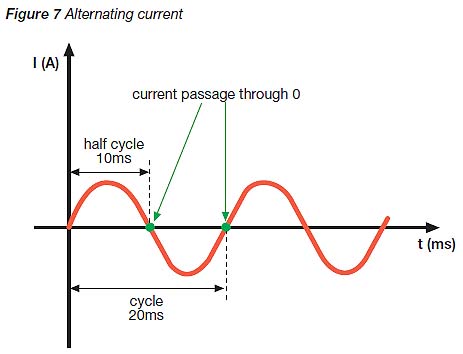
Remarks on the interruption of direct current
Direct current presents different problems than alternating current with aregard to the phenomena associated to the interruption of high value currents since the arc extinction results to be particularly difficult.
As Figure 7 shows, with alternating current there is natural passage of current through zero at each half cycle, which corresponds to the quenching of the arc during the circuit opening. With direct current there is not such natural passage and therefore, to guarantee arc extinction, the current must decrease to null (forcing the current passage through zero).
[ABB]Некоторые сведения об отключении постоянного тока
Отключение постоянного тока, в отличие от переменного связано с существенной проблемой гашения электрической дуги. Данная проблема проявляется тем больше, чем больше значение постоянного тока.
Как видно из рис.7, кривая переменного тока каждые полпериода принимает нулевое значение («проходит через ноль»), что способствует гашению дуги при размыкании цепи. Постоянный ток по своей природе не «проходит через ноль», поэтому для гарантированного гашения дуги необходимо принудительно уменьшить его значение до нуля (т. е. заставить «пройти через ноль»).
[Перевод Интент]
Тематики
- электротехника, основные понятия
EN
Англо-русский словарь нормативно-технической терминологии > interruption of direct current
См. также в других словарях:
Figure-eight knot (mathematics) — In knot theory, a figure eight knot (also called Listing s knot) is the unique knot with a crossing number of four. This is the smallest possible crossing number except for the unknot and trefoil knot. Origin of name The name is given because… … Wikipedia
Figure de style — Substitution opérée par la métaphore : « Ils viennent les chevaux de la Mer ! » Jean Tardieu (La Grande marée de printemps, recueil Margeries, 2009). Huile sur toile, (1893) par Walter Crane. Une figure de style, du latin … Wikipédia en Français
Figure skating competition — A figure skating competition is a judged sports competition in figure skating. Contents 1 Types of figure skating competitions 1.1 International 1.2 National 1.3 Other … Wikipedia
figure — 1 noun (C) 1 NUMBER a) a number representing an amount, especially an officially published number: keeping unemployment figures down b) a number from 0 to 10, written as a sign rather than a word : a four/five/six figure number (=a number in the… … Longman dictionary of contemporary English
figure out — verb find the solution to (a problem or question) or understand the meaning of (Freq. 6) did you solve the problem? Work out your problems with the boss this unpleasant situation isn t going to work itself out did you get it? Did you get my… … Useful english dictionary
Country changes in figure skating — French born and Canadian raised ice dancing team Isabelle Paul Duchesnay originally competed for Canada. They switched to skating for France in 1985 and won the silver medal at the 1992 Winter Olympics for France. Country changing is a phenomenon … Wikipedia
Country hopping in figure skating — Country hopping is a phenomenon in the figure skating world. There are many different reasons why competitors switch countries, but it mostly comes down to maximizing the possibility of being able to compete at the World Figure Skating… … Wikipedia
2002 United States Figure Skating Championships — The U.S. Figure Skating Championships is a figure skating national championship held annually to determine the national champions of the United States. It is organized by the United States Figure Skating Association. In addition to determining… … Wikipedia
Computer-induced medical problems — can be described as an umbrella term for the various problems a computer user can develop from prolonged and incorrect computer use. The medical problems that can arise from using computers can be generally defined as the many medical conditions… … Wikipedia
List of problems solved by MacGyver — This is a list of problems that have been solved by the fictional character MacGyver from the television series of the same name. (This list is not yet comprehensive.) MacGyver employs his resourcefulness and his knowledge of chemistry,… … Wikipedia
Stick figure — A stick figure is a very simple type of drawing made of sticks and circles, generally of the human form, although stick figures of other types of animals are possible (for example, a stick figure dog). In a stick figure, the head is represented… … Wikipedia
