

-
81 Mal
Adv.1. beim Multiplizieren: times, multiplied by; bei Maßangaben: by; vier mal zehn (ist... ) auch four tens (are...); das Zimmer ist sechs mal vier Meter / sechs mal vier the room is six met|res (Am. -ers) by four / six by four2. umg.: guck mal look; die Aufmerksamkeit auf etw. lenkend: here, have a look at this; komm mal her come here a minute(, will you?); wenn das mal gut geht if we’re lucky; siehe auch einmal3. umg. (manchmal) sometimes; er macht es mal so, mal so he does it differently every time; mal dies, mal jenes iro. it’s something different every time; siehe auch einmal* * *das Maltime; occasion* * *I [maːl]nt -(e)s, -e or (poet) -er['mɛːlɐ]2) (liter = Ehrenmal) memorial, monument3) (SPORT) (SCHLAGBALL) base; (RUGBY) posts pl; (= Malfeld) touchIInt -(e)s, -etimedas eine Mál — once
erinnerst du dich an das eine Mál in Düsseldorf? — do you remember that time in Düsseldorf?
das eine oder andere Mál — now and then or again, from time to time
ein/kein einziges Mál — once/not once
wenn du bloß ein einziges Mál auf mich hören würdest — if you would only listen to me for once
ein für alle Mál(e) — once and for all
ein über das andere Mál, ein ums andere Mál, ein Mál über das or ums andere Mál — time after time
voriges or das vorige Mál — the time before
das soundsovielte or x-te Mál (inf) — the umpteenth (inf) or nth time
als ich letztes or das letzte Mál in London war — (the) last time I was in London
beim ersten Mál(e) — the first time
beim zweiten/letzten etc Mál — the second/last etc time
zum ersten/letzten etc Mál — for the first/last etc time
zu verschiedenen Málen — at various times
zu wiederholten Málen — repeatedly, time and again
von Mál zu Mál — each or every time
er wird von Mál zu Mál besser/dümmer — he gets better and better/more and more stupid, he gets better/more stupid each or every time
für dieses Mál — for the time being, for now
mit einem Mál(e) — all at once, all of a sudden, suddenly
* * *1) (used to give measurements etc: 4 metres by 2 metres.) by2) (one of a number occasions: He's been to France four times.) time3) (in mathematics, used to mean multiplied by: Four times two is eight.) times* * *Mal1[ma:l]nt (Zeitpunkt) timeein anderes \Mal another timeeinige/etliche \Male sometimes/very oftenein/kein einziges \Mal once/not oncedas erste \Mal the first timeeinmal ist immer das erste \Mal there's always a first timebeim ersten/zweiten/letzten/... \Mal the first/second/last/... timezum ersten/letzten \Mal for the first/last timedas letzte \Mal the last timeein letztes \Mal (geh) one last timemehrere \Male several timesdas nächste \Mal [the] next timenächstes \Mal next timebis zum nächsten \Mal! see you [around]!das soundsovielte [o x-te] \Mal (fam) the millionth timevoriges \Mal last timedas vorige \Mal [the] last time, on a number of occasionszum wiederholten \Mal[e] over and over again, repeatedlydas wie vielte \Mal? how many times? [or often?][für] dieses \Mal this timedieses \Mal werde ich ein Auge zudrücken this time I'll turn a blind eye\Mal für \Mal again and againvon \Mal zu \Mal increasinglyer wird von \Mal zu \Mal besser he gets better every time [I see him][nur] das [o dieses] eine \Mal! just this oncedas eine oder andere \Mal from time to time, now and againein für alle \Male (fig) once and for allmit einem \Mal[e] (fig) all of a suddenMal2<-[e]s, -e o Mäler>[ˈma:l, pl ˈmɛ:lɐ]nt mark1.<pl -e>(Hautverfärbung) mark; (Muttermal) birthmark2.<pl Mäler>ein \Mal errichten to erect a monument3.<pl -e>SPORT (Feldmarkierung) mark* * *Idas; Mal[e]s, Male timekein einziges Mal — not once; not a single time
das letste Mal — [the] last time
das erste/zweite Mal — for the first/second time
jedes, wenn das Telefon klingelt,... — every time the telephone rings,...
beim ersten/letzten Mal — the first/last time
zum ersten/zweiten/x-ten Mal — for the first/ second/n-th time
von Mal zu Mal heftiger werden/nachlassen — become more and more violent/decrease more and more [each time]
IImit einem Mal[e] — (plötzlich) all at once; all of a sudden
das; Mal[e]s, Male od. Mäler mark; (Muttermal) birthmark; (braun) mole* * *Mal1 n; -(e)s, -e time;dieses eine Mal this once;jedes Mal every time;ein paar Mal a few (umg a couple of) times;ein anderes Mal some other time;mehrere Male several times;beim ersten Mal the first time; etwas schaffen etc: (the) first time (a-)round;letztes Mal (the) last time;ein letztes Mal one last time;das nächste Mal next time ([a]round);zum ersten/zweiten Mal for the first/second time;ein ums andere Mal time after time;das eine oder andere Mal now and then, now and again;zum wiederholten Mal repeatedly;zu wiederholten Malen repeatedly, time and again;von Mal zu Mal every time, all the time;Mal für Mal time after time;ein einziges Mal just once;kein einziges Mal not once;für dieses Mal for now, for the time being;ein für alle Mal(e) once and for all;mit einem Mal(e) all of a suddenMal2 n; -(e)s, -e und Mäler3. pl -e; Spiel: (Ablaufpunkt) start; (Ziel) base, home; Rugby: (Tor) goal; (Malfeld) in-goal (area)* * *Idas; Mal[e]s, Male timekein einziges Mal — not once; not a single time
das letste Mal — [the] last time
das erste/zweite Mal — for the first/second time
jedes, wenn das Telefon klingelt,... — every time the telephone rings,...
beim ersten/letzten Mal — the first/last time
zum ersten/zweiten/x-ten Mal — for the first/ second/n-th time
von Mal zu Mal heftiger werden/nachlassen — become more and more violent/decrease more and more [each time]
IImit einem Mal[e] — (plötzlich) all at once; all of a sudden
das; Mal[e]s, Male od. Mäler mark; (Muttermal) birthmark; (braun) mole -
82 mal
Adv.1. beim Multiplizieren: times, multiplied by; bei Maßangaben: by; vier mal zehn (ist... ) auch four tens (are...); das Zimmer ist sechs mal vier Meter / sechs mal vier the room is six met|res (Am. -ers) by four / six by four2. umg.: guck mal look; die Aufmerksamkeit auf etw. lenkend: here, have a look at this; komm mal her come here a minute(, will you?); wenn das mal gut geht if we’re lucky; siehe auch einmal3. umg. (manchmal) sometimes; er macht es mal so, mal so he does it differently every time; mal dies, mal jenes iro. it’s something different every time; siehe auch einmal* * *das Maltime; occasion* * *I [maːl]nt -(e)s, -e or (poet) -er['mɛːlɐ]2) (liter = Ehrenmal) memorial, monument3) (SPORT) (SCHLAGBALL) base; (RUGBY) posts pl; (= Malfeld) touchIInt -(e)s, -etimedas eine Mál — once
erinnerst du dich an das eine Mál in Düsseldorf? — do you remember that time in Düsseldorf?
das eine oder andere Mál — now and then or again, from time to time
ein/kein einziges Mál — once/not once
wenn du bloß ein einziges Mál auf mich hören würdest — if you would only listen to me for once
ein für alle Mál(e) — once and for all
ein über das andere Mál, ein ums andere Mál, ein Mál über das or ums andere Mál — time after time
voriges or das vorige Mál — the time before
das soundsovielte or x-te Mál (inf) — the umpteenth (inf) or nth time
als ich letztes or das letzte Mál in London war — (the) last time I was in London
beim ersten Mál(e) — the first time
beim zweiten/letzten etc Mál — the second/last etc time
zum ersten/letzten etc Mál — for the first/last etc time
zu verschiedenen Málen — at various times
zu wiederholten Málen — repeatedly, time and again
von Mál zu Mál — each or every time
er wird von Mál zu Mál besser/dümmer — he gets better and better/more and more stupid, he gets better/more stupid each or every time
für dieses Mál — for the time being, for now
mit einem Mál(e) — all at once, all of a sudden, suddenly
* * *1) (used to give measurements etc: 4 metres by 2 metres.) by2) (one of a number occasions: He's been to France four times.) time3) (in mathematics, used to mean multiplied by: Four times two is eight.) times* * *Mal1[ma:l]nt (Zeitpunkt) timeein anderes \Mal another timeeinige/etliche \Male sometimes/very oftenein/kein einziges \Mal once/not oncedas erste \Mal the first timeeinmal ist immer das erste \Mal there's always a first timebeim ersten/zweiten/letzten/... \Mal the first/second/last/... timezum ersten/letzten \Mal for the first/last timedas letzte \Mal the last timeein letztes \Mal (geh) one last timemehrere \Male several timesdas nächste \Mal [the] next timenächstes \Mal next timebis zum nächsten \Mal! see you [around]!das soundsovielte [o x-te] \Mal (fam) the millionth timevoriges \Mal last timedas vorige \Mal [the] last time, on a number of occasionszum wiederholten \Mal[e] over and over again, repeatedlydas wie vielte \Mal? how many times? [or often?][für] dieses \Mal this timedieses \Mal werde ich ein Auge zudrücken this time I'll turn a blind eye\Mal für \Mal again and againvon \Mal zu \Mal increasinglyer wird von \Mal zu \Mal besser he gets better every time [I see him][nur] das [o dieses] eine \Mal! just this oncedas eine oder andere \Mal from time to time, now and againein für alle \Male (fig) once and for allmit einem \Mal[e] (fig) all of a suddenMal2<-[e]s, -e o Mäler>[ˈma:l, pl ˈmɛ:lɐ]nt mark1.<pl -e>(Hautverfärbung) mark; (Muttermal) birthmark2.<pl Mäler>ein \Mal errichten to erect a monument3.<pl -e>SPORT (Feldmarkierung) mark* * *Idas; Mal[e]s, Male timekein einziges Mal — not once; not a single time
das letste Mal — [the] last time
das erste/zweite Mal — for the first/second time
jedes, wenn das Telefon klingelt,... — every time the telephone rings,...
beim ersten/letzten Mal — the first/last time
zum ersten/zweiten/x-ten Mal — for the first/ second/n-th time
von Mal zu Mal heftiger werden/nachlassen — become more and more violent/decrease more and more [each time]
IImit einem Mal[e] — (plötzlich) all at once; all of a sudden
das; Mal[e]s, Male od. Mäler mark; (Muttermal) birthmark; (braun) mole* * *mal advdas Zimmer ist sechs mal vier Meter/sechs mal vier the room is six metres (US -ers) by four/six by four2. umg:guck mal look; die Aufmerksamkeit auf etwas lenkend: here, have a look at this;komm mal her come here a minute(, will you?);3. umg (manchmal) sometimes;er macht es mal so, mal so he does it differently every time;* * *Idas; Mal[e]s, Male timekein einziges Mal — not once; not a single time
das letste Mal — [the] last time
das erste/zweite Mal — for the first/second time
jedes, wenn das Telefon klingelt,... — every time the telephone rings,...
beim ersten/letzten Mal — the first/last time
zum ersten/zweiten/x-ten Mal — for the first/ second/n-th time
von Mal zu Mal heftiger werden/nachlassen — become more and more violent/decrease more and more [each time]
IImit einem Mal[e] — (plötzlich) all at once; all of a sudden
das; Mal[e]s, Male od. Mäler mark; (Muttermal) birthmark; (braun) mole -
83 обороты
speed, rotational speed,
(скорость вращения вала, ротора и т.п.) — r.p.m., rpm, r/m
- автоматического режима (работы 'двигателя) — governed speed (r.p.m.) at any steady-running condition below governed speed.
-, большие (высокие) — high speed
- валов трансмиссии, критические (вертолета) — shafting critical speed
убедиться, что критические обороты валов трансмиссии не выходят за пределы допустимых оборотов двигателя на всех режимах. — it must be determined whether the critical speeds of any shafting lie outside the range of allowable engine speeds.
- вентиляторного ротора (трехвального турбовентиляторного гтд) — fan rotor rpm, fan rpm (мз), n3 rpm. increasing oil pressure will indicate n3 rotation.
-, взлетные (на взлетном режиме) — takeoff r.p.m., engine takeoff speed
- (воздушного) винта — propeller speed
-, восстановленные (доведенные до требуемых) — restored speed /r.p.m./ rpm can be restored as engine operation can be continued with clogged filter.
-, высокие — high speed /r.p.m./
- газогенератора (nrr) — gas generator speed /rpm/
- двигателя — engine (rotational) speed /r. p.m./
обороты двигателя не донжны превышать 103 % от максимально допустимых. — engine speed must not excoed 103 percent of maximum allowable engine r.p.m.
- двигателя, приведенные к mca — engine speed in l.s.a. conditions, engine speed based upon /given in/ l.s.a. (conditions)
-, действительные — actual speed
-, заданные — selected speed /r.p.m./
-, замеренные — indicated speed /r.p.m./
- земного малого газа (двиг.) — ground idle speed
- коленчатого вала — crankshaft rotaticnal speed
-, критические — critical r.p.nl., critical (rotational) speed
-, максимально-допустимые — maximum allowable speed
- максимальные рабочие — rated speed /r.p.m./
- малого газа — idle speed
-, малые — low speed /r.p.m./
- на автоматическом режиме управления (двиг.) — governed speed (r.p.m.)
- на земном малом газе — ground idle speed
- на максимальном продолжительном режиме — maximum continuous speed engine runs at rated maximum continuous power with maximum continuous speed.
- на режиме авторотации (двиг.) — windmitling speed /r.p.m./
- на режиме малого газа (двиг.) — (engine) idle speed
- несущего винта, критические — critical rotor speed /г. a.m./
-, номинальные — nominal speed /r.p.m./
-, номинальные (максимальные рабочие) — rated speed (r.p.m.)
-, опасные (двигателя, всу, превышающие максимальпо-допустимые) — overspeed (ovsp) the apu n2 is overspeeding.
- перекладки ленты перепуска воздуха — compressor bleed valve control speed /rpm/
-, переменные — varying speed /r.p.m./
eng 1 fail light goes on and off with variations in rpm.
-, повышенные (для регулятоpa оборотов) — overspeed condition
при повышенных оборотах регулятор срабатывает на закрытие дозирующей иглы. — overspeed condition causes the governor to close the throttle valve.
- полетного малого газа — flight idle speed
- полного газа — full throttle speed
-, пониженные (для регулятоpa оборотов) — underspeed condition
при пониженных оборотах регулятор срабатывает на открытие дозирующей иглы. — for underspeed condition the governor causes larger throttle opening.
-, предельные "- предельные" (опасные) (табло) — maximum limit speed overspeed (warning light)
- при авторотации (гтд) — windmilling r.p.m.
-, приведенные физические обороты вращения компрессора, вычисленные no температурной зависимости для наиболее экономичной работы двигателя. — corrected speed /rpm/
-, приведенные к мса — speed based upon /given in/ l.s.a.
-, приведенные к стандартной атмосфере (са) — speed based upon standard atmospheric conditions.
-, равновесные регулятор контролирует расход топлива для выдерживания равновесных оборотов, — оп-speed condition the governor controls fuel flow to maintain an on-speed condition.
- расфиксации (возд. винта) — (propeller) pitch unlock speed
-, расчетные — design speed
- расчетные номинальные — rated speed /r.p.m./
-, режимные (двиг.) — operational /speed/ /r.p.m./
- ротора вентилятора (пз) (трехвального турбовентиляторного гтд) — fan rotor rpm, fan rpm (n3), n3 rpm
- ротора высокого давления (nвд, n2) — high pressure (rotor) rpm, hp rpm (n2), n2 rpm engine rotation is indicated by n1 and n2 rpm.
- ротора компрессора, приведенные к мса — compressor speed (given) in l.s.a.
- ротора низкого давления nнд,n1) — low pressure (rotor) rpm, lp rpm (n1), n1 rpm
light off should occur at 4 % n1 which is equivalent to 25 % n3
- самораскрутки — self-sustaining speed
- свободной турбины (n-cb. т) — free turbine speed
-, соответствующие открытию клапанов перепуска воздуха (из компрессора) — engine speed /rpm/ required for compressor bleed valves to open
-, стабилизированные (устойчивые) — stabilized speed (r.p.m.) when rpm has stabilized, load the apu.
"- стартера опасные" (табло — tarter overspeed /ovsp/
- турбокомпрессора (n.тк) — gas generator speed /r.p.m./ (ngg)
-, уравновешенные (для регулятора оборотов) — on-speed condition
-, установившиеся (устойчивые) — stabilized (rotational) speed
-, физические — actual speed
- фиксации (возд. винта) — (propeller) pitch lock speed
- холостого хода — idling speed
-, холостые — idle speed /r.p.m./
-, эксплуатационные — operational speed /r.p.m./
диапазон 0. — range of rpm
advance throttle through this range of n2 rpm
заброс 0. — overspeeding
зависание 0. (двнг.) — engine (speed) hold-up
изменение 0. — variations in rpm
набор 0. (двиг.) — engine acceleration
на (больших, малых) о. — at (high, low) speed
нарастание 0. — speed rise
оборотов в минуту (об/мин) — revolutions per minute (r.p.m.)
ограничение (числа) о. — r.p.m. limitation
падение о. — speed drop
сброс о. (двиг.) — deceleration
стабилизация оборотов — rpm stabilization
число о. (безотносительно ко времени) — number of revolutions
число о. в минуту — revolutions per minute (r.p.m.,
восстанавливать о. — restore rpm)
выводить двигатель на требуемые о.... — accelerate the engine to а required speed of... percent
выдерживать о. (... %) — maintain а speed (of... percent)
выходить на... об/мин (... %) — gain /attain, reach/ a speed of... r.p.m. (or... percent)
набирать 0. — gain /attain, pick-up/ speed
поворачивать (винт) на... о. — turn (the screw)... revolutions
проворачивать двигатель на на... 0. — turn the engine... revolutions
повышать о. — increase speed
понижать 0. — decrease /reduce/ speed
регулировать 0. холостого хода — adjust the idling speed
сбавлять о. — decrease speed
сбавлять о. двигателя — decelerate the engine
сбрасывать о. (двиг.) — decelerate (the engine)
убирать о. двигателя — decelerate the engine
увеличивать о. — increase speed
увеличивать о. двигателя — accelerate the engine
увеличивать число о. — increase r.p.m.
уменьшать число о. — decrease r.p.m.Русско-английский сборник авиационно-технических терминов > обороты
-
84 DOL
- эффект операционного рычага
- пускатель прямого действия
- прямой пуск вращающегося электродвигателя
- Министерство труда (США)
- концентрация растворённого кислорода
концентрация растворённого кислорода
—
[А.С.Гольдберг. Англо-русский энергетический словарь. 2006 г.]Тематики
EN
Министерство труда (США)
—
[А.С.Гольдберг. Англо-русский энергетический словарь. 2006 г.]Тематики
EN
прямой пуск вращающегося электродвигателя
Пуск вращающегося электродвигателя путем непосредственного подключения его к питающей сети.
[ ГОСТ 27471-87]EN
direct-on-line starting
across-the-line starting (US)
the process of starting a motor by connecting it directly to the supply at rated voltage
[IEV number 411-52-15]FR
démarrage direct
mode de démarrage d'un moteur, consistant à lui appliquer directement sa pleine tension assignée
[IEV number 411-52-15]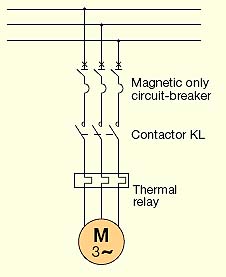
Рис. ABB
Схема прямого пуска электродвигателяMagnetic only circuit-breaker - Автоматический выключатель с электромагнитным расцепителем
Contactor KL - Контактор KL
Thermal relay - Тепловое реле
Параллельные тексты EN-RU
Direct-on-line starting
Direct-on-line starting, which is often abbreviated as DOL, is perhaps the most traditional system and consists in connecting the motor directly to the supply network, thus carrying out starting at full voltage.Direct-on-line starting represents the simplest and the most economical system to start a squirrel-cage asynchronous motor and it is the most used.
As represented in Figure 5, it provides the direct connection to the supply network and therefore starting is carried out at full voltage and with constant frequency, developing a high starting torque with very reduced acceleration times.
The typical applications are relevant to small power motors also with full load starting.
These advantages are linked to some problems such as, for example, the high inrush current, which - in the first instants - can reach values of about 10 to 12 times the rated current, then can decrease to about 6 to 8 times the rated current and can persist to reach the maximum torque speed.The effects of such currents can be identified with the high electro-dynamical stresses on the motor connection cables and could affect also the windings of the motor itself; besides, the high inrush torques can cause violent accelerations which stress the transmission components (belts and joints) generating distribution problems with a reduction in the mechanical life of these elements.
Finally, also the possible electrical problems due to voltage drops on the supply line of the motor or of the connected equipment must be taken into consideration.
[ABB]Прямой пуск
Прямой пуск, который по-английски часто сокращенно обозначают как DOL, является, пожалуй наиболее распространенным способом пуска. Он заключается в непосредственном (т. е. прямом) подключении двигателя к питающей сети. Это означает, что пуск двигателя осуществляется при полном напряжении.Схема прямого пуска является наиболее простым, экономичным и чаще всего применяемым решением для электродвигателей с короткозамкнутым ротором.
Схема прямого подключения к сети представлена на рисунке 5. Пуск осуществляется при полном напряжении и постоянной частоте сети. Электродвигатель развивает высокий пусковой момент при коротком времени разгона.
Типичные области применения – маломощные электродвигатели, в том числе с пуском при полной нагрузке.
Однако, наряду с преимуществами имеются и определенные недостатки, например, бросок пускового тока, достигающий в первоначальный момент 10…12-кратного значения от номинального тока электродвигателя. Затем ток двигателя уменьшается примерно до 6…8-кратного значения номинального тока и будет держаться на этом уровне до тех пор, пока скорость двигателя не достигнет максимального значения.
Такое изменение тока оказывает значительное электродинамическое воздействие на кабель, подключенный к двигателю. Кроме того пусковой ток воздействует на обмотки двигателя. Высокий начальный пусковой момент может привести к значительному ускорению и следовательно к значительной нагрузке элементов привода (ремней, крепления узлов), что вызывает сокращение их срока службы.
И, наконец, следует принять во внимание возможное возникновение проблем, связанных с падением напряжения в линии питания двигателя и подключенного к этой линии оборудования.
[Перевод Интент]
Тематики
Синонимы
EN
- across-the-line starting (US)
- direct line starting
- direct operation of a motor
- direct starting
- direct-on-line starting
- DOL
- full voltage starter application
DE
FR
пускатель прямого действия
Пускатель, одноступенчато подающий сетевое напряжение на выводы двигателя.
(МЭС 441-14-40)
[ ГОСТ Р 50030.4.1-2002 (МЭК 60947-4-1-2000)]
Пускатели переменного тока для прямого непосредственного пуска (с полным напряжением)
Пускатели, предназначенные для пуска двигателя, разгона его до номинальной скорости, защиты двигателя и подключенных к нему цепей от рабочих перегрузок и отключения питания двигателя.
[ ГОСТ Р 50030.4.1-2002 (МЭК 60947-4-1-2000)]EN
direct-on-line starter
a starter which connects the line voltage across the motor terminals in one step
[IEV number 441-14-40]FR
démarreur direct
démarreur qui applique la tension d'alimentation sur les bornes du moteur en une seule manoeuvre
[IEV number 441-14-40]Параллельные тексты EN-RU
Direct-on-line starters
Starters which connect the line voltage across the motor terminals in one step, intended to start and accelerate a motor to normal speed.
They shall ensure switching and protection functions as prescribed in the general definition.
[ABB]Пускатели прямого действия
Пускатели, одноступенчато подающие сетевое напряжение на зажимы двигателя и предназначенные для его пуска и разгона до номинальной скорости.
Кроме того, они должны обеспечивать коммутацию и защиту в соответствии с общим определением.
[Перевод Интент]Тематики
EN
DE
FR
эффект операционного рычага
эффект производственного рычага
Эффект операционного рычага - выражение того факта, что любое изменение выручки от реализации порождает изменение прибыли. Сила воздействия операционного рычага вычисляется как частное от деления выручки от реализации после возмещения переменных затрат на прибыль.
[ http://www.lexikon.ru/dict/fin/a.html]Тематики
Синонимы
EN
Англо-русский словарь нормативно-технической терминологии > DOL
-
85 voltage depression
посадка напряжения
Внезапное значительное снижение напряжения в системе электроснабжения.
[ ГОСТ 23875-88]EN
voltage collapse
sudden decrease in voltage leading to loss of voltage in the whole or a part of a power system
NOTE – A cascading tripping of generating units and/or transmission lines usually occurs during voltage collapse.
[IEV number 604-01-22 ]
voltage depression
system condition characterized by a sustained and significant lowering of voltage in the whole or part of a power system
[IEV number 604-01-44]FR
écroulement de la tension
baisse soudaine de la tension conduisant à la disparition de la tension dans tout ou partie d'un réseau d'énergie électrique
NOTE – Des déclenchements en cascade d'unités de production et/ou de lignes de transport d'énergie électrique se produisent généralement lors d'un écroulement de la tension.
[IEV number 604-01-22 ]
baisse profonde de la tension
état d'un réseau d'énergie électrique caractérisé par une baisse durable et significative de la tension dans tout ou partie du réseau
[IEV number 604-01-44]Тематики
EN
DE
FR
Смотри также
провал напряжения
Внезапное значительное снижение напряжения в системе электроснабжения с последующим его восстановлением.
[ ГОСТ 23875-88]
провал напряжения
Внезапное понижение напряжения в точке электрической сети ниже 0,9 Uном, за которым следует восстановление напряжения до первоначального или близкого к нему уровня через промежуток времени от десяти миллисекунд до нескольких десятков секунд.
[ ГОСТ 13109-97]
провал напряжения
Динамическое изменение напряжения в сети электропитания в виде снижения напряжения за нижний допустимый предел
[ ГОСТ 19542-93]
провал напряжения
Временное уменьшение напряжения в конкретной точке электрической системы ниже порогового значения.
Примечание — Прерывание напряжения является особым случаем провала напряжения. Отличие прерывания напряжения от провала напряжения может быть установлено последующей обработкой результатов измерений.
[ ГОСТ Р 51317.4.30-2008 (МЭК 61000-4-30:2008)]EN
voltage dip
a sudden reduction of the voltage at a point in an electrical system followed by voltage recovery after a short period of time from a few cycles to a few seconds
Source: 604-01-25
[IEV number 161-08-10]
voltage dip
temporary reduction of the voltage magnitude at a point in the electrical system below a threshold
NOTE 1 Interruptions are a special case of a voltage dip. Post-processing may be used to distinguish between voltage dips and interruptions.
NOTE 2 A voltage dip is also referred to as sag. The two terms are considered interchangeable; however, this standard will only use the term voltage dip
[IEC 61000-4-30, ed. 2.0 (2008-10)]FR
creux de tension
baisse brutale de la tension en un point d'un réseau d'énergie électrique, suivie d'un rétablissement de la tension après un court laps de temps de quelques périodes à quelques secondes
Source: 604-01-25
[IEV number 161-08-10]
creux de tension
baisse temporaire de l’amplitude de la tension en un point du réseau d’énergie électrique en dessous d’un seuil donné
NOTE 1 Les interruptions sont un cas particulier des creux de tension. Les traitements ultérieurs permettent de faire la distinction entre creux de tension et interruption.
NOTE 2 La Note 2 s'applique uniquement à la version anglaise.
[IEC 61000-4-30, ed. 2.0 (2008-10)]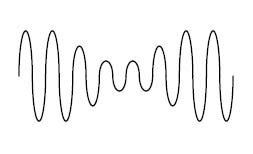
Провал напряженияНедопустимые, нерекомендуемые
Примечание(1)- Мнение автора карточкиТематики
Обобщающие термины
EN
DE
FR
Смотри также
резкое снижение напряжения
—
[Я.Н.Лугинский, М.С.Фези-Жилинская, Ю.С.Кабиров. Англо-русский словарь по электротехнике и электроэнергетике, Москва, 1999 г.]Тематики
- электротехника, основные понятия
EN
Англо-русский словарь нормативно-технической терминологии > voltage depression
86 fax
m.1 fax (machine) (aparato).mandar algo por fax to fax something2 fax (document).* * *1 (sistema, documento) fax2 (aparato) fax machine, fax\enviar por fax to fax* * *noun m.* * *SM1) (=máquina) fax (machine)mandar por fax — to fax, send by fax
2) (=mensaje) fax* * *masculino fax* * *= telefacsimile machine, fax [faxes, -pl.], telefacsimile, facsimile machine, fax machine, fax message.Ex. This allows us -- with the help of devices such as telefacsimile machines, to see our libraries as nodes in a national network of libraries.Ex. Use of fax for ordering of periodicals from SAMPER is being tested.Ex. Photocopying, bibliographic data bases, and telefacsimile are all contributing factors to the decrease in subscriptions to scientific journals.Ex. It can interconnect text processors, personal computers and terminals to high-quality printers, computer-based file stores, facsimile machines, digital voice, video and other electronic office equipment.Ex. Every fax machine is to be assigned to a person-in-charge who will have the responsibility of distributing incoming fax messages to recipients.Ex. Every fax machine is to be assigned to a person-in-charge who will have the responsibility of distributing incoming fax messages to recipients.----* comunicación por fax = telefacsimile communication.* disponer de fax = be telefacsimile capable.* máquina de fax = fax machine.* transmisión por fax = facsimile transmission.* * *masculino fax* * *= telefacsimile machine, fax [faxes, -pl.], telefacsimile, facsimile machine, fax machine, fax message.Ex: This allows us -- with the help of devices such as telefacsimile machines, to see our libraries as nodes in a national network of libraries.
Ex: Use of fax for ordering of periodicals from SAMPER is being tested.Ex: Photocopying, bibliographic data bases, and telefacsimile are all contributing factors to the decrease in subscriptions to scientific journals.Ex: It can interconnect text processors, personal computers and terminals to high-quality printers, computer-based file stores, facsimile machines, digital voice, video and other electronic office equipment.Ex: Every fax machine is to be assigned to a person-in-charge who will have the responsibility of distributing incoming fax messages to recipients.Ex: Every fax machine is to be assigned to a person-in-charge who will have the responsibility of distributing incoming fax messages to recipients.* comunicación por fax = telefacsimile communication.* disponer de fax = be telefacsimile capable.* máquina de fax = fax machine.* transmisión por fax = facsimile transmission.* * *faxmándaselo por fax fax it to himmándale un fax send him a fax* * *
fax sustantivo masculino
fax;
fax sustantivo masculino fax
' fax' also found in these entries:
Spanish:
poner
- telefax
- faxear
- número
English:
fax
- number
- send
* * *fax nm1. [aparato] fax (machine);mandar algo por fax to fax sth2. [documento] fax;mandar un fax to send a fax* * *m fax;enviar un fax a alguien send s.o. a fax, fax s.o.* * *fax nm: fax, facsimile* * *fax n fax87 odd
adjective1) (extraordinary) merkwürdig; (strange, eccentric) seltsam3) (additional)1,000 and odd pounds — etwas über 1 000 Pfund
4) (occasional, random) gelegentlichodd job/odd-job man — Gelegenheitsarbeit, die/-arbeiter, der
5) (one of pair or group) einzelnodd socks/gloves — etc. nicht zusammengehörende Socken/Handschuhe usw.
be the odd man out — (extra person) überzählig sein; (thing) nicht dazu passen
6) (uneven) ungerade [Zahl, Seite, Hausnummer]7) (plus something)she must be forty odd — sie muss etwas über vierzig sein
twelve pounds odd — etwas mehr als zwölf Pfund
* * *[od]3) (not one of a pair, set etc: an odd shoe.) einzeln4) (occasional; free: at odd moments.) gelegentlich•- academic.ru/51229/oddity">oddity- oddly
- oddment
- odds
- odd jobs
- odd job man
- be at odds
- make no odds
- oddly enough
- odd man out / odd one out
- odds and ends
- what's the odds?* * *[ɒd, AM ɑ:d]I. adjhe has an \odd way of showing his feelings er hat eine merkwürdige Art, seine Gefühle zu zeigenthese trains leave at \odd times diese Züge haben ausgefallene Abfahrtszeitenwhat an \odd coincidence! was für ein sonderbarer Zufall!the \odd thing about it is that... das Komische daran ist, dass...to find sth \odd etw komisch [o merkwürdig] findento look \odd komisch aussehen\odd shoes/socks einzelne Schuhe/Sockenguess which number of the following sequence is the \odd one out rate mal, welche der folgenden Zahlen nicht dazugehörtshe was always the \odd one out at school sie war immer eine Außenseiterin in der Schuleshe does the \odd teaching job but nothing permanent sie unterrichtet gelegentlich, hat aber keinen festen Jobto score the \odd goal hin und wieder einen Treffer landen\odd visitor vereinzelter Besucher/vereinzelte BesucherinII. n▪ the \odds are... es ist sehr wahrscheinlich, dass...▪ the \odds on/against sb doing sth die Chancen, dass jd etw tut/nicht tutwhat are the \odds on him being late again? wie stehen die Chancen, dass er wieder zu spät kommt?the \odds against my horse winning are a hundred to one die Chancen, dass mein Pferd nicht gewinnt, stehen hundert zu einsto give long \odds on/against sth etw dat große/sehr geringe Chancen einräumen▶ against all [the] \odds entgegen allen Erwartungen▶ to be at \odds with sb mit jdm uneins seinit makes no \odds to me es ist mir [völlig] einerleidoes it make any \odds whether you use butter or oil? macht es einen Unterschied, ob du Butter oder Öl verwendest?I got paid a bit over the \odds for that job für diesen Job habe ich etwas mehr bezahlt bekommen* * *[ɒd]1. adj (+er)1) (= peculiar) merkwürdig, seltsam, sonderbar; person, thing, idea eigenartig, seltsamhow odd that we should meet him — (wie) eigenartig or seltsam, dass wir ihn trafen
it is an odd thing to do — es ist seltsam, so etwas zu tun
the odd thing about it is that... — das Merkwürdige etc daran ist, dass...
2) number ungerade3) (= one of a pair or a set) shoe, glove einzelnhe/she is (the) odd man or one out — er/sie ist übrig or überzählig or das fünfte Rad am Wagen; (in character) er/sie steht (immer) abseits, er/sie ist ein Außenseiter/eine Außenseiterin
in each group underline the word/picture which is the odd man or one out — unterstreichen Sie in jeder Gruppe das nicht dazugehörige Wort/Bild
4)5) (= surplus, extra) übrig, restlich, überzähligthe odd one left over —
at odd moments or times — ab und zu
he does all the odd jobs — er macht alles, was an Arbeit anfällt
2. adv (inf)* * *1. sonderbar, seltsam, merkwürdig, komisch, eigenartig:an odd fish umg ein komischer Kauz;the odd thing about it is that … das Merkwürdige daran ist, dass …50-odd über 50, einige 50;300-odd pages einige 300 Seiten, etwas über 300 Seiten;50,000-odd etwas über 50 000;odd lot WIRTSCHa) gebrochener Börsenschluss (z. B. weniger als 100 Aktien),b) US geringe Menge, kleiner Effektenabschnitt3. (bei Geldsummen etc) und etwas:it cost five pounds odd es kostete etwas über fünf Pfund;three dollars and some odd cents drei Dollar und noch ein paar Cents4. (noch) übrig, überzählig, restlich5. ungerade (Zahl):odd and even gerade und ungerade;odd years Jahre mit ungerader Jahreszahl6. (bei Zweiteilung) (als Rest) übrig bleibend:be the odd man die entscheidende Stimme haben (bei Stimmengleichheit);a) Ausscheiden n (durch Abzählen),b) Außenseiter(in);7. Einzel…, einzeln:odd pair Einzelpaar n (Schuhe etc);an odd shoe ein einzelner Schuh8. ausgefallen (Kleidergröße etc)9. gelegentlich, Gelegenheits…:odd jobs Gelegenheitsarbeiten, gelegentliche kleine Arbeiten;B s2. Golf:a) Br Vorgabeschlag mb) überzähliger Schlag:have played the odd einen Schlag mehr gebraucht haben als der Gegner* * *adjective1) (extraordinary) merkwürdig; (strange, eccentric) seltsam2) (surplus, spare) übrig [Stück]; überzählig [Spieler]; restlich, übrig [Silbergeld]3) (additional)1,000 and odd pounds — etwas über 1 000 Pfund
4) (occasional, random) gelegentlichodd job/odd-job man — Gelegenheitsarbeit, die/-arbeiter, der
5) (one of pair or group) einzelnodd socks/gloves — etc. nicht zusammengehörende Socken/Handschuhe usw.
be the odd man out — (extra person) überzählig sein; (thing) nicht dazu passen
6) (uneven) ungerade [Zahl, Seite, Hausnummer]7) (plus something)* * *adj.einzeln adj.ungerad adj.ungerade (Mathematik) adj.88 abbassare
prezzo lowerradio turn downabbassare la voce lower one's voice* * *abbassare v.tr.1 ( portare più in basso, chinare) to lower: abbassare le vele, to lower the sails; abbassare gli occhi, il capo, to lower one's eyes, head; abbassare il livello di vita, to lower the standard of living; abbassare la voce, to lower (o to drop) one's voice; abbassare la guardia, to lower (o to drop) one's guard // abbassare un primato, to beat a record // (mat.): abbassare una perpendicolare, to drop a perpendicular; abbassare un numero, ( nelle divisioni) to bring down a number // abbassare le armi, (fig.) to lay down one's arms // abbassare la cresta, (fig.) to eat humble pie2 ( ridurre) ( i prezzi) to reduce, to knock down, to knock off; (gas ecc.) to turn down: abbassa la televisione per piacere, turn down the television, please; abbassare la luce, to dim the light3 ( far scendere) to let* down, to lower: abbassare una saracinesca, to let a shutter down; abbassare un finestrino, to let a window down◘ abbassarsi v.rifl. o intr.pron.1 ( chinarsi) to stoop (down); to bend* (down): sono troppo rigido per abbassarmi, I'm too stiff to bend (down)2 (fig.) to lower oneself, to humble oneself4 ( calare, ridursi): ( di acque) to subside; ( di vento) to drop; ( di temperatura) to drop, to fall*; ( di luce) to dim; ( di sipario) to drop.* * *[abbas'sare]1. vt1) to lower, (leva) to press down, (finestrino della macchina) to wind down, (finestrino del treno, tapparella) to pull downabbassare la guardia Sport, fig — to drop one's guard
2) (volume, radio, TV) to turn down, (voce) to lower3) (diminuire: prezzi) to reduce, bring down5) (Geom : perpendicolare) to drop2. vr (abbassarsi)abbassarsi a fare qc — to lower o.s. to do sth
3. vip (abbassarsi)1) (temperatura, prezzi) to drop, fall, (marea) to go out, fall, (livello) to go down, (sipario) to fall2) (peggiorare: vista) to deteriorate* * *[abbas'sare] 1.verbo transitivo1) (ridurre) (d'intensità) to lower [ volume]; to lower, to dim [ luce]; to dip BE, to dim AE [ fari]; to turn down [riscaldamento, radio]; (d'altezza) to lower [muro, siepe]; (di valore) to reduce, to bring* down [ prezzi]; to lower [ livello] (di by)abbassare la voce — to drop o lower one's voice
2) (portare a livello più basso) to lower [ soffitto]abbassare il voto a qcn., di qcs. — scol. to mark sb., sth. down
3) (tirare giù) to pull down, to lower [avvolgibile, saracinesca]; to pull down [visiera, pantaloni]; to wind* down [ finestrino]4) (spingere giù) to press down [ leva]2.abbassare il capo — (per precauzione) to lower one's head; (in segno di rispetto) to bow one's head
verbo pronominale abbassarsi1) (diminuire) [temperatura, pressione] to lower, to drop, to go* down; [ luce] to dim, to lower; [ prezzi] to decrease; [vista, udito] to weaken; [ voce] to fail2) (diventare più basso) [ terreno] to subside, to sink*; [ marea] to go* down; [ torta] to sink*, to fall*3) (chinarsi) [ persona] to bend* down4) (umiliarsi) to lower oneself-rsi a fare qcs. — to sink o stoop so low as to do sth
* * *abbassare/abbas'sare/ [1]1 (ridurre) (d'intensità) to lower [ volume]; to lower, to dim [ luce]; to dip BE, to dim AE [ fari]; to turn down [ riscaldamento, radio]; (d'altezza) to lower [ muro, siepe]; (di valore) to reduce, to bring* down [ prezzi]; to lower [ livello] ( di by); abbassare la voce to drop o lower one's voice; abbassa la voce! keep your voice down!2 (portare a livello più basso) to lower [ soffitto]; abbassare il voto a qcn., di qcs. scol. to mark sb., sth. down3 (tirare giù) to pull down, to lower [ avvolgibile, saracinesca]; to pull down [ visiera, pantaloni]; to wind* down [ finestrino]4 (spingere giù) to press down [ leva]6 (chinare) to lower, to drop [ occhi]; abbassare lo sguardo to look down; abbassare il capo (per precauzione) to lower one's head; (in segno di rispetto) to bow one's headII abbassarsi verbo pronominale1 (diminuire) [ temperatura, pressione] to lower, to drop, to go* down; [ luce] to dim, to lower; [ prezzi] to decrease; [ vista, udito] to weaken; [ voce] to fail2 (diventare più basso) [ terreno] to subside, to sink*; [ marea] to go* down; [ torta] to sink*, to fall*3 (chinarsi) [ persona] to bend* down89 laskea
calculate (verb)cipher (verb)compute (verb)count (verb)decline (verb)decrease (verb)deposit (verb)descend (verb)diminish (verb)discharge (verb)drain (verb)draw (verb)drop (verb)ebb (verb)empty (verb)estimate (verb)fall (verb)go down (verb)haul down (verb)include (verb)lay (verb)let (verb)let down (verb)let go (verb)lower (verb)number (verb)recede (verb)reckon (verb)sag (verb)set (verb)sink (verb)subside (verb)tap (verb)tell (verb)* * *• flow into• drop• ebb• empty• enumerate• estimate• evaluate• fall• draw• figure• deposit• flow• glide• go down• haul down• figure out• slope• include• compute• come down• cipher• check• diminish• allow• draw off• decrease• count• deduct• degrade• descend• discharge• calculate• subside• release• sink• score• set• decline• introduce• abase• reduce• tap• tell over• tell• tot up• value• weigh• slide• lower• issue• lay down• lay• let down• sag• let• reduce the price• number• publish• put down• put• recede• reckon up• reckon• let go90 of
əv1) (belonging to: a friend of mine.) av2) (away from (a place etc); after (a given time): within five miles of London; within a year of his death.) fra, etter3) (written etc by: the plays of Shakespeare.) av4) (belonging to or forming a group: He is one of my friends.) av5) (showing: a picture of my father.) av6) (made from; consisting of: a dress of silk; a collection of pictures.) av7) (used to show an amount, measurement of something: a gallon of petrol; five bags of coal.) med, à8) (about: an account of his work.) om9) (containing: a box of chocolates.) med, av10) (used to show a cause: She died of hunger.) av, fra11) (used to show a loss or removal: She was robbed of her jewels.) fra-, av12) (used to show the connection between an action and its object: the smoking of a cigarette.) av13) (used to show character, qualities etc: a man of courage.) med, av14) ((American) (of time) a certain number of minutes before (the hour): It's ten minutes of three.) på, føromprep. \/ɒv\/, trykksvakəv\/ eller \/v\/, foran ubetont konsonant: \/f\/1) ( om forholdet mellom en del og en helhet) av, fra2) (etter et tall eller bestemmelsesfaktor, av og til uten oversettelse til norsk) med, om, av, blant• would you like a cup of tea?3) ( om retning eller sted) fra, for• have you met Professor Smith of Cambridge?4) ( om forbindelsen mellom to enheter eller eiendomsforhold) med, i, av, etter, fra, forhan er en romanforfatter fra det 18. århundre5) ( om forholdet mellom et abstrakt begrep og et etterfølgende objekt) fra, for, av, i, på• in the opinion of the teachers, this is wrong6) (om forholdet mellom et verb og et etterfølgende objekt der verbet uttrykker en mental eller abstrakt tilstand) fra, etter, om, på• just think of the consequences!7) ( om årsak eller motiv) av8) ( om forholdet mellom en skala eller målestokk og en verdi) på, med, à• the sales will decrease of 5%salget vil gå ned med 5%9) (om alder, av og til uten oversettelse på norsk) på10) ( om materiale som noe består av) av, i11) (om dato, årstid, navn eller tittel, av og til uten oversettelse på norsk) på• he's the governor of St. Helenahan er guvernøren på St. Helena12) (om personlig egenskap, av og til uten oversettelse på norsk) på13) ( om sammenligning) til, av• he has one merit, that of being honesthan har ett fortrinn, nemlig det å være ærlig15) (i visse tidsuttrykk, litterært) på, om• what do you do of Sundays?16) (amer., om klokkeslett) påbe of delta i, være med i, tilhøreof late i det sistei de siste årene\/i de senere årof oneself av seg selv, frivillig91 relación
f.1 relation, association, relationship, connection.2 relation, treatment, intercourse, dealing.3 acquaintance, relation.4 account, recitation, narration, recital.5 report, recountal.6 friendship.7 relative, member of the family, relation.* * *1 (correspondencia) relation, relationship■ una relación amistosa a friendship, a friendly relationship2 (conexión) link, connection3 (lista) list, record4 (relato) account, telling5 (en matemática) ratio1 (conocidos) acquaintances; (contactos) contacts, connections\con relación a / en relación a with regard to, regardingestar en buenas relaciones con alguien to be on good terms with somebodyestar en relación con alguien to be in contact with somebodyhacer relación a algo to refer to somethingtener buenas relaciones to be well connectedtener relaciones con alguien (salir) to go out with somebodyrelación de compresión TÉCNICA compression ratiorelaciones diplomáticas diplomatic relationsrelaciones públicas public relationsrelaciones sexuales sexual relations* * *noun f.1) relation2) relationship3) account4) connection5) liaison•- relación sexual* * *SF1) (=vínculo) connectionno existe ninguna relación entre los dos accidentes — there is no connection between the two accidents
existe una relación entre el tabaco y el cáncer — there is a connection o relation o relationship between cigarettes and cancer
•
guardar o tener relación con algo — [suceso] to be connected with sth, be related to sth; [persona] to be connected with sthno guardar relación (alguna) con algo — (=no parecerse) to bear no relation (whatsoever) to sth; (=no estar relacionado) to have no connection o relation (at all) with sth
relación calidad/precio — value for money
tener buena relación calidad/precio — to be good value for money
2)• con relación a, en relación a o con — (=comparado con) compared to, compared with; (=en lo referente a) with regard to, in connection with
un aumento del 3% con relación al año anterior — an increase of 3% over o compared to o compared with the previous year
con relación a la encuesta publicada por este periódico — with regard to o in connection with the survey published by this newspaper
3) (=entre personas)a) [en el momento presente] relations pl¿cómo es su relación o son sus relaciones con su jefe? — how are relations between you and your boss?
•
estar en o mantener buenas relaciones con — [+ persona] to be on good terms with; [+ organización] to have good relations with•
romper las relaciones con — [+ país, organización] to break off relations with; [+ familiar, amigo] to break off all contact withb) [de larga duración] relationship¿cómo eran las relaciones con su padre? — what was your relationship with your father like?
tenía una relación de amistad con algunos de sus alumnos — he had a friendly relationship with some of his students
¿sigues manteniendo las relaciones con tus antiguos compañeros de universidad? — do you still keep in touch with people from your university days?
4) [con empresa, organización] connection¿tiene alguna relación con esa empresa? — do you have any connection with that company?
ha sido detenido por sus relaciones con la Mafia — he has been arrested because of his connections with the Mafia
relaciones laborales — labour relations, labor relations (EEUU)
relaciones públicas — (=actividad) public relations, PR; (=profesional) public relations officer, PR officer
5) (tb: relación amorosa) relationshipno veían con buenos ojos sus relaciones con una extranjera — they did not view his relationship with a foreign woman favourably
mantener o tener relaciones sexuales con algn — [de forma esporádica] to have sex with sb; [de forma continuada] to be in a sexual relationship with sb
relaciones prematrimoniales — premarital sex, sex before marriage
7) (=referencia)•
hacer relación a algo — to refer to sthtener (buenas) relaciones — to be well connected, have good contacts o connections
9) (Mat) (=proporción) ratiolos superan numéricamente en una relación 46-36% — they outnumber them by a ratio of 46-36%
10) frm (=narración) account•
hacer una relación de algo — to give an account of sth11) (=lista) listla relación de aprobados se publicará en marzo — the list of those who have passed will be issued in March
el usuario dispone, junto a la factura telefónica, de una relación de sus llamadas — the customer receives, together with the telephone bill, a breakdown of calls made
12) (Jur) (=informe) record, (official) return* * *1)a) ( conexión) connectioncon relación a or en relación con — ( con respecto a) in connection with; ( en comparación con) relative to
en relación con su carta... — with regard to o regarding your letter...
b) ( correspondencia)en una relación de diez a uno — (Mat) in a ratio of ten to one
2)a) ( trato)relaciones diplomáticas/comerciales — diplomatic/trade relations
es nulo en lo que respecta a las relaciones humanas — he's hopeless when it comes to dealing with people
b) relaciones femenino plural ( influencias) contacts (pl), connections (pl)3)a) ( exposición) accountb) ( lista) list* * *= association, chaining, connection [connexion], connectivity, dealing, interaction, interplay, involvement, link, ratio, relation, relationship, relationship link, relatedness, alliance, liaison, exposure, tie, tie-up.Ex. It is possible and convenient to select a viewpoint on the scope, associations and labels for subjects which coincides with the way in which subjects are handled in the literature.Ex. The information seeking patterns of a variety of academic social scientists were broken down into 6 characteristics: starting; chaining; browsing; differentiating; monitoring; and extracting.Ex. Access is via modified television set, a telephone (and its connections) and a simple keypad.Ex. An information system architecture defines a structure for describing communications connectivity between users of information and sources of information.Ex. The most serious problem for librarians in their dealings with media materials is the massive multiplication of formats, making it difficult for librarians to decide what to buy in what format.Ex. One trend for the future is likely to be the development of hosts which are designed for interaction with the end user.Ex. In the case of the book, it is the interplay of such multifarious trends that will determine its destiny.Ex. Clearly, anyone having any dealings at all with the CAP needs a general understanding of how the system works, at a level which is appropriate to their involvement.Ex. Explanatory references give a little more explanation as to why the link between two names is being made in the catalogue or index.Ex. The microfiche is a common form for catalogues and indexes, usually 208 or 270 frames per fiche, in a piece of film and with a reduction ratio of 42 or 48:1.Ex. The catalogue often forms the basis for co-operation and good relations between the libraries in a region.Ex. Related works are separately catalogued works that have a relationship to another work.Ex. The bibliographic record for the volume is also a monographic record, but with a series entry and a relationship link to the bibliographic record for the series as a whole.Ex. The frequency of co-occurrence of articles from different subfields in selected periodicals is used for measuring the degree of relatedness between these subfields.Ex. This type of alliance is already evident in countries like Thailand, where library science students and educators have been actively involved in writing and illustrating children's books.Ex. It is important to make sure that there is close liaison between the cataloguing department and the order department, otherwise cards are liable to be ordered twice or in insufficient quantity to meet the total demand.Ex. This article also examines the need for exposure to AI by all students in order to become familiar with capabilities and limitations of AI-based systems.Ex. Eastern European countries longing for western scientific ties have wanted to participate in the Internet for a long time, but were excluded by government regulations.Ex. The report of findings may consist simply of a few pages, or be a trends and proposals report, or may suggest tie-ups with other groups.----* beneficios en relación con la inversión = return on investment (ROI).* bloque funcional de relaciones entre registros = linking entry block.* buena relación calidad-precio = value for money.* buscar el origen de la relación entre = trace + the relationship between.* campaña de relaciones públicas = public relations campaign.* campo de relación = linking field.* con relación a = as regards, re, in relation to, in connection with, regarding, concerning.* crear relaciones = structure + relationships.* definir relaciones = structure + relationships.* de segunda importancia en relación con = secondary to.* diagrama de relaciones = relationship display.* encargado de relaciones públicas = public liaison.* en relación a = as for.* en relación con = in association with, in conjunction with, in connection with, in relation to, in respect of, in terms of, in the way of, relating to, relative to, vis à vis, with reference to, with regard(s) to, apropos of, as it relates to, in the context of, on the matter of, re, regarding, apropos to, in reference to, concerning, in keeping with.* en relación proporcional con = in proportion to.* entablar relaciones = enter into + relations, enter into + relationships, build + relationships, develop + relationships, develop + relations, build + relations.* entablar relaciones comerciales = transact.* entablar relaciones con = forge + links with, forge + relationships with, forge + ties.* establecer relaciones = build + relationships, develop + relationships, develop + relations, build + relations, structure + relationships.* establecer relaciones con = forge + links with, forge + relationships with, forge + ties.* estrechar la relación = strengthen + links.* estropear una relación = poison + a relationship.* fortalecer la relación = strengthen + links.* ganancias en relación con la inversión = return on investment (ROI).* grado de relación = relatedness measure.* guardar relación con = bear + relation to, stand in + relation to, stand in + relationship to, bear + relationship to, be commensurate with.* guardar una relación directamente proporcional = vary + proportionately.* guardar una relación inversamente proporcional = vary + inversely.* hacer una relación de = list.* indicador de relación = relation indicator, relational operator, role operator.* ley de relación exponencial inversa al cuadrado = inverse square law.* ley de relación exponencial inversa al cubo = inverse cube law.* mantener relaciones = maintain + contact, maintain + relationships, maintain + relations.* mantener relaciones comerciales = do + business.* mantener una relación con = carry on + relationship with.* mejor relación calidad-precio, la = best value for money, the.* negar tener relación con = disclaim + connection with.* no guardar relación con = be incommensurate with.* número de relación = linking number.* operador de relación = link, relational operator, linking device.* persona encargada de las relaciones públicas = PR man [PR men, -pl.].* poner en relación = bring into + relationship.* que guarde relación con = in keeping with.* relación "es un tipo de" = is-a relationship.* relación afín = affinitive relationship.* relación amorosa = love affair.* relación ascendente = upward reference.* relación asociativa = associative relation, collateral link, collateral reference.* relación calidad-precio = price-performance ratio.* relación causa-efecto = cause-effect relation, causal relationship.* relación clase-tipo = type-token ratio.* relación comparativa = comparative relation.* relación consecutiva = consecutive relation.* relación contractual = contractual relationship.* relación coordinada = coordinate relation.* relación costes-beneficios = cost-benefit ratio.* relación costos-beneficios = cost-benefit ratio.* relación de aplicación = bias relation.* relación de confianza = trusting relationship.* relación de contenido = contents notes.* relación de equivalencia = equivalence relationship.* relación de inclusión = part-whole relation.* relación de poder = power relationship.* relación de preferencia = preferential relation, preferential relationship.* relación descendente = downward reference.* relación de trabajo = working relation, working relationship, work relationship, work relation.* relación directa = direct relationship, linear relationship, linear relation.* relación directamente proporcional significativa = significant direct relationship.* relación directa significativa = significant direct relationship.* relación entre compañeros = peer interaction.* relación entre cuasisinónimos = near-synonymous relationship.* relaciones = intercourse.* relaciones comerciales = business dealings, commercial relations, trade relations.* relaciones de género = gender relations.* relaciones de poder = power relations.* relaciones diplomáticas = diplomatic relations.* relaciones entre hombres y mujeres = gender relations.* relaciones humanas = human relations, human relationships.* relaciones industriales = industrial relations.* relaciones jerárquicas = role relationships.* relaciones laborales = labour relations, employment relations.* relación específica = downward reference.* relaciones prematrimoniales = premarital sex.* relaciones públicas = public relations (PR), PR activities, public relations exercise, public liaison.* relaciones sexuales = sexual intercourse, intercourse.* relaciones sexuales promiscuas = casual sex(ual) encounters, casual sex.* relaciones sociales = social relations.* relación estrecha = close contact.* relación formal = formal relation.* relación genérica = generic relation, generic relationship, upwards link, upward reference.* relación género/especie = genus/species relationship.* relación internacional = international relation.* relación interracial = interracial relationship.* relación inversa = inverse relationship.* relación inversamente proporcional significativa = inverse relationship, significant inverse relationship.* relación inversa significativa = significant inverse relationship.* relación jerárquica = hierarchical relation, hierarchical relationship.* relación laboral = working relation, working relationship, work relationship, work relation.* relación negativa = negative relationship.* relación parte-todo = whole/part relationship, whole-part relationship.* relación positiva = positive relationship.* relación semántica = semantic relation, semantic relationship.* relación sexual = sexual relationship.* relación sexual sin protección = unprotected sex.* relación simbiótica = symbiotic relationship.* relación sintáctica = syntactic relation, syntactic relationship, syntactical relationship.* relativo a la relación costos-beneficios = cost-benefit, cost-benefit.* romper una relación = break off + relationship, sever + connection.* sin relación = unrelated, unconnected.* sin relación con = unrelated to.* sociología de las relaciones industriales = industrial sociology, sociology of industrial relations.* tener relación con = have + bearing on.* tener relaciones amorosas = have + an affair.* tener relaciones con = have + dealings with.* tener relaciones sexuales con = have + intercourse with.* * *1)a) ( conexión) connectioncon relación a or en relación con — ( con respecto a) in connection with; ( en comparación con) relative to
en relación con su carta... — with regard to o regarding your letter...
b) ( correspondencia)en una relación de diez a uno — (Mat) in a ratio of ten to one
2)a) ( trato)relaciones diplomáticas/comerciales — diplomatic/trade relations
es nulo en lo que respecta a las relaciones humanas — he's hopeless when it comes to dealing with people
b) relaciones femenino plural ( influencias) contacts (pl), connections (pl)3)a) ( exposición) accountb) ( lista) list* * *= association, chaining, connection [connexion], connectivity, dealing, interaction, interplay, involvement, link, ratio, relation, relationship, relationship link, relatedness, alliance, liaison, exposure, tie, tie-up.Ex: It is possible and convenient to select a viewpoint on the scope, associations and labels for subjects which coincides with the way in which subjects are handled in the literature.
Ex: The information seeking patterns of a variety of academic social scientists were broken down into 6 characteristics: starting; chaining; browsing; differentiating; monitoring; and extracting.Ex: Access is via modified television set, a telephone (and its connections) and a simple keypad.Ex: An information system architecture defines a structure for describing communications connectivity between users of information and sources of information.Ex: The most serious problem for librarians in their dealings with media materials is the massive multiplication of formats, making it difficult for librarians to decide what to buy in what format.Ex: One trend for the future is likely to be the development of hosts which are designed for interaction with the end user.Ex: In the case of the book, it is the interplay of such multifarious trends that will determine its destiny.Ex: Clearly, anyone having any dealings at all with the CAP needs a general understanding of how the system works, at a level which is appropriate to their involvement.Ex: Explanatory references give a little more explanation as to why the link between two names is being made in the catalogue or index.Ex: The microfiche is a common form for catalogues and indexes, usually 208 or 270 frames per fiche, in a piece of film and with a reduction ratio of 42 or 48:1.Ex: The catalogue often forms the basis for co-operation and good relations between the libraries in a region.Ex: Related works are separately catalogued works that have a relationship to another work.Ex: The bibliographic record for the volume is also a monographic record, but with a series entry and a relationship link to the bibliographic record for the series as a whole.Ex: The frequency of co-occurrence of articles from different subfields in selected periodicals is used for measuring the degree of relatedness between these subfields.Ex: This type of alliance is already evident in countries like Thailand, where library science students and educators have been actively involved in writing and illustrating children's books.Ex: It is important to make sure that there is close liaison between the cataloguing department and the order department, otherwise cards are liable to be ordered twice or in insufficient quantity to meet the total demand.Ex: This article also examines the need for exposure to AI by all students in order to become familiar with capabilities and limitations of AI-based systems.Ex: Eastern European countries longing for western scientific ties have wanted to participate in the Internet for a long time, but were excluded by government regulations.Ex: The report of findings may consist simply of a few pages, or be a trends and proposals report, or may suggest tie-ups with other groups.* beneficios en relación con la inversión = return on investment (ROI).* bloque funcional de relaciones entre registros = linking entry block.* buena relación calidad-precio = value for money.* buscar el origen de la relación entre = trace + the relationship between.* campaña de relaciones públicas = public relations campaign.* campo de relación = linking field.* con relación a = as regards, re, in relation to, in connection with, regarding, concerning.* crear relaciones = structure + relationships.* definir relaciones = structure + relationships.* de segunda importancia en relación con = secondary to.* diagrama de relaciones = relationship display.* encargado de relaciones públicas = public liaison.* en relación a = as for.* en relación con = in association with, in conjunction with, in connection with, in relation to, in respect of, in terms of, in the way of, relating to, relative to, vis à vis, with reference to, with regard(s) to, apropos of, as it relates to, in the context of, on the matter of, re, regarding, apropos to, in reference to, concerning, in keeping with.* en relación proporcional con = in proportion to.* entablar relaciones = enter into + relations, enter into + relationships, build + relationships, develop + relationships, develop + relations, build + relations.* entablar relaciones comerciales = transact.* entablar relaciones con = forge + links with, forge + relationships with, forge + ties.* establecer relaciones = build + relationships, develop + relationships, develop + relations, build + relations, structure + relationships.* establecer relaciones con = forge + links with, forge + relationships with, forge + ties.* estrechar la relación = strengthen + links.* estropear una relación = poison + a relationship.* fortalecer la relación = strengthen + links.* ganancias en relación con la inversión = return on investment (ROI).* grado de relación = relatedness measure.* guardar relación con = bear + relation to, stand in + relation to, stand in + relationship to, bear + relationship to, be commensurate with.* guardar una relación directamente proporcional = vary + proportionately.* guardar una relación inversamente proporcional = vary + inversely.* hacer una relación de = list.* indicador de relación = relation indicator, relational operator, role operator.* ley de relación exponencial inversa al cuadrado = inverse square law.* ley de relación exponencial inversa al cubo = inverse cube law.* mantener relaciones = maintain + contact, maintain + relationships, maintain + relations.* mantener relaciones comerciales = do + business.* mantener una relación con = carry on + relationship with.* mejor relación calidad-precio, la = best value for money, the.* negar tener relación con = disclaim + connection with.* no guardar relación con = be incommensurate with.* número de relación = linking number.* operador de relación = link, relational operator, linking device.* persona encargada de las relaciones públicas = PR man [PR men, -pl.].* poner en relación = bring into + relationship.* que guarde relación con = in keeping with.* relación "es un tipo de" = is-a relationship.* relación afín = affinitive relationship.* relación amorosa = love affair.* relación ascendente = upward reference.* relación asociativa = associative relation, collateral link, collateral reference.* relación calidad-precio = price-performance ratio.* relación causa-efecto = cause-effect relation, causal relationship.* relación clase-tipo = type-token ratio.* relación comparativa = comparative relation.* relación consecutiva = consecutive relation.* relación contractual = contractual relationship.* relación coordinada = coordinate relation.* relación costes-beneficios = cost-benefit ratio.* relación costos-beneficios = cost-benefit ratio.* relación de aplicación = bias relation.* relación de confianza = trusting relationship.* relación de contenido = contents notes.* relación de equivalencia = equivalence relationship.* relación de inclusión = part-whole relation.* relación de poder = power relationship.* relación de preferencia = preferential relation, preferential relationship.* relación descendente = downward reference.* relación de trabajo = working relation, working relationship, work relationship, work relation.* relación directa = direct relationship, linear relationship, linear relation.* relación directamente proporcional significativa = significant direct relationship.* relación directa significativa = significant direct relationship.* relación entre compañeros = peer interaction.* relación entre cuasisinónimos = near-synonymous relationship.* relaciones = intercourse.* relaciones comerciales = business dealings, commercial relations, trade relations.* relaciones de género = gender relations.* relaciones de poder = power relations.* relaciones diplomáticas = diplomatic relations.* relaciones entre hombres y mujeres = gender relations.* relaciones humanas = human relations, human relationships.* relaciones industriales = industrial relations.* relaciones jerárquicas = role relationships.* relaciones laborales = labour relations, employment relations.* relación específica = downward reference.* relaciones prematrimoniales = premarital sex.* relaciones públicas = public relations (PR), PR activities, public relations exercise, public liaison.* relaciones sexuales = sexual intercourse, intercourse.* relaciones sexuales promiscuas = casual sex(ual) encounters, casual sex.* relaciones sociales = social relations.* relación estrecha = close contact.* relación formal = formal relation.* relación genérica = generic relation, generic relationship, upwards link, upward reference.* relación género/especie = genus/species relationship.* relación internacional = international relation.* relación interracial = interracial relationship.* relación inversa = inverse relationship.* relación inversamente proporcional significativa = inverse relationship, significant inverse relationship.* relación inversa significativa = significant inverse relationship.* relación jerárquica = hierarchical relation, hierarchical relationship.* relación laboral = working relation, working relationship, work relationship, work relation.* relación negativa = negative relationship.* relación parte-todo = whole/part relationship, whole-part relationship.* relación positiva = positive relationship.* relación semántica = semantic relation, semantic relationship.* relación sexual = sexual relationship.* relación sexual sin protección = unprotected sex.* relación simbiótica = symbiotic relationship.* relación sintáctica = syntactic relation, syntactic relationship, syntactical relationship.* relativo a la relación costos-beneficios = cost-benefit, cost-benefit.* romper una relación = break off + relationship, sever + connection.* sin relación = unrelated, unconnected.* sin relación con = unrelated to.* sociología de las relaciones industriales = industrial sociology, sociology of industrial relations.* tener relación con = have + bearing on.* tener relaciones amorosas = have + an affair.* tener relaciones con = have + dealings with.* tener relaciones sexuales con = have + intercourse with.* * *A1 (conexión) connectionesto no tiene or no guarda ninguna relación con los hechos this has no connection with o bears no relation to the factsexiste una relación entre los dos sucesos there is a connection o link between the two eventscon relación a or en relación con (con respecto a) in connection with; (en comparación con) relative toen relación con su carta de fecha … in connection with o with regard to your letter dated …hubo un descenso con relación al año anterior there was a decrease relative to the previous year2tiene una excelente relación calidad-precio it is excellent value for moneyuna relación causa-efecto a relationship of cause and effectCompuesto:equivalence relationB1(trato): ha establecido una buena relación con él she has built up a good relationship with himrelaciones amistosas/sexuales friendly/sexual relationsrelaciones prematrimoniales premarital sextuvo relaciones amorosas con una famosa actriz he had an affair with a famous actressmantienen relaciones formales desde hace años they have been courting for yearssiempre ha tenido muy buenas relaciones con su jefe she has always had o enjoyed a very good relationship with her bossahora estoy en buenas relaciones con él I'm on good terms with him nowrelaciones comerciales trading o trade relationshan roto las relaciones diplomáticas they have broken off diplomatic relationses nulo en lo que respecta a las relaciones humanas he's hopeless when it comes to dealing with people o when it comes to the human side of thingslas relaciones entre padres e hijos the relationship between parents and their childrentiene buenas relaciones en la empresa he has some good contacts o connections in the companyCompuestos:fpl foreign affairs (pl)C1 (exposición) accounthizo una detallada relación de los hechos she gave a detailed account of the facts2 (lista) list* * *
relación sustantivo femenino
1
con relación a or en relación con ( con respecto a) in connection with;
( en comparación con) relative to;◊ en relación con su carta … with regard to o regarding your letter …b) ( correspondencia):
una relación causa-efecto a relationship of cause and effect
2
estoy en buenas relaciones con él I'm on good terms with himb)
(trato comercial, diplomático) relations (pl);
( trato carnal) sex;
relaciones prematrimoniales premarital sex;
relaciones públicas ( actividad) public relations (pl);
( persona) public relations officer;
(de cantante, artista) PR;
3
relación sustantivo femenino
1 (entre personas) relationship: no tengo relación alguna con ellos, I don't maintain any form of contact with them
estar en buenas relaciones con alguien, to be on good terms with sb
tener relaciones influyentes, to have good contacts
2 (entre ideas o cosas) connection, relation
con relación a su pregunta, regarding your question
3 (de nombres, elementos, etc) list
4 (de un hecho o situación) account: la relación de los hechos es algo confusa, the description of the facts is somewhat confusing
5 Mat ratio, proportion
6 relaciones públicas, (actividad) public relations
(persona) public relations officer
' relación' also found in these entries:
Spanish:
ajena
- ajeno
- causa
- cimentar
- comercio
- con
- consonancia
- cortar
- definitivamente
- desconectarse
- enlace
- enrarecerse
- entrañable
- escarceo
- extramatrimonial
- hermandad
- intimidad
- laboral
- lazo
- murmuración
- paréntesis
- proporción
- regañar
- relucir
- rencilla
- romperse
- salir
- sexo
- tambalearse
- tempestuosa
- tempestuoso
- tirantez
- trabajada
- trabajado
- tratar
- tratarse
- trato
- ver
- vendedor
- vendedora
- asfixiante
- asunto
- aventura
- clandestino
- comunicación
- conexión
- conocer
- consolidar
- correspondencia
- desgastar
English:
association
- bearing
- blossom
- breakup
- bust up
- close
- commensurate
- connect
- connected
- connection
- damage
- fall apart
- intimate
- involvement
- liaison
- money
- of
- pertinent
- record
- relation
- relationship
- rob
- stormy
- strain
- strained
- strengthen
- terminate
- to
- two-timer
- unrelated
- value
- walk out
- acquaintance
- disclaim
- further
- involve
- irrelevant
- obviously
- put
- rapport
- re
- reference
- regard
- relevance
- unconnected
* * *♦ nf1. [nexo] relation, connection;con relación a, en relación con in relation to, with regard to;no hay ninguna relación entre los dos secuestros the two kidnappings are unrelated o unconnected;guardar relación con algo to be related to sth;no guardar relación con algo to bear no relation to sth;relación calidad-precio value for money;2. [comunicación, trato] relations, relationship;mantener relaciones con alguien to keep in touch with sb;relaciones comerciales [vínculos] business links; [comercio] trade;relaciones diplomáticas diplomatic relations;han roto las relaciones diplomáticas they have broken off diplomatic relations;relaciones internacionales international relations;relaciones laborales industrial relations;relación de pareja: [m5] los problemas de las relaciones de pareja relationship problems;dice que no necesita de la relación de pareja she says she doesn't need to be in a relationship with anybody;relaciones de parentesco kinship;relaciones personales personal relationships;relaciones públicas [actividad] public relations, PR3. [lista] list4. [descripción] account5. [informe] report6.relaciones [noviazgo] relationship;llevan cinco años de relaciones they've been going out together for five years;un cursillo sobre las relaciones de pareja a course on being in a relationship;relaciones prematrimoniales premarital sex;mantener relaciones prematrimoniales to have premarital sex;relaciones sexuales sexual relations7.relaciones [contactos] contacts, connections;tener buenas relaciones to be well connected8. Mat ratio♦ nmf invrelaciones públicas [persona] public relations officer, PR officer* * *f1 relationship;la relación calidad-precio es muy buena it’s good value for money;relación causa-efecto cause and effect relationship;mantener relaciones (amorosas) con alguien have an affair with s.o.2 ( conexión) relation;no guardar relación con bear no relation to;con oen relación a with o in relation to* * *1) : relation, connection, relevance2) : relationship3) relato: account4) lista: list5)en relación con : in relation to, concerning6)relacionespúblicas : public relations* * *relación n1. (trato) relationship2. (correspondencia, unión) connectioncon relación a / en relación con with regard to / in relation to92 passer
passer [pαse]━━━━━━━━━━━━━━━━━━➭ TABLE 1━━━━━━━━━━━━━━━━━━━━━━━━━━━━━━━━━━► Lorsque passer fait partie d'une locution comme passer sous le nez de qn, reportez-vous à l'autre mot.━━━━━━━━━━━━━━━━━1. <• où passe la route ? where does the road go?► passer à ( = passer par, aller à)• si nous passions au salon ? shall we go into the sitting room?• le confort, ça passe après comfort is less important► passer avant• passez donc devant ! you go first!• il est passé devant le conseil de discipline he came up before the disciplinary committee► passer par to go through• pour y aller, je passe par Amiens I go there via Amiens• par où êtes-vous passé ? (pour venir ici) which way did you come? ; (pour aller ailleurs) which way did you go?• pour téléphoner, il faut passer par le standard you have to go through the switchboard to make a call• ça fait du bien par où ça passe ! (inf) that's just what the doctor ordered! (inf)► passer sous to go under• l'air passe sous la porte there's a draught from under the door► passer sur to go over ; ( = ignorer) to ignore• et je passe sur la saleté du lieu ! not to mention how dirty the place was!► laisser passer [+ air, lumière] to let in ; [+ personne, procession] to let through ; [+ erreur, occasion] to missb. ( = faire une halte rapide) passer au bureau to call in at the office► passer + infinitif• puis-je passer te voir en vitesse ? can I pop round?► en passant ( = sur le chemin) on the way ; ( = dans la conversation) in passing• il aime tous les sports, du football à la boxe en passant par le golf he likes all sports, from football to golf to boxingd. ( = franchir un obstacle) [véhicule] to get through ; [cheval, sauteur] to get over• ça passe ? (en manœuvrant) have I got enough room?e. ( = s'écouler) [temps] to go by• comme le temps passe ! how time flies!f. ( = être digéré) to go down• ça ne passe pas [repas] I've got indigestiong. ( = être accepté) [demande, proposition] to be accepted• il est passé dans la classe supérieure he's moved up to the next class (Brit) he's been promoted to the next grade (US)• l'équipe est passée en 2e division the team have moved up to the second divisionh. ( = devenir) to becomei. ( = être montré) [film, émission, personne] to be onj. ( = disparaître) [douleur] to pass ; [orage] to blow over ; [beauté, couleur] to fade ; [colère] to subside ; [mode] to die outl. (locutions) qu'il soit menteur, passe encore,... he may be a liar, that's one thing,...• se faire passer pour to pass o.s. off ason a eu la grippe, tout le monde y est passé we've all had flu• si elle veut une promotion, il faudra bien qu'elle y passe (sexuellement) if she wants to be promoted, she'll have to sleep with the boss► passons let's say no more about it2. <a. ( = franchir) [+ frontière] to cross ; [+ porte] to go throughb. ( = donner, transmettre) to give ; [+ consigne, message] to pass on• je vous passe M. Duroy [standard] I'm putting you through to Mr Duroy ; ( = je lui passe l'appareil) here's Mr Duroyc. ( = mettre) [+ vêtement] to put ond. ( = dépasser) [+ gare, maison] to passe. ( = omettre) [+ mot, ligne] to leave out• et j'en passe ! and that's not all!f. ( = permettre) passer un caprice à qn to humour sbg. [+ examen] to takeh. [+ temps, vacances] to spendi. [+ film, diapositives] to show ; [+ disque] to playj. [+ commande] to place3. <a. ( = avoir lieu) to happen• qu'est-ce qui s'est passé ? what happened?• que se passe-t-il ? what's going on?• ça ne se passera pas comme ça ! I won't stand for that!b. ( = se mettre à soi-même) elle s'est passé de la crème solaire sur les épaules she put some sun cream on her shouldersc. (se transmettre) [+ ballon] to pass to each other ; [+ notes de cours, livre, plat] to pass around━━━━━━━━━━━━━━━━━+1! La traduction la plus courante de passer n'est pas to pass ; passer un examen se traduit par to take an exam.* * *pɑse
1.
1) ( franchir) to cross [fleuve, frontière]; to go through [porte, douane]; to get over [obstacle]2) ( faire franchir)3) ( dépasser) to go past, to passquand vous aurez passé le feu, tournez à droite — turn right after the lights
4) ( mettre)5) ( transmettre) to pass [objet] (à to); to pass [something] on [consigne, maladie] (à to); ( prêter) (colloq) to lend ( à quelqu'un to somebody); ( donner) (colloq) to give ( à quelqu'un to somebody)6) ( au téléphone)attends, je te la passe — hold on, here she is, I'll put her on
je vous le passe — ( sur un autre poste) I'm putting you through
7) ( se présenter à) to take, to sit [examen scolaire, test]; to have [visite médicale, entretien]c'est moi qui fais passer l'oral de français aux nouveaux — I'm taking the new pupils for the French oral
8) ( réussir) to pass [examen, test]9) ( dans le temps) to spend [temps] ( à faire doing)dépêche-toi, on ne va pas y passer la nuit! — (colloq) hurry up, or we'll be here all night!
10) ( pardonner)11) ( omettre) to skip [mot, page, paragraphe]j'en passe et des meilleures — (colloq) ( après énumération) and so on and so forth, I could go on
12) ( utiliser)passer l'aspirateur dans le salon — to hoover® GB ou vacuum the lounge
13) ( étendre)14) ( soumettre)qu'est-ce qu'elle nous a passé! — (colloq) she really went for us! (colloq)
15) ( à travers une grille) to filter [café]; to strain [jus, sauce]; to purée [légumes]16) ( enfiler) to slip [something] on [vêtement, anneau]; to slip into [robe]17) ( faire jouer) to play [disque, cassette audio]; ( projeter) to show [film, diapositives, cassette vidéo]; ( diffuser) to place [annonce]18) ( signer) to sign [contrat]; to enter into [accord]; to place [commande]; to pass [loi, décret]passer un marché — (colloq) to make a deal
19) Automobile ( enclencher)passer la troisième/la marche arrière — to go into third gear/into reverse
20) Jeux
2.
verbe intransitif1) ( parcourir son chemin) [personne, animal, véhicule, ballon] to go past ou by, to passle facteur n'est pas encore passé — the postman hasn't come ou been yet
passer à pied/à bicyclette — to walk/to cycle past
2) (se trouver, s'étendre)ligne qui passe par les centres de deux cercles — line that goes through the centres [BrE] of two circles
3) ( faire un saut)je ne fais que passer — I've just popped in GB ou dropped by for a minute
passer dans la matinée — to call in the morning GB, to come over in the morning
passer prendre quelqu'un/qch — to pick somebody/sth up
4) ( se rendre) to goil est passé devant moi — ( dans une queue) he pushed in front of me
5) ( aller au-delà) to get throughvas-y, ça passe! — go on, there's plenty of room!
il est passé par la fenêtre — ( par accident) he fell out of the window; ( pour entrer) he got in through the window
passer derrière la maison — to get round GB ou around US the back of the house
6) ( transiter)passer par — [personne] lit to pass ou go through; fig to go through
qu'est-ce qui lui est passé par la tête? — what was he/she thinking of?
un sourire passa sur ses lèvres — he/she smiled briefly
des reptiles à l'homme, en passant par le singe — from reptiles to man, including apes
7) (colloq) ( avoir son tour)il accuse le patron, ses collègues, bref, tout le monde y passe — he's accusing the boss, his colleagues - in other words, everyone in sight
que ça te plaise ou non, il va falloir y passer — whether you like it or not, there's no alternative
je sais, j'en suis déjà passé par là — I know all about that, I've been there (colloq)
8) ( négliger)passons! — ( injonction) let's hear no more about it!
passer à côté d'une question — ( involontairement) to miss the point
laisser passer quelque chose — ( délibérément) to overlook something
laisser passer plusieurs fautes — ( par inadvertance) to let several mistakes slip through
9) ( ne pas approfondir)10) (être admis, supporté) [aliment, repas] to go down; [commentaires, discours, critiques] to go down well ( auprès de with); [loi, candidat] to get through; [attitude, pensée] to be acceptedprends un peu de cognac, ça fait passer! — have a drop of brandy, it's good for the digestion
que je sois critiqué, passe encore, mais calomnié, non! — criticism is one thing, but I draw the line at slander
avec lui, la flatterie, ça ne passe pas — flattery won't work with him
passer au premier tour — Politique to be elected in the first round
passer dans la classe supérieure — to move up to the next year ou grade US
(ça) passe pour cette fois — (colloq) I'll let it go this time
11) ( se déplacer)12) ( être pris)faire passer quelqu'un/qch pour exceptionnel — to make somebody/sth out to be exceptional
13) ( disparaître) [douleur, événement] to passquand l'orage sera or aura passé — lit when the storm is over; fig when the storm dies down
ça passera — ( sa mauvaise humeur) it'll pass; ( ton chagrin) you'll get over it
la première réaction passée — once we/they calmed down
nous avons dû attendre que sa colère soit passée — we had to wait for his/her anger to subside
14) (apparaître, être projeté, diffusé) [artiste, groupe] ( sur une scène) to be appearing; (à la télévision, radio) to be on; [spectacle, film] to be on; [cassette, musique] to be playing15) ( être placé)passer avant/après — ( en importance) to come before/after
16) (colloq) ( disparaître)17) ( s'écouler) [temps] to pass, to go by18) ( se mettre à) to turn to19) ( être transmis)20) ( être promu) to be promoted to21) ( être dépensé) [argent, somme] to go on ou in ou into; [produit, matière] to go into22) (colloq) ( mourir)si tu continues à conduire comme ça, tu vas finir par y passer — if you keep driving like that, you'll kill yourself
on y passera tous, mais le plus tard sera le mieux — we've all got to go sometime, the later the better
23) ( se décolorer) [teinte, tissu] to fade24) ( filtrer) [café] to filter25) ( changer de vitesse)passer en troisième/marche arrière — to go into third/reverse
la troisième passe mal or a du mal à passer — third gear is a bit stiff
26) Jeux (au bridge, poker) to pass
3.
se passer verbe pronominal1) ( se produire) to happen2) ( être situé) to take place3) ( se dérouler) [opération, examen, négociations] to go4) ( s'écouler) [période] to go by, to pass5) ( se dispenser)se passer de — [personne] to do without [objet, activité, personne]; to go without [repas, nourriture, sommeil]
6) ( se mettre)7) ( l'un à l'autre)* * *pɒse1. vi1) (= aller) to go, to pass, to pass by, to go byIls sont passés par Paris. — They went through Paris.
2) (= faire une halte rapide) [facteur] to come, to call, (pour rendre visite) to call in, to drop inJe passerai chez vous ce soir. — I'll call in this evening., I'll drop in this evening.
Je lui ai dit en passant que j'allais me marier. — I told him in passing that I was getting married.
3) CARTES to pass4)passe encore de le penser, mais de le dire! — it's one thing to think it, but to say it!
passer sur qch [faute, détail inutile] — to pass over sth
5) (= s'écouler) [temps, jours] to go by, to pass6) (= disparaître) [douleur] to pass, to go away, [mode] to die out, [couleur, papier] to fadefaire passer à qn le goût de qch [homme] — to cure sb of his taste for sth, [femme] to cure sb of her taste for sth
7) (= franchir un obstacle, traverser) [personne] to get through, [courant, air, lumière] to get through, [liquide, café] to go throughfaire passer [message] — to get over, to get across
laisser passer [air, lumière, personne] — to let through, [occasion] to miss, [erreur] to overlook
Il m'a laissé passer. — He let me through.
8) (= être digéré, avalé) to go down10) (= être diffusé) [film, émission] to be on"Titanic" passe à la télé ce soir. — "Titanic" is on TV tonight.
Mon père passe à la radio demain soir. — My father's on the radio tomorrow night.
passer à [ennemi, opposition] — to go over to
passer aux aveux — to confess, to make a confession
passer avant qch/qn fig — to come before sth/sb
passer en seconde AUTOMOBILES — to change into second
passer pour; Il passe pour riche. — He is thought to be rich.
faire passer qn/qch pour — to make sb/sth out to be
2. vt1) (= franchir) [frontière, rivière] to cross, [douane] to go throughNous avons passé la frontière belge. — We crossed the Belgian border.
2) (= transmettre, donner)passer qch à qn — to pass sth to sb, to give sb sth
Passe-moi le sel, s'il te plaît. — Pass me the salt, please.
je vous passe M. Cousin (au téléphone) — I'm putting you through to Mr Cousin
passer qch en fraude (= faire entrer) — to smuggle sth in, (= faire sortir) to smuggle sth out
3) [temps, journée] to spendElle a passé la journée à ne rien faire. — She spent the day doing nothing.
Ils passent toujours leurs vacances au Danemark. — They always spend their holidays in Denmark.
4) (= subir) [examen] to sit, to take, [visite médicale] to haveGordon a passé ses examens la semaine dernière. — Gordon took his exams last week.
5) (= mettre) [vêtement] to slip onpasser la seconde AUTOMOBILES — to change into second
6) (= faire passer) [thé, soupe] to strain7) (= jouer) [film] to show, [disque, CD] to play, to put onOn passe "Le Kid" au cinéma cette semaine. — They're showing "The Kid" at the cinema this week.
8) (= conclure) [marché] to agree on, [accord] to reach9) (= tolérer)10) (= devenir)* * *passer verb table: aimerA vtr1 ( franchir) to cross [fleuve, pont, frontière, col]; to go through [porte, douane]; to get over [haie, obstacle]; ils ont fait passer la rivière au troupeau they took the herd across the river; il m'a fait passer la frontière he got me across the border;2 ( faire franchir) passer qch à la douane to get sth through customs; passer qch en fraude or contrebande to smuggle sth; passer qn en fraude ( vers l'intérieur) to smuggle sb in; ( vers l'extérieur) to smuggle sb out; ⇒ gauche;3 ( dépasser) to go past, to pass; quand vous aurez passé le feu, tournez à droite turn right after the lights; passer la barre des dix euros to pass the ten-euro mark; on a passé l'heure it's too late; j'ai passé l'âge I'm too old; le malade ne passera pas la nuit the patient won't last the night;4 ( mettre) passer le doigt sur la table to run one's finger over the table-top; passer la tête à la fenêtre to stick one's head out of the window; elle m'a passé le bras autour des épaules she put her arm around my shoulders; elle m'a passé la main dans les cheveux she ran her fingers through my hair;5 ( transmettre) to pass [objet] (à to); to pass [sth] on [consigne, maladie] (à to); ( prêter)○ to lend (à qn to sb); ( donner)○ to give (à qn to sb); passer le ballon au gardien de but to pass the ball to the goalkeeper; passe-moi le sel pass me the salt; passe le vin à ton père pass your father the wine; faites passer le plat entre vous pass the dish around; fais passer la bonne nouvelle à tes amis pass the good news on to your friends; elle a attrapé la grippe et l'a passée à son mari she caught flu and gave it to her husband; il m'a passé son vélo○ ( prêté) he lent me his bike; ( donné) he gave me his bike; il m'a passé son rhume he's given me his cold;6 ( au téléphone) tu peux me passer Chris? can you put Chris on?; attends, je te la passe hold on, here she is, I'll put her on; je vous le passe ( sur un autre poste) I'm putting you through; pourriez-vous me passer le poste 4834/le service de traduction? could you put me through to extension 4834/the translation department, please?; il est sorti, je vous passe sa secrétaire he's out, I'll put you through to his secretary;7 ( se présenter à) to take, to sit [examen scolaire, test]; to have [visite médicale, entretien]; passer son permis de conduire to take one's driving test; faire passer un test à qn to give sb a test; c'est moi qui fais passer l'oral de français aux nouveaux I'm taking the new pupils for the French oral;8 ( réussir) to pass [examen, test];9 ( dans le temps) to spend [temps, jour, vie, vacances] (à faire doing); passer une nuit à l'hôtel to spend a night at a hotel; nous avons passé de bons moments ensemble we've had some good times together; dépêche-toi, on ne va pas y passer la nuit○! hurry up, or we'll be here all night!; passer sa colère sur son chat/ses collègues to take one's anger out on the cat/one's colleagues;10 ( pardonner) passer qch à qn to let sb get away with sth; il ne me passe rien he doesn't let me get away with anything; elle leur passe tout she lets them get away with murder; passez-lui ses écarts de langage excuse his/her strong language; il passe tous ses caprices à sa fille he indulges his daughter's every whim; passez-moi l'expression/le terme if you'll pardon the expression/the word;11 ( omettre) to skip [mot, page, paragraphe]; je vous passe les détails I'll spare you the details; j'en passe et des meilleures ( après énumération) and so on and so forth, I could go on;12 ( utiliser) passer un chiffon humide sur les meubles to go over the furniture with a damp cloth; passer un coup de fer sur une chemise to give a shirt a quick press; n'oublie pas de passer l'aspirateur dans le salon don't forget to hoover® GB ou vacuum the lounge;13 ( étendre) en passant un peu de cire, les rayures disparaîtront if you go over it with a bit of wax, the scratches will disappear; passer un peu de baume sur une brûlure to dab some ointment on a burn; passer une couche de peinture sur qch to give sth a coat of paint;14 ( soumettre) passez le plat au four put the dish in the oven; passer la pointe d'une aiguille à la flamme to hold the point of a needle over a flame; passer le plancher à la cire to put some wax on the floor; passer qch à l'eau ( pour rincer) to give sth a rinse; ( pour obtenir une réaction) to soak sth briefly in water; qu'est-ce qu'elle nous a passé○! she really went for us○!; ⇒ peigne;15 ( à travers une grille) to filter [café]; to strain [jus de fruit, sauce]; to purée [légumes]; passer des légumes au moulin à légumes to purée vegetables;16 ( enfiler) to slip [sth] on [vêtement, anneau]; to slip into [robe]; ils ont essayé de me passer la camisole they tried to put me in a straitjacket;17 ( faire jouer) to play [disque, cassette audio]; ( projeter) to show [film, diapositives, cassette vidéo]; ( diffuser) to place [annonce];18 ( signer) to sign [contrat]; to enter into [accord]; to place [commande]; to pass [loi, décret]; passer un marché○ to make a deal;20 Aut ( enclencher) to go into [vitesse]; passer la troisième/la marche arrière to go into third gear/into reverse;B vi1 ( parcourir son chemin) [personne, animal, véhicule, ballon] to go past ou by, to pass; passer entre to pass between; regarder passer les trains to watch the trains go past ou by; nous sommes passés devant le palais/près du lac we went past the palace/the lake; passer sous/sur un pont to go under/over a bridge; l'autobus vient juste de passer the bus has just gone; le facteur n'est pas encore passé the postman hasn't been yet; quand passe le prochain car pour Caen? when is the next coach GB ou bus for Caen?; je suis passé à côté de lui/du monument I passed him/the monument; nous sommes passés près de chez toi ce matin we were near your house this morning; passer à pied/à cheval/en voiture/à bicyclette to walk/ride/drive/cycle past; un avion est passé a plane flew past overhead; il est passé en courant/boitant he ran/limped past; j'ai renversé le vase en passant I knocked over the vase as I went by; en passant, achète du lait buy some milk while you're out; le ballon est passé tout près des buts the ball narrowly missed the goal;2 (se trouver, s'étendre) la route passe à côté du lac the road runs alongside the lake; le ruisseau passe derrière la maison the stream runs behind the house; ils ont fait passer la route devant chez nous/près de l'église/derrière le village they built the road in front of our house/near the church/behind the village; ligne qui passe par les centres de deux cercles line that connects the centresGB of two circles; en faisant passer une ligne par ces deux villes drawing a line through these two towns;3 ( faire un saut) je ne fais que passer I've just popped in GB ou dropped by for a minute; quand je suis passé au marché when I went down to the market; quand je suis passé à l'école when I dropped by the school; quand je suis passé chez lui when I called in to see him GB, when I dropped by his place; passer à la banque to call in at the bank GB, to drop by the bank; il est passé déposer un dossier he came to drop off a file; il est passé quelqu'un pour toi someone was looking for you; je passerai un de ces jours I'll drop by one of these days; passer dans la matinée [plombier, représentant] to call in the morning GB, to come over in the morning; passe nous voir plus souvent! come and see us more often!; passer prendre qn/qch to pick sb/sth up; je passerai te prendre à six heures I'll pick you up at six; je passerai prendre le gâteau dans une heure I'll pick up the cake in an hour;4 ( se rendre) to go; passez au guichet numéro 3 go to counter 3; passons au salon let's go into ou through to the lounge; les contrebandiers sont passés en Espagne the smugglers have crossed into Spain; passez derrière moi, je vous montrerai le chemin follow me, I'll show you the way; il est passé devant moi, il m'est passé devant○ ( dans une queue) he pushed in front of me; passer à la visite médicale to go for a medical examination; passer devant une commission to come before a committee;5 ( aller au-delà) to get through; tu ne passeras pas, c'est trop étroit you'll never get through, it's too narrow; on ne peut pas passer à cause de la neige we can't get through because of the snow; impossible de passer tant il y avait de monde you couldn't get through, there were so many people; il est passé au rouge he went through the red lights; il n'a pas attendu le feu vert pour passer he didn't wait for the lights to turn green; il m'a fait signe de passer he waved me on; il a fait passer la vieille dame devant lui he let the old lady go first; vas-y, ça passe! ( à un automobiliste) go on, there's plenty of room!; laisser passer qn to let sb through; laisser passer une ambulance to let an ambulance through; le volet laisse passer un peu de lumière the shutter lets in a chink of light; la cloison laisse passer le bruit the partition doesn't keep the noise out; passer par-dessus bord to fall overboard; il est passé par la fenêtre ( par accident) he fell out of the window; ( pour entrer) he got in through the window; il est passé sous un train he was run over by a train; nous n'avons pas pu faire passer l'armoire par la porte we couldn't get the wardrobe through the door; à cause des travaux, on ne peut pas passer derrière la maison because of the road works, we can't get round GB ou around US the back of the house; ⇒ caravane, casser;6 ( transiter) passer par [personne] lit to pass ou go through; fig to go through; nous sommes passés par Édimbourg we went via Edinburgh; ça ira plus vite en passant par la Belgique it'll be quicker to go via Belgium; la manifestation passera dans cette avenue the demonstration will come along this avenue; passer par qn pour faire qch to do sth through sb; passer par de rudes épreuves to go through the mill, to have a rough time; passer par l'opératrice to go through the operator; passer par une rue to go along a street; passer par l'escalier de service to use the service stairs; nous sommes passés par une agence matrimoniale we met through a marriage bureau; il est passé par tous les stades de la formation he went through the various different stages of training; passer au bord de la faillite to come very close to bankruptcy; il est passé par une très bonne école he went to a very good school; la formation par laquelle il est passé the training (that) he had; il dit tout ce qui lui passe par la tête he always says the first thing that comes into his head; je ne sais jamais ce qui te passe par la tête I never know what's going on in your head; une idée m'est passée par la tête an idea occurred to me; mais qu'est-ce qui lui est passé par la tête? what on earth was he/she thinking of?; ça fait du bien par où ça passe○! [aliment, boisson] I needed that!; un éclair de malice passa dans ses yeux his/her eyes gleamed with mischief, he/she had a mischievous glint in his/her eyes; un sourire passa sur ses lèvres he/she smiled for a second; en passant par including; des reptiles à l'homme, en passant par le singe from reptiles to man, including apes; ⇒ maire;7 ○( avoir son tour) il accuse le patron, ses collègues, le cuisinier, bref, tout le monde y passe he's accusing the boss, his colleagues, the cook-in other words, everyone in sight; le rock, le blues, la musique classique, tout y passe rock, blues, classical music, you name it; que ça te plaise ou non, il va falloir y passer whether you like it or not, there's no alternative; la nouvelle secrétaire va y passer aussi the new secretary will get it as well; on ne peut pas faire autrement que d'en passer par là there is no other way around it; je sais, j'en suis déjà passé par là I know all about that, I've been there○;8 ( négliger) passer sur to pass over [question, défaut, erreur]; je préfère passer sur ce point pour l'instant I'd rather not dwell on that point for the moment; il est or a passé sur les détails he didn't go into the details; si l'on passe sur les frais de déplacement if we ignore the travel expenses; passons (là-dessus)! ( injonction) let's hear no more about it!; ( pardon) let's say no more about it!; passer à côté d'une question ( volontairement) to sidestep a question; ( involontairement) to miss the point; laisser passer qch ( délibérément) to let sth pass, to overlook sth; ( par inadvertance) to let sth slip through, to overlook sth; laisser passer une occasion, passer à côté d'une occasion to miss an opportunity, to let an opportunity slip ou go by; laisser passer quelques erreurs par gentillesse to overlook a few errors out of soft-heartedness; on ne peut pas laisser passer une telle erreur we cannot let a mistake like that through; le réviseur a laissé passer plusieurs fautes the proofreader let several mistakes slip through; il leur laisse passer tous leurs caprices he indulges their every whim;9 ( ne pas approfondir) en passant in passing; notons en passant que we should note in passing that; en passant, il a ajouté que in passing, he added that; soit dit en passer incidentally;10 (être admis, supporté) [aliment, repas] to go down; [commentaires, discours, critiques] to go down well (auprès de with); [loi, règlement, mesure] to get through; [attitude, pensée, doctrine] to be accepted; [candidat] to get through; je ne me sens pas bien, ce doit être le concombre qui passe mal I don't feel well, it must be the cucumber; prends un peu de cognac, ça fait passer! have a drop of brandy, it's good for the digestion; vos critiques sont mal passées/ne sont pas passées your criticism went down badly/didn't go down well; ils n'ont jamais pu faire passer leur réforme/leurs idées they never managed to get their reform through/their ideas accepted; que je sois critiqué, passe encore, mais calomnié, non! criticism is one thing, but I draw the line at slander; avec lui, la flatterie, ça ne passe pas flattery won't work with him; passer au premier tour Pol to be elected in the first round; passer dans la classe supérieure to move up to the next year ou grade US; (ça) passe pour cette fois○ this time, I'll let it go;11 ( se déplacer) passer de France en Espagne to leave France and enter Spain; passer de la salle à manger au salon to move from the dining room to the lounge; passer à l'ennemi to go over to the enemy; passer dans le camp adverse to go over to the other side; passer sous contrôle de l'ONU/de l'État to be taken over by the UN/the government; passer sous contrôle ennemi to fall into enemy hands; passer de main en main to be passed around; passer constamment d'un sujet à l'autre to flit from one subject to another; passer d'un amant à un autre to go from one lover to the next; passer de l'opulence à la misère to go from extreme wealth to extreme poverty; passer de la théorie à la pratique to put theory into practice; leur nombre pourrait passer à 700 their number could reach 700; passer à un taux supérieur/inférieur to go up to a higher rate/down to a lower rate; faire passer qch de 200 à 300 to increase sth from 200 to 300; faire passer qch de 300 à 200 to decrease sth from 300 to 200; expression passée en proverbe expression that has become a proverb;12 ( être pris) passer pour un imbécile/pour être une belle ville to be generally thought of as stupid/as a beautiful town (auprès de by); passer pour un génie to pass as a genius; son excentricité passe pour de l'intelligence his/her eccentricity passes for intelligence; il passe pour l'inventeur de l'ordinateur he's supposed to have invented computers; passer pour quelqu'un d'autre to be taken for someone else; il pourrait passer pour un Américain he could be taken for an American; il veut passer pour un grand homme he wants to be seen as a great man; faire passer qn/qch pour exceptionnel/exemplaire to make sb/sth out to be exceptional/a model of perfection; se faire passer pour malade to pretend to be ill; se faire passer pour mort to fake one's own death; il se fait passer pour mon frère he passes himself off as my brother; se faisant passer pour un agent d'assurance by passing himself off as ou by impersonating an insurance salesman; il m'a fait passer pour un imbécile he made me look like a fool;13 ( disparaître) [douleur, événement] to pass; quand l'orage sera or aura passé lit when the storm is over; fig when the storm dies down; ça passera ( sa mauvaise humeur) it'll pass; ( ton chagrin) you'll get over it; la première réaction passée, il a été possible de faire once we/they calmed down it was possible to do; nous avons dû attendre que sa colère soit passée we had to wait for his/her anger to subside; passer de mode [vêtement, style, chanson, expression] to go out of fashion; cette mode est vite passée or a vite passé that fashion was short-lived; faire passer à qn l'envie or le goût de faire to cure sb of the desire to do; les sales gosses, je vais leur faire passer l'envie or l'habitude de tirer sur ma sonnette! those damn kids, I'll teach them to ring my bell!; ce médicament fait passer les maux d'estomac this medicine relieves stomach ache; cette mauvaise habitude te passera it's a bad habit you'll grow out of; ça lui passera avant que ça me reprenne○ it won't last;14 (apparaître, être projeté, diffusé) [artiste, groupe] ( sur une scène) to be appearing; (à la télévision, radio) to be on; [spectacle, film] to be on; [cassette, musique] to be playing; mon ami passe à la télévision ce soir my friend is on television tonight; les films portugais qui passent à la télévision/au Rex/à Paris the Portuguese films (that are) on television/on at the Rex/on in Paris;15 ( être placé) passer avant/après ( en importance) to come before/after; la santé passe avant tout health comes first; il fait passer sa famille avant ses amis he puts his family before his friends;16 ○( disparaître) où étais-tu (encore) passé? where (on earth) did you get to?; où est passé mon livre/le chat? where has my book/the cat got to?;17 ( s'écouler) [temps] to pass, to go by; deux ans ont passé depuis l'événement two years have passed since it happened; le temps a passé, et les gens ont oublié time has passed and people have forgotten; je ne vois pas le temps passer I don't know where the time goes; le week-end a or est passé trop vite the weekend went too quickly;18 ( se mettre à) to turn to; passons aux choses sérieuses let's turn to serious matters; nous pouvons passer à l'étape suivante we can move on to the next stage; passons à autre chose let's change the subject; nous allons passer au vote let's vote now; passer à l'offensive to take the offensive;19 ( être transmis) passer de père en fils/de génération en génération/à ses héritiers to be handed down from father to son/from generation to generation/to one's heirs; l'expression est passée dans la langue the expression has become part of the language; ça finira par passer dans les mœurs it'll eventually become common practice; il a fait passer son émotion dans la salle he transmitted his emotion to the audience;20 ( être promu) to be promoted to; il est passé général he's been promoted to general; elle est passée maître dans l'art de mentir she's an accomplished liar;21 ( être dépensé) [argent, somme] to go on ou in ou into; [produit, matière] to go into; la moitié de mon salaire passe en remboursement de mes dettes half my salary goes on paying off my debts; toutes mes économies y sont passées○ all my savings went into it;22 ○( mourir) y passer to die; si tu continues à conduire comme ça, tu vas finir par y passer if you keep driving like that, you'll kill yourself; on y passera tous, mais le plus tard sera le mieux we've all got to go sometime, the later the better;25 ( changer de vitesse) passer en troisième/marche arrière to go into third/reverse; la troisième passe mal or a du mal à passer third gear is a bit stiff; passer de seconde en troisième to go from second into third;26 Jeux (au bridge, poker) to pass.C se passer vpr1 ( se produire) to happen; ça s'est passé en Chine/à Pékin/le matin/au bon moment it happened in China/in Beijing/in the morning/at the right time; il ne se passe jamais rien dans ce village nothing ever happens in this village; que se passe-t-il?, qu'est-ce qui se passe? what's happening, what's going on?; tout se passe comme si le dollar avait été dévalué it's as if the dollar was devalued;2 ( être situé) to take place; la scène se passe au Viêt Nam/dans les années trente/de nos jours the scene is set in Vietnam/in the thirties/in the present day;3 ( se dérouler) [opération, examen, négociations] to go; comment s'est passée la réunion? how did the meeting go?; tout s'est bien passé everything went well; ça s'est mal passé it didn't go well; la réunion s'est très mal passée the meeting went very badly; tout s'est passé très vite it all happened very fast; ça va mal se passer pour toi si tu continues! you're going to be in trouble if you carry on GB ou continue doing that!; ça ne se passera pas comme ça! I won't leave it at that!;4 ( s'écouler) [période] to go by, to pass; il s'est passé deux ans depuis, deux ans se sont passés depuis that was two years ago; il ne se passe guère de jour (sans) qu'elle ne trouve à se plaindre hardly a day goes by without her finding something to complain about; attendons que ça se passe let's wait till it's over; nos soirées se passaient à regarder la télévision we spent the evenings watching television; ⇒ jeunesse;5 ( se dispenser) se passer de [personne] to do without [objet, activité, personne]; to go without [repas, nourriture, sommeil]; nous nous sommes passés de voiture we did without a car; nous nous passerons de lui we'll do without him; je me passerais bien de tes remarques I can do without your comments; se passer de commentaires to speak for itself; ne pas pouvoir se passer de faire not to be able to help oneself from doing; se passer des services de qn to do without sb's services;6 ( se mettre) se passer la langue sur les lèvres/la main dans les cheveux to run one's tongue over one's lips/one's fingers through one's hair; se passer la main sur le front to put a hand to one's forehead;7 ( l'un à l'autre) ils se sont passé des documents they exchanged some documents; nous nous sommes passé le virus we caught the virus from each other.[pase] verbe intransitif (auxiliaire être)A.[EXPRIME UN DÉPLACEMENT]passer dans: pour empêcher les poids lourds de passer dans le village to stop lorries from driving ou going through the villagea. [devant moi] go in front of me if you can't seeb. [devant tout le monde] go to the front if you can't seepasser sous une voiture [se faire écraser] to get run over (by a car)des péniches passaient sur le canal barges were going past ou were sailing on the canal[fugitivement]un sourire passa sur ses lèvres a smile played about her lips, she smiled briefly3. [emprunter un certain itinéraire]si vous passez à Paris, venez me voir come and see me if you're in Paris[fleuve, route] to go, to run5. [sur un parcours régulier - démarcheur, représentant] to call ; [ - bateau, bus, train] to come ou to go pastle facteur passe deux fois par jour the postman delivers ou comes twice a dayle bateau/train est déjà passé the boat/train has already gone ou leftle prochain bateau passera dans deux jours the next boat will call ou is due in two days6. [faire une visite] to callj'ai demandé au médecin de passer I asked the doctor to call (in) ou to come ou to visit7. [franchir une limite] to get through8. [s'infiltrer] to passpasser dans le sang to pass into ou to enter the bloodstreamle café doit passer lentement [dans le filtre] the coffee must filter through slowly9. [aller, se rendre] to gooù sont passées mes lunettes? where have my glasses got ou disappeared to?passer de Suisse en France to cross over ou to go from Switzerland to FranceB.[EXPRIME UNE ACTION]1. [se soumettre à]ce matin, je suis passé au tableau I was asked to explain something at the blackboard this morningy passer (familier) : je ne veux pas me faire opérer — il faudra bien que tu y passes, pourtant! I don't want to have an operation — you're going to have to!avec lui, toutes les femmes du service y sont passées he's had all the women in his department2. [être accepté] to passelle est passée à l'écrit mais pas à l'oral she got through ou she passed the written exam but not the oralton petit discours est bien passé your little speech went down well ou was well receivedle film passe mal sur le petit écran/en noir et blanc the film just isn't the same on TV/in black and whitepasse (encore): l'injurier, passe encore, mais le frapper! it's one thing to insult him, but quite another to hit him!3. [être transmis] to gola ferme est passée de père en fils depuis cinq générations the farm has been handed down from father to son for five generationsla locution est passée du latin à l'anglais the phrase came ou passed into English from Latin4. [entrer] to passc'est passé dans le langage courant it's passed into ou it's now part of everyday speechc'est passé dans les moeurs it's become standard ou normal practice5. [être utilisé, absorbé] to gosi les socialistes passent if the socialists get in ou are electedRADIO & TÉLÉVISIONpasser à la radio [émission, personne] to be on the radio ou the aira. [personne] to be ou to appear on televisionb. [film] to be on television8. DROIT [comparaître]passer devant le tribunal to come up ou to go before the courtpasser en correctionnelle ≃ to go before the magistrate's courtC.[EXPRIME UN CHANGEMENT D'ÉTAT]1. [accéder - à un niveau]2. [devenir] to become3. [dans des locutions verbales]passer de... à [changer d'état]: passer de l'état liquide à l'état gazeux to pass ou to change from the liquid to the gaseous statela production est passée de 20 à 30/de 30 à 20 tonnes output has gone (up) from 20 to 30/(down) from 30 to 20 tonnescomment êtes-vous passé du cinéma au théâtre? how did you move ou make the transition from the cinema to the stage?il passe d'une idée à l'autre he jumps ou flits from one idea to another4. AUTOMOBILEpasser en troisième to change ou go into third (gear)D.[EXPRIME UNE ÉVOLUTION DANS LE TEMPS]la journée est passée agréablement the day went off ou passed pleasantly2. [s'estomper - douleur] to fade (away), to wear off ; [ - malaise] to disappear ; [ - mode, engouement] to die out ; [ - enthousiasme] to wear off, to fade ; [ - beauté] to fade, to wane ; [ - chance, jeunesse] to pass ; [ - mauvaise humeur] to pass, to vanish ; [ - rage, tempête] to die down ; [ - averse] to die down, to stopfaire passer: ce médicament fait passer la douleur très rapidement this medicine relieves pain very quickly[se faner - fleur] to wilt[pâlir - teinte]4. (auxiliaire avoir) (vieilli) [mourir]il a passé cette nuit he passed on ou away last night————————[pase] verbe transitif (auxiliaire avoir)A.[EXPRIME UN DÉPLACEMENT]1. [traverser - pont, col de montagne] to go over (inseparable), to cross ; [ - écluse] to go through (inseparable)2. [franchir - frontière, ligne d'arrivée] to crosspasser l'arrêt de l'autobus [le manquer] to miss one's bus stoppasser le cap Horn to (go) round Cape Horn, to round the Capequand on passe les 1 000 mètres d'altitude when you go over 1,000 metres highl'or a passé les 400 dollars l'once gold has broken through the $ 400 an ounce mark4. [transporter] to ferry ou to take across (separable)5. [introduire]passer de la drogue/des cigarettes en fraude to smuggle drugs/cigarettes6. [engager - partie du corps] to putpasser son bras autour de la taille de quelqu'un to put ou to slip one's arm round somebody's waistje n'arrive pas à passer ma tête dans l'encolure de cette robe my head won't go through the neck of the dress7. [faire aller - instrument] to runpasse le balai dans l'escalier give the stairs a sweep, sweep the stairs9. SPORT [franchir - obstacle, haie] to jump (over)[transmettre - ballon] to passB.[EXPRIME UNE ACTION]1. [se soumettre à - permis de conduire] to take ; [ - examen] to take, to sit (UK) ; [ - entretien] to have ; [ - scanner, visite médicale] to have, to go for (inseparable)il a passé l'écrit, mais attendons l'oral he's passed the written exam, but let's see what happens in the oralje passe toutes les descriptions dans ses romans I miss out ou I skip all the descriptions in her novels4. [tolérer]passez-moi l'expression/le mot if you'll pardon the expression/excuse the term5. [soumettre à l'action de]passer des légumes au mixeur to put vegetables through the blender, to blend vegetablespasser quelque chose sous l'eau to rinse something ou to give something a rinse under the tappasser quelque chose à quelqu'un (familier) to give somebody a good dressing-down, to tick somebody off (UK)se faire passer quelque chose (familier) to get a good ticking off (UK), to get a good chewing-out (US)6. [donner, transmettre - généralement] to pass, to hand, to give ; [ - maladie] to give ; [ - au téléphone] to put through (separable)je te passe Fred here's Fred, I'll hand you over to Fredpasse-moi Annie let me talk to Annie, put Annie on7. [rendre public - annonce]8. (familier) [prêter] to lendje vais te passer de la crème dans le dos I'm going to put ou to rub some cream on your back11. [enfiler - vêtement] to slip ou to put on (separable)12. AUTOMOBILEpasser la troisième to change ou to shift into third gear[diapositive] to showRADIO [émission] to broadcast14. COMMERCE [conclure - entente] to conclude, to come to (inseparable), to reach ; [ - marché] to agree on (inseparable), to strike, to reach ; [ - commande] to placeC.[EXPRIME UNE NOTION TEMPORELLE]1. [employer - durée] to spendpassez un bon week-end/une bonne soirée! have a nice weekend/evening!as-tu passé une bonne nuit? did you sleep well last night?, did you have a good night?elle ne passera pas la nuit she won't see the night out, she won't last the night3. [assouvir - envie] to satisfy————————passer après verbe plus prépositionil faut le faire libérer, le reste passe après we must get him released, everything else is secondary————————passer avant verbe plus prépositionto go ou to come beforeses intérêts passent avant tout his own interests come before anything else, he puts his own interests before everything else————————passer par verbe plus préposition1. [dans une formation] to go through2. [dans une évolution] to go through, to undergole pays est passé par toutes les formes de gouvernement the country has experienced every form of government3. [recourir à] to go throughpour comprendre, il faut être passé par là you have to have experienced it to understand————————passer pour verbe plus préposition1. [avec nom] to be thought of asje vais passer pour un idiot I'll be taken for ou people will take me for an idiot2. [avec adj]3. [avec verbe]elle passe pour descendre d'une famille noble she is said to be descended from an aristocratic family————————passer sur verbe plus préposition[excuser] to overlookpassons sur les détails let's pass over ou skip the detailspassons! let's say no more about it!, let's drop it!tu me l'avais promis, mais passons! you promised me, but never mind!————————se passer verbe pronominal intransitifla soirée s'est passée tranquillement the evening went by ou passed quietlyqu'est-ce qui se passe? what's happening?, what's going on?il se passe que ton frère vient d'être arrêté, (voilà ce qui se passe)! your brother's just been arrested, that's what's!il ne se passe pas une semaine sans qu'il perde de l'argent aux courses not a week goes by without him losing money on the horses3. [se dérouler - dans certaines conditions] to go (off)l'opération s'est bien/mal passée the operation went (off) smoothly/badlysi tout se passe bien, nous y serons demain if all goes well, we'll be there tomorrowtout se passe comme prévu everything's going according to plan ou going as planned————————se passer verbe pronominal transitifil se passa un peigne/la main dans les cheveux he ran a comb/his fingers through his hair————————se passer de verbe pronominal plus préposition1. [vivre sans] to do ou to go without2. [s'abstenir]3. [ne pas avoir besoin de]————————en passant locution adverbiale1. [dans la conversation] in passingfaire une remarque en passant to remark in passing, to make a casual remark2. [sur son chemin]il s'arrête de temps à autre en passant he calls on his way by ou past from time to time————————en passant par locution prépositionnelle————————1. [dans l'espace] vial'avion va à Athènes en passant par Londres the plane goes to Athens via London ou stops in London on its way to Athens2. [dans une énumération] (and) including93 Introduction
Portugal is a small Western European nation with a large, distinctive past replete with both triumph and tragedy. One of the continent's oldest nation-states, Portugal has frontiers that are essentially unchanged since the late 14th century. The country's unique character and 850-year history as an independent state present several curious paradoxes. As of 1974, when much of the remainder of the Portuguese overseas empire was decolonized, Portuguese society appeared to be the most ethnically homogeneous of the two Iberian states and of much of Europe. Yet, Portuguese society had received, over the course of 2,000 years, infusions of other ethnic groups in invasions and immigration: Phoenicians, Greeks, Celts, Romans, Suevi, Visigoths, Muslims (Arab and Berber), Jews, Italians, Flemings, Burgundian French, black Africans, and Asians. Indeed, Portugal has been a crossroads, despite its relative isolation in the western corner of the Iberian Peninsula, between the West and North Africa, Tropical Africa, and Asia and America. Since 1974, Portugal's society has become less homogeneous, as there has been significant immigration of former subjects from its erstwhile overseas empire.Other paradoxes should be noted as well. Although Portugal is sometimes confused with Spain or things Spanish, its very national independence and national culture depend on being different from Spain and Spaniards. Today, Portugal's independence may be taken for granted. Since 1140, except for 1580-1640 when it was ruled by Philippine Spain, Portugal has been a sovereign state. Nevertheless, a recurring theme of the nation's history is cycles of anxiety and despair that its freedom as a nation is at risk. There is a paradox, too, about Portugal's overseas empire(s), which lasted half a millennium (1415-1975): after 1822, when Brazil achieved independence from Portugal, most of the Portuguese who emigrated overseas never set foot in their overseas empire, but preferred to immigrate to Brazil or to other countries in North or South America or Europe, where established Portuguese overseas communities existed.Portugal was a world power during the period 1415-1550, the era of the Discoveries, expansion, and early empire, and since then the Portuguese have experienced periods of decline, decadence, and rejuvenation. Despite the fact that Portugal slipped to the rank of a third- or fourth-rate power after 1580, it and its people can claim rightfully an unusual number of "firsts" or distinctions that assure their place both in world and Western history. These distinctions should be kept in mind while acknowledging that, for more than 400 years, Portugal has generally lagged behind the rest of Western Europe, although not Southern Europe, in social and economic developments and has remained behind even its only neighbor and sometime nemesis, Spain.Portugal's pioneering role in the Discoveries and exploration era of the 15th and 16th centuries is well known. Often noted, too, is the Portuguese role in the art and science of maritime navigation through the efforts of early navigators, mapmakers, seamen, and fishermen. What are often forgotten are the country's slender base of resources, its small population largely of rural peasants, and, until recently, its occupation of only 16 percent of the Iberian Peninsula. As of 1139—10, when Portugal emerged first as an independent monarchy, and eventually a sovereign nation-state, England and France had not achieved this status. The Portuguese were the first in the Iberian Peninsula to expel the Muslim invaders from their portion of the peninsula, achieving this by 1250, more than 200 years before Castile managed to do the same (1492).Other distinctions may be noted. Portugal conquered the first overseas empire beyond the Mediterranean in the early modern era and established the first plantation system based on slave labor. Portugal's empire was the first to be colonized and the last to be decolonized in the 20th century. With so much of its scattered, seaborne empire dependent upon the safety and seaworthiness of shipping, Portugal was a pioneer in initiating marine insurance, a practice that is taken for granted today. During the time of Pombaline Portugal (1750-77), Portugal was the first state to organize and hold an industrial trade fair. In distinctive political and governmental developments, Portugal's record is more mixed, and this fact suggests that maintaining a government with a functioning rule of law and a pluralist, representative democracy has not been an easy matter in a country that for so long has been one of the poorest and least educated in the West. Portugal's First Republic (1910-26), only the third republic in a largely monarchist Europe (after France and Switzerland), was Western Europe's most unstable parliamentary system in the 20th century. Finally, the authoritarian Estado Novo or "New State" (1926-74) was the longest surviving authoritarian system in modern Western Europe. When Portugal departed from its overseas empire in 1974-75, the descendants, in effect, of Prince Henry the Navigator were leaving the West's oldest empire.Portugal's individuality is based mainly on its long history of distinc-tiveness, its intense determination to use any means — alliance, diplomacy, defense, trade, or empire—to be a sovereign state, independent of Spain, and on its national pride in the Portuguese language. Another master factor in Portuguese affairs deserves mention. The country's politics and government have been influenced not only by intellectual currents from the Atlantic but also through Spain from Europe, which brought new political ideas and institutions and novel technologies. Given the weight of empire in Portugal's past, it is not surprising that public affairs have been hostage to a degree to what happened in her overseas empire. Most important have been domestic responses to imperial affairs during both imperial and internal crises since 1415, which have continued to the mid-1970s and beyond. One of the most important themes of Portuguese history, and one oddly neglected by not a few histories, is that every major political crisis and fundamental change in the system—in other words, revolution—since 1415 has been intimately connected with a related imperial crisis. The respective dates of these historical crises are: 1437, 1495, 1578-80, 1640, 1820-22, 1890, 1910, 1926-30, 1961, and 1974. The reader will find greater detail on each crisis in historical context in the history section of this introduction and in relevant entries.LAND AND PEOPLEThe Republic of Portugal is located on the western edge of the Iberian Peninsula. A major geographical dividing line is the Tagus River: Portugal north of it has an Atlantic orientation; the country to the south of it has a Mediterranean orientation. There is little physical evidence that Portugal is clearly geographically distinct from Spain, and there is no major natural barrier between the two countries along more than 1,214 kilometers (755 miles) of the Luso-Spanish frontier. In climate, Portugal has a number of microclimates similar to the microclimates of Galicia, Estremadura, and Andalusia in neighboring Spain. North of the Tagus, in general, there is an Atlantic-type climate with higher rainfall, cold winters, and some snow in the mountainous areas. South of the Tagus is a more Mediterranean climate, with hot, dry, often rainless summers and cool, wet winters. Lisbon, the capital, which has a fifth of the country's population living in its region, has an average annual mean temperature about 16° C (60° F).For a small country with an area of 92,345 square kilometers (35,580 square miles, including the Atlantic archipelagos of the Azores and the Madeiras), which is about the size of the state of Indiana in the United States, Portugal has a remarkable diversity of regional topography and scenery. In some respects, Portugal resembles an island within the peninsula, embodying a unique fusion of European and non-European cultures, akin to Spain yet apart. Its geography is a study in contrasts, from the flat, sandy coastal plain, in some places unusually wide for Europe, to the mountainous Beira districts or provinces north of the Tagus, to the snow-capped mountain range of the Estrela, with its unique ski area, to the rocky, barren, remote Trás-os-Montes district bordering Spain. There are extensive forests in central and northern Portugal that contrast with the flat, almost Kansas-like plains of the wheat belt in the Alentejo district. There is also the unique Algarve district, isolated somewhat from the Alentejo district by a mountain range, with a microclimate, topography, and vegetation that resemble closely those of North Africa.Although Portugal is small, just 563 kilometers (337 miles) long and from 129 to 209 kilometers (80 to 125 miles) wide, it is strategically located on transportation and communication routes between Europe and North Africa, and the Americas and Europe. Geographical location is one key to the long history of Portugal's three overseas empires, which stretched once from Morocco to the Moluccas and from lonely Sagres at Cape St. Vincent to Rio de Janeiro, Brazil. It is essential to emphasize the identity of its neighbors: on the north and east Portugal is bounded by Spain, its only neighbor, and by the Atlantic Ocean on the south and west. Portugal is the westernmost country of Western Europe, and its shape resembles a face, with Lisbon below the nose, staring into theAtlantic. No part of Portugal touches the Mediterranean, and its Atlantic orientation has been a response in part to turning its back on Castile and Léon (later Spain) and exploring, traveling, and trading or working in lands beyond the peninsula. Portugal was the pioneering nation in the Atlantic-born European discoveries during the Renaissance, and its diplomatic and trade relations have been dominated by countries that have been Atlantic powers as well: Spain; England (Britain since 1707); France; Brazil, once its greatest colony; and the United States.Today Portugal and its Atlantic islands have a population of roughly 10 million people. While ethnic homogeneity has been characteristic of it in recent history, Portugal's population over the centuries has seen an infusion of non-Portuguese ethnic groups from various parts of Europe, the Middle East, and Africa. Between 1500 and 1800, a significant population of black Africans, brought in as slaves, was absorbed in the population. And since 1950, a population of Cape Verdeans, who worked in menial labor, has resided in Portugal. With the influx of African, Goan, and Timorese refugees and exiles from the empire—as many as three quarters of a million retornados ("returned ones" or immigrants from the former empire) entered Portugal in 1974 and 1975—there has been greater ethnic diversity in the Portuguese population. In 2002, there were 239,113 immigrants legally residing in Portugal: 108,132 from Africa; 24,806 from Brazil; 15,906 from Britain; 14,617 from Spain; and 11,877 from Germany. In addition, about 200,000 immigrants are living in Portugal from eastern Europe, mainly from Ukraine. The growth of Portugal's population is reflected in the following statistics:1527 1,200,000 (estimate only)1768 2,400,000 (estimate only)1864 4,287,000 first census1890 5,049,7001900 5,423,0001911 5,960,0001930 6,826,0001940 7,185,1431950 8,510,0001960 8,889,0001970 8,668,000* note decrease1980 9,833,0001991 9,862,5401996 9,934,1002006 10,642,8362010 10,710,000 (estimated)94 come
come [kʌm]∎ she won't come when she's called elle ne vient pas quand on l'appelle;∎ here come the children voici les enfants qui arrivent;∎ here he comes! le voilà qui arrive!;∎ it's stuck - ah, no, it's coming! c'est coincé - ah, non, ça vient!;∎ coming! j'arrive!;∎ come here! venez ici!; (to dog) au pied!;∎ come to the office tomorrow passez ou venez au bureau demain;∎ he came to me for advice il est venu me demander conseil;∎ you've come to the wrong person vous vous adressez à la mauvaise personne;∎ you've come to the wrong place vous vous êtes trompé de chemin, vous faites fausse route;∎ if you're looking for sun, you've come to the wrong place si c'est le soleil que vous cherchez, il ne fallait pas venir ici;∎ please come this way par ici ou suivez-moi s'il vous plaît;∎ I come this way every week je passe par ici toutes les semaines;∎ American come and look, come look venez voir;∎ familiar come and get it! à la soupe!;∎ he came whistling up the stairs il a monté l'escalier en sifflant;∎ a car came hurtling round the corner une voiture a pris le virage à toute vitesse;∎ people are constantly coming and going il y a un va-et-vient continuel;∎ fashions come and go la mode change tout le temps;∎ after many years had come and gone après bien des années;∎ familiar I don't know whether I'm coming or going je ne sais pas où j'en suis;∎ you have come a long way vous êtes venu de loin; figurative (made progress) vous avez fait du chemin;∎ the computer industry has come a very long way since then l'informatique a fait énormément de progrès depuis ce temps-là;∎ also figurative to come running arriver en courant;∎ we could see him coming a mile off on l'a vu venir avec ses gros sabots;∎ figurative you could see it coming on l'a vu venir de loin, c'était prévisible;∎ proverb everything comes to him who waits tout vient à point à qui sait attendre(b) (as guest, visitor) venir;∎ can you come to my party on Saturday night? est-ce que tu peux venir à ma soirée samedi?;∎ I'm sorry, I can't come (je suis) désolé, je ne peux pas venir;∎ would you like to come for lunch/dinner? voulez-vous venir déjeuner/dîner?;∎ I can only come for an hour or so je ne pourrai venir que pour une heure environ;∎ come for a ride in the car viens faire un tour en voiture;∎ she's come for her money elle est venue prendre son argent;∎ Angela came and we had a chat Angela est venue et on a bavardé;∎ they came for a week and stayed a month ils sont venus pour une semaine et ils sont restés un mois;∎ he couldn't have come at a worse time il n'aurait pas pu tomber plus mal∎ to come in time/late arriver à temps/en retard;∎ I've just come from the post office j'arrive de la poste à l'instant;∎ we came to a small town nous sommes arrivés dans une petite ville;∎ the time has come to tell the truth le moment est venu de dire la vérité;∎ to come to the end of sth arriver à la fin de qch;∎ I was coming to the end of my stay mon séjour touchait à sa fin;∎ there will come a point when… il viendra un moment où…;∎ when you come to the last coat of paint… quand tu en seras à la dernière couche de peinture…;∎ (reach) her hair comes (down) to her waist ses cheveux lui arrivent à la taille;∎ the mud came (up) to our knees la boue nous arrivait ou venait (jusqu') aux genoux(d) (occupy specific place, position) venir, se trouver;∎ the address comes above the date l'adresse se met au-dessus de la date;∎ my birthday comes before yours mon anniversaire vient avant ou précède le tien;∎ a colonel comes before a lieutenant un colonel a la préséance sur un lieutenant;∎ Friday comes after Thursday vendredi vient après ou suit jeudi;∎ that speech comes in Act 3/on page 10 on trouve ce discours dans l'acte 3/à la page 10;∎ the fireworks come next le feu d'artifice est après;∎ what comes after the performance? qu'est-ce qu'il y a après la représentation?(e) (occur, happen) arriver, se produire;∎ when my turn comes, when it comes to my turn quand ce sera (à) mon tour, quand mon tour viendra;∎ such an opportunity only comes once in your life une telle occasion ne se présente qu'une fois dans la vie;∎ he has a birthday coming son anniversaire approche;∎ there's a storm coming un orage se prépare;∎ success was a long time coming la réussite s'est fait attendre;∎ take life as it comes prenez la vie comme elle vient;∎ Christmas comes but once a year il n'y a qu'un Noël par an;∎ Bible it came to pass that… il advint que…;∎ come what may advienne que pourra, quoi qu'il arrive ou advienne∎ the idea just came to me one day l'idée m'est soudain venue un jour;∎ suddenly it came to me (I remembered) tout d'un coup, je m'en suis souvenu; (I had an idea) tout d'un coup, j'ai eu une idée;∎ I said the first thing that came into my head or that came to mind j'ai dit la première chose qui m'est venue à l'esprit;∎ the answer came to her elle a trouvé la réponse∎ writing comes naturally to her écrire lui est facile, elle est douée pour l'écriture;∎ a house doesn't come cheap une maison coûte ou revient cher;∎ the news came as a shock to her la nouvelle lui a fait un choc;∎ her visit came as a surprise sa visite nous a beaucoup surpris;∎ it comes as no surprise to learn he's gone (le fait) qu'il soit parti n'a rien de surprenant;∎ he's as silly as they come il est sot comme pas un;∎ they don't come any tougher than Big Al on ne fait pas plus fort que Big Al;∎ it'll all come right in the end tout cela va finir par s'arranger;∎ the harder they come the harder they fall plus dure sera la chute(h) (be available) exister;∎ this table comes in two sizes cette table existe ou se fait en deux dimensions;∎ the dictionary comes with a magnifying glass le dictionnaire est livré avec une loupe∎ it was a dream come true c'était un rêve devenu réalité;∎ to come unhooked se décrocher;∎ to come unravelled se défaire;∎ the buttons on my coat keep coming undone mon manteau se déboutonne toujours∎ she came to trust him elle en est venue à ou elle a fini par lui faire confiance;∎ we have come to expect this kind of thing nous nous attendons à ce genre de chose maintenant;∎ how did you come to lose your umbrella? comment as-tu fait pour perdre ton parapluie?;∎ how did the door come to be open? comment se fait-il que la porte soit ouverte?;∎ (now that I) come to think of it maintenant que j'y songe, réflexion faite;∎ it's not much money when you come to think of it ce n'est pas beaucoup d'argent quand vous y réfléchissez(k) (be owing, payable)∎ I still have £5 coming (to me) on me doit encore 5 livres;∎ there'll be money coming from her uncle's will elle va toucher l'argent du testament de son oncle;∎ he got all the credit coming to him il a eu tous les honneurs qu'il méritait;∎ familiar you'll get what's coming to you tu l'auras cherché ou voulu;∎ familiar he had it coming (to him) il ne l'a pas volé∎ a smile came to her lips un sourire parut sur ses lèvres ou lui vint aux lèvres∎ how come? comment ça?;∎ familiar come again? quoi?;∎ American how's it coming? comment ça va?;∎ come to that à propos, au fait;∎ I haven't seen her in weeks, or her husband, come to that ça fait des semaines que je ne l'ai pas vue, son mari non plus d'ailleurs;∎ if it comes to that, I'd rather stay home à ce moment-là ou à ce compte-là, je préfère rester à la maison;∎ don't come the fine lady with me! ne fais pas la grande dame ou ne joue pas à la grande dame avec moi!;∎ don't come the innocent! ne fais pas l'innocent!;∎ British familiar don't come it with me! (try to impress) n'essaie pas de m'en mettre plein la vue!; (lord it over) pas la peine d'être si hautain avec moi!;∎ the days to come les prochains jours, les jours qui viennent;∎ the battle to come la bataille qui va avoir lieu;∎ Religion the life to come l'autre vie;∎ in times to come à l'avenir;∎ for some time to come pendant quelque temps;∎ that will not be for some time to come ce ne sera pas avant quelque temps∎ (by) come tomorrow/Tuesday you'll feel better vous vous sentirez mieux demain/mardi;∎ I'll have been here two years come April ça fera deux ans en avril que je suis là;∎ come the revolution you'll all be out of a job avec la révolution, vous vous retrouverez tous au chômage∎ come, come!, come now! allons!, voyons!4 noun∎ it came about that… il arriva ou il advint que…;∎ how could such a mistake come about? comment une telle erreur a-t-elle pu se produire?;∎ the discovery of penicillin came about quite by accident la pénicilline a été découverte tout à fait par hasard(a) (walk, travel across → field, street) traverser;∎ as we stood talking she came across to join us pendant que nous discutions, elle est venue se joindre à nous∎ to come across well/badly (at interview) faire une bonne/mauvaise impression, bien/mal passer; (on TV) bien/mal passer;∎ he never comes across as well on film as in the theatre il passe mieux au théâtre qu'à l'écran;∎ he came across as a total idiot il donnait l'impression d'être complètement idiot∎ the author's message comes across well le message de l'auteur passe bien;∎ her disdain for his work came across le mépris qu'elle avait pour son travail transparaissait∎ we came across an interesting problem on a été confrontés à ou on est tombés sur un problème intéressant;∎ she reads everything she comes across elle lit tout ce qui lui tombe sous la mainfamiliar (give → information) donner□, fournir□ ; (→ help) offrir□ ; (→ money) raquer, se fendre de;∎ he came across with the money he owed me il m'a filé le fric qu'il me devait;∎ the crook came across with the names of his accomplices l'escroc a vendu ses complices(pursue) poursuivre;∎ he came after me with a stick il m'a poursuivi avec un bâton(a) (encouraging, urging)∎ come along, drink your medicine! allez, prends ou bois ton médicament!;∎ come along, we're late! dépêche-toi, nous sommes en retard!(b) (accompany) venir, accompagner;∎ she asked me to come along (with them) elle m'a invité à aller avec eux ou à les accompagner(c) (occur, happen) arriver, se présenter;∎ an opportunity like this doesn't come along often une telle occasion ne se présente pas souvent;∎ don't accept the first job that comes along ne prenez pas le premier travail qui se présente;∎ he married the first woman that came along il a épousé la première venue∎ the patient is coming along well le patient se remet bien;∎ the work isn't coming along as expected le travail n'avance pas comme prévu;∎ how's your computer class coming along? comment va ton cours d'informatique?(object → come to pieces) se démonter; (→ break) se casser; (project, policy) échouer;∎ to come apart at the seams (garment) se défaire aux coutures;∎ the book came apart in my hands le livre est tombé en morceaux quand je l'ai pris;∎ figurative under pressure he came apart sous la pression il a craqué(attack) attaquer, se jeter sur;∎ he came at me with a knife il s'est jeté sur moi avec un couteau;∎ figurative questions came at me from all sides j'ai été assailli de questions∎ come away from that door! écartez-vous de cette porte!;∎ I came away with the distinct impression that all was not well je suis reparti avec la forte impression que quelque chose n'allait pas;∎ he asked her to come away with him (elope) il lui a demandé de s'enfuir avec lui; British (go on holiday) il lui a demandé de partir avec lui(b) (separate) partir, se détacher;∎ the page came away in my hands la page m'est restée dans les mains∎ he came back with me il est revenu avec moi;∎ to come back home rentrer (à la maison);∎ figurative the colour came back to her cheeks elle reprit des couleurs;∎ we'll come back to that question later nous reviendrons à cette question plus tard;∎ to come back to what we were saying pour en revenir à ce que nous disions∎ it's all coming back to me tout cela me revient (à l'esprit ou à la mémoire);∎ her name will come back to me later son nom me reviendra plus tard∎ they came back with an argument in favour of the project ils ont répondu par un argument en faveur du projet∎ he came back strongly in the second set il a bien remonté au deuxième set;∎ they came back from 3-0 down ils ont remonté de 3 à 0brouiller, éloigner;∎ he came between her and her friend il l'a brouillée avec son amie, il l'a éloignée de son amie;∎ we mustn't let a small disagreement come between us nous n'allons pas nous disputer à cause d'un petit malentendu➲ come by(stop by) passer, venir(acquire → work, money) obtenir, se procurer; (→ idea) se faire;∎ jobs are hard to come by il est difficile de trouver du travail;∎ how did you come by this camera/those bruises? comment as-tu fait pour avoir cet appareil-photo/ces bleus?;∎ how did she come by all that money? comment s'est-elle procuré tout cet argent?;∎ how on earth did he come by that idea? où est-il allé chercher cette idée?(descend → ladder, stairs) descendre; (→ mountain) descendre, faire la descente de(a) (descend → from ladder, stairs) descendre; (→ from mountain etc) descendre, faire la descente; (plane → crash) s'écraser; (→ land) atterrir;∎ to come down to breakfast descendre déjeuner ou prendre le petit déjeuner;∎ come down from that tree! descends de cet arbre!;∎ they came down to Paris ils sont descendus à Paris;∎ hem-lines are coming down this year les jupes rallongent cette année;∎ he's come down in the world il a déchu;∎ you'd better come down to earth tu ferais bien de revenir sur terre ou de descendre des nues∎ rain was coming down in sheets il pleuvait des cordes;∎ the ceiling came down le plafond s'est effondré∎ the dress comes down to my ankles la robe descend jusqu'à mes chevilles;∎ her hair came down to her waist les cheveux lui tombaient ou descendaient jusqu'à la taille(d) (decrease) baisser;∎ he's ready to come down 10 percent on the price il est prêt à rabattre ou baisser le prix de 10 pour cent(e) (be passed down) être transmis (de père en fils);∎ this custom comes down from the Romans cette coutume nous vient des Romains;∎ the necklace came down to her from her great-aunt elle tient ce collier de sa grand-tante(f) (reach a decision) se prononcer;∎ the majority came down in favour of/against abortion la majorité s'est prononcée en faveur de/contre l'avortement;∎ to come down on sb's side décider en faveur de qn(g) (be removed) être défait ou décroché;∎ that wallpaper will have to come down il va falloir enlever ce papier peint;∎ the Christmas decorations are coming down today aujourd'hui, on enlève les décorations de Noël;∎ the tree will have to come down (be felled) il faut abattre cet arbre;∎ these houses are coming down soon on va bientôt démolir ces maisons∎ the boss came down hard on him le patron lui a passé un de ces savons;∎ one mistake and he'll come down on you like a ton of bricks si tu fais la moindre erreur, il te tombera sur le dos∎ they came down on me to sell the land ils ont essayé de me faire vendre le terrain□(amount) se réduire à, se résumer à;∎ it all comes down to what you want to do tout cela dépend de ce que vous souhaitez faire;∎ it all comes down to the same thing tout cela revient au même;∎ that's what his argument comes down to voici à quoi se réduit son raisonnement(become ill) attraper;∎ he came down with a cold il s'est enrhumé, il a attrapé un rhume(present oneself) se présenter;∎ more women are coming forward as candidates davantage de femmes présentent leur candidature;∎ the police have appealed for witnesses to come forward la police a demandé aux témoins de se faire connaître∎ the townspeople came forward with supplies les habitants de la ville ont offert des provisions;∎ he came forward with a new proposal il a fait une nouvelle proposition;∎ Law to come forward with evidence présenter des preuvesvenir;∎ she comes from China elle vient ou elle est originaire de Chine;∎ to come from a good family être issu ou venir d'une bonne famille;∎ this word comes from Latin ce mot vient du latin;∎ this wine comes from the south of France ce vin vient du sud de la France;∎ this passage comes from one of his novels ce passage est extrait ou provient d'un de ses romans;∎ that's surprising coming from him c'est étonnant de sa part;∎ a sob came from his throat un sanglot s'est échappé de sa gorge;∎ familiar I'm not sure where he's coming from je ne sais pas très bien ce qui le motive□∎ come in! entrez!;∎ they came in through the window ils sont entrés par la fenêtre;∎ come in now, children, it's getting dark rentrez maintenant, les enfants, il commence à faire nuit;∎ British familiar Mrs Brown comes in twice a week (to clean) Madame Brown vient (faire le ménage) deux fois par semaine(b) (plane, train) arriver(c) (in competition) arriver;∎ she came in second elle est arrivée deuxième(d) (be received → money, contributions) rentrer;∎ there isn't enough money coming in to cover expenditure l'argent qui rentre ne suffit pas à couvrir les dépenses;∎ how much do you have coming in every week? combien touchez-vous ou encaissez-vous chaque semaine?∎ news is just coming in of a riot in Red Square on nous annonce à l'instant des émeutes sur la place Rouge∎ come in car number 1, over j'appelle voiture 1, à vous;∎ come in Barry Stewart from New York à vous, Barry Stewart à New York∎ when do endives come in? quand commence la saison des endives?;∎ leather has come in le cuir est à la mode ou en vogue∎ these gloves come in handy or useful for driving ces gants sont bien commodes ou utiles pour conduire∎ where do I come in? quel est mon rôle là-dedans?;∎ this is where the law comes in c'est là que la loi intervient;∎ he should come in on the deal il devrait participer à l'opération;∎ I'd like to come in on this (conversation) j'aimerais dire quelques mots là-dessus ou à ce sujet(be object of → abuse, reproach) subir;∎ to come in for criticism être critiqué, être l'objet de critiques;∎ the government came in for a lot of criticism over its handling of the crisis le gouvernement a été très critiqué pour la façon dont il gère la crise;∎ to come in for praise être félicité(be given a part in) prendre part à;∎ they let him come in on the deal ils l'ont laissé prendre part à l'affaire∎ they came into a fortune (won) ils ont gagné une fortune; (inherited) ils ont hérité d'une fortune(b) (play a role in) jouer un rôle;∎ it's not simply a matter of pride, though pride does come into it ce n'est pas une simple question de fierté, bien que la fierté joue un certain rôle;∎ money doesn't come into it! l'argent n'a rien à voir là-dedans!résulter de;∎ what will come of it? qu'en adviendra-t-il?, qu'en résultera-t-il?;∎ no good will come from or of it ça ne mènera à rien de bon, il n'en résultera rien de bon;∎ let me know what comes of the meeting faites-moi savoir ce qui ressortira de la réunion;∎ that's what comes from listening to you! voilà ce qui arrive quand on vous écoute!➲ come off(a) (fall off → of rider) tomber de; (→ of button) se détacher de, se découdre de; (→ of handle, label) se détacher de; (of tape, wallpaper) se détacher de, se décoller de; (be removed → of stain, mark) partir de, s'enlever de∎ to come off the pill arrêter (de prendre) la pilule(c) (climb down from, leave → wall, ladder etc) descendre de;∎ to come off a ship/plane débarquer d'un navire/d'un avion;∎ I've just come off the night shift (finished work) je viens de quitter l'équipe de nuit; (finished working nights) je viens de finir le travail de nuit∎ oh, come off it! allez, arrête ton char!(a) (rider) tomber; (button) se détacher, se découdre; (handle, label) se détacher; (stain, mark) partir, s'enlever; (tape, wallpaper) se détacher, se décoller;∎ the handle came off in his hand la poignée lui est restée dans la main(c) (fare, manage) s'en sortir, se tirer de;∎ you came off well in the competition tu t'en es bien tiré au concours;∎ to come off best gagner(d) familiar (happen) avoir lieu□, se passer□ ; (be carried through) se réaliser□ ; (succeed) réussir□ ;∎ did the game come off all right? le match s'est bien passé?;∎ my trip to China didn't come off mon voyage en Chine n'a pas eu lieu;∎ his plan didn't come off son projet est tombé à l'eau∎ I'll come on after (you) je vous suivrai(b) (in imperative) come on! (with motion, encouraging, challenging) vas-y!, allez!; (hurry) allez!; familiar (expressing incredulity) tu rigoles!;∎ come on Scotland! allez l'Écosse!;∎ come on in/up! entre/monte donc!;∎ oh, come on, for goodness sake! allez, arrête!∎ how is your work coming on? où en est votre travail?;∎ my roses are coming on nicely mes rosiers se portent bien;∎ her new book is coming on quite well son nouveau livre avance bien;∎ he's coming on in physics il fait des progrès en physique∎ as night came on quand la nuit a commençé à tomber;∎ it's coming on to rain il va pleuvoir;∎ I feel a headache/cold coming on je sens un mal de tête qui commence/que je m'enrhume(e) (start functioning → electricity, gas, heater, lights, radio) s'allumer; (→ motor) se mettre en marche; (→ utilities at main) être mis en service;∎ has the water come on? y a-t-il de l'eau?(f) (behave, act)∎ don't come on all macho with me! ne joue pas les machos avec moi!;∎ familiar you came on a bit strong tu y es allé un peu fort∎ his new play is coming on on va donner sa nouvelle pièce(a) (proceed to consider) aborder, passer à;∎ I want to come on to the issue of epidemics je veux passer à la question des épidémies∎ she was coming on to me in a big way elle me draguait à fond(a) (exit, go out socially) sortir;∎ as we came out of the theatre au moment où nous sommes sortis du théâtre;∎ would you like to come out with me tonight? est-ce que tu veux sortir avec moi ce soir?;∎ figurative if he'd only come out of himself or out of his shell si seulement il sortait de sa coquille(b) (make appearance → stars, sun) paraître, se montrer; (→ flowers) sortir, éclore; figurative (→ book) paraître, être publié; (→ film) paraître, sortir; (→ new product) sortir;∎ to come out in a rash (person) se couvrir de boutons, avoir une éruption;∎ his nasty side came out sa méchanceté s'est manifestée;∎ I didn't mean it the way it came out ce n'est pas ce que je voulais dire∎ as soon as the news came out dès qu'on a su la nouvelle, dès que la nouvelle a été annoncée∎ when do your stitches come out? quand est-ce qu'on t'enlève tes fils?(e) (declare oneself publicly) se déclarer;∎ to come out strongly (for/against) se prononcer avec vigueur (pour/contre);∎ the governor came out against/for abortion le gouverneur s'est prononcé (ouvertement) contre/pour l'avortement;∎ familiar to come out (of the closet) (homosexual) révéler (publiquement) son homosexualité□, faire son come-out∎ the government came out of the deal badly le gouvernement s'est mal sorti de l'affaire;∎ everything will come out fine tout va s'arranger;∎ I came out top in maths j'étais premier en maths;∎ to come out on top gagner(h) (go into society) faire ses débuts ou débuter dans le monde∎ this sum won't come out je n'arrive pas à résoudre cette opération∎ the pictures came out well/badly les photos étaient très bonnes/n'ont rien donné;∎ the house didn't come out well la maison n'est pas très bien sur les photos∎ to come out of a document sortir d'un document(amount to) s'élever à∎ to come out in spots or a rash avoir une éruption de boutons(say) dire, sortir;∎ what will he come out with next? qu'est-ce qu'il va nous sortir encore?;∎ he finally came out with it il a fini par le sortir(a) (move, travel in direction of speaker) venir;∎ at the party she came over to talk to me pendant la soirée, elle est venue me parler;∎ do you want to come over this evening? tu veux venir à la maison ce soir?;∎ his family came over with the early settlers sa famille est arrivée ou venue avec les premiers pionniers;∎ I met him in the plane coming over je l'ai rencontré dans l'avion en venant∎ they came over to our side ils sont passés de notre côté;∎ he finally came over to their way of thinking il a fini par se ranger à leur avis∎ her speech came over well son discours a fait bon effet ou bonne impression;∎ he came over as honest il a donné l'impression d'être honnête;∎ he doesn't come over well on television il ne passe pas bien à la télévision;∎ her voice comes over well sa voix passe ou rend bien∎ he came over all funny (felt ill) il s'est senti mal tout d'un coup, il a eu un malaise; (behaved oddly) il est devenu tout bizarre;∎ to come over dizzy être pris de vertige;∎ to come over faint être pris d'une faiblesseaffecter, envahir;∎ a change came over him un changement se produisit en lui;∎ a feeling of fear came over him il a été saisi de peur, la peur s'est emparée de lui;∎ what has come over him? qu'est-ce qui lui prend?(a) (make a detour) faire le détour;∎ we came round by the factory nous sommes passés par ou nous avons fait le détour par l'usine(c) (occur → regular event)∎ don't wait for Christmas to come round n'attendez pas Noël;∎ when the championships/elections come round au moment des championnats/élections;∎ the summer holidays will soon be coming round again bientôt, ce sera de nouveau les grandes vacances(d) (change mind) changer d'avis;∎ he finally came round to our way of thinking il a fini par se ranger à notre avis;∎ they soon came round to the idea ils se sont faits à cette idée;∎ (change to better mood) don't worry, she'll soon come round ne t'en fais pas, elle sera bientôt de meilleure humeur(e) (recover consciousness) reprendre connaissance, revenir à soi; (get better) se remettre, se rétablir;∎ she's coming round after a bout of pneumonia elle se remet d'une pneumonie∎ his sense of conviction came through on voyait qu'il était convaincu;∎ her enthusiasm comes through in her letters son enthousiasme se lit dans ses lettres;∎ your call is coming through je vous passe votre communication;∎ you're coming through loud and clear je vous reçois cinq sur cinq;∎ figurative his message came through loud and clear son message a été reçu cinq sur cinq(b) (be granted, approved) se réaliser;∎ did your visa come through? avez-vous obtenu votre visa?;∎ my request for a transfer came through ma demande de mutation a été acceptée∎ he came through for us il a fait ce qu'on attendait de lui□ ;∎ did he come through on his promise? a-t-il tenu parole?□ ;∎ they came through with the documents ils ont fourni les documents□ ;∎ he came through with the money il a rendu l'argent comme prévu□∎ we came through marshland nous sommes passés par ou avons traversé des marais;∎ the rain came through my coat la pluie a traversé mon manteau;∎ water is coming through the roof l'eau s'infiltre par le toit∎ they came through the accident without a scratch ils sont sortis de l'accident indemnes;∎ I'm sure you will come through this crisis je suis sûr que tu te sortiras de cette crise;∎ she came through the exam with flying colours elle a réussi l'examen avec brio➲ come to(a) (recover consciousness) reprendre connaissance, revenir à soi∎ when it comes to physics, she's a genius pour ce qui est de la physique, c'est un génie;∎ when it comes to paying you can't see anyone for dust quand il faut payer, il n'y a plus personne(b) (amount to) s'élever à, se monter à;∎ how much did dinner come to? à combien s'élevait le dîner?;∎ her salary comes to £750 a month elle gagne 750 livres par mois;∎ the plan never came to anything le projet n'a abouti à rien;∎ that nephew of yours will never come to anything ton neveu n'arrivera jamais à rien∎ now we come to questions of health nous en venons maintenant aux questions de santé;∎ he got what was coming to him il n'a eu que ce qu'il méritait;∎ to come to a conclusion arriver à une conclusion;∎ to come to power accéder au pouvoir;∎ what is the world or what are things coming to? où va-t-on ?;∎ what are things coming to when there aren't even enough hospital beds available? où va-t-on s'il n'y a pas assez de lits dans les hôpitaux?;∎ I never thought it would come to this je ne me doutais pas qu'on en arriverait là;∎ let's hope it won't come to that espérons que nous n'en arrivions pas là∎ the two roads come together at this point les deux routes se rejoignent à cet endroit∎ everything came together at the final performance tout s'est passé à merveille pour la dernière représentation□∎ the government is coming under pressure to lower taxes le gouvernement subit des pressions visant à réduire les impôts(b) (be classified under) être classé sous;∎ that subject comes under "current events" ce sujet est classé ou se trouve sous la rubrique "actualités"∎ I come up to town every Monday je viens en ville tous les lundis;∎ they came up to Chicago ils sont venus à Chicago;∎ she came up the hard way elle a réussi à la force du poignet;∎ Military an officer who came up through the ranks un officier sorti du rang(c) (approach) s'approcher;∎ to come up to sb s'approcher de qn, aborder qn;∎ the students came up to him with their questions les étudiants sont venus le voir avec leurs questions;∎ it's coming up to five o'clock il est presque cinq heures;∎ coming up now on Channel 4, the seven o'clock news et maintenant, sur Channel 4, le journal de sept heures;∎ familiar one coffee, coming up! et un café, un!∎ my beans are coming up nicely mes haricots poussent bien(e) (come under consideration → matter) être soulevé, être mis sur le tapis; (→ question, problem) se poser, être soulevé; Law (→ accused) comparaître; (→ case) être entendu;∎ that problem has never come up ce problème ne s'est jamais posé;∎ the question of financing always comes up la question du financement se pose toujours;∎ the subject came up twice in the conversation le sujet est revenu deux fois dans la conversation;∎ your name came up twice on a mentionné votre nom deux fois;∎ she comes up for re-election this year son mandat prend fin cette année;∎ my contract is coming up for review mon contrat doit être révisé;∎ to come up before the judge or the court (accused) comparaître devant le juge; (case) être entendu par la cour;∎ her case comes up next Wednesday elle passe au tribunal mercredi prochain∎ to deal with problems as they come up traiter les problèmes au fur et à mesure;∎ she's ready for anything that might come up elle est prête à faire face à toute éventualité;∎ I can't make it, something has come up je ne peux pas venir, j'ai un empêchement;∎ I'll let you know if anything comes up (if I find further information) s'il y a du nouveau, je vous tiendrai au courant; (anything that is suitable) je vous tiendrai au courant si je vois quelque chose qui vous convienne∎ when the lights came up at the interval lorsque les lumières se rallumèrent à l'entracte∎ everything she eats comes up (again) elle vomit ou rejette tout ce qu'elle mange(i) (colour, wood etc)∎ the colour comes up well when it's cleaned la couleur revient bien au nettoyage∎ did their number come up? (in lottery) ont-ils gagné au loto?; figurative est-ce qu'ils ont touché le gros lot?(be confronted with) rencontrer;∎ they came up against some tough competition ils se sont heurtés à des concurrents redoutables(find unexpectedly → person) rencontrer par hasard, tomber sur; (→ object) trouver par hasard, tomber sur;∎ we came upon the couple just as they were kissing nous avons surpris le couple en train de s'embrasser∎ the mud came up to their knees la boue leur montait ou arrivait jusqu'aux genoux;∎ she comes up to his shoulder elle lui arrive à l'épaule;∎ we're coming up to the halfway mark nous atteindrons bientôt la moitié∎ his last book doesn't come up to the others son dernier livre ne vaut pas les autres;∎ to come up to sb's expectations répondre à l'attente de qn;∎ the play didn't come up to our expectations la pièce nous a déçus(offer, propose → money, loan) fournir; (think of → plan, suggestion) suggérer, proposer; (→ answer) trouver; (→ excuse) trouver, inventer;∎ they came up with a wonderful idea ils ont eu une idée géniale;∎ what will she come up with next? qu'est-ce qu'elle va encore inventer?ⓘ Come on down! Il s'agit de la formule consacrée du jeu télévisé The Price is Right (dont l'équivalent français est Le Juste prix) qui débuta en 1957 aux États-Unis, et dans les années 80 en Grande-Bretagne. L'animateur de l'émission prononçait ces paroles ("Descendez!") pour inviter les membres du public sélectionnés pour participer au jeu à venir le rejoindre sur la scène. Aujourd'hui on utilise cette formule plaisamment pour dire à quelqu'un d'approcher ou bien pour indiquer à quelqu'un qui doit prononcer un discours ou se produire sur scène qu'il est temps de prendre place.ⓘ Come up and see me sometime... Cette formule fut utilisée pour la première fois par Mae West dans le film de 1933 She Done Him Wrong (dont le titre français est Lady Lou); la citation exacte était en fait Why don't you come up sometime, see me? ("Pourquoi est-ce que tu ne monterais pas un de ces jours, pour me voir?"). Il s'agit de l'archétype de l'invitation au badinage. Encore aujourd'hui on utilise cette formule en imitant l'air canaille de Mae West.95 посадка напряжения
посадка напряжения
Внезапное значительное снижение напряжения в системе электроснабжения.
[ ГОСТ 23875-88]EN
voltage collapse
sudden decrease in voltage leading to loss of voltage in the whole or a part of a power system
NOTE – A cascading tripping of generating units and/or transmission lines usually occurs during voltage collapse.
[IEV number 604-01-22 ]
voltage depression
system condition characterized by a sustained and significant lowering of voltage in the whole or part of a power system
[IEV number 604-01-44]FR
écroulement de la tension
baisse soudaine de la tension conduisant à la disparition de la tension dans tout ou partie d'un réseau d'énergie électrique
NOTE – Des déclenchements en cascade d'unités de production et/ou de lignes de transport d'énergie électrique se produisent généralement lors d'un écroulement de la tension.
[IEV number 604-01-22 ]
baisse profonde de la tension
état d'un réseau d'énergie électrique caractérisé par une baisse durable et significative de la tension dans tout ou partie du réseau
[IEV number 604-01-44]Тематики
EN
DE
FR
Смотри также
D. Spannungszusammenbruch
E. Voltage depression (voltage collapse)
F. Effondrement de la tension
Внезапное значительное снижение напряжения в системе электроснабжения
Источник: ГОСТ 23875-88: Качество электрической энергии. Термины и определения оригинал документа
Русско-немецкий словарь нормативно-технической терминологии > посадка напряжения
96 прямой пуск вращающегося электродвигателя
прямой пуск вращающегося электродвигателя
Пуск вращающегося электродвигателя путем непосредственного подключения его к питающей сети.
[ ГОСТ 27471-87]EN
direct-on-line starting
across-the-line starting (US)
the process of starting a motor by connecting it directly to the supply at rated voltage
[IEV number 411-52-15]FR
démarrage direct
mode de démarrage d'un moteur, consistant à lui appliquer directement sa pleine tension assignée
[IEV number 411-52-15]
Рис. ABB
Схема прямого пуска электродвигателяMagnetic only circuit-breaker - Автоматический выключатель с электромагнитным расцепителем
Contactor KL - Контактор KL
Thermal relay - Тепловое реле
Параллельные тексты EN-RU
Direct-on-line starting
Direct-on-line starting, which is often abbreviated as DOL, is perhaps the most traditional system and consists in connecting the motor directly to the supply network, thus carrying out starting at full voltage.Direct-on-line starting represents the simplest and the most economical system to start a squirrel-cage asynchronous motor and it is the most used.
As represented in Figure 5, it provides the direct connection to the supply network and therefore starting is carried out at full voltage and with constant frequency, developing a high starting torque with very reduced acceleration times.
The typical applications are relevant to small power motors also with full load starting.
These advantages are linked to some problems such as, for example, the high inrush current, which - in the first instants - can reach values of about 10 to 12 times the rated current, then can decrease to about 6 to 8 times the rated current and can persist to reach the maximum torque speed.The effects of such currents can be identified with the high electro-dynamical stresses on the motor connection cables and could affect also the windings of the motor itself; besides, the high inrush torques can cause violent accelerations which stress the transmission components (belts and joints) generating distribution problems with a reduction in the mechanical life of these elements.
Finally, also the possible electrical problems due to voltage drops on the supply line of the motor or of the connected equipment must be taken into consideration.
[ABB]Прямой пуск
Прямой пуск, который по-английски часто сокращенно обозначают как DOL, является, пожалуй наиболее распространенным способом пуска. Он заключается в непосредственном (т. е. прямом) подключении двигателя к питающей сети. Это означает, что пуск двигателя осуществляется при полном напряжении.Схема прямого пуска является наиболее простым, экономичным и чаще всего применяемым решением для электродвигателей с короткозамкнутым ротором.
Схема прямого подключения к сети представлена на рисунке 5. Пуск осуществляется при полном напряжении и постоянной частоте сети. Электродвигатель развивает высокий пусковой момент при коротком времени разгона.
Типичные области применения – маломощные электродвигатели, в том числе с пуском при полной нагрузке.
Однако, наряду с преимуществами имеются и определенные недостатки, например, бросок пускового тока, достигающий в первоначальный момент 10…12-кратного значения от номинального тока электродвигателя. Затем ток двигателя уменьшается примерно до 6…8-кратного значения номинального тока и будет держаться на этом уровне до тех пор, пока скорость двигателя не достигнет максимального значения.
Такое изменение тока оказывает значительное электродинамическое воздействие на кабель, подключенный к двигателю. Кроме того пусковой ток воздействует на обмотки двигателя. Высокий начальный пусковой момент может привести к значительному ускорению и следовательно к значительной нагрузке элементов привода (ремней, крепления узлов), что вызывает сокращение их срока службы.
И, наконец, следует принять во внимание возможное возникновение проблем, связанных с падением напряжения в линии питания двигателя и подключенного к этой линии оборудования.
[Перевод Интент]
Тематики
Синонимы
EN
- across-the-line starting (US)
- direct line starting
- direct operation of a motor
- direct starting
- direct-on-line starting
- DOL
- full voltage starter application
DE
FR
Русско-немецкий словарь нормативно-технической терминологии > прямой пуск вращающегося электродвигателя
97 baisse profonde de la tension
посадка напряжения
Внезапное значительное снижение напряжения в системе электроснабжения.
[ ГОСТ 23875-88]EN
voltage collapse
sudden decrease in voltage leading to loss of voltage in the whole or a part of a power system
NOTE – A cascading tripping of generating units and/or transmission lines usually occurs during voltage collapse.
[IEV number 604-01-22 ]
voltage depression
system condition characterized by a sustained and significant lowering of voltage in the whole or part of a power system
[IEV number 604-01-44]FR
écroulement de la tension
baisse soudaine de la tension conduisant à la disparition de la tension dans tout ou partie d'un réseau d'énergie électrique
NOTE – Des déclenchements en cascade d'unités de production et/ou de lignes de transport d'énergie électrique se produisent généralement lors d'un écroulement de la tension.
[IEV number 604-01-22 ]
baisse profonde de la tension
état d'un réseau d'énergie électrique caractérisé par une baisse durable et significative de la tension dans tout ou partie du réseau
[IEV number 604-01-44]Тематики
EN
DE
FR
Смотри также
Франко-русский словарь нормативно-технической терминологии > baisse profonde de la tension
98 effondrement de la tension
посадка напряжения
Внезапное значительное снижение напряжения в системе электроснабжения.
[ ГОСТ 23875-88]EN
voltage collapse
sudden decrease in voltage leading to loss of voltage in the whole or a part of a power system
NOTE – A cascading tripping of generating units and/or transmission lines usually occurs during voltage collapse.
[IEV number 604-01-22 ]
voltage depression
system condition characterized by a sustained and significant lowering of voltage in the whole or part of a power system
[IEV number 604-01-44]FR
écroulement de la tension
baisse soudaine de la tension conduisant à la disparition de la tension dans tout ou partie d'un réseau d'énergie électrique
NOTE – Des déclenchements en cascade d'unités de production et/ou de lignes de transport d'énergie électrique se produisent généralement lors d'un écroulement de la tension.
[IEV number 604-01-22 ]
baisse profonde de la tension
état d'un réseau d'énergie électrique caractérisé par une baisse durable et significative de la tension dans tout ou partie du réseau
[IEV number 604-01-44]Тематики
EN
DE
FR
Смотри также
D. Spannungszusammenbruch
E. Voltage depression (voltage collapse)
F. Effondrement de la tension
Внезапное значительное снижение напряжения в системе электроснабжения
Источник: ГОСТ 23875-88: Качество электрической энергии. Термины и определения оригинал документа
Франко-русский словарь нормативно-технической терминологии > effondrement de la tension
99 démarrage direct
прямой пуск вращающегося электродвигателя
Пуск вращающегося электродвигателя путем непосредственного подключения его к питающей сети.
[ ГОСТ 27471-87]EN
direct-on-line starting
across-the-line starting (US)
the process of starting a motor by connecting it directly to the supply at rated voltage
[IEV number 411-52-15]FR
démarrage direct
mode de démarrage d'un moteur, consistant à lui appliquer directement sa pleine tension assignée
[IEV number 411-52-15]
Рис. ABB
Схема прямого пуска электродвигателяMagnetic only circuit-breaker - Автоматический выключатель с электромагнитным расцепителем
Contactor KL - Контактор KL
Thermal relay - Тепловое реле
Параллельные тексты EN-RU
Direct-on-line starting
Direct-on-line starting, which is often abbreviated as DOL, is perhaps the most traditional system and consists in connecting the motor directly to the supply network, thus carrying out starting at full voltage.Direct-on-line starting represents the simplest and the most economical system to start a squirrel-cage asynchronous motor and it is the most used.
As represented in Figure 5, it provides the direct connection to the supply network and therefore starting is carried out at full voltage and with constant frequency, developing a high starting torque with very reduced acceleration times.
The typical applications are relevant to small power motors also with full load starting.
These advantages are linked to some problems such as, for example, the high inrush current, which - in the first instants - can reach values of about 10 to 12 times the rated current, then can decrease to about 6 to 8 times the rated current and can persist to reach the maximum torque speed.The effects of such currents can be identified with the high electro-dynamical stresses on the motor connection cables and could affect also the windings of the motor itself; besides, the high inrush torques can cause violent accelerations which stress the transmission components (belts and joints) generating distribution problems with a reduction in the mechanical life of these elements.
Finally, also the possible electrical problems due to voltage drops on the supply line of the motor or of the connected equipment must be taken into consideration.
[ABB]Прямой пуск
Прямой пуск, который по-английски часто сокращенно обозначают как DOL, является, пожалуй наиболее распространенным способом пуска. Он заключается в непосредственном (т. е. прямом) подключении двигателя к питающей сети. Это означает, что пуск двигателя осуществляется при полном напряжении.Схема прямого пуска является наиболее простым, экономичным и чаще всего применяемым решением для электродвигателей с короткозамкнутым ротором.
Схема прямого подключения к сети представлена на рисунке 5. Пуск осуществляется при полном напряжении и постоянной частоте сети. Электродвигатель развивает высокий пусковой момент при коротком времени разгона.
Типичные области применения – маломощные электродвигатели, в том числе с пуском при полной нагрузке.
Однако, наряду с преимуществами имеются и определенные недостатки, например, бросок пускового тока, достигающий в первоначальный момент 10…12-кратного значения от номинального тока электродвигателя. Затем ток двигателя уменьшается примерно до 6…8-кратного значения номинального тока и будет держаться на этом уровне до тех пор, пока скорость двигателя не достигнет максимального значения.
Такое изменение тока оказывает значительное электродинамическое воздействие на кабель, подключенный к двигателю. Кроме того пусковой ток воздействует на обмотки двигателя. Высокий начальный пусковой момент может привести к значительному ускорению и следовательно к значительной нагрузке элементов привода (ремней, крепления узлов), что вызывает сокращение их срока службы.
И, наконец, следует принять во внимание возможное возникновение проблем, связанных с падением напряжения в линии питания двигателя и подключенного к этой линии оборудования.
[Перевод Интент]
Тематики
Синонимы
EN
- across-the-line starting (US)
- direct line starting
- direct operation of a motor
- direct starting
- direct-on-line starting
- DOL
- full voltage starter application
DE
FR
Франко-русский словарь нормативно-технической терминологии > démarrage direct
100 Spannungsabsenkung
посадка напряжения
Внезапное значительное снижение напряжения в системе электроснабжения.
[ ГОСТ 23875-88]EN
voltage collapse
sudden decrease in voltage leading to loss of voltage in the whole or a part of a power system
NOTE – A cascading tripping of generating units and/or transmission lines usually occurs during voltage collapse.
[IEV number 604-01-22 ]
voltage depression
system condition characterized by a sustained and significant lowering of voltage in the whole or part of a power system
[IEV number 604-01-44]FR
écroulement de la tension
baisse soudaine de la tension conduisant à la disparition de la tension dans tout ou partie d'un réseau d'énergie électrique
NOTE – Des déclenchements en cascade d'unités de production et/ou de lignes de transport d'énergie électrique se produisent généralement lors d'un écroulement de la tension.
[IEV number 604-01-22 ]
baisse profonde de la tension
état d'un réseau d'énergie électrique caractérisé par une baisse durable et significative de la tension dans tout ou partie du réseau
[IEV number 604-01-44]Тематики
EN
DE
FR
Смотри также
Немецко-русский словарь нормативно-технической терминологии > Spannungsabsenkung
СтраницыСм. также в других словарях:
decrease — I UK [diːˈkriːs] / US [dɪˈkrɪs] verb Word forms decrease : present tense I/you/we/they decrease he/she/it decreases present participle decreasing past tense decreased past participle decreased ** Other ways of saying decrease: be/go/come down to… … English dictionary
decrease — {{Roman}}I.{{/Roman}} noun ADJECTIVE ▪ dramatic, drastic, great, large, marked, sharp, significant, substantial ▪ There has been a sharp decrease in pollution sinc … Collocations dictionary
decrease — de|crease1 [ dı kris ] verb ** intransitive to become less: The number of people visiting the park has decreased significantly. Prices are expected to decrease by less than 1 percent this year. a. transitive to reduce something: The new system… … Usage of the words and phrases in modern English
decrease — decreases, decreasing, decreased (The verb is pronounced [[t]dɪkri͟ːs[/t]]. The noun is pronounced [[t]di͟ːkriːs[/t]].) 1) V ERG When something decreases or when you decrease it, it becomes less in quantity, size, or intensity. [V by amount]… … English dictionary
The Wire — infobox television bgcolour = #feee8e show name = The Wire caption = The Wire promotional art format = Crime Drama camera = Single camera picture format = 480i SDTV audio format = Dolby Digital 5.1 runtime = approx. 55 min. creator = David Simon… … Wikipedia
Number of Westminster MPs — Over the history of the House of Commons, the number of Members of Parliament (MPs) has varied for assorted reasons, with increases in recent years due to increases in the population of the United Kingdom. There are currently 650 constituencies,… … Wikipedia
The Wire (season 5) — infobox tvseason season name = The Wire Season 5 caption = dvd release date = dvd format = country = USA network = HBO first aired = January 6, 2008 last aired = March 9, 2008 num episodes = 10 prev season = 4|The fifth season of the television… … Wikipedia
The Irish (in Countries Other Than Ireland) — The Irish (in countries other than Ireland) † Catholic Encyclopedia ► The Irish (in countries other than Ireland) I. IN THE UNITED STATES Who were the first Irish to land on the American continent and the time of their arrival are … Catholic encyclopedia
decrease — vb Decrease, lessen, diminish, reduce, abate, dwindle denote to make or grow less, but they are not freely interchangeable. Decrease and lessen are often employed in place of any of the others. Decrease normally retains, even in the transitive,… … New Dictionary of Synonyms
The Black Book of Communism — The Black Book of Communism: Crimes, Terror, Repression is a book which describes a history of repressions, both political and civilian, by Communist states, including extrajudicial executions, deportations, and artificial famines. The book was… … Wikipedia
The Yeomen of the Guard — The opera is set in the Tower of London, during the 16th century, and is the darkest, and perhaps most emotionally engaging, of the Savoy Operas, ending with a broken hearted main character and two very reluctant engagements, rather than the… … Wikipedia
 18+© Академик, 2000-2026
- Обратная связь: Техподдержка, Реклама на сайте
Экспорт словарей на сайты, сделанные на PHP, Joomla, Drupal, WordPress, MODx.
Перевод: со всех языков на все языки
со всех языков на все языки- Со всех языков на:
- Все языки
- Со всех языков на:
- Все языки
- Английский
- Арабский
- Испанский
- Итальянский
- Немецкий
- Норвежский
- Русский
- Украинский
- Французский