

-
1 prendre
prendre [pʀɑ̃dʀ]━━━━━━━━━━━━━━━━━━➭ TABLE 58━━━━━━━━━━━━━━━━━► Lorsque prendre fait partie d'une locution comme prendre en photo, prendre en charge, reportez-vous aussi à l'autre mot.━━━━━━━━━━━━━━━━━1. <• avec lui, il faut en prendre et en laisser you can't believe half of what he says• tiens, prends ce marteau here, use this hammer• si tu sors, prends ton parapluie if you go out, take your umbrella• j'ai pris l'avion/le train de 4 heures I caught the 4 o'clock plane/trainc. ( = s'emparer de, surprendre) [+ poisson, voleur] to catch• se faire prendre [voleur] to be caught• qu'est-ce qui te prend ? (inf) what's the matter with you?• ça te prend souvent ? (inf) are you often like this?• je vous y prends ! caught you!d. ( = duper) to take ine. ( = manger, boire) [+ aliment, boisson] to have ; [+ médicament] to take• prenez-vous du sucre ? do you take sugar?• est-ce que vous prendrez du café ? would you like some coffee?f. ( = acheter) [+ billet, essence] to get ; ( = réserver) [+ couchette, place] to book• peux-tu me prendre du pain ? can you get me some bread?g. ( = accepter) [+ client, locataire] to take ; [+ passager] to pick uph. ( = noter) [+ renseignement, adresse, nom, rendez-vous] to write down ; [+ mesures, température, empreintes] to takei. ( = adopter) [+ air, ton] to put on ; [+ décision, risque, mesure] to takej. ( = acquérir) prendre de l'autorité to gain authorityk. ( = faire payer) to charge• qu'est-ce qu'on a pris ! (reproches) we really got it in the neck! (inf) ; (averse) we got drenched!m. ( = réagir à) [+ nouvelle] to taken. ( = manier) [+ personne] to handle ; [+ problème] to deal witho. (locutions)► prendre qn/qch pour ( = considérer comme) to take sb/sth for ; ( = utiliser comme) to take sb/sth as• pour qui me prenez-vous ? what do you take me for?• prendre qch pour cible to make sth a target► prendre sur soi ( = se maîtriser) to grin and bear it ; ( = assumer) to take responsibility• savoir prendre sur soi to keep a grip on o.s.2. <a. ( = durcir) [ciment, pâte, crème] to setb. ( = réussir) [mouvement, mode] to catch onc. ( = commencer à brûler) [feu] to take ; (accidentellement) to start ; [allumette] to light ; [bois] to catch fired. ( = passer) to go3. <a. ( = se considérer)• pour qui se prend-il ? who does he think he is?• se prendre au sérieux to take o.s. seriouslyb. ( = accrocher, coincer) to catchc. (locutions)► s'en prendre à ( = passer sa colère sur) to take it out on ; ( = blâmer) to put the blame on ; ( = attaquer) to attack* * *pʀɑ̃dʀ
1.
1) ( saisir) to takeprendre un vase sur l'étagère/dans le placard — to take a vase off the shelf/out of the cupboard
2) (se donner, acquérir)prendre un accent — ( involontairement) to pick up an accent; ( volontairement) to put on an accent
prendre une habitude — to develop ou pick up a habit
3) ( dérober) to takeon m'a pris tous mes bijoux — I had all my jewellery GB ou jewelry US stolen
4) ( apporter) to bring5) ( emporter) to take6) ( retirer)7) ( consommer) to have [boisson, aliment, repas]; to take [médicament, drogue]aller prendre un café/une bière — to go for a coffee/a beer
je prends des calmants depuis la guerre — I've been on tranquillizers [BrE] since the war
8) ( s'accorder) to takeje vais prendre mon mercredi — (colloq) I'm going to take Wednesday off
9) ( choisir) to take [objet]; to choose [sujet, question]prendre quelqu'un pour époux/épouse — to take somebody to be one's husband/wife
10) ( faire payer) to chargeil prend 15% au passage — (colloq) he takes a cut of 15%
11) ( nécessiter) to take [temps]; ( user) to take up [espace, temps]12) (acheter, réserver, louer) to get [aliments, essence, place]13) ( embaucher) ( durablement) to take [somebody] on [employé, assistant, apprenti]; ( pour une mission) to engage [personne]prendre un avocat/guide — to engage a lawyer/guide
14) ( accueillir) to takeprendre un client — [taxi] to pick up a customer
15) ( ramasser au passage) to pick up [personne, pain, clé, journal, ticket]16) ( emmener) to take [personne]je peux te prendre — ( en voiture) I can give you a lift
17) ( attraper) to catch [personne, animal]je vous y prends! — (colloq) caught you!
on ne m'y prendra plus! — (colloq) ( à faire) you won't catch me doing that again!; ( à croire) I won't be taken in (colloq) again!
je ne me suis pas laissé prendre — ( tromper) I wasn't going to be taken in (colloq)
18) (colloq) ( assaillir)ça te/leur prend souvent? — are you/they often like this?
19) ( captiver) to involve [spectateur, lecteur]être pris par un livre/film — to get involved in a book/film
20) ( subir) to get [gifle, coup de soleil, décharge, contravention]; to catch [rhume]21) ( utiliser) to take [autobus, métro, train, ferry, autoroute]22) ( envisager) to takeprenons par exemple Nina — take Nina, for example
23) ( considérer) to takepour qui me prends-tu? — ( grossière erreur) what do you take me for?; ( manque de respect) who do you think you're talking to?
excusez-moi, je vous ai pris pour quelqu'un d'autre — I'm sorry, I thought you were someone else
24) ( traiter) to handle25) ( mesurer) to take [mensurations, température, tension, pouls]26) ( noter) to take down27) ( apprendre)où a-t-il pris qu'ils allaient divorcer? — where did he get the idea they were going to get divorced?
28) ( accepter) to take29) ( endosser) to take over [direction, pouvoir]; to assume [contrôle, poste]prendre sur soi de faire — to take it upon oneself to do, to undertake to do
30) ( accumuler) to put on [poids]; to gain [avance]31) ( contracter) to take on [bail]; to take [emploi]32) ( défier) to take [somebody] on [concurrent]33) ( conquérir) Armée to take, to seize [ville, forteresse]; to capture [navire, tank]; Jeux to take [pièce, carte]
2.
verbe intransitif1) ( aller)prendre à gauche/vers le nord — to go left/north
2) ( s'enflammer) [feu, bois, mèche] to catch; [incendie] to break out3) ( se solidifier) [gelée, flan, glace, ciment, plâtre, colle] to set; [blancs d'œufs] to stiffen; [mayonnaise] to thicken4) ( réussir) [grève, innovation] to be a success; [idée, mode] to catch on; [teinture, bouture, vaccination, greffe] to take; [leçon] to sink in5) ( prélever)6) ( se contraindre)7) (colloq) ( être cru)ça ne prend pas! — it won't wash (colloq) ou work!
8) (colloq) ( subir)
3.
se prendre verbe pronominal1) (devoir être saisi, consommé, mesuré)2) ( pouvoir être acquis)3) ( se tenir l'un l'autre)4) ( se coincer)5) (colloq) ( recevoir)6) ( commencer)7) ( se considérer)8)s'en prendre à — ( par des reproches ou des critiques) to attack [personne, presse, parti]; ( pour passer sa colère) to take it out on [personne]; ( agresser verbalement ou physiquement) to go for [personne]; ( blâmer) to blame [personne, groupe, institution]
9) ( se comporter)savoir s'y prendre avec — to have a way with [enfants, femmes, vieux]; to know how to handle [employés, élèves]
10) ( agir)elle s'y prend bien/mal — she goes about it the right/wrong way
••* * *pʀɑ̃dʀ1. vt1) (= saisir) to take2) (= se procurer) to getJ'ai pris du lait en rentrant. — I got some milk on the way home.
J'ai pris des places pour le concert. — I got some tickets for the concert.
3) (= aller chercher) to get, to fetch Grande-Bretagne, [passager] to pick uppasser prendre — to pick up, to go and fetch
Je passerai te prendre. — I'll come and pick you up., I'll come and fetch you.
Je dois passer prendre Richard. — I have to pick Richard up., I have to go and fetch Richard.
4) [train, bus] to takeNous avons pris le train de huit heures. — We took the eight o'clock train.
Je prends toujours le train pour aller à Paris. — I always go to Paris by train., I always take the train when I go to Paris.
5) (= prélever) [pourcentage, argent] to take off6) (= acquérir) [du poids] to put on, to gainprendre goût à qch — to develop a taste for sth, to acquire a taste for sth
7) (= adopter) [voix, ton] to put on8) (= attraper) [malfaiteur, poisson] to catch9) [personnel] to take on, [locataire] to take in10) (= s'y prendre avec) [enfant, problème] to handleprendre sur soi de faire qch — to take it upon o.s. to do sth
prendre sa source [rivière] — to rise, to have its source
être pris à partie par qn (= interpellé par qn) — to be taken to task by sb
être violemment pris à partie par qn (= molesté par qn) — to be violently set upon by sb
2. vi1) [liquide, ciment] to set2) [greffe, vaccin] to take3) [ruse] to be successful4) [feu] to go, [incendie] to start, [allumette] to light5) (= se diriger)Prenez à gauche en arrivant au rond-point. — Turn left at the roundabout.
6) * (= être preneur)* * *prendre verb table: prendreA vtr1 ( saisir) to take; prendre un vase sur l'étagère/dans le placard to take a vase off the shelf/out of the cupboard; prendre le bras de son mari to take one's husband's arm; prendre qn par la taille ( des deux mains) to take sb by the waist; ( d'un bras) to put one's arm around sb's waist; puis-je prendre votre manteau? may I take your coat?; prenez donc une chaise do have ou take a seat; ⇒ clique, courage, jambe;2 (se donner, acquérir) prendre un air/une expression to put on an air/an expression; prendre le nom de son mari to take one's husband's name; prendre une identité to assume an identity; prendre un accent ( involontairement) to pick up an accent; ( volontairement) to put on an accent; prendre une habitude to develop ou pick up a habit; prendre une voix grave to adopt a solemn tone; prendre un rôle to assume a role; ta remarque prend tout son sens you comment begins to make sense; prendre une nuance to take on a particular nuance;3 ( dérober) to take; prendre de l'argent dans la caisse/à ses parents to take money from the till GB ou cash register/from one's parents; on m'a pris tous mes bijoux I had all my jewellery GB ou jewelry US stolen; il m'a pris ma petite amie he stole my girlfriend; la guerre leur a pris deux fils they lost two sons in the war; la guerre leur a pris tout ce qui leur était cher the war robbed them of all they held most dear;4 ( apporter) to bring; n'oublie pas de prendre des bottes don't forget to bring boots; je n'ai pas pris assez d'argent I haven't brought enough money;5 ( emporter) to take; j'ai pris ton parapluie I took your umbrella; ne prends rien sans demander don't take anything without asking; prends ton écharpe, il fait froid take your scarf, it's cold;6 ( retirer) prendre de l'argent au distributeur to get some money out of the cash dispenser; prendre de l'eau au puits to get water from the well; prendre quelques livres à la bibliothèque to get a few books out of the library;7 ( consommer) to have [boisson, aliment, repas]; to take [médicament, drogue]; vous prendrez bien quelque chose/un peu de gâteau? won't you have something to eat or drink/some cake?; je vais prendre du poisson I'll have fish; mais tu n'as rien pris! you've hardly taken any!; aller prendre un café/une bière to go for a coffee/a beer; je prends des calmants depuis la guerre I've been on tranquillizersGB since the war; le médecin me fait prendre des antibiotiques the doctor has put me on antibiotics; je ne prends jamais d'alcool/de drogue I never touch alcohol/take drugs;8 ( s'accorder) to take; prendre un congé to take a vacation; je vais prendre mon mercredi○ I'm going to take Wednesday off; ⇒ temps;9 ( choisir) to take [objet]; to choose [sujet, question]; prendre la rouge/le moins cher des deux/la chambre double to take the red one/the cheaper one/the double room; j'ai pris la question sur Zola I chose the question on Zola; la romancière a pris comme sujet une histoire vraie the writer based her novel on a true story; prendre qn pour époux/épouse to take sb to be one's husband/wife;10 ( faire payer) to charge; elle prend combien de l'heure/pour une coupe? how much does she charge an hour/for a cut?; on m'a pris très cher I was charged a lot; il prend 15% au passage he takes a cut of 15%;11 ( nécessiter) to take [temps]; ( user) to take up [espace, temps]; le voyage m'a pris moins de deux heures the trip took me less than two hours; tes livres prennent trop de place your books take up too much room; mes enfants me prennent tout mon temps/toute mon énergie my children take up all my time/all my energy;12 (acheter, réserver, louer) to get [aliments, essence, place]; prends aussi du jambon get some ham too; j'ai pris deux places pour ce soir I've got two tickets for tonight; prendre une chambre en ville to get a room in town; j'en prendrai un kilo I'll have a kilo;13 ( embaucher) ( durablement) to take [sb] on [employé, assistant, apprenti]; ( pour une mission) to engage [personne]; ils ne m'ont pas pris they didn't take me on; prendre qn comme nourrice to take sb on as a nanny; prendre un avocat/guide to engage a lawyer/guide; être pris chez or par Hachette to get a job with Hachette; prendre une maîtresse to take a mistress;14 ( accueillir) to take; ils ont pris la petite chez eux they took the little girl in; l'école n'a pas voulu la prendre the school wouldn't take her; ce train ne prend pas de voyageurs this train doesn't take passengers; prendre un client [taxi] to pick up a customer; [prostituée] to pick up a client; [coiffeur] to take a customer; prendre un patient [médecin] to see a patient; prendre un nouveau patient [médecin, dentiste] to take on a new patient; prendre un élève [professeur] to take on a student;15 ( ramasser au passage) to pick up [personne, pain, clé, journal, ticket]; je passe te prendre à midi I'll come and pick you up at 12; prendre un auto-stoppeur to pick up a hitchhiker; prendre les enfants à l'école to collect the children from school;16 ( emmener) to take [personne]; je prends les enfants cet après-midi I'll take the children this afternoon; je peux te prendre ( en voiture) I can give you a lift;17 ( attraper) to catch [personne, animal]; elle s'est fait prendre en train de voler she got caught stealing; prendre un papillon avec ses doigts to pick up a butterfly; prendre un papillon entre ses mains to cup a butterfly in one's hands; je vous y prends○! caught you!; on ne m'y prendra plus○! I won't be taken in○ again!; se laisser prendre par un attrape-nigauds/une histoire to fall for a trick/a story; je ne me suis pas laissé prendre ( tromper) I wasn't going to be taken in○; se laisser prendre dans une bagarre to get drawn into a fight; se faire prendre par l'ennemi to be captured by the enemy; prendre un poisson to catch a fish; ⇒ flagrant, sac, taureau, vinaigre;18 ( assaillir) une douleur le prit he felt a sudden pain; qu'est-ce qui te prend○? what's the matter with you?; ça te/leur prend souvent○? are you/they often like this? ça te prend souvent de gueuler○ comme ça? do you often yell○ like that?;19 ( captiver) to involve [spectateur, lecteur]; être pris par un livre/film to be involved in a book/film;20 ( subir) to get [gifle, coup de soleil, décharge, contravention]; to catch [rhume]; j'ai pris le marteau sur le pied the hammer hit me on the foot; qu'est-ce qu'ils ont pris○! (coups, défaite) what a beating○ they got!; ( reproches) what a telling-off○ they got!; prendre une quinte de toux to have a coughing fit;21 Transp ( utiliser) to take [autobus, métro, train, ferry, autoroute]; prendre le train/la voiture/l'avion to take the train/the car/the plane; prendre le or un taxi to take a taxi; il a pris l'avion pour aller à Bruxelles he went to Brussels by air; je ne prends plus la voiture pour aller à Paris I've given up driving to Paris; s'il fait beau, je prendrai la bicyclette if the weather's nice, I'll cycle; en général je prends mon vélo pour aller travailler I usually cycle to work;22 ( envisager) to take; prenons par exemple Nina take Nina, for example; si je prends une langue comme le chinois/un pays comme la Chine if we take a language like Chinese/a country like China; à tout prendre all in all;23 ( considérer) to take; ne le prends pas mal don't take it the wrong way; il a plutôt bien pris ta remarque he took your comment rather well; il me prend pour un imbécile he takes me for a fool; pour qui me prends-tu? ( grossière erreur) what do you take me for?; ( manque de respect) who do you think you're talking to?; tu me prends pour ton esclave? I'm not your slave, you know!; excusez-moi, je vous ai pris pour quelqu'un d'autre I'm sorry, I thought you were someone else; ⇒ argent, canard, vessie;24 ( traiter) to handle; il est très gentil quand on sait le prendre he's very nice when you know how to handle him; savoir prendre son enfant to know how to handle one's child; on ne sait jamais par où la prendre○ you never know how to handle her;25 ( mesurer) to take [mensurations, température, tension, pouls]; je vais prendre votre pointure let me measure your foot;26 ( noter) to take down; je vais prendre votre adresse let me just take down your address; il s'est enfui mais j'ai pris le numéro de sa voiture he drove off but I took down his registration GB ou license US number;27 ( apprendre) prendre que to get the idea (that); où a-t-il pris qu'ils allaient divorcer? where did he get the idea they were going to get divorced?;28 ( accepter) to take; prendre les cartes de crédit to take credit cards; il a refusé de prendre l'argent he refused to take the money; il faut prendre les gens comme ils sont you must take people as you find them; prendre les choses comme elles sont to take things as they come; à 1 500, je prends, mais pas plus at 1,500, I'll take it, but that's my best offer;29 ( endosser) to take over [direction, pouvoir]; to assume [contrôle, poste]; je prends ça sur moi I'll see to it; prendre sur soi de faire to take it upon oneself to do, to undertake to do; elle a pris sur elle de leur parler/de leur cacher la vérité she took it upon herself to talk to them/to hide the truth from them; je prends sur moi tes dépenses I'll cover your expenses;30 ( accumuler) to put on [poids]; to gain [avance]; prendre trois minutes (d'avance) to gain three minutes; prendre des forces to build up one's strength;32 ( défier) to take [sb] on [concurrent]; je prends le gagnant/le perdant I'll take on the winner/the loser;33 ( conquérir) Mil to take, to seize [ville, forteresse]; to capture [navire, tank]; Jeux to take [pièce, carte];34 ( posséder sexuellement) to take [femme].B vi1 ( aller) prendre à gauche/vers le nord to go left/north; prenez tout droit keep straight on; prendre à travers champs to strike out GB ou head off across the fields; prendre au plus court to take the shortest route; prendre par le littoral to follow the coast;2 ( s'enflammer) [feu, bois, mèche] to catch; [incendie] to break out;3 ( se solidifier) [gelée, flan, glace, ciment, plâtre, colle] to set; [blancs d'œufs] to stiffen; [mayonnaise] to thicken;4 ( réussir) [grève, innovation] to be a success; [idée, mode] to catch on; [teinture, bouture, vaccination, greffe] to take; [leçon] to sink in;5 ( prélever) prendre sur ses économies pour entretenir un neveu to draw on one's savings to support a nephew; prendre sur son temps libre pour traduire un roman to translate a novel in one's spare time;6 ( se contraindre) prendre sur soi to take a hold on oneself; prendre sur soi pour faire to make oneself do; prendre sur soi pour ne pas faire to keep oneself from doing; j'ai pris sur moi pour les écouter I made myself listen to them; j'ai pris sur moi pour ne pas les insulter I kept myself from insulting them;7 ○( être cru) ça ne prend pas! it won't wash○ ou work!; ton explication ne prendra pas avec moi that explanation won't wash with me○;8 ○( subir) prendre pour qn to take the rap○ for sb; c'est toujours moi qui prends! I'm always the one who gets it in the neck○!; tu vas prendre! you'll catch it○!; il en a pris pour 20 ans he got 20 years.C se prendre vpr1 (devoir être saisi, consommé, mesuré) un marteau se prend par le manche you hold a hammer by the handle; les pâtes ne se prennent pas avec les doigts you don't eat pasta with your fingers; en Chine le thé se prend sans sucre in China they don't put sugar in their tea; la vitamine C se prend de préférence le matin vitamin C is best taken in the morning; la température se prend le matin your temperature should be taken in the morning;2 (pouvoir être acquis, conquis, utilisé, attrapé) les mauvaises habitudes se prennent vite bad habits are easily picked up; le roi ne se prend jamais ( aux échecs) the king can't be taken; un avion ne se prend pas sans réservation you can't take a plane without making reservation;3 ( s'attraper) se prendre le pied gauche avec la main droite to take one's left foot in one's right hand; certains singes se prennent aux arbres avec leur queue some monkeys can swing from trees by their tails;4 ( se tenir l'un l'autre) se prendre par la taille to hold each other around the waist;5 ( se coincer) se prendre les doigts dans la porte to catch one's fingers in the door; mon écharpe s'est prise dans les rayons my scarf got caught in the spokes;6 ○( recevoir) il s'est pris quinze jours de prison/une gifle he got two weeks in prison/a smack in the face; tu vas te prendre l'étagère sur la tête the shelf is going to come down on your head; je me suis pris une averse I got caught in a shower;7 ( commencer) se prendre à faire to find oneself doing; elle s'est prise à aimer she found herself falling in love; se prendre de sympathie pour qn to take to sb;8 ( se considérer) elle se prend pour un génie she thinks she's a genius; il se prend pour James Dean he fancies himself as James Dean; pour qui est-ce que tu te prends? who do you think you are?; ⇒ Dieu;9 ( agresser) s'en prendre à qn ( par des reproches ou des coups) to set about sb; ( pour passer sa colère) to take it out on sb; s'en prendre à qch ( habituellement) to carry on about sth; ( à l'occasion) to lay into sth;10 ( se comporter) savoir s'y prendre avec to have a way with [enfants, femmes, vieux]; to know how to handle [employés, élèves];11 ( agir) il faut s'y prendre à l'avance pour avoir des places you have to book ahead to get seats; tu t'y es pris trop tard you left it too late (pour faire to do); il s'y est pris à plusieurs fois he tried several times; ils s'y sont pris à trois contre lui it was three against one; on s'y est pris à trois pour faire it took the three of us to do; regarde comment elle s'y prend look how she's doing it; elle s'y prend bien/mal she sets ou goes about it the right/wrong way; j'aime bien ta façon de t'y prendre I like the way you go about it; comment vas-tu t'y prendre? how will you go about it?; comment vas-tu t'y prendre pour les convaincre? how will you go about convincing them?c'est toujours ça de pris○ that's something at least; il y a à prendre et à laisser it's like the curate's egg; c'est à prendre ou à laisser take it or leave it; tel est pris qui croyait prendre the tables are turned; bien m'en a pris○ it was a good job○; mal m'en a pris○ it was a mistake.[prɑ̃dr] verbe transitifA.[SAISIR, ACQUÉRIR]1. [saisir] to takela chatte prend ses chatons par la peau du cou the cat picks up her kittens by the scruff of the neckprenez cette médaille qui vous est offerte par tous vos collègues accept this medal as a gift from all your colleaguesprendre un siège to take a seat, to sit down2. [emporter - lunettes, document, en-cas] to takeinutile de prendre un parapluie there's no need to take ou no need for an umbrella[emmener] to take (along)(passer) prendre quelqu'un: je suis passé la prendre chez elle à midi I picked her up at ou collected her from her home at midday3. [trouver] to getoù as-tu pris cette idée/cette citation/ces manières? where did you get that idea/this quotation/those manners?4. [se procurer]5. [acheter - nourriture, billet de loterie] to get, to buy ; [ - abonnement, assurance] to take out (separable)[réserver - chambre d'hôtel, place de spectacle] to bookj'ai pris des artichauts pour ce soir I've got ou bought some artichokes for tonightje vais vous prendre un petit poulet aujourd'hui I'll have ou take a small chicken today6. [demander - argent] to chargeje prends une commission de 3 % I take a 3% commissionmon coiffeur ne prend pas cher (familier) my hairdresser isn't too expensive ou doesn't charge too muchelle l'a réparé sans rien nous prendre she fixed it free of charge ou without charging us (anything) for it7. [retirer]prendre de l'argent sur son compte to withdraw money from one's account, to take money out of one's accountB.[AVOIR RECOURS À, SE SERVIR DE]1. [utiliser - outil] to useprends un marteau, ce sera plus facile use a hammer, you'll find it's easierje peux prendre ta voiture? can I take ou borrow your car?2. [consommer - nourriture] to eat ; [ - boisson] to drink, to have ; [ - médicament] to take ; [ - sucre] to takequ'est-ce que tu prends? what would you like to drink, what will it be?à prendre matin, midi et soir to be taken three times a day[comme ingrédient] to takeprendre l'avion to take the plane, to flyprendre le bateau to take the boat, to sail, to go by boatprendre le bus/le train to take the bus/train, to go by bus/train5. [louer]6. [suivre - voie] to takej'ai pris un sens interdit I drove ou went down a one-way streetC.[PRENDRE POSSESSION DE, CONTRÔLER]2. [voler] to takeprendre une citation dans un livre [sans permission] to lift ou to poach a quotation from a bookelle m'a pris mon idée/petit ami she stole my idea/boyfriendpousse-toi, tu prends toute la place move up, you're taking up all the spaceça prend du temps de chercher un appartement it takes time to find a flat, flat-hunting is time-consuming4. [envahir - suj: malaise, rage] to come over (inseparable) ; [ - suj: peur] to seize, to take hold ofl'envie le ou lui prit d'aller nager he felt like going for a swimqu'est-ce qui te prend? what's wrong with ou what's the matter with ou what's come over you?qu'est-ce qui le ou lui prend de ne pas répondre? why on earth isn't he answering?quand ça le ou lui prend, il casse tout (familier) when he gets into this state, he just smashes everything in sightil est rentré chez lui et bien/mal lui en a pris he went home and it was just as well he did/, but he'd have done better to stay where he was5. [surprendre - voleur, tricheur] to catchsi tu veux le voir, il faut le prendre au saut du lit if you want to see him, you must catch him as he gets upje t'y prends, petit galopin! caught ou got you, you little rascal!7. SPORTa. [pendant la course] he moved into second placeb. [à l'arrivée] he came in secondD.[ADMETTRE, RECEVOIR]1. [recevoir]le docteur ne pourra pas vous prendre avant demain the doctor won't be able to see you before tomorrowaprès 22 heures, nous ne prenons plus de clients after 10 pm, we don't let anymore customers in2. [cours] to take[engager - employé, candidat] to take on (separable)nous ne prenons pas les cartes de crédit/les bagages en cabine we don't take credit cards/cabin baggageprendre un comptable to take on ou to hire an accountant4. [acquérir, gagner]prendre de l'avance/du retard to be earlier/later than scheduledquand le gâteau commence à prendre une jolie couleur dorée when the cake starts to take on a nice golden colour[terminaison] to take5. [subir] to geta. (familier) [coups, reproches] she got the worst ou took the brunt of itb. [éclaboussures] she got most ou the worst of ita. [averse] we got soaked ou drenched!b. [réprimande] we got a real dressing down!c. [critique] we got panned!d. [défaite] we got thrashed!c'est toujours les mêmes qui prennent! (familier) they always pick on the same ones, it's always the same ones who get it in the neck!E.[CONSIDÉRER DE TELLE MANIÈRE]1. [accepter] to takebien/mal prendre quelque chose to take something well/badly[interpréter]ne prends pas ça pour toi [ne te sens pas visé] don't take it personallyprendre quelque chose en bien/en mal to take something as a compliment/badlyprenons un exemple let's take ou consider an exampleprendre quelque chose/quelqu'un poura. [par méprise] to mistake something/somebody forb. [volontairement] to take something/somebody for, to consider something/somebody to bepour qui me prenez-vous? what do you take me for?, who do you think I am?prendre quelque chose/quelqu'un comme to take something/somebody asà tout prendre all in all, by and large, all things consideredF.[ENREGISTRER]1. [consigner - notes] to take ou to write down (separable) ; [ - empreintes, mesures, température, tension] to take2. PHOTOGRAPHIEprendre quelque chose/quelqu'un (en photo) to take a picture ou photo ou photograph of something/somebodyG.[DÉCIDER DE, ADOPTER]prendre un jour de congé to take ou to have the day off2. [s'engager dans - mesure, risque] to takea. [généralement] to make a decisionb. [après avoir hésité] to make up one's mind, to come to a decisionprendre la décision de to make up one's mind to, to decide toprendre l'initiative de faire quelque chose to take the initiative in doing something, to take it upon oneself to do somethingils n'ont pris que les 20 premiers they only took ou selected the top 20il y a à prendre et à laisser dans son livre his book is a bit of a curate's egg (UK) ou is good in partsj'ai un appel pour toi, tu le prends? I've got a call for you, will you take it?————————[prɑ̃dr] verbe intransitif1. [se fixer durablement - végétal] to take (root) ; [ - bouture, greffe, vaccin] to take ; [ - mode, slogan] to catch onça ne prendra pas avec elle [mensonge] it won't work with her, she won't be taken in2. [durcir - crème, ciment, colle] to set ; [ - lac, étang] to freeze (over) ; [ - mayonnaise] to thicken3. [passer]prends à gauche [tourne à gauche] turn leftprendre à travers bois/champs to cut through the woods/fieldsje n'arrive pas à faire prendre le feu/les brindilles I can't get the fire going/the twigs to catch5. MUSIQUE & THÉÂTREprenons avant la sixième mesure/à la scène 2 let's take it from just before bar six/from scene 2————————prendre sur verbe plus préposition1. [entamer] to use (some of)je ne prendrai pas sur mon week-end pour finir le travail! I'm not going to give up ou to sacrifice part of my weekend to finish the job!2. (locution)————————se prendre verbe pronominal (emploi passif)————————se prendre verbe pronominal (emploi réciproque)————————se prendre verbe pronominal intransitifto get caught ou trappedle foulard s'est pris dans la portière the scarf got caught ou shut in the door————————se prendre verbe pronominal transitif1. [se coincer]attention, tu vas te prendre les doigts dans la charnière! careful, you'll trap your fingers ou get your fingers caught in the hinge!2. (familier) [choisir]————————se prendre à verbe pronominal plus préposition1. [se laisser aller à]2. (locution)il faut s'y prendre deux mois à l'avance pour avoir des places you have to book two months in advance to be sure of getting seatselle s'y est prise à trois fois pour faire démarrer la tondeuse she made three attempts before the lawn mower would starts'y prendre bien/mal: s'y prendre bien/mal avec quelqu'un to handle somebody the right/wrong wayelle s'y prend bien ou sait s'y prendre avec les enfants she's good with childrenje n'arrive pas à repasser le col — c'est parce que tu t'y prends mal I can't iron the collar properly — that's because you're going about it the wrong way ou doing it wrong————————se prendre de verbe pronominal plus prépositionse prendre d'amitié pour quelqu'un to grow fond of somebody, to feel a growing affection for somebody————————se prendre pour verbe pronominal plus prépositionil ne se prend pas pour rien ou pour n'importe qui he thinks he's God's gift to humanitytu te prends pour qui pour me parler sur ce ton? who do you think you are, talking to me like that?————————s'en prendre à verbe pronominal plus prépositions'en prendre à quelqu'un/quelque chosea. [l'attaquer] to attack somebody/somethingb. [le rendre responsable] to put the blame on somebody/something -
2 retenir
retenir [ʀət(ə)niʀ, ʀ(ə)təniʀ]➭ TABLE 221. transitive verba. ( = maintenir) [+ personne, foule, objet qui glisse, chien, cheval] to hold back• retenez-moi ou je fais un malheur ! (inf) hold me back or I'll do something I'll regret!• je ne sais pas ce qui me retient de lui filer une claque ! (inf) I don't know what stops me from hitting him!b. ( = garder) retenir qn à dîner to have sb stay for dinner• si tu veux partir, je ne te retiens pas if you want to leave, I won't hold you backc. [+ liquide, odeur] to retain ; [+ chaleur] to keep ind. [clou, nœud] to hold• c'est un simple clou qui retient le tableau au mur there's just a nail holding the picture on the wallf. ( = réserver) [+ chambre, place, table, date] to reserveg. ( = se souvenir de) [+ donnée, leçon, nom] to remember• ah ! toi, je te retiens, avec tes idées lumineuses ! (inf) you and your bright ideas!h. ( = contenir) [+ cri, larmes, colère] to hold back• retenir son souffle or sa respiration to hold one's breathj. ( = prélever) to deduct• ils nous retiennent 1 000 € (sur notre salaire) they deduct 1,000 euros (from our wages)k. ( = accepter) to accept2. reflexive verba. ( = s'accrocher)b. ( = se contenir) to restrain o.s. ; ( = s'abstenir) to stop o.s. ( de faire qch doing sth ) ; (de faire ses besoins naturels) to hold on• se retenir de pleurer or pour ne pas pleurer to hold back one's tears* * *ʀət(ə)niʀ, ʀtəniʀ
1.
1) ( empêcher de partir) to keep [personne]; ( retarder) to hold [somebody] up, to detain [personne]retenir quelqu'un prisonnier — to hold somebody captive ou prisoner
2) ( maintenir fixe) lit, fig to hold [objet, attention]; ( en arrière) to hold back [cheveux, volet, chien, personne, foule]; to retain [sol]; ( empêcher une chute) to stop [personne]; to rein in [cheval]si je ne l'avais pas retenu, il aurait tout avoué — if I hadn't held him back, he would have confessed everything
retenez-moi ou je fais un malheur! — (colloq) hold me down or I'll go berserk! (colloq)
3) ( réprimer) to hold back [larmes]; to hold [souffle]; to stifle [cri, rire, soupir]; to bite back [exclamation]; to suppress [sourire]; to contain [colère]; to check [geste]4) ( capturer) to retain [chaleur, eau, odeur]; to absorb [lumière]5) ( réserver) to reserve [table, place]; to set [date]6) ( confisquer) to withhold [caution, bagages]; to stop [salaire]; ( prélever) to deduct [somme, impôt] ( sur from)7) ( mémoriser) to remember [nom, date]toi, je te retiens! — (colloq) I won't forget this!
8) ( agréer) to accept [argument, proposition]; Droit to uphold [chef d'accusation]; ( considérer favorablement)9) Mathématique to carry (over)
2.
se retenir verbe pronominal1) ( se rattraper) to stop oneself2) ( réprimer une envie psychique) to stop oneself3) (colloq) ( réprimer un besoin physiologique) to control oneself* * *ʀ(ə)t(ə)niʀ vt1) (= maintenir) [objet qui glisse] to hold back, [objet suspendu] to hold2) (= empêcher d'agir) to hold back3) (qn contre son gré) to keep, to detain, (en retardant) to hold upIl a été retenu par un client mécontent. — He was held up by an unhappy customer.
La douane les a retenus pendant des heures. — Customs kept them for hours.
Je ne vous retiens pas, vous devez être pressé. — Don't let me keep you, you must be in a hurry.
4) (= contenir) [colère, larmes, rire] to hold backretenir son souffle; retenir son haleine — to hold one's breath
5) (= se rappeler) to rememberRetiens bien ce que je vais te dire. — Make sure you remember what I'm about to tell you.
6) (= réserver) [table, chambre] to reserve, to book Grande-BretagneJ'ai retenu une chambre à l'hôtel. — I've booked a room at the hotel.
7) (= garder) [chaleur, odeur] to retain8) (= prélever) to deduct9) [candidature] to acceptSa candidature a été retenue. — He was application was accepted.
* * *retenir verb table: venirA vtr1 ( empêcher de partir) to keep [personne]; ( retarder) to hold [sb] up, to detain [personne]; il m'a retenu plus d'une heure avec ses bavardages he kept me chatting for over an hour; son travail l'a retenu à Paris his job kept him in Paris; je ne vous retiendrai pas longtemps I won't keep you long; je ne vous retiens pas! iron don't let me keep you!; j'ai été retenu I was held up; retenir qn prisonnier to hold sb captive ou prisoner; retenir qn à dîner to ask sb to stay for dinner;2 ( maintenir fixe) lit, fig to hold [objet, attention]; ( en arrière) to hold back [cheveux, volet, chien, personne, foule]; to retain [sol]; ( empêcher une chute) to stop [personne]; to rein in [cheval]; un crochet retient le volet contre le mur a hook holds the shutter back against the wall; retenir sa langue fig to hold one's tongue; la prudence/ma timidité m'a retenu fig caution/my shyness held me back; si tu ne l'avais pas retenu, il serait tombé if you hadn't stopped him, he would have fallen; si je ne l'avais pas retenu, il aurait tout avoué if I hadn't helded on to him, he would have confessed everything; retenez-moi ou je fais un malheur○! hold me down or I'll go berserk○!; retenir qn par la manche to catch hold of sb's sleeve; votre réclamation a retenu toute notre attention fml your complaint is receiving our full attention;3 ( réprimer) to hold back [larmes]; to hold [souffle]; to stifle [cri, rire, soupir, bâillement]; to bite back [exclamation] ; to suppress [sourire]; to contain, to suppress [colère]; to check [geste]; elle ne put retenir un bâillement she tried in vain to stifle a yawn; colère retenue suppressed anger;5 ( réserver) to reserve, to book GB [table, chambre, place]; to set [date]; la date retenue est jeudi prochain the date set is next Thursday;6 ( confisquer) to withhold, to retain [caution, bagages]; to stop [salaire]; ( prélever) to deduct [somme, cotisation, impôt] (sur from); retenir l'impôt à la source Fisc to deduct tax at source;7 ( mémoriser) to remember [numéro, nom, date, formule]; to be left with, to get [impression]; ( absorber) to take in [enseignement]; retiens-bien ceci remember this; cet enfant ne retient rien that child doesn't take anything in; je retiens de cet échec que the lesson I learned from that failure is that; je retiens qu'on peut leur faire confiance I've learned that they can be trusted; toi, je te retiens○! I won't forget this!, you'll live to regret this!;8 ( agréer) to accept [argument, plan, proposition]; Jur to uphold [chef d'accusation]; ( considérer favorablement) votre candidature a été retenue you're being considered for the post; être retenu comme critère/un indice valable to be used as a criterion/a reliable indication; c'est la solution retenue par le gouvernement that's the solution the government has decided on; être retenu comme solution to be the solution adopted;9 Math to carry (over); je pose 5 et je retiens 1 I put down 5 and carry 1.B se retenir vpr1 ( se rattraper) to stop oneself; se retenir à qch to hang on to sth; j'ai essayé de me retenir dans ma chute I tried to stop myself from falling;2 ( réprimer une envie psychique) to stop oneself; se retenirde faire to stop oneself from doing; se retenir de pleurer/rire to try not to cry/laugh; je n'ai pas pu me retenir de pleurer I couldn't hold back the tears; il ne put se retenir de rire he couldn't help laughing; je me suis retenu de leur dire ce que je pensais I refrained from telling them what I thought; j'ai dû me retenir pour ne pas la gifler it was all I could do not to slap her;3 ○( réprimer un besoin physiologique) to control oneself; retiens-toi, nous sommes presque arrivés hold on, we're nearly there; ne le gronde pas, il n'a pas pu se retenir don't scold him, he couldn't help it.[rətənir] verbe transitifretiens le chien, il va sauter! hold the dog back, it's going to jump!je ne vous retiens pas, je sais que vous êtes pressé I won't keep you, I know you're in a hurry2. [empêcher d'agir] to hold back (separable)je ne sais pas ce qui me retient de l'envoyer promener (familier) I don't know what's stopping ou keeping me from telling him to go to hell3. [refouler - émotion] to curb, to hold in check, to hold back (separable) ; [ - larmes, sourire] to hold back ; [ - cri] to stifleretenir un geste d'impatience to hold back ou to check a gesture of impatienceretenir son souffle ou sa respiration to hold one's breath5. [se rappeler] to rememberretenir quelque chose to remember ou to recall somethinget surtout, retiens bien ce qu'on t'a dit and above all, remember ou don't forget what you've been toldje te retiens, toi et tes soi-disant bonnes idées! (familier) I'll remember you and your so-called good ideas!8. [conserver - chaleur] to keep in (separable), to retain, to conserve ; [ - eau] to retain ; [ - lumière] to reflect————————se retenir verbe pronominal (emploi réfléchi)1. [se contrôler] to restrain oneself2. (familier & euphémisme) to hold on————————se retenir verbe pronominal intransitif[s'agripper] to hold on -
3 jurisprudence
jurisprudence [ʒyʀispʀydɑ̃s]feminine noun( = source de droit) ≈ jurisprudence ; ( = décisions) precedents* * *ʒyʀispʀydɑ̃snom féminin case law* * *ʒyʀispʀydɑ̃s nf1) DROIT (= décisions) legal precedents2) (= principes) jurisprudence* * *jurisprudence nf case law, precedent; faire jurisprudence to set a legal precedent.[ʒyrisprydɑ̃s] nom fémininfaire jurisprudence to set ou to create a precedent -
4 poser
poser [poze]➭ TABLE 11. transitive verb• poser qch sur une table/par terre to put sth on a table/on the floorb. ( = installer) [+ tableau, rideaux] to hang ; [+ carrelage, moquette] to lay ; [+ vitre] to put in ; [+ serrure] to fit ; [+ bombe] to plantc. [+ chiffres] to set downe. ( = demander) poser des jours de congé to put in a request for leavef. ( = donner de l'importance) poser qn to establish sb's reputation2. intransitive verb3. reflexive verb► se posera. [insecte, oiseau, avion] to land• se poser en catastrophe/sur le ventre [avion] to make an emergency landing/a belly-landingb. [question, problème] to arisec. ( = se présenter) se poser comme victime to claim to be a victim• comme menteur, vous vous posez (un peu) là ! (inf) you're a terrible liar!* * *poze
1.
1) ( mettre) to put downposer la main sur le bras de quelqu'un — to lay ou place one's hand on somebody's arm
poser les yeux sur quelqu'un/quelque chose — to look at somebody/something
2) ( mettre en place) to put in [compteur, vitre]; to install [signalisation, radiateur]; to fit [serrure, prothèse]; to lay [carrelage, mine, pierre, câble]; to plant [bombe]; to fit, to lay [moquette]; to put up [papier peint, tableau, rideau, cloison, affiches]3) ( établir) to assert, to postulate sout [hypothèse]; to lay down [règles, limites]poser sa candidature à une élection — to stand GB ou run for election
je pose 3 et je retiens 2 — I put ou write down (the) 3 and carry (the) 2
4) ( soulever) to ask [question]; to set [devinette]5) Musique to place [voix]
2.
verbe intransitif1) Art, Photographie to pose2) ( être affecté) to put on airs
3.
se poser verbe pronominal1) [oiseau, insecte] to settle, to alight2) [avion] to land, to touch down3) (colloq) ( s'asseoir) to plant oneselfpose-toi quelque part et attends-moi — park (colloq) yourself somewhere and wait for me
5) ( s'affirmer)6) ( se demander)se poser des questions au sujet de quelqu'un/quelque chose — ( s'interroger) to wonder about somebody/something; ( douter) to have doubts about somebody/something
7) ( exister) [question] to arisela question ne se pose pas — ( c'est impossible) there's no question of it; ( c'est évident) it goes without saying
••comme imbécile il se pose là! — (colloq) he's a prime example of an idiot!
* * *poze1. vt1) (= déposer) [valise, objet lourd] to put downPose ta valise, elle doit être lourde. — Put your suitcase down, it must be heavy.
2) [passager]3) (= placer)J'ai posé la cafetière sur la table. — I put the coffee pot on the table.
poser son regard sur qn/qch — to turn one's gaze on sb/sth
4) (= installer) [moquette, carrelage] to lay, [rideaux, papier peint] to hang, [vitre, radiateur] to put in, [verrou] to fitposer sa candidature (pour un poste) — to apply, POLITIQUEto stand
6) [question] to ask7) (= énoncer) [principe, conditions] to lay down, to set down, [problème] to formulate8) [difficulté] to poseCela pose un problème. — That poses a problem.
9) [personne]ce genre de truc, ça vous pose — that kind of thing gives you status
10) MATHÉMATIQUE, [chiffre] to put down, to put2. vi1) (pour un photographe) to pose2) (pour un peintre) to sit* * *poser verb table: aimerA vtr1 ( mettre) to put down, to lay down [livre, journal]; to put down, to set down [verre, tasse]; il a posé son verre he put ou set down his glass; pose ton manteau et assieds-toi put your coat somewhere and sit down; ils ont posé un échafaudage contre le mur they've put some scaffolding up against the wall; poser la main sur le bras de qn to lay ou place one's hand on sb's arm; dès qu'il a posé le pied en Italie il a su qu'il y serait bien as soon as he set foot in Italy he knew he would be happy there; j'ai posé une lettre sur votre bureau I've put a letter on your desk; s'endormir dès qu'on pose la tête sur l'oreiller to fall asleep as soon as one's head hits ou touches the pillow; poser les yeux sur qn/qch to look at sb/sth; poser son regard sur qn to look at sb; poser un baiser sur la joue de qn to plant a kiss on sb's cheek; une grande bâtisse posée au mileu d'un parc a large mansion set in the middle of a park;2 ( mettre en place) to put in, to install [compteur, vitre]; to install [signalisation, radiateur]; to fit [serrure, dentier, prothèse]; to lay [carrelage, mine, pierre, câble]; to plant [bombe]; to fit, to lay [moquette]; to put up [papier peint, tableau, rideau, cloison]; to put up, to post [affiches]; to fit, to insert [stérilet]; to apply [garrot];3 ( établir) to assert, to postulate sout [théorie, hypothèse]; to lay down [principes, règles, limites]; poser la supériorité de l'homme sur l'animal to assert the superiority of human beings over animals; le syndicat a posé un préavis de grève the trade union has given notice of a strike; je vais accepter leur proposition mais je vais poser mes conditions I'll accept their proposal but I'm going to lay down my conditions; poser sa candidature à un poste to apply for a job; poser sa candidature à une élection to stand GB ou run for election; poser une addition to write a sum down, to write down a sum; je pose 3 et je retiens 2 I put ou write down (the) 3 and carry (the) 2; poser que to suppose that; poser comme hypothèse que to put forward the theory that;4 ( soulever) to ask [question] (sur, au sujet de about); to set [devinette]; la question reste posée the question (still) remains; poser (un) problème à qn to pose a problem for sb; ça ne pose aucun problème that's no problem at all ; ça leur pose des problèmes that poses problems for them;B vi2 ( être affecté) to put on airs; il fallait la voir poser devant le ministre! you should have seen how she put on airs in front of the minister!; poser pour la galerie to play to the gallery; poser au génie méconnu to act ou play the misunderstood genius.C se poser vpr1 [oiseau, insecte] to settle, to alight (sur on);2 [avion] to land, to touch down; se poser en catastrophe to make an emergency landing;3 ○( s'asseoir) to plant oneself (sur on); pose-toi quelque part et attends-moi park○ yourself somewhere and wait for me;4 ( s'arrêter) [yeux, regard] to fall (sur on);5 ( être installé) une fenêtre se pose plus facilement à deux it' s easier to fit ou install a window if there are two of you;6 ( s'affirmer) se poser en qch to claim to be sth; se poser en victime/exemple to present oneself as a victim/an example; se poser comme le successeur to present oneself as the successor;7 ( se demander) se poser des questions to ask oneself questions; se poser des questions au sujet de qn/qch ( s'interroger) to wonder about sb/sth; ( douter) to have doubts about sb/sth; se poser la question de l'efficacité de qn/l'efficacité de qch to wonder ou have doubts about sb's efficiency/the efficiency of sth; il faut se poser la question de savoir si le projet a des chances d'aboutir we must ask ourselves whether this project has any chance of success; ils vivent sans se poser de questions they accept things as they are;8 ( exister) [problème, cas, question] to arise; le problème se pose régulièrement the problem arises regularly; la question ne se pose pas ( c'est impossible) there's no question of it; ( c'est évident) it goes without saying; la question se pose aussi en termes d'argent there is also a financial side to the question.comme imbécile/hypocrite il se pose là○! he's a prime example of an idiot/a hypocrite!I[poze] nom masculinII[poze] verbe transitifposer ses coudes sur la table to rest ou to put one's elbows on the tablej'ai tellement mal que je ne peux plus poser le pied par terre my foot hurts so much, I can't put my weight on it any longerà toi de poser! [aux dominos] your turn![cesser d'utiliser] to put away ou down (separable)2. [installer - papier peint, cadre, tentures, affiche] to put up (separable) ; [ - antenne] to put up (separable), to install ; [ - radiateur, alarme] to put in (separable), to install ; [ - verrou] to fit ; [ - cadenas] to put on (separable) ; [ - moquette] to fit, to lay ; [ - carrelage, câble, mine, rail, tuyau] to lay ; [ - vitre] to put in ; [ - placard] to put in, to install ; [ - prothèse] to fit, to put in ; [ - enduit] to put onposer une question à quelqu'un to ask somebody a question, to put a question to somebodya. [causer des difficultés] to raise ou to pose a problemb. [l'énoncer] to set a problemde la façon dont il m'avait posé le problème... the way he'd put ou outlined the problem to me...elle me pose de gros problèmes she's a great problem ou source of anxiety to mesi ça ne pose pas de problème, je viendrai avec mon chien if it's not a problem (for you) I'll bring my dog4. [établir - condition] to state, to lay down ; [ - principe, règle] to lay ou to set down (separable), to stateposer quelque chose comme condition/principe to lay something down as a condition/principlesi l'on pose comme hypothèse que... if we take as a hypothesis that...une voiture comme ça, ça vous pose that kind of car gives you a certain statusje pose 2 et je retiens 1 put down 2, carry 17. MUSIQUE————————[poze] verbe intransitifposer pour une photo/un magazine to pose for a photo/magazineet maintenant, tout le monde va poser pour la photo souvenir let's have everyone together now for the souvenir photographelle n'est pas vraiment malheureuse, elle pose she's not really unhappy, it's just a façade ou it's all showposer à [se faire passer pour] to pretend to be, to act, to play————————se poser verbe pronominal (emploi passif)a. [chaudière] to be easy to installb. [moquette] to be easy to lay————————se poser verbe pronominal transitif[faire surgir]se poser la question ou le problème de savoir si... to ask oneself ou to wonder whether...————————se poser verbe pronominal intransitif1. [descendre - avion, hélicoptère] to land, to touch down ; [ - papillon] to land, to alight ; [ - oiseau] to land, to perch2. (familier) [s'asseoir]la question qui se pose maintenant est la suivante the question which must now be asked is the followingle problème se pose de savoir si l'on doit négocier there's the problem of whether or not we should negotiate4. [se faire passer pour]se poser en ou comme to pass oneself off asje ne me suis jamais posé en expert I never set myself up to be ou I never pretended I was an expert5. (familier & locution)se poser là [il est brillant]: pour l'intelligence, son frère se pose là! her brother's got quite a brain!elle se pose là, leur bagnole! [avec admiration] their car's an impressive bit of machinery!comme plombier, tu te poses là! call yourself a plumber, do you?comme gaffe, ça se pose là! that's what you might call a blunder! -
5 remonter
remonter [ʀ(ə)mɔ̃te]➭ TABLE 1━━━━━━━━━━━━━━━━━━━━━━━━━━━━━━━━━━1. intransitive verba. ( = monter à nouveau) to go or come back up• remonter sur les planches [comédien] to go back on the stage• remonter à cheval ( = se remettre en selle) to get back onto one's horsec. ( = s'élever de nouveau) [prix, température, baromètre] to rise again• il est remonté de la 7e à la 3e place he has come up from 7th to 3rd placed. ( = réapparaître) to come backe. ( = retourner) to return• remonter à la source/cause to go back to the source/cause• il faut remonter plus loin pour comprendre l'affaire you must look further back to understand this businessf. remonter à ( = dater de) cette histoire remonte à plusieurs années all this goes back several years2. transitive verba. [+ étage, côte, marche] to go or come back up• remonter le courant/une rivière (à la nage) to swim back upstream/up a river ; (en barque) to sail back upstream/up a riverb. ( = rattraper) [+ adversaire] to catch up with• se faire remonter par un adversaire to let o.s. be caught up by an opponentc. [+ mur, tableau, étagère] to raise ; [+ vitre] (en poussant) to push up ; (avec bouton ou manivelle) to wind up ; [+ store] to raise ; [+ pantalon, manche] to pull up ; (en roulant) to roll up ; [+ chaussettes] to pull up ; [+ col] to turn up ; [+ jupe] to pick up ; [+ mauvaise note] to raise• il s'est fait remonter les bretelles par le patron (inf) the boss gave him a real tongue-lashing (inf)d. ( = remporter) to take or bring back upe. [+ montre, mécanisme] to wind upf. [+ machine, moteur, meuble] to put together again ; [+ robinet, tuyau] to put back• il a eu du mal à remonter les roues de sa bicyclette he had a job putting the wheels back on his bicycleg. ( = remettre en état) [+ personne] to buck (inf) up again ; [+ entreprise] to put back on its feet ; [+ mur en ruines] to rebuild ; → moralh. [+ pièce de théâtre, spectacle] to restage3. reflexive verb* * *ʀəmɔ̃te
1.
verbe transitif (+ v avoir)1) ( transporter de nouveau)remonter quelqu'un/quelque chose — ( en haut) gén to take somebody/something back up (à to); ( à l'étage) to take somebody/something back upstairs; ( d'en bas) gén to bring somebody/something back up (de from); ( de l'étage) to bring [somebody/something] back upstairs [personne, objet]
2) ( replacer en haut) to put [something] back up [valise, boîte]3) ( relever) to raise [étagère, store, tableau] (de by); to wind [something] back up [vitre de véhicule]; to roll up [manches, jambes de pantalon]; to hitch up [jupe, pantalon]; to turn up [col]; to pull up [chaussettes]4) ( parcourir de nouveau) [personne] ( en allant) to go back up [pente, rue]; to go ou climb back up [escalier, échelle]; ( en venant) to come back up [pente, rue, échelle]; [voiture, automobiliste] to drive back up [pente]5) ( parcourir en sens inverse) [bateau] to sail up [fleuve]; [poisson] to swim up [rivière]; [personne, voiture] to go up [rue]remonter une filière or piste — fig to follow a trail ( jusqu'à quelqu'un to somebody)
6) ( rattraper dans un classement) [cycliste] to catch up with [peloton, concurrent]7) ( réconforter)remonter quelqu'un or le moral de quelqu'un — to cheer somebody up, to raise somebody's spirits
8) ( assembler de nouveau) to put [something] back together again [armoire, jouet]; to put [something] back [roue]9) ( retendre le ressort de) to wind [something] up [mécanisme, réveil]être remonté à bloc — (colloq) fig [personne] to be full of energy
10) ( remettre en scène) to revive [pièce, spectacle]
2.
verbe intransitif (+ v être)1) ( monter de nouveau) [personne] ( en allant) gén to go back up, to go up again (à to); ( en venant) gén to come back up, to come up again (de from); ( à l'étage) to go/to come back upstairs; ( après être redescendu) to go/to come back up again; [train, ascenseur] to go back up; [avion, hélicoptère] to climb again; [mer] to come in again; [prix, température, baromètre] to rise again, to go up againreste ici, je remonte au grenier — stay here, I'm going back up to the attic
remonter sur — [personne] to step back onto [trottoir]; to climb back onto [mur]
remonter à la surface — lit [plongeur] to surface; [huile, objet] to rise to the surface; fig [scandale] to resurface; [souvenirs] to surface again
remonter dans les sondages — [politicien, parti] to move up in the opinion polls
remonter de la quinzième à la troisième place — [sportif, équipe] to move up from fifteenth to third position
remonter à Paris — ( retourner) to go back up to Paris
2) ( pour retrouver l'origine)remonter à — [historien] to go back to [époque, date]; [événement, œuvre, tradition] to date back to [époque, date, personnage historique]; [habitude] to be carried over from [enfance, période]; [enquêteur, police] to follow the trail back to [personne, chef de gang]
remonter 20 ans en arrière — [historien] to go back 20 years
faire remonter — to trace (back) [origines, ancêtres] (à to)
3) ( se retrousser) [pull, jupe] to ride up4) ( se faire sentir)5) Nautismeremonter au or dans le vent — to sail into the wind
3.
se remonter verbe pronominal1) ( se réconforter)se remonter le moral — ( seul) to cheer oneself up; ( à plusieurs) to cheer each other up
2) ( s'équiper de nouveau)se remonter en meubles/draps — to get some new furniture/sheets
* * *ʀ(ə)mɔ̃te1. vi1) (d'où l'on vient) to go back upIl est remonté au premier étage. — He has gone back up to the first floor.
2) (sur un cheval) to get back on, to remount3) (dans un véhicule) to get back in4) [route, température, prix] to go up again5) [vêtement] to ride up2. vt1) [personne] to cheer up, to buck upCette nouvelle m'a un peu remonté. — The news cheered me up a bit.
remonter le moral à qn — to raise sb's spirits, to cheer sb up
2) [manches, pantalon] to roll up3) [col] to turn up4) [fleuve, courant] (en bateau) to sail up, (à la nage) to swim up5) [niveau, limite] to raise6) [moteur, meuble] to put back together, to reassemble7) [montre, mécanisme] to wind up8)remonter à (= dater de) — to date back to, to go back to
* * *remonter verb table: aimerA vtr1 ( transporter de nouveau) ( en haut) gén to take [sb/sth] back up [personne, objet] (à to); ( à l'étage) to take [sb/sth] back upstairs [personne, objet]; ( d'en bas) gén to bring [sb/sth] back up [personne, objet] (de from); ( de l'étage) to bring [sb/sth] back upstairs [personne, objet]; remonter les valises au grenier to take the suitcases back up to the attic; remonter les bouteilles de la cave to bring the bottles back up from the cellar; je peux vous remonter au village I can take you back up to the village; remonte-moi mes pantoufles bring my slippers back up (to me); je leur ai fait remonter les valises au grenier I made them take the suitcases back up to the attic; j'ai fait remonter le piano dans la chambre I had the piano taken back up to the bedroom; faites-moi remonter les dossiers secrets get the secret files brought back up to me;2 ( remettre en haut) to put [sth] back up [valise, boîte]; remonter la valise sur l'armoire to put the suitcase back up on the wardrobe; remonter un seau d'un puits to pull a bucket up from a well;3 ( relever) to raise [étagère, store, tableau] (de by); to wind [sth] back up [vitre de véhicule]; to roll up [manches, jambes de pantalon]; to hitch up [jupe, pantalon]; to turn up [col]; to pull up [chaussettes]; remonter une étagère de 20 centimètres/d'un cran to raise a shelf another 20 centimetresGB/by another notch; remonter une note de deux points to raise a mark GB ou grade US by two points;4 ( parcourir de nouveau) [personne] ( en allant) to go back up [pente, rue, étage]; to go ou climb back up [escalier, marches, échelle]; ( en venant) to come back up [pente, rue, marches, échelle]; [voiture, automobiliste] to drive back up [pente, route]; nous avons remonté la colline à pied ( en marchant) we walked back up the hill; ( et non à bicyclette) we went back up the hill on foot; remonter la colline en rampant/à bicyclette to crawl/cycle back up the hill; il m'a fait remonter l'escalier en courant he made me run back up the stairs;5 ( parcourir en sens inverse) [bateau] to sail up [fleuve, canal]; [poisson] to swim up [rivière]; [personne, voiture] to go up [rue, boulevard]; tu remontes l'avenue jusqu'à la banque you go up the avenue until you get to the bank; remonter un canal en péniche to go up a canal in a barge; remonter une rivière en canoë/en yacht/à la nage to canoe/sail/swim up a river; remonter un boulevard à bicyclette/en voiture to cycle/drive up a boulevard; remonter le flot de voyageurs to walk against the flow of passengers; remonter une filière or piste fig to follow a trail (jusqu'à qn to sb); remonter le temps par la pensée or l'imagination to go back in time in one's imagination;6 ( rattraper dans un classement) [cycliste] to catch up with [peloton, concurrent];7 ( réconforter) remonter qn or le moral de qn to cheer sb up, to raise sb's spirits; la nouvelle/il m'a remonté le moral the news/he cheered me up;8 ( assembler de nouveau) to put [sth] back together again [armoire, table, jouet]; to re-erect [échafaudage]; to reassemble [moteur, machine]; to put [sth] back [roue]; il s'amuse à démonter et remonter ses jouets he's having fun taking his toys apart and putting them back together again;9 ( retendre le ressort de) to wind [sth] up [mécanisme, montre, réveil]; to wind [sth] up [boîte à musique] (avec with); être remonté à bloc○ fig [personne] to be full of energy;10 ( remettre en scène) to revive [pièce, spectacle].B vi1 ( monter de nouveau) [personne] ( en allant) gén to go back up, to go up again (à to); ( à l'étage) to go back upstairs, to go upstairs again; ( en venant) gén to come back up, to come up again (de from); ( à l'étage) to come back upstairs, to come upstairs again; ( après être redescendu) ( en allant) to go back up again; ( en venant) to come back up again; [train, ascenseur, téléphérique] ( en allant) to go back up; ( en venant) to come back up; [avion, hélicoptère] to climb again; [oiseau] to fly up again; [prix, taux, monnaie] to go up again; [chemin, route] to rise again; [mer] to come in again; [température, baromètre] to rise again, to go up again; reste ici, je remonte au grenier stay here, I'm going back up to the attic; peux-tu remonter chercher mon sac? can you go back upstairs and get my bag?; tu es remonté à pied? gén did you walk back up?; ( plutôt que par l'ascenseur) did you come back up on foot?; je préfère remonter par l'escalier I prefer to go back up by the stairs; nous sommes remontés par le sentier/la route ( à pied) we walked back up by the path/the road; ( à cheval) we rode back up by the path/the road; il est remonté vers moi en rampant he crawled back up to me; il est remonté au col à bicyclette/en voiture he cycled/drove back up to the pass; où est l'écureuil? il a dû remonter à l'arbre where's the squirrel? it must have gone back up the tree; je suis remonté en haut de la tour/au sommet de la falaise I went back up to the top of the tower/to the top of the cliff; elle est remontée dans sa chambre she went back up to her bedroom; remonter à l'échelle/la corde to climb back up the ladder/the rope; remonter sur [personne] to step back onto [trottoir, marche]; [personne, animal] to climb back onto [mur, tabouret]; il est remonté sur le toit [enfant, chat] he's gone back up onto the roof; remonter dans son lit to get back into bed; remonter à la surface lit [plongeur] to surface; [huile, objet] to rise to the surface; fig [scandale] to resurface; [souvenirs] to surface again; remonter à cheval to get back on a horse; remonter en voiture/dans le train to get back in the car/on the train; remonter à bord d'un avion to board a plane again; remonter dans les sondages [politicien, parti] to move up in the opinion polls; remonter de la quinzième à la troisième place [sportif, équipe] to move up from fifteenth to third position; remonter à Paris ( retourner) to go back up to Paris; la criminalité remonte crime is rising again; les cours sont remontés de 20% prices have gone up another 20%; faire remonter le dollar to send ou put the dollar up again; faire remonter les cours to put prices up again; l’euro est remonté par rapport à la livre the euro has gone up ou risen against the pound again; faire remonter la température gén to raise the temperature; Méd to raise one's temperature;2 ( pour retrouver l'origine) remonter dans le temps to go back in time; remonter à [historien] to go back to [époque, date]; [événement, œuvre, tradition] to date back to [époque, date, personnage historique]; [habitude] to be carried over from [enfance, période]; [enquêteur, police] to follow the trail back to [personne, chef de gang]; remonter 20 ans en arrière [historien] to go back 20 years; l'histoire remonte à quelques jours the story goes back a few days; il nous a fallu remonter jusqu'en 1770 we had to go back to 1770; les manuscrits remontent au XIe siècle the manuscripts date back to the 11th century; remonter à l'époque où to date back to the days when; remonter aux causes de qch to identify the causes of sth; faire remonter to trace (back) [origines, ancêtres] (à to);3 ( se retrousser) [pull, jupe] to ride up;4 ( se faire sentir) les odeurs d'égout remontent dans la maison the smell from the drains reaches our house; j'ai mon petit déjeuner qui remonte○ my breakfast is repeating on me○;5 Naut remonter au or dans le vent to sail into the wind.C se remonter vpr1 ( se réconforter) se remonter le moral ( seul) to cheer oneself up; ( à plusieurs) to cheer each other up;2 ( s'équiper de nouveau) se remonter en meubles/draps to get some new furniture/sheets; se remonter en vin to replenish one's stock ou supply of wine.[rəmɔ̃te] verbe transitif1. [côte, étage] to go ou to climb back up2. [porter à nouveau] to take back up3. [parcourir - en voiture, en bateau etc.] to go up (inseparable)remonter le défilé [aller en tête] to work one's way to the front of the processionremonter la rue to go ou to walk back up the street4. [relever - chaussette] to pull up (separable) ; [ - manche] to roll up (separable) ; [ - col, visière] to raise, to turn up (separable) ; [ - robe] to raise, to lift ; [ - store] to pull up, to raiseremonter quelque chose to put something higher up, to raise somethingtous les résultats des examens ont été remontés de 2 points all exam results have been put up ou raised by 2 marks5. [assembler à nouveau - moteur, kit] to reassemble, to put back (separable) together (again) ; [ - étagère] to put back (separable) upà sa sortie de prison, il a remonté une petite affaire de plomberie when he came out of prison he started up another small plumbing business[faire prospérer à nouveau]il a su remonter l'entreprise he managed to set ou to put the business back on its feet8. [mécanisme, montre] to wind (up)10. SPORT [concurrent] to catch up (with)————————[rəmɔ̃te] verbe intransitif (surtout aux être)l'enfant remonta dans la brouette/sur l'escabeau the child got back into the wheelbarrow/up onto the stool2. TRANSPORTSa. [bateau, bus, train] to get back ontob. [voiture] to get back intoa. [se remettre en selle] to remountb. [refaire de l'équitation] to take up riding again[avoir un niveau supérieur]le prix du sucre a remonté [après une baisse] the price of sugar has gone back up again4. [jupe] to ride ou to go up5. [faire surface - mauvaise odeur] to come back upa. [noyé] to float back (up) to the surfaceb. [plongeur] to resurfacec. [scandale] to reemerge, to resurface6. [retourner vers l'origine]remonter à [se reporter à] to go back to, to return tole renseignement qui nous a permis de remonter jusqu'à vous the piece of information which enabled us to trace youremonter à [dater de] to go ou to date back toon fait généralement remonter la crise à 1910 the crisis is generally believed to have started in 19107. NAUTIQUE [navire] to sail north[vent] to come round the north————————se remonter verbe pronominal (emploi passif)————————se remonter verbe pronominal (emploi réfléchi)[physiquement] to recover one's strength[moralement] to cheer oneself upelle dit qu'elle boit pour se remonter she says she drinks to cheer herself up ou to make herself feel better————————se remonter en verbe pronominal plus préposition(familier) [se réapprovisionner en] to replenish one's stock of -
6 couler
couler [kule]➭ TABLE 11. intransitive verb• couler à flots [vin, champagne] to be flowing freelyb. faire couler [+ eau] to runc. [robinet] to run ; ( = fuir) to leakd. [bateau, personne] to sink ; [entreprise] to go under2. transitive verba. [+ cire, ciment] to pour ; [+ métal, statue, cloche] to castb. ( = passer) couler des jours heureux to have a happy timec. [+ bateau] to sink ; ( = faire échouer) (inf) [+ candidat] to bring down ; [+ entreprise] to wreck3. reflexive verba. ( = se glisser)se couler dans/à travers to slip into/throughb. se la couler douce (inf) ( = avoir la belle vie) to have an easy time of it (inf) ; ( = paresser) to take it easy* * *kule
1.
1) ( verser) to cast [métal, verre]; to pour [béton]2) ( fabriquer) to cast [buste, cloche]3) ( faire sombrer) lit to sink [navire]; fig (colloq) to put [something] out of business [entreprise, commerce]4) (colloq) ( faire échouer) [matière, épreuve] to make [somebody] fail [élève, étudiant]ce sont les maths qui l'ont coulé — it was his maths mark GB ou math grade US that brought him down
2.
verbe intransitif1) ( se mouvoir) [eau, ruisseau, boue, larmes, sang] to flow; [sève, peinture, colle, maquillage] to runfaire couler quelque chose — to run [eau]; to pour [vin, mazout]
2) ( se fluidifier) [fromage] to go runny3) ( glisser) [neige] to slide4) ( fuir) [robinet, stylo] to leak; [nez] to run5) ( sombrer) [bateau, personne] to sink6) ( passer paisiblement) liter [vie, temps] to slip by7) Botanique [fleur, fruit] to drop8) (colloq) ( faire faillite) [entreprise, projet] to go under, to sinkfaire couler une société — [personne, concurrence] to put a company out of business
9) ( être bien formulé) to flow
3.
se couler verbe pronominal ( se glisser)se couler dans — to slip into [foule]; to slip between [draps]
se couler entre — to slip between [obstacles, gens]
••* * *kule1. vi1) [eau, cours d'eau] to flow, to runLa rivière coulait lentement. — The river flowed slowly.
Le sang qui coule dans mes veines. — The blood flowing in my veins.
couler à flot; couler à flots [champagne] — to flow freely
l'argent coule à flot; l'argent coule à flots — there's plenty of money
2) [robinet, nez] to runNe laissez pas couler les robinets. — Don't leave the taps running., Don't leave the taps on.
avoir le nez qui coule; J'ai le nez qui coule. — My nose is running.
faire couler [eau, bain] — to run
faire couler beaucoup d'encre [livre, film, sujet, article, chiffre] — to cause a lot of ink to flow, to be much written about
3) (= sombrer) [bateau] to sinkUn bateau a coulé pendant la tempête. — A boat sank during the storm.
couler à pic — to sink straight to the bottom, to go straight to the bottom
4) (= faire faillite) [entreprise] to go underÇa coule de source. — It's obvious.
2. vt1) [cloche, sculpture] to cast2) [bateau] to sink3) fig, [entreprise] to put out of business4) (= passer) [jours, vie] to enjoy5) AUTOMOBILEScouler une bielle; Il a coulé une bielle. — His big end went.
* * *couler verb table: aimerA vtr1 ( verser) to cast [métal, verre]; to pour [béton]; couler une dalle de béton to make a concrete slab;2 ( fabriquer) to cast [buste, cloche]; couler un bronze lit to cast a bronze; ( déféquer)◑ to have a crap○;3 ( faire sombrer) lit to sink [navire]; fig○ to put [sth] out of business [entreprise, commerce]; le supermarché a coulé l'épicerie du quartier the supermarket has put the corner shop out of business;4 ○( faire échouer) [matière, épreuve] to make [sb] fail [élève, étudiant]; ce sont les maths qui l'ont coulé it was his maths mark GB ou math grade US that brought him down; les scandales l'ont coulé the scandals ruined him○;5 ( glisser discrètement) liter couler qch dans qch to slip sth into sth; il a coulé une lettre dans ma poche he slipped a letter into my pocket; couler un regard vers qch/qn to steal a glance at sth/sb.B vi1 ( se mouvoir) [eau, ruisseau, boue, larmes, sang] to flow; [sève, peinture, colle, maquillage] to run; la Saône coule à Lyon the Saône flows through Lyons; ton rimmel® a coulé your mascara has run; le sang/la sueur coulait sur mon front blood/sweat was running down my forehead; couler de to run ou flow from [robinet, fontaine, réservoir]; to run ou flow out of [plaie]; faire couler qch to run [eau]; to pour [vin, mazout]; faire couler un bain to run a bath; fais-toi couler un bain run yourself a bath;2 ( se fluidifier) [fromage] to go runny;3 ( glisser) [neige] to slide; faire couler du sable entre ses doigts to let some sand run through one's fingers; allez bois, ça coule tout seul! come on drink it, it just slips down;4 ( fuir) [robinet, tube, stylo] to leak; [nez] to run; j'ai le nez qui coule my nose is running, I've got a runny nose;5 ( sombrer) [bateau, personne] to sink; je coule! I'm drowning!; faire couler un bateau to sink a boat;7 Bot [fleur, fruit] to drop;8 ○( faire faillite) [entreprise, projet] to go under, to sink; faire couler une société [personne, concurrence] to put a company out of business;9 ( être bien formulé) [phrases, vers, paroles] to flow.C se couler vpr ( se glisser) se couler dans to slip into [foule, ouverture]; to slip between [draps]; se couler entre to slip between [piquets, obstacles, gens].couler des jours heureux to lead a happy life.[kule] verbe intransitifa. [abondamment] sweat was pouring down his faceb. [goutte à goutte] sweat was trickling down his facele sable/l'argent coule entre ses doigts sand/money trickles through her fingersil coulera de l'eau sous les ponts avant que... there'll be a lot of water under the bridge before...2. [progresser facilement] to flow4. [se liquéfier - fromage, bougie] to run————————[kule] verbe transitif1. [faire sombrer - bateau] to sink ; [ - entreprise, concurrent] to sink, to bring down (separable)2. (littéraire) [passer]3. [ciment] to pour[métal] to cast4. [fabriquer - statue] to cast5. AUTOMOBILE————————se couler verbe pronominal intransitif[se glisser]se couler dans [lit, foule] to slip into————————se couler verbe pronominal transitif -
7 disjoncteur
автоматический выключатель
Механический коммутационный аппарат1), способный включать, проводить и отключать токи при нормальном состоянии электрической цепи, а также включать, проводить в течение заданного времени и автоматически отключать токи в указанном аномальном состоянии электрической цепи, например, при коротком замыкании.
(МЭС 441-14-20)
[ ГОСТ Р 50030. 2-99 ( МЭК 60947-2-98)]
автоматический выключатель
-
[IEV number 442-05-01]EN
circuit breaker
a mechanical switching device, capable of making, carrying and breaking currents under normal circuit conditions and also making, carrying for a specified time and breaking currents under specified abnormal circuit conditions such as those of short circuit.
[IEC 62271-100, ed. 2.0 (2008-04)]
[IEV number 442-05-01]
circuit breaker
A device designed to open and close a circuit by nonautomatic means and to open the circuit automatically on a predetermined overcurrent without damage to itself when properly applied within its rating.
NOTE The automatic opening means can be integral, direct acting with the circuit breaker, or remote from the circuit breaker.
Adjustable (as applied to circuit breakers). A qualifying term indicating that the circuit breaker can be set to trip at various values of current, time, or both within a predetermined range. Instantaneous-trip (as applied to circuit breakers). A qualifying term indicating that no delay is purposely introduced in the tripping action of the circuit breaker.
Inverse-time (as applied to circuit breakers). A qualifying term indicating a delay is purposely introduced in the tripping action of the circuit breaker, which delay decreases as the magnitude of the current increases.
Nonadjustable (as applied to circuit breakers). A qualifying term indicating that the circuit breaker does not have any adjustment to alter the value of current at which it will trip or the time required for its operation.
Setting (of a circuit breaker). The value of current, time, or both at which an adjustable circuit breaker is set to trip.
[National Electrical Cod]FR
disjoncteur
1) Должно быть контактный коммутационный аппарат
appareil mécanique de connexion capable d’établir, de supporter et d’interrompre des courants dans les conditions normales du circuit, ainsi que d’établir, de supporter pendant une durée spécifiée et d’in- terrompre des courants dans des conditions anormales spécifiées du circuit telles que celles du court-circuit.
[IEC 62271-100, ed. 2.0 (2008-04)]
[IEV number 442-05-01]
[Интент]КЛАССИФИКАЦИЯ
- По роду тока
- По напряжению
- По числу полюсов
- По виду корпуса
- По месту установки
- По изолирующей среде
- По установленным расцепителям
- По дополнительным защитам
- По назначению
- По категории применения
- По виду привода взвода пружины
- По выполняемой функции
-
По влиянию монтажного положения
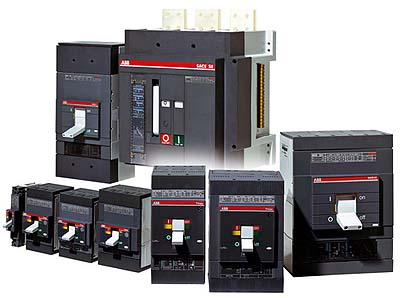 Автоматические выключатели ABB
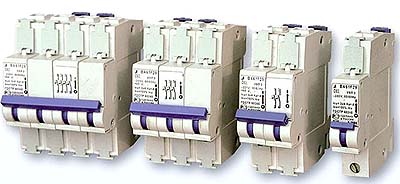 Модульные автоматические выключатели
1. НЕКОТОРЫЕ СВЕДЕНИЯ ОБ АВТОМАТИЧЕСКИХ ВЫКЛЮЧАТЕЛЯХ Автоматический выключатель — это электрический аппарат, который автоматически отключает (и тем самым защищает) электрическую цепь при возникновении в ней аномального режима. Режим становится аномальным, когда в цепи начинает недопустимо изменяться (т. е. увеличиваться или уменьшаться относительно номинального значения) ток или напряжение.
Другими словами (более "инженерно") можно сказать, что автоматический выключатель защищает от токов короткого замыкания и токов перегрузки отходящую от него питающую линию, например, кабель и приемник(и) электрической энергии (осветительную сеть, розетки, электродвигатель и т. п.).
Как правило, автоматический выключатель может применятся также для нечастого (несколько раз в сутки) включения и отключения защищаемых электроприемников (защищаемой нагрузки).
[Интент]Выключатель предназначен для проведения тока в нормальном режиме и отключения тока при коротких замыканиях, перегрузках, недопустимых снижениях напряжения, а также до 30 оперативных включений и отключений электрических цепей в сутки и рассчитан для эксплуатации в электроустановках с номинальным рабочим напряжением до 660 В переменного тока частоты 50 и 60 Гц и до 440 В постоянного тока.
[Типовая фраза из российской технической документации] 2. ПРИНЦИП ДЕЙСТВИЯ Для защиты цепи от короткого замыкания применяется автоматический выключатель с электромагнитным расцепителем.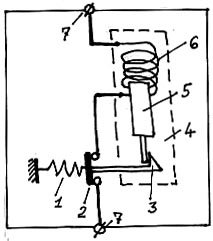
1 - Пружина (в данном случае во взведенном положении растянута)
Автоматический выключатель устроен таким образом, что сначала необходимо взвести пружину и только после этого его можно включить. У многих автоматических выключателей для взвода пружины необходимо перевести ручку вниз. После этого ручку переводят вверх. При этом замыкаются главные контакты.
2 - Главный контакт автоматического выключателя
3 - Удерживающее устройство
4 - Электромагнитный расцепитель;
5 - Сердечник
6 - Катушка
7 - Контактные зажимы автоматического выключателя
На рисунке показан один полюс автоматического выключателя во включенном положении: пружина 1 взведена, а главный контакт 2 замкнут.
Как только в защищаемой цепи возникнет короткое замыкание, ток, протекающий через соответствующий полюс автоматического выключателя, многократно возрастет. В катушке 6 сразу же возникнет сильное магнитное поле. Сердечник 5 втянется в катушку и освободит удерживающее устройство. Под действием пружины 1 главный контакт 2 разомкнется, в результате чего автоматический выключатель отключит и тем самым защитит цепь, в которой возникло короткое замыкание. Такое срабатывание автоматического выключателя происходит практически мгновенно (за сотые доли секунды).
Для защиты цепи от тока перегрузки применяют автоматические выключатели с тепловым расцепителем.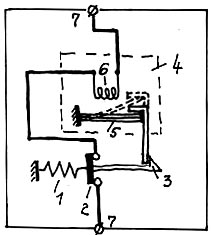
1 - Пружина (в данном случае во взведенном положении растянута)
Принцип действия такой же как и в первом случае, с той лишь разницей, что удерживающее устройство 3 освобождается под действием биметаллической пластины 5, которая изгибается от тепла, выделяемого нагревательным элементом 6. Количество тепла определяется током, протекающим через защищаемую цепь.
2 - Главный контакт автоматического выключателя
3 - Удерживающее устройство
4 - Тепловой расцепитель
5 - Биметаллическая пластина
6 - Нагревательный элемент
7 - Контактные зажимы автоматического выключателя
[Интент]Недопустимые, нерекомендуемые
Тематики
Классификация
>>>Обобщающие термины
Действия
- включение автоматического выключателя
- оперирование автоматического выключателя
- отключение автоматического выключателя
- срабатывание автоматического выключателя
EN
- auto-cutout
- automatic circuit breaker
- automatic cutout
- automatic switch
- breaker
- CB
- circuit breaker
- circuit-breaker
- cutout
DE
FR
Смотри также
выключатель
Коммутационный электрический аппарат, имеющий два коммутационных положения или состояния и предназначенный для включении и отключения тока.
Примечание. Под выключателем обычно понимают контактный аппарат без самовозврата. В остальных случаях термин должен быть дополнен поясняющими словами, например, «выключатель с самовозвратом», «выключатель тиристорный» и т. д.
[ ГОСТ 17703-72]
выключатель
Контактный коммутационный аппарат, способный включать, проводить и отключать токи при нормальных условиях в цепи, а также включать, проводить в течение нормированного времени и отключать токи при нормированных анормальных условиях в цепи, таких как короткое замыкание.
[ ГОСТ Р 52565-2006]
выключатель
Устройство для включения и отключения тока и напряжения в одной или более электрических цепях.
Примечание. При отсутствии других указаний под понятиями «напряжение» и «ток» подразумевают их среднеквадратичные значения.
[ ГОСТ Р 51324.1-2005]
выключатель
Прибор для включения и отключения электрического оборудования и устройств
[Терминологический словарь по строительству на 12 языках (ВНИИИС Госстроя СССР)]EN
(on-off) switch
switch for alternatively closing and opening one or more electric circuits
Source: 581-10-01 MOD
[IEV number 151-12-23]FR
interrupteur, m
commutateur destiné à fermer et ouvrir alternativement un ou plusieurs circuits électriques
Source: 581-10-01 MOD
[IEV number 151-12-23]При отключении воздушных и кабельных линий тупикового питания первым рекомендуется отключать выключатель со стороны нагрузки, вторым — со стороны питания.
[РД 153-34.0-20.505-2001]
... так чтобы она с меньшей выдержкой времени отключала выключатели с той стороны, на которой защита отсутствует;
[ПУЭ]
б) блокировка между выключателями нагрузки или разъединителем и заземляющим разъединителем, не позволяющая включать выключатель нагрузки или разъединитель при включенном заземляющем разъединителе и включать заземляющий разъединитель при включенном выключателе нагрузки или разъединителе;
[ ГОСТ 12.2.007.4-75]
Испытания изоляции выключателей и разъединителей должны быть проведены при включенном и отключенном положениях.
[ ГОСТ 1516_1-76]
Выключатели предназначены для оперативной и аварийной коммутации в энергосистемах, т.е. выполнения операций включения и отключения отдельных цепей при ручном или автоматическом управлении. Во включенном состоянии выключатели должны беспрепятственно пропускать токи нагрузки. Характер режима работы этих аппаратов несколько необычен: нормальным для них считается как включенное состояние, когда они обтекаются током нагрузки, так и отключенное, при котором они обеспечивают необходимую электрическую изоляцию между разомкнутыми участками цепи. Коммутация цепи, осуществляемая при переключении выключателя из одного положения в другое, производится нерегулярно, время от времени, а выполнение им специфических требований по отключению возникающего в цепи короткого замыкания чрезвычайно редко. Выключатели должны надежно выполнять свои функции в течение срока службы, находясь в любом из указанных состояний, и одновременно быть всегда готовыми к мгновенному эффективному выполнению любых коммутационных операций, часто после длительного пребывания в неподвижном состоянии. Отсюда следует, что они должны иметь очень высокий коэффициент готовности: при малой продолжительности процессов коммутации (несколько минут в год) должна быть обеспечена постоянная готовность к осуществлению коммутаций.
[ http://relay-protection.ru/content/view/46/8/]Тематики
- выключатель, переключатель
- релейная защита
Действия
Сопутствующие термины
EN
DE
FR
силовой выключатель
-
[Интент]EN
circuit-breaker
a mechanical switching device, capable of making, carrying and breaking currents under normal circuit conditions and also making, carrying for a specified time and breaking currents under specified abnormal circuit conditions such as those of short circuit
[IEV ref 441-14-20]FR
disjoncteur
appareil mécanique de connexion capable d'établir, de supporter et d'interrompre des courants dans les conditions normales du circuit, ainsi que d'établir, de supporter pendant une durée spécifiée et d'interrompre des courants dans des conditions anormales spécifiées du circuit telles que celles du court-circuit
[IEV ref 441-14-20]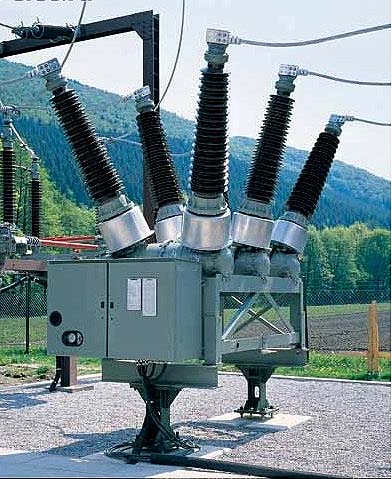
Рис. Siemens
Силовой ( баковый элегазовый) выключатель 3AP1 DT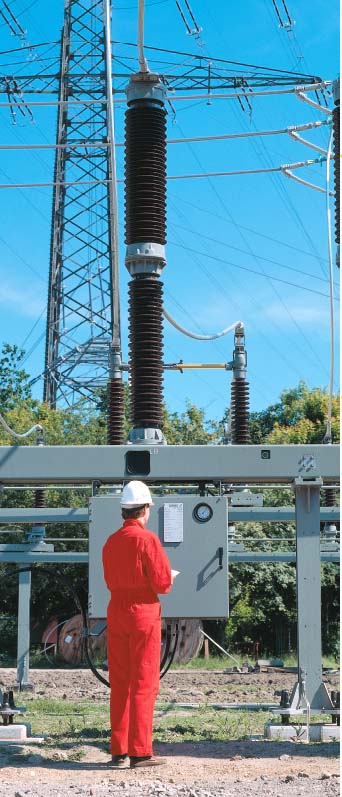
Рис. Siemens
Силовой (колонковый элегазовый) выключательТематики
- высоковольтный аппарат, оборудование...
- комплектное распред. устройство (КРУ)
EN
DE
FR
Франко-русский словарь нормативно-технической терминологии > disjoncteur
8 caractéristiques assignées
номинальное значение
Количественное значение, указанное, как правило, изготовителем для определенного рабочего состояния детали, устройства или аппарата.
МЭК 60050(151-04-03).
[ ГОСТ Р 50030. 1-2000 ( МЭК 60947-1-99)]
номинальное значение
Значение величины, установленное обычно изготовителем для определенных рабочих условий компонента, прибора или оборудования.
[ ГОСТ Р 52319-2005 (МЭК 60050-151 [10], позиция 151-04-03)]
номинальное значение
Значение параметра электротехнического изделия (устройства), указанное изготовителем, при котором оно должно работать, являющееся исходным для отсчета отклонений.
Примечание
К числу параметров относятся, например, ток, напряжение, мощность.
[ ГОСТ 18311-80]
номинальное значение
-
[IEV number 442-01-01]EN
nominal value
value of a quantity used to designate and identify a component, device, equipment, or system
NOTE – The nominal value is generally a rounded value.
[IEV number 151-16-09]
rated value
a quantity value assigned, generally by a manufacturer, for a specified operating condition of a component, device or equipment
Source: 151-04-03
[IEV number 442-01-01]FR
valeur nominale, f
valeur de dénomination, f
valeur d'une grandeur, utilisée pour dénommer et identifier un composant, un dispositif, un matériel ou un système
NOTE – La valeur nominale est généralement une valeur arrondie.
[IEV number 151-16-09]
valeur assignée
valeur d'une grandeur fixée, généralement par le constructeur, pour un fonctionnement spécifié d'un composant, d'un dispositif ou d'un matériel
Source: 151-04-03
[IEV number 442-01-01]Синонимы
EN
DE
FR
номинальный параметр
Значение параметра для указанных условий эксплуатации детали, устройства или оборудования, как правило, устанавливаемое изготовителем.
[ ГОСТ Р МЭК 60050-426-2006]
номинальный параметр
Система номинальных значений и рабочих условий.
МЭК 60050(151-04-04).
[ ГОСТ Р 50030. 1-2000 ( МЭК 60947-1-99)]EN
rating
set of rated values and operating conditions
[IEC 60947-1, ed. 5.0 (2007-06)]
[IEV 151-16-11]FR
caractéristiques assignées
ensemble des valeurs assignées et des conditions de fonctionnement
[IEC 60947-1, ed. 5.0 (2007-06)]
[IEV 151-16-11]Тематики
- электротехника, основные понятия
EN
FR
оценка
-
[IEV number 151-16-11]
оценка
Понятие математической статистики, эконометрики, метрологии, квалиметрии и других дисциплин, по-разному определяемое в каждой из них. С помощью экономических О. характеризуется и соизмеряется эффективность различных ресурсов (см. Оценка природных ресурсов, Оценка трудовых ресурсов, а также Объективно-обусловленные оценки, Нормативы). Статистическая О. определяется как «функция от результатов наблюдений, при¬меняемая для оценки неизвестных параметров распределения вероятностей изучаемых случайных величин»[1]. О. применяются для количественного определения параметров экономико-матема¬тических моделей с помощью статистического преобразования выборочной (наблюдае¬мой) информации. Применяются точечная О. и интервальная О. См. также Выборка, Метод наименьших квадратов, Метод максимального правдоподобия, Оценка параметров модели. [1] СЭС, с.1270
[ http://slovar-lopatnikov.ru/]EN
rating
set of rated values and operating conditions
[IEV number 151-16-11]FR
caractéristiques assignées, f, pl
ensemble des valeurs assignées et des conditions de fonctionnement
[IEV number 151-16-11]Тематики
EN
DE
FR
Франко-русский словарь нормативно-технической терминологии > caractéristiques assignées
9 système
система
Группа взаимодействующих объектов, выполняющих общую функциональную задачу. В ее основе лежит некоторый механизм связи.
[ ГОСТ Р МЭК 61850-5-2011]
система
Набор элементов, которые взаимодействуют в соответствии с проектом, в котором элементом системы может быть другая система, называемая подсистемой; система может быть управляющей системой или управляемой системой и включать аппаратные средства, программное обеспечение и взаимодействие с человеком.
Примечания
1 Человек может быть частью системы. Например, человек может получать информацию от программируемого электронного устройства и выполнять действие, связанное с безопасностью, основываясь на этой информации, либо выполнять действие с помощью программируемого электронного устройства.
2 Это определение отличается от приведенного в МЭС 351-01-01.
[ ГОСТ Р МЭК 61508-4-2007]
система
Множество (совокупность) материальных объектов (элементов) любой, в том числе различной физической природы, а также информационных объектов, взаимосвязанных и взаимодействующих между собой для достижения общей цели.
[ ГОСТ Р 43.0.2-2006]
система
Совокупность элементов, объединенная связями между ними и обладающая определенной целостностью.
[ ГОСТ 34.003-90]
система
Совокупность взаимосвязанных и взаимодействующих элементов.
[ ГОСТ Р ИСО 9000-2008]
система
-
[IEV number 151-11-27]
система
Набор связанных элементов, работающих совместно для достижения общей Цели. Например: • Компьютерная система, состоящая из аппаратного обеспечения, программного обеспечения и приложений. • Система управления, состоящая из множества процессов, которые планируются и управляются совместно. Например, система менеджмента качества. • Система управления базами данных или операционная система, состоящая из множества программных модулей, разработанных для выполнения набора связанных функций.
[Словарь терминов ITIL версия 1.0, 29 июля 2011 г.]
система
Множество элементов, находящихся в отношениях и связях друг с другом, которое образует определенную целостность, единство. Следует отметить, что это определение (взятое нами из Большой Советской Энциклопедии) не является ни единственным, ни общепризнанным. Есть десятки определений понятия “С.”, которые с некоторой условностью можно поделить на три группы. Определения, принадлежащие к первой группе, рассматривают С. как комплекс процессов и явлений, а также связей между ними, существующий объективно, независимо от наблюдателя. Его задача состоит в том, чтобы выделить эту С. из окружающей среды, т.е. как минимум определить ее входы и выходы (тогда она рассматривается как “черный ящик”), а как максимум — подвергнуть анализу ее структуру (произвести структуризацию), выяснить механизм функционирования и, исходя из этого, воздействовать на нее в нужном направлении. Здесь С. — объект исследования и управления. Определения второй группы рассматривают С. как инструмент, способ исследования процессов и явлений. Наблюдатель, имея перед собой некоторую цель, конструирует (синтезирует) С. как некоторое абстрактное отображение реальных объектов. При этом С. (“абстрактная система”) понимается как совокупность взаимосвязанных переменных, представляющих те или иные свойства, характеристики объектов, которые рассматриваются в данной С. В этой трактовке понятие С. практически смыкается с понятием модели, и в некоторых работах эти два термина вообще употребляются как взаимозаменяемые. Говоря о синтезе С., в таких случаях имеют в виду формирование макромодели, анализ же С. совпадает в этой трактовке с микромоделированием отдельных элементов и процессов. Третья группа определений представляет собой некий компромисс между двумя первыми. С. здесь — искусственно создаваемый комплекс элементов (например, коллективов людей, технических средств, научных теорий и т.д.), предназначенный для решения сложной организационной, экономической, технической задачи. Следовательно, здесь наблюдатель не только выделяет из среды С. (и ее отдельные части), но и создает, синтезирует ее. С. является реальным объектом и одновременно — абстрактным отображением связей действительности. Именно в этом смысле понимает С. наука системотехника. Между этими группами определений нет непроходимых границ. Во всех случаях термин “С.” включает понятие о целом, состоящем из взаимосвязанных, взаимодействующих, взаимозависимых частей, причем свойства этих частей зависят от С. в целом, свойства С. — от свойств ее частей. Во всех случаях имеется в виду наличие среды, в которой С. существует и функционирует. Для исследуемой С. среда может рассматриваться как надсистема, соответственно, ее части — как подсистемы, а также элементы С., если их внутренняя структура не является предметом рассмотрения. С. делятся на материальные и нематериальные. К первым относятся, например, железная дорога, народное хозяйство, ко вторым — С. уравнений в математике, математика как наука, далее — С. наук. Автоматизированная система управления включает как материальные элементы (ЭВМ, документация, люди), так и нематериальные — математические модели, знания людей. Разделение это тоже неоднозначно: железную дорогу можно рассматривать не только как материальную С., но и как нематериальную С. взаимосвязей, соотношений, потоков информации и т.д. Закономерности функционирования систем изучаются общей теорией систем, оперирующей понятием абстрактной С. Наибольшее значение среди абстрактных С. имеют кибернетические С. Есть два понятия, близкие понятию С.: комплекс, совокупность (множество объектов). Они, однако, не тождественны ему, как нередко утверждают. Их можно рассматривать как усеченные, неполные понятия по отношению к С.: комплекс включает части, не обязательно обладающие системными свойствами (в том смысле, как это указано выше), но эти части сами могут быть системами, и элементы последних такими свойствами по отношению к ним способны обладать. Совокупность же есть множество элементов, не обязательно находящихся в системных отношениях и связях друг с другом. В данном словаре мы стремимся по возможности последовательно различать понятия С. и модели, рассматривая С. как некий объект (реальной действительности или воображаемый — безразлично), который подвергается наблюдению и изучению, а модель — как средство этого наблюдения и изучения. Разумеется, и модель, если она сама оказывается объектом наблюдения и изучения, в свою очередь рассматривается как С. (в частности, как моделируемая С.) — и так до бесконечности. Все это означает, что такие, например, понятия, как переменная или параметр, мы (в отличие от многих авторов) относим не к С., а к ее описанию, т.е. к модели (см. Параметры модели, Переменная модели), численные же их значения, характеризующие С., — к С. (например, координаты С.). • Системы математически описываются различными способами. Каждая переменная модели, выражающая определенную характеристику С., может быть задана множеством конкретных значений, которые эта переменная может принимать. Состояние С. описывается вектором (или кортежем, если учитываются также величины, не имеющие численных значений), каждая компонента которого соответствует конкретному значению определенной переменной. С. в целом может быть описана соответственно множеством ее состояний. Например, если x = (1, 2, … m) — вектор существенных переменных модели, каждая из которых может принять y значений (y = 1, 2, …, n), то матрица S = [ Sxy ] размерностью m ? n представляет собой описание данной С. Широко применяется описание динамической С. с помощью понятий, связанных с ее функционированием в среде. При этом С. определяется как три множества: входов X, выходов Y и отношений между ними R. Полученный “портрет системы” может записываться так: XRY или Y = ®X. Аналитическое описание С. представляет собой систему уравнений, характеризующих преобразования, выполняемые ее элементами и С. в целом в процессе ее функционирования: в непрерывном случае применяется аппарат дифференциальных уравнений, в дискретном — аппарат разностных уравнений. Графическое описание С. чаще всего состоит в построении графа, вершины которого соответствуют элементам С., а дуги — их связям. Существует ряд классификаций систем. Наиболее известны три: 1) Ст. Бир делит все С. (в природе и обществе), с одной стороны, на простые, сложные и очень сложные, с другой — на детерминированные и вероятностные; 2) Н.Винер исходит из особенностей поведения С. (бихевиористский подход) и строит дихотомическую схему: С., характеризующиеся пассивным и активным поведением; среди последних — нецеленаправленным (случайным) и целенаправленным; в свою очередь последние подразделяются на С. без обратной связи и с обратной связью и т.д.; 3) К.Боулдинг выделяет восемь уровней иерархии С., начиная с простых статических (например, карта земли) и простых кибернетических (механизм часов), продолжая разного уровня сложности кибернетическими С., вплоть до самых сложных — социальных организаций. Предложены также классификации по другим основаниям, в том числе более частные, например, ряд классификаций С. управления. См. также: Абстрактная система, Адаптирующиеся, адаптивные системы, Большая система, Вероятностная система, Выделение системы, Входы и выходы системы, Детерминированная система, Динамическая система, Дискретная система, Диффузная система, Замкнутая (закрытая) система, Иерархическая структура, Имитационная система, Информационная система, Информационно-развивающаяся система, Кибернетическая система, Координаты системы, Надсистема, Нелинейная система, Непрерывная система, Открытая система, Относительно обособленная система, Память системы, Подсистема, Портрет системы, Разомкнутая система, Рефлексная система, Решающая система, Самонастраивающаяся система, Самообучающаяся система, Самоорганизующаяся система, Сложная система, Состояние системы, Статическая система, Стохастическая система, Структура системы, Структуризация системы, Управляющая система, Устойчивость системы, Целенаправленная система, Экономическая система, Функционирование экономической системы..
[ http://slovar-lopatnikov.ru/]EN
system
set of interrelated elements considered in a defined context as a whole and separated from their environment
NOTE 1 – A system is generally defined with the view of achieving a given objective, e.g. by performing a definite function.
NOTE 2 – Elements of a system may be natural or man-made material objects, as well as modes of thinking and the results thereof (e.g. forms of organisation, mathematical methods, programming languages).
NOTE 3 – The system is considered to be separated from the environment and the other external systems by an imaginary surface, which cuts the links between them and the system.
NOTE 4 – The term "system" should be qualified when it is not clear from the context to what it refers, e.g. control system, colorimetric system, system of units, transmission system.
Source: 351-01-01 MOD
[IEV number 151-11-27]
system
A number of related things that work together to achieve an overall objective. For example: • A computer system including hardware, software and applications • A management system, including the framework of policy, processes, functions, standards, guidelines and tools that are planned and managed together – for example, a quality management system • A database management system or operating system that includes many software modules which are designed to perform a set of related functions.
[Словарь терминов ITIL версия 1.0, 29 июля 2011 г.]FR
système, m
ensemble d'éléments reliés entre eux, considéré comme un tout dans un contexte défini et séparé de son environnement
NOTE 1 – Un système est en général défini en vue d'atteindre un objectif déterminé, par exemple en réalisant une certaine fonction.
NOTE 2 – Les éléments d'un système peuvent être aussi bien des objets matériels, naturels ou artificiels, que des modes de pensée et les résultats de ceux-ci (par exemple des formes d'organisation, des méthodes mathématiques, des langages de programmation).
NOTE 3 – Le système est considéré comme séparé de l'environnement et des autres systèmes extérieurs par une surface imaginaire qui coupe les liaisons entre eux et le système.
NOTE 4 – Il convient de qualifier le terme "système" lorsque le concept ne résulte pas clairement du contexte, par exemple système de commande, système colorimétrique, système d'unités, système de transmission.
Source: 351-01-01 MOD
[IEV number 151-11-27]Тематики
- автоматизированные системы
- информационные технологии в целом
- релейная защита
- системы менеджмента качества
- экономика
EN
DE
FR
Франко-русский словарь нормативно-технической терминологии > système
10 systeme de grandeurs physiques
система физических величин
система величин
Совокупность физических величин, образованная в соответствии с принятыми принципами, когда одни величины принимают за независимые, а другие определяют как функции независимых величин.
Примечание. В названии системы величин применяют символы величин, принятых за основные. Так система величин механики, в которой в качестве основных приняты длина L, масса М и время Т, должна называться системой LMT. Система основных величин, соответствующая Международной системе единиц (СИ), должна обозначаться символами LMTIQNJ, обозначающими соответственно символы основных величин - длины L, массы М, времени Т, силы электрического тока I, температуры Q, количества вещества N и силы света J.
[РМГ 29-99]EN
system of quantities
set of quantities together with a set of non-contradictory equations relating those quantities
NOTE – Ordinal quantities, such as Rockwell C hardness, are usually not considered to be part of a system of quantities because they are related to other quantities through empirical relations only. Nominal properties, such as colour of light, are not quantities and hence are not part of a system of quantities.
Source: ISO/IEC GUIDE 99:2007 1.3
[IEV number 112-01-07]FR
système de grandeurs, m
ensemble de grandeurs associé à un ensemble de relations non contradictoires entre ces grandeurs
NOTE – Les grandeurs ordinales, telles que la dureté C de Rockwell, ne sont généralement pas considérées comme faisant partie d'un système de grandeurs, parce qu'elles ne sont reliées à d'autres grandeurs que par des relations empiriques. Les propriétés qualitatives, telles que la couleur d’une lumière, ne sont pas des grandeurs et ne font donc pas partie d’un système de grandeurs.
Source: ISO/IEC GUIDE 99:2007 1.3
[IEV number 112-01-07]Тематики
- метрология, основные понятия
Синонимы
EN
DE
FR
- systeme de grandeurs physiques
- système de grandeurs, m
2.6. Система физических величин
Система величин
D. Grofiensystem
E. System of physical quantities
F. Systeme de grandeurs physiques
Совокупность физических величин, связанных между собой зависимостями.
Примечание. Для обозначения системы величин указывают группу основных величин (2.7), которые обычно обозначаются символами их размерностей
Примеры. Система величин механики LMT, в которой в качестве основных величин приняты длина /, масса m и время (.
Система величин LMTI, охватывающая механические и электрические величины, в которой в качестве основных величин приняты длина /, масса m, время t и сила электрического тока i
Источник: ГОСТ 16263-70: Государственная система обеспечения единства измерений. Метрология. Термины и определения оригинал документа
Франко-русский словарь нормативно-технической терминологии > systeme de grandeurs physiques
11 système de grandeurs, m
система физических величин
система величин
Совокупность физических величин, образованная в соответствии с принятыми принципами, когда одни величины принимают за независимые, а другие определяют как функции независимых величин.
Примечание. В названии системы величин применяют символы величин, принятых за основные. Так система величин механики, в которой в качестве основных приняты длина L, масса М и время Т, должна называться системой LMT. Система основных величин, соответствующая Международной системе единиц (СИ), должна обозначаться символами LMTIQNJ, обозначающими соответственно символы основных величин - длины L, массы М, времени Т, силы электрического тока I, температуры Q, количества вещества N и силы света J.
[РМГ 29-99]EN
system of quantities
set of quantities together with a set of non-contradictory equations relating those quantities
NOTE – Ordinal quantities, such as Rockwell C hardness, are usually not considered to be part of a system of quantities because they are related to other quantities through empirical relations only. Nominal properties, such as colour of light, are not quantities and hence are not part of a system of quantities.
Source: ISO/IEC GUIDE 99:2007 1.3
[IEV number 112-01-07]FR
système de grandeurs, m
ensemble de grandeurs associé à un ensemble de relations non contradictoires entre ces grandeurs
NOTE – Les grandeurs ordinales, telles que la dureté C de Rockwell, ne sont généralement pas considérées comme faisant partie d'un système de grandeurs, parce qu'elles ne sont reliées à d'autres grandeurs que par des relations empiriques. Les propriétés qualitatives, telles que la couleur d’une lumière, ne sont pas des grandeurs et ne font donc pas partie d’un système de grandeurs.
Source: ISO/IEC GUIDE 99:2007 1.3
[IEV number 112-01-07]Тематики
- метрология, основные понятия
Синонимы
EN
DE
FR
- systeme de grandeurs physiques
- système de grandeurs, m
Франко-русский словарь нормативно-технической терминологии > système de grandeurs, m
12 connecteur, m
электрический соединитель
Электротехническое устройство, предназначенное для механического соединения и разьединения электрических цепей, состоящее из двух или более частей (вилки, розетки), образующих разъемное контактное соединение
[ ГОСТ 21962-76]
электрический соединитель
Электромеханическое устройство, присоединяемое к проводникам, для соединения и разъединения электрических цепей путем сочленения и расчленения с соответствующим устройством.
[ ГОСТ 23784-98]
электрический соединитель
Электромеханическое устройство, предназначенное для механического соединения и разъединения вручную электрических цепей (проводов, кабелей, модулей, узлов и блоков) в различных видах аппаратуры при выключенном источнике тока через соединитель.
[В. Ф. Лярский, О. Б. Мурадян. Электрические соединители. Справочник. Радио и связь, 1988]
разъем
Конструктивный элемент, состоящий из соединяемых частей, служащий для электрического соединения кабеля с электронным блоком, преобразователем или электронных блоков между собой.
[Система неразрушающего контроля. Виды (методы) и технология неразрушающего контроля. Термины и определения (справочное пособие). Москва 2003 г.]
разъем
Комбинация вилки и розетки, обеспечивающая соединение и разъединение двух или более проводников.
Примечание.
Примерами разъемов могут служить комбинации:
- соединителей, которые соответствуют требованиям МЭК 61984;
- приборные соединители, кабельные гнезда и бытовые соединители в соответствии с МЭК 60309-1;
- приборные соединители в соответствии с МЭК 60884-1 или бытовые соединители в соответствии с МЭК 60320-1.
[ ГОСТ Р МЭК 60204-1-2007]
разъем
-
[IEV number 151-12-19]EN
connector
device providing connection and disconnection to a suitable mating component
NOTE – A connector has one or more contact elements.
Source: 151-12-19 MOD
[IEV number 581-26-01]FR
connecteur, m
dispositif destiné à établir et à rompre une connexion par appariement avec un composant complémentaire approprié
NOTE – Un connecteur est muni d’un ou plusiers éléments de contact
Source: 151-12-19 MOD
[IEV number 581-26-01]Конструкция соединителей, предназначенных для подключения внешних цепей, должна отличаться от конструкции других соединителей и не должна быть взаимозаменяемой.
Конструкция соединителя должна исключать возможность неправильного сочленения, например, с помощью направляющих штифтов или гнезд.
Недопустимые, нерекомендуемые
Тематики
Классификация
>>>Близкие понятия
Действия
Синонимы
EN
- connector
- connector pins
- connector set
- electric connector
- electric coupler
- electrical connector mated set
- electrical coupler
- plug-and-socket connector
- withdraw connector
DE
- Steckverbinder, m
FR
- connecteur, m
Смотри также
Франко-русский словарь нормативно-технической терминологии > connecteur, m
13 valeur assignée
номинальное значение
Количественное значение, указанное, как правило, изготовителем для определенного рабочего состояния детали, устройства или аппарата.
МЭК 60050(151-04-03).
[ ГОСТ Р 50030. 1-2000 ( МЭК 60947-1-99)]
номинальное значение
Значение величины, установленное обычно изготовителем для определенных рабочих условий компонента, прибора или оборудования.
[ ГОСТ Р 52319-2005 (МЭК 60050-151 [10], позиция 151-04-03)]
номинальное значение
Значение параметра электротехнического изделия (устройства), указанное изготовителем, при котором оно должно работать, являющееся исходным для отсчета отклонений.
Примечание
К числу параметров относятся, например, ток, напряжение, мощность.
[ ГОСТ 18311-80]
номинальное значение
-
[IEV number 442-01-01]EN
nominal value
value of a quantity used to designate and identify a component, device, equipment, or system
NOTE – The nominal value is generally a rounded value.
[IEV number 151-16-09]
rated value
a quantity value assigned, generally by a manufacturer, for a specified operating condition of a component, device or equipment
Source: 151-04-03
[IEV number 442-01-01]FR
valeur nominale, f
valeur de dénomination, f
valeur d'une grandeur, utilisée pour dénommer et identifier un composant, un dispositif, un matériel ou un système
NOTE – La valeur nominale est généralement une valeur arrondie.
[IEV number 151-16-09]
valeur assignée
valeur d'une grandeur fixée, généralement par le constructeur, pour un fonctionnement spécifié d'un composant, d'un dispositif ou d'un matériel
Source: 151-04-03
[IEV number 442-01-01]Синонимы
EN
DE
FR
1
паспортное значение
Приближенная величина, используемая для обозначения или идентификации детали, аппарата или устройства.
МЭК 60050(151-04-01).
[ ГОСТ Р 50030. 1-2000 ( МЭК 60947-1-99)]EN
rated value
value of a quantity used for specification purposes, established for a specified set of operating conditions of a component, device, equipment, or system
[IEV number 151-16-08]FR
valeur assignée, f
valeur d'une grandeur, utilisée à des fins de spécification, correspondant à un ensemble spécifié de conditions de fonctionnement d'un composant, dispositif, matériel ou système
[IEV number 151-16-08]2
паспортное значение
-
[IEV number 442-01-04]EN
nominal value
a suitable approximate quantity value used to designate or identify a component, device or equipment
Source: 151-04-01
[IEV number 442-01-04]FR
valeur nominale
valeur approchée appropriée d'une grandeur, utilisée pour dénommer ou identifier un composant, un dispositif ou un matériel
Source: 151-04-01
[IEV number 442-01-04]EN
DE
FR
Франко-русский словарь нормативно-технической терминологии > valeur assignée
14 valeur nominale
номинальное значение
Количественное значение, указанное, как правило, изготовителем для определенного рабочего состояния детали, устройства или аппарата.
МЭК 60050(151-04-03).
[ ГОСТ Р 50030. 1-2000 ( МЭК 60947-1-99)]
номинальное значение
Значение величины, установленное обычно изготовителем для определенных рабочих условий компонента, прибора или оборудования.
[ ГОСТ Р 52319-2005 (МЭК 60050-151 [10], позиция 151-04-03)]
номинальное значение
Значение параметра электротехнического изделия (устройства), указанное изготовителем, при котором оно должно работать, являющееся исходным для отсчета отклонений.
Примечание
К числу параметров относятся, например, ток, напряжение, мощность.
[ ГОСТ 18311-80]
номинальное значение
-
[IEV number 442-01-01]EN
nominal value
value of a quantity used to designate and identify a component, device, equipment, or system
NOTE – The nominal value is generally a rounded value.
[IEV number 151-16-09]
rated value
a quantity value assigned, generally by a manufacturer, for a specified operating condition of a component, device or equipment
Source: 151-04-03
[IEV number 442-01-01]FR
valeur nominale, f
valeur de dénomination, f
valeur d'une grandeur, utilisée pour dénommer et identifier un composant, un dispositif, un matériel ou un système
NOTE – La valeur nominale est généralement une valeur arrondie.
[IEV number 151-16-09]
valeur assignée
valeur d'une grandeur fixée, généralement par le constructeur, pour un fonctionnement spécifié d'un composant, d'un dispositif ou d'un matériel
Source: 151-04-03
[IEV number 442-01-01]Синонимы
EN
DE
FR
1
паспортное значение
Приближенная величина, используемая для обозначения или идентификации детали, аппарата или устройства.
МЭК 60050(151-04-01).
[ ГОСТ Р 50030. 1-2000 ( МЭК 60947-1-99)]EN
rated value
value of a quantity used for specification purposes, established for a specified set of operating conditions of a component, device, equipment, or system
[IEV number 151-16-08]FR
valeur assignée, f
valeur d'une grandeur, utilisée à des fins de spécification, correspondant à un ensemble spécifié de conditions de fonctionnement d'un composant, dispositif, matériel ou système
[IEV number 151-16-08]2
паспортное значение
-
[IEV number 442-01-04]EN
nominal value
a suitable approximate quantity value used to designate or identify a component, device or equipment
Source: 151-04-01
[IEV number 442-01-04]FR
valeur nominale
valeur approchée appropriée d'une grandeur, utilisée pour dénommer ou identifier un composant, un dispositif ou un matériel
Source: 151-04-01
[IEV number 442-01-04]EN
DE
FR
Франко-русский словарь нормативно-технической терминологии > valeur nominale
15 musique
musique [myzik]feminine nounmusic ; ( = morceau) piece of music• qui a écrit la musique du film ? who wrote the film score?* * *myzik1) (art, notes) musicmettre en musique — to set [something] to music
faire de la musique — ( savoir jouer) to play an instrument
2) ( œuvre) piece of music3) ( orchestre) band••c'est toujours la même musique — (colloq) it's always the same old refrain
connaître la musique — (colloq) to know the score (colloq)
je ne peux pas aller plus vite que la musique — (colloq) I can't go any faster than I'm already going
être réglé comme du papier à musique — (colloq) [personne] to be as regular as clockwork; [congrès, projet] to go very smoothly
* * *myzik nf* * *1 (art, notes) music; la musique classique/sacrée/folklorique classical/sacred/folk music; la musique de film film music; la musique de Bach the music of Bach, Bach's music; dîner en musique to dine with soft music playing; travailler en musique to work with music in the background; faire de la gymnastique en musique to do exercises to music; mettre en musique to set [sth] to music [poème, texte]; faire de la musique ( savoir jouer) to play an instrument; ( jouer) to play; ⇒ adoucir;2 ( œuvre) une musique triste a sad piece of music; une musique pour piano a piece of piano music; une musique de film a film score; sur une musique de with music by;3 ( orchestre) band;4 (de source, mot, vent) music.musique d'ambiance gén background music; péj piped music, Muzak®; musique de chambre chamber music; musique de fond background music.c'est toujours la même musique○ it's always the same old refrain ou story; connaître la musique○ to know the score○; je ne peux pas aller plus vite que la musique I can't go any faster than I'm already going; en avant la musique○! off we go!; être réglé comme du papier à musique [personne] to be as regular as clockwork; [voyage, congrès, projet] to go very smoothly.[myzik] nom féminin1. [art, notation ou science] musicils dansaient sur une ou de la musique rock they were dancing to (the sound of) rock musictexte mis en musique text set ou put to musica. [personne] to play (an instrument)b. [objet] to play a tuneétudier/dîner en musique to study/to have dinner with music playingmusique d'ambiance ou de fond background musicmusique contemporaine/classique contemporary/classical musicmusique folklorique/militaire folk/military musicmusique sacrée/de chambre sacred/chamber music2. [musiciens] bandils entrent dans le village, musique en tête they come into the village, led by the band16 point
point [pwɛ̃]━━━━━━━━━2. compounds━━━━━━━━━1. <a. pointb. ( = endroit) place ; (Astronomy, mathematics) pointc. ( = position) (Aviation, nautical) position• et maintenant, le point sur la grève des transports and now, the latest on the transport striked. ( = marque) (Mus, morse, sur i) dot ; ( = ponctuation) full stop (Brit), period (US) ; ( = petite tache) spot• tu n'iras pas, un point c'est tout you're not going and that's all there is to ite. (sur devoir) markf. [de couture, tricot] stitch• faire le point de la situation ( = examiner) to take stock of the situation ; ( = faire un compte rendu) to sum up the situation► à point [fruit] just ripe ; [fromage] just right for eating ; [viande] medium• le rôti est cuit à point the roast is done to a turn► à point (nommé) [arriver, venir] just at the right moment• est-il possible d'être bête à ce point ! how stupid can you get? (inf)• elles se ressemblent à tel point or à ce point qu'on pourrait les confondre they look so alike that you could easily mistake one for the other► au point [photo] in focus ; [affaire] completely settled ; [technique, machine] perfected• ce n'est pas encore au point it isn't quite up to scratch yet► au point de + infinitif so much that• il aimait le Québec au point d'y passer toutes ses vacances he loved Quebec so much that he spent all his holidays there• il se détestent au point qu'ils ne se parlent plus they hate each other so much that they've stopped speaking► au point où• en être arrivé au point où... to have reached the point where...• on continue ? -- au point où on en est ! shall we go on? -- we've got this far so we might as well!► au plus haut point [détester, admirer] intensely• se méfier au plus haut point de qch to be highly sceptical about sth► mettre au point [+ photo, caméra] to focus ; [+ stratégie, technique] to perfect ; [+ médicament, invention, système] to develop ; [+ projet] to finalize• mettre une affaire au point avec qn to finalize all the details of a matter with sb► mise au point [d'appareil photo, caméra] focusing ; [de stratégie, technique] perfecting ; [de médicament, invention, système] development ; [de moteur] tuning ; [d'affaire, projet] finalizing ; ( = explication, correction) clarification• publier une mise au point to issue a statement (setting the record straight)► en tout point, en tous points in every respect2. <• vous avez un point de chute à Rome ? do you have somewhere to stay in Rome? ► point commun• nous voilà revenus au point de départ so we're back to square one (inf) ► point de distribution [d'eau] supply point ; (Business) distribution outlet• mettre un point d'honneur à faire qch to make it a point of honour to do sth ► point d'interrogation question mark• au point mort [voiture] in neutral ; [de négociations, affaires] at a standstill ► point mousse garter stitch► points de retraite points based on social security contributions that count towards one's pension• quel est votre point de vue sur ce sujet ? what's your point of view on this matter?* * *pwɛ̃
1.
nom masculin1) ( endroit) point2) ( situation) point; Nautisme positionêtre sur le point de faire — to be just about to do, to be on the point of doing
j'en suis toujours au même point (qu'hier/qu'il y a un an) — I'm still exactly where I was (yesterday/last year)
au point où j'en suis, ça n'a pas d'importance! — I've reached the point where it doesn't matter any more!
faire le point — Nautisme to take bearings; fig to take stock of the situation
3) ( degré)‘j'en aurais pleuré’ - ‘ah bon, à ce point?’ — ‘I could have cried’ - ‘really? it was that bad?’
il est têtu à un point! — (colloq) he's so incredibly stubborn!
jusqu'à un certain point — up to a (certain) point, to a certain extent
4) ( question particulière) point; ( dans un ordre du jour) item, pointen tout point, en tous points — in every respect ou way
5) ( marque visible) dot6) Jeux, Sport pointmarquer/perdre des points — lit, fig to score/to lose points
7) ( pour évaluer) mark GB, point USavoir sept points d'avance/de retard — to be seven marks ahead/behind
obtenir or avoir 27 points sur 40 — to get 27 out of 40
être un mauvais point pour quelqu'un/quelque chose — to be a black mark against somebody/something
8) ( dans un système de calcul) pointle permis à points — system whereby driving offender gets penalty points
9) Mathématique point10) Linguistique ( en ponctuation) full stop GB, period USpoint à la ligne — ( dans une dictée) full stop, new paragraph
point final — ( dans une dictée) full stop
mettre un point final à quelque chose — fig to put a stop ou an end to something
je n'irai pas, point final! — (colloq) I'm not going, full stop GB ou period US!
tu vas te coucher un point c'est tout! — (colloq) you're going to bed and that's final!
11) Musique dot12) ( en typographie) point14) (en couture, tricot) stitch
2.
(dated) adverbe not
3.
à point locution adverbiale1) ( en temps voulu) just in time2) Culinaire
4.
au point locutionêtre au point — [système, machine] to be well designed; [spectacle] to be well put together
mettre au point — ( élaborer) to perfect [système]; to work out, to devise [accord, plan]; to develop [vaccin, appareil]; ( régler) to adjust
mise au point — ( de système) perfecting; ( de vaccin) development; ( réglage) adjusting; Photographie focus; fig ( déclaration) clarifying statement
faire la mise au point — Photographie to focus
faire une mise au point — fig to set the record straight ( sur about)
Phrasal Verbs:••* * *pwɛ̃1. nm1) (= marque, signe) dot2) [ponctuation] full stop Grande-Bretagne period USA3) (= moment) pointNous en sommes au même point. — We have reached the same point.
J'étais sur le point de te téléphoner. — I was just about to phone you.
4) (= degré)à ce point abîmé que... — so damaged that...
au point que; à tel point que — so much so that
5) (au score) point6) (= aspect) pointJe ne suis pas d'accord sur ce point. — I don't agree on this point.
7) (= endroit) spot, point, (en géométrie) point8) COUTURE, TRICOT stitchpoint mousse — garter stitch, plain
9) CUISINE"Comment voulez-vous votre steak?" — "À point." — "How would you like your steak?" — "Medium."
faire le point NAVIGATION — to take a bearing, figto take stock
faire le point sur — to review, to take stock of
mettre au point [mécanisme, procédé] — to develop, [appareil-photo] to focus
2. advlit (= pas) notpoint n'est besoin de... — there is no need to...
point de... — no...
3. vbSee:* * *A nm1 ( endroit) point; un point précis du globe/sur une carte a particular point on the earth/on a map; un point de ravitaillement/ralliement a staging/rallying point; un point de rencontre a meeting point; point de vente (sales) outlet; serrure 3 points 3 point lock;2 ( situation) point; Naut position; être sur le point de faire to be just about to do, to be on the point of doing; j'étais sur le point de leur dire/d'abandonner/de partir I was just about to tell them/to give up/to leave, I was on the point of telling them/giving up/leaving; j'en suis toujours au même point (qu'hier/qu'il y a un an) I'm still exactly where I was (yesterday/last year); au point où j'en suis, ça n'a pas d'importance! I've reached the point where it doesn't matter any more!; il en est au point où il allume une cigarette en se levant he's got GB ou gotten US to the stage ou point where he lights a cigarette as soon as he gets up; faire le point Naut to take bearings; fig to take stock of the situation; faire le point sur la situation économique/sur la recherche scientifique fig to take stock of the economic situation/of scientific research; faire le point sur la circulation (routière)/l'actualité to give an up-to-the-minute report on the traffic news/current situation;3 ( degré) il m'agace/m'inquiète au plus haut point he annoys me/worries me intensely; la circulation était à ce point bloquée que j'ai dû laisser ma voiture au bord de la route the traffic was so bad that I had to leave my car on the side of the road; je ne le pensais pas bête/coléreux à ce point I didn't think he was that stupid/quick-tempered; ‘j'en aurais pleuré’-‘ah bon, à ce point?’ ‘I could have cried’-‘really? it was that bad?’; je sais à quel point elle est triste/sensible I know how sad/sensitive she is; si tu savais à quel point il m'agace! if you only knew how much he annoys me!; au point que to the extent that; à tel point que to such an extent that…; douloureux/endommagé à (un) tel or au point que so painful/badly damaged that; la situation s'est aggravée au point qu'ils ont dû appeler la police the situation became so bad that the police had to be called in; le temps s'est rafraîchi au point qu'il a fallu remettre le chauffage the weather got so cold that the heating had to be put back on; il est têtu à un point! he's so incredibly stubborn!; jusqu'à un certain point up to a (certain) point, to a certain extent;4 ( question particulière) point; ( dans un ordre du jour) item, point; un programme en trois points a three-point plan; un point fondamental/de détail (d'un texte) a basic/minor point (in a text); sur ce point on this point; j'aimerais revenir sur ce dernier point I would like to come back to that last point; un point de désaccord/litige a point of disagreement/contention; reprendre un texte point par point to go over a text point by point; en tout point, en tous points in every respect ou way; une politique en tous points désastreuse a policy that is disastrous in every respect; les deux modèles sont semblables en tous points the two models are alike in every respect;5 ( marque visible) gén dot; les villes sont marquées par un point towns are marked by a dot; il y a un point sur le i et le j there's a dot on the i and the j; un point lumineux/rouge dans le lointain a light/a red dot in the distance; bientôt, le navire ne fut qu'un point à l'horizon soon, the ship was a mere dot ou speck on the horizon; un point de colle a spot of glue; un point de rouille a speck of rust; points de graissage lubricating points; ⇒ i;6 Jeux, Sport point; marquer/perdre des points lit, fig to score/lose points; compter les points to keep (the) score; un point partout! one all!; battre son adversaire aux points to beat one's opponent on points; remporter une victoire aux points to win on points;7 ( pour évaluer) mark GB, point US; avoir sept points d'avance to be seven marks ahead; avoir dix points de retard to be ten marks behind; il m'a manqué trois points pour réussir I failed by three marks; enlever un point par faute to take a mark off for each mistake; obtenir or avoir 27 points sur 40 to get 27 out of 40; être un bon point pour to be a plus point for; être un mauvais point pour qn/qch to be a black mark against sb/sth;8 ( dans un système de calcul) point; la livre a perdu trois points the pound lost three points; le taux de chômage a augmenté de 0,8 points the unemployment rate rose by 0.8 points; le permis à points system whereby driving offender gets penalty points; il a perdu sept points dans les sondages he's gone down seven points in the polls;9 Math point; point d'intersection/d'inflexion point of intersection/of inflection;10 Ling ( en ponctuation) full stop GB, period US; mettre un point to put a full stop; point à la ligne ( dans une dictée) full stop, new paragraph; point final ( dans une dictée) full stop; mettre un point final à qch fig to put a stop ou an end to sth; je n'irai pas, point final○! I'm not going, full stop GB ou period US!; tu vas te coucher un point c'est tout○! you're going to bed and that's final!;11 Mus dot;12 Imprim point;13 Méd ( douleur) pain; avoir un point à la poitrine/à l'aine to have a pain in the chest/in the groin;14 (en couture, tricot) stitch; faire un point à qch to put a few stitches in sth; dentelle au point de Venise Venetian lace.B †adv not; tu ne tueras point Bible thou shalt not kill; je n'en ai point I don't have any; ‘tu es fâché?’-‘non point!’ ‘are you angry?’-‘not at all’.C à point loc adv venir/arriver à point to come/arrive just in time; venir/arriver or tomber à point nommé to come/arrive just at the right moment; faire cuire à point to cook [sth] medium rare [viande]; bifteck (cuit) à point medium rare steak; le camembert est à point the camembert is ready to eat.D au point loc adv, loc adj être au point [système, méthode, machine] to be well designed; [spectacle, émission] to be well put together; leur système/machine/spectacle n'est pas encore très au point their system/machine/show still needs some working on; le nouveau modèle est très au point the new model is very well designed; le spectacle n'était pas du tout au point the show wasn't up to scratch; le prototype n'est pas encore au point the prototype isn't quite ready yet; ça fait des semaines qu'ils répètent mais leur numéro n'est pas encore au point they've been rehearsing for weeks but they still haven't got GB ou gotten US it quite right; je ne suis pas au point pour les examens I'm not ready for the exams; mettre [qch] au point ( inventer) to perfect [théorie, système, méthode, technique]; to work out, to devise [accord, plan de paix, stratégie]; to develop [vaccin, médicament, appareil]; ( régler) to adjust [machine, mécanisme]; il leur reste deux semaines pour finir de mettre leur spectacle au point they've got two more weeks to put the finishing touches to their show; mettre au point sur qch Phot to focus on sth; mise au point Phot focus; fig ( déclaration) clarifying statement; la mise au point est automatique sur mon appareil my camera has automatic focus; faire la mise au point Phot to focus (sur on); faire une mise au point fig to set the record straight (sur about); mise au point ( invention) (de théorie, système, méthode, technique) perfecting; (de médicament, vaccin) development; ( réglage) (de machine, mécanisme) adjusting; Phot focus.point d'acupuncture Méd acupuncture point; point d'ancrage Aut anchor; fig base; point d'appui Mil base of operations; Phys fulcrum; gén support; les piliers servent de point d'appui à la charpente the roof structure is supported by the pillars; trouver un point d'appui à une échelle to find a support for a ladder; point arrière Cout back stitch; point d'attache base; point de bâti Cout tacking stitch; point blanc whitehead; point de blé ( en tricot) double moss stitch; point de boutonnière Cout buttonhole stitch; point cardinal Phys, Géog compass ou cardinal point; point de chaînette ( en broderie) chain stitch; point de chausson ( en broderie) herringbone stitch; point chaud trouble ou hot spot; les points chauds du globe the world's trouble spots; point de chute fig port of call; point commun mutual interest; nous avons beaucoup de points communs we have a lot in common; ils n'ont aucun point commun they have nothing in common; point de congestion† Méd slight congestion of the lung; point de côtes ( en tricot) rib; point de côté ( douleur) stitch; ( en couture) slip stitch; avoir un point de côté to have a stitch in one's side; point de croix ( en broderie) cross stitch; point de départ lit, fig starting point; nous revoilà à notre point de départ fig we're back to square one; point de devant Cout running stitch; point d'eau ( naturel) watering place; ( robinet) water tap GB ou faucet US; point d'ébullition boiling point; point d'épine ( en broderie) featherstitch; point d'exclamation Ling exclamation mark; point faible weak point; point de feston ( en broderie) blanket stitch; point fort strong point; point de fuite Art, Archit vanishing point; point de fusion melting point; point G G-spot; point d'interrogation Ling question mark; point de jersey ( en tricot) stocking stitch; point du jour daybreak; au point du jour at daybreak; point de liquéfaction liquefaction point; point de mire Mil target; fig focal point; point mousse ( en tricot) garter stitch; point mort Aut neutral; se mettre or passer/être au point mort Aut to put the car into/to be in neutral; être au point mort fig [affaires, consommation] to be at a standstill; [négociations] to be in a state of deadlock; point noir ( comédon) blackhead; ( problème) problem; ( sur la route) blackspot; l'inflation reste le seul point noir inflation is the only problem; point de non-retour point of no return; point d'orgue Mus pause sign; fig culmination; point d'ourlet Cout hemstitch; point de penalty penalty spot; point de piqûre Cout back stitch; point de presse Journ press briefing; point de repère ( spatial) landmark; (temporel, personnel) point of reference; point de reprise Cout darning stitch; point de retraite Prot Soc point which counts towards a retirement pension scheme; point de riz ( en tricot) moss stitch; point de surfil Cout whipstitch; point de suture Méd stitch; point de tige ( en broderie) stem stitch; point de torsade ( en tricot) cable stitch; point de vue ( paysage) viewpoint; ( opinion) point of view; du point de vue de la direction from the management's point of view; du point de vue de l'efficacité/du sens as far as efficiency/meaning is concerned; d'un point de vue économique c'est rentable/intéressant from a financial point of view it's profitable/attractive; points de suspension suspension points.être mal en point to be in a bad way.I[pwɛ̃] adverbe1. [en corrélation avec 'ne']2. [employé seul]du vin il y en avait, mais de champagne point there was wine, but no champagne ou not a drop of champagneil eut beau chercher, point de John he searched in vain, John was nowhere to be foundpoint de démocratie sans liberté de critiquer (there can be) no democracy without the freedom to criticize3. [en réponse négative]point du tout! not at all!, not in the least!II[pwɛ̃] nom masculinpoint lumineux spot ou point of lightpoint de rouille speck ou spot of rustun point de soudure a spot ou blob of solder3. [symbole graphique - en fin de phrase] full stop (UK), period (US) ; [ - sur un i ou un j] dot ; [ - en morse, en musique] dotj'ai dit non, point final ou un point c'est tout! (figuré) I said no and that's that ou that's final ou there's an end to it!mettre un point final à une discussion to terminate a discussion, to bring a discussion to an endpoint estimé/observé estimated/observed positiona. NAUTIQUE to take a bearing, to plot one's positionà 40 ans, on s'arrête et on fait le point when you reach 40, you stand back and take stock of your lifeet maintenant, le point sur la circulation and now, the latest traffic newspoint d'intersection/de tangence intersection/tangential pointen plusieurs points de la planète in different places ou spots on the planet9. [degré] point10. [élément - d'un texte, d'une théorie] point ; [ - d'un raisonnement] point, item ; [ - d'une description] feature, traitvoici un point d'histoire que je souhaiterais éclaircir I'd like to make clear what happened at that particular point in historypoint d'entente/de désaccord point of agreement/of disagreement11. [unité de valeur - dans un sondage, à la Bourse] point ; [ - de retraite] unit ; [ - du salaire de base] (grading) pointsa cote de popularité a gagné/perdu trois points his popularity rating has gone up/down by three pointsbattu aux points [en boxe] beaten on pointsfaire le point [le gagner] to win the pointb. [appréciation] mark (for good behaviour)12. COUTUREfaire un point à to put a stitch ou a few stitches inpoint de couture/crochet/tricot sewing/crochet/knitting stitch13. INFORMATIQUE [unité graphique] dot[emplacement]point d'accès/de retour entry/reentry point————————à ce point, à un tel point locution adverbialeton travail est dur à ce point? is your job so (very) ou that hard?j'en ai tellement assez que je vais démissionner — à ce point? I'm so fed up that I'm going to resign — that bad, is it?————————à ce point que, à (un) tel point que locution conjonctiveso much so that, to such a point thatles choses en étaient arrivées à un tel point que... things had reached such a pitch that...elle est déprimée, à ce point qu'elle ne veut plus voir personne she's so depressed that she won't see anyone anymore————————à point locution adjectivale[steak] medium[rôti] done to a turn[poire] just ou nicely ripeton bonhomme est à point, tu n'as plus qu'à enregistrer ses aveux (familier & figuré) your man's nice and ready now, all you've got to do is get the confession down on tape————————à point locution adverbiale1. CUISINE2. [au bon moment]a. [personne] to come (just) at the right timeb. [arrivée, décision] to be very timely————————à point nommé locution adverbialearriver à point nommé to arrive (just) at the right moment ou when needed, to arrive in the nick of timeau plus haut point locution adverbialeje le déteste au plus haut point I can't tell you how much I hate him, I absolutely loathe him————————au point locution adjectivale[moteur] tuned[machine] in perfect running order[technique] perfected[discours, plaidoyer] finalized[spectacle, artiste] readyton revers n'est pas encore au point your backhand isn't good enough ou up to scratch yetle son/l'image n'est pas au point the sound/the image isn't right————————au point locution adverbialea. [texte à imprimer] to editb. [discours, projet, rapport] to finalize, to put the finishing touches toc. [spectacle] to perfectd. [moteur] to tunee. [appareil photo] to (bring into) focusmettre les choses au point to put ou set the record straightmettons les choses au point: je refuse de travailler le dimanche let's get this ou things straight: I refuse to work Sundaysaprès cette discussion, j'ai tenu à mettre les choses au point following that discussion, I insisted on putting ou setting the record straight————————au point de locution prépositionnelle————————au point du jour locution adverbiale(littéraire) at dawn ou daybreakau point où locution conjonctivenous sommes arrivés au point où... we've reached the point ou stage where...au point où j'en suis, autant que je continue having got this far, I might as well carry onau point où en sont les choses as things stand, the way things are (now)————————au point que locution conjonctiveso much that, so... thatil était très effrayé, au point qu'il a essayé de se sauver he was so frightened that he tried to run awaypoint par point locution adverbialesur le point de locution prépositionnelleêtre sur le point de faire quelque chose to be about to do ou on the point of doing ou on the verge of doing somethingj'étais sur le point de partir I was about to ou going to leavesur le point de pleurer on the verge of tears ou of crying————————point d'ancrage nom masculin————————point d'appui nom masculin1. [d'un levier] fulcrumpoint de chute nom masculin2. (figuré)————————point culminant nom masculinquel est le point culminant des Alpes? what is the highest point ou peak in the Alps?point de départ nom masculin————————point faible nom masculinson point faible, c'est sa susceptibilité his touchiness is his weak spot ou point————————point fort nom masculin[d'une personne, d'une entreprise] strong point[d'un joueur de tennis] best shotles maths n'ont jamais été mon point fort I was never any good at maths, maths was never my strong point————————point mort nom masculin————————point noir nom masculina. [encombré] a heavily congested areab. [dangereux] an accident blackspot————————point sensible nom masculin1. [endroit douloureux] tender ou sore spot2. MILITAIRE key ou strategic target3. (figuré)a. [chez quelqu'un] to touch on a sore spotb. [dans un problème] to touch on a sensitive area17 tout
c black tout, toute [tu, tut]━━━━━━━━━1. adjective3. adverb━━━━━━━━━━━━━━━━━━━━━━━━━━► Lorsque tout fait partie d'une locution comme en tout cas, tout le temps, reportez-vous aussi à l'autre mot.━━━━━━━━━━━━━━━━━1. <a. ( = entier)b. ( = unique) only• pour tout mobilier, il avait un lit et une table the only furniture he had was a bed and a tablec. (indéfini)2. <• tout ce que je sais, c'est qu'il est parti all I know is that he's gone• ne croyez pas tout ce qu'il raconte don't believe everything he tells you► tout ce qu'il y a de ( = extrêmement) most• c'était tout ce qu'il y a de chic it was the last word in chic► avoir tout de + nom• l'organisation a tout d'une secte the organization is nothing less than a sect► à tout va (inf) [licencier, investir, recruter] like mad (inf) ; [libéralisme, communication, consommation] unbridled• à l'époque, on construisait à tout va at that time there were buildings going up everywhere► en tout ( = au total) in all• ça coûte 1 000 € en tout it costs 1,000 euros in all• leurs programmes politiques s'opposent en tout their political programmes clash in every way► en tout et pour tout all in all• il lui reste 150 euros en tout et pour tout he only has a total of 150 euros left► et tout (inf) and everything• avec les vacances et tout, je n'ai pas eu le temps what with the holidays and all (inf), I didn't have time• j'avais préparé le dîner, fait le ménage et tout et tout I'd made the dinner, done the housework and everything► c'est + tout• ce sera tout ? will that be all?• et ce n'est pas tout ! and that's not all!• c'est pas tout ça, mais il est tard (inf) all this is very nice, but it's getting late► ce n'est pas tout de• ce n'est pas tout de faire son métier, il faut le faire bien it's not enough just to do your job, you have to do it well• cette idée avait surpris et pour tout dire n'avait pas convaincu this idea surprised everybody and, to be honest, wasn't convincing• écoutez bien tous ! listen, all of you!━━━━━━━━━━━━━━━━━✦ The final s of tous is pronounced only when it is a pronoun.━━━━━━━━━━━━━━━━━3. <a. ► tout + adjectif ( = très) very ; ( = entièrement) quite• toute petite, elle aimait la campagne as a very small child she liked the country► tout (+ en) + nom• je suis tout ouïe ! I'm all ears!• le jardin est tout en fleurs the garden is a mass of flowers► tout + adverbeb. ( = déjà) tout prêtc. ► tout en + participe présent• je suis incapable de travailler tout en écoutant de la musique I can't work and listen to music at the same time• tout en prétendant le contraire il voulait être élu although he pretended otherwise he wanted to be electedd. (locutions)• vous êtes d'accord ? -- tout à fait ! do you agree? -- absolutely!► tout à l'heure ( = plus tard) later ; ( = peu avant) a short while ago• tout à l'heure tu as dit que... you said earlier that...• ce n'est pas pour tout de suite ( = ce n'est pas près d'arriver) it won't happen overnight ; ( = c'est improbable) it's hardly likely to happen4. <a. ( = ensemble) whole• prendre le tout to take all of it (or them)b. ( = essentiel) le tout c'est de faire vite the main thing is to be quick about it• ce n'est pas le tout de s'amuser, il faut travailler there's more to life than enjoying yourself, people have got to workc. (locutions)► du tout• pas du tout ! not at all!* * *tu
1.
en tout — ( au total) in all; ( entièrement) in every respect
tout bien compté or pesé or considéré — all in all
tout est là — fig that's the whole point
et tout et tout — (colloq) and all that sort of thing
ce n'est pas tout (que) de commencer un travail, il faut le finir — it's not enough ou it's all very well to start off a job, it's got to be finished
2) tous tus, toutes ( la totalité des êtres ou choses) all; (la totalité des éléments d'une catégorie, d'un groupe) all of them/us/youtoutes tant qu'elles sont — all of them, each and every one of them
est-ce que ça conviendra à tous? — will it suit everybody ou everyone?
2.
1) ( exprimant la totalité)bois tout ton lait — drink all your milk, drink up your milk
2) ( véritable)c'est tout un travail/événement — it's quite a job/an event
3) (devant ce qui/que/dont) ( l'ensemble) all; ( toutes les choses) everything; ( sans discrimination) anything‘tu en es sûr?’ - ‘tout ce qu'il y a de plus sûr’ — ‘are you sure?’ - ‘as sure as can be’
4) ( n'importe quel) anyà tout moment — ( n'importe quand) at any time; ( sans cesse) constantly
5) ( total)en toute innocence/franchise — in all innocence/honesty
6) (unique, seul)il a souri pour toute réponse — his only reply was a smile, he smiled by way of a reply
on lui donne quelques légumes pour tous gages — all that he gets in the way of wages is a few vegetables
en toutes choses — in all things, in everything
toutes les pages sont déchirées — all the pages are torn, every page is torn
nous irons tous les deux — both of us will go, we'll both go
8) ( chaque) tous/toutes les every
3.
adverbe (normally invariable, but agrees in gender and in number with feminine adjective beginning with consonant or h-aspirate)1) (très, extrêmement) very, quite; ( entièrement) alltout étonnées/toutes honteuses — very surprised/ashamed
tout enfant, elle aimait déjà dessiner — as a small child she already liked to draw
être tout mouillé/sale — to be all wet/dirty
c'est tout autre chose, c'est une tout autre histoire — it's a different matter altogether
2) ( devant un nom)c'est tout le portrait de sa mère — she's the spitting ou very image of her mother
c'est tout l'inverse or le contraire — it's the very opposite
avec toi, c'est tout l'un ou tout l'autre — you see everything in black and white
3) ( tout à fait)tout à côté de/contre/en haut — right by/against/at the top
ils étaient tout en sang/en sueur — they were covered in blood/bathed in sweat
4) ( d'avance)5) ( en même temps) while; ( bien que) although6) (marquant la concession: quoique)tout malin/roi qu'il est, il... — he may be clever/a king, but he...
7) ( rien d'autre que)je suis tout ouïe — hum I'm all ears
4.
du tout locution adverbiale(pas) du tout, (point) du tout — not at all
5.
1) ( ensemble)former un tout — to make up ou form a whole
2)le tout — ( la totalité) the whole lot, the lot; ( l'essentiel) the main thing
le tout est de réussir — the main ou most important thing is to succeed
ce n'est pas le tout! — (colloq) this is no good!
6.
Tout- (in compounds)le Tout-Paris/-Londres — the Paris/London smart set
Phrasal Verbs:••
••
Quand tout fait partie d'une locution figée comme tous feux éteints, à tout hasard, de toute(s) part(s), tout compte fait, après tout etc, qu'il est fréquemment associé à un adjectif ou un adverbe donné comme tout nu, tout neuf, tout plein, tout simplement etc, la traduction sera donnée sous le terme principal1. Lorsque tout, adjectif singulier, exprime la totalité, plusieurs traductions sont possibles mais non toujours interchangeables. De manière généraleOn emploiera all lorsque le mot qualifié est non dénombrable: tout le vin/l'argent = all the wine/the money; tout ce bruit/leur talent = all that noise/their talent; c'est tout ce que je sais = that's all I knowOn emploiera the whole si tout peut être remplacé par entier: tout le gâteau/groupe = the whole cake/grouptout un dans le sens de entier se traduit toujours par a whole: tout un livre = a whole bookMais: connaître tout Zola/le Japon = to know the whole of Zola/Japan; lire tout ‘Les Misérables’ = to read the whole of ‘Les Misérables’; pendant tout mon séjour = for the whole of my stayAvec certains mots, en particulier les mots désignant la durée ( journée, mois, saison, vie, vacances etc), les collectifs tels que famille, on pourra employer all ou the whole, la seconde traduction étant légèrement plus emphatique: toute ma vie = all my life, the whole of my lifetout le pays/toute la ville = all the country/town ou = the whole country/town lorsque ces mots désignent la population; au sens géographique, seule la deuxième traduction convient2. throughout (ou all through) signifie du début à la fin, d'un bout à l'autre. On l'emploie souvent pour insister sur la durée ou l'étendue devant un terme singulier ou pluriel qui désigne l'espace de temps ou l'événement pendant lequel un fait a lieu, ou encore le territoire sur lequel il a lieu: pendant tout le match/tous ces mois = throughout the match/those months; la rumeur se répandit dans toute la province = the rumour [BrE] spread throughout the province; faire tout le trajet debout = to stand throughout the journey (ou for the whole journey); il neige sur toute la France = it's snowing throughout France (ou all over France)Au pluriel, tous, toutes se traduiront par all pour exprimer la totalité, par every pour insister sur les composants d'un ensemble, ou encore par any pour indiquer l'absence de discrimination. On notera que every and any sont suivis du singulier
••
Quand tout fait partie d'une locution figée comme tous feux éteints, à tout hasard, de toute(s) part(s), tout compte fait, après tout etc, qu'il est fréquemment associé à un adjectif ou un adverbe donné comme tout nu, tout neuf, tout plein, tout simplement etc, la traduction sera donnée sous le terme principal1. Lorsque tout, adjectif singulier, exprime la totalité, plusieurs traductions sont possibles mais non toujours interchangeables. De manière généraleOn emploiera all lorsque le mot qualifié est non dénombrable: tout le vin/l'argent = all the wine/the money; tout ce bruit/leur talent = all that noise/their talent; c'est tout ce que je sais = that's all I knowOn emploiera the whole si tout peut être remplacé par entier: tout le gâteau/groupe = the whole cake/grouptout un dans le sens de entier se traduit toujours par a whole: tout un livre = a whole bookMais: connaître tout Zola/le Japon = to know the whole of Zola/Japan; lire tout ‘Les Misérables’ = to read the whole of ‘Les Misérables’; pendant tout mon séjour = for the whole of my stayAvec certains mots, en particulier les mots désignant la durée ( journée, mois, saison, vie, vacances etc), les collectifs tels que famille, on pourra employer all ou the whole, la seconde traduction étant légèrement plus emphatique: toute ma vie = all my life, the whole of my lifetout le pays/toute la ville = all the country/town ou = the whole country/town lorsque ces mots désignent la population; au sens géographique, seule la deuxième traduction convient2. throughout (ou all through) signifie du début à la fin, d'un bout à l'autre. On l'emploie souvent pour insister sur la durée ou l'étendue devant un terme singulier ou pluriel qui désigne l'espace de temps ou l'événement pendant lequel un fait a lieu, ou encore le territoire sur lequel il a lieu: pendant tout le match/tous ces mois = throughout the match/those months; la rumeur se répandit dans toute la province = the rumour [BrE] spread throughout the province; faire tout le trajet debout = to stand throughout the journey (ou for the whole journey); il neige sur toute la France = it's snowing throughout France (ou all over France)Au pluriel, tous, toutes se traduiront par all pour exprimer la totalité, par every pour insister sur les composants d'un ensemble, ou encore par any pour indiquer l'absence de discrimination. On notera que every and any sont suivis du singulier* * *tu, tut tout, -e tous mpl toutes fpl1. adj1) (avec article singulier) alltoute la nuit — all night, the whole night
tout le temps — all the time, the whole time
c'est toute une affaire; c'est toute une histoire — it's quite a business, it's a whole rigmarole
2) (avec article pluriel) (= chaque) every, (idée d'intégralité) alltoutes les deux semaines — every other week, every two weeks
toutes les trois semaines — every three weeks, every third week
tous les deux; Nous y sommes allés tous les deux. — We both went., Both of us went.
Nous y sommes allés tous les trois. — All three of us went.
Je les ai invités tous les trois. — I invited all three of them.
3) (sans article) (= n'importe quel)à toute heure du jour ou de la nuit — at any time of the day or night, (= seul)
pour toute nourriture, il avait... — his only food was..., (= chaque)
de tous côtés; de toutes parts (= de partout) — from everywhere, from every side, (= partout) all around
2. prontous; toutes — all
Il a tout fait. — He did everything.
Il a tout organisé. — He organized everything.
Je les vois tous. — I can see them all., I can see all of them.
Je les connais tous. — I know them all., I know all of them.
Nous y sommes tous allés. — We all went., All of us went.
Nous y sommes toutes allées. — We all went., All of us went.
tout de...; Elle a tout d'une mère. — She's a real mother., She's a true mother.
en tout — all together, altogether
tout ce que...; tout ce qu'il sait — all he knows
C'était tout ce qu'il y a de plus chic. — It was the last word in chic., It was the ultimate in chic.
3. nmCeci forme un tout. — It forms a whole.
Je prends le tout. — I'll take it all., I'll take the whole lot.
le tout est de... — the main thing is to...
4. adv1) (= très, complètement) verytout près; tout à côté — very near
Elle habite tout près. — She lives very near.
le tout premier; la toute première — the very first
tout seul; toute seule — all alone
Il est tout seul. — He's all alone.
Elle est toute seule. — She's all alone.
Il était tout rouge. — He was all red in the face.
Elle était toute rouge. — She was all red in the face.
tout de suite — immediately, straight away
2)tout en... — while...
Il a fait son travail tout en chantant. — He sang as he worked., He sang while he worked.
tout à coup; tout d'un coup — suddenly
tout court; Charles-Henri, pouvez-vous... — Je vous en prie, appelez-moi Charles tout court. — Charles-Henri, could you... — Please, just call me Charles.
communication par internet, mais aussi communication tout court — communication via the internet, but also simply communication
tout à l'heure (passé) — just now, a short while ago
Je l'ai vu tout à l'heure. — I saw him just now., (futur) shortly, in a moment
Je finirai ça tout à l'heure. — I'll finish it in a moment.
* * *A pron indéf1 tout ( chaque chose) everything; ( n'importe quoi) anything; ( l'ensemble) all; penser à tout to think of everything; tout est prêt everything is ready; le sucre, les graisses, le sel, tout me fait mal sugar, fat, salt, everything is bad for me; être tout pour qn to be everything to sb; tout peut arriver anything can happen; le chien mange (de) tout the dog will eat anything; tout est prétexte à querelle(s) any pretext will do to start a quarrel; tout n'est pas perdu all is not lost; tout ou rien all or nothing; tout ou partie de qch all or part of sth; tout va bien all's well, everything's fine; en tout ( au total) in all; ( entièrement) in every respect; en tout et pour tout all told; et tout ça parce que/pour and all because/for; tout bien compté or pesé or considéré all in all; tout est là fig that's the whole point; c'est tout dire I need say no more; et tout et tout○ and all that sort of thing; et ce n'est pas tout! and that's not all!; ce n'est pas tout (que) de commencer un travail, il faut le finir it's not enough ou it's all very well to start off a job, it's got to be finished; avoir tout d'un singe/assassin to look just like a monkey/murderer; ⇒ bien, monde, salaire, or;2 tous, toutes ( la totalité des êtres ou choses) all; (la totalité des éléments d'une catégorie, d'un groupe) all of them/us/you; nous sommes tous des pécheurs we are all sinners; le film n'est pas à la portée de tous the film is not accessible to all; merci à tous thank you all; tous ensemble all together; ce sont tous d'anciens soldats all of them are ou they are all former soldiers; il les a tous cassés he has broken all of them, he's broken them all; il l'a dit devant nous tous he said it in front of all of us; leurs enfants, tous musiciens de talent their children, all of them talented musicians; tous ne sont pas d'accord not all of them agree; toutes tant qu'elles sont all of them, each and every one of them; vous tous qui le connaissez all of you who know him; écoutez-moi tous listen to me, all of you; est-ce que ça conviendra à tous? will it suit everybody ou everyone?B adj1 ( exprimant la totalité) bois tout ton lait drink all your milk, drink up your milk; tout le reste est à jeter everything else is to be thrown away; manger tout un pain to eat a whole loaf; tout Pompéi a été enseveli the whole of Pompeii was buried; tout Nice se réjouit the whole of ou all Nice rejoiced; il a plu toute la journée it rained all day (long) ou the whole day; pendant toute une année for a whole year; la semaine se passa toute à attendre the whole ou entire week was spent waiting; j'ai passé tout mon dimanche à travailler I spent the whole of ou all Sunday working; je ne l'ai pas vu de tout l'été I haven't seen him all summer; cet enfant est toute ma vie this child is my whole life; c'est tout le plaisir que tu y trouves? is that all the pleasure ou the only pleasure it gives you?; tout le problème est là that's where the problem lies; tout cela ne compte pas none of that counts; le meilleur dentiste de toute la ville the best dentist in town; tout le monde everybody; ⇒ cœur, monde, temps;2 ( véritable) c'est tout un travail/événement it's quite a job/an event; il a fait toute une histoire he made a real ou big fuss, he made quite a fuss; c'est tout un art there's a whole art to it;3 tout ce qui/que/dont ( l'ensemble) all; ( toutes les choses) everything; ( sans discrimination) anything; tout ce qui compte all that matters; c'est tout ce que je fais that's all I do; tout ce dont j'ai besoin all I need; j'ai acheté tout ce qui était sur la liste I bought everything that was on the list; il dit tout ce qui lui passe par la tête he says anything that comes into his head; tout ce qu'il dit n'est pas vrai not all of what he says is true; tout ce que le village compte d'enfants, tout ce qu'il y a d'enfants dans le village all the children in the village; être tout ce qu'il y a de plus serviable to be most obliging; c'est tout ce qu'on fait de mieux it's the best there is; ‘tu en es sûr?’-‘tout ce qu'il y a de plus sûr’ ‘are you sure?’-‘as sure as can be’, ‘absolutely sure’;4 ( n'importe quel) any; à tout âge at any age; de toute nature of any kind; à toute heure du jour ou de la nuit at all times of the day or night; ‘service à toute heure’ ‘24 hour service’; à tout moment ( n'importe quand) at any time; ( sans cesse) constantly; tout prétexte leur est bon they'll jump at any excuse; toute personne qui anyone ou anybody who; toute autre solution serait rejetée any other solution would be rejected; tout autre que lui/toi aurait abandonné anybody else would have given up; toute publicité est interdite all advertising is prohibited; pour toute réclamation, s'adresser à… all complaints should be addressed to…; tout billet n'est pas valable not all tickets are valid; ⇒ vérité;5 (sans déterminant: total) en toute innocence/franchise in all innocence/honesty; en toute liberté with complete freedom; donner toute satisfaction to give complete satisfaction; c'est tout bénéfice it's all profit; il aurait tout intérêt à placer cet argent it would be in his best interests to invest this money; partir en toute hâte to leave in a great hurry; un jardin de toute beauté a most beautiful garden; être à toute extrémité to be close to death; ⇒ épreuve, hasard, prix, vitesse;6 (unique, seul) il a souri pour toute réponse his only reply was a smile, he smiled by way of a reply; on lui donne quelques légumes pour tous gages all that he gets in the way of wages is a few vegetables; elle a un chien pour toute compagnie the only company she has ou all she has for company is a dog;7 tous, toutes ( les uns et les autres sans distinction) all, every (+ v sg); ceci vaut pour tous les candidats this applies to all candidates ou to every candidate; en tous pays in all countries, in every country; en toutes choses in all things, in everything; toutes les pages sont déchirées all the pages are torn, every page is torn; les lettres ont toutes été signées the letters have all been signed; j'ai toutes les raisons de me plaindre I have every reason to complain; tous les hommes sont mortels all men are mortal; il a fait tous les métiers he's done all sorts of jobs; tous les prétextes leur sont bons they'll use any excuse (pour to); meubles tous budgets furniture to suit every pocket; tous deux se levèrent both of them got up, they both got up; nous irons tous les deux both of us will go, we'll both go; je les prends tous les trois/quatre etc I'm taking all three/four etc (of them);8 ( chaque) tous/toutes les every; à tous les coins de rue on every street corner; saisir toutes les occasions to seize every opportunity; tous les jours/mois/ans every day/month/year; tous les quarts d'heure/10 mètres every quarter of an hour/10 metres; un cachet toutes les quatre heures one tablet every four hours; tous les deux jours/mois every other day/month; tous les combien? how often?C adv (normally invariable, but agrees in gender and in number with feminine adjective beginning with consonant or h-aspirate)1 (très, extrêmement) very, quite; ( entièrement) all; tout doucement very gently; ils sont tout contents they are very happy; elles sont tout étonnées/toutes honteuses they are very surprised/ashamed; être tout excité to be very ou all excited; être tout jeune/petit to be very young/small; tout enfant, elle aimait déjà dessiner as a small child she already liked to draw; c'est tout naturel it's quite natural; des yeux tout ronds de surprise eyes wide with surprise; être tout mouillé/sale to be all wet/dirty; tout seul dans la vie all alone in life; faire qch tout seul to do sth all by oneself; c'est tout autre chose, c'est une tout autre histoire it's a different matter altogether;2 ( devant un nom) c'est tout le portrait de sa mère she's the spitting ou very image of her mother; c'est tout l'inverse or le contraire it's the very opposite; ça m'en a tout l'air it looks very much like it to me; tu as tout le temps d'y réfléchir you've got plenty of time to think it over; avec toi, c'est tout l'un ou tout l'autre you see everything in black and white;3 ( tout à fait) la toute dernière ligne the very last line; les tout premiers fruits de l'été the very first fruits of summer; j'habite tout près I live very close by ou very near; tout près de very close to, very near; tout à côté de/contre/en haut right by/against/at the top; il les a mangés tout crus he ate them raw; un gâteau tout entier a whole cake; j'en sais tout autant que lui I know just as much as he does; c'est tout aussi cher it's just as expensive; vêtue tout de noir, tout de noir vêtue dressed all in black; maison tout en longueur very long and narrow house; un jeu tout en finesse a very subtle game; une semaine toute de fatigue a very tiring week; une vie toute de soucis a life full of worry; ils étaient tout en sang/en sueur they were covered in blood/bathed in sweat; être tout en larmes to be in floods of tears; la colline est tout en fleurs the hill is a mass of flowers; elle est tout(e) à son travail she's totally absorbed in her work;4 ( d'avance) tout prêt ready-made; sauces/idées toutes faites ready-made sauces/ideas; des légumes tout épluchés ready-peeled vegetables; ⇒ cuit, vu;5 ( en même temps) while; ( bien que) although; il lisait tout en marchant he was reading as he walked; elle le défendait tout en le sachant coupable she defended him although she knew he was guilty; ⇒ en;6 (marquant la concession: quoique) tout aussi étrange que cela paraisse however strange it may seem; tout prudemment que l'on conduise however carefully one drives; tout malins qu'ils sont, ils… clever though they may be, they…, they may be clever, but they…; toute reine qu'elle est, elle ne peut pas faire ça she may be a queen, but she can't do that;7 ( rien d'autre que) être tout énergie/muscle to be all energy/muscle; être tout sourires to be all smiles; je suis tout ouïe hum I'm all ears; veste tout cuir/laine all leather/wool jacket; ⇒ feu, sucre.D du tout loc adv pas du tout, point du tout liter not at all; sans savoir du tout without knowing at all; je ne le vois plus du tout I don't see him at all now; il ne m'en reste plus du tout I have none left at all; crois-tu qu'il m'ait remercié? du tout! do you think he thanked me? not at all!1 ( ensemble) former un tout to make up ou form a whole; mon tout ( charade) my whole, my all; du tout au tout completely;2 le tout ( la totalité) the whole lot, the lot; ( l'essentiel) the main thing; vendre le tout pour 200 euros to sell the (whole) lot for 200 euros; le tout est de réussir/qu'il réussisse the main ou most important thing is to succeed/that he should succeed; le Grand Tout Relig the Great Whole; ce n'est pas le tout○! this is no good!tout à coup suddenly; tout d'un coup ( soudain) suddenly; ( à la fois) all at once; tout à fait ( entièrement) quite, absolutely; ce n'est pas tout à fait vrai/pareil it's not quite true/the same thing; c'est tout à fait vrai it's quite ou absolutely true; ‘tu es d'accord?’-‘tout à fait’ ‘do you agree?’-‘absolutely’; il est tout à fait charmant he's absolutely ou perfectly charming; être tout à fait pour/contre to be totally for/against; tout à l'heure ( bientôt) in a moment; ( peu avant) a little while ago, just now; à tout à l'heure! see you later!; tout de même ( quand même) all the same, even so; ( indigné) tout de même! really!, honestly!; ( vraiment) quite; tu aurais tout de même pu faire attention! all the same ou even so you might have been careful!; c'est tout de même un peu fort! really ou honestly, it's a bit much!; c'est tout de même bizarre que it's quite strange that; tout de suite at once, straight away; ce n'est pas pour tout de suite ( ce n'est pas pressé) there's no rush; ( ce sera long) it's going to take some time.tout est bien qui finit bien all's well that ends well; être tout yeux tout oreilles to be very attentive.[tu, devant voyelle ou h muet tut ] ( féminin toute [tut], pluriel masculin tous [ adjectif tu, pronom tus], pluriel féminin toutes [tut]) adjectif qualificatif (au singulier)il se plaint toute la journée he complains all the time ou the whole day longtout ceci/cela all (of) this/thatj'ai tout mon temps I've plenty of time ou all the time in the worldavec lui, c'est tout l'un ou tout l'autre with him, it's either (all) black or (all) white2. [devant un nom propre] allj'ai visité tout Paris en huit jours I saw all ou the whole of Paris in a week3. [devant un nom sans article]rouler à toute vitesse to drive at full ou top speeden toute franchise/simplicité in all sincerity/simplicity4. [avec une valeur emphatique]5. (comme adverbe) [entièrement] completely6. [unique, seul] onlyma fille est tout mon bonheur my daughter is my sole ou only source of happiness7. [suivi d'une relative]tout ce qui me gêne, c'est la différence d'âge the only thing ou all I'm worried about is the age differencetout ce qu'il y a de: ses enfants sont tout ce qu'il y a de bien élevés his children are very well-behaved ou are models of good behaviour————————[tu, devant voyelle ou h muet tut ] ( féminin toute [tut], pluriel masculin tous [ adjectif tu, pronom tus], pluriel féminin toutes [tut]) déterminant (adjectif indéfini)tout citoyen a des droits every citizen has rights, all citizens have rightspour tout renseignement, écrivez-nous for further information, write to usde tout temps since time immemorial, from the beginning of timeen tout temps throughout ou all through historytout autre que lui aurait refusé anyone other than him ou anybody else would have refusedB.[AU PLURIEL]1. [exprimant la totalité] alltous les hommes all men, the whole of mankindtous les gens everybody, everyoneje veux tous les détails I want all the details ou the full details2. [devant un nom sans article]ils étaient 150 000, toutes disciplines/races confondues there were 150,000 of them, taking all disciplines/races together3. [exprimant la périodicité] everytoutes les deux semaines every other week, every second week, every two weeksà prendre toutes les quatre heures to be taken every four hours ou at four-hourly intervals————————[tu, devant voyelle ou h muet tut ] ( féminin toute [tut], pluriel masculin tous [ adjectif tu, pronom tus], pluriel féminin toutes [tut]) pronom indéfini[n'importe quoi] anythingce sera tout? [dans un magasin] will be that all?, anything else?ce n'est pas tout de faire des enfants, il faut les élever ensuite having children is one thing, but then you've got to bring them upêtre tout pour quelqu'un to be everything for somebody, to mean everything to somebodyon aura tout vu! now I've ou we've seen everything!a. [objets] that's everythingb. [problème] that's the whole point ou the crux of the matteravec toi c'est tout ou rien with you, it's all or nothing ou one extreme or the othertout se passe comme si... it's as though...à tout faire [produit] all-purposetout bien considéré, tout bien réfléchi all things consideredB.[AU PLURIEL]1. [désignant ce dont on a parlé]il y a plusieurs points de vue, tous sont intéressants there are several points of view, they are all interestingj'adore les prunes — prends-les toutes I love plums — take them all ou all of them2. [avec une valeur récapitulative] allJean, Pierre, Jacques, tous voulaient la voir Jean, Pierre, Jacques, they all wanted to see her3. [tout le monde]à vous tous qui m'avez aidé, merci to all of you who helped me, thank youtous tant ou autant que nous sommes all of us, every (single) one of ustout ( féminin toute, pluriel féminin toutes) adverbe (s'accorde en genre et en nombre devant un adjectif féminin commençant par une consonne ou un h aspiré)ils étaient tout seuls they were quite ou completely alonesa chevelure était toute hérissée his/her hair was all messyses tout premiers mots his/her very first wordstout mouillé wet ou soaked through, drenchedtout simplement/autrement quite simply/differentlytéléphone-moi, tout simplement just phone me, that's the easiest (way)une toile tout coton a 100% cotton cloth, an all cotton materialil est toute bonté/générosité he is goodness/generosity itselfça, c'est tout lui! that's typical of him ou just like him!2. [en intensif]tout en haut/bas right at the top/bottom3. [déjà]tout prêt ou préparé ready-madetout bébé, elle dansait déjà even as a baby, she was already dancing4. (avec un gérondif) [indiquant la simultanéité][indiquant la concession]tout en avouant son ignorance dans ce domaine, il continuait à me contredire although he'd confessed his ignorance in that field, he kept on contradicting metout nom masculin1. [ensemble] wholemon tout est un instrument de musique [dans une charade] my whole ou all is a musical instrument2. [l'essentiel]ce n'est pas le tout de critiquer, il faut pouvoir proposer autre chose it's not enough to criticize, you've got to be able to suggest something elsejouer ou risquer le tout pour le tout to risk (one's) alltenter le tout pour le tout to make a (final) desperate attempt ou a last ditch effortc'est un tout it's all the same, it makes no difference————————du tout locution adverbialeje vous dérange? — du tout, du tout! am I disturbing you? — not at all ou not in the least!elle finissait son café sans du tout se soucier de notre présence she was finishing her coffee without paying any attention to us at all ou whatsoever————————en tout locution adverbialeen tout et pour tout locution adverbialeen tout et pour tout, nous avons dépensé 300 euros all in all, we've spent 300 eurostout à coup locution adverbialetout à fait locution adverbiale2. [exactement] exactlyc'est tout à fait ce que je cherche/le même it's exactly what I've been looking for/the same3. [oui] certainly————————tout de même locution adverbialej'irai tout de même all the same, I'll still go2. [en intensif]tout de même, tu exagères! steady on!, that's a bit much!————————tout de suite locution adverbiale2. [dans l'espace] immediately————————tout... que locution conjonctivetout directeur qu'il est ou qu'il soit,... he may well be the boss,...18 machine
машина
Механическое устройство с согласованно работающими частями, осуществляющее целесообразные движения для преобразования энергии, материалов или информации.
[Терминологический словарь по строительству на 12 языках (ВНИИИС Госстроя СССР)]
машины, механизмы
Совокупность связанных между собой частей и устройств, как минимум одно из которых движется, имеет соответствующий привод, органы управления и энергетические узлы, соединенные вместе для определенного применения, например для обработки, переработки, производства, транспортирования или упаковки материалов.
Термины «машина» и «механизм» также распространяются на совокупность машин, которые размещаются и управляются таким образом, чтобы функционировать как единое целое.
Примечание
В приложении А приведено общее схематическое изображение машины.
[ ГОСТ Р ИСО 12100-1:2007]
машина
Общность связанных между собой частей или устройств, от которых что-то движется, а также элементы привода, управления, энергетические узлы и т.д., которые служат для определенного применения, такого как переработка, обслуживание, поступательное движение и подготовка материала. Под термин "машина" попадает также и совокупность машин, которые так устроены и управляемы, что они взаимодействуют как единое целое для достижения одной и той же цели.
[ ГОСТ Р 51333-99]
машина
Совокупность технических средств, предназначенных в процессе их целенаправленного применения для достижения установленных результатов.
[ ГОСТ Р 43.0.2-2006]
машина
Ряд взаимосвязанных частей или узлов, из которых хотя бы одна часть или один узел двигается с помощью соответствующих приводов, цепей управления, источников энергии, объединенных вместе для конкретного применения (обработки, переработки, перемещения или упаковки материала).
[Технический регламент о безопасности машин и оборудования]Тематики
EN
DE
FR
машины и оборудование
—
[ http://www.eionet.europa.eu/gemet/alphabetic?langcode=en]
машины и оборудование
МСО
Часть основных фондов компании (предприятия), которая включает устройства, преобразующие энергию, материалы и информацию. В аналитической и оценочной практике в общее понятие М. и о. включаются отдельно оцениваемые установки, машины, оборудование и транспортные средства, подразделяемые на виды, а каждый вид – на марки (последним термином для краткости можно обозначать разные модели и модификации машины). Разные марки машин одного вида используются для одних и тех же целей: они способны производить одну и ту же продукцию, выполнять одни и те же работы или оказывать одни и те же услуги ( в противном случае их надо относить в другому виду машин), а следовательно, «взаимозаменяемы» и являются товарами, конкурирующими между собой на рынке Рынок машин каждого вида делится на первичный (новые М..) и вторичный (бывшие в эксплуатации), для которых применяются разные оценочные приемы и инструменты.. М.и о. являются главным объектом инвестирования при разработке и реализации инвестиционного проекта, и, соответственно, одним из основных элементов оценки инвестиционных проектов. Важно, что в отличие от ценных бумаг, акций, М.и о. являются объектами реальных инвестиций, а не финансовых инвестиций.
[ http://slovar-lopatnikov.ru/]EN
machinery
A group of parts or machines arranged to perform a useful function. (Source: MGH)
[http://www.eionet.europa.eu/gemet/alphabetic?langcode=en]Тематики
Синонимы
EN
DE
FR
оборудование
оборудование
Совокупность связанных между собой частей или устройств, из которых по крайней мере одно движется, а также элементы привода, управления и энергетические узлы, которые предназначены для определенного применения, в частности для обработки, производства, перемещения или упаковки материала. К термину «оборудование» относят также машину и совокупность машин, которые так устроены и управляемы, что они функционируют как единое целое для достижения одной и той же цели.
[ГОСТ ЕН 1070-2003]
-
[IEV number 151-11-25 ]
оборудование
Оснащение, материалы, приспособления, устройства, механизмы, приборы, инструменты и другие принадлежности, используемые в качестве частей электрической установки или в соединении с ней.
[ ГОСТ Р МЭК 60204-1-2007]EN
equipment
single apparatus or set of devices or apparatuses, or the set of main devices of an installation, or all devices necessary to perform a specific task
NOTE – Examples of equipment are a power transformer, the equipment of a substation, measuring equipment.
[IEV number 151-11-25 ]
equipment
material, fittings, devices, components, appliances, fixtures, apparatus, and the like used as part of, or in connection with, the electrical equipment of machines
[IEC 60204-1-2006]FR
équipement, m
matériel, m
appareil unique ou ensemble de dispositifs ou appareils, ou ensemble des dispositifs principaux d'une installation, ou ensemble des dispositifs nécessaires à l'accomplissement d'une tâche particulière
NOTE – Des exemples d’équipement ou de matériel sont un transformateur de puissance, l’équipement d’une sous-station, un équipement de mesure.
[IEV number 151-11-25]Тематики
EN
- accessories
- apparatus
- appliance
- assets
- environment
- equipment
- facility
- fitment
- fixing
- gear
- H/W
- hardware
- hardware environment
- HW
- installation
- instrument
- instrumentation
- layout
- machinery
- outfit
- paraphernalia
- plant
- plant stock
- product
- provisions
- rig
- rigging
- set-up
- stock-in-trade
- tackle
- technical equipment
- technique
DE
FR
- machine
- matériel, m
- équipement, m
Франко-русский словарь нормативно-технической терминологии > machine
19 base
base [bαz]1. feminine nouna. ( = lieu) base• base navale/aérienne naval/air baseb. ( = fondement) basisd. (locutions)2. compounds* * *bɑz1) ( partie inférieure) base (de of)à la base de quelque chose — at the root ou heart of something
salaire/formation de base — basic salary/training
repartir sur de nouvelles bases — fig to make a fresh start
3) ( ingrédient essentiel) base (de of)4) Chimie base5) Mathématique base6) Linguistique ( radical) root7) ( cosmétique) make-up base, foundation8) Armée base9) ( de parti)•Phrasal Verbs:* * *bɒz nf1) [édifice, montagne] base2) POLITIQUEla base — the rank and file, the grass roots
3) (= fondement, principe) basisLe pain et le lait sont des aliments de base. — Bread and milk are basic foods.
à base de plantes — plant-based, made from plant extracts
à la base de fig — at the root of
* * *base nf1 ( partie inférieure) base (de of);2 fig (assise de système, théorie) basis (de of); ( point de départ) basis (de for); sur la base de on the basis of; servir de base à to serve as a basis for; jeter les bases d'un partenariat to pave the way to ou lay the foundations for a partnership; reposer sur des bases solides to rest on a firm foundation; à la base de qch at the root ou heart of sth; ces principes sont à la base de la démocratie there principles lie at the very heart of democracy; avoir des bases en chimie to have a basic grounding in chemistry; avoir des bases solides en russe to have a solid grounding in Russian; connaissances/salaire/formation de base basic knowledge/salary/training; citoyen/culture de base basic citizen/culture; document/données de base source document/data; ce raisonnement pèche par la base this argument is basically unsound; repartir sur de nouvelles bases fig [personne] to make a fresh start;3 ( ingrédient essentiel) base (de of); poison à base d'arsenic arsenic-based poison; alliage à base de cuivre copper alloy; le riz forme la base de leur alimentation rice is their staple diet;4 Chimie base;5 Math base de numération numerical base;7 ( cosmétique) make-up base, foundation;8 Mil base; rejoindre sa base to return to base; avoir Lyon pour base [régiment, groupe industriel] to be based in Lyons;base aérienne air base; base de données Ordinat data base; base de données relationnelles Ordinat relational database; base d'imposition tax base; base de lancement launching site; base de loisirs leisure centreGB; base navale naval base; base d'observation de satellites satellite observation station; base spatiale space station.[baz] nom féminin1. [support] baseétablir quelque chose/reposer sur une base solide to set something up/to rest on a sound basisétablir ou jeter les bases d'une alliance to lay the foundations of ou for an alliancequelle est votre base de départ? what's ou where's your starting point?3. MILITAIREbase (aérienne/militaire/navale) (air/army/naval) basebase d'opérations/de ravitaillement operations/supply base5. POLITIQUEla base the grass roots, the rank and file6. FINANCEsystème de base cinq/huit base five/eight system8. LINGUISTIQUE [en diachronie] root[en grammaire générative] base component9. CUISINE [d'un cocktail, d'une sauce] basic ingredient11. sportdétentebase de loisirs (outdoor) leisure ou sports complex————————bases nom féminin pluriel[acquis] basic knowledgeavoir de bonnes bases en arabe/musique to have a good grounding in Arabic/in musicà base de locution prépositionnelle————————à la base locution adverbiale1. [en son fondement]————————de base locution adjectivale2. [de référence - salaire, traitement] basic20 départ
départ [depaʀ]masculine nouna. [de voyageur, véhicule, excursion] departure ; [de fusée] launch ; ( = endroit) point of departure• le départ est à huit heures the train (or coach etc) leaves at eight o'clock• « départ des grandes lignes » (Railways) "main-line departures"• départ lancé/arrêté flying/standing start• prendre un bon/mauvais départ to get off to a good/bad startc. [de salarié, ministre] departured. ( = origine) [de processus, transformation] start* * *depaʀnom masculin1) ( d'un lieu) departuredépart des grandes lignes/des lignes de banlieue — Chemin de Fer (platforms for) main line/suburban departures
se donner rendez-vous au départ du car — ( au lieu) to arrange to meet at the bus
il n'y a qu'un départ du courrier par jour — the post GB ou mail US only goes once a day
3) (d'une fonction, organisation) departure; ( démission) resignation4) Sport startdépart arrêté/décalé/lancé — standing/staggered/flying start
prendre le départ — ( d'une course) to be among the starters
prendre un nouveau départ — fig to make a fresh start
5) ( début) start* * *depaʀ nm1) (le moment de partir) departureLe départ est à onze heures quinze. — Departure is at 11.15.
Au moment du départ, nous... — Just as we were leaving, we...
Je lui téléphonerai la veille de son départ. — I'll phone him the day before he leaves.
2) (sur un horaire) departure3) (le fait de quitter) [émigrants, collaborateur] departureLe départ de ces dirigeants ne peut qu'affaiblir l'entreprise. — The fact that these managers are leaving can only weaken the company.
4) SPORT start5) [itinéraire] startau départ (= au début) — initially, at the start
* * *départ nm1 ( d'un lieu) departure; retarder son départ to postpone one's departure; heures de départ departure times; départ des grandes lignes/des lignes de banlieue Rail (platforms for) main line/suburban departures; je l'ai vue avant mon départ pour Paris I saw her before I left for Paris; les départs en vacances holiday GB ou vacation US departures; avant mon départ en vacances before I set off on holiday GB ou vacation US; téléphone avant ton départ phone before you leave; c'est bientôt le départ, le départ approche it'll soon be time to leave; se donner rendez-vous au départ du car ( au lieu) to arrange to meet at the coach GB ou bus US; vols quotidiens au départ de Nice daily flights from Nice; le train a pris du retard au départ de Lyon the train was late leaving Lyons; être sur le départ to be about to leave; il n'y a qu 'un départ du courrier par jour the post GB ou mail US only goes once a day;2 ( exode) exodus (vers to); le départ des cadres vers la capitale the exodus of executives to the capital;3 (d'une fonction, organisation) departure; ( démission) resignation; son départ du Parti socialiste his/her departure from the socialist party, his/her leaving the socialist party; exiger le départ du directeur to demand the manager's resignation; le départ en retraite/préretraite retirement/early retirement; la restructuration a abouti au départ de 600 employés restructuring led to 600 workers being laid off;4 Sport start; départ arrêté/décalé/lancé standing/staggered/flying start; ligne/position de départ starting line/position; donner le (signal du) départ aux coureurs to start the race; prendre le départ ( d'une course) to be among the starters; prendre un bon/mauvais départ to get off to a good/bad start; prendre un nouveau départ fig to make a fresh start; ⇒ faux;5 ( début) start; dès le départ right from the start; au départ ( d'abord) at first; ( au début) at the outset; langue de départ source language; salaire de départ starting salary; capital de départ start-up capital;6 liter ( séparation) distinction (entre between); faire le départ entre le bien et le mal to distinguish between good and evil.[depar] nom masculinle départ du train est à 7 h the train leaves at 7a.m2. [fait de quitter un lieu] goingles grands départsthe mass exodus of people from Paris and other major cities at the beginning of the holiday period, especially in August3. [d'une course] startdouze chevaux/voitures/coureurs ont pris le départ (de la course) there were twelve startersprendre un bon/mauvais départ (sens propre & figuré) to get off to a good/bad startprendre un nouveau départ dans la vie to make a fresh start in life, to turn over a new leaf4. [de son travail] departure[démission] resignationau départ du directeur when the manager left ou quit (the firm)au départ at first, to begin with6. COMMERCEfaire le départ entre to draw a distinction between, to distinguish between————————au départ de locution prépositionnelleau départ du Caire, tout allait encore bien entre eux when they left Cairo, everything was still fine between them————————de départ locution adjectivale1. [gare, quai, heure] departure (modificateur)2. [initial]l'idée de départ the initial ou original ideaprix de départ [dans une enchère] upset ou asking pricesalaire de départ initial ou starting salaryСтраницыСм. также в других словарях:
Source (game engine) — Source engine … Wikipedia
Set 'Em Wild, Set 'Em Free — Studio album by Akron/Family Released May 5 … Wikipedia
Source Code Control System — (SCCS) was the first source code revision control system. It was originally developed at Bell Labs in 1972 by Marc J. Rochkind for an IBM System/370 computer running OS/MVT. It was later rewritten for UNIX, then running on a PDP 11. Subsequently … Wikipedia
source code escrow — USA An arrangement between the licensor and a licensee of a computer software application in which the licensor deposits a copy of the application source code (and related technical components and documentation) with an independent escrow agent.… … Law dictionary
Set partitioning in hierarchical trees — (SPIHT) [cite journal last = Said|first = Amir|coauthors = Pearlman, William A. title = A new fast and efficient image codec based upon set partitioning in hierarchical trees journal = IEEE Transactions on Circuits and Systems for Video… … Wikipedia
source code — source ,code noun count COMPUTING a set of instructions for a computer program that a computer PROGRAMMER understands and that are translated into instructions that a computer understands … Usage of the words and phrases in modern English
set theory — the branch of mathematics that deals with relations between sets. [1940 45] * * * Branch of mathematics that deals with the properties of sets. It is most valuable as applied to other areas of mathematics, which borrow from and adapt its… … Universalium
Set-top box — A set top box (STB) or set top unit (STU) is a device that connects to a television and an external source of signal, turning the signal into content which is then displayed on the television screen. History Before the All Channel Receiver Act of … Wikipedia
Source Mage GNU/Linux — multiple issues primarysources = July 2008 original research = July 2008 infobox OS name = developer = Source Mage GNU/Linux Community family = Linux source model = Open source working state = Current latest release version = 0.9.6.3 latest… … Wikipedia
Set theory — This article is about the branch of mathematics. For musical set theory, see Set theory (music). A Venn diagram illustrating the intersection of two sets. Set theory is the branch of mathematics that studies sets, which are collections of objects … Wikipedia
Set (mythology) — In Ancient Egyptian mythology, Set (also spelled Seth, Sutekh or Seteh) is an ancient god, who was originally the god of the desert, storms, and chaos. Because of the developments in the Egyptian language over the 3,000 years that Set was… … Wikipedia
 18+© Академик, 2000-2026
- Обратная связь: Техподдержка, Реклама на сайте
Экспорт словарей на сайты, сделанные на PHP, Joomla, Drupal, WordPress, MODx.
Перевод: с французского на все языки
со всех языков на французский- Со всех языков на:
- Французский
- С французского на:
- Все языки
- Английский
- Русский