

-
21 occupation du sol
расселение на суше
—
[ http://www.eionet.europa.eu/gemet/alphabetic?langcode=en]EN
land occupation
The use, settlement or possession of solid areas of the earth's surface. (Source: RHW)
[http://www.eionet.europa.eu/gemet/alphabetic?langcode=en]Тематики
EN
DE
FR
Франко-русский словарь нормативно-технической терминологии > occupation du sol
-
22 géographie économique
экономическая география
—
[ http://www.eionet.europa.eu/gemet/alphabetic?langcode=en]EN
economic geography
The geography of people making a living, dealing with the spatial patterns of production, distribution and consumption of goods and services. The development of economic geography over the past three decades has witnessed the substitution of analysis for description, leading to an identification of the factors and an understanding of the processes affecting the spatial differentiation of economic activities over the earth's surface. (Source: GOOD)
[http://www.eionet.europa.eu/gemet/alphabetic?langcode=en]Тематики
EN
DE
FR
Франко-русский словарь нормативно-технической терминологии > géographie économique
-
23 remonter
remonter [ʀ(ə)mɔ̃te]➭ TABLE 1━━━━━━━━━━━━━━━━━━━━━━━━━━━━━━━━━━1. intransitive verba. ( = monter à nouveau) to go or come back up• remonter sur les planches [comédien] to go back on the stage• remonter à cheval ( = se remettre en selle) to get back onto one's horsec. ( = s'élever de nouveau) [prix, température, baromètre] to rise again• il est remonté de la 7e à la 3e place he has come up from 7th to 3rd placed. ( = réapparaître) to come backe. ( = retourner) to return• remonter à la source/cause to go back to the source/cause• il faut remonter plus loin pour comprendre l'affaire you must look further back to understand this businessf. remonter à ( = dater de) cette histoire remonte à plusieurs années all this goes back several years2. transitive verba. [+ étage, côte, marche] to go or come back up• remonter le courant/une rivière (à la nage) to swim back upstream/up a river ; (en barque) to sail back upstream/up a riverb. ( = rattraper) [+ adversaire] to catch up with• se faire remonter par un adversaire to let o.s. be caught up by an opponentc. [+ mur, tableau, étagère] to raise ; [+ vitre] (en poussant) to push up ; (avec bouton ou manivelle) to wind up ; [+ store] to raise ; [+ pantalon, manche] to pull up ; (en roulant) to roll up ; [+ chaussettes] to pull up ; [+ col] to turn up ; [+ jupe] to pick up ; [+ mauvaise note] to raise• il s'est fait remonter les bretelles par le patron (inf) the boss gave him a real tongue-lashing (inf)d. ( = remporter) to take or bring back upe. [+ montre, mécanisme] to wind upf. [+ machine, moteur, meuble] to put together again ; [+ robinet, tuyau] to put back• il a eu du mal à remonter les roues de sa bicyclette he had a job putting the wheels back on his bicycleg. ( = remettre en état) [+ personne] to buck (inf) up again ; [+ entreprise] to put back on its feet ; [+ mur en ruines] to rebuild ; → moralh. [+ pièce de théâtre, spectacle] to restage3. reflexive verb* * *ʀəmɔ̃te
1.
verbe transitif (+ v avoir)1) ( transporter de nouveau)remonter quelqu'un/quelque chose — ( en haut) gén to take somebody/something back up (à to); ( à l'étage) to take somebody/something back upstairs; ( d'en bas) gén to bring somebody/something back up (de from); ( de l'étage) to bring [somebody/something] back upstairs [personne, objet]
2) ( replacer en haut) to put [something] back up [valise, boîte]3) ( relever) to raise [étagère, store, tableau] (de by); to wind [something] back up [vitre de véhicule]; to roll up [manches, jambes de pantalon]; to hitch up [jupe, pantalon]; to turn up [col]; to pull up [chaussettes]4) ( parcourir de nouveau) [personne] ( en allant) to go back up [pente, rue]; to go ou climb back up [escalier, échelle]; ( en venant) to come back up [pente, rue, échelle]; [voiture, automobiliste] to drive back up [pente]5) ( parcourir en sens inverse) [bateau] to sail up [fleuve]; [poisson] to swim up [rivière]; [personne, voiture] to go up [rue]remonter une filière or piste — fig to follow a trail ( jusqu'à quelqu'un to somebody)
6) ( rattraper dans un classement) [cycliste] to catch up with [peloton, concurrent]7) ( réconforter)remonter quelqu'un or le moral de quelqu'un — to cheer somebody up, to raise somebody's spirits
8) ( assembler de nouveau) to put [something] back together again [armoire, jouet]; to put [something] back [roue]9) ( retendre le ressort de) to wind [something] up [mécanisme, réveil]être remonté à bloc — (colloq) fig [personne] to be full of energy
10) ( remettre en scène) to revive [pièce, spectacle]
2.
verbe intransitif (+ v être)1) ( monter de nouveau) [personne] ( en allant) gén to go back up, to go up again (à to); ( en venant) gén to come back up, to come up again (de from); ( à l'étage) to go/to come back upstairs; ( après être redescendu) to go/to come back up again; [train, ascenseur] to go back up; [avion, hélicoptère] to climb again; [mer] to come in again; [prix, température, baromètre] to rise again, to go up againreste ici, je remonte au grenier — stay here, I'm going back up to the attic
remonter sur — [personne] to step back onto [trottoir]; to climb back onto [mur]
remonter à la surface — lit [plongeur] to surface; [huile, objet] to rise to the surface; fig [scandale] to resurface; [souvenirs] to surface again
remonter dans les sondages — [politicien, parti] to move up in the opinion polls
remonter de la quinzième à la troisième place — [sportif, équipe] to move up from fifteenth to third position
remonter à Paris — ( retourner) to go back up to Paris
2) ( pour retrouver l'origine)remonter à — [historien] to go back to [époque, date]; [événement, œuvre, tradition] to date back to [époque, date, personnage historique]; [habitude] to be carried over from [enfance, période]; [enquêteur, police] to follow the trail back to [personne, chef de gang]
remonter 20 ans en arrière — [historien] to go back 20 years
faire remonter — to trace (back) [origines, ancêtres] (à to)
3) ( se retrousser) [pull, jupe] to ride up4) ( se faire sentir)5) Nautismeremonter au or dans le vent — to sail into the wind
3.
se remonter verbe pronominal1) ( se réconforter)se remonter le moral — ( seul) to cheer oneself up; ( à plusieurs) to cheer each other up
2) ( s'équiper de nouveau)se remonter en meubles/draps — to get some new furniture/sheets
* * *ʀ(ə)mɔ̃te1. vi1) (d'où l'on vient) to go back upIl est remonté au premier étage. — He has gone back up to the first floor.
2) (sur un cheval) to get back on, to remount3) (dans un véhicule) to get back in4) [route, température, prix] to go up again5) [vêtement] to ride up2. vt1) [personne] to cheer up, to buck upCette nouvelle m'a un peu remonté. — The news cheered me up a bit.
remonter le moral à qn — to raise sb's spirits, to cheer sb up
2) [manches, pantalon] to roll up3) [col] to turn up4) [fleuve, courant] (en bateau) to sail up, (à la nage) to swim up5) [niveau, limite] to raise6) [moteur, meuble] to put back together, to reassemble7) [montre, mécanisme] to wind up8)remonter à (= dater de) — to date back to, to go back to
* * *remonter verb table: aimerA vtr1 ( transporter de nouveau) ( en haut) gén to take [sb/sth] back up [personne, objet] (à to); ( à l'étage) to take [sb/sth] back upstairs [personne, objet]; ( d'en bas) gén to bring [sb/sth] back up [personne, objet] (de from); ( de l'étage) to bring [sb/sth] back upstairs [personne, objet]; remonter les valises au grenier to take the suitcases back up to the attic; remonter les bouteilles de la cave to bring the bottles back up from the cellar; je peux vous remonter au village I can take you back up to the village; remonte-moi mes pantoufles bring my slippers back up (to me); je leur ai fait remonter les valises au grenier I made them take the suitcases back up to the attic; j'ai fait remonter le piano dans la chambre I had the piano taken back up to the bedroom; faites-moi remonter les dossiers secrets get the secret files brought back up to me;2 ( remettre en haut) to put [sth] back up [valise, boîte]; remonter la valise sur l'armoire to put the suitcase back up on the wardrobe; remonter un seau d'un puits to pull a bucket up from a well;3 ( relever) to raise [étagère, store, tableau] (de by); to wind [sth] back up [vitre de véhicule]; to roll up [manches, jambes de pantalon]; to hitch up [jupe, pantalon]; to turn up [col]; to pull up [chaussettes]; remonter une étagère de 20 centimètres/d'un cran to raise a shelf another 20 centimetresGB/by another notch; remonter une note de deux points to raise a mark GB ou grade US by two points;4 ( parcourir de nouveau) [personne] ( en allant) to go back up [pente, rue, étage]; to go ou climb back up [escalier, marches, échelle]; ( en venant) to come back up [pente, rue, marches, échelle]; [voiture, automobiliste] to drive back up [pente, route]; nous avons remonté la colline à pied ( en marchant) we walked back up the hill; ( et non à bicyclette) we went back up the hill on foot; remonter la colline en rampant/à bicyclette to crawl/cycle back up the hill; il m'a fait remonter l'escalier en courant he made me run back up the stairs;5 ( parcourir en sens inverse) [bateau] to sail up [fleuve, canal]; [poisson] to swim up [rivière]; [personne, voiture] to go up [rue, boulevard]; tu remontes l'avenue jusqu'à la banque you go up the avenue until you get to the bank; remonter un canal en péniche to go up a canal in a barge; remonter une rivière en canoë/en yacht/à la nage to canoe/sail/swim up a river; remonter un boulevard à bicyclette/en voiture to cycle/drive up a boulevard; remonter le flot de voyageurs to walk against the flow of passengers; remonter une filière or piste fig to follow a trail (jusqu'à qn to sb); remonter le temps par la pensée or l'imagination to go back in time in one's imagination;6 ( rattraper dans un classement) [cycliste] to catch up with [peloton, concurrent];7 ( réconforter) remonter qn or le moral de qn to cheer sb up, to raise sb's spirits; la nouvelle/il m'a remonté le moral the news/he cheered me up;8 ( assembler de nouveau) to put [sth] back together again [armoire, table, jouet]; to re-erect [échafaudage]; to reassemble [moteur, machine]; to put [sth] back [roue]; il s'amuse à démonter et remonter ses jouets he's having fun taking his toys apart and putting them back together again;9 ( retendre le ressort de) to wind [sth] up [mécanisme, montre, réveil]; to wind [sth] up [boîte à musique] (avec with); être remonté à bloc○ fig [personne] to be full of energy;10 ( remettre en scène) to revive [pièce, spectacle].B vi1 ( monter de nouveau) [personne] ( en allant) gén to go back up, to go up again (à to); ( à l'étage) to go back upstairs, to go upstairs again; ( en venant) gén to come back up, to come up again (de from); ( à l'étage) to come back upstairs, to come upstairs again; ( après être redescendu) ( en allant) to go back up again; ( en venant) to come back up again; [train, ascenseur, téléphérique] ( en allant) to go back up; ( en venant) to come back up; [avion, hélicoptère] to climb again; [oiseau] to fly up again; [prix, taux, monnaie] to go up again; [chemin, route] to rise again; [mer] to come in again; [température, baromètre] to rise again, to go up again; reste ici, je remonte au grenier stay here, I'm going back up to the attic; peux-tu remonter chercher mon sac? can you go back upstairs and get my bag?; tu es remonté à pied? gén did you walk back up?; ( plutôt que par l'ascenseur) did you come back up on foot?; je préfère remonter par l'escalier I prefer to go back up by the stairs; nous sommes remontés par le sentier/la route ( à pied) we walked back up by the path/the road; ( à cheval) we rode back up by the path/the road; il est remonté vers moi en rampant he crawled back up to me; il est remonté au col à bicyclette/en voiture he cycled/drove back up to the pass; où est l'écureuil? il a dû remonter à l'arbre where's the squirrel? it must have gone back up the tree; je suis remonté en haut de la tour/au sommet de la falaise I went back up to the top of the tower/to the top of the cliff; elle est remontée dans sa chambre she went back up to her bedroom; remonter à l'échelle/la corde to climb back up the ladder/the rope; remonter sur [personne] to step back onto [trottoir, marche]; [personne, animal] to climb back onto [mur, tabouret]; il est remonté sur le toit [enfant, chat] he's gone back up onto the roof; remonter dans son lit to get back into bed; remonter à la surface lit [plongeur] to surface; [huile, objet] to rise to the surface; fig [scandale] to resurface; [souvenirs] to surface again; remonter à cheval to get back on a horse; remonter en voiture/dans le train to get back in the car/on the train; remonter à bord d'un avion to board a plane again; remonter dans les sondages [politicien, parti] to move up in the opinion polls; remonter de la quinzième à la troisième place [sportif, équipe] to move up from fifteenth to third position; remonter à Paris ( retourner) to go back up to Paris; la criminalité remonte crime is rising again; les cours sont remontés de 20% prices have gone up another 20%; faire remonter le dollar to send ou put the dollar up again; faire remonter les cours to put prices up again; l’euro est remonté par rapport à la livre the euro has gone up ou risen against the pound again; faire remonter la température gén to raise the temperature; Méd to raise one's temperature;2 ( pour retrouver l'origine) remonter dans le temps to go back in time; remonter à [historien] to go back to [époque, date]; [événement, œuvre, tradition] to date back to [époque, date, personnage historique]; [habitude] to be carried over from [enfance, période]; [enquêteur, police] to follow the trail back to [personne, chef de gang]; remonter 20 ans en arrière [historien] to go back 20 years; l'histoire remonte à quelques jours the story goes back a few days; il nous a fallu remonter jusqu'en 1770 we had to go back to 1770; les manuscrits remontent au XIe siècle the manuscripts date back to the 11th century; remonter à l'époque où to date back to the days when; remonter aux causes de qch to identify the causes of sth; faire remonter to trace (back) [origines, ancêtres] (à to);3 ( se retrousser) [pull, jupe] to ride up;4 ( se faire sentir) les odeurs d'égout remontent dans la maison the smell from the drains reaches our house; j'ai mon petit déjeuner qui remonte○ my breakfast is repeating on me○;5 Naut remonter au or dans le vent to sail into the wind.C se remonter vpr1 ( se réconforter) se remonter le moral ( seul) to cheer oneself up; ( à plusieurs) to cheer each other up;2 ( s'équiper de nouveau) se remonter en meubles/draps to get some new furniture/sheets; se remonter en vin to replenish one's stock ou supply of wine.[rəmɔ̃te] verbe transitif1. [côte, étage] to go ou to climb back up2. [porter à nouveau] to take back up3. [parcourir - en voiture, en bateau etc.] to go up (inseparable)remonter le défilé [aller en tête] to work one's way to the front of the processionremonter la rue to go ou to walk back up the street4. [relever - chaussette] to pull up (separable) ; [ - manche] to roll up (separable) ; [ - col, visière] to raise, to turn up (separable) ; [ - robe] to raise, to lift ; [ - store] to pull up, to raiseremonter quelque chose to put something higher up, to raise somethingtous les résultats des examens ont été remontés de 2 points all exam results have been put up ou raised by 2 marks5. [assembler à nouveau - moteur, kit] to reassemble, to put back (separable) together (again) ; [ - étagère] to put back (separable) upà sa sortie de prison, il a remonté une petite affaire de plomberie when he came out of prison he started up another small plumbing business[faire prospérer à nouveau]il a su remonter l'entreprise he managed to set ou to put the business back on its feet8. [mécanisme, montre] to wind (up)10. SPORT [concurrent] to catch up (with)————————[rəmɔ̃te] verbe intransitif (surtout aux être)l'enfant remonta dans la brouette/sur l'escabeau the child got back into the wheelbarrow/up onto the stool2. TRANSPORTSa. [bateau, bus, train] to get back ontob. [voiture] to get back intoa. [se remettre en selle] to remountb. [refaire de l'équitation] to take up riding again[avoir un niveau supérieur]le prix du sucre a remonté [après une baisse] the price of sugar has gone back up again4. [jupe] to ride ou to go up5. [faire surface - mauvaise odeur] to come back upa. [noyé] to float back (up) to the surfaceb. [plongeur] to resurfacec. [scandale] to reemerge, to resurface6. [retourner vers l'origine]remonter à [se reporter à] to go back to, to return tole renseignement qui nous a permis de remonter jusqu'à vous the piece of information which enabled us to trace youremonter à [dater de] to go ou to date back toon fait généralement remonter la crise à 1910 the crisis is generally believed to have started in 19107. NAUTIQUE [navire] to sail north[vent] to come round the north————————se remonter verbe pronominal (emploi passif)————————se remonter verbe pronominal (emploi réfléchi)[physiquement] to recover one's strength[moralement] to cheer oneself upelle dit qu'elle boit pour se remonter she says she drinks to cheer herself up ou to make herself feel better————————se remonter en verbe pronominal plus préposition(familier) [se réapprovisionner en] to replenish one's stock of -
24 eau
1. feminine nouna. water ; ( = pluie) rain• laver à grande eau [+ sol] to wash down ; (avec un tuyau) to hose down ; [+ légumes] to wash thoroughly► à l'eau• mettre à l'eau [+ bateau] to launch• se mettre à l'eau ( = nager) to get into the water• mettre de l'eau dans son vin ( = modérer ses prétentions) to climb down ; ( = faire des concessions) to make concessions2. plural feminine nouna. [de fleuve] basses eaux low water3. compounds• dans les eaux territoriales françaises in French territorial waters ► eaux thermales thermal springs► eau vive* * ** * *əay abr nmplÉmirats arabes unis UAE, (United Arab Emirates)* * *A nf1 Chimie, gén water; verre d'eau glass of water; l'eau de source/du robinet spring/tap water; eau de pluie rainwater ¢; pastis/ouzo sans eau neat pastis/ouzo; ⇒ bébé, bec, boudin, clair, goutte, moulin, pont;2 ( masse) water; au bord de l'eau by the water; à la surface de l' eau on the surface of the water; l'eau est chaude the water is warm; une eau boueuse/jaunâtre muddy/yellowish water; avoir la tête hors de l'eau lit to have one's head out of the water; fig to keep one's head above water; l'eau de la rivière/du lac the water in the river/the lake; prendre l'eau [chaussure] to let in water; aller sur l'eau to float; faire eau to leak; être à l'eau lit [barque, canot] to be launched; fig [projet, plan] to have gone down the drain; être en eau lit [piscine, réservoir] to be full of water; fig [personne] to be dripping with sweat; mettre à l'eau to launch [bateau]; to push [sb] into the water [personne]; mettre en eau lit to fill with water [piscine, réservoir]; fig to make [sb] sweat [personne]; se mettre à l'eau to get into the water; se jeter à l'eau lit to throw oneself into the water; fig to take the plunge; tomber à l'eau lit [personne, objet] to fall into the water; fig [projet, plan] to fall through; nettoyer le sol à grande eau to sluice the floor down;3 ( approvisionnement) water; avoir l'eau et l'électricité to have water and electricity laid on GB, to be hooked up for water and electricity US; eau courante running water; avoir l'eau (courante) to have running water; avoir l'eau froide et l'eau chaude to have hot and cold water; couper l'eau to turn the water off at the mains; consommation d'eau water consumption;4 ( pluie) rain; trois centimètres d'eau three centimetresGB of rain;B eaux nfpl1 Géog, Géol ( niveau) water (sg); ( masse) waters; les eaux ont baissé the water has gone down; les eaux ont reculé the waters have receded; eaux troubles lit muddy waters; fig troubled waters;eau bénite holy water; eau capsulée bottled water; eau céleste fungicidal spray used in vineyards; eau de chaux limewater; eau de Cologne (eau de) cologne; eau dentifrice mouthwash; eau distillée distilled water; eau douce fresh water; eau de fleur d'oranger orange-flower water; eau de Javel ≈ chloride bleach; eau de lavande lavender water; eau lourde heavy water; eau de mer seawater; eau minérale mineral water; eau minérale gazeuse sparkling mineral water; eau minérale naturelle still mineral water; eau oxygénée hydrogen peroxide; eau de parfum eau de parfum; eau de parfum eau de parfum; eau piquante○ fizzy water; eau plate ( du robinet) plain water; ( minérale) still mineral water; eau de rose rose water; à l'eau de rose [roman, film] sentimental, schmaltzy○ US; eau savonneuse soapy water; eau de Seltz seltzer water; eau sucrée sugared water; eau de toilette eau de toilette; eau tonique tonic water; eau de vaisselle lit washing-up water GB, dishwater; fig dishwater; eau vive white-water; kayak en eau vive white-water canoeing; eaux de crue floodwaters ¢; eaux de fonte meltwater ¢; eaux et forêts Admin forestry authority; ingénieur des eaux et forêts forestry officer; eaux grasses slops; eaux internationales international waters; eaux ménagères domestic sewage ¢, grey water GB; eaux minérales mineral water ¢; eaux de ruissellement runoff ¢; eaux souterraines underground water ¢; eaux territoriales territorial waters; eaux thermales thermal waters; eaux usées wastewater ¢.mettre l'eau à la bouche de qn to make sb's mouth water; j'en ai l'eau à la bouche my mouth is watering; c'est l'eau et le feu they are like chalk and cheese; être de la même eau to be of the same kidney; ou dans ces eaux-là○ or thereabouts; vivre d'amour et d'eau fraîche to live on love alone.1. [liquide incolore] waterse mettre à l'eau [pour se baigner] to go in the water (for a swim)des légumes/melons pleins d'eau watery vegetables/melonsprendre l'eau [chaussure, tente] to leak, to be leaky, to be leakingeau déminéralisée/distillée demineralized/distilled watereau calcaire ou dure hard watereau de vaisselle dish ou washing-up waterça doit valoir 150 euros, enfin, c'est dans ces eaux-là! (familier) it costs around 150 euros more or lessil est passé/il passera beaucoup d'eau sous les ponts a lot of water has gone/will flow under the bridge2. [boisson] watereau gazeuse soda ou fizzy watera. [pour les animaux] watering holeb. [dans un village] standpipemettre de l'eau dans son vin to climb down, to back off4. [parfum, PHARMACIE]5. CHIMIE6. [limpidité - d'un diamant] water7. NAUTIQUEfaire de l'eau [s'approvisionner] to take on waterfaire eau [avoir une fuite] to take on water————————eaux nom féminin pluriel1. [masse] watera. [mer] the tide's going outb. [inondation] the (flood) water's subsidingeaux internationales/territoriales international/territorial waters3. [d'une accouchée] waters4. [thermes]les Eaux et Forêts ≃ the Forestry Commissionà grande eau locution adverbialea. [au jet] to hose downb. [dans un évier, une bassine] to wash in a lot of waterrincer à grande eau to rinse (out) thoroughly ou in a lot of water————————à l'eau locution adjectivale2. [perdu]————————à l'eau locution adverbiale1. CUISINEa. [légumes] to boilb. [fruits] to poach2. (locution)se jeter ou se lancer à l'eau to take the plungeà l'eau de rose locution adjectivalede la même eau locution adjectivaleen eau locution adjectivaleen eau profonde locution adverbiale -
25 alvéole
альвеола
—
[ http://www.eionet.europa.eu/gemet/alphabetic?langcode=en]EN
alveolus
A tiny, thin-walled, capillary-rich sac in the lungs where the exchange of oxygen and carbon dioxide takes place. Also called air sac. (Source: AMHER)
[http://www.eionet.europa.eu/gemet/alphabetic?langcode=en]Тематики
EN
DE
FR
гнездовая контакт-деталь
Контакт-деталь, предназначенная для ввода штыревой контакт-детали и электрического контактирования с ней по своей внутренней поверхности
[ ГОСТ 14312-79]
гнездовой контакт
-
[IEV number 151-12-17]EN
socket contact
female contact
contact member intended to make electric engagement on its inner surface for mating with the outer surface of another contact member
NOTE – In English, the term "socket contact" does not imply that socket contacts are always mounted in a socket nor that sockets have only socket contacts.
Source: 581-02-07 MOD, 151-12-20
[IEV number 151-12-17]FR
contact femelle, m
élément de contact destiné à établir la liaison électrique sur ses faces intérieures en s'accouplant avec les faces extérieures d'un autre élément de contact
NOTE – L’emploi en anglais du terme "socket contact" n’implique pas qu’un contact femelle est toujours monté dans un socle, ni que les socles ne comportent que des contacts femelles.
Source: 581-02-07 MOD, 151-12-20
[IEV number 151-12-17]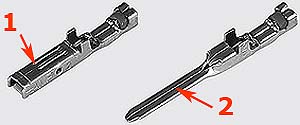
Рис. Tyco Electronics1 - Гнездовая контакт-деталь (гнездовой контакт)
2 - Штыревая контакт-деталь (штыревой контакт)Параллельные тексты EN-RU
Under the CEE/IEC system, pins and sleeves must be differently spaced in devices with different numbers of poles, and the earthing pin and earthing sleeve are larger than the other pins and sleeves.
[ABB]В соответствии с требованиями CEE/МЭК расположение штыревых и гнездовых контактов в соединителях с разным числом полюсов не должно быть одинаковым. Кроме того, размеры заземляющего штыря и гнезда должны быть больше размеров остальных штырей и гнезд.
[Перевод Интент]Недопустимые, нерекомендуемые
Тематики
Обобщающие термины
Синонимы
EN
- contact sleeve
- female contact
- module female contact
- module socket contact
- receptacle contact
- sleeve
- socket contact
DE
FR
- alvéole
- contact femelle, m
смазочный карман (5.4)
Углубление на поверхности подшипника скольжения, служащее для накопления смазочного материала и его распределения.
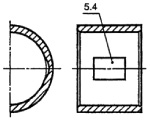
[ ГОСТ ИСО 4378-1-2001]Тематики
Обобщающие термины
EN
FR
Франко-русский словарь нормативно-технической терминологии > alvéole
-
26 mine
I.mine1 [min]feminine noun( = physionomie) expression• ... dit-il, la mine réjouie... he said with a cheerful expression on his face• tu as bonne mine maintenant ! now you look a complete idiot!il est venu nous demander comment ça marchait, mine de rien he came and asked us all casually (inf) how things were going• mine de rien, il n'est pas bête you wouldn't think it to look at him but he's no fool (inf)• mine de rien, ça nous a coûté 1 500 € believe it or not it cost us 1,500 eurosII.mine2 [min]1. feminine nouna. ( = gisement) mineb. ( = source) [de renseignements] minec. [de crayon] leadd. ( = explosif) mine2. compounds* * *min
1.
1) ( expression) expression; ( aspect) lookfaire triste mine — to have a gloomy expression, to look gloomy
elle nous a dit, mine de rien (colloq), que — she told us, casually, that
il est doué, mine de rien — (colloq) it may not be obvious, but he's very clever
2) ( apparence)avoir mauvaise mine, avoir une sale (colloq) or petite mine — to look a bit off-colour [BrE]
avoir bonne mine — [personne] to look well; [tarte, rôti] to look appetizing
j'aurais bonne mine! — iron I would look really stupid!
3) ( pour dessiner) leadcrayon à mine dure/grasse — hard/soft pencil
4) ( gisement) minemine d'or — lit, fig gold mine
5) ( source) sourcemine d'informations — fig mine of information
6) Armée mine
2.
mines nom féminin pluriel ( minauderies) simpering [U]Phrasal Verbs:••ne pas payer de mine — (colloq) not to look anything special (colloq)
* * *min1. nf1) (= physionomie) expression, lookElle avait une mine fatiguée. — She was looking tired.
avoir bonne mine > [personne] — to look well, ironique to look an utter idiot
Tu as bonne mine. — You look well.
Il a mauvaise mine. — He doesn't look well.
Elle a fait mine de le croire. — She pretended to believe him.
2) (apparence) [personne] appearanceIl ne faut pas juger les gens d'après leur mine. — You shouldn't judge people by their appearance.
3) [crayon] lead4) (= gisement, exploitation) minemine à ciel ouvert — opencast Grande-Bretagne mine, open-air USA mine
5) (= explosif) minemine de rien; Mine de rien, il est vraiment efficace. — You wouldn't think so but he's really efficient.
Elle a réussi mine de rien à le faire parler de lui. — Somehow or other she got him to talk about himself.
Il s'est installé, mine de rien, et il a tout réorganisé. — He settled in, cool as you please, and ended up reorganizing everything.
2. mines nfplpéjoratif simpering* * *A nf1 ( expression) expression; ( aspect) look; avoir la mine boudeuse to have a sulky expression, to look sulky; faire triste mine to have a gloomy expression, to look gloomy; tu en fais une mine! why are you looking like that?; ne fais pas cette mine! don't look like that!; sous sa mine aimable, c'est quelqu'un de très dur beneath his/her pleasant exterior, he/she is very hard; juger les gens sur leur mine to judge people by appearances; faire mine d'accepter/de ne pas comprendre to pretend to accept/not to understand; faire mine de partir/frapper to make as if to go/to hit; elle nous a dit, mine de rien○, que she told us, casually, that; il est doué, mine de rien○ it may not be obvious, but he's very clever; mine de rien○, elle arrive toujours à ses fins without being obvious about it, she always gets her way; elle a raison, mine de rien○ she's right, you know;2 ( apparence) avoir mauvaise mine to look a bit off-colourGB; avoir une sale○ or petite mine to look a bit off-colourGB; avoir une mine resplendissante to be glowing with health; avoir une mine de papier mâché to look washed out; avoir bonne mine [personne] to look well; [tarte, rôti] to look appetizing; j'aurais bonne mine! iron I would look really stupid!;3 ( pour dessiner) lead; crayon à mine dure/grasse hard/soft pencil;4 Mines gén mine; ( de charbon) gén colliery GB, mine; ( puits) pit GB, mine; mine à ciel ouvert opencast mine; travailler à la mine to be a miner, to work in a mine; l 'exploitation des mines mining; une région de mines a coal-mining area; mine d'or lit, fig gold mine;5 ( source) source; mine d'informations fig mine of information; une mine d'adresses utiles a source of useful addresses;6 Mil mine; sauter sur une mine to be blown up by a mine; mine terrestre land mine; mine antichar/antipersonnel antitank/antipersonnel mine.B mines nfpl1 ( minauderies) simpering ¢; faire des mines to simper;2 Admin les Mines official body responsible for regulating weights and measures and changes made to motor vehicles; ⇒ école.mine de crayon lead; mine de plomb graphite ¢.ne pas payer de mine○ not to look anything special○.[min] nom fémininfaire mine de: elle fit mine de raccrocher, puis se ravisa she made as if to hang up, then changed her mindne fais pas mine de ne pas comprendre don't act as if ou pretend you don't understandmine de rien (familier) : mine de rien, ça finit par coûter cher it may not seem much but when you add it all up, it's expensivemine de rien, elle était furieuse although ou though she didn't show it, she was furious2. [teint]tu as bonne mine, avec ta veste à l'envers! (figuré & ironique) you look great with your jacket on inside out!je lui trouve meilleure mine I think she looks better ou in better healthavoir une mine réjouie to beam, to be beamingmine de charbon ou de houille coal mine4. [source importante]une mine de a mine ou source of5. [d'un crayon] leadcrayon à mine grasse/dure soft/hard pencilmine de plomb graphite ou black lead[explosif] minemine aérienne/sous-marine/terrestre aerial/submarine/land mine7. [explosif]————————mines nom féminin pluriel1. [manières]il m'énerve à toujours faire des mines he irritates me, always simpering around2. GÉOGRAPHIE mining area, mines -
27 tension superficielle
напряжение поверхности
—
[ http://www.eionet.europa.eu/gemet/alphabetic?langcode=en]EN
surface tension
The force acting on the surface of a liquid, tending to minimize the area of the surface; quantitatively, the force that appears to act across a line of unit length on the surface. Also known as interfacial force; interfacial tension; surface intensity. (Source: MGH)
[http://www.eionet.europa.eu/gemet/alphabetic?langcode=en]Тематики
EN
DE
FR
Франко-русский словарь нормативно-технической терминологии > tension superficielle
-
28 remonter
v -
29 contact femelle, m
гнездовая контакт-деталь
Контакт-деталь, предназначенная для ввода штыревой контакт-детали и электрического контактирования с ней по своей внутренней поверхности
[ ГОСТ 14312-79]
гнездовой контакт
-
[IEV number 151-12-17]EN
socket contact
female contact
contact member intended to make electric engagement on its inner surface for mating with the outer surface of another contact member
NOTE – In English, the term "socket contact" does not imply that socket contacts are always mounted in a socket nor that sockets have only socket contacts.
Source: 581-02-07 MOD, 151-12-20
[IEV number 151-12-17]FR
contact femelle, m
élément de contact destiné à établir la liaison électrique sur ses faces intérieures en s'accouplant avec les faces extérieures d'un autre élément de contact
NOTE – L’emploi en anglais du terme "socket contact" n’implique pas qu’un contact femelle est toujours monté dans un socle, ni que les socles ne comportent que des contacts femelles.
Source: 581-02-07 MOD, 151-12-20
[IEV number 151-12-17]
Рис. Tyco Electronics1 - Гнездовая контакт-деталь (гнездовой контакт)
2 - Штыревая контакт-деталь (штыревой контакт)Параллельные тексты EN-RU
Under the CEE/IEC system, pins and sleeves must be differently spaced in devices with different numbers of poles, and the earthing pin and earthing sleeve are larger than the other pins and sleeves.
[ABB]В соответствии с требованиями CEE/МЭК расположение штыревых и гнездовых контактов в соединителях с разным числом полюсов не должно быть одинаковым. Кроме того, размеры заземляющего штыря и гнезда должны быть больше размеров остальных штырей и гнезд.
[Перевод Интент]Недопустимые, нерекомендуемые
Тематики
Обобщающие термины
Синонимы
EN
- contact sleeve
- female contact
- module female contact
- module socket contact
- receptacle contact
- sleeve
- socket contact
DE
FR
- alvéole
- contact femelle, m
Франко-русский словарь нормативно-технической терминологии > contact femelle, m
-
30 volume d'accessibilité au toucher
зона досягаемости рукой
Зона доступного прикосновения, простирающаяся от любой точки поверхности, на которой обычно находятся или передвигаются люди, до границы, которую можно достать рукой в любом направлении без использования дополнительных средств.
[ ГОСТ Р МЭК 60050-195-2005]
[ ГОСТ Р МЭК 60050-826-2009]
Это пространство условно ограничено, как показано на рисунке
В.1
S-поверхность, на которой может находиться человек
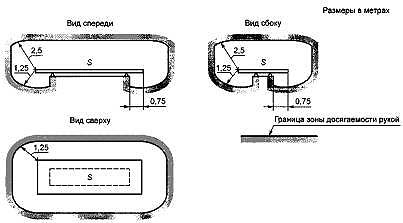
Рисунок В.1 - Зона досягаемости рукой
[ ГОСТ Р 50571. 1-2009 ( МЭК 60364-1: 2005)]EN
arm's reach
zone of accessibility to touch extending from any point on a surface where persons usually stand or move about to the limits which a person can reach with the hand, in any direction, without assistance
Source: 826-03-11 MOD
[IEV number 195-06-12]FR
volume d'accessibilité au toucher
zone s'étendant entre tout point de la surface où les personnes se tiennent et circulent habituellement, et la limite qu'une personne peut atteindre avec la main, dans toutes les directions, sans moyen auxiliaire
Source: 826-03-11 MOD
[IEV number 195-06-12]Тематики
EN
DE
FR
Франко-русский словарь нормативно-технической терминологии > volume d'accessibilité au toucher
-
31 chauffage solaire
отопление на основе солнечной энергии
—
[ http://www.eionet.europa.eu/gemet/alphabetic?langcode=en]EN
solar heating
A domestic or industrial heating system that makes direct use of solar energy. The simplest form consists of a collector through which a fluid is pumped. The circuit also contains some form of heat storage tank and an alternative energy source to provide energy when the sun is not shining. The collector usually consists of a black surface through which water is piped, the black surface being enclosed behind glass sheets to make use of the greenhouse effect. (Source: UVAROV)
[http://www.eionet.europa.eu/gemet/alphabetic?langcode=en]Тематики
EN
DE
FR
Франко-русский словарь нормативно-технической терминологии > chauffage solaire
-
32 système
система
Группа взаимодействующих объектов, выполняющих общую функциональную задачу. В ее основе лежит некоторый механизм связи.
[ ГОСТ Р МЭК 61850-5-2011]
система
Набор элементов, которые взаимодействуют в соответствии с проектом, в котором элементом системы может быть другая система, называемая подсистемой; система может быть управляющей системой или управляемой системой и включать аппаратные средства, программное обеспечение и взаимодействие с человеком.
Примечания
1 Человек может быть частью системы. Например, человек может получать информацию от программируемого электронного устройства и выполнять действие, связанное с безопасностью, основываясь на этой информации, либо выполнять действие с помощью программируемого электронного устройства.
2 Это определение отличается от приведенного в МЭС 351-01-01.
[ ГОСТ Р МЭК 61508-4-2007]
система
Множество (совокупность) материальных объектов (элементов) любой, в том числе различной физической природы, а также информационных объектов, взаимосвязанных и взаимодействующих между собой для достижения общей цели.
[ ГОСТ Р 43.0.2-2006]
система
Совокупность элементов, объединенная связями между ними и обладающая определенной целостностью.
[ ГОСТ 34.003-90]
система
Совокупность взаимосвязанных и взаимодействующих элементов.
[ ГОСТ Р ИСО 9000-2008]
система
-
[IEV number 151-11-27]
система
Набор связанных элементов, работающих совместно для достижения общей Цели. Например: • Компьютерная система, состоящая из аппаратного обеспечения, программного обеспечения и приложений. • Система управления, состоящая из множества процессов, которые планируются и управляются совместно. Например, система менеджмента качества. • Система управления базами данных или операционная система, состоящая из множества программных модулей, разработанных для выполнения набора связанных функций.
[Словарь терминов ITIL версия 1.0, 29 июля 2011 г.]
система
Множество элементов, находящихся в отношениях и связях друг с другом, которое образует определенную целостность, единство. Следует отметить, что это определение (взятое нами из Большой Советской Энциклопедии) не является ни единственным, ни общепризнанным. Есть десятки определений понятия “С.”, которые с некоторой условностью можно поделить на три группы. Определения, принадлежащие к первой группе, рассматривают С. как комплекс процессов и явлений, а также связей между ними, существующий объективно, независимо от наблюдателя. Его задача состоит в том, чтобы выделить эту С. из окружающей среды, т.е. как минимум определить ее входы и выходы (тогда она рассматривается как “черный ящик”), а как максимум — подвергнуть анализу ее структуру (произвести структуризацию), выяснить механизм функционирования и, исходя из этого, воздействовать на нее в нужном направлении. Здесь С. — объект исследования и управления. Определения второй группы рассматривают С. как инструмент, способ исследования процессов и явлений. Наблюдатель, имея перед собой некоторую цель, конструирует (синтезирует) С. как некоторое абстрактное отображение реальных объектов. При этом С. (“абстрактная система”) понимается как совокупность взаимосвязанных переменных, представляющих те или иные свойства, характеристики объектов, которые рассматриваются в данной С. В этой трактовке понятие С. практически смыкается с понятием модели, и в некоторых работах эти два термина вообще употребляются как взаимозаменяемые. Говоря о синтезе С., в таких случаях имеют в виду формирование макромодели, анализ же С. совпадает в этой трактовке с микромоделированием отдельных элементов и процессов. Третья группа определений представляет собой некий компромисс между двумя первыми. С. здесь — искусственно создаваемый комплекс элементов (например, коллективов людей, технических средств, научных теорий и т.д.), предназначенный для решения сложной организационной, экономической, технической задачи. Следовательно, здесь наблюдатель не только выделяет из среды С. (и ее отдельные части), но и создает, синтезирует ее. С. является реальным объектом и одновременно — абстрактным отображением связей действительности. Именно в этом смысле понимает С. наука системотехника. Между этими группами определений нет непроходимых границ. Во всех случаях термин “С.” включает понятие о целом, состоящем из взаимосвязанных, взаимодействующих, взаимозависимых частей, причем свойства этих частей зависят от С. в целом, свойства С. — от свойств ее частей. Во всех случаях имеется в виду наличие среды, в которой С. существует и функционирует. Для исследуемой С. среда может рассматриваться как надсистема, соответственно, ее части — как подсистемы, а также элементы С., если их внутренняя структура не является предметом рассмотрения. С. делятся на материальные и нематериальные. К первым относятся, например, железная дорога, народное хозяйство, ко вторым — С. уравнений в математике, математика как наука, далее — С. наук. Автоматизированная система управления включает как материальные элементы (ЭВМ, документация, люди), так и нематериальные — математические модели, знания людей. Разделение это тоже неоднозначно: железную дорогу можно рассматривать не только как материальную С., но и как нематериальную С. взаимосвязей, соотношений, потоков информации и т.д. Закономерности функционирования систем изучаются общей теорией систем, оперирующей понятием абстрактной С. Наибольшее значение среди абстрактных С. имеют кибернетические С. Есть два понятия, близкие понятию С.: комплекс, совокупность (множество объектов). Они, однако, не тождественны ему, как нередко утверждают. Их можно рассматривать как усеченные, неполные понятия по отношению к С.: комплекс включает части, не обязательно обладающие системными свойствами (в том смысле, как это указано выше), но эти части сами могут быть системами, и элементы последних такими свойствами по отношению к ним способны обладать. Совокупность же есть множество элементов, не обязательно находящихся в системных отношениях и связях друг с другом. В данном словаре мы стремимся по возможности последовательно различать понятия С. и модели, рассматривая С. как некий объект (реальной действительности или воображаемый — безразлично), который подвергается наблюдению и изучению, а модель — как средство этого наблюдения и изучения. Разумеется, и модель, если она сама оказывается объектом наблюдения и изучения, в свою очередь рассматривается как С. (в частности, как моделируемая С.) — и так до бесконечности. Все это означает, что такие, например, понятия, как переменная или параметр, мы (в отличие от многих авторов) относим не к С., а к ее описанию, т.е. к модели (см. Параметры модели, Переменная модели), численные же их значения, характеризующие С., — к С. (например, координаты С.). • Системы математически описываются различными способами. Каждая переменная модели, выражающая определенную характеристику С., может быть задана множеством конкретных значений, которые эта переменная может принимать. Состояние С. описывается вектором (или кортежем, если учитываются также величины, не имеющие численных значений), каждая компонента которого соответствует конкретному значению определенной переменной. С. в целом может быть описана соответственно множеством ее состояний. Например, если x = (1, 2, … m) — вектор существенных переменных модели, каждая из которых может принять y значений (y = 1, 2, …, n), то матрица S = [ Sxy ] размерностью m ? n представляет собой описание данной С. Широко применяется описание динамической С. с помощью понятий, связанных с ее функционированием в среде. При этом С. определяется как три множества: входов X, выходов Y и отношений между ними R. Полученный “портрет системы” может записываться так: XRY или Y = ®X. Аналитическое описание С. представляет собой систему уравнений, характеризующих преобразования, выполняемые ее элементами и С. в целом в процессе ее функционирования: в непрерывном случае применяется аппарат дифференциальных уравнений, в дискретном — аппарат разностных уравнений. Графическое описание С. чаще всего состоит в построении графа, вершины которого соответствуют элементам С., а дуги — их связям. Существует ряд классификаций систем. Наиболее известны три: 1) Ст. Бир делит все С. (в природе и обществе), с одной стороны, на простые, сложные и очень сложные, с другой — на детерминированные и вероятностные; 2) Н.Винер исходит из особенностей поведения С. (бихевиористский подход) и строит дихотомическую схему: С., характеризующиеся пассивным и активным поведением; среди последних — нецеленаправленным (случайным) и целенаправленным; в свою очередь последние подразделяются на С. без обратной связи и с обратной связью и т.д.; 3) К.Боулдинг выделяет восемь уровней иерархии С., начиная с простых статических (например, карта земли) и простых кибернетических (механизм часов), продолжая разного уровня сложности кибернетическими С., вплоть до самых сложных — социальных организаций. Предложены также классификации по другим основаниям, в том числе более частные, например, ряд классификаций С. управления. См. также: Абстрактная система, Адаптирующиеся, адаптивные системы, Большая система, Вероятностная система, Выделение системы, Входы и выходы системы, Детерминированная система, Динамическая система, Дискретная система, Диффузная система, Замкнутая (закрытая) система, Иерархическая структура, Имитационная система, Информационная система, Информационно-развивающаяся система, Кибернетическая система, Координаты системы, Надсистема, Нелинейная система, Непрерывная система, Открытая система, Относительно обособленная система, Память системы, Подсистема, Портрет системы, Разомкнутая система, Рефлексная система, Решающая система, Самонастраивающаяся система, Самообучающаяся система, Самоорганизующаяся система, Сложная система, Состояние системы, Статическая система, Стохастическая система, Структура системы, Структуризация системы, Управляющая система, Устойчивость системы, Целенаправленная система, Экономическая система, Функционирование экономической системы..
[ http://slovar-lopatnikov.ru/]EN
system
set of interrelated elements considered in a defined context as a whole and separated from their environment
NOTE 1 – A system is generally defined with the view of achieving a given objective, e.g. by performing a definite function.
NOTE 2 – Elements of a system may be natural or man-made material objects, as well as modes of thinking and the results thereof (e.g. forms of organisation, mathematical methods, programming languages).
NOTE 3 – The system is considered to be separated from the environment and the other external systems by an imaginary surface, which cuts the links between them and the system.
NOTE 4 – The term "system" should be qualified when it is not clear from the context to what it refers, e.g. control system, colorimetric system, system of units, transmission system.
Source: 351-01-01 MOD
[IEV number 151-11-27]
system
A number of related things that work together to achieve an overall objective. For example: • A computer system including hardware, software and applications • A management system, including the framework of policy, processes, functions, standards, guidelines and tools that are planned and managed together – for example, a quality management system • A database management system or operating system that includes many software modules which are designed to perform a set of related functions.
[Словарь терминов ITIL версия 1.0, 29 июля 2011 г.]FR
système, m
ensemble d'éléments reliés entre eux, considéré comme un tout dans un contexte défini et séparé de son environnement
NOTE 1 – Un système est en général défini en vue d'atteindre un objectif déterminé, par exemple en réalisant une certaine fonction.
NOTE 2 – Les éléments d'un système peuvent être aussi bien des objets matériels, naturels ou artificiels, que des modes de pensée et les résultats de ceux-ci (par exemple des formes d'organisation, des méthodes mathématiques, des langages de programmation).
NOTE 3 – Le système est considéré comme séparé de l'environnement et des autres systèmes extérieurs par une surface imaginaire qui coupe les liaisons entre eux et le système.
NOTE 4 – Il convient de qualifier le terme "système" lorsque le concept ne résulte pas clairement du contexte, par exemple système de commande, système colorimétrique, système d'unités, système de transmission.
Source: 351-01-01 MOD
[IEV number 151-11-27]Тематики
- автоматизированные системы
- информационные технологии в целом
- релейная защита
- системы менеджмента качества
- экономика
EN
DE
FR
Франко-русский словарь нормативно-технической терминологии > système
-
33 broche, f
штыревая контакт-деталь
Контакт-деталь, предназначенная для ввода в гнездовую контакт-деталь и электрического контактирования с ней по своей внешней поверхности
[ ГОСТ 14312-79]
штыревой контакт
-
[IEV number 151-12-18]EN
pin contact
male contact
contact member intended to make electric engagement on its outer surface for mating with the inner surface of another contact member
Source: 581-02-10 MOD
[IEV number 151-12-18]FR
contact mâle, m
broche, f
élément de contact destiné à établir la liaison électrique sur ses faces extérieures en s'accouplant avec les faces intérieures d'un autre élément de contact
Source: 581-02-10 MOD
[IEV number 151-12-18]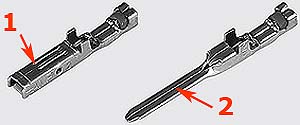
Рис. Tyco Electronics1 - Гнездовая контакт-деталь (гнездовой контакт)
2 - Штыревая контакт-деталь ( штыревой контакт)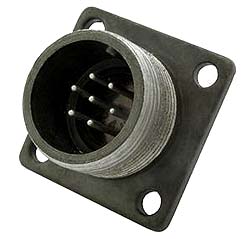
Часть соединителя (приборная вилка) со штыревыми контактами
Недопустимые, нерекомендуемые
Тематики
Обобщающие термины
Синонимы
EN
DE
FR
- broche, f
- contact mâle, m
Франко-русский словарь нормативно-технической терминологии > broche, f
-
34 contact mâle, m
штыревая контакт-деталь
Контакт-деталь, предназначенная для ввода в гнездовую контакт-деталь и электрического контактирования с ней по своей внешней поверхности
[ ГОСТ 14312-79]
штыревой контакт
-
[IEV number 151-12-18]EN
pin contact
male contact
contact member intended to make electric engagement on its outer surface for mating with the inner surface of another contact member
Source: 581-02-10 MOD
[IEV number 151-12-18]FR
contact mâle, m
broche, f
élément de contact destiné à établir la liaison électrique sur ses faces extérieures en s'accouplant avec les faces intérieures d'un autre élément de contact
Source: 581-02-10 MOD
[IEV number 151-12-18]
Рис. Tyco Electronics1 - Гнездовая контакт-деталь (гнездовой контакт)
2 - Штыревая контакт-деталь ( штыревой контакт)Часть соединителя (приборная вилка) со штыревыми контактами
Недопустимые, нерекомендуемые
Тематики
Обобщающие термины
Синонимы
EN
DE
FR
- broche, f
- contact mâle, m
Франко-русский словарь нормативно-технической терминологии > contact mâle, m
-
35 aménagement du territoire
- региональное планирование
- планирование и управление землепользованием
- планирование землепользования
- планирование земель
планирование земель
—
[ http://www.eionet.europa.eu/gemet/alphabetic?langcode=en]EN
land planning
The activity of designing, organizing or preparing for the future use of solid areas of the earth's surface, especially regions valued for natural resources, utilized as agricultural resources or considered for human settlement. (Source: RHW)
[http://www.eionet.europa.eu/gemet/alphabetic?langcode=en]Тематики
EN
DE
FR
планирование землепользования
—
[ http://www.eionet.europa.eu/gemet/alphabetic?langcode=en]EN
land use planning
The interdisciplinary process of evaluating, organising, and controlling the present and the future development and use of lands and their resources in terms of their suitability on sustained yield basis. Includes an overall ecological evaluation in terms of specific kinds of uses as well as evaluations of social, economic, and physical contexts to the land concerned. (Source: UNUN)
[http://www.eionet.europa.eu/gemet/alphabetic?langcode=en]Тематики
EN
DE
FR
планирование и управление землепользованием
—
[ http://www.eionet.europa.eu/gemet/alphabetic?langcode=en]EN
land management and planning
Operations for preparing and controlling the implementation of plans for organizing human activities on land. (Source: GOOD)
[http://www.eionet.europa.eu/gemet/alphabetic?langcode=en]Тематики
EN
DE
FR
региональное планирование
—
[ http://www.eionet.europa.eu/gemet/alphabetic?langcode=en]EN
land setup
The formulation of regional objectives, plans and programmes and the harmonization of the regional effects of sectorial planning. (Source: ECHO2)
[http://www.eionet.europa.eu/gemet/alphabetic?langcode=en]Тематики
EN
DE
FR
Франко-русский словарь нормативно-технической терминологии > aménagement du territoire
-
36 érosion éolienne
ветряная эрозия
—
[ http://www.eionet.europa.eu/gemet/alphabetic?langcode=en]EN
wind erosion
The breakdown of solid rock into smaller particles and its removal by wind. It may occur on any soil whose surface is dry, unprotected by vegetation (to bind it at root level and shelter the surface) and consists of light particles. The mechanisms include straightforward picking up of dust and soil particles by the airflow and the dislodging or abrasion of surface material by the impact of particles already airborne. (Source: ALL)
[http://www.eionet.europa.eu/gemet/alphabetic?langcode=en]Тематики
EN
DE
FR
Франко-русский словарь нормативно-технической терминологии > érosion éolienne
-
37 réseau de drainage
водосборная система
—
[ http://www.eionet.europa.eu/gemet/alphabetic?langcode=en]EN
drainage system
A surface stream, or a body of impounded surface water, together with all other such streams and water bodies that are tributary to it and by which a region is drained. An artificial drainage system includes also surface and subsurface conduits. (Source: BJGEO)
[http://www.eionet.europa.eu/gemet/alphabetic?langcode=en]Тематики
EN
DE
FR
сеть дренажная
Совокупность дрен и открытых водоводов с устройствами на них
[Терминологический словарь по строительству на 12 языках (ВНИИИС Госстроя СССР)]Тематики
EN
DE
FR
Франко-русский словарь нормативно-технической терминологии > réseau de drainage
-
38 interface air mer
граница между воздухом и поверхностью океана
—
[ http://www.eionet.europa.eu/gemet/alphabetic?langcode=en]EN
ocean-air interface
The sea and the atmosphere are fluids in contact with one another, but in different energy states - the liquid and the gaseous. The free surface boundary between them inhibits, but by no means totally prevents, exchange of mass and energy between the two. Almost all interchanges across this boundary occur most effectively when turbulent conditions prevail. A roughened sea surface, large differences in properties between the water and the air, or an unstable air column that facilitates the transport of air volumes from sea surface to high in the atmosphere. Both heat and water (vapor) tend to migrate across the boundary in the direction from sea to air. Heat is exchanged by three processes: radiation, conduction, and evaporation. The largest net exchange is through evaporation, the process of transferring water from sea to air by vaporization of the water. (Source: PARCOR)
[http://www.eionet.europa.eu/gemet/alphabetic?langcode=en]Тематики
EN
DE
FR
Франко-русский словарь нормативно-технической терминологии > interface air mer
-
39 grotte
пещера
—
[ http://www.eionet.europa.eu/gemet/alphabetic?langcode=en]EN
cave
1) An underground hollow with access from the ground surface or from the sea, often found in limestone areas and on rocky coastlines.
2) A natural cavity, chamber or recess which leads beneath the surface of the earth, generally in a horizontal or obliquely inclined direction. It may be in the form of a passage or a gallery, its shape depending in part on the joint pattern or structure of the rock and partly on the type of process involved in its excavation. Thus, caves worn by subterranean rivers may be different in character from, and of considerably greater extent than, a sea-cave eroded by marine waves.
3) A natural underground open space, generally with a connection to the surface and large enough for a person to enter. The most common type of cave is formed in a limestone by dissolution.
(Source: CED / WHIT / BJGEO)
[http://www.eionet.europa.eu/gemet/alphabetic?langcode=en]Тематики
EN
DE
FR
Франко-русский словарь нормативно-технической терминологии > grotte
-
40 à
prép.║ A verbe (nom d'action) + à + nom 1. lieu (station — direction) 2. temps 3. distance 4. attribution et privation 5. appartenance 6. obligation 7. relations diverses 8. selon 9. comparaison 10. but 11. effet 12. moyen, instrument 13. manière 14. relations de mesure ║ B nom d'objet + à + nom 1. qualité, structure, source 2. usage 3. contenu 4. prix 5. succession ║ C nom + à + inf 1. qualification, usage 2. destination 3. intensité, conséquence ║ D adj. + à + nom (ou inf) 1. rapports divers 2. intensité 3. niveau, partie 4. avec seul, premier, etc. ║ E verbe + à + inf 1. complément d'un verbe 2. ordre, obligation 3. intensité, conséquence 4. condition ║ F avec des numéraux 1. approximation 2. distribution, succession 3. vitesse 4. communauté ║ G exclamations À (verbe + à + nom; nom; nom d'action + à + nom; à + nom) 1. (lieu: opposition station — direction) в (+ P) — в (+ A); на (+ P) — на (+ A); у (+ G) — к (+ D); за (+) — за (+ A) 1) ( sens général) в (+ P) (station); в (+ A) (direction);il va à Paris (au Japon) — он е́дет в Пари́ж (в Япо́нию); il travaille au lycée (à la campagne) — он рабо́тает в лице́е (в дере́вне)il habite à Paris (au Japon) — он живёт в Пари́же (в Япо́нии);
son voyage à Moscou — его́ пое́здка в Москву́son séjour à Moscou — его́ пребыва́ние в Москве́;
aller à Cuba — е́хать/по= на Ку́буvivre à Cuba — жить ipf. на Ку́бе;
║ (en parlant d'une surface verticale ou horizontale (terre, étage, etc.)):mettre les rideaux à une fenêtre — ве́шать/ пове́сить занаве́ски на окно́; au mur — на стене́, на сте́ну; il couche au premier — он спит (его́ спа́льня) на второ́м этаже́; il monte au premier — он поднима́ется на второ́й эта́ж; il est étendu à terre — он лежи́т на земле́; le coup le jeta à terre — от уда́ра он упа́л на зе́млюil y a des rideaux aux fenêtres — на о́кнах вися́т занаве́ски;
ils sont allés au nord — они́ уе́хали на се́верce village se trouve au nord de Paris — э́та дере́вня нахо́дится к северу́ (на се́вер) от Пари́жа;
║ (avec certains substantifs exprimant une position en gênerai, le lieu de travail ou d'occupation):mettre qch. à sa place — ста́вить/по= что-л. на [своё] ме́сто; à l'angle de la rue — на углу́ у́лицы; ils sont étendus au soleil (à l'ombre) — они́ лежа́т на со́лнце (в те́ни); mettre qch. à l'ombre — поста́вить что-л. в тень; à l'aérodrome — на аэродро́ме, на аэродро́м; à la gare — на вокза́ле, на вокза́л; à la poste — на по́чте, на по́чту; à l'usine — на заво́де, на заво́д; au marché — на ры́нке, на ры́нок; à la chasse — на охо́те, на охо́ту; à l'exposition — на вы́ставке, на вы́ставку; au concert — на конце́рте, на конце́ртil est à sa place — он на [своём] ме́сте;
║ (avec des noms de parties du corps) в (+ P), на (+ P);il est blessé au bras gauche — он ра́нен в ле́вую ру́ку; le sourire aux lèvres — с улы́бкой на губа́х (на лице́); une douleur à la jambe — боль в ноге́la pipe à la bouche — с тру́бкой во рту <в зуба́х>;
║ (au sens figuré, devant des noms abstraits, d'action ou d'état) в (+ P), на (+ P);mettre au desespoir — поверга́ть/пове́ргнуть в отча́яние; être au régime — быть <сиде́ть> ipf. на дие́те; mettre au régime — сажа́ть/посади́ть на дие́ту; être à la charge de qn. — быть на иждиве́нии у кого́-л. ; prendre qn. à sa charge — брать/ взять на [своё] иждиве́ние кого́-л.être au désespoir — быть в отча́янии;
║ (complément du superlatif) в (+ P), на (+ P);ce que j'aime le plus au monde — то, что я люблю́ бо́льше всего́ на све́теle plus grand au monde — са́мый большо́й в ми́ре;
il va à la fenêtre (au tableau) — он идёт к окну́ (к доске́); je viens à vous — я иду́ к вам; suspendre une lampe au plafond — подве́шивать/подве́сить ла́мпу к потолку́; être à table — сиде́ть ipf. за столо́м; se mettre à table — сади́ться/сесть за столil est debout à la fenêtre (au tableau) — он стои́т у окна́ (у до́ски);
3) (éloignement, provenance) в (+ P); из (+ G);prendre de l'eau à la source — набира́ть/наора́ть воды́ из родника́prendre un livre à la bibliothèque — брать / взять кни́гу в библиоте́ке;
2. (temps)1) (moment exact) в (+ A; + P), на (+ P);à l'aube — на заре́; arriver à trois heures — приезжа́ть / прие́хать в три часа́;à midi — в по́лдень;
v. tableau «Heure»;au début du mois de mai — в нача́ле ма́я;à vingt ans — в два́дцать лет;
v. tableau «Date et datation»║ (fêtes) на (+ A);au Jour de l'An — в день Но́вого го́даà Pâques — на Па́сху;
2) (ordre) на (+ P);à chaque pas — на ка́ждом ша́гуà la dixième minute — на деся́той мину́те;
3) (durée) на (+ A);louable à l'année — сдава́емый на год
4) (point final) до (+ G); на (+ A);à lundi — до понеде́льника; à jamais — навсегда́; remettre l'affaire au lendemain (à huitaine, à dix heures) — откла́дывать/отложи́ть де́ло на за́втра (до за́втра) (на неде́лю, на де́сять часо́в (до десяти́ часо́в)) 5) (simultanéité, lors de) — за (+), во вре́мя (+ G); au déjeuner — за за́втраком, во вре́мя за́втракаà demain — до за́втра;
║ (avec des noms d'action remplaçant une subordonnée) при (+ P);se traduit aussi par un gérondif ou une subordonnée de temps:à son arrivée — при его́ прие́зде, когда́ он прие́хал; à la vue du train — при ви́де по́езда, уви́дев по́езд; à ces mots, il sortit — при э́тих слова́х <с э́тими слова́ми, сказа́в э́то,> он вы́шелà la sortie du cinéma — при вы́ходе из кино́, выходя́ из кино́, когда́ он вы́ходил из кино́;
3. (distance)1) de... à (espace) от (+ G) (à partir de)... до (+ G); из (+ G) (de dedans)... в (+ A); с (+ G)... на (+ A);de ja Mer Blanche au Caucase — от Бе́лого мо́ря до Кавка́за, du Nord au Sud — с се́вера на юг; от се́вера до ю́га ║ du premier au dernier — от пе́рвого до после́днегоde Paris à Marseille — от Пари́жа До Марсе́ля; из Пари́жа в Марсе́ль;
║ (temps) от (+ G); с (+ G)... до (+ G); по (+ A) (dates);du matin au soir — с утра́ до ве́чера; nous avons cours de cinq à sept — у нас заня́тия от пяти́ до семи́; du 10 au 20 février — с деся́того до двадца́того <по двадца́тое> февраля́; (ч. tableau «Date et datation»)du début à la fin — от <с> нача́ла до конца́;
2) à... de в (+ P)... от (+ G);à quelques mètres du bord de la route — в не́скольких ме́трах от кра́я доро́ги; à 10 minutes de marche de l'hôtel — в десяти́ мину́тах ходьбы́ от гости́ницы;à 100 kilomètres d'ici (de la mer) — в ста киломе́трах отсю́да (от мо́ря);
(v. tableau « Distance»)4. (attribution et privation) 1) (attribution) D seult.; к (+ D);dire qch. à qn. — говори́ть / сказа́ть кому́-л. что-л.; montrer qch. à qn. — пока́зывать / показа́ть кому́-л. что-л. ; promettre qch. à qn. — обеща́ть/по= кому́-л. что-л.; s'adresser à qn. — обраща́ться / обрати́ться к кому́-л.; attacher qch. à qch. — привя́зывать / привяза́ть что-л. к чему́-л. ; à mon ami Pierre (inscription) — мо́ему́ дру́гу Пье́руdonner qch. à qn. — дава́ть/дать кому́-л. что-л.;
2) (enlèvement, privation) от (+ G); у (+ G);il a emprunté de l'argent à son ami — он за́нял де́нег у дру́га; cacher qch. à qn. — скрыва́ть/скрыть что-л. от кого́-л.; acheter qch. à qn. — покупа́ть/ купи́ть что-л. у кого́-л. ; arracher le masque à qn. — срыва́ть/сорва́ть ма́ску с кого́-л.il a pris ce crayon à un camarade — он взял э́тот каранда́ш у това́рища;
5. (appartenance) G seult., pronom possessif;D seult. avec le verbe принадле́жать;ce livre est à moi (à toi, etc. à Jean) — э́то моя́ кни́га (твоя́, etc., Жа́на), э́та кни́ги при надлежи́т мне (тебе́, etc., Жа́ну)à qui est ce livre — чья э́то кни́га?, кому́ принадлежи́т э́та кни́га?;
║ parfois se traduit avec un adjectif d'ар- partenance:le chapeau à ma sœur — шля́пка мое́й сестры́, се́стрина шля́пка; fils à papa — па́пенькин сыно́кla vache à mon oncle — коро́ва моего́ дя́дюшки, дя́дюшкина коро́ва;
║ (avec renforcement) со́бственный;il a un style à lui — у него́ свой со́бственный <осо́бый> стиль
6. (obligation) D + inf;se traduit aussi avec я, ты, etc. до́лжен + inf;à vous de jouer — вам игра́ть; à vous de le dire — э́то сказа́ть должны́ вы; c'est à moi de l'aider — я до́лжен ему́ помо́чь, помо́чь ему́ — моя́ обя́занность (avec mise en relief); ce n'est pas à nous de critiquer — не нам критикова́ть [э́то]à vous la parole — вам говори́ть, вам [ва́ше] сло́во;
7. (relations diverses — après certains verbes) D seult.;se traduit par une forme casuelle avec ou sans préposition, v. le verbe:résister à qn. — сопротивля́ться ipf. seult. кому́-л.; succéder à qn. — насле́довать ipf. кому́-л.céder à qn. — уступа́ть / уступи́ть кому́-л. ;
║ A seult.;survivre à qn. — пережи́ть pf. кого́-л.
║ seult.;s'intéresser à qch. — интересова́ться ipf. чём-л.tenir à qcn — дорожи́ть ipf. чём-л.;
║ для (+ G) (emploi);employer qch. à qch. — употребля́ть / употреби́ть что-л. для чего́-л.servir à qch. — служи́ть ipf. для чего́-л. ;
║ (rejet) от (+ G);renoncer à qch. — отка́зываться / отказа́ться /от чего́-л.
║ (tendance, contact) к (+ D);aboutir à qch. — приводи́ть/ привести́ к чему́-л. ; habituer à qch. — приуча́ть / приучи́ть к чему́-л. ; se préparer à qch. — гото́виться ipf. к чему́-л. ; réduire qch. à qch. — своди́ть / свести́ что-л. к чему́-л.; s'allier à qn. — присоединя́ться / присоеди́ниться к кому́-л.tendre à qch. — стреми́ться ipf. к чему́-л.;
║ (indice) по (+ D);je l'ai reconnu à sa démarche — я узна́л его́ по похо́дке
║ в (+ A);jouer à qch. — игра́ть/сыгра́ть во что-л.initier à qch. — посвяща́ть/посвяти́ть во что-л. ;
║ (réaction) на (+ A);consentir à qch. — соглаша́ться / согласи́ться на что-л. ; se décider à qch. — реша́ться / реши́ться на что-л.répondre à qch. — отвеча́ть/ отве́тить на что-л.;
║ (rapport entre deux objets) с (+);comparer qch. à qch. — сра́внивать/сравни́ть что-л. с чем-л.lier qch. à qch. — свя́зывать / связа́ть что-л. с чем-л.;
║ (occupation) над (+);réfléchir à qch. — размышля́ть ipf. над чем-л.travailler à qch. — рабо́тать ipf. над чем-л.;
║ (objet pensé) о (+ P);rêver à qch. — мечта́ть ipf. о чём-л.penser à qch. — ду́мать/по= о чём-л. ;
║ (participation) в (+ P);participer à qch. — уча́ствовать ipf. в чём-л.;
renonciation à un projet — отка́з от пла́наréponse à une question — отве́т на вопро́с;
8. (selon) по (+ D);à l'invitation de qn. — по чьему́-л. приглаше́нию; à ma demande — по мое́й про́сьбе; juger à sa valeur — суди́ть ipf. no — досто́инствуà l'exemple de son frère — по приме́ру своего́ бра́та;
9. (comparaison);notre équipe a vaincu par 6 à 2 — на́ша кома́нда победи́ла со счётом шесть: два
10. (but) за (+), по (+ A) vx. ou région;aller aux champignons — идти́/пойти́ за гриба́ми <по грибы́>
11. (effet> к (+ D), на(+ A);à la satisfaction de tous — ко всео́бщему удовлетворе́нию; à ma grande surprise — к мо́ему вели́кому удивле́ниюà ma grande joie — к мое́й ра́дости, на моё сча́стье;
12. (moyen, instrument) seult.;pêcher à la ligne — лови́ть ipf. [ры́бу] у́дочкой; peindre à l'huile — писа́ть ма́сломécrire à la plume — писа́ть/на= перо́м;
aller à bicyclette — е́хать ipf. на велосипе́де; marcher à l'électricité — рабо́тать ipf. на электри́честве; examiner à la loupe — рассма́тривать/рассмотре́ть ∫ с по́мощью лу́пы (че́рез лу́пу); travail fait à la main — ручна́я рабо́таfermer la porte à clé — запира́ть/запере́ть дверь на ключ;
║ (éclairage) при (+ P);dîner aux chandelles — у́жинать/по= при свеча́хtravailler à la lumière du jour — рабо́тать при дневно́м све́те;
13. (manière)1) (adverbe ou locution adverbiale, v. le nom correspondant):à cheval — верхо́м; à la nage — вплавь; marcher au pas — идти́/пойти́ в но́гу; vendre à perte — продава́ть/прода́ть с убы́тком; à tâtons — нао́щупь, о́щупью; à poil — нагишо́мà pied — пешко́м;
2) (imitation) по (+ D); на (+ A);à ma manière — по-мо́ему, как я; chacun à sa manière — ка́ждый по-сво́емуelle se coiffe à la dernière mode — она́ причёсывается по после́дней мо́де;
║ à la... se traduit par un adverbe formé d'après le modèle ou par les tournures: по-...-ски; на + adj. + мане́р < лад>; а-ля fam., iron.;ou se rend par un adjectif:le trot à l'anglaise — англи́йская рысь; du riz à l'indienne — рис по-инди́йски; une pose à la Napoléon — по́за а-ля Наполео́н, наполео́новская по́заs'habiller à l'européenne — одева́ться/оде́ться по-европе́йски (на европе́йский мане́р);
3) (intensité) до (+ G) ou adverbe d'intensité;aimer à la folie — безу́мно люби́ть/по=, люби́ть до безу́мия
║ les expressions à + plein (grand, etc.) + substantif se traduisent par un adverbe ou une locution adverbiale:donner à pleines mains — дава́ть / дать ще́дрой руко́й; marcher à grands pas — идти́ / пойти́ больши́ми шага́ми; rouler à grande vitesse — е́хать ipf. бы́стро, мча́ться ipf. со всей ско́ростьюparler à haute voix — говори́ть ipf. гро́мким го́лосом;
14. (relations de mesure)1) (prix) за (+ A);à prix coûtant — по себесто́имости, по свое́й цене́ (au prix de revient) 2) ( unité de mesure) — на (+ A, souvent pl.); vendre au mètre (au poids, au kilo, au litre) — продава́ть / прода́ть на ме́тры (на вес, на килогра́ммы, на ли́тры); В (nom d'objet + à + nom)je vous le laisse à mille francs — я уступа́ю вам э́то за ты́сячу фра́нков:
1. (qualité, structure, source) с (+), в (+ P), на (+ P);adjectif simple ou composé;un avion à réaction — реакти́вный самолёт; charrette à bras — ручна́я теле́жка; un moteur à combustion interne — дви́гатель вну́треннего сгора́ния; un bureau à tiroirs — пи́сьменный стол с я́щиками; une robe à ramages — пла́тье с разво́дами; une veste à carreaux — пиджа́к в кле́тку, кле́тчатый пиджа́к; un chapeau à larges bords — шля́па с широ́кими поля́ми, широкопо́лая шля́паune machine à vapeur — парова́я маши́на;
║ (mets):omelette au lard — яи́чница с са́лом (на са́ле); des sardines à l'huile — сарди́ны в ма́слеcafé au lait — ко́фе с молоко́м;
║ (vêtements, etc.):l'homme à la canne — челове́к с тро́сточкой; une femme à la mise modeste — скро́мно оде́тая же́нщинаl'homme au chapeau — мужчи́на в шля́пе;
un oiseau au long cou — пти́ца с дли́нной ше́ей, длинноше́яя пти́ца; une jeune fille aux yeux bleus — де́вушка с голубы́ми глаза́ми, голубогла́зая де́вушкаun homme à moustache — мужчи́на с уса́ми, уса́тый мужчи́на;
2. (usage) для (+ G);adj. seult.;une boîte à bijoux — шкату́лка для драгоце́нностей; une tasse à thé — ча́йная ча́шка; vase à fleurs — ва́за для цвето́в, цвето́чная ва́заun pot à eau — кувши́н для воды́;
3. (contenu) на (+ A);le droit au repos — пра́во на о́тдых
4. (prix)1) за (+ A), adj. composé;un timbre à 6 kopecks — ма́рка за шесть копе́ек, шестикопе́ечная ма́ркаune cravate à 60 francs — га́лстук за шестьдеся́т фра́нков;
2) по (+ D;+ A) ( par unité);à 50 francs la pièce — по пяти́десяти фра́нков за шту́ку, пятьдеся́т фра́нков шту́ка; quatre timbres à six kopecks — четы́ре ∫ ма́рки по шесть копе́ек <шестикопе́ечные ма́рки>des livres à 100 francs — кни́ги ∫ за сто фра́нков ка́ждая <по сто фра́нков за ка́ждую>;
5. (succession) по (+ D), за (+);pas à pas — шаг за ша́гом ; 1. (qualification, usage) для (+ G), adj. seult.;goutte à goutte — по ка́пле, ка́пля за ка́плей;
machine à coudre — шве́йная маши́наaiguilles à tricoter — спи́цы для вяза́ния, вяза́льные спи́цы;
║ se traduit aussi par un seul mot ou une expression figée:fille à marier — дочь на вы́даньеchambre à coucher — спа́льня;
2. (destination)1) для + subst. verbal; se traduit par une relative avec на́до, ну́жно, сле́дует (on doit); мо́жно (on peut);chambre à louer (annonce) — сдаётся ко́мната; un exemple à imiter — приме́р, досто́йный подража́ния; une idée à développer — иде́я, кото́рую на́до (ну́жно, сле́дует) разви́ть; un travail à refaire — рабо́та, кото́рую ну́жно переде́латьmaison à vendre (annonce) — продаётся дом;
2):c'est... à + inf ∑ A + ну́жно <мо́жно> + inf;c'est une pièce à voir — э́ту пье́су ну́жно посмотре́ть; c'est un jour à rester chez soi — в тако́й день ну́жно <прихо́дится> остава́ться до́ма (cf. Ece sont des choses à jeter — э́ти ве́щи мо́жно вы́бросить;
2.)3. (intensité, conséquence) тако́й..., что + forme finie du verbe; adj. composé seult.;une voix à casser les vitres — тако́й го́лос, что стёкла ло́паются ;des sanglots à fendre l'âme — душераздира́ющие рыда́ния; таки́е рыда́ния, что душа́ разрыва́ется;
D (adj. + à + nom ou inf) se traduit par une forme casuelle avec ou sans préposition, l'infinitif étant souvent remplacé par un substantif verbal (devant l'infinitif russe à ne se traduit pas;v. les adjectifs correspondants) 1. (rapports divers) 1) (conformité) D seult.;║ (attitude) D seult. favorable (hostile) à qn. — благоприя́тствующий (вражде́бный) кому́-л.contraire (semblable) à qch. — противопо́ложный (подо́бный) чему́-л.
║ (capacité) к (+ D);prêt à partir — гото́вый уе́хатьprêt à qch. — гото́вый к чему́-л.;
║ (perception):sensible (sourd) à qch. — чувстви́тельный (глухо́й) к чему́-л.
║ (possibilité) для (+ G);bon à manger — го́дный для еды́, съедо́бный (| (perception passive) — на (+ A); doux à (au) toucher — мя́гкий на о́щупь; agréable à voir — прия́тный на видfacile à comprendre — лёгкий для понима́ния;
cette explication est facile à comprendre — э́то объясне́ние нетру́дно поня́ть; il est habile à manier le pinceau — он уме́ло де́йствует ки́стьюc'est agréable à voir — на э́то прия́тно посмотре́ть;
2. (intensité) se traduit par un adverbe ou une expression figée:plein à déborder — по́лный до краёвplein à craquer — битко́м наби́тый;
3. (niveau, partie) на (+ A);vide aux deux tiers — на две тре́ти пусто́й;aux trois quarts plein — по́лный на три че́тверти;
à moitié vide — наполови́ну пусто́й, полупусто́й; à demi — наполови́нуà moitié plein — наполови́ну напо́лненный;
4. (avec seul, premier, etc.):il était le seul à le comprendre — он оди́н э́то по́нял; он был еди́нственным, кто по́нял э́то;je suis le premier à faire cela — я сде́лал э́то пе́рвым <пе́рвый>; я был пе́рвым, кто сде́лал э́то;
E (verbe + à + inf)1. (complément d'un verbe) à ne se traduit pas devant l'infinitif russe mais peut se traduire par une préposition devant le nom verbal correspondant, selon A 7. ou C 2.:il commence à lire — он начина́ет чита́ть; je demande à voir — разреши́те посмотре́ть; je l'ai obligé à tout recommencer — я обяза́л его́ сде́лать всё снача́ла; donner à boire — дава́ть пить <напи́ться>; il m'a donné un livre à lire — он дал мне ∫ прочита́ть кни́гу <кни́гу для чте́ния>; il se prépare à partir — он гото́вится уе́хать <к отъе́зду>il aime à aller au cinéma — он лю́бит ходи́ть, в кино́;
2. (ordre, obligation) inf seult.; для + subst. verbal;à refaire — переде́лать!, на переде́лку; à revoir — пересмотре́ть; для пересмо́тра;à recopier — на перепи́ску, переписа́ть!;
c'est à + inf:c'est à n'y pas croire — э́тому невозмо́жно пове́рить, э́то невероя́тно; il n'y a plus rien à craindre — бо́льше не́чего боя́ться;c'est à refaire — э́то сле́дует переде́лать;
avoir à + inf:j'ai encore deux pages à traduire — я до́лжен <∑ мне ну́жно> перевести́ ещё две страни́цы
3. (intensité, conséquence) так..., что; до того́..., что; тако́й..., что;il est malade à garder le lit — он так бо́лен, что до́лжен лежа́ть в посте́ли;il chantait à faire pleurer — он пел так, что хоте́лось пла́кать;
c'est à + inf хоть..., пря́мо-та́ки;c'est à rougir de honte — хоть сквозь зе́млю провали́сь со стыда́; c'était à mourir de rire — пря́мо со сме́ху помрёшьc'est à s'arracher les cheveux — хоть во́лосы рви на себе́;
4. (condition) е́сли... [, то...];à dire vrai — говоря́ по пра́вде; à y bien regarder... — е́сли полу́чше присмо́треться..., присмо́тревшись полу́чше...; à en juger par... — е́сли суди́ть <су́дя> по...; 1. (approximation) от (+ G)... до (+ G); deux numéraux réunis par un tiret:gérondif,
à vous croire... — е́сли вам ве́рить...;il a de 40 à 50 ans — ему́ ∫ лет со́рок — пятьдеся́т <от сорока́ до пяти́десяти лет>;
(v. tableau « Approximation»)2. (distribution, succession) 1) по (+ D); за (+);ils marchaient deux à deux — они́ шли; ∫ по дво́е <па́ра за па́рой>nous entrâmes un à un — мы вошли́ ∫ по одному́ <оди́н за други́м>;
2) (fois) в (+ A);s'y prendre à deux (trois, quatre) fois pour... — бра́ться/взя́ться во второ́й (в тре́тий, в четвёртый) раз, что́бы...
3. (vitesse) в (+ A);nous roulons à 100 kilomètres à l'heure — мы е́дем со ско́ростью сто киломе́тров в час30 kilomètres à la minute — три́дцать киломе́тров в мину́ту;
4. (communauté) se traduit par des adverbes formés sur les numéraux de 1 a 10:il ne peut pas faire cela à lui seul — он не мо́жет сде́лать э́того оди́н <в одино́чку>; à 2, à 3..., à 10 — вдвоём, втроём..., вдесятеро́м; à eux deux ils réussirent à... — они́ вдвоём суме́ли...; ils vivent à 6 dans la même pièce — они́ живу́т вшестеро́м <[по] шесть челове́к> в одно́й ко́мнате; nous neus sommes mis à plusieurs pour faire ce travail ∑ — нас собрало́сь неско́лько челове́к, что́бы сде́лать э́ту рабо́ту; ils se sont mis à 20 pour soulever ce fardeau ∑ — пона́добилось два́дцать челове́к, что́бы подня́ть э́тот груз;à lui seul — в одино́чку;
G (exclamations):à bientôt! — до ско́рого [свида́ния]!, до встре́чи!; à demain — до за́втра!; à votre santé! — за ва́ше здоро́вье!; à votre aise! — как вам уго́дно!; au diable! — к чёрту!; à moi! — ко мне!; au secours! — на по́мощь!; à l'assassin! [— карау́л], убива́ют!; au voleur! — держи́ во́ра!; au feu! — пожа́р!; au suivant! — сле́дующий!au revoir! — до свида́ния!;
См. также в других словарях:
surface — [17] Surface was coined in French on the model of Latin superficiēs ‘surface’ (source of English superficial). It contains the same elements: sur ‘above’ (a descendant of Latin super) and face ‘face’. => FACE, SUPERFICIAL … The Hutchinson dictionary of word origins
surface — [17] Surface was coined in French on the model of Latin superficiēs ‘surface’ (source of English superficial). It contains the same elements: sur ‘above’ (a descendant of Latin super) and face ‘face’. Cf.⇒ FACE, SUPERFICIAL … Word origins
source — [ surs ] n. f. • v. 1354; sourse XIIe; fém. de so(u)rs, anc. p. p. de sourdre 1 ♦ Eau qui sort de terre; issue naturelle ou artificielle par laquelle une eau souterraine se déverse à la surface du sol. ⇒ fontaine, griffon, 1. point (d eau).… … Encyclopédie Universelle
Source chaude — Source du Dragon vert à Norris Geyser Basin dans le parc national de Yellowstone … Wikipédia en Français
Source chaude (eau) — Source chaude Source du Dragon vert à Norris Geyser Basin dans le Yellowstone National Park … Wikipédia en Français
Source d'eau chaude — Source chaude Source du Dragon vert à Norris Geyser Basin dans le Yellowstone National Park … Wikipédia en Français
Source thermale — Source chaude Source du Dragon vert à Norris Geyser Basin dans le Yellowstone National Park … Wikipédia en Français
Surface photovoltage — (SPV) measurements are a widely used method to determine the minority carrier diffusion length of semiconductors. Since the transport of minority carriers determines the behavior of the p n junctions that are ubiquitous in semiconductor devices,… … Wikipedia
Surface-conduction electron-emitter display — Pour les articles homonymes, voir Surface (homoymie). Surface conduction Electron emitter Display (SED) désigne une technologie d affichage destinée aux écrans plats, développée conjointement par … Wikipédia en Français
Surface enhanced Raman spectroscopy — Surface Enhanced Raman Spectroscopy, or Surface Enhanced Raman Scattering, often abbreviated SERS, is a surface sensitive technique that results in the enhancement of Raman scattering by molecules adsorbed on rough metal surfaces. The enhancement … Wikipedia
Surface-mount technology — (SMT) is a method for constructing electronic circuits in which the components (SMC, or Surface Mounted Components) are mounted directly onto the surface of printed circuit boards (PCBs). Electronic devices so made are called surface mount… … Wikipedia
