

-
41 optimisation
оптимизация
Процесс отыскания варианта, соответствующего критерию оптимальности
[Терминологический словарь по строительству на 12 языках (ВНИИИС Госстроя СССР)]
оптимизация
1. Процесс нахождения экстремума функции, т.е. выбор наилучшего варианта из множества возможных, процесс выработки оптимальных решений; 2. Процесс приведения системы в наилучшее (оптимальное) состояние. Иначе говоря, первое определение трактует термин «О.» как факт выработки и принятия оптимального решения (в широком смысле этих слов); мы выясняем, какое состояние изучаемой системы будет наилучшим с точки зрения предъявляемых к ней требований (критерия оптимальности) и рассматриваем такое состояние как цель. В этом смысле применяется также термин «субоптимизация» в случаях, когда отыскивается оптимум по какому-либо одному критерию из нескольких в векторной задаче оптимизации (см. Оптимальность по Парето, Векторная оптимизация). Второе определение имеет в виду процесс выполнения этого решения: т.е. перевод системы от существующего к искомому оптимальному состоянию. В зависимости от вида используемых критериев оптимальности (целевых функций или функционалов) и ограничений модели (множества допустимых решений) различают скалярную О., векторную О., мно¬гокритериальную О., стохастическую О (см. Стохастическое программирование), гладкую и негладкую (см. Гладкая функция), дискретную и непрерывную (см. Дискретность, Непрерывность), выпуклую и вогнутую (см. Выпуклость, вогнутость) и др. Численные методы О., т.е. методы построения алгоритмов нахождения оп¬тимальных значений целевых функций и соответствующих точек области допустимых значений — развитой отдел современной вычислительной математики. См. Оптимальная задача.
[ http://slovar-lopatnikov.ru/]Параллельные тексты EN-RU из ABB Review. Перевод компании Интент
The quest for the optimumВопрос оптимизацииThroughout the history of industry, there has been one factor that has spurred on progress more than any other. That factor is productivity. From the invention of the first pump to advanced computer-based optimization methods, the key to the success of new ideas was that they permitted more to be achieved with less. This meant that consumers could, over time and measured in real terms, afford to buy more with less money. Luxuries restricted to a tiny minority not much more than a generation ago are now available to almost everybody in developed countries, with many developing countries rapidly catching up.На протяжении всей истории промышленности существует один фактор, подстегивающий ее развитие сильнее всего. Он называется «производительность». Начиная с изобретения первого насоса и заканчивая передовыми методами компьютерной оптимизации, успех новых идей зависел от того, позволяют ли они добиться большего результата меньшими усилиями. На языке потребителей это значит, что они всегда хотят купить больше, а заплатить меньше. Меньше чем поколение назад, многие предметы считались роскошью и были доступны лишь немногим. Сейчас в развитых странах, число которых быстро увеличивается, подобное может позволить себе почти каждый.With industry and consumers expecting the trend towards higher productivity to continue, engineering companies are faced with the challenge of identifying and realizing further optimization potential. The solution often lies in taking a step back and looking at the bigger picture. Rather than optimizing every step individually, many modern optimization techniques look at a process as a whole, and sometimes even beyond it. They can, for example, take into account factors such as the volatility of fuel quality and price, the performance of maintenance and service practices or even improved data tracking and handling. All this would not be possible without the advanced processing capability of modern computer and control systems, able to handle numerous variables over large domains, and so solve optimization problems that would otherwise remain intractable.На фоне общей заинтересованности в дальнейшем росте производительности, машиностроительные и проектировочные компании сталкиваются с необходимостью определения и реализации возможностей по оптимизации своей деятельности. Для того чтобы найти решение, часто нужно сделать шаг назад, поскольку большое видится на расстоянии. И поэтому вместо того, чтобы оптимизировать каждый этап производства по отдельности, многие современные решения охватывают процесс целиком, а иногда и выходят за его пределы. Например, они могут учитывать такие факторы, как изменение качества и цены топлива, результативность ремонта и обслуживания, и даже возможности по сбору и обработке данных. Все это невозможно без использования мощных современных компьютеров и систем управления, способных оперировать множеством переменных, связанных с крупномасштабными объектами, и решать проблемы оптимизации, которые другим способом решить нереально.Whether through a stunning example of how to improve the rolling of metal, or in a more general overview of progress in optimization algorithms, this edition of ABB Review brings you closer to the challenges and successes of real world computer-based optimization tasks. But it is not in optimization and solving alone that information technology is making a difference: Who would have thought 10 years ago, that a technician would today be able to diagnose equipment and advise on maintenance without even visiting the factory? ABB’s Remote Service makes this possible. In another article, ABB Review shows how the company is reducing paperwork while at the same time leveraging quality control through the computer-based tracking of production. And if you believed that so-called “Internet communities” were just about fun, you will be surprised to read how a spin-off of this idea is already leveraging production efficiency in real terms. Devices are able to form “social networks” and so facilitate maintenance.Рассказывая об ошеломляющем примере того, как был усовершенствован процесс прокатки металла, или давая общий обзор развития алгоритмов оптимизации, этот выпуск АББ Ревю знакомит вас с практическими задачами и достигнутыми успехами оптимизации на основе компьютерных технологий. Но информационные технологии способны не только оптимизировать процесс производства. Кто бы мог представить 10 лет назад, что сервисный специалист может диагностировать производственное оборудование и давать рекомендации по его обслуживанию, не выходя из офиса? Это стало возможно с пакетом Remote Service от АББ. В другой статье этого номера АББ Ревю рассказывается о том, как компания смогла уменьшить бумажный документооборот и одновременно повысить качество управления с помощью компьютерного контроля производства. Если вы считаете, что так называемые «интернет-сообщества» служат только для развлечения,то очень удивитесь, узнав, что на основе этой идеи можно реально повысить производительность. Формирование «социальной сети» из автоматов значительно облегчает их обслуживание.This edition of ABB Review also features several stories of service and consulting successes, demonstrating how ABB’s expertise has helped customers achieve higher levels of productivity. In a more fundamental look at the question of what reliability is really about, a thought-provoking analysis sets out to find the definition of that term that makes the greatest difference to overall production.В этом номере АББ Ревю есть несколько статей, рассказывающих об успешных решениях по организации дистанционного сервиса и консультирования. Из них видно, как опыт АББ помогает нашим заказчикам повысить производительность своих предприятий. Углубленные размышления о самой природе термина «надежность» приводят к парадоксальным выводам, способным в корне изменить представления об оптимизации производства.Robots have often been called “the extended arm of man.” They are continuously advancing productivity by meeting ever-tightening demands on precision and efficiency. This edition of ABB Review dedicates two articles to robots.Робот – это могучее «продолжение» человеческой руки. Применение роботов способствует постоянному повышению производительности, поскольку они отвечают самым строгим требованиям точности и эффективности. Две статьи в этом номере АББ Ревю посвящены роботам.Further technological breakthroughs discussed in this issue look at how ABB is keeping water clean or enabling gas to be shipped more efficiently.Говоря о других технологических достижениях, обсуждаемых на страницах журнала, следует упомянуть о том, как компания АББ обеспечивает чистоту воды, а также более эффективную перевозку сжиженного газа морским транспортом.The publication of this edition of ABB Review is timed to coincide with ABB Automation and Power World 2009, one of the company’s greatest customer events. Readers visiting this event will doubtlessly recognize many technologies and products that have been covered in this and recent editions of the journal. Among the new products ABB is launching at the event is a caliper permitting the flatness of paper to be measured optically. We are proud to carry a report on this product on the very day of its launch.Публикация этого номера АББ Ревю совпала по времени с крупнейшей конференцией для наших заказчиков «ABB Automation and Power World 2009». Читатели, посетившие ее, смогли воочию увидеть многие технологии и изделия, описанные в этом и предыдущих выпусках журнала. Среди новинок, представленных АББ на этой конференции, был датчик, позволяющий измерять толщину бумаги оптическим способом. Мы рады сообщить, что сегодня он готов к выпуску.Тематики
EN
DE
FR
Франко-русский словарь нормативно-технической терминологии > optimisation
42 unité (de mesure) de base
основная единица системы единиц физических величин
основная единица
Единица основной физической величины в данной системе единиц.
Пример. Основные единицы Международной системы единиц (СИ): метр (м), килограмм (кг), секунда.
[РМГ 29-99]EN
base unit
unit of measurement that is adopted by convention for a base quantity
NOTE 1 – In each coherent system of units, there is only one base unit for each base quantity. In the SI for example, the metre is the base unit of length. The centimetre and the kilometre are also units of length, but they are not base units in the SI. However, in the CGS systems, the centimetre is the base unit of length.
NOTE 2 – A base unit may also serve for a derived quantity of the same dimension. For example, rainfall, when defined as volume per area (areic volume), has the metre as a coherent derived unit in the SI. The ampere, base unit of electric current, is also the coherent derived unit of scalar magnetic potential.
NOTE 3 – For the quantity “number of entities”, the number one, symbol 1, can be regarded as a base unit in any system of units.
Source: ISO/IEC GUIDE 99:2007 1.10
[IEV number 112-01-18]FR
unité de base, f
unité de mesure adoptée par convention pour une grandeur de base
NOTE 1 – Dans chaque système cohérent d'unités, il y a une seule unité de base pour chaque grandeur de base. Dans le SI par exemple, le mètre est l'unité de base de longueur. Le centimètre et le kilomètre sont aussi des unités de longueur, mais ils ne sont pas des unités de base dans le SI. Cependant, dans les systèmes CGS, le centimètre est l'unité de base de longueur.
NOTE 2 – Une unité de base peut aussi servir pour une grandeur dérivée de même dimension. Par exemple, la hauteur de pluie, définie comme un volume surfacique (volume par aire) a le mètre comme unité dérivée cohérente dans le SI. L’ampère, unité de base de courant électrique, est aussi l’unité dérivée cohérente de potentiel magnétique scalaire.
NOTE 3 – Pour la grandeur « nombre d'entités », on peut considérer le nombre un, de symbole 1, comme une unité de base dans tout système d'unités.
Source: ISO/IEC GUIDE 99:2007 1.10
[IEV number 112-01-18]Тематики
- метрология, основные понятия
Синонимы
EN
DE
FR
Франко-русский словарь нормативно-технической терминологии > unité (de mesure) de base
43 système
система
Группа взаимодействующих объектов, выполняющих общую функциональную задачу. В ее основе лежит некоторый механизм связи.
[ ГОСТ Р МЭК 61850-5-2011]
система
Набор элементов, которые взаимодействуют в соответствии с проектом, в котором элементом системы может быть другая система, называемая подсистемой; система может быть управляющей системой или управляемой системой и включать аппаратные средства, программное обеспечение и взаимодействие с человеком.
Примечания
1 Человек может быть частью системы. Например, человек может получать информацию от программируемого электронного устройства и выполнять действие, связанное с безопасностью, основываясь на этой информации, либо выполнять действие с помощью программируемого электронного устройства.
2 Это определение отличается от приведенного в МЭС 351-01-01.
[ ГОСТ Р МЭК 61508-4-2007]
система
Множество (совокупность) материальных объектов (элементов) любой, в том числе различной физической природы, а также информационных объектов, взаимосвязанных и взаимодействующих между собой для достижения общей цели.
[ ГОСТ Р 43.0.2-2006]
система
Совокупность элементов, объединенная связями между ними и обладающая определенной целостностью.
[ ГОСТ 34.003-90]
система
Совокупность взаимосвязанных и взаимодействующих элементов.
[ ГОСТ Р ИСО 9000-2008]
система
-
[IEV number 151-11-27]
система
Набор связанных элементов, работающих совместно для достижения общей Цели. Например: • Компьютерная система, состоящая из аппаратного обеспечения, программного обеспечения и приложений. • Система управления, состоящая из множества процессов, которые планируются и управляются совместно. Например, система менеджмента качества. • Система управления базами данных или операционная система, состоящая из множества программных модулей, разработанных для выполнения набора связанных функций.
[Словарь терминов ITIL версия 1.0, 29 июля 2011 г.]
система
Множество элементов, находящихся в отношениях и связях друг с другом, которое образует определенную целостность, единство. Следует отметить, что это определение (взятое нами из Большой Советской Энциклопедии) не является ни единственным, ни общепризнанным. Есть десятки определений понятия “С.”, которые с некоторой условностью можно поделить на три группы. Определения, принадлежащие к первой группе, рассматривают С. как комплекс процессов и явлений, а также связей между ними, существующий объективно, независимо от наблюдателя. Его задача состоит в том, чтобы выделить эту С. из окружающей среды, т.е. как минимум определить ее входы и выходы (тогда она рассматривается как “черный ящик”), а как максимум — подвергнуть анализу ее структуру (произвести структуризацию), выяснить механизм функционирования и, исходя из этого, воздействовать на нее в нужном направлении. Здесь С. — объект исследования и управления. Определения второй группы рассматривают С. как инструмент, способ исследования процессов и явлений. Наблюдатель, имея перед собой некоторую цель, конструирует (синтезирует) С. как некоторое абстрактное отображение реальных объектов. При этом С. (“абстрактная система”) понимается как совокупность взаимосвязанных переменных, представляющих те или иные свойства, характеристики объектов, которые рассматриваются в данной С. В этой трактовке понятие С. практически смыкается с понятием модели, и в некоторых работах эти два термина вообще употребляются как взаимозаменяемые. Говоря о синтезе С., в таких случаях имеют в виду формирование макромодели, анализ же С. совпадает в этой трактовке с микромоделированием отдельных элементов и процессов. Третья группа определений представляет собой некий компромисс между двумя первыми. С. здесь — искусственно создаваемый комплекс элементов (например, коллективов людей, технических средств, научных теорий и т.д.), предназначенный для решения сложной организационной, экономической, технической задачи. Следовательно, здесь наблюдатель не только выделяет из среды С. (и ее отдельные части), но и создает, синтезирует ее. С. является реальным объектом и одновременно — абстрактным отображением связей действительности. Именно в этом смысле понимает С. наука системотехника. Между этими группами определений нет непроходимых границ. Во всех случаях термин “С.” включает понятие о целом, состоящем из взаимосвязанных, взаимодействующих, взаимозависимых частей, причем свойства этих частей зависят от С. в целом, свойства С. — от свойств ее частей. Во всех случаях имеется в виду наличие среды, в которой С. существует и функционирует. Для исследуемой С. среда может рассматриваться как надсистема, соответственно, ее части — как подсистемы, а также элементы С., если их внутренняя структура не является предметом рассмотрения. С. делятся на материальные и нематериальные. К первым относятся, например, железная дорога, народное хозяйство, ко вторым — С. уравнений в математике, математика как наука, далее — С. наук. Автоматизированная система управления включает как материальные элементы (ЭВМ, документация, люди), так и нематериальные — математические модели, знания людей. Разделение это тоже неоднозначно: железную дорогу можно рассматривать не только как материальную С., но и как нематериальную С. взаимосвязей, соотношений, потоков информации и т.д. Закономерности функционирования систем изучаются общей теорией систем, оперирующей понятием абстрактной С. Наибольшее значение среди абстрактных С. имеют кибернетические С. Есть два понятия, близкие понятию С.: комплекс, совокупность (множество объектов). Они, однако, не тождественны ему, как нередко утверждают. Их можно рассматривать как усеченные, неполные понятия по отношению к С.: комплекс включает части, не обязательно обладающие системными свойствами (в том смысле, как это указано выше), но эти части сами могут быть системами, и элементы последних такими свойствами по отношению к ним способны обладать. Совокупность же есть множество элементов, не обязательно находящихся в системных отношениях и связях друг с другом. В данном словаре мы стремимся по возможности последовательно различать понятия С. и модели, рассматривая С. как некий объект (реальной действительности или воображаемый — безразлично), который подвергается наблюдению и изучению, а модель — как средство этого наблюдения и изучения. Разумеется, и модель, если она сама оказывается объектом наблюдения и изучения, в свою очередь рассматривается как С. (в частности, как моделируемая С.) — и так до бесконечности. Все это означает, что такие, например, понятия, как переменная или параметр, мы (в отличие от многих авторов) относим не к С., а к ее описанию, т.е. к модели (см. Параметры модели, Переменная модели), численные же их значения, характеризующие С., — к С. (например, координаты С.). • Системы математически описываются различными способами. Каждая переменная модели, выражающая определенную характеристику С., может быть задана множеством конкретных значений, которые эта переменная может принимать. Состояние С. описывается вектором (или кортежем, если учитываются также величины, не имеющие численных значений), каждая компонента которого соответствует конкретному значению определенной переменной. С. в целом может быть описана соответственно множеством ее состояний. Например, если x = (1, 2, … m) — вектор существенных переменных модели, каждая из которых может принять y значений (y = 1, 2, …, n), то матрица S = [ Sxy ] размерностью m ? n представляет собой описание данной С. Широко применяется описание динамической С. с помощью понятий, связанных с ее функционированием в среде. При этом С. определяется как три множества: входов X, выходов Y и отношений между ними R. Полученный “портрет системы” может записываться так: XRY или Y = ®X. Аналитическое описание С. представляет собой систему уравнений, характеризующих преобразования, выполняемые ее элементами и С. в целом в процессе ее функционирования: в непрерывном случае применяется аппарат дифференциальных уравнений, в дискретном — аппарат разностных уравнений. Графическое описание С. чаще всего состоит в построении графа, вершины которого соответствуют элементам С., а дуги — их связям. Существует ряд классификаций систем. Наиболее известны три: 1) Ст. Бир делит все С. (в природе и обществе), с одной стороны, на простые, сложные и очень сложные, с другой — на детерминированные и вероятностные; 2) Н.Винер исходит из особенностей поведения С. (бихевиористский подход) и строит дихотомическую схему: С., характеризующиеся пассивным и активным поведением; среди последних — нецеленаправленным (случайным) и целенаправленным; в свою очередь последние подразделяются на С. без обратной связи и с обратной связью и т.д.; 3) К.Боулдинг выделяет восемь уровней иерархии С., начиная с простых статических (например, карта земли) и простых кибернетических (механизм часов), продолжая разного уровня сложности кибернетическими С., вплоть до самых сложных — социальных организаций. Предложены также классификации по другим основаниям, в том числе более частные, например, ряд классификаций С. управления. См. также: Абстрактная система, Адаптирующиеся, адаптивные системы, Большая система, Вероятностная система, Выделение системы, Входы и выходы системы, Детерминированная система, Динамическая система, Дискретная система, Диффузная система, Замкнутая (закрытая) система, Иерархическая структура, Имитационная система, Информационная система, Информационно-развивающаяся система, Кибернетическая система, Координаты системы, Надсистема, Нелинейная система, Непрерывная система, Открытая система, Относительно обособленная система, Память системы, Подсистема, Портрет системы, Разомкнутая система, Рефлексная система, Решающая система, Самонастраивающаяся система, Самообучающаяся система, Самоорганизующаяся система, Сложная система, Состояние системы, Статическая система, Стохастическая система, Структура системы, Структуризация системы, Управляющая система, Устойчивость системы, Целенаправленная система, Экономическая система, Функционирование экономической системы..
[ http://slovar-lopatnikov.ru/]EN
system
set of interrelated elements considered in a defined context as a whole and separated from their environment
NOTE 1 – A system is generally defined with the view of achieving a given objective, e.g. by performing a definite function.
NOTE 2 – Elements of a system may be natural or man-made material objects, as well as modes of thinking and the results thereof (e.g. forms of organisation, mathematical methods, programming languages).
NOTE 3 – The system is considered to be separated from the environment and the other external systems by an imaginary surface, which cuts the links between them and the system.
NOTE 4 – The term "system" should be qualified when it is not clear from the context to what it refers, e.g. control system, colorimetric system, system of units, transmission system.
Source: 351-01-01 MOD
[IEV number 151-11-27]
system
A number of related things that work together to achieve an overall objective. For example: • A computer system including hardware, software and applications • A management system, including the framework of policy, processes, functions, standards, guidelines and tools that are planned and managed together – for example, a quality management system • A database management system or operating system that includes many software modules which are designed to perform a set of related functions.
[Словарь терминов ITIL версия 1.0, 29 июля 2011 г.]FR
système, m
ensemble d'éléments reliés entre eux, considéré comme un tout dans un contexte défini et séparé de son environnement
NOTE 1 – Un système est en général défini en vue d'atteindre un objectif déterminé, par exemple en réalisant une certaine fonction.
NOTE 2 – Les éléments d'un système peuvent être aussi bien des objets matériels, naturels ou artificiels, que des modes de pensée et les résultats de ceux-ci (par exemple des formes d'organisation, des méthodes mathématiques, des langages de programmation).
NOTE 3 – Le système est considéré comme séparé de l'environnement et des autres systèmes extérieurs par une surface imaginaire qui coupe les liaisons entre eux et le système.
NOTE 4 – Il convient de qualifier le terme "système" lorsque le concept ne résulte pas clairement du contexte, par exemple système de commande, système colorimétrique, système d'unités, système de transmission.
Source: 351-01-01 MOD
[IEV number 151-11-27]Тематики
- автоматизированные системы
- информационные технологии в целом
- релейная защита
- системы менеджмента качества
- экономика
EN
DE
FR
Франко-русский словарь нормативно-технической терминологии > système
44 barre omnibus
система шин
Комплект элементов, связывающих между собой все присоединения электрического распределительного устройства.
[ ГОСТ 24291-90]EN
busbars (commonly called busbar)
in a substation, the busbar assembly necessary to make a common connection for several circuits
Example: three busbars for a three-phase system.
[IEV number 605-02-02]FR
jeu de barres (omnibus)
dans un poste, ensemble des barres omnibus nécessaires pour connecter des circuits
Exemple: trois barres pour un réseau triphasé.
[IEV number 605-02-02]Различают следующие системы:
-
одиночная система шин:
- одиночная несекционированная система шин;
- одиночная секционированная система шин;
-
двойная система шин
-
полуторная система шин
-
обходная система шин
- несекционированная система шин
-
секционированная система шин
- рабочая система шин
- резервная система шин
Тематики
- электротехника, основные понятия
Синонимы
EN
DE
FR
шина
Проводник с низким сопротивлением, к которому можно подсоединить несколько отдельных электрических цепей.
Примечание — Термин «шина» не включает в себя геометрическую форму, габариты или размеры проводника.
[ ГОСТ Р 51321. 1-2000 ( МЭК 60439-1-92)]
[ ГОСТ Р МЭК 61439.1-2013]
шина
Конструктивный элемент низковольтного комплектного устройства (НКУ).
Такой конструктивный элемент предназначен для того, чтобы к нему можно было легко присоединить отдельные электрические цепи (другие шины, отдельные проводники). Такие шины могут иметь различную конструкцию, геометрическую форму и размеры.
[Интент]
шинопроводшина
Медная, алюминиевая, реже стальная полоса, служащая для присоединения кабелей электрогенераторов, трансформаторов и т.д. к проводам питающей сети
[Терминологический словарь по строительству на 12 языках (ВНИИИС Госстроя СССР)]
общаяшина
-
[IEV number 151-12-30]
шина
-
[Я.Н.Лугинский, М.С.Фези-Жилинская, Ю.С.Кабиров. Англо-русский словарь по электротехнике и электроэнергетике, Москва]EN
busbar
low-impedance conductor to which several electric circuits can be connected at separate points
NOTE – In many cases, the busbar consists of a bar.
[IEV number 151-12-30]
busbar
An electrical conductor that makes a common connection between several circuits. Sometimes, electrical wire cannot accommodate high-current applications, and electricity must be conducted using a more substantial busbar — a thick bar of solid metal (usually copper or aluminum). Busbars are uninsulated, but are physically supported by insulators. They are used in electrical substations to connect incoming and outgoing transmission lines and transformers; in a power plant to connect the generator and the main transformers; in industry, to feed large amounts of electricity to equipment used in the aluminum smelting process, for example, or to distribute electricity in large buildings
[ABB. Glossary of technical terms. 2010]FR
barre omnibus, f
conducteur de faible impédance auquel peuvent être reliés plusieurs circuits électriques en des points séparés
NOTE – Dans de nombreux cas, une barre omnibus est constituée d’une barre.
[IEV number 151-12-30]
2. Проводник прямоугольного сечения из меди, предназначенный для электротехнических целей
(см. ГОСТ 434-78).
Поставляется в бухтах, а также в полосах длиной не менее 2,5 м; По существу, это просто проволока прямоугольного сечения. В указанном ГОСТе и в технической документации, в которой она применяется, обязательно указываются размеры этой проволоки. Например, "Шина ШММ 8,00х40,00 ГОСТ 434-78"
шина
Пруток прямоугольного сечения, применяемый в электротехнике в качестве проводника тока, изготовляемый прессованием или волочением.
[ ГОСТ 25501-82]Тематики
- НКУ (шкафы, пульты,...)
- заготовки и полуфабрикаты в металлургии
- кабели, провода...
Действия
- расположение шин «на ребро» [ПУЭ]
- расположение шин «плашмя» [ПУЭ]
Сопутствующие термины
- гибкая шина
- жесткая шина [ПУЭ]
- изолированные шины [ПУЭ]
- круглые шины [ПУЭ]
- неизолированные шины [ПУЭ]
- обходные шины [ПУЭ]
- профильные шины [ПУЭ]
- секционные шины [ПУЭ]
- фазная шина [ ГОСТ Р 51321.1-2000]
- четырехполосные шины с расположением полос по сторонам квадрата ("полый пакет") [ПУЭ]
- шина PEN-проводника
- шина для присоединения защитных проводников
- шина нулевого защитного проводника
- шина фазы А (B, C) [ПУЭ]
- шины однофазного тока [ПУЭ]
- шины прямоугольного (круглого, трубчатого, коробчатого) сечения [ПУЭ]
- шины трехфазного тока [ПУЭ]
EN
DE
FR
Франко-русский словарь нормативно-технической терминологии > barre omnibus
45 plaque signalétique
табличка электротехнического изделия
Часть электротехнического изделия, на которой расположены надписи и (или) знаки, содержащие информацию, относящуюся к изделию.
Примечание. Табличку, содержащую номинальные данные, рекомендуется называть «паспортная табличка».
[ ГОСТ 18311-80]
заводская табличка с паспортными данными
заводская табличка
—
[Я.Н.Лугинский, М.С.Фези-Жилинская, Ю.С.Кабиров. Англо-русский словарь по электротехнике и электроэнергетике, Москва, 1999 г.]
паспортная табличка
Название набора данных, обычно указываемых на элементе оборудования, которое однозначно отражает идентичность и атрибуты этого устройства.
[ ГОСТ Р 54325-2011 (IEC/TS 61850-2:2003)]
табличка номинальных данных (оборудования)
табличка с основными характеристиками (оборудования)
—
[А.С.Гольдберг. Англо-русский энергетический словарь. 2006 г.]EN
name plate
rating plate
plate, permanently affixed on an electric device, which indelibly states the rating and other information as required by the relevant standard
[IEV number 151-16-12]
name plate
name for the set of data typically found on an item of a plant for example a power transformer, or an IED for example a protection relay, that uniquely describes that device’s identity and attributes
[IEC 61850-2, ed. 1.0 (2003-08)]FR
plaque signalétique, f
plaque, fixée de façon permanente sur un dispositif électrique, où sont inscrites de façon indélébile les caractéristiques assignées et d'autres informations, selon les exigences de la norme applicable
[IEV number 151-16-12]
Рис. Schneider ElectricНа заводской табличке должна быть приведена полная информация...
[ ГОСТ 30830-2002]
6.1.2 Требования к паспортной табличке
Табличка должна быть долговечной, это касается как материала, так и надписи. Надпись должна быть стойкой к истиранию. При нормальных условиях табличка не должна выцветать до такой степени, чтобы информация стала неразборчивой.
Самоклеящиеся таблички не должны открепляться из-за высокой влажности и температуры.
[ ГОСТ Р 51382-99]
Значение вторичной нагрузки, указанное на паспортной табличке трансформатора тока...
[ ГОСТ 18685-73]Паспортная табличка
На каждое НКУ должна быть прикреплена одна или несколько табличек со стойкой к внешним воздействиям маркировкой, которые после установки НКУ должны быть расположены на видном месте.
[ ГОСТ Р 51321. 1-2007 ( МЭК 60439-1: 2004)]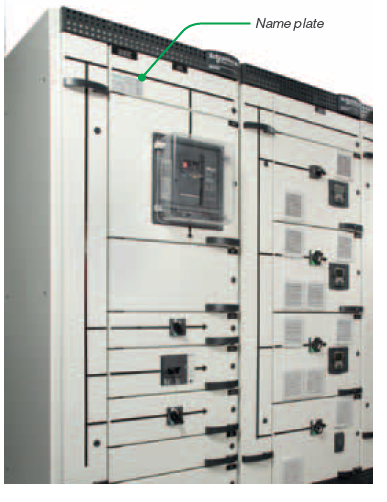
Рис. Schneider Electric
Паспортная табличка НКУНедопустимые, нерекомендуемые
Тематики
Синонимы
- заводская табличка
- заводская табличка аппарата
- заводская табличка с паспортными данными
- паспортная табличка
EN
- data plate
- designation label
- device name plate
- escutcheon plate
- label plate
- name plate
- nameplate
- plate
- rating nameplate
- rating plate
- rating/performance label
- type identification label
DE
FR
Франко-русский словарь нормативно-технической терминологии > plaque signalétique
46 Minitel
® minitɛl nom masculin Minitel ( terminal linking phone users to a database)sur or au Minitel — on Minitel
* * *ⓘ Minitel A computer terminal available in a variety of models to the subscribers of France Télécom. It gives users access to the Télétel network, which has a huge variety of services, payable at different rates, including the telephone directory. It can now be accessed via the Internet.[minitɛl] nom masculinMinitel® rose erotic viewdata serviceBefore Internet, the domestic viewdata service run by France Telecom had become a familiar part of French life. The basic monitor and keyboard were given free of charge, and the subscriber was charged for the services used on his or her ordinary telephone bill. Some Minitel services were purely informative (the weather, road conditions, news etc); others were interactive (enabling users to carry out bank transactions, book tickets for travel or, on the Minitel rose, to look for companionship, for example). The Minitel also served as an electronic telephone directory47 ainsi
ainsi [ɛ̃si]adverba. ( = de cette façon) this way• pourquoi me traites-tu ainsi ? why do you treat me this way?b. ( = en conséquence) thus ; ( = donc) so• ainsi tu vas partir ! so, you're leaving!c. (locutions)• ainsi que nous le disions hier (literary) as we were saying yesterday► pour ainsi dire so to speak* * *ɛ̃si
1.
1) ( de cette manière)c'est ainsi que l'on faisait le beurre — that's how ou the way they used to make butter
elle est ainsi — that's how ou the way she is
ainsi va la vie — such is life, that's the way it goes
ainsi soit-il — Religion amen
2) ( introduisant une conclusion) thus liter, soainsi, depuis 1989... — thus, since 1989...
2.
ainsi que locution conjonctive1) ( de même que) as well asles employés ainsi que leurs conjoints sont invités — employees together with their partners are invited
l'Italie ainsi que quatre autres pays d'Europe — Italy, along with four other European countries
2) ( comme) as* * *ɛ̃si adv1) (= en procédant de cette façon) like this, in this wayIl faut faire ainsi. — You do it like this., This is the way to do it.
C'est ainsi qu'il a réussi. — That's how he succeeded.
2) (= ce faisant) so, thusLexitron a repris Zug et devient ainsi la première entreprise du secteur. — Lexitron has taken over Zug and so becomes the leading company in the sector., Lexitron has taken over Zug, thus becoming the leading company in the sector.
ainsi que (= comme) — just as, as, (= et aussi) as well as
... ainsi que deux nouveaux romans —... as well as two new novels
pour ainsi dire — so to speak, as it were
et ainsi de suite — and so on and so forth, and so on
* * *A adv1 ( de cette manière) c'est ainsi que l'on faisait le beurre that's the way ou how they used to make butter; est-ce ainsi que tu parles à ta mère? is that the way ou how you speak to your mother?; le mélange ainsi obtenu the mixture obtained in this way; je t'imaginais ainsi that's how I imagined you; le monde est ainsi fait que the world is made in such a way that; elle est ainsi that's how ou the way she is; ainsi va la vie such is life, that's the way it goes; puisque c'est ainsi since that's how it is, since that's the way it is; Charlotte, c'est ainsi qu'on m'appelait Charlotte, that's what they used to call me; s'il en est ainsi if that's how it is ou the way it is; il n'en est pas ainsi de tous nos amis this is not the case with all our friends; les mois ont passé ainsi thus the months went by; ainsi parlait le prophète thus spoke the prophet; le jury se compose ainsi the panel is made up as follows; ainsi fut fait that's what was done; ainsi soit-il Relig amen; ⇒ suite;2 ( introduisant une conclusion) thus liter, so; ainsi, depuis 1989… thus, since 1989…; l'enfant apprendra ainsi à être indépendant the child will thus learn to be independent; partez tôt, vous éviterez ainsi les embouteillages leave early, that way you'll avoid the traffic jams; ainsi tu nous quittes? so you're leaving us then?; ainsi (donc) vous niez les faits so you deny the facts (then); c'est ainsi que nous sachant seuls… and so, knowing (that) we were alone…;3 ( de même) liter comme un coup de tonnerre éclate, ainsi se répandit la nouvelle like a bolt from the blue, the news spread.B ainsi que loc conj1 ( de même que) as well as; les employés ainsi que leurs conjoints sont invités employees together with their partners are invited; l'Italie ainsi que quatre autres pays d'Europe participe à ce projet Italy, along with four other European countries, is taking part in this project; l'exposition comprend des aquarelles, des huiles ainsi que quelques sculptures the exhibition includes watercoloursGB and oils as well as some sculptures; la question portait sur la vie de l'auteur ainsi que sur ses influences littéraires the question concerned the life of the author as well as his literary influences;2 ( comme) as; ainsi que nous en avions convenu as we had agreed; je vous écris dès mon arrivée, ainsi que je l'avais promis I have just arrived and I am writing to you as I promised; il a remis sa démission ainsi que le réclamaient les chefs du parti he handed in his resignation as the party leaders were demanding; elle marchait ainsi qu'un automate she was walking like a robot; ainsi que l'a précisé Paul as Paul pointed out.[ɛ̃si] adverbe1. [de cette manière] this ou that waypuisqu'il en est ainsi since that is the case, since that is the way things ares'il en était vraiment ainsi if this were really so ou the caseon voit ainsi que... in this way ou thus we can see that...ainsi va le monde it's the way of the world ou the way things go————————ainsi que locution conjonctive1. [comme] asainsi que je l'ai fait remarquer... as I pointed out...2. [et] as well as3. (littéraire) [exprimant une comparaison] likeet ainsi de suite locution adverbialepour ainsi dire locution adverbiale1. [presque] virtuallyelle est pour ainsi dire sa raison de vivre she's his reason for living, so to speak ou as it were48 assez
assez [ase]adverba. ( = suffisamment) enough• il est assez idiot pour refuser ! he's stupid enough to refuse!• ça a assez duré ! this has gone on long enough!• est-ce que 50 € c'est assez ? is 50 euros enough?• assez parlé ! that's enough talk!• avez-vous acheté assez de pain/d'oranges ? have you bought enough bread/oranges?b. ( = plutôt) quite* * *aseNote: Lorsqu'il signifie ‘suffisamment’, assez se traduit par enough: les pommes ne sont pas assez mûres = the apples are not ripe enough; tu ne manges pas assez = you don't eat enoughOn notera la place de enough avec un adjectif: assez grand (pour faire) = tall enough (to do). 1 ci-dessousLorsqu'il est utilisé pour atténuer un jugement assez se traduit par quite: il est assez grand = he's quite tall. 2 ci-dessous1) ( évaluation) enoughen avoir assez — (colloq) to be fed up (colloq) (de with)
2) ( jugement) quiteassez souvent — quite often, fairly often
* * *ase adv1) (= suffisamment) enoughtravailler assez — to work hard enough, to do enough work
Nous n'avons pas assez de temps. — We don't have enough time.
2) (= passablement) quite, fairlyIl est assez fort. — He's quite strong., He's fairly strong.
C'est assez bon. — It's quite good., It's fairly good.
Il est passé assez vite. — He went past quite quickly., He went past fairly quickly.
Il faisait assez beau. — The weather was quite nice., The weather was fairly nice.
Ça me plaît assez. — I quite like it.
assez! — enough!, that'll do!
* * *assez ⇒ Les quantités adv❢ Lorsqu'il signifie ‘suffisamment’, assez se traduit par enough: les pommes ne sont pas assez mûres = the apples are not ripe enough; tu ne manges pas assez = you don't eat enough. On notera la place de enough avec un adjectif: assez grand (pour faire) = tall enough (to do). ⇒ 1 ci-dessous. Lorsqu'il est utilisé pour atténuer un jugement assez se traduit par quite: il est assez grand = he's quite tall. ⇒ 2 ci-dessous.1 ( évaluation) enough; assez fort strong enough; assez fort/stupide pour faire strong/stupid enough to do; tu n'es pas assez grand pour atteindre l'interrupteur you're not tall enough to reach the switch; assez bien/couramment well/fluently enough; avoir assez de temps/tasses pour tout le monde to have enough time/cups for everybody; assez de temps pour finir enough time to finish; est-ce qu'il y a assez de potage pour tout le monde? is there enough soup for everyone?; il y en avait à peine assez there was barely ou hardly enough; nous avons bien assez de soucis comme ça we've got quite enough problems as it is; assez! that's enough (of that)!; assez de promesses, nous voulons des actes that's enough talk, we want action; serons-nous assez? will there be enough of us?; il ne travaille pas assez he doesn't work hard enough; j'en aurai assez de quatre four will be quite enough (for me); en avoir assez to be fed up○ (de with); j'en ai assez de tes mensonges I've had enough of ou I'm fed up○ with your lies; j'en ai assez qu'il pleuve tous les jours I'm getting fed up○ with it raining every day; il a fini par en avoir assez he eventually got fed up with it; il n'y en avait ni trop ni pas assez there was neither too much nor too little; je ne vous dirai jamais assez toute ma reconnaissance I can't thank you enough; avez-vous assez mangé? have you had enough to eat?;2 ( jugement) quite; assez jeune/lourd quite young/heavy; assez souvent quite often, fairly often; je suis assez pressé I'm in rather a hurry; leurs notes sont assez bonnes their grades are quite or fairly good; il cuisine assez bien he cooks quite well, he's quite a good cook; ( plus positif) he cooks rather well; l'hôtel coûte assez cher hotels are rather expensive; je suis assez d'accord I tend to agree; je les trouve assez ennuyeux I find them rather boring.[ase] adverbe1. [suffisamment] enoughassez parlé, agissons! that's enough talk ou talking, let's do something!en voilà ou c'(en) est assez! that's enough!, enough's enough!c'est un assez bon exemple de ce qu'il ne faut pas faire it's a pretty good example of what not to do————————assez de locution déterminanteil y en a assez there is/are enoughil n'a pas besoin de venir, nous sommes (bien) assez de deux he doesn't need to come, two of us will be (quite) enough49 avidité
avidité [avidite]feminine noun( = passion) eagerness ; ( = cupidité, voracité) greed━━━━━━━━━━━━━━━━━The Festival d'Avignon is one of the most important events in the French cultural calendar. The town is taken over by theatre-goers in late July and early August, and many of its historic buildings are transformed into performance spaces. The most prestigious shows of the festival take place in the courtyard of the « Palais des Papes ».Note that when translating the phrase « in Avignon » the preposition « en » can be used instead of the usual « à » (for example, « ce spectacle a été créé en Avignon »).* * *avidite1) ( cupidité) greed (de for)avec avidité — [manger] greedily
2) ( vif désir) eagerness (de for)* * *avidite nf1) (sans nuance péjorative) eagerness2) (avec nuance péjorative) greed* * *avidité nf2 ( vif désir) eagerness (de for); leur avidité d'information their eagerness for information; avec avidité eagerly.[avidite] nom féminin50 café
café [kafe]1. masculine nouna. ( = boisson) coffeeb. ( = lieu) café2. compounds* * *kafe
1.
2.
nom masculin1) (substance, boisson, arôme) coffeecafé en grains — coffee beans (+ v pl)
2) ( établissement) café3) ( fin d'un repas)•Phrasal Verbs:* * *kafe1. nm1) (graines) coffee2) (boisson) coffee3) (établissement) café2. adj invcoffee modif* * *B nm1 ( substance) coffee; café vert/torréfié unroasted/roasted coffee; café en grains coffee beans (+ v pl); café moulu ground coffee; café instantané or soluble instant coffee;3 ( arôme) coffee; glace/gâteau au café coffee ice cream/cake;5 ( à la fin d'un repas) au café at the end of the meal.café crème espresso with milk; café filtre filter coffee; café au lait white coffee GB, coffee with milk; peau café au lait coffee-colouredGB skin; café noir black coffee; le café du pauvre○ lovemaking; café turc Turkish coffee.c'est (un peu) fort de café○! that's a bit steep○![kafe] nom masculin1. [boisson, graine] coffeecafé frappé ou glacé iced coffeecafé instantané ou soluble instant coffeeau café, il n'avait toujours pas terminé son histoire he still hadn't finished his story by the time we got to the coffee3. [établissement]————————[kafe] adjectif————————au café locution adjectivale————————café liégeois nom masculin1. In French cafés, a small cup of strong black coffee is called un (petit) café, un express or, colloquially, un petit noir. This may be served serré (extra-strong), léger (weak) or allongé (diluted with hot water). An express with a tiny amount of milk added is called une noisette. A large cup of black coffee is un grand café, un double express or, colloquially, un grand noir. Coffee with frothy, steam-heated milk is called un (grand/petit) crème. The term café au lait is almost never used in cafés.2. Parisian cafés have traditionally played an important part in the intellectual and artistic life of the city. For example, the Café de Flore was a favourite meeting place for the existentialists.51 chemin
chemin [∫(ə)mɛ̃]1. masculine noun• ils ont fait tout le chemin à pied/en bicyclette they walked/cycled the whole way• nos chemins se sont croisés our paths crossed (PROV) tous les chemins mènent à Rome(PROV) all roads lead to Rome• il a fait du chemin ! he has come a long way• il est toujours sur mon chemin he turns up wherever I go ; (comme obstacle) he always stands in my way• ne t'arrête pas en si bon chemin ! don't stop now when you're doing so well2. compounds► le chemin de croix, le chemin de croix du Christ the Way of the Cross ; (dans une église) the Stations of the Cross• employé des chemins de fer railway (Brit) or railroad (US) worker ► Chemins de fer fédéraux Swiss Railways* * *ʃ(ə)mɛ̃nom masculin1) ( route) country road; ( étroit) lane; ( de terre) ( pour véhicule) track; ( pour piétons) path2) ( passage) wayles obstacles qui sont or se trouvent sur mon chemin — lit, fig the obstacles which stand in my way
3) (direction, itinéraire, trajet) waysur le chemin du retour/de l'école — on the way back/to school
reprendre le chemin du bureau — to go back to the office ou to work
on a fait un bout de chemin ensemble — ( à pied) we walked along together for a while; ( dans la vie) we were together for a while
chemin faisant, en chemin — on ou along the way
faire tout le chemin à pied/en boitant — to walk/to limp all the way
il a su trouver le chemin de mon cœur — fig he's found the way to my heart
cette femme fera/a fait du chemin — this woman will go/has come a long way
montrer le chemin — ( donner l'exemple) to lead the way
être sur le bon chemin — gén to be heading in the right direction
s'arrêter en chemin — lit to stop off on the way; fig to stop
le chemin de la célébrité/perdition — the road to fame/ruin
4) ( tapis) (carpet) runner•Phrasal Verbs:* * *ʃ(ə)mɛ̃ nm1) (où l'on marche) pathJe suis descendu à la plage par un petit chemin. — I went down a little path to the beach.
2) (= itinéraire, trajet) wayen chemin; chemin faisant — on the way
Je mangerai mon sandwich en chemin. — I'll eat my sandwich on the way.
3) figfaire un bout de chemin avec qn (= travailler avec qn) — to work with sb, (= avoir une relation suivie avec qn) to have a relationship with sb
faire un bout de chemin ensemble; Nous avons fait un bout de chemin ensemble et c'est ce qui compte le plus. — We were together for a while, and that's what is most important.
ramener qn sur le droit chemin; remettre qn dans le droit chemin — to get sb back on the straight and narrow
* * *chemin nm1 ( route) country road; ( étroit) lane; ( de terre) ( pour véhicule) track; ( pour piétons) path; être toujours sur les chemins to be always on the road; le chemin du village the road (that leads) to the village; ⇒ quatre, Rome;2 ( passage) way; se frayer un chemin à travers les broussailles to clear a way through the undergrowth; les obstacles qui sont or se trouvent sur mon chemin lit, fig the obstacles which stand in my way;3 (direction, itinéraire, trajet) way; indiquer le/demander son or le chemin à qn to tell/to ask sb the way; se tromper de chemin to go the wrong way; sur le chemin du retour/ de l'école on the way back/to school; reprendre le chemin du bureau to go back to the office ou to work; Aix? c'est (sur) mon chemin Aix? it's on my way; c'est le plus court chemin entre Pau et Oloron it's the quickest way from Pau to Oloron; le plus court chemin vers la paix the shortest path to peace; on a fait un bout de chemin ensemble ( à pied) we walked along together for a while; ( dans la vie) we were together for a while; continuer or passer or aller son chemin to continue on one's way; passez votre chemin! liter go on your way!; chemin faisant, en chemin on ou along the way; faire tout le chemin à pied/en boitant to walk/to limp all the way; il a su trouver le chemin de mon cœur fig he's found the way to my heart; avoir du chemin à faire to have a long way to go; on a fait du chemin we've come a long way; cette femme fera/a fait du chemin this woman will go/has come a long way; l'idée fait/a fait son chemin the idea is gaining/has gained ground; faire la moitié du chemin ( être conciliant) to meet sb halfway; montrer le chemin ( donner l'exemple) to lead the way, to set an example; être sur le bon chemin gén to be heading in the right direction; [malade] to be on the road to recovery; prendre le chemin de la faillite/l'échec to be heading for bankruptcy/failure; il a l'air d'en prendre le chemin he seems to be heading that way; s'arrêter en chemin lit to stop off on the way; fig to stop; tu ne vas pas t'arrêter en si bon chemin! don't stop when things are going so well!; le chemin de la gloire the path of glory; le chemin de la célébrité/perdition the road to fame/ruin; le destin l'a mis sur mon chemin fate threw him in my path; ⇒ bonhomme, droit;4 ( tapis) (carpet) runner.chemin acoustique sûr Mil reliable acoustic path; chemin de câbles cable tray; chemin charretier cart track; chemin creux sunken lane; chemin critique critical path; le chemin de Damas Relig the road to Damascus; trouver son chemin de Damas to see the light; le chemin des écoliers the long way round GB ou around US; prendre le chemin des écoliers to take the long way round GB ou around US; chemin de fer Rail ( infrastructure) railway, railroad US; ( mode de transport) rail; Jeux chemin de fer; par chemin de fer by rail; chemin de halage towpath; le chemin de (la) croix Relig the stations (pl) of the Cross; chemin de ronde path roundGB the battlements; chemin de roulement Aviat taxiway; Tech roller conveyor; chemin de table (table) runner; chemin de terre ( pour véhicule) dirt track; ( pour piétons) path; chemin de traverse path across ou through the fields; chemin vicinal country lane.[ʃ(ə)mɛ̃] nom masculinbandit ou voleur de grand chemin ou grands chemins highwayman2. [parcours, trajet] wayfaire ou abattre du chemin to go a long wayon s'est retrouvé à mi-chemin ou à moitié chemin we met halfwaypas de problème, c'est sur mon chemin no problem, it's on my wayc'est le chemin le plus court/long it's the shortest/longest waynous avons fait tout le chemin à pied/en voiture we walked/drove all the wayse frayer ou s'ouvrir un chemin dans la foule to force one's way through the crowdprendre des chemins détournés pour faire quelque chose (figuré) to use roundabout means in order to do somethingil voudrait devenir avocat, mais il n'en prend pas le chemin he'd like to be a lawyer, but he's not going about it the right wayouvrir/montrer le chemin to open/to lead the waya. [personne] to make one's way in lifeb. [idée] to catch oncet enfant fera du chemin, croyez-moi! this child will go far ou a long way, believe me!être/rester sur le droit chemin to be on/to keep to the straight and narrow4. RELIGION5. [napperon]6. INFORMATIQUEchemin faisant locution adverbialeon the way, on one's wayen chemin locution adverbialeon the way ou one's waynous en avons parlé en chemin we talked about it on the way ou on our way52 cohabitation
cohabitation [kɔabitasjɔ̃]feminine noun━━━━━━━━━━━━━━━━━This describes the situation when, as a result of a presidential or general election, the French people find themselves with a president from one political party and a government from another. A recent example of cohabitation is the combination of a Socialist Prime Minister, Lionel Jospin, with a Gaullist President, Jacques Chirac.* * *A period in which the government and the Président de la République come from opposite political camps. The first instance of political cohabitation in the 5th Republic occurred in 1986 when François Mitterrand (PS) was president and Jacques Chirac (RPR) became prime minister. parti* * *kɔabitasjɔ̃ nf1) (= concubinage) living together, [amis] sharing2) POLITIQUE, DROIT cohabitation* * *cohabitation nf1 living with somebody, living under the same roof as somebody; la cohabitation avec la belle-famille living with one's in-laws;2 Pol period when the French president and the government are drawn from opposing parties.ⓘ Cohabitation A period in which the government and the Président de la République come from opposite political camps. The first instance of political cohabitation in the 5th Republic occurred in 1986 when François Mitterrand (PS) was president and Jacques Chirac (RPR) became prime minister. ⇒ parti[kɔabitasjɔ̃] nom féminin2. POLITIQUEcoexistence of an elected head of state and an opposition parliamentary majorityDescribes a situation whereby the French president represents one political party and the government another. This term was first used during the period 1986-1988, when the socialist president (François Mitterrand) had a right-wing prime minister (Jacques Chirac), following the victory of the RPR in the legislative elections.53 comme
comme [kɔm]━━━━━━━━━1. conjunction2. adverb━━━━━━━━━1. <• comme il pleuvait, j'ai pris la voiture as it was raining I took the carc. ( = en tant que) as━━━━━━━━━━━━━━━━━► Avec un nom, on utilise like ; avec un verbe, as et the way sont plus corrects que like, mais like est couramment utilisé.━━━━━━━━━━━━━━━━━e. ( = tel que) like• bête comme il est... stupid as he is...f. (locutions)• il est comme ça ! he's like that!• il a pêché un saumon comme ça ! he caught a salmon this big!• je l'ai enfermé, comme ça il ne peut pas nous suivre I locked him in - that way he can't follow us• si c'est comme ça, je m'en vais ! if that's the way it is, I'm leaving!• alors, comme ça, vous nous quittez ? so you're leaving us just like that?• le docteur m'a dit comme ça, prenez des calmants (inf) the doctor just told me to take tranquillizers► comme quoi• comme quoi tout le monde peut se tromper which just goes to show that anybody can make a mistake► comme ci comme ça so-so (inf)• comme si nous ne le savions pas ! as if we didn't know!• tu n'es pas content mais tu peux faire comme si (inf) you're not happy but you can pretend to be► comme tout2. <• comme ils sont bruyants ! they're so noisy!• comme il fait beau ! isn't it a lovely day!• écoute comme elle chante bien ! isn't she a wonderful singer!* * *kɔm
1.
adverbe how
2.
1) ( de même que)ils sont bêtes, lui comme elle — he's as stupid as she is
il est paresseux, comme sa sœur d'ailleurs — he's lazy, just like his sister
jolie comme tout — ever so pretty GB, really pretty
2) ( dans une comparaison)c'est tout comme — (colloq) it comes to the same thing
elle me traite comme un enfant — she treats me like a child, she treats me as if I were a child
3) ( dans une explication)des pays industrialisés comme les États-Unis et le Japon — industrialized countries such as ou like the United States and Japan
puisque c'est comme ça — if that's the way it is, if that's how it is
4) (colloq) ( dans une approximation)elle a eu comme un évanouissement — she sort of fainted, she had a kind of fainting fit
5) ( indiquant l'intensité)avare comme il est, il ne te donnera rien — he's so mean, he won't give you anything
6) ( indiquant une fonction) as7) ( puisque) as, sincecomme elle était seule — as ou since she was alone
8) ( au moment où) as••comme ci comme ça — (colloq) so-so (colloq)
* * *kɔm1. prép1) (comparaison) likeIl est comme son père. — He's like his father.
Je voudrais un manteau comme celui de la photo. — I'd like a coat like the one in the picture.
2) (manière) likeFaites comme lui. — Do as he does., Do it like him.
Ça se plie comme ça. — You fold it like this.
Faites-le comme ça. — Do it like this., Do it this way.
C'était un poisson grand comme ça. — The fish was this big.
comme ça,...; Comme ça on n'aura pas d'ennuis. — That way we won't have any problems.
comme cela,...; Comme cela nous n'aurons pas d'ennuis. — That way we won't have any problems.
comme ci, comme ça — so-so
"Comment est-ce que tu as trouvé le film?" - - "Comme ci comme ça." — "What did you think of the film?" - - "So-so."
"comment ça va?" - - "comme ça" — "how are things?" - - "ok"
3) (= en tant que) asse donner comme objectif de faire qch — to set o.s. the goal of doing sth
J'ai travaillé comme serveuse cet été. — I worked as a waitress this summer.
comme tout; joli comme tout — ever so pretty
comme c'est pas permis; Il est malin comme c'est pas permis. — He's as smart as they come.
comme quoi (ce qui prouve que) — which just goes to show that, (selon quoi) saying that
Il s'en est tiré sain et sauf, comme quoi il y a un dieu pour les inconscients. — He escaped unharmed, which just goes to show there is a god for the reckless.
Il a écrit une lettre comme quoi il... — He wrote a letter saying that he...
comme il faut adv — properly
Mets le couvert comme il faut! — Set the table properly!, adjproper
Ce sont des gens comme il faut. — They're very proper people.
2. conj1) (= ainsi que) asElle écrit comme elle parle. — She writes as she talks.
Faites comme vous voulez. — Do as you like.
2) (= au moment où) asIl est parti comme j'arrivais. — He left as I arrived.
3) (= puisque) as, sinceComme il était en retard, il... — As he was late, he...
3. advRegarde comme c'est beau! — Look, isn't it lovely!, Look how lovely it is!
* * *A adv how; comme tu es malin! how clever you are!; comme il a raison! how right he is!; comme j'aime lire! how I love reading!; comme tu as grandi, je ne t'ai pas reconnu how you've grown, I didn't recognize you.B conj1 ( de même que) ici comme en Italie ( exclusivement) here as in Italy; ( inclusivement) both here and in Italy; ils sont bêtes, lui comme elle they are both as stupid as each other, he's as stupid as she is; en France et en Angleterre, comme dans les autres pays d'Europe in France and in England as (well as) in the other European countries; contente-toi de dire comme moi just say the same thing as me; il est paresseux, comme sa sœur d'ailleurs he's lazy, just like his sister; il mange comme eux he eats the same things as they do; elle est sage-femme comme sa mère et sa grand-mère she's a midwife, like her mother and grandmother (before her); fais comme moi do as I do; nous avons fêté Noël chez nous, comme tous les ans we spent Christmas at home, as we do every year; été comme hiver all year round, summer and winter alike; comme toujours as always; j'y étais allé comme chaque matin I'd gone there as I did every morning; jolie/légère comme tout ever so pretty/light GB, really pretty/light;2 ( dans une comparaison) il est grand comme sa sœur he's as tall as his sister; les cheveux du bébé sont lisses comme de la soie the baby's hair is as smooth as silk; c'est tout comme○ it comes to the same thing; rouge comme une pivoine as red as a beetroot GB ou beet US; je leur ai parlé tout comme je te parle I spoke to them just like○ I'm speaking to you now; c'est quelqu'un de comme ça○! he's/she's great!; il est bête/courageux comme pas un he's as stupid/brave as they come; il boit/travaille comme pas un he drinks/works like anything; comme tu y vas! that's going a bit far!; elle me traite comme un enfant she treats me like a child, she treats me as if I were a child;3 ( dans une équivalence) c'est comme une brioche avec des raisins à l'intérieur it's like a brioche with currants in it; un chapeau comme celui-là a hat like that one; je voudrais un manteau comme le tien I'd like a coat like yours; comme pour faire as if to do; et comme pour bien marquer leur refus, ils sont sortis de la salle and as if to make a point of their refusal, they left the room; elle a fait un geste comme pour se protéger she made a movement as if to protect herself;4 (dans une illustration, une explication) des pays industrialisés comme les États-Unis et le Japon industrialized countries such as ou like the United States and Japan; qu'est-ce que vous avez comme couleurs? what colours do you have?; qu'est-ce qu'il y a comme vaisselle? what is there in the way of crockery?; comme ça like that; alors comme ça tu vas travailler à l'étranger? so you're going to work abroad then?; puisque c'est comme ça if that's the way it is, if that's how it is; on va faire comme si we're going to pretend that; il a fait comme s'il ne me voyait pas he pretended (that) he hadn't seen me; c'est comme si it's as if; comme s'il dormait as if ou as though he was sleeping; comme si je n'avais que ça à faire! as if I had nothing better to do!; comme si j'avais besoin de ça! that's the last thing I needed!; ‘je ne trouve pas ça joli’-‘fais comme si’ ‘I don't think it's pretty’-‘just pretend you do’; elle m'a dit, comme si de rien n'était, que… she told me, just like that, that…; se comporter comme si de rien n'était to act as if nothing were wrong;5 ○( dans une approximation) elle a eu comme un évanouissement she sort of fainted, she had a kind of fainting fit; elle semblait comme gênée she seemed somewhat embarrassed;6 ( indiquant l'intensité) avare comme il est, il ne te donnera rien he's so mean, he won't give you anything; maigre comme elle est she's so thin;7 ( indiquant une fonction) as; travailler comme jardinier to work as a gardener; il a été recruté comme traducteur he was taken on as a translator; la phrase est donnée comme exemple the sentence is given as an example; que veux-tu comme cadeau? what would you like for ou as a present?;8 ( puisque) as, since; comme elle était seule as ou since she was alone; comme il l'aime, il lui pardonnera as ou since he loves him/her, he'll forgive him/her;9 ( au moment où) as; juste comme just as; comme il traversait la rue as he was crossing the road; elle arrivait comme je partais she was coming in as I was going out.comme quoi! which just shows!; comme ci comme ça○ so-so○.[kɔm] conjonctionil a fait un signe, comme pour appeler he made a sign, as if to call outc'est comme ta sœur, elle ne téléphone jamais your sister's the same, she never phonesje suis comme toi, j'ai horreur de ça I'm like you, I hate that kind of thingfais comme moi, ne lui réponds pas do as I do, don't answer himil ne m'a pas injurié, mais c'était tout comme he didn't actually insult me, but it was close ou as good as2. [exprimant la manière] asfais comme il te plaira do as you like ou pleasecomme on pouvait s'y attendre, nos actions ont baissé as could be expected, our shares have gone downla connaissant comme je la connais knowing her as well as ou like I docomme dirait l'autre (familier) , comme dit l'autre (familier) as the saying goes, to coin a phrase, as they saycomme il se doit en pareilles circonstances as befits the circumstances, as is fitting in such circumstancescomme ci comme ça (familier) : tu t'entends bien avec lui? — comme ci comme ça do you get on with him? — sort of ou so-somince comme elle est, elle peut porter n'importe quoi being as slim as she is everything suits her, she is so slim that everything suits herles arbres comme le marronnier... trees like ou such as the chestnut...4. [en tant que] as5. [pour ainsi dire]il restait sur le seuil, comme paralysé he was standing on the doorstep, (as if he was) rooted to the spot6. [et]le règlement s'applique à tous, à vous comme aux autres the rules apply to everybody, you includedun spectacle que les parents, comme les enfants, apprécieront a show which will delight parents and children alike[pendant que] while————————[kɔm] adverbe1. [emploi exclamatif] howcomme c'est triste! how sad (it is)!, it's so sad!comme tu es grande! what a big girl you are now!, how big you've grown!2. [indiquant la manière]tu sais comme il est you know what he's like ou how he iscomme ça locution adjectivale1. [ainsi] like thatil est comme ça, on ne le changera pas! that's the way he is, you won't change him!2. [admirable] greatcomme ça locution adverbiale1. [de cette manière] like this ou thatc'est comme ça, que ça te plaise ou non! that's how ou the way it is, whether you like it or not!2. [en intensif]alors comme ça, tu te maries? (oh) so you're getting married?————————comme il faut locution adjectivale————————comme il faut locution adverbiale1. [correctement] properly2. (familier) [emploi exclamatif]il s'est fait battre, et comme il faut (encore)! he got well and truly thrashed!comme quoi locution conjonctive1. [ce qui prouve que] which shows ou (just) goes to show that2. (familier) [selon quoi]j'ai reçu des ordres comme quoi personne ne devait avoir accès au dossier I've been instructed not to allow anybody access to that filecomme si locution conjonctive1. [exprimant la comparaison] as ifelle faisait comme si de rien n'était she pretended (that) there was nothing wrong, she pretended (that) nothing had happenedcomme s'il ne savait pas ce qu'il faisait! as if ou as though he didn't know what he was doing!comme tout locution adverbiale54 dessus
dessus [d(ə)sy]1. adverb( = sur) [placer, poser, monter] on top ; [coller, écrire, fixer] on it ; [passer, lancer] over it ; ( = plus haut) above• montez dessus [+ tabouret, échelle] get up on it• il lui a tapé/tiré dessus he hit him/shot at him2. masculine nouna. [d'objet, pied, tête] top• le dessus du panier ( = les meilleurs) the pick of the bunch ; ( = l'élite sociale) the upper crust• à l'étage du dessus on the floor above► au-dessus above ; ( = à l'étage supérieur) upstairs ; ( = posé sur) on top ; ( = plus cher) over► au-dessus de ( = plus haut que, plus au nord que) above ; ( = sur) on top of ; [+ prix, limite] over ; [+ possibilités] beyond• 20° au-dessus de zéro 20° above zero• c'est au-dessus de mes moyens (prix) it's more than I can afford ; (capacités) it's more than I can manageb. (dans une confrontation) avoir/prendre le dessus to have/get the upper hand3. compounds* * *Note: Lorsque dessus est utilisé avec un verbe d'action tel que marcher, taper, tirer, compter etc on se reportera au verbe correspondant; de même pour certaines expressions telles que mettre la main dessus, avoir le nez dessus etc on se reportera aux entrées main, nez etc. Les usages particuliers sont traités dans l'entrée ci-dessous
I dəsytu vois la pile, le livre doit être dessus — you see that pile over there, the book should be on top of it
‘ton rapport est fini?’ - ‘non, je travaille or suis dessus’ — ‘is your report finished?’ - ‘no, I'm working on it’
II dəsy••reprendre le dessus — (dans un débat, une lutte) to regain the upper hand; (après une maladie, un chagrin) to get back on one's feet
* * *d(ə)sy1. advTu vois la chaise? Pose le colis dessus. — You see that chair? Put the parcel on it.
Il y a un tabouret; monte dessus pour atteindre l'étagère du haut. — There's a stool; climb on it to reach the top shelf.
2. nm1) (= haut) top2) (= étage supérieur)par-dessus prép — over
Nous avons sauté par-dessus la barrière. — We jumped over the gate., advover it
La barrière? nous avons sauté par-dessus. — The fence? We jumped over it.
la taille au-dessus — the size above, the next size up
là-dessus (= sur cet objet) — on there, (= ensuite) with that
Tu peux écrire là-dessus. — You can write on there.
"Je démissionne!" Là-dessus, il est parti. — "I resign!" With that, he left.
* * *❢ Lorsque dessus est utilisé avec un verbe d'action tel que marcher, taper, tirer, compter etc on se reportera au verbe correspondant; de même pour certaines expressions telles que mettre la main dessus, avoir le nez dessus etc on se reportera aux entrées main, nez etc. Les usages particuliers sont traités dans l'entrée ci-dessous.A adv passe dessus go over it; tu vois la pile, le livre doit être dessus you see that pile over there, the book should be on top of it; un gâteau avec du chocolat dessus a cake with chocolate on top; ne mets pas tes doigts dessus gén don't touch it; ( sur une photographie) don't put your fingers on it; le prix est marqué dessus the price is on it; ‘ton rapport est fini?’-‘non, je travaille or suis dessus’ ‘is your report finished?’-‘no, I'm working on it’; il a mis ses meilleurs chercheurs dessus he set his best researchers to work on it; nous n'avons aucune chance d'emporter le marché, le numéro un mondial est déjà dessus we're not likely to corner the market, the world leader is working on it; il y en a deux, prends celui de or du dessus there are two of them, take the top one.B nm inv ( de chaussure) upper; (de table, tête, panier) top; ( de main) back; les voisins du dessus the people who live on the floor above; l'étage du dessus the floor above; le drap de dessus the top sheet.avoir or prendre/reprendre le dessus to gain/to regain the upper hand; avec lui, c'est toujours le poète qui prend le dessus his poetic nature always comes to the fore.[dəsy] adverbe[placer, monter] on top[marcher, écrire] on it/them etc.[passer, sauter] over it/them etc.ils lui ont tiré/tapé dessus they shot at him/hit hima. [affaire, travail] I've been (working) on it for a whileb. [appartement] I've been looking into it for a while————————[dəsy] nom masculin1. [d'un objet, de la tête, du pied] top[de la main] backavoir/prendre le dessus to have/to get the upper handreprendre le dessus [gagner] to get back on top (of the situation), to regain the upper handa. [après une maladie] she was soon back on her feet againb. [après une dépression] she got over it quite wella. [personnes] the cream, the eliteb. [choses] the top of the pile ou heap2. [étage supérieur]les voisins du dessus the people upstairs, the upstairs neighboursde dessus locution prépositionnelleen dessus locution adverbiale55 devoir
devoir [d(ə)vwaʀ]━━━━━━━━━━━━━━━━━━➭ TABLE 28━━━━━━━━━━━━━━━━━► The past participle dû takes a circumflex to distinguish it from the article du. Only the masculine singular has this accent.━━━━━━━━━━━━━━━━━1. <• elle lui doit 200 € she owes him 200 euros• il lui doit bien cela ! it's the least he can do for him!• à qui doit-on la découverte du radium ? who discovered radium?2. <a. (obligation)━━━━━━━━━━━━━━━━━► Lorsque devoir exprime une obligation, il se traduit généralement par to have (got) to lorsqu'il s'agit de contraintes extérieures ; notez que to have got to ne s'utilise qu'au présent. must a généralement une valeur plus impérative ; must étant défectif, on utilise to have to aux temps où il ne se conjugue pas.━━━━━━━━━━━━━━━━━• je ne peux pas aller au cinéma, je dois travailler I can't go to the cinema, I've got to work• si je rentre tard, je dois téléphoner à ma mère if I stay out late, I have to phone my mother• je dois téléphoner à ma mère ! I must phone my mother!• Martin avait promis, il devait le faire Martin had promised, so he had to do it• dois-je comprendre par là que... am I to understand from this that...b. (conseil)━━━━━━━━━━━━━━━━━━━━━━━━━━━━━━━━━━c. (fatalité)━━━━━━━━━━━━━━━━━► Lorsque devoir exprime une fatalité, il se traduit généralement par to be bound to.━━━━━━━━━━━━━━━━━• cela devait arriver ! it was bound to happen!d. (prévision)━━━━━━━━━━━━━━━━━► Lorsque devoir exprime une prévision, il est souvent traduit par to be going to.━━━━━━━━━━━━━━━━━━━━━━━━━━━━━━━━━━► Notez l'emploi de to be due to dans les contextes où la notion de temps est importante.━━━━━━━━━━━━━━━━━• son train doit or devrait arriver dans cinq minutes his train is due to arrive in five minutes• Antoinette devait partir à six heures mais la réunion s'est prolongée Antoinette was due to leave at six but the meeting went on longere. (hypothèse)━━━━━━━━━━━━━━━━━━━━━━━━━━━━━━━━━━━━━━━━━━━━━━━━━━━► Au conditionnel, on utilise should.━━━━━━━━━━━━━━━━━━━━━━━━━━━━━━━━━━► Dans les phrases négatives, on utilise généralement can't.━━━━━━━━━━━━━━━━━3. <• les époux se doivent fidélité husband and wife have a duty to be faithful to one another► se devoir de ( = être obligé de)• j'en ai informé mon chef, comme il se doit I informed my boss, of course• on a fêté l'événement, comme il se doit and naturally, we celebrated the event4. <a. ( = obligation) duty• il est de mon devoir de... it is my duty to...b. (scolaire) ( = dissertation) essay ; ( = exercice fait en classe) exercise ; (fait à la maison) homework uncount• devoir surveillé or sur table written test* * *Note: Lorsque devoir est utilisé comme auxiliaire pour exprimer une obligation posée comme directive, une recommandation, une hypothèse ou un objectif, il se traduit par must suivi de l'infinitif sans to: je dois finir ma traduction aujourd'hui = I must finish my translation today; tu dois avoir faim! = you must be hungry!Lorsqu'il exprime une obligation imposée par les circonstances extérieures, il se traduit par to have suivi de l'infinitif: je dois me lever tous les matins à sept heures = I have to get up at seven o'clock every morningLes autres sens du verbe auxiliaire, et devoir verbe transitif et verbe pronominal, sont présentés ci-dessous
I
1. dəvwɑʀverbe auxiliaire1) (obligation, recommandation, hypothèse)tu dois te brosser les dents au moins deux fois par jour — you must brush your teeth at least twice a day
il a dû accepter — ( obligation) he had to accept; ( hypothèse) he must have accepted
ces mesures doivent permettre une amélioration du niveau de vie — these measures should allow an improvement in the standard of living
il doit absolument éviter l'alcool — it's imperative that he avoid alcohol, he really must avoid alcohol
je dois dire/reconnaître que cela ne m'étonne pas — I have to ou I must say/admit I'm not surprised
dussé-je en mourir — liter even if I die for it
3) ( exprime une prévision)4) ( exprime la fatalité)cela devait arriver — it was bound ou it had to happen
2.
1) ( avoir à payer) to owe [argent, repas]devoir quelque chose à quelqu'un — to owe something to somebody, to owe somebody something
combien vous dois-je? — ( pour un service) how much do I owe you?; ( pour un achat) how much is it?
2) ( être redevable de)devoir quelque chose à quelqu'un — to owe something to somebody, to owe somebody something
3.
se devoir verbe pronominalse devoir à quelqu'un/son pays — to have a duty to somebody/one's country
2) ( réciproquement)3) ( par convention)
4.
comme il se doit locution adverbiale1) ( comme le veut l'usage)faire quelque chose/agir comme il se doit — to do something/to act in the correct way
2) ( comme prévu)comme il se doit, elle est en retard! — as you might expect, she's late!
II dəvwɑʀnom masculin ( obligation morale) dutyil est de mon devoir de — it's my duty to; École ( exercice fait en classe) test; ( fait à la maison) homework [U]
Phrasal Verbs:* * *d(ə)vwaʀ1. nm1) (= obligation) dutyAller voter fait partie des devoirs du citoyen. — Voting is part of one's duty as a citizen.
2. vt1) (= être redevable de) [argent] to owedevoir qch à qn [argent, respect] — to owe sb sth
Je lui dois de régler cette affaire le plus rapidement possible. — I owe it to him to sort this matter out as quickly as possible.
2) (obligation)Il doit le faire tout de suite. — He has to do it immediately., He must do it immediately.
Je dois partir. — I've got to go., I must go.
je devrais faire... — I ought to do..., I should do...
Tu n'aurais pas dû... — You ought not to have..., You shouldn't have...
4) (fatalité)Cela devait arriver un jour. — It was bound to happen some day.
5) (intention)Il doit partir demain. — He is to leave tomorrow., He is due to leave tomorrow.
Le nouveau centre commercial doit ouvrir en mai. — The new shopping centre is due to open in May.
Il doit être tard. — It must be late.
Tu dois être fatigué. — You must be tired.
* * *I.A nm1 ( obligation morale) duty; avoir le sens du devoir to have a sense of duty; homme/femme de devoir man/woman of conscience; agir par devoir to act out of a sense of duty; faire son devoir to do one's duty; je n'ai fait que mon devoir I only did my duty;2 ( obligation imposée par la loi ou les convenances) duty; manquer à tous ses devoirs to fail in all one's duties; le devoir m'appelle! duty calls!; se faire un devoir de faire to make it one's duty to do; il est de mon devoir de it's my duty to; se mettre en devoir de faire qch to set about doing sth; voter est un droit, c'est aussi un devoir voting is not only a right, but also a duty; ⇒ réserve;3 Scol ( exercice écrit) ( fait en classe) test; ( fait à la maison) homework ¢; faire ses devoirs to do one's homework; fais tes devoirs avant d'aller jouer do your homework before going out to play; j'ai un devoir d'anglais demain I've got an English test tomorrow; j'ai un devoir à rendre pour lundi I have a piece of homework to hand in on Monday.B † devoirs nmpl ( hommages) respects; présenter ses devoirs à qn to pay one's respects to sb; les derniers devoirs rendus à qn the last respects paid to sb.devoir d'ingérence Pol duty to interfere in the affairs of another nation; devoir surveillé or sur table Scol written test; devoir de vacances holiday homework (done from workbooks).II.devoir verb table: devoir❢ Lorsque devoir est utilisé comme auxiliaire pour exprimer une obligation posée comme directive, une recommandation, une hypothèse ou un objectif, il se traduit par must suivi de l'infinitif sans to: je dois finir ma traduction aujourd'hui = I must finish my translation today; tu dois avoir faim! = you must be hungry!Lorsqu'il exprime une obligation imposée par les circonstances extérieures, il se traduit par to have suivi de l'infinitif: je dois me lever tous les matins à sept heures = I have to get up at seven o'clock every morning.Les autres sens du verbe auxiliaire, et devoir verbe transitif et verbe pronominal, sont présentés ci-dessous.A v aux1 (obligation, recommandation, hypothèse) tu dois te brosser les dents au moins deux fois par jour you must brush your teeth at least twice a day; je dois aller travailler I've got to go to work; je devais aller travailler I had to go to work; il doit accepter he has got to accept; il a dû accepter ( obligation) he had to accept; ( hypothèse) he must have accepted; tu ne dois pas montrer du doigt! you shouldn't point!; ces mesures doivent permettre une amélioration du niveau de vie these measures should allow an improvement in the standard of living; le texte doit pouvoir être compris de tous the text should be comprehensible to everyone; il doit absolument éviter l'alcool it's imperative that he avoid alcohol, he really must avoid alcohol; je dois dire/reconnaître que cela ne m'étonne pas I have to ou I must say/admit I'm not surprised; je dois avouer que j'ai hésité I have to ou must admit I did hesitate; vous devrez être attentif à cela you'll have to ou you must watch out for that; tu devrais réfléchir avant de parler you should think before you speak; on devrait mettre cet enfant au lit this child ought to be put to bed; elle ne doit pas être fière! she must be ashamed of herself!; ils ne doivent plus lui faire confiance they can't trust him any more; je devais avoir 12 ans à ce moment-là I must have been 12 at the time; ils doivent arriver d'une minute à l'autre they're due to arrive any minute;2 ( être dans la nécessité de) l'entreprise va devoir fermer the company will have to close, the company is going to have to close; encore doivent-elles faire leurs preuves they still have to prove themselves; dois-je prendre un parapluie? should I take an umbrella?, do I need to take an umbrella?; dussé-je en mourir liter even if I die for it; il a cru devoir partir he felt obliged to leave;3 ( exprime une prévision) elles devaient en parler they were to talk about it; le contrat doit être signé à 16 heures the contract is to be signed at 4 pm; cet argent devait rester disponible this money was to have remained available; à quelle heure doit-il rentrer? what time should he be home?; à quoi doivent-ils s'attendre ensuite? what are they to expect next?; nous ne devons pas partir cet été we're not intending to go away this summer; je dois le voir demain I'll be seeing him tomorrow; je dois m'absenter prochainement I'll have to leave shortly; nous devions partir quand il s'est mis à pleuvoir we were about to leave when it started raining, we should have left but it started raining;4 ( exprime la fatalité) 10 ans plus tard, il devait sombrer dans la pauvreté 10 years later, he was to be found languishing in poverty; ce qui devait arriver arriva the inevitable happened; cela devait arriver it had ou it was bound to happen; nous devons tous mourir un jour we all have to die some day; elle devait mourir dans un accident de voiture she was to die in a car crash.B vtr1 ( avoir à payer) to owe [argent, repas]; devoir qch à qn to owe sth to sb, to owe sb sth; il déteste devoir de l'argent he hates owing money; combien vous dois-je? ( pour un service) how much do I owe you?; ( pour un achat) how much is it?; j'ai payé la veste mais je dois encore la jupe I've paid for the jacket but I haven't paid for the skirt yet;2 ( être redevable de) devoir qch à qn to owe sth to sb, to owe sb sth; devoir qch à qch to owe sth to sth ; il doit tout à sa femme he owes it all to his wife; je te dois d'avoir gagné it's thanks to you that I won; c'est à votre générosité que nous devons de ne pas être morts de faim it's thanks to your generosity that we didn't die of hunger; ⇒ chandelle;3 ( avoir une obligation morale) devoir qch à qn to owe sb sth; il me doit des excuses he owes me an apology.C se devoir vpr1 ( avoir une obligation morale) se devoir à qn/son pays to have a duty to sb/one's country; je me dois de le faire it's my duty to do it, I have a duty to do it;2 ( réciproquement) les époux se doivent fidélité spouses owe it to each other to be faithful;3 ( par convention) un homme de son rang se doit d'avoir un chauffeur a man of his standing has to have a chauffeur.D comme il se doit loc adv1 ( comme le veut l'usage) faire qch/agir comme il se doit to do sth/to act in the correct way; il plaça les convives comme il se doit he seated the guests as was proper;2 ( comme prévu) comme il se doit, elle est en retard! as you might expect, she's late!I[dəvwar] nom masculindevoir de chimie chemistry assignment ou exercise2. [impératifs moraux] dutyfaire ou accomplir ou remplir son devoir to carry out ou to do one's duty————————devoirs nom masculin pluriel————————de devoir locution adjectivalehomme/femme de devoir man/woman with a (strong) sense of duty————————du devoir de locution prépositionnelleII[dəvwar] verbe auxiliaire1. [exprime l'obligation]il doit he has to, he needs to, he mustdois-je être plus clair? do I need ou have to be more explicit?je dois admettre que... I must admit that...il ne doit pas he must not, he musn'ton ne doit pas fumer smoking is forbidden ou is not allowed2. [dans des conseils, des suggestions]il devrait he ought to, he should3. [indique une prévision, une intention]il doit m'en donner demain he's due to ou he should give me some tomorrowc'est une pièce que l'on doit voir depuis un an! it's a play we've supposedly been going to see ou we've been planning to see for a year![dans le passé]il devait venir mais je ne l'ai pas vu he was supposed to come ou to have come but I didn't see him4. [exprime une probabilité]il/cela doit he/it must, he's/it's got toil doit être fatigué he must be tired, he's probably tiredil doit y avoir ou cela doit faire un an que je ne l'ai pas vu it must be a year since I (last) saw him5. [exprime l'inévitable]la maison où elle devait écrire "Claudine" the house where she was to write "Claudine"[exprime une norme]le four ne devrait pas faire ce bruit the oven isn't supposed to ou shouldn't make that noise6. (soutenu)je l'aiderai, dussé-je aller en prison/y passer ma vie I'll help him, even if it means going to prison/devoting my life to it————————[dəvwar] verbe transitif1. [avoir comme dette] to owedevoir quelque chose à quelqu'un to owe somebody something, to owe something to somebody2. [être moralement obligé de fournir]3. [être redevable de]c'est à Guimard que l'on doit cette découverte we have Guimard to thank ou we're indebted to Guimard for this discoveryle son doit sa qualité à des enceintes très performantes the good quality of the sound is due to excellent speakers————————se devoir verbe pronominal (emploi réciproque)[avoir comme obligation mutuelle]les époux se doivent fidélité spouses ou husbands and wives must be faithful to each other————————se devoir à verbe pronominal plus préposition————————se devoir de verbe pronominal plus prépositiontu es grand, tu te dois de donner l'exemple you're a big boy now, it's your duty to show a good example56 défier
défier [defje]➭ TABLE 71. transitive verba. [+ adversaire] to challengeb. [+ autorité, adversité, opinion publique] to defy2. reflexive verb* * *defje1) ( provoquer) to challenge [rival, adversaire]2) ( braver) to defy [danger, mort, opinion]cela défie la raison or l'entendement — it is beyond belief
* * *defje vt1) (= provoquer) to challengedéfier qn de faire (trouver mieux, prouver le contraire) — to defy sb to do, (faire qch de farfelu) to dare sb to do
Je te défie de trouver un meilleur exemple. — I defy you to find a better example.
Il m'a défié d'aller à l'école en pyjama. — He dared me to go to school in my pyjamas.
défier qn à [jeu, course] — to challenge sb to
2) fig, [danger, éléments] to defy, to brave3) (= narguer) to challenge* * *défier verb table: plierA vtr1 ( provoquer) to challenge [rival, adversaire] (à to); défier qn en combat singulier to challenge sb to single combat; défier qn de faire to challenge ou defy sb to do; je te défie de plonger I challenge ou dare you to dive; défier qn du regard to stare defiantly at sb;2 ( braver) [personne] to defy [danger, mort, opinion]; [raisonnement, conclusion] to defy [raison, logique]; prix défiant toute concurrence unbeatable price.B se défier vpr1 ( se braver) [adversaires] to defy each other; se défier du regard to stare defiantly at each other;[defje] verbe transitif1. [dans un duel, un jeu] to challengeprix/qualité défiant toute concurrence absolutely unbeatable prices/quality————————se défier de verbe pronominal plus préposition57 en
en [ɑ̃]━━━━━━━━━1. preposition2. pronoun━━━━━━━━━━━━━━━━━━━━━━━━━━━━━━━━━━━━━━━━━━━1. <a. (lieu: situation) in• vivre en France/Normandie to live in France/Normandy• il habite en banlieue/ville he lives in the suburbs/the town• il voyage en Grèce/Corse he's travelling around Greece/Corsicab. (lieu: mouvement) to• aller or partir en Angleterre/Normandie to go to England/Normandye. ( = chez) ce que j'aime en lui, c'est son courage what I like about him is his couragef. ( = habillé de) ing. (description, composition) in• c'est en quoi ? (inf) what's it made of?━━━━━━━━━━━━━━━━━► En anglais, un nom en apposition remplace souvent l'adjectif pour décrire la matière dont quelque chose est fait.━━━━━━━━━━━━━━━━━► en + comparatif• c'est son frère en mieux he's like his brother, only betterh. ( = comme un) agir en tyran to act like a tyrant• en bon politicien, il... being the skilled politician he is, he...i. ( = dans le domaine de) en politique in politics• ce que je préfère en musique, c'est... what I like best in the way of music is...• diplôme en droit/histoire law/history degreek. ► en + participe présent• « non » dit-il en haussant les épaules "no", he said with a shrug━━━━━━━━━━━━━━━━━► Lorsque en exprime une cause, il est traduit par by.━━━━━━━━━━━━━━━━━• en disant cela, il s'est fait des ennemis he made enemies by saying that2. <a. (lieu) quand va-t-il à Nice ? -- il en revient when is he off to Nice? -- he's just come back• voulez-vous des pommes ? il y en a encore would you like some apples? there are still some leftd. (objet) rendez-moi mon stylo, j'en ai besoin give me back my pen - I need it• qu'est-ce que tu en feras ? what will you do with it (or them)?• tu en as eu de beaux jouets à Noël ! what lovely toys you got for Christmas!• c'est une bonne classe, les professeurs en sont contents they are a good class and the teachers are pleased with them• je t'en donne 100 € I'll give you 100 euros for ite. ► en être• où en est-il dans ses études ? how far has he got with his studies?• elle, mentir ? elle en est incapable she couldn't lie if she tried* * *œɛn* * *abr nf Éducation nationaleSee:* * *en ⇒ Note d'usageA prép1 ( lieu) ( où l'on est) in; ( où l'on va) to; ( mouvement vers l'intérieur) into; vivre en France/province/ville to live in France/the provinces/town; voyager en Chine to travel in China; aller en Allemagne to go to Germany; monter en voiture to get into a car; aller en ville to go into town; le train va entrer en gare the train is about to enter the station; se promener en ville to stroll around town;2 ( temps) ( époque) in; ( moment déterminé) in; ( en l'espace de) in; en hiver/1991 in winter/1991; je prendrai mes vacances en septembre I'm taking my vacation in September; il a fait ce travail en dix jours he completed the work in ten days; en semaine, il mange à la cantine during the week he eats in the canteen;3 ( moyens de transport) by; voyager en train/avion/voiture/bateau to travel by train ou rail/plane ou air/car/boat; je suis venu en taxi I came by taxi; aller à Marseille en avion/voiture to fly/to drive to Marseilles; nous avons fait un tour en barque we went out in a rowing-boat; descendre la rivière en aviron to row down the river;4 (manière, état) elle était tout en vert/blanc she was all in green/white; il est toujours en manteau/cravate he always wears a coat/tie; un ouvrage en vers/français/trois volumes a work in verse/French/three volumes; elle était très en forme/beauté she was looking very fit/beautiful;5 ( comme) ( en qualité de) as; ( de la même manière que) like; je vous parle en ami/connaisseur I'm speaking (to you) as a friend/connoisseur; j'ai eu ce livre en cadeau/récompense/souvenir I was given this book as a present/prize/souvenir; il nous considèrent en ennemis they see us as enemies; il me traite en ennemie he treats me like an enemy; agir en traître/dictateur to act like a traitor/dictator, to act in a treacherous/dictatorial way;6 ( transformation) into; ils se séparèrent en plusieurs groupes they broke up into several groups; traduire en anglais to translate into English; changer des euros en dollars to change euros into dollars;7 ( matière) made of; c'est en quoi? what is it made of?; c'est en or/plastique it's (made of) gold/plastic; c'est en bois it's made of wood, it's wooden; une montre en or a gold watch ; une veste en laine a woollenGB jacket; le cadre est en alliage the frame is alloy, it's an alloy frame;8 ( pour indiquer une variante) son fils, c'est lui en miniature his son is just like him only smaller, his son is a smaller version of him; je voudrais le même en plus grand I'd like the same only bigger; je voudrais la même en bleu I'd like the same in blue;9 (indique le domaine, la discipline) in; en politique/affaires il faut être rusé in politics/business you have to be clever; idée fondamentale en droit français fundamental idea in French law; en théorie, c'est exact in theory, it's correct; licencié en droit bachelor of law; docteur en médecine doctor of medicine; être bon en histoire to be good at history;10 (mesures, dimensions) in; compter en secondes/années to count in seconds/years; les draps se font en 90 et en 140 the sheets are available in single and double; le mur fait trois mètres en hauteur et six en longueur the wall is three metresGB high and six metresGB long; en profondeur, il y a assez d'espace pour la bibliothèque mais pas en hauteur the space is deep enough for the bookshelves but not high enough; en largeur, il y a la place pour une piscine mais pas en longueur widthwise, there's (enough) room for a swimming pool but not lengthwise.B pron1 ( le moyen) si les abricots sont abîmés, fais-en de la confiture if the apricots are bruised make jam with them; prends cette couverture et couvre-t'en take this blanket and cover yourself with it; il sortit son épée et l'en transperça he took out his sword and ran him through;2 ( la cause) ça l'a tellement bouleversé qu'il en est tombé malade it distressed him so much that he fell ill GB ou became sick US; il a eu un cancer et il en est mort he got cancer and died; elle a eu un accident de voiture et elle en est restée paralysée/infirme she had a car accident which left her paralysedGB/disabled;3 ○( emphatique) tu en as un beau chapeau! what a nice hat you've got!; eh bien! on s'en souviendra de ce dimanche! well, we won't forget this Sunday in a hurry!; je n'en veux pas de tes excuses○! I'm not interested in your excuses; et moi, je n'en ai pas des soucis, peut-être! do you think I haven't got worries too!; j'en connais qui seraient contents I know some who would be pleased.[ɑ̃] prépositionen 40 ans de carrière... in my 40 years in the job...B.[DANS L'ESPACE]1. [indiquant - la situation] in ; [ - la direction] tose promener en forêt/en ville to walk in the forest/around the town2. (figuré)en moi-même, j'avais toujours cet espoir deep down ou in my heart of hearts, I still had that hopeC.[INDIQUANT LE DOMAINE]1. [pour des connaissances]bon en latin/physique good at Latin/physics2. [dans une situation]en cela ou ce en quoi il n'a pas tort and I have to say he's right ou not wrong thereD.[INDIQUANT LA COMPOSITION] [pour des objets]chaise en bois/fer wooden/iron chairE.[INDIQUANT LA MANIÈRE, LE MOYEN]1. [marquant l'état, la forme, la manière]être en colère/en rage to be angry/in a rageen véritable ami, il m'a prévenu good friend that he is ou being a true friend, he warned meil était en pyjama he was in his pyjamas, he had his pyjamas onfaire quelque chose en cachette/en vitesse/en douceur to do something secretly/quickly/smoothlyune rue en pente a street on a slope ou a hill2. [introduisant une mesure] in3. [indiquant une transformation] into4. [marquant le moyen]en voiture/train by car/trainF.[AVEC LE GÉRONDIF]1. [indiquant la simultanéité]rien qu'en le voyant, elle se met en colère she gets angry just seeing him, the mere sight of him makes her angrytout en marchant, elles tentaient de trouver une réponse while walking ou as they walked, they tried to find an answer2. [indiquant la concession, l'opposition]en étant plus conciliant, il ne changeait toujours pas d'avis whilst ou although he was more conciliatory, he still wouldn't change his mind3. [indiquant la cause, le moyen, la manière]4. [introduisant une condition, une supposition] ifen prenant un cas concret, on voit que... if we take a concrete example, we can see that...en supposant que... supposing that...G.[INTRODUISANT LE COMPLÉMENT DU VERBE] incroire en quelqu'un/quelque chose to believe in somebody/something————————[ɑ̃] pronomA.[COMPLÉMENT DU VERBE]1. [indiquant le lieu]il faudra que tu ailles à la poste — j'en viens you'll have to go to the post office — I've just got back from ou just been there2. [indiquant la cause, l'agent]on en meurt you can die of ou from it3. [complément d'objet]voilà des fraises/du lait, donne-lui-en here are some strawberries/here's some milk, give him somesi tu n'aimes pas la viande/les olives, n'en mange pas if you don't like meat/olives, don't eat anytous les invités ne sont pas arrivés, il en manque deux all the guests haven't arrived yet, two are missingtu en as acheté beaucoup you've bought a lot (of it/of them)4. [avec une valeur emphatique]tu en as de la chance! you really are lucky, you are!5. [complément d'objet indirect] about it6. [comme attribut]B.[EN COMPLÉMENT]1. [du nom ou du pronom]2. [de l'adjectif]sa maison en est pleine his house is full of it/themC.[LOCUTIONS] [locutions verbales]s'en prendre à quelqu'un to blame ou to attack somebodyil n'en croit pas ses oreilles/yeux he can't believe his ears/eyes58 entre
entre [ɑ̃tʀ]a. between• qu'y a-t-il exactement entre eux ? what exactly is there between them?b. ( = parmi) l'un d'entre eux one of them• nous sommes entre nous or entre amis we're among friends• lui, entre autres, n'est pas d'accord he, for one, doesn't agree* * *ɑ̃tʀNote: entre se traduit par between sauf lorsqu'il signifie parmi ( 4) auquel cas il se traduit généralement par amongLes expressions telles que entre parenthèses, entre deux portes, lire entre les lignes sont traitées respectivement sous parenthèse, porte, lire I; de même entre ciel et terre se trouve sous ciel, entre la vie et la mort sous vie etc1) (dans l'espace, le temps) between2) ( pour désigner un état intermédiaire) between‘doux ou très épicé?’ - ‘entre les deux’ — ‘mild or very spicy?’ - ‘in between’; quatre
3) ( à travers) betweenpasser la main entre les barreaux — to slip one's hand between ou through the bars
4) ( parmi) amongchoisir entre plusieurs solutions — to choose between ou from among several solutions
entre tous ces romans, lequel préfères-tu? — out of all these novels, which one do you like best?
entre nous — between you and me, between ourselves
nous sommes entre nous — ( deux personnes) there's just the two of us; ( plus de deux) we're among friends
6) ( pour marquer la distribution) betweenentre son travail et l'informatique, il n'a pas le temps de sortir — what with work and his computer he doesn't have time to go out
7) ( pour exprimer une relation) between* * *ɑ̃tʀ prép1) (= au milieu de) betweenIl est assis entre son père et son oncle. — He's sitting between his father and his uncle.
2) (= parmi) among, amongstIls préfèrent rester entre eux. — They prefer to keep to themselves.
entre autres; entre autres choses — among other things
entre nous,... — between ourselves..., between you and me...
Ils se battent entre eux. — They are fighting among themselves., They are fighting amongst themselves.
* * *entre prép❢ Entre se traduit par between sauf lorsqu'il signifie parmi (⇒ 4) auquel cas il se traduit généralement par among.Exemples et exceptions sont présentés dans l'article ci-dessous. Les expressions telles que entre parenthèses, entre deux portes, lire entre les lignes sont traitées respectivement sous parenthèse, porte, lire; de même entre ciel et terre se trouve sous ciel, entre la vie et la mort sous vie etc.1 (dans l'espace, le temps) between; nous serons absents entre le 10 et le 15 mai we'll be away between 10 and 15 May ou from the 10th to the 15th of May; entre midi et deux at lunchtime; quelque part entre Grenoble et Valence somewhere between Grenoble and Valence;2 ( pour désigner un état intermédiaire) between; ‘doux ou très épicé?’-‘entre les deux’ ‘mild or very spicy?’-‘in between’; ⇒ quatre;3 ( à travers) between; passer la main entre les barreaux to slip one's hand between ou through the bars; le lézard s'est faufilé entre les pierres the lizard threaded its way through the stones;4 ( parmi) among; entre autres among others; entre autres choses among other things; choisir entre plusieurs solutions to choose between ou from among several solutions; c'est un exemple entre mille it's one example in ou among a thousand; entre tous ces romans, lequel préfères-tu? out of all these novels, which one do you like best?; la chambre 13? pourquoi celle-ci entre toutes? room 13? why that one of all rooms GB ou the rooms US?; beaucoup/la première/chacune d'entre elles many/the first/each of them; cette question est délicate entre toutes! this is a highly delicate matter!; oiseau sauvage entre tous, le lagopède… as wild a bird as any, the grouse…;5 ( pour désigner un groupe de personnes) organiser une soirée entre amis to organize a party among friends; ils discutent entre hommes they talk as one man to another; (soit dit) entre nous between you and me (and the gatepost), between ourselves; nous sommes entre nous, tu peux parler ( deux personnes) there's just the two of us, you can speak; ( plus de deux) we're among friends, you can speak; venez ce soir, nous en parlerons entre nous come this evening, we'll talk about it alone together ou we'll have a quiet talk together; ceci doit rester entre nous this is strictly between the two of us, this mustn't go any further;6 ( pour marquer la distribution) between; partagez le bénéfice entre vous share the profit between you; entre son travail et l'informatique, il n'a pas le temps de sortir what with work and his computer he doesn't have time to go out;7 ( pour exprimer une relation) between; les enfants sont souvent cruels entre eux children are often cruel to each other; ces motifs peuvent se combiner entre eux these patterns can be combined (with each other); deux d'entre eux sont cassés two of them are broken; la ressemblance entre elles est frappante the resemblance between them is striking; un accord a été conclu entre deux maisons d'édition an agreement was made between two publishing houses.[ɑ̃tr] préposition1. [dans l'espace] between[dans] inLyon est à la cinquième place, entre Marseille et Bordeaux Lyons is in fifth place, between Marseilles and Bordeauxce sont deux moitiés de génoise avec du chocolat entre it's two halves of sponge cake with chocolate in between2. [dans le temps] betweenentre le travail et le transport, je n'ai plus de temps à moi between work and travel, I haven't any time left3. [indiquant un état intermédiaire]le cidre est doux ou sec? — entre les deux is the cider sweet or dry? — it's between the two ou in between4. [exprimant une approximation] between5. [parmi] amonga. [entre deux] share the cake between the childrenb. [entre plusieurs] share the cake among the childrenceux d'entre vous qui désireraient venir those among you ou of you who'd like to comea. [personne] I'd know him anywhereb. [objet] I couldn't fail to recognize it6. [dans un groupe]parle, nous sommes entre amis you can talk, we're among friends ou we're all friends herenous ferons une petite fête, juste entre nousa. [à deux] we'll have a small party, just the two of usb. [à plusieurs] we'll have a party, just among ourselvesentre nous, il n'a pas torta. [à deux] between you and me, he's rightb. [à plusieurs] between us, he's right7. [indiquant une relation] betweenles clans se battent entre eux the clans fight (against) each other, there are fights between the clansentre autres locution adverbialesa fille, entre autres, n'est pas venue his daughter, for one ou among others, didn't comesont exposés, entre autres, des objets rares, des œuvres de jeunesse du peintre, etc. the exhibition includes, among other things, rare objects, examples of the artist's early work etc59 extrême
extrême [εkstʀεm]1. adjective• l'extrême droite/gauche (Politics) the far right/leftc. ( = radical) [théories, moyens] extreme2. masculine noun( = opposé) extreme* * *ɛkstʀɛm
1.
1) ( le plus distant) furthest2) ( très grand) [simplicité, prudence] extreme; [pureté] very great3) ( immodéré) [opinion, situation, comportement] extreme; [décision, remède] drasticil est extrême en tout, c'est quelqu'un d'extrême — he always goes to extremes
4) Politique [parti] extremist; [droite, gauche] far, extreme
2.
nom masculin1) ( ce qui est excessif) extreme2) ( opposé) extremeà l'extrême opposé or inverse — at the other extreme
3) Météorologie extreme* * *ɛkstʀɛm1. adj1) (personne, vue) extreme2) (sport) extreme3) (intensif) extremed'une extrême simplicité — of an extreme simplicity, extremely simple
d'une extrême brutalité — of an extreme brutality, extremely brutal
2. nm* * *A adj1 ( le plus distant) [bord, limite] very; [bout] very, far; [sud, nord] far; [partie] furthest; [date] very last; dans l'extrême nord/sud du pays in the far north/south of the country, in the northernmost/southernmost part of the country;2 ( très grand) [précision, simplicité, courage, prudence] extreme; [pureté] very great; l'extrême jeunesse du candidat the candidate's extreme youth; leur extrême vieillesse their very great age; avec une prudence extrême with extreme caution, extremely cautiously; avec une courtoisie/un plaisir extrême with the greatest courtesy/pleasure; d'une pureté/complexité extrême extremely pure/complex; il fait un froid extrême it's extremely cold;3 ( immodéré) [climat, opinion, exemple, situation, comportement] extreme; [décision, proposition, remède] drastic; [passion] intense; il est extrême en tout, c'est quelqu'un d'extrême he always goes to extremes;B nm1 ( ce qui est excessif) extreme; cet exemple fait figure d'extrême this is an extreme example; ville de tous les extrêmes town of extremes; c'est pousser la probité/logique à l'extrême that's taking honesty/logic to extremes; inquiet/courageux à l'extrême extremely worried/brave; événement médiatisé à l'extrême event which was given a lot of media hype○; limiter ses dépenses à l'extrême to keep one's expenses to a bare minimum;2 ( opposé) extreme; passer d'un extrême à l'autre to go from one extreme to the other; à l'extrême opposé or inverse at the other extreme; les extrêmes se rejoignent extremes meet;3 Météo extreme; les extrêmes saisonniers seasonal extremes.C extrêmes nmpl2 Math extremes.[ɛkstrɛm] adjectifd'une complexité/maigreur extrême extremely complex/skinny3. [exceptionnel - cas, exemple, situation] extreme4. [le plus éloigné]la limite extrême, l'extrême limite the furthest point————————[ɛkstrɛm] nom masculin1. [cas limite] extreme————————à l'extrême locution adverbiale60 fameux
fameux, -euse [famø, øz]adjectivea. ( = célèbre) famous• ah, c'est ce fameux Paul dont tu m'as tant parlé so this is the famous Paul you've told me so much about• pas fameux [mets, travail, temps] not very good* * *- euse famø, øz adjectif1) ( dont on a parlé) much talked-about2) ( connu de tous) famous3) ( véritable) real, right4) ( excellent) excellent* * *famø, øz adj (-euse)1) (= illustre) (avant ou après le nom) (phrase) famousC'est à cette bataille qu'il prononça la fameuse phrase. — It was at this battle that he pronounced the famous prhase.
2) (avant le nom: abondamment évoqué) much-toutedle fameux "feelgood factor" sur lequel comptent les tories — the much-touted "feelgood factor" that the Tories are counting on
J'ai enfin trouvé ce fameux livre dont tu me parles depuis si longtemps. — I finally found that book you've been going on to me about for so long.
3) (= excellent) (repas) first-rateLeur croustillant aux pommes est fameux. — Their apple crumble is first-rate.
un fameux... — quite a..., a considerable...
un fameux problème — quite a problem, a considerable problem
* * *1 ( dont on a parlé) much talked-about; la fameuse conférence de paix the much talked-about peace conference;2 ( connu de tous) famous; les fameux bus londoniens à deux étages the famous London double-deckers; c'est le fameux soir où it was the famous night when;3 ( véritable) real, right; une fameuse bande de fainéants a real bunch of lazybones;4 ( excellent) excellent; le repas était fameux the meal was excellent; pas fameux not great; ma note n'est pas fameuse my mark is not great.fameux, ton gâteau your cake is delicious3. [en intensif]4. [dont on parle] famousc'est ça, ton fameux trésor? is THAT your famous treasure?СтраницыСм. также в других словарях:
Example.com — example.com, example.net et example.org (de l anglais qui signifie « exemple ») sont des noms de domaines de second niveau que l Internet Assigned Numbers Authority (IANA) a décidé de réserver et de ne pas proposer à l enregistrement,… … Wikipédia en Français
Example.net — example.com example.com, example.net et example.org (de l anglais qui signifie « exemple ») sont des noms de domaines de second niveau que l Internet Assigned Numbers Authority (IANA) a décidé de réserver et de ne pas proposer à l… … Wikipédia en Français
Example.org — example.com example.com, example.net et example.org (de l anglais qui signifie « exemple ») sont des noms de domaines de second niveau que l Internet Assigned Numbers Authority (IANA) a décidé de réserver et de ne pas proposer à l… … Wikipédia en Français
example.com — example.com, example.net et example.org (de l anglais qui signifie « exemple ») sont des noms de domaines de second niveau que l Internet Assigned Numbers Authority (IANA) a décidé de réserver et de ne pas proposer à l enregistrement,… … Wikipédia en Français
Example.com — example.com, example.net, and example.org are second level domain names reserved by the Internet Engineering Task Force through RFC 2606, Section 3, for use in documentation and examples. They are not available for registration.By implementing… … Wikipedia
Example — Ex*am ple, n. [A later form for ensample, fr. L. exemplum, orig., what is taken out of a larger quantity, as a sample, from eximere to take out. See {Exempt}, and cf. {Ensample}, {Sample}.] 1. One or a portion taken to show the character or… … The Collaborative International Dictionary of English
.example — est un domaine de premier niveau réservé. Un domaine de premier niveau réservé est un domaine de premier niveau qui n’est pas destiné à être utilisé dans le système de nom de domaine (Domain Name System) d’Internet, mais qui est réservé à un… … Wikipédia en Français
example.com — example.com, example.net, example.org und example.edu sind Second level Domains, die von der Internet Engineering Task Force (wie in Abschnitt 3 im Quasi Standard RFC 2606[1] vorgeschlagen) permanent reserviert wurden. Sie können daher nicht von… … Deutsch Wikipedia
example — [eg zam′pəl, igzam′pəl; eg′zämpəl, igzämpəl] n. [ME < OFr example, essample < L exemplum, sample, example < eximere, to take out < ex , out + emere, to buy < IE base * em , to take > Lith imù] 1. something selected to show the… … English World dictionary
Example.com — Saltar a navegación, búsqueda example.com, example.net y example.org son dominios de Internet de segundo nivel reservados (en la RFC 2606, sección 3) para ser utilizados en ejemplos y documentación. Esta reserva hace que no se puedan registrar.… … Wikipedia Español
.example — Введение 1999 Тип домена зарезервированный общий домен верхнего уровня Статус действующий Регистратор IANA Назначение для доменов, которые следует использовать в качестве при … Википедия
 18+© Академик, 2000-2025
- Обратная связь: Техподдержка, Реклама на сайте
Экспорт словарей на сайты, сделанные на PHP, Joomla, Drupal, WordPress, MODx.
Перевод: с французского на все языки
со всех языков на французский- Со всех языков на:
- Французский
- С французского на:
- Все языки
- Английский
- Болгарский
- Русский