

-
21 Language
Philosophy is written in that great book, the universe, which is always open, right before our eyes. But one cannot understand this book without first learning to understand the language and to know the characters in which it is written. It is written in the language of mathematics, and the characters are triangles, circles, and other figures. Without these, one cannot understand a single word of it, and just wanders in a dark labyrinth. (Galileo, 1990, p. 232)It never happens that it [a nonhuman animal] arranges its speech in various ways in order to reply appropriately to everything that may be said in its presence, as even the lowest type of man can do. (Descartes, 1970a, p. 116)It is a very remarkable fact that there are none so depraved and stupid, without even excepting idiots, that they cannot arrange different words together, forming of them a statement by which they make known their thoughts; while, on the other hand, there is no other animal, however perfect and fortunately circumstanced it may be, which can do the same. (Descartes, 1967, p. 116)Human beings do not live in the object world alone, nor alone in the world of social activity as ordinarily understood, but are very much at the mercy of the particular language which has become the medium of expression for their society. It is quite an illusion to imagine that one adjusts to reality essentially without the use of language and that language is merely an incidental means of solving specific problems of communication or reflection. The fact of the matter is that the "real world" is to a large extent unconsciously built on the language habits of the group.... We see and hear and otherwise experience very largely as we do because the language habits of our community predispose certain choices of interpretation. (Sapir, 1921, p. 75)It powerfully conditions all our thinking about social problems and processes.... No two languages are ever sufficiently similar to be considered as representing the same social reality. The worlds in which different societies live are distinct worlds, not merely the same worlds with different labels attached. (Sapir, 1985, p. 162)[A list of language games, not meant to be exhaustive:]Giving orders, and obeying them- Describing the appearance of an object, or giving its measurements- Constructing an object from a description (a drawing)Reporting an eventSpeculating about an eventForming and testing a hypothesisPresenting the results of an experiment in tables and diagramsMaking up a story; and reading itPlay actingSinging catchesGuessing riddlesMaking a joke; and telling itSolving a problem in practical arithmeticTranslating from one language into anotherLANGUAGE Asking, thanking, cursing, greeting, and praying-. (Wittgenstein, 1953, Pt. I, No. 23, pp. 11 e-12 e)We dissect nature along lines laid down by our native languages.... The world is presented in a kaleidoscopic flux of impressions which has to be organized by our minds-and this means largely by the linguistic systems in our minds.... No individual is free to describe nature with absolute impartiality but is constrained to certain modes of interpretation even while he thinks himself most free. (Whorf, 1956, pp. 153, 213-214)We dissect nature along the lines laid down by our native languages.The categories and types that we isolate from the world of phenomena we do not find there because they stare every observer in the face; on the contrary, the world is presented in a kaleidoscopic flux of impressions which has to be organized by our minds-and this means largely by the linguistic systems in our minds.... We are thus introduced to a new principle of relativity, which holds that all observers are not led by the same physical evidence to the same picture of the universe, unless their linguistic backgrounds are similar or can in some way be calibrated. (Whorf, 1956, pp. 213-214)9) The Forms of a Person's Thoughts Are Controlled by Unperceived Patterns of His Own LanguageThe forms of a person's thoughts are controlled by inexorable laws of pattern of which he is unconscious. These patterns are the unperceived intricate systematizations of his own language-shown readily enough by a candid comparison and contrast with other languages, especially those of a different linguistic family. (Whorf, 1956, p. 252)It has come to be commonly held that many utterances which look like statements are either not intended at all, or only intended in part, to record or impart straightforward information about the facts.... Many traditional philosophical perplexities have arisen through a mistake-the mistake of taking as straightforward statements of fact utterances which are either (in interesting non-grammatical ways) nonsensical or else intended as something quite different. (Austin, 1962, pp. 2-3)In general, one might define a complex of semantic components connected by logical constants as a concept. The dictionary of a language is then a system of concepts in which a phonological form and certain syntactic and morphological characteristics are assigned to each concept. This system of concepts is structured by several types of relations. It is supplemented, furthermore, by redundancy or implicational rules..., representing general properties of the whole system of concepts.... At least a relevant part of these general rules is not bound to particular languages, but represents presumably universal structures of natural languages. They are not learned, but are rather a part of the human ability to acquire an arbitrary natural language. (Bierwisch, 1970, pp. 171-172)In studying the evolution of mind, we cannot guess to what extent there are physically possible alternatives to, say, transformational generative grammar, for an organism meeting certain other physical conditions characteristic of humans. Conceivably, there are none-or very few-in which case talk about evolution of the language capacity is beside the point. (Chomsky, 1972, p. 98)[It is] truth value rather than syntactic well-formedness that chiefly governs explicit verbal reinforcement by parents-which renders mildly paradoxical the fact that the usual product of such a training schedule is an adult whose speech is highly grammatical but not notably truthful. (R. O. Brown, 1973, p. 330)he conceptual base is responsible for formally representing the concepts underlying an utterance.... A given word in a language may or may not have one or more concepts underlying it.... On the sentential level, the utterances of a given language are encoded within a syntactic structure of that language. The basic construction of the sentential level is the sentence.The next highest level... is the conceptual level. We call the basic construction of this level the conceptualization. A conceptualization consists of concepts and certain relations among those concepts. We can consider that both levels exist at the same point in time and that for any unit on one level, some corresponding realizate exists on the other level. This realizate may be null or extremely complex.... Conceptualizations may relate to other conceptualizations by nesting or other specified relationships. (Schank, 1973, pp. 191-192)The mathematics of multi-dimensional interactive spaces and lattices, the projection of "computer behavior" on to possible models of cerebral functions, the theoretical and mechanical investigation of artificial intelligence, are producing a stream of sophisticated, often suggestive ideas.But it is, I believe, fair to say that nothing put forward until now in either theoretic design or mechanical mimicry comes even remotely in reach of the most rudimentary linguistic realities. (Steiner, 1975, p. 284)The step from the simple tool to the master tool, a tool to make tools (what we would now call a machine tool), seems to me indeed to parallel the final step to human language, which I call reconstitution. It expresses in a practical and social context the same understanding of hierarchy, and shows the same analysis by function as a basis for synthesis. (Bronowski, 1977, pp. 127-128)t is the language donn eґ in which we conduct our lives.... We have no other. And the danger is that formal linguistic models, in their loosely argued analogy with the axiomatic structure of the mathematical sciences, may block perception.... It is quite conceivable that, in language, continuous induction from simple, elemental units to more complex, realistic forms is not justified. The extent and formal "undecidability" of context-and every linguistic particle above the level of the phoneme is context-bound-may make it impossible, except in the most abstract, meta-linguistic sense, to pass from "pro-verbs," "kernals," or "deep deep structures" to actual speech. (Steiner, 1975, pp. 111-113)A higher-level formal language is an abstract machine. (Weizenbaum, 1976, p. 113)Jakobson sees metaphor and metonymy as the characteristic modes of binarily opposed polarities which between them underpin the two-fold process of selection and combination by which linguistic signs are formed.... Thus messages are constructed, as Saussure said, by a combination of a "horizontal" movement, which combines words together, and a "vertical" movement, which selects the particular words from the available inventory or "inner storehouse" of the language. The combinative (or syntagmatic) process manifests itself in contiguity (one word being placed next to another) and its mode is metonymic. The selective (or associative) process manifests itself in similarity (one word or concept being "like" another) and its mode is metaphoric. The "opposition" of metaphor and metonymy therefore may be said to represent in effect the essence of the total opposition between the synchronic mode of language (its immediate, coexistent, "vertical" relationships) and its diachronic mode (its sequential, successive, lineal progressive relationships). (Hawkes, 1977, pp. 77-78)It is striking that the layered structure that man has given to language constantly reappears in his analyses of nature. (Bronowski, 1977, p. 121)First, [an ideal intertheoretic reduction] provides us with a set of rules"correspondence rules" or "bridge laws," as the standard vernacular has it-which effect a mapping of the terms of the old theory (T o) onto a subset of the expressions of the new or reducing theory (T n). These rules guide the application of those selected expressions of T n in the following way: we are free to make singular applications of their correspondencerule doppelgangers in T o....Second, and equally important, a successful reduction ideally has the outcome that, under the term mapping effected by the correspondence rules, the central principles of T o (those of semantic and systematic importance) are mapped onto general sentences of T n that are theorems of Tn. (P. Churchland, 1979, p. 81)If non-linguistic factors must be included in grammar: beliefs, attitudes, etc. [this would] amount to a rejection of the initial idealization of language as an object of study. A priori such a move cannot be ruled out, but it must be empirically motivated. If it proves to be correct, I would conclude that language is a chaos that is not worth studying.... Note that the question is not whether beliefs or attitudes, and so on, play a role in linguistic behavior and linguistic judgments... [but rather] whether distinct cognitive structures can be identified, which interact in the real use of language and linguistic judgments, the grammatical system being one of these. (Chomsky, 1979, pp. 140, 152-153)23) Language Is Inevitably Influenced by Specific Contexts of Human InteractionLanguage cannot be studied in isolation from the investigation of "rationality." It cannot afford to neglect our everyday assumptions concerning the total behavior of a reasonable person.... An integrational linguistics must recognize that human beings inhabit a communicational space which is not neatly compartmentalized into language and nonlanguage.... It renounces in advance the possibility of setting up systems of forms and meanings which will "account for" a central core of linguistic behavior irrespective of the situation and communicational purposes involved. (Harris, 1981, p. 165)By innate [linguistic knowledge], Chomsky simply means "genetically programmed." He does not literally think that children are born with language in their heads ready to be spoken. He merely claims that a "blueprint is there, which is brought into use when the child reaches a certain point in her general development. With the help of this blueprint, she analyzes the language she hears around her more readily than she would if she were totally unprepared for the strange gabbling sounds which emerge from human mouths. (Aitchison, 1987, p. 31)Looking at ourselves from the computer viewpoint, we cannot avoid seeing that natural language is our most important "programming language." This means that a vast portion of our knowledge and activity is, for us, best communicated and understood in our natural language.... One could say that natural language was our first great original artifact and, since, as we increasingly realize, languages are machines, so natural language, with our brains to run it, was our primal invention of the universal computer. One could say this except for the sneaking suspicion that language isn't something we invented but something we became, not something we constructed but something in which we created, and recreated, ourselves. (Leiber, 1991, p. 8)Historical dictionary of quotations in cognitive science > Language
-
22 near cash
!гос. фин. The resource budget contains a separate control total for “near cash” expenditure, that is expenditure such as pay and current grants which impacts directly on the measure of the golden rule.This paper provides background information on the framework for the planning and control of public expenditure in the UK which has been operated since the 1998 Comprehensive Spending Review (CSR). It sets out the different classifications of spending for budgeting purposes and why these distinctions have been adopted. It discusses how the public expenditure framework is designed to ensure both sound public finances and an outcome-focused approach to public expenditure.The UK's public spending framework is based on several key principles:"consistency with a long-term, prudent and transparent regime for managing the public finances as a whole;" "the judgement of success by policy outcomes rather than resource inputs;" "strong incentives for departments and their partners in service delivery to plan over several years and plan together where appropriate so as to deliver better public services with greater cost effectiveness; and"the proper costing and management of capital assets to provide the right incentives for public investment.The Government sets policy to meet two firm fiscal rules:"the Golden Rule states that over the economic cycle, the Government will borrow only to invest and not to fund current spending; and"the Sustainable Investment Rule states that net public debt as a proportion of GDP will be held over the economic cycle at a stable and prudent level. Other things being equal, net debt will be maintained below 40 per cent of GDP over the economic cycle.Achievement of the fiscal rules is assessed by reference to the national accounts, which are produced by the Office for National Statistics, acting as an independent agency. The Government sets its spending envelope to comply with these fiscal rules.Departmental Expenditure Limits ( DEL) and Annually Managed Expenditure (AME)"Departmental Expenditure Limit ( DEL) spending, which is planned and controlled on a three year basis in Spending Reviews; and"Annually Managed Expenditure ( AME), which is expenditure which cannot reasonably be subject to firm, multi-year limits in the same way as DEL. AME includes social security benefits, local authority self-financed expenditure, debt interest, and payments to EU institutions.More information about DEL and AME is set out below.In Spending Reviews, firm DEL plans are set for departments for three years. To ensure consistency with the Government's fiscal rules departments are set separate resource (current) and capital budgets. The resource budget contains a separate control total for “near cash” expenditure, that is expenditure such as pay and current grants which impacts directly on the measure of the golden rule.To encourage departments to plan over the medium term departments may carry forward unspent DEL provision from one year into the next and, subject to the normal tests for tautness and realism of plans, may be drawn down in future years. This end-year flexibility also removes any incentive for departments to use up their provision as the year end approaches with less regard to value for money. For the full benefits of this flexibility and of three year plans to feed through into improved public service delivery, end-year flexibility and three year budgets should be cascaded from departments to executive agencies and other budget holders.Three year budgets and end-year flexibility give those managing public services the stability to plan their operations on a sensible time scale. Further, the system means that departments cannot seek to bid up funds each year (before 1997, three year plans were set and reviewed in annual Public Expenditure Surveys). So the credibility of medium-term plans has been enhanced at both central and departmental level.Departments have certainty over the budgetary allocation over the medium term and these multi-year DEL plans are strictly enforced. Departments are expected to prioritise competing pressures and fund these within their overall annual limits, as set in Spending Reviews. So the DEL system provides a strong incentive to control costs and maximise value for money.There is a small centrally held DEL Reserve. Support from the Reserve is available only for genuinely unforeseeable contingencies which departments cannot be expected to manage within their DEL.AME typically consists of programmes which are large, volatile and demand-led, and which therefore cannot reasonably be subject to firm multi-year limits. The biggest single element is social security spending. Other items include tax credits, Local Authority Self Financed Expenditure, Scottish Executive spending financed by non-domestic rates, and spending financed from the proceeds of the National Lottery.AME is reviewed twice a year as part of the Budget and Pre-Budget Report process reflecting the close integration of the tax and benefit system, which was enhanced by the introduction of tax credits.AME is not subject to the same three year expenditure limits as DEL, but is still part of the overall envelope for public expenditure. Affordability is taken into account when policy decisions affecting AME are made. The Government has committed itself not to take policy measures which are likely to have the effect of increasing social security or other elements of AME without taking steps to ensure that the effects of those decisions can be accommodated prudently within the Government's fiscal rules.Given an overall envelope for public spending, forecasts of AME affect the level of resources available for DEL spending. Cautious estimates and the AME margin are built in to these AME forecasts and reduce the risk of overspending on AME.Together, DEL plus AME sum to Total Managed Expenditure (TME). TME is a measure drawn from national accounts. It represents the current and capital spending of the public sector. The public sector is made up of central government, local government and public corporations.Resource and Capital Budgets are set in terms of accruals information. Accruals information measures resources as they are consumed rather than when the cash is paid. So for example the Resource Budget includes a charge for depreciation, a measure of the consumption or wearing out of capital assets."Non cash charges in budgets do not impact directly on the fiscal framework. That may be because the national accounts use a different way of measuring the same thing, for example in the case of the depreciation of departmental assets. Or it may be that the national accounts measure something different: for example, resource budgets include a cost of capital charge reflecting the opportunity cost of holding capital; the national accounts include debt interest."Within the Resource Budget DEL, departments have separate controls on:"Near cash spending, the sub set of Resource Budgets which impacts directly on the Golden Rule; and"The amount of their Resource Budget DEL that departments may spend on running themselves (e.g. paying most civil servants’ salaries) is limited by Administration Budgets, which are set in Spending Reviews. Administration Budgets are used to ensure that as much money as practicable is available for front line services and programmes. These budgets also help to drive efficiency improvements in departments’ own activities. Administration Budgets exclude the costs of frontline services delivered directly by departments.The Budget preceding a Spending Review sets an overall envelope for public spending that is consistent with the fiscal rules for the period covered by the Spending Review. In the Spending Review, the Budget AME forecast for year one of the Spending Review period is updated, and AME forecasts are made for the later years of the Spending Review period.The 1998 Comprehensive Spending Review ( CSR), which was published in July 1998, was a comprehensive review of departmental aims and objectives alongside a zero-based analysis of each spending programme to determine the best way of delivering the Government's objectives. The 1998 CSR allocated substantial additional resources to the Government's key priorities, particularly education and health, for the three year period from 1999-2000 to 2001-02.Delivering better public services does not just depend on how much money the Government spends, but also on how well it spends it. Therefore the 1998 CSR introduced Public Service Agreements (PSAs). Each major government department was given its own PSA setting out clear targets for achievements in terms of public service improvements.The 1998 CSR also introduced the DEL/ AME framework for the control of public spending, and made other framework changes. Building on the investment and reforms delivered by the 1998 CSR, successive spending reviews in 2000, 2002 and 2004 have:"provided significant increase in resources for the Government’s priorities, in particular health and education, and cross-cutting themes such as raising productivity; extending opportunity; and building strong and secure communities;" "enabled the Government significantly to increase investment in public assets and address the legacy of under investment from past decades. Departmental Investment Strategies were introduced in SR2000. As a result there has been a steady increase in public sector net investment from less than ¾ of a per cent of GDP in 1997-98 to 2¼ per cent of GDP in 2005-06, providing better infrastructure across public services;" "introduced further refinements to the performance management framework. PSA targets have been reduced in number over successive spending reviews from around 300 to 110 to give greater focus to the Government’s highest priorities. The targets have become increasingly outcome-focused to deliver further improvements in key areas of public service delivery across Government. They have also been refined in line with the conclusions of the Devolving Decision Making Review to provide a framework which encourages greater devolution and local flexibility. Technical Notes were introduced in SR2000 explaining how performance against each PSA target will be measured; and"not only allocated near cash spending to departments, but also – since SR2002 - set Resource DEL plans for non cash spending.To identify what further investments and reforms are needed to equip the UK for the global challenges of the decade ahead, on 19 July 2005 the Chief Secretary to the Treasury announced that the Government intends to launch a second Comprehensive Spending Review (CSR) reporting in 2007.A decade on from the first CSR, the 2007 CSR will represent a long-term and fundamental review of government expenditure. It will cover departmental allocations for 2008-09, 2009-10 and 2010 11. Allocations for 2007-08 will be held to the agreed figures already announced by the 2004 Spending Review. To provide a rigorous analytical framework for these departmental allocations, the Government will be taking forward a programme of preparatory work over 2006 involving:"an assessment of what the sustained increases in spending and reforms to public service delivery have achieved since the first CSR. The assessment will inform the setting of new objectives for the decade ahead;" "an examination of the key long-term trends and challenges that will shape the next decade – including demographic and socio-economic change, globalisation, climate and environmental change, global insecurity and technological change – together with an assessment of how public services will need to respond;" "to release the resources needed to address these challenges, and to continue to secure maximum value for money from public spending over the CSR period, a set of zero-based reviews of departments’ baseline expenditure to assess its effectiveness in delivering the Government’s long-term objectives; together with"further development of the efficiency programme, building on the cross cutting areas identified in the Gershon Review, to embed and extend ongoing efficiency savings into departmental expenditure planning.The 2007 CSR also offers the opportunity to continue to refine the PSA framework so that it drives effective delivery and the attainment of ambitious national standards.Public Service Agreements (PSAs) were introduced in the 1998 CSR. They set out agreed targets detailing the outputs and outcomes departments are expected to deliver with the resources allocated to them. The new spending regime places a strong emphasis on outcome targets, for example in providing for better health and higher educational standards or service standards. The introduction in SR2004 of PSA ‘standards’ will ensure that high standards in priority areas are maintained.The Government monitors progress against PSA targets, and departments report in detail twice a year in their annual Departmental Reports (published in spring) and in their autumn performance reports. These reports provide Parliament and the public with regular updates on departments’ performance against their targets.Technical Notes explain how performance against each PSA target will be measured.To make the most of both new investment and existing assets, there needs to be a coherent long term strategy against which investment decisions are taken. Departmental Investment Strategies (DIS) set out each department's plans to deliver the scale and quality of capital stock needed to underpin its objectives. The DIS includes information about the department's existing capital stock and future plans for that stock, as well as plans for new investment. It also sets out the systems that the department has in place to ensure that it delivers its capital programmes effectively.This document was updated on 19 December 2005.Near-cash resource expenditure that has a related cash implication, even though the timing of the cash payment may be slightly different. For example, expenditure on gas or electricity supply is incurred as the fuel is used, though the cash payment might be made in arrears on aquarterly basis. Other examples of near-cash expenditure are: pay, rental.Net cash requirement the upper limit agreed by Parliament on the cash which a department may draw from theConsolidated Fund to finance the expenditure within the ambit of its Request forResources. It is equal to the agreed amount of net resources and net capital less non-cashitems and working capital.Non-cash cost costs where there is no cash transaction but which are included in a body’s accounts (or taken into account in charging for a service) to establish the true cost of all the resourcesused.Non-departmental a body which has a role in the processes of government, but is not a government public body, NDPBdepartment or part of one. NDPBs accordingly operate at arm’s length from governmentMinisters.Notional cost of a cost which is taken into account in setting fees and charges to improve comparability with insuranceprivate sector service providers.The charge takes account of the fact that public bodies donot generally pay an insurance premium to a commercial insurer.the independent body responsible for collecting and publishing official statistics about theUK’s society and economy. (At the time of going to print legislation was progressing tochange this body to the Statistics Board).Office of Government an office of the Treasury, with a status similar to that of an agency, which aims to maximise Commerce, OGCthe government’s purchasing power for routine items and combine professional expertiseto bear on capital projects.Office of the the government department responsible for discharging the Paymaster General’s statutoryPaymaster General,responsibilities to hold accounts and make payments for government departments and OPGother public bodies.Orange bookthe informal title for Management of Risks: Principles and Concepts, which is published by theTreasury for the guidance of public sector bodies.Office for NationalStatistics, ONS60Managing Public Money————————————————————————————————————————"GLOSSARYOverdraftan account with a negative balance.Parliament’s formal agreement to authorise an activity or expenditure.Prerogative powerspowers exercisable under the Royal Prerogative, ie powers which are unique to the Crown,as contrasted with common-law powers which may be available to the Crown on the samebasis as to natural persons.Primary legislationActs which have been passed by the Westminster Parliament and, where they haveappropriate powers, the Scottish Parliament and the Northern Ireland Assembly. Begin asBills until they have received Royal Assent.arrangements under which a public sector organisation contracts with a private sectorentity to construct a facility and provide associated services of a specified quality over asustained period. See annex 7.5.Proprietythe principle that patterns of resource consumption should respect Parliament’s intentions,conventions and control procedures, including any laid down by the PAC. See box 2.4.Public Accountssee Committee of Public Accounts.CommitteePublic corporationa trading body controlled by central government, local authority or other publiccorporation that has substantial day to day operating independence. See section 7.8.Public Dividend finance provided by government to public sector bodies as an equity stake; an alternative to Capital, PDCloan finance.Public Service sets out what the public can expect the government to deliver with its resources. EveryAgreement, PSAlarge government department has PSA(s) which specify deliverables as targets or aimsrelated to objectives.a structured arrangement between a public sector and a private sector organisation tosecure an outcome delivering good value for money for the public sector. It is classified tothe public or private sector according to which has more control.Rate of returnthe financial remuneration delivered by a particular project or enterprise, expressed as apercentage of the net assets employed.Regularitythe principle that resource consumption should accord with the relevant legislation, therelevant delegated authority and this document. See box 2.4.Request for the functional level into which departmental Estimates may be split. RfRs contain a number Resources, RfRof functions being carried out by the department in pursuit of one or more of thatdepartment’s objectives.Resource accountan accruals account produced in line with the Financial Reporting Manual (FReM).Resource accountingthe system under which budgets, Estimates and accounts are constructed in a similar wayto commercial audited accounts, so that both plans and records of expenditure allow in fullfor the goods and services which are to be, or have been, consumed – ie not just the cashexpended.Resource budgetthe means by which the government plans and controls the expenditure of resources tomeet its objectives.Restitutiona legal concept which allows money and property to be returned to its rightful owner. Ittypically operates where another person can be said to have been unjustly enriched byreceiving such monies.Return on capital the ratio of profit to capital employed of an accounting entity during an identified period.employed, ROCEVarious measures of profit and of capital employed may be used in calculating the ratio.Public Privatepartnership, PPPPrivate Finance Initiative, PFIParliamentaryauthority61Managing Public Money"————————————————————————————————————————GLOSSARYRoyal charterthe document setting out the powers and constitution of a corporation established underprerogative power of the monarch acting on Privy Council advice.Second readingthe second formal time that a House of Parliament may debate a bill, although in practicethe first substantive debate on its content. If successful, it is deemed to denoteParliamentary approval of the principle of the proposed legislation.Secondary legislationlaws, including orders and regulations, which are made using powers in primary legislation.Normally used to set out technical and administrative provision in greater detail thanprimary legislation, they are subject to a less intense level of scrutiny in Parliament.European legislation is,however,often implemented in secondary legislation using powers inthe European Communities Act 1972.Service-level agreement between parties, setting out in detail the level of service to be performed.agreementWhere agreements are between central government bodies, they are not legally a contractbut have a similar function.Shareholder Executive a body created to improve the government’s performance as a shareholder in businesses.Spending reviewsets out the key improvements in public services that the public can expect over a givenperiod. It includes a thorough review of departmental aims and objectives to find the bestway of delivering the government’s objectives, and sets out the spending plans for the givenperiod.State aidstate support for a domestic body or company which could distort EU competition and sois not usually allowed. See annex 4.9.Statement of Excessa formal statement detailing departments’ overspends prepared by the Comptroller andAuditor General as a result of undertaking annual audits.Statement on Internal an annual statement that Accounting Officers are required to make as part of the accounts Control, SICon a range of risk and control issues.Subheadindividual elements of departmental expenditure identifiable in Estimates as single cells, forexample cell A1 being administration costs within a particular line of departmental spending.Supplyresources voted by Parliament in response to Estimates, for expenditure by governmentdepartments.Supply Estimatesa statement of the resources the government needs in the coming financial year, and forwhat purpose(s), by which Parliamentary authority is sought for the planned level ofexpenditure and income.Target rate of returnthe rate of return required of a project or enterprise over a given period, usually at least a year.Third sectorprivate sector bodies which do not act commercially,including charities,social and voluntaryorganisations and other not-for-profit collectives. See annex 7.7.Total Managed a Treasury budgeting term which covers all current and capital spending carried out by the Expenditure,TMEpublic sector (ie not just by central departments).Trading fundan organisation (either within a government department or forming one) which is largely orwholly financed from commercial revenue generated by its activities. Its Estimate shows itsnet impact, allowing its income from receipts to be devoted entirely to its business.Treasury Minutea formal administrative document drawn up by the Treasury, which may serve a wide varietyof purposes including seeking Parliamentary approval for the use of receipts asappropriations in aid, a remission of some or all of the principal of voted loans, andresponding on behalf of the government to reports by the Public Accounts Committee(PAC).62Managing Public Money————————————————————————————————————————GLOSSARY63Managing Public MoneyValue for moneythe process under which organisation’s procurement, projects and processes aresystematically evaluated and assessed to provide confidence about suitability, effectiveness,prudence,quality,value and avoidance of error and other waste,judged for the public sectoras a whole.Virementthe process through which funds are moved between subheads such that additionalexpenditure on one is met by savings on one or more others.Votethe process by which Parliament approves funds in response to supply Estimates.Voted expenditureprovision for expenditure that has been authorised by Parliament. Parliament ‘votes’authority for public expenditure through the Supply Estimates process. Most expenditureby central government departments is authorised in this way.Wider market activity activities undertaken by central government organisations outside their statutory duties,using spare capacity and aimed at generating a commercial profit. See annex 7.6.Windfallmonies received by a department which were not anticipated in the spending review.———————————————————————————————————————— -
23 go
Ⅰ.go1 [gəʊ](game) jeu m de goⅡ.go2 [gəʊ]aller ⇒ 1A (a)-(c), 1A (e), 1A (f), 1E (a)-(c), 1G (a), 2 (a) s'en aller ⇒ 1A (d) être ⇒ 1B (a) devenir ⇒ 1B (b) tomber en panne ⇒ 1B (c) s'user ⇒ 1B (d) se détériorer ⇒ 1B (e) commencer ⇒ 1C (a) aller (+ infinitif) ⇒ 1C (b), 1C (c) marcher ⇒ 1C (d) disparaître ⇒ 1D (a), 1D (c) se passer ⇒ 1E (d) s'écouler ⇒ 1E (e) s'appliquer ⇒ 1F (b) se vendre ⇒ 1F (e) contribuer ⇒ 1G (c) aller ensemble ⇒ 1H (a) tenir le coup ⇒ 1H (c) faire ⇒ 2 (b), 2 (c) coup ⇒ 3 (a) essai ⇒ 3 (a) tour ⇒ 3 (b) dynamisme ⇒ 3 (c)A.∎ we're going to Paris/Japan/Spain nous allons à Paris/au Japon/en Espagne;∎ he went to the office/a friend's house il est allé au bureau/chez un ami;∎ I want to go home je veux rentrer;∎ the salesman went from house to house le vendeur est allé de maison en maison;∎ we went by car/on foot nous y sommes allés en voiture/à pied;∎ there goes the train! voilà le train (qui passe)!;∎ the bus goes by way of or through Dover le bus passe par Douvres;∎ does this train go to Glasgow? ce train va-t-il à Glasgow?;∎ the truck was going at 150 kilometres an hour le camion roulait à ou faisait du 150 kilomètres (à l')heure;∎ go behind those bushes va derrière ces arbustes;∎ where do we go from here? où va-t-on maintenant?; figurative qu'est-ce qu'on fait maintenant?;∎ to go to the doctor aller voir ou aller chez le médecin;∎ he went straight to the director il est allé directement voir ou trouver le directeur;∎ to go to prison aller en prison;∎ to go to the toilet aller aux toilettes;∎ to go to sb for advice aller demander conseil à qn;∎ let the children go first laissez les enfants passer devant, laissez passer les enfants d'abord;∎ I'll go next c'est à moi après;∎ who goes next? (in game) c'est à qui (le tour)?;∎ Military who goes there? qui va là?, qui vive?;∎ here we go again! ça y est, ça recommence!;∎ there he goes! le voilà!;∎ there he goes again! (there he is again) le revoilà!; (he's doing it again) ça y est, il est reparti!∎ to go shopping aller faire des courses;∎ to go fishing/hunting aller à la pêche/à la chasse;∎ to go riding aller faire du cheval;∎ let's go for a walk/bike ride/swim allons nous promener/faire un tour à vélo/nous baigner;∎ they went on a trip ils sont partis en voyage;∎ I'll go to see her or American go see her tomorrow j'irai la voir demain;∎ don't go and tell him!, don't go telling him! ne va pas le lui dire!, ne le lui dis pas!;∎ don't go bothering your sister ne va pas embêter ta sœur;∎ you had to go and tell him! il a fallu que tu le lui dises!;∎ he's gone and locked us out! il est parti et nous a laissé à la porte!;∎ you've gone and done it now! vraiment, tu as tout gâché!(c) (proceed to specified limit) aller;∎ he'll go as high as £300 il ira jusqu'à 300 livres;∎ the temperature went as high as 36° C la température est montée jusqu'à 36° C;∎ he went so far as to say it was her fault il est allé jusqu'à dire que c'était de sa faute à elle;∎ now you've gone too far! là tu as dépassé les bornes!;∎ I'll go further and say he should resign j'irai plus loin et je dirai qu'il ou j'irai jusqu'à dire qu'il devrait démissionner;∎ the temperature sometimes goes below zero la température descend ou tombe parfois au-dessous de zéro;∎ her attitude went beyond mere impertinence son comportement était plus qu'impertinent(d) (depart, leave) s'en aller, partir;∎ I must be going il faut que je m'en aille ou que je parte;∎ they went early ils sont partis tôt;∎ you may go vous pouvez partir;∎ what time does the train go? à quelle heure part le train?;∎ familiar get going! vas-y!, file!;∎ archaic be gone! allez-vous-en!;∎ either he goes or I go l'un de nous deux doit partir(e) (indicating regular attendance) aller, assister;∎ to go to church/school aller à l'église/l'école;∎ to go to a meeting aller ou assister à une réunion;∎ to go to work (to one's place of work) aller au travail(f) (indicating direction or route) aller, mener;∎ that road goes to the market square cette route va ou mène à la place du marchéB.∎ to go barefoot/naked se promener pieds nus/tout nu;∎ to go armed porter une arme;∎ her family goes in rags sa famille est en haillons;∎ the job went unfilled le poste est resté vacant;∎ to go unnoticed passer inaperçu;∎ such crimes must not go unpunished de tels crimes ne doivent pas rester impunis∎ my father is going grey mon père grisonne;∎ she went white with rage elle a blêmi de colère;∎ my hands went clammy mes mains sont devenues moites;∎ the tea's gone cold le thé a refroidi;∎ have you gone mad? tu es devenu fou?;∎ to go bankrupt faire faillite;∎ the country has gone Republican le pays est maintenant républicain∎ the battery's going la pile commence à être usée∎ his trousers are going at the knees son pantalon s'use aux genoux;∎ the jacket went at the seams la veste a craqué aux coutures∎ all his strength went and he fell to the floor il a perdu toutes ses forces et il est tombé par terre;∎ his voice is going il devient aphone;∎ his voice is gone il est aphone, il a une extinction de voix;∎ her mind has started to go elle n'a plus toute sa tête ou toutes ses facultésC.(a) (begin an activity) commencer;∎ what are we waiting for? let's go! qu'est-ce qu'on attend? allons-y!;∎ familiar here goes!, here we go! allez!, on y va!;∎ go! partez!;∎ you'd better get going on or with that report! tu ferais bien de te mettre à ou de t'attaquer à ce rapport!;∎ it won't be so hard once you get going ça ne sera pas si difficile une fois que tu seras lancé;∎ to be going to do sth (be about to) aller faire qch, être sur le point de faire qch; (intend to) avoir l'intention de faire qch;∎ you were just going to tell me about it vous étiez sur le point de ou vous alliez m'en parler;∎ I was going to visit her yesterday but her mother arrived j'avais l'intention de ou j'allais lui rendre visite hier mais sa mère est arrivée∎ are you going to be at home tonight? est-ce que vous serez chez vous ce soir?;∎ we're going to do exactly as we please nous ferons ce que nous voulons;∎ she's going to be a doctor elle va être médecin;∎ there's going to be a storm il va y avoir un orage;∎ he's going to have to work really hard il va falloir qu'il travaille très dur∎ is the fan going? est-ce que le ventilateur est en marche ou marche?;∎ the car won't go la voiture ne veut pas démarrer;∎ he had the television and the radio going il avait mis la télévision et la radio en marche;∎ the washing machine is still going la machine à laver tourne encore, la lessive n'est pas terminée;∎ her daughter kept the business going sa fille a continué à faire marcher l'affaire;∎ to keep a conversation/fire going entretenir une conversation/un feu∎ she went like this with her eyebrows elle a fait comme ça avec ses sourcils∎ to go on radio/television passer à la radio/à la télévisionD.(a) (disappear) disparaître;∎ the snow has gone la neige a fondu ou disparu;∎ all the sugar's gone il n'y a plus de sucre;∎ my coat has gone mon manteau n'est plus là ou a disparu;∎ all our money has gone (spent) nous avons dépensé tout notre argent; (lost) nous avons perdu tout notre argent; (stolen) on a volé tout notre argent;∎ I don't know where the money goes these days l'argent disparaît à une vitesse incroyable ces temps-ci;∎ gone are the days when he took her dancing elle est bien loin, l'époque où il l'emmenait danser∎ the last paragraph must go il faut supprimer le dernier paragraphe;∎ I've decided that car has to go j'ai décidé de me débarrasser de cette voiture;∎ that new secretary has got to go il va falloir se débarrasser de la nouvelle secrétaire∎ he is (dead and) gone il nous a quittés;∎ his wife went first sa femme est partie avant lui;∎ after I go... quand je ne serai plus là...E.(a) (extend, reach) aller, s'étendre;∎ our property goes as far as the forest notre propriété va ou s'étend jusqu'au bois;∎ the path goes right down to the beach le chemin descend jusqu'à la mer;∎ figurative her thinking didn't go that far elle n'a pas poussé le raisonnement aussi loin;∎ my salary doesn't go very far je ne vais pas loin avec mon salaire;∎ money doesn't go very far these days l'argent part vite à notre époque;∎ their difference of opinion goes deeper than I thought leur différend est plus profond que je ne pensais∎ the dictionaries go on that shelf les dictionnaires se rangent ou vont sur cette étagère;∎ where do the towels go? où est-ce qu'on met les serviettes?;∎ that painting goes here ce tableau se met ou va là(c) (be contained in, fit) aller;∎ this last sweater won't go in the suitcase ce dernier pull n'ira pas ou n'entrera pas dans la valise;∎ the piano barely goes through the door le piano entre ou passe de justesse par la porte;∎ this belt just goes round my waist cette ceinture est juste assez longue pour faire le tour de ma taille;∎ the lid goes on easily enough le couvercle se met assez facilement(d) (develop, turn out) se passer;∎ how did your interview go? comment s'est passé ton entretien?;∎ I'll see how things go je vais voir comment ça se passe;∎ we can't tell how things will go on ne sait pas comment ça se passera;∎ everything went well tout s'est bien passé;∎ if all goes well si tout va bien;∎ the meeting went badly/well la réunion s'est mal/bien passée;∎ the negotiations are going well les négociations sont en bonne voie;∎ the vote went against them/in their favour le vote leur a été défavorable/favorable;∎ there's no doubt as to which way the decision will go on sait ce qui sera décidé;∎ everything was going fine until she showed up tout allait ou se passait très bien jusqu'à ce qu'elle arrive;∎ everything went wrong ça a mal tourné;∎ familiar how's it going?, how are things going? (comment) ça va?;∎ the way things are going, we might both be out of a job soon au train où vont ou vu comment vont les choses, nous allons bientôt nous retrouver tous les deux au chômage∎ the journey went quickly je n'ai pas vu le temps passer pendant le voyage;∎ there were only five minutes to go before… il ne restait que cinq minutes avant…;∎ time goes so slowly when you're not here le temps me paraît tellement long quand tu n'es pas là;∎ how's the time going? combien de temps reste-t-il?F.∎ what your mother says goes! fais ce que dit ta mère!;∎ whatever the boss says goes c'est le patron qui fait la loi;∎ anything goes on fait ce qu'on veut(b) (be valid, hold true) s'appliquer;∎ that rule goes for everyone cette règle s'applique à tout le monde;∎ that goes for us too (that applies to us) ça s'applique à nous aussi; (we agree with that) nous sommes aussi de cet avis(c) (be expressed, run → report, story)∎ the story or rumour goes that she left him le bruit court qu'elle l'a quitté;∎ so the story goes du moins c'est ce que l'on dit ou d'après les on-dit;∎ how does the story go? comment c'est cette histoire?;∎ I forget how the poem goes now j'ai oublié le poème maintenant;∎ how does the tune go? c'est quoi ou c'est comment, l'air?;∎ her theory goes something like this sa théorie est plus ou moins la suivante∎ to go by or under the name of répondre au nom de;∎ he now goes by or under another name il se fait appeler autrement maintenant∎ flats are going cheap at the moment les appartements ne se vendent pas très cher en ce moment;∎ the necklace went for £350 le collier s'est vendu 350 livres;∎ going, going, gone! (at auction) une fois, deux fois, adjugé!G.∎ the contract is to go to a private firm le contrat ira à une entreprise privée;∎ credit should go to the teachers le mérite en revient aux enseignants;∎ every penny will go to charity tout l'argent va ou est destiné à une œuvre de bienfaisance∎ a small portion of the budget went on education une petite part du budget a été consacrée ou est allée à l'éducation;∎ all his money goes on drink tout son argent part dans la boisson(c) (contribute) contribuer, servir;∎ all that just goes to prove my point tout ça confirme bien ce que j'ai dit;∎ it has all the qualities that go to make a good film ça a toutes les qualités d'un bon film(d) (have recourse) avoir recours, recourir;∎ to go to arbitration recourir à l'arbitrageH.(a) (be compatible → colours, flavours) aller ensemble;∎ orange and mauve don't really go l'orange et le mauve ne vont pas vraiment ensemble∎ let me know if you hear of any jobs going faites-moi savoir si vous entendez parler d'un emploi;∎ are there any flats going for rent in this building? y a-t-il des appartements à louer dans cet immeuble?;∎ familiar any whisky going? tu as un whisky à m'offrir?□∎ we can't go much longer without water nous ne pourrons pas tenir beaucoup plus longtemps sans eau∎ we'll only stop if you're really desperate to go on ne s'arrête que si tu ne tiens vraiment plus;∎ I went before I came j'ai fait avant de venir∎ 5 into 60 goes 12 60 divisé par 5 égale 12;∎ 6 into 5 won't go 5 n'est pas divisible par 6∎ she isn't bad, as teachers go elle n'est pas mal comme enseignante;∎ as houses go, it's pretty cheap ce n'est pas cher pour une maison;∎ as things go today par les temps qui courent;∎ there goes my chance of winning a prize je peux abandonner tout espoir de gagner un prix;∎ there you go again, always blaming other people ça y est, toujours à rejeter la responsabilité sur les autres;∎ there you go, two hamburgers and a coke et voici, deux hamburgers et un Coca;∎ there you go, what did I tell you? voilà ou tiens, qu'est-ce que je t'avais dit!(a) (follow, proceed along) aller, suivre;∎ if we go this way, we'll get there much more quickly si nous passons par là, nous arriverons bien plus vite∎ we've only gone 5 kilometres nous n'avons fait que 5 kilomètres;∎ she went the whole length of the street before coming back elle a descendu toute la rue avant de revenir∎ ducks go "quack" les canards font "coin-coin";∎ the clock goes "tick tock" l'horloge fait "tic tac";∎ the gun went bang et pan! le coup est parti;∎ familiar then he goes "hand it over" puis il fait "donne-le-moi"∎ to go 10 risquer 10;∎ Cards to go no/two trumps annoncer sans/deux atout(s);∎ figurative to go one better (than sb) surenchérir (sur qn)∎ I could really go a beer je me paierais bien une bière∎ familiar how goes it? ça marche?3 noun∎ to have a go at sth/doing sth essayer qch/de faire qch;∎ he had another go il a fait une nouvelle tentative, il a ressayé;∎ have another go! encore un coup!;∎ I've never tried it but I'll give it a go je n'ai encore jamais fait l'expérience mais je vais essayer;∎ she passed her exams first go elle a eu ses examens du premier coup;∎ he knocked down all the skittles at one go il a renversé toutes les quilles d'un coup;∎ £1 a go (at fair etc) une livre la partie ou le tour;∎ to have a go on the dodgems faire un tour d'autos tamponneuses;∎ he wouldn't let me have or give me a go (on his bicycle etc) il ne voulait pas me laisser l'essayer∎ it's your go c'est ton tour ou c'est à toi (de jouer);∎ whose go is it? à qui de jouer?, à qui le tour?∎ to be full of go avoir plein d'énergie, être très dynamique;∎ she's got plenty of go elle est pleine d'entrain;∎ the new man has no go in him le nouveau manque d'entrain∎ he's made a go of the business il a réussi à faire marcher l'affaire;∎ to make a go of a marriage réussir un mariage;∎ I tried to persuade her but it was no go j'ai essayé de la convaincre mais il n'y avait rien à faire∎ short hair is all the go les cheveux courts sont le dernier cri ou font fureur∎ they had a real go at one another! qu'est-ce qu'ils se sont mis!;∎ she had a go at her boyfriend elle a passé un de ces savons à son copain;∎ British police have warned the public not to have a go, the fugitive may be armed la police a prévenu la population de ne pas s'en prendre au fugitif car il pourrait être armé;∎ it's all go ça n'arrête pas!;∎ all systems go! c'est parti!;∎ the shuttle is go for landing la navette est bonne ou est parée ou a le feu vert pour l'atterrissage∎ he must be going on fifty il doit approcher de la ou aller sur la cinquantaine;∎ it was going on (for) midnight by the time we finished quand on a terminé, il était près de minuit∎ I've been on the go all day je n'ai pas arrêté de toute la journée□ ;∎ to be always on the go être toujours à trotter ou à courir, avoir la bougeotte;∎ to keep sb on the go faire trimer qn∎ I have several projects on the go at present j'ai plusieurs projets en route en ce moment□6 to go1 adverbà faire;∎ there are only three weeks/five miles to go il ne reste plus que trois semaines/cinq miles;∎ five done, three to go cinq de faits, trois à faire➲ go about∎ policemen usually go about in pairs en général, les policiers circulent par deux;∎ you can't go about saying things like that! il ne faut pas raconter des choses pareilles!(a) (get on with) s'occuper de;∎ to go about one's business vaquer à ses occupations(b) (set about) se mettre à;∎ she showed me how to go about it elle m'a montré comment faire ou comment m'y prendre;∎ how do you go about applying for the job? comment doit-on s'y prendre ou faire pour postuler l'emploi?∎ her son goes about with an older crowd son fils fréquente des gens plus âgés que lui;∎ he's going about with Rachel these days il sort avec Rachel en ce momenttraversertraverser;∎ your brother has just gone across to the shop ton frère est allé faire un saut au magasin en face∎ he goes after all the women il court après toutes les femmes;∎ I'm going after that job je vais essayer d'obtenir cet emploi(a) (disregard) aller contre, aller à l'encontre de;∎ she went against my advice elle n'a pas suivi mon conseil;∎ I went against my mother's wishes je suis allé contre ou j'ai contrarié les désirs de ma mère(b) (conflict with) contredire;∎ that goes against what he told me c'est en contradiction avec ou ça contredit ce qu'il m'a dit;∎ the decision went against public opinion la décision est allée à l'encontre de ou a heurté l'opinion publique;∎ it goes against my principles c'est contre mes principes(c) (be unfavourable to → of luck, situation) être contraire à; (→ of opinion) être défavorable à; (→ of behaviour, evidence) nuire à, être préjudiciable à;∎ the verdict went against the defendant le verdict a été défavorable à l'accusé ou a été prononcé contre l'accusé;∎ if luck should go against him si la chance lui était contraire;∎ her divorce may go against her winning the election son divorce pourrait nuire à ses chances de gagner les élections∎ he went ahead of us il est parti avant nous;∎ I let him go ahead of me in the queue je l'ai fait passer devant moi dans la queue∎ go ahead! tell me! vas-y! dis-le-moi!;∎ the mayor allowed the demonstrations to go ahead le maire a permis aux manifestations d'avoir lieu;∎ the move had gone ahead as planned le déménagement s'était déroulé comme prévu;∎ to go ahead with sth démarrer qch;∎ they're going ahead with the project after all ils ont finalement décidé de mener le projet à bien;∎ he went ahead and did it (without hesitating) il l'a fait sans l'ombre d'une hésitation; (despite warnings) rien ne l'a arrêté(c) (advance, progress) progresser, faire des progrès(a) (move from one place to another) aller, avancer;∎ go along and ask your mother va demander à ta mère;∎ she went along with them to the fair elle les a accompagnés ou elle est allée avec eux à la foire;∎ we can talk it over as we go along nous pouvons en discuter en chemin ou en cours de route;∎ I just make it up as I go along j'invente au fur et à mesure(b) (progress) se dérouler, se passer;∎ things were going along nicely tout allait ou se passait bien(c) (go to meeting, party etc) aller(decision, order) accepter, s'incliner devant; (rule) observer, respecter;∎ that's what they decided and I went along with it c'est la décision qu'ils ont prise et je l'ai acceptée;∎ I go along with the committee on that point je suis d'accord avec ou je soutiens le comité sur ce point;∎ I can't go along with you on that je ne suis pas d'accord avec vous là-dessus;∎ he went along with his father's wishes il s'est conformé aux ou a respecté les désirs de son père(a) (habitually) passer son temps à;∎ he goes around mumbling to himself il passe son temps à radoter;∎ she just goes around annoying everyone elle passe son temps à énerver tout le monde;∎ he goes around in black leather il se promène toujours en ou il est toujours habillé en cuir noir∎ will that belt go around your waist? est-ce que cette ceinture sera assez grande pour toi?∎ they were still going at it the next day ils y étaient encore le lendemain;∎ she went at the cleaning with a will elle s'est attaquée au nettoyage avec ardeurpartir, s'en aller;∎ go away! va-t'en!;∎ I'm going away for a few days je pars pour quelques jours;∎ she's gone away to think about it elle est partie réfléchir∎ she went back to bed elle est retournée au lit, elle s'est recouchée;∎ to go back to sleep se rendormir;∎ they went back home ils sont rentrés chez eux ou à la maison;∎ I went back downstairs/upstairs je suis redescendu/remonté;∎ to go back to work (continue task) se remettre au travail; (return to place of work) retourner travailler; (return to employment) reprendre le travail;∎ to go back on one's steps rebrousser chemin, revenir sur ses pas;∎ let's go back to chapter two revenons ou retournons au deuxième chapitre;∎ we went back to the beginning nous avons recommencé;∎ let's go back to why you said that revenons à la question de savoir pourquoi vous avez dit ça;∎ the clocks go back one hour today on retarde les pendules d'une heure aujourd'hui∎ go back! recule!∎ we went back to the old system nous sommes revenus à l'ancien système;∎ he went back to his old habits il a repris ses anciennes habitudes;∎ the conversation kept going back to the same subject la conversation revenait sans cesse sur le même sujet;∎ men are going back to wearing their hair long les hommes reviennent aux cheveux longs ou se laissent à nouveau pousser les cheveux∎ our records go back to 1850 nos archives remontent à 1850;∎ this building goes back to the Revolution ce bâtiment date de ou remonte à la Révolution;∎ familiar we go back a long way, Brad and me ça remonte à loin, Brad et moi(e) (extend, reach) s'étendre;∎ the garden goes back 150 metres le jardin s'étend sur 150 mètres(fail to keep → agreement) rompre, violer; (→ promise) manquer à, revenir sur;∎ they went back on their decision ils sont revenus sur leur décision;∎ he won't go back on his word il ne manquera pas à sa parole(precede) passer devant; (happen before) précéder;∎ that question has nothing to do with what went before cette question n'a rien à voir avec ce qui précède ou avec ce qui a été dit avant;∎ the election was like nothing that had gone before l'élection ne ressemblait en rien aux précédentes;∎ euphemism those who have gone before (the dead) ceux qui nous ont précédés∎ we are indebted to those who have gone before us nous devons beaucoup à ceux qui nous ont précédés∎ your suggestion will go before the committee votre suggestion sera soumise au comité;∎ to go before a judge/jury passer devant un juge/un jury;∎ the matter went before the court l'affaire est allée devant les tribunauxNautical descendre dans l'entrepont➲ go by(pass → car, person) passer; (→ time) passer, s'écouler;∎ as the years go by avec les années, à mesure que les années passent;∎ in days or in times or in years gone by autrefois, jadis;∎ to let an opportunity go by laisser passer une occasion(a) (act in accordance with, be guided by) suivre, se baser sur;∎ don't go by the map ne vous fiez pas à la carte;∎ I'll go by what the boss says je me baserai sur ce que dit le patron;∎ he goes by the rules il suit le règlement(b) (judge by) juger d'après;∎ going by her accent, I'd say she's from New York si j'en juge d'après son accent, je dirais qu'elle vient de New York;∎ you can't go by appearances on ne peut pas juger d'après ou sur les apparences∎ to go by a different/false name être connu sous un nom différent/un faux nom;∎ the product goes by the name of "Bango" in France ce produit est vendu sous le nom de "Bango" en France➲ go down(a) (descend, move to lower level) descendre;∎ he went down on all fours or on his hands and knees il s'est mis à quatre pattes;∎ going down! (in lift) on descend!, pour descendre!(b) (proceed, travel) aller;∎ we're going down to Tours/the country/the shop nous allons à Tours/à la campagne/au magasin(c) (set → moon, sun) se coucher, tomber(e) (decrease, decline → level, price, quality) baisser; (→ amount, numbers) diminuer; (→ rate, temperature) baisser, s'abaisser; (→ fever) baisser, tomber; (→ tide) descendre;∎ the dollar is going down in value le dollar perd de sa valeur, le dollar est en baisse;∎ eggs are going down (in price) le prix des œufs baisse;∎ my weight has gone down j'ai perdu du poids;∎ he's gone down in my estimation il a baissé dans mon estime;∎ the neighbourhood's really gone down since then le quartier ne s'est vraiment pas arrangé depuis;∎ to have gone down in the world avoir connu des jours meilleurs(g) (food, medicine) descendre;∎ this wine goes down very smoothly ce vin se laisse boire (comme du petit-lait)(h) (produce specified reaction) être reçu;∎ a cup of coffee would go down nicely une tasse de café serait la bienvenue;∎ his speech went down badly/well son discours a été mal/bien reçu;∎ how will the proposal go down with the students? comment les étudiants vont-ils prendre la proposition?;∎ that kind of talk doesn't go down well with me je n'apprécie pas du tout ce genre de propos∎ Mexico went down to Germany le Mexique s'est incliné devant l'Allemagne;∎ Madrid went down to Milan by three points Milan a battu Madrid de trois points;∎ I'm not going to go down without a fight je me battrai jusqu'à la fin(j) (be relegated) descendre;∎ our team has gone down to the second division notre équipe est descendue en deuxième division∎ this day will go down in history ce jour restera une date historique;∎ she will go down in history as a woman of great courage elle entrera dans l'histoire grâce à son grand courage(l) (reach as far as) descendre, s'étendre;∎ this path goes down to the beach ce sentier va ou descend à la plage(m) (continue as far as) aller, continuer;∎ go down to the end of the street allez ou continuez jusqu'en bas de la rue∎ the computer's gone down l'ordinateur est en panne∎ how long do you think he'll go down for? il écopera de combien, à ton avis?;∎ he went down for three years il a écopé de trois ans(hill, stairs, ladder, street) descendre;∎ my food went down the wrong way j'ai avalé de travers;∎ Music the pianist went down an octave le pianiste a joué une octave plus bas ou a descendu d'une octave;∎ figurative I don't want to go down that road je ne veux pas m'engager là-dedansvulgar (fellate) sucer, tailler ou faire une pipe à; (perform cunnilingus on) sucer, brouter le cresson àtomber malade de;∎ he went down with pneumonia/the flu il a attrapé une pneumonie/la grippe∎ he went for a doctor il est allé ou parti chercher un médecin(b) (try to obtain) essayer d'obtenir, viser;∎ she's going for his job elle va essayer d'obtenir son poste;∎ familiar go for it! vas-y!;∎ I'd go for it if I were you! à ta place, je n'hésiterais pas!;∎ she was really going for it elle donnait vraiment son maximum∎ dogs usually go for the throat en général, les chiens attaquent à la gorge;∎ they went for each other (physically) ils se sont jetés l'un sur l'autre; (verbally) ils s'en sont pris l'un à l'autre;∎ the newspapers really went for the senator les journaux s'en sont pris au sénateur sans retenue;∎ go for him! (to dog) attaque!∎ I don't really go for that idea l'idée ne me dit pas grand-chose;∎ he really goes for her in a big way il est vraiment fou d'elle(e) (choose, prefer) choisir, préférer(f) (apply to, concern) concerner, s'appliquer à;∎ what I said goes for both of you ce que j'ai dit vaut pour ou s'applique à vous deux;∎ pollution is a real problem in Paris - that goes for Rome too la pollution pose un énorme problème à Paris - c'est la même chose à Rome;∎ and the same goes for me et moi aussi(g) (have as result) servir à;∎ his twenty years of service went for nothing ses vingt ans de service n'ont servi à rien∎ she has a lot going for her elle a beaucoup d'atouts;∎ that idea hasn't got much going for it frankly cette idée n'est franchement pas très convaincante∎ the army went forth into battle l'armée s'est mise en route pour la bataille;∎ Bible go forth and multiply croissez et multipliez-vous∎ the command went forth that… il fut décrété que…(s')avancer;∎ the clocks go forward tomorrow on avance les pendules demain;∎ if this scheme goes forward… si ce projet est accepté…∎ it's cold - let's go in il fait froid - entrons;∎ it's too big, it won't go in c'est trop grand, ça ne rentrera pas(b) (disappear → moon, sun) se cacher(a) (engage in → activity, hobby, sport) pratiquer, faire; (→ occupation) se consacrer à; (→ politics) s'occuper de, faire;∎ she went in for company law elle s'est lancée dans le droit commercial;∎ he thought about going in for teaching il a pensé devenir enseignant∎ I don't go in much for opera je n'aime pas trop l'opéra, l'opéra ne me dit rien;∎ he goes in for special effects in a big way il est très branché effets spéciaux;∎ we don't go in for that kind of film nous n'aimons pas ce genre de film;∎ this publisher doesn't really go in for fiction cet éditeur ne fait pas tellement dans le roman∎ they don't go in for injections so much nowadays ils ne sont pas tellement pour les piqûres de nos jours;∎ why do scientists go in for all that jargon? pourquoi est-ce que les scientifiques utilisent tout ce jargon?(e) (apply for → job, position) poser sa candidature à, postuler(a) (enter → building, house) entrer dans; (→ activity, profession) entrer à ou dans; (→ politics, business) se lancer dans;∎ she's gone into hospital elle est (r)entrée à l'hôpital;∎ to go into the army (as profession) devenir militaire de carrière; (as conscript) partir au service;∎ he went into medicine il a choisi la médecine(b) (be invested → of effort, money, time)∎ a lot of care had gone into making her feel at home on s'était donné beaucoup de peine pour la mettre à l'aise;∎ two months of research went into our report nous avons mis ou investi deux mois de recherche dans notre rapport(c) (embark on → action) commencer à; (→ explanation, speech) se lancer ou s'embarquer dans, (se mettre à) donner; (→ problem) aborder;∎ I'll go into the problem of your taxes later j'aborderai le problème de vos impôts plus tard;∎ the car went into a skid la voiture a commencé à déraper;∎ to go into hysterics avoir une crise de nerfs;∎ to go into fits of laughter être pris d'un fou rire(d) (examine, investigate) examiner, étudier;∎ you need to go into the question more deeply vous devez examiner le problème de plus près;∎ the matter is being gone into l'affaire est à l'étude(e) (explain in depth) entrer dans;∎ the essay goes into the moral aspects of the question l'essai aborde les aspects moraux de la question;∎ I won't go into details je ne vais pas entrer dans les détails;∎ let's not go into that ne parlons pas de ça(f) (begin to wear) se mettre à porter;∎ to go into mourning prendre le deuil(g) (hit, run into) entrer dans;∎ a car went into him une voiture lui est rentrée dedans∎ to go into a file aller dans un fichier➲ go off∎ she went off to work elle est partie travailler;∎ her husband has gone off and left her son mari l'a quittée;∎ Theatre the actors went off les acteurs ont quitté la scène(b) (stop operating → light, radio) s'éteindre; (→ heating) s'éteindre, s'arrêter; (→ pain) partir, s'arrêter;∎ the electricity went off l'électricité a été coupée∎ the grenade went off in her hand la grenade a explosé dans sa main;∎ the gun didn't go off le coup n'est pas parti;∎ figurative to go off into fits of laughter être pris d'un fou rire(d) (have specified outcome) se passer;∎ the interview went off badly/well l'entretien s'est mal/bien passé;∎ her speech went off well son discours a été bien reçu(e) (fall asleep) s'endormir(f) British (deteriorate → food) s'avarier, se gâter; (→ milk) tourner; (→ butter) rancir; (→ athlete, sportsperson) perdre sa forme;∎ the play goes off in the second half la pièce se gâte pendant la seconde partie∎ he's gone off classical music/smoking il n'aime plus la musique classique/fumer, la musique classique/fumer ne l'intéresse plus;∎ I've gone off the idea cette idée ne me dit plus rien;∎ she's gone off her boyfriend son copain ne l'intéresse plus;∎ funny how you can go off people c'est drôle comme on se lasse des gens parfois(a) (leave with) partir avec;∎ he went off with the woman next door il est parti avec la voisine(b) (make off with) partir avec;∎ someone has gone off with his keys quelqu'un est parti avec ses clés;∎ he went off with the jewels il s'est enfui avec les bijoux➲ go on(a) (move, proceed) aller; (without stopping) poursuivre son chemin; (after stopping) repartir, se remettre en route;∎ you go on, I'll catch up allez-y, je vous rattraperai (en chemin);∎ they went on without us ils sont partis sans nous;∎ after dinner they went on to Susan's house après le dîner, ils sont allés chez Susan;∎ we went on home nous sommes rentrés(b) (continue action) continuer;∎ she went on (with her) reading elle a continué à ou de lire;∎ the chairman went on speaking le président a continué son discours;∎ "and that's not all", he went on "et ce n'est pas tout", a-t-il poursuivi;∎ you can't go on being a student for ever! tu ne peux pas être étudiant toute ta vie!;∎ go on looking! cherchez encore!;∎ go on, ask her vas-y, demande-lui;∎ familiar go on, be a devil vas-y, laisse-toi tenter!;∎ go on, I'm listening continuez, je vous écoute;∎ I can't go on like this! je ne peux plus continuer comme ça!;∎ if he goes on like this, he'll get fired s'il continue comme ça, il va se faire renvoyer;∎ their affair has been going on for years leur liaison dure depuis des années;∎ the party went on into the small hours la soirée s'est prolongée jusqu'à très tôt le matin;∎ life goes on la vie continue ou va son train;∎ they have enough (work) to be going on with ils ont du pain sur la planche ou de quoi faire pour le moment;∎ here's £25 to be going on with voilà 25 livres pour te dépanner∎ he went on to explain why il a ensuite expliqué pourquoi;∎ to go on to another question passer à une autre question;∎ she went on to become a doctor elle est ensuite devenue médecin(d) (be placed, fit) aller;∎ the lid goes on this way le couvercle se met comme ça;∎ I can't get the lid to go on je n'arrive pas à mettre le couvercle;∎ the cap goes on the other end le bouchon se met ou va sur l'autre bout(e) (happen, take place) se passer;∎ what's going on here? qu'est-ce qui se passe ici?;∎ there was a fight going on il y avait une bagarre;∎ a lot of cheating goes on during the exams on triche beaucoup pendant les examens;∎ several conversations were going on at once il y avait plusieurs conversations à la fois;∎ while the war was going on pendant la guerre∎ as the week went on au fur et à mesure que la semaine passait;∎ as time goes on avec le temps, à mesure que le temps passe∎ she does go on! elle n'arrête pas de parler!, c'est un vrai moulin à paroles!;∎ he goes on and on about politics il parle politique sans cesse;∎ don't go on about it! ça va, on a compris!;∎ I don't want to go on about it, but... je ne voudrais pas avoir l'air d'insister, mais...;∎ what are you going on about now? qu'est-ce que vous racontez?∎ what a way to go on! en voilà des manières!(i) (start operating → light, radio, television) s'allumer; (→ heating, motor, power) s'allumer, se mettre en marche∎ he's going on for forty il va sur ses quarante ans(a) (enter → boat, train) monter dans∎ to go on a journey/a holiday partir en voyage/en vacances;∎ to go on a diet se mettre au régime(c) (be guided by) se laisser guider par, se fonder ou se baser sur;∎ the detective didn't have much to go on le détective n'avait pas grand-chose sur quoi s'appuyer ou qui puisse le guider;∎ she goes a lot on instinct elle se fie beaucoup à ou se fonde beaucoup sur son instinct∎ he's going on forty-five il va sur ses quarante-cinq ans;∎ humorous she's fifteen going on forty-five (wise) elle a quinze ans mais elle est déjà très mûre; (old beyond her years) elle a quinze ans mais elle est vieille avant l'âge∎ I don't go much on abstract art l'art abstrait ne me dit pas grand-chose∎ the boss went on and on at her at the meeting le patron n'a pas cessé de s'en prendre à elle pendant la réunion;∎ he's always going on at his wife about money il est toujours sur le dos de sa femme avec les questions d'argent;∎ I went on at my mother to go and see the doctor j'ai embêté ma mère pour qu'elle aille voir le médecin;∎ don't go on at me! laisse-moi tranquille!∎ my parents made us go out of the room mes parents nous ont fait sortir de la pièce ou quitter la pièce;∎ to go out for a meal aller au restaurant;∎ to go out to dinner sortir dîner;∎ to go out for a walk aller se promener, aller faire une promenade;∎ she's gone out to get a paper elle est sortie (pour) acheter un journal;∎ they went out to the country ils sont allés ou ils ont fait une sortie à la campagne;∎ she goes out to work elle travaille en dehors de la maison ou hors de chez elle;∎ he went out of her life il est sorti de sa vie;∎ she was dressed to go out (ready to leave) elle était prête à sortir; (dressed up) elle était très habillée∎ they went out to Africa (travelled) ils sont partis en Afrique; (emigrated) ils sont partis vivre ou ils ont émigré en Afrique∎ to go out with sb sortir avec qn;∎ we've been going out together for a month ça fait un mois que nous sortons ensemble(d) (fire, light) s'éteindre(e) (disappear) disparaître;∎ the joy went out of her eyes la joie a disparu de son regard;∎ the spring went out of his step il a perdu sa démarche légère;∎ all the heart went out of her elle a perdu courage(f) (cease to be fashionable) passer de mode, se démoder;∎ to go out of style/fashion ne plus être le bon style/à la mode;∎ familiar that hairstyle went out with the ark cette coiffure remonte au déluge∎ the tide has gone out la marée est descendue, la mer s'est retirée;∎ the tide goes out 6 kilometres la mer se retire sur 6 kilomètres∎ I went out to see for myself j'ai décidé de voir par moi-même;∎ we have to go out and do something about this il faut que nous prenions des mesures ou que nous fassions quelque chose(i) (be sent → letter) être envoyé; (be published → brochure, pamphlet) être distribué; (be broadcast → radio or television programme) être diffusé(j) (feelings, sympathies) aller;∎ our thoughts go out to all those who suffer nos pensées vont vers tous ceux qui souffrent;∎ my heart goes out to her je suis de tout cœur avec elle dans son chagrin∎ Agassi went out to Henman Agassi s'est fait sortir par Henman∎ she went all out to help us elle a fait tout son possible pour nous aider□➲ go over(a) (move overhead) passer;∎ I just saw a plane go over je viens de voir passer un avion∎ I went over to see her je suis allé la voir;∎ they went over to talk to her ils sont allés lui parler;∎ to go over to Europe aller en Europe(d) (change, switch) changer;∎ I've gone over to another brand of washing powder je viens de changer de marque de lessive;∎ when will we go over to the metric system? quand est-ce qu'on va passer au système métrique?(e) (change allegiance) passer, se joindre;∎ he's gone over to the Socialists il est passé dans le camp des socialistes;∎ she went over to the enemy elle est passée à l'ennemi(f) (be received) passer;∎ the speech went over badly/well le discours a mal/bien passé(a) (move, travel over) passer par-dessus;∎ the horse went over the fence le cheval a sauté (par-dessus) la barrière;∎ we went over a bump on a pris une bosse∎ would you go over my report? voulez-vous regarder mon rapport?(c) (repeat) répéter; (review → notes, speech) réviser, revoir; (→ facts) récapituler, revoir; School réviser;∎ she went over the interview in her mind elle a repassé l'entretien dans son esprit;∎ I kept going over everything leading up to the accident je continuais de repenser à tous les détails qui avaient conduit à l'accident;∎ let's go over it again reprenons, récapitulons;∎ he goes over and over the same stories il rabâche les mêmes histoires∎ let's go over now to our Birmingham studios passons l'antenne à notre studio de Birmingham;∎ we're going over live now to Paris nous allons maintenant à Paris où nous sommes en direct(move in front of) passer devant; (move beyond) dépasser➲ go round∎ is there enough cake to go round? est-ce qu'il y a assez de gâteau pour tout le monde?;∎ to make the food go round ménager la nourriture∎ we went round to his house nous sommes allés chez lui;∎ I'm going round there later on j'y vais plus tard(d) (be continuously present → idea, tune)∎ that song keeps going round in my head j'ai cette chanson dans la tête(e) (spin → wheel) tourner;∎ figurative my head's going round j'ai la tête qui tourne(f) (make a detour) faire un détour;∎ to go round the long way faire un long détour(tour → museum) faire le tour de;∎ I hate going round the shops j'ai horreur de faire les boutiques(a) (crowd, tunnel) traverser;∎ figurative a shiver went through her un frisson l'a parcourue ou traversée(b) (endure, experience) subir, souffrir;∎ he's going through hell c'est l'enfer pour lui;∎ we all have to go through it sometime on doit tous y passer un jour ou l'autre;∎ I can't face going through all that again je ne supporterais pas de passer par là une deuxième fois;∎ after everything she's gone through après tout ce qu'elle a subi ou enduré;∎ we've gone through a lot together nous avons vécu beaucoup de choses ensemble∎ she goes through a pair of tights a week elle use une paire de collants par semaine;∎ I've gone through the toes of my socks j'ai usé ou troué mes chaussettes au bout;∎ humorous how many assistants has he gone through now? combien d'assistants a-t-il déjà eus?;∎ his novel has gone through six editions il y a déjà eu six éditions de son roman(d) (examine → accounts, document) examiner, vérifier; (→ list, proposal) éplucher; (→ mail) dépouiller; (→ drawer, pockets) fouiller (dans); (→ files) chercher dans; (sort) trier;∎ we went through the contract together nous avons regardé ou examiné le contrat ensemble;∎ did customs go through your suitcase? est-ce qu'ils ont fouillé votre valise à la douane?;∎ he went through her pockets il a fouillé ses poches(e) (of bill, law) être voté;∎ the bill went through Parliament last week le projet de loi a été voté la semaine dernière au Parlement∎ Music let's go through the introduction again reprenons l'introduction;∎ we had to go through the whole business of applying for a visa nous avons dû nous farcir toutes les démarches pour obtenir un visa∎ let's go through it again from the beginning reprenons dès le début(a) (travel through, penetrate) passer, traverser(b) (offer, proposal) être accepté; (business deal) être conclu, se faire; (bill, law) passer, être voté; (divorce) être prononcé;∎ the adoption finally went through l'adoption s'est faite finalement∎ to go through with sth aller jusqu'au bout de qch, exécuter qch;∎ he'll never go through with it il n'ira jamais jusqu'au bout;∎ they went through with their threat ils ont exécuté leur menace∎ the two things often go together les deux choses vont souvent de pair(a) (move towards) aller vers(b) (effort, money) être consacré à;∎ all her energy went towards fighting illiteracy elle a dépensé toute son énergie à combattre l'analphabétisme➲ go under(b) figurative (fail → business) couler, faire faillite; (→ project) couler, échouer; (→ person) échouer, sombrer(c) (under anaesthetic) s'endormir(a) (move, travel underneath) passer par-dessous∎ to go under a false/different name utiliser ou prendre un faux nom/un nom différent;∎ a glue that goes under the name of Stikit une colle qui s'appelle Stikit➲ go up∎ to go up to town aller en ville;∎ I'm going up to bed je monte me coucher;∎ have you ever gone up in an aeroplane? êtes-vous déjà monté en avion?;∎ going up! (in lift) on monte!;∎ to go up in the world faire son chemin(b) (increase → amount, numbers) augmenter, croître; (→ price) monter, augmenter; (→ temperature) monter, s'élever;∎ rents are going up les loyers sont en hausse;∎ meat is going up (in price) (le prix de) la viande augmente;∎ to go up in sb's estimation monter dans l'estime de qn(c) (sudden noise) s'élever;∎ a shout went up un cri s'éleva∎ new buildings are going up all over town de nouveaux immeubles surgissent dans toute la ville(e) (explode, be destroyed) sauter, exploser∎ before the curtain goes up avant le lever du rideau∎ she went up to Oxford in 1950 elle est entrée à Oxford en 1950∎ he went up for murder il a fait de la taule pour meurtre∎ they look set to go up to the First Division ils ont l'air prêts à entrer en première divisionmonter;∎ to go up a hill/ladder monter une colline/sur une échelle;∎ Music the pianist went up an octave le pianiste a monté d'une octave;∎ to go up to sb/sth se diriger vers qn/qch;∎ the path goes up to the front door le chemin mène à la porte d'entrée∎ the book only goes up to the end of the war le livre ne va que jusqu'à la fin de la guerre;∎ I will go up to £100 je veux bien aller jusqu'à 100 livres(a) (accompany, escort) accompagner, aller avec;∎ figurative to go with the crowd suivre la foule ou le mouvement;∎ you have to go with the times il faut vivre avec son temps(b) (be compatible → colours, flavours) aller avec;∎ that hat doesn't go with your suit ce chapeau ne va pas avec ton ensemble;∎ a white Burgundy goes well with snails le bourgogne blanc se marie bien ou va bien avec les escargots(c) (be part of) aller avec;∎ the flat goes with the job l'appartement va avec le poste;∎ the sense of satisfaction that goes with having done a good job le sentiment de satisfaction qu'apporte le travail bien fait;∎ mathematical ability usually goes with skill at chess des capacités en mathématiques vont souvent de pair avec un don pour les échecs∎ euphemism he's been going with other women (having sex) il a été avec d'autres femmesse passer de, se priver de;∎ he went without sleep or without sleeping for two days il n'a pas dormi pendant deux jourss'en passer;∎ we'll just have to go without il faudra s'en passer, c'est toutⓘ Do not pass go, (do not collect £200/$200) Au Monopoly les joueurs tirent parfois une carte qui les envoie sur la case "prison". Sur cette carte sont inscrits les mots do not pass go, do not collect £200 (ou bien do not collect $200 s'il s'agit de la version américaine). Cette phrase, dont la version française est "ne passez pas par la case départ, ne recevez pas 20 000 francs", est utilisée de façon allusive et sur le mode humoristique dans différents contextes: on dira par exemple you do that again and you're going straight to jail, Bill. Do not pass go, do not collect $200 ("refais ça, Bill, et je t'assure que tu iras droit en prison). On peut également utiliser cette expression lorsque quelqu'un essaie de mener un projet à bien mais rencontre des obstacles: the country is trying hard to get back on its feet but because of the civil war it has not even been allowed to pass go, let alone collect £200 ("le pays fait de son mieux pour se rétablir mais la guerre civile n'arrange rien, bien au contraire").ⓘ Go ahead, make my day C'est la formule prononcée par l'inspecteur Harry Callahan (incarné par Clint Eastwood) dans le film Sudden Impact (1983) lorsqu'il se trouve confronté à un gangster. Il s'agit d'une façon d'encourager le bandit à se servir de son arme afin de pouvoir l'abattre en état de légitime défense: "allez, vas-y, fais-moi plaisir". On utilise cette formule par allusion au film et en réaction à une personne qui vient de proférer des menaces. Ainsi, le président Reagan s'en servit en s'adressant à des travailleurs qui menaçaient de se mettre en grève. -
24 Frames
Here is the essence of the theory: when one encounters a new situation (or makes a substantial change in one's view of the present problem) one selects from memory a substantial structure called a frame. This is a remembered framework to be adapted to fit reality by changing details as necessary.A frame is a data-structure for representing a stereotyped situation, like being in a certain kind of living room, or going to a child's birthday party. Attached to each frame are several kinds of information. Some of this information is about how to use the frame. Some is about what one can expect to happen next. Some is about what to do if these expectations are not confirmed.We can think of a frame as a network of nodes and relations. The "top levels" of a frame are fixed, and represent things that are always true about the supposed situation. The lower levels have many terminals"slots" that must be filled by specific instances or data.... Collections of related frames are linked together into frame systems. The effects of important actions are mirrored by transformations between the frames of a system. These are used to make certain kinds of calculations economical, to represent changes of emphasis and attention, and to account for the effectiveness of "imagery."For visual scene analysis, the different frames of a system describe the scene from different viewpoints, and the transformations between one frame and another represent the effects of moving from place to place. For nonvisual kinds of frames, the differences between the frames of a system can represent actions, cause-effect relations, or changes in metaphorical viewpoint. Different frames of a system share the same terminals; this is the critical point that makes it possible to coordinate information gathered from different viewpoints. (Minsky, 1975, pp. 211, 212)Historical dictionary of quotations in cognitive science > Frames
-
25 Mind
It becomes, therefore, no inconsiderable part of science... to know the different operations of the mind, to separate them from each other, to class them under their proper heads, and to correct all that seeming disorder in which they lie involved when made the object of reflection and inquiry.... It cannot be doubted that the mind is endowed with several powers and faculties, that these powers are distinct from one another, and that what is really distinct to the immediate perception may be distinguished by reflection and, consequently, that there is a truth and falsehood which lie not beyond the compass of human understanding. (Hume, 1955, p. 22)Let us then suppose the mind to be, as we say, white Paper, void of all Characters, without any Ideas: How comes it to be furnished? Whence comes it by that vast store, which the busy and boundless Fancy of Man has painted on it, with an almost endless variety? Whence has it all the materials of Reason and Knowledge? To this I answer, in one word, from Experience. (Locke, quoted in Herrnstein & Boring, 1965, p. 584)The kind of logic in mythical thought is as rigorous as that of modern science, and... the difference lies, not in the quality of the intellectual process, but in the nature of things to which it is applied.... Man has always been thinking equally well; the improvement lies, not in an alleged progress of man's mind, but in the discovery of new areas to which it may apply its unchanged and unchanging powers. (Leґvi-Strauss, 1963, p. 230)MIND. A mysterious form of matter secreted by the brain. Its chief activity consists in the endeavor to ascertain its own nature, the futility of the attempt being due to the fact that it has nothing but itself to know itself with. (Bierce, quoted in Minsky, 1986, p. 55)[Philosophy] understands the foundations of knowledge and it finds these foundations in a study of man-as-knower, of the "mental processes" or the "activity of representation" which make knowledge possible. To know is to represent accurately what is outside the mind, so to understand the possibility and nature of knowledge is to understand the way in which the mind is able to construct such representation.... We owe the notion of a "theory of knowledge" based on an understanding of "mental processes" to the seventeenth century, and especially to Locke. We owe the notion of "the mind" as a separate entity in which "processes" occur to the same period, and especially to Descartes. We owe the notion of philosophy as a tribunal of pure reason, upholding or denying the claims of the rest of culture, to the eighteenth century and especially to Kant, but this Kantian notion presupposed general assent to Lockean notions of mental processes and Cartesian notions of mental substance. (Rorty, 1979, pp. 3-4)Under pressure from the computer, the question of mind in relation to machine is becoming a central cultural preoccupation. It is becoming for us what sex was to Victorians-threat, obsession, taboo, and fascination. (Turkle, 1984, p. 313)7) Understanding the Mind Remains as Resistant to Neurological as to Cognitive AnalysesRecent years have been exciting for researchers in the brain and cognitive sciences. Both fields have flourished, each spurred on by methodological and conceptual developments, and although understanding the mechanisms of mind is an objective shared by many workers in these areas, their theories and approaches to the problem are vastly different....Early experimental psychologists, such as Wundt and James, were as interested in and knowledgeable about the anatomy and physiology of the nervous system as about the young science of the mind. However, the experimental study of mental processes was short-lived, being eclipsed by the rise of behaviorism early in this century. It was not until the late 1950s that the signs of a new mentalism first appeared in scattered writings of linguists, philosophers, computer enthusiasts, and psychologists.In this new incarnation, the science of mind had a specific mission: to challenge and replace behaviorism. In the meantime, brain science had in many ways become allied with a behaviorist approach.... While behaviorism sought to reduce the mind to statements about bodily action, brain science seeks to explain the mind in terms of physiochemical events occurring in the nervous system. These approaches contrast with contemporary cognitive science, which tries to understand the mind as it is, without any reduction, a view sometimes described as functionalism.The cognitive revolution is now in place. Cognition is the subject of contemporary psychology. This was achieved with little or no talk of neurons, action potentials, and neurotransmitters. Similarly, neuroscience has risen to an esteemed position among the biological sciences without much talk of cognitive processes. Do the fields need each other?... [Y]es because the problem of understanding the mind, unlike the wouldbe problem solvers, respects no disciplinary boundaries. It remains as resistant to neurological as to cognitive analyses. (LeDoux & Hirst, 1986, pp. 1-2)Since the Second World War scientists from different disciplines have turned to the study of the human mind. Computer scientists have tried to emulate its capacity for visual perception. Linguists have struggled with the puzzle of how children acquire language. Ethologists have sought the innate roots of social behaviour. Neurophysiologists have begun to relate the function of nerve cells to complex perceptual and motor processes. Neurologists and neuropsychologists have used the pattern of competence and incompetence of their brain-damaged patients to elucidate the normal workings of the brain. Anthropologists have examined the conceptual structure of cultural practices to advance hypotheses about the basic principles of the mind. These days one meets engineers who work on speech perception, biologists who investigate the mental representation of spatial relations, and physicists who want to understand consciousness. And, of course, psychologists continue to study perception, memory, thought and action.... [W]orkers in many disciplines have converged on a number of central problems and explanatory ideas. They have realized that no single approach is likely to unravel the workings of the mind: it will not give up its secrets to psychology alone; nor is any other isolated discipline-artificial intelligence, linguistics, anthropology, neurophysiology, philosophy-going to have any greater success. (Johnson-Laird, 1988, p. 7)Historical dictionary of quotations in cognitive science > Mind
-
26 system
1. система2. установка, устройство3. геол. формация4. план, расположениеacoustic back-up communications system — вспомогательная акустическая система связи (в системе управления подводным устьевым оборудованием)
acoustic back-up control system — акустическая вспомогательная система управления (подводным оборудованием)
acoustic emergency back-up control system — аварийная акустическая система управления (подводным оборудованием)
adaptive data recording system — самонастраивающаяся система регистрации данных (измерения параметров ветра, течений, волн и т. п.) на плавучей буровой платформе для определения её реакции на внешние воздействия
BOP function position indicator system — система индикации выполнения функций противовыбросовым оборудованием
BOP moonpool guidance system — направляющее устройство блока превенторов в буровой шахте бурового судна (служащее для спуска блока через буровую шахту без раскачивания)
bulk products weighting system — система измерения массы порошкообразных материалов (системы пневмотранспорта барита, бентонита, цемента)
continuous elevating and lowering system — система непрерывного подъёма и спуска (на самоподнимающейся платформе)
drilling information monitoring system — система сбора информации о бурении, система контроля параметров процесса бурения
dual BOP stack system — двухблочная система, состоящая из двух блоков превенторов и двух водоотделяющих колонн
emergency acoustic closing system — аварийная акустическая система закрытия (подводных противовыбросовых превенторов)
flexible bottom coring system — система бурения с отбором донного керна с использованием шлангокабеля (при геологоразведочных работах на море)
hydraulic fluid make-up system — система приготовления рабочей жидкости гидросистемы (для управления подводным оборудованием)
hydroacoustic position reference system — гидроакустическая система определения местоположения, гидроакустическая система ориентации
integral ( marine) riser system — система составной водоотделяющей колонны (секции которой изготовлены как одно целое с линиями глушения скважины и штуцерной)
multiwire electrohydraulic control system — электрогидравлическая система управления (подводным устьевым оборудованием)
PCT offshore test system — морская система опробования испытателем пласта, который управляется давлением (бурового раствора в затрубном пространстве)
pin and hole type jacking system — подъёмное устройство штыреоконного типа (на самоподнимающихся опорах)
pipe abandonment and recovery system — система оставления и подъёма труб (при укладке подводного трубопровода)
rack and pinion type jacking system — подъёмное устройство реечно-шестерённого типа (на самоподнимающейся платформе)
remote data acquisition and control system — система дистанционного сбора данных, контроля и управления
single stack and single riser drilling system — система для бурения с одним блоком превенторов и одной водоотделяющей колонной
submudline type completion system — система заканчивания морских скважин на твёрдом дне (с донной плитой, заглублённой в илистый грунт)
telescoping joint support system — устройство для подвески телескопической секции (водоотделяющей колонны)
tooth and pawl type jacking system — подъёмная система зубчато-балочного типа (у самоподнимающихся платформ)
underwater guide line system — система подводных направляющих канатов (связывающих подводное устье скважины с буровым судном или плавучим полупогружным буровым основанием и предназначенных для ориентированного спуска по ним оборудования и инструментов к подводному устью)
wet-type ocean floor completion system — система для заканчивания скважины на океанском дне (в водной среде)
* * *
1. система2. агрегат; устройство; устройство3. совокупность; семейство Фacoustic back-up communication system — вспомогательная акустическая система связи (в системе управления подводным устьевым оборудованием)
acoustic back-up control system — акустическая вспомогательная система управления (подводным оборудованием)
acoustic emergency back-up control system — аварийная акустическая система управления (подводным оборудованием)
blowout preventer cart system — тележка для перемещения блока противовыбросовых превенторов на буровом судне или плавучей буровой платформе (с целью подачи его к центру буровой шахты)
blowout preventer function position indicator system — система индикации выполнения функций противовыбросовым оборудованием
blowout preventer moonpool guidance system — направляющее устройство блока противовыбросовых превенторов в буровой шахте бурового судна (для спуска блока через буровую шахту без раскачивания)
cavity-filling water spray system — система орошения с насадками, установленными на трубках, смонтированных на корпусе шнекового исполнительного органа
combination chain and wire-rope mooring system — комбинированная цепно-канатная система якорного крепления
continuous elevating and lowering system — система непрерывного подъёма и спуска (самоподъёмного основания)
drilling information monitoring system — система сбора информации о бурении, система контроля параметров процесса бурения
dual blowout preventer stack system — двухблочная система, состоящая из двух блоков противовыбросовых превенторов и двух водоотделяющих колонн
electrohydraulic control system with different frequencies of pilot signals — электрогидравлическая система управления с разночастотными управляющими сигналами
electronic multiplex control system — электронная многофункциональная система управления (противовыбросовым оборудованием)
emergency acoustic closing system — аварийная акустическая система закрытия (подводных противовыбросовых превенторов)
flexible bottom coring system — система бурения с отбором донного керна с использованием шлангокабеля (при геологоразведок них работах на море)
hydraulic drill-pipe pick-up system — устройство с гидроприводом для подачи бурильных труб с козлов к устью скважины
hydraulic fluid make-up system — система приготовления рабочей жидкости гидросистемы (для управления подводным оборудованием)
hydraulic rotary head slide-out system — устройство с гидроприводом для отвода подвижного шпинделя в сторону от устья скважины
integral marine riser system — система составной водоотделяющей колонны (секции которой изготовлены как одно целое с линией глушения скважины и штуцерной линией)
integrated pile alignment system — устройство для центровки свай, размещаемое на свае
mooring system of drilling offshore platform — система якорного крепления морского бурового основания
pig injector and receiver valve system — шлюзовой затвор запуска и приёма скребков (для чистки трубопровода)
pin-and-hole type jacking system — подъёмное устройство штыреоконного типа (на самоподнимающихся опорах)
pipe abandonment and recovery system — система оставлеаия и подъёма труб (при укладке подводного трубопровода)
plain-type liner hanger system — простая подвеска колонны эксплуатационных труб (когда не требуется герметизация между подвеской и обсадными трубами)
program reliability information system for management — система обеспечения руководителей программы данными о надёжности
rack and pinion type jacking system — подъёмное устройство реечношестерённого типа (на самоподнимающейся платформе)
single stack and single riser drilling system — система для бурения с одним блоком противовыбросовых превенторов и одной водоотделяющей колонной
subsea blowout preventer stack control system — система управления подводным противовыбросовым оборудованием
system with component replacement — система с возможностью замены элементов;
telescoping joint support system — устройство для подвески телескопической секции (водоотделяющей платформы)
underwater guide line system — система подводных направляющих канатов (связывающих подводное устье скважины с буровым судном или плавучим полупогружным буровым основанием и предназначенных для ориентированного спуска по ним оборудования и инструментов к подводному устью)
* * *
система; план, расположение
* * *
- Dynamic Well Control System
- National Standard Reference Data System* * *• агрегат• план -
27 serve
sə:v
1. verb1) (to work for a person etc eg as a servant: He served his master for forty years.) servir2) (to distribute food etc or supply goods: She served the soup to the guests; Which shop assistant served you (with these goods)?) servir3) (to be suitable for a purpose: This upturned bucket will serve as a seat.) servir (de)4) (to perform duties, eg as a member of the armed forces: He served (his country) as a soldier for twenty years; I served on the committee for five years.) servir, prestar servicio5) (to undergo (a prison sentence): He served (a sentence of) six years for armed robbery.) cumplir6) (in tennis and similar games, to start the play by throwing up the ball etc and hitting it: He served the ball into the net; Is it your turn to serve?) sacar
2. noun(act of serving (a ball).) servicio- server- serving
- it serves you right
- serve an apprenticeship
- serve out
- serve up
serve1 n saquewhose serve is it? ¿a quién le toca sacar?serve2 vb1. servireat what you want, serve yourselves comed lo que queráis, servíos vosotros mismos2. atender3. sacartr[sɜːv]1 (work for) servir (as, de)■ she served the company loyally for fifty years sirvió fielmente a la empresa durante cincuenta años2 (customer) servir, atender; (food, drink) servir■ are you being served? ¿le atienden?■ dinner is served at 8.00 pm se sirve la cena a les 8.00■ we can't serve alcohol after 11.00 pm no podemos servir alcohol después de las 11.003 (be useful to) servir, ser útil4 (provide with service) prestar servicio a■ Barcelona is served by a good public transport system Barcelona dispone de un buen sistema de transporte público5 (complete period of time - apprenticeship) hacer; (- sentence) cumplir6 SMALLLAW/SMALL (summons, writ, court order, etc) entregar, hacer entrega de■ he was served with a summons fue citado para comparecer ante del juez, recibió una citación judicial7 (tennis) sacar, servir1 (work for) servir2 (in shop) atender; (food, drink) servir■ who wants to serve? ¿quién quiere servir?3 (be useful to) servir (as, de)4 (tennis) servir, sacar1 (tennis) saque nombre masculino\SMALLIDIOMATIC EXPRESSION/SMALLif my memory serves me right/well si no me falla la memoria, si mal no recuerdoto serve at mass ayudar en misato serve somebody right tenerlo bien merecido alguiento serve time cumplir una condena1) : servirto serve in the navy: servir en la armadato serve on a jury: ser miembro de un jurado2) do, function: servirto serve as: servir de, servir como3) : sacar (en deportes)serve vt1) : servirto serve God: servir a Dios2) help: servirit serves no purpose: no sirve para nada3) : servir (comida o bebida)dinner is served: la cena está servida4) supply: abastecer5) carry out: cumplir, hacerto serve time: servir una pena6)to serve a summons : entregar una citaciónn.• servicio (Tenis) (•Deporte•) s.m.n.• saco s.m.• saque s.m.• saque en el tenis s.m. (Tennis)v.• sacar (Tenis) (•Deporte•) v.v.• abastecer v.• asistir v.• ayudar v.• escanciar v.• estar al servicio de v.• ser útil a v.• servir v.
I
1. sɜːrv, sɜːv1) ( work for) \<\<God/monarch/party\>\> servir* a2) (help, be useful to) servir*if (my) memory serves me correctly — si la memoria me es fiel, si la memoria no me falla
to serve somebody right — (colloq)
it serves her right! — se lo merece!, lo tiene bien merecido!, le está bien empleado! (Esp)
3)a) ( Culin) \<\<food/drink\>\> servir*serves four — ( in recipe) para cuatro personas; ( on packet) cuatro raciones or porciones
dinner is served — (frml) la cena está servida
b) ( in shop) (BrE) atender*are you being served? — ¿lo atienden?
4) ( Transp)the bus route serving Newtown — el servicio or la línea de autobuses que va a Newtown
5) ( Law) \<\<summons/notice/order\>\> entregar*, hacer* entrega deto serve something on somebody to serve somebody with something: they served a summons on all the directors todos los directivos recibieron una citación judicial; she was served with divorce papers — recibió notificación de la demanda de divorcio
6) ( complete) \<\<apprenticeship\>\> hacer*; \<\<sentence\>\> cumplir
2.
vi1)a) ( be servant) (liter) servir*b) ( in shop) (BrE) atender*c) ( distribute food) servir*2) (spend time, do duty)to serve in the army — servir* en el ejército
to serve on a committee — integrar una comisión, ser* miembro de una comisión
3) (have effect, function)to serve to + INF — servir* para + inf
let this serve as a warning — que esto te (or les etc) sirva de advertencia
4) ( Sport) sacar*, servir*•Phrasal Verbs:- serve up
II
noun servicio m, saque m[sɜːv]1. VT1) (=work for) [+ employer, God, country] servir ahe served his country well — sirvió dignamente a la patria, prestó valiosos servicios a la patria
2) (=be used for, be useful as) servirthat serves to explain... — eso sirve para explicar...
•
it serves you right — te lo mereces, te lo tienes merecido, te está bien empleadoit served him right for being so greedy — se lo mereció por ser tan glotón, le está bien empleado por glotón
3) (in shop, restaurant) [+ customer] servir, atender; [+ food, meal] servirare you being served, madam? — ¿le están atendiendo, señora?
main courses are served with vegetables or salad — el plato principal se sirve acompañado de verduras o ensalada
4) (=complete) cumplir, hacer•
to serve a prison sentence, serve time (in prison) — cumplir una condena or una pena de cárcel5) (Jur) [+ writ, summons] entregar6) (Travel)7) (Culin) (=be enough for)8) (Tennis etc)to serve the ball — servir (la bola), sacar
2. VI1) [servant, soldier] servirto serve on a committee/jury — ser miembro de una comisión/un jurado
2) (at mealtime) servirshall I serve? — ¿sirvo?
3) (in shop) atender4) (=be useful)to serve for or as — servir de
it serves to show that... — sirve para demostrar que...
5) (Tennis) sacar3.N (Tennis etc) servicio m, saque mwhose serve is it? — ¿quién saca?, ¿de quién es el servicio?
he has a strong serve — tiene un servicio or saque muy fuerte
- serve up* * *
I
1. [sɜːrv, sɜːv]1) ( work for) \<\<God/monarch/party\>\> servir* a2) (help, be useful to) servir*if (my) memory serves me correctly — si la memoria me es fiel, si la memoria no me falla
to serve somebody right — (colloq)
it serves her right! — se lo merece!, lo tiene bien merecido!, le está bien empleado! (Esp)
3)a) ( Culin) \<\<food/drink\>\> servir*serves four — ( in recipe) para cuatro personas; ( on packet) cuatro raciones or porciones
dinner is served — (frml) la cena está servida
b) ( in shop) (BrE) atender*are you being served? — ¿lo atienden?
4) ( Transp)the bus route serving Newtown — el servicio or la línea de autobuses que va a Newtown
5) ( Law) \<\<summons/notice/order\>\> entregar*, hacer* entrega deto serve something on somebody to serve somebody with something: they served a summons on all the directors todos los directivos recibieron una citación judicial; she was served with divorce papers — recibió notificación de la demanda de divorcio
6) ( complete) \<\<apprenticeship\>\> hacer*; \<\<sentence\>\> cumplir
2.
vi1)a) ( be servant) (liter) servir*b) ( in shop) (BrE) atender*c) ( distribute food) servir*2) (spend time, do duty)to serve in the army — servir* en el ejército
to serve on a committee — integrar una comisión, ser* miembro de una comisión
3) (have effect, function)to serve to + INF — servir* para + inf
let this serve as a warning — que esto te (or les etc) sirva de advertencia
4) ( Sport) sacar*, servir*•Phrasal Verbs:- serve up
II
noun servicio m, saque m -
28 AS
1. adverb in main sentence(in same degree)as... [as...] — so... [wie...]
they did as much as they could — sie taten, was sie konnten
2. relative adverb or conjunction in subordinate clauseas good a player [as he] — ein so guter Spieler [wie er]
1) (expr. degree)[as or so]... as... — [so...] wie...
as quickly as possible — so schnell wie möglich
as... as you can — so...[, wie] Sie können
come as quickly as you can — kommen Sie, so schnell Sie können
2) (though)... as he etc. is/was — obwohl er usw.... ist/war
intelligent as she is,... — obwohl sie ziemlich intelligent ist,...
safe as it might be,... — obwohl es vielleicht ungefährlich ist,...
3) (however much)try as he might/would, he could not concentrate — sosehr er sich auch bemühte, er konnte sich nicht konzentrieren
4) (expr. manner) wieas it were — sozusagen; gewissermaßen
5) (expr. time) als; währendas we climbed the stairs — als wir die Treppe hinaufgingen
6) (expr. reason) da7) (expr. result)so... as to... — so... zu
8) (expr. purpose)so as to... — um... zu...
9) (expr. illustration) wie [zum Beispiel]3. prepositionindustrial areas, as the north-east of England for example — Industriegebiete wie zum Beispiel der Nordosten Englands
1) (in the function of) alsspeaking as a parent,... — als Mutter/Vater...
2) (like) wie4. relative pronoun(which)they danced, as was the custom there — sie tanzten, wie es dort Sitte war
he was shocked, as were we all — er war wie wir alle schockiert
the same as... — der-/die-/dasselbe wie...
5.they enjoy such foreign foods as... — sie essen gern ausländische Lebensmittel wie...
as for... — was... angeht
as from... — von... an
as is — wie die Dinge liegen; wie es aussieht
the place is untidy enough as it is — es ist schon liederlich genug[, wie es jetzt ist]
as of... — (Amer.) von... an
as to — hinsichtlich (+ Gen.)
* * *[æz] 1. conjunction2) (because: As I am leaving tomorrow, I've bought you a present.) weil3) (in the same way that: If you are not sure how to behave, do as I do.) so wie4) (used to introduce a statement of what the speaker knows or believes to be the case: As you know, I'll be leaving tomorrow.) wie5) (though: Old as I am, I can still fight; Much as I want to, I cannot go.) obgleich6) (used to refer to something which has already been stated and apply it to another person: Tom is English, as are Dick and Harry.) so wie2. adverb(used in comparisons, eg the first as in the following example: The bread was as hard as a brick.) so...wie3. preposition1) (used in comparisons, eg the second as in the following example: The bread was as hard as a brick.) so...wie2) (like: He was dressed as a woman.) wie3) (with certain verbs eg regard, treat, describe, accept: I am regarded by some people as a bit of a fool; He treats the children as adults.) wie4) (in the position of: He is greatly respected both as a person and as a politician.) als•- as for- as if / as though
- as to* * *as[æz, əz]I. conj1. (while) alsshe sat watching him \as he cooked the dinner sie saß da und schaute ihm dabei zu, wie er das Abendessen kochtehe gets more and more attractive \as he gets older er wird mit zunehmendem Alter immer attraktiver\as I was getting into the car, I noticed a piece of paper on the seat beim Einsteigen bemerkte ich ein Stück Papier auf dem Autositzknowing him \as I do, he won't do it wie ich ihn kenne, wird er es nicht tun\as is often the case with children,... wie das bei Kindern oft ist,...she is an actor, \as is her brother sie ist Schauspielerin, wie ihr Bruderall merchandise is sold \as is esp AM alle Waren werden verkauft, wie sie sinddo \as I say! mach, was ich sage!I'd never seen him looking so miserable \as he did that day ich habe ihn noch nie so traurig gesehen wie an dem Tag\as things happened [or stood] [or turned out],... wie sich zeigte,...\as it stood at the time,... so wie die Dinge damals standen,...exactly \as genauso wiejust \as so wie\as it is (already) sowieso schonI've spent far too much money \as it is ich habe sowieso schon zu viel Geld ausgegeben\as it were sozusagenhe's a little on the large side, \as it were er ist, sagen wir [ein]mal, ein bisschen groß geraten\as it happens rein zufällig\as it happens, I met him this morning rein zufällig [o wie der Zufall will], habe ich ihn heute Morgen getroffen\as if [or though] als obshe looked at me \as if she didn't understand a word sie schaute mich als, als würde sie kein Wort verstehenit isn't \as if she wasn't warned es ist ja nicht so, dass sie nicht gewarnt worden wäre, schließlich war sie ja gewarnt\as if I care[d]! als ob mich das interessieren würde!\as you were out, I left a message weil du nicht da warst, habe ich eine Nachricht hinterlassenhe may need some help \as he's new er braucht vielleicht Hilfe, weil er neu ist4. (used to add a comment) wie\as already mentioned,... wie bereits erwähnt,...\as you know,... wie du weißt,...she smiled and I smiled back, \as you do sie lächelte und ich lächelte zurück, du weißt schon5. (though)such riches \as he has, he is still not happy so reich er auch ist, glücklich ist er noch immer nichtangry \as he was,... so verärgert er auch war,...sweet \as he is,... so süß er auch ist,...try \as he might,... so sehr er es auch versucht,...6.▶ \as for... was... betriffthe wasn't thrilled, \as for me, I thought it a good idea er war nicht begeistert, ich dagegen hielt es für eine gute Idee▶ \as from [or of] ab\as from [or of] her 18th birthday, she is free to use the money nach der Vollendung des 18. Lebensjahres kann sie frei über das Geld verfügen\as of [or from] tomorrow/the first/next Monday ab morgen/dem Ersten/nächsten [o nächstem] Monat\as of [or from] now/today von jetzt/heute an, ab jetzt/heute▶ \as to... was... angeht\as to her manual skills, we'll have to work on them was ihre handwerklichen Fähigkeiten angeht, daran müssen wir noch arbeiten\as to where we'll get the money from, we'll talk about that later wir müssen später noch besprechen, wo wir das Geld hernehmenhe was uncertain \as to which road to take er war sich nicht sicher, welche Straße er nehmen sollteyou can revise them \as and when I send them to you du kannst sie redigieren, sobald ich sie dir schickeII. prephe was often ill \as a child als Kind war er oft krank2. (in the capacity, function of) alsshe was praised \as an actress, but less so \as a director als Schauspielerin wurde sie sehr gelobt, aber als Regisseurin weitaus wenigerspeaking \as a mother, I cannot accept that als Mutter kann ich das nicht akzeptierenwhat do you think of his book \as a basis for a film? was hältst du von seinem Buch als Grundlage für einen Film?3. (like, being) alshe went to the fancy-dress party dressed \as a banana er kam als Banane verkleidet zum Kostümfestthe news came \as no surprise die Nachricht war keine Überraschunguse your coat \as a blanket nimm deinen Mantel als Deckesuch big names \as... so große Namen wie...such agricultural states \as Kansas and Oklahoma Agrarstaaten wie Kansas und Oklahomathe necklace was reported \as having been stolen die Kette war als gestohlen gemeldetI always thought of myself \as a good mother ich habe mich immer für eine gute Mutter gehaltendo you regard punishment \as being essential in education? hältst du Strafen für unerlässlich in der Erziehung?\as a matter of principle aus Prinzip1. (in comparisons) wiethey live in the same town \as my parents sie wohnen in derselben Stadt wie meine Eltern▪ [just] \as... \as... [genau]so... wie...he's \as tall \as Peter er ist so groß wie PeterI can run just \as fast \as you ich kann genauso schnell laufen wie duhalf \as... \as... halb so... wie...she's not half \as self-confident \as people think sie ist bei Weitem nicht so selbstbewusst, wie alle denken\as much \as so viel wieI don't earn \as much \as Paul ich verdiene nicht so viel wie Paultwice/three times \as much [\as] zweimal/dreimal so viel [wie]\as usual wie gewöhnlichyou're late, \as usual du bist wie immer zu spät\as... \as that so...if you play \as well \as that,... wenn du so gut spielst,...he's not \as handsome \as that! so gut sieht er nun auch wieder nicht aus!2. (indicating an extreme)these sunflowers can grow \as tall \as 8 ft diese Sonnenblumen können bis zu 8 Fuß hoch werden\as many/much \as immerhin; (even) sogarthe decision could affect \as many \as 2 million people die Entscheidung könnte immerhin 2 Millionen Menschen betreffenprices have risen by \as much \as 50% die Preise sind um ganze [o beachtliche] 50 % gestiegen\as little \as nuryou can pick up a second-hand machine for \as little \as £20 ein gebrauchtes Gerät kriegt man schon für 20 Pfund* * *[z, əz]1. conjhe got deafer as he got older —
as a child he would... — als Kind hat er immer...
2) (= since) da3)(= although)
rich as he is I won't marry him — obwohl er reich ist, werde ich ihn nicht heiratenstupid as he is, he... — so dumm er auch sein mag,... er
big as he is I'll... — so groß, wie er ist, ich...
much as I admire her,... — sosehr ich sie auch bewundere,...
be that as it may — wie dem auch sei or sein mag
try as he might — sosehr er sich auch bemüht/bemühte
4) (manner) wiedo as you like — machen Sie, was Sie wollen
leave it as it is — lass das so
the first door as you go upstairs/as you go in — die erste Tür oben/, wenn Sie hereinkommen
knowing him as I do —
as you yourself said... — wie Sie selbst gesagt haben...
as it is, I'm heavily in debt — ich bin schon tief verschuldet
as it were — sozusagen, gleichsam
as you were! (Mil) — weitermachen!; (fig) lassen Sie sich nicht stören; (in dictation, speaking) streichen Sie das
my husband as was (inf) — mein verflossener or (late) verstorbener Mann
5)he rose as if to go — er erhob sich, als wollte er gehen
as for him/you — (und) was ihn/dich anbetrifft or angeht
as from or of the 5th — vom Fünften an, ab dem Fünften
as from now — von jetzt an, ab jetzt
he's not so silly as to do that — er ist nicht so dumm, das zu tun, so dumm ist er nicht
2. advas... as — so... wie
not as... as — nicht so... wie
is it as difficult as that? —
as recently as yesterday — erst gestern
she is very clever, as is her brother — sie ist sehr intelligent, genau(so) wie ihr Bruder
she was as nice as could be (inf) — sie war so freundlich wie nur was (inf)
as many/much as I could — so viele/so viel ich (nur) konnte
this one is just as good — diese(r, s) ist genauso gut
as often happens, he was... — wie so oft, war er...
3. rel pron1) (with same, such) der/die/das; (pl) diethe same man as was here yesterday — derselbe Mann, der gestern hier war
See:→ such4. prep1) (= in the capacity of) als2) (esp = such as) wie (zum Beispiel)* * *AS abk1. Anglo-Saxon* * *1. adverb in main sentenceas... [as...] — so... [wie...]
they did as much as they could — sie taten, was sie konnten
2. relative adverb or conjunction in subordinate clauseas good a player [as he] — ein so guter Spieler [wie er]
1) (expr. degree)[as or so]... as... — [so...] wie...
as... as you can — so...[, wie] Sie können
come as quickly as you can — kommen Sie, so schnell Sie können
2) (though)... as he etc. is/was — obwohl er usw.... ist/war
intelligent as she is,... — obwohl sie ziemlich intelligent ist,...
safe as it might be,... — obwohl es vielleicht ungefährlich ist,...
try as he might/would, he could not concentrate — sosehr er sich auch bemühte, er konnte sich nicht konzentrieren
4) (expr. manner) wieas it were — sozusagen; gewissermaßen
5) (expr. time) als; während6) (expr. reason) da7) (expr. result)so... as to... — so... zu
8) (expr. purpose)so as to... — um... zu...
9) (expr. illustration) wie [zum Beispiel]3. prepositionindustrial areas, as the north-east of England for example — Industriegebiete wie zum Beispiel der Nordosten Englands
1) (in the function of) alsspeaking as a parent,... — als Mutter/Vater...
2) (like) wie4. relative pronounthey danced, as was the custom there — sie tanzten, wie es dort Sitte war
he was shocked, as were we all — er war wie wir alle schockiert
the same as... — der-/die-/dasselbe wie...
5.they enjoy such foreign foods as... — sie essen gern ausländische Lebensmittel wie...
as for... — was... angeht
as from... — von... an
as is — wie die Dinge liegen; wie es aussieht
the place is untidy enough as it is — es ist schon liederlich genug[, wie es jetzt ist]
as of... — (Amer.) von... an
as to — hinsichtlich (+ Gen.)
* * *adv.als adv.da adv.ebenso/allso adv.indem (zeitlich) adv.obgleich konj.so adv.weil adv.wie adv.während adv. -
29 as
1. adverb in main sentence(in same degree)as... [as...] — so... [wie...]
they did as much as they could — sie taten, was sie konnten
2. relative adverb or conjunction in subordinate clauseas good a player [as he] — ein so guter Spieler [wie er]
1) (expr. degree)[as or so]... as... — [so...] wie...
as quickly as possible — so schnell wie möglich
as... as you can — so...[, wie] Sie können
come as quickly as you can — kommen Sie, so schnell Sie können
2) (though)... as he etc. is/was — obwohl er usw.... ist/war
intelligent as she is,... — obwohl sie ziemlich intelligent ist,...
safe as it might be,... — obwohl es vielleicht ungefährlich ist,...
3) (however much)try as he might/would, he could not concentrate — sosehr er sich auch bemühte, er konnte sich nicht konzentrieren
4) (expr. manner) wieas it were — sozusagen; gewissermaßen
5) (expr. time) als; währendas we climbed the stairs — als wir die Treppe hinaufgingen
6) (expr. reason) da7) (expr. result)so... as to... — so... zu
8) (expr. purpose)so as to... — um... zu...
9) (expr. illustration) wie [zum Beispiel]3. prepositionindustrial areas, as the north-east of England for example — Industriegebiete wie zum Beispiel der Nordosten Englands
1) (in the function of) alsspeaking as a parent,... — als Mutter/Vater...
2) (like) wie4. relative pronoun(which)they danced, as was the custom there — sie tanzten, wie es dort Sitte war
he was shocked, as were we all — er war wie wir alle schockiert
the same as... — der-/die-/dasselbe wie...
5.they enjoy such foreign foods as... — sie essen gern ausländische Lebensmittel wie...
as for... — was... angeht
as from... — von... an
as is — wie die Dinge liegen; wie es aussieht
the place is untidy enough as it is — es ist schon liederlich genug[, wie es jetzt ist]
as of... — (Amer.) von... an
as to — hinsichtlich (+ Gen.)
* * *[æz] 1. conjunction2) (because: As I am leaving tomorrow, I've bought you a present.) weil3) (in the same way that: If you are not sure how to behave, do as I do.) so wie4) (used to introduce a statement of what the speaker knows or believes to be the case: As you know, I'll be leaving tomorrow.) wie5) (though: Old as I am, I can still fight; Much as I want to, I cannot go.) obgleich6) (used to refer to something which has already been stated and apply it to another person: Tom is English, as are Dick and Harry.) so wie2. adverb(used in comparisons, eg the first as in the following example: The bread was as hard as a brick.) so...wie3. preposition1) (used in comparisons, eg the second as in the following example: The bread was as hard as a brick.) so...wie2) (like: He was dressed as a woman.) wie3) (with certain verbs eg regard, treat, describe, accept: I am regarded by some people as a bit of a fool; He treats the children as adults.) wie4) (in the position of: He is greatly respected both as a person and as a politician.) als•- as for- as if / as though
- as to* * *as[æz, əz]I. conj1. (while) alsshe sat watching him \as he cooked the dinner sie saß da und schaute ihm dabei zu, wie er das Abendessen kochtehe gets more and more attractive \as he gets older er wird mit zunehmendem Alter immer attraktiver\as I was getting into the car, I noticed a piece of paper on the seat beim Einsteigen bemerkte ich ein Stück Papier auf dem Autositzknowing him \as I do, he won't do it wie ich ihn kenne, wird er es nicht tun\as is often the case with children,... wie das bei Kindern oft ist,...she is an actor, \as is her brother sie ist Schauspielerin, wie ihr Bruderall merchandise is sold \as is esp AM alle Waren werden verkauft, wie sie sinddo \as I say! mach, was ich sage!I'd never seen him looking so miserable \as he did that day ich habe ihn noch nie so traurig gesehen wie an dem Tag\as things happened [or stood] [or turned out],... wie sich zeigte,...\as it stood at the time,... so wie die Dinge damals standen,...exactly \as genauso wiejust \as so wie\as it is (already) sowieso schonI've spent far too much money \as it is ich habe sowieso schon zu viel Geld ausgegeben\as it were sozusagenhe's a little on the large side, \as it were er ist, sagen wir [ein]mal, ein bisschen groß geraten\as it happens rein zufällig\as it happens, I met him this morning rein zufällig [o wie der Zufall will], habe ich ihn heute Morgen getroffen\as if [or though] als obshe looked at me \as if she didn't understand a word sie schaute mich als, als würde sie kein Wort verstehenit isn't \as if she wasn't warned es ist ja nicht so, dass sie nicht gewarnt worden wäre, schließlich war sie ja gewarnt\as if I care[d]! als ob mich das interessieren würde!\as you were out, I left a message weil du nicht da warst, habe ich eine Nachricht hinterlassenhe may need some help \as he's new er braucht vielleicht Hilfe, weil er neu ist4. (used to add a comment) wie\as already mentioned,... wie bereits erwähnt,...\as you know,... wie du weißt,...she smiled and I smiled back, \as you do sie lächelte und ich lächelte zurück, du weißt schon5. (though)such riches \as he has, he is still not happy so reich er auch ist, glücklich ist er noch immer nichtangry \as he was,... so verärgert er auch war,...sweet \as he is,... so süß er auch ist,...try \as he might,... so sehr er es auch versucht,...6.▶ \as for... was... betriffthe wasn't thrilled, \as for me, I thought it a good idea er war nicht begeistert, ich dagegen hielt es für eine gute Idee▶ \as from [or of] ab\as from [or of] her 18th birthday, she is free to use the money nach der Vollendung des 18. Lebensjahres kann sie frei über das Geld verfügen\as of [or from] tomorrow/the first/next Monday ab morgen/dem Ersten/nächsten [o nächstem] Monat\as of [or from] now/today von jetzt/heute an, ab jetzt/heute▶ \as to... was... angeht\as to her manual skills, we'll have to work on them was ihre handwerklichen Fähigkeiten angeht, daran müssen wir noch arbeiten\as to where we'll get the money from, we'll talk about that later wir müssen später noch besprechen, wo wir das Geld hernehmenhe was uncertain \as to which road to take er war sich nicht sicher, welche Straße er nehmen sollteyou can revise them \as and when I send them to you du kannst sie redigieren, sobald ich sie dir schickeII. prephe was often ill \as a child als Kind war er oft krank2. (in the capacity, function of) alsshe was praised \as an actress, but less so \as a director als Schauspielerin wurde sie sehr gelobt, aber als Regisseurin weitaus wenigerspeaking \as a mother, I cannot accept that als Mutter kann ich das nicht akzeptierenwhat do you think of his book \as a basis for a film? was hältst du von seinem Buch als Grundlage für einen Film?3. (like, being) alshe went to the fancy-dress party dressed \as a banana er kam als Banane verkleidet zum Kostümfestthe news came \as no surprise die Nachricht war keine Überraschunguse your coat \as a blanket nimm deinen Mantel als Deckesuch big names \as... so große Namen wie...such agricultural states \as Kansas and Oklahoma Agrarstaaten wie Kansas und Oklahomathe necklace was reported \as having been stolen die Kette war als gestohlen gemeldetI always thought of myself \as a good mother ich habe mich immer für eine gute Mutter gehaltendo you regard punishment \as being essential in education? hältst du Strafen für unerlässlich in der Erziehung?\as a matter of principle aus Prinzip1. (in comparisons) wiethey live in the same town \as my parents sie wohnen in derselben Stadt wie meine Eltern▪ [just] \as... \as... [genau]so... wie...he's \as tall \as Peter er ist so groß wie PeterI can run just \as fast \as you ich kann genauso schnell laufen wie duhalf \as... \as... halb so... wie...she's not half \as self-confident \as people think sie ist bei Weitem nicht so selbstbewusst, wie alle denken\as much \as so viel wieI don't earn \as much \as Paul ich verdiene nicht so viel wie Paultwice/three times \as much [\as] zweimal/dreimal so viel [wie]\as usual wie gewöhnlichyou're late, \as usual du bist wie immer zu spät\as... \as that so...if you play \as well \as that,... wenn du so gut spielst,...he's not \as handsome \as that! so gut sieht er nun auch wieder nicht aus!2. (indicating an extreme)these sunflowers can grow \as tall \as 8 ft diese Sonnenblumen können bis zu 8 Fuß hoch werden\as many/much \as immerhin; (even) sogarthe decision could affect \as many \as 2 million people die Entscheidung könnte immerhin 2 Millionen Menschen betreffenprices have risen by \as much \as 50% die Preise sind um ganze [o beachtliche] 50 % gestiegen\as little \as nuryou can pick up a second-hand machine for \as little \as £20 ein gebrauchtes Gerät kriegt man schon für 20 Pfund* * *[z, əz]1. conjhe got deafer as he got older —
as a child he would... — als Kind hat er immer...
2) (= since) da3)(= although)
rich as he is I won't marry him — obwohl er reich ist, werde ich ihn nicht heiratenstupid as he is, he... — so dumm er auch sein mag,... er
big as he is I'll... — so groß, wie er ist, ich...
much as I admire her,... — sosehr ich sie auch bewundere,...
be that as it may — wie dem auch sei or sein mag
try as he might — sosehr er sich auch bemüht/bemühte
4) (manner) wiedo as you like — machen Sie, was Sie wollen
leave it as it is — lass das so
the first door as you go upstairs/as you go in — die erste Tür oben/, wenn Sie hereinkommen
knowing him as I do —
as you yourself said... — wie Sie selbst gesagt haben...
as it is, I'm heavily in debt — ich bin schon tief verschuldet
as it were — sozusagen, gleichsam
as you were! (Mil) — weitermachen!; (fig) lassen Sie sich nicht stören; (in dictation, speaking) streichen Sie das
my husband as was (inf) — mein verflossener or (late) verstorbener Mann
5)he rose as if to go — er erhob sich, als wollte er gehen
as for him/you — (und) was ihn/dich anbetrifft or angeht
as from or of the 5th — vom Fünften an, ab dem Fünften
as from now — von jetzt an, ab jetzt
he's not so silly as to do that — er ist nicht so dumm, das zu tun, so dumm ist er nicht
2. advas... as — so... wie
not as... as — nicht so... wie
is it as difficult as that? —
as recently as yesterday — erst gestern
she is very clever, as is her brother — sie ist sehr intelligent, genau(so) wie ihr Bruder
she was as nice as could be (inf) — sie war so freundlich wie nur was (inf)
as many/much as I could — so viele/so viel ich (nur) konnte
this one is just as good — diese(r, s) ist genauso gut
as often happens, he was... — wie so oft, war er...
3. rel pron1) (with same, such) der/die/das; (pl) diethe same man as was here yesterday — derselbe Mann, der gestern hier war
See:→ such4. prep1) (= in the capacity of) als2) (esp = such as) wie (zum Beispiel)* * *A adv1. so, ebenso, geradeso:I ran as fast as I could ich lief so schnell ich konnte;just as good ebenso gut;twice as large zweimal so groß2. wie (zum Beispiel):statesmen, as ChurchillB konj1. (gerade) wie, so wie:as often as they wish sooft (wie) sie wünschen;as you wish wie Sie wünschen;as is the case wie es der Fall ist;a) (so) wie die Dinge liegen,b) schon;as and when wann immer;(as) soft as butter butterweich;as requested wunschgemäß;as I said before wie ich vorher oder schon sagte;as was their habit wie es ihre Gewohnheit war2. ebenso wie, genauso wie:then as now damals wie jetzt;you will reap as you sow wie man sät, so erntet man3. als, während, indem:as he entered als er eintrat, bei seinem Eintritt4. obwohl, obgleich, wenn auch, wie sehr, sosehr, wie:late as he was, he attended the session trotz seiner Verspätung nahm er noch an der Sitzung teil;old as I am so alt wie ich bin;try as he would sosehr er sich auch mühte;improbable as it seems so unwahrscheinlich es auch scheint5. da, weil:as you are sorry I’ll forgive you6. (als oder so) dass:so clearly guilty as to leave no doubt so offensichtlich schuldig, dass kein Zweifel bleibtC pronsuch as need our help diejenigen, welche unsere Hilfe brauchen;the same man as was here yesterday derselbe Mann, der gestern hier war2. was, welche Tatsache, wie:his health is not good, as he himself admits seine Gesundheit lässt zu wünschen übrig, was oder wie er selbst zugibtD präp als:as sweet as can be so süß wie nur möglich;as cheap as fifty pence the bottle für nur fünfzig Pence die Flasche;as recently as last week erst letzte Woche;as far as can be ascertained soweit es sich feststellen lässt;as is im gegenwärtigen Zustand;the car was sold as is der Wagen wurde, so wie er war, verkauft;as it were sozusagen, gewissermaßen, gleichsam;b) nach, gemäß (dat);as to this question was diese Frage betrifft;he is taxed as to his earnings er wird nach seinem Verdienst besteuert;as you were!a) MIL Kommando zurück!,b) allg alles zurück!; → against A 8, far Bes Redew, follow C 1, for A 23, good C 2, if1 A 1, invoice A, kind2 1, long1 B 1, much Bes Redew, per 3, though A 4, usual A, well1 A 12, yet A 1* * *1. adverb in main sentenceas... [as...] — so... [wie...]
they did as much as they could — sie taten, was sie konnten
2. relative adverb or conjunction in subordinate clauseas good a player [as he] — ein so guter Spieler [wie er]
1) (expr. degree)[as or so]... as... — [so...] wie...
as... as you can — so...[, wie] Sie können
come as quickly as you can — kommen Sie, so schnell Sie können
2) (though)... as he etc. is/was — obwohl er usw.... ist/war
intelligent as she is,... — obwohl sie ziemlich intelligent ist,...
safe as it might be,... — obwohl es vielleicht ungefährlich ist,...
try as he might/would, he could not concentrate — sosehr er sich auch bemühte, er konnte sich nicht konzentrieren
4) (expr. manner) wieas it were — sozusagen; gewissermaßen
5) (expr. time) als; während6) (expr. reason) da7) (expr. result)so... as to... — so... zu
8) (expr. purpose)so as to... — um... zu...
9) (expr. illustration) wie [zum Beispiel]3. prepositionindustrial areas, as the north-east of England for example — Industriegebiete wie zum Beispiel der Nordosten Englands
1) (in the function of) alsspeaking as a parent,... — als Mutter/Vater...
2) (like) wie4. relative pronounthey danced, as was the custom there — sie tanzten, wie es dort Sitte war
he was shocked, as were we all — er war wie wir alle schockiert
the same as... — der-/die-/dasselbe wie...
5.they enjoy such foreign foods as... — sie essen gern ausländische Lebensmittel wie...
as for... — was... angeht
as from... — von... an
as is — wie die Dinge liegen; wie es aussieht
the place is untidy enough as it is — es ist schon liederlich genug[, wie es jetzt ist]
as of... — (Amer.) von... an
as to — hinsichtlich (+ Gen.)
* * *adv.als adv.da adv.ebenso/allso adv.indem (zeitlich) adv.obgleich konj.so adv.weil adv.wie adv.während adv. -
30 Reading
1) The Discovery of Truth Depends on the Thoughtful Reading of Authoritative TextsFor the Middle Ages, all discovery of truth was first reception of traditional authorities, then later-in the thirteenth century-rational reconciliation of authoritative texts. A comprehension of the world was not regarded as a creative function but as an assimilation and retracing of given facts; the symbolic expression of this being reading. The goal and the accomplishment of the thinker is to connect all these facts together in the form of the "summa." Dante's cosmic poem is such a summa too. (Curtius, 1973, p. 326)The readers of books... extend or concentrate a function common to us all. Reading letters on a page is only one of its many guises. The astronomer reading a map of stars that no longer exist; the Japanese architect reading the land on which a house is to be built so as to guard it from evil forces; the zoologist reading the spoor of animals in the forest; the card-player reading her partner's gestures before playing the winning card; the dancer reading the choreographer's notations, and the public reading the dancer's movements on the stage; the weaver reading the intricate design of a carpet being woven; the organ-player reading various simultaneous strands of music orchestrated on the page; the parent reading the baby's face for signs of joy or fright, or wonder; the Chinese fortune-teller reading the ancient marks on the shell of a tortoise; the lover blindly reading the loved one's body at night, under the sheets; the psychiatrist helping patients read their own bewildering dreams; the Hawaiian fisherman reading the ocean currents by plunging a hand into the water; the farmer reading the weather in the sky-all these share with book-readers the craft of deciphering and translating signs....We all read ourselves and the world around us in order to glimpse what and where we are. We read to understand, or to begin to understand. We cannot do but read. Reading, almost as much as breathing, is our essential function. (Manguel, 1996, pp. 6-7)There is a pitched battle between those theorists and modellers who embrace the primacy of syntax and those who embrace the primacy of semantics in language processing. At times both schools have committed various excesses. For example, some of the former have relied foolishly on context-free mathematical-combinatory models, while some of the latter have flirted with versions of the "direct-access hypothesis," the idea that skilled readers process printed language directly into meaning without phonological or even syntactic processing. The problems with the first excess are patent. Those with the second are more complex and demand more research. Unskilled readers apparently do rely more on phonological processing than do skilled ones; hence their spoken dialects may interfere with their reading-and writing-habits. But the extent to which phonological processing is absent in the skilled reader has not been established, and the contention that syntactic processing is suspended in the skilled reader is surely wrong and not supported by empirical evidence-though blood-flow patterns in the brain are curiously different during speaking, oral reading, and silent reading. (M. L. Johnson, 1988, pp. 101-102)Historical dictionary of quotations in cognitive science > Reading
-
31 Intelligence
There is no mystery about it: the child who is familiar with books, ideas, conversation-the ways and means of the intellectual life-before he begins school, indeed, before he begins consciously to think, has a marked advantage. He is at home in the House of intellect just as the stableboy is at home among horses, or the child of actors on the stage. (Barzun, 1959, p. 142)It is... no exaggeration to say that sensory-motor intelligence is limited to desiring success or practical adaptation, whereas the function of verbal or conceptual thought is to know and state truth. (Piaget, 1954, p. 359)ntelligence has two parts, which we shall call the epistemological and the heuristic. The epistemological part is the representation of the world in such a form that the solution of problems follows from the facts expressed in the representation. The heuristic part is the mechanism that on the basis of the information solves the problem and decides what to do. (McCarthy & Hayes, 1969, p. 466)Many scientists implicitly assume that, among all animals, the behavior and intelligence of nonhuman primates are most like our own. Nonhuman primates have relatively larger brains and proportionally more neocortex than other species... and it now seems likely that humans, chimpanzees, and gorillas shared a common ancestor as recently as 5 to 7 million years ago.... This assumption about the unique status of primate intelligence is, however, just that: an assumption. The relations between intelligence and measures of brain size is poorly understood, and evolutionary affinity does not always ensure behavioral similarity. Moreover, the view that nonhuman primates are the animals most like ourselves coexists uneasily in our minds with the equally pervasive view that primates differ fundamentally from us because they lack language; lacking language, they also lack many of the capacities necessary for reasoning and abstract thought. (Cheney & Seyfarth, 1990, p. 4)Few constructs are asked to serve as many functions in psychology as is the construct of human intelligence.... Consider four of the main functions addressed in theory and research on intelligence, and how they differ from one another.1. Biological. This type of account looks at biological processes. To qualify as a useful biological construct, intelligence should be a biochemical or biophysical process or at least somehow a resultant of biochemical or biophysical processes.2. Cognitive approaches. This type of account looks at molar cognitive representations and processes. To qualify as a useful mental construct, intelligence should be specifiable as a set of mental representations and processes that are identifiable through experimental, mathematical, or computational means.3. Contextual approaches. To qualify as a useful contextual construct, intelligence should be a source of individual differences in accomplishments in "real-world" performances. It is not enough just to account for performance in the laboratory. On [sic] the contextual view, what a person does in the lab may not even remotely resemble what the person would do outside it. Moreover, different cultures may have different conceptions of intelligence, which affect what would count as intelligent in one cultural context versus another.4. Systems approaches. Systems approaches attempt to understand intelligence through the interaction of cognition with context. They attempt to establish a link between the two levels of analysis, and to analyze what forms this link takes. (Sternberg, 1994, pp. 263-264)High but not the highest intelligence, combined with the greatest degrees of persistence, will achieve greater eminence than the highest degree of intelligence with somewhat less persistence. (Cox, 1926, p. 187)There are no definitive criteria of intelligence, just as there are none for chairness; it is a fuzzy-edged concept to which many features are relevant. Two people may both be quite intelligent and yet have very few traits in common-they resemble the prototype along different dimensions.... [Intelligence] is a resemblance between two individuals, one real and the other prototypical. (Neisser, 1979, p. 185)Given the complementary strengths and weaknesses of the differential and information-processing approaches, it should be possible, at least in theory, to synthesise an approach that would capitalise upon the strength of each approach, and thereby share the weakness of neither. (Sternberg, 1977, p. 65)Historical dictionary of quotations in cognitive science > Intelligence
-
32 gear
- распределительный щит
- распределительное устройство
- оборудование
- инструменты
- входить в сцепление
- аппаратура
аппаратура
-
[Интент]FR
-
виды аппаратуры
- низковольтная аппаратура
- аппаратура распределения
- аппаратура управления
- аппаратура распределения и управления
- аппаратура для цепей управления
- коммутационная аппаратура
- контрльно-измерительная аппаратура (КИП)
- электронная аппаратура
- радиоэлектронная аппаратура
- закрытая аппаратура без вентиляции, охлаждаемая естественной конвекцией воздуха
- закрытая вентилируемая аппаратура
- открытая аппаратура
- периферийная аппаратура
- переносная аппаратура
- портативная аппаратура
Тематики
- аппарат, изделие, устройство...
EN
входить в сцепление
приводить в движение механизм
—
[ http://slovarionline.ru/anglo_russkiy_slovar_neftegazovoy_promyishlennosti/]Тематики
Синонимы
EN
инструменты
орудия
—
[ http://slovarionline.ru/anglo_russkiy_slovar_neftegazovoy_promyishlennosti/]Тематики
Синонимы
EN
оборудование
оборудование
Совокупность связанных между собой частей или устройств, из которых по крайней мере одно движется, а также элементы привода, управления и энергетические узлы, которые предназначены для определенного применения, в частности для обработки, производства, перемещения или упаковки материала. К термину «оборудование» относят также машину и совокупность машин, которые так устроены и управляемы, что они функционируют как единое целое для достижения одной и той же цели.
[ГОСТ ЕН 1070-2003]
-
[IEV number 151-11-25 ]
оборудование
Оснащение, материалы, приспособления, устройства, механизмы, приборы, инструменты и другие принадлежности, используемые в качестве частей электрической установки или в соединении с ней.
[ ГОСТ Р МЭК 60204-1-2007]EN
equipment
single apparatus or set of devices or apparatuses, or the set of main devices of an installation, or all devices necessary to perform a specific task
NOTE – Examples of equipment are a power transformer, the equipment of a substation, measuring equipment.
[IEV number 151-11-25 ]
equipment
material, fittings, devices, components, appliances, fixtures, apparatus, and the like used as part of, or in connection with, the electrical equipment of machines
[IEC 60204-1-2006]FR
équipement, m
matériel, m
appareil unique ou ensemble de dispositifs ou appareils, ou ensemble des dispositifs principaux d'une installation, ou ensemble des dispositifs nécessaires à l'accomplissement d'une tâche particulière
NOTE – Des exemples d’équipement ou de matériel sont un transformateur de puissance, l’équipement d’une sous-station, un équipement de mesure.
[IEV number 151-11-25]Тематики
EN
- accessories
- apparatus
- appliance
- assets
- environment
- equipment
- facility
- fitment
- fixing
- gear
- H/W
- hardware
- hardware environment
- HW
- installation
- instrument
- instrumentation
- layout
- machinery
- outfit
- paraphernalia
- plant
- plant stock
- product
- provisions
- rig
- rigging
- set-up
- stock-in-trade
- tackle
- technical equipment
- technique
DE
FR
- machine
- matériel, m
- équipement, m
распределительное устройство
Распределительным устройством (РУ) называется электроустановка, служащая для приема и распределения электроэнергии и содержащая сборные и соединительные шины, коммутационные аппараты, вспомогательные устройства (компрессорные, аккумуляторные и др.), а также устройства защиты, автоматики и измерительные приборы.
[РД 34.20.185-94]
распределительное устройство
Электроустановка, предназначенная для приема и распределения электрической энергии на одном напряжении и содержащая коммутационные аппараты и соединяющие их сборные шины [секции шин], устройства управления и защиты.
Примечание. К устройствам управления относятся аппараты и связывающие их элементы обеспечивающие контроль, измерение, сигнализацию и выполнение команд.
[ ГОСТ 24291-90]
[ ГОСТ Р 53685-2009]
электрическое распределительное устройство
распределительное устройство
Устройство, предназначенное для приема и распределения электроэнергии на одном напряжении и содержащее коммутационные аппараты и соединяющие их сборные соединительные устройства.
Примечание. В состав распределительного устройства дополнительно могут входить устройства защиты и управления
[ОСТ 45.55-99]
распределительное устройство
Электроустановка, служащая для приема и распределения электроэнергии и содержащая коммутационные аппараты, сборные и соединительные шины, вспомогательные устройства (компрессорные, аккумуляторные и др.), а также устройства защиты, автоматики и измерительные приборы.
[ПОТ Р М-016-2001]
[РД 153-34.0-03.150-00]
устройство распределительное
Совокупность аппаратов и приборов для приёма и распределения электроэнергии одного напряжения, вырабатываемой электростанцией или преобразуемой подстанцией
[Терминологический словарь по строительству на 12 языках (ВНИИИС Госстроя СССР)]EN
switching substation
a substation which includes switchgear and usually busbars, but no power transformers
[IEV number 605-01-02]FR
poste de sectionnement
poste de coupure
poste comprenant des organes de manoeuvre et généralement des jeux de barres, à l'exclusion de transformateurs de puissance
[IEV number 605-01-02]В качестве РУ 6—10 кВ используется сборка высокого напряжения с однополюсными разъединителями и вертикальным расположением фаз одного присоединения и одна камера КСО с выключателем нагрузки и предохранителями для подключения трансформатора. Для РУ 0,4 кВ применяются сборки низкого напряжения с предохранителями и вертикальным расположением фаз одного присоединения.
На ПС применяются открытые (ОРУ), закрытые (ЗРУ) или комплектные (КРУ) распределительные устройства.
[ http://energy-ua.com/elektricheskie-p/klassifikatsiya.html]
В общем случае ПС и РУ являются составной частью электроустановок, которые различаются:
-
по назначению:
- генерирующие,
- преобразовательно-распределительные,
-
потребительские.
Генерирующие электроустановки служат для выработки электроэнергии, преобразовательно-распределительные электроустановки преобразуют электроэнергию в удобный для передачи и потребления вид, передают ее и распределяют между потребителями;
-
по роду тока:
- постоянного тока,
- переменного тока.
-
по напряжению:
- до 1000 В,
- выше 1000 В.
Шкала номинальных напряжений ограничена сравнительно небольшим числом стандартных значений, благодаря чему изготавливается небольшое число типоразмеров машин и оборудования, а электросети выполняются более экономичными. В установках трехфазного тока номинальным напряжением принято считать напряжение между фазами (междуфазовое напряжение). Согласно ГОСТ 29322—92 установлена следующая шкала номинальных напряжений:
для электросетей переменного тока частотой 50 Гц междуфазовое напряжение должно быть: 12, 24, 36, 42, 127, 220, 380 В; 3, 6, 10, 20, 35, 110, 150, 220, 330, 500, 750 и 1150 кВ;
для электросетей постоянного тока: 12, 24, 36, 48, 60, 110, 220, 440, 660, 825, 3000 В и выше.-
по способу присоединения к электросети ПС разделяются на:
- тупиковые (блочные),
- ответвительные (блочные),
- проходные (транзитные)
- узловые.
Тупиковые ПС получают питание по одной или двум тупиковым ВЛ.
Ответвительные ПС присоединяются ответвлением к одной или двум проходящим ВЛ с односторонним или двухсторонним питанием.
Проходные ПС включаются в рассечку одной или двух проходящих ВЛ с односторонним или двухсторонним питанием.
Узловые ПС кроме питающих имеют отходящие радиальные или транзитные ВЛ.-
по способу управления ПС могут быть:
- только с телесигнализацией,
- телеуправляемыми с телесигнализацией,
- с телесигнализацией и управлением с общеподстанционного пункта управления (ОПУ).
Подстанции оперативно обслуживаются постоянным дежурным персоналом на щите управления, дежурными на дому или оперативно-выездными бригадами (ОВБ). Ремонт ПС осуществляется специализированными выездными бригадами централизованного ремонта или местным персоналом подстанции.
В РУ напряжением до 1000 В провода, шины, аппараты, приборы и конструкции выбирают как по нормальным условиям работы (напряжению и току), так и по термическим и динамическим воздействиям токов коротких замыканий (КЗ) или предельно допустимой отключаемой мощности.
В РУ и ПС напряжением выше 1000 В расстояния между электрооборудованием, аппаратами, токоведущими частями, изоляторами, ограждениями и конструкциями устанавливаются так, чтобы при нормальном режиме работы электроустановки возникающие физические явления (температура нагрева, электрическая дуга, выброс газов, искрение и др.) не могли привести к повреждению оборудования и КЗ.[ http://energy-ua.com/elektricheskie-p/klassifikatsiya.html]
Several different classifications of switchgear can be made:- By the current rating.
-
By interrupting rating (maximum short circuit current that the device can safely interrupt)
- Circuit breakers can open and close on fault currents
- Load-break/Load-make switches can switch normal system load currents
- Isolators may only be operated while the circuit is dead, or the load current is very small.
-
By voltage class:
- Low voltage (less than 1,000 volts AC)
- Medium voltage (1,000–35,000 volts AC)
- High voltage (more than 35,000 volts AC)
-
By insulating medium:
-
By construction type:
- Indoor (further classified by IP (Ingress Protection) class or NEMA enclosure type)
- Outdoor
- Industrial
- Utility
- Marine
- Draw-out elements (removable without many tools)
- Fixed elements (bolted fasteners)
- Live-front
- Dead-front
- Open
- Metal-enclosed
- Metal-clad
- Metal enclosed & Metal clad
- Arc-resistant
-
By IEC degree of internal separation
- No Separation (Form 1)
- Busbars separated from functional units (Form 2a, 2b, 3a, 3b, 4a, 4b)
- Terminals for external conductors separated from busbars (Form 2b, 3b, 4a, 4b)
- Terminals for external conductors separated from functional units but not from each other (Form 3a, 3b)
- Functional units separated from each other (Form 3a, 3b, 4a, 4b)
- Terminals for external conductors separated from each other (Form 4a, 4b)
- Terminals for external conductors separate from their associated functional unit (Form 4b)
-
By interrupting device:
-
By operating method:
- Manually operated
- Motor/stored energy operated
- Solenoid operated
-
By type of current:
-
By application:
-
By purpose
- Isolating switches (disconnectors)
- Load-break switches.
- Grounding (earthing) switches
A single line-up may incorporate several different types of devices, for example, air-insulated bus, vacuum circuit breakers, and manually operated switches may all exist in the same row of cubicles.
Ratings, design, specifications and details of switchgear are set by a multitude of standards. In North America mostly IEEE and ANSI standards are used, much of the rest of the world uses IEC standards, sometimes with local national derivatives or variations.
[Robert W. Smeaton (ed) Switchgear and Control Handbook 3rd Ed., Mc Graw Hill, new York 1997]
[ http://en.wikipedia.org/wiki/High_voltage_switchgear]Тематики
- электрификация, электроснабж. железных дорог
- электроагрегаты генераторные
- электробезопасность
- электроснабжение в целом
Синонимы
EN
- distribution
- energy distribution board
- gear
- switch-gear
- switchboard
- switchgear
- switching substation
- switchyard
DE
FR
распределительный щит
Комплектное устройство, содержащее различную коммутационную аппаратуру, соединенное с одной или более отходящими электрическими цепями, питающееся от одной или более входящих цепей, вместе с зажимами для присоединения нейтральных и защитных проводников.
[ ГОСТ Р МЭК 60050-826-2009]
щит распределительный
Электротехническое устройство, объединяющее коммутационную, регулирующую и защитную аппаратуру, а также контрольно-измерительные и сигнальные приборы
[Терминологический словарь по строительству на 12 языках (ВНИИИС Госстроя СССР)]
распределительный щит
—
[А.С.Гольдберг. Англо-русский энергетический словарь. 2006 г.]EN
distribution board
assembly containing different types of switchgear and controlgear associated with one or more outgoing electric circuits fed from one or more incoming electric circuits, together with terminals for the neutral and protective conductors.
[IEV number 826-16-08]FR
tableau de répartition, m
ensemble comportant différents types d'appareillage associés à un ou plusieurs circuits électriques de départ alimentés par un ou plusieurs circuits électriques d'arrivée, ainsi que des bornes pour les conducteurs neutre et de protection.
[IEV number 826-16-08]Distribution switchboards, including the Main LV Switchboard (MLVS), are critical to the dependability of an electrical installation. They must comply with well-defined standards governing the design and construction of LV switchgear assemblies
A distribution switchboard is the point at which an incoming-power supply divides into separate circuits, each of which is controlled and protected by the fuses or switchgear of the switchboard. A distribution switchboard is divided into a number of functional units, each comprising all the electrical and mechanical elements that contribute to the fulfilment of a given function. It represents a key link in the dependability chain.
Consequently, the type of distribution switchboard must be perfectly adapted to its application. Its design and construction must comply with applicable standards and working practises.
[Schneider Electric]Распределительные щиты, включая главный распределительный щит низкого напряжения (ГРЩ), играют решающую роль в обеспечении надежности электроустановки. Они должны отвечать требованиям соответствующих стандартов, определяющих конструкцию и порядок изготовления НКУ распределения электроэнергии.
В распределительном щите выполняется прием электроэнергии и ее распределение по отдельным цепям, каждая из которых контролируется и защищается плавкими предохранителями или автоматическими выключателями.
Распределительный щит состоит из функциональных блоков, включающих в себя все электрические и механические элементы, необходимые для выполнения требуемой функции. Распределительный щит представляет собой ключевое звено в цепи обеспечения надежности.
Тип распределительного щита должен соответствовать области применения. Конструкция и изготовление распределительного щита должны удовлетворять требованиям применимых стандартов и учитывать накопленную практику применения.
[Перевод Интент]
Рис. Schneider Electric
With Prisma Plus G you can be sure to build 100% Schneider Electric switchboards that are safe, optimised:
> All components (switchgear, distribution blocks, prefabricated connections, etc.) are perfectly rated and coordinated to work together;
> All switchboard configurations, even the most demanding ones, have been tested.
You can prove that your switchboard meets the current standards, at any time.
You can be sure to build a reliable electrical installation and give your customers full satisfaction in terms of dependability and safety for people and the installation.
Prisma Plus G with its discreet design, blends harmoniously into all tertiary and industrial buildings, including in entrance halls and passageways.
With Prisma Plus G you can build just the right switchboard for your customer, sized precisely to fit costs and needs.
With this complete, prefabricated and tested system, it's easy to upgrade your installation and still maintain the performance levels.
> The wall-mounted and floor-standing enclosures combine easily with switchboards already in service.
> Devices can be replaced or added at any time.
[Schneider Electric]С помощью оболочек Prisma Plus G можно создавать безопасные распределительные щиты, на 100 % состоящие из изделий Schneider Electric:
> все изделия (коммутационная аппаратура, распределительные блоки, готовые заводские соединения и т. д.) полностью совместимы механически и электрически;
> все варианты компоновки распределительных щитов, в том числе для наиболее ответственных применений, прошли испытания.В любое время вы можете доказать, что ваши распределительные щиты полностью соответствуют требованиям действующих стандартов.
Вы можете быть полностью уверены в том, что создаете надежные электроустановки, удовлетворяющие всем требованиям безопасности для людей и оборудования
Благодаря строгому дизайну, распределительные щиты Prisma Plus G гармонично сочетаются с интерьером любого общественного или промышленного здания. Они хорошо смотрятся и в вестибюле, и в коридоре.
Применяя оболочки Prisma Plus G можно создавать распределительные щиты, точно соответствующие требованиям заказчика как с точки зрения технических характеристик, так и стоимости.
С помощью данной испытанной системы, содержащей все необходимые компоненты заводского изготовления можно легко модернизировать существующую электроустановку и поддерживать её уровни производительности.> Навесные и напольные оболочки можно легко присоединить к уже эксплуатируемым распределительным щитам.
> Аппаратуру можно заменять или добавлять в любое время.
[Перевод Интент]The switchboard, central to the electrical installation.
Both the point of arrival of energy and a device for distribution to the site applications, the LV switchboard is the intelligence of the system, central to the electrical installation.
[Schneider Electric]Распределительный щит – «сердце» электроустановки.
Низковольтное комплектное устройство распределения является «сердцем» электроустановки, поскольку именно оно принимает электроэнергию из сети и распределяет её по территориально распределенным нагрузкам.
[Перевод Интент]Тематики
- НКУ (шкафы, пульты,...)
- электроснабжение в целом
EN
- branch distribution panel
- distributing board
- distributing panel
- distributing switchboard
- distribution bench
- distribution board
- distribution panel
- distribution switchboard
- gear
- keyboard
- PNL
- SB
- sw & d
- switchboard
- switchboard panel
DE
- elektrischer Verteiler, m
- Schalttafel
- Verteiler, m
FR
- tableau de distribution
- tableau de répartition, m
Англо-русский словарь нормативно-технической терминологии > gear
-
33 switchboard
- распределительный щит
- распределительное устройство
- НКУ распределения и управления
- коммутационный щит
- коммутаторная панель
- коммутатор
коммутатор
Устройство, обеспечивающее посредством включения, отключения и переключения электрических цепей выбор требуемой выходной цепи и соединение с ней входной цепи
[Терминологический словарь по строительству на 12 языках (ВНИИИС Госстроя СССР)]Тематики
- аппарат, изделие, устройство...
EN
DE
FR
коммутаторная панель
распределительный щит
Устройство, конструктивно объединяющее несколько коммутационных элементов, предназначенных для включения, отключения и переключения электрических цепей и каналов связи в ручном режиме.
[Л.М. Невдяев. Телекоммуникационные технологии. Англо-русский толковый словарь-справочник. Под редакцией Ю.М. Горностаева. Москва, 2002]Тематики
- электросвязь, основные понятия
Синонимы
EN
коммутационный щит
—
[Я.Н.Лугинский, М.С.Фези-Жилинская, Ю.С.Кабиров. Англо-русский словарь по электротехнике и электроэнергетике, Москва, 1999 г.]Тематики
- электротехника, основные понятия
EN
низковольтное устройство распределения и управления (НКУ)
Низковольтные коммутационные аппараты и устройства управления, измерения, сигнализации, защиты, регулирования, собранные совместно, со всеми внутренними электрическими и механическими соединениями и конструктивными элементами.
[ ГОСТ Р МЭК 61439-1-2012]
низковольтное устройство распределения и управления
Комбинация низковольтных коммутационных аппаратов с устройствами управления, измерения, сигнализации, защиты, регулирования и т. п., полностью смонтированных изготовителем НКУ (под его ответственность на единой конструктивной основе) со всеми внутренними электрическими и механическими соединениями с соответствующими конструктивными элементами
Примечания
1. В настоящем стандарте сокращение НКУ используют для обозначения низковольтных комплектных устройств распределения и управления.
2. Аппараты, входящие в состав НКУ, могут быть электромеханическими или электронными.
3. По различным причинам, например по условиям транспортирования или изготовления, некоторые операции сборки могут быть выполнены на месте установки, вне предприятия-изготовителя.
[ ГОСТ Р 51321. 1-2000 ( МЭК 60439-1-92)]EN
power switchgear and controlgear assembly (PSC-assembly)
low-voltage switchgear and controlgear assembly used to distribute and control energy for all types of loads, intended for industrial, commercial and similar applications where operation by ordinary persons is not intended
[IEC 61439-2, ed. 1.0 (2009-01)]
low-voltage switchgear and controlgear assembly
combination of one or more low-voltage switching devices together with associated control, measuring, signalling, protective, regulation equipment, etc., completely assembled under the responsibility of the manufacturer with all the internal electrical and mechanical interconnections and structural parts.
[IEC 61892-3, ed. 2.0 (2007-11)]
switchgear and controlgear
a general term covering switching devices and their combination with associated control, measuring, protective and regulating equipment, also assemblies of such devices and equipment with associated interconnections, accessories, enclosures and supporting structures
[IEV number 441-11-01]
switchgear and controlgear
electric equipment intended to be connected to an electric circuit for the purpose of carrying out one or more of the following functions: protection, control, isolation, switching
NOTE – The French and English terms can be considered as equivalent in most cases. However, the French term has a broader meaning than the English term and includes for example connecting devices, plugs and socket-outlets, etc. In English, these latter devices are known as accessories.
[IEV number 826-16-03 ]
switchboard
A large single electric control panel, frame, or assembly of panels on which are mounted (either on the back or on the face, or both) switches, overcurrent and other protective devices, buses, and usually instruments; not intended for installation in a cabinet but may be completely enclosed in metal; usually is accessible from both the front and rear.
[ McGraw-Hill Dictionary of Architecture & Construction]
switchboard
One or more panels accommodating control switches, indicators, and other apparatus for operating electric circuits
[ The American Heritage Dictionary of the English Language]FR
ensemble d'appareillage de puissance (ensemble PSC)
ensemble d'appareillage à basse tension utilisé pour répartir et commander l'énergie pour tous les types de charges et prévu pour des applications industrielles, commerciales et analogues dans lesquelles l'exploitation par des personnes ordinaires n'est pas prévue
[IEC 61439-2, ed. 1.0 (2009-01)]
appareillage, m
matériel électrique destiné à être relié à un circuit électrique en vue d'assurer une ou plusieurs des fonctions suivantes: protection, commande, sectionnement, connexion
NOTE – Les termes français et anglais peuvent être considérés comme équivalents dans la plupart des cas. Toutefois, le terme français couvre un domaine plus étendu que le terme anglais, et comprend notamment les dispositifs de connexion, les prises de courant, etc. En anglais, ces derniers sont dénommés "accessories".
[IEV number 826-16-03 ]
appareillage
terme général applicable aux appareils de connexion et à leur combinaison avec des appareils de commande, de mesure, de protection et de réglage qui leur sont associés, ainsi qu'aux ensembles de tels appareils avec les connexions, les accessoires, les enveloppes et les charpentes correspondantes
[IEV number 441-11-01]
A switchboard as defined in the National Electrical Code is a large single panel, frame, or assembly of panels on which are mounted, on the face or back or both switches, overcurrent and other protective devices, buses, and, usually, instruments.
Switchboards are generally accessible from the rear as well as from the front and are not intended to be installed in cabinets.
The types of switchboards, classified by basic features of construction, are as follows:
1. Live-front vertical panels
2. Dead-front boards
3. Safety enclosed boards( metal-clad)
[American electricians’ handbook]
The switchboard plays an essential role in the availability of electric power, while meeting the needs of personal and property safety.
Its definition, design and installation are based on precise rules; there is no place for improvisation.
The IEC 61439 standard aims to better define " low-voltage switchgear and controlgear assemblies", ensuring that the specified performances are reached.
It specifies in particular:
> the responsibilities of each player, distinguishing those of the original equipment manufacturer - the organization that performed the original design and associated verification of an assembly in accordance with the standard, and of the assembly manufacturer - the organization taking responsibility for the finished assembly;
> the design and verification rules, constituting a benchmark for product certification.
All the component parts of the electrical switchboard are concerned by the IEC 61439 standard.
Equipment produced in accordance with the requirements of this switchboard standard ensures the safety and reliability of the installation.
A switchboard must comply with the requirements of standard IEC 61439-1 and 2 to guarantee the safety and reliability of the installation.
Managers of installations, fully aware of the professional and legal liabilities weighing on their company and on themselves, demand a high level of safety for the electrical installation.
What is more, the serious economic consequences of prolonged halts in production mean that the electrical switchboard must provide excellent continuity of service, whatever the operating conditions.
[Schneider Electric]НКУ играет главную роль в обеспечении электроэнергией, удовлетворяя при этом всем требованиям по безопасности людей и сохранности имущества.
Выбор конструкции, проектирование и монтаж основаны на чётких правилах, не допускающих никакой импровизации.
Требования к низковольтным комплектным устройствам распределения и управления сформулированы в стандарте МЭК 61439 (ГОСТ Р 51321. 1-2000).
В частности, он определяет:
> распределение ответственности между изготовителем НКУ - организацией, разработавшей конструкцию НКУ и проверившей его на соответствие требованиям стандарта, и сборщиком – организацией, выполнившей сборку НКУ;
> конструкцию, технические характеристики, виды и методы испытаний НКУ.
В стандарте МЭК 61439 (ГОСТ Р 51321. 1-2000) описываются все компоненты НКУ.
Оборудование, изготовленное в соответствии с требованиями этого стандарта, обеспечивает безопасность и надежность электроустановки.
Для того чтобы гарантировать безопасность эксплуатации и надежность работы электроустановки, распределительный щит должен соответствовать требованиям стандарта МЭК 61439-1 и 2.
Лица, ответственные за электроустановки, должны быть полностью осведомлены о профессиональной и юридической ответственности, возложенной на их компанию и на них лично, за обеспечение высокого уровня безопасности эксплуатации этих электроустановок.
Кроме того, поскольку длительные перерывы производства приводят к серьезным экономическим последствиям, электрический распределительный щит должен обеспечивать надежную и бесперебойную работу независимо от условий эксплуатации.
[Перевод Интент]LV switchgear assemblies are undoubtedly the components of the electric installation more subject to the direct intervention of personnel (operations, maintenance, etc.) and for this reason users demand from them higher and higher safety requirements.
The compliance of an assembly with the state of the art and therefore, presumptively, with the relevant technical Standard, cannot be based only on the fact that the components which constitute it comply with the state of the art and therefore, at least presumptively, with the relevant technical standards.
In other words, the whole assembly must be designed, built and tested in compliance with the state of the art.
Since the assemblies under consideration are low voltage equipment, their rated voltage shall not exceed 1000 Va.c. or 1500 Vd.c. As regards currents, neither upper nor lower limits are provided in the application field of this Standard.
The Standard IEC 60439-1 states the construction, safety and maintenance requirements for low voltage switchgear and controlgear assemblies, without dealing with the functional aspects which remain a competence of the designer of the plant for which the assembly is intended.
[ABB]Низковольтные комплектные устройства (НКУ), вне всякого сомнения, являются частями электроустановок, которые наиболее подвержены непосредственному вмешательству оперативного, обслуживающего и т. п. персонала. Вот почему требования потребителей к безопасности НКУ становятся все выше и выше.
Соответствие НКУ современному положению дел и вследствие этого, гипотетически, соответствующим техническим стандартам, не может основываться только на том факте, что составляющие НКУ компоненты соответствуют современному состоянию дел и поэтому, по крайней мере, гипотетически, - соответствующим техническим стандартам
Другими словами, НКУ должно быть разработано, изготовлено и испытано в соответствии с современными требованиями.
Мы рассматриваем низковольтные комплектные устройства и это означает, что их номинальное напряжение не превышает 1000 В переменного тока или 1500 В постоянного тока. Что касается тока, то ни верхнее, ни нижнее значение стандартами, относящимися к данной области, не оговариваются
Стандарт МЭК 60439-1 устанавливает требования к конструкции, безопасности и техническому обслуживанию низковольтных комплектных устройств без учета их функций, полагая, что функции НКУ являются компетенцией проектировщиков электроустановки, частью которых эти НКУ являются.
[Перевод Интент]Тематики
- НКУ (шкафы, пульты,...)
Классификация
>>>Действия
Синонимы
Сопутствующие термины
EN
- assembly
- electrical switchboard
- low voltage controlgear and assembly
- low voltage switchboard
- low voltage switchgear and controlgear assembly
- low-voltage switchgear and controlgear assembly
- LV switchgear and controlgear assembly
- LV switchgear assembly
- panel
- power switchgear and controlgear assembly
- PSC-assembly
- switchboard
- switchgear and controlgear
- switchgear/controlgear
DE
- Schaltanlagen und/oder Schaltgeräte
FR
распределительное устройство
Распределительным устройством (РУ) называется электроустановка, служащая для приема и распределения электроэнергии и содержащая сборные и соединительные шины, коммутационные аппараты, вспомогательные устройства (компрессорные, аккумуляторные и др.), а также устройства защиты, автоматики и измерительные приборы.
[РД 34.20.185-94]
распределительное устройство
Электроустановка, предназначенная для приема и распределения электрической энергии на одном напряжении и содержащая коммутационные аппараты и соединяющие их сборные шины [секции шин], устройства управления и защиты.
Примечание. К устройствам управления относятся аппараты и связывающие их элементы обеспечивающие контроль, измерение, сигнализацию и выполнение команд.
[ ГОСТ 24291-90]
[ ГОСТ Р 53685-2009]
электрическое распределительное устройство
распределительное устройство
Устройство, предназначенное для приема и распределения электроэнергии на одном напряжении и содержащее коммутационные аппараты и соединяющие их сборные соединительные устройства.
Примечание. В состав распределительного устройства дополнительно могут входить устройства защиты и управления
[ОСТ 45.55-99]
распределительное устройство
Электроустановка, служащая для приема и распределения электроэнергии и содержащая коммутационные аппараты, сборные и соединительные шины, вспомогательные устройства (компрессорные, аккумуляторные и др.), а также устройства защиты, автоматики и измерительные приборы.
[ПОТ Р М-016-2001]
[РД 153-34.0-03.150-00]
устройство распределительное
Совокупность аппаратов и приборов для приёма и распределения электроэнергии одного напряжения, вырабатываемой электростанцией или преобразуемой подстанцией
[Терминологический словарь по строительству на 12 языках (ВНИИИС Госстроя СССР)]EN
switching substation
a substation which includes switchgear and usually busbars, but no power transformers
[IEV number 605-01-02]FR
poste de sectionnement
poste de coupure
poste comprenant des organes de manoeuvre et généralement des jeux de barres, à l'exclusion de transformateurs de puissance
[IEV number 605-01-02]В качестве РУ 6—10 кВ используется сборка высокого напряжения с однополюсными разъединителями и вертикальным расположением фаз одного присоединения и одна камера КСО с выключателем нагрузки и предохранителями для подключения трансформатора. Для РУ 0,4 кВ применяются сборки низкого напряжения с предохранителями и вертикальным расположением фаз одного присоединения.
На ПС применяются открытые (ОРУ), закрытые (ЗРУ) или комплектные (КРУ) распределительные устройства.
[ http://energy-ua.com/elektricheskie-p/klassifikatsiya.html]
В общем случае ПС и РУ являются составной частью электроустановок, которые различаются:
-
по назначению:
- генерирующие,
- преобразовательно-распределительные,
-
потребительские.
Генерирующие электроустановки служат для выработки электроэнергии, преобразовательно-распределительные электроустановки преобразуют электроэнергию в удобный для передачи и потребления вид, передают ее и распределяют между потребителями;
-
по роду тока:
- постоянного тока,
- переменного тока.
-
по напряжению:
- до 1000 В,
- выше 1000 В.
Шкала номинальных напряжений ограничена сравнительно небольшим числом стандартных значений, благодаря чему изготавливается небольшое число типоразмеров машин и оборудования, а электросети выполняются более экономичными. В установках трехфазного тока номинальным напряжением принято считать напряжение между фазами (междуфазовое напряжение). Согласно ГОСТ 29322—92 установлена следующая шкала номинальных напряжений:
для электросетей переменного тока частотой 50 Гц междуфазовое напряжение должно быть: 12, 24, 36, 42, 127, 220, 380 В; 3, 6, 10, 20, 35, 110, 150, 220, 330, 500, 750 и 1150 кВ;
для электросетей постоянного тока: 12, 24, 36, 48, 60, 110, 220, 440, 660, 825, 3000 В и выше.-
по способу присоединения к электросети ПС разделяются на:
- тупиковые (блочные),
- ответвительные (блочные),
- проходные (транзитные)
- узловые.
Тупиковые ПС получают питание по одной или двум тупиковым ВЛ.
Ответвительные ПС присоединяются ответвлением к одной или двум проходящим ВЛ с односторонним или двухсторонним питанием.
Проходные ПС включаются в рассечку одной или двух проходящих ВЛ с односторонним или двухсторонним питанием.
Узловые ПС кроме питающих имеют отходящие радиальные или транзитные ВЛ.-
по способу управления ПС могут быть:
- только с телесигнализацией,
- телеуправляемыми с телесигнализацией,
- с телесигнализацией и управлением с общеподстанционного пункта управления (ОПУ).
Подстанции оперативно обслуживаются постоянным дежурным персоналом на щите управления, дежурными на дому или оперативно-выездными бригадами (ОВБ). Ремонт ПС осуществляется специализированными выездными бригадами централизованного ремонта или местным персоналом подстанции.
В РУ напряжением до 1000 В провода, шины, аппараты, приборы и конструкции выбирают как по нормальным условиям работы (напряжению и току), так и по термическим и динамическим воздействиям токов коротких замыканий (КЗ) или предельно допустимой отключаемой мощности.
В РУ и ПС напряжением выше 1000 В расстояния между электрооборудованием, аппаратами, токоведущими частями, изоляторами, ограждениями и конструкциями устанавливаются так, чтобы при нормальном режиме работы электроустановки возникающие физические явления (температура нагрева, электрическая дуга, выброс газов, искрение и др.) не могли привести к повреждению оборудования и КЗ.[ http://energy-ua.com/elektricheskie-p/klassifikatsiya.html]
Several different classifications of switchgear can be made:- By the current rating.
-
By interrupting rating (maximum short circuit current that the device can safely interrupt)
- Circuit breakers can open and close on fault currents
- Load-break/Load-make switches can switch normal system load currents
- Isolators may only be operated while the circuit is dead, or the load current is very small.
-
By voltage class:
- Low voltage (less than 1,000 volts AC)
- Medium voltage (1,000–35,000 volts AC)
- High voltage (more than 35,000 volts AC)
-
By insulating medium:
-
By construction type:
- Indoor (further classified by IP (Ingress Protection) class or NEMA enclosure type)
- Outdoor
- Industrial
- Utility
- Marine
- Draw-out elements (removable without many tools)
- Fixed elements (bolted fasteners)
- Live-front
- Dead-front
- Open
- Metal-enclosed
- Metal-clad
- Metal enclosed & Metal clad
- Arc-resistant
-
By IEC degree of internal separation
- No Separation (Form 1)
- Busbars separated from functional units (Form 2a, 2b, 3a, 3b, 4a, 4b)
- Terminals for external conductors separated from busbars (Form 2b, 3b, 4a, 4b)
- Terminals for external conductors separated from functional units but not from each other (Form 3a, 3b)
- Functional units separated from each other (Form 3a, 3b, 4a, 4b)
- Terminals for external conductors separated from each other (Form 4a, 4b)
- Terminals for external conductors separate from their associated functional unit (Form 4b)
-
By interrupting device:
-
By operating method:
- Manually operated
- Motor/stored energy operated
- Solenoid operated
-
By type of current:
-
By application:
-
By purpose
- Isolating switches (disconnectors)
- Load-break switches.
- Grounding (earthing) switches
A single line-up may incorporate several different types of devices, for example, air-insulated bus, vacuum circuit breakers, and manually operated switches may all exist in the same row of cubicles.
Ratings, design, specifications and details of switchgear are set by a multitude of standards. In North America mostly IEEE and ANSI standards are used, much of the rest of the world uses IEC standards, sometimes with local national derivatives or variations.
[Robert W. Smeaton (ed) Switchgear and Control Handbook 3rd Ed., Mc Graw Hill, new York 1997]
[ http://en.wikipedia.org/wiki/High_voltage_switchgear]Тематики
- электрификация, электроснабж. железных дорог
- электроагрегаты генераторные
- электробезопасность
- электроснабжение в целом
Синонимы
EN
- distribution
- energy distribution board
- gear
- switch-gear
- switchboard
- switchgear
- switching substation
- switchyard
DE
FR
распределительный щит
Комплектное устройство, содержащее различную коммутационную аппаратуру, соединенное с одной или более отходящими электрическими цепями, питающееся от одной или более входящих цепей, вместе с зажимами для присоединения нейтральных и защитных проводников.
[ ГОСТ Р МЭК 60050-826-2009]
щит распределительный
Электротехническое устройство, объединяющее коммутационную, регулирующую и защитную аппаратуру, а также контрольно-измерительные и сигнальные приборы
[Терминологический словарь по строительству на 12 языках (ВНИИИС Госстроя СССР)]
распределительный щит
—
[А.С.Гольдберг. Англо-русский энергетический словарь. 2006 г.]EN
distribution board
assembly containing different types of switchgear and controlgear associated with one or more outgoing electric circuits fed from one or more incoming electric circuits, together with terminals for the neutral and protective conductors.
[IEV number 826-16-08]FR
tableau de répartition, m
ensemble comportant différents types d'appareillage associés à un ou plusieurs circuits électriques de départ alimentés par un ou plusieurs circuits électriques d'arrivée, ainsi que des bornes pour les conducteurs neutre et de protection.
[IEV number 826-16-08]Distribution switchboards, including the Main LV Switchboard (MLVS), are critical to the dependability of an electrical installation. They must comply with well-defined standards governing the design and construction of LV switchgear assemblies
A distribution switchboard is the point at which an incoming-power supply divides into separate circuits, each of which is controlled and protected by the fuses or switchgear of the switchboard. A distribution switchboard is divided into a number of functional units, each comprising all the electrical and mechanical elements that contribute to the fulfilment of a given function. It represents a key link in the dependability chain.
Consequently, the type of distribution switchboard must be perfectly adapted to its application. Its design and construction must comply with applicable standards and working practises.
[Schneider Electric]Распределительные щиты, включая главный распределительный щит низкого напряжения (ГРЩ), играют решающую роль в обеспечении надежности электроустановки. Они должны отвечать требованиям соответствующих стандартов, определяющих конструкцию и порядок изготовления НКУ распределения электроэнергии.
В распределительном щите выполняется прием электроэнергии и ее распределение по отдельным цепям, каждая из которых контролируется и защищается плавкими предохранителями или автоматическими выключателями.
Распределительный щит состоит из функциональных блоков, включающих в себя все электрические и механические элементы, необходимые для выполнения требуемой функции. Распределительный щит представляет собой ключевое звено в цепи обеспечения надежности.
Тип распределительного щита должен соответствовать области применения. Конструкция и изготовление распределительного щита должны удовлетворять требованиям применимых стандартов и учитывать накопленную практику применения.
[Перевод Интент]Рис. Schneider Electric
With Prisma Plus G you can be sure to build 100% Schneider Electric switchboards that are safe, optimised:
> All components (switchgear, distribution blocks, prefabricated connections, etc.) are perfectly rated and coordinated to work together;
> All switchboard configurations, even the most demanding ones, have been tested.
You can prove that your switchboard meets the current standards, at any time.
You can be sure to build a reliable electrical installation and give your customers full satisfaction in terms of dependability and safety for people and the installation.
Prisma Plus G with its discreet design, blends harmoniously into all tertiary and industrial buildings, including in entrance halls and passageways.
With Prisma Plus G you can build just the right switchboard for your customer, sized precisely to fit costs and needs.
With this complete, prefabricated and tested system, it's easy to upgrade your installation and still maintain the performance levels.
> The wall-mounted and floor-standing enclosures combine easily with switchboards already in service.
> Devices can be replaced or added at any time.
[Schneider Electric]С помощью оболочек Prisma Plus G можно создавать безопасные распределительные щиты, на 100 % состоящие из изделий Schneider Electric:
> все изделия (коммутационная аппаратура, распределительные блоки, готовые заводские соединения и т. д.) полностью совместимы механически и электрически;
> все варианты компоновки распределительных щитов, в том числе для наиболее ответственных применений, прошли испытания.В любое время вы можете доказать, что ваши распределительные щиты полностью соответствуют требованиям действующих стандартов.
Вы можете быть полностью уверены в том, что создаете надежные электроустановки, удовлетворяющие всем требованиям безопасности для людей и оборудования
Благодаря строгому дизайну, распределительные щиты Prisma Plus G гармонично сочетаются с интерьером любого общественного или промышленного здания. Они хорошо смотрятся и в вестибюле, и в коридоре.
Применяя оболочки Prisma Plus G можно создавать распределительные щиты, точно соответствующие требованиям заказчика как с точки зрения технических характеристик, так и стоимости.
С помощью данной испытанной системы, содержащей все необходимые компоненты заводского изготовления можно легко модернизировать существующую электроустановку и поддерживать её уровни производительности.> Навесные и напольные оболочки можно легко присоединить к уже эксплуатируемым распределительным щитам.
> Аппаратуру можно заменять или добавлять в любое время.
[Перевод Интент]The switchboard, central to the electrical installation.
Both the point of arrival of energy and a device for distribution to the site applications, the LV switchboard is the intelligence of the system, central to the electrical installation.
[Schneider Electric]Распределительный щит – «сердце» электроустановки.
Низковольтное комплектное устройство распределения является «сердцем» электроустановки, поскольку именно оно принимает электроэнергию из сети и распределяет её по территориально распределенным нагрузкам.
[Перевод Интент]Тематики
- НКУ (шкафы, пульты,...)
- электроснабжение в целом
EN
- branch distribution panel
- distributing board
- distributing panel
- distributing switchboard
- distribution bench
- distribution board
- distribution panel
- distribution switchboard
- gear
- keyboard
- PNL
- SB
- sw & d
- switchboard
- switchboard panel
DE
- elektrischer Verteiler, m
- Schalttafel
- Verteiler, m
FR
- tableau de distribution
- tableau de répartition, m
Англо-русский словарь нормативно-технической терминологии > switchboard
-
34 behave
bi'heiv1) (to act in a suitable way, to conduct oneself (well): If you come, you must behave (yourself); The child always behaves (himself) at his grandmother's.) comportarse2) (to act or react: He always behaves like a gentleman; Metals behave in different ways when heated.) comportarse•- well-
- badly- behaved
behave vb comportarse / portarsetr[bɪ'heɪv]1 (people) comportarse, portarse2 (equipment, machinery) funcionar bien\SMALLIDIOMATIC EXPRESSION/SMALLto behave oneself comportarse, portarse biento behave badly comportarse mal, portarse malto behave towards somebody tratar a alguienv.• caminar v.• comportarse v.• manejar v.• portarse v.• portarse bien v.• proceder v.• tratar v.• vadearse v.bɪ'heɪv
1.
a) ( act) comportarse; ( esp of children) portarseb) ( be good) \<\<child/animal\>\> portarse bien, comportarsec) ( function) (+ adv compl)
2.
v reflto behave oneself — portarse bien, comportarse
[bɪ'heɪv]VI1) [person] portarse (to, towards con), comportarseto behave (o.s.) — portarse bien
did the children behave themselves? — ¿se portaron bien los niños?
behave (yourself)! — ¡compórtate!, ¡pórtate bien!
if you behave (yourself) — si te portas bien, si te comportas debidamente
2) (Mech etc) funcionar* * *[bɪ'heɪv]
1.
a) ( act) comportarse; ( esp of children) portarseb) ( be good) \<\<child/animal\>\> portarse bien, comportarsec) ( function) (+ adv compl)
2.
v reflto behave oneself — portarse bien, comportarse
-
35 behave
[bɪ'heɪv] 1.verbo intransitivo (act) [person, group, animal] comportarsi ( towards con, nei confronti di); (function) [machine, device] comportarsi2.to behave oneself — [ person] comportarsi bene
* * *[bi'heiv]1) (to act in a suitable way, to conduct oneself (well): If you come, you must behave (yourself); The child always behaves (himself) at his grandmother's.) comportarsi2) (to act or react: He always behaves like a gentleman; Metals behave in different ways when heated.) comportarsi•- well-
- badly- behaved* * *[bɪ'heɪv] 1.verbo intransitivo (act) [person, group, animal] comportarsi ( towards con, nei confronti di); (function) [machine, device] comportarsi2.to behave oneself — [ person] comportarsi bene
-
36 unit
['juːnɪt]1) (whole) unità f.2) (group with specific function) gruppo m.; (in army, police) unità f., squadra f.3) (building, department) unità f. (anche med.); ind. reparto m.4) mat. metrol. unità f.5) (part of machine) elemento m., componente m.6) (piece of furniture) elemento m. componibile7) univ. (credit) = ciascuna delle ore di un corso universitario in quanto entra a fare parte del monte ore necessario al conseguimento della laurea8) scol. (in textbook) unità f. (didattica)9) AE (apartment) appartamento m.* * *['ju:nit]1) (a single thing, individual etc within a group: The building is divided into twelve different apartments or living units.) unità2) (an amount or quantity that is used as a standard in a system of measuring or coinage: The dollar is the standard unit of currency in America.) unità3) (the smallest whole number, 1, or any number between 1 and 9: In the number 23, 2 is a ten, and 3 is a unit.) unità* * *['juːnɪt]1) (whole) unità f.2) (group with specific function) gruppo m.; (in army, police) unità f., squadra f.3) (building, department) unità f. (anche med.); ind. reparto m.4) mat. metrol. unità f.5) (part of machine) elemento m., componente m.6) (piece of furniture) elemento m. componibile7) univ. (credit) = ciascuna delle ore di un corso universitario in quanto entra a fare parte del monte ore necessario al conseguimento della laurea8) scol. (in textbook) unità f. (didattica)9) AE (apartment) appartamento m. -
37 go
go [gəʊ]━━━━━━━━━━━━━━━━━2. modal verb4. noun5. compounds━━━━━━━━━━━━━━━━━━━━━━━━━━━━━━━━━━━━━━━━━━━━━━━━━━━a. ( = move) aller• where are you going? où allez-vous ?• there he goes! le voilà !• you can go next allez-y(, je vous en prie) !► to go + preposition• the train goes at 90km/h le train roule à 90 km/h• where do we go from here? qu'est-ce qu'on fait maintenant ?• to go to France/to London aller en France/à Londres• to go up the hill monter la colline► to go + -ing• to go swimming (aller) nager► go and...• go and get me it! va me le chercher !• now you've gone and broken it! (inf) ça y est, tu l'as cassé !• when does the train go? quand part le train ?• after a week all our money had gone en l'espace d'une semaine, nous avions dépensé tout notre argent• he'll have to go [employee] on ne peut pas le garder• there goes my chance of promotion! je peux faire une croix sur ma promotion !• going, going, gone! une fois, deux fois, trois fois, adjugé, vendu !► to let sb go ( = allow to leave) laisser partir qn ; ( = make redundant) se séparer de qn ; ( = stop gripping) lâcher qn• let go! lâchez !• to let go of sth/sb lâcher qch/qn• eventually parents have to let go of their children tôt ou tard, les parents doivent laisser leurs enfants voler de leurs propres ailes► to let sth goc. ( = start) [car, machine] démarrer ; ( = function) [machine, watch, car] marcher• how do you make this go? comment est-ce que ça marche ?• to be going [machine, engine] être en marche► to get going [person] ( = leave)• once he gets going... une fois lancé...• to get things going activer les choses► to keep going ( = continue) [person] continuer ; [business] se maintenir• the police signalled her to stop but she kept going la police lui a fait signe de s'arrêter mais elle a continué son chemin• a cup of coffee is enough to keep her going all morning elle réussit à tenir toute la matinée avec un caféd. ( = begin) there he goes again! le voilà qui recommence !• here goes! (inf) allez, on y va !e. ( = progress) aller, marcher• how's it going? (comment) ça va ?• all went well for him until... tout s'est bien passé pour lui jusqu'au moment où...• add the sugar, stirring as you go ajoutez le sucre, en remuant au fur et à mesuref. ( = turn out) [events] se passer• how did your holiday go? comment se sont passées tes vacances ?• that's the way things go, I'm afraid c'est malheureux mais c'est comme çag. ( = become) devenir• have you gone mad? tu es devenu fou ?h. ( = fail) [fuse] sauter ; [bulb] griller ; [material] être usé ; [sight] baisser ; [strength] manqueri. ( = be sold) how much do you think the house will go for? combien crois-tu que la maison va être vendue ?• it went for $550 c'est parti à 550 dollarsj. ( = be given) [prize, reward, inheritance] revenir (to à)k. ( = be accepted) the story goes that... le bruit court que...l. ( = apply) that goes for you too c'est valable pour toi aussi• that goes for me too ( = I agree with that) je suis aussi de cet avis• as far as your suggestion goes... pour ce qui est de ta suggestion...• this explanation is fine, as far as it goes cette explication vaut ce qu'elle vautm. ( = available) are there any jobs going? y a-t-il des postes vacants ?• is there any coffee going? est-ce qu'il y a du café ?n. [tune] the tune goes like this voici l'airo. ( = make sound or movement) faire ; [bell, clock] sonnerp. ( = serve) the money will go to compensate the victims cet argent servira à dédommager les victimes► as... go• he's not bad, as estate agents go il n'est pas mauvais pour un agent immobilier2. modal verb► to be going to + infinitive allera. ( = travel) [+ distance] faireb. ( = make sound) faire• he went "psst" « psst » fit-il4. noun(plural goes)a. ( = motion) (inf) it's all go! ça n'arrête pas !• at one or a go d'un seul coup► to have a go ( = try) essayerc. ( = success) to make a go of sth réussir qch5. compounds• to give sb the go-ahead (to do) (inf) donner le feu vert à qn (pour faire) ► go-between noun intermédiaire mf► go-karting noun = go-carting► go abouta. allerb. [rumour] courira. [+ task, duties] he went about the task methodically il s'y est pris de façon méthodique• how does one go about getting seats? comment fait-on pour avoir des places ?( = cross) traverser• she went across to Mrs. Smith's elle est allée en face chez Mme Smith[+ river, road] traverser( = follow) suivre ; ( = attack) attaquer• go after him! suivez-le !a. ( = prove hostile to) [vote, judgement, decision] être défavorable àb. ( = oppose) aller à l'encontre de• conditions which went against national interests des conditions qui allaient à l'encontre des intérêts nationaux• it goes against my principles c'est contre mes principes► go ahead intransitive verb passer devant ; [event] avoir (bien) lieu ; [work] avancer• go ahead! allez-y !• why don't you go along too? pourquoi n'iriez-vous pas aussi ?• I can't go along with that at all je ne suis pas du tout d'accord là-dessus► go around intransitive verba. = go about ; go roundb. what goes around comes around tout finit par se payer► go away intransitive verb partir ; (on holiday) partir (en vacances) ; [pain] disparaître• we need to go away and think about this nous devons prendre le temps d'y réfléchir► go back intransitive verba. ( = return) retourner• it's getting dark, shall we go back? il commence à faire nuit, on rentre ?b. ( = retreat) reculerd. ( = revert) revenir (to à)e. ( = extend) s'étendre• the cave goes back 300 metres la grotte fait 300 mètres de long► go back on inseparable transitive verb[+ decision, promise] revenir sur( = happen earlier)[person] passer ; [period of time] (se) passerb. ( = be swallowed) it went down the wrong way j'ai (or il a etc) avalé de traversc. ( = be accepted) I wonder how that will go down with her parents je me demande comment ses parents vont prendre ça• to go down well/badly être bien/mal accueillid. [value, price, standards] baissere. ( = be relegated) être reléguéf. [stage curtain] tomber ; [theatre lights] s'éteindreg. ( = go as far as) allerh. [balloon, tyre] se dégonfler• my ankle's OK, the swelling has gone down ma cheville va bien, elle a désenflé► go down as inseparable transitive verb( = be regarded as) être considéré comme ; ( = be remembered as) passer à la postérité comme• the victory will go down as one of the highlights of the year cette victoire restera dans les mémoires comme l'un des grands moments de l'année► go down with (inf) inseparable transitive verb[+ illness] attrapera. ( = attack) attaquerc. ( = strive for) essayer d'avoir ; ( = choose) choisir• the theory has a lot going for it cette théorie a de nombreux mérites► go forward intransitive verba. ( = move ahead) avancer ; [economy] progresserb. ( = take place) avoir lieuc. ( = continue) maintenir• if they go forward with these proposals s'ils maintiennent ces propositions► go in intransitive verba. ( = enter) entrerb. ( = attack) attaquera. [+ examination] se présenter à ; [+ position, job] poser sa candidature à ; [+ competition, race] prendre part àb. [+ sport] pratiquer ; [+ hobby] se livrer à ; [+ style] affectionner ; [+ medicine, accounting, politics] faire• he doesn't go in for reading much il n'aime pas beaucoup lire► go into inseparable transitive verba. [+ profession, field] he doesn't want to go into industry il ne veut pas travailler dans l'industrieb. ( = embark on) [+ explanation] se lancer dansc. ( = investigate) étudierd. ( = be devoted to) être investi dansa. ( = leave) partirb. [alarm clock] sonner ; [alarm] se déclencherc. [light, radio, TV] s'éteindre ; [heating] s'arrêtere. [event] se passer• I used to like him, but I've gone off him lately je l'aimais bien mais depuis un certain temps il m'agace► go off with inseparable transitive verb partir aveca. ( = proceed on one's way) (without stopping) poursuivre son chemin ; (after stopping) continuer sa route ; (by car) reprendre la route• go on trying! essaie encore !• go on! continuez !• if you go on doing that, you'll get into trouble si tu continues, tu vas avoir des ennuis• don't go on about it! ça va, j'ai compris !• she's always going on at him about doing up the kitchen elle n'arrête pas de le harceler pour qu'il refasse la cuisinee. ( = proceed) passer• he went on to say that... puis il a dit que...• he retired from football and went on to become a journalist il a abandonné le football et est devenu journaliste• how long has this been going on? depuis combien de temps est-ce que ça dure ?• what's going on here? qu'est-ce qui se passe ici ?• as the day went on he became more and more anxious au fil des heures, il devenait de plus en plus inquiet• what a way to go on! en voilà des manières !i. ( = progress) [person, patient] aller• how is he going on? comment va-t-il ?( = be guided by) we don't have much to go on yet nous n'avons pas beaucoup d'indices pour l'instant► go on for inseparable transitive verba. ( = leave) sortirb. [fire, light] s'éteindrec. ( = travel) aller (to à)d. [sea] se retirer ; [tide] descendref. [invitation] être envoyé ; [radio programme, TV programme] être diffusé• an appeal has gone out for people to give blood un appel a été lancé pour encourager les dons de sanga. ( = cross) allerb. ( = be overturned) se retournera. ( = examine) [+ accounts, report] vérifierb. ( = review) [+ speech] revoir ; [+ facts, points] récapituler• let's go over the facts again récapitulons les faits► go over to inseparable transitive verb passer àa. ( = turn) tournerc. ( = be sufficient) suffire (pour tout le monde)d. ( = circulate) [document, story] circuler• there's a rumour going round that... le bruit court que...e. = go about► go through( = be agreed) [proposal] être accepté ; [business deal] être conclua. ( = suffer, endure) endurerb. ( = examine) [+ list] examiner ; [+ book] parcourir ; [+ mail] regarder ; [+ subject, plan] étudier ; [+ one's pockets] fouiller dans• I went through my drawers looking for a pair of socks j'ai cherché une paire de chaussettes dans mes tiroirsc. ( = use up) [+ money] dépenser ; ( = wear out) userd. ( = carry out) [+ routine, course of study] suivre ; [+ formalities] accomplir ; [+ apprenticeship] faire► go through with inseparable transitive verb( = persist with) [+ plan, threat] mettre à exécution• in the end she couldn't go through with it en fin de compte elle n'a pas pu le faire► go together intransitive verb[colours, flavours] aller (bien) ensemble ; [events, conditions, ideas] aller de paira. ( = sink) [ship, person] coulerb. ( = fail) [person, business] faire faillite► go upa. monter[+ hill] gravira. [circumstances, event, conditions] aller (de pair) avec• mothers feed their children and go without themselves les mères nourrissent leurs enfants et se privent elles-mêmes de tout* * *[gəʊ] 1.1) (move, travel) aller ( from de; to à, en)to go to Wales/to California — aller au Pays de Galles/en Californie
to go to town/to the country — aller en ville/à la campagne
to go up/down/across — monter/descendre/traverser
to go by bus/train — voyager en bus/train
to go by ou past — [person, vehicle] passer
there he goes again! — ( that's him again) le revoilà!; fig ( he's starting again) le voilà qui recommence!
where do we go from here? — fig et maintenant qu'est-ce qu'on fait?
2) (on specific errand, activity) allerto go on a journey/on holiday — partir en voyage/en vacances
3) ( attend) allerto go to school/work — aller à l'école/au travail
5) ( depart) partir7) ( disappear) partir8) (be sent, transmitted)9) ( become)to go mad — devenir fou/folle
10) ( change over to new system)to go Labour — Politics [country, constituency] voter travailliste
11) (be, remain)12) (weaken, become impaired)13) ( of time)14) ( be got rid of)six down and four to go! — six de faits, et encore quatre à faire!
15) (operate, function) [vehicle, machine, clock] marcher, fonctionnerto set [something] going — mettre [quelque chose] en marche
to get going — [engine, machine] se mettre en marche; fig [business] démarrer
to keep going — [person, business, machine] se maintenir
16) ( start)here goes! —
once he gets going, he never stops — une fois lancé, il n'arrête pas
17) ( lead) aller, conduire (to à)the road goes down/goes up — la route descend/monte
18) ( extend in depth or scope)a hundred pounds doesn't go far these days — on ne va pas loin avec cent livres sterling de nos jours
you can make £5 go a long way — on peut faire beaucoup de choses avec 5 livres sterling
19) (belong, be placed) aller20) ( fit) gen rentrer22) ( be accepted)23) ( be about to)24) ( happen)how's it going? — (colloq)
how are things going? — comment ça va? (colloq)
how goes it? — hum comment ça va? (colloq)
25) ( be on average)it's old, as Australian towns go — c'est une ville assez vieille pour une ville australienne
it wasn't a bad party, as parties go — c'était une soirée plutôt réussie par rapport à la moyenne
26) ( be sold)the house went for over £100,000 — la maison a été vendue à plus de 100000 livres
‘going, going, gone!’ — ‘une fois, deux fois, trois fois, adjugé!’
27) ( be on offer)I'll have some coffee, if there's any going — je prendrai bien un café, s'il y en a
28) ( contribute)29) ( be given) [award, prize] aller (to à); [estate, inheritance, title] passer (to à)30) ( emphatic use)then he had to go and lose his wallet — comme s'il ne manquait plus que ça, il a perdu son portefeuille
31) ( of money) (be spent, used up)32) (make sound, perform action or movement) gen faire; [bell, alarm] sonnerthe cat went ‘miaow’ — le chat a fait ‘miaou’
33) (resort to, have recourse to)to go to war — [country] entrer en guerre; [soldier] partir à la guerre
to go to law GB ou to the law US — aller en justice
34) (break, collapse etc) [roof] s'effondrer; [cable, rope] se rompre; [light bulb] griller35) ( take one's turn)you go next — c'est ton tour après, c'est à toi après
36) ( be in harmony)37) ( in takeaway)2. 3.whose go is it? — gen à qui le tour?; ( in game) à qui de jouer?
2) (colloq) ( energy)to be full of go —
•Phrasal Verbs:- go about- go after- go ahead- go along- go at- go away- go back- go below- go by- go down- go for- go in- go into- go off- go on- go on at- go out- go over- go round- go under- go up- go with••all systems are go! — Aerospace tout est paré pour le lancement!
he's all go! — (colloq) il n'arrête pas!
that's how it goes! —
there you go! — (colloq) voilà!
-
38 convert
con·vert n [ʼkɒnvɜ:t, Am ʼkɑ:nvɜ:rt]to be a \convert to Buddhism [or a Buddhist \convert] zum Buddhismus übergetreten sein;a \convert to Catholicism ein/eine zum Katholizismus Übergetretener/Übergetretene;to become a \convert to Islam zum Islam übertreten2) pola \convert to sth ein/eine zu etw dat Bekehrter/Bekehrte;to become a \convert to socialism ein überzeugter Sozialist/eine überzeugte Sozialistin werden3) ( to a way of living)a \convert to sth ein Anhänger/eine Anhängerin einer S. gen;to be a \convert to healthy living zu einem gesunden Lebensstil stehen;1) rel übertreten;he \converted to his wife's religion er nahm die Religion seiner Frau an2) ( change in function)to \convert [in]to sth sich akk in etw akk [o zu etw dat] verwandeln lassen vt [kənʼvɜ:t, Am -ʼvɜ:rt]1) relto \convert sb [to sth] jdn [zu etw dat] bekehren;to \convert sb to Christianity jdn zum Christentum bekehren2) ( change beliefs)to \convert sb [to sth] jdn [zu etw dat] bekehren;to \convert sth [to sth] etw [in etw [o verwandeln] ] umwandeln akk archit etw [zu etw dat] umbauen tech etw [zu etw dat] umrüsten;couldn't we \convert the small bedroom into a second bathroom? könnten wir aus dem kleinen Schlafzimmer nicht ein zweites Badezimmer machen?;to \convert the attic into an office das Dachgeschoss zu einem Büro ausbauen;to \convert energy into electricity Energie in Elektrizität umwandeln4) ( calculate)to \convert sth into sth etw in etw akk umrechnen;5) sportsto \convert sth etw verwandeln6) ( to a different fuel)to \convert a machine/ street to natural gas eine Maschine/Straße auf Erdgas umstellen -
39 BIOS
['baios] n. shkurtesë nga b asic i nput o utput s ystem ( BIOS) sistemi themelor për hyrje-dalje ( informatikë)What is BIOS?BIOS is an acronym for Basic Input/Output System. It is the boot firmware program on a PC, and controls the computer from the time you start it up until the operating system takes over. When you turn on a PC, the BIOS first conducts a basic hardware check, called a Power-On Self Test (POST), to determine whether all of the attachments are present and working. Then it loads the operating system into your computer's random access memory, or RAM.The BIOS also manages data flow between the computer's operating system and attached devices such as the hard disk, video card, keyboard, mouse, and printer.The BIOS stores the date, the time, and your system configuration information in a battery-powered, non-volatile memory chip, called a CMOS (Complementary Metal Oxide Semiconductor) after its manufacturing process.Although the BIOS is standardized and should rarely require updating, some older BIOS chips may not accommodate new hardware devices. Before the early 1990s, you couldn't update the BIOS without removing and replacing its ROM chip. Contemporary BIOS resides on memory chips such as flash chips or EEPROM (Electrically Erasable Programmable Read-Only Memory), so that you can update the BIOS yourself if necessary.For detailed information about BIOS updates, visit:What is firmware?Firmware consists of programs installed semi-permanently into memory, using various types of programmable ROM chips, such as PROMS, EPROMs, EEPROMs, and flash chips.Firmware is non-volatile, and will remain in memory after you turn the system off.Often, the term firmware is used to refer specifically to boot firmware, which controls a computer from the time that it is turned on until the primary operating system has taken over. Boot firmware's main function is to initialize the hardware and then to boot (load and execute) the primary operating system. On PCs, the boot firmware is usually referred to as the BIOS.What is the difference between memory and disk storage?Memory and disk storage both refer to internal storage space in a computer.The term memory usually means RAM (Random Access Memory). To refer to hard drive storage, the terms disk space or storage are usually used.Typically, computers have much less memory than disk space, because RAM is much more expensive per megabyte than a hard disk. Today, a typical desktop computer might come with 512MB of RAM, and a 40 gigabyte hard disk.Virtual memory is disk space that has been designated to act like RAM.Computers also contain a small amount of ROM, or read-only memory, containing permanent or semi-permanent (firmware) instructions for checking hardware and starting up the computer. On a PC, this is called the BIOS.What is RAM?RAM stands for Random Access Memory. RAM provides space for your computer to read and write data to be accessed by the CPU (central processing unit). When people refer to a computer's memory, they usually mean its RAM.New computers typically come with at least 256 megabytes (MB) of RAM installed, and can be upgraded to 512MB or even a gigabyte or more.If you add more RAM to your computer, you reduce the number of times your CPU must read data from your hard disk. This usually allows your computer to work considerably faster, as RAM is many times faster than a hard disk.RAM is volatile, so data stored in RAM stays there only as long as your computer is running. As soon as you turn the computer off, the data stored in RAM disappears.When you turn your computer on again, your computer's boot firmware (called BIOS on a PC) uses instructions stored semi-permanently in ROM chips to read your operating system and related files from the disk and load them back into RAM.Note: On a PC, different parts of RAM may be more or less easily accessible to programs. For example, cache RAM is made up of very high-speed RAM chips which sit between the CPU and main RAM, storing (i.e., caching) memory accesses by the CPU. Cache RAM helps to alleviate the gap between the speed of a CPU's megahertz rating and the ability of RAM to respond and deliver data. It reduces how often the CPU must wait for data from main memory.What is ROM?ROM is an acronym for Read-Only Memory. It refers to computer memory chips containing permanent or semi-permanent data. Unlike RAM, ROM is non-volatile; even after you turn off your computer, the contents of ROM will remain.Almost every computer comes with a small amount of ROM containing the boot firmware. This consists of a few kilobytes of code that tell the computer what to do when it starts up, e.g., running hardware diagnostics and loading the operating system into RAM. On a PC, the boot firmware is called the BIOS.Originally, ROM was actually read-only. To update the programs in ROM, you had to remove and physically replace your ROM chips. Contemporary versions of ROM allow some limited rewriting, so you can usually upgrade firmware such as the BIOS by using installation software. Rewritable ROM chips include PROMs (programmable read-only memory), EPROMs (erasable read-only memory), EEPROMs (electrically erasable programmable read-only memory), and a common variation of EEPROMs called flash memory.What is an ACPI BIOS?ACPI is an acronym that stands for Advanced Configuration and Power Interface, a power management specification developed by Intel, Microsoft, and Toshiba. ACPI support is built into Windows 98 and later operating systems. ACPI is designed to allow the operating system to control the amount of power provided to each device or peripheral attached to the computer system. This provides much more stable and efficient power management and makes it possible for the operating system to turn off selected devices, such as a monitor or CD-ROM drive, when they are not in use.ACPI should help eliminate computer lockup on entering power saving or sleep mode. This will allow for improved power management, especially in portable computer systems where reducing power consumption is critical for extending battery life. ACPI also allows for the computer to be turned on and off by external devices, so that the touch of a mouse or the press of a key will "wake up" the computer. This new feature of ACPI, called OnNow, allows a computer to enter a sleep mode that uses very little power.In addition to providing power management, ACPI also evolves the existing Plug and Play BIOS (PnP BIOS) to make adding and configuring new hardware devices easier. This includes support for legacy non-PnP devices and improved support for combining older devices with ACPI hardware, allowing both to work in a more efficient manner in the same computer system. The end result of this is to make the BIOS more PnP compatible.What is CMOS?CMOS, short for Complementary Metal Oxide Semiconductor, is a low-power, low-heat semiconductor technology used in contemporary microchips, especially useful for battery-powered devices. The specific technology is explained in detail at:http://searchsmb.techtarget.com/sDefinition/0,,sid44_gci213860,00.htmlMost commonly, though, the term CMOS is used to refer to small battery-powered configuration chips on system boards of personal computers, where the BIOS stores the date, the time, and system configuration details.How do I enter the Setup program in my BIOS?Warning: Your BIOS Setup program is very powerful. An incorrect setting could cause your computer not to boot properly. You should make sure you understand what a setting does before you change it.You can usually run Setup by pressing a special function key or key combination soon after turning on the computer, during its power-on self test (POST), before the operating system loads (or before the operating system's splash screen shows). During POST, the BIOS usually displays a prompt such as:Press F2 to enter SetupMany newer computers display a brief screen, usually black and white, with the computer manufacturer's logo during POST.Entering the designated keystroke will take you into the BIOS Setup. Common keystrokes to enter the BIOS Setup are F1, F2, F10, and Del.On some computers, such as some Gateway or Compaq computers, graphics appear during the POST, and the BIOS information is hidden. You must press Esc to make these graphics disappear. Your monitor will then display the correct keystroke to enter.Note: If you press the key too early or too often, the BIOS may display an error message. To avoid this, wait about five seconds after turning the power on, and then press the key once or twice.What's the difference between BIOS and CMOS?Many people use the terms BIOS (basic input/output system) and CMOS (complementary metal oxide semiconductor) to refer to the same thing. Though they are related, they are distinct and separate components of a computer. The BIOS is the program that starts a computer up, and the CMOS is where the BIOS stores the date, time, and system configuration details it needs to start the computer.The BIOS is a small program that controls the computer from the time it powers on until the time the operating system takes over. The BIOS is firmware, which means it cannot store variable data.CMOS is a type of memory technology, but most people use the term to refer to the chip that stores variable data for startup. A computer's BIOS will initialize and control components like the floppy and hard drive controllers and the computer's hardware clock, but the specific parameters for startup and initializing components are stored in the CMOS. -
40 fault
- ток повреждения
- сверхток
- сброс
- сбой
- разлом
- повреждение (цепи, линии, устройства)
- повреждение (во взрывозащите)
- повреждение
- ошибка
- отказ
- ненормальный режим работы
- неисправность
- неисправное состояние
- нарушение
- короткое замыкание
- дизъюктивное нарушение
- дефект
- выход из строя
- аварийное сообщение
аварийное сообщение
-Параллельные тексты EN-RU
The system offers diagnostic and statistics functions and configurable warnings and faults, allowing better prediction of component maintenance, and provides data to continuously improve the entire system.
[Schneider Electric]Система (управления электродвигателем) предоставляет оператору различную диагностическую и статистическую информацию и позволяет сконфигурировать предупредительные и аварийные сообщения, что дает возможность лучше планировать техническое обслуживание и постоянно улучшать систему в целом.
[Перевод Интент]Various alarm notifications are available to indicate a compromised security state such as forced entry and door position.
[APC]Устройство может формировать различные аварийные сообщения о нарушении защиты, например, о несанкционированном проникновении или об изменении положения двери.
[Перевод Интент]
Тематики
EN
выход из строя
—
[Я.Н.Лугинский, М.С.Фези-Жилинская, Ю.С.Кабиров. Англо-русский словарь по электротехнике и электроэнергетике, Москва, 1999 г.]
выход системы из строя
вследствие отказа аппаратного или программного обеспечения либо средств связи
[Англо-русский толковый словарь терминов и сокращений по ВТ, Интернету и программированию. © 1998-2007 гг., Э.М. Пройдаков, Л.А. Теплицкий. 13,8 тыс. статей.]
выход из строя
-
[Интент]Единичные выходы из строя в процессе испытаний элементов электронной техники (микросхем, электровакуумных и полупроводниковых приборов, конденсаторов, резисторов, кварцевых резонаторов и т.д.), а также ламп накаливания и предохранителей не могут служить основанием для прекращения испытаний, если это не вызвано недостатком конструкции прибора.
При повторных выходах из строя тех же элементов испытания следует считать неудовлетворительными.
[ ГОСТ 24314-80]При выходе из строя отдельно стоящих вентиляторов на двигателях мельниц, дымососов, мельничных вентиляторов, вентиляторов первичного воздуха и т.д. необходимо при первой возможности, но не позже чем его допускается заводской инструкцией, отключить двигатель 6 кВ для ремонта вентилятора охлаждения двигателя.
[РД 34.20.565]Судовая электрическая сеть, предназначенная для передачи электроэнергии при выходе из строя линий электропередачи силовой сети или исчезновении напряжения
[ ГОСТ 22652-77]Тематики
Синонимы
EN
дизъюктивное нарушение
Относительное перемещение частей пластов вдоль плоскости их разрыва (геол.)
[ http://slovarionline.ru/anglo_russkiy_slovar_neftegazovoy_promyishlennosti/]Тематики
EN
короткое замыкание
Случайное или намеренное соединение резистором или импедансом со сравнительно низким сопротивлением двух или более точек в цепи, нормально находящихся под различным напряжением.
Случайное или намеренное низкоимпедансное или низкоомное соединение двух или более точек электрической цепи, нормально находящихся под разными электрическими потенциалами. (вариант компании Интент)
МЭК 60050(151-03-41) [2].
[ ГОСТ Р 50030. 1-2000 ( МЭК 60947-1-99)]
короткое замыкание
Случайный или преднамеренный проводящий путь между двумя или более проводящими частями, принуждающий различия электрических потенциалов между этими проводящими частями становиться равными или близкими к нулю.
Короткое замыкание обычно возникает в аварийном режиме электроустановки здания при повреждении изоляции токоведущих частей, находящихся под разными электрическими потенциалами, и возникновении между этими частями электрического контакта, имеющего пренебрежимо малое полное сопротивление. Короткое замыкание также может быть следствием ошибочных действий, совершаемых персоналом при монтаже и эксплуатации электроустановки здания, когда соединяют между собой проводящие части, которые в нормальном режиме находятся под разными электрическими потенциалами.
Короткое замыкание характеризуется током короткого замыкания, который, многократно превышая номинальный ток электрической цепи, может вызвать возгорание её элементов и явиться причиной пожара в здании. Поэтому в электроустановках зданий всегда проводят мероприятия, направленные на снижение вероятности возникновения короткого замыкания, а также выполняют защиту от короткого замыкания с помощью устройств защиты от сверхтока.
[ http://www.volt-m.ru/glossary/letter/%CA/view/27/]
короткое замыкание
Случайное или преднамеренное соединение двух или более проводящих частей, вызывающее снижение разности электрических потенциалов между этими частями до нуля или значения, близкого к нулю.
[ ГОСТ Р МЭК 60050-195-2005]
короткое замыкание
КЗ
замыкание, при котором токи в ветвях электроустановки, примыкающих к месту его возникновения, резко возрастают, превышая наибольший допустимый ток продолжительного режима
[Методические указания по защите распределительных электрических сетей напряжением 0,4-10 кВ от грозовых перенапряжений]EN
short-circuit
accidental or intentional conductive path between two or more conductive parts forcing the electric potential differences between these conductive parts to be equal to or close to zero
Source: 151-03-41 MOD
[IEV number 195-04-11]FR
court-circuit
chemin conducteur accidentel ou intentionnel entre deux ou plusieurs parties conductrices forçant les différences de potentiel électriques entre ces parties conductrices à être nulles ou proches de zéro
Source: 151-03-41 MOD
[IEV number 195-04-11]Параллельные тексты EN-RU
A short-circuit is a low impedance connection between two conductors at different voltages.
[ABB]Короткое замыкание представляет собой низкоомное соединение двух проводников, находящихся под разными потенциалами.
[Перевод Интент]Тематики
- электробезопасность
- электротехника, основные понятия
Синонимы
- КЗ
EN
DE
FR
нарушение
[Департамент лингвистических услуг Оргкомитета «Сочи 2014». Глоссарий терминов]EN
fault
Another term for offense.
[Департамент лингвистических услуг Оргкомитета «Сочи 2014». Глоссарий терминов]
Тематики
EN
неисправное состояние
Состояние объекта, при котором он не соответствует хотя бы одному из требований нормативно-технической и (или) конструкторской (проектной) документации.
[ ГОСТ 27.002-89]
[ОСТ 45.152-99]
неисправное состояние
неисправность
По ГОСТ 13377-75
[ ГОСТ 24166-80]
неисправное состояние
Состояние системы тревожной сигнализации, препятствующее реагированию системы на наличие опасности в соответствии с требованиями стандартов.
[ ГОСТ Р 50775-95]
[МЭК 839-1-1-88]Тематики
- надежность, основные понятия
- ремонт судов
- системы охраны и безопасности
- тех. обсл. и ремонт средств электросвязи
Обобщающие термины
Синонимы
EN
DE
FR
неисправность
отказ в работе
Состояние машины, характеризующееся неспособностью выполнять заданную функцию, исключая случаи проведения профилактического технического обслуживания, других запланированных действий или недостаток внешних ресурсов (например, отключение энергоснабжения).
Примечание 1
Неисправность часто является результатом повреждения самой машины, однако она может иметь место и без повреждения.
Примечание 2
На практике термины «неисправность», «отказ» и «повреждение» часто используются как синонимы.
[ ГОСТ Р ИСО 12100-1:2007]
неисправность
Состояние оборудования, характеризуемое его неспособностью выполнять требуемую функцию, исключая профилактическое обслуживание или другие планово-предупредительные действия, а также исключая неспособность выполнять требуемую функцию из-за недостатка внешних ресурсов.
Примечание - Неисправность часто является следствием отказа самого оборудования, но может существовать и без предварительного отказа.
[ГОСТ ЕН 1070-2003]
неисправность
Состояние технического объекта (элемента), характеризуемое его неспособностью выполнять требуемую функцию, исключая периоды профилактического технического обслуживания или другие планово-предупредительные действия, или в результате недостатка внешних ресурсов.
Примечания
1 Неисправность является часто следствием отказа самого технического объекта, но может существовать и без предварительного отказа.
2 Английский термин «fault» и его определение идентичны данному в МЭК 60050-191 (МЭС 191-05-01) [1]. В машиностроении чаще применяют французский термин «defaut» или немецкий термин «Fehler», чем термины «panne» и «Fehlzusstand», которые употребляют с этим определением.
[ ГОСТ Р ИСО 13849-1-2003]Тематики
EN
- abnormality
- abort
- abortion
- breakage
- breakdown
- bug
- defect
- disease
- disrepair
- disturbance
- fail
- failure
- failure occurrence
- fault
- faultiness
- fouling
- health problem
- layup
- malfunction
- problem
- shutdown
- trouble
DE
FR
ненормальный режим работы электротехнического изделия
Режим работы электротехнического изделия (электротехнического устройства, электрооборудования), при котором значение хотя бы одного из параметров режима выходит за пределы наибольшего или наименьшего рабочего значения.
[ ГОСТ 18311-80]
К ненормальным относятся режимы, связанные с отклонениями от допустимых значений величин тока, напряжения и частоты, опасные для оборудования или устойчивой работы энергосистемы.
Рассмотрим наиболее характерные ненормальные режимы.а) Перегрузка оборудования, вызванная увеличением тока сверх номинального значения. Номинальным называется максимальный ток, допускаемый для данного оборудования в течение неограниченного времени.
Если ток, проходящий по оборудованию, превышает номинальное значение, то за счет выделяемого им дополнительного тепла температура токоведущих частей и изоляции через некоторое время превосходит допустимую величину, что приводит к ускоренному износу изоляции и ее повреждению. Время, допустимое для прохождения повышенных токов, зависит от их величины. Характер этой зависимости показан на рис. 1-3 и определяется конструкцией оборудования и типом изоляционных материалов. Для предупреждения повреждения оборудования при его перегрузке необходимо принять меры к разгрузке или отключению оборудования.б) Качания в системах возникают при выходе из синхронизма работающих параллельно генераторов (или электростанций) А и В (рис. 1-2, б). При качаниях в каждой точке системы происходит периодическое изменение («качание») тока и напряжения. Ток во всех элементах сети, связывающих вышедшие из синхронизма генераторы А и В, колеблется от нуля до максимального значения, во много раз превышающего нормальную величину. Напряжение падает от нормального до некоторого минимального значения, имеющего разную величину в каждой точке сети. В точке С, называемой электрическим центром качаний, оно снижается до нуля, в остальных точках сети напряжение падает, но остается больше нуля, нарастая от центра качания С к источникам питания А и В. По характеру изменения тока и напряжения качания похожи на к. з. Возрастание тока вызывает нагревание оборудования, а уменьшение напряжения нарушает работу всех потребителей системы. Качание — очень опасный ненормальный режим, отражающийся на работе всей энергосистемы.
в) Повышение напряжения сверх допустимого значения возникает обычно на гидрогенераторах при внезапном отключении их нагрузки. Разгрузившийся гидрогенератор увеличивает частоту вращения, что вызывает возрастание э. д. с. статора до опасных для его изоляции значений. Защита в таких случаях должна снизить ток возбуждения генератора или отключить его.
Опасное для изоляции оборудования повышение напряжения может возникнуть также при одностороннем отключении или включении длинных линий электропередачи с большой емкостной проводимостью.
Кроме отмеченных ненормальных режимов, имеются и другие, ликвидация которых возможна при помощи релейной защиты.[Чернобровов Н. В. Релейная защита. Учебное пособие для техникумов]
Тематики
- изделие электротехническое
- релейная защита
- электротехника, основные понятия
Синонимы
EN
отказ
Нарушение способности оборудования выполнять требуемую функцию.
Примечания
1. После отказа оборудование находится в неисправном состоянии.
2. «Отказ» является событием, в отличие от «неисправности», которая является состоянием.
3. Это понятие, как оно определено, не применяют коборудованиюобъекту, состоящему только из программных средств.
4. На практике термины «отказ» и «неисправность» часто используют как синонимы.
[ГОСТ ЕН 1070-2003]
[ ГОСТ Р ИСО 13849-1-2003]
[ ГОСТ Р МЭК 60204-1-2007]
отказ
Событие, заключающееся в нарушении работоспособного состояния объекта.
[ ГОСТ 27.002-89]
[ОСТ 45.153-99]
[СТО Газпром РД 2.5-141-2005]
[СО 34.21.307-2005]
отказ
Событие, заключающееся в нарушении работоспособного состояния машины и (или) оборудования вследствие конструктивных нарушений при проектировании, несоблюдения установленного процесса производства или ремонта, невыполнения правил или инструкций по эксплуатации.
[Технический регламент о безопасности машин и оборудования]EN
failure
the termination of the ability of an item to perform a required function
NOTE 1 – After failure the item has a fault.
NOTE 2 – "Failure" is an event, as distinguished from "fault", which is a state.
NOTE 3 – This concept as defined does not apply to items consisting of software only.
[IEV number 191-04-01]
NOTE 4 - In practice, the terms fault and failure are often used synonymously
[IEC 60204-1-2006]FR
défaillance
cessation de l'aptitude d'une entité à accomplir une fonction requise
NOTE 1 – Après défaillance d'une entité, cette entité est en état de panne.
NOTE 2 – Une défaillance est un passage d'un état à un autre, par opposition à une panne, qui est un état.
NOTE 3 – La notion de défaillance, telle qu'elle est définie, ne s'applique pas à une entité constituée seulement de logiciel.
[IEV number 191-04-01]Тематики
- безопасность в целом
- безопасность гидротехнических сооружений
- безопасность машин и труда в целом
- газораспределение
- надежность средств электросвязи
- надежность, основные понятия
Обобщающие термины
EN
DE
FR
повреждение
Повреждение любого элемента, разделения, изоляции или соединения между элементами, не являющихся неповреждаемыми по МЭК 60079-11 [8], при проведении испытаний на искробезопасность.
[ ГОСТ Р МЭК 60050-426-2006]
Тематики
EN
повреждение (цепи, линии, устройства)
-
[Интент]Тематики
- выключатель автоматический
- релейная защита
- электротехника, основные понятия
EN
разлом
—
[ http://www.eionet.europa.eu/gemet/alphabetic?langcode=en]EN
fault
A fracture or a zone of fractures along which there has been displacement of the sides relative to one another parallel to the fracture. (Source: BJGEO)
[http://www.eionet.europa.eu/gemet/alphabetic?langcode=en]Тематики
EN
DE
FR
сбой
Самоустраняющийся отказ или однократный отказ, устраняемый незначительным вмешательством оператора.
[ ГОСТ 27.002-89]
[ОСТ 45.153-99]
[СТО Газпром РД 2.5-141-2005]
сбой
Ненормальный режим, который может вызвать уменьшение или потерю способности функционального блока выполнять требуемую функцию.
Примечание
МЭС 191-05-01 определяет «сбой» как состояние, характеризуемое неспособностью выполнить необходимую функцию, исключая неспособности, возникающие во время профилактического ухода или других плановых мероприятий, либо в результате недостатка внешних ресурсов. Иллюстрация к этим двум точкам зрения показана на рисунке [ ИСО / МЭК 2382-14-01-10].
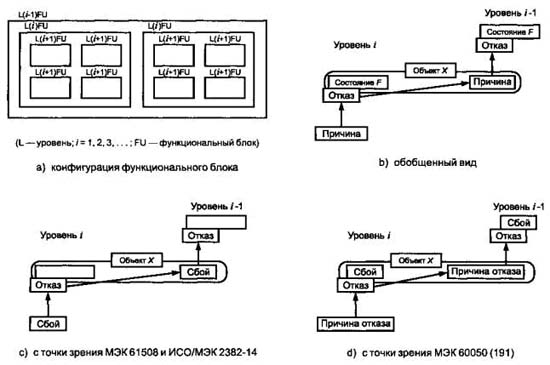
[ ГОСТ Р МЭК 61508-4-2007]Тематики
- газораспределение
- надежность средств электросвязи
- надежность, основные понятия
Обобщающие термины
EN
сброс
Разрывное нарушение, при котором сместитель падает в сторону опущенного крыла (висячее крыло опущено относительно лежачего).
[ Словарь геологических терминов и понятий. Томский Государственный Университет]Тематики
- геология, геофизика
Обобщающие термины
EN
сверхток
Любой ток, превышающий номинальный
МЭК 60050(441-11-06).
[ ГОСТ Р 50030. 1-2000 ( МЭК 60947-1-99)]
[ ГОСТ Р 50345-99( МЭК 60898-95)]
сверхток
Электрический ток, превышающий номинальный электрический ток.
Сверхток представляет собой любой электрический ток, величина которого превышает номинальный ток какого-либо элемента электроустановки здания или используемого в ней электрооборудования, например: номинальный ток электрической цепи, допустимый длительный ток проводника, номинальный ток автоматического выключателя и т. д. В нормативной и правовой документации различают два основных вида сверхтока – ток перегрузки и ток короткого замыкания.
Появление сверхтока в каком-либо элементе электроустановки здания может привести к его перегреву, возгоранию и, как следствие, к возникновению пожара в здании. Поэтому в электроустановках зданий выполняют защиту от сверхтока.
[ http://www.volt-m.ru/glossary/letter/%D1/view/59/]
сверхток
сверхток в электротехническом изделии
Ток, значение которого превосходит наибольшее рабочее значение тока электротехнического изделия (устройства).
[ ГОСТ 18311-80]
сверхток
Электрический ток, превышающий номинальный электрический ток.
Примечание - Для проводников номинальный ток считается равным длительному допустимому току.
[ ГОСТ Р МЭК 60050-826-2009]
Сверхток может оказывать или может не оказывать вредные воздействия в зависимости от его величины и продолжительности. Сверхтоки могут возникать в результате перегрузок в электроприемниках или при повреждениях, таких как короткие замыкания или замыканиях на землю
[ ГОСТ Р 50571. 1-2009 ( МЭК 60364-1: 2005)]
сверхток
Любой ток, превышающий номинальное значение. Для проводов номинальным значением является допустимый ток.
[ ГОСТ Р МЭК 60204-1-2007]EN
overcurrent
electric current exceeding the rated electric current
NOTE – For conductors, the rated current is considered as equal to the current-carrying capacity
[IEV number 826-11-14]
over-current
<>current exceeding the rated current
<>[IEC 61095, ed. 2.0 (2009-02)]
over-current
electric current the value of which exceeds a specified limiting value
[IEV number 151-15-28]
[IEV number 442-01-20]FR
surintensité, f
courant électrique supérieur au courant électrique assigné
NOTE – Pour des conducteurs, on considère que le courant assigné est égal au courant admissible.
[IEV number 826-11-14]
surintensité
courant supérieur au courant assigné
[IEC 61095, ed. 2.0 (2009-02)]
[IEV number 442-01-20]
surintensité, f
courant électrique dont la valeur dépasse une valeur limite spécifiée
[IEV number 151-15-28]Параллельные тексты EN-RU The design of LV installations leads to basic protection devices being fitted for three types of faults:
-
overloads
-
short-circuits
-
insulation faults
Низковольтные электроустановки должны быть оснащены устройствами защиты трех типов:
-
от перегрузки;
-
от короткого замыкания;
- от токов утечки.
[Перевод Интент]
Примечание.
Слово fault в данном случае пришлось опустить, поскольку:
- его нельзя перевести как "неисправность", т. к. возникновение перегрузки ( overload) не является неисправностью;
- его нельзя перевести как "сверхток", т. к. ток утечки не является сверхтоком.The chosen switchgear must withstand and eliminate faults at optimised cost with respect to the necessary performance.
[Schneider Electric]Выбранная аппаратура распределения должна иметь такие характеристики, чтобы рентабельно выдерживать и ограничивать сверхтоки.
[Перевод Интент]Тематики
Синонимы
EN
DE
FR
ток повреждения
Ток, возникающий в результате пробоя или перекрытия изоляции.
[ ГОСТ Р 51321. 1-2000 ( МЭК 60439-1-92)]
ток повреждения
Ток, который протекает через данную точку повреждения в результате повреждения изоляции.
[ ГОСТ Р МЭК 60050-826-2009]EN
fault current
current resulting from an insulation failure, the bridging of insulation or incorrect connection in an electrical circuit
[IEC 61439-1, ed. 2.0 (2011-08)]
fault current
current which flows across a given point of fault resulting from an insulation fault
[IEV number 826-11-11]FR
courant de défaut
courant résultant d'un défaut de l'isolation, du contournement de l’isolation ou d’un raccordement incorrect dans un circuit électrique
[IEC 61439-1, ed. 2.0 (2011-08)]
courant de défaut, m
courant s'écoulant en un point de défaut donné, consécutivement à un défaut de l'isolation
[IEV number 826-11-11]Тематики
EN
DE
- Fehlerstrom, m
FR
- courant de défaut, m
3.7.2 повреждение (fault): Повреждение любого элемента, разделения, изоляции или соединения между элементами, не являющимися по настоящему стандарту не повреждаемыми, от которых зависит искробезопасность цепи.
Источник: ГОСТ Р 52350.11-2005: Электрооборудование для взрывоопасных газовых сред. Часть 11. Искробезопасная электрическая цепь "I" оригинал документа
3.16 неисправность (fault): Состояние объекта, характеризующееся неспособностью исполнять требуемую функцию, исключая время профилактического технического обслуживания или других запланированных действий, или простои из-за недостатка внешних ресурсов
Примечание - Неисправность часто является результатом отказа объекта, но может существовать и без отказа.
Источник: ГОСТ Р 51901.6-2005: Менеджмент риска. Программа повышения надежности оригинал документа
3.6 неисправность (fault): Состояние элемента, характеризующееся неспособностью исполнять требуемую функцию, исключая период технического обслуживания, ремонта или других запланированных действий, а также из-за недостатка внешних ресурсов.
Примечание - Неисправность часто является результатом отказа элемента, но может существовать и без предшествующего отказа.
Источник: ГОСТ Р 51901.5-2005: Менеджмент риска. Руководство по применению методов анализа надежности оригинал документа
3.5 неисправность (fault): Состояние объекта, когда один из его элементов или группа элементов проявляют признаки деградации или нарушения работы, что может привести к отказу машины.
Примечания
1 Неисправность часто является следствием отказа, но может иметь место и при его отсутствии.
2 Состояние объекта не рассматривают как неисправное, если оно возникло вследствие запланированных процедур или нехватки внешних ресурсов.
Источник: ГОСТ Р ИСО 13379-2009: Контроль состояния и диагностика машин. Руководство по интерпретации данных и методам диагностирования оригинал документа
3.3 неисправность (fault): Состояние объекта, при котором он не способен выполнять требуемую функцию, за исключением такой неспособности при техническом обслуживании или других плановых мероприятиях или вследствие нехватки внешних ресурсов.
Примечания
1 Неисправность часто является следствием отказа объекта, но может иметь место и без него.
2 В настоящем стандарте термин «неисправность» используется наряду с термином «отказ» по историческим причинам.
Источник: ГОСТ Р 51901.12-2007: Менеджмент риска. Метод анализа видов и последствий отказов оригинал документа
3.1.30 ошибка (fault): Разность между погрешностью весоизмерительного датчика и основной погрешностью весоизмерительного датчика (см. 3.1.34).
Источник: ГОСТ Р 8.726-2010: Государственная система обеспечения единства измерений. Датчики весоизмерительные. Общие технические требования. Методы испытаний оригинал документа
3.6 дефект (fault): Неисправность или ошибка в компоненте технического обеспечения, программного обеспечения или системы
[МЭК 61513, пункт 3.22]
Примечание 1 - Дефекты могут подразделяться на случайные, например, в результате ухудшения аппаратных средств из-за старения, и систематические, например, ошибки в программном обеспечении, которые вытекают из погрешностей проектирования.
Примечание 2 - Дефект (в особенности дефект проекта) может остаться необнаруженным в системе до тех пор, пока не окажется, что полученный результат не соответствует намеченной функции, то есть возникает отказ.
Примечание 3 - См. также «ошибка программного обеспечения» и «случайный дефект».
Источник: ГОСТ Р МЭК 62340-2011: Атомные станции. Системы контроля и управления, важные для безопасности. Требования по предотвращению отказов по общей причине оригинал документа
3.2 неисправность (fault): Состояние объекта, когда один из его элементов или группа элементов проявляет признаки деградации или нарушения работы, что может привести к отказу машины.
Примечание - Неисправность может привести к отказу.
Источник: ГОСТ Р ИСО 17359-2009: Контроль состояния и диагностика машин. Общее руководство по организации контроля состояния и диагностирования оригинал документа
3.17 дефект (fault): Неисправность или ошибка в компоненте технического обеспечения, программного обеспечения или системы.
[МЭК 61513, пункт 3.22]
Источник: ГОСТ Р МЭК 60880-2010: Атомные электростанции. Системы контроля и управления, важные для безопасности. Программное обеспечение компьютерных систем, выполняющих функции категории А оригинал документа
3.6.1 сбой (fault): Ненормальный режим, который может вызвать уменьшение или потерю способности функционального блока выполнять требуемую функцию.
Примечание - МЭС 191-05-01 определяет «сбой» как состояние, характеризуемое неспособностью выполнить необходимую функцию, исключая неспособности, возникающие во время профилактического ухода или других плановых мероприятий, либо в результате недостатка внешних ресурсов. Иллюстрация к этим двум точкам зрения показана на рисунке 4 [ИСО/МЭК 2382-14-01-10].
Источник: ГОСТ Р МЭК 61508-4-2007: Функциональная безопасность систем электрических, электронных, программируемых электронных, связанных с безопасностью. Часть 4. Термины и определения оригинал документа
3.22 дефект (fault): Дефект в аппаратуре, программном обеспечении или в компоненте системы (см. рисунок 3).
Примечание 1 -Дефекты могут быть результатом случайных отказов, которые возникают, например, из-за деградации аппаратуры в результате старения; возможны систематические дефекты, например, в результате дефектов в программном обеспечении, возникающих из-за ошибок при проектировании.
Примечание 2 - Дефект (особенно дефекты, связанные с проектированием) может оставаться незамеченным, пока сохраняются условия, при которых он не отражается на выполнении функции, т.е. пока не произойдет отказ.
Примечание 3 - См. также «дефект программного обеспечения».
Источник: ГОСТ Р МЭК 61513-2011: Атомные станции. Системы контроля и управления, важные для безопасности. Общие требования оригинал документа
4.10.1 ошибка (fault): Разность между погрешностью показаний и погрешностью прибора.
Источник: ГОСТ Р ЕН 1434-1-2011: Теплосчетчики. Часть 1. Общие требования
Англо-русский словарь нормативно-технической терминологии > fault
См. также в других словарях:
Function (mathematics) — f(x) redirects here. For the band, see f(x) (band). Graph of example function, In mathematics, a function associates one quantity, the a … Wikipedia
Function overloading — or method overloading is a feature found in various programming languages such as Ada, C#, VB.NET, C++, D and Java that allows the creation of several methods with the same name which differ from each other in terms of the type of the input and… … Wikipedia
Function — Func tion, n. [L. functio, fr. fungi to perform, execute, akin to Skr. bhuj to enjoy, have the use of: cf. F. fonction. Cf. {Defunct}.] 1. The act of executing or performing any duty, office, or calling; performance. In the function of his public … The Collaborative International Dictionary of English
different — 1. Fowler wrote in 1926 that insistence ‘that different can only be followed by from and not by to is a superstition’. It is in fact a 20c superstition that refuses to go away, despite copious evidence for the use of to and than dating back to… … Modern English usage
function — function, functionalism Although the use of the concepts of function and functionalism is usually associated with the work of Talcott Parsons in modern sociology, there is a long tradition of functional explanation in studying societies, and a… … Dictionary of sociology
Function object — A function object, also called a functor or functional, is a computer programming construct allowing an object to be invoked or called as if it were an ordinary function, usually with the same syntax.Function objects are unrelated to functors in… … Wikipedia
Function prologue — In assembly language programming, the function prologue is a few lines of code which appear at the beginning of a function, which prepare the stack and registers for use within the function. Similarly, the function epilogue appears at the end of… … Wikipedia
Function point — A function point is a unit of measurement to express the amount of business functionality an information system provides to a user. Function points are the units of measure used by the IFPUG Functional Size Measurement Method. The IFPUG FSM… … Wikipedia
function — ▪ I. function func‧tion 1 [ˈfʌŋkʆn] noun 1. [countable] the purpose for which something is made or used, or the job that someone does; =role: • The main function of a cash machine is to provide people with cash when the bank is shut. • He was… … Financial and business terms
Function (biology) — A function is part of an answer to a question about why some object or process occurred in a system that evolved through a process of selection. Thus, function refers forward from the object or process, along some chain of causation to the goal… … Wikipedia
Function representation — In computer graphics the function representation (FRep [Shape Modeling and Computer Graphics with Real Functions, [http://www.hyperfun.org/F rep.html FRep Home Page] ] or F Rep) is used in solid modeling. FRep was introduced in Function… … Wikipedia
