

-
21 value
1. n1) ценность2) стоимость3) цена4) валюта; сумма векселя или тратты5) величина, значение
- acquisition value
- actual value
- added value
- added at factor values
- advertising value
- aggregate value
- appraisal value
- appraised value
- approximate value
- approximate basic value
- assessed value
- asset value
- asset value per share
- auction value
- average value
- balance value
- balance-sheet value
- base values
- base market value
- basic value
- billed value
- book value
- book value of capital
- break-even value
- breakup value
- bullion value
- capital value
- capitalized value
- capitalized earnings value
- cargo value
- carrying value
- cash value
- cash surrender value
- collateral value
- commercial value
- commitment value
- commodity value
- commuted value
- computed value
- constructed value
- contract value
- conversion value
- core values
- cost value
- critical value
- currency values
- current value
- current value of assets
- current exit value
- current market value
- customs value
- damaged value
- declared value
- denominational value
- depreciable value
- depreciated value
- desired value
- discounted value
- disposal value
- dutiable value
- effective value
- end value
- equivalent value
- estimated value
- exchanged value
- existing-use value
- expected value
- export value
- face value
- face value of stock capital
- fair value
- fair market value
- final value
- finite value
- full value
- future value
- going value
- going-concern value
- gold value
- gross value
- gross book value
- historical value
- home value
- import value
- imputed value
- increasing value
- indicative value
- individual value
- initial value
- insurance value
- insured value
- intrinsic value
- inventory value
- investment value
- invoiced value
- land value
- legal value
- licence value
- limit value
- liquidating value
- liquidation value
- loan value
- manpower value
- marginal value
- market value
- market-to-book value
- material value
- mature value
- maturity value
- mean value
- measured value
- minimum value
- money value
- mortgage value
- net value
- net asset value
- net asset value of securities
- net asset value per bond
- net asset value per share of preferred stock
- net book value
- net depreciated value
- net present value
- net realizable value
- net selling value
- nominal value
- no par value
- numerical value
- order value
- original value
- output value
- overall value
- par value
- par value of currencies
- parity value
- peak value
- permissible value
- policy value
- predicted value
- prescribed value
- present value
- price adjusted value
- rateable value
- real value
- realizable value
- realization value
- reasonable value
- recovery value
- redemption value
- reinstatement value
- relative value
- replacement value
- residual value
- sale value
- salvage value
- scarcity value
- scrap value
- settlement value
- shipped value
- standardized value
- standing value
- stated value
- stock value
- surplus value
- surrender value
- target value
- taxable value
- time value
- total value
- total value of a contract
- trade value
- trade-in value
- trading value
- true value
- underpreciated value
- unit value
- use value
- use value of gold
- written-down value
- written-off value
- zero value
- value for customs purposes
- value for insurance
- value for money
- value in exchange
- value in foreign currency
- value in use
- value of a business
- value of cargo
- value of commodity
- value of a contract
- value of credit
- value of the creditors' potential assets
- value of currency
- value of a deal
- value of delivery
- value of exports
- value of finished goods inventories
- value of gold
- value of goods
- value of imports
- value of an invention
- value of labour
- value of the land
- value of machinery
- value of manpower
- value of materials
- value of money
- value of an order
- value of output
- value of production
- value of products
- value of property
- value of purchases
- value of returns
- value of shipments
- value of supply
- value of tare
- value of work
- value on hand
- value per machine
- above the value
- above face value
- at value
- at face value
- at nominal value
- at par value
- at producers' values
- at purchasers' values
- by face value
- for value
- of value
- of equal value
- of full value
- of little value
- of small value
- of stable value
- value added
- value compensated
- value insured
- appreciate in value
- assess the value
- compensate for the value
- compute the value
- declare the value
- decline in value
- decrease in value
- determine the value
- establish the value
- exceed the value
- exceed in value
- fall in value
- fluctuate in value
- increase in value
- lose in value
- maintain its value
- offset the value
- preserve value
- put value on smth
- realize the value
- recompense the value
- reduce the value
- reduce in value
- refund the value
- rise in value
- state the value
- take on a value
- transmit value2. vоценивать, производить оценку, определять стоимость -
22 value
-
23 sink
1. n раковина2. n слив; сточный колодец; выгребная яма3. n редк. сточная труба4. n спец. стокheat sink — поглотитель тепла; сток теплового потока
5. n клоакаa sink of iniquity — притон, вертеп
6. n впадина, углубление, выемка7. n геол. провал, карстовая пещера8. n театр. люк9. n редк. шахтный ствол10. n грузило11. v тонуть, утопать12. v топить; погружать13. v часто губить14. v опускаться, падать15. v опускать, ронятьI hope it will not sink me in your esteem — я надеюсь, что это не уронит меня в ваших глазах
16. v понижаться17. v понижать18. v ослабевать, угасать, меркнутьI watched the flames sink — я смотрел, как угасало пламя
19. v исчезать из виду20. v забывать, не упоминать, предавать забвению; скрывать21. v подавлятьhe was ready to sink his personality — он был готов отказаться от собственного «я»
22. v проходить насквозь; просачиваться, проникать23. v впитыватьСинонимический ряд:1. basin (noun) Augean stable; basin; bowl; cesspit; cesspool; den; lavatory; pan; pandemonium; pit; sewer; Sodom; sty; tub; washbasin; washbowl2. depression (noun) concavity; depression; dip; hollow; sag; sinkage; sinkhole3. decline (verb) decline; degenerate; descend; deteriorate; disimprove; disintegrate; fade; fail; retrograde; rot; stoop; weaken; worsen4. decrease (verb) decrease; diminish; lessen; wane5. fall (verb) dive; drop; fall; fall off; plummet; regress; sag; settle; skid; slump; tumble6. humble (verb) abase; bemean; cast down; debase; degrade; demean; humble; humiliate7. lower (verb) couch; demit; depress; droop; let down; lower8. set (verb) dip; go down; set9. settle (verb) gravitate; settle10. slip (verb) slip; vitiate11. submerge (verb) founder; go under; immerse; overwhelm; scuttle; soak; submerge; submerse; swamp12. thrust (verb) bore; dig; drill; drive; plunge; ram; run; stab; stick; thrust13. total (verb) demolish; destroy; dynamite; finish; ruin; shatter; smash; torpedo; total; undo; wrack; wreckАнтонимический ряд:improve; increase; rise -
24 DOL
- эффект операционного рычага
- пускатель прямого действия
- прямой пуск вращающегося электродвигателя
- Министерство труда (США)
- концентрация растворённого кислорода
концентрация растворённого кислорода
—
[А.С.Гольдберг. Англо-русский энергетический словарь. 2006 г.]Тематики
EN
Министерство труда (США)
—
[А.С.Гольдберг. Англо-русский энергетический словарь. 2006 г.]Тематики
EN
прямой пуск вращающегося электродвигателя
Пуск вращающегося электродвигателя путем непосредственного подключения его к питающей сети.
[ ГОСТ 27471-87]EN
direct-on-line starting
across-the-line starting (US)
the process of starting a motor by connecting it directly to the supply at rated voltage
[IEV number 411-52-15]FR
démarrage direct
mode de démarrage d'un moteur, consistant à lui appliquer directement sa pleine tension assignée
[IEV number 411-52-15]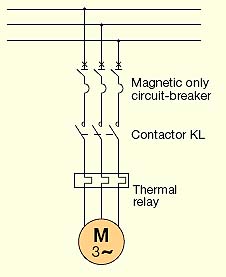
Рис. ABB
Схема прямого пуска электродвигателяMagnetic only circuit-breaker - Автоматический выключатель с электромагнитным расцепителем
Contactor KL - Контактор KL
Thermal relay - Тепловое реле
Параллельные тексты EN-RU
Direct-on-line starting
Direct-on-line starting, which is often abbreviated as DOL, is perhaps the most traditional system and consists in connecting the motor directly to the supply network, thus carrying out starting at full voltage.Direct-on-line starting represents the simplest and the most economical system to start a squirrel-cage asynchronous motor and it is the most used.
As represented in Figure 5, it provides the direct connection to the supply network and therefore starting is carried out at full voltage and with constant frequency, developing a high starting torque with very reduced acceleration times.
The typical applications are relevant to small power motors also with full load starting.
These advantages are linked to some problems such as, for example, the high inrush current, which - in the first instants - can reach values of about 10 to 12 times the rated current, then can decrease to about 6 to 8 times the rated current and can persist to reach the maximum torque speed.The effects of such currents can be identified with the high electro-dynamical stresses on the motor connection cables and could affect also the windings of the motor itself; besides, the high inrush torques can cause violent accelerations which stress the transmission components (belts and joints) generating distribution problems with a reduction in the mechanical life of these elements.
Finally, also the possible electrical problems due to voltage drops on the supply line of the motor or of the connected equipment must be taken into consideration.
[ABB]Прямой пуск
Прямой пуск, который по-английски часто сокращенно обозначают как DOL, является, пожалуй наиболее распространенным способом пуска. Он заключается в непосредственном (т. е. прямом) подключении двигателя к питающей сети. Это означает, что пуск двигателя осуществляется при полном напряжении.Схема прямого пуска является наиболее простым, экономичным и чаще всего применяемым решением для электродвигателей с короткозамкнутым ротором.
Схема прямого подключения к сети представлена на рисунке 5. Пуск осуществляется при полном напряжении и постоянной частоте сети. Электродвигатель развивает высокий пусковой момент при коротком времени разгона.
Типичные области применения – маломощные электродвигатели, в том числе с пуском при полной нагрузке.
Однако, наряду с преимуществами имеются и определенные недостатки, например, бросок пускового тока, достигающий в первоначальный момент 10…12-кратного значения от номинального тока электродвигателя. Затем ток двигателя уменьшается примерно до 6…8-кратного значения номинального тока и будет держаться на этом уровне до тех пор, пока скорость двигателя не достигнет максимального значения.
Такое изменение тока оказывает значительное электродинамическое воздействие на кабель, подключенный к двигателю. Кроме того пусковой ток воздействует на обмотки двигателя. Высокий начальный пусковой момент может привести к значительному ускорению и следовательно к значительной нагрузке элементов привода (ремней, крепления узлов), что вызывает сокращение их срока службы.
И, наконец, следует принять во внимание возможное возникновение проблем, связанных с падением напряжения в линии питания двигателя и подключенного к этой линии оборудования.
[Перевод Интент]
Тематики
Синонимы
EN
- across-the-line starting (US)
- direct line starting
- direct operation of a motor
- direct starting
- direct-on-line starting
- DOL
- full voltage starter application
DE
FR
пускатель прямого действия
Пускатель, одноступенчато подающий сетевое напряжение на выводы двигателя.
(МЭС 441-14-40)
[ ГОСТ Р 50030.4.1-2002 (МЭК 60947-4-1-2000)]
Пускатели переменного тока для прямого непосредственного пуска (с полным напряжением)
Пускатели, предназначенные для пуска двигателя, разгона его до номинальной скорости, защиты двигателя и подключенных к нему цепей от рабочих перегрузок и отключения питания двигателя.
[ ГОСТ Р 50030.4.1-2002 (МЭК 60947-4-1-2000)]EN
direct-on-line starter
a starter which connects the line voltage across the motor terminals in one step
[IEV number 441-14-40]FR
démarreur direct
démarreur qui applique la tension d'alimentation sur les bornes du moteur en une seule manoeuvre
[IEV number 441-14-40]Параллельные тексты EN-RU
Direct-on-line starters
Starters which connect the line voltage across the motor terminals in one step, intended to start and accelerate a motor to normal speed.
They shall ensure switching and protection functions as prescribed in the general definition.
[ABB]Пускатели прямого действия
Пускатели, одноступенчато подающие сетевое напряжение на зажимы двигателя и предназначенные для его пуска и разгона до номинальной скорости.
Кроме того, они должны обеспечивать коммутацию и защиту в соответствии с общим определением.
[Перевод Интент]Тематики
EN
DE
FR
эффект операционного рычага
эффект производственного рычага
Эффект операционного рычага - выражение того факта, что любое изменение выручки от реализации порождает изменение прибыли. Сила воздействия операционного рычага вычисляется как частное от деления выручки от реализации после возмещения переменных затрат на прибыль.
[ http://www.lexikon.ru/dict/fin/a.html]Тематики
Синонимы
EN
Англо-русский словарь нормативно-технической терминологии > DOL
-
25 direct starting
прямой пуск
—
[Я.Н.Лугинский, М.С.Фези-Жилинская, Ю.С.Кабиров. Англо-русский словарь по электротехнике и электроэнергетике, Москва, 1999 г.]Тематики
- электротехника, основные понятия
EN
прямой пуск вращающегося электродвигателя
Пуск вращающегося электродвигателя путем непосредственного подключения его к питающей сети.
[ ГОСТ 27471-87]EN
direct-on-line starting
across-the-line starting (US)
the process of starting a motor by connecting it directly to the supply at rated voltage
[IEV number 411-52-15]FR
démarrage direct
mode de démarrage d'un moteur, consistant à lui appliquer directement sa pleine tension assignée
[IEV number 411-52-15]
Рис. ABB
Схема прямого пуска электродвигателяMagnetic only circuit-breaker - Автоматический выключатель с электромагнитным расцепителем
Contactor KL - Контактор KL
Thermal relay - Тепловое реле
Параллельные тексты EN-RU
Direct-on-line starting
Direct-on-line starting, which is often abbreviated as DOL, is perhaps the most traditional system and consists in connecting the motor directly to the supply network, thus carrying out starting at full voltage.Direct-on-line starting represents the simplest and the most economical system to start a squirrel-cage asynchronous motor and it is the most used.
As represented in Figure 5, it provides the direct connection to the supply network and therefore starting is carried out at full voltage and with constant frequency, developing a high starting torque with very reduced acceleration times.
The typical applications are relevant to small power motors also with full load starting.
These advantages are linked to some problems such as, for example, the high inrush current, which - in the first instants - can reach values of about 10 to 12 times the rated current, then can decrease to about 6 to 8 times the rated current and can persist to reach the maximum torque speed.The effects of such currents can be identified with the high electro-dynamical stresses on the motor connection cables and could affect also the windings of the motor itself; besides, the high inrush torques can cause violent accelerations which stress the transmission components (belts and joints) generating distribution problems with a reduction in the mechanical life of these elements.
Finally, also the possible electrical problems due to voltage drops on the supply line of the motor or of the connected equipment must be taken into consideration.
[ABB]Прямой пуск
Прямой пуск, который по-английски часто сокращенно обозначают как DOL, является, пожалуй наиболее распространенным способом пуска. Он заключается в непосредственном (т. е. прямом) подключении двигателя к питающей сети. Это означает, что пуск двигателя осуществляется при полном напряжении.Схема прямого пуска является наиболее простым, экономичным и чаще всего применяемым решением для электродвигателей с короткозамкнутым ротором.
Схема прямого подключения к сети представлена на рисунке 5. Пуск осуществляется при полном напряжении и постоянной частоте сети. Электродвигатель развивает высокий пусковой момент при коротком времени разгона.
Типичные области применения – маломощные электродвигатели, в том числе с пуском при полной нагрузке.
Однако, наряду с преимуществами имеются и определенные недостатки, например, бросок пускового тока, достигающий в первоначальный момент 10…12-кратного значения от номинального тока электродвигателя. Затем ток двигателя уменьшается примерно до 6…8-кратного значения номинального тока и будет держаться на этом уровне до тех пор, пока скорость двигателя не достигнет максимального значения.
Такое изменение тока оказывает значительное электродинамическое воздействие на кабель, подключенный к двигателю. Кроме того пусковой ток воздействует на обмотки двигателя. Высокий начальный пусковой момент может привести к значительному ускорению и следовательно к значительной нагрузке элементов привода (ремней, крепления узлов), что вызывает сокращение их срока службы.
И, наконец, следует принять во внимание возможное возникновение проблем, связанных с падением напряжения в линии питания двигателя и подключенного к этой линии оборудования.
[Перевод Интент]
Тематики
Синонимы
EN
- across-the-line starting (US)
- direct line starting
- direct operation of a motor
- direct starting
- direct-on-line starting
- DOL
- full voltage starter application
DE
FR
Англо-русский словарь нормативно-технической терминологии > direct starting
-
26 direct line starting
прямой пуск вращающегося электродвигателя
Пуск вращающегося электродвигателя путем непосредственного подключения его к питающей сети.
[ ГОСТ 27471-87]EN
direct-on-line starting
across-the-line starting (US)
the process of starting a motor by connecting it directly to the supply at rated voltage
[IEV number 411-52-15]FR
démarrage direct
mode de démarrage d'un moteur, consistant à lui appliquer directement sa pleine tension assignée
[IEV number 411-52-15]
Рис. ABB
Схема прямого пуска электродвигателяMagnetic only circuit-breaker - Автоматический выключатель с электромагнитным расцепителем
Contactor KL - Контактор KL
Thermal relay - Тепловое реле
Параллельные тексты EN-RU
Direct-on-line starting
Direct-on-line starting, which is often abbreviated as DOL, is perhaps the most traditional system and consists in connecting the motor directly to the supply network, thus carrying out starting at full voltage.Direct-on-line starting represents the simplest and the most economical system to start a squirrel-cage asynchronous motor and it is the most used.
As represented in Figure 5, it provides the direct connection to the supply network and therefore starting is carried out at full voltage and with constant frequency, developing a high starting torque with very reduced acceleration times.
The typical applications are relevant to small power motors also with full load starting.
These advantages are linked to some problems such as, for example, the high inrush current, which - in the first instants - can reach values of about 10 to 12 times the rated current, then can decrease to about 6 to 8 times the rated current and can persist to reach the maximum torque speed.The effects of such currents can be identified with the high electro-dynamical stresses on the motor connection cables and could affect also the windings of the motor itself; besides, the high inrush torques can cause violent accelerations which stress the transmission components (belts and joints) generating distribution problems with a reduction in the mechanical life of these elements.
Finally, also the possible electrical problems due to voltage drops on the supply line of the motor or of the connected equipment must be taken into consideration.
[ABB]Прямой пуск
Прямой пуск, который по-английски часто сокращенно обозначают как DOL, является, пожалуй наиболее распространенным способом пуска. Он заключается в непосредственном (т. е. прямом) подключении двигателя к питающей сети. Это означает, что пуск двигателя осуществляется при полном напряжении.Схема прямого пуска является наиболее простым, экономичным и чаще всего применяемым решением для электродвигателей с короткозамкнутым ротором.
Схема прямого подключения к сети представлена на рисунке 5. Пуск осуществляется при полном напряжении и постоянной частоте сети. Электродвигатель развивает высокий пусковой момент при коротком времени разгона.
Типичные области применения – маломощные электродвигатели, в том числе с пуском при полной нагрузке.
Однако, наряду с преимуществами имеются и определенные недостатки, например, бросок пускового тока, достигающий в первоначальный момент 10…12-кратного значения от номинального тока электродвигателя. Затем ток двигателя уменьшается примерно до 6…8-кратного значения номинального тока и будет держаться на этом уровне до тех пор, пока скорость двигателя не достигнет максимального значения.
Такое изменение тока оказывает значительное электродинамическое воздействие на кабель, подключенный к двигателю. Кроме того пусковой ток воздействует на обмотки двигателя. Высокий начальный пусковой момент может привести к значительному ускорению и следовательно к значительной нагрузке элементов привода (ремней, крепления узлов), что вызывает сокращение их срока службы.
И, наконец, следует принять во внимание возможное возникновение проблем, связанных с падением напряжения в линии питания двигателя и подключенного к этой линии оборудования.
[Перевод Интент]
Тематики
Синонимы
EN
- across-the-line starting (US)
- direct line starting
- direct operation of a motor
- direct starting
- direct-on-line starting
- DOL
- full voltage starter application
DE
FR
Англо-русский словарь нормативно-технической терминологии > direct line starting
-
27 direct operation of a motor
прямой пуск вращающегося электродвигателя
Пуск вращающегося электродвигателя путем непосредственного подключения его к питающей сети.
[ ГОСТ 27471-87]EN
direct-on-line starting
across-the-line starting (US)
the process of starting a motor by connecting it directly to the supply at rated voltage
[IEV number 411-52-15]FR
démarrage direct
mode de démarrage d'un moteur, consistant à lui appliquer directement sa pleine tension assignée
[IEV number 411-52-15]
Рис. ABB
Схема прямого пуска электродвигателяMagnetic only circuit-breaker - Автоматический выключатель с электромагнитным расцепителем
Contactor KL - Контактор KL
Thermal relay - Тепловое реле
Параллельные тексты EN-RU
Direct-on-line starting
Direct-on-line starting, which is often abbreviated as DOL, is perhaps the most traditional system and consists in connecting the motor directly to the supply network, thus carrying out starting at full voltage.Direct-on-line starting represents the simplest and the most economical system to start a squirrel-cage asynchronous motor and it is the most used.
As represented in Figure 5, it provides the direct connection to the supply network and therefore starting is carried out at full voltage and with constant frequency, developing a high starting torque with very reduced acceleration times.
The typical applications are relevant to small power motors also with full load starting.
These advantages are linked to some problems such as, for example, the high inrush current, which - in the first instants - can reach values of about 10 to 12 times the rated current, then can decrease to about 6 to 8 times the rated current and can persist to reach the maximum torque speed.The effects of such currents can be identified with the high electro-dynamical stresses on the motor connection cables and could affect also the windings of the motor itself; besides, the high inrush torques can cause violent accelerations which stress the transmission components (belts and joints) generating distribution problems with a reduction in the mechanical life of these elements.
Finally, also the possible electrical problems due to voltage drops on the supply line of the motor or of the connected equipment must be taken into consideration.
[ABB]Прямой пуск
Прямой пуск, который по-английски часто сокращенно обозначают как DOL, является, пожалуй наиболее распространенным способом пуска. Он заключается в непосредственном (т. е. прямом) подключении двигателя к питающей сети. Это означает, что пуск двигателя осуществляется при полном напряжении.Схема прямого пуска является наиболее простым, экономичным и чаще всего применяемым решением для электродвигателей с короткозамкнутым ротором.
Схема прямого подключения к сети представлена на рисунке 5. Пуск осуществляется при полном напряжении и постоянной частоте сети. Электродвигатель развивает высокий пусковой момент при коротком времени разгона.
Типичные области применения – маломощные электродвигатели, в том числе с пуском при полной нагрузке.
Однако, наряду с преимуществами имеются и определенные недостатки, например, бросок пускового тока, достигающий в первоначальный момент 10…12-кратного значения от номинального тока электродвигателя. Затем ток двигателя уменьшается примерно до 6…8-кратного значения номинального тока и будет держаться на этом уровне до тех пор, пока скорость двигателя не достигнет максимального значения.
Такое изменение тока оказывает значительное электродинамическое воздействие на кабель, подключенный к двигателю. Кроме того пусковой ток воздействует на обмотки двигателя. Высокий начальный пусковой момент может привести к значительному ускорению и следовательно к значительной нагрузке элементов привода (ремней, крепления узлов), что вызывает сокращение их срока службы.
И, наконец, следует принять во внимание возможное возникновение проблем, связанных с падением напряжения в линии питания двигателя и подключенного к этой линии оборудования.
[Перевод Интент]
Тематики
Синонимы
EN
- across-the-line starting (US)
- direct line starting
- direct operation of a motor
- direct starting
- direct-on-line starting
- DOL
- full voltage starter application
DE
FR
Англо-русский словарь нормативно-технической терминологии > direct operation of a motor
-
28 direct-on-line starting
прямой пуск вращающегося электродвигателя
Пуск вращающегося электродвигателя путем непосредственного подключения его к питающей сети.
[ ГОСТ 27471-87]EN
direct-on-line starting
across-the-line starting (US)
the process of starting a motor by connecting it directly to the supply at rated voltage
[IEV number 411-52-15]FR
démarrage direct
mode de démarrage d'un moteur, consistant à lui appliquer directement sa pleine tension assignée
[IEV number 411-52-15]
Рис. ABB
Схема прямого пуска электродвигателяMagnetic only circuit-breaker - Автоматический выключатель с электромагнитным расцепителем
Contactor KL - Контактор KL
Thermal relay - Тепловое реле
Параллельные тексты EN-RU
Direct-on-line starting
Direct-on-line starting, which is often abbreviated as DOL, is perhaps the most traditional system and consists in connecting the motor directly to the supply network, thus carrying out starting at full voltage.Direct-on-line starting represents the simplest and the most economical system to start a squirrel-cage asynchronous motor and it is the most used.
As represented in Figure 5, it provides the direct connection to the supply network and therefore starting is carried out at full voltage and with constant frequency, developing a high starting torque with very reduced acceleration times.
The typical applications are relevant to small power motors also with full load starting.
These advantages are linked to some problems such as, for example, the high inrush current, which - in the first instants - can reach values of about 10 to 12 times the rated current, then can decrease to about 6 to 8 times the rated current and can persist to reach the maximum torque speed.The effects of such currents can be identified with the high electro-dynamical stresses on the motor connection cables and could affect also the windings of the motor itself; besides, the high inrush torques can cause violent accelerations which stress the transmission components (belts and joints) generating distribution problems with a reduction in the mechanical life of these elements.
Finally, also the possible electrical problems due to voltage drops on the supply line of the motor or of the connected equipment must be taken into consideration.
[ABB]Прямой пуск
Прямой пуск, который по-английски часто сокращенно обозначают как DOL, является, пожалуй наиболее распространенным способом пуска. Он заключается в непосредственном (т. е. прямом) подключении двигателя к питающей сети. Это означает, что пуск двигателя осуществляется при полном напряжении.Схема прямого пуска является наиболее простым, экономичным и чаще всего применяемым решением для электродвигателей с короткозамкнутым ротором.
Схема прямого подключения к сети представлена на рисунке 5. Пуск осуществляется при полном напряжении и постоянной частоте сети. Электродвигатель развивает высокий пусковой момент при коротком времени разгона.
Типичные области применения – маломощные электродвигатели, в том числе с пуском при полной нагрузке.
Однако, наряду с преимуществами имеются и определенные недостатки, например, бросок пускового тока, достигающий в первоначальный момент 10…12-кратного значения от номинального тока электродвигателя. Затем ток двигателя уменьшается примерно до 6…8-кратного значения номинального тока и будет держаться на этом уровне до тех пор, пока скорость двигателя не достигнет максимального значения.
Такое изменение тока оказывает значительное электродинамическое воздействие на кабель, подключенный к двигателю. Кроме того пусковой ток воздействует на обмотки двигателя. Высокий начальный пусковой момент может привести к значительному ускорению и следовательно к значительной нагрузке элементов привода (ремней, крепления узлов), что вызывает сокращение их срока службы.
И, наконец, следует принять во внимание возможное возникновение проблем, связанных с падением напряжения в линии питания двигателя и подключенного к этой линии оборудования.
[Перевод Интент]
Тематики
Синонимы
EN
- across-the-line starting (US)
- direct line starting
- direct operation of a motor
- direct starting
- direct-on-line starting
- DOL
- full voltage starter application
DE
FR
Англо-русский словарь нормативно-технической терминологии > direct-on-line starting
-
29 full voltage starter application
прямой пуск вращающегося электродвигателя
Пуск вращающегося электродвигателя путем непосредственного подключения его к питающей сети.
[ ГОСТ 27471-87]EN
direct-on-line starting
across-the-line starting (US)
the process of starting a motor by connecting it directly to the supply at rated voltage
[IEV number 411-52-15]FR
démarrage direct
mode de démarrage d'un moteur, consistant à lui appliquer directement sa pleine tension assignée
[IEV number 411-52-15]
Рис. ABB
Схема прямого пуска электродвигателяMagnetic only circuit-breaker - Автоматический выключатель с электромагнитным расцепителем
Contactor KL - Контактор KL
Thermal relay - Тепловое реле
Параллельные тексты EN-RU
Direct-on-line starting
Direct-on-line starting, which is often abbreviated as DOL, is perhaps the most traditional system and consists in connecting the motor directly to the supply network, thus carrying out starting at full voltage.Direct-on-line starting represents the simplest and the most economical system to start a squirrel-cage asynchronous motor and it is the most used.
As represented in Figure 5, it provides the direct connection to the supply network and therefore starting is carried out at full voltage and with constant frequency, developing a high starting torque with very reduced acceleration times.
The typical applications are relevant to small power motors also with full load starting.
These advantages are linked to some problems such as, for example, the high inrush current, which - in the first instants - can reach values of about 10 to 12 times the rated current, then can decrease to about 6 to 8 times the rated current and can persist to reach the maximum torque speed.The effects of such currents can be identified with the high electro-dynamical stresses on the motor connection cables and could affect also the windings of the motor itself; besides, the high inrush torques can cause violent accelerations which stress the transmission components (belts and joints) generating distribution problems with a reduction in the mechanical life of these elements.
Finally, also the possible electrical problems due to voltage drops on the supply line of the motor or of the connected equipment must be taken into consideration.
[ABB]Прямой пуск
Прямой пуск, который по-английски часто сокращенно обозначают как DOL, является, пожалуй наиболее распространенным способом пуска. Он заключается в непосредственном (т. е. прямом) подключении двигателя к питающей сети. Это означает, что пуск двигателя осуществляется при полном напряжении.Схема прямого пуска является наиболее простым, экономичным и чаще всего применяемым решением для электродвигателей с короткозамкнутым ротором.
Схема прямого подключения к сети представлена на рисунке 5. Пуск осуществляется при полном напряжении и постоянной частоте сети. Электродвигатель развивает высокий пусковой момент при коротком времени разгона.
Типичные области применения – маломощные электродвигатели, в том числе с пуском при полной нагрузке.
Однако, наряду с преимуществами имеются и определенные недостатки, например, бросок пускового тока, достигающий в первоначальный момент 10…12-кратного значения от номинального тока электродвигателя. Затем ток двигателя уменьшается примерно до 6…8-кратного значения номинального тока и будет держаться на этом уровне до тех пор, пока скорость двигателя не достигнет максимального значения.
Такое изменение тока оказывает значительное электродинамическое воздействие на кабель, подключенный к двигателю. Кроме того пусковой ток воздействует на обмотки двигателя. Высокий начальный пусковой момент может привести к значительному ускорению и следовательно к значительной нагрузке элементов привода (ремней, крепления узлов), что вызывает сокращение их срока службы.
И, наконец, следует принять во внимание возможное возникновение проблем, связанных с падением напряжения в линии питания двигателя и подключенного к этой линии оборудования.
[Перевод Интент]
Тематики
Синонимы
EN
- across-the-line starting (US)
- direct line starting
- direct operation of a motor
- direct starting
- direct-on-line starting
- DOL
- full voltage starter application
DE
FR
Англо-русский словарь нормативно-технической терминологии > full voltage starter application
-
30 drain
1. n вытекание; истечение; отток2. n постоянное истощение; постоянная утечка; расход3. n потребление4. n дренаж, осушка, дренирование5. n дренаж; дренажная канава, дрена6. n водосток, водоотвод7. n канализационная труба8. n мед. дренажная трубка9. n разг. рюмочка; глоток10. n l11. n осадок, остатки; опивки12. n диал. пивная гуща13. v отводить, откачивать, выпускать14. v истощать, опустошать; высасывать, выкачиватьto drain a country of its wealth, to drain the wealth of a country — выкачивать из страны её богатства
15. v вытекать, утекать, стекать16. v эл. отводить ток17. v дренировать, осушать18. v стекать в реку; сбрасывать воды19. v фильтровать20. v сочиться; просачиваться21. v оборудовать канализацией, проводить канализацию22. v пить, осушать, выпивать до дна23. v сушить24. v сушиться25. v отжиматьto set the switch to drain — поставить машину на отжим, включить отжим
Синонимический ряд:1. conduit (noun) conduit; culvert; ditch; gutter; pipe2. depletion (noun) depletion; exhaustion; reduction; strain3. drink (noun) draft; drag; drench; drink; swig; swill4. sewer (noun) cesspool; channel; duct; sewer5. bail out (verb) bail out; dump; pour6. debilitate (verb) debilitate; devitalize; enervate; exhaust; fatigue7. deplete (verb) deplete; desiccate; dry up; give out; play out; run dry; run out8. draw (verb) bleed; divert; draft; draw; draw off; let out; milk; pump; remove; siphon; tap9. reduce (verb) abate; diminish; dwindle; ebb; lessen; let up; peter out; reduce; shrink; tail off; taper off10. spend (verb) bankrupt; consume; decrease; deplete; dissipate; draw down; eat up; empty; expend; finish; impoverish; run through; sap; spend; tax; use up11. tire (verb) jade; tire; wear; wear down; wear out; weary12. trickle (verb) effuse; ooze; seep away; trickleАнтонимический ряд:fill; inundate; moisten; pour; replenish; revive; supply; swill -
31 volume
ˈvɔljum сущ.
1) а) объем, масса( какого-л. вещества) to amplify volume ≈ изменить объем to increase volume, to turn up the volume ≈ увеличить объем to decrease, turn down the volume ≈ уменьшить объем molecular volume ≈ молекулярная масса When egg whites are beaten they can rise to seven or eight times their original volume. ≈ Когда белок взбивается, его масса может увеличиться в семь-восемь раз по сравнению с первоначальной. б) вместительность, емкость The volume of the container is 100 cubic meters. ≈ Емкость контейнера 100 куб.м. Syn: size
2) а) величина, размеры, масштабы;
объем Senior officials will be discussing how the volume of sales might be reduced. ≈ Старшие должностные лица будут обсуждать, каким образом можно снизить объемы продаж. б) уровень звука to turn down the volume ≈ уменьшить громкость звука
3) а) книга, том;
ист. свиток rare volume ≈ редкая книга б) том (единица деления произведения) ;
подшивка( газет, журналов) the first volume of his autobiography ≈ первый том его автобиографии a companion volume to our first dictionary ≈ дополнительный том к первому изданию нашего словаря bound volumes of the magazines ≈ переплетенные подшивки журналов
4) клуб( дыма и т. п.) том, книга;
корешок (библиотечный термин) - a library of
12. 000 *s библиотека в 12 тысяч книг /томов/ - a work in 3 *s произведение в трех томах - the sacred * (религия) священное писание - the Christian * (религия) евангелие( историческое) свиток (разговорное) толстая книга объем - specific * удельный объем - * of liquid in the cask объем жидкости в бочке величина, размеры, масштабы;
объем - * of employment (экономика) численность занятых - the * of trade объем торговли - * of business( коммерческое) торговый оборот;
объем деловых операций - * of traffic объем перевозок, интенсивность движения;
грузонапряженность - * of exports( экономика) физический объем экспорта - in terms of * по объему значительное количество - to produce in * производить в больших количествах емкость, вместимость - the * of the container is 100 cubic meters емкость контейнера 100 кубических метров сила, полнота - a voice of great * мощный голос - * of storm (метеорология) сила /интенсивность/ шторма /бури/ - *s of sound раскаты (грома, органной музыки и т. п.) - * of fire (военное) плотность огня - * of sound( физическое) громкость звука, диапазон громкости звука клуб - *s of smoke клубы дыма кольцо( особ. свившейся змеи) ;
переплетение( растений) pl извивы, перевивы, изгибы > to speak /to tell, to express/ *s говорить красноречивее всяких слов;
быть весьма многозначительным;
говорить о многом > his donation speaks *s for his generosity его дар - лучшее доказательство его щедрости > it speaks *s for him это лучше всего его характеризует( с положительной стороны) крупномасштабный - * price оптовая цена - * sales оптовая продажа, продажа крупными партиями извергать клубами (дым) испускать, издавать( звук) переплетать в том (журналы и т. п.) ;
собирать в одной книге (рассказы и т. п.) backup ~ вчт. дублирующий том business ~ объем деловых операций business ~ торговый оборот composite ~ сборник нескольких ранее опубликованных работ control ~ вчт. управляющий том credit ~ размер кредита current ~ вчт. текущий том export ~ объем экспорта export ~ объем экспортных операций gross ~ общий объем import ~ объем импорта logical ~ вчт. логический том loose-leaf ~ полигр. обложка для вкладных листов migration ~ вчт. миграционный том multifunction ~ вчт. многофайловый том multiple ~ вчт. многотомный net effective ~ общий полезный объем net ~ чистый объем order ~ объем заказа physical ~ вчт. физический том production ~ объем производства removable ~ вчт. сменный том resident ~ вчт. резидентный том root ~ вчт. корневой том sales ~ объем продаж sales ~ объем сбыта sales ~ объем товарооборота sales ~ товарооборот share trading ~ объем торговли акциями ~ attr. объемный;
относящийся к объему;
to tell (или to speak) volumes говорить красноречивее всяких слов (о выражении лица и т. п) ;
быть весьма многозначительным test ~ вчт. тестовый том total ~ общий объем trade ~ объем биржевых сделок trade ~ объем торговли trading ~ объем торговли trading ~ торговый оборот view ~ вчт. изображаемый объем volume большое количество ~ величина ~ вместимость ~ громкость ~ емкость ~ (обыкн. pl) значительное количество;
volumes of smoke клубы дыма ~ масса ~ емкость, вместительность ~ оборот ~ (физический) объем, величина, размер, вместимость, емкость;
большое количество;
том, книга ~ объем ~ объем, масса (какого-л. вещества) ~ размер ~ ист. свиток ~ сила, полнота (звука) ;
volume of sound громкость ~ том, книга ~ том ~ attr. объемный;
относящийся к объему;
to tell (или to speak) volumes говорить красноречивее всяких слов (о выражении лица и т. п) ;
быть весьма многозначительным ~ in circulation сумма капитала в обращении ~ of assets сумма активов ~ of bond transactions объем сделок с облигациями ~ of bonds in circulation количество облигаций в обращении ~ of business объем деловых операций ~ of business объем продаж ~ of business торговый оборот ~ of exports физический объем экспорта ~ of imports физический объем импорта ~ of orders объем заказов ~ of premiums объем страховых платежей ~ of sales объем продаж ~ сила, полнота (звука) ;
volume of sound громкость ~ of trade объем торговли ~ of trade товарооборот ~ of transactions объем сделок ~ serial number вчт. номер тома ~ table of contents вчт. каталог тома ~ (обыкн. pl) значительное количество;
volumes of smoke клубы дыма work ~ вчт. рабочий том -
32 rate
1. n1) темп; уровень; показатель2) норма; размер•to accelerate / to speed up rates of growth — ускорять темпы роста
to harmonize VAT rates — согласовывать величину налога на добавленную стоимость / НДС
to improve the literacy rate — повышать процент грамотного населения / степень грамотности
- accounting exchange rateto raise at a rapid rate — расти / повышаться быстрым темпом
- activity rate
- activity rates
- annual growth rate
- annual rate of increase
- at a much slower rate
- at an easy rate
- at an even greater rate
- at prevailing rates of exchange
- at the black market rate
- at the official exchange rate
- at too low rate
- average annual rate
- average rate of profit
- bank lending rate
- bank lending rates
- bank rate
- bank rates
- basic rate
- birth rate
- black-market rate
- building societies' mortgage rates
- child mortality rate
- closing currency rates
- commercial interest rate
- commission rate
- common table of rates
- comparable rate of increase
- contribution rates
- crime rate
- currency exchange rate
- current rate
- cut in interests rates
- death rate
- decrease in the inflation rate
- discount rate
- divorce rate
- dollar rate
- economic growth rate
- effective exchange rate
- effective interest rate
- exchange rate between the dollar and the yen
- exchange rate
- fall in the exchange rate
- fixed exchange rate
- flexible exchange rate
- flexible rate
- floating rates of exchange
- floating rates
- fluctuations of currency exchange rate
- foreign exchange rates
- freight rates
- general rate
- growth rate
- high rate
- high tax rates
- household rate
- huge discrepancy in exchange rates
- illiteracy rate
- industrial growth rates
- infant mortality rate
- inflation rate
- interest rate
- interest rates are at an all-time high
- key discount rate
- lending rate
- lending rates
- literacy rate
- long-term rate of interest
- low rate
- mean annual rate
- mortality rate
- official rate of pay
- official rate
- operational exchange rate
- overall growth rate
- pay rate
- piecework rate
- population growth rate
- priority growth rates
- production rate
- profit rate
- rate of consumption
- rate of domestic capital formation
- rate of economic development
- rate of economic growth
- rate of exchange
- rate of growth
- rate of industrialization
- rate of inflation
- rate of interest
- rate of killing
- rate of population growth
- rate of profit
- rate of return
- rate of surplus value
- rate of unemployment
- rate of work
- rates of assessment
- rates of increase in the national income
- rates of increase of the national income
- record abstention rate
- recruitment rate
- reduction in interest rates
- reliability rate
- rise in interest rates
- rise in lending rates
- rise in the inflation rate to 3.5 per cent
- rising unemployment rate
- short-term rate of interest
- soaring inflation rate
- stable rate of exchange
- stable rates of growth
- steady exchange rate of the pound
- sterling rate
- survival rate
- target rate
- tariff rate
- time rate
- top marginal tax rate
- total rate
- two-tie rate of exchange
- unemployment rate
- value-added tax rates
- VAT rates
- wage rate s
- world market rates
- yen-dollar rate 2. vоценивать; исчислять; определять; измерять; устанавливать -
33 peak
1. n пик, остроконечная вершина; гораhere the high peaks begin to rise from the plain — а здесь уже кончается равнина и поднимаются высокие горы
2. n высшая точка3. n остриё4. n гребень5. n козырёк6. n остроконечная часть головного убора7. n торчащий вихор, кок8. n острый конец, клинышек бороды9. n спец. пик; высшая точка, максимум10. a максимальный; рекордный; высшийgreen peak level — максимальный уровень "зеленого" сигнала
red peak level — максимальный уровень "красного" сигнала
11. v достигнуть апогея; достигнуть полного расцвета; подняться до высшей точки12. v повыситься до рекордного уровняsales have now peaked and we expect them to decrease soon — товарооборот уже достиг максимума, и ожидается, что он скоро начнёт уменьшаться
B peak level — максимальный уровень "голубого" сигнала
13. v обострять, акцентировать14. v мор. отопить15. v брать вёсла на планширto peak the oars — брать «на валёк» вёсла
16. v поднимать хвост или хвостовые плавники прямо вверх17. v чахнуть, слабетьСинонимический ряд:1. crowning (adj.) climactic; crowning; culminating2. alp (noun) alp; mount; mountain; ridge3. apex (noun) acme; apex; apogee; capsheaf; capstone; ceiling; climax; comble; crescendo; crest; crown; culmen; culmination; fastigium; height; maximum; meridian; ne plus ultra; noon; noontide; pinnacle; point; roof; sublimity; summit; tip; top; ultimate; vertex; zenith4. bill (noun) bill; brim; visor5. cap (verb) cap; climax; crest; crown; culminate; top offАнтонимический ряд:base; bottom; bottom out; nadir -
34 tension
1. nto accelerate / to aggravate tension — усиливать / обострять / усугублять напряженность
to alleviate tension — смягчать / ослаблять / разряжать напряженность
to calm tension — смягчать / ослаблять / разряжать напряженность
to cause tension between smb — вызывать / создавать напряженность в отношениях между кем-л.
to contribute to the lessening / relaxation of international tension — содействовать уменьшению международной напряженности
to create tension between smb — вызывать / создавать напряженность в отношениях между кем-л.
to dispel tension — смягчать / ослаблять / разряжать напряженность
to ease tension — смягчать напряженность, ослаблять напряженность, разряжать напряженность
to escalate / to exacerbate tension — усиливать / обострять / усугублять напряженность
to foment / to generate tension between smb — вызывать / создавать напряженность в отношениях между кем-л.
to height tension — усиливать / обострять / усугублять напряженность
to increase tension — усиливать / обострять / усугублять напряженность
to lessen tension — смягчать / ослаблять / разряжать напряженность
to mount tension — усиливать / обострять / усугублять напряженность
to produce tension between smb — вызывать / создавать напряженность в отношениях между кем-л.
to reduce / to relax / to relieve tension — смягчать / ослаблять / разряжать напряженность
- aggravation of tensionto step / to whip up tension — усиливать / обострять / усугублять напряженность
- alleviation of tension
- atmosphere of tension
- border tension
- buildup of tension
- dangerous tension
- decrease in tensions
- diplomatic tension
- easing of tension
- East-West tension
- elimination of tensions - flash-point of tension
- focus of tension
- heightening of tension
- increase of tension
- increased tension
- increasing tension
- international tension
- lessening of tension
- military tension
- mounting tension
- national tension
- nationalist tension
- new spiral of tension
- periods of tension in international affairs
- political tension
- process of relaxation of international tension
- prowling tension
- racial tension
- reduction of tension
- regional tension
- relaxation of tension
- removal of tension
- renewed tension
- seat of tension
- sectarian tension
- social tension
- social tensions boiled over in lootings
- some of the tensions still lingered
- tension between nationalities
- tension between the two countries is getting more pronounced
- tension continues
- tension goes up
- tension has eased
- tension heightened
- tension in relations
- tension in troubled areas
- tension is escalating
- tension is increasing
- tension is mounting
- tension is rising
- tension lessened
- tension of struggle
- tension remains high
- tension subsided
- trade tension
- world tension
- worsening of tension 2. v -
35 credit condition
1) фин., банк. кредитное состояние [положение\]* (характеристика отягощенности заемщика долгами и его способности выполнять свои кредитные обязательства)The company's credit condition looks to be improving. — Похоже, кредитное состояние компании улучшается.
If you know you had credit problems or you're uncertain, we recommend that you obtain a free credit report first to be sure of your current credit condition. — Если вы знаете, что у вас проблемы с кредитами или вы не уверены (в своей способности выполнять кредитные обязательства), мы рекомендуем вам вначале получить бесплатный отчет о кредитоспособности, чтобы вы смогли внести ясность в свое текущее кредитное состояние.
Syn:See:2)а) мн., фин., банк. условия кредита [кредитования\] (ставка процента, срок погашения, способ погашения, вид залога и другие условия в конкретном кредитном соглашении)Syn:See:б) мн., эк. условия кредитования*, кредитная конъюнктура* ( состояние рынка ссудных капиталов)An increase or decrease in money supply is a sign of loosening or tightening credit conditions. — Увеличение или уменьшение предложения денег является признаком ослабленных или ужесточенных условий кредитования.
Syn:* * ** * *Финансы/Кредит/Валютасовокупность условий в их взаимосвязи, сложившаяся обстановка, положение вещей в области кредитного рынка страны
- 1
- 2
См. также в других словарях:
Current limiting — is the practice in electrical or electronic circuits of imposing an upper limit on the current that may be delivered to a load with the purpose of protecting the circuit generating or transmitting the current from harmful effects due to a short… … Wikipedia
The Corporate Machine — Developer(s) Stardock Publisher(s) Take Two Interactive … Wikipedia
The China Study — (ISBN 1 932100 38 5) is a 2005 book by T. Colin Campbell, of Nutritional Biochemistry at Cornell Universitycite journal last =Arnold first =Wilfred Niels title =The China Study journal =Leonardo volume =38 issue =5 pages =436 publisher =MIT Press … Wikipedia
The Informers — is a collection of linked short stories by Bret Easton Ellis first published in 1994. It follows similar attributes to Ellis novels Less Than Zero and The Rules of Attraction with the story set in California. Chapters 6 and 7, Water from the Sun… … Wikipedia
The Paducah Sun — is a daily newspaper in Paducah, Kentucky owned by the family run Paxton Media Group. The paper was formerly known as the Paducah Sun Democrat . The publisher is Jim Paxton. Gary Adkisson is the General Manager. Duke Conover is the managing… … Wikipedia
Current density — This page is about the electric current density in electromagnetism. For the probability current density in quantum mechanics, see Probability current. Current density is a measure of the density of flow of a conserved charge. Usually the charge… … Wikipedia
Current-to-voltage converter — In electronics, a transimpedance amplifier is an amplifier that converts current to voltage. Its input ideally has zero impedance, and the input signal is a current. Its output may have low impedance, or in high frequency applications, may be… … Wikipedia
The Great Global Warming Swindle — infobox television caption = DVD cover show name = The Great Global Warming Swindle format = Documentary runtime = 75 mins creator = Martin Durkin country = United Kingdom network = Channel 4, 8 March, 2007 Original run = March 8 2007 website =… … Wikipedia
The Coal Question — Infobox Book | name = The Coal Question; An Inquiry Concerning the Progress of the Nation, and the Probable Exhaustion of Our Coal Mines image caption = Graph included in the treatise author = William Stanley Jevons translator = illustrator =… … Wikipedia
The Keys to the White House — Infobox Book name = The Keys to the White House image caption = author = Allan Lichtman country = USA language = English subject = Political science publisher = Madison Books pub date = 1996 media type = Print (Hardcover) pages = 196 isbn = ISBN… … Wikipedia
The Gambia — Gambia redirects here. For the river, see Gambia River. Republic of The Gambia … Wikipedia
