

-
21 getriggerte Zeitbasis
<>ждущий генератор развертки
-
[IEV number 314-06-05]EN
triggered time base
time base which, for each sweep, is initiated by a trigger signal and, therefore, has a rest position
NOTE 1 – The duration of the sweep is not dependent on the period of the observed quantity.
NOTE 2 – The repetition rate is not necessarily periodic.
[IEV number 314-06-05]FR
base de temps déclenchée
base de temps pour laquelle, à chaque balayage, le fonctionnement est provoqué par un signal de déclenchement et qui possède, en conséquence, une position de repos
NOTE 1 – La durée du balayage ne dépend pas de la période de la grandeur observée.
NOTE 2 – La cadence de répétition n'est pas nécessairement périodique.
[IEV number 314-06-05]Тематики
- измерение электр. величин в целом
EN
DE
FR
Немецко-русский словарь нормативно-технической терминологии > getriggerte Zeitbasis
-
22 Ausschalteigenzeit Öffnungszeit (eines mechanischen Schaltgerätes)
собственное время отключения
Собственным временем отключения называется интервал времени от момента подачи команды на отключение до момента прекращения соприкосновения (размыкания) дугогасительных контактов (для выключателей с шунтирующими резисторами следует различать время до момента прекращения соприкос-
новения основных дугогасительных контактов и то же – для дугогасительных контактов шунтирующей цепи).
Нормированное собственное время отключения выключателя принимается равным измеренному при отсутствии токовой нагрузки в главной цепи выключателя и при номинальном напряжении питания цепи управления.
Собственное время отключения заключает в себе время оперирования любого вспомогательного оборудования, необходимого для отключения выключателя и являющегося его неотъемлемой частью.
[IX Симпозиум «ЭЛЕКТРОТЕХНИКА 2030», доклад 4.53. 29 – 31 мая 2007 года]
собственное время отключения
to.c
Интервал времени от момента подачи команды на отключение до момента прекращения соприкосновения (размыкания) дугогасительных контактов (для выключателей с шунтирующими резисторами следует различать время до момента прекращения соприкосновения основных дугогасительных контактов и то же - для дугогасительных контактов шунтирующей цепи).
Собственное время отключения выключателя определяется в соответствии со способом отключения, как установлено ниже, и с любым устройством выдержки времени, являющимся неотъемлемой частью выключателя, установленным на свою минимальную регулировку:
а) для выключателей, отключающих с помощью любой формы вспомогательной энергии, собственное время отключения представляет интервал времени между моментом подачи команды на катушку отключения или расцепитель выключателя, находящегося во включенном положении, и моментом, когда дугогасительные контакты разомкнутся во всех полюсах;
б) для самоотключающегося выключателя собственное время отключения представляет интервал времени между моментом, при котором ток в главной цепи выключателя, находящегося во включенном положении, достигает значения срабатывания расцепителя максимального тока, и моментом, когда дугогасительные контакты разомкнутся во всех полюсах.
Нормированное собственное время отключения выключателя принимается равным измеренному при отсутствии токовой нагрузки в главной цепи выключателя и при номинальном напряжении питания цепи управления.
Для воздушных выключателей и для выключателей других видов с пневматическими приводами это время принимается равным измеренному при номинальном давлении воздуха.
Примечания
1 Собственное время отключения может изменяться в зависимости от значения отключаемого тока.
2 Для многоразрывных выключателей момент, когда дугогасительные контакты разомкнутся во всех полюсах, определяется как момент размыкания контактов первого (по времени) разрыва полюса, размыкающегося последним.
3 Собственное время отключения содержит в себе время оперирования любого вспомогательного оборудования, необходимого для отключения выключателя и являющегося его неотъемлемой частью.
[ ГОСТ Р 52565-2006]EN
opening time (of a mechanical switching device)
the interval of time between the specified instant of initiation of the opening operation and the instant when the arcing contacts have separated in all poles
NOTE – The instant of initiation of the opening operation, i.e. the application of the opening command (e.g. energizing the release, etc.) is given in the relevant specifications.
[IEV number 441-17-36]FR
durée d'ouverture (d'un appareil mécanique de connexion)
intervalle de temps entre l'instant spécifié de début de la manoeuvre d'ouverture et l'instant de la séparation des contacts d'arc sur tous les pôles
NOTE – L'instant de début de la manoeuvre d'ouverture, c'est-à-dire l'émission de l'ordre d'ouverture (par exemple l'alimentation d'un déclencheur, etc.) est donné dans les spécifications particulières.
[IEV number 441-17-36]См. также полное время отключения

Параллельные тексты EN-RU 1
Breaker closed - apply auxillary power to activate the release.
Выключатель во включенном положении. Начинает прикладываться внешнее усилие, направленное на отключение.
2
Contact separation - start of arc.
Наличие зазора между разомкнутыми контактами. Возникновение дуги.
3
Extinction of arc.
Погасание дуги.
4
Breacer open - initiation of closing movement.
Выключатель в отключенном положении. Инициирование включения.
5
Current starts to flow in the conducting path (preignition)
Начало протекания тока (начало горения дуги в изоляционном промежутке между разомкнутыми контактами).
6
Contact touch.
Соприкосновение контактов.
-
Opening time.
Собственное время отключения.
-
Arcing time
Время дуги.
-
Make time.
Время включения.
-
Break time/Interrupting time
-
Dead time.
Бестоковая пауза.
-
Closing time.
Собственное время включения.
-
Reclosing time.
Цикл автоматического повторного включения.
[Siemens]
[Перевод Интент]
Тематики
- аппарат, изделие, устройство...
- выключатель автоматический
- выключатель, переключатель
EN
DE
FR
Немецко-русский словарь нормативно-технической терминологии > Ausschalteigenzeit Öffnungszeit (eines mechanischen Schaltgerätes)
-
23 Öffnungszeit
собственное время отключения
Собственным временем отключения называется интервал времени от момента подачи команды на отключение до момента прекращения соприкосновения (размыкания) дугогасительных контактов (для выключателей с шунтирующими резисторами следует различать время до момента прекращения соприкос-
новения основных дугогасительных контактов и то же – для дугогасительных контактов шунтирующей цепи).
Нормированное собственное время отключения выключателя принимается равным измеренному при отсутствии токовой нагрузки в главной цепи выключателя и при номинальном напряжении питания цепи управления.
Собственное время отключения заключает в себе время оперирования любого вспомогательного оборудования, необходимого для отключения выключателя и являющегося его неотъемлемой частью.
[IX Симпозиум «ЭЛЕКТРОТЕХНИКА 2030», доклад 4.53. 29 – 31 мая 2007 года]
собственное время отключения
to.c
Интервал времени от момента подачи команды на отключение до момента прекращения соприкосновения (размыкания) дугогасительных контактов (для выключателей с шунтирующими резисторами следует различать время до момента прекращения соприкосновения основных дугогасительных контактов и то же - для дугогасительных контактов шунтирующей цепи).
Собственное время отключения выключателя определяется в соответствии со способом отключения, как установлено ниже, и с любым устройством выдержки времени, являющимся неотъемлемой частью выключателя, установленным на свою минимальную регулировку:
а) для выключателей, отключающих с помощью любой формы вспомогательной энергии, собственное время отключения представляет интервал времени между моментом подачи команды на катушку отключения или расцепитель выключателя, находящегося во включенном положении, и моментом, когда дугогасительные контакты разомкнутся во всех полюсах;
б) для самоотключающегося выключателя собственное время отключения представляет интервал времени между моментом, при котором ток в главной цепи выключателя, находящегося во включенном положении, достигает значения срабатывания расцепителя максимального тока, и моментом, когда дугогасительные контакты разомкнутся во всех полюсах.
Нормированное собственное время отключения выключателя принимается равным измеренному при отсутствии токовой нагрузки в главной цепи выключателя и при номинальном напряжении питания цепи управления.
Для воздушных выключателей и для выключателей других видов с пневматическими приводами это время принимается равным измеренному при номинальном давлении воздуха.
Примечания
1 Собственное время отключения может изменяться в зависимости от значения отключаемого тока.
2 Для многоразрывных выключателей момент, когда дугогасительные контакты разомкнутся во всех полюсах, определяется как момент размыкания контактов первого (по времени) разрыва полюса, размыкающегося последним.
3 Собственное время отключения содержит в себе время оперирования любого вспомогательного оборудования, необходимого для отключения выключателя и являющегося его неотъемлемой частью.
[ ГОСТ Р 52565-2006]EN
opening time (of a mechanical switching device)
the interval of time between the specified instant of initiation of the opening operation and the instant when the arcing contacts have separated in all poles
NOTE – The instant of initiation of the opening operation, i.e. the application of the opening command (e.g. energizing the release, etc.) is given in the relevant specifications.
[IEV number 441-17-36]FR
durée d'ouverture (d'un appareil mécanique de connexion)
intervalle de temps entre l'instant spécifié de début de la manoeuvre d'ouverture et l'instant de la séparation des contacts d'arc sur tous les pôles
NOTE – L'instant de début de la manoeuvre d'ouverture, c'est-à-dire l'émission de l'ordre d'ouverture (par exemple l'alimentation d'un déclencheur, etc.) est donné dans les spécifications particulières.
[IEV number 441-17-36]См. также полное время отключения
Параллельные тексты EN-RU 1
Breaker closed - apply auxillary power to activate the release.
Выключатель во включенном положении. Начинает прикладываться внешнее усилие, направленное на отключение.
2
Contact separation - start of arc.
Наличие зазора между разомкнутыми контактами. Возникновение дуги.
3
Extinction of arc.
Погасание дуги.
4
Breacer open - initiation of closing movement.
Выключатель в отключенном положении. Инициирование включения.
5
Current starts to flow in the conducting path (preignition)
Начало протекания тока (начало горения дуги в изоляционном промежутке между разомкнутыми контактами).
6
Contact touch.
Соприкосновение контактов.
-
Opening time.
Собственное время отключения.
-
Arcing time
Время дуги.
-
Make time.
Время включения.
-
Break time/Interrupting time
-
Dead time.
Бестоковая пауза.
-
Closing time.
Собственное время включения.
-
Reclosing time.
Цикл автоматического повторного включения.
[Siemens]
[Перевод Интент]
Тематики
- аппарат, изделие, устройство...
- выключатель автоматический
- выключатель, переключатель
EN
DE
FR
Немецко-русский словарь нормативно-технической терминологии > Öffnungszeit
-
24 Verzögerungseinrichtung
устройство выдержки времени
-
[IEV number 442-04-34]EN
delay device
device consisting of all components which have an influence on the delay time
NOTE 1 – The delay device is energized by means of a pulse into the control circuit in an electrically controlled time-delay switch.
NOTE 2 – The delay time can be adjustable.
[IEV number 442-04-34]FR
dispositif de temporisation
dispositif composé de l'ensemble des constituants qui influencent la temporisation
NOTE 1 – Dans les interrupteurs temporisés à commande électrique, le dispositif de temporisation est excité par une impulsion du circuit de commande.
NOTE 2 – La temporisation peut être réglable.
[IEV number 442-04-34]Тематики
EN
DE
FR
Немецко-русский словарь нормативно-технической терминологии > Verzögerungseinrichtung
-
25 angeben
(unreg., trennb., hat -ge-)I v/t1. (Namen, Grund etc.) give; (erklären) declare (auch Zollware); (Kurse, Preise) quote; (zeigen) show, indicate, point out; zu hoch ( niedrig) angeben overstate (understate); falsch angeben misstate; jemanden als Zeugen angeben name ( oder cite) s.o. as a witness; sie gab an, ihn noch nie gesehen zu haben she claimed never to have seen ( oder set eyes on) him before; diese Straße ist auf der Karte nicht angegeben this road isn’t marked ( oder shown) on the map2. (festlegen) (Tempo, Takt) set, determine; Ton1II v/i2. umg. (prahlen) brag ( mit with), show off ([with] s.th. oder s.o.), pose; der gibt aber an! he’s such a poser!; angeben wie zehn nackte Neger umg. neg! show off outrageously* * *(nennen) to declare; to give;(prahlen) to talk big; to boast; to swank* * *an|ge|ben ['angeː-] sep1. vt1) (= nennen) to give; (als Zeugen) to name, to cite; (schriftlich) to indicate; (= erklären) to explain; (beim Zoll) to declare; (= anzeigen) Preis, Temperatur etc to indicate; (= aussagen) to state; (= behaupten) to maintainSee:→ auch angegebenSee:→ Ton3) (dated = anzeigen) to report (bei to)2. vi* * *1) (to make known (goods on which duty must be paid, income on which tax should be paid etc): He decided to declare his untaxed earnings to the tax-office.) declare2) (to try to impress others with one's possessions, ability etc: She is just showing off - she wants everyone to know how well she speaks French ( noun show-off a person who does this).) show off* * *an|ge·benI. vt1. (nennen)▪ [jdm] etw \angeben to give sth [to sb]einen/seinen Namen \angeben to give a/one's nameMittäter \angeben to name accomplicesjdn als Zeugen \angeben to cite sb as a witness2. (zitieren)▪ jdn/etw \angeben to quote sb/sth3. (behaupten)▪ etw \angeben to say [or claim] sthein Alibi \angeben to establish an alibi\angeben, etw zu haben/etw getan zu haben to claim to have sth/to have done sth▪ etw \angeben to declare sth5. (anzeigen)▪ etw \angeben to indicate sth▪ angegeben indicated6. (bestimmen)▪ [jdm] etw \angeben to set sth [for sb]das Tempo \angeben to set the paceII. vi1. (prahlen)▪ [bei jdm] [mit etw dat] \angeben to boast [or fam brag] [about sth] [to sb], to show off [to sb] [about sth]* * *1.unregelmäßiges transitives Verbzur angegebenen Zeit — at the stated time
wie oben angegeben — as stated or mentioned above
2) (bestimmen) set <course, direction>2.unregelmäßiges intransitives Verb2) (Ballspiele) serve* * *angeben (irr, trennb, hat -ge-)A. v/t1. (Namen, Grund etc) give; (erklären) declare (auch Zollware); (Kurse, Preise) quote; (zeigen) show, indicate, point out;zu hoch (niedrig) angeben overstate (understate);falsch angeben misstate;jemanden als Zeugen angeben name ( oder cite) sb as a witness;sie gab an, ihn noch nie gesehen zu haben she claimed never to have seen ( oder set eyes on) him before;B. v/i2. umg (prahlen) brag (mit with), show off ([with] sth oder sb), pose;der gibt aber an! he’s such a poser!;angeben wie zehn nackte Neger umg neg! show off outrageously* * *1.unregelmäßiges transitives Verbwie oben angegeben — as stated or mentioned above
2) (bestimmen) set <course, direction>3) (veralt.): (anzeigen, melden) report <theft etc.>; give away <accomplice etc.>2.unregelmäßiges intransitives Verb1) (prahlen) boast; brag; (sich angeberisch benehmen) show off2) (Ballspiele) serve* * *(mit) v.to boast v.to brag (of, about) v. v.to indicate v.to show off v.to specify v. -
26 sitzen
v/i; sitzt, saß, hat oder bes. südd., österr., schw. ist gesessen1. (hat oder ist) sit; am Steuer / im Sattel sitzen sit ( oder be seated) at the (steering) wheel / in the saddle; von morgens bis abends im Auto sitzen spend the whole day sitting in the car; sitz! zum Hund: sit!; bei jemandem sitzen sit beside ( oder next to, with) s.o.; sitzen Sie bequem? are you comfortable?; zu viel sitzen spend too much time sitting (on one’s backside umg.); das viele Sitzen ist nicht gut für dich all this sitting is bad for you; ich war ganz steif vom vielen Sitzen I was really stiff from all that sitting; etw. im Sitzen tun do s.th. sitting down; er sitzt auf seinem Geld umg., fig. he’s sitting on his money; sag mal, sitzt du auf den Ohren? umg., fig. are you deaf?, Am. auch have you got beans in your ears?2. (hat oder ist) (sein) sit, be; lieber zu Hause sitzen prefer to sit ( oder stay) at home; beim Essen sitzen be having one’s dinner ( oder lunch); beim Arzt sitzen umg. be at the doctor’s; im Gefängnis sitzen be in jail (clink umg.); siehe 5; den ganzen Tag in der Kneipe sitzen sit around in the pub all day; stundenlang vor dem Fernseher sitzen spend hours (sitting) in front of the television; stärker: be glued to the television for hours umg.; ich habe lange daran gesessen I spent a lot of time on it; über den Büchern sitzen sit (poring) over one’s books; sie sitzt immer noch an ihren Hausaufgaben she’s still doing her homework; sitzen in (+ Dat) Firma etc.: have its headquarters in; im Parlament sitzen have a seat in Parliament, Brit. auch be an MP ( oder a Member of Parliament); im Stadtrat sitzen be on the (town oder city) council; im Ausschuss sitzen be on the committee; sie sitzen immer noch they’re still in the meeting3. (hat) Kleidung: (passen) fit; (richtig angezogen sein) be on properly; deine Krawatte sitzt nicht richtig your tie’s not straight; dein Hut sitzt schief your hat’s not on straight, your hat’s crooked5. (hat) umg. im Gefängnis: do time; er saß sechs Monate wegen Diebstahl(s) he did six months for theft; er hat sein halbes Leben lang gesessen he’s spent half his life in jail6. (hat) umg. (treffen) find the target; bes. fig. go ( oder hit) home; das hat gesessen! that went ( oder hit) home; jeder Schuss / Schlag sitzt every shot / blow finds its target; bei ihm sitzt jeder Handgriff he knows exactly what he’s doing; jede Pointe saß every punch line went home7. (hat oder ist) fig. (stecken); wo sitzt der Schmerz? where does it hurt exactly?; da sitzt der Fehler! that’s where the problem lies; die Angst / der Hass sitzt tief the fear / hatred runs oder goes deep; mir sitzt der Schreck noch in den Gliedern I’m still shaking with fright; einen sitzen haben umg. have had one too many8. (hat) fig. gespr. ( im Gedächtnis) sitzen have sunk in; die Vokabeln sitzen gut / schlecht he etc. knows his etc. vocabulary off pat, Am. he’s etc. got his etc. vocabulary down pat / his etc. vocabulary’s shaky, he etc. needs to work on his etc. vocabulary; das sitzt noch nicht richtig it hasn’t quite sunk in yet9. (ist): sitzen bleiben remain ( oder stay) seated; umg. beim Tanz: be left without a partner, be a wallflower; (nicht geheiratet werden) be left on the shelf; bleiben Sie sitzen! don’t get up; im Theater etc.: stay in your seat(s); sitzen bleiben PÄD. have to repeat a year, Brit. auch stay down, Am. auch flunk umg.; er ist dreimal sitzen geblieben he had to repeat the class (Brit. auch stay down) three times all told; auf etw. sitzen bleiben be left with ( oder stuck with) s.th.10. (hat): sitzen lassen umg. leave, desert, walk out on; (Freund[in]) leave, walk out on, jilt; (versetzen) stand s.o. up; (im Stich lassen) let s.o. down, leave s.o. in the lurch; sie ließ ihn einfach sitzen (versetzte ihn) auch she just didn’t turn up; er hat sie mit drei Kindern sitzen lassen he walked out on her and three children, he left her to bring up three children on her own; einen Vorwurf etc. nicht auf sich (Dat) sitzen lassen not stand for ( oder take); das lasse ich nicht auf mir sitzen auch I’m not going to take that lying down; dass du so etwas auf dir sitzen lässt! I’m amazed that you would stand for that11. (ist) schw. (sich setzen) sit down; Patsche, Tinte etc.* * *(passen) to fit;(sich befinden) to sit; to be* * *sịt|zen ['zɪtsn] pret sa\#ß [zaːs] ptp gese\#ssen [gə'zɛsn]1) (Mensch, Tier) to sit; (Vogel) to perchauf der Toilette sitzen — to be on (inf) or in the toilet
beim Frühstück/Mittagessen sitzen — to be having breakfast/lunch
beim Wein/Schach sitzen — to sit over a glass of wine/a game of chess
an einer Aufgabe/über den Büchern/über einer Arbeit sitzen — to sit over a task/one's books/a piece of work
See:→ auch sitzen bleiben2) (= Modell sitzen) to sit (jdm for sb)3) (= seinen Sitz haben) (Regierung, Gericht etc) to sit; (Firma) to have its headquarters4) (= Mitglied sein) (im Parlament) to have a seat (in +dat in); (im Vorstand, Aufsichtsrat etc) to be or sit ( in +dat on)5) (inf = im Gefängnis sitzen) to be inside (inf)gesessen haben — to have done time (inf), to have been inside (inf)
6) (= sein) to beer sitzt in Bulgarien/im Kultusministerium (inf) — he's in Bulgaria/the ministry of culture
er sitzt im Gefängnis (inf) — he's in prison
7) (=angebracht sein Deckel, Schraube etc) to sit8) (= stecken) to be (stuck)9) (= im Gedächtnis sitzen) to have sunk in10) (= seinen Herd haben) (Infektion, Schmerz) to be; (fig Übel, Hass, Schmerz) to lie, to be11) (Kleid, Frisur) to sit12) (inf = treffen) to hit homedas saß!, das hat gesessen! — that hit home
13)einen sitzen haben (inf) — to have had one too many (inf)
* * *1) ((of birds) to perch: An owl was sitting in the tree by the window.) sit2) (to take up a position, or act as a model, in order to have one's picture painted or one's photograph taken: She is sitting for a portrait/photograph.) sit3) ((of a blow, insult etc) to reach the place where it will hurt most.) strike home* * *sit·zen<saß, gesessen>[ˈzɪtsn̩]wir saßen auf Barhockern und tranken ein Bier we perched on bar stools and had a beersitz! (Befehl an Hund) sit![bitte] bleib/bleiben Sie \sitzen! [please] don't get up, [please] remain seated form▪ im S\sitzen when seated, sitting down, in/from a sitting positionbequem/gut \sitzen to be comfortable [or sitting comfortably]sitzt du bequem? are you comfortable?eine \sitzende Lebensweise a sedentary lifejdm Modell \sitzen to sit for sb2. (sich befinden) to sitsie sitzt noch bei Tisch (form) she is still eating [or having her meal]er sitzt den ganzen Tag vor dem Fernseher/in der Kneipe (fam) he spends the whole day sitting in front of the telly/in the pub BRIT famich habe stundenlang beim Zahnarzt \sitzen müssen I had to spend hours at the dentist'ssie sitzt jetzt in einem kleinen Dorf (fam) she's living in a small village nower sitzt in Moskau und hat kein Geld für die Rückfahrt (fam) he's stuck in Moscow and has no money for a return ticketauf der Anklagebank \sitzen to be in the dockbeim Frühstück/Mittagessen \sitzen to be having breakfast/lunchbei einem Glas Wein/einer Tasse Kaffee \sitzen to sit over a glass of wine/a cup of coffeebeim Kartenspiel/Schach \sitzen to sit playing cards/over a game of chessim Sattel \sitzen to be in the saddleauf der Toilette \sitzen to be on the toiletsie sitzt viel über den Büchern she spends a lot of time sitting over her booksan einer Arbeit \sitzen to sit over a piece of work4. JUR, POL (tagen) Gericht, Regierung to sit5. (angehören)sie sitzt in einigen Ausschüssen she sits on a number of committeeser sitzt im Verteidigungsministerium he's in the Ministry of Defence BRIT [or AM Department of Defense]im Parlament/Vorstand \sitzen to have a seat in parliament/on the management boardin der Regierung \sitzen to be with the governmenter musste vier Jahre \sitzen he had to do four years famgesessen haben to have done time [or been inside] fam▪ irgendwo \sitzen Firma, Gesellschaft etc. to have its headquarters somewheredas Unternehmen sitzt in München the company is based [or has its headquarters] in Munich8. (befestigt sein) to beder Knopf sitzt an der falschen Stelle the button isn't in the right placedie Tür sitzt schief in den Angeln the door is not hanging straight9. (stecken)der Splitter sitzt fest in meinem Zeh the splinter won't come out of my toeihr sitzt der Schreck noch in den Gliedern (fig) her knees are still like jellyfest \sitzen to be stuck tight[ly]der Deckel/die Schraube sitzt ziemlich fest the lid is on/the screw is in rather tightly10. (Passform haben) Kleidung to fitdas Jackett sitzt gut the jacket fits wellsitzt die Fliege korrekt? is my bow tie straight?dein Hut sitzt schief your hat is [on] crookedeng/locker \sitzend close-/loose-fittingihr Hass saß tief (fig) she felt nothing but hatreddas hat gesessen! that hit home!13. SCH[in Mathe/Englisch] \sitzen bleiben (fam) to [have to] repeat a year [in maths [or AM math]/English], to stay down [a year] [in maths/English] BRITjdn \sitzen lassen (fam) to keep sb down [or hold sb back] [a year]sie sitzt auf ihrem Geld she's very tight with her money famdu musst die Vokabeln so oft wiederholen, bis sie \sitzen you must keep on repeating the vocab till it sticks famsie hatte so lange geübt, bis jeder Schritt wie im Schlafe saß she had practised till she could do every step in her sleep17.▶ \sitzen bleiben (pej fam: als Frau unverheiratet) to be left on the shelf; (beim Tanz) to be left sitting▶ jdm auf den Fersen \sitzen to be on sb's tail▶ jdn \sitzen lassen (fam: im Stich lassen) to leave sb in the lurch; (versetzen) to stand sb up fam; (nicht heiraten) to jilt [or walk out on] sber hat Frau und Kinder \sitzen lassen he left his wife and childrendas lasse ich nicht auf mir \sitzen I won't take [or stand for] that* * *unregelmäßiges intransitives Verb; südd., österr., schweiz. mit sein1) sitbleiben Sie bitte sitzen — please don't get up; please remain seated
er saß den ganzen Tag in der Kneipe — he spent the whole day in the pub (Brit.) or (Amer.) bar
jemandem auf der Pelle od. dem Pelz sitzen — (salopp) keep bothering somebody; keep on at somebody (coll.)
2) (sein) beeinen sitzen haben — (salopp) have had one too many
3) ([gut] passen) fit4) (ugs.): (gut eingeübt sein)Lektionen so oft wiederholen, bis sie sitzen — keep on repeating lessons till they stick (coll.)
5) (ugs.): (wirksam treffen) hit home6) (Mitglied sein) be, sit (in + Dat. on)8)sitzen bleiben — (ugs.) ( nicht versetzt werden) stay down [a year]; have to repeat a year; (abwertend): (als Frau unverheiratet bleiben) be left on the shelf
auf etwas (Dat.) sitzen bleiben — (etwas nicht loswerden) be left or (coll.) stuck with something
jemanden sitzen lassen — (ugs.): (nicht heiraten) jilt somebody; (ugs.): (im Stich lassen) leave somebody in the lurch
er hat Frau und Kinder sitzen lassen — od. (seltener:)
•• Cultural note:etwas nicht auf sich (Dat.) sitzen lassen — not take something; not stand for something
If German pupils fail more than one subject in their end-of-year school report, they have to repeat the year. This is colloquially referred to as sitzen bleiben, and it means that some pupils do not manage to sit their Abitur until they are 20* * *1. (hat oder ist) sit;am Steuer/im Sattel sitzen sit ( oder be seated) at the (steering) wheel/in the saddle;von morgens bis abends im Auto sitzen spend the whole day sitting in the car;sitz! zum Hund: sit!;bei jemandem sitzen sit beside ( oder next to, with) sb;sitzen Sie bequem? are you comfortable?;zu viel sitzen spend too much time sitting (on one’s backside umg);das viele Sitzen ist nicht gut für dich all this sitting is bad for you;ich war ganz steif vom vielen Sitzen I was really stiff from all that sitting;etwas im Sitzen tun do sth sitting down;er sitzt auf seinem Geld umg, fig he’s sitting on his money;sag mal, sitzt du auf den Ohren? umg, fig are you deaf?, US auch have you got beans in your ears?2. (hat oder ist) (sein) sit, be;lieber zu Hause sitzen prefer to sit ( oder stay) at home;beim Essen sitzen be having one’s dinner ( oder lunch);beim Arzt sitzen umg be at the doctor’s;den ganzen Tag in der Kneipe sitzen sit around in the pub all day;stundenlang vor dem Fernseher sitzen spend hours (sitting) in front of the television; stärker: be glued to the television for hours umg;ich habe lange daran gesessen I spent a lot of time on it;über den Büchern sitzen sit (poring) over one’s books;sie sitzt immer noch an ihren Hausaufgaben she’s still doing her homework;sitzen in (+dat) Firma etc: have its headquarters in;im Stadtrat sitzen be on the (town oder city) council;im Ausschuss sitzen be on the committee;sie sitzen immer noch they’re still in the meetingdeine Krawatte sitzt nicht richtig your tie’s not straight;dein Hut sitzt schief your hat’s not on straight, your hat’s crooked4. (hat) Modell: sit (jemandem for sb)5. (hat) umg im Gefängnis: do time;er saß sechs Monate wegen Diebstahl(s) he did six months for theft;er hat sein halbes Leben lang gesessen he’s spent half his life in jaildas hat gesessen! that went ( oder hit) home;jeder Schuss/Schlag sitzt every shot/blow finds its target;bei ihm sitzt jeder Handgriff he knows exactly what he’s doing;jede Pointe saß every punch line went home7. (hat oder ist) fig (stecken);wo sitzt der Schmerz? where does it hurt exactly?;da sitzt der Fehler! that’s where the problem lies;die Angst/der Hass sitzt tief the fear/hatred runs oder goes deep;mir sitzt der Schreck noch in den Gliedern I’m still shaking with fright;einen sitzen haben umg have had one too many8. (hat) fig gespr(im Gedächtnis) sitzen have sunk in;die Vokabeln sitzen gut/schlecht he etc knows his etc vocabulary off pat, US he’s etc got his etc vocabulary down pat/his etc vocabulary’s shaky, he etc needs to work on his etc vocabulary;das sitzt noch nicht richtig it hasn’t quite sunk in yet9. (ist):sitzen bleiben remain ( oder stay) seated; umg beim Tanz: be left without a partner, be a wallflower; (nicht geheiratet werden) be left on the shelf;bleiben Sie sitzen! don’t get up; im Theater etc: stay in your seat(s);er ist dreimal sitzen geblieben he had to repeat the class (Br auch stay down) three times all told;auf etwas sitzen bleiben be left with ( oder stuck with) sth10. (hat):sitzen lassen umg leave, desert, walk out on; (Freund[in]) leave, walk out on, jilt; (versetzen) stand sb up; (im Stich lassen) let sb down, leave sb in the lurch;sie ließ ihn einfach sitzen (versetzte ihn) auch she just didn’t turn up;er hat sie mit drei Kindern sitzen lassen he walked out on her and three children, he left her to bring up three children on her own;einen Vorwurf etcnicht auf sich (dat)sitzen lassen not stand for ( oder take);das lasse ich nicht auf mir sitzen auch I’m not going to take that lying down;dass du so etwas auf dir sitzen lässt! I’m amazed that you would stand for that* * *unregelmäßiges intransitives Verb; südd., österr., schweiz. mit sein1) sitbleiben Sie bitte sitzen — please don't get up; please remain seated
er saß den ganzen Tag in der Kneipe — he spent the whole day in the pub (Brit.) or (Amer.) bar
jemandem auf der Pelle od. dem Pelz sitzen — (salopp) keep bothering somebody; keep on at somebody (coll.)
2) (sein) beeinen sitzen haben — (salopp) have had one too many
3) ([gut] passen) fit4) (ugs.): (gut eingeübt sein)Lektionen so oft wiederholen, bis sie sitzen — keep on repeating lessons till they stick (coll.)
5) (ugs.): (wirksam treffen) hit home6) (Mitglied sein) be, sit (in + Dat. on)8)sitzen bleiben — (ugs.) ( nicht versetzt werden) stay down [a year]; have to repeat a year; (abwertend): (als Frau unverheiratet bleiben) be left on the shelf
auf etwas (Dat.) sitzen bleiben — (etwas nicht loswerden) be left or (coll.) stuck with something
jemanden sitzen lassen — (ugs.): (nicht heiraten) jilt somebody; (ugs.): (im Stich lassen) leave somebody in the lurch
er hat Frau und Kinder sitzen lassen — od. (seltener:)
•• Cultural note:etwas nicht auf sich (Dat.) sitzen lassen — not take something; not stand for something
If German pupils fail more than one subject in their end-of-year school report, they have to repeat the year. This is colloquially referred to as sitzen bleiben, and it means that some pupils do not manage to sit their Abitur until they are 20* * *v.(§ p.,pp.: saß, gesessen)= to sit v.(§ p.,p.p.: sat) -
27 Kurzschlussstrom-Ausschaltdauer, m
время отключения тока повреждения
Интервал времени от начала повреждения до конца времени отключения выключателя.
Примечание - Время отключения тока повреждения состоит из времени срабатывания защиты и времени отключения выключателя
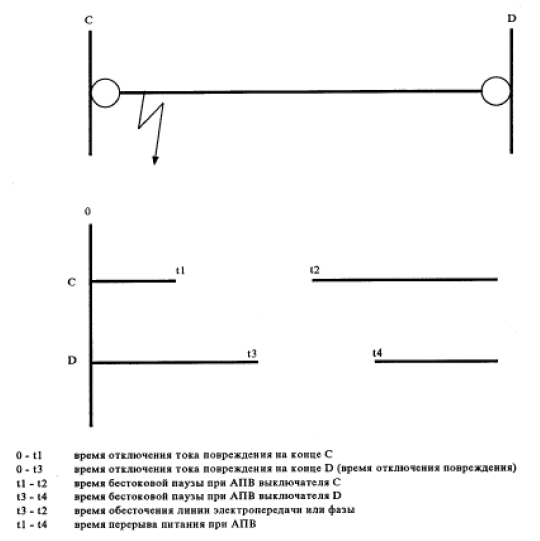
[Разработка типовых структурных схем микропроцессорных устройств РЗА на объектах ОАО "ФКС ЕЭС". Пояснительная записка. Новосибирск 2006 г.]EN
fault current interruption time
interruption time (US)
the time interval from fault inception until the end of the break-time of the circuit-breaker
Note – The fault current interruption time is composed of the protection operating time and the circuit-breaker break-time.
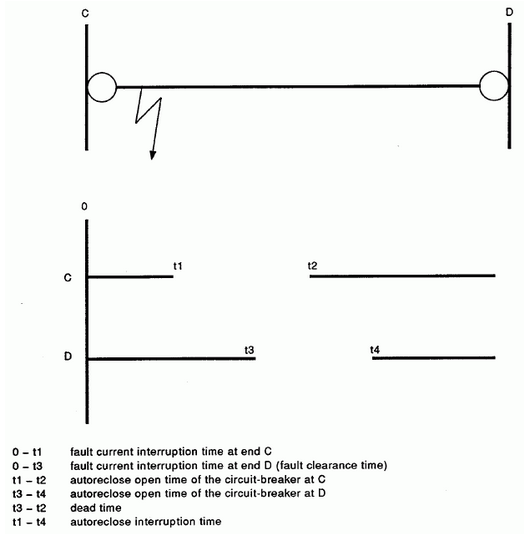
[IEV ref 448-13-14]FR
durée avant interruption d'un courant de défaut
intervalle de temps entre le début du défaut et la fin de la durée de coupure du disjoncteur
Note – La durée avant interruption d'un courant de défaut est constituée de la durée de fonctionnement de la protection et de la durée de coupure du disjoncteur.
[IEV ref 448-13-14]Тематики
EN
DE
- Kurzschlussstrom-Ausschaltdauer, m
FR
Немецко-русский словарь нормативно-технической терминологии > Kurzschlussstrom-Ausschaltdauer, m
-
28 notieren
I v/t2. WIRTS. (Kurse, Preise) quote (zu at)3. SPORT book4. MUS. notateII v/i WIRTS. be quoted ( mit at); ... notierte um vier Punkte weniger... was four points down; ... notierten schwächer... were down* * *to make a note; to quote; to take down; to note down; to note* * *no|tie|ren [no'tiːrən] ptp notiert1. vtiich notiere ( mir) den Namen — I'll make a note of the name
Frau Becker, bitte notíéren Sie! — please take a note/a letter etc, Ms Becker
was möchten Sie bestellen? ich notiere — what would you like to order? I'll make a note of it or I'll take it down
2) (= vormerken) Auftrag to note, to bookzu welchem Termin waren Sie notiert? — what time was your appointment?
2. vi(ST EX = wert sein) to be quoted ( auf +acc at)an der Börse notiert sein — to be quoted or listed on the stock market
* * *((often with down) to write down: He noted (down) her telephone number in his diary.) note* * *no·tie·ren *[noˈti:rən]I. vt1. (aufschreiben)▪ etw \notieren to place sth in advancedarf ich also Ihre Bestellung für März \notieren? so, can I place an advance order for March for you?nicht notierte Tochtergesellschaft unquoted subsidiarynotierte Währung quoted exchangeII. vi1. (schreiben) to write downeinen Moment, ich hole mir einen Schreiber, so, jetzt kann ich \notieren just a minute, I'll get a pen — right, now I can write it downdie Aktie notiert mit 70 Euro the share is quoted at 70 euros* * *1.transitives Verb1)[sich (Dat.)] etwas notieren — note something down; make a note of something
2) (Börsenw., Wirtsch.) quote ( mit at)2.die meisten Rohstoffe notieren unverändert — most commodity prices are unchanged
* * *A. v/tzu at)3. SPORT book4. MUS notateB. v/i WIRTSCH be quoted (mit at);… notierte um vier Punkte weniger … was four points down;… notierten schwächer … were down* * *1.transitives Verb1)[sich (Dat.)] etwas notieren — note something down; make a note of something
2) (Börsenw., Wirtsch.) quote ( mit at)2.* * *v.to minute v.to note v.to note down v.to notice v. -
29 Betätigungsglied
исполнительный элемент
Часть, которую тянут, на которую нажимают, которую поворачивают или перемещают иным образом, чтобы изменить положение контактов выключателя.
[< size="2"> ГОСТ Р 51324. 1-2005 ( МЭК 60669-1: 2000)]EN
actuating member
a part which is pulled, pushed, turned or otherwise moved to cause an operation of the switch
[IEV number 442-04-14]FR
organe de manoeuvre
partie qui est tirée, poussée, tournée ou manipulée de toute autre façon pour provoquer le fonctionnement de l'interrupteur
[IEV number 442-04-14]Тематики
- выключатель, переключатель
- изделие электроустановочное
EN
DE
FR
орган управления
Частьсистемыаппарата управления, к которой прилагается извне усилие управления.
МЭК 60050(441-15-22).
Примечание. Орган управления может иметь форму рукоятки, ручки, нажимной кнопки, ролика, плунжера и т. п.
[ ГОСТ Р 50030. 1-2000 ( МЭК 60947-1-99)]
орган управления
Часть приводного механизма, к которой прикладывается внешняя сила воздействия.
Примечание - Орган управления может иметь форму ручки, кнопки, ролика, поршня и т.д.
[ ГОСТ Р 52726-2007]
орган управления
Часть системы привода, подвергаемая внешнему силовому воздействию.
Примечания
1. Орган управления может иметь форму ручки, рукоятки, нажимной кнопки, ролика, плунжера и т.д.
2. Есть несколько способов приведения в действие, которые не требуют внешнего силового воздействия, а только какого-либо действия.
[ГОСТ ЕН 1070-2003]
орган управления
Часть системы управления, которая предназначена непосредственно для воздействия оператором, например путем нажатия.
[ГОСТ Р ЕН 614-1-2003]
орган управления
Часть системы приведения в действие, которая принимает воздействие человека.
[ ГОСТ Р МЭК 60447-2000]
орган управления
Часть системы приведения в действие, которая воспринимает воздействие человека (ГОСТ Р МЭК 60447).
Примечание
В настоящем стандарте орган управления в виде интерактивного экранного устройства отображения является частью этого устройства, которое представляет функцию органа управления.
[ ГОСТ Р МЭК 60073-2000]
орган управления
Часть механизма прибора управления, на который оказывается вручную внешнее силовое воздействие.
Примечание.
Орган управления может иметь форму ручки, рукоятки, кнопки, ролика, плунжера и т.д.
Некоторые органы управления не требуют воздействия внешней силы, а только какого-либо действия.
[ ГОСТ Р МЭК 60204-1-2007]
органы управления
Ручки, переключатели, потенциометры и другие органы, служащие для включения и регулировки аппаратуры. Термин относится преимущественно к аналоговым приборам.
[Система неразрушающего контроля. Виды (методы) и технология неразрушающего контроля. Термины и определения (справочное пособие). Москва 2003 г.]
орган управления
-
[IEV number 442-04-14]
средства оперирования
-
[Интент]EN
actuator
the part of the actuating system to which an external actuating force is applied
NOTE – The actuator may take the form of a handle, knob, push-button, roller, plunger, etc.
[IEV number 441-15-22]
actuator
part of a device to which an external manual action is to be applied
NOTE 1 The actuator may take the form of a handle, knob, push-button, roller, plunger, etc.
NOTE 2 There are some actuating means that do not require an external actuating force, but only an action.
NOTE 3 See also 3.34.
[IEC 60204-1 -2005]
actuating member
a part which is pulled, pushed, turned or otherwise moved to cause an operation of the switch
[IEV number 442-04-14]FR
organe de commande
partie du mécanisme transmetteur à laquelle un effort extérieur de manoeuvre est appliqué
NOTE – L'organe de commande peut prendre la forme d'une poignée, d'un bouton, d'un bouton-poussoir, d'une roulette, d'un plongeur, etc.
[IEV number 441-15-22]
organe de manoeuvre
partie qui est tirée, poussée, tournée ou manipulée de toute autre façon pour provoquer le fonctionnement de l'interrupteur
[IEV number 442-04-14]
Аппарат должен оставаться механически действующим. Не допускается сваривание контактов, препятствующее операции размыкания при использовании нормальных средств оперирования.
[ГОСТ Р 50030.3-99 (МЭК 60947-3-99) ]
ВДТ следует оперировать как при нормальной эксплуатации. Операции размыкания должны проводиться в следующем порядке:
для первых 1000 циклов — с использованием ручных средств оперирования;...
[ ГОСТ Р 51326. 1-99 ( МЭК 61008-1-96)]Параллельные тексты EN-RU
The operating means (for example, a handle) of the supply disconnecting device shall be easily accessible and located between 0,6 m and 1,9 m above the servicing level.
[IEC 60204-1-2006]Органы управления, например, рукоятки аппаратов отключения питания, должны быть легко доступны и располагаться на высоте от 0,6 до 1,9 м от рабочей площадки.
[Перевод Интент]Where the external operating means is not intended for emergency operations, it is recommended that it be coloured BLACK or GREY.
[IEC 60204-1-2006]Если внешние средства оперирования не предназначены для выполнения действий при возникновении аварийных ситуаций, то рекомендуется, применять такие средства ЧЕРНОГО или СЕРОГО цвета.
[Перевод Интент]1.2.2. Control devices
Control devices must be:
— clearly visible and identifiable and appropriately marked where necessary,
— positioned for safe operation without hesitation or loss of time, and without ambiguity,
— designed so that the movement of the control is consistent with its effect,
— located outside the danger zones, except for certain controls where necessary, such as emergency stop, console for training of robots,
— positioned so that their operation cannot cause additional risk,
— designed or protected so that the desired effect, where a risk is involved, cannot occur without an intentional operation,
— made so as to withstand foreseeable strain; particular attention must be paid to emergency stop devices liable to be subjected to considerable strain.1.2.2. Органы управления
Органы управления должны быть:
- четко видны, хорошо различимы и, где это необходимо, иметь соответствующее обозначение;
- расположены так, чтобы ими можно было пользоваться без возникновения сомнений и потерь времени на выяснение их назначения;
- сконструированы так, чтобы перемещение органа управления согласовывалось с их воздействием;
- расположены вне опасных зон; исключение, где это необходимо, делается для определенных средств управления, таких, как средство экстренной остановки, пульт управления роботом;
- расположены так, чтобы их использование не вызывало дополнительных рисков;
- сконструированы или защищены так, чтобы в случаях, где возможно возникновение рисков, они не могли бы возникнуть без выполнения намеренных действий;
- сделаны так, чтобы выдерживать предполагаемую нагрузку; при этом особое внимание уделяется органам аварийного останова, которые могут подвергаться значительным нагрузкам.Where a control is designed and constructed to perform several different actions, namely where there is no one-to-one correspondence (e.g. keyboards, etc.), the action to be performed must be clearly displayed and subject to confirmation where necessary.
Если орган управления предназначен для выполнения разных действий, например, если в качестве органа управления используется клавиатура или аналогичное устройство, то должна выводиться четкая информация о предстоящем действии, и, если необходимо, должно выполняться подтверждение на выполнение такого действия.
Controls must be so arranged that their layout, travel and resistance to operation are compatible with the action to be performed, taking account of ergonomic principles.
Органы управления должны быть организованы таким образом, чтобы их расположение, перемещение их элементов и усилие, которое оператор затрачивает на их перемещение, соответствовали выполняемым операциям и принципам эргономики.
Constraints due to the necessary or foreseeable use of personal protection equipment (such as footwear, gloves, etc.) must be taken into account.
Необходимо учитывать скованность движений операторов при использовании необходимых или предусмотренных средств индивидуальной защиты (таких, как специальная обувь, перчатки и др.).
Machinery must be fitted with indicators (dials, signals, etc.) as required for safe operation. The operator must be able to read them from the control position.
Для обеспечения безопасной эксплуатации машинное оборудование должно быть оснащено индикаторами (циферблатами, устройствами сигнализации и т. д.). Оператор должен иметь возможность считывать их с места управления.
From the main control position the operator must be able to ensure that there are no exposed persons in the danger zones.
Находясь в главном пункте управления, оператор должен иметь возможность контролировать отсутствие незащищенных лиц.
If this is impossible, the control system must be designed and constructed so that an acoustic and/ or visual warning signal is given whenever the machinery is about to start.
Если это невозможно, то система управления должна быть разработана и изготовлена так, чтобы перед каждым пуском машинного оборудования подавался звуковой и/или световой предупредительный сигнал.
The exposed person must have the time and the means to take rapid action to prevent the machinery starting up.
[DIRECTIVE 98/37/EC OF THE EUROPEAN PARLIAMENT AND OF THE COUNCIL]
Незащищенное лицо должно иметь достаточно времени и средств для быстрого предотвращения пуска машинного оборудования.
[Перевод Интент]
Тематики
- автоматизация, основные понятия
- аппарат, изделие, устройство...
- безопасность машин и труда в целом
- выключатель автоматический
- выключатель, переключатель
- высоковольтный аппарат, оборудование...
- электробезопасность
- электротехника, основные понятия
Синонимы
EN
- actuating member
- actuator
- command unit
- control
- control device
- controller
- controls
- operating control
- operating means
DE
FR
Немецко-русский словарь нормативно-технической терминологии > Betätigungsglied
-
30 Betätigungsorgan
исполнительный элемент
Часть, которую тянут, на которую нажимают, которую поворачивают или перемещают иным образом, чтобы изменить положение контактов выключателя.
[< size="2"> ГОСТ Р 51324. 1-2005 ( МЭК 60669-1: 2000)]EN
actuating member
a part which is pulled, pushed, turned or otherwise moved to cause an operation of the switch
[IEV number 442-04-14]FR
organe de manoeuvre
partie qui est tirée, poussée, tournée ou manipulée de toute autre façon pour provoquer le fonctionnement de l'interrupteur
[IEV number 442-04-14]Тематики
- выключатель, переключатель
- изделие электроустановочное
EN
DE
FR
орган управления
Частьсистемыаппарата управления, к которой прилагается извне усилие управления.
МЭК 60050(441-15-22).
Примечание. Орган управления может иметь форму рукоятки, ручки, нажимной кнопки, ролика, плунжера и т. п.
[ ГОСТ Р 50030. 1-2000 ( МЭК 60947-1-99)]
орган управления
Часть приводного механизма, к которой прикладывается внешняя сила воздействия.
Примечание - Орган управления может иметь форму ручки, кнопки, ролика, поршня и т.д.
[ ГОСТ Р 52726-2007]
орган управления
Часть системы привода, подвергаемая внешнему силовому воздействию.
Примечания
1. Орган управления может иметь форму ручки, рукоятки, нажимной кнопки, ролика, плунжера и т.д.
2. Есть несколько способов приведения в действие, которые не требуют внешнего силового воздействия, а только какого-либо действия.
[ГОСТ ЕН 1070-2003]
орган управления
Часть системы управления, которая предназначена непосредственно для воздействия оператором, например путем нажатия.
[ГОСТ Р ЕН 614-1-2003]
орган управления
Часть системы приведения в действие, которая принимает воздействие человека.
[ ГОСТ Р МЭК 60447-2000]
орган управления
Часть системы приведения в действие, которая воспринимает воздействие человека (ГОСТ Р МЭК 60447).
Примечание
В настоящем стандарте орган управления в виде интерактивного экранного устройства отображения является частью этого устройства, которое представляет функцию органа управления.
[ ГОСТ Р МЭК 60073-2000]
орган управления
Часть механизма прибора управления, на который оказывается вручную внешнее силовое воздействие.
Примечание.
Орган управления может иметь форму ручки, рукоятки, кнопки, ролика, плунжера и т.д.
Некоторые органы управления не требуют воздействия внешней силы, а только какого-либо действия.
[ ГОСТ Р МЭК 60204-1-2007]
органы управления
Ручки, переключатели, потенциометры и другие органы, служащие для включения и регулировки аппаратуры. Термин относится преимущественно к аналоговым приборам.
[Система неразрушающего контроля. Виды (методы) и технология неразрушающего контроля. Термины и определения (справочное пособие). Москва 2003 г.]
орган управления
-
[IEV number 442-04-14]
средства оперирования
-
[Интент]EN
actuator
the part of the actuating system to which an external actuating force is applied
NOTE – The actuator may take the form of a handle, knob, push-button, roller, plunger, etc.
[IEV number 441-15-22]
actuator
part of a device to which an external manual action is to be applied
NOTE 1 The actuator may take the form of a handle, knob, push-button, roller, plunger, etc.
NOTE 2 There are some actuating means that do not require an external actuating force, but only an action.
NOTE 3 See also 3.34.
[IEC 60204-1 -2005]
actuating member
a part which is pulled, pushed, turned or otherwise moved to cause an operation of the switch
[IEV number 442-04-14]FR
organe de commande
partie du mécanisme transmetteur à laquelle un effort extérieur de manoeuvre est appliqué
NOTE – L'organe de commande peut prendre la forme d'une poignée, d'un bouton, d'un bouton-poussoir, d'une roulette, d'un plongeur, etc.
[IEV number 441-15-22]
organe de manoeuvre
partie qui est tirée, poussée, tournée ou manipulée de toute autre façon pour provoquer le fonctionnement de l'interrupteur
[IEV number 442-04-14]
Аппарат должен оставаться механически действующим. Не допускается сваривание контактов, препятствующее операции размыкания при использовании нормальных средств оперирования.
[ГОСТ Р 50030.3-99 (МЭК 60947-3-99) ]
ВДТ следует оперировать как при нормальной эксплуатации. Операции размыкания должны проводиться в следующем порядке:
для первых 1000 циклов — с использованием ручных средств оперирования;...
[ ГОСТ Р 51326. 1-99 ( МЭК 61008-1-96)]Параллельные тексты EN-RU
The operating means (for example, a handle) of the supply disconnecting device shall be easily accessible and located between 0,6 m and 1,9 m above the servicing level.
[IEC 60204-1-2006]Органы управления, например, рукоятки аппаратов отключения питания, должны быть легко доступны и располагаться на высоте от 0,6 до 1,9 м от рабочей площадки.
[Перевод Интент]Where the external operating means is not intended for emergency operations, it is recommended that it be coloured BLACK or GREY.
[IEC 60204-1-2006]Если внешние средства оперирования не предназначены для выполнения действий при возникновении аварийных ситуаций, то рекомендуется, применять такие средства ЧЕРНОГО или СЕРОГО цвета.
[Перевод Интент]1.2.2. Control devices
Control devices must be:
— clearly visible and identifiable and appropriately marked where necessary,
— positioned for safe operation without hesitation or loss of time, and without ambiguity,
— designed so that the movement of the control is consistent with its effect,
— located outside the danger zones, except for certain controls where necessary, such as emergency stop, console for training of robots,
— positioned so that their operation cannot cause additional risk,
— designed or protected so that the desired effect, where a risk is involved, cannot occur without an intentional operation,
— made so as to withstand foreseeable strain; particular attention must be paid to emergency stop devices liable to be subjected to considerable strain.1.2.2. Органы управления
Органы управления должны быть:
- четко видны, хорошо различимы и, где это необходимо, иметь соответствующее обозначение;
- расположены так, чтобы ими можно было пользоваться без возникновения сомнений и потерь времени на выяснение их назначения;
- сконструированы так, чтобы перемещение органа управления согласовывалось с их воздействием;
- расположены вне опасных зон; исключение, где это необходимо, делается для определенных средств управления, таких, как средство экстренной остановки, пульт управления роботом;
- расположены так, чтобы их использование не вызывало дополнительных рисков;
- сконструированы или защищены так, чтобы в случаях, где возможно возникновение рисков, они не могли бы возникнуть без выполнения намеренных действий;
- сделаны так, чтобы выдерживать предполагаемую нагрузку; при этом особое внимание уделяется органам аварийного останова, которые могут подвергаться значительным нагрузкам.Where a control is designed and constructed to perform several different actions, namely where there is no one-to-one correspondence (e.g. keyboards, etc.), the action to be performed must be clearly displayed and subject to confirmation where necessary.
Если орган управления предназначен для выполнения разных действий, например, если в качестве органа управления используется клавиатура или аналогичное устройство, то должна выводиться четкая информация о предстоящем действии, и, если необходимо, должно выполняться подтверждение на выполнение такого действия.
Controls must be so arranged that their layout, travel and resistance to operation are compatible with the action to be performed, taking account of ergonomic principles.
Органы управления должны быть организованы таким образом, чтобы их расположение, перемещение их элементов и усилие, которое оператор затрачивает на их перемещение, соответствовали выполняемым операциям и принципам эргономики.
Constraints due to the necessary or foreseeable use of personal protection equipment (such as footwear, gloves, etc.) must be taken into account.
Необходимо учитывать скованность движений операторов при использовании необходимых или предусмотренных средств индивидуальной защиты (таких, как специальная обувь, перчатки и др.).
Machinery must be fitted with indicators (dials, signals, etc.) as required for safe operation. The operator must be able to read them from the control position.
Для обеспечения безопасной эксплуатации машинное оборудование должно быть оснащено индикаторами (циферблатами, устройствами сигнализации и т. д.). Оператор должен иметь возможность считывать их с места управления.
From the main control position the operator must be able to ensure that there are no exposed persons in the danger zones.
Находясь в главном пункте управления, оператор должен иметь возможность контролировать отсутствие незащищенных лиц.
If this is impossible, the control system must be designed and constructed so that an acoustic and/ or visual warning signal is given whenever the machinery is about to start.
Если это невозможно, то система управления должна быть разработана и изготовлена так, чтобы перед каждым пуском машинного оборудования подавался звуковой и/или световой предупредительный сигнал.
The exposed person must have the time and the means to take rapid action to prevent the machinery starting up.
[DIRECTIVE 98/37/EC OF THE EUROPEAN PARLIAMENT AND OF THE COUNCIL]
Незащищенное лицо должно иметь достаточно времени и средств для быстрого предотвращения пуска машинного оборудования.
[Перевод Интент]
Тематики
- автоматизация, основные понятия
- аппарат, изделие, устройство...
- безопасность машин и труда в целом
- выключатель автоматический
- выключатель, переключатель
- высоковольтный аппарат, оборудование...
- электробезопасность
- электротехника, основные понятия
Синонимы
EN
- actuating member
- actuator
- command unit
- control
- control device
- controller
- controls
- operating control
- operating means
DE
FR
Немецко-русский словарь нормативно-технической терминологии > Betätigungsorgan
-
31 Bedienteil
орган управления
Частьсистемыаппарата управления, к которой прилагается извне усилие управления.
МЭК 60050(441-15-22).
Примечание. Орган управления может иметь форму рукоятки, ручки, нажимной кнопки, ролика, плунжера и т. п.
[ ГОСТ Р 50030. 1-2000 ( МЭК 60947-1-99)]
орган управления
Часть приводного механизма, к которой прикладывается внешняя сила воздействия.
Примечание - Орган управления может иметь форму ручки, кнопки, ролика, поршня и т.д.
[ ГОСТ Р 52726-2007]
орган управления
Часть системы привода, подвергаемая внешнему силовому воздействию.
Примечания
1. Орган управления может иметь форму ручки, рукоятки, нажимной кнопки, ролика, плунжера и т.д.
2. Есть несколько способов приведения в действие, которые не требуют внешнего силового воздействия, а только какого-либо действия.
[ГОСТ ЕН 1070-2003]
орган управления
Часть системы управления, которая предназначена непосредственно для воздействия оператором, например путем нажатия.
[ГОСТ Р ЕН 614-1-2003]
орган управления
Часть системы приведения в действие, которая принимает воздействие человека.
[ ГОСТ Р МЭК 60447-2000]
орган управления
Часть системы приведения в действие, которая воспринимает воздействие человека (ГОСТ Р МЭК 60447).
Примечание
В настоящем стандарте орган управления в виде интерактивного экранного устройства отображения является частью этого устройства, которое представляет функцию органа управления.
[ ГОСТ Р МЭК 60073-2000]
орган управления
Часть механизма прибора управления, на который оказывается вручную внешнее силовое воздействие.
Примечание.
Орган управления может иметь форму ручки, рукоятки, кнопки, ролика, плунжера и т.д.
Некоторые органы управления не требуют воздействия внешней силы, а только какого-либо действия.
[ ГОСТ Р МЭК 60204-1-2007]
органы управления
Ручки, переключатели, потенциометры и другие органы, служащие для включения и регулировки аппаратуры. Термин относится преимущественно к аналоговым приборам.
[Система неразрушающего контроля. Виды (методы) и технология неразрушающего контроля. Термины и определения (справочное пособие). Москва 2003 г.]
орган управления
-
[IEV number 442-04-14]
средства оперирования
-
[Интент]EN
actuator
the part of the actuating system to which an external actuating force is applied
NOTE – The actuator may take the form of a handle, knob, push-button, roller, plunger, etc.
[IEV number 441-15-22]
actuator
part of a device to which an external manual action is to be applied
NOTE 1 The actuator may take the form of a handle, knob, push-button, roller, plunger, etc.
NOTE 2 There are some actuating means that do not require an external actuating force, but only an action.
NOTE 3 See also 3.34.
[IEC 60204-1 -2005]
actuating member
a part which is pulled, pushed, turned or otherwise moved to cause an operation of the switch
[IEV number 442-04-14]FR
organe de commande
partie du mécanisme transmetteur à laquelle un effort extérieur de manoeuvre est appliqué
NOTE – L'organe de commande peut prendre la forme d'une poignée, d'un bouton, d'un bouton-poussoir, d'une roulette, d'un plongeur, etc.
[IEV number 441-15-22]
organe de manoeuvre
partie qui est tirée, poussée, tournée ou manipulée de toute autre façon pour provoquer le fonctionnement de l'interrupteur
[IEV number 442-04-14]
Аппарат должен оставаться механически действующим. Не допускается сваривание контактов, препятствующее операции размыкания при использовании нормальных средств оперирования.
[ГОСТ Р 50030.3-99 (МЭК 60947-3-99) ]
ВДТ следует оперировать как при нормальной эксплуатации. Операции размыкания должны проводиться в следующем порядке:
для первых 1000 циклов — с использованием ручных средств оперирования;...
[ ГОСТ Р 51326. 1-99 ( МЭК 61008-1-96)]Параллельные тексты EN-RU
The operating means (for example, a handle) of the supply disconnecting device shall be easily accessible and located between 0,6 m and 1,9 m above the servicing level.
[IEC 60204-1-2006]Органы управления, например, рукоятки аппаратов отключения питания, должны быть легко доступны и располагаться на высоте от 0,6 до 1,9 м от рабочей площадки.
[Перевод Интент]Where the external operating means is not intended for emergency operations, it is recommended that it be coloured BLACK or GREY.
[IEC 60204-1-2006]Если внешние средства оперирования не предназначены для выполнения действий при возникновении аварийных ситуаций, то рекомендуется, применять такие средства ЧЕРНОГО или СЕРОГО цвета.
[Перевод Интент]1.2.2. Control devices
Control devices must be:
— clearly visible and identifiable and appropriately marked where necessary,
— positioned for safe operation without hesitation or loss of time, and without ambiguity,
— designed so that the movement of the control is consistent with its effect,
— located outside the danger zones, except for certain controls where necessary, such as emergency stop, console for training of robots,
— positioned so that their operation cannot cause additional risk,
— designed or protected so that the desired effect, where a risk is involved, cannot occur without an intentional operation,
— made so as to withstand foreseeable strain; particular attention must be paid to emergency stop devices liable to be subjected to considerable strain.1.2.2. Органы управления
Органы управления должны быть:
- четко видны, хорошо различимы и, где это необходимо, иметь соответствующее обозначение;
- расположены так, чтобы ими можно было пользоваться без возникновения сомнений и потерь времени на выяснение их назначения;
- сконструированы так, чтобы перемещение органа управления согласовывалось с их воздействием;
- расположены вне опасных зон; исключение, где это необходимо, делается для определенных средств управления, таких, как средство экстренной остановки, пульт управления роботом;
- расположены так, чтобы их использование не вызывало дополнительных рисков;
- сконструированы или защищены так, чтобы в случаях, где возможно возникновение рисков, они не могли бы возникнуть без выполнения намеренных действий;
- сделаны так, чтобы выдерживать предполагаемую нагрузку; при этом особое внимание уделяется органам аварийного останова, которые могут подвергаться значительным нагрузкам.Where a control is designed and constructed to perform several different actions, namely where there is no one-to-one correspondence (e.g. keyboards, etc.), the action to be performed must be clearly displayed and subject to confirmation where necessary.
Если орган управления предназначен для выполнения разных действий, например, если в качестве органа управления используется клавиатура или аналогичное устройство, то должна выводиться четкая информация о предстоящем действии, и, если необходимо, должно выполняться подтверждение на выполнение такого действия.
Controls must be so arranged that their layout, travel and resistance to operation are compatible with the action to be performed, taking account of ergonomic principles.
Органы управления должны быть организованы таким образом, чтобы их расположение, перемещение их элементов и усилие, которое оператор затрачивает на их перемещение, соответствовали выполняемым операциям и принципам эргономики.
Constraints due to the necessary or foreseeable use of personal protection equipment (such as footwear, gloves, etc.) must be taken into account.
Необходимо учитывать скованность движений операторов при использовании необходимых или предусмотренных средств индивидуальной защиты (таких, как специальная обувь, перчатки и др.).
Machinery must be fitted with indicators (dials, signals, etc.) as required for safe operation. The operator must be able to read them from the control position.
Для обеспечения безопасной эксплуатации машинное оборудование должно быть оснащено индикаторами (циферблатами, устройствами сигнализации и т. д.). Оператор должен иметь возможность считывать их с места управления.
From the main control position the operator must be able to ensure that there are no exposed persons in the danger zones.
Находясь в главном пункте управления, оператор должен иметь возможность контролировать отсутствие незащищенных лиц.
If this is impossible, the control system must be designed and constructed so that an acoustic and/ or visual warning signal is given whenever the machinery is about to start.
Если это невозможно, то система управления должна быть разработана и изготовлена так, чтобы перед каждым пуском машинного оборудования подавался звуковой и/или световой предупредительный сигнал.
The exposed person must have the time and the means to take rapid action to prevent the machinery starting up.
[DIRECTIVE 98/37/EC OF THE EUROPEAN PARLIAMENT AND OF THE COUNCIL]
Незащищенное лицо должно иметь достаточно времени и средств для быстрого предотвращения пуска машинного оборудования.
[Перевод Интент]
Тематики
- автоматизация, основные понятия
- аппарат, изделие, устройство...
- безопасность машин и труда в целом
- выключатель автоматический
- выключатель, переключатель
- высоковольтный аппарат, оборудование...
- электробезопасность
- электротехника, основные понятия
Синонимы
EN
- actuating member
- actuator
- command unit
- control
- control device
- controller
- controls
- operating control
- operating means
DE
FR
Немецко-русский словарь нормативно-технической терминологии > Bedienteil
-
32 Fehlerklärungsdauer, f
время отключения повреждения
Интервал времени между началом повреждения и его устранением.
Примечание - Это время есть максимальное время отключения тока повреждения соответствующим выключателем (выключателями), необходимое для прекращения протекания тока повреждения через поврежденный элемент энергосистемы
[Разработка типовых структурных схем микропроцессорных устройств РЗА на объектах ОАО "ФКС ЕЭС". Пояснительная записка. Новосибирск 2006 г.]EN
fault clearance time
clearing time (US)
the time interval between the fault inception and the fault clearance
Note – This time is the longest fault current interruption time of the associated circuit-breaker(s) for elimination of fault current on the faulty item of plant.
[IEV ref 448-13-15]FR
durée d'élimination d'un défaut
temps d'élimination d'un défaut (déconseillé)
intervalle de temps entre l'apparition d'un défaut et son élimination
Note – Cette durée est la plus longue durée avant interruption du courant de défaut par le ou les disjoncteurs concernés par l'élimination du courant de défaut dans l'ouvrage en défaut.
[IEV ref 448-13-15]Тематики
EN
DE
- Fehlerklärungsdauer, f
FR
Немецко-русский словарь нормативно-технической терминологии > Fehlerklärungsdauer, f
-
33 sehr
Adv.1. vor Adj. und Adv.: very; (höchst) most, extremely; sehr gut (Note) etwa A; sehr viel vor Adj. und Adv.: very much, a great deal; vor Subst.: a great deal of; wir haben nicht sehr viel Zeit we don’t have very much time; sehr gern with great pleasure; etw. sehr gern tun like doing s.th. very much; ich würde sehr gern mitkommen, aber... I’d really like to come ( oder love to come), but...; noch eine Tasse Kaffee? - ja, sehr gern another cup of coffee? - yes please(, I’d love one); ich bin sehr dafür / dagegen I am very much in favo(u)r (of it) / against it; wohl2 22. mit Verb: very much; sehr vermissen auch miss badly ( oder a lot); so sehr, dass... so much that...; wie sehr auch however much, much as; ich freue mich sehr I’m very glad ( oder pleased); sich sehr anstrengen make a great effort; schneit / regnet es sehr? is it snowing / raining heavily?; tut es weh? - nicht sehr does it hurt? - not too much ( oder too badly); es war nicht so sehr der Schmerz, sondern der Schreck it wasn’t so much the pain as the fear; danke sehr! thanks very much!, many thanks!; bitte sehr! you’re very welcome* * *like hell; jolly; much; very much; very* * *[seːɐ]adv comp (noch) mehr[meːɐ] superl am meisten ['maistn]1) (mit adj, adv) veryséhr verbunden! (dated form) — much obliged
er ist séhr dafür — he is very much in favour (Brit) or favor (US) of it, he is all for it
er ist séhr dagegen — he is very much against it
hat er séhr viel getrunken? — did he drink very much?
er hat séhr viel getrunken — he drank a lot
séhr zu meiner Überraschung — very much to my surprise
es geht ihm séhr viel besser — he is very much better
wir haben séhr viel Zeit/Geld — we have plenty of time/money, we have a lot of time/money, we have lots of time/money
wir haben nicht séhr viel Zeit/Geld — we don't have very much time/money
2) (mit vb) very much, a lotso séhr — so much
jdn so séhr schlagen/zusammenschlagen, dass... — to hit sb so hard that/to beat sb up so much or so badly that...
so séhr ärgern/freuen, dass... — to be so (very) annoyed/pleased about sth that...
séhr verwurzelt sein — to be very deeply rooted
wie séhr — how much
wie séhr er sich auch... — however much he...
sich séhr vorsehen — to be very careful, to be very much on the lookout
etw séhr überlegen — to consider sth very carefully
sich séhr anstrengen — to try very hard
es lohnt sich séhr — it's very or well worthwhile
séhr weinen — to cry a lot or a great deal
hat sie séhr geweint? — did she cry very much or a lot?
es regnet séhr — it's raining hard or heavily
regnet es séhr? — is it raining very much?, is it raining a lot?
freust du dich? – ja, séhr! — are you pleased? – yes, very
freust du dich darauf? – ja, séhr — are you looking forward to it? – yes, very much
tut es weh? – ja, séhr/nein, nicht séhr — does it hurt? – yes, a lot/no, not very much or not a lot
séhr sogar! — yes, very much so (in fact)
zu séhr — too much
man sollte sich nicht zu séhr ärgern — one shouldn't get too annoyed
* * *1) badly2) (to the full extent; completely: The car turned hard right.) hard3) (very: Taste this - it's jolly good!) jolly4) (to a great extent or degree: He will be much missed; We don't see her much ; I thanked her very much; much too late; I've much too much to do; The accident was as much my fault as his. Much to my dismay, she began to cry.) much5) (very: I'll be only too pleased to come.) only too6) (to a great degree: He's very clever; You came very quickly; I'm not feeling very well.) very* * *<[noch] mehr, am meisten>[ˈze:ɐ̯]danke \sehr! thanks a lotbitte \sehr, bedienen Sie sich go ahead and help yourselfdas will ich doch \sehr hoffen I very much hope sodas freut/ärgert mich [aber] \sehr I'm very pleased/annoyed about thatjdm \sehr dankbar sein to be very grateful to sb* * *1) mit Adj. u. Adv. veryich bin sehr dafür/dagegen — I'm very much in favour/against
jemanden sehr gern haben — like somebody a lot (coll.) or a great deal
2) mit Verben very much; greatlyer hat sehr geweint — he cried a great deal or (coll.) a lot
danke sehr! — thank you or thanks [very much]
bitte sehr, Ihr Schnitzel! — here's your steak, sir/madam
ja, sehr! — yes, very much!
nein, nicht sehr! — no, not much!
* * *sehr advwir haben nicht sehr viel Zeit we don’t have very much time;sehr gern with great pleasure;etwas sehr gern tun like doing sth very much;ich würde sehr gern mitkommen, aber … I’d really like to come ( oder love to come), but …;noch eine Tasse Kaffee? - ja, sehr gern another cup of coffee? - yes please(, I’d love one);2. mit Verb: very much;so sehr, dass … so much that …;wie sehr auch however much, much as;ich freue mich sehr I’m very glad ( oder pleased);sich sehr anstrengen make a great effort;schneit/regnet es sehr? is it snowing/raining heavily?;tut es weh? - nicht sehr does it hurt? - not too much ( oder too badly);es war nicht so sehr der Schmerz, sondern der Schreck it wasn’t so much the pain as the fear;danke sehr! thanks very much!, many thanks!;bitte sehr! you’re very welcome* * *1) mit Adj. u. Adv. veryich bin sehr dafür/dagegen — I'm very much in favour/against
jemanden sehr gern haben — like somebody a lot (coll.) or a great deal
2) mit Verben very much; greatlyer hat sehr geweint — he cried a great deal or (coll.) a lot
danke sehr! — thank you or thanks [very much]
bitte sehr, Ihr Schnitzel! — here's your steak, sir/madam
ja, sehr! — yes, very much!
nein, nicht sehr! — no, not much!
* * *adj.right adj.very adj. adv.much n. -
34 Ansprechzeit
время замыкания магнитоуправляемого контакта
Значение интервала времени от начала воздействия управляющего магнитного поля до первого замыкания магнитоуправляемого контакта при его срабатывании
[ ГОСТ 17499-82]EN
-
FR
-
Тематики
Обобщающие термины
Синонимы
EN
DE
FR
время срабатывания электрического реле
Время от момента, когда входная воздействующая или характеристическая величина электрического реле, находящегося в начальном или исходном состоянии, принимает в заданных условиях определенное значение до момента, когда реле завершает срабатывание
[ ГОСТ 16022-83]EN
operate time
for a relay which is in the release condition (initial condition) the time interval between the instant a specified value of the input energizing quantity (characteristic quantity) is applied under specified condition and the instant when the relay switches
NOTE – This term is used only when the relay has output circuits of the same type and no precision is required according to contact time difference.
[IEV number 446-17-09]FR
temps de fonctionnement
temps d'action (terme déconseillé, utilisé pour les relais de tout ou rien)
pour un relais qui est dans l'état de repos ou dans un état initial, temps écoulé entre l'instant où la grandeur d'alimentation d'entrée ou la grandeur caractéristique prend, dans des conditions spécifiées, une valeur définie et l'instant où le relais commute
NOTE – Ce terme n'est utilisé que lorsque le relais ne comporte que des circuits de sortie de même nature et qu'aucune précision n'est nécessaire quant à la dispersion des temps de contact.
[IEV number 446-17-09]Тематики
EN
DE
FR
Немецко-русский словарь нормативно-технической терминологии > Ansprechzeit
-
35 Betätigungszeit
время срабатывания электрического реле
Время от момента, когда входная воздействующая или характеристическая величина электрического реле, находящегося в начальном или исходном состоянии, принимает в заданных условиях определенное значение до момента, когда реле завершает срабатывание
[ ГОСТ 16022-83]EN
operate time
for a relay which is in the release condition (initial condition) the time interval between the instant a specified value of the input energizing quantity (characteristic quantity) is applied under specified condition and the instant when the relay switches
NOTE – This term is used only when the relay has output circuits of the same type and no precision is required according to contact time difference.
[IEV number 446-17-09]FR
temps de fonctionnement
temps d'action (terme déconseillé, utilisé pour les relais de tout ou rien)
pour un relais qui est dans l'état de repos ou dans un état initial, temps écoulé entre l'instant où la grandeur d'alimentation d'entrée ou la grandeur caractéristique prend, dans des conditions spécifiées, une valeur définie et l'instant où le relais commute
NOTE – Ce terme n'est utilisé que lorsque le relais ne comporte que des circuits de sortie de même nature et qu'aucune précision n'est nécessaire quant à la dispersion des temps de contact.
[IEV number 446-17-09]Тематики
EN
DE
FR
122. Время срабатывания электрического реле
D. Betätigungszeit
E. Operate time
F. Temps de fonctionnement;
Temps d’action (pour relais de tout ou rien)
Время от момента, когда входная воздействующая или характеристическая величина электрического реле, находящегося в начальном или исходном состоянии, принимает в заданных условиях определенное значение до момента, когда реле завершает срабатывание
Источник: ГОСТ 16022-83: Реле электрические. Термины и определения оригинал документа
Немецко-русский словарь нормативно-технической терминологии > Betätigungszeit
-
36 Verzögerungszeit (eines Verzögerungsschalters)
выдержка времени (для выключателя с выдержкой времени)
-
[IEV number 442-04-32]EN
delay time (of a time-delay switch)
the period during which the switching circuit(s) is (are) kept closed
NOTE – Any time taken for the decreasing of the voltage (e.g. to reduce the light) at the end of the delay period is included within the delay time.
[IEV number 442-04-32]FR
temporisation (d'un interrupteur temporisé)
intervalle de temps pendant lequel le ou les circuits de l'interrupteur restent fermés
NOTE – L'intervalle au cours duquel la tension diminue (par exemple pour réduire la lumière) à la fin du temps de temporisation est compris dans la temporisation.
[IEV number 442-04-32]Тематики
- выключатель, переключатель
EN
DE
FR
Немецко-русский словарь нормативно-технической терминологии > Verzögerungszeit (eines Verzögerungsschalters)
-
37 klein
I Adj.1. small (auch kleingewachsen); bes. attr. und gefühlsbetont: little; (winzig) tiny; Finger, Zehe: little; Buchstabe: small; ein rundlicher kleiner Mann a chubby little man; sie ist von uns allen die Kleinste she is the smallest of us; als ich noch klein war when I was a little boy ( oder girl); er ist doch noch klein he’s only small ( oder a child); zu einem Kind: he’s much smaller than you, remember; von klein auf from an early age, since childhood, since I was etc. a child; kleine Augen haben (müde aussehen) look tired; da wurde er ganz klein fig. that cut him down to size; (er schwieg dann) that shut him up; könnt ihr euch klein machen? fig. can you make yourselves thin ( oder squeeze up a bit) ?2. (unbedeutend) small ( auch Stimme); Fehler, Vergehen etc.: little, minor; kleine Rolle small ( oder bit) part; kleiner Bauer / Geschäftsmann small farmer / businessman; seine kleinen Intrigen / Launen his little intrigues / moods; es ist ein kleiner Anfang it’s just a start; der kleine Mann the man in the street; kleine Leute ordinary people; aus kleinen Verhältnissen stammen come from a humble background; und er hat daran kein kleines Verdienst and it’s no small thanks to him4. Pause, Unterbrechung etc.: short, brief8. in Wendungen: umg.: es klein haben (Betrag) have the right change; klein, aber fein good things come in small packages; klein, aber oho! umg. a mighty midget, Person: auch a pocket dynamo; Geschäft 6, ÜbelII Adv.1. small; klein gedruckt in small print; siehe auch Kleingedruckte; klein gemustert with a small pattern, small-patterned; klein gehackt finely chopped; klein hacken chop (up) fine; klein machen (Holz) chop up; (Geldschein) change; klein schneiden (Holz, Fleisch etc.) cut up into small pieces; ( auf) klein drehen / stellen (Herd etc.) turn down, put on low; den Benzinverbrauch klein halten keep fuel consumption low, keep down fuel consumption2. fig.: klein anfangen start off small, start from small beginnings; klein beigeben give in; klein denken be small-minded; Höflichkeit etc. wird bei ihr klein geschrieben politeness etc. is not one of her priorities; klein machen Kinderspr. do number one* * *short; little; small; exiguous; slight; faint; petit; runty; wee; diminutive; tiny; petty* * *[klain]1. adj1) little, small; Finger little; Format, Gehalt, Rente, Zahl, (Hand)schrift, Buchstabe small; (MUS ) Terz minorder Kleine Bär or Wagen — the Little Bear, Ursa Minor
x ist kléíner als 10 (Math) — x is less than ten
haben Sie es nicht kléíner? — don't you have anything smaller?
ein kléín bisschen or wenig — a little (bit)
ein kléín bisschen or wenig Salat — a little (bit of) salad
kléínes Geld — small change
du kléíner Teufel! — you little devil!
ein süßes kléínes Püppchen — a sweet little thing
hallo, kléíner Mann! — hello, little man
ein schönes kléínes Auto — a nice little car
mit seiner kléínen Frau — with his little wife
ich wusste nicht, dass seine Frau so kléín ist — I didn't know his wife was so small or little
eine kléíne, hübsche Wohnung — a small, pretty flat (Brit) or apartment
eine hübsche kléíne Wohnung — a nice little flat (Brit) or apartment
mein kléíner Bruder — my little brother
er ist kléíner als sein Bruder — he's smaller than his brother
kléín für sein Alter — small or little for his age
macht euch ein bisschen kléíner! — squeeze up closer
kléín aber oho (inf) — small but impressive
ganz kléín (und hässlich) werden (inf) — to look humiliated or deflated
im Kleinen — in miniature
kléíne Kinder kléíne Sorgen, große Kinder große Sorgen (prov) —
um ein Kleines zu... (geh) — a little or a trifle too...
See:kléínen Augenblick, bitte! — just one moment, please
einen Kopf kléíner als jd sein — to be a head shorter than sb
3) (= geringfügig) little, small, slight; Betrag, Summe little, smallbeim kléínsten Schreck — at the slightest or smallest shock
das kléínere Übel — the lesser evil
ein paar kléínere Fehler — a few minor mistakes
eine kléínere Unpässlichkeit — a minor ailment
er ist ein kléíner Geist — he is small-minded
der kléíne Mann — the ordinary citizen, the man in the street
ein kléíner Ganove — a small-time or petty crook
die Kleinen fängt man or werden gehängt, die Großen lässt man laufen (prov) — it's always the big fish that get away
sein Vater war (ein) kléíner Beamter — his father was a minor civil servant
See:→ Fisch5) (= armselig) Verhältnisse humble, lowly, modest6) Prüfung intermediate2. adv1) (= in kleiner Schrift) smaller schreibt sehr kléín — he writes very small, his writing is very small
ein Wort kléín drucken — to print a word without a capital
kléín gedruckt — in small print
kléín gemustert — small-patterned
kléín kariert (Stoff) — finely checked or chequered (Brit) or checkered (US)
See:2)etw kléíner stellen or drehen — to turn sth down
3)kléín anfangen — to start off in a small waykléín beigeben (inf) — to give in
kléín geraten sein (Gegenstand) — to have come out a little (too) small; (Mensch) to be a bit small
kléín gewachsen — short, small; (Baum) small
* * *1) (small in size: He is only a little boy; when she was little (= a child).) little2) (not tall; smaller than usual: a short man.) short3) (little in size, degree, importance etc; not large or great: She was accompanied by a small boy of about six; There's only a small amount of sugar left; She cut the meat up small for the baby.) small4) (not doing something on a large scale: He's a small businessman.) small5) ((of the letters of the alphabet) not capital: The teacher showed the children how to write a capital G and a small g.) small* * *[klain]I. adjsie fährt ein \kleines Auto she drives a small [or little] carsie hat ein schnuckeliges \kleines Auto she's got a nice little carer ist ein \kleiner Schlingel he's a little rascalim \kleinen Format in a small format▪ \klein geschnitten finely choppedetw \klein hacken to chop up sth sep\klein gehackte Zwiebeln finely chopped onionsim K\kleinen on a small scalebis ins K\kleinste [right] down to the smallest detail, in minute detaileinen Kopf \kleiner sein als jd to be a head shorter than sbder \kleine Peter/die \kleine Anna little Peter/Anna[jdm] etw \klein schneiden to cut up sth sep [into small pieces] [for sb]; s.a. Bier, Buchstabe, Finger, Terz, Zeh2. (Kleidung) smallhaben Sie das gleiche Modell auch in \kleiner? do you have the same style but in a size smaller?▪ jdm zu \klein sein to be too small for sbetw \kleiner machen to make sth smaller, to take in [or up] sth sepsein \kleiner Bruder his little [or younger] brothervon \klein auf from childhood [or an early age4. (kurz) shortein \kleiner Vorsprung a short [or small] start5. (kurz dauernd) shorteine \kleine Pause machen to have a short [or little] breakein \klein[es] bisschen [o \klein wenig] a little bit7. (geringer Betrag) smallein \kleines Gehalt a small [or low] salary8. (Wechselgeld) smallhaben Sie es nicht \kleiner? haven't you got anything smaller?9. (geringfügig) smalldie \kleinste Bewegung the slightest movementein \kleiner Fehler/Verstoß a minor mistake/violationeine \kleine Übelkeit a slight feeling of nauseaer fing als \kleiner Portier in dem Hotel an his first job in the hotel was as a lowly porterein \kleiner Bauer a small farmerein \kleiner Ganove a petty [or small-time] crookdie \kleinen Leute ordinary peopleaus \kleinen Verhältnissen stammen to come from a humble background11. (erniedrigt) small12. (weniger intensiv) low13. (in kleiner Schrift)etw \klein schreiben to write sth in small letters14. MATH\kleinste Fehlerquadrate least error squares\kleinster gemeinsamer Nenner lowest common denominator\kleinstes gemeinsames Vielfaches lowest common multiple15.▶ im K\kleinen wie im Großen in little things as well as in big ones▶ die K\kleinen [o \kleinen Gauner] hängt man, die Großen lässt man laufen (prov) the small fry get caught, while the big fish get away▶ \klein, aber oho (fam) small but eminently capable [or he/she packs a powerful punch]; s.a. Fakultas, LatinumII. adv▶ \klein anfangen (fam: seine Karriere ganz unten beginnen) to start at the bottom; (mit ganz wenig beginnen) to start off in a small way▶ \klein beigeben to give in [quietly]* * *1.das Kleid ist mir zu klein — the dress is too small for me
ein kleines Bier — a small beer; ≈ a half[-pint]
etwas klein hacken — chop something up [small]
Zwiebeln klein schneiden — chop up onions [small]
etwas klein machen — cut something up small; (ugs.): (aufbrauchen) get through or (sl.) blow something
auf kleinstem Raum — in the minimum of space
sie ist klein [von Gestalt/für ihr Alter] — she is small [in stature/for her age]
er ist [einen Kopf] kleiner als ich — he is [a head] shorter than me or shorter than I am [by a head]
im Kleinen — in miniature; on a small scale
klein, aber oho — he/she may be small, but he/she certainly makes up for it
klein, aber fein — little, but very nice
2) (jung) little <brother, sister>als ich [noch] klein war — when I was small or little
von klein auf — from an early age; s. auch Kleine I, 2, III
3) (von kurzer Dauer) little, short < while>; short <walk, break>; short, brief <delay, introduction>; brief < moment>kleines Geld haben — have some [small] change
einen Schein klein machen — (ugs.): (wechseln) change a note
kann mir jemand ein Fünfzigeuroschein klein machen? — (ugs.) can anyone give me change for a fifty-euro note?
haben Sie es klein? — (ugs.) do you have the right money?
5) (von geringem Ausmaß) light < refreshment>; small < party, gift>; scant, little < attention>; slight <cold, indisposition>; slight, small <mistake, irregularity>; minor < event, error>das kleinere Übel — the lesser evil; the lesser of the two evils
ein klein[es] bisschen — a little or tiny bit
bis ins Kleinste — down to the smallest or tiniest detail
der kleine Mann — the ordinary citizen; the man in the street
die kleinen Leute — ordinary people; the man sing. in the street
klein anfangen — (ugs.) start off in a small way
7)ganz klein [und hässlich] werden — become meek and subdued
8)2.ein kleiner Geist — (engstirnig) a narrow-minded person; (beschränkt) a person of limited intellect
die Heizung klein/kleiner [ein]stellen — turn the heating down low/lower
klein gedruckt — in small print postpos.
klein kariert — <skirt, shirt, etc.> with a small check
klein machen — (Kinderspr.) do number one
klein geschrieben werden — (ugs.) count for [very] little ( bei with); (child lang.); s. auch beigeben 2.
* * *A. adj1. small (auch klein gewachsen); besonders attr und gefühlsbetont: little; (winzig) tiny; Finger, Zehe: little; Buchstabe: small;ein rundlicher kleiner Mann a chubby little man;sie ist von uns allen die Kleinste she is the smallest of us;als ich noch klein war when I was a little boy ( oder girl);er ist doch noch klein he’s only small ( oder a child); zu einem Kind: he’s much smaller than you, remember;von klein auf from an early age, since childhood, since I was etc a child;kleine Augen haben (müde aussehen) look tired;kleine Rolle small ( oder bit) part;kleiner Bauer/Geschäftsmann small farmer/businessman;seine kleinen Intrigen/Launen his little intrigues/moods;es ist ein kleiner Anfang it’s just a start;der kleine Mann the man in the street;kleine Leute ordinary people;aus kleinen Verhältnissen stammen come from a humble background;und er hat daran kein kleines Verdienst and it’s no small thanks to him3. (jünger) little, younger;mein kleiner Bruder my little ( oder younger) brother4. Pause, Unterbrechung etc: short, brief5. (gering) small;auf kleiner Flamme kochen cook on a low flame6.im Kleinen on a small scale, engS. in miniature;bis ins Kleinste down to the last detail7. MUS:es klein haben (Betrag) have the right change;klein, aber fein good things come in small packages;B. adv1. small;klein gedruckt in small print;klein gemustert with a small pattern, small-patterned;klein gehackt finely chopped;klein gewachsen small, short;klein hacken chop (up) fine;klein schneiden (Holz, Fleisch etc) cut up into small pieces;2. fig:klein anfangen start off small, start from small beginnings;klein beigeben give in;klein machen kinderspr do number one* * *1.1) little; small <format, letter>; little <finger, toe>; small, short < steps>ein kleines Bier — a small beer; ≈ a half[-pint]
etwas klein hacken — chop something up [small]
Zwiebeln klein schneiden — chop up onions [small]
etwas klein machen — cut something up small; (ugs.): (aufbrauchen) get through or (sl.) blow something
sie ist klein [von Gestalt/für ihr Alter] — she is small [in stature/for her age]
er ist [einen Kopf] kleiner als ich — he is [a head] shorter than me or shorter than I am [by a head]
im Kleinen — in miniature; on a small scale
klein, aber oho — he/she may be small, but he/she certainly makes up for it
klein, aber fein — little, but very nice
2) (jung) little <brother, sister>als ich [noch] klein war — when I was small or little
von klein auf — from an early age; s. auch Kleine I, 2, III
3) (von kurzer Dauer) little, short < while>; short <walk, break>; short, brief <delay, introduction>; brief < moment>kleines Geld haben — have some [small] change
einen Schein klein machen — (ugs.): (wechseln) change a note
kann mir jemand ein Fünfzigeuroschein klein machen? — (ugs.) can anyone give me change for a fifty-euro note?
haben Sie es klein? — (ugs.) do you have the right money?
5) (von geringem Ausmaß) light < refreshment>; small <party, gift>; scant, little < attention>; slight <cold, indisposition>; slight, small <mistake, irregularity>; minor <event, error>das kleinere Übel — the lesser evil; the lesser of the two evils
ein klein[es] bisschen — a little or tiny bit
bis ins Kleinste — down to the smallest or tiniest detail
der kleine Mann — the ordinary citizen; the man in the street
die kleinen Leute — ordinary people; the man sing. in the street
klein anfangen — (ugs.) start off in a small way
7)ganz klein [und hässlich] werden — become meek and subdued
8)2.ein kleiner Geist — (engstirnig) a narrow-minded person; (beschränkt) a person of limited intellect
die Heizung klein/kleiner [ein]stellen — turn the heating down low/lower
klein gedruckt — in small print postpos.
klein kariert — <skirt, shirt, etc.> with a small check
klein machen — (Kinderspr.) do number one
klein geschrieben werden — (ugs.) count for [very] little ( bei with); (child lang.); s. auch beigeben 2.
* * *adj.little adj.lower adj.petite adj.petty adj.short adj.slight adj.small adj.small-sized adj.smallish adj.wee adj. -
38 Berufsfachschule
f vocational college* * *Be|rufs|fach|schu|leftraining college (attended full-time)* * *Be·rufs·fach·schu·lef training college* * *die vocational college (providing full-time vocational training)•• Cultural note:A full-time vocational college which offers preparation courses for a period of one to three years. Only pupils with a Haupt- oder Realschulabschluss can attend a Berufsfachschule. The courses count as part of an apprenticeship or can even replace it* * *Berufsfachschule f vocational college* * *die vocational college (providing full-time vocational training)•• Cultural note:A full-time vocational college which offers preparation courses for a period of one to three years. Only pupils with a Haupt- oder Realschulabschluss can attend a Berufsfachschule. The courses count as part of an apprenticeship or can even replace it -
39 Annahme
Annahme f 1. BANK acceptance; 2. FIN approval (eines Vorschlags); 3. GEN assumption (Vermutung); acceptance, presumption (von Waren, Vertrag); receipt, rcpt, recpt (von Waren); 4. IND, MEDIA acceptance; 5. PAT presumption; 6. RECHT acceptance, passage (Vertrag); presumption; 7. V&M receipt, rcpt, recpt (von Waren); 8. VERSICH acceptance; 9. WIWI adoption • Annahme durch Willenserklärung nach außen bekannt geben RECHT signify acceptance by conduct (Vertrag) • die Annahme einer Tratte verweigern BANK refuse to accept a draft* * *f 1. < Bank> acceptance; 2. < Finanz> eines Vorschlags approval; 3. < Geschäft> Vermutung assumption, von Waren, Vertrag acceptance, presumption, von Waren receipt (rcpt, recpt) ; 4. <Ind, Medien> acceptance; 5. < Patent> presumption; 6. < Recht> Vertrag acceptance, passage; 7. <V&M> von Waren receipt (rcpt, recpt) ; 8. < Versich> acceptance; 9. <Vw> adoption ■ die Annahme einer Tratte verweigern < Bank> refuse to accept a draft ■ Annahme f durch Willenserklärung nach außen bekannt geben < Recht> Vertrag signify acceptance by conduct* * *Annahme
approval, idea, (Depositen) reception, (Gepäck) counter, (Gesetz) passing, (Waren) acceptance, receiving, receipt;
• gegen Annahme against acceptance;
• mangels Annahme (Wechsel) returned for want of [non-]acceptance;
• mangels Annahme protestiert protested for non-acceptance;
• Annahme verweigert (Brief) refused, (Wechsel) acceptance declined;
• bedingte Annahme conditional acceptance, (Wechsel) qualified (enlarged) acceptance;
• bedingungslose Annahme general acceptance;
• eingeschränkte Annahme qualified acceptance;
• einstimmige Annahme unanimous adoption;
• teilweise Annahme partial acceptance;
• unbedingte Annahme absolute (unreserved) acceptance, (Wechsel) general (unqualified, clean) acceptance;
• vorbehaltlose Annahme outright acceptance;
• willkürliche Annahme gratuitous assumption;
• Angebot und Annahme offer and acceptance;
• Annahme der einheitlichen europäischen Akte signing of the Single European Act;
• Annahme eines Antrags carriage of a motion;
• Annahme unter einer Bedingung qualified acceptance;
• Annahme eines Berichtes adoption of a report;
• Annahme nur durch eingeschriebenen Brief acceptance by registered letter only;
• Annahme ehrenhalber (Wechsel) acceptance supra protest (for hono(u)r);
• Annahme von Einlagen reception of deposits;
• Annahme einer Erbschaft entering upon an inheritance;
• Annahme eines Geschenks approbation of a gift;
• Annahme einer Gesetzesvorlage carriage (passing, passage, US) of a bill;
• Annahme des Haushalts adoption of the budget;
• Annahme der Haushaltsvorlage budget grant;
• Annahme eines anderen Namens changing one’s name;
• Annahme unter Vorbehalt acceptance under reserve, (Wechsel) conditional (qualified) acceptance;
• unbedingte Annahme eines Wechsels unqualified acceptance of a bill;
• einstimmige Annahme erfahren to be adopted by an unanimous vote;
• Wechsel mangels Annahme protestieren to protest (note) a bill for non-acceptance;
• einem Gesetz zur Annahme zu verhelfen suchen to get a bill through Parliament;
• Annahme verweigern to decline (refuse) acceptance, to refuse [to take] delivery, (Wechsel) to dishono(u)r a bill for non-acceptance;
• zur Annahme vorlegen (Wechsel) to present for acceptance;
• Annahmebeamter receiving clerk;
• Annahmebedingungen conditions (terms) of acceptance;
• Annahmebescheinigung receipt;
• Annahmebestätigung acceptance note;
• ausdrückliche Annahmeerklärung express acceptance;
• Annahmefrist (Wechsel) period of (time for) acceptance;
• für sein Angebot eine Annahmefrist festlegen to lay down a time limit on one’s acceptance;
• Annahmeprotest protest for non-acceptance;
• Annahmeschalter deposits counter;
• Annahmeschluss (Postamt) latest acceptance time, (Werbung) closing date;
• Annahmestelle (Bank) subscription agency, (Pakete) receiving office;
• Annahmestempel receipt stamp;
• Annahmetarif (Spediteur) differential tariff;
• Annahmeübermittlung communication of acceptance;
• mit Annahmevermerk versehen to provide with acceptance;
• Annahmevermutung implied acceptance;
• Annahmeverweigerung (Waren) rejection, refusal [of goods], (Wechsel) dishono(u)r[ed] by non-acceptance, refused acceptance;
• Annahmeverzug delayed acceptance;
• sich im Annahmeverzug befinden to have been put on notice to take delivery, not to take delivery in due time;
• im Annahmeverzug sein to be in default of acceptance;
• Annahmezahl (Statistik) acceptance number. -
40 Fasching
* * *der Faschingcarnival* * *Fạ|sching ['faʃɪŋ]m -s, -e or -sShrovetide carnival, Fasching* * *Fa·sching<-s, -e o -s>[ˈfaʃɪŋ]* * *der; Faschings, Faschinge od. Faschings [pre-Lent] carnival•• Cultural note:Fasching, FastnachtszeitThis is the carnival season, which begins in November and ends on Aschermittwoch for Lent. Depending on the region it is called Karneval, Fastnacht, Fasnet, or Fasching and is celebrated in Germany, Austria, and Switzerland. Every town and village has its own carnival customs. Whether it is the Kölner Karneval or the Münchner Fasching, celebrations reach a climax in the last week, especially on Rosenmontag and Faschingsdienstag, when revellers dress up for masked balls and there are parades of floats through the streets. On those two days people might even go to work in fancy dress. Originally the masks and wild dances served to drive away evil spirits, but now it's just a time for fooling about. On Ash Wednesday everything returns to normal* * *im Fasching at carnival time* * *der; Faschings, Faschinge od. Faschings [pre-Lent] carnival•• Cultural note:Fasching, FastnachtszeitThis is the carnival season, which begins in November and ends on Aschermittwoch for Lent. Depending on the region it is called Karneval, Fastnacht, Fasnet, or Fasching and is celebrated in Germany, Austria, and Switzerland. Every town and village has its own carnival customs. Whether it is the Kölner Karneval or the Münchner Fasching, celebrations reach a climax in the last week, especially on Rosenmontag and Faschingsdienstag, when revellers dress up for masked balls and there are parades of floats through the streets. On those two days people might even go to work in fancy dress. Originally the masks and wild dances served to drive away evil spirits, but now it's just a time for fooling about. On Ash Wednesday everything returns to normal* * *m.carnival n.
См. также в других словарях:
time note — see note Merriam Webster’s Dictionary of Law. Merriam Webster. 1996 … Law dictionary
Time — Time, n.; pl. {Times}. [OE. time, AS. t[=i]ma, akin to t[=i]d time, and to Icel. t[=i]mi, Dan. time an hour, Sw. timme. [root]58. See {Tide}, n.] 1. Duration, considered independently of any system of measurement or any employment of terms which… … The Collaborative International Dictionary of English
Time ball — Time Time, n.; pl. {Times}. [OE. time, AS. t[=i]ma, akin to t[=i]d time, and to Icel. t[=i]mi, Dan. time an hour, Sw. timme. [root]58. See {Tide}, n.] 1. Duration, considered independently of any system of measurement or any employment of terms… … The Collaborative International Dictionary of English
Time bargain — Time Time, n.; pl. {Times}. [OE. time, AS. t[=i]ma, akin to t[=i]d time, and to Icel. t[=i]mi, Dan. time an hour, Sw. timme. [root]58. See {Tide}, n.] 1. Duration, considered independently of any system of measurement or any employment of terms… … The Collaborative International Dictionary of English
Time bill — Time Time, n.; pl. {Times}. [OE. time, AS. t[=i]ma, akin to t[=i]d time, and to Icel. t[=i]mi, Dan. time an hour, Sw. timme. [root]58. See {Tide}, n.] 1. Duration, considered independently of any system of measurement or any employment of terms… … The Collaborative International Dictionary of English
Time book — Time Time, n.; pl. {Times}. [OE. time, AS. t[=i]ma, akin to t[=i]d time, and to Icel. t[=i]mi, Dan. time an hour, Sw. timme. [root]58. See {Tide}, n.] 1. Duration, considered independently of any system of measurement or any employment of terms… … The Collaborative International Dictionary of English
Time detector — Time Time, n.; pl. {Times}. [OE. time, AS. t[=i]ma, akin to t[=i]d time, and to Icel. t[=i]mi, Dan. time an hour, Sw. timme. [root]58. See {Tide}, n.] 1. Duration, considered independently of any system of measurement or any employment of terms… … The Collaborative International Dictionary of English
Time enough — Time Time, n.; pl. {Times}. [OE. time, AS. t[=i]ma, akin to t[=i]d time, and to Icel. t[=i]mi, Dan. time an hour, Sw. timme. [root]58. See {Tide}, n.] 1. Duration, considered independently of any system of measurement or any employment of terms… … The Collaborative International Dictionary of English
Time fuse — Time Time, n.; pl. {Times}. [OE. time, AS. t[=i]ma, akin to t[=i]d time, and to Icel. t[=i]mi, Dan. time an hour, Sw. timme. [root]58. See {Tide}, n.] 1. Duration, considered independently of any system of measurement or any employment of terms… … The Collaborative International Dictionary of English
Time immemorial — Time Time, n.; pl. {Times}. [OE. time, AS. t[=i]ma, akin to t[=i]d time, and to Icel. t[=i]mi, Dan. time an hour, Sw. timme. [root]58. See {Tide}, n.] 1. Duration, considered independently of any system of measurement or any employment of terms… … The Collaborative International Dictionary of English
Time lock — Time Time, n.; pl. {Times}. [OE. time, AS. t[=i]ma, akin to t[=i]d time, and to Icel. t[=i]mi, Dan. time an hour, Sw. timme. [root]58. See {Tide}, n.] 1. Duration, considered independently of any system of measurement or any employment of terms… … The Collaborative International Dictionary of English
