

-
1 команда объектной программы
1) Engineering: object instruction2) Information technology: object command, object program instructionУниверсальный русско-английский словарь > команда объектной программы
-
2 объектный
целевая ЭВМ, объектная ЭВМ — object computer
конечный модуль; объектный модуль — object module
Русско-английский словарь по информационным технологиям > объектный
-
3 конечная команда
Русско-английский большой базовый словарь > конечная команда
-
4 команда объектной программы
1. object command2. object instructionРусско-английский большой базовый словарь > команда объектной программы
-
5 volo
1.vŏlo (2 d pers. sing. vis, orig. veis, Prisc. 9, 1, 6, p. 847 P.; 1 st pers. plur. volumus, but volimus, Plaut. Truc. 1, 2, 89 Speng.; 3 d pers. sing. volt, and 2 d pers. plur. voltis always in ante-class. writers;I.also volt,
Cic. Verr. 2, 2, 17, § 42; 2, 5, 49, § 128; id. Sest. 42, 90; id. Phil. 8, 9, 26; id. Par. 5, 1, 34; id. Rep. 3, 33, 45:voltis,
id. Verr. 2, 3, 53, § 122; 2, 3, 94, § 219; 2, 5, 5, § 11; 2, 3, 89, § 208; id. Clu. 30, 83; id. Rab. Perd. 12, 33; id. Sest. 30, 64; id. Par. 1, 2, 11 et saep. — Pres. subj. velim, but sometimes volim, Plaut. Merc. 1, 2, 44 Ritschl; cf. Prisc. 9, 1, 8, p. 848 P.;so volint,
Plaut. Most. 1, 3, 65 Ritschl), velle, volui ( part. fut. voliturus, Serv. ad Verg. A. 5, 712; contr. forms, vin for visne, freq. in Plaut. and Ter., also Hor. S. 1, 9, 69; Pers. 6, 63:sis for si vis,
Plaut. Capt. 1, 2, 70; id. Merc. 4, 4, 37; id. Pers. 3, 3, 8; Ter. Eun. 2, 3, 20; id. Heaut. 1, 2, 38; Cic. Tusc. 2, 18, 42; id. Rosc. Am. 16, 48; id. Mil. 22, 60; Liv. 34, 32, 20:sultis for si voltis, only ante-class.,
Plaut. Stich. 1, 2, 8; id. As. prol. 1; id. Capt. 2, 3, 96; 3, 5, 9; 4, 4, 11), v. irreg. a. [Sanscr. var-; Gr. bol-, boulomai; cf. the strengthened root Wel- in eeldomai, elpomai; Germ. wollen; Engl. will], expressing any exercise of volition, and corresponding, in most cases, to the Germ. wollen; in Engl. mostly rendered, to wish, want, intend, purpose, propose, be willing, consent, mean, will, and, impersonally, it is my will, purpose, intention, plan, policy (syn.: cupio, opto; but volo properly implies a purpose).In gen.A.With object-infinitive.1.With pres. inf.a.To wish.(α).Exire ex urbe priusquam luciscat volo, Plaut. Am. 1, 3, 35:(β).potare ego hodie tecum volo,
id. Aul. 3, 6, 33:ego quoque volo esse liber: nequiquam volo,
id. Trin. 2, 4, 39; so id. ib. 2, 4, 164:ait rem seriam agere velle mecum,
Ter. Eun. 3, 3, 8:natus enim debet quicunque est velle manere In vita,
Lucr. 5, 177:video te alte spectare et velle in caelum migrare,
Cic. Tusc. 1, 34, 82:quid poetae? Nonne post mortem nobilitari volunt?
id. ib. 1, 15, 34:si innocentes existimari volumus,
id. Verr. 2, 2, 10, § 28:quoniam opinionis meae voluistis esse participes,
id. de Or. 1, 37, 172:quod eas quoque nationes adire et regiones cognoscere volebat,
Caes. B. G. 3, 7:si velit suos recipere, obsides sibi remittat,
id. ib. 3, 8 fin.:dominari illi volunt, vos liberi esse,
Sall. J. 31, 23:si haec relinquere voltis,
id. C. 58, 15:priusquam liberi estis, dominari jam in adversarios vultis,
Liv. 3, 53, 7:si quis vestrum suos invisere volt, commeatum do,
id. 21, 21, 5:non enim vincere tantum noluit, sed vinci voluit,
id. 2, 59, 2:suspitionem Caesar quibusdam reliquit, neque voluisse se diutius vivere, neque curasse,
Suet. Caes. 85:Eutrapelus cuicunque nocere volebat, Vestimenta dabat pretiosa,
Hor. Ep. 1, 18, 31.—Idiomatically: quid arbitramini Rheginos merere velle ut ab iis marmorea illa Venus auferatur? what do you think the Rhegini would take for, etc., Cic. Verr. 2, 4, 60, § 135.—(γ).Transf., of things: fabula quae posci vult et spectata reponi, a comedy which wishes (i. e. is meant) to be in demand, etc., Hor. A. P. 190:b.neque enim aut hiare semper vocalibus aut destitui temporibus volunt sermo atque epistula,
Quint. 9, 4, 20; cf. id. 8, prooem. 23.—Of the wishes of those that have a right to command, the gods, masters, parents, commanders, etc., I want, wish, will, am resolved, it is my will:c.in acdibus quid tibi meis erat negoti...? Volo scire,
Plaut. Aul. 3, 2, 14; 3, 2, 17; 3, 2, 18; 3, 6, 27; id. Curc. 4, 3, 11; id. Ep. 3, 4, 74; id. Mil. 2, 3, 74; 3, 1, 17; id. Stich. 1, 2, 56; Ter. And. 1, 2, 9; 4, 2, 17:maxima voce clamat populus, neque se uni, nec paucis velle parere,
Cic. Rep. 1, 35, 55:consuesse deos immortalis, quos pro scelere eorum ulcisci velint, etc.,
Caes. B. G. 1, 13:hic experiri vim virtutemque volo,
Liv. 23, 45, 9.—= in animo habere, to intend, purpose, mean, design:d.ac volui inicere tragulam in nostrum senem,
Plaut. Ps. 1, 4, 14:eadem quae illis voluisti facere tu, faciunt tibi,
id. Mil. 3, 1, 11; so id. Most. 2, 2, 5:puerumque clam voluit exstinguere,
Ter. Hec. 5, 1, 23:necare candem voluit,
Cic. Cael. 13, 31: quid enim ad illum qui te captare vult, utrum [p. 2005] tacentem te irretiat an loquentem? id. Ac. 2, 29, 94:hostis hostem occidere volui,
Liv. 2, 12, 9; 7, 34, 11: volui interdiu eum... occidere; volui, cum ad cenam invitavi, veneno scilicet tollere;volui... ferro interficere (ironically),
id. 40, 13, 2:tuum crimen erit, hospitem occidere voluisse,
the intention to kill your guest-friend, Val. Max. 5, 1, 3 fin.; 6, 1, 8:non enim vult mori, sed invidiam filio facere,
Quint. 9, 2, 85.—Pregn., opp. optare: non vult mori qui optat,
Sen. Ep. 117, 24:sed eo die is, cui dare volueram (epistulam), non est profectus,
Cic. Att. 9, 7, 1:cum de senectute vellem aliquid scribere,
id. Sen. 1, 2:ego te volui castigare, tu mihi accussatrix ades,
Plaut. As. 3, 1, 10:bonus volo jam ex hoc die esse,
id. Pers. 4, 3, 10:ego jam a principio amici filiam, Ita ut aequom fuerat, volui uxorem ducere,
Ter. Phorm. 4, 3, 46:at etiam eo negotio M. Catonis splendorem maculare voluerunt,
it was their purpose, Cic. Sest. 28, 60:eum (tumulum) non tam capere sine certamine volebat, quam causam certaminis cum Minucio contrahere,
his plan was, Liv. 22, 28, 4.—Of things:cum lex venditionibus occurrere voluit,
when it was the purpose of the law, Dig. 46, 1, 46: sed quid ea drachuma facere vis? Ca. Restim volo Mihi emere... qui me faciam pensilem, Plaut. Ps. 1, 1, 87: Ch. Revorsionem ad terram faciunt vesperi. Ni. Aurum hercle auferre voluere, id. Bacch. 2, 3, 63:si iis qui haec omnia flamma ac ferro delere voluerunt... bellum indixi, etc.,
Cic. Prov. Cons. 10, 24:(plebem) per caedem senatus vacuam rem publicam tradere Hannibali velle,
Liv. 23, 2, 7:rem Nolanam in jus dicionemque dare voluerat Poeno,
id. 23, 15, 9: qui (majores nostri) tanta cura Siculos tueri ac retinere voluerunt ut, etc., whose policy it was to protect, etc., Cic. Verr. 2, 3, 6, § 14:ut qui a principio mitis omnibus Italicis praeter Romanos videri vellet, etc.,
Liv. 23, 15, 4: idem istuc, si in vilitate largiri voluisses, derisum tuum beneficium esset, if you had offered to grant the same thing during low prices, etc., Cic. Verr. 2, 3, 92, § 215.—= studere, conari, to try, endeavor, attempt:e.quas (i. e. magnas res) qui impedire vult, is et infirmus est mobilisque natura, et, etc.,
Cic. Lael. 20, 75:nam si quando id (exordium) primum invenire volui, nullum mihi occurrit, nisi aut exile, aut, etc.,
id. Or. 2, 77, 315:de Antonio dico, numquam illum... nonnullorum de ipso suspitionem infitiando tollere voluisse,
that he never attempted to remove, id. Sest. 3, 8; id. Div. 1, 18, 35:audes Fatidicum fallere velle deum?
do you dare attempt? Ov. F. 2, 262.—To mean, of actions and expressions:f.hic respondere voluit, non lacessere,
the latter meant to answer, not to provoke, Ter. Phorm. prol. 19:non te judices urbi sed carceri reservarunt, neque to retinere in civitate, sed exilio privare voluerunt,
Cic. Att. 1, 16, 9.—So, volo dicere, I mean (lit. I intend to say):quid aliud volui dicere?
Ter. Eun. 3, 2, 51:volo autem dicere, illud homini longe optimum esse quod ipsum sit optandum per se,
Cic. Tusc. 2, 20, 46.—Often with the acc. illud or id, as a correction: Tr. Specta quam arcte dormiunt. Th. Dormiunt? Tr. Illut quidem ut conivent volui dicere, I mean how they nod, Plaut. Most. 3, 2, 145: Py. Quid? bracchium? Ar. Illud dicere volui femur, id. Mil. 1, 1, 27:adduxi volui dicere,
id. Ps. 2, 4, 21; id. Am. 1, 1, 233; 1, 1, 235; id. Cas. 2, 6, 14; id. Mil. 3, 2, 7; id. Ps. 3, 2, 54; id. Rud. 2, 4, 9.—To be going to: haec argumenta ego aedificiis dixi; nunc etiam volo docere ut homines aedium esse similes arbitremini, now I am going to show how, etc., Plaut. Most. 1, 2, 37: quando bene gessi rem, volo hic in fano supplicare, I am going to worship here, etc., id. Curc. 4, 2, 41:g.nunc quod relicuom restat volo persolvere,
id. Cist. 1, 3, 40:sustine hoc, Penicule, exuvias facere quas vovi volo,
id. Men. 1, 3, 13:sinite me prospectare ne uspiam insidiae sint, consilium quod habere volumus,
id. Mil. 3, 1, 3; id. As. 2, 2, 113; id. Cas. 4, 2, 3; id. Bacch. 1, 1, 61:si Prometheus, cum mortalibus ignem dividere vellet, ipse a vicinis carbunculos conrogaret, ridiculus videretur,
Auct. Her. 4, 6, 9:ait se velle de illis HS. LXXX. cognoscere,
Cic. Verr. 2, 2, 23, § 56:hinc se recipere cum vellent, rursus illi ex loco superiore nostros premebant,
Caes. B. C. 1, 45. —To be about to, on the point of: quom mittere signum Volt, Enn. ap. Cic. Div. 1, 48, 107 (Ann. v. 88 Vahl.):h.quotiens ire volo foras, retines me, rogitas quo ego eam,
Plaut. Men. 1, 2, 5:quae sese in ignem inicere voluit, prohibui,
Ter. And. 1, 1, 113:si scires aspidem latere uspiam, et velle aliquem imprudentem super eam adsidere,
Cic. Fin. 2, 18, 59; id. Div. 1, 52, 118:quod cum facere vellent, intervenit M. Manilius,
id. Rep. 1, 12, 18:qui cum opem ferre vellet, nuntiatum sibi esse aliam classem ad Aegates insulas stare,
Liv. 22, 56, 7:at Libys obstantes dum vult obvertere remos, In spatium resilire manus breve vidit,
Ov. M. 3, 676; 1, 635:P. Claudius cum proelium navale committere vellet,
Val. Max. 1, 4, 3.—Will, and in oblique discourse and questions would, the auxiliaries of the future and potential: animum advortite: Comediai nomen dari vobis volo, I will give you, etc., Plaut. Cas. prol. 30:k.sed, nisi molestum est, nomen dare vobis volo comediai,
id. Poen. prol. 50:vos ite intro. Interea ego ex hac statua verberea volo erogitare... quid sit factum,
id. Capt. 5, 1, 30:i tu atque arcessi illam: ego intus quod facto est opus volo adcurare,
id. Cas. 3, 3, 35; id. Cist. 1, 1, 113; id. Most. 1, 1, 63; id. Poen. 2, 44; id. Pers. 1, 3, 85; id. Rud. 1, 2, 33: cum vero (gemitus) nihil imminuat doloris, cur frustra turpes esse volumus? why will ( would) we be disgraceful to no purpose? Cic. Tusc. 2, 24, 57:illa enim (ars) te, verum si loqui volumus, ornaverat,
id. ib. 1, 47, 112:ergo, si vere aestimare volumus, etc.,
Val. Max. 7, 5, 6:si vere aestimare Macedonas, qui tunc erant, volumus,
Curt. 4, 16, 33:ejus me compotem facere potestis, si meminisse vultis, etc.,
Liv. 7, 40, 5:visne igitur, dum dies ista venit... interea tu ipse congredi mecum ut, etc....?
id. 8, 7, 7:volo tibi Chrysippi quoque distinctionem indicare,
Sen. Ep. 9, 14: vis tu homines urbemque feris praeponere silvis? will you prefer, etc., Hor. S. 2, 6, 92; cf. velim and vellem, would, II. A. 2.—Sometimes volui = mihi placuit, I resolved, concluded (generally, in this meaning, followed by an infinitive clause, v. I. B. 4.):1.uti tamen tuo consilio volui,
still I concluded to follow your advice, Cic. Att. 8, 3, 1.—To be willing, ready, to consent, like to do something: si sine bello velint rapta... tradere... se exercitum domum reducturum, if they were willing, would consent to, would deliver, etc., Plaut. Am. 1, 1, 52:m.is dare volt, is se aliquid posci,
likes to give, id. As. 1, 3, 29:hoc dixit, si hoc de cella concederetur, velle Siculos senatui polliceri frumentum in cellam gratis,
Cic. Verr. 2, 3, 87, § 200:ei laxiorem daturos, si venire ad causam dicendam vellet,
Liv. 39, 17, 2; 5, 36, 4: nemo invenitur qui pecuniam suam dividere velit. Sen. Brev. Vit. 3, 1:plerique concessam sibi sub condicione vitam si militare adversus eum vellent, recusarunt,
Suet. Caes. 68:dedere etiam se volebant, si toleranda viris imperarentur,
Flor. 1, 33 (2, 18), 12.—So with negatives, to be not willing, not to suffer, not to like, not to allow, refuse:heri nemo voluit Sostratam intro admittere,
Ter. Hec. 3, 1, 49:cum alter verum audire non vult,
Cic. Lael. 26, 98: a proximis quisque minime anteiri vult, likes least to be surpassed, etc., Liv. 6, 34, 7:nihil ex his praeter... accipere voluit,
refused to accept, Val. Max. 4, 3, 4.—To do something voluntarily or intentionally: volo facere = mea voluntate or sponte facio: si voluit accusare, pietati tribuo;n.si jussus est, necessitati,
if he accused of his own free will, I ascribe it to his filial love, Cic. Cael. 1, 2:utrum statuas voluerint tibi statuere, an coacti sint,
id. Verr. 2, 2, 65, § 157:de risu quinque sunt quae quaerantur... sitne oratoris risum velle permovere,
on purpose, id. Or. 2, 58, 235:laedere numquam velimus,
Quint. 6, 3, 28.—So, non velle with inf., to do something unwillingly, with reluctance:vivere noluit qui mori non vult,
who dies with reluctance, Sen. Ep. 30, 10.—To be of opinion, think, mean, pretend (rare with inf.; usu. with acc. and inf.; v. B. 8.):o.haec tibi scripsi ut isto ipso in genere in quo aliquid posse vis, te nihil esse cognosceres,
in which you imagine you have some influence, Cic. Fam. 7, 27, 2:in hoc homo luteus etiam callidus ac veterator esse vult, quod ita scribit, etc.,
pretends, means to be, id. Verr. 2, 3, 14, § 35: sed idem Aelius Stoicus esse voluit, orator autem nec studuit um quam, nec fuit, id. Brut. 56, 206:Pythago. ras, qui etiam ipse augur esse vellet,
id. Div. 1, 3, 5.—To like, have no objection to, approve of (cf. E. 1. sq.):2.magis eum delectat qui se ait philosophari velle sed paucis: nam omnino haud placere,
that he liked, had no objection to philosophizing, Cic. Rep. 1, 18, 30; v. also II. A.—With pres. inf. understood.a.Supplied from a preceding or subsequent clause.(α).To wish, it is his will, etc. (cf. 1. a. and b. supra):(β).nunc bene vivo et fortunate atque ut volo, i. e. vivere,
as I wish, Plaut. Mil. 3, 1, 111: quod diu vivendo multa quae non volt (i. e. videre) videt, Caecil. ap. Cic. Sen. 8, 25:proinde licet quotvis vivendo condere saecla,
Lucr. 3, 1090:nec tantum proficiebam quantum volebam,
Cic. Att. 1, 17, 1:tot autem rationes attulit, ut velle (i. e. persuadere) ceteris, sibi certe persuasisse videatur,
id. Tusc. 1, 21, 49:sed liceret, si velint, in Ubiorum finibus considere,
Caes. B. G. 4, 81:quo praesidio senatus libere quae vellet decernere auderet,
id. B. C. 1, 2.—Of things:neque chorda sonum reddit quem vult manus et mens,
Hor. A. P. 348.—To choose, be pleased (freq.):(γ).tum mihi faciat quod volt magnus Juppiter,
Plaut. Aul. 4, 10, 50:id repetundi copia est, quando velis,
id. Trin. 5, 2, 7:habuit aurum quamdiu voluit,
Cic. Cael. 13, 31:rapiebat et asportabat quantum a quoque volebat Apronius,
id. Verr. 2, 3, 12, § 29:provincias quas vellet, quibus vellet, venderet?
id. Sest. 39, 84:quotiens ille tibi potestatem facturus sit ut eligas utrum velis,
id. Div. in Caecil. 14, 45:daret utrum vellet subclamatum est,
Liv. 21, 18, 14:senatus consultum factum est ut plebes praeficeret quaestioni quem vellet,
id. 4, 51, 2:saxi materiaeque caedendae unde quisque vellet jus factum,
id. 5, 55, 3; cf. id. 2, 13, 9; 5, 46, 10; 6, 25, 5; 22, 10, 23; 23, 6, 2; 23, 15, 15; 23, 45, 10; 23, 47, 2;26, 21, 11: vicem suam conquestus, quod sibi soli non liceret amicis, quatenus vellet, irasci,
Suet. Aug. 66:at tu quantum vis tolle,
Hor. Ep. 1, 7, 16.—To intend, it is my purpose, etc. (v. 1. c. supra):(δ).sine me pervenire quo volo,
let me come to my point, Ter. Eun. 1, 2, 44:scripsi igitur Aristotelio more, quemadmodum quidem volui, tres libros... de Oratore,
as I intended, Cic. Fam. 1, 9, 23:ut meliore condicione quam qua ipse vult imitetur homines eos qui, etc.,
id. Div. in Caecil. 8, 25:ego istos posse vincere scio, velle ne scirem ipsi fecerunt,
Liv. 2, 45, 12. —To be willing, to consent, I will (v. 1. h. and l. supra): tu eum orato... St. Sane volo, yes, I will, Plaut. Cas. 2, 3, 57:(ε).jube me vinciri. Volo, dum istic itidem vinciatur,
id. Capt. 3, 4, 75:patri dic velle (i. e. uxorem ducere),
that you consent, are willing, Ter. And. 2, 3, 20 (cf.: si vis, II. A. 2, and sis, supra init.).—To do something voluntarily (v. 1. m. supra):b.tu selige tantum, Me quoque velle velis, anne coactus amem,
Ov. Am. 3, 11, 50.—With ellipsis of inf.(α).Volo, with a designation of place, = ire volo:(β).nos in Formiano morabamur, quo citius audiremus: deinde Arpinum volebamus,
I intended to go to Arpinum, Cic. Att. 9, 1, 3:volo mensi Quinctili in Graeciam,
id. ib. 14, 7, 2:hactenus Vitellius voluerat (i. e. procedere),
Tac. A. 12, 42 fin. —With other omissions, supplied from context: volo Dolabellae valde desideranti, non reperio quid (i. e. to dedicate some writing to him), Cic. Att. 13, 13, 2.—(γ).In mal. part., Plaut. Aul. 2, 4, 7; Ov. Am. 2, 4, 16; 2. 19, 2; Prop. 1, 13, 36.—3.With perfect infinitive active (rare).a.In negative imperative sentences dependent on ne velis, ne velit (in oblique discourse also ne vellet), where ne velis has the force of noli. The perfect infinitive emphatically represents the action as completed (ante-class. and poet.).(α).In ancient ordinances of the Senate and of the higher officers (not in laws proper): NEIQVIS EORVM BACANAL HABVISE VELET... BACAS VIR NEQVIS ADIESE VELET CEIVIS ROMANVS... NEVE PECVNIAM QVISQVAM EORVM COMOINEM HABVISE VELET... NEVE... QVIQVAM FECISE VELET. NEVE INTER SED CONIOVRASE, NEVE COMVOVISE NEVE CONSPONDISE, etc., S. C. de Bacch. 4-13 ap. Wordsworth, Fragm. and Spec. p. 172.—So, in quoting such ordinances: per totam Italiam edicta mitti ne quis qui Bacchis initiatus esset, coisse aut convenisse causa sacrorum velit. [p. 2006] neu quid talis rei divinae fecisse, Liv. 39, 14, 8:(β).edixerunt ne quis quid fugae causa vendidisse neve emisse vellet,
id. 39, 17, 3. —In imitation of official edicts: (vilicus) ne quid emisse velit insciente domino, neu quid domino celasse velit, the overseer must not buy any thing, etc., Cato, R. R. 5, 4:b.interdico, ne extulisse extra aedis puerum usquam velis,
Ter. Hec. 4, 1, 48:oscula praecipue nulla dedisse velis (= noli dare),
Ov. Am. 1, 4, 38:ne quis humasse velit Ajacem, Atride, vetas? Cur?
Hor. S. 2, 3, 187.—In affirmative sentences, implying command (in any mood or tense; mostly poet.): neminem nota strenui aut ignavi militis notasse volui, I have decided to mark no one, etc., Liv. 24, 16, 11: quia pepercisse vobis volunt, committere vos cur pereatis non patiuntur, because they have decided to spare you, etc., id. 32, 21, 33:c.sunt delicta tamen quibus ignovisse velimus (= volumus),
which should be pardoned, Hor. A. P. 347.—To represent the will as referring to a completed action.(α).In optative sentences with vellem or velim, v. II. B. 5. b. a, and II. C. 1. b.—(β).In other sentences ( poet. and post-class.): ex omnibus praediis ex quibus non hac mente recedimus ut omisisse possessionem velimus, with the will to abandon (omittere would denote the purpose to give up at some future time), Dig. 43, 16, 1, § 25; so,B.an erit qui velle recuset Os populi meruisse?
Pers. 1, 41:qui me volet incurvasse querela,
id. 1, 91.With acc. and inf.1.To wish (v. A. 1. a.).a.With a different subject: hoc volo scire te: Perditus sum miser, I wish you to know, etc., Plaut. Curc. 1, 2, 46:b.deos volo consilia vostra vobis recte vortere,
id. Trin. 5, 2, 31:emere oportet quem tibi oboedire velis,
id. Pers. 2, 4, 2:scin' quid nunc te facere volo?
Ter. Heaut. 3, 1, 85:si perpetuam vis esse adfinitatem hanc,
id. Hec. 2, 2, 10:consul ille egit eas res quarum me participem esse voluit,
Cic. Prov. Cons. 17, 41:vim volumus exstingui: jus valeat necesse est,
id. Sest. 42, 92:nec mihi hunc errorem extorqueri volo,
id. Sen. 23, 85:hoc te scire volui,
id. Att. 7, 18, 4:harum causarum fuit justissima quod Germanos suis quoque rebus timere voluit,
Caes. B. G. 4, 16:ut equites qui salvam esse rempublicam vellent ex equis desilirent,
Liv. 4, 38, 2:si me vivere vis recteque videre valentem,
Hor. Ep. 1, 7, 3:si vis me flere, dolendum est Primum ipsi tibi,
id. A. P. 102.—With pass. inf. impers.:regnari tamen omnes volebant,
that there should be a king, Liv. 1, 17, 3:mihi volo ignosci,
I wish to be pardoned, Cic. Or. 1, 28, 130:volt sibi quisque credi,
Liv. 22, 22, 14. —With the same subject.(α).With inf. act.:(β).quae mihi est spes qua me vivere velim,
what hope have I, that I should wish to live? Plaut. Rud. 1, 3, 33:volo me placere Philolachi,
id. Most. 1, 3, 11; cf. id. Trin. 2, 2, 47; id. Rud. 2, 6, 1:judicem esse me, non doctorem volo,
Cic. Or. 33, 117:vult, credo, se esse carum suis,
id. Sen. 20, 73; so id. Off. 1, 31, 113; id. de Or. 1, 24, 112; 2, 23, 95. —With inf. pass.:2.quod certiorem te vis fieri quo quisque in me animo sit,
Cic. Att. 11, 13, 1; cf. id. Fam. 1, 9, 18:qui se ex his minus timidos existimari volebant,
Caes. B. G. 1, 39; cf. id. B. C. 2, 29:religionis se causa... Bacchis initiari velle,
Liv. 39, 10, 2:Agrippae se nepotem neque credi neque dici volebat,
Suet. Calig. 22 fin. —Of the will of superiors, gods, etc. (cf. A. 1. b. supra), I want, it is my will:3.me absente neminem volo intromitti,
Plaut. Aul. 1, 3, 21:viros nostros quibus tu voluisti esse nos matres familias,
id. Stich. 1, 2, 41; id. Most. 1, 4, 2; id. Rud. 4, 5, 9; id. Trin. 1, 2, 1:pater illum alterum (filium) secum omni tempore volebat esse,
Cic. Rosc. Am. 15, 42:(deus) quinque reliquis motibus orbem esse voluit expertem,
id. Univ. 10; cf. id. Sest. 69, 147; id. Verr. 2, 4, 25, § 57; 1, 5, 14:causa mittendi fuit quod iter per Alpes... patefieri volebat,
Caes. B. G. 3, 1; cf. id. ib. 5, 9; id. B. C. 1, 4:quippe (senatus) foedum hominem a republica procul esse volebat,
Sall. C. 19, 2:nec (di) patefieri (crimina) ut impunita essent, sed ut vindicarentur voluerunt,
Liv. 39, 16, 11; cf. id. 1, 56, 3; 2, 28, 5; 25, 32, 6:senatus... Romano sanguini pudicitiam tutam esse voluit,
Val. Max. 6, 1, 9; cf. id. 6, 9, 2.—So in the historians: quid fieri vellet (velit), after a verbum imperandi or declarandi, he gave his orders, explained his will:quid fieri velit praecipit,
Caes. B. G. 5, 56:ibi quid fieri vellet imperabat,
id. ib. 7, 16:quid fieri vellet ostendit,
id. ib. 7, 27:quae fieri vellet edocuit,
id. B. C. 3, 108; cf. id. B. G. 7, 45; id. B. C. 3, 78; 3, 89:quid fieri vellet edixit,
Curt. 8, 10, 30; 4, 13, 24; Val. Max. 7, 4, 2.— Frequently majores voluerunt, it was the will of our ancestors, referring to ancient customs and institutions:sacra Cereris summa majores nostri religione confici caerimoniaque voluerunt,
Cic. Balb. 24, 55: majores vestri ne vos quidem temere coire voluerunt, cf. id. ib. 17, 39; 23, 54; id. Agr. 2, 11, 26; id. Fl. 7, 15; id. Imp. Pomp. 13, 39; id. Div. 1, 45, 103; id. Font. 24, 30 (10, 20); id. Rosc. Am. 25, 70.—Of testamentary dispositions: cum Titius, heres meus, mortuus erit, volo hereditatem meam ad P. Mevium pertinere, Gai Inst. 2, 277. Except in the institution of the first heir: at illa (institutio) non est comprobata: Titum heredem esse volo, Gai Inst. 2, 117. —Of the intention of a writer, etc., to want, to mean, intend:4.Asinariam volt esse (nomen fabulae) si per vos licet,
Plaut. As. prol. 12:Plautus hanc mihi gnatam esse voluit Inopiam,
has wanted Poverty to be my daughter, made her my daughter, id. Trin. prol. 9:primumdum huic esse nomen Diphilus Cyrenas voluit,
id. Rud. prol. 33:quae ipsi qui scripserunt voluerunt vulgo intellegi,
meant to be understood by all, Cic. Or. 2, 14, 60:si non hoc intellegi volumus,
id. Fat. 18, 41:quale intellegi vult Cicero cum dicit orationem suam coepisse canescere,
Quint. 11, 1, 31; so id. 9, 4, 82; 9, 3, 9:quamquam illi (Prometheo) quoque ferreum anulum dedit antiquitas vinculumque id, non gestamen, intellegi voluit,
Plin. 33, 1, 4, § 8.—To resolve:5.Siculi... me defensorem calamitatum suarum... esse voluerunt,
Cic. Div. in Caecil. 4, 11:si a me causam hanc vos (judices) agi volueritis,
if you resolve, id. ib. 8, 25:senatus te voluit mihi nummos, me tibi frumentum dare,
id. Verr. 2, 3, 85, § 196:qua (statua) abjecta, basim tamen in foro manere voluerunt,
id. ib. 2, 2, 66, §160: liberam debere esse Galliam quam (senatus) suis legibus uti voluisset,
Caes. B. G. 1, 45:tu Macedonas tibi voluisti genua ponere, venerarique te ut deum,
Curt. 8 (7), 13.— Hence,To order, command: erus meus tibi me salutem multam voluit dicere, has ordered me, etc., Plaut. Ps. 4, 2, 25:6.montem quem a Labieno occupari voluerit,
which he had ordered to be occupied, Caes. B. G. 1, 22:ibi futuros esse Helvetios ubi eos Caesar... esse voluisset,
id. ib. 1, 13 (for velitis jubeatis with inf.-clause, v. II. B. 5. d.).—To consent, allow (cf. A. 1. I.):7.obtinuere ut (tribuni) tribuniciae potestatis vires salubres vellent reipublicae esse,
they prevailed upon them to permit the tribunitian power to be wholesome to the republic, Liv. 2, 44, 5:Hiero tutores... puero reliquit quos precatus est moriens ut juvenum suis potissimum vestigiis insistere vellent,
id. 24, 4, 5:petere ut eum... publicae etiam curae ac velut tutelae vellent esse (i. e. senatus),
id. 42, 19, 5:orare tribunos ut uno animo cum consulibus bellum ab urbe ac moenibus propulsari vellent,
id. 3, 69, 5:quam superesse causam Romanis cur non... incolumis Syracusas esse velint?
id. 25, 28, 8:si alter ex heredibus voluerit rem a legatario possideri, alter non, ei qui noluit interdictum competet,
Dig. 43, 3, 1, § 15.—So negatively = not to let, not to suffer:cum P. Attio agebant ne sua pertinacia omnium fortunas perturbari vellet,
Caes. B. C. 2, 36.—To be of opinion that something should be, to require, demand:8.voluisti enim in suo genere unumquemque... esse Roscium,
Cic. Or. 1, 61, 258: eos exercitus quos contra se multos jam annos aluerint velle dimitti, he demanded the disbanding of, etc., Caes. B. C. 1, 85:(Cicero) vult esse auctoritatem in verbis,
Quint. 8, 3, 43:vult esse Celsus aliquam et superiorem compositionem,
id. 9, 4, 137:si tantum irasci vis sapientem quantum scelerum indignitas exigit,
Sen. Ira, 2, 9, 4. —To be of opinion that something is or was, = censere, dicere, but implying that the opinion is erroneous or doubtful, usu. in the third pers., sometimes in the second.(α).To imagine, consider:(β).est genus hominum qui esse se primos omnium rerum volunt, Nec sunt,
Ter. Eun. 2, 2, 17:semper auget adsentator id quod is cujus ad voluntatem dicitur vult esse magnum,
Cic. Lael. 26, 98:si quis patricius, si quis—quod illi volunt invidiosius esse—Claudius diceret,
Liv. 6, 40, 13.—To be of opinion, to hold:(γ).vultis, opinor, nihil esse... in natura praeter ignem,
Cic. N. D. 3, 14, 36:volunt illi omnes... eadem condicione nasci,
id. Div. 2, 44, 93:vultis evenire omnia fato,
id. ib. 2, 9, 24:alteri censent, etc., alteri volunt a rebus fatum omne relegari,
id. Fat. 19, 45:vultis a dis immortalibus hominibus dispertiri somnia,
id. N. D. 3, 39, 93; id. Tusc. 1, 10, 20; id. Fin. 3, 11, 36; id. Rep. 2, 26, 48:volunt quidam... iram in pectore moveri effervescente circa cor sanguine,
Sen. Ira, 2, 19, 3.—To say, assert:(δ).si tam familiaris erat Clodiae quam tu esse vis,
as you say he is, Cic. Cael. 21, 53:sit sane tanta quanta tu illam esse vis,
id. Or. 1, 55, 23:ad pastum et ad procreandi voluptatem hoc divinum animal procreatum esse voluerunt: quo nihil mihi videtur esse absurdius,
id. Fin. 2, 13, 40; 2, 17, 55; 2, 42, 131; 2, 46, 142; id. Fat. 18, 41.—With perf. inf.:Rhodi ego non fui: me vult fuisse,
Cic. Planc. 34, 84.—To pretend, with perf. inf., both subjects denoting the same person:(ε).unde homines dum se falso terrore coacti Effugisse volunt, etc.,
Lucr. 3, 69 (cf. A. 1. n. supra).—To mean, with perf. inf.:(ζ).utrum scientem vultis contra foedera fecisse, an inscientem?
Cic. Balb. 5, 13.— With pres. inf.:quam primum istud, quod esse vis?
what do you mean by as soon as possible? Sen. Ep. 117, 24.—Rarely in the first pers., implying that the opinion is open to discussion:9.ut et mihi, quae ego vellem non esse oratoris, concederes,
what according to my opinion is not the orator's province, Cic. Or. 1, 17, 74.—In partic.a.With things as subjects.(α).Things personified:(β).ne res publica quidem haec pro se suscipi volet,
would have such things done for it, Cic. Off. 1, 45, 159:cui tacere grave sit, quod homini facillimum voluerit esse natura,
which nature willed should be easiest for man, Curt. 4, 6, 6: fortuna Q. Metellum... nasci in urbe terrarum principe voluit, fate ordained that, etc., Val. Max. 7, 1, 1: nihil rerum ipsa natura voluit magnum effici cito, it is the law of nature that, etc., Quint. 10, 3, 4:quid non ingenio voluit natura licere?
what license did nature refuse to genius? Mart. 8, 68, 9:me sine, quem semper voluit fortuna jacere,
Prop. 1, 6, 25:hanc me militiam fata subire volunt,
id. 1, 6, 30.—Of laws, to provide:b.duodecim tabulae nocturnum furem... interfici impune voluerunt,
Cic. Mil. 3, 9:lex duodecim tabularum tignum aedibus junctum... solvi prohibuit, pretiumque ejus dari voluit,
Dig. 46, 3, 98, § 8 fin. (cf. Cic. Div. in Caecil. 6, 21, b. a, infra).—With perf. pass. inf., to represent a state or result wished for.(α).The inf. being in full, with esse expressed: si umquam quemquam di immortales voluere esse auxilio adjutum, tum me et Calidorum servatum volunt, if it ever was the will of the gods that any one should be assisted, etc., Plaut. Ps. 4, 1, 1: Corinthum patres vestri, totius Graeciae lumen, exstinctum esse voluerunt, it was their will that Corinth should be ( and remain) destroyed, Cic. Imp. Pomp. 5, 11:(β).nostri... leges et jura tecta esse voluerunt,
id. Or. 1, 59, 253:propter eam partem epistulae tuae per quam te et mores tuos purgatos et probatos esse voluisti,
id. Att. 1, 17, 7; id. Fin. 4, 27, 76; id. de Or. 1, 51, 221:daturum se operam ne cujus suorum popularium mutatam secum fortunam esse vellent,
Liv. 21, 45, 6: for velle redundant in this construction, v. II. A. 2. 3. infra.—With pass. inf. impers.:sociis maxime lex consultum esse vult,
Cic. Div. in Caecil. 6, 21.—With ellips. of esse (cf. Quint. 9, 3, 9): perdis me tuis dictis. Cu. Imo, servo et servatum volo, and mean that you should remain saved, Plaut. Curc. 2, 3, 56:c.aunt qui volum te conventam,
who want to see you, id. Cist. 4, 2, 39:eidem homini, si quid recte cura tum velis, mandes,
if you want to have anything done well, id. As. 1, 1, 106:sed etiam est paucis vos quod monitos voluerim,
id. Capt. prol. 53: id nunc res indicium haeo [p. 2007] facit, quo pacto factum volueris, this shows now why you wished this to be done, Ter. Hec. 4, 1, 31 (cf. Plaut. Stich. 4, 2, 33; id. Aul. 3, 5, 30, II. B. 1, b, and II. B. 3. b. infra): domestica cura te levatum volo, I wish to see you relieved, etc., Cic. Q. Fr. 3, 9, 3:nulla sedes quo concurrant qui rem publicam defensam velint,
id. Att. 8, 3, 4:rex celatum voluerat (i. e. donum),
id. Verr. 2, 4, 28, § 64:Hannibal non Capuam neglectam, neque desertos volebat socios,
Liv. 25, 20, 5; 2, 15, 2; 2, 44, 3; 3, 21, 4; 22, 7, 4;26, 31, 6: contemptum hominis quem destructum volebat,
Quint. 8, 3, 21:si te non emptam vellet, emendus erat,
Ov. Am. 1, 8, 34 (so with velle redundant, v. II. A. 1. d., and II. A. 3. infra).—Both subjects denoting the same person:velle Pompeium se Caesari purgatum,
Caes. B. C. 1, 8.— Esp., with pass. inf. impers.: alicui consultum velle, to take care for or advocate somebody's interests:liberis consultum volumus propter ipsos,
Cic. Fin. 3, 17, 57:obliviscere illum aliquando adversario tuo voluisse consultum,
id. Att. 16, 16 C, 10:quibus tribuni plebis nunc consultum repente volunt,
Liv. 5, 5, 3; so id. 25, 25, 17:quamquam senatus subventum voluit heredibus,
Dig. 36, 1, 1, § 4; so with dep. part., used passively:volo amori ejus obsecutum,
Plaut. As. 1, 1, 63.—With predic. adj., without copula.(α).The subjects being different (mostly aliquem salvum velle):(β).si me vivum vis, pater, Ignosce,
if you wish me to live, Ter. Heaut. 5, 5, 7:ille, si me alienus adfinem volet, Tacebit,
id. Phorm. 4, 1, 16:ut tu illam salvam magis velis quam ego,
id. Hec. 2, 2, 17; 3, 5, 14:quoniam ex tota provincia soli sunt qui te salvum velint,
Cic. Verr. 2, 4, 67, § 150:irent secum extemplo qui rempublicam salvam vellent,
Liv. 22, 53, 7.—Both subjects denoting the same person (virtually = object infinitive):d.in occulto jacebis quom te maxime clarum voles (= clarus esse voles),
when you will most wish to be famous, Plaut. Trin. 3, 2, 38:volo me patris mei similem,
I wish to be like my father, id. As. 1, 1, 54: ut iste qui se vult dicacem et mehercule est, Appius, who means to be witty, etc., Cic. Or. 2, 60, 246:qui vero se populares volunt,
who mean to be popular, id. Off. 2, 22, 78:ut integrum se salvumque velit,
id. Fin. 2, 11, 33:ut (omne animal) se et salvum in suo genere incolumeque vellet,
id. ib. 4, 8, 19. —With an inf.-clause understood.(α).Velle, to wish: utinam hinc abierit in malam crucem! Ad. Ita nos velle aequom est (ita = eum abire, etc.), Plaut. Poen. 4, 1, 5:(β).stulta es, soror, magis quam volo (i.e. te esse),
id. Pers. 4, 4, 78; id. Trin. 1, 2, 8; 2, 4, 175; id. Stich. 1, 1, 13; id. Ps. 1, 5, 55:senatum non quod sentiret, sed quod ego vellem decernere,
Cic. Mil. 5, 12:neque enim facile est ut irascatur cui tu velis judex (= cui tu eum irasci velis),
id. Or. 2, 45, 190; cf. id. Sest. 38, 82.—Referring to the will of superiors, etc.:(γ).deos credo voluisse, nam ni vellent, non fieret,
Plaut. Aul. 4, 10, 46: jamne abeo? St. Volo (sc. te abire), so I will, id. Cas. 2, 8, 57; cf. id. Mil. 4, 6, 12; id. Merc. 2, 3, 33.—To mean, intend (v. B. 3.):(δ).acutum etiam illud est cum ex alterius oratione aliud atque ille vult (sc. te excipere),
Cic. Or. 2, 67, 273.—To require, demand (v B. 7.):(ε).veremur quidem vos, Romani, et, si ita vultis, etiam timemus,
Liv. 39, 37, 17;and of things as subjects: cadentque vocabula, si volet usus (i. e. ea cadere),
Hor. A. P. 71.—To be of opinion, will have (v. B. 8.):(ζ).ergo ego, inimicus, si ita vultis, homini, amicus esse rei publicae debeo,
Cic. Prov. Cons. 8, 19:nam illi regi tolerabili, aut, si voltis, etiam amabili, Cyro,
id. Rep. 1, 28, 44; id. Fin. 2, 27, 89; 3, 4, 12; id. Cael. 21, 53; Liv. 21, 10, 7; Quint. 2, 17, 41.—With ellips. of predic. inf. (v. A. 2. b.): cras de reliquiis nos volo (i. e. cenare), it is my intention that we dine, etc., Plaut. Stich. 3, 2, 40:C.volo Varronem (i. e. hos libros habere),
Cic. Att. 13, 25, 3.With ut, ne, or ut ne.1.With ut.a.To wish:b.volo ut quod jubebo facias,
Plaut. Bacch. 4, 8, 65:quia enim id maxime volo ut illi istac confugiant,
id. Most. 5, 1, 49:ut mihi aedes aliquas conducat volo,
id. Merc. 3, 2, 17: hoc prius volo meam rem agere. Th. Quid id est? Ph. Ut mihi hanc despondeas, id. Curc. 5, 2, 71: quid vis, nisi ut maneat Phanium? Ter. Phorm. 2, 2, 8:velim ut tibi amicus sit,
Cic. Att. 10, 16, 1:quare id quoque velim... ut sit qui utamur,
id. ib. 11, 11, 2:maxime vellem, judices, ut P. Sulla... modestiae fructum aliquem percipere potuisset,
id. Sull. 1, 1:equidem vellem uti pedes haberent (res tuae),
id. Fam. 7, 33, 2:his ut sit digna puella volo,
Mart. 11, 27, 14.—Both subjects denoting the same person: volueram, inquit, ut quam plurimum tecum essem, Brut. ap. Cic. Att. 13, 38, 1.—It is the will of, to want, ordain (v. B. 2.):c.at ego deos credo voluisse ut apud te me in nervo enicem,
Plaut. Aul. 4, 10, 17: numquid me vis? Le. Ut valeas, id. Cist. 1, 1, 120: numquid vis? Ps. Dormitum ut abeas, id. Ps. 2, 2, 70:volo ut mihi respondeas,
Cic. Vatin. 6, 14; 7, 17; 7, 18; 9, 21;12, 29: nuntia Romanis, caelestes ita velle ut mea Roma caput orbis terrarum sit,
Liv. 1, 16, 7.—To intend, it is the purpose, aim, etc., the two subjects being the same:d.id quaerunt, volunt haec ut infecta faciant,
Plaut. Cas. 4, 4, 9.—With other verbs:2.quod peto et volo parentes meos ut commonstres mihi,
Ter. Heaut. 5, 4, 4:quasi vero aut populus Romanus hoc voluerit, aut senatus tibi hoc mandaverit ut... privares,
Cic. Verr. 2, 3, 19, § 48;with opto,
id. Imp. Pomp. 16, 48;with laboro,
Liv. 42, 14, 3;with aequum censere,
id. 39, 19, 7.—With ne:3.at ne videas velim,
Plaut. Rud. 4, 4, 23:quid nunc vis? ut opperiare hos sex dies saltem modo, ne illam vendas, neu me perdas, etc.,
id. Ps. 1, 3, 102:credibile est hoc voluisse legumlatorem, ne auxilia liberorum innocentibus deessent,
intended, Quint. 7, 1, 56.—With ut ne: quid nunc tibi vis? Mi. Ut quae te cupit, eam ne spernas, Plaut. Mil. 4, 2, 60.D.With subjunct. of dependent verb (mostly ante-class.; class. and freq. with velim and vellem; but in Cic. mostly epistolary and colloquial).1.To wish:2.ergo animum advortas volo,
Plaut. Capt. 2, 3, 23; 2, 3, 28; 2, 3, 70:volo amet me patrem,
id. As. 1, 1, 63 dub.:hoc volo agatis,
id. Cist. 1, 1, 83:ducas volo hodie uxorem,
Ter. And. 2, 3, 14:quid vis faciam?
Plaut. Merc. 1, 2, 49; Ter. Eun. 5, 8, 24; Plaut. Mil. 2, 3, 64; 2, 3, 65; 2, 6, 65; 3, 3, 3; id. Ps. 4, 1, 17; 4, 7, 19; id. Cas. 2, 3, 56; id. Capt. 1, 2, 12; id. Poen. 3, 2, 16; id. Pers. 2, 4, 23; id. Rud. 5, 2, 45; 5, 3, 58; id. Stich. 5, 2, 21; Ter. Heaut. 4, 6, 14:volo etiam exquiras quam diligentissime poteris quid Lentulus agat?
Cic. Att. 8, 12, 6:Othonem vincas volo,
id. ib. 13, 29, 2:eas litteras volo habeas,
id. ib. 13, 32, 3:visne igitur videamus quidnam sit, etc.,
id. Rep. 1, 10, 15: visne igitur descendatur ad Lirim? id. Fragm. ap. Macr. S. 6, 4:volo, inquis, sciat,
Sen. Ben. 2, 10, 2.—To be of opinion that something should be, demand, require (v. B. 7.): volo enim se efferat in adulescentia fecunditas, I like to see, etc., Cic. Or. 2, 21, 88:3.volo hoc oratori contingat ut, etc.,
id. Brut. 84, 290.—With subj.-clause understood:E.abi atque obsona, propera! sed lepide volo (i. e. obsones),
Plaut. Cas. 2, 8, 55.With object nouns, etc.1.With acc. of a thing.a.With a noun, to want, wish for, like to have:b.voltisne olivas, aut pulmentum, aut capparim?
Plaut. Curc. 1, 1, 90:animo male est: aquam velim,
id. Am. 5, 1, 6:quia videt me suam amicitiam velle,
id. Aul. 2, 3, 68; so,gratiam tuam,
id. Curc. 2, 3, 52; 2, 3, 56:aquam,
id. ib. 2, 3, 34:discidium,
Ter. And. 4, 2, 14: nullam ego rem umquam in vita mea Volui quin tu in ea re mihi advorsatrix fueris, I never had any wish in my life, etc., id. Heaut. 5, 3, 5: (dixit) velle Hispaniam, he wanted Spain, i. e. as a province, Cic. Att. 12, 7, 1:mihi frumento non opus est: nummos volo,
I want the money, id. Verr. 2, 3, 85, § 196:non poterat scilicet negare se velle pacem,
id. Att. 15, 1 a, 3; cf. id. ib. 13, 32, 2 (v. II. C. 4. infra):si amplius obsidum (= plures obsides) vellet, dare pollicentur,
Caes. B. G. 6, 9 fin.:pacem etiam qui vincere possunt, volunt,
Liv. 7, 40, 18:ferunt (eum)... honestum finem voluisse,
Tac. A. 6, 26:cum Scipio veram vellet et sine exceptione victoriam,
Flor. 1, 33 (2, 18), 12:mensae munera si voles secundae, Marcentes tibi porrigentur uvae,
Mart. 5, 78, 11.—Neutr. adjj., denoting things, substantively used: utrum vis opta, dum licet. La. Neutrum volo, Plaut. Ps. 3, 6, 16:c.quorum isti neutrum volunt,
acknowledge neither, Cic. Fat. 12, 28:voluimus quaedam, contendimus... Obtenta non sunt,
we aspired to certain things, id. Balb. 27, 61:restat ut omnes unum velint,
hold one opinion, id. Marcell. 10, 32:si plura velim,
if I wished for more, Hor. C. 3, 16, 38:per quod probemus aliud legislatorem voluisse,
that the law-giver intended something different, Quint. 7, 6, 8:ut putent, aliud quosdam dicere, aliud velle,
that they say one thing and mean another, id. 9, 2, 85:utrum is qui scripsit... voluerit,
which of the two was meant by the author, id. 7, 9, 15:ut nemo contra id quod vult dicit, ita potest melius aliquid velle quam dicit,
mean better than he speaks, id. 9, 2, 89:quis enim pudor omnia velle?
to desire every thing, Mart. 12, 94, 11.—With neutr. demonstr. expressed or understood, to want, intend, aim at, like, will:d.immo faenus: id primum volo,
Plaut. Most. 3, 1, 64:proximum quod sit bono... id volo,
id. Capt. 2, 2, 22:nisi ea quae tu vis volo,
unless my purpose is the same as yours, id. Ep. 2, 2, 82:siquidem id sapere'st, velle te id quod non potest contingere,
Ter. Heaut. 2, 3, 83:hoc (i. e. otium cum dignitate) qui volunt omnes optimates putantur,
who aim at this, Cic. Sest. 45, 98:privatum oportet in re publica ea velle quae tranquilla et honesta sint,
id. Off. 1, 34, 124:quid est sapientia? Semper idem velle atque idem nolle,
Sen. Ep. 20, 5:pudebit eadem velle quae volueras puer,
id. ib. 27, 2:nec volo quod cruciat, nec volo quod satiat,
Mart. 1, 57, 4.—With demonstr. in place of inf.-clause:hoc Ithacus velit, et magno mercentur Atridae (sc. poenas in me sumi),
Verg. A. 2, 104:hoc velit Eurystheus, velit hoc germana Tonantis (sc. verum esse, Herculem, etc.),
Ov. H. 9, 7; Hor. S. 2, 3, 88.—With neutr. of interrog. pron.: quid nunc vis? Am. Sceleste, at etiam quid velim, id tu me rogas? what do you want now? Plaut. Am. 4, 2, 5:e.eloquere quid velis,
id. Cas. 2, 4, 2: heus tu! Si. Quid vis? id. Ps. 4, 7, 21; so Ter. Eun. 2, 1, 11; cf. Hor. S. 2, 3, 152:sed plane quid velit nescio,
what his intentions are, Cic. Att. 15, 1 a, 5; id. de Or. 2, 20, 84:mittunt etiam ad dominos qui quaerant quid velint,
to ask for their orders, id. Tusc. 2, 17, 41:quid? Si haec... ipsius amici judicarunt? Quid amplius vultis?
what more do you require, will you have? id. Verr. 2, 3, 65, § 152:quid amplius vis?
Hor. Epod. 17, 30:spectatur quid voluerit scriptor,
we find out the author's intention, Quint. 7, 10, 1.—Sometimes quid vult = quid sibi vult (v. 4. b.), to mean, signify:capram illam suspicor jam invenisse... quid voluerit,
what it signified, Plaut. Merc. 2, 1, 30:sed tamen intellego quid velit,
Cic. Fin. 2, 31, 101:quid autem volunt ea di immortales significantes quae sine interpretibus non possimus intellegere? etc.,
id. Div. 2, 25, 54.—Of things as subjects:hunc ensem mittit tibi... Et jubet ex merito scire quid iste velit,
Ov. H. 11, 96.—With rel. pron.:f.quod volui, ut volui, impetravi... a Philocomasio,
Plaut. Mil. 4, 5, 1:ut quod frons velit oculi sciant,
that the eyes know what the forehead wants, id. Aul. 4, 1, 13:illi quae volo concedere,
to yield to him my wishes, id. Cas. 2, 3, 49:si illud quod volumus dicitur,
what we like, id. Truc. 1, 2, 95:multa eveniunt homini quae volt, quae nevolt,
id. Trin. 2, 2, 84; id. Ep. 2, 2, 4:quamquam (litterae tuae) semper aliquid adferunt quod velim,
Cic. Att. 11, 11, 1:quae vellem quaeque sentirem dicendi,
id. Marcell. 1, 1:uti ea quae vellent impetrarent,
Caes. B. G. 1, 31:satis animi ad id quod tam diu vellent,
to carry out what they had desired so long, Liv. 4, 54, 5:sed quod volebant non... expediebant,
their purpose, id. 24, 23, 9. —Idiomatically: quod volo = quod demonstrare volo, what I intend to prove:illud quod volumus expressum est, ut vaticinari furor vera soleat,
Cic. Div. 1, 31, 67:bis sumpsit quod voluit,
he has twice begged the question, id. ib. 2, 52, 107.—With indef. relations:cornucopia ubi inest quidquid volo,
whatever I wish for, Plaut. Ps. 2, 3, 5:Caesar de Bruto solitus est dicere: magni refert hic quid velit, sed quidquid volt, valde volt,
whatever he wills he wills strongly, Cic. Att. 14, 1, 2.—With indef. pronn.(α).Si quid vis, if you want any thing: illo praesente mecum agito si quid voles, [p. 2008] Plaut. Most. 5, 1, 72: Py. Adeat si quid volt. Pa. Si quid vis, adi, mulier, id. Mil. 4, 2, 47:(β).eumque Alexander cum rogaret, si quid vellet, ut diceret,
id. Or. 2, 66, 266; Caes. B. G. 1, 7 fin. —Nisi quid vis, unless you wish to give some order, to make some remark, etc.:(γ).ego eo ad forum nisi quid vis,
Plaut. As. 1, 1, 94:nunc de ratione videamus, nisi quid vis ad haec,
Cic. Tusc. 2, 18, 42.—Numquid vis or ecquid vis? have you any orders to give? a formula used by inferiors before leaving their superiors; cf. Don. ad Ter. Ad. 2, 2, 39:2.visunt, quid agam, ecquid velim,
Plaut. Mil. 3, 1, 113:numquid vis aliud?
Ter. Eun. 1, 2, 111; 1, 2, 106; id. Ad. 2, 2, 39; 3, 3, 78; id. Hec. 2, 2, 30:numquid vellem rogavit,
Cic. Att. 6, 3, 6:frequentia rogantium num quid vellet,
Liv. 6, 34, 7:rogavit num quid in Sardiniam vellet. Te puto saepe habere qui num quid Romam velis quaerant,
Cic. Q. Fr. 2, 2, 1.—With acc. of the person: aliquem velle.(α).To want somebody, i. e. in order to see him, to speak with him (ante-class. and colloq.):(β).Demenaetum volebam,
I wanted, wished to see, Demenoetus, Plaut. As. 2, 3, 12:bona femina et malus masculus volunt te,
id. Cist. 4, 2, 40:solus te solum volo,
id. Capt. 3, 4, 70:quia non est intus quem ego volo,
id. Mil. 4, 6, 40:hae oves volunt vos,
id. Bacch. 5, 2, 24:quis me volt? Perii, pater est,
Ter. And. 5, 3, 1:centuriones trium cohortium me velle postridie,
Cic. Att. 10, 16, 4.—With paucis verbis or paucis, for a few words ( moments):volo te verbis pauculis,
Plaut. Ep. 3, 4, 28:sed paucis verbis te volo, Palaestrio,
id. Mil. 2, 4, 22:Sosia, Adesdum, paucis te volo,
Ter. And. 1, 1, 2.—To love, like somebody, to be fond of somebody (anteclass. and poet.):(γ).hanc volo (= amo),
Plaut. As. 5, 1, 18:sine me amare unum Argyrippum... quem volo,
id. ib. 3, 2, 38:quom quae te volt, eamdem tu vis,
id. Mil. 4, 2, 80:aut quae (vitia) corpori' sunt ejus siquam petis ac vis,
Lucr. 4, 1152:quam volui nota fit arte mea,
Ov. Am. 1, 10, 60: nolo virum, facili redimit qui sanguine famam: hunc volo, laudari qui sine morte potest, I like the one who, etc., Mart. 1, 8, 6.—To wish to have:3.roga, velitne an non uxorem,
whether he wishes to have his wife or not, Ter. Hec. 4, 1, 43:ut sapiens velit gerere rem publicam, atque... uxorem adjungere, et velle ex ea liberos (anacoluth.),
Cic. Fin. 3, 20, 68.—With two accusatives: (narrato) illam te amare et velle uxorem,
that you wish to have her as your wife, Ter. Heaut. 4, 3, 25; cf. id. Phorm. 1, 2, 65.—With two accusatives, of the person and the thing: aliquem aliquid velle, to want something of somebody (cf.: aliquem aliquid rogare; mostly ante-class.;4.not in Cic.): numquid me vis?
Plaut. Cist. 1, 1, 120:face certiorem me quid meus vir me velit,
id. Cas. 2, 6, 1:num quidpiam me vis aliud?
id. Truc. 2, 4, 81:nunc verba in pauca conferam quid te velim,
id. As. 1, 1, 74:narrabit ultro quid sese velis,
id. Ps. 2, 4, 60:quid me voluisti?
id. Mil. 4, 2, 35:numquid aliud me vis?
Ter. Phorm. 1, 2, 101:quin tu uno verbo dic quid est quod me velis,
id. And. 1, 1, 18; Plaut. Capt. 3, 4, 85; id. Cist. 2, 3, 49; id. As. 2, 3, 12; id. Merc. 5, 2, 27; id. Pers. 4, 6, 11; Ter. Heaut. 4, 8, 31; id. Phorm. 2, 4, 18; id. Eun. 2, 3, 47; id. Hec. 3, 4, 15:si quid ille se velit, illum ad se venire oportere,
Caes. B. G. 1, 34:cum mirabundus quidnam (Taurea) sese vellet, resedisset Flaccus, Me quoque, inquit, etc.,
Liv. 26, 15, 11; also, I want to speak with somebody (v. 2. a. a):paucis, Euclio, est quod te volo,
Plaut. Aul. 2, 2, 22:est quod te volo secreto,
id. Bacch. 5, 2, 33.—With acc. of thing and dat. of the person: aliquid alicui velle, to wish something to somebody (= cupio aliquid alicui; v. cupio;a.rare): quamquam vobis volo quae voltis, mulieres,
Plaut. Rud. 4, 4, 1:si ex me illa liberos vellet sibi,
Ter. Hec. 4, 4, 33:praesidium velle se senectuti suae,
id. ib. 1, 2, 44:nihil est mali quod illa non initio filio voluerit, optaverit,
Cic. Clu. 66, 188:rem Romanam huc provectam ut externis quoque gentibus quietem velit,
Tac. A. 12, 11:cui ego omnia meritissimo volo et debeo,
to whom I give and owe my best wishes, Quint. 9, 2, 35.—Esp., in the phrase quid vis (vult) with reflex. dat. of interest, lit. what do you want for yourself?Quid tibi vis = quid vis, the dat. being redundant (rare):b.quid aliud tibi vis?
what else do you want? Ter. Heaut. 2, 3, 90.—With quisque:haud ita vitam agerent ut nunc plerumque videmus Quid sibi quisque velit nescire,
be ignorant as to their own aims and purposes, Lucr. 3, 1058.—What do you mean? what do you drive at? what is your scope, object, drift (rare in post-Aug. writers; Don. ad Ter. Eun. prol. 45, declares it an archaism).(α).In 1 st pers. (rare):(β).nunc quid processerim huc, et quid mihi voluerim dicam,
and what I meant thereby, what was the purpose of my coming, Plaut. As. prol. 6:quid mihi volui? quid mihi nunc prodest bona voluntas?
Sen. Ben. 4, 21, 6.—In 2 d pers.:(γ).quid nunc tibi vis, mulier, memora,
what is the drift of your talk? Plaut. Mil. 4, 2, 60: sed quid nunc tibi vis? what do you want to come at (i.e. by your preamble)? id. Poen. 1, 1, 24: quid tu tibi vis? Ego non tangam meam? what do you mean? i. e. what is your purpose? Ter. Eun. 4, 7, 28:quid tibi vis? quid cum illa rei tibi est?
id. ib. 4, 7, 34:quid est quod sic gestis? quid sibi hic vestitus quaerit? Quid est quod laetus sis? quid tibi vis?
what do you mean by all this? id. ib. 3, 5, 11:quid est, inepta? quid vis tibi? quid rides?
id. ib. 5, 6, 6:quid vis tibi? Quid quaeris?
id. Heaut. 1, 1, 9: Ph. Fabulae! Ch. Quid vis tibi? id. Phorm. 5, 8, 53:roganti ut se in Asiam praefectum duceret, Quid tibi vis, inquit, insane,
Cic. Or. 2, 67, 269; so in 2 d pers. plur.:pro deum fidem, quid vobis vultis?
Liv. 3, 67, 7.—In 3 d pers.:(δ).quid igitur sibi volt pater? cur simulat?
Ter. And. 2, 3, 1:quid hic volt veterator sibi?
id. ib. 2, 6, 26:proinde desinant aliquando me isdem inflare verbis: quid sibi iste vult?... Cur ornat eum a quo desertus est?
Cic. Dom. 11, 29:quid sibi vellet (Caesar)? cur in suas possessiones veniret?
Caes. B. G. 1, 44 med.:conicere in eum oculos, mirantes quid sibi vellet (i. e. by courting the plebeians),
Liv. 3, 35, 5:qui quaererent quid sibi vellent qui armati Aventinum obsedissent,
id. 3, 50, 15:quid sibi voluit providentia quae Aridaeum regno imposuit?
Sen. Ben. 4, 31, 1: volt, non volt dare Galla mihi, nec dicere possum quod volt et non volt, quid sibi Galla velit, Mart: 3, 90, 2.—Transf. of things as subjects, what means, what signifies? quid volt sibi, Syre, haec oratio? Ter. Heaut. 4, 1, 2:5.ut pernoscatis quid sibi Eunuchus velit,
id. Eun. prol. 45:quid ergo illae sibi statuae equestres inauratae volunt?
Cic. Verr. 2, 2, 61, § 150:quid haec sibi horum civium Romanorum dona voluerunt?
id. ib. 2, 3, 80, §186: avaritia senilis quid sibi velit, non intellego,
what is the meaning of the phrase, id. Sen. 18, 66:quid ergo illa sibi vult pars altera orationis qua Romanos a me cultos ait?
Liv. 40, 12, 14:tacitae quid vult sibi noctis imago?
Ov. M. 9, 473.—Bene or male alicui velle, to wish one well or ill, to like or dislike one (ante-class. and poet.): Ph. Bene volt tibi. St. Nequam est illud verbum bene volt, nisi qui bene facit, Plaut. Trin. 2, 4, 37 sq.:6.jam diu ego huic bene et hic mihi volumus,
id. Ps. 1, 3, 4:ut tibi, dum vivam, bene velim plus quam mihi,
id. Cas. 2, 8, 30:egone illi ut non bene vellem?
id. Truc. 2, 4, 90; cf. id. ib. 2, 4, 95; id. Merc. 2, 1, 21; id. Ps. 4, 3, 7; id. Poen. 3, 3, 9:nisi quod tibi bene ex animo volo,
Ter. Heaut. 5, 2, 6:quo tibi male volt maleque faciet,
Plaut. Pers. 5, 2, 44:atque isti etiam parum male volo,
id. Truc. 5, 7; cf. id. As. 5, 1, 13:utinam sic sient qui mihi male volunt,
Ter. Eun. 4, 3, 13:non sibi male vult,
he does not dislike himself, Petr. 38; so, melius or optime alicui velle, to like one better or best:nec est quisquam mihi aeque melius quoi vellem,
Plaut. Capt. 3, 5, 42; id. Merc. 5, 2, 57:illi ego ex omnibus optime volo,
id. Most. 1, 4, 24.—And bene velle = velle: bene volueris in precatione augurali Messalla augur ait, significare volueris, Fest. s. v. bene sponsis, p. 351.—With abl.: alicujus causa velle, to like one for his own sake, i. e. personally, a Ciceronian phrase, probably inst. of omnia alicujus causa velle; lit. to wish every thing (i.e. good) in somebody's behalf.(α).With omnia expressed: etsi mihi videor intellexisse cum tecum de re M. Annaeii locutus sum, te ipsius causa vehementer omnia velle, tamen, etc.... ut non dubitem quin magnus cumulus accedat commenda tionis meae, Cic. Fam. 13, 55, 1:(β).repente coepit dicere, se omnia Verris causa velle,
that he had the most friendly disposition towards Verres, id. Verr. 2, 2, 26, § 64:accedit eo quod Varro magnopere ejus causa vult omnia,
id. Fam. 13, 22, 1.—Without omnia:7.per eos qui nostra causa volunt, valentque apud illum,
Cic. Att. 11, 8, 1:sed et Phameae causa volebam,
id. ib. 13, 49, 1:etsi te ipsius Attici causa velle intellexeram,
id. ib. 16, 16, A, 6:valde enim ejus causa volo,
id. Fam. 16, 17, 2 fin.:illud non perficis quo minus tua causa velim,
id. ib. 3, 7, 6;12, 7, 1: si me velle tua causa putas,
id. ib. 7, 17, 2:regis causa si qui sunt qui velint,
id. ib. 1, 1, 1:credo tua causa velle Lentulum,
id. Q. Fr. 1, 4, 5; id. Div. in Caecil. 6, 21; cf. id. Imp. Pomp. (v. C. 1. b. supra), where the phrase has its literal meaning; cf. also: alicujus causa (omnia) cupere; v. cupio.—With acc. and subjunct. per ecthesin (ante-class.): nunc ego illum meum virum veniat velim (by mixture of constructions: meum virum velim; and:F.meus vir veniat velim),
Plaut. Cas. 3, 2, 29:nunc ego Simonidem mi obviam veniat velim,
id. Ps. 4, 5, 10:nimis hercle ego illum corvum ad me veniat velim,
id. Aul. 4, 6, 4:saltem aliquem velim qui mihi ex his locis viam monstret,
id. Rud. 1, 3, 35:patrem atque matrem viverent vellem tibi,
id. Poen. 5, 2, 106; cf. id. Merc. 2, 1, 30 (v. E. 1. d. supra).Velle used absolutely, variously rendered to will, have a will, wish, consent, assent:II.quod vos, malum... me sic ludificamini? Nolo volo, volo nolo rursum,
I nill I will, I will I nill again, Ter. Phorm. 5, 8, 57: novi ingenium mulierum: Nolunt ubi velis, ubi nolis cupiunt ultro, they will not where you will, etc., id. Eun. 4, 7, 43:quis est cui velle non liceat?
who is not free to wish? Cic. Att. 7, 11. 2:in magnis et voluisse sat est,
Prop. 2, 10 (3, 1), 6:tarde velle nolentis est,
slow ness in consenting betrays the desire to refuse, Sen. Ben. 2, 5, 4:quae (animalia) nullam injuriam nobis faciunt, quia velle non possunt, id. Ira, 2, 26, 4: ejus est nolle qui potest velle,
the power to assent implies the power to dissent, Dig. 50, 17, 3.—So velle substantively:sed ego hoc ipsum velle miserius duco quam in crucem tolli,
that very wishing, Cic. Att. 7, 11, 2: inest enim velle in carendo, the word carere implies the notion of a wish, id. Tusc. 1, 36, 88:velle ac posse in aequo positum erat,
his will and power were balanced, Val. Max. 6, 9, ext. 5:velle tuum nolo, Didyme, nolle volo,
Mart. 5, 83, 2:velle suum cuique est,
each has his own likings, Pers. 5, 53.In partic.A.Redundant, when the will to do is identified with the act itself.1.In imperative sentences.a.In independent sentences introduced by noli velle, where noli has lost the idea of volition:b.nolite, judices, hunc velle maturius exstingui vulnere vestro quam suo fato,
do not resolve, Cic. Cael. 32, 79:nolite igitur id velle quod fieri non potest,
id. Phil. 7, 8, 25: qui timor bonis omnibus injectus sit... nolite a me commoneri velle, do not wish, expect, to be reminded by me, etc., id. Mur. 25, 50: nolite hunc illi acerbum nuntium velle perferri, let it not be your decision that, etc., id. Balb. 28, 64: cujus auspicia pro vobis experti nolite adversus vos velle experiri, do not desire, etc., Liv. 7, 40, 16:noli adversum eos me velle ducere, etc.,
Nep. Att. 4, 2.—Ne velis or ne velit fecisse = ne feceris, or ne facito (v. I. A. 3. a. supra).—So ne velis with pres. inf.:c.neve, revertendi liber, abesse velis (= neve abfueris),
Ov. H. 1, 80.—In affirmative imperative sentences (velim esse = esto;d.rare): tu tantum fida sorori Esse velis (= fida esto or sis),
Ov. M. 2, 745; and in 3 d pers.:di procul a cunctis... Hujus notitiam gentis habere velint (= habeant),
id. P. 1, 7, 8:credere modo qui discet velit (= credat qui discet),
Quint. 8, prooem. 12. —In clauses dependent on verbs of commanding and wishing:2.aut quia significant divam praedicere ut armis Ac virtute velint patriam defendere terram (= ut defendant),
Lucr. 2, 641: precor quaesoque ne ante oculos patris facere et pati omnia infanda velis (= facias et patiaris). Liv. 23, 9, 2:monentes ne experiri vellet imperium cujus vis, etc.,
id. 2, 59, 4; 39, 13, 2:et mea... opto Vulnera qui fecit facta levare velit,
Ov. Tr. 5, 2, 18: nos contra (oravimus) [p. 2009]... ne vertere secum Cuncta pater fatoque urguenti incumbere vellet, Verg. A. 2, 653. —With pass. perf. inf. (v. I. B. 9. b. b):legati Sullam orant ut filii innocentis fortunas conservatas velit (virtually = fortunas conservet),
Cic. Rosc. Am. 9, 25:a te peto ut utilitatem sociorum per te quam maxime defensam et auctam velis (= defendas et augeas),
id. Fam. 13, 9, 3.—So after utinam or ut:utinam illi qui prius eum viderint me apud eum velint adjutum tantum quantum ego vellem si quid possem (= utinam illi me adjuvent quantum ego adjuvarem, etc.),
id. Att. 11, 7, 7:cautius ut saevo velles te credere Marti (= utinam te credidisses),
Verg. A. 11, 153:edictum praemittit ad quam diem magistratus... sibi esse praesto Cordubae vellet (= sibi praesto essent),
Caes. B. C. 1, 19 (cf. also I. B. 9. b. b, and I. B. 2. fin. supra).—In conditional clauses, si facere velim = si faciam, often rendered by the potential or future auxiliaries would or will:3.non tu scis, Bacchae bacchanti si velis advorsarier, ex insana insaniorem facies? (= si advorseris),
Plaut. Am. 2, 2, 80:si meum Imperium exsequi voluisset, interemptam oportuit (= si executus esset),
Ter. Heaut. 4, 1, 22:si id confiteri velim, tamen istum condemnetis necesse est (= si id confitear),
if I would acknowledge, Cic. Verr. 2, 2, 18, § 45:si quis velit ita dicere... nihil dicat (= si quis dicat),
id. Fat. 14, 32:dies deficiat si velim numerare, etc.,
id. N. D. 3, 32, 81;so,
id. Tusc. 5, 35, 102; id. Verr. 2, 2, 21, § 52:qua in sententia si constare voluissent, suam auctoritatem... recuperassent,
id. Fam. 1, 9, 14; id. Verr. 2, 1, 11, § 31; id. Lael. 20, 75:conicere potestis, si recordari volueritis quanta, etc.,
if you will remember, id. Verr. 2, 4, 58, § 129; so id. Or. 1, 44, 197; id. Brut. 1, 2, 5:quod si audire voletis externa, maximas res publicas ab adulescentibus labefactatas reperietis,
id. Sen. 6, 20; so id. Or. 1, 60, 256; 2, 23, 95:ejus me compotem voti vos facere potestis, si meminisse vultis, non vos in Samnio, etc.,
Liv. 7, 40, 5; 23, 13, 6; 23, 15, 4: cum olera Diogeni lavanti Aristippus dixisset: si Dionysium adulare velles, ista non esses;Imo, inquit, si tu ista esse velles, non adulares Dionysium,
Val. Max. 4, 3, ext. 4:ut si his (legibus) perpetuo uti voluissent, sempiternum habituri fuerint imperium,
id. 5, 3, ext. 3:quid enim si mirari velit, non in silvestribus dumis poma pendere,
Sen. Ira, 2, 10, 6; cf. Curt. 5, 1, 1; 3, 5, 6; Ov. H. 17 (18), 43.—With perf. inf. pass.:nisi ea (opera) certi auctores monumentis suis testata esse voluissent,
Val. Max. 3, 2, 24.—In declarative sentences.a.Volo in 1 st pers. with perf. pass. inf. or part. (volo oratum esse or oratum = oro; v. I. B. 9. b. a and b):b.vos omnes opere magno esse oratos volo benigne ut operam detis, etc.,
Plaut. Cas. prol. 21:justam rem et facilem esse oratam a vobis volo,
id. Am. prol. 33:illud tamen te esse admonitum volo, etc.,
Cic. Cael. 3, 8:sed etiam est paucis vos quod monitos voluerim,
Plaut. Capt. prol. 53:illud te, Tulli, monitum velim etc.,
Liv. 1, 23, 8:quamobrem omnes eos oratos volo Ne, etc.,
Ter. Heaut. prol. 26; so, factum volo = faciam: serva tibi sodalem, et mihi filium. Mne. Factum volo, I will, Plaut. Bacch. 3, 3, 91: pariter nunc opera me adjuves ac, etc. Nau. Factum volo, Ter. Phorm. 5, 3, 4; so Plaut. Pers. 2, 5, 10.—In 3 d pers.:esse salutatum vult te mea littera primum,
Ov. P. 2, 7, 1.—With pres. inf.:c.propterea te vocari ad cenam volo (= voco te),
Plaut. Capt. 1, 2, 72:sed nunc rogare hoc ego vicissim te volo: quid fuit, etc. (= nunc te rogo),
id. Trin. 1, 2, 136.—With perf. act. inf.:d.pace tua dixisse velim (= pace tua dixerim),
Ov. P. 3, 1, 9.—In other connections, when the will or purpose is made more prominent than the action:B.eorum alter, qui Antiochus vocatur, iter per Siciliam facere voluit (= fecit),
Cic. Verr. 2, 4, 27, § 61:si suscipere eam (religionem) nolletis, tamen in eo qui violasset sancire vos velle oporteret (= sancire vos oporteret),
id. ib. 2, 4, 51, §114: ut insequentibus diebus nemo eorum forum aut publicum adspicere vellet (= adspiceret),
Liv. 9, 7, 11:talentis mille percussorem in me emere voluisti (= emisti),
Curt. 3, 5, 6: quin etiam senatus gratias ei agentem quod redire voluisset ante portas eduxit (= quod redisset), Val. Max. 3, 4, 4:utri prius gratulemur, qui hoc dicere voluit, an cui audire contigit? (= qui hoc dixit),
id. 4, 7, ext. 2:sic tua non paucae carpere facta volent (= carpent),
Ov. P. 3, 1, 64.Velim, as potential subjunctive (mostly in 1 st pers. sing., as subjunctive of modest statement), = volo, I wish, I should like.1.With verb in the second person.a.With pres. subj., so most frequently in Cic.(α).As a modest imperative of the dependent verb: velim facias = fac, I wish you would do it, please do it:(β).ego quae in rem tuam sint, ea velim facias,
Ter. Phorm. 2, 4, 9:eas (litteras) in eundem fasciculum velim addas,
Cic. Att. 12, 53:eum salvere jubeas velim,
id. ib. 7, 7, 7:velim me facias certiorem, etc.,
id. ib. 1, 19, 9:tu velim saepe ad nos scribas,
id. ib. 1, 12, 4:velim mihi ignoscas,
id. Fam. 13, 75, 1:tu velim animum a me parumper avertas,
id. Lael. 1, 5; cf. id. Att. 1, 11, 3; 7, 3, 11; 8, 12, 5; id. Fam. 15, 3, 2 et saep.:haec pro causa mea dicta accipiatis velim,
Liv. 42, 34, 13: velim, inquit, hoc mihi probes, Aug. ap. Suet. Aug. 51:Musa velim memores, etc.,
Hor. S. 1, 5, 53.—Expressing a wish without a command (v. vellem):b.vera dicas velim,
I wish you told the truth, Plaut. Cas. 2, 3, 18:quam velim Bruto persuadeas ut Asturae sit,
Cic. Att. 14, 15, 4:ipse velim poenas experiare meas,
Ov. Tr. 3, 11, 74;so in asseverations: ita velim me promerentem ames, dum vivas, mi pater, ut... id mihi vehementer dolet,
Ter. Ad. 4, 5, 47.—With infinitive clause.(α).With the force of a modest imperative:(β).sed qui istuc credam ita esse, mihi dici velim (i. e. a te),
Ter. Phorm. 5, 6, 15:extremum illud est quod mihi abs te responderi velim,
Cic. Vat. 17, 41 (may be a dependent subjunctive):itaque vos ego, milites, non eo solum animo.... pugnare velim, etc.,
Liv. 21, 41, 10.—As a mere wish:c.velim te arbitrari, frater, etc.,
Plaut. Aul. 2, 1, 1:primum te arbitrari id quod res est velim,
Ter. Eun. 5, 5, 9.—With perf. act.:hanc te quoque ad ceteras tuas eximias virtutes, Masinissa, adjecisse velim,
Liv. 30, 14, 6.—With perf. pass., Liv. 1, 23, 8 (v. II. A. 3. a. supra).—With ut (rare):d.de tuis velim ut eo sis animo, quo debes esse,
Cic. Fam. 4, 14, 4. —With ne (rare), Plaut. Rud. 4, 4, 23 (v. I. C. 2. supra).—2.With dependent verb in the third person, expressing a wish.a.With pres. subj.:b.ita se defatigent velim Ut, etc.,
Ter. Ad. 4, 1, 3:de Cicerone quae mihi scribis, jucunda mihi sunt: velim sint prospera,
Cic. Att. 14, 11, 2:velim seu Himilco, seu Mago respondeat,
Liv. 23, 12, 15:sint haec vera velim,
Verg. Cir. 306:nulla me velim syllaba effugiat,
Quint. 11, 2, 45.—With final clause:tu velim mihi ad urbem praesto sis, ut tuis consiliis utar,
Cic. Att. 9, 16, 3; cf. id. ib. 11, 11, 2 (v. I. C. 2. supra).—With ellips. of pres. subj.:velim mehercule Asturae Brutus (i. e. sit),
Cic. Att. 14, 11, 1.—With perf. subj. (a wish referring to the past):c.nimis velim improbissumo homini malas edentaverint,
Plaut. Rud. 3, 2, 48.—With inf.-clause:3.ne ego nunc mihi modium mille esse argenti velim!
Plaut. Stich. 4, 2, 9: di me perdant! Me. Quodcunque optes, velim tibi contingere, id. Cist. 2, 1, 30:velim eum tibi placere quam maxime,
Cic. Brut. 71, 249: idque primum ita esse velim;deinde etiam, si non sit, mihi persuaderi tamen velim,
id. Tusc. 1, 11, 24:quod faxitis, deos velim fortunare,
Liv. 6, 41, 12.—With perf. pass. inf. (v. I. B. 9. b. b, supra):edepol te hodie lapide percussum velim,
Plaut. Stich. 4, 2, 33:moribus praefectum mulierum hunc factum velim,
id. Aul. 3, 5, 30.—With inf.-clause understood:nimium plus quam velim nostrorum ingenia sunt mobilia,
Liv. 2, 37, 4.—With verb in the first person.a.With inf. pres. (so most freq.):b.atque hoc velim probare omnibus, etc.,
Cic. Prov. Cons. 20, 47:velim scire ecquid de te recordere,
id. Tusc. 1, 6, 13:quare te, ut polliceris, videre plane velim,
id. Att. 11, 9, 3:nec vero velim... a calce ad carceres revocari,
id. Sen. 23, 83:sed multitudo ea quid animorum... habeat scire velim,
Liv. 23, 12, 7:interrogare tamen velim, an Isocrates Attice dixerit,
Quint. 12, 10, 22.—With perf. inf. act., Ov. P. 3, 1, 9 (v. II. A. 3. c.).—With acc. and inf.:c.quod velis, modo id velim me scire,
Plaut. Cas. 2, 4, 8.—So with perf. pass. inf.:ego praeterquam quod nihil haustum ex vano velim, Fabium... potissimum auctorem habui,
Liv. 22, 7, 4.—With subj. pres.:4.eo velim tam facili uti possim et tam bono in me quam Curione,
Cic. Att. 10, 8, 10 B. and K. ex conj. Mull. (Lachm., Hoffm. posse; al. possem).—Velim in the principal sentence of conditional clauses, I would, I should be willing:5.aetatem velim servire, Libanum ut (= si) conveniam modo,
Plaut. As. 2, 2, 8:velim, si fieri possit,
id. Truc. 2, 4, 12:si quid tibi compendi facere possim, factum edepol velim (redundant),
id. ib. 2, 4, 26:si possim, velim,
id. Stich. 4, 2, 9:nec velim (imitari orationes Thucydidis) si possim,
Cic. Brut. 83, 287:si liceat, nulli cognitus esse velim,
Ov. Tr. 5, 12, 42.—The other persons of velim in potential use (rare).a.Velis.(α).Imperatively = cupito:(β).quoniam non potest fieri quod vis, Id velis quod possit,
Ter. And. 2, 1, 6:atque aliquos tamen esse velis tibi, alumna, penates,
Verg. Cir. 331.—Declaratively with indef. subj.: quom inopia'st, cupias; quando ejus copia'st, tum non velis, then you (i.e. people, they) do not want it, Plaut. Trin. 3, 2, 45.—(γ).Redundant, as a form of the imperative of the dependent verb, Ov. Am. 1, 4, 38 (v. I. A. 3. a. b); id. H. 1, 80 (v. II. A. 1. b.); id. M. 2, 746 (v. II. A. 1. c.).—b.Velit.(α).Modestly for vult:(β).te super aetherias licentius auras Haud pater ille velit, etc.,
Verg. A. 7, 558: nemo enim minui velit id in quo maximus fuit, would like that to be diminished in which, etc., Quint. 12, 11, 6; cf. Verg. A. 2, 104, and Ov. H. 9, 7 (v. I. E. 1. c. supra).— So, poet., instead of vellet with perf. inf.:ut fiat, quid non illa dedisse velit?
Ov. Am. 2, 17, 30.—= imperative of third person:c.arma velit, poscatque simul rapiatque juventus,
Verg. A. 7, 340.—Redundantly, giving to the dependent verb the force of an imperative, Quint. 8, prooem. 12 (v. II. A. 1. c. supra; v. also I. A. 3. a. supra).—Velimus.(α).In the optative sense of velim:(β). d.sed scire velimus quod tibi nomen siet,
Plaut. Pers. 4, 6, 18.—Velitis = velim velitis (i. e. jubeatis, jubete):e.novos consules ita cum Samnite gerere bellum velitis ut omnia ante nos bella gesta sunt,
Liv. 9, 8, 10.—So especially in velitis jubeatis, a formula in submitting a law to the votes of the people in the comitia centuriata or tributa, let it be resolved and ordered by you:rogatus in haec verba populus: velitis jubeatisne haec sic fieri, si respublica populi Romani Quiritium, etc.,
Liv. 22, 10, 2:velitis jubeatis, Quirites... uti de ea re Ser. Sulpicius praetor urbanus ad senatum referat, etc.,
id. 38, 54, 3.—And parodied by Cic.:velitis jubeatis ut quod Cicero versum fecerit,
Cic. Pis. 29, 72.—So in oblique discourse, vellent juberent:rogationem promulgavit, vellent juberent Philippo... bellum indici,
Liv. 31, 6, 1:vellent juberentne se regnare,
id. 1, 46, 1; cf.in the resolution of the people: plebis sic jussit: quod senatus... censeat, id volumus jubemusque,
id. 26, 33, 14.—Velint, optative and redundant, Cic. Att. 11, 7, 7 (v. II. A. 1. d.); Ov. P. 1, 7, 8 (v. II. A. 1. c.).C.Vellem, as potential subjunctive, I wish, should like, should have liked, representing the wish as contrary to fact, while velim refers to a wish which may be realized:1.de Menedemo vellem verum fuisset, de regina velim verum sit,
Cic. Att. 15, 4, 4. It is not used with imperative force; cf.:quod scribis, putare te... vellem scriberes, cur ita putares... tu tamen velim scribas,
Cic. Att. 11, 24, 5.—Often quam vellem, how I wish, i. e. I wish very much; and in the same sense: nimium vellem, v. infra.With verb in first person.a.With inf. pres., I wish, would like, referring to present or future actions:b.videre equidem vos vellem, cum huic aurum darem,
Plaut. Poen. 3, 3, 68:vellem equidem idem posse gloriari quod Cyrus,
Cic. Sen. 10, 32:vellem equidem vobis placere, Quirites, sed, etc.,
Liv. 3, 68, 9:quam fieri vellem meus libellus!
Mart. 8, 72, 9.—With cuperem and optarem:nunc ego Triptolemi cuperem conscendere currus... Nunc ego Medeae vellem frenare dracones... Nunc ego jactandas optarem sumere pennas, etc.,
Ov. Tr. 3, 8, 1 sqq.— [p. 2010] Rarely, I should have liked:tum equidem istuc os tuum inpudens videre nimium vellem!
Ter. Eun. 3, 5, 49.—And in conditional sense:maerorem minui: dolorem nec potui, nec, si possem, vellem (i. e. minuere),
Cic. Att. 12, 28, 2:certe ego, si sineres, titulum tibi reddere vellem,
Ov. Tr. 4, 5, 13:sic nec amari quidem vellem (i. e. if I were in his place),
Sen. Ira, 1, 20, 4.—With perf. inf., I wish I had:c.abiit, vah! Rogasse vellem,
I wish I had asked him, Ter. Heaut. 5, 2, 25:maxime vellem semper tecum fuisse,
Cic. Att. 8, 11, D, 5:quam vellem petisse ab eo quod audio Philippum impetrasse,
id. ib. 10, 4, 10:non equidem vellem, quoniam nocitura fuerunt, Pieridum sacris imposuisse manum,
Ov. Tr. 4, 1, 27:ante equidem summa de re statuisse, Latini, Et vellem, et fuerat melius,
Verg. A. 11, 303. —With inf.-clause, the predicate being a perf. part. (v. I. B. 9. b. b, supra):d.virum me natam vellem,
would I had been born a man! Ter. Phorm. 5, 3, 9.—With subj. imperf. (rare):2.quam vellem, Panaetium nostrum nobiscum haberemus,
Cic. Rep. 1, 10, 15.—The subject of the dependent verb in the second person.a.With subj. imperf. (the regular construction):b.hodie igitur me videbit, ac vellem tum tu adesses,
I wish you could be present, Cic. Att. 13, 7, 2:quam vellem de his etiam oratoribus tibi dicere luberet,
I wish you would please, id. Brut. 71, 248.—With subj. pluperf., I wish you had:c.vellem Idibus Martiis me ad cenam invitasses,
Cic. Fam. 12, 4, 1:quam vellem te ad Stoicos inclinavisses,
id. Fin. 3, 3, 10:vellem suscepisses juvenem regendum,
id. Att. 10, 6, 2:quam vellem Bruto studium tuum navare potuisses,
id. ib. 15, 4, 5.—With ne and pluperf. subj.:d.tu vellem ne veritus esses ne parum libenter legerem tuas litteras,
Cic. Fam. 7, 33, 2.—With ellipsis of verb: vera cantas, vana vellem (i. e. cantares). Plaut. Most. 3, 4, 41.—3.With verb in third person.a.With imperf. subj. (the regular construction):b.patrem atque matrem viverent vellem tibi (per ecthesin, v. I. E. b.),
Plaut. Poen. 5, 2, 106:vellem adesset Antonius, modo sine advocatis,
Cic. Phil. 1, 7, 16:vellem nobis hoc idem vere dicere liceret,
id. Off. 3, 1, 1:vellem adesse posset Panaetius,
id. Tusc. 1, 33, 81:vellem hoc esset laborare,
id. Or. 2, 71, 287.—With pluperf. subj.:c.vellem aliqui ex vobis robustioribus hunc male dicendi locum suscepissent,
Cic. Cael. 3, 7:vellem dictum esset ab eodem etiam de Dione,
id. ib. 10, 23; so id. ib. 31, 74; id. Brut. 44, 163:quam vellem Dareus aliquid ex hac indole hausisset!
Curt. 3, 32 (12), 26.—With inf.-clause.(α).With inf. pres., I wish he were:(β).quam non abesse ab hujus judicio L. Vulsionem vellem!
Cic. Clu. 70, 198:nunc mihi... Vellem, Maeonide, pectus inesse tuum,
Ov. F. 2, 120.—With perf. inf. or part., I wish he had, had been:d.quam vellem Menedemum invitatum!
Ter. Heaut. 1, 2, 11:epistulas, quas quidem vellem mihi numquam redditas,
Cic. Att. 11, 22, 1.—With ellipsis of predicate: illud quoque vellem antea (i. e. factum, or factum esse),
Cic. Att. 11, 23, 3.—With ut, Cic. Sull. 1, 1; id. Fam. 7, 33, 2 (v. I. C. 1. a. supra).—4.With acc. of a neuter pronoun or of a noun:5.aliquando sentiam us nihil nobis nisi, id quod minime vellem, spiritum reliquum esse,
Cic. Att. 9, 19, 2: tris eos libros maxime nunc vellem: apti essent ad id quod cogito, I would like to have (cf. I. E. 1. a.), id. ib. 13, 22, 2.—In the other persons of vellem (mostly poet.).a.Velles.(α).In optative sentences redundant, Verg. A. 11, 153 (v. II. A. 1. d.).—(β).Of an indefinite subject:b.velles eum (Senecam) suo ingenio dixisse, alieno judicio,
Quint. 10, 1, 130.—Vellet.(α).In the potential sense of vellem: vellet abesse quidem;(β).sed adest. Velletque videre, Non etiam sentire canum fera facta suorum,
Ov. M. 3, 247.—Conditionally:c.quis vellet tanti nuntius esse mali (i. e. if in this situation)?
Ov. H. 12, 146.—Vellent.(α).In the potential sense of vellem:(β).quam vellent aethere in alto Nunc of pauperiem et duros perferre labores!
Verg. A. 6, 436.—Conditionally: nec superi vellent hoc licuisse sibi, would wish, i. e. if in this situation, Mart. 4, 44, 8.D.Volam and voluero.1.In gen.: respiciendus erit sermo stipulationis, utrumne talis sit: quem voluero, an quem volam. Nam si talis fuerit quem voluero, cum semel elegerit, mutare voluntatem non poterit;2.si vero... quem volam, donec judicium dictet, mutandi potestatem habebit,
Dig. 45, 1, 112.—Volam in principal sentences.(α).= Engl. future, I shall wish, etc.:(β).et commeminisse hoc ego volam te,
I shall require you to recollect this, Plaut. Curc. 4, 2, 7: cum omnia habueris, tunc habere et sapientiam voles? will you also wish to have wisdom when? etc., Sen. Ep. 17, 8.—Denoting present probability: et scilicet jam me hoc voles patrem exorare, ut, etc., you doubtless wish me, etc., Ter. Heaut. 4, 3, 27.—3.In clauses dependent on predicates implying a future, generally rendered by an English present:E.quid si sors aliter quam voles evenerit?
otherwise than as you wish, Plaut. Cas. 2, 5, 35:tum te, si voles, cum patriae quod debes solveris, satis diu vixisse dicito,
then if you choose, if you will, Cic. Marcell. 9, 27:decedes cum voles,
id. Att. 6, 3, 2:qui magis effugies eos qui volent fingere?
those who are bent upon inventing, who will invent, falsehoods, id. ib. 8, 2, 2; cf. id. ib. 1, 1, 4; id. Verr. 2, 4, 25, § 55; id. Prov. Cons. 9, 24:quod voles gratum esse, rarum effice,
Sen. Ben. 1, 14, 1; cf. id. Brev. Vit. 7, 9: si di volent, the gods permitting, August. ap. Suet. Calig. 8:invenies, vere si reperire voles,
Ov. P. 3, 1, 34; cf. Hor. Ep. 1, 16, 78; Tib. 1, 4, 45.—So, voluero:quem (locum) si qui vitare voluerit, sex milium circuitu in oppidum pervenit,
who wishes to avoid this spot, Caes. B. C. 2, 24.Si vis, parenthetically.1.If you please (cf. sis, supra init.):2.paulum opperirier, Si vis,
Ter. Eun. 5, 2, 52:audi, si vis, nunc jam,
id. Ad. 2, 1, 30:dic, si vis, de quo disputari velis,
Cic. Tusc. 2, 5, 13.—If you wish, choose, insist upon it:F.hanc quoque jucunditatem, si vis, transfer in animum,
Cic. Fin. 2, 4, 14:addam, si vis, animi, etc.,
id. ib. 2, 27, 89:concedam hoc ipsum, si vis, etc.,
id. Div. 2, 15, 34.Quam, with any person of the pres. indic. or subj., or imperf. subj. or future, = quamvis, in a concessive sense, virtually, however, however much.1.3 d pers. sing.:2.quod illa, quam velit sit potens, numquam impetravisset (= quamvis sit potens),
however powerful she may be, Cic. Cael. 26, 63:C. Gracchus dixit, sibi in somnis Ti. fratrem visum esse dicere, quam vellet cunctaretur, tamen eodem sibi leto... esse pereundum,
id. Div. 1, 26, 56:quam volet jocetur,
id. N. D. 2, 17, 46.—1 st pers. plur.:3.quam volumus licet ipsi nos amemus, tamen, etc.,
Cic. Har. Resp. 9, 19.—2 d pers. plur.: exspectate facinus quam vultis improbum, vincam tamen, etc., expect a crime, however wicked ( ever so wicked), etc., Cic. Verr. 2, 5, 5, § 11;4.but: hac actione quam voletis multi dicent,
as many as you choose, id. ib. 2, 2, 42, § 102.—3 d pers. plur.:G.quam volent illi cedant, tamen a re publica revocabuntur,
Cic. Phil. 2, 44, 113:quam volent in conviviis faceti, dicaces, etc., sint, alia fori vis est, alia triclinii,
id. Cael. 28, 67;but: et ceteri quam volent magnas pecunias capere possint,
as much money as they choose, id. Verr. 2, 2, 58, § 142.Volo = malo, to prefer, with a comparative clause (rare):H.quodsi in ceteris quoque studiis a multis eligere homines commodissimum quodque, quam sese uni alicui certo vellent addicere, = si se eligere mallent quam se uni addicere,
Cic. Inv. 2, 2, 5:malae rei quam nullius duces esse volunt,
Liv. 3, 68, 11:famaene credi velis quanta urbs a te capta sit, quam posteris quoque eam spectando esse?
id. 25, 29, 6.With magis and maxime.1.Magis velle: ut tu illam salvam magis velles quam ego, you wish more than I, etc., Ter. Hec. 2, 2, 17.—2.With maxime, to wish above all, more than any thing or any one else, to be most agreeable to one, to like best, to prefer (among more than two alternatives):K.quia id maxime volo ut illi istoc confugiant,
wish above all, Plaut. Most. 5, 1, 49; so id. Trin. 3, 2, 38:maxime vellem, judices, ut P. Sulla, etc.,
Cic. Sull. 1, 1:caritate nos capiunt reges, consilio optimates, libertate populi, ut in comparando difficile ad eligendum sit, quid maxime velis,
which you prefer, like best, id. Rep. 1, 35, 55; so, quemadmodum ego maxime vellem, id. Att. 13, 1, 1:tris eos libros maxime nunc vellem,
above all others, id. ib. 13, 32, 2:alia excusanti juveni, alia recipienti futura, ita ut maxime vellet senatus responderi placuit,
as it was most agreeable to him, Liv. 39, 47:si di tibi permisissent quo modo maxime velles experiri animum meum,
in the manner most convenient to yourself, Curt. 3, 6, 12.In disjunctive co - ordination.1.With sive... sive:2.tu nunc, sive ego volo, seu nolo, sola me ut vivam facis,
whether I choose or not, Plaut. Cist. 3, 14:itaque Campanos sive velint, sive nolint, quieturos,
Liv. 8, 2, 13.—Without connectives.a.Vis tu... vis:b.congredi cum hoste liceat... vis tu mari, vis terra, vis acie, vis urbibus expugnandis experiri virtutem?
Liv. 25, 6, 22.—Velim nolim.(α).Interrogatively, = utrum velim nec ne:(β).velit nolit scire, difficile est,
it is difficult to know whether he intends it or not, Cic. Q. Fr. 3, 8, 4.—= seu velim seu nolim:A.ut mihi, velim nolim, sit certa quaedam tuenda sententia,
whether I will or not, Cic. N. D. 1, 7, 17:velim nolim, in cognomine Scipionum haeream necesse est,
Val. Max. 3, 7, 3:mors interim adest, cui velis nolis vacandum est,
Sen. Brev. Vit. 8, 5:hunc ita fundatum necesse est, velit nolit, sequatur hilaritas continua,
id. Vit. Beat. 4, 4:velint nolint, respondendum est... beate vivere bonum non esse,
id. Ep. 117, 4:praeterea futuri principes, velint nolint, sciant, etc.,
Plin. Pan. 20 fin. Part. and P. a.: vŏlens, entis.As a part. proper, retaining the meaning and construction of velle, with the force of a relative or adverbial clause.1.Agreeing with some member of the sentence ( poet. and in post-class. prose;2.rare): neque illum... multa volentem Dicere praeterea vidit (= qui multa voluit dicere),
Verg. G. 4, 501; id. A. 2, 790:nec me vis ulla volentem Avertet (i. e. si adhaerere foederi volo),
id. ib. 12, 203: decemviri, minuere volentes hujuscemodi violentiam... putaverunt, etc., intending ( who intended) to diminish such a violence, etc., Gell. 20, 1, 34:Milo, experiri etiamtunc volens, an ullae sibi reliquae vires adessent... rescindere quercum conatus est,
id. 15, 16, 3:scio quosdam testatores, efficere volentes ne servi sui umquam ad libertatem venirent, etc., hactenus scribere solitos,
Dig. 40, 4, 61:si te volentem ad prohibendum venire, deterruerit aliquis, etc.,
ib. 43, 24, 1, § 10.—Abl. absol. (not ante-Aug.):B. 1.ne cujus militis scripti nomen nisi ipso volente deleretur,
except with his consent, Liv. 7, 41, 4; so,Teum ex medio cursu classem repente avertit, aut volentibus iis usurus commeatu parato hostibus, aut ipsos pro hostibus habiturus,
with their consent, id. 37, 27, 3:ponuntque ferocia Poeni Corda, volente deo,
since the god willed it, Verg. A. 1, 303: Thrasippo supplicium a se voluntaria morte exigere volente, while he was about to inflict punishment on himself, etc., Val. Max. 5, 1, ext. 2: scire volentibus immortalibus dis an Romana virtus imperium orbis mereretur, it being the will of the gods to know, etc., Flor. 1, 13, 3 (1, 7, 3): qui sciente aut volente eo ad quem res pertinet, possessionem nanciscitur, with the knowledge and consent of the person who, etc., Dig. 41, 2, 6. —Attributively.a.In the phrase cum dis volentibus, lit. with the willing or favoring gods, i. e. with the will, permission, or favor of the gods: dono ducite doque volentibu' cum magnis dis, Enn. ap. Cic. Off. 1, 12, 38 (Ann. v. 208 Vahl.):b.sequere hac, mea gnata, me cum dis volentibus,
Plaut. Pers. 3, 1, 4:cum dis volentibus quodque bene eveniat mando tibi Mani uti illaec suovetaurilia, etc.,
Cato, R. R. 141 (142).— And without cum, abl. absol.:virtute ac dis volentibus magni estis et opulenti,
Sall. J. 14, 19.—Volenti animo.(α).= cupide, eagerly:(β).Romae plebes litteris quae de Metello ac Mario missae erant, volenti animo de ambobus acceperant,
Sall. J. 73, 3. —On purpose, intentionally:2.consilio hanc omnes animisque volentibus urbem Adferimur,
Verg. A. 7, 216.—Predicatively.a.Agreeing with the subject-nom. or subject - acc.(α).Voluntarily, willingly, [p. 2011] gladly (class.):(β).(hi) divini generis appellentur... vobisque jure et lege volentes pareant,
Cic. Univ. 11 fin.:quas victi ab hostibus poenas metuerant, eas ipsi volentes pendere,
Sall. J. 76, 6:quia volentes in amicitiam non veniebant,
Liv. 21, 39, 4:si volentes ac non coacti mansissent in amicitia,
id. 24, 37, 7:quocunque loco seu volens seu invitus constitisti,
id. 7, 40, 13:itaque se numquam volentem parte qua posset rerum consilio gerendarum cessurum,
id. 22, 27, 9:(virtus), quidquid evenerit, feret, non patiens tantum, sed etiam volens,
Sen. Vit. Beat. 15, 5:non est referre gratiam quod volens acceperis nolenti reddere,
id. Ben. 4, 40, 4:volens vos Turnus adoro,
Verg. A. 10, 677; 3, 457; 6, 146;12, 833: date vina volentes,
id. ib. 8, 275: ipsa autem macie tenuant armenta volentes ( on purpose), id. G. 3, 129.—And referring to subjects denoting things: quos rami fructus, quos ipsa volentia rura Sponte tulere sua, carpsit ( spontaneously and willingly), Verg. G. 2, 500.—Favorably; with propitius, favorably and kindly, referring to the gods:b.precantes Jovem ut volens propitius praebeat sacra arma pro patria,
Liv. 24, 21, 10:precantibus ut volens propitiaque urbem Romanam iniret,
id. 29, 14, 13:in ea arce (Victoriam) sacratam, volentem propitiamque, firmam ac stabilem fore populo Romano,
id. 22, 37, 12; 1, 16, 3; 7, 26, 3; 24, 38, 8; Inscr. Orell. 2489 sq.—Parodied by Plautus:agite, bibite, festivae fores! fite mihi volentes propitiae,
Plaut. Curc. 1, 1, 89.— Abl. absol.:omnia diis propitiis volentibusque ea faciemus,
with the favor and help of the gods, Liv. 39, 16, 11 Weissenb. ad loc.:si (Jovem) invocem ut dexter ac volens assit,
Quint. 4, prooem. 5.—Agreeing with other terms of the sentence (rare): volenti consuli causa in Pamphyliam devertendi oblata est, a welcome cause was offered to the consul, etc., Liv. 38, 15, 3:c.quod nobis volentibus facile continget,
if we wish, Quint. 6, 2, 30:is Ariobarzanem volentibus Armeniis praefecit,
to their satisfaction, Tac. A. 2, 4:gemis... hominem, Urse, tuum, cui dulce volenti servitium... erat,
to whom his servitude was sweet, since he liked it, Stat. S. 2, 6, 15:me mea virtus, etc., fatis egere volentem,
Verg. A. 8, 133:saepe ille volentem castigabat erum,
administered kindly received rebukes, Stat. S. 2, 6, 50.—In the phrase aliquid mihi volenti est or putatur, etc., something is welcome, acceptable to me, pleases me (= volens habeo or accipio aliquid; cf. the Gr. Humin tauta boulomenois estin, and, mihi aliquid cupienti est; v. cupio;3.rare but class.): uti militibus exaequatus cum imperatore labos volentibus esset,
that the equalization of labor was acceptable to the soldier, Sall. J. 100, 4:quia neque plebei militia volenti putabatur,
id. ib. 84, 3 Dietsch:grande periculum maritumis civitatibus esse, et quibusdam volentibus novas res fore,
that to some a change of the government would be welcome, Liv. 21, 50, 10:quibus bellum volentibus erat, probare exemplum,
Tac. Agr. 18.— Impers. with subject - inf.: ceterisque remanere et in verba Vespasiani adigi volentibus fuit, to the rest it was acceptable to remain, etc., Tac. H. 3, 43.—With subject-inf. understood:si volentibus vobis erit, in medium profero quae... legisse memini,
Macr. S. 7, 13, 11:si volentibus vobis erit, diem fabulis et epulis exigamus,
id. ib. 1, 7; 2, 3 fin.; 6, 6 init. —As subst. (mostly post-Aug.).a.vŏlens, entis, m., = is qui vult, in the different meanings, and often with the construction of the verb.(α).One who wishes:(β).nunc cis Hiberum castra Romana esse, arcem tutam perfugiumque novas volentibus res,
Liv. 22, 22, 11:consulere se volentibus vacuas aures accommodavit,
Val. Max. 5, 8, 3:quid opus libertate si volentibus luxu perire non licet,
id. 2, 9, 5:discere meliora volentibus promptum est,
i. e. it depends on our own will to learn better things, Quint. 11, 11, 12:nec sum in hoc sollicitus, dum res ipsa volentibus discere appareat,
to the students, id. 8, 4, 15:mori volentibus vis adhibita vivendi,
Suet. Tib. 61.—One who intends, is about:(γ).juris ignorantia non prodest acquirere volentibus,
i. e. in the acquisition of property, Dig. 22, 6, 7:si quis volentem incipere uti frui prohibuit,
one who is about to enter upon a usufruct, ib. 43, 16, 3, § 14. —One who is willing:(δ).non refert quid sit quod datur, nisi a volente volenti datur,
unless it is both willingly given and received, Sen. Ben. 2, 18, 8:ducunt volentem fata, nolentem trahunt,
those willing to follow, id. Ep. 107, 11.—One who consents:(ε).tutiusque rati volentibus quam coactis imperitare,
to rule men with their consent, Sall. J. 102, 6:quippe rempublicam si a volentibus nequeat ab invitis jus expetituram,
peaceably if they could, forcibly if they must, Liv. 3, 40, 4:si quis aliam rem pro alia volenti solverit,
if one pays with the consent of the receiver, Dig. 46, 3, 46:nulla injuria est quae in volentem fiat,
ib. 47, 10, 1, § 5.—One who does a thing voluntarily:(ζ).pecuniam etiam a volentibus acceperant,
the contributions of money were voluntary, Vell. 2, 62, 3:parce, puer, stimulis... (solis equi) Sponte sua properant. Labor est inhibere volentis (i. e. properare),
Ov. M. 2, 128.—Volens = bene volens: munificus nemo habebatur nisi pariter volens, unless he was just as kindly disposed, sc. as he was liberal, Sall. J. 103, 6.—Often referring to a previously mentioned noun:b.hunc cape consiliis socium et conjunge volentem,
and unite with him, since he wishes it, Verg. A. 5, 712; so may be taken Ov. M. 2, 128 (v. e).—In the neutr. plur. (volentia) rare, always with dat., things pleasing, acceptable:2.Pompeius multis suspitionibus volentia plebi facturus habebatur,
that he would do what pleased the common people, Sall. H. 4, 31 Dietsch:haec atque talia plebi volentia fuere,
Tac. A. 15, 36 Draeg. ad loc. al.:iique Muciano volentia rescripsere,
id. H. 3, 52.—Hence, adv.: vŏlenter, willingly, App. M. 6, p. 178, 4.vŏlo, āvi, ātum ( part. gen. plur. volantūm, Verg. A. 6, 728; Lucr. 2, 1083), 1, v. n. [Sanscr. val-, to turn one's self, etc.; cf.: vŏlucer, vēlox, and vol- in velivolus], to fly.I.Lit.: ex alto... laeva volavit avis, Enn. ap. Cic. Div. 1, 48, 107 (Ann. v. 95 Vahl.):2. II.aves,
Lucr. 6, 742:accipitres,
id. 4, 1010:corvi,
id. 2, 822:altam supra volat ardea nubem,
Verg. G. 1, 364:volat ille per aëra magnum Remigio alarum,
id. A. 1, 300:columbae venere volantes,
id. ib. 6, 191; Prop. 2, 30 (3, 28), 30; Juv. 8, 251:apes,
Ov. A. A. 1, 96; cf. Plin. 10, 38, 54, § 112:volasse eum (Antonium), non iter fecisse diceres,
Cic. Phil. 10, 5, 11.—Prov.:sine pennis volare haud facile est,
Plaut. Poen. 4, 2, 49.—Transf., to fly, i. e. to move swiftly like one flying, to fleet, speed, hasten along:3.i sane... vola curriculo,
Plaut. Pers. 2, 2, 17; cf.:per summa levis volat aequora curru,
Verg. A. 5, 819:medios volat ecce per hostes Vectus equo spumante Saces,
id. ib. 12, 650:illa (Argo) volat,
Ov. H. 6, 66:currus,
Verg. G. 3, 181:axis,
id. ib. 3, 107:nubes,
Lucr. 5, 254:fulmina,
id. 2, 213:tempestates,
id. 6, 612:telum,
id. 1, 971; cf. Sall. J. 60, 2; Verg. A. 9, 698; Liv. 26, 44, 7 al.:litterae Capuam ad Pompeium volare dicebantur,
Cic. Att. 2, 19, 3:volat aetas,
id. Tusc. 1, 31, 76:hora,
Sen. Hippol. 1141:fama,
Verg. A. 3, 121:et semel emissum volat irrevocabile verbum,
Hor. Ep. 1, 18, 71.— Poet., with inf.:ast Erebi virgo ditem volat aethere Memphim Praecipere et Phariā venientem pellere terrā,
Val. Fl. 4, 407.vŏlo, ōnis, m. [1. volo], a volunteer, first applied to the slaves who, after the battle at Cannæ, were enrolled upon their own expressed desire to serve (cf. Liv. 22, 57, 11; Val. Max. 7, 6, 1):volones dicti sunt milites, qui post Cannensem cladem usque ad octo milia, cum essent servi, voluntarie se ad militiam obtulere,
Paul. Diac. p. 370:volones, quia sponte hoc voluerunt, appellati,
Macr. S. 1, 11, 30:vetus miles tironi, liber voloni sese exaequari sineret,
Liv. 23, 35, 6; 23, 32, 1; Capitol. Anton. Phil. 21, 6; Macr. S. 1, 11, 30. -
6 lenguaje
m.1 language.lenguaje cifrado codelenguaje coloquial/comercial colloquial/business languagelenguaje corporal body languagelenguaje gestual gestureslenguaje de alto nivel/de bajo nivel (computing) high-level/low-level languagelenguaje por señas sign language2 jargon, langue, parlance.* * *1 (gen) language2 (habla) speech* * *noun m.1) language2) speech* * *SM1) [gen] language2) (Literat) style3) (Inform) languagelenguaje informático, lenguaje máquina — machine language
* * *masculino language* * *= language, parlance, speech, diction, script, idiom.Ex. A paraphrase is an interpretation of the concepts featured in a document, written in the language of the writer of the paraphrase.Ex. For example, in psychology, S for subject, and E for experimenter are common parlance.Ex. The labels on the left have been chosen to come as close as possible to everyday speech.Ex. Some abstracts have poor grammar and diction.Ex. High quality (400dpi) TIFF files were stored on archival tape, and JPEG thumbnails and full-size images placed on server to be accessed by CGI script.Ex. Using a popular idiom, we might inquire, 'Is this the real McCoy'?.----* búsqueda en lenguaje natural = natural language searching.* en lenguaje automatizado = machine-language.* índice en lenguaje natural = natural language index.* indización en lenguaje controlado = controlled-language indexing.* indización en lenguaje libre = free language indexing.* indización en lenguaje natural = natural language indexing.* interfaz en lenguaje natural = natural language interface.* intérprete de lenguaje de signos = sign language interpreter.* lenguaje algorítmico = algorithmic language.* lenguaje artificial = artificial language.* lenguaje científico = scientific language.* lenguaje coloquial = slang, colloquial language, familiar language, cant.* Lenguaje Común de Instrucción de EURONET = EURONET Common Command Language.* lenguaje controlado = controlled language.* lenguaje corporal = body language.* lenguaje cotidiano = everyday speech, everyday talk, everyday discourse, everyday language.* lenguaje de búsqueda = search language.* lenguaje de codificación = coding language.* lenguaje de consulta = query language, access language.* lenguaje de conversión = switching language.* lenguaje de indización = index language, indexing language.* lenguaje de indización alfabética = alphabetical indexing language.* lenguaje de indización controlado = controlled indexing language.* lenguaje de indización libre = free indexing language.* lenguaje de indización natural = natural indexing language.* lenguaje de interrogación = query language.* lenguaje de la calle = street slang.* lenguaje de la cibernética = cyberspeak.* lenguaje de los contratos = contract language.* lenguaje de objetos = object language.* lenguaje de órdenes = command language.* lenguaje de programación = programming language, computer language, scripting language, script.* lenguaje de programación algorítmico = algorithmic programming language.* lenguaje de recuperación = retrieval language.* lenguaje de signos = sign language.* lenguaje documental = index language, indexing language.* lenguaje ensamblador = assembly language.* lenguaje escrito = written language.* Lenguaje Estándar Universal para el Análisis Formal de Documentos (SGML) = SGML (Standard Generalised Markup Language).* lenguaje familiar = colloquial language, familiar language.* lenguaje grosero = foul language.* lenguaje humano = human language.* lenguaje libre = free language.* lenguaje mediador = intermediate language.* lenguaje natural = natural language.* lenguaje normal = plain language.* lenguaje ordinario = foul language.* lenguaje para el análisis formal de documentos web = markup language.* lenguaje periodístico = journalese.* lenguaje sexista = sexist language.* lenguaje soez = foul language.* lenguaje técnico = jargon.* lenguaje técnico informático = computerese.* lenguaje tecnológico incomprensible = techno-babble.* lenguaje universal = universal language.* lenguaje vulgar = adult language, vulgar language.* Norma Internacional para los Lenguajes de Instrucción = International Standard for Command Languages.* procesamiento en lenguaje natural = natural language processing.* sistema en lenguaje natural = natural language system.* término del lenguaje controlado = controlled-language term.* término del lenguaje de indización controlado = controlled index-language term.* término del lenguaje natural = natural-language term.* trastorno del lenguaje = language disorder, speech disorder.* XML (Lenguaje Extensible para el Análisis de Documentos) = XML (Extensible Markup Language).* * *masculino language* * *= language, parlance, speech, diction, script, idiom.Ex: A paraphrase is an interpretation of the concepts featured in a document, written in the language of the writer of the paraphrase.
Ex: For example, in psychology, S for subject, and E for experimenter are common parlance.Ex: The labels on the left have been chosen to come as close as possible to everyday speech.Ex: Some abstracts have poor grammar and diction.Ex: High quality (400dpi) TIFF files were stored on archival tape, and JPEG thumbnails and full-size images placed on server to be accessed by CGI script.Ex: Using a popular idiom, we might inquire, 'Is this the real McCoy'?.* búsqueda en lenguaje natural = natural language searching.* en lenguaje automatizado = machine-language.* índice en lenguaje natural = natural language index.* indización en lenguaje controlado = controlled-language indexing.* indización en lenguaje libre = free language indexing.* indización en lenguaje natural = natural language indexing.* interfaz en lenguaje natural = natural language interface.* intérprete de lenguaje de signos = sign language interpreter.* lenguaje algorítmico = algorithmic language.* lenguaje artificial = artificial language.* lenguaje científico = scientific language.* lenguaje coloquial = slang, colloquial language, familiar language, cant.* Lenguaje Común de Instrucción de EURONET = EURONET Common Command Language.* lenguaje controlado = controlled language.* lenguaje corporal = body language.* lenguaje cotidiano = everyday speech, everyday talk, everyday discourse, everyday language.* lenguaje de búsqueda = search language.* lenguaje de codificación = coding language.* lenguaje de consulta = query language, access language.* lenguaje de conversión = switching language.* lenguaje de indización = index language, indexing language.* lenguaje de indización alfabética = alphabetical indexing language.* lenguaje de indización controlado = controlled indexing language.* lenguaje de indización libre = free indexing language.* lenguaje de indización natural = natural indexing language.* lenguaje de interrogación = query language.* lenguaje de la calle = street slang.* lenguaje de la cibernética = cyberspeak.* lenguaje de los contratos = contract language.* lenguaje de objetos = object language.* lenguaje de órdenes = command language.* lenguaje de programación = programming language, computer language, scripting language, script.* lenguaje de programación algorítmico = algorithmic programming language.* lenguaje de recuperación = retrieval language.* lenguaje de signos = sign language.* lenguaje documental = index language, indexing language.* lenguaje ensamblador = assembly language.* lenguaje escrito = written language.* Lenguaje Estándar Universal para el Análisis Formal de Documentos (SGML) = SGML (Standard Generalised Markup Language).* lenguaje familiar = colloquial language, familiar language.* lenguaje grosero = foul language.* lenguaje humano = human language.* lenguaje libre = free language.* lenguaje mediador = intermediate language.* lenguaje natural = natural language.* lenguaje normal = plain language.* lenguaje ordinario = foul language.* lenguaje para el análisis formal de documentos web = markup language.* lenguaje periodístico = journalese.* lenguaje sexista = sexist language.* lenguaje soez = foul language.* lenguaje técnico = jargon.* lenguaje técnico informático = computerese.* lenguaje tecnológico incomprensible = techno-babble.* lenguaje universal = universal language.* lenguaje vulgar = adult language, vulgar language.* Norma Internacional para los Lenguajes de Instrucción = International Standard for Command Languages.* procesamiento en lenguaje natural = natural language processing.* sistema en lenguaje natural = natural language system.* término del lenguaje controlado = controlled-language term.* término del lenguaje de indización controlado = controlled index-language term.* término del lenguaje natural = natural-language term.* trastorno del lenguaje = language disorder, speech disorder.* XML (Lenguaje Extensible para el Análisis de Documentos) = XML (Extensible Markup Language).* * *languagelenguaje hablado/escrito spoken/written languagelenguaje periodístico journalistic languageCompuestos:body language● lenguaje gestual or de gestossign language● lenguaje de or por señas( esp AmL) sign language* * *
lenguaje sustantivo masculino
language
lenguaje sustantivo masculino language
' lenguaje' also found in these entries:
Spanish:
chino
- Cobol
- escueta
- escueto
- infante
- macarrónica
- macarrónico
- malsonante
- propiedad
- pupa
- retorcida
- retorcido
- rotunda
- rotundo
- simbólica
- simbólico
- suelta
- suelto
- académico
- accesible
- calle
- castizo
- chispeante
- chocar
- crudo
- cuenta
- delicado
- depurado
- depurar
- directo
- empobrecer
- erudito
- especializado
- expresivo
- familiar
- florido
- galimatías
- grosero
- hablado
- hinchado
- indecente
- llano
- mordaz
- pomposo
- procaz
- pulido
- redacción
- rico
- sonoro
- sucio
English:
bad
- body language
- coarse
- computer language
- crude
- flowery
- formal
- foul
- idiom
- improper
- language
- raunchy
- rude
- shocking
- sign language
- smut
- speech
- tummy
- yet
- body
- hypertext markup language
- lay
- low
- sign
* * *lenguaje nmlanguage;sólo entienden el lenguaje de la violencia violence is the only language they understandInformát lenguaje de alto nivel high-level language; Informát lenguaje de autor authoring language; Informát lenguaje de bajo nivel low-level language;lenguaje cifrado code;lenguaje coloquial colloquial language;Informát lenguaje comando command language; Informát lenguaje de comandos command language;lenguaje comercial business language;lenguaje corporal body language;Informát lenguaje ensamblador assembly language;lenguaje gestual gestures;Informát lenguaje máquina machine language; Informát lenguaje de programación programming language;lenguaje de señas sign language;lenguaje por signos sign language;lenguaje de los sordomudos sign language* * *m language* * *lenguaje nm1) : language, speech2)lenguaje de gestos : sign language3)lenguaje de programación : programming language* * *lenguaje n1. (en general) language2. (habla) speech -
7 नियोग
ni-yoga
employment, use, application Lāṭy. Mṛicch. ;
injunction, order, command (āt, orᅠ ena ind. by order of, ifc.), commission, charge, appointed task orᅠ duty, business (esp. the appointing a brother orᅠ any near kinsman to raise up issue to a deceased husband by marrying his widow) Mn. (esp. IX, 59 etc.) MBh. Kāv. Suṡr. etc.;
necessity ( ena ind. necessarily, certainly, surely Ragh.), obligation, fate, destiny Kāv. ;
- karaṇa n. making a command, commanding Pāṇ. 3-3, 161 Sch. ;
- kṛit m. executing another's command Yājñ. Sch. ;
- tas ind. according to order orᅠ command MW. ;
- pāṡa m. the trace on a carriage (lit. string for tying <sc. the horses to it>) Hariv. ;
- prayojana n. the object of any appointment, authorized act orᅠ duty W. ;
- vidhi m. the form of appointing to any act orᅠ duty ib. ;
- saṉsthita mfn. being in an office orᅠ commission Pañc. ;
- stha mfn. being under another's command, obedient to (gen.) R. ;
yogâ̱rtha m. the object of an authorized act orᅠ appointment Mn. IX, 61; 62.
-
8 लॄ _lॄ
लॄ f. A mother, a divine female. -m. Śiva. -f. =लृ. cf. लॄर्महात्मा सुरो बालो भूपः स्तोमः कथानकः (वक्ता) । मूर्खो शिश्नो गुदः कक्षा केशः पापरतो नरः ॥ Enm. एकान्वयो मम Ś.7; मनस्येकं वचस्येकं कर्मण्येकं महात्मनाम् H.1.197.-4 Firm, unchanged; एको ग्रहस्तु Pt.1.26.-5 Single of its kind, unique, singular.-6 Chief, supreme, prominent, sole; ब्राह्मण्यास्तद्धरेत्पुत्र एकांशं वै पितुर्धनात् Mb.13.47.11. ˚पार्थिव, ˚धनुर्धरः, ˚ऐश्वर्य M.1.1 sole sovereignty; एको रागिषु राजते Bh.3.121.-7 Peerless, matchless.-8 One of two or many; Me.3. एकः सख्यास्तव सह मया वामपादाभिलाषी Me.8.-9 Oft. used like the English indefinite article 'a', or 'an'; ज्योतिरेकम् Ś.5.3.-1 True.-11 Little. Oft. used in the middle of comp. in the sense of 'only', with an adjectival or adverbial force; दोषैकदृक् looking only to faults; त्वदेकेषु Ku.3.15 your arrow only; so भोगैकबद्धस्पृहः. एकः-अन्यः, or अपरः the one- the other; अजामेकां लोहित... नमामः । अजो ह्येको... अजोन्यः Śvet. Up.4.5; it is used in the plural in the sense of some, its correlative being अन्ये or अपरे (others); एके समूहुर्बलरेणुसंहतिं शिरोभिराज्ञामपरे महीभृतः ॥ Śi.12.45; see अन्य, अपर also.-कः N. of Viṣṇu. the ऴSupreme Being or Prajāpati; एक इति च प्रजापतेरभिधानमिति । ŚB. on MS. 1.3.13.(-कम्) 1 The mind; एकं विनिन्ये स जुगोप सप्त सप्तैव तत्याज ररक्ष पञ्च Bu. Ch.2.41.-2 unity, a unit; Hch.-का N. of Durgā. [cf. Persian yak; L. aequus].-Comp. -अंशः a separate part, part in general. विष्टभ्याह- मिदं कृत्स्नमेकांशेन स्थितो जगत् Bg.1.42. एकांशश्च प्रधानतः Ms. 9.15.-अक्ष a.1 having only one axle. द्विचक्रमेकाक्षम् (रथम्) Bhāg.4.26.1.-2 having one eye.-3 having an excellent eye.(-क्षः) 1 a crow.-2 N. of Śiva.-अक्षर a. monosyllabic. ओमित्येकाक्षरं ब्रह्म Bg.8.13.(-रम्) 1 a monosyllable.-2 the sacred syllable; ओम्; एकाक्षरं परं ब्रह्म Ms.2.83.-3 The sole imperishable thing; एका- क्षरमभिसंभूय Av.5.28.8.-4 N. of an Upaniṣad. ˚कोशः a vocabulary of monosyllabic words by Puruṣottama- deva. ˚रीभावः the production of only one syllable, con- traction.-अग्नि a. Keeping only one fire; Āpastamba Dharma Sūtra 2.21.21. (-कः) One and the same fire.-अग्र a.1 fixed on one object or point only.-2 closely attentive, concentrated, intent; तद्गीतश्रवणैकाग्रा R.15.66; K.49; कच्चिदेतच्छ्रुतं पार्थ त्वयैकाग्रेण चेतसा Bg.18.72; मनुमे- काग्रमासीनम् Ms.1.1.-3 unperplexed.-4 known, cele- brated.-5 single-pointed. (-ग्रः) (in Math.) the whole of the long side of a figure which is subdivided. ˚चित्त, ˚मनस् a. with a concentrated mind, with un- divided attention. ˚चित्तम्, ˚चित्तता intentness of purpose, concentration of mind; तत्रैकाग्रं मनःकृत्वा Bg.6.12;18.72. °reeदृष्टि a. fixing one's eye on one spot.-अग्ऱ्य = ˚अग्र. (-ग्ऱ्यम्) concentration.-अङ्गः 1 a body-guard.-2 the planet Mercury or Mars.-3 N. of Viṣṇu. ˚वधः Mutilation of a limb; Kau. A.4.-4 Having a unique or beautiful shape.(-अङ्गम्) 1 a single member or part.-2 sandal wood.-3 the head. (-ङ्गौ) a married couple. (-ङ्गी) Incomplete; ˚रूपक incomplete, simile.-अञ्जलिः A handful.-अङ्गिका preparation made with sandal-wood.-अण्डः a kind of horse.-अधिपतिः a sole monarch or sovereign.-अनंशा the only (day) receiving no part of the moon, an epithet of Kuhū or day of new moon (born together with Kṛiṣṇa and worshipped with Kṛiṣ&na and Bala- deva and identified with Durgā).-अनुदिष्ट a.1 left as a funeral feast or one who has recently partaken in it. (-ष्टम्) a funeral ceremony performed for only one ancestor (recently dead); see एकोद्दिष्ट; यावदेकानुदिष्टस्य गन्धो लेपश्च तिष्ठति Ms.4.111.-अन्त a.1 solitary, retired.-2 aside, apart.-3 directed towards one point or object only.-4 excessive, great; ˚शैत्यात्- कदलीविशेषाः Ku.1.36.-5 worshipping only one; devoted to only one (एकनिष्ठ); एकान्तजनप्रियः Bhāg.8.24.31.-6 absolute, invariable, perpetual; स्वायत्तमेकान्तगुणम् Bh.2.7; कस्यैकान्तं सुखमुपगतम् Me.111.(-तः) 1 a lonely or retired place, solitude; तासामेकान्तविन्यस्ते शयानां शयने द्युमे Rām.5.1.5. व्योम˚ विहारिणः Pt.2.2; H.1.49.-2 exclusiveness.-3 an invariable rule or course of conduct or action; तस्मादेकान्तमासाद्य Pt.3.7.-4 exclusive aim or boundary. (-तम्) an exclusive recourse, a settled rule or principle; तेजः क्षमा वा नैकान्तं काल- ज्ञस्य महीपतेः Śi.2.83. (-तम्, -तेन, -ततः, -ते) ind.1 solely, exclusively, invariably, always, absolutely, युद्धे नैकान्तेन भवेज्जयः Mb.5.64.27.-2 exceeding, quite, wholly, very much; वयमप्येकान्ततो निःस्पृहाः Bh.3.24; दुःखमेकान्ततो वा Me.111; oft. in comp.; ˚विध्वंसिन् sure or destined to perish; R.2.57; ˚भीरु Mu. 3.5 always timid; so एकान्तकरुण very weak &c.-3 alone, apart, privately. ˚भूत being alone or solitary; विलोक्यैकान्तभूतानि भूतान्यादौ प्रजापतिः Bhāg.6.18.3. ˚मति a. devoted to one object only. ˚विहारिन् a. a solitary wanderer. ˚सुषमा 'containing exclusively good years', a division of time with Jainas. ˚स्थित a. staying or remaining apart.-अन्तर a. next but one, separated by one remove; द्वन्द्वं दक्षमरीचिसंभवमिदं तत्स्रष्टुरेकान्तरम् Ś.7.27; V.1. (-रः) a kind of fever.-अन्तिक a. final, conclusive.-अन्तित्वम् devotion to one object.-अन्तिन् a. devoted to one object only; अहो अत्यद्भुतं ह्येतद् दुर्लभैकान्ति- नामपि Bhāg.7.1.15. -m. a worshipper of Viṣṇu.-अन्नम् one and the same food.(-न्नः), -˚आदिन् 1 a mess-mate.-2 One who lives on the alms from only one house; नैकान्नादी भवेद् व्रती Ms.2.188.-अपचयः, अपायः Diminution by one.-अब्दा a heifer one year old.- अयन a.1 passable for only one (as a foot-path) Mb.3.-2 fixing one's thoughts on one object, closely attentive, intent; see एकाग्र.(-नम्) 1 a lonely or retired place; एकायनगतः पथि Mb.1.176.5; Rām. 3.67.23.-2 a meeting-place, rendezvous. सर्वासामपां समुद्र एकायनम् Bṛi. Up.2.4.11.-3 union of thoughts.-4 monotheism.-5 the sole object; सा स्नेहस्य एकायनीभूता M.2.14; एकायनीभूय Mv.4 with one accord, unani- mously.-6 One and the same way, similarity; एकमेवायनगताः प्लवमाना गिरेर्गिरम् Rām.4.2.9.-7 Worldly wisdom (नीतिशास्त्र); नाम वै एकायनम् Ch. Up.7.1.2. ˚गत = एकायन q. v. तरुणः सुकृतैर्युक्त एकायनगतश्च ह Mb.7.12.22. ˚स्थः With only one resource open, driven to extremity; शूरश्चैकायनस्थश्च किमन्यत्प्रतिपद्यते Pratijñā.1.7.-अर्णवः general flood, universal deluge; अयं ह्युत्सहते क्रुद्धः कर्तुमे- कार्णवं जगत् Rām.5.49.2.-अर्थ a.1 having one and the same meaning, having the same object in view; राजन्यकान्युपायज्ञैरेकार्थानि चरैस्तव Śi.2.114.-2 (Rhet.) Tautological (as a sentence); Kāvyālaṅkāravṛitti. 2.1.11.(-र्थः) 1 the same thing, object, or intention.-2 the same meaning.-3 N. of a glossary (of synonymous words); cf. एकार्थनाममाला.- अवम a. inferior or less by one.- अवयव a. made up of the same components.-अशीत or ˚तितम a. eighty-first.-अशीतिः f. eighty-one.-अष्टका 1 the first or chief Aṣṭakā after the full moon; एकाष्टके सुप्रजसः सुवीरा Av.3.1.5.-2 the eighth day of the dark fortnight in the month of Māgha (on which a श्राद्ध is to be performed).-अष्ठीका (ला) The root of the trumpet-flower (Mar. पहाडमूळ).-अष्ठील a. having one kernel. (-लः) N. of a plant (बकवृक्ष); A white variety of Gigantic swallow- wort (Mar. रुईमांदार).-अहन् (ह) 1 the period of one day.-2 a sacrifice lasting for one day. ˚गमः, ˚अध्वा a day's journey.-आतपत्र a. characterized by only one umbrella (showing universal sovereignty); एकातपत्रं जगतः प्रभुत्वम् R.2.47. ˚त्रां भुवम् 18.4; K.26; Śi.12. 33; V.3.19.-आत्मन् a. depending solely on one-self, solitary.-आदेशः cf. Sk. on P.VI.1.11. one substitute for two or more letters (got by either dropping one vowel, or by the blending of both); as the आ in एकायन.-आयु a.1 providing the most excellent food.-2 the first living being. एकायुरग्रे विश आविवाससि Rv.1.31.5.-आवलिः, -ली f.1 a single string of pearls, beads &c.; सूत्रमेकावली शुद्धा Kau. A.2.11. एका- वली कण्ठविभूषणं वः Vikr.1.3; लताविटपे एकावली लग्ना V.1.-2 (in Rhetoric) Necklace- a series of statements in which there is a regular transition from a predicate to a subject, or from a subject to a predicate; स्थाप्यते$पोह्यते वापि यथापूर्वं परस्परम् । विशेषणतया यत्र वस्तु सैकावली द्विधा ॥ K. P.1; cf. Chandr.5.13-4; नेत्रे कर्णान्तविश्रान्ते कर्णो दोःस्तम्भदोलितौ &c. and Bk.2.19.-आहार्य a. having the same food; making no difference between allowed and forbidden food; एकहार्यं युगं सर्वम् Mb.3.19.41.-उक्तिः f. a single expression or word.-उत्तर a. greater or increasing by one.-उदकः (a relative) connected by the offering of funeral libations of water to the same deceased ancestor; जन्मन्येकोदकानां तु त्रिरात्राच्छुद्धिरिष्यते Ms.5.71.-उदरः, -रा uterine, (brother or sister).-उदात्त a. having one Udātta accent.-उद्दिष्टम् a Śrāddha or funeral rite performed for one definite individual deceased, not including other ancestors; see एकानुदिष्ट.-ऊन a. less by one, minus one.-ऋच् a. consisting of one verse (ऋच्). (-चम्) A Sūkta of one verse only; Av.19.23.2.-एक a. one by one, one taken singly, a single one; एकैकमप्यनर्थाय किमु यत्र चतुष्टयम् H. Pr.11; R.17.43.(-कम्), -एकैकशः, ind. one by one, singly, severally एकैकमत्र दिवसे दिवसे Ś.6.11; ˚कं निर्दिशन् Ś.7 pointing to each severally.-श्यम् (एककश्यम्) Single state, severally एकैकश्येनानुपूर्वं भूत्वा भूत्वेह जायते Bhāg.7.15.51.-˚श्येन (instrumental used as an adv.) individually, singly, one by one. ते यदि एकैकश्येनापि कुर्वन्ति तथापि सत्रक्रियामभिसमीक्ष्य बहव एव कुर्वन्तीति बहुवचनं भविष्यति । ŚB on MS.1.6.45.-ओघः 1 a continuous current.-2 A single flight (of arrows); एकौघेन स्वर्णपुङ्खैर्द्विषन्तः (आकिरन्ति स्म) Śi. 18.55.-कपाल a. consisting of or contained in one cup.-कर a. (-री f.)1 doing only one thing.-2 (-रा) one-handed.-3 one-rayed.-कार्य a.1 acting in concert with, co-operating, having made common cause with; co-worker; अस्माभिः सहैककार्याणाम् Mu.2; R.1.4.-2 answering the same end.-3 having the same occu- pation. (-र्यम्) sole or same business.-कालः 1 one time.-2 the same time, (-लम्, -ले) ind. at one time, at one and the same time; एककालं चरेद्भैक्षम् Ms.6.55. ˚भोजनम् eating but one meal in any given time.-कालिकम् Once a day; तेभ्यो लब्धेन भैक्ष्येण वर्तयन्नेककालिकम् Ms.11.123.-कालीन a.1 happening once only;-2 Contemporary, coeval.-कुण्डलः (लिन्) N. of Kubera; of Balabhadra and Śeṣa; गर्गस्रोतो महातीर्थमाजगामैककुण्डली Mb.9.37.14. cf. एककुण्डल आख्यातो बलरामे धनाधिपे Medini.-कुष्ठम् a kind of leprosy; कृष्णारुणं येन भवे- च्छरीरं तदेककुष्ठं प्रवदन्त्यसाध्यम् Suśr.-क्षीरम् the milk of one (nurse &c.).-गम्यः the supreme spirit.-गुरु, गुरुक a. having the same preceptor. (-रुः, -रुकः) a spiritual brother (pupil of the same preceptor).-ग्राम a. living in the same village. (-मः) the same village.-ग्रामीण a. Inhabiting the same village; नैकग्रामीणमतिथिम् Ms.3.13.-चक्र a.1 having only one wheel. (said of the sun's chariot); सप्त युञ्जन्ति रथमेक- चक्रम् Rv.1.164.2.-2 governed by one king only. (-क्रः) the chariot of the sun. ˚वर्तिन् m. sole master of the whole universe, universal monarch. (-क्रा) N. of the town Kīchakas.-चत्वारिंशत् f. forty-one.-चर a.1 wandering or living alone, alone; अयमेकचरो$ भिवर्तते माम् Ki.13.3;3.53. Kau. A.1.18. स्वच्छन्दमेकचरं Mudrā.-2 having one attendant.-3 living un- assisted.-4 going together or at the same time.-5 gregarious.-6 (Said of certain animals); न भक्षयेदेकचरान् Ms.5.17; Bhāg.5.8.18.(-रः) 1 a rhinoceros.-2 An ascetic (यति); नाराजके जनपदे चरत्येकचरो वशी Rām.2.67.23.- चरण a. having only one foot.-चारिन् a.1 living alone, solitary.-2 going alone or with one follower only.-3 An atten- dant of Buddha. (-णी) a loyal wife.-चित्त a. thinking of one thing only, absorbed in one object.(-त्तम्) 1 fixedness of thought upon one object.-2 unanimity एकचित्तीभूय H.1 unanimously; ˚ता fixedness of mind, agreement, unanimity.-चिन्तनम् thinking of only one object.-चिन्मय a. Consisting of intelligence; Rāmt. Up.-चेतस्, -मनस् a. unanimous; see ˚चित्त.-चोदन a. Resting upon one rule. (-नम्) referring to in the singular number.-च्छत्र a. Ruled by one king solely.-च्छायाश्रित a. Involved in similarity (of debt) with one debtor (said of a surety); Y.2.56.-ज a.1 born alone or single.-2 growing alone (a tree); महानप्येकजो वृक्षो बलवान्सुप्रतिष्ठितः Pt.3.54.-3 alone of its kind.-4 uniform, unchanging.-जः, -जा a brother or sister of the same parents.-जटा N. of a goddess उग्रतारा.-जन्मन् m.1 a king.-2 a Śūdra; see ˚जाति below.-जात a. born of the same parents; Ms.9.148.-जाति a.1 once born.-2 belonging to the same family or caste. (-तिः) a Śūdra (opp. द्विजन्मन्); ब्राह्मणः क्षत्रियो वैश्यस्त्रयो वर्णा द्विजातयः । चतुर्थ एकजातिस्तु शूद्रो नास्ति तु पञ्चमः ॥ Ms.1.4;8.27.-जातीय a. of the same kind, species or family. ˚अनुसमयः performance of one detail with reference to all things or persons, then doing the second, then the third and so on (see पदार्थानुसमय) Ms.5.2.1-2.-जीववादः (in phil.) the assertion of a living soul only.-ज्या the chord of an arc; sine of 3˚.-ज्योतिस् m. N. of Śiva.-तान a. con- centrated or fixed on one object only, closely attentive; ब्रह्मैकतानमनसो हि वसिष्ठमिश्राः Mv.3.11.(-नः) 1 atten- tion fixed on one object only; A. Rām.6.2.2.-2 musical harmony, = ˚तालः-ताल a. Having a single palm tree; एकताल एवोत्पातपवनप्रेरितो गिरिः R.15.23.-तालः harmony, accurate adjustment of song, dance, and instrumental music (cf. तौर्यत्रिकम्).-लम् A kind of sculptural measurement. (-ली) an instrument for beating time, any instrument having but one note.-तीर्थिन् a.1 bathing in the same holy water.-2 belonging to the same religious order; क्रमेणाचार्यसच्छिष्य- धर्मभ्रात्रेकतीर्थिनः Y.2.137. -m. a fellow student, spiritual brother.-तेजन a. Ved. having only one shaft (an arrow).-त्रिंशत् f. thirty-one; ˚त्रिंश 31st.-त्रिकः a kind of sacrifice performed in or lasting for a day.-दंष्ट्रः, -दन्तः "one-tusked", epithets of Gaṇeśa (एकदंष्ट्रः) A kind of fever.-दण्डिन् m.1 N. of a class of Sannyāsins or beggars (otherwise called हंस). They are divided into four orders:-- कुटीचको बहूदको हंसश्चैव तृतीयकः । चतुर्थः परहंसश्च यो यः पश्चात्स उत्तमः ॥ Hārita.-2 N. of a Vedantic school.-दलः, -पत्रः N. of a plant (चन्डालकन्द).-दिश् a. living in the same region or quarter.-दुःखसुख a. sympathising, having the same joys and sorrows.-दृश्, -दृष्टि a. one-eyed. -m.1 a crow.-2 N. of Śiva.-3 a philosopher.-दृश्य a. the sole object of vision, alone being worthy of being seen. तमेकदृश्यं नयनैः पिबन्त्यो Ku.7.64.-दृष्टिः f. fixed or steady look.-देवः the Supreme god.-देवत, -दे(दै)वत्य a. devoted, directed or offered to one deity.-देश a. occupying the same place.(-शः) 1 one spot or place.-2 a part or portion (of the whole), one side; ˚अवतीर्णा K.22; तस्यैकदेशः U.4; Mv.2; विभावितैकदेशेन देयं यदभियुज्यते V.4.33 'what is claimed should be given by one who is proved to have got a part of it'; (this is sometimes called एकदेशविभावितन्याय) ˚क्षाण a. partly burnt. एकदेशक्षाणमपि क्षाणमेव । ŚB. on MS.6.4.18.-देशिन् a. consisting of parts or portions divided into parts. -m. A disputant knowing only part of the true state of the case.-देह, -देहिन् a.1 having only one body.-2 elegantly formed.(-हः) 1 the planet Mercury.-2 (du.) Husband and wife.-धनः a kind of jug with which water is taken up at certain religious ceremonies.(-नम्) 1 an excellent gift.-2 honorific offering.-धनिन् a. obtaining an honorific offering,-धर्मन्, -धर्मिन् a.1 possessing the same properties of the same kind.-2 professing the same religion.-धुर, -धुरावह, -धुरीण a.1 fit for but one kind of labour.-2 fit for but one yoke (as cattle for special burden; P.IV.4.79).-धुरा a particular load or con- veyance.-नक्षत्रम् a lunar mansion consisting of only one star.-नटः the principal actor in a drama, the manager (सूत्रधार) who recites the prologue.-नयनः The planet Venus.-नवतः ninety-first.-नवतिः f. ninety-one.-नाथ a. having one master.(-थः) 1 sole master or lord.-2 N. of an author.-नायकः N. of Śiva.-निश्चय a. come to the same conclusion or resolution, having the same aim. (-यः) general agreement or con- clusion, unanimity.-निपातः A particle which is a single word.-निष्ठ a.1 intently devoted or loyal (to one thing).-2 intently fixed on one object.-नेत्रः 1 N. of Śiva; (one-eyed).-2 (With Śaivas) One of the eight forms of Vidyeśvara.-पक्ष a.1 of the same side or party, an associate.-2 partial. (-क्षः) one side or party; ˚आश्रयविक्लवत्वात् R.14.34; ˚क्षे in one point of view, in one case.-पक्षीभावः The state of being the one alternative.-पञ्चाशत् f. fifty-one.-पतिक a. having the same husband.-पत्नी 1 a faithful wife (perfectly chaste); तां चावश्यं दिवसगणनातत्परामेकपत्नीम् Me.1.-2 the wife of a man who has no other wives; यो धर्म एकपत्नीनां काङ्क्षन्ती तमनुत्तमम् Ms.5.158.-3 the wife of the same man; a co-wife; सर्वासामेकपत्नीनामेका चेत्पुत्रिणी भवेत् Ms.9. 183. ˚व्रतम् a vow of perfect chastity; कामेकपत्नीव्रतदुःख- शीलाम् Ku.3.7.-पत्रिका the plant Ocimum Gratissimum (गन्धपत्रा; Mar. नागदवणी)-पद्, -पाद् a.1 one-footed, limping, lame.-2 incomplete. (-पाद्) m. N. of Śiva or Viṣṇu. (-पदी) a foot-path (for a single man to walk on). एकपद्या तया यान्ती नलिकायन्त्रतुल्यया Śiva. B.28.66-पद a.1 one-footed.-2 consisting of or named in one word.(-दम्) 1 a single step.-2 single or simple word.-3 the time required to pronounce a single word.-4 present time, same time;(-दः) 1 a man having one foot.-2 a kind of coitus (रतिबन्ध). (-दे) ind. sudden- ly, all at once, abruptly; निहन्त्यरीनेकपदे य उदात्तः स्वरानिव Śi.2.95; R.8.48; K.45; V.4.3. (-दा) a verse con- sisting of only one Pāda or quarter stanza.(-दी) 1 a woman having one foot.-2 a Gāyatrī consisting of one Pāda. गायत्र्यस्येकपदी Bṛi. Up.5.14.7.-3 Foot-path (Mar. पाऊलवाट); इयमेकपदी राजन्यतो मे पितुराश्रमः Rām. 2.63.44.-पर a. Ved. an epithet of the dice in which one is decisive or of pre-eminent importance.-परि ind. one over or under, (a term at dice; cf. अक्षपरि). अक्षस्याह- मेकहरस्य हेतोः Rv.1.34.2.-पर्णा 1 N. of a younger sister of Durgā.-2 N. of Durgā.-3 a plant having one leaf only.-पलाशः a. a single Butea Frondosa.-पाटला N. of a younger sister of Durgā; N. of Durgā.-पाणः a single wager.-पात a. happening at once, sudden.-तः The first word of a Mantra (प्रतीक).-पतिन् a.1 sudden.-2 standing alone or solitary. (-नी) i. e. ऋक् a verse to be taken by itself or independently of the hymn to which it belongs.-पाद a.1 having only one foot; तत्र शिश्रिये$ज एकपादः Av.13.1.6.-2 using only one foot.(-दः) 1 one or single foot.-2 one and the same Pāda.-3 N. of Viṣṇu and Śiva.-पादिका a kind of posture of birds.-पार्थिवः Sole ruler or king; न केवलं तद्गुरुरेक- पार्थिवः R.3.31.-पिङ्गः, -पिङ्गलः N. of Kubera; having a yellow mark in place of one eye; (his eye was so made on account of a curse uttered by Pārvatī when he cast an evil eye at her;) Dk.2.4.-पिण्ड a. united by the offering of the funeral rice-ball;˚ता, -त्वम् consanguinity.-पुत्र a. having only one son.-पुरुषः 1 the Supreme Being; वेदान्तेषु यमाहुरेकपुरुषम् V.1.1;-2 the chief person. a. Consisting of only one man. तथैकपुरुषं राष्ट्रम् Bhāg.6.5.7.-पुष्कलः (रः) N. of a musical instrument (Mar. काहल); ततः प्रयाते दाशार्हे प्रावाद्यन्तैकपुष्कराः Mb.5.94.21.-प्रकार a. of the same kind.-प्रख्य a. singularly like.-प्रभुत्वम् sole sovereignty.-प्रयत्नः one effort (of the voice).-प्रस्थः a measure.-प्रहारिक a. killed by one blow. Mk.8.-प्राणयोगः union in one breath.-बुद्धि a. having only one thought.-भक्त a.1 serving one master only.-2 worshipping one deity.-3 eating together. (-भूक्तम्) N. of a religi- ous ceremony; eating but one meal (a day) Mb.3; Y.3.318. ˚व्रतम् eating but once a day as a religious observance.-भक्ति a.1 believing in one deity.-2 firmly devoted; तेषां ज्ञानी नित्ययुक्त एकभक्तिर्विशिष्यते Bg.7. 17. -f. eating but one meal a day.-भार्या a faithful or chaste wife. तामेकभार्यां परिवादभीरोः R.14.86 (-र्यः) one having one wife only.-भाव a. of the same or one nature.-2 sincerely devoted.-3 honest, sincerely disposed.(-वः) 1 one feeling, the same or unchanged devotion; दुर्ग्राह्यत्वान्नृपतिमनसां नैकभावाश्रयाणां सेवाधर्मः परमगहनः Pt.1.285;3.65. स्वतेजसा सत्त्वगुणप्रवाहमात्मैकभावेन भजध्वमद्धा Bhāg.-2 oneness, agreement. cf. एको भावः सदा शस्तो यतीनां भवितात्मनाम्-भूत a.1 being one, undivided-2 concentrated, closely attentive.-भूमः a palace having one floor.-भोजन, -भुक्त a.1 eating but one meal.-2 eating in common.-मति a.1 fixed on one object.-2 unanimous, thinking in the same way.-मनस् a. thinking with another, of one thought; ते निर्यान्तु मया सहैकमनसो येषामभीष्टं यशः Mu.2.13.-2 fixing the mind upon one object, closely attentive; गच्छन्तमेकमनसम् Mb.1.42.36. एकमनाः श्रोतुमर्हति देवः M.2.-मात्र a. of one syllable.-मुख a.1 having the face directed towards one place, direction of object; सहस्रं स एकमुखो ददाति Av.9.4.9.-2 having the same aim.-3 having one chief or head; द्यूतमेकमुखं कार्यम् Y.2.23.-4 having one door or entrance (as a मण्डप).(-खम्) 1 gambling.-2 a kind of fruit (रुद्राक्षफल).-मूर्धन् = ˚मुख q. v. Av.8.9.15.-मूला = अतसी q. v.-यष्टिः, -यष्टिका a single string of pearls.-योनि a.1 uterine.-2 of the same family or caste; एतद्विधानं विज्ञेयं विभाग- स्यैकयोनिषु Ms.9.148.-रजः the plant भृङ्गराज (Mar. माका).-रथः An eminent warrior; Mb.3.-रश्मि a. Lustrous Mb.4.-रस a.1 finding pleasure only in one thing, of one flavour; रसान्तराण्येकरसं यथा दिव्यं पयो$श्नुते R.1.17.-2 of one feeling or sentiment only; साहस˚ U.5.21 influenced only by rashness; विक्रम˚ K.7; भावैकरसं मनः Ku.5.82; M.3.1; Bv.2.155; Śi.6.26; V.1.9.-3 of one tenor, stable, equable; Māl.4.7; U.4.15.-4 solely or exclusively devoted (to one); अबलैकरसाः R.9.43,8.65.(-सः) 1 oneness of aim or feeling.-2 the only flavour or pleasure. (-सम्) a drama of one sentiment.-राज्, -राजः m. an absolute king; प्राङ् विशाम्पतिरेकराट् त्वं वि राज Av.3.4.1. a. Shining alone, alone visible; स वा एष तदा द्रष्टा नाप- श्यद् दृश्यमेकराट् Bhāg.3.5.24.-रात्रः a ceremony lasting one night. (-त्रम्) one night; एकरात्रं तु निवसन्नतिथिर्ब्राह्मणः स्मृतः Ms.3.12.-रात्रिक a. lasting or sufficient for one night only.-राशिः 1 a heap, crowd.-2 a sign of the zodiac. ˚भूत a. collected or heaped together.-रिक्थिन् m. a coheir; यद्येकरिक्थिनौ स्यातामौरसक्षेत्रजौ सुतौ Ms.9.162.-रूप a.1 of one form or kind, like, similar; आसवः प्रतिपदं प्रमदानां नैकरूपरसतामिव भेजे Ki.9.55.-2 uniform, one-coloured; Rv.1.169.2.(-पम्) 1 one form or kind;-2 The knowledge of reality. विमोचयत्येकरूपेण Sāṅ. K.63. ˚ता uniformity, invariableness; क्षणद्युतीनां दधुरेकरूपताम् Ki.8.2.-रूप्य a. formed or arising from one.-लिङ्गः 1 a word having one gender only.-2 N. of Kubera. (-ङ्गम्) a place in which for five krośas there is but one लिङ्ग (Phallus); पञ्चक्रोशान्तरे यत्र न लिङ्गान्तरमीक्ष्यते । तदेकलिङ्गमाख्यातं तत्र सिद्धिरनुत्तमा ॥ Śabdak.-वचनम् the singular number.-वर्ण a.1 of one colour.-2 identical, same.-3 of one tribe or caste.-4 involving the use of one letter (˚समीकरण).(-र्णः) 1 one form.-2 a Brāhmaṇa.-3 a word of one syllable.-4 a superior caste. (-र्णी) beating time, the instru- ment (castanet); ˚समीकरणम् an equation involving one unknown quantity.-वर्णिक a.1 of one colour.-2 of one caste.-वर्षिका a heifer one year old.-वस्त्र, -वसन a. having only one garment, in one dress (without उत्तरीय). (-स्त्रम्) a single garment.-वाक्यम् one or unanimous opinion; एकवाक्यं विवव्रः R.6.85 raised a unanimous cry; ˚ता consistency in meaning, unanimity, reconciling different statements, syntactical unity; प्रकरणाच्च ज्योतिष्टोमेनैकवाक्यता स्यात् । ŚB. on MS.1. 5.37.-वाक्यकृ 8 U. To effect syntactical unity, to construe as one sentence. तस्मात् प्रकृतानां... देवतानामन्यतमया देवतया प्रकृतत्वादेकवाक्यतां कृत्वा देवतामवगमिष्यामः । ŚB. on MS.1. 8.5.-वाक्यया 2 P. (with instrumental) To form one sentence with, to be syntactically connected with; न वै कृतं कर्म प्राकृतैरङ्गपदार्थैः सहैकवाक्यतां याति । ŚB. on MS.1. 1.2.˚त्वम् syntactical unity. The state of forming or being one sentence; एकवाक्यत्वाच्च । Ms.1.1.8.-वाचक a. Synonymous.-वादः 1 a kind of drum or tabor (Mar. डफ).-2 the unitarian doctrine, monotheism.-वारम्, -वारे ind.1 only once.-2 at once, suddenly.-3 at one time.-वासस् a. Clothed in only one garment.-वासा A woman; Nigh.-विंश a. twenty-first; consisting of twentyone. (-शः) the Ekaviṁśa- ṣ&tod;oma; Av.8.9.2.-विंशक a. The twentyfirst; दश पूर्वान्परान् वंश्यानात्मानं चैकविंशकम् । ब्राह्मीपुत्रः सुकृतकृन्मोचयेदेनसः पितॄन् ॥ Ms.3.37.-कम् The number twentyone; Y.3.224.-विंशतिः f. twentyone.-विजयः Complete victory; Kau. A.12.-विध a. of one kind; simple.-विलोचन a. one-eyed; see एकदृष्टि.-विषयिन् m. a rival (having a common object or end in view).-वीरः a pre-eminent warrior or hero; धर्म˚ Mv.5.48.-रा N. of a daughter of Śiva, a deity.-वृक्षः 1 one tree.-2 a district in which but one tree is seen for 4 Krośas.-वृत f. heaven.-वृन्दम 1 a peculiar disease of the throat.-2 one heap or collection.-वृषः Ved. the chief bull; the best or most excellent of a number.-वेणिः, -णी f. a single braid of hair (worn by a woman as a mark of her separation from her hus- band &c.); गण्डाभोगात्कठिनविषमामेकवेणीं करेण Me.93; ˚धरा Ś.7; धृत˚ Ś.7.21.-वेश्मन् n. a solitary house or room; विप्रदुष्टां स्त्रियं भर्ता निरुन्ध्यादेकवेश्मनि Ms.11.176.-व्यवसायिन् a. following the same profession.-व्याव- हारिकाः N. of a Buddhist school.-शत a. 11 st. (-तम्) 11; अत्रैतदेकशतं नाडीनां Prasna. Up.3.6.-शक a. whole-hoofed. (-फः) an animal whose hoof is not cloven (as a horse, ass &c.); अजाविकं सैकशफं न जातु विषमं भजेत् Ms.9.119.-शरणम् the sole recourse or refuge (especially applied to a deity).-शरीर a. of one body or blood, consanguineous. ˚अन्वयः consan- guineous descent. ˚अवयवः a descendant in a right line, blood-kinsman. ˚आरम्भः commencement of consangui- nity by the union of father and mother.-शल्यः A kind of fish; Rām.5.11.17.-शाख a. having one branch. (-खः) a Brāhmaṇa of the same branch or school.-शायिन् a. Sleeping alone, chaste; Mb.13.-शाला A single hall or room; (-लम् A house consisting of one hall; Matsya P.-शीर्षन् = ˚मुख q. v. Av.13.4.6.-शुङ्ग a. having one sheath. (-ङ्गा) N. of a medicinal plant.-शुल्कम् One and the same purchase money (given to the parents of a bride); अन्यां चेद्दर्शयित्वा$न्या वोढुः कन्या प्रदीयते । उभे ते एकशुल्केन वहेदित्यब्रवीन्मनुः ॥ Ms.8.24.-शृङ्ग a. having only one horn.(-ङ्गः) 1 a unicorn; rhinoceros.-2 N. of Viṣṇu.-3 a class of Pitṛis.-4 a mountain having one top.-शेपः a tree having one root.-शेषः 'the remainder of one', a species of Dvandva compound in which one of two or more words only is retained; e. g. पितरौ father and mother, parents, (= मातापितरौ); so श्वशुरौः, भ्रातरः &c.-श्रुत a. once heard. ˚धर a. keeping in mind what one has heard once.-श्रुतिः f.1 monotony.-2 the neutral accentless tone. (-ति) ind. in a monotonous manner.-श्रुष्टि a. Ved. obedient to one command.-षष्ट a. sixty-first.-षष्टिः f. sixty-one. ˚तम a. sixty first.-संस्थ a. dwelling in one place; R.6.29.-सप्तत, ˚तितम् a. seventy-first.-सप्ततिः f. seventy-one.-सभम् a common place of meeting.-सर्ग a. closely attentive. (-र्गः) concentration.-सहस्रम् 11 or one thousand; वृषभैकसहस्रा गा दद्यात्सुचरितव्रतः Ms.11.127.-साक्षिक a. witnessed by one.-सार्थम् ind. together, in one company.-सूत्रम् N. of a small double drum played by a string and ball attached to the body of it (Mar. डमरू).-स्तोमः N. of Soma ceremony.-स्थ a.1 being or centred in one place; in one man; ज्ञानमेकस्थमाचार्ये...... शौर्यमेकस्थमाचार्ये Mb.7.188.45. Ku. 1.49; हन्तैकस्थं क्वचिदपि न ते चण्डि सादृश्यमस्ति Me.16.-2 close-standing, standing side by side.-3 collected, combined.-स्थानम् one or the same place; एकस्थाने प्रसूते वाक् Pt.4.5.-2 Standing closely; विपक्षेणापि मरुता यथैकस्थानवीरुधः Pt.3.53.-हंसः the chief or highest Haṁsa (an allegorical designation of the soul). हिरण्मयः पुरुष एकहंसः Bṛi. Up.4.3.11.-हायन a. one year old; त्रस्तैकहायनकुरङ्गविलोलदृष्टिः Māl.4.8; U.3.28. (-नी) a heifer one year old. (-नम्) the period of one year. -
9 impero
impĕro ( inp-), āvi, ātum, 1 (archaic form, imperassit, Cic. Leg. 3, 3, 6, and induperantum = imperantium, Enn. Ann. v. 413 Vahl.), v. a. and n. [in-paro], to command, order, enjoin (cf.: jubeo, praecipio, mando).I.In gen., constr. with acc., an inf. or an object-clause, a relative-clause, with ut, ne, or the simple subj., with the simple dat. or absol.(α).With acc. (and dat. personæ):(β).faciendum id nobis quod parentes imperant,
Plaut. Stich. 1, 1, 53:fac quod imperat,
id. Poen. 5, 3, 29; Ter. Hec. 2, 2, 2:quae imperarentur, facere dixerunt,
Caes. B. G. 2, 32, 3:numquid aliud imperas?
Ter. Eun. 2, 1, 7; id. Heaut. 4, 3, 26:sto exspectans, si quid mihi imperent,
id. Eun. 3, 5, 46:nonnumquam etiam puerum vocaret: credo, cui cenam imperaret,
i. e. ordered to get him his supper, Cic. Rosc. Am. 21, 59:imperat ei nuptias,
Quint. 7, 1, 14:vigilias,
id. 11, 3, 26:certum modum,
id. 11, 2, 27:moram et sollicitudinem initiis impero,
id. 10, 3, 9: graves dominae cogitationum libidines infinita quaedam cogunt atque imperant, Cic. Fragm. ap. Non. 424, 30 (Rep. 6, 1 Mos.):utque Imperet hoc natura potens,
Hor. S. 2, 1, 51.—In pass.:arma imperata a populo Romano,
Liv. 40, 34, 9:quod ipsum imperari optimum est,
Quint. 2, 5, 6:imperata pensa,
id. 3, 7, 6:exemplar imperatae schemae,
Suet. Tib. 43.—With inf. or an object-clause (esp. freq. in the post-Aug. per.; in Cic. and Cæs. only with inf. pass. or dep.):* With inf.animo nunc jam otioso esse impero,
Ter. And. 5, 2, 1:imperavi egomet mihi omnia assentari,
id. Eun. 2, 2, 21:jungere equos Titan velocibus imperat Horis,
Ov. M. 2, 118; 3, 4:nec minus in certo dentes cadere imperat aetas Tempore,
Lucr. 5, 672:has omnes actuarias imperat fieri,
Caes. B. G. 5, 1, 3:pericula vilia habere,
Sall. C. 16, 2:frumentum conportare,
id. J. 48, 2; Hirt. B. G. 8, 27; Curt. 10, 1, 19; Tac. A. 2, 25:Liviam ad se deduci imperavit,
Suet. Calig. 25; id. Aug. 27; id. Tib. 60.—In pass.: in has lautumias, si qui publice custodiendi sunt, ex ceteris oppidis deduci imperantur, Cic. Verr. 2, 5, 27, § 69.—act.:(γ).haec ego procurare et idoneus imperor,
Hor. Ep. 1, 5, 21. —With a rel.-clause (very rare):(δ).imperabat coram, quid opus facto esset puerperae,
Ter. And. 3, 2, 10:quin tu, quod faciam, impera,
id. Phorm. 1, 4, 46; Plaut. Curc. 1, 1, 3 and 6; id. Capt. 2, 3, 10.—With ut, ne, or the simple subj.:(ε).ecce Apollo mihi ex oraculo imperat, Ut, etc.,
Plaut. Men. 5, 2, 87:his, uti conquirerent et reducerent, imperavit,
Caes. B. G. 1, 28, 1:consulibus designatis imperavit senatus, ut, etc.,
Liv. 42, 28, 7: quibus negotium a senatu est imperatum, ut, etc., S. C. ap. Front. Aquaed. 104; Petr. 1:mihi, ne abscedam, imperat,
Ter. Eun. 3, 5, 30:Caesar suis imperavit, ne, etc.,
Caes. B. G. 1, 46, 2; 2, 32, 2; 3, 89, 4:letoque det imperat Argum,
Ov. M. 1, 670; 13, 659. —With simple dat.:(ζ).si huic imperabo, probe tectum habebo,
Plaut. Most. 4, 1, 14 (cf. above a):aliquid alicui,
Ter. Eun. 3, 5, 46; Cic. Rosc. Am. 21, 59. —Absol.: Pa. Jubesne? Ch. Jubeo, cogo atque impero, Ter. Eun. 2, 3, 97:II.si quid opus est, impera,
Plaut. Am. 3, 3, 1:impera, si quid vis,
id. Aul. 2, 1, 23:omnia faciam: impera,
Ter. Heaut. 5, 5, 11:quidvis oneris impone, impera,
id. And. 5, 3, 26.In partic.A.In publicists' lang., to order to be furnished or supplied, to give orders for, make a requisition for:B.cum frumentum sibi in cellam imperavisset (Verrem),
Cic. Div. in Caecil. 10, 30:quem (numerum frumenti) ei civitati imperas emendum,
id. Verr. 2, 3, 74, § 173:negas fratrem meum pecuniam ullam in remiges imperasse,
id. Fl. 14, 33:pecuniam,
id. ib. § 32; cf.:argenti pondo ducenta milia Jugurthae,
Sall. J. 62, 5:arma,
Caes. B. C. 1, 6 fin.:equites civitatibus,
id. B. G. 6, 4 fin.; cf.:quam maximum militum numerum provinciae toti,
id. ib. 1, 7, 2:obsides reliquis civitatibus,
id. ib. 7, 64, 1; so, obsides Cic. de Imp. Pomp. 12, 35; Suet. Caes. 25. —In publicists' and milit. lang., alicui or absol., to command, govern, rule over:b.his (magistratibus) praescribendus est imperandi modus... qui modeste paret, videtur, qui aliquando imperet, dignus esse,
Cic. Leg. 3, 2, 5; cf.:sic noster populus in pace et domi imperat,
id. Rep. 1, 40:nulla est tam stulta civitas, quae non injuste imperare malit, quam servire juste,
id. ib. 3, 18; cf.also: cum is, qui imperat aliis, servit ipse nulli cupiditati,
id. ib. 1, 34:omnibus gentibus ac nationibus terra marique imperare,
id. de Imp. Pomp. 19, 56; cf.:jus esse belli, ut, qui vicissent, iis, quos vicissent, quemadmodum vellent imperarent,
Caes. B. G. 1, 36, 1:Jugurtha omni Numidiae imperare parat,
Sall. J. 13, 2:quot nationibus imperabat,
Quint. 11, 2, 50:clarus Anchisae Venerisque sanguis Imperet,
Hor. Carm. Sec. 51; cf. id. C. 3, 6, 5:recusabat imperare,
i. e. to be emperor, Plin. Pan. 5, 5; cf.:ipsum quandoque imperaturum,
Suet. Claud. 3; id. Galb. 4; id. Oth. 4; id. Vit. 14; id. Tit. 2 et saep.— Hence,Ad imperandum, to receive orders or instructions:2.nunc ades ad imperandum, vel ad parendum potius: sic enim antiqui loquebantur,
Cic. Fam. 9, 25, 2; cf.:cum ipse ad imperandum Tisidium vocaretur,
Sall. J. 62, 8 Kritz.—Transf., beyond the publicist's sphere, to command, master, govern, rule, control:C.liberis,
Ter. Ad. 1, 1, 51:imperare sibi, maximum imperium est,
Sen. Ep. 113 fin.:ut nobismet ipsis imperemus,
Cic. Tusc. 2, 21, 47:cum homines cupiditatibus iis, quibus ceteri serviunt, imperabunt,
id. Lael. 22, 82:accensae irae,
Ov. M. 9, 28:dolori,
Plin. Ep. 8, 19, 2:lacrimis,
Sil. 2, 652:amori suo,
Petr. 83:ingenio suo,
Sen. Contr. 1 praef. med.; cf.:imperare animo nequivi, quin, priusquam perirem, cur periturus essem, scirem,
Liv. 34, 31, 2: quibus egestas imperat, rules, governs, Enn. ap. Cic. Div. 1, 58, 132 (Trag. v. 357 Vahl.): imperat arvis, holds control over, i. e. forces to be productive, Verg. G. 1, 99; cf.:sola terrae seges imperatur,
Tac. G. 26:fertilibus agris non est imperandum,
Sen. Tranq. 15:sic imperant vitibus et eas multis palmitibus onerant,
Col. 3, 3, 6:alius patrimonio suo plus imperavit quam ferre possit,
Sen. Tranq. 4; cf.also trop.: tamquam nescias, cui imperem: Epicurum,
id. Ep. 29 fin.:dum per continuos dies nimis imperat voci, rursus sanguinem reddidit,
Plin. Ep. 5, 19, 6: imperat ergo viro [p. 902] (mulier), Juv. 6, 224.— Absol.:animum rege, qui, nisi paret, Imperat,
Hor. Ep. 1, 2, 63:permittat, an vetet an imperet (lex),
Quint. 7, 7, 7:(eloquentia) hic regnat, hic imperat, hic sola vincit,
id. 7, 4, 24.—In publicists' lang., to order the citizens to assemble, to summon:D.dein consul eloquitur ad exercitum: Impero qua convenit ad comitia centuriata,
Varr. L. L. 6, § 88 Müll.; Gell. 15, 27, 4;so comically,
Plaut. Capt. 1, 2, 52; cf. id. Cist. 1, 1, 60.—In medic. lang., to order, prescribe: non idem imperassem omnibus per diversa aegrotantibus, Sen. de Ira, 1, 16; Plin. 24, 1, 1, § 5:E.si vires patiuntur, imperanda tridui abstinentia est,
Cels. 7, 20.—In gram.:imperandi declinatus,
i. e. inflections of the imperative, Varr. L. L. 10, § 32 Müll.— Hence, impĕ-rātum, i, n., that which is commanded, a command, order:jussus arma abicere, imperatum facit,
executes the order, obeys, Caes. B. G. 5, 37, 1; freq. in plur.:imperata facere,
id. ib. 2, 3, 3; 5, 20 fin.; 6, 10, 3; id. B. C. 1, 60, 1; 2, 12, 4; 3, 34, 2 al.; cf.:imperata detrectare,
Suet. Caes. 54:Senones ad imperatum non venire,
according to orders, as ordered, Caes. B. G. 6, 2, 3. -
10 inpero
impĕro ( inp-), āvi, ātum, 1 (archaic form, imperassit, Cic. Leg. 3, 3, 6, and induperantum = imperantium, Enn. Ann. v. 413 Vahl.), v. a. and n. [in-paro], to command, order, enjoin (cf.: jubeo, praecipio, mando).I.In gen., constr. with acc., an inf. or an object-clause, a relative-clause, with ut, ne, or the simple subj., with the simple dat. or absol.(α).With acc. (and dat. personæ):(β).faciendum id nobis quod parentes imperant,
Plaut. Stich. 1, 1, 53:fac quod imperat,
id. Poen. 5, 3, 29; Ter. Hec. 2, 2, 2:quae imperarentur, facere dixerunt,
Caes. B. G. 2, 32, 3:numquid aliud imperas?
Ter. Eun. 2, 1, 7; id. Heaut. 4, 3, 26:sto exspectans, si quid mihi imperent,
id. Eun. 3, 5, 46:nonnumquam etiam puerum vocaret: credo, cui cenam imperaret,
i. e. ordered to get him his supper, Cic. Rosc. Am. 21, 59:imperat ei nuptias,
Quint. 7, 1, 14:vigilias,
id. 11, 3, 26:certum modum,
id. 11, 2, 27:moram et sollicitudinem initiis impero,
id. 10, 3, 9: graves dominae cogitationum libidines infinita quaedam cogunt atque imperant, Cic. Fragm. ap. Non. 424, 30 (Rep. 6, 1 Mos.):utque Imperet hoc natura potens,
Hor. S. 2, 1, 51.—In pass.:arma imperata a populo Romano,
Liv. 40, 34, 9:quod ipsum imperari optimum est,
Quint. 2, 5, 6:imperata pensa,
id. 3, 7, 6:exemplar imperatae schemae,
Suet. Tib. 43.—With inf. or an object-clause (esp. freq. in the post-Aug. per.; in Cic. and Cæs. only with inf. pass. or dep.):* With inf.animo nunc jam otioso esse impero,
Ter. And. 5, 2, 1:imperavi egomet mihi omnia assentari,
id. Eun. 2, 2, 21:jungere equos Titan velocibus imperat Horis,
Ov. M. 2, 118; 3, 4:nec minus in certo dentes cadere imperat aetas Tempore,
Lucr. 5, 672:has omnes actuarias imperat fieri,
Caes. B. G. 5, 1, 3:pericula vilia habere,
Sall. C. 16, 2:frumentum conportare,
id. J. 48, 2; Hirt. B. G. 8, 27; Curt. 10, 1, 19; Tac. A. 2, 25:Liviam ad se deduci imperavit,
Suet. Calig. 25; id. Aug. 27; id. Tib. 60.—In pass.: in has lautumias, si qui publice custodiendi sunt, ex ceteris oppidis deduci imperantur, Cic. Verr. 2, 5, 27, § 69.—act.:(γ).haec ego procurare et idoneus imperor,
Hor. Ep. 1, 5, 21. —With a rel.-clause (very rare):(δ).imperabat coram, quid opus facto esset puerperae,
Ter. And. 3, 2, 10:quin tu, quod faciam, impera,
id. Phorm. 1, 4, 46; Plaut. Curc. 1, 1, 3 and 6; id. Capt. 2, 3, 10.—With ut, ne, or the simple subj.:(ε).ecce Apollo mihi ex oraculo imperat, Ut, etc.,
Plaut. Men. 5, 2, 87:his, uti conquirerent et reducerent, imperavit,
Caes. B. G. 1, 28, 1:consulibus designatis imperavit senatus, ut, etc.,
Liv. 42, 28, 7: quibus negotium a senatu est imperatum, ut, etc., S. C. ap. Front. Aquaed. 104; Petr. 1:mihi, ne abscedam, imperat,
Ter. Eun. 3, 5, 30:Caesar suis imperavit, ne, etc.,
Caes. B. G. 1, 46, 2; 2, 32, 2; 3, 89, 4:letoque det imperat Argum,
Ov. M. 1, 670; 13, 659. —With simple dat.:(ζ).si huic imperabo, probe tectum habebo,
Plaut. Most. 4, 1, 14 (cf. above a):aliquid alicui,
Ter. Eun. 3, 5, 46; Cic. Rosc. Am. 21, 59. —Absol.: Pa. Jubesne? Ch. Jubeo, cogo atque impero, Ter. Eun. 2, 3, 97:II.si quid opus est, impera,
Plaut. Am. 3, 3, 1:impera, si quid vis,
id. Aul. 2, 1, 23:omnia faciam: impera,
Ter. Heaut. 5, 5, 11:quidvis oneris impone, impera,
id. And. 5, 3, 26.In partic.A.In publicists' lang., to order to be furnished or supplied, to give orders for, make a requisition for:B.cum frumentum sibi in cellam imperavisset (Verrem),
Cic. Div. in Caecil. 10, 30:quem (numerum frumenti) ei civitati imperas emendum,
id. Verr. 2, 3, 74, § 173:negas fratrem meum pecuniam ullam in remiges imperasse,
id. Fl. 14, 33:pecuniam,
id. ib. § 32; cf.:argenti pondo ducenta milia Jugurthae,
Sall. J. 62, 5:arma,
Caes. B. C. 1, 6 fin.:equites civitatibus,
id. B. G. 6, 4 fin.; cf.:quam maximum militum numerum provinciae toti,
id. ib. 1, 7, 2:obsides reliquis civitatibus,
id. ib. 7, 64, 1; so, obsides Cic. de Imp. Pomp. 12, 35; Suet. Caes. 25. —In publicists' and milit. lang., alicui or absol., to command, govern, rule over:b.his (magistratibus) praescribendus est imperandi modus... qui modeste paret, videtur, qui aliquando imperet, dignus esse,
Cic. Leg. 3, 2, 5; cf.:sic noster populus in pace et domi imperat,
id. Rep. 1, 40:nulla est tam stulta civitas, quae non injuste imperare malit, quam servire juste,
id. ib. 3, 18; cf.also: cum is, qui imperat aliis, servit ipse nulli cupiditati,
id. ib. 1, 34:omnibus gentibus ac nationibus terra marique imperare,
id. de Imp. Pomp. 19, 56; cf.:jus esse belli, ut, qui vicissent, iis, quos vicissent, quemadmodum vellent imperarent,
Caes. B. G. 1, 36, 1:Jugurtha omni Numidiae imperare parat,
Sall. J. 13, 2:quot nationibus imperabat,
Quint. 11, 2, 50:clarus Anchisae Venerisque sanguis Imperet,
Hor. Carm. Sec. 51; cf. id. C. 3, 6, 5:recusabat imperare,
i. e. to be emperor, Plin. Pan. 5, 5; cf.:ipsum quandoque imperaturum,
Suet. Claud. 3; id. Galb. 4; id. Oth. 4; id. Vit. 14; id. Tit. 2 et saep.— Hence,Ad imperandum, to receive orders or instructions:2.nunc ades ad imperandum, vel ad parendum potius: sic enim antiqui loquebantur,
Cic. Fam. 9, 25, 2; cf.:cum ipse ad imperandum Tisidium vocaretur,
Sall. J. 62, 8 Kritz.—Transf., beyond the publicist's sphere, to command, master, govern, rule, control:C.liberis,
Ter. Ad. 1, 1, 51:imperare sibi, maximum imperium est,
Sen. Ep. 113 fin.:ut nobismet ipsis imperemus,
Cic. Tusc. 2, 21, 47:cum homines cupiditatibus iis, quibus ceteri serviunt, imperabunt,
id. Lael. 22, 82:accensae irae,
Ov. M. 9, 28:dolori,
Plin. Ep. 8, 19, 2:lacrimis,
Sil. 2, 652:amori suo,
Petr. 83:ingenio suo,
Sen. Contr. 1 praef. med.; cf.:imperare animo nequivi, quin, priusquam perirem, cur periturus essem, scirem,
Liv. 34, 31, 2: quibus egestas imperat, rules, governs, Enn. ap. Cic. Div. 1, 58, 132 (Trag. v. 357 Vahl.): imperat arvis, holds control over, i. e. forces to be productive, Verg. G. 1, 99; cf.:sola terrae seges imperatur,
Tac. G. 26:fertilibus agris non est imperandum,
Sen. Tranq. 15:sic imperant vitibus et eas multis palmitibus onerant,
Col. 3, 3, 6:alius patrimonio suo plus imperavit quam ferre possit,
Sen. Tranq. 4; cf.also trop.: tamquam nescias, cui imperem: Epicurum,
id. Ep. 29 fin.:dum per continuos dies nimis imperat voci, rursus sanguinem reddidit,
Plin. Ep. 5, 19, 6: imperat ergo viro [p. 902] (mulier), Juv. 6, 224.— Absol.:animum rege, qui, nisi paret, Imperat,
Hor. Ep. 1, 2, 63:permittat, an vetet an imperet (lex),
Quint. 7, 7, 7:(eloquentia) hic regnat, hic imperat, hic sola vincit,
id. 7, 4, 24.—In publicists' lang., to order the citizens to assemble, to summon:D.dein consul eloquitur ad exercitum: Impero qua convenit ad comitia centuriata,
Varr. L. L. 6, § 88 Müll.; Gell. 15, 27, 4;so comically,
Plaut. Capt. 1, 2, 52; cf. id. Cist. 1, 1, 60.—In medic. lang., to order, prescribe: non idem imperassem omnibus per diversa aegrotantibus, Sen. de Ira, 1, 16; Plin. 24, 1, 1, § 5:E.si vires patiuntur, imperanda tridui abstinentia est,
Cels. 7, 20.—In gram.:imperandi declinatus,
i. e. inflections of the imperative, Varr. L. L. 10, § 32 Müll.— Hence, impĕ-rātum, i, n., that which is commanded, a command, order:jussus arma abicere, imperatum facit,
executes the order, obeys, Caes. B. G. 5, 37, 1; freq. in plur.:imperata facere,
id. ib. 2, 3, 3; 5, 20 fin.; 6, 10, 3; id. B. C. 1, 60, 1; 2, 12, 4; 3, 34, 2 al.; cf.:imperata detrectare,
Suet. Caes. 54:Senones ad imperatum non venire,
according to orders, as ordered, Caes. B. G. 6, 2, 3. -
11 широковещательное объектно-ориентированное сообщение о событии на подстанции
GOOSE-сообщение
-
[Интент]
широковещательное объектно-ориентированное сообщение о событии на подстанции
Широковещательный высокоскоростной внеочередной отчет, содержащий статус каждого из входов, устройств пуска, элементов выхода и реле, реальных и виртуальных.
Примечание. Этот отчет выдается многократно последовательно, как правило, сразу после первого отчета с интервалами 2, 4, 8,…, 60000 мс. Значение задержки первого повторения является конфигурируемым. Такой отчет обеспечивает выдачу высокоскоростных сигналов отключения с высокой вероятностью доставки.
[ ГОСТ Р 54325-2011 (IEC/TS 61850-2:2003)]
общие объектно-ориентированные события на подстанции
-
[ ГОСТ Р МЭК 61850-7-2-2009]
GOOSE
Generic Object Oriented Substation Event (стандарт МЭК 61850-8-1)
Протокол передачи данных о событиях на подстанции.
Один из трех протоколов передачи данных, предлагаемых к использованию в МЭК 61850.
Фактически данный протокол служит для замены медных кабельных связей, предназначенных для передачи дискретных сигналов между устройствами.
[ Цифровые подстанции. Проблемы внедрения устройств РЗА]EN
generic object oriented substation event
on the occurrence of any change of state, an IED will multicast a high speed, binary object, Generic Object Oriented Substation Event (GOOSE) report by exception, typically containing the double command state of each of its status inputs, starters, output elements and relays, actual and virtual.
This report is re-issued sequentially, typically after the first report, again at intervals of 2, 4, 8…60000 ms. (The first repetition delay value is an open value it may be either shorter or longer).
A GOOSE report enables high speed trip signals to be issued with a high probability of delivery
[IEC 61850-2, ed. 1.0 (2003-08)]До недавнего времени для передачи дискретных сигналов между терминалами релейной защиты и автоматики (РЗА) использовались дискретные входы и выходные реле. Передача сигнала при этом осуществляется подачей оперативного напряжения посредством замыкания выходного реле одного терминала на дискретный вход другого терминала (далее такой способ передачи будем называть традиционным).
Такой способ передачи информации имеет следующие недостатки:- необходимо большое количество контрольных кабелей, проложенных между шкафами РЗА,
- терминалы РЗА должны иметь большое количество дискретных входов и выходных реле,
- количество передаваемых сигналов ограничивается определенным количеством дискретных входов и выходных реле,
- отсутствие контроля связи между терминалами РЗА,
- возможность ложного срабатывания дискретного входа при замыкании на землю в цепи передачи сигнала.
Информационные технологии уже давно предоставляли возможность для передачи информации между микропроцессорными терминалами по цифровой сети. Разработанный недавно стандарт МЭК 61850 предоставил такую возможность для передачи сигналов между терминалами РЗА.
Стандарт МЭК 61850 использует для передачи данных сеть Ethernet. Внутри стандарта МЭК 61850 предусмотрен такой механизм, как GOOSE-сообщения, которые и используются для передачи сообщений между терминалами РЗА.
Принцип передачи GOOSE-сообщений показан на рис. 1.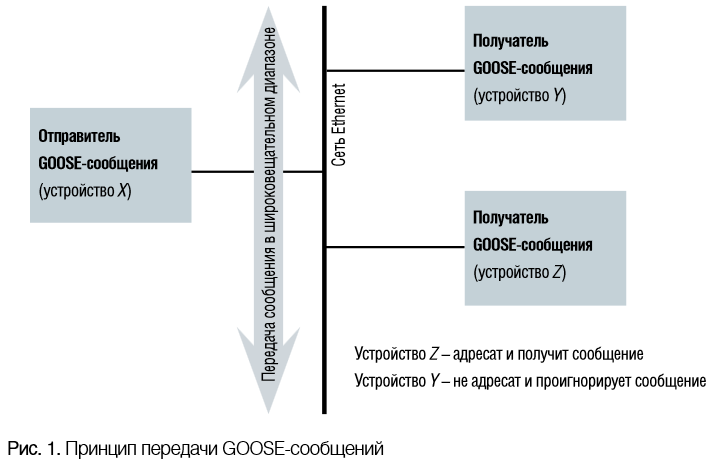
Устройство-отправитель передает по сети Ethernet информацию в широковещательном диапазоне.
В сообщении присутствует адрес отправителя и адреса, по которым осуществляется его передача, а также значение сигнала (например «0» или «1»).
Устройство-получатель получит сообщение, а все остальные устройства его проигнорируют.
Поскольку передача GOOSE-сообщений осуществляется в широковещательном диапазоне, т.е. нескольким адресатам, подтверждение факта получения адресатами сообщения отсутствует. По этой причине передача GOOSE-сообщений в установившемся режиме производится с определенной периодичностью.
При наступлении нового события в системе (например, КЗ и, как следствие, пуска измерительных органов защиты) начинается спонтанная передача сообщения через увеличивающиеся интервалы времени (например, 1 мс, 2 мс, 4 мс и т.д.). Интервалы времени между передаваемыми сообщениями увеличиваются, пока не будет достигнуто предельное значение, определяемое пользователем (например, 50 мс). Далее, до момента наступления нового события в системе, передача будет осуществляется именно с таким периодом. Указанное проиллюстрировано на рис. 2.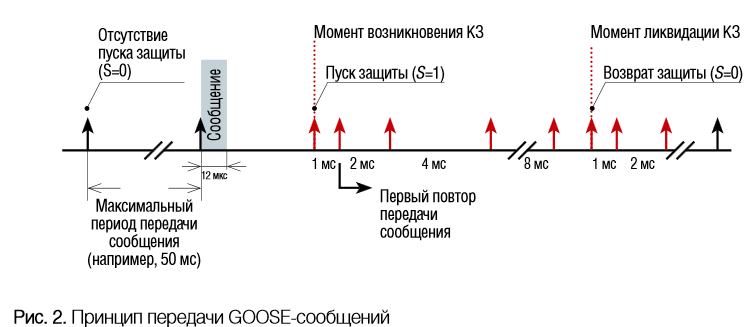
Технология повторной передачи не только гарантирует получение адресатом сообщения, но также обеспечивает контроль исправности линии связи и устройств – любые неисправности будут обнаружены по истечении максимального периода передачи GOOSE-сообщений (с точки зрения эксплуатации практически мгновенно). В случае передачи сигналов традиционным образом неисправность выявляется либо в процессе плановой проверки устройств, либо в случае неправильной работы системы РЗА.
Еще одной особенностью передачи GOOSE-сообщений является использование функций установки приоритетности передачи телеграмм (priority tagging) стандарта Ethernet IEEE 802.3u, которые не используются в других протоколах, в том числе уровня TCP/IP. То есть GOOSE-сообщения идут в обход «нормальных» телеграмм с более высоким приоритетом (см. рис. 3).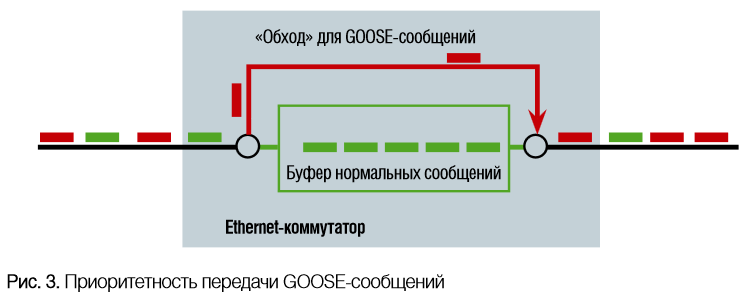
Однако стандарт МЭК 61850 декларирует передачу не только дискретной информации между терминалами РЗА, но и аналоговой. Это означает, что в будущем будет иметься возможность передачи аналоговой информации от ТТ и ТН по цифровым каналам связи. На данный момент готовых решений по передаче аналоговой информации для целей РЗА (в рамках стандарта МЭК 61850) ни один из производителей не предоставляет.
Для того чтобы использовать GOOSE-сообщения для передачи дискретных сигналов между терминалами РЗА необходима достаточная надежность и быстродействие передачи GOOSE-сообщений. Надежность передачи GOOSE-сообщений обеспечивается следующим:- Протокол МЭК 61850 использует Ethernet-сеть, за счет этого выход из строя верхнего уровня АСУ ТП и любого из устройств РЗА не отражается на передаче GOOSE-сообщений оставшихся в работе устройств,
- Терминалы РЗА имеют два независимых Ethernet-порта, при выходе одного из них из строя второй его полностью заменяет,
- Сетевые коммутаторы, к которым подключаются устройства РЗА, соединяются в два независимых «кольца»,
- Разные порты одного терминала РЗА подключаются к разным сетевым коммутаторам, подключенным к разным «кольцам»,
- Каждый сетевой коммутатор имеет дублированное питание от разных источников,
- Во всех устройствах РЗА осуществляется постоянный контроль возможности прохождения каждого сигнала. Это позволяет автоматически определить не только отказы цифровой связи, но и ошибки параметрирования терминалов.
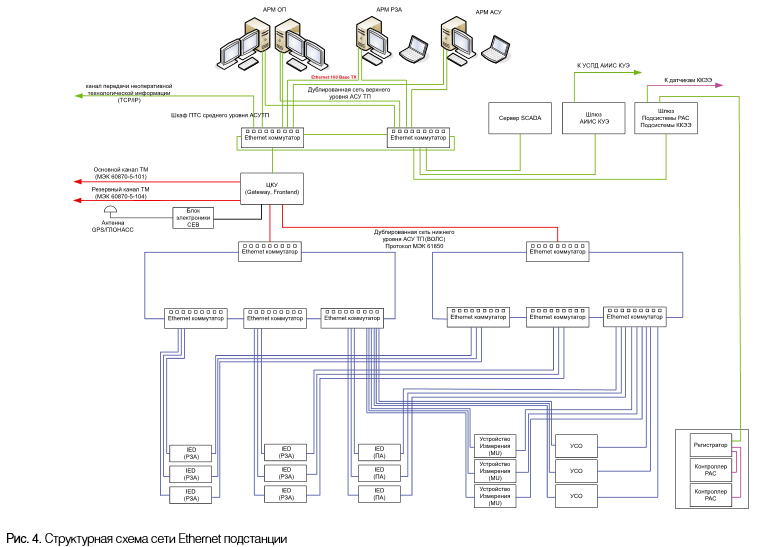
На рис. 4 изображен пример структурной схемы сети Ethernet (100 Мбит/c) подстанции. Отказ в передаче GOOSE-сообщения от одного устройства защиты другому возможен в результате совпадения как минимум двух событий. Например, одновременный отказ двух коммутаторов, к которым подключено одно устройство или одновременный отказ обоих портов одного устройства. Могут быть и более сложные отказы, связанные с одновременным наложением большего количества событий. Таким образом, единичные отказы оборудования не могут привести к отказу передачи GOOSEсообщений. Дополнительно увеличивает надежность то обстоятельство, что даже в случае отказа в передаче GOOSE-сообщения, устройство, принимающее сигнал, выдаст сигнал неисправности, и персонал примет необходимые меры для ее устранения.
Быстродействие.
В соответствии с требованиями стандарта МЭК 61850 передача GOOSE-сообщений должна осуществляться со временем не более 4 мс (для сообщений, требующих быстрой передачи, например, для передачи сигналов срабатывания защит, пусков АПВ и УРОВ и т.п.). Вообще говоря, время передачи зависит от топологии сети, количества устройств в ней, загрузки сети и загрузки вычислительных ресурсов терминалов РЗА, версии операционной системы терминала, коммуникационного модуля, типа центрального процессора терминала, количества коммутаторов и некоторых других аспектов. Поэтому время передачи GOOSE-сообщений должно быть подтверждено опытом эксплуатации.
Используя для передачи дискретных сигналов GOOSE-сообщения необходимо обращать внимание на то обстоятельство, что при использовании аппаратуры некоторых производителей, в случае отказа линии связи, значение передаваемого сигнала может оставаться таким, каким оно было получено в момент приема последнего сообщения.
Однако при отказе связи бывают случаи, когда сигнал должен принимать определенное значение. Например, значение сигнала блокировки МТЗ ввода 6–10 кВ в логике ЛЗШ при отказе связи целесообразно установить в значение «1», чтобы при КЗ на отходящем присоединении не произошло ложного отключения ввода. Так, к примеру, при проектировании терминалов фирмы Siemens изменить значение сигнала при отказе связи возможно с помощью свободно-программируемой CFCлогики (см. рис. 5).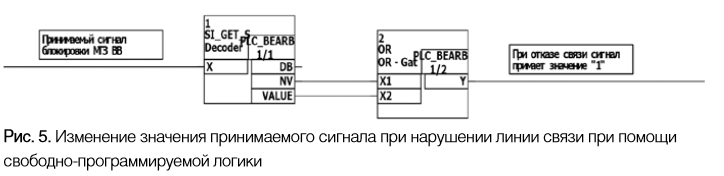
К CFC-блоку SI_GET_STATUS подводится принимаемый сигнал, на выходе блока мы можем получить значение сигнала «Value» и его статус «NV». Если в течение определенного времени не поступит сообщение со значением сигнала, статус сигнала «NV» примет значение «1». Далее статус сигнала и значение сигнала подводятся к элементу «ИЛИ», на выходе которого будет получено значение сигнала при исправности линии связи или «1» при нарушении исправности линии связи. Изменив логику, можно установить значение сигнала равным «0» при обрыве связи.
Использование GOOSE-сообщений предъявляет специальные требования к наладке и эксплуатации устройств РЗА. Во многом процесс наладки становится проще, однако при выводе устройства из работы необходимо следить не только за выводом традиционных цепей, но и не забывать отключать передачу GOOSE-сообщений.
При изменении параметрирования одного устройства РЗА необходимо производить загрузку файла параметров во все устройства, с которыми оно было связано.
В нашей стране имеется опыт внедрения и эксплуатации систем РЗА с передачей дискретных сигналов с использованием GOOSE-сообщений. На первых объектах GOOSE-сообщения использовались ограниченно (ПС 500 кВ «Алюминиевая»).
На ПС 500 кВ «Воронежская» GOOSEсообщения использовались для передачи сигналов пуска УРОВ, пуска АПВ, запрета АПВ, действия УРОВ на отключение смежного элемента, положения коммутационных аппаратов, наличия/отсутствия напряжения, сигналы ЛЗШ, АВР и т.п. Кроме того, на ОРУ 500 кВ и 110 кВ ПС «Воронежская» были установлены полевые терминалы, в которые собиралась информация с коммутационного оборудования и другая дискретная информация с ОРУ (рис. 6). Далее информация с помощью GOOSE-сообщений передавалась в терминалы РЗА, установленные в ОПУ подстанции (рис. 7, 8).
GOOSE-сообщения также были использованы при проектировании уже введенных в эксплуатацию ПС 500 кВ «Бескудниково», ПС 750 кВ «Белый Раст», ПС 330кВ «Княжегубская», ПС 220 кВ «Образцово», ПС 330 кВ «Ржевская». Эта технология применяется и при проектировании строящихся и модернизируемых подстанций ПС 500 кВ «Чагино», ПС 330кВ «Восточная», ПС 330 кВ «Южная», ПС 330 кВ «Центральная», ПС
330 кВ «Завод Ильич» и многих других.
Основные преимущества использования GOOSE-сообщений:- позволяет снизить количество кабелей вторичной коммутации на ПС;
- обеспечивает лучшую помехозащищенность канала связи;
- позволяет снизить время монтажных и пусконаладочных работ;
- исключает проблему излишнего срабатывания дискретных входов терминалов из-за замыканий на землю в цепях оперативного постоянного тока;
- убирает зависимость количества передаваемых сигналов от количества дискретных входов и выходных реле терминалов;
- обеспечивает возможность реконструкции и изменения связей между устройствами РЗА без прокладки дополнительных кабельных связей и повторного монтажа в шкафах;
- позволяет использовать МП терминалы РЗА с меньшим количеством входов и выходов (уменьшение габаритов и стоимости устройства);
- позволяет контролировать возможность прохождения сигнала (увеличивается надежность).
Безусловно, для окончательных выводов должен появиться достаточный опыт эксплуатации. В настоящее время большинство производителей устройств РЗА заявили о возможности использования GOOSEсообщений. Стандарт МЭК 61850 определяет передачу GOOSE-сообщений между терминалами разных производителей. Использование GOOSE-сообщений для передачи дискретных сигналов – это качественный скачок в развитии систем РЗА. С развитием стандарта МЭК 61850, переходом на Ethernet 1 Гбит/сек, с появлением новых цифровых ТТ и ТН, новых выключателей с возможностью подключения их блока управления к шине процесса МЭК 61850, эффективность использования GOOSE-сообщений намного увеличится. Облик будущих подстанций представляется с минимальным количеством контрольных кабелей, с передачей всех сообщений между устройствами РЗА, ТТ, ТН, коммутационными аппаратами через цифровую сеть. Устройства РЗА будут иметь минимальное количество выходных реле и дискретных входов
[ http://romvchvlcomm.pbworks.com/f/goosepaper1.pdf]
В стандарте определены два способа передачи данных напрямую между устройствами: GOOSE и GSSE. Это тоже пример наличия двух способов для реализации одной функции. GOOSE - более новый способ передачи сообщений, разработан специально для МЭК 61850. Способ передачи сообщений GSSE ранее присутствовал в стандарте UCA 2.0, являющимся одним из предшественников МЭК 61850. По сравнению с GSSE, GOOSE имеет более простой формат (Ethernet против стека OSI протоколов) и возможность передачи различных типов данных. Вероятно, способ GSSE включили в МЭК 61850 для того, чтобы производители, имеющие в своих устройствах протокол UCA 2.0, могли сразу декларировать соответствие МЭК 61850. В настоящее время все производители используют только GOOSE для передачи сообщений между устройствами.
Для выбора списка передаваемых данных в GOOSE, как и в отчѐтах, используются наборы данных. Однако тут требования уже другие. Время обработки GOOSE-сообщений должно быть минимальным, поэтому логично передавать наиболее простые типы данных. Обычно передаѐтся само значение сигнала и в некоторых случаях добавляется поле качества. Метка времени обычно включается в набор данных.
...
В устройствах серии БЭ2704 в передаваемых GOOSE-сообщениях содержатся данные типа boolean. Приниматься могут данные типа boolean, dbpos, integer.
Устоявшаяся тенденция существует только для передачи дискретной информации. Аналоговые данные пока передают немногие производители, и поэтому устоявшаяся тенденция в передаче аналоговой информации в данный момент отсутствует.
[ Источник]
Тематики
Синонимы
EN
Русско-английский словарь нормативно-технической терминологии > широковещательное объектно-ориентированное сообщение о событии на подстанции
-
12 पदम् _padam
पदम् [पद्-अच्]1 A foot (said to be m. also in this sense); पदेन on foot; शिखरिषु पदं न्यस्य Me.13; अपथे पदमर्पयन्ति हि R.9.74 'set foot on (follow) a wrong road'; 3.5;12.52; पदं हि सर्वत्र गुणैर्निधीयते 3.62 'good qualities set foot everywhere' i. e. command notice or make themselves felt; जनपदे न गदः पदमादधौ 9.4. 'no disease stepped into the country'; यदवधि न पदं दधाति चित्ते Bv.2.14; पदं कृ (a) to set foot in, on or over (lit.); शान्ते करिष्यसि पदं पुनराश्रमे$स्मिन् Ś.4.2. (b) to enter upon or into, take possession of, occupy (fig.); कृतं वपुषि नवयौवनेन पदम् K.137; कृतं हि मे कुतूहलेन प्रश्नाशया हृदि पदम् 133; so Ku.5.21; Pt.1.24; कृत्वा पदं नो गले Mu.3.26 'in defiance of us'; (lit. planting his foot on our neck); मूर्ध्नि पदं कृ 'to mount on the head of', 'to humble'; पदं मूर्ध्नि समाधत्ते केसरी मत्तदन्तिनः Pt.1.327; आकृतिविशेषेष्वादरः पदं करोति M.1 'good forms attract attention (command respect); जने सखी पदं कारिता Ś.4; 'made to have dealings with (to confide in)'; धर्मेण शर्वे पार्वतीं प्रति पदं कारिते Ku.6.14.-2 A step, pace, stride; तन्वी स्थिता कतिचिदेव पदानि गत्वा Ś.2.13; पदे पदे 'at every step'; अक्षमालामदत्त्वा पदात् पदमपि न गन्तव्यम् or चलितव्यम् 'do not move even a step' &c.; पितुः पदं मध्यममुत्पतन्ती V.1.19 'the middle pace or stride of Viṣṇu.'; i. e. the sky (for mythologically speaking, the earth, sky, and lower world are considered as the three paces of Viṣṇu in his fifth or dwarf incarnation वामनावतार); so अथात्मनः शब्दगुणं गुणज्ञः पदं विमानेन विगाहमानः R.13.1.-3 A foot-step, foot- print, foot-mark; पदपङ्क्तिः Ś.3.7; or पदावली foot-prints; पदमनुविधेयं च महताम् Bh.2.28 'the foot-steps of the great must be followed'; पदैगृर्ह्यते चौरः Y.2.286.-4 A trace, mark, impression, vestige; रतिवलयपदाङ्के चापमासज्य कण्ठे Ku.2.64; Me.37,98; M.3.-5 A place, position, station; अधो$धः पदम् Bh.2.1; आत्मा परिश्रमस्य पदमुपनीतः Ś.1, 'brought to the point of or exposed to trouble'; तदलब्धपदं हृदि शोकघने R.8.91, 'found no place in (left no impression on) the heart'; अपदे शङ्कितो$स्मि M.1, 'my doubts were out of place', i. e. groundless; कृशकुटुम्बेषु लोभः पदमधत्त Dk.162; Ku.6.72;3.4; R.2.5;9.82; कृतपदं स्तनयुगलम् U.6.35, 'brought into relief or bursting forth'.-6 Dignity, rank, office, station or position; भगवत्या प्रश्निकपदमध्यासितव्यम् M.1; यान्त्येवं गृहिणीपदं युवतयः Ś.4.18, 'attain to the rank or position, &c.; स्थिता गृहिणीपदे 4.19; so सचिव˚, राज˚ &c.-7 Cause, subject, occasion, thing, matter, business, affair; व्यवहारपदं हि तत् Y.2.5; 'occasion or matter of dispute, title of law, judicial proceeding'; Ms.8.7; सतां हि सन्देहपदेषु वस्तुषु Ś.1.22; वाञ्छितफलप्राप्तेः पदम् Ratn.1.6.-8 Abode, object, receptacle; पदं दृशः स्याः कथमीश मादृशाम् Śi.1.37; 15.22; अगरीयान्न पदं नृपश्रियः Ki.2.14; अविवेकः परमापदां पदम् 2.3; के वा न स्युः परिभवपदं निष्फलारम्भयत्नाः Me.56; संपदः पदमापदाम् H.4.65.-9 A quarter or line of a stanza, verse; विरचितपदम् (गेयम्) Me.88,15; M.5.2; Ś.3.14.-1 A complete or inflected word; सुप्तिडन्तं पदम् P.I. 4.14. वर्णाः पदं प्रयोगार्हानन्वितैकार्थबोधकाः S. D.9; R.8.77; Ku.4.9.-11 A name for the base of nouns before all consonantal case-terminations except nom. singular.-12 Detachment of the Vedic words from one another, separation of a Vedic text into its several constituent words; वेदैः साङ्गपदक्रमोपनिषदैर्गायन्ति यं सामगाः Bhāg.12.13.1.-13 A pretext; अनिभृतपदपातमापपात प्रियमिति कोपपदेन कापि सख्या Śi.7.14.-14 A sqare root.-15 A part, por- tion or division (as of a sentence); as त्रिपदा गायत्री.-16 A measure of length.-17 Protection, preservation; ते विंशतिपदे यत्ताः संप्रहारं प्रचक्रिरे Mb.7.36.13.-18 A square or house on a chessboard; अष्टापदपदालेख्यैः Rām.-19 A quadrant.-2 The last of a series.-21 A plot of ground.-22 (In Arith.) Any one in a set of numbers the sum of which is required.-23 A coin; माता पुत्रः पिता भ्राता भार्या मित्रजनस्तथा । अष्टापदपदस्थाने दक्षमुद्रेव लक्ष्यते ॥ Mb.12.298.4. (com. अष्टापदपदं सुवर्णकार्षापणः).-24 A way, road; षट्पदं नवसंख्यानं निवेशं चक्रिरे द्विजाः Mb.14.64.1.-25 Retribution (फल); ईहोपरमयोर्नॄणां पदान्यध्यात्मचक्षुषा Bhāg.7.13.2.-दः A ray of light.-Comp. -अङ्कः, चिह्नम् a foot-print.-अङ्गुष्ठः the great toe, thumb (of the foot).-अध्ययनम् study of the Vedas according to the पदपाठ q. v.-अनुग a.1 following closely, being at the heels of (gen.).-2 suitable, agreeable to. (-गः) a follower, companion; एतान्निहत्य समरे ये चृ तस्य पदानुगाः । तांश्च सर्वान् विनिर्जित्य सहितान् सनराधिपान् ॥ Mb.3.12.6.-अनुरागः 1 a servant.-2 an army.-अनुशासनम् the science of words, grammar.-अनुषङ्गः anything added to a pada.-अन्तः 1 the end of a line of a stanza.-2 the end of a word.-अन्तरम् another step, the interval of one step; पदान्तरे स्थित्वा Ś.1; अ˚ closely, without a pause.-अन्त्य a. final.-अब्जम्, -अम्भोजम्, -अरविन्दम्, -कमलम्, -पङ्कजम्, -पद्मम् a lotus-like foot.-अभिलाषिन् a. wishing for an office.-अर्थः 1 the meaning of a word.-2 a thing or object.-3 a head or topic (of which the Naiyāyikas enumerate 16 subheads).-4 anything which can be named (अभिधेय), a category or predicament; the number of such categories, according to the Vaiśeṣikas, is seven; according to the Sāṅkhyas, twentyfive (or twenty-seven according to the followers of Patañjali), and two according to the Vedāntins.-5 the sense of another word which is not expressed but has to be supplied. ˚अनुसमयः preforming one detail with reference to all things or persons concerned; then doing the second, then the third and so on (see अनुसमय). Hence पदार्थानुसमयन्याय means: A rule of interpretation according to which, when several details are to be performed with reference to several things or persons, they should be done each to each at a time.-आघातः 'a stroke with the foot', a kick.-आजिः a foot-soldier.-आदिः 1 the beginning of the line of a stanza.-2 the beginning or first letter of a word. ˚विद् m. a bad student (knowing only the beginnings of stanzas).-आयता a shoe.-आवली a series of words, a continued arrangement of words or lines; (काव्यस्य) शरीरं तावदिष्टार्थव्यवच्छिन्नापदावली Kāv. 1.1; मधुरकोमलकान्तपदावलीं शृणु तदा जयदेवसरस्वतीम् Gīt.1.-आसनम् a foot-stool.- आहत a. kicked.-कमलम् lotus-like foot.-कारः, -कृत् m. the author of the Padapāṭha.-क्रमः 1 walking, a pace; न चित्रमुच्चैः श्रवसः पदक्रमम् (प्रशशंस) Śi.1.52.-2 a particular method of reciting the Veda; cf. क्रम.-गः a foot-soldier.-गतिः f. gait, manner of going.-गोत्रम् a family supposed to preside over a particular class of words.-छेदः, -विच्छेदः, -विग्रहः separation of words, resolu- tion of a sentence into its constituent parts.-च्युत a. dismissed from office, deposed.-जातम् class or group of words.-दार्ढ्यम् fixedness or security of text.-न्यासः 1 stepping, tread, step.-2 a foot-mark.-3 position of the feet in a particular attitude.-4 the plant गोक्षुर.-5 writing down verses or quarters of verses; अप्रगल्भाः पदन्यासे जननीरागहेतवः । सन्त्येके बहुलालापाः कवयो बालका इव ॥ Trivikramabhaṭṭa.-पङ्क्तिः f.1 a line of foot-steps; द्वारे$स्य पाण्डुसिकते पदपङ्क्तिर्दृश्यते$भिनवा Ś.3.7; V.4.6.-2 a line or arrangement of words, a series of words; कृतपदपङ्क्तिरथर्वणेव वेदः Ki.1.1.-3 an iṣtakā or sacred brick.-4 a kind of metre.-पाठः an arrangement of the Vedic text in which each word is written and pronounced in its original form and independently of phonetic changes (opp. संहितापाठ).-पातः, विक्षेपः a step, pace (of a horse also).-बन्धः a foot-step, step.-भञ्जनम् analysis of words, etymology.-भञ्जिका 1 a commentary which separates the words and analyses the compounds of a passage.-2 a register, journal.-3 a calendar.-भ्रंशः dismissal from office.-माला a magical formula.-योपनम् a fetter for the feet (Ved.).-रचना 1 arrangement of words.-2 literary composition.-वायः Ved. a leader.-विष्टम्भः a step, footstep.-वृत्तिः f. the hiatus between two words.-वेदिन् a linguist, philologist.-व्याख्यानम् interpreta- tion of words.-शास्त्रम् the science of separately written words.-संघातः (टः) 1 connecting the words which are separated in the संहिता.-2 a writer, an annotator.-संधिः m. the euphonic combination of words.-स्थ a.1 going on foot.-2 being in a position of authority or high rank.-स्थानम् a foot-print. -
13 cūra
cūra ae, f [CAV-], trouble, care, attention, pains, industry, diligence, exertion: magnā cum curā tueri, Cs.: in aliquā re curam ponere: consulum in re p. custodiendā: saucios cum curā reficere, S.: cura adiuvat (formam), art sets off, O.: lentis, culture, V.: boum, rearing, V.: eo maiore curā illam (rem p.) administrari, S.: in re unā consumere curam, H.: sive cura illud sive inquisitio erat, friendly interest, Ta.: Curaque finitimos vincere maior erat, more pressing business, O.: nec sit mihi cura mederi, nor let me try, V.: vos curis solvi ceteris, T.: difficilis rerum alienarum, management: bonarum rerum, attention to, S.: deorum, service, L.: Caesaris, H.: peculi, V.: de publicā re et privatā: tamquam de Samnitibus curam agerent, as if the business in hand were, etc., L.: non tam pro Aetolis cura erat, quam ne, etc., L.—In dat predicat.: Curae (alcui) esse, to be an object of (one's) care, to take care of, attend to, bestow pains upon: pollicitus est, sibi eam rem curae futuram, should be his business, Cs.: rati sese dis curae esse, S.: nullius salus curae pluribus fuit: Quin id erat curae, that is just how I was occupied, H.: dumque amor est curae, O.: magis vis morbi curae erat, L.: Caesari de augendā meā dignitate curae fore: de ceteris senatui curae fore, S.: petitionem suam curae habere, S.: curae sibi habere certiorem facere Atticum, etc., N.—Administration, charge, oversight, command, office: rerum p. minime cupiunda, S.: navium, Ta.: legionis armandae, Ta.: tempora curarum remissionumque divisa, Ta.—Poet., a guardian, overseer: fidelis harae, i. e. the swine-herd Eumaeus, O.—Study, reflection: animus cum his habitans curis: cura et meditatio, Ta.—A result of study, work: recens, O.: inedita, O.: quorum in manūs cura nostra venerit, Ta.—A means of healing, remedy: doloris: Illa fuit lacrimis ultima cura meis (of sleep), Pr.—Anxiety, solicitude, concern, disquiet, trouble, grief, sorrow: maxima: gravissima: cottidianā curā angere animum, T.: curae metūsque: neque curae neque gaudio locum esse, S.: gravi saucia curā, V.: edaces, H.: de coniuge, O.: quam pro me curam geris, V.: curae, quae animum divorse trahunt, T.—The care of love, anxiety of love, love: iuvenum curas referre, H.: curā removente soporem, O.—A loved object, mistress: tua cura, Lycoris, V.: iuvenum, H.: Veneris iustissima, worthiest, V.: tua cura, palumbes, V.—Person., Care, H.: Curae, Cares, Anxieties, V.* * *concern, worry, anxiety, trouble; attention, care, pains, zeal; cure, treatment; office/task/responsibility/post; administration, supervision; command (army) -
14 auctor
auctor (incorrectly written autor or author), ōris, comm. [id.], he that brings about the existence of any object, or promotes the increase or prosperity of it, whether he first originates it, or by his efforts gives greater permanence or continuance to it; to be differently translated according to the object, creator, maker, author, inventor, producer, father, founder, teacher, composer, cause, voucher, supporter, leader, head, etc. (syn.: conditor, origo, consiliarius, lator, suasor, princeps, dux).I.Lit.A.Of persons, a progenitor, father, ancestor:B.L. Brutus, praeclarus auctor nobilitatis tuae,
the founder, progenitor of your nobility, Cic. Tusc. 4, 1, 2:generis,
Verg. A. 4, 365; so Ov. M. 4, 640, and Suet. Vit. 2:tu sanguinis ultimus auctor,
Verg. A. 7, 49; so Ov. M. 12, 558, and 13, 142:tantae propaginis,
id. F. 3, 157:originis,
Suet. Ner. 1:gentis,
id. Claud. 25:auctores parentes animarum,
Vulg. Sap. 12, 6:auctore ab illo ducit originem,
Hor. C. 3, 17, 5:Sive neglectum genus et nepotes Respicis auctor,
id. ib. 1, 2, 36:mihi Tantalus auctor,
Ov. M. 6, 172:auctores saxa fretumque tui,
id. H. 10, 132:Juppiter e terrā genitam mentitur, ut auctor Desinat inquiri,
id. M. 1, 615.—Of animals, Col. 6, 27, 1.—Of buildings, etc., founder, builder:C.Trojae Cynthius auctor,
Verg. G. 3, 36:murorum Romulus auctor,
Prop. 5, 6, 43 ( augur, Müll.):auctor posuisset in oris Moenia,
Ov. M. 15, 9:porticus auctoris Livia nomen habet,
id. A. A. 1, 72:amphitheatri,
Plin. 36, 15, 24, § 118:omnia sub titulo tantum suo ac sine ullā pristini auctoris memoriā,
Suet. Dom. 5.—Of works of art, a maker, artist:II.statua auctoris incerti,
Plin. 34, 8, 19, § 93: apparuit summam artis securitatem auctori placaisse, id. praef. § 27.—Transf.A.In gen., the originator, executor, performer, doer, cause, occasion of other things (freq. interchanged with actor):B.tametsi haud quaquam par gloriá sequitur scriptorem et auctorem rerum, tamen etc.,
Sall. C. 3, 2 Kritz (cf. without rerum: Suam quisque culpam auctores ad negotia transferunt, id. J. 1, 4):praeclari facinoris,
Vell. 2, 120, 6:facti,
Ov. M. 9, 206; Vell. 1, 8:cum perquirerent auctorem facti,
Vulg. Jud. 6, 29:optimi statūs auctor,
Suet. Aug. 28:honoris,
Ov. M. 10, 214:vitae,
Vulg. Act. 3, 15:salutis,
ib. Heb. 2, 10:fidei,
ib. ib. 12, 2:funeris,
Ov. M. 10, 199:necis,
id. ib. 8, 449;9, 214: mortis,
id. ib. 8, 493:vulneris,
id. ib. 5, 133;8, 418: plagae,
id. ib. 3, 329:seditionis sectae,
Vulg. Act. 24, 5.—Also, in gen., one from whom any thing proceeds or comes:auctor in incerto est: jaculum de parte sinistrā Venit,
i. e. the sender, Ov. M. 12, 419; so,teli,
id. ib. 8, 349:muneris,
the giver, id. ib. 2, 88;5, 657, 7, 157 al.: meritorum,
id. ib. 8, 108 al.—An author of scientific or literary productions.1.An investigator:2.non sordidus auctor Naturae verique,
Hor. C. 1, 28, 14.—And as imparting learning, a teacher:quamquam in antiquissimā philosophiā Cratippo auctore versaris,
Cic. Off. 2, 2, 8:dicendi gravissimus auctor et magister Plato,
id. Or. 3, 10:divini humanique juris auctor celeberrimus,
Vell. 2, 26, 2:Servius Sulpicius, juris civilis auctor,
Gell. 2, 10; Dig. 19, 1, 39; 40, 7, 36.—The author of a writing, a writer:C.ii quos nunc lectito auctores,
Cic. Att. 12, 18:ingeniosus poëta et auctor valde bonus,
id. Mur. 14:scripta auctori perniciosa suo,
Ov. Tr. 5, 1, 68:Belli Alexandrini Africique et Hispaniensis incertus auctor est,
Suet. Caes. 56; id. Aug. 31:sine auctore notissimi versus,
i. e. anonymous verses, id. ib. 70; so id. Calig. 8; id. Dom. 8 al.— Meton. of cause for effect, for a literary production, writing, work:in evolvendis utriusque linguae auctoribus, etc.,
Suet. Aug. 89. —In partic., the author of historical works, an historian (with and without rerum):ego cautius posthac historiam attingam, te audiente, quem rerum Romanarum auctorem laudare possum religiosissimum,
Cic. Brut. 11, 44; so,Matrem Antoniam non apud auctores rerum, non diurnā actorum scripturā reperio ullo insigni officio functam,
Tac. A. 3, 3; 3, 30 (diff. from auctor rerum in II. A.):Polybius bonus auctor in primis,
Cic. Off. 3, 32, 113; so Nep. Them. 10, 4; Liv. 4, 20; Tac. A. 5, 9; 14, 64 al.—With historiae (eccl. Lat.):historiae congruit auctori,
Vulg. 2 Macc. 2, 31.—Hence, in gen., one that gives an account of something, a narrator, reporter, informant (orally or in writing):sibi insidias fieri: se id certis auctoribus comperisse,
Cic. Att. 14, 8:celeberrimos auctores habeo tantam victoribus irreverentiam fuisse, ut, etc.,
Tac. H. 3, 51:criminis ficti auctor, i. e. nuntius,
Ov. M. 7, 824:Non haec tibi nuntiat auctor Ambiguus,
id. ib. 11, 666; 12, 58; 12, 61; 12, 532.—Hence, auctorem esse, with acc. and inf., to relate, recount:Auctores sunt ter novenis punctis interfici hominem,
Plin. 11, 21, 24, § 73:Fabius Rustiçus auctor est scriptos esse ad Caecinam Tuscum codicillos,
Tac. A. 13, 20:Auctor est Julius Marathus ante paucos quam nasceretur menses prodigium Romae factum (esse) publice, etc.,
Suet. Aug. 94 et saep.—One by whose influence, advice, command, etc., any thing is done, the cause, occasion, contriver, instigator, counsellor, adviser, promoter; constr. sometimes with ut, acc. and inf., or gen. gerund.: quid mihi es auctor ( what do you counsel me?) huic ut mittam? Plaut. Ps. 1, 3, 2; 4, 7, 70; id. Poen. 1, 3, 1:2.idne estis auctores mihi?
Ter. Ad. 5, 8, 16:mihique ut absim, vehementer auctor est,
Cic. Att. 15, 5:Gellium ipsis (philosophis) magno opere auctorem fuisse, ut controversiarum facerent modum,
id. Leg. 1, 20, 53:ut propinqui de communi sententiā coërcerent, auctor fuit,
Suet. Tib. 35; id. Claud. 25; id. Calig. 15:a me consilium petis, qui sim tibi auctor in Siciliāne subsidas, an proficiscare,
Cic. Fam. 6, 8: ego quidem tibi non sim auctor, si Pompeius Italiam reliquit, te quoque profugere, Att. ap. Cic. Att. 9, 10:ne auctor armorum duxque deesset, Auct. B. G. 8, 47: auctor facinori non deerat,
Liv. 2, 54:auctores Bibulo fuere tantundem pollicendi,
Suet. Caes. 19:auctores restituendae tribuniciae potestatis,
id. ib. 5; so id. Dom. 8:auctor singulis universisque conspirandi simul et ut... communem causam juvarent,
id. Galb. 10 al. —So freq. in the abl. absol.: me, te, eo auctore, at my, your, his instance, by my [p. 199] advice, command, etc.:non me quidem Faciet auctore, hodie ut illum decipiat,
Plaut. Stich. 4, 2, 23:an paenitebat flagiti, te auctore quod fecisset Adulescens?
Ter. Eun. 5, 6, 12:quare omnes istos me auctore deridete atque contemnite,
Cic. de Or. 3, 14, 54:quia calida fomenta non proderant, frigidis curari coactus auctore Antonio Musā,
Suet. Aug. 81; 96; id. Galb. 19; id. Vit. 2 al.: agis Carminibus grates et dis auctoribus horum, the promoters or authors of spells, Ov. M. 7, 148.—Esp., in political lang., t. t.a.Auctor legis.(α).One who proposes a law, a mover, proposer (very rare):(β).quarum legum auctor fuerat, earum suasorem se haud dubium ferebat,
Liv. 6, 36:Quid desperatius, qui ne ementiendo quidem potueris auctorem adumbrare meliorem,
Cic. Dom. 30, 80.—One who advises the proposal of a law, and exerts all his influence to have it passed, a supporter (stronger than suasor; cf. Suet. Tib. 27:(γ).alium dicente, auctore eo Senatum se adīsse, verba mutare et pro auctore suasorem dicere coegit): isti rationi neque lator quisquam est inventus neque auctor umquam bonus,
Cic. Leg. 3, 15, 34:cum ostenderem, si lex utilis plebi Romanae mihi videretur, auctorem me atque adjutorem futurum (esse),
id. Agr. 2, 5; id. Att. 1, 19:quo auctore societatem cum Perseo junxerunt,
Liv. 45, 31; Suet. Oth. 8; id. Vesp. 11 al.—Sometimes in connection with suasor:atque hujus deditionis ipse Postumius suasor et auctor fuit,
Cic. Off. 3, 30, 109:Nisi quis retinet, idem suasor auctorque consilii ero,
Tac. H. 3, 2 al. —Of a senate which accepts or adopts a proposition for a law, a confirmer, ratifier:b.nunc cum loquar apud senatores populi Romani, legum et judiciorum et juris auctores,
Cic. Verr. 2, 5, 67.— Poet., in gen., a law-giver:animum ad civilia vertet Jura suum, legesque feret justissimus auctor,
Ov. M. 15, 833;and of one who establishes conditions of peace: leges captis justissimus auctor imposuit,
id. ib. 8, 101. —Hence, auctores fieri, to approve, accept, confirm a law:cum de plebe consulem non accipiebat, patres ante auctores fieri coëgerit,
Cic. Brut. 14, 55:Decreverunt ut, cum populus regem jussisset, id sic ratum esset, si patres auctores fierent,
Liv. 1, 17; 1, 22; 2, 54; 2, 56; 6, 42; 8, 12 al.—Auctor consilii publici, he who has the chief voice in the senate, a leader:D.hunc rei publicae rectorem et consilii publici auctorem esse habendum,
Cic. de Or. 1, 48, 211; 3, 17, 63. —Also absol.:regem Ariobarzanem, cujus salutem a senatu te auctore, commendatam habebam,
by your influence, and the decree of the senate occasioned by it, Cic. Fam. 15, 4, 6; cf. Gron. ad Liv. 24, 43.—One who is an exemplar, a model, pattern, type of any thing:E.Caecilius, malus auctor Latinitatis,
Cic. Att. 7, 3, 10:nec litterarum Graecarum, nec philosophiae jam ullum auctorem requiro,
id. Ac. 2, 2, 5; cf.Wopk. Lect. Tull. p. 34: unum cedo auctorem tui facti, unius profer exemplum,
i. e. who has done a similar thing, Cic. Verr. 2, 5, 26:Cato omnium virtutum auctor,
id. Fin. 4, 16, 44 al. —One that becomes security for something, a voucher, bail, surety, witness:F.id ita esse ut credas, rem tibi auctorem dabo,
Plaut. Trin. 1, 2, 70:auctorem rumorem habere,
Cic. Verr. 2, 3, 19: fama nuntiabat te esse in Syriā;auctor erat nemo,
id. Fam. 12, 4:non si mihi Juppiter auctor Spondeat,
Verg. A. 5, 17:gravis quamvis magnae rei auctor,
Liv. 1, 16:auctorem levem, nec satis fidum super tantā re Patres rati,
id. 5, 15 fin.:urbs auspicato deis auctoribus in aeternum condita,
under the guaranty of the gods, id. 28, 28.—Also with acc. and inf.:auctores sumus tutam ibi majestatem Romani nominis fore,
Liv. 2, 48.—In judic. lang., t. t.1.A seller, vender (inasmuch as he warrants the right of possession of the thing to be sold, and transfers it to the purchaser; sometimes the jurists make a distinction between auctor primus and auctor secundus; the former is the seller himself, the latter the bail or security whom the former brings, Dig. 21, 2, 4; cf.2.Salmas. Mod. Usur. pp. 728 and 733): quod a malo auctore emīssent,
Cic. Verr. 2, 5, 22:auctor fundi,
id. Caecin. 10; Dig. 19, 1, 52: Inpero (auctor ego sum), ut tu me quoivis castrandum loces, Plaut. Aul. 2, 2, 73 Wagn.; id. Ep. 3, 2, 21; id. Curc. 4, 2, 12.— Trop.:auctor beneficii populi Romani,
Cic. Mur. 2.—A guardian, trustee (of women and minors):3.dos quam mulier nullo auctore dixisset,
Cic. Caecin. 25:majores nostri nullam ne privatam quidem rem agere feminas sine auctore voluerunt,
Liv. 34, 2:pupillus obligari tutori eo auctore non potest,
Dig. 26, 8, 5.—In espousals, auctores are the witnesses of the marriage contract (parents, brothers, guardians, relatives, etc.):G.nubit genero socrus, nullis auspicibus, nullis auctoribus,
Cic. Clu. 5.—An agent, factor, spokesman, intercessor, champion:► In class.praeclarus iste auctor suae civitatis,
Cic. Fl. 22:(Plancius) princeps inter suos... maximarum societatum auctor, plurimarum magister,
id. Planc. 13, 22:meae salutis,
id. Sest. 50, 107:doloris sui, querelarum, etc.,
id. Fl. 22 fin.Lat. auctor is also used as fem.:eas aves, quibus auctoribus etc.,
Cic. Div. 1, 15, 27:Et hostes aderant et (Theoxena) auctor mortis instabat,
Liv. 40, 4, 15:auctor ego (Juno) audendi,
Verg. A. 12, 159; Ov. M. 8, 108; id. F. 5, 192; 6, 709; id. H. 14, 110; 15, 3; Sen. Med. 968; cf. Paul. ex Fest. p. 29 Müll. The distinction which the grammarians, Serv. ad Verg. A. 12, 159, Prob. p. 1452 sq. P., and others make between auctor fem. and auctrix, that auctrix would refer more to the lit. signif. of the verb, augeo, while auctor fem. has more direct relation to the prevailing signif. of its noun, auctoritas, is unfounded. -
15 bellum
bellum (ante-class. and poet. duel-lum), i, n. [Sanscr. dva, dvi, dus; cf. Germ. zwei; Engl. two, twice; for the change from initial du- to b-, cf. bis for duis, and v. the letter B, and Varr. L. L. 5, § 73 Mull.; 7, § 49 ib.], war.I.Form duellum: duellum, bellum, videlicet quod duabus partibus de victoria contendentibus dimicatur. Inde est perduellis, qui pertinaciter retinet bellum, Paul. ex Fest. p. 66, 17 Mull.:II.bellum antea duellum vocatum eo quod duae sunt dimicantium partes... Postea mutata littera dictum bellum,
Isid. Orig. 18, 1, 9: hos pestis necuit, pars occidit illa duellis, Enn. ap. Prisc. p. 9, 861 P. (Ann. v. 549 Vahl.):legiones reveniunt domum Exstincto duello maximo atque internecatis hostibus,
Plaut. Am. 1, 1, 35:quae domi duellique male fecisti,
id. As. 3, 2, 13.—So in archaic style, or in citations from ancient documents:quique agent rem duelli,
Cic. Leg. 2, 8, 21:aes atque ferrum, duelli instrumenta,
id. ib. 2, 18, 45 (translated from the Platonic laws):puro pioque duello quaerendas (res) censeo,
Liv. 1, 32, 12 (quoted from ancient transactions); so,quod duellum populo Romano cum Carthaginiensi est,
id. 22, 10, 2:victoriaque duelli populi Romani erit,
id. 23, 11, 2:si duellum quod cum rege Antiocho sumi populus jussit,
id. 36, 2, 2;and from an ancient inscription' duello magno dirimendo, etc.,
id. 40, 52, 5.— Poet.:hic... Pacem duello miscuit,
Hor. C. 3, 5, 38:cadum Marsi memorem duelli,
id. ib. 3, 14, 18:vacuum duellis Janum Quirini clausit,
id. ib. 4, 15, 8; cf. id. Ep. 1, 2, 7; 2, 1, 254; 2, 2, 98; Ov. F. 6, 201; Juv. 1, 169— [p. 227]Form bellum.A.War, warfare (abstr.), or a war, the war (concr.), i.e. hostilities between two nations (cf. tumultus).1.Specifying the enemy.a.By adjj. denoting the nation:b.omnibus Punicis Siciliensibusque bellis,
Cic. Verr. 2, 5, 47, § 124:aliquot annis ante secundum Punicum bellum,
id. Ac. 2, 5, 13:Britannicum bellum,
id. Att. 4, 16, 13:Gallicum,
id. Prov. Cons. 14, 35:Germanicum,
Caes. B. G. 3, 28:Sabinum,
Liv. 1, 26, 4:Parthicum,
Vell. 2, 46, 2;similarly: bellum piraticum,
the war against the pirates, Vell. 2, 33, 1.—Sometimes the adj. refers to the leader or king of the enemy:Sertorianum bellum,
Cic. Phil. 11, 8, 18:Mithridaticum,
id. Imp. Pomp. 3, 7:Jugurthinum,
Hor. Epod. 9, 23; Vell. 2, 11, 1;similarly: bellum regium,
the war against kings, Cic. Imp. Pomp. 17, 50. —Or it refers to the theatre of the war:bellum Africanum, Transalpinum,
Cic. Imp. Pomp. 10, 28:Asiaticum,
id. ib. 22, 64:Africum,
Caes. B. C. 2, 32 fin.:Actiacum,
Vell. 2, 86, 3:Hispaniense,
id. 2, 55, 2.—With gen. of the name of the nation or its leader: bellum Latinorum, the Latin war, i. e. against the Latins, Cic. N. D. 2, 2, 6:c.Venetorum,
Caes. B. G. 3, 16:Helvetiorum,
id. ib. 1, 40 fin.;1, 30: Ambiorigis,
id. ib. 6, 29, 4:Pyrrhi, Philippi,
Cic. Phil. 11, 7, 17:Samnitium,
Liv. 7, 29, 2.—With cum and abl. of the name.(α).Attributively:(β).cum Jugurtha, cum Cimbris, cum Teutonis bellum,
Cic. Imp. Pomp. 20, 60:belli causa cum Samnitibus,
Liv. 7, 29, 3:hunc finem bellum cum Philippo habuit,
id. 33, 35, 12:novum cum Antiocho instabat bellum,
id. 36, 36, 7; cf. id. 35, 40, 1; 38, 58, 8; 39, 1, 8; 44, 14, 7.—With cum dependent on the verb:d.quia bellum Aetolis esse dixi cum Aliis,
Plaut. Capt. prol. 59:novi consules... duo bella habuere... alterum cum Tiburtibus,
Liv. 7, 17, 2; esp. with gero, v. 2. b. a infra.—With adversus and acc. of the name.(α).Attributively:(β).bellum adversus Philippum,
Liv. 31, 1, 8:bellum populus adversus Vestinos jussit,
id. 8, 29, 6.—With adversus dependent on the verb: quod homines populi Hermunduli adversus populum Romanum bellum fecere, Cincius ap. Gell. 16, 14, 1: nos pro vobis bellum suscepimus adversus Philippum. Liv. 31, 31, 18:e.ut multo acrius adversus duos quam adversus unum pararet bellum,
id. 45, 11, 8:bellum quod rex adversus Datamem susceperat,
Nep. Dat. 8, 5.—With contra and acc.:f.cum bellum nefarium contra aras et focos, contra vitam fortunasque nostras... non comparari, sed geri jam viderem,
Cic. Phil. 3, 1, 1:causam belli contra patriam inferendi,
id. ib. 2, 22, 53.—With in and acc. (very rare):g. h. k.Athenienses in Peloponnesios sexto et vicesimo anno bellum gerentes,
Nep. Lys. 1, 1.—With dat. of the enemy after inferre and facere, v. 2. a. k infra.—2.With verbs.a.Referring to the beginning of the war.(α).Bellum movere or commovere, to bring about, stir up a war:(β).summa erat observatio in bello movendo,
Cic. Off. 1, 11, 37:bellum commotum a Scapula,
id. Fam. 9, 13, 1:nuntiabant alii... in Apulia servile bellum moveri,
Sall. C. 30, 2:is primum Volscis bellum in ducentos amplius... annos movit,
Liv. 1, 53, 2:insequenti anno Veiens bellum motum,
id. 4, 58, 6:dii pium movere bellum,
id. 8, 6, 4; cf. Verg. A. 10, 627; id. G. 1, 509; so,concitare,
Liv. 7, 27, 5; and ciere ( poet.), Verg. A. 1, 541; 6, 829; 12, 158.—Bellum parare, comparare, apparare, or se praeparare bello, to prepare a war, or for a war:(γ).cum tam pestiferum bellum pararet,
Cic. Att. 9, 13, 3:bellum utrimque summopere parabatur,
Liv. 1, 23, 1; cf. id. 45, 11, 8 (v. II. A. 1. d. b supra); Nep. Hann. 2, 6; Quint. 12, 3, 5; Ov. M. 7, 456; so,parare alicui,
Nep. Alcib. 9, 5:bellum terra et mari comparat,
Cic. Att. 10, 4, 3:tantum bellum... Cn. Pompeius extrema hieme apparavit, ineunte vere suscepit, media aestate confecit,
id. Imp. Pomp. 12, 3, 5:bellum omnium consensu apparari coeptum,
Liv. 4, 55, 7:numquam imperator ita paci credit, ut non se praeparet bello,
Sen. Vit. Beat. 26, 2.—Bellum differre, to postpone a war:(δ).nec jam poterat bellum differri,
Liv. 2, 30, 7:mors Hamilcaris et pueritia Hannibalis distulerunt bellum,
id. 21, 2, 3; cf. id. 5, 5, 3.—Bellum sumere, to undertake, begin a war (not in Caesar):(ε).omne bellum sumi facile, ceterum aegerrume desinere,
Sall. J. 83, 1:prius tamen omnia pati decrevit quam bellum sumere,
id. ib. 20, 5:de integro bellum sumit,
id. ib. 62, 9:iis haec maxima ratio belli sumendi fuerat,
Liv. 38, 19, 3:sumi bellum etiam ab ignavis, strenuissimi cujusque periculo geri,
Tac. H. 4, 69; cf. id. A. 2, 45; 13, 34; 15, 5; 15, 7; id. Agr. 16.—Bellum suscipere (rarely inire), to undertake, commence a war, join in a war:(ζ).bellum ita suscipiatur ut nihil nisi pax quaesita videatur,
Cic. Off. 1, 23, 80:suscipienda quidem bella sunt ob eam causam ut, etc.,
id. ib. 1, 11, 35:judicavit a plerisque ignoratione... bellum esse susceptum,
join, id. Marcell. 5, 13; id. Imp. Pomp. 12, 35 (v. supra):cum avertisset plebem a suscipiendo bello,
undertaking, Liv. 4, 58, 14:senatui cum Camillo agi placuit ut bellum Etruscum susciperet,
id. 6, 9, 5:bella non causis inita, sed ut eorum merces fuit,
Vell. 2, 3, 3.—Bellum consentire = bellum consensu decernere, to decree a war by agreement, to ratify a declaration of war (rare):(η).consensit et senatus bellum,
Liv. 8, 6, 8:bellum erat consensum,
id. 1, 32, 12.—Bellum alicui mandare, committere, decernere, dare, gerendum dare, ad aliquem deferre, or aliquem bello praeficere, praeponere, to assign a war to one as a commander, to give one the chief command in a war:(θ).sed ne tum quidem populus Romanus ad privatum detulit bellum,
Cic. Phil. 11, 8, 18:populus Romanus consuli... bellum gerendum dedit,
id. ib.:cur non... eidem... hoc quoque bellum regium committamus?
id. Imp. Pomp. 17, 50:Camillus cui id bellum mandatum erat,
Liv. 5, 26, 3:Volscum bellum M. Furio extra ordinem decretum,
id. 6, 22, 6:Gallicum bellum Popilio extra ordinem datum,
id. 7, 23, 2:quo die a vobis maritimo bello praepositus est imperator,
Cic. Imp. Pomp. 15, 44:cum ei (bello) imperatorem praeficere possitis, in quo sit eximia belli scientia,
id. ib. 16, 49:hunc toti bello praefecerunt,
Caes. B. G. 5, 11 fin.:alicui bellum suscipiendum dare,
Cic. Imp. Pomp. 19, 58:bellum administrandum permittere,
id. ib. 21, 61.—Bellum indicere alicui, to declare war against (the regular expression; coupled with facere in the ancient formula of the pater patratus), also bellum denuntiare: ob eam rem ego... populo Hermundulo... bellum (in)dico facioque, Cincius ap. Gell. 16, 14, 1:(κ).ob eam rem ego populusque Romanus populis... Latinis bellum indico facioque,
Liv. 1, 32, 13:Corinthiis bellum indicamus an non?
Cic. Inv. 1, 12, 17:ex quo intellegi potest, nullum bellum esse justum nisi quod aut rebus repetitis geratur, aut denuntiatum ante sit et indictum,
id. Off. 1, 11, 36; id. Rep. 3, 23, 35:bellum indici posse existimabat,
Liv. 1, 22, 4:ni reddantur (res) bellum indicere jussos,
id. 1, 22, 6:ut... nec gererentur solum sed etiam indicerentur bella aliquo ritu, jus... descripsit quo res repetuntur,
id. 1, 32, 5; cf. id. 1, 32, 9; 2, 18, 11; 2, 38, 5; Verg. A. 7, 616.—Bellum inferre alicui (cf. contra aliquem, 1. e. supra; also bellum facere; absol., with dat., or with cum and abl.), to begin a war against ( with), to make war on:(λ).Denseletis nefarium bellum intulisti,
Cic. Pis. 34, 84:ei civitati bellum indici atque inferri solere,
id. Verr. 2, 1, 31, § 79:qui sibi Galliaeque bellum intulissent,
Caes. B. G. 4, 16; Nep. Them. 2, 4; Verg. A. 3, 248:bellumne populo Romano Lampsacena civitas facere conabatur?
Cic. Verr. 2, 1, 31, § 79:bellum patriae faciet,
id. Mil. 23, 63; id. Cat. 3, 9, 22:civitatem Eburonum populo Romano bellum facere ausam,
Caes. B. G. 5, 28; cf. id. ib. 7, 2;3, 29: constituit bellum facere,
Sall. C. 26, 5; 24, 2:occupant bellum facere,
they are the first to begin the war, Liv. 1, 14, 4:ut bellum cum Priscis Latinis fieret,
id. 1, 32, 13:populus Palaepolitanis bellum fieri jussit,
id. 8, 22, 8; cf. Nep. Dion, 4, 3; id. Ages. 2, 1.— Coupled with instruere, to sustain a war:urbs quae bellum facere atque instruere possit,
Cic. Agr. 2, 28, 77.—Bellum facere had become obsolete at Seneca's time, Sen. Ep. 114, 17.—Bellum oritur or exoritur, a war begins:subito bellum in Gallia ex, ortum est,
Caes. B. G. 3, 7:aliud multo propius bellum ortum,
Liv. 1, 14, 4:Veiens bellum exortum,
id. 2, 53, 1.—(ante-class. and poet. ), i, n. [Sanscr. dva, dvi, dus; cf. Germ. zwei; Engl. two, twice; for the change from initial du- to b-, cf. bis for duis, and v. the letter B, and Varr. L. L. 5, § 73 Mull.; 7, § 49 ib.], war.I.Form duellum: duellum, bellum, videlicet quod duabus partibus de victoria contendentibus dimicatur. Inde est perduellis, qui pertinaciter retinet bellum, Paul. ex Fest. p. 66, 17 Mull.:II.bellum antea duellum vocatum eo quod duae sunt dimicantium partes... Postea mutata littera dictum bellum,
Isid. Orig. 18, 1, 9: hos pestis necuit, pars occidit illa duellis, Enn. ap. Prisc. p. 9, 861 P. (Ann. v. 549 Vahl.):legiones reveniunt domum Exstincto duello maximo atque internecatis hostibus,
Plaut. Am. 1, 1, 35:quae domi duellique male fecisti,
id. As. 3, 2, 13.—So in archaic style, or in citations from ancient documents:quique agent rem duelli,
Cic. Leg. 2, 8, 21:aes atque ferrum, duelli instrumenta,
id. ib. 2, 18, 45 (translated from the Platonic laws):puro pioque duello quaerendas (res) censeo,
Liv. 1, 32, 12 (quoted from ancient transactions); so,quod duellum populo Romano cum Carthaginiensi est,
id. 22, 10, 2:victoriaque duelli populi Romani erit,
id. 23, 11, 2:si duellum quod cum rege Antiocho sumi populus jussit,
id. 36, 2, 2;and from an ancient inscription' duello magno dirimendo, etc.,
id. 40, 52, 5.— Poet.:hic... Pacem duello miscuit,
Hor. C. 3, 5, 38:cadum Marsi memorem duelli,
id. ib. 3, 14, 18:vacuum duellis Janum Quirini clausit,
id. ib. 4, 15, 8; cf. id. Ep. 1, 2, 7; 2, 1, 254; 2, 2, 98; Ov. F. 6, 201; Juv. 1, 169— [p. 227]Form bellum.A.War, warfare (abstr.), or a war, the war (concr.), i.e. hostilities between two nations (cf. tumultus).1.Specifying the enemy.a.By adjj. denoting the nation:b.omnibus Punicis Siciliensibusque bellis,
Cic. Verr. 2, 5, 47, § 124:aliquot annis ante secundum Punicum bellum,
id. Ac. 2, 5, 13:Britannicum bellum,
id. Att. 4, 16, 13:Gallicum,
id. Prov. Cons. 14, 35:Germanicum,
Caes. B. G. 3, 28:Sabinum,
Liv. 1, 26, 4:Parthicum,
Vell. 2, 46, 2;similarly: bellum piraticum,
the war against the pirates, Vell. 2, 33, 1.—Sometimes the adj. refers to the leader or king of the enemy:Sertorianum bellum,
Cic. Phil. 11, 8, 18:Mithridaticum,
id. Imp. Pomp. 3, 7:Jugurthinum,
Hor. Epod. 9, 23; Vell. 2, 11, 1;similarly: bellum regium,
the war against kings, Cic. Imp. Pomp. 17, 50. —Or it refers to the theatre of the war:bellum Africanum, Transalpinum,
Cic. Imp. Pomp. 10, 28:Asiaticum,
id. ib. 22, 64:Africum,
Caes. B. C. 2, 32 fin.:Actiacum,
Vell. 2, 86, 3:Hispaniense,
id. 2, 55, 2.—With gen. of the name of the nation or its leader: bellum Latinorum, the Latin war, i. e. against the Latins, Cic. N. D. 2, 2, 6:c.Venetorum,
Caes. B. G. 3, 16:Helvetiorum,
id. ib. 1, 40 fin.;1, 30: Ambiorigis,
id. ib. 6, 29, 4:Pyrrhi, Philippi,
Cic. Phil. 11, 7, 17:Samnitium,
Liv. 7, 29, 2.—With cum and abl. of the name.(α).Attributively:(β).cum Jugurtha, cum Cimbris, cum Teutonis bellum,
Cic. Imp. Pomp. 20, 60:belli causa cum Samnitibus,
Liv. 7, 29, 3:hunc finem bellum cum Philippo habuit,
id. 33, 35, 12:novum cum Antiocho instabat bellum,
id. 36, 36, 7; cf. id. 35, 40, 1; 38, 58, 8; 39, 1, 8; 44, 14, 7.—With cum dependent on the verb:d.quia bellum Aetolis esse dixi cum Aliis,
Plaut. Capt. prol. 59:novi consules... duo bella habuere... alterum cum Tiburtibus,
Liv. 7, 17, 2; esp. with gero, v. 2. b. a infra.—With adversus and acc. of the name.(α).Attributively:(β).bellum adversus Philippum,
Liv. 31, 1, 8:bellum populus adversus Vestinos jussit,
id. 8, 29, 6.—With adversus dependent on the verb: quod homines populi Hermunduli adversus populum Romanum bellum fecere, Cincius ap. Gell. 16, 14, 1: nos pro vobis bellum suscepimus adversus Philippum. Liv. 31, 31, 18:e.ut multo acrius adversus duos quam adversus unum pararet bellum,
id. 45, 11, 8:bellum quod rex adversus Datamem susceperat,
Nep. Dat. 8, 5.—With contra and acc.:f.cum bellum nefarium contra aras et focos, contra vitam fortunasque nostras... non comparari, sed geri jam viderem,
Cic. Phil. 3, 1, 1:causam belli contra patriam inferendi,
id. ib. 2, 22, 53.—With in and acc. (very rare):g. h. k.Athenienses in Peloponnesios sexto et vicesimo anno bellum gerentes,
Nep. Lys. 1, 1.—With dat. of the enemy after inferre and facere, v. 2. a. k infra.—2.With verbs.a.Referring to the beginning of the war.(α).Bellum movere or commovere, to bring about, stir up a war:(β).summa erat observatio in bello movendo,
Cic. Off. 1, 11, 37:bellum commotum a Scapula,
id. Fam. 9, 13, 1:nuntiabant alii... in Apulia servile bellum moveri,
Sall. C. 30, 2:is primum Volscis bellum in ducentos amplius... annos movit,
Liv. 1, 53, 2:insequenti anno Veiens bellum motum,
id. 4, 58, 6:dii pium movere bellum,
id. 8, 6, 4; cf. Verg. A. 10, 627; id. G. 1, 509; so,concitare,
Liv. 7, 27, 5; and ciere ( poet.), Verg. A. 1, 541; 6, 829; 12, 158.—Bellum parare, comparare, apparare, or se praeparare bello, to prepare a war, or for a war:(γ).cum tam pestiferum bellum pararet,
Cic. Att. 9, 13, 3:bellum utrimque summopere parabatur,
Liv. 1, 23, 1; cf. id. 45, 11, 8 (v. II. A. 1. d. b supra); Nep. Hann. 2, 6; Quint. 12, 3, 5; Ov. M. 7, 456; so,parare alicui,
Nep. Alcib. 9, 5:bellum terra et mari comparat,
Cic. Att. 10, 4, 3:tantum bellum... Cn. Pompeius extrema hieme apparavit, ineunte vere suscepit, media aestate confecit,
id. Imp. Pomp. 12, 3, 5:bellum omnium consensu apparari coeptum,
Liv. 4, 55, 7:numquam imperator ita paci credit, ut non se praeparet bello,
Sen. Vit. Beat. 26, 2.—Bellum differre, to postpone a war:(δ).nec jam poterat bellum differri,
Liv. 2, 30, 7:mors Hamilcaris et pueritia Hannibalis distulerunt bellum,
id. 21, 2, 3; cf. id. 5, 5, 3.—Bellum sumere, to undertake, begin a war (not in Caesar):(ε).omne bellum sumi facile, ceterum aegerrume desinere,
Sall. J. 83, 1:prius tamen omnia pati decrevit quam bellum sumere,
id. ib. 20, 5:de integro bellum sumit,
id. ib. 62, 9:iis haec maxima ratio belli sumendi fuerat,
Liv. 38, 19, 3:sumi bellum etiam ab ignavis, strenuissimi cujusque periculo geri,
Tac. H. 4, 69; cf. id. A. 2, 45; 13, 34; 15, 5; 15, 7; id. Agr. 16.—Bellum suscipere (rarely inire), to undertake, commence a war, join in a war:(ζ).bellum ita suscipiatur ut nihil nisi pax quaesita videatur,
Cic. Off. 1, 23, 80:suscipienda quidem bella sunt ob eam causam ut, etc.,
id. ib. 1, 11, 35:judicavit a plerisque ignoratione... bellum esse susceptum,
join, id. Marcell. 5, 13; id. Imp. Pomp. 12, 35 (v. supra):cum avertisset plebem a suscipiendo bello,
undertaking, Liv. 4, 58, 14:senatui cum Camillo agi placuit ut bellum Etruscum susciperet,
id. 6, 9, 5:bella non causis inita, sed ut eorum merces fuit,
Vell. 2, 3, 3.—Bellum consentire = bellum consensu decernere, to decree a war by agreement, to ratify a declaration of war (rare):(η).consensit et senatus bellum,
Liv. 8, 6, 8:bellum erat consensum,
id. 1, 32, 12.—Bellum alicui mandare, committere, decernere, dare, gerendum dare, ad aliquem deferre, or aliquem bello praeficere, praeponere, to assign a war to one as a commander, to give one the chief command in a war:(θ).sed ne tum quidem populus Romanus ad privatum detulit bellum,
Cic. Phil. 11, 8, 18:populus Romanus consuli... bellum gerendum dedit,
id. ib.:cur non... eidem... hoc quoque bellum regium committamus?
id. Imp. Pomp. 17, 50:Camillus cui id bellum mandatum erat,
Liv. 5, 26, 3:Volscum bellum M. Furio extra ordinem decretum,
id. 6, 22, 6:Gallicum bellum Popilio extra ordinem datum,
id. 7, 23, 2:quo die a vobis maritimo bello praepositus est imperator,
Cic. Imp. Pomp. 15, 44:cum ei (bello) imperatorem praeficere possitis, in quo sit eximia belli scientia,
id. ib. 16, 49:hunc toti bello praefecerunt,
Caes. B. G. 5, 11 fin.:alicui bellum suscipiendum dare,
Cic. Imp. Pomp. 19, 58:bellum administrandum permittere,
id. ib. 21, 61.—Bellum indicere alicui, to declare war against (the regular expression; coupled with facere in the ancient formula of the pater patratus), also bellum denuntiare: ob eam rem ego... populo Hermundulo... bellum (in)dico facioque, Cincius ap. Gell. 16, 14, 1:(κ).ob eam rem ego populusque Romanus populis... Latinis bellum indico facioque,
Liv. 1, 32, 13:Corinthiis bellum indicamus an non?
Cic. Inv. 1, 12, 17:ex quo intellegi potest, nullum bellum esse justum nisi quod aut rebus repetitis geratur, aut denuntiatum ante sit et indictum,
id. Off. 1, 11, 36; id. Rep. 3, 23, 35:bellum indici posse existimabat,
Liv. 1, 22, 4:ni reddantur (res) bellum indicere jussos,
id. 1, 22, 6:ut... nec gererentur solum sed etiam indicerentur bella aliquo ritu, jus... descripsit quo res repetuntur,
id. 1, 32, 5; cf. id. 1, 32, 9; 2, 18, 11; 2, 38, 5; Verg. A. 7, 616.—Bellum inferre alicui (cf. contra aliquem, 1. e. supra; also bellum facere; absol., with dat., or with cum and abl.), to begin a war against ( with), to make war on:(λ).Denseletis nefarium bellum intulisti,
Cic. Pis. 34, 84:ei civitati bellum indici atque inferri solere,
id. Verr. 2, 1, 31, § 79:qui sibi Galliaeque bellum intulissent,
Caes. B. G. 4, 16; Nep. Them. 2, 4; Verg. A. 3, 248:bellumne populo Romano Lampsacena civitas facere conabatur?
Cic. Verr. 2, 1, 31, § 79:bellum patriae faciet,
id. Mil. 23, 63; id. Cat. 3, 9, 22:civitatem Eburonum populo Romano bellum facere ausam,
Caes. B. G. 5, 28; cf. id. ib. 7, 2;3, 29: constituit bellum facere,
Sall. C. 26, 5; 24, 2:occupant bellum facere,
they are the first to begin the war, Liv. 1, 14, 4:ut bellum cum Priscis Latinis fieret,
id. 1, 32, 13:populus Palaepolitanis bellum fieri jussit,
id. 8, 22, 8; cf. Nep. Dion, 4, 3; id. Ages. 2, 1.— Coupled with instruere, to sustain a war:urbs quae bellum facere atque instruere possit,
Cic. Agr. 2, 28, 77.—Bellum facere had become obsolete at Seneca's time, Sen. Ep. 114, 17.—Bellum oritur or exoritur, a war begins:b.subito bellum in Gallia ex, ortum est,
Caes. B. G. 3, 7:aliud multo propius bellum ortum,
Liv. 1, 14, 4:Veiens bellum exortum,
id. 2, 53, 1.—Referring to the carrying on of the war: bellum gerere, to carry on a war; absol., with cum and abl., per and acc., or in and abl. (cf.:(β).bellum gerere in aliquem, 1. a. and f. supra): nisi forte ego vobis... cessare nunc videor cum bella non gero,
Cic. Sen. 6, 18:cum Celtiberis, cum Cimbris bellum ut cum inimicis gerebatur,
id. Off. 1, 12, 38:cum ei bellum ut cum rege Perse gereret obtigisset,
id. Div. 1, 46, 103:erant hae difficultates belli gerendi,
Caes. B. G. 3, 10:bellum cum Germanis gerere constituit,
id. ib. 4, 6:Cn. Pompeius in extremis terris bellum gerebat,
Sall. C. 16, 5:bellum quod Hannibale duce Carthaginienses cum populo Romano gessere,
Liv. 21, 1, 1:alter consul in Sabinis bellum gessit,
id. 2, 62, 3:de exercitibus per quos id bellum gereretur,
id. 23, 25, 5:Chabrias bella in Aegypto sua sponte gessit,
Nep. Chabr, 2, 1.—Sometimes bellum administrare only of the commander, Cic. Imp. Pomp. 15, 43; Nep. Chabr. 2, 1. —Also (very rare):bellum bellare,
Liv. 8, 40, 1 (but belligerantes is absol., Enn. ap. Cic. Off. 1, 12, 38; Ann. v. 201 Vahl.);in the same sense: bellum agere,
Nep. Hann. 8, 3. —As a synonym:bello persequi aliquem,
Nep. Con. 4, 1; cf. Liv. 3, 25, 3.—Trahere or ducere bellum, to protract a war:(γ).necesse est enim aut trahi id bellum, aut, etc.,
Cic. Att. 10, 8, 2:bellum trahi non posse,
Sall. J. 23, 2:belli trahendi causa,
Liv. 5, 11, 8:morae qua trahebant bellum paenitebat,
id. 9, 27, 5:suadere institui ut bellum duceret,
Cic. Fam. 7, 3, 2:bellum enim ducetur,
id. ad Brut. 1, 18, 6; Nep. Alcib. 8, 1; id. Dat. 8, 4;similarly: cum his molliter et per dilationes bellum geri oportet?
Liv. 5, 5, 1.—Bellum repellere, defendere, or propulsare, to ward off, defend one ' s self against a war:c.bellum Gallicum C. Caesare imperatore gestum est, antea tantummodo repulsum,
Cic. Prov. Cons. 13, 32:quod bellum non intulerit sed defenderit,
Caes. B. G. 1, 44:Samnitium vix a se ipsis eo tempore propulsantium bellum,
Liv. 8, 37, 5.—Referring to the end of a war.(α).Bellum deponere, ponere, or omittere, to give up, discontinue a war:(β).in quo (i.e. bello) et gerendo et deponendo jus ut plurimum valeret lege sanximus,
Cic. Leg. 2, 14, 34:(bellum) cum deponi victores velint,
Sall. J. 83, 1:bellum decem ferme annis ante depositum erat,
Liv. 31, 1, 8:nos depositum a vobis bellum et ipsi omisimus,
id. 31, 31, 19:dicit posse condicionibus bellum poni,
Sall. J. 112, 1:bellum grave cum Etruria positum est,
id. H. Fragm. 1, 9 Dietsch:velut posito bello,
Liv. 1, 53, 5:manere bellum quod positum simuletur,
id. 1, 53, 7:posito ubique bello,
Tac. H. 2, 52; cf. Hor. Ep. 2, 1, 93; Verg. A. 1, 291:omisso Romano bello Porsinna filium Arruntem Ariciam... mittit,
Liv. 2, 14, 5.—Bellum componere, to end a war by agreement, make peace:(γ).timerent ne bellum componeretur,
Cic. Fam. 10, 33, 3:si bellum compositum foret,
Sall. J. 97, 2:belli componendi licentiam,
id. ib. 103, 3; cf. Nep. Ham. 1, 5; id. Hann. 6, 2; id. Alcib. 8, 3; Verg. A. 12, 109;similarly: bellum sedare,
Nep. Dat. 8, 5.—Bellum conficere, perficere, finire, to finish, end a war; conficere (the most usual term) and perficere, = to finish a war by conquering; finire (rare), without implying success:d.is bellum confecerit qui Antonium oppresserit,
Cic. Fam. 11, 12, 2:bellumque maximum conficies,
id. Rep. 6, 11, 11:confecto Mithridatico bello,
id. Prov. Cons. 11, 27; cf. id. Fam. 5, 10, 3; id. Imp. Pomp. 14, 42:quo proelio... bellum Venetorum confectum est,
Caes. B. G. 3, 16; cf. id. ib. 1, 30; 1, 44; 1, 54; 3, 28;4, 16: bello confecto de Rhodiis consultum est,
Sall. C. 51, 5; cf. id. J. 36, 1; 114, 3:neminem nisi bello confecto pecuniam petiturum esse,
Liv. 24, 18, 11; cf. id. 21, 40, 11; 23, 6, 2; 31, 47, 4; 32, 32, 6;36, 2, 3: bello perfecto,
Caes. B. C. 3, 18, 5; Liv. 1, 38, 3:se quo die hostem vidisset perfecturum (i. e. bellum),
id. 22, 38, 7; 31, 4, 2; cf. id. 3, 24, 1; 34, 6, 12; Just. 5, 2, 11:neque desiturum ante... quam finitum aliqua tolerabili condicione bellum videro,
Liv. 23, 12, 10: finito ex maxima parte.. [p. 228] italico bello, Vell. 2, 17, 1; Curt. 3, 1, 9; Tac. A. 15, 17; Just. 16, 2, 6; 24, 1, 8; Verg. A. 11, 116.—Less usual connections:3.bellum delere: non modo praesentia sed etiam futura bella delevit,
Cic. Lael. 3, 11; cf. Nep. Alcib. 8, 4:alere ac fovere bellum,
Liv. 42, 11, 5:bellum navare alicui,
Tac. H. 5, 25:spargere,
id. A. 3, 21; id. Agr. 38; Luc. 2, 682:serere,
Liv. 21, 10, 4:circumferre,
Tac. A. 13, 37:exercere,
id. ib. 6, 31:quam celeriter belli impetus navigavit ( = quam celeriter navale bellum gestum est),
Cic. Imp. Pomp. 12, 34; so Flor. 2, 2, 17:bellum ascendit in rupes,
id. 4, 12, 4:bellum serpit in proximos,
id. 2, 9, 4; cf. id. 2, 2, 15:bella narrare,
Cic. Or. 9, 30:canere bella,
Quint. 10, 1, 91:bella legere,
Cic. Imp. Pomp. 10, 28.—As object denoting place or time.a.Proficisci ad bellum, to depart for the war.(α).Of the commander:(β).consul sortitu ad bellum profectus,
Cic. Phil. 14, 2, 4; cf. id. Cat. 1, 13, 33:ipse ad bellum Ambiorigis profectus,
Caes. B. G. 6, 29, 4:ut duo ex tribunis ad bellum proficiscerentur,
Liv. 4, 45, 7; cf. id. 6, 2, 9: Nep. Alcib. 4, 1; Sall. H. 2, 96 Dietsch. —Post-class.:in bellum,
Just. 2, 11, 9; Gell. 17, 9, 8.—Of persons partaking in a war:b.si proficiscerer ad bellum,
Cic. Fam. 7, 3, 1. —Ad bellum mittere, of the commander, Cic. Imp. Pomp. 17, 50; 21, 62.—c.In bella ruere, Verg. A. 7, 782; 9, 182:d.in bella sequi,
id. ib. 8, 547.—Of time.(α).In the locative case belli, in war, during war; generally with domi ( = domi militiaeque):(β).valete, judices justissimi, domi bellique duellatores,
Plaut. Capt. prol. 68; so,domi duellique,
id. As. 3, 2, 13 (v. I. supra):quibuscunque rebus vel belli vel domi poterunt rem publicam augeant,
Cic. Off. 2, 24, 85:paucorum arbitrio belli domique agitabatur,
Sall. J. 41, 7:animus belli ingens, domi modicus,
id. ib. 63, 2; Liv. 2, 50, 11; 1, 36, 6; so id. 3, 43, 1; cf.:bello domique,
id. 1, 34, 12:domi belloque,
id. 9, 26, 21; and:neque bello, neque domi,
id. 4, 35, 3.—Without domi:simul rem et gloriam armis belli repperi,
Ter. Heaut. 1, 1, 60 (where belli may be taken with gloriam; cf.Wagn. ad loc.): magnae res temporibus illis a fortissimis viris... belli gerebantur,
Cic. Rep. 2, 32, 86.—In bello or in bellis, during war or wars, in the war, in the wars; with adj.:(γ).ad haec quae in civili bello fecerit,
Cic. Phil. 2, 19, 47; cf. id. ib. 14, 8, 22:in ipso bello eadem sensi,
id. Marcell. 5, 14:in Volsco bello virtus enituit,
Liv. 2, 24, 8:in eo bello,
id. 23, 46, 6:in Punicis bellis, Plin.8, 14, 14, § 37: in bello Trojano,
id. 30, 1, 2, § 5.—Without adj.:ut fit in bello, capitur alter filius,
Plaut. Capt. prol. 25:qui in bello occiderunt,
Cic. Fam. 9, 5, 2:quod in bello saepius vindicatum est in eos, etc.,
Sall. C. 9, 4:non in bello solum, sed etiam in pace,
Liv. 1, 15, 8; 2, 23, 2:in bello parta,
Quint. 5, 10, 42; 12, 1, 28.—Abl. bello or bellis = in bello or in bellis (freq.); with adjj.: nos semper omnibus Punicis Siciliensibusque bellis amicitiam fidemque populi Romani secuti sumus. Cic. Verr. 2, 5, 47, § 124:(δ).bello Italico,
id. Pis. 36, 87:Veienti bello,
id. Div. 1, 44, 100:domestico bello,
id. Planc. 29, 70:qui Volsco, Aurunco Sabinoque militassent bello,
Liv. 23, 12, 11:victor tot intra paucos dies bellis,
id. 2, 27, 1:nullo bello, multis tamen proeliis victus,
id. 9, 18, 9:bello civili,
Quint. 11, 1, 36.—With gen.:praesentiam saepe divi suam declarant, ut et apud Regillum bello Latinorum,
Cic. N. D. 2, 2, 6:suam felicitatem Helvetiorum bello esse perspectam,
Caes. B. G. 1, 40.—Without attrib.:qui etiam bello victis regibus regna reddere consuevit,
Cic. Sest. 26, 57:res pace belloque gestas,
Liv. 2, 1, 1:egregieque rebus bello gestis,
id. 1, 33, 9; so id. 23, 12, 11:ludi bello voti,
id. 4, 35. 3:princeps pace belloque,
id. 7, 1, 9:Cotyn bello juvisse Persea,
id. 45, 42, 7:bello parta,
Quint. 5, 10, 15; cf. id. 7, 4, 22; Ov. M. 8, 19.—Inter bellum (rare):4.cujus originis morem necesse est... inter bellum natum esse,
Liv. 2, 14, 2:inter haec bella consules... facti,
id. 2, 63, 1.—Bellum in attributive connection.a.Justum bellum.(α).A righteous war, Cic. Off. 1, 11, 36 (v. II. A. 2. a. th supra):(β).justum piumque bellum,
Liv. 1, 23, 4:non loquor apud recusantem justa bella populum,
id. 7, 30, 17; so Ov. M. 8, 58; cf.: illa injusta sunt bella quae sine causa suscepta sunt, Cic. Rep. 3, 23, 35.—A regular war (opp. a raid, etc.):b.in fines Romanos excucurrerunt, populabundi magis quam justi more belli,
Liv. 1, 15, 1.—For the different kinds of war: domesticum, civile, intestinum, externum, navale, maritimum, terra marique gestum, servile, sociale; v. hh. vv.—c.Belli eventus or exitus, the result of a war:d.quicunque belli eventus fuisset,
Cic. Marcell. 8, 24:haud sane alio animo belli eventum exspectabant,
Sall. C. 37, 9:eventus tamen belli minus miserabilem dimicationem fecit,
Liv. 1, 23, 2; cf. id. 7, 11, 1:exitus hujus calamitosissimi belli,
Cic. Fam. 6, 21, 1:cum esset incertus exitus et anceps fortuna belli,
id. Marcell. 5, 15; so id. Off. 2, 8,:Britannici belli exitus exspectatur,
id. Att. 4, 16, 13:cetera bella maximeque Veiens incerti exitus erant,
Liv. 5, 16, 8.—Fortuna belli, the chances of war:e.adeo varia fortuna belli ancepsque Mars fuit ut,
Liv. 21, 1, 2; cf. Cic. Marcell. 5, 15 (v. c. supra).—Belli artes, military skill:f.cuilibet superiorum regum belli pacisque et artibus et gloria par,
Liv. 1, 35, 1:haud ignotas belli artes,
id. 21, 1, 2:temperata et belli et pacis artibus erat civitas,
id. 1, 21, 6.—Jus belli, the law of war: jura belli, the rights ( law) of war:g.in re publica maxime servanda sunt jura belli,
Cic. Off. 1, 11, 34:sunt et belli sicut pacis jura,
Liv. 5, 27, 6:jure belli res vindicatur,
Gai. Inst. 3, 94.—Belli duces praestantissimos, the most excellent captains, generals, Cic. Or. 1, 2, 7:h.trium simul bellorum victor,
a victor in three wars, Liv. 6, 4, 1 (cf.:victor tot bellis,
id. 2, 27, 1). —Belli vulnera, Cic. Marcell. 8, 24.—B.Transf.1.Of things concr. and abstr.:2.qui parietibus, qui tectis, qui columnis ac postibus meis... bellum intulistis,
Cic. Dom. 23, 60:bellum contra aras et focos,
id. Phil. 3, 1, 1:miror cur philosophiae... bellum indixeris,
id. Or. 2, 37, 155:ventri Indico bellum,
Hor. S. 1, 5, 8.—Of animals:3.milvo est quoddam bellum quasi naturale cum corvo,
Cic. N. D. 2, 49, 125:hanc Juno Esse jussit gruem, populisque suis indicere bellum,
Ov. M. 6, 92.—With individuals:4.quid mihi opu'st... cum eis gerere bellum, etc.,
Plaut. Stich. 1, 2, 14:nihil turpius quam cum eo bellum gerere quicum familiariter vixeris,
Cic. Lael. 21, 77:cum mihi uni cum improbis aeternum videam bellum susceptum,
id. Sull. 9, 28:hoc tibi juventus Romana indicimus bellum,
Liv. 2, 12, 11:falsum testem justo ac pio bello persequebatur,
id. 3, 25, 3:tribunicium domi bellum patres territat,
id. 3, 24, 1; cf. Plin. Ep. 1, 2, 57.—Ironically:equus Trojanus qui tot invictos viros muliebre bellum gerentes tulerit ac texerit,
Cic. Cael. 28, 67.—In mal. part., Hor. C. 3, 26, 3; 4, 1, 2.—5.Personified as god of war ( = Janus):6.tabulas duas quae Belli faciem pictam habent,
Plin. 35, 4, 10, § 27:sunt geminae Belli portae, etc.,
Verg. A. 7, 607:mortiferumque averso in limine Bellum,
id. ib. 6, 279.—Plur.: bella, army ( poet.):7.permanet Aonius Nereus violentus in undis, Bellaque non transfert (i.e. Graecorum exercitum),
Ov. M. 12, 24:sed victae fera bella deae vexere per aequora,
Sil. 7, 472:quid faciat bellis obsessus et undis?
Stat. Th. 9, 490.—Battle, = proelium:8.rorarii dicti a rore: qui bellum committebant ante,
Varr. L. L. 7, 3, 92:quod in bello saepius vindicatum in eos qui... tardius, revocati, bello excesserant,
Sall. C. 9, 4:praecipua laus ejus belli penes consules fuit,
Liv. 8, 10, 7:commisso statim bello,
Front. Strat. 1, 11, 2:Actia bella,
Verg. A. 8, 675:ingentem pugnam, ceu cetera nusquam Bella forent,
id. ib. 2, 439; cf. Flor. 3, 5, 11; Just. 2, 12; 18, 1 fin.; 24, 8; Hor. Ep. 2, 2, 98 (form duellum); Ov. H. 1, 1, 69; Verg. A. 8, 547; 12, 390; 12, 633; Stat. Th. 3, 666. —Bellum = liber de bello:b.quam gaudebat Bello suo Punico Naevius!
Cic. Sen. 14, 50.Referring to the carrying on of the war: bellum gerere, to carry on a war; absol., with cum and abl., per and acc., or in and abl. (cf.:(β).bellum gerere in aliquem, 1. a. and f. supra): nisi forte ego vobis... cessare nunc videor cum bella non gero,
Cic. Sen. 6, 18:cum Celtiberis, cum Cimbris bellum ut cum inimicis gerebatur,
id. Off. 1, 12, 38:cum ei bellum ut cum rege Perse gereret obtigisset,
id. Div. 1, 46, 103:erant hae difficultates belli gerendi,
Caes. B. G. 3, 10:bellum cum Germanis gerere constituit,
id. ib. 4, 6:Cn. Pompeius in extremis terris bellum gerebat,
Sall. C. 16, 5:bellum quod Hannibale duce Carthaginienses cum populo Romano gessere,
Liv. 21, 1, 1:alter consul in Sabinis bellum gessit,
id. 2, 62, 3:de exercitibus per quos id bellum gereretur,
id. 23, 25, 5:Chabrias bella in Aegypto sua sponte gessit,
Nep. Chabr, 2, 1.—Sometimes bellum administrare only of the commander, Cic. Imp. Pomp. 15, 43; Nep. Chabr. 2, 1. —Also (very rare):bellum bellare,
Liv. 8, 40, 1 (but belligerantes is absol., Enn. ap. Cic. Off. 1, 12, 38; Ann. v. 201 Vahl.);in the same sense: bellum agere,
Nep. Hann. 8, 3. —As a synonym:bello persequi aliquem,
Nep. Con. 4, 1; cf. Liv. 3, 25, 3.—Trahere or ducere bellum, to protract a war:(γ).necesse est enim aut trahi id bellum, aut, etc.,
Cic. Att. 10, 8, 2:bellum trahi non posse,
Sall. J. 23, 2:belli trahendi causa,
Liv. 5, 11, 8:morae qua trahebant bellum paenitebat,
id. 9, 27, 5:suadere institui ut bellum duceret,
Cic. Fam. 7, 3, 2:bellum enim ducetur,
id. ad Brut. 1, 18, 6; Nep. Alcib. 8, 1; id. Dat. 8, 4;similarly: cum his molliter et per dilationes bellum geri oportet?
Liv. 5, 5, 1.—Bellum repellere, defendere, or propulsare, to ward off, defend one ' s self against a war:c.bellum Gallicum C. Caesare imperatore gestum est, antea tantummodo repulsum,
Cic. Prov. Cons. 13, 32:quod bellum non intulerit sed defenderit,
Caes. B. G. 1, 44:Samnitium vix a se ipsis eo tempore propulsantium bellum,
Liv. 8, 37, 5.—Referring to the end of a war.(α).Bellum deponere, ponere, or omittere, to give up, discontinue a war:(β).in quo (i.e. bello) et gerendo et deponendo jus ut plurimum valeret lege sanximus,
Cic. Leg. 2, 14, 34:(bellum) cum deponi victores velint,
Sall. J. 83, 1:bellum decem ferme annis ante depositum erat,
Liv. 31, 1, 8:nos depositum a vobis bellum et ipsi omisimus,
id. 31, 31, 19:dicit posse condicionibus bellum poni,
Sall. J. 112, 1:bellum grave cum Etruria positum est,
id. H. Fragm. 1, 9 Dietsch:velut posito bello,
Liv. 1, 53, 5:manere bellum quod positum simuletur,
id. 1, 53, 7:posito ubique bello,
Tac. H. 2, 52; cf. Hor. Ep. 2, 1, 93; Verg. A. 1, 291:omisso Romano bello Porsinna filium Arruntem Ariciam... mittit,
Liv. 2, 14, 5.—Bellum componere, to end a war by agreement, make peace:(γ).timerent ne bellum componeretur,
Cic. Fam. 10, 33, 3:si bellum compositum foret,
Sall. J. 97, 2:belli componendi licentiam,
id. ib. 103, 3; cf. Nep. Ham. 1, 5; id. Hann. 6, 2; id. Alcib. 8, 3; Verg. A. 12, 109;similarly: bellum sedare,
Nep. Dat. 8, 5.—Bellum conficere, perficere, finire, to finish, end a war; conficere (the most usual term) and perficere, = to finish a war by conquering; finire (rare), without implying success:d.is bellum confecerit qui Antonium oppresserit,
Cic. Fam. 11, 12, 2:bellumque maximum conficies,
id. Rep. 6, 11, 11:confecto Mithridatico bello,
id. Prov. Cons. 11, 27; cf. id. Fam. 5, 10, 3; id. Imp. Pomp. 14, 42:quo proelio... bellum Venetorum confectum est,
Caes. B. G. 3, 16; cf. id. ib. 1, 30; 1, 44; 1, 54; 3, 28;4, 16: bello confecto de Rhodiis consultum est,
Sall. C. 51, 5; cf. id. J. 36, 1; 114, 3:neminem nisi bello confecto pecuniam petiturum esse,
Liv. 24, 18, 11; cf. id. 21, 40, 11; 23, 6, 2; 31, 47, 4; 32, 32, 6;36, 2, 3: bello perfecto,
Caes. B. C. 3, 18, 5; Liv. 1, 38, 3:se quo die hostem vidisset perfecturum (i. e. bellum),
id. 22, 38, 7; 31, 4, 2; cf. id. 3, 24, 1; 34, 6, 12; Just. 5, 2, 11:neque desiturum ante... quam finitum aliqua tolerabili condicione bellum videro,
Liv. 23, 12, 10: finito ex maxima parte.. [p. 228] italico bello, Vell. 2, 17, 1; Curt. 3, 1, 9; Tac. A. 15, 17; Just. 16, 2, 6; 24, 1, 8; Verg. A. 11, 116.—Less usual connections:3.bellum delere: non modo praesentia sed etiam futura bella delevit,
Cic. Lael. 3, 11; cf. Nep. Alcib. 8, 4:alere ac fovere bellum,
Liv. 42, 11, 5:bellum navare alicui,
Tac. H. 5, 25:spargere,
id. A. 3, 21; id. Agr. 38; Luc. 2, 682:serere,
Liv. 21, 10, 4:circumferre,
Tac. A. 13, 37:exercere,
id. ib. 6, 31:quam celeriter belli impetus navigavit ( = quam celeriter navale bellum gestum est),
Cic. Imp. Pomp. 12, 34; so Flor. 2, 2, 17:bellum ascendit in rupes,
id. 4, 12, 4:bellum serpit in proximos,
id. 2, 9, 4; cf. id. 2, 2, 15:bella narrare,
Cic. Or. 9, 30:canere bella,
Quint. 10, 1, 91:bella legere,
Cic. Imp. Pomp. 10, 28.—As object denoting place or time.a.Proficisci ad bellum, to depart for the war.(α).Of the commander:(β).consul sortitu ad bellum profectus,
Cic. Phil. 14, 2, 4; cf. id. Cat. 1, 13, 33:ipse ad bellum Ambiorigis profectus,
Caes. B. G. 6, 29, 4:ut duo ex tribunis ad bellum proficiscerentur,
Liv. 4, 45, 7; cf. id. 6, 2, 9: Nep. Alcib. 4, 1; Sall. H. 2, 96 Dietsch. —Post-class.:in bellum,
Just. 2, 11, 9; Gell. 17, 9, 8.—Of persons partaking in a war:b.si proficiscerer ad bellum,
Cic. Fam. 7, 3, 1. —Ad bellum mittere, of the commander, Cic. Imp. Pomp. 17, 50; 21, 62.—c.In bella ruere, Verg. A. 7, 782; 9, 182:d.in bella sequi,
id. ib. 8, 547.—Of time.(α).In the locative case belli, in war, during war; generally with domi ( = domi militiaeque):(β).valete, judices justissimi, domi bellique duellatores,
Plaut. Capt. prol. 68; so,domi duellique,
id. As. 3, 2, 13 (v. I. supra):quibuscunque rebus vel belli vel domi poterunt rem publicam augeant,
Cic. Off. 2, 24, 85:paucorum arbitrio belli domique agitabatur,
Sall. J. 41, 7:animus belli ingens, domi modicus,
id. ib. 63, 2; Liv. 2, 50, 11; 1, 36, 6; so id. 3, 43, 1; cf.:bello domique,
id. 1, 34, 12:domi belloque,
id. 9, 26, 21; and:neque bello, neque domi,
id. 4, 35, 3.—Without domi:simul rem et gloriam armis belli repperi,
Ter. Heaut. 1, 1, 60 (where belli may be taken with gloriam; cf.Wagn. ad loc.): magnae res temporibus illis a fortissimis viris... belli gerebantur,
Cic. Rep. 2, 32, 86.—In bello or in bellis, during war or wars, in the war, in the wars; with adj.:(γ).ad haec quae in civili bello fecerit,
Cic. Phil. 2, 19, 47; cf. id. ib. 14, 8, 22:in ipso bello eadem sensi,
id. Marcell. 5, 14:in Volsco bello virtus enituit,
Liv. 2, 24, 8:in eo bello,
id. 23, 46, 6:in Punicis bellis, Plin.8, 14, 14, § 37: in bello Trojano,
id. 30, 1, 2, § 5.—Without adj.:ut fit in bello, capitur alter filius,
Plaut. Capt. prol. 25:qui in bello occiderunt,
Cic. Fam. 9, 5, 2:quod in bello saepius vindicatum est in eos, etc.,
Sall. C. 9, 4:non in bello solum, sed etiam in pace,
Liv. 1, 15, 8; 2, 23, 2:in bello parta,
Quint. 5, 10, 42; 12, 1, 28.—Abl. bello or bellis = in bello or in bellis (freq.); with adjj.: nos semper omnibus Punicis Siciliensibusque bellis amicitiam fidemque populi Romani secuti sumus. Cic. Verr. 2, 5, 47, § 124:(δ).bello Italico,
id. Pis. 36, 87:Veienti bello,
id. Div. 1, 44, 100:domestico bello,
id. Planc. 29, 70:qui Volsco, Aurunco Sabinoque militassent bello,
Liv. 23, 12, 11:victor tot intra paucos dies bellis,
id. 2, 27, 1:nullo bello, multis tamen proeliis victus,
id. 9, 18, 9:bello civili,
Quint. 11, 1, 36.—With gen.:praesentiam saepe divi suam declarant, ut et apud Regillum bello Latinorum,
Cic. N. D. 2, 2, 6:suam felicitatem Helvetiorum bello esse perspectam,
Caes. B. G. 1, 40.—Without attrib.:qui etiam bello victis regibus regna reddere consuevit,
Cic. Sest. 26, 57:res pace belloque gestas,
Liv. 2, 1, 1:egregieque rebus bello gestis,
id. 1, 33, 9; so id. 23, 12, 11:ludi bello voti,
id. 4, 35. 3:princeps pace belloque,
id. 7, 1, 9:Cotyn bello juvisse Persea,
id. 45, 42, 7:bello parta,
Quint. 5, 10, 15; cf. id. 7, 4, 22; Ov. M. 8, 19.—Inter bellum (rare):4.cujus originis morem necesse est... inter bellum natum esse,
Liv. 2, 14, 2:inter haec bella consules... facti,
id. 2, 63, 1.—Bellum in attributive connection.a.Justum bellum.(α).A righteous war, Cic. Off. 1, 11, 36 (v. II. A. 2. a. th supra):(β).justum piumque bellum,
Liv. 1, 23, 4:non loquor apud recusantem justa bella populum,
id. 7, 30, 17; so Ov. M. 8, 58; cf.: illa injusta sunt bella quae sine causa suscepta sunt, Cic. Rep. 3, 23, 35.—A regular war (opp. a raid, etc.):b.in fines Romanos excucurrerunt, populabundi magis quam justi more belli,
Liv. 1, 15, 1.—For the different kinds of war: domesticum, civile, intestinum, externum, navale, maritimum, terra marique gestum, servile, sociale; v. hh. vv.—c.Belli eventus or exitus, the result of a war:d.quicunque belli eventus fuisset,
Cic. Marcell. 8, 24:haud sane alio animo belli eventum exspectabant,
Sall. C. 37, 9:eventus tamen belli minus miserabilem dimicationem fecit,
Liv. 1, 23, 2; cf. id. 7, 11, 1:exitus hujus calamitosissimi belli,
Cic. Fam. 6, 21, 1:cum esset incertus exitus et anceps fortuna belli,
id. Marcell. 5, 15; so id. Off. 2, 8,:Britannici belli exitus exspectatur,
id. Att. 4, 16, 13:cetera bella maximeque Veiens incerti exitus erant,
Liv. 5, 16, 8.—Fortuna belli, the chances of war:e.adeo varia fortuna belli ancepsque Mars fuit ut,
Liv. 21, 1, 2; cf. Cic. Marcell. 5, 15 (v. c. supra).—Belli artes, military skill:f.cuilibet superiorum regum belli pacisque et artibus et gloria par,
Liv. 1, 35, 1:haud ignotas belli artes,
id. 21, 1, 2:temperata et belli et pacis artibus erat civitas,
id. 1, 21, 6.—Jus belli, the law of war: jura belli, the rights ( law) of war:g.in re publica maxime servanda sunt jura belli,
Cic. Off. 1, 11, 34:sunt et belli sicut pacis jura,
Liv. 5, 27, 6:jure belli res vindicatur,
Gai. Inst. 3, 94.—Belli duces praestantissimos, the most excellent captains, generals, Cic. Or. 1, 2, 7:h.trium simul bellorum victor,
a victor in three wars, Liv. 6, 4, 1 (cf.:victor tot bellis,
id. 2, 27, 1). —Belli vulnera, Cic. Marcell. 8, 24.—B.Transf.1.Of things concr. and abstr.:2.qui parietibus, qui tectis, qui columnis ac postibus meis... bellum intulistis,
Cic. Dom. 23, 60:bellum contra aras et focos,
id. Phil. 3, 1, 1:miror cur philosophiae... bellum indixeris,
id. Or. 2, 37, 155:ventri Indico bellum,
Hor. S. 1, 5, 8.—Of animals:3.milvo est quoddam bellum quasi naturale cum corvo,
Cic. N. D. 2, 49, 125:hanc Juno Esse jussit gruem, populisque suis indicere bellum,
Ov. M. 6, 92.—With individuals:4.quid mihi opu'st... cum eis gerere bellum, etc.,
Plaut. Stich. 1, 2, 14:nihil turpius quam cum eo bellum gerere quicum familiariter vixeris,
Cic. Lael. 21, 77:cum mihi uni cum improbis aeternum videam bellum susceptum,
id. Sull. 9, 28:hoc tibi juventus Romana indicimus bellum,
Liv. 2, 12, 11:falsum testem justo ac pio bello persequebatur,
id. 3, 25, 3:tribunicium domi bellum patres territat,
id. 3, 24, 1; cf. Plin. Ep. 1, 2, 57.—Ironically:equus Trojanus qui tot invictos viros muliebre bellum gerentes tulerit ac texerit,
Cic. Cael. 28, 67.—In mal. part., Hor. C. 3, 26, 3; 4, 1, 2.—5.Personified as god of war ( = Janus):6.tabulas duas quae Belli faciem pictam habent,
Plin. 35, 4, 10, § 27:sunt geminae Belli portae, etc.,
Verg. A. 7, 607:mortiferumque averso in limine Bellum,
id. ib. 6, 279.—Plur.: bella, army ( poet.):7.permanet Aonius Nereus violentus in undis, Bellaque non transfert (i.e. Graecorum exercitum),
Ov. M. 12, 24:sed victae fera bella deae vexere per aequora,
Sil. 7, 472:quid faciat bellis obsessus et undis?
Stat. Th. 9, 490.—Battle, = proelium:8.rorarii dicti a rore: qui bellum committebant ante,
Varr. L. L. 7, 3, 92:quod in bello saepius vindicatum in eos qui... tardius, revocati, bello excesserant,
Sall. C. 9, 4:praecipua laus ejus belli penes consules fuit,
Liv. 8, 10, 7:commisso statim bello,
Front. Strat. 1, 11, 2:Actia bella,
Verg. A. 8, 675:ingentem pugnam, ceu cetera nusquam Bella forent,
id. ib. 2, 439; cf. Flor. 3, 5, 11; Just. 2, 12; 18, 1 fin.; 24, 8; Hor. Ep. 2, 2, 98 (form duellum); Ov. H. 1, 1, 69; Verg. A. 8, 547; 12, 390; 12, 633; Stat. Th. 3, 666. —Bellum = liber de bello:quam gaudebat Bello suo Punico Naevius!
Cic. Sen. 14, 50. -
16 ut
ut or ŭtī (old form ŭtei, C. I. L. 1, 196, 4 sq.; 1, 198, 8 et saep.), adv. and conj. [for quoti or cuti, from pronom. stem ka-, Lat. quo-, whence qui, etc., and locat. ending -ti of stem to-, whence tum, etc.].I.As adv. of manner.A. 1.In independent questions (colloq.; rare in class. prose; not in Cic.): De. Quid? ut videtur mulier? Ch. Non, edepol, mala. De. Ut morata'st? Ch. Nullam vidi melius mea sententia, Plaut. Merc. 2, 3, 56 sq.:2.salve! ut valuisti? quid parentes mei? Valent?
id. ib. 5, 2, 107; id. Pers. 2, 5, 8:ut vales?
id. Most. 2, 19, 29; 3, 2, 28; Ter. Heaut. 2, 4, 26:ut sese in Samnio res habent?
Liv. 10, 18, 11:ut valet? ut meminit nostri?
Hor. Ep. 1, 3, 12; id. S. 2, 8, 1.—In exclamatory sentences (in all periods of the language): ut omnia in me conglomerat mala! Enn. ap. Non. p. 90, 14 (Trag. Rel. v. 408 Vahl.):3.ut corripuit se repente atque abiit! Hei misero mihi!
Plaut. Merc. 3, 4, 76:ut dissimulat malus!
id. ib. 5, 4, 13:ut volupe est homini si cluet victoria!
id. Poen. 5, 5, 15: ut multa verba feci;ut lenta materies fuit!
id. Mil. 4, 5, 4:ut scelestus nunc iste te ludos facit!
id. Capt. 3, 4, 47:ut saepe summa ingenia in occulto latent,
id. ib. 1, 2, 61; id. Rud. 1, 2, 75; 2, 3, 33 sq.:ut falsus animi est!
Ter. Eun. 2, 2, 42:heia! ut elegans est!
id. Heaut. 5, 5, 19:fortuna ut numquam perpetua est bona!
id. Hec. 3, 3, 46; cf. id. Phorm. 5, 8, 52:Gnaeus autem noster... ut totus jacet,
Cic. Att. 7, 21, 1:quae ut sustinuit! ut contempsit, ac pro nihilo putavit!
id. Mil. 24, 64:qui tum dicit testimonium ex nostris hominibus, ut se ipse sustentat! ut omnia verba moderatur, ut timet ne quid cupide... dicat!
id. Fl. 5, 12:quod cum facis, ut ego tuum amorem et dolorem desidero!
id. Att. 3, 11, 2:quanta studia decertantium sunt! ut illi efferuntur laetitia cum vicerint! ut pudet victos! ut se accusari nolunt! etc.,
id. Fin. 5, 22, 61:ut vidi, ut perii! ut me malus abstulit error!
Verg. E. 8, 41:ut melius quidquid erit pati!
Hor. C. 1, 11, 3:ut tu Semper eris derisor!
id. S. 2, 6, 53:o superbia magnae fortunae! ut a te nihil accipere juvat! ut omne beneficium in injuriam convertis! ut te omnia nimia delectant! ut to omnia dedecent!
Sen. Ben. 2, 13, 1:ut me in supremis consolatus est!
Quint. 6, prooem. 11.—In dependent questions.(α).With indic. (ante-class. and poet.): divi hoc audite parumper ut pro Romano populo... animam de corpore mitto, Enn. ap. Non. p. 150, 6 (Ann. v. 215 Vahl.): edoce eum uti res se habet, Plaut. [p. 1940] Trin. 3, 3, 21:(β).hoc sis vide ut avariter merum in se ingurgitat,
id. Curc. 1, 2, 33:hoc vide ut dormiunt pessuli,
id. ib. 1, 2, 66:illud vide os ut sibi distorsit carnufex,
Ter. Eun. 4, 4, 3:vide ut otiosus it, si dis placet,
id. ib. 5, 3, 10:illud vide, Ut in ipso articulo oppressit,
id. Ad. 2, 2, 21; 3, 5, 3:viden ut faces Splendidas quatiunt comas?
Cat. 61, 77:viden ut perniciter exiluere?
id. 62, 8:adspicite, innuptae secum ut meditata requirunt,
id. 62, 12:aspice, venturo laetantur ut omnia saeclo! (= omnia laetantia),
Verg. E. 4, 52 Forbig. ad loc.:nonne vides, croceos ut Tmolus odores, India mittit ebur,
id. G. 1, 56; id. E. 5, 6; id. A. 6, 779. —With subj. (class.):B.nescis ut res sit, Phoenicium,
Plaut. Ps. 4, 4, 1:oppido Mihi illud videri mirum, ut una illaec capra Uxoris dotem simiae ambadederit,
id. Merc. 2, 1, 16:nam ego vos novisse credo jam ut sit meus pater,
id. Am. prol. 104:narratque ut virgo ab se integra etiam tum siet,
Ter. Hec. 1, 2, 70:tute scis quam intimum Habeam te, et mea consilia ut tibi credam omnia,
id. Eun. 1, 2, 48:videtis ut omnes despiciat, ut hominem prae se neminem putet, ut se solum beatum se solum potentem putet?
Cic. Rosc. Am. 46, 135:videtisne ut Nestor de virtutibus suis praedicet?
id. Sen. 10, 31; id. Rosc. Am. 24, 66:credo te audisse ut me circumsteterint, ut aperte jugula sua pro meo capite P. Clodio ostentarint,
id. Att. 1, 16, 4:videte ut hoc iste correxerit,
id. Verr. 2, 1, 45, § 115:docebat ut omni tempore totius Galliae principatum Aedui tenuissent,
Caes. B. G. 1, 43:veniat in mentem, ut trepidos quondam majores vestros... defenderimus,
Liv. 23, 5, 8:aspice quo submittat humus formosa colores,
Prop. 1, 2, 9:infinitum est enumerare ut Cottae detraxerit auctoritatem, ut pro Ligario se opposuerit,
Quint. 6, 5, 10:vides ut alta stet nive candidum Soracte,
Hor. C. 1, 9, 1:nonne vides, ut... latus et malus Antennaeque gemant,
id. ib. 1, 14, 3 Orell. ad loc.:audis... positas ut glaciet nives Puro numine Juppiter,
id. ib. 3, 10, 7; id. S. 1, 8, 42; 2, 3, 315; Verg. A. 2, 4; Tib. 2, 1, 26; Prop. 2, 34 (3, 32), 57:mirum est ut animus agitatione motuque corporis excitetur,
Plin. Ep. 1, 6, 2.—Relative adverb of manner = eo modo quo, as.1.Without demonstr. as correlatives: ut aiunt, Enn. ap. Varr. L. L. 7, § 101 Mull. (fr inc. l. 10 Vahl.):2.ego emero matri tuae Ancillam... forma mala, ut matrem addecet familias,
Plaut. Merc. 2, 3, 79:apparatus sum ut videtis,
id. ib. 5, 2, 10:verum postremo impetravi ut volui,
id. Mil. 4, 5, 5:ero ut me voles esse,
id. Capt. 2, 1, 32:faciam ut tu voles,
id. Men. 5, 9, 90: ut vales? Tox. Ut queo, id. Pers. 1, 1, 16:ut potero feram,
Ter. And. 5, 3, 27:faciam ut mones,
id. Hec. 4, 4, 97:Ciceronem et ut rogas amo, et ut meretur et ut debeo,
Cic. Q. Fr. 3, 9, 9:cupiditates quae possunt esse in eo qui, ut ipse accusator objecit, ruri semper habitarit?
id. Rosc. Am. 14, 39:ut ex propinquis ejus audio, non tu in isto artificio callidior es, quam hic in suo,
id. ib. 17, 49:homo demens, ut isti putant,
id. Rep. 1, 1, 1:cumulate munus hoc, ut opinio mea fert, effecero,
id. ib. 1, 46, 70:non ut clim solebat, sed ut nunc fit, mimum introduxisti,
id. Fam. 9, 16, 7:Labienus, ut erat ei praeceptum, ne proelium committeret nisi, etc., monte occupato nostros exspectabat, proelioque abstinebat,
Caes. B. G. 1, 22:cuncta ut gesta erant exposuit,
Liv. 3, 50, 4:(Postumius) fugerat in legatione, ut fama ferebat, populi judicium,
id. 10, 46, 16:sed, ut plerumque fit, major pars meliorem vicit,
id. 21, 4, 1:nec temere, et ut libet conlocatur argentum, sed perite servitur,
Sen. Vit. Beat. 17, 2:servus, ut placet Chrysippo, perpetuus mercenarius est,
id. Ben. 3, 22, 1.—Esp. parenthet., to denote that the facts accord with an assumption or supposition made in the principal sentence (= sicut):si virtus digna est gloriatione, ut est,
Cic. Fin. 4, 18, 51:quorum etiamsi amplecterer virtutem, ut facio, tamen, etc.,
id. Phil. 10, 9, 18:quamvis fuerit acutus, ut fuit,
id. Ac. 2, 22, 69; cf.:incumbite in causam, Quirites, ut facitis,
id. Phil. 4, 5, 12:tu modo istam imbecillitatem valetudinis sustenta, ut facis,
id. Fam. 7, 1, 5:satis enim erat, probatum illum esse populo Romano, ut est,
id. Phil. 1, 15, 37.—With the correlative ita or sic: VTI LEGASSIT SVPER PECVNIA TVTELAVE SVAE REI, ITA IVS ESTO, Leg. XII. Tab. 5, fr. 3: alii, ut esse in suam rem ducunt, ita sint;3.ego ita ero ut me esse oportet,
Plaut. Men. 5, 6, 24 sq.:sic sum ut vides,
id. Am. 2, 1, 57:omnes posthabui mihi res, ita uti par fuit,
Ter. Phorm. 5, 8, 15:ut viro forti ac sapienti dignum fuit, ita calumniam ejus obtrivit,
Cic. Caecin. 7, 18.—In partic. with a superlative belonging to the principal sentence, attracted to the relative clause:haec ut brevissime dici potuerunt, ita a me dicta sunt (= ita breviter dicta sunt ut dici potuerunt),
Cic. de Or. 2, 41, 174.—So ut qui, with sup.:te enim semper sic colam et tuebor ut quem diligentissime,
Cic. Fam. 12, 62 fin.; without sic or ita:causas ut honorificentissimis verbis consequi potero, complectar,
id. Phil. 14, 11, 29:sed exigenda est ut optime possumus,
Quint. 12, 10, 38.—And with comp.:eruditus autem sic ut nemo Thebanus magis,
Nep. Epam. 2, 1; cf.:ad unguem Factus homo, non ut magis alter, amicus,
Hor. S. 1, 5, 33:cocto Chium sic convenit, ut non Hoc magis ullum aliud,
id. ib. 2, 8, 48.—Doubled ut ut, as indefinite relative, = utcumque, in whatever manner, howsoever (mostly ante-class.; only with indic.):4.gaudeo, ut ut erga me est merita,
Plaut. Am. 5, 1, 52:age jam, utut est, etsi'st dedecori, patiar,
id. Bacch. 5, 2, 85:utut est, mihi quidem profecto cum istis dictis mortuo'st,
id. Ps. 1, 3, 76:utut res sese habet, pergam, etc.,
id. Most. 3, 1, 14:non potis est pietati opsisti huic, ututi res sunt ceterae,
id. Ps. 1, 3, 36; id. Cist. 1, 1, 110:sed ut ut haec sunt, tamen hoc faciam,
Ter. Phorm. 3, 2, 46; cf. id. ib. 3, 1, 4; id. Heaut. 1, 2, 26; id. Ad. 2, 2, 40; 4, 4, 22:ut ut est res, casus consilium nostri itineris judicabit,
Cic. Att. 15, 25 B. and K. (dub.;v. Orell. ad loc.): sed ut ut est, indulge valetudini tuae,
id. Fam. 16, 18, 1 dub. (al. ut est).—Causal, as, = prout, pro eo ut.a.Introducing a general statement, in correspondence with the particular assertion of the principal clause, ut = as, considering... that, in accordance with:b.atque, ut nunc sunt maledicentes homines, uxori meae mihique objectent, lenociniam facere,
Plaut. Merc. 2, 3, 75:ut aetas mea est, atque ut huic usus facto est,
id. Men. 5, 2, 1:haud scio hercle ut homo'st, an mutet animum,
Ter. Phorm. 5, 2, 9:praesertim, ut nunc sunt mores,
id. ib. 1, 2, 5:atque ille, ut semper fuit apertissimus, non se purgavit, sed, etc.,
Cic. Mur. 25, 51:permulta alia colligit Chrysippus, ut est in omni historia curiosus,
id. Tusc. 1, 45, 108:magnifice et ornate, ut erat in primis inter suos copiosus, convivium comparat,
id. Verr. 2, 1, 26, § 65:Kal. Sextilibus, ut tunc principium anni agebatur, consulatum ineunt,
Liv. 3, 6, 1:tribuni, ut fere semper reguntur a multitudine magis quam regunt, dedere plebi, etc.,
id. 3, 71, 5:transire pontem non potuerunt, ut extrema resoluta erant, etc.,
id. 21, 47, 3.—Ellipt.:mortales multi, ut ad ludos, convenerant (ut fit, si ludi sunt),
Plaut. Men. prol. 30:Epicharmi, acuti nec insulsi hominis, ut Siculi,
as was natural, he being a Sicilian, Cic. Tusc. 1, 8, 15; so,Diogenes, liberius, ut Cynicus... inquit,
id. ib. 5, 33, 92:ceterum haec, ut in secundis rebus, segniter otioseque gesta,
Liv. 23, 14, 1.—Reflecting the assertion to particular circumstances, etc., ut = for, as, considering:c.hic Geta ut captus est servorum, non malus,
Ter. Ad. 3, 4, 34:ut est captus hominum,
Cic. Tusc. 2, 27, 65; Caes. B. G. 4, 3: Themistocles ut apud nos perantiquus, ut apud Athenienses non ita sane vetus, in regard to us, etc., Cic. Brut. 10, 41:Caelius Antipater, scriptor, ut temporibus illis, luculentus,
for those times, id. ib. 26, 102:nonnihil, ut in tantis malis est profectum,
considering the unfortunate state of affairs, id. Fam. 12, 2, 2:(orationis genus) ut in oratore exile,
for an orator, id. Or. 3, 18, 66:multae (erant in Fabio) ut in homine Romano, litterae,
id. Sen. 4, 12:consultissimus vir, ut in illa quisquam esse aetate poterat,
Liv. 1, 18, 1:florentem jam ut tum res erant,
id. 1, 3, 3:Apollonides orationem salutarem, ut in tali tempore, habuit,
id. 24, 28, 1:Sp. Maelius, ut illis temporibus praedives,
id. 4, 13, 1: insigni, ut illorum temporum habitus erat, triumpho, id. 10, 46, 2:Ardeam Rutuli habebant, gens ut in ea regione atque in ea aetate divitiis praepollens,
id. 1, 57, 1:vir, ut inter Aetolos, facundus,
id. 32, 33, 9:Meneclidas, satis exercitatus in dicendo, ut Thebanus scilicet,
Nep. Epam. 5, 2:ad magnam deinde, ut in ea regione, urbem pervenit,
Curt. 9, 1, 14:multum, ut inter Germanos, rationis ac sollertiae,
Tac. G. 30. —Ut before relatives, with subj., as it is natural for persons who, like one who, since he, since they, etc.; seeing that they, etc. (not in Cic.):d.non demutabo ut quod certo sciam,
seeing that I know it for certain, Plaut. Ps. 1, 5, 153:prima luce sic ab castris proficiscuntur ut quibus esset persuasum non ab hoste, sed ab homine amicissimo consilium datum,
Caes. B. G. 5, 31, 6:facile persuadent (Lucumoni) ut cupido honorum, et cui Tarquinii materna tantum patria esset,
Liv. 1, 34, 6:inde consul, ut qui jam ad hostes perventum cerneret, explorato, etc., procedebat,
id. 38, 18, 7:Philippus, ut cui de summa rerum adesset certamen, adhortandos milites ratus, etc.,
id. 33, 4, 11:Tarquinius ad jus regni nihil praeter vim habebat, ut qui neque populi jussu, neque auctoribus patribus regnaret,
id. 1, 49, 3; 25, 23, 3:Aequorum exercitus, ut qui permultos annos imbelles egissent, sine ducibus certis, sine imperio,
id. 9, 45, 10:igitur pro se quisque inermes, ut quibus nihil hostile suspectum esset, in agmen Romanum ruebant,
id. 30, 6, 3; 23, 15, 4; 23, 29, 12:omnia nova offendit, ut qui solus didicerit quod inter multos faciendum est,
as is natural in one who, since he, Quint. 1, 2, 19:in omni autem speciali inest generalis, ut quae sit prior,
id. 3, 5, 9:ignara hujusce doctrinae loquacitas erret necesse est, ut quae vel multos vel falsos duces habeat,
id. 12, 2, 20; 5, 14, 28; 11, 3, 53.—Rarely with participle:ne Volsci et Aequi... ad urbem ut ex parte captam venirent,
Liv. 3, 16, 2:gens ferox cum procul visis Romanorum signis, ut extemplo proelium initura, explicuisset aciem, etc.,
id. 7, 23, 6.—With perinde or pro eo, with reference to several alternatives or degrees to be determined by circumstances, as, according as, to the extent that, in the measure that, etc.:C.perinde ut opinio est de cujusque moribus, ita quid ab eo factum et non factum sit, existimari potest,
Cic. Clu. 25, 70:in exspectatione civitas erat, perinde ut evenisset res, ita communicatos honores habitura,
Liv. 7, 6, 8: pro eo ut temporis difficultas aratorumque penuria tulit, Metell. ap. Cic. Verr. 2, 3, 54, § 126.—Transf. of local relations, like Gr. hina, where (very rare):II.in eopse astas lapide, ut praeco praedicat,
Plaut. Bacch. 4, 7, 17:flumen uti adque ipso divortio (aquae sunt),
Lucil. 8, 18 Mull.:in extremos Indos, Litus ut longe resonante Eoa Tunditur unda,
Cat. 11, 2 sqq.; 17, 10; cf. Verg. A. 5, 329; Lucr. 6, 550 Munro ad loc.Conj.A.Introducing comparative clauses of manner, = eodem modo quo, as, like.1.In gen.(α).With sic as correlative:(β).haec res sic est ut narro tibi,
Plaut. Most. 4, 3, 40:quae si ut animis sic oculis videre possemus, nemo de divina ratione dubitaret,
Cic. N. D. 2, 39, 99:Pomponium Atticum sic amo ut alterum fratrem,
id. Fam. 13, 1, 5:si sic ageres ut de eis egisti qui jam mortui sunt... ne tu in multos Autronios incurreres,
id. Brut. 72, 251:sic, Scipio, ut avus hic tuus, ut ego, justitiam cole,
id. Rep. 6, 15, 15:ut dicere alia aliis magis concessum est, sic etiam facere,
id. Quint. 11, 3, 150 (for ut... sic, in similes, v. sic, IV. 1. a.).—With ita as correlative:(γ).ut sementem feceris, ita metes,
Cic. Or. 2, 65, 261:quamobrem, ut ille solebat, ita nunc mea repetat oratio populi origines,
id. Rep. 2, 1. 3:non ut injustus in pace rex ita dux belli pravus fuit,
Liv. 1, 53, 1:ut haec in unum congeruntur, ita contra illa dispersa sunt,
Quint. 9, 3, 39.—With other correlatives:(δ).in balteo tracta ex caseo ad eundem modum facito ut placentum sine melle,
Cato, R. R. 78:encytum ad eundem modum facito uti globos,
id. ib. 80:cum animi inaniter moveantur eodem modo rebus his quae nulla sint ut iis quae sint,
Cic. Ac. 2, 15, 47:disputationem exponimus, eisdem fere verbis, ut disputatumque est,
id. Tusc. 2, 3, 9: scelerum caput, ut tute es item omnis censes esse' [p. 1941] Plaut. Rud. 4, 4, 55:ut filium bonum patri esse oportet, item ego sum patri,
id. Am. 3, 4, 9:fecisti item ut praedones solent,
Cic. Verr. 2, 4, 9, § 21:item ut illo edicto de quo ante dixi... edixit, etc.,
id. ib. 2, 1, 45, § 117;so with item,
id. Or. 60, 202:is reliquit filium Pariter moratum ut pater eius fuit,
Plaut. Aul. prol. 21.—With atque:nec fallaciam astutiorem ullus fecit Poeta atque ut haec est fabrefacta a nobis,
Plaut. Cas. 5, 1, 7.—And after aliter = than:si aliter ut dixi accidisset,
Cic. Rep. 1, 4, 7.—Without correlative:2.rem omnem uti acta erat cognovit,
Sall. J. 71, 5:quare perge ut instituisti,
Cic. Rep. 2, 11, 22:apud me, ut apud bonum judicem, argumenta plus quam testes valent,
id. ib. 1, 38, 59:miscent enim illas et interponunt vitae, ut ludum jocumque inter seria,
Sen. Vit. Beat. 12, 2:comitetur voluptas, et circa corpus ut umbra versetur,
id. ib. 13, 5:ut in animum ejus oratio, ut sol in oculos, incurrat,
Quint. 8, 2, 23.—In partic.a.Ut... ita or ut... sic; co-ordinate, introducing contrasted clauses.(α).= cum... tum, as... so, as on the one hand... so on the other, both and:(β).ut errare potuisti, sic decipi te non potuisse, quis non videt?
Cic. Fam. 10, 20, 2:ut Poeni ad moenia urbis Romanae nullo prohibente se pervenisse in gloria ponebant, ita pigebat irriti incepti,
Liv. 26, 37, 6:Dolabellam ut Tarsenses ita Laodiceni ultra arcessierunt,
Cic. Fam. 12, 13, 4:fert sortem suam quisque ut in ceteris rebus ita in amicitiis,
Sen. Ben. 2, 28, 3.—Concessive, = etsi... tamen, although... yet:b.consul, ut fortasse vere, sic parum utiliter in praesens certamen, respondit, etc.,
Liv. 4, 6, 2:Saguntini, ut a proeliis quietem habuerant per aliquot dies, ita non cessaverant ab opere,
id. 21, 11, 5:ut quies certaminum erat, ita ab apparatu operum nihil cessatum,
id. 21, 8, 1:haec omnia ut invitis, ita non adversantibus patriciis transacta,
id. 3, 55, 15:in agrum Nolanum exercitum traducit, ut non hostiliter statim, ita... nihil praetermissurus,
id. 23, 14, 6; 23, 34, 12:uti longe a luxuria, ita famae propior,
Tac. Agr. 6:ut multo infirmior, ita aliquatenus lucidior,
Quint. 10, 1, 74:ut est utilis saepe... ita obstabit melioribus,
id. 12, 2, 12:quod, ut optimum est, ita longe quidem, sed sequitur tamen,
id. 5, 12, 9; cf. id. 10, 1, 62.—With certe in place of ita:ut non demens, crudelis certe videtur,
Quint. 9, 2, 91.—Ita... ut;c.in oaths or strong asseverations: ita me di amabunt ut ego hunc ausculto lubens,
Plaut. Aul. 3, 5, 22:ita me di ament ut ego nunc non tam meapte causa Laetor quam illius,
Ter. Heaut. 4, 3, 8:ita me di amabunt, ut nunc Menedemi vicem Miseret me,
id. ib. 4, 5, 1:ita vivo ut maximos sumptus facio,
Cic. Att. 5, 15, 2.—So with sic:sic me di amabunt ut me tuarum miseritum'st fortunarum,
Ter. Heaut. 3, 1, 54.—In exemplifications.(α).In gen., as for example, for instance:(β).nam aut ipsa cognitio rei perquiritur, ut: virtus suam ne, etc., aut agendi consilium exquiritur, ut: sitne sapienti, etc.,
Cic. de Or. 3, 29, 112:sunt bestiae in quibus inest aliquid simile virtutis, ut in leonibus, ut in canibus, in equis, etc.,
id. Fin. 5, 14, 38:in libero populo, ut Rhodi, ut Athenis, nemo est civium qui, etc.,
id. Rep. 1, 31, 47:qui rem publicam constituissent, ut Cretum Minos, Lacedaemoniorum Lycurgus, etc.,
id. ib. 2, 1, 2; id. Ac. 2, 24, 76; id. Inv. 2, 52, 157:est aliquid quod dominus praestare servo debeat, ut cibaria, ut vestiarium,
Sen. Ben. 3, 21, 2:est etiam amarum quiddam... et aere, ut illud Crassi Ego te consulem putem? etc.,
Quint. 8, 3, 89; 4, 3, 12.—Where several instances are adduced, if each of them singly is made prominent, ut is repeated with each;if they are taken in a group, ut occurs but once, e. g. quod erant, qui aut in re publica, propter sapientiam florerent, ut Themistocles, ut Pericles, ut Theramenes, aut, qui.. sapientiae doctores essent, ut Gorgias, Thrasymachus, Isocrates, etc.,
Cic. de Or. 3, 16, 59.—Ut si, if for instance; for example, if, etc.; with subj.:d.ut si accusetur is qui P. Sulpicium se fateatur occidisse,
Auct. Her. 1, 15, 25:ut si quis hoc velit ostendere, eum qui parentem necarit, etc.,
Cic. Inv. 2, 15, 48:ut si qui docilem faciat auditorem, etc.,
id. ib. 1, 18, 26:ut si qui in foro cantet,
id. Off. 1, 40, 145:ut si quis ei quem urgeat fames venenum ponat,
Liv. 6, 40, 12; cf. Auct. Her. 2, 26, 4; 2, 27, 43; 3, 2, 2; Cic. Inv. 1, 49, 92:ut si obsessi de facienda ad hostem deditione deliberent,
Quint. 3, 8, 23:ut si des arma timidis et imbellibus,
id. 12, 5, 2; 5, 10, 34; 2, 4, 18; 9, 2, 79 et saep.—So with cum:ut cum marem feminamque filios dicimus,
Quint. 9, 3, 63; 1, 6, 22; 3, 8, 30; 9, 1, 3.—Before an appositive noun, as, the same as, like:e.qui canem et felem ut deos colunt,
Cic. Leg. 1, 11, 32:ut militiae Africanum ut deum coleret Laelius,
id. Rep. 1, 12, 18:suam vitam ut legem praefert suis civibus,
id. ib. 1, 34, 52:habuit (ei) honorem ut proditori, non ut amico fidem,
id. Verr. 2, 1, 15, § 38:Hannibalem, non ut prudentem tantum virum, sed ut vatem omnium quae tum evenirent admirari,
Liv. 36, 15, 2: (Dionysium) dimisi a me ut magistrum Ciceronum non lubenter;ut hominem ingratum non invitus,
in his capacity of, Cic. Att. 8, 10:qui ante captas Syracusas non desciverant... ut socii fideles accepti, quos metus post captas Syracusas dediderat, ut victi a victore leges acceperunt,
Liv. 25, 40, 4:qui et ipsum, ut ambiguae fidei virum, suspectum jam pridem habebat,
id. 24, 45, 12:Cicero ea quae nunc eveniunt cecinit ut vates,
Nep. Att. 16:et ipsam (virtutem) ut deos, et professores ejus ut antistites colite,
Sen. Vit. Beat. 26, 7:hunc ut deum homines intuebuntur,
Quint. 12, 10, 65:id ut crimen ingens expavescendum est,
id. 9, 3, 35.—Ut si = quasi, velut si, tamquam si, as if, just as if:f.mater coepit studiose... educere ita uti si esset filia,
Ter. Eun. 1, 2, 37:Rufio tuus ita desiderabatur ut si esset unus e nobis,
Cic. Fam. 7, 20, 1:ejus negotium sic velim suscipias ut si esset res mea,
id. ib. 2, 14, 1:ita se gerant in istis Asiaticis itineribus ut si iter Appia via faceres,
id. Q. Fr. 1, 1, 6:qui aliis nocent ut in alios liberales sint, in eadem sunt injustitia ut si in suam rem aliena convertant,
id. Off. 1, 14, 42; id. Opt. Gen. 4, 10:similes sunt ut si qui gubernatorem in navigando nihil agere dicant,
like men who should say, Cic. Sen. 6, 17: similiter facere eos... ut si nautae certarent, etc., they act like sailors who, etc., id. Off. 1, 25, 87.—Ut quisque... ita (sic), with superlatives (= eo magis... quo magis, with indefinite subjects): ut quisque est vir optimus, ita difficillime alios improbos suspicatur, the better a man is, the more difficult it is for him to, etc., Cic. Q. Fr. 1, 1, 4, § 12:(α).ut quaeque res est turpissima, sic maxime et maturissime vindicanda est,
id. Caecin. 2, 7:ut quisque (morbus) est difficillimus, ita medicus nobilissimus quaeritur,
id. Clu. 21, 57:ut quisque te maxime cognatione... attingebat, ita maxime manus tua putabatur,
id. Verr. 2, 2, 10, § 27; id. Off. 1, 16, 50; 1, 19, 64:nam ut quaeque forma perfectissima ita capacissima est,
Quint. 1, 10, 40.—This construction is variously modified,With ita understood:(β).facillime ad res injustas impellitur ut quisque altissimo animo est,
Cic. Off. 1, 19, 65. —With virtual superlatives:(γ).ut quisque in fuga postremus ita in periculo princeps erat,
Cic. Verr. 2, 5, 34, § 90:ut quisque optime institutus est, esse omnino nolit in vita, si, etc.,
id. Fin. 5, 20, 57.—The superlatives omitted in either clause:(δ).ut quisque aetate antecedit, ita sententiae principatum tenet,
Cic. Sen. 18, 64:ut quisque aetate et honore antecedebat, ita sententiam dixit,
id. Verr. 2, 4, 64, § 143:pro se quisque, ut in quoque erat auctoritatis plurimum, ad populum loquebatur,
id. ib. 2, 1, 27, §68: ut quisque gradu proximus erat, ita ignominiae objectus,
Liv. 9, 6, 1:ut quisque maxime laboraret locus, aut ipse occurrebat, aut aliquos mittebat,
id. 34, 38, 6.—And with tum = ita:nec prodesse tantum, sed etiam amari potest, tum... ut quisque erit Ciceroni simillimus,
in proportion to his resemblance, Quint. 2, 5, 20.—With a comparative in one of the terms:(ε).major autem (societas est) ut quisque proxime accederet,
Cic. Lael. 5, 19.—Without superlative, as, according as:B.de captivis, ut quisque liber aut servus esset, suae fortunae a quoque sumptum supplicium est,
Liv. 3, 18, 10 (for ut quisque... ita, in temporal clauses, v. B. 3. g infra).—Introducing a temporal clause, the principal predicate being an immediate sequence; orig. = quo tempore.1.With perf. indic.a.In gen., as soon as:b.principio ut illo advenimus... continuo Amphitruo delegit viros, etc.,
Plaut. Am. 1, 1, 49:ut hinc te intro ire jussi, opportune hic fit mi obviam,
Ter. And. 3, 4, 11:ut abii abs te fit forte obviam Mihi Phormio,
id. Phorm. 4, 3, 12:ut modo argentum tibi dedimus apud forum, recta domum Sumus profecti,
id. ib. 5, 6, 19; id. Hec. 3, 3, 5; 5, 1, 26; id. Eun. 4, 7, 12:qui ut peroravit, surrexit Clodius,
Cic. Q. Fr. 2, 3, 2:eumque ut salutavit, amicissime apprehendit,
id. Rep. 1, 11, 7:qui ut huc venit... hominesque Romanos bellicis studiis ut vidit incensos, existimavit, etc.,
id. ib. 2, 13, 25; cf. id. Verr. 2, 4, 22, § 48; id. Phil. 9, 4, 9; id. Brut. 8, 30:ut vero aquam ingressi sunt... tum utique egressis rigere omnibus corpora,
Liv. 21, 54, 9:ut haec dicta in senatu sunt, dilectus edicitur,
id. 3, 10, 9; 23, 34, 6; 24, 44, 10.—In oblique discourse:c.Ariovistum, ut semel Gallorum copias vicerit, superbe et crudeliter imperare,
Caes. B. G. 1, 31.—With primum, when first, as soon as ever:d.atque ego, ut primum fletu represso loqui posse coepi, Quaeso inquam, etc.,
Cic. Rep. 6, 15, 15:Siculi, ut primum videre volgari morbos, in suas quisque urbes dilapsi sunt,
Liv. 25, 26, 13: ut primum lingua coepit esse in quaestu, curam morum qui diserti habebantur reliquerunt, Quint. prooem. 13.—Rarely of coincidence in time:e.nam ut dudum adcurrimus ad Alcesimarchum... tum mi puto prae timore hic excidisse Cistellam,
Plaut. Cist. 4, 2, 46.—Ut = ex quo tempore. since:2.ut Brundusio profectus es, nullae mihi abs te sunt redditae litterae,
Cic. Att. 1, 15, 2.—With imperf. indic.(α).In gen.: Fabii oratio fuit qualis biennio ante;(β).deinde, ut vincebatur consensu, versa ad P. Decium collegam poscendum,
Liv. 10, 22, 2:deinde ut nulla vi perculsos sustinere poterat, Quid ultra moror, inquit, etc.,
id. 10, 28, 20:Marcellus, ut tanta vis ingruebat mali, traduxerat in urbem suos,
id. 25, 26, 15:ut vero... exurebatur amoenissimus Italiae ager, villaeque passim incendiis fumabant... tum prope de integro seditione accensi,
id. 22, 14, 1.— And with perf. and imperf. in co-ordinate clauses:consules, ut ventum ad Cannas est, et in conspectu Poenum habebant,
Liv. 22, 44, 1:ut in extrema juga ventum, et hostes sub oculis erant,
id. 22, 14, 3:ut Poenus apparuit in collibus, et pauci... adferebant, etc.,
id. 24, 1, 6.—Of repeated past actions, whenever:3.ut quaeque pars castrorum nudata defensoribus premi videbatur, eo occurrere et auxilium ferre,
Caes. B. G. 3, 4.—With plupf.(α).= postquam (rare):(β).ut hinc forte ea ad obstetricem erat missa,
Ter. Ad. 4, 4, 10:ut ad mare nostrae cohortes excubuerant, accessere subito prima luce Pompejani,
Caes. B. C. 3, 63.—In epistolary style = the Engl. perf.:(γ).litteras scripsi... statim ut tuas legeram (= litteras nunc scribo, ut tuas legi),
Cic. Att. 2, 12, 4:ut Athenas a. d. VII. Kal. Quinct. veneram, exspectabam ibi jam quartum diem Pomptinium (= ut veni, exspecto),
id. ib. 5, 10, 1.—Of repeated past actions, whenever:4.ut cujusque sors exciderat... alacer arma capiebat,
Liv. 21, 42, 3 dub.:ut quisque istius animum offenderat, in lautumias statim coniciebatur,
Cic. Verr. 2, 5, 55, § 143:ut quidque ego apprehenderam, statim accusator extorquebat e manibus,
id. Clu. 19, 52:ut cuique erat locus attributus, ad munitiones accedunt,
Caes. B. G. 7, 81; cf.:ut quisque arma ceperat... inordinati in proelium ruunt,
Liv. 23, 27, 5.—With ita as correl.:ut enim quisque contra voluntatem ejus dixerat, ita in eum judicium de professione jugerum postulabatur,
Cic. Verr. 2, 3, 15, § 39.—With fut. perf., or, in oblique discourse, plupf. subj.:C.neque, ut quaeque res delata ad nos erit, tum denique scrutari locos debemus,
Cic. Or. 2, 34, 146:traditum esse ut quando aqua Albana abundasset, tum... victoriam de Veientibus dari,
Liv. 5, 15, 11 (for ut after simul, v. simul, VI.).—Introducing substantive clauses, that; always with subj. (cf. ut as interrog. adverb in dependent clauses, I. A. 3. supra).1.In object clauses.a.In clauses which, if independent, would take the imperative mood, often rendered by the Engl. infinitive.(α).After verbs denoting [p. 1942] to wish, request, pray, demand, or invite:(β).malim istuc aliis ita videatur quam uti tu, soror, te collaudes,
Plaut. Poen. 5, 4, 18:equidem mallem ut ires,
Cic. Att. 1, 16, 8:equidem vellem ut pedes haberent (res tuae),
id. Fam. 7, 31, 2:volo uti mihi respondeas num quis, etc.,
id. Vatin. 7, 17:precor (deos) ut his infinitis nostris malis contenti sint,
id. Q. Fr. 1, 3, 9:postulo ut ne quid praejudicati afferatis,
id. Clu. 2, 5:petebant uti equites praemitterent,
Caes. B. G. 4, 11:tibi instat Hortensius ut eas in consilium,
Cic. Quint. 10, 34:hoc ut aliquando fieret, instabat,
Sen. Clem. 2, 1, 2:illum Dolabellae dixisse (= eum rogasse) ut ad me scriberet (= me rogaret), ut in Italiam quam primum venirem,
Cic. Att. 11, 7, 2:cupio ut quod nunc natura et impetus est, fiat judicium,
Sen. Clem. 2, 2, 2:senectutem ut adipiscantur omnes optant,
Cic. Lael. 2, 4:exigo a me, non ut optimis par sim, sed ut malis melior,
Sen. Vit. Beat. 17, 3.—With ut ne = ne:Trebatio mandavi, ut, si quid te eum velles ad me mittere, ne recusaret,
Cic. Fam. 4, 1, 2; Tac. H. 4, 58 fin. —Also without verb, like utinam, to express a wish;esp. in imprecations (ante-class.): ut te cum tua Monstratione magnus perdat Juppiter,
Ter. Ad. 4, 6, 2:ut illum di deaeque perdant,
id. Eun. 2, 3, 10; id. Heaut. 4, 6, 6.—After verbs expressing or implying advice, suggestion, or exhortation:(γ).ego vos hortari tantum possum ut, etc.,
Cic. Lael. 5, 17:quod suades ut ad Quinctium scribam, etc.,
id. Att. 11, 16, 4:tibi auctor sum ut eum tibi ordinem reconcilies,
id. Fam. 1, 9, 26:censeo ut iter reliquum conficere pergas,
I propose, id. Or. 2, 71, 200; Caes. B. C. 1, 2; Liv. 30, 40, 4:dixeram a principio ut sileremus,
I had advised, Cic. Brut. 42, 157:Pompejum monebat ut meam domum metueret,
id. Sest. 64, 133:equidem suasi ut Romam pergeret,
id. Att. 16, 8, 2:M. Messalae et ipsi Attico dixit ut sine cura essent,
exhorted, id. ib. 16, 16, A, 5.—After verbs expressing resolution or agreement to do something:(δ).rus ut irem jam heri constitiveram,
Plaut. Ps. 1, 5, 136:decrevistis ut de praemiis militum primo quoque tempore referretur,
Cic. Phil. 5, 2, 4:constitueram ut pridie Idus Aquini manerem,
id. Att. 16, 10, 1:statuunt ut decem millia hominum in oppidum submittantur,
Caes. B. G. 7, 21:Hasdrubal paciscitur cum Celtiberorum principibus ut copias inde abducant,
Liv. 25, 33, 3:illos induxisse in animum, ut superbo quondam regi, tum infesto exuli proderent (patriam),
id. 2, 5, 7; 27, 9, 9; 42, 25, 11:ut ne plebi cum patribus essent conubia sanxerunt,
Cic. Rep. 2, 27, 63:servitia urbem ut incenderent conjurarunt,
Liv. 4, 45, 1.—After verbs of command or prohibition:(ε).imperat Laelio ut per collis circumducat equites,
Liv. 28, 33, 11:illud praecipiendum fuit ut... diligentiam adhiberemus,
Cic. Lael. 16, 60:M. Aemilio senatus negotium dat ut Patavinorum seditionem comprimeret,
Liv. 41, 27, 3:consul edicere est ausus ut senatus ad vestitum rediret,
Cic. Pis. 8, 18:jubet sententiam ut dicant suam,
Plaut. Am. 1, 1, 50:hic tibi in mentem non venit jubere ut haec quoque referret,
Cic. Verr. 2, 4, 12, § 28.—With ne:iis praedixit, ut ne prius Lacedaemoniorum legatos dimitteret, quam ipse esset remissus,
Nep. Them. 7, 3.—Verbs expressing permission:b.atque ille legem mihi de XII. tabulis recitavit quae permittit ut furem noctu liceat occidere,
Cic. Tull. 20, 47:concedo tibi ut ea praetereas quae, etc.,
id. Rosc. Am. 19, 54:dabis mihi hanc veniam ut eorum... auctoritatem Graecis anteponam,
id. de Or. 1, 6, 23:ille tibi potestatem facturus est ut eligas utrum velis,
id. Div. in Caecil. 14, 45:illud natura non patitur ut aliorum spoliis nostras facultates augeamus,
id. Off. 3, 5, 22.—In dependent clauses implying an aim or end.(α).After verbs denoting direction and inclination of the mind, care, purpose, intention, or striving:(β).ut plurimis prosimus enitimur,
Cic. Ac. 2, 2, 6:facilior erit ut albam esse nivem probet quam erat Anaxagoras,
he will be more inclined, disposed, id. ib. 2, 36, 117: ne ille longe aberit ut argumento credat philosophorum, far remote from believing = not inclined, id. ib. 2, 47, 144: qui sibi hoc sumpsit ut conrigat mores aliorum, quis huic ignoscat si, who undertakes to correct, id. Verr. 2, 3, 1, § 2:navem idoneam ut habeas diligenter videbis,
care, id. Fam. 16, 1, 2:ille intellexit id agi atque id parari ut filiae suae vis afferretur,
id. Verr. 2, 1, 26, § 67:pater potuit animum inducere ut naturam ipsam vinceret,
id. Rosc. Am. 19, 53:cum senatus temptaret ut ipse gereret sine rege rem publicam,
id. Rep. 2, 12, 23:equidem ut honore dignus essem, maxime semper laboravi,
id. Planc. 20, 50:omni contentione pugnatum est ut lis haec capitis existimaretur,
id. Clu. 41, 116:omnis spes ad id versa ut totis viribus terra adgrederentur,
Liv. 24, 34, 12:omnis cura solet in hoc versari, semper ut boni aliquid efficiam dicendo,
Cic. de Or. 2, 75, 306:se miliens morituros potius quam ut tantum dedecoris admitti patiantur,
Liv. 4, 2, 8; 2, 34, 11.—Verbs of effecting:(γ).nec potui tamen Propitiam Venerem facere uti esset mihi,
Plaut. Poen. 2, 6:prior pars orationis tuae faciebat ut mori cuperem,
Cic. Tusc. 1, 47, 112:caritas annonae faciebat ut istuc... tempore magnum videretur,
id. Verr. 2, 3, 92, § 215:sol efficit ut omnia floreant,
id. N. D. 2, 15, 41:potest praestare ut ea causa melior esse videatur,
id. Or. 1, 10, 44:non committam ut tibi ipse insanire videar,
id. Fam. 5, 5, 3:di prohibeant, judices, ut hoc praesidium sectorum existimetur,
id. Rosc. Am. 52, 151:effecisti ut viverem et morerer ingratus,
Sen. Ben. 2, 25, 1:quibus nihil aliud actum est quam ut pudor hominibus peccandi demeretur,
id. Vit. Beat. 26, 6.—Verbs of obtaining:(δ).Dumnorix a Sequanis impetrat ut per fines suos Helvetios ire patiantur,
Caes. B. G. 1, 9:quid assequitur, nisi hoc ut arent qui... in agris remanserunt,
what does he gain, Cic. Verr. 2, 3, 55, § 128:facile tenuit ut (Chalcidis) portae sibi aperirentur,
Liv. 35, 51, 6:vicerunt tribuni ut legem perferrent,
id. 4, 25, 13.—Verbs of inducing and compelling:(ε).nec ut omnia quae praescripta sunt defendamus necessitate ulla cogimur,
Cic. Ac. 2, 3, 8:civitati persuasit ut de finibus suis exirent,
Caes. B. G. 1, 2:exspectatione promissi tui moveor ut admoneam te,
Cic. Fam. 9, 8, 1:Parhedrum excita ut hortum ipse conducat,
id. ib. 16, 18, 2:ille adduci non potest ut... ne lucem quoque hanc eripere cupiat, etc.,
id. Rosc. Am. 52, 150:impellit alios avaritia, alios iracundia ut levem auditionem pro re comperta habeant,
Caes. B. G. 7, 42:ut de clementia scriberem, Nero Caesar, una me vox tua maxime compulit,
Sen. Clem. 2, 1, 1.—After verbs implying duty, right, rule, condition, or possibility:c.cum mihi ne ut dubitem quidem relinquatur,
not even the possibility of doubt, Cic. Ac. 2, 38, 119:obsides inter se dent, Sequani ne itinere Helvetios prohibeant, Helvetii ut sine maleficio transeant,
Caes. B. G. 1, 9:se ita a majoribus didicisse ut magis virtute quam dolo contenderent,
id. ib. 1, 13:mea lenitas hoc exspectavit ut id quod latebat erumperet,
Cic. Cat. 2, 12, 27:(natura) nobis insculpsit in mentibus, ut eos (deos) aeternos et beatos haberemus,
id. N. D. 1, 17, 45:hoc mihi Metellus non eripuit, hoc etiam addidit ut quererer hoc sociis imperari,
he gave the additional right, id. Verr. 2, 2, 68, § 164:ut vero conloqui cum Orpheo, Musaeo, Homero liceat, quanti tandem aestimatis?
the privilege of conversing, id. Tusc. 1, 41, 98:respondet Socrates sese meruisse ut amplissimis honoribus decoraretur,
id. Or. 1, 54, 272:meruit ut suspendatur,
Sen. Ep. 7, 5:quia enim non sum dignus prae te ut figam palum in parietem,
Plaut. Mil. 4, 4, 4.—So after dignus, Liv. 24, 16, 19; Quint. 8, 5, 12.—After verbs of fearing, where ut implies a wish contrary to the fear; that not:d.rem frumentariam, ut satis commode supportari posset, timere se dicebant,
Caes. B. G. 1, 39:vereor ut satis diligenter actum sit in senatu de litteris meis,
Cic. Att. 6, 4, 2:verebar ut redderentur,
id. Fam. 12, 19, 1:sin homo amens diripiendam urbem daturus est, vereor ut Dolabella ipse satis nobis prodesse possit,
id. ib. 14, 14, 1:veretur Hiempsal ut foedus satis firmum sit,
id. Leg. 2, 22, 58:timeo ut sustineas,
id. Fam. 14, 2, 3:o puer, ut sis vitalis, metuo, et majorum ne quis amicus Frigore te feriat,
Hor. S. 2, 1, 60.— So sometimes after video, with weakened force: vide ut sit, nearly = perhaps it is not (cf. Roby, Gr. 2, p. 280): considerabitis, vestri similes feminae sintne Romae;si enim non sunt, videndum est, ut honeste vos esse possitis,
Cic. Fam. 14, 14, 1.—Very rarely ut stands for ne after verbs of fearing:quia nihil minus, quam ut egredi obsessi moenibus auderent, timeri poterat,
Liv. 28, 22, 12 Weissenb. ad loc.:ut ferula caedas meritum... non vereor,
Hor. S. 1, 3, 120 Jan. and Orell. ad loc. —In interrogative clauses represented as untrue, rejecting a supposition or thought with indignation (nearly = fierine potest ut):2.me ut quisquam norit, nisi ille qui praebet cibum?
Plaut. Pers. 1, 3, 52:te ut ulla res frangat, tu ut umquam te corrigas?
Cic. Cat. 1, 9, 22:egone ut te interpellem?
id. Tusc. 2, 18, 42:pater ut in judicio capitis obesse filio debeat?
id. Planc. 13, 31:egone ut prolis meae fundam cruorem?
Sen. Med. 927.—In subject clauses, with impersonal predicates.a.With a predicate adjective.(α).With the idea of rule, duty, etc.:(β).id arbitror Adprime in vita utile esse, ut ne quid nimis,
Ter. And. 1, 1, 34:reliquum est ut de Catuli sententia dicendum videatur,
Cic. Imp. Pomp. 20, 59:praeclarum est et verum ut eos qui nobis carissimi esse debeant, aeque ac nosmet ipsos amemus,
id. Tusc. 3, 29, 73:ergo hoc sit primum ut demonstremus quem imitetur,
id. de Or. 2, 22, 90:proximum est ut doceam, etc.,
id. N. D. 2, 29, 73:extremum est ut te orem, etc.,
id. Fam. 4, 13, 7:ei (Dionysio) ne integrum quidem erat ut ad justitiam remigraret,
permission, id. Tusc. 5, 21, 62. —With predicates, aequum est, par (anteclass. and rare):aequom videtur tibi ut ego alienum quod est Meum esse dicam?
Plaut. Rud. 4, 7, 4:non par videtur... praesente ibus una paedagogus ut siet,
id. Bacch. 1, 2, 31.—In clauses expressing result and consequence:(γ).magnificum illud etiam et gloriosum ut Graecis de philosophia litteris non egeant, illud,
that result of my labors, Cic. Div. 2, 2, 5:consentaneum est huic naturae ut sapiens velit gerere et administrare rem publicam,
id. Fin. 3, 20, 68. —In clauses represented as real, true, false, certain, or probable (where the acc. and inf. might be used):b.concedetur verum esse ut bonos boni diligant,
Cic. Lael. 14, 50: sin autem illa veriora ut idem interitus animorum et corporum, etc., id. ib 4, 14; cf.:concedant ut hi viri boni fuerin (= concedant vere factum esse ut, etc.),
id. ib. 5, 18:si verum est ut populus Romanus omnis gentes virtute superarit, etc.,
Nep. Hann. 1, 1:de ipso Roscio potest illud quidem esse falsum ut circumligatus fuerit, angui,
Cic. Div. 2, 31, 66:non est verisimile ut Chrysogonus horum litteras adamarit aut humanitatem,
id. Rosc. Am. 41, 121:deos verisimile est ut alios indulgentius tractent propter parentis, alios propter futuram posterorum indolem,
Sen. Ben. 4, 32, 1; so,rarum est ut,
Quint. 3, 19, 3:quid tam inusitatum quam ut, etc.,
Cic. Imp. Pomp. 21, 62.—And after potius:multi ex plebe spe amissa potius quam ut cruciarentur... se in Tiberim praecipitaverunt,
Liv. 4, 12, 11.—With predicate nouns.(α).Expressing the idea of a verb which would require an object clause, with ut:(β).quoniam ut aliter facias non est copia,
Plaut. Merc. 5, 4, 30:Romano in hostico morandi causa erat ut hostem ad certamen eliceret,
Liv. 6, 31, 7:vetus est lex amicitiae ut idem amici semper velint,
Cic. Planc. 2, 5:consensus fuit senatus ut mature proficisceremur (= decretum est a senatu),
id. Fam. 3, 3, 1:fuit hoc sive meum, sive rei publicae fatum ut in me unum omnis illa inclinatio temporum incumberet,
ordained by fate, id. Balb. 26, 58:tempus est ut eamus ad forum,
Plaut. Mil. 1, 1, 72:dicasque tempus maximum esse ut eat,
id. ib. 4, 3, 9:primum est officium ut homo se conservet in naturae statu,
Cic. Fin. 3, 6, 20:ejus culturae hoc munus est ut efficiat, etc.,
id. ib. 4, 14, 38:caput illud est ut Lyconem recipias in necessitudinem tuam,
duty, id. Fam. 13, 19, 3; so,caput est ut, etc.,
id. de Or. 1, 19, 87:fuit hoc quoddam inter Scipionem et Laelium jus ut Scipio Laelium observaret parentis loco,
id. Rep. 1, 12, 18:mea ratio in dicendo haec esse solet ut boni quod habeat id amplectar,
id. de Or. 2, 72, 292; so,ratio est ut,
id. Verr. 1, 11, 34: est mos hominum ut [p. 1943] nolint eundem pluribus excellere, id. Brut. 21, 84:est hoc Gallicae consuetudinis ut, etc.,
Caes. B. G. 4, 5.—Expressing result and consequence:c.est hoc commune vitium in magnis liberisque civitatibus ut invidia gloriae comes sit,
Nep. Chabr. 3, 3.—With impersonal verbs.(α).Including the idea of a verb requiring an object clause, with ut:(β).convenit, victi utri sint eo proelio, urbem, agrum... seque uti dederent,
Plaut. Am. 1, 1, 71:mihi cum Dejotaro convenit ut ille in meis castris esset,
Cic. Att. 6, 1, 14:placitum est ut in aprico loco considerent,
id. Rep. 1, 12, 18:postea mihi placuit ut, etc.,
id. Or. 1, 34, 155:ad Appii Claudii senectutem accedebat etiam ut caecus esset,
id. Sen. 6, 16.—So after fit, it happens:fit ut natura ipsa ad ornatius dicendi genus incitemur,
Cic. Or. 2, 83, 338:potest fieri ut res verbosior haec fuerit, illa verior,
it may be that, id. Att. 8, 3, 6; id. Ac. 2, 11, 36; id. Verr. 2, 2, 77, § 190.—So with accidit, evenit, contigit: accidit... ut illo itinere veniret Lampsacum,
Cic. Verr. 2, 1, 24, § 63; so id. Imp. Pomp. 9, 25:sed tamen hoc evenit ut in vulgus insipientium opinio valeat,
id. Tusc. 2, 26, 63:utinam Caesari contigisset ut esset optimo cuique carissimus,
id. Phil. 5, 18, 49.—Denoting consequence:(γ).ex quo efficitur ut quidquid honestum sit, idem sit utile,
Cic. Off. 2, 3, 10:sequitur ut dicamus quae beneficia danda sint et quemadmodum,
Sen. Ben. 1, 11, 1:sequitur ut causa ponatur,
Cic. Or. 2, 81, 331.—Est, in the meaning fit, or causa est:3.est ut plerique philosophi nulla tradant praecepta dicendi,
it is a fact that, Cic. Or. 2, 36, 152:non est igitur ut mirandum sit ea praesentiri,
there is no reason for wondering, id. Div. 1, 56, 128:quando fuit ut quod licet non liceret?
id. Cael. 20, 48; so, in eo est ut, prope est ut, to be on the point of, to be near to:jam in eo rem fore ut Romani aut hostes aut domini habendi sint,
Liv. 8, 27, 3:cum jam in eo esset ut comprehenderetur,
Nep. Paus. 5, 1; id. Milt. 7, 3:jam prope erat ut ne consulum quidem majestas coerceret iras hominum,
Liv. 2, 23, 14:prope est ut lamentationem exigat,
Sen. Clem. 2, 6, 4.— Here belongs the circumlocution of the periphrastic future by futurum esse or fore, with ut; generally in the inf.:arbitrabar fore ut lex de pecuniis repetundis tolleretur,
Cic. Verr. 1, 14, 41.—Very rarely in the indic.:futurum est ut sapiam,
Sen. Ep. 117, 29.—In attributive clauses, dependent on nouns not belonging to the predicate.a.With the idea of resolve, etc.:b.vicit sententia ut mitterentur coloni,
Liv. 9, 26, 4:sententiam dixit (= censuit) ut judicum comitia haberentur,
Cic. Q. Fr. 2, 1, 2; id. Fam. 4, 4, 5; id. Tusc. 5, 41, 119; id. Leg. 3, 15, 33.—Of agreement:c.fide accepta ut remitterent eum,
Liv. 24, 48, 8. —Of law, rule, etc.:d.praetores rogationem promulgarunt ut omnes regiae stirpis interficerentur,
Liv. 24, 25, 10:senatus consultum factum est ut M. Fulvius litteras extemplo ad consulem mitteret,
id. 35, 24, 2:haec ei est proposita condicio ut aut juste accusaret aut acerbe moreretur,
Cic. Clu. 14, 42:Suevi in eam se consuetudinem induxerunt ut locis frigidissimis lavarentur in fluminibus,
Caes. B. G. 4, 1.—Of duty:e.jusjurandum poscit ut quod esse ex usu Galliae intellexissent, communi consilio administrarent,
Caes. B. G. 8, 6. —Of purpose, inclination, etc.:f.vobis dent di mentem oportet ut prohibeatis, etc.,
make you inclined, Liv. 6, 18, 9:causa mihi fuit huc veniendi ut quosdam hinc libros promerem,
Cic. Fin. 3, 2, 8:confectio tabularum hanc habet vim (= efficit) ut quidquid fingatur aut non constet, appareat,
id. Font. 2, 3.—Of effect, result, etc.:4.fuit ista quondam virtus ut viri fortes acrioribus suppliciis civem perniciosum quam hostem everterent,
Cic. Cat. 1, 1, 3:habet hoc virtus ut viros fortis species ejus et pulchritudo etiam in hoste posita delectet,
id. Pis. 32, 81:damnatum poenam sequi oportebat ut igni cremaretur,
Caes. B. G. 1, 4.—In clauses of manner, that, so that.a.With ita, sic, adeo, tantus, talis, or tam as antecedent (v. hh. vv.;b.anteclass. ut qui = ut): Adeon' me fungum fuisse ut qui illi crederem?
Plaut. Bacch. 2, 3, 49.—With is or hic as antecedent: eos deduxi testes et eas litteras deportavi ut de istius facto dubium esse nemini possit, Cic. Verr. 2, 4, 42, § 91:c.ejusmodi res publica debet esse ut inimicus neque deesse nocenti possit, neque obesse innocenti (ejusmodi = talis),
id. ib. 2, 3, 69, §162: eo perducam servum ut in multa liber sit,
Sen. Ben. 3, 19, 2:non eo loco res humanae sunt ut vobis tantum otii supersit,
id. Vit. Beat. 27, 6:haec aequitas in tuo imperio fuit, haec praetoris dignitas ut servos Siculorum dominos esse velles,
Cic. Verr. 2, 3, 38, § 87:hoc jure sunt socii ut eis ne deplorare quidem de suis incommodis liceat,
id. ib. 2, 2, 27, § 65.—Without antecedents, so that:d.cujus aures clausae veritati sunt ut ab amico verum audire nequeat, hujus salus desperanda est,
Cic. Lael. 24, 90:in virtute multi sunt ascensus, ut is maxima gloria excellat qui virtute plurimum praestet,
id. Planc. 25, 60:mons altissimus impendebat ut perpauci prohibere possent,
Caes. B. G. 1, 6:accessit quod Domitius Heraclea iter fecerat, ut ipsa fortuna illum obicere Pompejo videretur,
id. B. C. 3, 79:pecunia a patre exacta crudeliter, ut divenditis omnibus bonis aliquamdiu trans Tiberim veluti relegatus viveret,
Liv. 3, 13, 10:fama Gallici belli pro tumultu valuit ut et dictatorem dici placeret,
id. 8, 17, 6:nihilo minus... magnas percipiendum voluptates, ut fatendum sit, etc.,
Sen. Vit. Beat. 12, 1.—Idiomat. with non.(α).Ut non, when the principal sentence is negative, without: non possunt una in civitate multi rem ac fortunam amittere ut non plures secum in eandem trahant calamitatem, without dragging, etc., Cic. Imp. Pomp. 7, 19:(β).flaminem Quirinalem neque mittere a sacris neque retinere possumus ut non deum aut belli deseramus curam,
Liv. 24, 8, 10:non ita fracti animi civitatis erant ut non sentirent, etc.,
id. 45, 25, 12:nusquam oculi ejus flectentur ut non quod indignentur inveniant,
Sen. Ira, 2, 7, 2:ajunt, nec honeste quemquam vivere ut non jucunde vivat, nec jucunde ut non honeste quoque,
id. Vit. Beat. 6, 3:nemo in eo quod daturus es gratiam suam facere potest ut non tuam minuat,
id. Ben. 2, 4, 3; cf. also: ut non conferam vitam neque existimationem tuam cum illius;neque enim est conferenda (= ut omittam conferre),
Cic. Verr. 2, 4, 20, § 45.—Non ut, followed by sed quod, causal (= non quod, sed quod;e.rare): earum exempla tibi misi non ut deliberarem reddendaene essent, sed quod non dubito, etc.,
not that... but because, Cic. Att. 14, 17, 4:haec ad te scribo non ut queas tu demere solitudinem, sed, etc.,
id. ib. 11, 15, 3.—Followed by sed ut:benigne accipe (beneficium): rettulisti gratiam, non ut solvisse te putes, sed ut securior debeas,
Sen. Ben. 2, 35, 5; and in reversed order: quorsum haec praeterita? Quia sequitur illud, etc.;non ut eas res causam adferrent amoris,
Cic. Fat. 15, 35.—Rarely nedum ut, in the sense of nedum alone, much less that, not to mention that (mostly post-class.; cf.Zumpt, Gram. § 573): ne voce quidem incommoda, nedum ut illa vis fieret, paulatim permulcendo mansuefecerant plebem,
Liv. 3, 14, 6 Weissenb. ad loc.:quando enim... fama in totam urbem penetrat? nedum ut per tot provincias innotescat,
Tac. Or. 10.—Conditional or concessive.(α).Granting that ( for argument's sake):(β).quod ut ita sit—nihil enim pugno—quid habet ista res aut laetabile aut gloriosum?
Cic. Tusc. 1, 21, 49:sed ut haec concedantur, reliqua qui tandem intellegi possunt?
id. N. D. 3, 16, 41:ut tibi concedam hoc indignum esse, tu mihi concedas necesse est, etc.,
id. Clu. 53, 146:quae, ut essent vera, conjungi debuerunt,
id. Fin. 4, 15, 40:quae natura ut uno consensu juncta sit et continens... quid habere mundus potest cum thesauri inventione conjunctum?
id. Div. 2, 14, 33:nihil est prudentia dulcius, quam, ut cetera auferat, adfert certe senectus,
id. Tusc. 1, 39, 94.—Even if, although:(γ).qui (exercitus) si pacis... nomen audiverit, ut non referat pedem, insistet certe,
Cic. Phil. 12, 3, 8:ut ea pars defensionis relinquatur, quid impediet actionem? etc.,
id. Ac. 2, 34, 108:ut quaeras omnia, quomodo Graeci ineptum appellant non reperies,
id. de Or. 2, 4, 18:ut enim neminem alium nisi T. Patinam rogasset, scire potuit, illo ipso die a Milone prodi flaminem,
id. Mil. 17, 46: verum ut hoc non sit, tamen praeclarum spectaculum mihi propono, id. Att. 2, 15; id. Leg. 1, 8, 23; id. Fat. 5, 9; id. Verr. 2, 3, 64, § 151; 2, 1, 45, § 117; id. Planc. 25, 62:qui, ut non omnis peritissimus sim belli, cum Romanis certe bellare didici,
Liv. 36, 7, 20:neque equites armis equisque salvis tantum vim fluminis superasse verisimile est, ut jam Hispanos omnes inflati travexerint utres,
id. 21, 47, 5:at enim, ut jam ita sint haec, quid ad vos, Romani?
id. 34, 32, 13:ut jam Macedonia deficiat,
id. 42, 12, 10:cum jam ut virtus vestra transire alio possit, fortuna certe loci hujus transferri non possit,
id. 5, 54, 6; 22, 50, 2; cf.:ac jam ut omnia contra opinionem acciderent, tamen se plurimum navibus posse,
Caes. B. G. 3, 9:ut desint vires tamen est laudanda voluntas,
Ov. P. 3, 4, 79:ut dura videatur appellatio, tamen sola est,
Quint. 3, 8, 25; 6, prooem. 15.—Ut maxime = si maxime:quaere rationem cur ita videatur: quam ut maxime inveneris... non tu verum testem habere, sed eum non sine causa falsum testimonium dicere ostenderis,
Cic. Ac. 2, 25, 81.—With nihilominus:quae (res) nihilominus, ut ego absim, confici poterunt,
Cic. Fam. 10, 2, 2.—Provided that:5.ambulatiuncula, ut tantum faciamus quantum in Tusculano fecimus, prope dimidio minoris constabit isto loco,
Cic. Att. 13, 39, 2: dabo egenti, sed ut ipse non egeam;succurram perituro, sed ut ipse non peream,
Sen. Ben. 2, 15, 1.—In clauses of purpose (final clauses; distinguished from object clauses with ut; v. C. 1., in which the verb itself contains the idea of purpose, the clause completing the idea of the verb), in order that, so that, so as to.a.In gen.:b.quin voco, ut me audiat, nomine illam suo?
Plaut. Rud. 1, 4, 17:haec acta res est uti nobiles restituerentur in civitatem,
Cic. Rosc. Am. 51, 149:intellego, tempus hoc vobis divinitus datum esse ut odio... totum ordinem liberetis,
id. Verr. 1, 15, 43:Caesar singulis legionibus singulos legatos praefecit uti eos testes suae quisque virtutis haberet,
Caes. B. G. 1, 52.—And with ut ne, instead of ne, lest:id ut ne fiat, haec res sola est remedio,
Ter. Eun. 3, 1, 49; v. 1. ne, I. B. 4. a.—Very rarely, ut non for ne, expressing a negative purpose:ut plura non dicam neque aliorum exemplis confirmem quantum valeat (= ut praeteream),
Cic. Imp. Pomp. 15, 44; cf. d. a fin. supra.—Esp., after certain antecedents.(α).After id, for the purpose (ante-class.):(β).id huc reverti uti me purgarem tibi,
Plaut. Am. 3, 2, 28.—After idcirco:(γ).idcirco amicitiae comparantur ut commune commodum mutuis officiis gubernetur,
Cic. Rosc. Am. 38, 111:legum idcirco omnes servi sumus ut liberi esse possimus,
id. Clu. 53, 146; id. Rosc. Am. 47, 137.—After ideo and eo:(δ).non ideo Rhenum insedimus ut Italiam tueremur, sed ne quis, etc.,
Tac. H. 4, 73:Marionem ad te eo misi ut aut tecum ad me quam primum veniret, aut, etc.,
Cic. Fam. 16, 1, 1.—After ad eam rem, ad hoc, in hoc:(ε).ad eam rem vos delecti estis ut eos condemnaretis quos sectores jugulare non potuissent?
Cic. Rosc. Am. 52, 151:praebere se facilem ad hoc ut quem obligavit etiam exsolvi velit?
Sen. Ben. 2, 17, 6:homo natus in hoc ut mores liberae civitatis Persica servitute mutaret,
id. ib. 2, 12, 2.—After ea mente, hac mente:(ζ).navis onerarias Dolabella ea mente comparavit ut Italiam peteret,
Cic. Fam. 12, 14, 1:hac mente laborem Sese ferre senes ut in otia tuta recedant Ajunt,
Hor. S. 1, 1, 30.—After potius quam:c.potius ad delendam memoriam dedecoris, quam ut timorem faciat,
Liv. 6, 28, 8:potius quodcumque casus ferat passuros, quam ut sprevisse Tarentinos videantur,
id. 9, 14, 8.—Idiomat.(α).With the principal predicate, referring to the conception of the writer, understood; mostly parenthet. = the Engl. inf.: ut in pauca conferam, testamento facto mulier moritur, to be brief, etc., Cic. Caecin. 6, 17:(β).ecquid tibi videtur, ut ad fabulas veniamus, senex ille Caecilianus minoris facere filium rusticum?
to come to the drama, id. Rosc. Am. 16, 46:reliquum judicium de judicibus, et, vere ut dicam, de te futurum est,
to tell the truth, id. Verr. 2, 5, 69, § 177:Murena, si nemini, ut levissime dicam, odio fuit,
to say the least, id. Mur. 40, 87: ut nihil de illo tempore, nihil de calamitate rei publicae [p. 1944] querar, hoc tibi respondeo, etc., not to complain of that time, etc., id. Caecin. 33, 95: quae cum se disposuit, et partibus suis consensit, et, ut ita dicam concinuit, summum bonum tetigit, and, so to speak, chimes in, etc., Sen. Vit. Beat. 8, 5:ecce— ut idem in singulos annos orbis volveretur —Hernici nuntiant Volscos et Aequos reficere, etc.,
Liv. 3, 10, 8.—Satis ut, enough to (lit. enough for the purpose of):(γ).satis esse magna incommoda accepta ut reliquos casus timerent,
disasters large enough to make them afraid, Caes. B. C. 3, 10.—Quam ut after comparatives, too much to:quod praeceptum, quia major erat quam ut ab homine videretur, idcirco adsignatum est deo,
too great to come from man, Cic. Fin. 5, 16, 44:quis non intellegit, Canachi signa rigidiora esse quam ut imitentur veritatem?
id. Brut. 18, 70:clarior res erat quam ut tegi ac dissimulari posset,
too clear to be covered up, Liv. 26, 51, 11:potentius jam id malum apparuit quam ut minores per magistratus sedaretur,
id. 25, 1, 11:est tamen aliquis minor quam ut in sinu ejus condenda sit civitas,
Sen. Ben. 2, 16, 2. -
17 utei
ut or ŭtī (old form ŭtei, C. I. L. 1, 196, 4 sq.; 1, 198, 8 et saep.), adv. and conj. [for quoti or cuti, from pronom. stem ka-, Lat. quo-, whence qui, etc., and locat. ending -ti of stem to-, whence tum, etc.].I.As adv. of manner.A. 1.In independent questions (colloq.; rare in class. prose; not in Cic.): De. Quid? ut videtur mulier? Ch. Non, edepol, mala. De. Ut morata'st? Ch. Nullam vidi melius mea sententia, Plaut. Merc. 2, 3, 56 sq.:2.salve! ut valuisti? quid parentes mei? Valent?
id. ib. 5, 2, 107; id. Pers. 2, 5, 8:ut vales?
id. Most. 2, 19, 29; 3, 2, 28; Ter. Heaut. 2, 4, 26:ut sese in Samnio res habent?
Liv. 10, 18, 11:ut valet? ut meminit nostri?
Hor. Ep. 1, 3, 12; id. S. 2, 8, 1.—In exclamatory sentences (in all periods of the language): ut omnia in me conglomerat mala! Enn. ap. Non. p. 90, 14 (Trag. Rel. v. 408 Vahl.):3.ut corripuit se repente atque abiit! Hei misero mihi!
Plaut. Merc. 3, 4, 76:ut dissimulat malus!
id. ib. 5, 4, 13:ut volupe est homini si cluet victoria!
id. Poen. 5, 5, 15: ut multa verba feci;ut lenta materies fuit!
id. Mil. 4, 5, 4:ut scelestus nunc iste te ludos facit!
id. Capt. 3, 4, 47:ut saepe summa ingenia in occulto latent,
id. ib. 1, 2, 61; id. Rud. 1, 2, 75; 2, 3, 33 sq.:ut falsus animi est!
Ter. Eun. 2, 2, 42:heia! ut elegans est!
id. Heaut. 5, 5, 19:fortuna ut numquam perpetua est bona!
id. Hec. 3, 3, 46; cf. id. Phorm. 5, 8, 52:Gnaeus autem noster... ut totus jacet,
Cic. Att. 7, 21, 1:quae ut sustinuit! ut contempsit, ac pro nihilo putavit!
id. Mil. 24, 64:qui tum dicit testimonium ex nostris hominibus, ut se ipse sustentat! ut omnia verba moderatur, ut timet ne quid cupide... dicat!
id. Fl. 5, 12:quod cum facis, ut ego tuum amorem et dolorem desidero!
id. Att. 3, 11, 2:quanta studia decertantium sunt! ut illi efferuntur laetitia cum vicerint! ut pudet victos! ut se accusari nolunt! etc.,
id. Fin. 5, 22, 61:ut vidi, ut perii! ut me malus abstulit error!
Verg. E. 8, 41:ut melius quidquid erit pati!
Hor. C. 1, 11, 3:ut tu Semper eris derisor!
id. S. 2, 6, 53:o superbia magnae fortunae! ut a te nihil accipere juvat! ut omne beneficium in injuriam convertis! ut te omnia nimia delectant! ut to omnia dedecent!
Sen. Ben. 2, 13, 1:ut me in supremis consolatus est!
Quint. 6, prooem. 11.—In dependent questions.(α).With indic. (ante-class. and poet.): divi hoc audite parumper ut pro Romano populo... animam de corpore mitto, Enn. ap. Non. p. 150, 6 (Ann. v. 215 Vahl.): edoce eum uti res se habet, Plaut. [p. 1940] Trin. 3, 3, 21:(β).hoc sis vide ut avariter merum in se ingurgitat,
id. Curc. 1, 2, 33:hoc vide ut dormiunt pessuli,
id. ib. 1, 2, 66:illud vide os ut sibi distorsit carnufex,
Ter. Eun. 4, 4, 3:vide ut otiosus it, si dis placet,
id. ib. 5, 3, 10:illud vide, Ut in ipso articulo oppressit,
id. Ad. 2, 2, 21; 3, 5, 3:viden ut faces Splendidas quatiunt comas?
Cat. 61, 77:viden ut perniciter exiluere?
id. 62, 8:adspicite, innuptae secum ut meditata requirunt,
id. 62, 12:aspice, venturo laetantur ut omnia saeclo! (= omnia laetantia),
Verg. E. 4, 52 Forbig. ad loc.:nonne vides, croceos ut Tmolus odores, India mittit ebur,
id. G. 1, 56; id. E. 5, 6; id. A. 6, 779. —With subj. (class.):B.nescis ut res sit, Phoenicium,
Plaut. Ps. 4, 4, 1:oppido Mihi illud videri mirum, ut una illaec capra Uxoris dotem simiae ambadederit,
id. Merc. 2, 1, 16:nam ego vos novisse credo jam ut sit meus pater,
id. Am. prol. 104:narratque ut virgo ab se integra etiam tum siet,
Ter. Hec. 1, 2, 70:tute scis quam intimum Habeam te, et mea consilia ut tibi credam omnia,
id. Eun. 1, 2, 48:videtis ut omnes despiciat, ut hominem prae se neminem putet, ut se solum beatum se solum potentem putet?
Cic. Rosc. Am. 46, 135:videtisne ut Nestor de virtutibus suis praedicet?
id. Sen. 10, 31; id. Rosc. Am. 24, 66:credo te audisse ut me circumsteterint, ut aperte jugula sua pro meo capite P. Clodio ostentarint,
id. Att. 1, 16, 4:videte ut hoc iste correxerit,
id. Verr. 2, 1, 45, § 115:docebat ut omni tempore totius Galliae principatum Aedui tenuissent,
Caes. B. G. 1, 43:veniat in mentem, ut trepidos quondam majores vestros... defenderimus,
Liv. 23, 5, 8:aspice quo submittat humus formosa colores,
Prop. 1, 2, 9:infinitum est enumerare ut Cottae detraxerit auctoritatem, ut pro Ligario se opposuerit,
Quint. 6, 5, 10:vides ut alta stet nive candidum Soracte,
Hor. C. 1, 9, 1:nonne vides, ut... latus et malus Antennaeque gemant,
id. ib. 1, 14, 3 Orell. ad loc.:audis... positas ut glaciet nives Puro numine Juppiter,
id. ib. 3, 10, 7; id. S. 1, 8, 42; 2, 3, 315; Verg. A. 2, 4; Tib. 2, 1, 26; Prop. 2, 34 (3, 32), 57:mirum est ut animus agitatione motuque corporis excitetur,
Plin. Ep. 1, 6, 2.—Relative adverb of manner = eo modo quo, as.1.Without demonstr. as correlatives: ut aiunt, Enn. ap. Varr. L. L. 7, § 101 Mull. (fr inc. l. 10 Vahl.):2.ego emero matri tuae Ancillam... forma mala, ut matrem addecet familias,
Plaut. Merc. 2, 3, 79:apparatus sum ut videtis,
id. ib. 5, 2, 10:verum postremo impetravi ut volui,
id. Mil. 4, 5, 5:ero ut me voles esse,
id. Capt. 2, 1, 32:faciam ut tu voles,
id. Men. 5, 9, 90: ut vales? Tox. Ut queo, id. Pers. 1, 1, 16:ut potero feram,
Ter. And. 5, 3, 27:faciam ut mones,
id. Hec. 4, 4, 97:Ciceronem et ut rogas amo, et ut meretur et ut debeo,
Cic. Q. Fr. 3, 9, 9:cupiditates quae possunt esse in eo qui, ut ipse accusator objecit, ruri semper habitarit?
id. Rosc. Am. 14, 39:ut ex propinquis ejus audio, non tu in isto artificio callidior es, quam hic in suo,
id. ib. 17, 49:homo demens, ut isti putant,
id. Rep. 1, 1, 1:cumulate munus hoc, ut opinio mea fert, effecero,
id. ib. 1, 46, 70:non ut clim solebat, sed ut nunc fit, mimum introduxisti,
id. Fam. 9, 16, 7:Labienus, ut erat ei praeceptum, ne proelium committeret nisi, etc., monte occupato nostros exspectabat, proelioque abstinebat,
Caes. B. G. 1, 22:cuncta ut gesta erant exposuit,
Liv. 3, 50, 4:(Postumius) fugerat in legatione, ut fama ferebat, populi judicium,
id. 10, 46, 16:sed, ut plerumque fit, major pars meliorem vicit,
id. 21, 4, 1:nec temere, et ut libet conlocatur argentum, sed perite servitur,
Sen. Vit. Beat. 17, 2:servus, ut placet Chrysippo, perpetuus mercenarius est,
id. Ben. 3, 22, 1.—Esp. parenthet., to denote that the facts accord with an assumption or supposition made in the principal sentence (= sicut):si virtus digna est gloriatione, ut est,
Cic. Fin. 4, 18, 51:quorum etiamsi amplecterer virtutem, ut facio, tamen, etc.,
id. Phil. 10, 9, 18:quamvis fuerit acutus, ut fuit,
id. Ac. 2, 22, 69; cf.:incumbite in causam, Quirites, ut facitis,
id. Phil. 4, 5, 12:tu modo istam imbecillitatem valetudinis sustenta, ut facis,
id. Fam. 7, 1, 5:satis enim erat, probatum illum esse populo Romano, ut est,
id. Phil. 1, 15, 37.—With the correlative ita or sic: VTI LEGASSIT SVPER PECVNIA TVTELAVE SVAE REI, ITA IVS ESTO, Leg. XII. Tab. 5, fr. 3: alii, ut esse in suam rem ducunt, ita sint;3.ego ita ero ut me esse oportet,
Plaut. Men. 5, 6, 24 sq.:sic sum ut vides,
id. Am. 2, 1, 57:omnes posthabui mihi res, ita uti par fuit,
Ter. Phorm. 5, 8, 15:ut viro forti ac sapienti dignum fuit, ita calumniam ejus obtrivit,
Cic. Caecin. 7, 18.—In partic. with a superlative belonging to the principal sentence, attracted to the relative clause:haec ut brevissime dici potuerunt, ita a me dicta sunt (= ita breviter dicta sunt ut dici potuerunt),
Cic. de Or. 2, 41, 174.—So ut qui, with sup.:te enim semper sic colam et tuebor ut quem diligentissime,
Cic. Fam. 12, 62 fin.; without sic or ita:causas ut honorificentissimis verbis consequi potero, complectar,
id. Phil. 14, 11, 29:sed exigenda est ut optime possumus,
Quint. 12, 10, 38.—And with comp.:eruditus autem sic ut nemo Thebanus magis,
Nep. Epam. 2, 1; cf.:ad unguem Factus homo, non ut magis alter, amicus,
Hor. S. 1, 5, 33:cocto Chium sic convenit, ut non Hoc magis ullum aliud,
id. ib. 2, 8, 48.—Doubled ut ut, as indefinite relative, = utcumque, in whatever manner, howsoever (mostly ante-class.; only with indic.):4.gaudeo, ut ut erga me est merita,
Plaut. Am. 5, 1, 52:age jam, utut est, etsi'st dedecori, patiar,
id. Bacch. 5, 2, 85:utut est, mihi quidem profecto cum istis dictis mortuo'st,
id. Ps. 1, 3, 76:utut res sese habet, pergam, etc.,
id. Most. 3, 1, 14:non potis est pietati opsisti huic, ututi res sunt ceterae,
id. Ps. 1, 3, 36; id. Cist. 1, 1, 110:sed ut ut haec sunt, tamen hoc faciam,
Ter. Phorm. 3, 2, 46; cf. id. ib. 3, 1, 4; id. Heaut. 1, 2, 26; id. Ad. 2, 2, 40; 4, 4, 22:ut ut est res, casus consilium nostri itineris judicabit,
Cic. Att. 15, 25 B. and K. (dub.;v. Orell. ad loc.): sed ut ut est, indulge valetudini tuae,
id. Fam. 16, 18, 1 dub. (al. ut est).—Causal, as, = prout, pro eo ut.a.Introducing a general statement, in correspondence with the particular assertion of the principal clause, ut = as, considering... that, in accordance with:b.atque, ut nunc sunt maledicentes homines, uxori meae mihique objectent, lenociniam facere,
Plaut. Merc. 2, 3, 75:ut aetas mea est, atque ut huic usus facto est,
id. Men. 5, 2, 1:haud scio hercle ut homo'st, an mutet animum,
Ter. Phorm. 5, 2, 9:praesertim, ut nunc sunt mores,
id. ib. 1, 2, 5:atque ille, ut semper fuit apertissimus, non se purgavit, sed, etc.,
Cic. Mur. 25, 51:permulta alia colligit Chrysippus, ut est in omni historia curiosus,
id. Tusc. 1, 45, 108:magnifice et ornate, ut erat in primis inter suos copiosus, convivium comparat,
id. Verr. 2, 1, 26, § 65:Kal. Sextilibus, ut tunc principium anni agebatur, consulatum ineunt,
Liv. 3, 6, 1:tribuni, ut fere semper reguntur a multitudine magis quam regunt, dedere plebi, etc.,
id. 3, 71, 5:transire pontem non potuerunt, ut extrema resoluta erant, etc.,
id. 21, 47, 3.—Ellipt.:mortales multi, ut ad ludos, convenerant (ut fit, si ludi sunt),
Plaut. Men. prol. 30:Epicharmi, acuti nec insulsi hominis, ut Siculi,
as was natural, he being a Sicilian, Cic. Tusc. 1, 8, 15; so,Diogenes, liberius, ut Cynicus... inquit,
id. ib. 5, 33, 92:ceterum haec, ut in secundis rebus, segniter otioseque gesta,
Liv. 23, 14, 1.—Reflecting the assertion to particular circumstances, etc., ut = for, as, considering:c.hic Geta ut captus est servorum, non malus,
Ter. Ad. 3, 4, 34:ut est captus hominum,
Cic. Tusc. 2, 27, 65; Caes. B. G. 4, 3: Themistocles ut apud nos perantiquus, ut apud Athenienses non ita sane vetus, in regard to us, etc., Cic. Brut. 10, 41:Caelius Antipater, scriptor, ut temporibus illis, luculentus,
for those times, id. ib. 26, 102:nonnihil, ut in tantis malis est profectum,
considering the unfortunate state of affairs, id. Fam. 12, 2, 2:(orationis genus) ut in oratore exile,
for an orator, id. Or. 3, 18, 66:multae (erant in Fabio) ut in homine Romano, litterae,
id. Sen. 4, 12:consultissimus vir, ut in illa quisquam esse aetate poterat,
Liv. 1, 18, 1:florentem jam ut tum res erant,
id. 1, 3, 3:Apollonides orationem salutarem, ut in tali tempore, habuit,
id. 24, 28, 1:Sp. Maelius, ut illis temporibus praedives,
id. 4, 13, 1: insigni, ut illorum temporum habitus erat, triumpho, id. 10, 46, 2:Ardeam Rutuli habebant, gens ut in ea regione atque in ea aetate divitiis praepollens,
id. 1, 57, 1:vir, ut inter Aetolos, facundus,
id. 32, 33, 9:Meneclidas, satis exercitatus in dicendo, ut Thebanus scilicet,
Nep. Epam. 5, 2:ad magnam deinde, ut in ea regione, urbem pervenit,
Curt. 9, 1, 14:multum, ut inter Germanos, rationis ac sollertiae,
Tac. G. 30. —Ut before relatives, with subj., as it is natural for persons who, like one who, since he, since they, etc.; seeing that they, etc. (not in Cic.):d.non demutabo ut quod certo sciam,
seeing that I know it for certain, Plaut. Ps. 1, 5, 153:prima luce sic ab castris proficiscuntur ut quibus esset persuasum non ab hoste, sed ab homine amicissimo consilium datum,
Caes. B. G. 5, 31, 6:facile persuadent (Lucumoni) ut cupido honorum, et cui Tarquinii materna tantum patria esset,
Liv. 1, 34, 6:inde consul, ut qui jam ad hostes perventum cerneret, explorato, etc., procedebat,
id. 38, 18, 7:Philippus, ut cui de summa rerum adesset certamen, adhortandos milites ratus, etc.,
id. 33, 4, 11:Tarquinius ad jus regni nihil praeter vim habebat, ut qui neque populi jussu, neque auctoribus patribus regnaret,
id. 1, 49, 3; 25, 23, 3:Aequorum exercitus, ut qui permultos annos imbelles egissent, sine ducibus certis, sine imperio,
id. 9, 45, 10:igitur pro se quisque inermes, ut quibus nihil hostile suspectum esset, in agmen Romanum ruebant,
id. 30, 6, 3; 23, 15, 4; 23, 29, 12:omnia nova offendit, ut qui solus didicerit quod inter multos faciendum est,
as is natural in one who, since he, Quint. 1, 2, 19:in omni autem speciali inest generalis, ut quae sit prior,
id. 3, 5, 9:ignara hujusce doctrinae loquacitas erret necesse est, ut quae vel multos vel falsos duces habeat,
id. 12, 2, 20; 5, 14, 28; 11, 3, 53.—Rarely with participle:ne Volsci et Aequi... ad urbem ut ex parte captam venirent,
Liv. 3, 16, 2:gens ferox cum procul visis Romanorum signis, ut extemplo proelium initura, explicuisset aciem, etc.,
id. 7, 23, 6.—With perinde or pro eo, with reference to several alternatives or degrees to be determined by circumstances, as, according as, to the extent that, in the measure that, etc.:C.perinde ut opinio est de cujusque moribus, ita quid ab eo factum et non factum sit, existimari potest,
Cic. Clu. 25, 70:in exspectatione civitas erat, perinde ut evenisset res, ita communicatos honores habitura,
Liv. 7, 6, 8: pro eo ut temporis difficultas aratorumque penuria tulit, Metell. ap. Cic. Verr. 2, 3, 54, § 126.—Transf. of local relations, like Gr. hina, where (very rare):II.in eopse astas lapide, ut praeco praedicat,
Plaut. Bacch. 4, 7, 17:flumen uti adque ipso divortio (aquae sunt),
Lucil. 8, 18 Mull.:in extremos Indos, Litus ut longe resonante Eoa Tunditur unda,
Cat. 11, 2 sqq.; 17, 10; cf. Verg. A. 5, 329; Lucr. 6, 550 Munro ad loc.Conj.A.Introducing comparative clauses of manner, = eodem modo quo, as, like.1.In gen.(α).With sic as correlative:(β).haec res sic est ut narro tibi,
Plaut. Most. 4, 3, 40:quae si ut animis sic oculis videre possemus, nemo de divina ratione dubitaret,
Cic. N. D. 2, 39, 99:Pomponium Atticum sic amo ut alterum fratrem,
id. Fam. 13, 1, 5:si sic ageres ut de eis egisti qui jam mortui sunt... ne tu in multos Autronios incurreres,
id. Brut. 72, 251:sic, Scipio, ut avus hic tuus, ut ego, justitiam cole,
id. Rep. 6, 15, 15:ut dicere alia aliis magis concessum est, sic etiam facere,
id. Quint. 11, 3, 150 (for ut... sic, in similes, v. sic, IV. 1. a.).—With ita as correlative:(γ).ut sementem feceris, ita metes,
Cic. Or. 2, 65, 261:quamobrem, ut ille solebat, ita nunc mea repetat oratio populi origines,
id. Rep. 2, 1. 3:non ut injustus in pace rex ita dux belli pravus fuit,
Liv. 1, 53, 1:ut haec in unum congeruntur, ita contra illa dispersa sunt,
Quint. 9, 3, 39.—With other correlatives:(δ).in balteo tracta ex caseo ad eundem modum facito ut placentum sine melle,
Cato, R. R. 78:encytum ad eundem modum facito uti globos,
id. ib. 80:cum animi inaniter moveantur eodem modo rebus his quae nulla sint ut iis quae sint,
Cic. Ac. 2, 15, 47:disputationem exponimus, eisdem fere verbis, ut disputatumque est,
id. Tusc. 2, 3, 9: scelerum caput, ut tute es item omnis censes esse' [p. 1941] Plaut. Rud. 4, 4, 55:ut filium bonum patri esse oportet, item ego sum patri,
id. Am. 3, 4, 9:fecisti item ut praedones solent,
Cic. Verr. 2, 4, 9, § 21:item ut illo edicto de quo ante dixi... edixit, etc.,
id. ib. 2, 1, 45, § 117;so with item,
id. Or. 60, 202:is reliquit filium Pariter moratum ut pater eius fuit,
Plaut. Aul. prol. 21.—With atque:nec fallaciam astutiorem ullus fecit Poeta atque ut haec est fabrefacta a nobis,
Plaut. Cas. 5, 1, 7.—And after aliter = than:si aliter ut dixi accidisset,
Cic. Rep. 1, 4, 7.—Without correlative:2.rem omnem uti acta erat cognovit,
Sall. J. 71, 5:quare perge ut instituisti,
Cic. Rep. 2, 11, 22:apud me, ut apud bonum judicem, argumenta plus quam testes valent,
id. ib. 1, 38, 59:miscent enim illas et interponunt vitae, ut ludum jocumque inter seria,
Sen. Vit. Beat. 12, 2:comitetur voluptas, et circa corpus ut umbra versetur,
id. ib. 13, 5:ut in animum ejus oratio, ut sol in oculos, incurrat,
Quint. 8, 2, 23.—In partic.a.Ut... ita or ut... sic; co-ordinate, introducing contrasted clauses.(α).= cum... tum, as... so, as on the one hand... so on the other, both and:(β).ut errare potuisti, sic decipi te non potuisse, quis non videt?
Cic. Fam. 10, 20, 2:ut Poeni ad moenia urbis Romanae nullo prohibente se pervenisse in gloria ponebant, ita pigebat irriti incepti,
Liv. 26, 37, 6:Dolabellam ut Tarsenses ita Laodiceni ultra arcessierunt,
Cic. Fam. 12, 13, 4:fert sortem suam quisque ut in ceteris rebus ita in amicitiis,
Sen. Ben. 2, 28, 3.—Concessive, = etsi... tamen, although... yet:b.consul, ut fortasse vere, sic parum utiliter in praesens certamen, respondit, etc.,
Liv. 4, 6, 2:Saguntini, ut a proeliis quietem habuerant per aliquot dies, ita non cessaverant ab opere,
id. 21, 11, 5:ut quies certaminum erat, ita ab apparatu operum nihil cessatum,
id. 21, 8, 1:haec omnia ut invitis, ita non adversantibus patriciis transacta,
id. 3, 55, 15:in agrum Nolanum exercitum traducit, ut non hostiliter statim, ita... nihil praetermissurus,
id. 23, 14, 6; 23, 34, 12:uti longe a luxuria, ita famae propior,
Tac. Agr. 6:ut multo infirmior, ita aliquatenus lucidior,
Quint. 10, 1, 74:ut est utilis saepe... ita obstabit melioribus,
id. 12, 2, 12:quod, ut optimum est, ita longe quidem, sed sequitur tamen,
id. 5, 12, 9; cf. id. 10, 1, 62.—With certe in place of ita:ut non demens, crudelis certe videtur,
Quint. 9, 2, 91.—Ita... ut;c.in oaths or strong asseverations: ita me di amabunt ut ego hunc ausculto lubens,
Plaut. Aul. 3, 5, 22:ita me di ament ut ego nunc non tam meapte causa Laetor quam illius,
Ter. Heaut. 4, 3, 8:ita me di amabunt, ut nunc Menedemi vicem Miseret me,
id. ib. 4, 5, 1:ita vivo ut maximos sumptus facio,
Cic. Att. 5, 15, 2.—So with sic:sic me di amabunt ut me tuarum miseritum'st fortunarum,
Ter. Heaut. 3, 1, 54.—In exemplifications.(α).In gen., as for example, for instance:(β).nam aut ipsa cognitio rei perquiritur, ut: virtus suam ne, etc., aut agendi consilium exquiritur, ut: sitne sapienti, etc.,
Cic. de Or. 3, 29, 112:sunt bestiae in quibus inest aliquid simile virtutis, ut in leonibus, ut in canibus, in equis, etc.,
id. Fin. 5, 14, 38:in libero populo, ut Rhodi, ut Athenis, nemo est civium qui, etc.,
id. Rep. 1, 31, 47:qui rem publicam constituissent, ut Cretum Minos, Lacedaemoniorum Lycurgus, etc.,
id. ib. 2, 1, 2; id. Ac. 2, 24, 76; id. Inv. 2, 52, 157:est aliquid quod dominus praestare servo debeat, ut cibaria, ut vestiarium,
Sen. Ben. 3, 21, 2:est etiam amarum quiddam... et aere, ut illud Crassi Ego te consulem putem? etc.,
Quint. 8, 3, 89; 4, 3, 12.—Where several instances are adduced, if each of them singly is made prominent, ut is repeated with each;if they are taken in a group, ut occurs but once, e. g. quod erant, qui aut in re publica, propter sapientiam florerent, ut Themistocles, ut Pericles, ut Theramenes, aut, qui.. sapientiae doctores essent, ut Gorgias, Thrasymachus, Isocrates, etc.,
Cic. de Or. 3, 16, 59.—Ut si, if for instance; for example, if, etc.; with subj.:d.ut si accusetur is qui P. Sulpicium se fateatur occidisse,
Auct. Her. 1, 15, 25:ut si quis hoc velit ostendere, eum qui parentem necarit, etc.,
Cic. Inv. 2, 15, 48:ut si qui docilem faciat auditorem, etc.,
id. ib. 1, 18, 26:ut si qui in foro cantet,
id. Off. 1, 40, 145:ut si quis ei quem urgeat fames venenum ponat,
Liv. 6, 40, 12; cf. Auct. Her. 2, 26, 4; 2, 27, 43; 3, 2, 2; Cic. Inv. 1, 49, 92:ut si obsessi de facienda ad hostem deditione deliberent,
Quint. 3, 8, 23:ut si des arma timidis et imbellibus,
id. 12, 5, 2; 5, 10, 34; 2, 4, 18; 9, 2, 79 et saep.—So with cum:ut cum marem feminamque filios dicimus,
Quint. 9, 3, 63; 1, 6, 22; 3, 8, 30; 9, 1, 3.—Before an appositive noun, as, the same as, like:e.qui canem et felem ut deos colunt,
Cic. Leg. 1, 11, 32:ut militiae Africanum ut deum coleret Laelius,
id. Rep. 1, 12, 18:suam vitam ut legem praefert suis civibus,
id. ib. 1, 34, 52:habuit (ei) honorem ut proditori, non ut amico fidem,
id. Verr. 2, 1, 15, § 38:Hannibalem, non ut prudentem tantum virum, sed ut vatem omnium quae tum evenirent admirari,
Liv. 36, 15, 2: (Dionysium) dimisi a me ut magistrum Ciceronum non lubenter;ut hominem ingratum non invitus,
in his capacity of, Cic. Att. 8, 10:qui ante captas Syracusas non desciverant... ut socii fideles accepti, quos metus post captas Syracusas dediderat, ut victi a victore leges acceperunt,
Liv. 25, 40, 4:qui et ipsum, ut ambiguae fidei virum, suspectum jam pridem habebat,
id. 24, 45, 12:Cicero ea quae nunc eveniunt cecinit ut vates,
Nep. Att. 16:et ipsam (virtutem) ut deos, et professores ejus ut antistites colite,
Sen. Vit. Beat. 26, 7:hunc ut deum homines intuebuntur,
Quint. 12, 10, 65:id ut crimen ingens expavescendum est,
id. 9, 3, 35.—Ut si = quasi, velut si, tamquam si, as if, just as if:f.mater coepit studiose... educere ita uti si esset filia,
Ter. Eun. 1, 2, 37:Rufio tuus ita desiderabatur ut si esset unus e nobis,
Cic. Fam. 7, 20, 1:ejus negotium sic velim suscipias ut si esset res mea,
id. ib. 2, 14, 1:ita se gerant in istis Asiaticis itineribus ut si iter Appia via faceres,
id. Q. Fr. 1, 1, 6:qui aliis nocent ut in alios liberales sint, in eadem sunt injustitia ut si in suam rem aliena convertant,
id. Off. 1, 14, 42; id. Opt. Gen. 4, 10:similes sunt ut si qui gubernatorem in navigando nihil agere dicant,
like men who should say, Cic. Sen. 6, 17: similiter facere eos... ut si nautae certarent, etc., they act like sailors who, etc., id. Off. 1, 25, 87.—Ut quisque... ita (sic), with superlatives (= eo magis... quo magis, with indefinite subjects): ut quisque est vir optimus, ita difficillime alios improbos suspicatur, the better a man is, the more difficult it is for him to, etc., Cic. Q. Fr. 1, 1, 4, § 12:(α).ut quaeque res est turpissima, sic maxime et maturissime vindicanda est,
id. Caecin. 2, 7:ut quisque (morbus) est difficillimus, ita medicus nobilissimus quaeritur,
id. Clu. 21, 57:ut quisque te maxime cognatione... attingebat, ita maxime manus tua putabatur,
id. Verr. 2, 2, 10, § 27; id. Off. 1, 16, 50; 1, 19, 64:nam ut quaeque forma perfectissima ita capacissima est,
Quint. 1, 10, 40.—This construction is variously modified,With ita understood:(β).facillime ad res injustas impellitur ut quisque altissimo animo est,
Cic. Off. 1, 19, 65. —With virtual superlatives:(γ).ut quisque in fuga postremus ita in periculo princeps erat,
Cic. Verr. 2, 5, 34, § 90:ut quisque optime institutus est, esse omnino nolit in vita, si, etc.,
id. Fin. 5, 20, 57.—The superlatives omitted in either clause:(δ).ut quisque aetate antecedit, ita sententiae principatum tenet,
Cic. Sen. 18, 64:ut quisque aetate et honore antecedebat, ita sententiam dixit,
id. Verr. 2, 4, 64, § 143:pro se quisque, ut in quoque erat auctoritatis plurimum, ad populum loquebatur,
id. ib. 2, 1, 27, §68: ut quisque gradu proximus erat, ita ignominiae objectus,
Liv. 9, 6, 1:ut quisque maxime laboraret locus, aut ipse occurrebat, aut aliquos mittebat,
id. 34, 38, 6.—And with tum = ita:nec prodesse tantum, sed etiam amari potest, tum... ut quisque erit Ciceroni simillimus,
in proportion to his resemblance, Quint. 2, 5, 20.—With a comparative in one of the terms:(ε).major autem (societas est) ut quisque proxime accederet,
Cic. Lael. 5, 19.—Without superlative, as, according as:B.de captivis, ut quisque liber aut servus esset, suae fortunae a quoque sumptum supplicium est,
Liv. 3, 18, 10 (for ut quisque... ita, in temporal clauses, v. B. 3. g infra).—Introducing a temporal clause, the principal predicate being an immediate sequence; orig. = quo tempore.1.With perf. indic.a.In gen., as soon as:b.principio ut illo advenimus... continuo Amphitruo delegit viros, etc.,
Plaut. Am. 1, 1, 49:ut hinc te intro ire jussi, opportune hic fit mi obviam,
Ter. And. 3, 4, 11:ut abii abs te fit forte obviam Mihi Phormio,
id. Phorm. 4, 3, 12:ut modo argentum tibi dedimus apud forum, recta domum Sumus profecti,
id. ib. 5, 6, 19; id. Hec. 3, 3, 5; 5, 1, 26; id. Eun. 4, 7, 12:qui ut peroravit, surrexit Clodius,
Cic. Q. Fr. 2, 3, 2:eumque ut salutavit, amicissime apprehendit,
id. Rep. 1, 11, 7:qui ut huc venit... hominesque Romanos bellicis studiis ut vidit incensos, existimavit, etc.,
id. ib. 2, 13, 25; cf. id. Verr. 2, 4, 22, § 48; id. Phil. 9, 4, 9; id. Brut. 8, 30:ut vero aquam ingressi sunt... tum utique egressis rigere omnibus corpora,
Liv. 21, 54, 9:ut haec dicta in senatu sunt, dilectus edicitur,
id. 3, 10, 9; 23, 34, 6; 24, 44, 10.—In oblique discourse:c.Ariovistum, ut semel Gallorum copias vicerit, superbe et crudeliter imperare,
Caes. B. G. 1, 31.—With primum, when first, as soon as ever:d.atque ego, ut primum fletu represso loqui posse coepi, Quaeso inquam, etc.,
Cic. Rep. 6, 15, 15:Siculi, ut primum videre volgari morbos, in suas quisque urbes dilapsi sunt,
Liv. 25, 26, 13: ut primum lingua coepit esse in quaestu, curam morum qui diserti habebantur reliquerunt, Quint. prooem. 13.—Rarely of coincidence in time:e.nam ut dudum adcurrimus ad Alcesimarchum... tum mi puto prae timore hic excidisse Cistellam,
Plaut. Cist. 4, 2, 46.—Ut = ex quo tempore. since:2.ut Brundusio profectus es, nullae mihi abs te sunt redditae litterae,
Cic. Att. 1, 15, 2.—With imperf. indic.(α).In gen.: Fabii oratio fuit qualis biennio ante;(β).deinde, ut vincebatur consensu, versa ad P. Decium collegam poscendum,
Liv. 10, 22, 2:deinde ut nulla vi perculsos sustinere poterat, Quid ultra moror, inquit, etc.,
id. 10, 28, 20:Marcellus, ut tanta vis ingruebat mali, traduxerat in urbem suos,
id. 25, 26, 15:ut vero... exurebatur amoenissimus Italiae ager, villaeque passim incendiis fumabant... tum prope de integro seditione accensi,
id. 22, 14, 1.— And with perf. and imperf. in co-ordinate clauses:consules, ut ventum ad Cannas est, et in conspectu Poenum habebant,
Liv. 22, 44, 1:ut in extrema juga ventum, et hostes sub oculis erant,
id. 22, 14, 3:ut Poenus apparuit in collibus, et pauci... adferebant, etc.,
id. 24, 1, 6.—Of repeated past actions, whenever:3.ut quaeque pars castrorum nudata defensoribus premi videbatur, eo occurrere et auxilium ferre,
Caes. B. G. 3, 4.—With plupf.(α).= postquam (rare):(β).ut hinc forte ea ad obstetricem erat missa,
Ter. Ad. 4, 4, 10:ut ad mare nostrae cohortes excubuerant, accessere subito prima luce Pompejani,
Caes. B. C. 3, 63.—In epistolary style = the Engl. perf.:(γ).litteras scripsi... statim ut tuas legeram (= litteras nunc scribo, ut tuas legi),
Cic. Att. 2, 12, 4:ut Athenas a. d. VII. Kal. Quinct. veneram, exspectabam ibi jam quartum diem Pomptinium (= ut veni, exspecto),
id. ib. 5, 10, 1.—Of repeated past actions, whenever:4.ut cujusque sors exciderat... alacer arma capiebat,
Liv. 21, 42, 3 dub.:ut quisque istius animum offenderat, in lautumias statim coniciebatur,
Cic. Verr. 2, 5, 55, § 143:ut quidque ego apprehenderam, statim accusator extorquebat e manibus,
id. Clu. 19, 52:ut cuique erat locus attributus, ad munitiones accedunt,
Caes. B. G. 7, 81; cf.:ut quisque arma ceperat... inordinati in proelium ruunt,
Liv. 23, 27, 5.—With ita as correl.:ut enim quisque contra voluntatem ejus dixerat, ita in eum judicium de professione jugerum postulabatur,
Cic. Verr. 2, 3, 15, § 39.—With fut. perf., or, in oblique discourse, plupf. subj.:C.neque, ut quaeque res delata ad nos erit, tum denique scrutari locos debemus,
Cic. Or. 2, 34, 146:traditum esse ut quando aqua Albana abundasset, tum... victoriam de Veientibus dari,
Liv. 5, 15, 11 (for ut after simul, v. simul, VI.).—Introducing substantive clauses, that; always with subj. (cf. ut as interrog. adverb in dependent clauses, I. A. 3. supra).1.In object clauses.a.In clauses which, if independent, would take the imperative mood, often rendered by the Engl. infinitive.(α).After verbs denoting [p. 1942] to wish, request, pray, demand, or invite:(β).malim istuc aliis ita videatur quam uti tu, soror, te collaudes,
Plaut. Poen. 5, 4, 18:equidem mallem ut ires,
Cic. Att. 1, 16, 8:equidem vellem ut pedes haberent (res tuae),
id. Fam. 7, 31, 2:volo uti mihi respondeas num quis, etc.,
id. Vatin. 7, 17:precor (deos) ut his infinitis nostris malis contenti sint,
id. Q. Fr. 1, 3, 9:postulo ut ne quid praejudicati afferatis,
id. Clu. 2, 5:petebant uti equites praemitterent,
Caes. B. G. 4, 11:tibi instat Hortensius ut eas in consilium,
Cic. Quint. 10, 34:hoc ut aliquando fieret, instabat,
Sen. Clem. 2, 1, 2:illum Dolabellae dixisse (= eum rogasse) ut ad me scriberet (= me rogaret), ut in Italiam quam primum venirem,
Cic. Att. 11, 7, 2:cupio ut quod nunc natura et impetus est, fiat judicium,
Sen. Clem. 2, 2, 2:senectutem ut adipiscantur omnes optant,
Cic. Lael. 2, 4:exigo a me, non ut optimis par sim, sed ut malis melior,
Sen. Vit. Beat. 17, 3.—With ut ne = ne:Trebatio mandavi, ut, si quid te eum velles ad me mittere, ne recusaret,
Cic. Fam. 4, 1, 2; Tac. H. 4, 58 fin. —Also without verb, like utinam, to express a wish;esp. in imprecations (ante-class.): ut te cum tua Monstratione magnus perdat Juppiter,
Ter. Ad. 4, 6, 2:ut illum di deaeque perdant,
id. Eun. 2, 3, 10; id. Heaut. 4, 6, 6.—After verbs expressing or implying advice, suggestion, or exhortation:(γ).ego vos hortari tantum possum ut, etc.,
Cic. Lael. 5, 17:quod suades ut ad Quinctium scribam, etc.,
id. Att. 11, 16, 4:tibi auctor sum ut eum tibi ordinem reconcilies,
id. Fam. 1, 9, 26:censeo ut iter reliquum conficere pergas,
I propose, id. Or. 2, 71, 200; Caes. B. C. 1, 2; Liv. 30, 40, 4:dixeram a principio ut sileremus,
I had advised, Cic. Brut. 42, 157:Pompejum monebat ut meam domum metueret,
id. Sest. 64, 133:equidem suasi ut Romam pergeret,
id. Att. 16, 8, 2:M. Messalae et ipsi Attico dixit ut sine cura essent,
exhorted, id. ib. 16, 16, A, 5.—After verbs expressing resolution or agreement to do something:(δ).rus ut irem jam heri constitiveram,
Plaut. Ps. 1, 5, 136:decrevistis ut de praemiis militum primo quoque tempore referretur,
Cic. Phil. 5, 2, 4:constitueram ut pridie Idus Aquini manerem,
id. Att. 16, 10, 1:statuunt ut decem millia hominum in oppidum submittantur,
Caes. B. G. 7, 21:Hasdrubal paciscitur cum Celtiberorum principibus ut copias inde abducant,
Liv. 25, 33, 3:illos induxisse in animum, ut superbo quondam regi, tum infesto exuli proderent (patriam),
id. 2, 5, 7; 27, 9, 9; 42, 25, 11:ut ne plebi cum patribus essent conubia sanxerunt,
Cic. Rep. 2, 27, 63:servitia urbem ut incenderent conjurarunt,
Liv. 4, 45, 1.—After verbs of command or prohibition:(ε).imperat Laelio ut per collis circumducat equites,
Liv. 28, 33, 11:illud praecipiendum fuit ut... diligentiam adhiberemus,
Cic. Lael. 16, 60:M. Aemilio senatus negotium dat ut Patavinorum seditionem comprimeret,
Liv. 41, 27, 3:consul edicere est ausus ut senatus ad vestitum rediret,
Cic. Pis. 8, 18:jubet sententiam ut dicant suam,
Plaut. Am. 1, 1, 50:hic tibi in mentem non venit jubere ut haec quoque referret,
Cic. Verr. 2, 4, 12, § 28.—With ne:iis praedixit, ut ne prius Lacedaemoniorum legatos dimitteret, quam ipse esset remissus,
Nep. Them. 7, 3.—Verbs expressing permission:b.atque ille legem mihi de XII. tabulis recitavit quae permittit ut furem noctu liceat occidere,
Cic. Tull. 20, 47:concedo tibi ut ea praetereas quae, etc.,
id. Rosc. Am. 19, 54:dabis mihi hanc veniam ut eorum... auctoritatem Graecis anteponam,
id. de Or. 1, 6, 23:ille tibi potestatem facturus est ut eligas utrum velis,
id. Div. in Caecil. 14, 45:illud natura non patitur ut aliorum spoliis nostras facultates augeamus,
id. Off. 3, 5, 22.—In dependent clauses implying an aim or end.(α).After verbs denoting direction and inclination of the mind, care, purpose, intention, or striving:(β).ut plurimis prosimus enitimur,
Cic. Ac. 2, 2, 6:facilior erit ut albam esse nivem probet quam erat Anaxagoras,
he will be more inclined, disposed, id. ib. 2, 36, 117: ne ille longe aberit ut argumento credat philosophorum, far remote from believing = not inclined, id. ib. 2, 47, 144: qui sibi hoc sumpsit ut conrigat mores aliorum, quis huic ignoscat si, who undertakes to correct, id. Verr. 2, 3, 1, § 2:navem idoneam ut habeas diligenter videbis,
care, id. Fam. 16, 1, 2:ille intellexit id agi atque id parari ut filiae suae vis afferretur,
id. Verr. 2, 1, 26, § 67:pater potuit animum inducere ut naturam ipsam vinceret,
id. Rosc. Am. 19, 53:cum senatus temptaret ut ipse gereret sine rege rem publicam,
id. Rep. 2, 12, 23:equidem ut honore dignus essem, maxime semper laboravi,
id. Planc. 20, 50:omni contentione pugnatum est ut lis haec capitis existimaretur,
id. Clu. 41, 116:omnis spes ad id versa ut totis viribus terra adgrederentur,
Liv. 24, 34, 12:omnis cura solet in hoc versari, semper ut boni aliquid efficiam dicendo,
Cic. de Or. 2, 75, 306:se miliens morituros potius quam ut tantum dedecoris admitti patiantur,
Liv. 4, 2, 8; 2, 34, 11.—Verbs of effecting:(γ).nec potui tamen Propitiam Venerem facere uti esset mihi,
Plaut. Poen. 2, 6:prior pars orationis tuae faciebat ut mori cuperem,
Cic. Tusc. 1, 47, 112:caritas annonae faciebat ut istuc... tempore magnum videretur,
id. Verr. 2, 3, 92, § 215:sol efficit ut omnia floreant,
id. N. D. 2, 15, 41:potest praestare ut ea causa melior esse videatur,
id. Or. 1, 10, 44:non committam ut tibi ipse insanire videar,
id. Fam. 5, 5, 3:di prohibeant, judices, ut hoc praesidium sectorum existimetur,
id. Rosc. Am. 52, 151:effecisti ut viverem et morerer ingratus,
Sen. Ben. 2, 25, 1:quibus nihil aliud actum est quam ut pudor hominibus peccandi demeretur,
id. Vit. Beat. 26, 6.—Verbs of obtaining:(δ).Dumnorix a Sequanis impetrat ut per fines suos Helvetios ire patiantur,
Caes. B. G. 1, 9:quid assequitur, nisi hoc ut arent qui... in agris remanserunt,
what does he gain, Cic. Verr. 2, 3, 55, § 128:facile tenuit ut (Chalcidis) portae sibi aperirentur,
Liv. 35, 51, 6:vicerunt tribuni ut legem perferrent,
id. 4, 25, 13.—Verbs of inducing and compelling:(ε).nec ut omnia quae praescripta sunt defendamus necessitate ulla cogimur,
Cic. Ac. 2, 3, 8:civitati persuasit ut de finibus suis exirent,
Caes. B. G. 1, 2:exspectatione promissi tui moveor ut admoneam te,
Cic. Fam. 9, 8, 1:Parhedrum excita ut hortum ipse conducat,
id. ib. 16, 18, 2:ille adduci non potest ut... ne lucem quoque hanc eripere cupiat, etc.,
id. Rosc. Am. 52, 150:impellit alios avaritia, alios iracundia ut levem auditionem pro re comperta habeant,
Caes. B. G. 7, 42:ut de clementia scriberem, Nero Caesar, una me vox tua maxime compulit,
Sen. Clem. 2, 1, 1.—After verbs implying duty, right, rule, condition, or possibility:c.cum mihi ne ut dubitem quidem relinquatur,
not even the possibility of doubt, Cic. Ac. 2, 38, 119:obsides inter se dent, Sequani ne itinere Helvetios prohibeant, Helvetii ut sine maleficio transeant,
Caes. B. G. 1, 9:se ita a majoribus didicisse ut magis virtute quam dolo contenderent,
id. ib. 1, 13:mea lenitas hoc exspectavit ut id quod latebat erumperet,
Cic. Cat. 2, 12, 27:(natura) nobis insculpsit in mentibus, ut eos (deos) aeternos et beatos haberemus,
id. N. D. 1, 17, 45:hoc mihi Metellus non eripuit, hoc etiam addidit ut quererer hoc sociis imperari,
he gave the additional right, id. Verr. 2, 2, 68, § 164:ut vero conloqui cum Orpheo, Musaeo, Homero liceat, quanti tandem aestimatis?
the privilege of conversing, id. Tusc. 1, 41, 98:respondet Socrates sese meruisse ut amplissimis honoribus decoraretur,
id. Or. 1, 54, 272:meruit ut suspendatur,
Sen. Ep. 7, 5:quia enim non sum dignus prae te ut figam palum in parietem,
Plaut. Mil. 4, 4, 4.—So after dignus, Liv. 24, 16, 19; Quint. 8, 5, 12.—After verbs of fearing, where ut implies a wish contrary to the fear; that not:d.rem frumentariam, ut satis commode supportari posset, timere se dicebant,
Caes. B. G. 1, 39:vereor ut satis diligenter actum sit in senatu de litteris meis,
Cic. Att. 6, 4, 2:verebar ut redderentur,
id. Fam. 12, 19, 1:sin homo amens diripiendam urbem daturus est, vereor ut Dolabella ipse satis nobis prodesse possit,
id. ib. 14, 14, 1:veretur Hiempsal ut foedus satis firmum sit,
id. Leg. 2, 22, 58:timeo ut sustineas,
id. Fam. 14, 2, 3:o puer, ut sis vitalis, metuo, et majorum ne quis amicus Frigore te feriat,
Hor. S. 2, 1, 60.— So sometimes after video, with weakened force: vide ut sit, nearly = perhaps it is not (cf. Roby, Gr. 2, p. 280): considerabitis, vestri similes feminae sintne Romae;si enim non sunt, videndum est, ut honeste vos esse possitis,
Cic. Fam. 14, 14, 1.—Very rarely ut stands for ne after verbs of fearing:quia nihil minus, quam ut egredi obsessi moenibus auderent, timeri poterat,
Liv. 28, 22, 12 Weissenb. ad loc.:ut ferula caedas meritum... non vereor,
Hor. S. 1, 3, 120 Jan. and Orell. ad loc. —In interrogative clauses represented as untrue, rejecting a supposition or thought with indignation (nearly = fierine potest ut):2.me ut quisquam norit, nisi ille qui praebet cibum?
Plaut. Pers. 1, 3, 52:te ut ulla res frangat, tu ut umquam te corrigas?
Cic. Cat. 1, 9, 22:egone ut te interpellem?
id. Tusc. 2, 18, 42:pater ut in judicio capitis obesse filio debeat?
id. Planc. 13, 31:egone ut prolis meae fundam cruorem?
Sen. Med. 927.—In subject clauses, with impersonal predicates.a.With a predicate adjective.(α).With the idea of rule, duty, etc.:(β).id arbitror Adprime in vita utile esse, ut ne quid nimis,
Ter. And. 1, 1, 34:reliquum est ut de Catuli sententia dicendum videatur,
Cic. Imp. Pomp. 20, 59:praeclarum est et verum ut eos qui nobis carissimi esse debeant, aeque ac nosmet ipsos amemus,
id. Tusc. 3, 29, 73:ergo hoc sit primum ut demonstremus quem imitetur,
id. de Or. 2, 22, 90:proximum est ut doceam, etc.,
id. N. D. 2, 29, 73:extremum est ut te orem, etc.,
id. Fam. 4, 13, 7:ei (Dionysio) ne integrum quidem erat ut ad justitiam remigraret,
permission, id. Tusc. 5, 21, 62. —With predicates, aequum est, par (anteclass. and rare):aequom videtur tibi ut ego alienum quod est Meum esse dicam?
Plaut. Rud. 4, 7, 4:non par videtur... praesente ibus una paedagogus ut siet,
id. Bacch. 1, 2, 31.—In clauses expressing result and consequence:(γ).magnificum illud etiam et gloriosum ut Graecis de philosophia litteris non egeant, illud,
that result of my labors, Cic. Div. 2, 2, 5:consentaneum est huic naturae ut sapiens velit gerere et administrare rem publicam,
id. Fin. 3, 20, 68. —In clauses represented as real, true, false, certain, or probable (where the acc. and inf. might be used):b.concedetur verum esse ut bonos boni diligant,
Cic. Lael. 14, 50: sin autem illa veriora ut idem interitus animorum et corporum, etc., id. ib 4, 14; cf.:concedant ut hi viri boni fuerin (= concedant vere factum esse ut, etc.),
id. ib. 5, 18:si verum est ut populus Romanus omnis gentes virtute superarit, etc.,
Nep. Hann. 1, 1:de ipso Roscio potest illud quidem esse falsum ut circumligatus fuerit, angui,
Cic. Div. 2, 31, 66:non est verisimile ut Chrysogonus horum litteras adamarit aut humanitatem,
id. Rosc. Am. 41, 121:deos verisimile est ut alios indulgentius tractent propter parentis, alios propter futuram posterorum indolem,
Sen. Ben. 4, 32, 1; so,rarum est ut,
Quint. 3, 19, 3:quid tam inusitatum quam ut, etc.,
Cic. Imp. Pomp. 21, 62.—And after potius:multi ex plebe spe amissa potius quam ut cruciarentur... se in Tiberim praecipitaverunt,
Liv. 4, 12, 11.—With predicate nouns.(α).Expressing the idea of a verb which would require an object clause, with ut:(β).quoniam ut aliter facias non est copia,
Plaut. Merc. 5, 4, 30:Romano in hostico morandi causa erat ut hostem ad certamen eliceret,
Liv. 6, 31, 7:vetus est lex amicitiae ut idem amici semper velint,
Cic. Planc. 2, 5:consensus fuit senatus ut mature proficisceremur (= decretum est a senatu),
id. Fam. 3, 3, 1:fuit hoc sive meum, sive rei publicae fatum ut in me unum omnis illa inclinatio temporum incumberet,
ordained by fate, id. Balb. 26, 58:tempus est ut eamus ad forum,
Plaut. Mil. 1, 1, 72:dicasque tempus maximum esse ut eat,
id. ib. 4, 3, 9:primum est officium ut homo se conservet in naturae statu,
Cic. Fin. 3, 6, 20:ejus culturae hoc munus est ut efficiat, etc.,
id. ib. 4, 14, 38:caput illud est ut Lyconem recipias in necessitudinem tuam,
duty, id. Fam. 13, 19, 3; so,caput est ut, etc.,
id. de Or. 1, 19, 87:fuit hoc quoddam inter Scipionem et Laelium jus ut Scipio Laelium observaret parentis loco,
id. Rep. 1, 12, 18:mea ratio in dicendo haec esse solet ut boni quod habeat id amplectar,
id. de Or. 2, 72, 292; so,ratio est ut,
id. Verr. 1, 11, 34: est mos hominum ut [p. 1943] nolint eundem pluribus excellere, id. Brut. 21, 84:est hoc Gallicae consuetudinis ut, etc.,
Caes. B. G. 4, 5.—Expressing result and consequence:c.est hoc commune vitium in magnis liberisque civitatibus ut invidia gloriae comes sit,
Nep. Chabr. 3, 3.—With impersonal verbs.(α).Including the idea of a verb requiring an object clause, with ut:(β).convenit, victi utri sint eo proelio, urbem, agrum... seque uti dederent,
Plaut. Am. 1, 1, 71:mihi cum Dejotaro convenit ut ille in meis castris esset,
Cic. Att. 6, 1, 14:placitum est ut in aprico loco considerent,
id. Rep. 1, 12, 18:postea mihi placuit ut, etc.,
id. Or. 1, 34, 155:ad Appii Claudii senectutem accedebat etiam ut caecus esset,
id. Sen. 6, 16.—So after fit, it happens:fit ut natura ipsa ad ornatius dicendi genus incitemur,
Cic. Or. 2, 83, 338:potest fieri ut res verbosior haec fuerit, illa verior,
it may be that, id. Att. 8, 3, 6; id. Ac. 2, 11, 36; id. Verr. 2, 2, 77, § 190.—So with accidit, evenit, contigit: accidit... ut illo itinere veniret Lampsacum,
Cic. Verr. 2, 1, 24, § 63; so id. Imp. Pomp. 9, 25:sed tamen hoc evenit ut in vulgus insipientium opinio valeat,
id. Tusc. 2, 26, 63:utinam Caesari contigisset ut esset optimo cuique carissimus,
id. Phil. 5, 18, 49.—Denoting consequence:(γ).ex quo efficitur ut quidquid honestum sit, idem sit utile,
Cic. Off. 2, 3, 10:sequitur ut dicamus quae beneficia danda sint et quemadmodum,
Sen. Ben. 1, 11, 1:sequitur ut causa ponatur,
Cic. Or. 2, 81, 331.—Est, in the meaning fit, or causa est:3.est ut plerique philosophi nulla tradant praecepta dicendi,
it is a fact that, Cic. Or. 2, 36, 152:non est igitur ut mirandum sit ea praesentiri,
there is no reason for wondering, id. Div. 1, 56, 128:quando fuit ut quod licet non liceret?
id. Cael. 20, 48; so, in eo est ut, prope est ut, to be on the point of, to be near to:jam in eo rem fore ut Romani aut hostes aut domini habendi sint,
Liv. 8, 27, 3:cum jam in eo esset ut comprehenderetur,
Nep. Paus. 5, 1; id. Milt. 7, 3:jam prope erat ut ne consulum quidem majestas coerceret iras hominum,
Liv. 2, 23, 14:prope est ut lamentationem exigat,
Sen. Clem. 2, 6, 4.— Here belongs the circumlocution of the periphrastic future by futurum esse or fore, with ut; generally in the inf.:arbitrabar fore ut lex de pecuniis repetundis tolleretur,
Cic. Verr. 1, 14, 41.—Very rarely in the indic.:futurum est ut sapiam,
Sen. Ep. 117, 29.—In attributive clauses, dependent on nouns not belonging to the predicate.a.With the idea of resolve, etc.:b.vicit sententia ut mitterentur coloni,
Liv. 9, 26, 4:sententiam dixit (= censuit) ut judicum comitia haberentur,
Cic. Q. Fr. 2, 1, 2; id. Fam. 4, 4, 5; id. Tusc. 5, 41, 119; id. Leg. 3, 15, 33.—Of agreement:c.fide accepta ut remitterent eum,
Liv. 24, 48, 8. —Of law, rule, etc.:d.praetores rogationem promulgarunt ut omnes regiae stirpis interficerentur,
Liv. 24, 25, 10:senatus consultum factum est ut M. Fulvius litteras extemplo ad consulem mitteret,
id. 35, 24, 2:haec ei est proposita condicio ut aut juste accusaret aut acerbe moreretur,
Cic. Clu. 14, 42:Suevi in eam se consuetudinem induxerunt ut locis frigidissimis lavarentur in fluminibus,
Caes. B. G. 4, 1.—Of duty:e.jusjurandum poscit ut quod esse ex usu Galliae intellexissent, communi consilio administrarent,
Caes. B. G. 8, 6. —Of purpose, inclination, etc.:f.vobis dent di mentem oportet ut prohibeatis, etc.,
make you inclined, Liv. 6, 18, 9:causa mihi fuit huc veniendi ut quosdam hinc libros promerem,
Cic. Fin. 3, 2, 8:confectio tabularum hanc habet vim (= efficit) ut quidquid fingatur aut non constet, appareat,
id. Font. 2, 3.—Of effect, result, etc.:4.fuit ista quondam virtus ut viri fortes acrioribus suppliciis civem perniciosum quam hostem everterent,
Cic. Cat. 1, 1, 3:habet hoc virtus ut viros fortis species ejus et pulchritudo etiam in hoste posita delectet,
id. Pis. 32, 81:damnatum poenam sequi oportebat ut igni cremaretur,
Caes. B. G. 1, 4.—In clauses of manner, that, so that.a.With ita, sic, adeo, tantus, talis, or tam as antecedent (v. hh. vv.;b.anteclass. ut qui = ut): Adeon' me fungum fuisse ut qui illi crederem?
Plaut. Bacch. 2, 3, 49.—With is or hic as antecedent: eos deduxi testes et eas litteras deportavi ut de istius facto dubium esse nemini possit, Cic. Verr. 2, 4, 42, § 91:c.ejusmodi res publica debet esse ut inimicus neque deesse nocenti possit, neque obesse innocenti (ejusmodi = talis),
id. ib. 2, 3, 69, §162: eo perducam servum ut in multa liber sit,
Sen. Ben. 3, 19, 2:non eo loco res humanae sunt ut vobis tantum otii supersit,
id. Vit. Beat. 27, 6:haec aequitas in tuo imperio fuit, haec praetoris dignitas ut servos Siculorum dominos esse velles,
Cic. Verr. 2, 3, 38, § 87:hoc jure sunt socii ut eis ne deplorare quidem de suis incommodis liceat,
id. ib. 2, 2, 27, § 65.—Without antecedents, so that:d.cujus aures clausae veritati sunt ut ab amico verum audire nequeat, hujus salus desperanda est,
Cic. Lael. 24, 90:in virtute multi sunt ascensus, ut is maxima gloria excellat qui virtute plurimum praestet,
id. Planc. 25, 60:mons altissimus impendebat ut perpauci prohibere possent,
Caes. B. G. 1, 6:accessit quod Domitius Heraclea iter fecerat, ut ipsa fortuna illum obicere Pompejo videretur,
id. B. C. 3, 79:pecunia a patre exacta crudeliter, ut divenditis omnibus bonis aliquamdiu trans Tiberim veluti relegatus viveret,
Liv. 3, 13, 10:fama Gallici belli pro tumultu valuit ut et dictatorem dici placeret,
id. 8, 17, 6:nihilo minus... magnas percipiendum voluptates, ut fatendum sit, etc.,
Sen. Vit. Beat. 12, 1.—Idiomat. with non.(α).Ut non, when the principal sentence is negative, without: non possunt una in civitate multi rem ac fortunam amittere ut non plures secum in eandem trahant calamitatem, without dragging, etc., Cic. Imp. Pomp. 7, 19:(β).flaminem Quirinalem neque mittere a sacris neque retinere possumus ut non deum aut belli deseramus curam,
Liv. 24, 8, 10:non ita fracti animi civitatis erant ut non sentirent, etc.,
id. 45, 25, 12:nusquam oculi ejus flectentur ut non quod indignentur inveniant,
Sen. Ira, 2, 7, 2:ajunt, nec honeste quemquam vivere ut non jucunde vivat, nec jucunde ut non honeste quoque,
id. Vit. Beat. 6, 3:nemo in eo quod daturus es gratiam suam facere potest ut non tuam minuat,
id. Ben. 2, 4, 3; cf. also: ut non conferam vitam neque existimationem tuam cum illius;neque enim est conferenda (= ut omittam conferre),
Cic. Verr. 2, 4, 20, § 45.—Non ut, followed by sed quod, causal (= non quod, sed quod;e.rare): earum exempla tibi misi non ut deliberarem reddendaene essent, sed quod non dubito, etc.,
not that... but because, Cic. Att. 14, 17, 4:haec ad te scribo non ut queas tu demere solitudinem, sed, etc.,
id. ib. 11, 15, 3.—Followed by sed ut:benigne accipe (beneficium): rettulisti gratiam, non ut solvisse te putes, sed ut securior debeas,
Sen. Ben. 2, 35, 5; and in reversed order: quorsum haec praeterita? Quia sequitur illud, etc.;non ut eas res causam adferrent amoris,
Cic. Fat. 15, 35.—Rarely nedum ut, in the sense of nedum alone, much less that, not to mention that (mostly post-class.; cf.Zumpt, Gram. § 573): ne voce quidem incommoda, nedum ut illa vis fieret, paulatim permulcendo mansuefecerant plebem,
Liv. 3, 14, 6 Weissenb. ad loc.:quando enim... fama in totam urbem penetrat? nedum ut per tot provincias innotescat,
Tac. Or. 10.—Conditional or concessive.(α).Granting that ( for argument's sake):(β).quod ut ita sit—nihil enim pugno—quid habet ista res aut laetabile aut gloriosum?
Cic. Tusc. 1, 21, 49:sed ut haec concedantur, reliqua qui tandem intellegi possunt?
id. N. D. 3, 16, 41:ut tibi concedam hoc indignum esse, tu mihi concedas necesse est, etc.,
id. Clu. 53, 146:quae, ut essent vera, conjungi debuerunt,
id. Fin. 4, 15, 40:quae natura ut uno consensu juncta sit et continens... quid habere mundus potest cum thesauri inventione conjunctum?
id. Div. 2, 14, 33:nihil est prudentia dulcius, quam, ut cetera auferat, adfert certe senectus,
id. Tusc. 1, 39, 94.—Even if, although:(γ).qui (exercitus) si pacis... nomen audiverit, ut non referat pedem, insistet certe,
Cic. Phil. 12, 3, 8:ut ea pars defensionis relinquatur, quid impediet actionem? etc.,
id. Ac. 2, 34, 108:ut quaeras omnia, quomodo Graeci ineptum appellant non reperies,
id. de Or. 2, 4, 18:ut enim neminem alium nisi T. Patinam rogasset, scire potuit, illo ipso die a Milone prodi flaminem,
id. Mil. 17, 46: verum ut hoc non sit, tamen praeclarum spectaculum mihi propono, id. Att. 2, 15; id. Leg. 1, 8, 23; id. Fat. 5, 9; id. Verr. 2, 3, 64, § 151; 2, 1, 45, § 117; id. Planc. 25, 62:qui, ut non omnis peritissimus sim belli, cum Romanis certe bellare didici,
Liv. 36, 7, 20:neque equites armis equisque salvis tantum vim fluminis superasse verisimile est, ut jam Hispanos omnes inflati travexerint utres,
id. 21, 47, 5:at enim, ut jam ita sint haec, quid ad vos, Romani?
id. 34, 32, 13:ut jam Macedonia deficiat,
id. 42, 12, 10:cum jam ut virtus vestra transire alio possit, fortuna certe loci hujus transferri non possit,
id. 5, 54, 6; 22, 50, 2; cf.:ac jam ut omnia contra opinionem acciderent, tamen se plurimum navibus posse,
Caes. B. G. 3, 9:ut desint vires tamen est laudanda voluntas,
Ov. P. 3, 4, 79:ut dura videatur appellatio, tamen sola est,
Quint. 3, 8, 25; 6, prooem. 15.—Ut maxime = si maxime:quaere rationem cur ita videatur: quam ut maxime inveneris... non tu verum testem habere, sed eum non sine causa falsum testimonium dicere ostenderis,
Cic. Ac. 2, 25, 81.—With nihilominus:quae (res) nihilominus, ut ego absim, confici poterunt,
Cic. Fam. 10, 2, 2.—Provided that:5.ambulatiuncula, ut tantum faciamus quantum in Tusculano fecimus, prope dimidio minoris constabit isto loco,
Cic. Att. 13, 39, 2: dabo egenti, sed ut ipse non egeam;succurram perituro, sed ut ipse non peream,
Sen. Ben. 2, 15, 1.—In clauses of purpose (final clauses; distinguished from object clauses with ut; v. C. 1., in which the verb itself contains the idea of purpose, the clause completing the idea of the verb), in order that, so that, so as to.a.In gen.:b.quin voco, ut me audiat, nomine illam suo?
Plaut. Rud. 1, 4, 17:haec acta res est uti nobiles restituerentur in civitatem,
Cic. Rosc. Am. 51, 149:intellego, tempus hoc vobis divinitus datum esse ut odio... totum ordinem liberetis,
id. Verr. 1, 15, 43:Caesar singulis legionibus singulos legatos praefecit uti eos testes suae quisque virtutis haberet,
Caes. B. G. 1, 52.—And with ut ne, instead of ne, lest:id ut ne fiat, haec res sola est remedio,
Ter. Eun. 3, 1, 49; v. 1. ne, I. B. 4. a.—Very rarely, ut non for ne, expressing a negative purpose:ut plura non dicam neque aliorum exemplis confirmem quantum valeat (= ut praeteream),
Cic. Imp. Pomp. 15, 44; cf. d. a fin. supra.—Esp., after certain antecedents.(α).After id, for the purpose (ante-class.):(β).id huc reverti uti me purgarem tibi,
Plaut. Am. 3, 2, 28.—After idcirco:(γ).idcirco amicitiae comparantur ut commune commodum mutuis officiis gubernetur,
Cic. Rosc. Am. 38, 111:legum idcirco omnes servi sumus ut liberi esse possimus,
id. Clu. 53, 146; id. Rosc. Am. 47, 137.—After ideo and eo:(δ).non ideo Rhenum insedimus ut Italiam tueremur, sed ne quis, etc.,
Tac. H. 4, 73:Marionem ad te eo misi ut aut tecum ad me quam primum veniret, aut, etc.,
Cic. Fam. 16, 1, 1.—After ad eam rem, ad hoc, in hoc:(ε).ad eam rem vos delecti estis ut eos condemnaretis quos sectores jugulare non potuissent?
Cic. Rosc. Am. 52, 151:praebere se facilem ad hoc ut quem obligavit etiam exsolvi velit?
Sen. Ben. 2, 17, 6:homo natus in hoc ut mores liberae civitatis Persica servitute mutaret,
id. ib. 2, 12, 2.—After ea mente, hac mente:(ζ).navis onerarias Dolabella ea mente comparavit ut Italiam peteret,
Cic. Fam. 12, 14, 1:hac mente laborem Sese ferre senes ut in otia tuta recedant Ajunt,
Hor. S. 1, 1, 30.—After potius quam:c.potius ad delendam memoriam dedecoris, quam ut timorem faciat,
Liv. 6, 28, 8:potius quodcumque casus ferat passuros, quam ut sprevisse Tarentinos videantur,
id. 9, 14, 8.—Idiomat.(α).With the principal predicate, referring to the conception of the writer, understood; mostly parenthet. = the Engl. inf.: ut in pauca conferam, testamento facto mulier moritur, to be brief, etc., Cic. Caecin. 6, 17:(β).ecquid tibi videtur, ut ad fabulas veniamus, senex ille Caecilianus minoris facere filium rusticum?
to come to the drama, id. Rosc. Am. 16, 46:reliquum judicium de judicibus, et, vere ut dicam, de te futurum est,
to tell the truth, id. Verr. 2, 5, 69, § 177:Murena, si nemini, ut levissime dicam, odio fuit,
to say the least, id. Mur. 40, 87: ut nihil de illo tempore, nihil de calamitate rei publicae [p. 1944] querar, hoc tibi respondeo, etc., not to complain of that time, etc., id. Caecin. 33, 95: quae cum se disposuit, et partibus suis consensit, et, ut ita dicam concinuit, summum bonum tetigit, and, so to speak, chimes in, etc., Sen. Vit. Beat. 8, 5:ecce— ut idem in singulos annos orbis volveretur —Hernici nuntiant Volscos et Aequos reficere, etc.,
Liv. 3, 10, 8.—Satis ut, enough to (lit. enough for the purpose of):(γ).satis esse magna incommoda accepta ut reliquos casus timerent,
disasters large enough to make them afraid, Caes. B. C. 3, 10.—Quam ut after comparatives, too much to:quod praeceptum, quia major erat quam ut ab homine videretur, idcirco adsignatum est deo,
too great to come from man, Cic. Fin. 5, 16, 44:quis non intellegit, Canachi signa rigidiora esse quam ut imitentur veritatem?
id. Brut. 18, 70:clarior res erat quam ut tegi ac dissimulari posset,
too clear to be covered up, Liv. 26, 51, 11:potentius jam id malum apparuit quam ut minores per magistratus sedaretur,
id. 25, 1, 11:est tamen aliquis minor quam ut in sinu ejus condenda sit civitas,
Sen. Ben. 2, 16, 2. -
18 AT
I) prep.A. with dative.I. Of motion;1) towards, against;Otkell laut at Skamkatli, bowed down to S.;hann sneri egginni at Ásgrími, turned the edge against A.;2) close atup to;Brynjólfr gengr alit at honum, quite up to him;þeir kómust aldri at honum, they could never get near him, to close quarters with him;3) to, at;koma at landi, to come to land;ganga at dómi, to go into court;ganga at stræti, to walk along the street;dreki er niðr fór at ánni (went down the river) fyrir strauminum;refr dró hörpu at ísi, on the ice;5) denoting hostility;renna (sœkja) at e-m, to rush at, assault;gerði þá at þeim þoku mikla, they were overtaken by a thick fog;6) around;vefja motri at höfði sér, to wrap a veil round one’s head;bera grjót at e-m, to heap stones upon the body;7) denoting business, engagement;ríða at hrossum, at sauðum, to go looking after horses, watching sheep;fara at landskuldum, to go collecting rents.II. Of position, &c.;1) denoting presence at, near, by, upon;at kirkju, at church;at dómi, in court;at lögbergi, at the hill of laws;2) denoting participation in;vera at veizlu, brullaupi, to be at a banquet, wedding;vera at vígi, to be an accessory in man-slaying;3) ellipt., vera at, to be about, to be busy at;kvalararnir, er at vóru at pína hann, who were tormenting him;var þar at kona nökkur at binda (was there busy dressing) sár manna;4) with proper names of places (farms);konungr at Danmörku ok Noregi, king of;biskup at Hólum, bishop of Holar;at Helgafelli, at Bergþórshváli;5) used ellipt. with a genitive, at (a person’s) house;at hans (at his house) gisti fjölmenni mikit;at Marðar, at Mara’s home;at hins beilaga Ólafs konungs, at St. Olave’s church;at Ránar, at Ran’s (abode).III. Of time;1) at, in;at upphafi, at first, in the beginning;at skilnaði, at parting, when they parted;at páskum, at Easter;at kveldi, at eventide;at þinglausnum, at the close of the Assembly;at fjöru, at the ebb;at flœðum, at the floodtide;2) adding ‘komanda’ or ‘er kemr’;at ári komanda, next year;at vári, er kemr, next spring;generally with ‘komanda’ understood;at sumri, hausti, vetri, vári, next summer, &c.;3) used with an absolute dative and present or past part.;at sér lifanda, duing his lifetime;at öllum ásjándum, in the sight of all;at áheyranda höfðingjanum, in the hearing of the chief;at upprennandi sólu, at sunrise;at liðnum sex vikum, after six weeks are past;at honum önduðum, after his death;4) denoting uninterrupted succession, after;hverr at öðrum, annarr at öðrum, one after another;skildu menn at þessu, thereupon, after this;at því (thereafter) kómu aðrar meyjar.IV. fig. and in various uses;1) to, into, with the notion of destruction or change;brenna (borgina) at ösku, to burn to ashes;verða at ormi, to become a snake;2) for, as;gefa e-t at gjöf, as a present;eiga e-n at vin, to have one as friend;3) by;taka sverð at hjöltum, by the hilt;draga út björninn at hlustunum, by the ears;kjósa at afli, álitum, by strength, appearrance;4) as regards as to;auðigr at fé, wealthy in goods;vænn (fagr) at áliti, fair of face;5) as a law term, on the grounds of, by reason of;ryðja ( to challenge) dóm at mægðum, kvið at frændsemi;6) as a paraphrase of a genitive;faðir, móðir at barni (= barns, of a child);aðili at sök = aðili sakar;7) with adjectives denoting colour, size, age, of;hvítr, svartr, rauðr at lit, while, black, red of colour;mikill, lítill at stœrð, vexti, tall, small of stature;tvítugr at aldri, twenty years of age;kýr at fyrsta, öðrum kálfi, a cow that has calved once, twice;8) determining the source from which anything comes, of, from;Ari nam ok marga frœði at Þuríði (from her);þiggja, kaupa, geta, leigja e-t at e-m, to receive, buy, obtain, borrow a thing from one;hafa veg (virðing) styrk at e-m, to derive honour, power, from one;9) according, to, after (heygðr at fornum sið);at ráði allra vitrustu manna, by the advice of;at landslögum, by the law of the land;at vánum, as was to be expected;at leyfi e-s, by one’s leave;10) in adverbial phrases;gróa (vera grœddr) at heilu, to be quite healed;bíta af allt gras at snøggu, quite bare;at fullu, fully;at vísu, surely;at frjálsu, freely;at eilífu, for ever and ever;at röngu, at réttu, wrongly, rightly;at líku, at sömu, equally, all the same;at mun, at ráði, at marki, to a great extent.B. with acc., after, upon (= eptir);sonr á at taka arf at föður sinn, to take the inheritance after his father;eiga féránsdóm at e-n, to hold a court of execution upon a person;at þat (= eptir þat), after that, thereafter;connected with a past part. or a., at Gamla fallinn, after the fall of Gamli;at Hrungni dauðan, upon the death of Hrungnir.1) as the simple mark of the infinitive, to;at ganga, at ríða, at hlaupa, to walk, to ride, to run;2) in an objective sense;hann bauð þeim at fara, sitja, he bade (ordered) them to go, sit;gefa e-m at eta, at drekka, to give one to eat, to drink;3) denoting design or purpose, in order to (hann gekk í borg at kaupa silfr).1) demonstrative particle before a comparative, the, all the, so much the;hón grét at meir, she wept the more;þykkir oss at líkara, all the more likely;þú ert maðr at verri (so much the worse), er þú hefir þetta mælt;2) rel. pron., who, which, that (= er);þeir allir, at þau tíðindi heyrðu, all those who heard;sem þeim er títt, at ( as is the custom of those who) kaupferðir reka.conj., that;1) introducing a subjective or objective clause;þat var einhverju sinni, at Höskuldr hafði vinaboð, it happened once that H.;vilda ek, at þú réðist austr í fjörðu, I should like you to go;svá mikill lagamaðr, at, so great a lawyer, that;3) with subj., denoting end or purpose, in order that (skáru þeir fyrir þá (viz. hestana) melinn, at þeir dœi eigi af sulti);4) since, because, as (= því at);5) connected with þó, því, svá;þó at (with subj.), though, although;því at, because, for;svá at, so that;6) temp., þá at (= þá er), when;þegar at (= þegar er), as soon as;þar til at (= þar til er), until, till;áðr at (= á. en), before;7) used superfluously after an int. pron. or adv.;Ólafr spurði, hvern styrk at hann mundi fá honum, what help he was likely to give him;in a relative sense; með fullkomnum ávexti, hverr at (which) þekkr ok þægiligr mun verða.V)negative verbal suffix, = ata; var-at, was not.odda at, Yggs at, battle.* * *1.and að, prep., often used ellipt. dropping the case and even merely as an adverb, [Lat. ad; Ulf. at = πρός and παρά, A. S. ät; Engl. at; Hel. ad = apud; O. H. G. az; lost in mod. Germ., and rare in Swed. and Dan.; in more freq. use in Engl. than any other kindred language, Icel. only excepted]:—the mod. pronunciation and spelling is að (aþ); this form is very old, and is found in Icel. vellum MSS. of the 12th century, e. g. aþ, 623. 60; yet in earlier times it was sounded with a tenuis, as we may infer from rhymes, e. g. jöfurr hyggi at | hve ek yrkja fat, Egill: Sighvat also makes it rhyme with a t. The verse by Thorodd—þar vastu at er fjáðr klæðið þvat (Skálda 162)—is hardly intelligible unless we accept the spelling with an aspirate (að), and say that þvað is = þvá = þváði, lavabat; it may be that by the time of Thorodd and Ari the pure old pronunciation was lost, or is ‘þvat’ simply the A. S. þvât, secuit? The Icelanders still, however, keep the tenuis in compounds before a vowel, or before h, v, or the liquids l, r, thus—atyrða, atorka, athöfn, athugi, athvarf, athlægi; atvinna, atvik; atlaga, atlíðanði ( slope), atriði, atreið, atróðr: but aðdjúpr, aðfinsla (critic), aðferð, aðkoma, aðsókn, aðsúgr (crowding), aðgæzla. In some words the pronunciation is irregular, e. g. atkvæði not aðkv-; atburðr, but aðbúnaðr; aðhjúkran not athjúkran; atgörvi not aðgörfi. At, to, towards; into; against; along, by; in regard to; after.Mostly with dat.; rarely with acc.; and sometimes ellipt.—by dropping the words ‘home,’ ‘house,’ or the like—with gen.WITH DAT.A. LOC.I. WITH MOTION; gener. the motion to the borders, limits of an object, and thus opp. to frá:1. towards, against, with or without the notion of arrival, esp. connected with verbs denoting motion (verba movendi et eundi), e. g. fara, ganga, koma, lúta, snúa, rétta at…; Otkell laut at Skamkatli, O. louted (i. e. bowed down) towards S., Nj. 77, Fms. xi. 102; sendimaðrinn sneri ( turned) hjöltum sverðsins at konungi, towards the king, i. 15; hann sneri egginni at Ásgrími, turned the edge towards A., Nj. 220; rétta e-t at e-m, to reach, hand over, Ld. 132; ganga at, to step towards, Ísl. ii. 259.2. denoting proximity, close up to, up to; Brynjólfr gengr … allt at honum, B. goes quite up to him, Nj. 58; Gunnarr kom þangat at þeim örunum, G. reached them even there with his arrows, 115; þeir kómust aldri at honum, they could never get near him, to close quarters, id.; reið maðr at þeim (up to them), 274; þeir höfðu rakit sporin allt at ( right up to) gammanum, Fms. i. 9; komu þeir at sjó fram, came down to the sea, Bárð. 180.3. without reference to the space traversed, to or at; koma at landi, to land, Ld. 38, Fms. viii. 358; ríða at dyrum, Boll. 344; hlaupa at e-m, to run up to, run at, Fms. vii. 218, viii. 358; af sjáfarganginum er hann gekk at landinu, of the surf dashing against the shore, xi. 6; vísa ólmum hundi at manni, to set a fierce hound at a man, Grág. ii. 118; leggja e-n at velli, to lay low, Eg. 426, Nj. 117; hníga at jörðu, at grasi, at moldu, to bite the dust, to die, Njarð. 378; ganga at dómi, a law term, to go into court, of a plaintiff, defendant, or bystander, Nj. 87 (freq.)4. denoting a motion along, into, upon; ganga at stræti, to walk along the street, Korm. 228, Fms. vii. 39; at ísi, on the ice, Skálda 198, Fms. vii. 19, 246, viii. 168, Eb. 112 new Ed. (á is perh. wrong); máttu menn ganga bar yfir at skipum einum, of ships alone used as a bridge, Fas. i. 378; at höfðum, at nám, to trample on the slain on the battle-field, Lex. Poët.; at ám, along the rivers; at merkiósum, at the river’s mouth, Grág. ii. 355; at endilöngu baki, all along its back, Sks. 100.5. denoting hostility, to rush at, assault; renna at, hlaupa at, ganga, fara, ríða, sækja, at e-m, (v. those words), whence the nouns atrenna, athlaup, atgangr, atför, atreið, atsókn, etc.β. metaph., kom at þeim svefnhöfgi, deep sleep fell on them, Nj. 104. Esp. of weather, in the impers. phrase, hríð, veðr, vind, storm görir at e-m, to be overtaken by a snow storm, gale, or the like; görði þá at þeim þoku mikla, they were overtaken by a thick fog, Bárð. 171.6. denoting around, of clothing or the like; bregða skikkju at höfði sér, to wrap his cloak over his head, Ld. 62; vefja motri at höfði sér, to wrap a snood round her head, 188; sauma at, to stick, cling close, as though sewn on; sauma at höndum sér, of tight gloves, Bs. i. 453; kyrtill svá þröngr sem saumaðr væri at honum, as though it were stitched to him, Nj. 214; vafit at vándum dreglum, tight laced with sorry tags, id.; hosa strengd fast at beini, of tight hose, Eg. 602; hann sveipar at sér iðrunum ok skyrtunni, he gathers up the entrails close to him and the skirt too, Gísl. 71; laz at síðu, a lace on the side, to keep the clothes tight, Eg. 602.β. of burying; bera grjót at einum, to heap stones upon the body, Eg. 719; var gör at þeim dys or grjóti, Ld. 152; gora kistu at líki, to make a coffin for a body, Eb. 264, Landn. 56, Ld. 142.γ. of summoning troops or followers; stefna at sér mönnum, to summon men to him, Nj. 104; stefna at sér liði, Eg. 270; kippa mönnum at sér, to gather men in haste, Ld. 64.7. denoting a business, engagement; ríða at hrossum, at sauðum, to go looking after after horses, watching sheep, Glúm. 362, Nj. 75; fara at fé, to go to seek for sheep, Ld. 240; fara at heyi, to go a-haymaking, Dropl. 10; at veiðum, a-hunting; at fuglum, a-fowling; at dýrum, a-sbooting; at fiski, a-fishing; at veiðiskap, Landn. 154, Orkn. 416 (in a verse), Nj. 25; fara at landskuldum, to go a-collecling rents, Eg. 516; at Finnkaupum, a-marketing with Finns, 41; at féföngum, a-plundering, Fms. vii. 78; ganga at beina, to wait on guests, Nj. 50; starfa at matseld, to serve at table, Eb. 266; hitta e-n at nauðsynjum, on matters of business; at máli, to speak with one, etc., Fms. xi. 101; rekast at e-m, to pursue one, ix. 404; ganga at liði sér, to go suing for help, Grág. ii. 384.β. of festivals; snúa, fá at blóti, veizlu, brullaupi, to prepare for a sacrificial banquet, wedding, or the like, hence at-fangadagr, Eb. 6, Ld. 70; koma at hendi, to happen, befall; ganga at sínu, to come by one’s own, to take it, Ld. 208; Egill drakk hvert full er at honum kom, drained every horn that came to him, Eg. 210; komast at keyptu, to purchase dearly, Húv. 46.8. denoting imaginary motion, esp. of places, cp. Lat. spectare, vergere ad…, to look or lie towards; horfði botninn at höfðanum, the bight of the bay looked toward the headland, Fms. i. 340, Landn. 35; also, skeiðgata liggr at læknum, leads to the brook, Ísl. ii. 339; á þann arminn er vissi at sjánum, on that wing which looked toward the sea, Fms. viii. 115; sár þau er horft höfðu at Knúti konungi, xi. 309.β. even connected with verbs denoting motion; Gilsáreyrr gengr austan at Fljótinu, G. extends, projects to F. from the east, Hrafh. 25; hjá sundi því, er at gengr þingstöðinni, Fms. xi. 85.II. WITHOUT MOTION; denoting presence at, near, by, at the side of, in, upon; connected with verbs like sitja, standa, vera…; at kirkju, at church, Fms. vii. 251, K. f). K. 16, Ld. 328, Ísl. ii. 270, Sks. 36; vera at skála, at húsi, to be in, at home, Landn. 154; at landi, Fms. i. 82; at skipi, on shipboard, Grág. i. 209, 215; at oldri, at a banquet, inter pocula; at áti, at dinner, at a feast, inter edendum, ii. 169, 170; at samförum ok samvistum, at public meetings, id.; at dómi, in a court; standa (to take one’s stand) norðan, sunnan, austan, vestan at dómi, freq. in the proceedings at trials in lawsuits, Nj.; at þingi, present at the parliament, Grág. i. 142; at lögbergi, o n the hill of laws, 17, Nj.; at baki e-m, at the back of.2. denoting presence, partaking in; sitja at mat, to sit at meat, Fms. i. 241; vera at veizlu, brullaupi, to be at a banquet, nuptials, Nj. 51, Ld. 70: a law term, vera at vígi, to be an accessory in manslaying, Nj. 89, 100; vera at e-u simply means to be about, be busy in, Fms. iv. 237; standa at máli, to stand by one in a case, Grág. ii. 165, Nj. 214; vera at fóstri, to be fostered, Fms. i. 2; sitja at hégóma, to listen to nonsense, Ld. 322; vera at smíð, to be at one’s work, Þórð. 62: now absol., vera at, to go on with, be busy at.3. the law term vinna eið at e-u has a double meaning:α. vinna eið at bók, at baugi, to make an oath upon the book by laying the band upon it, Landn. 258, Grág., Nj.; cp. Vkv. 31, Gkv. 3. 3, Hkv. 2. 29, etc.: ‘við’ is now used in this sense.β. to confirm a fact (or the like) by an oath, to swear to, Grág. i. 9, 327.γ. the law phrase, nefna vátta at e-u, of summoning witnesses to a deed, fact, or the like; nefna vátta at benjum, to produce evidence, witnesses as to the wounds, Nj., Grág.; at görð, Eg. 738; at svörum, Grág. i. 19: this summoning of witnesses served in old lawsuits the same purpose as modern pleadings and depositions; every step in a suit to be lawful must be followed by such a summoning or declaration.4. used ellipt., vera at, to be about, to be busy at; kvalararnir er at vóru at pína hann, who were tormenting him; þar varstu at, you were there present, Skálda 162; at várum þar, Gísl. (in a verse): as a law term ‘vera at’ means to be guilty, Glúm. 388; vartattu at þar, Eg. (in a verse); hence the ambiguity of Glum’s oath, vask at þar, I was there present: var þar at kona nokkur ( was there busy) at binda sár manna, Fms. v. 91; hann var at ok smíðaði skot, Rd. 313; voru Varbelgir at ( about) at taka af, þau lög …, Fms. ix. 512; ek var at ok vafk, I was about weaving, xi. 49; þeir höfðu verit at þrjú sumur, they had been busy at it for three summers, x. 186 (now very freq.); koma at, come in, to arrive unexpectedly; Gunnarr kom at í því, G. came in at that moment; hvaðan komtú nú at, whence did you come? Nj. 68, Fms. iii. 200.5. denoting the kingdom or residence of a king or princely person; konungr at Danmörk ok Noregi, king of…, Fms. i. 119, xi. 281; konungr, jarl, at öllum Noregi, king, earl, over all N., íb. 3, 13, Landn. 25; konungr at Dyflinni, king of Dublin, 25; but í or yfir England!, Eg. 263: cp. the phrase, sitja at landi, to reside, of a king when at home, Hkr. i. 34; at Joini, Fms. xi. 74: used of a bishop; biskup at Hólum, bishop of Hólar, Íb. 18, 19; but biskup í Skálaholti, 19: at Rómi, at Rome, Fbr. 198.6. in denoting a man’s abode (vide p. 5, col. 1, l. 27), the prep. ‘at’ is used where the local name implies the notion of by the side of, and is therefore esp. applied to words denoting a river, brook, rock, mountain, grove, or the like, and in some other instances, by, at, e. g. at Hofi (a temple), Landn. 198; at Borg ( a castle), 57; at Helgafelli (a mountain), Eb. constantly so; at Mosfelli, Landn. 190; at Hálsi (a hill), Fms. xi. 22; at Bjargi, Grett. 90; Hálsum, Landn. 143; at Á ( river), 296, 268; at Bægisá, 212; Giljá, 332; Myrká, 211; Vatnsá, id.; þverá, Glúm. 323; at Fossi (a ‘force’ or waterfall), Landn. 73; at Lækjamoti (waters-meeting), 332; at Hlíðarenda ( end of the lithe or hill), at Bergþórshváli, Nj.; at Lundi (a grove), at Melum (sandhill), Landn. 70: the prep. ‘á’ is now used in most of these cases, e. g. á Á, á Hofi, Helgafelli, Felli, Hálsi, etc.β. particularly, and without any regard to etymology, used of the abode of kings or princes, to reside at; at Uppsölum, at Haugi, Alreksstöðum, at Hlöðum, Landn., Fms.γ. konungr lét kalla at stofudyrum, the king made a call at the hall door, Eg. 88; þeir kölluðu at herberginu, they called at the inn, Fms. ix. 475.7. used ellipt. with a gen., esp. if connected with such words as gista, to be a guest, lodge, dine, sup (of festivals or the like) at one’s home; at Marðar, Nj. 4; at hans, 74; þingfesti at þess bóanda, Grág. i. 152; at sín, at one’s own home, Eg. 371, K. Þ. K. 62; hafa náttstað at Freyju, at the abode of goddess Freyja, Eg. 603; at Ránar, at Ran’s, i. e. at Ran’s house, of drowned men who belong to the queen of the sea, Ran, Eb. 274; at hins heilaga Ólafs konungs, at St. Olave’s church, Fms. vi. 63: cp. ad Veneris, εις Κίμωνος.B. TEMP.I. at, denoting a point or period of time; at upphafi, at first, in the beginning, Ld. 104; at lyktum, at síðustu, at lokum, at last; at lesti, at last, Lex. Poët., more freq. á lesti; at skilnaði, at parting, at last, Band. 3; at fornu, in times of yore, formerly, Eg. 267, D. I. i. 635; at sinni, as yet, at present; at nýju, anew, of present time; at eilífu, for ever and ever; at skömmu, soon, shortly, Ísl. ii. 272, v. l.II. of the very moment when anything happens, the beginning of a term; denoting the seasons of the year, months, weeks, the hours of the day; at Jólum, at Yule, Nj. 46; at Pálmadegi, on Palm Sunday, 273; at Páskum, at Easter; at Ólafsvöku, on St. Olave’s eve, 29th of July, Fms.; at vetri, at the beginning of the winter, on the day when winter sets in, Grág. 1. 151; at sumarmálum, at vetrnáttum; at Tvímánaði, when the Double month (August) begins, Ld. 256, Grág. i. 152; at kveldi, at eventide, Eg. 3; at því meli, at that time; at eindaga, at the term, 395; at eykð, at 4 o’clock p. m., 198; at öndverðri æfi Abra hams, Ver. II; at sinni, now at once, Fms. vi. 71; at öðruhverju, every now and then.β. where the point of time is marked by some event; at þingi, at the meeting of parliament (18th to the 24th of June), Ld. 182; at féránsdómi, at the court of execution, Grág. i. 132, 133; at þinglausnum, at the close of the parliament (beginning of July), 140; at festarmálum, eðr at eiginorði, at betrothal or nuptials, 174; at skilnaði, when they parted, Nj. 106 (above); at öllum minnum, at the general drinking of the toasts, Eg. 253; at fjöru, at the ebb; at flæðum, at flood tide, Fms. viii. 306, Orkn. 428; at hrörum, at an inquest, Grág. i. 50 (cp. ii. 141, 389); at sökum, at prosecutions, 30; at sinni, now, as yet, v. that word.III. ellipt., or adding ‘komanda’ or ‘er kemr,’ of the future time:1. ellipt., komanda or the like being understood, with reference to the seasons of the year; at sumri, at vetri, at hausti, at vári, next summer, winter…, Ísl. ii. 242; at miðju sumri, at ári, at Midsummer, next year, Fas. i. 516; at miðjum vetri, Fms. iv. 237,2. adding ‘komanda’ or ‘er kemr;’ at ári komanda, Bárð. 177; at vári er kemr, Dipl. iii. 6.IV. used with an absolute dat. and with a pres. part.:1. with pres. part.; at morni komanda, on the coming morrow, Fms. i. 263; at sér lifanda, in vivo, in his life time, Grág. ii. 202; at þeim sofundum, illis dormientibus, Hkr. i. 234; at öllum ásjándum, in the sight of all, Fms. x. 329; at úvitanda konungi, illo nesciente, without his knowledge, 227; at áheyranda höfðingjanum, in the chief’s bearing, 235.2. of past time with a past part. (Lat. abl. absol.); at hræjum fundnum, on the bodies being found, Grág. ii. 87; at háðum dómum ok föstu þingi, during the session, the courts being set, i. 484; at liðnum sex vikum, after six weeks past, Band. 13; at svá búnu, so goru, svá komnu, svá mæltu (Lat. quibus rebus gestis, dictis, quo facto, dicto, etc.), v. those words; at úreyndu, without trial, without put ting one to the test, Ld. 76; at honum önduðum, illo mortuo.3. ellipt. without ‘at;’ en þessum hlutum fram komnum, when all this has been done, Eb. 132.V. in some phrases with a slight temp, notion; at görðum gildum, the fences being strong, Gþl. 387; at vörmu spori, at once, whilst the trail is warm; at úvörum, unawares, suddenly, Nj. 95, Ld. 132; at þessu, at this cost, on that condition, Eb. 38, Nj. 55; at illum leiki, to have a narrow escape, now við illan leik, Fms. ix. 473; at því, that granted, Grág. ii. 33: at því, at pessu, thereafter, thereupon, Nj. 76.2. denoting succession, without interruption, one after another; hverr at öðrum, annarr maðr at öðrum, aðrir at öðrum; eina konu at annarri, Eg. 91, Fms. ii. 236, vi. 25, Bs. i. 22, 625. 80, H. E. i. 522.C. METAPH. and in various cases:I. denoting a transformation or change into, to, with the notion of destruction; brenna at ösku, at köldum kolum, to burn to ashes, to be quite destroyed, Fms. i. 105, Edda 3, Sturl. ii. 51: with the notion of transformation or transfiguration, in such phrases as, verða at e-u, göra e-t at e-u, to turn it into:α. by a spell; verða at ormi, to become a snake, Fms. xi. 158; at flugdrekum, Gullþ. 7; urðu þau bönd at járni, Edda 40.β. by a natural process it can often be translated by an acc. or by as; göra e-n at urðarmanni, to make him an outlaw, Eg. 728; græða e-n at orkumlamanni, to heal him so as to maim him for life, of bad treatment by a leech, Eb. 244: in the law terms, sár görist at ben, a wound turning into a ben, proving to be mortal, Grág., Nj.; verða at ljúgvætti, to prove to be a false evidence, Grág. i. 44; verða at sætt, to turn into reconciliation, Fms. i. 13; göra e-t at reiði málum, to take offence at, Fs. 20; at nýjum tíðindum, to tell as news, Nj. 14; verða fátt at orðum, to be sparing of words, 18; kveðr (svá) at orði, to speak, utter, 10; verða at þrifnaði, to geton well, Fms. vii. 196: at liði, at skaða, to be a help or hurt to one; at bana, to cause one’s death, Nj. 223, Eg. 21, Grág. ii. 29: at undrum, at hlátri, to become a wonder, a laughing-stock, 623. 35, Eg. 553.II. denoting capacity, where it may be translated merely by as or for; gefa at Jólagjöf, to give for a Christmas-box, Eg. 516; at gjöf, for a present; at erfð, at láni, launum, as an inheritance, a loan; at kaupum ok sökum, for buying and selling, Ísl. ii. 223, Grág. i. 423; at solum, ii. 204; at herfangi, as spoil or plunder; at sakbótum, at niðgjöldum, as a compensation, weregeld, i. 339, ii. 171, Hkr. ii. 168; taka at gíslingu, to take as an hostage, Edda 15; eiga e-n at vin, at óvin, to have one as friend or foe, illt er at eiga þræl at eingavin, ‘tis ill to have a thrall for one’s bosom friend (a proverb), Nj. 77; fæða, eiga, at sonum (syni), to beget a son, Edda 8, Bs. i. 60 (but eiga at dóttur cannot be said); hafa möttul at yfirhöfn, Fms. vii. 201; verða nökkut at manni (mönnum), to turn out to be a worthy man; verða ekki at manni, to turn out a worthless person, xi. 79, 268.2. in such phrases as, verða at orðum, to come towards, Nj. 26; var þat at erindum, Eg. 148; hafa at veizlum, to draw veizlur ( dues) from, Fms. iv. 275, Eg. 647; gora e-t at álitum, to take it into consideration, Nj. 3.III. denoting belonging to, fitting, of parts of the whole or the like; vóru at honum (viz. the sword) hjölt gullbúin, the sword was ornamented with a hilt of gold, Ld. 330; umgörð at ( belonging to) sverði, Fs. 97 (Hs.) in a verse; en ef mór er eigi at landinu, if there be no turf moor belonging to the land, Grág. ii. 338; svá at eigi brotnaði nokkuð at Orminum, so that no harm happened to the ship Worm, Fms. x. 356; hvatki er meiðir at skipinu eðr at reiðinu eðr at viðum, damage done t o …, Grág. ii. 403; lesta ( to injure) hús at lásum, við eðr torfi, 110; ef land hefir batnað at húsum, if the land has been bettered as to its buildings, 210; cp. the phrase, göra at e-u, to repair: hamlaðr at höndum eðr fótum, maimed as to hands or feet, Eg. 14; heill at höndum en hrumr at fótum, sound in band, palsied in foot, Fms. vii. 12; lykill at skrá, a key belonging, fitting, to the latch; hurð at húsi; a key ‘gengr at’ ( fits) skrá; and many other phrases. 2. denoting the part by which a thing is held or to which it belongs, by; fá, taka at…, to grasp by …; þú tókt við sverði hans at hjöltunum, you took it by the bill, Fms. i. 15; draga út björninn at hlustum, to pull out the bear by the ears, Fas. ii. 237; at fótum, by the feet, Fms. viii. 363; mæla ( to measure) at hrygg ok at jaðri, by the edge or middle of the stuff, Grág. i. 498; kasta e-m at höfði, head foremost, Nj. 84; kjósa e-n at fótum, by the feet alone, Edda 46; hefja frændsemi at bræðrum, eða at systkynum, to reckon kinship by the brother’s or the sister’s side, Grág. i. 28; kjósa at afli, at álitum, by strength, sight, Gs. 8, belongs rather to the following.IV. in respect of, as regards, in regard to, as to; auðigr at fé, wealthy of goods, Nj. 16, 30, 51; beztir hestar at reið, the best racehorses, 186; spekingr at viti, a man of great intellect, Ld. 124; vænn (fagr) at áliti, fair of face, Nj. 30, Bs. i. 61; kvenna vænst at ásjónu ok vits munum, of surpassing beauty and intellect, Ld. 122; fullkominn at hyggju, 18; um fram aðra menn at vinsældum ok harðfengi, of surpassing popularity and hardihood, Eb. 30.2. a law term, of challenging jurors, judges, or the like, on account of, by reason of; ryðja ( to challenge) at mægðum, guðsifjum, frændsemi, hrörum …; at leiðarlengd, on account of distance, Grág. i. 30, 50, Nj. (freq.)3. in arithm. denoting proportion; at helmingi, þriðjungi, fjórðungi, tíunda hluta, cp. Lat. ex asse, quadrante, for the half, third… part; máttr skal at magni (a proverb), might and main go together, Hkr. ii. 236; þú munt vera at því mikill fræðimaðr á kvæði, in the same proportion, as great, Fms. vi. 391, iii. 41; at e-s hluta, at… leiti, for one’s part, in turn, as far as one is con cerned, Grág. i. 322, Eg. 309, Fms. iii. 26 (freq.): at öðrum kosti, in the other case, otherwise (freq.) More gener., at öllu, öngu, in all (no) respects; at sumu, einhverju, nokkru, partly; at flestu, mestu, chiefly.4. as a paraphrase of a genitive; faðir, móðir at barni (= barns); aðili at sök (= sakar a.); morðingi at barni (= barns), faðerni at barni (barns); illvirki at fé manna (cp. Lat. felo de se), niðrfall at sökum (saka), land gangr at fiskum (fiska), Fms. iv. 274, Grág. i. 277, 416, N. G. L. i. 340, K. Þ. K. 112, Nj. 21.5. the phrase ‘at sér,’ of himself or in himself, either ellipt. or by adding the participle görr, and with the adverbs vel, ilia, or the like; denoting breeding, bearing, endowments, character …; væn kona, kurteis ok vel at sér, an accomplished, well-bred, gifted lady, Nj. I; vitr maðr ok vel at sér, a wise man and thoroughly good in feeling and bearing, 5; þú ert maðr vaskr ok vel at þér, 49; gerr at sér, accomplished, 51; bezt at sér görr, the finest, best bred man, 39, Ld. 124; en þó er hann svá vel at sér, so generous, Nj. 77; þeir höfðingjar er svá vóru vel at sér, so noble-minded, 198, Fms. i. 160: the phrase ‘at sér’ is now only used of knowledge, thus maðr vel að sér means clever, a man of great knowledge; illa að sér, a blockhead.6. denoting relations to colour, size, value, age, and the like; hvitr, svartr, grár, rauðr … at lit, white, swarthy, gray, red … of colour, Bjarn. 55, 28, Ísl. ii. 213, etc.; mikill, lítill, at stærð, vexti, tall, small of size, etc.; ungr, gamall, barn, at aldri, young, old, a child of age; tvítugr, þrítugr … at aldri, twenty, thirty … years of age (freq.): of animals; kyr at fyrsta, öðrum … kálfi, a cow having calved once, twice…, Jb. 346: value, amount, currency of money, kaupa e-t at mörk, at a mark, N. G. L. 1. 352; ok er eyririnn at mörk, amounts to a mark, of the value of money, Grág. i. 392; verðr þá at hálfri murk vaðmála eyrir, amounts to a half a mark, 500.β. metaph. of value, connected with verbs denoting to esteem, hold; meta, hafa, halda at miklu, litlu, vettugi, engu, or the like, to hold in high or low esteem, to care or not to care for (freq.): geta e-s at góðu, illu, öngu, to mention one favourably, unfavourably, indifferently … (freq.), prop. in connection with. In many cases it may be translated by in; ekki er mark at draumum, there is no meaning in dreams, no heed is to be paid to dreams, Sturl. ii. 217; bragð er at þá barnið finnr, it goes too far, when even a child takes offence (a proverb): hvat er at því, what does it mean? Nj. 11; hvert þat skip er vöxtr er at, any ship of mark, i. e. however small, Fms. xi. 20.V. denoting the source of a thing:1. source of infor mation, to learn, perceive, get information from; Ari nam ok marga fræði at Þuríði, learnt as her pupil, at her hands, as St. Paul at the feet of Gamaliel, (just as the Scotch say to speer or ask at a person); Ari nam at Þorgeiri afraðskoll, Hkr. (pref.); nema kunnáttu at e-m, used of a pupil, Fms. i. 8; nema fræði at e-m, xi. 396.2. of receiving, acquiring, buying, from; þiggja e-t at e-m, to receive a thing at his hands, Nj. 51; líf, to be pardoned, Fms. x. 173; kaupa land at e-m, to buy it from, Landn. 72, Íb. II, (now af is more freq. in this sense); geta e-t at e-m, to obtain, procure at one’s hands, impetrare; þeirra manna er þeir megu þat geta at, who are willing to do that, Grág. i. I; heimta e-t at e-m (now af), to call in, demand (a debt, money), 279; fala e-t at e-m (now af), to chaffer for or cheapen anything, Nj. 73; sækja e-t at e-m, to ask, seek for; sækja heilræði ok traust at e-m, 98; leiga e-t at e-m (now af), to borrow, Grág. ii. 334; eiga e-t (fé, skuld) at e-m, to be owed money by any one, i. 399: metaph. to deserve of one, Nj. 113; eiga mikit at e-m, to have much to do with, 138; hafa veg, virðing, styrk, at, to derive honour, power from, Fms. vi. 71, Eg. 44, Bárð. 174; gagn, to be of use, Ld. 216; mein, tálma, mischief, disadvantage, 158, 216, cp. Eg. 546; ótta, awe, Nj. 68.VI. denoting conformity, according to, Lat. secundum, ex, after; at fornum sið, Fms. i. 112; at sögn Ara prests, as Ari relates, on his authority, 55; at ráði allra vitrustu manna, at the advice of, Ísl. ii. 259, Ld. 62; at lögum, at landslögum, by the law of the land, Grág., Nj.; at líkindum, in all likelihood, Ld. 272; at sköpum, in due course (poet.); at hinum sama hætti, in the very same manner, Grág. i. 90; at vánum, as was to be expected, Nj. 255; at leyfi e-s, by one’s leave, Eg. 35; úlofi, Grág. ii. 215; at ósk, vilja e-s, as one likes…; at mun, id. (poet.); at sólu, happily (following the course of the sun), Bs. i. 70, 137; at því sem …, as to infer from …, Nj. 124: ‘fara, láta, ganga at’ denotes to yield, agree to, to comply with, give in, Ld. 168, Eg. 18, Fms. x. 368.VII. in phrases nearly or quite adverbial; gróa, vera græddr, at heilu, to be quite healed, Bárð. 167, Eb. 148; bíta at snöggu, to bite it bare, Fms. xi. 6; at þurru, till it becomes dry, Eb. 276; at endilöngu, all along, Fas. ii; vinnast at litlu, to avail little, 655 x. 14; at fullu, fully, Nj. 257, Hkr. i. 171; at vísu, of a surety, surely, Ld. 40; at frjálsu, freely, 308; at líku, at sömu, equally, all the same, Hom. 80, Nj. 267; at röngu, wrongly, 686 B. 2; at hófi, temperately, Lex. Poët.; at mun, at ráði, at marki, to a great extent; at hringum, utterly, all round, (rare), Fms. x. 389; at einu, yet, Orkn. 358; svá at einu, því at einu, allt at einu, yet, however, nevertheless.VIII. connected with comparatives of adverbs and adjectives, and strengthening the sense, as in Engl. ‘the,’ so much the more, all the more; ‘at’ heldr tveimr, at ek munda gjarna veita yðr öllum, where it may be translated by so much the more to two, as I would willingly grant it to all of you; hon grét at meir, she grat (wept) the more, Eg. 483; þykir oss at líkara, all the more likely, Fms. viii. 6; þess at harðari, all the harder, Sturl. iii. 202 C; svá at hinn sé bana at nær, Grág. ii. 117; at auðnara, at hólpnara, the more happy, Al. 19, Grett. 116 B; þess at meiri, Fms. v. 64; auvirðismaðr at meiri, Sturl. ii. 139; maðr at vaskari, id.; at feigri, any the more fey, Km. 22; maðr at verri, all the worse, Nj. 168; ok er ‘at’ firr…, at ek vil miklu heldr, cp. Lat. tantum abest… ut, Eg. 60.β. following after a negation; eigi at síðr, no less, Nj. 160, Ld. 146; eigi… at meiri maðr, any better, Eg. 425, 489; erat héra at borgnara, any the better off for that, Fms. vii. 116; eigi at minni, no less for that, Edda (pref.) 146; eigi at minna, Ld. 216, Fms. ix. 50; ekki at verri drengr, not a bit worse for that, Ld. 42; er mér ekki son minn at bættari, þótt…, 216; at eigi vissi at nær, any more, Fas. iii. 74.IX. following many words:1. verbs, esp. those denoting, a. to ask, enquire, attend, seek, e. g. spyrja at, to speer (ask) for; leita at, to seek for; gæta, geyma at, to pay attention to; huga, hyggja at; hence atspurn, to enquire, aðgæzla, athugi, attention, etc.β. verbs denoting laughter, play, joy, game, cp. the Engl. to play at …, to laugh at …; hlæja, brosa at e-u, to laugh, smile at it; leika (sér) at e-u, to play at; þykja gaman at, to enjoy; hæða, göra gys at …, to make sport at …γ. verbs denoting assistance, help; standa, veita, vinna, hjálpa at; hence atstoð, atvinna, atverk:—mode, proceeding; fara at, to proceed, hence atför and atferli:—compliance; láta, fara at e-u, v. above:— fault; e-t er at e-u, there is some fault in it, Fms. x. 418; skorta at e-u, to fall short of, xi. 98:—care, attendance; hjúkra at, hlýja at, v. these words:—gathering, collecting; draga, reiða, flytja, fá at, congerere:—engagement, arrival, etc.; sækja at, to attack; ganga at, vera at, to be about; koma at, ellipt. to arrive: göra at, to repair: lesta at, to impair (v. above); finna at, to criticise (mod.); telja at, id.: bera at, to happen; kveða at e-m, to address one, 625. 15, (kveða at (ellipt.) now means to pronounce, and of a child to utter (read) whole syllables); falla at, of the flood-tide (ellipt.): metaph. of pains or straits surrounding one; þreyngja, herða at, to press hard: of frost and cold, with regard to the seasons; frjósa at, kólna at, to get really cold (SI. 44), as it were from the cold stiffening all things: also of the seasons themselves; hausta, vetra að, when the season really sets in; esp. the cold seasons, ‘sumra at’ cannot be used, yet we may say ‘vára að’ when the spring sets in, and the air gets mild.δ. in numberless other cases which may partly be seen below.2. connected ellipt. with adverbs denoting motion from a place; norðan, austan, sunnan, vestan at, those from the north, east…; utan at, innan at, from the outside or inside.3. with adjectives (but rarely), e. g. kærr, elskr, virkr (affectionate), vandr (zealous), at e-m; v. these words.WITH ACC.TEMP.: Lat. post, after, upon, esp. freq. in poetry, but rare in prose writers, who use eptir; nema reisi niðr at nið (= maðr eptir mann), in succession, of erecting a monument, Hm. 71; in prose, at þat. posthac, deinde, Fms. x. 323, cp. Rm., where it occurs several times, 2, 6, 9, 14, 18, 24, 28, 30, 35; sonr á at taka arf at föður sinn, has to take the inheritance after his father, Grág. i. 170 new Ed.; eiga féránsdóm at e-n, Grág. i. 89; at Gamla fallinn, after the death of G., Fms. x. 382; in Edda (Gl.) 113 ought to be restored, grét ok at Oð, gulli Freyja, she grat (wept) tears of gold for her lost husband Od. It is doubtful if it is ever used in a purely loc. sense; at land, Grág. (Sb.)ii. 211, is probably corrupt; at hönd = á hönd, Grág. (Sb.) i. 135; at mót = at móti, v. this word.☞ In compounds (v. below) at- or að- answers in turn to Lat. ad- or in- or con-; atdráttr e. g. denotes collecting; atkoma is adventus: it may also answer to Lat. ob-, in atburðr = accidence, but might also be compared with Lat. occurrere.2.and að, the mark of the infinitive [cp. Goth. du; A. S. and Engl. to; Germ. zu]. Except in the case of a few verbs ‘at’ is always placed immediately before the infinitive, so as to be almost an inseparable part of the verb.I. it is used either,1. as, a simple mark of the infinitive, only denoting an action and independent of the subject, e. g. at ganga, at hlaupa, at vita, to go, to run, to know; or,2. in an objective sense when following such verbs as bjóða segja…, to invite, command …; hann bauð þeim at ganga, at sitja, be bade, ordered them to go, sit, or the like; or as gefa and fá; gefa e-m at drekka, at eta, to give one to drink or to eat, etc. etc.β. with the additional notion of intention, esp. when following verba cogitandi; hann ætlaði, hafði í hyggju at fara, he had it in his mind to go (where ‘to go’ is the real object to ætlaði and hafði í hyggju).3. answering to the Gr. ινα, denoting intention, design, in order to; hann gékk í borg at kaupa silfr, in order to buy, Nj. 280; hann sendi riddara sína með þeim at varðveita þær, 623. 45: in order to make the phrase more plain, ‘svá’ and ‘til’ are frequently added, esp. in mod. writers, ‘svá at’ and contr. ‘svát’ (the last however is rare), ‘til at’ and ‘til þess at,’ etc.II. in the earlier times the infin., as in Greek and Lat., had no such mark; and some verbs remain that cannot be followed by ‘at;’ these verbs are almost the same in Icel. as in Engl.:α. the auxiliary verbs vil, mun ( μέλλω), skal; as in Engl. to is never used after the auxiliaries shall, will, must; ek vil ganga, I will go; ek mun fara, (as in North. E.) I mun go; ek skal göra þat, I shall do that, etc.β. the verbs kunna, mega, as in Engl. I can or may do, I dare say; svá hygginn at hann kunni fyrir sökum ráða, Grág. ii. 75; í öllu er prýða má góðan höfðingja, Nj. 90; vera má, it may be; vera kann þat, id.: kunnu, however, takes ‘at’ whenever it means to know, and esp. in common language in phrases such as, það kann að vera, but vera kann þat, v. above.γ. lata, biðja, as in Engl. to let, to bid; hann lét (bað) þá fara, he let (bade) them go.δ. þykkja, þykjast, to seem; hann þykir vera, he is thought to be: reflex., hann þykist vera, sibi videtur: impers., mér þykir vera, mibi videtur, in all cases without ‘at.’ So also freq. the verbs hugsa, hyggja, ætla, halda, to think, when denoting merely the act of thinking; but if there be any notion of intention or purpose, they assume the ‘at;’ thus hann ætlaði, hugði, þá vera góða menn, he thought them to be, acc. c. inf.; but ætlaði at fara, meant to go, etc.ε. the verbs denoting to see, bear; sjá, líta, horfa á … ( videre); heyra, audire, as in Engl. I saw them come, I heard him tell, ek sá þá koma, ek heyrði hann tala.ζ. sometimes after the verbs eiga and ganga; hann gékk steikja, be went to roast, Vkv. 9; eiga, esp. when a mere periphrasis instead of skal, móður sína á maðr fyrst fram færa (better at færa), Grág. i. 232; á þann kvið einskis meta, 59; but at meta, id. l. 24; ráða, nema, göra …, freq. in poetry, when they are used as simple auxiliary verbs, e. g. nam hann sér Högna hvetja at rúnum, Skv. 3. 43.η. hljóta and verða, when used in the sense of must (as in Engl. he must go), and when placed after the infin.of another verb; hér muntu vera hljóta, Nj. 129; but hljóta at vera: fara hlýtr þú, Fms. 1. 159; but þú hlýtr at fara: verða vita, ii. 146; but verða at vita: hann man verða sækja, þó verðr (= skal) maðr eptir mann lifa, Fms. viii. 19, Fas. ii. 552, are exceptional cases.θ. in poetry, verbs with the verbal neg. suffix ‘-at,’ freq. for the case of euphony, take no mark of the infinitive, where it would be indispensable with the simple verb, vide Lex. Poët. Exceptional cases; hvárt sem hann vill ‘at’ verja þá sök, eða, whatever he chooses, either, Grág. i. 64; fyrr viljum vér enga kórónu at bera, en nokkut ófrelsi á oss at taka, we would rather bear no crown than …, Fms. x. 12; the context is peculiar, and the ‘at’ purposely added. It may be left out ellipt.; e. g. þá er guð gefr oss finnast (= at finnast), Dipl. ii. 14; gef honum drekka (= at drekka), Pr. 470; but mostly in unclassical writers, in deeds, or the like, written nastily and in an abrupt style.3.and að, conj. [Goth. þatei = οτι; A. S. þät; Engl. that; Germ, dass; the Ormul. and Scot. at, see the quotations sub voce in Jamieson; in all South-Teutonic idioms with an initial dental: the Scandinavian idioms form an exception, having all dropped this consonant; Swed. åt, Dan. at]. In Icel. the Bible translation (of the 16th century) was chiefly based upon that of Luther; the hymns and the great bulk of theol. translations of that time were also derived from Germany; therefore the germanised form það frequently appears in the Bible, and was often employed by theol. authors in sermons since the time of the Reformation. Jón Vidalin, the greatest modern Icel. preacher, who died in 1720, in spite of his thoroughly classical style, abounds in the use of this form; but it never took root in the language, and has never passed into the spoken dialect. After a relative or demonstr. pronoun, it freq. in mod. writers assumes the form eð, hver eð, hverir eð, hvað eð, þar eð. Before the prep. þú (tu), þ changes into t, and is spelt in a single word attú, which is freq. in some MS.;—now, however, pronounced aððú, aððeir, aððið …, = að þú…, with the soft Engl. th sound. It gener. answers to Lat. ut, or to the relat. pron. qui.I. that, relative to svá, to denote proportion, degree, so…, that, Lat. tam, tantus, tot…, ut; svá mikill lagamaðr, at…, so great a lawyer, that…, Nj. 1; hárið svá mikit, at þat…, 2; svá kom um síðir því máli, at Sigvaldi, it came so far, that…, Fms. xi. 95, Edda 33. Rarely and unclass., ellipt. without svá; Bæringr var til seinn eptir honum, at hann … (= svá at), Bær. 15; hlífði honum, at hann sakaði ekki, Fas. iii. 441.II. it is used,1. with indic, in a narrative sense, answering partly to Gr. οτι, Lat. quod, ut, in such phrases as, it came to pass, happened that …; þat var einhverju sinni, at Höskuldr hafði vinaboð, Nj. 2; þat var á palmdrottinsdag, at Ólafr konungr gékk út um stræti, Fms. ii. 244.2. with subj. answering to Lat. acc. with infin., to mark the relation of an object to the chief verb, e. g. vilda ek at þú réðist, I wished that you would, Nj. 57.β. or in an oblique sentence, answering to ita ut…; ef svá kann verða at þeir láti…, if it may be so that they might…, Fms. xi. 94.γ. with a subj. denoting design, answering to ϊνα or Lat. ut with subj., in order that; at öll veraldar bygðin viti, ut sciat totus orbis, Stj.; þeir skáru fyrir þá melinn, at þeir dæi eigi af sulti, ut ne fame perirent, Nj. 265; fyrsti hlutr bókarinnar er Kristindómsbálkr, at menn skili, in order that men may understand, Gþl. p. viii.III. used in connection with conjunctions,1. esp. þó, því, svá; þó at freq. contr. þótt; svát is rare and obsolete.α. þóat, þótt (North. E. ‘thof’), followed by a subjunctive, though, although, Lat. etsi, quamquam (very freq.); þóat nokkurum mönnum sýnist þetta með freku sett… þá viljum vér, Fms. vi. 21: phrases as, gef þú mér þó at úverðugri, etsi indignae (dat.), Stj. MS. col. 315, are unclass., and influenced by the Latin: sometimes ellipt. without ‘þó,’ eigi mundi hón þá meir hvata göngu sinni, at (= þóat) hon hraeddist bana sinn, Edda 7, Nj. 64: ‘þó’ and ‘at’ separated, svarar hann þó rétt, at hann svari svá, Grág. i. 23; þó er rétt at nýta, at hann sé fyrr skorinn, answering to Engl. yet—though, Lat. attamen —etsi, K. Þ. K.β. því at, because, Lat. nam, quia, with indic.; því at allir vóru gerfiligir synir hans, Ld. 68; því at af íþróttum verðr maðr fróðr, Sks. 16: separated, því þegi ek, at ek undrumst, Fms. iii. 201; því er þessa getið, at þat þótti, it i s mentioned because …, Ld. 68.γ. svá at, so that, Lat. ut, ita ut; grátrinn kom upp, svá at eingi mátti öðrum segja, Edda 37: separated, so … that, svá úsvúst at …, so bad weather, that, Bs. i. 339, etc.2. it is freq. used superfluously, esp. after relatives; hver at = hverr, quis; því at = því, igitur; hverr at þekkr ok þægiligr mun verða, Fms. v. 159; hvern stvrk at hann mundi fá, 44; ek undrumst hvé mikil ógnarraust at liggr í þér, iii. 201; því at ek mátti eigi þar vera elligar, því at þar var kristni vel haldin, Fas. i. 340.IV. as a relat. conj.:1. temp, when, Lat. quum; jafnan er ( est) mér þá verra er ( quum) ek fer á braut þaðan, en þá at ( quum) ek kem, Grett. 150 A; þar til at vér vitum, till we know, Fms. v. 52; þá at ek lýsta (= þá er), when, Nj. 233.2. since, because; ek færi yðr (hann), at þér eruð í einum hrepp allir, because of your being all of the same Rape, Grág. i. 260; eigi er kynlegt at ( though) Skarphéðinn sé hraustr, at þat er mælt at…, because (since) it is a saying that…, Nj. 64.V. in mod. writers it is also freq. superfluously joined to the conjunctions, ef að = ef, si, (Lv. 45 is from a paper MS.), meðan að = meðan, dum; nema að, nisi; fyrst að = fyrst, quoniam; eptir að, síðan að, postquam; hvárt að = hvárt, Lat. an. In the law we find passages such as, þá er um er dæmt eina sök, at þá eigu þeir aptr at ganga í dóminn, Grág. i. 79; ef þing ber á hina helgu viku, at þat á eigi fyrir þeim málum at standa, 106; þat er ok, at þeir skulu reifa mál manna, 64; at þeir skulu með váttorð þá sök sækja, 65: in all these cases ‘at’ is either superfluous or, which is more likely, of an ellipt. nature, ‘the law decrees’ or ‘it is decreed’ being understood. The passages Sks. 551, 552, 568, 718 B, at lokit (= at ek hefi lokit), at hugleitt (= at ek hefi h.), at sent (= at ek hefi sent) are quite exceptional.4.and að, an indecl. relat. pronoun [Ulf. þatei = ος, ος αν, οστις, οσπερ, οιος, etc.; Engl. that, Ormul. at], with the initial letter dropped, as in the conj. at, (cp. also the Old Engl. at, which is both a conj. and a pronoun, e. g. Barbour vi. 24 in Jamieson: ‘I drede that his gret wassalage, | And his travail may bring till end, | That at men quhilc full litil wend.’ | ‘His mestyr speryt quhat tithings a t he saw.’—Wyntoun v. 3. 89.) In Icel. ‘er’ (the relat. pronoun) and ‘at’ are used indifferently, so that where one MS. reads ‘er,’ another reads ‘at,’ and vice versâ; this may easily be seen by looking at the MSS.; yet as a rule ‘er’ is much more freq. used. In mod. writers ‘at’ is freq. turned into ‘eð,’ esp. as a superfluous particle after the relative pron. hverr (hver eð, hvað eð, hverir eð, etc.), or the demonstr. sá (sá eð, þeir eð, hinir eð, etc.):—who, which, that, enn bezta grip at ( which) hafði til Íslands komið, Ld. 202; en engi mun sá at ( cui) minnisamara mun vera, 242; sem blótnaut at ( quae) stærst verða, Fms. iii. 214; þau tiðendi, at mér þætti verri, Nj. 64, etc. etc.5.n. collision (poët.); odda at, crossing of spears, crash of spears, Höfuðl. 8.6.the negative verbal suffix, v. -a. -
19 cura
I.Trouble (physical or mental), bestowed on something; solicitude, care, attention, pains (syn.: diligentia, opera, studium, labor, etc.; opp. neglegentia, etc.; v. the foll.; very freq. in every per. and species of composition).A.Lit.1.In gen.(α).Ab. sol.: curantes magnā cum curā, Enn. ap. Cic. Div. 1, 48, 107:(β).magnā cum curā ego illum curari volo,
Plaut. Men. 5, 4, 7; cf. id. ib. 5, 4, 9:in aliquā re curam ponere (just before: magnum studi um multamque operam, etc.),
Cic. Off. 1, 6, 19:haec tam acrem curam diligentiamque desiderant,
id. de Or. 3, 48, 184;so with diligentia,
Quint. 10, 1, 86:si utrumque cum curā et studio fecerimus,
id. 10, 7, 29:aliquid cum curā exsequi,
Liv. 39, 41, 6:plus laboris et curae,
Quint. 8, prooem. § 13;so with labor,
id. 2, 2, 10 al.:cura et industria,
Suet. Gram. 21:ut in rem publicam omni cogitatione curāque incumberes,
Cic. Fam. 10, 1, 2;so with cogitatio,
id. ib. 10, 3, 3; id. de Or. 2, 44, 186; and in plur., id. Off. 2, 1, 2;opp. neglegentia,
Quint. 11, 3, 137; 11, 3, 19:non naturam defecisse sed curam,
id. 1, 1, 2;so opp. natura,
id. 1, 2, 4; 2, 8, 5:omni curā vestigare,
Curt. 4, 6, 5:omni curā in aliquid incumbere,
Cic. Fam. 12, 24, 2:omnem curam in siderum cognitione ponere,
id. Div. 1, 42, 93:cura et meditatio accessit,
Tac. Or. 16; cf. id. Agr. 10 et saep.:eo majore curā illam (rem publicam) administrari,
Sall. J. 85, 2:curam praestare,
Suet. Tib. 18:in re unā consumere curam (for which, in foll. verse, laborare),
Hor. S. 2, 4, 48 et saep.: esse cura alicui, to be an object of one's care:cura pii diis sunt et qui coluere coluntur,
Ov. M. 8, 724.—With gen., care, attention, management, administration, charge, a guardianship, concern for a person or thing, etc.:(γ).difficilis rerum alienarum,
Cic. Off. 1, 9, 30; cf.:rerum domesticarum,
Quint. 3, 3, 9:maxima belli,
Cic. Att. 6, 5, 3:agrorum,
Quint. 12, 1, 6:corporis,
id. 1, 11, 15:capillorum,
Suet. Dom. 18:funeris sui,
id. Tib. 51 et saep.:deorum,
Liv. 6, 41, 9:civium,
id. 6, 15, 11:nepotum,
Quint. 4, prooem. §2: magni Caesaris,
Hor. C. 1, 12, 50; Ov. Tr. 5, 7, 37; Sen. Ep. 14, 2 et saep.—With de and abl.:(δ).omnis cura de re publicā,
Cic. Brut. 3, 10:quocum mihi conjuncta cura de publicā re et privatā fuit,
id. Lael. 4, 15:si qua de Pompejo nostro tuendo... cura te attigit,
id. Att. 9, 11, 2, A:gratissima est mihi tua cura de illo mandato,
id. ib. 5, 4, 1.—So with de:curam habere, agere, etc.: de vitā communi omnium curam habere,
Vitr. 1, 2, init.:Romani tamquam de Samnitibus non de se curam agerent,
Liv. 8, 3, 8.—With pro:(ε).omnium non tam pro Aetolis cura erat, quam ne, etc.,
Liv. 27, 30, 5:curam habere pro aliquo,
Veg. 2, 20:curam pro nobis hospitis, uxor, agas,
Ov. H. 15 (16), 302.—Curae (alicui) esse, to be an object of care or attention; to have a care for, take care of, attend to, to be anxious about, bestow pains upon, etc.:(ζ).Caesar pollicitus est, sibi eam rem curae futuram, etc.,
Caes. B. G. 1, 33:haec sibi esse curae,
id. ib. 1, 40:rati sese diis curae esse,
Sall. J. 75, 9:cui salus mea fuit curae,
Cic. Fam. 1, 9, 22; 15, 2, 8; Quint. 3, 8, 45 et saep.:ea tantae mihi curae sunt, ut, etc.,
Cic. Fam. 1, 9, 24:pollicetur sibi magnae curae fore, ut omnia restituerentur,
id. Verr. 2, 4, 33, § 73; cf.:si tibi curae Quantae conveniat,
Hor. Ep. 1, 3, 30:ipsis doctoribus hoc esse curae velim, ut, etc.,
Quint. 2, 4, 5:dumque amor est curae,
Ov. M. 2, 683:ceterum magis vis morbi ingravescens curae erat, terroresque ac prodigia,
Liv. 4, 21, 5:ceterum eo tempore minus ea bella... curae patribus erant, quam expectatio, etc.,
id. 35, 23, 1:in eorum periculis non secus absentes quam praesentes amicos Attico esse curae,
Nep. Att. 12, 5.—With a subject-clause:nonnulli, quibus non fuit curae caelestem inveterare aquam, etc.,
Col. 12, 12, 3; Quint. 7, 1, 4; 9, 3, 74:eligere modo curae sit,
id. 10, 1, 31:mihi erit curae explorare provinciae voluntatem,
Plin. Ep. 7, 10, 2.—With de: de mandatis quod tibi curae fuit, est mihi gratum, Cic. Fil. ap. Cic. Fam. 16, 21, 8:sic recipiunt, Caesari... de augendā meā dignitate curae fore,
Cic. Att. 11, 6, 3; cf. id. Fam. 10, 1, 1, and II. A. fin. infra:de ceteris senatui curae fore,
Sall. J. 26, 1.—In the same sense also,Curae aliquid habere:(η).cohortatus, ut petitionem suam curae haberent,
Sall. C. 21 fin.; Cael. ap. Cic. Fam. 8, 8, 10;Quint. prooem. § 16: habebo itaque curae, ut te meliorem reddam,
Sen. Ben. 1, 8, 2:ut ille... quid ageret, curae sibi haberet certiorem facere Atticum,
Nep. Att. 20, 4.—Cura est, with subject-clause, solicitude, care, anxiety to do any thing ( poet. and in post-Aug. prose):2.curaque finitimos vincere major erat,
Ov. F. 1, 30:talis amor teneat, nec sit mihi cura mederi,
Verg. E. 8, 89:cura comere capillum fuit,
Sen. Q. N. 1, 17, 7.—In partic., t. t.a.In political lang. (esp. of the post-Aug. per.), the management of state affairs, administration, charge, oversight, command, office:b.magistratus et imperia, postremo omnis cura rerum publicarum minime mihi hac tempestate cupiunda videntur,
Sall. J. 3, 1; so,legionis armandae,
Tac. H. 1, 80:aerarii,
Suet. Aug. 36:annonae,
id. Tib. 8:operum publicorum, viarum, aquarum, etc. (preceded by nova officia),
id. Aug. 37 al. —In the jurists, the management of business for a minor, guardianship, trusteeship (for the more usu. curatio), Dig. 3, 1, 1; 5, 1, 19 et saep.—c.In medic., medical attendance, healing (for curatio), cure:d.aquae, quae sub cutem est,
Cels. 2, 10; Vell. 2, 123; Sil. 6, 551 Drak. et saep.— Plur.:curae aegrescentium,
Macr. S. 7, 4, 6.—Hence, poet.:illa fuit lacrimis ultima cura meis (sc. somnus),
Prop. 1, 3, 46; cf. Cic. Fam. 5, 16, 5.—In agriculture, care, culture, rearing:B.Pelusiacae lentis,
Verg. G. 1, 228:boum,
id. ib. 1, 3.—Meton. (abstr. pro concr.).1.Like the Gr. meletê, a written work, writing (several times in Tac.;2.elsewhere rare): quorum in manus cura nostra venerit,
Tac. A. 4, 11; id. Or. 3; Ov. P. 4, 16, 39. —In plur., Tac. A. 3, 24.—An attendant, guardian, overseer (very rare):II.tertius immundae cura fidelis harae,
i. e. the swine - herd Eumæus, Ov. H. 1, 104: praetorii, Treb. Claud. 14; cf. Ov. Tr. 4, 6, 45; 2, 1.—Anxiety, solicitude, concern, disquiet, trouble, grief, sorrow; syn.: sollicitudo, metus, etc.; cf. phrontis (very freq. in every per. and species of composition).A.In gen.: si quid ego adjuro curamve levasso, quae nunc te coquit, Enn. ap. Cic. Sen. 1, 1:B.animus lassus, curā confectus,
Ter. And. 2, 1, 4:cottidianā curā angere ani mum,
id. Phorm. 1, 3, 8:curae metusque,
Cic. Div. 2, 72, 150: cura et sollicitudo. id. Att. 15, 14, 3; Quint. 8, prooem. § 20;11, 1, 44 et saep.: curas cordis manis,
Lucr. 3, 116:acres cuppedinis,
id. 5, 46:gravi saucia curā (Dido),
Verg. A. 4, 1:atra, Hor C. 3, 1, 40: edaces,
id. ib. 2, 11, 18:vitiosa,
id. ib. 2, 16, 22:sine curā esse,
Cic. Att. 12, 6, 4; 15, 12, 2:quid facerem, curā cruciabar miser,
Plaut. Merc. 2, 1, 23:cura est, negoti quid sit aut quid nuntiet,
I am anxious, my concern is, id. ib. 1, 2, 10; cf.: amica mea quid agat, Cura est, ut valeat, id. Stich. [p. 501] 5, 2, 4:mihi maximae curae est, non de meā quidem vitā, sed me patria sollicitat, etc.,
Cic. Fam. 10, 1, 1.—With pro:quam pro me curam geris,
Verg. A. 12, 48.—With in:nullā in posterum curā,
Tac. H. 3, 55.— Plur.:cur eam rem tam studiose curas, quae tibi multas dabit curas,
Auct. Her. 4, 14, 21:at tibi curarum milia quanta dabit!
Prop. 1, 5, 10.—In partic., the care, pain, or anxiety of love, love ( poet.):2.crescit enim assidue spectando cura puellae,
Prop. 3 (4), 21, 3; cf. Ov. R. Am. 311:tua sub nostro pectore cura,
Prop. 1, 15, 31:et juvenum curas et libera vina referre,
Hor. A. P. 85: hinc illaec primum Veneris dulcedinis in cor Stillavit gutta et successit frigida cura, chilling anxiety for one loved, Lucr. 4, 1060.—Hence,Meton. (abstr. pro concr.), the loved object, the mistress:tua cura, Lycoris,
Verg. E. 10, 22; Prop. 2 (3), 25, 1; 2 (3), 34, 9; Hor. C. 2, 8, 8; Verg. Cir. 75; cf.:puer, mea maxima cura,
id. A. 1, 678; 10, 132:cura deum,
id. ib. 3, 46:raucae, tua cura, palumbes,
id. E. 1, 57 Forbig. ad loc. -
20 teneo
tĕnĕo, tĕnŭi, tentum, 2 ( perf. subj. tetinerim, Pac. ap. Non. 178, 15:I. A.tetinerit,
Att. ib. 178, 12:tetinisse,
Pac. ib. 178, 11; fut. perf. tetinero, acc. to Fest. p. 252 Müll. Another collat. form of the perf. tenivi, acc. to Charis. p. 220 P.; Diom. pp. 363 and 369 ib.), v. a. and n. [root ten-, tan-; Gr. tanumai, teinô; Sanscr. tanomi, to stretch, spread; this root appears in many derived meanings; cf. Lat.: tendo, tenuis, tener, tenor, tenus].Lit.1.In gen.: Eu. Porrige bracchium, prehende: jam tenes? Cha. Teneo. Eu. Tene, Plaut. Merc. 5, 2, 42; cf.2.argentum,
id. Pers. 3, 3, 9:cum pyxidem teneret in manu,
Cic. Cael. 26, 63;for which: aliquid manu,
Quint. 10, 7, 31; Ov. M. 11, 560; id. A. A. 1, 320; Hor. Ep. 1, 19, 34:aliquid dextrā,
Ov. F. 1, 99:digitis,
id. ib. 2, 102; id. M. 9, 86; 9, 522:lacertis,
id. ib. 2, 100 al.:radicem ore,
Cic. Div. 2, 68, 141:cibum ore,
Phaedr. 1, 4, 6;for which: decoctum diu in ore,
Plin. 25, 13, 105, § 166:aliquem in sinu,
Ov. H. 3, 114;for which: aliquem sinu,
id. ib. 13, 157:flabellulum,
Ter. Eun. 3, 5, 50:facem,
Verg. A. 6, 224:telum,
Liv. 2, 19. — Prov.: manu tenere aliquid, to seize, grasp, or comprehend a thing which is palpable or evident: aliter leges, aliter philosophi tollunt astutias: leges, quātenus manu tenere possunt;philosophi, quātenus ratione et intellegentiā,
Cic. Off. 3, 17, 68; cf.:cum res non conjecturā, sed oculis ac manibus teneretur,
id. Clu. 7, 20. —In partic.a.With the accessory idea of possession, to hold, i. e. to be master of, have in one ' s power, possess, etc. (syn.:b.possideo, habeo): multa hereditatibus, multa emptionibus, multa dotibus tenebantur sine injuriā,
Cic. Off. 2, 23, 81:quae tenuit dives Achaemenes,
Hor. C. 2, 12, 21:Evander qui multis ante tempestatibus tenuerat loca,
Liv. 1, 5:provinciam a praedonibus liberam,
Cic. Imp. Pomp. 11, 32:colles praesidiis,
Caes. B. C. 3, 43:Formiarum moenia et Lirim,
Hor. C. 3, 17, 8:tenente Caesare terras,
id. ib. 3, 14, 15:rem publicam,
Cic. Mur. 39, 83; id. Sest. 19, 44:summam imperii,
Caes. B. G. 3, 22:equitum centurias,
Cic. Fam. 11, 16, 3:alterum cornu,
to command, Nep. Pelop. 4, 3:provincias aliaque omnia,
Sall. C. 39, 2: scenam, to have sole possession of. [p. 1854] rule over, Suet. Tit. 7. —Of the possession of the object of affection: te tenet,
Tib. 1, 6, 35; 2, 6, 52; Verg. E. 1, 32; Ov. H. 2, 103 Ruhnk.; 15, 88; id. Am. 3, 7, 3; Phaedr. 2, 2, 4.—In colloq. lang., teneo te, I have you once more, of again seeing the beloved person:teneone te, Antiphila, maxime animo exoptata meo?
Ter. Heaut. 2, 4, 27 Ruhnk.; Sen. Ben. 7, 4; Ov. H. 18, 183; cf.:et comitem Aenean juxta natumque tenebat Ingrediens,
Verg. A. 8, 308.—Also like our I have you (fast, bound, etc.):teneo te, inquam, nam ista Academiae est propria sententia,
Cic. Ac. 2, 48, 148; id. Quint. 20, 63.— Absol.: qui tenent (sc. rem publicam), who are in possession of the State, of public affairs:qui tenent, qui potiuntur,
Cic. Att. 7, 12, 3; 2, 18, 1. —With the accessory idea of firmness, persistence, to hold fast, occupy; to watch, guard, defend; to maintain, retain a thing:c.legio locum non tenuit atque in proximum collem se recepit,
Caes. B. C. 1, 44:montes teneri,
id. B. G. 3, 2:haec noctu firmis praesidiis tenebantur,
id. ib. 7, 69:Capitolia celsa tenebat,
Verg. A. 8, 653:quo teneam Protea nodo?
Hor. Ep. 1, 1, 90:te neque intra Claustra tenebo,
id. C. 3, 11, 44; cf.:in manicis et Compedibus saevo te sub custode tenebo,
id. Ep. 1, 16, 77: laqueis (se) sensit teneri... fugam frustra tentabat;at illam Lenta tenet radix exsultantemque coërcet,
Ov. M. 11, 74 sq.; 1, 535:Athenae tuae sempiternam in arce oleam tenere potuerunt,
Cic. Leg. 1, 1, 2:agri qui diu aquam tenent,
Pall. Apr. 2, 4:classem ibi tenebat,
Liv. 31, 46, 8: secundissimo vento cursum tenere, to hold or keep one ' s course, Cic. N. D. 3, 34, 83; cf.:vento intermisso cursum non tenuit,
Caes. B. G. 5, 8; 4, 28; so,cursum,
Cic. Planc. 21, 52; id. Rep. 1, 2, 3 fin.; Quint. 4, 3, 13:quo iter,
Verg. A. 1, 370; Plin. Ep. 6, 16, 10:(lunam) fingunt cursus viam sub sole tenere,
Lucr. 5, 714:tenuit tamen vestigia Bucar,
Liv. 29, 32, 6.—With the accessory idea of reaching the object aimed at, to reach, attain a place:d.montes effuso cursu Sabini petebant et pauci tenuere,
Liv. 1, 37, 4:regionem,
id. 30, 25, 11:Tenum,
id. 36, 21, 1:terram,
id. 37, 16, 4; 37, 11, 5; 37, 13, 4;26, 29, 4: Hesperiam,
Ov. F. 1, 498:portus,
id. H. 18, 198; Tac. Agr. 38 fin.:cum quibus (navibus) Cythnum insulam tenuit,
id. H. 2, 9.—With the accessory idea of movement impeded, to hold fast, hold back, hinder, restrain, detain, check, control, stay, etc.:(β).naves, quae vento tenebantur,
Caes. B. G. 4, 22:quid hic agatur, scire poteris ex eo, qui litteras attulit, quem diutius tenui, quia, etc.,
Cic. Att. 11, 3, 1:si id te non tenet, advola,
id. Fam. 16, 19:septimum jam diem Corcyrae tenebamur,
id. ib. 16, 7 init.:Marcellum ab gerundis rebus valetudo adversa Nolae tenuit,
Liv. 24, 20, 7:non tenebo te pluribus,
Cic. Fam. 11, 16, 3; cf. absol.:ne diutius teneam,
id. Verr. 2, 1, 13, § 34: solutum (corpus) tenere, Cels. praef. med.; cf.ventrem,
id. 4, 19 med.:tene linguam,
Ov. F. 2, 602:pecus omne tenendum,
Verg. G. 2, 371:vix a te videor posse tenere manus,
Ov. Am. 1, 4, 10; so,manus,
id. M. 13, 203; cf.:manum stomachumque teneto,
Hor. S. 2, 7, 44:saeva tene cum Berecyntio Cornu tympana,
id. C. 1, 18, 13:et Phoebi tenuere viam,
i. e. impeded, closed up, Luc. 5, 136:quo me decet usque teneri?
Verg. A. 5, 384:lacrimas,
Caes. B. G. 1, 39; so,lacrimas in morte miserā non tenebamus,
Cic. Verr. 2, 5, 67, § 172:dictator exercitum in stativis tenebat,
Liv. 6, 14, 1. —Esp.: se tenere, to keep back, remain, stay:B.Sabinus castris sese tenebat,
Caes. B. G. 3, 17; 1, 40; Liv. 2, 45, 2:nullā clade acceptā castris se pavidus tenebat,
id. 3, 26, 3:Hasdrubal procul ab hoste intervallo tenebat se,
id. 23, 26, 2:se domi a conventu remotum tenere,
Nep. Dion, 9, 1:ego tamen teneo ab accusando vix me hercule: sed tamen teneo,
restrain myself, refrain, Cic. Q. Fr. 3, 2, 2:nec se tenuit, quin, etc.,
id. Ac. 2, 4, 12; cf.mid.: teneri non potui, quin tibi apertius illud idem his litteris declararem,
id. Att. 15, 14, 2; Just. 6, 7, 10; cf.:se intra silentium tenuit,
Plin. Ep. 4, 17, 8:multum me intra silentium tenui,
id. ib. 7, 6, 6.—Trop.1.In gen., to hold, contain in the mind, to conceive, comprehend, know (syn.:2.percipio, intellego): nunc ego teneo, nunc scio, Quid sit hoc negotii,
Plaut. Capt. 3, 5, 39: tenes Quorsum haec tendant quae loquor, id. Ps. 1, 2, 81:tenes, quid dicam?
Ter. Heaut. 4, 3, 22:teneo,
I understand, id. And. 1, 1, 59:teneo quid erret,
id. 3, 2, 18; Cic. Rep. 1, 23, 37; cf.: quibus capiatur Caesar, tenes, Caecin. ap. Cic. Fam. 6, 7, 5:quae a Romanis auguribus ignorantur, a Cilicibus... Lyciis tenentur,
Cic. Div. 1, 15, 25:quoniam ea, quae tenebatis ipsi, etiam ex me audire voluistis,
id. Rep. 1, 46, 70:alicujus reconditos sensus,
id. Sest. 10, 22:quo pacto cuncta tenerem,
Hor. S. 2, 4, 8:et teneo melius ista,
Mart. 4, 37, 7.—With inf.:nullus frugi esse homo potest, nisi qui et bene facere et male tenet,
Plaut. Bacch. 4, 4, 10; Lucr. 3, 647.—In partic.a.To have possession of, have the mastery of, to control any thing:b.cum rem publicam opes paucorum non virtutes tenere coeperunt,
Cic. Rep. 1, 34, 51.—To hold fast, guard, preserve, uphold, keep, insist (syn. servo):c.sin consuetudinem meam, quam in re publicā semper habui, tenuero,
Cic. Phil. 1, 11, 27:ordinem,
id. ib. 5, 13, 35:portum,
id. Fam. 1, 9, 21:statum,
id. Rep. 1, 28, 44:non tenebat ornatum suum civitas,
id. ib. 1, 27, 43:si jus suum populi teneant,
id. ib. 1, 32, 48:nec diutius umquam tenetur idem rei publicae modus,
id. ib. 1, 44, 68:est boni viri, haec duo tenere in amicitiā, etc.,
id. Lael. 18, 65:morem,
id. Off. 3, 10, 44; so id. Fl. 7, 15; Verg. A. 3, 408:foedus,
Cic. Balb. 15, 34:tenebat non modo auctoritatem, sed etiam imperium in suos,
id. Sen. 11, 37:silentium,
Liv. 1, 28, 8.—To hold fast, maintain, support, defend, uphold, insist:d.illud arcte tenent accurateque defendunt, voluptatem esse summum bonum,
hold fast, maintain, Cic. Par. 1, 3, 14; cf.:illud, quod multos annos tenuisset,
id. Ac. 2, 22, 71; and:quod idem Peripatetici non tenent,
id. Fin. 3, 13, 44:propositum tenere,
to maintain, Caes. B. C. 3, 42, 1:suas leges,
Cic. Verr. 1, 4, 13:causam apud centumviros,
id. Caecin. 24, 67:quo causae teste tenentur,
Hor. Ep. 1, 16, 43:locum quendam cum aliquo,
Cic. Brut. 21, 81.— With ne:plebs tenuit, ne consules in proximum annum crearentur,
Liv. 4, 30, 16:ne quid ferretur ad populum, patres tenuere,
id. 3, 29, 8; 24, 19, 7. — With ut:tenuere patres, ut Fabius consul crearetur,
Liv. 2, 42, 2 Weissenb. ad loc.:scripseram tenuisse Varenum ut sibi evocare testes liceret,
Plin. Ep. 6, 5, 1.—Of memory:e.alicujus memoriam cum summā benevolentiā tenere,
to recollect, preserve a recollection of, Cic. Fam. 6, 2, 1.—Esp.:memoriā tenere: memoriā tenetis, compluris in Capitolio res de caelo esse percussas,
you remember, Cic. Cat. 3, 8, 19; id. Fam. 1, 9, 12; Caes. B. G. 1, 14; cf.:memoriā teneo, C. Sulpicium Gallum, etc.,
id. Rep. 1, 14, 21; v. memoria; so without memoria, to bear in mind, remember, recollect:satin' haec meministi et tenes?
Plaut. Pers. 2, 2, 1:numeros memini, si verba tenerem,
Verg. E. 9, 45:dicta tenere,
Hor. A. P. 336; id. S. 2, 4, 8:quem (Cyrum) omnia militum tenuisse creditum est nomina,
Quint. 11, 2, 50; 11, 2, 45.—To reach an object striven after, to gain, acquire, obtain, attain (syn. assequor):f.per cursum rectum regnum tenere,
Cic. Agr. 2, 17, 44:Servium Tullium post hunc captivā natum, ingenio virtute regnum tenuisse,
Liv. 4, 3, 12:teneri res aliter non potest,
Cic. Fam. 1, 1, 3:multa tenuisse,
Liv. 42, 11, 8:causam,
Ov. M. 13, 190.—To hold, hold back, repress, restrain, bind, fetter, etc. (syn.:g.refreno, retineo): iracundiam teneat, avaritiam coërceat,
Cic. Par. 5, 1, 33:dolorem,
id. Att. 12, 38, 2:cupiditates,
id. Verr. 2, 3, 1, § 3:somnum,
id. Brut. 80, 278:risum,
id. Vatin. 8, 20; Hor. A. P. 5:iram,
Curt. 4, 2, 5:ea, quae occurrant, tenere,
to hold back, keep to themselves, Cic. de Or. 2, 54, 221.—Of laws, etc., to bind, hold, obligate, be binding on, control, etc.:h.quamquam leges eum non tenent,
Cic. Phil. 11, 5, 11; cf.:interdicto non teneri,
id. Caecin. 14, 41:voto quodam et promisso teneri,
id. Att. 12, 18, 1:ut plebi scita omnes Quirites tenerent,
Liv. 8, 12, 14; cf.:olim patricii dicebant se plebi scitis non teneri,
Gai. Inst. 1, 3:cum velut in controverso jure esset, tenerenturne patres plebi scitis, legem tulere, ut quod tributim plebis jussisset, populum teneret,
Liv. 3, 55, 3:teneri alienis foederibus,
id. 24, 29, 11: poenā teneri, to be subject or liable to, Cic. Q. Fr. 2, 3, 5:testibus in re perspicuā teneri,
to be convicted, id. Caecin. 2, 4; cf.: nemo ita in manifesto peccatu tenebatur, ut, etc., id. Verr. 2, 2, 78, § 191:caedis teneri,
Quint. 5, 14, 11:teneri repetundarum,
Tac. A. 11, 7 fin.:furti,
Dig. 6, 1, 4:injuriarum,
ib. 47, 10, 11:mandati,
ib. 17, 1, 10.— Transf.:nisi illi ipsi, qui eas (libidines) frangere deberent, cupiditatis ejusdem tenerentur,
Cic. Leg. 3, 13, 31 Mos. and Orell. N. cr. —Of dispositions, desires, etc., to possess, occupy, control:k.quae te tanta pravitas mentis tenuerit, ut, etc.,
has had possession of you, Cic. Vatin. 6, 14:summum me eorum (librorum) studium tenet,
id. Att. 1, 11, 3:magna me spes tenet,
id. Tusc. 1, 41, 97:de triumpho nulla me cupiditas umquam tenuit,
id. Att. 7, 2, 6:si consilio pulso libidines iracundiaeve tenerent omnia,
id. Rep. 1, 38, 60:nisi forte quem inhonesta et perniciosa libido tenet,
Sall. J. 3, 4: neque irā neque gratiā teneri, to be controlled or influenced, Cic. N. D. 1, 17, 45; so,teneri desiderio,
id. Sen. 10, 33:studio philosophiae,
id. Ac. 1, 2, 4:magno amore,
Verg. A. 1, 675:pompā, ludis atque ejusmodi spectaculis teneri,
to be enchained, fascinated, Cic. Fin. 5, 18, 48; cf.:ut oculi picturā teneantur, aures cantibus,
id. Ac. 2, 7, 20:is qui audit, ab oratore jam obsessus est ac tenetur,
id. Or. 62, 210.—With ne, Ov. M. 7, 146. —To take in, comprise, comprehend, include:II.haec magnos formula reges, Excepto sapiente, tenet,
Hor. S. 2, 3, 46.—More freq. pass.: teneri aliquā re, to be contained, comprised, grounded, to consist in a thing:ut homines deorum agnatione et gente teneantur,
Cic. Leg. 1, 7, 23:id quod (genus officiorum) teneatur hominum societate,
id. Off. 1, 45, 160:quae (causae) familiaritate et consuetudine tenentur,
id. Fam. 13, 29, 1:dixi jam antea, ipsam rationem arandi spe magis et jucunditate quadam quam fructu atque emolumento teneri,
id. Verr. 2, 3, 98, § 227.Neutr. (freq. after the Aug. per.; perh. not in Cic.).A.Lit.1.To hold a position anywhere, maintain one ' s self:2.quā abscisae rupes erant, statio paucorum armatorum tenebat,
Liv. 32, 5, 12:duo extra ordinem milia tenuere,
id. 3, 62, 7:tenent Danai, quā deficit ignis,
Verg. A. 2, 505.—For cursum tenere, to hold or take one ' s way, to sail, steer in any direction:B.Aeneam... ab Siciliā classe ad Laurentem agrum tenuisse,
Liv. 1, 1, 4:Cassandream petentes, primo ad Mendin tenuere,
Liv. 31, 45, 14:ad Mendaeum,
id. 21, 49, 2:Diam,
Ov. M. 3, 690:Creten,
id. ib. 13, 706:Hesperiam,
id. F. 1, 498:Ausoniam,
id. ib. 4, 290 al.:medio tutissimus ibis... Inter utrumque tene,
Ov. M. 2, 140.—Trop., with the accessory idea of continuance (cf. I. A. 2. b. and B. 2. b. supra), to hold out, hold on, last, endure, continue, maintain itself, prevail, etc. (cf. obtineo):imber per noctem totam tenuit,
Liv. 23, 44, 6; cf.:incendium per duas noctes ac diem unum tenuit,
id. 24, 47, 15:per aliquot dies ea consultatio tenuit,
id. 2, 3, 5; 3, 47, 6:tenet fama, lupam, etc.,
id. 1, 4, 6:quod nunc quoque tenet nomen,
id. 1, 17, 6:fama tenuit, haud plus fuisse modio,
id. 23, 12, 2; 21, 46, 10:tenuit consuetudo, quae cottidie magis invalescit, ut, etc.,
Quint. 2, 1, 1 Spald.; so,consuetudo, ut, etc.,
id. 8, 5, 2:nomen illud tenet,
id. 9, 4, 47 Spald.; cf. Ov. M. 1, 712.
См. также в других словарях:
Command pattern — In object oriented programming, the command pattern is a design pattern in which an object is used to represent and encapsulate all the information needed to call a method at a later time. This information includes the method name, the object… … Wikipedia
Command (patrón de diseño) — En programación orientada a objetos, Command es un patrón de diseño. Contenido 1 Intención 2 Propósito 3 Motivo 4 Aplicaciones … Wikipedia Español
Command-query separation — (CQS) is a principle of imperative computer programming. It was devised by Bertrand Meyer as part of his pioneering work on the Eiffel programming language. It states that every method should either be a command that performs an action, or a… … Wikipedia
Object Pascal — Paradigm(s) imperative, structured, object oriented, functional (Delphi dialect only) Appeared in 1986 (1986) Designed by Apple, Niklaus Wirth, Anders Hejlsberg … Wikipedia
Object Manager (Windows) — Object Manager in Windows, categorized hierarchically using namespaces Object Manager (internally called Ob) is a subsystem implemented as part of the Windows Executive which manages Windows resources. Each resource, which are surfaced as logical … Wikipedia
COMMAND.COM — Developer(s) Seattle Computer Products, Microsoft Corporation, IBM, Novell and several others. Operating system DR DOS, FreeDOS, MS DOS, Novell DOS, OpenDOS, PC DOS, PTS DOS, ROM DOS, 86 DOS, Microsoft Windows (Windows 95 Wi … Wikipedia
Command & Conquer 3: Kane's Wrath — Developer(s) EA Los Angeles BreakAway Games[1] Publisher(s) … Wikipedia
Object Action Interface — Object Action Interface, also abbreviated as OAI, is an extension to the Graphical User Interface, especially related to Direct Manipulation User Interface. It emphasises upon how Direct Manipulation User Interface (DMUI) can help to create… … Wikipedia
Command line completion — is a common feature of command line interpreters, in which the program automatically fills in partially typed tokens. Depending on the specific interpreter and its configuration, these elements may include commands, arguments, environment… … Wikipedia
Object 279 — Object 279, Kubinka tank museum (2008) Type Heavy tank Place of origin … Wikipedia
Object Data Manager — (ODM) is a database management system and device configuration integrated into IBM s AIX operating system. The ODM is unique to AIX compared to other UNIX operating systems. Data being managed by ODM is stored and maintained as objects with… … Wikipedia
