

-
1 plus
c black plus [ply]━━━━━━━━━4. conjunction━━━━━━━━━━━━━━━━━━━━━━━━━━► Lorsque plus fait partie d'une locution comme d'autant plus, non... plus, reportez-vous aussi à l'autre mot.━━━━━━━━━━━━━━━━━1. <► ne... plus not any more• je ne reviendrai plus/plus jamais I won't/I'll never come back again• elle n'est plus très jeune she's not as young as she used to be► plus de + nom2. <a. (avec verbe) more━━━━━━━━━━━━━━━━━► Lorsque l'adjectif ou l'adverbe est court (une ou deux syllabes), son comparatif se forme généralement avec la terminaison er.━━━━━━━━━━━━━━━━━━━━━━━━━━━━━━━━━━► Lorsque l'adjectif se termine par y, son comparatif est formé avec ier.━━━━━━━━━━━━━━━━━━━━━━━━━━━━━━━━━━► Lorsque l'adjectif n'a qu'une syllabe brève et se termine par une seule consonne, cette consonne est doublée.━━━━━━━━━━━━━━━━━━━━━━━━━━━━━━━━━━► Les mots de deux syllabes se terminant en ing, ed, s, ly forment leur comparatif avec more plutôt qu'en ajoutant la terminaison er.━━━━━━━━━━━━━━━━━━━━━━━━━━━━━━━━━━► Attention aux comparatifs irréguliers.━━━━━━━━━━━━━━━━━━━━━━━━━━━━━━━━━━► Lorsque l'adjectif ou l'adverbe est long (au moins trois syllabes), son comparatif se forme généralement avec more plutôt qu'en ajoutant la terminaison er.━━━━━━━━━━━━━━━━━d. (locutions)• il y aura plus de 100 personnes there will be more than or over 100 people• il roulait à plus de 100 km/h he was driving at more than or over 100km per hour► à plus ! (inf) see you later!► plus que + adjectif ou adverbe• j'en ai plus qu'assez ! I've had more than enough of this!► de plus ( = en outre) (en tête de phrase) moreover• c'est dangereux, de plus c'est illégal it's dangerous, and what's more, it's illegal• vous n'avez pas une chaise en plus ? you wouldn't have a spare chair?• en plus de cela on top of that► en plus + adjectif• il ressemble à sa mère, mais en plus blond he's like his mother only fairer• je cherche le même genre de maison en plus grand I'm looking for the same kind of house only bigger► ... et plus• il est compétent, mais ni plus ni moins que sa sœur he's competent, but neither more nor less so than his sister► plus... moins the more... the less• plus on le connaît, moins on l'apprécie the more you get to know him, the less you like him► plus... plus the more... the more• plus il en a, plus il en veut the more he has, the more he wants► plus ou moins ( = à peu près, presque) more or less• ils utilisent cette méthode avec plus ou moins de succès they use this method with varying degrees of success► qui plus est moreover3. <a. ► le plus + verbe mostb. ► le plus + adjectif ou adverbe court━━━━━━━━━━━━━━━━━► Lorsque l'adjectif ou l'adverbe est court (une ou deux syllabes), son superlatif se forme avec la terminaison est.━━━━━━━━━━━━━━━━━━━━━━━━━━━━━━━━━━► Lorsque l'adjectif se termine par y, son superlatif se forme avec la terminaison iest.━━━━━━━━━━━━━━━━━━━━━━━━━━━━━━━━━━► Lorsque l'adjectif n'a qu'une syllabe brève et se termine par une seule consonne, cette consonne est doublée.━━━━━━━━━━━━━━━━━━━━━━━━━━━━━━━━━━► Les mots de deux syllabes se terminant en ing, ed, s, ly forment leur superlatif avec most plutôt qu'en ajoutant la terminaison est.━━━━━━━━━━━━━━━━━━━━━━━━━━━━━━━━━━► Lorsque la comparaison se fait entre deux personnes ou deux choses, on utilise le comparatif au lieu du superlatif.━━━━━━━━━━━━━━━━━c. ► le plus + adjectif ou adverbe long━━━━━━━━━━━━━━━━━► Lorsque l'adjectif ou l'adverbe est long (au moins trois syllabes), son superlatif se forme avec the most plutôt qu'en ajoutant la terminaison est.━━━━━━━━━━━━━━━━━━━━━━━━━━━━━━━━━━► Lorsque la comparaison se fait entre deux personnes ou deux choses, on utilise le comparatif au lieu du superlatif.━━━━━━━━━━━━━━━━━d. ► le plus de + nom the moste. (locutions)► le plus... possible• ça vaut 100 € au plus it's worth 100 euros at the most• il a trente ans, tout au plus he's thirty at most• rappelle-moi au plus vite call me back as soon as possible► des plus + adjectif4. <• tous les voisins, plus leurs enfants all the neighbours, plus their children5. <c black b. ( = avantage) plus• ici, parler breton est un plus indéniable being able to speak Breton is definitely a plus here━━━━━━━━━━━━━━━━━✦ The s of plus is never pronounced when used in negatives, eg il ne la voit plus. When used in comparatives the s is generally pronounced s, eg il devrait lire plus, although there are exceptions, notably plus preceding an adjective or adverb, eg plus grand, plus vite. Before a vowel sound, the comparative plus is pronounced z, eg plus âgé.* * *
I
1. ply, plys, plyz8 plus 3 égale 11 — 8 and ou plus 3 equals 11
plus 10° — plus 10°
2.
adverbe de comparaison1) ( modifiant un verbe) ( comparatif) more; ( superlatif)je ne peux pas faire plus — I can do no more, I can't do any more
plus j'y pense, moins je comprends — the more I think about it, the less I understand
qui plus est — furthermore, what's more
2) ( modifiant un adjectif) ( comparatif) more; ( superlatif) mostc'est le même modèle en plus petit — it's the same model, only smaller
3) ( modifiant un adverbe) ( comparatif) more; ( superlatif) mosttrois heures plus tôt/tard — three hours earlier/later
plus tu te coucheras tôt, moins tu seras fatigué — the earlier you go to bed, the less tired you'll be
3.
adverbe de négationelle ne fume plus — she doesn't smoke any more ou any longer, she no longer smokes
plus besoin de se presser — (colloq) there's no need to hurry any more
il n'y a plus d'œufs — there are no more eggs, there aren't any eggs left
j'entre dans le garage, plus de voiture! — I went into the garage, the car was gone!
plus que trois jours avant Noël! — only three days left ou to go until Christmas!
4.
plus de déterminant indéfini1) ( avec un nom dénombrable)plus tu mangeras de bonbons, plus tu auras de caries — the more sweets GB ou candy US you eat, the more cavities you'll have
il y en a plus d'un qui voudrait être à sa place — quite a few people would like to be in his/her position
je n'ai pas pris plus de crème que toi — I didn't take any more cream than you did, I took no more cream than you did
3) ( avec un numéral)il était déjà bien plus de onze heures — it was already well past ou after eleven o'clock
5.
au plus locution adverbiale at the most
6.
de plus locution adverbiale1) ( en outre) furthermore, moreover, what's more2) ( en supplément)une fois de plus — once more, once again
9% de plus — 9% more
7.
en plus locutionle même modèle avec le toit ouvrant en plus — the same model, only with a sunroof
les taxes en plus — plus tax, tax not included
II plysnom masculin invariable1) Mathématique plus2) (colloq) ( avantage) plus (colloq)
••
plus/le plus used in comparison (meaning more/the most) is pronounced [ply] before a consonant and [plyz] before a vowel. It is pronounced [plys] when at the end of a clause. In the plus de and plus que structures both [ply] and [plys] are generally usedplus used in ne plus (meaning no longer/not any more) is always pronounced [ply] except before a vowel, in which case it is pronounced [plyz]: il n'habite plus ici [plyzisi]1 adjectifs et adverbes courtsEn règle générale on ajoute ‘-er’ à la fin de l'adjectif/adverbe: plus grand/petit/simple = taller/smaller/simpler; plus longtemps/vite = longer/faster- pour certains mots dont l'unique voyelle est une voyelle brève, on double la consonne finale: big/bigger, sad/sadder, dim/dimmer, wet/wetter etc- attention aux adjectifs en ‘y’: sunny devient sunnier, pretty/prettier, happy/happier etc2 adjectifs et adverbes longsOn ajoute more devant le mot: plus beau/compétent/intéressant = more beautiful/competent/interesting; plus facilement/sérieusement = more easily/seriously- certains mots de deux syllabes admettent les deux formes: simple peut produire simpler ou more simple, handsome/handsomer ou more handsome etc- certains mots de deux syllabes n'admettent que la forme avec more: callous/more callous, cunning/more cunning- les adverbes se terminant par ‘-ly’ n'admettent que la forme avec more: quickly/more quickly, slowly/more slowly etc1 adjectifs et adverbes courtsEn règle générale on ajoute ‘(e)st’ à la fin du mot: le plus grand/petit/simple = the tallest/smallest/simplest; le plus longtemps/vite = the longest/fastest- pour certains mots dont l'unique voyelle est une voyelle brève, on double la consonne finale: big- the biggest, sad- the saddest, dim- the dimmest etc- attention aux adjectifs en ‘y’: sunny devient the sunniest, pretty/the prettiest, happy/the happiest etc2 adjectifs et adverbes longsOn ajoute the most devant le mot: le plus beau/compétent/intéressant = the most beautiful/competent/interesting; le plus facilement/sérieusement = the most easily/seriously- certains mots de deux syllabes admettent les deux formes: simple/the simplest ou the most simple, clever/the cleverest ou the most clever etc- certains mots de deux syllabes n'admettent que la forme avec the most: callous/the most callous, cunning/the most cunning etc- les adverbes en ‘-ly’ n'admettent que la forme avec the most: quickly/the most quickly, slowly/the most slowly etcAttention: lorsque la comparaison ne porte que sur deux éléments on utilise la forme du comparatif: le plus doué des deux = the more gifted of the two; la voiture la plus rapide des deux = the faster carL'expression le plus possible est traitée avec possibleOn trouvera ci-contre exemples et exceptions illustrant les différentes fonctions de plus. On trouvera également des exemples de plus dans les notes d'usage. Voir l'index* * *ply, plys1. adv1) (négation)ne... plus — no longer, not... any more
Il ne travaille plus ici. — He's no longer working here., He doesn't work here any more.
Je ne veux plus le voir. — I don't want to see him any more., I no longer want to see him.
ne plus avoir de qch; Je n'ai plus d'argent. — I've got no more money., I've got no money left
Je n'ai plus de pain. — I've got no bread left., I've got no more bread.
2) (comparatif: devant un adjectif) moreIl fait un peu plus froid qu'hier. — It's a bit colder than yesterday.
Elle est plus grande que moi. — She's bigger than me.
Il est plus intelligent que son frère. — He's more intelligent than his brother.
3) (comparaison: non suivi d'un adjectif)Il travaille plus. — He works more.
Il travaille plus que moi. — He works more than me.
4)plus de; Il nous faut plus de pain. — We need more bread.
plus de 3 heures — more than 3 hours, over 3 hours
Il y avait plus de dix personnes. — There were more than 10 people.
plus de minuit — after midnight, past midnight
5)de plus; Il a 3 ans de plus que moi. — He's 3 years older than me.
Le voyage a pris trois heures de plus que prévu. — The journey took 3 hours longer than planned.
Il nous faut un joueur de plus. — We need one more player.
6)en plus; 3 kilos en plus — 3 kilos more
J'ai apporté quelques gâteaux en plus. — I brought a few more cakes.
en plus de; Deux personnes sont arrivées en plus de celles qui étaient déjà là. — Two more people came, in addition to those already there.
7)plus... plus... — the more... the more...
Plus il gagne d'argent, plus il en veut. — The more money he earns, the more he wants.
8)Il y a de plus en plus de touristes par ici. — There are more and more tourists round here.
de plus en plus (suivi d'un adjectif) Il fait de plus en plus chaud. — It's getting hotter and hotter.
9)ni plus ni moins — no more, no less
10) (superlatif)le plus; la plus; les plus — the most
C'est le plus grand de la famille. — He's the tallest in his family., (sans adjectif, modifiant un verbe)
C'est ce qu'elle aime le plus. — That's what she likes most.
de plus — what's more, moreover
en plus de cela... — what is more...
2. conjQuatre plus deux égalent six. — 4 plus 2 is 6.
3. nm(= avantage) plus* * *I.plus ⇒ Note d'usageA prép1 ( dans une addition) 8 plus 3 égale 11 8 and 3 equals 11, 8 plus 3 equals 11; on nous a servi du fromage, un dessert plus du café we were served cheese, a dessert and coffee (as well);2 ( pour exprimer une valeur) un jour il faisait moins 5°, le lendemain plus 10° one day it was minus 5°, the next plus 10°.B adv de comparaison1 ( modifiant un verbe) ( comparatif) more; ( superlatif) le plus the most; il mange/travaille plus (que moi) he eats/works more (than I do ou than me); tu devrais demander plus you should ask for more; je ne peux pas faire plus I can do no more, I can't do any more, I can't do more than that; elle en sait plus que lui sur le sujet she knows more about the subject than he does; c'est plus que je ne peux supporter it's more than I can bear; elle l'aime plus que tout she loves him/her more than anything; il est plus à plaindre qu'autre chose he's more to be pitied than anything else; c'est plus que bien it's more than just good; elle est plus que jolie she's more than just pretty; il a fait plus que l'embaucher, il l'a aussi formé he did more than just hire him, he also trained him; j'en ai plus qu'assez I've had more than enough; elle mange deux fois/trois fois plus que lui she eats twice/three times as much as he does; plus je gagne, plus je dépense the more I earn, the more I spend; plus j'y pense, moins je comprends the more I think about it, the less I understand; plus ça va as time goes on; qui plus est furthermore, what's more; c'est lui qui m'a le plus appris he's the one who taught me the most; quel pays aimes-tu le plus? which country do you like best?; de plus en plus more and more; il fume de plus en plus he smokes more and more;2 ( modifiant un adjectif) ( comparatif) more; ( superlatif) most; deux fois plus vieux/cher twice as old/expensive (que as); trois/quatre fois plus cher three/four times as expensive (que as); il n'est pas plus riche que moi he's no richer than I am ou than me, he isn't any richer than I am ou than me; c'est le même modèle en plus petit it's the same model, only smaller; il est on ne peut plus gentil/désagréable he's as nice/unpleasant as can be; il est plus ou moins fou he's more or less insane; il est plus ou moins artiste he's an artist of sorts; la cuisine était plus ou moins propre the kitchen wasn't particularly clean, the kitchen was clean after a fashion; il a été plus ou moins poli he wasn't particularly polite; ils étaient plus ou moins ivres they were a bit drunk; le plus heureux des hommes the happiest of men; la plus belle de toutes the most beautiful of all; mon vœu le plus cher my dearest wish; l'arbre le plus gros que j'aie jamais vu the biggest tree I've ever seen; son livre le plus court his shortest book; c'est ce qu'il y a de plus beau/important au monde it's the most beautiful/important thing in the world; un livre des plus intéressants a most interesting book; un individu des plus méprisables a most despicable individual; de plus en plus difficile more and more difficult; de plus en plus chaud hotter and hotter;3 ( modifiant un adverbe) ( comparatif) more; ( superlatif) most; trois heures plus tôt/tard three hours earlier/later; deux fois plus longtemps twice as long (que as); trois/quatre fois plus longtemps three/four times as long (que as); ils ne sont pas restés plus longtemps que nous they didn't stay any longer than we did ou than us; il l'a fait plus ou moins bien he didn't do it very well; de plus en plus loin further and further; plus tu te coucheras tard, plus tu auras de mal à te lever the later you go to bed, the harder it'll be for you to get up; plus tu te coucheras tôt, moins tu seras fatigué the earlier you go to bed, the less tired you'll be; c'est moi qui y vais le plus souvent I go there the most often; ça s'est passé le plus simplement/naturellement du monde it happened quite simply/naturally.C adv de négation elle ne fume plus she doesn't smoke any more ou any longer, she no longer smokes, she's given up smoking; il n'habite plus ici he no longer lives here, he doesn't live here any more ou any longer; le grand homme n'est plus the great man is no more; elle ne veut plus le voir she doesn't want to see him any more ou any longer, she no longer wants to see him; il a décidé de ne plus y aller he decided to stop going there; je ne veux plus en entendre parler I don't want to hear any more about it; il n'y est plus (jamais) retourné he never went back there (again); plus jamais ça! never again!; nous ne faisons plus ce modèle we no longer do this model, we don't do this model any more ou any longer; il n'a plus vingt ans ( il n'est plus très jeune) he's not twenty any more, he's no longer twenty; nous n'avons plus d'espoir we've no more hope, we no longer have any hope, we've given up hoping; plus besoin de se presser○ there's no longer any need to hurry, there's no more need to hurry, there's no need to hurry any more; il n'y a plus de pain/d'œufs there is no more bread/there are no more eggs, there isn't any bread left/there aren't any eggs left; je ne veux plus de vin I don't want any more wine; il n'y a plus rien there's nothing left; plus rien ne m'intéresse nothing interests me any more; je ne voyais plus rien I could no longer see anything, I couldn't see a thing any more; il n'y a plus personne dans la pièce there's nobody left in the room, there's no longer anybody in the room; il n'y a plus aucun crayon there aren't any pencils left, there are no more pencils; il n'y a plus aucun problème there's no longer any problem; ce n'est plus du courage, c'est de la folie it's no longer bravery, it's foolhardiness; j'entre dans le garage, plus de voiture○! I went into the garage, the car was gone○!; ce n'est plus qu'une question de jours it's only a matter of days now; il n'y a plus qu'une solution there's only one solution left; il ne restait plus que quelques bouteilles there were only a few bottles left, there was nothing left but a few bottles; il n'y a plus que lui qui puisse nous aider only he can help us now; plus que trois jours avant les vacances! only three days left ou to go until the vacation!; nous n'avons plus qu'à rentrer à la maison all we can do now is go home; il ne me reste plus qu'à vous remercier it only remains for me to thank you.D plus de dét indéf1 ( avec un nom dénombrable) trois/deux fois plus de livres/verres que three times/twice as many books/glasses as; c'est là que j'ai vu le plus de serpents that's where I saw the most snakes; c'est lui qui a le plus de livres he's got the most books; le joueur qui a le plus de chances de gagner the player who is most likely to win; les jeunes qui posent le plus de problèmes the young people who pose the most problems; c'est le candidat qui a remporté le plus de voix he's the candidate who won the most votes; plus tu mangeras de bonbons, plus tu auras de caries the more sweets GB ou candy US you eat, the more cavities you'll have; il y en a plus d'un qui voudrait être à sa place quite a few people would like to be in his/her position;2 ( avec un nom non dénombrable) je n'ai pas pris plus de crème que toi I didn't take any more cream than you did, I took no more cream than you did; il n'a pas plus d'imagination que sa sœur he has no more imagination than his sister, he hasn't got any more imagination than his sister; trois/deux fois plus de vin/talent three times/twice as much wine/talent (que as); le joueur qui a gagné le plus d'argent the player who won the most money;3 ( avec un numéral) elle ne possède pas plus de 50 disques she has no more than 50 records; une foule de plus de 10 000 personnes a crowd of more than ou over 10,000 people; il a plus de 40 ans he's over 40, he's more than 40 years old; les gens de plus de 60 ans people over 60; les plus de 60 ans the over-sixties; il était déjà bien plus de onze heures/midi it was already well past ou after eleven o'clock/midday.F de plus loc adv1 ( en outre) furthermore, moreover, what's more;2 ( en supplément) j'ai mangé deux pommes de plus qu'elle I ate two apples more than she did; donnez-moi deux pommes de plus give me two more apples; ça nous a pris deux heures de plus que la dernière fois it took us two hours longer than last time; j'ai besoin de deux heures de plus I need two more hours; il a trois ans de plus que sa sœur he's three years older than his sister; une fois de plus once more, once again; l'augmentation représente 9% de plus que l'année précédente the rise is 9% more than last year.G en plus loc en plus (de cela) on top of that; il est arrivé en retard et en plus (de cela) il a commencé à se plaindre he arrived late and what' s more ou on top of that he started complaining; c 'est le même modèle avec le toit ouvrant en plus it's the same model, only with a sunroof; c'est tout le portrait de son père, la moustache en plus he's the image of his father, only with a moustache GB ou mustache US; il a reçu 100 euros en plus de son salaire habituel he got 100 euros on top of his usual salary; en plus de son métier d'ingénieur il élève des tatous besides his job as an engineer, he breeds armadillos; les taxes en plus plus tax, tax not included; il s'est passé quelque chose en plus something else happened as well. A note on pronunciation: plus/le plus used in comparison (meaning more/the most) is pronounced [ply] before a consonant and [plyz] before a vowel. It is pronounced [plys] when at the end of a clause. In the plus de and plus que structures both [ply] and [plys] are generally used. plus used in ne plus (meaning no longer/not any more) is always pronounced [ply] except before a vowel, in which case it is pronounced [plyz]: il n'habite plus ici [plyzisi].II.plus nm1 Math plus; le signe plus the plus sign;2 ○( avantage) plus○; son expérience d'enseignant constitue un plus pour lui his teaching experience is a point in his favourGB ou is a plus○.[ply(s)] adverbeA.[COMPARATIF DE SUPÉRIORITÉ]1. [suivi d'un adverbe, d'un adjectif]c'est plus loin it's further ou fartherc'est plus rouge qu'orange it's red rather than ou it's more red than orangec'est plus que gênant it's embarrassing, to say the leastelle a eu le prix mais elle n'en est pas plus fière pour ça she got the award, but it didn't make her any prouder for all thatje veux la même, en plus large I want the same, only biggerencore plus beau more handsome still, even more handsomecinq fois plus cher five times dearer ou as dear ou more expensive2. [avec un verbe] moreje m'intéresse à la question plus que tu ne penses I'm more interested in the question than you thinkB.[SUPERLATIF DE SUPÉRIORITÉ]1. [suivi d'un adverbe, d'un adjectif]le plus loin the furthest ou farthestc'est ce qu'il y a de plus original dans sa collection d'été it's the most original feature of his summer collection2. [précédé d'un verbe] mostc'est moi qui travaille le plus I'm the one who works most ou the hardestC.[ADVERBE DE NÉGATION]1. [avec 'ne']2. [tour elliptique]plus de glace pour moi, merci no more ice cream for me, thanks————————[ply(s)] adjectif————————[ply(s)] conjonction3 plus 3 égale 6 3 plus 3 is ou makes 6il fait plus 5º it's 5º above freezing, it's plus 5º2. [en sus de] plusle transport, plus le logement, plus la nourriture, ça revient cher travel, plus ou and accommodation, plus ou then food, (all) work out quite expensiveplus le fait que... plus ou together with the fact that...————————[ply(s)] nom masculinau plus locution adverbiale[au maximum] at the most ou outsideça coûtera au plus 30 euros it'll cost a maximum of 30 euros ou 30 euros at mostde plus locution adverbialemets deux couverts de plus lay two extra ou more placesil est content, que te faut-il de plus? he's happy, what more do you want?un mot/une minute de plus et je m'en allais another word/minute and I would have left10 euros de plus ou de moins, quelle différence? 10 euros either way, what difference does it make?2. [en trop] too manyen recomptant, je trouve trente points de plus on adding it up again, I get thirty points too manyde plus, il m'a menti what's more, he lied to mede plus en plus locution adverbiale[suivi d'un adverbe] more and morede plus en plus dangereux more and more ou increasingly dangerousça devient de plus en plus facile/compliqué it's getting easier and easier/more and more complicated2. [précédé d'un verbe]de plus en plus de locution déterminante[suivi d'un nom comptable] more and more, a growing number of[suivi d'un nom non comptable] more and morede plus en plus de gens more and more people, an increasing number of peopleil y a de plus en plus de demande pour ce produit demand for this product is increasing, there is more and more demand for this productdes plus locution adverbialeson attitude est des plus compréhensibles her attitude is most ou quite understandableen plus locution adverbiale1. [en supplément] extra (avant nom)les boissons sont en plus drinks are extra, you pay extra for the drinks10 euros en plus ou en moins, quelle différence? 10 euros either way, what difference does it make?[en trop] sparea. [à la fin du jeu] I've got one card left overb. [en distribuant] I've got one card too manyet vous emportez une bouteille de champagne en plus! and you get a bottle of Champagne as well ou on top of that ou into the bargain!elle a une excellente technique et en plus, elle a de la force her technique's first-class and she's got strength tooet elle m'avait menti, en plus! not only that but she'd lied to me (as well)!je ne tiens pas à le faire et, en plus, je n'ai pas le temps I'm not too keen on doing it, and besides ou what's more, I've no timeen plus de locution prépositionnelleen plus du squash, elle fait du tennis besides (playing) squash, she plays tenniset plus locution adverbiale45 kilos et plus over 45 kilos, 45 odd kilosni plus ni moins locution adverbialeje te donne une livre, ni plus ni moins I'll give you one pound, no more no lesstu t'es trompé, ni plus ni moins you were mistaken, that's allnon plus locution adverbialeje ne sais pas — moi non plus! I don't know — neither do I ou nor do I ou me neither!on ne peut plus locution adverbialeplus de locution déterminante1. [comparatif, suivi d'un nom] moreelle roulait à plus de 150 km/h she was driving at more than 150 km/h ou doing over 150 km/hil est plus de 5 h it's past 5 o'clock ou after 52. [superlatif, suivi d'un nom]les plus de 20 ans people over 20, the over-20splus... moins locution correlativethe more... the lessplus il vieillit, moins il a envie de sortir the older he gets, the less he feels like going outplus ça va, moins je la comprends I understand her less and less (as time goes on)plus... plus locution correlativethe more... the moreplus je réfléchis, plus je me dis que... the more I think (about it), the more I'm convinced that...plus ça va, plus il est agressif he's getting more and more aggressive (all the time)plus ça va, plus je me demande si... the longer it goes on, the more I wonder if...plus ou moins locution adverbialec'est plus ou moins cher, selon les endroits prices vary according to where you arequi plus est locution adverbialewhat's ou what is moresans plus locution adverbialec'était bien, sans plus it was nice, but nothing moretout au plus locution adverbialec'est une mauvaise grippe, tout au plus it's a bad case of flu, at the most -
2 organe de manoeuvre
исполнительный элемент
Часть, которую тянут, на которую нажимают, которую поворачивают или перемещают иным образом, чтобы изменить положение контактов выключателя.
[< size="2"> ГОСТ Р 51324. 1-2005 ( МЭК 60669-1: 2000)]EN
actuating member
a part which is pulled, pushed, turned or otherwise moved to cause an operation of the switch
[IEV number 442-04-14]FR
organe de manoeuvre
partie qui est tirée, poussée, tournée ou manipulée de toute autre façon pour provoquer le fonctionnement de l'interrupteur
[IEV number 442-04-14]Тематики
- выключатель, переключатель
- изделие электроустановочное
EN
DE
FR
орган управления
Частьсистемыаппарата управления, к которой прилагается извне усилие управления.
МЭК 60050(441-15-22).
Примечание. Орган управления может иметь форму рукоятки, ручки, нажимной кнопки, ролика, плунжера и т. п.
[ ГОСТ Р 50030. 1-2000 ( МЭК 60947-1-99)]
орган управления
Часть приводного механизма, к которой прикладывается внешняя сила воздействия.
Примечание - Орган управления может иметь форму ручки, кнопки, ролика, поршня и т.д.
[ ГОСТ Р 52726-2007]
орган управления
Часть системы привода, подвергаемая внешнему силовому воздействию.
Примечания
1. Орган управления может иметь форму ручки, рукоятки, нажимной кнопки, ролика, плунжера и т.д.
2. Есть несколько способов приведения в действие, которые не требуют внешнего силового воздействия, а только какого-либо действия.
[ГОСТ ЕН 1070-2003]
орган управления
Часть системы управления, которая предназначена непосредственно для воздействия оператором, например путем нажатия.
[ГОСТ Р ЕН 614-1-2003]
орган управления
Часть системы приведения в действие, которая принимает воздействие человека.
[ ГОСТ Р МЭК 60447-2000]
орган управления
Часть системы приведения в действие, которая воспринимает воздействие человека (ГОСТ Р МЭК 60447).
Примечание
В настоящем стандарте орган управления в виде интерактивного экранного устройства отображения является частью этого устройства, которое представляет функцию органа управления.
[ ГОСТ Р МЭК 60073-2000]
орган управления
Часть механизма прибора управления, на который оказывается вручную внешнее силовое воздействие.
Примечание.
Орган управления может иметь форму ручки, рукоятки, кнопки, ролика, плунжера и т.д.
Некоторые органы управления не требуют воздействия внешней силы, а только какого-либо действия.
[ ГОСТ Р МЭК 60204-1-2007]
органы управления
Ручки, переключатели, потенциометры и другие органы, служащие для включения и регулировки аппаратуры. Термин относится преимущественно к аналоговым приборам.
[Система неразрушающего контроля. Виды (методы) и технология неразрушающего контроля. Термины и определения (справочное пособие). Москва 2003 г.]
орган управления
-
[IEV number 442-04-14]
средства оперирования
-
[Интент]EN
actuator
the part of the actuating system to which an external actuating force is applied
NOTE – The actuator may take the form of a handle, knob, push-button, roller, plunger, etc.
[IEV number 441-15-22]
actuator
part of a device to which an external manual action is to be applied
NOTE 1 The actuator may take the form of a handle, knob, push-button, roller, plunger, etc.
NOTE 2 There are some actuating means that do not require an external actuating force, but only an action.
NOTE 3 See also 3.34.
[IEC 60204-1 -2005]
actuating member
a part which is pulled, pushed, turned or otherwise moved to cause an operation of the switch
[IEV number 442-04-14]FR
organe de commande
partie du mécanisme transmetteur à laquelle un effort extérieur de manoeuvre est appliqué
NOTE – L'organe de commande peut prendre la forme d'une poignée, d'un bouton, d'un bouton-poussoir, d'une roulette, d'un plongeur, etc.
[IEV number 441-15-22]
organe de manoeuvre
partie qui est tirée, poussée, tournée ou manipulée de toute autre façon pour provoquer le fonctionnement de l'interrupteur
[IEV number 442-04-14]
Аппарат должен оставаться механически действующим. Не допускается сваривание контактов, препятствующее операции размыкания при использовании нормальных средств оперирования.
[ГОСТ Р 50030.3-99 (МЭК 60947-3-99) ]
ВДТ следует оперировать как при нормальной эксплуатации. Операции размыкания должны проводиться в следующем порядке:
для первых 1000 циклов — с использованием ручных средств оперирования;...
[ ГОСТ Р 51326. 1-99 ( МЭК 61008-1-96)]Параллельные тексты EN-RU
The operating means (for example, a handle) of the supply disconnecting device shall be easily accessible and located between 0,6 m and 1,9 m above the servicing level.
[IEC 60204-1-2006]Органы управления, например, рукоятки аппаратов отключения питания, должны быть легко доступны и располагаться на высоте от 0,6 до 1,9 м от рабочей площадки.
[Перевод Интент]Where the external operating means is not intended for emergency operations, it is recommended that it be coloured BLACK or GREY.
[IEC 60204-1-2006]Если внешние средства оперирования не предназначены для выполнения действий при возникновении аварийных ситуаций, то рекомендуется, применять такие средства ЧЕРНОГО или СЕРОГО цвета.
[Перевод Интент]1.2.2. Control devices
Control devices must be:
— clearly visible and identifiable and appropriately marked where necessary,
— positioned for safe operation without hesitation or loss of time, and without ambiguity,
— designed so that the movement of the control is consistent with its effect,
— located outside the danger zones, except for certain controls where necessary, such as emergency stop, console for training of robots,
— positioned so that their operation cannot cause additional risk,
— designed or protected so that the desired effect, where a risk is involved, cannot occur without an intentional operation,
— made so as to withstand foreseeable strain; particular attention must be paid to emergency stop devices liable to be subjected to considerable strain.1.2.2. Органы управления
Органы управления должны быть:
- четко видны, хорошо различимы и, где это необходимо, иметь соответствующее обозначение;
- расположены так, чтобы ими можно было пользоваться без возникновения сомнений и потерь времени на выяснение их назначения;
- сконструированы так, чтобы перемещение органа управления согласовывалось с их воздействием;
- расположены вне опасных зон; исключение, где это необходимо, делается для определенных средств управления, таких, как средство экстренной остановки, пульт управления роботом;
- расположены так, чтобы их использование не вызывало дополнительных рисков;
- сконструированы или защищены так, чтобы в случаях, где возможно возникновение рисков, они не могли бы возникнуть без выполнения намеренных действий;
- сделаны так, чтобы выдерживать предполагаемую нагрузку; при этом особое внимание уделяется органам аварийного останова, которые могут подвергаться значительным нагрузкам.Where a control is designed and constructed to perform several different actions, namely where there is no one-to-one correspondence (e.g. keyboards, etc.), the action to be performed must be clearly displayed and subject to confirmation where necessary.
Если орган управления предназначен для выполнения разных действий, например, если в качестве органа управления используется клавиатура или аналогичное устройство, то должна выводиться четкая информация о предстоящем действии, и, если необходимо, должно выполняться подтверждение на выполнение такого действия.
Controls must be so arranged that their layout, travel and resistance to operation are compatible with the action to be performed, taking account of ergonomic principles.
Органы управления должны быть организованы таким образом, чтобы их расположение, перемещение их элементов и усилие, которое оператор затрачивает на их перемещение, соответствовали выполняемым операциям и принципам эргономики.
Constraints due to the necessary or foreseeable use of personal protection equipment (such as footwear, gloves, etc.) must be taken into account.
Необходимо учитывать скованность движений операторов при использовании необходимых или предусмотренных средств индивидуальной защиты (таких, как специальная обувь, перчатки и др.).
Machinery must be fitted with indicators (dials, signals, etc.) as required for safe operation. The operator must be able to read them from the control position.
Для обеспечения безопасной эксплуатации машинное оборудование должно быть оснащено индикаторами (циферблатами, устройствами сигнализации и т. д.). Оператор должен иметь возможность считывать их с места управления.
From the main control position the operator must be able to ensure that there are no exposed persons in the danger zones.
Находясь в главном пункте управления, оператор должен иметь возможность контролировать отсутствие незащищенных лиц.
If this is impossible, the control system must be designed and constructed so that an acoustic and/ or visual warning signal is given whenever the machinery is about to start.
Если это невозможно, то система управления должна быть разработана и изготовлена так, чтобы перед каждым пуском машинного оборудования подавался звуковой и/или световой предупредительный сигнал.
The exposed person must have the time and the means to take rapid action to prevent the machinery starting up.
[DIRECTIVE 98/37/EC OF THE EUROPEAN PARLIAMENT AND OF THE COUNCIL]
Незащищенное лицо должно иметь достаточно времени и средств для быстрого предотвращения пуска машинного оборудования.
[Перевод Интент]
Тематики
- автоматизация, основные понятия
- аппарат, изделие, устройство...
- безопасность машин и труда в целом
- выключатель автоматический
- выключатель, переключатель
- высоковольтный аппарат, оборудование...
- электробезопасность
- электротехника, основные понятия
Синонимы
EN
- actuating member
- actuator
- command unit
- control
- control device
- controller
- controls
- operating control
- operating means
DE
FR
Франко-русский словарь нормативно-технической терминологии > organe de manoeuvre
-
3 organe de commande
орган управления
Частьсистемыаппарата управления, к которой прилагается извне усилие управления.
МЭК 60050(441-15-22).
Примечание. Орган управления может иметь форму рукоятки, ручки, нажимной кнопки, ролика, плунжера и т. п.
[ ГОСТ Р 50030. 1-2000 ( МЭК 60947-1-99)]
орган управления
Часть приводного механизма, к которой прикладывается внешняя сила воздействия.
Примечание - Орган управления может иметь форму ручки, кнопки, ролика, поршня и т.д.
[ ГОСТ Р 52726-2007]
орган управления
Часть системы привода, подвергаемая внешнему силовому воздействию.
Примечания
1. Орган управления может иметь форму ручки, рукоятки, нажимной кнопки, ролика, плунжера и т.д.
2. Есть несколько способов приведения в действие, которые не требуют внешнего силового воздействия, а только какого-либо действия.
[ГОСТ ЕН 1070-2003]
орган управления
Часть системы управления, которая предназначена непосредственно для воздействия оператором, например путем нажатия.
[ГОСТ Р ЕН 614-1-2003]
орган управления
Часть системы приведения в действие, которая принимает воздействие человека.
[ ГОСТ Р МЭК 60447-2000]
орган управления
Часть системы приведения в действие, которая воспринимает воздействие человека (ГОСТ Р МЭК 60447).
Примечание
В настоящем стандарте орган управления в виде интерактивного экранного устройства отображения является частью этого устройства, которое представляет функцию органа управления.
[ ГОСТ Р МЭК 60073-2000]
орган управления
Часть механизма прибора управления, на который оказывается вручную внешнее силовое воздействие.
Примечание.
Орган управления может иметь форму ручки, рукоятки, кнопки, ролика, плунжера и т.д.
Некоторые органы управления не требуют воздействия внешней силы, а только какого-либо действия.
[ ГОСТ Р МЭК 60204-1-2007]
органы управления
Ручки, переключатели, потенциометры и другие органы, служащие для включения и регулировки аппаратуры. Термин относится преимущественно к аналоговым приборам.
[Система неразрушающего контроля. Виды (методы) и технология неразрушающего контроля. Термины и определения (справочное пособие). Москва 2003 г.]
орган управления
-
[IEV number 442-04-14]
средства оперирования
-
[Интент]EN
actuator
the part of the actuating system to which an external actuating force is applied
NOTE – The actuator may take the form of a handle, knob, push-button, roller, plunger, etc.
[IEV number 441-15-22]
actuator
part of a device to which an external manual action is to be applied
NOTE 1 The actuator may take the form of a handle, knob, push-button, roller, plunger, etc.
NOTE 2 There are some actuating means that do not require an external actuating force, but only an action.
NOTE 3 See also 3.34.
[IEC 60204-1 -2005]
actuating member
a part which is pulled, pushed, turned or otherwise moved to cause an operation of the switch
[IEV number 442-04-14]FR
organe de commande
partie du mécanisme transmetteur à laquelle un effort extérieur de manoeuvre est appliqué
NOTE – L'organe de commande peut prendre la forme d'une poignée, d'un bouton, d'un bouton-poussoir, d'une roulette, d'un plongeur, etc.
[IEV number 441-15-22]
organe de manoeuvre
partie qui est tirée, poussée, tournée ou manipulée de toute autre façon pour provoquer le fonctionnement de l'interrupteur
[IEV number 442-04-14]
Аппарат должен оставаться механически действующим. Не допускается сваривание контактов, препятствующее операции размыкания при использовании нормальных средств оперирования.
[ГОСТ Р 50030.3-99 (МЭК 60947-3-99) ]
ВДТ следует оперировать как при нормальной эксплуатации. Операции размыкания должны проводиться в следующем порядке:
для первых 1000 циклов — с использованием ручных средств оперирования;...
[ ГОСТ Р 51326. 1-99 ( МЭК 61008-1-96)]Параллельные тексты EN-RU
The operating means (for example, a handle) of the supply disconnecting device shall be easily accessible and located between 0,6 m and 1,9 m above the servicing level.
[IEC 60204-1-2006]Органы управления, например, рукоятки аппаратов отключения питания, должны быть легко доступны и располагаться на высоте от 0,6 до 1,9 м от рабочей площадки.
[Перевод Интент]Where the external operating means is not intended for emergency operations, it is recommended that it be coloured BLACK or GREY.
[IEC 60204-1-2006]Если внешние средства оперирования не предназначены для выполнения действий при возникновении аварийных ситуаций, то рекомендуется, применять такие средства ЧЕРНОГО или СЕРОГО цвета.
[Перевод Интент]1.2.2. Control devices
Control devices must be:
— clearly visible and identifiable and appropriately marked where necessary,
— positioned for safe operation without hesitation or loss of time, and without ambiguity,
— designed so that the movement of the control is consistent with its effect,
— located outside the danger zones, except for certain controls where necessary, such as emergency stop, console for training of robots,
— positioned so that their operation cannot cause additional risk,
— designed or protected so that the desired effect, where a risk is involved, cannot occur without an intentional operation,
— made so as to withstand foreseeable strain; particular attention must be paid to emergency stop devices liable to be subjected to considerable strain.1.2.2. Органы управления
Органы управления должны быть:
- четко видны, хорошо различимы и, где это необходимо, иметь соответствующее обозначение;
- расположены так, чтобы ими можно было пользоваться без возникновения сомнений и потерь времени на выяснение их назначения;
- сконструированы так, чтобы перемещение органа управления согласовывалось с их воздействием;
- расположены вне опасных зон; исключение, где это необходимо, делается для определенных средств управления, таких, как средство экстренной остановки, пульт управления роботом;
- расположены так, чтобы их использование не вызывало дополнительных рисков;
- сконструированы или защищены так, чтобы в случаях, где возможно возникновение рисков, они не могли бы возникнуть без выполнения намеренных действий;
- сделаны так, чтобы выдерживать предполагаемую нагрузку; при этом особое внимание уделяется органам аварийного останова, которые могут подвергаться значительным нагрузкам.Where a control is designed and constructed to perform several different actions, namely where there is no one-to-one correspondence (e.g. keyboards, etc.), the action to be performed must be clearly displayed and subject to confirmation where necessary.
Если орган управления предназначен для выполнения разных действий, например, если в качестве органа управления используется клавиатура или аналогичное устройство, то должна выводиться четкая информация о предстоящем действии, и, если необходимо, должно выполняться подтверждение на выполнение такого действия.
Controls must be so arranged that their layout, travel and resistance to operation are compatible with the action to be performed, taking account of ergonomic principles.
Органы управления должны быть организованы таким образом, чтобы их расположение, перемещение их элементов и усилие, которое оператор затрачивает на их перемещение, соответствовали выполняемым операциям и принципам эргономики.
Constraints due to the necessary or foreseeable use of personal protection equipment (such as footwear, gloves, etc.) must be taken into account.
Необходимо учитывать скованность движений операторов при использовании необходимых или предусмотренных средств индивидуальной защиты (таких, как специальная обувь, перчатки и др.).
Machinery must be fitted with indicators (dials, signals, etc.) as required for safe operation. The operator must be able to read them from the control position.
Для обеспечения безопасной эксплуатации машинное оборудование должно быть оснащено индикаторами (циферблатами, устройствами сигнализации и т. д.). Оператор должен иметь возможность считывать их с места управления.
From the main control position the operator must be able to ensure that there are no exposed persons in the danger zones.
Находясь в главном пункте управления, оператор должен иметь возможность контролировать отсутствие незащищенных лиц.
If this is impossible, the control system must be designed and constructed so that an acoustic and/ or visual warning signal is given whenever the machinery is about to start.
Если это невозможно, то система управления должна быть разработана и изготовлена так, чтобы перед каждым пуском машинного оборудования подавался звуковой и/или световой предупредительный сигнал.
The exposed person must have the time and the means to take rapid action to prevent the machinery starting up.
[DIRECTIVE 98/37/EC OF THE EUROPEAN PARLIAMENT AND OF THE COUNCIL]
Незащищенное лицо должно иметь достаточно времени и средств для быстрого предотвращения пуска машинного оборудования.
[Перевод Интент]
Тематики
- автоматизация, основные понятия
- аппарат, изделие, устройство...
- безопасность машин и труда в целом
- выключатель автоматический
- выключатель, переключатель
- высоковольтный аппарат, оборудование...
- электробезопасность
- электротехника, основные понятия
Синонимы
EN
- actuating member
- actuator
- command unit
- control
- control device
- controller
- controls
- operating control
- operating means
DE
FR
Франко-русский словарь нормативно-технической терминологии > organe de commande
-
4 cela
cela [s(ə)la]• qu'est-ce que c'est que cela, sur ma cravate ? what's this on my tie?• qu'est-ce que c'est que cela, par terre ? what's that on the floor?• flexibilité, qu'est-ce que cela veut dire ? flexibility, what does that mean?• faire des études, cela ne le tentait guère studying didn't really appeal to himc. (locutions) quand/où cela ? when/where was that?• à cela près que... except that...* * *səlaNote: Dans de nombreux emplois, cela et ça sont équivalents. On se reportera donc à cette entréepronom démonstratif1) gén that2) ( sujet apparent ou réel) it; ( emphatique) thatil est coupable, cela est sûr! — he is guilty, that is certain!
••* * *s(ə)la pron1) (sujet) itCela m'étonne. — It surprises me., I'm surprised.
Cela m'étonne qu'il en parle. — I'm surprised he's talking about it.
2) (objet) thatJe n'aime pas cela. — I don't like that.
* * *cela pron dém1 ( pour montrer) that; ceci est pour nous et cela, dans le coin, est pour vous this is for us and that, in the corner, is for you; mais cela ne vous appartient pas! but that doesn't belong to you!;2 ( pour faire référence) cela m'inquiète de la voir dans cet état it worries me to see her in that state; cela n'a pas d'importance it doesn' t matter ; cela va sans dire it ou that goes without saying; cela serait fort surprenant! that would be very surprising!; il y a dix ans de cela that was ten years ago; qu'entendez-vous par cela? what do you mean by that?; quant à cela as for that; il a gagné le marathon et cela à l'âge de 45 ans he won the marathon at 45 years of age!; cela dit/fait having said/done that.voyez-vous cela! did you ever hear of such a thing![səla] pronom démonstratif1. [désignant un objet éloigné] thatcela (étant) dit... having said this ou that...il est parti il y a un mois/une semaine de cela he left a month/a week agoson histoire a cela d'extraordinaire que... her story is extraordinary in that...c'est cela, moquez-vous de moi! that's right, have a good laugh (at my expense)!je suis folle, c'est (bien) cela? so I'm out of my mind, is that it ou am I?3. [dans des tournures impersonnelles] it4. [emploi expressif]pourquoi cela? why?, what for?qui cela? who?, who's that?où cela? where?, whereabouts? -
5 appareillage sous enveloppe métallique
- комплектное устройство в металлической оболочке
- комплектное распределительное устройство в металлической оболочке
комплектное распределительное устройство в металлической оболочке
-EN
metal-enclosed switchgear
switchgear assemblies with an external metallic enclosure intended to be earthed and complete except for external connections
NOTE The metal-enclosed switchgear is subdivided into three types:
– metal-clad switchgear;
– compartmented switchgear (with one or more non-metallic partitions);
– cubicle switchgear
[IEC 61992-1, ed. 2.0 (2006-02)]
metal-clad switchgear
metal-enclosed switchgear in which components are arranged in separate compartments with metal partitions intended to be earthed
NOTE 1 This term applies to metal-enclosed switchgear with metal partitions providing the degree of protection (or higher) included in IEC 61992-6 and having separate compartments at least for the following components:
– each main switching device;
– components connected to one side of a main switching device, for example, feeder circuit;
– components connected to the other side of the main switching device, for example, busbars; where more than one set of busbars is provided, each set is in a separate compartment.
NOTE 2 Metal-enclosed switchgear having metal partitions and meeting all the requirements of NOTE 1 may utilise an insulating shutter barrier as a part of a shutter arrangement, the combination of which provides the degree of protection included in Table 1 of IEC 61992-6 (or higher) and satisfies the requirements of the standard for partitions and shutters made of insulating material.
[IEC 61992-1, ed. 2.0 (2006-02)]
compartmented switchgear (with non-metallic partitions)
metal-enclosed switchgear in which components are arranged in separate compartments as for metal-clad switchgear, but with one or more non-metallic partitions providing the degree of protection (or higher) included in Table 1 of IEC 61992-6
NOTE Metal-enclosed switchgear in which the main circuit components are individually embedded in solid insulating material can be considered as an alternative, provided that the conditions specified in IEC 60466 are met.
[IEC 61992-1, ed. 2.0 (2006-02)]
cubicle switchgear
switchgear, other than metal-clad and compartmented switchgear
NOTE This term applies to switchgear having a metal enclosure and having
– a number of compartments fewer than required for metal-clad or compartmented switchgear, or
– partitions having a degree of protection lower than those indicated in Table 1 of IEC 61992-6, or
– no partitions.
[IEC 61992-1, ed. 2.0 (2006-02)]FR
appareillage sous enveloppe métallique
ensemble d’appareillage avec une enveloppe métallique externe destinée à être mise à la terre, entièrement terminé, à l’exception des connexions extérieures
NOTE L’appareillage sous enveloppe métallique se subdivise en trois types:
– appareillage recouvert de métal;
– appareillage à compartiments (avec une ou plusieurs cloisons non métalliques);
– appareillage d’armoire.
[IEC 61992-1, ed. 2.0 (2006-02)]
appareillage recouvert de métal
appareillage sous enveloppe métallique dans lequel les éléments constitutifs sont disposés dans des compartiments séparés par des cloisons métalliques destinées à être mises à la terre
NOTE 1 Ce terme s’applique à l’appareillage sous enveloppe métallique avec des cloisons métalliques offrant le degré de protection de la CEI 61992-6 (ou un degré supérieur) et ayant des compartiments séparés au moins pour les éléments constitutifs suivants:
– chaque appareil principal de connexion;
– les éléments constitutifs connectés à une face de l'appareil principal de connexion, par exemple le circuit d’alimentation;
– les éléments constitutifs connectés à l’autre face de l'appareil principal de connexion, par exemple les jeux de barres; lorsqu’il y a plus d’un jeu de barres, chaque jeu est dans un compartiment séparé.
NOTE 2 L’appareillage sous enveloppe métallique qui possède des cloisons métalliques et qui répond à toutes les dispositions de la note 1 peut utiliser une barrière en volet isolant comme une partie d’une disposition de volet, dont la combinaison fournit un degré de protection inclus au Tableau 1 de la CEI 61992-6 (ou un degré supérieur) et satisfait aux exigences de la norme pour les cloisons et les volets en matériau isolant.
[IEC 61992-1, ed. 2.0 (2006-02)]
appareillage à compartiments (avec cloisons non métalliques)
appareillage sous enveloppe métallique dans lequel les éléments constitutifs sont disposés dans des compartiments séparés comme pour l’appareillage recouvert de métal, mais avec une ou plusieurs cloisons non métalliques fournissant le degré de protection du Tableau 1 de la CEI 61992-6 (ou un degré supérieur)
NOTE L’appareillage sous enveloppe métallique dans lequel les éléments constitutifs du circuit principal sont noyés individuellement dans un matériau isolant solide peut être considéré comme une alternative, si les conditions spécifiées dans la CEI 60466 sont satisfaites.
[IEC 61992-1, ed. 2.0 (2006-02)]
pareillage d’armoire
appareillage, autre que l’appareillage recouvert de métal ou à compartiments
NOTE Ce terme s’applique à l’appareillage ayant une enveloppe métallique et ayant:
– soit un nombre de compartiments inférieur à celui exigé pour les appareillages recouverts de métal ou à compartiments;
– soit des cloisons d’un degré de protection inférieur à ceux du Tableau 1 de la CEI 61992-6;
– soit pas de cloisons.
[IEC 61992-1, ed. 2.0 (2006-02)]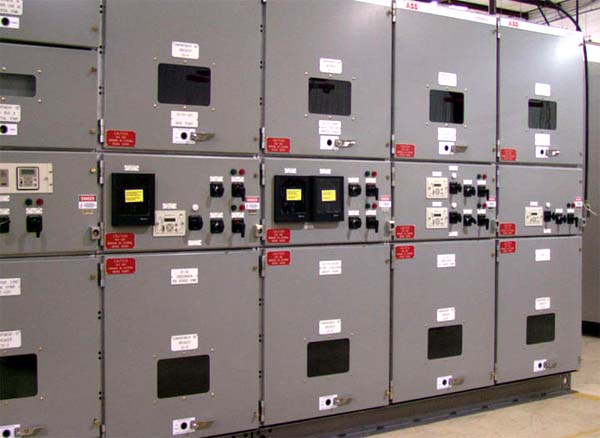
Комплектное распределительное устройство в металлической оболочке
Рис. ABBГОСТ 14693-90 - Устройства комплектные распределительные негерметизированные в металлической оболочке на напряжение до 10 кВ
Тематики
- комплектное распред. устройство (КРУ)
Синонимы
EN
- compartmented switchgear (with non-metallic partitions)
- cubicle switchgear
- MCSG
- MESG
- metal clad switch gear
- metal clad switchgear
- metal-enclosed switchgear
- metalclad switch gear
- metalclad switchgear
FR
комплектное устройство в металлической оболочке
-EN
metal-enclosed switchgear and controlgear
switchgear and controlgear assemblies with an external metal enclosure intended to be earthed, and complete except for external connections
[IEC 62271-203, ed. 1.0 (2003-11)]FR
appareillage sous enveloppe métallique
appareillage avec une enveloppe métallique externe destinée à être mise à la terre, entièrement terminé, à l'exception des connexions extérieures
[IEC 62271-203, ed. 1.0 (2003-11)]

 Комплектные устройства в металлической оболочке
Тематики
- НКУ (шкафы, пульты,...)
EN
FR
Франко-русский словарь нормативно-технической терминологии > appareillage sous enveloppe métallique
6 réseau à neutre isolé
система с изолированной нейтралью
Система, в которой нейтральная точка не заземлена преднамеренно, за исключением заземления через большое сопротивление для целей защиты и измерения.
[ ГОСТ Р МЭК 60050-195-2005]EN
isolated neutral system
system in which the neutral point is not intentionally earthed, except for high impedance connections for protection or measurement purposes
Source: 601-02-24 MOD
[IEV number 195-04-07]FR
réseau à neutre isolé
réseau dont le point neutre n'est pas mis à la terre intentionnellement, à l'exception des liaisons à haute impédance assurées à des fins de protection ou de mesure
Source: 601-02-24 MOD
[IEV number 195-04-07]Тематики
EN
DE
FR
электрическая сеть с изолированной нейтралью
Электрическая сеть, содержащая оборудование, нейтрали которого не присоединены к заземляющим устройствам или присоединены к ним через устройства измерения, защиты, сигнализации с большим сопротивлением.
[ ГОСТ 24291-90]
электрическая сеть с изолированной нейтралью
Сеть, нейтраль которой не имеет соединения с землей, за исключением приборов сигнализации, измерения и защиты, имеющих весьма высокое сопротивление, или сеть, нейтраль которой соединена с землей через дугогасящий реактор, индуктивность которого такова, что при однофазном замыкании на землю ток реактора в основном компенсирует емкостную составляющую тока замыкания на землю
[ ГОСТ 1516.1-76]
электрическая сеть с изолированной нейтралью
Сеть, нейтраль которой не имеет соединения с землей, за исключением приборов сигнализации, измерения и защиты, имеющих весьма высокое сопротивление. К сетям с изолированной нейтралью следует относить сети с компенсированной нейтралью, нейтраль которых соединена с землей через дугогасящий реактор (ДГР). Индуктивность ДГР такова, что при однофазном замыкании на землю (ОЗЗ) ток реактора компенсирует емкостную составляющую тока ОЗЗ
[Методические указания по защите распределительных электрических сетей напряжением 0,4-10 кВ от грозовых перенапряжений]
сеть с изолированной нейтралью
Сеть, в которой нейтральная точка специально соединена с землей (???), за исключением соединений с высоким сопротивлением с целью защиты или измерений. [IEV 601-02-24]
[ ГОСТ Р МЭК 60044-7-2010]EN
isolated neutral system
a system where the neutral point is not intentionally connected to earth, except for high impedance connections for protection or measurement purposes
[IEV number 601-02-24]FR
réseau à neutre isolé
réseau dont aucun point neutre n'a de connexion intentionnelle avec la terre, à l'exception des liaisons à haute impédance destinées à des dispositifs de protection ou de mesure
[IEV number 601-02-24]Тематики
Синонимы
EN
DE
FR
80 электрическая сеть с изолированной нейтралью
Электрическая сеть, содержащая оборудование, нейтрали которого не присоединены к заземляющим устройствам или присоединены к ним через устройства измерения, защиты, сигнализации с большим сопротивлением
601-02-24
de Netz mit isolirtem Sternpunkt
en isolated neutral system
fr réseau a neutre isolé
Источник: ГОСТ 24291-90: Электрическая часть электростанции и электрической сети. Термины и определения оригинал документа
Франко-русский словарь нормативно-технической терминологии > réseau à neutre isolé
7 cinq
c black cinq [sɛ̃k]━━━━━━━━━━━━━━━━━✦ The q is not pronounced before consonants, except with months, eg le cinq mars.* * *sɛ̃kadjectif invariable, pronom, nom masculin invariable five••il a dit les cinq lettres — ≈ he said a naughty word
* * *sɛ̃k1. adjElle a cinq ans. — She's five.
2. nm1) (= chiffre) five2) (= numéro) fiveIl habite au cinq et moi au sept. — He lives at number five and I live at number seven.
3) (= note) fiveJ'ai eu un cinq en géo. — I got five out of ten for geography.
4) (= jour) fifthNous sommes le cinq aujourd'hui. — It's the fifth today.
5) (= carte à jouer) five* * *je lui ai dit les cinq lettres I told him/her where to go; il a dit les cinq lettres ≈ he said a naughty word.[sɛ̃k] déterminant1. fivecinq cents/mille étoiles five hundred/thousand starsa. [fillette] she's five (years old ou of age)b. [voiture] it's five years old2. [dans des séries] fiveau chapitre cinq in chapter five, in the fifth chapteril arrive le cinq novembre he's arriving on November (the) fifth ou the fifth of November3. [pour exprimer les minutes]a. [d'horloge] five minutesb. [un moment] a short whilecinq minutes plus tard, il a changé d'avis a few minutes later he changed his mind————————[sɛ̃k] pronom————————[sɛ̃k] nom masculin invariabledeux fois cinq two times five, twice five2. [numéro d'ordre] number fiveallez au cinq [maison] go to number fivele cinq de carreau/pique the five of diamonds/spades[quille] kingpin4. [chiffre écrit]5. TÉLÉVISIONLa Cinq, La 5 former French television channelcinq sur cinq locution adverbialeen cinq sec locution adverbialeen cinq sec, c'était fait it was done before you could say "Jack Robinson"8 chaîne
chaîne° [∫εn]1. feminine nouna. (de métal) chainb. ( = ensemble, suite) chain ; [de montagnes] range• sur la première/deuxième chaîne on the first/second channel2. compounds► chaîne payante or à péage pay TV channel* * *ʃɛn
1.
1) ( entrave) chain2) ( de transmission) chain3) Industrie assembly lineon n'est pas à la chaîne! — (colloq) fig we're not machines, you know!
4) ( bijou) chain5) ( succession) chain6) ( organisation) network7) Géographie chain, range8) ( de télévision) channel9) Commerce chain10) Audio system11) Chimie chain
2.
chaînes nom féminin pluriel Automobile snow chainsPhrasal Verbs:* * *ʃɛn1. nf1) (pour lier, décorer) chainfaire la chaîne — to form a human chain, to form a chain
2) TV channel3) (stéréo) hi-fi system4) INFORMATIQUE string5) (= enchaînement)6) (montagneuse) range2. chaînes nfpl(= liens, asservissement) chains, shackles* * *A nf1 ( entrave) chain; mettre les chaînes à qn to put sb in chains; attacher qn avec des chaînes to chain sb up; attacher son chien à une chaîne to put one's dog on a chain; briser ses chaînes to cast off one's chains;2 Mécan chain; chaîne de transmission/de vélo transmission/bicycle chain; chaîne de sécurité safety chain;3 Ind assembly line; être/travailler à la chaîne to be/to work on the assembly line; produire (qch) à la chaîne to mass-produce (sth); production à la chaîne mass production; on n'est pas à la chaîne○! fig we're not machines, you know!; système éducatif à la chaîne conveyor-belt education system;5 ( succession) chain; des catastrophes en chaîne a series of disasters; réaction en chaîne chain reaction;7 Géog chain, range; chaîne de montagnes/des Pyrénées mountain/Pyrenean chain;8 ( de télévision) channel; chaîne de télévision television channel; deuxième chaîne channel 2; chaîne câblée/musicale/publique cable/music/public channel;10 Audio ( système) chaîne hi-fi hi-fi system; chaîne stéréo stereo system; chaîne compacte music centre;11 Chimie chain; chaîne moléculaire molecular chain;12 Tex warp.chaîne alimentaire food chain; chaîne d'arpenteur surveyor's chain; chaîne d'assemblage assembly line; chaîne de caractères character string; chaîne de commandement chain of command; chaîne éditoriale editorial process; chaîne de fabrication Ind production line; chaîne du froid cold chain; chaîne de montage Ind assembly line; chaîne nerveuse Anat sympathetic chain; chaîne des osselets Anat (chain of) bonelets; chaîne parlée Ling speech chain; chaîne de survie Méd chain of survival; chaîne thématique special interest channel.ⓘ Chaînes de télévision In all, France has 6 terrestrial TV channels. There are two state-owned channels, France 2 and France 3 where programmes are financed mostly by revenue from the TV licences paid by all TV owners, as well as four privately-owned channels. These are TF1 (télévision française 1) which has an obligation to ensure that 50% of its programmes are of French origin; Canal Plus, a subscription-operated channel which requires the use of a decoder except during brief periods when programmes are not scrambled (i.e. when they are broadcast en clair); la Cinquième (an educational channel) and Arte (a Franco-German cultural channel) which broadcast programmes on the same frequency but at different times of the day; and finally M6, a popular commercial channel.[ʃɛn] nom féminin1. [attache, bijou] chaina. [sur un bijou] safety chainb. [sur une porte] (door) chain4. AUDIO6. INDUSTRIEchaîne de montage/fabrication assembly/production linechaîne vide/de caractères nul/character string————————chaînes nom féminin pluriel————————à la chaîne locution adjectivale————————à la chaîne locution adverbiale[travailler, produire] on the production line————————en chaîne locution adjectivale9 convenir
convenir [kɔ̃vniʀ]➭ TABLE 22━━━━━━━━━━━━━━━━━► convenir is conjugated with avoir, except in the case of convenir de, where être is considered more correct.━━━━━━━━━━━━━━━━━1. transitive verb• convenir que... to agree that...• il est convenu que... it is agreed that...• tu as eu tort, conviens-en you were wrong, admit it• il convient de... ( = il vaut mieux) it is advisable to...• il convient de faire remarquer... we should point out...* * *kɔ̃vniʀ
1.
2) ( s'entendre) to agree ( que that)
2.
convenir à verbe transitif indirectconvenir à — to suit [personne, goût]; to be suitable for [circonstance, activité]
3.
convenir de verbe transitif indirect1) ( reconnaître)convenir de — to admit, to acknowledge [faute]; to acknowledge [qualité]
2) ( s'accorder sur)convenir de — [personnes] to agree on [date, prix]
4.
se convenir verbe pronominal [personnes] ( être assortis) to be well suited
5.
verbe impersonnel1) (il est sage, correct, nécessaire)il convient de faire — one should do ou ought to do
il convient que vous fassiez — you should do ou ought to do
2) ( il est entendu) fml* * *kɔ̃vniʀ vi1) (= être approprié) [arrangement, date] to be suitableJ'espère que cela vous conviendra. — I hope this will suit you.
il convient de (= préférable, conseillé) — it is advisable to, (= bienséant) it is right to, it is proper to
3) (= reconnaître, admettre)convenir de qch [bien-fondé de qch] — to admit sth, to acknowledge sth
convenir que — to admit that, to acknowledge the fact that
4) (= décider)convenir de [date, somme] — to agree on
Nous avons convenu d'une date. — We've agreed on a date.
* * *convenir verb table: venirA vtr1 ( concéder) to admit (que that); convenez que c'est faux you must admit (that) it's wrong; convenir avoir fait to admit having done;2 ( s'entendre) to agree (que that); nous sommes convenus or avons convenu que we have ou are agreed that.B convenir à vtr ind ( plaire à) to suit [personne, goût]; ( être approprié à) to be suitable for [circonstance, activité]; to suit, to be suitable for [personne]; ( ne pas gêner) [rendez-vous, horaire] to be convenient for [personne]; [aliment, climat] to agree with, to suit [personne]; ce poste m'aurait convenu that job would have suited me; si cela vous convient if it suits you; la date ne me convient pas that date isn't convenient for me; ( plus catégorique) that date is no good for me; c'est tout à fait ce qui me convient it's exactly what I need; de la taille/couleur qui convient of a suitable size/colourGB; de la façon qui convient in the appropriate manner; l'expression/le geste qui convient the appropriate expression/gesture; l'homme/le mot qui convient the right man/word.C convenir de vtr ind1 ( reconnaître) convenir de to admit, to acknowledge [faute, erreur]; to acknowledge [qualité]; il convient d'avoir été injuste he admits ou acknowledges (that) he has been unfair; j'en conviens I accept that;2 ( s'accorder sur) convenir de [personnes] to agree on [date, prix]; convenir de faire to agree to do.E v impers1 (il est sage, correct, nécessaire) il convient de faire one should do ou ought to do; il convient que vous fassiez you should do, you ought to do; dire ce qu'il aurait convenu de taire to say what should have been left unsaid; il aurait convenu de noter it should have been noted;2 ( il est entendu) fml il a été/est convenu que it has been/is agreed that; il était convenu depuis longtemps que it had long been agreed that; il est convenu ce qui suit it has been agreed as follows; ce qu'il est convenu d'appeler le réalisme what is commonly called realism; comme convenu as agreed.[kɔ̃vnir] verbe transitifconvenir que to agree ou to accept ou to admit that————————convenir à verbe plus préposition1. [être approprié à] to suit2. [plaire à] to suit10 h, cela vous convient-il? does 10 o'clock suit you?————————convenir de verbe plus préposition1. [se mettre d'accord sur] to agree uponil est convenu avec la direction de... it's agreed with the management to...2. [reconnaître]————————il convient de verbe impersonnel1. [il est souhaitable de] it is advisable ou a good idea to2. [il est de bon ton de] it is proper ou the done thing to————————se convenir verbe pronominal (emploi réciproque)10 fête
fête [fεt]1. feminine nounb. ( = jour du prénom) saint's dayc. ( = congé) holidayd. ( = foire, kermesse) faire. ( = réception) party• faire une fête (pour son anniversaire etc) to have a (birthday etc) partyf. ( = allégresse collective) la fête celebration• c'est la fête ! everyone's celebrating!• air/atmosphère de fête festive air/atmosphere2. compounds━━━━━━━━━━━━━━━━━The Fête de la Musique is a music festival which has taken place every year since 1981. On 21 June throughout France everybody is invited to play music in public places such as parks, streets and squares.━━━━━━━━━━━━━━━━━Holidays to which employees are entitled in addition to their paid leave in France are as follows:Religious holidays: Christmas Day, Easter Monday, Ascension Day, Pentecost, Assumption (15 August) and All Saints' Day (1 November).Other holidays: New Year's Day, 1 May (« la fête du travail »), 8 May (commemorating the end of the Second World War), 14 July (Bastille Day) and 11 November (Armistice Day).* * *fɛt1) ( jour chômé) public holiday GB, holiday US2) ( jour du saint patron)ça va être ma fête! — (colloq) iron I'm going to cop it! (colloq)
3) ( solennité religieuse) festival4) ( célébration) (day of) celebration5) ( réjouissances privées) partyfaire la fête — to live it up (colloq)
je serai de la fête! — fig I'll be there!
être à la fête — fig to have a field day
ne pas être à la fête — fig to be having a bad time
6) ( foire) fair; ( kermesse) fête, fair; ( manifestation culturelle) festival; ( réjouissances officielles) celebrations (pl)•Phrasal Verbs:••faire sa fête (colloq) à quelqu'un — to give somebody a working over (colloq)
ce n'est pas tous les jours la fête — Proverbe life is not a bed of roses
* * *fɛt1. nf1) (avec des amis, en famille) party, (pour fêter un événement) celebration, partyNous organisons une petite fête pour son anniversaire. — We're having a little party for his birthday.
faire la fête — to live it up, to celebrate
2) (jour de la fête du saint dont on porte le nom) name dayC'est sa fête aujourd'hui. — It's his name day today.
ça va être sa fête! fig * — he's going to get it!, *
3) (jour de la fête du saint) saint's day4) (publique) holiday5) [vendanges, lumières] festivalDimanche prochain, c'est la fête des vendanges. — Next Sunday is the grape harvest festival.
2. fêtes nfpl(Noël et Nouvel An) festive season* * *fête nf1 ( jour chômé) public holiday GB, holiday US; le vendredi saint, c'est fête? is Good Friday a public holiday GB ou a holiday US?; sauf dimanches et fêtes except Sundays and public holidays GB ou holidays US; où passes-tu les fêtes de Pâques/fin d'année? where are you going for Easter/Christmas?;2 ( jour du saint patron) c'est ma fête it's my (saint's) name-day; bonne fête! happy name-day!; ça va être ma fête○! iron I'm going to cop it○!; aujourd'hui, c'est la fête des pompiers today is the festival of the patron saint of firemen;3 ( solennité religieuse) festival; fête païenne/chrétienne pagan/Christian festival; la fête des morts All Souls' Day;4 ( célébration) (day of) celebration; les fêtes du bicentenaire the bicentenary celebrations;5 ( réjouissances privées) party; donner or faire une fête to give ou have a party; faire la fête to live it up○; être de la fête lit to be one of the party; compte sur moi, je serai de la fête! fig I'll be there!; fête de famille family gathering; ambiance/air de fête festive atmosphere/look; l'ambiance est à la fête the mood is festive; toute la ville était en fête the whole town was in holiday mood; avoir le cœur en fête to feel incredibly happy, to be bubbling over with joy; c'est une fête pour les yeux it's a feast for the eyes; être à la fête fig to have a field day; ne pas être à la fête to be having a bad time;6 ( réjouissances publiques) ( foire) fair; ( kermesse) fête, fair; ( manifestation culturelle) festival; ( réjouissances officielles) celebrations (pl); fête de la musique/bière music/beer festival; il y a la fête au village there's a fair in the village; que la fête commence! let the festivities begin!; fête paroissiale parish fête; les fêtes de Carnaval the carnival festivities; la fête de la moisson the harvest festival.fête de bienfaisance charity bazaar; fête fixe fixed feast; fête foraine funfair; fête légale public holiday GB, legal holiday US; fête des Mères Mothers' Day, Mothering Sunday GB; fête mobile movable feast; fête des Pères Fathers' Day; fête des Rois (Mages) Twelfth Night, Epiphany; fête du travail Labour Day, 1 May; Fête Nationale national holiday; ( en France) Bastille Day.le chien me fait fête quand je rentre the dog makes a great fuss of me when I get in; faire sa fête à qn○ to give sb a working over○; ce n'est pas tous les jours la fête Prov you have to take the rough with the smooth, life is not a bed of roses.ⓘ Fête nationale France's fête nationale is celebrated annually on the 14th July with nationwide firework displays, street parties, dancing and other local festivities. The date was chosen because of its symbolic significance, commemorating the fall of the Bastille in 1789 which signalled the end of the ancien régime.[fɛt] nom féminina. [généralement] the national holidayb. [en France] Bastille Dayc. [aux États-Unis] Independence Dayla fête des Rois Twelfth Night, Epiphany3. [réunion - d'amis] partyon donne ou organise une petite fête pour son anniversaire we're giving a party for his birthday, we're giving him a birthday partyle film est une vraie fête pour l'esprit/les sens the film is really uplifting/a real treat for the sensesune fête de famille a family celebration ou gatheringvous serez de la fête ? will you be joining us/them?4. [foire] fairfaire la fête to have a party ou (some) fun ou a good timela fête de l'Humanité ou de l'Huma (familier) annual festival organized by the Communist daily newspaper 'l'Humanité'la fête de la Musiqueannual music festival organized on the 21st of June in the streets of large towns5. (locution)————————fêtes nom féminin pluriel[généralement] holidays[de Noël et du jour de l'an] the Christmas and New Year celebrationsles fêtes juives/catholiques the Jewish/Catholic holidays————————de fête locution adjectivale[air, habits] festive————————en fête locution adjectivalela ville/les rues en fête the festive town/streetsThe French traditionally wish bonne fête to the person who has the same name as the saint commemorated on a particular day.11 appareillage recouvert de métal
комплектное распределительное устройство в металлической оболочке
-EN
metal-enclosed switchgear
switchgear assemblies with an external metallic enclosure intended to be earthed and complete except for external connections
NOTE The metal-enclosed switchgear is subdivided into three types:
– metal-clad switchgear;
– compartmented switchgear (with one or more non-metallic partitions);
– cubicle switchgear
[IEC 61992-1, ed. 2.0 (2006-02)]
metal-clad switchgear
metal-enclosed switchgear in which components are arranged in separate compartments with metal partitions intended to be earthed
NOTE 1 This term applies to metal-enclosed switchgear with metal partitions providing the degree of protection (or higher) included in IEC 61992-6 and having separate compartments at least for the following components:
– each main switching device;
– components connected to one side of a main switching device, for example, feeder circuit;
– components connected to the other side of the main switching device, for example, busbars; where more than one set of busbars is provided, each set is in a separate compartment.
NOTE 2 Metal-enclosed switchgear having metal partitions and meeting all the requirements of NOTE 1 may utilise an insulating shutter barrier as a part of a shutter arrangement, the combination of which provides the degree of protection included in Table 1 of IEC 61992-6 (or higher) and satisfies the requirements of the standard for partitions and shutters made of insulating material.
[IEC 61992-1, ed. 2.0 (2006-02)]
compartmented switchgear (with non-metallic partitions)
metal-enclosed switchgear in which components are arranged in separate compartments as for metal-clad switchgear, but with one or more non-metallic partitions providing the degree of protection (or higher) included in Table 1 of IEC 61992-6
NOTE Metal-enclosed switchgear in which the main circuit components are individually embedded in solid insulating material can be considered as an alternative, provided that the conditions specified in IEC 60466 are met.
[IEC 61992-1, ed. 2.0 (2006-02)]
cubicle switchgear
switchgear, other than metal-clad and compartmented switchgear
NOTE This term applies to switchgear having a metal enclosure and having
– a number of compartments fewer than required for metal-clad or compartmented switchgear, or
– partitions having a degree of protection lower than those indicated in Table 1 of IEC 61992-6, or
– no partitions.
[IEC 61992-1, ed. 2.0 (2006-02)]FR
appareillage sous enveloppe métallique
ensemble d’appareillage avec une enveloppe métallique externe destinée à être mise à la terre, entièrement terminé, à l’exception des connexions extérieures
NOTE L’appareillage sous enveloppe métallique se subdivise en trois types:
– appareillage recouvert de métal;
– appareillage à compartiments (avec une ou plusieurs cloisons non métalliques);
– appareillage d’armoire.
[IEC 61992-1, ed. 2.0 (2006-02)]
appareillage recouvert de métal
appareillage sous enveloppe métallique dans lequel les éléments constitutifs sont disposés dans des compartiments séparés par des cloisons métalliques destinées à être mises à la terre
NOTE 1 Ce terme s’applique à l’appareillage sous enveloppe métallique avec des cloisons métalliques offrant le degré de protection de la CEI 61992-6 (ou un degré supérieur) et ayant des compartiments séparés au moins pour les éléments constitutifs suivants:
– chaque appareil principal de connexion;
– les éléments constitutifs connectés à une face de l'appareil principal de connexion, par exemple le circuit d’alimentation;
– les éléments constitutifs connectés à l’autre face de l'appareil principal de connexion, par exemple les jeux de barres; lorsqu’il y a plus d’un jeu de barres, chaque jeu est dans un compartiment séparé.
NOTE 2 L’appareillage sous enveloppe métallique qui possède des cloisons métalliques et qui répond à toutes les dispositions de la note 1 peut utiliser une barrière en volet isolant comme une partie d’une disposition de volet, dont la combinaison fournit un degré de protection inclus au Tableau 1 de la CEI 61992-6 (ou un degré supérieur) et satisfait aux exigences de la norme pour les cloisons et les volets en matériau isolant.
[IEC 61992-1, ed. 2.0 (2006-02)]
appareillage à compartiments (avec cloisons non métalliques)
appareillage sous enveloppe métallique dans lequel les éléments constitutifs sont disposés dans des compartiments séparés comme pour l’appareillage recouvert de métal, mais avec une ou plusieurs cloisons non métalliques fournissant le degré de protection du Tableau 1 de la CEI 61992-6 (ou un degré supérieur)
NOTE L’appareillage sous enveloppe métallique dans lequel les éléments constitutifs du circuit principal sont noyés individuellement dans un matériau isolant solide peut être considéré comme une alternative, si les conditions spécifiées dans la CEI 60466 sont satisfaites.
[IEC 61992-1, ed. 2.0 (2006-02)]
pareillage d’armoire
appareillage, autre que l’appareillage recouvert de métal ou à compartiments
NOTE Ce terme s’applique à l’appareillage ayant une enveloppe métallique et ayant:
– soit un nombre de compartiments inférieur à celui exigé pour les appareillages recouverts de métal ou à compartiments;
– soit des cloisons d’un degré de protection inférieur à ceux du Tableau 1 de la CEI 61992-6;
– soit pas de cloisons.
[IEC 61992-1, ed. 2.0 (2006-02)]
Комплектное распределительное устройство в металлической оболочке
Рис. ABBГОСТ 14693-90 - Устройства комплектные распределительные негерметизированные в металлической оболочке на напряжение до 10 кВ
Тематики
- комплектное распред. устройство (КРУ)
Синонимы
EN
- compartmented switchgear (with non-metallic partitions)
- cubicle switchgear
- MCSG
- MESG
- metal clad switch gear
- metal clad switchgear
- metal-enclosed switchgear
- metalclad switch gear
- metalclad switchgear
FR
Франко-русский словарь нормативно-технической терминологии > appareillage recouvert de métal
12 appareillage à compartiments (avec cloisons non métalliques)
комплектное распределительное устройство в металлической оболочке
-EN
metal-enclosed switchgear
switchgear assemblies with an external metallic enclosure intended to be earthed and complete except for external connections
NOTE The metal-enclosed switchgear is subdivided into three types:
– metal-clad switchgear;
– compartmented switchgear (with one or more non-metallic partitions);
– cubicle switchgear
[IEC 61992-1, ed. 2.0 (2006-02)]
metal-clad switchgear
metal-enclosed switchgear in which components are arranged in separate compartments with metal partitions intended to be earthed
NOTE 1 This term applies to metal-enclosed switchgear with metal partitions providing the degree of protection (or higher) included in IEC 61992-6 and having separate compartments at least for the following components:
– each main switching device;
– components connected to one side of a main switching device, for example, feeder circuit;
– components connected to the other side of the main switching device, for example, busbars; where more than one set of busbars is provided, each set is in a separate compartment.
NOTE 2 Metal-enclosed switchgear having metal partitions and meeting all the requirements of NOTE 1 may utilise an insulating shutter barrier as a part of a shutter arrangement, the combination of which provides the degree of protection included in Table 1 of IEC 61992-6 (or higher) and satisfies the requirements of the standard for partitions and shutters made of insulating material.
[IEC 61992-1, ed. 2.0 (2006-02)]
compartmented switchgear (with non-metallic partitions)
metal-enclosed switchgear in which components are arranged in separate compartments as for metal-clad switchgear, but with one or more non-metallic partitions providing the degree of protection (or higher) included in Table 1 of IEC 61992-6
NOTE Metal-enclosed switchgear in which the main circuit components are individually embedded in solid insulating material can be considered as an alternative, provided that the conditions specified in IEC 60466 are met.
[IEC 61992-1, ed. 2.0 (2006-02)]
cubicle switchgear
switchgear, other than metal-clad and compartmented switchgear
NOTE This term applies to switchgear having a metal enclosure and having
– a number of compartments fewer than required for metal-clad or compartmented switchgear, or
– partitions having a degree of protection lower than those indicated in Table 1 of IEC 61992-6, or
– no partitions.
[IEC 61992-1, ed. 2.0 (2006-02)]FR
appareillage sous enveloppe métallique
ensemble d’appareillage avec une enveloppe métallique externe destinée à être mise à la terre, entièrement terminé, à l’exception des connexions extérieures
NOTE L’appareillage sous enveloppe métallique se subdivise en trois types:
– appareillage recouvert de métal;
– appareillage à compartiments (avec une ou plusieurs cloisons non métalliques);
– appareillage d’armoire.
[IEC 61992-1, ed. 2.0 (2006-02)]
appareillage recouvert de métal
appareillage sous enveloppe métallique dans lequel les éléments constitutifs sont disposés dans des compartiments séparés par des cloisons métalliques destinées à être mises à la terre
NOTE 1 Ce terme s’applique à l’appareillage sous enveloppe métallique avec des cloisons métalliques offrant le degré de protection de la CEI 61992-6 (ou un degré supérieur) et ayant des compartiments séparés au moins pour les éléments constitutifs suivants:
– chaque appareil principal de connexion;
– les éléments constitutifs connectés à une face de l'appareil principal de connexion, par exemple le circuit d’alimentation;
– les éléments constitutifs connectés à l’autre face de l'appareil principal de connexion, par exemple les jeux de barres; lorsqu’il y a plus d’un jeu de barres, chaque jeu est dans un compartiment séparé.
NOTE 2 L’appareillage sous enveloppe métallique qui possède des cloisons métalliques et qui répond à toutes les dispositions de la note 1 peut utiliser une barrière en volet isolant comme une partie d’une disposition de volet, dont la combinaison fournit un degré de protection inclus au Tableau 1 de la CEI 61992-6 (ou un degré supérieur) et satisfait aux exigences de la norme pour les cloisons et les volets en matériau isolant.
[IEC 61992-1, ed. 2.0 (2006-02)]
appareillage à compartiments (avec cloisons non métalliques)
appareillage sous enveloppe métallique dans lequel les éléments constitutifs sont disposés dans des compartiments séparés comme pour l’appareillage recouvert de métal, mais avec une ou plusieurs cloisons non métalliques fournissant le degré de protection du Tableau 1 de la CEI 61992-6 (ou un degré supérieur)
NOTE L’appareillage sous enveloppe métallique dans lequel les éléments constitutifs du circuit principal sont noyés individuellement dans un matériau isolant solide peut être considéré comme une alternative, si les conditions spécifiées dans la CEI 60466 sont satisfaites.
[IEC 61992-1, ed. 2.0 (2006-02)]
pareillage d’armoire
appareillage, autre que l’appareillage recouvert de métal ou à compartiments
NOTE Ce terme s’applique à l’appareillage ayant une enveloppe métallique et ayant:
– soit un nombre de compartiments inférieur à celui exigé pour les appareillages recouverts de métal ou à compartiments;
– soit des cloisons d’un degré de protection inférieur à ceux du Tableau 1 de la CEI 61992-6;
– soit pas de cloisons.
[IEC 61992-1, ed. 2.0 (2006-02)]
Комплектное распределительное устройство в металлической оболочке
Рис. ABBГОСТ 14693-90 - Устройства комплектные распределительные негерметизированные в металлической оболочке на напряжение до 10 кВ
Тематики
- комплектное распред. устройство (КРУ)
Синонимы
EN
- compartmented switchgear (with non-metallic partitions)
- cubicle switchgear
- MCSG
- MESG
- metal clad switch gear
- metal clad switchgear
- metal-enclosed switchgear
- metalclad switch gear
- metalclad switchgear
FR
Франко-русский словарь нормативно-технической терминологии > appareillage à compartiments (avec cloisons non métalliques)
13 pareillage d’armoire
комплектное распределительное устройство в металлической оболочке
-EN
metal-enclosed switchgear
switchgear assemblies with an external metallic enclosure intended to be earthed and complete except for external connections
NOTE The metal-enclosed switchgear is subdivided into three types:
– metal-clad switchgear;
– compartmented switchgear (with one or more non-metallic partitions);
– cubicle switchgear
[IEC 61992-1, ed. 2.0 (2006-02)]
metal-clad switchgear
metal-enclosed switchgear in which components are arranged in separate compartments with metal partitions intended to be earthed
NOTE 1 This term applies to metal-enclosed switchgear with metal partitions providing the degree of protection (or higher) included in IEC 61992-6 and having separate compartments at least for the following components:
– each main switching device;
– components connected to one side of a main switching device, for example, feeder circuit;
– components connected to the other side of the main switching device, for example, busbars; where more than one set of busbars is provided, each set is in a separate compartment.
NOTE 2 Metal-enclosed switchgear having metal partitions and meeting all the requirements of NOTE 1 may utilise an insulating shutter barrier as a part of a shutter arrangement, the combination of which provides the degree of protection included in Table 1 of IEC 61992-6 (or higher) and satisfies the requirements of the standard for partitions and shutters made of insulating material.
[IEC 61992-1, ed. 2.0 (2006-02)]
compartmented switchgear (with non-metallic partitions)
metal-enclosed switchgear in which components are arranged in separate compartments as for metal-clad switchgear, but with one or more non-metallic partitions providing the degree of protection (or higher) included in Table 1 of IEC 61992-6
NOTE Metal-enclosed switchgear in which the main circuit components are individually embedded in solid insulating material can be considered as an alternative, provided that the conditions specified in IEC 60466 are met.
[IEC 61992-1, ed. 2.0 (2006-02)]
cubicle switchgear
switchgear, other than metal-clad and compartmented switchgear
NOTE This term applies to switchgear having a metal enclosure and having
– a number of compartments fewer than required for metal-clad or compartmented switchgear, or
– partitions having a degree of protection lower than those indicated in Table 1 of IEC 61992-6, or
– no partitions.
[IEC 61992-1, ed. 2.0 (2006-02)]FR
appareillage sous enveloppe métallique
ensemble d’appareillage avec une enveloppe métallique externe destinée à être mise à la terre, entièrement terminé, à l’exception des connexions extérieures
NOTE L’appareillage sous enveloppe métallique se subdivise en trois types:
– appareillage recouvert de métal;
– appareillage à compartiments (avec une ou plusieurs cloisons non métalliques);
– appareillage d’armoire.
[IEC 61992-1, ed. 2.0 (2006-02)]
appareillage recouvert de métal
appareillage sous enveloppe métallique dans lequel les éléments constitutifs sont disposés dans des compartiments séparés par des cloisons métalliques destinées à être mises à la terre
NOTE 1 Ce terme s’applique à l’appareillage sous enveloppe métallique avec des cloisons métalliques offrant le degré de protection de la CEI 61992-6 (ou un degré supérieur) et ayant des compartiments séparés au moins pour les éléments constitutifs suivants:
– chaque appareil principal de connexion;
– les éléments constitutifs connectés à une face de l'appareil principal de connexion, par exemple le circuit d’alimentation;
– les éléments constitutifs connectés à l’autre face de l'appareil principal de connexion, par exemple les jeux de barres; lorsqu’il y a plus d’un jeu de barres, chaque jeu est dans un compartiment séparé.
NOTE 2 L’appareillage sous enveloppe métallique qui possède des cloisons métalliques et qui répond à toutes les dispositions de la note 1 peut utiliser une barrière en volet isolant comme une partie d’une disposition de volet, dont la combinaison fournit un degré de protection inclus au Tableau 1 de la CEI 61992-6 (ou un degré supérieur) et satisfait aux exigences de la norme pour les cloisons et les volets en matériau isolant.
[IEC 61992-1, ed. 2.0 (2006-02)]
appareillage à compartiments (avec cloisons non métalliques)
appareillage sous enveloppe métallique dans lequel les éléments constitutifs sont disposés dans des compartiments séparés comme pour l’appareillage recouvert de métal, mais avec une ou plusieurs cloisons non métalliques fournissant le degré de protection du Tableau 1 de la CEI 61992-6 (ou un degré supérieur)
NOTE L’appareillage sous enveloppe métallique dans lequel les éléments constitutifs du circuit principal sont noyés individuellement dans un matériau isolant solide peut être considéré comme une alternative, si les conditions spécifiées dans la CEI 60466 sont satisfaites.
[IEC 61992-1, ed. 2.0 (2006-02)]
pareillage d’armoire
appareillage, autre que l’appareillage recouvert de métal ou à compartiments
NOTE Ce terme s’applique à l’appareillage ayant une enveloppe métallique et ayant:
– soit un nombre de compartiments inférieur à celui exigé pour les appareillages recouverts de métal ou à compartiments;
– soit des cloisons d’un degré de protection inférieur à ceux du Tableau 1 de la CEI 61992-6;
– soit pas de cloisons.
[IEC 61992-1, ed. 2.0 (2006-02)]
Комплектное распределительное устройство в металлической оболочке
Рис. ABBГОСТ 14693-90 - Устройства комплектные распределительные негерметизированные в металлической оболочке на напряжение до 10 кВ
Тематики
- комплектное распред. устройство (КРУ)
Синонимы
EN
- compartmented switchgear (with non-metallic partitions)
- cubicle switchgear
- MCSG
- MESG
- metal clad switch gear
- metal clad switchgear
- metal-enclosed switchgear
- metalclad switch gear
- metalclad switchgear
FR
Франко-русский словарь нормативно-технической терминологии > pareillage d’armoire
14 eau fluviale
речная вода
—
[ http://www.eionet.europa.eu/gemet/alphabetic?langcode=en]EN
river water
Water which flows in a channel from high ground to low ground and ultimately to a lake or the sea, except in a desert area where it may dwindle away to nothing. (Source: WHIT)
[http://www.eionet.europa.eu/gemet/alphabetic?langcode=en]Тематики
EN
DE
FR
Франко-русский словарь нормативно-технической терминологии > eau fluviale
См. также в других словарях:
Where I Should Be — Infobox Album Name = Where I Should Be Type = Album Artist = Peter Frampton Released = June 21, 1979 Recorded = 1979 Genre = Rock Length = 41:04 Label = A M Producer = Peter Frampton Reviews = *Allmusic Rating|2.5|5… … Wikipedia
Where the Light Is — Infobox Album Name = Where the Light Is: Live in Los Angeles Type = live Artist = John Mayer Released = July 1, 2008 Recorded = December 8, 2007 at the L.A. Live Nokia Theatre Genre = Blues rock Director = Danny Clinch Producer = John Mayer,… … Wikipedia
Where Are You Now, My Son? — Infobox Album Name = Where Are You Now, My Son? Type = Album Artist = Joan Baez Cover size = 160px Released = March 1973 Recorded = Hanoi, Vietnam December 18 27, 1972 Nashville, January 1973 Genre = Folk Length = 44:42 Label = A M Producer =… … Wikipedia
Where Lovers Mourn — Infobox Album Name = Where Lovers Mourn Type = studio Artist = Draconian Released = Start date|2003|10|20 Recorded = Studio Mega by Chris Silver and Draconian in June 2003. Genre = Gothic doom Length = 52:40 Label = Napalm Producer = Reviews =… … Wikipedia
Where's Waldo? — is the North American book and media franchise first adapted for United States audiences from the Where s Wally? book by Martin Handford. OriginsThe franchise was created by Martin Handford. As a young adult, Handford illustrated crowds and other … Wikipedia
Where no man has gone before — is a phrase used in the title sequence of most episodes of the science fiction television series. It refers to the mission of the original starship Enterprise . The complete introductory sequence, narrated by William Shatner at the beginning of… … Wikipedia
Where's It At, Sugar Kat? — Where s it at Sugar Kat? is a humorous action comic book series created by Woodrow Phoenix and Ian Carney, published by Slave Labor Graphics. Sugar Kat is a supermodel and the most popular girl in the world. Rebecca is Sugar s brainy (and… … Wikipedia
except — ex|cept1 [ ık sept ] function word *** Except can be used in the following ways: as a preposition (followed by a noun): We haven t told anyone except Leslie s dad. as a conjunction (followed by a clause or adverbial phrase): I d go and see him… … Usage of the words and phrases in modern English
except — I UK [ɪkˈsept] / US conjunction, preposition *** Summary: Except can be used in the following ways: as a preposition (followed by a noun): We haven t told anyone except Leslie s dad. as a conjunction (followed by a clause or adverbial phrase): I… … English dictionary
Where's Charley? — Infobox Musical name= Where s Charley? subtitle= caption= Logo music= Frank Loesser lyrics= Frank Loesser book= George Abbott basis= Brandon Thomas s play Charley s Aunt productions= 1948 Broadway 1952 Film 1958 West End awards= Where s Charley?… … Wikipedia
Where in the World Is Carmen Sandiego? (game show) — Infobox Television bgcolour = #ffbfbf show name = Where in the World is Carmen Sandiego? format = Game Show runtime = 30 minutes creator = Brøderbund Software theme music composer = Sean Altman David Yazbek opentheme = Where in the World Is… … Wikipedia
Перевод: с французского на все языки
со всех языков на французский- Со всех языков на:
- Французский
- С французского на:
- Все языки
- Английский
- Русский
except+where

18+
© Академик, 2000-2026
- Обратная связь: Техподдержка, Реклама на сайте
Экспорт словарей на сайты, сделанные на PHP, Joomla, Drupal, WordPress, MODx.