

-
21 stabilizing winding
компенсационная обмотка
Дополнительная обмотка, соединенная по схеме «треугольник», предназначенная для снижения полного сопротивления нулевой последовательности (см. 3.7.3) в трансформаторах с обмотками, соединенными по схеме «звезда-звезда» или «звезда-зигзаг»
(МЭС 421-03-09).
Примечание — Обмотка считается компенсационной только в том случае, если она не предназначена для трехфазного присоединения к внешней сети.
[ ГОСТ 30830-2002]
компенсационная обмотка
КО
Вспомогательная обмотка, располагаемая на стержнях или ярмах с целью компенсации частей магнитного поля трансформатора.
Примечание. Возможна, например, компенсация магнитодвижущей силы регулировочной обмотки, магнитного поля нулевой последовательности, поля третьей гармонической и др.
[ ГОСТ 16110-82]EN
stabilizing winding
a supplementary delta-connected winding, especially provided on star-star or star-zigzag connected transformers to decrease the zero-sequence impedance of the star-connected winding
[IEV number 421-03-09]FR
enroulement de stabilisation
enroulement supplémentaire en triangle, spécialement utilisé sur des transformateurs à couplage étoile-étoile ou étoile-zigzag dans le but de réduire l'impédance homopolaire de l'enroulement connecté en étoile
[IEV number 421-03-09]Тематики
Классификация
>>>Синонимы
- КО
EN
DE
FR
Англо-русский словарь нормативно-технической терминологии > stabilizing winding
-
22 Concepts
From a psychological perspective, concepts are mental representations of classes (e.g., one's beliefs about the class of dogs or tables), and their most salient function is to promote cognitive economy.... By partitioning the world into classes, we decrease the amount of information we must perceive, learn, remember, communicate, and reason about. Thus, if we had no concepts, we would have to refer to each individual entity by its own name; every different table, for example, would be denoted by a different word. The mental lexicon required would be so enormous that communication as we know it might be impossible. Other mental functions might collapse under the sheer number of entities we would have to keep track of.Another important function of concepts is that they enable us to go beyond the information given.... When we come across an object, say a wolf, we have direct knowledge only of its appearance. It is essential that we go beyond appearances and bring to bear other knowledge that we have, such as our belief that wolves can bite and inflict severe injury. Concepts are our means of linking perceptual and nonperceptual information. We use a perceptual description of the creature in front of us to access the concept wolf and then use our nonperceptual beliefs to direct our behavior, that is, run. Concepts, then, are recognition devices; they serve as entry points into our knowledge stores and provide us with expectations that we can use to guide our actions.A third important function of concepts is that they can be combined to form complex concepts and thoughts. Stoves and burn are two simple concepts; Stoves can burn is a full-fledged thought. Presumably our understanding of this thought, and of complex concepts in general, is based on our understanding of the constituent concepts. (Smith, 1988, pp. 19-20)The concept may be a butterfly. It may be a person he has known. It may be an animal, a city, a type of action, or a quality. Each concept calls for a name. These names are wanted for what may be a noun or a verb, an adjective or an adverb. Concepts of this type have been formed gradually over the years from childhood on. Each time a thing is seen or heard or experienced, the individual has a perception of it. A part of that perception comes from his own concomitant interpretation. Each successive perception forms and probably alters the permanent concept. And words are acquired gradually, also, and deposited somehow in the treasure-house of word memory.... Words are often acquired simultaneously with the concepts.... A little boy may first see a butterfly fluttering from flower to flower in a meadow. Later he sees them on the wing or in pictures, many times. On each occasion he adds to his conception of butterfly.It becomes a generalization from many particulars. He builds up a concept of a butterfly which he can remember and summon at will, although when he comes to manhood, perhaps, he can recollect none of the particular butterflies of past experience.The same is true of the sequence of sound that makes up a melody. He remembers it after he has forgotten each of the many times he heard or perhaps sang or played it. The same is true of colours. He acquires, quite quickly, the concept of lavender, although all the objects of which he saw the colour have faded beyond the frontier of voluntary recall. The same is true of the generalization he forms of an acquaintance. Later on he can summon his concept of the individual without recalling their many meetings. (Penfield, 1959, pp. 228-229)Historical dictionary of quotations in cognitive science > Concepts
-
23 owner's equity
капитал акционеров: все активы за вычетом всех пассивов, которые представляют чистые средства акционеров; = shareholders' equity.* * ** * *собственный капитал; собственные средства. The amount of an owner's interest in an entity that is at-risk should the company become bankrupt. In the case of a corporation, it consists of capital stock, additional paid-in capital, and retained earnings. Capital stock may be par value or no par value. If par value, the total capital stock is equal to the number of shares outstanding times the par value. Additional paid-in capital is additional amounts paid for the stock over an above the par value. Retained earnings come from the net profits of the corporation. Profits increase retained earnings, losses and distributions decrease them. Example - Madison Inc. issues 200 shares of its common stock to Fred Flood for $60 per share, for a total of $12,000. Madison's common stock has a par value of $0.50. On the balance sheet the transaction would be recorded as capital stock of $100 (200 shares times $0.50 par value), and additional paid-in capital of $11,900 (the difference between the amount received for the stock and the par value). Assume further than Susan Newly buys 200 shares the following week for $70 per share ($14,000 total). The capital stock amount is the same ($100), but now the paid-in capital amount is increased by $13,900. . Словарь экономических терминов . -
24 odd
he has an \odd way of showing his feelings er hat eine merkwürdige Art, seine Gefühle zu zeigen;these trains leave at \odd times diese Züge haben ausgefallene Abfahrtszeiten;what an \odd coincidence! was für ein sonderbarer Zufall!;the \odd thing about it is that... das Komische daran ist, dass...;to find sth \odd etw komisch [o merkwürdig] finden;to look \odd komisch aussehen\odd shoes/ socks einzelne Schuhe/Socken;guess which number of the following sequence is the \odd one out rate mal, welche der folgenden Zahlen nicht dazugehört;she was always the \odd one out at school sie war immer eine Außenseiterin in der Schuleshe does the \odd teaching job but nothing permanent sie unterrichtet gelegentlich, hat aber keinen festen Job;to score the \odd goal hin und wieder einen Treffer landen;\odd visitor vereinzelter Besucher/vereinzelte Besucherin nthe \odds are... es ist sehr wahrscheinlich, dass...;the \odds on/ against sb doing sth die Chancen, dass jd etw tut/nicht tut;what are the \odds on him being late again? wie stehen die Chancen, dass er wieder zu spät kommt?;the \odds against my horse winning are a hundred to one die Chancen, dass mein Pferd nicht gewinnt, stehen hundert zu eins;PHRASES:it makes no \odds to me es ist mir [völlig] einerlei;does it make any \odds whether you use butter or oil? macht es einen Unterschied, ob du Butter oder Öl verwendest?;against all [the] \odds entgegen allen Erwartungen;to be at \odds with sb mit jdm uneins sein;to be at \odds with sth mit etw dat nicht übereinstimmen;I got paid a bit over the \odds for that job für diesen Job habe ich etwas mehr bezahlt bekommen -
25 decline
1. intransitive verb1) (fall off) nachlassen; [Moral:] sinken, nachlassen; [Preis, Anzahl:] sinken, zurückgehen; [Gesundheitszustand:] sich verschlechtern2) (refuse)2. transitive verbdecline with thanks — (also iron.) dankend ablehnen
1) (refuse) ablehnendecline to do something — [es] ablehnen, etwas zu tun
2) (Ling.) deklinieren3. nounNachlassen, das (in Gen.)a decline in prices/numbers — ein Sinken der Preise/Anzahl
* * *1. verb2) (to become less strong or less good etc: His health has declined recently; Our profits have temporarily declined.) sich verschlechtern2. noun(a gradual lessening or worsening (of health, standards, quantity etc): There has been a gradual decline in the birthrate.) der Rückgang* * *de·cline[dɪˈklaɪn]I. n1. (decrease) Rückgang m, Abnahme f; prices sich akk reduzieren, sich akk ermäßigen (to auf + akk), zurückgehena \decline in the number of unemployed ein Rückgang m der Arbeitslosenzahlto be on the [or in] \decline im Rückgang befindlich sein, zurückgehena rapid \decline in health ein schneller gesundheitlicher Verfallindustrial \decline Niedergang m der IndustrieII. vi1. (diminish) interest, popularity sinken, fallen, nachlassen, zurückgehen; health sich akk verschlechtern; strength abnehmen3. (refuse) ablehnenIII. vt▪ to \decline sth1. (refuse) etw ablehnento \decline an invitation/offer eine Einladung/ein Angebot ablehnen [o ausschlagen* * *[dI'klaɪn]1. n1) (in standards, birthrate, business, sales, prices) Rückgang m; (of empire, a party's supremacy) Untergang m, Niedergang mto be on the or in decline, to go or fall into decline (business) — zurückgehen; (empire) verfallen
she went into a decline — es ging bergab mit ihr
2. vt1) invitation, honour ablehnenhe declined to come — er hat es abgelehnt, zu kommen
3. vi1) (empire) verfallen; (fame) verblassen; (health) sich verschlechtern; (prices, business) zurückgehen; (importance, significance, value) geringer werden; (custom) aussterben; (popularity, enthusiasm, interest) abnehmen; (population, influence) abnehmen, zurückgehen2) (= refuse, say no) ablehnen3) (= slope ground) abfallenin his declining years — gegen Ende seiner Tage (liter)
* * *decline [dıˈklaın]A v/i1. sich neigen, sich senken, abschüssig sein, abfallen2. sich neigen, zur Neige gehen, dem Ende zugehen:declining age vorgerücktes Alter;he is in his declining years sein Leben neigt sich dem Ende zu3. verfallen, in Verfall geraten4. sich verschlechtern, abnehmen, zurückgehen (Geschäfte etc)5. sinken, fallen (Preise)6. verfallen (alter Mensch etc)7. sich herbeilassen (to zu)8. (höflich) ablehnen9. LING dekliniert werdenB v/t1. neigen, senken2. ausschlagen, (höflich) ablehnen:decline with thanks oft iron dankend ablehnen3. es ablehnen ( to do zu tun)4. LING deklinierenC s1. Neigung f, Senkung f2. Abhang m3. Neige f, Ende n:decline of life vorgerücktes Alter, Lebensabend m4. Sinken n, Untergang m (der Sonne)5. Niedergang m, Verfall m:a) zur Neige gehen,b) im Niedergang begriffen sein, sinken6. Verschlechterung f, Abnahme f, Rückgang m:decline in sales WIRTSCH Absatzrückgang;8. MEDa) (körperlicher und geistiger) Verfallb) obs Siechtum n, besonders Lungentuberkulose f* * *1. intransitive verb1) (fall off) nachlassen; [Moral:] sinken, nachlassen; [Preis, Anzahl:] sinken, zurückgehen; [Gesundheitszustand:] sich verschlechtern2) (refuse)2. transitive verbdecline with thanks — (also iron.) dankend ablehnen
1) (refuse) ablehnendecline to do something — [es] ablehnen, etwas zu tun
2) (Ling.) deklinieren3. nounNachlassen, das (in Gen.)a decline in prices/numbers — ein Sinken der Preise/Anzahl
* * *n.Abstieg -e m.Ruin nur sing. m. v.ablehnen v. -
26 ecological factor
экологический фактор
—
[ http://www.eionet.europa.eu/gemet/alphabetic?langcode=en]EN
ecological factor
An environmental factor that, under some definite conditions, can exert appreciable influence on organisms or their communities, causing the increase or decrease in the number of organisms and/or changes in the communities. (Source: UNUN)
[http://www.eionet.europa.eu/gemet/alphabetic?langcode=en]Тематики
EN
DE
FR
Англо-русский словарь нормативно-технической терминологии > ecological factor
-
27 significant
adjective1) (noteworthy, important) bedeutend2) (full of meaning) bedeutsam* * *[siɡ'nifikənt]1) (important; having an important effect: a significant event/development.) bedeutsam2) (having a special meaning; meaningful: a significant look/smile.)3) (considerable; marked: There was no significant change in the patient's condition; There was a significant drop in the number of road accidents last year.)* * *sig·nifi·cant[sɪgˈnɪfɪkənt, AM ˈnɪfə-]\significant contribution bedeutender Beitrag\significant date/event wichtiges Datum/Ereignis\significant decrease beachtlicher Rückgang\significant difference deutlicher Unterschied\significant improvement beachtliche Verbesserung\significant increase beträchtlicher Anstieg\significant part beachtlicher [An]teilto be historically \significant eine historisch bedeutende Rolle spielen2. (meaningful) bedeutsamdo you think it's \significant that... glaubst du, es hat etwas zu bedeuten, dass...a \significant look ein viel sagender Blick* * *[sIg'nIfɪkənt]adj1) (= considerable, having consequence) bedeutend; (= important) wichtigto be significant to or for sth — eine bedeutende or wichtige Rolle in etw (dat) spielen
statistically significant —
politically/historically significant — politisch/historisch bedeutend
2) (= meaningful) bedeutungsvoll; look vielsagend, bedeutsam; sigh, tone of voice bedeutungsvoll, bedeutsamit is significant that... — es ist bezeichnend, dass...
he wondered whether her glance was significant — er fragte sich, ob ihr Blick etwas zu bedeuten habe
to be significant of sth (liter) — ein (An)zeichen nt für etw sein
* * *significant [sıɡˈnıfıkənt] adj1. bezeichnend (of für):2. bedeutsam, wichtig, von Bedeutung3. wesentlich, merklich4. fig vielsagend (Geste etc)a) SOZIOL Bezugsperson f,b) Ehepartner(in),c) Lebensgefährte m, -gefährtin f* * *adjective1) (noteworthy, important) bedeutend2) (full of meaning) bedeutsam* * *adj.bedeutend adj.bedeutsam adj.bedeutsamen adj.bezeichnend adj.gültig adj.signifikant adj.wertig adj. -
28 decline
de·cline [dɪʼklaɪn] na \decline in the number of unemployed ein Rückgang m der Arbeitslosenzahl;a rapid \decline in health ein schneller gesundheitlicher Verfall;industrial \decline Niedergang m der Industrie vi1) ( diminish) interest, popularity sinken, fallen, nachlassen, zurückgehen; health sich akk verschlechtern; strength abnehmen3) ( refuse) ablehnen;to \decline sth1) ( refuse) etw ablehnen; -
29 down-regulation
1) Биология: даун-регуляция, понижающая регуляция2) Медицина: подавление, супрессия3) Иммунология: регуляция по типу отрицательной (обратной) связи, супрессирующий эффект, супрессирующие механизмы (иммунного ответа), отрицательная негативная модуляция (функции)4) Молекулярная генетика: Уменьшение числа рецепторов и ослабление их реакции (A decrease in the number of receptors for a chemical or drug on cell surfaces in a given area)5) Энергосистемы: регулирование на понижение6) Молекулярная биология: угнетающая регуляция -
30 fall off
-
31 over
1.['əʊvə(r)]adverb1) (outward and downward) hinüber2) (so as to cover surface)draw/board/cover over — zuziehen/-nageln/-decken
3) (with motion above something)climb/look/jump over — hinüber- od. (ugs.) rüberklettern/-sehen/-springen
4) (so as to reverse position etc.) herumswitch over — umschalten [Programm, Sender]
it rolled over and over — es rollte und rollte
he swam over to us/the other side — er schwamm zu uns herüber/hinüber zur anderen Seite
they are over [here] for the day — sie sind einen Tag hier
ask somebody over [for dinner] — jemanden [zum Essen] einladen
6) (Radio)[come in, please,] over — übernehmen Sie bitte
7) (in excess etc.)children of 12 and over — Kinder im Alter von zwölf Jahren und darüber
be [left] over — übrig [geblieben] sein
have over — übrig haben [Geld]
9 into 28 goes 3 and 1 over — 28 geteilt durch neun ist gleich 3, Rest 1
it's a bit over — (in weight) es ist ein bisschen mehr
8) (from beginning to end) von Anfang bis Endesay something twice over — etwas wiederholen od. zweimal sagen
over and over [again] — immer wieder
9) (at an end) vorbei; vorüberbe over — vorbei sein; [Aufführung:] zu Ende sein
get something over with — etwas hinter sich (Akk.) bringen
10)all over — (completely finished) aus [und vorbei]; (in or on one's whole body etc.) überall; (in characteristic attitude) typisch
I ache all over — mir tut alles weh
be shaking all over — am ganzen Körper zittern
embroidered all over with flowers — ganz mit Blumen bestickt
that is him/something all over — das ist typisch für ihn/etwas
11) (overleaf) umseitig2. prepositionhit somebody over the head — jemandem auf den Kopf schlagen
carry a coat over one's arm — einen Mantel über dem Arm tragen
3) (in or across every part of) [überall] in (+ Dat.); (to and fro upon) über (+ Akk.); (all through) durchshe spilt wine all over her skirt — sie hat sich (Dat.) Wein über den ganzen Rock geschüttet
5) (on account of) wegenlaugh over something — über etwas (Akk.) lachen
6) (engaged with) beitake trouble over something — sich (Dat.) mit etwas Mühe geben
over work/dinner/a cup of tea — bei der Arbeit/beim Essen/bei einer Tasse Tee
7) (superior to, in charge of) über (+ Akk.)have command/authority over somebody — Befehlsgewalt über jemanden/Weisungsbefugnis gegenüber jemandem haben
be over somebody — (in rank) über jemandem stehen
9) (in comparison with)a decrease over last year — eine Abnahme gegenüber dem letzten Jahr
10) (out and down from etc.) über (+ Akk.)11) (across) über (+ Akk.)the pub over the road — die Wirtschaft auf der anderen Straßenseite od. gegenüber
climb over the wall — über die Mauer steigen od. klettern
be over the worst — das Schlimmste hinter sich (Dat.) od. überstanden haben
12) (throughout, during) über (+ Akk.)stay over Christmas/the weekend/Wednesday — über Weihnachten/das Wochenende/bis Donnerstag bleiben
* * *['əuvə] 1. preposition1) (higher than; above in position, number, authority etc: Hang that picture over the fireplace; He's over 90 years old.) über2) (from one side to another, on or above the top of; on the other side of: He jumped over the gate; She fell over the cat; My friend lives over the street.) über3) (covering: He put his handkerchief over his face.) über4) (across: You find people like him all over the world.) über5) (about: a quarrel over money.) wegen6) (by means of: He spoke to her over the telephone.) durch7) (during: Over the years, she grew to hate her husband.) während8) (while having etc: He fell asleep over his dinner.) über2. adverb1) (higher, moving etc above: The plane flew over about an hour ago.)2) (used to show movement, change of position: He rolled over on his back; He turned over the page.)3) (across: He went over and spoke to them.)4) (downwards: He fell over.)5) (higher in number etc: for people aged twenty and over.)6) (remaining: There are two cakes for each of us, and two over.)3. adjective(finished: The affair is over now.) über4. noun((in cricket) a certain number of balls bowled from one end of the wicket: He bowled thirty overs in the match.) das Over5. as part of a word2) (in a higher position, as in overhead.) ober...3) (covering, as in overcoat.) über...4) (down from an upright position, as in overturn.) um...5) (completely, as in overcome.) über...•- academic.ru/117784/over_again">over again- over all
- over and done with* * *[ˈəʊvəʳ, AM ˈoʊvɚ]I. adv inv, predcome \over here komm hierherwhy don't you come \over for dinner on Thursday? kommt doch am Donnerstag zum Abendessen zu unshe is flying \over from the States tomorrow er kommt morgen aus den Staaten 'rüber famI've got a friend \over from Canada this week ich habe diese Woche einen Freund aus Kanada zu Besuchto move [sth] \over [etw] [beiseite] rückenI've got a friend \over in Munich ein Freund von mir lebt in München\over the sea in Übersee\over there dort [drüben]3. (another way up) auf die andere Seitethe dog rolled \over onto its back der Hund rollte sich auf den Rückento turn sth \over etw umdrehento turn a page \over [eine Seite] umblättern\over and \over [immer wieder] um sich akk selbstthe children rolled \over and \over down the gentle slope die Kinder kugelten den leichten Abhang hinunter4. (downwards)to fall \over hinfallento knock sth \over etw umstoßen5. (finished)▪ to be \over vorbei [o aus] seinthe game was \over by 5 o'clock das Spiel war um 5 Uhr zu Endeit's all \over between us zwischen uns ist es austhat's all \over now damit ist es jetzt vorbeito get sth \over with etw abschließento get sth \over and done with etw hinter sich akk bringen6. AVIAT, TELEC over, Ende\over and out Ende [der Durchsage] fam7. (remaining)[left] \over übrigthere were a few sandwiches left \over ein paar Sandwiches waren noch übrig8. (thoroughly, in detail)to read sth \over etw durchlesento talk sth \over etw durchsprechento think sth \over etw überdenken9. (throughout)the world \over überall auf der Weltall \over ganz und garthat's him all \over typisch erI was wet all \over ich war völlig durchnässtall \over alles noch einmalI'll make you write it all \over ich lasse dich alles noch einmal schreibento say everything twice \over alles zweimal sagen; five times \over fünfmal hintereinander\over and \over immer [o wieder und] wieder11. (sb's turn)I've done all I can. it's now over to you ich habe alles getan, was ich konnte. jetzt bist du dran12. RADIO, TVand now it's \over to John Regis for his report wir geben jetzt weiter an John Regis und seinen Berichtnow we're going \over to Wembley for commentary zum Kommentar schalten wir jetzt hinüber nach Wembley13. (more) mehrpeople who are 65 and \over Menschen, die 65 Jahre oder älter sind14.▶ to give \over die Klappe halten sl▶ to hold sth \over etw verschiebenII. prephe spilled wine \over his shirt er goss sich Wein über sein Hemdhe looked \over his newspaper er schaute über seine Zeitung hinwegthe village is just \over the next hill das Dorf liegt hinter dem nächsten Hügelthe diagram is \over the page das Diagramm ist auf der nächsten Seitethey live just \over the road from us sie wohnen uns gegenüber auf der anderen Straßenseiteto have a roof \over one's head ein Dach über dem Kopf habenall \over überall in + datshe had blood all \over her hands sie hatte die Hände voll Blutyou've got mustard all \over your face du hast Senf überall im Gesichtall \over the country im ganzen Landwe travelled all \over the country wir haben das ganze Land bereistall \over the world auf der ganzen Weltto be all \over sb (sl) von jdm hingerissen seinto show sb \over the house jdm das Haus zeigen, während + genshall we talk about it \over a cup of coffee? sollen wir das bei einer Tasse Kaffee besprechen?gentlemen are asked not to smoke \over dinner die Herren werden gebeten, während des Essens nicht zu rauchenshe fell asleep \over her homework sie nickte über ihren Hausaufgaben ein\over the last few months in den letzten Monaten\over the summer den Sommer über\over the years mit den Jahrenthis shirt cost me \over £50! dieses Hemd hat mich über 50 Pfund gekostet!they are already 25 million dollars \over budget sie haben das Budget bereits um 25 Millionen Dollar überzogenhe will not survive \over the winter er wird den Winter nicht überstehen\over and above über + akk... hinausshe receives an extra allowance \over and above the usual welfare payments sie bekommt über die üblichen Sozialhilfeleistungen hinaus eine zusätzliche Beihilfe\over and above that darüber hinaus7. (through)he told me \over the phone er sagte es mir am Telefonwe heard the news \over the radio wir hörten die Nachricht im Radiohe has authority \over thirty employees er hat dreißig Mitarbeiter unter sichshe has a regional sales director \over her sie untersteht einem Gebietsvertriebsleitera colonel is \over a sergeant in the army ein Colonel steht über einem Sergeant in der Armeeher husband always did have a lot of influence \over her ihr Mann hat schon immer einen großen Einfluss auf sie gehabtthere's no point in arguing \over it es hat keinen Sinn, darüber zu streitendon't fret \over him — he'll be alright mach dir keine Sorgen um ihn — es wird ihm schon gutgehenwe've been \over this before — no TV until you've done your homework das hatten wir doch alles schon — kein Fernsehen bis du deine Hausaufgaben gemacht hasthe's not fully recovered but he's certainly \over the worst er ist zwar noch nicht wieder ganz gesund, aber er hat das Schlimmste überstandento be/get \over sb über die Trennung von jdm hinweg sein/kommento be \over an obstacle ein Hindernis überwunden haben48 \over 7 is roughly 7 48 durch 7 ist ungefähr 72 \over 5 zwei Fünftel* * *['əʊvə(r)]1. prep1) (indicating motion) über (+acc)he spilled coffee over it — er goss Kaffee darüber, er vergoss Kaffee darauf
2) (indicating position = above, on top of) über (+dat)if you hang the picture over the desk — wenn du das Bild über dem Schreibtisch aufhängst or über den Schreibtisch hängst
3) (= on the other side of) über (+dat); (= to the other side of) über (+acc)the house over the road —
it's just over the road from us — das ist von uns (aus) nur über die Straße
when they were over the river — als sie über den Fluss hinüber waren
4) (= in or across every part of) in (+dat)they came from all over England —
you've got ink all over you/your hands — Sie/Ihre Hände sind ganz voller Tinte
5) (= superior to) über (+dat)he has no control over his urges/his staff — er hat seine Triebe/seine Angestellten nicht unter Kontrolle
6) (= more than, longer than) über (+acc)that was well over a year ago — das ist gut ein Jahr her, das war vor gut einem Jahr
over the summer we have been trying... — während des Sommers haben wir versucht...
over the (past) years I've come to realize... — im Laufe der (letzten) Jahre ist mir klar geworden...
8)they talked over a cup of coffee —
let's discuss that over dinner/a beer — besprechen wir das beim Essen/bei einem Bier
9)10) (= about) über (+acc)it's not worth arguing over —
11)blood pressure of 150 over 120 — Blutdruck m von 150 zu 120
2. advthey swam over to us —
he took the fruit over to his mother when the first man is over the second starts to climb/swim — er brachte das Obst zu seiner Mutter hinüber wenn der Erste drüben angekommen ist, klettert/schwimmt der Zweite los
I just thought I'd come over — ich dachte, ich komme mal rüber (inf)
he is over here/there — er ist hier/dort drüben
and now over to our reporter in Belfast — und nun schalten wir zu unserem Reporter in Belfast um
and now over to Paris where... — und nun (schalten wir um) nach Paris, wo...
he drove us over to the other side of town — er fuhr uns ans andere Ende der Stadt
he went over to the enemy — er lief zum Feind über
2)you've got dirt all over — Sie sind voller Schmutz, Sie sind ganz schmutzig
I'm wet all over — ich bin völlig nass
3)(indicating movement from one side to another, from upright position)
to turn an object over (and over) — einen Gegenstand (immer wieder) herumdrehenhe hit her and over she went — er schlug sie, und sie fiel um
4) (= ended) film, first act, operation, fight etc zu Ende; romance, summer vorbei, zu Endethe pain will soon be over — der Schmerz wird bald vorbei sein
the danger was over — die Gefahr war vorüber, es bestand keine Gefahr mehr
5)over and over (again) — immer (und immer) wieder, wieder und wieder
must I say everything twice over! — muss ich denn immer alles zweimal sagen!
6) (= excessively) übermäßig, allzu7) (= remaining) übrigthere was no/a lot of meat (left) over — es war kein Fleisch mehr übrig/viel Fleisch übrig
7 into 22 goes 3 and 1 over — 22 durch 7 ist 3, Rest 1
8)(= more)
children of 8 and over —all results of 5.3 and over — alle Ergebnisse ab 5,3 or von 5,3 und darüber
9) (TELEC)come in, please, over — bitte kommen, over
over and out — Ende der Durchsage; (Aviat) over and out
3. n (CRICKET)6 aufeinanderfolgende Würfe* * *over [ˈəʊvə(r)]A präp3. (Richtung, Bewegung) über (akk), über (akk) … hin, über (akk) … (hin)weg:the bridge over the Danube die Brücke über die Donau;he escaped over the border er entkam über die Grenze;he will get over it fig er wird darüber hinwegkommen4. durch:5. Br über (dat), jenseits (gen), auf der anderen Seite von (oder gen):over the sea in Übersee, jenseits des Meeres;over the way gegenüber6. über (dat), bei:he fell asleep over his work er schlief über seiner Arbeit ein;over a cup of tea bei einer Tasse Tee7. über (akk), wegen:8. (Herrschaft, Autorität, Rang) über (dat oder akk):be over sb über jemandem stehen;reign over a kingdom über ein Königreich herrschen;he set him over the others er setzte ihn über die anderen9. vor (dat):preference over the others Vorzug vor den andern10. über (akk), mehr als:over a week über eine Woche, länger als eine Woche;over and above zusätzlich zu, außer ( → B 13)11. über (akk), während:over the years im Laufe der Jahre;over many years viele Jahre hindurch12. durch:he went over his notes er ging seine Notizen durchB adv1. hinüber…, darüber…:2. hinüber… (to zu):they went over to the enemy sie liefen zum Feind über4. herüber…:come over!5. drüben:over by the tree drüben beim Baum;over in Canada (drüben) in Kanada;a) da drüben,b) US umg (drüben) in Europa;6. (genau) darüber:7. darüber(…), über…(-decken etc):paint sth over etwas übermalena) über…(-geben etc)b) über…(-kochen etc)9. (oft in Verbindung mit Verben)a) um…(-fallen, -werfen etc)b) herum…(-drehen etc)10. durch(weg), von Anfang bis (zum) Ende:one foot over ein Fuß im Durchmesser;a) in der ganzen Welt,b) durch die ganze Welt11. (gründlich) über…(-legen, -denken etc)12. nochmals, wieder:(all) over again nochmal, (ganz) von vorn;over and over again immer (u. immer) wieder;do sth over etwas nochmals tun;ten times over zehnmal hintereinander13. darüber, mehr:children of ten years and over Kinder ab 10 Jahren;10 ounces and over 10 Unzen und mehr;over and above außerdem, obendrein, überdies ( → A 10)14. übrig:15. (zeitlich, im Deutschen oft unübersetzt)a) ständigb) länger:we stayed over till Monday wir blieben bis Montag16. zu Ende, vorüber, vorbei:over! (Funksprechverkehr) over!, kommen!;all over ganz vorbei;all over with erledigt, vorüber;it’s all over with him es ist aus und vorbei mit ihm, er ist endgültig erledigt umg;all over and done with total erledigtC adj1. ober(er, e, es), Ober…2. äußer(er, e, es), Außen…3. überzählig, überschüssig, übrigD s Überschuss m:over of exports Exportüberschuss* * *1.['əʊvə(r)]adverb1) (outward and downward) hinüberdraw/board/cover over — zuziehen/-nageln/-decken
3) (with motion above something)climb/look/jump over — hinüber- od. (ugs.) rüberklettern/-sehen/-springen
4) (so as to reverse position etc.) herumswitch over — umschalten [Programm, Sender]
5) (across a space) hinüber; (towards speaker) herüberhe swam over to us/the other side — er schwamm zu uns herüber/hinüber zur anderen Seite
over here/there — (direction) hier herüber/dort hinüber; (location) hier/dort
they are over [here] for the day — sie sind einen Tag hier
ask somebody over [for dinner] — jemanden [zum Essen] einladen
6) (Radio)[come in, please,] over — übernehmen Sie bitte
7) (in excess etc.)be [left] over — übrig [geblieben] sein
have over — übrig haben [Geld]
9 into 28 goes 3 and 1 over — 28 geteilt durch neun ist gleich 3, Rest 1
it's a bit over — (in weight) es ist ein bisschen mehr
8) (from beginning to end) von Anfang bis Endesay something twice over — etwas wiederholen od. zweimal sagen
over and over [again] — immer wieder
9) (at an end) vorbei; vorüberbe over — vorbei sein; [Aufführung:] zu Ende sein
get something over with — etwas hinter sich (Akk.) bringen
10)all over — (completely finished) aus [und vorbei]; (in or on one's whole body etc.) überall; (in characteristic attitude) typisch
that is him/something all over — das ist typisch für ihn/etwas
11) (overleaf) umseitig2. preposition3) (in or across every part of) [überall] in (+ Dat.); (to and fro upon) über (+ Akk.); (all through) durchall over — (in or on all parts of) überall in (+ Dat.)
she spilt wine all over her skirt — sie hat sich (Dat.) Wein über den ganzen Rock geschüttet
5) (on account of) wegenlaugh over something — über etwas (Akk.) lachen
6) (engaged with) beitake trouble over something — sich (Dat.) mit etwas Mühe geben
over work/dinner/a cup of tea — bei der Arbeit/beim Essen/bei einer Tasse Tee
7) (superior to, in charge of) über (+ Akk.)have command/authority over somebody — Befehlsgewalt über jemanden/Weisungsbefugnis gegenüber jemandem haben
be over somebody — (in rank) über jemandem stehen
8) (beyond, more than) über (+ Akk.)it's been over a month since... — es ist über einen Monat her, dass...
10) (out and down from etc.) über (+ Akk.)11) (across) über (+ Akk.)the pub over the road — die Wirtschaft auf der anderen Straßenseite od. gegenüber
climb over the wall — über die Mauer steigen od. klettern
be over the worst — das Schlimmste hinter sich (Dat.) od. überstanden haben
12) (throughout, during) über (+ Akk.)stay over Christmas/the weekend/Wednesday — über Weihnachten/das Wochenende/bis Donnerstag bleiben
* * *adj.aus adj.vorbei adj.übermäßig adj. prep.hinüber präp.über präp. -
32 reduce
rə'dju:s1) (to make less, smaller etc: The shop reduced its prices; The train reduced speed.) reducir2) (to lose weight by dieting: I must reduce to get into that dress.) adelgazar, perder peso3) (to drive, or put, into a particular (bad) state: The bombs reduced the city to ruins; She was so angry, she was almost reduced to tears; During the famine, many people were reduced to eating grass and leaves.) reducir (a)•- reduction
reduce vb1. reducir / disminuir2. rebajartr[rɪ'djʊːs]1 (gen) reducir, disminuir2 (price etc) rebajar\SMALLIDIOMATIC EXPRESSION/SMALL'Reduce speed now' "Disminuya la velocidad"to be reduced to doing something no tener más remedio que hacer algo, verse obligado,-a a hacer algoto be reduced to something verse sumido,-a en algoto reduce somebody to tears hacer llorar a alguien1) lessen: reducir, disminuir, rebajar (precios)2) demote: bajar de categoría, degradar3)to be reduced to : verse rebajado a, verse forzado a4)to reduce someone to tears : hacer llorar a alguienreduce vislim: adelgazarv.• abreviar v.• achicar v.• acortar v.• adelgazar v.• apocar v.• bajar de peso v.• cercenar v.• ceñir v.• deshinchar v.• disminuir v.• estrechar v.• limitar v.• moderar v.• rebajar v.• reducir v.rɪ'duːs, rɪ'djuːs1)a) \<\<number/amount\>\> reducir*; \<\<tension/pressure/speed\>\> disminuir*, reducir*; \<\<price/taxes/rent\>\> reducir*, rebajar; \<\<goods\>\> rebajar; \<\<pain\>\> aliviarb) \<\<photograph/image\>\> reducir*2)a) (break down, simplify)to reduce something TO something — reducir* algo a algo
b) ( Math) simplificar*to reduce something/somebody TO something — (often pass)
[rɪ'djuːs]to reduce somebody to tears — hacer* llorar a alguien
1. VT1) (=decrease) [+ number, costs, expenditure, inflation] reducir; [+ price] rebajar; (Ind) [+ output] reducir, recortar; [+ speed, heat, visibility] disminuir; [+ temperature] bajar; [+ stress, tension] reducir, disminuir; [+ pain] aliviarit reduces the risk of heart disease (by 20%) — disminuye el riesgo de enfermedades cardíacas (en un 20%)
2) (=cut price of) [+ goods] rebajar3) (=make smaller) [+ drawing] reducir; (Med) [+ swelling] bajar; (Culin) [+ sauce] reducir4) (=bring to specified state)minimumto reduce sth to ashes/rubble — reducir algo a cenizas/escombros
5) (=capture, subjugate) tomar, conquistar6) (Mil) (=demote) degradar7) (=simplify) reducir8) (Math) [+ equation, expression] reducir9) (Chem) reducir2. VI1) (=decrease) reducirse, disminuir2) (Culin) espesarse3) (=slim) adelgazar* * *[rɪ'duːs, rɪ'djuːs]1)a) \<\<number/amount\>\> reducir*; \<\<tension/pressure/speed\>\> disminuir*, reducir*; \<\<price/taxes/rent\>\> reducir*, rebajar; \<\<goods\>\> rebajar; \<\<pain\>\> aliviarb) \<\<photograph/image\>\> reducir*2)a) (break down, simplify)to reduce something TO something — reducir* algo a algo
b) ( Math) simplificar*to reduce something/somebody TO something — (often pass)
to reduce somebody to tears — hacer* llorar a alguien
-
33 DOL
- эффект операционного рычага
- пускатель прямого действия
- прямой пуск вращающегося электродвигателя
- Министерство труда (США)
- концентрация растворённого кислорода
концентрация растворённого кислорода
—
[А.С.Гольдберг. Англо-русский энергетический словарь. 2006 г.]Тематики
EN
Министерство труда (США)
—
[А.С.Гольдберг. Англо-русский энергетический словарь. 2006 г.]Тематики
EN
прямой пуск вращающегося электродвигателя
Пуск вращающегося электродвигателя путем непосредственного подключения его к питающей сети.
[ ГОСТ 27471-87]EN
direct-on-line starting
across-the-line starting (US)
the process of starting a motor by connecting it directly to the supply at rated voltage
[IEV number 411-52-15]FR
démarrage direct
mode de démarrage d'un moteur, consistant à lui appliquer directement sa pleine tension assignée
[IEV number 411-52-15]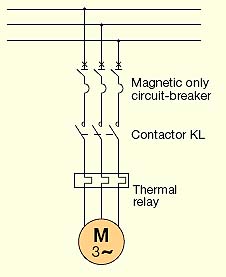
Рис. ABB
Схема прямого пуска электродвигателяMagnetic only circuit-breaker - Автоматический выключатель с электромагнитным расцепителем
Contactor KL - Контактор KL
Thermal relay - Тепловое реле
Параллельные тексты EN-RU
Direct-on-line starting
Direct-on-line starting, which is often abbreviated as DOL, is perhaps the most traditional system and consists in connecting the motor directly to the supply network, thus carrying out starting at full voltage.Direct-on-line starting represents the simplest and the most economical system to start a squirrel-cage asynchronous motor and it is the most used.
As represented in Figure 5, it provides the direct connection to the supply network and therefore starting is carried out at full voltage and with constant frequency, developing a high starting torque with very reduced acceleration times.
The typical applications are relevant to small power motors also with full load starting.
These advantages are linked to some problems such as, for example, the high inrush current, which - in the first instants - can reach values of about 10 to 12 times the rated current, then can decrease to about 6 to 8 times the rated current and can persist to reach the maximum torque speed.The effects of such currents can be identified with the high electro-dynamical stresses on the motor connection cables and could affect also the windings of the motor itself; besides, the high inrush torques can cause violent accelerations which stress the transmission components (belts and joints) generating distribution problems with a reduction in the mechanical life of these elements.
Finally, also the possible electrical problems due to voltage drops on the supply line of the motor or of the connected equipment must be taken into consideration.
[ABB]Прямой пуск
Прямой пуск, который по-английски часто сокращенно обозначают как DOL, является, пожалуй наиболее распространенным способом пуска. Он заключается в непосредственном (т. е. прямом) подключении двигателя к питающей сети. Это означает, что пуск двигателя осуществляется при полном напряжении.Схема прямого пуска является наиболее простым, экономичным и чаще всего применяемым решением для электродвигателей с короткозамкнутым ротором.
Схема прямого подключения к сети представлена на рисунке 5. Пуск осуществляется при полном напряжении и постоянной частоте сети. Электродвигатель развивает высокий пусковой момент при коротком времени разгона.
Типичные области применения – маломощные электродвигатели, в том числе с пуском при полной нагрузке.
Однако, наряду с преимуществами имеются и определенные недостатки, например, бросок пускового тока, достигающий в первоначальный момент 10…12-кратного значения от номинального тока электродвигателя. Затем ток двигателя уменьшается примерно до 6…8-кратного значения номинального тока и будет держаться на этом уровне до тех пор, пока скорость двигателя не достигнет максимального значения.
Такое изменение тока оказывает значительное электродинамическое воздействие на кабель, подключенный к двигателю. Кроме того пусковой ток воздействует на обмотки двигателя. Высокий начальный пусковой момент может привести к значительному ускорению и следовательно к значительной нагрузке элементов привода (ремней, крепления узлов), что вызывает сокращение их срока службы.
И, наконец, следует принять во внимание возможное возникновение проблем, связанных с падением напряжения в линии питания двигателя и подключенного к этой линии оборудования.
[Перевод Интент]
Тематики
Синонимы
EN
- across-the-line starting (US)
- direct line starting
- direct operation of a motor
- direct starting
- direct-on-line starting
- DOL
- full voltage starter application
DE
FR
пускатель прямого действия
Пускатель, одноступенчато подающий сетевое напряжение на выводы двигателя.
(МЭС 441-14-40)
[ ГОСТ Р 50030.4.1-2002 (МЭК 60947-4-1-2000)]
Пускатели переменного тока для прямого непосредственного пуска (с полным напряжением)
Пускатели, предназначенные для пуска двигателя, разгона его до номинальной скорости, защиты двигателя и подключенных к нему цепей от рабочих перегрузок и отключения питания двигателя.
[ ГОСТ Р 50030.4.1-2002 (МЭК 60947-4-1-2000)]EN
direct-on-line starter
a starter which connects the line voltage across the motor terminals in one step
[IEV number 441-14-40]FR
démarreur direct
démarreur qui applique la tension d'alimentation sur les bornes du moteur en une seule manoeuvre
[IEV number 441-14-40]Параллельные тексты EN-RU
Direct-on-line starters
Starters which connect the line voltage across the motor terminals in one step, intended to start and accelerate a motor to normal speed.
They shall ensure switching and protection functions as prescribed in the general definition.
[ABB]Пускатели прямого действия
Пускатели, одноступенчато подающие сетевое напряжение на зажимы двигателя и предназначенные для его пуска и разгона до номинальной скорости.
Кроме того, они должны обеспечивать коммутацию и защиту в соответствии с общим определением.
[Перевод Интент]Тематики
EN
DE
FR
эффект операционного рычага
эффект производственного рычага
Эффект операционного рычага - выражение того факта, что любое изменение выручки от реализации порождает изменение прибыли. Сила воздействия операционного рычага вычисляется как частное от деления выручки от реализации после возмещения переменных затрат на прибыль.
[ http://www.lexikon.ru/dict/fin/a.html]Тематики
Синонимы
EN
Англо-русский словарь нормативно-технической терминологии > DOL
-
34 voltage depression
посадка напряжения
Внезапное значительное снижение напряжения в системе электроснабжения.
[ ГОСТ 23875-88]EN
voltage collapse
sudden decrease in voltage leading to loss of voltage in the whole or a part of a power system
NOTE – A cascading tripping of generating units and/or transmission lines usually occurs during voltage collapse.
[IEV number 604-01-22 ]
voltage depression
system condition characterized by a sustained and significant lowering of voltage in the whole or part of a power system
[IEV number 604-01-44]FR
écroulement de la tension
baisse soudaine de la tension conduisant à la disparition de la tension dans tout ou partie d'un réseau d'énergie électrique
NOTE – Des déclenchements en cascade d'unités de production et/ou de lignes de transport d'énergie électrique se produisent généralement lors d'un écroulement de la tension.
[IEV number 604-01-22 ]
baisse profonde de la tension
état d'un réseau d'énergie électrique caractérisé par une baisse durable et significative de la tension dans tout ou partie du réseau
[IEV number 604-01-44]Тематики
EN
DE
FR
Смотри также
провал напряжения
Внезапное значительное снижение напряжения в системе электроснабжения с последующим его восстановлением.
[ ГОСТ 23875-88]
провал напряжения
Внезапное понижение напряжения в точке электрической сети ниже 0,9 Uном, за которым следует восстановление напряжения до первоначального или близкого к нему уровня через промежуток времени от десяти миллисекунд до нескольких десятков секунд.
[ ГОСТ 13109-97]
провал напряжения
Динамическое изменение напряжения в сети электропитания в виде снижения напряжения за нижний допустимый предел
[ ГОСТ 19542-93]
провал напряжения
Временное уменьшение напряжения в конкретной точке электрической системы ниже порогового значения.
Примечание — Прерывание напряжения является особым случаем провала напряжения. Отличие прерывания напряжения от провала напряжения может быть установлено последующей обработкой результатов измерений.
[ ГОСТ Р 51317.4.30-2008 (МЭК 61000-4-30:2008)]EN
voltage dip
a sudden reduction of the voltage at a point in an electrical system followed by voltage recovery after a short period of time from a few cycles to a few seconds
Source: 604-01-25
[IEV number 161-08-10]
voltage dip
temporary reduction of the voltage magnitude at a point in the electrical system below a threshold
NOTE 1 Interruptions are a special case of a voltage dip. Post-processing may be used to distinguish between voltage dips and interruptions.
NOTE 2 A voltage dip is also referred to as sag. The two terms are considered interchangeable; however, this standard will only use the term voltage dip
[IEC 61000-4-30, ed. 2.0 (2008-10)]FR
creux de tension
baisse brutale de la tension en un point d'un réseau d'énergie électrique, suivie d'un rétablissement de la tension après un court laps de temps de quelques périodes à quelques secondes
Source: 604-01-25
[IEV number 161-08-10]
creux de tension
baisse temporaire de l’amplitude de la tension en un point du réseau d’énergie électrique en dessous d’un seuil donné
NOTE 1 Les interruptions sont un cas particulier des creux de tension. Les traitements ultérieurs permettent de faire la distinction entre creux de tension et interruption.
NOTE 2 La Note 2 s'applique uniquement à la version anglaise.
[IEC 61000-4-30, ed. 2.0 (2008-10)]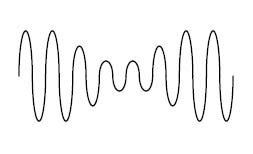
Провал напряженияНедопустимые, нерекомендуемые
Примечание(1)- Мнение автора карточкиТематики
Обобщающие термины
EN
DE
FR
Смотри также
резкое снижение напряжения
—
[Я.Н.Лугинский, М.С.Фези-Жилинская, Ю.С.Кабиров. Англо-русский словарь по электротехнике и электроэнергетике, Москва, 1999 г.]Тематики
- электротехника, основные понятия
EN
Англо-русский словарь нормативно-технической терминологии > voltage depression
35 of
əv1) (belonging to: a friend of mine.) av2) (away from (a place etc); after (a given time): within five miles of London; within a year of his death.) fra, etter3) (written etc by: the plays of Shakespeare.) av4) (belonging to or forming a group: He is one of my friends.) av5) (showing: a picture of my father.) av6) (made from; consisting of: a dress of silk; a collection of pictures.) av7) (used to show an amount, measurement of something: a gallon of petrol; five bags of coal.) med, à8) (about: an account of his work.) om9) (containing: a box of chocolates.) med, av10) (used to show a cause: She died of hunger.) av, fra11) (used to show a loss or removal: She was robbed of her jewels.) fra-, av12) (used to show the connection between an action and its object: the smoking of a cigarette.) av13) (used to show character, qualities etc: a man of courage.) med, av14) ((American) (of time) a certain number of minutes before (the hour): It's ten minutes of three.) på, føromprep. \/ɒv\/, trykksvakəv\/ eller \/v\/, foran ubetont konsonant: \/f\/1) ( om forholdet mellom en del og en helhet) av, fra2) (etter et tall eller bestemmelsesfaktor, av og til uten oversettelse til norsk) med, om, av, blant• would you like a cup of tea?3) ( om retning eller sted) fra, for• have you met Professor Smith of Cambridge?4) ( om forbindelsen mellom to enheter eller eiendomsforhold) med, i, av, etter, fra, forhan er en romanforfatter fra det 18. århundre5) ( om forholdet mellom et abstrakt begrep og et etterfølgende objekt) fra, for, av, i, på• in the opinion of the teachers, this is wrong6) (om forholdet mellom et verb og et etterfølgende objekt der verbet uttrykker en mental eller abstrakt tilstand) fra, etter, om, på• just think of the consequences!7) ( om årsak eller motiv) av8) ( om forholdet mellom en skala eller målestokk og en verdi) på, med, à• the sales will decrease of 5%salget vil gå ned med 5%9) (om alder, av og til uten oversettelse på norsk) på10) ( om materiale som noe består av) av, i11) (om dato, årstid, navn eller tittel, av og til uten oversettelse på norsk) på• he's the governor of St. Helenahan er guvernøren på St. Helena12) (om personlig egenskap, av og til uten oversettelse på norsk) på13) ( om sammenligning) til, av• he has one merit, that of being honesthan har ett fortrinn, nemlig det å være ærlig15) (i visse tidsuttrykk, litterært) på, om• what do you do of Sundays?16) (amer., om klokkeslett) påbe of delta i, være med i, tilhøreof late i det sistei de siste årene\/i de senere årof oneself av seg selv, frivillig36 Introduction
Portugal is a small Western European nation with a large, distinctive past replete with both triumph and tragedy. One of the continent's oldest nation-states, Portugal has frontiers that are essentially unchanged since the late 14th century. The country's unique character and 850-year history as an independent state present several curious paradoxes. As of 1974, when much of the remainder of the Portuguese overseas empire was decolonized, Portuguese society appeared to be the most ethnically homogeneous of the two Iberian states and of much of Europe. Yet, Portuguese society had received, over the course of 2,000 years, infusions of other ethnic groups in invasions and immigration: Phoenicians, Greeks, Celts, Romans, Suevi, Visigoths, Muslims (Arab and Berber), Jews, Italians, Flemings, Burgundian French, black Africans, and Asians. Indeed, Portugal has been a crossroads, despite its relative isolation in the western corner of the Iberian Peninsula, between the West and North Africa, Tropical Africa, and Asia and America. Since 1974, Portugal's society has become less homogeneous, as there has been significant immigration of former subjects from its erstwhile overseas empire.Other paradoxes should be noted as well. Although Portugal is sometimes confused with Spain or things Spanish, its very national independence and national culture depend on being different from Spain and Spaniards. Today, Portugal's independence may be taken for granted. Since 1140, except for 1580-1640 when it was ruled by Philippine Spain, Portugal has been a sovereign state. Nevertheless, a recurring theme of the nation's history is cycles of anxiety and despair that its freedom as a nation is at risk. There is a paradox, too, about Portugal's overseas empire(s), which lasted half a millennium (1415-1975): after 1822, when Brazil achieved independence from Portugal, most of the Portuguese who emigrated overseas never set foot in their overseas empire, but preferred to immigrate to Brazil or to other countries in North or South America or Europe, where established Portuguese overseas communities existed.Portugal was a world power during the period 1415-1550, the era of the Discoveries, expansion, and early empire, and since then the Portuguese have experienced periods of decline, decadence, and rejuvenation. Despite the fact that Portugal slipped to the rank of a third- or fourth-rate power after 1580, it and its people can claim rightfully an unusual number of "firsts" or distinctions that assure their place both in world and Western history. These distinctions should be kept in mind while acknowledging that, for more than 400 years, Portugal has generally lagged behind the rest of Western Europe, although not Southern Europe, in social and economic developments and has remained behind even its only neighbor and sometime nemesis, Spain.Portugal's pioneering role in the Discoveries and exploration era of the 15th and 16th centuries is well known. Often noted, too, is the Portuguese role in the art and science of maritime navigation through the efforts of early navigators, mapmakers, seamen, and fishermen. What are often forgotten are the country's slender base of resources, its small population largely of rural peasants, and, until recently, its occupation of only 16 percent of the Iberian Peninsula. As of 1139—10, when Portugal emerged first as an independent monarchy, and eventually a sovereign nation-state, England and France had not achieved this status. The Portuguese were the first in the Iberian Peninsula to expel the Muslim invaders from their portion of the peninsula, achieving this by 1250, more than 200 years before Castile managed to do the same (1492).Other distinctions may be noted. Portugal conquered the first overseas empire beyond the Mediterranean in the early modern era and established the first plantation system based on slave labor. Portugal's empire was the first to be colonized and the last to be decolonized in the 20th century. With so much of its scattered, seaborne empire dependent upon the safety and seaworthiness of shipping, Portugal was a pioneer in initiating marine insurance, a practice that is taken for granted today. During the time of Pombaline Portugal (1750-77), Portugal was the first state to organize and hold an industrial trade fair. In distinctive political and governmental developments, Portugal's record is more mixed, and this fact suggests that maintaining a government with a functioning rule of law and a pluralist, representative democracy has not been an easy matter in a country that for so long has been one of the poorest and least educated in the West. Portugal's First Republic (1910-26), only the third republic in a largely monarchist Europe (after France and Switzerland), was Western Europe's most unstable parliamentary system in the 20th century. Finally, the authoritarian Estado Novo or "New State" (1926-74) was the longest surviving authoritarian system in modern Western Europe. When Portugal departed from its overseas empire in 1974-75, the descendants, in effect, of Prince Henry the Navigator were leaving the West's oldest empire.Portugal's individuality is based mainly on its long history of distinc-tiveness, its intense determination to use any means — alliance, diplomacy, defense, trade, or empire—to be a sovereign state, independent of Spain, and on its national pride in the Portuguese language. Another master factor in Portuguese affairs deserves mention. The country's politics and government have been influenced not only by intellectual currents from the Atlantic but also through Spain from Europe, which brought new political ideas and institutions and novel technologies. Given the weight of empire in Portugal's past, it is not surprising that public affairs have been hostage to a degree to what happened in her overseas empire. Most important have been domestic responses to imperial affairs during both imperial and internal crises since 1415, which have continued to the mid-1970s and beyond. One of the most important themes of Portuguese history, and one oddly neglected by not a few histories, is that every major political crisis and fundamental change in the system—in other words, revolution—since 1415 has been intimately connected with a related imperial crisis. The respective dates of these historical crises are: 1437, 1495, 1578-80, 1640, 1820-22, 1890, 1910, 1926-30, 1961, and 1974. The reader will find greater detail on each crisis in historical context in the history section of this introduction and in relevant entries.LAND AND PEOPLEThe Republic of Portugal is located on the western edge of the Iberian Peninsula. A major geographical dividing line is the Tagus River: Portugal north of it has an Atlantic orientation; the country to the south of it has a Mediterranean orientation. There is little physical evidence that Portugal is clearly geographically distinct from Spain, and there is no major natural barrier between the two countries along more than 1,214 kilometers (755 miles) of the Luso-Spanish frontier. In climate, Portugal has a number of microclimates similar to the microclimates of Galicia, Estremadura, and Andalusia in neighboring Spain. North of the Tagus, in general, there is an Atlantic-type climate with higher rainfall, cold winters, and some snow in the mountainous areas. South of the Tagus is a more Mediterranean climate, with hot, dry, often rainless summers and cool, wet winters. Lisbon, the capital, which has a fifth of the country's population living in its region, has an average annual mean temperature about 16° C (60° F).For a small country with an area of 92,345 square kilometers (35,580 square miles, including the Atlantic archipelagos of the Azores and the Madeiras), which is about the size of the state of Indiana in the United States, Portugal has a remarkable diversity of regional topography and scenery. In some respects, Portugal resembles an island within the peninsula, embodying a unique fusion of European and non-European cultures, akin to Spain yet apart. Its geography is a study in contrasts, from the flat, sandy coastal plain, in some places unusually wide for Europe, to the mountainous Beira districts or provinces north of the Tagus, to the snow-capped mountain range of the Estrela, with its unique ski area, to the rocky, barren, remote Trás-os-Montes district bordering Spain. There are extensive forests in central and northern Portugal that contrast with the flat, almost Kansas-like plains of the wheat belt in the Alentejo district. There is also the unique Algarve district, isolated somewhat from the Alentejo district by a mountain range, with a microclimate, topography, and vegetation that resemble closely those of North Africa.Although Portugal is small, just 563 kilometers (337 miles) long and from 129 to 209 kilometers (80 to 125 miles) wide, it is strategically located on transportation and communication routes between Europe and North Africa, and the Americas and Europe. Geographical location is one key to the long history of Portugal's three overseas empires, which stretched once from Morocco to the Moluccas and from lonely Sagres at Cape St. Vincent to Rio de Janeiro, Brazil. It is essential to emphasize the identity of its neighbors: on the north and east Portugal is bounded by Spain, its only neighbor, and by the Atlantic Ocean on the south and west. Portugal is the westernmost country of Western Europe, and its shape resembles a face, with Lisbon below the nose, staring into theAtlantic. No part of Portugal touches the Mediterranean, and its Atlantic orientation has been a response in part to turning its back on Castile and Léon (later Spain) and exploring, traveling, and trading or working in lands beyond the peninsula. Portugal was the pioneering nation in the Atlantic-born European discoveries during the Renaissance, and its diplomatic and trade relations have been dominated by countries that have been Atlantic powers as well: Spain; England (Britain since 1707); France; Brazil, once its greatest colony; and the United States.Today Portugal and its Atlantic islands have a population of roughly 10 million people. While ethnic homogeneity has been characteristic of it in recent history, Portugal's population over the centuries has seen an infusion of non-Portuguese ethnic groups from various parts of Europe, the Middle East, and Africa. Between 1500 and 1800, a significant population of black Africans, brought in as slaves, was absorbed in the population. And since 1950, a population of Cape Verdeans, who worked in menial labor, has resided in Portugal. With the influx of African, Goan, and Timorese refugees and exiles from the empire—as many as three quarters of a million retornados ("returned ones" or immigrants from the former empire) entered Portugal in 1974 and 1975—there has been greater ethnic diversity in the Portuguese population. In 2002, there were 239,113 immigrants legally residing in Portugal: 108,132 from Africa; 24,806 from Brazil; 15,906 from Britain; 14,617 from Spain; and 11,877 from Germany. In addition, about 200,000 immigrants are living in Portugal from eastern Europe, mainly from Ukraine. The growth of Portugal's population is reflected in the following statistics:1527 1,200,000 (estimate only)1768 2,400,000 (estimate only)1864 4,287,000 first census1890 5,049,7001900 5,423,0001911 5,960,0001930 6,826,0001940 7,185,1431950 8,510,0001960 8,889,0001970 8,668,000* note decrease1980 9,833,0001991 9,862,5401996 9,934,1002006 10,642,8362010 10,710,000 (estimated)37 come
come [kʌm]∎ she won't come when she's called elle ne vient pas quand on l'appelle;∎ here come the children voici les enfants qui arrivent;∎ here he comes! le voilà qui arrive!;∎ it's stuck - ah, no, it's coming! c'est coincé - ah, non, ça vient!;∎ coming! j'arrive!;∎ come here! venez ici!; (to dog) au pied!;∎ come to the office tomorrow passez ou venez au bureau demain;∎ he came to me for advice il est venu me demander conseil;∎ you've come to the wrong person vous vous adressez à la mauvaise personne;∎ you've come to the wrong place vous vous êtes trompé de chemin, vous faites fausse route;∎ if you're looking for sun, you've come to the wrong place si c'est le soleil que vous cherchez, il ne fallait pas venir ici;∎ please come this way par ici ou suivez-moi s'il vous plaît;∎ I come this way every week je passe par ici toutes les semaines;∎ American come and look, come look venez voir;∎ familiar come and get it! à la soupe!;∎ he came whistling up the stairs il a monté l'escalier en sifflant;∎ a car came hurtling round the corner une voiture a pris le virage à toute vitesse;∎ people are constantly coming and going il y a un va-et-vient continuel;∎ fashions come and go la mode change tout le temps;∎ after many years had come and gone après bien des années;∎ familiar I don't know whether I'm coming or going je ne sais pas où j'en suis;∎ you have come a long way vous êtes venu de loin; figurative (made progress) vous avez fait du chemin;∎ the computer industry has come a very long way since then l'informatique a fait énormément de progrès depuis ce temps-là;∎ also figurative to come running arriver en courant;∎ we could see him coming a mile off on l'a vu venir avec ses gros sabots;∎ figurative you could see it coming on l'a vu venir de loin, c'était prévisible;∎ proverb everything comes to him who waits tout vient à point à qui sait attendre(b) (as guest, visitor) venir;∎ can you come to my party on Saturday night? est-ce que tu peux venir à ma soirée samedi?;∎ I'm sorry, I can't come (je suis) désolé, je ne peux pas venir;∎ would you like to come for lunch/dinner? voulez-vous venir déjeuner/dîner?;∎ I can only come for an hour or so je ne pourrai venir que pour une heure environ;∎ come for a ride in the car viens faire un tour en voiture;∎ she's come for her money elle est venue prendre son argent;∎ Angela came and we had a chat Angela est venue et on a bavardé;∎ they came for a week and stayed a month ils sont venus pour une semaine et ils sont restés un mois;∎ he couldn't have come at a worse time il n'aurait pas pu tomber plus mal∎ to come in time/late arriver à temps/en retard;∎ I've just come from the post office j'arrive de la poste à l'instant;∎ we came to a small town nous sommes arrivés dans une petite ville;∎ the time has come to tell the truth le moment est venu de dire la vérité;∎ to come to the end of sth arriver à la fin de qch;∎ I was coming to the end of my stay mon séjour touchait à sa fin;∎ there will come a point when… il viendra un moment où…;∎ when you come to the last coat of paint… quand tu en seras à la dernière couche de peinture…;∎ (reach) her hair comes (down) to her waist ses cheveux lui arrivent à la taille;∎ the mud came (up) to our knees la boue nous arrivait ou venait (jusqu') aux genoux(d) (occupy specific place, position) venir, se trouver;∎ the address comes above the date l'adresse se met au-dessus de la date;∎ my birthday comes before yours mon anniversaire vient avant ou précède le tien;∎ a colonel comes before a lieutenant un colonel a la préséance sur un lieutenant;∎ Friday comes after Thursday vendredi vient après ou suit jeudi;∎ that speech comes in Act 3/on page 10 on trouve ce discours dans l'acte 3/à la page 10;∎ the fireworks come next le feu d'artifice est après;∎ what comes after the performance? qu'est-ce qu'il y a après la représentation?(e) (occur, happen) arriver, se produire;∎ when my turn comes, when it comes to my turn quand ce sera (à) mon tour, quand mon tour viendra;∎ such an opportunity only comes once in your life une telle occasion ne se présente qu'une fois dans la vie;∎ he has a birthday coming son anniversaire approche;∎ there's a storm coming un orage se prépare;∎ success was a long time coming la réussite s'est fait attendre;∎ take life as it comes prenez la vie comme elle vient;∎ Christmas comes but once a year il n'y a qu'un Noël par an;∎ Bible it came to pass that… il advint que…;∎ come what may advienne que pourra, quoi qu'il arrive ou advienne∎ the idea just came to me one day l'idée m'est soudain venue un jour;∎ suddenly it came to me (I remembered) tout d'un coup, je m'en suis souvenu; (I had an idea) tout d'un coup, j'ai eu une idée;∎ I said the first thing that came into my head or that came to mind j'ai dit la première chose qui m'est venue à l'esprit;∎ the answer came to her elle a trouvé la réponse∎ writing comes naturally to her écrire lui est facile, elle est douée pour l'écriture;∎ a house doesn't come cheap une maison coûte ou revient cher;∎ the news came as a shock to her la nouvelle lui a fait un choc;∎ her visit came as a surprise sa visite nous a beaucoup surpris;∎ it comes as no surprise to learn he's gone (le fait) qu'il soit parti n'a rien de surprenant;∎ he's as silly as they come il est sot comme pas un;∎ they don't come any tougher than Big Al on ne fait pas plus fort que Big Al;∎ it'll all come right in the end tout cela va finir par s'arranger;∎ the harder they come the harder they fall plus dure sera la chute(h) (be available) exister;∎ this table comes in two sizes cette table existe ou se fait en deux dimensions;∎ the dictionary comes with a magnifying glass le dictionnaire est livré avec une loupe∎ it was a dream come true c'était un rêve devenu réalité;∎ to come unhooked se décrocher;∎ to come unravelled se défaire;∎ the buttons on my coat keep coming undone mon manteau se déboutonne toujours∎ she came to trust him elle en est venue à ou elle a fini par lui faire confiance;∎ we have come to expect this kind of thing nous nous attendons à ce genre de chose maintenant;∎ how did you come to lose your umbrella? comment as-tu fait pour perdre ton parapluie?;∎ how did the door come to be open? comment se fait-il que la porte soit ouverte?;∎ (now that I) come to think of it maintenant que j'y songe, réflexion faite;∎ it's not much money when you come to think of it ce n'est pas beaucoup d'argent quand vous y réfléchissez(k) (be owing, payable)∎ I still have £5 coming (to me) on me doit encore 5 livres;∎ there'll be money coming from her uncle's will elle va toucher l'argent du testament de son oncle;∎ he got all the credit coming to him il a eu tous les honneurs qu'il méritait;∎ familiar you'll get what's coming to you tu l'auras cherché ou voulu;∎ familiar he had it coming (to him) il ne l'a pas volé∎ a smile came to her lips un sourire parut sur ses lèvres ou lui vint aux lèvres∎ how come? comment ça?;∎ familiar come again? quoi?;∎ American how's it coming? comment ça va?;∎ come to that à propos, au fait;∎ I haven't seen her in weeks, or her husband, come to that ça fait des semaines que je ne l'ai pas vue, son mari non plus d'ailleurs;∎ if it comes to that, I'd rather stay home à ce moment-là ou à ce compte-là, je préfère rester à la maison;∎ don't come the fine lady with me! ne fais pas la grande dame ou ne joue pas à la grande dame avec moi!;∎ don't come the innocent! ne fais pas l'innocent!;∎ British familiar don't come it with me! (try to impress) n'essaie pas de m'en mettre plein la vue!; (lord it over) pas la peine d'être si hautain avec moi!;∎ the days to come les prochains jours, les jours qui viennent;∎ the battle to come la bataille qui va avoir lieu;∎ Religion the life to come l'autre vie;∎ in times to come à l'avenir;∎ for some time to come pendant quelque temps;∎ that will not be for some time to come ce ne sera pas avant quelque temps∎ (by) come tomorrow/Tuesday you'll feel better vous vous sentirez mieux demain/mardi;∎ I'll have been here two years come April ça fera deux ans en avril que je suis là;∎ come the revolution you'll all be out of a job avec la révolution, vous vous retrouverez tous au chômage∎ come, come!, come now! allons!, voyons!4 noun∎ it came about that… il arriva ou il advint que…;∎ how could such a mistake come about? comment une telle erreur a-t-elle pu se produire?;∎ the discovery of penicillin came about quite by accident la pénicilline a été découverte tout à fait par hasard(a) (walk, travel across → field, street) traverser;∎ as we stood talking she came across to join us pendant que nous discutions, elle est venue se joindre à nous∎ to come across well/badly (at interview) faire une bonne/mauvaise impression, bien/mal passer; (on TV) bien/mal passer;∎ he never comes across as well on film as in the theatre il passe mieux au théâtre qu'à l'écran;∎ he came across as a total idiot il donnait l'impression d'être complètement idiot∎ the author's message comes across well le message de l'auteur passe bien;∎ her disdain for his work came across le mépris qu'elle avait pour son travail transparaissait∎ we came across an interesting problem on a été confrontés à ou on est tombés sur un problème intéressant;∎ she reads everything she comes across elle lit tout ce qui lui tombe sous la mainfamiliar (give → information) donner□, fournir□ ; (→ help) offrir□ ; (→ money) raquer, se fendre de;∎ he came across with the money he owed me il m'a filé le fric qu'il me devait;∎ the crook came across with the names of his accomplices l'escroc a vendu ses complices(pursue) poursuivre;∎ he came after me with a stick il m'a poursuivi avec un bâton(a) (encouraging, urging)∎ come along, drink your medicine! allez, prends ou bois ton médicament!;∎ come along, we're late! dépêche-toi, nous sommes en retard!(b) (accompany) venir, accompagner;∎ she asked me to come along (with them) elle m'a invité à aller avec eux ou à les accompagner(c) (occur, happen) arriver, se présenter;∎ an opportunity like this doesn't come along often une telle occasion ne se présente pas souvent;∎ don't accept the first job that comes along ne prenez pas le premier travail qui se présente;∎ he married the first woman that came along il a épousé la première venue∎ the patient is coming along well le patient se remet bien;∎ the work isn't coming along as expected le travail n'avance pas comme prévu;∎ how's your computer class coming along? comment va ton cours d'informatique?(object → come to pieces) se démonter; (→ break) se casser; (project, policy) échouer;∎ to come apart at the seams (garment) se défaire aux coutures;∎ the book came apart in my hands le livre est tombé en morceaux quand je l'ai pris;∎ figurative under pressure he came apart sous la pression il a craqué(attack) attaquer, se jeter sur;∎ he came at me with a knife il s'est jeté sur moi avec un couteau;∎ figurative questions came at me from all sides j'ai été assailli de questions∎ come away from that door! écartez-vous de cette porte!;∎ I came away with the distinct impression that all was not well je suis reparti avec la forte impression que quelque chose n'allait pas;∎ he asked her to come away with him (elope) il lui a demandé de s'enfuir avec lui; British (go on holiday) il lui a demandé de partir avec lui(b) (separate) partir, se détacher;∎ the page came away in my hands la page m'est restée dans les mains∎ he came back with me il est revenu avec moi;∎ to come back home rentrer (à la maison);∎ figurative the colour came back to her cheeks elle reprit des couleurs;∎ we'll come back to that question later nous reviendrons à cette question plus tard;∎ to come back to what we were saying pour en revenir à ce que nous disions∎ it's all coming back to me tout cela me revient (à l'esprit ou à la mémoire);∎ her name will come back to me later son nom me reviendra plus tard∎ they came back with an argument in favour of the project ils ont répondu par un argument en faveur du projet∎ he came back strongly in the second set il a bien remonté au deuxième set;∎ they came back from 3-0 down ils ont remonté de 3 à 0brouiller, éloigner;∎ he came between her and her friend il l'a brouillée avec son amie, il l'a éloignée de son amie;∎ we mustn't let a small disagreement come between us nous n'allons pas nous disputer à cause d'un petit malentendu➲ come by(stop by) passer, venir(acquire → work, money) obtenir, se procurer; (→ idea) se faire;∎ jobs are hard to come by il est difficile de trouver du travail;∎ how did you come by this camera/those bruises? comment as-tu fait pour avoir cet appareil-photo/ces bleus?;∎ how did she come by all that money? comment s'est-elle procuré tout cet argent?;∎ how on earth did he come by that idea? où est-il allé chercher cette idée?(descend → ladder, stairs) descendre; (→ mountain) descendre, faire la descente de(a) (descend → from ladder, stairs) descendre; (→ from mountain etc) descendre, faire la descente; (plane → crash) s'écraser; (→ land) atterrir;∎ to come down to breakfast descendre déjeuner ou prendre le petit déjeuner;∎ come down from that tree! descends de cet arbre!;∎ they came down to Paris ils sont descendus à Paris;∎ hem-lines are coming down this year les jupes rallongent cette année;∎ he's come down in the world il a déchu;∎ you'd better come down to earth tu ferais bien de revenir sur terre ou de descendre des nues∎ rain was coming down in sheets il pleuvait des cordes;∎ the ceiling came down le plafond s'est effondré∎ the dress comes down to my ankles la robe descend jusqu'à mes chevilles;∎ her hair came down to her waist les cheveux lui tombaient ou descendaient jusqu'à la taille(d) (decrease) baisser;∎ he's ready to come down 10 percent on the price il est prêt à rabattre ou baisser le prix de 10 pour cent(e) (be passed down) être transmis (de père en fils);∎ this custom comes down from the Romans cette coutume nous vient des Romains;∎ the necklace came down to her from her great-aunt elle tient ce collier de sa grand-tante(f) (reach a decision) se prononcer;∎ the majority came down in favour of/against abortion la majorité s'est prononcée en faveur de/contre l'avortement;∎ to come down on sb's side décider en faveur de qn(g) (be removed) être défait ou décroché;∎ that wallpaper will have to come down il va falloir enlever ce papier peint;∎ the Christmas decorations are coming down today aujourd'hui, on enlève les décorations de Noël;∎ the tree will have to come down (be felled) il faut abattre cet arbre;∎ these houses are coming down soon on va bientôt démolir ces maisons∎ the boss came down hard on him le patron lui a passé un de ces savons;∎ one mistake and he'll come down on you like a ton of bricks si tu fais la moindre erreur, il te tombera sur le dos∎ they came down on me to sell the land ils ont essayé de me faire vendre le terrain□(amount) se réduire à, se résumer à;∎ it all comes down to what you want to do tout cela dépend de ce que vous souhaitez faire;∎ it all comes down to the same thing tout cela revient au même;∎ that's what his argument comes down to voici à quoi se réduit son raisonnement(become ill) attraper;∎ he came down with a cold il s'est enrhumé, il a attrapé un rhume(present oneself) se présenter;∎ more women are coming forward as candidates davantage de femmes présentent leur candidature;∎ the police have appealed for witnesses to come forward la police a demandé aux témoins de se faire connaître∎ the townspeople came forward with supplies les habitants de la ville ont offert des provisions;∎ he came forward with a new proposal il a fait une nouvelle proposition;∎ Law to come forward with evidence présenter des preuvesvenir;∎ she comes from China elle vient ou elle est originaire de Chine;∎ to come from a good family être issu ou venir d'une bonne famille;∎ this word comes from Latin ce mot vient du latin;∎ this wine comes from the south of France ce vin vient du sud de la France;∎ this passage comes from one of his novels ce passage est extrait ou provient d'un de ses romans;∎ that's surprising coming from him c'est étonnant de sa part;∎ a sob came from his throat un sanglot s'est échappé de sa gorge;∎ familiar I'm not sure where he's coming from je ne sais pas très bien ce qui le motive□∎ come in! entrez!;∎ they came in through the window ils sont entrés par la fenêtre;∎ come in now, children, it's getting dark rentrez maintenant, les enfants, il commence à faire nuit;∎ British familiar Mrs Brown comes in twice a week (to clean) Madame Brown vient (faire le ménage) deux fois par semaine(b) (plane, train) arriver(c) (in competition) arriver;∎ she came in second elle est arrivée deuxième(d) (be received → money, contributions) rentrer;∎ there isn't enough money coming in to cover expenditure l'argent qui rentre ne suffit pas à couvrir les dépenses;∎ how much do you have coming in every week? combien touchez-vous ou encaissez-vous chaque semaine?∎ news is just coming in of a riot in Red Square on nous annonce à l'instant des émeutes sur la place Rouge∎ come in car number 1, over j'appelle voiture 1, à vous;∎ come in Barry Stewart from New York à vous, Barry Stewart à New York∎ when do endives come in? quand commence la saison des endives?;∎ leather has come in le cuir est à la mode ou en vogue∎ these gloves come in handy or useful for driving ces gants sont bien commodes ou utiles pour conduire∎ where do I come in? quel est mon rôle là-dedans?;∎ this is where the law comes in c'est là que la loi intervient;∎ he should come in on the deal il devrait participer à l'opération;∎ I'd like to come in on this (conversation) j'aimerais dire quelques mots là-dessus ou à ce sujet(be object of → abuse, reproach) subir;∎ to come in for criticism être critiqué, être l'objet de critiques;∎ the government came in for a lot of criticism over its handling of the crisis le gouvernement a été très critiqué pour la façon dont il gère la crise;∎ to come in for praise être félicité(be given a part in) prendre part à;∎ they let him come in on the deal ils l'ont laissé prendre part à l'affaire∎ they came into a fortune (won) ils ont gagné une fortune; (inherited) ils ont hérité d'une fortune(b) (play a role in) jouer un rôle;∎ it's not simply a matter of pride, though pride does come into it ce n'est pas une simple question de fierté, bien que la fierté joue un certain rôle;∎ money doesn't come into it! l'argent n'a rien à voir là-dedans!résulter de;∎ what will come of it? qu'en adviendra-t-il?, qu'en résultera-t-il?;∎ no good will come from or of it ça ne mènera à rien de bon, il n'en résultera rien de bon;∎ let me know what comes of the meeting faites-moi savoir ce qui ressortira de la réunion;∎ that's what comes from listening to you! voilà ce qui arrive quand on vous écoute!➲ come off(a) (fall off → of rider) tomber de; (→ of button) se détacher de, se découdre de; (→ of handle, label) se détacher de; (of tape, wallpaper) se détacher de, se décoller de; (be removed → of stain, mark) partir de, s'enlever de∎ to come off the pill arrêter (de prendre) la pilule(c) (climb down from, leave → wall, ladder etc) descendre de;∎ to come off a ship/plane débarquer d'un navire/d'un avion;∎ I've just come off the night shift (finished work) je viens de quitter l'équipe de nuit; (finished working nights) je viens de finir le travail de nuit∎ oh, come off it! allez, arrête ton char!(a) (rider) tomber; (button) se détacher, se découdre; (handle, label) se détacher; (stain, mark) partir, s'enlever; (tape, wallpaper) se détacher, se décoller;∎ the handle came off in his hand la poignée lui est restée dans la main(c) (fare, manage) s'en sortir, se tirer de;∎ you came off well in the competition tu t'en es bien tiré au concours;∎ to come off best gagner(d) familiar (happen) avoir lieu□, se passer□ ; (be carried through) se réaliser□ ; (succeed) réussir□ ;∎ did the game come off all right? le match s'est bien passé?;∎ my trip to China didn't come off mon voyage en Chine n'a pas eu lieu;∎ his plan didn't come off son projet est tombé à l'eau∎ I'll come on after (you) je vous suivrai(b) (in imperative) come on! (with motion, encouraging, challenging) vas-y!, allez!; (hurry) allez!; familiar (expressing incredulity) tu rigoles!;∎ come on Scotland! allez l'Écosse!;∎ come on in/up! entre/monte donc!;∎ oh, come on, for goodness sake! allez, arrête!∎ how is your work coming on? où en est votre travail?;∎ my roses are coming on nicely mes rosiers se portent bien;∎ her new book is coming on quite well son nouveau livre avance bien;∎ he's coming on in physics il fait des progrès en physique∎ as night came on quand la nuit a commençé à tomber;∎ it's coming on to rain il va pleuvoir;∎ I feel a headache/cold coming on je sens un mal de tête qui commence/que je m'enrhume(e) (start functioning → electricity, gas, heater, lights, radio) s'allumer; (→ motor) se mettre en marche; (→ utilities at main) être mis en service;∎ has the water come on? y a-t-il de l'eau?(f) (behave, act)∎ don't come on all macho with me! ne joue pas les machos avec moi!;∎ familiar you came on a bit strong tu y es allé un peu fort∎ his new play is coming on on va donner sa nouvelle pièce(a) (proceed to consider) aborder, passer à;∎ I want to come on to the issue of epidemics je veux passer à la question des épidémies∎ she was coming on to me in a big way elle me draguait à fond(a) (exit, go out socially) sortir;∎ as we came out of the theatre au moment où nous sommes sortis du théâtre;∎ would you like to come out with me tonight? est-ce que tu veux sortir avec moi ce soir?;∎ figurative if he'd only come out of himself or out of his shell si seulement il sortait de sa coquille(b) (make appearance → stars, sun) paraître, se montrer; (→ flowers) sortir, éclore; figurative (→ book) paraître, être publié; (→ film) paraître, sortir; (→ new product) sortir;∎ to come out in a rash (person) se couvrir de boutons, avoir une éruption;∎ his nasty side came out sa méchanceté s'est manifestée;∎ I didn't mean it the way it came out ce n'est pas ce que je voulais dire∎ as soon as the news came out dès qu'on a su la nouvelle, dès que la nouvelle a été annoncée∎ when do your stitches come out? quand est-ce qu'on t'enlève tes fils?(e) (declare oneself publicly) se déclarer;∎ to come out strongly (for/against) se prononcer avec vigueur (pour/contre);∎ the governor came out against/for abortion le gouverneur s'est prononcé (ouvertement) contre/pour l'avortement;∎ familiar to come out (of the closet) (homosexual) révéler (publiquement) son homosexualité□, faire son come-out∎ the government came out of the deal badly le gouvernement s'est mal sorti de l'affaire;∎ everything will come out fine tout va s'arranger;∎ I came out top in maths j'étais premier en maths;∎ to come out on top gagner(h) (go into society) faire ses débuts ou débuter dans le monde∎ this sum won't come out je n'arrive pas à résoudre cette opération∎ the pictures came out well/badly les photos étaient très bonnes/n'ont rien donné;∎ the house didn't come out well la maison n'est pas très bien sur les photos∎ to come out of a document sortir d'un document(amount to) s'élever à∎ to come out in spots or a rash avoir une éruption de boutons(say) dire, sortir;∎ what will he come out with next? qu'est-ce qu'il va nous sortir encore?;∎ he finally came out with it il a fini par le sortir(a) (move, travel in direction of speaker) venir;∎ at the party she came over to talk to me pendant la soirée, elle est venue me parler;∎ do you want to come over this evening? tu veux venir à la maison ce soir?;∎ his family came over with the early settlers sa famille est arrivée ou venue avec les premiers pionniers;∎ I met him in the plane coming over je l'ai rencontré dans l'avion en venant∎ they came over to our side ils sont passés de notre côté;∎ he finally came over to their way of thinking il a fini par se ranger à leur avis∎ her speech came over well son discours a fait bon effet ou bonne impression;∎ he came over as honest il a donné l'impression d'être honnête;∎ he doesn't come over well on television il ne passe pas bien à la télévision;∎ her voice comes over well sa voix passe ou rend bien∎ he came over all funny (felt ill) il s'est senti mal tout d'un coup, il a eu un malaise; (behaved oddly) il est devenu tout bizarre;∎ to come over dizzy être pris de vertige;∎ to come over faint être pris d'une faiblesseaffecter, envahir;∎ a change came over him un changement se produisit en lui;∎ a feeling of fear came over him il a été saisi de peur, la peur s'est emparée de lui;∎ what has come over him? qu'est-ce qui lui prend?(a) (make a detour) faire le détour;∎ we came round by the factory nous sommes passés par ou nous avons fait le détour par l'usine(c) (occur → regular event)∎ don't wait for Christmas to come round n'attendez pas Noël;∎ when the championships/elections come round au moment des championnats/élections;∎ the summer holidays will soon be coming round again bientôt, ce sera de nouveau les grandes vacances(d) (change mind) changer d'avis;∎ he finally came round to our way of thinking il a fini par se ranger à notre avis;∎ they soon came round to the idea ils se sont faits à cette idée;∎ (change to better mood) don't worry, she'll soon come round ne t'en fais pas, elle sera bientôt de meilleure humeur(e) (recover consciousness) reprendre connaissance, revenir à soi; (get better) se remettre, se rétablir;∎ she's coming round after a bout of pneumonia elle se remet d'une pneumonie∎ his sense of conviction came through on voyait qu'il était convaincu;∎ her enthusiasm comes through in her letters son enthousiasme se lit dans ses lettres;∎ your call is coming through je vous passe votre communication;∎ you're coming through loud and clear je vous reçois cinq sur cinq;∎ figurative his message came through loud and clear son message a été reçu cinq sur cinq(b) (be granted, approved) se réaliser;∎ did your visa come through? avez-vous obtenu votre visa?;∎ my request for a transfer came through ma demande de mutation a été acceptée∎ he came through for us il a fait ce qu'on attendait de lui□ ;∎ did he come through on his promise? a-t-il tenu parole?□ ;∎ they came through with the documents ils ont fourni les documents□ ;∎ he came through with the money il a rendu l'argent comme prévu□∎ we came through marshland nous sommes passés par ou avons traversé des marais;∎ the rain came through my coat la pluie a traversé mon manteau;∎ water is coming through the roof l'eau s'infiltre par le toit∎ they came through the accident without a scratch ils sont sortis de l'accident indemnes;∎ I'm sure you will come through this crisis je suis sûr que tu te sortiras de cette crise;∎ she came through the exam with flying colours elle a réussi l'examen avec brio➲ come to(a) (recover consciousness) reprendre connaissance, revenir à soi∎ when it comes to physics, she's a genius pour ce qui est de la physique, c'est un génie;∎ when it comes to paying you can't see anyone for dust quand il faut payer, il n'y a plus personne(b) (amount to) s'élever à, se monter à;∎ how much did dinner come to? à combien s'élevait le dîner?;∎ her salary comes to £750 a month elle gagne 750 livres par mois;∎ the plan never came to anything le projet n'a abouti à rien;∎ that nephew of yours will never come to anything ton neveu n'arrivera jamais à rien∎ now we come to questions of health nous en venons maintenant aux questions de santé;∎ he got what was coming to him il n'a eu que ce qu'il méritait;∎ to come to a conclusion arriver à une conclusion;∎ to come to power accéder au pouvoir;∎ what is the world or what are things coming to? où va-t-on ?;∎ what are things coming to when there aren't even enough hospital beds available? où va-t-on s'il n'y a pas assez de lits dans les hôpitaux?;∎ I never thought it would come to this je ne me doutais pas qu'on en arriverait là;∎ let's hope it won't come to that espérons que nous n'en arrivions pas là∎ the two roads come together at this point les deux routes se rejoignent à cet endroit∎ everything came together at the final performance tout s'est passé à merveille pour la dernière représentation□∎ the government is coming under pressure to lower taxes le gouvernement subit des pressions visant à réduire les impôts(b) (be classified under) être classé sous;∎ that subject comes under "current events" ce sujet est classé ou se trouve sous la rubrique "actualités"∎ I come up to town every Monday je viens en ville tous les lundis;∎ they came up to Chicago ils sont venus à Chicago;∎ she came up the hard way elle a réussi à la force du poignet;∎ Military an officer who came up through the ranks un officier sorti du rang(c) (approach) s'approcher;∎ to come up to sb s'approcher de qn, aborder qn;∎ the students came up to him with their questions les étudiants sont venus le voir avec leurs questions;∎ it's coming up to five o'clock il est presque cinq heures;∎ coming up now on Channel 4, the seven o'clock news et maintenant, sur Channel 4, le journal de sept heures;∎ familiar one coffee, coming up! et un café, un!∎ my beans are coming up nicely mes haricots poussent bien(e) (come under consideration → matter) être soulevé, être mis sur le tapis; (→ question, problem) se poser, être soulevé; Law (→ accused) comparaître; (→ case) être entendu;∎ that problem has never come up ce problème ne s'est jamais posé;∎ the question of financing always comes up la question du financement se pose toujours;∎ the subject came up twice in the conversation le sujet est revenu deux fois dans la conversation;∎ your name came up twice on a mentionné votre nom deux fois;∎ she comes up for re-election this year son mandat prend fin cette année;∎ my contract is coming up for review mon contrat doit être révisé;∎ to come up before the judge or the court (accused) comparaître devant le juge; (case) être entendu par la cour;∎ her case comes up next Wednesday elle passe au tribunal mercredi prochain∎ to deal with problems as they come up traiter les problèmes au fur et à mesure;∎ she's ready for anything that might come up elle est prête à faire face à toute éventualité;∎ I can't make it, something has come up je ne peux pas venir, j'ai un empêchement;∎ I'll let you know if anything comes up (if I find further information) s'il y a du nouveau, je vous tiendrai au courant; (anything that is suitable) je vous tiendrai au courant si je vois quelque chose qui vous convienne∎ when the lights came up at the interval lorsque les lumières se rallumèrent à l'entracte∎ everything she eats comes up (again) elle vomit ou rejette tout ce qu'elle mange(i) (colour, wood etc)∎ the colour comes up well when it's cleaned la couleur revient bien au nettoyage∎ did their number come up? (in lottery) ont-ils gagné au loto?; figurative est-ce qu'ils ont touché le gros lot?(be confronted with) rencontrer;∎ they came up against some tough competition ils se sont heurtés à des concurrents redoutables(find unexpectedly → person) rencontrer par hasard, tomber sur; (→ object) trouver par hasard, tomber sur;∎ we came upon the couple just as they were kissing nous avons surpris le couple en train de s'embrasser∎ the mud came up to their knees la boue leur montait ou arrivait jusqu'aux genoux;∎ she comes up to his shoulder elle lui arrive à l'épaule;∎ we're coming up to the halfway mark nous atteindrons bientôt la moitié∎ his last book doesn't come up to the others son dernier livre ne vaut pas les autres;∎ to come up to sb's expectations répondre à l'attente de qn;∎ the play didn't come up to our expectations la pièce nous a déçus(offer, propose → money, loan) fournir; (think of → plan, suggestion) suggérer, proposer; (→ answer) trouver; (→ excuse) trouver, inventer;∎ they came up with a wonderful idea ils ont eu une idée géniale;∎ what will she come up with next? qu'est-ce qu'elle va encore inventer?ⓘ Come on down! Il s'agit de la formule consacrée du jeu télévisé The Price is Right (dont l'équivalent français est Le Juste prix) qui débuta en 1957 aux États-Unis, et dans les années 80 en Grande-Bretagne. L'animateur de l'émission prononçait ces paroles ("Descendez!") pour inviter les membres du public sélectionnés pour participer au jeu à venir le rejoindre sur la scène. Aujourd'hui on utilise cette formule plaisamment pour dire à quelqu'un d'approcher ou bien pour indiquer à quelqu'un qui doit prononcer un discours ou se produire sur scène qu'il est temps de prendre place.ⓘ Come up and see me sometime... Cette formule fut utilisée pour la première fois par Mae West dans le film de 1933 She Done Him Wrong (dont le titre français est Lady Lou); la citation exacte était en fait Why don't you come up sometime, see me? ("Pourquoi est-ce que tu ne monterais pas un de ces jours, pour me voir?"). Il s'agit de l'archétype de l'invitation au badinage. Encore aujourd'hui on utilise cette formule en imitant l'air canaille de Mae West.38 voltage collapse
лавина напряжения
—
[Я.Н.Лугинский, М.С.Фези-Жилинская, Ю.С.Кабиров. Англо-русский словарь по электротехнике и электроэнергетике, Москва, 1999 г.]Тематики
- электротехника, основные понятия
EN
посадка напряжения
Внезапное значительное снижение напряжения в системе электроснабжения.
[ ГОСТ 23875-88]EN
voltage collapse
sudden decrease in voltage leading to loss of voltage in the whole or a part of a power system
NOTE – A cascading tripping of generating units and/or transmission lines usually occurs during voltage collapse.
[IEV number 604-01-22 ]
voltage depression
system condition characterized by a sustained and significant lowering of voltage in the whole or part of a power system
[IEV number 604-01-44]FR
écroulement de la tension
baisse soudaine de la tension conduisant à la disparition de la tension dans tout ou partie d'un réseau d'énergie électrique
NOTE – Des déclenchements en cascade d'unités de production et/ou de lignes de transport d'énergie électrique se produisent généralement lors d'un écroulement de la tension.
[IEV number 604-01-22 ]
baisse profonde de la tension
état d'un réseau d'énergie électrique caractérisé par une baisse durable et significative de la tension dans tout ou partie du réseau
[IEV number 604-01-44]Тематики
EN
DE
FR
Смотри также
Англо-русский словарь нормативно-технической терминологии > voltage collapse
39 excessive line-undervoltage
посадка напряжения
Внезапное значительное снижение напряжения в системе электроснабжения.
[ ГОСТ 23875-88]EN
voltage collapse
sudden decrease in voltage leading to loss of voltage in the whole or a part of a power system
NOTE – A cascading tripping of generating units and/or transmission lines usually occurs during voltage collapse.
[IEV number 604-01-22 ]
voltage depression
system condition characterized by a sustained and significant lowering of voltage in the whole or part of a power system
[IEV number 604-01-44]FR
écroulement de la tension
baisse soudaine de la tension conduisant à la disparition de la tension dans tout ou partie d'un réseau d'énergie électrique
NOTE – Des déclenchements en cascade d'unités de production et/ou de lignes de transport d'énergie électrique se produisent généralement lors d'un écroulement de la tension.
[IEV number 604-01-22 ]
baisse profonde de la tension
état d'un réseau d'énergie électrique caractérisé par une baisse durable et significative de la tension dans tout ou partie du réseau
[IEV number 604-01-44]Тематики
EN
DE
FR
Смотри также
Англо-русский словарь нормативно-технической терминологии > excessive line-undervoltage
40 direct starting
прямой пуск
—
[Я.Н.Лугинский, М.С.Фези-Жилинская, Ю.С.Кабиров. Англо-русский словарь по электротехнике и электроэнергетике, Москва, 1999 г.]Тематики
- электротехника, основные понятия
EN
прямой пуск вращающегося электродвигателя
Пуск вращающегося электродвигателя путем непосредственного подключения его к питающей сети.
[ ГОСТ 27471-87]EN
direct-on-line starting
across-the-line starting (US)
the process of starting a motor by connecting it directly to the supply at rated voltage
[IEV number 411-52-15]FR
démarrage direct
mode de démarrage d'un moteur, consistant à lui appliquer directement sa pleine tension assignée
[IEV number 411-52-15]
Рис. ABB
Схема прямого пуска электродвигателяMagnetic only circuit-breaker - Автоматический выключатель с электромагнитным расцепителем
Contactor KL - Контактор KL
Thermal relay - Тепловое реле
Параллельные тексты EN-RU
Direct-on-line starting
Direct-on-line starting, which is often abbreviated as DOL, is perhaps the most traditional system and consists in connecting the motor directly to the supply network, thus carrying out starting at full voltage.Direct-on-line starting represents the simplest and the most economical system to start a squirrel-cage asynchronous motor and it is the most used.
As represented in Figure 5, it provides the direct connection to the supply network and therefore starting is carried out at full voltage and with constant frequency, developing a high starting torque with very reduced acceleration times.
The typical applications are relevant to small power motors also with full load starting.
These advantages are linked to some problems such as, for example, the high inrush current, which - in the first instants - can reach values of about 10 to 12 times the rated current, then can decrease to about 6 to 8 times the rated current and can persist to reach the maximum torque speed.The effects of such currents can be identified with the high electro-dynamical stresses on the motor connection cables and could affect also the windings of the motor itself; besides, the high inrush torques can cause violent accelerations which stress the transmission components (belts and joints) generating distribution problems with a reduction in the mechanical life of these elements.
Finally, also the possible electrical problems due to voltage drops on the supply line of the motor or of the connected equipment must be taken into consideration.
[ABB]Прямой пуск
Прямой пуск, который по-английски часто сокращенно обозначают как DOL, является, пожалуй наиболее распространенным способом пуска. Он заключается в непосредственном (т. е. прямом) подключении двигателя к питающей сети. Это означает, что пуск двигателя осуществляется при полном напряжении.Схема прямого пуска является наиболее простым, экономичным и чаще всего применяемым решением для электродвигателей с короткозамкнутым ротором.
Схема прямого подключения к сети представлена на рисунке 5. Пуск осуществляется при полном напряжении и постоянной частоте сети. Электродвигатель развивает высокий пусковой момент при коротком времени разгона.
Типичные области применения – маломощные электродвигатели, в том числе с пуском при полной нагрузке.
Однако, наряду с преимуществами имеются и определенные недостатки, например, бросок пускового тока, достигающий в первоначальный момент 10…12-кратного значения от номинального тока электродвигателя. Затем ток двигателя уменьшается примерно до 6…8-кратного значения номинального тока и будет держаться на этом уровне до тех пор, пока скорость двигателя не достигнет максимального значения.
Такое изменение тока оказывает значительное электродинамическое воздействие на кабель, подключенный к двигателю. Кроме того пусковой ток воздействует на обмотки двигателя. Высокий начальный пусковой момент может привести к значительному ускорению и следовательно к значительной нагрузке элементов привода (ремней, крепления узлов), что вызывает сокращение их срока службы.
И, наконец, следует принять во внимание возможное возникновение проблем, связанных с падением напряжения в линии питания двигателя и подключенного к этой линии оборудования.
[Перевод Интент]
Тематики
Синонимы
EN
- across-the-line starting (US)
- direct line starting
- direct operation of a motor
- direct starting
- direct-on-line starting
- DOL
- full voltage starter application
DE
FR
Англо-русский словарь нормативно-технической терминологии > direct starting
СтраницыСм. также в других словарях:
The Yeomen of the Guard — The opera is set in the Tower of London, during the 16th century, and is the darkest, and perhaps most emotionally engaging, of the Savoy Operas, ending with a broken hearted main character and two very reluctant engagements, rather than the… … Wikipedia
The Irish (in Countries Other Than Ireland) — The Irish (in countries other than Ireland) † Catholic Encyclopedia ► The Irish (in countries other than Ireland) I. IN THE UNITED STATES Who were the first Irish to land on the American continent and the time of their arrival are … Catholic encyclopedia
decrease — vb Decrease, lessen, diminish, reduce, abate, dwindle denote to make or grow less, but they are not freely interchangeable. Decrease and lessen are often employed in place of any of the others. Decrease normally retains, even in the transitive,… … New Dictionary of Synonyms
The Black Book of Communism — The Black Book of Communism: Crimes, Terror, Repression is a book which describes a history of repressions, both political and civilian, by Communist states, including extrajudicial executions, deportations, and artificial famines. The book was… … Wikipedia
The Cruising Association — is a major organisation for cruising sailors in Britain. Membership is composed of those who cruise inland, inshore and offshore by sail or power. The Association was founded in 1908 to provide improved facilities for cruising yachtsmen and it… … Wikipedia
The Corporate Machine — Developer(s) Stardock Publisher(s) Take Two Interactive … Wikipedia
The Twelfth — Orangemen parade in Bangor on 12 July 2010 Also called Orangemen s Day, Orangefest Observed by … Wikipedia
The Million Dollar Homepage — (As of 8 February 2009 (2009 02 08)[update]) … Wikipedia
The Death Match — was a non official association football match between Soviet POWs former professional footballers (mostly from Dynamo Kyiv) and soldiers of the Nazi Germany Wehrmacht. The Soviet players defeated the Germans despite knowing what the consequences… … Wikipedia
The King of Fighters Neowave — Developer(s) SNK Playmore Publisher(s) SNK Playmore, Sammy Corporation … Wikipedia
The Seal of Confession — The Law of the Seal of Confession † Catholic Encyclopedia ► The Law of the Seal of Confession In the Decretum of the Gratian who compiled the edicts of previous councils and the principles of Church law which he published about 1151,… … Catholic encyclopedia
 18+© Академик, 2000-2026
- Обратная связь: Техподдержка, Реклама на сайте
Экспорт словарей на сайты, сделанные на PHP, Joomla, Drupal, WordPress, MODx.
Перевод: с английского на все языки
со всех языков на английский- Со всех языков на:
- Английский
- С английского на:
- Все языки
- Арабский
- Испанский
- Итальянский
- Немецкий
- Норвежский
- Русский
- Украинский
- Французский