

-
1 impliziert
-
2 bedeuten
v/t1. (heißen, bezeichnen) mean; Symbol etc.: auch stand for, signify; was bedeuten diese Schriftzeichen? what do these characters mean ( oder say)?; was soll das bedeuten? what does it mean?; was soll das denn bedeuten!, was hat das zu bedeuten! what’s the idea?, what’s the meaning of this?, what’s that supposed to mean?; das hat was zu bedeuten! that says something2. (zur Folge haben) mean; das bedeutet nichts Gutes that’s a bad sign, that doesn’t augur (Am. bode) too well, that’s rather ominous; dieser Wind bedeutet einen Wetterwechsel this wind means ( oder is a sign) that the weather is going to change; es bedeutet eine erhöhte Gefahr it means ( oder implies) an increased risk3. (wichtig sein): jemandem viel / nichts bedeuten mean a lot / nothing to s.o.; sie bedeutet mir alles she’s ( oder she means) everything ( oder the world) to me; dieser Name bedeutet etwas in Fachkreisen he ( oder she) is well known in the field; es hat nichts zu bedeuten it doesn’t mean a thing; (es macht nichts) it doesn’t matter4. altm. (zu verstehen geben): jemandem etw. bedeuten indicate s.th. to s.o.; jemandem bedeuten, dass give s.o. to understand that* * *to imply; to signify; to mean; to connote; to denote* * *be|deu|ten ptp bedeutetvt1) (= gleichzusetzen sein mit, heißen, bezeichnen) to mean; (MATH, LING) to stand for, to denote; (= versinnbildlichen) to signify, to symbolizewas bedeutet dieses Wort? — what does this word mean?, what's the meaning of this word?
was soll das bedéúten? — what does that mean?
was soll denn das bedéúten? — what's the meaning of that?
das hat nichts zu bedéúten — it doesn't mean anything
2) (= ankündigen, zur Folge haben) to meandiese Wolken bedéúten schlechtes Wetter — these clouds mean or spell bad weather
3) (= gelten) to mean (+dat, für to)sein Name bedeutet etwas in der Medizin — his name means something in the field of medicine, he is a name in the field of medicine
4) (geh = einen Hinweis geben) to indicate, to intimate; (mit Geste) to indicate, to gesture; Abneigung, Zustimmung to indicateich bedeutete ihm, das zu tun — I indicated or intimated that he should do that
man bedeutete mir, dass... — I was given to understand that...
* * *1) (to be the sign of or to mean: Do you think his silence denotes guilt?) denote2) (to mean (something) to be understood in a particular way: His remarks were intended to be a compliment.) intend3) (to be a sign of; to mean: His frown signified disapproval.) signify4) (to mean or amount to: This spells disaster.) spell5) (to be an abbreviation for: HQ stands for Headquarters.) stand for* * *be·deu·ten *vt1. (auf bestimmte Weise definiert sein)▪ etw \bedeuten to signify [or mean] sth2. (besagen)▪ etw \bedeuten to mean [or represent] sthwas bedeutet dieses Symbol? what does this symbol signify?ihr Schweigen dürfte wohl Desinteresse \bedeuten her silence seems to indicate a lack of interest▪ \bedeuten, dass to indicate thatdas hat nichts zu \bedeuten that doesn't mean anythingwas hat das zu \bedeuten? what does that mean?, what's all that about?▪ etw \bedeuten to symbolize sth4. (ankündigen, zur Folge haben)▪ etw \bedeuten to mean sthdas bedeutet nichts Gutes für uns that spells trouble for us5. (wichtig sein für jdn)[jdm] etwas/nichts/wenig \bedeuten to mean sth/nothing/little [to sb]du bedeutest mir sehr viel you mean a lot to me▪ jdm \bedeuten, dass to indicate to sb that▪ jdm \bedeuten, etw zu tun to indicate to sb that they should do sth* * *transitives Verb1) mean‘Ph. D.’ bedeutet Doktor der Philosophie — ‘Ph.D.’ stands for Doctor of Philosophy
2) (darstellen) representeinen Eingriff in die Pressefreiheit bedeuten — amount to or represent an attack on press freedom
3) (hindeuten auf) meandas bedeutet nichts Gutes — that bodes ill; that's a bad sign
4) (wert sein) mean5) (geh.)jemandem bedeuten, etwas zu tun — intimate or indicate to somebody that he/she should do something
* * *bedeuten v/t1. (heißen, bezeichnen) mean; Symbol etc: auch stand for, signify;was bedeuten diese Schriftzeichen? what do these characters mean ( oder say)?;was soll das bedeuten? what does it mean?;was soll das denn bedeuten!, was hat das zu bedeuten! what’s the idea?, what’s the meaning of this?, what’s that supposed to mean?;das hat was zu bedeuten! that says something2. (zur Folge haben) mean;das bedeutet nichts Gutes that’s a bad sign, that doesn’t augur (US bode) too well, that’s rather ominous;dieser Wind bedeutet einen Wetterwechsel this wind means ( oder is a sign) that the weather is going to change;es bedeutet eine erhöhte Gefahr it means ( oder implies) an increased risk3. (wichtig sein):jemandem viel/nichts bedeuten mean a lot/nothing to sb;dieser Name bedeutet etwas in Fachkreisen he ( oder she) is well known in the field;4. obs (zu verstehen geben):jemandem etwas bedeuten indicate sth to sb;jemandem bedeuten, dass give sb to understand that* * *transitives Verb1) mean‘Ph. D.’ bedeutet Doktor der Philosophie — ‘Ph.D.’ stands for Doctor of Philosophy
2) (darstellen) representeinen Eingriff in die Pressefreiheit bedeuten — amount to or represent an attack on press freedom
3) (hindeuten auf) meandas bedeutet nichts Gutes — that bodes ill; that's a bad sign
4) (wert sein) mean5) (geh.)jemandem bedeuten, etwas zu tun — intimate or indicate to somebody that he/she should do something
* * *v.to connote v.to imply v.to involve v.to mean v.(§ p.,p.p.: meant)to signify v.to stand for v. -
3 Wie
I Adv.1. bes. in Fragen: how?; nach der Art etc.: what... like?; wie bitte? pardon?, (sorry,) what did you say?; entrüstet: I beg your pardon!; wie? umg., nachfragend, erstaunt: what?; wie, hat er das wirklich gesagt? what, did he really say that?; wie das? how come? umg.; wie alt sind Sie? how old are you?; wie lange ist das her? how long ago is ( oder was) that?; wie viel / viele how much / many; wie viel Uhr ist es? what’s the time?, what time is it?; wie viel ist zwei plus zwei? what is two plus two?, what do two and two make?; wie war’s im Kino? how was the film (Am. movie)?; wie ist er (so)? what’s he like?; wie ist der neue Wagen? what’s the new car like?; wie war das mit dem Unfall? what exactly happened in the accident?; ich weiß nicht, wie das kam I don’t know how it came about; na, wie war das / ich? so how was it / I?; wie wäre es mit...? how about...?; na, wie wär’s ( mit uns beiden)? so, how about it?2. umg., als Zusatz: das war doch sehr witzig, wie? that was very funny, wasn’t it?; du magst mich nicht, wie? you don’t like me, do you?3. im Ausruf: wie schön! how beautiful!; wie froh war ich! how glad I was; wie gut, dass...! lucky for me ( oder you etc.) that...; wie du das nur immer schaffst! amazing how you always manage it!; wie du wieder aussiehst! just look at you!; und wie! umg. and how!, you bet!4. vergleichend: die Art, wie du lachst the way (that) you laugh; die Art, wie es gemacht wird the way (that) it’s done; in dem oder im gleichen Maß, wie... to the same extent that...; ein Erlebnis, wie man es nur selten hat an experience of a kind that one has only rarely5. verallgemeinernd: wie lang etc. auch ( immer) however long etc., no matter how long etc.; wie laut sie auch schrie however loud she shouted; wie sehr ich mich auch bemühte however hard I tried, try as I would; wie dem auch sei be that as it may; wie sie auch heißen mögen whatever they’re calledII Konj.1. in Vergleichen: (so) wie nach Adj. oder Adv.: as, meist as... as; nach Subst. oder V.: like; ein Mann wie er a man like him; in einem Fall wie diesem in a case like this; groß wie ein Haus (as) big as a house; ( nicht) so alt wie (not) as old as; so schön wie ( noch) nie more beautiful than ever; ich fühlte mich wie betäubt / unter Drogen I felt as if I’d been stunned / as if I’d been taking drugs; er singt wie selten einer / wie keiner very few people sing / nobody sings like ( oder as well as) he does; sie arbeitet wie verrückt oder eine Verrückte she works like a madwoman; er sieht nicht wie 50 aus he doesn’t look fifty; mit P wie Paula with a P as in Peter; sie machte es wie ihr Vater she did like her father2. (beispielsweise) such as, like; Haustiere wie Hunde, Katzen und Vögel pets such as dogs, cats, and cagebirds3. (und) as well as; auf dem Land wie in den kleinen Städten both in the country and in the small towns; Sommer wie Winter summer and winter; Arm wie Reich rich and poor4. mit Verben der Wahrnehmung: ich sah, wie er weglief I saw him running away; ich hörte, wie er es sagte I heard him say so ( oder it)5. mit Teilsatz: wie man mir gesagt hat as I’ve been told; sie ist reich, wie es scheint she’s rich (so) it appears; wie so oft as is often the case; (früher) as ( oder like) so often before; wie er nun mal ist being the type of person he is; dumm wie er ist stupid as he is; wie gehabt umg. as before; wie gesagt as I said ( oder was saying); wie du mir, so ich dir Sprichw. it’s tit for tat6. zeitlich: as, when; wie er dies hörte when he heard this; wie ich so vorbeiging just as I was passing7. umg. (als), nach Komp.: than; schneller wie du faster than you; anders wie gestern different from yesterday; wie wenn as when; nichts wie nothing but; nichts wie weg hier! let’s get out of here* * *das Wiehow* * *[viː]nt -s, no pldas Wíé spielt dabei keine Rolle — how (it'll happen/it'll be done etc) is unimportant
dass es geschehen muss, ist klar, nur das Wíé ist noch ein Problem — it's clear that it has to happen, the only problem is how
das Wíé und Wann werden wir später besprechen — we'll talk about how and when later
* * *1) (used to introduce a statement of what the speaker knows or believes to be the case: As you know, I'll be leaving tomorrow.) as2) (like: He was dressed as a woman.) as3) (with certain verbs eg regard, treat, describe, accept: I am regarded by some people as a bit of a fool; He treats the children as adults.) as4) ((also how ever) in what way; by what means: However did you get here?; However did you do that?) however5) (in what way: How do you make bread?) how6) (to what extent: How do you like my new hat?; How far is Paris from London?) how7) (by what means: I've no idea how he came here.) how8) (in what condition: How are you today?; How do I look?) how9) (for what reason: How is it that I am the last to know about this?) how10) (the same or similar: They're as like as two peas.) like11) (the same as or similar to; in the same or a similar way as: He climbs like a cat; She is like her mother.) like* * *<-s>[vi:]der Plan ist grundsätzlich klar, nur das \Wie muss noch festgelegt werden the plan is basically clear, we just have to establish how to implement it* * *1.1) (auf welche Art u. Weise) howwie heißt er/das? — what is his/its name?; what is he/that called?
wie [bitte]? — [I beg your] pardon?; (entrüstet) I beg your pardon!
wie war das? — (ugs.) what was that?; what did you say?
wie kommt es, dass...? — how is it that...?
wie das? — (ugs.) how did that come about?
wie war das Wetter? — what was the weather like?; how was the weather?
wie ist dein neuer Chef? — what is your new boss like? (coll.); how is your new boss? (coll.)
wie war es in Spanien? — what was Spain like?; what was it like in Spain?
wie wär's mit... — how about...
3) (in welchem Grade) howwie lange/groß/hoch/oft/viel? — how long/big/high/often/much?
4) (ugs.): (nicht wahr)2.das hat dir Spaß gemacht, wie? — you enjoyed that, didn't you?
3.[die Art,] wie er es tut — the way or manner in which he does it
1) Vergleichspartikel as[so]... wie... — as... as...
er macht es [genauso] wie du — he does it [just] like you [do]
ich fühlte mich wie... — I felt as if I were...
‘N’ wie ‘Nordpol’ — N for November
wie [zum Beispiel] — like; such as
2) (und, sowie) as well as; bothMänner wie Frauen — men as well as women; both men and women
3) (temporal): (als)wie ich an seinem Fenster vorbeigehe, höre ich ihn singen — as I pass by his window I hear him singing
4) (ugs.): (außer)* * *auf das Wie kommt es an what matters is how;das Wie, Wann und Wo ist noch völlig unklar (the) how, when, and where are still completely unclear* * *1.1) (auf welche Art u. Weise) howwie heißt er/das? — what is his/its name?; what is he/that called?
wie [bitte]? — [I beg your] pardon?; (entrüstet) I beg your pardon!
wie war das? — (ugs.) what was that?; what did you say?
wie kommt es, dass...? — how is it that...?
wie das? — (ugs.) how did that come about?
wie war das Wetter? — what was the weather like?; how was the weather?
wie ist dein neuer Chef? — what is your new boss like? (coll.); how is your new boss? (coll.)
wie war es in Spanien? — what was Spain like?; what was it like in Spain?
wie wär's mit... — how about...
3) (in welchem Grade) howwie lange/groß/hoch/oft/viel? — how long/big/high/often/much?
4) (ugs.): (nicht wahr)2.das hat dir Spaß gemacht, wie? — you enjoyed that, didn't you?
3.[die Art,] wie er es tut — the way or manner in which he does it
1) Vergleichspartikel as[so]... wie... — as... as...
er macht es [genauso] wie du — he does it [just] like you [do]
ich fühlte mich wie... — I felt as if I were...
‘N’ wie ‘Nordpol’ — N for November
wie [zum Beispiel] — like; such as
2) (und, sowie) as well as; bothMänner wie Frauen — men as well as women; both men and women
3) (temporal): (als)wie ich an seinem Fenster vorbeigehe, höre ich ihn singen — as I pass by his window I hear him singing
4) (ugs.): (außer)* * *adv.as adv.how adv.like adj. -
4 wie
I Adv.1. bes. in Fragen: how?; nach der Art etc.: what... like?; wie bitte? pardon?, (sorry,) what did you say?; entrüstet: I beg your pardon!; wie? umg., nachfragend, erstaunt: what?; wie, hat er das wirklich gesagt? what, did he really say that?; wie das? how come? umg.; wie alt sind Sie? how old are you?; wie lange ist das her? how long ago is ( oder was) that?; wie viel / viele how much / many; wie viel Uhr ist es? what’s the time?, what time is it?; wie viel ist zwei plus zwei? what is two plus two?, what do two and two make?; wie war’s im Kino? how was the film (Am. movie)?; wie ist er (so)? what’s he like?; wie ist der neue Wagen? what’s the new car like?; wie war das mit dem Unfall? what exactly happened in the accident?; ich weiß nicht, wie das kam I don’t know how it came about; na, wie war das / ich? so how was it / I?; wie wäre es mit...? how about...?; na, wie wär’s ( mit uns beiden)? so, how about it?2. umg., als Zusatz: das war doch sehr witzig, wie? that was very funny, wasn’t it?; du magst mich nicht, wie? you don’t like me, do you?3. im Ausruf: wie schön! how beautiful!; wie froh war ich! how glad I was; wie gut, dass...! lucky for me ( oder you etc.) that...; wie du das nur immer schaffst! amazing how you always manage it!; wie du wieder aussiehst! just look at you!; und wie! umg. and how!, you bet!4. vergleichend: die Art, wie du lachst the way (that) you laugh; die Art, wie es gemacht wird the way (that) it’s done; in dem oder im gleichen Maß, wie... to the same extent that...; ein Erlebnis, wie man es nur selten hat an experience of a kind that one has only rarely5. verallgemeinernd: wie lang etc. auch ( immer) however long etc., no matter how long etc.; wie laut sie auch schrie however loud she shouted; wie sehr ich mich auch bemühte however hard I tried, try as I would; wie dem auch sei be that as it may; wie sie auch heißen mögen whatever they’re calledII Konj.1. in Vergleichen: (so) wie nach Adj. oder Adv.: as, meist as... as; nach Subst. oder V.: like; ein Mann wie er a man like him; in einem Fall wie diesem in a case like this; groß wie ein Haus (as) big as a house; ( nicht) so alt wie (not) as old as; so schön wie ( noch) nie more beautiful than ever; ich fühlte mich wie betäubt / unter Drogen I felt as if I’d been stunned / as if I’d been taking drugs; er singt wie selten einer / wie keiner very few people sing / nobody sings like ( oder as well as) he does; sie arbeitet wie verrückt oder eine Verrückte she works like a madwoman; er sieht nicht wie 50 aus he doesn’t look fifty; mit P wie Paula with a P as in Peter; sie machte es wie ihr Vater she did like her father2. (beispielsweise) such as, like; Haustiere wie Hunde, Katzen und Vögel pets such as dogs, cats, and cagebirds3. (und) as well as; auf dem Land wie in den kleinen Städten both in the country and in the small towns; Sommer wie Winter summer and winter; Arm wie Reich rich and poor4. mit Verben der Wahrnehmung: ich sah, wie er weglief I saw him running away; ich hörte, wie er es sagte I heard him say so ( oder it)5. mit Teilsatz: wie man mir gesagt hat as I’ve been told; sie ist reich, wie es scheint she’s rich (so) it appears; wie so oft as is often the case; (früher) as ( oder like) so often before; wie er nun mal ist being the type of person he is; dumm wie er ist stupid as he is; wie gehabt umg. as before; wie gesagt as I said ( oder was saying); wie du mir, so ich dir Sprichw. it’s tit for tat6. zeitlich: as, when; wie er dies hörte when he heard this; wie ich so vorbeiging just as I was passing7. umg. (als), nach Komp.: than; schneller wie du faster than you; anders wie gestern different from yesterday; wie wenn as when; nichts wie nothing but; nichts wie weg hier! let’s get out of here* * *das Wiehow* * *[viː]nt -s, no pldas Wíé spielt dabei keine Rolle — how (it'll happen/it'll be done etc) is unimportant
dass es geschehen muss, ist klar, nur das Wíé ist noch ein Problem — it's clear that it has to happen, the only problem is how
das Wíé und Wann werden wir später besprechen — we'll talk about how and when later
* * *1) (used to introduce a statement of what the speaker knows or believes to be the case: As you know, I'll be leaving tomorrow.) as2) (like: He was dressed as a woman.) as3) (with certain verbs eg regard, treat, describe, accept: I am regarded by some people as a bit of a fool; He treats the children as adults.) as4) ((also how ever) in what way; by what means: However did you get here?; However did you do that?) however5) (in what way: How do you make bread?) how6) (to what extent: How do you like my new hat?; How far is Paris from London?) how7) (by what means: I've no idea how he came here.) how8) (in what condition: How are you today?; How do I look?) how9) (for what reason: How is it that I am the last to know about this?) how10) (the same or similar: They're as like as two peas.) like11) (the same as or similar to; in the same or a similar way as: He climbs like a cat; She is like her mother.) like* * *<-s>[vi:]der Plan ist grundsätzlich klar, nur das \Wie muss noch festgelegt werden the plan is basically clear, we just have to establish how to implement it* * *1.1) (auf welche Art u. Weise) howwie heißt er/das? — what is his/its name?; what is he/that called?
wie [bitte]? — [I beg your] pardon?; (entrüstet) I beg your pardon!
wie war das? — (ugs.) what was that?; what did you say?
wie kommt es, dass...? — how is it that...?
wie das? — (ugs.) how did that come about?
wie war das Wetter? — what was the weather like?; how was the weather?
wie ist dein neuer Chef? — what is your new boss like? (coll.); how is your new boss? (coll.)
wie war es in Spanien? — what was Spain like?; what was it like in Spain?
wie wär's mit... — how about...
3) (in welchem Grade) howwie lange/groß/hoch/oft/viel? — how long/big/high/often/much?
4) (ugs.): (nicht wahr)2.das hat dir Spaß gemacht, wie? — you enjoyed that, didn't you?
3.[die Art,] wie er es tut — the way or manner in which he does it
1) Vergleichspartikel as[so]... wie... — as... as...
er macht es [genauso] wie du — he does it [just] like you [do]
ich fühlte mich wie... — I felt as if I were...
‘N’ wie ‘Nordpol’ — N for November
wie [zum Beispiel] — like; such as
2) (und, sowie) as well as; bothMänner wie Frauen — men as well as women; both men and women
3) (temporal): (als)wie ich an seinem Fenster vorbeigehe, höre ich ihn singen — as I pass by his window I hear him singing
4) (ugs.): (außer)* * *A. advwie bitte? pardon?, (sorry,) what did you say?; entrüstet: I beg your pardon!;wie? umg, nachfragend, erstaunt: what?;wie, hat er das wirklich gesagt? what, did he really say that?;wie das? how come? umg;wie alt sind Sie? how old are you?;wie lange ist das her? how long ago is ( oder was) that?;wie viel/viele how much/many;wie viel Uhr ist es? what’s the time?, what time is it?;wie viel ist zwei plus zwei? what is two plus two?, what do two and two make?;wie war’s im Kino? how was the film (US movie)?;wie ist er (so)? what’s he like?;wie ist der neue Wagen? what’s the new car like?;wie war das mit dem Unfall? what exactly happened in the accident?;ich weiß nicht, wie das kam I don’t know how it came about;na, wie war das/ich? so how was it/I?;wie wäre es mit …? how about …?;na, wie wär’s (mit uns beiden)? so, how about it?das war doch sehr witzig, wie? that was very funny, wasn’t it?;du magst mich nicht, wie? you don’t like me, do you?3. im Ausruf:wie schön! how beautiful!;wie froh war ich! how glad I was;wie du das nur immer schaffst! amazing how you always manage it!;wie du wieder aussiehst! just look at you!;und wie! umg and how!, you bet!4. vergleichend:die Art, wie du lachst the way (that) you laugh;die Art, wie es gemacht wird the way (that) it’s done;im gleichen Maß, wie … to the same extent that …;ein Erlebnis, wie man es nur selten hat an experience of a kind that one has only rarely5. verallgemeinernd:wie lang etcwie laut sie auch schrie however loud she shouted;wie sehr ich mich auch bemühte however hard I tried, try as I would;wie dem auch sei be that as it may;wie sie auch heißen mögen whatever they’re calledB. konj1. in Vergleichen:ein Mann wie er a man like him;in einem Fall wie diesem in a case like this;groß wie ein Haus (as) big as a house;(nicht) so alt wie (not) as old as;so schön wie (noch) nie more beautiful than ever;ich fühlte mich wie betäubt/unter Drogen I felt as if I’d been stunned/as if I’d been taking drugs;er singt wie selten einer/wie keiner very few people sing/nobody sings like ( oder as well as) he does;eine Verrückte she works like a madwoman;er sieht nicht wie 50 aus he doesn’t look fifty;mit P wie Paula with a P as in Peter;sie machte es wie ihr Vater she did like her father2. (beispielsweise) such as, like;Haustiere wie Hunde, Katzen und Vögel pets such as dogs, cats, and cagebirds3. (und) as well as;auf dem Land wie in den kleinen Städten both in the country and in the small towns;Sommer wie Winter summer and winter;Arm wie Reich rich and poorich sah, wie er weglief I saw him running away;ich hörte, wie er es sagte I heard him say so ( oder it)5. mit Teilsatz:wie man mir gesagt hat as I’ve been told;sie ist reich, wie es scheint she’s rich (so) it appears;wie er nun mal ist being the type of person he is;dumm wie er ist stupid as he is;wie gehabt umg as before;wie gesagt as I said ( oder was saying);wie du mir, so ich dir sprichw it’s tit for tat6. zeitlich: as, when;wie er dies hörte when he heard this;wie ich so vorbeiging just as I was passing7. umg (als), nach komp: than;schneller wie du faster than you;anders wie gestern different from yesterday;wie wenn as when;nichts wie nothing but;nichts wie weg hier! let’s get out of here* * *1.1) (auf welche Art u. Weise) howwie heißt er/das? — what is his/its name?; what is he/that called?
wie [bitte]? — [I beg your] pardon?; (entrüstet) I beg your pardon!
wie war das? — (ugs.) what was that?; what did you say?
wie kommt es, dass...? — how is it that...?
wie das? — (ugs.) how did that come about?
wie war das Wetter? — what was the weather like?; how was the weather?
wie ist dein neuer Chef? — what is your new boss like? (coll.); how is your new boss? (coll.)
wie war es in Spanien? — what was Spain like?; what was it like in Spain?
wie wär's mit... — how about...
3) (in welchem Grade) howwie lange/groß/hoch/oft/viel? — how long/big/high/often/much?
4) (ugs.): (nicht wahr)2.das hat dir Spaß gemacht, wie? — you enjoyed that, didn't you?
3.[die Art,] wie er es tut — the way or manner in which he does it
1) Vergleichspartikel as[so]... wie... — as... as...
er macht es [genauso] wie du — he does it [just] like you [do]
ich fühlte mich wie... — I felt as if I were...
‘N’ wie ‘Nordpol’ — N for November
wie [zum Beispiel] — like; such as
2) (und, sowie) as well as; bothMänner wie Frauen — men as well as women; both men and women
3) (temporal): (als)wie ich an seinem Fenster vorbeigehe, höre ich ihn singen — as I pass by his window I hear him singing
4) (ugs.): (außer)* * *adv.as adv.how adv.like adj. -
5 besagt
1. aforementioned2. aforesaid3. implies -
6 daraus ergibt sich
-
7 das bedeutet
-
8 schließt ein
1. encases2. encloses3. immures4. implicates5. implies6. imprisons7. incloses8. includes9. involves -
9 Apparat
аппарат
Устройство, в котором за счёт внешних механических, химических и электромеханических, термических или других воздействий производится полезная работа
[Терминологический словарь по строительству на 12 языках (ВНИИИС Госстроя СССР)]
аппарат
-
[IEV number 151-11-22]EN
apparatus
device or assembly of devices which can be used as an independent unit for specific functions
NOTE – In English, the term "apparatus" sometimes implies use by skilled persons for professional purposes.
[IEV number 151-11-22]FR
appareil, m
dispositif ou assemblage de dispositifs qui peut être utilisé comme unité indépendante pour remplir des fonctions particulières
NOTE – En anglais, le terme "apparatus" implique quelquefois une utilisation par des personnes qualifiées dans un but professionnel.
[IEV number 151-11-22]Сопутствующие термины
EN
DE
FR
Немецко-русский словарь нормативно-технической терминологии > Apparat
-
10 Gerät (2)
аппарат
Устройство, в котором за счёт внешних механических, химических и электромеханических, термических или других воздействий производится полезная работа
[Терминологический словарь по строительству на 12 языках (ВНИИИС Госстроя СССР)]
аппарат
-
[IEV number 151-11-22]EN
apparatus
device or assembly of devices which can be used as an independent unit for specific functions
NOTE – In English, the term "apparatus" sometimes implies use by skilled persons for professional purposes.
[IEV number 151-11-22]FR
appareil, m
dispositif ou assemblage de dispositifs qui peut être utilisé comme unité indépendante pour remplir des fonctions particulières
NOTE – En anglais, le terme "apparatus" implique quelquefois une utilisation par des personnes qualifiées dans un but professionnel.
[IEV number 151-11-22]Сопутствующие термины
EN
DE
FR
Немецко-русский словарь нормативно-технической терминологии > Gerät (2)
-
11 tragbar
переносный 1)
портативный
-
[IEV number 151-16-47]EN
portable, adj
capable to be carried by one person
NOTE – The term "portable" implies often the additional ability to operate when carried.
[IEV number 151-16-47]FR
portable, adj
capable d'être porté par une personne seule
NOTE – Le terme "portable" implique souvent l’aptitude additionnelle à fonctionner en étant porté.
[IEV number 151-16-47]1) термин переносный вероятно устарел. В настоящее время широко употребляется термин переносной.
[Интент]EN
DE
FR
Немецко-русский словарь нормативно-технической терминологии > tragbar
-
12 Hängeisolator
подвесной изолятор
Линейный изолятор, предназначенный для подвижного крепления токоведущих элементов к несущим конструкциям или объектам.
[ ГОСТ 27744-88]
[ ГОСТ Р 53685-2009]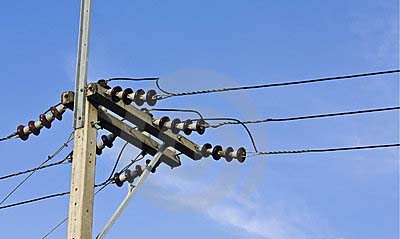
Параллельные тексты EN-RU Suspension Insulator
In figure 4-26 you see the common suspension insulator.
The suspension insulator, as its name implies, is suspended from the crossarm and has the line conductor fastened to the lower end.
It is designed for ease of linking units together.
Linking of these insulators gives you the versatility of ordering one insulator to be used with varying voltages.
[ http://constructionmanuals.tpub.com/14026/css/14026_101.htm]Подвесной изолятор
Подвесной изолятор представлен на рис. 4-26.
Данный изолятор (как следует из его названия) подвешивают к поперечине. Линейный проводник прикрепляют к нижнему концу изолятора.
Подвесной изолятор легко собирается из отдельных тарельчатых изоляторов.
Соединяя требуемое число одинаковых тарельчатых изоляторов, получают подвесные изоляторы на разное напряжение.
[Перевод Интент]
Figure 4-26.
Suspension insulatorТематики
- изолятор
- электрификация, электроснабж. железных дорог
Классификация
>>>Обобщающие термины
EN
DE
Немецко-русский словарь нормативно-технической терминологии > Hängeisolator
-
13 Schadensvermeidung
предотвращение ущерба
—
[ http://www.eionet.europa.eu/gemet/alphabetic?langcode=en]EN
damage prevention
The aggregate of approaches and measures to ensure that human action or natural phenomena do not cause damage. It implies the formulation and implementation of long-range policies and programmes to eliminate or prevent the damages caused by disasters. (Source: GUNN)
[http://www.eionet.europa.eu/gemet/alphabetic?langcode=en]Тематики
EN
DE
FR
Немецко-русский словарь нормативно-технической терминологии > Schadensvermeidung
-
14 Katastrophenvorbeugung
предупреждение стихийных бедствий
—
[ http://www.eionet.europa.eu/gemet/alphabetic?langcode=en]EN
disaster prevention
The aggregate of approaches and measures to ensure that human action or natural phenomena do not cause or result in disaster or similar emergency. It implies the formulation and implementation of long-range policies and programmes to eliminate or prevent the occurrence of disasters. (Source: GUNN)
[http://www.eionet.europa.eu/gemet/alphabetic?langcode=en]Тематики
EN
DE
FR
Немецко-русский словарь нормативно-технической терминологии > Katastrophenvorbeugung
-
15 Zersiedelung
разрастание городов
—
[ http://www.eionet.europa.eu/gemet/alphabetic?langcode=en]EN
urban sprawl
The physical pattern of low-density expansion of large urban areas under market conditions into the surrounding agricultural areas. Sprawl lies in advance of the principal lines of urban growth and implies little planning control of land subdivision. Development is patchy, scattered and strung out, with a tendency to discontinuity because it leap-frogs over some areas, leaving agricultural enclaves. (Source: GOOD)
[http://www.eionet.europa.eu/gemet/alphabetic?langcode=en]Тематики
EN
DE
FR
Немецко-русский словарь нормативно-технической терминологии > Zersiedelung
-
16 Trennschalter
разъединитель
Контактный коммутационный аппарат, в разомкнутом положении отвечающий требованиям к функции разъединения.
Примечание.
1 Это определение отличается от формулировки МЭК 60050(441-14-05), поскольку требования к функции разъединения не ограничиваются соблюдением изолирующего промежутка.
[ ГОСТ Р 50030. 1-2000 ( МЭК 60947-1-99)]
2 Разъединитель способен включать и отключать цепь с незначительным током или при незначительном изменении напряжения на зажимах каждого из полюсов разъединителя.
Разъединитель может проводить токи в нормальных условиях работы, а также в течение определенного времени в аномальных условиях работы выдерживать токи короткого замыкания.
[ ГОСТ Р 50030. 3-99 ( МЭК 60947-3-99)] Условное обозначение контакта разъединителя
разъединитель
Контактный коммутационный аппарат, который обеспечивает в отключенном положении изоляционный промежуток, удовлетворяющий нормированным требованиям.
Примечания
1 Разъединитель способен размыкать и замыкать цепь при малом токе или малом изменении напряжения на выводах каждого из его полюсов. Он также способен проводить токи при нормальных условиях в цепи и проводить в течение нормированного времени токи при ненормальных условиях, таких как короткое замыкание.
2 Малые токи - это такие токи, как емкостные токи вводов, шин, соединений, очень коротких кабелей, токи постоянно соединенных ступенчатых сопротивлений выключателей и токи трансформаторов напряжения и делителей. Для номинальных напряжений до 330 кВ включительно ток, не превышающий 0,5 А, считается малым током по этому определению; для номинального напряжения от 500 кВ и выше и токов, превышающих 0,5 А, необходимо проконсультироваться с изготовителем, если нет особых указаний в руководствах по эксплуатации разъединителей.
3 К малым изменениям напряжения относятся изменения напряжения, возникающие при шунтировании регуляторов индуктивного напряжения или выключателей.
4 Для разъединителей номинальным напряжением от 110 кВ и выше может быть установлена коммутация уравнительных токов.
[ ГОСТ Р 52726-2007]EN
disconnector
a mechanical switching device which provides, in the open position, an isolating distance in accordance with specified requirements
NOTE – A disconnector is capable of opening and closing a circuit when either negligible current is broken or made, or when no significant change in the voltage across the terminals of each of the poles of the disconnector occurs. It is also capable of carrying currents under normal circuit conditions and carrying for a specified time currents under abnormal conditions such as those of short circuit.
[IEV number 441-14-05]
disconnector
IEV 441-14-05 is applicable with the following additional notes:
NOTE 1
"Negligible current" implies currents such as the capacitive currents of bushings, busbars, connections, very short lengths of cable, currents of permanently connected grading impedances of circuit-breakers and currents of voltage transformers and dividers. For rated voltages of 420 kV and below, a current not exceeding 0,5 A is a negligible current for the purpose of this definition; for rated voltage above 420 kV and currents exceeding 0,5 A, the manufacturer should be consulted.
"No significant change in voltage" refers to such applications as the by-passing of induction voltage regulators or circuit-breakers.
NOTE 2
For a disconnector having a rated voltage of 52 kV and above, a rated ability of bus transfer current switching may be assigned
[IEC 62271-102]FR
sectionneur
appareil mécanique de connexion qui assure, en position d'ouverture, une distance de sectionnement satisfaisant à des conditions spécifiées
NOTE – Un sectionneur est capable d'ouvrir et de fermer un circuit lorsqu'un courant d'intensité négligeable est interrompu ou établi, ou bien lorsqu'il ne se produit aucun changement notable de la tension aux bornes de chacun des pôles du sectionneur. Il est aussi capable de supporter des courants dans les conditions normales du circuit et de supporter des courants pendant une durée spécifiée dans des conditions anormales telles que celles du court-circuit.
[IEV number 441-14-05]Указанные в 5.3.2 перечислениях а)-d) устройства отключения ( выключатель-разъединитель, разъединитель или выключатель) должны:
- изолировать электрооборудование от цепей питания и иметь только одно положение ОТКЛЮЧЕНО (изоляция) и одно положение ВКЛЮЧЕНО, четко обозначаемые символами «О» и «I» [МЭК 60417-5008 (DB:2002-10) и МЭК 60417-5007 (DB:2002-10), см. 10.2.2];
- иметь видимое разъединение или индикатор положения, который может указывать положение ОТКЛЮЧЕНО только в случае, если все контакты в действительности открыты, т.е. разомкнуты и удалены друг от друга на расстояние, удовлетворяющее требованиям по изолированию;
- быть снабжены расположенным снаружи ручным приводом (например, ручкой). Исключение для управляемых внешним источником энергии, когда воздействие вручную невозможно при наличии иного внешнего привода. Если внешние приводы не используются для выполнения аварийных функций управления, то рекомендуется применять ЧЕРНЫЙ и СЕРЫЙ цвета для окраски ручного привода (см. 10.7.4 и 10.8.4);
- обладать средствами для запирания в положении ОТКЛЮЧЕНО (например, с помощью висячих замков). При таком запирании возможность как дистанционного, так и местного включения должна быть исключена;
Разъединители служат для создания видимого разрыва, отделяющего выводимое в ремонт оборудование от токоведущих частей, находящихся под напряжением, для безопасного производства работ.
Разъединители не имеют дугогасящих устройств и поэтому предназначаются для включения и отключения электрических цепей при отсутствии тока нагрузки и находящихся только под напряжением или даже без напряжения. Лишь в некоторых случаях допускается включение и отключение разъединителями небольших токов, значительно меньше номинальных.
Разъединители используются также при различного рода переключениях в схемах электрических соединений подстанций, например при переводе присоединений с одной системы шин на другую.
Требования, предъявляемые к разъединителям с точки зрения оперативного обслуживания, следующие:- Разъединители в отключенном положении должны создавать ясно видимый разрыв цепи, соответствующий классу напряжения установки.
- Приводы разъединителей должны иметь устройства фиксации в каждом из двух оперативных положений: включенном и отключенном. Кроме того, они должны иметь надежные упоры, ограничивающие поворот главных ножей на угол больше заданного.
- Опорные изоляторы и изолирующие тяги должны выдерживать механическую нагрузки при операциях.
- Главные ножи разъединителей должны иметь блокировку с ножами стационарных заземлителей и не допускать возможности одновременного включения тех и других.
- Разъединители должны беспрепятственно включаться и отключаться при любых наихудших условиях окружающей среды (например, при обледенении).
- Разъединители должны иметь надлежащую изоляцию, обеспечивающую не только надежную работу при возможных перенапряжениях и ухудшении атмосферных условий (гроза, дождь, туман), но и безопасное обслуживание.
[ http://forca.ru/stati/podstancii/obsluzhivanie-razediniteley-otdeliteley-i-korotkozamykateley.html]
Разъединители применяются для коммутации обесточенных при помощи выключателей участков токоведущих систем, для переключения РУ с одной ветви на другую, а также для отделения на время ревизии или ремонта силового электротехнического оборудования и создания безопасных условий от смежных частей линии, находящихся под напряжением. Разъединители способны размыкать электрическую цепь только при отсутствии в ней тока или при весьма малом токе. В отличие от выключателей разъединители в отключенном состоянии образуют видимый разрыв цепи. После отключения разъединителей с обеих сторон объекта, например выключателя или трансформатора, они должны заземляться с обеих сторон либо при помощи переносных заземлителей, либо специальных заземляющих ножей, встраиваемых в конструкцию разъединителя.
[ http://relay-protection.ru/content/view/46/8/1/1/]
Параллельные тексты EN-RU
b) disconnector, with or without fuses, in accordance with IEC 60947-3, that has an auxiliary contact that in all cases causes switching devices to break the load circuit before the opening of the main contacts of the disconnector;
[IEC 60204-1-2006]
б) разъединитель с или без предохранителей, соответствующий требованиям МЭК 60947-3 со вспомогательным контактом, срабатывающим до того, как разомкнутся главные контакты разъединителя, используемым для коммутации другого аппарата, отключающего питание цепей нагрузки.
[Перевод Интент]
Тематики
- высоковольтный аппарат, оборудование...
- релейная защита
- электротехника, основные понятия
Классификация
>>>EN
- disconnect
- disconnect device
- disconnect switch
- disconnecting device
- disconnecting switch
- disconnector
- DS
- isolating facility
- isolating switch
- isolator
- main disconnect device
DE
FR
Смотри также
Немецко-русский словарь нормативно-технической терминологии > Trennschalter
См. также в других словарях:
implies — im·ply || ɪm plaɪ v. indirectly suggest, hint, infer … English contemporary dictionary
IMPLIES — … Useful english dictionary
Structure implies multiplicity — In diatonic set theory structure implies multiplicity is a quality of a collection or scale. This is that for the interval series formed by the shortest distance around a diatonic circle of fifths between member of a series indicates the number… … Wikipedia
cell migration — Implies movement of a population of cells from one place to another as in the movement of neural crest cells during morphogenesis … Dictionary of molecular biology
Free on board — Implies that distributive services like transport and handling performed on goods up to the customs frontier of the economy from which the goods are classed as merchandise. The New York Times Financial Glossary * * * free on board free on board ➔ … Financial and business terms
addiction — Implies a very severe form of dependence, one involving an overwhelming compulsion for the use of a particular drug … Forensic science glossary
city — Implies an abundance of something in a given place. After I had been gone for a month, my house was dust city … Dictionary of american slang
city — Implies an abundance of something in a given place. After I had been gone for a month, my house was dust city … Dictionary of american slang
addition — Implies physical contact, something added to another. Structure physically attached to or connected with building itself. Mack v. Eyssell, 332 Mo. 671, 59 S.W.2d 1049. Extension; increase; augmentation. Meyering v. Miller, 330 Mo. 885, 51 S.W.2d… … Black's law dictionary
bought — Implies a completed transaction, a vesting of the right of title to and possession of the property sold, and also imports a valuable consideration … Black's law dictionary
full settlement — Implies an adjustment of all pending matters, the mutual release of all prior obligations existing between the parties. Hickox v. Hickox, Tex.Civ. App., 151 S.W.2d 913, 918 … Black's law dictionary
Перевод: с немецкого на все языки
со всех языков на немецкий- Со всех языков на:
- Немецкий
- С немецкого на:
- Все языки
- Английский
- Русский
implies

18+
© Академик, 2000-2026
- Обратная связь: Техподдержка, Реклама на сайте
Экспорт словарей на сайты, сделанные на PHP, Joomla, Drupal, WordPress, MODx.