

-
1 system data types
-
2 data model
"A collection of related object types, operators, and integrity rules that form the abstract entity supported by a database management system (DBMS). Thus, one speaks of a relational DBMS, a network DBMS, and so on, depending on the type of data model a DBMS supports. In general, a DBMS supports only one data model as a practical rather than a theoretical restriction." -
3 Domain Name System
"A hierarchical, distributed database that contains mappings of DNS domain names to various types of data, such as IP addresses. DNS enables the location of computers and services by user-friendly names, and it also enables the discovery of other information stored in the database." -
4 geographic
Pertaining to data types in an ellipsoidal coordinate system. -
5 geometric
Pertaining to data types in a planar coordinate system. -
6 Artificial Intelligence
In my opinion, none of [these programs] does even remote justice to the complexity of human mental processes. Unlike men, "artificially intelligent" programs tend to be single minded, undistractable, and unemotional. (Neisser, 1967, p. 9)Future progress in [artificial intelligence] will depend on the development of both practical and theoretical knowledge.... As regards theoretical knowledge, some have sought a unified theory of artificial intelligence. My view is that artificial intelligence is (or soon will be) an engineering discipline since its primary goal is to build things. (Nilsson, 1971, pp. vii-viii)Most workers in AI [artificial intelligence] research and in related fields confess to a pronounced feeling of disappointment in what has been achieved in the last 25 years. Workers entered the field around 1950, and even around 1960, with high hopes that are very far from being realized in 1972. In no part of the field have the discoveries made so far produced the major impact that was then promised.... In the meantime, claims and predictions regarding the potential results of AI research had been publicized which went even farther than the expectations of the majority of workers in the field, whose embarrassments have been added to by the lamentable failure of such inflated predictions....When able and respected scientists write in letters to the present author that AI, the major goal of computing science, represents "another step in the general process of evolution"; that possibilities in the 1980s include an all-purpose intelligence on a human-scale knowledge base; that awe-inspiring possibilities suggest themselves based on machine intelligence exceeding human intelligence by the year 2000 [one has the right to be skeptical]. (Lighthill, 1972, p. 17)4) Just as Astronomy Succeeded Astrology, the Discovery of Intellectual Processes in Machines Should Lead to a Science, EventuallyJust as astronomy succeeded astrology, following Kepler's discovery of planetary regularities, the discoveries of these many principles in empirical explorations on intellectual processes in machines should lead to a science, eventually. (Minsky & Papert, 1973, p. 11)5) Problems in Machine Intelligence Arise Because Things Obvious to Any Person Are Not Represented in the ProgramMany problems arise in experiments on machine intelligence because things obvious to any person are not represented in any program. One can pull with a string, but one cannot push with one.... Simple facts like these caused serious problems when Charniak attempted to extend Bobrow's "Student" program to more realistic applications, and they have not been faced up to until now. (Minsky & Papert, 1973, p. 77)What do we mean by [a symbolic] "description"? We do not mean to suggest that our descriptions must be made of strings of ordinary language words (although they might be). The simplest kind of description is a structure in which some features of a situation are represented by single ("primitive") symbols, and relations between those features are represented by other symbols-or by other features of the way the description is put together. (Minsky & Papert, 1973, p. 11)[AI is] the use of computer programs and programming techniques to cast light on the principles of intelligence in general and human thought in particular. (Boden, 1977, p. 5)The word you look for and hardly ever see in the early AI literature is the word knowledge. They didn't believe you have to know anything, you could always rework it all.... In fact 1967 is the turning point in my mind when there was enough feeling that the old ideas of general principles had to go.... I came up with an argument for what I called the primacy of expertise, and at the time I called the other guys the generalists. (Moses, quoted in McCorduck, 1979, pp. 228-229)9) Artificial Intelligence Is Psychology in a Particularly Pure and Abstract FormThe basic idea of cognitive science is that intelligent beings are semantic engines-in other words, automatic formal systems with interpretations under which they consistently make sense. We can now see why this includes psychology and artificial intelligence on a more or less equal footing: people and intelligent computers (if and when there are any) turn out to be merely different manifestations of the same underlying phenomenon. Moreover, with universal hardware, any semantic engine can in principle be formally imitated by a computer if only the right program can be found. And that will guarantee semantic imitation as well, since (given the appropriate formal behavior) the semantics is "taking care of itself" anyway. Thus we also see why, from this perspective, artificial intelligence can be regarded as psychology in a particularly pure and abstract form. The same fundamental structures are under investigation, but in AI, all the relevant parameters are under direct experimental control (in the programming), without any messy physiology or ethics to get in the way. (Haugeland, 1981b, p. 31)There are many different kinds of reasoning one might imagine:Formal reasoning involves the syntactic manipulation of data structures to deduce new ones following prespecified rules of inference. Mathematical logic is the archetypical formal representation. Procedural reasoning uses simulation to answer questions and solve problems. When we use a program to answer What is the sum of 3 and 4? it uses, or "runs," a procedural model of arithmetic. Reasoning by analogy seems to be a very natural mode of thought for humans but, so far, difficult to accomplish in AI programs. The idea is that when you ask the question Can robins fly? the system might reason that "robins are like sparrows, and I know that sparrows can fly, so robins probably can fly."Generalization and abstraction are also natural reasoning process for humans that are difficult to pin down well enough to implement in a program. If one knows that Robins have wings, that Sparrows have wings, and that Blue jays have wings, eventually one will believe that All birds have wings. This capability may be at the core of most human learning, but it has not yet become a useful technique in AI.... Meta- level reasoning is demonstrated by the way one answers the question What is Paul Newman's telephone number? You might reason that "if I knew Paul Newman's number, I would know that I knew it, because it is a notable fact." This involves using "knowledge about what you know," in particular, about the extent of your knowledge and about the importance of certain facts. Recent research in psychology and AI indicates that meta-level reasoning may play a central role in human cognitive processing. (Barr & Feigenbaum, 1981, pp. 146-147)Suffice it to say that programs already exist that can do things-or, at the very least, appear to be beginning to do things-which ill-informed critics have asserted a priori to be impossible. Examples include: perceiving in a holistic as opposed to an atomistic way; using language creatively; translating sensibly from one language to another by way of a language-neutral semantic representation; planning acts in a broad and sketchy fashion, the details being decided only in execution; distinguishing between different species of emotional reaction according to the psychological context of the subject. (Boden, 1981, p. 33)Can the synthesis of Man and Machine ever be stable, or will the purely organic component become such a hindrance that it has to be discarded? If this eventually happens-and I have... good reasons for thinking that it must-we have nothing to regret and certainly nothing to fear. (Clarke, 1984, p. 243)The thesis of GOFAI... is not that the processes underlying intelligence can be described symbolically... but that they are symbolic. (Haugeland, 1985, p. 113)14) Artificial Intelligence Provides a Useful Approach to Psychological and Psychiatric Theory FormationIt is all very well formulating psychological and psychiatric theories verbally but, when using natural language (even technical jargon), it is difficult to recognise when a theory is complete; oversights are all too easily made, gaps too readily left. This is a point which is generally recognised to be true and it is for precisely this reason that the behavioural sciences attempt to follow the natural sciences in using "classical" mathematics as a more rigorous descriptive language. However, it is an unfortunate fact that, with a few notable exceptions, there has been a marked lack of success in this application. It is my belief that a different approach-a different mathematics-is needed, and that AI provides just this approach. (Hand, quoted in Hand, 1985, pp. 6-7)We might distinguish among four kinds of AI.Research of this kind involves building and programming computers to perform tasks which, to paraphrase Marvin Minsky, would require intelligence if they were done by us. Researchers in nonpsychological AI make no claims whatsoever about the psychological realism of their programs or the devices they build, that is, about whether or not computers perform tasks as humans do.Research here is guided by the view that the computer is a useful tool in the study of mind. In particular, we can write computer programs or build devices that simulate alleged psychological processes in humans and then test our predictions about how the alleged processes work. We can weave these programs and devices together with other programs and devices that simulate different alleged mental processes and thereby test the degree to which the AI system as a whole simulates human mentality. According to weak psychological AI, working with computer models is a way of refining and testing hypotheses about processes that are allegedly realized in human minds.... According to this view, our minds are computers and therefore can be duplicated by other computers. Sherry Turkle writes that the "real ambition is of mythic proportions, making a general purpose intelligence, a mind." (Turkle, 1984, p. 240) The authors of a major text announce that "the ultimate goal of AI research is to build a person or, more humbly, an animal." (Charniak & McDermott, 1985, p. 7)Research in this field, like strong psychological AI, takes seriously the functionalist view that mentality can be realized in many different types of physical devices. Suprapsychological AI, however, accuses strong psychological AI of being chauvinisticof being only interested in human intelligence! Suprapsychological AI claims to be interested in all the conceivable ways intelligence can be realized. (Flanagan, 1991, pp. 241-242)16) Determination of Relevance of Rules in Particular ContextsEven if the [rules] were stored in a context-free form the computer still couldn't use them. To do that the computer requires rules enabling it to draw on just those [ rules] which are relevant in each particular context. Determination of relevance will have to be based on further facts and rules, but the question will again arise as to which facts and rules are relevant for making each particular determination. One could always invoke further facts and rules to answer this question, but of course these must be only the relevant ones. And so it goes. It seems that AI workers will never be able to get started here unless they can settle the problem of relevance beforehand by cataloguing types of context and listing just those facts which are relevant in each. (Dreyfus & Dreyfus, 1986, p. 80)Perhaps the single most important idea to artificial intelligence is that there is no fundamental difference between form and content, that meaning can be captured in a set of symbols such as a semantic net. (G. Johnson, 1986, p. 250)Artificial intelligence is based on the assumption that the mind can be described as some kind of formal system manipulating symbols that stand for things in the world. Thus it doesn't matter what the brain is made of, or what it uses for tokens in the great game of thinking. Using an equivalent set of tokens and rules, we can do thinking with a digital computer, just as we can play chess using cups, salt and pepper shakers, knives, forks, and spoons. Using the right software, one system (the mind) can be mapped into the other (the computer). (G. Johnson, 1986, p. 250)19) A Statement of the Primary and Secondary Purposes of Artificial IntelligenceThe primary goal of Artificial Intelligence is to make machines smarter.The secondary goals of Artificial Intelligence are to understand what intelligence is (the Nobel laureate purpose) and to make machines more useful (the entrepreneurial purpose). (Winston, 1987, p. 1)The theoretical ideas of older branches of engineering are captured in the language of mathematics. We contend that mathematical logic provides the basis for theory in AI. Although many computer scientists already count logic as fundamental to computer science in general, we put forward an even stronger form of the logic-is-important argument....AI deals mainly with the problem of representing and using declarative (as opposed to procedural) knowledge. Declarative knowledge is the kind that is expressed as sentences, and AI needs a language in which to state these sentences. Because the languages in which this knowledge usually is originally captured (natural languages such as English) are not suitable for computer representations, some other language with the appropriate properties must be used. It turns out, we think, that the appropriate properties include at least those that have been uppermost in the minds of logicians in their development of logical languages such as the predicate calculus. Thus, we think that any language for expressing knowledge in AI systems must be at least as expressive as the first-order predicate calculus. (Genesereth & Nilsson, 1987, p. viii)21) Perceptual Structures Can Be Represented as Lists of Elementary PropositionsIn artificial intelligence studies, perceptual structures are represented as assemblages of description lists, the elementary components of which are propositions asserting that certain relations hold among elements. (Chase & Simon, 1988, p. 490)Artificial intelligence (AI) is sometimes defined as the study of how to build and/or program computers to enable them to do the sorts of things that minds can do. Some of these things are commonly regarded as requiring intelligence: offering a medical diagnosis and/or prescription, giving legal or scientific advice, proving theorems in logic or mathematics. Others are not, because they can be done by all normal adults irrespective of educational background (and sometimes by non-human animals too), and typically involve no conscious control: seeing things in sunlight and shadows, finding a path through cluttered terrain, fitting pegs into holes, speaking one's own native tongue, and using one's common sense. Because it covers AI research dealing with both these classes of mental capacity, this definition is preferable to one describing AI as making computers do "things that would require intelligence if done by people." However, it presupposes that computers could do what minds can do, that they might really diagnose, advise, infer, and understand. One could avoid this problematic assumption (and also side-step questions about whether computers do things in the same way as we do) by defining AI instead as "the development of computers whose observable performance has features which in humans we would attribute to mental processes." This bland characterization would be acceptable to some AI workers, especially amongst those focusing on the production of technological tools for commercial purposes. But many others would favour a more controversial definition, seeing AI as the science of intelligence in general-or, more accurately, as the intellectual core of cognitive science. As such, its goal is to provide a systematic theory that can explain (and perhaps enable us to replicate) both the general categories of intentionality and the diverse psychological capacities grounded in them. (Boden, 1990b, pp. 1-2)Because the ability to store data somewhat corresponds to what we call memory in human beings, and because the ability to follow logical procedures somewhat corresponds to what we call reasoning in human beings, many members of the cult have concluded that what computers do somewhat corresponds to what we call thinking. It is no great difficulty to persuade the general public of that conclusion since computers process data very fast in small spaces well below the level of visibility; they do not look like other machines when they are at work. They seem to be running along as smoothly and silently as the brain does when it remembers and reasons and thinks. On the other hand, those who design and build computers know exactly how the machines are working down in the hidden depths of their semiconductors. Computers can be taken apart, scrutinized, and put back together. Their activities can be tracked, analyzed, measured, and thus clearly understood-which is far from possible with the brain. This gives rise to the tempting assumption on the part of the builders and designers that computers can tell us something about brains, indeed, that the computer can serve as a model of the mind, which then comes to be seen as some manner of information processing machine, and possibly not as good at the job as the machine. (Roszak, 1994, pp. xiv-xv)The inner workings of the human mind are far more intricate than the most complicated systems of modern technology. Researchers in the field of artificial intelligence have been attempting to develop programs that will enable computers to display intelligent behavior. Although this field has been an active one for more than thirty-five years and has had many notable successes, AI researchers still do not know how to create a program that matches human intelligence. No existing program can recall facts, solve problems, reason, learn, and process language with human facility. This lack of success has occurred not because computers are inferior to human brains but rather because we do not yet know in sufficient detail how intelligence is organized in the brain. (Anderson, 1995, p. 2)Historical dictionary of quotations in cognitive science > Artificial Intelligence
-
7 BIOS
['baios] n. shkurtesë nga b asic i nput o utput s ystem ( BIOS) sistemi themelor për hyrje-dalje ( informatikë)What is BIOS?BIOS is an acronym for Basic Input/Output System. It is the boot firmware program on a PC, and controls the computer from the time you start it up until the operating system takes over. When you turn on a PC, the BIOS first conducts a basic hardware check, called a Power-On Self Test (POST), to determine whether all of the attachments are present and working. Then it loads the operating system into your computer's random access memory, or RAM.The BIOS also manages data flow between the computer's operating system and attached devices such as the hard disk, video card, keyboard, mouse, and printer.The BIOS stores the date, the time, and your system configuration information in a battery-powered, non-volatile memory chip, called a CMOS (Complementary Metal Oxide Semiconductor) after its manufacturing process.Although the BIOS is standardized and should rarely require updating, some older BIOS chips may not accommodate new hardware devices. Before the early 1990s, you couldn't update the BIOS without removing and replacing its ROM chip. Contemporary BIOS resides on memory chips such as flash chips or EEPROM (Electrically Erasable Programmable Read-Only Memory), so that you can update the BIOS yourself if necessary.For detailed information about BIOS updates, visit:What is firmware?Firmware consists of programs installed semi-permanently into memory, using various types of programmable ROM chips, such as PROMS, EPROMs, EEPROMs, and flash chips.Firmware is non-volatile, and will remain in memory after you turn the system off.Often, the term firmware is used to refer specifically to boot firmware, which controls a computer from the time that it is turned on until the primary operating system has taken over. Boot firmware's main function is to initialize the hardware and then to boot (load and execute) the primary operating system. On PCs, the boot firmware is usually referred to as the BIOS.What is the difference between memory and disk storage?Memory and disk storage both refer to internal storage space in a computer.The term memory usually means RAM (Random Access Memory). To refer to hard drive storage, the terms disk space or storage are usually used.Typically, computers have much less memory than disk space, because RAM is much more expensive per megabyte than a hard disk. Today, a typical desktop computer might come with 512MB of RAM, and a 40 gigabyte hard disk.Virtual memory is disk space that has been designated to act like RAM.Computers also contain a small amount of ROM, or read-only memory, containing permanent or semi-permanent (firmware) instructions for checking hardware and starting up the computer. On a PC, this is called the BIOS.What is RAM?RAM stands for Random Access Memory. RAM provides space for your computer to read and write data to be accessed by the CPU (central processing unit). When people refer to a computer's memory, they usually mean its RAM.New computers typically come with at least 256 megabytes (MB) of RAM installed, and can be upgraded to 512MB or even a gigabyte or more.If you add more RAM to your computer, you reduce the number of times your CPU must read data from your hard disk. This usually allows your computer to work considerably faster, as RAM is many times faster than a hard disk.RAM is volatile, so data stored in RAM stays there only as long as your computer is running. As soon as you turn the computer off, the data stored in RAM disappears.When you turn your computer on again, your computer's boot firmware (called BIOS on a PC) uses instructions stored semi-permanently in ROM chips to read your operating system and related files from the disk and load them back into RAM.Note: On a PC, different parts of RAM may be more or less easily accessible to programs. For example, cache RAM is made up of very high-speed RAM chips which sit between the CPU and main RAM, storing (i.e., caching) memory accesses by the CPU. Cache RAM helps to alleviate the gap between the speed of a CPU's megahertz rating and the ability of RAM to respond and deliver data. It reduces how often the CPU must wait for data from main memory.What is ROM?ROM is an acronym for Read-Only Memory. It refers to computer memory chips containing permanent or semi-permanent data. Unlike RAM, ROM is non-volatile; even after you turn off your computer, the contents of ROM will remain.Almost every computer comes with a small amount of ROM containing the boot firmware. This consists of a few kilobytes of code that tell the computer what to do when it starts up, e.g., running hardware diagnostics and loading the operating system into RAM. On a PC, the boot firmware is called the BIOS.Originally, ROM was actually read-only. To update the programs in ROM, you had to remove and physically replace your ROM chips. Contemporary versions of ROM allow some limited rewriting, so you can usually upgrade firmware such as the BIOS by using installation software. Rewritable ROM chips include PROMs (programmable read-only memory), EPROMs (erasable read-only memory), EEPROMs (electrically erasable programmable read-only memory), and a common variation of EEPROMs called flash memory.What is an ACPI BIOS?ACPI is an acronym that stands for Advanced Configuration and Power Interface, a power management specification developed by Intel, Microsoft, and Toshiba. ACPI support is built into Windows 98 and later operating systems. ACPI is designed to allow the operating system to control the amount of power provided to each device or peripheral attached to the computer system. This provides much more stable and efficient power management and makes it possible for the operating system to turn off selected devices, such as a monitor or CD-ROM drive, when they are not in use.ACPI should help eliminate computer lockup on entering power saving or sleep mode. This will allow for improved power management, especially in portable computer systems where reducing power consumption is critical for extending battery life. ACPI also allows for the computer to be turned on and off by external devices, so that the touch of a mouse or the press of a key will "wake up" the computer. This new feature of ACPI, called OnNow, allows a computer to enter a sleep mode that uses very little power.In addition to providing power management, ACPI also evolves the existing Plug and Play BIOS (PnP BIOS) to make adding and configuring new hardware devices easier. This includes support for legacy non-PnP devices and improved support for combining older devices with ACPI hardware, allowing both to work in a more efficient manner in the same computer system. The end result of this is to make the BIOS more PnP compatible.What is CMOS?CMOS, short for Complementary Metal Oxide Semiconductor, is a low-power, low-heat semiconductor technology used in contemporary microchips, especially useful for battery-powered devices. The specific technology is explained in detail at:http://searchsmb.techtarget.com/sDefinition/0,,sid44_gci213860,00.htmlMost commonly, though, the term CMOS is used to refer to small battery-powered configuration chips on system boards of personal computers, where the BIOS stores the date, the time, and system configuration details.How do I enter the Setup program in my BIOS?Warning: Your BIOS Setup program is very powerful. An incorrect setting could cause your computer not to boot properly. You should make sure you understand what a setting does before you change it.You can usually run Setup by pressing a special function key or key combination soon after turning on the computer, during its power-on self test (POST), before the operating system loads (or before the operating system's splash screen shows). During POST, the BIOS usually displays a prompt such as:Press F2 to enter SetupMany newer computers display a brief screen, usually black and white, with the computer manufacturer's logo during POST.Entering the designated keystroke will take you into the BIOS Setup. Common keystrokes to enter the BIOS Setup are F1, F2, F10, and Del.On some computers, such as some Gateway or Compaq computers, graphics appear during the POST, and the BIOS information is hidden. You must press Esc to make these graphics disappear. Your monitor will then display the correct keystroke to enter.Note: If you press the key too early or too often, the BIOS may display an error message. To avoid this, wait about five seconds after turning the power on, and then press the key once or twice.What's the difference between BIOS and CMOS?Many people use the terms BIOS (basic input/output system) and CMOS (complementary metal oxide semiconductor) to refer to the same thing. Though they are related, they are distinct and separate components of a computer. The BIOS is the program that starts a computer up, and the CMOS is where the BIOS stores the date, time, and system configuration details it needs to start the computer.The BIOS is a small program that controls the computer from the time it powers on until the time the operating system takes over. The BIOS is firmware, which means it cannot store variable data.CMOS is a type of memory technology, but most people use the term to refer to the chip that stores variable data for startup. A computer's BIOS will initialize and control components like the floppy and hard drive controllers and the computer's hardware clock, but the specific parameters for startup and initializing components are stored in the CMOS. -
8 alarm
- устройство аварийной сигнализации
- тревога (на охраняемом объекте)
- сигнальное устройство
- сигнализация
- сигнализатор
- сигнал тревоги (SCADA)
- сигнал тревоги
- предупреждение
- предупреждать об опасности
- предупредительный сигнал
- аварийный сигнал (в автоматизированных системах)
- аварийный сигнал
- аварийное сообщение
- аварийная сигнализация
аварийная сигнализация
Сигнализация, извещающая персонал о возникновении аварийного режима работы объекта или целого участка обслуживаемой установки
[ОАО РАО "ЕЭС России" СТО 17330282.27.010.001-2008]
аварийная сигнализация
Совокупность датчиков и устройств, с помощью которых осуществляется контроль за состоянием работающей системы и оповещение о неисправности с помощью световых или звуковых сигналов.
[Л.М. Невдяев. Телекоммуникационные технологии. Англо-русский толковый словарь-справочник. Под редакцией Ю.М. Горностаева. Москва, 2002]Должны быть предусмотрены также аварийная сигнализация по всем видам защиты и предупредительная сигнализация.
[ ГОСТ 30533-97]Каждая медицинская система IT должна иметь устройство для звуковой и световой аварийной сигнализации, которое устанавливают так, чтобы оно находилось под постоянным контролем медицинского персонала и было оборудовано:
- зеленой сигнальной лампой (лампами) для индикации нормальной работы;
- желтой сигнальной лампой, которая загорается, когда сопротивление изоляции достигает минимально допустимого значения. Для данной сигнализации не допускается возможность сброса или отключения;
- желтой сигнальной лампой, которая загорается при превышении нормируемой температуры обмоток трансформатора. Для данной сигнализации не допускается возможность сброса или отключения;
- желтой сигнальной лампой, которая загорается, когда возникает перегрузка трансформатора, не превышающая нормируемую двухчасовую перегрузку, и переходит в мигающий режим, когда перегрузка превышает нормируемую величину двухчасовой перегрузки. Для данной сигнализации не допускается возможность сброса или отключения.
[ГОСТ Р 50571.28-2006(МЭК 60364-7-710:2002)]Если резервный вентилятор не установлен, то следует предусмотреть включение аварийной сигнализации.
Тематики
- автоматизация, основные понятия
- электросвязь, основные понятия
Действия
Сопутствующие термины
EN
аварийное сообщение
-Параллельные тексты EN-RU
The system offers diagnostic and statistics functions and configurable warnings and faults, allowing better prediction of component maintenance, and provides data to continuously improve the entire system.
[Schneider Electric]Система (управления электродвигателем) предоставляет оператору различную диагностическую и статистическую информацию и позволяет сконфигурировать предупредительные и аварийные сообщения, что дает возможность лучше планировать техническое обслуживание и постоянно улучшать систему в целом.
[Перевод Интент]Various alarm notifications are available to indicate a compromised security state such as forced entry and door position.
[APC]Устройство может формировать различные аварийные сообщения о нарушении защиты, например, о несанкционированном проникновении или об изменении положения двери.
[Перевод Интент]
Тематики
EN
аварийный сигнал
alarm
Сигнал оповещения, генерируемый в случае, если произошел отказ или контролируемый параметр вышел за допустимые пределы.
[Л.М. Невдяев. Телекоммуникационные технологии. Англо-русский толковый словарь-справочник. Под редакцией Ю.М. Горностаева. Москва, 2002]
аварийный сигнал
beacon
BCN
Сигнал, посылаемый от неисправного узла сети.
[Л.М. Невдяев. Телекоммуникационные технологии. Англо-русский толковый словарь-справочник. Под редакцией Ю.М. Горностаева. Москва, 2002]
аварийный сигнал
fate signal
Сообщение, сигнализирующее об отказе или пропадании входной информации.
[Л.М. Невдяев. Телекоммуникационные технологии. Англо-русский толковый словарь-справочник. Под редакцией Ю.М. Горностаева. Москва, 2002]
аварийный сигнал
safety signal
Сигнал, поступающий отдатчиков охранной сигнализации.
[Л.М. Невдяев. Телекоммуникационные технологии. Англо-русский толковый словарь-справочник. Под редакцией Ю.М. Горностаева. Москва, 2002]EN
alarm
activation of an event that shows a critical state
[IEC 61158-5-10, ed. 2.0 (2010-08)]
alarm
type of Event associated with a state condition that typically requires acknowledgement
[ IEC 62541-1, ed. 1.0 (2010-02)]
alarm
an audible, visual, or other signal activated when the instrument reading exceeds a preset value or falls outside of a preset range
[IEC 62533, ed. 1.0 (2010-06)]
alarm
warning of the presence of a hazard to life, property or the environment
[IEC 62642-1, ed. 1.0 (2010-06)]
alarm
audio and visual signal announcing a condition requiring attention. The audio continues until acknowledged. The acoustic noise pressure of the alarm is at least 75 dBA but not greater than 85 dBA at a distance of 1 m (IEC 60945). The visual indication continues until the alarm condition is removed
[IEC 62065, ed. 1.0 (2002-03)]
alarm
item of diagnostic, prognostic, or guidance information, which is used to alert the operator and to draw his or her attention to a process or system deviation
NOTE Specific information provided by alarms includes the existence of an anomaly for which corrective action might be needed, the cause and potential consequences of the anomaly, the overall plant status, corrective action to the anomaly, and feedback of corrective actions.
Two types of deviation may be recognised:
– unplanned – undesirable process deviations and equipment faults;
– planned – deviations in process conditions or equipment status that are the expected response to but could be indicative of undesirable plant conditions.
[IEC 62241, ed. 1.0 (2004-11)]FR
alarme
signal sonore, visuel ou autre, activé lorsque la lecture de l’instrument excède une valeur préréglée ou sortant d’un domaine déterminé
[IEC 62533, ed. 1.0 (2010-06)]
alarme
avertissement de la présence d'un risque concernant la vie, la propriété ou l'environnement
[IEC 62642-1, ed. 1.0 (2010-06)]
alarme
élément informatif relatif au diagnostic, au pronostique ou à une recommandation, qui est utilisé pour alerter l’opérateur et pour attirer son attention sur une déviation du procédé ou d’un système
NOTE L’information particulière fournie par les alarmes couvre l’existence d’anomalies pour lesquelles une action corrective pourrait être nécessaire, la cause et les conséquences potentielles de l’anomalie, l’état général de la centrale, l’action corrective correspondant à l’anomalie et le retour de l’action corrective.
Deux types de déviation peuvent être distingués:
– non prévue – Déviations du procédé indésirable et défaillance de matériels;
– prévue – Déviations relatives aux conditions du procédé ou aux états des matériels qui sont les réponses prévues, mais qui peuvent être indicatives de conditions indésirables pour la centrale.
[IEC 62241, ed. 1.0 (2004-11)]Параллельные тексты EN-RU
When the accumulated energy dropout setpoint and time delay are satisfied, the alarm is inactive.
[Schneider Electric]Если подсчитанное количество электроэнергии становится меньше заданного максимального значения и заданное время задержки истекло, аварийный сигнал отключается.
[Перевод Интент]
Тематики
- автоматизация, основные понятия
- релейная защита
- электросвязь, основные понятия
Действия
EN
- alarm
- alarm signal
- alert message
- BCN
- beacon
- emergency signal
- fate signal
- fault signal
- safety signal
- signal alarm
- trouble tone
FR
аварийный сигнал
аварийная сигнализация
Оповещение оператора о наступлении определенного события, связанного с нарушением или угрозой нарушения регламентного течения технологического процесса.
[ http://kazanets.narod.ru/AlarmsArchive.htm]Аварийные сигналы настраиваются путем задания предельных значений (границ, thresholds) индивидуально для каждой процессной переменной. Система автоматически отслеживает изменение процессной переменной и сопоставляет ее значение с заранее настроенными границами. В случае выхода переменной за нормальные границы система генерирует оповещение и фиксирует его в журнале аварийных сигналов. Рассмотрим наиболее часто используемые аварийные сигналы для аналоговых величин:
Lo – нижняя предупредительная граница. В случае если процессная переменная становится меньше Lo, генерируется предупредительное оповещение.
LoLo – нижняя аварийная граница. В случае если процессная переменная становится меньше LoLo, генерируется аварийный сигнал.
Hi - верхняя предупредительная граница. В случае если процессная переменная становится больше Hi, генерируется предупредительное оповещение.
HiHi – верхняя аварийная граница. В случае если процессная переменная становится больше HiHi, генерируется аварийный сигнал.
DEV_HI (DEVIATION_HI) – верхняя граница отклонения (рассогласования). Если разность (абсолютное значение) между двумя переменными становится больше DEV_HI, то генерируется аварийный сигнал. Например, такой сигнал можно настроить у блока PID; в этом случае система будет сигнализировать об отклонении регулируемой величины от уставки, превышающей границу DEV_HI. По аналогии можно настроить сигнал DEV_LO.
ROC_HI (RATE_OF_CHANGE_HI) – верхняя граница скорости изменения. Система отслеживает скорость изменения процессной переменной (первую производную). Если скорость возрастания переменной выше границы ROC_HI, то генерируется аварийный сигнал.
Для дискретных переменных сигналов гораздо меньше. По сути их всего две – аварийное состояние, соответствующее значению 1, или авария в случае значения 0.
На рис. 4 показана схема появления аварийных сигналов на примере быстро изменяющейся процессной переменной. Стоит отменить, что на рисунке изображены отнюдь не все генерируемые оповещения. Например, при возврате переменной обратно в нормальный диапазон значений, кроме изображенных на рисунке, генерируется оповещение RETURN_TO_NORMAL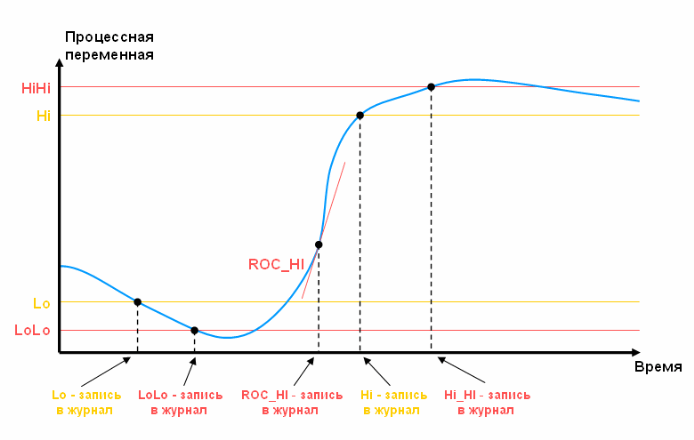
Рис. 4. Пример генерации аварийных сигналов и оповещений.Важность (или критичность) аварийного сигнала определяется приоритетом (целое число). Как правило, чем выше приоритет у аварийного сигнала, тем критичнее она для производства, и тем быстрее на нее надо обратить внимание.
При появлении аварийного сигнала у оператора есть два варианта действий:
1. Игнорировать его. Не всегда хорошее решение, мягко говоря. При этом если процессная переменная вернется обратно в нормальные границы, то появиться новое оповещение UNACK_RETURN_TO_NORMAL, говорящее о том, что оператор проспал аварийное событие, но, к счастью, все нормализовалось.
2. Подтвердить, что сигнал замечен оператором ( acknowledge). Дело в том, что сразу после появления аварийного сигнала ему автоматически присваивается статус UNACK (не подтвержден). Как только сигнал подтверждают (иногда говорят “квитируют”), его статус становится ACK (подтвержден). В этом случае возврат переменной в нормальные границы ведет к появлению оповещения ACK_RETURN_TO_NORMAL, свидетельствующее о том, что оператор “держит ухо востро”.
Аварийные сигналы можно произвольно группировать. На практике группировка проводится путем распределения процессных переменных, а следовательно, и соответствующих им аварийных сигналов по различным технологическим участкам ( plant areas) и установкам ( plant units).
[ http://kazanets.narod.ru/AlarmsArchive.htm]Тематики
Синонимы
EN
предупредительный сигнал
—
[Я.Н.Лугинский, М.С.Фези-Жилинская, Ю.С.Кабиров. Англо-русский словарь по электротехнике и электроэнергетике, Москва, 1999 г.]
предупредительный сигнал
—
[Л.Г.Суменко. Англо-русский словарь по информационным технологиям. М.: ГП ЦНИИС, 2003.]Тематики
- электротехника, основные понятия
EN
предупреждать об опасности
—
[А.С.Гольдберг. Англо-русский энергетический словарь. 2006 г.]Тематики
EN
сигнал тревоги
—
[Л.Г.Суменко. Англо-русский словарь по информационным технологиям. М.: ГП ЦНИИС, 2003.]
аларм
(в документации Schneider Electric)
-
[Интент]Тематики
Синонимы
EN
сигнализатор
Техническое средство, предназначенное для извещения о наличии или отсутствии физической величины установленного значения.
[РД 01.120.00-КТН-228-06]
сигнализатор
устройство аварийной сигнализации
Устройство, с помощью которого осуществляется подача звуковых или световых сигналов, предупреждающих обслуживающий персонал о неисправности или возникновении нештатной ситуации.
[Л.М. Невдяев. Телекоммуникационные технологии. Англо-русский толковый словарь-справочник. Под редакцией Ю.М. Горностаева. Москва, 2002]Тематики
- автоматизация, основные понятия
- электросвязь, основные понятия
Синонимы
EN
сигнализация
Устройство, обеспечивающее подачу звукового или светового сигнала при достижении предупредительного значения контролируемого параметра.
[ПБ 12-529-03 Правила безопасности систем газораспределения и газопотребления, утверждены постановлением Госгортехнадзора России от 18. 03. 2003 №9]
[СТО Газпром РД 2.5-141-2005]
сигнализация
-
[ ГОСТ Р 54325-2011 (IEC/TS 61850-2:2003)]Тематики
EN
сигнальное устройство
Устройство, осуществляющее визуальные или звуковые сигналы, привлекающие внимание обслуживающего персонала.
[ ГОСТ Р МЭК 60050-426-2006]
Тематики
EN
тревога (на охраняемом объекте)
Предупреждение о наличии опасности или угрозы для жизни человека (людей), ценностей (имущества), окружающей среды, выдаваемое техническим средством охраны/безопасности, людьми.
[РД 25.03.001-2002]Тематики
EN
устройство аварийной сигнализации
—
[Л.Г.Суменко. Англо-русский словарь по информационным технологиям. М.: ГП ЦНИИС, 2003.]Тематики
EN
3.3 сигнал тревоги (alarm): Указание на нарушение безопасности, необычное или опасное состояние, которое может потребовать немедленного внимания.
Источник: ГОСТ Р ИСО/ТО 13569-2007: Финансовые услуги. Рекомендации по информационной безопасности
3.2 сигнальное устройство (alarm): Электрооборудование, осуществляющее визуальные или звуковые сигналы, предназначенные для привлечения внимания.
Источник: ГОСТ Р МЭК 60079-13-2010: Взрывоопасные среды. Часть 13. Защита оборудования помещениями под избыточным давлением «p» оригинал документа
3.1 сигнальное устройство (alarm): Электрооборудование, осуществляющее визуальные или звуковые сигналы, предназначенные для привлечения внимания.
Источник: ГОСТ Р МЭК 60079-2-2009: Взрывоопасные среды. Часть 2. Оборудование с защитой вида заполнение или продувка оболочки под избыточным давлением "р" оригинал документа
3.1 предупреждение (alarm): Сигнал или сообщение, извещающее персонал о появлении отклонения или совокупности отклонений, требующих корректирующих действий.
Источник: ГОСТ Р ИСО 13379-2009: Контроль состояния и диагностика машин. Руководство по интерпретации данных и методам диагностирования оригинал документа
3.3 сигнал тревоги (alarm): Указание на нарушение безопасности, необычное или опасное состояние, которое может потребовать немедленного внимания.
Источник: ГОСТ Р ИСО ТО 13569-2007: Финансовые услуги. Рекомендации по информационной безопасности
Англо-русский словарь нормативно-технической терминологии > alarm
-
9 alert message
аварийное сообщение
-Параллельные тексты EN-RU
The system offers diagnostic and statistics functions and configurable warnings and faults, allowing better prediction of component maintenance, and provides data to continuously improve the entire system.
[Schneider Electric]Система (управления электродвигателем) предоставляет оператору различную диагностическую и статистическую информацию и позволяет сконфигурировать предупредительные и аварийные сообщения, что дает возможность лучше планировать техническое обслуживание и постоянно улучшать систему в целом.
[Перевод Интент]Various alarm notifications are available to indicate a compromised security state such as forced entry and door position.
[APC]Устройство может формировать различные аварийные сообщения о нарушении защиты, например, о несанкционированном проникновении или об изменении положения двери.
[Перевод Интент]
Тематики
EN
аварийный сигнал
alarm
Сигнал оповещения, генерируемый в случае, если произошел отказ или контролируемый параметр вышел за допустимые пределы.
[Л.М. Невдяев. Телекоммуникационные технологии. Англо-русский толковый словарь-справочник. Под редакцией Ю.М. Горностаева. Москва, 2002]
аварийный сигнал
beacon
BCN
Сигнал, посылаемый от неисправного узла сети.
[Л.М. Невдяев. Телекоммуникационные технологии. Англо-русский толковый словарь-справочник. Под редакцией Ю.М. Горностаева. Москва, 2002]
аварийный сигнал
fate signal
Сообщение, сигнализирующее об отказе или пропадании входной информации.
[Л.М. Невдяев. Телекоммуникационные технологии. Англо-русский толковый словарь-справочник. Под редакцией Ю.М. Горностаева. Москва, 2002]
аварийный сигнал
safety signal
Сигнал, поступающий отдатчиков охранной сигнализации.
[Л.М. Невдяев. Телекоммуникационные технологии. Англо-русский толковый словарь-справочник. Под редакцией Ю.М. Горностаева. Москва, 2002]EN
alarm
activation of an event that shows a critical state
[IEC 61158-5-10, ed. 2.0 (2010-08)]
alarm
type of Event associated with a state condition that typically requires acknowledgement
[ IEC 62541-1, ed. 1.0 (2010-02)]
alarm
an audible, visual, or other signal activated when the instrument reading exceeds a preset value or falls outside of a preset range
[IEC 62533, ed. 1.0 (2010-06)]
alarm
warning of the presence of a hazard to life, property or the environment
[IEC 62642-1, ed. 1.0 (2010-06)]
alarm
audio and visual signal announcing a condition requiring attention. The audio continues until acknowledged. The acoustic noise pressure of the alarm is at least 75 dBA but not greater than 85 dBA at a distance of 1 m (IEC 60945). The visual indication continues until the alarm condition is removed
[IEC 62065, ed. 1.0 (2002-03)]
alarm
item of diagnostic, prognostic, or guidance information, which is used to alert the operator and to draw his or her attention to a process or system deviation
NOTE Specific information provided by alarms includes the existence of an anomaly for which corrective action might be needed, the cause and potential consequences of the anomaly, the overall plant status, corrective action to the anomaly, and feedback of corrective actions.
Two types of deviation may be recognised:
– unplanned – undesirable process deviations and equipment faults;
– planned – deviations in process conditions or equipment status that are the expected response to but could be indicative of undesirable plant conditions.
[IEC 62241, ed. 1.0 (2004-11)]FR
alarme
signal sonore, visuel ou autre, activé lorsque la lecture de l’instrument excède une valeur préréglée ou sortant d’un domaine déterminé
[IEC 62533, ed. 1.0 (2010-06)]
alarme
avertissement de la présence d'un risque concernant la vie, la propriété ou l'environnement
[IEC 62642-1, ed. 1.0 (2010-06)]
alarme
élément informatif relatif au diagnostic, au pronostique ou à une recommandation, qui est utilisé pour alerter l’opérateur et pour attirer son attention sur une déviation du procédé ou d’un système
NOTE L’information particulière fournie par les alarmes couvre l’existence d’anomalies pour lesquelles une action corrective pourrait être nécessaire, la cause et les conséquences potentielles de l’anomalie, l’état général de la centrale, l’action corrective correspondant à l’anomalie et le retour de l’action corrective.
Deux types de déviation peuvent être distingués:
– non prévue – Déviations du procédé indésirable et défaillance de matériels;
– prévue – Déviations relatives aux conditions du procédé ou aux états des matériels qui sont les réponses prévues, mais qui peuvent être indicatives de conditions indésirables pour la centrale.
[IEC 62241, ed. 1.0 (2004-11)]Параллельные тексты EN-RU
When the accumulated energy dropout setpoint and time delay are satisfied, the alarm is inactive.
[Schneider Electric]Если подсчитанное количество электроэнергии становится меньше заданного максимального значения и заданное время задержки истекло, аварийный сигнал отключается.
[Перевод Интент]
Тематики
- автоматизация, основные понятия
- релейная защита
- электросвязь, основные понятия
Действия
EN
- alarm
- alarm signal
- alert message
- BCN
- beacon
- emergency signal
- fate signal
- fault signal
- safety signal
- signal alarm
- trouble tone
FR
Англо-русский словарь нормативно-технической терминологии > alert message
-
10 Memory
To what extent can we lump together what goes on when you try to recall: (1) your name; (2) how you kick a football; and (3) the present location of your car keys? If we use introspective evidence as a guide, the first seems an immediate automatic response. The second may require constructive internal replay prior to our being able to produce a verbal description. The third... quite likely involves complex operational responses under the control of some general strategy system. Is any unitary search process, with a single set of characteristics and inputoutput relations, likely to cover all these cases? (Reitman, 1970, p. 485)[Semantic memory] Is a mental thesaurus, organized knowledge a person possesses about words and other verbal symbols, their meanings and referents, about relations among them, and about rules, formulas, and algorithms for the manipulation of these symbols, concepts, and relations. Semantic memory does not register perceptible properties of inputs, but rather cognitive referents of input signals. (Tulving, 1972, p. 386)The mnemonic code, far from being fixed and unchangeable, is structured and restructured along with general development. Such a restructuring of the code takes place in close dependence on the schemes of intelligence. The clearest indication of this is the observation of different types of memory organisation in accordance with the age level of a child so that a longer interval of retention without any new presentation, far from causing a deterioration of memory, may actually improve it. (Piaget & Inhelder, 1973, p. 36)4) The Logic of Some Memory Theorization Is of Dubious Worth in the History of PsychologyIf a cue was effective in memory retrieval, then one could infer it was encoded; if a cue was not effective, then it was not encoded. The logic of this theorization is "heads I win, tails you lose" and is of dubious worth in the history of psychology. We might ask how long scientists will puzzle over questions with no answers. (Solso, 1974, p. 28)We have iconic, echoic, active, working, acoustic, articulatory, primary, secondary, episodic, semantic, short-term, intermediate-term, and longterm memories, and these memories contain tags, traces, images, attributes, markers, concepts, cognitive maps, natural-language mediators, kernel sentences, relational rules, nodes, associations, propositions, higher-order memory units, and features. (Eysenck, 1977, p. 4)The problem with the memory metaphor is that storage and retrieval of traces only deals [ sic] with old, previously articulated information. Memory traces can perhaps provide a basis for dealing with the "sameness" of the present experience with previous experiences, but the memory metaphor has no mechanisms for dealing with novel information. (Bransford, McCarrell, Franks & Nitsch, 1977, p. 434)7) The Results of a Hundred Years of the Psychological Study of Memory Are Somewhat DiscouragingThe results of a hundred years of the psychological study of memory are somewhat discouraging. We have established firm empirical generalisations, but most of them are so obvious that every ten-year-old knows them anyway. We have made discoveries, but they are only marginally about memory; in many cases we don't know what to do with them, and wear them out with endless experimental variations. We have an intellectually impressive group of theories, but history offers little confidence that they will provide any meaningful insight into natural behavior. (Neisser, 1978, pp. 12-13)A schema, then is a data structure for representing the generic concepts stored in memory. There are schemata representing our knowledge about all concepts; those underlying objects, situations, events, sequences of events, actions and sequences of actions. A schema contains, as part of its specification, the network of interrelations that is believed to normally hold among the constituents of the concept in question. A schema theory embodies a prototype theory of meaning. That is, inasmuch as a schema underlying a concept stored in memory corresponds to the mean ing of that concept, meanings are encoded in terms of the typical or normal situations or events that instantiate that concept. (Rumelhart, 1980, p. 34)Memory appears to be constrained by a structure, a "syntax," perhaps at quite a low level, but it is free to be variable, deviant, even erratic at a higher level....Like the information system of language, memory can be explained in part by the abstract rules which underlie it, but only in part. The rules provide a basic competence, but they do not fully determine performance. (Campbell, 1982, pp. 228, 229)When people think about the mind, they often liken it to a physical space, with memories and ideas as objects contained within that space. Thus, we speak of ideas being in the dark corners or dim recesses of our minds, and of holding ideas in mind. Ideas may be in the front or back of our minds, or they may be difficult to grasp. With respect to the processes involved in memory, we talk about storing memories, of searching or looking for lost memories, and sometimes of finding them. An examination of common parlance, therefore, suggests that there is general adherence to what might be called the spatial metaphor. The basic assumptions of this metaphor are that memories are treated as objects stored in specific locations within the mind, and the retrieval process involves a search through the mind in order to find specific memories....However, while the spatial metaphor has shown extraordinary longevity, there have been some interesting changes over time in the precise form of analogy used. In particular, technological advances have influenced theoretical conceptualisations.... The original Greek analogies were based on wax tablets and aviaries; these were superseded by analogies involving switchboards, gramophones, tape recorders, libraries, conveyor belts, and underground maps. Most recently, the workings of human memory have been compared to computer functioning... and it has been suggested that the various memory stores found in computers have their counterparts in the human memory system. (Eysenck, 1984, pp. 79-80)Primary memory [as proposed by William James] relates to information that remains in consciousness after it has been perceived, and thus forms part of the psychological present, whereas secondary memory contains information about events that have left consciousness, and are therefore part of the psychological past. (Eysenck, 1984, p. 86)Once psychologists began to study long-term memory per se, they realized it may be divided into two main categories.... Semantic memories have to do with our general knowledge about the working of the world. We know what cars do, what stoves do, what the laws of gravity are, and so on. Episodic memories are largely events that took place at a time and place in our personal history. Remembering specific events about our own actions, about our family, and about our individual past falls into this category. With amnesia or in aging, what dims... is our personal episodic memories, save for those that are especially dear or painful to us. Our knowledge of how the world works remains pretty much intact. (Gazzaniga, 1988, p. 42)The nature of memory... provides a natural starting point for an analysis of thinking. Memory is the repository of many of the beliefs and representations that enter into thinking, and the retrievability of these representations can limit the quality of our thought. (Smith, 1990, p. 1)Historical dictionary of quotations in cognitive science > Memory
-
11 DC
- цифровая вычислительная машина
- центр обработки данных
- система цифрового управления
- символ управления устройством
- сбросной конденсатор
- разработчик проекта
- работающий на постоянном токе
- пульт диспетчера
- прямое включение
- постоянный ток
- охладитель дренажей на ТЭС
- отстойник (осветлитель)
- осаждённая угольная частица
- описание (функциональная связь)
- контроль документооборота
- конденсатор выпара
- компенсация дисперсии
- канал дренажей
- канал (передачи) данных
- изменение конструкции или проекта
- завершение проекта
- дрейфовая камера
- двойной контакт
двойной контакт
—
[Я.Н.Лугинский, М.С.Фези-Жилинская, Ю.С.Кабиров. Англо-русский словарь по электротехнике и электроэнергетике, Москва, 1999 г.]Тематики
- электротехника, основные понятия
EN
изменение конструкции или проекта
—
[А.С.Гольдберг. Англо-русский энергетический словарь. 2006 г.]Тематики
EN
канал (передачи) данных
—
[Е.С.Алексеев, А.А.Мячев. Англо-русский толковый словарь по системотехнике ЭВМ. Москва 1993]Тематики
EN
компенсация дисперсии
(МСЭ-Т G.959.1).
[ http://www.iks-media.ru/glossary/index.html?glossid=2400324]Тематики
- электросвязь, основные понятия
EN
контроль документооборота
—
[А.С.Гольдберг. Англо-русский энергетический словарь. 2006 г.]Тематики
EN
осаждённая угольная частица
—
[А.С.Гольдберг. Англо-русский энергетический словарь. 2006 г.]Тематики
EN
отстойник (осветлитель)
—
[А.С.Гольдберг. Англо-русский энергетический словарь. 2006 г.]Тематики
EN
- decanter
- DC
охладитель дренажей на ТЭС
—
[А.С.Гольдберг. Англо-русский энергетический словарь. 2006 г.]Тематики
EN
постоянный ток
Электрический ток, не изменяющийся во времени.
Примечание — Аналогично определяют постоянные электрическое напряжение, электродвижущую силу, магнитный поток и т. д.
[ ГОСТ Р 52002-2003]Параллельные тексты EN-RU For definition, the electric current called “direct” has a unidirectional trend constant in time.
As a matter of fact, by analyzing the motion of the charges at a point crossed by a direct current, it results that the quantity of charge (Q) flowing through that point (or better, through that cross section) in each instant is always the same.
[ABB]Постоянным током называется электрический ток, значение и направление которого, не изменяются во времени.
Если рассматривать постоянный ток как прохождение элементарных электрических зарядов через определенную точку, то значение заряда (Q), протекающего через эту точку (а вернее через это поперечное сечение проводника) за единицу времени будет постоянным.
[Перевод Интент]Direct current, which was once the main means of distributing electric power, is still widespread today in the electrical plants supplying particular industrial applications.
The advantages in terms of settings, offered by the employ of d.c. motors and by supply through a single line, make direct current supply a good solution for railway and underground systems, trams, lifts and other transport means.
In addition, direct current is used in conversion plants (installations where different types of energy are converted into electrical direct energy, e.g. photovoltaic plants) and, above all, in those emergency applications where an auxiliary energy source is required to supply essential services, such as protection systems, emergency lighting, wards and factories, alarm systems, computer centers, etc..
Accumulators - for example – constitute the most reliable energy source for these services, both directly in direct current as well as by means of uninterruptible power supply units (UPS), when loads are supplied in alternating current.
[ABB]Когда-то электрическая энергия передавалась и распределялась только на постоянном токе. Но и в настоящее время в отдельных отраслях промышленности постоянный ток применяется достаточно широко.
Возможности использования двигателей постоянного тока и передачи электроэнергии по линии с меньшим числом проводников дают неоспоримые преимущества при электроснабжении железных дорог, подземного транспорта, трамваев, лифтов и т. д.
Кроме того, существуют источники постоянного тока, являющиеся преобразователями различных видов энергии непосредственно в электрическую энергию, например, фотоэлектрические станции. Дополнительные источники постоянного тока применяют в аварийных ситуациях для питания систем защиты, аварийного освещения жилых районов и на производстве, систем сигнализации, компьютерных центров и т. д.
Для решения указанных задач наиболее подходящим источником электроэнергии является аккумулятор. Нагрузки постоянного тока получают электропитание непосредственно от аккумулятора. Нагрузки переменного тока – от источника бесперебойного питания (ИБП), частью которого является аккумулятор.
[Перевод Интент]Direct current can be generated:
- by using batteries or accumulators where the current is generated directly through chemical processes;
- by the rectification of alternating current through rectifiers (static conversion);
- by the conversion of mechanical work into electrical energy using dynamos (production through rotating machines).
[ABB]Постоянный ток можно получить следующими способами:
- от аккумуляторов, в которых электрическая энергия образуется за счет происходящих внутри аккумулятора химических реакций;
- выпрямлением переменного тока с помощью выпрямителей (статических преобразователей);
- преобразованием механической энергии в электрическую с помощью генераторов постоянного тока (вращающихся машин).
[Перевод Интент]In the low voltage field, direct current is used for different applications, which, in the following pages, have been divided into four macrofamilies including:
- conversion into other forms of electrical energy (photovoltaic plants, above all where accumulator batteries are used);
- electric traction (tram-lines, underground railways, etc.);
- supply of emergency or auxiliary services;
- particular industrial installations (electrolytic processes, etc.).
[ABB]Можно выделить четыре области применения постоянного тока в низковольтных электроустановках:
- преобразование различных видов энергии в электрическую (фотоэлектрические установки с аккумуляторными батареями);
- энергоснабжение транспорта на электрической тяге (трамваи, метро и т. д.)
- электропитание аварийных или вспомогательных служб;
- специальные промышленные установки (например, с использованием электролитических процессов и т. п.).
[Интент]Тематики
- электротехника, основные понятия
Синонимы
EN
прямое включение
—
[Я.Н.Лугинский, М.С.Фези-Жилинская, Ю.С.Кабиров. Англо-русский словарь по электротехнике и электроэнергетике, Москва, 1999 г.]Тематики
- электротехника, основные понятия
EN
пульт диспетчера
—
[Я.Н.Лугинский, М.С.Фези-Жилинская, Ю.С.Кабиров. Англо-русский словарь по электротехнике и электроэнергетике, Москва, 1999 г.]Тематики
- электротехника, основные понятия
EN
работающий на постоянном токе
—
[А.С.Гольдберг. Англо-русский энергетический словарь. 2006 г.]Тематики
EN
символ управления устройством
—
[Е.С.Алексеев, А.А.Мячев. Англо-русский толковый словарь по системотехнике ЭВМ. Москва 1993]Тематики
EN
система цифрового управления
—
[Е.С.Алексеев, А.А.Мячев. Англо-русский толковый словарь по системотехнике ЭВМ. Москва 1993]Тематики
EN
центр обработки данных
центр обработки и хранения данных
ЦОД
Консолидированный комплекс инженерно-технических средств, обеспечивающий безопасную централизованную обработку, хранение и предоставление данных, сервисов и приложений, а также вычислительную инфраструктуру для автоматизации бизнес-задач компании. ЦОД состоит из следующих элементов: серверного комплекса, хранилища данных, сети передачи данных, инфраструктуры, организационной структуры, системы управления.
[ http://www.dtln.ru/slovar-terminov]Тематики
Синонимы
EN
цифровая вычислительная машина
—
[А.С.Гольдберг. Англо-русский энергетический словарь. 2006 г.]Тематики
EN
Англо-русский словарь нормативно-технической терминологии > DC
-
12 MIS
abbr. Gen Mgtmanagement information system: a computer-based system for collecting, storing, processing, and providing access to information used in the management of an organization. Management information systems evolved from early electronic data processing systems. They support managerial decision making by providing regular structured reports on organizational operations. Management information systems may support the functional areas of an organization such as finance, marketing, or production. Decision support systems and EISs are types of MIS developed for more specific purposes. -
13 fault
- ток повреждения
- сверхток
- сброс
- сбой
- разлом
- повреждение (цепи, линии, устройства)
- повреждение (во взрывозащите)
- повреждение
- ошибка
- отказ
- ненормальный режим работы
- неисправность
- неисправное состояние
- нарушение
- короткое замыкание
- дизъюктивное нарушение
- дефект
- выход из строя
- аварийное сообщение
аварийное сообщение
-Параллельные тексты EN-RU
The system offers diagnostic and statistics functions and configurable warnings and faults, allowing better prediction of component maintenance, and provides data to continuously improve the entire system.
[Schneider Electric]Система (управления электродвигателем) предоставляет оператору различную диагностическую и статистическую информацию и позволяет сконфигурировать предупредительные и аварийные сообщения, что дает возможность лучше планировать техническое обслуживание и постоянно улучшать систему в целом.
[Перевод Интент]Various alarm notifications are available to indicate a compromised security state such as forced entry and door position.
[APC]Устройство может формировать различные аварийные сообщения о нарушении защиты, например, о несанкционированном проникновении или об изменении положения двери.
[Перевод Интент]
Тематики
EN
выход из строя
—
[Я.Н.Лугинский, М.С.Фези-Жилинская, Ю.С.Кабиров. Англо-русский словарь по электротехнике и электроэнергетике, Москва, 1999 г.]
выход системы из строя
вследствие отказа аппаратного или программного обеспечения либо средств связи
[Англо-русский толковый словарь терминов и сокращений по ВТ, Интернету и программированию. © 1998-2007 гг., Э.М. Пройдаков, Л.А. Теплицкий. 13,8 тыс. статей.]
выход из строя
-
[Интент]Единичные выходы из строя в процессе испытаний элементов электронной техники (микросхем, электровакуумных и полупроводниковых приборов, конденсаторов, резисторов, кварцевых резонаторов и т.д.), а также ламп накаливания и предохранителей не могут служить основанием для прекращения испытаний, если это не вызвано недостатком конструкции прибора.
При повторных выходах из строя тех же элементов испытания следует считать неудовлетворительными.
[ ГОСТ 24314-80]При выходе из строя отдельно стоящих вентиляторов на двигателях мельниц, дымососов, мельничных вентиляторов, вентиляторов первичного воздуха и т.д. необходимо при первой возможности, но не позже чем его допускается заводской инструкцией, отключить двигатель 6 кВ для ремонта вентилятора охлаждения двигателя.
[РД 34.20.565]Судовая электрическая сеть, предназначенная для передачи электроэнергии при выходе из строя линий электропередачи силовой сети или исчезновении напряжения
[ ГОСТ 22652-77]Тематики
Синонимы
EN
дизъюктивное нарушение
Относительное перемещение частей пластов вдоль плоскости их разрыва (геол.)
[ http://slovarionline.ru/anglo_russkiy_slovar_neftegazovoy_promyishlennosti/]Тематики
EN
короткое замыкание
Случайное или намеренное соединение резистором или импедансом со сравнительно низким сопротивлением двух или более точек в цепи, нормально находящихся под различным напряжением.
Случайное или намеренное низкоимпедансное или низкоомное соединение двух или более точек электрической цепи, нормально находящихся под разными электрическими потенциалами. (вариант компании Интент)
МЭК 60050(151-03-41) [2].
[ ГОСТ Р 50030. 1-2000 ( МЭК 60947-1-99)]
короткое замыкание
Случайный или преднамеренный проводящий путь между двумя или более проводящими частями, принуждающий различия электрических потенциалов между этими проводящими частями становиться равными или близкими к нулю.
Короткое замыкание обычно возникает в аварийном режиме электроустановки здания при повреждении изоляции токоведущих частей, находящихся под разными электрическими потенциалами, и возникновении между этими частями электрического контакта, имеющего пренебрежимо малое полное сопротивление. Короткое замыкание также может быть следствием ошибочных действий, совершаемых персоналом при монтаже и эксплуатации электроустановки здания, когда соединяют между собой проводящие части, которые в нормальном режиме находятся под разными электрическими потенциалами.
Короткое замыкание характеризуется током короткого замыкания, который, многократно превышая номинальный ток электрической цепи, может вызвать возгорание её элементов и явиться причиной пожара в здании. Поэтому в электроустановках зданий всегда проводят мероприятия, направленные на снижение вероятности возникновения короткого замыкания, а также выполняют защиту от короткого замыкания с помощью устройств защиты от сверхтока.
[ http://www.volt-m.ru/glossary/letter/%CA/view/27/]
короткое замыкание
Случайное или преднамеренное соединение двух или более проводящих частей, вызывающее снижение разности электрических потенциалов между этими частями до нуля или значения, близкого к нулю.
[ ГОСТ Р МЭК 60050-195-2005]
короткое замыкание
КЗ
замыкание, при котором токи в ветвях электроустановки, примыкающих к месту его возникновения, резко возрастают, превышая наибольший допустимый ток продолжительного режима
[Методические указания по защите распределительных электрических сетей напряжением 0,4-10 кВ от грозовых перенапряжений]EN
short-circuit
accidental or intentional conductive path between two or more conductive parts forcing the electric potential differences between these conductive parts to be equal to or close to zero
Source: 151-03-41 MOD
[IEV number 195-04-11]FR
court-circuit
chemin conducteur accidentel ou intentionnel entre deux ou plusieurs parties conductrices forçant les différences de potentiel électriques entre ces parties conductrices à être nulles ou proches de zéro
Source: 151-03-41 MOD
[IEV number 195-04-11]Параллельные тексты EN-RU
A short-circuit is a low impedance connection between two conductors at different voltages.
[ABB]Короткое замыкание представляет собой низкоомное соединение двух проводников, находящихся под разными потенциалами.
[Перевод Интент]Тематики
- электробезопасность
- электротехника, основные понятия
Синонимы
- КЗ
EN
DE
FR
нарушение
[Департамент лингвистических услуг Оргкомитета «Сочи 2014». Глоссарий терминов]EN
fault
Another term for offense.
[Департамент лингвистических услуг Оргкомитета «Сочи 2014». Глоссарий терминов]
Тематики
EN
неисправное состояние
Состояние объекта, при котором он не соответствует хотя бы одному из требований нормативно-технической и (или) конструкторской (проектной) документации.
[ ГОСТ 27.002-89]
[ОСТ 45.152-99]
неисправное состояние
неисправность
По ГОСТ 13377-75
[ ГОСТ 24166-80]
неисправное состояние
Состояние системы тревожной сигнализации, препятствующее реагированию системы на наличие опасности в соответствии с требованиями стандартов.
[ ГОСТ Р 50775-95]
[МЭК 839-1-1-88]Тематики
- надежность, основные понятия
- ремонт судов
- системы охраны и безопасности
- тех. обсл. и ремонт средств электросвязи
Обобщающие термины
Синонимы
EN
DE
FR
неисправность
отказ в работе
Состояние машины, характеризующееся неспособностью выполнять заданную функцию, исключая случаи проведения профилактического технического обслуживания, других запланированных действий или недостаток внешних ресурсов (например, отключение энергоснабжения).
Примечание 1
Неисправность часто является результатом повреждения самой машины, однако она может иметь место и без повреждения.
Примечание 2
На практике термины «неисправность», «отказ» и «повреждение» часто используются как синонимы.
[ ГОСТ Р ИСО 12100-1:2007]
неисправность
Состояние оборудования, характеризуемое его неспособностью выполнять требуемую функцию, исключая профилактическое обслуживание или другие планово-предупредительные действия, а также исключая неспособность выполнять требуемую функцию из-за недостатка внешних ресурсов.
Примечание - Неисправность часто является следствием отказа самого оборудования, но может существовать и без предварительного отказа.
[ГОСТ ЕН 1070-2003]
неисправность
Состояние технического объекта (элемента), характеризуемое его неспособностью выполнять требуемую функцию, исключая периоды профилактического технического обслуживания или другие планово-предупредительные действия, или в результате недостатка внешних ресурсов.
Примечания
1 Неисправность является часто следствием отказа самого технического объекта, но может существовать и без предварительного отказа.
2 Английский термин «fault» и его определение идентичны данному в МЭК 60050-191 (МЭС 191-05-01) [1]. В машиностроении чаще применяют французский термин «defaut» или немецкий термин «Fehler», чем термины «panne» и «Fehlzusstand», которые употребляют с этим определением.
[ ГОСТ Р ИСО 13849-1-2003]Тематики
EN
- abnormality
- abort
- abortion
- breakage
- breakdown
- bug
- defect
- disease
- disrepair
- disturbance
- fail
- failure
- failure occurrence
- fault
- faultiness
- fouling
- health problem
- layup
- malfunction
- problem
- shutdown
- trouble
DE
FR
ненормальный режим работы электротехнического изделия
Режим работы электротехнического изделия (электротехнического устройства, электрооборудования), при котором значение хотя бы одного из параметров режима выходит за пределы наибольшего или наименьшего рабочего значения.
[ ГОСТ 18311-80]
К ненормальным относятся режимы, связанные с отклонениями от допустимых значений величин тока, напряжения и частоты, опасные для оборудования или устойчивой работы энергосистемы.
Рассмотрим наиболее характерные ненормальные режимы.а) Перегрузка оборудования, вызванная увеличением тока сверх номинального значения. Номинальным называется максимальный ток, допускаемый для данного оборудования в течение неограниченного времени.
Если ток, проходящий по оборудованию, превышает номинальное значение, то за счет выделяемого им дополнительного тепла температура токоведущих частей и изоляции через некоторое время превосходит допустимую величину, что приводит к ускоренному износу изоляции и ее повреждению. Время, допустимое для прохождения повышенных токов, зависит от их величины. Характер этой зависимости показан на рис. 1-3 и определяется конструкцией оборудования и типом изоляционных материалов. Для предупреждения повреждения оборудования при его перегрузке необходимо принять меры к разгрузке или отключению оборудования.б) Качания в системах возникают при выходе из синхронизма работающих параллельно генераторов (или электростанций) А и В (рис. 1-2, б). При качаниях в каждой точке системы происходит периодическое изменение («качание») тока и напряжения. Ток во всех элементах сети, связывающих вышедшие из синхронизма генераторы А и В, колеблется от нуля до максимального значения, во много раз превышающего нормальную величину. Напряжение падает от нормального до некоторого минимального значения, имеющего разную величину в каждой точке сети. В точке С, называемой электрическим центром качаний, оно снижается до нуля, в остальных точках сети напряжение падает, но остается больше нуля, нарастая от центра качания С к источникам питания А и В. По характеру изменения тока и напряжения качания похожи на к. з. Возрастание тока вызывает нагревание оборудования, а уменьшение напряжения нарушает работу всех потребителей системы. Качание — очень опасный ненормальный режим, отражающийся на работе всей энергосистемы.
в) Повышение напряжения сверх допустимого значения возникает обычно на гидрогенераторах при внезапном отключении их нагрузки. Разгрузившийся гидрогенератор увеличивает частоту вращения, что вызывает возрастание э. д. с. статора до опасных для его изоляции значений. Защита в таких случаях должна снизить ток возбуждения генератора или отключить его.
Опасное для изоляции оборудования повышение напряжения может возникнуть также при одностороннем отключении или включении длинных линий электропередачи с большой емкостной проводимостью.
Кроме отмеченных ненормальных режимов, имеются и другие, ликвидация которых возможна при помощи релейной защиты.[Чернобровов Н. В. Релейная защита. Учебное пособие для техникумов]
Тематики
- изделие электротехническое
- релейная защита
- электротехника, основные понятия
Синонимы
EN
отказ
Нарушение способности оборудования выполнять требуемую функцию.
Примечания
1. После отказа оборудование находится в неисправном состоянии.
2. «Отказ» является событием, в отличие от «неисправности», которая является состоянием.
3. Это понятие, как оно определено, не применяют коборудованиюобъекту, состоящему только из программных средств.
4. На практике термины «отказ» и «неисправность» часто используют как синонимы.
[ГОСТ ЕН 1070-2003]
[ ГОСТ Р ИСО 13849-1-2003]
[ ГОСТ Р МЭК 60204-1-2007]
отказ
Событие, заключающееся в нарушении работоспособного состояния объекта.
[ ГОСТ 27.002-89]
[ОСТ 45.153-99]
[СТО Газпром РД 2.5-141-2005]
[СО 34.21.307-2005]
отказ
Событие, заключающееся в нарушении работоспособного состояния машины и (или) оборудования вследствие конструктивных нарушений при проектировании, несоблюдения установленного процесса производства или ремонта, невыполнения правил или инструкций по эксплуатации.
[Технический регламент о безопасности машин и оборудования]EN
failure
the termination of the ability of an item to perform a required function
NOTE 1 – After failure the item has a fault.
NOTE 2 – "Failure" is an event, as distinguished from "fault", which is a state.
NOTE 3 – This concept as defined does not apply to items consisting of software only.
[IEV number 191-04-01]
NOTE 4 - In practice, the terms fault and failure are often used synonymously
[IEC 60204-1-2006]FR
défaillance
cessation de l'aptitude d'une entité à accomplir une fonction requise
NOTE 1 – Après défaillance d'une entité, cette entité est en état de panne.
NOTE 2 – Une défaillance est un passage d'un état à un autre, par opposition à une panne, qui est un état.
NOTE 3 – La notion de défaillance, telle qu'elle est définie, ne s'applique pas à une entité constituée seulement de logiciel.
[IEV number 191-04-01]Тематики
- безопасность в целом
- безопасность гидротехнических сооружений
- безопасность машин и труда в целом
- газораспределение
- надежность средств электросвязи
- надежность, основные понятия
Обобщающие термины
EN
DE
FR
повреждение
Повреждение любого элемента, разделения, изоляции или соединения между элементами, не являющихся неповреждаемыми по МЭК 60079-11 [8], при проведении испытаний на искробезопасность.
[ ГОСТ Р МЭК 60050-426-2006]
Тематики
EN
повреждение (цепи, линии, устройства)
-
[Интент]Тематики
- выключатель автоматический
- релейная защита
- электротехника, основные понятия
EN
разлом
—
[ http://www.eionet.europa.eu/gemet/alphabetic?langcode=en]EN
fault
A fracture or a zone of fractures along which there has been displacement of the sides relative to one another parallel to the fracture. (Source: BJGEO)
[http://www.eionet.europa.eu/gemet/alphabetic?langcode=en]Тематики
EN
DE
FR
сбой
Самоустраняющийся отказ или однократный отказ, устраняемый незначительным вмешательством оператора.
[ ГОСТ 27.002-89]
[ОСТ 45.153-99]
[СТО Газпром РД 2.5-141-2005]
сбой
Ненормальный режим, который может вызвать уменьшение или потерю способности функционального блока выполнять требуемую функцию.
Примечание
МЭС 191-05-01 определяет «сбой» как состояние, характеризуемое неспособностью выполнить необходимую функцию, исключая неспособности, возникающие во время профилактического ухода или других плановых мероприятий, либо в результате недостатка внешних ресурсов. Иллюстрация к этим двум точкам зрения показана на рисунке [ ИСО / МЭК 2382-14-01-10].
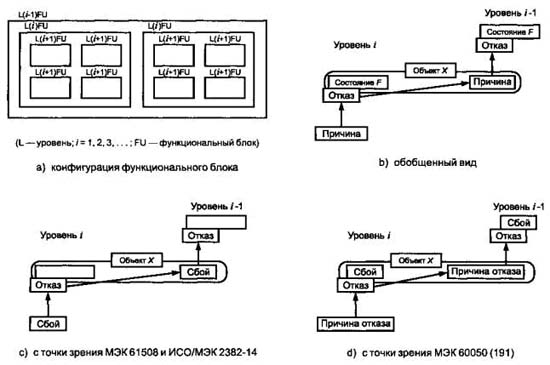
[ ГОСТ Р МЭК 61508-4-2007]Тематики
- газораспределение
- надежность средств электросвязи
- надежность, основные понятия
Обобщающие термины
EN
сброс
Разрывное нарушение, при котором сместитель падает в сторону опущенного крыла (висячее крыло опущено относительно лежачего).
[ Словарь геологических терминов и понятий. Томский Государственный Университет]Тематики
- геология, геофизика
Обобщающие термины
EN
сверхток
Любой ток, превышающий номинальный
МЭК 60050(441-11-06).
[ ГОСТ Р 50030. 1-2000 ( МЭК 60947-1-99)]
[ ГОСТ Р 50345-99( МЭК 60898-95)]
сверхток
Электрический ток, превышающий номинальный электрический ток.
Сверхток представляет собой любой электрический ток, величина которого превышает номинальный ток какого-либо элемента электроустановки здания или используемого в ней электрооборудования, например: номинальный ток электрической цепи, допустимый длительный ток проводника, номинальный ток автоматического выключателя и т. д. В нормативной и правовой документации различают два основных вида сверхтока – ток перегрузки и ток короткого замыкания.
Появление сверхтока в каком-либо элементе электроустановки здания может привести к его перегреву, возгоранию и, как следствие, к возникновению пожара в здании. Поэтому в электроустановках зданий выполняют защиту от сверхтока.
[ http://www.volt-m.ru/glossary/letter/%D1/view/59/]
сверхток
сверхток в электротехническом изделии
Ток, значение которого превосходит наибольшее рабочее значение тока электротехнического изделия (устройства).
[ ГОСТ 18311-80]
сверхток
Электрический ток, превышающий номинальный электрический ток.
Примечание - Для проводников номинальный ток считается равным длительному допустимому току.
[ ГОСТ Р МЭК 60050-826-2009]
Сверхток может оказывать или может не оказывать вредные воздействия в зависимости от его величины и продолжительности. Сверхтоки могут возникать в результате перегрузок в электроприемниках или при повреждениях, таких как короткие замыкания или замыканиях на землю
[ ГОСТ Р 50571. 1-2009 ( МЭК 60364-1: 2005)]
сверхток
Любой ток, превышающий номинальное значение. Для проводов номинальным значением является допустимый ток.
[ ГОСТ Р МЭК 60204-1-2007]EN
overcurrent
electric current exceeding the rated electric current
NOTE – For conductors, the rated current is considered as equal to the current-carrying capacity
[IEV number 826-11-14]
over-current
<>current exceeding the rated current
<>[IEC 61095, ed. 2.0 (2009-02)]
over-current
electric current the value of which exceeds a specified limiting value
[IEV number 151-15-28]
[IEV number 442-01-20]FR
surintensité, f
courant électrique supérieur au courant électrique assigné
NOTE – Pour des conducteurs, on considère que le courant assigné est égal au courant admissible.
[IEV number 826-11-14]
surintensité
courant supérieur au courant assigné
[IEC 61095, ed. 2.0 (2009-02)]
[IEV number 442-01-20]
surintensité, f
courant électrique dont la valeur dépasse une valeur limite spécifiée
[IEV number 151-15-28]Параллельные тексты EN-RU The design of LV installations leads to basic protection devices being fitted for three types of faults:
-
overloads
-
short-circuits
-
insulation faults
Низковольтные электроустановки должны быть оснащены устройствами защиты трех типов:
-
от перегрузки;
-
от короткого замыкания;
- от токов утечки.
[Перевод Интент]
Примечание.
Слово fault в данном случае пришлось опустить, поскольку:
- его нельзя перевести как "неисправность", т. к. возникновение перегрузки ( overload) не является неисправностью;
- его нельзя перевести как "сверхток", т. к. ток утечки не является сверхтоком.The chosen switchgear must withstand and eliminate faults at optimised cost with respect to the necessary performance.
[Schneider Electric]Выбранная аппаратура распределения должна иметь такие характеристики, чтобы рентабельно выдерживать и ограничивать сверхтоки.
[Перевод Интент]Тематики
Синонимы
EN
DE
FR
ток повреждения
Ток, возникающий в результате пробоя или перекрытия изоляции.
[ ГОСТ Р 51321. 1-2000 ( МЭК 60439-1-92)]
ток повреждения
Ток, который протекает через данную точку повреждения в результате повреждения изоляции.
[ ГОСТ Р МЭК 60050-826-2009]EN
fault current
current resulting from an insulation failure, the bridging of insulation or incorrect connection in an electrical circuit
[IEC 61439-1, ed. 2.0 (2011-08)]
fault current
current which flows across a given point of fault resulting from an insulation fault
[IEV number 826-11-11]FR
courant de défaut
courant résultant d'un défaut de l'isolation, du contournement de l’isolation ou d’un raccordement incorrect dans un circuit électrique
[IEC 61439-1, ed. 2.0 (2011-08)]
courant de défaut, m
courant s'écoulant en un point de défaut donné, consécutivement à un défaut de l'isolation
[IEV number 826-11-11]Тематики
EN
DE
- Fehlerstrom, m
FR
- courant de défaut, m
3.7.2 повреждение (fault): Повреждение любого элемента, разделения, изоляции или соединения между элементами, не являющимися по настоящему стандарту не повреждаемыми, от которых зависит искробезопасность цепи.
Источник: ГОСТ Р 52350.11-2005: Электрооборудование для взрывоопасных газовых сред. Часть 11. Искробезопасная электрическая цепь "I" оригинал документа
3.16 неисправность (fault): Состояние объекта, характеризующееся неспособностью исполнять требуемую функцию, исключая время профилактического технического обслуживания или других запланированных действий, или простои из-за недостатка внешних ресурсов
Примечание - Неисправность часто является результатом отказа объекта, но может существовать и без отказа.
Источник: ГОСТ Р 51901.6-2005: Менеджмент риска. Программа повышения надежности оригинал документа
3.6 неисправность (fault): Состояние элемента, характеризующееся неспособностью исполнять требуемую функцию, исключая период технического обслуживания, ремонта или других запланированных действий, а также из-за недостатка внешних ресурсов.
Примечание - Неисправность часто является результатом отказа элемента, но может существовать и без предшествующего отказа.
Источник: ГОСТ Р 51901.5-2005: Менеджмент риска. Руководство по применению методов анализа надежности оригинал документа
3.5 неисправность (fault): Состояние объекта, когда один из его элементов или группа элементов проявляют признаки деградации или нарушения работы, что может привести к отказу машины.
Примечания
1 Неисправность часто является следствием отказа, но может иметь место и при его отсутствии.
2 Состояние объекта не рассматривают как неисправное, если оно возникло вследствие запланированных процедур или нехватки внешних ресурсов.
Источник: ГОСТ Р ИСО 13379-2009: Контроль состояния и диагностика машин. Руководство по интерпретации данных и методам диагностирования оригинал документа
3.3 неисправность (fault): Состояние объекта, при котором он не способен выполнять требуемую функцию, за исключением такой неспособности при техническом обслуживании или других плановых мероприятиях или вследствие нехватки внешних ресурсов.
Примечания
1 Неисправность часто является следствием отказа объекта, но может иметь место и без него.
2 В настоящем стандарте термин «неисправность» используется наряду с термином «отказ» по историческим причинам.
Источник: ГОСТ Р 51901.12-2007: Менеджмент риска. Метод анализа видов и последствий отказов оригинал документа
3.1.30 ошибка (fault): Разность между погрешностью весоизмерительного датчика и основной погрешностью весоизмерительного датчика (см. 3.1.34).
Источник: ГОСТ Р 8.726-2010: Государственная система обеспечения единства измерений. Датчики весоизмерительные. Общие технические требования. Методы испытаний оригинал документа
3.6 дефект (fault): Неисправность или ошибка в компоненте технического обеспечения, программного обеспечения или системы
[МЭК 61513, пункт 3.22]
Примечание 1 - Дефекты могут подразделяться на случайные, например, в результате ухудшения аппаратных средств из-за старения, и систематические, например, ошибки в программном обеспечении, которые вытекают из погрешностей проектирования.
Примечание 2 - Дефект (в особенности дефект проекта) может остаться необнаруженным в системе до тех пор, пока не окажется, что полученный результат не соответствует намеченной функции, то есть возникает отказ.
Примечание 3 - См. также «ошибка программного обеспечения» и «случайный дефект».
Источник: ГОСТ Р МЭК 62340-2011: Атомные станции. Системы контроля и управления, важные для безопасности. Требования по предотвращению отказов по общей причине оригинал документа
3.2 неисправность (fault): Состояние объекта, когда один из его элементов или группа элементов проявляет признаки деградации или нарушения работы, что может привести к отказу машины.
Примечание - Неисправность может привести к отказу.
Источник: ГОСТ Р ИСО 17359-2009: Контроль состояния и диагностика машин. Общее руководство по организации контроля состояния и диагностирования оригинал документа
3.17 дефект (fault): Неисправность или ошибка в компоненте технического обеспечения, программного обеспечения или системы.
[МЭК 61513, пункт 3.22]
Источник: ГОСТ Р МЭК 60880-2010: Атомные электростанции. Системы контроля и управления, важные для безопасности. Программное обеспечение компьютерных систем, выполняющих функции категории А оригинал документа
3.6.1 сбой (fault): Ненормальный режим, который может вызвать уменьшение или потерю способности функционального блока выполнять требуемую функцию.
Примечание - МЭС 191-05-01 определяет «сбой» как состояние, характеризуемое неспособностью выполнить необходимую функцию, исключая неспособности, возникающие во время профилактического ухода или других плановых мероприятий, либо в результате недостатка внешних ресурсов. Иллюстрация к этим двум точкам зрения показана на рисунке 4 [ИСО/МЭК 2382-14-01-10].
Источник: ГОСТ Р МЭК 61508-4-2007: Функциональная безопасность систем электрических, электронных, программируемых электронных, связанных с безопасностью. Часть 4. Термины и определения оригинал документа
3.22 дефект (fault): Дефект в аппаратуре, программном обеспечении или в компоненте системы (см. рисунок 3).
Примечание 1 -Дефекты могут быть результатом случайных отказов, которые возникают, например, из-за деградации аппаратуры в результате старения; возможны систематические дефекты, например, в результате дефектов в программном обеспечении, возникающих из-за ошибок при проектировании.
Примечание 2 - Дефект (особенно дефекты, связанные с проектированием) может оставаться незамеченным, пока сохраняются условия, при которых он не отражается на выполнении функции, т.е. пока не произойдет отказ.
Примечание 3 - См. также «дефект программного обеспечения».
Источник: ГОСТ Р МЭК 61513-2011: Атомные станции. Системы контроля и управления, важные для безопасности. Общие требования оригинал документа
4.10.1 ошибка (fault): Разность между погрешностью показаний и погрешностью прибора.
Источник: ГОСТ Р ЕН 1434-1-2011: Теплосчетчики. Часть 1. Общие требования
Англо-русский словарь нормативно-технической терминологии > fault
См. также в других словарях:
C data types — C Standard Library Data types Character classification Strings Mathematics File input/output Date/time Memory allocation … Wikipedia
Data loss prevention software — Data Loss Prevention (DLP) is a computer security term referring to systems that identify, monitor, and protect data in use (e.g. endpoint actions), data in motion (e.g. network actions), and data at rest (e.g. data storage) through deep content… … Wikipedia
Data logger — Cube storing technical and sensor data A data logger (also datalogger or data recorder) is an electronic device that records data over time or in relation to location either with a built in instrument or sensor or via external instruments and… … Wikipedia
Data architecture — in enterprise architecture is the design of data for use in defining the target state and the subsequent planning needed to achieve the target state. It is usually one of several architecture domains that form the pillars of an enterprise… … Wikipedia
Data structure alignment — is the way data is arranged and accessed in computer memory. It consists of two separate but related issues: data alignment and data structure padding. When a modern computer reads from or writes to a memory address, it will do this in word sized … Wikipedia
Data integration — involves combining data residing in different sources and providing users with a unified view of these data.[1] This process becomes significant in a variety of situations, which include both commercial (when two similar companies need to merge… … Wikipedia
Data General — Industry Computer Fate Acquired Successor EMC Corporation Founded 1968 … Wikipedia
Data migration — is the process of transferring data between storage types, formats, or computer systems. Data migration is usually performed programmatically to achieve an automated migration, freeing up human resources from tedious tasks. It is required when… … Wikipedia
Data Securities International — Data Securities International, DSI is a company based in San Francisco, California that escrows source code for licensees. History In 1981, mathematician Dwight Olson saw an opportunity in the infant software product industry. Software companies… … Wikipedia
Data type — For other uses, see Data type (disambiguation). In computer programming, a data type is a classification identifying one of various types of data, such as floating point, integer, or Boolean, that determines the possible values for that type; the … Wikipedia
Data model — Overview of data modeling context: A data model provides the details of information to be stored, and is of primary use when the final product is the generation of computer software code for an application or the preparation of a functional… … Wikipedia
