

-
1 élément sonore
Elément audio utilisé dans le cadre de la réalisation d'une émission radiodiffusée ou télévisée, ou d'un film.Syn. matériel audio mAll audio footage used in TV and radio production.→ footageDictionnaire Français-Anglais (UEFA Football) > élément sonore
-
2 dispositif
приспособление
Технологическая оснастка, предназначенная для установки или направления предмета труда или инструмента при выполнении технологической операции
[ГОСТ 3.1109-82]
приспособление
Техническое устройство, присоединяемое к машине или применяемое самостоятельно для базирования и закрепления предметов производства при выполнении технологических операций
[Терминологический словарь по строительству на 12 языках (ВНИИИС Госстроя СССР)]Тематики
EN
DE
FR
устройство
-
[IEV number 151-11-20 ]
устройство
Элемент или блок элементов, который выполняет одну или более функций.
[ ГОСТ Р 41.48-2004]
[ ГОСТ Р 52388-2005]
устройство
Совокупность элементов, представляющая единую конструкцию (многоконтактное реле, набор транзисторов, плата, блок, шкаф, механизм, разделительная панель и т. п.).
Устройство может не иметь в изделии определенного функционального назначения.
[ГОСТ 2.701-84]
устройство
Изделие, являющееся конструктивным элементом или совокупностью конструктивных элементов, находящихся в функционально-конструктивном единстве
[ ГОСТ 16382-87]EN
device
material element or assembly of such elements intended to perform a required function
NOTE – A device may form part of a larger device.
[IEV number 151-11-20 ]FR
dispositif, m
élément matériel ou assemblage d'éléments matériels destiné à remplir une fonction déterminée
NOTE – Un dispositif peut faire partie d'un dispositif plus important.
[IEV number 151-11-20 ]Тематики
- электротехника, основные понятия
EN
DE
FR
Франко-русский словарь нормативно-технической терминологии > dispositif
-
3 matériel audio
Elément audio utilisé dans le cadre de la réalisation d'une émission radiodiffusée ou télévisée, ou d'un film.Syn. matériel audio mAll audio footage used in TV and radio production.→ footageDictionnaire Français-Anglais (UEFA Football) > matériel audio
-
4 résistance
résistance [ʀezistɑ̃s]feminine nounb. ( = endurance) stamina• il a une grande résistance or beaucoup de résistance he has a lot of stamina• ce matériau offre une grande résistance au feu/aux chocs this material is very heat-resistant/shock-resistantc. [de réchaud, radiateur] element ; ( = mesure) resistanced. (Physics) ( = force) resistance• quand il voulut ouvrir la porte, il sentit une résistance when he tried to open the door he felt some resistance* * *ʀezistɑ̃s1) ( opposition) resistance (à to)opposer or offrir une résistance à — to put up resistance to
2) ( groupe de personnes) resistancela Résistance — Histoire the Resistance
3) ( fait de supporter physiquement) (de personne, microbe) resistance (à to); ( de plante) hardinessmanquer de résistance — [personne] to lack stamina
4) ( fait de supporter moralement) resilience (à to)5) Physique (de matériau, d'appareil) strengthrésistance de l'air — air ou wind resistance
6) Électrotechnique ( propriété) resistance; ( conducteur) resistance; ( d'appareil ménager) element* * *ʀezistɑ̃s nf* * *résistance nf1 ( opposition) resistance (à to); se rendre sans résistance aux policiers to give oneself up to the police without a fight ou without putting up any resistance; résistance passive/non-violente passive/non-violent resistance; faire de la résistance to resist; la résistance au changement resistance to change; opposer or offrir une résistance à to put up resistance to;3 ( fait de supporter physiquement) (de personne, soldat, sportif) resistance; (à la fatigue, douleur) resistance (à to); ( de plante) hardiness; (de germe, cellule) resistance (à to); athlète qui fait preuve d'une grande résistance athlete who has a lot of stamina; manquer de résistance to lack stamina;4 ( fait de supporter moralement) resistance (à to);5 Psych resistance (à to);6 Phys (de matériau, métal) strength; (de tissu, d'appareil) strength; résistance à la corrosion resistance to corrosion; résistance au choc shock-resistance; étudier la résistance des matériaux to study the strength of materials; résistance de l'air air ou wind resistance;7 Électrotech ( propriété) resistance; ( conducteur) resistance, resistor; ( d'appareil ménager) element; une résistance de 75 ohms a resistance ou resistor of 75 ohms; une des résistances a grillé○ one of the elements has gone.[rezistɑ̃s] nom féminin1. [combativité] resistanceelle a opposé une résistance farouche à ses agresseurs she put up a fierce resistance to her attackersil s'est laissé emmener sans résistance he let himself be taken away quietly ou without resistance2. [rébellion] resistancerésistance active/passive active/passive resistance3. [obstacle] resistanceelle a survécu grâce à sa résistance exceptionnelle she survived thanks to her great powers of resistancerésistance à la fatigue/au froid resistance to tiredness/cold[dispositif chauffant] elementThis underground anti-German movement was created after the French-German armistice, in 1940, and gained momentum after General de Gaulle's radio call from London on 18th June of the same year. The movement won the active support of the French Communist Party after German troops invaded the USSR. In his ambition to impose himself as the leader of a united resistance movement, General de Gaulle integrated all major clandestine groups into the Conseil national de la Résistance. In May 1943, he created the French Committee of National Liberation in Algeria, which later became the provisional government for France in 1944. -
5 matière active, f
активное вещество химического источника тока
активное вещество
Вещество в гальваническом элементе, химическая энергия которого при разовом или многократном разряде превращается в электрическую.
[ ГОСТ 15596-82]
активное вещество
Вещество в свинцово-кислотной батарее, участвующее в электрохимической реакции производства тока. Активные вещества: анода – диоксид свинца (Pb2O), электролита – серная кислота (H2SO4) и катода – пористый свинец (Pb).
[ http:// www.energon.ru/support/publication/akkumulyatory_osnovnye_terminy_i_opredeleniya/]EN
active material
material which reacts chemically to produce electric energy when the cell discharges
NOTE – In secondary cells, the active material is restored to its original state during charge.
[IEV number 482-02-33]FR
matière active, f
matière qui réagit chimiquement pour produire de l’énergie électrique lorsque l'élément se décharge
NOTE – Pour les accumulateurs, la matière active est ramenée à son état initial pendant la charge.
[IEV number 482-02-33]Тематики
Классификация
>>>Синонимы
EN
DE
- aktive Masse, f
- Gemisch von aktiver Masse, n
FR
- matière active, f
Франко-русский словарь нормативно-технической терминологии > matière active, f
-
6 séparateur, m
сепаратор химического источника тока
сепаратор
Ионопроницаемое устройство из диэлектрического материала, расположенное между положительным и отрицательным электродами химического источника тока и предназначенное для предотвращения электронной проводимости между ними.
[ ГОСТ 15596-82]
сепаратор
изолирующий материал, пластик или прокладка из стекловолокна, использующийся для отделения анода от катода и предотвращения соприкосновения между ними или с корпусом.
[ http://www.energon.ru/support/publication/akkumulyatory_osnovnye_terminy_i_opredeleniya/]EN
plate separator
separator
component of a cell, made up of material permeable for ions, which prevents electric contact between cell plates of opposite polarity within a cell
[IEV number 482-02-11]FR
séparateur, m
composant d'un élément, constitué d'un matériau perméable aux ions, qui prévient tout contact électrique entre les plaques de polarité opposée dans un élément
[IEV number 482-02-11]Тематики
Классификация
>>>Синонимы
EN
DE
- Scheider
- Scheider der chemischen Stromquelle
- Separator, m
FR
- séparateur, m
Франко-русский словарь нормативно-технической терминологии > séparateur, m
-
7 bande
bande1 f UEFAEmplacement situé sur l'extérieur de chaque élément d'habillement sportif, sur lequel un logo peut figurer une ou plusieurs fois.band UEFAA flat, thin strip or loop of material displaying the manufacturer's design mark which may be used once or repeatedly on the outside of an item of playing kit.Syn. strip FIFAbande2 fMorceau de tissu utilisé pour recouvrir ou comprimer une partie du corps blessée.Syn. bandage mPiece of soft material that covers and protects an injured part of the body.Syn. dressing -
8 mettre
mettre [mεtʀ]━━━━━━━━━━━━━━━━━━➭ TABLE 561. <━━━━━━━━━━━━━━━━━► Lorsque mettre s'emploie dans des expressions telles que mettre qch en place, se mettre à table, reportez-vous à l'autre mot.━━━━━━━━━━━━━━━━━a. ( = placer) to put• où mets-tu tes verres ? where do you keep your glasses?► mettre qch à (+ infinitif)• mettre du linge à sécher (à l'intérieur) to hang washing up to dry ; (à l'extérieur) to hang washing out to dryb. ( = revêtir) to put onc. ( = consacrer) to take• il y a mis le temps ! he's taken his time!• je suis prêt à mettre 500 € I'm willing to give 500 eurosd. ( = faire fonctionner) to put one. ( = installer) [+ eau] to lay on ; [+ placards] to put in ; [+ étagères, rideaux] to put up ; [+ moquette] to layf. ( = supposer) mettons que je me sois trompé let's say I've got it wrong• si un pays, mettons la Norvège, décide... if a country, Norway say, decides...• va te faire mettre ! (vulg!) fuck off! (vulg!)2. <a. ( = se placer) [objet] to go• il y a un bout de métal qui s'est mis dans l'engrenage a piece of metal has got caught in the worksb. ( = s'habiller) se mettre en short to put on a pair of shortsc. ( = s'ajouter) il s'est mis de l'encre sur les doigts he's got ink on his fingersd. ( = se grouper) ils se sont mis à plusieurs pour pousser la voiture several of them joined forces to push the car• se mettre avec qn ( = faire équipe) to team up with sb ; (en ménage) (inf) to move in with sb (inf)e. ( = commencer) to start• qu'est-ce que tu es énervant quand tu t'y mets ! (inf) you can be a real pain once you get started! (inf)► se mettre à + nom• il s'est bien mis à l'anglais he's really taken to English► se mettre à + infinitif• voilà qu'il se met à pleuvoir ! and now it's starting to rain!* * *mɛtʀ
1.
1) (placer dans un endroit, une position) to put2) ( projeter involontairement) to drop [confiture, beurre] ( sur on); to spill [liquide, poudre] ( sur on)3) ( placer sur le corps) to put on [écharpe, fard]4) ( placer dans le corps) to put in5) ( porter habituellement sur le corps) to wear6) (placer dans une situation, un état)7) ( classer)mettre quelque chose avant tout le reste or au-dessus de tout — to put something
8) ( disposer)9) ( faire fonctionner)mettre la radio/les nouvelles — to put the radio/the news on
mets plus/moins fort! — turn it up/down!
10) ( installer) to put in [chauffage, douche, téléphone, placard]; to put up [rideau, lustre, étagère]mettre du carrelage/de la moquette — to lay tiles/a carpet
faire mettre de la moquette — ( dans plusieurs pièces) to have carpets laid
11) ( écrire) to put up [inscription]il met que tout va bien — ( dans une lettre) he says ou writes that everything's fine
mettre au passif/en anglais — to put into the passive/into English
est-ce qu'on met un trait d'union à ‘multinational’? — is there a hyphen in ‘multinational’?
mettez le pronom qui convient — ( remplacez) replace with the appropriate pronoun; ( bouchez les trous) insert the appropriate pronom
13) ( consacrer)14) (investir, dépenser) to put [argent] (dans, sur into)combien pouvez-vous mettre? — ( pour acheter) how much can you afford?; ( pour contribuer) how much can you put in?
mettre un temps fou — (colloq) to take ages (colloq)
16) (colloq) ( vendre)17) ( attribuer) to give [note]18) (colloq) ( dire)mettons dix dollars/à dix heures — let's say ten dollars/at ten
19) (colloq) ( supposer)20) (sl) ( ficher)tu peux te le mettre où je pense or quelque part — you know where you can put it (colloq)
2.
verbe intransitifmettre bas — gén [vache] to calve; [brebis] to lamb; [jument] to foal
3.
se mettre verbe pronominal1) (se placer dans un endroit, une position)se mettre devant la fenêtre — ( debout) to stand in front of the window; ( assis) to sit down in front of the window
2) ( projeter involontairement sur soi) to spill [something] on oneself [liquide, poudre]3) ( placer sur son corps) to put on [veste, fard]4) ( placer dans son corps) to put in5) ( commencer)6) ( tourner)le temps s'est mis au froid/à la pluie — the weather has turned cold/to rain
7) (se placer dans une situation, un état)on va se mettre ensemble — (colloq) ( sous le même toit) we're going to live together
8) ( s'habiller)9) ( se grouper)* * *mɛtʀ vt1) (= placer) to putmettre en sac — to put in bags, to put in sacks
mettre qch à la poste — to post sth Grande-Bretagne to mail sth USA
mettre qn en examen pour qch — to charge Grande-Bretagne sb with sth, to indict USA sb for sth
2) [vêtements] (= revêtir) to put on, (= porter) to wearMets ton gilet. — Put your cardigan on.
Je mets mon manteau et j'arrive. — I'll put on my coat and then I'll be ready.
Je ne mets plus mon manteau. — I no longer wear my coat.
Elle ne met pas souvent de jupe. — She doesn't often wear a skirt.
3) (= faire fonctionner) [chauffage, électricité] to put on, [réveil, minuteur] to setIl fait froid, je vais mettre le chauffage. — It's cold, I'm going to put the heating on.
4) (= installer) [gaz, eau] to put in, to lay onfaire mettre le gaz — to have gas put in, to have gas installed
faire mettre l'électricité — to have electricity put in, to have electricity installed
5) (= consacrer)mettre du temps à faire qch — to take time to do sth, to take time over sth
mettre 2 heures à faire qch — to take 2 hours to do sth, to take 2 hours over sth
Elle met des heures à se préparer. — She takes hours to get ready.
6) (= noter, écrire) to putmettez les mots suivants au pluriel:... — put the following words into the plural:...
7) (= supposer)mettons que... — let's suppose that..., let's say that...
* * *mettre verb table: mettreA vtr1 (placer dans un endroit, une position) to put [chose, partie du corps, personne]; mettre un vase sur la table/des bûches dans la cheminée/le vin au frais to put a vase on the table/logs on the fire/the wine in a cool place; j'ai mis ta voiture au garage I've put your car in the garage for you; mettre les pieds sur la table/les mains sur la tête to put one's feet on the table/one's hands on one's head; mettre les mains en l'air/un timbre à l'envers to put one's hands up/a stamp on upside down; on m'a mis devant/tout au fond they put me at the front/right at the back; je l'ai mise sur ses pieds I put her on her feet; je mets les enfants à la crèche I send the children to a creche; il m'a mis en bas de chez moi he dropped me off outside my door; on m'a mis debout they stood me up; nous l'avons mise à l'hôtel we put her up at the hotel;2 ( projeter involontairement) to drop [solide]; to spill [liquide, poudre]; mettre de la confiture sur le tapis to drop jam on the carpet; mettre de la colle/farine partout to spill glue/flour all over the place;3 ( placer sur le corps) to put on [vêtement, bijou, maquillage, lunettes, préservatif, serviette]; mets ton écharpe put your scarf on; je vais mettre du mascara I'll put some mascara on;4 ( placer dans le corps) to put in [tampon, suppositoire, plombage]; on m'a mis un plombage I had a filling;5 ( porter habituellement sur le corps) to wear [lunettes, type de vêtement, parfum]; dans mon école les garçons mettent des cravates in my school boys wear ties; je ne mets jamais de chapeau I never wear a hat;6 (placer dans une situation, un état) mettre qn dans une situation embarrassante to put sb in an embarrassing situation; mettre qn en colère/en joie to make sb angry/happy; mettre qn en fureur to enrage sb; mettre qn au désespoir to drive sb to despair; mettre qn de bonne/mauvaise humeur to put sb in a good/bad mood; tu me mets hors de moi you infuriate me; mettre qn à la chaîne/à la reliure to put sb on the assembly line/on binding; mettre qn au travail to put sb to work; mettre qn au piano/au latin to start sb on the piano/on Latin; mettre les enfants à regarder la télévision to put the children in front of the television; si vous nous quittez, on mettra quelqu'un d'autre if you leave us, we'll find somebody else; mettre le riz à cuire to put the rice on; mettre le linge à sécher to put the washing out to dry;7 ( classer) mettre la famille avant tout le reste to put one's family first; mettre ses études au-dessus de tout to put one's studies first; je le mets au premier rang de tous les écrivains I rank him the best writer of all;8 ( disposer) mettre les assiettes to put the plates on the table; mettre les verres/la moutarde/un cendrier to put out the glasses/the mustard/an ashtray; mettre les chaises/une autre chaise to bring chairs/another chair; mettre une nappe to put on a tablecloth; je t'ai mis des draps propres I've put clean sheets on for you;9 ( faire fonctionner) mettre la radio/la télévision/le chauffage to put the radio/the television/the heating on; mettre les nouvelles/la deuxième chaîne to put the news/channel 2 on; mettre plus fort to turn up [appareil]; mettre moins fort to turn down [appareil]; mets plus/moins fort! turn it up/down!; mettre les essuie-glaces/les phares to switch on ou put on the windscreen GB ou windshield US wipers/the headlights; mettre le réveil to set the alarm; mettre le verrou to bolt the door; mettre le loquet to latch the door;10 ( installer) to put in [chauffage, douche, téléphone, placard]; to put up [rideau, lustre, étagère]; faire mettre le téléphone to have a telephone put in; je t'ai mis une prise I've put in a socket for you; mettre de la moquette to lay a carpet; faire mettre de la moquette ( dans une pièce) to have a carpet laid; ( dans plusieurs pièces) to have carpets laid; mettre du carrelage to lay tiles;11 ( écrire) to put up [inscription]; ils ont mis des graffiti partout/sur la colonne they've put graffiti everywhere/on the column; il met que tout va bien ( dans une lettre) he says ou writes that everything's fine; qu'est-ce que je dois mettre? what shall I put?; mettre au passif/au singulier to put into the passive/into the singular; mettre en vers to put into verse; je t'ai mis un mot I've left you a note; est-ce qu'on met un trait d'union à ‘multinational’? is there a hyphen in ‘multinational’?; il faut mettre un trait d'union you must put a hyphen in; mettre sa signature sur un document to put one's signature to a document; mettez votre signature ici sign here; mettez le pronom qui convient ( remplacez) replace with the appropriate pronoun; ( bouchez les trous) insert the appropriate pronom; mettre en musique to set to music; mettre en anglais to put into English; mettre son brouillon au propre or au net to write out ou up one 's notes;12 ( ajouter) to add [ingrédient] (dans to); to put [accessoire, élément décoratif]; mettre du sel dans la soupe to put some salt in the soup; mettre un peu de piment dans un récit to add a little spice to a story; mettre une sonnette à son vélo/des pompons à ses pantoufles to put a bell on one's bicycle/pompoms on one's slippers; mettre une radio à sa voiture/une doublure à sa veste to put a radio in one's car/a lining in one's jacket;13 ( consacrer) mettre tout son cœur dans son travail to put one's heart into one's work; y mettre du sien to put oneself into it; mettre toute son énergie à essayer de comprendre to put all one's energy into trying to understand; mettre des moyens importants au service d'une cause to use all possible means to further a cause; mettre de la rigueur dans sa démarche to become more thorough in one's approach;14 (investir, dépenser) to put [argent] (dans, sur into); mettre tout son argent dans son commerce to put all one's money into one's business; j'ai tout mis sur le pétrole I've put everything into oil; il a tout mis sur un cheval/une équipe he's put everything on a horse/a team; combien pouvez-vous mettre? ( pour acheter) how much can you afford?; ( pour contribuer) how much can you put in?;15 ( prendre) [activité] to take [heures, jours, années] (pour faire to do); elle a bien mis une heure it took her easily an hour; mettre un temps fou○ to take ages○;16 ○( vendre) je vous mets des tomates? would you like some tomatoes?; je vous en mets combien? deux, trois? how many would you like? two, three?;17 ○( attribuer) je vous ai mis trois sur vingt I've given you three out of twenty;18 ○( battre) ils nous ont mis trois à zéro they beat us three nil GB ou three to nothing US; je lui ai mis une gifle I gave him/her a slap (across the face); tu veux que je te mette mon poing sur la figure? do you want my fist in your face○?; qu'est-ce qu'il m'a mis! what a thrashing○ he gave me!;20 ○( dire) mettons dix dollars/à dix heures let's say ten dollars/at ten;21 ○( supposer) mettons qu'il vienne, qu'est-ce que vous ferez? supposing ou say he comes, what will you do?;22 ◑( ficher) tu peux te le mettre où je pense or quelque part you know where you can put○ it ou stick◑ it; va te faire mettre get stuffed◑!B vi Vét, Zool mettre bas gén to give birth, to drop; [vache] to calve; [brebis] to lamb; [jument] to foal.C se mettre vpr1 (se placer dans un endroit, une position) se mettre devant la fenêtre ( debout) to stand in front of the window; ( assis) to sit down in front of the window; ( couché) to lie (down) in front of the window; se mettre sur les mains to stand on one's hands; se mettre sur le dos to lie on one's back; se mettre au lit to go to bed; se mettre debout to stand up; se mettre sur ses jambes to get to one's feet; ne plus savoir où se mettre not to know where to put oneself; se mettre les mains sur la tête to put one's hands on one's head; se mettre les doigts dans le nez to pick one's nose; où est-ce que ça se met? where does this go?;2 ( projeter involontairement sur soi) to spill [sth] on oneself [liquide, poudre]; se mettre de la confiture to get jam on oneself; se mettre de la boue sur ses chaussures/de l'encre sur le nez/une poussière dans l'œil to get mud on one's shoes/ink on one's nose/some grit in one's eye; s'en mettre partout to get it all over oneself;3 ( placer sur son corps) to put on [vêtement, bijou, maquillage]; se mettre un foulard/un collier/du rouge à lèvres to put on a scarf/a necklace/lipstick; se mettre de la poudre sur le visage to put some powder on one's face, to powder one's face; je ne sais pas quoi me mettre I don't know what to put on;4 ( placer dans son corps) to put in [suppositoire, tampon];5 ( commencer) se mettre à l'anglais/au tennis to take up English/tennis; se mettre à prendre des somnifères to start taking sleeping pills; ma voiture se met à avoir des problèmes my car is starting to go wrong; il va se mettre à pleuvoir it's going to start raining; il se met à faire froid/du vent it's starting to get cold/windy;6 ( tourner) le temps s'est mis au froid/au beau/à la pluie the weather has turned cold/fine/to rain;7 ( se lancer) elle s'est mise à leur recherche she started looking for them; je me suis mis sur l'affaire I started looking into the case;8 (se placer dans une situation, un état) se mettre en tort to put oneself in the wrong; se mettre dans une situation impossible to get (oneself) into an impossible situation; se mettre dans une sale affaire to get involved in some shady business; je me mets de ton côté I'm on your side; je préfère me mettre bien avec lui I prefer to get on the right side of him; se mettre à l'aise to make oneself comfortable; se mettre en colère to get angry; se mettre nu to take off one's clothes; on va se mettre ensemble○ ( sous le même toit) we're going to live together; il s'est mis avec elle○ ( de son côté) he's on her side; ( sous le même toit) he's moved in with her;9 ( s'habiller) se mettre en tenue d'été to put on summer clothes; se mettre en arlequin to dress up as Harlequin; se mettre en jaune to wear yellow;10 ( se grouper) ce n'est pas la peine de vous (y) mettre à dix there's no need for ten of you; ils s'y sont mis à au moins trente there were at least thirty of them;11 ○( manger) je m'en suis mis un maximum I really stuffed○ myself; s'en mettre plein la panse○ or lampe○ or gueule● to stuff○ oneself; qu'est-ce qu'on s'est mis! we really stuffed○ ourselves!;12 ( se battre) qu'est-ce qu'on s'est mis! we really laid○ into each other![mɛtr] verbe transitif1. [placer] to putmettre sa confiance/tout son espoir en to put one's trust/all one's hopes inmettre quelqu'un dans: mettre quelqu'un dans l'avion/le train to put somebody on the plane/the trainmettre quelqu'un en: mettre un enfant en pension to put a child in a ou to send a child to boarding schoolmettre de l'argent sur son compte to put ou to pay some money into one's accountmettre la main sur le bras de quelqu'un to lay ou to put one's hand on somebody's arm3. [disposer]4. [ajuster] to setmets la sonnerie à 20 h 30 set the alarm for 8:30 p.m5. [établir - dans un état, une situation]mettre quelqu'un au travail to set somebody to work, to get somebody workinga. [perplexité] to put somebody in a predicamentb. [pauvreté] to put somebody in financial difficultymettre du vin en bouteilles to put wine into bottles, to bottle winemettre du linge à sécher to put ou to hang clothes up to drymettre quelque chose à tremper to put something to soak, to soak something6. [fixer] to putmettre une pièce à un pantalon to put a patch on ou to patch a pair of trousers[ajouter] to put7. [se vêtir, se coiffer, se chausser de] to put on (separable)[porter régulièrement] to wearje lui ai mis son manteau/ses gants I put his coat/his gloves on (for him)8. [faire fonctionner - appareil] to turn ou to put ou to switch on (separable)mets de la musique put some music on, play some musicmettre du papier peint/de la moquette dans une pièce to wallpaper/to carpet a room10. [consacrer - temps] to takeelle a mis trois mois à me répondre she took three months ou it took her three months to answer menous y mettrons le temps/le prix qu'il faudra we'll spend as much time/money as we have tomettre de l'argent dans une voiture to put money in ou into a car11. [écrire] to puton met un accent sur le "e" "e" takes an accenton met deux m à "pomme" "pomme" has two m's12. [supposer]et mettons que tu gagnes? suppose ou let's say you win?il faut, mettons, 2 mètres de tissu we need, (let's) say ou shall we say, 2 metres of materialmettons que j'ai mal compris! [acceptation] let's just say I got it wrong!13. [donner] to givele prof m'a mis 18 ≃ the teacher gave me an A14. (familier) [infliger]qu'est-ce qu'il m'a mis au ping-pong! he really hammered me ou he didn't half thrash me at table tennis!je lui ai mis une bonne claque I gave ou landed him a good clout15. (locution)————————se mettre verbe pronominal (emploi passif)1. [dans une position, un endroit - chose] to goles pieds, ça ne se met pas sur la table! tables aren't made to put your feet on!2. [aller - vêtement] to go————————se mettre verbe pronominal intransitif1. [s'installer, s'établir - dans une position]a. [debout] stand near the windowb. [assis] sit near the windowmettez-vous en cercle arrange yourselves into ou form a circle2. [entrer - dans un état, une situation]il s'est mis dans une position difficile he's got ou put himself in a difficult situation3. [s'habiller]4. [s'unir]a. [pour un jeu] to team up with somebodyb. [pour vivre] to move in with somebodyc. [dans une discussion] to side with somebodyon s'est mis par équipes de 6 we split up into ou we formed teams of 6 (people)5. (locution)a. (très familier) [dans un combat, un débat] they're really having a go at each other!b. [en mangeant] they're really getting stuck in!————————se mettre verbe pronominal transitifto put on (separable)se mettre une belle robe/du parfum to put on a nice dress/some perfume————————se mettre à verbe pronominal plus préposition1. [passer à]le temps se met au froid it's getting ou turning cold2. [commencer]se mettre à l'ouvrage to set to work, to get down to worka. [au travail] to get down to itb. [à une activité nouvelle] to have a trysi tu t'y mets aussi, je renonce! if you join in as well, I give up! -
9 motif
motif [mɔtif]masculine noun• quel est le motif de votre visite ? what is the purpose of your visit?• quel motif as-tu de te plaindre ? what grounds have you got for complaining?b. ( = ornement) motif* * *mɔtifnom masculin1) ( raison) grounds (pl) (de for)il y a des motifs d'espérer/de se réjouir — there are grounds for hope/for rejoicing
2) ( cause) reason (de for)les motifs de notre retard — the reasons why we are/were late
3) ( motivation) motive4) ( dessin) pattern5) ( thème) motif* * *mɔtif1. nm1) (= cause) [conduite] motiveau motif que... — on the grounds that...
sans motif (attitude) — groundless, [se fâcher] for no reason
Il s'est fâché sans motif. — He got angry for no reason.
2) (décoratif) pattern, motif3) [tableau] motif4) MUSIQUE figure, motif2. motifs nmplDROIT grounds pl* * *motif nm1 ( raison) grounds (pl) (de for); il y a des motifs d'espérer/de se réjouir there are grounds for hope/for rejoicing; pour le même motif on the same grounds; être réformé pour motifs médicaux to be exempt from military service on medical grounds; pour un motif d'ordre politique on politically-related grounds; motifs de divorce grounds for divorce; vos récriminations sont sans motif there are no grounds for your complaint;2 ( cause) reason (de for); motifs de notre retard reasons for our lateness; avez-vous un motif valable? do you have a valid reason?;3 ( motivation) motive; les motifs sont politiques the motives are political; motif profond real motive; absence de motif lack of motive; sans motif apparent for no apparent motive; avoir pour motif to have as a motive; quel que soit leur motif whatever their motive;4 ( décoration) pattern; à motif floral/géométrique with a floral/geometric pattern;5 ( thème) motif.[mɔtif] nom masculin1. [raison] reasonpeur/soupçons sans motifs groundless fear/suspicions2. [intention] motiveest-ce pour le bon motif? (humoristique & vieilli) [en vue du mariage] are his intentions honourable?[sujet] subject -
10 matériel visuel
Elément visuel utilisé dans le cadre de la réalisation d'un film ou d'une émission télévisée.Video material recorded for use in television and film production.Dictionnaire Français-Anglais (UEFA Football) > matériel visuel
-
11 protège-tibia
Élément de l' équipement de base du joueur qui doit protéger le tibia de manière appropriée et doit être couvert par les chaussettes.Syn. protège-tibias mplPliable protective shield made of a suitable firm material which football players must wear under their socks in order to protect their shins.Syn. shin padDictionnaire Français-Anglais (UEFA Football) > protège-tibia
-
12 protège-tibias
Élément de l' équipement de base du joueur qui doit protéger le tibia de manière appropriée et doit être couvert par les chaussettes.Syn. protège-tibias mplPliable protective shield made of a suitable firm material which football players must wear under their socks in order to protect their shins.Syn. shin padDictionnaire Français-Anglais (UEFA Football) > protège-tibias
-
13 coquille
защитная крышка
(для защиты от прикосновенияк токоведущим частям)
[Интент]EN
protective cover
shroud
cover made of insulating material, used to cover live or unenergized elements, or adjacent earthed metalwork in order to avoid accidental electric contact
Source: 604-04-35 MOD
[IEV number 581-23-26]FR
protecteur de contact
coquille
dispositif enveloppant réalisé en matériaux isolants, servant à recouvrir des éléments sous tension ou non, ou des structures métalliques à la terre, afin d’éviter un contact électrique accidentel
Source: 604-04-35 MOD
[IEV number 581-23-26]Тематики
EN
DE
- isolierende Schutzvorrichtung, f
- Kragen, m
FR
корпус электрического соединителя
Корпус соединителя обеспечивает прочную и однозначную установку изоляторов, защиту контактов и изоляторов от повреждений, крепление жгута или кабеля к соединителю и всего соединителя к аппаратуре, взаимную ориентацию ответных частей соединителя и их фиксацию в сочлененном положении.
[В. Ф. Лярский, О. Б. Мурадян. Электрические соединители. Справочник. Радио и связь, 1988]По виду различают:
- приборный (блочный) корпус;
- кабельный корпус
EN
connector body
part of a connector, which includes all elements of the connector except its contacts
[IEV number 581-27-09]
connector housing
part of a connector into which the connector insert and contacts are assembled
[IEV number 581-27-10]FR
corps d’un connecteur
sous-ensemble d’un connecteur comprenant tous ses élements, sauf les contacts
[IEV number 581-27-09]
boîtier de connecteurs
coquille
élément d’un connecteur dans lequel le corps isolant d’un connecteur et les contacts sont assemblés
[IEV number 581-27-09]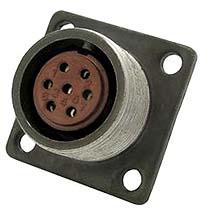
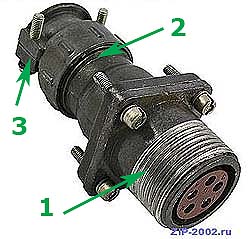
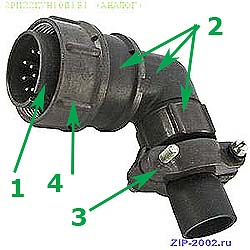
Приборная розетка без кожуха
(розетка в приборном корпусе)Приборная розетка с прямым кожухом
Кабельная вилка с угловым кожухом
Все иллюстрации с
http://www.zip-2002.ru/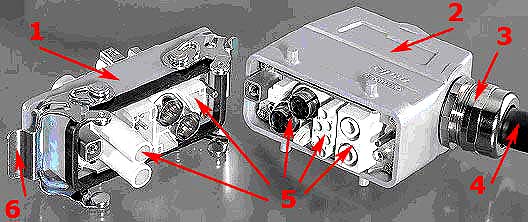
Рис. Tyco Electronics- Корпус приборной части
- Корпус кабельной части
- Сальник
- Кабель
- Модульные изоляторы
- Замковое устройство
Недопустимые, нерекомендуемые
ПримечаниеКорпус и кожух, это разные элементы электрического соединителяТематики
Классификация
>>>EN
DE
- Steckverbindergehäuse, n
- Steckverbinderkörper, m
FR
- boîtier de connecteurs
- coquille
- corps d’un connecteur
чашка броневого сердечника
чашка
Ндп. горшок
Полый цилиндр с основанием из магнитного материала.
Примечание
Цилиндр может составляться из отдельных деталей.
[ ГОСТ 20718-75]Недопустимые, нерекомендуемые
Тематики
Синонимы
EN
FR
14. Чашка броневого сердечника
Чашка
Ндп. Горшок
Е. Сир
F. Coquille
Источник: ГОСТ 20718-75: Катушки индуктивности аппаратуры связи. Термины и определения оригинал документа
Франко-русский словарь нормативно-технической терминологии > coquille
-
14 cloison
перегородка
Элемент, отделяющий секцию, подсекцию друг от друга.
[ ГОСТ Р 51321. 1-2000 ( МЭК 60439-1-92)]
перегородка
Часть панели (шкафа), отделяющая один функциональный блок от другого или разделяющая цепи различного назначения
[ ГОСТ Р 51732-2001]
перегородка
Часть оболочки секции, отделяющая ее от других секций.
[ ГОСТ Р МЭК 61439.1-2013]EN
partition
part of the enclosure of a compartment separating it from other compartments
[IEC 61439-1, ed. 2.0 (2011-08)]FR
cloison
partie de l'enveloppe d'un compartiment le séparant des autres compartiments
[IEC 61439-1, ed. 2.0 (2011-08)]Параллельные тексты EN-RU A partition is an element of separation between two cubicles, whereas a barrier protects the operator against direct contact and against the effects of circuit-breaker arcs propagating in the direction of usual access.
[ABB]Перегородка представляет собой элемент, разделяющий два шкафа, в то время как ограждение защищает оператора от прямого прикосновения и от воздействия дуги, возникающей при коммутации автоматического выключателя и распространяющейся в направлении обычного доступа.
[Перевод Интент]Any partition between upstream and downstream connections of the device must be made of nonmagnetic material.
[Schneider Electric]Перегородка, отделяющая присоединение проводников к аппарату со стороны источника питания от присоединения проводников со стороны нагрузки, должна быть выполнена из немагнитного материала.
[Интент]Тематики
- НКУ (шкафы, пульты,...)
Обобщающие термины
EN
FR
перегородка
Ненесущая внутренняя вертикальная ограждающая конструкция, разделяющая помещения
[Терминологический словарь по строительству на 12 языках (ВНИИИС Госстроя СССР)]Перегородки являются планировочным элементом, с помощью которого пространство, заключенное между несущими стенами, разделяется на помещения в соответствии с их функциональным назначением.
В отличие от наружных и внутренних несущих стен, воспринимающих все силовые воздействия, действующие на здание, перегородки никаких нагрузок не несут, кроме собственного веса.
В зависимости от назначения перегородки делятся на ограждающие и выгораживающие.
Ограждающие перегородки полностью изолируют помещения друг от друга по всей высоте, выгораживающие - лишь на определенную высоту или части помещения. К ограждающим перегородкам предъявляются большие требования в части звукоизолирующей способности, и их диапазон в этой части находится в пределах от 30 до 50 децибел.
Нижний предел обеспечивается при весе однородной конструкции от 20 до 100 кг/м2, верхний предел при весе от 150 до 270 кг/м2.
Звукоизолирующая способность перегородок определяется на основании расчетов и требует специальных знаний и навыка. Вместо расчетов можно пользоваться данными таблиц, позволяющими без особых затрат времени выбрать нужную конструкцию и материал перегородки. Из табличных характеристик можно сделать вывод, что звукоизолирующая способность перегородок в пределах 40-50 дб характерна для междуквартирных, а 30-40 дб - для межкомнатных перегородок.
Если в перегородке предусмотрена хотя бы одна дверь, то ее звукоизолирующая способность должна находиться в пределах 30 дб. При необходимости повысить ее уровень изменяется конструкция дверного полотна.
В связи с распространением звука через неплотности сопряжения, поры материала, а при ударном воздействии, через конструкцию, особое внимание следует уделить герметизации мест сопряжения звукоизолирующими материалами и конструктивными преградами.
Перегородки могут быть межквартирными, толщиной не менее 20 см, и межкомнатными, толщиной не менее 10 см. И те, и другие обычно делают из прочных малосгораемых, тепло- и звукопроводных материалов. Деревянные перегородки оштукатуривают.
Перегородки из тонких бревен или пластин чаще всего устанавливают между квартирами или когда 'хотят теплое помещение отделить от холодного.
Наиболее легкие перегородки - дощатые и каркасные. Они могут быть установлены непосредственно по балкам или лагам без устройства фундамента.
Самая простая - дощатая однослойная перегородка из вертикально поставленных досок толщиной 40-60 мм.
Самой экономичной по расходу материалов является каркасная перегородка.
Капитальными называют перегородки из кирпича, гипса (алебастра), шлако- или опилкобетона. Они огнестойки и имеют хорошие звукозащитные качества.
Самыми прочными, самыми долговечными зарекомендовали себя перегородки кирпичные.
Расположение перегородок по отношению к балкам
Перегородка опирается на балку, и с двух сторон ее закрепляют брусками, сечение которых равно сечению половых досок, а бруски закрывают плинтусами.
При установке перегородок вдоль балок между последними врубают особые бруски, называемые ШПАЛАМИ, на которые крепят лагу - лежень.
Иногда в лаге выбирают паз для досок перегородок (в балках его не выбирают). В этом случае в лагах обязательно крепят диафрагму - доску, поставленную на ребро.
Для установки перегородки поперек балок для нее кладут лаги и закрепляют их, а род лагами устраивают диафрагму.
Ее назначение - снизить различные звуки, которые могут проникать через перекрытие, а также удержать тепло и обособить перекрытие друг от друга.
Выполнение перегородок Между потолком и перегородкой обычно ставят зазор на величину осадки (не менее 10 см), который заполняют паклей, смоченной в гипсовом растворе. Перегородки можно" ставить и после окончательной осадки дома, примерно через год после его постройки.
Перегородки из тонких бревен или пластин достаточно тяжелые, поэтому их нужно возводить на балке с подготовленными под нее столбиками.
Бревна такой перегородки обычно притесывают, конопатят, штукатурят, а в обвязках крепят прямыми шипами.
Если при выполнении дощатой однослойной перегородки применяют чисто обрезанные доски без боковых пахов и гребней, их нужно скреплять между собой через 1 -1,5 м по высоте деревянными шпонками или косыми гвоздями.
Такие перегородки обшивают листовыми материалами (фанерой, древесноволокнистыми плитами, плотным картоном) и оштукатуривают. Чтобы уменьшить поперечное коробление широких досок, их раскалывают на более узкие и делают местные трещины.
Звукоизоляция отдельных дощатых перегородок невысокая, поэтому применять их для звукоограждения жилых помещений, особенно спальных комнат, не рекомендуется.
Устанавливают перегородку таким образом. На потолке крепят доску, к которой с одной стороны прибивают треугольный брусок. Затем ставят доски и закрепляют их вторым бруском. К балкам и потолку можно прибить бруски, образующие паз.
С одной стороны перегородки верхний и нижний бруски делают короче на 25-30 см, что необходимо для вставки досок. Сами же доски должны быть на 1 см короче расстояния между обвязкой. Широкие доски надкалывают, а потом в места надкола забивают небольшие клинья и вставляют доски в пазы. Для жесткости их между собой связывают шипами, устанавливаемыми через 100-140 см, но вместо шипов можно использовать и гвозди.
Более надежны по звукоизоляционным качествам двух- и трехслойные дощатые перегородки с внутренней прокладкой из пергамина (строительной бумаги), картона или старых газет (3-4 слоя). В таком случае можно использовать более тонкие доски различной длины, но сбитые заранее в готовые щиты.
Двойные дощатые перегородки чаще всего собирают из щитов шириной 50-60 см с четвертями по кромкам.
Из длинных досок двойные дощатые перегородки делать не следует.
Для большей жесткости на вертикально скрепленные доски можно набить второй слой досок под углом 45 градусов, то есть по диагонали. Между этими слоями можно проложить толь, картон или пергамин.
Для каркасной перегородки применяют бруски или доски толщиной 50-70 мм, которые в зависимости от гибкости листовой или погонажной обшивки устанавливают на расстоянии 40-60 см.
Лучший материал для обшивки каркасных перегородок - фанера толщиной 6-8 мм или листы сухой гипсокартонной штукатурки толщиной 10-14 мм. Древесноволокнистые плиты (ДВП) толщиной 4 мм не годятся для обшивки, потому что при переменной влажности они коробятся.
Каркасно-обшивные перегородки состоят из обвязки, стоек и обшивки. При необходимости между стойками ставят дверную коробку.
Стойки делают из брусков или досок, сечение которых зависит от толщины перегородок. Ставят стойки через 40-120 см друг от друга, а крепят к обвязке шипами или гвоздями, обшивка - тесовая.
Широкие доски надкалывают. Сначала обшивку полностью пробивают с одной стороны, затем с другой. Если перегородку утепляют, то вторую сторону зашивают не сразу, а рядами.
Прибив несколько досок на высоту 50-100 см, пространство между обшивкой засыпают шлаком, опилками с известью и гипсом. Иногда вместо сухой засыпки используют густую массу, которая требует тщательной сушки. В таком случае стойки рекомендуется ставить чаще, а перегородки оштукатуривать мокрой штукатуркой или обивать различными листами (сухой штукатуркой, древес-новолокнистыми листами, фанерой и т. д.).
Стойки для перегородок с заполнителем из плит камыша и соломы делают по толщине утеплительных плит, а размещают на расстоянии их ширины.
Укрепив стойки, между ними ставят камышитовые (соломитовые) плиты и крепят гвоздями, на которые предварительно надевают шайбы диаметром 2-2,5 см.
Крепить плиты к доскам можно и на дощатую обивку. Все щели между плитами конопатят или промазывают гипсовым раствором и штукатурят.
Но их можно применять двойными, склеив предварительно шероховатыми поверхностями попарно, во влажном состоянии, под равномерно распределенной нагрузкой.
При обшивке каркаса под них желательно подложить слой пергамина или картона. Для улучшения звукоизоляции пространство между обшивками можно заполнить опилкобетоном, стружками или старыми газетами.
Если дощатые или каркасные стены устраивают в ванной или душевой, внутреннюю поверхность оштукатуривают цементным раствором или обшивают асбестоцементными листами, а пространство внутри каркаса оставляют свободным с естественной циркуляцией воздуха.
Для перегородок из кирпича, гипса (алебастра), шлако- или опилкобетона требуются либо самостоятельные фундаменты, либо жесткое железобетонное перекрытие. Лишь тонкие перегородки из гипса и опилкобетона можно в отдельных случаях опирать непосредственно на деревянные балки или лаги.
При этом балки должны быть усилены, иметь пролет не менее 3 см, а сами перегородки следует проармировать, чтобы избежать деформационных трещин.
Перегородки из кирпича и шлакобетона можно делать лишь по железобетонному перекрытию или на мелких фундаментах, закладываемых в теплом подполье.
В домах с проветриваемым подпольем и деревянным цокольным перекрытием такие перегородки применять не нужно, потому что для них необходимо устройство заглубленных фундаментов.
Гипсовые перегородки обычно выкладывают из готовых блоков заводского или индивидуального изготовления. Их размеры выбирают с таким расчетом, чтобы масса блока не превышала 25-30 кг. Оптимальная толщина гипсовой перегородки - 8 см.
Поскольку гипс быстро твердеет и набирает прочность, из него в условиях строительства даже при наличии одной разборной формы можно за короткий срок изготовить много отдельных блоков - 3-4 за один час.
Для экономии и облегчения массы блока гипс перед затворением водой смешивают с опилками или шлаком в пропорции 1:2 или 1:4 (по объему).
Готовые гипсовые блоки можно укладывать в перегородку практически на любом растворе: гипсопесчаном, цементно-песчаном, глинопесчаном, цементно-известковом и т. д.
Для плотного прилегания друг к другу блоки формуют с внутренними горизонтальными или вертикальными пазами, которые заполняют раствором в процессе кладки.
Если необходимо, в горизонтальные швы для прочности укладывают проволоку, покрытую антикоррозийным составом (битумом или лаком), или тонкие деревянные рейки. При хорошем формовании и аккуратной укладке блоков поверхность гипсовой перегородки получается достаточно ровной и требует лишь затирки горизонтальных и вертикальных швов.
В отличие от гипса, шлакобетон и особенно опилкобетон сохнут и твердеют медленно, поэтому изготовление из них перегородок требует длительного времени и одновременного использования нескольких форм.
Объемный состав бетона и технология изготовления блоков могут быть применены при возведении внутренних перегородок. При тщательном формовании и аккуратной кладке поверхность таких перегородок также получается достаточно ровной и в большинстве случаев требует лишь затирки монтажных швов. Оптимальная толщина перегородок из легких бетонов - 10-12 см.
Для возведения кирпичных перегородок используют кирпич, укладывая его либо плашмя вдоль перегородки (толщина 120 мм), либо на ребро (65 и 88 мм). Лучше всего использовать красный кирпич, силикатный или сырец. Можно также использовать шлакобетонные камни, но они более толстые и уменьшают площадь помещений.
Кладку кирпичных перегородок ведут впустошовку на цементно-песчаном растворе с добавлением известкового или песчаного теста. Перегородки, выкладываемые на ребро, при их длине не более 1,5 м армируют через 3-5 рядов проволокой диаметром 3-6 мм.
Поверхность кирпичных перегородок оштукатуривают или облицовывают керамической плиткой (в санитарных узлах, вдоль кухонного оборудования).[ http://brigadamasterov.ru/fotofile/peregorodki]
Тематики
Обобщающие термины
Действия
EN
DE
FR
Франко-русский словарь нормативно-технической терминологии > cloison
-
15 conduit isolant
пластмассовые трубы для электропроводок
-
изоляционная труба1)
-
[IEV number 442-02-11]EN
insulating conduit
a conduit which consists uniquely of insulating material and which has no conductive components whatever, either in the form of an internal lining, or in the form of external metal braid or coating
[IEV number 442-02-11]FR
conduit isolant
conduit réalisé exclusivement en matériau isolant sans aucun élément conducteur, que ce soit sous forme de revêtement interne ou de tresse ou de revêtement métallique externe
[IEV number 442-02-11]1) В российской документации применяют термин пластмассовая труба
[Интент]
2.5. Следует применять пластмассовые трубы, т.к. они не требуют защиты от коррозии, обладают малым весом, гладкой поверхностью и высокими электроизоляционными свойствами, технологичны при монтаже.
Стальные трубы следует применять в тех случаях, когда механическая и термическая прочность пластмассовых труб недостаточна, а также исходя из условий обеспечения взрыво-пожаробезопасности установок и экономической целесообразности.
3.2. Пластмассовые трубы для электропроводок изготавливают из полиэтилена (ПЭ) высокого давления (ПВД), полиэтилена низкого давления (ПНД), непластифицированного поливинилхлорида (НПВХ) и полипропилена (ПП).
3.3. Трубы изготавливают гладкими и гофрированными. Гофрированные трубы по сравнению с гладкими имеют в два раза меньшую материалоемкость.
Температура начала размягчения для труб из НПВХ – 60 °С, ПВД – 90 °С, ПНД – 100 °С, ПП – 120 °С.
3.4. По результатам испытаний на горючесть трубы из полиэтилена и полипропилена являются горючими, трубы из поливинилхлорида (непластифицированного) - трудногорючими.
3.5. Гладкие трубы из ПЭ с наружным диаметром до 50 мм и из ПП - до 32 мм поставляются в бухтах. При большем наружном диаметре трубы поставляются прямолинейными отрезками длиной 5-10 м в пачках. Гладкие трубы из НПВХ поставляют в пачках прямолинейными отрезками длиной 6-10 м с раструбом на одном конце или без раструба. Гофрированные трубы поставляются в бухтах.
3.6. Пластмассовые трубы обладают различной степенью стойкости к химически активным и др. средам и их выбор следует производить, руководствуясь данными каталога «Химическая стойкость труб из термопластов» (г. Черкассы, НИИТЭХИМ, 1985 г.), а также краткими данными химической стойкости пластмассовых труб, приведенными в справочном прил.1.
4.4. Для соединения и присоединения пластмассовых труб следует применять соединительные муфты и уплотнительные втулки по ТУ 36-1728-81, мерные отрезки шланга из термоусаживающегося материала.
[Министерство архитектуры, строительства и жилищно-коммунального хозяйства. Концерн «ЭЛЕКТРОМОНТАЖ». Инструкция по монтажу электропроводок в трубах]Недопустимые, нерекомендуемые
Тематики
- электропроводка, электромонтаж
EN
DE
FR
Франко-русский словарь нормативно-технической терминологии > conduit isolant
См. также в других словарях:
material — 1. noun 1) the decomposition of organic material Syn: matter, substance, stuff, medium 2) the materials for a new building Syn: constituent, raw material, element, component 3) (materials) … Thesaurus of popular words
Element Six — Type Privately held company Industry manufacturing and distribution of superhard material solutions Founded 1946 … Wikipedia
element — el·e·ment n: one of the constituent parts (as a particular act, a mental state, or an attendant circumstance) of a crime as defined by statute that the prosecution must prove to win a conviction Merriam Webster’s Dictionary of Law. Merriam… … Law dictionary
Element — El e*ment, n. [F. [ e]l[ e]ment, L. elementum.] 1. One of the simplest or essential parts or principles of which anything consists, or upon which the constitution or fundamental powers of anything are based. [1913 Webster] 2. One of the ultimate … The Collaborative International Dictionary of English
material# — material adj 1 Material, physical, corporeal, phenomenal, sensible, objective are comparable when they mean belonging to or having a relation to things that belong to the world of actuality or of things apparent to the senses. Material applies to … New Dictionary of Synonyms
material — [mə tir′ē əl] adj. [LL materialis < L materia, MATTER] 1. of matter; of substance; relating to or consisting of what occupies space; physical [a material object, material forces] 2. a) of the body or bodily needs, satisfactions, etc.;… … English World dictionary
Material Exchange Format — Filename extension .mxf Internet media type application/mxf Type code mxf Type of format Container format Container for audiovisual material, rich metadata … Wikipedia
element — element, component, constituent, ingredient, factor are comparable when they mean one of the parts, substances, or principles which make up a compound or complex thing. Element is, except in its specific sense in science, the most widely… … New Dictionary of Synonyms
material — [adj1] bodily, tangible actual, animal, appreciable, carnal, concrete, corporeal, earthly, fleshly, incarnate, nonspiritual, objective, palpable, perceptible, phenomenal, physical, real, sensible, sensual, substantial, true, worldly; concept 485… … New thesaurus
element — [n1] essential feature aspect, basic, basis, bit, component, constituent, detail, drop, facet, factor, fundamental, hint, ingredient, item, material, matter, member, part, particle, particular, piece, portion, principle, root, section, stem,… … New thesaurus
Material monism — is a Presocratic belief which provides an explanation of the physical world by saying that all of the world s objects are composed of a single element. Among the material monists were the three Milesian philosophers: Thales, who believed that… … Wikipedia
