

-
1 except
❢ There are four frequently used translations for except when used as a preposition. By far the most frequent of these is sauf ; the others are excepté, à l'exception de and hormis. Note, however, that in what/where/who questions, except is translated by sinon. For examples and the phrase except for see below.A prep everybody except Lisa tout le monde sauf Lisa, tout le monde à l'exception de or excepté or hormis Lisa, tout le monde Lisa exceptée ; nothing except rien d'autre que ; nobody except personne d'autre que ; except if/when sauf si/quand ; except that sauf que, si ce n'est que ; who could have done it except him? qui aurait pu le faire sinon lui? ; where could she be except at home? où est-ce qu'elle pourrait être sinon chez elle?D vtr excepter, exclure (from de) ; not excepting sans oublier, y compris ; present company excepted exception faite des personnes présentes. -
2 except
except [ɪkˈsept]1. prepositiona. sauf• all except the eldest daughter tous, sauf la fille aînéeb. sinon• what can they do except wait? que peuvent-ils faire sinon attendre ?• not or without excepting sans excepter* * *Note: There are four frequently used translations for except when used as a preposition. By far the most frequent of these is sauf; the others are excepté, à l'exception de and hormis. Note, however, that in what/where/who questions, except is translated by sinon. For examples and the phrase except for see below[ɪk'sept] 1.everybody except Lisa — tout le monde sauf Lisa, tout le monde à l'exception de or excepté or hormis Lisa
except if/when — sauf si/quand
2.except that — sauf que, si ce n'est que
except for prepositional phrase à part, à l'exception de3.transitive verb excepter -
3 otherwise
otherwise ['ʌðəwaɪz]1 adverb(a) (differently) autrement;∎ I think otherwise (in a different way) je ne vois pas les choses de cette façon; (don't agree) je ne suis pas d'accord;∎ she is otherwise engaged elle a d'autres engagements;∎ we'll have to invite everyone, we can hardly do otherwise nous devrons inviter tout le monde, il nous serait difficile de faire autrement;∎ except where otherwise stated (on form) sauf indication contraire∎ an otherwise excellent performance une interprétation par ailleurs excellente;∎ it's a bit small, but otherwise it's a very nice house c'est un peu petit, mais à part cela, c'est une maison très agréable;∎ the weather was bad, otherwise he might have stayed longer il faisait mauvais, sans cela ou sinon il aurait pu rester plus longtemps(c) (in other words) autrement;∎ Louis XIV, otherwise known as the Sun King Louis XIV, surnommé le Roi-Soleil(d) (in contrast, opposition)∎ through diplomatic channels or otherwise par voie diplomatique ou autre(or else) sinon, autrement;∎ you'd better phone your father, otherwise he'll worry tu devrais appeler ton père, sinon il va s'inquiéterautre;∎ the facts are otherwise les faits sont autres∎ it is of no interest, financial or otherwise ça ne présente aucun intérêt, que ce soit financier ou autre;∎ she appeared to have no feelings about it, jealous or otherwise elle ne semblait rien éprouver, que ce soit de la jalousie ou autre chose -
4 Date
Where English has several ways of writing dates, such as May 10, 10 May, 10th May etc. French has only one generally accepted way: le 10 mai, ( say le dix mai). However, as in English, dates in French may be written informally: 10.5.68 or 31/7/65 etc.The general pattern in French is:le cardinal number month yearle 10 mai 1901But if the date is the first of the month, use premier, abbreviated as 1er:May 1st 1901= le 1er mai 1901Note that French does not use capital letters for months, or for days of the week ⇒ The months of the year and ⇒ The days of the week ; also French does not usually abbreviate the names of the months:Sept 10= le 10 septembre etc.If the day of the week is included, put it after the le:Monday, May 1st 1901= le lundi 1er mai 1901Monday the 25th= lundi 25 ( say lundi vingt-cinq)Saying and writing dateswhat’s the date?= quel jour sommes-nous?it’s the tenth= nous sommes le dix or (less formally) on est le dixit’s the tenth of May= nous sommes le dix mai or (less formally) on est le dix mai * (i) There are two ways of saying hundreds and thousands in dates:1968= mille neuf cent soixante-huit or dix-neuf cent soixante-huit(ii) The spelling mil is used in legal French, otherwise mille is used in dates, except when a round number of thousands is involved, in which case the words l’an are added:1900= mille neuf cents2000= l’an deux mille† French prefers Roman numerals for centuries:the 16th century= le XVIeSaying onFrench uses only the definite article, without any word for on:it happened on 6th March= c’est arrivé le 6 mars ( say le six mars)he came on the 21st= il est arrivé le 21 ( say le vingt et un)see you on the 6th= on se voit le 6 ( say le six)on the 2nd of every month= le 2 de chaque mois ( say le deux...)he’ll be here on the 3rd= il sera là le 3 ( say le trois)Saying inFrench normally uses en for years but prefers en l’an for out-of-the-ordinary dates:in 1968= en 1968 ( say en mille neuf cent soixante-huit or en dix-neuf cent…)in 1896= en 1896 ( say en mille huit cent quatre-vingt-seize or en dix-huit cent…)in the year 2000= en l’an deux millein AD 27= en l’an 27 ( say l’an vingt-sept) de notre èrein 132 BC= en l’an 132 ( say l’an cent trente-deux) avant Jésus-ChristWith names of months, in is translated by en or au mois de:in May 1970= en mai mille neuf cent soixante-dix or au mois de mai mille neuf cent soixante-dixWith centuries, French uses au:in the seventeenth century= au dix-septième siècleThe word siècle is often omitted in colloquial French:in the eighteenth century= au dix-huitième siècle or (less formally) au dix-huitièmeNote also:in the early 12th century= au début du XIIe siècle ( say du douzième siècle)in the late 14th century= à or vers la fin du XIVe siècle ( say du quatorzième siècle)PhrasesRemember that the date in French always has the definite article, so, in combined forms, au and du are required:from the 10th onwards= à partir du 10 ( say du dix)stay until the 14th= reste jusqu’au 14 ( say au quatorze)from 21st to 30th May= du 21 au 30 mai ( say du vingt et un au trente mai)around 16th May= le 16 mai environ/vers le 16 mai ( say le seize mai) or aux environs du seize mai ( say du seize mai)not until 1999= pas avant 1999 ( say mille neuf cent quatre-vingt-dix-neuf)Shakespeare (1564-1616)= Shakespeare (1564-1616) ( say Shakespeare, quinze cent soixante-quatre-seize cent seize)Shakespeare b. 1564 d.1616= Shakespeare, né en 1564, mort en 1616 ( say Shakespeare, né en quinze cent soixante-quatre, mort en seize cent seize).Note that French has no abbreviations for né and mort.in May ’45= en mai 45 ( say en mai quarante-cinq)in the 1980s= dans les années 80 ( say dans les années quatre-vingts)in the early sixties= au début des années 60 ( say des années soixante)in the late seventies= à la fin des années 70 ( say des années soixante-dix)the riots of ’68= les émeutes de 68 ( say de soixante-huit)the 14-18 war= la guerre de 14 or de 14-18 ( say de quatorze or de quatorze-dix-huit)the 1912 uprising= le soulèvement de 1912 ( say de mille neuf cent douze)
 -
5 орган управления
орган управления
Частьсистемыаппарата управления, к которой прилагается извне усилие управления.
МЭК 60050(441-15-22).
Примечание. Орган управления может иметь форму рукоятки, ручки, нажимной кнопки, ролика, плунжера и т. п.
[ ГОСТ Р 50030. 1-2000 ( МЭК 60947-1-99)]
орган управления
Часть приводного механизма, к которой прикладывается внешняя сила воздействия.
Примечание - Орган управления может иметь форму ручки, кнопки, ролика, поршня и т.д.
[ ГОСТ Р 52726-2007]
орган управления
Часть системы привода, подвергаемая внешнему силовому воздействию.
Примечания
1. Орган управления может иметь форму ручки, рукоятки, нажимной кнопки, ролика, плунжера и т.д.
2. Есть несколько способов приведения в действие, которые не требуют внешнего силового воздействия, а только какого-либо действия.
[ГОСТ ЕН 1070-2003]
орган управления
Часть системы управления, которая предназначена непосредственно для воздействия оператором, например путем нажатия.
[ГОСТ Р ЕН 614-1-2003]
орган управления
Часть системы приведения в действие, которая принимает воздействие человека.
[ ГОСТ Р МЭК 60447-2000]
орган управления
Часть системы приведения в действие, которая воспринимает воздействие человека (ГОСТ Р МЭК 60447).
Примечание
В настоящем стандарте орган управления в виде интерактивного экранного устройства отображения является частью этого устройства, которое представляет функцию органа управления.
[ ГОСТ Р МЭК 60073-2000]
орган управления
Часть механизма прибора управления, на который оказывается вручную внешнее силовое воздействие.
Примечание.
Орган управления может иметь форму ручки, рукоятки, кнопки, ролика, плунжера и т.д.
Некоторые органы управления не требуют воздействия внешней силы, а только какого-либо действия.
[ ГОСТ Р МЭК 60204-1-2007]
органы управления
Ручки, переключатели, потенциометры и другие органы, служащие для включения и регулировки аппаратуры. Термин относится преимущественно к аналоговым приборам.
[Система неразрушающего контроля. Виды (методы) и технология неразрушающего контроля. Термины и определения (справочное пособие). Москва 2003 г.]
орган управления
-
[IEV number 442-04-14]
средства оперирования
-
[Интент]EN
actuator
the part of the actuating system to which an external actuating force is applied
NOTE – The actuator may take the form of a handle, knob, push-button, roller, plunger, etc.
[IEV number 441-15-22]
actuator
part of a device to which an external manual action is to be applied
NOTE 1 The actuator may take the form of a handle, knob, push-button, roller, plunger, etc.
NOTE 2 There are some actuating means that do not require an external actuating force, but only an action.
NOTE 3 See also 3.34.
[IEC 60204-1 -2005]
actuating member
a part which is pulled, pushed, turned or otherwise moved to cause an operation of the switch
[IEV number 442-04-14]FR
organe de commande
partie du mécanisme transmetteur à laquelle un effort extérieur de manoeuvre est appliqué
NOTE – L'organe de commande peut prendre la forme d'une poignée, d'un bouton, d'un bouton-poussoir, d'une roulette, d'un plongeur, etc.
[IEV number 441-15-22]
organe de manoeuvre
partie qui est tirée, poussée, tournée ou manipulée de toute autre façon pour provoquer le fonctionnement de l'interrupteur
[IEV number 442-04-14]
Аппарат должен оставаться механически действующим. Не допускается сваривание контактов, препятствующее операции размыкания при использовании нормальных средств оперирования.
[ГОСТ Р 50030.3-99 (МЭК 60947-3-99) ]
ВДТ следует оперировать как при нормальной эксплуатации. Операции размыкания должны проводиться в следующем порядке:
для первых 1000 циклов — с использованием ручных средств оперирования;...
[ ГОСТ Р 51326. 1-99 ( МЭК 61008-1-96)]Параллельные тексты EN-RU
The operating means (for example, a handle) of the supply disconnecting device shall be easily accessible and located between 0,6 m and 1,9 m above the servicing level.
[IEC 60204-1-2006]Органы управления, например, рукоятки аппаратов отключения питания, должны быть легко доступны и располагаться на высоте от 0,6 до 1,9 м от рабочей площадки.
[Перевод Интент]Where the external operating means is not intended for emergency operations, it is recommended that it be coloured BLACK or GREY.
[IEC 60204-1-2006]Если внешние средства оперирования не предназначены для выполнения действий при возникновении аварийных ситуаций, то рекомендуется, применять такие средства ЧЕРНОГО или СЕРОГО цвета.
[Перевод Интент]1.2.2. Control devices
Control devices must be:
— clearly visible and identifiable and appropriately marked where necessary,
— positioned for safe operation without hesitation or loss of time, and without ambiguity,
— designed so that the movement of the control is consistent with its effect,
— located outside the danger zones, except for certain controls where necessary, such as emergency stop, console for training of robots,
— positioned so that their operation cannot cause additional risk,
— designed or protected so that the desired effect, where a risk is involved, cannot occur without an intentional operation,
— made so as to withstand foreseeable strain; particular attention must be paid to emergency stop devices liable to be subjected to considerable strain.1.2.2. Органы управления
Органы управления должны быть:
- четко видны, хорошо различимы и, где это необходимо, иметь соответствующее обозначение;
- расположены так, чтобы ими можно было пользоваться без возникновения сомнений и потерь времени на выяснение их назначения;
- сконструированы так, чтобы перемещение органа управления согласовывалось с их воздействием;
- расположены вне опасных зон; исключение, где это необходимо, делается для определенных средств управления, таких, как средство экстренной остановки, пульт управления роботом;
- расположены так, чтобы их использование не вызывало дополнительных рисков;
- сконструированы или защищены так, чтобы в случаях, где возможно возникновение рисков, они не могли бы возникнуть без выполнения намеренных действий;
- сделаны так, чтобы выдерживать предполагаемую нагрузку; при этом особое внимание уделяется органам аварийного останова, которые могут подвергаться значительным нагрузкам.Where a control is designed and constructed to perform several different actions, namely where there is no one-to-one correspondence (e.g. keyboards, etc.), the action to be performed must be clearly displayed and subject to confirmation where necessary.
Если орган управления предназначен для выполнения разных действий, например, если в качестве органа управления используется клавиатура или аналогичное устройство, то должна выводиться четкая информация о предстоящем действии, и, если необходимо, должно выполняться подтверждение на выполнение такого действия.
Controls must be so arranged that their layout, travel and resistance to operation are compatible with the action to be performed, taking account of ergonomic principles.
Органы управления должны быть организованы таким образом, чтобы их расположение, перемещение их элементов и усилие, которое оператор затрачивает на их перемещение, соответствовали выполняемым операциям и принципам эргономики.
Constraints due to the necessary or foreseeable use of personal protection equipment (such as footwear, gloves, etc.) must be taken into account.
Необходимо учитывать скованность движений операторов при использовании необходимых или предусмотренных средств индивидуальной защиты (таких, как специальная обувь, перчатки и др.).
Machinery must be fitted with indicators (dials, signals, etc.) as required for safe operation. The operator must be able to read them from the control position.
Для обеспечения безопасной эксплуатации машинное оборудование должно быть оснащено индикаторами (циферблатами, устройствами сигнализации и т. д.). Оператор должен иметь возможность считывать их с места управления.
From the main control position the operator must be able to ensure that there are no exposed persons in the danger zones.
Находясь в главном пункте управления, оператор должен иметь возможность контролировать отсутствие незащищенных лиц.
If this is impossible, the control system must be designed and constructed so that an acoustic and/ or visual warning signal is given whenever the machinery is about to start.
Если это невозможно, то система управления должна быть разработана и изготовлена так, чтобы перед каждым пуском машинного оборудования подавался звуковой и/или световой предупредительный сигнал.
The exposed person must have the time and the means to take rapid action to prevent the machinery starting up.
[DIRECTIVE 98/37/EC OF THE EUROPEAN PARLIAMENT AND OF THE COUNCIL]
Незащищенное лицо должно иметь достаточно времени и средств для быстрого предотвращения пуска машинного оборудования.
[Перевод Интент]
Тематики
- автоматизация, основные понятия
- аппарат, изделие, устройство...
- безопасность машин и труда в целом
- выключатель автоматический
- выключатель, переключатель
- высоковольтный аппарат, оборудование...
- электробезопасность
- электротехника, основные понятия
Синонимы
EN
- actuating member
- actuator
- command unit
- control
- control device
- controller
- controls
- operating control
- operating means
DE
FR
Русско-французский словарь нормативно-технической терминологии > орган управления
-
6 anywhere
anywhere [ˈenɪwεər]a. ( = no matter where) n'importe où• have you seen it anywhere? l'avez-vous vu quelque part ?• anywhere else? ailleurs ?• are you going anywhere nice this summer? tu pars quelque part cet été ?* * *['enɪweə(r)], US [-hweər]1) (with negative, implied negative)you won't get anywhere if you don't pass your exams — fig tu n'arriveras à rien si tu ne réussis pas tes examens
crying isn't going to get you anywhere — fig ça ne t'avancera à rien de pleurer
2) (in questions, conditional sentences) quelque partwe're going to Spain, if anywhere — si on va quelque part, ce sera en Espagne
3) ( no matter where)anywhere in the world/in England — partout dans le monde/en Angleterre
anywhere except ou but Bournemouth — partout sauf à Bournemouth
anywhere she goes, he follows her — il la suit partout où elle va
‘where do you want to go?’ - ‘anywhere exotic/hot’ — ‘où veux-tu aller?’ - ‘dans un endroit exotique/où il fait chaud’
-
7 anywhere
1 (with negative, implied negative) you can't go anywhere tu ne peux aller nulle part ; there isn't anywhere to sit/sleep il n'y a pas de place pour s'asseoir/dormir ; we didn't go anywhere special/interesting nous ne sommes allés nulle part de spécial/d'intéressant ; they didn't go anywhere this weekend ils ne sont allés nulle part ce weekend ; you won't get anywhere if you don't pass your exams fig tu n'arriveras à rien si tu ne réussis pas tes examens ; crying isn't going to get you anywhere fig ça ne t'avancera à rien de pleurer ; James came second but I didn't come anywhere James est arrivé deuxième mais moi, je ne suis pas entré dans le classement ;2 (in questions, conditional sentences) quelque part ; have you got a radio/a comb anywhere? avez-vous une radio/un peigne quelque part? ; did you go anywhere nice? est-ce que tu es allé dans un endroit agréable? ; we're going to Spain, if anywhere si on va quelque part, ce sera en Espagne ; have you seen Andrew anywhere? est-ce que tu as vu Andrew quelque part? ; can you think of anywhere she might be? as-tu la moindre idée de l'endroit où elle peut être? ;3 ( no matter where) anywhere you like où tu veux ; anywhere in the world/in England partout dans le monde/en Angleterre ; anywhere except ou but Bournemouth partout sauf à Bournemouth ; I'll go anywhere where there's sun j'irai n'importe où du moment qu'il y a du soleil ; anywhere she goes, he follows her il la suit partout où elle va ; ‘where do you want to go?’-‘anywhere exotic/hot’ ‘où veux-tu aller?’-‘dans un endroit exotique/où il fait chaud’ ; anywhere between 50 and 100 people entre 50 et 100 personnes. -
8 but
but [bʌt](a) (to express contrast) mais;∎ my husband smokes, but I don't mon mari fume, mais moi non;∎ my husband doesn't smoke, but I do mon mari ne fume pas, mais moi si;∎ I speak Spanish but not Italian je parle espagnol mais pas italien;∎ she came home tired but happy elle est rentrée fatiguée mais heureuse(b) (in exclamations) mais;∎ but you can't do that! mais tu ne peux pas faire ça!;∎ but that's absurd! mais c'est absurde!∎ sorry, but I think that's MY umbrella pardon, mais je crois que c'est mon parapluie;∎ excuse me, but there's a call for you excusez-moi, il y a un appel pour vous∎ nobody, but nobody, gets in without a ticket personne, absolument personne, n'entre sans ticket(e) (except, only) mais;∎ it tastes like a grapefruit, but sweeter ça a le goût d'un pamplemousse, mais en plus sucré;∎ I'll do it, but not right now je vais le faire, mais pas tout de suite∎ she never hears his name but she starts to weep elle ne peut entendre son nom sans verser des larmes;∎ barely a day goes by but he receives another invitation il ne se passe pas un jour sans qu'il reçoive une nouvelle invitation2 adverb∎ I can but try je ne peux qu'essayer;∎ literary had I but known! si j'avais su!;∎ formal his resignation cannot but confirm such suspicions sa démission ne fait que confirmer de tels soupçons;∎ literary they had but recently become acquainted ils ne se connaissaient que depuis peu (de temps);∎ literary this life is but transitory/but a dream cette vie n'est qu'éphémère/qu'un rêve∎ get them down here but fast! descends-les et vite!∎ the meal was expensive, it wasn't very nice but le repas nous a coûté cher mais n'était pas très bon□∎ she wouldn't see anyone but her lawyer elle ne voulait voir personne sauf ou à part son avocat;∎ who but a fool would believe his story? il n'y a qu'un imbécile pour croire son histoire;∎ nobody but me knew about it personne d'autre que moi n'était au courant;∎ anyone but me tout autre que moi;∎ anything but that tout plutôt que cela;∎ he's anything but a hero c'est loin d'être un héros;∎ where but in America could you find such a gadget? il n'y a qu'en Amérique qu'on trouve un tel gadget;∎ nothing but a miracle could have saved her seul un miracle aurait pu la sauver;∎ he does nothing but complain il n'arrête pas de se plaindre;∎ there is nothing for it but to obey il n'y a qu'à obéir;∎ he is anything but happy il n'est pas du tout heureux;∎ is she lazy? - anything but! est-ce qu'elle est paresseuse? - bien au contraire!∎ turn right at the next corner but one tournez à droite au deuxième carrefour;∎ I was the last but two to finish j'étais l'avant-avant-dernier à finir4 noun∎ you're coming and no buts or I don't want any buts! tu viens, et pas de mais!sans;∎ but for her courage, many more people would have drowned sans son courage, il y aurait eu beaucoup plus de noyés;∎ but for the rain I should have gone out s'il n'avait pas plu je serais sorti;∎ he wouldn't have left but for me (it was my fault for being there) il serait resté si je n'avais pas été là; (it was for my sake) il ne serait pas parti si ça n'avait pas été pour moi∎ formal we should have been on time, but that the train was delayed nous aurions été à l'heure si le train n'avait pas été retardé;∎ I do not doubt but that we shall succeed je ne doute pas de notre réussiteenfin;∎ but then, that's just the way it goes enfin, c'est comme ça -
9 it
it [ɪt]━━━━━━━━━━━━━━━━━━━━━━━━━━━━━━━━━━━━━━━━━━━━━━━━━━━► If it stands for a noun which is masculine in French, use il. Use elle if the French noun is feminine.━━━━━━━━━━━━━━━━━• where's the sugar? -- it's on the table où est le sucre ? -- il est sur la table• don't have the soup, it's awful ne prends pas la soupe, elle est dégoûtante• you can't have that room, it's mine tu ne peux pas avoir cette chambre, c'est la mienne• this picture isn't a Picasso, it's a fake ce (tableau) n'est pas un vrai Picasso, c'est un faux━━━━━━━━━━━━━━━━━► The French pronoun precedes the verb, except in positive commands.━━━━━━━━━━━━━━━━━• there's a croissant left, do you want it? il reste un croissant, tu le veux ?• she dropped the earring and couldn't find it elle a laissé tomber la boucle d'oreille et n'a pas réussi à la retrouver• he borrowed lots of money and never paid it back il a emprunté beaucoup d'argent et ne l'a jamais remboursé• the sauce is delicious, taste it! cette sauce est délicieuse, goûte-la !d. (unspecific) ce• what is it? [thing] qu'est-ce que c'est ?► that's it! (approval, agreement) c'est ça ! ; (achievement, dismay) ça y est ! ; (anger) ça suffit !► it's + adjective + to• it's annoying to think we didn't need to pay so much on n'aurait pas eu besoin de payer autant, c'est agaçante. (weather, time, date) it's hot today il fait chaud aujourd'hui* * *[ɪt]1) ( in questions)who is it? — qui est-ce?, qui c'est? (colloq)
where is it? — ( of object) où est-il/elle?; ( of place) où est-ce?, où est-ce que c'est?, c'est où? (colloq)
what is it? — (of object, noise etc) qu'est-ce que c'est?, c'est quoi? (colloq); (what's happening?) qu'est-ce qui se passe?; (what is the matter?) qu'est-ce qu'il y a?
how was it? — comment cela s'est-il passé?, ça s'est passé comment? (colloq)
2) Games••that's it! — ( in triumph) voilà!, ça y est!; ( in anger) ça suffit!
-
10 else
else [els](a) (after indefinite pronoun) d'autre;∎ anybody or anyone else (at all) n'importe qui d'autre, toute autre personne; (in addition) quelqu'un d'autre;∎ anyone else would have phoned the police n'importe qui d'autre aurait appelé la police;∎ is there anybody else? y a-t-il quelqu'un d'autre?;∎ I couldn't find anyone else to help me je n'ai pu trouver personne d'autre pour m'aider;∎ he's no cleverer than anybody else il n'est pas plus intelligent qu'un autre;∎ it couldn't be anyone else's ça ne pouvait être celui de personne d'autre;∎ would you like or will there be anything else? (in shop) vous fallait-il autre chose?; (in restaurant) désirez-vous autre chose?;∎ he wouldn't accept anything else il n'a rien voulu accepter d'autre;∎ I couldn't do anything else but or except apologize je ne pouvais (rien faire d'autre) que m'excuser;∎ anywhere else ailleurs;∎ I haven't got anywhere else or I've got nowhere else to go je n'ai nulle part ailleurs où aller;∎ everybody else tous les autres;∎ everything else tout le reste;∎ everywhere else partout ailleurs;∎ everywhere else was shut (other shops) tous les autres magasins étaient fermés;∎ there is little else we can do nous ne pouvons pas faire grand-chose d'autre;∎ and much else (besides) et beaucoup de choses encore;∎ there isn't much else to be done il ne reste pas beaucoup à faire; (we've no choice) il n'y a pas grand chose d'autre à faire;∎ nobody or no one else personne d'autre;∎ nothing else rien d'autre;∎ we're alive, nothing else matters nous sommes vivants, c'est tout ce qui compte;∎ there's nothing else for it il n'y a rien d'autre à faire;∎ nowhere else nulle part ailleurs;∎ there's nowhere else I'd rather be but here c'est ici et nulle part ailleurs que je veux être;∎ somebody or someone else quelqu'un d'autre;∎ this is somebody else's c'est à quelqu'un d'autre;∎ something else autre chose, quelque chose d'autre;∎ somewhere or American someplace else ailleurs, autre part;∎ if all else fails en dernier recours;∎ it'll teach him a lesson, if nothing else au moins, ça lui servira de leçon;∎ familiar he's/she's/it's something else! il est/elle est/c'est incroyable!;∎ familiar the price of petrol is something else! bonjour le prix de l'essence!(b) (after interrogative pronoun) (in addition) d'autre;∎ what/who else? quoi/qui d'autre?;∎ what else can I do? que puis-je faire d'autre?;∎ who else but Frank? qui d'autre que Frank?;∎ you think they'll give the prize to Jameson? - who else? tu crois qu'ils attribueront le prix à Jameson? - à qui d'autre veux-tu qu'ils le donnent?;∎ how/why else would I do it? comment/pourquoi le ferais-je sinon?;∎ where else would he be? où peut-il être à part là?;∎ so we're all meeting at Cleo's - where else? alors, on se retrouve tous chez Cleo - où d'autre?∎ come tomorrow or else it will be too late venez demain, autrement il sera trop tard;∎ he must be joking, or else he's mad il plaisante, ou bien alors il est fou;∎ do what I tell you or else! fais ce que je te dis, sinon! -
11 beyond
beyond [bɪˈjɒnd]1. preposition• there was a garden, and beyond it, an orchard il y avait un jardin et, plus loin, un vergerb. ( = after) après, au-delà de• beyond next week/June après la semaine prochaine/juinc. ( = surpassing, exceeding) this work is quite beyond him ce travail le dépasse complètementd. ( = except) sauf2. adverb• he could see the lake and the hills beyond il voyait le lac et, au-delà, les collines3. noun* * *Note: beyond is often used with a noun to produce expressions like beyond doubt, beyond a joke, beyond the bounds of etc. For translations of these and similar expressions where beyond means outside the range of, consult the appropriate noun entry (doubt, joke, bound etc). See also I 3 below[bɪ'jɒnd] 1.1) (in space, time) au-delà de2) ( outside the range of)to be beyond somebody's ability — [task, activity] être au-dessus des capacités de quelqu'un
to be beyond somebody — [activity, task, subject] dépasser quelqu'un
3) ( other than) en dehors de, à part2.we know little about it beyond the fact that — nous savons très peu de choses là-dessus en dehors du fait que or à part que
1) ( in space)2) ( in time) au-delà3.conjunction à part (+ infinitive)there was little I could do beyond telling him that — je ne pouvais pas faire grand-chose à part lui dire que
•• -
12 but
but [bʌt]1. conjunction• I would like to do it but I have no money j'aimerais le faire, mais je n'ai pas d'argent• he's not English but Irish il n'est pas anglais, mais irlandais2. adverb• Napoleon, to name but one, stayed here Napoléon, pour n'en citer qu'un, a séjourné ici• you can but try (to sb trying sth) vous pouvez toujours essayer ; (after sth has gone wrong) ça valait quand même la peine d'essayer3. preposition► but for• but for his illness, we'd have gone on holiday s'il n'avait pas été malade, nous serions partis en vacances4. noun• no buts about it! il n'y a pas de mais (qui tienne) !* * *[bʌt, bət] 1.adverb (only, just)2.anything but that — tout, sauf ça
there's nothing for it but to leave — il n'y a plus qu'une solution, c'est de partir
3.and whom should I meet but Steven! — et devine qui j'ai rencontré, Steven!
but for prepositional phrase4.but for you, I would have died — sans toi je serais mort
1) (expressing contrast, contradiction) maisI'll do it, but not yet — je le ferai, mais pas tout de suite
2) ( yet) mais3) (expressing reluctance, protest, surprise)4) ( except that)5) ( in apologies) maisexcuse me, but — excusez-moi, mais
6) ( for emphasis)not twice, but three times — pas deux mais trois fois
7) ( adding to the discussion)but to continue... — mais, pour continuer...
••no buts (about it) — il n'y a pas de ‘mais’ qui tienne, pas de discussion
-
13 IT
it [ɪt]━━━━━━━━━━━━━━━━━━━━━━━━━━━━━━━━━━━━━━━━━━━━━━━━━━━► If it stands for a noun which is masculine in French, use il. Use elle if the French noun is feminine.━━━━━━━━━━━━━━━━━• where's the sugar? -- it's on the table où est le sucre ? -- il est sur la table• don't have the soup, it's awful ne prends pas la soupe, elle est dégoûtante• you can't have that room, it's mine tu ne peux pas avoir cette chambre, c'est la mienne• this picture isn't a Picasso, it's a fake ce (tableau) n'est pas un vrai Picasso, c'est un faux━━━━━━━━━━━━━━━━━► The French pronoun precedes the verb, except in positive commands.━━━━━━━━━━━━━━━━━• there's a croissant left, do you want it? il reste un croissant, tu le veux ?• she dropped the earring and couldn't find it elle a laissé tomber la boucle d'oreille et n'a pas réussi à la retrouver• he borrowed lots of money and never paid it back il a emprunté beaucoup d'argent et ne l'a jamais remboursé• the sauce is delicious, taste it! cette sauce est délicieuse, goûte-la !d. (unspecific) ce• what is it? [thing] qu'est-ce que c'est ?► that's it! (approval, agreement) c'est ça ! ; (achievement, dismay) ça y est ! ; (anger) ça suffit !► it's + adjective + to• it's annoying to think we didn't need to pay so much on n'aurait pas eu besoin de payer autant, c'est agaçante. (weather, time, date) it's hot today il fait chaud aujourd'hui* * *noun: abrév information technology -
14 but
but, [transcription][b\\@t]A adv (only, just) if I had but known si seulement j'avais su ; if I could but remember his name si seulement je pouvais me rappeler son nom ; these are but two of the possibilities ce ne sont que deux possibilités ; he's but a child ce n'est qu'un enfant ; I can but try je peux toujours essayer ; one can't help but admire her on ne peut pas s'empêcher de l'admirer ; he couldn't help but feel sad il ne pouvait s'empêcher d'être triste.B prep anything but that tout, sauf ça ; anybody but him n'importe qui sauf lui ; anywhere but Australia n'importe où sauf en Australie ; everybody but Paul will be there tout le monde sera là sauf Paul ; nobody but me knows how to do it personne d'autre que moi ne sait le faire, il n'y a que moi qui sache le faire ; it's nothing but an insult ce n'est qu'une insulte ; he's nothing but a coward ce n'est qu'un lâche ; to do nothing but disturb people ne rien faire d'autre que déranger les gens ; there's nothing for it but to leave il n'y a plus qu'une solution, c'est de partir ; where but in France? où sinon en France? ; who could do it but you? qui pourrait le faire sinon toi? ; and whom should I meet in town but Steven! et devine qui j'ai rencontré en ville, Steven! ; the last but one l'avant-dernier ; the next road but one la deuxième rue ; ⇒ all.C but for prep phr sans ; but for you, I would have died sans toi je serais mort ; we would have married but for the war sans la guerre or s'il n'y avait pas eu la guerre, nous nous serions mariés ; I'd have won but for him sans lui or s'il n'avait pas été là, j'aurais gagné ; he would have gone but for me si je n'avais pas été là il serait parti.D conj1 (expressing contrast, contradiction) mais ; it's not an asset but a disadvantage ce n'est pas un atout mais un désavantage ; I'll do it, but not yet je le ferai, mais pas tout de suite ; I agree, but I may be wrong je suis d'accord, mais j'ai peut-être tort ;2 ( yet) mais ; cheap but nourishing bon marché mais nourrissant ; he's about your height but fatter il est à peu près de ta taille mais plus gros ;3 (expressing reluctance, protest, surprise) but that's ridiculous/wonderful! mais c'est ridicule/formidable! ; but we can't afford it! mais nous n'avons pas les moyens! ;4 ( except that) never a day passes but she visits him il n'y a pas de jour qu'elle ne lui rende visite ; there's no doubt but he'll come il ne fait aucun doute qu'il viendra ;5 ( in apologies) mais ; excuse me, but excusez-moi, mais ; I may be old-fashioned, but je suis peut-être vieux-jeu, mais ;6 ( for emphasis) not twice, but three times pas deux mais trois fois ; I've searched everywhere, but everywhere j'ai cherché absolument partout ; nothing, but nothing will persuade him to leave il n'y a absolument rien qui puisse le persuader de partir ;7 ( adding to the discussion) but to continue… mais, pour continuer… ; but first, let's consider the advantages mais voyons tout d'abord les avantages.no buts (about it) il n'y a pas de ‘mais’ qui tienne, pas de discussion ; ⇒ if. -
15 other
A adj1 (what is left, the rest) autre ; the other one l'autre ; the other children les autres enfants ; the other 25 les 25 autres ;2 (alternative, additional) autre ; there was one other suggestion il y a eu une autre suggestion ; I only have one other shirt je n'ai qu'une seule autre chemise ; there are other possibilities il y a d'autres possibilités ; ⇒ hand, word ;3 ( alternate) every other week toutes les deux semaines ; every other year tous les deux ans ; every other Saturday un samedi sur deux ;4 (different, not the same) autre ; other people les autres ; other people have read it d'autres l'ont lu ; other people's children les enfants des autres ; in most other countries dans la plupart des autres pays ; I wouldn't have him any other way je ne voudrais pas qu'il change ; some other day ou time, perhaps une autre fois peut-être ; it must have been some other child ça devait être un autre enfant ; at all other times, phone Paul en dehors de ces heures-là, téléphone à Paul ; the ‘other woman’ ( mistress) la maîtresse ;5 ( opposite) autre ; on the other side of the street de l'autre côté de la rue ; at the other end of the garden à l'autre bout du jardin ; he was going the other way il allait dans l'autre direction ;6 ( recent) she phoned the other week elle a téléphoné la semaine dernière ; I saw them the other day je les ai vus l'autre jour ;7 ( in lists) it is found in, amongst other places, Japan on en trouve, entre autres, au Japon ; pens, paper and other office stationery des stylos, du papier et autres fournitures de bureau.1 ( except) other than that, everything's OK à part ça, tout va bien ; all countries other than Spain tous les pays à part l'Espagne ; there's nobody here other than Carole il n'y a personne d'autre ici à part Carole ; nobody knows other than you personne d'autre que toi n'est au courant ; we can't get home other than by car nous ne pouvons pas rentrer autrement qu'en voiture ; I have no choice other than to fire her je n'ai pas d'autre solution que de la renvoyer ;2 ( anything or anyone but) he could scarcely be other than relieved il aurait difficilement pu être autre chose que soulagé ; ask somebody other than Catherine demande à quelqu'un d'autre que Catherine ; ⇒ none.C pron the others les autres ; others ( as subject) d'autres ; ( as object) les autres ; some like red wine, others prefer white certains aiment le vin rouge, d'autres préfèrent le blanc ; some trains are faster than others certains trains sont plus rapides que d'autres ; each one of them distrusts the others chacun d'entre eux se méfie des autres ; one after the other l'un après l'autre ; he's cleverer than all the other s il est plus intelligent que tous les autres ; nurses, social workers and others les infirmières, les assistantes sociales et autres ; she doesn't like upsetting others elle n'aime pas vexer les autres ; a family like many others une famille comme beaucoup d'autres ; Lucy, among others, has been chosen Lucy a été choisie parmi d'autres ; Rosie and three others Rosie et trois autres ; there are some others il y en a d'autres ; here's one of them, where's the other? en voici un, où est l'autre? ; one or other of them will phone un d'entre eux téléphonera ; somebody ou someone or other recommended Pauline quelqu'un m'a recommandé Pauline ; I read it in some book or other j'ai lu ça dans un livre, je ne sais plus lequel ; some day or other un jour ou l'autre ; somehow or other d'une manière ou d'une autre ; in some form or other sous une forme ou une autre ; for some reason or other pour une raison ou une autre ; he's called Bob something or other il s'appelle Bob quelque chose ; ⇒ somewhere.do you fancy a bit of the other ○ ? GB hum et si on faisait l'amour? ; my other half ○ ma moitié ○ f. -
16 credit
credit ['kredɪt]crédit ⇒ 1 (a) mérite ⇒ 1 (b) croyance ⇒ 1 (c) unité de valeur ⇒ 1 (d) créditer ⇒ 3 (a) supposer ⇒ 3 (b) croire ⇒ 3 (c) générique ⇒ 41 noun∎ he has £50 to his credit il a 50 livres sur son compte, il a un avoir de 50 livres;∎ to enter or to place a sum to sb's credit créditer le compte de qn d'une somme, porter une somme à l'actif de qn;∎ debit and credit débit m et crédit m;∎ to give sb credit, to give credit to sb (of bank) accorder un découvert à qn; (of shop, pub) faire crédit à qn;∎ to run a credit check on sb (to ensure enough money in account) vérifier la solvabilité de qn, vérifier que le compte de qn est approvisionné; (to ensure no record of bad debts) vérifier le passé bancaire de qn;∎ we do not give credit (sign) la maison ne fait pas crédit;∎ to sell/to buy/to live on credit vendre/acheter/vivre à crédit;∎ her credit is good elle a une bonne réputation de solvabilité; figurative (she is trustworthy) elle est digne de confiance;∎ figurative isn't my credit good any more? on ne me fait plus confiance?(b) (merit, honour) mérite m;∎ all the credit should go to the team tout le mérite doit revenir à l'équipe;∎ to take the credit for sth/doing sth s'attribuer le mérite de qch/d'avoir fait qch;∎ I can't take all the credit for it tout le mérite ne me revient pas;∎ to give sb the credit for sth/doing sth attribuer à qn le mérite de qch/d'avoir fait qch;∎ management got all the credit tout le mérite est revenu à la direction;∎ give her credit for what she has achieved reconnais ce qu'elle a accompli;∎ with credit (perform) honorablement;∎ nobody emerged with any credit except him c'est le seul qui s'en soit sorti à son honneur;∎ it must be said to his credit that… il faut dire en sa faveur que…;∎ to her credit she did finish the exam il faut lui accorder qu'elle a fini l'examen;∎ she has five novels to her credit elle a cinq romans à son actif;∎ to be a credit to one's family/school, to do one's family/school credit faire honneur à sa famille/son école, être l'honneur de sa famille/son école;∎ it does her (great) credit c'est tout à son honneur;∎ it does you credit that you gave the money back c'est tout à votre honneur d'avoir rendu l'argent;∎ give me SOME credit! je ne suis quand même pas si bête!;∎ credit where credit is due il faut reconnaître ce qui est(c) (credence) croyance f;∎ to give credit to sb/sth ajouter foi à qn/qch;∎ to lend credit to sth accréditer qch, rendre qch plausible;∎ the theory is gaining credit cette théorie est de plus en plus acceptée;∎ he's cleverer than I gave him credit for il est plus intelligent que je le pensais ou supposais;∎ I gave you credit for more sense je vous supposais plus de bon sens;∎ I gave him credit for more sense than I perhaps should have done j'ai peut-être surestimé son bon sens(d) University unité f de valeur, UV f;∎ how many credits do you need? combien d'UV faut-il que tu aies?∎ to credit an account with £200, to credit £200 to an account créditer un compte de 200 livres∎ to credit sb with intelligence/tact/sense supposer de l'intelligence/du tact/du bon sens à qn;∎ I credited her with more sense je lui supposais plus de bon sens;∎ credit me with a bit more intelligence! tu serais gentil de ne pas sous-estimer mon intelligence!;∎ she is credited with being the first woman to attend medical school elle est considérée comme la première femme à avoir fait des études de médecine;∎ he is credited with the discovery of DNA on lui attribue la découverte de l'ADN∎ would you credit it! tu te rends compte!;∎ you wouldn't credit some of the things he's done tu n'en reviendrais pas si tu savais les choses qu'il a faites;∎ I could hardly credit it j'avais du mal à le croireCinema & Television générique mcredit advice avis m de crédit;credit agency institution f de crédit;credit agreement accord m ou convention f de crédit;credit bank banque f de crédit;credit broker courtier(ère) m,f en crédits ou en prêts;American credit bureau institution f de crédit;credit card carte f de crédit;∎ to pay by credit card payer avec une ou régler par carte de crédit;credit card fraud usage m frauduleux de cartes de crédit;credit card number numéro m de carte de crédit;credit card reader lecteur m de cartes;credit card transactions transactions fpl effectuées par carte de crédit;credit ceiling plafond m de crédit;Accountancy credit column colonne f créditrice;credit control (government restrictions) resserrement m ou encadrement m du crédit; (monitoring) surveillance m des crédits;credit controller contrôleur(euse) m,f du crédit;credit enquiry renseignements mpl de crédit, enquête f de solvabilité;credit entry Banking article m porté au crédit d'un compte; Accountancy écriture f au crédit;credit facilities facilités fpl de crédit;credit freeze blocage m du crédit;credit history profil m crédit;∎ to obtain information on sb's credit history établir des renseignements de solvabilité sur qn;credit institution établissement m de crédit;credit insurance assurance-crédit f;Accountancy credit item poste m créditeur;credit limit limite f ou plafond m de crédit;credit line British (loan) autorisation f de crédit; American (limit) limite f ou plafond m de crédit;credit management direction f des crédits;credit manager directeur(trice) m,f du crédit;credit margin marge f de crédit;credit memo bulletin m de versement;credit period délai m de crédit;credit rating (of person, company) degré m de solvabilité; (awarded by credit reference agency) notation f;credit rating agency agence f de notation;credit risk risque m de crédit;∎ to be a good/bad credit risk représenter un risque peu important/important;credit scoring = méthode d'évaluation de la solvabilité, crédit-scoring m;Accountancy credit side crédit m, avoir m;∎ figurative on the credit side, the proposed changes will cut costs les changements projetés auront l'avantage de réduire les coûts;∎ figurative on the credit side, he's a good cook il faut lui accorder qu'il cuisine bien;credit squeeze restriction f ou encadrement m du crédit;∎ there's a credit squeeze le crédit est restreint ou encadré;credit terms modalités fpl de crédit;Banking credit transfer virement m, transfert m (de compte à compte);American credit union société f ou caisse f de crédit;credit voucher chèque m de caisse -
17 комплектное распределительное устройство в металлической оболочке
- pareillage d’armoire
- appareillage sous enveloppe métallique
- appareillage recouvert de métal
- appareillage à compartiments (avec cloisons non métalliques)
комплектное распределительное устройство в металлической оболочке
-EN
metal-enclosed switchgear
switchgear assemblies with an external metallic enclosure intended to be earthed and complete except for external connections
NOTE The metal-enclosed switchgear is subdivided into three types:
– metal-clad switchgear;
– compartmented switchgear (with one or more non-metallic partitions);
– cubicle switchgear
[IEC 61992-1, ed. 2.0 (2006-02)]
metal-clad switchgear
metal-enclosed switchgear in which components are arranged in separate compartments with metal partitions intended to be earthed
NOTE 1 This term applies to metal-enclosed switchgear with metal partitions providing the degree of protection (or higher) included in IEC 61992-6 and having separate compartments at least for the following components:
– each main switching device;
– components connected to one side of a main switching device, for example, feeder circuit;
– components connected to the other side of the main switching device, for example, busbars; where more than one set of busbars is provided, each set is in a separate compartment.
NOTE 2 Metal-enclosed switchgear having metal partitions and meeting all the requirements of NOTE 1 may utilise an insulating shutter barrier as a part of a shutter arrangement, the combination of which provides the degree of protection included in Table 1 of IEC 61992-6 (or higher) and satisfies the requirements of the standard for partitions and shutters made of insulating material.
[IEC 61992-1, ed. 2.0 (2006-02)]
compartmented switchgear (with non-metallic partitions)
metal-enclosed switchgear in which components are arranged in separate compartments as for metal-clad switchgear, but with one or more non-metallic partitions providing the degree of protection (or higher) included in Table 1 of IEC 61992-6
NOTE Metal-enclosed switchgear in which the main circuit components are individually embedded in solid insulating material can be considered as an alternative, provided that the conditions specified in IEC 60466 are met.
[IEC 61992-1, ed. 2.0 (2006-02)]
cubicle switchgear
switchgear, other than metal-clad and compartmented switchgear
NOTE This term applies to switchgear having a metal enclosure and having
– a number of compartments fewer than required for metal-clad or compartmented switchgear, or
– partitions having a degree of protection lower than those indicated in Table 1 of IEC 61992-6, or
– no partitions.
[IEC 61992-1, ed. 2.0 (2006-02)]FR
appareillage sous enveloppe métallique
ensemble d’appareillage avec une enveloppe métallique externe destinée à être mise à la terre, entièrement terminé, à l’exception des connexions extérieures
NOTE L’appareillage sous enveloppe métallique se subdivise en trois types:
– appareillage recouvert de métal;
– appareillage à compartiments (avec une ou plusieurs cloisons non métalliques);
– appareillage d’armoire.
[IEC 61992-1, ed. 2.0 (2006-02)]
appareillage recouvert de métal
appareillage sous enveloppe métallique dans lequel les éléments constitutifs sont disposés dans des compartiments séparés par des cloisons métalliques destinées à être mises à la terre
NOTE 1 Ce terme s’applique à l’appareillage sous enveloppe métallique avec des cloisons métalliques offrant le degré de protection de la CEI 61992-6 (ou un degré supérieur) et ayant des compartiments séparés au moins pour les éléments constitutifs suivants:
– chaque appareil principal de connexion;
– les éléments constitutifs connectés à une face de l'appareil principal de connexion, par exemple le circuit d’alimentation;
– les éléments constitutifs connectés à l’autre face de l'appareil principal de connexion, par exemple les jeux de barres; lorsqu’il y a plus d’un jeu de barres, chaque jeu est dans un compartiment séparé.
NOTE 2 L’appareillage sous enveloppe métallique qui possède des cloisons métalliques et qui répond à toutes les dispositions de la note 1 peut utiliser une barrière en volet isolant comme une partie d’une disposition de volet, dont la combinaison fournit un degré de protection inclus au Tableau 1 de la CEI 61992-6 (ou un degré supérieur) et satisfait aux exigences de la norme pour les cloisons et les volets en matériau isolant.
[IEC 61992-1, ed. 2.0 (2006-02)]
appareillage à compartiments (avec cloisons non métalliques)
appareillage sous enveloppe métallique dans lequel les éléments constitutifs sont disposés dans des compartiments séparés comme pour l’appareillage recouvert de métal, mais avec une ou plusieurs cloisons non métalliques fournissant le degré de protection du Tableau 1 de la CEI 61992-6 (ou un degré supérieur)
NOTE L’appareillage sous enveloppe métallique dans lequel les éléments constitutifs du circuit principal sont noyés individuellement dans un matériau isolant solide peut être considéré comme une alternative, si les conditions spécifiées dans la CEI 60466 sont satisfaites.
[IEC 61992-1, ed. 2.0 (2006-02)]
pareillage d’armoire
appareillage, autre que l’appareillage recouvert de métal ou à compartiments
NOTE Ce terme s’applique à l’appareillage ayant une enveloppe métallique et ayant:
– soit un nombre de compartiments inférieur à celui exigé pour les appareillages recouverts de métal ou à compartiments;
– soit des cloisons d’un degré de protection inférieur à ceux du Tableau 1 de la CEI 61992-6;
– soit pas de cloisons.
[IEC 61992-1, ed. 2.0 (2006-02)]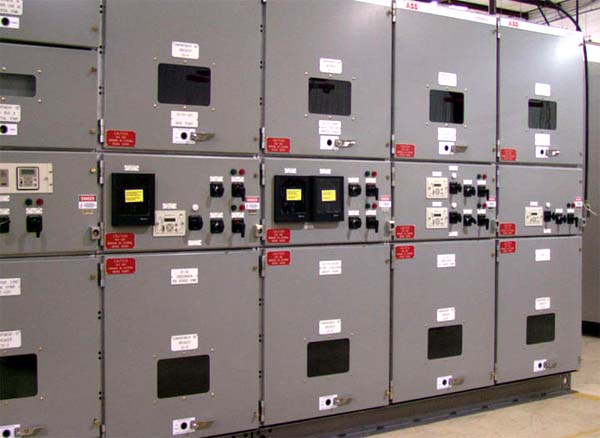
Комплектное распределительное устройство в металлической оболочке
Рис. ABBГОСТ 14693-90 - Устройства комплектные распределительные негерметизированные в металлической оболочке на напряжение до 10 кВ
Тематики
- комплектное распред. устройство (КРУ)
Синонимы
EN
- compartmented switchgear (with non-metallic partitions)
- cubicle switchgear
- MCSG
- MESG
- metal clad switch gear
- metal clad switchgear
- metal-enclosed switchgear
- metalclad switch gear
- metalclad switchgear
FR
Русско-французский словарь нормативно-технической терминологии > комплектное распределительное устройство в металлической оболочке
-
18 речная вода
речная вода
—
[ http://www.eionet.europa.eu/gemet/alphabetic?langcode=en]EN
river water
Water which flows in a channel from high ground to low ground and ultimately to a lake or the sea, except in a desert area where it may dwindle away to nothing. (Source: WHIT)
[http://www.eionet.europa.eu/gemet/alphabetic?langcode=en]Тематики
EN
DE
FR
Русско-французский словарь нормативно-технической терминологии > речная вода
-
19 электрическая сеть с изолированной нейтралью
электрическая сеть с изолированной нейтралью
Электрическая сеть, содержащая оборудование, нейтрали которого не присоединены к заземляющим устройствам или присоединены к ним через устройства измерения, защиты, сигнализации с большим сопротивлением.
[ ГОСТ 24291-90]
электрическая сеть с изолированной нейтралью
Сеть, нейтраль которой не имеет соединения с землей, за исключением приборов сигнализации, измерения и защиты, имеющих весьма высокое сопротивление, или сеть, нейтраль которой соединена с землей через дугогасящий реактор, индуктивность которого такова, что при однофазном замыкании на землю ток реактора в основном компенсирует емкостную составляющую тока замыкания на землю
[ ГОСТ 1516.1-76]
электрическая сеть с изолированной нейтралью
Сеть, нейтраль которой не имеет соединения с землей, за исключением приборов сигнализации, измерения и защиты, имеющих весьма высокое сопротивление. К сетям с изолированной нейтралью следует относить сети с компенсированной нейтралью, нейтраль которых соединена с землей через дугогасящий реактор (ДГР). Индуктивность ДГР такова, что при однофазном замыкании на землю (ОЗЗ) ток реактора компенсирует емкостную составляющую тока ОЗЗ
[Методические указания по защите распределительных электрических сетей напряжением 0,4-10 кВ от грозовых перенапряжений]
сеть с изолированной нейтралью
Сеть, в которой нейтральная точка специально соединена с землей (???), за исключением соединений с высоким сопротивлением с целью защиты или измерений. [IEV 601-02-24]
[ ГОСТ Р МЭК 60044-7-2010]EN
isolated neutral system
a system where the neutral point is not intentionally connected to earth, except for high impedance connections for protection or measurement purposes
[IEV number 601-02-24]FR
réseau à neutre isolé
réseau dont aucun point neutre n'a de connexion intentionnelle avec la terre, à l'exception des liaisons à haute impédance destinées à des dispositifs de protection ou de mesure
[IEV number 601-02-24]Тематики
Синонимы
EN
DE
FR
80 электрическая сеть с изолированной нейтралью
Электрическая сеть, содержащая оборудование, нейтрали которого не присоединены к заземляющим устройствам или присоединены к ним через устройства измерения, защиты, сигнализации с большим сопротивлением
601-02-24
de Netz mit isolirtem Sternpunkt
en isolated neutral system
fr réseau a neutre isolé
Источник: ГОСТ 24291-90: Электрическая часть электростанции и электрической сети. Термины и определения оригинал документа
Русско-французский словарь нормативно-технической терминологии > электрическая сеть с изолированной нейтралью
См. также в других словарях:
Where I Should Be — Infobox Album Name = Where I Should Be Type = Album Artist = Peter Frampton Released = June 21, 1979 Recorded = 1979 Genre = Rock Length = 41:04 Label = A M Producer = Peter Frampton Reviews = *Allmusic Rating|2.5|5… … Wikipedia
Where the Light Is — Infobox Album Name = Where the Light Is: Live in Los Angeles Type = live Artist = John Mayer Released = July 1, 2008 Recorded = December 8, 2007 at the L.A. Live Nokia Theatre Genre = Blues rock Director = Danny Clinch Producer = John Mayer,… … Wikipedia
Where Are You Now, My Son? — Infobox Album Name = Where Are You Now, My Son? Type = Album Artist = Joan Baez Cover size = 160px Released = March 1973 Recorded = Hanoi, Vietnam December 18 27, 1972 Nashville, January 1973 Genre = Folk Length = 44:42 Label = A M Producer =… … Wikipedia
Where Lovers Mourn — Infobox Album Name = Where Lovers Mourn Type = studio Artist = Draconian Released = Start date|2003|10|20 Recorded = Studio Mega by Chris Silver and Draconian in June 2003. Genre = Gothic doom Length = 52:40 Label = Napalm Producer = Reviews =… … Wikipedia
Where's Waldo? — is the North American book and media franchise first adapted for United States audiences from the Where s Wally? book by Martin Handford. OriginsThe franchise was created by Martin Handford. As a young adult, Handford illustrated crowds and other … Wikipedia
Where no man has gone before — is a phrase used in the title sequence of most episodes of the science fiction television series. It refers to the mission of the original starship Enterprise . The complete introductory sequence, narrated by William Shatner at the beginning of… … Wikipedia
Where's It At, Sugar Kat? — Where s it at Sugar Kat? is a humorous action comic book series created by Woodrow Phoenix and Ian Carney, published by Slave Labor Graphics. Sugar Kat is a supermodel and the most popular girl in the world. Rebecca is Sugar s brainy (and… … Wikipedia
except — ex|cept1 [ ık sept ] function word *** Except can be used in the following ways: as a preposition (followed by a noun): We haven t told anyone except Leslie s dad. as a conjunction (followed by a clause or adverbial phrase): I d go and see him… … Usage of the words and phrases in modern English
except — I UK [ɪkˈsept] / US conjunction, preposition *** Summary: Except can be used in the following ways: as a preposition (followed by a noun): We haven t told anyone except Leslie s dad. as a conjunction (followed by a clause or adverbial phrase): I… … English dictionary
Where's Charley? — Infobox Musical name= Where s Charley? subtitle= caption= Logo music= Frank Loesser lyrics= Frank Loesser book= George Abbott basis= Brandon Thomas s play Charley s Aunt productions= 1948 Broadway 1952 Film 1958 West End awards= Where s Charley?… … Wikipedia
Where in the World Is Carmen Sandiego? (game show) — Infobox Television bgcolour = #ffbfbf show name = Where in the World is Carmen Sandiego? format = Game Show runtime = 30 minutes creator = Brøderbund Software theme music composer = Sean Altman David Yazbek opentheme = Where in the World Is… … Wikipedia
