

-
1 déséquilibre de tension
небаланс напряжений
Отличие по модулю значения хотя бы одного из фазных или линейных напряжений многофазной системы электроснабжения от значений напряжений других фаз.
[ ГОСТ 23875-88]EN
voltage unbalance
phenomenon due to the differences between voltage deviations on the various phases, at a point of a polyphase system, resulting from differences between the phase currents or geometrical asymmetry in the line
[IEV number 604-01-29]
voltage unbalance (imbalance)
in a polyphase system, a condition in which the magnitudes of the phase voltages or the phase angles between consecutive phases are not all equal (fundamental component)
NOTE In three phase systems, the degree of inequality is usually expressed as the ratio of the negative and zero sequence components to the positive sequence component. In this technical report, voltage unbalance is considered in relation to three-phase systems and negative sequence only
[IEC 61000-3-13, ed. 1.0 (2008-02)]
voltage unbalance
condition in a polyphase system in which the r.m.s. values of the line voltages (fundamental component), and/or the phase angles between consecutive line voltages, are not all equal
NOTE 1 The degree of the inequality is usually expressed as the ratios of the negative- and zero-sequence components to the positive-sequence component.
NOTE 2 In this standard, voltage unbalance is considered in relation to 3-phase systems.
[IEC 61000-4-30, ed. 2.0 (2008-10)]FR
déséquilibre des tensions d'un réseau
phénomène résultant des différences de charge ou des dissymétries géométriques de lignes et qui provoque des différences entre les écarts de tension sur les diverses phases en un point d'un réseau polyphasé
[IEV number 604-01-29]
déséquilibre de tension
dans un réseau d’énergie électrique polyphasé, état dans lequel les valeurs efficaces des tensions entre conducteurs (composante fondamentale), et/ou les différences de phase entre conducteurs successifs, ne sont pas toutes égales
NOTE 1 Le taux de déséquilibre s’exprime habituellement par le rapport de la composante inverse ou homopolaire à la composante directe.
NOTE 2 Dans la présente norme, le déséquilibre de tension est relatif aux réseaux triphasés
[IEC 61000-4-30, ed. 2.0 (2008-10)]Параллельные тексты EN-RU
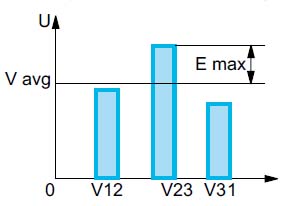
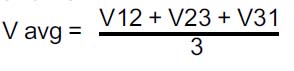
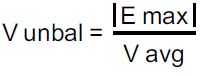
Voltage unbalance
Voltage unbalance on the most unbalanced phase, displayed as a percentage of Vavg.
[Schneider Electric]Небаланс напряжений
Самое значительное отличие по модулю значения одного из линейных напряжений, выраженное в процентах от среднего напряжения Vavg.
[Перевод Интент]
Недопустимые, нерекомендуемые
Тематики
EN
DE
FR
Смотри также
несимметрия напряжений
Состояние системы энергоснабжения трехфазного переменного тока, в которой среднеквадратические значения основных составляющих междуфазных напряжений или углы сдвига фаз между основными составляющими междуфазных напряжений не равны между собой.
Примечания
1 Степень несимметрии обычно выражают отношением напряжений обратной и нулевой последовательностей к напряжению прямой последовательности.
2 В настоящем стандарте несимметрия напряжений рассматривается применительно только к трехфазным системам энергоснабжения.
[ ГОСТ Р 51317.4.30-2008 (МЭК 61000-4-30:2008)]EN
voltage unbalance
condition in a polyphase system in which the r.m.s. values of the line voltages (fundamental component), and/or the phase angles between consecutive line voltages, are not all equal
NOTE 1 The degree of the inequality is usually expressed as the ratios of the negative- and zero-sequence components to the positive-sequence component.
NOTE 2 In this standard, voltage unbalance is considered in relation to 3-phase systems.
[IEC 61000-4-30, ed. 2.0 (2008-10)]FR
déséquilibre de tension
dans un réseau d’énergie électrique polyphasé, état dans lequel les valeurs efficaces des tensions entre conducteurs (composante fondamentale), et/ou les différences de phase entre conducteurs successifs, ne sont pas toutes égales
NOTE 1 Le taux de déséquilibre s’exprime habituellement par le rapport de la composante inverse ou homopolaire à la composante directe.
NOTE 2 Dans la présente norme, le déséquilibre de tension est relatif aux réseaux triphasés.
[IEC 61000-4-30, ed. 2.0 (2008-10)]Тематики
EN
FR
Франко-русский словарь нормативно-технической терминологии > déséquilibre de tension
2 prolongation
prolongations mplMéthode permettant de déterminer le vainqueur au terme d'un match achevé sur un score nul et quand le règlement de la compétition exige qu'il y ait une équipe victorieuse.► Les prolongations sont composées au football de deux périodes de quinze minutes et au futsal de deux périodes de cinq minutes chacune. Si le score est toujours nul à l'issue des deux périodes de prolongations, le vainqueur du match sera déterminé par des tirs au but effectués depuis le point de réparation.
Syn. prolongation fMethod of determining the winners of a match when the competition rules require there to be a winning team after a match ends drawn.► Extra time consists in football of two equal periods of fifteen minutes and in futsal of two equal periods of five minutes. If after the two periods of extra-time the match still ends drawn, the match is decided by kicks from the penalty mark.
Dictionnaire Français-Anglais (UEFA Football) > prolongation
3 prolongations
prolongations mplMéthode permettant de déterminer le vainqueur au terme d'un match achevé sur un score nul et quand le règlement de la compétition exige qu'il y ait une équipe victorieuse.► Les prolongations sont composées au football de deux périodes de quinze minutes et au futsal de deux périodes de cinq minutes chacune. Si le score est toujours nul à l'issue des deux périodes de prolongations, le vainqueur du match sera déterminé par des tirs au but effectués depuis le point de réparation.
Syn. prolongation fMethod of determining the winners of a match when the competition rules require there to be a winning team after a match ends drawn.► Extra time consists in football of two equal periods of fifteen minutes and in futsal of two equal periods of five minutes. If after the two periods of extra-time the match still ends drawn, the match is decided by kicks from the penalty mark.
Dictionnaire Français-Anglais (UEFA Football) > prolongations
4 déséquilibre des tensions d'un réseau
небаланс напряжений
Отличие по модулю значения хотя бы одного из фазных или линейных напряжений многофазной системы электроснабжения от значений напряжений других фаз.
[ ГОСТ 23875-88]EN
voltage unbalance
phenomenon due to the differences between voltage deviations on the various phases, at a point of a polyphase system, resulting from differences between the phase currents or geometrical asymmetry in the line
[IEV number 604-01-29]
voltage unbalance (imbalance)
in a polyphase system, a condition in which the magnitudes of the phase voltages or the phase angles between consecutive phases are not all equal (fundamental component)
NOTE In three phase systems, the degree of inequality is usually expressed as the ratio of the negative and zero sequence components to the positive sequence component. In this technical report, voltage unbalance is considered in relation to three-phase systems and negative sequence only
[IEC 61000-3-13, ed. 1.0 (2008-02)]
voltage unbalance
condition in a polyphase system in which the r.m.s. values of the line voltages (fundamental component), and/or the phase angles between consecutive line voltages, are not all equal
NOTE 1 The degree of the inequality is usually expressed as the ratios of the negative- and zero-sequence components to the positive-sequence component.
NOTE 2 In this standard, voltage unbalance is considered in relation to 3-phase systems.
[IEC 61000-4-30, ed. 2.0 (2008-10)]FR
déséquilibre des tensions d'un réseau
phénomène résultant des différences de charge ou des dissymétries géométriques de lignes et qui provoque des différences entre les écarts de tension sur les diverses phases en un point d'un réseau polyphasé
[IEV number 604-01-29]
déséquilibre de tension
dans un réseau d’énergie électrique polyphasé, état dans lequel les valeurs efficaces des tensions entre conducteurs (composante fondamentale), et/ou les différences de phase entre conducteurs successifs, ne sont pas toutes égales
NOTE 1 Le taux de déséquilibre s’exprime habituellement par le rapport de la composante inverse ou homopolaire à la composante directe.
NOTE 2 Dans la présente norme, le déséquilibre de tension est relatif aux réseaux triphasés
[IEC 61000-4-30, ed. 2.0 (2008-10)]Параллельные тексты EN-RU
Voltage unbalance
Voltage unbalance on the most unbalanced phase, displayed as a percentage of Vavg.
[Schneider Electric]Небаланс напряжений
Самое значительное отличие по модулю значения одного из линейных напряжений, выраженное в процентах от среднего напряжения Vavg.
[Перевод Интент]
Недопустимые, нерекомендуемые
Тематики
EN
DE
FR
Смотри также
Франко-русский словарь нормативно-технической терминологии > déséquilibre des tensions d'un réseau
5 tension assignée
номинальное напряжение
Напряжение, установленное изготовителем для прибора
[ ГОСТ Р 52161. 1-2004 ( МЭК 60335-1: 2001)]
номинальное напряжение Uном, кВ
Номинальное междуфазное напряжение электрической сети, для работы в которой предназначены коммутационные аппараты.
[ ГОСТ Р 52726-2007]
номинальное напряжение
Un
Напряжение, применяемое для обозначения или идентификации системы электроснабжения.
[ ГОСТ Р 51317.4.30-2008 (МЭК 61000-4-30:2008)]EN
rated voltage
voltage assigned to the appliance by the manufacturer
[IEC 60335-1, ed. 4.0 (2001-05)]
rated voltage
quantity value assigned, generally by the manufacturer, for a specified operating condition of a machine
[IEC 60034-18-41, ed. 1.0 (2006-10)]
rated voltage
input or output supply voltage for which equipment is designed or specified
[IEC 88528-11, ed. 1.0 (2004-03)]
rated voltage
specified value of the voltage at the terminals of the machine when operating at a rating. If unidirectional, the voltage is the arithmetic mean of the recurring waveform and if alternating it is the root mean square value of the fundamental frequency component of the recurring waveform
NOTE - In the case of a machine with a protective resistor permanently in series, the resistor is considered as an integral part of the machine
[IEC 60349-1, ed. 1.0 (1999-11)]
rated voltage
the value of voltage assigned by the manufacturer to a component, device or equipment and to which operation and performance characteristics are referred
NOTE - Equipment may have more than one rated voltage value or may have a rated voltage range.
[IEC 62497-1, ed. 1.0 (2010-02)]
rated voltage
reference voltage for which the cable is designed, and which serves to define the electrical tests
NOTE 1 - The rated voltage is expressed by the combination of two values: Uo/U expressed in volts (V):
Uo being the r.m.s. value between any insulated conductor and "earth" (metal covering of the cable or the surrounding medium);
U being the r.m.s. value between any two phase conductors of a multicore cable or of a system of single-core cables.
In an alternating-current system, the rated voltage of a cable is at least equal to the nominal voltage of the system for which it is intended.
This condition applies both to the value Uo and to the value U.
In a direct current system, the nominal voltage of the system is not higher than 1,5 times the rated voltage of the cable.
NOTE 2 - The operating voltage of a system may permanently exceed the nominal voltage of such a system by 10 %. A cable can be used at a 10 % higher operating voltage than its rated voltage if the latter is at least equal to the nominal voltage of the system
[IEC 60245-1, ed. 4.0 (2003-12)]
rated voltage
highest allowable voltage between the conductors in a twin and multi conductor cable, or between one conductor and an electrical conductive screen, or between the two ends of a single core cable, or earth in unscreened cables
[IEC 60800, ed. 3.0 (2009-07)]
rated voltage
the r.m.s. line-to-line voltage under rated conditions
Primary side of input transformer: ULN
Converter input: UVN
Converter output: UaN
Motor voltage: UAN
[IEC 61800-4, ed. 1.0 (2002-09)]
rated voltage
input or output voltage (for three-phase supply, the phase-to-phase voltage) as declared by the manufacturer
[IEC 62040-1, ed. 1.0 (2008-06)]
nominal voltage, Un
voltage by which a system is designated or identified
[IEC 61000-4-30, ed. 2.0 (2008-10)]FR
tension assignée
tension attribuée à l'appareil par le fabricant
[IEC 60335-1, ed. 4.0 (2001-05)]
tension nominale
tension assignée, généraleme<>value of voltage assigned by the manufacturer, to a componentnt par le constructeur pour des conditions spécifiées de fonctionnement de la machine
[IEC 60034-18-41, ed. 1.0 (2006-10)]
tension assignée
tension spécifiée aux bornes de la machine quand celle-ci fonctionne au régime assigné. Dans le cas d'une tension redressée, sa valeur est égale à la valeur moyenne de l'onde périodique. Dans le cas d'une tension alternative, sa valeur est égale à la valeur efficace de la composante fondamentale de l'onde périodique
NOTE - Dans le cas d'une machine équipée d'une résistance de protection connectée en permanence en série, la résistance est considérée comme faisant partie intégrante de la machine
[IEC 60349-1, ed. 1.0 (1999-11)]
tension assignée
valeur de la tension, assignée par le constructeur à un composant, à un dispositif ou à un matériel, et à laquelle on se réfère pour le fonctionnement et pour les caractéristiques fonctionnelles
NOTE - Les matériels peuvent avoir plusieurs valeurs ou une plage de tensions assignées.
[IEC 62497-1, ed. 1.0 (2010-02)]
tension assignée
tension de référence pour laquelle le conducteur ou le câble est prévu et qui sert à définir les essais électriques
NOTE 1 - La tension assignée est exprimée par la combinaison de deux valeurs Uo /U, exprimées en volts (V):
Uo étant la valeur efficace entre l'âme d'un conducteur isolé quelconque et la «terre» (revêtement métallique du câble au milieu environnant);
U étant la valeur efficace entre les âmes conductrices de deux conducteurs de phase quelconques d'un câble multiconducteur ou d'un système de câbles monoconducteurs ou de conducteurs.
Dans un système à courant alternatif, la tension assignée d'un conducteur ou d’un câble est au moins égale à la tension nominale du système pour lequel il est prévu.
Cette condition s'applique à la fois à la valeur Uo et à la valeur U.
Dans un système à courant continu, la tension nominale admise du système n’est pas supérieure à 1,5 fois la tension assignée du conducteur ou du câble.
NOTE 2 - La tension de service d'un système peut en permanence dépasser la tension nominale dudit système de 10 %. Un conducteur ou un câble peut être utilisé à une tension de service supérieure de 10 % à sa tension assignée si cette dernière est au moins égale à la tension nominale du système
[IEC 60245-1, ed. 4.0 (2003-12)]
tension assignée
tension maximale admissible entre les âmes dans un câble ayant une paire ou multi conducteur ou entre une âme et un écran conducteur électrique ou avec la terre pour un câble non écranté ou encore entre les deux extrémités d’un câble à âme unique
[IEC 60800, ed. 3.0 (2009-07)]
tension assignée
valeur efficace de la tension de ligne (entre phases) dans les conditions assignées
Primaire du transformateur d’entrée: ULN
Entrée du convertisseur: UVN
Sortie du convertisseur: UaN
Moteur: UAN
[IEC 61800-4, ed. 1.0 (2002-09)]
tension assignée
tension d’alimentation d’entrée ou de sortie (dans le cas d’une alimentation triphasée, tension entre phases) déclarée par le constructeur
[IEC 62040-1, ed. 1.0 (2008-06)]
tension nominale, Un
tension par laquelle un réseau est désigné ou identifié
[IEC 61000-4-30, ed. 2.0 (2008-10)]Тематики
- аппарат, изделие, устройство...
- высоковольтный аппарат, оборудование...
- прибор электрический
- электроснабжение в целом
Синонимы
- Un
EN
FR
Франко-русский словарь нормативно-технической терминологии > tension assignée
6 tension nominale
номинальное напряжение
Напряжение, установленное изготовителем для прибора
[ ГОСТ Р 52161. 1-2004 ( МЭК 60335-1: 2001)]
номинальное напряжение Uном, кВ
Номинальное междуфазное напряжение электрической сети, для работы в которой предназначены коммутационные аппараты.
[ ГОСТ Р 52726-2007]
номинальное напряжение
Un
Напряжение, применяемое для обозначения или идентификации системы электроснабжения.
[ ГОСТ Р 51317.4.30-2008 (МЭК 61000-4-30:2008)]EN
rated voltage
voltage assigned to the appliance by the manufacturer
[IEC 60335-1, ed. 4.0 (2001-05)]
rated voltage
quantity value assigned, generally by the manufacturer, for a specified operating condition of a machine
[IEC 60034-18-41, ed. 1.0 (2006-10)]
rated voltage
input or output supply voltage for which equipment is designed or specified
[IEC 88528-11, ed. 1.0 (2004-03)]
rated voltage
specified value of the voltage at the terminals of the machine when operating at a rating. If unidirectional, the voltage is the arithmetic mean of the recurring waveform and if alternating it is the root mean square value of the fundamental frequency component of the recurring waveform
NOTE - In the case of a machine with a protective resistor permanently in series, the resistor is considered as an integral part of the machine
[IEC 60349-1, ed. 1.0 (1999-11)]
rated voltage
the value of voltage assigned by the manufacturer to a component, device or equipment and to which operation and performance characteristics are referred
NOTE - Equipment may have more than one rated voltage value or may have a rated voltage range.
[IEC 62497-1, ed. 1.0 (2010-02)]
rated voltage
reference voltage for which the cable is designed, and which serves to define the electrical tests
NOTE 1 - The rated voltage is expressed by the combination of two values: Uo/U expressed in volts (V):
Uo being the r.m.s. value between any insulated conductor and "earth" (metal covering of the cable or the surrounding medium);
U being the r.m.s. value between any two phase conductors of a multicore cable or of a system of single-core cables.
In an alternating-current system, the rated voltage of a cable is at least equal to the nominal voltage of the system for which it is intended.
This condition applies both to the value Uo and to the value U.
In a direct current system, the nominal voltage of the system is not higher than 1,5 times the rated voltage of the cable.
NOTE 2 - The operating voltage of a system may permanently exceed the nominal voltage of such a system by 10 %. A cable can be used at a 10 % higher operating voltage than its rated voltage if the latter is at least equal to the nominal voltage of the system
[IEC 60245-1, ed. 4.0 (2003-12)]
rated voltage
highest allowable voltage between the conductors in a twin and multi conductor cable, or between one conductor and an electrical conductive screen, or between the two ends of a single core cable, or earth in unscreened cables
[IEC 60800, ed. 3.0 (2009-07)]
rated voltage
the r.m.s. line-to-line voltage under rated conditions
Primary side of input transformer: ULN
Converter input: UVN
Converter output: UaN
Motor voltage: UAN
[IEC 61800-4, ed. 1.0 (2002-09)]
rated voltage
input or output voltage (for three-phase supply, the phase-to-phase voltage) as declared by the manufacturer
[IEC 62040-1, ed. 1.0 (2008-06)]
nominal voltage, Un
voltage by which a system is designated or identified
[IEC 61000-4-30, ed. 2.0 (2008-10)]FR
tension assignée
tension attribuée à l'appareil par le fabricant
[IEC 60335-1, ed. 4.0 (2001-05)]
tension nominale
tension assignée, généraleme<>value of voltage assigned by the manufacturer, to a componentnt par le constructeur pour des conditions spécifiées de fonctionnement de la machine
[IEC 60034-18-41, ed. 1.0 (2006-10)]
tension assignée
tension spécifiée aux bornes de la machine quand celle-ci fonctionne au régime assigné. Dans le cas d'une tension redressée, sa valeur est égale à la valeur moyenne de l'onde périodique. Dans le cas d'une tension alternative, sa valeur est égale à la valeur efficace de la composante fondamentale de l'onde périodique
NOTE - Dans le cas d'une machine équipée d'une résistance de protection connectée en permanence en série, la résistance est considérée comme faisant partie intégrante de la machine
[IEC 60349-1, ed. 1.0 (1999-11)]
tension assignée
valeur de la tension, assignée par le constructeur à un composant, à un dispositif ou à un matériel, et à laquelle on se réfère pour le fonctionnement et pour les caractéristiques fonctionnelles
NOTE - Les matériels peuvent avoir plusieurs valeurs ou une plage de tensions assignées.
[IEC 62497-1, ed. 1.0 (2010-02)]
tension assignée
tension de référence pour laquelle le conducteur ou le câble est prévu et qui sert à définir les essais électriques
NOTE 1 - La tension assignée est exprimée par la combinaison de deux valeurs Uo /U, exprimées en volts (V):
Uo étant la valeur efficace entre l'âme d'un conducteur isolé quelconque et la «terre» (revêtement métallique du câble au milieu environnant);
U étant la valeur efficace entre les âmes conductrices de deux conducteurs de phase quelconques d'un câble multiconducteur ou d'un système de câbles monoconducteurs ou de conducteurs.
Dans un système à courant alternatif, la tension assignée d'un conducteur ou d’un câble est au moins égale à la tension nominale du système pour lequel il est prévu.
Cette condition s'applique à la fois à la valeur Uo et à la valeur U.
Dans un système à courant continu, la tension nominale admise du système n’est pas supérieure à 1,5 fois la tension assignée du conducteur ou du câble.
NOTE 2 - La tension de service d'un système peut en permanence dépasser la tension nominale dudit système de 10 %. Un conducteur ou un câble peut être utilisé à une tension de service supérieure de 10 % à sa tension assignée si cette dernière est au moins égale à la tension nominale du système
[IEC 60245-1, ed. 4.0 (2003-12)]
tension assignée
tension maximale admissible entre les âmes dans un câble ayant une paire ou multi conducteur ou entre une âme et un écran conducteur électrique ou avec la terre pour un câble non écranté ou encore entre les deux extrémités d’un câble à âme unique
[IEC 60800, ed. 3.0 (2009-07)]
tension assignée
valeur efficace de la tension de ligne (entre phases) dans les conditions assignées
Primaire du transformateur d’entrée: ULN
Entrée du convertisseur: UVN
Sortie du convertisseur: UaN
Moteur: UAN
[IEC 61800-4, ed. 1.0 (2002-09)]
tension assignée
tension d’alimentation d’entrée ou de sortie (dans le cas d’une alimentation triphasée, tension entre phases) déclarée par le constructeur
[IEC 62040-1, ed. 1.0 (2008-06)]
tension nominale, Un
tension par laquelle un réseau est désigné ou identifié
[IEC 61000-4-30, ed. 2.0 (2008-10)]Тематики
- аппарат, изделие, устройство...
- высоковольтный аппарат, оборудование...
- прибор электрический
- электроснабжение в целом
Синонимы
- Un
EN
FR
номинальное напряжение конденсатора
Максимальное напряжение, при котором конденсатор может работать в течение минимальной наработки в условиях, указанных в нормативно-технической документации
[ ГОСТ 21415-75]
номинальное напряжение конденсатора
Действующее значение синусоидального переменного напряжения при номинальной частоте, на которое рассчитан конденсатор. Номинальное напряжение многофазного конденсатора - значение напряжения между выводами.
[ ГОСТ 1282-88]Тематики
- конденсаторы для повыш. коэф. мощности
- конденсаторы для электронной аппаратуры
EN
DE
FR
Франко-русский словарь нормативно-технической терминологии > tension nominale
7 Un
номинальное напряжение
Напряжение, установленное изготовителем для прибора
[ ГОСТ Р 52161. 1-2004 ( МЭК 60335-1: 2001)]
номинальное напряжение Uном, кВ
Номинальное междуфазное напряжение электрической сети, для работы в которой предназначены коммутационные аппараты.
[ ГОСТ Р 52726-2007]
номинальное напряжение
Un
Напряжение, применяемое для обозначения или идентификации системы электроснабжения.
[ ГОСТ Р 51317.4.30-2008 (МЭК 61000-4-30:2008)]EN
rated voltage
voltage assigned to the appliance by the manufacturer
[IEC 60335-1, ed. 4.0 (2001-05)]
rated voltage
quantity value assigned, generally by the manufacturer, for a specified operating condition of a machine
[IEC 60034-18-41, ed. 1.0 (2006-10)]
rated voltage
input or output supply voltage for which equipment is designed or specified
[IEC 88528-11, ed. 1.0 (2004-03)]
rated voltage
specified value of the voltage at the terminals of the machine when operating at a rating. If unidirectional, the voltage is the arithmetic mean of the recurring waveform and if alternating it is the root mean square value of the fundamental frequency component of the recurring waveform
NOTE - In the case of a machine with a protective resistor permanently in series, the resistor is considered as an integral part of the machine
[IEC 60349-1, ed. 1.0 (1999-11)]
rated voltage
the value of voltage assigned by the manufacturer to a component, device or equipment and to which operation and performance characteristics are referred
NOTE - Equipment may have more than one rated voltage value or may have a rated voltage range.
[IEC 62497-1, ed. 1.0 (2010-02)]
rated voltage
reference voltage for which the cable is designed, and which serves to define the electrical tests
NOTE 1 - The rated voltage is expressed by the combination of two values: Uo/U expressed in volts (V):
Uo being the r.m.s. value between any insulated conductor and "earth" (metal covering of the cable or the surrounding medium);
U being the r.m.s. value between any two phase conductors of a multicore cable or of a system of single-core cables.
In an alternating-current system, the rated voltage of a cable is at least equal to the nominal voltage of the system for which it is intended.
This condition applies both to the value Uo and to the value U.
In a direct current system, the nominal voltage of the system is not higher than 1,5 times the rated voltage of the cable.
NOTE 2 - The operating voltage of a system may permanently exceed the nominal voltage of such a system by 10 %. A cable can be used at a 10 % higher operating voltage than its rated voltage if the latter is at least equal to the nominal voltage of the system
[IEC 60245-1, ed. 4.0 (2003-12)]
rated voltage
highest allowable voltage between the conductors in a twin and multi conductor cable, or between one conductor and an electrical conductive screen, or between the two ends of a single core cable, or earth in unscreened cables
[IEC 60800, ed. 3.0 (2009-07)]
rated voltage
the r.m.s. line-to-line voltage under rated conditions
Primary side of input transformer: ULN
Converter input: UVN
Converter output: UaN
Motor voltage: UAN
[IEC 61800-4, ed. 1.0 (2002-09)]
rated voltage
input or output voltage (for three-phase supply, the phase-to-phase voltage) as declared by the manufacturer
[IEC 62040-1, ed. 1.0 (2008-06)]
nominal voltage, Un
voltage by which a system is designated or identified
[IEC 61000-4-30, ed. 2.0 (2008-10)]FR
tension assignée
tension attribuée à l'appareil par le fabricant
[IEC 60335-1, ed. 4.0 (2001-05)]
tension nominale
tension assignée, généraleme<>value of voltage assigned by the manufacturer, to a componentnt par le constructeur pour des conditions spécifiées de fonctionnement de la machine
[IEC 60034-18-41, ed. 1.0 (2006-10)]
tension assignée
tension spécifiée aux bornes de la machine quand celle-ci fonctionne au régime assigné. Dans le cas d'une tension redressée, sa valeur est égale à la valeur moyenne de l'onde périodique. Dans le cas d'une tension alternative, sa valeur est égale à la valeur efficace de la composante fondamentale de l'onde périodique
NOTE - Dans le cas d'une machine équipée d'une résistance de protection connectée en permanence en série, la résistance est considérée comme faisant partie intégrante de la machine
[IEC 60349-1, ed. 1.0 (1999-11)]
tension assignée
valeur de la tension, assignée par le constructeur à un composant, à un dispositif ou à un matériel, et à laquelle on se réfère pour le fonctionnement et pour les caractéristiques fonctionnelles
NOTE - Les matériels peuvent avoir plusieurs valeurs ou une plage de tensions assignées.
[IEC 62497-1, ed. 1.0 (2010-02)]
tension assignée
tension de référence pour laquelle le conducteur ou le câble est prévu et qui sert à définir les essais électriques
NOTE 1 - La tension assignée est exprimée par la combinaison de deux valeurs Uo /U, exprimées en volts (V):
Uo étant la valeur efficace entre l'âme d'un conducteur isolé quelconque et la «terre» (revêtement métallique du câble au milieu environnant);
U étant la valeur efficace entre les âmes conductrices de deux conducteurs de phase quelconques d'un câble multiconducteur ou d'un système de câbles monoconducteurs ou de conducteurs.
Dans un système à courant alternatif, la tension assignée d'un conducteur ou d’un câble est au moins égale à la tension nominale du système pour lequel il est prévu.
Cette condition s'applique à la fois à la valeur Uo et à la valeur U.
Dans un système à courant continu, la tension nominale admise du système n’est pas supérieure à 1,5 fois la tension assignée du conducteur ou du câble.
NOTE 2 - La tension de service d'un système peut en permanence dépasser la tension nominale dudit système de 10 %. Un conducteur ou un câble peut être utilisé à une tension de service supérieure de 10 % à sa tension assignée si cette dernière est au moins égale à la tension nominale du système
[IEC 60245-1, ed. 4.0 (2003-12)]
tension assignée
tension maximale admissible entre les âmes dans un câble ayant une paire ou multi conducteur ou entre une âme et un écran conducteur électrique ou avec la terre pour un câble non écranté ou encore entre les deux extrémités d’un câble à âme unique
[IEC 60800, ed. 3.0 (2009-07)]
tension assignée
valeur efficace de la tension de ligne (entre phases) dans les conditions assignées
Primaire du transformateur d’entrée: ULN
Entrée du convertisseur: UVN
Sortie du convertisseur: UaN
Moteur: UAN
[IEC 61800-4, ed. 1.0 (2002-09)]
tension assignée
tension d’alimentation d’entrée ou de sortie (dans le cas d’une alimentation triphasée, tension entre phases) déclarée par le constructeur
[IEC 62040-1, ed. 1.0 (2008-06)]
tension nominale, Un
tension par laquelle un réseau est désigné ou identifié
[IEC 61000-4-30, ed. 2.0 (2008-10)]Тематики
- аппарат, изделие, устройство...
- высоковольтный аппарат, оборудование...
- прибор электрический
- электроснабжение в целом
Синонимы
- Un
EN
FR
Франко-русский словарь нормативно-технической терминологии > Un
8 peuplement d¢age egal
одновозрастный древостой
Древостой, деревья которого имеют разницу в возрасте, не превышающую длительности одного класса возраста.
[ ГОСТ 23431-79 ]Тематики
Обобщающие термины
- общебиологические термины, относящиеся к древесине
EN
FR
- peuplement d¢age egal
9. Одновозрастный древостой
E. Equal aged stand
F. Peuplement d¢age egal
Древостой, деревья которого имеют разницу в возрасте, не превышающую длительности одного класса возраста
Источник: ГОСТ 23431-79: Древесина. Строение и физико-механические свойства. Термины и определения оригинал документа
Франко-русский словарь нормативно-технической терминологии > peuplement d¢age egal
9 hute ou augmentation de tension pour une condition de charge spécifiée
падение или повышение напряжения при заданном режиме нагрузки
Разность между напряжением холостого хода обмотки и напряжением на ее выводах при заданных нагрузке и коэффициенте мощности при условии, что к другой (или к одной из других) обмотке(ок) подведено напряжение, равное:
- номинальному, если трансформатор включен на основное ответвление (в этом случае напряжение холостого хода рассматриваемой обмотки равно номинальному);
- напряжению другого ответвления, на которое включен трансформатор. Падение или повышение напряжения обычно выражают в процентах напряжения холостого хода рассматриваемой обмотки.
Примечание — В многообмоточном трансформаторе падение или повышение напряжения зависит от нагрузки и коэффициента мощности не только данной обмотки, но и других обмоток
(МЭС 421-07-03).
[ ГОСТ 30830-2002]EN
voltage drop or rise for a specified load condition
voltage regulation for a specified load condition
the arithmetic difference between the no-load voltage of a winding and the voltage developed at the terminals of the same winding at a specified load and power factor, the voltage supplied to (one of) the other winding(s) being equal to:
- its rated value if the transformer is connected on the principal tapping (the no-load voltage of the former winding is then equal to its rated value);
- the tapping voltage if the transformer is connected on another tapping.
This difference is generally expressed as a percentage of the no-load voltage of the former winding
NOTE – For multi-winding transformers, the voltage drop or rise depends not only on the load and power factor of the winding itself, but also on the load and power factor of the other windings
[IEV number 421-07-03]FR
hute ou augmentation de tension pour une condition de charge spécifiée
différence arithmétique entre la tension à vide d'un enroulement et la tension en charge aux bornes du même enroulement pour un courant de charge et un facteur de puissance spécifiés, la tension appliquée à l'autre (ou à l'un des autres) enroulement(s) étant égale:
- à sa valeur assignée, si le transformateur est connecté sur la prise principale (la tension à vide du premier enroulement étant alors égale à sa valeur assignée);
- à la tension de prise si le transformateur est connecté sur une autre prise.
Cette différence s'exprime généralement sous la forme d'un pourcentage de la tension à vide du premier enroulement
NOTE – Pour les transformateurs à plus de deux enroulements, la chute ou l'augmentation de tension dépend non seulement de la charge et du facteur de puissance de l'enroulement lui-même, mais aussi de la charge et du facteur de puissance des autres enroulements.
[IEV number 421-07-03]Тематики
Классификация
>>>EN
- voltage drop or rise for a specified load condition
- voltage regulation for a specified load condition
DE
FR
Франко-русский словарь нормативно-технической терминологии > hute ou augmentation de tension pour une condition de charge spécifiée
10 courant de conduction
ток проводимости
Явление направленного движения свободных носителей электрического заряда в веществе или в пустоте, количественно характеризуемое скалярной величиной, равной производной по времени от электрического заряда, переносимого свободными носителями заряда сквозь рассматриваемую поверхность.
[ ГОСТ Р 52002-2003]EN
(electric) current
(conduction) current
scalar quantity equal to the flux of the electric current density J through a given directed surface S:
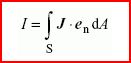
where endA is the vector surface element
NOTE 1 – The electric current through a surface is equal to the limit of the quotient of the electric charge transferred through that surface during a time interval by the duration of this interval when this duration tends to zero.
NOTE 2 – For charge carriers confined to a surface, the electric current is defined through a curve of this surface (see the note to term “lineic electric current”).
[IEV number 121-11-13]FR
courant (électrique), m
courant (de conduction), m
grandeur scalaire égale au flux de la densité de courant électrique J à travers une surface orientée donnée S:
où endA est l'élément vectoriel de surface
NOTE 1 – Le courant électrique à travers une surface est égal à la limite du quotient de la charge électrique traversant cette surface pendant un intervalle de temps par la durée de cet intervalle lorsque cette durée tend vers zéro.
NOTE 2 – Pour des porteurs de charge confinés sur une surface, le courant électrique est défini à travers une courbe de cette surface (voir la note au terme "densité linéique de courant").
[IEV number 121-11-13]Тематики
- электротехника, основные понятия
Синонимы
EN
DE
- (elektrische) Stromstärke
- Leitungsstromstärke
- Stromstärke, (elektrische)
FR
Франко-русский словарь нормативно-технической терминологии > courant de conduction
11 ambidextre
Qui utilise indifféremment ses deux pieds, avec une égale facilité.12 ballon
ballon mObjet sphérique, en cuir ou dans une autre matière adéquate, qui a une circonférence de 70 cm au plus et de 68 cm au moins, un poids de 450 g au plus et de 410 g au moins au début du match et une pression se situant entre 0,6 et 1,1 atmosphère (600 – 1100 g/cm2).Spherical object which is, according to the Laws of the Game, made of leather or other suitable material, of a circumference of not more than 70 cm (28 ins) and not less than 68 cm (27 ins), not more than 450 g (16 oz) in weight and not less than 410 g (14 oz) at the start of the match and of a pressure equal to 0.6 – 1.1 atmosphere (600 – 1100 g/cm2).♦ Play, touch, kick, place, drop the ball.13 but en argent
but en argent m ancienRègle servant à départager deux équipes lorsque le score est nul à la fin du temps réglementaire et qui consiste à déclarer vainqueur l'équipe qui mène à la fin de la première période de prolongation.Silver Goal oldRegulation that is sometimes used to determine the winning team when the scores are equal after the match has been drawn, which consists in the team that is in the lead after the first period of extra time being declared winners.Syn. Silver Goal RuleDictionnaire Français-Anglais (UEFA Football) > but en argent
14 but en or
règle du but en or f ancienRègle qui peut être appliquée pour déterminer le vainqueur lorsque le score est nul à la fin du temps réglementaire du match et qui consiste à déclarer vainqueur l'équipe qui marque le premier but lors des prolongations.Syn. but en or m ancien, mort subite f anciengolden-goal rule oldRegulation which may be used to determine the winning team when the scores are equal after the match has been drawn, by which the team that scores during extra time is immediately declared the winners.Syn. golden goal old, sudden death old15 Chambre de Résolution des Litiges
Instance juridictionnelle de la FIFA chargée de l'arbitrage et de la résolution des litiges et composée d'un président, d'un vice-président et de vingt membres, également répartis entre représentants des joueurs et représentants des clubs.Syn. CRL f FIFA abrév.FIFA body to which players and clubs apply in case of controversy about international transfers, on the basis of equal representation of players and clubs and an independent chairman.Syn. DRC FIFA abbr.Dictionnaire Français-Anglais (UEFA Football) > Chambre de Résolution des Litiges
16 CRL
Instance juridictionnelle de la FIFA chargée de l'arbitrage et de la résolution des litiges et composée d'un président, d'un vice-président et de vingt membres, également répartis entre représentants des joueurs et représentants des clubs.Syn. CRL f FIFA abrév.FIFA body to which players and clubs apply in case of controversy about international transfers, on the basis of equal representation of players and clubs and an independent chairman.Syn. DRC FIFA abbr.17 doué des deux pieds
Qui utilise indifféremment ses deux pieds, avec une égale facilité.Dictionnaire Français-Anglais (UEFA Football) > doué des deux pieds
18 égaliser
19 fair-play
Fait d'agir selon des considérations éthiques telles que le rejet du principe de victoire sportive à tout prix, la promotion de l'intégrité et de l'égalité des chances pour tous les compétiteurs, le respect de la personnalité, et la reconnaissance de la valeur de toutes les personnes impliquées dans un événement sportif.♦ Promouvoir le football dans un esprit de fair-play; respecter les principes de la loyauté, de l'intégrité et de l'esprit sportif en tant qu'expression du fair-play.A way of acting according to ethical principles which, in particular, oppose the concept of sporting success at any price, promote integrity and equal opportunities for all competitors, and emphasise respect of the personality and the dignity of everyone involved in a sporting event.♦ To promote football in a spirit of fair play; to observe the principles of loyalty, integrity and sportsmanship in accordance with the principles of fair play.20 habile des deux pieds
Qui utilise indifféremment ses deux pieds, avec une égale facilité.Dictionnaire Français-Anglais (UEFA Football) > habile des deux pieds
СтраницыСм. также в других словарях:
equal — Ⅰ. equal UK US /ˈiːkwəl/ adjective ► the same in price, number, size, etc.: »The values of cross border and internal sales were about equal over the year. an equal amount/number/share »Instead of an equal share, we got only one fifth of the… … Financial and business terms
equal — 1. As a verb, equal has inflected forms equalled, equalling in BrE and equaled, equaling in AmE. 2. As an adjective, equal is followed by to (The square on the hypotenuse is equal to the sum of the squares on the other two sides), whereas the… … Modern English usage
Equal — E qual, a. [L. aequalis, fr. aequus even, equal; akin to Skr. ?ka, and perh. to L. unus for older oinos one, E. one.] 1. Agreeing in quantity, size, quality, degree, value, etc.; having the same magnitude, the same value, the same degree, etc.;… … The Collaborative International Dictionary of English
equal — 1 adj [Latin aequalis, from aequus level, equal] 1: like in quality, nature, or status 2: like for each member of a group, class, or society 3: regarding or affecting all objects in the same way: impartial equal 2 … Law dictionary
equal — [ē′kwəl] adj. [ME < L aequalis, equal < aequus, level, even, flat] 1. of the same quantity, size, number, value, degree, intensity, quality, etc. 2. having the same rights, privileges, ability, rank, etc. 3. evenly proportioned; balanced or … English World dictionary
Equal — E qual, v. t. [imp. & p. p. {Equaled}or {Equalled}; p. pr. & vb. n. {Equaling} or {Equalling}.] 1. To be or become equal to; to have the same quantity, the same value, the same degree or rank, or the like, with; to be commen?urate with. [1913… … The Collaborative International Dictionary of English
equal — ► ADJECTIVE 1) being the same in quantity, size, degree, value, or status. 2) evenly or fairly balanced: an equal contest. 3) (equal to) having the ability or resources to meet (a challenge). ► NOUN ▪ a person or thing that is equal to another. ► … English terms dictionary
equal ~ — to (one kilometer is equal to five eighths of a mile; equal to the occasion) equal in (equal in price) … Combinatory dictionary
Equal — E qual, n. 1. One not inferior or superior to another; one having the same or a similar age, rank, station, office, talents, strength, or other quality or condition; an equal quantity or number; as, If equals be taken from equals the remainders… … The Collaborative International Dictionary of English
Equal — commonly refers to a state of equality.Equal may also refer to:* Equals sign, or the symbol = * An equality operator, a relational operator expressed as = in C style * Equal (sweetener), a brand of artificial sweetener * EQUAL Community… … Wikipedia
equal — [adj1] alike according, balanced, break even, commensurate, comparable, coordinate, correspondent, corresponding, double, duplicate, egalitarian, equivalent, evenly matched, fifty fifty*, homologous, identic, identical, indistinguishable,… … New thesaurus
Перевод: с французского на русский
с русского на французский- С русского на:
- Французский
- С французского на:
- Все языки
- Английский
- Русский
equal

18+
© Академик, 2000-2025
- Обратная связь: Техподдержка, Реклама на сайте
Экспорт словарей на сайты, сделанные на PHP, Joomla, Drupal, WordPress, MODx.