

-
1 трудный размер
Русско-английский словарь по пищевой промышленности > трудный размер
-
2 трудный
1. complex2. unmanageable3. arduous4. baffling5. harderтрудный; твердый — are hard
6. toilsome7. difficult; hard; heavy8. hard9. labored10. laborious11. laboured12. stiff13. toughчеловек, с которым трудно справиться — a tough nut
трудная работа — hard work; tough job
14. tricky15. troublesome16. tryingСинонимический ряд:нелегкая (прил.) бедственная; горестная; горькая; каторжная; нелегкая; несладкая; опасная; серьезная; тяжелая; тяжкаяАнтонимический ряд: -
3 трудный размер
Engineering: difficult size (зерна, близкий к размеру отверстий сита) -
4 трудный
-
5 З-85
ЗАХОДИТЬ/ЗАЙТИ (СЛИШКОМ) ДАЛЕКб (СЛИШКОМ) ДАЛЕКО ХВАТИТЬ VP subj: human (all variants) or abstr (variants with заходить/зайти only) when слишком is not directly stated, it is implied) (of a person) to go beyond the accepted norms in one's behavior or speech, (of a joke) to go beyond the permissible, beyond what is considered in good taste, (of an argument, matter etc) to go beyond a critical point, the point at which its course might have been reversedX зашел слишком далеко - X has gone too farthat's going too far person X has overstepped the limits (the bounds) (in limited contexts) person X is pushing it (of a matter etc) things have gotten out of hand the situation has become (has gotten) serious....Преуменьшать значения молитвы... нельзя. Далеко зашел старик. С душком, с нехорошим душком молитва (Абрамов 1)....The importance of the prayer could not be underestimated. The old man had gone too far It had a nasty smell to it, that prayer (1a).«Monsieur le vicomte совершенно справедливо полагает, что дела зашли уже слишком далеко. Я думаю, что трудно будет возвратиться к старому» (Толстой 4). "Monsieur le Vicomte quite rightly supposes that matters have already gone too far. I think it will be difficult to return to the old regime" (4b).Послушай, Ольга, - заговорил он, наконец, торжественно, - под опасением возбудить в тебе досаду, навлечь на себя упрёки, я должен, однако ж, решительно сказать, что мы зашли далеко» (Гончаров 1). "Listen, Olga," he said at last, very gravely, "at the risk of annoying you and incurring your reproaches, I must tell you, very definitely, that we have gone too far" (1b).«Я не от твоих речей покраснел и не за твои дела, а за то, что я то же самое, что и ты». - «Ты-то? Ну, хватил немного далеко». -«Нет, не далеко», - с жаром проговорил Алеша (Достоевский 1). WI blushed not at your words, and not at your deeds, but because I'm the same as you." "You? Well, that's going a bit too far." "No, not too far," Alyosha said hotly (1a).Куртка его зелено-коричневой пижамы расстегивалась крупными пуговицами и не была тесна, и, кажется, бы не трудно было ее снять, но при вытягивании рук отдалось в шее, и Павел Николаевич простонал. О, как далеко зашло дело! (Солженицын 10). His green and brown pajama jacket had large buttons and was the right size. No one would have thought it could be difficult to take off. But when he stretched his arms it pulled at his neck and Pavel Nikolayevich groaned. The situation was serious! (10a).Ведь был же в ее жизни период, когда она знала о любви всё! Только посмотрит на какую-нибудь парочку... и все ясно - далеко ли зашло дело, на какой оно стадии... (Залыгин 1). ( context transl) Hadn't there been a time in her life when she knew all there was to know about love? She only had to glance at any couple.. to see everything - how far advanced the romance was, what stage it had reached.. (1a). -
6 далеко хватить
[VP; subj; human (all variants) or abstr (variants with заходить/зайти only); when слишком is not directly stated, it is implied]=====⇒ (of a person) to go beyond the accepted norms in one's behavior or speech, (of a joke) to go beyond the permissible, beyond what is considered in good taste, (of an argument, matter etc) to go beyond a critical point, the point at which its course might have been reversed:- person X has overstepped the limits < the bounds>;- [in limited contexts] person X is pushing it;- [of a matter etc] things have gotten out of hand;- the situation has become (has gotten) serious.♦...Преуменьшать значения молитвы... нельзя. Далеко зашел старик. С душком, с нехорошим душком молитва (Абрамов 1)....The importance of the prayer could not be underestimated. The old man had gone too far It had a nasty smell to it, that prayer (1a).♦ "Monsieur le vicomte совершенно справедливо полагает, что дела зашли уже слишком далеко. Я думаю, что трудно будет возвратиться к старому" (Толстой 4). "Monsieur le Vicomte quite rightly supposes that matters have already gone too far. I think it will be difficult to return to the old regime" (4b).♦ "Послушай, Ольга, - заговорил он, наконец, торжественно, - под опасением возбудить в тебе досаду, навлечь на себя упрёки, я должен, однако ж, решительно сказать, что мы зашли далеко" (Гончаров 1). "Listen, Olga," he said at last, very gravely, "at the risk of annoying you and incurring your reproaches, I must tell you, very definitely, that we have gone too far" (1b).♦ "Я не от твоих речей покраснел и не за твои дела, а за то, что я то же самое, что и ты". - "Ты-то? Ну, хватил немного далеко". - "Нет, не далеко", - с жаром проговорил Алеша (Достоевский 1). WI blushed not at your words, and not at your deeds, but because I'm the same as you." "You? Well, that's going a bit too far." "No, not too far," Alyosha said hotly (1a).♦ Куртка его зеленокоричневой пижамы расстегивалась крупными пуговицами и не была тесна, и, кажется, бы не трудно было ее снять, но при вытягивании рук отдалось в шее, и Павел Николаевич простонал. О, как далеко зашло дело! (Солженицын 10). His green and brown pajama jacket had large buttons and was the right size. No one would have thought it could be difficult to take off. But when he stretched his arms it pulled at his neck and Pavel Nikolayevich groaned. The situation was serious! (10a).♦ Ведь был же в ее жизни период, когда она знала о любви всё! Только посмотрит на какую-нибудь парочку... и все ясно - далеко ли зашло дело, на какой оно стадии... (Залыгин 1). [context transl] Hadn't there been a time in her life when she knew all there was to know about love? She only had to glance at any couple.. to see everything - how far advanced the romance was, what stage it had reached.. (1a).Большой русско-английский фразеологический словарь > далеко хватить
-
7 зайти далеко
• ЗАХОДИТЬ/ЗАЙТИ (СЛИШКОМ) ДАЛЕКО; (СЛИШКОМ) ДАЛЕКО ХВАТИТЬ[VP; subj; human (all variants) or abstr (variants with заходить/зайти only); when слишком is not directly stated, it is implied]=====⇒ (of a person) to go beyond the accepted norms in one's behavior or speech, (of a joke) to go beyond the permissible, beyond what is considered in good taste, (of an argument, matter etc) to go beyond a critical point, the point at which its course might have been reversed:- person X has overstepped the limits < the bounds>;- [in limited contexts] person X is pushing it;- [of a matter etc] things have gotten out of hand;- the situation has become (has gotten) serious.♦...Преуменьшать значения молитвы... нельзя. Далеко зашел старик. С душком, с нехорошим душком молитва (Абрамов 1)....The importance of the prayer could not be underestimated. The old man had gone too far It had a nasty smell to it, that prayer (1a).♦ "Monsieur le vicomte совершенно справедливо полагает, что дела зашли уже слишком далеко. Я думаю, что трудно будет возвратиться к старому" (Толстой 4). "Monsieur le Vicomte quite rightly supposes that matters have already gone too far. I think it will be difficult to return to the old regime" (4b).♦ "Послушай, Ольга, - заговорил он, наконец, торжественно, - под опасением возбудить в тебе досаду, навлечь на себя упрёки, я должен, однако ж, решительно сказать, что мы зашли далеко" (Гончаров 1). "Listen, Olga," he said at last, very gravely, "at the risk of annoying you and incurring your reproaches, I must tell you, very definitely, that we have gone too far" (1b).♦ "Я не от твоих речей покраснел и не за твои дела, а за то, что я то же самое, что и ты". - "Ты-то? Ну, хватил немного далеко". - "Нет, не далеко", - с жаром проговорил Алеша (Достоевский 1). WI blushed not at your words, and not at your deeds, but because I'm the same as you." "You? Well, that's going a bit too far." "No, not too far," Alyosha said hotly (1a).♦ Куртка его зеленокоричневой пижамы расстегивалась крупными пуговицами и не была тесна, и, кажется, бы не трудно было ее снять, но при вытягивании рук отдалось в шее, и Павел Николаевич простонал. О, как далеко зашло дело! (Солженицын 10). His green and brown pajama jacket had large buttons and was the right size. No one would have thought it could be difficult to take off. But when he stretched his arms it pulled at his neck and Pavel Nikolayevich groaned. The situation was serious! (10a).♦ Ведь был же в ее жизни период, когда она знала о любви всё! Только посмотрит на какую-нибудь парочку... и все ясно - далеко ли зашло дело, на какой оно стадии... (Залыгин 1). [context transl] Hadn't there been a time in her life when she knew all there was to know about love? She only had to glance at any couple.. to see everything - how far advanced the romance was, what stage it had reached.. (1a).Большой русско-английский фразеологический словарь > зайти далеко
-
8 зайти слишком далеко
• ЗАХОДИТЬ/ЗАЙТИ (СЛИШКОМ) ДАЛЕКО; (СЛИШКОМ) ДАЛЕКО ХВАТИТЬ[VP; subj; human (all variants) or abstr (variants with заходить/зайти only); when слишком is not directly stated, it is implied]=====⇒ (of a person) to go beyond the accepted norms in one's behavior or speech, (of a joke) to go beyond the permissible, beyond what is considered in good taste, (of an argument, matter etc) to go beyond a critical point, the point at which its course might have been reversed:- person X has overstepped the limits < the bounds>;- [in limited contexts] person X is pushing it;- [of a matter etc] things have gotten out of hand;- the situation has become (has gotten) serious.♦...Преуменьшать значения молитвы... нельзя. Далеко зашел старик. С душком, с нехорошим душком молитва (Абрамов 1)....The importance of the prayer could not be underestimated. The old man had gone too far It had a nasty smell to it, that prayer (1a).♦ "Monsieur le vicomte совершенно справедливо полагает, что дела зашли уже слишком далеко. Я думаю, что трудно будет возвратиться к старому" (Толстой 4). "Monsieur le Vicomte quite rightly supposes that matters have already gone too far. I think it will be difficult to return to the old regime" (4b).♦ "Послушай, Ольга, - заговорил он, наконец, торжественно, - под опасением возбудить в тебе досаду, навлечь на себя упрёки, я должен, однако ж, решительно сказать, что мы зашли далеко" (Гончаров 1). "Listen, Olga," he said at last, very gravely, "at the risk of annoying you and incurring your reproaches, I must tell you, very definitely, that we have gone too far" (1b).♦ "Я не от твоих речей покраснел и не за твои дела, а за то, что я то же самое, что и ты". - "Ты-то? Ну, хватил немного далеко". - "Нет, не далеко", - с жаром проговорил Алеша (Достоевский 1). WI blushed not at your words, and not at your deeds, but because I'm the same as you." "You? Well, that's going a bit too far." "No, not too far," Alyosha said hotly (1a).♦ Куртка его зеленокоричневой пижамы расстегивалась крупными пуговицами и не была тесна, и, кажется, бы не трудно было ее снять, но при вытягивании рук отдалось в шее, и Павел Николаевич простонал. О, как далеко зашло дело! (Солженицын 10). His green and brown pajama jacket had large buttons and was the right size. No one would have thought it could be difficult to take off. But when he stretched his arms it pulled at his neck and Pavel Nikolayevich groaned. The situation was serious! (10a).♦ Ведь был же в ее жизни период, когда она знала о любви всё! Только посмотрит на какую-нибудь парочку... и все ясно - далеко ли зашло дело, на какой оно стадии... (Залыгин 1). [context transl] Hadn't there been a time in her life when she knew all there was to know about love? She only had to glance at any couple.. to see everything - how far advanced the romance was, what stage it had reached.. (1a).Большой русско-английский фразеологический словарь > зайти слишком далеко
-
9 заходить далеко
• ЗАХОДИТЬ/ЗАЙТИ (СЛИШКОМ) ДАЛЕКО; (СЛИШКОМ) ДАЛЕКО ХВАТИТЬ[VP; subj; human (all variants) or abstr (variants with заходить/зайти only); when слишком is not directly stated, it is implied]=====⇒ (of a person) to go beyond the accepted norms in one's behavior or speech, (of a joke) to go beyond the permissible, beyond what is considered in good taste, (of an argument, matter etc) to go beyond a critical point, the point at which its course might have been reversed:- person X has overstepped the limits < the bounds>;- [in limited contexts] person X is pushing it;- [of a matter etc] things have gotten out of hand;- the situation has become (has gotten) serious.♦...Преуменьшать значения молитвы... нельзя. Далеко зашел старик. С душком, с нехорошим душком молитва (Абрамов 1)....The importance of the prayer could not be underestimated. The old man had gone too far It had a nasty smell to it, that prayer (1a).♦ "Monsieur le vicomte совершенно справедливо полагает, что дела зашли уже слишком далеко. Я думаю, что трудно будет возвратиться к старому" (Толстой 4). "Monsieur le Vicomte quite rightly supposes that matters have already gone too far. I think it will be difficult to return to the old regime" (4b).♦ "Послушай, Ольга, - заговорил он, наконец, торжественно, - под опасением возбудить в тебе досаду, навлечь на себя упрёки, я должен, однако ж, решительно сказать, что мы зашли далеко" (Гончаров 1). "Listen, Olga," he said at last, very gravely, "at the risk of annoying you and incurring your reproaches, I must tell you, very definitely, that we have gone too far" (1b).♦ "Я не от твоих речей покраснел и не за твои дела, а за то, что я то же самое, что и ты". - "Ты-то? Ну, хватил немного далеко". - "Нет, не далеко", - с жаром проговорил Алеша (Достоевский 1). WI blushed not at your words, and not at your deeds, but because I'm the same as you." "You? Well, that's going a bit too far." "No, not too far," Alyosha said hotly (1a).♦ Куртка его зеленокоричневой пижамы расстегивалась крупными пуговицами и не была тесна, и, кажется, бы не трудно было ее снять, но при вытягивании рук отдалось в шее, и Павел Николаевич простонал. О, как далеко зашло дело! (Солженицын 10). His green and brown pajama jacket had large buttons and was the right size. No one would have thought it could be difficult to take off. But when he stretched his arms it pulled at his neck and Pavel Nikolayevich groaned. The situation was serious! (10a).♦ Ведь был же в ее жизни период, когда она знала о любви всё! Только посмотрит на какую-нибудь парочку... и все ясно - далеко ли зашло дело, на какой оно стадии... (Залыгин 1). [context transl] Hadn't there been a time in her life when she knew all there was to know about love? She only had to glance at any couple.. to see everything - how far advanced the romance was, what stage it had reached.. (1a).Большой русско-английский фразеологический словарь > заходить далеко
-
10 заходить слишком далеко
• ЗАХОДИТЬ/ЗАЙТИ (СЛИШКОМ) ДАЛЕКО; (СЛИШКОМ) ДАЛЕКО ХВАТИТЬ[VP; subj; human (all variants) or abstr (variants with заходить/зайти only); when слишком is not directly stated, it is implied]=====⇒ (of a person) to go beyond the accepted norms in one's behavior or speech, (of a joke) to go beyond the permissible, beyond what is considered in good taste, (of an argument, matter etc) to go beyond a critical point, the point at which its course might have been reversed:- person X has overstepped the limits < the bounds>;- [in limited contexts] person X is pushing it;- [of a matter etc] things have gotten out of hand;- the situation has become (has gotten) serious.♦...Преуменьшать значения молитвы... нельзя. Далеко зашел старик. С душком, с нехорошим душком молитва (Абрамов 1)....The importance of the prayer could not be underestimated. The old man had gone too far It had a nasty smell to it, that prayer (1a).♦ "Monsieur le vicomte совершенно справедливо полагает, что дела зашли уже слишком далеко. Я думаю, что трудно будет возвратиться к старому" (Толстой 4). "Monsieur le Vicomte quite rightly supposes that matters have already gone too far. I think it will be difficult to return to the old regime" (4b).♦ "Послушай, Ольга, - заговорил он, наконец, торжественно, - под опасением возбудить в тебе досаду, навлечь на себя упрёки, я должен, однако ж, решительно сказать, что мы зашли далеко" (Гончаров 1). "Listen, Olga," he said at last, very gravely, "at the risk of annoying you and incurring your reproaches, I must tell you, very definitely, that we have gone too far" (1b).♦ "Я не от твоих речей покраснел и не за твои дела, а за то, что я то же самое, что и ты". - "Ты-то? Ну, хватил немного далеко". - "Нет, не далеко", - с жаром проговорил Алеша (Достоевский 1). WI blushed not at your words, and not at your deeds, but because I'm the same as you." "You? Well, that's going a bit too far." "No, not too far," Alyosha said hotly (1a).♦ Куртка его зеленокоричневой пижамы расстегивалась крупными пуговицами и не была тесна, и, кажется, бы не трудно было ее снять, но при вытягивании рук отдалось в шее, и Павел Николаевич простонал. О, как далеко зашло дело! (Солженицын 10). His green and brown pajama jacket had large buttons and was the right size. No one would have thought it could be difficult to take off. But when he stretched his arms it pulled at his neck and Pavel Nikolayevich groaned. The situation was serious! (10a).♦ Ведь был же в ее жизни период, когда она знала о любви всё! Только посмотрит на какую-нибудь парочку... и все ясно - далеко ли зашло дело, на какой оно стадии... (Залыгин 1). [context transl] Hadn't there been a time in her life when she knew all there was to know about love? She only had to glance at any couple.. to see everything - how far advanced the romance was, what stage it had reached.. (1a).Большой русско-английский фразеологический словарь > заходить слишком далеко
-
11 слишком далеко хватить
• ЗАХОДИТЬ/ЗАЙТИ (СЛИШКОМ) ДАЛЕКО; (СЛИШКОМ) ДАЛЕКО ХВАТИТЬ[VP; subj; human (all variants) or abstr (variants with заходить/зайти only); when слишком is not directly stated, it is implied]=====⇒ (of a person) to go beyond the accepted norms in one's behavior or speech, (of a joke) to go beyond the permissible, beyond what is considered in good taste, (of an argument, matter etc) to go beyond a critical point, the point at which its course might have been reversed:- person X has overstepped the limits < the bounds>;- [in limited contexts] person X is pushing it;- [of a matter etc] things have gotten out of hand;- the situation has become (has gotten) serious.♦...Преуменьшать значения молитвы... нельзя. Далеко зашел старик. С душком, с нехорошим душком молитва (Абрамов 1)....The importance of the prayer could not be underestimated. The old man had gone too far It had a nasty smell to it, that prayer (1a).♦ "Monsieur le vicomte совершенно справедливо полагает, что дела зашли уже слишком далеко. Я думаю, что трудно будет возвратиться к старому" (Толстой 4). "Monsieur le Vicomte quite rightly supposes that matters have already gone too far. I think it will be difficult to return to the old regime" (4b).♦ "Послушай, Ольга, - заговорил он, наконец, торжественно, - под опасением возбудить в тебе досаду, навлечь на себя упрёки, я должен, однако ж, решительно сказать, что мы зашли далеко" (Гончаров 1). "Listen, Olga," he said at last, very gravely, "at the risk of annoying you and incurring your reproaches, I must tell you, very definitely, that we have gone too far" (1b).♦ "Я не от твоих речей покраснел и не за твои дела, а за то, что я то же самое, что и ты". - "Ты-то? Ну, хватил немного далеко". - "Нет, не далеко", - с жаром проговорил Алеша (Достоевский 1). WI blushed not at your words, and not at your deeds, but because I'm the same as you." "You? Well, that's going a bit too far." "No, not too far," Alyosha said hotly (1a).♦ Куртка его зеленокоричневой пижамы расстегивалась крупными пуговицами и не была тесна, и, кажется, бы не трудно было ее снять, но при вытягивании рук отдалось в шее, и Павел Николаевич простонал. О, как далеко зашло дело! (Солженицын 10). His green and brown pajama jacket had large buttons and was the right size. No one would have thought it could be difficult to take off. But when he stretched his arms it pulled at his neck and Pavel Nikolayevich groaned. The situation was serious! (10a).♦ Ведь был же в ее жизни период, когда она знала о любви всё! Только посмотрит на какую-нибудь парочку... и все ясно - далеко ли зашло дело, на какой оно стадии... (Залыгин 1). [context transl] Hadn't there been a time in her life when she knew all there was to know about love? She only had to glance at any couple.. to see everything - how far advanced the romance was, what stage it had reached.. (1a).Большой русско-английский фразеологический словарь > слишком далеко хватить
-
12 возражать
гл.Русский глагол возражать используется в ситуациях с разными условиями и причинами для возражения. В отличие от него английские эквиваленты конкретизированы и предполагают разные причины и разный характер возражений.1. to object — возражать, выступать с возражениями ( обыкновенно приводя свои доводы и аргументы): to object to smth — возражать против чего-либо Your plan is fairly reasonable, I don't think any one will object. — У Вас вполне разумный план, я думаю, никто возражать не станет/не будет. Mother objects to my going to the cinema alone, she says I'm too young. — Мама возражает против того, чтобы я одна пошла в кино, она говорит, что я еще слишком мала.2. to mind — возражать, быть против (глагол mind употребляется, как правило, в отрицательных и вопросительных предложениях и предполагает отказ в просьбе, разрешении, несогласие): Do you mind my opening the window? — Вы не возражаете, если я открою окно? Why did you take my hat without asking? — Oh, sorry, I didn't think you would mind. — Почему ты взял без спросу мою шляпу? — Извини, я думал, ты не будешь возражать.3. to be against — возражать, быть против: Your plan passed almost unanimously, there was only one vote against it. — Твой план был принят почти единогласно, был только один голос против. A walking tour is a good idea, but I'm against it in this awful weather. — Идея похода неплоха, но я против него в такую ужасную погоду.4. to retort — выбирать, предпочитать, предпочесть: to choose smth. smb — выбирать что-либо, кого-либо She chose that house because she liked the garden. — Она выбрала тот дом, потому что ей понравился сад. Why did you choose such a bright colour? — Почему вы выбрали такой яркий цвет? This story had been chosen from a collection of stories from the Middle East. — Этот рассказ был выбран из сборника рассказов Среднего Востока. You can choose whether to be paid by cheque or in cash. — Вы можете выбрать, как вам заплатить: чеком или наличными. We had to choose between leaving early or paying for a taxi. — Нам пришлось выбирать: выезжать рано или платить за такси. I can't decide which of these vases to buy — I'll let you choose. — Я не могу решить, какую из этих ваз купить, предоставлю выбор тебе. The board of directors was criticized for choosing someone who had no experience in legal matters. — Совет директоров критиковали за то, что они выбрали на эту должность человека без опыта в юридических вопросах. Choosing a suitable actress to play this part will be difficult. — Трудно будет подобрать подходящую актрису на эту роль. You may act as you choose. — Можете поступать так как захотите./Делайте по собственному выбору.2. to select — выбирать (выбирать, долго не раздумывая, или выбрать то, что больше по вкусу): Не held out a pack of cards: «Pick out a card, go on, any card». — Он протянул колоду карт: «Выбери любую карту». You have picked out a bad time for a pay rise — the boss has just crashed his car on the way to work. — Ты выбрал неудачный момент, чтобы попросить о повышении жалования — босс только что разбил свою машину по дороге на работу. The names had been picked out at random from a telephone book. — Были выбраны случайные фамилии из телефонной книги. The editor looked through the file, picking the best models out. — Редактор просмотрел весь файл и выбрал лучшие модели. There's a whole rack of clothes, why don't you pick something out. — Там на вешалке полно одежды, выбери себе что-нибудь. Не looked through the guide and picked out a few exhibitions to sec while he was in town. — Он просмотрел путеводитель и выбрал несколько выставок, которые хотел бы посетить, пока он в городе.4. to make/to have one's choice — выбирать, сделать выбор, остановить свой выбор (на чем-либо): You are going to have/to make a choice, which dress you prefer. — Вы должны выбрать, которое платье вам больше идет./Вы должны остановить свой выбор на каком-либо платье. То leave her family or to stay in an unhappy marriage was a difficult decision, but she had made her choice. — Оставить свою семью или продолжать жить в несчастливом браке — трудно решить, но она сделала свой выбор. Before you can make the right choice which course to follow you need a lot more information. — Прежде чем правильно выбрать, каким курсом следовать, вам надо получить более полную информацию. You have a choice, you can go to University now or wait till next September. — У вас есть выбор: вы можете начать учиться в университете сейчас или подождать до следующего сентября. If I had a choice, I would work part time, but 1 just can't afford to. — Если бы у меня был выбор, « бы работала неполную неделю, но сейчас я не могу себе этого позволить. On Wednesday afternoon the children have a choice between sports and art. — В среду вечером у детей есть выбор: они могут заниматься спортом или рисованием.5. to single out — выбирать, выделять, отбирать ( кого-либо из группы людей при внимательном обсуждении): Kate was often singled out for punishment. — Из всей группы наказывали чаще всего Катю. Whom would you single out as a most promising student of the year? — Кого вы выберете самым успешным студентом года?/Кого вы выдвинете, как самого успешного студента года? The reporter singled out Mr. Clark for special criticism. — Докладчик выбрал мистера Кларка в качестве объекта особой критики. Не was singled out to represent the school. — Его выбрали представлять школу. They singled him out as an example. — Его поставили в пример.6. to sort out — выбирать, разбирать, раскладывать (отделять одно от другого; выбрать нужное среди возможных вариантов; распределять что-либо или кого-либо по группам): Sort things out according to size. — Сортировать предметы по размеру. Can you sort out the unsigned letters? — Ты можешь отобрать письма, на которых нет подписи?/Ты можешь отобрать письма без подписи? Things will sort themselves out. — Все как-нибудь само собой образуется. The child was busy sorting out stamps. — Ребенок разбирал марки./Ребенок сортировал марки. I need to sort out the mess on my desk. — Мне надо разобраться у себя на письменном столе./Мне надо навести порядок у себя на письменном столе. I've managed to sort the newspapers out. — Мне, наконец, удалось разобрать газеты. Investigators are still trying to sort out why the accident happened. — Следователи все еще разбираются в причинах катастрофы/аварии. This matter could be sorted out if they sat down and talked. — Этот вопрос мог бы быть решен, если бы они начали переговоры./Выход из этого мог бы быть найден, если бы они сели за переговоры.7. to elect — выбирать, избирать (выбирать путем голосования кого-либо в качестве представителя какой-либо группы людей или организации): Every nation should have a right to elect their own government. — У каждой нации должно быть право избирать свое собственное правительство. The Council is elected by popular vote. — Совет избирается всенарод -
13 маркирование участка обитания
markingзапаховое маркирование участка обитания - olfactory marking, scent markingмаркирование участка обитания - помётом маркирование участка обитания - with fecesмаркирование участка обитания поскрёбами маркирование участка обитания - with scrapes pugmarksольфакторное маркирование участка обитания - см. также запаховое маркирование участка обитанияShrape and scratch marks (поскрёбы) appear important in this spacing (рассредоточение особей – см. .Lions urinate and frequently defecate on top of these marks; so visual as well as olfactory mark is made. .All lions, but particularly the males make these marks in trails(тропы), on high ridges (высокие гряды), and at lion crossings (пересечение следов зверей .Onfactory markings probably serve to prevent encounters (служат для предотвращения столкновений) to notify newcomers of the presence of another animal .In is difficult to separate leopard signs (метки) from that of made by other large cata, or distinguish tracks of lynx, which are similar in size to those of subadult leopard .Obviously, it is important to clearly distinguish leopard sign (метки) from that of.. .Only under ideal conditions it is possible to reliable identify leopard sign (метки) based on the presence of one type of sign only .Other types of sign (метки) must be considered to reach an informed decision – or informed guess - realizing that mistakes are often .There are many similarities among the sign (метки) of different carnivores as a great amount of variability exists in term of size and shape .Русско-английский словарь по этологии (поведению животных) > маркирование участка обитания
-
14 обусловливаться
•The behaviour of the dashpot is conditioned by the viscosity of the oil used.
•The usefulness of this gypsum depends upon the fact that it hardens slowly.
•The interplanetary navigator's most difficult problems all derive from the following fact:...
•The plasma volume is determined by this equilibrium.
•The design of the anvils is dictated by the specific requirements that...
•The choice of the lathe is governed by the type and size of work to be performed.
•The increased pressure drop results from hole friction.
•These problems spring (or arise, or stem) from a number of different demands.
Русско-английский научно-технический словарь переводчика > обусловливаться
-
15 составлять
1. составить (вн.) (собирать, ставить несколько предметов вместе)put* together (d.), make* up (d.)составить дна стола — put* two tables together
составить книги вместе — put* the books together
составлять винтовки в козлы воен. — stack / pile arms
2. составить (вн.)составлять поезд — make* up a train
составлять словарь — compile a dictionary
2. (деловое письмо, документ и т. п.) draw* up (d.)составлять план — make*, или work out, или draw* up, a plan, formulate a plan
составлять проект — draw* up a draft
составлять протокол — draw* the record, draw* up the statement of the case
составлять список — make* a list
составлять предложение — form / construct a sentence
составлять уравнение — work out an equation
составлять таблицу — make* / draw* up a table
составлять себе мнение — form an opinion
составлять себе мнение о ком-л. — size smb. up
4. (представлять, являться) be5. (равняться, давать в результате) form (d.), make* (d.), make* up (d.)расходы составляют 80% бюджета — expenditure accounts for, или makes up, 80% of the budget
♢
составить кому-л. компанию — keep* smb. company -
16 а может быть и невозможным
А может быть и невозможным-- The miniature size of today's recording heads makes the implantation of capacitance probes extremely difficult if not impossible.Русско-английский научно-технический словарь переводчика > а может быть и невозможным
-
17 делать очень трудным, если вообще не невозможным
Делать очень трудным, если вообще не невозможным-- The miniature size of today's recording heads makes the implantation of capacitance probes extremely difficult if not impossible.Русско-английский научно-технический словарь переводчика > делать очень трудным, если вообще не невозможным
-
18 Было бы
The transfer of liquid hydrogen from the Earth's surface to orbit would be more difficult than...It is not essential that the stages in a step rocket be of increasing sizeРусско-английский словарь по прикладной математике и механике > Было бы
-
19 оценивать
vt; св - оцени́ть1) определять цену to value, to evaluate, to assess; to appraise lit; подсчитывать примерно to estimateон оцени́л карти́ну в 1000 до́лларов — he valued/assessed the picture at $ 1000
пока́ что тру́дно оцени́ть причинённый уще́рб — so far it is difficult to appraise/to evaluate/to assess/to estimate the damage done
2) судить о чём-л to assess, to evaluate, to appraise, обычно положительно to appreciate, прежде чем принять решение to take stock of sthоце́нивать ситуа́цию — to assess/to appraise/to size up the situation, to take stock of the situation
3) признавать ценность to appreciate, to assessоце́нивать по досто́инству — to appraise/to assess at its true value/worth
оце́нивать непра́вильно — to misjudge sth, ошибаться в расчётах to miscalculate
-
20 навесной замок
навесной замок
-Параллельные тексты EN-RU
...be provided with a means permitting it to be locked in the OFF (isolated) position (for example by padlocks).
[IEC 60204-1-2006]... иметь средства для запирания в положении ОТКЛЮЧЕНО (отделено), например, с помощью навесных замков.
[Перевод Интент]
Источник: insight-security.com
In simple terms, a padlock has three major components; the Body, the Shackle and the Locking Mechanism, …it may also incorporate features such as a weatherproof casing, anti drill or anti cropping protection, etc.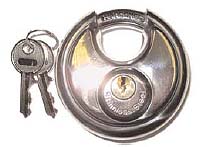
Discus style padlocks - have no angular corners, so are often used with cycle security chains and cables, as well as being a popular choice for securing doors on sheds and beach huts, etc. When used as a door lock, they will typically be used in conjunction with the special shrouded discus hasp and staple set, which offers extra protection to the padlock shackle.
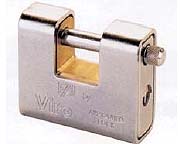
Shutter Locks / Anvil Locks - are typically used to secure the external (or internal) security roller shutters fitted to shop fronts. They are also popular for use with parking posts, motorcycle security chains, etc.
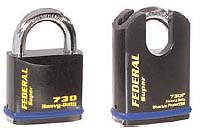
Conventional Style padlocks have a wide range of applications from low security applications like locking your toolbox, to high security uses such as securing factory gates or protecting motorcycles. They are typically available as; Open, Close, or Semi Enclosed Shackle types
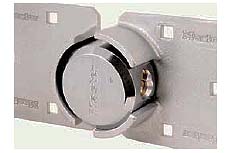
Shackleless type padlock (shown with special hasp)Shackleless Padlocks - this is a bit of a misnomer as the padlock does of course have a shackle, it’s just that it’s on the underside of the lock body and therefore unseen. This type of padlock can be round (like the one pictured) or rectangular, but typically, they are designed to be used with a special matching security hasp. Because of their design, these units are difficult to attack and over recent years, as well as being used on warehouse doors, etc, they have also become very popular for use on vans and other vehicles where they are used to secure opening double doors.
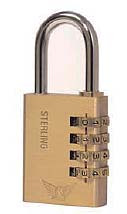
A "Close Shackle" padlock is one with built in shoulders, which are designed to minimise the amount of the shackle exposed, to a saw or bolt cropper attack. This type of padlock will normally have a higher security rating than an equivalent unit with a semi enclosed or open shackle, however subject to size and clearances, may not be practical for instance, to use where you need to secure 2 chain links together or require a padlock for use with a shrouded hasp, etc. To make them easier to use, many Close Shackle padlocks feature "removable shackles" which are fully released from the body of the padlock when it's unlocked.
An "Open Shackle" padlock will typically be easier to use where the shackle needs to pass through 2 chain-links (i.e, a chain securing two opening gates together), etc. As more of the shackle is exposed however, this makes it potentially easier to attack with a saw or bolt croppers.
A "Semi Enclosed Shackle" padlock is something of a compromise, but will often offer more flexibility in use than a Close Shackle padlock and improved security over an Open Shackle model.
Тематики
EN
Русско-английский словарь нормативно-технической терминологии > навесной замок
См. также в других словарях:
Size of groups, organizations, and communities — Size (the number of people involved) is an important characteristic of the groups, organizations, and communities in which social behavior occurs. When only a few persons are interacting, adding just one more individual may make a big difference… … Wikipedia
Size-exclusion chromatography — Equipment for running size exclusion chromatography. The buffer is pumped through the column (right) by a computer controlled device Acronym SEC Classification Chromatography Analytes … Wikipedia
size — noun 1 how big or small sth is ADJECTIVE ▪ considerable, enormous, fair, good, great, impressive, large, massive, substantial, vast … Collocations dictionary
size — size1 W1S1 [saız] n ▬▬▬▬▬▬▬ 1¦(how big)¦ 2¦(very big)¦ 3¦(clothes/goods)¦ 4 large sized/medium sized/pocket size etc 5 do something to size 6 that s about the size of it 7¦(paste)¦ ▬▬▬▬▬▬▬ [Date: 1100 1200; : Old French; Origin: assise … Dictionary of contemporary English
size — size1 [ saız ] noun *** 1. ) count or uncount how large or small something is: Moscow s subway system is less than half the size of New York s. size of: an engine size of 2000 cc full size (=as large as something will ever be): The plants should… … Usage of the words and phrases in modern English
size — I UK [saɪz] / US noun Word forms size : singular size plural sizes *** 1) [countable/uncountable] how large or small something is size of: an engine size of 2000 cc Moscow s metro system is less than half the size of New York s. reduce/increase… … English dictionary
size*/*/*/ — [saɪz] noun I 1) [C/U] a measurement of how large or small something is balloons of all shapes and sizes[/ex] The president has promised to reduce the size of the army.[/ex] 2) [C] one of a series of standard measurements according to which goods … Dictionary for writing and speaking English
Brain size — is one aspect of animal anatomy and evolution. Both overall brain size and the size of substructures have been analysed, and the question of links between size and functioning particularly intelligence has often proved controversial. Brain size… … Wikipedia
Particle size distribution — The particle size distribution [Jillavenkatesa A, Dapkunas S J, Lin Sien Lum, Particle Size Characterization , NIST Special Publication 960 1, 2001] (PSD) of a powder, or granular material, or particles dispersed in fluid, is a list of values or… … Wikipedia
Asset Size — The total market value of the securities in a mutual fund s portfolio. Total assets or total net assets are also used to describe a fund s size. When it comes to the size of a mutual fund, bigger is not necessarily better. The key to a fund s… … Investment dictionary
Dinosaur size — For other large prehistoric reptiles, see Largest prehistoric organisms#Reptiles (Reptilia). Size has been one of the most interesting aspects of dinosaur science to the general public. This article lists the largest and smallest dinosaurs from… … Wikipedia
