

-
21 компрессор
mкомпрессор с электродвигателем
—FRA groupe f moteur-compresseurDEU Motorverdichtersatz mITA gruppo m motore compressorePLN zespół m sprężarkowyRUS компрессор m с электродвигателемсм. поз. 2539 на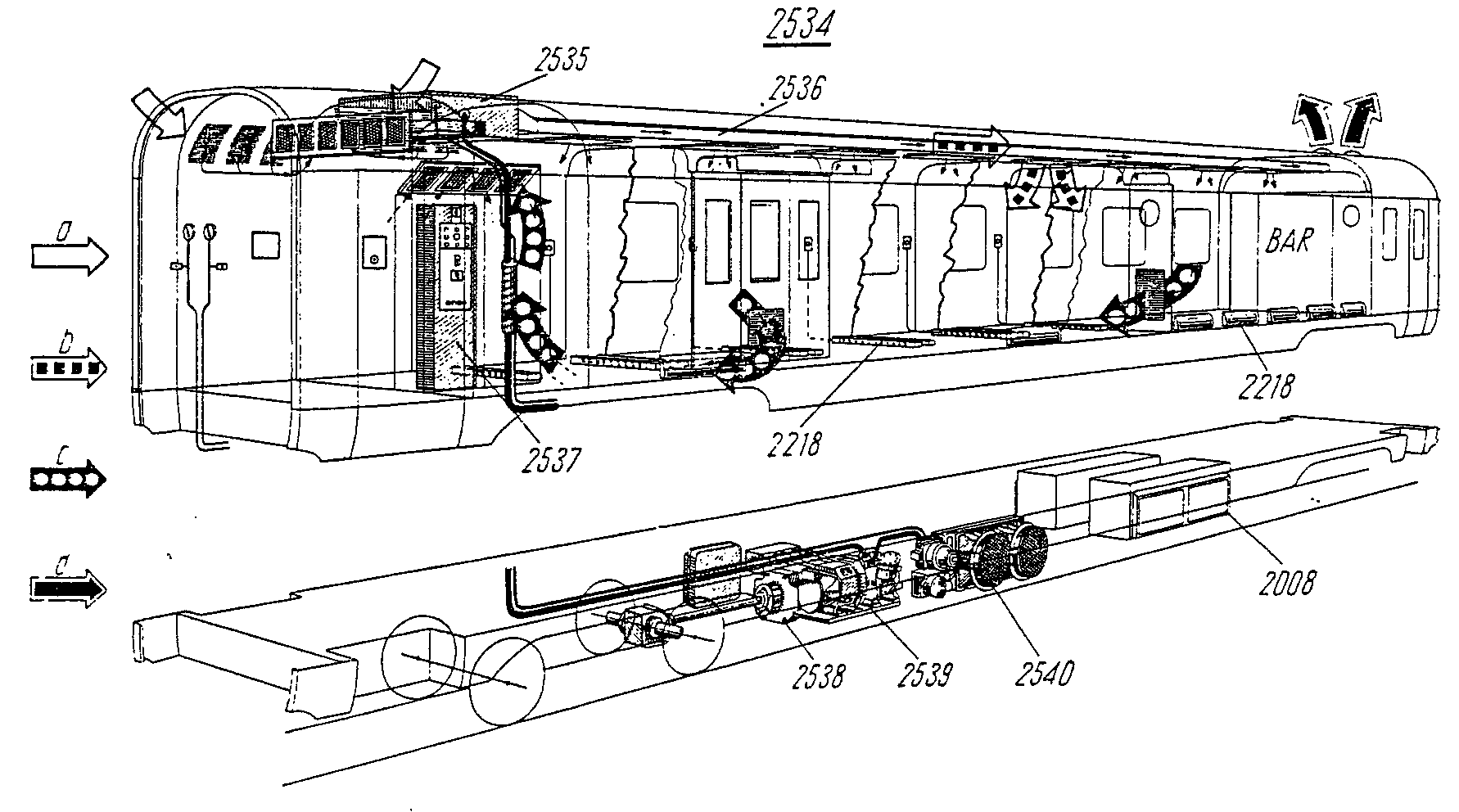 —FRA compresseur m du circuit frigorifiqueDEU Verdichter m für KältemittelITA compressore m del circuito frigoriferoPLN sprężarka f chłodzarkiRUS компрессор m системы охлаждениясм. поз. 2551 на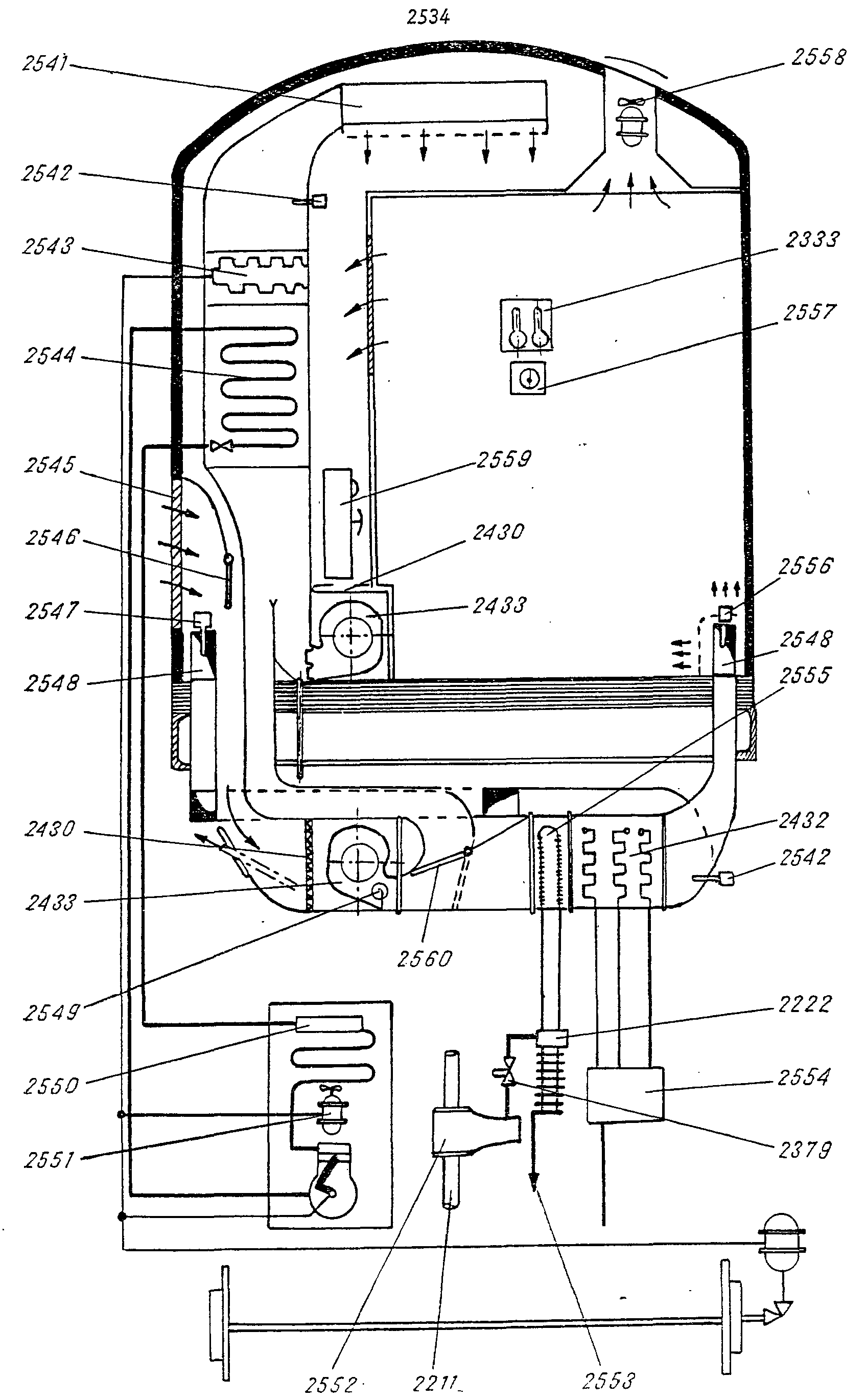
-
22 конденсатор
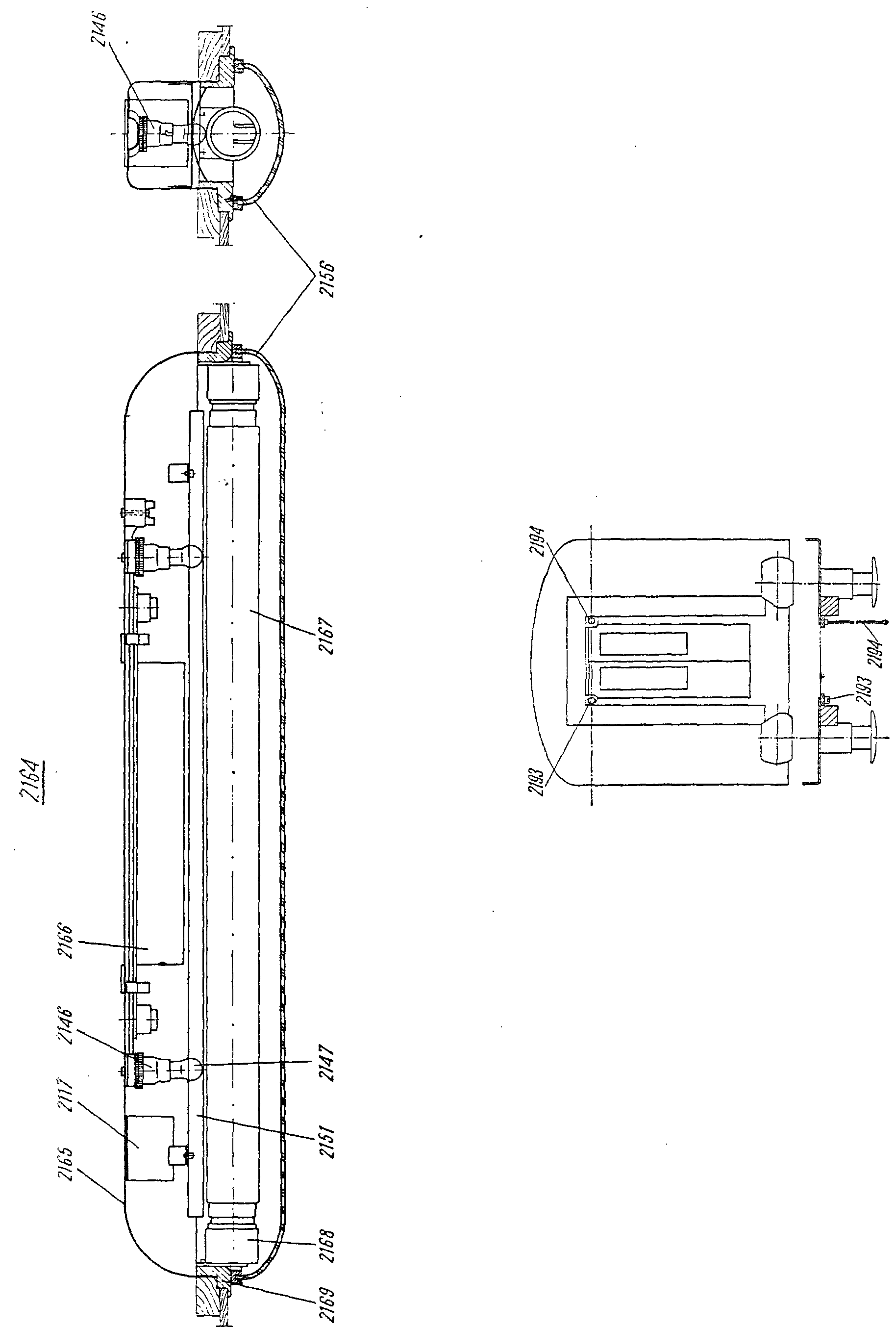
mFRA condensateur mDEU Kondensator mENG condenserITA condensatore mPLN kondensator mRUS конденсатор mсм. поз. 2117 на, ,
,  FRA condenseur inDEU Verdichter mENG condenserITA condensatore mPLN skraplacz mRUS конденсатор mсм. поз. 2540 на
конденсатор системы охлаждения
—FRA condenseur m du circuit frigorifiqueDEU Verflüssiger m für Kältemittel nITA condensatore m del circuito frigoriferoPLN skraplacz m chłodzarkiRUS конденсатор m системы охлаждениясм. поз. 2550 на -
23 автономный кондиционер воздуха
автономный кондиционер воздуха
Кондиционер воздуха со встроенным источником холода.
Примечание. Автономные кондиционеры воздуха бывают с воздушным, водяным или испарительным охлаждением конденсатора.
[ ГОСТ 22270-76]
кондиционер автономный
Кондиционер воздуха со встроенным источником холода или тепла
[Терминологический словарь по строительству на 12 языках (ВНИИИС Госстроя СССР)]EN
packaged air conditioner
self-contained unit
complete air-conditioning unit including refrigeration compressor, cooling coils, fans, filter, automatic controls, etc. assembled into one casing.
Compare packaged terminal air-conditioning system (ptac) under air-conditioning system.
[ASHRAE Terminology of Heating, Ventilating, Air Conditioning, and Refrigeration]Параллельные тексты EN-RU
The refrigeration circuit is responsible for up to 40% of the annual energy consumption of a typical packaged air conditioning unit.
[Lennox]Более 40 % годового потребления электроэнергии в традиционных автономных кондиционерах воздуха приходится на холодильный контур.
[Перевод Интент]For a packaged air conditioner, 90% of the CO2 emissions are indirect emissions caused by the energy consumption.
[Lennox]У автономных кондиционеров 90 % выбросов CO2 являются непрямыми и обусловлены потреблением электроэнергии.
[Перевод Интент]
Тематики
Синонимы
EN
DE
FR
Русско-немецкий словарь нормативно-технической терминологии > автономный кондиционер воздуха
-
24 агрегат охладительно-вентиляционный
агрегат охладительно-вентиляционный
Агрегат для охлаждения и подачи в помещение наружного или рециркуляционного воздуха, состоящий из воздухоохлаждающего аппарата и вентилятора
[Терминологический словарь по строительству на 12 языках (ВНИИИС Госстроя СССР)]EN
DE
FR
Русско-немецкий словарь нормативно-технической терминологии > агрегат охладительно-вентиляционный
-
25 агрегат охладительно-отопительный
агрегат охладительно-отопительный
Агрегат для охлаждения или подогрева наружного воздуха в системе вентиляции, состоящий из вентилятора и теплообменника, который работает в различных тепловых режимах в зависимости от температуры наружного воздуха
[Терминологический словарь по строительству на 12 языках (ВНИИИС Госстроя СССР)]EN
DE
FR
Русско-немецкий словарь нормативно-технической терминологии > агрегат охладительно-отопительный
-
26 бесшумная технология
бесшумная технология
—
[ http://www.eionet.europa.eu/gemet/alphabetic?langcode=en]EN
noise-free technology
Sound is radiated both as air-borne and as structure-borne; most sources produce both, thus various noise attenuation principles must be employed. Measures include: the replacement of components with quieter parts and material; the enclosure of particularly noisy components; the selection of quieter types of fan; the replacement of noisy compressed-air nozzles with quieter types; the choice of quieter transmission and cooling systems. (Source: GILP96a)
[http://www.eionet.europa.eu/gemet/alphabetic?langcode=en]Тематики
EN
DE
FR
Русско-немецкий словарь нормативно-технической терминологии > бесшумная технология
-
27 бумага для фильтрования смазочно-охлаждающих жидкостей
бумага для фильтрования смазочно-охлаждающих жидкостей
Фильтровальная тонкая влагопрочная, длинноволокнистая бумага для фильтров тонкой и грубой очистки жидкостей.
[ ГОСТ 17586-80]Тематики
EN
DE
Русско-немецкий словарь нормативно-технической терминологии > бумага для фильтрования смазочно-охлаждающих жидкостей
-
28 вода для промышленного использования
вода для промышленного использования
—
[ http://www.eionet.europa.eu/gemet/alphabetic?langcode=en]EN
water for industrial use
Water used by industries for purposes such as fabrication, processing, washing and cooling, which is obtained from a public supply or through self-supplied sources. (Source: WWC)
[http://www.eionet.europa.eu/gemet/alphabetic?langcode=en]Тематики
EN
DE
FR
Русско-немецкий словарь нормативно-технической терминологии > вода для промышленного использования
-
29 городская система теплоснабжения
городская система теплоснабжения
—
[ http://www.eionet.europa.eu/gemet/alphabetic?langcode=en]EN
municipal heating network
System of heating all houses in a urban district from a central source (as from hot springs in Iceland or by cooling water from a power station). (Source: PHC)
[http://www.eionet.europa.eu/gemet/alphabetic?langcode=en]Тематики
EN
DE
FR
Русско-немецкий словарь нормативно-технической терминологии > городская система теплоснабжения
-
30 градирня
градирня
Сооружение для испарительного охлаждения воды атмосферным воздухом в системах оборотного водоснабжения промышленных предприятий и в устройствах кондиционирования воздуха
[Терминологический словарь по строительству на 12 языках (ВНИИИС Госстроя СССР)]
градирня
Гидротехническое сооружение для интенсивного охлаждения воды атмосферным воздухом в системе водоснабжения ТЭС, АЭС, предприятий.
[СО 34.21.308-2005]Тематики
EN
DE
FR
Русско-немецкий словарь нормативно-технической терминологии > градирня
-
31 градирня башенная
градирня башенная
Градирня в виде башни, в которой создаётся естественная тяга воздуха снизу вверх, навстречу потоку охлаждаемой воды
[Терминологический словарь по строительству на 12 языках (ВНИИИС Госстроя СССР)]Тематики
EN
DE
FR
Русско-немецкий словарь нормативно-технической терминологии > градирня башенная
-
32 градирня вентиляторная
градирня вентиляторная
Башенная градирня, в которой тяга воздуха, охлаждающего воду, создаётся вентиляторами
[Терминологический словарь по строительству на 12 языках (ВНИИИС Госстроя СССР)]Тематики
EN
DE
FR
Русско-немецкий словарь нормативно-технической терминологии > градирня вентиляторная
-
33 движение воздуха
движение воздуха
—
[ http://www.eionet.europa.eu/gemet/alphabetic?langcode=en]EN
air movement
Air movements within the Earth's atmospheric circulation; also called planetary winds. Two main components are recognized: first, the latitudinal meridional component due to the Coriolis force (a deflecting motion or force discussed by G.G. de Coriolis in 1835. The rotation of the Earth causes a body moving across its surface to be deflected to the right in the N hemisphere and to the left in the S hemisphere); and secondly, the longitudinal component and the vertical movement, resulting largely from varying pressure distributions due to differential heating and cooling of the Earth's surface. (Source: WHIT)
[http://www.eionet.europa.eu/gemet/alphabetic?langcode=en]Тематики
EN
DE
FR
Русско-немецкий словарь нормативно-технической терминологии > движение воздуха
-
34 длительный допустимый ток
- Strombelastbarkeit, f
- Dauerstrombelastbarkeit, f
(длительный) допустимый ток
Максимальное значение электрического тока, который может протекать длительно по проводнику, устройству или аппарату при определенных условиях без превышения определенного значения их температуры в установившемся режиме
[ ГОСТ Р МЭК 60050-826-2009]
Этот ток обозначают IZ
[ ГОСТ Р 50571. 1-2009 ( МЭК 60364-1: 2005)]EN
(continuous) current-carrying capacity
ampacity (US)
maximum value of electric current which can be carried continuously by a conductor, a device or an apparatus, under specified conditions without its steady-state temperature exceeding a specified value
[IEV number 826-11-13]
ampacity
The current in amperes that a conductor can carry continuously under the conditions of use without exceeding its temperature rating.
[National Electrical Cod]FR
courant (permanent) admissible, m
valeur maximale du courant électrique qui peut parcourir en permanence, un conducteur, un dispositif ou un appareil, sans que sa température de régime permanent, dans des conditions données, soit supérieure à la valeur spécifiée
[IEV number 826-11-13]Ampacity, the term is defined as the maximum amount of current a cable can carry before sustaining immediate or progressive deterioration. Also described as current rating or current-carrying capacity, is the RMS electric current which a device can continuously carry while remaining within its temperature rating. The ampacity of a cable depends on:
- its insulation temperature rating;
- conductor electrical properties for current;
- frequency, in the case of alternating currents;
- ability to dissipate heat, which depends on cable geometry and its surroundings;
- ambient temperature.
Electric wires have some resistance, and electric current flowing through them causes voltage drop and power dissipation, which heats the cable. Copper or aluminum can conduct a large amount of current before melting, but long before the conductors melt, their insulation would be damaged by the heat.
The ampacity for a power cable is thus based on physical and electrical properties of the material & construction of the conductor and of its insulation, ambient temperature, and environmental conditions adjacent to the cable. Having a large overall surface area may dissipate heat well if the environment can absorb the heat.
In a long run of cable, different conditions govern, and installation regulations normally specify that the most severe condition along the run governs the cable's rating. Cables run in wet or oily locations may carry a lower temperature rating than in a dry installation. Derating is necessary for multiple circuits in close proximity. When multiple cables are near, each contributes heat to the others and diminishes the amount of cooling air that can flow past the individual cables. The overall ampacity of the insulated conductors in a bundle of more than 3 must be derated, whether in a raceway or cable. Usually the de-rating factor is tabulated in a nation's wiring regulations.
Depending on the type of insulating material, common maximum allowable temperatures at the surface of the conductor are 60, 75 and 90 degrees Celsius, often with an ambient air temperature of 30°C. In the U.S., 105°C is allowed with ambient of 40°C, for larger power cables, especially those operating at more than 2 kV. Likewise, specific insulations are rated 150, 200 or 250°C.
The allowed current in cables generally needs to be decreased (derated) when the cable is covered with fireproofing material.
For example, the United States National Electric Code, Table 310-16, specifies that up to three 8 AWG copper wires having a common insulating material (THWN) in a raceway, cable, or direct burial has an ampacity of 50 A when the ambient air is 30°C, the conductor surface temperature allowed to be 75°C. A single insulated conductor in air has 70 A rating.
Ampacity rating is normally for continuous current, and short periods of overcurrent occur without harm in most cabling systems. The acceptable magnitude and duration of overcurrent is a more complex topic than ampacity.
When designing an electrical system, one will normally need to know the current rating for the following:- Wires
- Printed Circuit Board traces, where included
- Fuses
- Circuit breakers
- All or nearly all components used
Some devices are limited by power rating, and when this power rating occurs below their current limit, it is not necessary to know the current limit to design a system. A common example of this is lightbulb holders.
[http://en.wikipedia.org/wiki/Ampacity]
Тематики
- электротехника, основные понятия
Синонимы
EN
DE
- Dauerstrombelastbarkeit, f
- Strombelastbarkeit, f
FR
- courant admissible, m
- courant permanent admissible, m
Русско-немецкий словарь нормативно-технической терминологии > длительный допустимый ток
-
35 обдувка
обдувка
Воздушное охлаждение кладки печи
[Терминологический словарь по строительству на 12 языках (ВНИИИС Госстроя СССР)]Тематики
- отопление, горяч. водоснабж. в целом
EN
DE
FR
Русско-немецкий словарь нормативно-технической терминологии > обдувка
-
36 отработанное тепло
отработанное тепло
—
[ http://www.eionet.europa.eu/gemet/alphabetic?langcode=en]EN
waste heat
Heat derived from the cooling process of electric power generating plants and which can cause thermal pollution of water courses, promoting algal bloom. (Source: MGH)
[http://www.eionet.europa.eu/gemet/alphabetic?langcode=en]Тематики
EN
DE
FR
Русско-немецкий словарь нормативно-технической терминологии > отработанное тепло
-
37 охлаждающий агент
охлаждающий агент
—
[ http://www.eionet.europa.eu/gemet/alphabetic?langcode=en]EN
refrigerant
A substance that by undergoing a change in phase (liquid to gas, gas to liquid) releases or absorbs a large latent heat in relation to its volume, and thus effects a considerable cooling effect. (Source: MGH)
[http://www.eionet.europa.eu/gemet/alphabetic?langcode=en]Тематики
EN
DE
FR
Русско-немецкий словарь нормативно-технической терминологии > охлаждающий агент
-
38 повышение температуры
повышение температуры
-
[IEV number 151-16-26]EN
temperature rise
difference between the temperature of the part under consideration and a reference temperature
NOTE – The reference temperature may be for example the ambient air temperature or the temperature of a cooling fluid.
[IEV number 151-16-26]FR
échauffement, m
différence entre la température de la partie considérée et une température de référence
NOTE – La température de référence peut être par exemple la température de l'air ambiant ou celle d’un fluide de refroidissement.
[IEV number 151-16-26]EN
DE
FR
Русско-немецкий словарь нормативно-технической терминологии > повышение температуры
-
39 приток воды
приток воды
—
[ http://www.eionet.europa.eu/gemet/alphabetic?langcode=en]EN
inflow
1) Water other than wastewater that enters a sewer system (including sewer service connections) from sources such as, but not limited to, roof leaders, cellars drains, yard drains, area drains, drains from springs and swampy areas, manhole covers, cross connections between storm sewers and sanitary sewers, catch basins, cooling towers, storm waters, surface runoff, street wash waters, or drainage. Inflow does not include, and is distinguished from, infiltration. 2) Action of flowing in; an inflow of effluent into a river. (Source: JJK / PHC)
[http://www.eionet.europa.eu/gemet/alphabetic?langcode=en]Тематики
EN
DE
FR
Русско-немецкий словарь нормативно-технической терминологии > приток воды
-
40 свая холодная
свая холодная
Полая свая, через полость которой осуществляется охлаждение вечномёрзлых грунтов в зимнее время
[Терминологический словарь по строительству на 12 языках (ВНИИИС Госстроя СССР)]Тематики
EN
- «cooling» pile
- «cool» pile
DE
FR
- pieu refroidis-seur
- pieu «froid»
Русско-немецкий словарь нормативно-технической терминологии > свая холодная
См. также в других словарях:
Cooling — is the transfer of thermal energy via thermal radiation, heat conduction or convection. It may also refer to: Contents 1 Techniques 2 Devices 3 Other 4 Places … Wikipedia
Cooling — Cool ing, p. a. Adapted to cool and refresh; allaying heat. The cooling brook. Goldsmith. [1913 Webster] {Cooling card}, something that dashes hopes. [Obs.] {Cooling time} (Law), such a lapse of time as ought, taking all the circumstances of the… … The Collaborative International Dictionary of English
Cooling — steht für: Cooling (Kent), Dorf und Gemeinde in der englischen Grafschaft Kent Leonard Frank Cooling (1903–1977), britischer Geowissenschaftler Diese Seite ist eine Begriffsklärung zur Unterscheidung mehrerer mit demselben Wort be … Deutsch Wikipedia
cooling — cooling; hy·dro·cooling; … English syllables
cooling — See charge air cooling fan cooling flushing the cooling system intercooling thermosyphon cooling … Dictionary of automotive terms
Cooling — This unusual and interesting name is of Anglo Saxon origin, and has two possible interpretations, both related to the Old English pre 7th Century personal name Cul(a) or Ceola , a short form of various compound names with the first element ceol … Surnames reference
Cooling — Conditioning of room air for human comfort by a refrigeration unit (such as an air conditioner or heat pump) or by circulating chilled water through a central cooling or district cooling system. Use of fans or blowers by themselves, without… … Energy terms
cooling — noun 1. the process of becoming cooler; a falling temperature (Freq. 6) • Syn: ↑chilling, ↑temperature reduction • Derivationally related forms: ↑chill (for: ↑chilling), ↑ … Useful english dictionary
cooling — aušimas statusas T sritis fizika atitikmenys: angl. cooling; cooling down vok. Abkühlen, n; Erkalten, n rus. остывание, n pranc. refroidissement, m … Fizikos terminų žodynas
Cooling — Cool Cool, v. t. [imp. & p. p. {Cooled}; p. pr. & vb. n. {Cooling}.] 1. To make cool or cold; to reduce the temperature of; as, ice cools water. [1913 Webster] Send Lazarus, that he may dip the tip of his finger in water, and cool my tongue. Luke … The Collaborative International Dictionary of English
cooling — adj. Cooling is used with these nouns: ↑breeze, ↑fan, ↑rack, ↑tower … Collocations dictionary
