

-
1 система с компенсированной нейтралью
система с компенсированной нейтралью
Система, в которой по крайней мере одна нейтральная точка заземлена через устройство, имеющее индуктивность, предназначенную для компенсации емкостных токов в случае единичного замыкания линейного (фазного) проводника на землю.
[ ГОСТ Р МЭК 60050-195-2005]EN
resonant earthed neutral system
system in which at least one neutral point is earthed through a device having an inductance designed to compensate approximately for the line-to-earth capacitances in case of a single-line-to-earth fault
[IEV number 195-04-09]FR
réseau à neutre compensé (par bobine d'extinction)
réseau dont au moins un point neutre est mis à la terre par l’intermédiaire d’un dispositif présentant une inductance conçue pour compenser approximativement les capacités ligne/terre en cas de défaut monophasé à la terre
[IEV number 195-04-09]Тематики
EN
- arc-suppression-coil-earthed neutral system
- arc-suppression-coil-grounded neutral system (US)
- resonant earthed neutral system
- resonant grounded neutral system (US)
DE
FR
Русско-немецкий словарь нормативно-технической терминологии > система с компенсированной нейтралью
-
2 резервная система электрического питания
- Ersatzstromversorgungsanlage, f
резервная система электрического питания
Система электрического питания, предназначенная для поддержания функционирования электрической установки или ее частей, или части в случае перерыва нормального питания, но не в целях безопасности
[ ГОСТ Р МЭК 60050-826-2009]
Системы резервного питания необходимы, например, для того,
чтобы избежать прерывания непрерывных производственных
процессов или обработки данных
[ ГОСТ Р 50571. 1-2009 ( МЭК 60364-1: 2005)]EN
standby electric supply system
supply system intended to maintain, for reasons other than safety, the functioning of an electrical installation or parts or a part thereof, in case of interruption of the normal supply
[IEV number 826-10-07]FR
système d'alimentation électrique de remplacement, m
système d'alimentation prévu pour maintenir, pour des raisons autres que la sécurité, le fonctionnement d'une installation électrique ou de parties de celle-ci, en cas d'interruption de l'alimentation normale
[IEV number 826-10-07]Тематики
Синонимы
EN
DE
- Ersatzstromversorgungsanlage, f
FR
- système d'alimentation électrique de remplacement, m
Русско-немецкий словарь нормативно-технической терминологии > резервная система электрического питания
-
3 пуск переключением со звезды на треугольник
пуск переключением со звезды на треугольник
-EN
star-delta starting
the process of starting a three-phase motor by connecting it to the supply with the primary winding initially connected in star, then reconnected in delta for the running condition
[IEV number 411-52-16]FR
démarrage étoile-triangle
mode de démarrage d'un moteur triphasé à tension réduite, consistant à relier à la source à tension constante les enroulements statoriques, d'abord en couplage étoile, puis à passer au couplage triangle pour le fonctionnement normal
[IEV number 411-52-16]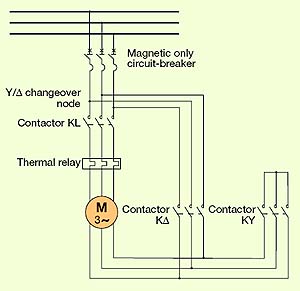
Magnetic only circuit-breaker - Автоматический выключатель с электромагнитным расцепителем
Y/Δ changeover node - Узел переключения со звезды на треугольник
Contactor KL - Контактор KL
Thermal relay - Тепловое реле
Contactor KΔ - Контактор KΔ
Contactor KY- Контактор KY
Параллельные тексты EN-RU Star-delta Y/Δ starting
Star-delta starting is the best known system and perhaps the commonest starting system at reduced voltage; it is used to start the motor reducing the mechanical stresses and limiting the current values during starting; on the other hand, it makes available a reduced inrush torque.This system can be used for motors with terminal box with 6 terminals and double supply voltage.
It is particularly suitable for no-load starting or with low and constant load torque or lightly increasing load torque, such as in the case of fans or low power centrifugal pumps.
Making reference to the diagram of Figure 6, the starting modality foresees the initial phase with star-connection of the windings to be realized through the closing of the circuit-breaker, of the line contactor KL and of the star contactor KY.
After a suitable predetermined period of time, the opening of the contactor KY and the closing of KΔ allow switching to delta-connection, which is also the configuration of normal running position.
[ABB]Пуск переключением со звезды на треугольник
Пуск переключением со звезды на треугольник является самым известным способом и, возможно, самой распространенной схемой пуска на пониженном напряжении. С одной стороны, этот способ используется для снижения механических нагрузок и ограничения пускового тока, а с другой - обеспечивает уменьшение пускового момента.Такая возможность может быть реализована в двигателях с шестью зажимами в выводной коробке, что позволяет питать его от двух напряжений.
Особенно этот способ подходит для ненагруженного пуска и пуска с низким постоянным или немного увеличивающимся вращающим моментом, например, для пуска вентиляторов или маломощных центробежных насосов.
Схема пуска переключением со звезды на треугольник представлена на рисунке 6. В начальный момент пуска обмотки статора соединяют звездой путем замыкания контактов автоматического выключателя, линейного контактора KL и контактора KY со схемой "звезда".
По истечении заданного времени контакты контактора KY размыкаются и замыкаются контакты контактора КΔ со схемой треугольник.
В результате выполняется переключение обмоток статора со схемы «звезда» на схему «треугольник».
Обе схемы соединения обмоток являются схемами нормального рабочего режима.
[Перевод Интент]Тематики
Обобщающие термины
EN
- star-delta starting
- Y/Δ starting
DE
FR
Русско-немецкий словарь нормативно-технической терминологии > пуск переключением со звезды на треугольник
-
4 размерность физической величины
- Größendimension, f
- Dimension, f
- Dimension einer Grösse
- Dimension einer GroBe
размерность физической величины
размерность величины
Выражение в форме степенного одночлена, составленного из произведений символов основных физических величин в различных степенях и отражающее связь данной физической величины с физическими величинами, принятыми в данной системе величин за основные с коэффициентом пропорциональности, равным 1.
Примечания
1. Степени символов основных величин, входящих в одночлен, в зависимости от связи рассматриваемой физической величины с основными, могут быть целыми, дробными, положительными и отрицательными. Понятие размерность распространяется и на основные величины. Размерность основной величины в отношении самой себя равна единице, т.е. формула размерности основной величины совпадает с ее символом.
2. В соответствии с международным стандартом ИСО 31/0, размерность величин следует обозначать знаком dim [2]. В системе величин LMT размерность величины.x будет: dim х = LlMmTt, где L, М, Т - символы, величин, принятых за основные (соответственно длины, массы, времени).
[РМГ 29-99]EN
dimension of a quantity
quantity dimension
dimension
expression of the dependence of a quantity on the base quantities of a system of quantities as a product of powers of factors corresponding to the base quantities, omitting any numerical factor
NOTE 1 – A power of a factor is the factor raised to an exponent. Each factor is the dimension of a base quantity.
NOTE 2 – The conventional symbolic representation of the dimension of a base quantity is a single upper case letter in roman (upright) sans-serif type. The conventional symbolic representation of the dimension of a derived quantity is the product of powers of the dimensions of the base quantities according to the definition of the derived quantity. The dimension of a quantity Q is denoted by dim Q.
NOTE 3 – In deriving the dimension of a quantity, no account is taken of its scalar, vector or tensor character.
NOTE 4 – In a given system of quantities, – quantities of the same kind have the same dimension, – quantities of different dimensions are always of different kinds, and – quantities having the same dimension are not necessarily of the same kind. For example, in the ISQ, pressure and energy density (volumic energy) have the same dimension L–1MT–2. See also note 5.
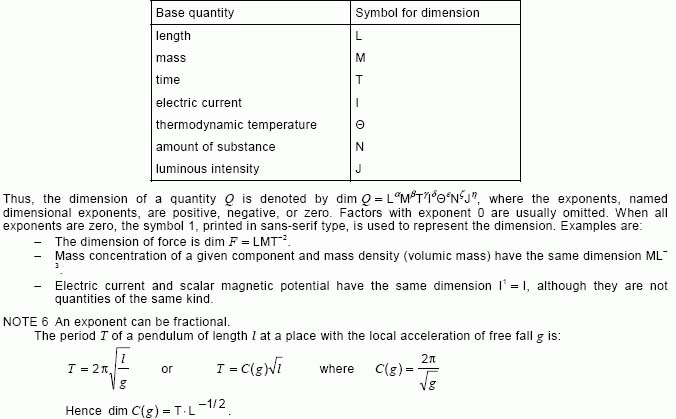
NOTE 5 – In the International System of Quantities (ISQ), the symbols representing the dimensions of the base quantities are:
[IEV number 112-01-11]FR
dimension, f
dimension d'une grandeur, f
expression de la dépendance d’une grandeur par rapport aux grandeurs de base d'un système de grandeurs sous la forme d'un produit de puissances de facteurs correspondant aux grandeurs de base, en omettant tout facteur numérique
NOTE 1 – Une puissance d'un facteur est le facteur muni d'un exposant. Chaque facteur exprime la dimension d'une grandeur de base.
NOTE 2 – Par convention, la représentation symbolique de la dimension d'une grandeur de base est une lettre majuscule unique en caractère romain (droit) sans empattement. Par convention, la représentation symbolique de la dimension d'une grandeur dérivée est le produit de puissances des dimensions des grandeurs de base conformément à la définition de la grandeur dérivée. La dimension de la grandeur Q est notée dim Q.
NOTE 3 – Pour établir la dimension d'une grandeur, on ne tient pas compte du caractère scalaire, vectoriel ou tensoriel.
NOTE 4 – Dans un système de grandeurs donné, – les grandeurs de même nature ont la même dimension, – des grandeurs de dimensions différentes sont toujours de nature différente, – des grandeurs ayant la même dimension ne sont pas nécessairement de même nature. Par exemple, dans l'ISQ, la pression et l'énergie volumique ont la même dimension L–1MT–2. Voir aussi la note 5.
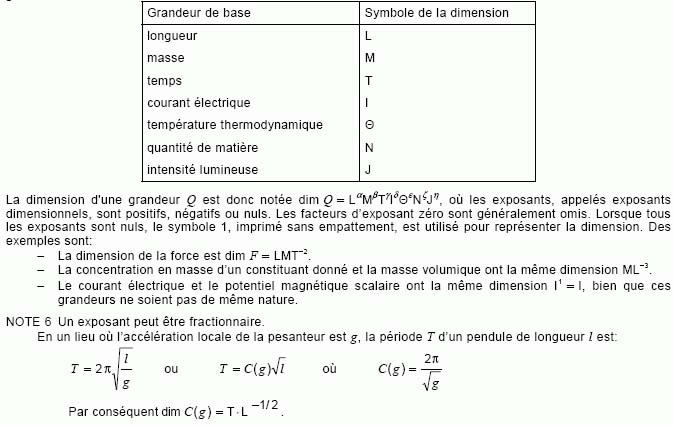
NOTE 5 – Dans le Système international de grandeurs (ISQ), les symboles représentant les dimensions des grandeurs de base sont:
[IEV number 112-01-11]Тематики
- метрология, основные понятия
Синонимы
EN
DE
- Dimension einer Grösse
- Dimension, f
- Größendimension, f
FR
- dimension d'une grandeur, f
- dimension, f
2.9. Размерность физической величины
Размерность величины Нрк. Формула размерности
D. Dimension einer GroBe
E. Dimensions of a quantity
F. Dimension d’une grandeur
Выражение, отражающее связь величины с основными величинами системы, в котором коэффициент пропорциональности принят равным 1.
Примечания:
1. Размерность величины представляет собой произведение основных величин, возведенных в соответствующие степени.
2. Размерность производной величины отражает, во сколько раз изменяется ее размер при изменении размеров основных величин, например, если размерность величины х равна LaM^Tv и длина изменяется от / до /', масса — от m до т' и время — от t до то новый размер величины будет больше прежнего в (/'//)а
(/'//)v раз.
Источник: ГОСТ 16263-70: Государственная система обеспечения единства измерений. Метрология. Термины и определения оригинал документа
Русско-немецкий словарь нормативно-технической терминологии > размерность физической величины
-
5 длительный допустимый ток
- Strombelastbarkeit, f
- Dauerstrombelastbarkeit, f
(длительный) допустимый ток
Максимальное значение электрического тока, который может протекать длительно по проводнику, устройству или аппарату при определенных условиях без превышения определенного значения их температуры в установившемся режиме
[ ГОСТ Р МЭК 60050-826-2009]
Этот ток обозначают IZ
[ ГОСТ Р 50571. 1-2009 ( МЭК 60364-1: 2005)]EN
(continuous) current-carrying capacity
ampacity (US)
maximum value of electric current which can be carried continuously by a conductor, a device or an apparatus, under specified conditions without its steady-state temperature exceeding a specified value
[IEV number 826-11-13]
ampacity
The current in amperes that a conductor can carry continuously under the conditions of use without exceeding its temperature rating.
[National Electrical Cod]FR
courant (permanent) admissible, m
valeur maximale du courant électrique qui peut parcourir en permanence, un conducteur, un dispositif ou un appareil, sans que sa température de régime permanent, dans des conditions données, soit supérieure à la valeur spécifiée
[IEV number 826-11-13]Ampacity, the term is defined as the maximum amount of current a cable can carry before sustaining immediate or progressive deterioration. Also described as current rating or current-carrying capacity, is the RMS electric current which a device can continuously carry while remaining within its temperature rating. The ampacity of a cable depends on:
- its insulation temperature rating;
- conductor electrical properties for current;
- frequency, in the case of alternating currents;
- ability to dissipate heat, which depends on cable geometry and its surroundings;
- ambient temperature.
Electric wires have some resistance, and electric current flowing through them causes voltage drop and power dissipation, which heats the cable. Copper or aluminum can conduct a large amount of current before melting, but long before the conductors melt, their insulation would be damaged by the heat.
The ampacity for a power cable is thus based on physical and electrical properties of the material & construction of the conductor and of its insulation, ambient temperature, and environmental conditions adjacent to the cable. Having a large overall surface area may dissipate heat well if the environment can absorb the heat.
In a long run of cable, different conditions govern, and installation regulations normally specify that the most severe condition along the run governs the cable's rating. Cables run in wet or oily locations may carry a lower temperature rating than in a dry installation. Derating is necessary for multiple circuits in close proximity. When multiple cables are near, each contributes heat to the others and diminishes the amount of cooling air that can flow past the individual cables. The overall ampacity of the insulated conductors in a bundle of more than 3 must be derated, whether in a raceway or cable. Usually the de-rating factor is tabulated in a nation's wiring regulations.
Depending on the type of insulating material, common maximum allowable temperatures at the surface of the conductor are 60, 75 and 90 degrees Celsius, often with an ambient air temperature of 30°C. In the U.S., 105°C is allowed with ambient of 40°C, for larger power cables, especially those operating at more than 2 kV. Likewise, specific insulations are rated 150, 200 or 250°C.
The allowed current in cables generally needs to be decreased (derated) when the cable is covered with fireproofing material.
For example, the United States National Electric Code, Table 310-16, specifies that up to three 8 AWG copper wires having a common insulating material (THWN) in a raceway, cable, or direct burial has an ampacity of 50 A when the ambient air is 30°C, the conductor surface temperature allowed to be 75°C. A single insulated conductor in air has 70 A rating.
Ampacity rating is normally for continuous current, and short periods of overcurrent occur without harm in most cabling systems. The acceptable magnitude and duration of overcurrent is a more complex topic than ampacity.
When designing an electrical system, one will normally need to know the current rating for the following:- Wires
- Printed Circuit Board traces, where included
- Fuses
- Circuit breakers
- All or nearly all components used
Some devices are limited by power rating, and when this power rating occurs below their current limit, it is not necessary to know the current limit to design a system. A common example of this is lightbulb holders.
[http://en.wikipedia.org/wiki/Ampacity]
Тематики
- электротехника, основные понятия
Синонимы
EN
DE
- Dauerstrombelastbarkeit, f
- Strombelastbarkeit, f
FR
- courant admissible, m
- courant permanent admissible, m
Русско-немецкий словарь нормативно-технической терминологии > длительный допустимый ток
-
6 провал напряжения
провал напряжения
Внезапное значительное снижение напряжения в системе электроснабжения с последующим его восстановлением.
[ ГОСТ 23875-88]
провал напряжения
Внезапное понижение напряжения в точке электрической сети ниже 0,9 Uном, за которым следует восстановление напряжения до первоначального или близкого к нему уровня через промежуток времени от десяти миллисекунд до нескольких десятков секунд.
[ ГОСТ 13109-97]
провал напряжения
Динамическое изменение напряжения в сети электропитания в виде снижения напряжения за нижний допустимый предел
[ ГОСТ 19542-93]
провал напряжения
Временное уменьшение напряжения в конкретной точке электрической системы ниже порогового значения.
Примечание — Прерывание напряжения является особым случаем провала напряжения. Отличие прерывания напряжения от провала напряжения может быть установлено последующей обработкой результатов измерений.
[ ГОСТ Р 51317.4.30-2008 (МЭК 61000-4-30:2008)]EN
voltage dip
a sudden reduction of the voltage at a point in an electrical system followed by voltage recovery after a short period of time from a few cycles to a few seconds
Source: 604-01-25
[IEV number 161-08-10]
voltage dip
temporary reduction of the voltage magnitude at a point in the electrical system below a threshold
NOTE 1 Interruptions are a special case of a voltage dip. Post-processing may be used to distinguish between voltage dips and interruptions.
NOTE 2 A voltage dip is also referred to as sag. The two terms are considered interchangeable; however, this standard will only use the term voltage dip
[IEC 61000-4-30, ed. 2.0 (2008-10)]FR
creux de tension
baisse brutale de la tension en un point d'un réseau d'énergie électrique, suivie d'un rétablissement de la tension après un court laps de temps de quelques périodes à quelques secondes
Source: 604-01-25
[IEV number 161-08-10]
creux de tension
baisse temporaire de l’amplitude de la tension en un point du réseau d’énergie électrique en dessous d’un seuil donné
NOTE 1 Les interruptions sont un cas particulier des creux de tension. Les traitements ultérieurs permettent de faire la distinction entre creux de tension et interruption.
NOTE 2 La Note 2 s'applique uniquement à la version anglaise.
[IEC 61000-4-30, ed. 2.0 (2008-10)]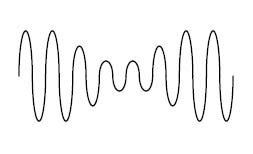
Провал напряженияНедопустимые, нерекомендуемые
Примечание(1)- Мнение автора карточкиТематики
Обобщающие термины
EN
DE
FR
Смотри также
D. Spannungseinbruch
E. Voltage dip
F. Greux de tension
Внезапное значительное снижение напряжения в системе электроснабжения с последующим его восстановлением
Источник: ГОСТ 23875-88: Качество электрической энергии. Термины и определения оригинал документа
Русско-немецкий словарь нормативно-технической терминологии > провал напряжения
7 автоматическая разгрузка
- Lastabwurfschutz, m
автоматическая разгрузка
Защита, предназначенная для снижения нагрузки системы в случае возникновения анормального режима, например, при понижении частоты.
[Разработка типовых структурных схем микропроцессорных устройств РЗА на объектах ОАО "ФКС ЕЭС". Пояснительная записка. Новосибирск 2006 г.]EN
load-shedding protection
protection intended to decrease the system load in the case of an abnormal condition such as a frequency reduction
[IEV ref 448-14-36]FR
protection de délestage
protection destinée à réduire la charge du réseau en cas de situation anormale telle qu'une baisse de fréquence
[IEV ref 448-14-36]Тематики
EN
DE
- Lastabwurfschutz, m
FR
Русско-немецкий словарь нормативно-технической терминологии > автоматическая разгрузка
8 защита от повреждения выключателя
- Schalterversagerschutz, m
Защита, предназначенная для устранения повреждения в энергосистеме путем вызова к действию другого выключателя (других выключателей) в случае отказа соответствующего выключателя
[Разработка типовых структурных схем микропроцессорных устройств РЗА на объектах ОАО "ФКС ЕЭС". Пояснительная записка. Новосибирск 2006 г.]
УРОВ
—
[В.А.Семенов. Англо-русский словарь по релейной защите]EN
circuit-breaker failure protection
breaker failure protection (US)
a protection which is designed to clear a system fault by initiating tripping of other circuit-breaker(s) in the case of failure to trip of the appropriate circuit-breaker
[IEV ref 448-11-18]FR
protection contre la défaillance d'un disjoncteur
protection destinée à éliminer un défaut dans le réseau, en commandant le déclenchement d'un autre ou d'autres disjoncteurs, en cas de non-déclenchement du disjoncteur approprié par suite d'une défaillance
[IEV ref 448-11-18]Тематики
Синонимы
EN
DE
- Schalterversagerschutz, m
FR
Русско-немецкий словарь нормативно-технической терминологии > защита от повреждения выключателя
9 проходной изолятор
проходной изолятор
Изолятор, предназначенный для провода токоведущих элементов через стенку, имеющую другой электрический потенциал.
[ ГОСТ 27744-88]
проходной изолятор
-
[IEV number 151-15-40]EN
(insulating) bushing
insulator forming a passage for a conductor through a non-insulating partition
[IEV number 151-15-40]
bushing
A bushing is a cyclindrical insulating component, usually made of ceramic, that houses a conductor. It enables a conductor to pass through a grounded enclosure, such as a transformer tank (the physical shell of a transformer), a wall or other physical barrier, to connect electrical installations. In the case of a transformer, bushings protect the conductors that connect a transformer’s core to the power system it serves through channels in the transformer’s housing.
[ABB. Glossary of technical terms. 2010]FR
isolateur de traversée, m
traversée, f
isolateur permettant le passage d'un conducteur à travers une paroi non isolante
[IEV number 151-15-40]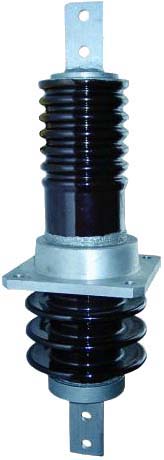
Проходной изоляторПараллельные тексты EN-RU
The circuit breaker is connected via bushings to the rest of the switchgear at the flanges provided.
[Siemens]С другими частями распределительного устройства силовой выключатель соединяется через проходные изоляторы, закрепленные в его фланцах.
[Перевод Интент]Тематики
Классификация
>>>Обобщающие термины
EN
DE
FR
- isolateur de traversée, m
- traversée
Русско-немецкий словарь нормативно-технической терминологии > проходной изолятор
См. также в других словарях:
Case management — is an area of practice within several healthcare professions. Most case managers are nurses or social workers.The term case management is also used to refer to dispute resolution systems which provide court or tribunal officials with closer… … Wikipedia
Case system — (Law) The system of teaching law in which the instruction is primarily a historical and inductive study of leading or selected cases, with or without the use of textbooks for reference and collateral reading. [Webster 1913 Suppl.] || … The Collaborative International Dictionary of English
case method — noun Etymology: case (I) 1. : case system 2. : a method of instruction used especially in colleges and universities that presents for observation and analysis actual recorded or current instances of the problem under study and often calls upon… … Useful english dictionary
Case Western Reserve University — Motto Thinking Beyond the Possible Established WRU: 1826 CIT: 1880 CWRU: 1967 Type … Wikipedia
Case-based reasoning — (CBR), broadly construed, is the process of solving new problems based on the solutions of similar past problems. An auto mechanic who fixes an engine by recalling another car that exhibited similar symptoms is using case based reasoning. A… … Wikipedia
Case modding — Case modification (commonly referred to as case modding where an individual project is referred to as a case mod) is the modification of a computer chassis (often just referred to as the case), or a video game console chassis. Modifying a… … Wikipedia
case system — n. A method of teaching law by having law students read and analyze cases. The Essential Law Dictionary. Sphinx Publishing, An imprint of Sourcebooks, Inc. Amy Hackney Blackwell. 2008. case system The method of studyi … Law dictionary
System — (from Latin systēma , in turn from Greek polytonic|σύστημα systēma) is a set of interacting or interdependent entities, real or abstract, forming an integrated whole. The concept of an integrated whole can also be stated in terms of a system… … Wikipedia
Case Closed: The Phantom of Baker Street — Directed by Kanetsugu Kodama Produced by Masahito Yoshioka (Tokyo Movie Shinsha) Michihiko Suwa (Yomi … Wikipedia
Case-Sensitivität — Case sensitivity (engl. case = Fach, abgeleitet von den Fächern (type cases), in denen Drucker die verschiedenen Drucklettern aufbewahrten, sensitivity = Abhängigkeit) bezeichnet in der elektronischen Datenverarbeitung zwei grundsätzlich… … Deutsch Wikipedia
Case-sensitiv — Case sensitivity (engl. case = Fach, abgeleitet von den Fächern (type cases), in denen Drucker die verschiedenen Drucklettern aufbewahrten, sensitivity = Abhängigkeit) bezeichnet in der elektronischen Datenverarbeitung zwei grundsätzlich… … Deutsch Wikipedia
Перевод: с русского на немецкий
с немецкого на русский- С немецкого на:
- Русский
- С русского на:
- Все языки
- Английский
- Немецкий
- Французский
- Эстонский
system case

18+
© Академик, 2000-2026
- Обратная связь: Техподдержка, Реклама на сайте
Экспорт словарей на сайты, сделанные на PHP, Joomla, Drupal, WordPress, MODx.