

-
1 Dauerstrombelastbarkeit, f
(длительный) допустимый ток
Максимальное значение электрического тока, который может протекать длительно по проводнику, устройству или аппарату при определенных условиях без превышения определенного значения их температуры в установившемся режиме
[ ГОСТ Р МЭК 60050-826-2009]
Этот ток обозначают IZ
[ ГОСТ Р 50571. 1-2009 ( МЭК 60364-1: 2005)]EN
(continuous) current-carrying capacity
ampacity (US)
maximum value of electric current which can be carried continuously by a conductor, a device or an apparatus, under specified conditions without its steady-state temperature exceeding a specified value
[IEV number 826-11-13]
ampacity
The current in amperes that a conductor can carry continuously under the conditions of use without exceeding its temperature rating.
[National Electrical Cod]FR
courant (permanent) admissible, m
valeur maximale du courant électrique qui peut parcourir en permanence, un conducteur, un dispositif ou un appareil, sans que sa température de régime permanent, dans des conditions données, soit supérieure à la valeur spécifiée
[IEV number 826-11-13]Ampacity, the term is defined as the maximum amount of current a cable can carry before sustaining immediate or progressive deterioration. Also described as current rating or current-carrying capacity, is the RMS electric current which a device can continuously carry while remaining within its temperature rating. The ampacity of a cable depends on:
- its insulation temperature rating;
- conductor electrical properties for current;
- frequency, in the case of alternating currents;
- ability to dissipate heat, which depends on cable geometry and its surroundings;
- ambient temperature.
Electric wires have some resistance, and electric current flowing through them causes voltage drop and power dissipation, which heats the cable. Copper or aluminum can conduct a large amount of current before melting, but long before the conductors melt, their insulation would be damaged by the heat.
The ampacity for a power cable is thus based on physical and electrical properties of the material & construction of the conductor and of its insulation, ambient temperature, and environmental conditions adjacent to the cable. Having a large overall surface area may dissipate heat well if the environment can absorb the heat.
In a long run of cable, different conditions govern, and installation regulations normally specify that the most severe condition along the run governs the cable's rating. Cables run in wet or oily locations may carry a lower temperature rating than in a dry installation. Derating is necessary for multiple circuits in close proximity. When multiple cables are near, each contributes heat to the others and diminishes the amount of cooling air that can flow past the individual cables. The overall ampacity of the insulated conductors in a bundle of more than 3 must be derated, whether in a raceway or cable. Usually the de-rating factor is tabulated in a nation's wiring regulations.
Depending on the type of insulating material, common maximum allowable temperatures at the surface of the conductor are 60, 75 and 90 degrees Celsius, often with an ambient air temperature of 30°C. In the U.S., 105°C is allowed with ambient of 40°C, for larger power cables, especially those operating at more than 2 kV. Likewise, specific insulations are rated 150, 200 or 250°C.
The allowed current in cables generally needs to be decreased (derated) when the cable is covered with fireproofing material.
For example, the United States National Electric Code, Table 310-16, specifies that up to three 8 AWG copper wires having a common insulating material (THWN) in a raceway, cable, or direct burial has an ampacity of 50 A when the ambient air is 30°C, the conductor surface temperature allowed to be 75°C. A single insulated conductor in air has 70 A rating.
Ampacity rating is normally for continuous current, and short periods of overcurrent occur without harm in most cabling systems. The acceptable magnitude and duration of overcurrent is a more complex topic than ampacity.
When designing an electrical system, one will normally need to know the current rating for the following:- Wires
- Printed Circuit Board traces, where included
- Fuses
- Circuit breakers
- All or nearly all components used
Some devices are limited by power rating, and when this power rating occurs below their current limit, it is not necessary to know the current limit to design a system. A common example of this is lightbulb holders.
[http://en.wikipedia.org/wiki/Ampacity]
Тематики
- электротехника, основные понятия
Синонимы
EN
DE
- Dauerstrombelastbarkeit, f
- Strombelastbarkeit, f
FR
- courant admissible, m
- courant permanent admissible, m
Немецко-русский словарь нормативно-технической терминологии > Dauerstrombelastbarkeit, f
-
2 Strombelastbarkeit, f
(длительный) допустимый ток
Максимальное значение электрического тока, который может протекать длительно по проводнику, устройству или аппарату при определенных условиях без превышения определенного значения их температуры в установившемся режиме
[ ГОСТ Р МЭК 60050-826-2009]
Этот ток обозначают IZ
[ ГОСТ Р 50571. 1-2009 ( МЭК 60364-1: 2005)]EN
(continuous) current-carrying capacity
ampacity (US)
maximum value of electric current which can be carried continuously by a conductor, a device or an apparatus, under specified conditions without its steady-state temperature exceeding a specified value
[IEV number 826-11-13]
ampacity
The current in amperes that a conductor can carry continuously under the conditions of use without exceeding its temperature rating.
[National Electrical Cod]FR
courant (permanent) admissible, m
valeur maximale du courant électrique qui peut parcourir en permanence, un conducteur, un dispositif ou un appareil, sans que sa température de régime permanent, dans des conditions données, soit supérieure à la valeur spécifiée
[IEV number 826-11-13]Ampacity, the term is defined as the maximum amount of current a cable can carry before sustaining immediate or progressive deterioration. Also described as current rating or current-carrying capacity, is the RMS electric current which a device can continuously carry while remaining within its temperature rating. The ampacity of a cable depends on:
- its insulation temperature rating;
- conductor electrical properties for current;
- frequency, in the case of alternating currents;
- ability to dissipate heat, which depends on cable geometry and its surroundings;
- ambient temperature.
Electric wires have some resistance, and electric current flowing through them causes voltage drop and power dissipation, which heats the cable. Copper or aluminum can conduct a large amount of current before melting, but long before the conductors melt, their insulation would be damaged by the heat.
The ampacity for a power cable is thus based on physical and electrical properties of the material & construction of the conductor and of its insulation, ambient temperature, and environmental conditions adjacent to the cable. Having a large overall surface area may dissipate heat well if the environment can absorb the heat.
In a long run of cable, different conditions govern, and installation regulations normally specify that the most severe condition along the run governs the cable's rating. Cables run in wet or oily locations may carry a lower temperature rating than in a dry installation. Derating is necessary for multiple circuits in close proximity. When multiple cables are near, each contributes heat to the others and diminishes the amount of cooling air that can flow past the individual cables. The overall ampacity of the insulated conductors in a bundle of more than 3 must be derated, whether in a raceway or cable. Usually the de-rating factor is tabulated in a nation's wiring regulations.
Depending on the type of insulating material, common maximum allowable temperatures at the surface of the conductor are 60, 75 and 90 degrees Celsius, often with an ambient air temperature of 30°C. In the U.S., 105°C is allowed with ambient of 40°C, for larger power cables, especially those operating at more than 2 kV. Likewise, specific insulations are rated 150, 200 or 250°C.
The allowed current in cables generally needs to be decreased (derated) when the cable is covered with fireproofing material.
For example, the United States National Electric Code, Table 310-16, specifies that up to three 8 AWG copper wires having a common insulating material (THWN) in a raceway, cable, or direct burial has an ampacity of 50 A when the ambient air is 30°C, the conductor surface temperature allowed to be 75°C. A single insulated conductor in air has 70 A rating.
Ampacity rating is normally for continuous current, and short periods of overcurrent occur without harm in most cabling systems. The acceptable magnitude and duration of overcurrent is a more complex topic than ampacity.
When designing an electrical system, one will normally need to know the current rating for the following:- Wires
- Printed Circuit Board traces, where included
- Fuses
- Circuit breakers
- All or nearly all components used
Some devices are limited by power rating, and when this power rating occurs below their current limit, it is not necessary to know the current limit to design a system. A common example of this is lightbulb holders.
[http://en.wikipedia.org/wiki/Ampacity]
Тематики
- электротехника, основные понятия
Синонимы
EN
DE
- Dauerstrombelastbarkeit, f
- Strombelastbarkeit, f
FR
- courant admissible, m
- courant permanent admissible, m
Немецко-русский словарь нормативно-технической терминологии > Strombelastbarkeit, f
-
3 kontrolliertes Jagdgebiet
регионы разрешенной охоты
—
[ http://www.eionet.europa.eu/gemet/alphabetic?langcode=en]EN
controlled hunting zone
An administered geographic area in which the pursuit, capture and killing of wild animals for food or sport, is allowed, often with certain restrictions or regulations. (Source: ISEP / RHW)
[http://www.eionet.europa.eu/gemet/alphabetic?langcode=en]Тематики
EN
DE
FR
Немецко-русский словарь нормативно-технической терминологии > kontrolliertes Jagdgebiet
-
4 Sporthafen
шлюпочная гавань
—
[ http://www.eionet.europa.eu/gemet/alphabetic?langcode=en]EN
marina
A small port that is used for pleasure rather than trade, often with hotels, restaurants and bars. (Source: CAMB)
[http://www.eionet.europa.eu/gemet/alphabetic?langcode=en]Тематики
EN
DE
FR
Немецко-русский словарь нормативно-технической терминологии > Sporthafen
-
5 Optimierung
оптимизация
Процесс отыскания варианта, соответствующего критерию оптимальности
[Терминологический словарь по строительству на 12 языках (ВНИИИС Госстроя СССР)]
оптимизация
1. Процесс нахождения экстремума функции, т.е. выбор наилучшего варианта из множества возможных, процесс выработки оптимальных решений; 2. Процесс приведения системы в наилучшее (оптимальное) состояние. Иначе говоря, первое определение трактует термин «О.» как факт выработки и принятия оптимального решения (в широком смысле этих слов); мы выясняем, какое состояние изучаемой системы будет наилучшим с точки зрения предъявляемых к ней требований (критерия оптимальности) и рассматриваем такое состояние как цель. В этом смысле применяется также термин «субоптимизация» в случаях, когда отыскивается оптимум по какому-либо одному критерию из нескольких в векторной задаче оптимизации (см. Оптимальность по Парето, Векторная оптимизация). Второе определение имеет в виду процесс выполнения этого решения: т.е. перевод системы от существующего к искомому оптимальному состоянию. В зависимости от вида используемых критериев оптимальности (целевых функций или функционалов) и ограничений модели (множества допустимых решений) различают скалярную О., векторную О., мно¬гокритериальную О., стохастическую О (см. Стохастическое программирование), гладкую и негладкую (см. Гладкая функция), дискретную и непрерывную (см. Дискретность, Непрерывность), выпуклую и вогнутую (см. Выпуклость, вогнутость) и др. Численные методы О., т.е. методы построения алгоритмов нахождения оп¬тимальных значений целевых функций и соответствующих точек области допустимых значений — развитой отдел современной вычислительной математики. См. Оптимальная задача.
[ http://slovar-lopatnikov.ru/]Параллельные тексты EN-RU из ABB Review. Перевод компании Интент
The quest for the optimumВопрос оптимизацииThroughout the history of industry, there has been one factor that has spurred on progress more than any other. That factor is productivity. From the invention of the first pump to advanced computer-based optimization methods, the key to the success of new ideas was that they permitted more to be achieved with less. This meant that consumers could, over time and measured in real terms, afford to buy more with less money. Luxuries restricted to a tiny minority not much more than a generation ago are now available to almost everybody in developed countries, with many developing countries rapidly catching up.На протяжении всей истории промышленности существует один фактор, подстегивающий ее развитие сильнее всего. Он называется «производительность». Начиная с изобретения первого насоса и заканчивая передовыми методами компьютерной оптимизации, успех новых идей зависел от того, позволяют ли они добиться большего результата меньшими усилиями. На языке потребителей это значит, что они всегда хотят купить больше, а заплатить меньше. Меньше чем поколение назад, многие предметы считались роскошью и были доступны лишь немногим. Сейчас в развитых странах, число которых быстро увеличивается, подобное может позволить себе почти каждый.With industry and consumers expecting the trend towards higher productivity to continue, engineering companies are faced with the challenge of identifying and realizing further optimization potential. The solution often lies in taking a step back and looking at the bigger picture. Rather than optimizing every step individually, many modern optimization techniques look at a process as a whole, and sometimes even beyond it. They can, for example, take into account factors such as the volatility of fuel quality and price, the performance of maintenance and service practices or even improved data tracking and handling. All this would not be possible without the advanced processing capability of modern computer and control systems, able to handle numerous variables over large domains, and so solve optimization problems that would otherwise remain intractable.На фоне общей заинтересованности в дальнейшем росте производительности, машиностроительные и проектировочные компании сталкиваются с необходимостью определения и реализации возможностей по оптимизации своей деятельности. Для того чтобы найти решение, часто нужно сделать шаг назад, поскольку большое видится на расстоянии. И поэтому вместо того, чтобы оптимизировать каждый этап производства по отдельности, многие современные решения охватывают процесс целиком, а иногда и выходят за его пределы. Например, они могут учитывать такие факторы, как изменение качества и цены топлива, результативность ремонта и обслуживания, и даже возможности по сбору и обработке данных. Все это невозможно без использования мощных современных компьютеров и систем управления, способных оперировать множеством переменных, связанных с крупномасштабными объектами, и решать проблемы оптимизации, которые другим способом решить нереально.Whether through a stunning example of how to improve the rolling of metal, or in a more general overview of progress in optimization algorithms, this edition of ABB Review brings you closer to the challenges and successes of real world computer-based optimization tasks. But it is not in optimization and solving alone that information technology is making a difference: Who would have thought 10 years ago, that a technician would today be able to diagnose equipment and advise on maintenance without even visiting the factory? ABB’s Remote Service makes this possible. In another article, ABB Review shows how the company is reducing paperwork while at the same time leveraging quality control through the computer-based tracking of production. And if you believed that so-called “Internet communities” were just about fun, you will be surprised to read how a spin-off of this idea is already leveraging production efficiency in real terms. Devices are able to form “social networks” and so facilitate maintenance.Рассказывая об ошеломляющем примере того, как был усовершенствован процесс прокатки металла, или давая общий обзор развития алгоритмов оптимизации, этот выпуск АББ Ревю знакомит вас с практическими задачами и достигнутыми успехами оптимизации на основе компьютерных технологий. Но информационные технологии способны не только оптимизировать процесс производства. Кто бы мог представить 10 лет назад, что сервисный специалист может диагностировать производственное оборудование и давать рекомендации по его обслуживанию, не выходя из офиса? Это стало возможно с пакетом Remote Service от АББ. В другой статье этого номера АББ Ревю рассказывается о том, как компания смогла уменьшить бумажный документооборот и одновременно повысить качество управления с помощью компьютерного контроля производства. Если вы считаете, что так называемые «интернет-сообщества» служат только для развлечения,то очень удивитесь, узнав, что на основе этой идеи можно реально повысить производительность. Формирование «социальной сети» из автоматов значительно облегчает их обслуживание.This edition of ABB Review also features several stories of service and consulting successes, demonstrating how ABB’s expertise has helped customers achieve higher levels of productivity. In a more fundamental look at the question of what reliability is really about, a thought-provoking analysis sets out to find the definition of that term that makes the greatest difference to overall production.В этом номере АББ Ревю есть несколько статей, рассказывающих об успешных решениях по организации дистанционного сервиса и консультирования. Из них видно, как опыт АББ помогает нашим заказчикам повысить производительность своих предприятий. Углубленные размышления о самой природе термина «надежность» приводят к парадоксальным выводам, способным в корне изменить представления об оптимизации производства.Robots have often been called “the extended arm of man.” They are continuously advancing productivity by meeting ever-tightening demands on precision and efficiency. This edition of ABB Review dedicates two articles to robots.Робот – это могучее «продолжение» человеческой руки. Применение роботов способствует постоянному повышению производительности, поскольку они отвечают самым строгим требованиям точности и эффективности. Две статьи в этом номере АББ Ревю посвящены роботам.Further technological breakthroughs discussed in this issue look at how ABB is keeping water clean or enabling gas to be shipped more efficiently.Говоря о других технологических достижениях, обсуждаемых на страницах журнала, следует упомянуть о том, как компания АББ обеспечивает чистоту воды, а также более эффективную перевозку сжиженного газа морским транспортом.The publication of this edition of ABB Review is timed to coincide with ABB Automation and Power World 2009, one of the company’s greatest customer events. Readers visiting this event will doubtlessly recognize many technologies and products that have been covered in this and recent editions of the journal. Among the new products ABB is launching at the event is a caliper permitting the flatness of paper to be measured optically. We are proud to carry a report on this product on the very day of its launch.Публикация этого номера АББ Ревю совпала по времени с крупнейшей конференцией для наших заказчиков «ABB Automation and Power World 2009». Читатели, посетившие ее, смогли воочию увидеть многие технологии и изделия, описанные в этом и предыдущих выпусках журнала. Среди новинок, представленных АББ на этой конференции, был датчик, позволяющий измерять толщину бумаги оптическим способом. Мы рады сообщить, что сегодня он готов к выпуску.Тематики
EN
DE
FR
Немецко-русский словарь нормативно-технической терминологии > Optimierung
6 energiebedingte Umweltbelastung
воздействие производства энергии на окружающую среду
—
[ http://www.eionet.europa.eu/gemet/alphabetic?langcode=en]EN
environmental impact of energy
Energy and environmental problems are closely related, since it is nearly impossible to produce, transport, or consume energy without significant environmental impact. The environmental problems directly related to energy production and consumption include air pollution, water pollution, thermal pollution, and solid waste disposal. The emission of air pollutants from fossil fuel combustion is the major cause of urban air pollution. Diverse water pollution problems are associated with energy usage. One major problem is oil spills. In all petroleum-handling operations, there is a finite probability of spilling oil either on the earth or in a body of water. Coal mining can also pollute water. Changes in groundwater flow produced by mining operations often bring otherwise unpolluted waters into contact with certain mineral materials which are leached from the soil and produce an acid mine drainage. Solid waste is also a by-product of some forms of energy usage. Coal mining requires the removal of large quantities of earth as well as coal. In general, environmental problems increase with energy use and this combined with the limited energy resource base is the crux of the energy crisis. An energy impact assessment should compare these costs with the benefits to be derived from energy use. (Source: RAU)
[http://www.eionet.europa.eu/gemet/alphabetic?langcode=en]Тематики
EN
DE
FR
Немецко-русский словарь нормативно-технической терминологии > energiebedingte Umweltbelastung
7 schwimmender Estrich
пол плавающий
Пол, отделённый от основания и стен амортизирующими прослойками или изолирующими устройствами для повышения звукоизоляции смежных помещений
[Терминологический словарь по строительству на 12 языках (ВНИИИС Госстроя СССР)]EN
floating floor
The upper layer of floor construction supported on battens, mountings or a resilient sheet membrane of damping material such as expanded polystyrene or mineral wool to provide acoustic isolation.
floating floor
A floating floor is a floor that does not need to be nailed or glued to the subfloor. The term floating floor refers to the installation method, but is often used synonymously with laminate flooring in a domestic context.
A sprung floor is a special type of floating floor designed to enhance sports or dance performance. In general though the term refers to a floor used to reduce noise or vibration.
A domestic floating floor might be constructed over a subfloor or even over an existing floor. It can consist of a glass fibre, felt or cork layer for sound insulation with neoprene pads holding up a laminate floor. There is a gap between the floating floor and the walls to decouple them and allow for expansion; this gap is covered with skirting boards or mouldings.
Floating floors as used in sound studios can be either just larger versions of the domestic variety, or much larger constructions with slabs of concrete to keep the resonance frequency down. The manufacture of integrated circuits uses massive floating floors with hundreds of tons in weight of concrete to avoid vibration affecting mask alignment.
Floating floors are one of the requirements for the THX high-fidelity sound reproduction standard for movie theaters, screening rooms, home theaters, computer speakers, gaming consoles, and car audio systems.
While floating floors add to the appeal of a home, they are not recommended for areas that may get wet, i.e. bathrooms and near exterior doors.
[http://en.wikipedia.org/wiki/Floating_floor]Тематики
EN
DE
FR
Немецко-русский словарь нормативно-технической терминологии > schwimmender Estrich
8 Anlauf mit direktem Einschalten
прямой пуск вращающегося электродвигателя
Пуск вращающегося электродвигателя путем непосредственного подключения его к питающей сети.
[ ГОСТ 27471-87]EN
direct-on-line starting
across-the-line starting (US)
the process of starting a motor by connecting it directly to the supply at rated voltage
[IEV number 411-52-15]FR
démarrage direct
mode de démarrage d'un moteur, consistant à lui appliquer directement sa pleine tension assignée
[IEV number 411-52-15]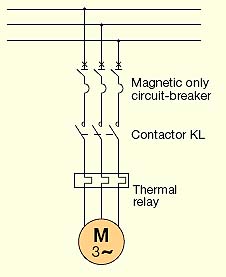
Рис. ABB
Схема прямого пуска электродвигателяMagnetic only circuit-breaker - Автоматический выключатель с электромагнитным расцепителем
Contactor KL - Контактор KL
Thermal relay - Тепловое реле
Параллельные тексты EN-RU
Direct-on-line starting
Direct-on-line starting, which is often abbreviated as DOL, is perhaps the most traditional system and consists in connecting the motor directly to the supply network, thus carrying out starting at full voltage.Direct-on-line starting represents the simplest and the most economical system to start a squirrel-cage asynchronous motor and it is the most used.
As represented in Figure 5, it provides the direct connection to the supply network and therefore starting is carried out at full voltage and with constant frequency, developing a high starting torque with very reduced acceleration times.
The typical applications are relevant to small power motors also with full load starting.
These advantages are linked to some problems such as, for example, the high inrush current, which - in the first instants - can reach values of about 10 to 12 times the rated current, then can decrease to about 6 to 8 times the rated current and can persist to reach the maximum torque speed.The effects of such currents can be identified with the high electro-dynamical stresses on the motor connection cables and could affect also the windings of the motor itself; besides, the high inrush torques can cause violent accelerations which stress the transmission components (belts and joints) generating distribution problems with a reduction in the mechanical life of these elements.
Finally, also the possible electrical problems due to voltage drops on the supply line of the motor or of the connected equipment must be taken into consideration.
[ABB]Прямой пуск
Прямой пуск, который по-английски часто сокращенно обозначают как DOL, является, пожалуй наиболее распространенным способом пуска. Он заключается в непосредственном (т. е. прямом) подключении двигателя к питающей сети. Это означает, что пуск двигателя осуществляется при полном напряжении.Схема прямого пуска является наиболее простым, экономичным и чаще всего применяемым решением для электродвигателей с короткозамкнутым ротором.
Схема прямого подключения к сети представлена на рисунке 5. Пуск осуществляется при полном напряжении и постоянной частоте сети. Электродвигатель развивает высокий пусковой момент при коротком времени разгона.
Типичные области применения – маломощные электродвигатели, в том числе с пуском при полной нагрузке.
Однако, наряду с преимуществами имеются и определенные недостатки, например, бросок пускового тока, достигающий в первоначальный момент 10…12-кратного значения от номинального тока электродвигателя. Затем ток двигателя уменьшается примерно до 6…8-кратного значения номинального тока и будет держаться на этом уровне до тех пор, пока скорость двигателя не достигнет максимального значения.
Такое изменение тока оказывает значительное электродинамическое воздействие на кабель, подключенный к двигателю. Кроме того пусковой ток воздействует на обмотки двигателя. Высокий начальный пусковой момент может привести к значительному ускорению и следовательно к значительной нагрузке элементов привода (ремней, крепления узлов), что вызывает сокращение их срока службы.
И, наконец, следует принять во внимание возможное возникновение проблем, связанных с падением напряжения в линии питания двигателя и подключенного к этой линии оборудования.
[Перевод Интент]
Тематики
Синонимы
EN
- across-the-line starting (US)
- direct line starting
- direct operation of a motor
- direct starting
- direct-on-line starting
- DOL
- full voltage starter application
DE
FR
Немецко-русский словарь нормативно-технической терминологии > Anlauf mit direktem Einschalten
9 alkalischer Boden
щелочная почва
—
[ http://www.eionet.europa.eu/gemet/alphabetic?langcode=en]EN
alkali soil
Soil that contains sufficient exchangeable sodium to interfere with water penetration and crop growth, either with or without appreciable quantities of soluble salts. (Source: LANDY)
[http://www.eionet.europa.eu/gemet/alphabetic?langcode=en]Тематики
EN
DE
FR
щелочные земли
—
[ http://www.eionet.europa.eu/gemet/alphabetic?langcode=en]EN
alkali land
Any geomorphic area, often a level lake-like plain, with soil containing a high percentage of mineral salts, located especially in arid regions. (Source: MHD / RHW)
[http://www.eionet.europa.eu/gemet/alphabetic?langcode=en]Тематики
EN
DE
FR
Немецко-русский словарь нормативно-технической терминологии > alkalischer Boden
10 atmosphärische Inversion
атмосферная инверсия
—
[ http://www.eionet.europa.eu/gemet/alphabetic?langcode=en]EN
atmospheric inversion
A temperature inversion in the atmosphere in which the temperature, instead of falling, increases with height above the ground. With the colder and heavier air below, there is no tendency to form upward currents and turbulence is suppressed. Inversions are often formed in the late afternoon when the radiation emitted from the ground exceeds that received from the sinking sun. Inversions are also caused by katabatic winds, that is cold winds flowing down the hillside into a valley, and by anticyclones. In inversion layers, both vertical and horizontal diffusion is inhibited and pollutants become trapped, sometimes for long periods. Low-level discharges of pollutants are more readily trapped by inversions than high level dischargers, hence the case for high stacks. Furthermore, high level discharges into an inversion tend to remain at a high level because of the absence of vertical mixing. (Source: GILP96)
[http://www.eionet.europa.eu/gemet/alphabetic?langcode=en]Тематики
EN
DE
FR
Немецко-русский словарь нормативно-технической терминологии > atmosphärische Inversion
11 Schmetterling
бабочка
—
[ http://www.eionet.europa.eu/gemet/alphabetic?langcode=en]EN
butterfly
Any diurnal insect of the order Lepidoptera that has a slender body with clubbed antennae and typically rests with the wings (which are often brightly coloured) closed over the back. (Source: CED)
[http://www.eionet.europa.eu/gemet/alphabetic?langcode=en]Тематики
EN
DE
FR
Немецко-русский словарь нормативно-технической терминологии > Schmetterling
12 Allgemeinbildung
общее образование
—
[ http://www.eionet.europa.eu/gemet/alphabetic?langcode=en]EN
general education
Informal learning or formal instruction with broad application to human existence beyond the domain of any particular subject or discipline, often equated with liberal arts in the university setting and contrasted to courses required for a specific major or program. (Source: ISEP / COE)
[http://www.eionet.europa.eu/gemet/alphabetic?langcode=en]Тематики
EN
DE
FR
Немецко-русский словарь нормативно-технической терминологии > Allgemeinbildung
13 Höhle
пещера
—
[ http://www.eionet.europa.eu/gemet/alphabetic?langcode=en]EN
cave
1) An underground hollow with access from the ground surface or from the sea, often found in limestone areas and on rocky coastlines.
2) A natural cavity, chamber or recess which leads beneath the surface of the earth, generally in a horizontal or obliquely inclined direction. It may be in the form of a passage or a gallery, its shape depending in part on the joint pattern or structure of the rock and partly on the type of process involved in its excavation. Thus, caves worn by subterranean rivers may be different in character from, and of considerably greater extent than, a sea-cave eroded by marine waves.
3) A natural underground open space, generally with a connection to the surface and large enough for a person to enter. The most common type of cave is formed in a limestone by dissolution.
(Source: CED / WHIT / BJGEO)
[http://www.eionet.europa.eu/gemet/alphabetic?langcode=en]Тематики
EN
DE
FR
Немецко-русский словарь нормативно-технической терминологии > Höhle
14 abgestelltes Fahrzeug
брошенный автомобиль
—
[ http://www.eionet.europa.eu/gemet/alphabetic?langcode=en]EN
abandoned vehicle
A vehicle that has been discarded in the environment, urban or otherwise, often found wrecked, destroyed, damaged or with a major component part stolen or missing. (Source: ISEP / MDM)
[http://www.eionet.europa.eu/gemet/alphabetic?langcode=en]Тематики
EN
DE
FR
Немецко-русский словарь нормативно-технической терминологии > abgestelltes Fahrzeug
15 Erdgasförderung
добыча природного газа
—
[ http://www.eionet.europa.eu/gemet/alphabetic?langcode=en]EN
natural gas extraction
The tapping of natural gas from wells located under the sea and in general from underground sources often in association with petroleum deposits; it is used as a fuel, having largely replaced coal-gas for this purpose, and as a source of intermediates for organic synthesis. (Source: GRAHAWa / UVAROVa / GILP96a)
[http://www.eionet.europa.eu/gemet/alphabetic?langcode=en]Тематики
EN
DE
FR
Немецко-русский словарь нормативно-технической терминологии > Erdgasförderung
16 Tal
долина
—
[ http://www.eionet.europa.eu/gemet/alphabetic?langcode=en]EN
valley
Any low-lying land bordered by higher ground; especially an elongate, relatively large, gently sloping depression of the Earth's surface, commonly situated between two mountains or between ranges of hills or mountains, and often containing a stream with an outlet. It is usually developed by stream erosion, but may be formed by faulting. (Source: BJGEO)
[http://www.eionet.europa.eu/gemet/alphabetic?langcode=en]Тематики
EN
DE
FR
Немецко-русский словарь нормативно-технической терминологии > Tal
17 Einführung von Pflanzenarten
заселение видов растений
—
[ http://www.eionet.europa.eu/gemet/alphabetic?langcode=en]EN
introduction of plant species
Plants which have been translocated by human agency into lands or waters where they have not lived previously, at least during historic times. Such translocation of species always involves an element of risk if not of serious danger. Newly arrived species may be highly competitive with or otherwise adversely affect native species and communities. Some may become a nuisance through sheer overabundance. They may become liable to rapid genetic changes in their new environment. Many harmful introductions have been made by persons unqualified to anticipate the often complex ecological interaction which may ensue. On the other hand many plants introduced into modified or degraded environments may be more useful than native species in controlling erosion or in performing other positive functions. (Source: WPR)
[http://www.eionet.europa.eu/gemet/alphabetic?langcode=en]Тематики
EN
DE
FR
Немецко-русский словарь нормативно-технической терминологии > Einführung von Pflanzenarten
18 Stufen des Selektivschutzes mit relativer Selektivität, f, pl
зоны защиты с относительной селективностью
Области действия в энергосистеме измерительных органов защиты с относительной селективностью, обычно дистанционной.
Примечание - Защиты с относительной селективностью, обычно дистанционные, часто имеют две, три или даже более зон. Эти защиты обычно выполнены таким образом, что самая короткая зона соответствует полному сопротивлению, несколько меньшему, чем полное сопротивление защищаемого участка, и обычно предусматривает срабатывание без замедления. Зоны с уставками, соответствующими большей области действия, обычно, в целях обеспечения селективности, имеют выдержки времени.
[Разработка типовых структурных схем микропроцессорных устройств РЗА на объектах ОАО "ФКС ЕЭС". Пояснительная записка. Новосибирск 2006 г.]
зоны дистанционной защиты
Зона досягаемости (предел измерений) измерительных элементов дистанционной защиты в электроэнергетических системах
[Циглер Г. Цифровая дистанционная защита: принципы и применение. М.: Энергоиздат. 2005]EN
zones of non-unit protection
zones of protection (US)
the reaches of the measuring elements of non-unit protection, generally distance protection, in a power system
Note – These non-unit protections, generally distance protection, often have two, three or even more zones available. These are usually arranged such that the shortest zone corresponds to an impedance slightly smaller than the impedance of the protected section, and is normally instantaneous in operation. Zones with longer reach settings are normally time-delayed to obtain selectivity.
[IEV ref 448-14-02]FR
zones d'une protection à sélectivité relative de section
portées des éléments de mesure d'une protection à sélectivité relative de section, en général une protection de distance, dans un réseau d'énergie
Note – Ces protections à sélectivité relative de section, en général des protections de distance, comportent souvent deux ou trois zones ou même plus. Ces zones sont en général disposées de sorte que la plus courte zone corresponde à une impédance légèrement inférieure à celle de la section protégée et que le fonctionnement correspondant soit normalement instantané. Les zones à réglages de portée plus longs sont en général temporisées pour que la sélectivité soit assurée.
[IEV ref 448-14-02]Тематики
Синонимы
EN
DE
- Stufen des Selektivschutzes mit relativer Selektivität, f, pl
- Zonen des Selektivschutzes mit relativer Selektivität, f, pl
FR
Немецко-русский словарь нормативно-технической терминологии > Stufen des Selektivschutzes mit relativer Selektivität, f, pl
19 Zonen des Selektivschutzes mit relativer Selektivität, f, pl
зоны защиты с относительной селективностью
Области действия в энергосистеме измерительных органов защиты с относительной селективностью, обычно дистанционной.
Примечание - Защиты с относительной селективностью, обычно дистанционные, часто имеют две, три или даже более зон. Эти защиты обычно выполнены таким образом, что самая короткая зона соответствует полному сопротивлению, несколько меньшему, чем полное сопротивление защищаемого участка, и обычно предусматривает срабатывание без замедления. Зоны с уставками, соответствующими большей области действия, обычно, в целях обеспечения селективности, имеют выдержки времени.
[Разработка типовых структурных схем микропроцессорных устройств РЗА на объектах ОАО "ФКС ЕЭС". Пояснительная записка. Новосибирск 2006 г.]
зоны дистанционной защиты
Зона досягаемости (предел измерений) измерительных элементов дистанционной защиты в электроэнергетических системах
[Циглер Г. Цифровая дистанционная защита: принципы и применение. М.: Энергоиздат. 2005]EN
zones of non-unit protection
zones of protection (US)
the reaches of the measuring elements of non-unit protection, generally distance protection, in a power system
Note – These non-unit protections, generally distance protection, often have two, three or even more zones available. These are usually arranged such that the shortest zone corresponds to an impedance slightly smaller than the impedance of the protected section, and is normally instantaneous in operation. Zones with longer reach settings are normally time-delayed to obtain selectivity.
[IEV ref 448-14-02]FR
zones d'une protection à sélectivité relative de section
portées des éléments de mesure d'une protection à sélectivité relative de section, en général une protection de distance, dans un réseau d'énergie
Note – Ces protections à sélectivité relative de section, en général des protections de distance, comportent souvent deux ou trois zones ou même plus. Ces zones sont en général disposées de sorte que la plus courte zone corresponde à une impédance légèrement inférieure à celle de la section protégée et que le fonctionnement correspondant soit normalement instantané. Les zones à réglages de portée plus longs sont en général temporisées pour que la sélectivité soit assurée.
[IEV ref 448-14-02]Тематики
Синонимы
EN
DE
- Stufen des Selektivschutzes mit relativer Selektivität, f, pl
- Zonen des Selektivschutzes mit relativer Selektivität, f, pl
FR
Немецко-русский словарь нормативно-технической терминологии > Zonen des Selektivschutzes mit relativer Selektivität, f, pl
20 Leiter
классификационная цепь
цепь
Совокупность последовательных классов классификационной системы, в которой каждый класс, кроме первого, подчинен предыдущему классу.
[ГОСТ 7.74-96]Тематики
Синонимы
EN
DE
FR
проводник (1)
Вещество, основным электрическим свойством которого является электропроводность.
[ ГОСТ Р 52002-2003]
проводник (2)
Всё то, что используется (предназначается) для проведения электрического тока:
- провод;
- кабель;
- шина;
- шинопровод;
- жила провода (кабеля);
- проводник печатной платы.
[Интент]
проводник (2)
Проводящая часть, предназначенная для проведения электрического тока определенного значения.
[ ГОСТ Р МЭК 60050-195-2005]
проводник (2)
Проводящая часть, предназначенная для проведения электрического тока определённого значения.
Проводники представляют собой проводящие части, которые предназначены для проведения электрического тока в электрических цепях электрооборудования и электроустановки здания. Помимо качественной характеристики проводника, указывающей на его способность проводить электрический ток, каждый проводник имеет количественную характеристику, называемую допустимым длительным током. Протекание по проводнику сверхтока вызывает перегрев проводника, который может быть причиной пожара. Поэтому проводники в электроустановках зданий защищают от сверхтоков.
К проводникам, прежде всего, относят жилы проводов и кабелей, из которых выполнены стационарные электропроводки в электроустановке здания, жилы гибких проводов и кабелей, используемых для подключения переносного и передвижного электрооборудования к стационарным электропроводкам, различные шины, применяемые в низковольтных распределительных устройствах и в шинопроводах, а также другие проводящие части, выполняющие функции проводников.
В электроустановках зданий применяют проводники различного назначения. Для обеспечения электрооборудования электрической энергией в электрических цепях переменного тока используют фазные проводники, нейтральные проводники и PEN-проводники, а в электрических цепях постоянного тока – полюсные проводники, средние проводники и PEM-проводники. Защитные проводники, а также PEN-проводники, PEM-проводники и PEL-проводники применяют в электроустановках зданий для защиты от поражения электрическим током.
[ http://www.volt-m.ru/glossary/letter/%CF/view/49/]EN
conductor
element intended to carry electric current
NOTE 1 – The term "conductor" is often used for an element the length of which is large with respect to the cross-sectional dimensions, e.g. conductors of a line or of a cable.
NOTE 2 – The English term "conductor" and the French term "conducteur" have also the meaning of "conducting medium".
NOTE 3 – In French, the term "conducteur" is also used as an adjective corresponding to the English "conductive".
[IEV number 151-12-05]FR
conducteur, m
élément destiné à assurer le passage d'un courant électrique
NOTE 1 – Le terme "conducteur" est souvent utilisé pour un élément dont la longueur est grande par rapport aux dimensions de la section droite, par exemple les conducteurs d'une ligne ou d'un câble.
NOTE 2 – Le terme français "conducteur" et le terme anglais " conductor " ont aussi le sens de "milieu conducteur".
NOTE 3 – En français, le terme "conducteur" est aussi employé comme adjectif correspondant à l'anglais "conductive".
[IEV number 151-12-05]К зажиму допускается присоединение двух медных проводников сечением от 1,0 до 4,0 мм2.
Тематики
- электротехника, основные понятия
Действия
- обесточивать проводник
- определять сечение проводника
- отключать проводник
- отсоединять проводник
- присоединять проводник
- присоединять проводник накруткой
- проводник должен пропускать ток
- соединять проводники
EN
DE
FR
Немецко-русский словарь нормативно-технической терминологии > Leiter
Страницы- 1
- 2
См. также в других словарях:
gʷei̯-3 and gʷei̯ ǝ- : gʷ(i)i̯ē- : gʷ(i)i̯ō- : gʷī- frequent, often with -u- extended — gʷei̯ 3 and gʷei̯ ǝ : gʷ(i)i̯ē : gʷ(i)i̯ō : gʷī frequent, often with u extended English meaning: to live Deutsche Übersetzung: “leben” Material: A. from *gʷei̯ ō: O.Ind. jīvütu ḥ “life” (see under), gáya ḥ “house, courtyard,… … Proto-Indo-European etymological dictionary
be with someone often with negative — informal follow someone s meaning. → with … English new terms dictionary
have to one's name often with negative — in one s possession. → name … English new terms dictionary
in so many words often with negative — precisely in the way mentioned. → word … English new terms dictionary
often — oftenness, n. /aw feuhn, of euhn; awf teuhn, of /, adv. 1. many times; frequently: He visits his parents as often as he can. 2. in many cases. adj. 3. Archaic. frequent. [1300 50; ME oftin, var. before vowels of ofte OFT] Syn. 1, 2. repeatedly,… … Universalium
with — preposition 1》 accompanied by. ↘in the same direction as. 2》 possessing; having. 3》 indicating the instrument used to perform an action or the material used for a purpose. 4》 in opposition to. 5》 indicating the manner or attitude in which a… … English new terms dictionary
often — often, frequently, oft, oftentimes may be used with little or no distinction to mean again and again in more or less close succession. But often stresses the number of times a thing occurs, without regard to the interval of recurrence; frequently … New Dictionary of Synonyms
With You and Without You — was a book written by Ann M. Martin in 1986.Liza O Hara s family is abruptly confronted with the news that Mr. O Hara is dying from heart disease. After the initial shock the family unites to make his last months as enjoyable as possible… … Wikipedia
Often I Am Permitted to Return to a Meadow — is a poem written by Robert Duncan in 1960. The poem was published in his book The Opening of the Field. The narrator describes a meadow to which he is often permitted to return. This meadow seems to represent a place that is metaphysically,… … Wikipedia
with — [ wıð, wıθ ] preposition *** 1. ) together if one person or thing is with another or does something with them, they are together or they do it together: Hannah lives with her parents. chicken served with vegetables and mushrooms I ll be with you… … Usage of the words and phrases in modern English
Often — Of ten, a. Frequent; common; repeated. [R.] Thine often infirmities. 1 Tim. v. 23. [1913 Webster] And weary thee with often welcomes. Beau. & Fl. [1913 Webster] … The Collaborative International Dictionary of English
 18+© Академик, 2000-2026
- Обратная связь: Техподдержка, Реклама на сайте
Экспорт словарей на сайты, сделанные на PHP, Joomla, Drupal, WordPress, MODx.
Перевод: с немецкого на русский
с русского на немецкий- С русского на:
- Немецкий
- С немецкого на:
- Все языки
- Английский
- Русский