

-
1 variabler Term
Deutsch-Englisch Wörterbuch der Elektrotechnik und Elektronik > variabler Term
-
2 Geld
Geld n 1. BANK, BÖRSE buyer’s rate (Geldkurs, Börsenkurs); 2. FIN, GEN, WIWI (infrml) bread, (infrml) dough, (BE) (infrml) dosh, money, (AE) (infrml) wampum • am Geld BÖRSE at the money (Optionen) • aus dem Geld BÖRSE out of the money (Optionen) • etw. für sein Geld bekommen WIWI get good value for money • Geld abführen STEUER pay over, transfer • Geld anlegen GEN invest money, put money down • Geld auf Abruf BANK, FIN money at call • Geld auf eine Hypothek aufnehmen GEN raise money on a mortgage • Geld auf etw. aufnehmen GEN raise money on sth • Geld aufnehmen BANK borrow funds, borrow money • Geld ausgeben GEN spend • Geld großzügiger ausgeben FIN loosen one’s belt • Geld investieren FIN invest money, put money down • Geld leihen 1. FIN lend money; 2. BANK borrow money • Geld scheffeln GEN (infrml) rake it in • Geld sparen BANK save • Geld spielt keine Rolle GEN money is no object • Geld von jmdm. borgen GEN borrow money from sb • Geld von jmdm. leihen GEN borrow money from sb • Geld vorübergehend anlegen BÖRSE park money • Geld wie Heu haben GEN (infrml) have money to burn • im Geld BÖRSE in the money (Optionen) • im Geld schwimmen GEN (infrml) awash with cash • (richtig) Geld in die Hand nehmen GEN (infrml) (really) go to great expense • um Geld ersuchen GEN appeal for funds • zu Geld kommen GEN come into money* * *n 1. < Börse> buyer's rate; 2. <Finanz, Geschäft, Vw> bread infrml, dough infrml, dosh infrml (BE), money, wampum infrml (AE) ■ am Geld < Börse> Optionen at the money ■ aus dem Geld < Börse> out of the money (Optionen) ■ etw. für sein Geld bekommen <Vw> get good value for money ■ Geld abführen < Steuer> pay over, transfer ■ Geld anlegen < Geschäft> invest money, put money down ■ Geld auf Abruf <Bank, Finanz> money at call ■ Geld auf eine Hypothek aufnehmen < Geschäft> raise money on a mortgage ■ Geld auf etw. aufnehmen < Geschäft> raise money on sth ■ Geld aufnehmen < Bank> borrow funds, borrow money ■ Geld ausgeben < Geschäft> spend ■ Geld großzügiger ausgeben < Finanz> loosen one's belt ■ Geld investieren < Finanz> invest money, put money down ■ Geld leihen 1. < Finanz> lend money; 2. < Bank> borrow money ■ Geld scheffeln infrml < Geschäft> rake it in infrml ■ Geld sparen < Bank> save ■ Geld spielt keine Rolle < Geschäft> money is no object ■ Geld von jmdm. borgen < Geschäft> borrow money from sb ■ Geld von jmdm. leihen < Geschäft> borrow money from sb ■ Geld vorübergehend anlegen < Börse> park money ■ Geld wie Heu haben infrml < Geschäft> have money to burn infrml ■ im Geld < Börse> in the money (Optionen) ■ im Geld schwimmen infrml < Geschäft> awash with cash infrml ■ um Geld ersuchen < Geschäft> appeal for funds ■ zu Geld kommen infrml < Geschäft> come into money* * *Geld
money, furniture of one’s pocket (coll.), gold, dimes, scales (US), (Bargeld) cash, (Börse) buyers, bid, prices negotiated, (Hartgeld) coin, (Kleingeld) small change, (Papiergeld) paper money (currency, notes), (Wechselgeld) change;
• für Geld mercenarily;
• gegen bares Geld for cash;
• hinter dem Geld her on the make (pitch, sl.);
• in Geld ausgedrückt in cash terms;
• in gutem Geld in good money;
• keinen Pfennig Geld not a shot in the locker;
• knapp an Geld low in cash, short of money;
• nur mit wenig Geld versehen scant of money;
• mit Geld wohl versehen moneyed, flush of money;
• ohne Geld moneyless, out of funds, without means, hard up for money;
• ohne jedes Geld out of cash, penniless, broke (sl.);
• so gut wie bares Geld as good as (equal to) cash;
• viel Geld verschlingend money-guzzling;
• Gelder means, sums of money, funds, purse;
• abgenutztes Geld worn currency;
• angelegtes Geld money put up, funds (money) invested, investment;
• fest angelegtes Geld tied-up (locked-up, Br.) money, lockup (Br.);
• mit Kündigungsfrist angelegtes Geld term (time, US) deposit;
• langfristig angelegte Gelder long-term (funded) capital;
• nicht angelegtes Geld unemployed money;
• sicher angelegtes Geld money safely invested;
• auf einem Sparkonto angelegtes Geld money on deposit account;
• anvertrautes Geld consigned (trust) money, money held on trust, trust fund;
• aufgebrauchtes Geld spent money;
• aufgenommene Gelder borrowed funds, borrowings, debts, accounts payable (US);
• aufgewandte Gelder money employed;
• in den Ferien ausgegebenes Geld holiday expenses;
• ausgeliehenes Geld money lent;
• an Kunden ausgeliehene Gelder (Bilanz) advances against customers;
• ausgezahltes Geld cash disbursements;
• ausstehendes Geld money due, outstanding money, outstandings;
• ausstehende Gelder outstanding debts, outs, accounts receivable (US);
• bares Geld [spot] cash, present (dry, ready, cash, US) money, ready coin (cash), specie, money down (sl.);
• auf dem Transport (unterwegs) befindliches Geld bullion in transit, money in the post (Br.) (mail, US);
• befristete Gelder tied-up funds, lockup (Br.) time deposits (US);
• benötigte Gelder necessary funds;
• bereitliegendes Geld cash in hand;
• vom Parlament bewilligte Gelder money provided by Parliament (Br.);
• billiges Geld cheap (light, easy[-terms]) money;
• ein bisschen Geld a little money;
• brachliegendes Geld dead money, money paying no interest (lying idle);
• brachliegende Gelder idle funds;
• durchlaufende Gelder cash in transit;
• eigenes Geld own money;
• eingeforene Gelder blocked funds, frozen money;
• eingegangene Gelder [cash] receipts, takings;
• eingehende Gelder money pouring (coming) in, receipt of money, receipts, takings;
• eingesammeltes Geld purse;
• mittels Zwangsvollstreckung eingetriebenes Geld money made;
• eingezahltes Geld deposit;
• einlaufende Geld receipts;
• einzelnes Geld loose change (money);
• erspartes Geld money put aside;
• erspartes (erübrigtes) Geld savings, spare money;
• fakultatives Geld facultative money;
• täglich fälliges Geld money at (on) call, money at short notice (Br.), call (day-to-day) money (Br.), money on current account, sight (demand, US) deposit;
• falsches Geld counterfeit coin (money), bad (Br.) (bogus, base, Br.) money;
• festes Geld time loan (US) (money), deposit account (US), fixed (time) deposit (US);
• festgelegte (festliegende) Gelder tied-up funds, immobilized money, lockup (Br.), time deposits (US);
• flüssige Gelder available capital (funds), funds in hand, disposable funds, ready money, liquid funds (assets), cash, liquid resources, spare capital;
• fremde Gelder trust money, (Bankbilanz) funds from outside sources, third-party funds, deposit by customers;
• gangbares Geld current (good) money;
• mein ganzes Geld the whole of my money;
• gefälschtes Geld counterfeit coin (money), counterfeits, bad (base, Br.) money;
• gefundenes Geld windfall;
• gehortetes Geld inactive money;
• geliehenes Geld borrowed money;
• gepumptes Geld touch (sl.);
• aus dem Verkehr (Umlauf) gezogenes Geld money withdrawn from circulation;
• hartes Geld hard currency, coin[ed] money, hard (US) (solid) cash, specie;
• heißes Geld hot money, refugee capital;
• herausgegebenes Geld change, small coin;
• hinausgeworfenes Geld money down the drain, wasted money;
• hinterlegtes Geld trust money;
• gerichtlich hinterlegtes Geld cash under the control of the (money in) court;
• investiertes Geld capital invested;
• irreguläres Geld non-standard money;
• konvertierbares Geld convertible money;
• frei konvertierbares Geld hard money;
• täglich kündbares Geld money at call, call (day-to-day) money (Br.), demand deposits (US);
• kursierendes Geld current money;
• kurzfristig kündbare (kurzfristige) Gelder money on (at) short notice, demand deposits (US), short-term loans (US);
• langfristige Gelder time money (loan, deposit, US), call (long-term, US) money, street (long-term, demand, US) loans, deposit accounts (US);
• leichteres Geld easier money;
• ungeheure Menge Geld enormous amount of money;
• mündelsichere Gelder trustee investment (Br.), trust fund (US);
• nachbewilligte Gelder additional funds;
• öffentliche Gelder public monies (funds, Br.), the public purse;
• originäres Geld primary money;
• gerade passendes Geld even money;
• privates Geld private funds;
• restliches (überzähliges) Geld odd money;
• schlechtes Geld counterfeit money, base coin;
• schwarzes Geld black money;
• stillgelegtes Geld tied- (locked-, Br.) up money, lock-up (Br.);
• stillgelegte Gelder non-earning reserve;
• tägliches Geld demand loan (deposit, money) (US), sight deposit, call loan (money, Br.), overnight credit, day-to-day money (Br.);
• teures Geld dear (close, tight, high, US) money;
• überschüssiges Geld surplus money;
• postalisch überwiesenes Geld postal money;
• telegrafisch überwiesenes Geld telegraphic money;
• überzähliges Geld overpayment, payment in excess;
• übriges Geld spare cash;
• mein übriges Geld the rest of my money;
• umlaufendes Geld current (effective) money, currency;
• ungültiges Geld money that is no longer current;
• unverzinsliche Gelder dormant funds;
• im Drogenhandel verdientes Geld drug money;
• leicht verdientes Geld easy money, money easily earned, money for jam (Br. sl.) (for old rope, sl.), soft (sl.);
• sauer (schwer, mühsam) verdientes Geld hard earnings, hard-earned money, tough buck (sl.);
• schnell verdientes Geld fast buck (US sl.), turkey (sl.);
• vereinnahmtes und verausgabtes Geld money received and expended;
• jederzeit verfügbare Gelder money on hand, floating money, disposable funds;
• tatsächlich verfügbares Geld effective money supply;
• von einer Bank verwaltete Gelder banker’s (bank) funds;
• treuhänderisch verwaltetes (verwahrtes) Geld trustee investment (Br.), trust funds;
• viel Geld plenty (good deal) of money;
• sehr viel Geld no end of money;
• vollwertiges Geld sterling money;
• weggeworfenes Geld money thrown away;
• wertbeständiges Geld store-of-value money;
• restlos zurückgezahltes Geld money refunded in full;
• Geld auf Abruf (auf tägliche Kündigung) call loan (money, Br.), day-to-day loan (money) (Br.), street (demand, US) loan, money at call;
• Brief und Geld (Börse) bills and money, bid and asked, bids and offers, sellers and buyers;
• mehr Geld als Brief (Kursbericht) more buyers than sellers, buyer’s market (over, Br.);
• Geld wie Heu (Mist) oodles of money;
• Geld in der Ladenkasse till money;
• Gelder mit Laufzeit time deposits;
• Geld und sofort fällige Staatsbankguthaben treasury cash;
• Geld der Steuerzahler taxpayers’ money;
• Geld in der Tasche shot in the locker (coll.);
• Geld mit gleich bleibendem Wert stable money;
• Geld auf eine Woche weekly fixtures;
• Geld mit Zwangskurs legal tender, lawful money (US);
• Geld-aus-der-Tasche-ziehen shakedown (US sl.);
• Geld sparend money-saving;
• Geld verdienend money-making;
• Geld abheben to [with]draw money;
• Geld von der Bank (seinem Bankkonto) abheben to draw money from the bank;
• Geld mittels Scheck abheben to check out (US);
• jem. Geld abknöpfen to stint s. o. of money, to squeeze money out of s. o.;
• jem. sein Geld bis zum letzten Heller abnehmen to fleece s. o. of every halfpenny;
• Geld abzweigen to divert money;
• jem. Geld anbieten to offer s. o. money;
• j. um Geld angehen to draw on s. o. for money;
• j. fortlaufend um Geld angehen to keep at s. o. with appeals for money;
• j. um Geld anhauen to touch s. o. for s. th. (sl.);
• Geld anlegen to embark money, to put money out, to invest funds, to make an investment;
• sein Geld in Aktien anlegen to invest one’s money in stocks and shares;
• sein ganzes Geld in Büchern anlegen to spend a small fortune on books;
• sein Geld falsch anlegen to misemploy one’s money;
• Geld fest anlegen to place money on deposit;
• sein Geld in Grundstücken anlegen to invest one’s money (make investments) in real estate;
• sein Geld gut anlegen to invest one’s money to good account, to get good value for one’s money (coll.);
• Geld im Hausbesitz anlegen to put money into houses;
• sein Geld klug anlegen to bestow one’s money wisely;
• sein Geld nutzbringend anlegen to lay out one’s money profitably;
• sein Geld in mündelsicheren Papieren anlegen to invest one’s money in a safe stock;
• Geld in Rentenwerten anlegen to sink money in an annuity;
• sein Geld schlecht anlegen to make bad use of one’s money;
• Geld auf Sparkonten anlegen to place money in savings accounts;
• Geld spekulativ anlegen to venture money in a speculation;
• Geld in Staatsanleihen (Staatspapieren) anlegen to fund (Br.);
• Geld vernünftig anlegen to put money to good use;
• Geld verzinslich anlegen to put one’s money out at interest;
• sein Geld vorteilhaft anlegen to lay out one’s money to advantage;
• Geld zinsbringend anlegen to place money on interest;
• um Geld anpumpen to touch (pump) for money (sl.);
• sein Geld einer Bank anvertrauen to give money to the bank for safe-keeping;
• Geld anweisen to remit money;
• Geld aufbringen to put up funds, to put up (borrow, raise, take up) money, to raise cash, to finance;
• Geld für ein Unternehmen aufbringen to put up the money for an undertaking;
• Geld durch Zeichnung aufbringen to raise funds by subscriptions;
• Geld aufnehmen to borrow (raise, take up) money, to take the rate;
• Geld auf ein Grundstück aufnehmen to raise money on an estate;
• Geld gegen hypothekarische Sicherheiten aufnehmen to borrow on a mortgage;
• Geld gegen Verpfändung der Anlagenwerte aufnehmen to raise money on the security of the assets;
• Geld auftreiben to raise (scare up, US coll.) money, to raise cash, to finance;
• Geld für ein Unternehmen auftreiben to find the money for an undertaking, to finance an institution;
• Geld für j. aufwenden to spend money on s. o.;
• Geld aufzählen to count up money;
• Geld ausgeben to lay out (spend) money;
• sein ganzes Geld ausgeben to go through all one’s money;
• eine Menge Geld ausgeben to spend lots of money;
• scheffelweise Geld ausgeben to squander away money, to be off on a spending spree, to spend money like water;
• verschwenderisch Geld ausgeben to spend lavishly;
• wenig Geld für sein Auto ausgeben to run a car at small cost;
• öffentliche Gelder bestimmungsgemäß ausgeben to use public money only for legitimate purposes;
• viel Geld für Bücher ausgeben to spend a small fortune on books;
• Geld falsch ausgeben to misspend money;
• Geld mit vollen Händen (hemmungslos) ausgeben to go the paces, to be on a big spending binge, to be off on a spending spree, to make the money fly, to spend money with both hands (without stint, like water);
• Geld leicht ausgeben to spend money with a free hand;
• sein Geld für nichts und wieder nichts ausgeben to throw away one’s money for nothing;
• Geld spekulativ ausgeben to venture money in speculation;
• sein Geld umsonst ausgeben to spend one’s money for no purpose;
• viel Geld für Werbung ausgeben to advertise in a big way;
• jem. mit Geld aushelfen to aid s. o. with money;
• mit seinem Geld auskommen to live within one’s means;
• mit wenig Geld auskommen to live on little money;
• Geld ausleihen to lend money, to put money out to loan;
• Geld auf Bodmerei ausleihen to lend money on bottomry;
• Geld gegen Sicherheiten ausleihen to lend money on security;
• Geld auf Zinsen ausleihen to put out money (borrow) at interest, to place money on interest;
• Geld zinsfrei ausleihen to lend money free of interest;
• Geld ausspucken to spill money (fam.);
• jem. gegen Vorlage seines Personalausweises Geld auszahlen to pay s. o. a sum upon submission of proof of identity;
• sich um Geld balgen to scramble for money;
• restliches Geld behalten to keep the odd money;
• Teil des Geldes behalten to retain part of the money;
• Geld beiseiteschaffen to finance money away;
• für sein Geld etw. [Gleichwertiges] bekommen to get one’s money’s-worth;
• etw. für sein Geld geboten bekommen to have a run for one’s money;
• von jem. keinen Pfennig Geld bekommen not to see the colo(u)r of s. one’s money;
• Verfügungsgewalt über sein Geld bekommen to come into one’s own money;
• Geld abgezählt bereithalten no change given;
• Geld bereitstellen to finance;
• öffentliche Gelder bereitstellen to make the necessary public funds available;
• Geld beschaffen to furnish (procure) money, to provide funds;
• das erforderliche Geld beschaffen (auftreiben) to find the money;
• jem. Geld besorgen to provide s. o. with money;
• aus lauter Geld bestehen to be made of money;
• j. um sein ganzes Geld betrügen to fleece s. o. of (jockey, do s. o. out of) all his money;
• Geld bewilligen to grant money, (parl.) to vote supplies (funds);
• jem. für sein Geld etw. bieten to give s. o. a run for his money;
• j. eilig um Geld bitten to rush s. o. for money;
• j. um sein Geld bringen to relieve s. o. of his money;
• j. um sein ganzes Geld bringen to bilk s. o. out of his money;
• das große Geld bringen to bring in big money;
• Geld unter die Leute bringen to put money into circulation;
• Geld in Verkehr bringen to pass the coin;
• Geld bei einer Bank deponieren to deposit money with a bank;
• Geld durchbringen to waste money;
• Geld einfordern to demand payment;
• Geld einkassieren to pocket cash;
• Geld einnehmen to receive money;
• Geld einschießen to give in, to put into, to contribute capital;
• Geld in den Wirtschaftskreislauf einschleusen to pump money into the economic system;
• mit Geld einspringen to chip in (US);
• Geld einstecken (einstreichen) to pocket money;
• sich sein Geld sehr genau einteilen to make a penny go a long way;
• Geld eintreiben to enforce payment, to recover a debt;
• Geld bei einer Bank einzahlen to put money in[to] (deposit money with) a bank;
• Geld auf ein Konto einzahlen to pay money into an account;
• schlechtes Geld einziehen to call in coins;
• seine Gelder einziehen to call in one’s money;
• Geld durch Zahlkarte überwiesen erhalten to be paid out in cash by the postman;
• Geld erheben to raise money;
• Geld auf betrügerische Weise erlangen to get money by fraud;
• j. um sein Geld erleichtern to part s. o. from his money;
• Geld erpressen to ramp (Br. sl.);
• gestohlenes Geld ersetzen to replace stolen money;
• im Geld ersticken to be rolling in money;
• aus öffentlichen Geldern fördern to subsidize;
• gesperrte Gelder freigeben to release funds;
• Geld auf Bodmerei geben to advance money on bottomry;
• ins Geld gehen to run into money (coll.);
• erheblich ins Geld gehen to run into large amounts;
• mit seinem Geld geizen to be very near with one’s money;
• Geld haben to be worth money (in stock, in cash);
• dicke Gelder haben to have a fat income;
• eigenes Geld haben to have money of one’s own;
• genügend Geld haben to have money in sufficiency;
• nicht genügend Geld haben to feel the need of money;
• haufenweise Geld (Geld wie Heu, Mist) haben to have scads (lots, coll., piles, coll.) of money, to be simply coining money, to have money to burn, to have money galore;
• kaum Geld haben to be hard up [for money];
• kein (Mangel an) Geld haben to get aground, to be short of stuff (pressed for funds);
• massenhaft Geld haben to have loads (scads, US) of money;
• scheffelweise Geld haben to have lots of money (coll.);
• Taschen voller Geld haben to have one’s pockets full of money;
• Unmenge Geld (unermessliche Geld er) haben to have lots (a pot) of money;
• viel Geld haben to have a large income;
• sehr wenig Geld haben to have very little money;
• für sein Geld etw. haben to have a run for one’s money;
• Geld bei sich haben to have (carry) money on one;
• kein Geld bei sich haben not to have any money on one, to have no cash on o. s.;
• sein Geld gut angelegt haben to get good value for one’s money;
• Geld in Staatspapieren angelegt haben to have money in the funds (Br.);
• Geld ausstehen haben to have money owing;
• Geld auf der Bank haben to have funds with (money in) a bank;
• genügend Geld zum Bauen haben to have ample means for building;
• etw. Geld beiseite gelegt haben to have a little money in reserve;
• schönes Stück Geld gespart haben to have saved a nice bit of money;
• Geld in der Kasse haben to have cash in hand;
• Geld bei jem. stehen haben to have money lodged with s. o.;
• Geld bei einer Bank stehen haben to keep money at a bank;
• Geld im Überfluss haben to have scads (lots, piles) of money, to have money to burn;
• Geld zur Verfügung haben to have money at one’s disposal;
• viel Geld zur Verfügung haben to have a big bankroll;
• so viel Geld zur Verfügung haben to have so much money in hand;
• Geld zurückgelegt haben to have money laid aside (put by);
• Geld zu jds. Verfügung halten to hold money to s. one’s order;
• am Geld hängen to be a slave to money;
• nach Geld heiraten to marry money;
• Geld herausbekommen to get change;
• Geld herausgeben to give change;
• Geld aus jem. herausholen to get money out of s. o.;
• Geld aus jem. herauskitzeln (herauslocken) to elicit (entice, worm) money out of s. o.;
• Geld aus jem. herauspressen to wring money out of s. o.;
• Geld herausrücken to part with one’s money, to fork out, to cough up (sl.);
• Geld bei jem. herausschinden to extract money from s. o.;
• Geld aus etw. herausschlagen to make money out of s. th.;
• Geld zum Fenster herauswerfen to throw money down the drain;
• Geld aus einem Geschäft herausziehen to withdraw money from a business;
• Geld herbeischaffen to raise money;
• sein ganzes Geld hergeben to part with all one’s money;
• mit seinem Geld nur so herumschmeißen to play ducks and drakes with one’s money;
• Satz für tägliches Geld hinaufsetzen to mark up call money (US);
• sein Geld mit beiden Händen zum Fenster hinauswerfen to throw money down the drain;
• Geld hineinstecken to embark money;
• Geld bei jem. hinterlegen to lodge (deposit) money with s. o.;
• Geld bei einer Bank hinterlegen to place money on deposit with a bank;
• Geld bei Gericht hinterlegen to bring money into the court;
• Geld horten to hoard money;
• Geld investieren to invest capital;
• Geld in Häusern investieren to put money into houses;
• für billiges Geld kaufen to buy at a moderate price;
• mit Geld klimpern to chink;
• mit dem Geld knausern to stint money;
• um sein Geld kommen to lose one’s money;
• plötzlich zu Geld kommen to strike a lead (it rich);
• plötzlich zu viel Geld kommen to come into the big money;
• schnell zu Geld kommen to make a quick buck (sl.);
• schwer Geld auftreiben können to be hard set to find money;
• sich von seinem Geld schwer trennen können not to like to part with one’s money;
• nicht mit Geld umgehen können not to know how to handle money;
• Geld kosten to require money;
• Haufen Geld kosten to cost a packet of money;
• heilloses Geld kosten to cost an unholy amount of money;
• schweres Geld kosten to cost a great deal of money, to cost a lot (pot) of money;
• j. schweres Geld kosten to be a heavy burden on s. o.;
• anständige Stange (schönes Stück) Geld kosten (fam.) to run to (cost) a pretty penny, to come to a deal of money;
• sein Geld arbeiten lassen to put one’s money out at interest;
• sein Geld nicht arbeiten lassen to let one’s money lie idle;
• j. um sein Geld betteln lassen to let s. o. whistle for his money;
• Geld springen lassen to bleed well (sl.);
• sehr ins Geld laufen to run into very large sums;
• von seinem Geld leben to live on one’s capital;
• Geld auf die Bank legen to put money in[to] a bank;
• Geld auf die hohe Kante legen to put money by;
• Geld auf den Tisch legen to put down the money (fam.);
• Geld leihen (jem.) to loan (lend) money, (von jem.) to borrow [money];
• sein Geld loswerden to get rid of one’s money, to drop money (US sl.);
• Geld machen to make money;
• zu Geld machen to convert (turn) into cash, to turn (run) into money, to coin;
• Geld flüssig machen to ease money free;
• Geld locker machen to spring money (Br. coll.);
• aus seinem Geld mehr machen to manage one’s money more effectively;
• Geld nachschießen to pay an additional amount (sum);
• gutes Geld schlechtem Geld nachwerfen (hinterherwerfen) to throw good money after bad (coll.);
• herausgegebenes Geld nachzählen to count one’s change;
• Geld aus der Ladenkasse nehmen to take money from the till;
• bei Freunden hemmungslos Geld pumpen to feel no qualms about borrowing money from friends;
• Geld reinbuttern to kick in (sl.);
• Geld zu einem bestimmten Zweck sammeln to make up a purse;
• Geld für wohltätige Zwecke sammeln to canvass on (Br.) (in, US) behalf of charity;
• Geld auf die Seite schaffen to finance money away;
• Geld scheffeln to coin (coll.) (scoop up) money, to be simply coining money (Br.);
• monatlich Geld nach Hause schicken to remit money home each month;
• mit dem Geld nur so um sich schmeißen to scatter money broadcast, to fling one’s money about, to blow one’s money (sl.);
• [sein] Geld aus dem Fenster schmeißen to fling one’s money out of the window, to throw money down the drain;
• Geld schöpfen to create money;
• Geld schulden to owe money;
• viel Geld schulden to be involved in debts;
• im Geld [nur so] schwimmen to be rolling in cash (money, wealth, coll.), to bucket money, to have loads of money;
• bei Geld sein to be flush of money (in funds), to be in cash (the chips, sl.);
• knapp bei Gelde sein to be hard up (in low water), to be short of money;
• nicht bei Geld sein to be out of cash (funds);
• scharf aufs Geld aus sein to be keen on money making;
• völlig ohne Geld sein to be penniless (broke);
• aufs Geld aus sein to be after (out for) money, to be on the make (sl.);
• nicht mit Geld zu bezahlen sein to be worth its weight in gold;
• mit Geld freigebig sein to be open-handed with money;
• mit Geld reichlich (wohl) versehen sein to have a well-lined purse, to be flush of money;
• Geld sparen to save money;
• um Geld spielen to play for money, to game;
• Geld in ein Geschäft stecken to put capital into a business;
• sein Geld ins Geschäft stecken to lock up one’s cash in one’s trade;
• sein ganzes Geld ins Geschäft stecken to sink all one’s money in the concern;
• enorm viel Geld in sein Geschäft stecken to spend a fortune over one’s business;
• Geld aus der Ladekasse stehlen to abstract money from a till;
• Geld für ein Unternehmen zur Verfügung stellen to put up money for an undertaking;
• nach Geld stinken to stink of money (sl.);
• sich Geld in die Taschen stopfen to shove money into one’s pocket;
• viel Geld zu verdienen suchen to go in for money;
• sein letztes Geld mit jem. teilen to share one’s last crust with s. o.;
• Geld zur Sparkasse tragen to put money into the savings bank;
• Geld unmittelbar übergeben to hand over the money direct;
• Geld überweisen to transmit (transfer) money;
• jem. Geld überweisen to put s. o. in cash, to send s. o. a remittance;
• telegrafisch Geld überweisen to transfer money by cable;
• großzügig mit fremden Geld umgehen to be generous with other people’s property;
• leichtsinnig mit Vaters Geld umgehen to play fast and loose with father’s money;
• sorglos mit seinem Geld umgehen to be very flush with one’s money;
• sparsam mit seinem Geld umgehen to husband one’s money
• [fremdes] Geld umrechnen to reduce money;
• in [bares] Geld umsetzen to turn into money (cash), to realize;
• sein Geld dreimal jährlich umsetzen to turn one’s money three times a year;
• Geld ohne zusätzliche Gebühren gegen die landesübliche Währung umtauschen to change the currency without having to pay an extra charge;
• falsches Geld unterbringen to fob off false coin;
• Geld unterschlagen to convert money to one’s own use;
• öffentliche Gelder unterschlagen (veruntreuen) to misappropriate public funds, to misapply public money;
• j. mit Geld unterstützen to assist s. o. with money;
• Geld verauslagen to disburse money;
• Geld verdienen to make money;
• Haufen Geld verdienen to make stacks of money;
• schweres Geld verdienen to earn big (heavy) money, to line one’s pocket, to make money hand over fist;
• schöne Stange Geld verdienen to make piles of money;
• an einer Sache ein schönes Stück Geld verdienen to make a pretty penny out of s. th.;
• viel Geld verdienen to earn big money, to have a large income, to do well;
• enorm viel Geld verdienen to be simply coining money;
• auf einen Schlag viel Geld verdienen to earn a lot of money in one scoop;
• sein Geld auf anständige Art und Weise (ehrlich) verdienen to turn an honest penny;
• Geld wie Heu (Mist) verdienen to be simply coining money, to make money hand over fist;
• Geld vereinnahmen to receive money;
• Geld vergeuden to trifle away one’s money;
• schrankenlos Geld verleihen to lend money without limits;
• Geld bei etw. verlieren to lose money on s. th;
• bei etw. sehr viel Geld verlieren to drop a lot of money;
• jem. sein ganzes Geld vermachen to leave one’s money to s. o.;
• sein Geld verplempern to muddle away one’s money;
• Geld verpulvern to blow money (sl.);
• sich Geld verschaffen to procure money;
• sich Geld durch Betrug verschaffen to obtain money by fraud;
• sich das nötige Geld verschaffen to raise the wind (fam.);
• sein Geld verschleudern to make pots and pans of one’s property, to throw one’s money about;
• viel Geld verschlingen to cost a mint of money;
• j. mit Geld versehen to keep s. o. in money, to supply s. o. with funds, to finance s. o.;
• sein Geld verspekulieren to finance one’s money away (US);
• Geld gleichmäßig verteilen to divide money equally;
• sein Geld gut verwenden to make good use of one’s money;
• jem. sein Geld vorenthalten to keep s. o. out of money;
• Geld vorschießen (vorstrecken) to advance money;
• Geld für einen Hausbau vorsehen to destine money to build a house;
• jem. Geld vorzählen to count money before s. o.;
• ausländisches Geld wechseln to change foreign currency;
• von allen Leuten (Seiten) um Geld angegangen werden to be pressed for money from all quarters;
• mit Geld nur so um sich werfen to fling one’s money about, to throw money about like dirt;
• sein Geld auf die Straße werfen to throw money down the drain;
• sein Geld nicht wiederbekommen to be put out of pocket;
• für sein Geld etw. haben wollen to want one’s money’s-worth;
• im Gelde wühlen to be wallowing (rolling) in money;
• in barem Geld zahlen to pay in cash;
• in deutschem Geld zahlen to pay in German money;
• sein Geld zählen to tell one’s money (US);
• jem. Geld aus der Tasche ziehen to relieve s. o. of his money, to shake s. o. down (US sl.);
• Geld seiner Zweckbestimmung zuführen to appropriate money;
• sein Geld zurückbekommen to recover (get back) one’s money;
• Geld an den Eigentümer zurückgeben to restore (refund) money to the owner;
• zu viel gezahltes Geld zurückgeben to return an overpaid amount;
• schönes Stück Geld zurücklegen to put a good deal of money aside;
• Geld für unvorhergesehene Ereignisse zurücklegen to reserve money for unforeseen contingencies, to put aside for a rainy day;
• sein Geld zurückverlangen to want [to get] one’s money back;
• sein Geld zusammenhalten to take care of one’s money;
• Geld zusammenkratzen to scrape up a sum of money, to scratch together, to scramble up money;
• ein bisschen Geld zusammenkratzen to rake together a little money;
• Geld zusammenscharren to scramble up money;
• sein Geld zusammenwerfen to pool one’s resources;
• Geld zuschießen to contribute money;
• Gelder zweckbestimmen to earmark funds;
• Gelder zweckentfremden (anderen als den vorhergesehenen Zwecken zuführen) to alienate funds from their proper destination;
• Geld gesucht (Kurszettel) wanted, inquired matter;
• ohne Geld geht nichts money talks;
• damit kann man viel Geld verdienen there is money in it;
• Geld spielt keine Rolle, auf Geld wird nicht gesehen (Anzeige) money is no object;
• Geldabfindung monetary indemnity, pecuniary compensation (satisfaction), cash settlement;
• Geldabfluss drain of money, efflux of funds;
• Geldabfluss zu einer Flut anschwellen lassen to turn the outflow of money into a flood;
• Geldabhebung draft [of money], withdrawal of [a sum of] money, drawing, cashing;
• Geldabschöpfung absorption of purchasing power;
• kreditäre Geldabschöpfung creation of currency (money);
• Geldabwertung devaluation (devalorization) of the currency;
• Geldabzug drain of money;
• Geldadel moneyed aristocracy, plutocracy.
herbeischaffen, Geld
to raise funds (the wind, sl.).
vorstrecken, Geld
to advance money.
zusammenkratzen, Geld
to scrape up a sum of money;
• Pfennige zusammenkratzen to scrabble the pennies together.
zusammenschießen, Geld
to club together;
• Gelder (Kapitalien) zusammenschießen to pool funds;
• sein Kapital zusammenschießen to join stock with s. o. -
3 Verbindlichkeit
Verbindlichkeit f 1. RW liability; 2. RECHT commitment, liability, obligation • eine Verbindlichkeit hypothekarisch sichern BANK secure a debt by mortgage • ohne Verbindlichkeit GEN without prejudice* * *f 1. < Rechnung> liability; 2. < Recht> commitment, liability, obligation ■ eine Verbindlichkeit hypothekarisch sichern < Bank> secure a debt by mortgage ■ ohne Verbindlichkeit < Geschäft> without prejudice* * *Verbindlichkeit
obligation, liability, engagement, commitment, duty, (Entgegenkommen) obligingness, (bindende Kraft) binding force;
• ohne Verbindlichkeit without prejudice (responsibility), free from (without) liability, not binding, subject to confirmation, (Giro) without recourse;
• ohne jede Verbindlichkeit without any commitment;
• Verbindlichkeiten indebtedness, liabilities, engagements, (Bilanz) debts due, debts (Br.), creditors, accounts payable (US), payables (US);
• aufgelaufene, aber noch nicht fällige Verbindlichkeiten liability reserve;
• ausgewiesene Verbindlichkeiten declared liabilities;
• in der Bilanz ausgewiesene Verbindlichkeiten stated liabilities;
• ausländische Verbindlichkeit foreign debt;
• ausstehende Verbindlichkeiten outstanding liabilities;
• bedingte Verbindlichkeit contingent obligation;
• aufschiebend bedingte Verbindlichkeit floating liability;
• befristete Verbindlichkeiten time liabilities;
• nicht belegte Verbindlichkeiten unrecorded liabilities;
• bestehende Verbindlichkeit existing liability;
• diskontfähige Verbindlichkeiten eligible liabilities;
• eingefrorene Verbindlichkeiten blocked liabilities;
• eingegangene Verbindlichkeiten debts incurred;
• einklagbare Verbindlichkeiten debts enforceable at law;
• entstandene (noch nicht fällige) Verbindlichkeiten (Bilanz) accrued liabilities (US), accruals payable (US);
• fällige Verbindlichkeit matured liability;
• innerhalb eines Jahres fällige Verbindlichkeit current maturity;
• sofort fällige Verbindlichkeiten sight liabilities;
• feste Verbindlichkeiten fixed liabilities;
• festgestellte Verbindlichkeit liquidated liability;
• finanzielle Verbindlichkeit pecuniary liability;
• fremde Verbindlichkeiten third-party liabilities;
• nicht fundierte Verbindlichkeiten (Pensionsplan) past-service cost;
• gemeinsame Verbindlichkeit joint liability;
• gesamtschuldnerische Verbindlichkeit joint and several liability;
• gleich bleibende Verbindlichkeiten fixed liabilities;
• gleichrangige Verbindlichkeiten liabilities of equal priority;
• hypothekarische Verbindlichkeiten mortgage debts (liabilities), mortgages payable (US);
• konsolidierte Verbindlichkeiten funded liabilities;
• kurzfristige Verbindlichkeiten short-term liabilities (obligations, indebtedness), quick (current) liabilities;
• langfristige Verbindlichkeit long-term liability (obligation), funded (fixed) liability;
• laufende Verbindlichkeiten current engagements (liabilities);
• mindestreservepflichtige Verbindlichkeiten (Bank) reserve-carrying liabilities, liabilities subject to reserve requirements;
• mittel- und kurzfristige Verbindlichkeiten (Bilanz) accounts payable for goods received and services accepted (US);
• offene Verbindlichkeiten outstanding debts;
• rechtsgültige Verbindlichkeit valid obligation;
• sichergestellte Verbindlichkeiten secured liabilities;
• sonstige Verbindlichkeiten (Bilanz) liabilities other than above, sundry liabilities, other debts (liabilities, accounts payable, US);
• terminierte Verbindlichkeiten time liabilities (US);
• innerhalb eines Jahres zu tilgende Verbindlichkeiten (Bilanz) current liabilities;
• ungesicherte Verbindlichkeit unsecured liability;
• der Höhe nach unbestimmte Verbindlichkeit unliquidated (unascertained) liability;
• unverbuchte Verbindlichkeiten unrecorded liabilities;
• vertragliche Verbindlichkeit contractual obligation;
• sofort vollstreckbare Verbindlichkeit pure obligation;
• voreheliche Verbindlichkeiten antenuptial debts;
• [in Kürze] fällig werdende Verbindlichkeit maturing liability;
• Verbindlichkeiten aus Akzeptverpflichtungen liabilities on account of acceptances;
• Verbindlichkeiten aus der Annahme gezogener Wechsel (Bilanz) liabilities from the acceptance of bills;
• Verbindlichkeiten aus der Ausstellung eigener Wechsel (Bilanz) notes payable (US);
• Verbindlichkeiten gegenüber Banken (Bilanz) accounts due to banks;
• Verbindlichkeiten aus der Begebung und Übertragung von Wechseln (Bilanz) liabilities from the issue and endorsement of bills;
• Verbindlichkeiten an Beteiligungsgesellschaften (Bilanz) creditors;
• Verbindlichkeiten aus Bürgschaften und Gewährleistungsverträgen (Bilanz) liabilities arising from guarantee and warranty contracts;
• Verbindlichkeiten aus Depositenkonten deposit liabilities;
• Verbindlichkeiten gegenüber Dritten (konsolidierte Bilanz) liabilities to outsiders;
• Verbindlichkeiten und Eigenkapital liabilities and shareholder’s equity;
• Verbindlichkeiten zu Eigenkapitalverhältnis debt equity ratio;
• landeszentralbankfähige Verbindlichkeiten auf Einlagekonten eligible deposit liabilities;
• Verbindlichkeiten neu eintretender und ausscheidender Gesellschafter liabilities of incoming and outgoing partners;
• Verbindlichkeiten aus Giroverpflichtungen liabilities on account of endorsements;
• Verbindlichkeiten gegenüber Konzerngesellschaften (Bilanz) indebtedness to affiliates (US), intercompany liabilities;
• Verbindlichkeiten gegenüber Kreditinstituten (Bankbilanz) liabilities to credit institutions, liabilities to banks;
• Verbindlichkeiten gegenüber Kunden (Bankbilanz) current deposits and other accounts;
• Verbindlichkeiten mit einer Laufzeit von mindestens vier Jahren (Bilanz) liabilities for a term of at least four years;
• Verbindlichkeiten aus Lieferungen und Leistungen (Bilanz) accounts payable for purchases and deliveries (US);
• langfristige Verbindlichkeiten der Schwellenländer Brady bonds;
• Verbindlichkeiten gegenüber Sozialeinrichtungen (Bilanz) loans from social and welfare funds;
• Verbindlichkeiten gegenüber verbundenen Unternehmen (Bilanz) payables to affiliates;
• Verbindlichkeiten aus (aufgrund von) Warenlieferungen (Bilanz) suppliers;
• Verbindlichkeiten aus noch nicht eingelösten Wechseln liabilities upon bills, liabilities on account of acceptances, bills payable (US);
• Verbindlichkeiten für weiterbegebene Wechsel (Bilanz) liabilities for foreign bills negotiated;
• kurzfristige Verbindlichkeiten abdecken to meet short-term liabilities;
• von Verbindlichkeiten befreien to acquit;
• sich von einer Verbindlichkeit befreien to exempt o. s. from a liability, to rid o. s. of an obligation;
• Verbindlichkeit eingehen to enter into a commitment, to bind o. s., to contract a liability, to assume an obligation;
• j. aus einer Verbindlichkeit entlassen to release s. o. from an obligation;
• sich vertraglich übernommenen Verbindlichkeiten entziehen to back out of a contract;
• seine Verbindlichkeiten erfüllen to meet one’s liabilities (commitments, engagements);
• seine Verbindlichkeiten nicht erfüllen to go back from one’s engagements, to make default;
• Verbindlichkeiten gegenüber jem. haben to be obliged to s. o.;
• für Verbindlichkeiten haften to be liable for commitments;
• seinen Verbindlichkeiten nachkommen to pay one’s way, to carry out one’s obligations, to carry out (meet) one’s engagements, to discharge (meet) one’s liabilities;
• seinen Verbindlichkeiten nicht nachkommen to fail to meet one’s commitments, to make default;
• Verbindlichkeiten ordnen to wind up liabilities;
• seine Verbindlichkeiten reduzieren to scale down one’s liabilities;
• in Verbindlichkeit stehen (Computer) to be linked;
• Verbindlichkeiten übernehmen to take over liabilities, to assume obligations;
• kurzfristige Verbindlichkeiten umschulden to reschedule short-term debts;
• Verbindlichkeiten nach sich ziehen to involve o. s. in debts. -
4 Leistungsschalter
автоматический выключатель
Механический коммутационный аппарат1), способный включать, проводить и отключать токи при нормальном состоянии электрической цепи, а также включать, проводить в течение заданного времени и автоматически отключать токи в указанном аномальном состоянии электрической цепи, например, при коротком замыкании.
(МЭС 441-14-20)
[ ГОСТ Р 50030. 2-99 ( МЭК 60947-2-98)]
автоматический выключатель
-
[IEV number 442-05-01]EN
circuit breaker
a mechanical switching device, capable of making, carrying and breaking currents under normal circuit conditions and also making, carrying for a specified time and breaking currents under specified abnormal circuit conditions such as those of short circuit.
[IEC 62271-100, ed. 2.0 (2008-04)]
[IEV number 442-05-01]
circuit breaker
A device designed to open and close a circuit by nonautomatic means and to open the circuit automatically on a predetermined overcurrent without damage to itself when properly applied within its rating.
NOTE The automatic opening means can be integral, direct acting with the circuit breaker, or remote from the circuit breaker.
Adjustable (as applied to circuit breakers). A qualifying term indicating that the circuit breaker can be set to trip at various values of current, time, or both within a predetermined range. Instantaneous-trip (as applied to circuit breakers). A qualifying term indicating that no delay is purposely introduced in the tripping action of the circuit breaker.
Inverse-time (as applied to circuit breakers). A qualifying term indicating a delay is purposely introduced in the tripping action of the circuit breaker, which delay decreases as the magnitude of the current increases.
Nonadjustable (as applied to circuit breakers). A qualifying term indicating that the circuit breaker does not have any adjustment to alter the value of current at which it will trip or the time required for its operation.
Setting (of a circuit breaker). The value of current, time, or both at which an adjustable circuit breaker is set to trip.
[National Electrical Cod]FR
disjoncteur
1) Должно быть контактный коммутационный аппарат
appareil mécanique de connexion capable d’établir, de supporter et d’interrompre des courants dans les conditions normales du circuit, ainsi que d’établir, de supporter pendant une durée spécifiée et d’in- terrompre des courants dans des conditions anormales spécifiées du circuit telles que celles du court-circuit.
[IEC 62271-100, ed. 2.0 (2008-04)]
[IEV number 442-05-01]
[Интент]КЛАССИФИКАЦИЯ
- По роду тока
- По напряжению
- По числу полюсов
- По виду корпуса
- По месту установки
- По изолирующей среде
- По установленным расцепителям
- По дополнительным защитам
- По назначению
- По категории применения
- По виду привода взвода пружины
- По выполняемой функции
-
По влиянию монтажного положения
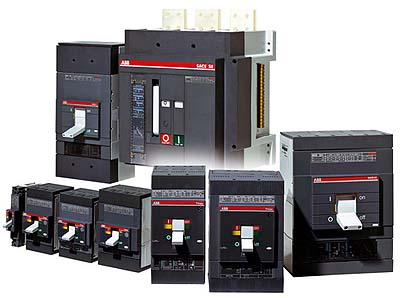 Автоматические выключатели ABB
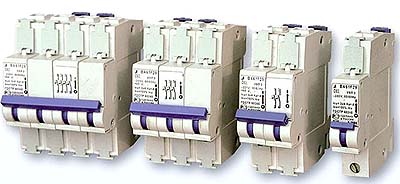 Модульные автоматические выключатели
1. НЕКОТОРЫЕ СВЕДЕНИЯ ОБ АВТОМАТИЧЕСКИХ ВЫКЛЮЧАТЕЛЯХ Автоматический выключатель — это электрический аппарат, который автоматически отключает (и тем самым защищает) электрическую цепь при возникновении в ней аномального режима. Режим становится аномальным, когда в цепи начинает недопустимо изменяться (т. е. увеличиваться или уменьшаться относительно номинального значения) ток или напряжение.
Другими словами (более "инженерно") можно сказать, что автоматический выключатель защищает от токов короткого замыкания и токов перегрузки отходящую от него питающую линию, например, кабель и приемник(и) электрической энергии (осветительную сеть, розетки, электродвигатель и т. п.).
Как правило, автоматический выключатель может применятся также для нечастого (несколько раз в сутки) включения и отключения защищаемых электроприемников (защищаемой нагрузки).
[Интент]Выключатель предназначен для проведения тока в нормальном режиме и отключения тока при коротких замыканиях, перегрузках, недопустимых снижениях напряжения, а также до 30 оперативных включений и отключений электрических цепей в сутки и рассчитан для эксплуатации в электроустановках с номинальным рабочим напряжением до 660 В переменного тока частоты 50 и 60 Гц и до 440 В постоянного тока.
[Типовая фраза из российской технической документации] 2. ПРИНЦИП ДЕЙСТВИЯ Для защиты цепи от короткого замыкания применяется автоматический выключатель с электромагнитным расцепителем.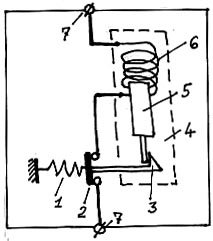
1 - Пружина (в данном случае во взведенном положении растянута)
Автоматический выключатель устроен таким образом, что сначала необходимо взвести пружину и только после этого его можно включить. У многих автоматических выключателей для взвода пружины необходимо перевести ручку вниз. После этого ручку переводят вверх. При этом замыкаются главные контакты.
2 - Главный контакт автоматического выключателя
3 - Удерживающее устройство
4 - Электромагнитный расцепитель;
5 - Сердечник
6 - Катушка
7 - Контактные зажимы автоматического выключателя
На рисунке показан один полюс автоматического выключателя во включенном положении: пружина 1 взведена, а главный контакт 2 замкнут.
Как только в защищаемой цепи возникнет короткое замыкание, ток, протекающий через соответствующий полюс автоматического выключателя, многократно возрастет. В катушке 6 сразу же возникнет сильное магнитное поле. Сердечник 5 втянется в катушку и освободит удерживающее устройство. Под действием пружины 1 главный контакт 2 разомкнется, в результате чего автоматический выключатель отключит и тем самым защитит цепь, в которой возникло короткое замыкание. Такое срабатывание автоматического выключателя происходит практически мгновенно (за сотые доли секунды).
Для защиты цепи от тока перегрузки применяют автоматические выключатели с тепловым расцепителем.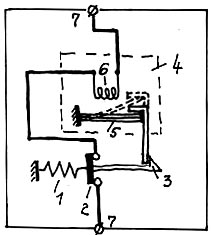
1 - Пружина (в данном случае во взведенном положении растянута)
Принцип действия такой же как и в первом случае, с той лишь разницей, что удерживающее устройство 3 освобождается под действием биметаллической пластины 5, которая изгибается от тепла, выделяемого нагревательным элементом 6. Количество тепла определяется током, протекающим через защищаемую цепь.
2 - Главный контакт автоматического выключателя
3 - Удерживающее устройство
4 - Тепловой расцепитель
5 - Биметаллическая пластина
6 - Нагревательный элемент
7 - Контактные зажимы автоматического выключателя
[Интент]Недопустимые, нерекомендуемые
Тематики
Классификация
>>>Обобщающие термины
Действия
- включение автоматического выключателя
- оперирование автоматического выключателя
- отключение автоматического выключателя
- срабатывание автоматического выключателя
EN
- auto-cutout
- automatic circuit breaker
- automatic cutout
- automatic switch
- breaker
- CB
- circuit breaker
- circuit-breaker
- cutout
DE
FR
Смотри также
силовой выключатель
-
[Интент]EN
circuit-breaker
a mechanical switching device, capable of making, carrying and breaking currents under normal circuit conditions and also making, carrying for a specified time and breaking currents under specified abnormal circuit conditions such as those of short circuit
[IEV ref 441-14-20]FR
disjoncteur
appareil mécanique de connexion capable d'établir, de supporter et d'interrompre des courants dans les conditions normales du circuit, ainsi que d'établir, de supporter pendant une durée spécifiée et d'interrompre des courants dans des conditions anormales spécifiées du circuit telles que celles du court-circuit
[IEV ref 441-14-20]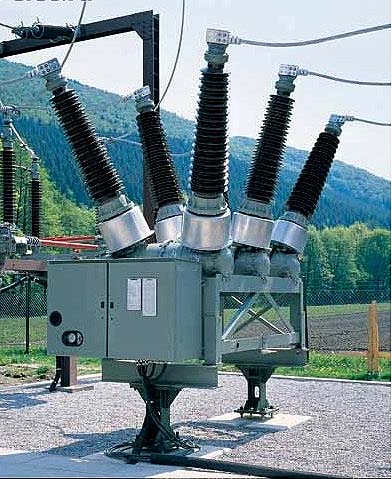
Рис. Siemens
Силовой ( баковый элегазовый) выключатель 3AP1 DT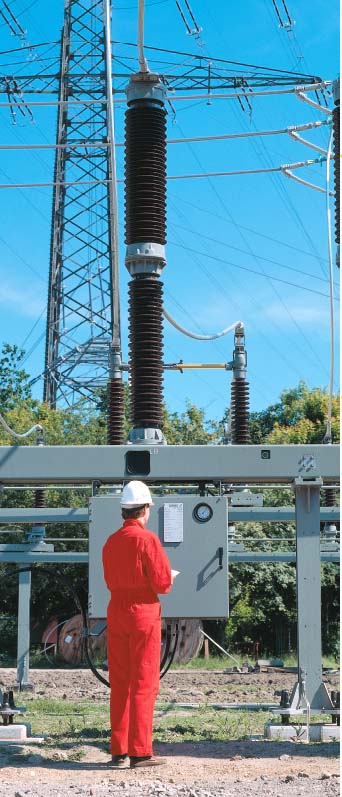
Рис. Siemens
Силовой (колонковый элегазовый) выключательТематики
- высоковольтный аппарат, оборудование...
- комплектное распред. устройство (КРУ)
EN
DE
FR
Немецко-русский словарь нормативно-технической терминологии > Leistungsschalter
5 Selbstschalter
автоматический выключатель
Механический коммутационный аппарат1), способный включать, проводить и отключать токи при нормальном состоянии электрической цепи, а также включать, проводить в течение заданного времени и автоматически отключать токи в указанном аномальном состоянии электрической цепи, например, при коротком замыкании.
(МЭС 441-14-20)
[ ГОСТ Р 50030. 2-99 ( МЭК 60947-2-98)]
автоматический выключатель
-
[IEV number 442-05-01]EN
circuit breaker
a mechanical switching device, capable of making, carrying and breaking currents under normal circuit conditions and also making, carrying for a specified time and breaking currents under specified abnormal circuit conditions such as those of short circuit.
[IEC 62271-100, ed. 2.0 (2008-04)]
[IEV number 442-05-01]
circuit breaker
A device designed to open and close a circuit by nonautomatic means and to open the circuit automatically on a predetermined overcurrent without damage to itself when properly applied within its rating.
NOTE The automatic opening means can be integral, direct acting with the circuit breaker, or remote from the circuit breaker.
Adjustable (as applied to circuit breakers). A qualifying term indicating that the circuit breaker can be set to trip at various values of current, time, or both within a predetermined range. Instantaneous-trip (as applied to circuit breakers). A qualifying term indicating that no delay is purposely introduced in the tripping action of the circuit breaker.
Inverse-time (as applied to circuit breakers). A qualifying term indicating a delay is purposely introduced in the tripping action of the circuit breaker, which delay decreases as the magnitude of the current increases.
Nonadjustable (as applied to circuit breakers). A qualifying term indicating that the circuit breaker does not have any adjustment to alter the value of current at which it will trip or the time required for its operation.
Setting (of a circuit breaker). The value of current, time, or both at which an adjustable circuit breaker is set to trip.
[National Electrical Cod]FR
disjoncteur
1) Должно быть контактный коммутационный аппарат
appareil mécanique de connexion capable d’établir, de supporter et d’interrompre des courants dans les conditions normales du circuit, ainsi que d’établir, de supporter pendant une durée spécifiée et d’in- terrompre des courants dans des conditions anormales spécifiées du circuit telles que celles du court-circuit.
[IEC 62271-100, ed. 2.0 (2008-04)]
[IEV number 442-05-01]
[Интент]КЛАССИФИКАЦИЯ
- По роду тока
- По напряжению
- По числу полюсов
- По виду корпуса
- По месту установки
- По изолирующей среде
- По установленным расцепителям
- По дополнительным защитам
- По назначению
- По категории применения
- По виду привода взвода пружины
- По выполняемой функции
-
По влиянию монтажного положения
Автоматические выключатели ABB
Модульные автоматические выключатели
1. НЕКОТОРЫЕ СВЕДЕНИЯ ОБ АВТОМАТИЧЕСКИХ ВЫКЛЮЧАТЕЛЯХ Автоматический выключатель — это электрический аппарат, который автоматически отключает (и тем самым защищает) электрическую цепь при возникновении в ней аномального режима. Режим становится аномальным, когда в цепи начинает недопустимо изменяться (т. е. увеличиваться или уменьшаться относительно номинального значения) ток или напряжение.
Другими словами (более "инженерно") можно сказать, что автоматический выключатель защищает от токов короткого замыкания и токов перегрузки отходящую от него питающую линию, например, кабель и приемник(и) электрической энергии (осветительную сеть, розетки, электродвигатель и т. п.).
Как правило, автоматический выключатель может применятся также для нечастого (несколько раз в сутки) включения и отключения защищаемых электроприемников (защищаемой нагрузки).
[Интент]Выключатель предназначен для проведения тока в нормальном режиме и отключения тока при коротких замыканиях, перегрузках, недопустимых снижениях напряжения, а также до 30 оперативных включений и отключений электрических цепей в сутки и рассчитан для эксплуатации в электроустановках с номинальным рабочим напряжением до 660 В переменного тока частоты 50 и 60 Гц и до 440 В постоянного тока.
[Типовая фраза из российской технической документации] 2. ПРИНЦИП ДЕЙСТВИЯ Для защиты цепи от короткого замыкания применяется автоматический выключатель с электромагнитным расцепителем.1 - Пружина (в данном случае во взведенном положении растянута)
Автоматический выключатель устроен таким образом, что сначала необходимо взвести пружину и только после этого его можно включить. У многих автоматических выключателей для взвода пружины необходимо перевести ручку вниз. После этого ручку переводят вверх. При этом замыкаются главные контакты.
2 - Главный контакт автоматического выключателя
3 - Удерживающее устройство
4 - Электромагнитный расцепитель;
5 - Сердечник
6 - Катушка
7 - Контактные зажимы автоматического выключателя
На рисунке показан один полюс автоматического выключателя во включенном положении: пружина 1 взведена, а главный контакт 2 замкнут.
Как только в защищаемой цепи возникнет короткое замыкание, ток, протекающий через соответствующий полюс автоматического выключателя, многократно возрастет. В катушке 6 сразу же возникнет сильное магнитное поле. Сердечник 5 втянется в катушку и освободит удерживающее устройство. Под действием пружины 1 главный контакт 2 разомкнется, в результате чего автоматический выключатель отключит и тем самым защитит цепь, в которой возникло короткое замыкание. Такое срабатывание автоматического выключателя происходит практически мгновенно (за сотые доли секунды).
Для защиты цепи от тока перегрузки применяют автоматические выключатели с тепловым расцепителем.1 - Пружина (в данном случае во взведенном положении растянута)
Принцип действия такой же как и в первом случае, с той лишь разницей, что удерживающее устройство 3 освобождается под действием биметаллической пластины 5, которая изгибается от тепла, выделяемого нагревательным элементом 6. Количество тепла определяется током, протекающим через защищаемую цепь.
2 - Главный контакт автоматического выключателя
3 - Удерживающее устройство
4 - Тепловой расцепитель
5 - Биметаллическая пластина
6 - Нагревательный элемент
7 - Контактные зажимы автоматического выключателя
[Интент]Недопустимые, нерекомендуемые
Тематики
Классификация
>>>Обобщающие термины
Действия
- включение автоматического выключателя
- оперирование автоматического выключателя
- отключение автоматического выключателя
- срабатывание автоматического выключателя
EN
- auto-cutout
- automatic circuit breaker
- automatic cutout
- automatic switch
- breaker
- CB
- circuit breaker
- circuit-breaker
- cutout
DE
FR
Смотри также
Немецко-русский словарь нормативно-технической терминологии > Selbstschalter
6 Kredit
Kredit m 1. BANK advance, loan, lending, credit, Cr; 2. FIN advance, credit, Cr; 3. RW advance • auf Kredit FIN on credit • auf Kredit verkaufen V&M sell on credit, sell on trust • einen Kredit aufnehmen 1. BANK borrow, borrow funds, raise a loan, take up credit; 2. GEN take up credit, take out credit, raise credit; 3. FIN contract a loan • einen Kredit aufschieben RW defer a debt • einen Kredit beantragen BANK, FIN apply for a loan • etw. auf Kredit kaufen V&M buy sth on credit, buy on installment • gegen Kredit GEN on account, o/a • Kredit aufnehmen GEN take up credit, take out credit, raise credit • Kredit gewähren BÖRSE lend, grant credit, extend credit* * *m 1. < Bank> advance, loan, lending, credit (Cr) ; 2. < Finanz> advance, credit (Cr) ; 3. < Rechnung> advance ■ auf Kredit < Finanz> on credit ■ auf Kredit verkaufen <V&M> sell on credit, sell on trust ■ einen Kredit aufnehmen < Finanz> contract a loan ■ einen Kredit aufschieben < Rechnung> defer a debt ■ einen Kredit beantragen <Bank, Finanz> apply for a loan ■ etw. auf Kredit kaufen <V&M> buy sth on credit, buy on installment ■ gegen Kredit < Geschäft> on account (o/a) ■ Kredit aufnehmen < Bank> borrow, borrow funds, raise a loan, take up credit ■ Kredit gewähren < Börse> lend, grant credit, extend credit* * *Kredit
credit, loan, advance, (Anschreibenlassen) tick (Br.), (Ansehen) public (general) credit, business reputation, (Kreditlinie) credit line (US) (limit, Br.), line (US) (limit, Br.) of credit, (Kreditwürdigkeit) credit rating (standing), (Vorschuss) advance;
• auf Kredit on (upon) credit, on trust (US), on tick (Br.);
• abgelehnter Kredit declined credit;
• sich selbst abwickelnder Kredit self-liquidating loan;
• neu aufgenommener Kredit fresh credit;
• wieder auflebender Kredit revolving credit;
• auftragsgebundener Kredit tied loan;
• ausgelegte Kredite loans granted;
• beanspruchter Kredit used credit, credit in use;
• nicht beanspruchter (benötigter) Kredit unused (unemployed) credit;
• nicht bedienter Kredit non-performing loan;
• befristeter Kredit time loan;
• besicherter Kredit covered (secured, collateral, US) loan, loan against security;
• hypothekarisch besicherter Kredit real-estate loan, credit on mortgage;
• Besorgnis erregende Kredite troubled loans;
• bestätigter Kredit guaranteed (confirmed, Br.) credit;
• billiger Kredit easier (low-interest) credit, soft loan;
• durchgeleiteter Kredit transmitted credit, loan passed on;
• durchlaufender Kredit transitory credit;
• eingefrorener Kredit frozen credit (loan), blocked credit, non-liquid loan;
• eingeräumter Kredit credit limit (Br.), credit line (US), line of credit (US);
• blanko eingeräumter Kredit blank (open, US) credit;
• monatlich eingeräumter Kredit a month’s credit;
• der Regierung eingeräumter Kredit loan made to the government;
• sich automatisch erneuernder Kredit revolving credit, revolving fund loan;
• bei Sicht fälliger Kredit sight credit;
• sofort fälliger Kredit call (demand) loan;
• festbegründeter Kredit established credit;
• kurzfristig finanzierter Kredit short-term credit;
• gebündelte Kredite loan package;
• gebundener Kredit tight credit;
• gedeckter Kredit secured loan, collateral credit (US);
• durch verschiedenartige Sicherheiten gedeckter Kredit mixed loan;
• genehmigter Kredit authorized loan;
• haushaltsrechtlich genehmigte Kredite credits falling into the budget;
• in Anspruch genommene Kredite credits in use, used credits, (Bilanz) borrowings;
• nicht in Anspruch genommene Kredite unemployed credits;
• noch nicht bis zum Höchststand in Anspruch genommener Kredit unused portion of a credit;
• gesicherter Kredit secured loan (advance), collateral credit (US);
• durch erststellige Hypothek gesicherter Kredit first-mortgage loan;
• durch Lombardierung verschiedenartiger Wertpapiere gesicherter Kredit mixed loan;
• von einem Konsortium (konsortialiter) gewährter Kredit syndicated credit;
• einem Minderjährigen gewährter Kredit loan to an infant;
• zinslos gewährter Kredit credit given flat;
• gewerblicher Kredit industrial loan;
• hypothekarischer Kredit real-estate (mortgage) loan;
• interne Kredite (an Zweigniederlassungen einer Bank) house debits;
• kaufmännischer Kredit commercial loan;
• kündbarer Kredit credit on call, loan on notice;
• kurzfristiger Kredit short[-term] credit, fixture;
• landwirtschaftlicher Kredit agricultural loan;
• längerfristiger Kredit medium-term loan;
• langfristiger Kredit long (long-term, long-time) loan;
• kurzfristig finanzierter langfristiger Kredit roll-over credit;
• laufender Kredit open (standing) credit;
• lieferungsgebundener Kredit tied credit;
• mittelfristiger Kredit (Eurodollarmarkt) medium-term credit;
• Not leidende Kredite non-accrual loans;
• offener Kredit open (blank) credit (US), uncovered (unsecured) loan, (laufendes Konto) account current, drawing account;
• persönlicher Kredit personal credit;
• projektfreier Kredit untied credit;
• projektgebundener Kredit tied credit;
• prolongierter Kredit extended credit;
• refinanzierbarer Kredit refinanceable credit;
• revolvierender Kredit revolving [letter of] credit;
• rückzahlbarer Kredit repayable credit;
• innerhalb 24 Stunden rückzahlbarer Kredit overnight loan (US);
• schöpferischer Kredit creative credit;
• sichergestellter Kredit secured credit;
• staatsverbürgter Kredit government-backed credit;
• zur Verfügung stehender Kredit supply of credit [available];
• überzogener Kredit overdraft, overdrawn credit;
• unbegrenzter (unbeschränkter) Kredit unlimited credit;
• unbestätigter Kredit unconfirmed (uncovered) letter of credit (Br.);
• ungedeckter (ungesicherter) Kredit open (US) (unsecured, uncovered) credit, blank advance, loan without security (collateral, US);
• unkündbarer Kredit irrevocable credit;
• unsicherer Kredit unsafe loan, shaky credit;
• unwiderruflicher Kredit irrevocable letter of credit;
• zinsgünstiger Kredit preferential credit;
• zinsloser Kredit interest-free loan, credit given flat;
• zinsverbilligter Kredit low-interest credit, credit given at a reduced rate, soft loan;
• zusätzlicher Kredit additional credit;
• zweckgebundener Kredit tied loan (credit);
• nicht zweckgebundener Kredit no-purpose (untied) loan;
• Kredit gegen Bürgschaft loan against surety;
• Kredit für Gebäudewerterhöhungen loan for improvement of property;
• öffentlicher Kredit an einem Gewerbebetrieb industrial advance;
• Kredit bis zur Höhe von credit within the limit of;
• Kredit in begrenzter Höhe limited credit;
• Kredit in festgesetzter Höhe line-of-credit loan (US);
• Kredit zur Investitionsfinanzierung im Ausland roll-over Eurocredit;
• Kredite an Kreditinstitute lending to bank customers;
• Kredit mit begrenzter Laufzeit (Börse) fixture;
• Kredit mit fester Laufzeit und fester Tilgungsstruktur term loan;
• Kredit in laufender Rechnung credit in current account;
• Kredit gegen Sicherheit credit against security (collateral, US);
• Kredit gegen Sicherungsübereignung field warehouse loan;
• Kredit für einen Spitzenbetrag gap loan;
• Kredit gegen Verpfändung der Schiffsfracht respondentia loan;
• Kredit in fremder Währung foreign-currency credit;
• Kredit auf eingelagerte Waren storage credit;
• Kredit gegen Wechselbürgschaft accommodation endorsement loan;
• Kredit gegen Wertpapierlombard lending on security, collateral loan (US);
• Kredit zu niedrigem Zinssatz low-interest credit, soft loan;
• Kredit abdecken to repay a credit;
• Kredit abwickeln to liquidate (repay) a loan;
• Kredit dem Wert der gestellten Sicherheit anpassen to mark a loan to the market (US);
• Kredit aufbrauchen to eat up (use) a credit;
• Kredite nach ihrer Größenordnung aufführen to scale credits;
• Kredit aufnehmen to borrow [money], to raise a loan (credit);
• erforderlichen Kredit aufnehmen to raise any money requisite;
• Kredit für den Ankauf eines Grundstücks aufnehmen to borrow for the purchase of land;
• Kredit für den gesamten Kaufpreis aufnehmen to borrow the whole of the purchase price;
• Kredit ausschöpfen to exhaust a loan;
• Kredit etappenweise entsprechend den nachgewiesenen Bauleistungen auszahlen to make an advance in stages against production of architect’s certificate;
• Kredit beantragen to request a loan, to apply for a credit;
• Kredit bekommen to obtain (get) a credit;
• Kredit zurückgezahlt bekommen to receive a loan back;
• Kredit für j. bereitstellen to place a loan at s. one’s disposal;
• sich durch Wechselreiterei Kredit beschaffen to fly a kite (Br.);
• Kredit bewilligen to grant a loan, to pass a credit vote;
• Kredit nur ratenweise bewilligen to vote a credit in instal(l)ments;
• auf Kredit des Ehemannes einkaufen to pledge one’s husband’s credit;
• auf Kredit in einem Geschäft einkaufen to run up an account with a shop;
• Kredit einräumen to grant a loan, to allow a credit;
• einem Kunden einen Kredit einräumen to allow a customer an advance;
• Kredit einrichten to establish a credit;
• Kredit einschränken to reduce (restrict) a credit;
• Kredit als Not leidend einstufen to classify a loan as non-performing;
• Kredit entziehen to draw in a loan, to withdraw a credit;
• auf Kredit erhalten to receive on tick (Br.) (trust, US);
• auf Antrag einen persönlichen Kredit erhalten to obtain a personal loan upon application;
• zinslosen Kredit erhalten to borrow money flat;
• Kredit erhöhen to increase a credit line (US) (limit, Br.);
• Kredit eröffnen to open a loan (credit, credit line, US, credit limit, Br.);
• Kredit zu jds. Gunsten eröffnen to open a credit account in s. one’s favo(u)r;
• sich Kredit erschleichen to obtain credit by fraud;
• auf Kredit geben to [give on] credit, to chalk up, to [give upon] trust (US);
• jem. Kredit in Höhe von 100 Dollar geben (gewähren) to give s. o. credit for $ 100;
• jds. Kredit gefährden to undermine s. one’s credit;
• nur begrenzten Kredit genießen to enjoy very restricted credit;
• unbegrenzten Kredit genießen to enjoy unlimited credit;
• Kredit gewähren to grant (make) a loan, to grant a credit, (anschreiben) to [give upon] trust (US), to tick (Br.);
• abgesicherten Kredit gewähren to lend on security, to loan on collateral;
• keinen Kredit gewähren to withhold a credit;
• Kredit nur in einem bestimmten Rahmen gewähren to allow a credit not beyond a certain figure;
• gegen Sicherheit (Lombardierung von Wertpapieren) Kredit gewähren to lend on security, to loan on collateral;
• zinslosen Kredit gewähren to give a flat credit;
• Kredit bei jem. haben to be in credit (have interest) with s. o.;
• j. für einen Kredit von 4000 $ für gut (sicher) halten to consider s. o. safe for a credit of $ 4000;
• auf Kredit kaufen to buy on credit (time, trust, US), to purchase on account, to buy on (go upon) tick (Br.);
• Kredit kündigen to draw in a loan, to withdraw (call in) a credit;
• Kredite einfrieren lassen to lay up credits;
• Waren auf Kredit liefern to supply goods on account (credit);
• mehr als üblich faule Kredite abschreiben müssen to have more bad loans to write off than usual;
• um zusätzlichen Kredit nachsuchen to ask for further credit;
• Kredit in Anspruch nehmen to utilize (use) a credit, to run a line (US) (limit, Br.) of credit, to take up a credit;
• seinen Kredit bei jem. in Anspruch nehmen to make interest with s. o.;
• höhere Kredite in Anspruch nehmen to ask for larger credits;
• bei der Bank in erhöhtem Maße Kredite in Anspruch nehmen to increase the borrowings at the bank;
• Kredit prolongieren to renew a credit;
• Kredit prüfen to check a credit;
• Kredit refinanzieren to refinance a loan;
• Kredit schöpfen to create credit;
• Kredit schwächen to discredit;
• Kredit sperren to block a credit;
• seinen Kredit überschreiten (überziehen) to stretch (strain, outrun, surpass) one’s credit, to overdraw one’s account, to make an overdraft;
• eingeräumten Kredit überziehen to run over the credit limit (Br.) (line, US);
• Kredit untergraben to undermine credit;
• Kredite vergeben to deal in credits;
• auf Kredit verkaufen to sell on credit (tick, Br., trust, US);
• Kredite verkürzen to curtail credits;
• Kredit verlängern to extend [the term of] a credit;
• eingeräumten Kredit verlängern to extend the validity of a credit;
• Kredit verschaffen to furnish (provide) with credit;
• Kredit mit 12% verzinsen to pay 12 per cent interest on a loan;
• Kredit eines Unternehmens wiederherstellen to re-establish a firm’s credit;
• fälligen Kredit zurückzahlen to meet a loan when due;
• Kreditabkommen credit arrangement (agreement), loan agreement;
• Kreditabteilung credit (loan) department;
• Kreditabteilung einer Bank bank loan department;
• Kreditakte credit folder;
• Kreditandrang credit strain;
• Kreditanforderungen borrowing requirements;
• Kreditanfrage credit inquiry;
• Kreditanfrage ablehnen to turn thumbs down on a loan.7 Umlaufvermögen
Umlaufvermögen n RW current assets, floating assets • im Umlaufvermögen ausweisen RW carry as a current asset (Bilanz)* * *n < Rechnung> current assets, floating assets* * *Umlaufvermögen
circulating capital, current means (funds), liquid (floating, circulating, Br., fluid, US, quick, US) assets, (Bilanz) current receipts (receivables, US);
• kurzfristiges Umlaufvermögen (Bilanz) current assets;
• mittel- und kurzfristiges Umlaufvermögen (Bilanz) medium-term and short-term assets;
• Umlaufvermögen abzüglich Verbindlichkeiten net working capital.8 kurzfristige Verbindlichkeit
kurzfristige Verbindlichkeit f 1. BANK current liability, short-term debt; 2. BÖRSE short-term liability; 3. FIN floating debt, liquid debt; 4. RW short-term liability* * *Business german-english dictionary > kurzfristige Verbindlichkeit
9 Mittel
Mittel npl 1. FIN resources, funds; 2. GEN agent, means; 3. IND agent; 4. MEDIA tool; 5. PERS resources, means; 6. WIWI means, resources • Mittel bereitstellen FIN, MGT, RW appropriate funds • Mittel bewilligen FIN, MGT, RW allocate resources, appropriate funds • Mittel vereinen WIWI pool resources • Mittel zusammenfassen WIWI pool resources • Mittel zuweisen FIN, MGT, RW allocate resources, appropriate funds • über die Mittel verfügen, etw. zu tun GEN have the means to do sth* * *npl 1. < Finanz> resources, funds; 2. < Geschäft> agent, means; 3. < Ind> agent; 4. < Medien> tool; 5. < Person> resources, means; 6. <Vw> means, resources ■ Mittel bereitstellen <Finanz, Mgmnt, Rechnung> appropriate funds ■ Mittel bewilligen <Finanz, Mgmnt, Rechnung> allocate resources, appropriate funds ■ Mittel vereinen <Vw> pool resources ■ Mittel zusammenfassen <Vw> pool resources ■ Mittel zuweisen <Finanz, Mgmnt, Rechnung> allocate resources, appropriate funds ■ über die Mittel verfügen, etw. zu tun < Geschäft> have the means to do sth* * *Mittel
(Durchschnitt) average, mean, (Geldmittel) means, funds, resources, purse, capital, money, (parl.) money, supplies (Br.), appropriation, (Unterhalt) support (US), (Vermögen) fortune, (Vorrat) supply;
• aus eigenen Mitteln out of one=s resources;
• aus Mangel an Mitteln from deficiency of means, for lack of funds;
• im Mittel on an average;
• im Besitz hinreichender Mittel independent;
• im Besitz verfügbarer Mittel in funds;
• mit reichlichen Mitteln ausgestattet well-financed;
• nicht aus öffentlichen Mitteln unterstützt non-provided;
• ohne Mittel penniless, destitute, without resources, stranded;
• unter Anwendung unerlaubter Mittel by unlawful means;
• angelegte Mittel invested capital;
• langfristig angelegte Mittel long-term (funded) capital;
• arithmetisches Mittel (maths.) arithmetic mean;
• aufgebrachte Mittel funds raised;
• aufgenommene Mittel borrowed funds, borrowings;
• aufgewandte Mittel money employed;
• ausländische Mittel foreign capital;
• ausreichende finanzielle Mittel sufficiency of money;
• nicht ausreichende Mittel insufficient means, inadequate resources;
• begrenzte Mittel limited resources (means);
• benötigte Mittel necessary funds;
• bereitgestellte Mittel appropriated funds;
• neu bereitgestellte Mittel new appropriations;
• bereitstehende Mittel available funds;
• bescheidene Mittel limited means;
• beschränkte Mittel limited resources;
• betriebsfremde Mittel outside capital;
• betriebsnotwendige Mittel permanent working capital;
• bewährtes Mittel proved remedy;
• bewilligte Mittel allocated funds;
• zur Defizitdeckung bewilligte Mittel deficiency appropriations;
• vom Parlament (parlamentarisch) bewilligte Mittel budgetary appropriations, money provided by Parliament (Br.);
• billige Mittel easy money;
• brachliegende Mittel idle (unemployed) funds, dead capital;
• eigene Mittel own funds, resources of one=s own, (Bilanz) capital and reserves;
• eingebrachte Mittel capital invested;
• entsprechende Mittel adequate means;
• erforderliche Mittel necessary funds;
• festliegende Mittel frozen capital, tied-up funds, lockup (Br.);
• finanzielle Mittel financial resources;
• flüssige Mittel available (liquid, current) funds, funds on (in) hand, ready money, quick (liquid, US) assets (resources), liquid (spare) capital, (Bilanz) cash;
• fremde Mittel borrowed (third-party, outside) funds, borrowed capital;
• geringfügige Mittel limited means;
• gewogenes Mittel weighted mean;
• gleitendes Mittel moving average (MAV);
• greifbare Mittel available funds;
• haftende Mittel amount guaranteed, guarantee fund[s];
• hinreichende Mittel sufficient funds;
• investierte Mittel capital invested;
• kurzfristige Mittel quick assets;
• langfristige Mittel long-term funds;
• liquide Mittel available (current, liquid) funds, liquid (US) (current) assets, liquid capital;
• sofort verfügbare liquide Mittel spot cash;
• öffentliche Mittel the public purse, public funds (money);
• private Mittel private means (funds);
• reichliche Mittel ample funds (means);
• staatliche Mittel government grant;
• alle uns zur Verfügung stehenden Mittel the whole of our resources;
• zur Handelsausweitung zur Verfügung stehende Mittel means of extending the trade;
• zusätzliche für die Masseverteilung zur Verfügung stehende Mittel surplus estate funds;
• die mir zur Verfügung stehenden Mittel the money at my command;
• überschüssige Mittel surplus funds;
• unerschöpfliche Mittel endless resources;
• vagabundierende Mittel hot money;
• verbrauchte Mittel exhausted means;
• verfügbare Mittel available means (funds), funds at deposit (disposal);
• frei verfügbare Mittel loose funds;
• verplante Mittel budgeted means;
• nicht verteilte (verwendete) Mittel unapplied (unappropriated) funds;
• von der Bank verwaltete Mittel bank funds;
• treuhänderisch verwaltete Mittel trustee investment (Br.), trust funds;
• im Haushaltsplan nicht vorgesehene Mittel unbudgeted appropriations;
• zur Deckung vorhandene Mittel coverage;
• wirtschaftliche Mittel economic resources;
• zweckbestimmte (zweckgebundene) Mittel earmarked (appropriated) funds;
• Mittel der Direktwerbung direct-mail media;
• Mittel für die Forschung research funds;
• Mittel gegen die Inflation deflationary instrument;
• liquide Mittel erster Ordnung primary liquidity;
• liquide Mittel dritter Ordnung tertiary liquidity;
• Mittel einer Pensionskasse pension fund money;
• Mittel der Verkaufsförderung sales-promotion aids;
• Mittel für die Warenbeschaffung merchandise budget;
• Mittel für den Wohnungsbau funds for housing;
• Mittel für Zahlungen appropriations for payments;
• Mittel abschöpfen to siphon off funds;
• nur einwandfreie Mittel anwenden to use only proper means;
• Mittel aufbringen to fund-raise, to raise funds;
• Mittel aufstocken to increase resources;
• öffentliche Mittel bestimmungsgemäß ausgeben to use public money only for legitimate purposes;
• mit Mitteln ausstatten to endow with capital;
• sich schwer tun, mit seinen Mitteln auszukommen to have a hard fight to make both ends meet;
• seinen Mitteln gemäß beitragen to contribute according to one=s means;
• sich mit allen Mitteln um eine Position bemühen to jockey for a position;
• notwendige Mittel bereitstellen to make the necessary funds available;
• Mittel beschaffen to procure capital, to raise funds;
• nur unbedeutende Mittel besitzen to have inadequate means;
• Mittel bewilligen to grant the money, (parl.) to vote the appropriations (supplies, Br.);
• zusätzliche Mittel in Höhe von 156 Mio. Dollar bewilligen to vote $ 156 million in extra money;
• seine Mittel einsetzen to make a draft on one=s means;
• seine Mittel schwerpunktartig einsetzen to make the most of one=s resources;
• Mittel entziehen to strip off funds;
• seine Mittel erschöpfen to exhaust one=s resources;
• Mittel festlegen to tie (lock, Br.) up funds, to immobilize capital;
• Mittel und Wege finden to provide instruments;
• ausreichend liquide Mittel haben to be liquid;
• nur beschränkte Mittel haben to have only limited resources;
• nicht genügend Mittel haben to be deficient in means;
• alle (seine) Mittel aufgebraucht haben to be at the end of one=s resources;
• keine Mittel mehr zur Verfügung haben to run (be) out of funds, to be in want of money;
• reichliche Mittel [zur Verfügung] haben to have ample means [at one=s disposal];
• Mittel investieren to put out funds;
• bereitgestellte Mittel um 4% kürzen to trim one=s appropriations by 4 per cent;
• reichlich mit Mitteln versehen sein to have ample means, to be flush of money;
• Mittel zur Verfügung stellen to ladle out funds;
• öffentliche Mittel unterschlagen to misappropriate public funds (Br.), to misapply public money;
• mit öffentlichen Mitteln unterstützen to subsidize;
• über bedeutende Mittel verfügen to have large resources;
• nur über beschränkte Mittel verfügen to have only limited resources;
• [nur] über geringe Mittel verfügen to be short of money;
• über umfangreiche Mittel verfügen to have ample resources;
• erhebliche kommunale Mittel verschlingen to run away with a lot of ratepayers= money;
• mit Mitteln versehen to furnish with (put in) funds;
• Mittel verweigern (parl.) to refuse supplies;
• Mittel anderen als den vorgesehenen Zwecken zuführen to alienate funds from their proper destination;
• j. ohne Mittel zurücklassen to leave s. o. penniless;
• Mittelabflüsse efflux of funds;
• Mittelabschöpfung siphoning off funds;
• Mittelabzweigung von einem Fonds fund diversion;
• kurzfristige Mittelanlage short-term investment of funds;
• Mittelaufbringung fund raising, mobilization (raising, procurement) of funds;
• Mittelaufkommen accumulation of capital, inflow;
• Mittelaufnahme der öffentlichen Hand public borrowing.10 Einlage
Einlage
(Anlage) enclosure, inclosure (Bankkonto) deposit, (Beilage) inset, insert (US), (Gesellschaftsanteil) stock, initial share, (Kapital) put-in (contribution to) capital, capital contribution, advanced capital, money (sum) paid in, stake, assets brought in, [capital] investment, capital invested, (einmalige Prämie) single payment;
• auf die Einlage beschränkt limited by shares;
• Einlagen deposits;
• jederzeit abrufbare Einlage call deposit;
• ausstehende Einlagen not paid-in capital;
• befristete Einlage time (demand) deposit (US), fixed deposit;
• aus öffentlichen Geldern bestehende Einlagen public deposits (Br.);
• effektive Einlagen primary deposits (US);
• täglich fällige (kurzfristige, jederzeit kündbare) Einlagen short (demand, sight) deposits (US), deposits at short notice (on current accounts);
• feste Einlage fixed deposit;
• gemeinschaftliche Einlage joint deposit;
• inländische Einlagen domestic deposits;
• kleine Einlage small deposit;
• kurzfristige Einlage short-term deposit, deposit at short notice, short (sight, demand, US) deposit,
• kurzfristige kündbare Einlage money at short notice;
• längerfristige Einlagen time and savings deposits;
• langfristige Einlage deposit on deposit account (at long notice), time (long-term, fixed) deposit;
• leicht liquidierbare Einlagen near money (US sl.);
• mindestreservepflichtige Einlagen safety fund (US), special deposits with the Bank of England (Br.);
• öffentliche Einlagen public deposits;
• gegen Kündigung rückzahlbare Einlagen demand (sight) deposits (US);
• terminierte Einlagen long-term deposits, deposits at short notice, restricted cash, time deposits (US);
• unversicherte Einlage uninsured deposit;
• unverzinsliche Einlage non-interest-bearing deposit;
• per Scheck verfügbare Einlage demand deposit subject to check (US);
• verzinsliche Einlagen interest-bearing deposits;
• zinslose Einlagen non-interest-bearing deposits;
• Einlage auf Depositenkonto fixed (time, US) deposit;
• Einlagen in Form beweglicher oder unbeweglicher Sachen contribution in kind, assets in kind [brought in];
• ausstehende Einlagen auf das Grundkapital subscribed capital stock, uncalled capital;
• Einlagen im Kontokorrentverkehr deposits on current account;
• Einlagen mit 7-tägiger Kündigung deposits subject to (at) seven days notice;
• Einlagen mit Kündigungsfrist deposits at short notice (for a fixed period), fixed (time, US) deposits;
• Einlagen mit besonders vereinbarter Kündigungsfrist availability items (US);
• Einlagen mit fester Laufzeit fixed (time, US) deposits;
• Einlagen mit sechsmonatlicher Laufzeit deposits with maturities of six months;
• Einlagen auf gebührenfreie Rechnung und sonstige Gläubiger (Bankbilanz) current account deposits and other accounts;
• Einlagen auf Sicht sight (demand) deposits (US);
• etw. als Einlage einbringen to bring in s. th;
• Einlagen entgegennehmen to accept deposits;
• öffentliche Einlagen entgegennehmen to take deposits from the general public;
• Einlage machen to make a deposit (US);
• Einlage in gleicher Höhe machen to pay in an equal sum;
• Einlagen mit 4% verzinsen to allow 4% on deposits;
• seine Einlage zurückziehen to withdraw one’s capital;
• Einlageblatt loose leaf;
• Einlagekonto deposit (US) (investment) account, (Sparkasse) savings account;
• Einlagekonto mit sofortiger Scheck- und Wechselgutschrift immediate credit account (US).11 Dauerstrombelastbarkeit, f
(длительный) допустимый ток
Максимальное значение электрического тока, который может протекать длительно по проводнику, устройству или аппарату при определенных условиях без превышения определенного значения их температуры в установившемся режиме
[ ГОСТ Р МЭК 60050-826-2009]
Этот ток обозначают IZ
[ ГОСТ Р 50571. 1-2009 ( МЭК 60364-1: 2005)]EN
(continuous) current-carrying capacity
ampacity (US)
maximum value of electric current which can be carried continuously by a conductor, a device or an apparatus, under specified conditions without its steady-state temperature exceeding a specified value
[IEV number 826-11-13]
ampacity
The current in amperes that a conductor can carry continuously under the conditions of use without exceeding its temperature rating.
[National Electrical Cod]FR
courant (permanent) admissible, m
valeur maximale du courant électrique qui peut parcourir en permanence, un conducteur, un dispositif ou un appareil, sans que sa température de régime permanent, dans des conditions données, soit supérieure à la valeur spécifiée
[IEV number 826-11-13]Ampacity, the term is defined as the maximum amount of current a cable can carry before sustaining immediate or progressive deterioration. Also described as current rating or current-carrying capacity, is the RMS electric current which a device can continuously carry while remaining within its temperature rating. The ampacity of a cable depends on:
- its insulation temperature rating;
- conductor electrical properties for current;
- frequency, in the case of alternating currents;
- ability to dissipate heat, which depends on cable geometry and its surroundings;
- ambient temperature.
Electric wires have some resistance, and electric current flowing through them causes voltage drop and power dissipation, which heats the cable. Copper or aluminum can conduct a large amount of current before melting, but long before the conductors melt, their insulation would be damaged by the heat.
The ampacity for a power cable is thus based on physical and electrical properties of the material & construction of the conductor and of its insulation, ambient temperature, and environmental conditions adjacent to the cable. Having a large overall surface area may dissipate heat well if the environment can absorb the heat.
In a long run of cable, different conditions govern, and installation regulations normally specify that the most severe condition along the run governs the cable's rating. Cables run in wet or oily locations may carry a lower temperature rating than in a dry installation. Derating is necessary for multiple circuits in close proximity. When multiple cables are near, each contributes heat to the others and diminishes the amount of cooling air that can flow past the individual cables. The overall ampacity of the insulated conductors in a bundle of more than 3 must be derated, whether in a raceway or cable. Usually the de-rating factor is tabulated in a nation's wiring regulations.
Depending on the type of insulating material, common maximum allowable temperatures at the surface of the conductor are 60, 75 and 90 degrees Celsius, often with an ambient air temperature of 30°C. In the U.S., 105°C is allowed with ambient of 40°C, for larger power cables, especially those operating at more than 2 kV. Likewise, specific insulations are rated 150, 200 or 250°C.
The allowed current in cables generally needs to be decreased (derated) when the cable is covered with fireproofing material.
For example, the United States National Electric Code, Table 310-16, specifies that up to three 8 AWG copper wires having a common insulating material (THWN) in a raceway, cable, or direct burial has an ampacity of 50 A when the ambient air is 30°C, the conductor surface temperature allowed to be 75°C. A single insulated conductor in air has 70 A rating.
Ampacity rating is normally for continuous current, and short periods of overcurrent occur without harm in most cabling systems. The acceptable magnitude and duration of overcurrent is a more complex topic than ampacity.
When designing an electrical system, one will normally need to know the current rating for the following:- Wires
- Printed Circuit Board traces, where included
- Fuses
- Circuit breakers
- All or nearly all components used
Some devices are limited by power rating, and when this power rating occurs below their current limit, it is not necessary to know the current limit to design a system. A common example of this is lightbulb holders.
[http://en.wikipedia.org/wiki/Ampacity]
Тематики
- электротехника, основные понятия
Синонимы
EN
DE
- Dauerstrombelastbarkeit, f
- Strombelastbarkeit, f
FR
- courant admissible, m
- courant permanent admissible, m
Немецко-русский словарь нормативно-технической терминологии > Dauerstrombelastbarkeit, f
12 Strombelastbarkeit, f
(длительный) допустимый ток
Максимальное значение электрического тока, который может протекать длительно по проводнику, устройству или аппарату при определенных условиях без превышения определенного значения их температуры в установившемся режиме
[ ГОСТ Р МЭК 60050-826-2009]
Этот ток обозначают IZ
[ ГОСТ Р 50571. 1-2009 ( МЭК 60364-1: 2005)]EN
(continuous) current-carrying capacity
ampacity (US)
maximum value of electric current which can be carried continuously by a conductor, a device or an apparatus, under specified conditions without its steady-state temperature exceeding a specified value
[IEV number 826-11-13]
ampacity
The current in amperes that a conductor can carry continuously under the conditions of use without exceeding its temperature rating.
[National Electrical Cod]FR
courant (permanent) admissible, m
valeur maximale du courant électrique qui peut parcourir en permanence, un conducteur, un dispositif ou un appareil, sans que sa température de régime permanent, dans des conditions données, soit supérieure à la valeur spécifiée
[IEV number 826-11-13]Ampacity, the term is defined as the maximum amount of current a cable can carry before sustaining immediate or progressive deterioration. Also described as current rating or current-carrying capacity, is the RMS electric current which a device can continuously carry while remaining within its temperature rating. The ampacity of a cable depends on:
- its insulation temperature rating;
- conductor electrical properties for current;
- frequency, in the case of alternating currents;
- ability to dissipate heat, which depends on cable geometry and its surroundings;
- ambient temperature.
Electric wires have some resistance, and electric current flowing through them causes voltage drop and power dissipation, which heats the cable. Copper or aluminum can conduct a large amount of current before melting, but long before the conductors melt, their insulation would be damaged by the heat.
The ampacity for a power cable is thus based on physical and electrical properties of the material & construction of the conductor and of its insulation, ambient temperature, and environmental conditions adjacent to the cable. Having a large overall surface area may dissipate heat well if the environment can absorb the heat.
In a long run of cable, different conditions govern, and installation regulations normally specify that the most severe condition along the run governs the cable's rating. Cables run in wet or oily locations may carry a lower temperature rating than in a dry installation. Derating is necessary for multiple circuits in close proximity. When multiple cables are near, each contributes heat to the others and diminishes the amount of cooling air that can flow past the individual cables. The overall ampacity of the insulated conductors in a bundle of more than 3 must be derated, whether in a raceway or cable. Usually the de-rating factor is tabulated in a nation's wiring regulations.
Depending on the type of insulating material, common maximum allowable temperatures at the surface of the conductor are 60, 75 and 90 degrees Celsius, often with an ambient air temperature of 30°C. In the U.S., 105°C is allowed with ambient of 40°C, for larger power cables, especially those operating at more than 2 kV. Likewise, specific insulations are rated 150, 200 or 250°C.
The allowed current in cables generally needs to be decreased (derated) when the cable is covered with fireproofing material.
For example, the United States National Electric Code, Table 310-16, specifies that up to three 8 AWG copper wires having a common insulating material (THWN) in a raceway, cable, or direct burial has an ampacity of 50 A when the ambient air is 30°C, the conductor surface temperature allowed to be 75°C. A single insulated conductor in air has 70 A rating.
Ampacity rating is normally for continuous current, and short periods of overcurrent occur without harm in most cabling systems. The acceptable magnitude and duration of overcurrent is a more complex topic than ampacity.
When designing an electrical system, one will normally need to know the current rating for the following:- Wires
- Printed Circuit Board traces, where included
- Fuses
- Circuit breakers
- All or nearly all components used
Some devices are limited by power rating, and when this power rating occurs below their current limit, it is not necessary to know the current limit to design a system. A common example of this is lightbulb holders.
[http://en.wikipedia.org/wiki/Ampacity]
Тематики
- электротехника, основные понятия
Синонимы
EN
DE
- Dauerstrombelastbarkeit, f
- Strombelastbarkeit, f
FR
- courant admissible, m
- courant permanent admissible, m
Немецко-русский словарь нормативно-технической терминологии > Strombelastbarkeit, f
13 kurzfristig
* * *at short notice (Adv.); short-term (Adj.); short-dated (Adj.)* * *kụrz|fris|tig [-frIstɪç]1. adjshort-term; Wettervorhersage short-range2. adv(= auf kurze Sicht) for the short term; (= für kurze Zeit) for a short timeetw kurzfristig erledigen — to do sth without delay
kurzfristig seine Pläne ändern — to change one's plans at short notice
kurzfristig gesehen — looked at in the short term
* * *1) (not covering a long time: a short-range weather forecast.) short-range2) (concerned only with the near future: short-term plans.) short-term3) (lasting only a short time: a short-term loan.) short-term* * *kurz·fris·tig[ˈkʊrtsfrɪstɪç]I. adj1. (innerhalb kurzer Zeit erfolgend) at short noticebei \kurzfristiger Bestellung des Artikels können wir Ihnen Lieferung bis zum 31. zusagen if the item is ordered quickly we can promise delivery by the 31stjds \kurzfristige Anreise sb's sudden arrivaldie \kurzfristige Programmänderung bitten wir zu entschuldigen we apologize for the programme alteration that occurred at such short noticeIhre Zusage war zu \kurzfristig you didn't give enough notice for your consent2. (für kurze Zeit geltend) short-term, of short durationich kann mir nur einen \kurzfristigen Urlaub genehmigen I can only permit myself a short holidaydie \kurzfristige Wettervorhersage the short-range weather forecast3. FIN short-term\kurzfristige Anlage short-term investment\kurzfristige Kapitalströme short-term capital\kurzfristige Mittel/Gelder/Kredite quick assets/money at short notice/short[-term] credit\kurzfristige Verbindlichkeit current [or short-term] liabilityII. adv1. (innerhalb kurzer Zeit) within a short [period of] timewegen unvorhergesehener Probleme mussten wir den Plan \kurzfristig ändern because of unforeseen problems we had to change the plan at short noticejdn etw \kurzfristig wissen lassen to let sb know without delay2. (für kurze Zeit) briefly, for a short timewir unterbrechen unser Programm \kurzfristig für eine wichtige Durchsage we are briefly interrupting our programme for an important announcement\kurzfristig gesehen viewed in the short term3. HANDEL at short notice\kurzfristig lieferbar for short delivery* * *1.1) (plötzlich) <refusal, resignation, etc.> at short notice2) (für kurze Zeit) short-term2.1) (plötzlich) at short noticesich kurzfristig entschließen, etwas zu tun — make up one's mind within a short time to do something
2) (für kurze Zeit) for a short time or period; (auf kurze Sicht) in the short term3) (in kurzer Zeit) without delay* * ** * *1.1) (plötzlich) <refusal, resignation, etc.> at short notice2) (für kurze Zeit) short-term2.1) (plötzlich) at short noticesich kurzfristig entschließen, etwas zu tun — make up one's mind within a short time to do something
2) (für kurze Zeit) for a short time or period; (auf kurze Sicht) in the short term3) (in kurzer Zeit) without delay* * *adj.short term adj.short-dated adj.14 (elektrische) Stromstärke
ток проводимости
Явление направленного движения свободных носителей электрического заряда в веществе или в пустоте, количественно характеризуемое скалярной величиной, равной производной по времени от электрического заряда, переносимого свободными носителями заряда сквозь рассматриваемую поверхность.
[ ГОСТ Р 52002-2003]EN
(electric) current
(conduction) current
scalar quantity equal to the flux of the electric current density J through a given directed surface S:
where endA is the vector surface element
NOTE 1 – The electric current through a surface is equal to the limit of the quotient of the electric charge transferred through that surface during a time interval by the duration of this interval when this duration tends to zero.
NOTE 2 – For charge carriers confined to a surface, the electric current is defined through a curve of this surface (see the note to term “lineic electric current”).
[IEV number 121-11-13]FR
courant (électrique), m
courant (de conduction), m
grandeur scalaire égale au flux de la densité de courant électrique J à travers une surface orientée donnée S:
où endA est l'élément vectoriel de surface
NOTE 1 – Le courant électrique à travers une surface est égal à la limite du quotient de la charge électrique traversant cette surface pendant un intervalle de temps par la durée de cet intervalle lorsque cette durée tend vers zéro.
NOTE 2 – Pour des porteurs de charge confinés sur une surface, le courant électrique est défini à travers une courbe de cette surface (voir la note au terme "densité linéique de courant").
[IEV number 121-11-13]Тематики
- электротехника, основные понятия
Синонимы
EN
DE
- (elektrische) Stromstärke
- Leitungsstromstärke
- Stromstärke, (elektrische)
FR
Немецко-русский словарь нормативно-технической терминологии > (elektrische) Stromstärke
15 Leitungsstromstärke
ток проводимости
Явление направленного движения свободных носителей электрического заряда в веществе или в пустоте, количественно характеризуемое скалярной величиной, равной производной по времени от электрического заряда, переносимого свободными носителями заряда сквозь рассматриваемую поверхность.
[ ГОСТ Р 52002-2003]EN
(electric) current
(conduction) current
scalar quantity equal to the flux of the electric current density J through a given directed surface S:
where endA is the vector surface element
NOTE 1 – The electric current through a surface is equal to the limit of the quotient of the electric charge transferred through that surface during a time interval by the duration of this interval when this duration tends to zero.
NOTE 2 – For charge carriers confined to a surface, the electric current is defined through a curve of this surface (see the note to term “lineic electric current”).
[IEV number 121-11-13]FR
courant (électrique), m
courant (de conduction), m
grandeur scalaire égale au flux de la densité de courant électrique J à travers une surface orientée donnée S:
où endA est l'élément vectoriel de surface
NOTE 1 – Le courant électrique à travers une surface est égal à la limite du quotient de la charge électrique traversant cette surface pendant un intervalle de temps par la durée de cet intervalle lorsque cette durée tend vers zéro.
NOTE 2 – Pour des porteurs de charge confinés sur une surface, le courant électrique est défini à travers une courbe de cette surface (voir la note au terme "densité linéique de courant").
[IEV number 121-11-13]Тематики
- электротехника, основные понятия
Синонимы
EN
DE
- (elektrische) Stromstärke
- Leitungsstromstärke
- Stromstärke, (elektrische)
FR
Немецко-русский словарь нормативно-технической терминологии > Leitungsstromstärke
16 Stromstärke, (elektrische)
ток проводимости
Явление направленного движения свободных носителей электрического заряда в веществе или в пустоте, количественно характеризуемое скалярной величиной, равной производной по времени от электрического заряда, переносимого свободными носителями заряда сквозь рассматриваемую поверхность.
[ ГОСТ Р 52002-2003]EN
(electric) current
(conduction) current
scalar quantity equal to the flux of the electric current density J through a given directed surface S:
where endA is the vector surface element
NOTE 1 – The electric current through a surface is equal to the limit of the quotient of the electric charge transferred through that surface during a time interval by the duration of this interval when this duration tends to zero.
NOTE 2 – For charge carriers confined to a surface, the electric current is defined through a curve of this surface (see the note to term “lineic electric current”).
[IEV number 121-11-13]FR
courant (électrique), m
courant (de conduction), m
grandeur scalaire égale au flux de la densité de courant électrique J à travers une surface orientée donnée S:
où endA est l'élément vectoriel de surface
NOTE 1 – Le courant électrique à travers une surface est égal à la limite du quotient de la charge électrique traversant cette surface pendant un intervalle de temps par la durée de cet intervalle lorsque cette durée tend vers zéro.
NOTE 2 – Pour des porteurs de charge confinés sur une surface, le courant électrique est défini à travers une courbe de cette surface (voir la note au terme "densité linéique de courant").
[IEV number 121-11-13]Тематики
- электротехника, основные понятия
Синонимы
EN
DE
- (elektrische) Stromstärke
- Leitungsstromstärke
- Stromstärke, (elektrische)
FR
Немецко-русский словарь нормативно-технической терминологии > Stromstärke, (elektrische)
17 Nullstromdifferentialschutz, m
дифференциальная защита от замыканий на землю
Защита, в которой остаточный ток комплекта из трех фазных трансформаторов тока уравновешен остаточным током на выходе такого же комплекта трансформаторов тока или, как это чаще бывает, одного трансформатора тока, расположенного на заземляющем соединении, если таковое имеется в нейтральной точке.
Примечание - Этот термин также употребляется в случаях, когда нейтраль защищаемой установки не заземлена, т.е. когда для защиты участка не требуется ни второй комплект из трех фазных трансформаторов тока, ни трансформатор тока в соединении нейтрали.
[Разработка типовых структурных схем микропроцессорных устройств РЗА на объектах ОАО "ФКС ЕЭС". Пояснительная записка. Новосибирск 2006 г.]EN
restricted earth-fault protection
ground differential protection (US)
protection in which the residual current from a set of three-phase current transformers is balanced against the residual output from a similar set of current transformers or, more usually, from a single current transformer located on the earthing connection, if any, of a neutral point
Note – This term is also used when the neutral of the protected plant is unearthed i.e. neither a second set of three-phase current transformers nor a current transformer in the neutral connection is needed to restrict the protected section.
[ IEV ref 448-14-29]FR
protection différentielle de défaut à la terre
protection dans laquelle le courant résiduel en provenance d'un ensemble de trois transformateurs de courant de phase est comparé à celui en provenance d'un ensemble similaire de transformateurs de courant ou, plus habituellement, d'un seul transformateur de courant placé dans la connexion de mise à la terre d'un point neutre, s'il y en a un
Note – Ce terme est aussi utilisé lorsque le neutre de l'installation protégée n'est pas relié à la terre, c'est à dire que ni un deuxième ensemble de trois transformateurs de courant de phase ni un transformateur de courant dans la connexion de neutre ne sont nécessaires pour limiter la section protégée
[ IEV ref 448-14-29]Тематики
EN
DE
- Nullstromdifferentialschutz, m
FR
Немецко-русский словарь нормативно-технической терминологии > Nullstromdifferentialschutz, m
18 Investition
Investition f 1. BANK, BÖRSE, FIN investment; 2. WIWI capital investment, investment, capital spending, capital expenditure* * *f 1. <Bank, Börse, Finanz> investment; 2. <Vw> capital investment, investment, capital spending* * *Investition
investment, investing, placement;
• Investitionen capital spending;
• für Arbeitskräfte aufgewandte Investitionen investment in men (human capital);
• außerbetriebliche Investitionen outside investments;
• berufliche Investition vocational investment;
• betriebliche Investitionen investments;
• durchgeführte Investitionen capital expenditure;
• erstklassige Investition choice (blue-chip) investment;
• erwartete Investitionen investment anticipation;
• bitter fehlende Investitionen investment famine;
• festverzinsliche Investitionen fixed-interest-bearing investments;
• mit eigener Betätigung gekoppelte Investitionen direct investments;
• geschäftliche Investitionen trade investments (Br.);
• Gewinn bringende Investitionen earning investments (assets), profitable investments;
• indirekte Investitionen portfolio investment;
• infrastrukturelle Investitionen infrastructure investments;
• kapitalschonende Investition capital-saving investment;
• kurzfristige Investitionen temporary investments;
• langfristige Investitionen long-term [capital] investments, permanent investments;
• laufende Investitionen current investments;
• lohnende Investitionen profitable (remunerative) investments;
• missglückte Investition mistaken investment;
• mittelfristige Investitionen intermediate-term investments;
• mündelsichere Investitionen gilt-edged (Br.) (high-grade, US, trustee, Br.) investments;
• auf Zinsänderungen schwach reagierende Investitionen interest-inelastic investments;
• risikoreichere Investitionen special situation investments, (Investmentfonds) aggressive portion (investments);
• schlechte Investition poor investment;
• soziale Investitionen social investments;
• spekulative Investitionen aggressive investments;
• dirigistisch gelenkte staatliche Investitionen centrally planned government investments;
• übermäßige Investitionen excessive investments;
• von wirtschaftlichen Überlegungen unabhängige Investitionen autonomous investments;
• unvorteilhafte Investition unprofitable investment;
• verzinsliche Investitionen interest-bearing investments;
• auf lange Sicht vorgenommene Investitionen long-lived [capital] investments;
• werterhöhende Investitionen internal improvements (US);
• zinsempfindliche Investition interest-rate-sensitive investment;
• Investitionen im Agrarsektor agricultural investments;
• Investitionen für menschliche Arbeitskräfte investment in men (human capital);
• Investitionen im Ausland investments abroad, foreign investments;
• Investitionen für den Automatisierungsprozess spending to automate (for automation);
• Investitionen auf dem Bausektor construction spending;
• Investitionen im kommunalen Bereich local authorities investment;
• Investitionen in die Betriebseinrichtungen equipment investment;
• Investitionen zur Erzielung kurzfristiger Kapitalerträge revenue (income) expenditure;
• Investitionen in Filialbetrieben branch investments;
• Investitionen in Geschäftsgrundstücken commercial real-estate investments;
• Investitionen der öffentlichen Hand public sector investment, public-capital expenditure;
• Investitionen im Immobiliensektor real-estate investments;
• Investitionen im Inland domestic investments;
• Investitionen für den Maschinenpark equipment investments;
• Investitionen in nachgelagerte Produktionsbetriebe downstream investments;
• Investitionen zu Rationalisierungszwecken investments undertaken for rationalization purposes;
• Investitionen mit fester Rendite fixed-yield investments;
• Investitionen in Wertpapieren portfolio investments;
• Investitionen auf dem Wohnbausektor residential investments;
• Investitionen in Zweigunternehmen branch investments;
• Umfang der vorgesehenen Investitionen leicht anheben to raise slightly the current rate of spending;
• Investitionen der Unternehmen auslösen to trigger off entrepreneurial investments;
• für Investitionen im Ausland auswerfen to dole out in overseas investments;
• Investitionen bremsen to check investment;
• als Investition empfehlen to single out for investment;
• nur sofort rentierliche Investitionen machen to invest only in short-hand gain;
• zusätzliche Ertragschancen durch Investitionen auf bisher vernachlässigten Gebieten verbessern to generate additional earnings through investments in special undervalued situations;
• seine Investitionen auf breit gestreute in- und ausländische Stammaktien verteilen to invest in a wide spread of ordinary shares at home and abroad;
• Investition vornehmen to place (effect) investments, to invest;
• bevorzugt weiterhin langfristige Investitionen vornehmen to keep up the booming pace of capital investment;
• überstürzte Investitionen vornehmen to rush into new investment;
• Investitionen im Ausland vornehmen to plough in foreign investments;
• Investitionen in Grundbesitz vornehmen to make investments in real estate;
• mit immer weiteren Investitionen winken to hold out the carrot of yet more investments.19 Zwischenbilanz
f interim balance (sheet); fig. interim assessment; POL. mid-term review; eine Zwischenbilanz ziehen fig. take stock, assess the current situation* * *die Zwischenbilanzinterim balance sheet* * *Zwị|schen|bi|lanzf (COMM)interim balance; (fig) provisional appraisaleine Zwischenbilanz/Zwischenbilanzen ziehen (fig) — to take stock provisionally
* * *Zwi·schen·bi·lanzf FIN interim [or struck] balance* * *eine Zwischenbilanz ziehen fig take stock, assess the current situation* * *f.interim financial statement n.20 leitend (Adjektiv)
проводящий (1)
-
[IEV number 151-15-56]
проводящий (2)
кондукционный
-
[IEV number 151-15-57]EN
conductive, adj
qualifies a medium to indicate that it can carry electric current
NOTE 1 – In French, the term "conducteur" is also used as a noun to designate a conductor or conductive medium.
NOTE 2 – In French, the term "conducteur" is also used as a noun corresponding to the English "conductor".
Source: see IEC 60050-121, 151-12-05
[IEV number 151-15-56]
conducting, adj
qualifies a device or an electric circuit to indicate that it is carrying electric current
[IEV number 151-15-57]FR
conducteur (1), adj
qualifie un milieu qui peut être parcouru par un courant électrique
NOTE 1 – En français, le terme "conducteur" est aussi employé comme nom pour désigner un milieu conducteur.
NOTE 2 – En français, le terme "conducteur" est aussi employé comme nom correspondant à l'anglais "conductor".
Source: voir la CEI 60050-121, 151-12-05
[IEV number 151-15-56]
passant, adj
conducteur (2), adj
qualifie un dispositif ou un circuit électrique parcouru par un courant électrique
[IEV number 151-15-57]EN
- conducting, adj
- conductive, adj
DE
FR
- conducteur (1), adj
- passant, adj
Немецко-русский словарь нормативно-технической терминологии > leitend (Adjektiv)
СтраницыСм. также в других словарях:
current — [kʉr′ənt] adj. [altered (infl. by L) < ME curraunt < OFr curant, prp. of courre < L currere, to run < IE base * kers , to run, wagon > Gaul carros] 1. Obs. running or flowing 2. a) now going on; now in progress [the current month,… … English World dictionary
term — {{Roman}}I.{{/Roman}} noun 1 word or group of words ADJECTIVE ▪ specific ▪ blanket, broad, general, generic, umbrella ▪ descriptive … Collocations dictionary
Term of office — or term in office refers to the length of time a person (usually a politician) serves in a particular office. Contents 1 United Kingdom 1.1 Prime Minister 1.2 Devolved Administrations 2 … Wikipedia
Current sources and sinks — are analysis formalisms which distinguish points, areas, or volumes through which current enters or exits a system. While current sources or sinks are abstract elements used for analysis, generally they have physical counterparts in real world… … Wikipedia
Current limiting — is the practice in electrical or electronic circuits of imposing an upper limit on the current that may be delivered to a load with the purpose of protecting the circuit generating or transmitting the current from harmful effects due to a short… … Wikipedia
Current 93 — in 2007 Background information Origin Britain Genres Apo … Wikipedia
Term life insurance — or term assurance is life insurance which provides coverage at a fixed rate of payments for a limited period of time, the relevant term. After that period expires coverage at the previous rate of premiums is no longer guaranteed and the client… … Wikipedia
current monthly income — A bankruptcy filer s total gross income averaged over the six month period immediately preceding the bankruptcy filing. The debtor s current monthly income is used to determine whether the individual debtor qualifies for a Chapter 7 or a Chapter… … Glossary of Bankruptcy
Current quark — Current quarks (also called naked quarks or bare quarks) are defined as the constituent quark cores (constituent quarks with no covering) of a valence quark.[1] If, in one constituent quark, the current quark is hit inside the covering with large … Wikipedia
current asset — ➔ asset * * * current asset UK US noun [usually plural] (also circulating asset) ► FINANCE, PRODUCTION an asset such as cash, raw materials, parts, or products that are still being made, which a company will use up or sell during the same year:… … Financial and business terms
current algebra — current algebra, a form of algebra used in the study of charged elementary particles: »Current algebra involves a set of mathematical relations [in which] the term “current” refers to a current of some property of a particle in analogy with… … Useful english dictionary
 18+© Академик, 2000-2026
- Обратная связь: Техподдержка, Реклама на сайте
Экспорт словарей на сайты, сделанные на PHP, Joomla, Drupal, WordPress, MODx.
Перевод: с немецкого на все языки
со всех языков на немецкий- Со всех языков на:
- Немецкий
- С немецкого на:
- Все языки
- Английский
- Русский