

-
1 Проектирование, строительство и техобслуживание скважин (design , construction and down-hole maintenance of oil and gas wells used in both exploration and production)
oil&gas: well engineeringУниверсальный русско-английский словарь > Проектирование, строительство и техобслуживание скважин (design , construction and down-hole maintenance of oil and gas wells used in both exploration and production)
-
2 как…так и…
both… and…; as well as -
3 и
conj.1. интонация влияет на значениеИ она ушла. – She also left. (i.e. Some people left, and so did she.)И она ушла. – And after that she left.2. когда союз и усиливает действие, требуется объяснительно-описательная конструкция.И куда мы только не обращались! – We must have tried everyone/everything/left no stone unturned!Не знаю, что и думать! – What am I supposed to think of this!/I’m at a loss!/what is this supposed to mean?3. и вместе с отрицательной частицей «не»evenНе прошло и года со дня нашей последней встречи. – Less than a year/not even a year has passed since our last meeting.Он и не улыбнулся. – He didn’t even smile.4. also, too, as wellМы предложили и другой вариант. – We also made another proposal/We proposed another version as well.Такой мир может быть создан и на Ближнем Востоке. – Such (a) peace can be established in the Middle East, too/as well. Хотелось бы надеяться, что и другая сторона садится за стол переговоров со столь же искренними намерениями. – We hope that the other side as well/too is coming to the negotiation table with equally sincere intentions.5. both… and… (в конструкции «и… и…»)Однако, если синхронист не может догадаться, будет ли второе «и», лучше опустить первое «и» и вставить as well или also после второго «и».Наша страна добивалась запрещения ядерного оружия и тогда, когда не располагала им, и после того, как создала это оружие. – Our country was working for/favored/was trying to achieve a ban on nuclear weapons (both) when we did not possess them and also/later/as well when we had manufactured/produced/when did have these weapons.*** Мы и (здесь «и» подчеркивает продолжительность действия) теперь выступаем за незамедлительное принятие мер по сокращению, а в конечном счете – полной ликвидации ядерного оружия. – We (now) are continuing/continue to back/favor/press for the immediate adoption of measures to reduce («сокращение» переведено глаголом, что звучит идиоматичнее) and ultimately fully eliminate nuclear weapons.Или:Our country still (still заменяет «и теперь»)favors the immediate adoption…We are still backing the immediate adoption…6. «и» в формальных заявлениях, чтобы подчеркнуть продолжение действияОчевидно, что наша организация должна и дальше заниматься этим вопросом. – It is clear that our organization must continue to deal with this question.7. nor для перевода конструкции «не… и»Администрация США не откликнулась и на предложение о моратории на любые ядерные взрывы. – Nor did the US Administration respond/react to the proposal for a moratorium on all nuclear explosions.Или (как компенсация пропущенного «и»):The US Administration did not respond/has not responded moreover/in addition to the proposal…Нельзя не остановиться и на той негативной роли, которую военно-морской флот играет во внешней политике определенных государств. – Nor can we fail to dwell on/ignore the negative role played by naval forces in the foreign policies of some states.Или (как компенсация пропущенного «и»):We cannot fail to dwell as well/in addition/moreover on the negative role…8. использование «и», чтобы отделить подлежащее от сказуемого и таким образом ослабить силу глаголаИзумляла и удивительная выносливость Льва Николаевича. – Lev Nikolaevich had extraordinary stamina.9. отсутствие «и» в русском перечислении требует and между последней парой однородных членов при переводе.Все устали, обозлились. – Everyone was tired and cross/angry.Он орал, кричал. – He was screaming and shouting. Сушеная вишня была мягкая, сочная, сладкая, душистая. – The dried cherries were soft, juicy, sweet and fragrant.Тж. часто в формальных заявлениях:Мы считаем, что осуществление мер доверия применительно к этому региону имело бы большое политическое значение, содействовало бы предотвращению конфликтных ситуаций, укреплению безопасности морских коммуникаций в этом районе. –We believe that the implementation of confidence-building measures concerning this region would be of great political significance, promote the prevention of conflict situations, and strengthen the security of naval communications in the region. Такому урегулированию помогла бы глубокая перестройка международных экономических отношений, прекращение гонки вооружений. – Such a settlement would be advanced/promoted/assisted by an intensive/in-depth/fundamental (not deep!) restructuring of international economic relations and by the cessation/halting of the arms race. ***Если переводчик вовремя не осознал, что серия закончилась, можно вставить and other things, and other items, and other goals, et cetera. -
4 и
conj.1. интонация влияет на значениеИ она ушла. – She also left. (i.e. Some people left, and so did she.)И она ушла. – And after that she left.2. когда союз и усиливает действие, требуется объяснительно-описательная конструкция.И куда мы только не обращались! – We must have tried everyone/everything/left no stone unturned!Не знаю, что и думать! – What am I supposed to think of this!/I’m at a loss!/what is this supposed to mean?3. и вместе с отрицательной частицей «не»evenНе прошло и года со дня нашей последней встречи. – Less than a year/not even a year has passed since our last meeting.Он и не улыбнулся. – He didn’t even smile.4. also, too, as wellМы предложили и другой вариант. – We also made another proposal/We proposed another version as well.Такой мир может быть создан и на Ближнем Востоке. – Such (a) peace can be established in the Middle East, too/as well. Хотелось бы надеяться, что и другая сторона садится за стол переговоров со столь же искренними намерениями. – We hope that the other side as well/too is coming to the negotiation table with equally sincere intentions.5. both… and… (в конструкции «и… и…»)Однако, если синхронист не может догадаться, будет ли второе «и», лучше опустить первое «и» и вставить as well или also после второго «и».Наша страна добивалась запрещения ядерного оружия и тогда, когда не располагала им, и после того, как создала это оружие. – Our country was working for/favored/was trying to achieve a ban on nuclear weapons (both) when we did not possess them and also/later/as well when we had manufactured/produced/when did have these weapons.*** Мы и (здесь «и» подчеркивает продолжительность действия) теперь выступаем за незамедлительное принятие мер по сокращению, а в конечном счете – полной ликвидации ядерного оружия. – We (now) are continuing/continue to back/favor/press for the immediate adoption of measures to reduce («сокращение» переведено глаголом, что звучит идиоматичнее) and ultimately fully eliminate nuclear weapons.Или:Our country still (still заменяет «и теперь»)favors the immediate adoption…We are still backing the immediate adoption…6. «и» в формальных заявлениях, чтобы подчеркнуть продолжение действияОчевидно, что наша организация должна и дальше заниматься этим вопросом. – It is clear that our organization must continue to deal with this question.7. nor для перевода конструкции «не… и»Администрация США не откликнулась и на предложение о моратории на любые ядерные взрывы. – Nor did the US Administration respond/react to the proposal for a moratorium on all nuclear explosions.Или (как компенсация пропущенного «и»):The US Administration did not respond/has not responded moreover/in addition to the proposal…Нельзя не остановиться и на той негативной роли, которую военно-морской флот играет во внешней политике определенных государств. – Nor can we fail to dwell on/ignore the negative role played by naval forces in the foreign policies of some states.Или (как компенсация пропущенного «и»):We cannot fail to dwell as well/in addition/moreover on the negative role…8. использование «и», чтобы отделить подлежащее от сказуемого и таким образом ослабить силу глаголаИзумляла и удивительная выносливость Льва Николаевича. – Lev Nikolaevich had extraordinary stamina.9. отсутствие «и» в русском перечислении требует and между последней парой однородных членов при переводе.Все устали, обозлились. – Everyone was tired and cross/angry.Он орал, кричал. – He was screaming and shouting. Сушеная вишня была мягкая, сочная, сладкая, душистая. – The dried cherries were soft, juicy, sweet and fragrant.Тж. часто в формальных заявлениях:Мы считаем, что осуществление мер доверия применительно к этому региону имело бы большое политическое значение, содействовало бы предотвращению конфликтных ситуаций, укреплению безопасности морских коммуникаций в этом районе. –We believe that the implementation of confidence-building measures concerning this region would be of great political significance, promote the prevention of conflict situations, and strengthen the security of naval communications in the region. Такому урегулированию помогла бы глубокая перестройка международных экономических отношений, прекращение гонки вооружений. – Such a settlement would be advanced/promoted/assisted by an intensive/in-depth/fundamental (not deep!) restructuring of international economic relations and by the cessation/halting of the arms race. ***Если переводчик вовремя не осознал, что серия закончилась, можно вставить and other things, and other items, and other goals, et cetera. -
5 "дуговая" неисправность
"дуговая" неисправность
Неисправность, приводящая к возникновению дуги.
[Интент]Параллельные тексты EN-RU
An arc fault occurs when there is a reduction in the dielectric strength of the insulating means (air, in LV switchboards) interposed between two or more conducting elements at different potential.
The arc is generated at the moment when, due to the high ionization of the air, there is a breakdown of the dielectric of the medium and the consequent flow of the current through it.
In an arc fault the highest stresses are of thermal type and proportional to RaI2 owing to the high value taken by the arc resistance Ra; this because the fault current flows in a medium which is always insulating, even if extremely ionized.
Such stresses manifest themselves essentially in the form of:
• high thermal gradients caused by the quick and intense rise in the air temperature;
• high pressure gradients in the form of pressure wave;
• high ionization of the air with consequent reduction of its insulating strength.
Generally speaking, in a LV assembly designed and tested according to the Standard IEC 60439-1 an arc fault is not very likely to occur; however, should it occur, the consequences would be extremely harmful to both the equipment as well as the personnel (see Chapters 2.2 and 2.3).
The causes of an arc fault can be both technical as well as non technical; among the latter the most frequent are the following:
• personnel errors, above all during maintenance operations;
• installation operations not sufficiently accurate;
• inadequate maintenance, above all in the case of severe environmental conditions.
Among the technical causes of an arc fault in a LV assembly the following ones are to be remembered:
• breakdown of the insulation essentially in the proximity of the supports of the busbars and of the plug-in contacts of the withdrawable units (75% of cases);
• overvoltages generating disruptive discharges between the points at minimum clearances (15% of cases);
• constructional defects of the apparatus (10% of cases).
[ABB]К «дуговой» неисправности, относится неисправность, обусловленная уменьшением электрической прочности изолирующей среды (воздуха в НКУ) между двумя или более токоведущими частями, находящимися под разными электрическими потенциалами.
Дуга образуется в тот момент, когда вследствие высокой ионизации воздуха происходит пробой изолирующей среды, вследствие чего через нее начинает протекать электрический ток.
Проявлением дуговой неисправности, является тепловое воздействие, пропорциональное RaI2 и достигающее большого значения вследствие большого сопротивления дуги Ra.
Дело в том, что ток дуги протекает через среду, которая всегда является изолирующей, пусть даже и чрезвычайно ионизированной.
Указанные воздействия очевидны сами по себе особенно в форме:
• теплового градиента температуры, вызванного быстрым и интенсивным подъемом температуры воздуха;
• высоким градиентом давления в форме волны давления;
• высокой ионизацией воздуха с последующим уменьшением электрической прочности.
Вообще говоря, в НКУ, разработанных и испытанных в соответствии с требованиями стандарта МЭК 60439-1 «дуговая» неисправность маловероятна. Однако, если дуга все таки возникнет, ее последствия буду чрезвычайно тяжелыми как для оборудования, так и для персонала (см. п. 2.2 и 2.3).
Причина дуговой неисправности может носить как технический, так и нетехнический характер. Среди последних наиболее часто возникают следующие:
• ошибки персонала, совершаемые главным образом во время технического обслуживания;
• недостаточно аккуратное выполнение монтажа;
• ненадлежащее техническое обслуживание, главным образом при эксплуатации НКУ в тяжелых условиях окружающей среды.
Среди технических причин дуговой неисправности в НКУ необходимо помнить о следующих:
• пробой изоляции, особенно вблизи опор шин и втычных контактов выдвижных частей НКУ (75 % случаев);
• перенапряжения, вызываемые разрушительными электрическими разрядами между точками с минимальными зазорами (15 % случаев);
• конструктивные дефекты аппаратуры (10 % случаев).
[Перевод Интент]Тематики
- НКУ (шкафы, пульты,...)
EN
Русско-английский словарь нормативно-технической терминологии > "дуговая" неисправность
-
6 и
I союз1) ( объединительный) and; ( указывает на последовательность) and then; ( выражает соответствие ожидавшемуся) and so (+ подлежащее + вспомогательный гл.)стол и стул — a table and a chair
они́ стоя́ли и жда́ли — they stood and waited
... и он уе́хал —... and then he left
он собира́лся уе́хать и уе́хал — he thought he would leave and so he did
2) ( именно) it is... that; that is what [where, who, etc]вот об э́том-то он и ду́мает — that is what he is thinking of
сюда́ он и приходи́л — this is where he used to come to
э́того челове́ка они́ и жда́ли — that is the man they have been waiting for
он и пошёл бы, да не мо́жет — he would like to go but he cannot
4) ( при перечислении) andи мужчи́ны, и же́нщины, и де́ти — men, women and children
и... и — both... and
и а́рмия и флот — both the army and the navy
••и так да́лее, и про́чее — etcetera, and so forth, and so on
II усилит. частицаи други́е — and others; ( в списке авторов публикации) et al. [et'æl]
1) ( также) too; ( при отрицании) eitherи в э́том слу́чае — in this case too
он не сде́лал и э́того — he did not do it either
э́то и для него́ нелегко́ — it is not easy for him either
2) ( даже) evenIII межд. уст.он и спаси́бо не сказа́л — he did not even say thank you
now!, well!и, по́лно! — now that's enough!
-
7 F48.0
рус Неврастенияeng Neurasthenia. Considerable cultural variations occur in the presentation of this disorder, and two main types occur, with substantial overlap. In one type, the main feature is a complaint of increased fatigue after mental effort, often associated with some decrease in occupational performance or coping efficiency in daily tasks. The mental fatiguability is typically described as an unpleasant intrusion of distracting associations or recollections, difficulty in concentrating, and generally inefficient thinking. In the other type, the emphasis is on feelings of bodily or physical weakness and exhaustion after only minimal effort, accompanied by a feeling of muscular aches and pains and inability to relax. In both types a variety of other unpleasant physical feelings is common, such as dizziness, tension headaches, and feelings of general instability. Worry about decreasing mental and bodily well-being, irritability, anhedonia, and varying minor degrees of both depression and anxiety are all common. Sleep is of -
8 как
1. нареч.1. (каким образом. в какой степени и т. п.) howя не знаю, как он это сделал — I don't know how he did it
вы не знаете, как он устал — you don't know how tired he is
как (ваши) дела? — how are you getting on?; how are things? разг.
как пройти (на, в, к)? — can you tell me the way (to)?
как вам не стыдно! — you ought to be ashamed (of yourself)!; for shame!
2. (при вопросе о названии, содержании и т. п.) whatкак ваше имя?, как вас зовут? — what is your name?
3. (при выражении возмущения, удивления) whatкак, он ушёл? — what, he has already gone?
4.:как ни, как... ни — however; ( с глаголом) however hard / much; (при кратк. прил.) as ( с инверсией):
как ни поздно — however late it is; no matter how late it is
как он ни старался — try as he would, however hard he tried
5. (с будущим соверш. при выражении внезапности) suddenly, all of a suddenкак он вскочит! — suddenly, или all of a sudden, he jumped up
6. (в относит. предложениях) = как II 1♢
как бы не так! — not likely!; nothing of the kind!как бы то ни было — however that may be, be that as it may
2. союзкак сказать — how shall I put it, how shall I say
1. (при сравнении; в качестве) as; ( подобно) likeон поступил, как вы сказали — he did as you told him
он говорит по-английски как англичанин — he speaks English like an Englishman*
как пойдёшь, зайди за мной — call in for me when you go
прошло два года, как мы познакомились — it's two years since we first met
3.:после того как — since:
прошло два года после того, или с тех пор, как он уехал — it's two years since he left
в то время, как — while:
он вошёл в то время, как они читали — he came in while they were reading
до того как — till, until
тогда как, между тем как, в то время как ( при противопоставлении) — whereas, while:
он уехал, тогда как, или между тем как, или в то время как, она осталась — he went away whereas / while she remained
он видел, как она ушла — he saw her ho
5. (с сослагат. накл.):боюсь, как бы он не опоздал — I am afraid (that) he may be late
♢
как..., так и — both... and:как армия, так и флот — both the army and the navy; the army as well as the navy
как раз — just, exactly
как раз то — the very thing; that's just the ticket разг.
как раз то, что мне нужно — just what I want, the very thing I want
как будто, как бы — as if, as though
это было как бы ответом (дт.) — it was, as it were, a reply (to), it w as a kind of reply (to)
как только — as soon as; the moment...
как попало — ( небрежно) anyhow; any old way; (в беспорядке, панике) helter-skelter
-
9 как
I нареч.1) (каким образом, в какой степени и т.п.) howкак он э́то сде́лал? — how did he do it?
как вам э́то нра́вится? — how do you like it?
как до́лго? — how long?
я не зна́ю, как он э́то сде́лал — I don't know how he did it
вы не зна́ете, как он уста́л — you don't know how tired he is
как он уста́л! — how tired he is!
как жа́рко! — how hot it is!
как (ва́ши / твои́) дела́? — how are you getting on?; how are things? разг.
как пожива́ете? — how are you?
как пройти́ (куда́-л)? — can you tell me the way (to)?
как вы отно́ситесь (к)? — what do you think (of)?
вот как э́то на́до де́лать — that is the way to do it
он поступи́л, как вы сказа́ли — he did as [the way] you told him
2) (при вопросе о названии, содержании и т.п.) whatкак ва́ше и́мя?, как вас зову́т? — what is your name?
как называ́ется э́та кни́га? — what is the title of that book?
как вы ду́маете? — what do you think?
как вы сказа́ли? — what did you say?
3) (при выражении возмущения, удивления) whatкак, он ушёл? — what, he's gone already?
как вам не сты́дно! — you ought to be ashamed (of yourself)!; for shame!
4)как (бы) ни — however; no matter how; ( с глаголом) however hard / much; (при кратк. прил.) as ( с инверсией)
как ни по́здно — however late it is; no matter how late it is
как ни тру́дно — however difficult it is
как э́то ни жесто́ко — cruel as it is
как ни стара́йтесь, как бы вы ни стара́лись — however hard you may try
как он ни стара́лся — try as he would, however hard he tried
он не мог э́того сде́лать, как бы он э́того ни жела́л — he couldn't do it, much as he would want / love to
5) (с сов. в форме буд. вр. со значением прош. вр. при выражении внезапности) suddenly, all of a suddenон как вско́чит! — suddenly [all of a sudden] he jumped up
••как бы не так! — not likely!; nothing of the kind!
как бы то ни́ было — however that may be, be that as it may
как сказа́ть — how shall I put it, how shall I say
как когда́ — it depends
кому́ как — it's not the same with everybody
а то как же! — sure enough!, you bet!
как же! — 1) (в знач. подтверждения) why yes!, of course! 2) (в знач. отрицания) not likely!, indeed!
как его́ там... — what's-his-name
как так?, как э́то? — how come?, how's that?
II союзобъясни́ть / рассказа́ть, как и что — explain everything; explain the way things are
1) (при сравнении; в качестве) as; ( подобно) likeширо́кий как мо́ре — (as) wide as the sea
Толсто́й как писа́тель — Tolstoy as a writer
он говори́т по-англи́йски как англича́нин — he speaks English like an Englishman
бу́дьте как до́ма — make yourself at home
как наро́чно — as (ill) luck would have it
как ви́дно — apparently
как пойдёшь, зайди́ за мной — call in for me when you go
прошло́ два го́да, как мы познако́мились — it's two years since we first met
3)по́сле того́ как — since
до того́ как — till, until
в то вре́мя как (одновременно) — while
тогда́ как, ме́жду тем как, в то вре́мя как (при противопоставлении) — whereas, while
прошло́ два го́да по́сле того́ [с тех пор], как он уе́хал — it's two years since he left
он вошёл в то вре́мя, как они́ чита́ли — he came in while they were reading
он уе́хал, тогда́ как (ме́жду тем как; в то вре́мя как) она́ оста́лась — he went away whereas / while she remained
4) (= что) не переводится; придаточное предложение передаётся оборотом с infон ви́дел, как она́ ушла́ — he saw her go
5) (с сослагат. накл.)как бы он не опозда́л! — I hope he is not late!
бою́сь, как бы он не опозда́л — I am afraid (that) he may be late
••как..., так и — both... and
как а́рмия, так и флот — both the army and the navy; the army as well as the navy
как наприме́р — as for instance; such as
как раз — just, exactly
э́ти ту́фли мне как раз — these shoes are just right
как раз то (что) — exactly / just what; the very thing (that)
как раз то, что мне ну́жно — just what I want; the very thing I want
как бу́дто — 1) (словно бы, с виду) as if, as though 2) ( по-видимому) apparently; it looks like
ты как бу́дто не рад мне — you don't seem to be glad I am here
как бы — 1) (словно бы, с виду) as if, as though 2) (своего рода, отражает тж. неуверенность говорящего) kind of, sort of
как бы в шу́тку — as if in jest
э́то бы́ло как бы отве́том (дт.) — it was, as it were, a reply (to), it was a kind of reply (to)
я как бы свобо́ден сего́дня — I'm sort of free today
как таково́й — as such
как то́лько — as soon as; the moment
-
10 столь
1. нрч кнso2.э́то не столь ва́жно — it's of no particular importance
столь (же)... сколь — as... as, both... and
он столь же умён, сколь и образо́ван — he is both intelligent and well-educated
-
11 Проектирование, строительство и техобслуживание скважин
oil&gas: (design, construction and down-hole maintenance of oil and gas wells used in both exploration and production) well engineeringУниверсальный русско-английский словарь > Проектирование, строительство и техобслуживание скважин
-
12 отсек автоматического выключателя
отсек автоматического выключателя
-Параллельные тексты EN-RU Circuit-breaker compartment
The compartment, in the front part of the switchgear, is suitable to house both air as well as moulded-case circuit-breakers.
It is accessible through a locked hinged door.
The circuit-breakers can be installed in all the available versions, fixed, plug-in and withdrawable, in single or multiple compartments.
In order to guarantee the maximum safety level for the operator, the disconnection of air and moulded-case circuit-breakers in withdrawable version can be carried out also with closed door.
[ABB]Отсек автоматического выключателя
Данный отсек расположен в передней части НКУ. В нем размещают воздушный выключатель в литом корпусе.
Отсек закрывается поворотной дверцей.
Устанавливаемый в этот отсек автоматический выключатель может быть стационарного, втычного или выкатного исполнения.
Для обеспечения максимальной безопасности оператора отсоединение воздушного выключателя выкатного исполнения может выполняться при закрытой дверце отсека.
[Перевод Интент]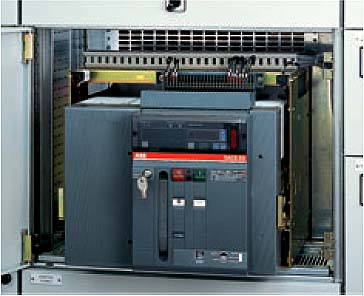
Отсек автоматического выключателя
[Рис. ABB]Тематики
- НКУ (шкафы, пульты,...)
EN
Русско-английский словарь нормативно-технической терминологии > отсек автоматического выключателя
-
13 как (...) так и
1) Mathematics: as well as, just as (...) so, neither (...) nor2) Makarov: both (...) and -
14 как так и
1) Mathematics: (...) as well as, (...) just as (...) so, (...) neither (...) nor2) Makarov: (...) both (...) and -
15 Н-252
НУ И НУ! АЙ ДА НУ! both coll Interj these forms only fixed WOused to express surprise, delight, disapprov al, reproach etchow do you like that!well, I'll be (damned (a monkey's uncle etc))! well now! well, well (, well) well, what do you know! well, I never!«Так вот ты... запер его (полицмейстера), беднягу, в сор-тирной кабинке, припер дверцу метлой и не выпускал...» -«Серьезно? - сказал Виктор. - Ну и ну. То-то он сегодня на меня весь день волком смотрит» (Стругацкие 1). "What happened... is that you backed him (the police chief) into the toilet. Then you barricaded the door with a broom and refused to let him out...." "No kidding," said Victor. "How do you like that? No wonder he's been giving me dirty looks all day" (1a).Уже вернувшись из-за границы, Федор Лиховидов укоренился в Пензе, при тамошнем генерал-губернаторе. В Каргине знакомые видели его фотографию и после долго покачивали головами, растерянно чмокали языками: «Ну и ну!..»... «С какими людьми дело водит, а?» (Шолохов 3). On his return from abroad Fyodor Likhovi-dov settled in Penza, at the residence of the Governor General. His acquaintances in Karginskaya once saw a photograph that caused much shaking of heads and astonished clicking of tongues. "Well, I'll be...!"..."The people he has to do with, eh?" (3a).Илья остановился, покачал головой. Ну и ну! Нашёл, о чём думать. Самое подходящее времечко выбрал, чтобы молодость вспомнить (Абрамов 1). Ilya stopped and shook his head. Well now! What a thing to be thinking about! Talk about choosing the very best time to hark back to the days of your youth! (1a).Прислушиваясь к разговорам Тройского, он только ухмылялся и крутил от восхищения головой: «Ну и ну!» (Паустовский 1). When he listened to Gronsky's conversation, he just grinned and shook his head in admiration, saying: "Well, well'" (1b).Вот он вернется и не узнает её, встретив в НИИ-9, и скажет на «вы»: «Ирина Викторовна! Вы ли это? Что это вы разрисовали себя? Ну и ну!» (Залыгин 1). Soon he'd be back, he'd meet her in the institute, fail to recognize her immediately, and address her formally: "Irina Viktorovna! It can't be you! What have you done with yourself? Well I never!" (1a) -
16 ай да ну!
• НУ И НУ!; АЙ ДА НУ! both coll[Interj; these forms only; fixed WO]=====⇒ used to express surprise, delight, disapproval, reproach etc:- how do you like that!;- well, I'll be (damned <a monkey's uncle etc>)!;- well now!;- well, well (, well);- well, what do you know!;- well, I never!♦ "Так вот ты... запер его [полицмейстера], беднягу, в сортирной кабинке, припер дверцу метлой и не выпускал..." - "Серьезно? - сказал Виктор. - Ну и ну. То-то он сегодня на меня весь день волком смотрит" (Стругацкие 1). "What happened... is that you backed him [the police chief] into the toilet. Then you barricaded the door with a broom and refused to let him out...." "No kidding," said Victor. "How do you like that? No wonder he's been giving me dirty looks all day" (1a).♦ Уже вернувшись из-за границы, Федор Лиховидов укоренился в Пензе, при тамошнем генерал-губернаторе. В Каргине знакомые видели его фотографию и после долго покачивали головами, растерянно чмокали языками: " Ну и ну!.."... "С какими людьми дело водит, а?" (Шолохов 3). On his return from abroad Fyodor Likhovidov settled in Penza, at the residence of the Governor General. His acquaintances in Karginskaya once saw a photograph that caused much shaking of heads and astonished clicking of tongues. "Well, I'll be...!"..."The people he has to do with, eh?" (3a).♦ Илья остановился, покачал головой. Ну и ну! Нашёл, о чём думать. Самое подходящее времечко выбрал, чтобы молодость вспомнить (Абрамов 1). Ilya stopped and shook his head. Well now! What a thing to be thinking about! Tklk about choosing the very best time to hark back to the days of your youth! (1a).♦ Прислушиваясь к разговорам Гронского, он только ухмылялся и крутил от восхищения головой: " Ну и ну!" (Паустовский 1). When he listened to Gronsky's conversation, he just grinned and shook his head in admiration, saying: "Wfell, well'" (1b).♦ Вот он вернётся и не узнает её, встретив в НИИ-9, и скажет на " вы": "Ирина Викторовна! Вы ли это? Что это вы разрисовали себя? Ну и ну!" (Залыгин 1). Soon he'd be back, he'd meet her in the institute, fail to recognize her immediately, and address her formally: "Irina Viktorovna! It cant be you! What have you done with yourself? Well I never!" (1a)Большой русско-английский фразеологический словарь > ай да ну!
-
17 ну и ну!
• НУ И НУ!; АЙ ДА НУ! both coll[Interj; these forms only; fixed WO]=====⇒ used to express surprise, delight, disapproval, reproach etc:- how do you like that!;- well, I'll be (damned <a monkey's uncle etc>)!;- well now!;- well, well (, well);- well, what do you know!;- well, I never!♦ "Так вот ты... запер его [полицмейстера], беднягу, в сортирной кабинке, припер дверцу метлой и не выпускал..." - "Серьезно? - сказал Виктор. - Ну и ну. То-то он сегодня на меня весь день волком смотрит" (Стругацкие 1). "What happened... is that you backed him [the police chief] into the toilet. Then you barricaded the door with a broom and refused to let him out...." "No kidding," said Victor. "How do you like that? No wonder he's been giving me dirty looks all day" (1a).♦ Уже вернувшись из-за границы, Федор Лиховидов укоренился в Пензе, при тамошнем генерал-губернаторе. В Каргине знакомые видели его фотографию и после долго покачивали головами, растерянно чмокали языками: " Ну и ну!.."... "С какими людьми дело водит, а?" (Шолохов 3). On his return from abroad Fyodor Likhovidov settled in Penza, at the residence of the Governor General. His acquaintances in Karginskaya once saw a photograph that caused much shaking of heads and astonished clicking of tongues. "Well, I'll be...!"..."The people he has to do with, eh?" (3a).♦ Илья остановился, покачал головой. Ну и ну! Нашёл, о чём думать. Самое подходящее времечко выбрал, чтобы молодость вспомнить (Абрамов 1). Ilya stopped and shook his head. Well now! What a thing to be thinking about! Tklk about choosing the very best time to hark back to the days of your youth! (1a).♦ Прислушиваясь к разговорам Гронского, он только ухмылялся и крутил от восхищения головой: " Ну и ну!" (Паустовский 1). When he listened to Gronsky's conversation, he just grinned and shook his head in admiration, saying: "Wfell, well'" (1b).♦ Вот он вернётся и не узнает её, встретив в НИИ-9, и скажет на " вы": "Ирина Викторовна! Вы ли это? Что это вы разрисовали себя? Ну и ну!" (Залыгин 1). Soon he'd be back, he'd meet her in the institute, fail to recognize her immediately, and address her formally: "Irina Viktorovna! It cant be you! What have you done with yourself? Well I never!" (1a)Большой русско-английский фразеологический словарь > ну и ну!
-
18 модульный центр обработки данных (ЦОД)
модульный центр обработки данных (ЦОД)
-
[Интент]Параллельные тексты EN-RU
[ http://dcnt.ru/?p=9299#more-9299]
Data Centers are a hot topic these days. No matter where you look, this once obscure aspect of infrastructure is getting a lot of attention. For years, there have been cost pressures on IT operations and this, when the need for modern capacity is greater than ever, has thrust data centers into the spotlight. Server and rack density continues to rise, placing DC professionals and businesses in tighter and tougher situations while they struggle to manage their IT environments. And now hyper-scale cloud infrastructure is taking traditional technologies to limits never explored before and focusing the imagination of the IT industry on new possibilities.
В настоящее время центры обработки данных являются широко обсуждаемой темой. Куда ни посмотришь, этот некогда малоизвестный аспект инфраструктуры привлекает все больше внимания. Годами ИТ-отделы испытывали нехватку средств и это выдвинуло ЦОДы в центр внимания, в то время, когда необходимость в современных ЦОДах стала как никогда высокой. Плотность серверов и стоек продолжают расти, все больше усложняя ситуацию для специалистов в области охлаждения и организаций в их попытках управлять своими ИТ-средами. И теперь гипермасштабируемая облачная инфраструктура подвергает традиционные технологии невиданным ранее нагрузкам, и заставляет ИТ-индустрию искать новые возможности.
At Microsoft, we have focused a lot of thought and research around how to best operate and maintain our global infrastructure and we want to share those learnings. While obviously there are some aspects that we keep to ourselves, we have shared how we operate facilities daily, our technologies and methodologies, and, most importantly, how we monitor and manage our facilities. Whether it’s speaking at industry events, inviting customers to our “Microsoft data center conferences” held in our data centers, or through other media like blogging and white papers, we believe sharing best practices is paramount and will drive the industry forward. So in that vein, we have some interesting news to share.
В компании MicroSoft уделяют большое внимание изучению наилучших методов эксплуатации и технического обслуживания своей глобальной инфраструктуры и делятся результатами своих исследований. И хотя мы, конечно, не раскрываем некоторые аспекты своих исследований, мы делимся повседневным опытом эксплуатации дата-центров, своими технологиями и методологиями и, что важнее всего, методами контроля и управления своими объектами. Будь то доклады на отраслевых событиях, приглашение клиентов на наши конференции, которые посвящены центрам обработки данных MicroSoft, и проводятся в этих самых дата-центрах, или использование других средств, например, блоги и спецификации, мы уверены, что обмен передовым опытом имеет первостепенное значение и будет продвигать отрасль вперед.
Today we are sharing our Generation 4 Modular Data Center plan. This is our vision and will be the foundation of our cloud data center infrastructure in the next five years. We believe it is one of the most revolutionary changes to happen to data centers in the last 30 years. Joining me, in writing this blog are Daniel Costello, my director of Data Center Research and Engineering and Christian Belady, principal power and cooling architect. I feel their voices will add significant value to driving understanding around the many benefits included in this new design paradigm.
Сейчас мы хотим поделиться своим планом модульного дата-центра четвертого поколения. Это наше видение и оно будет основанием для инфраструктуры наших облачных дата-центров в ближайшие пять лет. Мы считаем, что это одно из самых революционных изменений в дата-центрах за последние 30 лет. Вместе со мной в написании этого блога участвовали Дэниел Костелло, директор по исследованиям и инжинирингу дата-центров, и Кристиан Белади, главный архитектор систем энергоснабжения и охлаждения. Мне кажется, что их авторитет придаст больше веса большому количеству преимуществ, включенных в эту новую парадигму проектирования.
Our “Gen 4” modular data centers will take the flexibility of containerized servers—like those in our Chicago data center—and apply it across the entire facility. So what do we mean by modular? Think of it like “building blocks”, where the data center will be composed of modular units of prefabricated mechanical, electrical, security components, etc., in addition to containerized servers.
Was there a key driver for the Generation 4 Data Center?Наши модульные дата-центры “Gen 4” будут гибкими с контейнерами серверов – как серверы в нашем чикагском дата-центре. И гибкость будет применяться ко всему ЦОД. Итак, что мы подразумеваем под модульностью? Мы думаем о ней как о “строительных блоках”, где дата-центр будет состоять из модульных блоков изготовленных в заводских условиях электрических систем и систем охлаждения, а также систем безопасности и т.п., в дополнение к контейнеризованным серверам.
Был ли ключевой стимул для разработки дата-центра четвертого поколения?
If we were to summarize the promise of our Gen 4 design into a single sentence it would be something like this: “A highly modular, scalable, efficient, just-in-time data center capacity program that can be delivered anywhere in the world very quickly and cheaply, while allowing for continued growth as required.” Sounds too good to be true, doesn’t it? Well, keep in mind that these concepts have been in initial development and prototyping for over a year and are based on cumulative knowledge of previous facility generations and the advances we have made since we began our investments in earnest on this new design.Если бы нам нужно было обобщить достоинства нашего проекта Gen 4 в одном предложении, это выглядело бы следующим образом: “Центр обработки данных с высоким уровнем модульности, расширяемости, и энергетической эффективности, а также возможностью постоянного расширения, в случае необходимости, который можно очень быстро и дешево развертывать в любом месте мира”. Звучит слишком хорошо для того чтобы быть правдой, не так ли? Ну, не забывайте, что эти концепции находились в процессе начальной разработки и создания опытного образца в течение более одного года и основываются на опыте, накопленном в ходе развития предыдущих поколений ЦОД, а также успехах, сделанных нами со времени, когда мы начали вкладывать серьезные средства в этот новый проект.
One of the biggest challenges we’ve had at Microsoft is something Mike likes to call the ‘Goldilock’s Problem’. In a nutshell, the problem can be stated as:
The worst thing we can do in delivering facilities for the business is not have enough capacity online, thus limiting the growth of our products and services.Одну из самых больших проблем, с которыми приходилось сталкиваться Майкрософт, Майк любит называть ‘Проблемой Лютика’. Вкратце, эту проблему можно выразить следующим образом:
Самое худшее, что может быть при строительстве ЦОД для бизнеса, это не располагать достаточными производственными мощностями, и тем самым ограничивать рост наших продуктов и сервисов.The second worst thing we can do in delivering facilities for the business is to have too much capacity online.
А вторым самым худшим моментом в этой сфере может слишком большое количество производственных мощностей.
This has led to a focus on smart, intelligent growth for the business — refining our overall demand picture. It can’t be too hot. It can’t be too cold. It has to be ‘Just Right!’ The capital dollars of investment are too large to make without long term planning. As we struggled to master these interesting challenges, we had to ensure that our technological plan also included solutions for the business and operational challenges we faced as well.
So let’s take a high level look at our Generation 4 designЭто заставило нас сосредоточиваться на интеллектуальном росте для бизнеса — refining our overall demand picture. Это не должно быть слишком горячим. И это не должно быть слишком холодным. Это должно быть ‘как раз, таким как надо!’ Нельзя делать такие большие капиталовложения без долгосрочного планирования. Пока мы старались решить эти интересные проблемы, мы должны были гарантировать, что наш технологический план будет также включать решения для коммерческих и эксплуатационных проблем, с которыми нам также приходилось сталкиваться.
Давайте рассмотрим наш проект дата-центра четвертого поколенияAre you ready for some great visuals? Check out this video at Soapbox. Click here for the Microsoft 4th Gen Video.
It’s a concept video that came out of my Data Center Research and Engineering team, under Daniel Costello, that will give you a view into what we think is the future.
From a configuration, construct-ability and time to market perspective, our primary goals and objectives are to modularize the whole data center. Not just the server side (like the Chicago facility), but the mechanical and electrical space as well. This means using the same kind of parts in pre-manufactured modules, the ability to use containers, skids, or rack-based deployments and the ability to tailor the Redundancy and Reliability requirements to the application at a very specific level.
Посмотрите это видео, перейдите по ссылке для просмотра видео о Microsoft 4th Gen:
Это концептуальное видео, созданное командой отдела Data Center Research and Engineering, возглавляемого Дэниелом Костелло, которое даст вам наше представление о будущем.
С точки зрения конфигурации, строительной технологичности и времени вывода на рынок, нашими главными целями и задачами агрегатирование всего дата-центра. Не только серверную часть, как дата-центр в Чикаго, но также системы охлаждения и электрические системы. Это означает применение деталей одного типа в сборных модулях, возможность использования контейнеров, салазок, или стоечных систем, а также возможность подстраивать требования избыточности и надежности для данного приложения на очень специфичном уровне.Our goals from a cost perspective were simple in concept but tough to deliver. First and foremost, we had to reduce the capital cost per critical Mega Watt by the class of use. Some applications can run with N-level redundancy in the infrastructure, others require a little more infrastructure for support. These different classes of infrastructure requirements meant that optimizing for all cost classes was paramount. At Microsoft, we are not a one trick pony and have many Online products and services (240+) that require different levels of operational support. We understand that and ensured that we addressed it in our design which will allow us to reduce capital costs by 20%-40% or greater depending upon class.
Нашими целями в области затрат были концептуально простыми, но трудно реализуемыми. В первую очередь мы должны были снизить капитальные затраты в пересчете на один мегаватт, в зависимости от класса резервирования. Некоторые приложения могут вполне работать на базе инфраструктуры с резервированием на уровне N, то есть без резервирования, а для работы других приложений требуется больше инфраструктуры. Эти разные классы требований инфраструктуры подразумевали, что оптимизация всех классов затрат имеет преобладающее значение. В Майкрософт мы не ограничиваемся одним решением и располагаем большим количеством интерактивных продуктов и сервисов (240+), которым требуются разные уровни эксплуатационной поддержки. Мы понимаем это, и учитываем это в своем проекте, который позволит нам сокращать капитальные затраты на 20%-40% или более в зависимости от класса.For example, non-critical or geo redundant applications have low hardware reliability requirements on a location basis. As a result, Gen 4 can be configured to provide stripped down, low-cost infrastructure with little or no redundancy and/or temperature control. Let’s say an Online service team decides that due to the dramatically lower cost, they will simply use uncontrolled outside air with temperatures ranging 10-35 C and 20-80% RH. The reality is we are already spec-ing this for all of our servers today and working with server vendors to broaden that range even further as Gen 4 becomes a reality. For this class of infrastructure, we eliminate generators, chillers, UPSs, and possibly lower costs relative to traditional infrastructure.
Например, некритичные или гео-избыточные системы имеют низкие требования к аппаратной надежности на основе местоположения. В результате этого, Gen 4 можно конфигурировать для упрощенной, недорогой инфраструктуры с низким уровнем (или вообще без резервирования) резервирования и / или температурного контроля. Скажем, команда интерактивного сервиса решает, что, в связи с намного меньшими затратами, они будут просто использовать некондиционированный наружный воздух с температурой 10-35°C и влажностью 20-80% RH. В реальности мы уже сегодня предъявляем эти требования к своим серверам и работаем с поставщиками серверов над еще большим расширением диапазона температур, так как наш модуль и подход Gen 4 становится реальностью. Для подобного класса инфраструктуры мы удаляем генераторы, чиллеры, ИБП, и, возможно, будем предлагать более низкие затраты, по сравнению с традиционной инфраструктурой.
Applications that demand higher level of redundancy or temperature control will use configurations of Gen 4 to meet those needs, however, they will also cost more (but still less than traditional data centers). We see this cost difference driving engineering behavioral change in that we predict more applications will drive towards Geo redundancy to lower costs.
Системы, которым требуется более высокий уровень резервирования или температурного контроля, будут использовать конфигурации Gen 4, отвечающие этим требованиям, однако, они будут также стоить больше. Но все равно они будут стоить меньше, чем традиционные дата-центры. Мы предвидим, что эти различия в затратах будут вызывать изменения в методах инжиниринга, и по нашим прогнозам, это будет выражаться в переходе все большего числа систем на гео-избыточность и меньшие затраты.
Another cool thing about Gen 4 is that it allows us to deploy capacity when our demand dictates it. Once finalized, we will no longer need to make large upfront investments. Imagine driving capital costs more closely in-line with actual demand, thus greatly reducing time-to-market and adding the capacity Online inherent in the design. Also reduced is the amount of construction labor required to put these “building blocks” together. Since the entire platform requires pre-manufacture of its core components, on-site construction costs are lowered. This allows us to maximize our return on invested capital.
Еще одно достоинство Gen 4 состоит в том, что он позволяет нам разворачивать дополнительные мощности, когда нам это необходимо. Как только мы закончим проект, нам больше не нужно будет делать большие начальные капиталовложения. Представьте себе возможность более точного согласования капитальных затрат с реальными требованиями, и тем самым значительного снижения времени вывода на рынок и интерактивного добавления мощностей, предусматриваемого проектом. Также снижен объем строительных работ, требуемых для сборки этих “строительных блоков”. Поскольку вся платформа требует предварительного изготовления ее базовых компонентов, затраты на сборку также снижены. Это позволит нам увеличить до максимума окупаемость своих капиталовложений.
Мы все подвергаем сомнениюIn our design process, we questioned everything. You may notice there is no roof and some might be uncomfortable with this. We explored the need of one and throughout our research we got some surprising (positive) results that showed one wasn’t needed.
В своем процессе проектирования мы все подвергаем сомнению. Вы, наверное, обратили внимание на отсутствие крыши, и некоторым специалистам это могло не понравиться. Мы изучили необходимость в крыше и в ходе своих исследований получили удивительные результаты, которые показали, что крыша не нужна.
Серийное производство дата центров
In short, we are striving to bring Henry Ford’s Model T factory to the data center. http://en.wikipedia.org/wiki/Henry_Ford#Model_T. Gen 4 will move data centers from a custom design and build model to a commoditized manufacturing approach. We intend to have our components built in factories and then assemble them in one location (the data center site) very quickly. Think about how a computer, car or plane is built today. Components are manufactured by different companies all over the world to a predefined spec and then integrated in one location based on demands and feature requirements. And just like Henry Ford’s assembly line drove the cost of building and the time-to-market down dramatically for the automobile industry, we expect Gen 4 to do the same for data centers. Everything will be pre-manufactured and assembled on the pad.Мы хотим применить модель автомобильной фабрики Генри Форда к дата-центру. Проект Gen 4 будет способствовать переходу от модели специализированного проектирования и строительства к товарно-производственному, серийному подходу. Мы намерены изготавливать свои компоненты на заводах, а затем очень быстро собирать их в одном месте, в месте строительства дата-центра. Подумайте о том, как сегодня изготавливается компьютер, автомобиль или самолет. Компоненты изготавливаются по заранее определенным спецификациям разными компаниями во всем мире, затем собираются в одном месте на основе спроса и требуемых характеристик. И точно так же как сборочный конвейер Генри Форда привел к значительному уменьшению затрат на производство и времени вывода на рынок в автомобильной промышленности, мы надеемся, что Gen 4 сделает то же самое для дата-центров. Все будет предварительно изготавливаться и собираться на месте.
Невероятно энергоэффективный ЦОД
And did we mention that this platform will be, overall, incredibly energy efficient? From a total energy perspective not only will we have remarkable PUE values, but the total cost of energy going into the facility will be greatly reduced as well. How much energy goes into making concrete? Will we need as much of it? How much energy goes into the fuel of the construction vehicles? This will also be greatly reduced! A key driver is our goal to achieve an average PUE at or below 1.125 by 2012 across our data centers. More than that, we are on a mission to reduce the overall amount of copper and water used in these facilities. We believe these will be the next areas of industry attention when and if the energy problem is solved. So we are asking today…“how can we build a data center with less building”?А мы упоминали, что эта платформа будет, в общем, невероятно энергоэффективной? С точки зрения общей энергии, мы получим не только поразительные значения PUE, но общая стоимость энергии, затраченной на объект будет также значительно снижена. Сколько энергии идет на производство бетона? Нам нужно будет столько энергии? Сколько энергии идет на питание инженерных строительных машин? Это тоже будет значительно снижено! Главным стимулом является достижение среднего PUE не больше 1.125 для всех наших дата-центров к 2012 году. Более того, у нас есть задача сокращения общего количества меди и воды в дата-центрах. Мы думаем, что эти задачи станут следующей заботой отрасли после того как будет решена энергетическая проблема. Итак, сегодня мы спрашиваем себя…“как можно построить дата-центр с меньшим объемом строительных работ”?
Строительство дата центров без чиллеровWe have talked openly and publicly about building chiller-less data centers and running our facilities using aggressive outside economization. Our sincerest hope is that Gen 4 will completely eliminate the use of water. Today’s data centers use massive amounts of water and we see water as the next scarce resource and have decided to take a proactive stance on making water conservation part of our plan.
Мы открыто и публично говорили о строительстве дата-центров без чиллеров и активном использовании в наших центрах обработки данных технологий свободного охлаждения или фрикулинга. Мы искренне надеемся, что Gen 4 позволит полностью отказаться от использования воды. Современные дата-центры расходуют большие объемы воды и так как мы считаем воду следующим редким ресурсом, мы решили принять упреждающие меры и включить экономию воды в свой план.
By sharing this with the industry, we believe everyone can benefit from our methodology. While this concept and approach may be intimidating (or downright frightening) to some in the industry, disclosure ultimately is better for all of us.
Делясь этим опытом с отраслью, мы считаем, что каждый сможет извлечь выгоду из нашей методологией. Хотя эта концепция и подход могут показаться пугающими (или откровенно страшными) для некоторых отраслевых специалистов, раскрывая свои планы мы, в конечном счете, делаем лучше для всех нас.
Gen 4 design (even more than just containers), could reduce the ‘religious’ debates in our industry. With the central spine infrastructure in place, containers or pre-manufactured server halls can be either AC or DC, air-side economized or water-side economized, or not economized at all (though the sanity of that might be questioned). Gen 4 will allow us to decommission, repair and upgrade quickly because everything is modular. No longer will we be governed by the initial decisions made when constructing the facility. We will have almost unlimited use and re-use of the facility and site. We will also be able to use power in an ultra-fluid fashion moving load from critical to non-critical as use and capacity requirements dictate.
Проект Gen 4 позволит уменьшить ‘религиозные’ споры в нашей отрасли. Располагая базовой инфраструктурой, контейнеры или сборные серверные могут оборудоваться системами переменного или постоянного тока, воздушными или водяными экономайзерами, или вообще не использовать экономайзеры. Хотя можно подвергать сомнению разумность такого решения. Gen 4 позволит нам быстро выполнять работы по выводу из эксплуатации, ремонту и модернизации, поскольку все будет модульным. Мы больше не будем руководствоваться начальными решениями, принятыми во время строительства дата-центра. Мы сможем использовать этот дата-центр и инфраструктуру в течение почти неограниченного периода времени. Мы также сможем применять сверхгибкие методы использования электрической энергии, переводя оборудование в режимы критической или некритической нагрузки в соответствии с требуемой мощностью.
Gen 4 – это стандартная платформаFinally, we believe this is a big game changer. Gen 4 will provide a standard platform that our industry can innovate around. For example, all modules in our Gen 4 will have common interfaces clearly defined by our specs and any vendor that meets these specifications will be able to plug into our infrastructure. Whether you are a computer vendor, UPS vendor, generator vendor, etc., you will be able to plug and play into our infrastructure. This means we can also source anyone, anywhere on the globe to minimize costs and maximize performance. We want to help motivate the industry to further innovate—with innovations from which everyone can reap the benefits.
Наконец, мы уверены, что это будет фактором, который значительно изменит ситуацию. Gen 4 будет представлять собой стандартную платформу, которую отрасль сможет обновлять. Например, все модули в нашем Gen 4 будут иметь общепринятые интерфейсы, четко определяемые нашими спецификациями, и оборудование любого поставщика, которое отвечает этим спецификациям можно будет включать в нашу инфраструктуру. Независимо от того производите вы компьютеры, ИБП, генераторы и т.п., вы сможете включать свое оборудование нашу инфраструктуру. Это означает, что мы также сможем обеспечивать всех, в любом месте земного шара, тем самым сводя до минимума затраты и максимальной увеличивая производительность. Мы хотим создать в отрасли мотивацию для дальнейших инноваций – инноваций, от которых каждый сможет получать выгоду.
Главные характеристики дата-центров четвертого поколения Gen4To summarize, the key characteristics of our Generation 4 data centers are:
Scalable
Plug-and-play spine infrastructure
Factory pre-assembled: Pre-Assembled Containers (PACs) & Pre-Manufactured Buildings (PMBs)
Rapid deployment
De-mountable
Reduce TTM
Reduced construction
Sustainable measuresНиже приведены главные характеристики дата-центров четвертого поколения Gen 4:
Расширяемость;
Готовая к использованию базовая инфраструктура;
Изготовление в заводских условиях: сборные контейнеры (PAC) и сборные здания (PMB);
Быстрота развертывания;
Возможность демонтажа;
Снижение времени вывода на рынок (TTM);
Сокращение сроков строительства;
Экологичность;Map applications to DC Class
We hope you join us on this incredible journey of change and innovation!
Long hours of research and engineering time are invested into this process. There are still some long days and nights ahead, but the vision is clear. Rest assured however, that we as refine Generation 4, the team will soon be looking to Generation 5 (even if it is a bit farther out). There is always room to get better.
Использование систем электропитания постоянного тока.
Мы надеемся, что вы присоединитесь к нам в этом невероятном путешествии по миру изменений и инноваций!
На этот проект уже потрачены долгие часы исследований и проектирования. И еще предстоит потратить много дней и ночей, но мы имеем четкое представление о конечной цели. Однако будьте уверены, что как только мы доведем до конца проект модульного дата-центра четвертого поколения, мы вскоре начнем думать о проекте дата-центра пятого поколения. Всегда есть возможность для улучшений.So if you happen to come across Goldilocks in the forest, and you are curious as to why she is smiling you will know that she feels very good about getting very close to ‘JUST RIGHT’.
Generations of Evolution – some background on our data center designsТак что, если вы встретите в лесу девочку по имени Лютик, и вам станет любопытно, почему она улыбается, вы будете знать, что она очень довольна тем, что очень близко подошла к ‘ОПИМАЛЬНОМУ РЕШЕНИЮ’.
Поколения эволюции – история развития наших дата-центровWe thought you might be interested in understanding what happened in the first three generations of our data center designs. When Ray Ozzie wrote his Software plus Services memo it posed a very interesting challenge to us. The winds of change were at ‘tornado’ proportions. That “plus Services” tag had some significant (and unstated) challenges inherent to it. The first was that Microsoft was going to evolve even further into an operations company. While we had been running large scale Internet services since 1995, this development lead us to an entirely new level. Additionally, these “services” would span across both Internet and Enterprise businesses. To those of you who have to operate “stuff”, you know that these are two very different worlds in operational models and challenges. It also meant that, to achieve the same level of reliability and performance required our infrastructure was going to have to scale globally and in a significant way.
Мы подумали, что может быть вам будет интересно узнать историю первых трех поколений наших центров обработки данных. Когда Рэй Оззи написал свою памятную записку Software plus Services, он поставил перед нами очень интересную задачу. Ветра перемен двигались с ураганной скоростью. Это окончание “plus Services” скрывало в себе какие-то значительные и неопределенные задачи. Первая заключалась в том, что Майкрософт собиралась в еще большей степени стать операционной компанией. Несмотря на то, что мы управляли большими интернет-сервисами, начиная с 1995 г., эта разработка подняла нас на абсолютно новый уровень. Кроме того, эти “сервисы” охватывали интернет-компании и корпорации. Тем, кому приходится всем этим управлять, известно, что есть два очень разных мира в области операционных моделей и задач. Это также означало, что для достижения такого же уровня надежности и производительности требовалось, чтобы наша инфраструктура располагала значительными возможностями расширения в глобальных масштабах.
It was that intense atmosphere of change that we first started re-evaluating data center technology and processes in general and our ideas began to reach farther than what was accepted by the industry at large. This was the era of Generation 1. As we look at where most of the world’s data centers are today (and where our facilities were), it represented all the known learning and design requirements that had been in place since IBM built the first purpose-built computer room. These facilities focused more around uptime, reliability and redundancy. Big infrastructure was held accountable to solve all potential environmental shortfalls. This is where the majority of infrastructure in the industry still is today.
Именно в этой атмосфере серьезных изменений мы впервые начали переоценку ЦОД-технологий и технологий вообще, и наши идеи начали выходить за пределы общепринятых в отрасли представлений. Это была эпоха ЦОД первого поколения. Когда мы узнали, где сегодня располагается большинство мировых дата-центров и где находятся наши предприятия, это представляло весь опыт и навыки проектирования, накопленные со времени, когда IBM построила первую серверную. В этих ЦОД больше внимания уделялось бесперебойной работе, надежности и резервированию. Большая инфраструктура была призвана решать все потенциальные экологические проблемы. Сегодня большая часть инфраструктуры все еще находится на этом этапе своего развития.
We soon realized that traditional data centers were quickly becoming outdated. They were not keeping up with the demands of what was happening technologically and environmentally. That’s when we kicked off our Generation 2 design. Gen 2 facilities started taking into account sustainability, energy efficiency, and really looking at the total cost of energy and operations.
Очень быстро мы поняли, что стандартные дата-центры очень быстро становятся устаревшими. Они не поспевали за темпами изменений технологических и экологических требований. Именно тогда мы стали разрабатывать ЦОД второго поколения. В этих дата-центрах Gen 2 стали принимать во внимание такие факторы как устойчивое развитие, энергетическая эффективность, а также общие энергетические и эксплуатационные.
No longer did we view data centers just for the upfront capital costs, but we took a hard look at the facility over the course of its life. Our Quincy, Washington and San Antonio, Texas facilities are examples of our Gen 2 data centers where we explored and implemented new ways to lessen the impact on the environment. These facilities are considered two leading industry examples, based on their energy efficiency and ability to run and operate at new levels of scale and performance by leveraging clean hydro power (Quincy) and recycled waste water (San Antonio) to cool the facility during peak cooling months.
Мы больше не рассматривали дата-центры только с точки зрения начальных капитальных затрат, а внимательно следили за работой ЦОД на протяжении его срока службы. Наши объекты в Куинси, Вашингтоне, и Сан-Антонио, Техас, являются образцами наших ЦОД второго поколения, в которых мы изучали и применяли на практике новые способы снижения воздействия на окружающую среду. Эти объекты считаются двумя ведущими отраслевыми примерами, исходя из их энергетической эффективности и способности работать на новых уровнях производительности, основанных на использовании чистой энергии воды (Куинси) и рециклирования отработанной воды (Сан-Антонио) для охлаждения объекта в самых жарких месяцах.
As we were delivering our Gen 2 facilities into steel and concrete, our Generation 3 facilities were rapidly driving the evolution of the program. The key concepts for our Gen 3 design are increased modularity and greater concentration around energy efficiency and scale. The Gen 3 facility will be best represented by the Chicago, Illinois facility currently under construction. This facility will seem very foreign compared to the traditional data center concepts most of the industry is comfortable with. In fact, if you ever sit around in our container hanger in Chicago it will look incredibly different from a traditional raised-floor data center. We anticipate this modularization will drive huge efficiencies in terms of cost and operations for our business. We will also introduce significant changes in the environmental systems used to run our facilities. These concepts and processes (where applicable) will help us gain even greater efficiencies in our existing footprint, allowing us to further maximize infrastructure investments.
Так как наши ЦОД второго поколения строились из стали и бетона, наши центры обработки данных третьего поколения начали их быстро вытеснять. Главными концептуальными особенностями ЦОД третьего поколения Gen 3 являются повышенная модульность и большее внимание к энергетической эффективности и масштабированию. Дата-центры третьего поколения лучше всего представлены объектом, который в настоящее время строится в Чикаго, Иллинойс. Этот ЦОД будет выглядеть очень необычно, по сравнению с общепринятыми в отрасли представлениями о дата-центре. Действительно, если вам когда-либо удастся побывать в нашем контейнерном ангаре в Чикаго, он покажется вам совершенно непохожим на обычный дата-центр с фальшполом. Мы предполагаем, что этот модульный подход будет способствовать значительному повышению эффективности нашего бизнеса в отношении затрат и операций. Мы также внесем существенные изменения в климатические системы, используемые в наших ЦОД. Эти концепции и технологии, если применимо, позволят нам добиться еще большей эффективности наших существующих дата-центров, и тем самым еще больше увеличивать капиталовложения в инфраструктуру.
This is definitely a journey, not a destination industry. In fact, our Generation 4 design has been under heavy engineering for viability and cost for over a year. While the demand of our commercial growth required us to make investments as we grew, we treated each step in the learning as a process for further innovation in data centers. The design for our future Gen 4 facilities enabled us to make visionary advances that addressed the challenges of building, running, and operating facilities all in one concerted effort.
Это определенно путешествие, а не конечный пункт назначения. На самом деле, наш проект ЦОД четвертого поколения подвергался серьезным испытаниям на жизнеспособность и затраты на протяжении целого года. Хотя необходимость в коммерческом росте требовала от нас постоянных капиталовложений, мы рассматривали каждый этап своего развития как шаг к будущим инновациям в области дата-центров. Проект наших будущих ЦОД четвертого поколения Gen 4 позволил нам делать фантастические предположения, которые касались задач строительства, управления и эксплуатации объектов как единого упорядоченного процесса.
Тематики
Синонимы
EN
Русско-английский словарь нормативно-технической терминологии > модульный центр обработки данных (ЦОД)
-
19 пьяный
1) General subject: bacchic, bibacious, blind drunk, (вдребезги) blind to the world, boxed, canned, cock-eyed, disguised with liquor, drunken man, ebrious, flyblown, foxed, geed up, gingery, glassy eyed, groggy, high, in (one's) pot, in (one's) pots, in drink, in liquor, in wine, inebriate, inebrious, intoxicated, jagged, lit up, lush, off (one's) nut, overcome by drink, overcome with drink, overtaken in drink, pickled, pie eyed, pinko, queer, screwy, shot away, slewed, sodden, sotted, sozzled, spiffed, stewed, the worse for liquor, tiddly, tight, up the pole, vinose, vinous, wall eyed, winy, wiped-out2) Naval: shot-away3) Colloquial: baked, boozy, bousy, disguised, drunk back, loaded, lubricated, malty, pie-eyed, plastered, two sheets to the wind, under-the-table, wat, wet, bevvied, stocious, stotious, drunk, drunken, pissed, topsy4) Slang: nimptopsical5) American: frazzled, fuzzled, gaged, glassy-eyed, liquored up, lit, looped, tanked, vulcanized, half-blind, half-canned, half-crocked, belted6) Obsolete: intoxicate7) Military: one over the eight8) Bookish: ebriate9) Jocular: ebriose10) Rare: tempulent11) Law: drunken person12) Australian slang: half-seas-over14) Scottish language: fou as a wulk15) Jargon: Kentucky fried, Rileyed, awash, bagged, bamboozled, banged, barreled up, behind the cork, bewitched, blind, blitzed, blotto, boiled (How can you get so boiled on wine? Как ты мог стать таким пьяным от вина?), bombed, bongoed, boozed up, bottled, bowzed, bruised, buzzey, canned up, clobbered, comfortable, corked (up) (You'd be corked up, too, if you'd drunk as much as I have. Ты тоже был бы пьян если бы выпил столько как я.), corned, crocked, cronk, crumped up, cuckooed, dagged, damaged, decks awash, discouraged, edged, elevated, embalmed, faint, flooey, fluffy, four sheets in the wind, fractured, fried, geared up, ginned, glazed, glued, greased, half under, half-corned, half-screwed, half-stewed, hammered, happy (обычно слегка), high lonesome, hoary-eyed, hooted, hot, hot short, how-come-ye-so, illuminated, in (one's) cups, in the gun, jazzed, jug-steamed, jugged (up), juiced, juiced (up), jungled, keyed up to the roof, lathered, limp, lined, lit to the guards, lit up like the gills, lit up like the guards, loop-legged, lushed-up, maggoty, melted, merry, moppy, mulled mulled up, nazy, noggy, oiled, on the lee lurch, on the wagon, organized, orie-eyed, orry-eyed, oryide, ossified, out of one's skull, over the hump, overset, owl-eyed, owly eyed, paid, parboiled, pasted, pee'd, peonied, pepped, peppedup, peppy, piffed, pifficated, pigeon-eyed, pilfered, piped, pizz, plunked, polished up, polluted, potted (up), preserved, primed, primed to the ears, primed to the muzzle, pruned, rigid, sawed, scammered, schnozzle, scraunched, scronched, scrooched, shikker, slammed (АБ), sleepy, slopped, slopped over, sloshed, smashed, smoked, snapped, snozzle, snozzled, snubbed, snuffy, soaked, soapy-eyed, soshed, soused, sozzly, spifflicated, sprung, squiffed, squiffy, striped, stunned, swacked, swazzled, swiped, tandiged, tangle-footed, teed up, three sheets in (to) the wind, tipped, torn up (alcohol or drug intoxicated: He wasn't just drunk - he was massively tore up), tuned, tweased, tweeked, twisted, varnished, vegetable, wall-eyed, weak-Jointed, well oiled well-oiled, whipped, whipsy, whittled, whooshed, wilted, wing-heavy, woofled, zonked, chipper (A glass of wine will make her chipper almost immediately. Она становится почти сразу пьяной от стакана вина.), flabbergasted (After about six beers, Harry became flabbergasted and slid under the table. После приблизительно шести кружек пива Гэри опьянел и сполз под стол.), belly up (After four beers, I was belly up, for sure. После четырёх бутылок пива, я точно был пьян.), dinged out (Gary is dinged out and can't drive. Гэри пьян и не может управлять автомобилем.), elephant's (He shouldn't be driving! He's bloody elephant's.), piffled (He was so fiffled he couldn't walk. Он был настолько пьян, что не мог идти.), S.F. (How can that guy get so S.F.? Как мог этот парень так опьянеть?), coo-coo (How'd you get coo-coo so soon? Как ты мог так быстро опьянет?), arseholed (I got totally arseholed on Saturday night.), blown up (I guess I'm a little too blow up to drive Я думаю, я чересчур пьян, чтобы управлять автомобилем.), candу (I thing he's too candy to drive. Я думаю он слышком пьян для вождения.), dipsy (I think that Jed is permanently dipsy. Я думаю Джед постоянно пьян.), that way (I'm sorry, but Fred's that way again and can't drive to work. Я извиняюсь, но Фред опять пьян и не может приехать на работу.), glad (In fact, she was too glad to stand up. В действительности она была слишком пьяна чтобы стоять.), blooey (Man, I' m totaly blooey. I'm stoned to the bones. Чувак, я пьян в стельку.), sauced (Man, do you look sauced. Чувак, ты выглядишь пьяным.), clear (Man, is she ever clear. Чувак, она всегда пьяна.), clinched (Oh, brother, are you clinched! Так ты, брат, пьян!), fuzzy (She was too fuzzy to drive home. Она сильно пьяна чтобы ехать домой.), topsy-turvy (She was too topsy-turvy to stand up. Она была слишком пьяна чтобы стоять.), schicker (Two glasses of wine and she was totally schicker. Два стакана вина и она была совершенно пьяна.), floored (You'd be floored, too, if you'd drank a dozen beers. Ты бы тоже был пьян если бы выпил дюжину бутылок пива.), squizzed, stonkered, impaired, swizzled, whistled, whiffled, Brahms and Liszt, blown away, (от вина) grape shot, groggified, rattled, half-baked, half in the bag, half lit, have-sprung, half up the pole, upholstered, both sheets in the wind (She's both sheets in the wind at the moment. В данный момент она пьяна.), boozy-woozy, hard up, walking on rocky socks, hit under the wing, hepped(up), horizontal, honked, honkers, hooched up, screwed tight, screwed, blued, and tattooed, waxed, in the bag, in the suds, in bad shape, in a bad way, in rare form, shagged, shredded, buzzy, jambled, jiggered, skunked, slewy, sizzled, carrying a heavy load, juiced to the gills, electrified, on the sauce, tanky, tan someone's hide, laid to the bone, slugged, slushed (up), waa-zooed, whazood, snooted, snoozamorooed, soggy, loaded to the gills, loaded to the barrel, sopping(wet), soppy, soupy, spifficated, spificated, winged, maggotty, maxed out, starched, starchy, messed up, zagged, zissified, zoobang, zooted, zorked, (игра слов на Mickey Finn) Mickey finished, milled, mopped, mixed (up), moist around the edges, stuccoed, stozzled, muddied (up), muggy, swamped, stung, feshnushkied, flaked out, out cold, out of one's head, out of the way, discomboobulated, swoozled, swozzled, folded, foozlified, perked (up), batted, funked out, fuzzed, thawed, tiddled, gauged, pixilated, pixolated, phfft, pifflicated, pipped(up), tiffled, giffed, plootered, poopied, pop-eyed, popped, tipply, toasted, putrid, psyched (out), pummeled, topsy-boozy, quartzed, put the bed with a shovel, totalled, touched, trammeled, cotton-eyed, pafisticated, packaged, out, all geezed up, balmy, bent, blue, blue-eyed, breezy, cockeyed, cooked, crump, cut, fired up, floating, fogmatic, fresh, full, gassed, geezed, ginned up, grogged, guzzled, half-cocked half cocked, heeled, jake, jammed, jolly, knocked out, lit (особенно в приподнятом настроении), loaded for bear, lushed up, on, out of it, out on the roof, overboard, potted, puggled, pushed, queered, raunchie, raunchy, ready the ready, right, ripe, ripped off, ripped up, rocky, ronchie, rosy, rotten, rum dum, rum-dam, rumdum, sap-happy, screwed, sent, shaved, shot, shot in the neck, steamed up, stiff, stinko, tacky, tired, under the table, under the weather, up a tree, wiped out, woozy, wuzzy, zig-zag16) Simple: lumpy18) Makarov: bibulous, ebriated, overtaken with drink19) Taboo: bladdered (от bladder - мочевой пузырь), langered, leathered, peed, screwed up, shit-faced, shitty, snotted, tight as a fart, wazzed20) Aphorism: cherry- marry21) Idiomatic expression: loaded to the gunwales -
20 конец
м.1) ( конечный предел) end; (окончание тж.) endingприходи́ть к концу́ — come to an end
подходи́ть, приближа́ться к концу́ — draw to a close [-s], be approaching completion
от нача́ла до конца́ — from beginning to end; from start to finish
к концу́ пери́ода — towards the end of the period
к концу́ ноября́ — by / towards the end of November
доводи́ть что-л до конца́ — carry smth through; carry smth to its conclusion; ( завершать) complete smth, put a finish to smth
в конце́ ве́ка — at the close of the century
в конце́ дня — at the end of the day
до конца́ сезо́на — for the rest of the season
коне́ц свя́зи (реплика в радиопереговорах) — over and out
2) разг. ( место назначения) destinationв оди́н коне́ц — one way
биле́т в оди́н коне́ц — single ticket брит.; one-way ticket амер.
в о́ба конца́ — there and back; both ways
биле́т в о́ба конца́ — return ticket брит.; round-trip ticket амер.
3) ( оконечность) endто́нкий коне́ц — tip
о́стрый коне́ц — point
то́лстый коне́ц — butt (end)
4) мор. (канат, верёвка) ropeнезакреплённый коне́ц, свобо́дный коне́ц — tag; loose end
спаса́тельный коне́ц — lifeline
отда́ть концы́ (отчалить) — cast off
5) эвф. (смерть, уничтожение) end, deathтут ему́ и коне́ц наста́л — (and) that was the end of him; it was curtains for him идиом.
6) вульг. ( половой член) dick, tool••коне́ц - де́лу вене́ц посл. — ≈ all's well that ends well
коне́ц све́та — the end of the world
со всех концо́в све́та — from every corner of the world
конца́ не ви́дно разг. — no end in sight
конца́-кра́ю э́тому нет разг. — there is no end to it
концы́ с конца́ми не схо́дятся (о несоответствии) — it doesn't fit together, it doesn't add up
без конца́ (постоянно) — incessantly, all the way / time, endlessly
бра́ться / взя́ться не с того́ конца́ — start at the wrong end
в конце́ концо́в — in the end, after all; ultimately
до побе́дного конца́ — 1) ( до достижения успеха) to a successful end 2) ( в ожидании исхода) until the last gun is fired
и концы́ в во́ду разг. — and no one will be any the wiser
и де́ло с концо́м разг. — and there is and end to it
из конца́ в коне́ц — from end to end
на худо́й коне́ц разг. — if the worst comes to the worst; at worst
под коне́ц — towards the end
положи́ть коне́ц чему́-л — put an end to smth
отда́ть концы́ (умереть) прост. — turn up one's toes, kick off; (см. тж. 4))
своди́ть концы́ с конца́ми разг. — make both ends meet
с конца́ми (бесследно) — without a trace; never to be seen again
так, что (и) концо́в не найти́ — so that there is no way to trace anything
хорони́ть концы́ разг. — remove / cover the traces
См. также в других словарях:
both --- and — {coord. conj.} Used to emphasize that two or more things are talked about. * /Both Frank and Mary were at the party./ * /Millie is both a good swimmer and a good cook./ * /In the program tonight Mary will both sing and dance./ * /The frog can… … Dictionary of American idioms
both --- and — {coord. conj.} Used to emphasize that two or more things are talked about. * /Both Frank and Mary were at the party./ * /Millie is both a good swimmer and a good cook./ * /In the program tonight Mary will both sing and dance./ * /The frog can… … Dictionary of American idioms
Both — Both, conj. As well; not only; equally. [1913 Webster] Note: Both precedes the first of two co[ o]rdinate words or phrases, and is followed by and before the other, both . . . and . . .; as well the one as the other; not only this, but also that; … The Collaborative International Dictionary of English
Well drilling — Tricone rock bit Well drilling is the process of drilling a hole in the ground for the extraction of a natural resource such as ground water, natural gas, or petroleum. Drilling for the exploration of the nature of the material underground (for… … Wikipedia
Well intervention — A well intervention, or well work , is any operation carried out on a oil or gas well during , or at the end of its productive life, that alters the state of the well and or well geometry, provides well diagnostics or manages the production of… … Wikipedia
And the Glass Handed Kites — Infobox Album Name = And the Glass Handed Kites Type = Album Artist = Mew Released = September 19, 2005 Recorded = 2004 2005 Genre = Indie, New prog, Art rock, Dream pop Length = 53:59 Label = Sony BMG Producer = Michael Beinhorn Reviews =… … Wikipedia
Well temperament — (also circular or circulating temperament) is a type of tempered tuning described in 20th century music theory. The term is modelled on the German word wohltemperiert which appears in the title of J.S. Bach s famous composition, The Well Tempered … Wikipedia
And Now for Something Completely Different — DVD cover Directed by Ian MacNaughton Produced by … Wikipedia
Well (play) — Well is a play about illness written by and starring Lisa Kron. Well made its world premier at the Joseph Papp Public Theater in New York City in 2004. The play was directed by Leigh Silverman and also starred Jayne Houdyshell as Lisa s mother,… … Wikipedia
And did those feet in ancient time — is a short poem by William Blake from the preface to his epic Milton a Poem, one of a collection of writings known as the Prophetic Books. The date on the title page of 1804 for Milton is probably when the plates were begun, but the poem was… … Wikipedia
And Miss Reardon Drinks A Little — is an American play written by Paul Zindel and published by Dramatists Play Services. The story surrounds three sisters: Catherine, an alcoholic; Anna, a hypochondriac and Ceil, an attention starved socialite.HistoryPaul Zindel wrote this play in … Wikipedia
