

-
1 номинальное напряжение изоляции (аппарата), Ui
номинальное напряжение изоляции (аппарата), Ui
Значение напряжения, по которому определяют испытательное напряжение при испытании изоляционных свойств, расстояние утечки и воздушные зазоры.
Максимальное значение номинального рабочего напряжения не должно превышать наибольшего значения номинального напряжения изоляции.
Примечание — Для аппарата, у которого номинальное напряжение изоляции не устанавливается, его следует принимать как наибольшее значение любого номинального напряжения
[ ГОСТ Р 50030. 1-2000 ( МЭК 60947-1-99)]EN
rated insulation voltage, Ui
value of voltage to which dielectric tests and creepage distances are referred
[IEC 62314, ed. 1.0 (2006-05)]
rated insulation voltage (RIV)
voltage value assigned by the manufacturer to the equipment or to a part of it, characterizing the specified (long-term) withstand capability of its insulation
NOTE 1 The rated insulation voltage is higher than or equal to the rated voltage of the equipment, or to the rated voltage of the concerned part of the equipment, which is primarily related to functional performance.
NOTE 2 The rated insulation voltage refers to the insulation between electric circuits, between live parts and exposed conductive parts and within an electric circuit.
NOTE 3 For clearances and solid insulation, the peak value of the voltage occurring across the insulation or clearance is the determining value for the rated insulation voltage. For creepage distances the r.m.s. value is the determining value
[IEC 62103, ed. 1.0 (2003-07)]FR
tension assignée d'isolement (TIA)
valeur efficace de la tension de tenue fixée par le constructeur au matériel ou à une de ses parties, caractérisant la capacité de tenue spécifiée (à long terme) de son isolation
NOTE 1 La tension assignée d'isolement est supérieure ou égale à la tension assignée du matériel ou de la partie concernée de l’appareil qui est principalement liée aux caractéristiques fonctionnelles.
NOTE 2 La tension d'isolement assignée se rapporte à l'isolation entre circuits électriques, entre parties conductrices et masses, et à l'intérieur du circuit électrique.
NOTE 3 Pour les distances d'isolement et pour les isolants solides, la tension d'isolement assignée est déterminée par la valeur de crête de la tension apparaissant aux bornes de l'isolant ou de la distance. Pour les lignes de fuites, c'est la tension efficace qu'il faut prendre
[IEC 62103, ed. 1.0 (2003-07)]Тематики
- аппарат, изделие, устройство...
- выключатель автоматический
EN
- rated insulation voltage
- rated insulation voltage, Ui
- RIV
FR
Русско-французский словарь нормативно-технической терминологии > номинальное напряжение изоляции (аппарата), Ui
-
2 номинальное напряжение
номинальное напряжение
Напряжение, установленное изготовителем для прибора
[ ГОСТ Р 52161. 1-2004 ( МЭК 60335-1: 2001)]
номинальное напряжение Uном, кВ
Номинальное междуфазное напряжение электрической сети, для работы в которой предназначены коммутационные аппараты.
[ ГОСТ Р 52726-2007]
номинальное напряжение
Un
Напряжение, применяемое для обозначения или идентификации системы электроснабжения.
[ ГОСТ Р 51317.4.30-2008 (МЭК 61000-4-30:2008)]EN
rated voltage
voltage assigned to the appliance by the manufacturer
[IEC 60335-1, ed. 4.0 (2001-05)]
rated voltage
quantity value assigned, generally by the manufacturer, for a specified operating condition of a machine
[IEC 60034-18-41, ed. 1.0 (2006-10)]
rated voltage
input or output supply voltage for which equipment is designed or specified
[IEC 88528-11, ed. 1.0 (2004-03)]
rated voltage
specified value of the voltage at the terminals of the machine when operating at a rating. If unidirectional, the voltage is the arithmetic mean of the recurring waveform and if alternating it is the root mean square value of the fundamental frequency component of the recurring waveform
NOTE - In the case of a machine with a protective resistor permanently in series, the resistor is considered as an integral part of the machine
[IEC 60349-1, ed. 1.0 (1999-11)]
rated voltage
the value of voltage assigned by the manufacturer to a component, device or equipment and to which operation and performance characteristics are referred
NOTE - Equipment may have more than one rated voltage value or may have a rated voltage range.
[IEC 62497-1, ed. 1.0 (2010-02)]
rated voltage
reference voltage for which the cable is designed, and which serves to define the electrical tests
NOTE 1 - The rated voltage is expressed by the combination of two values: Uo/U expressed in volts (V):
Uo being the r.m.s. value between any insulated conductor and "earth" (metal covering of the cable or the surrounding medium);
U being the r.m.s. value between any two phase conductors of a multicore cable or of a system of single-core cables.
In an alternating-current system, the rated voltage of a cable is at least equal to the nominal voltage of the system for which it is intended.
This condition applies both to the value Uo and to the value U.
In a direct current system, the nominal voltage of the system is not higher than 1,5 times the rated voltage of the cable.
NOTE 2 - The operating voltage of a system may permanently exceed the nominal voltage of such a system by 10 %. A cable can be used at a 10 % higher operating voltage than its rated voltage if the latter is at least equal to the nominal voltage of the system
[IEC 60245-1, ed. 4.0 (2003-12)]
rated voltage
highest allowable voltage between the conductors in a twin and multi conductor cable, or between one conductor and an electrical conductive screen, or between the two ends of a single core cable, or earth in unscreened cables
[IEC 60800, ed. 3.0 (2009-07)]
rated voltage
the r.m.s. line-to-line voltage under rated conditions
Primary side of input transformer: ULN
Converter input: UVN
Converter output: UaN
Motor voltage: UAN
[IEC 61800-4, ed. 1.0 (2002-09)]
rated voltage
input or output voltage (for three-phase supply, the phase-to-phase voltage) as declared by the manufacturer
[IEC 62040-1, ed. 1.0 (2008-06)]
nominal voltage, Un
voltage by which a system is designated or identified
[IEC 61000-4-30, ed. 2.0 (2008-10)]FR
tension assignée
tension attribuée à l'appareil par le fabricant
[IEC 60335-1, ed. 4.0 (2001-05)]
tension nominale
tension assignée, généraleme<>value of voltage assigned by the manufacturer, to a componentnt par le constructeur pour des conditions spécifiées de fonctionnement de la machine
[IEC 60034-18-41, ed. 1.0 (2006-10)]
tension assignée
tension spécifiée aux bornes de la machine quand celle-ci fonctionne au régime assigné. Dans le cas d'une tension redressée, sa valeur est égale à la valeur moyenne de l'onde périodique. Dans le cas d'une tension alternative, sa valeur est égale à la valeur efficace de la composante fondamentale de l'onde périodique
NOTE - Dans le cas d'une machine équipée d'une résistance de protection connectée en permanence en série, la résistance est considérée comme faisant partie intégrante de la machine
[IEC 60349-1, ed. 1.0 (1999-11)]
tension assignée
valeur de la tension, assignée par le constructeur à un composant, à un dispositif ou à un matériel, et à laquelle on se réfère pour le fonctionnement et pour les caractéristiques fonctionnelles
NOTE - Les matériels peuvent avoir plusieurs valeurs ou une plage de tensions assignées.
[IEC 62497-1, ed. 1.0 (2010-02)]
tension assignée
tension de référence pour laquelle le conducteur ou le câble est prévu et qui sert à définir les essais électriques
NOTE 1 - La tension assignée est exprimée par la combinaison de deux valeurs Uo /U, exprimées en volts (V):
Uo étant la valeur efficace entre l'âme d'un conducteur isolé quelconque et la «terre» (revêtement métallique du câble au milieu environnant);
U étant la valeur efficace entre les âmes conductrices de deux conducteurs de phase quelconques d'un câble multiconducteur ou d'un système de câbles monoconducteurs ou de conducteurs.
Dans un système à courant alternatif, la tension assignée d'un conducteur ou d’un câble est au moins égale à la tension nominale du système pour lequel il est prévu.
Cette condition s'applique à la fois à la valeur Uo et à la valeur U.
Dans un système à courant continu, la tension nominale admise du système n’est pas supérieure à 1,5 fois la tension assignée du conducteur ou du câble.
NOTE 2 - La tension de service d'un système peut en permanence dépasser la tension nominale dudit système de 10 %. Un conducteur ou un câble peut être utilisé à une tension de service supérieure de 10 % à sa tension assignée si cette dernière est au moins égale à la tension nominale du système
[IEC 60245-1, ed. 4.0 (2003-12)]
tension assignée
tension maximale admissible entre les âmes dans un câble ayant une paire ou multi conducteur ou entre une âme et un écran conducteur électrique ou avec la terre pour un câble non écranté ou encore entre les deux extrémités d’un câble à âme unique
[IEC 60800, ed. 3.0 (2009-07)]
tension assignée
valeur efficace de la tension de ligne (entre phases) dans les conditions assignées
Primaire du transformateur d’entrée: ULN
Entrée du convertisseur: UVN
Sortie du convertisseur: UaN
Moteur: UAN
[IEC 61800-4, ed. 1.0 (2002-09)]
tension assignée
tension d’alimentation d’entrée ou de sortie (dans le cas d’une alimentation triphasée, tension entre phases) déclarée par le constructeur
[IEC 62040-1, ed. 1.0 (2008-06)]
tension nominale, Un
tension par laquelle un réseau est désigné ou identifié
[IEC 61000-4-30, ed. 2.0 (2008-10)]Тематики
- аппарат, изделие, устройство...
- высоковольтный аппарат, оборудование...
- прибор электрический
- электроснабжение в целом
Синонимы
- Un
EN
FR
Русско-французский словарь нормативно-технической терминологии > номинальное напряжение
-
3 коэффициент замыкания на землю
коэффициент замыкания на землю
Отношение наибольшего фазного напряжения в месте металлического замыкания на землю к напряжению в той же точке при отсутствии замыкания.
[ ГОСТ 24291-90]
коэффициент замыкания на землю
Для данного места трехфазной системы заданной конфигурации отношение максимального значения фазного напряжения промышленной частоты на исправном линейном проводнике во время замыкания на землю одного или нескольких линейных проводников в какой-либо точке системы к значению напряжения промышленной частоты в данном месте при отсутствии какого-либо замыкания на землю.
[ ГОСТ Р МЭК 60050-195-2005]
коэффициент замыкания на землю
Отношение напряжения на неповрежденной фазе в рассматриваемой точке трехфазной электрической сети (обычно в точке установки электрооборудования) при замыкании на землю одной или двух других фаз к фазному напряжению рабочей частоты, которое установилось бы в данной точке при устранении замыкания.
Примечание. При определении коэффициента замыкания на землю место замыкания и состояние схемы электрической сети выбираются такими, которые дают наибольшее значение коэффициента
[ ГОСТ 1516.1-76]
коэффициент замыкания на землю
Коэффициент, определяющий отношение влияния на одну или более фаз в любой точке сети во время замыкания на землю другой исправной фазы при наивысшем значении ее напряжения в заданном месте при заданном местоположении трехфазной сети и для заданной конфигурации соответственно в отсутствие любого подобного замыкания. [IEV 604-03-06]
[ ГОСТ Р МЭК 60044-7-2010]EN
earth fault factor
at a given location of a three-phase system, and for a given system configuration, ratio of the highest root-mean-square value of line-to-earth power frequency voltage on a healthy line conductor during an earth fault affecting one or more line conductors at any point on the system, to the root-mean-square value of line-to-earth power frequency voltage which would be obtained at the given location in the absence of any such earth fault
Source: 604-03-06 MOD
[IEV number 195-05-14]FR
facteur de court-circuit à la terre
en un emplacement donné d'un réseau triphasé, et pour un schéma d'exploitation donné de ce réseau, rapport entre d'une part la tension efficace la plus élevée, à la fréquence du réseau, entre un conducteur de ligne saine et la terre pendant un défaut à la terre affectant un ou plusieurs conducteurs de ligne en un point quelconque du réseau, et d'autre part la valeur efficace de la tension phase-terre à la fréquence du réseau qui serait obtenue à l'emplacement considéré en l'absence d'un tel défaut à la terre
Source: 604-03-06 MOD
[IEV number 195-05-14]Тематики
EN
DE
FR
82 коэффициент замыкания на землю
Отношение наибольшего фазного напряжения в месте металлического замыкания на землю к напряжению в той же точке при отсутствии замыкания
604-03-06*
de Erdfehlerfactor
en earth fault factor
fr facteur de défaut à la terre
Источник: ГОСТ 24291-90: Электрическая часть электростанции и электрической сети. Термины и определения оригинал документа
Русско-французский словарь нормативно-технической терминологии > коэффициент замыкания на землю
-
4 предельное значение тока несрабатывания при неравномерной нагрузке в многофазной цепи
- valeur limite du courant de non-fonctionnement en service déséquilibré dans un circuit polyphasé
предельное значение тока несрабатывания при неравномерной нагрузке в многофазной цепи
-
[IEV number 442-05-63]EN
limiting value of the non-operating current in case of unbalanced load in a multiphase circuit
Maximum value of current which, in the absence of any fault to frame or to earth, and of an earth leakage current, can flow in a circuit containing only two active conductors of the installation, without causing operation of the part of the residual current device performing the evaluation.
[IEV number 442-05-63]FR
valeur limite du courant de non-fonctionnement en service déséquilibré dans un circuit polyphasé
Valeur maximale du courant pouvant circuler, en l'absence de tout défaut à la masse ou à la terre et de tout courant de fuite à la terre, dans un circuit intéressant seulement deux conducteurs actifs de l'installation sans provoquer le fonctionnement de la partie du dispositif de coupure différentiel assurant la fonction mesure.
[IEV number 442-05-63]EN
- limiting value of the non-operating current in case of unbalanced load in a multiphase circuit
DE
- Grenzwert der Nichtbetätigungs-Überstromstärke bei unsymmetrischen Lasten in einem Mehrphasen-Stromkreis
FR
- valeur limite du courant de non-fonctionnement en service déséquilibré dans un circuit polyphasé
Русско-французский словарь нормативно-технической терминологии > предельное значение тока несрабатывания при неравномерной нагрузке в многофазной цепи
-
5 предельное значение тока несрабатывания при равномерной нагрузке
предельное значение тока несрабатывания при равномерной нагрузке
-
[IEV number 442-05-64]EN
limiting value of the non-operating current in case of balanced load
Maximum value of current which, in the absence of any fault to frame or to earth, and of an earth leakage current, can flow in a circuit without any load unbalance, without causing operation of the part of the residual current device performing the evaluation.
[IEV number 442-05-64]FR
valeur limite du courant de non-fonctionnement en service équilibré
Valeur maximale du courant pouvant circuler dans un circuit, en l'absence de tout défaut à la masse ou à la terre et de tout courant de fuite à la terre en l'absence de tout déséquilibre de charge, sans provoquer le fonctionnement de la partie du dispositif de coupure différentiel assurant la fonction mesure.
[IEV number 442-05-64]EN
DE
FR
Русско-французский словарь нормативно-технической терминологии > предельное значение тока несрабатывания при равномерной нагрузке
-
6 прибыль
жbénéfice, profit; (прирост доходов, особенно от финансовых и капитальных операций) gain, plus-value, surplus; бухг. résultatполучать прибыль — réaliser le bénéfice, réaliser le profit
получать...% прибыли на вложенные средства — retirer... pour cent du profit
распределять прибыль — distribuer le bénéfice, partager le bénéfice
прибыли в объёме, стимулирующем инвестирование — les profits incitant à investir
деятельность с целью получения прибыли — activité à but lucratif, activité lucrative
прибыль, накопленная на конец периода — bénéfice accumulé
- прибыль в денежном выраженииприбыль, обусловленная монопольным положением — profit de monopole
- прибыль в форме процента
- прибыль до вычета амортизации
- прибыль до вычета налогов
- прибыль за вычетом налогов
- прибыль за отчётный период
- прибыли и убытки
- прибыль компании
- прибыль корпораций
- прибыль на единицу продукта
- прибыль на капитал
- прибыль на вложенный капитал
- прибыль нетто
- прибыль от передачи основных средств
- прибыль от повышения курса акций
- прибыль от повышения курса валюты
- прибыль от реализации
- прибыль от финансовых операций
- прибыль от экспортных операций
- прибыль после вычета налогов
- прибыль предприятия
- прибыль производителя
- базовая прибыль
- балансовая прибыль
- баснословные прибыли
- валовая прибыль
- внеоперационная прибыль
- гарантированная прибыль
- декларированная прибыль
- дисконтированная прибыль
- добавочная прибыль
- долгосрочная прибыль
- доналоговая прибыль
- дополнительная прибыль
- инвалютная прибыль
- инкассированная прибыль
- консолидированная прибыль
- краткосрочная прибыль
- кумулятивная прибыль
- курсовая прибыль
- монопольная прибыль
- наличная прибыль
- недополученная прибыль
- недостаточная прибыль
- непредвиденная прибыль
- нераспределённая прибыль
- нереализованная прибыль
- нормальная прибыль
- нормативная прибыль
- прибыль облагаемая налогом
- объявленная прибыль
- ожидаемая прибыль
- операционная прибыль
- остаточная прибыль
- плановая прибыль
- прибыль, подлежащая распределению
- полученная прибыль
- потенциальная прибыль
- предельная прибыль
- предпринимательская прибыль
- промышленная прибыль
- распределяемая прибыль
- распределённая прибыль
- расчётная прибыль
- реинвестированная прибыль
- репатриированная прибыль
- сверхплановая прибыль
- сиюминутная прибыль
- складская прибыль
- сметная прибыль
- совместная прибыль
- совокупная прибыль
- спекулятивная прибыль
- средняя прибыль
- торговая прибыль
- удельная прибыль
- упущенная прибыль
- условно-чистая прибыль
- устойчивая прибыль
- учредительская прибыль
- фактическая прибыль
- фиктивная прибыль
- фискальная прибыль
- целевая прибыль
- чистая прибыльРусско-французский финансово-экономическому словарь > прибыль
-
7 внутригородской район
внутригородской район
—
[ http://www.eionet.europa.eu/gemet/alphabetic?langcode=en]EN
inner city
1) Part of a city at or near the centre, especially a slum area where poor people live in bad housing.
2) City centres of many industrialized countries which exhibit environmental degradation. The numerous and highly competitive activities entailing land use overwhelm the limited space and create a situation of overcrowding, functional incompatibility and cultural degradation. Inner city areas have a high level of commercial specialization, a large number of offices and a sizeable daytime population. At the same time, city centres generally remain a sort of ghetto for a permanent, low-income population living in run-down housing and enjoying little in the way of public services and civic amenities. The concentration of service industries inevitably entails the replacement of traditional housing and shops by office blocks, the provision of basic utilities at the expense of civic amenities and the provision of major access roads which eat up urban space. Structures of historic origin are often unable to meet modern requirements and, notwithstanding their value, frequently face demolition.
(Source: PHC / WPR)
[http://www.eionet.europa.eu/gemet/alphabetic?langcode=en]Тематики
EN
DE
FR
Русско-французский словарь нормативно-технической терминологии > внутригородской район
-
8 номинальное напряжение (электрической установки)
- tension nominale (d'une installation électrique), f
номинальное напряжение (электрической установки)
Значение напряжения, которым электрическая установка или ее часть обозначена и по которому она идентифицируется.
[ ГОСТ Р МЭК 60050-826-2009]
Переходные напряжения, вызванные, например, коммутационными оперированиями, и временные колебания напряжения из-за анормальных условий, таких как повреждения в системе питания, не учитываются
[ ГОСТ Р 50571. 1-2009 ( МЭК 60364-1: 2005)]EN
nominal voltage (of an electrical installation)
value of the voltage by which the electrical installation or part of the electrical installation is designated and identified
[IEV number 826-11-01]FR
tension nominale (d'une installation électrique), f
valeur de la tension par laquelle l’installation électrique ou une partie de l’installation électrique est désignée et identifiée
[IEV number 826-11-01]Тематики
EN
DE
- Nennspannung (einer elektrischen Anlage), f
FR
- tension nominale (d'une installation électrique), f
Русско-французский словарь нормативно-технической терминологии > номинальное напряжение (электрической установки)
-
9 плавкий элемент
плавкий элемент
Часть плавкой вставки, рассчитанная на расплавление под воздействием тока на протяжении определенного периода времени, превышающего определенное значение.
МЭК 60050(441-18-08).
[ ГОСТ Р 50030. 1-2000 ( МЭК 60947-1-99)]
плавкий элемент
Часть плавкой вставки, предназначенная для расплавления при срабатывании плавкого предохранителя. В плавкой вставке может быть несколько параллельных плавких элементов.
[ ГОСТ Р 50339. 0-2003 ( МЭК 60269-1-98)]
плавкий элемент предохранителя
плавкий элемент
Часть плавкой вставки, предназначенная для расплавления при срабатывании предохранителя.
[ ГОСТ 17242-86]EN
fuse-element
a part of the fuse-link designed to melt under the action of current exceeding some definite value for a definite period of time
[IEV number 441-18-08]
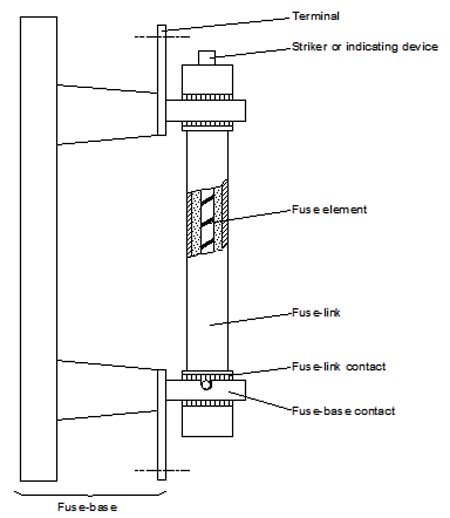
[IEC 60282-1, ed. 7.0 (2009-10)FR
élément fusible
partie de l'élément de remplacement destiné à fondre sous l'action d'un courant dépassant une valeur déterminée pendant une durée déterminée
[IEV number 441-18-08]
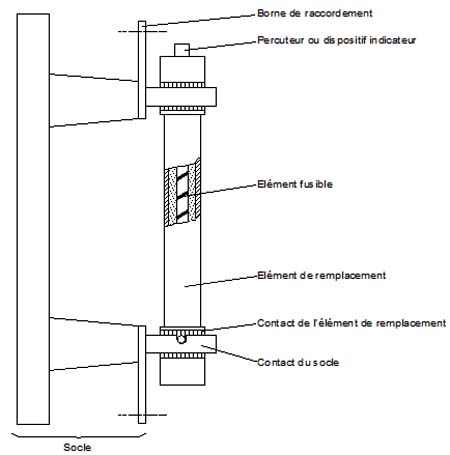
[IEC 60282-1, ed. 7.0 (2009-10)]Тематики
Обобщающие термины
Синонимы
EN
DE
FR
Русско-французский словарь нормативно-технической терминологии > плавкий элемент
-
10 полоса пропускания
полоса пропускания
1. Ширина частотного спектра сигнала между верхней и нижней частотами среза
2. Интервал частот, заключенный между двумя частотами среза, в пределах которого модуль коэффициента передачи системы составляет не менее 0,707 от максимального значения
Примечание
Число полос пропускания преобразователя может быть больше единицы
[BS EN 1330-4:2000. Non-destructive testing - Terminology - Part 4: Terms used in ultrasonic testing]
[Система неразрушающего контроля. Виды (методы) и технология неразрушающего контроля. Термины и определения (справочное пособие). Москва 2003 г.]
полоса пропускания
-
[IEV number 151-13-52]EN
pass-band
frequency band throughout which the attenuation is less than a specified value
[IEV number 151-13-52]FR
bande passante, f
bande de fréquences dans toute laquelle l'affaiblissement reste inférieur à une valeur spécifiée
[IEV number 151-13-52]EN
DE
FR
Русско-французский словарь нормативно-технической терминологии > полоса пропускания
-
11 пульсация
пульсация
-
[IEV number 312-07-02]EN
ripple
set of unwanted periodic deviations with respect to the average value of the measured or supplied quantity, occurring at frequencies which can be related to that of the mains supply, or of some other definite source, such as a chopper
NOTE – Ripple is determined under specified conditions and is a part of PARD.
[IEV number 312-07-02]FR
ondulation
ensemble de déviations périodiques indésirables par rapport à la valeur moyenne de la grandeur mesurée ou fournie, se produisant à des fréquences qui peuvent être en rapport avec celles du réseau d'alimentation électrique ou de toute autre source, telle qu'un hacheur
NOTE – L'ondulation est déterminée dans des conditions spécifiées et fait partie des déviations périodiques et/ou erratiques.
[IEV number 312-07-02]Тематики
- измерение электр. величин в целом
EN
DE
FR
Русско-французский словарь нормативно-технической терминологии > пульсация
-
12 регистр интегрирующего прибора
регистр интегрирующего прибора
-
[IEV number 312-04-03]EN
register (of an integrating instrument)
part of an integrating instrument which displays the value of the measurand
[IEV number 312-04-03]FR
dispositif indicateur (d'un appareil intégrateur)
partie d'un appareil intégrateur qui visualise la valeur du mesurande
[IEV number 312-04-03]Тематики
- метрология, основные понятия
Синонимы
EN
DE
FR
Русско-французский словарь нормативно-технической терминологии > регистр интегрирующего прибора
-
13 теоретическая толщина углового шва
теоретическая толщина углового шва
Высота наибольшего равнобедренного треугольника, который можно вписать в сечение выполненного шва; теоретическая толщина стыкового шва: Минимальное расстояние от поверхности детали до корня шва [ИСО 2553]
[ ГОСТ Р ИСО 17659-2009] [ISO 17659:2002]EN
actual throat thickness
(fillet welds), the value of the height of the largest isosceles triangle that can be inscribed in the section of the finalized weld (butt welds), the minimum distance from the surface of the part to the bottom of the penetration [ISO 2553]
[ ГОСТ Р ИСО 17659-2009] [ISO 17659:2002]FR
gorge réelle (soudures d'angle)
épaisseur réelle (soudures bout а bout)
(soudures d'angle) hauteur duplus grand triangle isocèle pouvant кtre inscrit dans la soudure terminée (soudures bout а bout) distance minimale de la surface de la pièce а la partie inférieure de la penetration envers [ISO 2553]
[ ГОСТ Р ИСО 17659-2009] [ISO 17659:2002]Тематики
- сварка, резка, пайка
EN
FR
Русско-французский словарь нормативно-технической терминологии > теоретическая толщина углового шва
-
14 термоограничитель
термоограничитель
Термочувствительное устройство, рабочая температура которого может быть либо установленной, либо регулируемой, и которое в условиях нормальной работы срабатывает путем размыкания или замыкания цепи, когда температура контролируемой части достигает заданного значения.
Примечание. Термоограничитель не срабатывает в обратном направлении во время нормального цикла работы прибора. Он может требовать или не требовать возврата в исходное положение вручную.
[ ГОСТ Р 52161. 1-2004 ( МЭК 60335-1: 2001)]
термоограничитель
Термочувствительное управляющее устройство, предназначенное для поддержания значения температуры ниже или выше заданного при нормальных рабочих условиях, которое может иметь средства для настройки потребителем.
Примечание - Термоограничитель может быть с автоматическим или ручным возвратом. Он не осуществляет обратного срабатывания во время нормального рабочего цикла прибора.
[ГОСТ IЕС 60730-1-2011]EN
temperature limiter
temperature-sensing device, the operating temperature of which may be either fixed or adjustable and which during normal operation operates by opening or closing a circuit when the temperature of the controlled part reaches a predetermined value
NOTE - It does not make the reverse operation during the normal duty cycle of the appliance. It may or may not require manual resetting.
[IEC 60335-1, ed. 4.0 (2001-05)]FR
limiteur de température
dispositif sensible à la température, dont la température de fonctionnement peut être soit fixée, soit réglable et qui, dans les conditions de fonctionnement normal, fonctionne par ouverture ou fermeture d'un circuit quand la température de la partie commandée atteint une valeur préalablement déterminée
NOTE - Il n'effectue pas l'opération inverse lors du cycle normal de l'appareil. Il peut nécessiter ou non un réarmement manuel.
[IEC 60335-1, ed. 4.0 (2001-05)]Тематики
- электротехника, основные понятия
EN
FR
Русско-французский словарь нормативно-технической терминологии > термоограничитель
-
15 указатель (показывающего устройства)
указатель (показывающего устройства)
-
[IEV number 314-01-01]EN
index (of an indicating device)
fixed or movable part of the indicating device such as a pointer, luminous spot or window, whose position, in relation to a scale, permits the value of the measurand to be determined
Source: ≠ VIM 4.16
[IEV number 314-01-01]FR
index (d'un dispositif indicateur)
partie fixe ou mobile du dispositif indicateur telle que aiguille, spot lumineux ou fenêtre, dont la position par rapport à une échelle permet de déterminer la valeur du mesurande
Source: ≠ VIM 4.16
[IEV number 314-01-01]Тематики
- измерение электр. величин в целом
EN
DE
FR
Русско-французский словарь нормативно-технической терминологии > указатель (показывающего устройства)
-
16 флуктуация
флуктуация
-
[IEV number 312-07-05]EN
fluctuations
set of unwanted non-periodic deviations of relatively long duration with respect to an average value of the measured or supplied quantity, which occur more or less randomly
NOTE – Fluctuation are determined under specified conditions and are a part of PARD.
[IEV number 312-07-05]FR
fluctuations
ensemble de déviations indésirables et non périodiques par rapport à une valeur moyenne de la grandeur mesurée ou fournie, de durée relativement longue, qui se produisent de façon plus ou moins erratique
NOTE – Les fluctuations sont déterminées dans des conditions spécifiées et font partie des déviations périodiques et/ou erratiques.
[IEV number 312-07-05]Тематики
- измерение электр. величин в целом
EN
DE
FR
Русско-французский словарь нормативно-технической терминологии > флуктуация
-
17 фон (в измерении электрических величин)
фон
-
[IEV number 312-07-03]EN
hum
set of unwanted deviations with respect to the average value of the measured or supplied quantity, occurring at frequencies related to that of the mains supply
NOTE – Hum is determined under specified conditions and is a part of PARD.
[IEV number 312-07-03]FR
ronflement
ensemble de déviations indésirables, à basse fréquence par rapport à la valeur moyenne de la grandeur mesurée ou fournie, de forme approximativement sinusoïdale, et dont les fréquences sont en rapport avec celle du réseau d'alimentation électrique
NOTE – Le ronflement est déterminé dans des conditions spécifiées et fait partie des déviations périodiques et/ou erratiques.
[IEV number 312-07-03]Тематики
- измерение электр. величин в целом
EN
DE
FR
Русско-французский словарь нормативно-технической терминологии > фон (в измерении электрических величин)
-
18 шумы (для измерительного прибора)
шумы (для измерительного прибора)
-
[IEV number 312-07-04]EN
noise (for a measuring instrument)
set of unwanted deviations with respect to the value of the measured or supplied quantity, which occur more or less randomly and generally have a wide frequency spectrum
NOTE – Noise is determined under specified conditions and is a part of PARD.
[IEV number 312-07-04]FR
bruit (pour un appareil de mesure)
ensemble de déviations indésirables par rapport à la valeur de la grandeur mesurée ou fournie, qui se produisent de façon plus ou moins erratique et possèdent un spectre de fréquence généralement étendu
NOTE – Le bruit est déterminé dans des conditions spécifiées et fait partie des déviations périodiques et/ou erratiques.
[IEV number 312-07-04]Тематики
- измерение электр. величин в целом
EN
DE
FR
Русско-французский словарь нормативно-технической терминологии > шумы (для измерительного прибора)
См. также в других словарях:
Value added — refers to the additional value of a commodity over the cost of commodities used to produce it from the previous stage of production. An example is the price of gasoline at the pump over the price of the oil in it. In national accounts used in… … Wikipedia
Value Measuring Methodology — (or VMM) is a tool that helps planners balance both tangible and intangible values when making investment decisions, and monitor benefits.Formal methods to calculate the Return on Investment (or ROI) have been widely understood and used for a… … Wikipedia
Value Added Tax-free Exports from the Channel Islands — are exports of goods from the Channel Islands on which value added tax (VAT) is not levied. In recent years, companies in the United Kingdom have expressed concern at the competition thereby offered to their goods on which VAT is… … Wikipedia
Value theory — encompasses a range of approaches to understanding how, why and to what degree people should value things; whether the thing is a person, idea, object, or anything else. This investigation began in ancient philosophy, where it is called axiology… … Wikipedia
Value capture — refers to a type of innovative public financing in which increases in private land values generated by a new public investment are all or in part “captured” through a land related tax to pay for that investment or other public projects. Value… … Wikipedia
Value Stream Mapping — is a Lean technique used to analyse the flow of materials and information currently required to bring a product or service to a consumer. At Toyota, where the technique originated, it is known as Material and Information Flow Mapping [Learning to … Wikipedia
Value — Val ue, n. [OF. value, fr. valoir, p. p. valu, to be worth, fr. L. valere to be strong, to be worth. See {Valiant}.] 1. The property or aggregate properties of a thing by which it is rendered useful or desirable, or the degree of such property or … The Collaborative International Dictionary of English
Value received — Value Val ue, n. [OF. value, fr. valoir, p. p. valu, to be worth, fr. L. valere to be strong, to be worth. See {Valiant}.] 1. The property or aggregate properties of a thing by which it is rendered useful or desirable, or the degree of such… … The Collaborative International Dictionary of English
Value stream mapping software — is a type of software that helps prepare and/or analyze value stream maps. The software typically helps design maps through utilizing a series of symbols representing activity and information/material flow, and as a supplement to manual… … Wikipedia
value — Part. pas. f.s. valoir … French Morphology and Phonetics
Value (economics) — Economics … Wikipedia
