

-
1 группы крови
-
2 type
type [taɪp]1. nouna. type mb. ( = letters collectively) caractères mpl[+ letter] taper (à la machine)[typist] taper à la machine4. compounds• to be type-cast as... être enfermé dans le rôle de...* * *[taɪp] 1.1) (variety, kind) type m, genre mI'm not that type —
he's one of those pretentious university types — c'est un de ces individus prétentieux de l'université
I know his type — péj je connais les gens de son espèce
to play ou be cast against type — Cinema, Theatre jouer à contre-emploi
2) ( in printing) caractères mpl2.printed in small/large type — imprimé en petits/gros caractères
transitive verb1) taper (à la machine) [word, letter]2) ( classify) classifier [blood sample]; cataloguer [person] (as comme)3.intransitive verb taper (à la machine)Phrasal Verbs:- type in- type out- type up -
3 НКУ распределения и управления
низковольтное устройство распределения и управления (НКУ)
Низковольтные коммутационные аппараты и устройства управления, измерения, сигнализации, защиты, регулирования, собранные совместно, со всеми внутренними электрическими и механическими соединениями и конструктивными элементами.
[ ГОСТ Р МЭК 61439-1-2012]
низковольтное устройство распределения и управления
Комбинация низковольтных коммутационных аппаратов с устройствами управления, измерения, сигнализации, защиты, регулирования и т. п., полностью смонтированных изготовителем НКУ (под его ответственность на единой конструктивной основе) со всеми внутренними электрическими и механическими соединениями с соответствующими конструктивными элементами
Примечания
1. В настоящем стандарте сокращение НКУ используют для обозначения низковольтных комплектных устройств распределения и управления.
2. Аппараты, входящие в состав НКУ, могут быть электромеханическими или электронными.
3. По различным причинам, например по условиям транспортирования или изготовления, некоторые операции сборки могут быть выполнены на месте установки, вне предприятия-изготовителя.
[ ГОСТ Р 51321. 1-2000 ( МЭК 60439-1-92)]EN
power switchgear and controlgear assembly (PSC-assembly)
low-voltage switchgear and controlgear assembly used to distribute and control energy for all types of loads, intended for industrial, commercial and similar applications where operation by ordinary persons is not intended
[IEC 61439-2, ed. 1.0 (2009-01)]
low-voltage switchgear and controlgear assembly
combination of one or more low-voltage switching devices together with associated control, measuring, signalling, protective, regulation equipment, etc., completely assembled under the responsibility of the manufacturer with all the internal electrical and mechanical interconnections and structural parts.
[IEC 61892-3, ed. 2.0 (2007-11)]
switchgear and controlgear
a general term covering switching devices and their combination with associated control, measuring, protective and regulating equipment, also assemblies of such devices and equipment with associated interconnections, accessories, enclosures and supporting structures
[IEV number 441-11-01]
switchgear and controlgear
electric equipment intended to be connected to an electric circuit for the purpose of carrying out one or more of the following functions: protection, control, isolation, switching
NOTE – The French and English terms can be considered as equivalent in most cases. However, the French term has a broader meaning than the English term and includes for example connecting devices, plugs and socket-outlets, etc. In English, these latter devices are known as accessories.
[IEV number 826-16-03 ]
switchboard
A large single electric control panel, frame, or assembly of panels on which are mounted (either on the back or on the face, or both) switches, overcurrent and other protective devices, buses, and usually instruments; not intended for installation in a cabinet but may be completely enclosed in metal; usually is accessible from both the front and rear.
[ McGraw-Hill Dictionary of Architecture & Construction]
switchboard
One or more panels accommodating control switches, indicators, and other apparatus for operating electric circuits
[ The American Heritage Dictionary of the English Language]FR
ensemble d'appareillage de puissance (ensemble PSC)
ensemble d'appareillage à basse tension utilisé pour répartir et commander l'énergie pour tous les types de charges et prévu pour des applications industrielles, commerciales et analogues dans lesquelles l'exploitation par des personnes ordinaires n'est pas prévue
[IEC 61439-2, ed. 1.0 (2009-01)]
appareillage, m
matériel électrique destiné à être relié à un circuit électrique en vue d'assurer une ou plusieurs des fonctions suivantes: protection, commande, sectionnement, connexion
NOTE – Les termes français et anglais peuvent être considérés comme équivalents dans la plupart des cas. Toutefois, le terme français couvre un domaine plus étendu que le terme anglais, et comprend notamment les dispositifs de connexion, les prises de courant, etc. En anglais, ces derniers sont dénommés "accessories".
[IEV number 826-16-03 ]
appareillage
terme général applicable aux appareils de connexion et à leur combinaison avec des appareils de commande, de mesure, de protection et de réglage qui leur sont associés, ainsi qu'aux ensembles de tels appareils avec les connexions, les accessoires, les enveloppes et les charpentes correspondantes
[IEV number 441-11-01]
A switchboard as defined in the National Electrical Code is a large single panel, frame, or assembly of panels on which are mounted, on the face or back or both switches, overcurrent and other protective devices, buses, and, usually, instruments.
Switchboards are generally accessible from the rear as well as from the front and are not intended to be installed in cabinets.
The types of switchboards, classified by basic features of construction, are as follows:
1. Live-front vertical panels
2. Dead-front boards
3. Safety enclosed boards( metal-clad)
[American electricians’ handbook]
The switchboard plays an essential role in the availability of electric power, while meeting the needs of personal and property safety.
Its definition, design and installation are based on precise rules; there is no place for improvisation.
The IEC 61439 standard aims to better define " low-voltage switchgear and controlgear assemblies", ensuring that the specified performances are reached.
It specifies in particular:
> the responsibilities of each player, distinguishing those of the original equipment manufacturer - the organization that performed the original design and associated verification of an assembly in accordance with the standard, and of the assembly manufacturer - the organization taking responsibility for the finished assembly;
> the design and verification rules, constituting a benchmark for product certification.
All the component parts of the electrical switchboard are concerned by the IEC 61439 standard.
Equipment produced in accordance with the requirements of this switchboard standard ensures the safety and reliability of the installation.
A switchboard must comply with the requirements of standard IEC 61439-1 and 2 to guarantee the safety and reliability of the installation.
Managers of installations, fully aware of the professional and legal liabilities weighing on their company and on themselves, demand a high level of safety for the electrical installation.
What is more, the serious economic consequences of prolonged halts in production mean that the electrical switchboard must provide excellent continuity of service, whatever the operating conditions.
[Schneider Electric]НКУ играет главную роль в обеспечении электроэнергией, удовлетворяя при этом всем требованиям по безопасности людей и сохранности имущества.
Выбор конструкции, проектирование и монтаж основаны на чётких правилах, не допускающих никакой импровизации.
Требования к низковольтным комплектным устройствам распределения и управления сформулированы в стандарте МЭК 61439 (ГОСТ Р 51321. 1-2000).
В частности, он определяет:
> распределение ответственности между изготовителем НКУ - организацией, разработавшей конструкцию НКУ и проверившей его на соответствие требованиям стандарта, и сборщиком – организацией, выполнившей сборку НКУ;
> конструкцию, технические характеристики, виды и методы испытаний НКУ.
В стандарте МЭК 61439 (ГОСТ Р 51321. 1-2000) описываются все компоненты НКУ.
Оборудование, изготовленное в соответствии с требованиями этого стандарта, обеспечивает безопасность и надежность электроустановки.
Для того чтобы гарантировать безопасность эксплуатации и надежность работы электроустановки, распределительный щит должен соответствовать требованиям стандарта МЭК 61439-1 и 2.
Лица, ответственные за электроустановки, должны быть полностью осведомлены о профессиональной и юридической ответственности, возложенной на их компанию и на них лично, за обеспечение высокого уровня безопасности эксплуатации этих электроустановок.
Кроме того, поскольку длительные перерывы производства приводят к серьезным экономическим последствиям, электрический распределительный щит должен обеспечивать надежную и бесперебойную работу независимо от условий эксплуатации.
[Перевод Интент]LV switchgear assemblies are undoubtedly the components of the electric installation more subject to the direct intervention of personnel (operations, maintenance, etc.) and for this reason users demand from them higher and higher safety requirements.
The compliance of an assembly with the state of the art and therefore, presumptively, with the relevant technical Standard, cannot be based only on the fact that the components which constitute it comply with the state of the art and therefore, at least presumptively, with the relevant technical standards.
In other words, the whole assembly must be designed, built and tested in compliance with the state of the art.
Since the assemblies under consideration are low voltage equipment, their rated voltage shall not exceed 1000 Va.c. or 1500 Vd.c. As regards currents, neither upper nor lower limits are provided in the application field of this Standard.
The Standard IEC 60439-1 states the construction, safety and maintenance requirements for low voltage switchgear and controlgear assemblies, without dealing with the functional aspects which remain a competence of the designer of the plant for which the assembly is intended.
[ABB]Низковольтные комплектные устройства (НКУ), вне всякого сомнения, являются частями электроустановок, которые наиболее подвержены непосредственному вмешательству оперативного, обслуживающего и т. п. персонала. Вот почему требования потребителей к безопасности НКУ становятся все выше и выше.
Соответствие НКУ современному положению дел и вследствие этого, гипотетически, соответствующим техническим стандартам, не может основываться только на том факте, что составляющие НКУ компоненты соответствуют современному состоянию дел и поэтому, по крайней мере, гипотетически, - соответствующим техническим стандартам
Другими словами, НКУ должно быть разработано, изготовлено и испытано в соответствии с современными требованиями.
Мы рассматриваем низковольтные комплектные устройства и это означает, что их номинальное напряжение не превышает 1000 В переменного тока или 1500 В постоянного тока. Что касается тока, то ни верхнее, ни нижнее значение стандартами, относящимися к данной области, не оговариваются
Стандарт МЭК 60439-1 устанавливает требования к конструкции, безопасности и техническому обслуживанию низковольтных комплектных устройств без учета их функций, полагая, что функции НКУ являются компетенцией проектировщиков электроустановки, частью которых эти НКУ являются.
[Перевод Интент]Тематики
- НКУ (шкафы, пульты,...)
Классификация
>>>Действия
Синонимы
Сопутствующие термины
EN
- assembly
- electrical switchboard
- low voltage controlgear and assembly
- low voltage switchboard
- low voltage switchgear and controlgear assembly
- low-voltage switchgear and controlgear assembly
- LV switchgear and controlgear assembly
- LV switchgear assembly
- panel
- power switchgear and controlgear assembly
- PSC-assembly
- switchboard
- switchgear and controlgear
- switchgear/controlgear
DE
- Schaltanlagen und/oder Schaltgeräte
FR
Русско-французский словарь нормативно-технической терминологии > НКУ распределения и управления
-
4 номенклатура типов зданий
номенклатура типов зданий
Систематизированный перечень названий типов зданий, применяемых в проектировании и строительстве
[Терминологический словарь по строительству на 12 языках (ВНИИИС Госстроя СССР)]Тематики
EN
DE
FR
Русско-французский словарь нормативно-технической терминологии > номенклатура типов зданий
-
5 шрифт
м. полигр.caractères m pl, types m plжи́рный шрифт — caractères gras
курси́вный шрифт — italiques m pl
типогра́фский шрифт — caractères typographiques
* * *n1) gener. lettre, écriture2) comput. police de caractères (íàïð., Times New Roman, Arial, Verdana etc.)3) polygr. type4) IT. caractères, types5) mech.eng. (чертёжный) écriture, caractère -
6 house
1. noun(plural houses)a. maison f• "house full" « complet »• steak house grill m• drinks are on the house! (inf) c'est la tournée du patron !f. House[+ person] héberger• the town offered to house six refugee families la ville a proposé de loger six familles de réfugiés• this building houses five families/a motorcycle museum ce bâtiment abrite cinq familles/un musée de la moto3. compounds• to be under house arrest être en résidence surveillée ► house-clean intransitive verb (US) faire le ménage• to house-sit for sb garder la maison de qn ► the Houses of Parliament noun (in Britain) ( = building) le palais de Westminster ; ( = members) le Parlement• to make a house-to-house search for sb aller de porte en porte à la recherche de qn ► house-trained adjective (British) [animal] propre━━━━━━━━━━━━━━━━━✦ Lorsque house est un nom, le se final se prononce s: haʊs ; lorsque c'est un verbe, il se prononce z: haʊz ; notez que le pluriel du nom, houses, se prononce comme le verbe: ˈhaʊzɪz.━━━━━━━━━━━━━━━━━Les types de logements portent souvent des noms différents en anglais britannique et en anglais américain ; ainsi, un appartement se dit respectivement « flat » (Brit) et « apartment » (US). Un « condominium » (US) est un immeuble d'habitation dont les appartements appartiennent à des propriétaires individuels alors que les parties communes sont en copropriété.Les rangées de maisons identiques et contiguës sont appelées « terraced houses » (Brit) ou « row houses » (US). Les « semi-detached houses » (Brit) ou « duplex houses » (US) sont des maisons jumelles, tandis que la « detached house » (Brit) est un pavillon.Deux autres types de maisons répandues aux États-Unis sont les « ranch houses » - de longues bâtisses généralement de plain-pied - et les « colonials », maisons de style 18ème siècle en bardeaux ou en briques, comportant souvent un portique.━━━━━━━━━━━━━━━━━HOUSE OF COMMONS, HOUSE OF LORDSLe parlement en Grande-Bretagne est constitué de deux assemblées: la House of Commons, présidée par le « Speaker » et composée de plus de 600 députés (les « Members of Parliament » ou « MPs »), élus au suffrage universel direct. Ceux-ci reçoivent un salaire. La Chambre des communes siège environ 175 jours par an. La House of Lords, présidée par le « Lord Chancellor », est composée de lords ; elle peut amender certains projets de loi votés par la House of Commons, mais elle n'est pas habilitée à débattre des projets de lois de finances. La House of Lords fait également office de juridiction suprême en Angleterre et au pays de Galles.━━━━━━━━━━━━━━━━━Aux États-Unis, le parlement, appelé « Congress », est constitué du « Senate » et de la House of Representatives. Cette dernière comprend 435 membres, le nombre de ces représentants par État étant proportionnel à la densité de population de cet État. Ils sont élus pour deux ans au suffrage universel direct et siègent au « Capitol », à Washington DC. → CONGRESS CAPITOL* * *1. [haʊs], pl [haʊzɪz]1) ( home) maison fat my/his house — chez moi/lui
3) Commerce maison f‘house full’ — ‘complet’
5) (also House) ( family line) maison f6) Religion maison f7) GB School ( team) maison f8) ( music) house music f ( musique de discothèque)2. [haʊz]transitive verb1) ( give lodging to) ( permanently) loger; ( temporarily) hébergerbadly ou poorly housed — mal logé
2) ( contain) [building] abriter [books, exhibition]••to get on like a house on fire — (colloq) s'entendre à merveille
-
7 ce
pr. dém. nt. sing. => Ça.cet, cette, ces, adj. dém. de forme simple. - E.: An, Ce...-ci, Ce...-là, Matin.A1) (surtout devant les noms de temps et de lieu pour désigner ce qui est proche, qui va bientôt arriver): - ms. dv. (dc.): steu (Montagny-Bozel 026b), ST(I) (Aix 017, Albanais 001, Alex, Annecy 003, Bellevaux 136, Chambéry 025b, Cordon 083a, Faeto 293, Giettaz 215, Leschaux 006, Megève 201, Reyvroz 218, St-Paul-Chablais 079, Samoëns 010, Saxel 002, Sevrier 023, Thônes 004, Thonon 036), se (Arvillard 228), sé (083b, Morzine 081b, Notre-Dame-Bellecombe 214, Peisey 187, St-Nicolas-Chapelle 125, Tignes, Thorens-Glières), sèti (025a), si, s' (026a), si (081a, Table 290), i(t) dc. (dv.) anc. (employé dans des expressions temporelles) (St-Martin-Porte.203b) || ô(t) dc.(dv. / fgm.) (203a). - E.: An, Fois, Matin, Soir.Fra. Cette fois, on tient le bon bout: sti kou (001, 002, 017, 025, 036, 079, 083, 215), on tin l'bon bè (001).Fra. Cet égouttoir: st'égotyeu (001).Fra. Ce mois: sti mai (001), sti maye (293). - ms. (devant un t) (001).Fra. Cet après-midi: s' / sti ce tantou (001).Fra. Ce tracteur: s'traktò (001). - mpl.: chô (021, 190), sô (201), steû(z) (002), sto(z) (001 BEA.), stô(z) (293 COD), stou(z) (004).Fra. Tous ces derniers temps: to sto tin (001).Fra. Toutes ces années passés // toutes ces dernières années // toutes ces années qui viennent de s'écouler: to stoz an (001). - fs. dv. (dc.): sèta (025b, Bessans, St-Jean-Arvey 224), ST(A) (001, 002, 003, 004, 017, 025a, 026, 081, 083, 215, 228, 290, 293, Conflans 087, St-Pierre-Albigny 060, Sciez 133, Serraval, Villard-Doron 088).Fra. Ce soir // cette nuit: sta né (001, 017, 025, 083, 087), sta néye (293), sta nwé (290).Fra. À cette heure de la nuit: à st'eura d'la né (001). - fpl. dc. (dv.): sté(z) (004, 293b), STÈ(Z) (...), steu(z) (002, 293a).Fra. Toutes ces nuits (dernières // passées): tote stè né (001).Fra. Ces heures (qui viennent de s'écouler): stèz eure (001), steuz eûre (002).A2) (forme spéciale avec le mot an <an, année>.Fra. Cette année: styan ms. (001, 003, 004, 017), st an (002, 006, 036, 083), sti an (025, Gruffy), sit an (228, St-Jean- Maurienne).A3) (avec le mot tan / tin < temps>).Fra. Ce temps (qu'il fait): sti tan (002), chô tin (001).B1) (pour désigner ce qui est proche dans l'espace et le temps et surtout les objets proches ; cet adj. est plus familier que ceux des § A et C): chô ms. dc. (001, 017, 025, 060, 228, Aillon-Jeune 234, Aillon-Vieux 273, Albertville, Attignat-Oncin, Bellecombe-Bauges 153, Billième 173, Compôte-Bauges 271, Doucy-Bauges 114, Montendry 219, Thoiry), dc. / dv. (290) || ô (203), sé (002, 004, 026, 079, 081, 083, 133, 187, 214, 215, 218, Bellevaux, Gets, Juvigny, Peisey 187b, Villards-Thônes, Viviers-Lac), sè (187a). - E.: Époque.Fra. Pendant ce temps: pandan sé tan (215), pêdê chô tin (001).C1) (devant les noms de temps et de lieu pour désigner ce qui est éloigné, mais aussi ce qui est proche partout où les types (A) et (B) ne sont pas d'usage ; cet adj. désigne qc. de plus éloigné et de moins précis que l'adj. du § A): - ms. dc.: hhé (Lanslevillard 286), hleu (026), lli (001, 003, Alex 019, Balme- Sillingy 020), rli (001), SLI (001, 003, 004, 006) || sé (002, 083, 218, Juvigny 008, Magland, COD 5b-3), chô (114). - ms. dv.: chl' (173, 219, 271), êl (203), élô (286), khl' (010), ll' (001c, 002c, 019, 020), RL' (001b, 002b, 025b), s(e)l' (001a, 002a, 003, 004, 006, 083, 215, 218, Entremont | 025a). - mpl. dc. (dv.): chleu(z) (114, 153, 173, 271), chlo(z) (017b, 087, 273c), chlô(z) (017a, 021b VAU, 219, 273b, Beaufort 065b), êlô(z) (203), hhélô (286), hhleu (026), lleû(z) (002c), llo(z) (001c, 025d), llô(z) (COD), rleû(z) (002b, 136), rlo(z) (001b, 025c), selo (021a, 025b, Attignat-Oncin), sleû(z) (002a, 083), slo(z) (001a, 025a, 028, 125, 201, 215a, 273a, Cohennoz), slô(z) (003, 006, 065a, 088, 214, Megève 201), s(e)lou(z) (004, 044, 060, 218, 228, 235 | 290). - fs. dv.(dc.): chl(a) (017b, 114, 153, 173, 224, 271, Conflans 087, Hauteville- Savoie, Houches 235b, Montendry 219, Ste-Reine 272), êl(a) (203), fla (St-Alban- Hurtières), hhl(a) (026), khl(a) (010), ll(a) (001c,002c), ra (187), rl(a) (001b, 002b, 025b, Thoiry), shla (235a), SL(A) (001a, 002a, 003, 004, 006, 021b, 028, 060, 125, 201, 214, 215, 218, 228b, 234, 273, Aillon-Jeune, Bogève, Chable, Chamonix 044, Houches 235, Praz-Arly, St-Jorioz, Vaulx), tla (081) || chèlà (017a), sèlà (021a, 025a, 224), s(e)là (228a, 290b), seula (290a), éla... lé (Lanslevillard). - fpl. dc. (dv.): chle(z), chleu(z) (153, 271), ch(è)lè(z) (017b, 114, 173b, 219, 272 | 017a, 173a), êle(z) (203), hlè(z) (026), rè (187), rlè(z) (001c, 025c), llé(z) (002c), llè(z) (001b), rleu(z) (002b, 136), s(e)lé(z) (003, 004, 083, 125, 214b, 234 | 025c, Juvigny), sle (sleu) (201, 214, 215), SLÈ(Z) (001a, 025b, 215b, 224, Macôt-Plagne), s(e)leu(z) (002a, 214a, 215a | 025a, 228), tlè (081).Fra. Ce marteau: rli martlè (001), sé marté (002).Fra. Cette fille: rla flyè (001), rla felya (002), êla feûlyi (203).Fra. Ces filles: rlè flyè (001), rleu feulye (002).Fra. Cette échelle: rl'étyèla (001, 002).Fra. Ces échelles: rlèz étyèle (001), rleuz étyèle (002).Fra. Cette histoire (qui est déjà ancienne): rl'istouéra (001).Fra. Cette histoire (dont on parle): st'istouéra (001).Fra. Cette caserne (qui n'existe plus): rla kazêrna (001)....-CI, CET...-CI, CETTE...-CI, CES...-CI, adj. dém. composé, ce...-là,...A1) (surtout devant les noms de temps et de lieu pour désigner ce qui est proche par rapport au sujet, mais aussi, plus rarement, dans d'autres cas. Dans les complément de temps, il désigne surtout un passé proche.): - ms.: st(i) dv.(dc.)... tyè (Albanais.001), sé... tsè (Notre-Dame-Bellecombe), sé... tyeu (Montagny-Bozel.026), sé... tchè (St-Nicolas-Chapelle.125b), sé...-tyè (125a), sé... shè, sé... intshe, si... shè, si... intshe (Morzine) || eû... ikin (Aussois), ô(t) dc.(dv.)... itchi (St-Martin-Porte.203). - E.: Moment.Fra. Cette fois-ci (qui vient de se produire), c'est bon: sti kou tyè, y è bon (001).Fra. Cette fois-là (dont je viens de parler), on n'a pas rigolé: sti kou tyè, on-n a pâ rizu (001). - ms. devant un t: s' (001).Fra. Cet après-midi-là: s' / sti ce tantou tyè (001).Fra. Ce tracteur-ci: s'traktò tyè (001). - mpl.: sto(z)...-tyè (001). - fs.: st(a)...-tyè (001), sta...-kè (Thônes). - fpl.: stè(z)...-tyè (001).A2) (surtout devant les noms de temps et de lieu pour désigner ce qui est tout proche par rapport au sujet, mais aussi, plus rarement, dans d'autres cas. Dans les complément de temps, il désigne surtout un futur proche.): st(i)...-chè ms., sto(z)...- chè mpl., st(a)...-chè fs., stè(z)...-chè fpl. (001) ; sé...-tyeu dc./dv. (026).Fra. Cette fois-ci (qui va venir), ça va être bon: sti kou-chè, é vâ étre bon (001).Fra. dè sti flyan-tyè < de ce côté-ci (où nous sommes tous les deux)> (001).Fra. dè sti flyan-chè < de ce côté-ci (où je suis et où tu devrais venir)> (001).Fra. Cette année-là: sé an tyeu (026).A3) formes archaïques signifiant "celui-ci // ce...-ci" mais jamais précisées par un adv.: - ms./fs. dv.: êt (203). - mpl. dc. (dv.): êtô(z) (203). - fs. dv. (dc.): êt(a) (203). - fpl. dc. (dv.): ête(z) (203).Fra. Ces jours-ci: êtô zhoor (203), sto zhò (001).Fra. Ces dernières années: êtôz an (203), (to) stoz an (on emploie to < tous> si on veut insister sur la durée) (001).Fra. Ces vaches-ci: ête vashê (203), rlè vashe tyè (001).Fra. Ces images-ci: êtez imâzhê (203), rlèz imâje tyè (001).B1) (pour désigner ce qui est proche dans l'espace et le temps et surtout les objets proches), ce...-ci, ce...-là: chô... ikin (Compôte-Bauges), chô...-ityeu (Arvillard), chô...-tyè ms. (001), se...-tyeu (Magland), sé... tyè (Giettaz.215), sé... intye (Gets), sé...-tsè (Notre-Dame-Be.214).Sav. Chô kou-tyè, al tai bin tonbâ <cette foislà, il était ce bien // effectivement ce tombé> (001).Fra. À cette époque (que j'ai connu): à sé momin-tsè (214).C1) (devant les noms de temps et de lieu pour désigner ce qui est éloigné, mais aussi ce qui est proche partout où les types (A) et (B) ne sont pas d'usage ; peut aussi se traduire par ce...-là): - ms. dc.: rli / sli (001b) / lli (001a, Alex.019) ce... (-)tyè || lo...-tchè (Côte-Aime) ; sé...-itye (Saxel.002) || sé...-tseu (Cordon.083) || sé...-intche (St-Paul-Cha.079) || sé... tyè (215). - E.: Temps.Fra. Ce jour-là (dont on parle): rli zhò tyè (001), sé zhêr intche (079), sé zeur tyè (215), chô zhor (Doucy-Bauges).Fra. On peut bien ce jourlà, faire des frais de toilette: on pu bin lli zhor-tyè s'arblyanshi (019). - ms./fs. dv.: rl' / sl' ce... (-)tyè (001) || ll'...-tyè (001,019), rl' / sl' / ll' ce... (-)itye (002), sl’...-tseu (083), êl... itchi (203). - mpl. dc. (dv.): rlo(z) (001) / slo(z) (001,125) / llo(z) (001) ce... tyè || rleû(z) / sleû(z) / lleû(z) ce... (-)itye (002) || sleû(z)...-tseu (083) || lou... chè (Habère-Poche) || êlo(z)... itchi (203). - E.: Deux. - fs. dv. (dc.): rl(a) / sl(a) (001b,002b,083,125,214) / ll(a) (001a,002a,019) / êl(a) (203) ce... tyè (001,019,125) /... (-)itye (002) /... tsé (214) /...-tseu (083) /... itchi (203).Fra. Cette nuit- là: sla né itye (002), rla né tyè (001). - fpl. dc. (dv.): rè (Peisey), rlè(z) / slè(z) / llè(z) ce... (-)tyè (001) || rleu(z) / sleu(z) / llé(z) ce... (-)itye (002) || slé(z)...-tseu (083) || êle(z)... itchi (203)....-LÀ, cet...-là, cette...-là, ces...-là, adj. dém. de forme composée.A1) sti / sto / sta / stè ne s'emploie jamais avec -lé (Albanais.001).B1) (pour désigner ce qui est un peu plus loin du sujet dans l'espace et le temps et dont on parle actuellement): chô... (-)tyè ms. (ce qui est là devant nous), chô... (-)itye (Arvillard.228), sé... tsè (Notre-Dame-Be.) || chô... (-)lé ms. (ce qui est là un peu plus loin, par rapport à un autre objet qui est là devant nous) (001) || chô (Doucy- Bauges).Fra. Ce pain-ci (qui est là devant nous): chô pan-tyè (001).Fra. Ce pain-là (qui est là un peu plus loin): chô pan-lé (001).Fra. Ce jour-là (dont on parle): chô zheu-itye (228).C1) (pour désigner ce qui est éloigné du sujet): - ms. dc.: rli / sli / lli... (-)lé (001), sé...-leu (Cordon.083), sé... lé, si... lé, sé... d'lélé, si... d'lélé (081) || ô(t) dc.(dv.)... leu (St-Martin-Porte.203). - E.: Ce...-ci, Temps.Fra. Ce pain qui est là-bas: rli pan-lé (001). - ms./fs. dv.: rl' / sl' / ll'... (-)lé (001), sl'...-leu (083), êl... leu (203). - mpl. dc.(dv.): rlo(z) / slo(z) / llo(z) ce... (-)lé (001), sleû(z)...-leu (083), êlô(z)... leu (203). - fs. dc.: rla / sla / lla ce... (-)lé (001), sla...-leu (083), tla... lé, tla... d'lélé (081), êla... leu (203). - fpl. dc.(dv.): rlè(z) / slè(z) / llè(z)... (-)lé (001), slé(z)...-leu (083), êle(z)... leu (203).Fra. Cette maison-là: sla maijon-leu (083). -
8 fuel
A n1 gen, Nucl combustible m ; (for car, plane, machinery) carburant m ; several types of fuel plusieurs types de combustible ;B modif [costs, prices, crisis] du combustible, du carburant ; [shortage, bill] de combustible, de carburant.1 ( make run) [gas, oil] alimenter [furnace, engine] ; to be fuelled by oil/gas marcher au pétrole/gaz ;to add fuel to the flames ou fire jeter de l'huile sur le feu. -
9 type
A n1 (variety, kind) type m, genre m (of de) ; main type type principal ; hair/skin type type de cheveux/de peau ; what type of person/car/problem? quel type or genre de personne/voiture/problème? ; he's an army type il a le genre militaire ; you're not my type tu n'es pas mon genre ; they're our type of people c'est le genre de personnes que nous aimons bien ; I'm not that type, I don't go in for that type of thing ce n'est pas mon genre ; is she the right type for this job? est-elle bien le genre de personne qui convient pour ce travail? ; he's all right if you like that type il n'est pas mal mais ce n'est pas mon genre ; he's the introspective type il est du genre introspectif ; she's not the type to fuss elle n'est pas du genre à faire des histoires ; they' re the type who c'est le genre d'individus qui ; he's one of those pretentious university types c'est un de ces individus prétentieux de l'université ; a very special type of person quelqu'un de bien particulier ; I know his type péj je connais les gens de son espèce ; her type always get what they want péj ce genre de fille obtient toujours ce qu'elle veut ; you know the type of thing I mean vous voyez à peu près ce que je veux dire ;2 ( archetype) archétype m ; the characters in this novel are only types les personnages dans ce roman ne sont que des archétypes ; he's/she's etc reverted to type le naturel a pris le dessus ; to play ou be cast against type Cin, Theat jouer à contre-emploi ;3 Print caractères mpl ; bold/italic/large type caractères mpl gras/italiques/gros ; metal type caractères mpl en plomb ; printed in small type imprimé en petits caractères ; to set up type composer ; to set sth in bold type composer qch en caractères gras ;4 Ling type m.B modif2 ○ a documentary-type film un film du genre documentaire ; a Regency-type table une table de type Régence.C vtr1 ( on typewriter) taper (à la machine) [text, word, letter, line] ; to type 60 words a minute taper 60 mots à la minute ; to have sth typed faire taper qch ; a typed letter une lettre dactylographiée ;2 ( classify) classifier [blood sample] ; cataloguer [person] (as comme) ; he was typed as an avant-garde poet il a été catalogué comme poète d'avant-garde.D vi taper (à la machine) ; can you type? (est-ce que) vous savez taper à la machine or dactylographier fml? ; I was typing away je tapais sans arrêt.■ type in:▶ type in [sth], type [sth] in taper [word, character].■ type out:▶ type out [sth], type [sth] out taper (à la machine).■ type over: -
10 аварийный сигнал
аварийный сигнал
alarm
Сигнал оповещения, генерируемый в случае, если произошел отказ или контролируемый параметр вышел за допустимые пределы.
[Л.М. Невдяев. Телекоммуникационные технологии. Англо-русский толковый словарь-справочник. Под редакцией Ю.М. Горностаева. Москва, 2002]
аварийный сигнал
beacon
BCN
Сигнал, посылаемый от неисправного узла сети.
[Л.М. Невдяев. Телекоммуникационные технологии. Англо-русский толковый словарь-справочник. Под редакцией Ю.М. Горностаева. Москва, 2002]
аварийный сигнал
fate signal
Сообщение, сигнализирующее об отказе или пропадании входной информации.
[Л.М. Невдяев. Телекоммуникационные технологии. Англо-русский толковый словарь-справочник. Под редакцией Ю.М. Горностаева. Москва, 2002]
аварийный сигнал
safety signal
Сигнал, поступающий отдатчиков охранной сигнализации.
[Л.М. Невдяев. Телекоммуникационные технологии. Англо-русский толковый словарь-справочник. Под редакцией Ю.М. Горностаева. Москва, 2002]EN
alarm
activation of an event that shows a critical state
[IEC 61158-5-10, ed. 2.0 (2010-08)]
alarm
type of Event associated with a state condition that typically requires acknowledgement
[ IEC 62541-1, ed. 1.0 (2010-02)]
alarm
an audible, visual, or other signal activated when the instrument reading exceeds a preset value or falls outside of a preset range
[IEC 62533, ed. 1.0 (2010-06)]
alarm
warning of the presence of a hazard to life, property or the environment
[IEC 62642-1, ed. 1.0 (2010-06)]
alarm
audio and visual signal announcing a condition requiring attention. The audio continues until acknowledged. The acoustic noise pressure of the alarm is at least 75 dBA but not greater than 85 dBA at a distance of 1 m (IEC 60945). The visual indication continues until the alarm condition is removed
[IEC 62065, ed. 1.0 (2002-03)]
alarm
item of diagnostic, prognostic, or guidance information, which is used to alert the operator and to draw his or her attention to a process or system deviation
NOTE Specific information provided by alarms includes the existence of an anomaly for which corrective action might be needed, the cause and potential consequences of the anomaly, the overall plant status, corrective action to the anomaly, and feedback of corrective actions.
Two types of deviation may be recognised:
– unplanned – undesirable process deviations and equipment faults;
– planned – deviations in process conditions or equipment status that are the expected response to but could be indicative of undesirable plant conditions.
[IEC 62241, ed. 1.0 (2004-11)]FR
alarme
signal sonore, visuel ou autre, activé lorsque la lecture de l’instrument excède une valeur préréglée ou sortant d’un domaine déterminé
[IEC 62533, ed. 1.0 (2010-06)]
alarme
avertissement de la présence d'un risque concernant la vie, la propriété ou l'environnement
[IEC 62642-1, ed. 1.0 (2010-06)]
alarme
élément informatif relatif au diagnostic, au pronostique ou à une recommandation, qui est utilisé pour alerter l’opérateur et pour attirer son attention sur une déviation du procédé ou d’un système
NOTE L’information particulière fournie par les alarmes couvre l’existence d’anomalies pour lesquelles une action corrective pourrait être nécessaire, la cause et les conséquences potentielles de l’anomalie, l’état général de la centrale, l’action corrective correspondant à l’anomalie et le retour de l’action corrective.
Deux types de déviation peuvent être distingués:
– non prévue – Déviations du procédé indésirable et défaillance de matériels;
– prévue – Déviations relatives aux conditions du procédé ou aux états des matériels qui sont les réponses prévues, mais qui peuvent être indicatives de conditions indésirables pour la centrale.
[IEC 62241, ed. 1.0 (2004-11)]Параллельные тексты EN-RU
When the accumulated energy dropout setpoint and time delay are satisfied, the alarm is inactive.
[Schneider Electric]Если подсчитанное количество электроэнергии становится меньше заданного максимального значения и заданное время задержки истекло, аварийный сигнал отключается.
[Перевод Интент]
Тематики
- автоматизация, основные понятия
- релейная защита
- электросвязь, основные понятия
Действия
EN
- alarm
- alarm signal
- alert message
- BCN
- beacon
- emergency signal
- fate signal
- fault signal
- safety signal
- signal alarm
- trouble tone
FR
Русско-французский словарь нормативно-технической терминологии > аварийный сигнал
-
11 бесшумная технология
бесшумная технология
—
[ http://www.eionet.europa.eu/gemet/alphabetic?langcode=en]EN
noise-free technology
Sound is radiated both as air-borne and as structure-borne; most sources produce both, thus various noise attenuation principles must be employed. Measures include: the replacement of components with quieter parts and material; the enclosure of particularly noisy components; the selection of quieter types of fan; the replacement of noisy compressed-air nozzles with quieter types; the choice of quieter transmission and cooling systems. (Source: GILP96a)
[http://www.eionet.europa.eu/gemet/alphabetic?langcode=en]Тематики
EN
DE
FR
Русско-французский словарь нормативно-технической терминологии > бесшумная технология
-
12 воздействие сельскохозяйственной деятельности на окружающую среду
воздействие сельскохозяйственной деятельности на окружающую среду
—
[ http://www.eionet.europa.eu/gemet/alphabetic?langcode=en]EN
environmental impact of agriculture
Agricultural activities have significant impacts on water quality, including increases in stream sedimentation from erosion, and increases in nutrients, pesticides, and salt concentrations in runoff. In certain regions, the misuse of pesticides has led to the development of pesticide-resistant strains of pests, destroyed natural predators, killed local wildlife, and contaminated human water supplies. Improper application of fertilizers has changed the types of vegetation and fish types inhabiting nearby waterways and rivers. (Source: RAU / WPR)
[http://www.eionet.europa.eu/gemet/alphabetic?langcode=en]Тематики
EN
DE
FR
Русско-французский словарь нормативно-технической терминологии > воздействие сельскохозяйственной деятельности на окружающую среду
-
13 канал (в электропроводке)
канал
Закрытый желоб, предназначенный специально для размещения и защиты электрических проводов, кабелей и электрических шин.
Трубопроводы, кабельнесущие системы и короба под полом являются модификациями каналов.
[ ГОСТ Р МЭК 60204-1-2007]
канал
канал для электропроводки
Обобщающий термин для обозначния закрытых полых конструкций, предназначенных для прокладки в них и для механической защиты кабелей и проводов.
Примечание
К каналам для прокладки кабелей и проводов относятся: трубы для электропроводки, системы кабельных коробов, в том числе и размещаемые в полу
Примечание автора карточки
Шинопроводы (busbars), указанные в IEC 60204-1-2006, не относятся к констукциям для прокладки в них кабелей и проводов.
[Интент]EN
duct
enclosed channel designed expressly for holding and protecting electrical conductors, cables, and busbars
NOTE
Conduits (see 3.7), cable trunking systems (see 3.5) and underfloor channels are types of duct.
[IEC 60204-1, ed. 5.0 (2005-10)]
[IEC 60204-1-2006]FR
canalisation
canal fermé destiné expressément au support et à la protection de conducteurs, de câbles et de barres électriques
NOTE Les conduits (voir 3.7), les systèmes de goulottes (voir 3.5) et les canaux enterrés sont des types de canalisations.
[IEC 60204-1, ed. 5.0 (2005-10)]Термин "канал" применяют также при описании сооружений местных линейных телефонных сетей, см:
- канал трубопровода кабельной канализации;
- трубный канал
2.1.4..... При скрытой электропроводке применяются следующие способы прокладки проводов и кабелей: в трубах, гибких металлических рукавах, коробах, замкнутых каналах и пустотах строительных конструкций, в заштукатуриваемых бороздах, под штукатуркой, а также замоноличиванием в строительные конструкции при их изготовлении.
2.1.15. В стальных и других механических прочных трубах, рукавах, коробах, лотках и замкнутых каналах строительных конструкций зданий допускается совместная прокладка проводов и кабелей (за исключением взаиморезервируемых).
2.1.19. При прокладке проводов и кабелей в трубах, глухих коробах, гибких металлических рукавах и замкнутых каналах должна быть обеспечена возможность замены проводов и кабелей.
2.1.20. Конструктивные элементы зданий и сооружений, замкнутые каналы и пустоты которых используются для прокладки проводов и кабелей, должны быть несгораемыми.
[ПУЭ]
Параллельные тексты EN-RU
External ducts
Conductors and their connections external to the electrical equipment enclosure(s) shall be enclosed in suitable ducts (i.e. conduit or cable trunking systems) as described in 13.5 except for suitably protected cables that may be installed without ducts and with or without the use of open cable trays or cable support means.
[IEC 60204-1-2006]Каналы для электропроводок, прокладываемые вне оболочек
Проводники вне оболочек электротехнических устройств, должны прокладываться, а их соединения должны выполняться в соответствующих каналах для электропроводок (т. е. в трубах или в системах кабельных коробов) в соответствии с п. 13.5 за исключением надлежащим образом защищенных кабелей, которые можно прокладывать вне каналов с или без использования открытых (т. е. без крышек) кабельных лотков или опорных кабельных конструкций.
[Перевод Интент]
Тематики
- изделие электромонтажное
- электропроводка, электромонтаж
Синонимы
EN
FR
Русско-французский словарь нормативно-технической терминологии > канал (в электропроводке)
-
14 комплектное распределительное устройство в металлической оболочке
- pareillage d’armoire
- appareillage sous enveloppe métallique
- appareillage recouvert de métal
- appareillage à compartiments (avec cloisons non métalliques)
комплектное распределительное устройство в металлической оболочке
-EN
metal-enclosed switchgear
switchgear assemblies with an external metallic enclosure intended to be earthed and complete except for external connections
NOTE The metal-enclosed switchgear is subdivided into three types:
– metal-clad switchgear;
– compartmented switchgear (with one or more non-metallic partitions);
– cubicle switchgear
[IEC 61992-1, ed. 2.0 (2006-02)]
metal-clad switchgear
metal-enclosed switchgear in which components are arranged in separate compartments with metal partitions intended to be earthed
NOTE 1 This term applies to metal-enclosed switchgear with metal partitions providing the degree of protection (or higher) included in IEC 61992-6 and having separate compartments at least for the following components:
– each main switching device;
– components connected to one side of a main switching device, for example, feeder circuit;
– components connected to the other side of the main switching device, for example, busbars; where more than one set of busbars is provided, each set is in a separate compartment.
NOTE 2 Metal-enclosed switchgear having metal partitions and meeting all the requirements of NOTE 1 may utilise an insulating shutter barrier as a part of a shutter arrangement, the combination of which provides the degree of protection included in Table 1 of IEC 61992-6 (or higher) and satisfies the requirements of the standard for partitions and shutters made of insulating material.
[IEC 61992-1, ed. 2.0 (2006-02)]
compartmented switchgear (with non-metallic partitions)
metal-enclosed switchgear in which components are arranged in separate compartments as for metal-clad switchgear, but with one or more non-metallic partitions providing the degree of protection (or higher) included in Table 1 of IEC 61992-6
NOTE Metal-enclosed switchgear in which the main circuit components are individually embedded in solid insulating material can be considered as an alternative, provided that the conditions specified in IEC 60466 are met.
[IEC 61992-1, ed. 2.0 (2006-02)]
cubicle switchgear
switchgear, other than metal-clad and compartmented switchgear
NOTE This term applies to switchgear having a metal enclosure and having
– a number of compartments fewer than required for metal-clad or compartmented switchgear, or
– partitions having a degree of protection lower than those indicated in Table 1 of IEC 61992-6, or
– no partitions.
[IEC 61992-1, ed. 2.0 (2006-02)]FR
appareillage sous enveloppe métallique
ensemble d’appareillage avec une enveloppe métallique externe destinée à être mise à la terre, entièrement terminé, à l’exception des connexions extérieures
NOTE L’appareillage sous enveloppe métallique se subdivise en trois types:
– appareillage recouvert de métal;
– appareillage à compartiments (avec une ou plusieurs cloisons non métalliques);
– appareillage d’armoire.
[IEC 61992-1, ed. 2.0 (2006-02)]
appareillage recouvert de métal
appareillage sous enveloppe métallique dans lequel les éléments constitutifs sont disposés dans des compartiments séparés par des cloisons métalliques destinées à être mises à la terre
NOTE 1 Ce terme s’applique à l’appareillage sous enveloppe métallique avec des cloisons métalliques offrant le degré de protection de la CEI 61992-6 (ou un degré supérieur) et ayant des compartiments séparés au moins pour les éléments constitutifs suivants:
– chaque appareil principal de connexion;
– les éléments constitutifs connectés à une face de l'appareil principal de connexion, par exemple le circuit d’alimentation;
– les éléments constitutifs connectés à l’autre face de l'appareil principal de connexion, par exemple les jeux de barres; lorsqu’il y a plus d’un jeu de barres, chaque jeu est dans un compartiment séparé.
NOTE 2 L’appareillage sous enveloppe métallique qui possède des cloisons métalliques et qui répond à toutes les dispositions de la note 1 peut utiliser une barrière en volet isolant comme une partie d’une disposition de volet, dont la combinaison fournit un degré de protection inclus au Tableau 1 de la CEI 61992-6 (ou un degré supérieur) et satisfait aux exigences de la norme pour les cloisons et les volets en matériau isolant.
[IEC 61992-1, ed. 2.0 (2006-02)]
appareillage à compartiments (avec cloisons non métalliques)
appareillage sous enveloppe métallique dans lequel les éléments constitutifs sont disposés dans des compartiments séparés comme pour l’appareillage recouvert de métal, mais avec une ou plusieurs cloisons non métalliques fournissant le degré de protection du Tableau 1 de la CEI 61992-6 (ou un degré supérieur)
NOTE L’appareillage sous enveloppe métallique dans lequel les éléments constitutifs du circuit principal sont noyés individuellement dans un matériau isolant solide peut être considéré comme une alternative, si les conditions spécifiées dans la CEI 60466 sont satisfaites.
[IEC 61992-1, ed. 2.0 (2006-02)]
pareillage d’armoire
appareillage, autre que l’appareillage recouvert de métal ou à compartiments
NOTE Ce terme s’applique à l’appareillage ayant une enveloppe métallique et ayant:
– soit un nombre de compartiments inférieur à celui exigé pour les appareillages recouverts de métal ou à compartiments;
– soit des cloisons d’un degré de protection inférieur à ceux du Tableau 1 de la CEI 61992-6;
– soit pas de cloisons.
[IEC 61992-1, ed. 2.0 (2006-02)]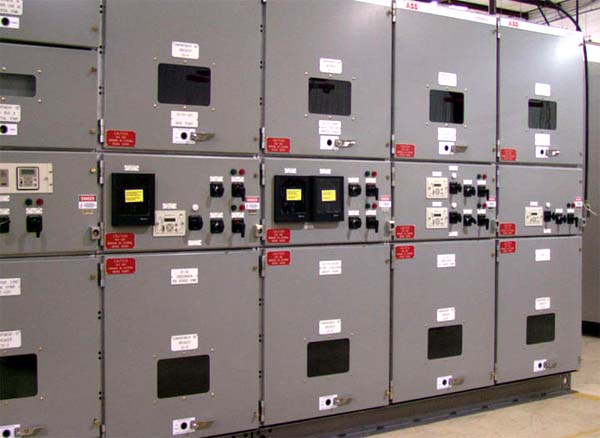
Комплектное распределительное устройство в металлической оболочке
Рис. ABBГОСТ 14693-90 - Устройства комплектные распределительные негерметизированные в металлической оболочке на напряжение до 10 кВ
Тематики
- комплектное распред. устройство (КРУ)
Синонимы
EN
- compartmented switchgear (with non-metallic partitions)
- cubicle switchgear
- MCSG
- MESG
- metal clad switch gear
- metal clad switchgear
- metal-enclosed switchgear
- metalclad switch gear
- metalclad switchgear
FR
Русско-французский словарь нормативно-технической терминологии > комплектное распределительное устройство в металлической оболочке
-
15 маркированные данные
маркированные данные
Термин, применяемый для обозначения результатов измерений показателей КЭ и результатов объединения измеренных значений показателей на временных интервалах, в пределах которых имели место прерывания, провалы напряжения или перенапряжения.
В настоящем стандарте для обозначения результатов измерений показателей КЭ и результатов объединения измеренных значений в условиях воздействия прерываний, провалов напряжения и перенапряжений вместо термина "сигнализация флагами"
("flagging") в соответствии с [4] применен термин "маркирование".
Примечание. Маркирование данных позволяет принять меры, исключающие учет единственного события более чем один раз для различных показателей КЭ. Маркирование предоставляет дополнительную информацию об измерении или объединении измеренных значений показателей КЭ. Маркированные данные не подлежат удалению из состава хранимых данных. В ряде случаев маркированные данные могут не учитываться при дальнейшем анализе, в других случаях сведения о том, что данные маркированы, могут иметь большое значение. Если в стандартах, устанавливающих нормы КЭ, не изложены правила оценки маркированных данных, порядок их применения устанавливает пользователь СИ, заявитель испытаний или испытательная лаборатория.
[ ГОСТ Р 51317.4.30-2008 (МЭК 61000-4-30:2008)]EN
flagged data
data that has been marked to indicate that its measurement or its aggregation may have been affected by interruptions, dips, or swells
NOTE Flagging enables other methods that may prevent a single event from being counted as several different types of events. Flagging is supplemental information about a measurement or aggregation. Flagged data is not removed from the data set. In some applications, flagged data may be excluded from further analysis but in other applications, the fact that data was flagged may be unimportant. The user, application, regulation, or other standards determine the use of flagged data. See 4.7 for further explanation.
[IEC 61000-4-30, ed. 2.0 (2008-10)]FR
données marquées
données qui ont été marquées pour indiquer que leur mesure ou leur agrégation ont pu être affectées par des interruptions, des creux de tension ou des surtensions temporaires
NOTE Le marquage permet d’autres méthodes qui peuvent éviter qu’un événement simple ne soit compté comme différents types d’événements. Le marquage est une information supplémentaire concernant une mesure ou une agrégation. Une donnée marquée n’est pas enlevée du jeu de données. Dans certaines applications, les données marquées peuvent être exclues par une analyse plus approfondie, mais dans d’autres applications le fait que la donnée soit marquée peut être sans importance. L’utilisateur, l’application, l’autorité de régulation ou d’autres normes déterminent l’utilisation des données marquées. Voir 4.7 pour des explications complémentaires.
[IEC 61000-4-30, ed. 2.0 (2008-10)]Тематики
EN
FR
Русско-французский словарь нормативно-технической терминологии > маркированные данные
-
16 преобразовательный адаптер (для эдектроустановочных изделий)
преобразовательный адаптер (для эдектроустановочных изделий)
-
[IEV number 442-03-22]EN
c onversion adaptor (for accessories)
adaptor which allows the connection of one or more types of plug to a socket-outlet not designed to accept such a plugs
[IEV number 442-03-22]FR
adaptateur de conversion (pour le petit appareillage)
adaptateur qui permet la connexion d'un ou plusieurs types de fiche à un socle de prise de courant non conçu pour accepter de telles fiches
[IEV number 442-03-22]Тематики
EN
DE
FR
Русско-французский словарь нормативно-технической терминологии > преобразовательный адаптер (для эдектроустановочных изделий)
-
17 прибор класса II
прибор класса II
Прибор, в котором защита от поражения электрическим током обеспечивается не только основной изоляцией, но в котором предусмотрены дополнительные меры безопасности, такие как двойная или усиленная изоляция, причем не предусмотрено защитное заземление, а условия установки не являются дополнительной гарантией.
Примечания:
1. Такие приборы могут быть отнесены к одному из следующих типов:
a) прибор, имеющий прочный и практически сплошной кожух из изоляционного материала, который покрывает все металлические части, за исключением небольших деталей, таких как заводская табличка, винты и заклепки, которые изолированы от токоведущих частей изоляцией, по крайней мере эквивалентной усиленной изоляции;
такой прибор называют прибором класса II с изолирующим кожухом;
b) прибор, имеющий практически сплошной металлический кожух, в котором повсюду применена двойная или усиленная изоляция; такой прибор называют прибором класса II с металлическим кожухом;
c) прибор, являющийся комбинацией типов, указанных в перечислениях а) и b).
2. Кожух прибора класса II с изолирующим кожухом может образовывать часть или всю дополнительную или усиленную изоляцию.
3. Если прибор, имеющий повсюду двойную или усиленную изоляцию, снабжен заземляющим зажимом или заземляющим контактом, то его относят к приборам класса 0 или 0I.
[ ГОСТ Р 52161. 1-2004 ( МЭК 60335-1: 2001)]EN
class II appliance
appliance in which protection against electric shock does not rely on basic insulation only but in which additional safety precautions are provided, such as double insulation or reinforced insulation, there being no provision for protective earthing or reliance upon installation conditions
NOTE 1 - Such an appliance may be of one of the following types:
– an appliance having a durable and substantially continuous enclosure of insulating material which envelops all metal parts, with the exception of small parts, such as nameplates, screws and rivets, which are isolated from live parts by insulation at least equivalent to reinforced insulation; such an appliance is called an insulation-encased class II appliance;
– an appliance having a substantially continuous metal enclosure, in which double insulation or reinforced insulation is used throughout; such an appliance is called a metal-encased class II appliance;
– an appliance which is a combination of an insulation-encased class II appliance and a metal-encased class II appliance.
NOTE 2 - The enclosure of an insulation-encased class II appliance may form a part or the whole of the supplementary insulation or of the reinforced insulation.
NOTE 3 - If an appliance with double insulation or reinforced insulation throughout has provision for earthing, it is considered to be a class I appliance or a class 0I appliance.
[IEC 60335-1, ed. 4.0 (2001-05)]FR
appareil de la classe II
appareil dans lequel la protection contre les chocs électriques ne repose pas uniquement sur l'isolation principale mais dans lequel ont été prises des mesures supplémentaires de sécurité, telles que la double isolation ou l'isolation renforcée, ces mesures ne comportant pas de moyen de mise à la terre de protection et ne dépendant pas des conditions d'installation
NOTE 1 - Un tel appareil peut être de l'un des types suivants:
– un appareil ayant une enveloppe durable et pratiquement continue en matière isolante enfermant toutes les parties métalliques, à l'exception de petites pièces telles que plaques signalétiques, vis et rivets, qui sont séparées des parties actives par une isolation au moins équivalente à l'isolation renforcée; un tel appareil est appelé appareil de la classe II à enveloppe isolante;
– un appareil ayant une enveloppe métallique pratiquement continue, dans lequel la double isolation ou l'isolation renforcée est partout utilisée; un tel appareil est appelé appareil de la classe II à enveloppe métallique;
– un appareil qui est la combinaison d’un appareil de la classe II à enveloppe isolante et d’un appareil de la classe II à enveloppe métallique.
NOTE 2 - L'enveloppe d'un appareil de la classe II à enveloppe isolante peut former tout ou partie de l'isolation supplémentaire ou de l'isolation renforcée.
NOTE 3 - Si un appareil ayant en toutes ses parties une double isolation ou une isolation renforcée comporte des dispositions en vue de la mise à la terre, il est considéré comme étant un appareil de la classe I ou un appareil de la classe 0I.
[IEC 60335-1, ed. 4.0 (2001-05)]Тематики
EN
FR
Русско-французский словарь нормативно-технической терминологии > прибор класса II
-
18 проектирование типовое
проектирование типовое
Разработка типовых проектов сооружений, зданий, конструкций и оборудования, предназначенных для многократного применения в строительстве
[Терминологический словарь по строительству на 12 языках (ВНИИИС Госстроя СССР)]Тематики
- проектирование, документация
EN
DE
FR
Русско-французский словарь нормативно-технической терминологии > проектирование типовое
-
19 промежуточный адаптер (для эдектроустановочных изделий)
промежуточный адаптер (для эдектроустановочных изделий)
-
[IEV number 442-03-21]EN
intermediate adaptor (for accessories)
adaptor which allows the connection of one or more types of plug to a socket-outlet via a control device such as a dimmer, clock switch, photo-electric switch, etc., which can be either integral with the intermediate adaptor or connected to it by a flexible cable, and in which case can be either rewireable or non-rewireable
[IEV number 442-03-21]FR
adaptateur intermédiaire (pour le petit appareillage)
adaptateur qui permet la connexion d'un ou de plusieurs types de fiches à un socle de prise de courant au moyen d'un dispositif de commande tel qu'un gradateur, un interrupteur horaire, un interrupteur photoélectrique, etc., qui peut être soit partie intégrante de l'adaptateur intermédiaire soit connecté à ce dernier au moyen d'un câble souple, et qui dans ce cas peut être démontable ou non
[IEV number 442-03-21]Тематики
EN
DE
FR
Русско-французский словарь нормативно-технической терминологии > промежуточный адаптер (для эдектроустановочных изделий)
-
20 распределительная панель
- tableau de répartition, m
- panneau de distribution
распределительная панель
НКУ, состоящее из коммутационных устройств или устройств защиты (например, плавких предохранителей), присоединенных к одной или нескольким выходным цепям с питанием от одной или нескольких входящих цепей, а также зажимов для нейтрального проводника и проводников цепей защиты. Оно может также содержать сигнальные устройства и другие устройства контроля.
[ ГОСТ Р 51321. 3-99 ( МЭК 60439-3-90)]
панель распределительная
Панель многопанельного ВРУ, содержащая аппараты блока(ов) распределения и в которой могут также размещаться блоки учета, блоки автоматического или неавтоматического управления освещением и т. п.
[ ГОСТ Р 51732-2001]EN
distribution board
assembly containing different types of switchgear and controlgear associated with one or more outgoing electric circuits fed from one or more incoming electric circuits, together with terminals for the neutral and protective conductors.
[IEV number 826-16-08]FR
tableau de répartition, m
ensemble comportant différents types d'appareillage associés à un ou plusieurs circuits électriques de départ alimentés par un ou plusieurs circuits électriques d'arrivée, ainsi que des bornes pour les conducteurs neutre et de protection.
[IEV number 826-16-08]распределительная панель
-EN
distribution board
an assembly of one or more overcurrent protective devices, arranged for the distribution of electrical power to final subcircuits
[IEC 60092-101, ed. 4.0 (1994-10)]FR
panneau de distribution
ensemble comprenant un ou plusieurs dispositifs de protection contre les surintensités et assurant la distribution d'énergie électrique à des circuits terminaux
[IEC 60092-101, ed. 4.0 (1994-10)]Тематики
- НКУ (шкафы, пульты,...)
- электроснабжение в целом
EN
DE
- elektrischer Verteiler, m
- Verteiler, m
FR
- panneau de distribution
- tableau de répartition, m
Русско-французский словарь нормативно-технической терминологии > распределительная панель
См. также в других словарях:
Types in Scripture — • Offers several definitions Catholic Encyclopedia. Kevin Knight. 2006. Types in Scripture Types in Scripture † … Catholic encyclopedia
Types de cartes dans counter-strike — Article principal : Counter Strike. Les types de carte disponibles dans le jeu vidéo Counter Strike sont les suivants : Types de carte officiels Map as (assassination) Un des membres de l équipe anti terroriste prend aléatoirement le… … Wikipédia en Français
Types de credits bancaires — Types de crédits bancaires Tous les calculs de crédits, à l exception des échelles d intérêt sur un découvert en compte courant et de rares crédits revolving, adoptent actuellement la convention des mois bancaires constant de 30 jours. On peut… … Wikipédia en Français
Types of societies — are categories of social groups that differ according to subsistence strategies; the way that humans use technology to provide needs for themselves. Although humans have established many types of societies throughout history, anthropologists tend … Wikipedia
Types d'emulsions argentiques — Types d émulsions argentiques Cet article fait partie de la série Photographie … Wikipédia en Français
Types de contrats d'assurances — Types de contrats d assurance Il y a deux grands types d assurances, bien que plusieurs puissent être couverts simultanément par le même contrat (« multirisque » dans ce cas) Sommaire 1 L assurance de personnes 2 L assurance de dommages … Wikipédia en Français
Types de depots bancaires — Types de dépôts bancaires Les clients des banques peuvent déposer leur argent et leurs valeurs sur divers comptes ou plans. En France, il existe une variété de comptes de dépôts et autres formules prévus à cet effet : Sommaire 1 Dépôts à vue … Wikipédia en Français
Types de gouvernements — Cette série fait partie des séries sur la politique Liste de formes de gouvernements Aristocratie Autocratie Anarchie Bureaucratie Démocratie Despotisme Dictature … Wikipédia en Français
Types de moteurs — Un moteur à combustion interne est un moteur dont la combustion (production d énergie) va se situer au même endroit que la production de travail. On distingue ces moteurs : des moteurs à combustion externe : moteur Stirling, moteur à… … Wikipédia en Français
Types de personnages dans battlefield 2142 — Article principal : Battlefield 2142. Dans le jeu, il y a quatre types de soldats : le Reco, l Assaut, le Soutien et le Sapeur et ce quel que soit le camp choisi. Chaque soldat dispose d armes spécifiques et d éléments à débloquer… … Wikipédia en Français
Types de plongees — Types de plongées La plongée sous marine permet bon nombre d activités, qu elles soient professionnelles, sportives, ludiques ou tout simplement distrayantes. Sommaire 1 Plonger pour faire quoi ? 1.1 Plongée professionnelle 1.2 Plongée… … Wikipédia en Français
