

-
1 Usage note : might
Although usage shows that may and might are interchangeable in many contexts, might indicates a more remote possibility than may. French generally translates this element of possibility using peut-être with the appropriate verb tense:it might snow= il va peut-être neiger(It is also possible to translate this more formally using il se peut + subjunctive: il se peut qu’il neige). For particular examples see might1 1.It is possible to translate might differently depending on the nature of the context and the speaker’s point of view:he might not come= il risque de ne pas venirimplies that this is not a desirable outcome for the speaker ;he might not come= il pourrait ne pas venir or il se peut qu’il ne vienne pashowever, is neutral in tone. Where there is the idea of a possibility in the past which has not in fact occurred (see might1 2), French uses the past conditional of the verb (which is often pouvoir):it might have been serious (but wasn’t in fact)= ça aurait pu être graveThis is also the case where something which could have taken place did not, thus causing annoyance:you might have said thanks!= tu aurais pu dire merci!(see might1 7).might, as the past tense of may, will automatically occur in instances of reported speech:he said you might be hurt= il a dit que tu serais peut-être blesséFor more examples see the entry might1 and bear in mind the rules for the agreement of tenses.Where there is a choice between may and might in making requests, might is more formal and even rather dated. French uses inversion (je peux = puis-je?) in this context and puis-je me permettre de…? (= might I…?) is extremely formal.Might can be used to polite effect - to soften direct statements: you might imagine that…or to offer advice tactfully: it might be wise to…In both cases, French uses the conditional tense of the verb: on pourrait penser que… ; ce serait peut-être une bonne idée de… The use of well in phrases such as he might well be right etc. implies a greater degree of likelihood.For translations of might well, may well, see B2 in the entry well1. -
2 able
able [ˈeɪbl]1. adjectivea. to be able to do sth ( = have means or opportunity) pouvoir faire qch ; ( = know how to) savoir faire qch ; ( = be capable of) être capable de faire qch ; ( = in position to) être en mesure de faire qchb. ( = clever) capablec. ( = healthy) able in body and mind sain de corps et d'esprit2. compounds* * *['eɪbl]Note: to be able to meaning can is usually translated by the verb pouvoir: I was not able to go = je ne pouvais pas y aller; I was not able to help him = je ne pouvais pas l'aider. The main exception to this occurs when to be able to implies the acquiring of a skill, when savoir is used: he's nine and he's still not able to read = il a neuf ans et il ne sait toujours pas lireFor more examples and other uses, see the entry below1) ( having ability to) -
3 should
should [∫ʊd]a. ( = ought to)━━━━━━━━━━━━━━━━━━━━━━━━━━━━━━━━━━• shouldn't you go and see her? est-ce que vous ne devriez pas aller la voir ?what should I do? qu'est-ce que je dois faire ?• should I go too? -- yes you should est-ce que je dois y aller aussi ? -- oui tu devraisb. (past time)━━━━━━━━━━━━━━━━━━━━━━━━━━━━━━━━━━• he thought I should tell her, so I'm going to il pensait que je devais lui dire, alors je vais le faire━━━━━━━━━━━━━━━━━► When should have implies that something did not happen, it is translated by the conditional of avoir + dû.━━━━━━━━━━━━━━━━━━━━━━━━━━━━━━━━━━► When should have means that something probably has happened, it is translated by the present tense of devoir.━━━━━━━━━━━━━━━━━• he should have finished by now ( = probably has) il doit avoir terminé à l'heure qu'il est ; ( = but he hasn't) il aurait dû terminer à l'heure qu'il estc. ( = would)━━━━━━━━━━━━━━━━━► When should has conditional meaning, it is translated by the conditional of the French verb.━━━━━━━━━━━━━━━━━• I should go if he invited me s'il m'invitait, j'irais• we should have come if we had known si nous avions su, nous serions venus• will you come? -- I should like to est-ce que vous viendrez ? -- j'aimerais bien• why should he suspect me? pourquoi me soupçonnerait-il ?• how should I know? comment voulez-vous que je le sache ?• he's coming to apologize -- I should think so too! il vient présenter ses excuses -- j'espère bien !• and who should come in but Paul! et devinez qui est entré ? Paul bien sûr !* * *[ʃʊd, ʃəd]1) ( ought to)as it should be — ( in order) en ordre
...which is only as it should be —...ce qui est parfaitement normal
2) ( in conditional sentences)had he asked me, I should have accepted — s'il me l'avait demandé, j'aurais accepté
I don't think it will happen, but if it should... — je ne pense pas que cela arrive, mais si toutefois cela arrivait...
if you should change your mind,... — si vous changez d'avis,...
3) ( expressing purpose)4) ( in polite formulas)5) (expressing opinion, surprise)‘how long?’ - ‘an hour, I should think’ — ‘combien de temps?’ - ‘une heure, je suppose’
I should think she must be about 40 — à mon avis, elle doit avoir 40 ans environ
and then what should happen, but it began to rain! — et devine quoi - il s'est mis à pleuvoir!
-
4 able
❢ To be able to meaning can is usually translated by the verb pouvoir: I was not able to go = je ne pouvais pas y aller ; I was not able to help him = je ne pouvais pas l'aider. The main exception to this occurs when to be able to implies the acquiring of a skill, when savoir is used: he's nine and he's still not able to read = il a neuf ans et il ne sait toujours pas lire.For more examples and other uses, see the entry below.1 ( having ability to) to be able to do/be pouvoir faire/être ; he was/wasn't able to read it il pouvait/ne pouvait pas le lire ; she was able to play the piano at the age of four elle savait jouer du piano à quatre ans ; I'll be (better) able to give you more information after the meeting je serai en mesure de or je pourrai vous donner plus de renseignements après la réunion ; -
5 разъединитель
разъединитель
Контактный коммутационный аппарат, в разомкнутом положении отвечающий требованиям к функции разъединения.
Примечание.
1 Это определение отличается от формулировки МЭК 60050(441-14-05), поскольку требования к функции разъединения не ограничиваются соблюдением изолирующего промежутка.
[ ГОСТ Р 50030. 1-2000 ( МЭК 60947-1-99)]
2 Разъединитель способен включать и отключать цепь с незначительным током или при незначительном изменении напряжения на зажимах каждого из полюсов разъединителя.
Разъединитель может проводить токи в нормальных условиях работы, а также в течение определенного времени в аномальных условиях работы выдерживать токи короткого замыкания.
[ ГОСТ Р 50030. 3-99 ( МЭК 60947-3-99)]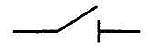 Условное обозначение контакта разъединителя
разъединитель
Контактный коммутационный аппарат, который обеспечивает в отключенном положении изоляционный промежуток, удовлетворяющий нормированным требованиям.
Примечания
1 Разъединитель способен размыкать и замыкать цепь при малом токе или малом изменении напряжения на выводах каждого из его полюсов. Он также способен проводить токи при нормальных условиях в цепи и проводить в течение нормированного времени токи при ненормальных условиях, таких как короткое замыкание.
2 Малые токи - это такие токи, как емкостные токи вводов, шин, соединений, очень коротких кабелей, токи постоянно соединенных ступенчатых сопротивлений выключателей и токи трансформаторов напряжения и делителей. Для номинальных напряжений до 330 кВ включительно ток, не превышающий 0,5 А, считается малым током по этому определению; для номинального напряжения от 500 кВ и выше и токов, превышающих 0,5 А, необходимо проконсультироваться с изготовителем, если нет особых указаний в руководствах по эксплуатации разъединителей.
3 К малым изменениям напряжения относятся изменения напряжения, возникающие при шунтировании регуляторов индуктивного напряжения или выключателей.
4 Для разъединителей номинальным напряжением от 110 кВ и выше может быть установлена коммутация уравнительных токов.
[ ГОСТ Р 52726-2007]EN
disconnector
a mechanical switching device which provides, in the open position, an isolating distance in accordance with specified requirements
NOTE – A disconnector is capable of opening and closing a circuit when either negligible current is broken or made, or when no significant change in the voltage across the terminals of each of the poles of the disconnector occurs. It is also capable of carrying currents under normal circuit conditions and carrying for a specified time currents under abnormal conditions such as those of short circuit.
[IEV number 441-14-05]
disconnector
IEV 441-14-05 is applicable with the following additional notes:
NOTE 1
"Negligible current" implies currents such as the capacitive currents of bushings, busbars, connections, very short lengths of cable, currents of permanently connected grading impedances of circuit-breakers and currents of voltage transformers and dividers. For rated voltages of 420 kV and below, a current not exceeding 0,5 A is a negligible current for the purpose of this definition; for rated voltage above 420 kV and currents exceeding 0,5 A, the manufacturer should be consulted.
"No significant change in voltage" refers to such applications as the by-passing of induction voltage regulators or circuit-breakers.
NOTE 2
For a disconnector having a rated voltage of 52 kV and above, a rated ability of bus transfer current switching may be assigned
[IEC 62271-102]FR
sectionneur
appareil mécanique de connexion qui assure, en position d'ouverture, une distance de sectionnement satisfaisant à des conditions spécifiées
NOTE – Un sectionneur est capable d'ouvrir et de fermer un circuit lorsqu'un courant d'intensité négligeable est interrompu ou établi, ou bien lorsqu'il ne se produit aucun changement notable de la tension aux bornes de chacun des pôles du sectionneur. Il est aussi capable de supporter des courants dans les conditions normales du circuit et de supporter des courants pendant une durée spécifiée dans des conditions anormales telles que celles du court-circuit.
[IEV number 441-14-05]Указанные в 5.3.2 перечислениях а)-d) устройства отключения ( выключатель-разъединитель, разъединитель или выключатель) должны:
- изолировать электрооборудование от цепей питания и иметь только одно положение ОТКЛЮЧЕНО (изоляция) и одно положение ВКЛЮЧЕНО, четко обозначаемые символами «О» и «I» [МЭК 60417-5008 (DB:2002-10) и МЭК 60417-5007 (DB:2002-10), см. 10.2.2];
- иметь видимое разъединение или индикатор положения, который может указывать положение ОТКЛЮЧЕНО только в случае, если все контакты в действительности открыты, т.е. разомкнуты и удалены друг от друга на расстояние, удовлетворяющее требованиям по изолированию;
- быть снабжены расположенным снаружи ручным приводом (например, ручкой). Исключение для управляемых внешним источником энергии, когда воздействие вручную невозможно при наличии иного внешнего привода. Если внешние приводы не используются для выполнения аварийных функций управления, то рекомендуется применять ЧЕРНЫЙ и СЕРЫЙ цвета для окраски ручного привода (см. 10.7.4 и 10.8.4);
- обладать средствами для запирания в положении ОТКЛЮЧЕНО (например, с помощью висячих замков). При таком запирании возможность как дистанционного, так и местного включения должна быть исключена;
Разъединители служат для создания видимого разрыва, отделяющего выводимое в ремонт оборудование от токоведущих частей, находящихся под напряжением, для безопасного производства работ.
Разъединители не имеют дугогасящих устройств и поэтому предназначаются для включения и отключения электрических цепей при отсутствии тока нагрузки и находящихся только под напряжением или даже без напряжения. Лишь в некоторых случаях допускается включение и отключение разъединителями небольших токов, значительно меньше номинальных.
Разъединители используются также при различного рода переключениях в схемах электрических соединений подстанций, например при переводе присоединений с одной системы шин на другую.
Требования, предъявляемые к разъединителям с точки зрения оперативного обслуживания, следующие:- Разъединители в отключенном положении должны создавать ясно видимый разрыв цепи, соответствующий классу напряжения установки.
- Приводы разъединителей должны иметь устройства фиксации в каждом из двух оперативных положений: включенном и отключенном. Кроме того, они должны иметь надежные упоры, ограничивающие поворот главных ножей на угол больше заданного.
- Опорные изоляторы и изолирующие тяги должны выдерживать механическую нагрузки при операциях.
- Главные ножи разъединителей должны иметь блокировку с ножами стационарных заземлителей и не допускать возможности одновременного включения тех и других.
- Разъединители должны беспрепятственно включаться и отключаться при любых наихудших условиях окружающей среды (например, при обледенении).
- Разъединители должны иметь надлежащую изоляцию, обеспечивающую не только надежную работу при возможных перенапряжениях и ухудшении атмосферных условий (гроза, дождь, туман), но и безопасное обслуживание.
[ http://forca.ru/stati/podstancii/obsluzhivanie-razediniteley-otdeliteley-i-korotkozamykateley.html]
Разъединители применяются для коммутации обесточенных при помощи выключателей участков токоведущих систем, для переключения РУ с одной ветви на другую, а также для отделения на время ревизии или ремонта силового электротехнического оборудования и создания безопасных условий от смежных частей линии, находящихся под напряжением. Разъединители способны размыкать электрическую цепь только при отсутствии в ней тока или при весьма малом токе. В отличие от выключателей разъединители в отключенном состоянии образуют видимый разрыв цепи. После отключения разъединителей с обеих сторон объекта, например выключателя или трансформатора, они должны заземляться с обеих сторон либо при помощи переносных заземлителей, либо специальных заземляющих ножей, встраиваемых в конструкцию разъединителя.
[ http://relay-protection.ru/content/view/46/8/1/1/]
Параллельные тексты EN-RU
b) disconnector, with or without fuses, in accordance with IEC 60947-3, that has an auxiliary contact that in all cases causes switching devices to break the load circuit before the opening of the main contacts of the disconnector;
[IEC 60204-1-2006]
б) разъединитель с или без предохранителей, соответствующий требованиям МЭК 60947-3 со вспомогательным контактом, срабатывающим до того, как разомкнутся главные контакты разъединителя, используемым для коммутации другого аппарата, отключающего питание цепей нагрузки.
[Перевод Интент]
Тематики
- высоковольтный аппарат, оборудование...
- релейная защита
- электротехника, основные понятия
Классификация
>>>EN
- disconnect
- disconnect device
- disconnect switch
- disconnecting device
- disconnecting switch
- disconnector
- DS
- isolating facility
- isolating switch
- isolator
- main disconnect device
DE
FR
Смотри также
Русско-французский словарь нормативно-технической терминологии > разъединитель
См. также в других словарях:
This Is Just To Say — (1934) is a famous imagist poem by William Carlos Williams.Critical analysisWritten as though it were a note left on a refrigerator, Williams’ poem appears to the reader like a piece of found poetry.cite web| title = Stephen Matterson | work =… … Wikipedia
Structure implies multiplicity — In diatonic set theory structure implies multiplicity is a quality of a collection or scale. This is that for the interval series formed by the shortest distance around a diatonic circle of fifths between member of a series indicates the number… … Wikipedia
Whoever Did This — Infobox Television episode | Title = Whoever Did This Series = The Sopranos Season = 4 Episode = 48 Guests= see below Airdate = November 10, 2002 Production = 409 Writer = Robin Green Mitchell Burgess Director = Tim Van Patten Episode list =… … Wikipedia
Wikipedia:Featured article candidates — Here, we determine which articles are to be featured articles (FAs). FAs exemplify Wikipedia s very best work and satisfy the FA criteria. All editors are welcome to review nominations; please see the review FAQ. Before nominating an article,… … Wikipedia
Commensurability (philosophy of science) — This article is about incommensurability in the philosophy of science. For other senses of this word, see commensurability. Commensurability (contrast with incommensurability) is a concept in the philosophy of science. Scientific theories are… … Wikipedia
Jet engine performance — This article describes how jet engine performance is estimated during the design phase. Similar techniques are used once the engine has been built and is being tested, except the performance of individual components, rather than being assumed, is … Wikipedia
Division algorithm — This article is about a mathematical theorem. For a list of division algorithms, see Division (digital). In mathematics, and more particularly in arithmetic, the usual process of division of integers producing a quotient and a remainder can be… … Wikipedia
Doctor (Doctor Who) — This article is about the character of the Doctor. For a more general overview of the series, see Doctor Who. For the current Doctor, see Eleventh Doctor. Doctor Who character … Wikipedia
Gauss's lemma (polynomial) — This article is about Gauss s lemma for polynomials. See also Gauss s lemma. In algebra, in the theory of polynomials, Gauss s lemma, named after Carl Friedrich Gauss, is either of two related statements about polynomials with integral… … Wikipedia
Determinant — This article is about determinants in mathematics. For determinants in epidemiology, see Risk factor. In linear algebra, the determinant is a value associated with a square matrix. It can be computed from the entries of the matrix by a specific… … Wikipedia
Intelligent design — This article is about intelligent design as promulgated by the Discovery Institute. For other uses, see Intelligent design (disambiguation). For the philosophical argument from design , see Teleological argument … Wikipedia
Перевод: со всех языков на французский
с французского на все языки- С французского на:
- Все языки
- Со всех языков на:
- Все языки
- Английский
- Арабский
- Испанский
- Итальянский
- Квенья
- Немецкий
- Норвежский
- Русский
- Словенский
- Французский
this+implies

18+
© Академик, 2000-2026
- Обратная связь: Техподдержка, Реклама на сайте
Экспорт словарей на сайты, сделанные на PHP, Joomla, Drupal, WordPress, MODx.