

-
61 respuesta + buscar
-
62 respuesta + encontrar
-
63 retocar
v.1 to alter.retocar la pintura to touch up the paintwork2 to touch up, to do over, to finish up, to brush up.Retocamos los detalles del cuadro We touched up the picture's details.3 to rejig, to make adjustments to.El técnico retocó la maquinaria The technician rejigged the machinery.* * *1 (dibujo, fotografía) to touch up, retouch2 (perfeccionar) to put the finishing touches to* * *1. VT1) [+ dibujo, foto] to touch up2) [+ grabación] to play back2.See:* * *verbo transitivo <fotografía/maquillaje> to touch up, retouch* * *= tinker with, upgrade, retrofit, twiddle, fuss with, tweak, sex up, muck around/about, fiddle with, fudge, tinker + around the edges.Ex. Johnson's corrected proofs for the first edition of the 'Prefaces to the poets' show him skimming the text, tinkering with the accidentals but not revising them systematically.Ex. Sometimes it will be necessary to upgrade CIP records once the book is published, and this process is undertaken by BLBSD as appropriate.Ex. This model is attractive both for 'retrofitting' existing software as well as providing flexibility to new systems.Ex. Meek took her glasses off and twiddled them as her supervisor related the following incident.Ex. Editors are a bridge between the abstract writer and the printer: on the one hand they fuss with the content and intellectual quality of the abstract, and on the other hand they prepare copy that conforms to the constraints of the publishing world.Ex. This book offers strategies for high school teachers that provide tools for creating, repairing, and tweaking all the discernible components of teaching.Ex. Kelly reportedly said that top aides of Prime Minister Tony Blair had ' sexed up' intelligence reports to help justify an invasion of Iraq.Ex. I have looked at the book and mucked around with the database and using switches but can't see a solution.Ex. The writer bemoans record studios' tendency to chop up and fiddle with opera performances.Ex. The author explains how scientific literature is written, refereed, edited, and published, and contends that the data it contains have often been fudged or stolen from others.Ex. EU leaders are trying to raise the dead by taking the rejected constitution and tinkering around the edges.* * *verbo transitivo <fotografía/maquillaje> to touch up, retouch* * *= tinker with, upgrade, retrofit, twiddle, fuss with, tweak, sex up, muck around/about, fiddle with, fudge, tinker + around the edges.Ex: Johnson's corrected proofs for the first edition of the 'Prefaces to the poets' show him skimming the text, tinkering with the accidentals but not revising them systematically.
Ex: Sometimes it will be necessary to upgrade CIP records once the book is published, and this process is undertaken by BLBSD as appropriate.Ex: This model is attractive both for 'retrofitting' existing software as well as providing flexibility to new systems.Ex: Meek took her glasses off and twiddled them as her supervisor related the following incident.Ex: Editors are a bridge between the abstract writer and the printer: on the one hand they fuss with the content and intellectual quality of the abstract, and on the other hand they prepare copy that conforms to the constraints of the publishing world.Ex: This book offers strategies for high school teachers that provide tools for creating, repairing, and tweaking all the discernible components of teaching.Ex: Kelly reportedly said that top aides of Prime Minister Tony Blair had ' sexed up' intelligence reports to help justify an invasion of Iraq.Ex: I have looked at the book and mucked around with the database and using switches but can't see a solution.Ex: The writer bemoans record studios' tendency to chop up and fiddle with opera performances.Ex: The author explains how scientific literature is written, refereed, edited, and published, and contends that the data it contains have often been fudged or stolen from others.Ex: EU leaders are trying to raise the dead by taking the rejected constitution and tinkering around the edges.* * *retocar [A2 ]vt‹fotografía› to touch up, retouch; ‹maquillaje› to touch up, retouchsigue retocando el texto she is still putting the final touches to the text* * *
retocar ( conjugate retocar) verbo transitivo ‹fotografía/maquillaje› to touch up, retouch
retocar verbo transitivo to touch up: está retocando el proyecto, he's putting the final touches to the project
' retocar' also found in these entries:
English:
customize
- retouch
- touch up
- touch
* * *♦ vt[prenda de vestir] to alter; [proyecto, escrito] to make a few final adjustments to; [fotografía, imagen] to retouch;retocar la pintura to touch up the paintwork* * *v/t1 FOT retouch, touch up2 ( acabar) put the finishing touches to* * *retocar {72} vt: to touch up -
64 surfactante
m.surfactant.* * *= surfactant.Ex. The process encompasses exposing the surface of the sheet to a saturated solution of long-lasting surfactant while it is still tacky.* * *= surfactant.Ex: The process encompasses exposing the surface of the sheet to a saturated solution of long-lasting surfactant while it is still tacky.
-
65 tensoactivo
adj.tensoactive, tensioactive.m.surfactant.* * *= surfactant.Ex. The process encompasses exposing the surface of the sheet to a saturated solution of long-lasting surfactant while it is still tacky.* * *= surfactant.Ex: The process encompasses exposing the surface of the sheet to a saturated solution of long-lasting surfactant while it is still tacky.
-
66 Chlorinated Wool
Wool when treated with hydrochloric acid has a high gloss, a greater affinity for dyes, but is rather harsh in feel. The process is to first clear away all greasy matter very thoroughly, then steep in hydrochloric acid solution (cold) for 20 minutes. It is next worked for 10 minutes in a solution of bleaching powder and again treated in the hydrochloric acid and finally thoroughly washed. This process is used to give a silk-like gloss to the wool. Chlorinated wool does not felt, so if woven with ordinary wool, crimped effects are obtained through one yam felting and the other not. It also takes up more dye than ordinary wool, so that two-colour effects could be obtained by dyeing in the same bath. -
67 Viscose
Viscose was discovered by two English chemists, Charles F. Cross and E. J. Be van, working in collaboration at Kew, near London, who found that when cellulose was treated with disulphide of carbon in the presence of caustic soda, it was converted into a golden yellow plastic compound which dissolved readily in water. A solution of the plastic was of such viscosity that it was named " viscose," a name that was destined to become world famous, seeing that round about 88 per cent of the world production of rayon is now made by the viscose process. In 1892 Cross and Bevan were granted a patent on the viscose process and it was applied to many purposes before the production of a textile thread was successfully accomplished. Fundamentally, the manufacture of viscose rayon is fairly simple. The raw material may be wood pulp, pulp from cotton linters, or a mixture of the two. The greater part of the world's viscose is made from wood pulp. Viscose rayon manufacture comprises seven distinct treatments as follows: - 1. Making and purifying the cotton or wood pulp which forms the cellulose base. 2. Caustic soda treatment of the cellulose base thereby forming alkali cellulose. 3. Treatment of alkali cellulose with carbon disulphide, forming cellulose xanthate. 4. Dissolving the cellulose xanthate in weak caustic soda to form cellulose solution or viscose. 5. Spinning viscose into yarn. 6. Bleaching, purification and finishing of the yarn. 7. Preparing the yarn for weaving and knitting. -
68 Weighting Silk Fabrics
A process of adding adulterous weight to silk fabrics by steeping the material in a fairly concentrated aqueous solution of stannic chloride which the silk absorbs very readily. After a rinsing in water the silk is treated in a dilute solution of disodium phosphate to fix the tin: Finally the silk is treated with sodium silicate which fixes the tin even more securely and also adds a little weight. Tin-weighted silk is not as durable as pure silk as the stannic chloride gradually reduces the strength of the silk it is applied to. By repetition of the process 100 per cent of weighting can easily be obtained.Dictionary of the English textile terms > Weighting Silk Fabrics
-
69 система рецептурного управления технологическим процессом
система рецептурного управления технологическим процессом
-
[Интент]Вообще, batch-процесс – это вид технологического процесса, который иногда противопоставляют непрерывному процессу. Иногда batch-процессы называют рецептурными процессами (или просто рецептами); эту терминологию мы и будем в дальнейшем использовать. Слово “batch” еще можно перевести как “партия продукции”, и это тоже относится к затрагиваемой теме, так как в результате рецептурного процесса производится партия продукции. Ладно, хватит путаницы – теперь по делу.
Раньше мы рассматривали технологические процессы, которые идут непрерывно в течение 24 часов в день, 7 дней в неделю, 365 дней в году. Хотя, на самом деле, раз в году делают плановый останов на несколько дней для выполнения ремонтных и других работ, но это происходит строго в соответствии с планом, и этому предшествуют значительные подготовительные работы. В другое же время остановка производства – это “чрезвычайное” происшествие. При этом отдельно взятая технологическая установка принимает участие в производстве одного вида продукции, а сам процесс идет по фиксированной технологической цепочке с неизменными настройками (уставками). Короче, все скучно, однообразно и весьма предсказуемо.
А теперь представим гипотетический пищевой цех по производству сока. При этом цех может производить несколько видов сока: яблочный, вишневый и апельсиновый, т.е. 3 вида продукции. Пусть сок производится из концентрированного сока в специальной емкости с мешалкой, где он тщательно смешивается с водой, а потом пастеризуется и идет на розлив (пакетирование).
Имеет ли смысл ставить для производства этих трех видов сока три производственные линии (по одной линии на каждый вид сока)? Было бы круто, но чрезвычайно дорого. Выход – использовать одну и ту же линию для выпуска разных видов продукции. При этом понятно, что и технологические параметры для производства различных соков будут заметно друг от друга отличаться. Например, вишневый концентрат нужно смешивать с водой гораздо дольше, чем яблочный, но пастеризовать его надо при меньшей температуре (я на самом деле этого не знаю - чисто предположение:)
Набор технологических параметров для производства определенного вида продукции называется рецептом (recipe). В нашем примере для сока это может быть: соотношение вода/концентрат, длительность и температура смешивания; температура пастеризации + другие параметры. В общем случае, рецепт также может содержать последовательность технологических операций, которые для различных видов продукции могут быть, строго говоря, разными. Хотя на практике, как правило, рецепт не подразумевает различающиеся технологические операции, а содержит всего лишь массив технологических уставок для того или иного продукта.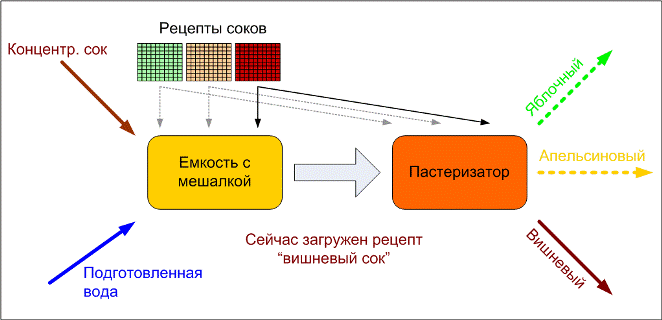
Рис. 1. Иллюстрация рецептурного управления на примере производства различных видов сока
Это все напоминает процесс приготовления еды на кухне, где мы оттачиваем рецепты разных блюд, но при этом используем одни и те же орудия (кастрюли, ножи, разделочные доски, плиту и т.д.)
Теперь попробуем дать характеристику batch-процессу:
1. На выходе несколько видов продукции.
2. При производстве разных видов продукции задействуется одно и то же технологическое оборудование.
3. Имеется множество рецептов.
4. Производство по “партиям”, которое может быть относительно легко и без последствий остановлено после завершения партии, а потом возобновлено.
Автоматизированное управление batch-процессом называется рецептурным управлением (batch control, или recipe control). Этот вид управления несколько специфичен, и требует от системы управления некоторой смекалки. Конечно, можно использовать для задач рецептурного управления обычные программные блоки, подходящие для управления непрерывным процессом, НО на практике это приводит к огромным трудностям (=головной боли) при попытке все это реализовать, используя стандартные подходы программирования. Поэтому многие производители АСУ ТП разработали специализированные batch-модули, которые адаптированы именно под рецептурные процессы. Эти модули могут выполняться на уровне ПЛК или на выделенном сервере batch. Иногда эти сервера, к тому же, резервируются. Также batch-модули дополняются специализированной средой разработки batch-программ, что сильно облегчает жизнь инженера.
На рисунке ниже в качестве примера приведена конфигурация верхнего уровня АСУ ТП SIMATIC PCS 7, оснащенной выделенным сервером batch.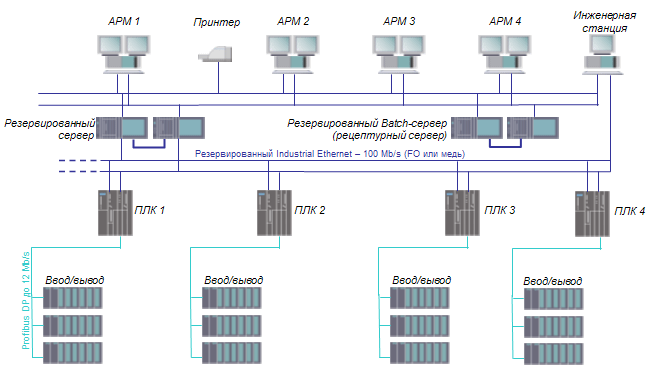
Рис. 2. Структурная схема АСУ ТП с выделенным сервером batch
Перечислим основные обязанности системы batch-управления:
1. Ну, собственно, самая главная задача – хранение/загрузка рецептов и их выполнение в режиме реального времени ( batch process management).
2. Отслеживание, не занята ли технологическая установка выполнением другого рецепта. Если занята, то выделяется другая аналогичная установка для выполнения данного рецепта ( process unit allocation).
3. Формирование отчетов об изготовление партии продукции в задаваемой пользователем форме. Причем, требуются отчеты с возможностью отслеживания истории (ретроспективы) “прогона” партии по технологической цепочке ( reporting and batch tracking).
4. Расчет различных показателей эффективности производства, как, например: удельного времени простоя (в %), производительности (в л/c) технологической установки или полного времени изготовления партии продукции (в мин).
5. Планирование изготовления партий, что фактически подразумевает составление производственного расписания. Ну, это на самом деле ни одна система в полном объеме пока не реализует ( batch planning).
И еще несколько слов.
Как правило, пакет batch состоит из двух частей – операторской (клиентской) и исполняемой. Клиентская часть устанавливается на АРМы и всего лишь обеспечивает удобный операторский интерфейс. Клиентская часть, как правило, органично вписывается в общую операторскую среду, и работа с ней идет непосредственно из мнемосхем.
Исполняемая часть – это костяк системы. Именно она ответственна за автоматизированное выполнение задач рецептурного управления, описанных выше. Исполняемая часть прогружается в специальные серверы batch или в обычные ПЛК в зависимости от архитектуры АСУ ТП.
И еще. Существует международный стандарт ISA-88, специфицирующий batch-процессы, определяющий модель и философию рецептурного управления, а также стандартизирующий соответствующую терминологию. Документ тяжеловесный, и посему прочитан полностью мной не был. Тем не менее, в следующей части я попытаюсь более детально описать рецептурные системы с привязкой именно к стандарту ISA-88.[ http://kazanets.narod.ru/Batch_P1.htm]
Тематики
EN
Русско-английский словарь нормативно-технической терминологии > система рецептурного управления технологическим процессом
-
70 Herschel, John Frederick William
SUBJECT AREA: Photography, film and optics[br]b. 7 March 1792 Slough, Englandd. 11 May 1871 Collingwood, England[br]English scientist who introduced "hypo" (thiosulphate) as a photographic fixative and discovered the blueprint process.[br]The only son of Sir William Herschel, the famous astronomer, John graduated from Cambridge in 1813 and went on to become a distinguished astronomer, mathematician and chemist. He left England in November 1833 to set up an observatory near Cape Town, South Africa, where he embarked on a study of the heavens in the southern hemisphere. He returned to England in the spring of 1838, and between 1850 and 1855 Herschel served as Master of the Royal Mint. He made several notable contributions to photography, perhaps the most important being his discovery in 1819 that hyposulphites (thiosulphates) would dissolve silver salts. He brought this property to the attention of W.H.F. Talbot, who in 1839 was using a common salt solution as a fixing agent for his early photographs. After trials, Talbot adopted "hypo", which was a far more effective fixative. It was soon adopted by other photographers and eventually became the standard photographic fixative, as it still is in the 1990s. After hearing of the first photographic process in January 1839, Herschel devised his own process within a week. In September 1839 he made the first photograph on glass. He is credited with introducing the words "positive", "negative" and "snapshot" to photography, and in 1842 he invented the cyanotype or "blueprint" process. This process was later to be widely adopted by engineers and architects for the reproduction of plans and technical drawings, a practice abandoned only in the late twentieth century.[br]Principal Honours and DistinctionsKnight of the Royal Hanoverian Guelphic Order 1831. Baronet 1838. FRS 1813. Copley Medal 1821.Further ReadingDictionary of National Biography, 1968, Vol. IX, pp. 714–19.H.J.P.Arnold, 1977, William Henry Fox Talbot, London; Larry J.Schaaf, 1992, Out of the Shadows: Herschel, Talbot and the Invention of Photography, Newhaven and London (for details of his contributions to photography and his relationship with Talbot).JWBiographical history of technology > Herschel, John Frederick William
-
71 Woodbury, Walter Bentley
SUBJECT AREA: Photography, film and optics[br]b. 1834 Manchester, Englandd. 1885 Margate, Kent, England[br]English photographer, inventor of the Woodburytype process.[br]Having been apprenticed to be an engineer, Woodbury left England in 1851 to seek his fortune in the Australian gold-fields. Like many others, he failed, and after a series of transient jobs found a post as Draughtsman at the Melbourne Waterworks. He then went on to Java, where he practised wet-collodion photography before returning to England finally in 1863. Woodbury settled in Birmingham, where like most contemporary photographers he was concerned to find a solution to the troublesome problem of fading prints. He began working the carbon process, and in 1866 and 1867 took out a series of patents which were to lead to the development of the process that took his name. Woodburytypes were continuous-tone prints of high quality that could be mass produced more cheaply than the traditional silver print. This was an important innovation and Woodburytypes were extensively used for quality book illustrations until the introduction of more versatile photomechanical processes in the 1890s. In all, Woodbury took out twenty patents between 1864 and 1884, some relating to a wide range of photographic devices. He was still working to simplify the Woodburytype process when he died from an overdose of laudanum.[br]BibliographyWoodbury took out a series of patents on his process, the most significant being: 23 September 1864, British patent no. 2,338; 12 January 1866, British patent no. 105; 11 February 1866, British patent no. 505; 8 May 1866, British patent no. 1,315; 24 July 1866, British patent no. 1,918.Further ReadingG.Tissandier, 1876, A History and Handbook of Photography, trans. J.Thomson.B.E.Jones (ed.), 1911, Cassell's Cyclopaedia of Photography, London (a brief biography).J.M.Eder, 1945, History of Photography, trans. E. Epstean, New York.JWBiographical history of technology > Woodbury, Walter Bentley
-
72 интеллектуальный центр управления электродвигателями
интеллектуальный центр управления электродвигателями
-
[Интент]Параллельные тексты EN-RU
iMCC ( Intelligent Motor Control Center) control switchboards are low voltage switchboards dedicated to energy distribution, as well as control and protection of motors. They are used in continuous and semi-continuous processes, in which it is necessary to group the motor starters together in one place for operational and maintenance reasons.
Integration of motor starters in iMCC switchboards
iMCC control switchboards make the work of operation and maintenance teams easier by improving the availability of the process, via:
• Control of motor starters using wire-to-wire cabling or via remote I/O located as close as possible to the starters and connected on the network
• Protection of the motors using an intelligent electronic protection relay. This provides more precise protection of the motors (analysis of operating conditions and alarm thresholds before tripping, etc).
These two functions can be grouped together in a single product, the electronic protection module. In this case, the protection relay module manages and transmits all this control and protection information directly.
Advantages of iMCC switchboards
iMCC control switchboards provide a high level of process availability while ensuring the safety of property and personnel. This solution decreases the number of process stoppages and their duration, reduces maintenance, reduces and repairs costs and optimizes process productivity:
• Reduction of process stoppages as a result of detailed alarms and diagnostics that enable staff to react before the motor starter trips, or react more quickly if it does trip
• Rapid diagnostics due to the availability of more detailed information on the stoppage conditions
• Analysis of stoppage logs using statistics from the electronic protection module.
iMCC control switchboards make installations easier to create, by reducing engineering and debugging time:
• Rapid parameter-setting as a result of local or remote downloading
• Analysis of phenomena via alarms, detailed diagnostics and stoppage logs (statistics embedded in the electronic protection module).
[Schneider Electric]iMCC ( Интеллектуальный центр управления электродвигателями) представляет собой низковольтное комплектное устройство (НКУ) распределения электроэнергии, защиты и управления электродвигателями. Такие НКУ используются для управления непрерывными и полунепрерывными технологическими процессами, в которых для обеспечения эффективной эксплуатации и технического обслуживания необходимо, чтобы пускатели были размещены в одном месте.
Тематики
- НКУ (шкафы, пульты,...)
- управление электродвигателями
EN
Русско-английский словарь нормативно-технической терминологии > интеллектуальный центр управления электродвигателями
-
73 dabei
Adv.1. with it; (nahe) near-by, close by; ein Haus mit Garten dabei a house with a garden; dabei sein (anwesend sein) be there; (teilnehmen) take part (in it); (mit ansehen) see it; darf ich dabei sein? can I come too?; (teilnehmen) can I join in?; ich bin dabei! (you can) count me in!, I’m game!; er muss immer dabei sein he’s got to be in on everything; ist ein Brief für mich dabei? is there a letter for me there?; es war ziemlich viel Glück dabei I was etc. pretty lucky there; ein bisschen Risiko ist immer dabei there’s always an element of risk2. (im Begriff): dabei, etw. zu tun just doing s.th., in the middle of doing s.th.; (kurz davor) about ( oder going) to do s.th., on the point of doing s.th.; ich war gerade dabei zu packen I was just packing; tu das endlich! - ja, ja, ich bin ja schon dabei! umg. alright, alright, I’m doing it!3. (gleichzeitig) at the same time, while doing so; sie strickt und liest dabei she knits and reads at the same time; er aß und sah mich dabei fragend an while he ate, he gave me a questioning look4. (überdies) besides, what is more; sie ist hübsch und dabei auch noch klug auch she’s attractive and intelligent into the bargain (Am. intelligent to boot)5. (dennoch) nevertheless, yet, for all that, at the same time; und dabei ist er doch schon alt and he’s an old man, after all; er ist streng und dabei sehr fair he’s strict but very fair6. (obwohl) although, even though; er schenkte es mir, dabei hatte ich es gar nicht verlangt he gave it to me although I hadn’t even asked for it; jetzt schreibt sie immer noch, dabei könnte sie schon längst fertig sein she’s still writing, even though she could have been finished ages ago; dabei hätten wir gewinnen können to think we could have won; dabei macht man sich gar keinen Begriff, wie schwierig es ist but people have no idea how hard it is; sie suchte danach, dabei hatte er ihn in der Hand she was looking for it and he had it in his hand all the time7. (bei dieser Gelegenheit) on the occasion, then; (während) while, in the process; (dadurch) as a result; jemanden dabei ertappen oder erwischen, wie er... catch s.o. red-handed as he...; dabei kam es zu einer heftigen Auseinandersetzung this gave rise to ( oder resulted in) a heated argument; dabei fällt mir ein:... talking of which:...; alle dabei entstehenden Kosten all resulting costs; man könnte verrückt werden dabei it’s enough to drive you mad8. (bei dieser Handlung, Angelegenheit) about it; das Schwierige dabei ist,... the difficult thing about it is...; es kommt nichts dabei heraus umg. it’s no use, it’s not worth it; dabei dürfen wir nicht vergessen here we must not forget; mir ist gar nicht wohl dabei I don’t feel too good about it; ich dachte mir nichts Böses dabei I meant no harm; ich dachte mir nichts dabei (zu + Inf.) I thought nothing of it (of + Ger.); (bei einer Bemerkung) I didn’t mean anything by it; was hast du dir eigentlich dabei gedacht? what on earth made you do ( oder say etc.) that?; weitS. whatever possessed you?; ich finde nichts dabei I don’t see any harm in it; was ist schon dabei? umg. so what?; was ist schon dabei, wenn...? what difference does it make if...?, what harm does it do if...?; da ist doch nichts dabei umg. (ist nicht schwer) that’s child’s play, there’s nothing to it; (ist nicht bedenklich) it’s nothing to worry about; (schadet nichts) it can’t do any harm; (ist nicht gefährlich) it’s perfectly safe9. abschließend: ich bleibe dabei I’m not changing my mind; und ich bleibe dabei, in X ist es am schönsten I’m still convinced X is the most beautiful place in the world; du kommst mit, und dabei bleibt’s umg. you’re coming with us, and that’s that; dabei blieb’s umg. (and) that was the end of that; lassen wir es dabei let’s leave it at that* * *by; thereby; with it* * *da|bei [da'bai] (emph) ['daːbai]advein Häuschen mit einem Garten dabéí — a little house with a garden (attached to it or attached)
ist die Lösung dabéí? — is the solution given (there)?
nahe dabéí — nearby
2) (zeitlich) (= gleichzeitig) at the same time; (= währenddessen, wodurch) in the course of thiser aß weiter und blätterte dabéí in dem Buch — he went on eating, leafing through the book as he did so or at the same time
warum arbeiten Sie im Stehen? Sie können doch auch dabéí sitzen — why are you working standing up? you can sit down while you're doing it
dabéí wurden drei Kinder verletzt —
... orkanartige Winde dabéí kam es zu schweren Schäden —... gale-force winds, which have resulted in serious damage
sie ist schön und dabéí auch noch klug — she's pretty, and clever as well
er wollte helfen und wurde dabéí selbst verletzt — he wanted to help and got injured in the process or (in) doing so or while he was about it (inf)
du warst bei einem Jugendtreffen? hast du denn dabéí etwas gelernt? — you were at a youth meeting? did you learn anything there or from it?
dabéí darf man nicht vergessen, dass... — it shouldn't be forgotten that...; (Einschränkung eines Arguments) it should not be forgotten here that...
die dabéí entstehenden Kosten — the expenses arising from this/that
als er das tat, hat er dabéí... — when he did that he...
wenn man das tut, muss man dabéí... — when you do that you have to...
wir haben ihn dabéí ertappt, wie er über den Zaun stieg — we caught him in the act of climbing over the fence
5)wichtig dabéí ist... — the important thing here or about it is...
mir ist nicht ganz wohl dabéí — I don't really feel happy about it
dabéí kann man viel Geld verdienen — there's a lot of money in that
er hat dabéí einen Fehler gemacht — he's made a mistake
sie hat sich dabéí sehr dumm benommen — she behaved very stupidly
es kommt doch nichts dabéí heraus — nothing will come of it
6) (einräumend = doch) (and) yeter hat mich geschlagen, dabéí hatte ich gar nichts gemacht — he hit me and I hadn't even done anything or and yet I hadn't done anything
ich habe fünf Stück gegessen, dabéí hatte ich gar keinen Hunger — I've eaten five pieces, and I wasn't even hungry
7)du gehst sofort nach Hause, und dabéí bleibt es! — you're going straight home and that's that or that's the end of it!
es bleibt dabéí, dass ihr morgen alle mitkommt — we'll stick to that or keep it like that, you're all coming tomorrow
ich bleibe dabéí — I'm not changing my mind
er bleibt dabéí, dass er es nicht gewesen ist — he still insists that he didn't do it, he's still sticking to his guns that he didn't do it
aber dabéí sollte es nicht bleiben — but it shouldn't stop there or at that
lassen wir es dabéí — let's leave it at that!
was ist schon dabéí? — so what? (inf), what of it? (inf)
was ist schon dabéí, wenn man das tut? — what harm is there in doing that?
ich finde gar nichts dabéí — I don't see any harm in it
nimm meine Bemerkung nicht so ernst, ich habe mir nichts dabéí gedacht — don't take my remark so seriously, I didn't mean anything by it
ich habe mir nichts dabéí gedacht, als ich den Mann aus der Bank kommen sah — I didn't think anything of it when I saw the man coming out of the bank
was hast du dir denn dabéí gedacht? — what were you thinking of?
dabéí kann er sich nicht viel gedacht haben — he can't have thought about it much
* * *(near: They stood by and watched.) by* * *da·bei[daˈbai]1. (dazugehörend) with itein kleines Häuschen mit einem Garten \dabei a little house with a gardendie Rechnung war nicht \dabei the bill was not enclosedwar bei dem Muster ein Brief \dabei? did the sample come with a letter?ist der Salat bei dem Gericht \dabei? is the salad included in the meal?ist bei dem Gericht ein Salat \dabei? does the meal come with a salad?, is there a salad with the meal?2. (in der Nähe)direkt/nahe \dabei right next/near to iter war bei dem Treffen \dabei he was there at the meetingich bin \dabei! count me in!sie kennt sich im Betrieb noch nicht so gut aus, sie ist erst seit einem Monat \dabei she is not familiar with the company yet, she's only been working there for a monthes kam zu einem Massenandrang, \dabei wurden viele Menschen verletzt there was a crush, in the course of which many people were injuredes goss in Strömen, \dabei kam es zu zahlreichen Unfällen it was pouring down with rain, which resulted in a lot of accidentsArbeit am Computer? aber \dabei muss man doch immer so viel tippen! working on the computer? but that involves so much typing!er half den Opfern und wurde \dabei selbst verletzt he helped the victims and in doing so got injured himselfwir haben ihn \dabei ertappt, wie er über den Zaun stieg we caught him [while he was] climbing over the fencejdm \dabei helfen, etw zu tun to help sb doing sth6. (daraus resultierend) as a resultdie \dabei entstehenden Kosten sind sehr hoch the resulting costs are very highund \dabei auch noch and what's more, besidessie ist schön und \dabei auch noch intelligent she is beautiful and what's more [or besides] clever [or BRIT and clever to boot]sie las und hörte \dabei Radio she was reading and listening to the radio at the same timesie ist flink, \dabei aber [auch] sehr umsichtig she's quick but very cautious8. (und das obwohl) even thougher hat die Prüfung nicht bestanden, \dabei hat er so fleißig gelernt he failed the exam, although he had studied so hard9. (damit beschäftigt)[gerade] \dabei sein, etw zu tun to be [just] doing sth10. (an dieser Sache)das Dumme/Schöne \dabei ist, dass... the stupid/good thing about it is that...interessant/wichtig \dabei ist, dass/ob/wie... the interesting/important thing about it is that/whether/how...das Geschäft ist riskant, \dabei kann man aber reich werden it's a risky business but it can make you richnimm meine Bemerkung nicht so ernst, ich habe mir nichts \dabei gedacht don't take my remark so seriously, I didn't mean anything by itwas hast du dir denn \dabei gedacht? what were you thinking of?ich habe kein gutes Gefühl \dabei I don't feel happy about itnichts \dabei finden, etw zu tun/wenn jd etw tut to not see the harm in doing sth/in sb doing sth12. (fam: auszusetzen, problematisch)es ist nichts \dabei, wenn man/jd etw tut there is no harm in one/sb doing sthda ist [doch] nichts \dabei (nicht schwierig) there's nothing to it; (nicht schlimm) there's no harm in itwas ist schon \dabei? so what?13. (wie gesagt) s. belassen 1, bleiben 8, lassen I. 6* * *1) with it/him/her/themeine Tankstelle mit einer Werkstatt dabei — a filling station with its own workshop [attached]
nahe dabei — near it; close by
dabei sein — (anwesend sein) be there; be present ( bei at); (teilnehmen) take part ( bei in)
2) (währenddessen) at the same time; (bei diesem Anlass) then; on that occasioner ist dabei gesehen worden, wie er das Geld nahm — he was seen [in the act of] taking the money
ein Unfall - dabei gab es zwei Tote — an accident - two people were killed [in it]
er suchte nach dem Brief, dabei hatte er ihn in der Hand — he was looking for the letter and all the time he had it in his hand
[gerade] dabei sein, etwas zu tun — be just doing something
3) (außerdem)dabei [auch] — what is more
er ist sehr beschäftigt, aber dabei (dennoch) immer freundlich — he is very busy but even so always friendly
4) (hinsichtlich dessen)was hast du dir denn dabei gedacht? — what were you thinking of?; what came over you?
5)da ist doch nichts dabei! — there's really no harm in it!; (es ist nicht schwierig) there's nothing to it!; s. auch bleiben 1)
* * *dabei adv1. with it; (nahe) near-by, close by;ein Haus mit Garten dabei a house with a garden;darf ich dabei sein? can I come too?; (teilnehmen) can I join in?;ich bin dabei! (you can) count me in!, I’m game!;er muss immer dabei sein he’s got to be in on everything;ist ein Brief für mich dabei? is there a letter for me there?;es war ziemlich viel Glück dabei I was etc pretty lucky there;ein bisschen Risiko ist immer dabei there’s always an element of risk2. (im Begriff):dabei, etwas zu tun just doing sth, in the middle of doing sth; (kurz davor) about ( oder going) to do sth, on the point of doing sth;ich war gerade dabei zu packen I was just packing;tu das endlich! -ja, ja, ich bin ja schon dabei! umg alright, alright, I’m doing it!3. (gleichzeitig) at the same time, while doing so;sie strickt und liest dabei she knits and reads at the same time;er aß und sah mich dabei fragend an while he ate, he gave me a questioning look4. (überdies) besides, what is more;sie ist hübsch und dabei auch noch klug auch she’s attractive and intelligent into the bargain (US intelligent to boot)5. (dennoch) nevertheless, yet, for all that, at the same time;und dabei ist er doch schon alt and he’s an old man, after all;er ist streng und dabei sehr fair he’s strict but very fair6. (obwohl) although, even though;er schenkte es mir, dabei hatte ich es gar nicht verlangt he gave it to me although I hadn’t even asked for it;jetzt schreibt sie immer noch, dabei könnte sie schon längst fertig sein she’s still writing, even though she could have been finished ages ago;dabei hätten wir gewinnen können to think we could have won;dabei macht man sich gar keinen Begriff, wie schwierig es ist but people have no idea how hard it is;sie suchte danach, dabei hatte er ihn in der Hand she was looking for it and he had it in his hand all the time7. (bei dieser Gelegenheit) on the occasion, then; (während) while, in the process; (dadurch) as a result;erwischen, wie er … catch sb red-handed as he …;dabei kam es zu einer heftigen Auseinandersetzung this gave rise to ( oder resulted in) a heated argument;dabei fällt mir ein: … talking of which: …;alle dabei entstehenden Kosten all resulting costs;man könnte verrückt werden dabei it’s enough to drive you mad8. (bei dieser Handlung, Angelegenheit) about it;das Schwierige dabei ist, … the difficult thing about it is …;es kommt nichts dabei heraus umg it’s no use, it’s not worth it;dabei dürfen wir nicht vergessen here we must not forget;mir ist gar nicht wohl dabei I don’t feel too good about it;ich dachte mir nichts Böses dabei I meant no harm;was hast du dir eigentlich dabei gedacht? what on earth made you do ( oder say etc) that?; weitS. whatever possessed you?;ich finde nichts dabei I don’t see any harm in it;was ist schon dabei? umg so what?;was ist schon dabei, wenn …? what difference does it make if …?, what harm does it do if …?;da ist doch nichts dabei umg (ist nicht schwer) that’s child’s play, there’s nothing to it; (ist nicht bedenklich) it’s nothing to worry about; (schadet nichts) it can’t do any harm; (ist nicht gefährlich) it’s perfectly safe9. abschließend:ich bleibe dabei I’m not changing my mind;und ich bleibe dabei, in X ist es am schönsten I’m still convinced X is the most beautiful place in the world;du kommst mit, und dabei bleibt’s umg you’re coming with us, and that’s that;dabei blieb’s umg (and) that was the end of that;lassen wir es dabei let’s leave it at that* * *1) with it/him/her/themeine Tankstelle mit einer Werkstatt dabei — a filling station with its own workshop [attached]
nahe dabei — near it; close by
dabei sein — (anwesend sein) be there; be present ( bei at); (teilnehmen) take part ( bei in)
2) (währenddessen) at the same time; (bei diesem Anlass) then; on that occasioner ist dabei gesehen worden, wie er das Geld nahm — he was seen [in the act of] taking the money
ein Unfall - dabei gab es zwei Tote — an accident - two people were killed [in it]
er suchte nach dem Brief, dabei hatte er ihn in der Hand — he was looking for the letter and all the time he had it in his hand
[gerade] dabei sein, etwas zu tun — be just doing something
3) (außerdem)dabei [auch] — what is more
er ist sehr beschäftigt, aber dabei (dennoch) immer freundlich — he is very busy but even so always friendly
was hast du dir denn dabei gedacht? — what were you thinking of?; what came over you?
5)da ist doch nichts dabei! — there's really no harm in it!; (es ist nicht schwierig) there's nothing to it!; s. auch bleiben 1)
* * *adv.thereby adv.withal adv. präp.near by prep. -
74 Swan, Sir Joseph Wilson
[br]b. 31 October 1828 Sunderland, Englandd. 27 May 1914 Warlingham, Surrey, England[br]English chemist, inventor in Britain of the incandescent electric lamp and of photographic processes.[br]At the age of 14 Swan was apprenticed to a Sunderland firm of druggists, later joining John Mawson who had opened a pharmacy in Newcastle. While in Sunderland Swan attended lectures at the Athenaeum, at one of which W.E. Staite exhibited electric-arc and incandescent lighting. The impression made on Swan prompted him to conduct experiments that led to his demonstration of a practical working lamp in 1879. As early as 1848 he was experimenting with carbon as a lamp filament, and by 1869 he had mounted a strip of carbon in a vessel exhausted of air as completely as was then possible; however, because of residual air, the filament quickly failed.Discouraged by the cost of current from primary batteries and the difficulty of achieving a good vacuum, Swan began to devote much of his attention to photography. With Mawson's support the pharmacy was expanded to include a photographic business. Swan's interest in making permanent photographic records led him to patent the carbon process in 1864 and he discovered how to make a sensitive dry plate in place of the inconvenient wet collodian process hitherto in use. He followed this success with the invention of bromide paper, the subject of a British patent in 1879.Swan resumed his interest in electric lighting. Sprengel's invention of the mercury pump in 1865 provided Swan with the means of obtaining the high vacuum he needed to produce a satisfactory lamp. Swan adopted a technique which was to become an essential feature in vacuum physics: continuing to heat the filament during the exhaustion process allowed the removal of absorbed gases. The inventions of Gramme, Siemens and Brush provided the source of electrical power at reasonable cost needed to make the incandescent lamp of practical service. Swan exhibited his lamp at a meeting in December 1878 of the Newcastle Chemical Society and again the following year before an audience of 700 at the Newcastle Literary and Philosophical Society. Swan's failure to patent his invention immediately was a tactical error as in November 1879 Edison was granted a British patent for his original lamp, which, however, did not go into production. Parchmentized thread was used in Swan's first commercial lamps, a material soon superseded by the regenerated cellulose filament that he developed. The cellulose filament was made by extruding a solution of nitro-cellulose in acetic acid through a die under pressure into a coagulating fluid, and was used until the ultimate obsolescence of the carbon-filament lamp. Regenerated cellulose became the first synthetic fibre, the further development and exploitation of which he left to others, the patent rights for the process being sold to Courtaulds.Swan also devised a modification of Planté's secondary battery in which the active material was compressed into a cellular lead plate. This has remained the central principle of all improvements in secondary cells, greatly increasing the storage capacity for a given weight.[br]Principal Honours and DistinctionsKnighted 1904. FRS 1894. President, Institution of Electrical Engineers 1898. First President, Faraday Society 1904. Royal Society Hughes Medal 1904. Chevalier de la Légion d'Honneur 1881.Bibliography2 January 1880, British patent no. 18 (incandescent electric lamp).24 May 1881, British patent no. 2,272 (improved plates for the Planté cell).1898, "The rise and progress of the electrochemical industries", Journal of the Institution of Electrical Engineers 27:8–33 (Swan's Presidential Address to the Institution of Electrical Engineers).Further ReadingM.E.Swan and K.R.Swan, 1968, Sir Joseph Wilson Swan F.R.S., Newcastle upon Tyne (a detailed account).R.C.Chirnside, 1979, "Sir Joseph Swan and the invention of the electric lamp", IEEElectronics and Power 25:96–100 (a short, authoritative biography).GWBiographical history of technology > Swan, Sir Joseph Wilson
-
75 концентрация (процесс)
концентрация (процесс)
—
[ http://www.eionet.europa.eu/gemet/alphabetic?langcode=en]EN
concentration (process)
The process of increasing the quantity of a component in a solution. The opposite of dilution. (Source: CED)
[http://www.eionet.europa.eu/gemet/alphabetic?langcode=en]Тематики
EN
DE
FR
Русско-английский словарь нормативно-технической терминологии > концентрация (процесс)
-
76 Serisizing
A process which is based upon the application of a solution of silk to the surface of a cotton thread, very similar to the application of a sizing mixture, only of a considerably thinner consistency. Silk dissolved in alkalis is readily thrown out of solution by the addition of acid. When such a solution has been applied to a cotton thread, and the thread afterwards passed through a weak acid bath, the sericin of the silk is deposited upon the fibres in an insoluble form which then permits the cotton to be washed and dried. -
77 метод
approach, device, manner, mean, method, mode, practice, procedure, system, technique, technology, theory, way* * *ме́тод м.
method; procedure; techniqueагрегатнопото́чный ме́тод — conveyor-type production [production-line] methodаксиомати́ческий ме́тод — axiomatic [postulational] methodме́тод амплиту́дного ана́лиза — kick-sorting methodанаглифи́ческий ме́тод картогр. — anaglyphic(al) methodме́тод аналити́ческой вста́вки топ. — cantilever extension, cantilever (strip) triangulationме́тод быстре́йшего спу́ска стат. — steepest descent methodвариацио́нный ме́тод — variational methodме́тод Верне́йля радио — Verneuil methodвесово́й ме́тод — gravimetric methodме́тод ветве́й и грани́ц киб. — branch and bound methodме́тод взба́лтывания — shake methodвизуа́льный ме́тод — visual methodме́тод возду́шной прое́кции — aero-projection methodме́тод враще́ния — method of revolutionме́тод вреза́ния — plunge-cut methodме́тод вре́мени пролё́та — time-of-flight methodвре́мя-и́мпульсный ме́тод ( преобразования аналоговой информации в дискретную) — pulse-counting method (of analog-to-digital conversion)ме́тод встре́чного фрезерова́ния — conventional [cut-up] milling methodме́тод вы́бега эл. — retardation methodме́тод вымета́ния мат. — sweep(ing)-out methodме́тод гармони́ческого бала́нса киб., автмт. — describing function methodме́тод гармони́ческой линеариза́ции — describing function methodголографи́ческий ме́тод — holographic methodгравиметри́ческий ме́тод — gravimetric(al) methodграфи́ческий ме́тод — graphical methodме́тод графи́ческого трансформи́рования топ. — grid methodграфоаналити́ческий ме́тод — semigraphical methodме́тод гра́фов мат. — graph methodгруппово́й ме́тод ( в высокочастотной телефонии) — grouped-frequency basisсисте́ма рабо́тает групповы́м ме́тодом — the system operates on the grouped-frequency basisме́тод двух ре́ек геод., топ. — two-staff [two-base] methodме́тод двух узло́в ( в анализе электрических цепей) — nodal-pair methodме́тод дирекцио́нных угло́в геод. — method of gisementsме́тод запа́са про́чности ( в расчетах конструкции) — load factor methodме́тод засе́чек афс. — resection methodме́тод зерка́льных изображе́ний эл. — method of electrical imagesме́тод зо́нной пла́вки ( в производстве монокристаллов полупроводниковых материалов) — floating-zone method, floating-zone techniqueме́тод избы́точных концентра́ций ( для опробования гипотетического механизма реакции) — isolation method (of the testing the rate equations)ме́тод измере́ния, абсолю́тный — absolute [fundamental] method of measurementме́тод измере́ния, конта́ктный — contact method of measurementме́тод измере́ния, ко́свенный — indirect method of measurementме́тод измере́ния, относи́тельный — relative method of measurementме́тод измере́ния по то́чкам — point-by-point methodме́тод измере́ния, прямо́й — direct method of measurementме́тод измере́ния угло́в по аэросни́мкам — photogoniometric methodме́тод изображе́ний эл. — method of images, image methodме́тод изото́пных индика́торов — tracer methodиммерсио́нный ме́тод — immersion methodи́мпульсный ме́тод свар. — pulse methodме́тод и́мпульсов — momentum-transfer methodме́тод инве́рсии — inversion methodи́ндексно-после́довательный ме́тод до́ступа, основно́й вчт. — basic indexed sequential access method, BISAMи́ндексно-после́довательный ме́тод до́ступа с очередя́ми вчт. — queued indexed sequential access method, BISAMинтерференцио́нный ме́тод — interferometric methodме́тод испыта́ний — testing procedure, testing methodме́тод испыта́ний, кисло́тный — acid testме́тод испыта́ний, пане́льный — panel-spalling testме́тод испыта́тельной строки́ тлв. — test-line methodме́тод иссле́дований напряже́ний, опти́ческий — optical stress analysisме́тод истече́ния — efflux methodме́тод итера́ции — iteration method, iteration techniqueме́тод итера́ции приво́дит к сходи́мости проце́сса — the iteration (process) converges to a solutionме́тод итера́ции приво́дит к (бы́строй или ме́дленной) сходи́мости проце́сса — the iteration (process) converges quickly or slowlyме́тод картосоставле́ния — map-compilation [plotting] methodме́тод кача́ющегося криста́лла ( в рентгеноструктурном анализе) — rotating-crystal methodка́чественный ме́тод — qualitative methodкессо́нный ме́тод — caisson methodколи́чественный ме́тод — quantitative methodколориметри́ческий ме́тод — colorimetric methodме́тод кольца́ и ша́ра — ball-and-ring methodкомплексометри́ческий ме́тод ( для определения жёсткости воды) — complexometric methodкондуктометри́ческий ме́тод — conductance-measuring methodме́тод коне́чных ра́зностей — finite difference methodме́тод консерви́рования — curing methodме́тод контро́ля, дифференци́рованный — differential control methodме́тод контро́ля ка́чества — quality control methodме́тод ко́нтурных то́ков — mesh-current [loop] methodме́тод ко́нуса — cone methodме́тод корнево́го годо́графа киб., автмт. — root-locus methodкорреляцио́нный ме́тод — correlation methodко́свенный ме́тод — indirect methodме́тод кра́сок ( в дефектоскопии) — dye-penetrant methodлаборато́рный ме́тод — laboratory methodме́тод ла́ковых покры́тий ( в сопротивлении материалов) — brittle-varnish methodме́тод лине́йной интерполя́ции — method of proportional partsме́тод Ляпуно́ва аргд. — Lyapunov's methodме́тод магни́тного порошка́ ( в дефектоскопии) — magnetic particle [magnetic powder] methodмагни́тно-люминесце́нтный ме́тод ( в дефектоскопии) — fluorescent magnetic particle methodме́тод ма́лого пара́метра киб., автмт. — perturbation theory, perturbation methodме́тод ма́лых возмуще́ний аргд. — perturbation methodме́тод мгнове́нной равносигна́льной зо́ны рлк. — simultaneous lobing [monopulse] methodме́тод механи́ческой обрабо́тки — machining methodме́тод ме́ченых а́томов — tracer methodме́тод микрометри́рования — micrometer methodме́тод мно́жителей Лагра́нжа — Lagrangian multiplier method, Lagrange's method of undetermined multipliersме́тод моме́нтных площаде́й мех. — area moment methodме́тод Мо́нте-Ка́рло мат. — Monte Carlo methodме́тод навига́ции, дальноме́рный ( пересечение двух окружностей) — rho-rho [r-r] navigationме́тод навига́ции, угломе́рный ( пересечение двух линий пеленга) — theta-theta [q-q] navigationме́тод наиме́ньших квадра́тов — method of least squares, least-squares techniqueме́тод наискоре́йшего спу́ска мат. — method of steepest descentме́тод нака́чки ( лазера) — pumping [excitation] methodме́тод накопле́ния яд. физ. — “backing-space” methodме́тод наложе́ния — method of superpositionме́тод напыле́ния — evaporation techniqueме́тод нару́жных заря́дов горн. — adobe blasting methodме́тод незави́симых стереопа́р топ. — method of independent image pairsненулево́й ме́тод — deflection methodме́тод неопределё́нных мно́жителей Лагра́нжа — Lagrangian multiplier method, Lagrange's method of undetermined multipliersме́тод неподви́жных то́чек — method of fixed pointsнеразруша́ющий ме́тод — non-destructive method, non-destructive testingнерекурси́вный ме́тод — non-recursive methodнето́чный ме́тод — inexact methodнефелометри́ческий ме́тод — nephelometric methodме́тод нивели́рования по частя́м — method of fraction levellingнулево́й ме́тод — null [zero(-deflection) ] methodме́тод нулевы́х бие́ний — zero-beat methodме́тод нулевы́х то́чек — neutral-points methodме́тод обеспе́чения надё́жности — reliability methodме́тод обрабо́тки — processing [working, tooling] methodме́тод обра́тной простра́нственной засе́чки топ. — method of pyramidобра́тно-ступе́нчатый ме́тод свар. — step-back methodме́тод объединё́нного а́тома — associate atom methodобъекти́вный ме́тод — objective methodобъё́мный ме́тод — volumetric methodме́тод одного́ отсчё́та ( преобразование непрерывной информации в дискретную) — the total value method (of analog-to-digital conversion)окисли́тельно-восстанови́тельный ме́тод — redox methodопера́торный ме́тод — operational methodме́тод определе́ния ме́ста, дальноме́рно-пеленгацио́нный ( пересечение прямой и окружности) — rho-theta [r-q] fixingме́тод определе́ния ме́ста, дальноме́рный ( пересечение двух окружностей) — rho-rho [r-r] fixingме́тод определе́ния ме́ста, пеленгацио́нный ( пересечение двух линий пеленга) — theta-theta [q-q] fixingме́тод определе́ния отбе́ливаемости и цве́тности ма́сел — bleach-and-colour methodме́тод определе́ния положе́ния ли́нии, двукра́тный геод. — double-line methodме́тод опти́ческой корреля́ции — optical correlation techniqueме́тод осажде́ния — sedimentation methodме́тод осо́бых возмуще́ний аргд. — singular perturbation methodме́тод осредне́ния — averaging [smoothing] methodме́тод отбо́ра проб — sampling method, sampling techniqueме́тод отклоне́ния — deflection methodме́тод отопле́ния метал. — fuel practiceме́тод отраже́ния — reflection methodме́тод отражё́нных и́мпульсов — pulse-echo methodме́тод отыска́ния произво́дной, непосре́дственный — delta methodме́тод па́дающего те́ла — falling body methodме́тод парамагни́тного резона́нса — paramagnetic-resonance methodме́тод пе́рвого приближе́ния — first approximation methodме́тод перева́ла мат. — saddle-point methodме́тод перено́са коли́чества движе́ния аргд. — momentum-transfer methodме́тод перераспределе́ния моме́нтов ( в расчёте конструкций) — moment distribution methodме́тод пересека́ющихся луче́й — crossed beam methodме́тод перехо́дного состоя́ния ( в аналитической химии) — transition state methodме́тод перпендикуля́ров — offset methodме́тод перспекти́вных се́ток топ. — grid methodме́тод пескова́ния с.-х. — sanding methodпикнометри́ческий ме́тод — bottle methodме́тод площаде́й физ. — area methodме́тод повторе́ний геод. — method of reiteration, repetition methodме́тод подбо́ра — trial-and-error [cut-and-try] methodме́тод подо́бия — similitude methodме́тод подориенти́рования топ. — setting on points of controlме́тод по́лной деформа́ции — total-strain methodме́тод полови́нных отклоне́ний — half-deflection methodме́тод положе́ния геод. — method of bearings, method of gisementsполуколи́чественный ме́тод — semiquantitative methodме́тод поля́рных координа́т — polar methodме́тод попу́тного фрезерова́ния — climb [cut-down] milling methodпорошко́вый ме́тод ( в рентгеноструктурном анализе) — powder [Debye-Scherer-Hull] methodме́тод посе́ва — seeding techniqueме́тод после́довательного счё́та ( преобразования аналоговой информации в дискретную) — incremental method (of analog-to-digital conversion)ме́тод после́довательных исключе́ний — successive exclusion methodме́тод после́довательных подстано́вок — method of successive substitution, substitution processме́тод после́довательных попра́вок — successive correction methodме́тод после́довательных приближе́ний — successive approximation methodме́тод после́довательных элимина́ций — method of exhaustionме́тод послесплавно́й диффу́зии полупр. — post-alloy-diffusion techniqueпотенциометри́ческий компенсацио́нный ме́тод — potentiometric methodпото́чно-конве́йерный ме́тод — flow-line conveyor methodпото́чный ме́тод — straight-line flow methodме́тод прерыва́ний ( для измерения скорости света) — chopped-beam methodприближё́нный ме́тод — approximate methodме́тод проб и оши́бок — trial-and-error [cut-and-try] methodме́тод программи́рующих програ́мм — programming program methodме́тод продолже́ния топ. — setting on points on controlме́тод проекти́рования, моде́льно-маке́тный — model-and-mock-up method of designме́тод простра́нственного коди́рования ( преобразования аналоговой информации в дискретную) — coded pattern method (OF analog-to-digital conversion)ме́тод простра́нственной самофикса́ции — self-fixation space methodпрямо́й ме́тод — direct methodме́тод псевдослуча́йных чи́сел — pseudorandom number methodме́тод равносигна́льной зо́ны рлк. — lobing, beam [lobe] switchingме́тод равносигна́льной зо́ны, мгнове́нный рлк. — simultaneous lobing, monopulseме́тод ра́вных высо́т геод. — equal-altitude methodме́тод ра́вных деформа́ций ( в проектировании бетонных конструкций) — equal-strain methodме́тод ра́вных отклоне́ний — equal-deflection methodрадиацио́нный ме́тод — radiation methodме́тод радиоавтогра́фии — radioautograph techniqueме́тод радиоакти́вных индика́торов — tracer methodрадиометри́ческий ме́тод — radiometric methodме́тод разбавле́ния — dilution methodме́тод разделе́ния тлв. — separation methodме́тод разделе́ния переме́нных — method of separation of variablesме́тод разли́вки метал. — teeming [pouring, casting] practiceме́тод разме́рностей — dimensional methodра́зностный ме́тод — difference methodме́тод разруша́ющей нагру́зки — load-factor methodразруша́ющий ме́тод — destructive checkме́тод рассе́яния Рэле́я — Rayleigh scattering methodме́тод ра́стра тлв. — grid methodме́тод ра́стрового скани́рования — raster-scan methodме́тод расчё́та по допусти́мым нагру́зкам — working stress design [WSD] methodме́тод расчё́та по разруша́ющим нагру́зкам стр. — ultimate-strength design [USD] methodме́тод расчё́та при по́мощи про́бной нагру́зки стр. — trial-load methodме́тод расчё́та, упру́гий стр. — elastic methodрезона́нсный ме́тод — resonance methodме́тод реитера́ций геод. — method of reiteration, repetition methodрентгенострукту́рный ме́тод — X-ray diffraction methodме́тод реше́ния зада́чи о четвё́ртой то́чке геод. — three-point methodме́тод решета́ мат. — sieve methodру́порно-ли́нзовый ме́тод радио — horn-and-lens methodме́тод самоторможе́ния — retardation methodме́тод сви́лей — schlieren technique, schlieren methodме́тод сдви́нутого сигна́ла — offset-signal methodме́тод секу́щих — secant methodме́тод се́рого кли́на физ. — gray-wedge methodме́тод се́ток мат., вчт. — net(-point) methodме́тод сече́ний ( в расчёте напряжений в фермах) — method of sectionsме́тод сил ( определение усилий в статически неопределимой системе) — work methodсимволи́ческий ме́тод — method of complex numbersме́тод симметри́чных составля́ющих — method of symmetrical components, symmetrical component methodме́тод синхро́нного накопле́ния — synchronous storage methodме́тод скани́рования полосо́й — single-line-scan television methodме́тод скани́рования пятно́м — spot-scan photomultiplier methodме́тод смеще́ния отде́льных узло́в стр. — method of separate joint displacementме́тод совпаде́ний — coincidence methodме́тод сосредото́ченных пара́метров — lumped-parameter methodме́тод спада́ния заря́да — fall-of-charge methodспектроскопи́ческий ме́тод — spectroscopic methodме́тод спира́льного скани́рования — spiral-scan methodме́тод сплавле́ния — fusion methodме́тод сплошны́х сред ( в моделировании) — continuous field analog techniqueме́тод сре́дних квадра́тов — midsquare methodстатисти́ческий ме́тод — statistical techniqueстатисти́ческий ме́тод оце́нки — statistical estimationме́тод статисти́ческих испыта́ний — Monte Carlo methodстробоголографи́ческий ме́тод — strobo-holographic methodстробоскопи́ческий ме́тод — stroboscopic methodстру́йный ме́тод метал. — jet testступе́нчатый ме́тод ( сварки или сверления) — step-by-step methodсубъекти́вный ме́тод — subjective methodме́тод сухо́го озоле́ния — dry combustion methodме́тод сухо́го порошка́ ( в дефектоскопии) — dry methodсчё́тно-и́мпульсный ме́тод — pulse-counting methodтабли́чный ме́тод — diagram methodтелевизио́нный ме́тод электро́нной аэросъё́мки — television methodтелевизио́нный ме́тод электро́нной фотограмме́трии — television methodтенево́й ме́тод — (direct-)shadow methodтермоанемометри́ческий ме́тод — hot-wire methodтопологи́ческий ме́тод — topological methodме́тод то́чечного вплавле́ния полупр. — dot alloying methodто́чный ме́тод — exact [precision] methodме́тод травле́ния, гидри́дный — sodium hydride descalingме́тод трапецеида́льных характери́стик — Floyd's trapezoidal approximation method, approximation procedureме́тод трёх баз геод. — three-base methodме́тод триангуля́ции — triangulation methodме́тод трилатера́ции геод. — trilateration methodме́тод углово́й деформа́ции — slope-deflection methodме́тод углово́й модуля́ции — angular modulation methodме́тод удаля́емого трафаре́та полупр. — rejection mask methodме́тод удаля́емой ма́ски рад. — rejection mask methodме́тод узло́в ( в расчёте напряжении в фермах) — method of jointsме́тод узловы́х потенциа́лов — node-voltage methodме́тод ура́внивания по направле́ниям геод. — method of directions, direction methodме́тод ура́внивания по угла́м геод. — method of angles, angle methodме́тод уравнове́шивания — balancing methodме́тод усредне́ния — averaging [smoothing] methodме́тод фа́зового контра́ста ( в микроскопии) — phase contrastнаблюда́ть ме́тодом фа́зового контра́ста — examine [study] by phase contrastме́тод фа́зовой пло́скости — phase plane methodме́тод факториза́ции — factorization methodфлотацио́нный ме́тод — floatation methodме́тод формирова́ния сигна́лов цве́тности тлв. — colour-processing methodме́тод центрифуги́рования — centrifuge methodцепно́й ме́тод астр. — chain methodчи́сленный ме́тод — numerical methodме́тод Чохра́льского ( в выращивании полупроводниковых кристаллов) — Czochralski method, vertical pulling techniqueме́тод Шо́ра — Shore hardnessщупово́й ме́тод — stylus methodме́тод электрофоре́за — electrophoretic methodэмпири́ческий ме́тод — trial-and-error [cut-and-try] methodэнергети́ческий ме́тод1. косм. energy method2. стр. strain energy methodме́тод энергети́ческого бала́нса — power balance methodэргати́ческий ме́тод ( при общении человека с ЭВМ) — interactive [conversational] technique -
78 Cravenette
A finishing process which makes the fabric waterproof, rainproof, and spotproof. The name is a registered trade mark of the Bradford Dyers' Association, Ltd. The term is now applied to waterproof or water resistant fabrics in U.S.A. regardless of their nature, the proper name of the cloth, however, not being changed by the application of the process to them. (U.S. Custom House decision). The process of " Cravenetting " consists of treating the fabric with a solution that destroys the absorbent nature of the fibre and makes it water-repellent, the pores in the thread and the interstices of the fabric, however, not being filled up so that the fabric remains porous. -
79 Hall, Charles Martin
SUBJECT AREA: Metallurgy[br]b. 6 December 1863 Thompson, Ohio, USAd. 27 December 1914 USA[br]American metallurgist, inventor of the first feasible electrolytic process for the production of aluminium.[br]The son of a Congregationalist minister, Hall was educated at Oberlin College. There he was instructed in chemistry by Professor F.F.Jewett, a former student of the German chemist Friedrich Wöhler, who encouraged Hall to believe that there was a need for a cheap process for the manufacture of aluminium. After graduating in 1885, Hall set to work in his private laboratory exploring the method of fused salt electrolysis. On Wednesday 10 February 1886 he found that alumina dissolved in fused cryolite "like sugar in water", and that the bath so produced was a good conductor of electricity. He contained the solution in a pure graphite crucible which also acted as an efficient cathode, and by 16 February 1886 had produced the first globules of metallic aluminium. With two backers, Hall was able to complete his experiments and establish a small pilot plant in Boston, but they withdrew after the US Patent Examiners reported that Hall's invention had been anticipated by a French patent, filed by Paul Toussaint Héroult in April 1886. Although Hall had not filed until July 1886, he was permitted to testify that his invention had been completed by 16 February 1886 and on 2 April 1889 he was granted a seventeen-year monopoly in the United States. Hall now had the support of Captain A.E. Hunt of the Pittsburgh Testing Institute who provided the capital for establishing the Pittsburgh Reduction Company, which by 1889 was selling aluminium at $1 per pound compared to the $15 for sodium-reduced aluminium. Further capital was provided by the banker Andrew Mellon (1855–1937). Hall then turned his attention to Britain and began negotiations with Johnson Matthey, who provided land on a site at Patricroft near Manchester. Here the Aluminium Syndicate, owned by the Pittsburgh Reduction Company, began to produce aluminium in July 1890. By this time the validity of Hall's patent was being strongly contested by Héroult and also by the Cowles brothers, who attempted to operate the Hall process in the United States. Hall successfully sued them for infringement, and was confirmed in his patent rights by the celebrated ruling in 1893 of William Howard Taft, subsequently President of the USA. In 1895 Hall's company changed its name to the Pittsburgh Aluminium Company and moved to Niagara Falls, where cheap electrical power was available. In 1903 a legal compromise ended the litigation between the Hall and Héroult organizations. The American rights in the invention were awarded to Hall, and the European to Héroult. The Pittsburgh Aluminium Company became the Aluminium Company of America on 1 January 1907. On his death he left his estate, worth about $45 million, for the advancement of education.[br]Principal Honours and DistinctionsChemical Society, London, Perkin Medal 1911.Further ReadingH.N.Holmes, 1930, "The story of aluminium", Journal of Chemical Education. E.F.Smith, 1914, Chemistry in America.ASD -
80 Monro, Philip Peter
SUBJECT AREA: Chemical technology[br]b. 27 May 1946 London, England[br]English biologist, inventor of a water-purification process by osmosis.[br]Monro's whole family background is engineering, an interest he did not share. Instead, he preferred biology, an enthusiasm aroused by reading the celebrated Science of Life by H.G. and G.P.Wells and Julian Huxley. Educated at a London comprehensive school, Monro found it necessary to attend evening classes while at school to take his advanced level science examinations. Lacking parental support, he could not pursue a degree course until he was 21 years old, and so he gained valuable practical experience as a research technician. He resumed his studies and took a zoology degree at Portsmouth Polytechnic. He then worked in a range of zoology and medical laboratories, culminating after twelve years as a Senior Experimental Officer at Southampton Medical School. In 1989 he relinquished his post to devote himself fall time to developing his inventions as Managing Director of Hampshire Advisory and Technical Services Ltd (HATS). Also in 1988 he obtained his PhD from Southampton University, in the field of embryology.Monro had meanwhile been demonstrating a talent for invention, mainly in microscopy. His most important invention, however, is of a water-purification system. The idea for it came from Michael Wilson of the Institute of Dental Surgery in London, who evolved a technique for osmotic production of sterile oral rehydration solutions, of particular use in treating infants suffering from diarrhoea in third-world countries. Monro broadened the original concept to include dried food, intravenous solutions and even dried blood. The process uses simple equipment and no external power and works as follows: a dry sugar/salts mixture is sealed in one compartment of a double bag, the common wall of which is a semipermeable membrane. Impure water is placed in the empty compartment and the water transfers across the membrane by the osmotic force of the sugar/salts. As the pores in the membrane exclude all viruses, bacteria and their toxins, a sterile solution is produced.With the help of a research fellowship granted for humanitarian reasons at King Alfred College, Winchester, the invention was developed to functional prototype stage in 1993, with worldwide patent protection. Commercial production was expected to follow, if sufficient financial backing were forthcoming. The process is not intended to replace large installations, but will revolutionize the small-scale production of sterile water in scattered third-world communities and in disaster areas where normal services have been disrupted.HATS was awarded First Prize in the small business category and was overall prize winner in the Toshiba Year of Invention, received a NatWest/BP award for technology and a Prince of Wales Award for Innovation.[br]Bibliography1993, with M.Wilson and W.A.M.Cutting, "Osmotic production of sterile oral rehydration solutions", Tropical Doctor 23:69–72.LRD
См. также в других словарях:
process solution — darbinis tirpalas statusas T sritis Standartizacija ir metrologija apibrėžtis Tirpalas kokiai nors operacijai atlikti. atitikmenys: angl. process solution; work solution vok. Behandlungsflüssigkeit, f; gebrauchsfertige Lösung, f; Gebrauchslösung … Penkiakalbis aiškinamasis metrologijos terminų žodynas
process solution — darbinis tirpalas statusas T sritis fizika atitikmenys: angl. process solution; work solution vok. Behandlungsflüssigkeit, f; gebrauchsfertige Lösung, f; Gebrauchslösung, f rus. рабочий раствор, m pranc. solution de travail, f … Fizikos terminų žodynas
process solution — darbinis tirpalas statusas T sritis chemija apibrėžtis Tirpalas kokiai nors operacijai atlikti. atitikmenys: angl. process solution; work solution rus. рабочий раствор … Chemijos terminų aiškinamasis žodynas
solution de travail — darbinis tirpalas statusas T sritis Standartizacija ir metrologija apibrėžtis Tirpalas kokiai nors operacijai atlikti. atitikmenys: angl. process solution; work solution vok. Behandlungsflüssigkeit, f; gebrauchsfertige Lösung, f; Gebrauchslösung … Penkiakalbis aiškinamasis metrologijos terminų žodynas
solution de travail — darbinis tirpalas statusas T sritis fizika atitikmenys: angl. process solution; work solution vok. Behandlungsflüssigkeit, f; gebrauchsfertige Lösung, f; Gebrauchslösung, f rus. рабочий раствор, m pranc. solution de travail, f … Fizikos terminų žodynas
Solution precursor plasma spray — (SPPS) is a thermal spray process where a feedstock solution is heated and then deposited onto a substrate. Basic properties of the process are fundamentally similar to other plasma spraying processes. However, instead of injecting a powder into… … Wikipedia
Process architecture — is the structural design of general process systems and applies to fields such as computers (software, hardware, networks, etc.), business processes (enterprise architecture, policy and procedures, logistics, project management, etc.), and any… … Wikipedia
Solution — So*lu tion (s[ o]*l[=u] sh[u^]n), n. [OE. solucion, OF. solucion, F. solution, fr. L. solutio, fr. solvere, solutum, to loosen, dissolve. See {Solve}.] 1. The act of separating the parts of any body, or the condition of undergoing a separation of … The Collaborative International Dictionary of English
Solution of continuity — Solution So*lu tion (s[ o]*l[=u] sh[u^]n), n. [OE. solucion, OF. solucion, F. solution, fr. L. solutio, fr. solvere, solutum, to loosen, dissolve. See {Solve}.] 1. The act of separating the parts of any body, or the condition of undergoing a… … The Collaborative International Dictionary of English
Solution Unsatisfactory — is a science fiction short story by Robert A. Heinlein. The story was first published in Astounding Science Fiction magazine in 1940, with illustrations by Frank Kramer. The time of writing (at least of the final draft) can be bracketed very… … Wikipedia
Solution architecture — is either 1: documentation describing the structure and behaviour of a solution to a problem. Or 2: a process for describing a solution and the work to deliver it.Solution architecture is a kind of architecture that aims to address specific… … Wikipedia
