

-
1 maximum surface area
area material — печатный материал, подсчитываемый по площади
English-Russian big polytechnic dictionary > maximum surface area
-
2 maximum surface area
1) Полиграфия: максимальная площадь поверхности2) Макаров: максимальная площадь поверхности (напр. частицы пигмента) -
3 maximum surface area
максимальная площадь поверхности (напр. частицы пигмента)Англо-русский словарь по полиграфии и издательскому делу > maximum surface area
-
4 area
Англо-русский словарь по полиграфии и издательскому делу > area
-
5 area
район; округ; площадь; участок; зона; область; пространство; категория ( действий); см. тж. ground; zonebooster (engine) disposal area — ркт. район сброса [падения] стартовых двигателей [(ракетных) ускорителей]
booster (engine) impact area — ркт. район сброса [падения] стартовых двигателей [(ракетных) ускорителей]
simulated (radioactive) contamination area — ложный [имитируемый] участок (радиоактивного) заражения
— amphibious objective area— armor killing area— artillery position area— dangerous area— delaying operations area— dropping area— gun area— hot area— killing area— lethality area— limited access area— MOS area— patrolling area— POL area— preference service area— radioactive contamination area— rallying area— recreation area— SAM launching area— uploading area -
6 pared-bark surface
English-Russian big polytechnic dictionary > pared-bark surface
-
7 winding surface
English-Russian big polytechnic dictionary > winding surface
-
8 sampling surface
English-Russian dictionary on nuclear energy > sampling surface
-
9 filter effective area
seating area — поверхность посадки; посадочная поверхность
English-Russian dictionary on nuclear energy > filter effective area
-
10 continuous current-carrying capacity
длительная пропускная способность по току
—
[Я.Н.Лугинский, М.С.Фези-Жилинская, Ю.С.Кабиров. Англо-русский словарь по электротехнике и электроэнергетике, Москва, 1999 г.]Тематики
- электротехника, основные понятия
EN
(длительный) допустимый ток
Максимальное значение электрического тока, который может протекать длительно по проводнику, устройству или аппарату при определенных условиях без превышения определенного значения их температуры в установившемся режиме
[ ГОСТ Р МЭК 60050-826-2009]
Этот ток обозначают IZ
[ ГОСТ Р 50571. 1-2009 ( МЭК 60364-1: 2005)]EN
(continuous) current-carrying capacity
ampacity (US)
maximum value of electric current which can be carried continuously by a conductor, a device or an apparatus, under specified conditions without its steady-state temperature exceeding a specified value
[IEV number 826-11-13]
ampacity
The current in amperes that a conductor can carry continuously under the conditions of use without exceeding its temperature rating.
[National Electrical Cod]FR
courant (permanent) admissible, m
valeur maximale du courant électrique qui peut parcourir en permanence, un conducteur, un dispositif ou un appareil, sans que sa température de régime permanent, dans des conditions données, soit supérieure à la valeur spécifiée
[IEV number 826-11-13]Ampacity, the term is defined as the maximum amount of current a cable can carry before sustaining immediate or progressive deterioration. Also described as current rating or current-carrying capacity, is the RMS electric current which a device can continuously carry while remaining within its temperature rating. The ampacity of a cable depends on:
- its insulation temperature rating;
- conductor electrical properties for current;
- frequency, in the case of alternating currents;
- ability to dissipate heat, which depends on cable geometry and its surroundings;
- ambient temperature.
Electric wires have some resistance, and electric current flowing through them causes voltage drop and power dissipation, which heats the cable. Copper or aluminum can conduct a large amount of current before melting, but long before the conductors melt, their insulation would be damaged by the heat.
The ampacity for a power cable is thus based on physical and electrical properties of the material & construction of the conductor and of its insulation, ambient temperature, and environmental conditions adjacent to the cable. Having a large overall surface area may dissipate heat well if the environment can absorb the heat.
In a long run of cable, different conditions govern, and installation regulations normally specify that the most severe condition along the run governs the cable's rating. Cables run in wet or oily locations may carry a lower temperature rating than in a dry installation. Derating is necessary for multiple circuits in close proximity. When multiple cables are near, each contributes heat to the others and diminishes the amount of cooling air that can flow past the individual cables. The overall ampacity of the insulated conductors in a bundle of more than 3 must be derated, whether in a raceway or cable. Usually the de-rating factor is tabulated in a nation's wiring regulations.
Depending on the type of insulating material, common maximum allowable temperatures at the surface of the conductor are 60, 75 and 90 degrees Celsius, often with an ambient air temperature of 30°C. In the U.S., 105°C is allowed with ambient of 40°C, for larger power cables, especially those operating at more than 2 kV. Likewise, specific insulations are rated 150, 200 or 250°C.
The allowed current in cables generally needs to be decreased (derated) when the cable is covered with fireproofing material.
For example, the United States National Electric Code, Table 310-16, specifies that up to three 8 AWG copper wires having a common insulating material (THWN) in a raceway, cable, or direct burial has an ampacity of 50 A when the ambient air is 30°C, the conductor surface temperature allowed to be 75°C. A single insulated conductor in air has 70 A rating.
Ampacity rating is normally for continuous current, and short periods of overcurrent occur without harm in most cabling systems. The acceptable magnitude and duration of overcurrent is a more complex topic than ampacity.
When designing an electrical system, one will normally need to know the current rating for the following:- Wires
- Printed Circuit Board traces, where included
- Fuses
- Circuit breakers
- All or nearly all components used
Some devices are limited by power rating, and when this power rating occurs below their current limit, it is not necessary to know the current limit to design a system. A common example of this is lightbulb holders.
[http://en.wikipedia.org/wiki/Ampacity]
Тематики
- электротехника, основные понятия
Синонимы
EN
DE
- Dauerstrombelastbarkeit, f
- Strombelastbarkeit, f
FR
- courant admissible, m
- courant permanent admissible, m
Англо-русский словарь нормативно-технической терминологии > continuous current-carrying capacity
-
11 ampacity (US)
(длительный) допустимый ток
Максимальное значение электрического тока, который может протекать длительно по проводнику, устройству или аппарату при определенных условиях без превышения определенного значения их температуры в установившемся режиме
[ ГОСТ Р МЭК 60050-826-2009]
Этот ток обозначают IZ
[ ГОСТ Р 50571. 1-2009 ( МЭК 60364-1: 2005)]EN
(continuous) current-carrying capacity
ampacity (US)
maximum value of electric current which can be carried continuously by a conductor, a device or an apparatus, under specified conditions without its steady-state temperature exceeding a specified value
[IEV number 826-11-13]
ampacity
The current in amperes that a conductor can carry continuously under the conditions of use without exceeding its temperature rating.
[National Electrical Cod]FR
courant (permanent) admissible, m
valeur maximale du courant électrique qui peut parcourir en permanence, un conducteur, un dispositif ou un appareil, sans que sa température de régime permanent, dans des conditions données, soit supérieure à la valeur spécifiée
[IEV number 826-11-13]Ampacity, the term is defined as the maximum amount of current a cable can carry before sustaining immediate or progressive deterioration. Also described as current rating or current-carrying capacity, is the RMS electric current which a device can continuously carry while remaining within its temperature rating. The ampacity of a cable depends on:
- its insulation temperature rating;
- conductor electrical properties for current;
- frequency, in the case of alternating currents;
- ability to dissipate heat, which depends on cable geometry and its surroundings;
- ambient temperature.
Electric wires have some resistance, and electric current flowing through them causes voltage drop and power dissipation, which heats the cable. Copper or aluminum can conduct a large amount of current before melting, but long before the conductors melt, their insulation would be damaged by the heat.
The ampacity for a power cable is thus based on physical and electrical properties of the material & construction of the conductor and of its insulation, ambient temperature, and environmental conditions adjacent to the cable. Having a large overall surface area may dissipate heat well if the environment can absorb the heat.
In a long run of cable, different conditions govern, and installation regulations normally specify that the most severe condition along the run governs the cable's rating. Cables run in wet or oily locations may carry a lower temperature rating than in a dry installation. Derating is necessary for multiple circuits in close proximity. When multiple cables are near, each contributes heat to the others and diminishes the amount of cooling air that can flow past the individual cables. The overall ampacity of the insulated conductors in a bundle of more than 3 must be derated, whether in a raceway or cable. Usually the de-rating factor is tabulated in a nation's wiring regulations.
Depending on the type of insulating material, common maximum allowable temperatures at the surface of the conductor are 60, 75 and 90 degrees Celsius, often with an ambient air temperature of 30°C. In the U.S., 105°C is allowed with ambient of 40°C, for larger power cables, especially those operating at more than 2 kV. Likewise, specific insulations are rated 150, 200 or 250°C.
The allowed current in cables generally needs to be decreased (derated) when the cable is covered with fireproofing material.
For example, the United States National Electric Code, Table 310-16, specifies that up to three 8 AWG copper wires having a common insulating material (THWN) in a raceway, cable, or direct burial has an ampacity of 50 A when the ambient air is 30°C, the conductor surface temperature allowed to be 75°C. A single insulated conductor in air has 70 A rating.
Ampacity rating is normally for continuous current, and short periods of overcurrent occur without harm in most cabling systems. The acceptable magnitude and duration of overcurrent is a more complex topic than ampacity.
When designing an electrical system, one will normally need to know the current rating for the following:- Wires
- Printed Circuit Board traces, where included
- Fuses
- Circuit breakers
- All or nearly all components used
Some devices are limited by power rating, and when this power rating occurs below their current limit, it is not necessary to know the current limit to design a system. A common example of this is lightbulb holders.
[http://en.wikipedia.org/wiki/Ampacity]
Тематики
- электротехника, основные понятия
Синонимы
EN
DE
- Dauerstrombelastbarkeit, f
- Strombelastbarkeit, f
FR
- courant admissible, m
- courant permanent admissible, m
Англо-русский словарь нормативно-технической терминологии > ampacity (US)
-
12 continuous current
(длительный) допустимый ток
Максимальное значение электрического тока, который может протекать длительно по проводнику, устройству или аппарату при определенных условиях без превышения определенного значения их температуры в установившемся режиме
[ ГОСТ Р МЭК 60050-826-2009]
Этот ток обозначают IZ
[ ГОСТ Р 50571. 1-2009 ( МЭК 60364-1: 2005)]EN
(continuous) current-carrying capacity
ampacity (US)
maximum value of electric current which can be carried continuously by a conductor, a device or an apparatus, under specified conditions without its steady-state temperature exceeding a specified value
[IEV number 826-11-13]
ampacity
The current in amperes that a conductor can carry continuously under the conditions of use without exceeding its temperature rating.
[National Electrical Cod]FR
courant (permanent) admissible, m
valeur maximale du courant électrique qui peut parcourir en permanence, un conducteur, un dispositif ou un appareil, sans que sa température de régime permanent, dans des conditions données, soit supérieure à la valeur spécifiée
[IEV number 826-11-13]Ampacity, the term is defined as the maximum amount of current a cable can carry before sustaining immediate or progressive deterioration. Also described as current rating or current-carrying capacity, is the RMS electric current which a device can continuously carry while remaining within its temperature rating. The ampacity of a cable depends on:
- its insulation temperature rating;
- conductor electrical properties for current;
- frequency, in the case of alternating currents;
- ability to dissipate heat, which depends on cable geometry and its surroundings;
- ambient temperature.
Electric wires have some resistance, and electric current flowing through them causes voltage drop and power dissipation, which heats the cable. Copper or aluminum can conduct a large amount of current before melting, but long before the conductors melt, their insulation would be damaged by the heat.
The ampacity for a power cable is thus based on physical and electrical properties of the material & construction of the conductor and of its insulation, ambient temperature, and environmental conditions adjacent to the cable. Having a large overall surface area may dissipate heat well if the environment can absorb the heat.
In a long run of cable, different conditions govern, and installation regulations normally specify that the most severe condition along the run governs the cable's rating. Cables run in wet or oily locations may carry a lower temperature rating than in a dry installation. Derating is necessary for multiple circuits in close proximity. When multiple cables are near, each contributes heat to the others and diminishes the amount of cooling air that can flow past the individual cables. The overall ampacity of the insulated conductors in a bundle of more than 3 must be derated, whether in a raceway or cable. Usually the de-rating factor is tabulated in a nation's wiring regulations.
Depending on the type of insulating material, common maximum allowable temperatures at the surface of the conductor are 60, 75 and 90 degrees Celsius, often with an ambient air temperature of 30°C. In the U.S., 105°C is allowed with ambient of 40°C, for larger power cables, especially those operating at more than 2 kV. Likewise, specific insulations are rated 150, 200 or 250°C.
The allowed current in cables generally needs to be decreased (derated) when the cable is covered with fireproofing material.
For example, the United States National Electric Code, Table 310-16, specifies that up to three 8 AWG copper wires having a common insulating material (THWN) in a raceway, cable, or direct burial has an ampacity of 50 A when the ambient air is 30°C, the conductor surface temperature allowed to be 75°C. A single insulated conductor in air has 70 A rating.
Ampacity rating is normally for continuous current, and short periods of overcurrent occur without harm in most cabling systems. The acceptable magnitude and duration of overcurrent is a more complex topic than ampacity.
When designing an electrical system, one will normally need to know the current rating for the following:- Wires
- Printed Circuit Board traces, where included
- Fuses
- Circuit breakers
- All or nearly all components used
Some devices are limited by power rating, and when this power rating occurs below their current limit, it is not necessary to know the current limit to design a system. A common example of this is lightbulb holders.
[http://en.wikipedia.org/wiki/Ampacity]
Тематики
- электротехника, основные понятия
Синонимы
EN
DE
- Dauerstrombelastbarkeit, f
- Strombelastbarkeit, f
FR
- courant admissible, m
- courant permanent admissible, m
непрерывный ток
—
[Я.Н.Лугинский, М.С.Фези-Жилинская, Ю.С.Кабиров. Англо-русский словарь по электротехнике и электроэнергетике, Москва, 1999]Тематики
- электротехника, основные понятия
EN
Англо-русский словарь нормативно-технической терминологии > continuous current
-
13 current-carrying capacity
(длительный) допустимый ток
Максимальное значение электрического тока, который может протекать длительно по проводнику, устройству или аппарату при определенных условиях без превышения определенного значения их температуры в установившемся режиме
[ ГОСТ Р МЭК 60050-826-2009]
Этот ток обозначают IZ
[ ГОСТ Р 50571. 1-2009 ( МЭК 60364-1: 2005)]EN
(continuous) current-carrying capacity
ampacity (US)
maximum value of electric current which can be carried continuously by a conductor, a device or an apparatus, under specified conditions without its steady-state temperature exceeding a specified value
[IEV number 826-11-13]
ampacity
The current in amperes that a conductor can carry continuously under the conditions of use without exceeding its temperature rating.
[National Electrical Cod]FR
courant (permanent) admissible, m
valeur maximale du courant électrique qui peut parcourir en permanence, un conducteur, un dispositif ou un appareil, sans que sa température de régime permanent, dans des conditions données, soit supérieure à la valeur spécifiée
[IEV number 826-11-13]Ampacity, the term is defined as the maximum amount of current a cable can carry before sustaining immediate or progressive deterioration. Also described as current rating or current-carrying capacity, is the RMS electric current which a device can continuously carry while remaining within its temperature rating. The ampacity of a cable depends on:
- its insulation temperature rating;
- conductor electrical properties for current;
- frequency, in the case of alternating currents;
- ability to dissipate heat, which depends on cable geometry and its surroundings;
- ambient temperature.
Electric wires have some resistance, and electric current flowing through them causes voltage drop and power dissipation, which heats the cable. Copper or aluminum can conduct a large amount of current before melting, but long before the conductors melt, their insulation would be damaged by the heat.
The ampacity for a power cable is thus based on physical and electrical properties of the material & construction of the conductor and of its insulation, ambient temperature, and environmental conditions adjacent to the cable. Having a large overall surface area may dissipate heat well if the environment can absorb the heat.
In a long run of cable, different conditions govern, and installation regulations normally specify that the most severe condition along the run governs the cable's rating. Cables run in wet or oily locations may carry a lower temperature rating than in a dry installation. Derating is necessary for multiple circuits in close proximity. When multiple cables are near, each contributes heat to the others and diminishes the amount of cooling air that can flow past the individual cables. The overall ampacity of the insulated conductors in a bundle of more than 3 must be derated, whether in a raceway or cable. Usually the de-rating factor is tabulated in a nation's wiring regulations.
Depending on the type of insulating material, common maximum allowable temperatures at the surface of the conductor are 60, 75 and 90 degrees Celsius, often with an ambient air temperature of 30°C. In the U.S., 105°C is allowed with ambient of 40°C, for larger power cables, especially those operating at more than 2 kV. Likewise, specific insulations are rated 150, 200 or 250°C.
The allowed current in cables generally needs to be decreased (derated) when the cable is covered with fireproofing material.
For example, the United States National Electric Code, Table 310-16, specifies that up to three 8 AWG copper wires having a common insulating material (THWN) in a raceway, cable, or direct burial has an ampacity of 50 A when the ambient air is 30°C, the conductor surface temperature allowed to be 75°C. A single insulated conductor in air has 70 A rating.
Ampacity rating is normally for continuous current, and short periods of overcurrent occur without harm in most cabling systems. The acceptable magnitude and duration of overcurrent is a more complex topic than ampacity.
When designing an electrical system, one will normally need to know the current rating for the following:- Wires
- Printed Circuit Board traces, where included
- Fuses
- Circuit breakers
- All or nearly all components used
Some devices are limited by power rating, and when this power rating occurs below their current limit, it is not necessary to know the current limit to design a system. A common example of this is lightbulb holders.
[http://en.wikipedia.org/wiki/Ampacity]
Тематики
- электротехника, основные понятия
Синонимы
EN
DE
- Dauerstrombelastbarkeit, f
- Strombelastbarkeit, f
FR
- courant admissible, m
- courant permanent admissible, m
предельно допустимый ток
—
[Я.Н.Лугинский, М.С.Фези-Жилинская, Ю.С.Кабиров. Англо-русский словарь по электротехнике и электроэнергетике, Москва, 1999 г.]Тематики
- электротехника, основные понятия
EN
прочность печатной платы к токовой нагрузке
Свойство печатной платы сохранять электрические и механические характеристики после воздействия максимально допустимой токовой нагрузки на печатный проводник или металлизированное отверстие печатной платы.
[ ГОСТ Р 53386-2009]Тематики
EN
Англо-русский словарь нормативно-технической терминологии > current-carrying capacity
-
14 S
- юг
- шиллинг
- среднеквадратическое отклонение воспроизводимости результатов испытаний
- сименс
- с шунтовой обмоткой
- режим работы электродвигателя в режиме
- расчетное напряжение
- прочность при растяжении перпендикулярно к лицевым поверхностям
- прочность при растяжении параллельно лицевым поверхностям
- прочность при изгибе
- приведенное напряжение в штанге
- предел прочности при сжатии
- Пороговое напряжение при КР
- подпись, сигнатура (порядковый номер печатного листа)
- площадь или общая площадь оребрённой поверхности
- плотность мощности
- план статистического приемочного контроля
- отношение скорости пара к скорости жидкости в двухфазном потоке
- отношение скоростей потока пара и воды в поперечном сечении потока
- Остаточное напряжение после релаксации
- общая площадь оребрённой поверхности
- нижний доверительный предел
- Начальное напряжение при испытании на релаксацию
- напряжение сжатия
- надбавка (классификационный показатель ставок)
- максимальное стандартное отклонение процесса
- Ллойдз
- газовое отношение
- вторичная обмотка
- В третьей области
- акустическая эффективность
вторичная обмотка
измерительный элемент
Обмотка и (или) устройство, измеряющее напряженность магнитного поля, через которые проходит результирующее магнитное поле.
[Система неразрушающего контроля. Виды (методы) и технология неразрушающего контроля. Термины и определения (справочное пособие). Москва 2003 г.]
вторичная обмотка
-
[Лугинский Я. Н. и др. Англо-русский словарь по электротехнике и электроэнергетике. 2-е издание - М.: РУССО, 1995 - 616 с.]Тематики
- виды (методы) и технология неразр. контроля
Синонимы
EN
Ллойдз
Корпорация поручителей-гарантов/страховщиков (андеррайтеры Ллойдз (Lloyds underwriters)) и страховых брокеров (брокеры Ллойдз (Lloyds brokers)), которая зародилась в кофейне на улице Таверни в Лондонском Сити в 1689 г. Она носит имя владельца этой кофейни Эдварда Ллойда. К 1774 г. она уже завоевала прочные позиции на Королевской бирже, а в 1871 г. была оформлена парламентским актом. Сейчас корпорация занимает новое здание на Лайм-стрит, построенное в 1986 г. по проекту архитектора Ричарда Роджерса. Ллойдз как корпорация сама непосредственно страхованием не занимается; вся ее деятельность обеспечивается примерно 260 брокерами Ллойдз, которые работают с публикой, и примерно 350 андеррайтерами/поручителями - гарантами синдикатов Ллойдз (syndicates of Lloyds underwriters), которые получают контракты через брокеров, а сами непосредственно с юридическими и физическими лицами не работают. Каждый из примерно 30 000 андеррайтеров Ллойдз, прежде чем стать членом корпорации, должен внести в корпорацию значительную сумму денег и принять на себя неограниченную ответственность. Они сгруппированы в синдикаты, которыми управляет руководитель синдиката или агент, но большая часть членов синдикатов - это самостоятельные имена (names) (члены Ллойдз, осуществляющие и подписывающие операции гарантии-поручительства, но не организующие их, которые делят и прибыли, и убытки синдиката и предоставляют рисковый капитал). Ллойдз давно и традиционно специализировалась в морском страховании, но сейчас она покрывает практически все страховые риски.
[ http://www.vocable.ru/dictionary/533/symbol/97]Тематики
EN
- Lloyd&acut
- s
надбавка (классификационный показатель ставок)
—
[[Англо-русский словарь сокращений транспортно-экспедиторских и коммерческих терминов и выражений ФИАТА]]Тематики
EN
общая площадь оребрённой поверхности
—
[А.С.Гольдберг. Англо-русский энергетический словарь. 2006 г.]Тематики
EN
отношение скоростей потока пара и воды в поперечном сечении потока
проскальзывание
—
[А.С.Гольдберг. Англо-русский энергетический словарь. 2006 г.]Тематики
Синонимы
EN
отношение скорости пара к скорости жидкости в двухфазном потоке
—
[А.С.Гольдберг. Англо-русский энергетический словарь. 2006 г.]Тематики
EN
плотность мощности
Плотность мощности это мощность в расчете на единицу площади, перпендикулярной к направлению распространения электромагнитной волны; обычно она выражается в ваттах в квадратный метр (МСЭ-Т K.52).
[ http://www.iks-media.ru/glossary/index.html?glossid=2400324]Тематики
- электросвязь, основные понятия
EN
площадь или общая площадь оребрённой поверхности
—
[А.С.Гольдберг. Англо-русский энергетический словарь. 2006 г.]Тематики
EN
подпись, сигнатура (порядковый номер печатного листа)
тетрадь (книжного блока)
сфальцованный печатный лист
—
[Е.С.Алексеев, А.А.Мячев. Англо-русский толковый словарь по системотехнике ЭВМ. Москва 1993]Тематики
Синонимы
EN
с шунтовой обмоткой
с параллельной обмоткой
—
[Я.Н.Лугинский, М.С.Фези-Жилинская, Ю.С.Кабиров. Англо-русский словарь по электротехнике и электроэнергетике, Москва, 1999 г.]Тематики
- электротехника, основные понятия
Синонимы
EN
сименс
См
(единица электрической проводимости)
—
[Я.Н.Лугинский, М.С.Фези-Жилинская, Ю.С.Кабиров. Англо-русский словарь по электротехнике и электроэнергетике, Москва, 1999 г.]Тематики
- электротехника, основные понятия
Синонимы
- См
EN
шиллинг
Стандартная денежная единица Австрии, равная 100 грошам.
[ http://www.vocable.ru/dictionary/533/symbol/97]Тематики
EN
юг
—
[А.С.Гольдберг. Англо-русский энергетический словарь. 2006 г.]Тематики
EN
3.6 режим работы электродвигателя в режиме S2: Номинальный кратковременный режим работы с длительностью периода неизменной номинальной нагрузки, равной 60 мин.
Источник: ГОСТ Р 50703-2002: Комбайны проходческие со стреловидным исполнительным органом. Общие технические требования и методы испытаний оригинал документа
3.5 расчетное напряжение (design stress) sS: Допускаемое напряжение для данного применения, полученное делением MRS на коэффициент С и округленное до ближайшего нижнего значения ряда R20, т.е.
 (1)
(1)Источник: ГОСТ ИСО 12162-2006: Материалы термопластичные для напорных труб и соединительных деталей. Классификация и обозначение. Коэффициент запаса прочности оригинал документа
3.4 нижний доверительный предел (lower confidence limit) sLCL, МПа: Величина, определяющая свойство рассматриваемого материала, представляющая собой 97,5 % нижнего доверительного предела предсказанной длительной гидростатической прочности при 20 °С на 50 лет при внутреннем давлении воды.
Источник: ГОСТ ИСО 161-1-2004: Трубы из термопластов для транспортирования жидких и газообразных сред. Номинальные наружные диаметры и номинальные давления. Метрическая серия оригинал документа
3.7 расчетное напряжение (design stress) ss: Допускаемое напряжение для данного применения,
полученное делением MRS на коэффициент запаса прочности С и округленное до ближайшего нижнего значения ряда R20 по ИСО 3, т. е.
 (1)
(1)Выражают в мегапаскалях.
Источник: ГОСТ ИСО 161-1-2004: Трубы из термопластов для транспортирования жидких и газообразных сред. Номинальные наружные диаметры и номинальные давления. Метрическая серия оригинал документа
3.3 приведенное напряжение в штанге sпр: Напряжение, включающее значения напряжений, характеризующих цикл нагружения в верхней штанге каждой ступени колонны и определяемое по формуле
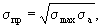
где smax - максимальное напряжение в теле штанги за цикл нагружения;
sа - амплитудное напряжение, равное (smax - smin)/2 (smin - минимальное напряжение в теле штанги за цикл нагружения).
Источник: ГОСТ Р 51161-2002: Штанги насосные, устьевые штоки и муфты к ним. Технические условия оригинал документа
3.2 предел прочности при сжатии (compressive strength) sт: Отношение максимального значения сжимающей силы Fmк первоначальной площади поперечного сечения образца, когда относительная деформация e образца в состоянии текучести (см. рисунок 1b) или при его разрушении (см. рисунок 1а) составляет менее 10 %.
3.1 прочность при растяжении перпендикулярно к лицевым поверхностям (tensile strength perpendicular to faces) smt: Отношение максимального значения силы растяжения, действующей перпендикулярно к лицевым поверхностям образца, к площади поперечного сечения образца.
3.1 прочность при растяжении параллельно лицевым поверхностям (tensile strength parallel to faces) st: Отношение максимального значения силы, действующей при растяжении образца параллельно лицевым поверхностям, к площади поперечного сечения рабочего участка образца.
В третьей области показатель степени равен 8 - 10, а влажность отпускаемого пара более 0,2 %. В этой области процесс носит кризисный характер и действительный уровень воды в барабане приближается к пароотборным трубам.
Точка перехода из 2-й области в 3-ю называется критической и работа сепарационных устройств в этой области недопустима. Работа котла в 3-й области сильно зависит от нагрузки, при этом влажность отпускаемого пара составляет 0,2 - 1,0 % и более. Ленточные солемеры показывают резкое увеличение солесодержания пара (броски).
С паровой нагрузкой котла D связаны следующие характеристики сепарационных устройств:
массовая нагрузка зеркала испарения

осевая подъемная скорость пара
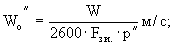
удельная паровая безразмерная нагрузка k [9[
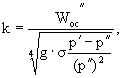
где Fз.и. - площадь зеркала испарения (или площадь пароприемного потолка).
Следующий параметр, который существенно влияет на величину влажности пара, а значит и на величину критических нагрузок, это высота активного сепарационного объема. Связь между влажностью пара, паропроизводительностью и высотой парового объема hп можно представить следующей формулой [5]
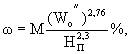 (4)
(4)где М- размерный коэффициент, определяемый физическими свойствами воды и пара.
Как видно из этой формулы, существует обратно пропорциональная зависимость между влажностью пара и высотой парового объема. Экспериментально было показано, что при увеличении высоты парового объема более 1000 мм, влажность пара уже практически мало зависит от дальнейшего ее увеличения [4] - [7].
На работу сепарационных устройств котлов существенное влияние оказывает солесодержание котловой воды (SKB). Проявляется это следующим образом. При работе котла при постоянной паропроизводительности при увеличении солесодержания котловой воды происходит очень плавное увеличение солесодержания пара, при достижении определенного значения солесодержания котловой воды происходит резкое увеличение влажности пара котла (солесодержания), регистрирующие солемеры отмечают резкое увеличение солесодержания пара (бросок). Объяснить это можно следующим образом: по мере увеличения концентрации веществ в котловой воде и прежде всего коллоидных частиц оксидов железа, шлама и др. веществ, поверхностный слой приобретает структурную вязкость. Длительность существования паровых пузырей до их разрушения увеличивается (набухание), пленки паровых пузырей успевают утониться и при разрыве их образуется большое количество мелких капель (трудно сепарируемых), вода приобретает способность к вспениванию. Значение солесодержания котловой воды, при котором происходит резкое увеличение влажности пара, называется критическим (
 ). Величина критического солесодержания зависит от давления пара в котле, конструкции сепарационных устройств, солевого состава воды («букета»), паровой нагрузки сепарационных устройств и т.д. Наиболее точно критическое солесодержание котловой воды можно определить только на основании теплохимических испытаний конкретного котла. Ориентировочно для котлов низкого давления величина критического солесодержания составляет около 3000 мг/кг, для котлов среднего давления - 1300 - 1500 мг/кг, а для котлов высокого давления - 300 - 500 мг/кг.
Одним из вариантов приспособления работы котлов на воде закритического солесодержания при умеренных значениях непрерывной продувки является применение ступенчатого испарения котловой воды. Его сущность состоит в том, что водяной объем барабана и парообразующие циркуляционные контуры разбиваются на два или три независимых отсека с подачей всей питательной воды только в 1-й отсек и отводом воды в продувку из последнего отсека. При такой схеме питания резко возрастает «внутренняя» продувка первого (чистого) отсека, которая будет равна (nп + Р) % (при выполнении котла, например по двухступенчатой схеме испарения), а увеличение продувки будет составлять в
 раза, по сравнению с котлом без ступенчатого испарения. В связи с этим концентрация солей в котловой воде 1-й ступени резко уменьшается и соответственно улучшается качество пара. Для 2-й ступени испарения концентрация солей продувочной воды будет практически такой же, как и у котла без ступенчатого испарения (при одинаковых значениях непрерывных продувок Р = const для обеих схем). Если принять, что коэффициенты выноса (или влажность пара) до и после перевода котла на ступенчатое испарение были одинаковыми, то качество пара (солесодержание) котла при переводе на ступенчатое испарение будет выше, чем у котла с одноступенчатой схемой испарения. Если же качество пара (солесодержание) котла со ступенчатым испарением принять одинаковым, как и у котла без ступеней испарения, то тогда котел со ступенчатым испарением будет работать с меньшей величиной непрерывной продувки (чем котел без ступеней испарения). В отечественном котлостроении в качестве сепараторов пара последних ступеней испарения применяют, как правило, выносные циклоны. Выносные циклоны - это устройства, которые лучше всего приспособлены для работы на воде повышенного солесодержания. (За счет развития соответствующей паровой высоты и использования центробежных сил для подавления вспенивания).
В котлах высокого давления наряду с капельным уносом имеет место значительный избирательный унос различных солей и прежде всего кремнекислоты (SiO2), за счет непосредственного физико-химического растворения солей в паре. Избирательный вынос кремнекислоты (при рН = 9,0 - 12,0) для котлов с давлением 115 кгс/см2 составляет 2,0 - 1,0 %, а для котлов с давлением 155 кгс/см2 - 4,0 - 2,5 % [9].
Для снижения кремнесодержания в паре котлов высокого давления в сепарационной схеме предусматривается паропромывочное устройство. Наличие этого устройства приводит к некоторым особенностям работы всей сепарационной схемы котлов высокого давления, по сравнению с котлами среднего давления.
В котлах высокого давления эффективность паропромывочного устройства характеризуется коэффициентом промывки
 (5)
(5)где SiO2н.п. - кремнесодержание пара на выходе из барабана;
SiO2н.п. - кремнесодержание питательной воды.
Коэффициент уноса с паропромывочного устройства Кпромопределяется по формуле
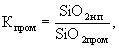 (6)
(6)где SiO2пром - кремнесодержание воды на паропромывочном устройстве.
Для котлов высокого давления по данным испытаний Кпром составляет 8 - 10 %.
Кремнесодержание промывочной воды определяется по формуле
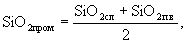 (7)
(7)где SiO2сл - кремнесодержание воды на сливе с паропромывочного устройства.
Степень очистки пара на паропромывочном устройстве определяется по формуле
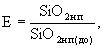 (8)
(8)где SiO2н.п.(до) - кремнесодержание насыщенного пара до паропромывочного устройства.
Кремнесодержание пара до паропромывочного устройства определяется из следующей формулы
SiO2н.п.(до) = К · SiO2к.в, (9)
где SiO2к.в. - кремнесодержание котловой воды;
К - коэффициент уноса кремниевой кислоты из котловой воды в пар до промывки.
Из приведенных формул следует, что кремнесодержание пара после промывки (пар котла SiO2н.п.) зависит как от кремнесодержания питательной воды, так и от кремнесодержания пара до промывки.
В конечном итоге чем ниже будет кремнесодержание промывочной воды (SiO2пром), тем чище будет пар котла. Концентрация кремнекислоты в промывочном слое зависит, как от качества питательной воды, так и от количества кремнекислоты, поступающей из парового объема до промывки. При неналаженной работе сепарационных устройств до промывки, наряду с избирательным уносом [формула (9)] возможен вынос значительного количества капель котловой воды, где кремнесодержание в 5 - 8 раз выше, чем в питательной воде. Попадание капель котловой воды на промывку (капельный унос) приводит к увеличению кремнесодержания промывочной воды и, как следует из формулы (6), приводит к увеличению кремнесодержания пара котла.
Качество пара котла зависит от следующих основных факторов:
Источник: СО 34.26.729: Рекомендации по наладке внутрикотловых сепарационных устройств барабанных котлов
3.1 прочность при изгибе (bending strength) sb: Максимальное напряжение, возникающее в образце под действием максимальной силы Fm, зарегистрированной при изгибе.
3.2 напряжение сжатия (compressive stress) sс: Отношение сжимающей нагрузки к первоначальной площади поперечного сечения образца данной толщины.
3.1 прочность при растяжении перпендикулярно к лицевым поверхностям (tensile strength perpendicular to faces) smt: Отношение максимального значения силы растяжения, действующей перпендикулярно к лицевым поверхностям образца, к площади поперечного сечения образца.
3.10 план статистического приемочного контроля sметода, s метод (s method acceptance sampling plan): План статистического приемочного контроля по количественному признаку, использующий известное значение стандартного отклонения процесса.
Примечание - Адаптированное определение по ИСО 3534-2.
Источник: ГОСТ Р ИСО 3951-5-2009: Статистические методы. Процедуры выборочного контроля по количественному признаку. Часть 5. Последовательные планы на основе AQL для известного стандартного отклонения оригинал документа
3.16 максимальное стандартное отклонение процесса (maximum process standard deviation); MPSD, smax: Наибольшее значение стандартного отклонения процесса для данного кода объема выборки и предельно допустимого уровня несоответствий (3.6), при котором возможно выполнение критерия приемки объединенного контроля с двумя границами поля допуска при любой жесткости контроля (нормальном, усиленном послабленном контроле), когда дисперсия процесса известна.
[ИСО 3534-2]
Примечание 1 - MPSD зависит от того, какой тип контроля применяют (объединенный, индивидуальный или сложный), но не зависит от жесткости контроля.
Примечание 2 - Адаптированное определение по ИСО 3534-2.
Источник: ГОСТ Р ИСО 3951-5-2009: Статистические методы. Процедуры выборочного контроля по количественному признаку. Часть 5. Последовательные планы на основе AQL для известного стандартного отклонения оригинал документа
3. Начальное напряжение при испытании на релаксацию si - напряжение, соответствующее начальной нагрузке образца.
Источник: ГОСТ 28334-89: Проволока и канаты стальные для армирования предварительно-напряженных железобетонных конструкций. Метод испытания на релаксацию при постоянной деформации оригинал документа
4. Остаточное напряжение после релаксации sо - действительное напряжение образца по истечении определенного промежутка времени, прошедшего с начала испытания, при условии, что общая длина образца не изменялась в течении испытания. Остаточное напряжение рассчитывается для действительной площади поперечного сечения образца, измеренного перед началом испытания.
Источник: ГОСТ 28334-89: Проволока и канаты стальные для армирования предварительно-напряженных железобетонных конструкций. Метод испытания на релаксацию при постоянной деформации оригинал документа
3.4.2 газовое отношение scg (gas fraction): Отношение энергии взрывных газов Qg к энергии взрывчатого вещества QC.
Источник: ГОСТ Р 53571-2009: Акустика. Шум, производимый на стрельбищах. Часть 2. Определение акустических характеристик дульной волны и звука пули путем расчета оригинал документа
3.4.3 акустическая эффективность sас (acoustical efficiency): Доля энергии взрывчатого вещества, превращающаяся в акустическую энергию.
Источник: ГОСТ Р 53571-2009: Акустика. Шум, производимый на стрельбищах. Часть 2. Определение акустических характеристик дульной волны и звука пули путем расчета оригинал документа
3.21 среднеквадратическое отклонение воспроизводимости результатов испытаний sR:Среднеквадратическое отклонение результатов испытаний, полученных в условиях воспроизводимости (см. 3.19) [5].
3.2 напряжение сжатия (compressive stress) sс: Отношение сжимающей нагрузки к первоначальной площади поперечного сечения образца данной толщины.
3.21 среднеквадратическое отклонение воспроизводимости результатов испытаний sR:Среднеквадратическое отклонение результатов испытаний, полученных в условиях воспроизводимости (см. 3.19) [5].
2. Пороговое напряжение при КР (sкр) - напряжение, выше которого трещины от КР возникают и растут при определенных условиях испытания.
Источник: ГОСТ 9.901.1-89: Единая система защиты от коррозии и старения. Металлы и сплавы. Общие требования к методам испытаний на коррозионное растрескивание оригинал документа
Англо-русский словарь нормативно-технической терминологии > S
-
15 bearing
опора; подшипник; вкладыш (подшипника); цапфа; опорная площадь; точка опоры; II направляющий; опорный; несущий; содержащий; поддерживающий- bearing body - bearing bolt - bearing bond - bearing box - bearing burning-out - bearing bush - bearing bushing - bearing cage - bearing cap - bearing capacity - bearing capacity of soil - bearing carrier - bearing clearance - bearing cone - bearing cup - bearing cup inserter - bearing cup inserter set - bearing disc - bearing driver - bearing driver set - bearing edge - bearing extractor - bearing face - bearing feed pipe - bearing flange - bearing friction - bearing friction loss - bearing housing - bearing journal - bearing lining - bearing load - bearing metal - bearing oil - bearing oil pipe - bearing oil pipe union - bearing plate - bearing power - bearing preload indicator - bearing pressure - bearing puller - bearing race - bearing reaction - bearing release lever - bearing remover - bearing replacer - bearing retainer puller - bearing roller - bearing saddle bore - bearing seat - bearing shell - bearing spring - bearing strip - bearing stud - bearing support - bearing surface - bearing surface area - bearing take-up - bearing tension indicator - bearing-up pulley - bearing value - bearing wheel - bearing with side plate - bearing with taper bore - bearing wrench - line up the bearing - air-lubricated thrust bearing - big-end bearing - blade bearing - block bearing - bottom-end bearing - bracket bearing - bronze bearing - bronze-backed bearing - bush bearing - cadmium-alloy bearing - cageless bearing - camshaft bearing - central bearing - centre bearing - centre main bearing - clearance bearing - clutch bearing - clutch pilot bearing - clutch release bearing - clutch throwout bearing - clutch thrust bearing - clutch withdrawal bearing - collar bearing - collar step bearing - collar thrust bearing - composite bearing - compound bearing - conical bearing - conical roller bearing - conical roller thrust bearing - connecting rod bearing - connecting rod big-end bearing - copper-lead bearing - crank bearing - crankpin bearing - crankshaft bearing - crankshaft main bearing - cup-and-cone bearing - cylindrical roller bearing - cylindrical roller bearing with long rollers - cylindrical roller bearing without inner and outer rings - deep-groove bearing - differential bearing - discoloured bearing - divided bearing - double angular bearing - double-cone bearing - double-cup bearing - double-plate bearing - double-row bearing - double-row angular contact ball bearing - double-row radial-thrust ball bearing - double seal bearing - double sealed bearing - double-shield bearing - double-shield ball bearing - double-thrust bearing - drop-hanger bearing - duplex bearing - elastically yielding bearing - end bearing - end journal bearing - end thrust bearing - even bearing - fabri-seal bearing - fan and pump shaft bearing - fan spindle bearing - filling slot-type bearing - fitted bearing - fixed bearing - flanged cup bearing - flat bearing - flexible roller bearing - floating bearing - foot-step bearing - fork bearing - free bearing - front main bearing - front-wheel bearing - fulcrum bearing - full-journal bearing - full-type bearing without retainer - graphite bearing - graphited oilless bearing - gudgeon bearing - guide bearing - half-bearing - hanger-bearing - head bearing - heavy-duty bearing - high-speed bearing - hot bearing - inner bearing - intermediate bearing - iron base bearing - jeweled bearing - journal bearing - king-pin bearing - king pin thrust bearing - knife bearing - knife-edge bearing - knuckle bearing - lay shaft bearing - leading-screw bearing - lignum vital bearing - locating bearing - location bearing - lower bearing - lubri-seal bearing - magneto bearing - main bearing - main shaft pilot bearing - middle bearing - nail bearing - narrow-type bearing - neck journal bearing - needle bearing - needle bearing with closed end - needle roller bearing - non-filling slot-type bearing - notched type bearing - oblique pillow-block bearing - oblique plummer-block bearing - oilless bearing - oil-ring bearing - one-shield bearing - oscillation bearing - outboard bearing - outborne bearing - outer bearing - overhung bearing - oversize bearing - parallel bearing - parallel roller bearing - partial journal bearing - pedal bearing - pedestal bearing - pendulum bearing - permanently sealed bearing - pilot bearing - pin rocker bearing - pivot bearing - pivoted bearing - plain bearing - plain-and-ball bearing - plain journal bearing - pockwood bearing - preloaded bearing - prelubricated bearing - primary shaft bearing - propeller shaft centre bearing - quarter box bearing - quill bearing - radial bearing - radial ball bearing - radial-thrust bearing - radial-thrust ball bearing - rear main bearing - reciprocating bearing - release bearing - reverse idler gear bearing - rigid-type bearing - ring lubricating bearing - ring oiling bearing - ring step bearing - rocker bearing - roller bearing - roller bearing with spiral - roller step bearing - roller thrust bearing - rolling bearing - rolling contact bearing - round bearing - sealed bearing - self-setting bearing - Seller's bearing - shaft bearing - shielded bearing - shielded ball bearing - single-plate ball bearing - single-row angular contact ball bearing with split outer race - single-row ball bearing - single-row deep groove ball bearing - single-row maximum capacity bearing - single-row radial ball bearing - single-shield bearing - single-thrust bearing - sintered metal powder bearing - sleeve bearing - sleeve half-bearing - sliding bearing - snap-ring bearing - snap-ring ball bearing - solid bearing - solid roller bearing - spherangular roller bearing - spherical bearing - spherical roller bearing - spherical seating ring bearing - spigot bearing - split bearing - split clamping bearing - split inner race bearing - split outer race bearing - spring bearing - steel-backed bearing - steep-angle bearing - steering knuckle thrust bearing - steering shaft thrust bearing - step bearing - straddle-mounted bearings - stuffing box bearing - supporting bearing - swing bearing - swiveling bearing - tail bearing - taper roller bearing - taper roller bearing with flanged cup - taper thrust bearing - tapered bearing - tapered roller bearing - thin wall bearing - thin walled bearing - throw bearing - throw-out bearing - thrust bearing - thrust clutch bearing - thrust roller bearing - thrust taper roller bearing - tilting bearing - Timken bearing - tip bearing - toe bearing - tooth bearing - transmission bearing - transmission countershaft bearing - transmission main drive gear bearing - transmission main shaft pilot bearing - transverse bearing - trunnion bearing - tumbler bearing - two-direction thrust bearing - two-part bearing - unbushed bearing - universal-joint bearing - unnotched bearing - upper bearing - water-cooled bearing - water-sealed bearing - white metal bearing - wide inner ring bearing - wiped bearing - wound roller bearing - wound roller bearing with solid outer race - wound roller bearing with split outer race - wound roller bearing without inner ring - wrist pin bearing -
16 factor
2) фактор3) показатель•factor of earthing — коэффициент заземленияfactor of merit — 1. критерий качества 2. добротностьfactor of quality — 1. критерий качества 2. добротностьfactor of safety — 1. коэффициент запаса (прочности), запас прочности 2. коэффициент (фактор) безопасности 3. коэффициент надёжностиfactor of safety against overturning — коэффициент запаса устойчивости против опрокидывания ( при расчёте подпорных стенок)factor of safety against sliding — коэффициент запаса устойчивости против плоского сдвига по основанию ( при расчёте подпорных стенок)factor of safety against ultimate stress — коэффициент запаса прочности по пределу прочности-
2T pulse K factor
-
absorption factor
-
acceleration factor
-
accumulation factor
-
acoustic insulation factor
-
acoustic reduction factor
-
acoustic reflection factor
-
acoustical absorption factor
-
activity factor
-
additional secondary phase factor
-
additional secondary factor
-
aerodrome utilization factor
-
aircraft acceleration factor
-
aircraft load factor
-
aircraft safety factor
-
aircraft usability factor
-
amplification factor
-
amplitude factor
-
anisotropy factor
-
annual growth factor
-
annual plant factor
-
anthropogenic factor
-
aperture shape factor
-
application factor
-
array factor
-
ASTM stability factor
-
atmospheric factor
-
atomic factor
-
attenuation factor
-
automatic scale factor
-
availability factor
-
available heat factor
-
available-lime factor
-
average noise factor
-
balance factor
-
bandwidth factor
-
barrier factor
-
base-transport factor
-
basin shape factor
-
beam shape factor
-
bed-formation factor
-
belt differential factor
-
belt factor
-
belt sag factor
-
biological quality factor N
-
biological quality factor
-
biotic factor
-
blast-penetration factor
-
blockage factor
-
brake factor
-
break-even load factor
-
bulk factor
-
bulking factor
-
burnup factor
-
calibration factor
-
Callier factor
-
capacitance factor
-
capacity factor
-
car capacity utilization factor
-
cargo load factor
-
catalyst carbon factor
-
catalyst gas factor
-
cement factor
-
cementation factor
-
characteristic factors
-
chemotactic factor
-
climatic factor
-
clotting factor
-
CNI factor
-
coil magnification factor
-
coincidence factor
-
coke-hardness factor
-
coke-permeability factor
-
Colburo heat-transfer factor
-
colicinogenic factor
-
colicin factor
-
comfort factor
-
common factor
-
compacting factor
-
compensation factor
-
complexity factor
-
compressibility factor
-
concentration factor
-
confidence factor
-
consumer load coincidence factor
-
contrast factor
-
control factor
-
conversion factor
-
conveyance factor
-
core factor
-
correction factor
-
correlation factor
-
coupling factor
-
cover factor
-
crack susceptibility factor
-
crest factor
-
critical stress intensity factor
-
cross-modulation factor
-
current amplification factor
-
current amplitude factor
-
current transformer correction factor
-
current unbalance factor
-
current waveform distortion factor
-
cyclic duration factor
-
damage factor
-
damage severity factor
-
damping factor
-
daylight factor
-
dc conversion factor
-
decontamination factor
-
defective factor
-
deflection factor
-
deflection uniformity factor
-
degeneration factor
-
degradation factor
-
degree-day melting factor
-
demagnetization factor
-
demand factor
-
depolarization factor
-
derating factor
-
design factor
-
design load factor
-
detuning factor
-
deviation factor
-
dielectric loss factor
-
differential diffraction factor
-
diffuse reflection factor
-
diffuse transmission factor
-
dilution factor
-
dimensionless factor
-
directivity factor
-
discharge factor
-
displacement factor
-
displacement power factor
-
dissipation factor
-
distortion factor
-
distribution factor
-
diversity factor
-
division factor
-
dose buildup factor
-
dose reduction factor
-
drainage factor
-
drug resistance factor
-
duty cycle factor
-
duty factor
-
ecological factor
-
edaphic factor
-
effective demand factor
-
effective multiplication factor
-
effective-volume utilization factor
-
efficiency factor
-
electromechanical coupling factor
-
elimination factor
-
elongation factor
-
emission factor
-
emissivity factor
-
engineering factors
-
enlargement factor
-
enrichment factor
-
environmental factor
-
etch factor
-
excess air factor
-
excess multiplication factor
-
expansion factor
-
exponential factor
-
exposure factor
-
external factor
-
extraction factor
-
extraneous factor
-
F factor
-
Fanning friction factor
-
fatigue notch factor
-
feedback factor
-
field form factor
-
field length factor
-
field water-distribution factor
-
fill factor
-
filter factor
-
filtration factor
-
fineness factor
-
flux factor
-
food factor
-
force factor
-
form factor
-
formation volume factor
-
formation-resistivity factor
-
formation factor
-
fouling factor
-
F-prime factor
-
frequency factor
-
frequency multiplication factor
-
friction factor
-
fuel factor
-
fundamental factor
-
gage factor
-
gain factor
-
gamma factor
-
gas factor
-
gas multiplication factor
-
gas producing factor
-
gas recovery factor
-
gas saturation factor
-
geometrical structure factor
-
geometrical weighting factor
-
g-factor
-
grading factor
-
granulation factor
-
grindability factor
-
growth factor
-
harmonic distortion factor
-
harmonic factor
-
heat conductivity factor
-
heat gain factor
-
heat leakage factor
-
heat loss factor
-
heat-stretch factor
-
heat-transfer factor
-
host factor
-
hot-channel factor
-
hot-spot factor
-
hull-efficiency factor
-
human factor
-
hysteresis factor
-
improvement factor
-
inductance factor
-
infinite multiplication factor
-
inhibitory factor
-
innovation factor
-
institutional factor
-
integer factor
-
integrating factor
-
interlace factor
-
intermodulation factor
-
K bar factor
-
Kell factor
-
lamination factor
-
leakage factor
-
lethal factor
-
light-transmission factor
-
lime factor
-
limit load factor
-
linear expansion factor
-
literal factor
-
load curve irregularity factor
-
load factor
-
loading factor
-
longitudinal load distribution factor
-
Lorentz factor
-
loss factor
-
luminance factor
-
luminosity factor
-
magnetic form factor
-
magnetic leakage factor
-
magnetic loss factor
-
magnification factor
-
maximum enthalpy rise factor
-
membrane swelling factor
-
minimum noise factor
-
mismatch factor
-
mode I stress intensity factor
-
mode II stress intensity factor
-
mode III stress intensity factor
-
modifying factor
-
modulation factor
-
modulus factor of reflux
-
moment intensity factor
-
mu factor
-
multiplication factor
-
multiplicity factor
-
multiplying factor
-
Murphree efficiency factor
-
mutual coupling factor
-
mutual inductance factor
-
natural factor
-
negative phase-sequence current factor
-
negative phase-sequence voltage factor
-
neutron multiplication factor
-
noise factor
-
nonlinearity factor
-
notch concentration factor
-
notch factor
-
numerical factor
-
obturation factor
-
oil factors
-
oil recovery factor
-
oil saturation factor
-
oil shrinkage factor
-
opening mode stress intensity factor
-
operating factor
-
operating load factor
-
operational factor
-
operation factor
-
optimum noise factor
-
orbit burden factor
-
output factor
-
overcurrent factor
-
overload factor
-
pacing factor
-
packing factor
-
paratypic factor
-
partial safety factor for load
-
partial safety factor for material
-
particle-reduction factor
-
passenger load factor
-
peak factor
-
peak responsibility factor
-
peak-load effective duration factor
-
penetration factor
-
performance factor
-
permeability factor
-
phase factor
-
phase-angle correction factor
-
phasor power factor
-
physiographic factor
-
pitch differential factor
-
pitch factor
-
plain-strain stress intensity factor
-
plane-earth factor
-
plant capacity factor
-
plant-load factor
-
plant-use factor
-
porosity factor
-
positive phase-sequence current factor
-
positive phase-sequence voltage factor
-
potential transformer correction factor
-
powder factor
-
power factor
-
power filling factor
-
primary phase factor
-
primary factor
-
prime factor
-
proof/ultimate factor
-
propagation factor
-
propagation meteorological factor
-
propagation terrain factor
-
proportionality factor
-
proximity factor
-
pulsation factor
-
quality factor
-
R factor
-
radiance factor
-
radio-interference suppression factor
-
readiness factor
-
recombinogenic factor
-
recovery factor
-
rectification factor
-
reduction factor
-
redundancy improvement factor
-
reflection factor
-
reflectivity factor
-
refraction factor
-
refrigerating factor
-
reheat factor
-
relative loss factor
-
relative severity factor
-
release factor
-
reliability demonstration factor
-
reliability factor
-
relocation factor
-
repairability factor
-
repeatability factor
-
reservoir volume factor
-
reset factor of relay
-
resistance transfer factor
-
restorability factor
-
revenue load factor
-
ripple factor
-
risk factor
-
rolling shape factor
-
roll-off factor
-
roughness factor
-
runoff factor
-
safety factor for dropout of relay
-
safety factor for pickup of relay
-
safety factor of insulation
-
safety factor
-
sag factor
-
saturation factor
-
scale factor
-
scaling factor
-
screening factor
-
screen factor
-
secondary-electron-emission factor
-
self-transmissible factor
-
separation factor
-
service factor
-
sex factor
-
shadow factor
-
shape factor
-
sheet ratio factor
-
shielding factor
-
shield factor
-
shrinkage factor
-
signal-to-noise improvement factor
-
size factor
-
skew factor
-
slant-range correction factor
-
sliding factor
-
slip factor
-
smoothing factor
-
snagging factor
-
soap factor
-
social factor
-
socioeconomic factor
-
solubility factor
-
sound absorption factor
-
space factor of winding
-
space factor
-
spreading factor
-
squeezing factor
-
stability factor
-
stacking factor
-
stage amplification factor
-
standing-wave factor
-
steam reduction factor
-
steam-zone shape factor
-
storage factor
-
stowage factor
-
strain concentration factor
-
streamflow formation factor
-
strength factor
-
stress concentration factor
-
stress intensity factor
-
stretch factor
-
structure factor
-
submergence factor
-
summability factor
-
superficial friction factor
-
support factor
-
surface correction factor
-
surface-area factor
-
tapping factor
-
technical preparedness factor
-
telephone influence factor
-
termination factor
-
terrain factor
-
thermal eta factor
-
thermal factor
-
thermal utilization factor
-
thermodynamic factor
-
thrust-deduction factor
-
time factor
-
time-scale factor
-
tire size factor
-
tooth factor
-
transfer factor
-
transmission factor
-
transport factor
-
traveling-wave factor
-
trigger factor
-
truck service factor
-
tuning factor
-
turbidity factor
-
turbulence factor
-
twist factor
-
U-factor
-
unavailability factor
-
unbalance factor
-
unit conversion factor
-
usage factor
-
utilization factor
-
vacuum factor
-
velocity gain factor
-
velocity factor
-
viscosity factor
-
void factor
-
voltage amplification factor
-
voltage amplitude factor
-
voltage ripple factor
-
voltage unbalance factor
-
voltage waveform distortion factor
-
volume-utilization factor
-
wake factor
-
water encroachment factor
-
water saturation factor
-
waveform distortion factor
-
wear factor
-
weather-forming factor
-
weight load factor
-
weighting factor
-
weight factor
-
winding factor
-
wobble factor
-
wood swelling factor
-
work factor
-
yield factor
-
zero phase-sequence current factor
-
zero phase-sequence voltage factor -
17 A
- якорь (электрической машины)
- функция адаптации
- фактический коэффициент звукопоглощения
- угол наклона боковой поверхности поперечного ребра
- среднее замедление
- процент готовности
- промышленная площадка на ТЭС или АЭС
- площадь поверхности
- максимальный угол стягивания
- индекс звукопоглощения
- дополнительный
дополнительный
(МСЭ-Т F.400/ Х.400).
[ http://www.iks-media.ru/glossary/index.html?glossid=2400324]Тематики
- электросвязь, основные понятия
EN
промышленная площадка на ТЭС или АЭС
—
[А.С.Гольдберг. Англо-русский энергетический словарь. 2006 г.]Тематики
EN
- area
- A
- ar
процент готовности
A = ((T1 + T2 Tb) / Te)100%,
где: T1= общее время неготовности для одного направления передачи; T2=общее время неготовности для другого направления передачи; Tb= время неготовности для обоих направлений; Te= период времени оценки.
Примечание
Для симплексной передачи T2 = 0; Tb = 0. (МСЭ-R F.557-4).
[ http://www.iks-media.ru/glossary/index.html?glossid=2400324]Тематики
- электросвязь, основные понятия
EN
функция адаптации
Элементарная функция, которая выполняет адаптацию между уровнем клиента и уровнем сервера сети. (МСЭ-T G.806).
[ http://www.iks-media.ru/glossary/index.html?glossid=2400324]Тематики
- электросвязь, основные понятия
EN
якорь (электрической машины)
—
[Я.Н.Лугинский, М.С.Фези-Жилинская, Ю.С.Кабиров. Англо-русский словарь по электротехнике и электроэнергетике, Москва, 1999 г.]Тематики
- электротехника, основные понятия
EN
3.6.5 угол наклона боковой поверхности поперечного ребра a, градус: Угол наклона боковой поверхности поперечного ребра к продольной оси проката.
Источник: ГОСТ Р 52544-2006: Прокат арматурный свариваемый периодического профиля классов А500С и В500С для армирования железобетонных конструкций. Технические условия оригинал документа
3.1 фактический коэффициент звукопоглощения ap: Частотно зависимые значения коэффициентов звукопоглощения, измеренные в третьоктавных полосах частот в соответствии с ГОСТ 31704 и пересчитанные в значения коэффициентов в октавных полосах частот в соответствии с требованиями настоящего стандарта.
Примечание - Для значений коэффициентов звукопоглощения в i-й октавной полосе частот применяют обозначение api.
Источник: ГОСТ 31705-2011: Материалы звукопоглощающие, применяемые в зданиях. Оценка звукопоглощения оригинал документа
3.2 индекс звукопоглощения aw: Частотно независимые значения коэффициентов звукопоглощения, соответствующие величине смещенной нормативной кривой на частоте 500 Гц (среднегеометрической частоте октавной полосы), определяемой в соответствии с требованиями настоящего стандарта.
Источник: ГОСТ 31705-2011: Материалы звукопоглощающие, применяемые в зданиях. Оценка звукопоглощения оригинал документа
3.6. среднее замедление a, м/с2: Средний темп изменения скорости движения машины от момента включения органа управления тормозами до полной остановки машины.
Среднее замедление определяют по формуле

где ν - скорость машины непосредственно перед включением органа управления тормозами, м/с.
Источник: ГОСТ Р ИСО 3450-99: Машины землеройные. Тормозные системы колесных машин. Требования к эффективности и методы испытаний оригинал документа
3.22 максимальный угол стягивания (aмакс) (maximum angular subtense (amax)): Значения угла стягиваемого видимого размера источника, при котором источник считается большим - большой источник (см. также таблицу 3).
Англо-русский словарь нормативно-технической терминологии > A
-
18 method
1) метод; приём; способ2) методика3) технология4) система•- accelerated strength testing method-
benching method-
bullhead well control method-
electrical-surveying method-
electromagnetic surveying method-
long-wire transmitter method-
operational method-
rule of thumb method-
straight flange method of rolling beams-
symbolical method-
tee-test method-
testing method-
triangulation method-
value-iteration method -
19 load
1) груз; нагрузка2) транспортируемые наносы, расход наносов3) мн. ч. нагрузки4) грузить; нагружать•load on axle — давление на ось; нагрузка оси
load per unit length — погонная равномерная нагрузка; погонная нагрузка
load testing of structures — испытание сооружений нагрузкой, нагружением
load uniformly distributed over span — нагрузка, равномерно распределённая по пролёту
- additional load - allowable load - alternate load - alternating load - antisymmetrical loads - apex load - application of load - applied load - assumed load - asymmetric load - axial load - axle load - basic load - bearable load - bed load - bending load - bracket load - brake load - breaking load - buckling load - ceiling load - centre-point load - centric load - centrifugal load - changing load - collapse load - column load - combination of load - combined load - compressive load - concentrated load - concentrated moving load - continuous load - cooling load - cracking load - crane load - crippling load - critical load - crushing load - dangerous load - dead load - debris bed load - design load - distributed load - distribution of load - dynamic load - dynamical load - eccentric load - edge load - elastic-limit load - emergency load - equalization of load at conveyer pulleys - equalization of load at hoisting drums - Euler's crippling load - even load - evenly distributed load - excess load - excessive load - failure load - fictitious load - filter load - fixed load - fluctuating load - follower load - fractional load - full load - gradually applied load - gravity load - gust load - heaped load - heating load - hydrodynamic load - hydrostatic load - ice load - imaginary load - impact load - impulsive load - instantaneous load - intermittent load - irregularly distributed load - lateral load - limit load - linear load - linearly varying load - line-distributed load - live load - maximum load - midspan load - minimum load - miscellaneous load - mobile load - moisture load - momentary load - movable load - moving load - near-ultimate load - net load - nominal load - non-central load - off-design load - organic load - out-of-balance load - panel load - parabolic load - pay load - payable load - peak load - periodically applied load - permanent load - permanently acting load - permissible load - pick-up load - point load - pollutant load - pollutional load - pressure load - proof load - pulsating load - punch load - quiescent load - racking load - rated load - repeated load - reversal load - reversed load - rolling load - safe load - salt load - seismic load - service load - severe load - sewage load - shear lock load - shock load - specified load - static load - statical load - steady load - stiffness test load - sudden load - suddenly applied load - super-load - superimposed load - suspended load - sustained load - symmetrical loads - terminal load - test load - third point load - tilting load - torsional load - total load - transferred load - transient load - transverse load - travelling load - trial load - ultimate load - unbalanced load - uniform load - unit load - unsafe load - useful load - varying load - vibratory load - waste load - water load - weight load - wheel load - wind loadto load in bulk — грузить насыпью, навалом
* * *1. груз; нагрузка || нагружать, загружать2. наносы ( транспортируемые потоком)load applied in increments — нагрузка, прилагаемая отдельными ступенями [приращениями]
loads applied to the formwork — нагрузки, действующие на опалубку
loads equidistant from midspan — сосредоточенные нагрузки, равноотстоящие от середины пролёта ( балки)
loads in excess of the concrete capacity — нагрузки, превышающие несущую способность бетона
load normal to the surface — нагрузка, нормальная к поверхности
load on the member — нагрузка, действующая на элемент конструкции
- load of streamunder load — под нагрузкой; в нагруженном состоянии
- load of uncertain magnitude
- abnormal load
- accepted load
- accidental load
- adjustable load
- air conditioning load
- allowable load
- allowable axial load
- allowable pile-bearing load
- alternating load
- antisymmetric load
- applied load
- arbitrary load
- area load
- assumed load
- asymmetrically-placed loads
- avalanche load
- average load
- axial load
- axial compression load
- axially symmetric load
- axial tension load
- axisymmetrical load
- axle load
- balanced load
- basic load
- bearing load
- bed load
- bending load
- biaxial load
- blast load
- breaking load
- bucket load
- buckling load
- central point load
- changing load
- characteristic load
- characteristic dead load
- characteristic live load
- climatic load
- collapse load
- collision load
- combined load
- combined axial and bending loads
- combined torsion-shear-flexure loads
- compression load
- concentrated load
- connected load
- construction loads
- continuous load
- cooling load
- crippling load
- critical load
- critical buckling load
- dead load
- derailment load
- design load
- design snow load
- design ultimate load
- distributed load
- dummy load
- dummy unit load
- dust load
- dynamic load
- earthquake load
- eccentric load
- eccentric and inclined load
- equivalent load
- erection load
- Euler load
- excess load
- explosion load
- factored load
- failure load
- fictitious design load
- fictitious load
- fire load
- fluctuating load
- fracture load
- frictional load
- front axle load
- gravity load
- gross cooling load
- ground snow load
- gust load
- heat load
- heating load
- highway loads
- highway bridge loads
- horizontal load
- humidification load
- hydrostatic load
- ice load
- imaginary load
- immission load
- impact load
- imposed load
- impulsive load
- inertial loads
- intended load
- joint load
- latent heat load
- lateral load
- lateral soil load
- limit load
- linear load
- linearly distributed load
- live load
- local load
- long duration load
- longitudinal load
- maximum load of pollution
- maximum rated load
- maximum safe load
- maximum safe working load
- maximum safe working load at the various radii
- minimum design dead loads
- minimum design live loads
- mobile load
- moving load
- moving uniform load
- near-ultimate load
- nominal uniformly distributed load
- nominal vertical wind load
- nonaxial load
- nonuniform load
- nonuniformly distributed loads
- nuisance load
- occupancy load
- off-center load
- off-peak load
- one-sided load
- on-peak load
- operating load
- panel load
- part load
- pattern load
- peak load
- permanent load
- permissible load
- point load
- pollution load
- ponding load
- primary live load
- proof load
- pulsating load
- radial load
- railway load
- rain load
- rarely occurring load
- rated load
- real load
- recommended load
- refrigerating load
- repeated load
- required design load
- residual load
- roof loads
- rupture load
- safe leg load
- safe working load
- seismic load
- sensible heat load
- service load
- service dead load
- service live load
- sewage load on treatment plant
- sewage load on water body
- shearing load
- shock load
- short duration load
- single load
- sinusoidal loads
- snow load
- snow load on a horizontal surface
- space load
- specified characteristic load
- static load
- static imposed load
- structural design load
- sudden load
- superimposed load
- superimposed dead load
- suspended load
- sustained load
- symmetrical load
- tensile load
- test load
- tipping load
- torsional load
- traffic load
- transmission heat load
- transverse load
- treating load
- trial load
- triaxial load
- twisting load
- ultimate load
- unbalanced load
- uniaxial loads
- uniform load
- uniform load on a beam overhang
- uniform load over a part of the span
- uniform load over part of the span
- uniform load over the full length of a beam with overhangs
- uniform load over the full length of a cantilever
- uniform load over the full span
- uniformly distributed load
- unit load
- unit generalized load
- unsymmetrical load
- useful cooling load
- variable load
- vehicle load
- vehicular live loads
- ventilation heat load
- vertical load
- wash load
- wave load
- wheel load
- wind load
- wind load on a truss
- working load -
20 load
- load
- n1. груз; нагрузка || нагружать, загружать
2. наносы ( транспортируемые потоком)
load applied in increments — нагрузка, прилагаемая отдельными ступенями [приращениями]
loads applied to the formwork — нагрузки, действующие на опалубку
loads equidistant from midspan — сосредоточенные нагрузки, равноотстоящие от середины пролёта ( балки)
loads in excess of the concrete capacity — нагрузки, превышающие несущую способность бетона
load normal to the surface — нагрузка, нормальная к поверхности
load on the member — нагрузка, действующая на элемент конструкции
under load — под нагрузкой; в нагруженном состоянии
- load of stream
- load of uncertain magnitude
- abnormal load
- accepted load
- accidental load
- adjustable load
- air conditioning load
- allowable load
- allowable axial load
- allowable pile-bearing load
- alternating load
- antisymmetric load
- applied load
- arbitrary load
- area load
- assumed load
- asymmetrically-placed loads
- avalanche load
- average load
- axial load
- axial compression load
- axially symmetric load
- axial tension load
- axisymmetrical load
- axle load
- balanced load
- basic load
- bearing load
- bed load
- bending load
- biaxial load
- blast load
- breaking load
- bucket load
- buckling load
- central point load
- changing load
- characteristic load
- characteristic dead load
- characteristic live load
- climatic load
- collapse load
- collision load
- combined load
- combined axial and bending loads
- combined torsion-shear-flexure loads
- compression load
- concentrated load
- connected load
- construction loads
- continuous load
- cooling load
- crippling load
- critical load
- critical buckling load
- dead load
- derailment load
- design load
- design snow load
- design ultimate load
- distributed load
- dummy load
- dummy unit load
- dust load
- dynamic load
- earthquake load
- eccentric load
- eccentric and inclined load
- equivalent load
- erection load
- Euler load
- excess load
- explosion load
- factored load
- failure load
- fictitious design load
- fictitious load
- fire load
- fluctuating load
- fracture load
- frictional load
- front axle load
- gravity load
- gross cooling load
- ground snow load
- gust load
- heat load
- heating load
- highway loads
- highway bridge loads
- horizontal load
- humidification load
- hydrostatic load
- ice load
- imaginary load
- immission load
- impact load
- imposed load
- impulsive load
- inertial loads
- intended load
- joint load
- latent heat load
- lateral load
- lateral soil load
- limit load
- linear load
- linearly distributed load
- live load
- local load
- long duration load
- longitudinal load
- maximum load of pollution
- maximum rated load
- maximum safe load
- maximum safe working load
- maximum safe working load at the various radii
- minimum design dead loads
- minimum design live loads
- mobile load
- moving load
- moving uniform load
- near-ultimate load
- nominal uniformly distributed load
- nominal vertical wind load
- nonaxial load
- nonuniform load
- nonuniformly distributed loads
- nuisance load
- occupancy load
- off-center load
- off-peak load
- one-sided load
- on-peak load
- operating load
- panel load
- part load
- pattern load
- peak load
- permanent load
- permissible load
- point load
- pollution load
- ponding load
- primary live load
- proof load
- pulsating load
- radial load
- railway load
- rain load
- rarely occurring load
- rated load
- real load
- recommended load
- refrigerating load
- repeated load
- required design load
- residual load
- roof loads
- rupture load
- safe leg load
- safe working load
- seismic load
- sensible heat load
- service load
- service dead load
- service live load
- sewage load on treatment plant
- sewage load on water body
- shearing load
- shock load
- short duration load
- single load
- sinusoidal loads
- snow load
- snow load on a horizontal surface
- space load
- specified characteristic load
- static load
- static imposed load
- structural design load
- sudden load
- superimposed load
- superimposed dead load
- suspended load
- sustained load
- symmetrical load
- tensile load
- test load
- tipping load
- torsional load
- traffic load
- transmission heat load
- transverse load
- treating load
- trial load
- triaxial load
- twisting load
- ultimate load
- unbalanced load
- uniaxial loads
- uniform load
- uniform load on a beam overhang
- uniform load over a part of the span
- uniform load over part of the span
- uniform load over the full length of a beam with overhangs
- uniform load over the full length of a cantilever
- uniform load over the full span
- uniformly distributed load
- unit load
- unit generalized load
- unsymmetrical load
- useful cooling load
- variable load
- vehicle load
- vehicular live loads
- ventilation heat load
- vertical load
- wash load
- wave load
- wheel load
- wind load
- wind load on a truss
- working load
Англо-русский строительный словарь. — М.: Русский Язык. С.Н.Корчемкина, С.К.Кашкина, С.В.Курбатова. 1995.
См. также в других словарях:
Maximum surface area — Максимальная площадь поверхности (напр. частицы пигмента) … Краткий толковый словарь по полиграфии
Surface tension — For the work of fiction, see Surface Tension (short story). Surface tension is a property of the surface of a liquid that causes it to behave as an elastic sheet. It allows insects, such as the water strider (pond skater, UK), to walk on water.… … Wikipedia
Maximum bubble pressure method — In physics, the maximum bubble pressure method, or in short bubble measure method, is a technique to measure the surface tension of a liquid, with surfactants. Contents 1 Background 2 Maximum bubble pressure method 3 References … Wikipedia
Maximum Force — Developer(s) Mesa Logic Publisher(s) Atari Games Platform(s) Arcade, PlayStation, Sega Saturn, PC … Wikipedia
Surface runoff — Runoff flowing into a stormwater drain Surface runoff is the water flow that occurs when soil is infiltrated to full capacity and excess water from rain, meltwater, or other sources flows over the land. This is a major component of the water… … Wikipedia
Surface condenser — A surface condenser is a commonly used term for a water cooled shell and tube heat exchanger installed on the exhaust steam from a steam turbine in thermal power stations.[1][2][3] These condensers are heat exchangers which convert steam from its … Wikipedia
Leaf Area Index — The Leaf Area Index or LAI is the ratio of total upper leaf surface of vegetation divided by the surface area of the land on which the vegetation grows. The LAI is a dimensionless value, typically ranging from 0 for bare ground to 6 for a dense… … Wikipedia
Antenna effective area — In telecommunication, antenna effective area or effective aperture is the functionally equivalent area from which an antenna directed toward the source of the received signal gathers or absorbs the energy of an incident electromagnetic wave. Note … Wikipedia
Olallie Scenic Area — Olallie Lake Olallie Lake and Mount Jefferson Location Jefferson / Marion counties, Oregon, USA Coordinates … Wikipedia
skin friction/surface friction drag — Drag caused by the unevenness in the skin of a body. The layers of air near the surface are retarded, and the speed of the airflow increases as the distance from the skin increases. To reduce the skin friction, the surface should be smoothened to … Aviation dictionary
Driftless Area — Relief map showing primarily the Minnesota part of the Driftless Area. The wide diagonal river is the Upper Mississippi River. In this area, it forms the boundary between Minnesota and Wisconsin. The rivers entering the Mississippi from the west… … Wikipedia
