

-
21 differential current
дифференциальный ток
Алгебраическая сумма значений электрических токов во всех токоведущих проводниках в одно и то же время в данной точке электрической цепи электрической установки
[ ГОСТ Р МЭК 60050-826-2009]
Примечание - Определение термина «дифференциальный ток» в МЭК 60050-826 [4] сформулировано для электрической цепи. Через главную цепь устройства дифференциального тока, защищающего электрическую цепь, проходят все ее проводники, находящиеся под напряжением, вследствие чего дифференциальный ток, появляющийся в электрической цепи, будет равен дифференциальному току, определяемому устройством дифференциального тока.
[ ГОСТ Р 50571. 1-2009 ( МЭК 60364-1: 2005)]
дифференциальный ток
IΔ,
Действующее значение векторной суммы токов, протекающих в главной цепи.
дифференциальный ток
ID
Среднеквадратическое значение векторной суммы токов, протекающих через главную цепь устройства дифференциального тока.
П р и м е ч а н и е - Определение термина «дифференциальный ток» в МЭК 60050-442 [6] сформулировано для устройства дифференциального тока.
[ ГОСТ Р 50571. 1-2009 ( МЭК 60364-1: 2005)]
дифференциальный ток
-
[Лугинский Я. Н. и др. Англо-русский словарь по электротехнике и электроэнергетике. 2-е издание - М.: РУССО, 1995 - 616 с.]EN
residual current
algebraic sum of the values of the electric currents in all live conductors, at the same time at a given point of an electric circuit in an electrical installation
[IEV number 826-11-19]
residual current
r.m.s. value of the vector sum of the currents flowing through the main circuit of the residual current device
[IEV number 442-05-19]FR
courant différentiel résiduel, m
somme algébrique des valeurs des courants électriques dans tous les conducteurs actifs, au même instant en un point donné d'un circuit électrique d'une installation électrique
[IEV number 826-11-19]
courant différentiel résiduel
valeur efficace de la somme vectorielle des courants circulant dans le circuit principal du dispositif de coupure différentiel
[IEV number 442-05-19]Недопустимые, нерекомендуемые
Тематики
- электробезопасность
- электротехника, основные понятия
EN
DE
FR
Англо-русский словарь нормативно-технической терминологии > differential current
-
22 no-load current
ток при отсутствии нагрузки
ток холостого хода
—
[А.С.Гольдберг. Англо-русский энергетический словарь. 2006 г.]Тематики
Синонимы
EN
ток холостого хода
Ток, протекающий через линейный вывод обмотки, к которой приложено номинальное напряжение (или напряжение ответвления) номинальной частоты, при разомкнутых остальных обмотках.
Примечания
1 Для трехфазного трансформатора током холостого хода считают среднеарифметическое значение токов холостого хода трех фаз.
2 Ток холостого хода одной обмотки обычно выражают в процентах номинального тока этой обмотки. Для многообмоточных трансформаторов этот процент относят к обмотке с наибольшей номинальной мощностью
(МЭС 421-06-02)
[ ГОСТ 30830-2002]EN
no-load current
the current flowing through a line terminal of a winding when a given voltage is applied at rated frequency, the other winding(s) being open-circuited
NOTE 1 – Normally the applied voltage is the rated voltage and the energized winding, if fitted with tappings, is connected on its principal tapping.
NOTE 2 – The no-load current of a winding is often expressed as a percentage of the rated current of the same winding
[IEV number 421-06-02]FR
courant à vide
courant arrivant à une borne de ligne d'un enroulement quand une tension donnée à la fréquence assignée est appliquée à cet enroulement, l'autre (ou les autres) enroulement(s) étant à circuit ouvert
NOTE 1 – Normalement, la tension appliquée est la tension assignée et l'enroulement d'excitation, s'il est muni de prises, est connecté sur sa prise principale.
NOTE 2 – Le courant à vide d'un enroulement est souvent exprimé en pourcentage du courant assigné de cet enroulement.
[IEV number 421-06-02]Тематики
Классификация
>>>EN
DE
FR
Англо-русский словарь нормативно-технической терминологии > no-load current
-
23 time-delay residual current device
устройство дифференциального тока с выдержкой времени
-
[IEV number 442-05-05]EN
time-delay residual current device
residual current device specially designed to attain a predetermined value of limiting non-actuating time, corresponding to a given value of residual current
[IEV number 442-05-05]FR
dispositif différentiel temporisé
dispositif de coupure différentiel spécialement conçu pour obtenir une valeur prédéterminée du temps limite de non-réponse correspondant à une valeur donnée du courant différentiel
[IEV number 442-05-05]Тематики
- аппарат, изделие, устройство...
- электроустановки
Обобщающие термины
EN
DE
FR
3.3.12 УЗО с выдержкой времени (time-delay residual current device): УЗО, специально предназначенное для обеспечения заранее установленного значения предельного времени неотключения, соответствующего данному значению дифференциального тока.
Источник: ГОСТ Р МЭК 60755-2012: Общие требования к защитным устройствам, управляемым дифференциальным (остаточным) током оригинал документа
Англо-русский словарь нормативно-технической терминологии > time-delay residual current device
-
24 coordination of over-current protective devices
координация устройств для защиты от сверхтоков
Координация двух или нескольких устройств для защиты от сверхтоков, соединенных последовательно, чтобы обеспечить селективность при сверхтоках, резервную защиту или то и другое.
[ ГОСТ Р 50030. 1-2000 ( МЭК 60947-1-99)]EN
coordination of over-current protective devices
coordination of two or more over-current protective devices in series to ensure over-current discrimination (selectivity) and/or back-up protection
NOTE This report deals with selectivity. Guidance on back-up protection is given in IEC/TR 61912-1.
[IEC 61912-2, ed. 1.0 (2009-05)]Тематики
- электротехника, основные понятия
EN
Англо-русский словарь нормативно-технической терминологии > coordination of over-current protective devices
-
25 partial short-circuit current
местный ток короткого замыкания
Электрический ток в данной точке электрической сети, вызванный коротким замыканием в другой точке этой сети.
[ ГОСТ Р МЭК 60050-195-2005]EN
partial short-circuit current
electric current at a given point of a network resulting from a short-circuit at another point of the same network
Source: 603-02-26 MOD
[IEV number 195-05-17]FR
courant partiel de court-circuit
courant électrique en un point donné d'un réseau, dû à un court-circuit en un autre point de ce réseau
Source: 603-02-26 MOD
[IEV number 195-05-17]EN
DE
FR
Англо-русский словарь нормативно-технической терминологии > partial short-circuit current
-
26 partial (conductor) continuity fault current
местный ток при нарушении непрерывности цепи
Электрический ток в данной точке электрической сети, вызванный нарушением непрерывности проводника в другой точке этой сети.
[ ГОСТ Р МЭК 60050-195-2005]EN
partial (conductor) continuity fault current
electric current at a given point of a network and resulting from a conductor continuity fault at another point of the same network
Source: 603-02-25 MOD
[IEV number 195-05-19]FR
courant partiel de défaut série
courant électrique en un point d'un réseau, dû à un défaut série en un autre point de ce réseau
Source: 603-02-25 MOD
[IEV number 195-05-19]EN
DE
FR
Англо-русский словарь нормативно-технической терминологии > partial (conductor) continuity fault current
-
27 prospective breaking current (for a pole of a switching device or a fuse)
- ожидаемый ток отключения (для полюса коммутационного аппарата или плавкого предохранителя)
ожидаемый ток отключения (для полюса коммутационного аппарата или плавкого предохранителя)
Ожидаемый ток, оцениваемый в момент, соответствующий началу процесса отключения.
МЭК 60050(441-17-06).
Примечание. Данные, касающиеся начального момента процесса размыкания, приводятся в стандарте на соответствующий аппарат. Для контактных коммутационных аппаратов или плавких предохранителей это обычно момент возникновения дуги в процессе отключения.EN
prospective breaking current (for a pole of a switching device or a fuse)
prospective current evaluated at a time corresponding to the instant of the initiation of the breaking process
NOTE - Specifications concerning the instant of the initiation of the breaking process are given in the relevant product standard. For mechanical switching devices or fuses, it is usually defined as the moment of initiation of the arc during the breaking process.
[IEV number 441-17-06]
[IEC 60947-1, ed. 5.0 (2007-06)]FR
courant coupé présumé (pour un pôle d'un appareil de connexion ou un fusible)
courant présumé évalué à l'instant correspondant au début du phénomène de coupure
NOTE - Des spécifications concernant l'instant du début du phénomène de coupure sont données dans la norme de matériel correspondante. Pour les appareils mécaniques de connexion ou les fusibles, cet instant est habituellement choisi comme l'instant du début d'un arc au cours d'une coupure.
[IEV number 441-17-06]
[IEC 60947-1, ed. 5.0 (2007-06)]Тематики
- выключатель автоматический
- выключатель, переключатель
EN
DE
- unbeeinflußter Ausschaltstrom (für einen Pol eines Schaltgerätes oder einer Sicherung)
FR
- courant coupé présumé (pour un pôle d'un appareil de connexion ou un fusible)
Англо-русский словарь нормативно-технической терминологии > prospective breaking current (for a pole of a switching device or a fuse)
-
28 through fault current
ток внешнего повреждения
ток внешнего замыкания
Ток, вызванный повреждением в энергосистеме, внешним по отношению к участку, защищаемому данной защитой, и протекающий через этот защищаемый участок
[Разработка типовых структурных схем микропроцессорных устройств РЗА на объектах ОАО "ФКС ЕЭС". Пояснительная записка. Новосибирск 2006 г.]EN
through fault current
a current due to a power system fault external to that part of the section protected by the given protection and which flows through the protected section
[IEV ref 448-13-13]FR
courant de défaut traversant
courant dû à un défaut dans le réseau d'énergie à l'extérieur de la section protégée par la protection considérée et qui circule dans cette section protégée
[IEV ref 448-13-13]Тематики
Синонимы
EN
DE
- Durchgangsstrom (bei äußerem Netzfehler), m
FR
Англо-русский словарь нормативно-технической терминологии > through fault current
-
29 displacement current
ток смещения
Совокупность электрического тока смещения в пустоте и электрического тока поляризации, количественно характеризуемая скалярной величиной, равной производной по времени от потока электрического смещения сквозь рассматриваемую поверхность.
[ ГОСТ Р 52002-2003]EN
displacement current
scalar quantity equal to the flux of the displacement current density JD through a given directed surface S:
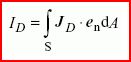
where endA is the vector surface element
[IEV number 121-11-43]FR
courant de déplacement, m
grandeur scalaire égale au flux de la densité de courant de déplacement JD à travers une surface orientée donnée S:
où endA est l'élément vectoriel de surface
[IEV number 121-11-43]Тематики
- электротехника, основные понятия
Синонимы
EN
DE
FR
Англо-русский словарь нормативно-технической терминологии > displacement current
-
30 reverse-phase or phase-balance current relay
максимальная токовая защита обратной последовательности
Защита от небаланса фазных токов или обрыва фаз
Код ANSI -46
[ Источник]
максимальная защита обратной последовательности
Защита от небаланса фазных токов
[Техническая коллекция Schneider Electric. Выпуск № 1. Защита электрических сетей. Руководство по защитам]EN
46. reverse-phase or phase-balance current relay
A relay that functions when the polyphase currents are of reverse-phase sequence or when the polyphase currents are unbalanced or contain negative phasesequence components above a given amount.
[ Источник]Тематики
Обобщающие термины
Синонимы
EN
Англо-русский словарь нормативно-технической терминологии > reverse-phase or phase-balance current relay
-
31 which procedures, if any, are absolutely morally unacceptable and which are only morally unacceptable given the current level of scientific knowledge and expertise?
Универсальный англо-русский словарь > which procedures, if any, are absolutely morally unacceptable and which are only morally unacceptable given the current level of scientific knowledge and expertise?
-
32 grandeur d'alimentation
воздействующая величина электрического реле
Электрическая величина, которая одна или в сочетании с другими электрическими величинами должна быть приложена к электрическому реле в заданных условиях для достижения ожидаемого функционирования
[ ГОСТ 16022-83]EN
energizing quantity
an electrical quantity (either current or voltage) which alone, or in combination with other such quantities, applied to a relay under specified conditions enables it to fulfil its purpose
[IEV number 446-12-01]
energizing quantity (for elementary relays)electrical quantity which, when applied to the input circuit of an elementary relay under specified conditions, enables it to fulfill its purpose
NOTE – For elementary relays the energizing quantity is usually a voltage. Therefore, the input voltage as energizing quantity is used in the definitions given below. Where a relay is energized by a given current instead, the respective terms and definitions apply with "current" used instead of "voltage".
[IEV number 444-03-01]FR
grandeur d'alimentation
grandeur électrique, courant ou tension, qui, seule ou en combinaison avec d'autres grandeurs électriques, courant ou tension, doit être appliquée dans des conditions spécifiées à un relais pour en obtenir le comportement attendu
[IEV number 446-12-01]
grandeur d'alimentation (pour les relais élémentaires), f
grandeur électrique qui, appliquée au circuit d'entrée d'un relais élémentaire dans des conditions spécifiées, lui permet d'accomplir sa fonction
NOTE – Pour les relais élémentaires, la grandeur d'alimentation est en général une tension. En conséquence, on utilise la tension d'entrée comme grandeur d'alimentation dans les définitions données ci-dessous. Lorsqu'un relais est alimenté par un courant, les termes et définitions respectifs sont à utiliser avec le terme "courant" au lieu du terme "tension".
[IEV number 444-03-01]Тематики
Классификация
>>>EN
DE
FR
Франко-русский словарь нормативно-технической терминологии > grandeur d'alimentation
-
33 Eingangsgrösse
воздействующая величина электрического реле
Электрическая величина, которая одна или в сочетании с другими электрическими величинами должна быть приложена к электрическому реле в заданных условиях для достижения ожидаемого функционирования
[ ГОСТ 16022-83]EN
energizing quantity
an electrical quantity (either current or voltage) which alone, or in combination with other such quantities, applied to a relay under specified conditions enables it to fulfil its purpose
[IEV number 446-12-01]
energizing quantity (for elementary relays)electrical quantity which, when applied to the input circuit of an elementary relay under specified conditions, enables it to fulfill its purpose
NOTE – For elementary relays the energizing quantity is usually a voltage. Therefore, the input voltage as energizing quantity is used in the definitions given below. Where a relay is energized by a given current instead, the respective terms and definitions apply with "current" used instead of "voltage".
[IEV number 444-03-01]FR
grandeur d'alimentation
grandeur électrique, courant ou tension, qui, seule ou en combinaison avec d'autres grandeurs électriques, courant ou tension, doit être appliquée dans des conditions spécifiées à un relais pour en obtenir le comportement attendu
[IEV number 446-12-01]
grandeur d'alimentation (pour les relais élémentaires), f
grandeur électrique qui, appliquée au circuit d'entrée d'un relais élémentaire dans des conditions spécifiées, lui permet d'accomplir sa fonction
NOTE – Pour les relais élémentaires, la grandeur d'alimentation est en général une tension. En conséquence, on utilise la tension d'entrée comme grandeur d'alimentation dans les définitions données ci-dessous. Lorsqu'un relais est alimenté par un courant, les termes et définitions respectifs sont à utiliser avec le terme "courant" au lieu du terme "tension".
[IEV number 444-03-01]Тематики
Классификация
>>>EN
DE
FR
2. ВОЗБУЖДЕНИЕ РЕЛЕ
49. Воздействующая величина электрического реле
D. Eingangsgrösse
Е. Energizing quantity
F. Grandeur d’alimentation
Электрическая величина, которая одна или в сочетании с другими электрическими величинами должна быть приложена к электрическому реле в заданных условиях для достижения ожидаемого функционирования
Источник: ГОСТ 16022-83: Реле электрические. Термины и определения оригинал документа
49. Воздействующая величина электрического реле
D. Eingangsgrösse
Е. Energizing quantity
F. Grandeur d’alimentation
Источник: ГОСТ 16022-83: Реле электрические. Термины и определения оригинал документа
Немецко-русский словарь нормативно-технической терминологии > Eingangsgrösse
-
34 energizing quantity
- подводимая величина
- воздействующая величина электрического реле
- воздействующая величина (ток или напряжение)
воздействующая величина (ток или напряжение)
—
[Я.Н.Лугинский, М.С.Фези-Жилинская, Ю.С.Кабиров. Англо-русский словарь по электротехнике и электроэнергетике, Москва, 1999 г.]Тематики
- электротехника, основные понятия
EN
воздействующая величина электрического реле
Электрическая величина, которая одна или в сочетании с другими электрическими величинами должна быть приложена к электрическому реле в заданных условиях для достижения ожидаемого функционирования
[ ГОСТ 16022-83]EN
energizing quantity
an electrical quantity (either current or voltage) which alone, or in combination with other such quantities, applied to a relay under specified conditions enables it to fulfil its purpose
[IEV number 446-12-01]
energizing quantity (for elementary relays)electrical quantity which, when applied to the input circuit of an elementary relay under specified conditions, enables it to fulfill its purpose
NOTE – For elementary relays the energizing quantity is usually a voltage. Therefore, the input voltage as energizing quantity is used in the definitions given below. Where a relay is energized by a given current instead, the respective terms and definitions apply with "current" used instead of "voltage".
[IEV number 444-03-01]FR
grandeur d'alimentation
grandeur électrique, courant ou tension, qui, seule ou en combinaison avec d'autres grandeurs électriques, courant ou tension, doit être appliquée dans des conditions spécifiées à un relais pour en obtenir le comportement attendu
[IEV number 446-12-01]
grandeur d'alimentation (pour les relais élémentaires), f
grandeur électrique qui, appliquée au circuit d'entrée d'un relais élémentaire dans des conditions spécifiées, lui permet d'accomplir sa fonction
NOTE – Pour les relais élémentaires, la grandeur d'alimentation est en général une tension. En conséquence, on utilise la tension d'entrée comme grandeur d'alimentation dans les définitions données ci-dessous. Lorsqu'un relais est alimenté par un courant, les termes et définitions respectifs sont à utiliser avec le terme "courant" au lieu du terme "tension".
[IEV number 444-03-01]Тематики
Классификация
>>>EN
DE
FR
3.2.1 подводимая величина (energizing quantity): Электрическое возбуждающее воздействие, которое одно или в комбинации с другими такими же воздействиями должно быть приложено к АВДТ, чтобы дать ему возможность выполнить свою функцию в определенных условиях.
Источник: ГОСТ Р 51327.1-2010: Выключатели автоматические, управляемые дифференциальным током, бытового и аналогичного назначения со встроенной защитой от сверхтоков. Часть 1. Общие требования и методы испытаний оригинал документа
Англо-русский словарь нормативно-технической терминологии > energizing quantity
-
35 near cash
!гос. фин. The resource budget contains a separate control total for “near cash” expenditure, that is expenditure such as pay and current grants which impacts directly on the measure of the golden rule.This paper provides background information on the framework for the planning and control of public expenditure in the UK which has been operated since the 1998 Comprehensive Spending Review (CSR). It sets out the different classifications of spending for budgeting purposes and why these distinctions have been adopted. It discusses how the public expenditure framework is designed to ensure both sound public finances and an outcome-focused approach to public expenditure.The UK's public spending framework is based on several key principles:"consistency with a long-term, prudent and transparent regime for managing the public finances as a whole;" "the judgement of success by policy outcomes rather than resource inputs;" "strong incentives for departments and their partners in service delivery to plan over several years and plan together where appropriate so as to deliver better public services with greater cost effectiveness; and"the proper costing and management of capital assets to provide the right incentives for public investment.The Government sets policy to meet two firm fiscal rules:"the Golden Rule states that over the economic cycle, the Government will borrow only to invest and not to fund current spending; and"the Sustainable Investment Rule states that net public debt as a proportion of GDP will be held over the economic cycle at a stable and prudent level. Other things being equal, net debt will be maintained below 40 per cent of GDP over the economic cycle.Achievement of the fiscal rules is assessed by reference to the national accounts, which are produced by the Office for National Statistics, acting as an independent agency. The Government sets its spending envelope to comply with these fiscal rules.Departmental Expenditure Limits ( DEL) and Annually Managed Expenditure (AME)"Departmental Expenditure Limit ( DEL) spending, which is planned and controlled on a three year basis in Spending Reviews; and"Annually Managed Expenditure ( AME), which is expenditure which cannot reasonably be subject to firm, multi-year limits in the same way as DEL. AME includes social security benefits, local authority self-financed expenditure, debt interest, and payments to EU institutions.More information about DEL and AME is set out below.In Spending Reviews, firm DEL plans are set for departments for three years. To ensure consistency with the Government's fiscal rules departments are set separate resource (current) and capital budgets. The resource budget contains a separate control total for “near cash” expenditure, that is expenditure such as pay and current grants which impacts directly on the measure of the golden rule.To encourage departments to plan over the medium term departments may carry forward unspent DEL provision from one year into the next and, subject to the normal tests for tautness and realism of plans, may be drawn down in future years. This end-year flexibility also removes any incentive for departments to use up their provision as the year end approaches with less regard to value for money. For the full benefits of this flexibility and of three year plans to feed through into improved public service delivery, end-year flexibility and three year budgets should be cascaded from departments to executive agencies and other budget holders.Three year budgets and end-year flexibility give those managing public services the stability to plan their operations on a sensible time scale. Further, the system means that departments cannot seek to bid up funds each year (before 1997, three year plans were set and reviewed in annual Public Expenditure Surveys). So the credibility of medium-term plans has been enhanced at both central and departmental level.Departments have certainty over the budgetary allocation over the medium term and these multi-year DEL plans are strictly enforced. Departments are expected to prioritise competing pressures and fund these within their overall annual limits, as set in Spending Reviews. So the DEL system provides a strong incentive to control costs and maximise value for money.There is a small centrally held DEL Reserve. Support from the Reserve is available only for genuinely unforeseeable contingencies which departments cannot be expected to manage within their DEL.AME typically consists of programmes which are large, volatile and demand-led, and which therefore cannot reasonably be subject to firm multi-year limits. The biggest single element is social security spending. Other items include tax credits, Local Authority Self Financed Expenditure, Scottish Executive spending financed by non-domestic rates, and spending financed from the proceeds of the National Lottery.AME is reviewed twice a year as part of the Budget and Pre-Budget Report process reflecting the close integration of the tax and benefit system, which was enhanced by the introduction of tax credits.AME is not subject to the same three year expenditure limits as DEL, but is still part of the overall envelope for public expenditure. Affordability is taken into account when policy decisions affecting AME are made. The Government has committed itself not to take policy measures which are likely to have the effect of increasing social security or other elements of AME without taking steps to ensure that the effects of those decisions can be accommodated prudently within the Government's fiscal rules.Given an overall envelope for public spending, forecasts of AME affect the level of resources available for DEL spending. Cautious estimates and the AME margin are built in to these AME forecasts and reduce the risk of overspending on AME.Together, DEL plus AME sum to Total Managed Expenditure (TME). TME is a measure drawn from national accounts. It represents the current and capital spending of the public sector. The public sector is made up of central government, local government and public corporations.Resource and Capital Budgets are set in terms of accruals information. Accruals information measures resources as they are consumed rather than when the cash is paid. So for example the Resource Budget includes a charge for depreciation, a measure of the consumption or wearing out of capital assets."Non cash charges in budgets do not impact directly on the fiscal framework. That may be because the national accounts use a different way of measuring the same thing, for example in the case of the depreciation of departmental assets. Or it may be that the national accounts measure something different: for example, resource budgets include a cost of capital charge reflecting the opportunity cost of holding capital; the national accounts include debt interest."Within the Resource Budget DEL, departments have separate controls on:"Near cash spending, the sub set of Resource Budgets which impacts directly on the Golden Rule; and"The amount of their Resource Budget DEL that departments may spend on running themselves (e.g. paying most civil servants’ salaries) is limited by Administration Budgets, which are set in Spending Reviews. Administration Budgets are used to ensure that as much money as practicable is available for front line services and programmes. These budgets also help to drive efficiency improvements in departments’ own activities. Administration Budgets exclude the costs of frontline services delivered directly by departments.The Budget preceding a Spending Review sets an overall envelope for public spending that is consistent with the fiscal rules for the period covered by the Spending Review. In the Spending Review, the Budget AME forecast for year one of the Spending Review period is updated, and AME forecasts are made for the later years of the Spending Review period.The 1998 Comprehensive Spending Review ( CSR), which was published in July 1998, was a comprehensive review of departmental aims and objectives alongside a zero-based analysis of each spending programme to determine the best way of delivering the Government's objectives. The 1998 CSR allocated substantial additional resources to the Government's key priorities, particularly education and health, for the three year period from 1999-2000 to 2001-02.Delivering better public services does not just depend on how much money the Government spends, but also on how well it spends it. Therefore the 1998 CSR introduced Public Service Agreements (PSAs). Each major government department was given its own PSA setting out clear targets for achievements in terms of public service improvements.The 1998 CSR also introduced the DEL/ AME framework for the control of public spending, and made other framework changes. Building on the investment and reforms delivered by the 1998 CSR, successive spending reviews in 2000, 2002 and 2004 have:"provided significant increase in resources for the Government’s priorities, in particular health and education, and cross-cutting themes such as raising productivity; extending opportunity; and building strong and secure communities;" "enabled the Government significantly to increase investment in public assets and address the legacy of under investment from past decades. Departmental Investment Strategies were introduced in SR2000. As a result there has been a steady increase in public sector net investment from less than ¾ of a per cent of GDP in 1997-98 to 2¼ per cent of GDP in 2005-06, providing better infrastructure across public services;" "introduced further refinements to the performance management framework. PSA targets have been reduced in number over successive spending reviews from around 300 to 110 to give greater focus to the Government’s highest priorities. The targets have become increasingly outcome-focused to deliver further improvements in key areas of public service delivery across Government. They have also been refined in line with the conclusions of the Devolving Decision Making Review to provide a framework which encourages greater devolution and local flexibility. Technical Notes were introduced in SR2000 explaining how performance against each PSA target will be measured; and"not only allocated near cash spending to departments, but also – since SR2002 - set Resource DEL plans for non cash spending.To identify what further investments and reforms are needed to equip the UK for the global challenges of the decade ahead, on 19 July 2005 the Chief Secretary to the Treasury announced that the Government intends to launch a second Comprehensive Spending Review (CSR) reporting in 2007.A decade on from the first CSR, the 2007 CSR will represent a long-term and fundamental review of government expenditure. It will cover departmental allocations for 2008-09, 2009-10 and 2010 11. Allocations for 2007-08 will be held to the agreed figures already announced by the 2004 Spending Review. To provide a rigorous analytical framework for these departmental allocations, the Government will be taking forward a programme of preparatory work over 2006 involving:"an assessment of what the sustained increases in spending and reforms to public service delivery have achieved since the first CSR. The assessment will inform the setting of new objectives for the decade ahead;" "an examination of the key long-term trends and challenges that will shape the next decade – including demographic and socio-economic change, globalisation, climate and environmental change, global insecurity and technological change – together with an assessment of how public services will need to respond;" "to release the resources needed to address these challenges, and to continue to secure maximum value for money from public spending over the CSR period, a set of zero-based reviews of departments’ baseline expenditure to assess its effectiveness in delivering the Government’s long-term objectives; together with"further development of the efficiency programme, building on the cross cutting areas identified in the Gershon Review, to embed and extend ongoing efficiency savings into departmental expenditure planning.The 2007 CSR also offers the opportunity to continue to refine the PSA framework so that it drives effective delivery and the attainment of ambitious national standards.Public Service Agreements (PSAs) were introduced in the 1998 CSR. They set out agreed targets detailing the outputs and outcomes departments are expected to deliver with the resources allocated to them. The new spending regime places a strong emphasis on outcome targets, for example in providing for better health and higher educational standards or service standards. The introduction in SR2004 of PSA ‘standards’ will ensure that high standards in priority areas are maintained.The Government monitors progress against PSA targets, and departments report in detail twice a year in their annual Departmental Reports (published in spring) and in their autumn performance reports. These reports provide Parliament and the public with regular updates on departments’ performance against their targets.Technical Notes explain how performance against each PSA target will be measured.To make the most of both new investment and existing assets, there needs to be a coherent long term strategy against which investment decisions are taken. Departmental Investment Strategies (DIS) set out each department's plans to deliver the scale and quality of capital stock needed to underpin its objectives. The DIS includes information about the department's existing capital stock and future plans for that stock, as well as plans for new investment. It also sets out the systems that the department has in place to ensure that it delivers its capital programmes effectively.This document was updated on 19 December 2005.Near-cash resource expenditure that has a related cash implication, even though the timing of the cash payment may be slightly different. For example, expenditure on gas or electricity supply is incurred as the fuel is used, though the cash payment might be made in arrears on aquarterly basis. Other examples of near-cash expenditure are: pay, rental.Net cash requirement the upper limit agreed by Parliament on the cash which a department may draw from theConsolidated Fund to finance the expenditure within the ambit of its Request forResources. It is equal to the agreed amount of net resources and net capital less non-cashitems and working capital.Non-cash cost costs where there is no cash transaction but which are included in a body’s accounts (or taken into account in charging for a service) to establish the true cost of all the resourcesused.Non-departmental a body which has a role in the processes of government, but is not a government public body, NDPBdepartment or part of one. NDPBs accordingly operate at arm’s length from governmentMinisters.Notional cost of a cost which is taken into account in setting fees and charges to improve comparability with insuranceprivate sector service providers.The charge takes account of the fact that public bodies donot generally pay an insurance premium to a commercial insurer.the independent body responsible for collecting and publishing official statistics about theUK’s society and economy. (At the time of going to print legislation was progressing tochange this body to the Statistics Board).Office of Government an office of the Treasury, with a status similar to that of an agency, which aims to maximise Commerce, OGCthe government’s purchasing power for routine items and combine professional expertiseto bear on capital projects.Office of the the government department responsible for discharging the Paymaster General’s statutoryPaymaster General,responsibilities to hold accounts and make payments for government departments and OPGother public bodies.Orange bookthe informal title for Management of Risks: Principles and Concepts, which is published by theTreasury for the guidance of public sector bodies.Office for NationalStatistics, ONS60Managing Public Money————————————————————————————————————————"GLOSSARYOverdraftan account with a negative balance.Parliament’s formal agreement to authorise an activity or expenditure.Prerogative powerspowers exercisable under the Royal Prerogative, ie powers which are unique to the Crown,as contrasted with common-law powers which may be available to the Crown on the samebasis as to natural persons.Primary legislationActs which have been passed by the Westminster Parliament and, where they haveappropriate powers, the Scottish Parliament and the Northern Ireland Assembly. Begin asBills until they have received Royal Assent.arrangements under which a public sector organisation contracts with a private sectorentity to construct a facility and provide associated services of a specified quality over asustained period. See annex 7.5.Proprietythe principle that patterns of resource consumption should respect Parliament’s intentions,conventions and control procedures, including any laid down by the PAC. See box 2.4.Public Accountssee Committee of Public Accounts.CommitteePublic corporationa trading body controlled by central government, local authority or other publiccorporation that has substantial day to day operating independence. See section 7.8.Public Dividend finance provided by government to public sector bodies as an equity stake; an alternative to Capital, PDCloan finance.Public Service sets out what the public can expect the government to deliver with its resources. EveryAgreement, PSAlarge government department has PSA(s) which specify deliverables as targets or aimsrelated to objectives.a structured arrangement between a public sector and a private sector organisation tosecure an outcome delivering good value for money for the public sector. It is classified tothe public or private sector according to which has more control.Rate of returnthe financial remuneration delivered by a particular project or enterprise, expressed as apercentage of the net assets employed.Regularitythe principle that resource consumption should accord with the relevant legislation, therelevant delegated authority and this document. See box 2.4.Request for the functional level into which departmental Estimates may be split. RfRs contain a number Resources, RfRof functions being carried out by the department in pursuit of one or more of thatdepartment’s objectives.Resource accountan accruals account produced in line with the Financial Reporting Manual (FReM).Resource accountingthe system under which budgets, Estimates and accounts are constructed in a similar wayto commercial audited accounts, so that both plans and records of expenditure allow in fullfor the goods and services which are to be, or have been, consumed – ie not just the cashexpended.Resource budgetthe means by which the government plans and controls the expenditure of resources tomeet its objectives.Restitutiona legal concept which allows money and property to be returned to its rightful owner. Ittypically operates where another person can be said to have been unjustly enriched byreceiving such monies.Return on capital the ratio of profit to capital employed of an accounting entity during an identified period.employed, ROCEVarious measures of profit and of capital employed may be used in calculating the ratio.Public Privatepartnership, PPPPrivate Finance Initiative, PFIParliamentaryauthority61Managing Public Money"————————————————————————————————————————GLOSSARYRoyal charterthe document setting out the powers and constitution of a corporation established underprerogative power of the monarch acting on Privy Council advice.Second readingthe second formal time that a House of Parliament may debate a bill, although in practicethe first substantive debate on its content. If successful, it is deemed to denoteParliamentary approval of the principle of the proposed legislation.Secondary legislationlaws, including orders and regulations, which are made using powers in primary legislation.Normally used to set out technical and administrative provision in greater detail thanprimary legislation, they are subject to a less intense level of scrutiny in Parliament.European legislation is,however,often implemented in secondary legislation using powers inthe European Communities Act 1972.Service-level agreement between parties, setting out in detail the level of service to be performed.agreementWhere agreements are between central government bodies, they are not legally a contractbut have a similar function.Shareholder Executive a body created to improve the government’s performance as a shareholder in businesses.Spending reviewsets out the key improvements in public services that the public can expect over a givenperiod. It includes a thorough review of departmental aims and objectives to find the bestway of delivering the government’s objectives, and sets out the spending plans for the givenperiod.State aidstate support for a domestic body or company which could distort EU competition and sois not usually allowed. See annex 4.9.Statement of Excessa formal statement detailing departments’ overspends prepared by the Comptroller andAuditor General as a result of undertaking annual audits.Statement on Internal an annual statement that Accounting Officers are required to make as part of the accounts Control, SICon a range of risk and control issues.Subheadindividual elements of departmental expenditure identifiable in Estimates as single cells, forexample cell A1 being administration costs within a particular line of departmental spending.Supplyresources voted by Parliament in response to Estimates, for expenditure by governmentdepartments.Supply Estimatesa statement of the resources the government needs in the coming financial year, and forwhat purpose(s), by which Parliamentary authority is sought for the planned level ofexpenditure and income.Target rate of returnthe rate of return required of a project or enterprise over a given period, usually at least a year.Third sectorprivate sector bodies which do not act commercially,including charities,social and voluntaryorganisations and other not-for-profit collectives. See annex 7.7.Total Managed a Treasury budgeting term which covers all current and capital spending carried out by the Expenditure,TMEpublic sector (ie not just by central departments).Trading fundan organisation (either within a government department or forming one) which is largely orwholly financed from commercial revenue generated by its activities. Its Estimate shows itsnet impact, allowing its income from receipts to be devoted entirely to its business.Treasury Minutea formal administrative document drawn up by the Treasury, which may serve a wide varietyof purposes including seeking Parliamentary approval for the use of receipts asappropriations in aid, a remission of some or all of the principal of voted loans, andresponding on behalf of the government to reports by the Public Accounts Committee(PAC).62Managing Public Money————————————————————————————————————————GLOSSARY63Managing Public MoneyValue for moneythe process under which organisation’s procurement, projects and processes aresystematically evaluated and assessed to provide confidence about suitability, effectiveness,prudence,quality,value and avoidance of error and other waste,judged for the public sectoras a whole.Virementthe process through which funds are moved between subheads such that additionalexpenditure on one is met by savings on one or more others.Votethe process by which Parliament approves funds in response to supply Estimates.Voted expenditureprovision for expenditure that has been authorised by Parliament. Parliament ‘votes’authority for public expenditure through the Supply Estimates process. Most expenditureby central government departments is authorised in this way.Wider market activity activities undertaken by central government organisations outside their statutory duties,using spare capacity and aimed at generating a commercial profit. See annex 7.6.Windfallmonies received by a department which were not anticipated in the spending review.———————————————————————————————————————— -
36 courant électrique total
ток
Скалярная величина, равная сумме электрического тока проводимости, электрического тока переноса и электрического тока смещения сквозь рассматриваемую поверхность.
[ ГОСТ Р 52002-2003]EN
total electric current
scalar quantity given by the flux of the total current density Jt through a given directed surface S:

where endA is the vector surface element
NOTE – The total electric current It is given by
It = I + ID
where I is the electric current and ID the displacement current.
[IEV number 121-11-45]FR
courant électrique total, m
grandeur scalaire égale au flux de la densité de courant total Jt à travers une surface orientée donnée S:
où endA est l'élément vectoriel de surface
NOTE – Le courant électrique total It est donné par
It = I + ID
où I est le courant électrique et ID le courant de déplacement.
[IEV number 121-11-45]Тематики
- электротехника, основные понятия
Действия
- включать ток
- длительно пропускать ток
- коммутировать ток
- ограничивать ток
- отключать ток
- потреблять ток
- проводить ток
- пропускать ток
Синонимы
EN
DE
FR
Франко-русский словарь нормативно-технической терминологии > courant électrique total
-
37 Gesamtstromstärke
ток
Скалярная величина, равная сумме электрического тока проводимости, электрического тока переноса и электрического тока смещения сквозь рассматриваемую поверхность.
[ ГОСТ Р 52002-2003]EN
total electric current
scalar quantity given by the flux of the total current density Jt through a given directed surface S:
where endA is the vector surface element
NOTE – The total electric current It is given by
It = I + ID
where I is the electric current and ID the displacement current.
[IEV number 121-11-45]FR
courant électrique total, m
grandeur scalaire égale au flux de la densité de courant total Jt à travers une surface orientée donnée S:
où endA est l'élément vectoriel de surface
NOTE – Le courant électrique total It est donné par
It = I + ID
où I est le courant électrique et ID le courant de déplacement.
[IEV number 121-11-45]Тематики
- электротехника, основные понятия
Действия
- включать ток
- длительно пропускать ток
- коммутировать ток
- ограничивать ток
- отключать ток
- потреблять ток
- проводить ток
- пропускать ток
Синонимы
EN
DE
FR
Немецко-русский словарь нормативно-технической терминологии > Gesamtstromstärke
-
38 fault
- ток повреждения
- сверхток
- сброс
- сбой
- разлом
- повреждение (цепи, линии, устройства)
- повреждение (во взрывозащите)
- повреждение
- ошибка
- отказ
- ненормальный режим работы
- неисправность
- неисправное состояние
- нарушение
- короткое замыкание
- дизъюктивное нарушение
- дефект
- выход из строя
- аварийное сообщение
аварийное сообщение
-Параллельные тексты EN-RU
The system offers diagnostic and statistics functions and configurable warnings and faults, allowing better prediction of component maintenance, and provides data to continuously improve the entire system.
[Schneider Electric]Система (управления электродвигателем) предоставляет оператору различную диагностическую и статистическую информацию и позволяет сконфигурировать предупредительные и аварийные сообщения, что дает возможность лучше планировать техническое обслуживание и постоянно улучшать систему в целом.
[Перевод Интент]Various alarm notifications are available to indicate a compromised security state such as forced entry and door position.
[APC]Устройство может формировать различные аварийные сообщения о нарушении защиты, например, о несанкционированном проникновении или об изменении положения двери.
[Перевод Интент]
Тематики
EN
выход из строя
—
[Я.Н.Лугинский, М.С.Фези-Жилинская, Ю.С.Кабиров. Англо-русский словарь по электротехнике и электроэнергетике, Москва, 1999 г.]
выход системы из строя
вследствие отказа аппаратного или программного обеспечения либо средств связи
[Англо-русский толковый словарь терминов и сокращений по ВТ, Интернету и программированию. © 1998-2007 гг., Э.М. Пройдаков, Л.А. Теплицкий. 13,8 тыс. статей.]
выход из строя
-
[Интент]Единичные выходы из строя в процессе испытаний элементов электронной техники (микросхем, электровакуумных и полупроводниковых приборов, конденсаторов, резисторов, кварцевых резонаторов и т.д.), а также ламп накаливания и предохранителей не могут служить основанием для прекращения испытаний, если это не вызвано недостатком конструкции прибора.
При повторных выходах из строя тех же элементов испытания следует считать неудовлетворительными.
[ ГОСТ 24314-80]При выходе из строя отдельно стоящих вентиляторов на двигателях мельниц, дымососов, мельничных вентиляторов, вентиляторов первичного воздуха и т.д. необходимо при первой возможности, но не позже чем его допускается заводской инструкцией, отключить двигатель 6 кВ для ремонта вентилятора охлаждения двигателя.
[РД 34.20.565]Судовая электрическая сеть, предназначенная для передачи электроэнергии при выходе из строя линий электропередачи силовой сети или исчезновении напряжения
[ ГОСТ 22652-77]Тематики
Синонимы
EN
дизъюктивное нарушение
Относительное перемещение частей пластов вдоль плоскости их разрыва (геол.)
[ http://slovarionline.ru/anglo_russkiy_slovar_neftegazovoy_promyishlennosti/]Тематики
EN
короткое замыкание
Случайное или намеренное соединение резистором или импедансом со сравнительно низким сопротивлением двух или более точек в цепи, нормально находящихся под различным напряжением.
Случайное или намеренное низкоимпедансное или низкоомное соединение двух или более точек электрической цепи, нормально находящихся под разными электрическими потенциалами. (вариант компании Интент)
МЭК 60050(151-03-41) [2].
[ ГОСТ Р 50030. 1-2000 ( МЭК 60947-1-99)]
короткое замыкание
Случайный или преднамеренный проводящий путь между двумя или более проводящими частями, принуждающий различия электрических потенциалов между этими проводящими частями становиться равными или близкими к нулю.
Короткое замыкание обычно возникает в аварийном режиме электроустановки здания при повреждении изоляции токоведущих частей, находящихся под разными электрическими потенциалами, и возникновении между этими частями электрического контакта, имеющего пренебрежимо малое полное сопротивление. Короткое замыкание также может быть следствием ошибочных действий, совершаемых персоналом при монтаже и эксплуатации электроустановки здания, когда соединяют между собой проводящие части, которые в нормальном режиме находятся под разными электрическими потенциалами.
Короткое замыкание характеризуется током короткого замыкания, который, многократно превышая номинальный ток электрической цепи, может вызвать возгорание её элементов и явиться причиной пожара в здании. Поэтому в электроустановках зданий всегда проводят мероприятия, направленные на снижение вероятности возникновения короткого замыкания, а также выполняют защиту от короткого замыкания с помощью устройств защиты от сверхтока.
[ http://www.volt-m.ru/glossary/letter/%CA/view/27/]
короткое замыкание
Случайное или преднамеренное соединение двух или более проводящих частей, вызывающее снижение разности электрических потенциалов между этими частями до нуля или значения, близкого к нулю.
[ ГОСТ Р МЭК 60050-195-2005]
короткое замыкание
КЗ
замыкание, при котором токи в ветвях электроустановки, примыкающих к месту его возникновения, резко возрастают, превышая наибольший допустимый ток продолжительного режима
[Методические указания по защите распределительных электрических сетей напряжением 0,4-10 кВ от грозовых перенапряжений]EN
short-circuit
accidental or intentional conductive path between two or more conductive parts forcing the electric potential differences between these conductive parts to be equal to or close to zero
Source: 151-03-41 MOD
[IEV number 195-04-11]FR
court-circuit
chemin conducteur accidentel ou intentionnel entre deux ou plusieurs parties conductrices forçant les différences de potentiel électriques entre ces parties conductrices à être nulles ou proches de zéro
Source: 151-03-41 MOD
[IEV number 195-04-11]Параллельные тексты EN-RU
A short-circuit is a low impedance connection between two conductors at different voltages.
[ABB]Короткое замыкание представляет собой низкоомное соединение двух проводников, находящихся под разными потенциалами.
[Перевод Интент]Тематики
- электробезопасность
- электротехника, основные понятия
Синонимы
- КЗ
EN
DE
FR
нарушение
[Департамент лингвистических услуг Оргкомитета «Сочи 2014». Глоссарий терминов]EN
fault
Another term for offense.
[Департамент лингвистических услуг Оргкомитета «Сочи 2014». Глоссарий терминов]
Тематики
EN
неисправное состояние
Состояние объекта, при котором он не соответствует хотя бы одному из требований нормативно-технической и (или) конструкторской (проектной) документации.
[ ГОСТ 27.002-89]
[ОСТ 45.152-99]
неисправное состояние
неисправность
По ГОСТ 13377-75
[ ГОСТ 24166-80]
неисправное состояние
Состояние системы тревожной сигнализации, препятствующее реагированию системы на наличие опасности в соответствии с требованиями стандартов.
[ ГОСТ Р 50775-95]
[МЭК 839-1-1-88]Тематики
- надежность, основные понятия
- ремонт судов
- системы охраны и безопасности
- тех. обсл. и ремонт средств электросвязи
Обобщающие термины
Синонимы
EN
DE
FR
неисправность
отказ в работе
Состояние машины, характеризующееся неспособностью выполнять заданную функцию, исключая случаи проведения профилактического технического обслуживания, других запланированных действий или недостаток внешних ресурсов (например, отключение энергоснабжения).
Примечание 1
Неисправность часто является результатом повреждения самой машины, однако она может иметь место и без повреждения.
Примечание 2
На практике термины «неисправность», «отказ» и «повреждение» часто используются как синонимы.
[ ГОСТ Р ИСО 12100-1:2007]
неисправность
Состояние оборудования, характеризуемое его неспособностью выполнять требуемую функцию, исключая профилактическое обслуживание или другие планово-предупредительные действия, а также исключая неспособность выполнять требуемую функцию из-за недостатка внешних ресурсов.
Примечание - Неисправность часто является следствием отказа самого оборудования, но может существовать и без предварительного отказа.
[ГОСТ ЕН 1070-2003]
неисправность
Состояние технического объекта (элемента), характеризуемое его неспособностью выполнять требуемую функцию, исключая периоды профилактического технического обслуживания или другие планово-предупредительные действия, или в результате недостатка внешних ресурсов.
Примечания
1 Неисправность является часто следствием отказа самого технического объекта, но может существовать и без предварительного отказа.
2 Английский термин «fault» и его определение идентичны данному в МЭК 60050-191 (МЭС 191-05-01) [1]. В машиностроении чаще применяют французский термин «defaut» или немецкий термин «Fehler», чем термины «panne» и «Fehlzusstand», которые употребляют с этим определением.
[ ГОСТ Р ИСО 13849-1-2003]Тематики
EN
- abnormality
- abort
- abortion
- breakage
- breakdown
- bug
- defect
- disease
- disrepair
- disturbance
- fail
- failure
- failure occurrence
- fault
- faultiness
- fouling
- health problem
- layup
- malfunction
- problem
- shutdown
- trouble
DE
FR
ненормальный режим работы электротехнического изделия
Режим работы электротехнического изделия (электротехнического устройства, электрооборудования), при котором значение хотя бы одного из параметров режима выходит за пределы наибольшего или наименьшего рабочего значения.
[ ГОСТ 18311-80]
К ненормальным относятся режимы, связанные с отклонениями от допустимых значений величин тока, напряжения и частоты, опасные для оборудования или устойчивой работы энергосистемы.
Рассмотрим наиболее характерные ненормальные режимы.а) Перегрузка оборудования, вызванная увеличением тока сверх номинального значения. Номинальным называется максимальный ток, допускаемый для данного оборудования в течение неограниченного времени.
Если ток, проходящий по оборудованию, превышает номинальное значение, то за счет выделяемого им дополнительного тепла температура токоведущих частей и изоляции через некоторое время превосходит допустимую величину, что приводит к ускоренному износу изоляции и ее повреждению. Время, допустимое для прохождения повышенных токов, зависит от их величины. Характер этой зависимости показан на рис. 1-3 и определяется конструкцией оборудования и типом изоляционных материалов. Для предупреждения повреждения оборудования при его перегрузке необходимо принять меры к разгрузке или отключению оборудования.б) Качания в системах возникают при выходе из синхронизма работающих параллельно генераторов (или электростанций) А и В (рис. 1-2, б). При качаниях в каждой точке системы происходит периодическое изменение («качание») тока и напряжения. Ток во всех элементах сети, связывающих вышедшие из синхронизма генераторы А и В, колеблется от нуля до максимального значения, во много раз превышающего нормальную величину. Напряжение падает от нормального до некоторого минимального значения, имеющего разную величину в каждой точке сети. В точке С, называемой электрическим центром качаний, оно снижается до нуля, в остальных точках сети напряжение падает, но остается больше нуля, нарастая от центра качания С к источникам питания А и В. По характеру изменения тока и напряжения качания похожи на к. з. Возрастание тока вызывает нагревание оборудования, а уменьшение напряжения нарушает работу всех потребителей системы. Качание — очень опасный ненормальный режим, отражающийся на работе всей энергосистемы.
в) Повышение напряжения сверх допустимого значения возникает обычно на гидрогенераторах при внезапном отключении их нагрузки. Разгрузившийся гидрогенератор увеличивает частоту вращения, что вызывает возрастание э. д. с. статора до опасных для его изоляции значений. Защита в таких случаях должна снизить ток возбуждения генератора или отключить его.
Опасное для изоляции оборудования повышение напряжения может возникнуть также при одностороннем отключении или включении длинных линий электропередачи с большой емкостной проводимостью.
Кроме отмеченных ненормальных режимов, имеются и другие, ликвидация которых возможна при помощи релейной защиты.[Чернобровов Н. В. Релейная защита. Учебное пособие для техникумов]
Тематики
- изделие электротехническое
- релейная защита
- электротехника, основные понятия
Синонимы
EN
отказ
Нарушение способности оборудования выполнять требуемую функцию.
Примечания
1. После отказа оборудование находится в неисправном состоянии.
2. «Отказ» является событием, в отличие от «неисправности», которая является состоянием.
3. Это понятие, как оно определено, не применяют коборудованиюобъекту, состоящему только из программных средств.
4. На практике термины «отказ» и «неисправность» часто используют как синонимы.
[ГОСТ ЕН 1070-2003]
[ ГОСТ Р ИСО 13849-1-2003]
[ ГОСТ Р МЭК 60204-1-2007]
отказ
Событие, заключающееся в нарушении работоспособного состояния объекта.
[ ГОСТ 27.002-89]
[ОСТ 45.153-99]
[СТО Газпром РД 2.5-141-2005]
[СО 34.21.307-2005]
отказ
Событие, заключающееся в нарушении работоспособного состояния машины и (или) оборудования вследствие конструктивных нарушений при проектировании, несоблюдения установленного процесса производства или ремонта, невыполнения правил или инструкций по эксплуатации.
[Технический регламент о безопасности машин и оборудования]EN
failure
the termination of the ability of an item to perform a required function
NOTE 1 – After failure the item has a fault.
NOTE 2 – "Failure" is an event, as distinguished from "fault", which is a state.
NOTE 3 – This concept as defined does not apply to items consisting of software only.
[IEV number 191-04-01]
NOTE 4 - In practice, the terms fault and failure are often used synonymously
[IEC 60204-1-2006]FR
défaillance
cessation de l'aptitude d'une entité à accomplir une fonction requise
NOTE 1 – Après défaillance d'une entité, cette entité est en état de panne.
NOTE 2 – Une défaillance est un passage d'un état à un autre, par opposition à une panne, qui est un état.
NOTE 3 – La notion de défaillance, telle qu'elle est définie, ne s'applique pas à une entité constituée seulement de logiciel.
[IEV number 191-04-01]Тематики
- безопасность в целом
- безопасность гидротехнических сооружений
- безопасность машин и труда в целом
- газораспределение
- надежность средств электросвязи
- надежность, основные понятия
Обобщающие термины
EN
DE
FR
повреждение
Повреждение любого элемента, разделения, изоляции или соединения между элементами, не являющихся неповреждаемыми по МЭК 60079-11 [8], при проведении испытаний на искробезопасность.
[ ГОСТ Р МЭК 60050-426-2006]
Тематики
EN
повреждение (цепи, линии, устройства)
-
[Интент]Тематики
- выключатель автоматический
- релейная защита
- электротехника, основные понятия
EN
разлом
—
[ http://www.eionet.europa.eu/gemet/alphabetic?langcode=en]EN
fault
A fracture or a zone of fractures along which there has been displacement of the sides relative to one another parallel to the fracture. (Source: BJGEO)
[http://www.eionet.europa.eu/gemet/alphabetic?langcode=en]Тематики
EN
DE
FR
сбой
Самоустраняющийся отказ или однократный отказ, устраняемый незначительным вмешательством оператора.
[ ГОСТ 27.002-89]
[ОСТ 45.153-99]
[СТО Газпром РД 2.5-141-2005]
сбой
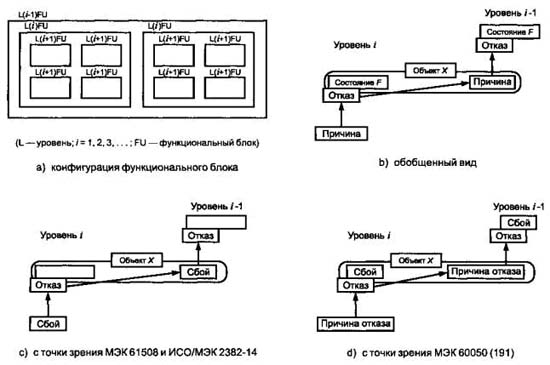
Ненормальный режим, который может вызвать уменьшение или потерю способности функционального блока выполнять требуемую функцию.
Примечание
МЭС 191-05-01 определяет «сбой» как состояние, характеризуемое неспособностью выполнить необходимую функцию, исключая неспособности, возникающие во время профилактического ухода или других плановых мероприятий, либо в результате недостатка внешних ресурсов. Иллюстрация к этим двум точкам зрения показана на рисунке [ ИСО / МЭК 2382-14-01-10].
[ ГОСТ Р МЭК 61508-4-2007]Тематики
- газораспределение
- надежность средств электросвязи
- надежность, основные понятия
Обобщающие термины
EN
сброс
Разрывное нарушение, при котором сместитель падает в сторону опущенного крыла (висячее крыло опущено относительно лежачего).
[ Словарь геологических терминов и понятий. Томский Государственный Университет]Тематики
- геология, геофизика
Обобщающие термины
EN
сверхток
Любой ток, превышающий номинальный
МЭК 60050(441-11-06).
[ ГОСТ Р 50030. 1-2000 ( МЭК 60947-1-99)]
[ ГОСТ Р 50345-99( МЭК 60898-95)]
сверхток
Электрический ток, превышающий номинальный электрический ток.
Сверхток представляет собой любой электрический ток, величина которого превышает номинальный ток какого-либо элемента электроустановки здания или используемого в ней электрооборудования, например: номинальный ток электрической цепи, допустимый длительный ток проводника, номинальный ток автоматического выключателя и т. д. В нормативной и правовой документации различают два основных вида сверхтока – ток перегрузки и ток короткого замыкания.
Появление сверхтока в каком-либо элементе электроустановки здания может привести к его перегреву, возгоранию и, как следствие, к возникновению пожара в здании. Поэтому в электроустановках зданий выполняют защиту от сверхтока.
[ http://www.volt-m.ru/glossary/letter/%D1/view/59/]
сверхток
сверхток в электротехническом изделии
Ток, значение которого превосходит наибольшее рабочее значение тока электротехнического изделия (устройства).
[ ГОСТ 18311-80]
сверхток
Электрический ток, превышающий номинальный электрический ток.
Примечание - Для проводников номинальный ток считается равным длительному допустимому току.
[ ГОСТ Р МЭК 60050-826-2009]
Сверхток может оказывать или может не оказывать вредные воздействия в зависимости от его величины и продолжительности. Сверхтоки могут возникать в результате перегрузок в электроприемниках или при повреждениях, таких как короткие замыкания или замыканиях на землю
[ ГОСТ Р 50571. 1-2009 ( МЭК 60364-1: 2005)]
сверхток
Любой ток, превышающий номинальное значение. Для проводов номинальным значением является допустимый ток.
[ ГОСТ Р МЭК 60204-1-2007]EN
overcurrent
electric current exceeding the rated electric current
NOTE – For conductors, the rated current is considered as equal to the current-carrying capacity
[IEV number 826-11-14]
over-current
<>current exceeding the rated current
<>[IEC 61095, ed. 2.0 (2009-02)]
over-current
electric current the value of which exceeds a specified limiting value
[IEV number 151-15-28]
[IEV number 442-01-20]FR
surintensité, f
courant électrique supérieur au courant électrique assigné
NOTE – Pour des conducteurs, on considère que le courant assigné est égal au courant admissible.
[IEV number 826-11-14]
surintensité
courant supérieur au courant assigné
[IEC 61095, ed. 2.0 (2009-02)]
[IEV number 442-01-20]
surintensité, f
courant électrique dont la valeur dépasse une valeur limite spécifiée
[IEV number 151-15-28]Параллельные тексты EN-RU The design of LV installations leads to basic protection devices being fitted for three types of faults:
-
overloads
-
short-circuits
-
insulation faults
Низковольтные электроустановки должны быть оснащены устройствами защиты трех типов:
-
от перегрузки;
-
от короткого замыкания;
- от токов утечки.
[Перевод Интент]
Примечание.
Слово fault в данном случае пришлось опустить, поскольку:
- его нельзя перевести как "неисправность", т. к. возникновение перегрузки ( overload) не является неисправностью;
- его нельзя перевести как "сверхток", т. к. ток утечки не является сверхтоком.The chosen switchgear must withstand and eliminate faults at optimised cost with respect to the necessary performance.
[Schneider Electric]Выбранная аппаратура распределения должна иметь такие характеристики, чтобы рентабельно выдерживать и ограничивать сверхтоки.
[Перевод Интент]Тематики
Синонимы
EN
DE
FR
ток повреждения
Ток, возникающий в результате пробоя или перекрытия изоляции.
[ ГОСТ Р 51321. 1-2000 ( МЭК 60439-1-92)]
ток повреждения
Ток, который протекает через данную точку повреждения в результате повреждения изоляции.
[ ГОСТ Р МЭК 60050-826-2009]EN
fault current
current resulting from an insulation failure, the bridging of insulation or incorrect connection in an electrical circuit
[IEC 61439-1, ed. 2.0 (2011-08)]
fault current
current which flows across a given point of fault resulting from an insulation fault
[IEV number 826-11-11]FR
courant de défaut
courant résultant d'un défaut de l'isolation, du contournement de l’isolation ou d’un raccordement incorrect dans un circuit électrique
[IEC 61439-1, ed. 2.0 (2011-08)]
courant de défaut, m
courant s'écoulant en un point de défaut donné, consécutivement à un défaut de l'isolation
[IEV number 826-11-11]Тематики
EN
DE
- Fehlerstrom, m
FR
- courant de défaut, m
3.7.2 повреждение (fault): Повреждение любого элемента, разделения, изоляции или соединения между элементами, не являющимися по настоящему стандарту не повреждаемыми, от которых зависит искробезопасность цепи.
Источник: ГОСТ Р 52350.11-2005: Электрооборудование для взрывоопасных газовых сред. Часть 11. Искробезопасная электрическая цепь "I" оригинал документа
3.16 неисправность (fault): Состояние объекта, характеризующееся неспособностью исполнять требуемую функцию, исключая время профилактического технического обслуживания или других запланированных действий, или простои из-за недостатка внешних ресурсов
Примечание - Неисправность часто является результатом отказа объекта, но может существовать и без отказа.
Источник: ГОСТ Р 51901.6-2005: Менеджмент риска. Программа повышения надежности оригинал документа
3.6 неисправность (fault): Состояние элемента, характеризующееся неспособностью исполнять требуемую функцию, исключая период технического обслуживания, ремонта или других запланированных действий, а также из-за недостатка внешних ресурсов.
Примечание - Неисправность часто является результатом отказа элемента, но может существовать и без предшествующего отказа.
Источник: ГОСТ Р 51901.5-2005: Менеджмент риска. Руководство по применению методов анализа надежности оригинал документа
3.5 неисправность (fault): Состояние объекта, когда один из его элементов или группа элементов проявляют признаки деградации или нарушения работы, что может привести к отказу машины.
Примечания
1 Неисправность часто является следствием отказа, но может иметь место и при его отсутствии.
2 Состояние объекта не рассматривают как неисправное, если оно возникло вследствие запланированных процедур или нехватки внешних ресурсов.
Источник: ГОСТ Р ИСО 13379-2009: Контроль состояния и диагностика машин. Руководство по интерпретации данных и методам диагностирования оригинал документа
3.3 неисправность (fault): Состояние объекта, при котором он не способен выполнять требуемую функцию, за исключением такой неспособности при техническом обслуживании или других плановых мероприятиях или вследствие нехватки внешних ресурсов.
Примечания
1 Неисправность часто является следствием отказа объекта, но может иметь место и без него.
2 В настоящем стандарте термин «неисправность» используется наряду с термином «отказ» по историческим причинам.
Источник: ГОСТ Р 51901.12-2007: Менеджмент риска. Метод анализа видов и последствий отказов оригинал документа
3.1.30 ошибка (fault): Разность между погрешностью весоизмерительного датчика и основной погрешностью весоизмерительного датчика (см. 3.1.34).
Источник: ГОСТ Р 8.726-2010: Государственная система обеспечения единства измерений. Датчики весоизмерительные. Общие технические требования. Методы испытаний оригинал документа
3.6 дефект (fault): Неисправность или ошибка в компоненте технического обеспечения, программного обеспечения или системы
[МЭК 61513, пункт 3.22]
Примечание 1 - Дефекты могут подразделяться на случайные, например, в результате ухудшения аппаратных средств из-за старения, и систематические, например, ошибки в программном обеспечении, которые вытекают из погрешностей проектирования.
Примечание 2 - Дефект (в особенности дефект проекта) может остаться необнаруженным в системе до тех пор, пока не окажется, что полученный результат не соответствует намеченной функции, то есть возникает отказ.
Примечание 3 - См. также «ошибка программного обеспечения» и «случайный дефект».
Источник: ГОСТ Р МЭК 62340-2011: Атомные станции. Системы контроля и управления, важные для безопасности. Требования по предотвращению отказов по общей причине оригинал документа
3.2 неисправность (fault): Состояние объекта, когда один из его элементов или группа элементов проявляет признаки деградации или нарушения работы, что может привести к отказу машины.
Примечание - Неисправность может привести к отказу.
Источник: ГОСТ Р ИСО 17359-2009: Контроль состояния и диагностика машин. Общее руководство по организации контроля состояния и диагностирования оригинал документа
3.17 дефект (fault): Неисправность или ошибка в компоненте технического обеспечения, программного обеспечения или системы.
[МЭК 61513, пункт 3.22]
Источник: ГОСТ Р МЭК 60880-2010: Атомные электростанции. Системы контроля и управления, важные для безопасности. Программное обеспечение компьютерных систем, выполняющих функции категории А оригинал документа
3.6.1 сбой (fault): Ненормальный режим, который может вызвать уменьшение или потерю способности функционального блока выполнять требуемую функцию.
Примечание - МЭС 191-05-01 определяет «сбой» как состояние, характеризуемое неспособностью выполнить необходимую функцию, исключая неспособности, возникающие во время профилактического ухода или других плановых мероприятий, либо в результате недостатка внешних ресурсов. Иллюстрация к этим двум точкам зрения показана на рисунке 4 [ИСО/МЭК 2382-14-01-10].
Источник: ГОСТ Р МЭК 61508-4-2007: Функциональная безопасность систем электрических, электронных, программируемых электронных, связанных с безопасностью. Часть 4. Термины и определения оригинал документа
3.22 дефект (fault): Дефект в аппаратуре, программном обеспечении или в компоненте системы (см. рисунок 3).
Примечание 1 -Дефекты могут быть результатом случайных отказов, которые возникают, например, из-за деградации аппаратуры в результате старения; возможны систематические дефекты, например, в результате дефектов в программном обеспечении, возникающих из-за ошибок при проектировании.
Примечание 2 - Дефект (особенно дефекты, связанные с проектированием) может оставаться незамеченным, пока сохраняются условия, при которых он не отражается на выполнении функции, т.е. пока не произойдет отказ.
Примечание 3 - См. также «дефект программного обеспечения».
Источник: ГОСТ Р МЭК 61513-2011: Атомные станции. Системы контроля и управления, важные для безопасности. Общие требования оригинал документа
4.10.1 ошибка (fault): Разность между погрешностью показаний и погрешностью прибора.
Источник: ГОСТ Р ЕН 1434-1-2011: Теплосчетчики. Часть 1. Общие требования
Англо-русский словарь нормативно-технической терминологии > fault
-
39 disjoncteur limiteur de courant
токоограничивающий автоматический выключатель
Выключатель с чрезвычайно малым временем отключения, в течение которого ток короткого замыкания не успевает достичь своего максимального значения.
[МЭК 60947-1]En
current-limiting circuit breaker
Circuit-breaker with a break-time short enough to prevent the short-circuit current reaching its otherwise attainable peak value.
[< size="2">IEC 60077-3, ed. 1.0 (2001-12)]
Circuit-breaker that, within a specified range of current, prevents the let-through current reaching the prospective peak value and which limits the let-through energy (I2t) to a value less than the let-through energy of a half-cycle wave of the symmetrical prospective current
NOTE 1 - Reference may be made to either the symmetrical or asymmetrical prospective peak value of let-through current.
NOTE 2 - The let-through current is also referred to as the cut-off current (see IEV 441-17-12).
NOTE 3 - Templates for the graphical representation of the cut-off current characteristic and the let-through energy characteristic are given in Figures K.2 to K.5 and examples of the use of the templates in Figures K.6 and K.7.
[IEC 60947-2, ed. 4.0, amd. 1 (2009-01)]Fr
disjoncteur limiteur de courant
Disjoncteur dont la durée de coupure est particulièrement brève en vue d’obtenir que le courant de court-circuit ne puisse atteindre son amplitude maximale
[< size="2">IEC 60077-3, ed. 1.0 (2001-12)]
Disjoncteur qui, à l'intérieur d'un domaine de courant spécifié, empêche le courant coupé limité d'atteindre la valeur crête présumée et qui limite l'énergie limitée (I2t) à une valeur inférieure à l'énergie limitée d'une demi-période du courant présumé symétrique
NOTE 1 Il peut être fait référence à la valeur crête présumée symétrique ou assymétrique du courant coupé limité.
NOTE 2 Le courant coupé limité (let-through current) est aussi nommé "cut-off current" (voir VEI 441-17-12).
NOTE 3 Les modèles de représentation graphique des caractéristiques de courant coupé limité et d'énergie limitée sont illustrés dans les Figures K.2 à K.5 et les exemples d'utilisation des modèles dans les Figures K.6 et K.7.
[IEC 60947-2, ed. 4.0, amd. 1 (2009-01)]Токоограничивающий автоматический выключатель имеет чрезвычайно малое время отключения, в течение которого ток КЗ не успевает достичь максимального значения.
Токоограничивающие автоматические выключатели ограничивают ток КЗ с помощью быстрого введения в цепь дополнительного сопротивления электрической дуги (в первый же полупериод, до того, как ток КЗ значительно возрастет) и последующего быстрого отключения КЗ, при этом ток КЗ не достигает ожидаемого расчетного максимального значения. Токоограничение начинается с некоторого значения тока, определяемого характеристикой токоогранияения.
В токоограничивающих автоматических выключателях при больших ожидаемых токах КЗ контакты, сразу же отбрасываются электродинамическими силами, вводя в цепь сопротивление дуги, и затем уже не соприкасаются, так как своевременно срабатывает электромагнитный расцепитель.
При малых токах КЗ контакты не отбрасываются, а отключение производится электромагнитным расцепителем.
[А.В.Беляев. Выбор аппаратуры, защит и кабелей в сетях 0,4 кВ. - Л.: Энергоатомиздат. 1988.]Тематики
Классификация
>>>Обобщающие термины
EN
- current limiting circuitbreaker
- current-limiting circuit breaker
- current-limiting circuit-breaker
- limiting circuit breaker
- limiting circuit-breaker
DE
FR
Франко-русский словарь нормативно-технической терминологии > disjoncteur limiteur de courant
-
40 strombegrenzender Leistungsschalter
токоограничивающий автоматический выключатель
Выключатель с чрезвычайно малым временем отключения, в течение которого ток короткого замыкания не успевает достичь своего максимального значения.
[МЭК 60947-1]En
current-limiting circuit breaker
Circuit-breaker with a break-time short enough to prevent the short-circuit current reaching its otherwise attainable peak value.
[< size="2">IEC 60077-3, ed. 1.0 (2001-12)]
Circuit-breaker that, within a specified range of current, prevents the let-through current reaching the prospective peak value and which limits the let-through energy (I2t) to a value less than the let-through energy of a half-cycle wave of the symmetrical prospective current
NOTE 1 - Reference may be made to either the symmetrical or asymmetrical prospective peak value of let-through current.
NOTE 2 - The let-through current is also referred to as the cut-off current (see IEV 441-17-12).
NOTE 3 - Templates for the graphical representation of the cut-off current characteristic and the let-through energy characteristic are given in Figures K.2 to K.5 and examples of the use of the templates in Figures K.6 and K.7.
[IEC 60947-2, ed. 4.0, amd. 1 (2009-01)]Fr
disjoncteur limiteur de courant
Disjoncteur dont la durée de coupure est particulièrement brève en vue d’obtenir que le courant de court-circuit ne puisse atteindre son amplitude maximale
[< size="2">IEC 60077-3, ed. 1.0 (2001-12)]
Disjoncteur qui, à l'intérieur d'un domaine de courant spécifié, empêche le courant coupé limité d'atteindre la valeur crête présumée et qui limite l'énergie limitée (I2t) à une valeur inférieure à l'énergie limitée d'une demi-période du courant présumé symétrique
NOTE 1 Il peut être fait référence à la valeur crête présumée symétrique ou assymétrique du courant coupé limité.
NOTE 2 Le courant coupé limité (let-through current) est aussi nommé "cut-off current" (voir VEI 441-17-12).
NOTE 3 Les modèles de représentation graphique des caractéristiques de courant coupé limité et d'énergie limitée sont illustrés dans les Figures K.2 à K.5 et les exemples d'utilisation des modèles dans les Figures K.6 et K.7.
[IEC 60947-2, ed. 4.0, amd. 1 (2009-01)]Токоограничивающий автоматический выключатель имеет чрезвычайно малое время отключения, в течение которого ток КЗ не успевает достичь максимального значения.
Токоограничивающие автоматические выключатели ограничивают ток КЗ с помощью быстрого введения в цепь дополнительного сопротивления электрической дуги (в первый же полупериод, до того, как ток КЗ значительно возрастет) и последующего быстрого отключения КЗ, при этом ток КЗ не достигает ожидаемого расчетного максимального значения. Токоограничение начинается с некоторого значения тока, определяемого характеристикой токоогранияения.
В токоограничивающих автоматических выключателях при больших ожидаемых токах КЗ контакты, сразу же отбрасываются электродинамическими силами, вводя в цепь сопротивление дуги, и затем уже не соприкасаются, так как своевременно срабатывает электромагнитный расцепитель.
При малых токах КЗ контакты не отбрасываются, а отключение производится электромагнитным расцепителем.
[А.В.Беляев. Выбор аппаратуры, защит и кабелей в сетях 0,4 кВ. - Л.: Энергоатомиздат. 1988.]Тематики
Классификация
>>>Обобщающие термины
EN
- current limiting circuitbreaker
- current-limiting circuit breaker
- current-limiting circuit-breaker
- limiting circuit breaker
- limiting circuit-breaker
DE
FR
Немецко-русский словарь нормативно-технической терминологии > strombegrenzender Leistungsschalter
См. также в других словарях:
current — I UK [ˈkʌrənt] / US adjective [usually before noun] *** happening or existing now Production is likely to remain at current levels. the current situation/climate: There are several reasons for the current political situation. the current trend ( … English dictionary
current — cur|rent1 [ kʌrənt ] adjective usually before noun *** happening or existing now: Production is likely to remain at current levels. the current situation/climate: There are several reasons for the current political situation. the current trend… … Usage of the words and phrases in modern English
Current limiting — is the practice in electrical or electronic circuits of imposing an upper limit on the current that may be delivered to a load with the purpose of protecting the circuit generating or transmitting the current from harmful effects due to a short… … Wikipedia
Current Issues and Events — (commonly known as Current Events) is one of several academic events sanctioned by the University Interscholastic League. The contest began in the 1990 91 scholastic year.Current Events is designed to test students knowledge and understanding of… … Wikipedia
Current Issues and Events (UIL) — Current Issues and Events (commonly known as Current Events) is one of several academic events sanctioned by the University Interscholastic League. The contest began in the 1990 91 scholastic year. Current Events is designed to test students… … Wikipedia
Current sources and sinks — are analysis formalisms which distinguish points, areas, or volumes through which current enters or exits a system. While current sources or sinks are abstract elements used for analysis, generally they have physical counterparts in real world… … Wikipedia
Current River (Ontario) — Current River seen from the Black Bay Bridge The Current River is a river in Northwestern Ontario, Canada which empties into Lake Superior. It rises out of Current Lake, north west of the city of Thunder Bay, curves through a number of small… … Wikipedia
Current research in evolutionary biology — covers diverse topics, as should be expected given the centrality of evolution to understanding biology. Modern evolutionary biology incorporates ideas from diverse areas of science, such as molecular genetics and even computer science. First,… … Wikipedia
current density — n. the amount of electric current passing through a cross sectional area (perpendicular to the direction of current) of a conductor in a given unit of time: commonly expressed in amperes per square centimeter or amperes per square inch … English World dictionary
current dollar — current dollar, a dollar the value of which is determined by its relative purchasing power at any given time … Useful english dictionary
Current mirror — A current mirror is a circuit designed to copy a current through one active device by controlling the current in another active device of a circuit, keeping the output current constant regardless of loading. The current being copied can be, and… … Wikipedia
