

-
1 value analysis
Opsa cost reduction and problem solving technique that analyzes an existing product or service in order to reduce or eliminate any costs that do not contribute to value or performance. Value analysis usually focuses on design issues relating to the function of a product or service, looking at the properties that make it work, or which are unique selling points. -
2 mean value function
Англо-русский словарь промышленной и научной лексики > mean value function
-
3 funktion arvo
• function value -
4 functiewaarde
• function value -
5 значение функции
значение функции
—
[Л.Г.Суменко. Англо-русский словарь по информационным технологиям. М.: ГП ЦНИИС, 2003.]Тематики
EN
Русско-английский словарь нормативно-технической терминологии > значение функции
-
6 значение функции
1) Engineering: value of a function, value of function2) Mathematics: (a/the) value of function3) Information technology: function value -
7 δύναμις
A power, might, in Hom., esp. of bodily strength,εἴ μοι δ. γε παρείη Od. 2.62
, cf. Il.8.294;οἵη ἐμὴ δ. καὶ χεῖρες Od.20.237
;ἡ δ. τῶν νέων Antipho 4.3.2
, etc.: generally, strength, power, ability to do anything, πὰρ δύναμιν beyond one's strength, Il.13.787; in Prose,παρὰ δ. τολμηταί Th.1.70
, etc.;ὑπὲρ δ. D.18.193
; opp. κατὰ δ. as far as lies in one, Hdt.3.142, etc. (κὰδ δ. Hes.Op. 336
);εἰς δύναμιν Cratin. 172
, Pl.R. 458e, etc.;πρὸς τὴν δ. Id.Phdr. 231a
.2 outward power, influence, authority, A.Pers. 174 (anap.), Ag. 779 (lyr.);καταπαύσαντα τὴν Κύρου δ. Hdt.1.90
;δυνάμει προὔχοντες Th.7.21
, etc.; ἐν δ. εἶναι, γενέσθαι, X.HG4.4.5, D.13.29.3 force for war, forces,δ. ἀνδρῶν Hdt.5.100
, cf. Pl.Mx. 240d, Plb.1.41.2, LXX Ge.21.22, OGI139.8 (ii B. C.); μετὰ δυνάμεων ἱκανῶν Wilcken Chr.10 (ii B. C.), etc.;δ. καὶ πεζὴ καὶ ἱππικὴ καὶ ναυτική X.An.1.3.12
; πέντε δυνάμεσι πεφρουρημένον, of the five projecting rows of sarissae in the phalanx, Ascl.Tact.5.2,al.4 a power, quantity,χρημάτων δ. Hdt.7.9
.ά.5 means,κατὰ δύναμιν Arist.EE 1243b12
; opp. παρὰ δ., 2 Ep.Cor.8.3;κατὰ δ. τῶν ὑπαρχόντων BGU1051.17
(Aug.).II power, faculty, capacity,αἱ ἀμφὶ τὸ σῶμα δ. Hp.VM14
;αἱ τοῦ σώματος δυνάμεις Pl.Tht. 185e
;ἡ τῆς ὄψεως δ. Id.R. 532a
;ἡ τῶν λεγόντων δ. D.22.11
: c. gen. rei, capacity for, ;τοῦ λέγειν Id.Rh. 1362b22
; τοῦ λόγου, τῶν λόγων, Men.578, Alex.94;δ. στρατηγική Plb.1.84.6
;δ. ἐν πραγματείᾳ Id.2.56.5
;δ. συνθετική D.H.Comp.2
: abs., any natural capacity or faculty, that may be improved and may be used for good or ill, Arist.Top. 126a37, cf. MM 1183b28.2 elementary force, such as heat, cold, etc., Hp.VM16, Arist.PA 646a14; ἡ τοῦ θερμοῦ δ.ib. 650a5;θερμαντικὴ δ. Epicur.Fr.60
, cf. Polystr.p.23 W.b property, quality,ἰδίην δύναμιν καὶ φύσιν ἔχειν Hp.VM13
, cf. Nat.Hom.5, Vict.1.10; esp. of the natural properties of plants, etc., αἱ δ. τῶν φυομένων, τῶν σπερμάτων, X.Cyr.8.8.14, Thphr.HP8.11.1; productive power,τῆς γῆς Id.Oec.16.4
;μετάλλων Id.Vect.4.1
: generally, function, faculty, δύναμις φυσική, ζωική, ψυχική, Gal.10.635; περὶ φυσικῶν δ., title of work by Galen.c in pl., agencies, ὑπάρχειν ἐν τῇ φύσει τὰς τοιαύτας δυνάμεις (sc. the gods) Polystr.p.10 W.d function, meaning, of part in whole, Id.p.17 W.e in Music, function, value, of a note in the scale,δ. ἐστι τάξις φθόγγου ἐν συστήματι Cleonid.Harm.14
, cf. Aristox.Harm.p.69M.; μέση κατὰ δύναμιν, opp. κατὰ θέσιν, Ptol. Harm.2.5.3 faculty, art, or craft, Pl.R. 532d, Arist.Metaph. 1018a30, EN 1094a10, Arr.Epict.1.1.1; δ. σκεπτική the doctrine of the Sceptics, S.E.M.7.1.4 a medicine, Timostr.7, etc.;δ. ἁπλαῖ Hp.Decent.9
, Aret.CD1.4, etc.;δ. πολυφάρμακοι Plu.2.403c
, Gal.13.365: in pl., collection of formulae or prescriptions, Orib.10.33.b action of medicines, περὶ τῆς ἁπλῶν φαρμάκων δ., title of work by Galen; also, potency, δυνάμει θερμά, ψυχρά, Id.1.672, al.IV capability of existing or acting, potentiality, opp. actuality ([etym.] ἐνέργεια), Arist.Metaph. 1047b31, 1051a5, etc.: hence δυνάμει as Adv., virtually,ὕστερον ὂν τῇ τάξει, πρότερον τῇ δυνάμει.. ἐστί D.3.15
; opp. ἐνεργείᾳ, Arist.APo. 86a28, al.; opp. ἐντελεχείᾳ, Id.Ph. 193b8, al.V Math., power,κατὰ μεταφορὰν ἡ ἐν γεωμετρίᾳ λέγεται δ. Id.Metaph. 1019b33
; usu. second power, square, κατὰ δύναμιν in square, Pl.Ti. 54b, cf. Theol.Ar.11, etc.: chiefly in dat., [εὐθεῖα] δυνάμει ἴση a line the square on which is equal to an area, ἡ BA ἐλάσσων ἐστὶν ἢ διπλασίων δυνάμει τῆς AK the square on BA is less than double of the square on AK, Archim.Sph.Cyl.2.9: εὐθεῖαι δ. σύμμετροι commensurable in square, Euc.10Def.2; ἡ δυνάμει δεκάς the series 12 + 22... + 102, Theol.Ar.64.3 product of two numbers, ἡ ἀμφοῖν (sc. τριάδος καὶ δυάδος)δ. ἑξάς Ph.1.3
, cf. Iamb.in Nic.p.108 P.; δυνάμει in product, Hero Metr.1.15, Theol.Ar.33.VI concrete, powers, esp. of divine beings,αἱ δ. τῶν οὐρανῶν LXX Is.34.4
, cf. 1 Ep.Pet.3.22, al., Ph.1.587, Corp.Herm.1.26, Porph.Abst.2.34: sg., Act.Ap.8.10, PMag.Par.1.1275; πολυώνυμος δ., of God, Secund.Sent.3.VII manifestation of divine power, miracle, Ev.Matt.11.21, al., Buresch Aus Lydien 113, etc.Greek-English dictionary (Αγγλικά Ελληνικά-λεξικό) > δύναμις
-
8 значение, возвращаемое функцией
Programming: function result, value from a function, value returned by the functionУниверсальный русско-английский словарь > значение, возвращаемое функцией
-
9 Gebrauchswert
Gebrauchswert m WIWI use value, value in use* * *m <Vw> use value, value in use* * *Gebrauchswert
value in use, going (service) value, (techn.) function value;
• festgelegter Gebrauchswert established use value;
• normaler Gebrauchszweck normal purpose. -
10 узловое значение функции
Русско-английский физический словарь > узловое значение функции
-
11 Funktionswert
Deutsch-Englisch Wörterbuch der Elektrotechnik und Elektronik > Funktionswert
-
12 функция Ah (реле времени)
функция Ah (реле времени)
Задержка импульса при каждой подаче напряжения на управляющий вход.
[Интент]EN
function Ah
Pulse delayed relay (single cycle) with control signal.
[Schneider Electric]Параллельные тексты EN-RU
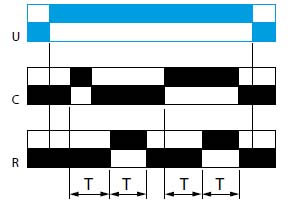
Function Ah
Pulse delayed relay (single cycle) with control signal
After power-up, pulsing or maintaining control contact C starts the timing T. A single cycle then starts with 2 timing periods T of equal duration (start with output in rest position).
Output R changes state at the end of the first timing period T and reverts to its initial position at the end of the second timing period T.
Control contact C must be reset in order to re-start the single flashing cycle.
[Schneider Electric]
Function Ah
Flashing single cycle by switch (not resettable)
After power-up, pressing or holding down the switch starts timing. At the end of timing, the output is energised. At the end of this second timing, the output falls back to its initial value.
[Crouzed]Функция Ah
Задержка импульса при каждой подаче напряжения на управляющий вход
После подачи питания на реле и последующей подачи импульса или постоянно напряжения на управляющий вход С выполняется отсчет паузы длительностью T, а затем такой же длительности импульса. По окончании паузы Т выход реле R замыкается, а по окончании длительности импульса - возвращается в исходное состояние.
Для возобновления такого же цикла формирования одного импульса необходимо вновь подать напряжение на управляющий вход.
[Перевод Интент]
Тематики
EN
Русско-английский словарь нормативно-технической терминологии > функция Ah (реле времени)
-
13 функция ценности
-
14 значение функции
-
15 значение функции
Русско-английский словарь по радиоэлектронике > значение функции
-
16 значение функции
value of function мат.Русско-английский научно-технический словарь Масловского > значение функции
-
17 значение функции
Русско-английский политехнический словарь > значение функции
-
18 функция ценности
Russian-English Dictionary "Microeconomics" > функция ценности
-
19 aumentar
v.1 to increase, to rise.aumentar la producción to increase productionla lente aumenta la imagen the lens magnifies the imageme han aumentado el sueldo my salary has been raisedaumentó casi 10 kilos he put on almost 10 kilosaumentar de peso/tamaño to increase in weight/sizeaumentar de precio to go up o increase in priceel desempleo aumentó en un 4 por ciento unemployment rose o increased by 4 percentEl ejercicio aumenta el apetito Exercising increases the appetite.Aumentaron los gastos The expenses increased.Nos aumentaron las ganancias este año Our profits increased this year.2 to magnify, to amplify.El reportero aumentó la noticia The reporter magnified the news story.3 to enlarge.Vamos a aumentar la casa We will enlarge the house.4 to raise, to improve.El movimiento aumentó la temperatura Movement raised the temperature.5 to increase the size of, to enlarge.* * *1 to augment, increase (precios) to put up; (producción) to step up2 (óptica) to magnify3 (fotos) to enlarge4 (sonido) to amplify1 to rise, go up1 to increase, be on the increase (precios) to go up, rise* * *verb1) to increase2) raise* * *1. VT1) [+ tamaño] to increase; (Fot) to enlarge; (Ópt) to magnify2) [+ cantidad] to increase; [+ precio] to increase, put up; [+ producción] to increase, step upme van a aumentar el sueldo — they are going to increase o raise my salary
3) [+ intensidad] to increase4) (Elec, Radio) to amplify2. VI1) [tamaño] to increase2) [cantidad, precio, producción] to increase, go upel número de asesinatos ha aumentado en 200 — the number of killings has increased o gone up by 200
este semestre aumentó la inflación en un 2% — inflation has increased o gone up by 2% over the last 6 months
3) [intensidad] to increasela crispación política aumenta por momentos — political tension is increasing o rising by the moment
4)aumentar de peso — [objeto] to increase in weight; [persona] to put on o gain weight
* * *1.verbo transitivoa) <precio/sueldo> to increase, raise; <cantidad/velocidad/tamaño> to increase; <producción/dosis> to increase, step up; dolor/miedo/tensión to increase2.el microscopio aumenta la imagen — the microscope enlarges o magnifies the image
aumentar vi temperatura/presión to rise; velocidad to increase; precio/producción/valor to increase, riseel niño aumentó 500 gramos — the child put on o gained 500 grams
aumentar de algo — de volumen/tamaño to increase in something
aumentó de peso — he put on o gained weight
* * *= accelerate, augment, become + large, enhance, enlarge, escalate, expand, grow + larger, increase, raise, rise, strengthen, accentuate, grow, add to, deepen, mushroom, intensify, wax, swell, pump up, bump up, step up, spike, crank up, ramp up, move it up + a gear, notch it up + a gear, take it up + a gear, take it up + a notch, crank it up + a notch, crank it up + a gear, move it up + a notch, ratchet up, amp up, turn up.Ex. In recent years, the pace of change has accelerated with the introduction of on-line information retrieval.Ex. These sources which form the basis of the intellectual selection of terms may be augmented by the machine selection of terms.Ex. If the number of categories becomes large, cross-references will be necessary between individual files.Ex. An introduction explaining the nature and scope of the indexing language will enhance its value.Ex. Here entry is made under the original author of an edition that has been revised, enlarged, updated, condensed, and so on by another person.Ex. Over the past two to three years the numbers of full text data bases and data banks has started to escalate considerably.Ex. As the quantity of knowledge expands the need to organise it becomes more pressing.Ex. As the system grows larger it's more difficult to maintain that control.Ex. Recall is inversely proportional to precision, and vice versa, or in other words, as one increases, the other must decrease.Ex. The speaker said that James estimated people function at only 20% of their capacity, and concluded that they could raise this percentage considerable if they knew how to manage their time more efficiently.Ex. If suppliers are forced out of business, there will be less software to lend and prices will rise with the lack of competition.Ex. He proposes a research agenda that could strengthen archival appraisal and the profession's ability to document society.Ex. However, future trends may tend to accentuate this division.Ex. No true reader can be expected to grow on a diet of prescribed texts only regardless of how well chosen they are.Ex. In addition, Britain has one of the most extensive bodies of legislation in the world, which is added to daily and encrusted with myriad rules and regulations.Ex. One of the effects of reading in children is that their appreciation of the processes and function of literature is deepened.Ex. The use of electronic mail systems has mushroomed in the last 5 years in industrialised nations.Ex. Whilst these achievements are commendable, there is a catch in them -- there can be used to 'intensify' the economic exploitation of women.Ex. The population waxed again slightly, then waned again, until it finally stabilized around its present 55,000.Ex. Reference work has been ill-served in the past by its expositors and theoreticians: its extensive literature of several hundred papers and books is swollen by a mass of the transient and the trivial.Ex. The article ' Pump up the program...' identifies the costs and benefits of undertaking a software upgrade.Ex. Most librarians will admit that they could probably increase the use made of their lending libraries and bump up their annual loans by stocking more romances and thrillers and fewer serious novels, but they do not do this.Ex. The intensity of marketing to schools and parents will have to be stepped up by publishers if they are to succeed in the more competitive market.Ex. Baby boomers are desperately trying to hold onto their salad days -- plastic surgery, vitamins and drugs like Viagra have spiked in public demand.Ex. Refiners are cranking up diesel output to meet rising global demand.Ex. EGND has hit a home run with the introduction of a new product line, increasing sales projections, and ramping up production schedules.Ex. Liverpool and Chelsea are grabbing all the headlines, but Arsenal have quietly moved it up a gear scoring 10 goals in their last three league games.Ex. Start gently, ease yourself in by breaking the workout down into three one minute sessions until you are ready to notch it up a gear and join them together.Ex. There was not much to separate the sides in the first ten minutes however Arsenal took it up a gear and got the goal but not without a bit of luck.Ex. We have a good time together and we're good friends.. but I'd like to take it up a notch.Ex. David quickly comprehended our project needs and then cranked it up a notch with impactful design.Ex. Went for a bike ride with a mate last week, no problems so will crank it up a gear and tackle some hills in the next few weeks.Ex. After a regular walking routine is established, why not move it up a notch and start jogging, if you haven't already.Ex. The health department has ratcheted up efforts to prevent or slow down the spread of swine flu in schools.Ex. In order to gain strength fast, you need to immediately begin amping up your strength thermostat in your mind.Ex. Cytokines are small proteins used to communicate messages between the immune cells in the immune system to either turn up or down the immune response.----* aumentar de importancia = grow in + importance, grow in + significance.* aumentar de tamaño = grow in + size, grow + larger, increase in + size.* aumentar de valor = increase in + value.* aumentar el conocimiento = expand + Posesivo + knowledge, deepen + awareness.* aumentar el control = tighten (up) + control.* aumentar el esfuerzo = increase + effort.* aumentar el precio = mark up + price, jack up + the price.* aumentar el presupuesto = add + monies to + budget.* aumentar en cantidad = increase in + quantity.* aumentar en número = grow in + numbers, increase in + numbers.* aumentar en variedad = grow in + kind.* aumentar la confusión = add to + the confusion.* aumentar la experiencia = deepen + experience.* aumentar la productividad = increase + productivity, boost + Posesivo + productivity.* aumentar las diferencias entre... y = widen + the gap between... and.* aumentar las posibilidades = increase + the odds.* aumentar las probabilidades = shorten + the odds.* aumentar las ventas = boost + sales.* aumentar la velocidad = grow + faster.* aumentar los costes = cost + rise.* aumentar los impuestos = increase + taxes.* aumentar los ingresos = boost + Posesivo + income.* aumentar rápidamente = snowball.* crisis + aumentar = crisis + deepen.* estar aumentando = be on the increase.* * *1.verbo transitivoa) <precio/sueldo> to increase, raise; <cantidad/velocidad/tamaño> to increase; <producción/dosis> to increase, step up; dolor/miedo/tensión to increase2.el microscopio aumenta la imagen — the microscope enlarges o magnifies the image
aumentar vi temperatura/presión to rise; velocidad to increase; precio/producción/valor to increase, riseel niño aumentó 500 gramos — the child put on o gained 500 grams
aumentar de algo — de volumen/tamaño to increase in something
aumentó de peso — he put on o gained weight
* * *= accelerate, augment, become + large, enhance, enlarge, escalate, expand, grow + larger, increase, raise, rise, strengthen, accentuate, grow, add to, deepen, mushroom, intensify, wax, swell, pump up, bump up, step up, spike, crank up, ramp up, move it up + a gear, notch it up + a gear, take it up + a gear, take it up + a notch, crank it up + a notch, crank it up + a gear, move it up + a notch, ratchet up, amp up, turn up.Ex: In recent years, the pace of change has accelerated with the introduction of on-line information retrieval.
Ex: These sources which form the basis of the intellectual selection of terms may be augmented by the machine selection of terms.Ex: If the number of categories becomes large, cross-references will be necessary between individual files.Ex: An introduction explaining the nature and scope of the indexing language will enhance its value.Ex: Here entry is made under the original author of an edition that has been revised, enlarged, updated, condensed, and so on by another person.Ex: Over the past two to three years the numbers of full text data bases and data banks has started to escalate considerably.Ex: As the quantity of knowledge expands the need to organise it becomes more pressing.Ex: As the system grows larger it's more difficult to maintain that control.Ex: Recall is inversely proportional to precision, and vice versa, or in other words, as one increases, the other must decrease.Ex: The speaker said that James estimated people function at only 20% of their capacity, and concluded that they could raise this percentage considerable if they knew how to manage their time more efficiently.Ex: If suppliers are forced out of business, there will be less software to lend and prices will rise with the lack of competition.Ex: He proposes a research agenda that could strengthen archival appraisal and the profession's ability to document society.Ex: However, future trends may tend to accentuate this division.Ex: No true reader can be expected to grow on a diet of prescribed texts only regardless of how well chosen they are.Ex: In addition, Britain has one of the most extensive bodies of legislation in the world, which is added to daily and encrusted with myriad rules and regulations.Ex: One of the effects of reading in children is that their appreciation of the processes and function of literature is deepened.Ex: The use of electronic mail systems has mushroomed in the last 5 years in industrialised nations.Ex: Whilst these achievements are commendable, there is a catch in them -- there can be used to 'intensify' the economic exploitation of women.Ex: The population waxed again slightly, then waned again, until it finally stabilized around its present 55,000.Ex: Reference work has been ill-served in the past by its expositors and theoreticians: its extensive literature of several hundred papers and books is swollen by a mass of the transient and the trivial.Ex: The article ' Pump up the program...' identifies the costs and benefits of undertaking a software upgrade.Ex: Most librarians will admit that they could probably increase the use made of their lending libraries and bump up their annual loans by stocking more romances and thrillers and fewer serious novels, but they do not do this.Ex: The intensity of marketing to schools and parents will have to be stepped up by publishers if they are to succeed in the more competitive market.Ex: Baby boomers are desperately trying to hold onto their salad days -- plastic surgery, vitamins and drugs like Viagra have spiked in public demand.Ex: Refiners are cranking up diesel output to meet rising global demand.Ex: EGND has hit a home run with the introduction of a new product line, increasing sales projections, and ramping up production schedules.Ex: Liverpool and Chelsea are grabbing all the headlines, but Arsenal have quietly moved it up a gear scoring 10 goals in their last three league games.Ex: Start gently, ease yourself in by breaking the workout down into three one minute sessions until you are ready to notch it up a gear and join them together.Ex: There was not much to separate the sides in the first ten minutes however Arsenal took it up a gear and got the goal but not without a bit of luck.Ex: We have a good time together and we're good friends.. but I'd like to take it up a notch.Ex: David quickly comprehended our project needs and then cranked it up a notch with impactful design.Ex: Went for a bike ride with a mate last week, no problems so will crank it up a gear and tackle some hills in the next few weeks.Ex: After a regular walking routine is established, why not move it up a notch and start jogging, if you haven't already.Ex: The health department has ratcheted up efforts to prevent or slow down the spread of swine flu in schools.Ex: In order to gain strength fast, you need to immediately begin amping up your strength thermostat in your mind.Ex: Cytokines are small proteins used to communicate messages between the immune cells in the immune system to either turn up or down the immune response.* aumentar de importancia = grow in + importance, grow in + significance.* aumentar de tamaño = grow in + size, grow + larger, increase in + size.* aumentar de valor = increase in + value.* aumentar el conocimiento = expand + Posesivo + knowledge, deepen + awareness.* aumentar el control = tighten (up) + control.* aumentar el esfuerzo = increase + effort.* aumentar el precio = mark up + price, jack up + the price.* aumentar el presupuesto = add + monies to + budget.* aumentar en cantidad = increase in + quantity.* aumentar en número = grow in + numbers, increase in + numbers.* aumentar en variedad = grow in + kind.* aumentar la confusión = add to + the confusion.* aumentar la experiencia = deepen + experience.* aumentar la productividad = increase + productivity, boost + Posesivo + productivity.* aumentar las diferencias entre... y = widen + the gap between... and.* aumentar las posibilidades = increase + the odds.* aumentar las probabilidades = shorten + the odds.* aumentar las ventas = boost + sales.* aumentar la velocidad = grow + faster.* aumentar los costes = cost + rise.* aumentar los impuestos = increase + taxes.* aumentar los ingresos = boost + Posesivo + income.* aumentar rápidamente = snowball.* crisis + aumentar = crisis + deepen.* estar aumentando = be on the increase.* * *aumentar [A1 ]vt1 ‹precio› to increase, raise, put up; ‹sueldo› to increase, raise; ‹cantidad/velocidad/tamaño› to increase; ‹producción/dosis› to increase, step upel microscopio aumenta la imagen the microscope enlarges o magnifies the imageno hizo más que aumentar su dolor/miedo all it did was increase her pain/fearesto aumentó la tensión this added to o increased the tension2 ‹puntos› (en tejido) to increase■ aumentarvi«temperatura» to rise; «presión» to rise, increase; «velocidad» to increase; «precio/producción/valor» to increase, riseel niño aumentó 500 gramos the child put on o gained 500 gramssu popularidad ha aumentado his popularity has grown, he has gained in popularityel costo de la vida aumentó en un 3% the cost of living rose by 3%la dificultad de los ejercicios va aumentando the exercises get progressively more difficultaumentará el frío durante el fin de semana it will become colder over the weekendaumentar DE algo to increase IN sthaumentó de volumen/tamaño it increased in volume/sizeha aumentado de peso he's put on o gained weight* * *
aumentar ( conjugate aumentar) verbo transitivo
‹precio/sueldo› to increase, raiseb) (Opt) to magnify
verbo intransitivo [temperatura/presión] to rise;
[ velocidad] to increase;
[precio/producción/valor] to increase, rise;
aumentar de algo ‹de volumen/tamaño› to increase in sth;
aumentó de peso he put on o gained weight
aumentar
I verbo transitivo to increase
Fot to enlarge
Ópt to magnify
II vi (una cantidad) to go up, rise
(de valor) to appreciate
' aumentar' also found in these entries:
Spanish:
alargar
- engordar
- explorar
- separar
- separarse
- doblar
- elevar
- multiplicar
- redoblar
English:
add to
- appreciate
- augment
- boost
- build up
- deepen
- efficiency
- enhance
- escalate
- gain
- grow
- heighten
- improve
- increase
- intensify
- jack up
- jump
- magnify
- mark up
- mount
- odds
- put up
- quantity
- raise
- rise
- snowball
- step up
- surge
- swell
- up
- add
- develop
- go
- put
- soar
- strengthen
* * *♦ vtto increase;aumentar la producción to increase production;los enfrentamientos aumentaron la tensión en la zona the clashes increased the tension in the zone;me han aumentado el sueldo my salary has been increased o raised;la lente aumenta la imagen the lens magnifies the image;aumentó casi 10 kilos he put on almost 10 kilos♦ vi[temperatura, precio, gastos, tensión] to increase, to rise; [velocidad] to increase;aumentar de tamaño to increase in size;aumentar de precio to go up o increase in price;el desempleo aumentó en un 4 por ciento unemployment rose o increased by 4 percent;con lo que come, no me sorprende que haya aumentado de peso it doesn't surprise me that he's put on weight, considering how much he eats* * *I v/t increase; precio increase, raise, put up* * *aumentar vtacrecentar: to increase, to raiseaumentar vi: to rise, to increase, to grow* * *aumentar vb1. (hacer subir) to increase / to raise -
20 БИБЛИОГРАФИЯ
Мы приняли следующие сокращения для наиболее часто упоминаемых книг и журналов:IJP - International Journal of Psycho-analysisJAPA - Journal of the American Psychoanalytic AssociationSE - Standard Edition of the Complete Psychological Works of Sigmund Freud, ed. James Strachey (London: Hogarth Press and the Institute of Psycho-Analysis, 1953—74.)PSOC - Psychoanalytic Study of the Child (New Haven: Yale University Press)PQ - Psychoanalytic QuarterlyWAF - The Writings of Anna Freud, ed. Anna Freud (New York: International Universities Press, 1966—74)PMC - Psychoanalysis The Major Concepts ed. Burness E. Moore and Bernard D. Fine (New Haven: Yale University Press)\О словаре: _about - Psychoanalytic Terms and Concepts\1. Abend, S. M. Identity. PMC. Forthcoming.2. Abend, S. M. (1974) Problems of identity. PQ, 43.3. Abend, S. M., Porder, M. S. & Willick, M. S. (1983) Borderline Patients. New York: Int. Univ. Press.4. Abraham, K. (1916) The first pregenital stage of libido. Selected Papers. London, Hogarth Press, 1948.5. Abraham, K. (1917) Ejaculatio praecox. In: selected Papers. New York Basic Books.6. Abraham, K. (1921) Contributions to the theory of the anal character. Selected Papers. New York: Basic Books, 1953.7. Abraham, K. (1924) A Short study of the development of the libido, viewed in the light of mental disorders. In: Selected Papers. London: Hogarth Press, 1927.8. Abraham, K. (1924) Manic-depressive states and the pre-genital levels of the libido. In: Selected Papers. London: Hogarth Press, 1949.9. Abraham, K. (1924) Selected Papers. London: Hogarth Press, 1948.10. Abraham, K. (1924) The influence of oral erotism on character formation. Ibid.11. Abraham, K. (1925) The history of an impostor in the light of psychoanalytic knowledge. In: Clinical Papers and Essays on Psychoanalysis. New York: Basic Books, 1955, vol. 2.12. Abrams, S. (1971) The psychoanalytic unconsciousness. In: The Unconscious Today, ed. M. Kanzer. New York: Int. Univ. Press.13. Abrams, S. (1981) Insight. PSOC, 36.14. Abse, D W. (1985) The depressive character In Depressive States and their Treatment, ed. V. Volkan New York: Jason Aronson.15. Abse, D. W. (1985) Hysteria and Related Mental Disorders. Bristol: John Wright.16. Ackner, B. (1954) Depersonalization. J. Ment. Sci., 100.17. Adler, A. (1924) Individual Psychology. New York: Harcourt, Brace.18. Akhtar, S. (1984) The syndrome of identity diffusion. Amer. J. Psychiat., 141.19. Alexander, F. (1950) Psychosomatic Medicine. New York: Norton.20. Allen, D. W. (1974) The Feat- of Looking. Charlottesvill, Va: Univ. Press of Virginia.21. Allen, D. W. (1980) Psychoanalytic treatment of the exhibitionist. In: Exhibitionist, Description, Assessment, and Treatment, ed. D. Cox. New York: Garland STPM Press.22. Allport, G. (1937) Personality. New York: Henry Holt.23. Almansi, R. J. (1960) The face-breast equation. JAPA, 6.24. Almansi, R. J. (1979) Scopophilia and object loss. PQ, 47.25. Altman, L. Z. (1969) The Dream in Psychoanalysis. New York: Int. Univ. Press.26. Altman, L. Z. (1977) Some vicissitudes of love. JAPA, 25.27. American Psychiatric Association. (1987) Diagnostic and Statistical Manual of Mental Disorders, 3d ed. revised. Washington, D. C.28. Ansbacher, Z. & Ansbacher, R. (1956) The Individual Psychology of Alfred Adler. New York: Basic Books.29. Anthony, E. J. (1981) Shame, guilt, and the feminine self in psychoanalysis. In: Object and Self, ed. S. Tuttman, C. Kaye & M. Zimmerman. New York: Int. Univ. Press.30. Arlow. J. A. (1953) Masturbation and symptom formation. JAPA, 1.31. Arlow. J. A. (1959) The structure of the deja vu experience. JAPA, 7.32. Arlow. J. A. (1961) Ego psychology and the study of mythology. JAPA, 9.33. Arlow. J. A. (1963) Conflict, regression and symptom formation. IJP, 44.34. Arlow. J. A. (1966) Depersonalization and derealization. In: Psychoanalysis: A General Psychology, ed. R. M. Loewenstein, L. M. Newman, M. Schur & A. J. Solnit. New York: Int. Univ. Press.35. Arlow. J. A. (1969) Fantasy, memory and reality testing. PQ, 38.36. Arlow. J. A. (1969) Unconscious fantasy and disturbances of mental experience. PQ, 38.37. Arlow. J. A. (1970) The psychopathology of the psychoses. IJP, 51.38. Arlow. J. A. (1975) The structural hypothesis. PQ, 44.39. Arlow. J. A. (1977) Affects and the psychoanalytic situation. IJP, 58.40. Arlow. J. A. (1979) Metaphor and the psychoanalytic situation. PQ, 48.41. Arlow. J. A. (1979) The genesis of interpretation. JAPA, 27 (suppl.).42. Arlow. J. A. (1982) Problems of the superego concept. PSOC, 37.43. Arlow. J. A. (1984) Disturbances of the sense of time. PQ, 53.44. Arlow. J. A. (1985) Some technical problems of countertransference. PQ, 54.45. Arlow, J. A. & Brenner, C. (1963) Psychoanalytic Concepts and the Structural Theory, New York: Int. Univ. Press.46. Arlow, J. A. & Brenner, C. (1969) The psychopathology of the psychoses. IJP, 50.47. Asch, S. S. (1966) Depression. PSOC, 21.48. Asch, S. S. (1976) Varieties of negative therapeutic reactions and problems of technique. JAPA, 24.49. Atkins, N. (1970) The Oedipus myth. Adolescence, and the succession of generations. JAPA, 18.50. Atkinson, J. W. & Birch, D. (1970) The Dynamics of Action. New York: Wiley.51. Bachrach, H. M. & Leaff, L. A. (1978) Analyzability. JAPA, 26.52. Bacon, C. (1956) A developmental theory of female homosexuality. In: Perversions,ed, S. Lorand & M. Balint. New York: Gramercy.53. Bak, R. C. (1953) Fetishism. JAPA. 1.54. Bak, R. C. (1968) The phallic woman. PSOC, 23.55. Bak, R. C. & Stewart, W. A. (1974) Fetishism, transvestism, and voyeurism. An American Handbook of Psychiatry, ed. S. Arieti. New York: Basic Books, vol. 3.56. Balint, A. (1949) Love for mother and mother-love. IJP, 30.57. Balter, L., Lothane, Z. & Spencer, J. H. (1980) On the analyzing instrument, PQ, 49.58. Basch, M. F. (1973) Psychoanalysis and theory formation. Ann. Psychoanal., 1.59. Basch, M. F. (1976) The concept of affect. JAPA, 24.60. Basch, M. F. (1981) Selfobject disorders and psychoanalytic theory. JAPA, 29.61. Basch, M. F. (1983) Emphatic understanding. JAPA. 31.62. Balldry, F. Character. PMC. Forthcoming.63. Balldry, F. (1983) The evolution of the concept of character in Freud's writings. JAPA. 31.64. Begelman, D. A. (1971) Misnaming, metaphors, the medical model and some muddles. Psychiatry, 34.65. Behrends, R. S. & Blatt, E. J. (1985) Internalization and psychological development throughout the life cycle. PSOC, 40.66. Bell, A. (1961) Some observations on the role of the scrotal sac and testicles JAPA, 9.67. Benedeck, T. (1949) The psychosomatic implications of the primary unit. Amer. J. Orthopsychiat., 19.68. Beres, C. (1958) Vicissitudes of superego functions and superego precursors in childhood. FSOC, 13.69. Beres, D. Conflict. PMC. Forthcoming.70. Beres, D. (1956) Ego deviation and the concept of schizophrenia. PSOC, 11.71. Beres, D. (1960) Perception, imagination and reality. IJP, 41.72. Beres, D. (1960) The psychoanalytic psychology of imagination. JAPA, 8.73. Beres, D. & Joseph, E. D. (1965) Structure and function in psychoanalysis. IJP, 46.74. Beres, D. (1970) The concept of mental representation in psychoanalysis. IJP, 51.75. Berg, M D. (1977) The externalizing transference. IJP, 58.76. Bergeret, J. (1985) Reflection on the scientific responsi bilities of the International Psychoanalytical Association. Memorandum distributed at 34th IPA Congress, Humburg.77. Bergman, A. (1978) From mother to the world outside. In: Grolnick et. al. (1978).78. Bergmann, M. S. (1980) On the intrapsychic function of falling in love. PQ, 49.79. Berliner, B. (1966) Psychodynamics of the depressive character. Psychoanal. Forum, 1.80. Bernfeld, S. (1931) Zur Sublimierungslehre. Imago, 17.81. Bibring, E. (1937) On the theory of the therapeutic results of psychoanalysis. IJP, 18.82. Bibring, E. (1941) The conception of the repetition compulsion. PQ, 12.83. Bibring, E. (1953) The mechanism of depression. In: Affective Disorders, ed. P. Greenacre. New York: Int. Univ. Press.84. Bibring, E. (1954) Psychoanalysis and the dynamic psychotherapies. JAPA, 2.85. Binswanger, H. (1963) Positive aspects of the animus. Zьrich: Spring.86. Bion Francesca Abingdon: Fleetwood Press.87. Bion, W. R. (1952) Croup dynamics. IJP, 33.88. Bion, W. R. (1961) Experiences in Groups. London: Tavistock.89. Bion, W. R. (1962) A theory of thinking. IJP, 40.90. Bion, W. R. (1962) Learning from Experience. London: William Heinemann.91. Bion, W. R. (1963) Elements of Psychoanalysis. London: William Heinemann.92. Bion, W. R. (1965) Transformations. London: William Heinemann.93. Bion, W. R. (1970) Attention and Interpretation. London: Tavistock.94. Bion, W. R. (1985) All My Sins Remembered, ed. Francesca Bion. Adingdon: Fleetwood Press.95. Bird, B. (1972) Notes on transference. JAPA, 20.96. Blanck, G. & Blanck, R. (1974) Ego Psychology. New York: Columbia Univ. Press.97. Blatt, S. J. (1974) Levels of object representation in anaclitic and introjective depression. PSOC, 29.98. Blau, A. (1955) A unitary hypothesis of emotion. PQ, 24.99. Bleuler, E. (1911) Dementia Praecox or the Group of Schizophrenias. New York: Int. Univ. Press, 1951.100. Blos, P. (1954) Prolonged adolescence. Amer. J. Orthopsychiat., 24.101. Blos, P. (1962) On Adolescence. New York: Free Press.102. Blos, P. (1972) The epigenesia of the adult neurosis. 27.103. Blos, P. (1979) Modification in the traditional psychoanalytic theory of adolescent development. Adolescent Psychiat., 8.104. Blos, P. (1984) Son and father. JAPA_. 32.105. Blum, G. S. (1963) Prepuberty and adolescence, In Studies ed. R. E. Grinder. New York: McMillan.106. Blum, H. P. Symbolism. FMC. Forthcoming.107. Blum, H. P. (1976) Female Psychology. JAPA, 24 (suppl.).108. Blum, H. P. (1976) Masochism, the ego ideal and the psychology of women. JAPA, 24 (suppl.).109. Blum, H. P. (1980) The value of reconstruction in adult psychoanalysis. IJP, 61.110. Blum, H. P. (1981) Forbidden quest and the analytic ideal. PQ, 50.111. Blum, H. P. (1983) Defense and resistance. Foreword. JAFA, 31.112. Blum, H. P., Kramer, Y., Richards, A. K. & Richards, A. D., eds. (1988) Fantasy, Myth and Reality: Essays in Honor of Jacob A. Arlow. Madison, Conn.: Int. Univ. Press.113. Boehm, F. (1930) The femininity-complex In men. IJP,11.114. Boesky, D. Structural theory. PMC. Forthcoming.115. Boesky, D. (1973) Deja raconte as a screen defense. PQ, 42.116. Boesky, D. (1982) Acting out. IJP, 63.117. Boesky, D. (1986) Questions about Sublimation In Psychoanalysis the Science of Mental Conflict, ed. A. D. Richards & M. S. Willick. Hillsdale, N. J.: Analytic Press.118. Bornstein, B. (1935) Phobia in a 2 1/2-year-old child. PQ, 4.119. Bornstein, B. (1951) On latency. PSOC, 6.120. Bornstein, M., ed. (1983) Values and neutrality in psychoanalysis. Psychoanal. Inquiry, 3.121. Bowlby, J. (1960) Grief and morning in infancy and early childhood. PSOC. 15.122. Bowlby, J. (1961) Process of mourning. IJP. 42.123. Bowlby, J. (1980) Attachment and Loss, vol. 3. New York: Basic Books.124. Bradlow, P. A. (1973) Depersonalization, ego splitting, non-human fantasy and shame. IJP, 54.125. Brazelton, T. B., Kozlowsky, B. & Main, M. (1974) The early motherinfant interaction. In: The Effect of the Infant on Its Caregiver, ed. M. Lewis & L. Rosenblum New York Wiley.126. Brenner, C. (1957) The nature and development of the concept of repression in Freud's writings. PSOC, 12.127. Brenner, C. (1959) The masochistic character. JAPA, 7.128. Brenner, C. (1973) An Elementary Textbook of Psycho-analysis. New York Int. Univ. Press.129. Brenner, C. (1974) On the nature and development of affects PQ, 43.130. Brenner, C. (1976) Psychoanalytic Technique and Psychic Conflict. New York: Int. Univ. Press.131. Brenner, C. (1979) The Mind in Conflict. New York: Int. Univ. Press.132. Brenner, C. (1979) Working alliance, therapeutic alliance and transference. JAPA, 27.133. Brenner, C. (1981) Defense and defense mechanisms. PQ, 50.134. Brenner, C. (1983) Defense. In: the Mind in Conflict. New York Int. Univ. Press.135. Bressler, B. (1965) The concept of the self. Psychoanalytic Review, 52.136. Breuer, J. & Freud, S. (1983—95) Studies on Hysteria. SE, 3.137. Breznitz, S., ed. (1983) The Denial of Stress. New York: Int. Univ. Press.138. Brody, S. (1964) Passivity. New York: Int. Univ. Press.139. Brown, H. (1970) Psycholinquistics. New York: Free Press.140. Bruner, J. S. (1964) The course of cognitive growth. Amer. Psychologist. 19.141. Bruner, J., Jolly, A. & Sylva, K. (1976) Play. New York Basic Books.142. Bruner, J. E., Olver, R. R. &Greenfield, P. M. (1966) Studies in Cognitive Growth. New York: Wiley.143. Buie, D H. (1981) Empathy. JAPA, 29.144. Burgner, M. & Edgeumble, R. (1972) Some problems in the conceptualization of early object relationships. PSOC, 27.145. Call, J. ed. (1979) Basic Handbook of Child Psychiatry. New York: Basic Books.146. Carroll, G. (1956) Language, Thought and Reality. Cambridge & London: M. I. T. Press & John Wiley.147. Cavenar, J. O. & Nash, J. L. (1976) The effects of Combat on the normal personality. Comprehensive Psychiat., 17.148. Chassequet-Smirgel, J. (1978) Reflections on the connection between perversion and sadism. IJP, 59.149. Chomsky, N. (1978) Language and unconscious knowledge. In: Psychoanalysis and Language, ed. J. H. Smith. New Haven: Yale Univ. Press, vol. 3.150. Clower, V. (1975) Significance of masturbation in female sexual development and function. In: Masturbation from Infancy to Senescence, ed. I. Marcus & J. Francis. New York: Int. Uni" Press.151. Coen, S. J. & Bradlow, P. A. (1982) Twin transference as a compromise formation. JAPA, 30.152. Compton, A. Object and relationships. PMC. Forthcoming.153. Cullen, W. (1777) First Lines of the Practice of Psysic. Edinburgh: Bell, Brandfute.154. Curtis, B. C. (1969) Psychoanalytic understanding and treatment of impotence. In: Sexual Function and Dysfunction, ed. P. J. Fink & V. B. O. Hummett. Philadelphia: F. A. Davis.155. Darwin, C. (1874) The Descent of Man. New York: Hurst.156. Davidoff-Hirsch, H. (1985) Oedipal and preoedipal phenomena. JAPA, 33.157. Davis, M. & Wallbridge, D. (1981) Boundary and Space. New York: Brunner-Mazel.158. Deutsch, H. (1932) Homosexuality in women. PQ, 1.159. Deutsch, H. (1934) Some forms of emotional disturbance and their relationship to schizophrenia. PQ, 11.160. Deutsch, H. (1937) Absence of grief. PQ, 6.161. Deutsch, H. (1942) Some forms of emotional disturbance and their relationship to schizophrenia. PQ, 11.162. Deutsch, H. (1955) The impostor. In: Neuroses and Character Types. New York: Int. Univ. Press, 1965.163. Devereux, G. (1953) Why Oedipus killed Lains. IJP, 34.164. Dewald, P. (1982) Psychoanalytic perspectives On resistance. In: resistance, Psychodynamics. and Behavioral Approaches, ed. P. Wachtel. New York: Plenum Press.165. Dickes, R. (1963) Fetishistic behavior. JAPA. 11.166. Dickes, R. (1965) The defensive function of an altered state of consciousness. JAPA, 13.167. Dickes, R. (1967) Severe regressive disruption of the therapeutic alliance. JAPA, 15.168. Dickes, R. (1981) Sexual myths and misinformation. In: Understanding Human Behaviour in Health and Illness, ed. R. C. Simon & H. Pardes. Baltimore: Williams & Wilkins.169. Dorpat, T. L. (1985) Denial and Defense in the Therapeutic Situation. New York: Jason Aronson.170. Downey, T. W. (1978) Transitional phenomena in the analysis of early adolescent males. PSOC, 33.171. Dunbar, F. (1954) Emotions and Bodily Functions. New York: Columbia Univ. Press.172. Easson, W. M. (1973) The earliest ego development, primitive memory traces, and the Isakower phenomenon. PQ, 42.173. Edelheit, H. (1971) Mythopoiesis and the primal scene. Psychoanal. Study Society, 5.174. Edgcumbe, R. & Burgner, M. (1972) Some problems in the conceptualization of early object relation ships, part I. PSOC, 27.175. Edgcumbe, R. & Burgner, M. (1975) The phallicnarcissistic phase. PSOC, 30.176. Eidelberg, L. (1960) A third contribution to the study of slips of the tongue. IJP, 41.177. Eidelberg, L. (1968) Encyclopedia of Psychoanalysis. New York: The Free Press; London: Collier-MacMillan.178. Eissler, K. R. (1953) The effect of the structure of the ego on psychoanalytic technique. JAPA, 1.179. Ellenberg, H. F. (1970) The Discovery of the Unconscious. New York: Basic Books.180. Emde, R. N. (1980) Toward a psychoanalytic theory of affect: I. & G. H. Pollock. Washington NYMH.181. Emde R., Gaensbaner, T. & Harmon R. (1976) Emotional Expression in Infancy. New York: Int. Univ. Press.182. Erode R. & Harmon, R. J. (1972) Endogenous and exogenous smiling systems in early infancy. J. Amer. Acad. Child Psychiat., 11.183. Engel, G. L. (1962) Psychological Development in Health and Disease. New York Saunders.184. Engel, G. L. (1967) Psychoanalytic theory of somatic disorder. JAPA, 15.185. Engel, G. L. (1968) A reconsideration of the role of conversion in somatic disease. Compr. Psychiat., 94.186. English, H. B. & English, A. C. (1958) A comprehensive Dictionary of Psychological and Psychoanalytical Terms. New York: David McKay.187. Erard, R. (1983) New wine in old skins. Int. Rev. Psychoanal., 10.188. Erdelyi, M. H. (1985) Psychoanalysis. New York: W. H. Freeman.189. Erikson, E. H. (1950) Childhood and Society. New York: Norton.190. Erikson, E. H. (1956) The concept of ego identity. JAPA, 4.191. Erikson, E. H. (1956) The problem of ego identity. JAPA, 4.192. Esman, A. H. (1973) The primal scene. PSOC, 28.193. Esman, A. H. (1975) The Psychology of Adolescence. New York: Int. Univ. Press.194. Esman, A. H. (1979) Some reflections on boredom. JAPA, 27.195. Esman, A. H. (1983) The "stimulus barrier": a review and reconsideration. PSOC, 38.196. Fairbairn, W. R. D. (1952) Psychoanalytic Studies of the Personality. London: Routledge & Kegan Paul.197. Fairbairn, W. R. D. (1954) An Object-Relations Theory of the Personality. New York: Basic Books.198. Fairbairn, W. R. D. (1963) Synopsis of an Object-Relations theory of the personality. IJP, 44.199. Fawcett, J., Clark, D. C., Scheftner, W. H. & Hedecker, D. (1983) Differences between anhedonia and normal hedonic depressive states. Arch. Gen. Psychiat., 40.200. Fenichel, O. (1934) On the psychology of boredom. Collected Papers. New York: Norton, 1953, vol. 1.201. Fenichel, O. (1941) Problems of Psychoanalytic Technique. Albany, N. Y.: Psychoanalytic Quaterly.202. Fenichel, O. (1945) Character disorders. In: The Psychoanalytic Theory of the Neurosis. New York: Norton.203. Fenichel, O. (1945) The Psychoanalytic Theory of Neurosis New York: Norton.204. Fenichel, O. (1954) Ego strength and ego weakness. Collected Papers. New York: Norton, vol. 2.205. Ferenczi, S. (1909) Introjection and transference. In: Sex in Psychoanalysis. New York: Basic Books.206. Ferenczi, S. (191617) Disease or patho-neurosis. The Theory and Technique of Psychoanalysis. London: Hogarth Press, 1950.207. Ferenczi, S. (1925) Psychoanalysis of sexual habits. In: The Theory and Technique of Psychoanalysis. New York: Basic Books.208. Fine, B. D., Joseph, E. D. & Waldhorn, H. F., eds. (1971) Recollection and Reconstruction in Psychoanalysis. Monograph 4, Kris Study Group. New York: Int. Univ. Press.209. Fink, G. (1967) Analysis of the Isakower phenomenon. JAPA, 15.210. Fink, P. J. (1970) Correlation between "actual" neurosis and the work of Masters and Johson. P. Q, 39.211. Finkenstein, L. (1975) Awe premature ejaculation. P. Q, 44.212. Firestein, S. K. (1978) A review of the literature. In: Termination in Psychoanalysis. New York: Int. Univ. Press.213. Fisher, C. et. al. (1957) A study of the preliminary stages of the construction of dreams and images. JAPA, 5.214. Fisher, C. et. al. (1968) Cycle of penile erection synchronous with dreaming (REM) sleep. Arch. Gen. Psychiat., 12.215. Fliess, R. (1942) The metapsychology of the analyst. PQ, 12.216. Fliess, R. (1953) The Revival of Interest in the Dream. New York: Int. Univ. Press.217. Fodor, N. & Gaynor, F. (1950) Freud: Dictionary of Psycho-analysis. New York: Philosophical Library.218. Fordham, M. (1969) Children as Individuals. London: Hodder & Stoughton.219. Fordham, M. (1976) The Self and Autism. London: Academic Press.220. Fraiberg, S. (1969) Object constancy and mental representation. PSOC, 24.221. Frank, A. Metapsychology. PMS. Forthcoming.222. Frank, A. & Muslin, H. (1967) The development of Freud's concept of primal repression. PSOC, 22.223. Frank, H. (1977) Dynamic patterns for failure in college students. Can. Psychiat. Ass. J., 22.224. French, T. & Fromm, E. (1964) Dream Interpretation. New York: Basic Books.225. Freud, A. (1936) The Ego and the Mechanisms of Defense. New York Int. Univ. Press.226. Freud, A. (1951) Observations on child development. PSOC, 6.227. Freud, A. (1952) The mutual influences in the development of ego and id. WAF, 4.228. Freud, A. (1958) Adolescence. WAF, 5.229. Freud, A. (1962) Assessment of childhood disturbances. PSOC, 17.230. Freud, A. (1962) Comments on psychic trauma. In: Furst (1967).231. Freud, A. (1963) The concept of developmental lines. PSOC, 18.232. Freud, A. (1965) Assessment of pathology, part 2. WAF, 6.233. Freud, A. (1965) Normality and Pathology in Childhood. New York: Int. Univ. Press.234. Freud, A. (1970) The infantile neurosis. WAF, 7.235. Freud, A. (1971) Comments on aggression. IJP, 53.236. Freud, A. (1971) The infantile neurosis. PSOC, 26.237. Freud, A. (1981) Insight. PSOC, 36.238. Freud, S. (1887—1902) Letters to Wilhelm Fliess. New York: Basic Books, 1954.239. Freud, S. (1891) On the interpretation of the aphasias. SE, 3.240. Freud, S. (1893—95) Studies on hysteria. SE, 2.241. Freud, S. (1894) The neuropsychoses of defence. SE, 3.242. Freud, S. (1895) On the ground for detaching a particular syndrome from neurasthenia under the description "anxiety neurosis". SE, 3.243. Freud, S. (1895) Project for a scientific psychology. SE, 1.244. Freud, S. (1896) Draft K, Jameary 1, 1896, Neuroses of defense (A Christmas fairytale). In: Extracts from the Fliess papers (1892—99).245. Freud, S. (1896) Further remarks on the neuropsychosis of defense. SE, 3.246. Freud, S. (1896) Heredity and aetiology of neurosis. SE, 3.247. Freud, S. (1898) Sexuality in the aetiology of the neurosis. SE, 3.248. Freud, S. (1899) Screen memories. SE, 3.249. Freud, S. (1900) The interpretation of dreams. SE, 4—5.250. Freud, S. (1901) Childhood memories and screen memories SE, 6.251. Freud, S. (1901) On dreams. SE, 5.252. Freud, S. (1901) The psychopathology of everyday life. SE, 6.253. Freud, S. (1905) Fragments of an analysis of a case of hysteria. SE, 7.254. Freud, S. (1905) Jokes and their relation to the unconscious. SE, 8.255. Freud, S. (1905) Psysical (or mental) treatment. SE, 7.256. Freud, S. (1905) Three essays on the theory of sexuality. SE. 7.257. Freud, S. (1908) Character and anal erotism. SE, 9.258. Freud, S. (1908) On the sexual theories of children. SE, 9.259. Freud, S. (1908) Preface to Wilhelm Stekel's Nervous Anxiety-States and Their Treatment. SE, 9.260. Freud, S. (1909) Analysis of a phobia in a five-year-old boy. SE, 10.261. Freud, S. (1909) Family romances. SE, 9.262. Freud, S. (1909) Notes upon a case of obsessional neurosis. SE, 10.263. Freud, S. (1910) A special type of choice of object made by men. SE, 11.264. Freud, S. (1910) The autithentical meaning of primal words. SE, 11.265. Freud, S. (1910) The future prospects of psychoanalytic therapy. SE, 11.266. Freud, S. (1910) The psychoanalytic view of psychogenic disturbance of vision. SE, 11.267. Freud, S. (1911) Formulations on the two principles of mental functioning. SE, 12.268. Freud, S. (1911) Notes on a case of paranoia. SE, 12.269. Freud, S. (1911) Psychoanalytic notes on an autobiographical account of a case of paranoia. SE, 12.270. Freud, S. (1911—15) Papers on technique. SE, 12.271. Freud, S. (1912) Contribution to a discussion on masturbation. SE, 12.272. Freud, S. (1912) On the universal tendency to abasement in the sphere of love. SE, 11.273. Freud, S. (1912) The dynamics of transference. SE, 12.274. Freud, S. (1913) Editor's note The disposition to obsessional neurosis. SE, 12.275. Freud, S. (1913) On beginning the treatment. SE, 12.276. Freud, S. (1913) Totem and taboo. SE, 13.277. Freud, S. (1914) Fausse reconnaissance (deja reconte) in psychoanalytic treatment. SE, 13.278. Freud, S. (1914) Mourning and melancholia. SE, 15.279. Freud, S. (1914) Observations on transference love. SE, 12.280. Freud, S. (1914) On narcissism. SE. 14.281. Freud, S. (1914) On the history of the psychoanalytic movement. SE, 14.282. Freud, S. (1914) Remembering, repeating, and working-through. SE, 12.283. Freud, S. (1914—16) Some character types met with in psychoanalysis. (II) Those wrecked by success SE, 14.284. Freud, S. (1915) Das UnbewuЯte. Gesammelte Werke, 10.285. Freud, S. (1915) Instincts and their vicissitudes. SE, 14.286. Freud, S. (1915) Observation on transference-love. SE, I2.287. Freud, S. (1915) Repression. SE, 14.288. Freud, S. (1915) The unconscious. SE, 14.289. Freud, S. (1915—17) Introductory lectures on psychoanalysis. SE, 15 & 16.290. Freud, S. (1916) Introductory lectures on psychoanalysis. SE, 16.291. Freud, S. (1916) Some character types met with in psychoanalytic work. SE, 16.292. Freud, S. (1917) A metapsychological supplement to the theory of dreams. SE, 14.293. Freud, S. (1917) Introductory lectures on psychoanalysis. SE, 16.294. Freud, S. (1917) Mourning and melancholia. SE, 14.295. Freud, S. (1917) On transformations of instinct as exemplified in anal erotism. SE, 17.296. Freud, S. (1918) From the history of an infantile neurosis. SE, 17.297. Freud, S. (1919) "A child is being beaten". SE, 17.298. Freud, S. (1919) Lines of advance in psychoanalytic therapy. SE, 17.299. Freud, S. (1919) The uncanny. SE, 17.300. Freud, S. (1920) Beyond the pleasure principle. SE, 18.301. Freud, S. (1920) The Psychogenesis of a case of homosexuality in a woman. SE, 18.302. Freud, S. (1921) Group psychology and the analysis of the ego. SE, 18.303. Freud, S. (1923) The ego and the id. SE, 19.304. Freud, S. (1923) The infantile genital organization. SE, 19.305. Freud, S. (1924) A short account of psychoanalysis. SE, 19.306. Freud, S. (1924) Neurosis and psychosis. SE, 19.307. Freud, S. (1924) The dissolution of the Oedipus complex SE, 19.308. Freud, S. (1924) The economic problem of masochism. SE, 19.309. Freud, S. (1924) The loss of reality in neurosis and psychosis. SE, 19.310. Freud, S. (1925) Negation. SE, 19.311. Freud, S. (1925) Some psychical consequences of the anatomical distinction between the sexes. SE, 19.312. Freud, S. (1926) Inhibitions, symptoms and anxiety. SE, 20.313. Freud, S. (1926) The question of lay analysis. SE, 20.314. Freud, S. (1927) Fetishism. SE, 21.315. Freud, S. (1930) Civilization and its discontents. SE, 21.316. Freud, S. (1931) Female sexuality. SE, 21.317. Freud, S. (1931) Libidinal types. SE, 21.318. Freud, S. (1933) Femininity. SE, 22,.319. Freud, S. (1933) New introductory lectures on psycho-analysis. SE, 22.320. Freud, S. (1933) The psychology of women. New introductory lectures on psychoanalysis. SE, 22.321. Freud, S. (1936) A disturbance of memory on the Acropolis. SE, 22.322. Freud, S. (1937) Analysis terminable and interminable. SE, 23.323. Freud, S. (1937) Constructions in analysis. SE, 23.324. Freud, S. (1938) An outline on psychoanalysis. SE, 23.325. Freud, S. (1938) Splitting of the ego in the process of defense. SE, 23.326. Freud, S. (1939) Moses and monotheism. SE, 23.327. Freud, S. (1940) An outline of psychoanalysis. SE, 23.328. Frosch, J. (1966) A note on reality constancy. In: Psychoanalysis — A General Psychology, ed. R. M. Loewenstein, L. M. Newman, M. Schur & A. J. Solnit. New York: Int. Univ. Press.329. Frosch, J. (1967) Delusional fixity sense of conviction and the psychotic conflict. IJP, 48.330. Frosch, J. (1977) The relation between acting out and disorders of impulse control. Psychiatry, 40.331. Frosch, J. (1980) Neurosis and psychosis. In: The Course of Life, ed. S. J. Greenspan & G. H. Pollock. Washington, D. C.: National Institute of Health, vol. 3.332. Frosch, J. (1983) The Psychotic Process. New York: Int. Univ. Press.333. Furer, M. (1972) The history of the superego concept in psychoanalysis. In: Moral Value and the Superego concept in Psychoanalysis, ed. S. C. Fost. New York: Int. Univ. Press.334. Furman, E. (1974) A Child s Parent Dies. New Heaven: Yale Univ. Press.335. Furman, E. (1980) Transference and externalization. PSOC, 35.336. Furst, S. Trauma. PMC, Forthcoming.337. Furst, S. (1967) Psychic trauma. In: Psychic Trauma, ed. S. S. Furst. New York: Basic Books.338. Furst, S. (1978) The stimulus barrier and the pathogenecity of trauma. IJP, 59.339. Gaddini, R. (1978) Transitional object and the psychosomatic symptom. In: Grolnich et. al. (1978).340. Galenson, E. & Roiphe, H. (1976) Some suggested revisions concerning early female development. JAPA, 24(5).341. Galenson, E. & Roiphe, H. (1980) The preoedipal development of the boy. JAPA, 28.342. Galenson, E. & Roiphe, H. (1981) Infantile Origins of Sexual Identity. New York: Int. Univ. Press.343. Ganzarain, R. Group psychology. PMC. Forthcoming.344. Ganzarain, R. (1980) Psychotic-like anxieties and primitive defenses. Issues on Ego Psychology, 3(2).345. Ganzarain, R. (1988) A comparative study of Bion's concepts about groups. In: Object Relations Group Psychotherapy. Madison, Ct.: Int. Univ. Press.346. Gediman, H. K. (1971) The concept of the stimulus barrier. IJP, 52.347. Gedo, J. & Goldberg, A. (1973) Models of the Mind. Chicago & London: Univ. of Chicago Press.348. Geerts, A. E. & Prechardt, E., reporters (1978) Colloquium on "trauma". IJP, 59.349. Gero, G. (1943) The idea of psychogenesis in modern psychiatry and in psychoanalysis. Psychoanal. Rev., 30.350. Gill. M. M. (1963) Topography and Systems in Psychoanalytic Theory. Psychol. Issues, Monogr. 10. New York: Int. Univ. Press.351. Gill. M. M. (1967) The primary process in motives and thought. In: Motives and Thought, ed. R. R. Holt. New York: Int. Univ. Press.352. Gill. M. M. (1974) Psychoanalysis and psychotherapy. Int. Rev. Psychoanal., 11.353. Gill, M. M & Rapaport, D. (1942) A case of amnesia and its bearing on the theory of memory. Character and Personality, 11.354. Gillespie, W. (1956) The general theory of Sexual perversion. IJP, 37.355. Glenn, J. (in press) A parameter. In: Annu. Psychoanal.356. Glenn, J. & Kaplan, E. H. (1968) Types of orgasm in women. JAPA, 16.357. Glower, E. (1929) The "screening" function of traumatic memories. IJP, 4.358. Glower, E. (1931) Sublimation, substitution, and social anxiety. IJP, 12.359. Glower, E. (1933) The relation of perversion-formation to the development of reality sense. IJP, 14.360. Glower, E. (1955) The terminal phase. In: The Technique of Psychoanalysis. New York: Int. Univ. Press.361. Goldberg, A. (1975) The evolution of psychoanalytic concepts of depression. In: Depression and Human Existence, ed. E. J. Anthony & T. Benedeck. Boston: Little, Brown.362. Goldberg, A. ed. (1978) The Psychology of the Self. New York: Int. Univ. Press.363. Goldberg, A. (1983) Self psychology and alternate perspectives on internalization. In: Reflections on Self Psychology, ed. J. Lichtenberg & S. Kaplan. Hillsdale, N. J.: Analytic Press.364. Green, A. (1978) Potential space in Psychoanalysis. In: Grolnich et. al. (1978).365. Greenacre, P. (1949) A contribution to the study of screen memories. FSOC, 3/4.366. Greenacre, P. (1950) General problems of acting out. PQ, 19.367. Greenacre, P. (1950) Special problems of early female sexual development. In: Trauma, Growth and Personality New York: Int. Univ. Press.368. Greenacre, P. (1952) Pregenital patterning. IJP, 33.369. Greenacre, P. (1953) Penis awe and its relation to penis envy. In: Drives, Affects, Behavior, ed. R. M. Loewenstein. New York: Int. Univ. Press.370. Greenacre, P. (1956) Experiences of awe in childhood. PSOC,11.371. Greenacre, P. (1957) The childhood of the artist. PSOC, 12.372. Greenacre, P. (1958) The family romance of the artist. In: Emotional Growth. New York: Int. Univ. Press, 1971, vol. 2.373. Greenacre, P. (1958) The relation of the impostor to the artist. In: Emotional Growth. New York: Int. Univ. Press, 1971, vol. 1.374. Greenacre, P. (1968) Perversions. PSOC, 23.375. Greenacre, P. (1969) The fetish and the transitional object, part 1. PSOC, 24.376. Greenacre, P. (1970) The fetish and the transitional object, part 2. IJP 51, vol. 4.377. Greenacre, P. (1970) The transitional object and the fetish. In: Emotional Growth. New York: Int. Univ. Press.378. Greenacre, P. (1972) Crowds and crisis. PSOC, 27.379. Greenacre, P. (1973) The primal scene and the sense of reality. PQ, 42.380. Greenacre, P. (1975) On reconstruction. JAPA, 21.381. Greenberg, J. R. & Mitchell, S. A. (1983) Object Relations in Psychoanalytic Theory. Cambridge: Harvard Univ. Press.382. Greenson, R. R. (1949) The psychology of apathy. PQ, 18.383. Greenson, R. R. (1953) On boredom. JAPA, 1.384. Greenson, R. R. (1960) Empathy and its vicissitudes. IJP, 41.385. Greenson, R. R. (1962) On enthusiasm. JAPA, 10.386. Greenson, R. R. (1965) The working alliance and the transference neurosis. PQ, 34.387. Greenson, R. R. (1967) The technique and Practice of Psycho-analysis. New York: Int. Univ. Press.388. Greenson, R. R. (1978) Exploration in Psychoanalysis. New York: Int. Univ. Press.389. Greenspan, S. & Pollock, G., eds. (1980) The Course of Life. Vol. I. Washington, D. C.: U. S. Government Printing office.390. Grinberg, L., Sor, D. & Tabak de Bianchedi, E. (1975) Introduction to the Work of Bion, trans. A. Hahn. Scotland: Clunie Press.391. Grinker, E. R (1945) Psychiatric disorders in combat crews overseas and in returnees. Med. Clin. North. Amer., 29.392. Grinstein, A. (1983) Freud's Rules of Dream Interpretation. New York: Int. Univ. Press.393. Grolnick, S., Barkin, L. & Muensterberger, W., eds. (1978) Between Reality and Fantasy. New York: Jason Aronson.394. Grosskurth, P. (1986) Melanie Klein. New York: Alfred Knopf.395. Grossman, W. E. & Stewart, W. A. (1976) Penis envy. JAPA, 24 (5).396. Grotstein, J. S. (1981) Splitting and Projective Indentification. New York: Jason Aronson.397. Guntrip, H. (1961) Personality Structure and Human Interaction. New York: Int. Univ. Press.398. Guntrip, H. (1968) Schizoid Phenomena, Object-Relations and the Self. London: Hogarth Press.399. Harley, M. (1967) Transference developments in a five-year old child. In: the Child Analyst at Work, ed. E. Geleerd. New York: Int. Univ. Press.400. Harley, M. (1974) Analyst and Adolescent at Work. New York: Quadrangle.401. Harley, M. (1986) Child analysis, 1947—1984, a retrospective. PSOC, 41.402. Harre, R. and Lamb, R. (1983) The Encyclopedia Dictionary of Psychology. Cambridge: M. I. T. Press.403. Harrison, J. B. (1975) On the maternal origins of awe. PSOC, 30.404. Harrison, J. B. (1979) On Freud's view of the infant-mother relationship and of the oceanic feeling. JAPA, 27.405. Harrison, S. J. (1970) Is psychoanalysis "our science?". JAPA, 18.406. Hartmann, H. PSOC, 5.407. Hartmann, H. (1937) Ego Psychology and the Problem of Adaptation. New York: Int. Univ. Press.408. Hartmann, H. (1939) Ego Psychology and the Problem of Adaptation. New York: Int. Univ. Press, 1958.409. Hartmann, H. (1939) Psychoanalysis and the concept of health. In: Hartmann (1964).410. Hartmann, H. (1947) On rational and irrational action. In: Essays on Ego Psychology. New York: Int. Univ. Press, 1964.411. Hartmann, H. (1948) Comments on the theory of instinctual drives. PQ, 17.412. Hartmann, H. (1950) Comments on the psychoanalytic theory of the ego. New York: Int. Univ. Press.413. Hartmann, H. (1951) Technical implications of ego psychology PQ, 20.414. Hartmann, H. (1952) The mutual influences in the development of ego and id. PSOC, 7.415. Hartmann, H. (1953) Contribution to the metapsychology of schizophrenia. In: Hartmann, PSOC, 8.416. Hartmann, H. (1953) The metapsychology of schizophrenia. PSOC, 8.417. Hartmann, H. (1955) Notes on the theory of sublimation. PSOC, 10.418. Hartmann, H. (1956) The development of the ego concept in Freud's work. IJP, 37.419. Hartmann, H. (1964) Essays in Ego Psychology. New York Int. Univ. Press.420. Hartmann, H. (1964) The development of the ego concept in Freud's work. IJP, 37.421. Hartmann, H., Kris, E. & Loewenstein, R. M. (1946) Comments in the formation of psychic structure. PSOC, 2.422. Hartmann, H., Kris, E. & Loewenstein, R. M. (1949) Notes on the theory of aggression. PSOC, 3/4.423. Hartmann, H. & Loewenstein, R. M. (1962) Notes on the superego. PSOC, 17.424. Hassler, A. D. (1960) Guideposts of migrating fish. Science, 122.425. Hastings, D. W. (1963) Impotence and Frigidity. Boston: Little, Brown.426. Heimann, P. (1952) Certain functions of introjection and projection in early infancy. In: Klein et al. (1952).427. Heimann, P. & Valenstein, A. F. (1962) Notes on the anal stage IJP, 43.428. Heimann, P. & Valenstein, A. F. (1972) The psychoanalytical concept of aggression. IJP, 53.429. Hendrick, I. (1958) Facts and Theories of Psychoanalysis, 3rd ed. New York: Alfred Knopf.430. Hill, M. (1982) Analysis of transference. In: Theory and Technique, vol. 1. New York: Int. Univ. Press.431. Hoffer, W. (1949) Mouth, hand, and ego integration. PSOC, 3/4.432. Holder, A. (1982) Preoedipal contributions to the formation of the superego. PSOC, 37.433. Holt, R. R. (1964) The emergence of cognitive psychology JAPA, 12.434. Holt, R. R. (1967) Beyond vitalism and mechanism. In: Science and Psychoanalysis, ed. J. H. Masserman. Hew York: Grune & Stratton, vol. 2.435. Hook, S. (1959) Psychoanalysis, Scientific Method and Philosophy. New York: Grove Press.436. Horney, K. (1924) On the genesis of the castration complex in women. IJP, 5.437. Horney, K. (1926) The flight from womanhood. IJP, 7.438. Horowitz, M. J. (1972) Modes of representation of thought. JAFA, 20.439. Horowitz, M. J. (1979) States of Mind, 2d. ed. New York: Plenum, 1987, chap. 3.440. Hurvich, M. (1970) On the concept of reality testing. IJP, 51.441. Isaacs, S. (1952) The nature and function of phantasy. In: Klein et. al. (1952).442. Isakower, O. (1938) A contribution to the pathopsychology of phenomena associated with falling asleep. IJP, 19.443. Isakower, O. (1963) Minutes of the faculty meeting. New York Psychoanalytic Institute, Oct. 14—Nov. 20. A. Z. Pteffer, reporter.444. Isay, R. A. (1986) Homosexuality in homosexual and heterosexual men. In: The Psychology of Men, ed. G. Fogel, F. Lane & R. Liebert. New York: Basic Books.445. Jacobi, J. (1959) Complex (Archetype) Symbol in the Work of C. G. Jung. Princeton, N. J.: Princeton Univ. Press.446. Jacobs, T. J. (1986) Transference relationships, relationships between transferences and reconstruction. In: Psycho-analysis, the Science of Mental Conflict, ed. A. D. Richards & M. S. Willick. Hillsdale N. J.: Analytic Press.447. Jacobson, E. (1953) Contribution to the metapsychology of cyclothymic depression. In: Affective Disorders, ed. P. Greenacre. New York: Int. Univ. Press.448. Jacobson, E. (1954) Contribution to the metapsychology of psychotic identifications. JAPA, 2.449. Jacobson, E. (1957) Normal and pathological moods. PSOC, 12.450. Jacobson, E. (1959) Depersonalization. JAPA, 7.451. Jacobson, E. (1964) The Self and the Object World. New York: Int. Univ. Press.452. Jacobson, E. (1967) Psychotic Conflict and Reality. New York: Int. Univ. Press.453. Jacobson, E. (1971) Depression. New York: Int. Univ. Press.454. Jacobson, E. (1971) Depression: Comparative Studies of Normal, Neurotic and Psychotic Conditions. Madison, Conn.: Int. Univ. Press.455. Jacobson, E. (1971) Normal and pathological moods. In: Depression. New York: Int. Univ. Press.456. Jacobson, E. (1975) The regulation of self-esteem. In: Depression and Human Existence. ed. E. J. Anthony & T. Benedeck. Boston: Little, Brown.457. Jaffe, A. (1971) The Myth of Meaning. New York: Putnam.458. Jaffe, D. S. (1970) Forgetting and remembering. P. Q, 39.459. Janet, Dr. Pierre (1924) Principles of Psychotherapy. New York: Macmillan.460. John, E. R. (1976) A model of consciousness. In: Consciousness and Self-Regulation, ed. G. E. Schwartz & D. Shapiro. New York: Plenum Press, 1976, vol. 1.461. Jones, E. (1908) Rationalization in everyday life J Abnorm. Psychol., 3: 161—169.462. Jones, E. (1918) Anal-erotic character traits. In: Papers on Psychoanalysis London— Balliere Tindall & Cox, 1948.463. Jones, E. (1931) The concept of a normal mind. In: Papers on Psychoanalysis, 5th ed., London. Bailliйre, Tindall & Cox, 1948.464. Jones, E. (1933) The phallic phase. IJP, 14.465. Jones, E. (1934) Editorial preface to the Collected Papers of Sigmund Freud, 4. London— Hogarth Press.466. Jones, E. (1941) Evolution and revolution. IJP, 22.467. Jones, E. (1949) Hamlet and Oedipus. New York: Norton.468. Jones, E. (1957) The life and work of Sigmund Freud, vol. 3. New York: Basic Books.469. Joseph, E. D. (1965) Regressive Ego Phenomena in Psychoanalysis. Monograph I, Kris Study Group. New York Int. Univ. Press.470. Joseph, E. D. (1966) Memory and conflict. PQ, 35.471. Joseph, E. D. & Wallerstein, R. S (1982) Psychotherapy. New York: Int. Univ. Press.472. Jung, C. G. (1921—57) Collected Works of C. G. Jung Princeton, N. J.: Princeton Univ. Press.473. Jung, C. G. (1938) Psychological aspects of the mother archetype. In: Collected Works, vol. 9, pt. 1.474. Jung, C. G. (1957) Animus and Anima. Zurich: Spring.475. Jung, C. G. (1963) Memories Dreams, Reflections. New York Pantheon.476. Kamyer, M. (1985) Identification and its vicissitudes. IJP, 66.477. Kandell, E (1976) Cellular Basis of Behavior. San Francisco— W H. Freeman.478. Kanzer, M. (1948) The passing of the Oedipus complex' in Greek drama. IJP, 29.479. Kanzer, M. (1964) On interpreting the Oedipus plays Psychoanal Study Society, 3.480. Kanzer, M. (1981) Freud's "analytic pact". JAPA, 29.481. Kardiner, A. (1941) The Traumatic Neurosis of War New. York: Hoeber.482. Karma, L. (1981) A clinical report of penis envy. JAPA, 29.483. Karush, A., Daniels, C. E., Flood, C. & O'Connor, J. F. (1977) Psychotherapy in Chronic Ulcerative Colitis. Philadelphia: Sannders.484. Katan, A. (1972) The infant's first reaction to strangers. IJP, 53.485. Katan, M. (1940) The role of the word in mania. Bull. Phi la. Assn. Psychoanal., 22.486. Katz, J. (1963) On primary gain and secondary gain. PSOC, 18.487. Katz, J. (1985) Book review of Melanie Klein by Hanna Segal. New York: Viking Press. 1980 JAPA, 33 (suppl.).488. Kaywin, L. (1966) Problems of sublimation. JAPA, 14.489. Kernberg, O. F. (1966) Structural derivations of object relationships. IJP, 47.490. Kernberg, O. F. (1967) Borderline personality organization. JAPA, 15.491. Kernberg, O. F. (1975) Borderline Conditions and Pathological Narcissism. New York: Jason Aronson.492. Kernberg, O. F. (1976) Object Relations Theory and Clinical Psychoanalysis. New York: Jason Aronson.493. Kernberg, O. F. (1977) Boundaries and structure in love relations. JAPA, 25.494. Kernberg, O. F. (1980) Fairbairn's theory and challenge. In: Internal World and External Reality: Object Relations Theory Applied. New York: Jason Aronson.495. Kernberg, O. F. (1980) Internal World and External Reality. New York: Jason Aronson.496. Kernberg, O. F. (1984) Severe Personality Disorders. New Haven: Yale Univ. Press.497. Kessler, J. W. (1970) Contributions of the mentally retarded toward a theory of cognitive development. In: Cognitive Studies, ed. J. Hellmuth. New York Brunner/Mazel.498. Kestenberg, J. S. (1967) Phases of adolescence. J. Amer. Acad. Child. Psychiat., 6.499. Khan, M. (1982) Introduction. In: D. W. Winnicott, Through Paediatrics to Psychoanalysis. London: Hogarth Press.500. Klein, G. S. (1966) The several grades of memory. In: Psychoanalysis. A General Psychology, pd. H. M. Lowenstein, L M. Newman, M. Schur & A. J. Solnit. New York Int. Univ. Press.501. Klein, M. (1932) The Psychoanalysis of Children London: Hogarth Press.502. Klein, M. (1946) Notes on some schizoid mechanisms IJP, 27.503. Klein, M. (1948) Contributions to Psychoanalysis, 1921—45. London: Hogarth Press.504. Klein, M. (1950) Narrative of a Child Analysis. New York Basic Books.505. Klein, M. (1957) Envy and Gratitude. New York: Basic Books.506. Klein, M. (1957) On identification. In: New Directions in Psychoanalysis, ed. M. Klein, P. Heimann & R. Money-Kyrle. New York: Basic Books.507. Klein, M. (1959) On the development of Mental functioning. In: Envy and Gratitude London: Delacorte Press, 1975.508. Klein, M., Heimann, P., Isaacs, S. & Riviere J. (eds.) (1952) Developments in Psychoanalysis. London: Hogarth Press.509. Knight, R. P. (1953) Borderline states. Bull. Menn. Clin., 17.510. Knight, R. P. (1972) Clinician and Therapist: Selected Papers of Robert P. Knight, ed. Stuart C. Miller. New York: Basic Books.511. Kohut, H. (1959) Introspection, empathy, and psycho-analysis. JAPA, 7.512. Kohut, H. (1971) The Analysis of the Self. New York: Int. Univ. Press.513. Kohut, H. (1977) The Restoration of the Self. New York Int. Univ. Press.514. Kohut, H. (1978) The Search for the Self, ed. P. Ornstein. New York: Int. Univ. Press.515. Kohut, H. (1984) How Does Analysis Cure? ed. A Goldben & P. Stepansky. Chicago: Univ. Chicago Press.516. Kohut, H. & Wolf, E. S. (1978) The disorders of the self and their treatment. IJP, 59.517. Krapf, E. E. (1961) The concept of normality and mental, health in psychoanalysis. IJP, 59.518. Kreisler, L. (1984) Fundamentals for a psychosomatic pathology of infants. In: Frontiers of Infant Psychiatry, ed. J. D. Call, E. Galenson & R. L. Tyson. New York: Basic Books, vol. 2.519. Kris, A. O. (1982) Free Association. New Haven: Yale Univ. Press.520. Kris, A. O. (1984) The conflicts of ambivalence. PSOC, 39.521. Kris, E. (1951) Ego psychology and interpretation in psychoanalytic therapy. P. Q, 20.522. Kris, E. (1952) Psychoanalytic Exploration in Art. New York: Int. Univ. Press.523. Kris, E. (1956) On some vicissitudes of insight in psychoanalysis. IJP, 37.524. Kris, E. (1956) The personal myth. JAPA, 4.525. Kris, E. (1956) The recovery of childhood memories in psychoanalysis. PSOC, 11.526. Krupuick, J. L. & Horowitz, M. J. (1981) Stress response syndromes. Arch. Gen. Psychiat., 38.527. Krystal, H. ed. (1968) Massive Psychic Trauma. New York: Int. Univ. Press.528. Krystal, H. (1978) Trauma and affects. PSOC, 33.529. Krystal, H. (1981) The hedonic element in affectivity. J. Psychoanal., 9.530. Krystal, H. (1982) Alexithymia and the affectiveness of psychoanalytic treatment. Int. J. Psychoanal. Psychother., 9.531. Kubie, L. S. (1947) The fallacious use of quantitative concepts in dynamic psychology. P. Q, 16.532. Kubie, L. S. (1962) The fallacious misuse of the concept of sublimation. PQ, 31.533. Kubie, L. S. (1972) Personal communication.534. Kubie, L. S. (1975) The language tools of psychoanalysis. Int. Rev. Psychoanal., 2.535. Labov, W. (1972) Language in the Inner City. Philadelphia: Univ. Penn. Press.536. Lagache, D. (1953) Behavior and psychoanalytic experience In Drives. Affects, Behavior, ed. R. Loewenstein. New York: Int. Univ. Press.537. Langer, S. K. (1962) Problems and techniques of psychoanalytic validation and progress. In: Psychoanalysis as Science, ed. E. Pumplan-Mindlin. Stanford: Stanford Univ. Press.538. Langer, W. (1958) The next assignment. Amer. Imago, 15.539. Langhlin, H. P. (1967) The Neurosis. Washington: Butterworth.540. Laplanche, J. & Pontalis, J. B. (1967) Vocabulaire de la Psychoanalyse. Paris: Presses Universitaires de France.541. Laplanche, J. & Pontalis, J. B. (1973) The Language of Psychoanalysis. London: Hogarth Press.542. Laplanche, J. & Pontalis, J. B. (1983) The Language of psychoanalysis. London: Hogarth Press.543. Laseque, C. (1977) Les exhibitionnistes. L'Union Medicale, Froisieme Serie, 23.544. Leaff, L. A. (1971) Affect versus feeling. JAPA, 19.545. Leon, I. G. (1984) Psychoanalysis, Piaget and attachment. Int. Rev. Psychoanal., 11.546. Lerner, H. E. (1976) Parental Mislabeling of female genitals as a determinant of penis envy and learning inhibitions in women. JAPA, 24 (suppl.).547. Levey, M. (1985) The concept structure in psychoanalysis. Annu. Psychoanal. 12—13.548. Levy, D. (1983) Wittgenstein on the form of psychoanalytic interpretation. Int. Rev. Psycho-anal., 10.549. Levy, S. T. (1984) Principles of Interpretaion. New York: Aronson.550. Levy, S. T. (1984) Psychoanalytic perspectives on emptiness. JAPA, 32.551. Levy, S. T. (1985) Empathy and psychoanalytic technique. JAPA, 33.552. Lewin, B. D. (1933) The body as phallus. PQ, 2.553. Lewin, B. D. (1946) Sleep, the mouth, and the dream screen. PQ, 15.554. Lewin, B. D. (1950) The Psychoanalysis of Elation. New York: Norton.555. Lewin, B. D. (1953) Reconslde ration of the dream screen. PQ, 22.556. Lewis, H. B. (1971) Shame and Guilt in Neurosis. New York: Int. Univ. Press.557. Lichtenberg, J., Bornstein, M. & Silver, D., eds. (1984) Empathy, vols. 1—2. Hillsdale & London: Analytic Press.558. Lichtenberg, J. D. & Kaplan, S. (1983) Reflections on Self Psychology. Hillsdale, N. J.: Analytic Press.559. Lichtenberg, J. D. & Slap, J. W. (1973) Notes on the concept of splitting and defense mechanism of splitting of representations. JAPA, 21.560. Lichtenstein, H. (1961) Identity and sexuality. JAPA, 9.561. Lichtenstein, H. (1970) Changing implications of the concept of psychosexual development. JAPA, 18.562. Lidz, T., Fleck, S. & Cornelison. A. R. (1965) Schizophrenia and the Family. New York: Int. Univ. Press.563. Lifschutz, J. E. (1976) A critique of reporting and assessment in the training analysis. JAPA, 24.564. Limentani, A. (1979) The significance of transsexualism in relation to some basic psychoanalytic concepts. Int. Rev. Psychoanal., 6.565. Loewald, H. W. (1951) Ego and reality. IJP, 32.566. Loewald, H. W. (1959) The waning of the Oedipus complex. JAPA, 27.567. Loewald, H. W. (1962) Internalization, separation, mourning, and the superego. PQ, 31.568. Loewald, H. W. (1971) Some considerations on repetition and repetition compulsion. IJP, 52.569. Loewald, H. W. (1973) On internalization. IJP, 54.570. Loewenstein, R. M. (1951—72) Practice and Precept in Psycho analytic Technique. New Haven: Yale Univ. Press, 1982.571. Loewenstein, R. M. (1951) The problem of interpretation. PQ, 20.572. Loewenstein, R. M. (1957) A contribution to the psychoanalytic theory of masochism. JAPA, 5.573. Loewenstein, R. M., Newman, L. M., Schur, M. & Solnit, A. J., eds. (1966) Psychoanalysis — A General Psychology. New York: Int. Univ. Press.574. Lorand, S. (1950) Clinical Studies in Psychoanalysis. New York: Int. Univ. Press.575. Lowinger, J. (1976) Ego Development. San Francisco: Jossey Bass.576. Luria, A. R. (1978) The human brain and conscious activity. In: Consciousness and Self-Regulation, ed. G. E. Shwarta & D. Shapiro. New York: Plenum Press, 1978, vol. 2.577. Lustman, J. (1977) On splitting. PSOC, 32.578. Lynd, H. M. (1961) On Shame and the Search for Identity New York: Science Editions.579. Madow, Z. & Snow, L. H., eds. (1970) The Psychodynamic Implications of the Physiological Studies on Dreams. Springfield, III: Thomas.580. Mahler, M. S. (1952) On child psychosis and schizophrenia. PSOC, 7.581. Mahler, M. S. (1963) Thoughts and development and individuation. PSOC. 12.582. Mahler, M. S. (1966) Notes on the development of basic moods: the depressive affect in psychoanalysis. In: Psychoanalysis — A General Psychology, ed. R. M. Loewenstein, L. M. Newman, M. Schuz & A. J. Solnit. New York: Int. Univ. Press.583. Mahler, M. S. (1968) On Human Symbiosis and the Vicissitudes of Individuation. New York: Int. Univ. Press.584. Mahler, M. S. (1975) Discussion on Bernard L. Pacella's paper. JAPA, 23.585. Mahler, M. S. (1975) On the current status of infantile neurosis. JAPA, 23.586. Mahler, M. S. (1979) Selected Papers of Margaret S. Mahler, vol. 2. New York: Jason Aronson.587. Mahler, M. S. & Purer, M. (1968) On Human Symbiosis and the Vicissitudes of Individuation. New York: Int. Univ. Press.588. Mahler, M. S. & Gosliner, B. J. (1955) On Symbiotic child psychosis. PSOC, 10.589. Mahler, M. S., Pine, F. & Bergman, A. (1975) The Psychological Birth of the Human Infant. New York: Basic Books.590. Mahony, P. (1979) The boundaries of free association. Psychoanal. Contemp. Thought, 2.591. Malcove, L. (1975) The analytic situation (and Panel discussion). J. Phila. Assn. Psychoanal., 2.592. Marcovitz, E. (1973) On confidentiality in psychoanalysis. Bull. Phila. Assn. Psychoanal., 23.593. Marcus, I. M. & Francis, J. J. (1975) Masturbation. New York: Int. Univ. Press.594. Marty, P. & de M'Uzan, M. (1963) La pensйe opйratoire. Rev. Psychoanaltique, 27 suppl.595. Masson, J. M. (1980) The Oceanic Feeling. Boston: D. Reidel Publishing Company.596. Masters, W. H. & Johnson, V. E. (1966) Human Sexual Response. Boston: Little, Brown.597. McDaugall, J. (1984) The "dis-affected" patient. PQ, 53.598. McDevitt, J. B. (1975) Separation-individuation and object constancy. JAPA, 23.599. Meehl, P. E. (1962) Hedonic capacity. Bull. Menn. Clin., 39.600. Meissner, W. H. (1978) The Paranoid Process. New York: Aronson.601. Meissner, W. W. (1979) Internalization and object relations. JAPA, 27.602. Meissner, W. W. (1981) Internalization in Psychoanalysis. New York: Int. Univ. Press.603. Meissner, W. W. (1981) Metapsychology: who needs it. JAPA, 29.604. Meissner, W. W., Mack, J. E. & Semrad, E. V. (1975) Classical Psychoanalysis. In: Comprehensive Textbook of Psychiatry, ed. A. M. Freedman, H. I. Kaplan & J. Sadock. Baltimore: Williams & Wilkins.605. Menninger, W. (1943) Characterologic and symptomatic expressions related to the anal phase of psycho sexual development. PQ, 12.606. Mesmer, Franz Anton (1965) The Nature of Hypnosis, ed. Ronald E. Shor and Martin T. Orne. New York: Holt, Rinehart and Winston.607. Metcalf, D. & Spitz, R. A. (1978) The transitional object. In: Grolnick et al. (1978).608. Meyer, B. C. (1972) The contribution of psychoanalysis to biography. Psychoanal. Contemp. Sci., 1.609. Meyer, J. (1982) The theory of gender identity disorders. JAPA, 30.610. Meyer, J. (1985) Ego-dystonic homosexuality. In: Comprehensive Textbook of Psychiatry, 4th ed., ed. H. Kaplan & B. Sadock. Baltimore: Williams & Wilkins.611. Meyer, J. (1985) Paraphilia. In: Comprehensive Textbook of Psychiatry, ed. H. Kaplan & B. Sadock. Baltimore, Williams & Wilkins, 4th ed.612. Michaels, R. & Gaeger, R. K. Adaptation. PMC. Forthcoming.613. Milrod, D. (1982) The wished-for-self-image. PSOC, 37.614. Modell, A. H. (1958) The Theoretical implications of hallucinatory experiences in schizophrenia. JAFA, 6.615. Modell, A. H. (1965) Object Love and Reality. New York: Int. Univ. Press.616. Modell, A. H. (1970) The transitional object and the creative act. PQ, 39.617. Modell, A. H. (1975) The ego and the id. IJP, 56.618. Money, J. & Green, R. (1969) Transsexualism and Sex Reassignment. Baltimore: Johns Hopkins Univ. Press.619. Monroe, R. R (1970) Episodic Behavior Disorders. Cambridge: Harvard Univ. Press.620. Moore, B. E. (164) Frigidity. PQ. 33.621. Moore, B. E. (1975) Freud and female sexuality. IJP, 57.622. Moore, B. E. (1975) Toward a clarification on the concept of narcissism. PSOC, 30.623. Moore, B. E. (1976) Freud and female sexuality. IJP, 57.624. Moore, B. E. (1977) Psychic representation and female orgasm. In: Female Psychology, ed. H. P. Blum. New York: Int. Univ. Press.625. Moore, B. E. & Fine, B. D., eds. (1967) A Glossary of Psychoanalytic Terms and Concepts. New York: Amer. Psychoanal. Assn.626. Moore, B. E. & Rubinfine, D. Z. (1969) The mechanism of denial. Kris Study Group Monographs, New York: Int. Univ. Press, vol. 3.627. Moses, R. (1978) Adult psychic trauma. IJP, 59.628. Murray, C. D. (1930) Psychogenic factors in the etiology of ulcerative colitis and bloody diarrhea. Amer. J. Med. Sci., 180.629. Nagera, H., ed. (1966) Early Childhood Disturbances, the Infantile Neurosis, and the Adulthood Disturbances. New York: Int. Univ. Press.630. Nagera, H. (1967) The concepts of structure and structuralization. PSOC, 22.631. Nagera, H. (1969—71) Basic Psychoanalytic Concepts. New York: Int. Univ. Press.632. Nagera, H. (1976) Obsessional Neuroses. New York: Aronson.633. Natterson, J. M. (1980) The Dream in Clinical Practice. New York: Jason Aronson.634. Nemiah, J. C. & Sifneos, P. E. (1970) Affect and fantasy in patients with psychosomatic disorders. In: Modern Trends in Psychosomatic Medicine, ed. O. W. Hill. London: Butterworths, vol. 2.635. Neubaner, P. B. (1979) The role of insight in psychoanalysis JAPA, 27.636. Neubaner, P. B. (1982) Rivalry, envy, and Jealousy. PSOC, 37.637. Novick, J. (1982) Varieties of transference in the analysis of an adolescent. IJP, 42.638. Novick, J. & Kelly, K. (1970) Projection and externalization. PSOC, 25.639. Noy, P. Wollstein, S. & Kaplan-de-Nour, A. (1966) Clinical observations of the psychogenesis of impotence. Brit. J. Med. Psychol., 39.640. Nunberg, H. (1948) The synthetic function of the ego. In: Practice and Theory of Psychoanalysis. New York: Int. Univ. Press, vol. 1.641. Nunberg, H. (1954) Evaluation of the results of psychoanalytic treatment. IJP, 35.642. Nunberg, H. (1955) Principles of Psychoanalysis. New York: Int. Univ. Press.643. Ogden, T. (1982) Projective Identification and Psycho-therapeutic Technique. New York: Jason Aronson.644. Olinick, S. Z. (1964) The negative therapeutic reaction. IJP, 45.645. Olinick, S. Z. (1980) The Psychotheraputic Instrument. New York: Jason Aronson.646. Ornston, D. G. (1978) On projection. PSOC, 33.647. Ornston, D. G. (1982) Strachey's influence. IJP, 63.648. Ornston, D. G. (1985a) Freud's conception is different from Strachey's. JAPA, 33.649. Ornston, D. G. (1985b) The invention of "cathexes" and Strachey's strategy. Int. Rev. Psychoanal., 12.650. Ornston, D. G. (1988) How standard is the "Standard Edition? In Freud in Exile, ed. E. Timns & N. Segal. New Haven: Yale Univ. Press.651. Orr, D. W. (1954) Transference and countertransference. JAPA, 2.652. Ostow, M. (1974) Sexual Deviation. New York: Quadrangle.653. Pacella, B. (1975) Early ego development and the deja vu. JAPA, 23.654. Panel (1957) Acting out and its relation to impulse disorders. M. Kanzer, reporter. JAPA, 5.655. Panel (1958) Problems of identity. D. Z. Rubinfine, reporter. JAPA, 6.656. Panel (1958) Technical aspects of regression during psychoanalysis. K. T. Calder, reporter. JAFA, 11.657. Panel (1963) The concept of the id. E. Marcovitz, reporter. JAPA, 11.658. Panel (1964) Depersonalization. W. A. Stewart, reporter. JAPA, 12.,.659. Panel (1966) Clinical and theoretical aspects of "as-if" characters. J. Weiss, reporter. JAPA, 11.660. Panel (1969) The theory of genital primacy in the light of ego psychology. M. Berezin, reporter. JAPA, 17.661. Panel (1971) Action, acting out, and the symptomatic act. N. Actins, reporter. JAPA, 18.662. Panel (1970) Psychoanalytic theory of affects. L. B. Lofgren, reporter. JAPA, 16.663. Panel (1970) The development of the child's sense of his sexual identity. Virginia, L. Glower, reporter. JAPA, 18.664. Panel (1970) The negative therapeutic reaction. S. L. Olinick, reporter. JAPA, 18.665. Panel (1972) Levels of confidentiality in the psychoanalytic situation. A. S. Watson, reporter JAPA, 20.666. Panel (1974) Toward a theory of affects. P. Castelneuvo-Tedesco, reporter. JAPA, 22. W.667. Panel (1975) The analytic situation. S. T. Shapiro, reporter. J. Phila. Aasn. Psychoanal.,2.668. Panel (1980) New directions in affect theory. E. P. Lester, reporter. JAPA, 30.669. Panel (1981) Insight. K. H. Blacker, reporter. JAPA, 29.670. Panel (1981) Masochism. W. Fischer, reporter. JAPA, 29.671. Panel (1982) Beyond lay analysis. H. Fischer, reporter. JAPA, 30.672. Panel (1983) Clinical aspects of character. M. Willick, reporter. JAPA, 31.673. Panel (1983) Theory of character. S. M. Abend, reporter. JAPA, 31.674. Panel (1984) The neutrality of the analyst in the analytic situation, R. J. Leider, reporter. JAPA, 32. (1985) Perspectives on the nature of psychic reality. E. Roughton, reporter. JAPA, 33.675. Panel (1987) Toward the further understanding of homosexual women. A Wolfson, reporter. JAPA, 35.676. Pao, P.-N. (1971) Elation, hypomania and mania. JAFA, 19.677. Parens, H. (1979) The Development of Aggression in Early Childhood. New York: Jason Aronson.678. Parens, H. (1980) Psychic development during the second and third years of life. In: The Course of Life, ed. S. Greenspan & G. Pollock. Washington: Nat. Inst. Health.679. Parens, H. & Saul, L. J. (1971) Dependence in Man. New York: Int. Univ. Press.680. Person, E. & Ovesey, L. (1974) The transsexual syndrome in males. Amer. J. Psychother., 28.681. Person, E. & Ovesey, L. (1983) Psychoanalytic theories of gender identity. J. Amer. Acad. Psychoanal., 2.682. Peterfreund, E. & Schwartz, J. T. (1971) Information, systems, and Psychoanalysis. New York: Int. Univ. Press.683. Peto, A. (1976) The etiological significance of the primal scene in perversions. PQ, 44.684. Pfeffer, A. Z. (1984) Modes of obsessional thinking. Presented at the New York Psychoanalytic Society, October 23.685. Piaget, J. (1937) The Construction of Reality in the Child. New York: Basic Books, 1954.686. Piaget, J. (1962) Play, Dreams and Imitation in Childhood New York: Norton.687. Piers, G. & Singer, M. B. (1953) Shame and Guilt. Springfield: Thomas; New ed., New York: Norton.688. Pine, F. (1985) Developmental Theory and Clinical Process. New Haven: Yale Univ. Press.689. Poland, W. S. (1984) On the analyst's neutrality. JAFA, 32.690. Pollock, G. H. (1961) Mourning and adaptation. IJP, 42.691. Pollock, G. H. (1978) Process and affect. IJP, 59.692. Potamianau, A. (1985) The personal myth. PSOC, 40.693. Provence, S. & Lipton, R. (1962) Infants in Institutions. New York: Int. Univ. Press.694. Pulver, S. E. Symptomatology. PMC. Forthcoming.695. Pulver, S. E. (1970) Narcissism. JAPA, 18.696. Rado, S. (1949) An adaptational view of sexual behavior In Psychosexual Development in Health and Disease, ed. P. H. Hock & J. Lubin. New York: Grune & Stratton.697. Rangell, L. Affects. PMC. Forthcoming.698. Rangell, L. (1959) The nature of conversion. JAPA, 7.699. Rangell, L. (1963) Structural problems in intrapsychic conflict. PSOC, 18.700. Rangell, L. (1966) An overview of the ending of an analysis. In: Psychoanalysis in Americas, ed. R. E. Litman. New York: Int. Univ. Press.701. Rangell, L. (1968) A point of view on acting out. IJP, 49.702. Rangell, L. (1981) From insight to change. JAPA, 29.703. Rangell, L. (1981) Psychoanalysis and dynamic psychotherapy. PQ, 50.704. Rangell, L. (1983) Defense and resistance in psychoanalysis and life. JAPA, 31 (suppl.).705. Rangell, L. (1985) The object in psychoanalytic theory. JAPA, 33.706. Rank, O. (1909) The Myth of the Birth of the Hero. New York: Nerv. Ment. Dis. Monogr., 18.707. Rank, O. (1924) The Trauma of Birth. New York: Robert Brunner, 1952.708. Rapaport, D. (1942) Emotions and Memory. New York: Int. Univ. Press, 1950.709. Rapaport, D. (1960) The structure of Psychoanalytic Theory. Psychol. Issues, monogr. 6, New York: Int. Univ. Press.710. Rapaport, D. & Gill, M. M. (1959) The points of view and assumptions of metapsychology. In: The Collected Papers of David Rapaport. New York: Basic Books, 1967.711. Rapoport, A. (1955) The role of symbols in human behavior. Psychiatric Research Reports, vol. 2, ed. J. S. Gottlieb et al. Washington: Amer. Psychiat. Assn.712. Rappaport, E. A. (1968) Beyond traumatic neurosis. IJP, 49.713. Reich, A. (1951) On countertransference. In: Psychoanalytic Contributions. New York: Int. Univ. Press, 1973.714. Reich, A. (1953) Narcissistic object choice in women. JAPA, 1.715. Reich, A. (1954) Early identifications as archaic elements in the superego. JAPA, 2.716. Reich, A. (1960) Pathologic forms of self-esteem regulation. PSOC, 15.717. Reich, W. (1933) Character Analysis. New York: Orgone Press, 1949.718. Reich, W. (1933) Some circumscribed character forms. In: Character Analysis. New York: Orgone Institute Press.719. Reik, T. (1919) Ritual. New York: Int. Univ. Press.720. Reiser, M. (1984) Mind, Brain and Body New York: Basic Books.721. Richards, A. D. (1985) Isakower-like experience on the couch. PQ. 54.722. Ricoeur, P. (1970) Freud and Philosophy. New Haven — Yale Univ. Press.723. Ricoeur, P. (1976) Interpretation Theory. Forth Worth-Texas Christian Univ. Press.724. Rinsley, D. B. (1982) Fairbairn's object relations and classical concepts of dynamics and structure. In: Borderline and Other Self Disorders' A Developmental and Object-Relations Respective New York: Jason Aronson.725. Rioch, M. (1970) The work of W. R Bion on groups. Psychiatry, 33.726. Ritvo, S. (1971) Late adolescence. PSOC, 18.727. Ritvo, S. (1974) Current status of the concept of infantile neurosis. PSOC, 29.728. Robbins, F & Sadow, L (1974) A developmental hypothesis of reality processing. JAPA, 22.729. Rodman, F. R. (1987) Introduction In the Spontaneous Gesture — Selected Letters of D. W. Winnicott, ed. F. R. Rodman Cambridge—Harvard Univ. Press.730. Roiphe, H. (1968) On an early genital phase. PSOC, 23.731. Roiphe, H. & Galenson, E. (1981) Infantile Roots of Sexual Identity. New York: Int. Univ. Press.732. Rose, G. (1978) The creativity of everyday life. In: Grolnick et al (1978).733. Rose, H. (1928) A Handbook of Greek Mythology. London: Methuen.734. Rosenblatt, A. D. & Thickstun, J T. (1970) A study of the concept of psychic energy. IJP, 51.735. Rosenthal, S. M. (1968) The involutional depressive syndrome. Amer J. Psychiat., 124.736. Ross, N. (1967) The "as-if" concept. JAPA, 15.737. Ross, N. (1970) The primacy of genitality in the light of ego psychology. JAPA, 18.738. Rothstein, A. (1983) The Structural Hypothesis. New York: Int., Univ. Press.739. Roughton, R. Action and acting out. FMC. Forthcoming.740. Rubinstein, B. B. (1972) On metaphor and related phenomena. In: Psychoanalysis and Contemporary Science, ed. A. R. Holt & E. Peterfreund., New York: Int. Univ. Press, vol. 1.741. Rutter, M. (1972) Maternal Deprivation. Baltimore: Penguin Books.742. Rycroft, C. (1968) A critical Dictionary of Psychoanalysis New York: Basic Books.743. Sachs, D. M. (1979) On the relationship between psycho-analysis and psychoanalytic psychotherapy. Bull. Phila Assn. Psychoanal, 6.744. Sachs, H. (1942) The Creative Unconscious Cambridge, Mass.: Sci. Art. Publishers.745. Samuels, A. (1985) Jung and the Post-Jungians London — Routledge & Kegan Paul.746. Sandler, J. (1960) On the concept of the superego. PSOC, 15.747. Sandler, J., Dare, C. & Holder, A (1973) The negative therapeutic reaction. In: The Patient and the Analyst New York: Int. Univ. Press.748. Sandler, J. & Freud, A. (1985) The Analysis of Defense. New York: Int. Univ. Press.749. Sandler, J., Hodler, A. & Meers, D. (1963) The ego ideal and the ideal self. PSOC, 18.750. Sandler, J., Kennedy, H & Tyson, R. L (1980) The Technique of Child Psychoanalysis. Cambridge—Harvard Univ. Press.751. Sandler, J. & Rosenblatt, B. (1962) The concept of the representational world. PSOC, 17.752. Sandler, J. & Sandier, A. M. (1978) On the development of object relationships and affects. IJP, 59.753. Sarlin, C. N. (1962) Depersonalization and derealization. JAPA, 10.754. Sarlin, C. N. (1970) The current status of the concept of genital primacy. JAPA. 18.755. Sarnoff, C. A. (1978) Latency. New York: Aronson.756. Saussure de, F. (1911) Course in General Linguistic. New York: McGraw Hill.757. Schafer. R. (1968) Aspects of Internalization. New York: Int. Univ. Press.758. Schafer. R. (1974) Problems in Freud's psychology of women. JAPA, 22.759. Schafer. R. (1975) Psychoanalysis without psychodynamics. IJP, 56.760. Schafer. R. (1976) A New Language for Psychoanalysis. New Haven: Yale Univ. Press.761. Schafer. R. (1983) The Analytic Attitude. New York: Basic Books.762. Schechner, R. & Schuman, M. (1976) Ritual, Play and Performance New York: Seabury Press.763. Schlesinger, N. & Robbins, F. P. (1983) A Developmental View of the Psychoanalytic Process. New York; Int. Univ. Press.764. Schneirla, T. C. (1959) An evolutionary and developmental theory of biphasic processes underlying approach and withdrawal. In: Nebraska Symposium on Motivation, ed. H. R. Jones. London: Univ. Nebraska Press.765. Schur, M. (1955) Comments on the metapsychology of somatization. PSOC, 10.766. Schur, M. (1966) The Id and the Regulatory Principles of Mental Functioning. New York: Int. Univ. Press.767. Schuster. D. B. (1969) Bisexuality and body as phallus. PQ, 38.768. Schwartz, H. J., ed. (1984) Psychotherapy of the Combat Veteran. New York: SP Medical and Scientific Books.769. Segal, H. (1957) Notes on symbol formation. IJP, 39.770. Segal, H. (1964) Introduction to the Work of Melanie Klein. London: Hogarth Press, 1973.771. Segal, H. (1973) Introduction to the work of Melanie Klein. London: W. Heinemann.772. Segal, H. (1981) The Work of Hanna Segal. New York: Jason Aronson.773. Segal, H. (1986) Illumination of the dim, shadowy era. Sunday Times, London, May 11, 1986.774. Shane, M. Shane, E. (1982) Psychoanalytic theories of aggression. Psychoanal. Inquiry, 2.775. Shane, M. Shane, E. (1984) The end phase of analysis. JAPA, 32.776. Shane, M. Shane, E. (1985) Change and integration in psychoanalytic developmental theory. In: New Ideas in Psychoanalysis, ed. C. F. Settlage & R. Brockbank. Hillsdale, N. J. Analytic Press.777. Shapiro, T. (1979) Clinical Psycholinguistics. New York: Plenum Press.778. Shapiro, T. (1984) On neutrality. JAPA, 32.779. Shengold, L. (1967) The effects of overstimulation. IJP, 48.780. Shopper, M. (1979) The (re)discovery of the vagina and the importance of the menstrual tampon. In: Female Adolescent Development, ed. M. Sugar. New York: Brunner/Mazel.781. Sifneos, P. E. (1975) Problems of psychotherapy of patients with alexithymic characteristics and physical disease Psychother & Psychosom., 26.782. Slap, J. & Saykin, J. (1984) On the nature and organization of the repressed. Psychoanal. Inquiry, 4.783. Slovenko, R. (1973) Psychiatry and Law. Boston: Little, Brown.784. Smith, J. H. (1976) Language and the genealogy of the absent object. In: Psychiatry and the Humanities, vol. 1, ed. J. H. Smith. New Haven-Yale Univ. Press.785. Smith, J. H. ed. (1978) Psychoanalysis and Language. New Haven: Yale Univ. Press.786. Smith, W. R. (1894) The Religion of the Semites. New York: Meridian Library, 1956.787. Socarides, C. W. (1963) The historical development of theoretical and clinical aspects of female homosexuality. JAPA, 11.788. Socarides, C. W. (1970) A psychoanalytic study of the desire for sexual transformation ("transsexualism"). IJP, 51.789. Socarides, C. W. (1978) Homosexuality. New York: Jason Aronson.790. Socarides, C. W. (1982) Abdication fathers, Homosexual Sons. In: Father and Child, ed. S. H. Cath, A. R. Gurwitt & J. M. Ross. Boston: Little, Brown.791. Solnit, A. J. & Ritvo, S. Instinct theory. PMC. Forthcoming.792. Sophocles. The Oedipus Cycle, tr. D. Fitts & R. Fitzgerald. New York: Harcourt, Brace & World, 1969.793. Sours, J. A. (1974) The anorexia nervosa syndrome. IJP, 55.794. Sours, J. A. (1980) Starving to Death in a Sia of Objects. New York: Aronson.795. Spence, J. T. & Helmrich, R. L. (1978) Masculinity and Femininity. Austin and London: Univ. of Texas Press.796. Sperber, D. (1974) Rethinking Symbolism. Cambridge: Cambridge Univ. Press.797. Sperling, M. (1976) Anorexia nervosa. In: Psychosomatic Disorders in Childhood, ed. O. Sperling. New York: Aronson.798. Spitz, R. A. (1945) Hospitalism. FSOC. 1.799. Spitz, R. A. (1946) Anaclitic depression. PSOC, 2.800. Spitz, R. A. (1946) Hospitalism: A follow-up report. PSOC, 2.801. Spitz, R. A. (1946) The smiling response. Genet. Psychol. Monagr. 34.802. Spitz, R. A. (1955) The primal cavity. PSOC, 10.803. Spitz, R. A. (1957) No and Yes. New York: Int. Univ. Press.804. Spitz, R. A. (1959) A Genetic Field Theory of Ego Formation. New York: Int. Univ. Press.805. Spitz, R. A. (1965) The First Year of Life. New York:Int. Univ. Press.806. Spitz, R. A. & Wolf, K. M. (1946) The smiling response. Genet. Psycholol. Monogr., 34.807. Spruiell, V. The self. PMC. Forthcoming.808. Stamm, J. L. (1962) Altered ego states allied to the depersonalization. JAPA, 10.809. Stein, M. (1971) The principle of multiple function. Bull. Phila. Assn. Psychoanal., 21.810. Stekely, L. (1960) Success, success neurosis and the self. Brit. J. Med. Psychol., 33.811. Sterba, R. E. (1936—37) Hardwцrterbuch der Psychoanalyse. Vienna: Int. Psychoanal. Verlag.812. Stern, D. N. (1974) The goal and structure of mother-infant play. J. Amer. Acad. Child Psychiat., 13.813. Stern, D. N. (1984) Affect attunement. In: Frontiers of Infant Psychiatry. New York: Basic Books, vol. 2.814. Stern, D. N. (1985) The Interpersonal World of the Infant New York: Basic Books.815. Stevens, A. (1982) Archetype. London: Rouledge & Kegan Paul.816. Stoller, R. J. (1971) The term "transvestism". Arch. Gen. Psychiat., 24.817. Stoller, R. J. (1972) The "bedrock" of masculinity and femininity: bisexuality. Arch. Gen. Psychiat., 26.818. Stoller, R. J. (1974) Hostility and mystery in perversion. IJP, 55.819. Stoller, R. J. (1975) Sex and Gender, vol. 2. New York: Jason Aronson.820. Stoller, R. J. (1976) Primary femininity. JAPA, 24 (5).821. Stoller, R. J. (1982) Hear miss. In: Eating, Sleeping, and Sexuality, ed. M. Zalea. New York: Brunner/ Mazel.822. Stoller, R. J. (1985) Observing the Erotic Imagination. New Haven: Yale Univ. Press.823. Stolorow, R. (1984) Self psychology — a structural psychology. In: Reflections on Self Psychology, ed. J. Lichtenberg & S. Kaplan Hillsdale, N. J.: Analytic Press.824. Stolorow, R. Transference. PMC. Forthcoming.825. Stone, L. (1954) The widening scope of indications for psychoanalysis. JAPA, 2.826. Stone, L. (1961) The Psychoanalytic Situation. New York: Int. Univ. Press.827. Stone, L. (1967) The psychoanalytic situation and transference. JAPA, 15.828. Stone, L. (1971) Reflections on the psychoanalytic concept of aggression. FQ, 40.829. Stone, L. (1973) On resistance to the psychoanalytic process. In: Psychoanalysis and Contemporary Science, ed. B. B. Rubinstein. New York: Macmillan, vol. 2.830. Stone, M. H. (1980) Borderline Syndromes. New York: McGrow Hill.831. Strachey, J. (1934) The nature of the therapeutic action of psychoanalysis. IJP, 15.832. Strachey, J. (1962) The emergence of Freud's fundamental hypothesis. SE, 3.833. Strachey, J. (1963) Obituary (Joan Riviere). IJP, 44.834. Strachey, J. (1966) General preface. SE, 1.835. Swank, R. L. (1949) Combat exhaustion. J. Nerv. Ment. Dis., 109.836. Szekely, L. (1960) Success, success neurosis and the self. Brit. J. Med. Psychol., 33.837. Taylor, G. J. (1977) Alexithymia and countertranceference. Psychother & Psychosom., 28.838. Ticho, E. (1972) Termination of psychoanalysis. PQ, 41.839. Tolpin, M. (1970) The infantile neurosis. PSOC, 25.840. Tolpin, M. (1971) On the beginnings of a cohesive self. PSOC. 26.841. Tolpin, M. & Kohut, H. (1980) The disorders of the self. In: The Course of Life, ed. S. Greenspan & G. Pollock. Washington, B. C.: U. S. Dept. Health and Human Services.842. Turkle, S. (1986) A review of Grosskurth, P.: Molanie Klein. New York: Times Books, Review, May 18, 1986.843. Tyson, P. Development. PMC. Forthcoming.844. Tyson, P. (1982) A developmental line of gender identity, gender role, and choice of love object. JAPA, 30.845. Tyson, P. & Tyson, R. L. Development. PMC. Forthcoming.846. Tyson, P. & Tyson, R. L. The psychoanalitic theory of development. PMC. Forthcoming.847. Tyson, P. & Tyson, R. L. (1984) Narcissism and superego development. JAPA, 34.848. Tyson, R. & Sundler, J. (1971) Problems in the selection of patients for psychoanalysis. Brit. J. Med. Psychol., 44.849. Valenstein, A. F. (1979) The concept of "classical" psycho-analysis. JAPA. 27. (suppl.).850. Volkan, V. D. (1981) Linking Objects and Linking Phenomena. New York: Int. Univ. Press.851. Waelder, R. (1930) The principle of multiple function. PQ, 5.852. Waelder, R. (1962) Book review of Psychoanalysis, Scientific Method and Philosophy, ed. S. Hook. JAPA, 10.853. Waelder, R. (1962) Psychoanalysis scientific method, and philosophy. JAPA, 10.854. Waelder, R. (1963) Psychic determinism and the possibility of prediction. PQ, 32.855. Waelder, R. (1967) Trauma and the variety of extraordinary challenges. In: Fuest (1967).856. Waelder, R. (1967) Inhibitions, symptoms and anxiety: forty years later. PQ, 36.857. Waldhorn, H. F. (1960) Assessment of analyzability. PQ, 29.858. Waldhorn, H. F. & Fine, B. (1971) Trauma and symbolism. Kris Study Group monogr. New York: Int. Univ. Press.859. Wallace, E. R. (1983) Freud and Anthropology. New York: Int. Univ. Press.860. Wallerstein, R. Reality. PMC. Forthcoming.861. Wallerstein, R. (1965) The goals of psychoanalysis. JAPA, 13.862. Wallerstein, R. (1975) Psychotherapy and Psychoanalysis. New York: Int. Univ. Press.863. Wallerstein, R. (1983) Defenses, defense mechanisms and the structure of the mind. JAPA, 31 (suppl.).864. Wallerstein, R. (1988) One psychoanalysis or many? IJP, 69.865. Wangh, M. (1979) Some psychoanalytic observations on boredom. IJP, 60.866. Weinshel, E. M. (1968) Some psychoanalytic considerations on moods. IJP, 51.867. Weinshel, E. M. (1971) The ego in health and normality. JAPA, 18.868. Weisman, A. D. (1972) On Dying and Denying. New York: Behavioral Publications.869. Weinstock, H. J. (1962) Successful treatment of ulcerative colitis by psychoanalysis. Brit. J. Psychoanal. Res., 6.870. Welmore, R. J. (1963) The role of grief in psychoanalysis. IJP. 44.871. Werner, H. & Kaplan, B. (1984) Symbol Formation. Hillsdale N. J.: Lawrence Eribaum.872. White. R. W. (1963) Ego and Reality in Psychoanalytic Theory. Psychol. Issues, 3.873. Whitman, R. M. (1963) Remembering and forgetting dreams in psychoanalysis. JAPA, 11.874. Wiedeman, G. Sexuality. PMC. Forthcoming.875. Wiedeman, G. (1962) Survey of psychoanalytic literature on overt male homosexuality. JAPA, 10.876. Wieder, H. (1966) Intellectuality. PSOC, 21.877. Wieder, H. (1978) The psychoanalytic treatment of preadolescents In Child Analysis and Therapy, ed. J. Glenn. New York Aronson.878. Willick, M. S. Defense. PMC. Forthcoming.879. Wilson, C. P. (1967) Stone as a symbol of teeth. PQ, 36.880. Wilson, C. P Hohan, C. & Mintz, I. (1983) Fear of Being Fat. New York: Aronson.881. Wilson, C. P. S Mintz, I. (1982) Abstaining and bulimic anorexics. Primary Care, 9.882. Wilson, E. O. (1978) On Human Nature. Cambridge: Harvard Univ. Press.883. Winnicott, C. (1978) D. W. W.: a reflection. In: Between Reality and Fantasy. New York: Jason Aronson.884. Winnicott, D. W. (1953) Transitional object and transitional phenomena. In: Collected Papers. New York Basic Books, 1958.885. Winnicott, D. W. (1956) Primary maternal preoccupation. In: Winnicott (1958).886. Winnicott, D. W. (1958) Collected Papers. New York: Basic Books, Inc.887. Winnicott, D. W. (1960) Ego distortions in terms of true and false self. In: The Maturational Processes and the Facilitating Environment. New York: Int. Univ. Press, 1965.888. Winnicott, D. W. (1960) The theory of the parent-infant relationship. In: Winnicott (1965).889. Winnicott, D. W. (1965) The Maturational Processes and the Facilitating Environment. New York: Int. Univ. Press.890. Winnicott, D. W. (1971) Playing and Reality. New York: Basic Books.891. Winnicott, D. W. (1971) Therapeutic Consultations in Child Psychiatry. New York: Basic Books.892. Winnicott, D. W. (1977) The Piggle. New York: Int. Univ. Press.893. Winson, J. (1985) Brain and Psyche. New York: Anchor Press.894. Wolf, E. S. (1976) Ambience and abstinence. Annu. Psycho-anal., 4.895. Wolf, E. S. (1980) On the developmental line of self-object relations. In: Advances in Self Psychology, ed. A. Goldberg. New York: Int. Univ. Press.896. Wolf, E. S. (1983) Empathy and countertransference. In: The Future of Psychoanalysis, ed. A. Coldberg. New York: Int. Univ. Press.897. Wolf, E. S. (1984) Disruptions in the psychoanalytic treatment of disorders of the self. In: Kohut's Legacy, ed. P. Stepansky & A. Coldberg, Hillsdale, H. J.: Analytic Press, 1984.898. Wolf, E. S. (1984) Selfobject relations disorders. In: Character Pathology, ed. M. Zales. New York: Bruner/Mazel.899. Wolf, E. S. & Trosman, H. (1974) Freud and Popper-Lynkeus. JAPA, 22.900. Wolfenstein, M. (1966) How is mourning possible? PSOC, 21.901. Wolman, B. B. ed. (1977) The International Encyclopedia of Psychiatry, Psychology, Psychoanalysis, and Neurology. New York: Aesculapius.902. Wolpert, E. A. (1980) Major affective disorders. In: Comprehensive Textbook of Psychiatry, ed. H. I. Kaplan, A. M. Freedman & B. J. Saddock. Boston: Williams & Wilkins, vol. 2.903. Wurmser, L. (1977) A defense of the use of metaphor in analytic theory formation. PQ, 46.904. Wurmser, L. (1981) The Mask of Shame. Baltimore: Johns Hopkins Univ. Press.905. Zetzel, E. R. (1956) Current concepts of transference. TJP, 37.Словарь психоаналитических терминов и понятий > БИБЛИОГРАФИЯ
См. также в других словарях:
Value engineering — is a systematic method to improve the value of goods and services by using an examination of function. Value, as defined, is the ratio of function to cost. Value can therefore be increased by either improving the function or reducing the cost. It … Wikipedia
Function cost analysis — (FСА) (sometimes named function value analysis (FVA)) is the a method of technical and economic research of the systems for purpose to optimize a parity between system s (as product or service) consumer functions or properties (also known as… … Wikipedia
Function (mathematics) — f(x) redirects here. For the band, see f(x) (band). Graph of example function, In mathematics, a function associates one quantity, the a … Wikipedia
Value (mathematics) — In mathematics, value commonly refers to the output of a function. In the most basic case, that of unary, single valued functions, there is one input (the argument ) and one output (the value of the function ).:Example: If the function f is… … Wikipedia
Function representation — In computer graphics the function representation (FRep [Shape Modeling and Computer Graphics with Real Functions, [http://www.hyperfun.org/F rep.html FRep Home Page] ] or F Rep) is used in solid modeling. FRep was introduced in Function… … Wikipedia
Function — Func tion, n. [L. functio, fr. fungi to perform, execute, akin to Skr. bhuj to enjoy, have the use of: cf. F. fonction. Cf. {Defunct}.] 1. The act of executing or performing any duty, office, or calling; performance. In the function of his public … The Collaborative International Dictionary of English
Function overloading — or method overloading is a feature found in various programming languages such as Ada, C#, VB.NET, C++, D and Java that allows the creation of several methods with the same name which differ from each other in terms of the type of the input and… … Wikipedia
Value and Capital — is a book by the British economist John Richard Hicks, published in 1939. It is considered a classic exposition of microeconomic theory. A central result in consumer demand theory that the book builds on is that goods have value even with only… … Wikipedia
Value — Val ue, n. [OF. value, fr. valoir, p. p. valu, to be worth, fr. L. valere to be strong, to be worth. See {Valiant}.] 1. The property or aggregate properties of a thing by which it is rendered useful or desirable, or the degree of such property or … The Collaborative International Dictionary of English
Value received — Value Val ue, n. [OF. value, fr. valoir, p. p. valu, to be worth, fr. L. valere to be strong, to be worth. See {Valiant}.] 1. The property or aggregate properties of a thing by which it is rendered useful or desirable, or the degree of such… … The Collaborative International Dictionary of English
Value at risk — (VaR) is a maximum tolerable loss that could occur with a given probability within a given period of time. VaR is a widely applied concept to measure and manage many types of risk, although it is most commonly used to measure and manage the… … Wikipedia
