

-
41 спутывать по рукам и ногам
• СВЯЗЫВАТЬ < ВЯЗАТЬ>/СВЯЗАТЬ <СКОВЫВАТЬ/СКОВАТЬ, СПУТЫВАТЬ/СПУТАТЬ> ПО РУКАМ И (ПО) НОГАМ кого; СВЯЗЫВАТЬ/СВЯЗАТЬ РУКИ кому[VP; subj: human or abstr; the verb may take the final position, otherwise fixed WO]=====⇒ to deprive s.o. of the freedom to act as he wishes, restrict s.o.'s actions:- X ties Y's hands.♦ "Я, право, - говаривала, например, m-me Прово, - на месте барыни просто взяла бы да и уехала в Штутгарт..." - "Разумеется, - добавляла Вера Артамоновна, - да вот что связало по рукам и ногам", - и она указывала спичками чулка на меня (Герцен 1). "If I were in the mistress's place," Madame Proveau would say, for instance, "I would simply go straight back to Stuttgart.. " "To be sure," Vera Artamonovna would assent, "but that s what ties her, hand and foot," and she would point with her knitting-needle towards me (1a).♦ "Господи, мы же вас и связали! Да вы опомнитесь, Петр Петрович, это вы нас по рукам и по ногам связали, а не мы вас!" (Достоевский 3). "Lord, and it's we who bound you' Come to your senses, Pyotr Petrovich; it is you who have bound us hand and foot, and not we you!" (3c).♦ "Мне тоже многое не нравится, Александр Васильевич, - сказал Румата. - Мне не нравится, что мы связали себя по рукам и ногам самой постановкой проблемы" (Стругацкие 4). "There are lots of things I don't like either, Alexander Vassi lev itch," said Rumata. "For instance, I don't like the fact that we have tied our own hands, the way we have set up our problem here" (4a).Большой русско-английский фразеологический словарь > спутывать по рукам и ногам
-
42 спутывать по рукам и по ногам
• СВЯЗЫВАТЬ < ВЯЗАТЬ>/СВЯЗАТЬ <СКОВЫВАТЬ/СКОВАТЬ, СПУТЫВАТЬ/СПУТАТЬ> ПО РУКАМ И (ПО) НОГАМ кого; СВЯЗЫВАТЬ/СВЯЗАТЬ РУКИ кому[VP; subj: human or abstr; the verb may take the final position, otherwise fixed WO]=====⇒ to deprive s.o. of the freedom to act as he wishes, restrict s.o.'s actions:- X ties Y's hands.♦ "Я, право, - говаривала, например, m-me Прово, - на месте барыни просто взяла бы да и уехала в Штутгарт..." - "Разумеется, - добавляла Вера Артамоновна, - да вот что связало по рукам и ногам", - и она указывала спичками чулка на меня (Герцен 1). "If I were in the mistress's place," Madame Proveau would say, for instance, "I would simply go straight back to Stuttgart.. " "To be sure," Vera Artamonovna would assent, "but that s what ties her, hand and foot," and she would point with her knitting-needle towards me (1a).♦ "Господи, мы же вас и связали! Да вы опомнитесь, Петр Петрович, это вы нас по рукам и по ногам связали, а не мы вас!" (Достоевский 3). "Lord, and it's we who bound you' Come to your senses, Pyotr Petrovich; it is you who have bound us hand and foot, and not we you!" (3c).♦ "Мне тоже многое не нравится, Александр Васильевич, - сказал Румата. - Мне не нравится, что мы связали себя по рукам и ногам самой постановкой проблемы" (Стругацкие 4). "There are lots of things I don't like either, Alexander Vassi lev itch," said Rumata. "For instance, I don't like the fact that we have tied our own hands, the way we have set up our problem here" (4a).Большой русско-английский фразеологический словарь > спутывать по рукам и по ногам
-
43 предполагать
(= предположить) assume, presuppose, suppose, expect, fancy, intend, imagine, speculate• Без потери общности можно предположить, что х < 1, так как... - No generality is lost by assuming x < 1, since...• Без потери общности можно предположить, что... - There is no loss of generality in assuming that...• Более точно, предположим, что... - More precisely, we shall suppose that...• Будем временно предполагать, что... - We will tentatively assume that...; For now, we will assume that...; For the time being we will assume that...• Будем также предполагать... - We shall also assume...• Было бы неверно предполагать, что... - It would be wrong to assume that...• В любом случае, разумно предположить, что... - In any case, it is reasonable to suppose that...• В нашем изложении мы уже предположили, что... - We have assumed in our exposition that...• В нескольких следующих примерах мы будем предполагать для удобства, что... - In the next few examples we will assume for convenience that...• В оставшейся части нашего анализа мы будем предполагать, что... - We shall assume for the remainder of this analysis that...• В предыдущем рассмотрении мы автоматически предполагали, что... - In the above treatment, it has been tacitly assumed that...• В старой литературе было принято предполагать, что... - In the early literature, it was usual to assume that...• В частности, мы предполагаем знакомство (читателя) с... - In particular, we assume familiarity with...• В частности, предположим, что возможно... - In particular, suppose it is possible to...• В этой формуле мы все еще не предположили, что... - In this formula we have not yet assumed that...• Вместо этого мы должны предположить, что... - Instead, we must assume that...• Временно будем предполагать, что... - We will assume for the time being that...• Временно предположим, что... - We shall assume for the moment that...• Всюду в этом параграфе мы предполагали, что... - Throughout this section we have assumed that...• Всюду далее мы предполагаем, что... - We shall suppose throughout that...• Далее предполагаем, что... - Assuming further that...• Для определенности давайте предположим, что... - То be specific let us assume that...• Для определенности мы предположим, что... - For definiteness we shall suppose that...• Для сохранения аргументации давайте предположим, что... - Let us assume for the sake of argument that...• Для того, чтобы это сравнение имело смысл, мы дополнительно предполагаем, что... - For the comparison to be meaningful, we also assume that...• Для удобства мы предполагаем, что... - For the sake of convenience we have assumed that...• До сих пор мы не предполагали, что... - So far we have not assumed that...• Допустимо предполагать, что... - It is permissible to assume that...• Естественно предполагать, что... - It would appear reasonable that...• Здесь уже было предположено, что... - It has been assumed, of course, that...• Интуитивно кажется разумным предположить, что... - It is intuitively reasonable to suppose that...• Интуитивно мы бы предположили, что... - Intuitively we would suppose that...• Исходя из этой модели, можно было бы предположить, что... - From this model one may expect that...• К примеру, можно было бы предположить, что... - It might, for example, be conjectured that...• Кажется разумным предполагать... - It seems reasonable to conjecture that...• Кажется разумным предположить, что... - It seems reasonable to assume that...• Как и ранее, мы будем предполагать, что... - We shall assume as before that...• Можно предположить, что... - It can be assumed that...; It may be supposed that...; One may conjecture that...• Можно с уверенностью предположить, что... - It is safe to assume that...; It may be safely suggested that...• Можно смело предположить, что... - It is plausible to assume that...• Мы будем предполагать присутствие... - We shall assume the presence of...• Мы будем предполагать, что читатель обладает очевидной интуитивной концепцией (= идеей)... - We shall assume that the reader has a clear intuitive idea of...• Мы всегда будем предполагать, что... - We will always assume that...• Мы вынуждены предположить, что... - One is tempted to surmise that...• Мы могли бы предположить это (исходя) из... - We might suspect this from...• Мы могли бы также предположить, что... - We might also conjecture that...• Мы молчаливо предполагаем, что... - We tacitly assume that...• Мы не будем заранее предполагать, что... - We do not presume to...• Мы неявно предположили, что... - We have implicitly supposed A to be continuous on...• Мы предполагаем без обсуждения, что... - We assume without discussion that...• Мы предполагаем лишь очень небольшое знание... - We assume very little knowledge of...• Мы предполагаем, что это условие выполнено. - We assume this condition to be fulfilled.• На основе своих наблюдений Смит [1] предположил, что... - Smith [1] conjectured from his observations that...• На этом этапе мы не можем предполагать, что... - At this stage we cannot assume that...• Например, предположим, что... - For instance, suppose that...• Например, предположим, что мы хотим... - Suppose, for example, that we wish to...• Начиная с этого момента, предположим, что... - Let us assume from now on that...• Нет оснований предполагать, что... - There is no reason to suppose that...• Один способ продолжить это состоит в том, чтобы предположить, что... - One way of proceeding is to suppose that...• Однако было бы совершенно неверно предполагать, что... - It would be very wrong to assume, however, that...• Однако не так уж очевидно, что справедливо предположить, что... - However, it is not obviously valid to assume that...• Однако нельзя предполагать, что... - It cannot be assumed, however, that...• Однако предположим, что мы хотим получить... - But suppose that we wish to obtain...• Однако теперь мы предположим, что... - For the present, however, we shall assume that...• Однако этот результат действительно предполагает, что... - The result does assume, however, that...• Основываясь на этих примерах, мы могли бы предположить, что... - Based on these examples, one might conjecture that...• Остается лишь возможность предположить, что... - The remaining possibility is to assume that...• Очевидно, что нам не требуется предполагать, что... - It is evidently unnecessary to suppose that...• По причинам, которые станут ясны позднее, мы предполагаем, что... - We assume, for reasons which will become apparent, that...• Повсюду в данной главе мы будем предполагать, что... - Throughout this chapter we have assumed that...• Предварительно мы предполагаем, что... - Tentatively we assume that...• Предположим на минуту, что... - Assume for the moment that...• Предположим от противного, что... - Suppose, by contradiction, that...• Предположим, что... - Let us suppose that...• Предположим, что вместо этого мы заинтересованы в... - Suppose instead that we are interested in...• Предположим, что мы желаем найти... - Let us suppose that we wish to find...• Принято предполагать, что... - It is customary to assume that...; It is commonly supposed that...• Рекомендуется предположить, что... - It is tempting to assume that...• С целью анализа мы предположим... - For purposes of analysis we shall assume...• С целью упростить обозначения, мы предполагаем, что... - For simplicity of notation, we assume that...• Самое главное, мы не можем предположить в общем случае, что... - Above all, we cannot assume in general that...• Следовательно, мы всегда будем предполагать, что... - Henceforth we shall always assume that...• Следовательно, мы предполагаем (не зная того точно), что... - We presume, therefore, that...• Следовательно, разумно предположить, что... - It is thus reasonable to assume/suppose that...• Сначала предположили, что... - Initially, it was supposed that...• Справедливо предполагалось, что... - It was correctly reasoned that...; It was correctly supposed that...• Считалось разумным предполагать, что... -jit was considered reasonable to assume that...• Такая точка зрения предполагает, что... - This view presumes that...• Теперь мы можем предположить, что... - We may now suppose that...• Теперь мы предполагаем, что... - At this point, we assume that...• Теперь мы предположим, что... - For now we assume that...• Теперь, хотя мы в этом и не уверены, предположим, что... - Let us now assume tentatively that...• Чтобы доказать (эту) теорему, во-первых, предположим, что... - То prove the theorem, suppose first that...• Чтобы объяснить получившийся результат, мы могли бы предположить, что... - То explain the above result, we could suppose that...• Чтобы получить неявное выражение для /(ж) предположим, что... - То obtain an explicit expression for f(x), suppose that...• Чтобы попытаться исключить это затруднение, давайте предположим, что... - In an attempt to remove this difficulty, let us assume that...• Чтобы проанализировать, мы предположим... - For purposes of analysis we shall assume...• Чтобы проиллюстрировать (это), предположим, что... - By way of illustration, suppose that...• Чтобы проиллюстрировать это наиболее простым примером, предположим, что... - То take the simplest possible illustration, suppose that...• Чтобы упростить задачу, давайте предположим, что... -То simplify the problem, let us suppose that...• Чтобы учесть данный факт, Максвелл предположил, что... - То account for this fact, Maxwell supposed that... -
44 например
•Among other things, the paper stated that...
•The direction of a light ray can be changed by passing it from one medium to another, as from air to water.
•For iron, as an example, the density would be equal to...
•Michelangelo, for one, protested against...
•This Group was previously known as the Inert Gases or Rare Gases. As will be seen, argon for one is certainly not rare, and xenon and krypton are not inert.
•Once the ordered arrangements have been disrupted, such as by melting (or dissolving) the compound ions can move more freely.
•Thus for a rectangular or square aperture the wavefront may be subdivided into...
•For one example (or thing), they were able to synthesize a number of amino acids from...
•By way of example (or By way of illustration, or To cite an example, or For example, or For instance),...
•To illustrate,...
•To take an illustration,...
•To take one (or an) example,...
•After capturing one type of carrier, say, an electron, the centre would become negatively charged.
•These materials include some of the rare earth elements, such as caesium.
Русско-английский научно-технический словарь переводчика > например
-
45 С-190
HE ПОД СИЛУ кому PrepP Invar subj-compl with copula ( subj: abstr or infin) used without negation to convey the opposite meaning)1. Also: HE ПО СИЛАМ ( occas. used as nonagreeing postmodif) sth. is beyond the limits of s.o. 's physical strength or beyond his abilities, competence etc: X Y-y не под силу - X is beyond Y's power (strength, capacity (to understand), reach)X is not in (within) Y's power X Is more than Y can do (deliver, handle) Y doesn't have what it takes (to do X) X is too much for Y Y lacks the strength (the ability) (to do X) (in limited contexts) Y is not competent at XX Y-y под силу - Y has the strength (the ability, the power) to do XY can do (handle) X Y has it in him (has what it takes) to do X (in limited contexts) Y is competent at X X is within Yb means.«До сих пор я не понимал себя, я задавал себе задачи, которые мне не по силам...» (Тургенев 2). "Up till now I did not understand myself, I set myself tasks beyond my capacity..." (2c).Сейчас, задним числом, я думаю, что у кагебешников даже и шанса не было не сдаться. Вопрос о моём отъезде был решён на каких-то верхах, им недоступных. И нарушить решение верхов им было не под силу (Войнович 1). Now, with hindsight, I think the KGB had no choice but to give in. The question of my leaving the country had been decided high up, on levels to which these men had no access. It was not in their power to violate such a decision (1 a).Ha одно мгновение смысл существования опять открывался Ларе. Она тут, - постигала она, — для того, чтобы разобраться в сумасшедшей прелести земли и все назвать по имени, а если это будет ей не по силам, то из любви к жизни родить себе преемников, которые это сделают вместо неё (Пастернак 1). For a moment she (Lara) rediscovered the purpose of her life. She was on earth to grasp the meaning of its wild enchantment and to call each thing by its right name, or, if this were not within her power, to give birth out of love for life to successors who would do it in her place (1a)....Иногда в голове возникают изумительные проекты, но чувствуешь, что тебе не под силу протолкнуть их через соответствующие учреждения (Искандер 4). Sometimes an amazing scheme will come to you, but you are aware that you don't have what it takes to push it through the appropriate channels (4a).(Я) взвалил его (баллон) на плечо... Пройдя первые десять ступенек, я понял, что слишком много взял на себя. Лет пять назад я мог пройти с таким баллоном втрое больше, теперь это было мне не под силу (Войнович 5)....1 hefted the cylinder up on my shoulder....After the first ten steps I realized that I'd bitten off more than I could chew. Five years ago I could have carried a cylinder like that three times as far, but now it was too much for me (5a).Путь Хлебникова был для меня запретен. Да и кому, кроме него, оказался бы он под силу? (Лившиц 1). For me the path chosen by Khlebnikov was a forbidden one. And who, apart from him, would have found the strength to pursue it? (1a).Давайте найдём себе дело по силам. К примеру, преферанс» (Распутин 1). "Let's turn to something we're more competent at—a game of preference, for instance" (1a).«Вопрос обсуждаемого романа - чего стоит человеку социализм и под силу ли цена?» (Солженицын 2). "The question in the novel we are discussing is: What does socialism cost, and is the price within our means?" (2a).2. sth. is very difficult or impossible for s.o. to do (because he lacks decisiveness, does not dare to, cannot overcome his sluggishness etc)X Y-y не под силу = Y just can't (get himself to (make himself etc)) do XY is incapable of doing X there is no way Y can do X (in limited contexts) Y can't bear the thought of doing X.(Мандельштам) не мог отделить мою судьбу от своей... Мою любовь к живописи... он сразу забрал себе и так же решил поступить с Шекспиром. Ведь любить врозь означает отделиться друг от друга - это было ему не под силу (Мандельштам 2)....He (Mandelstam) could make no distinction between my life and his own....He had immediately taken over my love of painting...and decided on the same policy with regard to Shakespeare. Loving different things was the same as separating, and he just could not bear the thought (2a). -
46 не по силам
[PrepP; Invar; subj-compl with copula (subj: abstr or infin); used without negation to convey the opposite meaning]=====1. Also: НЕ ПО СИЛАМ [occas. used as nonagreeing postmodif]⇒ sth. is beyond the limits of s.o.'s physical strength or beyond his abilities, competence etc:- X is more than Y can do (deliver, handle);- [in limited contexts] Y is not competent at X;- [in limited contexts] Y is competent at X;- X is within Y's means.♦ "До сих пор я не понимал себя, я задавал себе задачи, которые мне не по силам..." (Тургенев 2). "Up till now I did not understand myself, I set myself tasks beyond my capacity..." (2c).♦ Сейчас, задним числом, я думаю, что у кагебешников даже и шанса не было не сдаться. Вопрос о моём отъезде был решён на каких-то верхах, им недоступных. И нарушить решение верхов им было не под силу (Войнович 1). Now, with hindsight, I think the KGB had no choice but to give in. The question of my leaving the country had been decided high up, on levels to which these men had no access. It was not in their power to violate such a decision (1a).♦ На одно мгновение смысл существования опять открывался Ларе. Она тут, - постигала она, - для того, чтобы разобраться в сумасшедшей прелести земли и все назвать по имени, а если это будет ей не по силам, то из любви к жизни родить себе преемников, которые это сделают вместо неё (Пастернак 1). For a moment she [Lara] rediscovered the purpose of her life. She was on earth to grasp the meaning of its wild enchantment and to call each thing by its right name, or, if this were not within her power, to give birth out of love for life to successors who would do it in her place (1a).♦...Иногда в голове возникают изумительные проекты, но чувствуешь, что тебе не под силу протолкнуть их через соответствующие учреждения (Искандер 4). Sometimes an amazing scheme will come to you, but you are aware that you don't have what it takes to push it through the appropriate channels (4a).♦...[ Я] взвалил его [баллон] на плечо... Пройдя первые десять ступенек, я понял, что слишком много взял на себя. Лет пять назад я мог пройти с таким баллоном втрое больше, теперь это было мне не под силу (Войнович 5)....I hefted the cylinder up on my shoulder....After the first ten steps I realized that I'd bitten off more than I could chew. Five years ago I could have carried a cylinder like that three times as far, but now it was too much for me (5a).♦ Путь Хлебникова был для меня запретен. Да и кому, кроме него, оказался бы он под силу? (Лившиц 1). For me the path chosen by Khlebnikov was a forbidden one. And who, apart from him, would have found the strength to pursue it? (1a).♦ "Давайте найдём себе дело по силам. К примеру, преферанс" (Распутин 1). "Let's turn to something we're more competent at - a game of preference, for instance" (1a).♦ "Вопрос обсуждаемого романа - чего стоит человеку социализм и под силу ли цена?" (Солженицын 2). "The question in the novel we are discussing is: What does socialism cost, and is the price within our means?" (2a).2. sth. is very difficult or impossible for s.o. to do (because he lacks decisiveness, does not dare to, cannot overcome his sluggishness etc):- [in limited contexts] Y can't bear the thought of doing X.♦ [Мандельштам] не мог отделить мою судьбу от своей... Мою любовь к живописи... он сразу забрал себе и так же решил поступить с Шекспиром. Ведь любить врозь означает отделиться друг от друга - это было ему не под силу (Мандельштам 2).... Не [Mandelstam] could make no distinction between my life and his own....He had immediately taken over my love of painting...and decided on the same policy with regard to Shakespeare. Loving different things was the same as separating, and he just could not bear the thought (2a).Большой русско-английский фразеологический словарь > не по силам
-
47 не под силу
[PrepP; Invar; subj-compl with copula (subj: abstr or infin); used without negation to convey the opposite meaning]=====1. Also: НЕ ПО СИЛАМ [occas. used as nonagreeing postmodif]⇒ sth. is beyond the limits of s.o.'s physical strength or beyond his abilities, competence etc:- X Y-у не под силу≈ X is beyond Y's power (strength, capacity (to understand), reach);- X is more than Y can do (deliver, handle);- [in limited contexts] Y is not competent at X;- [in limited contexts] Y is competent at X;- X is within Y's means.♦ "До сих пор я не понимал себя, я задавал себе задачи, которые мне не по силам..." (Тургенев 2). "Up till now I did not understand myself, I set myself tasks beyond my capacity..." (2c).♦ Сейчас, задним числом, я думаю, что у кагебешников даже и шанса не было не сдаться. Вопрос о моём отъезде был решён на каких-то верхах, им недоступных. И нарушить решение верхов им было не под силу (Войнович 1). Now, with hindsight, I think the KGB had no choice but to give in. The question of my leaving the country had been decided high up, on levels to which these men had no access. It was not in their power to violate such a decision (1a).♦ На одно мгновение смысл существования опять открывался Ларе. Она тут, - постигала она, - для того, чтобы разобраться в сумасшедшей прелести земли и все назвать по имени, а если это будет ей не по силам, то из любви к жизни родить себе преемников, которые это сделают вместо неё (Пастернак 1). For a moment she [Lara] rediscovered the purpose of her life. She was on earth to grasp the meaning of its wild enchantment and to call each thing by its right name, or, if this were not within her power, to give birth out of love for life to successors who would do it in her place (1a).♦...Иногда в голове возникают изумительные проекты, но чувствуешь, что тебе не под силу протолкнуть их через соответствующие учреждения (Искандер 4). Sometimes an amazing scheme will come to you, but you are aware that you don't have what it takes to push it through the appropriate channels (4a).♦...[ Я] взвалил его [баллон] на плечо... Пройдя первые десять ступенек, я понял, что слишком много взял на себя. Лет пять назад я мог пройти с таким баллоном втрое больше, теперь это было мне не под силу (Войнович 5)....I hefted the cylinder up on my shoulder....After the first ten steps I realized that I'd bitten off more than I could chew. Five years ago I could have carried a cylinder like that three times as far, but now it was too much for me (5a).♦ Путь Хлебникова был для меня запретен. Да и кому, кроме него, оказался бы он под силу? (Лившиц 1). For me the path chosen by Khlebnikov was a forbidden one. And who, apart from him, would have found the strength to pursue it? (1a).♦ "Давайте найдём себе дело по силам. К примеру, преферанс" (Распутин 1). "Let's turn to something we're more competent at - a game of preference, for instance" (1a).♦ "Вопрос обсуждаемого романа - чего стоит человеку социализм и под силу ли цена?" (Солженицын 2). "The question in the novel we are discussing is: What does socialism cost, and is the price within our means?" (2a).2. sth. is very difficult or impossible for s.o. to do (because he lacks decisiveness, does not dare to, cannot overcome his sluggishness etc):- X Y-y не под силу≈ Y just can't (get himself to <make himself etc >) do X;- [in limited contexts] Y can't bear the thought of doing X.♦ [Мандельштам] не мог отделить мою судьбу от своей... Мою любовь к живописи... он сразу забрал себе и так же решил поступить с Шекспиром. Ведь любить врозь означает отделиться друг от друга - это было ему не под силу (Мандельштам 2).... Не [Mandelstam] could make no distinction between my life and his own....He had immediately taken over my love of painting...and decided on the same policy with regard to Shakespeare. Loving different things was the same as separating, and he just could not bear the thought (2a).Большой русско-английский фразеологический словарь > не под силу
-
48 umu
cooking pit, a.k.a. Polynesian oven (shallow pit dug in the ground, in which food is cooked over heated stones); the food cooked in such a pit for a meal, dinner, or banquet.umu pae, permanent cooking pit, in a stone enclosure;umu paepae, permanent cooking pit with straw cover for protection from rain and wind;umu keri okaoka, temporary cooking pit without stone enclosure;umu ava, very large temporary cooking pit, made for feasts;umu takapú, exclusive banquet, reserved for certain groups of persons, for instance, the relatives of a deceased family member;umu tahu, daily meals for hired workers;umu parehaoga, inaugural banquet (made on occasion of a communal enterprise or feastival).umu ra'e, banquet for fifth or sixth month of pregnancy.umu pâpaku, banquet on occasion the death of a family member. -
49 пример
м.1) (случай, приводимый для объяснения или доказательства) example, instanceприводи́ть приме́р — give an example, cite an example
для приме́ра разг. — as an example / model
2) ( образец) exampleподава́ть приме́р — set an example
приводи́ть в приме́р — cite as an example
ста́вить кого́-л в приме́р — hold smb up as an example
брать приме́р с кого́-л — follow smb's example
ли́чным приме́ром — by personal example
показа́ть приме́р (быть первым в чём-л) — give the lead
сле́довать приме́ру — follow suit
по приме́ру (рд.) — after the example (of); in imitation (of)
••не в приме́р (дт.) разг. — unlike (d); (+ сравн. ст.) far more
не в приме́р остальны́м он о́чень мно́го рабо́тает — unlike the others he works very hard
его́ расска́зы бы́ли не в приме́р интере́снее — his stories were far more interesting; his stories were more interesting by far
не в приме́р лу́чше — better by far
к приме́ру разг. — by way of example / illustration, for instance
-
50 хоть
1. союзthough, althoughон придет, хоть ему и некогда — busy as he is, he's sure to come
я там буду, хоть, может быть, и опоздаю — I'll be there, although I may be late
Syn:2. частица1) (даже; если хотите)2) ( по крайней мере)at least, if nothing elseесли не для него, то хоть для его товарища — if not for him, at least for his friend
для этой работы ему нужно хоть два дня — he ought to have at least two days for that work, he needs two days to do the job
3) ( например)for example, for instance••- хоть бы -
51 калачом не заманишь
прост.you can't get smb. (lure smb.) somewhere for love or money; nothing shall induce (entice, lure, tempt) smb. to come here (there, etc.); nothing would make smb. come here (there, etc.)- Увидимся ещё когда-нибудь? - Бог знает! - ответил старик. - Вероятно, никогда! - Да, правда! В Питер вас и калачом не заманишь, а я едва ли ещё попаду когда-нибудь в этот уезд. (А. Чехов, Верочка) — 'I wonder shall we ever meet again.' 'God knows,' answered the old man. 'Probably never.' 'I fear so. Nothing will lure you to Petersburg, and it is not likely that I shall ever return to these parts.'
- Испугался, небось? - спрашивает дед и пыхтит мне в лицо махорочным дымом. - Больше тебя на медвежью охоту калачом не заманишь, а? (И. Арамилев, На медведя) — 'Scared, weren't you?' my grandfather said. 'Nothing would tempt you to go bear-hunting again, I'm thinking.'
- Кое-кто только напрасно коптит небо, и ему одна дорога в ваш батальон. Но меня, например, туда калачом не заманишь. Почему? Потому что я за вашу свободу умирать не желаю. Ваша свобода - это обман. (В. Каверин, Два капитана) — 'Someone merely idles his life away to no purpose; and for him there is only one road - into your battalion. But, for instance, you couldn't get me into it for love or money. Why not? Because I don't want to die for your freedom. Your freedom is huckstering.'
- Разговаривали без интереса. Мы для них что есть, что нету. Нет уж, больше меня к ним калачом не заманишь. (В. Распутин, Деньги для Марии) — 'They weren't interested in anything I said. You and me are nothing to them. I wouldn't go back there, not for a mountain of diamonds!'
Русско-английский фразеологический словарь > калачом не заманишь
-
52 навесной замок
навесной замок
-Параллельные тексты EN-RU
...be provided with a means permitting it to be locked in the OFF (isolated) position (for example by padlocks).
[IEC 60204-1-2006]... иметь средства для запирания в положении ОТКЛЮЧЕНО (отделено), например, с помощью навесных замков.
[Перевод Интент]
Источник: insight-security.com
In simple terms, a padlock has three major components; the Body, the Shackle and the Locking Mechanism, …it may also incorporate features such as a weatherproof casing, anti drill or anti cropping protection, etc.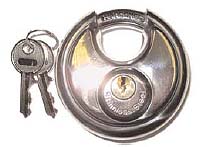
Discus style padlocks - have no angular corners, so are often used with cycle security chains and cables, as well as being a popular choice for securing doors on sheds and beach huts, etc. When used as a door lock, they will typically be used in conjunction with the special shrouded discus hasp and staple set, which offers extra protection to the padlock shackle.
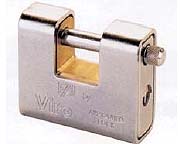
Shutter Locks / Anvil Locks - are typically used to secure the external (or internal) security roller shutters fitted to shop fronts. They are also popular for use with parking posts, motorcycle security chains, etc.
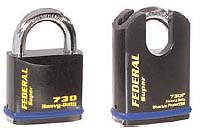
Conventional Style padlocks have a wide range of applications from low security applications like locking your toolbox, to high security uses such as securing factory gates or protecting motorcycles. They are typically available as; Open, Close, or Semi Enclosed Shackle types
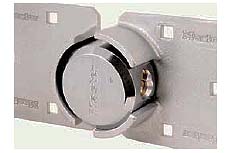
Shackleless type padlock (shown with special hasp)Shackleless Padlocks - this is a bit of a misnomer as the padlock does of course have a shackle, it’s just that it’s on the underside of the lock body and therefore unseen. This type of padlock can be round (like the one pictured) or rectangular, but typically, they are designed to be used with a special matching security hasp. Because of their design, these units are difficult to attack and over recent years, as well as being used on warehouse doors, etc, they have also become very popular for use on vans and other vehicles where they are used to secure opening double doors.
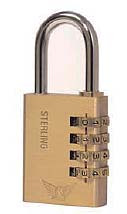
A "Close Shackle" padlock is one with built in shoulders, which are designed to minimise the amount of the shackle exposed, to a saw or bolt cropper attack. This type of padlock will normally have a higher security rating than an equivalent unit with a semi enclosed or open shackle, however subject to size and clearances, may not be practical for instance, to use where you need to secure 2 chain links together or require a padlock for use with a shrouded hasp, etc. To make them easier to use, many Close Shackle padlocks feature "removable shackles" which are fully released from the body of the padlock when it's unlocked.
An "Open Shackle" padlock will typically be easier to use where the shackle needs to pass through 2 chain-links (i.e, a chain securing two opening gates together), etc. As more of the shackle is exposed however, this makes it potentially easier to attack with a saw or bolt croppers.
A "Semi Enclosed Shackle" padlock is something of a compromise, but will often offer more flexibility in use than a Close Shackle padlock and improved security over an Open Shackle model.
Тематики
EN
Русско-английский словарь нормативно-технической терминологии > навесной замок
-
53 к примеру
1) General subject: for instance, for one thing, e.g.2) Engineering: for example3) Religion: ad exemplum, exempli gratia (Latin for "for example")4) Cliche: name just a few (To) -
54 Д-106
ИЗВЕСТНОЕ ДЕЛО highly coll NP\ Invar sent adv (parenth) or an indep. remark more often this WO) (used to emphasize that what is stated contains nothing surprising) as could be expected: (quite) naturally sure enough sure thing (in limited contexts) you know how it is thatis for sure.«Ослица эта, например, известная. „Валаам, Валаам, говорит... не ходи туда, сам пожалеешь". Ну, известное дело, он не послушал, пошёл» (Пастернак 1). "Take the famous she-ass, for instance. 'Balaam, Balaam,' she says, 'listen to me, don't go that way..you'll be sorry.' Well, naturally, he wouldn't listen, he went on" (1a).«Заграница, - говорил Александр Семёнович, выкладывая яйца на деревянный стол, - разве это наши мужицкие яйца... Все, вероятно, брамапутры, чёрт их возьми! немецкие...» - «Известное дело», - подтверждал охранитель, любуясь яйцами (Булгаков 10). "That's Europe for you," said Alexander Semyonovich, laying out the eggs on the wooden table. "What did you expect-our measly little peasant eggs? They must be Brahmaputras, all of them, the devil take 'em! German." "Sure thing," echoed the guard, admiring the eggs (10a)....Ехал (я) по грязи, в одном хуторе машину мою занесло, а тут корова подвернулась, я и сбил её с ног. Ну, известное дело, бабы крик подняли...» (Шолохов 1). "I was driving along a muddy road through a village and I went into a skid. There happened to be a cow in the way and I knocked it over. Well, you know how it is—the women raised a hullabaloo..." (lc). -
55 Д-248
НА ДОЛЮ чью, кого or кому выпасть, прийтись, достаться PrepP Invar the resulting PrepP is subj-compl with выпасть etc subj: usu. abstr or infin, occas. concr)) (to become) s.o. 's destiny, responsibility, share of sth. etc: X выпал на долю Y-a - Y was fated (it was Yb fate) to experience (to have etc) X Y was destined to experience (to have etc) X fate bestowed X upon Y X befell Y X fell to Y's lot X was Y's lot (in life) Y was fated to live through X Y got X Y ended up with (getting, having to do etc) X as for Y, he got X.(Нина:)...Другим же, как, например, вам, - вы один из миллиона, - выпала на долю жизнь интересная, светлая, полная значения... (Чехов 6). (N.:) But others, you, for instance, you - one in a million—are fated to have such interesting, bright, happy lives, lives worthwhile, full of significance (6b)....(Мать) шептала (Андрею) о блестящем призвании то воина, то писателя, мечтала с ним о высокой роли, какая выпадает иным на долю... (Гончаров 1)....(Andrey's mother) whispered to him about the brilliant calling of a soldier or a writer, and dreamed with him of the exalted part some men are destined to play (1a)..Мы говорили, что Пастернак прожил очень счастливую жизнь, остался верен себе и равен себе, не часто такой жребий выпадает на долю русского поэта (Орлова 1). We said that Pasternak had lived a very fortunate life: in spite of all the difficulties he had remained true to himself and equal to himself. It isn't often that such a destiny befalls a Russian poet (1a).«Увы, жив», - воскликнули мы, - ибо как не предпочесть казнь смертную, содрогания висельника в своём ужасном коконе, тем похоронам, которые спустя двадцать пять бессмысленных лет выпали на долю Чернышевского (Набоков 1). "Alas, alive," we exclaimed, for how could one not prefer the death penalty, the convulsions of the hanged man in his hideous cocoon, to that funeral which twenty-five insipid years later fell to Chernyshevski's lot (1a).На экзамене по физике на мою долю достался, как всегда, самый трудный вопрос. At my physics exam I ended up, as usual, with the hardest question.Королевские обойщики (их было несколько человек) службу при короле несли в очередь, причём на долю Поклена-отца приходились весенние месяцы: апрель, май и июнь (Булгаков 5). ( context transl) The Royal Upholsterers (there were several of them) served the King in turn. Poquelin the elder's period of service was during the spring months of April, May, and June (5a). -
56 И-64
НА ИМЯ кого (НА чьё* ИМЯ) PrepP these forms only the resulting PrepP is adv or postmodif)1. писать, посылать что, письмо и т. п. - for the person whose name is written on (some letter, package etc): addressed to(address (write, send) sth.) to.Сказать ли всю истину: по секрету, он даже заготовил на имя известного нашего географа, К.И. Арсеньева, довольно странную резолюцию... (Салтыков-Щедрин 1). If the whole truth be told, he even prepared in secret a rather strange resolution addressed to our well-known geographer, K.I. Arseniev (1a).Теперь я писала заявление, считая, что появились шансы на благоприятный ответ. Я писала на имя Ворошилова (Гинзбург 2). I was now writing a petition in the belief that there was a chance of getting a favorable answer to it. I addressed it to Voroshi-lov... (2a).2. записать, купить что и т. п. \И-64 (while executing а transaction, closing a deal etc, to use) s.o. 's or one's own name for the legal recordin (under) s.o.'s namein the name ofна своё имя - in (under) one's own name.Изощрённость этого сионистского издевательства Давида Аракишвили состояла в том, что, оставляя дом на имя несуществующего племянника, он в то же время всех своих существующих племянников забрал с собой (Искандер 3). One refinement of this Zionist mockery of David Arakishvili's was that while he left his house in the name of a nonexistent nephew, he took all his existent nephews with him (3a)....На всякий случай, если немцев не дождёмся, надо готовить путь и через Англию. Пусть, например, Карпинский готовит: берёт проездные бумаги на своё имя, а фотографию приложим мою (Солженицын 5)....Just in case the Germans are too slow, we must also make preparations to travel through England. Tell Karpinsky, for instance, to get a transit visa in his own name, and we can put my photograph on it (5a). -
57 С-422
СМОТРЯ КТО (ЧТО, КАКОЙ, КАК, ГДЕ, КУДА, КОГДА, СКОЛЬКО) NP, AdjP, or AdvP, depending on the 2nd component fixed WOcontingent upon who, what, what kind etcit depends (on) who (what, what kind, how, where, when, how much, how many etc)(Шеметова:) Нелепость, безумие - так играть своей жизнью, когда конец завиднелся! (Бакченин:) Какой конец? (Шеметова:) Войне конец... (Бакченин:) Когда началось, многие тоже говорили - от силы год. Я лично так считал... И что такое год? Величина в высшей степени относительная. И полгода относительная. И день. И минута... Одна длина у минуты в Казани, другая - у разведчика на вражьей полосе... Так что «скоро конец» - это смотря для кого... (Панова 1). (Sh.:) It's stupidity, madness to risk your life like that when the end is in sight. (B.:) What end? (Sh.:) The end of the war.... (B.:) When it started, lots of people said: At most, a year. I thought so myself. And what's a year? A highly relative quantity. And six months, too. And a day. And a minute.... A minute has one amount of time in it in Kazan, but a different amount for a scout in enemy territory. So "the end is in sight" depends on who for... (1a).«Умерла Клавдия Ивановна», - сообщил заказчик. «Ну, царствие небесное, -согласился Безенчук. - Преставилась, значит, старушка... Старушки, они всегда преставляются... Или богу душу отдают, - это смотря какая старушка. Ваша, например, маленькая и в теле, - значит, преставилась. А например, которая покрупнее и похудее — та, считается, богу душу отдает...» (Ильф и Петров 1). "Claudia Ivanovna's dead," his client informed him. "Well, God rest her soul," said Bezenchuk. "So the old lady's passed away. Old ladies pass away...or they depart this life. It depends who she is. Yours, for instance, was small and plump, so she passed away. But if it's one who's a bit bigger and thinner, then they say she has departed this life..." (1a). -
58 Т-140
БЕЗ ТОЛКУ (БЕЗ ТОЛКУ) coll PrepP these forms only adv1. in an incoherent, senseless, disorderly mannerhaphazardlycarelessly....Много бы можно сделать разных запросов. Зачем, например, глупо и без толку готовится на кухне? (Гоголь 3).... A great number of questions could well be asked. Why, for instance, were the meals in the kitchen prepared so foolishly and haphazardly? (3a).2. to no purpose, futilelyuselesslysenselessly pointlessly aimlessly for nothing in vain to no avail (purpose).(Они) сказали, что такие дураки-одиночки, как я, годятся только чтобы без толку погибнуть. Что мое - впереди. Что я должен расти и учиться. Я учился (Кузнецов 1). They said that fools like myself who did things on their own only got themselves killed uselessly. That my future lay before me. That I had to grow up and learn. And learn I did (1a).Уже поздно, ночь, но все так боятся проспать, что никто не ложится. Без толку толкаются по избе (Битов 2). It's already late at night, but they are all so afraid of oversleeping that no one goes to bed. Aimlessly they loaf around the cabin (2a).Ботинки худые. Чего тут в них без толку лазить по грязи. Он (капитан Миляга), небось, уж давно убёг ( ungrammat = убежал)» (Войнович 2). "My boots are lousy. No sense in sloshing through the mud in them for nothing. He (Captain Milyaga) must be far away by now" (2a). -
59 известное дело
• ИЗВЕСТНОЕ ДЕЛО highly coll[NP; Invar; sent adv (parenth) or an indep. remark; more often this WO]=====⇒ (used to emphasize that what is stated contains nothing surprising) as could be expected:- sure enough;- sure thing;- [in limited contexts] you know how it is;- that's for sure.♦ "Ослица эта, например, известная. "Валаам, Валаам, говорит... не ходи туда, сам пожалеешь". Ну, известное дело, он не послушал, пошёл" (Пастернак 1). "Take the famous she-ass, for instance. 'Balaam, Balaam,' she says, 'listen to me, don't go that way..you'll be sorry.' Well, naturally, he wouldn't listen, he went on" (1a).♦ "Заграница, - говорил Александр Семёнович, выкладывая яйца на деревянный стол, - разве это наши мужицкие яйца... Все, вероятно, брамапутры, чёрт их возьми! немецкие..." - "Известное дело", - подтверждал охранитель, любуясь яйцами (Булгаков 10). "That's Europe for you," said Alexander Semyonovich, laying out the eggs on the wooden table. "What did you expect-our measly little peasant eggs? They must be Brahmaputras, all of them, the devil take 'em! German." "Sure thing," echoed the guard, admiring the eggs (10a).♦ "...Ехал [ я] по грязи, в одном хуторе машину мою занесло, а тут корова подвернулась, я и сбил её с ног. Ну, известное дело, бабы крик подняли..." (Шолохов 1). "I was driving along a muddy road through a village and I went into a skid. There happened to be a cow in the way and I knocked it over. Well, you know how it is - the women raised a hullabaloo..." (lc).Большой русско-английский фразеологический словарь > известное дело
-
60 на долю
[PrepP; Invar; the resulting PrepP is subj-compl with выпасть etc (subj: usu. abstr or infin, occas. concr)]=====⇒ (to become) s.o.'s destiny, responsibility, share of sth. etc:- Y was destined to experience <to have etc> X;- X befell Y;- Y got X;- Y ended up with (getting, having to do etc) X;- as for Y, he got X.♦ [Нина:]...Другим же, как, например, вам, - вы один из миллиона, - выпала на долю жизнь интересная, светлая, полная значения... (Чехов 6). [N.:] But others, you, for instance, you - one in a million - are fated to have such interesting, bright, happy lives, lives worthwhile, full of significance (6b).♦...[ Мать] шептала [Андрею] о блестящем призвании то воина, то писателя, мечтала с ним о высокой роли, какая выпадает иным на долю... (Гончаров 1)....[Andrey's mother] whispered to him about the brilliant calling of a soldier or a writer, and dreamed with him of the exalted part some men are destined to play (1a).♦...Мы говорили, что Пастернак прожил очень счастливую жизнь, остался верен себе и равен себе, не часто такой жребий выпадает на долю русского поэта (Орлова 1). We said that Pasternak had lived a very fortunate life: in spite of all the difficulties he had remained true to himself and equal to himself. It isn't often that such a destiny befalls a Russian poet (1a).♦ "Увы, жив", - воскликнули мы, - ибо как не предпочесть казнь смертную, содрогания висельника в своём ужасном коконе, тем похоронам, которые спустя двадцать пять бессмысленных лет выпали на долю Чернышевского (Набоков 1). "Alas, alive," we exclaimed, for how could one not prefer the death penalty, the convulsions of the hanged man in his hideous cocoon, to that funeral which twenty-five insipid years later fell to Chemyshevski's lot (1a).♦ На экзамене по физике на мою долю достался, как всегда, самый трудный вопрос. At my physics exam I ended up, as usual, with the hardest question.♦ Королевские обойщики (их было несколько человек) службу при короле несли в очередь, причём на долю Поклена-отца приходились весенние месяцы: апрель, май и июнь (Булгаков 5). [context transl] The Royal Upholsterers (there were several of them) served the King in turn. Poquelin the elder's period of service was during the spring months of April, May, and June (5a).Большой русско-английский фразеологический словарь > на долю
См. также в других словарях:
For instance — Instance In stance, n. [F. instance, L. instantia, fr. instans. See {Instant}.] [1913 Webster] 1. The act or quality of being instant or pressing; urgency; solicitation; application; suggestion; motion. [1913 Webster] Undertook at her instance to … The Collaborative International Dictionary of English
for instance — See: FOR EXAMPLE … Dictionary of American idioms
for instance — See: FOR EXAMPLE … Dictionary of American idioms
for\ instance — • for example • for instance adv. phr. As an example; as proof; to give an example or illustration. Not only rich men become President. For example, Lincoln was born poor. There are jobs more dangerous than truck driving; for instance, training… … Словарь американских идиом
for instance — for example You may have questions which you wish to raise. For instance, who will oversee your work and how will feedback be given? They intend to provide information, via the Internet for instance … English dictionary
for instance — ► for instance as an example. Main Entry: ↑instance … English terms dictionary
for instance — adverb as an example (Freq. 21) take ribbon snakes, for example • Syn: ↑for example, ↑e.g. * * * fəˈ(r)in sometimes ˈfrin adverb : as an example * * * … Useful english dictionary
for instance — I. noun Date: 1959 example < I ll give you a for instance > II. phrasal as an instance or example < older people, like my grandmother, for instance > … New Collegiate Dictionary
for-instance — /feuhr in steuhns/, n. an instance or example: Give me a for instance of what you mean. * * * … Universalium
for-instance — /feuhr in steuhns/, n. an instance or example: Give me a for instance of what you mean … Useful english dictionary
for instance — for example, e.g … English contemporary dictionary
