

-
1 current-carrying capacity
(длительный) допустимый ток
Максимальное значение электрического тока, который может протекать длительно по проводнику, устройству или аппарату при определенных условиях без превышения определенного значения их температуры в установившемся режиме
[ ГОСТ Р МЭК 60050-826-2009]
Этот ток обозначают IZ
[ ГОСТ Р 50571. 1-2009 ( МЭК 60364-1: 2005)]EN
(continuous) current-carrying capacity
ampacity (US)
maximum value of electric current which can be carried continuously by a conductor, a device or an apparatus, under specified conditions without its steady-state temperature exceeding a specified value
[IEV number 826-11-13]
ampacity
The current in amperes that a conductor can carry continuously under the conditions of use without exceeding its temperature rating.
[National Electrical Cod]FR
courant (permanent) admissible, m
valeur maximale du courant électrique qui peut parcourir en permanence, un conducteur, un dispositif ou un appareil, sans que sa température de régime permanent, dans des conditions données, soit supérieure à la valeur spécifiée
[IEV number 826-11-13]Ampacity, the term is defined as the maximum amount of current a cable can carry before sustaining immediate or progressive deterioration. Also described as current rating or current-carrying capacity, is the RMS electric current which a device can continuously carry while remaining within its temperature rating. The ampacity of a cable depends on:
- its insulation temperature rating;
- conductor electrical properties for current;
- frequency, in the case of alternating currents;
- ability to dissipate heat, which depends on cable geometry and its surroundings;
- ambient temperature.
Electric wires have some resistance, and electric current flowing through them causes voltage drop and power dissipation, which heats the cable. Copper or aluminum can conduct a large amount of current before melting, but long before the conductors melt, their insulation would be damaged by the heat.
The ampacity for a power cable is thus based on physical and electrical properties of the material & construction of the conductor and of its insulation, ambient temperature, and environmental conditions adjacent to the cable. Having a large overall surface area may dissipate heat well if the environment can absorb the heat.
In a long run of cable, different conditions govern, and installation regulations normally specify that the most severe condition along the run governs the cable's rating. Cables run in wet or oily locations may carry a lower temperature rating than in a dry installation. Derating is necessary for multiple circuits in close proximity. When multiple cables are near, each contributes heat to the others and diminishes the amount of cooling air that can flow past the individual cables. The overall ampacity of the insulated conductors in a bundle of more than 3 must be derated, whether in a raceway or cable. Usually the de-rating factor is tabulated in a nation's wiring regulations.
Depending on the type of insulating material, common maximum allowable temperatures at the surface of the conductor are 60, 75 and 90 degrees Celsius, often with an ambient air temperature of 30°C. In the U.S., 105°C is allowed with ambient of 40°C, for larger power cables, especially those operating at more than 2 kV. Likewise, specific insulations are rated 150, 200 or 250°C.
The allowed current in cables generally needs to be decreased (derated) when the cable is covered with fireproofing material.
For example, the United States National Electric Code, Table 310-16, specifies that up to three 8 AWG copper wires having a common insulating material (THWN) in a raceway, cable, or direct burial has an ampacity of 50 A when the ambient air is 30°C, the conductor surface temperature allowed to be 75°C. A single insulated conductor in air has 70 A rating.
Ampacity rating is normally for continuous current, and short periods of overcurrent occur without harm in most cabling systems. The acceptable magnitude and duration of overcurrent is a more complex topic than ampacity.
When designing an electrical system, one will normally need to know the current rating for the following:- Wires
- Printed Circuit Board traces, where included
- Fuses
- Circuit breakers
- All or nearly all components used
Some devices are limited by power rating, and when this power rating occurs below their current limit, it is not necessary to know the current limit to design a system. A common example of this is lightbulb holders.
[http://en.wikipedia.org/wiki/Ampacity]
Тематики
- электротехника, основные понятия
Синонимы
EN
DE
- Dauerstrombelastbarkeit, f
- Strombelastbarkeit, f
FR
- courant admissible, m
- courant permanent admissible, m
предельно допустимый ток
—
[Я.Н.Лугинский, М.С.Фези-Жилинская, Ю.С.Кабиров. Англо-русский словарь по электротехнике и электроэнергетике, Москва, 1999 г.]Тематики
- электротехника, основные понятия
EN
прочность печатной платы к токовой нагрузке
Свойство печатной платы сохранять электрические и механические характеристики после воздействия максимально допустимой токовой нагрузки на печатный проводник или металлизированное отверстие печатной платы.
[ ГОСТ Р 53386-2009]Тематики
EN
Англо-русский словарь нормативно-технической терминологии > current-carrying capacity
-
2 continuous current-carrying capacity
длительная пропускная способность по току
—
[Я.Н.Лугинский, М.С.Фези-Жилинская, Ю.С.Кабиров. Англо-русский словарь по электротехнике и электроэнергетике, Москва, 1999 г.]Тематики
- электротехника, основные понятия
EN
(длительный) допустимый ток
Максимальное значение электрического тока, который может протекать длительно по проводнику, устройству или аппарату при определенных условиях без превышения определенного значения их температуры в установившемся режиме
[ ГОСТ Р МЭК 60050-826-2009]
Этот ток обозначают IZ
[ ГОСТ Р 50571. 1-2009 ( МЭК 60364-1: 2005)]EN
(continuous) current-carrying capacity
ampacity (US)
maximum value of electric current which can be carried continuously by a conductor, a device or an apparatus, under specified conditions without its steady-state temperature exceeding a specified value
[IEV number 826-11-13]
ampacity
The current in amperes that a conductor can carry continuously under the conditions of use without exceeding its temperature rating.
[National Electrical Cod]FR
courant (permanent) admissible, m
valeur maximale du courant électrique qui peut parcourir en permanence, un conducteur, un dispositif ou un appareil, sans que sa température de régime permanent, dans des conditions données, soit supérieure à la valeur spécifiée
[IEV number 826-11-13]Ampacity, the term is defined as the maximum amount of current a cable can carry before sustaining immediate or progressive deterioration. Also described as current rating or current-carrying capacity, is the RMS electric current which a device can continuously carry while remaining within its temperature rating. The ampacity of a cable depends on:
- its insulation temperature rating;
- conductor electrical properties for current;
- frequency, in the case of alternating currents;
- ability to dissipate heat, which depends on cable geometry and its surroundings;
- ambient temperature.
Electric wires have some resistance, and electric current flowing through them causes voltage drop and power dissipation, which heats the cable. Copper or aluminum can conduct a large amount of current before melting, but long before the conductors melt, their insulation would be damaged by the heat.
The ampacity for a power cable is thus based on physical and electrical properties of the material & construction of the conductor and of its insulation, ambient temperature, and environmental conditions adjacent to the cable. Having a large overall surface area may dissipate heat well if the environment can absorb the heat.
In a long run of cable, different conditions govern, and installation regulations normally specify that the most severe condition along the run governs the cable's rating. Cables run in wet or oily locations may carry a lower temperature rating than in a dry installation. Derating is necessary for multiple circuits in close proximity. When multiple cables are near, each contributes heat to the others and diminishes the amount of cooling air that can flow past the individual cables. The overall ampacity of the insulated conductors in a bundle of more than 3 must be derated, whether in a raceway or cable. Usually the de-rating factor is tabulated in a nation's wiring regulations.
Depending on the type of insulating material, common maximum allowable temperatures at the surface of the conductor are 60, 75 and 90 degrees Celsius, often with an ambient air temperature of 30°C. In the U.S., 105°C is allowed with ambient of 40°C, for larger power cables, especially those operating at more than 2 kV. Likewise, specific insulations are rated 150, 200 or 250°C.
The allowed current in cables generally needs to be decreased (derated) when the cable is covered with fireproofing material.
For example, the United States National Electric Code, Table 310-16, specifies that up to three 8 AWG copper wires having a common insulating material (THWN) in a raceway, cable, or direct burial has an ampacity of 50 A when the ambient air is 30°C, the conductor surface temperature allowed to be 75°C. A single insulated conductor in air has 70 A rating.
Ampacity rating is normally for continuous current, and short periods of overcurrent occur without harm in most cabling systems. The acceptable magnitude and duration of overcurrent is a more complex topic than ampacity.
When designing an electrical system, one will normally need to know the current rating for the following:- Wires
- Printed Circuit Board traces, where included
- Fuses
- Circuit breakers
- All or nearly all components used
Some devices are limited by power rating, and when this power rating occurs below their current limit, it is not necessary to know the current limit to design a system. A common example of this is lightbulb holders.
[http://en.wikipedia.org/wiki/Ampacity]
Тематики
- электротехника, основные понятия
Синонимы
EN
DE
- Dauerstrombelastbarkeit, f
- Strombelastbarkeit, f
FR
- courant admissible, m
- courant permanent admissible, m
Англо-русский словарь нормативно-технической терминологии > continuous current-carrying capacity
-
3 continuous current
(длительный) допустимый ток
Максимальное значение электрического тока, который может протекать длительно по проводнику, устройству или аппарату при определенных условиях без превышения определенного значения их температуры в установившемся режиме
[ ГОСТ Р МЭК 60050-826-2009]
Этот ток обозначают IZ
[ ГОСТ Р 50571. 1-2009 ( МЭК 60364-1: 2005)]EN
(continuous) current-carrying capacity
ampacity (US)
maximum value of electric current which can be carried continuously by a conductor, a device or an apparatus, under specified conditions without its steady-state temperature exceeding a specified value
[IEV number 826-11-13]
ampacity
The current in amperes that a conductor can carry continuously under the conditions of use without exceeding its temperature rating.
[National Electrical Cod]FR
courant (permanent) admissible, m
valeur maximale du courant électrique qui peut parcourir en permanence, un conducteur, un dispositif ou un appareil, sans que sa température de régime permanent, dans des conditions données, soit supérieure à la valeur spécifiée
[IEV number 826-11-13]Ampacity, the term is defined as the maximum amount of current a cable can carry before sustaining immediate or progressive deterioration. Also described as current rating or current-carrying capacity, is the RMS electric current which a device can continuously carry while remaining within its temperature rating. The ampacity of a cable depends on:
- its insulation temperature rating;
- conductor electrical properties for current;
- frequency, in the case of alternating currents;
- ability to dissipate heat, which depends on cable geometry and its surroundings;
- ambient temperature.
Electric wires have some resistance, and electric current flowing through them causes voltage drop and power dissipation, which heats the cable. Copper or aluminum can conduct a large amount of current before melting, but long before the conductors melt, their insulation would be damaged by the heat.
The ampacity for a power cable is thus based on physical and electrical properties of the material & construction of the conductor and of its insulation, ambient temperature, and environmental conditions adjacent to the cable. Having a large overall surface area may dissipate heat well if the environment can absorb the heat.
In a long run of cable, different conditions govern, and installation regulations normally specify that the most severe condition along the run governs the cable's rating. Cables run in wet or oily locations may carry a lower temperature rating than in a dry installation. Derating is necessary for multiple circuits in close proximity. When multiple cables are near, each contributes heat to the others and diminishes the amount of cooling air that can flow past the individual cables. The overall ampacity of the insulated conductors in a bundle of more than 3 must be derated, whether in a raceway or cable. Usually the de-rating factor is tabulated in a nation's wiring regulations.
Depending on the type of insulating material, common maximum allowable temperatures at the surface of the conductor are 60, 75 and 90 degrees Celsius, often with an ambient air temperature of 30°C. In the U.S., 105°C is allowed with ambient of 40°C, for larger power cables, especially those operating at more than 2 kV. Likewise, specific insulations are rated 150, 200 or 250°C.
The allowed current in cables generally needs to be decreased (derated) when the cable is covered with fireproofing material.
For example, the United States National Electric Code, Table 310-16, specifies that up to three 8 AWG copper wires having a common insulating material (THWN) in a raceway, cable, or direct burial has an ampacity of 50 A when the ambient air is 30°C, the conductor surface temperature allowed to be 75°C. A single insulated conductor in air has 70 A rating.
Ampacity rating is normally for continuous current, and short periods of overcurrent occur without harm in most cabling systems. The acceptable magnitude and duration of overcurrent is a more complex topic than ampacity.
When designing an electrical system, one will normally need to know the current rating for the following:- Wires
- Printed Circuit Board traces, where included
- Fuses
- Circuit breakers
- All or nearly all components used
Some devices are limited by power rating, and when this power rating occurs below their current limit, it is not necessary to know the current limit to design a system. A common example of this is lightbulb holders.
[http://en.wikipedia.org/wiki/Ampacity]
Тематики
- электротехника, основные понятия
Синонимы
EN
DE
- Dauerstrombelastbarkeit, f
- Strombelastbarkeit, f
FR
- courant admissible, m
- courant permanent admissible, m
непрерывный ток
—
[Я.Н.Лугинский, М.С.Фези-Жилинская, Ю.С.Кабиров. Англо-русский словарь по электротехнике и электроэнергетике, Москва, 1999]Тематики
- электротехника, основные понятия
EN
Англо-русский словарь нормативно-технической терминологии > continuous current
-
4 courant admissible, m
(длительный) допустимый ток
Максимальное значение электрического тока, который может протекать длительно по проводнику, устройству или аппарату при определенных условиях без превышения определенного значения их температуры в установившемся режиме
[ ГОСТ Р МЭК 60050-826-2009]
Этот ток обозначают IZ
[ ГОСТ Р 50571. 1-2009 ( МЭК 60364-1: 2005)]EN
(continuous) current-carrying capacity
ampacity (US)
maximum value of electric current which can be carried continuously by a conductor, a device or an apparatus, under specified conditions without its steady-state temperature exceeding a specified value
[IEV number 826-11-13]
ampacity
The current in amperes that a conductor can carry continuously under the conditions of use without exceeding its temperature rating.
[National Electrical Cod]FR
courant (permanent) admissible, m
valeur maximale du courant électrique qui peut parcourir en permanence, un conducteur, un dispositif ou un appareil, sans que sa température de régime permanent, dans des conditions données, soit supérieure à la valeur spécifiée
[IEV number 826-11-13]Ampacity, the term is defined as the maximum amount of current a cable can carry before sustaining immediate or progressive deterioration. Also described as current rating or current-carrying capacity, is the RMS electric current which a device can continuously carry while remaining within its temperature rating. The ampacity of a cable depends on:
- its insulation temperature rating;
- conductor electrical properties for current;
- frequency, in the case of alternating currents;
- ability to dissipate heat, which depends on cable geometry and its surroundings;
- ambient temperature.
Electric wires have some resistance, and electric current flowing through them causes voltage drop and power dissipation, which heats the cable. Copper or aluminum can conduct a large amount of current before melting, but long before the conductors melt, their insulation would be damaged by the heat.
The ampacity for a power cable is thus based on physical and electrical properties of the material & construction of the conductor and of its insulation, ambient temperature, and environmental conditions adjacent to the cable. Having a large overall surface area may dissipate heat well if the environment can absorb the heat.
In a long run of cable, different conditions govern, and installation regulations normally specify that the most severe condition along the run governs the cable's rating. Cables run in wet or oily locations may carry a lower temperature rating than in a dry installation. Derating is necessary for multiple circuits in close proximity. When multiple cables are near, each contributes heat to the others and diminishes the amount of cooling air that can flow past the individual cables. The overall ampacity of the insulated conductors in a bundle of more than 3 must be derated, whether in a raceway or cable. Usually the de-rating factor is tabulated in a nation's wiring regulations.
Depending on the type of insulating material, common maximum allowable temperatures at the surface of the conductor are 60, 75 and 90 degrees Celsius, often with an ambient air temperature of 30°C. In the U.S., 105°C is allowed with ambient of 40°C, for larger power cables, especially those operating at more than 2 kV. Likewise, specific insulations are rated 150, 200 or 250°C.
The allowed current in cables generally needs to be decreased (derated) when the cable is covered with fireproofing material.
For example, the United States National Electric Code, Table 310-16, specifies that up to three 8 AWG copper wires having a common insulating material (THWN) in a raceway, cable, or direct burial has an ampacity of 50 A when the ambient air is 30°C, the conductor surface temperature allowed to be 75°C. A single insulated conductor in air has 70 A rating.
Ampacity rating is normally for continuous current, and short periods of overcurrent occur without harm in most cabling systems. The acceptable magnitude and duration of overcurrent is a more complex topic than ampacity.
When designing an electrical system, one will normally need to know the current rating for the following:- Wires
- Printed Circuit Board traces, where included
- Fuses
- Circuit breakers
- All or nearly all components used
Some devices are limited by power rating, and when this power rating occurs below their current limit, it is not necessary to know the current limit to design a system. A common example of this is lightbulb holders.
[http://en.wikipedia.org/wiki/Ampacity]
Тематики
- электротехника, основные понятия
Синонимы
EN
DE
- Dauerstrombelastbarkeit, f
- Strombelastbarkeit, f
FR
- courant admissible, m
- courant permanent admissible, m
Франко-русский словарь нормативно-технической терминологии > courant admissible, m
-
5 courant permanent admissible, m
(длительный) допустимый ток
Максимальное значение электрического тока, который может протекать длительно по проводнику, устройству или аппарату при определенных условиях без превышения определенного значения их температуры в установившемся режиме
[ ГОСТ Р МЭК 60050-826-2009]
Этот ток обозначают IZ
[ ГОСТ Р 50571. 1-2009 ( МЭК 60364-1: 2005)]EN
(continuous) current-carrying capacity
ampacity (US)
maximum value of electric current which can be carried continuously by a conductor, a device or an apparatus, under specified conditions without its steady-state temperature exceeding a specified value
[IEV number 826-11-13]
ampacity
The current in amperes that a conductor can carry continuously under the conditions of use without exceeding its temperature rating.
[National Electrical Cod]FR
courant (permanent) admissible, m
valeur maximale du courant électrique qui peut parcourir en permanence, un conducteur, un dispositif ou un appareil, sans que sa température de régime permanent, dans des conditions données, soit supérieure à la valeur spécifiée
[IEV number 826-11-13]Ampacity, the term is defined as the maximum amount of current a cable can carry before sustaining immediate or progressive deterioration. Also described as current rating or current-carrying capacity, is the RMS electric current which a device can continuously carry while remaining within its temperature rating. The ampacity of a cable depends on:
- its insulation temperature rating;
- conductor electrical properties for current;
- frequency, in the case of alternating currents;
- ability to dissipate heat, which depends on cable geometry and its surroundings;
- ambient temperature.
Electric wires have some resistance, and electric current flowing through them causes voltage drop and power dissipation, which heats the cable. Copper or aluminum can conduct a large amount of current before melting, but long before the conductors melt, their insulation would be damaged by the heat.
The ampacity for a power cable is thus based on physical and electrical properties of the material & construction of the conductor and of its insulation, ambient temperature, and environmental conditions adjacent to the cable. Having a large overall surface area may dissipate heat well if the environment can absorb the heat.
In a long run of cable, different conditions govern, and installation regulations normally specify that the most severe condition along the run governs the cable's rating. Cables run in wet or oily locations may carry a lower temperature rating than in a dry installation. Derating is necessary for multiple circuits in close proximity. When multiple cables are near, each contributes heat to the others and diminishes the amount of cooling air that can flow past the individual cables. The overall ampacity of the insulated conductors in a bundle of more than 3 must be derated, whether in a raceway or cable. Usually the de-rating factor is tabulated in a nation's wiring regulations.
Depending on the type of insulating material, common maximum allowable temperatures at the surface of the conductor are 60, 75 and 90 degrees Celsius, often with an ambient air temperature of 30°C. In the U.S., 105°C is allowed with ambient of 40°C, for larger power cables, especially those operating at more than 2 kV. Likewise, specific insulations are rated 150, 200 or 250°C.
The allowed current in cables generally needs to be decreased (derated) when the cable is covered with fireproofing material.
For example, the United States National Electric Code, Table 310-16, specifies that up to three 8 AWG copper wires having a common insulating material (THWN) in a raceway, cable, or direct burial has an ampacity of 50 A when the ambient air is 30°C, the conductor surface temperature allowed to be 75°C. A single insulated conductor in air has 70 A rating.
Ampacity rating is normally for continuous current, and short periods of overcurrent occur without harm in most cabling systems. The acceptable magnitude and duration of overcurrent is a more complex topic than ampacity.
When designing an electrical system, one will normally need to know the current rating for the following:- Wires
- Printed Circuit Board traces, where included
- Fuses
- Circuit breakers
- All or nearly all components used
Some devices are limited by power rating, and when this power rating occurs below their current limit, it is not necessary to know the current limit to design a system. A common example of this is lightbulb holders.
[http://en.wikipedia.org/wiki/Ampacity]
Тематики
- электротехника, основные понятия
Синонимы
EN
DE
- Dauerstrombelastbarkeit, f
- Strombelastbarkeit, f
FR
- courant admissible, m
- courant permanent admissible, m
Франко-русский словарь нормативно-технической терминологии > courant permanent admissible, m
-
6 Dauerstrombelastbarkeit, f
(длительный) допустимый ток
Максимальное значение электрического тока, который может протекать длительно по проводнику, устройству или аппарату при определенных условиях без превышения определенного значения их температуры в установившемся режиме
[ ГОСТ Р МЭК 60050-826-2009]
Этот ток обозначают IZ
[ ГОСТ Р 50571. 1-2009 ( МЭК 60364-1: 2005)]EN
(continuous) current-carrying capacity
ampacity (US)
maximum value of electric current which can be carried continuously by a conductor, a device or an apparatus, under specified conditions without its steady-state temperature exceeding a specified value
[IEV number 826-11-13]
ampacity
The current in amperes that a conductor can carry continuously under the conditions of use without exceeding its temperature rating.
[National Electrical Cod]FR
courant (permanent) admissible, m
valeur maximale du courant électrique qui peut parcourir en permanence, un conducteur, un dispositif ou un appareil, sans que sa température de régime permanent, dans des conditions données, soit supérieure à la valeur spécifiée
[IEV number 826-11-13]Ampacity, the term is defined as the maximum amount of current a cable can carry before sustaining immediate or progressive deterioration. Also described as current rating or current-carrying capacity, is the RMS electric current which a device can continuously carry while remaining within its temperature rating. The ampacity of a cable depends on:
- its insulation temperature rating;
- conductor electrical properties for current;
- frequency, in the case of alternating currents;
- ability to dissipate heat, which depends on cable geometry and its surroundings;
- ambient temperature.
Electric wires have some resistance, and electric current flowing through them causes voltage drop and power dissipation, which heats the cable. Copper or aluminum can conduct a large amount of current before melting, but long before the conductors melt, their insulation would be damaged by the heat.
The ampacity for a power cable is thus based on physical and electrical properties of the material & construction of the conductor and of its insulation, ambient temperature, and environmental conditions adjacent to the cable. Having a large overall surface area may dissipate heat well if the environment can absorb the heat.
In a long run of cable, different conditions govern, and installation regulations normally specify that the most severe condition along the run governs the cable's rating. Cables run in wet or oily locations may carry a lower temperature rating than in a dry installation. Derating is necessary for multiple circuits in close proximity. When multiple cables are near, each contributes heat to the others and diminishes the amount of cooling air that can flow past the individual cables. The overall ampacity of the insulated conductors in a bundle of more than 3 must be derated, whether in a raceway or cable. Usually the de-rating factor is tabulated in a nation's wiring regulations.
Depending on the type of insulating material, common maximum allowable temperatures at the surface of the conductor are 60, 75 and 90 degrees Celsius, often with an ambient air temperature of 30°C. In the U.S., 105°C is allowed with ambient of 40°C, for larger power cables, especially those operating at more than 2 kV. Likewise, specific insulations are rated 150, 200 or 250°C.
The allowed current in cables generally needs to be decreased (derated) when the cable is covered with fireproofing material.
For example, the United States National Electric Code, Table 310-16, specifies that up to three 8 AWG copper wires having a common insulating material (THWN) in a raceway, cable, or direct burial has an ampacity of 50 A when the ambient air is 30°C, the conductor surface temperature allowed to be 75°C. A single insulated conductor in air has 70 A rating.
Ampacity rating is normally for continuous current, and short periods of overcurrent occur without harm in most cabling systems. The acceptable magnitude and duration of overcurrent is a more complex topic than ampacity.
When designing an electrical system, one will normally need to know the current rating for the following:- Wires
- Printed Circuit Board traces, where included
- Fuses
- Circuit breakers
- All or nearly all components used
Some devices are limited by power rating, and when this power rating occurs below their current limit, it is not necessary to know the current limit to design a system. A common example of this is lightbulb holders.
[http://en.wikipedia.org/wiki/Ampacity]
Тематики
- электротехника, основные понятия
Синонимы
EN
DE
- Dauerstrombelastbarkeit, f
- Strombelastbarkeit, f
FR
- courant admissible, m
- courant permanent admissible, m
Немецко-русский словарь нормативно-технической терминологии > Dauerstrombelastbarkeit, f
-
7 Strombelastbarkeit, f
(длительный) допустимый ток
Максимальное значение электрического тока, который может протекать длительно по проводнику, устройству или аппарату при определенных условиях без превышения определенного значения их температуры в установившемся режиме
[ ГОСТ Р МЭК 60050-826-2009]
Этот ток обозначают IZ
[ ГОСТ Р 50571. 1-2009 ( МЭК 60364-1: 2005)]EN
(continuous) current-carrying capacity
ampacity (US)
maximum value of electric current which can be carried continuously by a conductor, a device or an apparatus, under specified conditions without its steady-state temperature exceeding a specified value
[IEV number 826-11-13]
ampacity
The current in amperes that a conductor can carry continuously under the conditions of use without exceeding its temperature rating.
[National Electrical Cod]FR
courant (permanent) admissible, m
valeur maximale du courant électrique qui peut parcourir en permanence, un conducteur, un dispositif ou un appareil, sans que sa température de régime permanent, dans des conditions données, soit supérieure à la valeur spécifiée
[IEV number 826-11-13]Ampacity, the term is defined as the maximum amount of current a cable can carry before sustaining immediate or progressive deterioration. Also described as current rating or current-carrying capacity, is the RMS electric current which a device can continuously carry while remaining within its temperature rating. The ampacity of a cable depends on:
- its insulation temperature rating;
- conductor electrical properties for current;
- frequency, in the case of alternating currents;
- ability to dissipate heat, which depends on cable geometry and its surroundings;
- ambient temperature.
Electric wires have some resistance, and electric current flowing through them causes voltage drop and power dissipation, which heats the cable. Copper or aluminum can conduct a large amount of current before melting, but long before the conductors melt, their insulation would be damaged by the heat.
The ampacity for a power cable is thus based on physical and electrical properties of the material & construction of the conductor and of its insulation, ambient temperature, and environmental conditions adjacent to the cable. Having a large overall surface area may dissipate heat well if the environment can absorb the heat.
In a long run of cable, different conditions govern, and installation regulations normally specify that the most severe condition along the run governs the cable's rating. Cables run in wet or oily locations may carry a lower temperature rating than in a dry installation. Derating is necessary for multiple circuits in close proximity. When multiple cables are near, each contributes heat to the others and diminishes the amount of cooling air that can flow past the individual cables. The overall ampacity of the insulated conductors in a bundle of more than 3 must be derated, whether in a raceway or cable. Usually the de-rating factor is tabulated in a nation's wiring regulations.
Depending on the type of insulating material, common maximum allowable temperatures at the surface of the conductor are 60, 75 and 90 degrees Celsius, often with an ambient air temperature of 30°C. In the U.S., 105°C is allowed with ambient of 40°C, for larger power cables, especially those operating at more than 2 kV. Likewise, specific insulations are rated 150, 200 or 250°C.
The allowed current in cables generally needs to be decreased (derated) when the cable is covered with fireproofing material.
For example, the United States National Electric Code, Table 310-16, specifies that up to three 8 AWG copper wires having a common insulating material (THWN) in a raceway, cable, or direct burial has an ampacity of 50 A when the ambient air is 30°C, the conductor surface temperature allowed to be 75°C. A single insulated conductor in air has 70 A rating.
Ampacity rating is normally for continuous current, and short periods of overcurrent occur without harm in most cabling systems. The acceptable magnitude and duration of overcurrent is a more complex topic than ampacity.
When designing an electrical system, one will normally need to know the current rating for the following:- Wires
- Printed Circuit Board traces, where included
- Fuses
- Circuit breakers
- All or nearly all components used
Some devices are limited by power rating, and when this power rating occurs below their current limit, it is not necessary to know the current limit to design a system. A common example of this is lightbulb holders.
[http://en.wikipedia.org/wiki/Ampacity]
Тематики
- электротехника, основные понятия
Синонимы
EN
DE
- Dauerstrombelastbarkeit, f
- Strombelastbarkeit, f
FR
- courant admissible, m
- courant permanent admissible, m
Немецко-русский словарь нормативно-технической терминологии > Strombelastbarkeit, f
-
8 ampacity (US)
(длительный) допустимый ток
Максимальное значение электрического тока, который может протекать длительно по проводнику, устройству или аппарату при определенных условиях без превышения определенного значения их температуры в установившемся режиме
[ ГОСТ Р МЭК 60050-826-2009]
Этот ток обозначают IZ
[ ГОСТ Р 50571. 1-2009 ( МЭК 60364-1: 2005)]EN
(continuous) current-carrying capacity
ampacity (US)
maximum value of electric current which can be carried continuously by a conductor, a device or an apparatus, under specified conditions without its steady-state temperature exceeding a specified value
[IEV number 826-11-13]
ampacity
The current in amperes that a conductor can carry continuously under the conditions of use without exceeding its temperature rating.
[National Electrical Cod]FR
courant (permanent) admissible, m
valeur maximale du courant électrique qui peut parcourir en permanence, un conducteur, un dispositif ou un appareil, sans que sa température de régime permanent, dans des conditions données, soit supérieure à la valeur spécifiée
[IEV number 826-11-13]Ampacity, the term is defined as the maximum amount of current a cable can carry before sustaining immediate or progressive deterioration. Also described as current rating or current-carrying capacity, is the RMS electric current which a device can continuously carry while remaining within its temperature rating. The ampacity of a cable depends on:
- its insulation temperature rating;
- conductor electrical properties for current;
- frequency, in the case of alternating currents;
- ability to dissipate heat, which depends on cable geometry and its surroundings;
- ambient temperature.
Electric wires have some resistance, and electric current flowing through them causes voltage drop and power dissipation, which heats the cable. Copper or aluminum can conduct a large amount of current before melting, but long before the conductors melt, their insulation would be damaged by the heat.
The ampacity for a power cable is thus based on physical and electrical properties of the material & construction of the conductor and of its insulation, ambient temperature, and environmental conditions adjacent to the cable. Having a large overall surface area may dissipate heat well if the environment can absorb the heat.
In a long run of cable, different conditions govern, and installation regulations normally specify that the most severe condition along the run governs the cable's rating. Cables run in wet or oily locations may carry a lower temperature rating than in a dry installation. Derating is necessary for multiple circuits in close proximity. When multiple cables are near, each contributes heat to the others and diminishes the amount of cooling air that can flow past the individual cables. The overall ampacity of the insulated conductors in a bundle of more than 3 must be derated, whether in a raceway or cable. Usually the de-rating factor is tabulated in a nation's wiring regulations.
Depending on the type of insulating material, common maximum allowable temperatures at the surface of the conductor are 60, 75 and 90 degrees Celsius, often with an ambient air temperature of 30°C. In the U.S., 105°C is allowed with ambient of 40°C, for larger power cables, especially those operating at more than 2 kV. Likewise, specific insulations are rated 150, 200 or 250°C.
The allowed current in cables generally needs to be decreased (derated) when the cable is covered with fireproofing material.
For example, the United States National Electric Code, Table 310-16, specifies that up to three 8 AWG copper wires having a common insulating material (THWN) in a raceway, cable, or direct burial has an ampacity of 50 A when the ambient air is 30°C, the conductor surface temperature allowed to be 75°C. A single insulated conductor in air has 70 A rating.
Ampacity rating is normally for continuous current, and short periods of overcurrent occur without harm in most cabling systems. The acceptable magnitude and duration of overcurrent is a more complex topic than ampacity.
When designing an electrical system, one will normally need to know the current rating for the following:- Wires
- Printed Circuit Board traces, where included
- Fuses
- Circuit breakers
- All or nearly all components used
Some devices are limited by power rating, and when this power rating occurs below their current limit, it is not necessary to know the current limit to design a system. A common example of this is lightbulb holders.
[http://en.wikipedia.org/wiki/Ampacity]
Тематики
- электротехника, основные понятия
Синонимы
EN
DE
- Dauerstrombelastbarkeit, f
- Strombelastbarkeit, f
FR
- courant admissible, m
- courant permanent admissible, m
Англо-русский словарь нормативно-технической терминологии > ampacity (US)
-
9 wireway
короб
Коробом называется закрытая полая конструкция прямоугольного или другого сечения, предназначенная для прокладки в ней проводов и кабелей.
Короб должен служить защитой от механических повреждений проложенных в нем проводов и кабелей.
Короба могут быть глухими или с открываемыми крышками, со сплошными или перфорированными стенками и крышками. Глухие короба должны иметь только сплошные стенки со всех сторон и не иметь крышек.
Короба могут применяться в помещениях и наружных установках
[ПУЭ. Раздел 2]
короб электрический
Подвесной или пристраиваемый короб для прокладки в нём электрических проводов и кабелей
[Терминологический словарь по строительству на 12 языках (ВНИИИС Госстроя СССР)]EN
wireway
A trough which is lined with sheet metal and has hinged covers, designed to house electrical conductors or cables.
[ http://www.answers.com/topic/wireway]См. также:
система кабельных коробов
система специальных кабельных коробов
система кабельных коробов для монтажа на стенах и потолках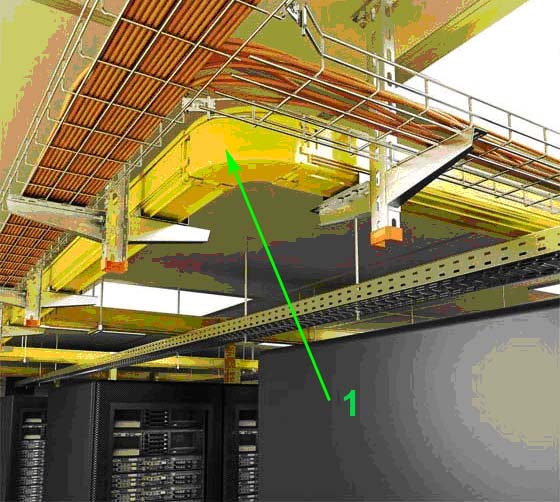
1 - Подвесной кабельный короб
[ http://www.tesli.com/file/image/news/0711/obo-ld-1.jpg]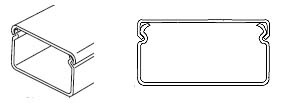
Рис. WIREMOLD
Кабельный короб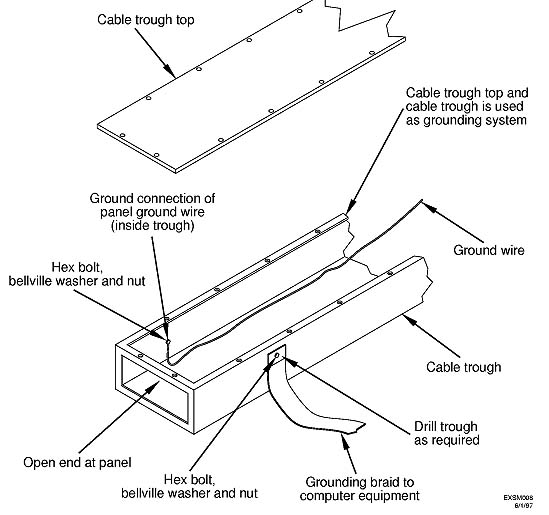
[ http://docs.hp.com/en/A3725-96021/ch02s05.html]
Тематики
- изделие электромонтажное
- электропроводка, электромонтаж
EN
- cable duct (hanging or attached)
- cable trough
- duct
- raceway base & cover
- raceway base and cover
- wireway
- wiring channel
- wiring duct
DE
FR
лоток
Лотком называется открытая конструкция, предназначенная для прокладки на ней проводов и кабелей.
Лоток не является защитой от внешних механических повреждений проложенных на нем проводов и кабелей. Лотки должны изготовляться из несгораемых материалов. Они могут быть сплошными, перфорированными или решетчатыми. Лотки могут применяться в помещениях и наружных установках
[ПУЭ. Раздел 2]
кабельный лоток
Опорная конструкция для кабелей, состоящая из протяженного основания с вертикальными бортами и не имеющая крышки.
Примечание - Кабельный лоток может быть перфорированным или сетчатым
[ ГОСТ Р МЭК 60050-826-2009]
лоток для прокладки кабеля(или полка)
Опорная конструкция в виденепрерывногопротяженного основания сребордамибортами и без крышки.
Примечание
Кабельный лоток может иметь или не иметь перфорацию.
[ ГОСТ Р МЭК 60204-1-2007]
лоток электротехнический
Открытый жёлоб на специальных подставках, применяемый для размещения в нём кабелей при надземной их прокладке на местности
[Терминологический словарь по строительству на 12 языках (ВНИИИС Госстроя СССР)]EN
cable tray
cable support consisting of a continuous base with raised edges but no covering
NOTE – A cable tray may be perforated or mesh.
[IEV number 826-15-08]
cable tray
cable support consisting of a continuous base and raised edges and no covering
NOTE A cable tray may be perforated or non-perforated.
[IEV 826-15-08]
[IEC 60204-1-2006]FR
chemin de câbles, m
tablette, f
support de câbles constitué d'une base continue avec de rebords, mais ne comportant pas de couvercle
NOTE – Un chemin de câbles peut être perforé ou en treillis.
[IEV number 826-15-08]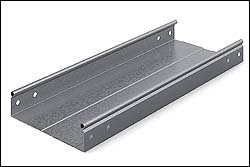
Кабельный лоток неперфорированный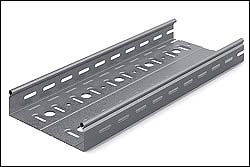
Кабельный лоток перфорированный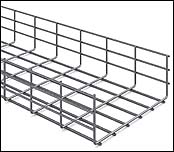
Кабельный лоток проволочный (сетчатый)[ http://www.szpk-nw.ru/catalog_p.html?cid=5]
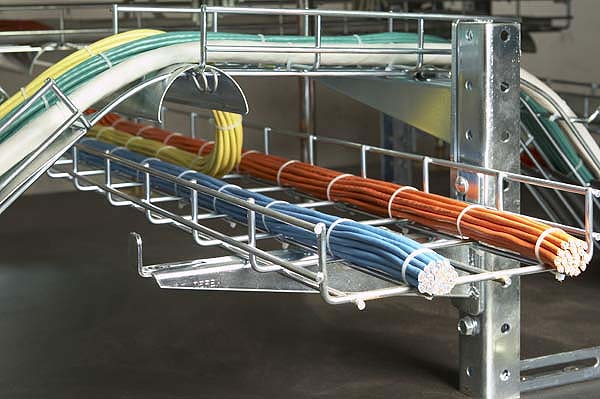
[ http://www.elsyst.ru/photo/catalog/6l.jpg]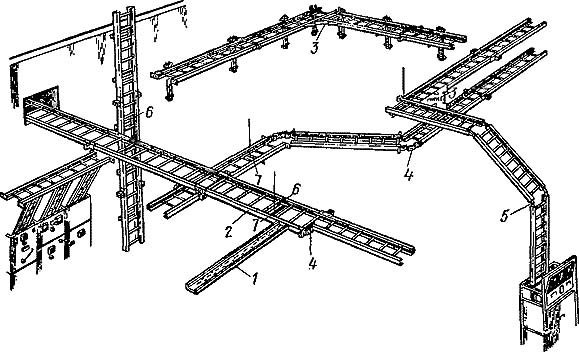
Рис. 33. Кабельный лоток лестничного типа:
1, 2- прямые секции,
3 — угловая секция.
4, 5 — переходные секции и шарнирные соединители,
6 — прижимы,
7 — подвескиКабельные лотки применяют для прокладки силовых и контрольных кабелей и проводов напряжением до 1000 В и изготовляют из перфорированного гнутого металлического листа. Ширина лотка 50, 100, 200 и 400 мм, длина 2 м. В номенклатуру лотков входят готовые для сборки элементы, обеспечивающие создание трассы с необходимыми поворотами и разветвлениями в горизонтальной и вертикальной плоскостях.
Соединение лотков выполняют болтами, благодаря этому обеспечивается надежная электрическая цепь, необходимая для сети заземления. Крепят лотки на кронштейнах, подвесках и сборных кабельных конструкциях. Лотки, установленные на опорных конструкциях, крепят так, чтобы была исключена возможность сползания, опрокидывания и падения их.
При пересечении лотков с другими коммуникациями лотки прокладывают с отступом от стен, если это невозможно, выполняют обходы.[ http://forca.ru/knigi/oborudovanie/montazh-i-ekpluataciya-kabelei_8.html]
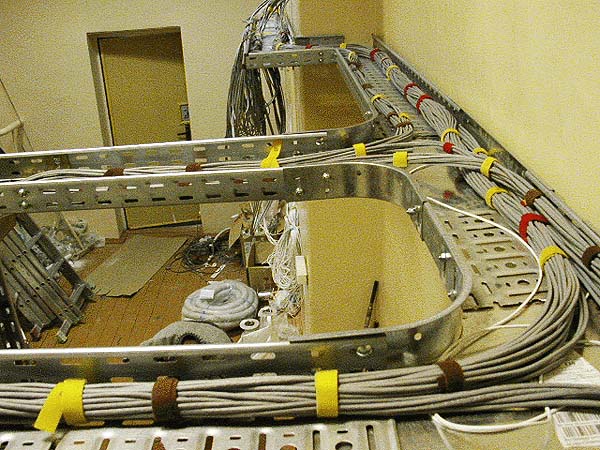
Кабельный лоток
[ http://www.solan.ru/data/lotok_dstr.gif]Тематики
- изделие электромонтажное
- электропроводка, электромонтаж
Обобщающие термины
Синонимы
EN
DE
- Kabeltrog
- Kabelwanne, f
FR
- canal électrotechnique
- chemin de câbles, m
- tablette, f
токопровод
Устройство, выполненное в виде шин или проводов с изоляторами и поддерживающими конструкциями, предназначенное для передачи и распределения электрической энергии в пределах электростанции, подстанции или цеха.
[ ГОСТ 24291-90]
токопровод
Электрическая проводка со всеми относящимися к ней элементами и конструкциями для передачи электроэнергии к потребителям
[Терминологический словарь по строительству на 12 языках (ВНИИИС Госстроя СССР)]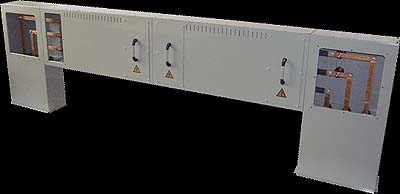
Токопровод
[http://terma-energo.ru/products/Tokoprovody/]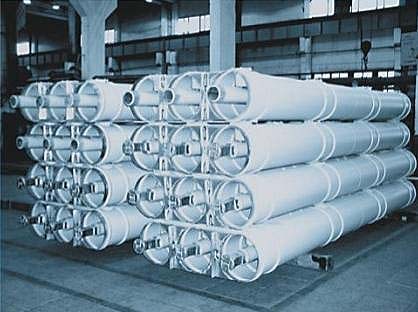
[http://open.gisprofi.ru/providercatalog/viewCatalog/58/]Токопроводы применяются как высоковольтные электрические аппараты среднего или высокого напряжения в электрических соединениях на напряжение от 6 до 35 кВ включительно, а шинопроводы применяются как низковольтные электрические аппараты на напряжение от 0,4 до 1,2 кВ.
Токопроводы для электрического соединения трехфазного переменного тока генераторов с повышающими блочными силовыми трансформаторами, также с силовыми трансформаторами собственных нужд и другими электрическими аппаратами главной цепи ТЭЦ, ГРЭС, АЭС называются токопроводами генераторного напряжения.
Токопроводы для электрического соединения трехфазного переменного тока силовых трансформаторов собственных нужд на электростанциях со стороны напряжения 6-10 кВ со шкафами комплектных распределительных устройств называются токопроводами собственных нужд.
По конструктивному исполнению токопроводы подразделяются:- на пофазно-экранированные токопроводы с непрерывным экраном и с компенсированным внешним электромагнитным полем для генераторов ТЭЦ, ГРЭС, ГЭС и АЭС
- токопроводы с общей для трех фаз из алюминия или стали оболочкой с разделительной перегородкой или без нее.
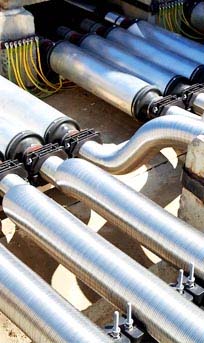
Токопроводы
[http://www.tokoprovod.ru/albom_2.php]Примечание.
Токопроводы напряжением до 1 кВ с жесткими шинами заводского изготовления, поставляемые комплектно на место монтажа, называют шинопроводами.
[http://www.naxso.ru/promo/?id=3]Тематики
Близкие понятия
Сопутствующие термины
- пофазно-экранированные токопроводы
- токопроводы с общей для трех фаз оболочкой
- токопроводы с общей для трех фаз оболочкой с разделительной перегородкой
EN
DE
FR
Англо-русский словарь нормативно-технической терминологии > wireway
-
10 staple
̈ɪˈsteɪpl I сущ. скобка, скоба, крюк;
колено Syn: cramp II
1. сущ.
1) а) уст. важнейший рынок б) главный продукт или один из главных продуктов, производимых в данном районе, основной предмет торговли в) главный элемент( чего-л.)
2) а) сырье (вообще) б) текст. волокно;
текст. штапель, штапельная длина
2. прил.
1) основной (о продуктах потребления или предметах торговли) staple foodstuffs ≈ основные продукты питания
2) важнейший, ведущий, главный, основной Syn: chief, main ( техническое) скоба;
крюк (техническое) колено (проволочная) скобка (для сшивания бумаг) (техническое) скреплять скобками сшивать скобками (бумаги) - to * three sheets together скрепить скобкой три страницы (горное) гезенк, слепой ствол главный продукт, производимый в данном районе - the *s of that country основные предметы производства данной страны основной товар, предмет торговли массовые товары;
основные продукты питания (обыкн. the *) главный элемент( чего-л.) ;
основная часть( чего-л.) ;
суть, основа( чего-л.) - the * of a diet основной продукт питания - politics is the * of his conversation его излюбленная тема - политика - current words forming the * of our language повседневные слова, составляющие основу нашего языка - the newspaper is for many people a * of daily reading многие читают, как правило, только газеты - cowboy dramas are a * on television ковбойские фильмы не сходят с экранов телевизоров - his blue suit was a * in his wardrobe он почти всегда был одет в синий костюм( историческое) рынок, где заключались сделки на оптовую продажу и на экспорт основной, составляющий важнейшую статью (часто для характеристики предметов торговли и производства данной местности) - * crops( сельскохозяйственное) основные /ведущие/ культуры - * exports основные статьи экспорта - * industries основные отрасли промышленности, особ. тяжелой главный, основной - * ration( военное) основной паек - * topic for gossip основная тема сплетен - * foodstuffs основные продукты питания (историческое) принимать товары на рынок, где заключались сделки на оптовую продажу и на экспорт подвергать проверке товары, подлежащие экспорту (текстильное) сырье, материал( текстильное) волокно( текстильное) пучок шерсти (текстильное) невыделанная шерсть( текстильное) штапель (волокна) - cotton * штапель хлопка (текстильное) штапельная длина( волокна) (текстильное) штапельное волокно( текстильное) штапельная ткань staple уст. важнейший рынок ~ текст. волокно ~ главный, основной ~ главный продукт или один из главных продуктов, производимых в данном районе ~ главный элемент (чего-л.) ;
the staple of conversation главная тема разговора ~ основной (о продуктах потребления или предметах торговли) ~ основной предмет торговли ~ скобка, скоба, крюк;
колено ~ сырье ~ текст. штапель (волокна) ;
штапельная длина (волокна) ~ главный элемент (чего-л.) ;
the staple of conversation главная тема разговора -
11 staple
I1. [ʹsteıp(ə)l] n1. тех.1) скоба; крюк2) колено2. (проволочная) скобка ( для сшивания бумаг)2. [ʹsteıp(ə)l] v1. тех. скреплять скобками2. сшивать скобками ( бумаги)3. горн. гезенк, слепой стволII1. [ʹsteıp(ə)l] n1. 1) главный продукт, производимый в данном районеthe staples of that country [of British industry] - основные предметы производства данной страны [английской промышленности]
2) основной товар, предмет торговли3) pl массовые товары; основные продукты питания2. (обыкн. the staple) главный элемент (чего-л.); основная часть (чего-л.); суть, основа (чего-л.)politics is the staple of his conversation - его излюбленная тема - политика
current words forming the staple of our language - повседневные слова, составляющие основу нашего языка
the newspaper is for many people a staple of daily reading - многие читают, как правило, только газеты
cowboy dramas are a staple on television - ковбойские фильмы не сходят с экранов телевизоров
his blue suit was a staple in his wardrobe - он почти всегда был одет в синий костюм
3. ист. рынок, где заключались сделки на оптовую продажу и на экспорт2. [ʹsteıp(ə)l] a1) основной, составляющий важнейшую статью (часто для характеристики предметов торговли и производства данной местности)staple crops - с.-х. основные /ведущие/ культуры
staple industries - основные отрасли промышленности, особ. тяжёлой
2) главный, основнойstaple ration - воен. основной паёк
3. [ʹsteıp(ə)l] v1. ист. принимать товары на рынок, где заключались сделки на оптовую продажу и на экспорт2. подвергать проверке товары, подлежащие экспортуII [ʹsteıp(ə)l] n текст.1. сырьё, материал2. волокно3. 1) пучок шерсти2) невыделанная шерсть4. 1) штапель ( волокна)2) штапельная длина ( волокна)5. 1) штапельное волокно2) штапельная ткань -
12 topical
актуальный имя прилагательное: -
13 discussion
[dɪs'kʌʃ(ə)n]nобсуждение, дискусския, разговор, прения, дебатыThere was much/considerable/public discussion about the new driving laws. — Новые правила автомобильного движения широко обсуждались.
There is not enough space in this article for an extended discussion of this question. — Размеры статьи не позволяют подробно обсудить данный вопрос.
- heated discussion- long discussion of smth
- vigorous discussion
- informal discussion
- earnest discussion of smth
- critical discussion of smth
- discussion of a delicate question
- right of free discussion
- matter for discussion
- question under discussion
- arouse much helpful discussion
- give rise to some stormy discussion
- cause a heated discussion
- avoid further discussion
- lead to invite further discussion
- begin a discussion
- break off a futile discussion
- carry on discussions on various topics of current interest
- devote a brief discussion to the subject
- enter into discussion
- have a profitable discussion with smb
- hold a discussion
- take part in a discussion on the problem
- waste time in discussion
- it is beyond discussion
- new topic taken up for discussion -
14 interest
I ['ɪntrəst] n1) интерес, интересы, благо, польза, заинтересованность, выгода, преимуществоHe found a fresh interest. — У него новое увлечение.
His main/great interest is football (music, painting, stamp-collecting). — Больше всего он увлекается футболом (музыкой, живописью, филателией).
Gardening is one of her many interests. — Садоводство одно из ее многочисленных занятий.
Is there anything of interest in the newspaper? — В газете есть что-нибудь интересное/заслуживающее?
The names are arranged in alphabetical order in the interests of ready reference. — Названия расположены в алфавитном порядке для удобства пользования.
It is to his interest to do so. — Ему выгодно так поступить/это в его интересах.
You'll find it to your interest to consult him. — Вам будет полезно с ним посоветоваться.
He takes no more than a passing interest in such things. — Он не очень интересуется такими вещами.
- great interest- public interests
- human interests
- material interests- unflagging interest- passing interest
- interest in smb's affairs
- material interests of the country
- legitimate interests of works
- smb's chief interest in life
- smb's best interests
- matter of local interest
- centre of world interest
- lack of interest
- general level of interest
- conflict of interests
- man of many interests
- object of intense interest
- matter of vital interest
- topic of historical interest
- names of commanding interest
- event of local interest
- agreement in their mutual interest
- just for interest
- in the interests of safety
- in the interests of national security
- in the interest of your children
- another fact of interest
- do smth with great interest
- do smth without interest
- be in smb's interests
- be against smb's interests
- be of interest
- have no interest in smb, smth
- arouse interest in smth
- do smth from interest
- arouse common interest
- quicken public interest
- acquire special interest
- have many-sided interests
- act for one's personal interests
- sacrifice the national interests to those of the world
- have no interests outside one's business
- lose interest in smth
- blunt interest in smth
- promote interest in the scheme
- take much interest in smth
- serve the interests of peace
- safeguard the interests of civilization
- have a personal interest in the mattes
- protect smb's interests
- have smb's real interests at heart
- look after one's own interest
- give up sacrifice one's interests
- have in view one's own interests
- add interest to a story
- interfere with smb's interests2) круги (люди, объединённые общими интересами и родом деятельности)- landed interests- vested interests
- outside interests
- influential British interests
- shipping interests
- iron interests
- publishing interest
- banking interest3) процент, прибыль, доходThe interest on the loan was 5 percent a year. — За ссуду брали 5 процентов годовых.
Interest is paid on money that is invested. — С вложенного капитала платят проценты.
- annual interestIt promoted the advancement of their national interests. — Это способствовало развитию национального благосостояния
- current interest
- average interest
- high interest - interest in profit
- interest on the capital
- interest on a loan
- high rate of interest
- lend money on high interest
- have an interest in a business
- buy a half interest in that firm
- lend money at an interest of 3% - borrow money at an interest of 3% - lend money on interest
- lose interest on your money
- pay interest on a loan
- live on interest from the capital
- pay a loan without interest
- repay smb with interest II ['ɪntrɪst] v1) интересовать, заинтересоватьThat doesn't interest me. — Меня это не интересует.
The offer interested him. — Это предложение его заинтересовало.
2) интересоваться, заинтересоватьсяWe don't know what he is interested in. — Мы не знаем, чем он интересуется.
She is not interested in where I live. — Ее не интересует, где я живу
- be interested in smb, smth -
15 trunking
кабельный короб
-
[Интент]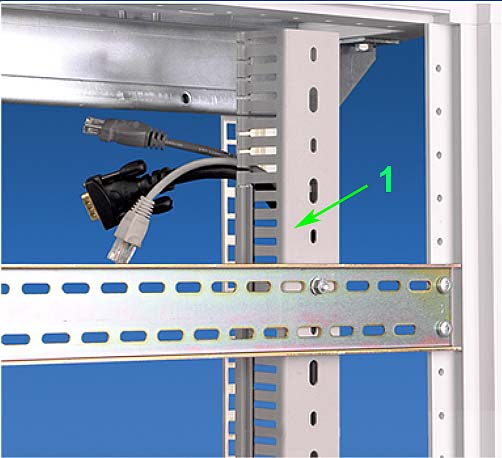
1 - Кабельный короб
Рис. Legrand
Тематики
- НКУ (шкафы, пульты,...)
- стойки и шкафы
EN
лоток
Лотком называется открытая конструкция, предназначенная для прокладки на ней проводов и кабелей.
Лоток не является защитой от внешних механических повреждений проложенных на нем проводов и кабелей. Лотки должны изготовляться из несгораемых материалов. Они могут быть сплошными, перфорированными или решетчатыми. Лотки могут применяться в помещениях и наружных установках
[ПУЭ. Раздел 2]
кабельный лоток
Опорная конструкция для кабелей, состоящая из протяженного основания с вертикальными бортами и не имеющая крышки.
Примечание - Кабельный лоток может быть перфорированным или сетчатым
[ ГОСТ Р МЭК 60050-826-2009]
лоток для прокладки кабеля(или полка)
Опорная конструкция в виденепрерывногопротяженного основания сребордамибортами и без крышки.
Примечание
Кабельный лоток может иметь или не иметь перфорацию.
[ ГОСТ Р МЭК 60204-1-2007]
лоток электротехнический
Открытый жёлоб на специальных подставках, применяемый для размещения в нём кабелей при надземной их прокладке на местности
[Терминологический словарь по строительству на 12 языках (ВНИИИС Госстроя СССР)]EN
cable tray
cable support consisting of a continuous base with raised edges but no covering
NOTE – A cable tray may be perforated or mesh.
[IEV number 826-15-08]
cable tray
cable support consisting of a continuous base and raised edges and no covering
NOTE A cable tray may be perforated or non-perforated.
[IEV 826-15-08]
[IEC 60204-1-2006]FR
chemin de câbles, m
tablette, f
support de câbles constitué d'une base continue avec de rebords, mais ne comportant pas de couvercle
NOTE – Un chemin de câbles peut être perforé ou en treillis.
[IEV number 826-15-08]
Кабельный лоток неперфорированный
Кабельный лоток перфорированный
Кабельный лоток проволочный (сетчатый)[ http://www.szpk-nw.ru/catalog_p.html?cid=5]
[ http://www.elsyst.ru/photo/catalog/6l.jpg]
Рис. 33. Кабельный лоток лестничного типа:
1, 2- прямые секции,
3 — угловая секция.
4, 5 — переходные секции и шарнирные соединители,
6 — прижимы,
7 — подвескиКабельные лотки применяют для прокладки силовых и контрольных кабелей и проводов напряжением до 1000 В и изготовляют из перфорированного гнутого металлического листа. Ширина лотка 50, 100, 200 и 400 мм, длина 2 м. В номенклатуру лотков входят готовые для сборки элементы, обеспечивающие создание трассы с необходимыми поворотами и разветвлениями в горизонтальной и вертикальной плоскостях.
Соединение лотков выполняют болтами, благодаря этому обеспечивается надежная электрическая цепь, необходимая для сети заземления. Крепят лотки на кронштейнах, подвесках и сборных кабельных конструкциях. Лотки, установленные на опорных конструкциях, крепят так, чтобы была исключена возможность сползания, опрокидывания и падения их.
При пересечении лотков с другими коммуникациями лотки прокладывают с отступом от стен, если это невозможно, выполняют обходы.[ http://forca.ru/knigi/oborudovanie/montazh-i-ekpluataciya-kabelei_8.html]
Кабельный лоток
[ http://www.solan.ru/data/lotok_dstr.gif]Тематики
- изделие электромонтажное
- электропроводка, электромонтаж
Обобщающие термины
Синонимы
EN
DE
- Kabeltrog
- Kabelwanne, f
FR
- canal électrotechnique
- chemin de câbles, m
- tablette, f
линия электропитания
-
[Интент]Оборудование связи может быть подвергнуто воздействию электромагнитных помех различных видов, наводимых линиями электропитания, сигнальными линиями или непосредственно излучаемых окружающей средой.
[ ГОСТ Р 54835-2011/IEC/TR 61850-1:2003]Подготовка производства монтажных работ включает в себя: изучение проектно-сметной документации или материалов актов обследования; подготовку необходимых строительных работ на объекте; монтаж слаботочных электрических соединительных линий постоянного тока; монтаж силовых линий электропитания;...
[ ГОСТ Р 53704-2009]Тематики
- электротехника, основные понятия
EN
транкинг
Метод автоматического распределения свободных каналов, предоставляемых по запросу абонента; при этом каждый терминал может работать на любой из нескольких фиксированных частот выделенного диапазона.
Принципиальное отличие транкингового метода доступа от конвенционального состоит в том, что он основан на формировании единой очереди ко всем ретрансляторам, которые связаны друг с другом общей шиной управления (рис. Т-9).
В традиционных сетях радиосвязи такая возможность отсутствует. Так, несмотря на то, что 3 из 5 ретрансляторов свободны (см. рисунок), они не могут быть заняты другими абонентами, которые жестко закреплены за конкретными ретрансляторами.
См. message-, port-, pseudo-trunking, public-, quasi-transmission ~, transmission ~.
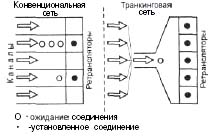
Рис. Т-9. Сравнение принципов предоставления каналов в конвенциональных и транкинговых сетях
[Л.М. Невдяев. Телекоммуникационные технологии. Англо-русский толковый словарь-справочник. Под редакцией Ю.М. Горностаева. Москва, 2002]Тематики
- электросвязь, основные понятия
EN
система сборных шин
шинопровод
Устройство, представляющее собой систему проводников, состоящее из шин, установленных на опорах из изоляционного материала или в каналах, коробах или подобных оболочках, и прошедшее типовые испытания.
Устройство может состоять из следующих элементов:
- прямые секции с узлами ответвления или без них;
- секции для изменения положения фаз, разветвления, поворота, а также вводные и переходные;
- секции ответвленные.
Примечание — Термин «шинопровод» не определяет геометрическую форму, габариты и размеры проводников.
(МЭС 441-12-07, с изменением)
[ ГОСТ Р 51321. 1-2000 ( МЭК 60439-1-92)]
шинопровод
Жесткий токопровод до 1 кВ заводского изготовления, поставляемый комплектными секциями.
[ПУЭ]
шинопровод
Жесткий токопровод напряжением до 1000 В заводского изготовления, поставляемый комплектными секциями.
[ОСТ 36-115-85]
шинопровод
Жесткий токопровод напряжением до 1 кВ, предназначенный для передачи и распределения электроэнергии, состоящий из неизолированных или изолированных проводников (шин) и относящихся к ним изоляторов, защитных оболочек, ответвительных устройств, поддерживающих и опорных конструкций.
[ ГОСТ Р 53310-2012]EN
busway
A prefabricated assembly of standard lengths of busbars rigidly supported by solid insulation and enclosed in a sheet-metal housing.
[ http://www.answers.com/topic/busway]
busway
Busway is defined by the National Electrical Manufacturers Association (NEMA) as a prefabricated electrical distribution system consisting of bus bars in a protective enclosure, including straight lengths, fittings, devices, and accessories. Busway includes bus bars, an insulating and/or support material, and a housing.
[ http://electrical-engineering-portal.com/siemens-busway-purpose-and-definition]1.1. Шинопроводы по назначению подразделяются на:
- распределительные, предназначенные для распределения электрической энергии;
- магистральные, предназначенные для передачи электрической энергии от источника к месту распределения (распределительным пунктам, распределительным шинопроводам) или мощным приемникам электрической энергии.
1.2. По конструктивному исполнению шинопроводы подразделяются на:
- трехфазные;
- трехфазные с нулевым рабочим проводником;
- трехфазные с нулевым рабочим и нулевым защитным проводником.
2. Основные параметры и размеры
2.1. Основные элементы шинопроводов
2.1.1. Основными элементами распределительных шинопроводов являются:а) прямые секции - для прямолинейных участков линии, имеющие места для присоединения одного или двух ответвительных устройств для секций длиной до 2 м включительно, двух, трех, четырех или более - для секций длиной 3 м;
б) прямые прогоночные секции - для прямолинейных участков линий, где присоединение ответвительных устройств не требуется;
в) угловые секции - для поворотов линии на 90° в горизонтальной и вертикальной плоскостях;
г) вводные секции или вводные коробки с коммутационной, защитной и коммутационной аппаратурой или без нее - для подвода питания к шинопроводам кабелем, проводами или шинопроводом;
д) переходные секции или устройства - для соединения двух шинопроводов на различные номинальные токи или шинопроводов разных конструкций;
е) ответвительные устройства (коробки, штепсели) - для разъемного присоединения приемников электрической энергии. Коробки должны выпускаться с разъединителем, с разъединителем и с предохранителями или с автоматическим выключателем;
з) присоединительные фланцы - для сочленения оболочек шинопроводов с оболочками щитов или шкафов;
и) торцовые крышки (заглушки) - для закрытия торцов крайних секций шинопровода;
к) устройства для крепления шинопроводов к элементам строительных конструкций зданий и сооружений;2.1.2. Основными элементами магистральных шинопроводов являются:
а) прямые секции - для прямолинейных участков линий;
б) угловые секции - для поворотов линий на 90° в горизонтальной и вертикальной плоскостях;
в) тройниковые секции - для разветвления в трех направлениях под углом 90° в горизонтальной и вертикальной плоскостях;
г) подгоночные секции - для подгонки линии шинопроводов до необходимой длины;
д) разделительные секции с разъединителем - для секционирования магистральных линий шинопроводов;
е) компенсационные секции - для компенсации температурных изменений длины линии шинопроводов;
ж) переходные секции - для соединения шинопроводов на разные номинальные токи;
з) ответвительные устройства (секции, коробки) - для неразборного, разборного или разъемного присоединения распределительных пунктов, распределительных шинопроводов или приемников электрической энергии. Коробки должны выпускаться с разъединителем, с разъединителем и предохранителями или с автоматическим выключателем; секции могут выпускаться без указанных аппаратов;
и) присоединительные секции - для присоединения шинопроводов к комплектным трансформаторным подстанциям;
к) проходные секции - для прохода через стены и перекрытия;
л) набор деталей и материалов для изолирования мест соединения секций шинопроводов с изолированными шинами;
м) устройства для крепления шинопроводов к элементам строительных конструкций зданий и сооружений;
н) крышки (заглушки) торцовые и угловые для закрытия торцов концевых секций шинопровода и углов.
2.2.3. В зависимости от вида проводников токопроводы подразделяются на гибкие (при использовании проводов) и жесткие (при использовании жестких шин).
Жесткий токопровод до 1 кВ заводского изготовления, поставляемый комплектными секциями, называется шинопроводом.
В зависимости от назначения шинопроводы подразделяются на:- магистральные, предназначенные в основном для присоединения к ним распределительных шинопроводов и силовых распределительных пунктов, щитов и отдельных мощных электроприемников;
- распределительные, предназначенные в основном для присоединения к ним электроприемников;
- троллейные, предназначенные для питания передвижных электроприемников;
- осветительные, предназначенные для питания светильников и электроприемников небольшой мощности.
[ПУЭ, часть 2]
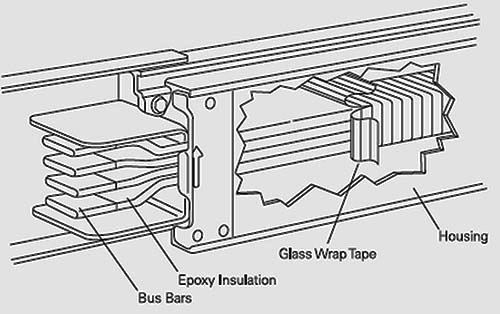
[ http://electrical-engineering-portal.com/siemens-busway-purpose-and-definition]
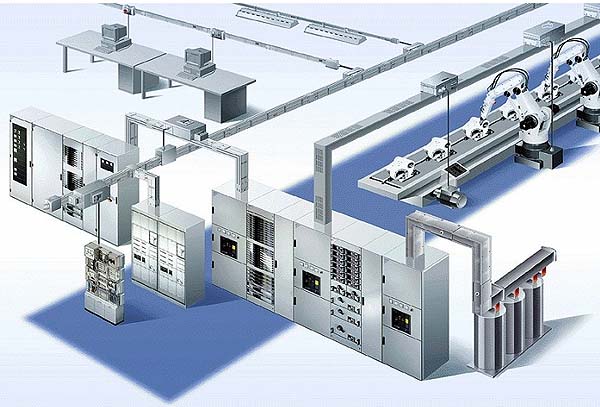
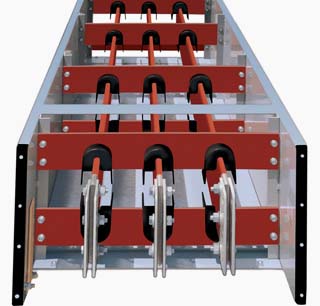
[ http://electrical-engineering-portal.com/standards-and-applications-of-medium-voltage-bus-duct]
Конструкция шинопровода на среднее напряжениеПараллельные тексты EN-RU
A major advantage of busway is the ease in which busway sections are connected together.
Electrical power can be supplied to any area of a building by connecting standard lengths of busway.
It typically takes fewer man-hours to install or change a busway system than cable and conduit assemblies.Основное преимущество шинопровода заключается в легкости соединения его секций.
Соединяя эти стандартные секции можно легко снабдить электроэнергией любую часть здания.
Как правило, установить или изменить систему шинопроводов занимает гораздо меньше времени, чем выполнить аналогичные работы, применяя разводку кабелем в защитных трубах.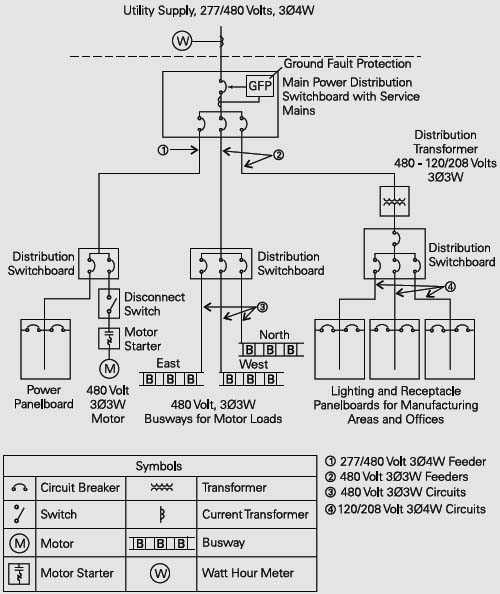
[ http://electrical-engineering-portal.com/siemens-busway-purpose-and-definition]
The total distribution system frequently consists of a combination of busway and cable and conduit.
In this example power from the utility company is metered and enters the plant through a distribution switchboard.
The switchboard serves as the main disconnecting means.Как правило, распределение электроэнергии производится как через шинопроводы, так и через проложенные в защитных трубах кабели.
В данном примере поступающая от питающей сети электроэнергия измеряется на вводе в главное распределительный щит (ГРЩ).
ГРЩ является главным коммутационным устройством.
The feeder on the left feeds a distribution switchboard, which in turn feeds a panelboard and a 480 volt, three-phase, three-wire (3Ø3W) motor.
Распределительная цепь, изображенная слева, питает распределительный щит, который в свою очередь питает групповой щиток и электродвигатель.
Электродвигатель получает питание через трехфазную трехпроводную линию напряжением 480 В.The middle feeder feeds another switchboard, which divides the power into three, three-phase, three-wire circuits. Each circuit feeds a busway run to 480 volt motors.
Средняя (на чертеже) распределительная цепь питает другой распределительный щит, от которого электроэнергия распределяется через три трехфазные трехпроводные линии на шинопроводы.
Каждый шинопровод используется для питания электродвигателей напряжением 480 В.The feeder on the right supplies 120/208 volt power, through a step-down transformer, to lighting and receptacle panelboards.
Распределительная цепь, изображенная справа, питает напряжением 120/208 В через понижающий трансформатор щитки для отдельных групп светильников и штепсельных розеток.
Branch circuits from the lighting and receptacle panelboards supply power for lighting and outlets throughout the plant.
[ http://electrical-engineering-portal.com/siemens-busway-purpose-and-definition]Групповые электрические цепи, идущие от групповых щитков, предназначены для питания всех светильников и штепсельных розеток предприятия.
[Перевод Интент]Selection of the busbar trunking system based on voltage drop.
[Legrand]Выбор шинопровода по падению напряжения.
[Перевод Интент]
Недопустимые, нерекомендуемые
Примечание(1)- Мнение автора карточкиТематики
- изделие электромонтажное
- электропроводка, электромонтаж
Обобщающие термины
Близкие понятия
- электропроводки, выполненные шинопроводами
Действия
- выбор шинопровода по...
- крепление шинопровода к опорным конструкциям
- монтаж шинопроводов
- применение шинопроводов в пожароопасных зонах
- проектирование шинопровода
- прокладка шинопровода
Сопутствующие термины
- вертикальный участок шинопровода
- горизонтальный участок шинопровода
- прямой участок шинопровода
- устройства для крепления шинопроводов
- шинопровод переменного тока на 1600 А
- электрическая сеть, выполняемая шинопроводами
EN
DE
FR
Англо-русский словарь нормативно-технической терминологии > trunking
-
16 busbar
сборная шина
Шина, к которой могут быть присоединены одна или несколько распределительных шин и/или блоков ввода или вывода.
[ ГОСТ Р 51321. 1-2000 ( МЭК 60439-1-92)]
[ ГОСТ Р МЭК 61439.1-2013]
сборные шины
Система проводников, соединяемых с блоком ввода и предназначенных для присоединения к ним фазных, нулевых защитных РЕ и нулевых рабочих N проводников нескольких распределительных и групповых электрических цепей.
Примечание — Термин «шина» не определяет ее конструкцию
[ ГОСТ Р 51732-2001]
главная шина
—
[Я.Н.Лугинский, М.С.Фези-Жилинская, Ю.С.Кабиров. Англо-русский словарь по электротехнике и электроэнергетике, Москва, 1999 г.]EN
main busbar
busbar to which one or several distribution busbars and/or incoming and outgoing units can be connected
[IEC 61439-1, ed. 2.0 (2011-08)]FR
jeu de barres principal
jeu de barres auquel un ou plusieurs jeux de barres de distribution et/ou des unités d'arrivée et de départ peuvent être raccordés
[IEC 61439-1, ed. 2.0 (2011-08)]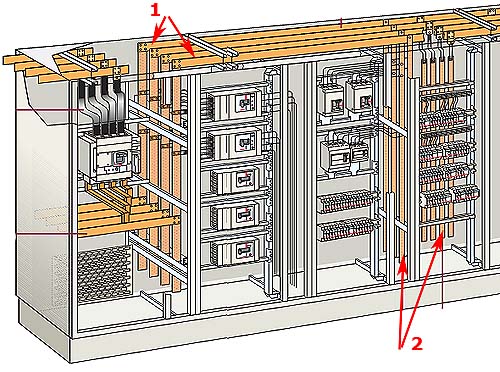
Рис. Legrand1 - Сборная шина
2 - Распределительные шины
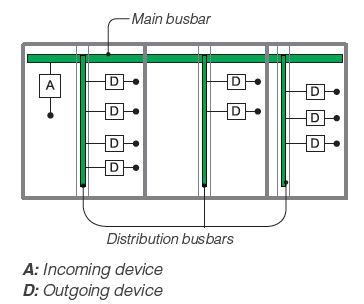
Рис. Schneider Electric:Main busbar - Сборная шина
Distribution busbars - Распределительные шины
A: Incoming device - А: Аппарат ввода
D: Outgoing device - D: Аппарат выводаТематики
- НКУ (шкафы, пульты,...)
EN
FR
система шин
Комплект элементов, связывающих между собой все присоединения электрического распределительного устройства.
[ ГОСТ 24291-90]EN
busbars (commonly called busbar)
in a substation, the busbar assembly necessary to make a common connection for several circuits
Example: three busbars for a three-phase system.
[IEV number 605-02-02]FR
jeu de barres (omnibus)
dans un poste, ensemble des barres omnibus nécessaires pour connecter des circuits
Exemple: trois barres pour un réseau triphasé.
[IEV number 605-02-02]Различают следующие системы:
-
одиночная система шин:
- одиночная несекционированная система шин;
- одиночная секционированная система шин;
-
двойная система шин
-
полуторная система шин
-
обходная система шин
- несекционированная система шин
-
секционированная система шин
- рабочая система шин
- резервная система шин
Тематики
- электротехника, основные понятия
Синонимы
EN
DE
FR
шина
Проводник с низким сопротивлением, к которому можно подсоединить несколько отдельных электрических цепей.
Примечание — Термин «шина» не включает в себя геометрическую форму, габариты или размеры проводника.
[ ГОСТ Р 51321. 1-2000 ( МЭК 60439-1-92)]
[ ГОСТ Р МЭК 61439.1-2013]
шина
Конструктивный элемент низковольтного комплектного устройства (НКУ).
Такой конструктивный элемент предназначен для того, чтобы к нему можно было легко присоединить отдельные электрические цепи (другие шины, отдельные проводники). Такие шины могут иметь различную конструкцию, геометрическую форму и размеры.
[Интент]
шинопроводшина
Медная, алюминиевая, реже стальная полоса, служащая для присоединения кабелей электрогенераторов, трансформаторов и т.д. к проводам питающей сети
[Терминологический словарь по строительству на 12 языках (ВНИИИС Госстроя СССР)]
общаяшина
-
[IEV number 151-12-30]
шина
-
[Я.Н.Лугинский, М.С.Фези-Жилинская, Ю.С.Кабиров. Англо-русский словарь по электротехнике и электроэнергетике, Москва]EN
busbar
low-impedance conductor to which several electric circuits can be connected at separate points
NOTE – In many cases, the busbar consists of a bar.
[IEV number 151-12-30]
busbar
An electrical conductor that makes a common connection between several circuits. Sometimes, electrical wire cannot accommodate high-current applications, and electricity must be conducted using a more substantial busbar — a thick bar of solid metal (usually copper or aluminum). Busbars are uninsulated, but are physically supported by insulators. They are used in electrical substations to connect incoming and outgoing transmission lines and transformers; in a power plant to connect the generator and the main transformers; in industry, to feed large amounts of electricity to equipment used in the aluminum smelting process, for example, or to distribute electricity in large buildings
[ABB. Glossary of technical terms. 2010]FR
barre omnibus, f
conducteur de faible impédance auquel peuvent être reliés plusieurs circuits électriques en des points séparés
NOTE – Dans de nombreux cas, une barre omnibus est constituée d’une barre.
[IEV number 151-12-30]
2. Проводник прямоугольного сечения из меди, предназначенный для электротехнических целей
(см. ГОСТ 434-78).
Поставляется в бухтах, а также в полосах длиной не менее 2,5 м; По существу, это просто проволока прямоугольного сечения. В указанном ГОСТе и в технической документации, в которой она применяется, обязательно указываются размеры этой проволоки. Например, "Шина ШММ 8,00х40,00 ГОСТ 434-78"
шина
Пруток прямоугольного сечения, применяемый в электротехнике в качестве проводника тока, изготовляемый прессованием или волочением.
[ ГОСТ 25501-82]Тематики
- НКУ (шкафы, пульты,...)
- заготовки и полуфабрикаты в металлургии
- кабели, провода...
Действия
- расположение шин «на ребро» [ПУЭ]
- расположение шин «плашмя» [ПУЭ]
Сопутствующие термины
- гибкая шина
- жесткая шина [ПУЭ]
- изолированные шины [ПУЭ]
- круглые шины [ПУЭ]
- неизолированные шины [ПУЭ]
- обходные шины [ПУЭ]
- профильные шины [ПУЭ]
- секционные шины [ПУЭ]
- фазная шина [ ГОСТ Р 51321.1-2000]
- четырехполосные шины с расположением полос по сторонам квадрата ("полый пакет") [ПУЭ]
- шина PEN-проводника
- шина для присоединения защитных проводников
- шина нулевого защитного проводника
- шина фазы А (B, C) [ПУЭ]
- шины однофазного тока [ПУЭ]
- шины прямоугольного (круглого, трубчатого, коробчатого) сечения [ПУЭ]
- шины трехфазного тока [ПУЭ]
EN
DE
FR
система сборных шин
шинопровод
Устройство, представляющее собой систему проводников, состоящее из шин, установленных на опорах из изоляционного материала или в каналах, коробах или подобных оболочках, и прошедшее типовые испытания.
Устройство может состоять из следующих элементов:
- прямые секции с узлами ответвления или без них;
- секции для изменения положения фаз, разветвления, поворота, а также вводные и переходные;
- секции ответвленные.
Примечание — Термин «шинопровод» не определяет геометрическую форму, габариты и размеры проводников.
(МЭС 441-12-07, с изменением)
[ ГОСТ Р 51321. 1-2000 ( МЭК 60439-1-92)]
шинопровод
Жесткий токопровод до 1 кВ заводского изготовления, поставляемый комплектными секциями.
[ПУЭ]
шинопровод
Жесткий токопровод напряжением до 1000 В заводского изготовления, поставляемый комплектными секциями.
[ОСТ 36-115-85]
шинопровод
Жесткий токопровод напряжением до 1 кВ, предназначенный для передачи и распределения электроэнергии, состоящий из неизолированных или изолированных проводников (шин) и относящихся к ним изоляторов, защитных оболочек, ответвительных устройств, поддерживающих и опорных конструкций.
[ ГОСТ Р 53310-2012]EN
busway
A prefabricated assembly of standard lengths of busbars rigidly supported by solid insulation and enclosed in a sheet-metal housing.
[ http://www.answers.com/topic/busway]
busway
Busway is defined by the National Electrical Manufacturers Association (NEMA) as a prefabricated electrical distribution system consisting of bus bars in a protective enclosure, including straight lengths, fittings, devices, and accessories. Busway includes bus bars, an insulating and/or support material, and a housing.
[ http://electrical-engineering-portal.com/siemens-busway-purpose-and-definition]1.1. Шинопроводы по назначению подразделяются на:
- распределительные, предназначенные для распределения электрической энергии;
- магистральные, предназначенные для передачи электрической энергии от источника к месту распределения (распределительным пунктам, распределительным шинопроводам) или мощным приемникам электрической энергии.
1.2. По конструктивному исполнению шинопроводы подразделяются на:
- трехфазные;
- трехфазные с нулевым рабочим проводником;
- трехфазные с нулевым рабочим и нулевым защитным проводником.
2. Основные параметры и размеры
2.1. Основные элементы шинопроводов
2.1.1. Основными элементами распределительных шинопроводов являются:а) прямые секции - для прямолинейных участков линии, имеющие места для присоединения одного или двух ответвительных устройств для секций длиной до 2 м включительно, двух, трех, четырех или более - для секций длиной 3 м;
б) прямые прогоночные секции - для прямолинейных участков линий, где присоединение ответвительных устройств не требуется;
в) угловые секции - для поворотов линии на 90° в горизонтальной и вертикальной плоскостях;
г) вводные секции или вводные коробки с коммутационной, защитной и коммутационной аппаратурой или без нее - для подвода питания к шинопроводам кабелем, проводами или шинопроводом;
д) переходные секции или устройства - для соединения двух шинопроводов на различные номинальные токи или шинопроводов разных конструкций;
е) ответвительные устройства (коробки, штепсели) - для разъемного присоединения приемников электрической энергии. Коробки должны выпускаться с разъединителем, с разъединителем и с предохранителями или с автоматическим выключателем;
з) присоединительные фланцы - для сочленения оболочек шинопроводов с оболочками щитов или шкафов;
и) торцовые крышки (заглушки) - для закрытия торцов крайних секций шинопровода;
к) устройства для крепления шинопроводов к элементам строительных конструкций зданий и сооружений;2.1.2. Основными элементами магистральных шинопроводов являются:
а) прямые секции - для прямолинейных участков линий;
б) угловые секции - для поворотов линий на 90° в горизонтальной и вертикальной плоскостях;
в) тройниковые секции - для разветвления в трех направлениях под углом 90° в горизонтальной и вертикальной плоскостях;
г) подгоночные секции - для подгонки линии шинопроводов до необходимой длины;
д) разделительные секции с разъединителем - для секционирования магистральных линий шинопроводов;
е) компенсационные секции - для компенсации температурных изменений длины линии шинопроводов;
ж) переходные секции - для соединения шинопроводов на разные номинальные токи;
з) ответвительные устройства (секции, коробки) - для неразборного, разборного или разъемного присоединения распределительных пунктов, распределительных шинопроводов или приемников электрической энергии. Коробки должны выпускаться с разъединителем, с разъединителем и предохранителями или с автоматическим выключателем; секции могут выпускаться без указанных аппаратов;
и) присоединительные секции - для присоединения шинопроводов к комплектным трансформаторным подстанциям;
к) проходные секции - для прохода через стены и перекрытия;
л) набор деталей и материалов для изолирования мест соединения секций шинопроводов с изолированными шинами;
м) устройства для крепления шинопроводов к элементам строительных конструкций зданий и сооружений;
н) крышки (заглушки) торцовые и угловые для закрытия торцов концевых секций шинопровода и углов.
2.2.3. В зависимости от вида проводников токопроводы подразделяются на гибкие (при использовании проводов) и жесткие (при использовании жестких шин).
Жесткий токопровод до 1 кВ заводского изготовления, поставляемый комплектными секциями, называется шинопроводом.
В зависимости от назначения шинопроводы подразделяются на:- магистральные, предназначенные в основном для присоединения к ним распределительных шинопроводов и силовых распределительных пунктов, щитов и отдельных мощных электроприемников;
- распределительные, предназначенные в основном для присоединения к ним электроприемников;
- троллейные, предназначенные для питания передвижных электроприемников;
- осветительные, предназначенные для питания светильников и электроприемников небольшой мощности.
[ПУЭ, часть 2]
[ http://electrical-engineering-portal.com/siemens-busway-purpose-and-definition]
[ http://electrical-engineering-portal.com/standards-and-applications-of-medium-voltage-bus-duct]
Конструкция шинопровода на среднее напряжениеПараллельные тексты EN-RU
A major advantage of busway is the ease in which busway sections are connected together.
Electrical power can be supplied to any area of a building by connecting standard lengths of busway.
It typically takes fewer man-hours to install or change a busway system than cable and conduit assemblies.Основное преимущество шинопровода заключается в легкости соединения его секций.
Соединяя эти стандартные секции можно легко снабдить электроэнергией любую часть здания.
Как правило, установить или изменить систему шинопроводов занимает гораздо меньше времени, чем выполнить аналогичные работы, применяя разводку кабелем в защитных трубах.[ http://electrical-engineering-portal.com/siemens-busway-purpose-and-definition]
The total distribution system frequently consists of a combination of busway and cable and conduit.
In this example power from the utility company is metered and enters the plant through a distribution switchboard.
The switchboard serves as the main disconnecting means.Как правило, распределение электроэнергии производится как через шинопроводы, так и через проложенные в защитных трубах кабели.
В данном примере поступающая от питающей сети электроэнергия измеряется на вводе в главное распределительный щит (ГРЩ).
ГРЩ является главным коммутационным устройством.
The feeder on the left feeds a distribution switchboard, which in turn feeds a panelboard and a 480 volt, three-phase, three-wire (3Ø3W) motor.
Распределительная цепь, изображенная слева, питает распределительный щит, который в свою очередь питает групповой щиток и электродвигатель.
Электродвигатель получает питание через трехфазную трехпроводную линию напряжением 480 В.The middle feeder feeds another switchboard, which divides the power into three, three-phase, three-wire circuits. Each circuit feeds a busway run to 480 volt motors.
Средняя (на чертеже) распределительная цепь питает другой распределительный щит, от которого электроэнергия распределяется через три трехфазные трехпроводные линии на шинопроводы.
Каждый шинопровод используется для питания электродвигателей напряжением 480 В.The feeder on the right supplies 120/208 volt power, through a step-down transformer, to lighting and receptacle panelboards.
Распределительная цепь, изображенная справа, питает напряжением 120/208 В через понижающий трансформатор щитки для отдельных групп светильников и штепсельных розеток.
Branch circuits from the lighting and receptacle panelboards supply power for lighting and outlets throughout the plant.
[ http://electrical-engineering-portal.com/siemens-busway-purpose-and-definition]Групповые электрические цепи, идущие от групповых щитков, предназначены для питания всех светильников и штепсельных розеток предприятия.
[Перевод Интент]Selection of the busbar trunking system based on voltage drop.
[Legrand]Выбор шинопровода по падению напряжения.
[Перевод Интент]
Недопустимые, нерекомендуемые
Примечание(1)- Мнение автора карточкиТематики
- изделие электромонтажное
- электропроводка, электромонтаж
Обобщающие термины
Близкие понятия
- электропроводки, выполненные шинопроводами
Действия
- выбор шинопровода по...
- крепление шинопровода к опорным конструкциям
- монтаж шинопроводов
- применение шинопроводов в пожароопасных зонах
- проектирование шинопровода
- прокладка шинопровода
Сопутствующие термины
- вертикальный участок шинопровода
- горизонтальный участок шинопровода
- прямой участок шинопровода
- устройства для крепления шинопроводов
- шинопровод переменного тока на 1600 А
- электрическая сеть, выполняемая шинопроводами
EN
DE
FR
3.1.31 сборная шина (busbar): Проводник с низким сопротивлением, к которому могут быть подсоединены несколько различных электрических цепей.
Источник: ГОСТ Р 54828-2011: Комплектные распределительные устройства в металлической оболочке с элегазовой изоляцией (КРУЭ) на номинальные напряжения 110 кВ и выше. Общие технические условия оригинал документа
Англо-русский словарь нормативно-технической терминологии > busbar
См. также в других словарях:
Topic Maps — is a standard for the representation and interchange of knowledge, with an emphasis on the findability of information. The ISO standard is formally known as ISO/IEC 13250:2003.A topic map represents information using topics (representing any… … Wikipedia
Current Issues and Events — (commonly known as Current Events) is one of several academic events sanctioned by the University Interscholastic League. The contest began in the 1990 91 scholastic year.Current Events is designed to test students knowledge and understanding of… … Wikipedia
Current TV — s official logo Launched August 1, 2005 Owned by Current Media, Inc. Slogan Your World. View. Headquarters San Francisco, California Website … Wikipedia
Current Opinion — Parent company Elsevier Founded 1990 Founder Vitek Tracz Publication types Academic journals Official website … Wikipedia
Topic outline of visual arts — The visual arts are a class of art forms, including painting, sculpture, photography, printmaking and others, that focus on the creation of works which are primarily visual in nature. Visual Arts that produce three dimensional objects, such as… … Wikipedia
Topic outline of the United States — For an alphabetical index of this subject, see the List of United States related articles. The United States of America is a federal constitutional republic comprising fifty states and a federal district. The country is situated mostly in central … Wikipedia
Topic outline of the Isle of Man — For an alphabetical index of this subject, see the List of Isle of Man related articles. The Isle of Man ( gv. Ellan Vannin, pronounced|ˈɛlʲən ˈvanɪn) or Mannin ( gv. Mannin, IPA| [ˈmanɪn] ) is a self governing Crown dependency, located in the… … Wikipedia
Topic outline of Israel — For an alphabetical index of this subject, see the List of Israel related articles. Israel, officially known as the State of Israel, is a country in the Middle East and Southwest Asia located on the eastern edge of the Mediterranean Sea. It… … Wikipedia
Topic outline of Mexico — For an alphabetical index of this subject, see the List of Mexico related articles. Mexico, officially known as the United Mexican States [The alternative translation Mexican United States is also, but not often, used.… … Wikipedia
Topic outline of the Republic of Ireland — For an alphabetical index of this subject, see the List of Ireland related articles. Ireland is a country in Northern Europe. The modern sovereign state occupies five sixths of the island of Ireland, which was partitioned in 1921. It is bordered… … Wikipedia
Topic outline of Asia — For a more comprehensive list, see the List of Asia related topics. Asia is the world s largest and most populous continent. It covers 8.6% of the Earth s total surface area (or 29.4% of its land area) and, with almost 4 billion people, it… … Wikipedia


