

-
21 надёжность (в работе)
надёжность (в работе)
-
[IEV number 312-07-06]EN
reliability (performance)
ability of an item to perform a required function under given conditions for a given time interval
Source: 191-02-06
[IEV number 312-07-06]FR
fiabilité
aptitude d'une entité à accomplir une fonction requise dans des conditions données pendant un intervalle de temps donné
Source: 191-02-06
[IEV number 312-07-06]Тематики
- измерение электр. величин в целом
EN
DE
FR
Русско-английский словарь нормативно-технической терминологии > надёжность (в работе)
-
22 ремонтопригодность
ремонтопригодность
Свойство объекта, заключающееся в приспособленности к поддержанию и восстановлению работоспособного состояния путем технического обслуживания и ремонта.
[ ГОСТ 27.002-89]
ремонтопригодность
Свойство объекта, заключающееся в его приспособленности при заданных условиях эксплуатации к поддержанию или восстановлению состояния, в котором он способен выполнять требуемую функцию, путем проведения технического обслуживания и ремонта, выполняемых с использованием установленых процессов и ресурсов.
[ОСТ 45.152-99]
ремонтопригодность
Свойство товара, заключающееся в приспособлении к предупреждению причин возникновения отказов, сбоев, поддержанию работоспособного состояния путем проведения техобслуживания и ремонтов.
[ ГОСТ Р 52104-2003]
ремонтопригодность
По ГОСТ 27. 002-89
В соответствии с ГОСТ 27.002-89 под ремонтопригодностью понимается "свойство объекта, заключающееся в приспособленности к предупреждению и обнаружению причин возникновения его отказов, повреждений и устранению их путем проведения ремонтов и технического обслуживания". При этом следует иметь в виду, что приспособленность объекта к плановым ремонтам относится к его ремонтопригодности.
[ ГОСТ 21623-76]EN
maintainability (performance)
the ability of an item under given conditions of use, to be retained in, or restored to, a state in which it can perform a required function, when maintenance is performed under given conditions and using stated procedures and resources
NOTE – The term "maintainability" is also used as a measure of maintainability performance.
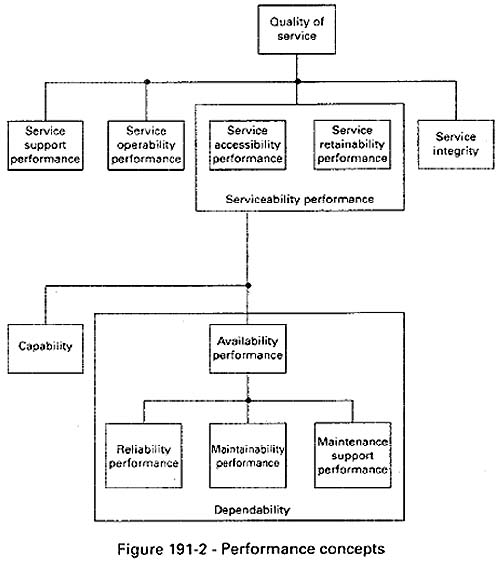
[IEV number 191-02-07]
maintainability
the probability that a given active maintenance action, for an item under given conditions of use can be carried out within a stated time interval, when the maintenance is performed under stated conditions and using stated procedures and resources
NOTE – The term "maintainability" is also used to denote the maintainability performance quantified by this probability.
Source: see 191-02-07
[IEV number 191-13-01]FR
maintenabilité
dans des conditions données d'utilisation, aptitude d'une entité à être maintenue ou rétablie dans un état dans lequel elle peut accomplir une fonction requise, lorsque la maintenance est accomplie dans des conditions données, avec des procédures et des moyens prescrits
NOTE – Le terme "maintenabilité" est aussi employé comme caractéristique de cette aptitude.
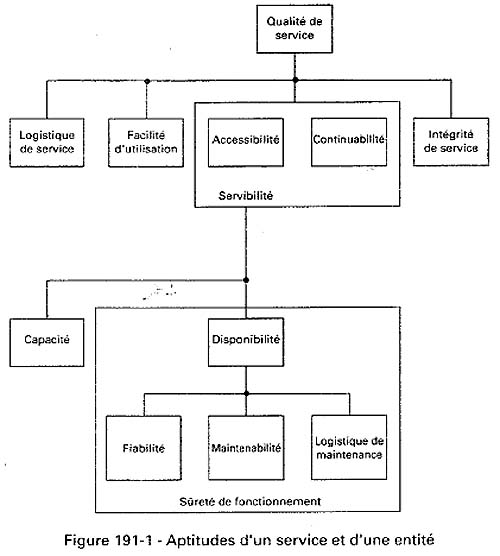
[IEV number 191-02-07]
maintenabilité
pour une entité donnée, utilisée dans des conditions données d'utilisation, probabilité pour qu'une opération donnée de maintenance active puisse être effectuée pendant un intervalle de temps donné, lorsque la maintenance est assurée dans des conditions données et avec l'utilisation de procédures et de moyens prescrits
NOTE – Le terme "maintenabilité" est aussi employé pour désigner l'aptitude caractérisée par cette probabilité.
Source: voir 191-02-07
[IEV number 191-13-01]Тематики
- надежность, основные понятия
- ресурсосбережение, обращение с отходами
- система техн. обслуж. и ремонта техники
- тех. обсл. и ремонт средств электросвязи
Обобщающие термины
EN
DE
FR
1.4. Ремонтопригодность
Maintainability
Свойство объекта, заключающееся в приспособленности к поддержанию и восстановлению работоспособного состояния путем технического обслуживания и ремонта
Источник: ГОСТ 27.002-89: Надежность в технике. Основные понятия. Термины и определения оригинал документа
3.38 ремонтопригодность (maintainability): Вероятность того, что конкретная операция по обслуживанию устройства в данных условиях эксплуатации может быть выполнена в заранее определенный период времени, в заранее определенных условиях с использованием заранее определенных операций и средств.
[МЭК 60987, пункт 2.10, модифицировано]
Источник: ГОСТ Р МЭК 61513-2011: Атомные станции. Системы контроля и управления, важные для безопасности. Общие требования оригинал документа
Русско-английский словарь нормативно-технической терминологии > ремонтопригодность
-
23 генератор
generator
– аварийный генератор
– асинхронный генератор
– аэрозольный генератор
– бесколлекторный генератор
– брызгозащищенный генератор
– вертикальный генератор
– возбуждать генератор
– вольтодобавочный генератор
– высокочастотный генератор
– генератор Аркадьева-Маркса
– генератор Баркхузена
– генератор биений
– генератор видеочастоты
– генератор возбуждается
– генератор воющий
– генератор времязадающий
– генератор вызывной
– генератор гармоник
– генератор дифференциальный
– генератор задающий
– генератор задержки
– генератор запирающий
– генератор зарядный
– генератор импульсов
– генератор индуктивно-емкостный
– генератор индукторный
– генератор интерполяционный
– генератор квантовый
– генератор колебаний
– генератор Мейснеровский
– генератор накачки
– генератор нейтронов
– генератор пара
– генератор пены
– генератор помех
– генератор развертки
– генератор раскачивается
– генератор реактивный
– генератор с самовозбуждением
– генератор СВЧ
– генератор СВЧ-диапазона
– генератор синхроимпульсов
– генератор строб-импульсов
– генератор тональный
– генератор ультразвука
– генератор униполярный
– генератор Хартли
– генератор частоты
– генератор ЧМ
– генератор шума
– гетерополярный генератор
– главный генератор
– гомополярный генератор
– горизонтальный генератор
– двухполярный генератор
– двухтактный генератор
– джозефсоновский генератор
– диапазонный генератор
– динатронный генератор
– дуговой генератор
– емкостно-резистивный генератор
– задающий генератор
– закрытый генератор
– запирающий генератор
– запускать генератор
– зарядный генератор
– звуковой генератор
– зуммерный генератор
– измерительный генератор
– импульсный генератор
– индукторный генератор
– интерполяционный генератор
– искровой генератор
– калибровочный генератор
– камертонный генератор
– квадратурный генератор
– кванторный генератор
– кварцевый генератор
– клистронный генератор
– когерентный генератор
– кольцевой генератор
– ламповый генератор
– магнетронный генератор
– магнитострикционный генератор
– магнитоэлектрический генератор
– мазерный генератор
– многоканальный генератор
– многотоковый генератор
– молекулярный генератор
– неявнополюсный генератор
– отключать генератор
– параметрический генератор
– педальный генератор
– плазменный генератор
– реактивный генератор
– резервный генератор
– релаксационный генератор
– релейный генератор
– самовозбуждающийся генератор
– самохронирующийся генератор
– сельсинный генератор
– синхронный генератор
– стояночный генератор
– струйный генератор
– тахометрический генератор
– твердотельный генератор
– тепловой генератор
– термозэрозольный генератор
– термоэлектрический генератор
– термоэлектронный генератор
– тиратронный генератор
– транзитронный генератор
– трехфазный генератор
– уксусный генератор
– ультразвуковой генератор
– униполярный генератор
– фотоэлектрический генератор
– хронирующий генератор
– широкополосный генератор
– электрофорный генератор
– эталонный генератор
– явнополюсный генератор
ацетиленовый генератор сухого типа — dry-residue acetylene generator
вызывной генератор звуковой частот — voice-frequency ringing generato
генератор бегущей волны — traveling-wave-tube oscillator
генератор белого шума — white noise generator
генератор биений в гетеродинном приеме — beat oscillator
генератор вихревой джозефсоновский — Josephson flux-flow oscillator
генератор возбуждающих импульсов — driver
генератор временной развертки — time-base generator
генератор вызывного тока — ringing generator
генератор высокой частоты — < radio> oscillator, RF oscillator
генератор газа свободнопоршневой — <chem.> free-piston gas generator
генератор задержанных импульсов — delayed pulse oscillator
генератор заднего полустроба — late-gate generator
генератор зарядный ветровой — wind charger
генератор заряженного торуса адиабатический — electron ring compressor
генератор затухающих колебаний — self-quenching oscillator, squegger
генератор звуковой частоты — audio oscillator, voice-frequency generator
генератор импульсного напряжения — high-voltage generator
генератор импульсного тока — surge current generator
генератор импульсных напряжений — <electr.> pulse voltage generator
генератор импульсов заданной формы — pulse waveform generator
генератор импульсов малого цикла — minor-cycle pulse generator
генератор импульсов отметки — <tech.> mark pulse generator, notch generator
генератор индукторного вызова — subharmonic generator
генератор испытательного сигнала — pattern generator
генератор испытательных импульсов — test signal generator
генератор кадровой развертки — field deflection oscillator, vertical-scanning generator
генератор качающейся частоты — < radio> sweep generator, sweep-frequency generator, wobbulator
генератор квантовый молекулярный — <phys.> maser
генератор комбинационных частот — comb generator
генератор компенсации темного пятн — shading-correcting generator
генератор коротких импульсов — narrow-pulse generator
генератор линейного напряжения развертки — <phot.> linear sweep generator
генератор масштабных импульсов — <tech.> range-marker oscillator
генератор меток времени — time-mark generator
генератор меток дальности — range-marker generator
генератор механических колебаний — generator of mechanical oscillations
генератор на топливных элементах — fuel-cell generator
генератор начинает возбуждаться — generator picks up
генератор несущей частоты — carrier oscillator
генератор низкой частоты — audio-oscillator
генератор одиночных импульсов — single-pulse generator
генератор опорного сигнала — reference generator
генератор пачек импульсов — pulse-burst generator
генератор переднего полустроба — early-gate generator
генератор переменного тока — alternating current generator, <engin.> alternator
генератор переменной частоты — <tech.> sweep generator
генератор пилообразного напряжения — saw-tooth voltage generator
генератор пилообразных импульсов — sawtooth generator
генератор плавного диапазона — variable frequency oscillator
генератор по схеме моста Вина — Wien-bridge oscillator
генератор повышенной частоты — rotary frequency changer
генератор погружного исполнения — submerged generator
генератор полного синхросигнала — composite sync generator
генератор постоянного напряжения — constant-potential generator
генератор постоянного тока — DC generator, direct-current generator
генератор постоянной силы тока — constant-current generator
генератор построен на лампе — oscillator uses valve
генератор построен по схеме — oscillator is set up as
генератор прерывистого действия — chopping oscillator
генератор прямоугольных импульсов — <tech.> square pulse generator, square wave-form oscillator, square-wave generator
генератор прямоугольных сигналов — <tech.> square wave generator
генератор пусковых импульсов — trigger-pulse generator
генератор равновероятных цифр — equiprobable number generator
генератор развертки дальности — <tech.> range sweep generator, range-sweep generator
генератор разрывных колебаний — <tech.> relaxation oscillator
генератор с внешним возбуждением — radio-frequency power amplifier
генератор с водородным охлаждением — hydrogen-cooled generator
генератор с индуктивной обратной связью — <tech.> Meissner oscillator, tickler-coil oscillator
генератор с искровым возбуждением — spark-excited oscillator
генератор с кварцевой стабилизацией — <tech.> crystal-controlled oscillator
генератор с ленточным лучом — <electr.> strip-beam oscillator
генератор с настроенными анодом и сеткой — < radio> Armstrong oscillator
генератор с независимым охлаждением — separate fan-cooled generator
генератор с постоянными магнитами — permanent magnet generator
генератор с тормозящим полем — retarding-field oscillator
генератор с фазовым сдвигом — phase-shift oscillator
генератор с частотной модуляцией — frequency-modulated oscillator
генератор сантиметрового диапазона — SHF oscillator
генератор сверхвысокой частоты — < radio> microwave oscillator
генератор света параметрический — <phys.> parametric light generator
генератор сетки частот — spectrum generator
генератор синусоидальных колебаний — harmonic oscillator
генератор синхронизирующих импульсов — clock pulse generator
генератор случайных сигналов — random-signal generator
генератор случайных событий — random event generator
генератор смешанного возбуждения — compound-wound generator
генератор со скоростной модуляцией — velocity-modulated generator
генератор со смешанным возбуждением — compound-wound generator
генератор собственных нужд — house generator
генератор срывающей частоты — quenching oscillator
генератор стабилизированный кварцем — <tech.> crystal-controlled oscillator
генератор стабилизированный линией — line-controlled oscillator
генератор стандартных импульсов — standard pulse generator
генератор стандартных сигналов — standard signal generator
генератор строчной развертки — horizontal deflection oscillator, horizontal-scanning generator
генератор ступенчатой функции — step-function generator
генератор тактовых импульсов — clock pulse generator, clock pulse source
генератор тонального вызова — ringer oscillator, voice-frequency ringer
генератор трехточечный с индуктивной связью — < radio> Bartley oscillator, tapped-coil oscillator
генератор трехточный с емкостной связью — < radio> Colpitts oscillator, tapped-capacitor oscillator
генератор ударного возбуждения — shock-excited oscillator
генератор ударных волн — shock-wave generator
генератор узких строб-импульсов — narrow gate generator
генератор управляемый напряжением — voltage-controlled oscillator
генератор хронирующих импульсов — <tech.> base-pulse generator
генератор цветных изображений — <phot.> color pattern generator
дуговой генератор плазмы — arc plasma generator
заторможенный блокинг - генератор — biassed blocking oscillator
квантовый генератор ИК-диапазона — infrared laser
квантовый генератор СВЧ — maser
квантовый генератор СВЧ на аммиаке — ammonia gas maser
квантовый генератор СВЧ на порошке — powder maser
квантовый генератор СВЧ на рубине — ruby maser
маломощный генератор импульсов — low-level pulser
матричный генератор импульсов — matrix-type pulse generator
мощный генератор импульсов — power pulser
оптический инжекционный квантовый генератор — injection laser
оптический квантовый генератор — laser
ставить генератор под нагрузку — throw generator on the load
хронированный импульсный генератор — timed pulse oscillator
эквивалентный генератор напряжения — constant-voltage generator
-
24 σοφία
σοφία, ας, ἡ (s. σοφίζω, σοφός; Hom., Pre–Socr. et al.; LXX, TestSol; TestJob 37:6; Test12patr, JosAs; AscIs 3:23; AssMos Fgm. e; EpArist, Philo, Joseph., Just.,Tat., Ath.)① the capacity to understand and function accordingly, wisdom.ⓐ natural wisdom that belongs to this world σοφία Αἰγυπτίων (Synes., Provid. 1, 1 p. 89a; Jos., Ant. 2, 286; cp. Tat. 31, 1 πάσης βαρβάρου σοφίας ἀρχηγόν [of Moses]) Ac 7:22 (on the subj. s. Philo, Vita Mos. 1, 20ff; Schürer II 350). In contrast to God’s wisdom and the wisdom that comes fr. God ἡ σοφία τῶν σοφῶν 1 Cor 1:19 (Is 29:14). ἡ σοφία τοῦ κόσμου (τούτου) vs. 20; 3:19. σοφία τοῦ αἰῶνος τούτου 2:6b. ἀνθρωπίνη σοφία 2:13. ς. ἀνθρώπων vs. 5. Cp. 1:21b, 22; 2:1. σοφία λόγου cleverness in speaking 1:17. On ἐν πειθοῖς σοφίας λόγοις 2:4 see πειθός. σοφία σαρκική 2 Cor 1:12. ς. ἐπίγειος, ψυχική, δαιμονιώδης Js 3:15 (cp. ς. as ironical referent for dissident teaching: ἡ παμποίκιλος ς. [τῆς] Περατικῆς αἱρέσεως Hippol., Ref. 5, 17, 1).—An advantage that is given to certain persons (like strength and riches, Just., D. 102, 6) 1 Cl 13:1 (Jer 9:22); 32:4; 38:2. So perh. also 39:6 (Job 4:21); but s. bα.ⓑ transcendent wisdomα. wisdom that God imparts to those who are close to God. Solomon (3 Km 5:9; Pr 1:2; Jos., Ant. 8, 168 ς. τοῦ Σ; AssMos Fgm. e [Denis p. 65]; Orig., C. Cels. 3, 45, 9) Mt 12:42; Lk 11:31; Stephen Ac 6:10; Paul 2 Pt 3:15; Pol 3:2; to those believers who are called to account for their faith Lk 21:15. The gift of unveiling secrets (2 Km 14:20; Da 1:17; 2:30. Oenomaus in Eus., PE 5, 27, 1 ἡ σοφία is necessary for the proper use of the oracles) Ac 7:10; Rv 13:18; 17:9. τὸν δεσπότην τὸν δόντα μοι τὴν σοφίαν τοῦ γράψαι τὴν ἱστορίαν ταύτην the Lord, who gave me the wisdom to write this account GJs 25:1. Good judgment in the face of human and specif. Christian demands (practical) wisdom Ac 6:3; Col 4:5; Js 1:5; 3:13, 17 (for the view that ς. in Js 1:5; 3:17=πνεῦμα s. WBieder, TZ 5, ’49, 111). The apostle teaches people ἐν πάσῃ σοφίᾳ Col 1:28, and Christians are to do the same among themselves 3:16 (ἐν πάσῃ ς. also Eph 1:8; Col 1:9).—W. φρόνησις (q.v. 2) Eph 1:8. W. ἀποκάλυψις vs. 17. W. σύνεσις (Jos., Ant. 8, 49): σοφία καὶ σύνεσις πνευματική Col 1:9. σοφία, σύνεσις, ἐπιστήμη, γνῶσις (cp. Philo, Gig. 27) B 2:3; 21:5. σοφία καὶ νοῦς τῶν κρυφίων αὐτοῦ wisdom and understanding of his (i.e. the Lord’s) secrets 6:10.—As a spiritual gift the λόγος σοφίας (cp. Just., D. 121, 2) stands beside the λόγος γνώσεως 1 Cor 12:8 (s. γνῶσις 1 and cp. Aesopica 213, 1 P.: Τύχη ἐχαρίσατο αὐτῷ λόγον σοφίας). Paul differentiates betw. his preaching to unbelievers and immature Christians and σοφίαν λαλεῖν ἐν τοῖς τελείοις 2:6a; the latter he also calls λαλεῖν θεοῦ σοφίαν ἐν μυστηρίῳ set forth the wisdom that comes fr. God as a mystery vs. 7 (WBaird, Interpretation 13, ’59, 425–32).—The false teachers of Colossae consider that their convictions are σοφία Col 2:23.—JdeFinance, La σοφία chez St. Paul: RSR 25, ’35, 385–417.β. wisdom of Christ and of Godא. Christ: of Jesus as a boy (s. ἡλικία 1b) Lk 2:40, 52. Of him as an adult Mt 13:54; Mk 6:2. Of the exalted Christ ἐν ᾧ εἰσιν πάντες οἱ θησαυροὶ τῆς σοφίας καὶ γνώσεως Col 2:3.—Rv 5:12. By metonymy Χρ. Ἰ., ὸ̔ς ἐγενήθη σοφία ἡμῖν ἀπὸ θεοῦ Christ Jesus, who has become a source of wisdom from God for us 1 Cor 1:30. This last makes a transition toב. wisdom of God (Diog. L. 1, 28 σοφίᾳ πρῶτον εἶναι τὸν θεόν; Theoph. Ant. I, 6 [p. 70, 18] ς. τοῦ θεοῦ): revealed in his creation and rule of the world 1 Cor 1:21a, or in the measures intended to bring salvation to the believers Ro 11:33 (here w. γνῶσις; cp. TestJob 37:6 of God’s depth of wisdom); Eph 3:10; Hv 1, 3, 4 (w. πρόνοια).—Rv 7:12; 1 Cl 18:6 (Ps 50:8); B 16:9 (cp. δικαίωμα 1). Christ is called θεοῦ σοφία the embodiment of the wisdom of God 1 Cor 1:24 (cp. א above; Just., D. 61, 3 ὁ λόγος τῆς σοφίας; Diog. L. 9, 50 Protagoras is called Σοφία.—Lucian in Peregr. 11 speaks ironically of the θαυμαστὴ σοφία τῶν Χριστιανῶν. Orig., C. Cels. 6, 44, 27 τῷ υἱῷ τοῦ θεοῦ ὄντι δικαιοσύνῃ καὶ ἀληθείᾳ καὶ ς.)—UWilckens, Weisheit u. Torheit ( 1 Cor 1 and 2), ’59; FChrist, Jesus Sophia (synopt.) ’70.② personified wisdom, Wisdom (Ael. Aristid. 45, 17 K. as a mediator betw. Sarapis and humans; perh.=Isis; AHöfler, D. Sarapishymnus des Ael. Aristid. ’35, 50 and 53f; the name of an aeon Iren. 1, 2, 3 [Harv. I 16, 5]; s. also Did., Gen, 213, 12). In connection w. Pr 1:23–33: 1 Cl 57:3 (λέγει ἡ πανάρετος σοφία), 5 (=Pr 1:29); 58:1. On ἐδικαιώθη ἡ σοφία κτλ. Mt 11:19; Lk 7:35 cp. δικαιόω 2bα and Ps.-Pla., Eryx. 6, 394d ἡ σοφία καὶ τὰ ἔργα τὸ ἀπὸ ταύτης=wisdom and her fruits. ἡ σοφία τοῦ θεοῦ εἶπεν Lk 11:49 introduces a statement made by ‘wisdom’ (‘wisdom’ is variously explained in this connection; on the one hand, it is said to refer to the OT, or to an apocryphal book by this title [s. 3 below]; on the other hand, Jesus is thought of as proclaiming a decree of divine wisdom, or Lk is thinking of wisdom that Jesus has communicated to them at an earlier time).③ a book titled ‘The Wisdom of God’, s. 2.—EBréhier, Les idées philosophiques et religieuses de Philon d’Alexandrie 1907, 115ff; JMeinhold, Die Weisheit Israels 1908; GHoennicke, RE XXI 1908, 64ff; HWindisch, Die göttl. Weisheit der Juden u. die paulin. Christologie: Heinrici Festschr. 1914, 220 ff; PHeinisch, Die persönl. Weisheit des ATs in religionsgesch. Beleuchtung2 1923; Bousset, Rel.3 343ff; FFerrari, Il Progresso religioso 8, 1928, 241–53; MTechert, La notion de la Sagesse dans les trois prem. siècles: Archiv. f. Gesch. d. Philos. n.s. 32, 1930, 1–27; WKnox, St. Paul and the Church of the Gentiles ’39, 55–89; BRigaux, NTS 4, ’57/58, esp. 252–57 (Qumran); HConzelmann, Pls. u. die Weisheit, NTS 12, ’66, 231–44; MSuggs, Wisdom, Christology, and Law in Mt, ’70. Other lit. in Schürer III/1, 198–212.—BGladigow, Sophia und Kosmos, Untersuchungen zur frühgeschichte von σοφό und σοφίη ’65.—DELG s.v. σοφό. M-M. EDNT. TW. Sv. -
25 σῶμα
σῶμα, ατος, τό (Hom.+) ‘body.’① body of a human being or animal, bodyⓐ dead body, corpse (so always in Hom. [but s. HHerter, σῶμα bei Homer: Charites, Studien zur Altertumswissenschaft, ELanglotz Festschr., ed. KvonSchauenburg ’57, 206–17] and oft. later, e.g. Memnon: 434 Fgm. 1, 3, 3 Jac. καίειν τὸ ς.=burn the corpse; ins, pap, LXX; PsSol 2:27; TestJob 52:11; ApcMos 34 al.; Philo, Abr. 258; Jos., Bell. 6, 276, Ant. 18, 236; Ar. 4, 3; Mel., P. 28, 196) Mt 14:12 v.l.; 27:59; Mk 15:45 v.l.; Lk 17:37; Ac 9:40; GPt 2:4; pl. J 19:31. W. gen. Mt 27:58; Mk 15:43; Lk 23:52, 55; 24:3, 23; J 19:38ab, 40; 20:12; Jd 9; GPt 2:3. Pl. Mt 27:52; Hb 13:11. AcPlCor 2:27.ⓑ the living body (Hes. et al.) of animals Js 3:3.—Mostly of human beings Mt 5:29f; 6:22f; 26:12; Mk 5:29; 14:8; Lk 11:34abc; J 2:21; Ro 1:24; 1 Cor 6:18ab; IRo 5:3. τὰ τοῦ σώματος the parts of the body 4:2. Of women αἱ ἀσθενεῖς τῷ σώματι 1 Cl 6:2; cp. Hv 3, 11, 4.—W. and in contrast to πνεῦμα (4 Macc 11:11) Ro 8:10, 13; 1 Cor 5:3; 7:34; Js 2:26. W. and in contrast to ψυχή (Pla., Gorg. 47, 493a; Diod S 34 + 35 Fgm. 2, 30; Appian, Bell. Civ. 5, 112 §467; Ael. Aristid. 45, 17f K.=8 p. 88f D.; Lucian, Imag. 23; PGM 7, 589; Wsd 1:4; 8:19f; 2 Macc 7:37; 14:38; 4 Macc 1:28; ApcEsdr 7:3 p. 32, 13 Tdf.; EpArist 139; Philo; Jos., Bell. 3, 372–78; 6, 55; Just., A I, 8, 4; D. 6, 2 al.; Tat. 13, 1; Ath. 1, 4; Did., Gen. 56, 4; Theoph. Ant. 1, 5 [p. 66, 2]) Mt 6:25ab; 10:28ab; Lk 12:4 v.l., 22f; 2 Cl 5:4 (a saying of Jesus, fr. an unknown source); 12:4; MPol 14:2; AcPl Ha 1, 4. τὸ πνεῦμα καὶ ἡ ψυχὴ καὶ τὸ σῶμα (s. the Christian POxy 1161, 6 [IV A.D.]) 1 Th 5:23. W. and in contrast to its parts (ApcSed 11:13; Mel., P. 78, 563) Ro 12:4; 1 Cor 12:12abc (Ltzm. ad loc.), 14–20 (PMich 149, 4, 26 [II A.D.] ἧπαρ … ὅλον τὸ σῶμα); Js 3:6; 1 Cl 37:5abcd. The body as the seat of sexual function Ro 4:19; 1 Cor 7:4ab (rights over the σῶμα of one’s spouse as Artem. 1, 44 p. 42, 14f; Iren. 1, 13, 3 [Harv. I 119, 10]).—The body as seat of mortal life εἶναι ἐν σώματι be in the body = alive, subject to mortal ills (TestAbr A 9 p. 87, 3 [Stone p. 22]; Poryphr., Abst. 1, 38) Hb 13:3. ἐνδημεῖν ἐν τῷ σώματι 2 Cor 5:6 (s. ἐνδημέω). ἐκδημῆσαι ἐκ τοῦ σώματος vs. 8 (s. ἐκδημέω). διὰ τοῦ σώματος during the time of one’s mortal life (cp. Lucian, Menipp. 11, end, Catapl. 23) vs. 10 (s. κομίζω 3, but s. also below in this section). Paul does not know whether, in a moment of religious ecstasy, he was ἐν σώματι or ἐκτὸς (χωρὶς) τοῦ σώματος 12:2f (of Epimenides [A2: Vorsokrat.5 I p. 29] it was said ὡς ἐξίοι ἡ ψυχὴ ὁπόσον ἤθελε καιρὸν καὶ πάλιν εἰσῄει ἐν τῷ σώματι; Clearchus, Fgm. 7: καθάπερ ὁ Κλέαρχος ἐν τοῖς περὶ ὕπνου φησίν, περὶ τῆς ψυχῆς, ὡς ἄρα χωρίζεται τοῦ σώματος καὶ ὡς εἴσεισιν εἰς τὸ σῶμα καὶ ὡς χρῆται αὐτῷ οἷον καταγωγίῳ [a resting-place]. In Fgm. 8 Clearchus tells about Cleonymus the Athenian, who seemed to be dead, but awakened after 3 days and thereupon reported everything that he had seen and heard ἐπειδὴ χωρὶς ἦν τοῦ σώματος. His soul is said finally to have arrived εἴς τινα χῶρον ἱερὸν τῆς Ἑστίας; Maximus Tyr. 38, 3a–f Ἀριστέας ἔφασκεν τὴν ψυχὴν αὐτῷ καταλιποῦσαν τὸ σῶμα in order to wander through the universe. He finds faith everywhere. Similarly 10, 2f. See also the story of Hermotimus in Apollon. Paradox. 3 as well as Lucian, Musc. Enc. [The Fly] 7.—On the two kinds of transcendent vision [with or without the body] s. Proclus, In Pla. Rem Publ. II p. 121, 26ff Kroll: οἱ μὲν μετὰ τοῦ σώματος τῶν τοιούτων [like Ἐμπεδότιμος] ἵστορες [=eyewitnesses], οἱ δὲ ἄνευ σώματος [like Κλεώνυμος]. καὶ πλήρεις αἱ παραδόσεις τούτων.). ἀπὼν τῷ σώματι (παρὼν δὲ τῷ πνεύματι) 1 Cor 5:3. ἡ παρουσία τοῦ σώματος 2 Cor 10:10 (παρουσία 1). The body is the instrument of human experience and suffering 4:10ab; Gal 6:17 (allusion AcPlCor 2, 35); Phil 1:20; the body is the organ of a person’s activity: δοξάσατε τὸν θεὸν ἐν τῷ σώματι ὑμῶν glorify God through your body, i.e. by leading an upright life 1 Cor 6:20; cp. Ro 12:1. This may be the place (s. above in this section) for διὰ τοῦ σώματος 2 Cor 5:10 which, in that case, would be taken in an instrumental sense with or through the body (cp. Pla., Phd. 65a; Ps.-Pla., Axioch. 13, 371c; Aelian, NA 5, 26 τὰ διὰ τοῦ σώματος πραττόμενα). In some of the last-named passages (such as Ro 12:1; Phil 1:20; also Eph 5:28 w. parallel in Plut., Mor. 142e: s. HAlmqvist, Plut. u. d. NT ’46, 116f) the body is almost synonymous w. the whole personality (as Aeschin., Or. 2, 58; X., An. 1, 9, 12 τὰ ἑαυτῶν σώματα=themselves. Appian, Syr. 41 §218 παρεδίδου τὸ σῶμα τοῖς ἐθέλουσιν ἀπαγαγεῖν=[Epaminondas] gave himself up to those who wished to take him away, Mithr. 27 §107 ἐς τὸ σῶμα αὐτοῦ=against his person, Bell. Civ. 2, 106 §442 Caesar’s person [σῶμα] is ἱερὸς καὶ ἄσυλος=sacred and inviolable; 3, 39 §157 ἔργον … σῶμα=course of action … person; Mitt-Wilck. I/2, 55, 7 [III B.C.] ἑκάστου σώματος=for every person. See Wilcken’s note).—Because it is subject to sin and death, man’s mortal body as τὸ σῶμα τῆς σαρκός (σάρξ 2cα) Col 2:11 is a σῶμα τῆς ἁμαρτίας Ro 6:6 or τοῦ θανάτου 7:24; cp. 8:11. In fact, σῶμα can actually take the place of σάρξ 8:13 (cp. Herm. Wr. 4, 6b ἐὰν μὴ πρῶτον τὸ σῶμα μισήσῃς, σεαυτὸν φιλῆσαι οὐ δύνασαι; 11, 21a.—Cp. Hippol., Ref. 5, 19, 6). As a σῶμα τῆς ταπεινώσεως lowly body it stands in contrast to the σῶμα τῆς δόξης glorious body of the heavenly beings Phil 3:21. In another pass. σῶμα ψυχικόν of mortals is opposed to the σῶμα πνευματικόν after the resurrection 1 Cor 15:44abc.—Christ’s earthly body, which was subject to death (Orig., C. Cels. 2, 9, 13) Ro 7:4; Hb 10:5 (Ps 39:7 v.l.), 10; 1 Pt 2:24; AcPlCor 2:16f. τὸ σῶμα καὶ τὰ ὀστᾶ καὶ τὸ πνεῦμα Χριστοῦ 2:32. τὸ σῶμα τῆς σαρκὸς αὐτοῦ Col 1:22. Esp. in the language of the Eucharist (opp. αἷμα) Mt 26:26; Mk 14:22; Lk 22:19; 1 Cor 10:16 (GBornkamm, NTS 2, ’56, 202–6); 11:24, 27, 29. S. the lit. s.v. ἀγάπη 2 and εὐχαριστία 3, also JBonsirven, Biblica 29, ’48, 205–19.—ἓν σῶμα a single body 1 Cor 6:16 (cp. Jos., Ant. 7, 66 Δαυίδης τήν τε ἄνω πόλιν κ. τὴν ἄκραν συνάψας ἐποίησεν ἕν σῶμα; Artem. 3, 66 p. 196, 9; RKempthorne, NTS 14. ’67/68, 568–74).② pl. σώματα slaves (Herodas 2, 87 δοῦλα σώματα; Polyb. et al.; oft. Vett. Val.; ins, pap; Gen 36:6; Tob 10:10; Bel 32; 2 Macc 8:11; Jos., Ant. 14, 321; cp. our colloq. ‘get some bodies for the job’) Rv 18:13 (cp. Ezk 27:13; the abs. usage rejected by Atticists, s. Phryn. 378 Lob.).③ plant and seed structure, body. In order to gain an answer to his own question in 1 Cor 15:35 ποίῳ σώματι ἔρχονται; (i.e. the dead after the resurrection), Paul speaks of bodies of plants (which are different in kind fr. the ‘body’ of the seed which is planted.—Maximus Tyr. 40, 60e makes a distinction betw. the σώματα of the plants, which grow old and pass away, and their σπέρματα, which endure.—σώματα of plants also in Apollon. Paradox. 7 [after Aristot.]) vs. 37f, and of σώματα ἐπουράνια of the heavenly bodies vs. 40 (cp. Ps.-Aristot., De Mundo 2, 2 the stars as σώματα θεῖα; Maximus Tyr. 21, 8b οὐρανὸς κ. τὰ ἐν αὐτῷ σώματα, acc. to 11, 12a οἱ ἀστέρες; 40, 4h; Sallust. 9 p. 18, 5).④ substantive reality, the thing itself, the reality in imagery of a body that casts a shadow, in contrast to σκιά (q.v. 3) Col 2:17.⑤ a unified group of people, body fig. ext. of 1, of the Christian community or church (cp. Cyr. Ins. 58, ‘body of the Hellenes’; Polyaenus, Exc. 18, 4 of the phalanx; Libanius, Or. 1 p. 176, 25 F. τὸ τῆς πόλεως ς.; Plut., Philop. 360 [8, 2]), esp. as the body of Christ, which he fills or enlivens as its Spirit (in this case the head belongs with the body, as Appian, Bell. Civ. 3, 26 §101, where a severed head is differentiated from τὸ ἄλλο σῶμα=the rest of the body), or crowns as its Head (Hdt. 7, 140; Quint. Smyrn. 11, 58; SIG 1169, 3; 15 κεφαλή w. σῶμα as someth. equally independent; Orig., C. Cels. 6, 79, 27): οἱ πολλοὶ ἓν σῶμά ἐσμεν ἐν Χριστῷ Ro 12:5. Cp. 1 Cor 10:17; 12:13, 27; Eph (s. Schlier s.v. ἐκκλησία 3c) 1:23; 2:16; 4:12, 16; 5:23, 30; Col 1:18, 24; 2:19; 3:15; ISm 1:2; Hs 9, 17, 5; 9, 18, 3f. ἓν σῶμα καὶ ἓν πνεῦμα Eph 4:4; cp. Hs 9, 13, 5; 7 (Iambl., Vi. Pyth. 30, 167: all as ἓν σῶμα κ. μία ψυχή; also Just., D. 42, 3) διέλκομεν τὰ μέλη τοῦ Χριστοῦ καὶ στασιάζομεν πρὸς τὸ σῶμα τὸ ἴδιον 1 Cl 46:7.—T Schmidt, Der Leib Christi (σῶμα Χριστοῦ) 1919; EKäsemann, Leib u. Leib Christi ’33 (for a critique s. SHanson, Unity of the Church in the NT ’46, 113–16); ÉMersch, Le Corps mystique du Christ2 ’36; AWikenhauser, D. Kirche als d. myst. Leib Christi, nach dem Ap. Pls2 ’40; EPercy, D. Leib Christi in d. paulin. Homologumena u. Antilegomena ’42; RHirzel, Die Person: SBMünAk 1914 H. 10 p. 6–28 (semantic history of σῶμα); WKnox, Parallels to the NT use of σῶμα: JTS 39, ’38, 243–46; FDillistone, How Is the Church Christ’s Body?: Theology Today 2, ’45/46, 56–68; WGoossens, L’Église corps de Christ d’après St. Paul2 ’49; CCraig, Soma Christou: The Joy of Study ’51, 73–85; JRobinson, The Body: A Study in Pauline Theol. ’52; RBultmann, Theol. of the NT, tr. KGrobel ’51, 192–203; HClavier, CHDodd Festschr. ’56, 342–62; CColpe, Zur Leib-Christi Vorstellung im Eph, ’60, 172–87; KGrobel, Bultmann Festschr. ’54, 52–59; HHegermann, TLZ 85, ’60, 839–42; ESchweizer, ibid. 86, ’61, 161–74; 241–56; JMeuzelaar, D. Leib des Messias, ’61; MDahl, The Resurrection of the Body, ’62; RJewett, Paul’s Anthropological Terms, ’71, 201–304; JZiegler, NovT 25, ’83, 133–45 (LXX); JDunn: JSNT Suppl. 100, ’94, 163–81 (Col.).—B. 198. New Docs 4, 38f. DELG. M-M. TW. Sv. -
26 Computer Metaphors
Within the AI community there is a growing dissatisfaction concerning the adequacy of sequential models to simulate the cognitive processes....For an example of the dissimilarity between computers and nervous systems, consider that in conventional computers... each piece of data [is] located in its own special space in the memory bank [and] can be retrieved only by a central processor that knows the address in the memory bank for each datum. Human memory appears to be organized along entirely different lines. For one thing, from a partial or a degraded stimulus human memory can "reconstruct" the rest, and there are associative relationships among stored pieces of information based on considerations of context rather than on considerations of location.... t now appears doubtful that individual neurons are so specific that they are tuned to respond to a single item and nothing else. Thus, connectionist models tend to devise and use distributed principles, which means that elements may be selective to a range of stimuli and there are no "grandmother cells."...Information storage, it appears, is in some ill-defined sense a function of connectivity among sets of neurons. This implies that there is something fundamentally wrong in understanding the brain's memory on the model of individual symbols stored at unique addresses in a data bank....A further source of misgivings about the computer metaphor concerns real-time constraints. Although the signal velocities in nervous systems are quite slow in comparison to those in computers, brains are nonetheless far, far faster than electronic devices in the execution of their complex tasks. For example, human brains are incomparably faster than any computer in word-nonword recognition tasks. (P. S. Churchland, 1986, pp. 458-459)Historical dictionary of quotations in cognitive science > Computer Metaphors
-
27 Bibliography
■ Aitchison, J. (1987). Noam Chomsky: Consensus and controversy. New York: Falmer Press.■ Anderson, J. R. (1980). Cognitive psychology and its implications. San Francisco: W. H. Freeman.■ Anderson, J. R. (1983). The architecture of cognition. Cambridge, MA: Harvard University Press.■ Anderson, J. R. (1995). Cognitive psychology and its implications (4th ed.). New York: W. H. Freeman.■ Archilochus (1971). In M. L. West (Ed.), Iambi et elegi graeci (Vol. 1). Oxford: Oxford University Press.■ Armstrong, D. M. (1990). The causal theory of the mind. In W. G. Lycan (Ed.), Mind and cognition: A reader (pp. 37-47). Cambridge, MA: Basil Blackwell. (Originally published in 1981 in The nature of mind and other essays, Ithaca, NY: University Press).■ Atkins, P. W. (1992). Creation revisited. Oxford: W. H. Freeman & Company.■ Austin, J. L. (1962). How to do things with words. Cambridge, MA: Harvard University Press.■ Bacon, F. (1878). Of the proficience and advancement of learning divine and human. In The works of Francis Bacon (Vol. 1). Cambridge, MA: Hurd & Houghton.■ Bacon, R. (1928). Opus majus (Vol. 2). R. B. Burke (Trans.). Philadelphia, PA: University of Pennsylvania Press.■ Bar-Hillel, Y. (1960). The present status of automatic translation of languages. In F. L. Alt (Ed.), Advances in computers (Vol. 1). New York: Academic Press.■ Barr, A., & E. A. Feigenbaum (Eds.) (1981). The handbook of artificial intelligence (Vol. 1). Reading, MA: Addison-Wesley.■ Barr, A., & E. A. Feigenbaum (Eds.) (1982). The handbook of artificial intelligence (Vol. 2). Los Altos, CA: William Kaufman.■ Barron, F. X. (1963). The needs for order and for disorder as motives in creative activity. In C. W. Taylor & F. X. Barron (Eds.), Scientific creativity: Its rec ognition and development (pp. 153-160). New York: Wiley.■ Bartlett, F. C. (1932). Remembering: A study in experimental and social psychology. Cambridge: Cambridge University Press.■ Bartley, S. H. (1969). Principles of perception. London: Harper & Row.■ Barzun, J. (1959). The house of intellect. New York: Harper & Row.■ Beach, F. A., D. O. Hebb, C. T. Morgan & H. W. Nissen (Eds.) (1960). The neu ropsychology of Lashley. New York: McGraw-Hill.■ Berkeley, G. (1996). Principles of human knowledge: Three Dialogues. Oxford: Oxford University Press. (Originally published in 1710.)■ Berlin, I. (1953). The hedgehog and the fox: An essay on Tolstoy's view of history. NY: Simon & Schuster.■ Bierwisch, J. (1970). Semantics. In J. Lyons (Ed.), New horizons in linguistics. Baltimore: Penguin Books.■ Black, H. C. (1951). Black's law dictionary. St. Paul, MN: West Publishing.■ Bloom, A. (1981). The linguistic shaping of thought: A study in the impact of language on thinking in China and the West. Hillsdale, NJ: Erlbaum.■ Bobrow, D. G., & D. A. Norman (1975). Some principles of memory schemata. In D. G. Bobrow & A. Collins (Eds.), Representation and understanding: Stud ies in Cognitive Science (pp. 131-149). New York: Academic Press.■ Boden, M. A. (1977). Artificial intelligence and natural man. New York: Basic Books.■ Boden, M. A. (1981). Minds and mechanisms. Ithaca, NY: Cornell University Press.■ Boden, M. A. (1990a). The creative mind: Myths and mechanisms. London: Cardinal.■ Boden, M. A. (1990b). The philosophy of artificial intelligence. Oxford: Oxford University Press.■ Boden, M. A. (1994). Precis of The creative mind: Myths and mechanisms. Behavioral and brain sciences 17, 519-570.■ Boden, M. (1996). Creativity. In M. Boden (Ed.), Artificial Intelligence (2nd ed.). San Diego: Academic Press.■ Bolter, J. D. (1984). Turing's man: Western culture in the computer age. Chapel Hill, NC: University of North Carolina Press.■ Bolton, N. (1972). The psychology of thinking. London: Methuen.■ Bourne, L. E. (1973). Some forms of cognition: A critical analysis of several papers. In R. Solso (Ed.), Contemporary issues in cognitive psychology (pp. 313324). Loyola Symposium on Cognitive Psychology (Chicago 1972). Washington, DC: Winston.■ Bransford, J. D., N. S. McCarrell, J. J. Franks & K. E. Nitsch (1977). Toward unexplaining memory. In R. Shaw & J. D. Bransford (Eds.), Perceiving, acting, and knowing (pp. 431-466). Hillsdale, NJ: Lawrence Erlbaum Associates.■ Breger, L. (1981). Freud's unfinished journey. London: Routledge & Kegan Paul.■ Brehmer, B. (1986). In one word: Not from experience. In H. R. Arkes & K. Hammond (Eds.), Judgment and decision making: An interdisciplinary reader (pp. 705-719). Cambridge: Cambridge University Press.■ Bresnan, J. (1978). A realistic transformational grammar. In M. Halle, J. Bresnan & G. A. Miller (Eds.), Linguistic theory and psychological reality (pp. 1-59). Cambridge, MA: MIT Press.■ Brislin, R. W., W. J. Lonner & R. M. Thorndike (Eds.) (1973). Cross- cultural research methods. New York: Wiley.■ Bronowski, J. (1977). A sense of the future: Essays in natural philosophy. P. E. Ariotti with R. Bronowski (Eds.). Cambridge, MA: MIT Press.■ Bronowski, J. (1978). The origins of knowledge and imagination. New Haven, CT: Yale University Press.■ Brown, R. O. (1973). A first language: The early stages. Cambridge, MA: Harvard University Press.■ Brown, T. (1970). Lectures on the philosophy of the human mind. In R. Brown (Ed.), Between Hume and Mill: An anthology of British philosophy- 1749- 1843 (pp. 330-387). New York: Random House/Modern Library.■ Bruner, J. S., J. Goodnow & G. Austin (1956). A study of thinking. New York: Wiley.■ Calvin, W. H. (1990). The cerebral symphony: Seashore reflections on the structure of consciousness. New York: Bantam.■ Campbell, J. (1982). Grammatical man: Information, entropy, language, and life. New York: Simon & Schuster.■ Campbell, J. (1989). The improbable machine. New York: Simon & Schuster.■ Carlyle, T. (1966). On heroes, hero- worship and the heroic in history. Lincoln: University of Nebraska Press. (Originally published in 1841.)■ Carnap, R. (1959). The elimination of metaphysics through logical analysis of language [Ueberwindung der Metaphysik durch logische Analyse der Sprache]. In A. J. Ayer (Ed.), Logical positivism (pp. 60-81) A. Pap (Trans). New York: Free Press. (Originally published in 1932.)■ Cassirer, E. (1946). Language and myth. New York: Harper and Brothers. Reprinted. New York: Dover Publications, 1953.■ Cattell, R. B., & H. J. Butcher (1970). Creativity and personality. In P. E. Vernon (Ed.), Creativity. Harmondsworth, England: Penguin Books.■ Caudill, M., & C. Butler (1990). Naturally intelligent systems. Cambridge, MA: MIT Press/Bradford Books.■ Chandrasekaran, B. (1990). What kind of information processing is intelligence? A perspective on AI paradigms and a proposal. In D. Partridge & R. Wilks (Eds.), The foundations of artificial intelligence: A sourcebook (pp. 14-46). Cambridge: Cambridge University Press.■ Charniak, E., & McDermott, D. (1985). Introduction to artificial intelligence. Reading, MA: Addison-Wesley.■ Chase, W. G., & H. A. Simon (1988). The mind's eye in chess. In A. Collins & E. E. Smith (Eds.), Readings in cognitive science: A perspective from psychology and artificial intelligence (pp. 461-493). San Mateo, CA: Kaufmann.■ Cheney, D. L., & R. M. Seyfarth (1990). How monkeys see the world: Inside the mind of another species. Chicago: University of Chicago Press.■ Chi, M.T.H., R. Glaser & E. Rees (1982). Expertise in problem solving. In R. J. Sternberg (Ed.), Advances in the psychology of human intelligence (pp. 7-73). Hillsdale, NJ: Lawrence Erlbaum Associates.■ Chomsky, N. (1957). Syntactic structures. The Hague: Mouton. Janua Linguarum.■ Chomsky, N. (1964). A transformational approach to syntax. In J. A. Fodor & J. J. Katz (Eds.), The structure of language: Readings in the philosophy of lan guage (pp. 211-245). Englewood Cliffs, NJ: Prentice-Hall.■ Chomsky, N. (1965). Aspects of the theory of syntax. Cambridge, MA: MIT Press.■ Chomsky, N. (1972). Language and mind (enlarged ed.). New York: Harcourt Brace Jovanovich.■ Chomsky, N. (1979). Language and responsibility. New York: Pantheon.■ Chomsky, N. (1986). Knowledge of language: Its nature, origin and use. New York: Praeger Special Studies.■ Churchland, P. (1979). Scientific realism and the plasticity of mind. New York: Cambridge University Press.■ Churchland, P. M. (1989). A neurocomputational perspective: The nature of mind and the structure of science. Cambridge, MA: MIT Press.■ Churchland, P. S. (1986). Neurophilosophy. Cambridge, MA: MIT Press/Bradford Books.■ Clark, A. (1996). Philosophical Foundations. In M. A. Boden (Ed.), Artificial in telligence (2nd ed.). San Diego: Academic Press.■ Clark, H. H., & T. B. Carlson (1981). Context for comprehension. In J. Long & A. Baddeley (Eds.), Attention and performance (Vol. 9, pp. 313-330). Hillsdale, NJ: Lawrence Erlbaum Associates.■ Clarke, A. C. (1984). Profiles of the future: An inquiry into the limits of the possible. New York: Holt, Rinehart & Winston.■ Claxton, G. (1980). Cognitive psychology: A suitable case for what sort of treatment? In G. Claxton (Ed.), Cognitive psychology: New directions (pp. 1-25). London: Routledge & Kegan Paul.■ Code, M. (1985). Order and organism. Albany, NY: State University of New York Press.■ Collingwood, R. G. (1972). The idea of history. New York: Oxford University Press.■ Coopersmith, S. (1967). The antecedents of self- esteem. San Francisco: W. H. Freeman.■ Copland, A. (1952). Music and imagination. London: Oxford University Press.■ Coren, S. (1994). The intelligence of dogs. New York: Bantam Books.■ Cottingham, J. (Ed.) (1996). Western philosophy: An anthology. Oxford: Blackwell Publishers.■ Cox, C. (1926). The early mental traits of three hundred geniuses. Stanford, CA: Stanford University Press.■ Craik, K.J.W. (1943). The nature of explanation. Cambridge: Cambridge University Press.■ Cronbach, L. J. (1990). Essentials of psychological testing (5th ed.). New York: HarperCollins.■ Cronbach, L. J., & R. E. Snow (1977). Aptitudes and instructional methods. New York: Irvington. Paperback edition, 1981.■ Csikszentmihalyi, M. (1993). The evolving self. New York: Harper Perennial.■ Culler, J. (1976). Ferdinand de Saussure. New York: Penguin Books.■ Curtius, E. R. (1973). European literature and the Latin Middle Ages. W. R. Trask (Trans.). Princeton, NJ: Princeton University Press.■ D'Alembert, J.L.R. (1963). Preliminary discourse to the encyclopedia of Diderot. R. N. Schwab (Trans.). Indianapolis: Bobbs-Merrill.■ Dampier, W. C. (1966). A history of modern science. Cambridge: Cambridge University Press.■ Darwin, C. (1911). The life and letters of Charles Darwin (Vol. 1). Francis Darwin (Ed.). New York: Appleton.■ Davidson, D. (1970) Mental events. In L. Foster & J. W. Swanson (Eds.), Experience and theory (pp. 79-101). Amherst: University of Massachussetts Press.■ Davies, P. (1995). About time: Einstein's unfinished revolution. New York: Simon & Schuster/Touchstone.■ Davis, R., & J. J. King (1977). An overview of production systems. In E. Elcock & D. Michie (Eds.), Machine intelligence 8. Chichester, England: Ellis Horwood.■ Davis, R., & D. B. Lenat (1982). Knowledge- based systems in artificial intelligence. New York: McGraw-Hill.■ Dawkins, R. (1982). The extended phenotype: The gene as the unit of selection. Oxford: W. H. Freeman.■ deKleer, J., & J. S. Brown (1983). Assumptions and ambiguities in mechanistic mental models (1983). In D. Gentner & A. L. Stevens (Eds.), Mental modes (pp. 155-190). Hillsdale, NJ: Lawrence Erlbaum Associates.■ Dennett, D. C. (1978a). Brainstorms: Philosophical essays on mind and psychology. Montgomery, VT: Bradford Books.■ Dennett, D. C. (1978b). Toward a cognitive theory of consciousness. In D. C. Dennett, Brainstorms: Philosophical Essays on Mind and Psychology. Montgomery, VT: Bradford Books.■ Dennett, D. C. (1995). Darwin's dangerous idea: Evolution and the meanings of life. New York: Simon & Schuster/Touchstone.■ Descartes, R. (1897-1910). Traite de l'homme. In Oeuvres de Descartes (Vol. 11, pp. 119-215). Paris: Charles Adam & Paul Tannery. (Originally published in 1634.)■ Descartes, R. (1950). Discourse on method. L. J. Lafleur (Trans.). New York: Liberal Arts Press. (Originally published in 1637.)■ Descartes, R. (1951). Meditation on first philosophy. L. J. Lafleur (Trans.). New York: Liberal Arts Press. (Originally published in 1641.)■ Descartes, R. (1955). The philosophical works of Descartes. E. S. Haldane and G.R.T. Ross (Trans.). New York: Dover. (Originally published in 1911 by Cambridge University Press.)■ Descartes, R. (1967). Discourse on method (Pt. V). In E. S. Haldane and G.R.T. Ross (Eds.), The philosophical works of Descartes (Vol. 1, pp. 106-118). Cambridge: Cambridge University Press. (Originally published in 1637.)■ Descartes, R. (1970a). Discourse on method. In E. S. Haldane & G.R.T. Ross (Eds.), The philosophical works of Descartes (Vol. 1, pp. 181-200). Cambridge: Cambridge University Press. (Originally published in 1637.)■ Descartes, R. (1970b). Principles of philosophy. In E. S. Haldane & G.R.T. Ross (Eds.), The philosophical works of Descartes (Vol. 1, pp. 178-291). Cambridge: Cambridge University Press. (Originally published in 1644.)■ Descartes, R. (1984). Meditations on first philosophy. In J. Cottingham, R. Stoothoff & D. Murduch (Trans.), The philosophical works of Descartes (Vol. 2). Cambridge: Cambridge University Press. (Originally published in 1641.)■ Descartes, R. (1986). Meditations on first philosophy. J. Cottingham (Trans.). Cambridge: Cambridge University Press. (Originally published in 1641 as Med itationes de prima philosophia.)■ deWulf, M. (1956). An introduction to scholastic philosophy. Mineola, NY: Dover Books.■ Dixon, N. F. (1981). Preconscious processing. London: Wiley.■ Doyle, A. C. (1986). The Boscombe Valley mystery. In Sherlock Holmes: The com plete novels and stories (Vol. 1). New York: Bantam.■ Dreyfus, H., & S. Dreyfus (1986). Mind over machine. New York: Free Press.■ Dreyfus, H. L. (1972). What computers can't do: The limits of artificial intelligence (revised ed.). New York: Harper & Row.■ Dreyfus, H. L., & S. E. Dreyfus (1986). Mind over machine: The power of human intuition and expertise in the era of the computer. New York: Free Press.■ Edelman, G. M. (1992). Bright air, brilliant fire: On the matter of the mind. New York: Basic Books.■ Ehrenzweig, A. (1967). The hidden order of art. London: Weidenfeld & Nicolson.■ Einstein, A., & L. Infeld (1938). The evolution of physics. New York: Simon & Schuster.■ Eisenstein, S. (1947). Film sense. New York: Harcourt, Brace & World.■ Everdell, W. R. (1997). The first moderns. Chicago: University of Chicago Press.■ Eysenck, M. W. (1977). Human memory: Theory, research and individual difference. Oxford: Pergamon.■ Eysenck, M. W. (1982). Attention and arousal: Cognition and performance. Berlin: Springer.■ Eysenck, M. W. (1984). A handbook of cognitive psychology. Hillsdale, NJ: Lawrence Erlbaum Associates.■ Fancher, R. E. (1979). Pioneers of psychology. New York: W. W. Norton.■ Farrell, B. A. (1981). The standing of psychoanalysis. New York: Oxford University Press.■ Feldman, D. H. (1980). Beyond universals in cognitive development. Norwood, NJ: Ablex.■ Fetzer, J. H. (1996). Philosophy and cognitive science (2nd ed.). New York: Paragon House.■ Finke, R. A. (1990). Creative imagery: Discoveries and inventions in visualization. Hillsdale, NJ: Lawrence Erlbaum Associates.■ Flanagan, O. (1991). The science of the mind. Cambridge MA: MIT Press/Bradford Books.■ Fodor, J. (1983). The modularity of mind. Cambridge, MA: MIT Press/Bradford Books.■ Frege, G. (1972). Conceptual notation. T. W. Bynum (Trans.). Oxford: Clarendon Press. (Originally published in 1879.)■ Frege, G. (1979). Logic. In H. Hermes, F. Kambartel & F. Kaulbach (Eds.), Gottlob Frege: Posthumous writings. Chicago: University of Chicago Press. (Originally published in 1879-1891.)■ Freud, S. (1959). Creative writers and day-dreaming. In J. Strachey (Ed.), The standard edition of the complete psychological works of Sigmund Freud (Vol. 9, pp. 143-153). London: Hogarth Press.■ Freud, S. (1966). Project for a scientific psychology. In J. Strachey (Ed.), The stan dard edition of the complete psychological works of Sigmund Freud (Vol. 1, pp. 295-398). London: Hogarth Press. (Originally published in 1950 as Aus den AnfaЁngen der Psychoanalyse, in London by Imago Publishing.)■ Freud, S. (1976). Lecture 18-Fixation to traumas-the unconscious. In J. Strachey (Ed.), The standard edition of the complete psychological works of Sigmund Freud (Vol. 16, p. 285). London: Hogarth Press.■ Galileo, G. (1990). Il saggiatore [The assayer]. In S. Drake (Ed.), Discoveries and opinions of Galileo. New York: Anchor Books. (Originally published in 1623.)■ Gassendi, P. (1970). Letter to Descartes. In "Objections and replies." In E. S. Haldane & G.R.T. Ross (Eds.), The philosophical works of Descartes (Vol. 2, pp. 179-240). Cambridge: Cambridge University Press. (Originally published in 1641.)■ Gazzaniga, M. S. (1988). Mind matters: How mind and brain interact to create our conscious lives. Boston: Houghton Mifflin in association with MIT Press/Bradford Books.■ Genesereth, M. R., & N. J. Nilsson (1987). Logical foundations of artificial intelligence. Palo Alto, CA: Morgan Kaufmann.■ Ghiselin, B. (1952). The creative process. New York: Mentor.■ Ghiselin, B. (1985). The creative process. Berkeley, CA: University of California Press. (Originally published in 1952.)■ Gilhooly, K. J. (1996). Thinking: Directed, undirected and creative (3rd ed.). London: Academic Press.■ Glass, A. L., K. J. Holyoak & J. L. Santa (1979). Cognition. Reading, MA: AddisonWesley.■ Goody, J. (1977). The domestication of the savage mind. Cambridge: Cambridge University Press.■ Gruber, H. E. (1980). Darwin on man: A psychological study of scientific creativity (2nd ed.). Chicago: University of Chicago Press.■ Gruber, H. E., & S. Davis (1988). Inching our way up Mount Olympus: The evolving systems approach to creative thinking. In R. J. Sternberg (Ed.), The nature of creativity: Contemporary psychological perspectives. Cambridge: Cambridge University Press.■ Guthrie, E. R. (1972). The psychology of learning. New York: Harper. (Originally published in 1935.)■ Habermas, J. (1972). Knowledge and human interests. Boston: Beacon Press.■ Hadamard, J. (1945). The psychology of invention in the mathematical field. Princeton, NJ: Princeton University Press.■ Hand, D. J. (1985). Artificial intelligence and psychiatry. Cambridge: Cambridge University Press.■ Harris, M. (1981). The language myth. London: Duckworth.■ Haugeland, J. (Ed.) (1981). Mind design: Philosophy, psychology, artificial intelligence. Cambridge, MA: MIT Press/Bradford Books.■ Haugeland, J. (1981a). The nature and plausibility of cognitivism. In J. Haugeland (Ed.), Mind design: Philosophy, psychology, artificial intelligence (pp. 243-281). Cambridge, MA: MIT Press.■ Haugeland, J. (1981b). Semantic engines: An introduction to mind design. In J. Haugeland (Ed.), Mind design: Philosophy, psychology, artificial intelligence (pp. 1-34). Cambridge, MA: MIT Press/Bradford Books.■ Haugeland, J. (1985). Artificial intelligence: The very idea. Cambridge, MA: MIT Press.■ Hawkes, T. (1977). Structuralism and semiotics. Berkeley: University of California Press.■ Hebb, D. O. (1949). The organisation of behaviour. New York: Wiley.■ Hebb, D. O. (1958). A textbook of psychology. Philadelphia: Saunders.■ Hegel, G.W.F. (1910). The phenomenology of mind. J. B. Baille (Trans.). London: Sonnenschein. (Originally published as Phaenomenologie des Geistes, 1807.)■ Heisenberg, W. (1958). Physics and philosophy. New York: Harper & Row.■ Hempel, C. G. (1966). Philosophy of natural science. Englewood Cliffs, NJ: PrenticeHall.■ Herman, A. (1997). The idea of decline in Western history. New York: Free Press.■ Herrnstein, R. J., & E. G. Boring (Eds.) (1965). A source book in the history of psy chology. Cambridge, MA: Harvard University Press.■ Herzmann, E. (1964). Mozart's creative process. In P. H. Lang (Ed.), The creative world of Mozart (pp. 17-30). London: Oldbourne Press.■ Hilgard, E. R. (1957). Introduction to psychology. London: Methuen.■ Hobbes, T. (1651). Leviathan. London: Crooke.■ Holliday, S. G., & M. J. Chandler (1986). Wisdom: Explorations in adult competence. Basel, Switzerland: Karger.■ Horn, J. L. (1986). In R. J. Sternberg (Ed.), Advances in the psychology of human intelligence (Vol. 3). Hillsdale, NJ: Erlbaum.■ Hull, C. (1943). Principles of behavior. New York: Appleton-Century-Crofts.■ Hume, D. (1955). An inquiry concerning human understanding. New York: Liberal Arts Press. (Originally published in 1748.)■ Hume, D. (1975). An enquiry concerning human understanding. In L. A. SelbyBigge (Ed.), Hume's enquiries (3rd. ed., revised P. H. Nidditch). Oxford: Clarendon. (Spelling and punctuation revised.) (Originally published in 1748.)■ Hume, D. (1978). A treatise of human nature. L. A. Selby-Bigge (Ed.), Hume's enquiries (3rd. ed., revised P. H. Nidditch). Oxford: Clarendon. (With some modifications of spelling and punctuation.) (Originally published in 1690.)■ Hunt, E. (1973). The memory we must have. In R. C. Schank & K. M. Colby (Eds.), Computer models of thought and language. (pp. 343-371) San Francisco: W. H. Freeman.■ Husserl, E. (1960). Cartesian meditations. The Hague: Martinus Nijhoff.■ Inhelder, B., & J. Piaget (1958). The growth of logical thinking from childhood to adolescence. New York: Basic Books. (Originally published in 1955 as De la logique de l'enfant a` la logique de l'adolescent. [Paris: Presses Universitaire de France])■ James, W. (1890a). The principles of psychology (Vol. 1). New York: Dover Books.■ James, W. (1890b). The principles of psychology. New York: Henry Holt.■ Jevons, W. S. (1900). The principles of science (2nd ed.). London: Macmillan.■ Johnson, G. (1986). Machinery of the mind: Inside the new science of artificial intelli gence. New York: Random House.■ Johnson-Laird, P. N. (1983). Mental models: Toward a cognitive science of language, inference, and consciousness. Cambridge, MA: Harvard University Press.■ Johnson-Laird, P. N. (1988). The computer and the mind: An introduction to cognitive science. Cambridge, MA: Harvard University Press.■ Jones, E. (1961). The life and work of Sigmund Freud. L. Trilling & S. Marcus (Eds.). London: Hogarth.■ Jones, R. V. (1985). Complementarity as a way of life. In A. P. French & P. J. Kennedy (Eds.), Niels Bohr: A centenary volume. Cambridge, MA: Harvard University Press.■ Kant, I. (1933). Critique of Pure Reason (2nd ed.). N. K. Smith (Trans.). London: Macmillan. (Originally published in 1781 as Kritik der reinen Vernunft.)■ Kant, I. (1891). Solution of the general problems of the Prolegomena. In E. Belfort (Trans.), Kant's Prolegomena. London: Bell. (With minor modifications.) (Originally published in 1783.)■ Katona, G. (1940). Organizing and memorizing: Studies in the psychology of learning and teaching. New York: Columbia University Press.■ Kaufman, A. S. (1979). Intelligent testing with the WISC-R. New York: Wiley.■ Koestler, A. (1964). The act of creation. New York: Arkana (Penguin).■ Kohlberg, L. (1971). From is to ought. In T. Mischel (Ed.), Cognitive development and epistemology. (pp. 151-235) New York: Academic Press.■ KoЁhler, W. (1925). The mentality of apes. New York: Liveright.■ KoЁhler, W. (1927). The mentality of apes (2nd ed.). Ella Winter (Trans.). London: Routledge & Kegan Paul.■ KoЁhler, W. (1930). Gestalt psychology. London: G. Bell.■ KoЁhler, W. (1947). Gestalt psychology. New York: Liveright.■ KoЁhler, W. (1969). The task of Gestalt psychology. Princeton, NJ: Princeton University Press.■ Kuhn, T. (1970). The structure of scientific revolutions (2nd ed.). Chicago: University of Chicago Press.■ Langer, E. J. (1989). Mindfulness. Reading, MA: Addison-Wesley.■ Langer, S. (1962). Philosophical sketches. Baltimore: Johns Hopkins University Press.■ Langley, P., H. A. Simon, G. L. Bradshaw & J. M. Zytkow (1987). Scientific dis covery: Computational explorations of the creative process. Cambridge, MA: MIT Press.■ Lashley, K. S. (1951). The problem of serial order in behavior. In L. A. Jeffress (Ed.), Cerebral mechanisms in behavior, the Hixon Symposium (pp. 112-146) New York: Wiley.■ LeDoux, J. E., & W. Hirst (1986). Mind and brain: Dialogues in cognitive neuroscience. Cambridge: Cambridge University Press.■ Lehnert, W. (1978). The process of question answering. Hillsdale, NJ: Lawrence Erlbaum Associates.■ Leiber, J. (1991). Invitation to cognitive science. Oxford: Blackwell.■ Lenat, D. B., & G. Harris (1978). Designing a rule system that searches for scientific discoveries. In D. A. Waterman & F. Hayes-Roth (Eds.), Pattern directed inference systems (pp. 25-52) New York: Academic Press.■ Levenson, T. (1995). Measure for measure: A musical history of science. New York: Touchstone. (Originally published in 1994.)■ Leґvi-Strauss, C. (1963). Structural anthropology. C. Jacobson & B. Grundfest Schoepf (Trans.). New York: Basic Books. (Originally published in 1958.)■ Levine, M. W., & J. M. Schefner (1981). Fundamentals of sensation and perception. London: Addison-Wesley.■ Lewis, C. I. (1946). An analysis of knowledge and valuation. LaSalle, IL: Open Court.■ Lighthill, J. (1972). A report on artificial intelligence. Unpublished manuscript, Science Research Council.■ Lipman, M., A. M. Sharp & F. S. Oscanyan (1980). Philosophy in the classroom. Philadelphia: Temple University Press.■ Lippmann, W. (1965). Public opinion. New York: Free Press. (Originally published in 1922.)■ Locke, J. (1956). An essay concerning human understanding. Chicago: Henry Regnery Co. (Originally published in 1690.)■ Locke, J. (1975). An essay concerning human understanding. P. H. Nidditch (Ed.). Oxford: Clarendon. (Originally published in 1690.) (With spelling and punctuation modernized and some minor modifications of phrasing.)■ Lopate, P. (1994). The art of the personal essay. New York: Doubleday/Anchor Books.■ Lorimer, F. (1929). The growth of reason. London: Kegan Paul. Machlup, F., & U. Mansfield (Eds.) (1983). The study of information. New York: Wiley.■ Manguel, A. (1996). A history of reading. New York: Viking.■ Markey, J. F. (1928). The symbolic process. London: Kegan Paul.■ Martin, R. M. (1969). On Ziff's "Natural and formal languages." In S. Hook (Ed.), Language and philosophy: A symposium (pp. 249-263). New York: New York University Press.■ Mazlish, B. (1993). The fourth discontinuity: the co- evolution of humans and machines. New Haven, CT: Yale University Press.■ McCarthy, J., & P. J. Hayes (1969). Some philosophical problems from the standpoint of artificial intelligence. In B. Meltzer & D. Michie (Eds.), Machine intelligence 4. Edinburgh: Edinburgh University Press.■ McClelland, J. L., D. E. Rumelhart & G. E. Hinton (1986). The appeal of parallel distributed processing. In D. E. Rumelhart, J. L. McClelland & the PDP Research Group (Eds.), Parallel distributed processing: Explorations in the mi crostructure of cognition (Vol. 1, pp. 3-40). Cambridge, MA: MIT Press/ Bradford Books.■ McCorduck, P. (1979). Machines who think. San Francisco: W. H. Freeman.■ McLaughlin, T. (1970). Music and communication. London: Faber & Faber.■ Mednick, S. A. (1962). The associative basis of the creative process. Psychological Review 69, 431-436.■ Meehl, P. E., & C. J. Golden (1982). Taxometric methods. In Kendall, P. C., & Butcher, J. N. (Eds.), Handbook of research methods in clinical psychology (pp. 127-182). New York: Wiley.■ Mehler, J., E.C.T. Walker & M. Garrett (Eds.) (1982). Perspectives on mental rep resentation: Experimental and theoretical studies of cognitive processes and ca pacities. Hillsdale, NJ: Lawrence Erlbaum Associates.■ Mill, J. S. (1900). A system of logic, ratiocinative and inductive: Being a connected view of the principles of evidence and the methods of scientific investigation. London: Longmans, Green.■ Miller, G. A. (1979, June). A very personal history. Talk to the Cognitive Science Workshop, Cambridge, MA.■ Miller, J. (1983). States of mind. New York: Pantheon Books.■ Minsky, M. (1975). A framework for representing knowledge. In P. H. Winston (Ed.), The psychology of computer vision (pp. 211-277). New York: McGrawHill.■ Minsky, M., & S. Papert (1973). Artificial intelligence. Condon Lectures, Oregon State System of Higher Education, Eugene, Oregon.■ Minsky, M. L. (1986). The society of mind. New York: Simon & Schuster.■ Mischel, T. (1976). Psychological explanations and their vicissitudes. In J. K. Cole & W. J. Arnold (Eds.), Nebraska Symposium on motivation (Vol. 23). Lincoln, NB: University of Nebraska Press.■ Morford, M.P.O., & R. J. Lenardon (1995). Classical mythology (5th ed.). New York: Longman.■ Murdoch, I. (1954). Under the net. New York: Penguin.■ Nagel, E. (1959). Methodological issues in psychoanalytic theory. In S. Hook (Ed.), Psychoanalysis, scientific method, and philosophy: A symposium. New York: New York University Press.■ Nagel, T. (1979). Mortal questions. London: Cambridge University Press.■ Nagel, T. (1986). The view from nowhere. Oxford: Oxford University Press.■ Neisser, U. (1967). Cognitive psychology. New York: Appleton-Century-Crofts.■ Neisser, U. (1972). Changing conceptions of imagery. In P. W. Sheehan (Ed.), The function and nature of imagery (pp. 233-251). London: Academic Press.■ Neisser, U. (1976). Cognition and reality. San Francisco: W. H. Freeman.■ Neisser, U. (1978). Memory: What are the important questions? In M. M. Gruneberg, P. E. Morris & R. N. Sykes (Eds.), Practical aspects of memory (pp. 3-24). London: Academic Press.■ Neisser, U. (1979). The concept of intelligence. In R. J. Sternberg & D. K. Detterman (Eds.), Human intelligence: Perspectives on its theory and measurement (pp. 179-190). Norwood, NJ: Ablex.■ Nersessian, N. (1992). How do scientists think? Capturing the dynamics of conceptual change in science. In R. N. Giere (Ed.), Cognitive models of science (pp. 3-44). Minneapolis: University of Minnesota Press.■ Newell, A. (1973a). Artificial intelligence and the concept of mind. In R. C. Schank & K. M. Colby (Eds.), Computer models of thought and language (pp. 1-60). San Francisco: W. H. Freeman.■ Newell, A. (1973b). You can't play 20 questions with nature and win. In W. G. Chase (Ed.), Visual information processing (pp. 283-310). New York: Academic Press.■ Newell, A., & H. A. Simon (1963). GPS: A program that simulates human thought. In E. A. Feigenbaum & J. Feldman (Eds.), Computers and thought (pp. 279-293). New York & McGraw-Hill.■ Newell, A., & H. A. Simon (1972). Human problem solving. Englewood Cliffs, NJ: Prentice-Hall.■ Nietzsche, F. (1966). Beyond good and evil. W. Kaufmann (Trans.). New York: Vintage. (Originally published in 1885.)■ Nilsson, N. J. (1971). Problem- solving methods in artificial intelligence. New York: McGraw-Hill.■ Nussbaum, M. C. (1978). Aristotle's Princeton University Press. De Motu Anamalium. Princeton, NJ:■ Oersted, H. C. (1920). Thermo-electricity. In Kirstine Meyer (Ed.), H. C. Oersted, Natuurvidenskabelige Skrifter (Vol. 2). Copenhagen: n.p. (Originally published in 1830 in The Edinburgh encyclopaedia.)■ Ong, W. J. (1982). Orality and literacy: The technologizing of the word. London: Methuen.■ Onians, R. B. (1954). The origins of European thought. Cambridge, MA: Cambridge University Press.■ Osgood, C. E. (1960). Method and theory in experimental psychology. New York: Oxford University Press. (Originally published in 1953.)■ Osgood, C. E. (1966). Language universals and psycholinguistics. In J. H. Greenberg (Ed.), Universals of language (2nd ed., pp. 299-322). Cambridge, MA: MIT Press.■ Palmer, R. E. (1969). Hermeneutics. Evanston, IL: Northwestern University Press.■ Peirce, C. S. (1934). Some consequences of four incapacities-Man, a sign. In C. Hartsborne & P. Weiss (Eds.), Collected papers of Charles Saunders Peirce (Vol. 5, pp. 185-189). Cambridge, MA: Harvard University Press.■ Penfield, W. (1959). In W. Penfield & L. Roberts, Speech and brain mechanisms. Princeton, NJ: Princeton University Press.■ Penrose, R. (1994). Shadows of the mind: A search for the missing science of conscious ness. Oxford: Oxford University Press.■ Perkins, D. N. (1981). The mind's best work. Cambridge, MA: Harvard University Press.■ Peterfreund, E. (1986). The heuristic approach to psychoanalytic therapy. In■ J. Reppen (Ed.), Analysts at work, (pp. 127-144). Hillsdale, NJ: Analytic Press.■ Piaget, J. (1952). The origin of intelligence in children. New York: International Universities Press. (Originally published in 1936.)■ Piaget, J. (1954). Le langage et les opeґrations intellectuelles. Proble` mes de psycho linguistique. Symposium de l'Association de Psychologie Scientifique de Langue Francёaise. Paris: Presses Universitaires de France.■ Piaget, J. (1977). Problems of equilibration. In H. E. Gruber & J. J. Voneche (Eds.), The essential Piaget (pp. 838-841). London: Routlege & Kegan Paul. (Originally published in 1975 as L'eґquilibration des structures cognitives [Paris: Presses Universitaires de France].)■ Piaget, J., & B. Inhelder. (1973). Memory and intelligence. New York: Basic Books.■ Pinker, S. (1994). The language instinct. New York: Morrow.■ Pinker, S. (1996). Facts about human language relevant to its evolution. In J.-P. Changeux & J. Chavaillon (Eds.), Origins of the human brain. A symposium of the Fyssen foundation (pp. 262-283). Oxford: Clarendon Press. Planck, M. (1949). Scientific autobiography and other papers. F. Gaynor (Trans.). New York: Philosophical Library.■ Planck, M. (1990). Wissenschaftliche Selbstbiographie. W. Berg (Ed.). Halle, Germany: Deutsche Akademie der Naturforscher Leopoldina.■ Plato (1892). Meno. In The Dialogues of Plato (B. Jowett, Trans.; Vol. 2). New York: Clarendon. (Originally published circa 380 B.C.)■ Poincareґ, H. (1913). Mathematical creation. In The foundations of science. G. B. Halsted (Trans.). New York: Science Press.■ Poincareґ, H. (1921). The foundations of science: Science and hypothesis, the value of science, science and method. G. B. Halstead (Trans.). New York: Science Press.■ Poincareґ, H. (1929). The foundations of science: Science and hypothesis, the value of science, science and method. New York: Science Press.■ Poincareґ, H. (1952). Science and method. F. Maitland (Trans.) New York: Dover.■ Polya, G. (1945). How to solve it. Princeton, NJ: Princeton University Press.■ Polanyi, M. (1958). Personal knowledge. London: Routledge & Kegan Paul.■ Popper, K. (1968). Conjectures and refutations: The growth of scientific knowledge. New York: Harper & Row/Basic Books.■ Popper, K., & J. Eccles (1977). The self and its brain. New York: Springer-Verlag.■ Popper, K. R. (1959). The logic of scientific discovery. London: Hutchinson.■ Putnam, H. (1975). Mind, language and reality: Philosophical papers (Vol. 2). Cambridge: Cambridge University Press.■ Putnam, H. (1987). The faces of realism. LaSalle, IL: Open Court.■ Pylyshyn, Z. W. (1981). The imagery debate: Analog media versus tacit knowledge. In N. Block (Ed.), Imagery (pp. 151-206). Cambridge, MA: MIT Press.■ Pylyshyn, Z. W. (1984). Computation and cognition: Towards a foundation for cog nitive science. Cambridge, MA: MIT Press/Bradford Books.■ Quillian, M. R. (1968). Semantic memory. In M. Minsky (Ed.), Semantic information processing (pp. 216-260). Cambridge, MA: MIT Press.■ Quine, W.V.O. (1960). Word and object. Cambridge, MA: Harvard University Press.■ Rabbitt, P.M.A., & S. Dornic (Eds.). Attention and performance (Vol. 5). London: Academic Press.■ Rawlins, G.J.E. (1997). Slaves of the Machine: The quickening of computer technology. Cambridge, MA: MIT Press/Bradford Books.■ Reid, T. (1970). An inquiry into the human mind on the principles of common sense. In R. Brown (Ed.), Between Hume and Mill: An anthology of British philosophy- 1749- 1843 (pp. 151-178). New York: Random House/Modern Library.■ Reitman, W. (1970). What does it take to remember? In D. A. Norman (Ed.), Models of human memory (pp. 470-510). London: Academic Press.■ Ricoeur, P. (1974). Structure and hermeneutics. In D. I. Ihde (Ed.), The conflict of interpretations: Essays in hermeneutics (pp. 27-61). Evanston, IL: Northwestern University Press.■ Robinson, D. N. (1986). An intellectual history of psychology. Madison: University of Wisconsin Press.■ Rorty, R. (1979). Philosophy and the mirror of nature. Princeton, NJ: Princeton University Press.■ Rosch, E. (1977). Human categorization. In N. Warren (Ed.), Studies in cross cultural psychology (Vol. 1, pp. 1-49) London: Academic Press.■ Rosch, E. (1978). Principles of categorization. In E. Rosch & B. B. Lloyd (Eds.), Cognition and categorization (pp. 27-48). Hillsdale, NJ: Lawrence Erlbaum Associates.■ Rosch, E., & B. B. Lloyd (1978). Principles of categorization. In E. Rosch & B. B. Lloyd (Eds.), Cognition and categorization. Hillsdale, NJ: Lawrence Erlbaum Associates.■ Rose, S. (1970). The chemistry of life. Baltimore: Penguin Books.■ Rose, S. (1976). The conscious brain (updated ed.). New York: Random House.■ Rose, S. (1993). The making of memory: From molecules to mind. New York: Anchor Books. (Originally published in 1992)■ Roszak, T. (1994). The cult of information: A neo- Luddite treatise on high- tech, artificial intelligence, and the true art of thinking (2nd ed.). Berkeley: University of California Press.■ Royce, J. R., & W. W. Rozeboom (Eds.) (1972). The psychology of knowing. New York: Gordon & Breach.■ Rumelhart, D. E. (1977). Introduction to human information processing. New York: Wiley.■ Rumelhart, D. E. (1980). Schemata: The building blocks of cognition. In R. J. Spiro, B. Bruce & W. F. Brewer (Eds.), Theoretical issues in reading comprehension. Hillsdale, NJ: Lawrence Erlbaum Associates.■ Rumelhart, D. E., & J. L. McClelland (1986). On learning the past tenses of English verbs. In J. L. McClelland & D. E. Rumelhart (Eds.), Parallel distributed processing: Explorations in the microstructure of cognition (Vol. 2). Cambridge, MA: MIT Press.■ Rumelhart, D. E., P. Smolensky, J. L. McClelland & G. E. Hinton (1986). Schemata and sequential thought processes in PDP models. In J. L. McClelland, D. E. Rumelhart & the PDP Research Group (Eds.), Parallel Distributed Processing (Vol. 2, pp. 7-57). Cambridge, MA: MIT Press.■ Russell, B. (1927). An outline of philosophy. London: G. Allen & Unwin.■ Russell, B. (1961). History of Western philosophy. London: George Allen & Unwin.■ Russell, B. (1965). How I write. In Portraits from memory and other essays. London: Allen & Unwin.■ Russell, B. (1992). In N. Griffin (Ed.), The selected letters of Bertrand Russell (Vol. 1), The private years, 1884- 1914. Boston: Houghton Mifflin. Ryecroft, C. (1966). Psychoanalysis observed. London: Constable.■ Sagan, C. (1978). The dragons of Eden: Speculations on the evolution of human intel ligence. New York: Ballantine Books.■ Salthouse, T. A. (1992). Expertise as the circumvention of human processing limitations. In K. A. Ericsson & J. Smith (Eds.), Toward a general theory of expertise: Prospects and limits (pp. 172-194). Cambridge: Cambridge University Press.■ Sanford, A. J. (1987). The mind of man: Models of human understanding. New Haven, CT: Yale University Press.■ Sapir, E. (1921). Language. New York: Harcourt, Brace, and World.■ Sapir, E. (1964). Culture, language, and personality. Berkeley: University of California Press. (Originally published in 1941.)■ Sapir, E. (1985). The status of linguistics as a science. In D. G. Mandelbaum (Ed.), Selected writings of Edward Sapir in language, culture and personality (pp. 160166). Berkeley: University of California Press. (Originally published in 1929).■ Scardmalia, M., & C. Bereiter (1992). Literate expertise. In K. A. Ericsson & J. Smith (Eds.), Toward a general theory of expertise: Prospects and limits (pp. 172-194). Cambridge: Cambridge University Press.■ Schafer, R. (1954). Psychoanalytic interpretation in Rorschach testing. New York: Grune & Stratten.■ Schank, R. C. (1973). Identification of conceptualizations underlying natural language. In R. C. Schank & K. M. Colby (Eds.), Computer models of thought and language (pp. 187-248). San Francisco: W. H. Freeman.■ Schank, R. C. (1976). The role of memory in language processing. In C. N. Cofer (Ed.), The structure of human memory. (pp. 162-189) San Francisco: W. H. Freeman.■ Schank, R. C. (1986). Explanation patterns: Understanding mechanically and creatively. Hillsdale, NJ: Lawrence Erlbaum Associates.■ Schank, R. C., & R. P. Abelson (1977). Scripts, plans, goals, and understanding. Hillsdale, NJ: Lawrence Erlbaum Associates.■ SchroЁdinger, E. (1951). Science and humanism. Cambridge: Cambridge University Press.■ Searle, J. R. (1981a). Minds, brains, and programs. In J. Haugeland (Ed.), Mind design: Philosophy, psychology, artificial intelligence (pp. 282-306). Cambridge, MA: MIT Press.■ Searle, J. R. (1981b). Minds, brains and programs. In D. Hofstadter & D. Dennett (Eds.), The mind's I (pp. 353-373). New York: Basic Books.■ Searle, J. R. (1983). Intentionality. New York: Cambridge University Press.■ Serres, M. (1982). The origin of language: Biology, information theory, and thermodynamics. M. Anderson (Trans.). In J. V. Harari & D. F. Bell (Eds.), Hermes: Literature, science, philosophy (pp. 71-83). Baltimore: Johns Hopkins University Press.■ Simon, H. A. (1966). Scientific discovery and the psychology of problem solving. In R. G. Colodny (Ed.), Mind and cosmos: Essays in contemporary science and philosophy (pp. 22-40). Pittsburgh: University of Pittsburgh Press.■ Simon, H. A. (1979). Models of thought. New Haven, CT: Yale University Press.■ Simon, H. A. (1989). The scientist as a problem solver. In D. Klahr & K. Kotovsky (Eds.), Complex information processing: The impact of Herbert Simon. Hillsdale, N.J.: Lawrence Erlbaum Associates.■ Simon, H. A., & C. Kaplan (1989). Foundations of cognitive science. In M. Posner (Ed.), Foundations of cognitive science (pp. 1-47). Cambridge, MA: MIT Press.■ Simonton, D. K. (1988). Creativity, leadership and chance. In R. J. Sternberg (Ed.), The nature of creativity. Cambridge: Cambridge University Press.■ Skinner, B. F. (1974). About behaviorism. New York: Knopf.■ Smith, E. E. (1988). Concepts and thought. In J. Sternberg & E. E. Smith (Eds.), The psychology of human thought (pp. 19-49). Cambridge: Cambridge University Press.■ Smith, E. E. (1990). Thinking: Introduction. In D. N. Osherson & E. E. Smith (Eds.), Thinking. An invitation to cognitive science. (Vol. 3, pp. 1-2). Cambridge, MA: MIT Press.■ Socrates. (1958). Meno. In E. H. Warmington & P. O. Rouse (Eds.), Great dialogues of Plato W.H.D. Rouse (Trans.). New York: New American Library. (Original publication date unknown.)■ Solso, R. L. (1974). Theories of retrieval. In R. L. Solso (Ed.), Theories in cognitive psychology. Potomac, MD: Lawrence Erlbaum Associates.■ Spencer, H. (1896). The principles of psychology. New York: Appleton-CenturyCrofts.■ Steiner, G. (1975). After Babel: Aspects of language and translation. New York: Oxford University Press.■ Sternberg, R. J. (1977). Intelligence, information processing, and analogical reasoning. Hillsdale, NJ: Lawrence Erlbaum Associates.■ Sternberg, R. J. (1994). Intelligence. In R. J. Sternberg, Thinking and problem solving. San Diego: Academic Press.■ Sternberg, R. J., & J. E. Davidson (1985). Cognitive development in gifted and talented. In F. D. Horowitz & M. O'Brien (Eds.), The gifted and talented (pp. 103-135). Washington, DC: American Psychological Association.■ Storr, A. (1993). The dynamics of creation. New York: Ballantine Books. (Originally published in 1972.)■ Stumpf, S. E. (1994). Philosophy: History and problems (5th ed.). New York: McGraw-Hill.■ Sulloway, F. J. (1996). Born to rebel: Birth order, family dynamics, and creative lives. New York: Random House/Vintage Books.■ Thorndike, E. L. (1906). Principles of teaching. New York: A. G. Seiler.■ Thorndike, E. L. (1970). Animal intelligence: Experimental studies. Darien, CT: Hafner Publishing Co. (Originally published in 1911.)■ Titchener, E. B. (1910). A textbook of psychology. New York: Macmillan.■ Titchener, E. B. (1914). A primer of psychology. New York: Macmillan.■ Toulmin, S. (1957). The philosophy of science. London: Hutchinson.■ Tulving, E. (1972). Episodic and semantic memory. In E. Tulving & W. Donaldson (Eds.), Organisation of memory. London: Academic Press.■ Turing, A. (1946). In B. E. Carpenter & R. W. Doran (Eds.), ACE reports of 1946 and other papers. Cambridge, MA: MIT Press.■ Turkle, S. (1984). Computers and the second self: Computers and the human spirit. New York: Simon & Schuster.■ Tyler, S. A. (1978). The said and the unsaid: Mind, meaning, and culture. New York: Academic Press.■ van Heijenoort (Ed.) (1967). From Frege to Goedel. Cambridge: Harvard University Press.■ Varela, F. J. (1984). The creative circle: Sketches on the natural history of circularity. In P. Watzlawick (Ed.), The invented reality (pp. 309-324). New York: W. W. Norton.■ Voltaire (1961). On the Penseґs of M. Pascal. In Philosophical letters (pp. 119-146). E. Dilworth (Trans.). Indianapolis: Bobbs-Merrill.■ Wagman, M. (1991a). Artificial intelligence and human cognition: A theoretical inter comparison of two realms of intellect. Westport, CT: Praeger.■ Wagman, M. (1991b). Cognitive science and concepts of mind: Toward a general theory of human and artificial intelligence. Westport, CT: Praeger.■ Wagman, M. (1993). Cognitive psychology and artificial intelligence: Theory and re search in cognitive science. Westport, CT: Praeger.■ Wagman, M. (1995). The sciences of cognition: Theory and research in psychology and artificial intelligence. Westport, CT: Praeger.■ Wagman, M. (1996). Human intellect and cognitive science: Toward a general unified theory of intelligence. Westport, CT: Praeger.■ Wagman, M. (1997a). Cognitive science and the symbolic operations of human and artificial intelligence: Theory and research into the intellective processes. Westport, CT: Praeger.■ Wagman, M. (1997b). The general unified theory of intelligence: Central conceptions and specific application to domains of cognitive science. Westport, CT: Praeger.■ Wagman, M. (1998a). Cognitive science and the mind- body problem: From philosophy to psychology to artificial intelligence to imaging of the brain. Westport, CT: Praeger.■ Wagman, M. (1998b). Language and thought in humans and computers: Theory and research in psychology, artificial intelligence, and neural science. Westport, CT: Praeger.■ Wagman, M. (1998c). The ultimate objectives of artificial intelligence: Theoretical and research foundations, philosophical and psychological implications. Westport, CT: Praeger.■ Wagman, M. (1999). The human mind according to artificial intelligence: Theory, re search, and implications. Westport, CT: Praeger.■ Wagman, M. (2000). Scientific discovery processes in humans and computers: Theory and research in psychology and artificial intelligence. Westport, CT: Praeger.■ Wall, R. (1972). Introduction to mathematical linguistics. Englewood Cliffs, NJ: Prentice-Hall.■ Wallas, G. (1926). The Art of Thought. New York: Harcourt, Brace & Co.■ Wason, P. (1977). Self contradictions. In P. Johnson-Laird & P. Wason (Eds.), Thinking: Readings in cognitive science. Cambridge: Cambridge University Press.■ Wason, P. C., & P. N. Johnson-Laird. (1972). Psychology of reasoning: Structure and content. Cambridge, MA: Harvard University Press.■ Watson, J. (1930). Behaviorism. New York: W. W. Norton.■ Watzlawick, P. (1984). Epilogue. In P. Watzlawick (Ed.), The invented reality. New York: W. W. Norton, 1984.■ Weinberg, S. (1977). The first three minutes: A modern view of the origin of the uni verse. New York: Basic Books.■ Weisberg, R. W. (1986). Creativity: Genius and other myths. New York: W. H. Freeman.■ Weizenbaum, J. (1976). Computer power and human reason: From judgment to cal culation. San Francisco: W. H. Freeman.■ Wertheimer, M. (1945). Productive thinking. New York: Harper & Bros.■ Whitehead, A. N. (1925). Science and the modern world. New York: Macmillan.■ Whorf, B. L. (1956). In J. B. Carroll (Ed.), Language, thought and reality: Selected writings of Benjamin Lee Whorf. Cambridge, MA: MIT Press.■ Whyte, L. L. (1962). The unconscious before Freud. New York: Anchor Books.■ Wiener, N. (1954). The human use of human beings. Boston: Houghton Mifflin.■ Wiener, N. (1964). God & Golem, Inc.: A comment on certain points where cybernetics impinges on religion. Cambridge, MA: MIT Press.■ Winograd, T. (1972). Understanding natural language. New York: Academic Press.■ Winston, P. H. (1987). Artificial intelligence: A perspective. In E. L. Grimson & R. S. Patil (Eds.), AI in the 1980s and beyond (pp. 1-12). Cambridge, MA: MIT Press.■ Winston, P. H. (Ed.) (1975). The psychology of computer vision. New York: McGrawHill.■ Wittgenstein, L. (1953). Philosophical investigations. Oxford: Basil Blackwell.■ Wittgenstein, L. (1958). The blue and brown books. New York: Harper Colophon.■ Woods, W. A. (1975). What's in a link: Foundations for semantic networks. In D. G. Bobrow & A. Collins (Eds.), Representations and understanding: Studies in cognitive science (pp. 35-84). New York: Academic Press.■ Woodworth, R. S. (1938). Experimental psychology. New York: Holt; London: Methuen (1939).■ Wundt, W. (1904). Principles of physiological psychology (Vol. 1). E. B. Titchener (Trans.). New York: Macmillan.■ Wundt, W. (1907). Lectures on human and animal psychology. J. E. Creighton & E. B. Titchener (Trans.). New York: Macmillan.■ Young, J. Z. (1978). Programs of the brain. New York: Oxford University Press.■ Ziman, J. (1978). Reliable knowledge: An exploration of the grounds for belief in science. Cambridge: Cambridge University Press.Historical dictionary of quotations in cognitive science > Bibliography
- 1
- 2
См. также в других словарях:
Source lines of code — (SLOC) is a software metric used to measure the size of a software program by counting the number of lines in the text of the program s source code. SLOC is typically used to predict the amount of effort that will be required to develop a program … Wikipedia
Time Reversal Signal Processing — is a technique for focusing waves. A Time Reversal Mirror (TRM) is a device that can focus waves using the time reversal method. TRMs are also known as time reversal mirror arrays, as they are usually arrays of transducers, but they do not have… … Wikipedia
Time series — Time series: random data plus trend, with best fit line and different smoothings In statistics, signal processing, econometrics and mathematical finance, a time series is a sequence of data points, measured typically at successive times spaced at … Wikipedia
Time Bokan — Time Fighters (Time Bokan) タイムボカン TV anime Directed by Hiroshi Sasagawa Studio Tatsunoko Productions Network F … Wikipedia
Time-Domain Thermoreflectance — is a method by which the thermal properties of a material can be measured, most importantly thermal conductivity. This method can be applied most notably to thin film materials (up to hundreds of nanometers thick), which have properties that vary … Wikipedia
Time dilation — This article is about a concept in physics. For the concept in sociology, see time displacement. In the theory of relativity, time dilation is an observed difference of elapsed time between two events as measured by observers either moving… … Wikipedia
Function (mathematics) — f(x) redirects here. For the band, see f(x) (band). Graph of example function, In mathematics, a function associates one quantity, the a … Wikipedia
Time-domain reflectometer — A time domain reflectometer (TDR) is an electronic instrument used to characterize and locate faults in metallic cables (for example, twisted wire pairs, coaxial cables). The equivalent device for optical fiber is an optical time domain… … Wikipedia
Time Lord — This article is about the civilisation from Doctor Who. For other uses, see Time Lord (disambiguation). Doctor Who alien Time Lord Type … Wikipedia
Source criticism — This entry is about source evaluation (or information evaluation) in an interdisciplinary context and thus not limited to some discipline specific understanding of the term source criticism . A source (an information source) may be a document, a… … Wikipedia
Time zone — Timezone and TimeZone redirect here. For other uses, see Time zone (disambiguation). Local time redirects here. For the mathematical concept, see Local time (mathematics). This article is about time zones in general. For a list of time zones by… … Wikipedia
