

-
21 оболочка шкафа
- Schrank, m
шкаф
Оболочка, как правило, имеющая большие размеры, предназначенная для установки на полу, которая может состоять из нескольких секций, подсекций или отсеков.
Примечание - Оболочки нестандартной формы, например пульты для испытаний, считают шкафами.
[ ГОСТ Р 52796- 2007( МЭК 62208: 2002)]
EN
cabinet
free-standing and self-supporting enclosure for housing electrical and/or electronic equipment
It is usually fitted with doors and/or side panels which may or may not be removable.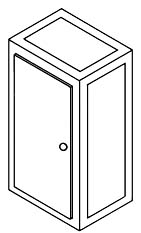
[IEC 60917-1, ed. 1.0 (1998-09)]
[IEV number 581-25-02]
cabinet
container that may enclose connection devices, terminations, apparatus, cabling, and equipment. It may be either wall-mounted or self-supporting
[IEC 62134-1, ed. 2.0 (2009-06)]
cubicle
empty enclosure, generally of large dimensions, and in principle of the floor standing type, which may comprise several sections, sub-sections or compartments
NOTE Enclosures with an irregular shape, such as a desk, are considered cubicles for testing purposes.
[IEC 62208, ed. 1.0 (2002-11)]R
baie
structure fermée indépendante et auto-porteuse destinée à loger du matériel électrique et/ou électronique
Elle est habituellement munie de portes et/ou de panneaux latéraux qui peuvent être amovibles ou non.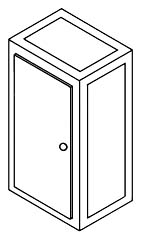
[IEC 60917-1, ed. 1.0 (1998-09)]
[IEV number 581-25-02]
armoire
conteneur qui peut abriter des dispositifs de connexion, des terminaisons, des appareillages, des câblages et des équipements. Elle peut être fixée au mur ou être auto-porteuse
[IEC 62134-1, ed. 2.0 (2009-06)]
armoire
enveloppe vide, généralement de grandes dimensions et, en principe fixée au sol, qui peut comprendre plusieurs colonnes, éléments de colonne ou compartiments
NOTE Les enveloppes ayant une forme irrégulière telle qu'un pupitre sont considérées comme des armoires pour les essais.
[IEC 62208, ed. 1.0 (2002-11)]Тематики
- НКУ (шкафы, пульты,...)
EN
DE
- Schrank, m
FR
Русско-немецкий словарь нормативно-технической терминологии > оболочка шкафа
-
22 caution
1. noun1) Vorsicht, die2. transitive verbcaution somebody against something/doing something — jemanden vor etwas (Dat.) warnen/davor warnen, etwas zu tun
caution somebody to/not to do something — jemanden ermahnen, etwas zu tun/nicht zu tun
* * *['ko:ʃən] 1. noun1) (carefulness (because of possible danger etc): Exercise caution when crossing this road.) die Vorsicht2) (in law, a warning: The policeman gave him a caution for speeding.) die Warnung2. verb(to give a warning to: He was cautioned for drunken driving.) (ver-)warnen- academic.ru/11567/cautionary">cautionary- cautious
- cautiously* * *cau·tion[ˈkɔ:ʃən, AM ˈkɑ:-]I. n\caution is advised Vorsicht ist gebotento exercise [great] \caution [große] Vorsicht walten lassen geh\caution! Vorsicht!to sound a note of \caution eine Warnung aussprechento treat sth with \caution (reserved) etw mit Vorbehalt aufnehmen; (sceptical) etw dat skeptisch gegenüberstehen3. BRIT LAW (legal warning) Verwarnung f, Verweis m; (that sb will be charged) Rechtsmittelbelehrung fto let sb off with a \caution ( fam) jdn mit einer Verwarnung davonkommen lassen6.▶ to err on the side of \caution übervorsichtig sein1. (warn)▪ to \caution sb not to do sth jdm dringend raten, etw nicht zu tun, jdm von etw dat dringend abraten; (more serious) jdn davor warnen, etw zu tun▪ to \caution sb jdn verwarnen3. LAW▪ to \caution sb jdn auf seine Rechte hinweisen* * *['kOːSən]1. n"caution!" — "Vorsicht!"
to act with caution — umsichtig or mit Bedacht vorgehen, Vorsicht walten lassen
3) (inf)to be a real caution — zum Piepen sein (inf)
2. vtto caution sb — jdn warnen (against vor +dat ); (officially) jdn verwarnen
to caution sb against doing sth — jdn davor warnen, etw zu tun
* * *caution [ˈkɔːʃn]A s1. Vorsicht f, Behutsamkeit f:a) vorsichtig zu Werke gehen,b) Vorsicht walten lassen;“caution” AUTO etc „Vorsicht!“2. a) Verwarnung fb) Warnung f3. JURb) (polizeiliche) Verwarnungc) Vormerkung f (zur Sicherung von Grundstücksrechten)d) besonders schott Kaution f, Bürgschaft f4. MIL Ankündigungskommando n5. umg obsc) unheimlicher KerlB v/t1. warnen (against, about vor dat):caution o.s. sich in Acht nehmen2. verwarnen* * *1. noun1) Vorsicht, die2. transitive verbcaution somebody against something/doing something — jemanden vor etwas (Dat.) warnen/davor warnen, etwas zu tun
caution somebody to/not to do something — jemanden ermahnen, etwas zu tun/nicht zu tun
* * *n.Behutsamkeit f.Vorsicht -en f.Warnung -en f. -
23 know
1. transitive verb,2) (be able to distinguish)know the difference between right and wrong — den Unterschied zwischen Gut und Böse kennen
he wouldn't know the difference — er wüsste den Unterschied nicht
3) (be aware of) wissen; kennen [Person]I know who she is — ich weiß, wer sie ist
I know for a fact that... — ich weiß ganz bestimmt, dass...
know somebody/something to be... — wissen, dass jemand/etwas... ist
that's/that might be worth knowing — das ist gut/wäre wichtig zu wissen
he doesn't want to know — er will nichts davon wissen od. hören
I know what — ich weiß was (ugs.)
you know something or what? — weißt du was?
you never know — man kann nie wissen (ugs.)
somebody has [never] been known to do something — jemand hat bekanntlich [noch nie] etwas getan
don't I know it! — (coll.) das weiß ich nur zu gut
what do you know [about that]? — (coll.): (that is surprising) was sagst du dazu?
somebody is not to know — (is not to be told) jemand soll nichts wissen (about, of von); (has no way of learning) jemand kann nicht wissen
not know what hit one — (fig.) gar nicht begreifen, was geschehen ist
that's all you know [about it] — das glaubst du vielleicht
know different or otherwise — es besser wissen
know what's what — wissen, wie es in der Welt zugeht
do you know,... — stell dir [mal] vor,...
4) (have understanding of) können [ABC, Einmaleins, Deutsch usw.]; beherrschen [Grundlagen, Regeln]; sich auskennen mit [Gerät, Verfahren, Gesetz]know how to mend fuses — wissen, wie man Sicherungen repariert
5) (be acquainted with) kennenwe have known each other for years — wir kennen uns [schon] seit Jahren
you know what he/it is — (is like) du kennst ihn ja/du weißt ja, wie es ist
6) (have experience of) erleben; erfahren2. nounknow what it is to be hungry — wissen, was es heißt, Hunger zu haben
(coll.)Phrasal Verbs:- academic.ru/88563/know_about">know about- know of* * *[nəu]past tense - knew; verb1) (to be aware of or to have been informed about: He knows everything; I know he is at home because his car is in the drive; He knows all about it; I know of no reason why you cannot go.) wissen2) (to have learned and to remember: He knows a lot of poetry.) kennen3) (to be aware of the identity of; to be friendly with: I know Mrs Smith - she lives near me.) kennen4) (to (be able to) recognize or identify: You would hardly know her now - she has become very thin; He knows a good car when he sees one.) erkennen•- knowing- knowingly
- know-all
- know-how
- in the know
- know backwards
- know better
- know how to
- know the ropes* * *[nəʊ, AM noʊ]<knew, known>1. (have information/knowledge)▪ to \know sth etw wissen; facts, results etw kennenshe \knows all the names of them sie kennt all ihre Namendoes anyone \know the answer? weiß jemand die Antwort?do you \know...? weißt du/wissen Sie...?do you \know the time/where the post office is? können Sie mir bitte sagen, wie spät es ist/wo die Post ist?do you \know the words to this song? kennst du den Text von diesem Lied?he really \knows particle physics in Teilchenphysik kennt er sich wirklich gut ausI \know no fear ich habe vor nichts AngstI \know what I am talking about ich weiß, wovon ich redehow was I to \know it'd be snowing in June! wer ahnt denn schon, dass es im Juni schneien würde!that's worth \knowing das ist gut zu wissenthat might be worth \knowing das wäre gut zu wissenthat's what I like to \know too das würde ich auch gerne wissen!— don't I \know it! — wem sagst du das!before you \know where you are ehe man sich versiehtfor all I \know soweit ich weißthey might have even cancelled the project for all I \know vielleicht haben sie das Projekt ja sogar ganz eingestellt — weiß man's! famI knew it! wusste ich's doch! fam... and you \know it... und das weißt du auch; ( fam)... I \know what... ich weiß wasbut she's not to \know aber sie soll nichts davon erfahrenGod only \knows what'll happen next! weiß der Himmel, was als Nächstes passiert! sl▪ to \know [that]/if/how/what/when/why... wissen, dass/ob/wie/was/wann/warum...▪ to \know sb/sth to be/do sth wissen, dass jd/etw etw ist/tutthe police \know him to be a cocaine dealer die Polizei weiß, dass er mit Kokain handelt▪ to \know how to do sth wissen, wie man etw machtto \know how to drive a car Auto fahren können▪ to \know sth about sth/sb etw über etw/jdn wissento \know the alphabet/English das Alphabet/Englisch könnendo you \know any Norwegian? können Sie ein bisschen Norwegisch?to \know sth by heart etw auswendig könnento \know what one is doing wissen, was man tutto let sb \know sth jdn etw wissen lassen2. (be certain)to not \know which way to turn nicht wissen, was man machen sollto not \know whether to laugh or cry nicht wissen, ob man lachen oder weinen sollto \know for a fact that... ganz sicher wissen, dass...3. (be acquainted with)▪ to \know sb jdn kennen\knowing Sarah [or if I \know Sarah], she'll have done a good job so wie ich Sarah kenne, hat sie ihre Sache bestimmt gut gemachtwe've \known each other for years now wir kennen uns schon seit Jahrenshe \knows Paris well sie kennt sich in Paris gut aussurely you \know me better than that! du solltest mich eigentlich besser kennen!you \know what it's like du weißt ja, wie das [so] istwe all knew her as a kind and understanding colleague uns allen war sie als liebenswerte und einfühlsame Kollegin bekanntI'm sure you all \know the new officer by reputation sicherlich haben Sie alle schon mal von dem neuen Offizier gehörtto \know sb by name/by sight/personally jdn dem Namen nach/vom Sehen/persönlich kennento get to \know sb jdn kennenlernento get to \know each other sich akk kennenlernento [not] \know sb to speak to jdn [nicht] näher kennen▪ to \know sth etw verstehendo you \know what I mean? verstehst du, was ich meine?if you \know what I mean wenn du verstehst, was ich meine5. (experience)I've never \known her [to] cry ich habe sie noch nie weinen sehen6. (recognize)▪ to \know sb/sth jdn/etw erkennenI \know a goodbye when I hear one ich hab' schon verstanden, dass du dich von mir trennen willst! famI \know a good thing when I see it ich merke gleich, wenn was gut istwe all \know him as ‘Curly’ wir alle kennen ihn als ‚Curly‘this is the end of world as we \know it das ist das Ende der Welt, so wie wir sie kennenthese chocolate bars are \known as something else in the US diese Schokoladenriegel laufen in den USA unter einem anderen NamenI knew her for a liar the minute I saw her ich habe vom ersten Augenblick an gewusst, dass sie eine Lügnerin istto \know sb by his/her voice/walk jdn an seiner Stimme/seinem Gang erkennensb wouldn't \know sth if he/she bumped into it [or if he/she fell over it] [or if it hit him/her in the face] jd würde etw akk nicht mal erkennen, wenn es vor ihm/ihr stehen würde7. (be able to differentiate)▪ to \know sth/sb from sth/sb etw/jdn von etw/jdm unterscheiden könnenAna wouldn't \know a greyhound from a collie Ana kann einen Windhund nicht von einem Collie unterscheidenyou wouldn't \know him from his brother man kann ihn und seinen Bruder nicht unterscheiden!don't worry, she wouldn't \know the difference keine Angst, sie wird den Unterschied [gar] nicht merkento \know right from wrong Gut und Böse unterscheiden können▪ it is \known that... es ist bekannt, dass...to make sth \known etw bekanntmachenshe's never been \known to laugh at his jokes sie hat bekanntlich noch nie über seine Witze gelachtthis substance is \known to cause skin problems es ist bekannt, dass diese Substanz Hautirritationen hervorruftthis substance has been \known to cause skin problems diese Substanz hat in einzelnen Fällen zu Hautirritationen geführtTerry is also \known as ‘The Muscleman’ Terry kennt man auch unter dem Namen ‚der Muskelmann‘9.▶ to \know no bounds keine Grenzen kennen▶ to not \know what hit one nicht wissen, wie einem geschieht▶ not if I \know it nicht mit mir!▶ to \know one's own mind wissen, was man will▶ to \know one's place wissen, wo man steht▶ to \know the score wissen, was gespielt wird▶ to \know a thing or two ( pej fam: be sexually experienced) sich akk [mit Männern/Frauen] auskennen<knew, known>1. (have knowledge) [Bescheid] wissenask Kate, she's sure to \know frag Kate, sie weiß es bestimmtI think she \knows ich glaube, sie weiß Bescheidwhere did he go? — I wouldn't [or don't] \know, I was not to \know until years later das sollte ich erst Jahre später erfahren, wo ist er hingegangen? — keine Ahnungare you going to university? — I don't \know yet willst du studieren? — ich weiß [es] noch nichtyou never \know man kann nie wissenas [or so] far as I \know so viel [o weit] ich weißhow am I to \know? woher soll ich das wissen?who \knows? wer weiß?how should I \know? wie soll ich das wissen?I \know! jetzt weiß ich!she didn't want to \know sie wollte nichts davon wissenjust let me \know ok? sag' mir einfach Bescheid, ok?“I don't \know,” he said, “why can't you ever be on time?” „ich begreife das einfach nicht“, sagte er, „warum kannst du nie pünktlich sein?“3. (said to agree with sb)I \know ich weißthe weather's been so good lately — I \know, isn't it wonderful! das Wetter war in letzter Zeit wirklich schön — ja, herrlich, nicht wahr?she's such a fool, don't you \know! sie ist so unglaublich dumm!5. (conversation filler)give him the red box, you \know, the one with the.... gib ihm die rote Kiste, du weißt schon, die mit den...he's so boring and, you \know, sort of spooky er ist so langweilig und, na ja, irgendwie unheimlichhe asked me, you \know weißt du, er hat mich halt gefragt6.▶ to \know better:you ought to \know better du solltest es eigentlich besser wissenhe said he loved me but I \know better er sagte, dass er mich liebt, aber ich weiß, dass es nicht stimmt▶ to \know better than:she's old enough to \know better than to run out into the traffic sie ist alt genug, um zu wissen, dass man nicht einfach auf die Straße läuft▶ to not \know any better es nicht anders kennenIII. NOUNto be in the \know [about sth] [über etw akk] im Bilde sein [o Bescheid wissen]* * *[nəʊ] vb: pret knew, ptp known1. TRANSITIVE VERB1) = have knowledge about wissen; answer, facts, dates, details, results etc kennen, wissen; French, English etc könnenhe knew her to be guilty — er wusste, dass sie schuldig war
to know what one is talking about — wissen, wovon man redet
to know one's own mind — wissen, was man will
she knows all the answers — sie weiß Bescheid, sie kennt sich aus; (pej) sie weiß immer alles besser
he thinks he knows all the answers or everything —
that's what I'd like to know ( too) — das möchte ich auch wissen
that might be worth knowing — es könnte interessant sein, das zu wissen
I've been a fool and don't I know it! (inf) — ich sehs ja ein, ich war doof (inf), ich war vielleicht doof (inf)
she's angry! – don't I know it! (inf) — sie ist wütend! – wem sagst du das! (inf)
2) = be acquainted with people, places, book, author kennenI know Bavaria well — ich kenne Bayern gut, ich kenne mich gut in Bayern aus
do you know him to speak to? —
we all know her as the headmistress/a generous person — wir kennen Sie alle als die Schulleiterin/einen großzügigen Menschen
if I know John, he'll already be there — wie ich John kenne, ist er schon da
3) = recognize erkennento know sb by his voice/walk etc — jdn an der Stimme/am Gang etc erkennen
he knows a good thing when he sees it — er weiß, was gut ist
he knows a bargain/good manuscript when he sees one — er weiß, was ein guter Kauf/ein gutes Manuskript ist
this is the end of the welfare system as we know it — das ist das Ende des uns bekannten Wohlfahrtssystems
4) = be able to distinguish unterscheiden könnendon't you know your right from your left? — können Sie rechts und links nicht unterscheiden?
do you know the difference between...? —
to know the difference between right and wrong, to know right from wrong — den Unterschied zwischen Gut und Böse kennen, Gut und Böse unterscheiden können
he doesn't know one end of a horse/hammer from the other — er hat keine Ahnung von Pferden/keine Ahnung, was ein Hammer ist (inf)
5) = experience erlebenI've never known him (to) smile — ich habe ihn noch nie lächeln sehen, ich habe es noch nie erlebt, dass er lächelt
have you ever known me (to) tell a lie? — haben Sie mich jemals lügen hören?
have you ever known such a thing to happen before? — haben Sie je schon so etwas erlebt?, ist Ihnen so etwas schon einmal vorgekommen?
2. INTRANSITIVE VERBwissenwho knows? — wer weiß?, weiß ichs?
as far as I know — soviel ich weiß, meines Wissens
the channel was rough, as I well know or as well I know! — die Überfahrt war stürmisch, das kann ich dir sagen
3. SET STRUCTURES__diams; to know that... wissen, dass...Note that while in English that can be omitted, in German dass must be used to introduce the next sentence.when I saw the ambulance, I knew (that) something was wrong — als ich den Krankenwagen sah, wusste ich, dass etwas nicht stimmte __diams; to know why... wissen, warum...
he didn't know why — er wusste nicht, warum
I don't know why you think it's so funny — ich weiß nicht, was du daran so komisch findest
to know how to do sth (in theory) — wissen, wie man etw macht; (in practice) etw tun können
I know how you feel — ich weiß, wie Sie sich fühlen
you don't know how good it is to see you again — Sie wissen gar nicht, wie sehr ich mich freue, Sie wiederzusehen
I know better than that — ich bin ja nicht ganz dumm
I know better than to say something like that —
he knows better than to eat into the profits — er ist nicht so dumm, den Gewinn anzugreifen
he/you ought to have known better — das war dumm (von ihm/dir)
he ought to have or should have known better than to do that — es war dumm von ihm, das zu tun
he says he didn't do it, but I know better — er sagt, er war es nicht, aber ich weiß, dass das nicht stimmt
OK, you know best — o.k., Sie müssens wissen
to get to know sth (methods, techniques, style, pronunciation etc) — etw lernen; habits, faults, shortcuts etc etw herausfinden
he soon let me know what he thought of it —
when can you let me know? — wann können Sie es mich wissen lassen?, wann können Sie mir Bescheid sagen?
you know, we could/there is... — weißt du, wir könnten/da ist...
he gave it away, you know — er hat es nämlich weggegeben
it's raining, you know —
then there was this man, you know, and... — und da war dieser Mann, nicht (wahr), und...
wear the black dress, you know, the one with the red belt —
it's long and purple and, you know, sort of crinkly — es ist lang und lila und, na ja, so kraus
(if you) know what I mean — du weißt schon __diams; you never know man kann nie wissen
it was nothing to do with me, I'll have you know! — es hatte nichts mit mir zu tun, damit du es weißt! __diams; there's no knowing (inf) das kann keiner sagen, das weiß niemand
there's no knowing what he'll do — man weiß nie, was er noch tut __diams; what do you know! (inf) sieh mal einer an!
what do you know! I've just seen her! (inf) — stellen Sie sich vor, ich habe sie eben gesehen __diams; to be known → also known
it is (well) known that... —
is he/it known here? — ist er/das hier bekannt?, kennt man ihn/das hier?
he is known to have been here — man weiß, dass er hier war
she wishes to be known as Mrs White — sie möchte Frau White genannt werden → also known __diams; to make sb/sth known jdn/etw bekannt machen
to make it known that... — bekannt geben, dass...
to make one's presence known — sich melden (to bei) __diams; to become known bekannt werden
4. NOUN__diams; to be in the know inf eingeweiht sein, im Bild sein (inf), Bescheid wissen (inf)the people in the know say... — Leute, die darüber Bescheid wissen, sagen..., die Fachleute sagen...
5. PHRASAL VERBS* * *know [nəʊ]A v/t prät knew [njuː; US besonders nuː], pperf known [nəʊn]1. allg wissen:he knows what to do er weiß, was zu tun ist;I don’t know how to thank you ich weiß nicht, wie ich Ihnen danken soll;know all about it genau Bescheid wissen;don’t I know it!a) und ob ich das weiß!,b) als ob ich das nicht wüsste!;I would have you know that … ich möchte Ihnen klarmachen, dass …;I have never known him to lie meines Wissens hat er noch nie gelogen;I don’t know much about football ich versteh nicht viel von Fußball;what do you know! umg na so was!;2. a) können:b) know how to do sth etwas tun können:do you know how to do it? weißt du, wie man das macht?, kannst du das?;he knows how to treat children er versteht mit Kindern umzugehen;do you know how to drive a car? können Sie Auto fahren?;he doesn’t know how to lose er kann nicht verlieren3. kennen:do you know this place? kennen Sie sich hier aus?b) mit einem Roman etc vertraut sein:c) bekannt sein mit:I have known him (for) five years ich kenne ihn (schon) seit fünf Jahren;4. erfahren, erleben:he has known better days er hat schon bessere Tage gesehen;I have known it to happen ich habe das schon erlebt5. a) (wieder)erkennen (by an dat):I would know him anywhere ich würde ihn überall erkennen;before you know where you are im Handumdrehen;I don’t know whether I will know him again ich weiß nicht, ob ich ihn wiedererkennen werdeb) unterscheiden (können):know apart auseinanderhalten;know one from the other einen vom anderen unterscheiden können, die beiden auseinanderhalten könnenB v/i wissen (of von, um), im Bilde sein oder Bescheid wissen ( about über akk), Kenntnis haben ( about von):I know of sb who … ich weiß oder kenne jemanden, der …;I know better! so dumm bin ich nicht!;you ought to know better (than that) das sollten Sie besser wissen, so dumm werden Sie doch nicht sein;know better than to do sth sich davor hüten, etwas zu tun;he ought to know better than to go swimming after a big meal er sollte so viel Verstand haben zu wissen, dass man nach einer ausgiebigen Mahlzeit nicht baden geht;not that I know of nicht dass ich wüsste;you know wissen Sie;this isn’t the Ritz, you know wir sind hier nicht im Ritz!;you never know man kann nie wissen;I’ll let you know ich geb dir Bescheid* * *1. transitive verb,3) (be aware of) wissen; kennen [Person]I know who she is — ich weiß, wer sie ist
I know for a fact that... — ich weiß ganz bestimmt, dass...
it is known that... — man weiß, dass...; es ist bekannt, dass...
know somebody/something to be... — wissen, dass jemand/etwas... ist
that's/that might be worth knowing — das ist gut/wäre wichtig zu wissen
he doesn't want to know — er will nichts davon wissen od. hören
I know what — ich weiß was (ugs.)
you know — (coll.): (as reminder) weißt du [noch]
you know something or what? — weißt du was?
you never know — man kann nie wissen (ugs.)
somebody has [never] been known to do something — jemand hat bekanntlich [noch nie] etwas getan
don't I know it! — (coll.) das weiß ich nur zu gut
what do you know [about that]? — (coll.): (that is surprising) was sagst du dazu?
somebody is not to know — (is not to be told) jemand soll nichts wissen (about, of von); (has no way of learning) jemand kann nicht wissen
not know what hit one — (fig.) gar nicht begreifen, was geschehen ist
that's all you know [about it] — das glaubst du vielleicht
know different or otherwise — es besser wissen
know what's what — wissen, wie es in der Welt zugeht
do you know,... — stell dir [mal] vor,...
4) (have understanding of) können [ABC, Einmaleins, Deutsch usw.]; beherrschen [Grundlagen, Regeln]; sich auskennen mit [Gerät, Verfahren, Gesetz]know how to mend fuses — wissen, wie man Sicherungen repariert
5) (be acquainted with) kennenwe have known each other for years — wir kennen uns [schon] seit Jahren
you know what he/it is — (is like) du kennst ihn ja/du weißt ja, wie es ist
6) (have experience of) erleben; erfahren2. nounknow what it is to be hungry — wissen, was es heißt, Hunger zu haben
(coll.)Phrasal Verbs:- know of* * *v.(§ p.,p.p.: knew, known)= kennen v.(§ p.,pp.: kannte, gekannt)wissen v.(§ p.,pp.: wußte, gewußt) -
24 north
1. noun1) (direction) Norden, derin/to[wards]/from the north — im/nach/von Norden
to the north of — nördlich von; nördlich (+ Gen.)
2) usu.2. adjectivefrom the North — aus dem Norden
nördlich; Nord[wind, -fenster, -küste, -grenze, -tor]3. adverbnordwärts; nach Nordennorth of — nördlich von; nördlich (+ Gen.)
* * *[no:Ɵ] 1. noun1) (the direction to the left of a person facing the rising sun, or any part of the earth lying in that direction: He faced towards the north; The wind is blowing from the north; I used to live in the north of England.) der Norden2. adjective1) (in the north: on the north bank of the river.) nördlich2) (from the direction of the north: a north wind.) Nord-...3. adverb(towards the north: The stream flows north.) nördlich- academic.ru/50438/northerly">northerly- northern
- northerner
- northernmost
- northward
- northwards
- northward
- northbound
- north-east / north-west 4. adverb(towards the north-east or north-west: The building faces north-west.) nordöstlich, nordwestlich- north-easterly / north-westerly- north-eastern / north-western
- the North Pole* * *[nɔ:θ, AM nɔ:rθ]▪ in the \north im Norden▪ to the \north nach Norden [hin]magnetic/true \north magnetischer Nordpol/geographische Nordrichtung2. (region)\north coast/side/wind Nordküste f/-seite f/-wind m\north of Manchester nördlich von Manchester\north part nördlicher Teil\north Vietnam Nordvietnam ntcompared to last year our sales figures have gone \north im Vergleich zum letzten Jahr sind unsere Verkaufzahlen gestiegento drive \north in nördliche Richtung fahren* * *[nɔːɵ]1. n1) Norden min/from the north — im/aus dem Norden
to the north of — nördlich von, im Norden von
to veer/go to the north — in nördliche Richtung or nach Norden drehen/gehen
the wind is in the north — es ist Nordwind
the North (of Scotland/England) — Nordschottland/-england nt
2) (US HIST)the North — der Norden, die Nordstaaten pl
2. adj attrNord-3. adv(= towards North) nach Norden, gen Norden (liter), nordwärts (liter, Naut); (MET) in nördliche Richtungnorth of one million ( US fig ) — über eine Million
* * *north [nɔː(r)θ]A s1. Norden m:in the north of im Norden von (od gen);to the north of → C 3;from the north aus dem Nordenthe North of Germany Norddeutschland n;a) Br Nordengland n,b) US der Norden, die Nordstaaten pl3. poet Nord(wind) mB adj nördlich, Nord…C adv1. nach Norden, nordwärtsn. abk1. natus, born geb.2. neuter4. noon5. north N6. northern nördl.7. note8. noun Subst.9. number Nr.N abk3. north N4. northern nördl.5. noun Subst.N. abk1. National (Nationalist)2. Navy3. north N4. northern nördl.No. abk1. north N2. northern nördl.3. number Nr.* * *1. noun1) (direction) Norden, derin/to[wards]/from the north — im/nach/von Norden
to the north of — nördlich von; nördlich (+ Gen.)
2) usu.2. adjectiveNorth — (part lying to the north) Norden, der
nördlich; Nord[wind, -fenster, -küste, -grenze, -tor]3. adverbnordwärts; nach Nordennorth of — nördlich von; nördlich (+ Gen.)
* * *adj.nördlich adj. n.Norden m. -
25 caution
cau·tion [ʼkɔ:ʃən, Am ʼkɑ:-] n\caution is advised Vorsicht ist geboten;to exercise [great] \caution [große] Vorsicht walten lassen ( geh)\caution! Vorsicht!;to sound a note of \caution eine Warnung aussprechen;to treat sth with \caution ( reserved) etw mit Vorbehalt aufnehmen;to let sb off with a \caution ( fam) jdn mit einer Verwarnung davonkommen lassenPHRASES:to err on the side of \caution übervorsichtig sein;1) ( warn)to \caution sb [against sth] jdn [vor etw dat] warnen;to \caution sb not to do sth jdm dringend raten, etw nicht zu tun, jdm von etw dat dringend abraten;( more serious) jdn davor warnen, etw zu tunto \caution sb jdn verwarnen
- 1
- 2
См. также в других словарях:
side|note — «SYD NOHT», noun. a note at the side of a written or printed page; a marginal note, as distinguished from a footnote … Useful english dictionary
side note — n. marginal note, comment written into the margins, comments written on the side of a page … English contemporary dictionary
side note — n. a marginal note in a text … Useful english dictionary
side — n. & v. n. 1 a each of the more or less flat surfaces bounding an object (a cube has six sides; this side up). b a more or less vertical inner or outer plane or surface (the side of a house; a mountainside). c such a vertical lateral surface or… … Useful english dictionary
Side Basher — SB 913V Side Basher is a fictional transforming, artificially intelligent support mecha for Kamen Rider Kaixa seen in the 2003 2004 Japanese television series Kamen Rider 555. It is a support mecha seen in the series, and can transforms into… … Wikipedia
Note Worker — Studio album by Frank Gambale Released 1991 … Wikipedia
Note Printing Australia — (NPA), which is located in Craigieburn, Melbourne, is a wholly owned subsidiary of the Reserve Bank of Australia and was corporatised in July 1998. NPA has its origins as a subsidiary of the Commonwealth Bank and was established in 1913 to print… … Wikipedia
Side by Side (Duke Ellington and Johnny Hodges album) — Side by Side Studio album by Duke Ellington and Johnny Hodges Released 1959 Recorded … Wikipedia
Note value — Parts of a note In music notation, a note value indicates the relative duration of a note, using the color or shape of the note head, the presence or absence of a stem, and the presence or absence of flags/beams/hooks/tails. A rest indicates a… … Wikipedia
side — I n. right or left part 1) the left; right side 2) the credit; debit side (of a ledger) 3) on a side (on the sunny side of the street) faction, party 4) to take smb. s side; to take sides ( to support a faction ) 5) the losing; right; winning;… … Combinatory dictionary
Side-sword — A side sword was a type of war sword used by infantry during the Renaissance of Europe. This sword was a direct descendant of the arming sword. Quite popular between the 16th and 17th centuries, they were ideal for handling the mix of armored and … Wikipedia
