

-
1 Blindleistungskompensation
компенсация реактивной мощности
-EN
reactive power compensation
an action to optimize the transmission of reactive power in the network as a whole
[МЭС 603-04-28]FR
compensation de l'énergie réactive
action dont le but est d'optimiser globalement le transport d'énergie réactive dans le réseau
[МЭС 603-04-28]Параллельные тексты EN-RU
Reactive energy management
In electrical networks, reactive energy results in increased line currents for a given active energy transmitted to loads.
The main consequences are:
• Need for oversizing of transmission and distribution networks by utilities,
• Increased voltage drops and sags along the distribution lines,
• Additional power losses.
This results in increased electricity bills for industrial customers because of:• Penalties applied by most utilities on reactive energy,
• Increased overall kVA demand,
• Increased energy consumption within the installations.
Reactive energy management aims to optimize your electrical installation by reducing energy consumption, and to improve power availability.
Total CO2 emissions are also reduced.
Utility power bills are typically reduced by 5 % to 10 %.
[Schneider Electric]Компенсация реактивной мощности
Передача по электрической сети реактивной энергии приводит к увеличению линейных токов (по сравнению токами, протекающими при передаче нагрузкам только активной энергии).
Основные последствия этого явления:
● необходимость увеличения сечения проводников в сетях передачи и распределения электроэнергии;
● повышенное падение и провалы напряжения в распределительных линиях;
● дополнительные потери электроэнергии;
Для промышленных потребителей такие потери приводят к возрастанию расходов на оплату электроэнергии, что вызвано:● штрафами, накладываемыми поставщиками электроэнергии за избыточную реактивную мощность;
● увеличением потребления полной мощности (измеряемой в кВА);
● повышенным энергопотреблением электроустановок.Цель компенсации реактивной мощности (КРМ) – оптимизация работы электроустановки за счет сокращения потребления энергии и увеличения надежности электроснабжения. Кроме того, КРМ позволяет уменьшить выбросы CO2 и сократить расходы на электроэнергию в среднем на 5-10 %.
[Перевод Интент]Наиболее эффективным способом снижения потребляемой из сети реактивной мощности является применение установок компенсации реактивной мощности (конденсаторных установок).
Использование конденсаторных установок позволяет:- разгрузить питающие линии электропередачи, трансформаторы и распределительные устройства;
- снизить расходы на оплату электроэнергии;
- при использовании определенного типа установок снизить уровень высших гармоник;
- подавить сетевые помехи, снизить несимметрию фаз;
- увеличить надежность и экономичность распределительных сетей.
На практике коэффициент мощности после компенсации находится в пределах от 0,93 до 0,99.
Наибольший экономический эффект достигается при размещении компенсирующих устройств вблизи электроприемников, потребляющих реактивную мощность.
Различают следующие виды компенсации:-
индивидуальная (нерегулируемая) компенсация
Целесообразна, если мощность электроприемника больше 20 кВт и потребляемая мощность постоянна в течение длительного времени.
Компенсирующая нерегулируемая установка подключается непосредственно у потребителя. Как правило, применяется для компенсации реактивной мощности таких потребителей, как мощные компрессоры, вентиляторы и насосы, силовые трансформаторы. - групповая (нерегулируемая) компенсация
- централизованная компенсация
Для ламп типа ДРЛ, ДРИ, ДРИЗ, ДНаТ может применяться как групповая, так и индивидуальная компенсация реактивной мощности
[ПУЭ]Тематики
Синонимы
Сопутствующие термины
- конденсатор компенсации реактивной мощности
- конденсаторная батарея компенсации реактивной мощности
- контроллер компенсации реактивной мощности
- недостаточная компенсация реактивной мощности
- перекомпенсация реактивной мощности
- потребляемая реактивная мощность
- ступень компенсации реактивной мощности
- установка КРМ
- устройства динамической компенсации реактивной мощности
EN
- energy compensation
- management of reactive energy
- power factor compensation
- reactive energy management
- reactive power compensation
DE
FR
Немецко-русский словарь нормативно-технической терминологии > Blindleistungskompensation
-
2 Blindleistungs-Messumformer
преобразователь реактивной мощности
-
[IEV number 313-03-05]EN
reactive power transducer
var transducer
transducer used for the measurement of reactive electrical power
[IEV number 313-03-05]FR
transducteur de puissance réactive
transducteur destiné à la mesure d’une puissance électrique réactive
[IEV number 313-03-05]Тематики
- измерение электр. величин в целом
EN
DE
FR
Немецко-русский словарь нормативно-технической терминологии > Blindleistungs-Messumformer
-
3 Blindleistungsmessgerät
Немецко-русский словарь нормативно-технической терминологии > Blindleistungsmessgerät
-
4 Asynchron-Reaktanz
асинхронное реактивное сопротивление
-EN
asynchronous reactance
the quotient of the reactive component of the average voltage at rated frequency, assumed to be sinusoidal and balanced, applied to the armature winding of a machine rotating out of synchronism, and the average current component at the same frequency
[IEV ref 411-50-05]FR
réactance asynchrone
quotient de la composante réactive de la tension moyenne à la fréquence assignée, supposée sinusoïdale et symétrique, appliquée à l'enroulement d'induit d'une machine tournant hors synchronisme, par la composante du courant moyen à la même fréquence
[IEV ref 411-50-05]Тематики
- электротехника, основные понятия
EN
DE
FR
Немецко-русский словарь нормативно-технической терминологии > Asynchron-Reaktanz
-
5 drehende (elektrische) Maschine
вращающаяся электрическая машина
Электротехническое устройство, предназначенное для преобразования энергии на основе электромагнитной индукции и взаимодействия магнитного поля с электрическим током, содержащее, по крайней мере, две части, участвующие в основном процессе преобразования и имеющие возможность вращаться или поворачиваться относительно друг друга.
[ ГОСТ 27471-87]
электрическая машина
Электрическая машина, служит для преобразования механической энергии в электрическую и электрической в механическую, а также электрической энергии в электрическую же, отличающуюся по напряжению, роду тока, частоте и другим параметрам. Действие Э. м. основано на использовании явления электромагнитной индукции и законов, определяющих взаимодействие электрических токов и магнитных полей.
Для преобразования механической энергии в электрическую служат генераторы электромашинные, электрической энергии в механическую — двигатели электрические. Каждая из этих машин (в соответствии с Ленца правилом) энергетически обратима, т. е. может работать как в генераторном, так и в двигательном режиме; однако выпускаемые промышленностью Э. м. обычно предназначены для выполнения определённой работы (см. также Переменного тока машина, Постоянного тока машина, Асинхронная электрическая машина, Синхронная машина, Коллекторная машина).
Преобразования рода тока, частоты, числа фаз, напряжения осуществляют электромашинными преобразователями(см. Преобразовательная техника), электромашинными усилителями, трансформаторами электрическими.
К Э. м. относят также машины специального назначения, например тахогенератор, тяговый электродвигатель.
[БСЭ]EN
(electrical) rotating machine
an electrical apparatus depending on electromagnetic induction for its operation and having components capable of relative rotary movement and intended for converting energy
NOTE – This term also applies to electrical apparatus operating on the same principle and similar in construction and intended for other purposes, e.g. regulation, supplying or absorbing reactive power. It is not intended to cover electrostatic machines.
[IEV number 411-31-01]FR
machine (électrique) tournante
appareil électrique utilisant l'induction magnétique pour son fonctionnement, constitué d'éléments pouvant effectuer un mouvement relatif de rotation et destiné à la transformation de l'énergie
NOTE – Ce terme s'applique également aux appareils électriques fonctionnant suivant le même principe, de construction analogue et utilisés à d'autres fins, par exemple à des fins de régulation, de fourniture et d'absorption de puissance réactive. Il ne s'étend pas aux machines électrostatiques.
[IEV number 411-31-01]Тематики
Синонимы
EN
- electrical rotating machine
- electrical machine
- electrical rotating machinery
- rotating electrical machine
- rotating machine
DE
FR
Немецко-русский словарь нормативно-технической терминологии > drehende (elektrische) Maschine
-
6 Gütefaktor (eines Kondensators oder eines Induktors)
добротность
1. Количественная характеристика потерь колебательной системы при резонансе, равная
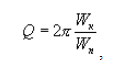
где Wк - полный запас энергии колебаний при резонансе;
Wп - потери энергии за период
[ Физический энциклопедический словарь]
2. Количественная мера потерь колебательной системы. Показывает, во сколько раз амплитуда вынужденных колебаний при резонансе превышает амплитуду на частоте, много меньшей резонансной при одинаковой внешней силе
3. Отношение резонансной частоты спектра колебаний к его ширине на уровне 0,707 от максимального значения амплитуды спектра
Примечание
Определения 2 и 3 являются достаточно точными для систем с высокой добротностью (Q >(5-10)), определение 1 пригодно во всех случаях
[Система неразрушающего контроля. Виды (методы) и технология неразрушающего контроля. Термины и определения (справочное пособие). Москва 2003 г.]
добротность (1)
коэффициент добротности (1)
-
[IEV number 151-15-45]
добротность (2)
коэффициент добротности (2)
-
[IEV number 151-15-46]EN
quality factor (1)
Q factor (1)
for a capacitor or inductor under periodic conditions, ratio of the absolute value of the reactive power to the active power
NOTE 1 – The quality factor is a measure of the losses, usually unwanted, in a capacitor or an inductor.
NOTE 2 – The quality factor depends generally on frequency and voltage.
[IEV number 151-15-45]
quality factor (2)
Q factor (2)
for a resonant circuit at the resonance frequency, 2π times the ratio of the maximum stored energy to the energy dissipated during one period
NOTE – The quality factor is a measure of sharpness of the resonance.
Source: 801-24-12 MOD
[IEV number 151-15-46]FR
facteur de qualité (1), m
facteur de surtension (1), m
pour un condensateur ou une bobine d'inductance en régime périodique, rapport de la valeur absolue de la puissance réactive à la puissance active
NOTE 1 – Le facteur de qualité caractérise les pertes, généralement non désirées, dans un condensateur ou une bobine d'inductance.
NOTE 2 – Le facteur de qualité dépend généralement de la fréquence et de la tension.
[IEV number 151-15-45]
facteur de qualité (2), m
facteur de surtension (2), m
pour un circuit résonant fonctionnant à la fréquence de résonance, 2π fois le rapport de l'énergie maximale emmagasinée dans le circuit à l'énergie dissipée pendant une période
NOTE – Le facteur de qualité caractérise l'acuité de la résonance.
Source: 801-24-12 MOD
[IEV number 151-15-46]Синонимы
EN
DE
FR
Немецко-русский словарь нормативно-технической терминологии > Gütefaktor (eines Kondensators oder eines Induktors)
-
7 Gütefaktor (eines Resonanzkreises)
добротность
1. Количественная характеристика потерь колебательной системы при резонансе, равная
где Wк - полный запас энергии колебаний при резонансе;
Wп - потери энергии за период
[ Физический энциклопедический словарь]
2. Количественная мера потерь колебательной системы. Показывает, во сколько раз амплитуда вынужденных колебаний при резонансе превышает амплитуду на частоте, много меньшей резонансной при одинаковой внешней силе
3. Отношение резонансной частоты спектра колебаний к его ширине на уровне 0,707 от максимального значения амплитуды спектра
Примечание
Определения 2 и 3 являются достаточно точными для систем с высокой добротностью (Q >(5-10)), определение 1 пригодно во всех случаях
[Система неразрушающего контроля. Виды (методы) и технология неразрушающего контроля. Термины и определения (справочное пособие). Москва 2003 г.]
добротность (1)
коэффициент добротности (1)
-
[IEV number 151-15-45]
добротность (2)
коэффициент добротности (2)
-
[IEV number 151-15-46]EN
quality factor (1)
Q factor (1)
for a capacitor or inductor under periodic conditions, ratio of the absolute value of the reactive power to the active power
NOTE 1 – The quality factor is a measure of the losses, usually unwanted, in a capacitor or an inductor.
NOTE 2 – The quality factor depends generally on frequency and voltage.
[IEV number 151-15-45]
quality factor (2)
Q factor (2)
for a resonant circuit at the resonance frequency, 2π times the ratio of the maximum stored energy to the energy dissipated during one period
NOTE – The quality factor is a measure of sharpness of the resonance.
Source: 801-24-12 MOD
[IEV number 151-15-46]FR
facteur de qualité (1), m
facteur de surtension (1), m
pour un condensateur ou une bobine d'inductance en régime périodique, rapport de la valeur absolue de la puissance réactive à la puissance active
NOTE 1 – Le facteur de qualité caractérise les pertes, généralement non désirées, dans un condensateur ou une bobine d'inductance.
NOTE 2 – Le facteur de qualité dépend généralement de la fréquence et de la tension.
[IEV number 151-15-45]
facteur de qualité (2), m
facteur de surtension (2), m
pour un circuit résonant fonctionnant à la fréquence de résonance, 2π fois le rapport de l'énergie maximale emmagasinée dans le circuit à l'énergie dissipée pendant une période
NOTE – Le facteur de qualité caractérise l'acuité de la résonance.
Source: 801-24-12 MOD
[IEV number 151-15-46]Синонимы
EN
DE
FR
Немецко-русский словарь нормативно-технической терминологии > Gütefaktor (eines Resonanzkreises)
-
8 Nullreaktanz
реактивное сопротивление нулевой последовательности
-EN
zero sequence reactance
the quotient of the reactive fundamental component of zero sequence armature voltage, due to the presence of fundamental zero sequence armature current at rated frequency, by the value of that component of current, the machine running at rated speed
[IEV ref 411-50-16]FR
réactance homopolaire
quotient du terme fondamental de la composante réactive de la tension d'induit homopolaire, due à la présence du terme fondamental du courant d'induit homopolaire à fréquence assignée, par cette composante du courant, la machine tournant à sa vitesse assignée
[IEV ref 411-50-16]Тематики
- электротехника, основные понятия
EN
DE
FR
Немецко-русский словарь нормативно-технической терминологии > Nullreaktanz
-
9 Invers-Reaktanz
реактивное сопротивление обратной последовательности
-EN
negative sequence reactance
the quotient of the reactive fundamental component of negative sequence armature voltage, due to the sinusoidal negative sequence armature current at rated frequency, by the value of that component of current, the machine running at rated speed
[IEV ref 411-50-15]FR
réactance inverse
quotient du terme fondamental de la composante réactive de la tension d'induit inverse, due à la composante inverse du courant d'induit sinusoïdal à fréquence assignée, par la valeur de ce courant, la machine tournant à sa vitesse assignée
[IEV ref 411-50-15]Тематики
- электротехника, основные понятия
EN
- negative phase-sequence reactance
- negative sequence reactance
- subtransient reactance of negative phase
DE
FR
Немецко-русский словарь нормативно-технической терминологии > Invers-Reaktanz
-
10 Mitreaktanz
реактивное сопротивление прямой последовательности
-EN
positive sequence reactance
the quotient of the reactive fundamental component of the positive sequence armature voltage, due to the sinusoidal positive sequence armature current at rated frequency, by the value of that component of current, the machine running at rated speed
[IEV ref 411-50-14]FR
réactance directe
quotient du terme fondamental de la composante réactive de la tension d'induit directe, due à la composante directe du courant d'induit sinusoïdal à fréquence assignée, par la valeur de ce courant, la machine tournant à sa vitesse assignée
[IEV ref 411-50-14]
Тематики
- электротехника, основные понятия
EN
DE
FR
Немецко-русский словарь нормативно-технической терминологии > Mitreaktanz
-
11 atmosphärisches Ozon
атмосферный озон
—
[ http://www.eionet.europa.eu/gemet/alphabetic?langcode=en]EN
atmospheric ozone
A triatomic molecule of oxygen; a natural constituent of the atmosphere, with the highest concentrations in the ozone layer or stratosphere; it is found at a level between 15 and 30 km above the Earth, which prevents harmful ultraviolet B radiation, which causes skin cancer and threatens plant life, from reaching the ground. The fragile shield is being damaged by chemicals released on Earth. The main chemicals that are depleting stratospheric ozone are chlorofluorocarbons (CFCs), which are used in refrigerators, aerosols and as cleaners in many industries and halons, which are used in fire extinguishers. The damage is caused when these chemicals release highly reactive forms of chlorine and bromine. (Source: GILP96 / WRIGHT)
[http://www.eionet.europa.eu/gemet/alphabetic?langcode=en]Тематики
EN
DE
FR
Немецко-русский словарь нормативно-технической терминологии > atmosphärisches Ozon
-
12 Eingangsimpedanz
входное полное сопротивление
-
[IEV number 312-06-18]EN
input impedance
impedance of the input circuit measured between the input terminals under operating conditions
NOTE 1 – The impedance can be expressed in terms of admittance.
NOTE 2 – In certain instances, for example, sampling devices or self-balancing potentiometers, the impedance can be different according to the instant when it is determined, before, during or after the instant of measurement.
NOTE 3 – When the input circuit is such that the instantaneous value of the current flowing into the input terminals is a non-linear function of the instantaneous value of the input voltage under specified conditions of frequency and voltage, the combination of resistance and reactance which would absorb the same active power and in which would flow a reactive current equal to the fundamental component that is flowing in the actual input circuit, is sometimes called the "equivalent input impedance".
[IEV number 312-06-18]FR
impédance du circuit d'entrée
impédance du circuit d'entrée entre les bornes d'entrée dans les conditions de fonctionnement
NOTE 1 – L'impédance peut être exprimée en termes d'admittance.
NOTE 2 – Dans certains cas, par exemple les dispositifs d'échantillonnage ou les potentiomètres à rééquilibrage automatique, l'impédance peut être différente selon l’instant où elle est déterminée, avant, pendant ou après la mesure.
NOTE 3 – Lorsque le circuit d'entrée est tel que la valeur instantanée du courant traversant les bornes d'entrée est une fonction non linéaire de la valeur instantanée de la tension d'entrée dans des conditions spécifiées de fréquence et de tension, l'impédance d'une combinaison formée par une résistance et une réactance qui absorberaient la même puissance active et dans laquelle circulerait un courant réactif égal à la composante fondamentale qui circule dans le circuit d'entrée réel, est parfois appelée "impédance équivalente d'entrée".
[IEV number 312-06-18]Тематики
- измерение электр. величин в целом
EN
DE
FR
Немецко-русский словарь нормативно-технической терминологии > Eingangsimpedanz
-
13 Ausgangsimpedanz
выходное полное сопротивление
-
[IEV number 312-06-19]EN
output impedance
impedance of the output circuit measured between the output terminals under operating conditions
NOTE 1 – The impedance can be expressed in terms of admittance.
NOTE 2 – In certain instances, for example, sampling devices or self-balancing potentiometers, the impedance can be different according to the instant when it is determined, before, during or after the instant of measurement.
NOTE 3 – When the output circuit is such that the instantaneous value of the current flowing into the output terminals is a non-linear function of the instantaneous value of the output voltage under specified conditions of frequency and voltage, the combination of resistance and reactance which would absorb the same active power and in which would flow a reactive current equal to the fundamental component that is flowing in the actual output circuit, is sometimes called the "equivalent output impedance".
[IEV number 312-06-19]FR
impédance du circuit de sortie
impédance du circuit de sortie entre les bornes de sortie dans les conditions de fonctionnement
NOTE 1 – L'impédance peut être exprimée en termes d'admittance.
NOTE 2 – Dans certains cas, par exemple les dispositifs d'échantillonnage ou les potentiomètres à rééquilibrage automatique, l'impédance peut être différente selon l’instant où elle est déterminée, avant, pendant ou après la mesure.
NOTE 3 – Lorsque le circuit de sortie est tel que la valeur instantanée du courant traversant les bornes de sortie est une fonction non linéaire de la valeur instantanée de la tension de sortie dans des conditions spécifiées de fréquence et de tension, l'impédance d'une combinaison formée par une résistance et une réactance qui absorberaient la même puissance active et dans laquelle circulerait un courant réactif égal à la composante fondamentale qui circule dans le circuit de sortie réel, est parfois appelée "impédance équivalente de sortie".
[IEV number 312-06-19]Тематики
- измерение электр. величин в целом
EN
DE
FR
Немецко-русский словарь нормативно-технической терминологии > Ausgangsimpedanz
-
14 Gefahrstoffrecht
- законодательство, регулирующее обращение с загрязняющими веществами
законодательство, регулирующее обращение с загрязняющими веществами
—
[ http://www.eionet.europa.eu/gemet/alphabetic?langcode=en]EN
hazardous substances legislation
A binding rule or body of rules prescribed by a government to regulate the production, use or clean-up of materials that pose a threat to human health and the environment, particularly materials that are toxic, corrosive, ignitable, explosive or chemically reactive. (Source: TOE / BLD)
[http://www.eionet.europa.eu/gemet/alphabetic?langcode=en]Тематики
EN
DE
FR
Немецко-русский словарь нормативно-технической терминологии > Gefahrstoffrecht
-
15 Haftgruhdmittel
Немецко-русский словарь нормативно-технической терминологии > Haftgruhdmittel
-
16 Wash-Primer
Немецко-русский словарь нормативно-технической терминологии > Wash-Primer
-
17 Abbau der Ozonschicht
разрушение озонового слоя
—
[ http://www.eionet.europa.eu/gemet/alphabetic?langcode=en]EN
ozone layer depletion
The fragile shield of ozone is been damaged by chemicals released on earth. The main chemicals that are depleting stratospheric ozone are chlorofluorocarbons which are used in refrigerators, aerosols, and as cleaners in many industries, and halons, which are used in fire extinguishers. The damage is caused when these chemicals release highly reactive forms of chlorine and bromine. Over the past 30 years ozone levels over parts of Antarctica have dropped by almost 40% during some months and a "hole" in ozone concentrations is clearly visible in satellite observations. (Source: WRIGHT)
[http://www.eionet.europa.eu/gemet/alphabetic?langcode=en]Тематики
EN
DE
FR
Немецко-русский словарь нормативно-технической терминологии > Abbau der Ozonschicht
-
18 stratosphärischer Ozonabbau
разрушение стратосферного озона
—
[ http://www.eionet.europa.eu/gemet/alphabetic?langcode=en]EN
stratospheric ozone depletion
Damage of the ozone shield by chemicals released on Earth. The main chemicals that are depleting stratospheric ozone are chlorofluorocarbons (CFCs), which are used in refrigerators, aerosols, and as cleaners in many industries, and halons which are used in fire extinguishers. The damage is caused when these chemicals release highly reactive forms of chlorine and bromine. (Source: WRIGHT)
[http://www.eionet.europa.eu/gemet/alphabetic?langcode=en]Тематики
EN
DE
FR
Немецко-русский словарь нормативно-технической терминологии > stratosphärischer Ozonabbau
-
19 photochemische Verunreinigung
фотохимическое загрязнение
—
[ http://www.eionet.europa.eu/gemet/alphabetic?langcode=en]EN
photochemical pollution
Air pollution containing ozone and other reactive chemical compounds formed by the action of sunlight on nitrogen oxides and hydrocarbons, especially those in automobile exhaust.
[http://www.eionet.europa.eu/gemet/alphabetic?langcode=en]Тематики
EN
DE
FR
Немецко-русский словарь нормативно-технической терминологии > photochemische Verunreinigung
-
20 Elemente der Gruppe I (Alkalimetalle)
химический элемент группы I
—
[ http://www.eionet.europa.eu/gemet/alphabetic?langcode=en]EN
element of group I (alkaline)
Any of the monovalent metals lithium, sodium, potassium, rubidium, caesium, and francium, belonging to group 1A of the periodic table. They are all very reactive and electropositive. (Source: CED)
[http://www.eionet.europa.eu/gemet/alphabetic?langcode=en]Тематики
EN
DE
FR
Немецко-русский словарь нормативно-технической терминологии > Elemente der Gruppe I (Alkalimetalle)
- 1
- 2
См. также в других словарях:
reactive — re‧ac‧tive [riˈæktɪv] adjective not being ready for changes that affect you, and having to do something unplanned when they happen compare proactive * * * reactive UK US /riˈæktɪv/ adjective ► reacting to events or situations rather than doing… … Financial and business terms
Reactive — can refer to:*Generally, capable of having a reaction *Reactance (electronics), the imaginary component of AC impedance *In behavioral medicine reactive often refers to a treatment approach where a does not initiate contact as opposed to… … Wikipedia
Reactive — Re*act ive (r[ e]*[a^]kt [i^]v), a. [Cf. F. r[ e]actif.] Having power to react; tending to reaction; of the nature of reaction. {Re*act ive*ly}, adv. {Re*act ive*ness}, n. [1913 Webster] … The Collaborative International Dictionary of English
reactive — index responsive, sensitive (easily affected), susceptible (responsive) Burton s Legal Thesaurus. William C. Burton. 2006 … Law dictionary
reactive — (adj.) 1712, from REACT (Cf. react) + IVE (Cf. ive). Related: Reactivity … Etymology dictionary
reactive — ► ADJECTIVE 1) showing a response to a stimulus. 2) acting in response to a situation rather than creating or controlling it. 3) having a tendency to react chemically. DERIVATIVES reactivity noun … English terms dictionary
reactive — [rē ak′tiv] adj. 1. tending to react 2. of, caused by, or showing reaction or reactance reactively adv. reactiveness n. reactivity n … English World dictionary
Réactive — Cette page d’homonymie répertorie les différents sujets et articles partageant un même nom. Articles connexes : réaction et réactif. Réactive peut désigner plusieurs choses qui réagissent : la puissance réactive en régime alternatif la… … Wikipédia en Français
reactive — re·ac·tive rē ak tiv adj 1 a) of, relating to, or marked by reaction <reactive symptoms> <a reactive process> b) capable of reacting chemically <highly reactive materials> 2 a) readily responsive to a stimulus <the skin of… … Medical dictionary
réactive — ● réactif, réactive adjectif Qui réagit, exerce une réaction vis à vis de quelque chose. Se dit d un corps qui entre facilement en réaction. Se dit d un dispositif ou d un circuit électrique inductif ou capacitif. Qui se rapporte à une réaction… … Encyclopédie Universelle
reactive — [[t]riæ̱ktɪv[/t]] 1) ADJ GRADED Something that is reactive is able to react chemically with a lot of different substances. Ozone is a highly reactive form of oxygen gas. 2) ADJ GRADED: usu v link ADJ If someone is reactive, they behave in… … English dictionary
