

-
1 реактивное сопротивление обратной последовательности
реактивное сопротивление обратной последовательности
-EN
negative sequence reactance
the quotient of the reactive fundamental component of negative sequence armature voltage, due to the sinusoidal negative sequence armature current at rated frequency, by the value of that component of current, the machine running at rated speed
[IEV ref 411-50-15]FR
réactance inverse
quotient du terme fondamental de la composante réactive de la tension d'induit inverse, due à la composante inverse du courant d'induit sinusoïdal à fréquence assignée, par la valeur de ce courant, la machine tournant à sa vitesse assignée
[IEV ref 411-50-15]Тематики
- электротехника, основные понятия
EN
- negative phase-sequence reactance
- negative sequence reactance
- subtransient reactance of negative phase
DE
FR
Русско-французский словарь нормативно-технической терминологии > реактивное сопротивление обратной последовательности
-
2 небаланс напряжений
небаланс напряжений
Отличие по модулю значения хотя бы одного из фазных или линейных напряжений многофазной системы электроснабжения от значений напряжений других фаз.
[ ГОСТ 23875-88]EN
voltage unbalance
phenomenon due to the differences between voltage deviations on the various phases, at a point of a polyphase system, resulting from differences between the phase currents or geometrical asymmetry in the line
[IEV number 604-01-29]
voltage unbalance (imbalance)
in a polyphase system, a condition in which the magnitudes of the phase voltages or the phase angles between consecutive phases are not all equal (fundamental component)
NOTE In three phase systems, the degree of inequality is usually expressed as the ratio of the negative and zero sequence components to the positive sequence component. In this technical report, voltage unbalance is considered in relation to three-phase systems and negative sequence only
[IEC 61000-3-13, ed. 1.0 (2008-02)]
voltage unbalance
condition in a polyphase system in which the r.m.s. values of the line voltages (fundamental component), and/or the phase angles between consecutive line voltages, are not all equal
NOTE 1 The degree of the inequality is usually expressed as the ratios of the negative- and zero-sequence components to the positive-sequence component.
NOTE 2 In this standard, voltage unbalance is considered in relation to 3-phase systems.
[IEC 61000-4-30, ed. 2.0 (2008-10)]FR
déséquilibre des tensions d'un réseau
phénomène résultant des différences de charge ou des dissymétries géométriques de lignes et qui provoque des différences entre les écarts de tension sur les diverses phases en un point d'un réseau polyphasé
[IEV number 604-01-29]
déséquilibre de tension
dans un réseau d’énergie électrique polyphasé, état dans lequel les valeurs efficaces des tensions entre conducteurs (composante fondamentale), et/ou les différences de phase entre conducteurs successifs, ne sont pas toutes égales
NOTE 1 Le taux de déséquilibre s’exprime habituellement par le rapport de la composante inverse ou homopolaire à la composante directe.
NOTE 2 Dans la présente norme, le déséquilibre de tension est relatif aux réseaux triphasés
[IEC 61000-4-30, ed. 2.0 (2008-10)]Параллельные тексты EN-RU
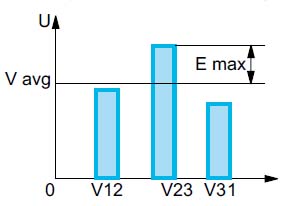
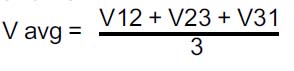
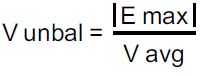
Voltage unbalance
Voltage unbalance on the most unbalanced phase, displayed as a percentage of Vavg.
[Schneider Electric]Небаланс напряжений
Самое значительное отличие по модулю значения одного из линейных напряжений, выраженное в процентах от среднего напряжения Vavg.
[Перевод Интент]
Недопустимые, нерекомендуемые
Тематики
EN
DE
FR
Смотри также
Русско-французский словарь нормативно-технической терминологии > небаланс напряжений
3 коэффициент нулевой последовательности напряжения (тока)
коэффициент нулевой последовательности напряжения (тока)
Величина, равная отношению напряжения (тока) нулевой последовательности к фазному напряжению (току) прямой последовательности в многофазной системе электроснабжения.
Примечание. Для целей стандартизации допускается относить к номинальному напряжению (току).
[ ГОСТ 23875-88]EN
unbalance factor
in a three-phase system, the degree of unbalance expressed by the ratio (in per cent) between the r.m.s. values of the negative sequence (or the zero sequence) component and the positive sequence component of voltage or current
[IEV number 604-01-30]FR
taux de déséquilibre
dans un réseau triphasé, expression du degré de déséquilibre par le rapport, exprimé en pourcentage, entre la valeur efficace de chacune des composantes inverse ou homopolaire et celle de la composante directe de la tension ou du courant
[IEV number 604-01-30]Тематики
EN
DE
FR
Смотри также
43. Коэффициент нулевой последовательности напряжения (тока)
D. Unsymmetriegrad
E. Unbalance factor
F. Taux de déséquilibre
Величина, равная отношению напряжения (тока) нулевой последовательности к фазному напряжению (току) прямой последовательности в многофазной системе электроснабжения.
Примечание. Для целей стандартизации допускается относить к номинальному напряжению (току)
Источник: ГОСТ 23875-88: Качество электрической энергии. Термины и определения оригинал документа
Русско-французский словарь нормативно-технической терминологии > коэффициент нулевой последовательности напряжения (тока)
4 коэффициент обратной последовательности напряжения (тока)
коэффициент обратной последовательности напряжения (тока)
Величина, равная отношению напряжения (тока) обратной последовательности к напряжению (току) прямой последовательности в многофазной системе электроснабжения.
Примечание. Для целей стандартизации допускается относить к номинальному напряжению (току).
[ ГОСТ 23875-88]EN
unbalance factor
in a three-phase system, the degree of unbalance expressed by the ratio (in per cent) between the r.m.s. values of the negative sequence (or the zero sequence) component and the positive sequence component of voltage or current
[IEV number 604-01-30]FR
taux de déséquilibre
dans un réseau triphasé, expression du degré de déséquilibre par le rapport, exprimé en pourcentage, entre la valeur efficace de chacune des composantes inverse ou homopolaire et celle de la composante directe de la tension ou du courant
[IEV number 604-01-30]Тематики
EN
DE
FR
Смотри также
42. Коэффициент обратной последовательности напряжения (тока)
D. Unsymmetriegrad
E. Unbalance factor
F. Taux de déséquilibre
Величина, равная отношению напряжения (тока) обратной последовательности к напряжению (току) прямой последовательности в многофазной системе электроснабжения.
Примечание. Для целей стандартизации допускается относить к номинальному напряжению (току)
Источник: ГОСТ 23875-88: Качество электрической энергии. Термины и определения оригинал документа
Русско-французский словарь нормативно-технической терминологии > коэффициент обратной последовательности напряжения (тока)
5 Usage note : before
When before is used as a preposition in expressions of time or order of sequence or importance, it is translated by avant:before the meeting= avant la réunionshe left before me= elle est partie avant moiFor more examples and particular usages, see A1, 2, 3 in the entry before.When before is used as a preposition meaning in front of (when you are talking about physical space) or in the presence of, it is translated by devant:before our eyes= devant nos yeuxhe declared before his mother that …= il a déclaré devant sa mère que …When before is used as an adjective after a noun, it is translated by précédent/-e:the time before= la fois précédentethe one before is translated by le précédent or la précédente:no, I’m not talking about that meeting but the one before= non, je ne parle pas de cette réunion-là mais de la précédenteFor particular usages see B in the entry before.When before is used as an adverb meaning beforehand, it is translated by avant in statements about the present or future:I’ll try to talk to her before= j’essaierai de lui en parler avantyou could have told me before= tu aurais pu me le dire avantI had met her two or three times before= je l’avais rencontrée deux ou trois fois auparavantI’ve met her before= je l’ai déjà rencontréeyou’ve asked me that question before= tu m’as déjà posé cette questionIn negative sentences before is often used in English simply to reinforce the negative. In such cases it is not translated at all:I’d never eaten snails before= je n’avais jamais mangé d’escargotsyou’ve never told me that before= tu ne m’as jamais dit çaFor particular usages see C in the entry before.When before is used as a conjunction, it is translated by avant de + infinitive where the two verbs have the same subject:before he saw her he recognized her voice= il a reconnu sa voix avant de la voirbefore I cook dinner I’m going to phone my mother= avant de préparer le dîner je vais appeler ma mèreWhere the two verbs have different subjects, the translation is avant que + subjunctive:Tom wants to see her before she leaves= Tom veut la voir avant qu’elle parteSome speakers and writers add ne before the verb: Tom veut la voir avant qu’elle ne parte, but this is simply a slightly precious effect of style and is never obligatory. For particular usages see D in the entry before.6 обратная последовательность
Dictionnaire russe-français universel > обратная последовательность
7 несимметрия напряжений
несимметрия напряжений
Состояние системы энергоснабжения трехфазного переменного тока, в которой среднеквадратические значения основных составляющих междуфазных напряжений или углы сдвига фаз между основными составляющими междуфазных напряжений не равны между собой.
Примечания
1 Степень несимметрии обычно выражают отношением напряжений обратной и нулевой последовательностей к напряжению прямой последовательности.
2 В настоящем стандарте несимметрия напряжений рассматривается применительно только к трехфазным системам энергоснабжения.
[ ГОСТ Р 51317.4.30-2008 (МЭК 61000-4-30:2008)]EN
voltage unbalance
condition in a polyphase system in which the r.m.s. values of the line voltages (fundamental component), and/or the phase angles between consecutive line voltages, are not all equal
NOTE 1 The degree of the inequality is usually expressed as the ratios of the negative- and zero-sequence components to the positive-sequence component.
NOTE 2 In this standard, voltage unbalance is considered in relation to 3-phase systems.
[IEC 61000-4-30, ed. 2.0 (2008-10)]FR
déséquilibre de tension
dans un réseau d’énergie électrique polyphasé, état dans lequel les valeurs efficaces des tensions entre conducteurs (composante fondamentale), et/ou les différences de phase entre conducteurs successifs, ne sont pas toutes égales
NOTE 1 Le taux de déséquilibre s’exprime habituellement par le rapport de la composante inverse ou homopolaire à la composante directe.
NOTE 2 Dans la présente norme, le déséquilibre de tension est relatif aux réseaux triphasés.
[IEC 61000-4-30, ed. 2.0 (2008-10)]Тематики
EN
FR
Русско-французский словарь нормативно-технической терминологии > несимметрия напряжений
8 обратная последовательность
électrРусско-французский политехнический словарь > обратная последовательность
9 система обратной последовательности
nelectr. système négatif, séquence négativeDictionnaire russe-français universel > система обратной последовательности
См. также в других словарях:
negative sequence component — atvirkštinės sekos dedamoji statusas T sritis automatika atitikmenys: angl. negative sequence component vok. Gegenkomponente, f rus. составляющая обратной последовательности, f pranc. composante de séquence négative, f; composante inverse, f … Automatikos terminų žodynas
Negative regulatory element — (NRE) is a regulatory sequence for the insulin gene [1] References ^ Melloul et al., Diabetologica, 45, 309 326, year 2002. Regulation of insulin gene transcription … Wikipedia
Negative binomial distribution — Probability mass function The orange line represents the mean, which is equal to 10 in each of these plots; the green line shows the standard deviation. notation: parameters: r > 0 number of failures until the experiment is stopped (integer,… … Wikipedia
Sequence alignment — In bioinformatics, a sequence alignment is a way of arranging the sequences of DNA, RNA, or protein to identify regions of similarity that may be a consequence of functional, structural, or evolutionary relationships between the sequences.[1]… … Wikipedia
Negative double — The negative double is a form of take out double in bridge. It is made by the responder after his right hand opponent overcalls on the first round of bidding, and is used to show both support for the unbid suits as well as some values. It is… … Wikipedia
Negative demonstration — Demonstration Dem on*stra tion, n. [L. demonstratio: cf. F. d[ e]monstration.] 1. The act of demonstrating; an exhibition; proof; especially, proof beyond the possibility of doubt; indubitable evidence, to the senses or reason. [1913 Webster]… … The Collaborative International Dictionary of English
Séquence de Fibonacci — Suite de Fibonacci La suite de Fibonacci est une suite d entiers très connue. Elle doit son nom à un mathématicien italien connu sous le nom de Leonardo Fibonacci qui, dans un problème récréatif posé dans un de ses ouvrages, le Liber Abaci,… … Wikipédia en Français
Sequence Risk — The risk of receiving lower or negative returns early in a period when withdrawals are made from the underlying investments. The order or the sequence of investment returns is a primary concern for those individuals who are retired and living off … Investment dictionary
negative-sense RNA — viral RNA that has a base sequence complementary to that of mRNA; during replication it serves as a template for the transcription of viral complementary RNA, which in turn serves as a template for protein synthesis … Medical dictionary
composante de séquence négative — atvirkštinės sekos dedamoji statusas T sritis automatika atitikmenys: angl. negative sequence component vok. Gegenkomponente, f rus. составляющая обратной последовательности, f pranc. composante de séquence négative, f; composante inverse, f … Automatikos terminų žodynas
Padovan sequence — The Padovan sequence is the sequence of integers P ( n ) defined by the initial values :P(0)=P(1)=P(2)=1,and the recurrence relation:P(n)=P(n 2)+P(n 3).The first few values of P ( n ) are:1, 1, 1, 2, 2, 3, 4, 5, 7, 9, 12, 16, 21, 28, 37, 49, 65,… … Wikipedia
 18+© Академик, 2000-2026
- Обратная связь: Техподдержка, Реклама на сайте
Экспорт словарей на сайты, сделанные на PHP, Joomla, Drupal, WordPress, MODx.