

-
1 процесс централизованного управления
Русско-английский исловарь по машиностроению и автоматизации производства > процесс централизованного управления
-
2 процесс централизованного управления
Automation: master control processУниверсальный русско-английский словарь > процесс централизованного управления
-
3 domar
v.to tame (animales salvajes).* * *1 to tame (caballos) to break in2 figurado to tame, control* * *VT1) [+ animal salvaje] (=amansar) to tame; (=adiestrar) to train2) [+ caballo] to break in3) [+ emoción] to master, control* * *verbo transitivob) (fam) < niño> to bring o get... under controlc) (fam) < zapatos> to break in* * *= tame, break + Nombre + in.Ex. The problem reside in the fact that they environment we seek to tame and control is an open, unstructured dynamic process, while human organizations are static and highly resistant to change.Ex. You'll never wear your combat boots until they're comfortable, and this is the fastest and easiest way to break them in.----* domar la fiera = tame + the beast.* * *verbo transitivob) (fam) < niño> to bring o get... under controlc) (fam) < zapatos> to break in* * *= tame, break + Nombre + in.Ex: The problem reside in the fact that they environment we seek to tame and control is an open, unstructured dynamic process, while human organizations are static and highly resistant to change.
Ex: You'll never wear your combat boots until they're comfortable, and this is the fastest and easiest way to break them in.* domar la fiera = tame + the beast.* * *domar [A1 ]vt1 ‹fieras› to tame; ‹caballo› to break in2 ( fam); ‹niño› to bring o get … under control, bring … into line3 ( fam); ‹zapatos› to break in4 ( liter); ‹emociones/pasiones› to check, restrain, curb* * *
domar ( conjugate domar) verbo transitivo
‹ caballo› to break in
domar verbo transitivo to tame, conquer, overcome
(un caballo) to break (in): por fin ha domado su vicio con el alcohol, she has at last overcome her alcohol addiction
' domar' also found in these entries:
English:
break
- tame
- untamed
* * *domar vt1. [animal salvaje] to tame;[caballo] to break in2. [calzado] to break in3. [personas, pasiones] to control;es un niño muy difícil de domar he's a very difficult child to control* * *v/t tb figtame; caballo break in* * *domar vt: to tame, to break in* * *domar vb to tame -
4 диспетчерская
1) General subject: op con, ops con, incident room (в управлении полиции)2) Aviation: control tower4) Military: traffic controller's room5) Engineering: control room, dispatch office, dispatch room, dispatcher office6) Mining: central control room (шахты, рудника)7) Oil: telecom cabin8) Sakhalin energy glossary: central control room, dispatcher's office9) Oil&Gas technology dispatcher's supervision board10) Sakhalin R: field auxiliary room, process control room11) oil&gas: master control center12) Facilities: production complex management facilities-control room -
5 dominar
v.1 to control (controlar) (pasión, nervios, caballo).era imposible dominar el vehículo it was impossible to maintain control of the vehicle2 to overcome.lo dominaba el deseo irrefrenable de besarla he was overcome by an irresistible desire to kiss her3 to master (conocer) (técnica, tema).domina varias lenguas she speaks various languages fluentlyha conseguido dominar el inglés en pocos meses he managed to acquire a good command of English within a few months4 to overlook.desde aquí se domina todo Bilbao you can see the whole of Bilbao from here5 to predominate.6 to dominate, to domineer, to bestride, to have sway over.El tirano domina al pueblo The tyrant dominates the people.Ella domina su ira She dominates her anger.7 to tower above, to dominate.El cerro domina el horizonte The hill dominates the horizon.8 to have the control, to dominate, to have ascendancy, to have the ascendancy.Ella domina She has the control.9 to calm down forcibly, to calm down.10 to take over.* * *1 (tener bajo dominio) to dominate2 (avasallar) to domineer3 (controlar) to control, restrain4 (conocer a fondo) to master5 (ver) to overlook, dominate1 (ser superior) to dominate2 (destacar) to stand out3 (predominar) to predominate1 (controlarse) to control oneself, restrain oneself* * *verb1) to dominate2) master3) prevail•* * *1. VT1) (=controlar) [+ población, territorio] to dominate; [+ países] to rule, rule over; [+ adversario] to overpower; [+ caballo] to control2) (=contener) [+ incendio, epidemia] to check, bring under control; [+ rebelión] to put down, suppress; [+ pasión] to control, master; [+ nervios, emoción] to control; [+ dolor] to overcome3) [+ técnica, tema] to master4) (=estar por encima de)la catedral domina toda la ciudad — the cathedral dominates o towers above the whole town
2. VI1) [edificio] to tower2) (=predominar) [color, rasgo] to stand out; [opinión, tendencia] to predominate3.See:* * *1.verbo transitivoa) ( controlar) <nación/territorio/persona> to dominate; <pasión/cólera> to control; <vehiculo/caballo> to controldominado por la ambición/los celos — ruled by ambition/consumed by jealousy
la policía dominó la situación en todo momento — the police had the situation under control at all times
b) < idioma> to have a good command of; <tema/asignatura> to know... very wellc) ( abarcar con la vista)d) montaña/torre to dominate2. 3.* * *= dominate, dominate + the scene, get + command of, tame, subdue, master, command, conquer, preponderate, overtake, overlook, gain + control (over/of), get + a grip on, tower above/over, pervade, hold + sway (over), be king, lord over, lord it over, keep + a tight hold on.Ex. The ideology advocated by Panizzi has since dominated not only Anglo-American but Western cataloging generally.Ex. This may have something to do with the absence of CABx, who seem to have dominated the scene in other states.Ex. The great storyteller, FC Sayers, having advised the beginner to 'steep himself in folklore until the elemental themes are part of himself,' explains how best to get command of a tale.Ex. The problem reside in the fact that they environment we seek to tame and control is an open, unstructured dynamic process, while human organizations are static and highly resistant to change.Ex. Anyway, experience had taught him that a subordinate who attempts to subdue a superordinate is almost always lost; the superordinate has too many advantages in such a contest.Ex. The library director strove to master his frustration.Ex. Very few engravers commanded the necessary artistry.Ex. The tools and technologies provided by the Internet enable scholars to communicate or disseminate information in ways which conquer the barriers of time and space.Ex. The indexing languages used in science and technology were first in the field, and still preponderate, both in areas covered and in number.Ex. E-Books, while a curiosity and a lot of fun, do not seem to be overtaking the mass market.Ex. In this sense the British Council libraries may be seen as a window, overlooking the British Isles, their virtues and characteristics.Ex. Gradually many of these conquerors came to realize that, although military might was necessary to gain control over an area, sheer force of arms was not sufficient to govern effectively.Ex. The article ' Getting a grip on change' argues that only by confronting the challenges and inevitability of change can libraries retain their relevancy in the information age.Ex. Prague represents a unique collection of historical monuments dominated by Prague Castle towering high above the city.Ex. I strongly believe that we must cultivate a more positive attitude towards change in the field of library work, and that this attitude must pervade all levels of librarianship.Ex. This ideology appealed widely to the librarian as well as the library user and held sway for nearly a quarter of a millennium when, in 1841, a catalytic event in the history of cataloging took place.Ex. Despite the electronics invasion, books are still king, and book fairs keeps on growing every year.Ex. She argues that the way yeoman farmers lorded over their wives and dependents was similar to the way wealthy planters lorded over their slaves.Ex. They believe that the main use for government is for some people to lord it over others at their expense.Ex. A study of telly-addicts has found that in 45 per cent of homes mums keep a tight hold on the remote control.----* dominar a Alguien = have + Nombre + under + Posesivo + thumb, bring + Nombre + under + Posesivo + sway.* dominar aún más = tighten + Posesivo + grip on.* dominar el miedo = conquer + fear.* dominar la situación = tame + the beast.* dominar por completo = sweep + the board.* dominar una destreza = master + skill.* dominar una técnica = master + technique.* la mano que mece la cuna es la mano que domina el mundo = the hand that rocks the cradle rules the world.* * *1.verbo transitivoa) ( controlar) <nación/territorio/persona> to dominate; <pasión/cólera> to control; <vehiculo/caballo> to controldominado por la ambición/los celos — ruled by ambition/consumed by jealousy
la policía dominó la situación en todo momento — the police had the situation under control at all times
b) < idioma> to have a good command of; <tema/asignatura> to know... very wellc) ( abarcar con la vista)d) montaña/torre to dominate2. 3.* * *= dominate, dominate + the scene, get + command of, tame, subdue, master, command, conquer, preponderate, overtake, overlook, gain + control (over/of), get + a grip on, tower above/over, pervade, hold + sway (over), be king, lord over, lord it over, keep + a tight hold on.Ex: The ideology advocated by Panizzi has since dominated not only Anglo-American but Western cataloging generally.
Ex: This may have something to do with the absence of CABx, who seem to have dominated the scene in other states.Ex: The great storyteller, FC Sayers, having advised the beginner to 'steep himself in folklore until the elemental themes are part of himself,' explains how best to get command of a tale.Ex: The problem reside in the fact that they environment we seek to tame and control is an open, unstructured dynamic process, while human organizations are static and highly resistant to change.Ex: Anyway, experience had taught him that a subordinate who attempts to subdue a superordinate is almost always lost; the superordinate has too many advantages in such a contest.Ex: The library director strove to master his frustration.Ex: Very few engravers commanded the necessary artistry.Ex: The tools and technologies provided by the Internet enable scholars to communicate or disseminate information in ways which conquer the barriers of time and space.Ex: The indexing languages used in science and technology were first in the field, and still preponderate, both in areas covered and in number.Ex: E-Books, while a curiosity and a lot of fun, do not seem to be overtaking the mass market.Ex: In this sense the British Council libraries may be seen as a window, overlooking the British Isles, their virtues and characteristics.Ex: Gradually many of these conquerors came to realize that, although military might was necessary to gain control over an area, sheer force of arms was not sufficient to govern effectively.Ex: The article ' Getting a grip on change' argues that only by confronting the challenges and inevitability of change can libraries retain their relevancy in the information age.Ex: Prague represents a unique collection of historical monuments dominated by Prague Castle towering high above the city.Ex: I strongly believe that we must cultivate a more positive attitude towards change in the field of library work, and that this attitude must pervade all levels of librarianship.Ex: This ideology appealed widely to the librarian as well as the library user and held sway for nearly a quarter of a millennium when, in 1841, a catalytic event in the history of cataloging took place.Ex: Despite the electronics invasion, books are still king, and book fairs keeps on growing every year.Ex: She argues that the way yeoman farmers lorded over their wives and dependents was similar to the way wealthy planters lorded over their slaves.Ex: They believe that the main use for government is for some people to lord it over others at their expense.Ex: A study of telly-addicts has found that in 45 per cent of homes mums keep a tight hold on the remote control.* dominar a Alguien = have + Nombre + under + Posesivo + thumb, bring + Nombre + under + Posesivo + sway.* dominar aún más = tighten + Posesivo + grip on.* dominar el miedo = conquer + fear.* dominar la situación = tame + the beast.* dominar por completo = sweep + the board.* dominar una destreza = master + skill.* dominar una técnica = master + technique.* la mano que mece la cuna es la mano que domina el mundo = the hand that rocks the cradle rules the world.* * *dominar [A1 ]vt1 (controlar) ‹nación/territorio› to dominate; ‹persona› to dominate; ‹pasión/cólera› to controltiene a los niños totalmente dominados she has the children well under her thumb o under controldominado por la ambición ruled by ambitiondominado por los celos consumed by jealousyno logró dominar su ira she couldn't contain o control her angerel equipo que dominó el encuentro the team which dominated the matchno logró dominar el vehículo/caballo he couldn't get control of the vehicle/horsela policía dominó la situación en todo momento the police had the situation under control at all times2 ‹tema/idioma›no domino el tema I'm no expert on the subjectdomina el francés she has a good command of Frenchnunca voy a poder dominar el inglés I'll never be able to master English3(abarcar con la vista): desde allí se domina toda la bahía there's a view over the whole bay from there, from there you can look out over the whole bay4 «montaña/torre» to dominate■ dominarvi«color/tendencia» to predominate; «opinión» to prevailel tema que dominó en las negociones the subject which dominated the talksel equipo visitante dominó durante el segundo tiempo the visitors dominated the second half o were on top in the second half«persona» to restrain o control oneself* * *
dominar ( conjugate dominar) verbo transitivo
‹pasión/cólera› to control;
‹vehículo/caballo› to control;◊ dominado por la ambición/los celos ruled by ambition/consumed by jealousy
‹tema/asignatura› to know … very wellc) ( abarcar con la vista):
verbo intransitivo [color/tendencia] to predominate;
[ opinión] to prevail;
[ equipo] to dominate
dominarse verbo pronominal [ persona] to restrain o control oneself
dominar
I verbo transitivo
1 (un pueblo, país) to dominate, rule
2 (contener, controlar) to control
3 (conocer perfectamente: un idioma) to speak very well
(: un asunto, una actividad) to master
4 (con la vista) to overlook
II verbo intransitivo
1 to dominate
2 (un color, una característica) to stand out
' dominar' also found in these entries:
Spanish:
abarcar
- imperar
- imponerse
- vencer
- conocer
- dejar
- reducir
- someter
- sujetar
English:
control
- curb
- dominate
- hold down
- master
- overpower
- pervade
- restrain
- subdue
- sway
- tower
- over
- rule
* * *♦ vt1. [controlar] [país, territorio, pueblo] to dominate, to rule (over);[persona, caballo] to control; [emociones, nervios] to control, to keep under control; [situación] to be in control of; [incendio, epidemia] to bring under control; [rebelión] to put down; [partido] to dominate;la guerrilla domina toda esta zona guerrillas control this entire area;la policía logró dominar a los alborotadores the police managed to bring the troublemakers under control;tiene al marido dominado she has her husband under her thumb;era imposible dominar el vehículo it was impossible to maintain control of the vehicle;no supo dominar sus nervios she couldn't control her nervousness;el equipo local dominó el partido en todo momento the local team dominated the game from the beginning2. [sujeto: pasión, nervios, emociones] to overcome;lo dominaba el deseo irrefrenable de besarla he was overcome by an irresistible desire to kiss her3. [ser experto en] [técnica, tema] to master;[lengua] to be fluent in;domina a la perfección los temas de contabilidad he has a perfect mastery of accounting;domina varias lenguas she speaks various languages fluently;ha conseguido dominar el inglés en pocos meses he managed to acquire a good command of English in a few months;¡cómo domina el balón! what great ball control!4. [divisar] to overlook;desde aquí se domina todo Bilbao you can see the whole of Bilbao from here5. [destacar por encima de] to dominate;el castillo domina el pueblo the castle dominates the town♦ vi[predominar] to predominate;una zona donde domina el voto socialista an area with a predominantly socialist vote* * *I v/t2 idioma have a good command ofII v/i dominate* * *dominar vt1) : to dominate2) : to master, to be proficient atdominar vi: to predominate, to prevail* * *dominar vb1. (en general) to dominate2. (tener bajo poder) to rule over3. (controlar) to control5. (idioma) to be fluent in6. (otras materias) to be good at / to be an expert on -
6 fichero
m.1 file (gen) & (computing).2 card index, card catalogue, card file, card catalog.3 card-catalog.* * *1 (archivo) card index2 (mueble) filing cabinet, file3 INFORMÁTICA file* * *SM1) (=archivo) card index2) (=mueble) filing cabinet3) [de policía] records plfichero fotográfico de delincuentes — photographic records of criminals, rogues' gallery * hum
4) (Inform) file* * *1)a) ( mueble - para carpetas) filing cabinet; (- para tarjetas) card index cabinetb) ( cajón - de carpetas) filing draw; (- para tarjetas) card index drawc) ( caja) index card file (AmE), card index box (BrE)d) ( conjunto de fichas) file2) (Inf) file* * *= card file, catalogue case, data file, file, index file.Ex. Here again, Sharp's SLIC indexing procedure provides a solution though one that is prohibitively expensive for a conventional card file.Ex. You know many libraries have had telephone jacks at the end of the catalog cases and reference people were running around, except they didn't do it very much.Ex. In the absence of sufficient staff to mount a supervised programme of microcomputer instructions, the library used existing, inexpensive, menu-making software to develop menu-driven, self-instructing access to disc operating commands, applications programs, and data files.Ex. Information is held in files or databases, which are comprised of records, which in turn are comprised of fields or data items, which again may be comprised of subfields or data elements.Ex. This library service includes bright wall displays, pamphlets on open racks, availability of lists and directories, access to index files of local information, clear guiding on shelves and cabinet files, and the re-packaging of complex or ephemeral material.----* adjuntar ficheros = file attachment.* búsqueda a través de ficheros de identificación documental = signature-based search.* búsqueda cruzada de ficheros = cross-file searching.* búsqueda de varios ficheros a la vez = multi-file searching.* búsqueda en múltiples ficheros = cross-file searching.* captura de ficheros de audio = audio capture.* captura de ficheros de vídeo = video capture.* comprimir un fichero = zip + file.* copiar un fichero = load + file.* depurar un fichero = clean up + file.* descomprimir un fichero = unzip + file.* diseño de ficheros = file design.* en varios ficheros = cross-file [crossfile].* estructura de ficheros = file design.* extensión del nombre del fichero = file name extension.* fichero adjunto = file attachment, attachment, email attachment.* fichero alfabético = alphabetical file.* fichero automatizado = machine file, computer-based file.* fichero binario = binary file.* fichero central = master file.* fichero comprimido = zip file.* fichero con estructura de red = networked file.* fichero de acceso aleatorio = random access file.* fichero de adquisiciones = acquisition(s) file.* fichero de autoridades = authority file.* fichero de autoridades de nombres = name authority file.* fichero de catalogación en curso = in-process cataloguing file.* fichero de circulación = circulation file.* fichero de control de publicaciones periódicas = periodicals file [periodical file], periodical holdings file.* fichero de cuentas = accounting file.* fichero de direcciones = addresses file.* fichero de ejecución por lotes = batch file.* fichero de entrada = incoming file.* fichero de existencias del sistema = system holdings file.* fichero de identificaciones documentales = signature file.* fichero de imágenes = graphic file, image file.* Fichero de Información del Proceso de Automatización (APIF) = APIF (Automated Process Information File).* fichero de lectores = registration file.* fichero de materias = descriptor file.* fichero de ocurrencias = postings file.* fichero de operaciones realizadas = transaction file.* fichero de pedidos = on-order file, order file.* fichero de préstamo = circulation file.* fichero de punto de acceso = access-point file.* fichero de recursos humanos = resource file.* fichero de registro de transacciones = log, service log, computer log, server log.* fichero de registro por documento = item record file.* fichero de registro por término = term record file.* fichero de salida = outgoing file.* fichero de salida de datos = communication output file.* fichero de sonido = audio file, sound file.* fichero de sonido simultáneo = streaming audio.* fichero de texto = text file.* fichero de usuarios del sistema = system user file.* fichero de vídeo = video file.* fichero en disco = disc file.* fichero invertido = inverted file.* fichero jerárquico = hierarchical file.* fichero manual = manual file.* fichero matriz = master file.* fichero ordenado por materias = subject file.* fichero plano = flat file.* fichero relacional = relational file.* fichero retrospectivo = backfile [back file].* fichero sistemático = systematic file.* fichero topográfico local = local copy file.* fichero viejo = backfile [back file].* guardar los resultados de una búsqueda en un fichero = store + search results + in disc file.* inclusión de ficheros = file attachment.* menú de Seleccione un Fichero = Select a File menu.* nombre de fichero = filename.* programa de análisis de ficheros de transacciones = log analysis software.* servidor de ficheros = server computer, file server.* subfichero = subfile.* transferencia de ficheros = file transfer.* * *1)a) ( mueble - para carpetas) filing cabinet; (- para tarjetas) card index cabinetb) ( cajón - de carpetas) filing draw; (- para tarjetas) card index drawc) ( caja) index card file (AmE), card index box (BrE)d) ( conjunto de fichas) file2) (Inf) file* * *= card file, catalogue case, data file, file, index file.Ex: Here again, Sharp's SLIC indexing procedure provides a solution though one that is prohibitively expensive for a conventional card file.
Ex: You know many libraries have had telephone jacks at the end of the catalog cases and reference people were running around, except they didn't do it very much.Ex: In the absence of sufficient staff to mount a supervised programme of microcomputer instructions, the library used existing, inexpensive, menu-making software to develop menu-driven, self-instructing access to disc operating commands, applications programs, and data files.Ex: Information is held in files or databases, which are comprised of records, which in turn are comprised of fields or data items, which again may be comprised of subfields or data elements.Ex: This library service includes bright wall displays, pamphlets on open racks, availability of lists and directories, access to index files of local information, clear guiding on shelves and cabinet files, and the re-packaging of complex or ephemeral material.* adjuntar ficheros = file attachment.* búsqueda a través de ficheros de identificación documental = signature-based search.* búsqueda cruzada de ficheros = cross-file searching.* búsqueda de varios ficheros a la vez = multi-file searching.* búsqueda en múltiples ficheros = cross-file searching.* captura de ficheros de audio = audio capture.* captura de ficheros de vídeo = video capture.* comprimir un fichero = zip + file.* copiar un fichero = load + file.* depurar un fichero = clean up + file.* descomprimir un fichero = unzip + file.* diseño de ficheros = file design.* en varios ficheros = cross-file [crossfile].* estructura de ficheros = file design.* extensión del nombre del fichero = file name extension.* fichero adjunto = file attachment, attachment, email attachment.* fichero alfabético = alphabetical file.* fichero automatizado = machine file, computer-based file.* fichero binario = binary file.* fichero central = master file.* fichero comprimido = zip file.* fichero con estructura de red = networked file.* fichero de acceso aleatorio = random access file.* fichero de adquisiciones = acquisition(s) file.* fichero de autoridades = authority file.* fichero de autoridades de nombres = name authority file.* fichero de catalogación en curso = in-process cataloguing file.* fichero de circulación = circulation file.* fichero de control de publicaciones periódicas = periodicals file [periodical file], periodical holdings file.* fichero de cuentas = accounting file.* fichero de direcciones = addresses file.* fichero de ejecución por lotes = batch file.* fichero de entrada = incoming file.* fichero de existencias del sistema = system holdings file.* fichero de identificaciones documentales = signature file.* fichero de imágenes = graphic file, image file.* Fichero de Información del Proceso de Automatización (APIF) = APIF (Automated Process Information File).* fichero de lectores = registration file.* fichero de materias = descriptor file.* fichero de ocurrencias = postings file.* fichero de operaciones realizadas = transaction file.* fichero de pedidos = on-order file, order file.* fichero de préstamo = circulation file.* fichero de punto de acceso = access-point file.* fichero de recursos humanos = resource file.* fichero de registro de transacciones = log, service log, computer log, server log.* fichero de registro por documento = item record file.* fichero de registro por término = term record file.* fichero de salida = outgoing file.* fichero de salida de datos = communication output file.* fichero de sonido = audio file, sound file.* fichero de sonido simultáneo = streaming audio.* fichero de texto = text file.* fichero de usuarios del sistema = system user file.* fichero de vídeo = video file.* fichero en disco = disc file.* fichero invertido = inverted file.* fichero jerárquico = hierarchical file.* fichero manual = manual file.* fichero matriz = master file.* fichero ordenado por materias = subject file.* fichero plano = flat file.* fichero relacional = relational file.* fichero retrospectivo = backfile [back file].* fichero sistemático = systematic file.* fichero topográfico local = local copy file.* fichero viejo = backfile [back file].* guardar los resultados de una búsqueda en un fichero = store + search results + in disc file.* inclusión de ficheros = file attachment.* menú de Seleccione un Fichero = Select a File menu.* nombre de fichero = filename.* programa de análisis de ficheros de transacciones = log analysis software.* servidor de ficheros = server computer, file server.* subfichero = subfile.* transferencia de ficheros = file transfer.* * *A1 (mueble) filing cabinet2 (cajón) card index cabinet4 (conjunto de fichas) fileB ( Inf) fileCompuestos:archive file● fichero de datos/reservadata/back-up filework fileindex filemaster filezip file* * *
fichero sustantivo masculino
(— para tarjetas) card index draw
(Inf) file
fichero sustantivo masculino card index
' fichero' also found in these entries:
Spanish:
alfabetizar
- ficha
English:
card index
- file
- file name
- card
* * *fichero nm1. [conjunto de fichas] file2. [mueble] filing cabinet;[cajón] filing cabinet drawer; [caja] card index box3. Informát filefichero por lotes batch file;fichero MP3 MP3 file* * *m1 file cabinet, Brfiling cabinet2 INFOR file* * *fichero nm1) : card file2) : filing cabinet* * *fichero n1. (mueble) filing cabinet3. (archivo) file -
7 controlar
v.1 to control.Pedro controla su vida al fin Peter controls his life at last.María controla a sus hijos con lástima Mary controls her kids through pity.2 to check.3 to watch, to keep an eye on.4 to take over, to control.María controla los negocios Mary takes over business.* * *1 (gen) to control2 (comprobar) to check1 (moderarse) to control oneself* * *verb1) to control2) monitor* * *1. VT1) (=dominar) [+ situación, emoción, balón, vehículo, inflación] to controllos rebeldes controlan ya todo el país — the rebels now control the whole country, the rebels are now in control of the whole country
los bomberos consiguieron controlar el fuego — the firefighters managed to bring the fire under control
no controlo muy bien ese tema — * I'm not very hot on that subject *
2) (=vigilar)contrólame al niño mientras yo estoy fuera — * can you keep an eye on the child while I'm out
estoy encargado de controlar que todo salga bien — I'm responsible for checking o seeing that everything goes well
controla que no hierva el café — * make sure the coffee doesn't boil, see that the coffee doesn't boil
3) (=regular) to control2.VI *3.See:* * *1.verbo transitivo1) ( dominar) <nervios/impulsos/persona> to control2) ( vigilar) <inflación/proceso> to monitorcontrolar el peso/la línea — to watch one's weight/one's waistline
3) ( regular) <presión/inflación> to control2.controlarse v pron1) ( dominarse) to control oneselfsi no se controla acabará alcoholizado — if he doesn't get a grip on himself he's going to become an alcoholic
2) ( vigilar) <peso/colesterol> to check, monitor* * *= control, get + command of, govern, keep + a rein on, keep within + bounds, monitor, regulate, peg, police, master, command, scourge, keep down + Nombre, stem + the tide of, bring under + control, hold in + line, gain + control (over/of), get + a grip on, hold + the reins of, corral, check up on, keep + tabs on, wield + control, hold + sway (over), wiretap [wire-tap], hold + the line, keep + a tight hold on, take + control of, stay on top of, stay in + control, rein in, hold + Nombre + in.Ex. These fields control the access to the main record and are all fixed length fields.Ex. The great storyteller, FC Sayers, having advised the beginner to 'steep himself in folklore until the elemental themes are part of himself,' explains how best to get command of a tale.Ex. It is not sufficient merely to describe the processes that govern the creation and generation of indexing and abstracting data.Ex. Cases keep discussion grounded on certain persistent facts that must be faced, and keep a realistic rein on airy flights of academic speculation.Ex. Costs can be kept within reasonable bounds if a method appropriate to the specific application is chosen.Ex. Ideally it should be possible to include some form of student assessment or to monitor the student's progress.Ex. Built into each operator are sets of instructions to the computer which regulate where the term must appear in the printed entries generated from the string, typefaces, and necessary punctuation.Ex. After a couple of months, I had his overall behavior pretty well pegged.Ex. For many centuries local authorities have been responsible for policing Weights and Measures Acts and regulations and, where a breach of legislation was uncovered, would prosecute in the criminal court.Ex. The library director strove to master his frustration.Ex. Very few engravers commanded the necessary artistry.Ex. The reference librarian must always resist an impulse to be glib; he must scourge and throttle his vanity; he must reach a conclusion rather than begin with it.Ex. Activities such as gardening or cookery are dealt with in many books in ways which go far beyond the simple keeping down of weeds or just filling empty stomachs.Ex. This article discusses some strategies that are being developed to stem the tide of losses caused worldwide by piracy.Ex. But the unions were able to add their weight to the authority of the parliamentary investigators in bringing the worst excesses of unregulated apprenticeship and of working conditions under control = No obstante, los sindicatos pudieron reforzar la autoridad de los investigadores parlamentarios para controlar los peores excesos que se cometían en el aprendizaje de un oficio y las condiciones laborales sin regularizar.Ex. The library staff consists of 6 professional librarians and 11 clerical workers, all of whom are held firmly in line by the forceful personality of the director, a retired military colonel.Ex. Gradually many of these conquerors came to realize that, although military might was necessary to gain control over an area, sheer force of arms was not sufficient to govern effectively.Ex. The article ' Getting a grip on change' argues that only by confronting the challenges and inevitability of change can libraries retain their relevancy in the information age.Ex. This trend may also be explained by the hegemony of those who hold the reins of international publication.Ex. The article is entitled 'Microfilm retrieval system corrals paper flood for Ameritech publishing'.Ex. The physical effort of keeping tabs on people as well as the distasteful practice of checking up on staff output achieves nothing and may do considerable damage.Ex. The physical effort of keeping tabs on people as well as the distasteful practice of checking up on staff output achieves nothing and may do considerable damage.Ex. Influence and control is currently wielded by sterile professionals who are blind to the need to develop services beyond print.Ex. This ideology appealed widely to the librarian as well as the library user and held sway for nearly a quarter of a millennium when, in 1841, a catalytic event in the history of cataloging took place.Ex. The implementation of this system would enable law enforcement agencies to wiretap all digital communication.Ex. The standpatters argue, and the progressives agree, that the tax line must be held in the interest of attracting industry = Los conservadores proponen y los progresistas están de acuerdo en que se deben contener los impuestos para atraer a la industria.Ex. A study of telly-addicts has found that in 45 per cent of homes mums keep a tight hold on the remote control.Ex. Five years after they took control of war-ravaged Afghanistan, reconstruction remains a job half done.Ex. Adapting to change -- and staying on top of the changes -- is a huge key to success in industry.Ex. This section of the book is all about how to stay in control of your personal information.Ex. If librarians hope to rein in escalating periodical prices, they must become more assertive consumers.Ex. The longer a fart is held in, the larger the proportion of inert nitrogen it contains, because the other gases tend to be absorbed into the bloodstream through the walls of the intestine.----* controlar aún más = tighten + Posesivo + grip on.* controlar el presupuesto = control + the purse strings.* controlar la economía = control + the purse strings.* controlar las finanzas = control + the purse strings.* controlar la situación = tame + the beast.* controlar los gastos = control + costs, contain + costs.* controlarlo todo = have + a finger in every pie.* controlarse = command + Reflexivo, pace.* * *1.verbo transitivo1) ( dominar) <nervios/impulsos/persona> to control2) ( vigilar) <inflación/proceso> to monitorcontrolar el peso/la línea — to watch one's weight/one's waistline
3) ( regular) <presión/inflación> to control2.controlarse v pron1) ( dominarse) to control oneselfsi no se controla acabará alcoholizado — if he doesn't get a grip on himself he's going to become an alcoholic
2) ( vigilar) <peso/colesterol> to check, monitor* * *= control, get + command of, govern, keep + a rein on, keep within + bounds, monitor, regulate, peg, police, master, command, scourge, keep down + Nombre, stem + the tide of, bring under + control, hold in + line, gain + control (over/of), get + a grip on, hold + the reins of, corral, check up on, keep + tabs on, wield + control, hold + sway (over), wiretap [wire-tap], hold + the line, keep + a tight hold on, take + control of, stay on top of, stay in + control, rein in, hold + Nombre + in.Ex: These fields control the access to the main record and are all fixed length fields.
Ex: The great storyteller, FC Sayers, having advised the beginner to 'steep himself in folklore until the elemental themes are part of himself,' explains how best to get command of a tale.Ex: It is not sufficient merely to describe the processes that govern the creation and generation of indexing and abstracting data.Ex: Cases keep discussion grounded on certain persistent facts that must be faced, and keep a realistic rein on airy flights of academic speculation.Ex: Costs can be kept within reasonable bounds if a method appropriate to the specific application is chosen.Ex: Ideally it should be possible to include some form of student assessment or to monitor the student's progress.Ex: Built into each operator are sets of instructions to the computer which regulate where the term must appear in the printed entries generated from the string, typefaces, and necessary punctuation.Ex: After a couple of months, I had his overall behavior pretty well pegged.Ex: For many centuries local authorities have been responsible for policing Weights and Measures Acts and regulations and, where a breach of legislation was uncovered, would prosecute in the criminal court.Ex: The library director strove to master his frustration.Ex: Very few engravers commanded the necessary artistry.Ex: The reference librarian must always resist an impulse to be glib; he must scourge and throttle his vanity; he must reach a conclusion rather than begin with it.Ex: Activities such as gardening or cookery are dealt with in many books in ways which go far beyond the simple keeping down of weeds or just filling empty stomachs.Ex: This article discusses some strategies that are being developed to stem the tide of losses caused worldwide by piracy.Ex: But the unions were able to add their weight to the authority of the parliamentary investigators in bringing the worst excesses of unregulated apprenticeship and of working conditions under control = No obstante, los sindicatos pudieron reforzar la autoridad de los investigadores parlamentarios para controlar los peores excesos que se cometían en el aprendizaje de un oficio y las condiciones laborales sin regularizar.Ex: The library staff consists of 6 professional librarians and 11 clerical workers, all of whom are held firmly in line by the forceful personality of the director, a retired military colonel.Ex: Gradually many of these conquerors came to realize that, although military might was necessary to gain control over an area, sheer force of arms was not sufficient to govern effectively.Ex: The article ' Getting a grip on change' argues that only by confronting the challenges and inevitability of change can libraries retain their relevancy in the information age.Ex: This trend may also be explained by the hegemony of those who hold the reins of international publication.Ex: The article is entitled 'Microfilm retrieval system corrals paper flood for Ameritech publishing'.Ex: The physical effort of keeping tabs on people as well as the distasteful practice of checking up on staff output achieves nothing and may do considerable damage.Ex: The physical effort of keeping tabs on people as well as the distasteful practice of checking up on staff output achieves nothing and may do considerable damage.Ex: Influence and control is currently wielded by sterile professionals who are blind to the need to develop services beyond print.Ex: This ideology appealed widely to the librarian as well as the library user and held sway for nearly a quarter of a millennium when, in 1841, a catalytic event in the history of cataloging took place.Ex: The implementation of this system would enable law enforcement agencies to wiretap all digital communication.Ex: The standpatters argue, and the progressives agree, that the tax line must be held in the interest of attracting industry = Los conservadores proponen y los progresistas están de acuerdo en que se deben contener los impuestos para atraer a la industria.Ex: A study of telly-addicts has found that in 45 per cent of homes mums keep a tight hold on the remote control.Ex: Five years after they took control of war-ravaged Afghanistan, reconstruction remains a job half done.Ex: Adapting to change -- and staying on top of the changes -- is a huge key to success in industry.Ex: This section of the book is all about how to stay in control of your personal information.Ex: If librarians hope to rein in escalating periodical prices, they must become more assertive consumers.Ex: The longer a fart is held in, the larger the proportion of inert nitrogen it contains, because the other gases tend to be absorbed into the bloodstream through the walls of the intestine.* controlar aún más = tighten + Posesivo + grip on.* controlar el presupuesto = control + the purse strings.* controlar la economía = control + the purse strings.* controlar las finanzas = control + the purse strings.* controlar la situación = tame + the beast.* controlar los gastos = control + costs, contain + costs.* controlarlo todo = have + a finger in every pie.* controlarse = command + Reflexivo, pace.* * *controlar [A1 ]vt1 ‹nervios/impulsos/emociones› to control; ‹persona/animal› to controlcontrolamos la situación we are in control of the situation, we have the situation under controlel incendio fue rápidamente controlado por los bomberos the firemen quickly got o brought the fire under controlcontrolan ahora toda la zona they now control o they are now in control of the whole areapasaron a controlar la empresa they took control of the company2 ( fam); ‹tema› to know aboutestos temas no los controlo I don't know anything about these things, I'm not too well up on o hot on these things ( colloq)Bdeja de controlar todos mis gastos stop checking up on how much I spend the whole timeme tienen muy controlada they keep a close watch o they keep tabs on everything I do, they keep me on a very tight reinel portero controlaba las entradas y salidas the porter kept a check on everyone who came in or outcontrolé el tiempo que me llevó I timed myself o how long it took meC (regular) to controleste mecanismo controla la presión this mechanism regulates o controls the pressuremedidas para controlar la inflación measures to control inflation o to bring inflation under controlD ( Dep) (en doping) to administer a test tofue controlado positivo tras su victoria he tested positive after his victorylo controlaron negativo he was tested negativeA (dominarse) to control oneselfsi no se controla acabará alcoholizado if he doesn't get a grip o a hold on himself he's going to become an alcoholicse controla el peso regularmente she checks her weight regularly, she keeps a regular check on her weight* * *
Multiple Entries:
controlar
controlar algo
controlar ( conjugate controlar) verbo transitivo
1 ‹nervios/impulsos/persona› to control;
‹ incendio› to bring … under control;
pasaron a controlar la empresa they took control of the company
2 ‹inflación/proceso› to monitor;
‹ persona› to keep a check on;◊ controlar el peso/la línea to watch one's weight/one's waistline;
controlé el tiempo que me llevó I timed how long it took me
3 ( regular) ‹presión/inflación› to control
controlarse verbo pronominal ( dominarse) to control oneself;
( vigilar) ‹peso/colesterol› to check, monitor
controlar verbo transitivo
1 to control
2 (comprobar) to check
' controlar' also found in these entries:
Spanish:
dominar
- fraude
- manejar
- potingue
- sujetar
- contener
English:
control
- grip
- hold down
- manage
- monitor
- regiment
- spot-check
- stamp out
- check
- discipline
- help
- unruly
* * *♦ vt1. [dominar] to control;controlar la situación to be in control of the situation;la empresa controla el 30 por ciento del mercado the company controls 30 percent of the market;los bomberos todavía no han conseguido controlar el incendio firefighters have still not managed to bring the fire under control;medidas para controlar los precios measures to control prices2. [comprobar, verificar] to check;controla el nivel del aceite check the oil level;controlan continuamente su tensión arterial they are continuously monitoring his blood pressure3. [vigilar] to watch, to keep an eye on;la policía controla todos sus movimientos the police watch his every move;nos controlan la hora de llegada they keep a check on when we arrive;♦ viFam [saber] to know;Rosa controla un montón de química Rosa knows loads about chemistry* * *v/t1 control2 ( vigilar) check* * *controlar vt1) : to control2) : to monitor, to check* * *controlar vb2. (comprobar) to check -
8 Historical Portugal
Before Romans described western Iberia or Hispania as "Lusitania," ancient Iberians inhabited the land. Phoenician and Greek trading settlements grew up in the Tagus estuary area and nearby coasts. Beginning around 202 BCE, Romans invaded what is today southern Portugal. With Rome's defeat of Carthage, Romans proceeded to conquer and rule the western region north of the Tagus, which they named Roman "Lusitania." In the fourth century CE, as Rome's rule weakened, the area experienced yet another invasion—Germanic tribes, principally the Suevi, who eventually were Christianized. During the sixth century CE, the Suevi kingdom was superseded by yet another Germanic tribe—the Christian Visigoths.A major turning point in Portugal's history came in 711, as Muslim armies from North Africa, consisting of both Arab and Berber elements, invaded the Iberian Peninsula from across the Straits of Gibraltar. They entered what is now Portugal in 714, and proceeded to conquer most of the country except for the far north. For the next half a millennium, Islam and Muslim presence in Portugal left a significant mark upon the politics, government, language, and culture of the country.Islam, Reconquest, and Portugal Created, 714-1140The long frontier struggle between Muslim invaders and Christian communities in the north of the Iberian peninsula was called the Reconquista (Reconquest). It was during this struggle that the first dynasty of Portuguese kings (Burgundian) emerged and the independent monarchy of Portugal was established. Christian forces moved south from what is now the extreme north of Portugal and gradually defeated Muslim forces, besieging and capturing towns under Muslim sway. In the ninth century, as Christian forces slowly made their way southward, Christian elements were dominant only in the area between Minho province and the Douro River; this region became known as "territorium Portu-calense."In the 11th century, the advance of the Reconquest quickened as local Christian armies were reinforced by crusading knights from what is now France and England. Christian forces took Montemor (1034), at the Mondego River; Lamego (1058); Viseu (1058); and Coimbra (1064). In 1095, the king of Castile and Léon granted the country of "Portu-cale," what became northern Portugal, to a Burgundian count who had emigrated from France. This was the foundation of Portugal. In 1139, a descendant of this count, Afonso Henriques, proclaimed himself "King of Portugal." He was Portugal's first monarch, the "Founder," and the first of the Burgundian dynasty, which ruled until 1385.The emergence of Portugal in the 12th century as a separate monarchy in Iberia occurred before the Christian Reconquest of the peninsula. In the 1140s, the pope in Rome recognized Afonso Henriques as king of Portugal. In 1147, after a long, bloody siege, Muslim-occupied Lisbon fell to Afonso Henriques's army. Lisbon was the greatest prize of the 500-year war. Assisting this effort were English crusaders on their way to the Holy Land; the first bishop of Lisbon was an Englishman. When the Portuguese captured Faro and Silves in the Algarve province in 1248-50, the Reconquest of the extreme western portion of the Iberian peninsula was complete—significantly, more than two centuries before the Spanish crown completed the Reconquest of the eastern portion by capturing Granada in 1492.Consolidation and Independence of Burgundian Portugal, 1140-1385Two main themes of Portugal's early existence as a monarchy are the consolidation of control over the realm and the defeat of a Castil-ian threat from the east to its independence. At the end of this period came the birth of a new royal dynasty (Aviz), which prepared to carry the Christian Reconquest beyond continental Portugal across the straits of Gibraltar to North Africa. There was a variety of motives behind these developments. Portugal's independent existence was imperiled by threats from neighboring Iberian kingdoms to the north and east. Politics were dominated not only by efforts against the Muslims inPortugal (until 1250) and in nearby southern Spain (until 1492), but also by internecine warfare among the kingdoms of Castile, Léon, Aragon, and Portugal. A final comeback of Muslim forces was defeated at the battle of Salado (1340) by allied Castilian and Portuguese forces. In the emerging Kingdom of Portugal, the monarch gradually gained power over and neutralized the nobility and the Church.The historic and commonplace Portuguese saying "From Spain, neither a good wind nor a good marriage" was literally played out in diplomacy and war in the late 14th-century struggles for mastery in the peninsula. Larger, more populous Castile was pitted against smaller Portugal. Castile's Juan I intended to force a union between Castile and Portugal during this era of confusion and conflict. In late 1383, Portugal's King Fernando, the last king of the Burgundian dynasty, suddenly died prematurely at age 38, and the Master of Aviz, Portugal's most powerful nobleman, took up the cause of independence and resistance against Castile's invasion. The Master of Aviz, who became King João I of Portugal, was able to obtain foreign assistance. With the aid of English archers, Joao's armies defeated the Castilians in the crucial battle of Aljubarrota, on 14 August 1385, a victory that assured the independence of the Portuguese monarchy from its Castilian nemesis for several centuries.Aviz Dynasty and Portugal's First Overseas Empire, 1385-1580The results of the victory at Aljubarrota, much celebrated in Portugal's art and monuments, and the rise of the Aviz dynasty also helped to establish a new merchant class in Lisbon and Oporto, Portugal's second city. This group supported King João I's program of carrying the Reconquest to North Africa, since it was interested in expanding Portugal's foreign commerce and tapping into Muslim trade routes and resources in Africa. With the Reconquest against the Muslims completed in Portugal and the threat from Castile thwarted for the moment, the Aviz dynasty launched an era of overseas conquest, exploration, and trade. These efforts dominated Portugal's 15th and 16th centuries.The overseas empire and age of Discoveries began with Portugal's bold conquest in 1415 of the Moroccan city of Ceuta. One royal member of the 1415 expedition was young, 21-year-old Prince Henry, later known in history as "Prince Henry the Navigator." His part in the capture of Ceuta won Henry his knighthood and began Portugal's "Marvelous Century," during which the small kingdom was counted as a European and world power of consequence. Henry was the son of King João I and his English queen, Philippa of Lancaster, but he did not inherit the throne. Instead, he spent most of his life and his fortune, and that of the wealthy military Order of Christ, on various imperial ventures and on voyages of exploration down the African coast and into the Atlantic. While mythology has surrounded Henry's controversial role in the Discoveries, and this role has been exaggerated, there is no doubt that he played a vital part in the initiation of Portugal's first overseas empire and in encouraging exploration. He was naturally curious, had a sense of mission for Portugal, and was a strong leader. He also had wealth to expend; at least a third of the African voyages of the time were under his sponsorship. If Prince Henry himself knew little science, significant scientific advances in navigation were made in his day.What were Portugal's motives for this new imperial effort? The well-worn historical cliche of "God, Glory, and Gold" can only partly explain the motivation of a small kingdom with few natural resources and barely 1 million people, which was greatly outnumbered by the other powers it confronted. Among Portuguese objectives were the desire to exploit known North African trade routes and resources (gold, wheat, leather, weaponry, and other goods that were scarce in Iberia); the need to outflank the Muslim world in the Mediterranean by sailing around Africa, attacking Muslims en route; and the wish to ally with Christian kingdoms beyond Africa. This enterprise also involved a strategy of breaking the Venetian spice monopoly by trading directly with the East by means of discovering and exploiting a sea route around Africa to Asia. Besides the commercial motives, Portugal nurtured a strong crusading sense of Christian mission, and various classes in the kingdom saw an opportunity for fame and gain.By the time of Prince Henry's death in 1460, Portugal had gained control of the Atlantic archipelagos of the Azores and Madeiras, begun to colonize the Cape Verde Islands, failed to conquer the Canary Islands from Castile, captured various cities on Morocco's coast, and explored as far as Senegal, West Africa, down the African coast. By 1488, Bar-tolomeu Dias had rounded the Cape of Good Hope in South Africa and thereby discovered the way to the Indian Ocean.Portugal's largely coastal African empire and later its fragile Asian empire brought unexpected wealth but were purchased at a high price. Costs included wars of conquest and defense against rival powers, manning the far-flung navel and trade fleets and scattered castle-fortresses, and staffing its small but fierce armies, all of which entailed a loss of skills and population to maintain a scattered empire. Always short of capital, the monarchy became indebted to bankers. There were many defeats beginning in the 16th century at the hands of the larger imperial European monarchies (Spain, France, England, and Holland) and many attacks on Portugal and its strung-out empire. Typically, there was also the conflict that arose when a tenuously held world empire that rarely if ever paid its way demanded finance and manpower Portugal itself lacked.The first 80 years of the glorious imperial era, the golden age of Portugal's imperial power and world influence, was an African phase. During 1415-88, Portuguese navigators and explorers in small ships, some of them caravelas (caravels), explored the treacherous, disease-ridden coasts of Africa from Morocco to South Africa beyond the Cape of Good Hope. By the 1470s, the Portuguese had reached the Gulf of Guinea and, in the early 1480s, what is now Angola. Bartolomeu Dias's extraordinary voyage of 1487-88 to South Africa's coast and the edge of the Indian Ocean convinced Portugal that the best route to Asia's spices and Christians lay south, around the tip of southern Africa. Between 1488 and 1495, there was a hiatus caused in part by domestic conflict in Portugal, discussion of resources available for further conquests beyond Africa in Asia, and serious questions as to Portugal's capacity to reach beyond Africa. In 1495, King Manuel and his council decided to strike for Asia, whatever the consequences. In 1497-99, Vasco da Gama, under royal orders, made the epic two-year voyage that discovered the sea route to western India (Asia), outflanked Islam and Venice, and began Portugal's Asian empire. Within 50 years, Portugal had discovered and begun the exploitation of its largest colony, Brazil, and set up forts and trading posts from the Middle East (Aden and Ormuz), India (Calicut, Goa, etc.), Malacca, and Indonesia to Macau in China.By the 1550s, parts of its largely coastal, maritime trading post empire from Morocco to the Moluccas were under siege from various hostile forces, including Muslims, Christians, and Hindi. Although Moroccan forces expelled the Portuguese from the major coastal cities by 1550, the rival European monarchies of Castile (Spain), England, France, and later Holland began to seize portions of her undermanned, outgunned maritime empire.In 1580, Phillip II of Spain, whose mother was a Portuguese princess and who had a strong claim to the Portuguese throne, invaded Portugal, claimed the throne, and assumed control over the realm and, by extension, its African, Asian, and American empires. Phillip II filled the power vacuum that appeared in Portugal following the loss of most of Portugal's army and its young, headstrong King Sebastião in a disastrous war in Morocco. Sebastiao's death in battle (1578) and the lack of a natural heir to succeed him, as well as the weak leadership of the cardinal who briefly assumed control in Lisbon, led to a crisis that Spain's strong monarch exploited. As a result, Portugal lost its independence to Spain for a period of 60 years.Portugal under Spanish Rule, 1580-1640Despite the disastrous nature of Portugal's experience under Spanish rule, "The Babylonian Captivity" gave birth to modern Portuguese nationalism, its second overseas empire, and its modern alliance system with England. Although Spain allowed Portugal's weakened empire some autonomy, Spanish rule in Portugal became increasingly burdensome and unacceptable. Spain's ambitious imperial efforts in Europe and overseas had an impact on the Portuguese as Spain made greater and greater demands on its smaller neighbor for manpower and money. Portugal's culture underwent a controversial Castilianization, while its empire became hostage to Spain's fortunes. New rival powers England, France, and Holland attacked and took parts of Spain's empire and at the same time attacked Portugal's empire, as well as the mother country.Portugal's empire bore the consequences of being attacked by Spain's bitter enemies in what was a form of world war. Portuguese losses were heavy. By 1640, Portugal had lost most of its Moroccan cities as well as Ceylon, the Moluccas, and sections of India. With this, Portugal's Asian empire was gravely weakened. Only Goa, Damão, Diu, Bombay, Timor, and Macau remained and, in Brazil, Dutch forces occupied the northeast.On 1 December 1640, long commemorated as a national holiday, Portuguese rebels led by the duke of Braganza overthrew Spanish domination and took advantage of Spanish weakness following a more serious rebellion in Catalonia. Portugal regained independence from Spain, but at a price: dependence on foreign assistance to maintain its independence in the form of the renewal of the alliance with England.Restoration and Second Empire, 1640-1822Foreign affairs and empire dominated the restoration era and aftermath, and Portugal again briefly enjoyed greater European power and prestige. The Anglo-Portuguese Alliance was renewed and strengthened in treaties of 1642, 1654, and 1661, and Portugal's independence from Spain was underwritten by English pledges and armed assistance. In a Luso-Spanish treaty of 1668, Spain recognized Portugal's independence. Portugal's alliance with England was a marriage of convenience and necessity between two monarchies with important religious, cultural, and social differences. In return for legal, diplomatic, and trade privileges, as well as the use during war and peace of Portugal's great Lisbon harbor and colonial ports for England's navy, England pledged to protect Portugal and its scattered empire from any attack. The previously cited 17th-century alliance treaties were renewed later in the Treaty of Windsor, signed in London in 1899. On at least 10 different occasions after 1640, and during the next two centuries, England was central in helping prevent or repel foreign invasions of its ally, Portugal.Portugal's second empire (1640-1822) was largely Brazil-oriented. Portuguese colonization, exploitation of wealth, and emigration focused on Portuguese America, and imperial revenues came chiefly from Brazil. Between 1670 and 1740, Portugal's royalty and nobility grew wealthier on funds derived from Brazilian gold, diamonds, sugar, tobacco, and other crops, an enterprise supported by the Atlantic slave trade and the supply of African slave labor from West Africa and Angola. Visitors today can see where much of that wealth was invested: Portugal's rich legacy of monumental architecture. Meanwhile, the African slave trade took a toll in Angola and West Africa.In continental Portugal, absolutist monarchy dominated politics and government, and there was a struggle for position and power between the monarchy and other institutions, such as the Church and nobility. King José I's chief minister, usually known in history as the marquis of Pombal (ruled 1750-77), sharply suppressed the nobility and theChurch (including the Inquisition, now a weak institution) and expelled the Jesuits. Pombal also made an effort to reduce economic dependence on England, Portugal's oldest ally. But his successes did not last much beyond his disputed time in office.Beginning in the late 18th century, the European-wide impact of the French Revolution and the rise of Napoleon placed Portugal in a vulnerable position. With the monarchy ineffectively led by an insane queen (Maria I) and her indecisive regent son (João VI), Portugal again became the focus of foreign ambition and aggression. With England unable to provide decisive assistance in time, France—with Spain's consent—invaded Portugal in 1807. As Napoleon's army under General Junot entered Lisbon meeting no resistance, Portugal's royal family fled on a British fleet to Brazil, where it remained in exile until 1821. In the meantime, Portugal's overseas empire was again under threat. There was a power vacuum as the monarch was absent, foreign armies were present, and new political notions of liberalism and constitutional monarchy were exciting various groups of citizens.Again England came to the rescue, this time in the form of the armies of the duke of Wellington. Three successive French invasions of Portugal were defeated and expelled, and Wellington succeeded in carrying the war against Napoleon across the Portuguese frontier into Spain. The presence of the English army, the new French-born liberal ideas, and the political vacuum combined to create revolutionary conditions. The French invasions and the peninsular wars, where Portuguese armed forces played a key role, marked the beginning of a new era in politics.Liberalism and Constitutional Monarchy, 1822-1910During 1807-22, foreign invasions, war, and civil strife over conflicting political ideas gravely damaged Portugal's commerce, economy, and novice industry. The next terrible blow was the loss of Brazil in 1822, the jewel in the imperial crown. Portugal's very independence seemed to be at risk. In vain, Portugal sought to resist Brazilian independence by force, but in 1825 it formally acknowledged Brazilian independence by treaty.Portugal's slow recovery from the destructive French invasions and the "war of independence" was complicated by civil strife over the form of constitutional monarchy that best suited Portugal. After struggles over these issues between 1820 and 1834, Portugal settled somewhat uncertainly into a moderate constitutional monarchy whose constitution (Charter of 1826) lent it strong political powers to exert a moderating influence between the executive and legislative branches of the government. It also featured a new upper middle class based on land ownership and commerce; a Catholic Church that, although still important, lived with reduced privileges and property; a largely African (third) empire to which Lisbon and Oporto devoted increasing spiritual and material resources, starting with the liberal imperial plans of 1836 and 1851, and continuing with the work of institutions like the Lisbon Society of Geography (established 1875); and a mass of rural peasants whose bonds to the land weakened after 1850 and who began to immigrate in increasing numbers to Brazil and North America.Chronic military intervention in national politics began in 19th-century Portugal. Such intervention, usually commencing with coups or pronunciamentos (military revolts), was a shortcut to the spoils of political office and could reflect popular discontent as well as the power of personalities. An early example of this was the 1817 golpe (coup) attempt of General Gomes Freire against British military rule in Portugal before the return of King João VI from Brazil. Except for a more stable period from 1851 to 1880, military intervention in politics, or the threat thereof, became a feature of the constitutional monarchy's political life, and it continued into the First Republic and the subsequent Estado Novo.Beginning with the Regeneration period (1851-80), Portugal experienced greater political stability and economic progress. Military intervention in politics virtually ceased; industrialization and construction of railroads, roads, and bridges proceeded; two political parties (Regenerators and Historicals) worked out a system of rotation in power; and leading intellectuals sparked a cultural revival in several fields. In 19th-century literature, there was a new golden age led by such figures as Alexandre Herculano (historian), Eça de Queirós (novelist), Almeida Garrett (playwright and essayist), Antero de Quental (poet), and Joaquim Oliveira Martins (historian and social scientist). In its third overseas empire, Portugal attempted to replace the slave trade and slavery with legitimate economic activities; to reform the administration; and to expand Portuguese holdings beyond coastal footholds deep into the African hinterlands in West, West Central, and East Africa. After 1841, to some extent, and especially after 1870, colonial affairs, combined with intense nationalism, pressures for economic profit in Africa, sentiment for national revival, and the drift of European affairs would make or break Lisbon governments.Beginning with the political crisis that arose out of the "English Ultimatum" affair of January 1890, the monarchy became discredtted and identified with the poorly functioning government, political parties splintered, and republicanism found more supporters. Portugal participated in the "Scramble for Africa," expanding its African holdings, but failed to annex territory connecting Angola and Mozambique. A growing foreign debt and state bankruptcy as of the early 1890s damaged the constitutional monarchy's reputation, despite the efforts of King Carlos in diplomacy, the renewal of the alliance in the Windsor Treaty of 1899, and the successful if bloody colonial wars in the empire (1880-97). Republicanism proclaimed that Portugal's weak economy and poor society were due to two historic institutions: the monarchy and the Catholic Church. A republic, its stalwarts claimed, would bring greater individual liberty; efficient, if more decentralized government; and a stronger colonial program while stripping the Church of its role in both society and education.As the monarchy lost support and republicans became more aggressive, violence increased in politics. King Carlos I and his heir Luís were murdered in Lisbon by anarchist-republicans on 1 February 1908. Following a military and civil insurrection and fighting between monarchist and republican forces, on 5 October 1910, King Manuel II fled Portugal and a republic was proclaimed.First Parliamentary Republic, 1910-26Portugal's first attempt at republican government was the most unstable, turbulent parliamentary republic in the history of 20th-century Western Europe. During a little under 16 years of the republic, there were 45 governments, a number of legislatures that did not complete normal terms, military coups, and only one president who completed his four-year term in office. Portuguese society was poorly prepared for this political experiment. Among the deadly legacies of the monarchy were a huge public debt; a largely rural, apolitical, and illiterate peasant population; conflict over the causes of the country's misfortunes; and lack of experience with a pluralist, democratic system.The republic had some talented leadership but lacked popular, institutional, and economic support. The 1911 republican constitution established only a limited democracy, as only a small portion of the adult male citizenry was eligible to vote. In a country where the majority was Catholic, the republic passed harshly anticlerical laws, and its institutions and supporters persecuted both the Church and its adherents. During its brief disjointed life, the First Republic drafted important reform plans in economic, social, and educational affairs; actively promoted development in the empire; and pursued a liberal, generous foreign policy. Following British requests for Portugal's assistance in World War I, Portugal entered the war on the Allied side in March 1916 and sent armies to Flanders and Portuguese Africa. Portugal's intervention in that conflict, however, was too costly in many respects, and the ultimate failure of the republic in part may be ascribed to Portugal's World War I activities.Unfortunately for the republic, its time coincided with new threats to Portugal's African possessions: World War I, social and political demands from various classes that could not be reconciled, excessive military intervention in politics, and, in particular, the worst economic and financial crisis Portugal had experienced since the 16th and 17th centuries. After the original Portuguese Republican Party (PRP, also known as the "Democrats") splintered into three warring groups in 1912, no true multiparty system emerged. The Democrats, except for only one or two elections, held an iron monopoly of electoral power, and political corruption became a major issue. As extreme right-wing dictatorships elsewhere in Europe began to take power in Italy (1922), neighboring Spain (1923), and Greece (1925), what scant popular support remained for the republic collapsed. Backed by a right-wing coalition of landowners from Alentejo, clergy, Coimbra University faculty and students, Catholic organizations, and big business, career military officers led by General Gomes da Costa executed a coup on 28 May 1926, turned out the last republican government, and established a military government.The Estado Novo (New State), 1926-74During the military phase (1926-32) of the Estado Novo, professional military officers, largely from the army, governed and administered Portugal and held key cabinet posts, but soon discovered that the military possessed no magic formula that could readily solve the problems inherited from the First Republic. Especially during the years 1926-31, the military dictatorship, even with its political repression of republican activities and institutions (military censorship of the press, political police action, and closure of the republic's rowdy parliament), was characterized by similar weaknesses: personalism and factionalism; military coups and political instability, including civil strife and loss of life; state debt and bankruptcy; and a weak economy. "Barracks parliamentarism" was not an acceptable alternative even to the "Nightmare Republic."Led by General Óscar Carmona, who had replaced and sent into exile General Gomes da Costa, the military dictatorship turned to a civilian expert in finance and economics to break the budget impasse and bring coherence to the disorganized system. Appointed minister of finance on 27 April 1928, the Coimbra University Law School professor of economics Antônio de Oliveira Salazar (1889-1970) first reformed finance, helped balance the budget, and then turned to other concerns as he garnered extraordinary governing powers. In 1930, he was appointed interim head of another key ministry (Colonies) and within a few years had become, in effect, a civilian dictator who, with the military hierarchy's support, provided the government with coherence, a program, and a set of policies.For nearly 40 years after he was appointed the first civilian prime minister in 1932, Salazar's personality dominated the government. Unlike extreme right-wing dictators elsewhere in Europe, Salazar was directly appointed by the army but was never endorsed by a popular political party, street militia, or voter base. The scholarly, reclusive former Coimbra University professor built up what became known after 1932 as the Estado Novo ("New State"), which at the time of its overthrow by another military coup in 1974, was the longest surviving authoritarian regime in Western Europe. The system of Salazar and the largely academic and technocratic ruling group he gathered in his cabinets was based on the central bureaucracy of the state, which was supported by the president of the republic—always a senior career military officer, General Óscar Carmona (1928-51), General Craveiro Lopes (1951-58), and Admiral Américo Tómaz (1958-74)—and the complicity of various institutions. These included a rubber-stamp legislature called the National Assembly (1935-74) and a political police known under various names: PVDE (1932-45), PIDE (1945-69),and DGS (1969-74). Other defenders of the Estado Novo security were paramilitary organizations such as the National Republican Guard (GNR); the Portuguese Legion (PL); and the Portuguese Youth [Movement]. In addition to censorship of the media, theater, and books, there was political repression and a deliberate policy of depoliticization. All political parties except for the approved movement of regime loyalists, the União Nacional or (National Union), were banned.The most vigorous and more popular period of the New State was 1932-44, when the basic structures were established. Never monolithic or entirely the work of one person (Salazar), the New State was constructed with the assistance of several dozen top associates who were mainly academics from law schools, some technocrats with specialized skills, and a handful of trusted career military officers. The 1933 Constitution declared Portugal to be a "unitary, corporative Republic," and pressures to restore the monarchy were resisted. Although some of the regime's followers were fascists and pseudofascists, many more were conservative Catholics, integralists, nationalists, and monarchists of different varieties, and even some reactionary republicans. If the New State was authoritarian, it was not totalitarian and, unlike fascism in Benito Mussolini's Italy or Adolf Hitler's Germany, it usually employed the minimum of violence necessary to defeat what remained a largely fractious, incoherent opposition.With the tumultuous Second Republic and the subsequent civil war in nearby Spain, the regime felt threatened and reinforced its defenses. During what Salazar rightly perceived as a time of foreign policy crisis for Portugal (1936-45), he assumed control of the Ministry of Foreign Affairs. From there, he pursued four basic foreign policy objectives: supporting the Nationalist rebels of General Francisco Franco in the Spanish Civil War (1936-39) and concluding defense treaties with a triumphant Franco; ensuring that General Franco in an exhausted Spain did not enter World War II on the Axis side; maintaining Portuguese neutrality in World War II with a post-1942 tilt toward the Allies, including granting Britain and the United States use of bases in the Azores Islands; and preserving and protecting Portugal's Atlantic Islands and its extensive, if poor, overseas empire in Africa and Asia.During the middle years of the New State (1944-58), many key Salazar associates in government either died or resigned, and there was greater social unrest in the form of unprecedented strikes and clandestine Communist activities, intensified opposition, and new threatening international pressures on Portugal's overseas empire. During the earlier phase of the Cold War (1947-60), Portugal became a steadfast, if weak, member of the US-dominated North Atlantic Treaty Organization alliance and, in 1955, with American support, Portugal joined the United Nations (UN). Colonial affairs remained a central concern of the regime. As of 1939, Portugal was the third largest colonial power in the world and possessed territories in tropical Africa (Angola, Mozambique, Guinea-Bissau, and São Tomé and Príncipe Islands) and the remnants of its 16th-century empire in Asia (Goa, Damão, Diu, East Timor, and Macau). Beginning in the early 1950s, following the independence of India in 1947, Portugal resisted Indian pressures to decolonize Portuguese India and used police forces to discourage internal opposition in its Asian and African colonies.The later years of the New State (1958-68) witnessed the aging of the increasingly isolated but feared Salazar and new threats both at home and overseas. Although the regime easily overcame the brief oppositionist threat from rival presidential candidate General Humberto Delgado in the spring of 1958, new developments in the African and Asian empires imperiled the authoritarian system. In February 1961, oppositionists hijacked the Portuguese ocean liner Santa Maria and, in following weeks, African insurgents in northern Angola, although they failed to expel the Portuguese, gained worldwide media attention, discredited the New State, and began the 13-year colonial war. After thwarting a dissident military coup against his continued leadership, Salazar and his ruling group mobilized military repression in Angola and attempted to develop the African colonies at a faster pace in order to ensure Portuguese control. Meanwhile, the other European colonial powers (Britain, France, Belgium, and Spain) rapidly granted political independence to their African territories.At the time of Salazar's removal from power in September 1968, following a stroke, Portugal's efforts to maintain control over its colonies appeared to be successful. President Americo Tomás appointed Dr. Marcello Caetano as Salazar's successor as prime minister. While maintaining the New State's basic structures, and continuing the regime's essential colonial policy, Caetano attempted wider reforms in colonial administration and some devolution of power from Lisbon, as well as more freedom of expression in Lisbon. Still, a great deal of the budget was devoted to supporting the wars against the insurgencies in Africa. Meanwhile in Asia, Portuguese India had fallen when the Indian army invaded in December 1961. The loss of Goa was a psychological blow to the leadership of the New State, and of the Asian empire only East Timor and Macau remained.The Caetano years (1968-74) were but a hiatus between the waning Salazar era and a new regime. There was greater political freedom and rapid economic growth (5-6 percent annually to late 1973), but Caetano's government was unable to reform the old system thoroughly and refused to consider new methods either at home or in the empire. In the end, regime change came from junior officers of the professional military who organized the Armed Forces Movement (MFA) against the Caetano government. It was this group of several hundred officers, mainly in the army and navy, which engineered a largely bloodless coup in Lisbon on 25 April 1974. Their unexpected action brought down the 48-year-old New State and made possible the eventual establishment and consolidation of democratic governance in Portugal, as well as a reorientation of the country away from the Atlantic toward Europe.Revolution of Carnations, 1974-76Following successful military operations of the Armed Forces Movement against the Caetano government, Portugal experienced what became known as the "Revolution of Carnations." It so happened that during the rainy week of the military golpe, Lisbon flower shops were featuring carnations, and the revolutionaries and their supporters adopted the red carnation as the common symbol of the event, as well as of the new freedom from dictatorship. The MFA, whose leaders at first were mostly little-known majors and captains, proclaimed a three-fold program of change for the new Portugal: democracy; decolonization of the overseas empire, after ending the colonial wars; and developing a backward economy in the spirit of opportunity and equality. During the first 24 months after the coup, there was civil strife, some anarchy, and a power struggle. With the passing of the Estado Novo, public euphoria burst forth as the new provisional military government proclaimed the freedoms of speech, press, and assembly, and abolished censorship, the political police, the Portuguese Legion, Portuguese Youth, and other New State organizations, including the National Union. Scores of political parties were born and joined the senior political party, the Portuguese Community Party (PCP), and the Socialist Party (PS), founded shortly before the coup.Portugal's Revolution of Carnations went through several phases. There was an attempt to take control by radical leftists, including the PCP and its allies. This was thwarted by moderate officers in the army, as well as by the efforts of two political parties: the PS and the Social Democrats (PPD, later PSD). The first phase was from April to September 1974. Provisional president General Antonio Spínola, whose 1974 book Portugal and the Future had helped prepare public opinion for the coup, met irresistible leftist pressures. After Spinola's efforts to avoid rapid decolonization of the African empire failed, he resigned in September 1974. During the second phase, from September 1974 to March 1975, radical military officers gained control, but a coup attempt by General Spínola and his supporters in Lisbon in March 1975 failed and Spínola fled to Spain.In the third phase of the Revolution, March-November 1975, a strong leftist reaction followed. Farm workers occupied and "nationalized" 1.1 million hectares of farmland in the Alentejo province, and radical military officers in the provisional government ordered the nationalization of Portuguese banks (foreign banks were exempted), utilities, and major industries, or about 60 percent of the economic system. There were power struggles among various political parties — a total of 50 emerged—and in the streets there was civil strife among labor, military, and law enforcement groups. A constituent assembly, elected on 25 April 1975, in Portugal's first free elections since 1926, drafted a democratic constitution. The Council of the Revolution (CR), briefly a revolutionary military watchdog committee, was entrenched as part of the government under the constitution, until a later revision. During the chaotic year of 1975, about 30 persons were killed in political frays while unstable provisional governments came and went. On 25 November 1975, moderate military forces led by Colonel Ramalho Eanes, who later was twice elected president of the republic (1976 and 1981), defeated radical, leftist military groups' revolutionary conspiracies.In the meantime, Portugal's scattered overseas empire experienced a precipitous and unprepared decolonization. One by one, the former colonies were granted and accepted independence—Guinea-Bissau (September 1974), Cape Verde Islands (July 1975), and Mozambique (July 1975). Portugal offered to turn over Macau to the People's Republic of China, but the offer was refused then and later negotiations led to the establishment of a formal decolonization or hand-over date of 1999. But in two former colonies, the process of decolonization had tragic results.In Angola, decolonization negotiations were greatly complicated by the fact that there were three rival nationalist movements in a struggle for power. The January 1975 Alvor Agreement signed by Portugal and these three parties was not effectively implemented. A bloody civil war broke out in Angola in the spring of 1975 and, when Portuguese armed forces withdrew and declared that Angola was independent on 11 November 1975, the bloodshed only increased. Meanwhile, most of the white Portuguese settlers from Angola and Mozambique fled during the course of 1975. Together with African refugees, more than 600,000 of these retornados ("returned ones") went by ship and air to Portugal and thousands more to Namibia, South Africa, Brazil, Canada, and the United States.The second major decolonization disaster was in Portugal's colony of East Timor in the Indonesian archipelago. Portugal's capacity to supervise and control a peaceful transition to independence in this isolated, neglected colony was limited by the strength of giant Indonesia, distance from Lisbon, and Portugal's revolutionary disorder and inability to defend Timor. In early December 1975, before Portugal granted formal independence and as one party, FRETILIN, unilaterally declared East Timor's independence, Indonesia's armed forces invaded, conquered, and annexed East Timor. Indonesian occupation encountered East Timorese resistance, and a heavy loss of life followed. The East Timor question remained a contentious international issue in the UN, as well as in Lisbon and Jakarta, for more than 20 years following Indonesia's invasion and annexation of the former colony of Portugal. Major changes occurred, beginning in 1998, after Indonesia underwent a political revolution and allowed a referendum in East Timor to decide that territory's political future in August 1999. Most East Timorese chose independence, but Indonesian forces resisted that verdict untilUN intervention in September 1999. Following UN rule for several years, East Timor attained full independence on 20 May 2002.Consolidation of Democracy, 1976-2000After several free elections and record voter turnouts between 25 April 1975 and June 1976, civil war was averted and Portugal's second democratic republic began to stabilize. The MFA was dissolved, the military were returned to the barracks, and increasingly elected civilians took over the government of the country. The 1976 Constitution was revised several times beginning in 1982 and 1989, in order to reempha-size the principle of free enterprise in the economy while much of the large, nationalized sector was privatized. In June 1976, General Ram-alho Eanes was elected the first constitutional president of the republic (five-year term), and he appointed socialist leader Dr. Mário Soares as prime minister of the first constitutional government.From 1976 to 1985, Portugal's new system featured a weak economy and finances, labor unrest, and administrative and political instability. The difficult consolidation of democratic governance was eased in part by the strong currency and gold reserves inherited from the Estado Novo, but Lisbon seemed unable to cope with high unemployment, new debt, the complex impact of the refugees from Africa, world recession, and the agitation of political parties. Four major parties emerged from the maelstrom of 1974-75, except for the Communist Party, all newly founded. They were, from left to right, the Communists (PCP); the Socialists (PS), who managed to dominate governments and the legislature but not win a majority in the Assembly of the Republic; the Social Democrats (PSD); and the Christian Democrats (CDS). During this period, the annual growth rate was low (l-2 percent), and the nationalized sector of the economy stagnated.Enhanced economic growth, greater political stability, and more effective central government as of 1985, and especially 1987, were due to several developments. In 1977, Portugal applied for membership in the European Economic Community (EEC), now the European Union (EU) since 1993. In January 1986, with Spain, Portugal was granted membership, and economic and financial progress in the intervening years has been significantly influenced by the comparatively large investment, loans, technology, advice, and other assistance from the EEC. Low unemployment, high annual growth rates (5 percent), and moderate inflation have also been induced by the new political and administrative stability in Lisbon. Led by Prime Minister Cavaco Silva, an economist who was trained abroad, the PSD's strong organization, management, and electoral support since 1985 have assisted in encouraging economic recovery and development. In 1985, the PSD turned the PS out of office and won the general election, although they did not have an absolute majority of assembly seats. In 1986, Mário Soares was elected president of the republic, the first civilian to hold that office since the First Republic. In the elections of 1987 and 1991, however, the PSD was returned to power with clear majorities of over 50 percent of the vote.Although the PSD received 50.4 percent of the vote in the 1991 parliamentary elections and held a 42-seat majority in the Assembly of the Republic, the party began to lose public support following media revelations regarding corruption and complaints about Prime Minister Cavaco Silva's perceived arrogant leadership style. President Mário Soares voiced criticism of the PSD's seemingly untouchable majority and described a "tyranny of the majority." Economic growth slowed down. In the parliamentary elections of 1995 and the presidential election of 1996, the PSD's dominance ended for the time being. Prime Minister Antônio Guterres came to office when the PS won the October 1995 elections, and in the subsequent presidential contest, in January 1996, socialist Jorge Sampaio, the former mayor of Lisbon, was elected president of the republic, thus defeating Cavaco Silva's bid. Young and popular, Guterres moved the PS toward the center of the political spectrum. Under Guterres, the PS won the October 1999 parliamentary elections. The PS defeated the PSD but did not manage to win a clear, working majority of seats, and this made the PS dependent upon alliances with smaller parties, including the PCP.In the local elections in December 2001, the PSD's criticism of PS's heavy public spending allowed the PSD to take control of the key cities of Lisbon, Oporto, and Coimbra. Guterres resigned, and parliamentary elections were brought forward from 2004 to March 2002. The PSD won a narrow victory with 40 percent of the votes, and Jose Durão Barroso became prime minister. Having failed to win a majority of the seats in parliament forced the PSD to govern in coalition with the right-wing Popular Party (PP) led by Paulo Portas. Durão Barroso set about reducing government spending by cutting the budgets of local authorities, freezing civil service hiring, and reviving the economy by accelerating privatization of state-owned enterprises. These measures provoked a 24-hour strike by public-sector workers. Durão Barroso reacted with vows to press ahead with budget-cutting measures and imposed a wage freeze on all employees earning more than €1,000, which affected more than one-half of Portugal's work force.In June 2004, Durão Barroso was invited by Romano Prodi to succeed him as president of the European Commission. Durão Barroso accepted and resigned the prime ministership in July. Pedro Santana Lopes, the leader of the PSD, became prime minister. Already unpopular at the time of Durão Barroso's resignation, the PSD-led government became increasingly unpopular under Santana Lopes. A month-long delay in the start of the school year and confusion over his plan to cut taxes and raise public-sector salaries, eroded confidence even more. By November, Santana Lopes's government was so unpopular that President Jorge Sampaio was obliged to dissolve parliament and hold new elections, two years ahead of schedule.Parliamentary elections were held on 20 February 2005. The PS, which had promised the electorate disciplined and transparent governance, educational reform, the alleviation of poverty, and a boost in employment, won 45 percent of the vote and the majority of the seats in parliament. The leader of the PS, José Sôcrates became prime minister on 12 March 2005. In the regularly scheduled presidential elections held on 6 January 2006, the former leader of the PSD and prime minister, Aníbal Cavaco Silva, won a narrow victory and became president on 9 March 2006. With a mass protest, public teachers' strike, and street demonstrations in March 2008, Portugal's media, educational, and social systems experienced more severe pressures. With the spreading global recession beginning in September 2008, Portugal's economic and financial systems became more troubled.Owing to its geographic location on the southwestern most edge of continental Europe, Portugal has been historically in but not of Europe. Almost from the beginning of its existence in the 12th century as an independent monarchy, Portugal turned its back on Europe and oriented itself toward the Atlantic Ocean. After carving out a Christian kingdom on the western portion of the Iberian peninsula, Portuguese kings gradually built and maintained a vast seaborne global empire that became central to the way Portugal understood its individuality as a nation-state. While the creation of this empire allows Portugal to claim an unusual number of "firsts" or distinctions in world and Western history, it also retarded Portugal's economic, social, and political development. It can be reasonably argued that the Revolution of 25 April 1974 was the most decisive event in Portugal's long history because it finally ended Portugal's oceanic mission and view of itself as an imperial power. After the 1974 Revolution, Portugal turned away from its global mission and vigorously reoriented itself toward Europe. Contemporary Portugal is now both in and of Europe.The turn toward Europe began immediately after 25 April 1974. Portugal granted independence to its African colonies in 1975. It was admitted to the European Council and took the first steps toward accession to the European Economic Community (EEC) in 1976. On 28 March 1977, the Portuguese government officially applied for EEC membership. Because of Portugal's economic and social backwardness, which would require vast sums of EEC money to overcome, negotiations for membership were long and difficult. Finally, a treaty of accession was signed on 12 June 1985. Portugal officially joined the EEC (the European Union [EU] since 1993) on 1 January 1986. Since becoming a full-fledged member of the EU, Portugal has been steadily overcoming the economic and social underdevelopment caused by its imperial past and is becoming more like the rest of Europe.Membership in the EU has speeded up the structural transformation of Portugal's economy, which actually began during the Estado Novo. Investments made by the Estado Novo in Portugal's economy began to shift employment out of the agricultural sector, which, in 1950, accounted for 50 percent of Portugal's economically active population. Today, only 10 percent of the economically active population is employed in the agricultural sector (the highest among EU member states); 30 percent in the industrial sector (also the highest among EU member states); and 60 percent in the service sector (the lowest among EU member states). The economically active population numbers about 5,000,000 employed, 56 percent of whom are women. Women workers are the majority of the workforce in the agricultural and service sectors (the highest among the EU member states). The expansion of the service sector has been primarily in health care and education. Portugal has had the lowest unemployment rates among EU member states, with the overall rate never being more than 10 percent of the active population. Since joining the EU, the number of employers increased from 2.6 percent to 5.8 percent of the active population; self-employed from 16 to 19 percent; and employees from 65 to 70 percent. Twenty-six percent of the employers are women. Unemployment tends to hit younger workers in industry and transportation, women employed in domestic service, workers on short-term contracts, and poorly educated workers. Salaried workers earn only 63 percent of the EU average, and hourly workers only one-third to one-half of that earned by their EU counterparts. Despite having had the second highest growth of gross national product (GNP) per inhabitant (after Ireland) among EU member states, the above data suggest that while much has been accomplished in terms of modernizing the Portuguese economy, much remains to be done to bring Portugal's economy up to the level of the "average" EU member state.Membership in the EU has also speeded up changes in Portuguese society. Over the last 30 years, coastalization and urbanization have intensified. Fully 50 percent of Portuguese live in the coastal urban conurbations of Lisbon, Oporto, Braga, Aveiro, Coimbra, Viseu, Évora, and Faro. The Portuguese population is one of the oldest among EU member states (17.3 percent are 65 years of age or older) thanks to a considerable increase in life expectancy at birth (77.87 years for the total population, 74.6 years for men, 81.36 years for women) and one of the lowest birthrates (10.59 births/1,000) in Europe. Family size averages 2.8 persons per household, with the strict nuclear family (one or two generations) in which both parents work being typical. Common law marriages, cohabitating couples, and single-parent households are more and more common. The divorce rate has also increased. "Youth Culture" has developed. The young have their own meeting places, leisure-time activities, and nightlife (bars, clubs, and discos).All Portuguese citizens, whether they have contributed or not, have a right to an old-age pension, invalidity benefits, widowed persons' pension, as well as payments for disabilities, children, unemployment, and large families. There is a national minimum wage (€385 per month), which is low by EU standards. The rapid aging of Portugal's population has changed the ratio of contributors to pensioners to 1.7, the lowest in the EU. This has created deficits in Portugal's social security fund.The adult literacy rate is about 92 percent. Illiteracy is still found among the elderly. Although universal compulsory education up to grade 9 was achieved in 1980, only 21.2 percent of the population aged 25-64 had undergone secondary education, compared to an EU average of 65.7 percent. Portugal's higher education system currently consists of 14 state universities and 14 private universities, 15 state polytechnic institutions, one Catholic university, and one military academy. All in all, Portugal spends a greater percentage of its state budget on education than most EU member states. Despite this high level of expenditure, the troubled Portuguese education system does not perform well. Early leaving and repetition rates are among the highest among EU member states.After the Revolution of 25 April 1974, Portugal created a National Health Service, which today consists of 221 hospitals and 512 medical centers employing 33,751 doctors and 41,799 nurses. Like its education system, Portugal's medical system is inefficient. There are long waiting lists for appointments with specialists and for surgical procedures.Structural changes in Portugal's economy and society mean that social life in Portugal is not too different from that in other EU member states. A mass consumption society has been created. Televisions, telephones, refrigerators, cars, music equipment, mobile phones, and personal computers are commonplace. Sixty percent of Portuguese households possess at least one automobile, and 65 percent of Portuguese own their own home. Portuguese citizens are more aware of their legal rights than ever before. This has resulted in a trebling of the number of legal proceeding since 1960 and an eight-fold increase in the number of lawyers. In general, Portuguese society has become more permissive and secular; the Catholic Church and the armed forces are much less influential than in the past. Portugal's population is also much more culturally, religiously, and ethnically diverse, a consequence of the coming to Portugal of hundreds of thousands of immigrants, mainly from former African colonies.Portuguese are becoming more cosmopolitan and sophisticated through the impact of world media, the Internet, and the World Wide Web. A prime case in point came in the summer and early fall of 1999, with the extraordinary events in East Timor and the massive Portuguese popular responses. An internationally monitored referendum in East Timor, Portugal's former colony in the Indonesian archipelago and under Indonesian occupation from late 1975 to summer 1999, resulted in a vote of 78.5 percent for rejecting integration with Indonesia and for independence. When Indonesian prointegration gangs, aided by the Indonesian military, responded to the referendum with widespread brutality and threatened to reverse the verdict of the referendum, there was a spontaneous popular outpouring of protest in the cities and towns of Portugal. An avalanche of Portuguese e-mail fell on leaders and groups in the UN and in certain countries around the world as Portugal's diplomats, perhaps to compensate for the weak initial response to Indonesian armed aggression in 1975, called for the protection of East Timor as an independent state and for UN intervention to thwart Indonesian action. Using global communications networks, the Portuguese were able to mobilize UN and world public opinion against Indonesian actions and aided the eventual independence of East Timor on 20 May 2002.From the Revolution of 25 April 1974 until the 1990s, Portugal had a large number of political parties, one of the largest Communist parties in western Europe, frequent elections, and endemic cabinet instability. Since the 1990s, the number of political parties has been dramatically reduced and cabinet stability increased. Gradually, the Portuguese electorate has concentrated around two larger parties, the right-of-center Social Democrats (PSD) and the left-of-center Socialist (PS). In the 1980s, these two parties together garnered 65 percent of the vote and 70 percent of the seats in parliament. In 2005, these percentages had risen to 74 percent and 85 percent, respectively. In effect, Portugal is currently a two-party dominant system in which the two largest parties — PS and PSD—alternate in and out of power, not unlike the rotation of the two main political parties (the Regenerators and the Historicals) during the last decades (1850s to 1880s) of the liberal constitutional monarchy. As Portugal's democracy has consolidated, turnout rates for the eligible electorate have declined. In the 1970s, turnout was 85 percent. In Portugal's most recent parliamentary election (2005), turnout had fallen to 65 percent of the eligible electorate.Portugal has benefited greatly from membership in the EU, and whatever doubts remain about the price paid for membership, no Portuguese government in the near future can afford to sever this connection. The vast majority of Portuguese citizens see membership in the EU as a "good thing" and strongly believe that Portugal has benefited from membership. Only the Communist Party opposed membership because it reduces national sovereignty, serves the interests of capitalists not workers, and suffers from a democratic deficit. Despite the high level of support for the EU, Portuguese voters are increasingly not voting in elections for the European Parliament, however. Turnout for European Parliament elections fell from 40 percent of the eligible electorate in the 1999 elections to 38 percent in the 2004 elections.In sum, Portugal's turn toward Europe has done much to overcome its backwardness. However, despite the economic, social, and political progress made since 1986, Portugal has a long way to go before it can claim to be on a par with the level found even in Spain, much less the rest of western Europe. As Portugal struggles to move from underde-velopment, especially in the rural areas away from the coast, it must keep in mind the perils of too rapid modern development, which could damage two of its most precious assets: its scenery and environment. The growth and future prosperity of the economy will depend on the degree to which the government and the private sector will remain stewards of clean air, soil, water, and other finite resources on which the tourism industry depends and on which Portugal's world image as a unique place to visit rests. Currently, Portugal is investing heavily in renewable energy from solar, wind, and wave power in order to account for about 50 percent of its electricity needs by 2010. Portugal opened the world's largest solar power plant and the world's first commercial wave power farm in 2006.An American documentary film on Portugal produced in the 1970s described this little country as having "a Past in Search of a Future." In the years after the Revolution of 25 April 1974, it could be said that Portugal is now living in "a Present in Search of a Future." Increasingly, that future lies in Europe as an active and productive member of the EU. -
9 gestión
f.1 step, move, step of a process, gestio.2 negotiation, management, undertaking, action.3 management.* * *1 (Also used in plural with the same meaning) (trámite) step, measure, move■ tengo que realizar varias gestiones, después nos veremos I have a few errands to do, so I'll see you later2 (comercial) administration, management■ la gestión de la empresa corre a cargo del hijo del dueño the owner's son is in charge of managing the company3 (Also used in plural with the same meaning) (negociación) negotiation\gestión de datos data management* * *noun f.1) management2) procedure* * *SF1) (=administración) managementgestión interna — (Inform) housekeeping
2) pl gestiones (=trámites)el gobierno tendrá que hacer las primeras gestiones — the government will have to make the first move
* * *a) ( trámite)hizo or efectuó gestiones para adoptar un niño — he went through the procedure for adopting a child
b) (Com, Fin) managementc) (Adm, Gob) administrationd) gestiones femenino plural ( negociaciones) negotiations (pl)* * *= handling, husbanding, management, manipulation, running, dispensation, stewardship, manning, managing, back office, keeping.Ex. The document can now be returned to the proper department for further handling.Ex. There is nevertheless some scope in some African countries for the exploitation of basic information technologies for such actitivies as the internal husbanding and sharing of decision-making data.Ex. The practice of librarianship requires performance of the same management functions irrespective of position.Ex. Indexing may rely upon the facilities for the manipulation and ordering of data offered by the computer.Ex. The acquisition of these materials is a skilful job demanding the sort of dedication that a housewife brings to the running of her home.Ex. The role of government publications in the provision of information is discussed as well as the new constitutional dispensation which came into being in September 1984 in the Republic of South Africa.Ex. The librarian's professional values include service, commitment to truth-seeking and intellectual freedom and a sense of responsibility ( stewardship of knowledge).Ex. All the things that follow in the chapter are subservient to the inquiry point and its proper manning.Ex. Compiling, updating, managing and editing monolingual and multilingual thesauri without suitable software is extremely complex.Ex. Benefits have been proven in the back office and now many organizations are applying it in customer facing applications.Ex. I am an associate director for collections development, and my responsibilities relate to the getting and keeping of collections = Soy subdirector encargado del desarrollo de la colección y mis responsabilidades están relaconadas con la adquisición y mantenimiento de las colecciones.----* analista de sistemas de gestión bibliotecaria = library systems analyst.* consultoría para la gestión = management consultant.* cursos de gestión de información = management course.* de gestión = back-office.* de gestión del museo = curatorial.* director ejecutivo de la gestión del conocimiento = knowledge executive.* economía de gestión = managerial economics.* encargado de la gestión de documentos = record(s) manager.* encargado de la gestión documental = record(s) manager.* equipo de gestión = management team.* escuela de gestión = business school.* estilo de gestión = managerial style, management style.* estrategia de gestión = management strategy, managerial strategy.* estrategia de gestión de la información = information management strategy.* estructura jerárquica de gestión = line management.* estudios de gestión = management science.* gasto de gestión = administration fee.* gastos de gestión = handling fee.* gestión administrativa = housekeeping.* gestión bibliotecaria = library management.* gestión compartida = shared governance.* gestión de aguas = water management.* gestión de archivos = management of records, archive(s) management.* gestión de archivos personales = personal archives management, personal records management.* gestión de bases de datos = database management.* gestión de calidad total = total quality management (TQM).* gestión de casos clínicos = case management.* gestión de crisis = crisis management.* gestión de datos = data handling.* gestión de documentación administrativa = record keeping [recordkeeping], record management [records management], record(s) management, paperwork management.* gestión de documentos = document management, handling of documents, record(s) management, record keeping [recordkeeping].* gestión de documentos electrónicos = electronic document management.* gestión de empresas = business management.* gestión de fincas = land management.* gestión de grandes extensiones para la cría de ganado = range management.* gestión de imágenes = imaging, image-handling, image management.* gestión de imágenes de documentos = document image management.* gestión de imágenes digitales = digital imaging, digital image management.* gestión de imágenes electrónicas = electronic image management.* gestión de imágenes por ordenador = computer imaging.* gestión de la biblioteca = library management, library administration.* gestión de la colección = collection management.* gestión de la información = information management, information handling.* gestión de la oferta de productos = range management.* gestión del catálogo = catalogue management.* gestión del comportamiento = behaviour management.* gestión del conocimiento = knowledge management (KM).* gestión del contenido = content management.* gestión del medio ambiente = environmental management.* Gestión de los Recursos de Información (IRM) = Information Resources Management (IRM).* gestión del tiempo = time management.* gestión de objetos = object management.* gestión de oficinas = office management.* gestión de operaciones = operations management.* gestión de personal = personnel management.* gestión de recursos acuáticos = aquatic resource management.* gestión de recursos acuíferos = water resource management.* gestión de recursos hidráulicos = water management.* gestión de recursos humanos = human resource management.* gestión de registros = record keeping [recordkeeping].* gestión de soportes = media management.* gestión de terrenos = land management.* gestión de tierras = land management.* gestión diaria de, la = day-to-day running of, the.* gestión documental = information management, record management [records management], record(s) management, record keeping [recordkeeping], record keeping [recordkeeping].* gestión económica = economics.* gestión electrónica de documentos = electronic record keeping, electronic record keeping, electronic record management.* gestión entre pares = collegial management.* gestiones = paperwork.* gestión financiera = fiscal management.* gestión mediante proyectos = project management.* gestión participativa = participative management.* gestión por objetivos = management by objectives (MBO).* gestión y conservación de documentos electrónicos = electronic document preservation and management.* grupo de gestión = management team.* herramienta de gestión = management tool, managerial tool.* herramienta para la gestión de la información = information-managing tool.* información de gestión = management data, management information.* jefe de los servicios de gestión del conocimiento = chief knowledge officer (CKO).* Licenciado en Gestión Empresarial = MBA (Master of Business Administration).* mala gestión = mismanagement.* método de gestión = managerial style.* nivel alto de gestión = higher management.* nivel medio de gestión = middle management.* para la gestión de información textual = text-handling.* profesional de la gestión documental = information management professional.* profesional encargado de la gestión de documentos = records professional.* programa de gestión bibliográfica personal = personal bibliographic software.* programa de gestión bibliotecaria = library software package.* programa de gestión de bases de datos = database management software.* programa de gestión de datos = database management software.* Programa de Gestión de Registros y Archivos (RAMP) = Records and Archives Management Programme (RAMP).* programa de gestión documental = information retrieval software.* programa de gestión financiera = cash management package, cash management software.* programa integrado de gestión de bibliotecas = integrated library system (ILS), integrated library management system (ILMS).* programas para la gestión de mapas = map software.* responsabilidad en la gestión = accountability.* responsable de la gestión de documentos = record(s) manager.* responsable de la gestión documental = record(s) manager.* sistema de ayuda a la gestión = management support system (MSS).* sistema de gestión bibliotecaria = library system, library management system.* sistema de gestión de documentos = record(s) system.* sistema de gestión de documentos electrónicos = electronic document management system (EDMS).* sistema de gestión de imágenes = imaging system, image-based system, image management system.* sistema de gestión de la información (SGI) = information management system (IMS).* sistema de gestión del conocimiento = knowledge management system (KMS).* Sistema de Gestión de Mensajes (MHS) = Message Handling System (MHS).* sistema de gestión de registros = record(s) system.* sistema de gestión documental = information retrieval system (IRS), record(s) system.* sistema integrado de gestión bibliotecaria = integrated library package.* sistema para la información de gestión = management information system (MIS).* sistema virtual de gestión de cursos = course management system.* sociedad de gestión de derechos de autor = copyright collective, copyright collecting society, copyright collecting agency.* teoría de la gestión = management theory.* * *a) ( trámite)hizo or efectuó gestiones para adoptar un niño — he went through the procedure for adopting a child
b) (Com, Fin) managementc) (Adm, Gob) administrationd) gestiones femenino plural ( negociaciones) negotiations (pl)* * *= handling, husbanding, management, manipulation, running, dispensation, stewardship, manning, managing, back office, keeping.Ex: The document can now be returned to the proper department for further handling.
Ex: There is nevertheless some scope in some African countries for the exploitation of basic information technologies for such actitivies as the internal husbanding and sharing of decision-making data.Ex: The practice of librarianship requires performance of the same management functions irrespective of position.Ex: Indexing may rely upon the facilities for the manipulation and ordering of data offered by the computer.Ex: The acquisition of these materials is a skilful job demanding the sort of dedication that a housewife brings to the running of her home.Ex: The role of government publications in the provision of information is discussed as well as the new constitutional dispensation which came into being in September 1984 in the Republic of South Africa.Ex: The librarian's professional values include service, commitment to truth-seeking and intellectual freedom and a sense of responsibility ( stewardship of knowledge).Ex: All the things that follow in the chapter are subservient to the inquiry point and its proper manning.Ex: Compiling, updating, managing and editing monolingual and multilingual thesauri without suitable software is extremely complex.Ex: Benefits have been proven in the back office and now many organizations are applying it in customer facing applications.Ex: I am an associate director for collections development, and my responsibilities relate to the getting and keeping of collections = Soy subdirector encargado del desarrollo de la colección y mis responsabilidades están relaconadas con la adquisición y mantenimiento de las colecciones.* analista de sistemas de gestión bibliotecaria = library systems analyst.* consultoría para la gestión = management consultant.* cursos de gestión de información = management course.* de gestión = back-office.* de gestión del museo = curatorial.* director ejecutivo de la gestión del conocimiento = knowledge executive.* economía de gestión = managerial economics.* encargado de la gestión de documentos = record(s) manager.* encargado de la gestión documental = record(s) manager.* equipo de gestión = management team.* escuela de gestión = business school.* estilo de gestión = managerial style, management style.* estrategia de gestión = management strategy, managerial strategy.* estrategia de gestión de la información = information management strategy.* estructura jerárquica de gestión = line management.* estudios de gestión = management science.* gasto de gestión = administration fee.* gastos de gestión = handling fee.* gestión administrativa = housekeeping.* gestión bibliotecaria = library management.* gestión compartida = shared governance.* gestión de aguas = water management.* gestión de archivos = management of records, archive(s) management.* gestión de archivos personales = personal archives management, personal records management.* gestión de bases de datos = database management.* gestión de calidad total = total quality management (TQM).* gestión de casos clínicos = case management.* gestión de crisis = crisis management.* gestión de datos = data handling.* gestión de documentación administrativa = record keeping [recordkeeping], record management [records management], record(s) management, paperwork management.* gestión de documentos = document management, handling of documents, record(s) management, record keeping [recordkeeping].* gestión de documentos electrónicos = electronic document management.* gestión de empresas = business management.* gestión de fincas = land management.* gestión de grandes extensiones para la cría de ganado = range management.* gestión de imágenes = imaging, image-handling, image management.* gestión de imágenes de documentos = document image management.* gestión de imágenes digitales = digital imaging, digital image management.* gestión de imágenes electrónicas = electronic image management.* gestión de imágenes por ordenador = computer imaging.* gestión de la biblioteca = library management, library administration.* gestión de la colección = collection management.* gestión de la información = information management, information handling.* gestión de la oferta de productos = range management.* gestión del catálogo = catalogue management.* gestión del comportamiento = behaviour management.* gestión del conocimiento = knowledge management (KM).* gestión del contenido = content management.* gestión del medio ambiente = environmental management.* Gestión de los Recursos de Información (IRM) = Information Resources Management (IRM).* gestión del tiempo = time management.* gestión de objetos = object management.* gestión de oficinas = office management.* gestión de operaciones = operations management.* gestión de personal = personnel management.* gestión de recursos acuáticos = aquatic resource management.* gestión de recursos acuíferos = water resource management.* gestión de recursos hidráulicos = water management.* gestión de recursos humanos = human resource management.* gestión de registros = record keeping [recordkeeping].* gestión de soportes = media management.* gestión de terrenos = land management.* gestión de tierras = land management.* gestión diaria de, la = day-to-day running of, the.* gestión documental = information management, record management [records management], record(s) management, record keeping [recordkeeping], record keeping [recordkeeping].* gestión económica = economics.* gestión electrónica de documentos = electronic record keeping, electronic record keeping, electronic record management.* gestión entre pares = collegial management.* gestiones = paperwork.* gestión financiera = fiscal management.* gestión mediante proyectos = project management.* gestión participativa = participative management.* gestión por objetivos = management by objectives (MBO).* gestión y conservación de documentos electrónicos = electronic document preservation and management.* grupo de gestión = management team.* herramienta de gestión = management tool, managerial tool.* herramienta para la gestión de la información = information-managing tool.* información de gestión = management data, management information.* jefe de los servicios de gestión del conocimiento = chief knowledge officer (CKO).* Licenciado en Gestión Empresarial = MBA (Master of Business Administration).* mala gestión = mismanagement.* método de gestión = managerial style.* nivel alto de gestión = higher management.* nivel medio de gestión = middle management.* para la gestión de información textual = text-handling.* profesional de la gestión documental = information management professional.* profesional encargado de la gestión de documentos = records professional.* programa de gestión bibliográfica personal = personal bibliographic software.* programa de gestión bibliotecaria = library software package.* programa de gestión de bases de datos = database management software.* programa de gestión de datos = database management software.* Programa de Gestión de Registros y Archivos (RAMP) = Records and Archives Management Programme (RAMP).* programa de gestión documental = information retrieval software.* programa de gestión financiera = cash management package, cash management software.* programa integrado de gestión de bibliotecas = integrated library system (ILS), integrated library management system (ILMS).* programas para la gestión de mapas = map software.* responsabilidad en la gestión = accountability.* responsable de la gestión de documentos = record(s) manager.* responsable de la gestión documental = record(s) manager.* sistema de ayuda a la gestión = management support system (MSS).* sistema de gestión bibliotecaria = library system, library management system.* sistema de gestión de documentos = record(s) system.* sistema de gestión de documentos electrónicos = electronic document management system (EDMS).* sistema de gestión de imágenes = imaging system, image-based system, image management system.* sistema de gestión de la información (SGI) = information management system (IMS).* sistema de gestión del conocimiento = knowledge management system (KMS).* Sistema de Gestión de Mensajes (MHS) = Message Handling System (MHS).* sistema de gestión de registros = record(s) system.* sistema de gestión documental = information retrieval system (IRS), record(s) system.* sistema integrado de gestión bibliotecaria = integrated library package.* sistema para la información de gestión = management information system (MIS).* sistema virtual de gestión de cursos = course management system.* sociedad de gestión de derechos de autor = copyright collective, copyright collecting society, copyright collecting agency.* teoría de la gestión = management theory.* * *1(trámite): la única gestión que había realizado the only step he had takenhizo or efectuó gestiones para adoptar un niño he went through the procedure for adopting a childsu apoyo a las gestiones de paz their support for the peace process o peace moveslas gestiones realizadas por sus compañeros the steps o action taken by his colleagueslas gestiones actualmente en marcha para resolverlo the efforts currently under way to resolve itunas gestiones que tenía que realizar some business that I had to attend toun balance sobre sus dos años de gestión a review of their two-year administration o of their two years in powerCompuestos:portfolio managementrisk managementtime management* * *
gestión sustantivo femenino
hizo gestiones para adoptar un niño he went through the procedure for adopting a child;
su apoyo a las gestiones de paz their support for the peace processb)
gestión sustantivo femenino
1 (de un negocio, empresa) management 2 gestiones, (conjunto de trámites) formalities, steps: están haciendo gestiones para liberarlos, they are working to free him
' gestión' also found in these entries:
Spanish:
bloquear
- excusada
- excusado
- recado
- trámite
- transparencia
- transparente
- diligencia
- paso
English:
collapse
- conduct
- course
- financial management
- management
- management accounting
- management consultancy
- management studies
- MBA
- mismanagement
- personnel management
- procedure
- running
- unproductive
- financial
- indictment
* * *gestión nf1. [diligencia]tengo que hacer unas gestiones en el ayuntamiento I have a few things to do at the town hall;las gestiones para obtener un visado the formalities involved in getting a visa;sus gestiones para obtener la beca no dieron fruto his efforts to get a grant were unsuccessful;las gestiones del negociador fracasaron the negotiator's efforts came to nothing;voy a intentar hacer unas gestiones a ver si puedo conseguirlo I'll try and speak to a few people to see if I can manage it;RPno hay peor gestión que la que no se hace there's no harm in trying2. [administración] managementgestión de calidad quality control; Fin gestión de cartera portfolio management; Com gestión de cobro = collection of outstanding payments;gestión de crisis crisis management;gestión de empresas business management;gestión financiera financial management;Com gestión de línea line management; Com gestión de personal personnel management;gestión política [de gobierno, ministro] conduct in government;gestión de recursos resource management;gestión de riesgos risk management;gestión del tiempo time managementgestión de memoria memory management4. [gobierno] administration;tres años de gestión del gobierno socialista three years under the socialist administration* * *f1 management;mala gestión mismanagement, poor management2:hacer gestiones attend to some business* * *1) trámite: procedure, step2) administración: management3) gestiones nfpl: negotiations* * *gestión n (administración) management -
10 устройство управления
1. control2. control section3. controller4. control device5. control unit6. handler7. managerРусско-английский большой базовый словарь > устройство управления
-
11 блок
unit, block;
- (агрегат) — unit
- (ролик, тросовый) — pulley
- (такелажный, погрузочный) — pulley block
- а, д, е (бытовых приборов) — unit а, d, е
- аварийных и предупреждающих сигналов (бап) — warning/caution signal unit
- автоматики (ба, инерц. сист.) — automatic control unit
- автоматического триммирования (бат), автотриммирования — autotrim control unit
-, антенно-электронный — antenna/electronic unit
- баланса (электрического баланса, системы сп-50) — balance control unit
-, балансировки (бб) — stable platform gyro bias drift
дпя компенсации систематической составляющей собственного дрейфа гироскопов гироплатформы по трем осям. — compensator
- ввода начальных данных (пв, инерциальной системы) — control display unit (cdu)
- воздушных параметров (бвп) — air data unit
-, "врубной" — plug-in unit
- bcmb (системы cbc, вычислитепь скорости, чиспа м и высоты) — air data computer
-, вычислительно-усилительный (вуб, инерциальной системы) — computer-amplifier unit
- гиромагнитной коррекции (бгмк) — gyro/mag monitor
-, гидравлический — hydraulic unit (pack)
- датчиков угловых скоростей — rate gyro unit /group/
- демпфирующих гироскопов — rate gyro unit
- дистанционной (дискретной) коррекции (бдк) — navigation computer correction selector
задатчик, устанавливаемый на приборной доске и служащий для компенсации систематической погрешности курсовой системы или цепи счисления пути в нав. вычислитепь (нву) (рис. 69). — selector is installed on сopilot's instrument panel, and is used to compensate systematic errors оf compass system or а/с position reckoning circuit in navigation computer.
- добавочного сопротивления (для ограничения токов в цепи якоря электродвигателя.) — additional resistance unit
- заданной информации по траектории полета — flight path data storage unit (fdsu)
- задатчика скорости (приборной) — ias selector unit
- задающий (в сист. управления) — master unit
- зажигания — ignition unit
-, законченный — definite-purpose unit
- защиты двигателя (бзд) — engine protection unit
- защиты и управления (бзу) — protection and control unit
-, инерциально-навигационный (с гироплатформой) — inertial navigation unit (inu)
- искрогашения (рад.) — spark quench unit
-, исполнительный — actuating unit
- камеры сгорания — combustion section
- кислородного питания, переносной — portable oxygen unit
- кислородного питания (бкп), переносной (аварийный баллон с редуктором и манометром) — (emergency) portable /walkaround/ oxygen cylinder
- кислородного питания (бкп), стационарный — oxygen supply cylinder (unit)
- кислородного оборудования (бко состоит из укладочного блока и кислородной маски) — oxygen unit
- коммутации — switching unit
- коммутации навигационного оборудования (бкн) — navigation equipment switching unit
- коммутации шин (автомат переключения шин) — bus tie relay (unit)
-, конструктивно-законченный — definite-purpose unit
- контроля — monitor
- контроля (переносного типа "тестер") — tester
- контроля исправности (системы) — (system) integrity monitor /monitoring unit/
- контроля кренов (бкк) (сравнивает углы крена и тангажа, индицируемые на обоих пкп и измеряемые резервной курсовертикалью, и при необходимости вырабатывает сигнал отказа.) — attitude monitor (атт mntr)
- коррекции и связи (бкс, инерциальной навигационной системы) — coupler
- кресел (пассажирских) — seat unit
- кресел, двухместный — double-place seat unit
- кресел, трехместный — triple-place seat unit
-, легкосъемный (со штырьевым разъемом) — plug-and-socket quick release unit
- масляных насосов (маслоагрегат) — oil pump block
-, модульный — module
- на твердых схемах (электронный) — solid state circuitry unit (all-solid state circuitry is used in many key chassis areas.)
- наведения (бн) — guidance unit
в системе сау для управления механизмом триммерного эффекта продольного канала. — directs an aircraft with referеncе 'to selection of a flight path.
-, натяжной (для регулирования натяжения тросовой проводки) — cable tensioning pulley
-, натяжной (оттяжной, тросовой проводки) — idle pulley block
- неуправляемых ракет (подвесной) — rocket pod
- ограничения режимов (автопилота, бор) — mode limiter
- опасной высоты (автопилота,бов) — preselected radio altitude unit
- оперативной памяти (устройство) — random-access memory (ram) ram output data is transferred on the memory bus.
- (иммитации) отказов (системы сау) — failure simulator
- отключения генератора (бог) — generator cut-out unit
-, оттяжной (тросовой проводки) — idle pulley block
- очередности (очереди работы озу) — queue control block (а block that is used to regulate the sequential use of a programmer.)
- памяти (внешней) — storage unit
- памяти воздушных сигналов — air data storage unit
- передачи данных — data transmitter
-, перекидной (роликовый) — guide pulley block
- переключения потребителей (бпп) — load monitor relay (unit) (lmr)
- переключения шин (автомат) — bus tie relay unit (btr)
- перекрестных связей (бпс) — cross-coupling unit
- питания — power unit
- питания потребителей (бпп) — power unit
- пластин (аккумулятора), отрицательный — negative plate group
- пластин (аккумулятора), положительный — positive plate group
-, погрузочный (тросовой проводки с лебедкой) — (cargo) loading /handling/ pulley block
- подрыва (сро) — destructor (unit)
- подшипника, внутренний — bearing inner race and cage assembly
-, полностью собранный на транзисторах — all-transistorized unit
- полупроводниковых приборов(бпп) — semiconductor module
- постоянной памяти (устройство) — read-only memory (rom) rom output data is transferred on the memory bus.
- постоянной памяти (внешнее устройство) — permanent storage
- преобразования (системы свс) — converter
- преобразования сигналов (системы мсрп) — signal conditioning unit
- приема данных — data receiver
- приема и обработки сигналов (навигац.системы "омега") — receiver-processor unit (rpu)
-,приемо-вычислительный (системы "омега") — receiver processor unit (rpu)
-,приемо-процессорный (системы "омега") — receiver processor unit (rpu) contains the circuitry to process the received omega and vlf signals.
-, процессорно-вычислительный (пb, системы "омега") — receiver-processor unit (rpu)
- разовых команд (брк) — event signal unit
- распределения углов (бру, крена, курса, тангажа инерциальной системы) — pitch, roll and heading angular information distributor (used to transfer pitch, roll and heading angular information to respective systems.)
- растормаживания (блок тормоза) — brake retraction mechanism
- реактивных орудий (подвесной) — rocket pod
- регулирования частоты генератора (брч) — generator frequency control unit
- регулировочно-коммутационный (автопилота) — coupler
- речевой информации (ри) — voice warning unit (vwu)
- речевых команд (брк) — voice warding unit (vwu)
- (2-х) роликовый — (twin) pulley block
-,рулевой (рб,автопилота) — servo (unit)
- ручного триммирования — manual trim control unit
- связи — coupling unit, coupler
-, связи аналого-цифровой (ацбс) — analog-digital coupler
служит для преобразования входных данных в цифровой код и цифрового кода в выходные данные. — converts input data into digital code, and then digital code into output signals.
- связи, антенный (системы "омега") — antenna coupler (acu)
- связи низкой частоты доплеровского измерителя скорости и сноса — doppler lf coupler
- связи с антенной — antenna coupler unit
- связи с курсовой системой — compass system coupling unit /coupler/
- связи с радиолокационным оборудованием — radar coupling unit /coupler/
- сигнализации нарушения питания (снп) — power fail relay (unit)
- сигнализации предельных кренов (бспк для включения табло крен лев (прав) велик) — limit bank warn(ing) unit (to operate high l(r) bank annunciators)
- сигналов отказа (бсо) — failure signal unit
- сидений (кресел, двух-трехместный) — (double-, triple-place) seat unit
- скоростных гироскопов — rate gyro unit/group/
- собранный на транзисторах — transistorized unit
- согласования (автопилота) — synchronizer
- согласования (сарпп) — signal conditioning unit
- согласования (сист. высотноскоростных параметров) — synchronizer
- согласования курса (бск, сист. бскв) — heading synchronizer
- согласующих устройств (бсу, системы мсрп) — signal conditioning unit
- сопряжения антенн (системы омега) — antenna coupler unit (acu)
- специализированного питания (бсп, инерциональной системы) — power unit
- сравнения — comparator
- сравнения гировертикалей (бсг) — vertical gyro comparator, vg comparator
- сравнения сигналов компасов — compass signal comparator
- страниц — page block
а normal blank page within a page block (e.g. the back of a fold-out page) shall be identified as follows. pages 823/824 (ata-1oo, 1-1-1, p.2)
- страниц раздела технология обслуживания, включает: обслуживание (стр. 301-400) демонтаж/монтаж (стр. 401-500) регулировка/испытание (стр. 501-600) осмотр/проверка (стр. 601-700) очистка/окраска (стр. 701-800) 1 текущий ремонт (стр. 801-900) — maintenance practices page number blocks are as follows: servicing (pages 301-400) removal/installation (401-500) adjustment/test (501-600) inspection/check (601-700) cleaning/painting (701-800) approved repairs (801-900)
- страниц, стандартный — standard page number block
standard page number blocks to be used for the maintenance manual are as follows:
(напр. описание и работа стр. 1-1oo — description and operation, pages 1 to 100
отыскание неисправности стр. 101-200 и т.д.) — trouble shooting, pages 101-200
maintenance practices, pages 201-300 servicing pages 301-400 (ata-1oo, 2-1-1 p.2)
- суммарного измерения (топливомера (бси) — fuel quantity totalizer
- суммарной сигнализации (топливомера) (бсс) — total fuel indication unit
- (-) схема — block diagram
блок-схемы используются в описательной части руководств для общего ознакомления с работой и соединениями сложной эпектрической или электронной системы (рис. 95). — the block diagram shall be used in the descriptive portion of the manuals to simplify complex circuits to understand the system function and operation.
- (-) схема (подрисуночная надпись, напр. "блоксхема доплеровекого измерителя) — block schematic туре 72 doppler - block schematic
- топливомера (электронный) — fuel quantity unit
- тормоза (колеса) — brake unit
- траекторного управления (бту системы сту) — flight director unit, fd unit
- трансформаторно-выпрямительный — transformer-rectifier unit (tr, tru, t/r;
-, укладочный (для кислородной маски и шланга) — (oxygen mask) container
-, унифицированный (уб для pc) — rocket pod (rkt pod)
- управления — control unit
- управления и индикации (нав. сист. "омега") — control display unit (cdu)
- управления и индикации расстояния до пункта назначения и отклонения от курса — along/across track display controller
- управления сигнализацией — warning system control unit
- усилителя сервопривода крена (бус крена) — aileron servo amplifier (unit)
- усилителя сервопривода тангажа (бус тангажа) — elevator servo amplifier (unit)
- усилителей сервоприводов (бус, автопилота) — servo amplifier unit, autopilot amplifier unit
provides power outputs to drive the control surface servos.
-, усилительный (автопилота) — autopilot amplifier
-, усилительный, крена (тангажа, рыскания) — roll (pitch, yaw) channel amplifier unit
- формирования (сигналов) и контроля — signal conditioning and monitor unit
бфк, формирует сигналы h, m, vпр) и вырабат. сигналы отказа датчиков
-, функционально-законченный — definite-purpose unit
- центровки самолета (сист. топливомера) (бцс) — fuel equalizer
- цилиндров — cylinder block
соединение нескольких цилиндров в общем конструктивном узле
- цилиндров (тормоза колеса) (рис. 32) — cylinder block
силовой узел тормоза, воздействующий при подаче давления на нажимной диск, сжимающий тормозные (вращающиеся и неподвижные) диски, — the two sets of four piston and cylinder assemblies are incorporated in the torque plate of the cylinder block to provide fully dupplicated and independent application of brake.
- чередования фаз (бчф) — phase-sequence (relay) unit
- электроники (бэ, инерц. сист.) — electronic unitРусско-английский сборник авиационно-технических терминов > блок
-
12 модульный центр обработки данных (ЦОД)
модульный центр обработки данных (ЦОД)
-
[Интент]Параллельные тексты EN-RU
[ http://dcnt.ru/?p=9299#more-9299]
Data Centers are a hot topic these days. No matter where you look, this once obscure aspect of infrastructure is getting a lot of attention. For years, there have been cost pressures on IT operations and this, when the need for modern capacity is greater than ever, has thrust data centers into the spotlight. Server and rack density continues to rise, placing DC professionals and businesses in tighter and tougher situations while they struggle to manage their IT environments. And now hyper-scale cloud infrastructure is taking traditional technologies to limits never explored before and focusing the imagination of the IT industry on new possibilities.
В настоящее время центры обработки данных являются широко обсуждаемой темой. Куда ни посмотришь, этот некогда малоизвестный аспект инфраструктуры привлекает все больше внимания. Годами ИТ-отделы испытывали нехватку средств и это выдвинуло ЦОДы в центр внимания, в то время, когда необходимость в современных ЦОДах стала как никогда высокой. Плотность серверов и стоек продолжают расти, все больше усложняя ситуацию для специалистов в области охлаждения и организаций в их попытках управлять своими ИТ-средами. И теперь гипермасштабируемая облачная инфраструктура подвергает традиционные технологии невиданным ранее нагрузкам, и заставляет ИТ-индустрию искать новые возможности.
At Microsoft, we have focused a lot of thought and research around how to best operate and maintain our global infrastructure and we want to share those learnings. While obviously there are some aspects that we keep to ourselves, we have shared how we operate facilities daily, our technologies and methodologies, and, most importantly, how we monitor and manage our facilities. Whether it’s speaking at industry events, inviting customers to our “Microsoft data center conferences” held in our data centers, or through other media like blogging and white papers, we believe sharing best practices is paramount and will drive the industry forward. So in that vein, we have some interesting news to share.
В компании MicroSoft уделяют большое внимание изучению наилучших методов эксплуатации и технического обслуживания своей глобальной инфраструктуры и делятся результатами своих исследований. И хотя мы, конечно, не раскрываем некоторые аспекты своих исследований, мы делимся повседневным опытом эксплуатации дата-центров, своими технологиями и методологиями и, что важнее всего, методами контроля и управления своими объектами. Будь то доклады на отраслевых событиях, приглашение клиентов на наши конференции, которые посвящены центрам обработки данных MicroSoft, и проводятся в этих самых дата-центрах, или использование других средств, например, блоги и спецификации, мы уверены, что обмен передовым опытом имеет первостепенное значение и будет продвигать отрасль вперед.
Today we are sharing our Generation 4 Modular Data Center plan. This is our vision and will be the foundation of our cloud data center infrastructure in the next five years. We believe it is one of the most revolutionary changes to happen to data centers in the last 30 years. Joining me, in writing this blog are Daniel Costello, my director of Data Center Research and Engineering and Christian Belady, principal power and cooling architect. I feel their voices will add significant value to driving understanding around the many benefits included in this new design paradigm.
Сейчас мы хотим поделиться своим планом модульного дата-центра четвертого поколения. Это наше видение и оно будет основанием для инфраструктуры наших облачных дата-центров в ближайшие пять лет. Мы считаем, что это одно из самых революционных изменений в дата-центрах за последние 30 лет. Вместе со мной в написании этого блога участвовали Дэниел Костелло, директор по исследованиям и инжинирингу дата-центров, и Кристиан Белади, главный архитектор систем энергоснабжения и охлаждения. Мне кажется, что их авторитет придаст больше веса большому количеству преимуществ, включенных в эту новую парадигму проектирования.
Our “Gen 4” modular data centers will take the flexibility of containerized servers—like those in our Chicago data center—and apply it across the entire facility. So what do we mean by modular? Think of it like “building blocks”, where the data center will be composed of modular units of prefabricated mechanical, electrical, security components, etc., in addition to containerized servers.
Was there a key driver for the Generation 4 Data Center?Наши модульные дата-центры “Gen 4” будут гибкими с контейнерами серверов – как серверы в нашем чикагском дата-центре. И гибкость будет применяться ко всему ЦОД. Итак, что мы подразумеваем под модульностью? Мы думаем о ней как о “строительных блоках”, где дата-центр будет состоять из модульных блоков изготовленных в заводских условиях электрических систем и систем охлаждения, а также систем безопасности и т.п., в дополнение к контейнеризованным серверам.
Был ли ключевой стимул для разработки дата-центра четвертого поколения?
If we were to summarize the promise of our Gen 4 design into a single sentence it would be something like this: “A highly modular, scalable, efficient, just-in-time data center capacity program that can be delivered anywhere in the world very quickly and cheaply, while allowing for continued growth as required.” Sounds too good to be true, doesn’t it? Well, keep in mind that these concepts have been in initial development and prototyping for over a year and are based on cumulative knowledge of previous facility generations and the advances we have made since we began our investments in earnest on this new design.Если бы нам нужно было обобщить достоинства нашего проекта Gen 4 в одном предложении, это выглядело бы следующим образом: “Центр обработки данных с высоким уровнем модульности, расширяемости, и энергетической эффективности, а также возможностью постоянного расширения, в случае необходимости, который можно очень быстро и дешево развертывать в любом месте мира”. Звучит слишком хорошо для того чтобы быть правдой, не так ли? Ну, не забывайте, что эти концепции находились в процессе начальной разработки и создания опытного образца в течение более одного года и основываются на опыте, накопленном в ходе развития предыдущих поколений ЦОД, а также успехах, сделанных нами со времени, когда мы начали вкладывать серьезные средства в этот новый проект.
One of the biggest challenges we’ve had at Microsoft is something Mike likes to call the ‘Goldilock’s Problem’. In a nutshell, the problem can be stated as:
The worst thing we can do in delivering facilities for the business is not have enough capacity online, thus limiting the growth of our products and services.Одну из самых больших проблем, с которыми приходилось сталкиваться Майкрософт, Майк любит называть ‘Проблемой Лютика’. Вкратце, эту проблему можно выразить следующим образом:
Самое худшее, что может быть при строительстве ЦОД для бизнеса, это не располагать достаточными производственными мощностями, и тем самым ограничивать рост наших продуктов и сервисов.The second worst thing we can do in delivering facilities for the business is to have too much capacity online.
А вторым самым худшим моментом в этой сфере может слишком большое количество производственных мощностей.
This has led to a focus on smart, intelligent growth for the business — refining our overall demand picture. It can’t be too hot. It can’t be too cold. It has to be ‘Just Right!’ The capital dollars of investment are too large to make without long term planning. As we struggled to master these interesting challenges, we had to ensure that our technological plan also included solutions for the business and operational challenges we faced as well.
So let’s take a high level look at our Generation 4 designЭто заставило нас сосредоточиваться на интеллектуальном росте для бизнеса — refining our overall demand picture. Это не должно быть слишком горячим. И это не должно быть слишком холодным. Это должно быть ‘как раз, таким как надо!’ Нельзя делать такие большие капиталовложения без долгосрочного планирования. Пока мы старались решить эти интересные проблемы, мы должны были гарантировать, что наш технологический план будет также включать решения для коммерческих и эксплуатационных проблем, с которыми нам также приходилось сталкиваться.
Давайте рассмотрим наш проект дата-центра четвертого поколенияAre you ready for some great visuals? Check out this video at Soapbox. Click here for the Microsoft 4th Gen Video.
It’s a concept video that came out of my Data Center Research and Engineering team, under Daniel Costello, that will give you a view into what we think is the future.
From a configuration, construct-ability and time to market perspective, our primary goals and objectives are to modularize the whole data center. Not just the server side (like the Chicago facility), but the mechanical and electrical space as well. This means using the same kind of parts in pre-manufactured modules, the ability to use containers, skids, or rack-based deployments and the ability to tailor the Redundancy and Reliability requirements to the application at a very specific level.
Посмотрите это видео, перейдите по ссылке для просмотра видео о Microsoft 4th Gen:
Это концептуальное видео, созданное командой отдела Data Center Research and Engineering, возглавляемого Дэниелом Костелло, которое даст вам наше представление о будущем.
С точки зрения конфигурации, строительной технологичности и времени вывода на рынок, нашими главными целями и задачами агрегатирование всего дата-центра. Не только серверную часть, как дата-центр в Чикаго, но также системы охлаждения и электрические системы. Это означает применение деталей одного типа в сборных модулях, возможность использования контейнеров, салазок, или стоечных систем, а также возможность подстраивать требования избыточности и надежности для данного приложения на очень специфичном уровне.Our goals from a cost perspective were simple in concept but tough to deliver. First and foremost, we had to reduce the capital cost per critical Mega Watt by the class of use. Some applications can run with N-level redundancy in the infrastructure, others require a little more infrastructure for support. These different classes of infrastructure requirements meant that optimizing for all cost classes was paramount. At Microsoft, we are not a one trick pony and have many Online products and services (240+) that require different levels of operational support. We understand that and ensured that we addressed it in our design which will allow us to reduce capital costs by 20%-40% or greater depending upon class.
Нашими целями в области затрат были концептуально простыми, но трудно реализуемыми. В первую очередь мы должны были снизить капитальные затраты в пересчете на один мегаватт, в зависимости от класса резервирования. Некоторые приложения могут вполне работать на базе инфраструктуры с резервированием на уровне N, то есть без резервирования, а для работы других приложений требуется больше инфраструктуры. Эти разные классы требований инфраструктуры подразумевали, что оптимизация всех классов затрат имеет преобладающее значение. В Майкрософт мы не ограничиваемся одним решением и располагаем большим количеством интерактивных продуктов и сервисов (240+), которым требуются разные уровни эксплуатационной поддержки. Мы понимаем это, и учитываем это в своем проекте, который позволит нам сокращать капитальные затраты на 20%-40% или более в зависимости от класса.For example, non-critical or geo redundant applications have low hardware reliability requirements on a location basis. As a result, Gen 4 can be configured to provide stripped down, low-cost infrastructure with little or no redundancy and/or temperature control. Let’s say an Online service team decides that due to the dramatically lower cost, they will simply use uncontrolled outside air with temperatures ranging 10-35 C and 20-80% RH. The reality is we are already spec-ing this for all of our servers today and working with server vendors to broaden that range even further as Gen 4 becomes a reality. For this class of infrastructure, we eliminate generators, chillers, UPSs, and possibly lower costs relative to traditional infrastructure.
Например, некритичные или гео-избыточные системы имеют низкие требования к аппаратной надежности на основе местоположения. В результате этого, Gen 4 можно конфигурировать для упрощенной, недорогой инфраструктуры с низким уровнем (или вообще без резервирования) резервирования и / или температурного контроля. Скажем, команда интерактивного сервиса решает, что, в связи с намного меньшими затратами, они будут просто использовать некондиционированный наружный воздух с температурой 10-35°C и влажностью 20-80% RH. В реальности мы уже сегодня предъявляем эти требования к своим серверам и работаем с поставщиками серверов над еще большим расширением диапазона температур, так как наш модуль и подход Gen 4 становится реальностью. Для подобного класса инфраструктуры мы удаляем генераторы, чиллеры, ИБП, и, возможно, будем предлагать более низкие затраты, по сравнению с традиционной инфраструктурой.
Applications that demand higher level of redundancy or temperature control will use configurations of Gen 4 to meet those needs, however, they will also cost more (but still less than traditional data centers). We see this cost difference driving engineering behavioral change in that we predict more applications will drive towards Geo redundancy to lower costs.
Системы, которым требуется более высокий уровень резервирования или температурного контроля, будут использовать конфигурации Gen 4, отвечающие этим требованиям, однако, они будут также стоить больше. Но все равно они будут стоить меньше, чем традиционные дата-центры. Мы предвидим, что эти различия в затратах будут вызывать изменения в методах инжиниринга, и по нашим прогнозам, это будет выражаться в переходе все большего числа систем на гео-избыточность и меньшие затраты.
Another cool thing about Gen 4 is that it allows us to deploy capacity when our demand dictates it. Once finalized, we will no longer need to make large upfront investments. Imagine driving capital costs more closely in-line with actual demand, thus greatly reducing time-to-market and adding the capacity Online inherent in the design. Also reduced is the amount of construction labor required to put these “building blocks” together. Since the entire platform requires pre-manufacture of its core components, on-site construction costs are lowered. This allows us to maximize our return on invested capital.
Еще одно достоинство Gen 4 состоит в том, что он позволяет нам разворачивать дополнительные мощности, когда нам это необходимо. Как только мы закончим проект, нам больше не нужно будет делать большие начальные капиталовложения. Представьте себе возможность более точного согласования капитальных затрат с реальными требованиями, и тем самым значительного снижения времени вывода на рынок и интерактивного добавления мощностей, предусматриваемого проектом. Также снижен объем строительных работ, требуемых для сборки этих “строительных блоков”. Поскольку вся платформа требует предварительного изготовления ее базовых компонентов, затраты на сборку также снижены. Это позволит нам увеличить до максимума окупаемость своих капиталовложений.
Мы все подвергаем сомнениюIn our design process, we questioned everything. You may notice there is no roof and some might be uncomfortable with this. We explored the need of one and throughout our research we got some surprising (positive) results that showed one wasn’t needed.
В своем процессе проектирования мы все подвергаем сомнению. Вы, наверное, обратили внимание на отсутствие крыши, и некоторым специалистам это могло не понравиться. Мы изучили необходимость в крыше и в ходе своих исследований получили удивительные результаты, которые показали, что крыша не нужна.
Серийное производство дата центров
In short, we are striving to bring Henry Ford’s Model T factory to the data center. http://en.wikipedia.org/wiki/Henry_Ford#Model_T. Gen 4 will move data centers from a custom design and build model to a commoditized manufacturing approach. We intend to have our components built in factories and then assemble them in one location (the data center site) very quickly. Think about how a computer, car or plane is built today. Components are manufactured by different companies all over the world to a predefined spec and then integrated in one location based on demands and feature requirements. And just like Henry Ford’s assembly line drove the cost of building and the time-to-market down dramatically for the automobile industry, we expect Gen 4 to do the same for data centers. Everything will be pre-manufactured and assembled on the pad.Мы хотим применить модель автомобильной фабрики Генри Форда к дата-центру. Проект Gen 4 будет способствовать переходу от модели специализированного проектирования и строительства к товарно-производственному, серийному подходу. Мы намерены изготавливать свои компоненты на заводах, а затем очень быстро собирать их в одном месте, в месте строительства дата-центра. Подумайте о том, как сегодня изготавливается компьютер, автомобиль или самолет. Компоненты изготавливаются по заранее определенным спецификациям разными компаниями во всем мире, затем собираются в одном месте на основе спроса и требуемых характеристик. И точно так же как сборочный конвейер Генри Форда привел к значительному уменьшению затрат на производство и времени вывода на рынок в автомобильной промышленности, мы надеемся, что Gen 4 сделает то же самое для дата-центров. Все будет предварительно изготавливаться и собираться на месте.
Невероятно энергоэффективный ЦОД
And did we mention that this platform will be, overall, incredibly energy efficient? From a total energy perspective not only will we have remarkable PUE values, but the total cost of energy going into the facility will be greatly reduced as well. How much energy goes into making concrete? Will we need as much of it? How much energy goes into the fuel of the construction vehicles? This will also be greatly reduced! A key driver is our goal to achieve an average PUE at or below 1.125 by 2012 across our data centers. More than that, we are on a mission to reduce the overall amount of copper and water used in these facilities. We believe these will be the next areas of industry attention when and if the energy problem is solved. So we are asking today…“how can we build a data center with less building”?А мы упоминали, что эта платформа будет, в общем, невероятно энергоэффективной? С точки зрения общей энергии, мы получим не только поразительные значения PUE, но общая стоимость энергии, затраченной на объект будет также значительно снижена. Сколько энергии идет на производство бетона? Нам нужно будет столько энергии? Сколько энергии идет на питание инженерных строительных машин? Это тоже будет значительно снижено! Главным стимулом является достижение среднего PUE не больше 1.125 для всех наших дата-центров к 2012 году. Более того, у нас есть задача сокращения общего количества меди и воды в дата-центрах. Мы думаем, что эти задачи станут следующей заботой отрасли после того как будет решена энергетическая проблема. Итак, сегодня мы спрашиваем себя…“как можно построить дата-центр с меньшим объемом строительных работ”?
Строительство дата центров без чиллеровWe have talked openly and publicly about building chiller-less data centers and running our facilities using aggressive outside economization. Our sincerest hope is that Gen 4 will completely eliminate the use of water. Today’s data centers use massive amounts of water and we see water as the next scarce resource and have decided to take a proactive stance on making water conservation part of our plan.
Мы открыто и публично говорили о строительстве дата-центров без чиллеров и активном использовании в наших центрах обработки данных технологий свободного охлаждения или фрикулинга. Мы искренне надеемся, что Gen 4 позволит полностью отказаться от использования воды. Современные дата-центры расходуют большие объемы воды и так как мы считаем воду следующим редким ресурсом, мы решили принять упреждающие меры и включить экономию воды в свой план.
By sharing this with the industry, we believe everyone can benefit from our methodology. While this concept and approach may be intimidating (or downright frightening) to some in the industry, disclosure ultimately is better for all of us.
Делясь этим опытом с отраслью, мы считаем, что каждый сможет извлечь выгоду из нашей методологией. Хотя эта концепция и подход могут показаться пугающими (или откровенно страшными) для некоторых отраслевых специалистов, раскрывая свои планы мы, в конечном счете, делаем лучше для всех нас.
Gen 4 design (even more than just containers), could reduce the ‘religious’ debates in our industry. With the central spine infrastructure in place, containers or pre-manufactured server halls can be either AC or DC, air-side economized or water-side economized, or not economized at all (though the sanity of that might be questioned). Gen 4 will allow us to decommission, repair and upgrade quickly because everything is modular. No longer will we be governed by the initial decisions made when constructing the facility. We will have almost unlimited use and re-use of the facility and site. We will also be able to use power in an ultra-fluid fashion moving load from critical to non-critical as use and capacity requirements dictate.
Проект Gen 4 позволит уменьшить ‘религиозные’ споры в нашей отрасли. Располагая базовой инфраструктурой, контейнеры или сборные серверные могут оборудоваться системами переменного или постоянного тока, воздушными или водяными экономайзерами, или вообще не использовать экономайзеры. Хотя можно подвергать сомнению разумность такого решения. Gen 4 позволит нам быстро выполнять работы по выводу из эксплуатации, ремонту и модернизации, поскольку все будет модульным. Мы больше не будем руководствоваться начальными решениями, принятыми во время строительства дата-центра. Мы сможем использовать этот дата-центр и инфраструктуру в течение почти неограниченного периода времени. Мы также сможем применять сверхгибкие методы использования электрической энергии, переводя оборудование в режимы критической или некритической нагрузки в соответствии с требуемой мощностью.
Gen 4 – это стандартная платформаFinally, we believe this is a big game changer. Gen 4 will provide a standard platform that our industry can innovate around. For example, all modules in our Gen 4 will have common interfaces clearly defined by our specs and any vendor that meets these specifications will be able to plug into our infrastructure. Whether you are a computer vendor, UPS vendor, generator vendor, etc., you will be able to plug and play into our infrastructure. This means we can also source anyone, anywhere on the globe to minimize costs and maximize performance. We want to help motivate the industry to further innovate—with innovations from which everyone can reap the benefits.
Наконец, мы уверены, что это будет фактором, который значительно изменит ситуацию. Gen 4 будет представлять собой стандартную платформу, которую отрасль сможет обновлять. Например, все модули в нашем Gen 4 будут иметь общепринятые интерфейсы, четко определяемые нашими спецификациями, и оборудование любого поставщика, которое отвечает этим спецификациям можно будет включать в нашу инфраструктуру. Независимо от того производите вы компьютеры, ИБП, генераторы и т.п., вы сможете включать свое оборудование нашу инфраструктуру. Это означает, что мы также сможем обеспечивать всех, в любом месте земного шара, тем самым сводя до минимума затраты и максимальной увеличивая производительность. Мы хотим создать в отрасли мотивацию для дальнейших инноваций – инноваций, от которых каждый сможет получать выгоду.
Главные характеристики дата-центров четвертого поколения Gen4To summarize, the key characteristics of our Generation 4 data centers are:
Scalable
Plug-and-play spine infrastructure
Factory pre-assembled: Pre-Assembled Containers (PACs) & Pre-Manufactured Buildings (PMBs)
Rapid deployment
De-mountable
Reduce TTM
Reduced construction
Sustainable measuresНиже приведены главные характеристики дата-центров четвертого поколения Gen 4:
Расширяемость;
Готовая к использованию базовая инфраструктура;
Изготовление в заводских условиях: сборные контейнеры (PAC) и сборные здания (PMB);
Быстрота развертывания;
Возможность демонтажа;
Снижение времени вывода на рынок (TTM);
Сокращение сроков строительства;
Экологичность;Map applications to DC Class
We hope you join us on this incredible journey of change and innovation!
Long hours of research and engineering time are invested into this process. There are still some long days and nights ahead, but the vision is clear. Rest assured however, that we as refine Generation 4, the team will soon be looking to Generation 5 (even if it is a bit farther out). There is always room to get better.
Использование систем электропитания постоянного тока.
Мы надеемся, что вы присоединитесь к нам в этом невероятном путешествии по миру изменений и инноваций!
На этот проект уже потрачены долгие часы исследований и проектирования. И еще предстоит потратить много дней и ночей, но мы имеем четкое представление о конечной цели. Однако будьте уверены, что как только мы доведем до конца проект модульного дата-центра четвертого поколения, мы вскоре начнем думать о проекте дата-центра пятого поколения. Всегда есть возможность для улучшений.So if you happen to come across Goldilocks in the forest, and you are curious as to why she is smiling you will know that she feels very good about getting very close to ‘JUST RIGHT’.
Generations of Evolution – some background on our data center designsТак что, если вы встретите в лесу девочку по имени Лютик, и вам станет любопытно, почему она улыбается, вы будете знать, что она очень довольна тем, что очень близко подошла к ‘ОПИМАЛЬНОМУ РЕШЕНИЮ’.
Поколения эволюции – история развития наших дата-центровWe thought you might be interested in understanding what happened in the first three generations of our data center designs. When Ray Ozzie wrote his Software plus Services memo it posed a very interesting challenge to us. The winds of change were at ‘tornado’ proportions. That “plus Services” tag had some significant (and unstated) challenges inherent to it. The first was that Microsoft was going to evolve even further into an operations company. While we had been running large scale Internet services since 1995, this development lead us to an entirely new level. Additionally, these “services” would span across both Internet and Enterprise businesses. To those of you who have to operate “stuff”, you know that these are two very different worlds in operational models and challenges. It also meant that, to achieve the same level of reliability and performance required our infrastructure was going to have to scale globally and in a significant way.
Мы подумали, что может быть вам будет интересно узнать историю первых трех поколений наших центров обработки данных. Когда Рэй Оззи написал свою памятную записку Software plus Services, он поставил перед нами очень интересную задачу. Ветра перемен двигались с ураганной скоростью. Это окончание “plus Services” скрывало в себе какие-то значительные и неопределенные задачи. Первая заключалась в том, что Майкрософт собиралась в еще большей степени стать операционной компанией. Несмотря на то, что мы управляли большими интернет-сервисами, начиная с 1995 г., эта разработка подняла нас на абсолютно новый уровень. Кроме того, эти “сервисы” охватывали интернет-компании и корпорации. Тем, кому приходится всем этим управлять, известно, что есть два очень разных мира в области операционных моделей и задач. Это также означало, что для достижения такого же уровня надежности и производительности требовалось, чтобы наша инфраструктура располагала значительными возможностями расширения в глобальных масштабах.
It was that intense atmosphere of change that we first started re-evaluating data center technology and processes in general and our ideas began to reach farther than what was accepted by the industry at large. This was the era of Generation 1. As we look at where most of the world’s data centers are today (and where our facilities were), it represented all the known learning and design requirements that had been in place since IBM built the first purpose-built computer room. These facilities focused more around uptime, reliability and redundancy. Big infrastructure was held accountable to solve all potential environmental shortfalls. This is where the majority of infrastructure in the industry still is today.
Именно в этой атмосфере серьезных изменений мы впервые начали переоценку ЦОД-технологий и технологий вообще, и наши идеи начали выходить за пределы общепринятых в отрасли представлений. Это была эпоха ЦОД первого поколения. Когда мы узнали, где сегодня располагается большинство мировых дата-центров и где находятся наши предприятия, это представляло весь опыт и навыки проектирования, накопленные со времени, когда IBM построила первую серверную. В этих ЦОД больше внимания уделялось бесперебойной работе, надежности и резервированию. Большая инфраструктура была призвана решать все потенциальные экологические проблемы. Сегодня большая часть инфраструктуры все еще находится на этом этапе своего развития.
We soon realized that traditional data centers were quickly becoming outdated. They were not keeping up with the demands of what was happening technologically and environmentally. That’s when we kicked off our Generation 2 design. Gen 2 facilities started taking into account sustainability, energy efficiency, and really looking at the total cost of energy and operations.
Очень быстро мы поняли, что стандартные дата-центры очень быстро становятся устаревшими. Они не поспевали за темпами изменений технологических и экологических требований. Именно тогда мы стали разрабатывать ЦОД второго поколения. В этих дата-центрах Gen 2 стали принимать во внимание такие факторы как устойчивое развитие, энергетическая эффективность, а также общие энергетические и эксплуатационные.
No longer did we view data centers just for the upfront capital costs, but we took a hard look at the facility over the course of its life. Our Quincy, Washington and San Antonio, Texas facilities are examples of our Gen 2 data centers where we explored and implemented new ways to lessen the impact on the environment. These facilities are considered two leading industry examples, based on their energy efficiency and ability to run and operate at new levels of scale and performance by leveraging clean hydro power (Quincy) and recycled waste water (San Antonio) to cool the facility during peak cooling months.
Мы больше не рассматривали дата-центры только с точки зрения начальных капитальных затрат, а внимательно следили за работой ЦОД на протяжении его срока службы. Наши объекты в Куинси, Вашингтоне, и Сан-Антонио, Техас, являются образцами наших ЦОД второго поколения, в которых мы изучали и применяли на практике новые способы снижения воздействия на окружающую среду. Эти объекты считаются двумя ведущими отраслевыми примерами, исходя из их энергетической эффективности и способности работать на новых уровнях производительности, основанных на использовании чистой энергии воды (Куинси) и рециклирования отработанной воды (Сан-Антонио) для охлаждения объекта в самых жарких месяцах.
As we were delivering our Gen 2 facilities into steel and concrete, our Generation 3 facilities were rapidly driving the evolution of the program. The key concepts for our Gen 3 design are increased modularity and greater concentration around energy efficiency and scale. The Gen 3 facility will be best represented by the Chicago, Illinois facility currently under construction. This facility will seem very foreign compared to the traditional data center concepts most of the industry is comfortable with. In fact, if you ever sit around in our container hanger in Chicago it will look incredibly different from a traditional raised-floor data center. We anticipate this modularization will drive huge efficiencies in terms of cost and operations for our business. We will also introduce significant changes in the environmental systems used to run our facilities. These concepts and processes (where applicable) will help us gain even greater efficiencies in our existing footprint, allowing us to further maximize infrastructure investments.
Так как наши ЦОД второго поколения строились из стали и бетона, наши центры обработки данных третьего поколения начали их быстро вытеснять. Главными концептуальными особенностями ЦОД третьего поколения Gen 3 являются повышенная модульность и большее внимание к энергетической эффективности и масштабированию. Дата-центры третьего поколения лучше всего представлены объектом, который в настоящее время строится в Чикаго, Иллинойс. Этот ЦОД будет выглядеть очень необычно, по сравнению с общепринятыми в отрасли представлениями о дата-центре. Действительно, если вам когда-либо удастся побывать в нашем контейнерном ангаре в Чикаго, он покажется вам совершенно непохожим на обычный дата-центр с фальшполом. Мы предполагаем, что этот модульный подход будет способствовать значительному повышению эффективности нашего бизнеса в отношении затрат и операций. Мы также внесем существенные изменения в климатические системы, используемые в наших ЦОД. Эти концепции и технологии, если применимо, позволят нам добиться еще большей эффективности наших существующих дата-центров, и тем самым еще больше увеличивать капиталовложения в инфраструктуру.
This is definitely a journey, not a destination industry. In fact, our Generation 4 design has been under heavy engineering for viability and cost for over a year. While the demand of our commercial growth required us to make investments as we grew, we treated each step in the learning as a process for further innovation in data centers. The design for our future Gen 4 facilities enabled us to make visionary advances that addressed the challenges of building, running, and operating facilities all in one concerted effort.
Это определенно путешествие, а не конечный пункт назначения. На самом деле, наш проект ЦОД четвертого поколения подвергался серьезным испытаниям на жизнеспособность и затраты на протяжении целого года. Хотя необходимость в коммерческом росте требовала от нас постоянных капиталовложений, мы рассматривали каждый этап своего развития как шаг к будущим инновациям в области дата-центров. Проект наших будущих ЦОД четвертого поколения Gen 4 позволил нам делать фантастические предположения, которые касались задач строительства, управления и эксплуатации объектов как единого упорядоченного процесса.
Тематики
Синонимы
EN
Русско-английский словарь нормативно-технической терминологии > модульный центр обработки данных (ЦОД)
-
13 технологический регламент
1) General subject: process procedure, standard operating procedure (АД), process operator guide2) Sakhalin energy glossary: Operator's manual, production procedures3) Production: process regulations4) Labor protection: process regulation5) Quality control: (производства..., на производство...) Master Formula6) Chemical weapons: process procedures7) Oil processing plants: operating procedure, work procedure, process data bookУниверсальный русско-английский словарь > технологический регламент
-
14 диспетчерский пункт управления (в SCADA)
диспетчерский пункт управления
диспетчерский пункт
ДП
главный терминал
-
[Интент]Master Terminal Unit (MTU), Master Station (MS) диспетчерский пункт управления (главный терминал); осуществляет обработку данных и управление высокого уровня, как правило, в режиме мягкого (квази-) реального времени; одна из основных функций обеспечение интерфейса между человеком-оператором и системой (HMI, MMI). В зависимости от конкретной системы MTU может быть реализован в самом разнообразном виде от одиночного компьютера с дополнительными устройствами подключения к каналам связи до больших вычислительных систем (мэйнфреймов) и/или объединенных в локальную сеть рабочих станций и серверов. Как правило, и при построении MTU используются различные методы повышения надежности и безопасности работы системы.
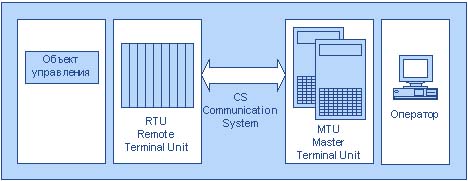
Рис. 2. Основные структурные компоненты SCADA-системыГлавной тенденцией развития MTU (диспетчерских пунктов управления) является переход большинства разработчиков SCADA-систем на архитектуру клиент-сервер, состоящую из 4-х функциональных компонентов.
1. User (Operator) Interface (интерфейс пользователя/оператора) исключительно важная составляющая систем SCADA. Для нее характерны
а) стандартизация интерфейса пользователя вокруг нескольких платформ;
б) все более возрастающее влияние Windows NT;
в) использование стандартного графического интерфейса пользователя (GUI);
г) технологии объектно-ориентированного программирования: DDE, OLE, Active X, OPC (OLE for Process Control), DCOM;
д) стандартные средства разработки приложений, наиболее популярные среди которых, Visual Basic for Applications (VBA), Visual C++;
е) появление коммерческих вариантов программного обеспечения класса SCADA/MMI для широкого спектра задач. Объектная независимость позволяет интерфейсу пользователя представлять виртуальные объекты, созданные другими системами. Результат расширение возможностей по оптимизации HMI-интерфейса.
2. Data Management (управление данными) - отход от узкоспециализированных баз данных в сторону поддержки большинства корпоративных реляционных баз данных (Microsoft SQL, Oracle). Функции управления данными и генерации отчетов осуществляются стандартными средствами SQL, 4GL; эта независимость данных изолирует функции доступа и управления данными от целевых задач SCADA, что позволяет легко разрабатывать дополнительные приложения по анализу и управлению данными.
3. Networking & Services (сети и службы) - переход к использованию стандартных сетевых технологий и протоколов. Службы сетевого управления, защиты и управления доступом, мониторинга транзакций, передачи почтовых сообщений, сканирования доступных ресурсов (процессов) могут выполняться независимо от кода целевой программы SCADA, разработанной другим вендором.
4. Real-Time Services (службы реального времени) - освобождение MTU от нагрузки перечисленных выше компонентов дает возможность сконцентрироваться на требованиях производительности для задач реального и квази-реального времени. Данные службы представляют собой быстродействующие процессоры, которые управляют обменом информацией с RTU и SCADA-процессами, осуществляют управление резидентной частью базы данных, оповещение о событиях, выполняют действия по управлению системой, передачу информации о событиях на интерфейс пользователя (оператора).
[ http://www.mka.ru/?p=41524]Тематики
Синонимы
EN
Русско-английский словарь нормативно-технической терминологии > диспетчерский пункт управления (в SCADA)
-
15 управляющая программа
1) General subject: monitor, program control, programme control2) Computers: supervisor program3) Engineering: control program, control routine, control software, driver, executive program, manager program, managing program, monitor program, monitoring program4) Economy: control programme5) Electronics: executive routine, supervisory program6) Information technology: executive, executor, manager, monitor routine, steering program, supervisor, supervisory routine7) Oil: pilot program8) Mechanic engineering: CNC control data, NC data, process sequence, processing sequence, program sequence9) Automation: CNC data, NC code (напр. станка с ЧПУ), NC coded data, chain of command, command data, execute program, management program, master program, numerical-controlled instruction, program, program (med) sequence, running program, sequential program, system supervisor, taped data10) Makarov: code, executive programme, executive system, program monitor, programme monitorУниверсальный русско-английский словарь > управляющая программа
-
16 система управления производством
1) Mechanics: production control system2) Business: Business Management System (информационная)3) Microelectronics: MES (Manufacturing Execution System)4) Automation: master manufacturing control system (на базе ЭВМ)5) Sakhalin R: process control system6) oil&gas: production management systemУниверсальный русско-английский словарь > система управления производством
-
17 Chronology
15,000-3,000 BCE Paleolithic cultures in western Portugal.400-200 BCE Greek and Carthaginian trade settlements on coast.202 BCE Roman armies invade ancient Lusitania.137 BCE Intensive Romanization of Lusitania begins.410 CE Germanic tribes — Suevi and Visigoths—begin conquest of Roman Lusitania and Galicia.714—16 Muslims begin conquest of Visigothic Lusitania.1034 Christian Reconquest frontier reaches Mondego River.1064 Christians conquer Coimbra.1139 Burgundian Count Afonso Henriques proclaims himself king of Portugal; birth of Portugal. Battle of Ourique: Afonso Henriques defeats Muslims.1147 With English Crusaders' help, Portuguese seize Lisbon from Muslims.1179 Papacy formally recognizes Portugal's independence (Pope Alexander III).1226 Campaign to reclaim Alentejo from Muslims begins.1249 Last Muslim city (Silves) falls to Portuguese Army.1381 Beginning of third war between Castile and Portugal.1383 Master of Aviz, João, proclaimed regent by Lisbon populace.1385 April: Master of Aviz, João I, proclaimed king of Portugal by Cortes of Coimbra. 14 August: Battle of Aljubarrota, Castilians defeated by royal forces, with assistance of English army.1394 Birth of "Prince Henry the Navigator," son of King João I.1415 Beginning of overseas expansion as Portugal captures Moroccan city of Ceuta.1419 Discovery of Madeira Islands.1425-28 Prince D. Pedro, older brother of Prince Henry, travels in Europe.1427 Discovery (or rediscovery?) of Azores Islands.1434 Prince Henry the Navigator's ships pass beyond Cape Bojador, West Africa.1437 Disaster at Tangier, Morocco, as Portuguese fail to capture city.1441 First African slaves from western Africa reach Portugal.1460 Death of Prince Henry. Portuguese reach what is now Senegal, West Africa.1470s Portuguese explore West African coast and reach what is now Ghana and Nigeria and begin colonizing islands of São Tomé and Príncipe.1479 Treaty of Alcáçovas between kings of Portugal and Spain.1482 Portuguese establish post at São Jorge da Mina, Gold Coast (now Ghana).1482-83 Portuguese navigator Diogo Cão reaches mouth of Congo River and Angola.1488 Navigator Bartolomeu Dias rounds Cape of Good Hope, South Africa, and finds route to Indian Ocean.1492-93 Columbus's first voyage to West Indies.1493 Columbus visits Azores and Portugal on return from first voyage; tells of discovery of New World. Treaty of Tordesillas signed between kings of Portugal and Spain: delimits spheres of conquest with line 370 leagues west of Cape Verde Islands (claimed by Portugal); Portugal's sphere to east of line includes, in effect, Brazil.King Manuel I and Royal Council decide to continue seeking all-water route around Africa to Asia.King Manuel I expels unconverted Jews from Portugal.1497-99 Epic voyage of Vasco da Gama from Portugal around Africa to west India, successful completion of sea route to Asia project; da Gama returns to Portugal with samples of Asian spices.1500 Bound for India, Navigator Pedro Álvares Cabral "discovers" coast of Brazil and claims it for Portugal.1506 Anti-Jewish riots in Lisbon.Battle of Diu, India; Portugal's command of Indian Ocean assured for some time with Francisco de Almeida's naval victory over Egyptian and Gujerati fleets.Afonso de Albuquerque conquers Goa, India; beginning of Portuguese hegemony in south Asia.Portuguese conquest of Malacca; commerce in Spice Islands.1519 Magellan begins circumnavigation voyage.1536 Inquisition begins in Portugal.1543 Portuguese merchants reach Japan.1557 Portuguese merchants granted Chinese territory of Macau for trading factory.1572 Luís de Camões publishes epic poem, Os Lusíadas.1578 Battle of Alcácer-Quivir; Moroccan forces defeat army of King Sebastião of Portugal; King Sebastião dies in battle. Portuguese succession crisis.1580 King Phillip II of Spain claims and conquers Portugal; Spanish rule of Portugal, 1580-1640.1607-24 Dutch conquer sections of Asia and Brazil formerly held by Portugal.1640 1 December: Portuguese revolution in Lisbon overthrows Spanish rule, restores independence. Beginning of Portugal's Braganza royal dynasty.1654 Following Dutch invasions and conquest of parts of Brazil and Angola, Dutch expelled by force.1661 Anglo-Portuguese Alliance treaty signed: England pledges to defend Portugal "as if it were England itself." Queen Catherine of Bra-ganza marries England's Charles II.1668 February: In Portuguese-Spanish peace treaty, Spain recognizes independence of Portugal, thus ending 28-year War of Restoration.1703 Methuen Treaties signed, key commercial trade agreement and defense treaty between England and Portugal.1750 Pombal becomes chief minister of King José I.1755 1 November: Massive Lisbon earthquake, tidal wave, and fire.1759 Expulsion of Jesuits from Portugal and colonies.1761 Slavery abolished in continental Portugal.1769 Abandonment of Mazagão, Morocco, last Portuguese outpost.1777 Pombal dismissed as chief minister by Queen Maria I, after death of José I.1791 Portugal and United States establish full diplomatic relations.1807 November: First Napoleonic invasion; French forces under Junot conquer Portugal. Royal family flees to colony of Brazil and remains there until 1821.1809 Second French invasion of Portugal under General Soult.1811 Third French invasion of Portugal under General Masséna.1813 Following British general Wellington's military victories, French forces evacuate Portugal.1817 Liberal, constitutional movements against absolutist monarchist rule break out in Brazil (Pernambuco) and Portugal (Lisbon, under General Gomes Freire); crushed by government. British marshal of Portugal's army, Beresford, rules Portugal.Liberal insurrection in army officer corps breaks out in Cadiz, Spain, and influences similar movement in Portugal's armed forces first in Oporto.King João VI returns from Rio de Janeiro, Brazil, and early draft of constitution; era of constitutional monarchy begins.1822 7 September: João VI's son Pedro proclaims independence ofBrazil from Portugal and is named emperor. 23 September: Constitution of 1822 ratified.Portugal recognizes sovereign independence of Brazil.King João VI dies; power struggle for throne ensues between his sons, brothers Pedro and Miguel; Pedro, emperor of Brazil, abdicates Portuguese throne in favor of his daughter, D. Maria II, too young to assume crown. By agreement, Miguel, uncle of D. Maria, is to accept constitution and rule in her stead.1828 Miguel takes throne and abolishes constitution. Sections of Portugal rebel against Miguelite rule.1831 Emperor Pedro abdicates throne of Brazil and returns to Portugal to expel King Miguel from Portuguese throne.1832-34 Civil war between absolutist King Miguel and constitutionalist Pedro, who abandons throne of Brazil to restore his young daughter Maria to throne of Portugal; Miguel's armed forces defeated by those of Pedro. Miguel leaves for exile and constitution (1826 Charter) is restored.1834-53 Constitutional monarchy consolidated under rule of Queen Maria II, who dies in 1853.1851-71 Regeneration period of economic development and political stability; public works projects sponsored by Minister Fontes Pereira de Melo.1871-90 Rotativism period of alternating party governments; achieves political stability and less military intervention in politics and government. Expansion of colonial territory in tropical Africa.January: Following territorial dispute in central Africa, Britain delivers "Ultimatum" to Portugal demanding withdrawal of Portugal's forces from what is now Malawi and Zimbabwe. Portugal's government, humiliated in accepting demand under threat of a diplomatic break, falls. Beginning of governmental and political instability; monarchist decline and republicanism's rise.Anglo-Portuguese treaties signed relating to delimitation of frontiers in colonial Africa.1899 Treaty of Windsor; renewal of Anglo-Portuguese defense and friendship alliance.1903 Triumphal visit of King Edward VII to Portugal.1906 Politician João Franco supported by King Carlos I in dictatorship to restore order and reform.1908 1 February: Murder in Lisbon of King Carlos I and his heir apparent, Prince Dom Luís, by Portuguese anarchists. Eighteen-year-old King Manuel II assumes throne.1910 3-5 October: Following republican-led military insurrection in armed forces, monarchy falls and first Portuguese republic is proclaimed. Beginning of unstable, economically troubled, parliamentary republic form of government.May: Violent insurrection in Lisbon overturns government of General Pimenta de Castro; nearly a thousand casualties from several days of armed combat in capital.March: Following Portugal's honoring ally Britain's request to confiscate German shipping in Portuguese harbors, Germany declares war on Portugal; Portugal enters World War I on Allied side.Portugal organizes and dispatches Portuguese Expeditionary Corps to fight on the Western Front. 9 April: Portuguese forces mauled by German offensive in Battle of Lys. Food rationing and riots in Lisbon. Portuguese military operations in Mozambique against German expedition's invasion from German East Africa. 5 December: Authoritarian, presidentialist government under Major Sidónio Pais takes power in Lisbon, following a successful military coup.1918 11 November: Armistice brings cessation of hostilities on Western Front in World War I. Portuguese expeditionary forces stationed in Angola, Mozambique, and Flanders begin return trip to Portugal. 14 December: President Sidónio Pais assassinated. Chaotic period of ephemeral civil war ensues.1919-21 Excessively unstable political period, including January1919 abortive effort of Portuguese monarchists to restore Braganza dynasty to power. Republican forces prevail, but level of public violence, economic distress, and deprivation remains high.1921 October: Political violence attains peak with murder of former prime minister and other prominent political figures in Lisbon. Sectors of armed forces and Guarda Nacional Republicana are mutinous. Year of financial and corruption scandals, including Portuguese bank note (fraud) case; military court acquits guilty military insurrectionists, and one military judge declares "the country is sick."28 May: Republic overthrown by military coup or pronunciamento and conspiracy among officer corps. Parliament's doors locked and parliament closed for nearly nine years to January 1935. End of parliamentary republic, Western Europe's most unstable political system in this century, beginning of the Portuguese dictatorship, after 1930 known as the Estado Novo. Officer corps assumes reins of government, initiates military censorship of the press, and suppresses opposition.February: Military dictatorship under General Óscar Carmona crushes failed republican armed insurrection in Oporto and Lisbon.April: Military dictatorship names Professor Antônio de Oliveira Salazar minister of finance, with dictatorial powers over budget, to stabilize finances and rebuild economy. Insurrectionism among military elements continues into 1931.1930 Dr. Salazar named minister for colonies and announces balanced budgets. Salazar consolidates support by various means, including creation of official regime "movement," the National Union. Salazar engineers Colonial Act to ensure Lisbon's control of bankrupt African colonies by means of new fiscal controls and centralization of authority. July: Military dictatorship names Salazar prime minister for first time, and cabinet composition undergoes civilianization; academic colleagues and protégés plan conservative reform and rejuvenation of society, polity, and economy. Regime comes to be called the Estado Novo (New State). New State's constitution ratified by new parliament, the National Assembly; Portugal described in document as "unitary, corporative Republic" and governance influenced by Salazar's stern personality and doctrines such as integralism, Catholicism, and fiscal conservatism.1936 Violent instability and ensuing civil war in neighboring Spain, soon internationalized by fascist and communist intervention, shake Estado Novo regime. Pseudofascist period of regime features creation of imitation Fascist institutions to defend regime from leftist threats; Portugal institutes "Portuguese Youth" and "Portuguese Legion."1939 3 September: Prime Minister Salazar declares Portugal's neutrality in World War II. October: Anglo-Portuguese agreement grants naval and air base facilities to Britain and later to United States for Battle of the Atlantic and Normandy invasion support. Third Reich protests breach of Portugal's neutrality.6 June: On day of Allies' Normandy invasion, Portugal suspends mining and export of wolfram ore to both sides in war.8 May: Popular celebrations of Allied victory and Fascist defeat in Lisbon and Oporto coincide with Victory in Europe Day. Following managed elections for Estado Novo's National Assembly in November, regime police, renamed PIDE, with increased powers, represses opposition.1947 Abortive military coup in central Portugal easily crushed by regime. Independence of India and initiation of Indian protests against Portuguese colonial rule in Goa and other enclaves.1949 Portugal becomes founding member of NATO.1951 Portugal alters constitution and renames overseas colonies "Overseas Provinces." Portugal and United States sign military base agreements for use of air and naval facilities in Azores Islands and military aid to Lisbon. President Carmona dies in office, succeeded by General Craveiro Lopes (1951-58). July: Indians occupy enclave of Portuguese India (dependency of Damão) by means of passive resistance movement. August: Indian passive resistance movement in Portuguese India repelled by Portuguese forces with loss of life. December: With U.S. backing, Portugal admitted as member of United Nations (along with Spain). Air force general Humberto Delgado, in opposition, challenges Estado Novo's hand-picked successor to Craveiro Lopes, Admiral Américo Tomás. Delgado rallies coalition of democratic, liberal, and communist opposition but loses rigged election and later flees to exile in Brazil. Portugal joins European Free Trade Association (EFTA).January and February: Estado Novo rocked by armed African insurrection in northern Angola, crushed by armed forces. Hijacking of Portuguese ocean liner by ally of Delgado, Captain Henrique Galvão. April: Salazar defeats attempted military coup and reshuffles cabinet with group of younger figures who seek to reform colonial rule and strengthen the regime's image abroad. 18 December: Indian army rapidly defeats Portugal's defense force in Goa, Damão, and Diu and incorporates Portugal's Indian possessions into Indian Union. January: Abortive military coup in Beja, Portugal.1965 February: General Delgado and his Brazilian secretary murdered and secretly buried near Spanish frontier by political police, PIDE.1968 August and September: Prime Minister Salazar, aged 79, suffers crippling stoke. President Tomás names former cabinet officer Marcello Caetano as Salazar's successor. Caetano institutes modest reforms in Portugal and overseas.1971 Caetano government ratifies amended constitution that allows slight devolution and autonomy to overseas provinces in Africa and Asia. Right-wing loyalists oppose reforms in Portugal. 25 April: Military coup engineered by Armed Forces Movement overthrows Estado Novo and establishes provisional government emphasizing democratization, development, and decolonization. Limited resistance by loyalists. President Tomás and Premier Caetano flown to exile first in Madeira and then in Brazil. General Spínola appointed president. September: Revolution moves to left, as President Spínola, thwarted in his program, resigns.March: Military coup by conservative forces fails, and leftist response includes nationalization of major portion of economy. Polarization between forces and parties of left and right. 25 November: Military coup by moderate military elements thwarts leftist forces. Constituent Assembly prepares constitution. Revolution moves from left to center and then right.March: Constitution ratified by Assembly of the Republic. 25 April: Second general legislative election gives largest share of seats to Socialist Party (PS). Former oppositionist lawyer, Mário Soares, elected deputy and named prime minister.1977-85 Political pendulum of democratic Portugal moves from center-left to center-right, as Social Democratic Party (PSD) increases hold on assembly and take office under Prime Minister Cavaco Silva. July1985 elections give edge to PSD who advocate strong free-enterprise measures and revision of leftist-generated 1976 Constitution, amended modestly in 1982.1986 January: Portugal joins European Economic Community (EEC).1987 July: General, legislative elections for assembly give more than 50 percent to PSD led by Prime Minister Cavaco Silva. For first time, since 1974, Portugal has a working majority government.1989 June: Following revisions of 1976 Constitution, reprivatization of economy begins, under PS government.January: Presidential elections, Mário Soares reelected for second term. July: General, legislative elections for assembly result in new PSD victory and majority government.January-July: Portugal holds presidency of the Council of the European Economic Community (EEC). December: Tariff barriers fall as fully integrated Common Market established in the EEC.November: Treaty of Maastricht comes into force. The EEC officially becomes the European Union (EU). Portugal is signatory with 11 other member-nations.October: General, legislative elections for assembly result in PS victory and naming of Prime Minister Guterres. PS replace PSD as leading political party. November: Excavations for Lisbon bank uncover ancient Phoenician, Roman, and Christian ruins.January: General, presidential elections; socialist Jorge Sampaio defeats PSD's Cavaco Silva and assumes presidency from Dr. Mário Soares. July: Community of Portuguese Languages Countries (CPLP) cofounded by Portugal and Brazil.May-September: Expo '98 held in Lisbon. Opening of Vasco da Gama Bridge across Tagus River, Europe's longest (17 kilometers/ 11 miles). June: National referendum on abortion law change defeated after low voter turnout. November: National referendum on regionaliza-tion and devolution of power defeated after another low voter turnout.October: General, legislative elections: PS victory over PSD lacks clear majority in parliament. Following East Timor referendum, which votes for independence and withdrawal of Indonesia, outburst of popular outrage in streets, media, and communications of Portugal approves armed intervention and administration of United Nations (and withdrawal of Indonesia) in East Timor. Portugal and Indonesia restore diplomatic relations. December: A Special Territory since 1975, Colony of Macau transferred to sovereignty of People's Republic of China.January-June: Portugal holds presidency of the Council of the EU; end of Discoveries Historical Commemoration Cycle (1988-2000).United Nations forces continue to occupy and administer former colony of East Timor, with Portugal's approval.January: General, presidential elections; PS president Sampaio reelected for second term. City of Oporto, "European City of Culture" for the year, hosts arts festival. December: Municipal elections: PSD defeats PS; socialist prime minister Guterres resigns; President Sampaio calls March parliamentary elections.1 January: Portugal enters single European Currency system. Euro currency adopted and ceases use of former national currency, the escudo. March: Parliamentary elections; PSD defeats PS and José Durão Barroso becomes prime minister. Military modernization law passed. Portugal holds chairmanship of Organization for Security and Co-operation in Europe (OSCE).May: Municipal law passed permitting municipalities to reorganize in new ways.June: Prime Minister Durão Barroso, invited to succeed Romano Prodi as president of EU Commission, resigns. Pedro Santana Lopes becomes prime minister. European Parliament elections held. Conscription for national service in army and navy ended. Mass grave uncovered at Academy of Sciences Museum, Lisbon, revealing remains of several thousand victims of Lisbon earthquake, 1755.February: Parliamentary elections; PS defeats PSD, socialists win first absolute majority in parliament since 1975. José Sócrates becomes prime minister.January: Presidential elections; PSD candidate Aníbal Cavaco Silva elected and assumes presidency from Jorge Sampaio. Portugal's national soccer team ranked 7th out of 205 countries by international soccer association. European Union's Bologna Process in educational reform initiated in Portugal.July-December: Portugal holds presidency of the Council of the European Union. For reasons of economy, Portugal announces closure of many consulates, especially in France and the eastern US. Government begins official inspections of private institutions of higher education, following scandals.2008 January: Prime Minister Sócrates announces location of new Lisbon area airport as Alcochete, on south bank of Tagus River, site of air force shooting range. February: Portuguese Army begins to receive new modern battle tanks (Leopard 2 A6). March: Mass protest of 85,000 public school (primary and secondary levels) teachers in Lisbon schools dispute recent educational policies of minister of education and prime minister. -
18 Eisler, Paul
[br]b. 1907 Vienna, Austria[br]Austrian engineer responsible for the invention of the printed circuit.[br]At the age of 23, Eisler obtained a Diploma in Engineering from the Technical University of Vienna. Because of the growing Nazi influence in Austria, he then accepted a post with the His Master's Voice (HMV) agents in Belgrade, where he worked on the problems of radio reception and sound transmission in railway trains. However, he soon returned to Vienna to found a weekly radio journal and file patents on graphical sound recording (for which he received a doctorate) and on a system of stereoscopic television based on lenticular vertical scanning.In 1936 he moved to England and sold the TV patent to Marconi for £250. Unable to find a job, he carried out experiments in his rooms in a Hampstead boarding-house; after making circuits using strip wires mounted on bakelite sheet, he filed his first printed-circuit patent that year. He then tried to find ways of printing the circuits, but without success. Obtaining a post with Odeon Theatres, he invented a sound-level control for films and devised a mirror-drum continuous-film projector, but with the outbreak of war in 1939, when the company was evacuated, he chose to stay in London and was interned for a while. Released in 1941, he began work with Henderson and Spalding, a firm of lithographic printers, to whom he unwittingly assigned all future patents for the paltry sum of £1. In due course he perfected a means of printing conducting circuits and on 3 February 1943 he filed three patents covering the process. The British Ministry of Defence rejected the idea, considering it of no use for military equipment, but after he had demonstrated the technique to American visitors it was enthusiastically taken up in the US for making proximity fuses, of which many millions were produced and used for the war effort. Subsequently the US Government ruled that all air-borne electronic circuits should be printed.In the late 1940s the Instrument Department of Henderson and Spalding was split off as Technograph Printed Circuits Ltd, with Eisler as Technical Director. In 1949 he filed a further patent covering a multilayer system; this was licensed to Pye and the Telegraph Condenser Company. A further refinement, patented in the 1950s, the use of the technique for telephone exchange equipment, but this was subsequently widely infringed and although he negotiated licences in the USA he found it difficult to license his ideas in Europe. In the UK he obtained finance from the National Research and Development Corporation, but they interfered and refused money for further development, and he eventually resigned from Technograph. Faced with litigation in the USA and open infringement in the UK, he found it difficult to establish his claims, but their validity was finally agreed by the Court of Appeal (1969) and the House of Lords (1971).As a freelance inventor he filed many other printed-circuit patents, including foil heating films and batteries. When his Patent Agents proved unwilling to fund the cost of filing and prosecuting Complete Specifications he set up his own company, Eisler Consultants Ltd, to promote food and space heating, including the use of heated cans and wallpaper! As Foil Heating Ltd he went into the production of heating films, the process subsequently being licensed to Thermal Technology Inc. in California.[br]Bibliography1953, "Printed circuits: some general principles and applications of the foil technique", Journal of the British Institution of Radio Engineers 13: 523.1959, The Technology of Printed Circuits: The Foil Technique in Electronic Production.1984–5, "Reflections of my life as an inventor", Circuit World 11:1–3 (a personal account of the development of the printed circuit).1989, My Life with the Printed Circuit, Bethlehem, Pennsylvania: Lehigh University Press.KF -
19 καταλαμβάνω
καταλαμβάνω (s. λαμβάνω; Hom.+) 2 aor. κατέλαβον; pf. κατείληφα. Mid.: fut. καταλήψομαι LXX; 2 aor. κατελαβόμην. Pass.: fut. 3 pl. καταλη(μ)θήσονται (PsSol 15:9); 1 aor. κατελήμφθην Phil 3:12 (B-D-F §101 p. 53 s.v. λαμβ.; Mlt-H. 246f s.v. λαμβ.; on the form κατειλήφθη J 8:4 in the older NT editions s. W-S. §12, 1); pf. 3 sg. κατείληπται, ptc. κατειλημμένος. Gener. ‘to seize, lay hold of’ (of forceful seizure Plut., Cleom. 806 [4, 2]; POxy 1101, 26; PsSol 8:19)① to make someth. one’s own, win, attain, act. and pass. (Diog. L. 5, 12 καταλαμβάνω means ‘come into possession of an inheritance’); abs. (though τὸ βραβεῖον is to be supplied fr. the context) of the winning of a prize 1 Cor 9:24. As a result of διώκειν (cp. Diod S 17, 73, 3 ἐπιδιώκων … τὸν Δαρεῖον … καταλαβών; Sir 11:10 ἐὰν διώκῃς, οὐ μὴ καταλάβῃς; 27:8) Phil 3:12a, 13: Χριστόν, corresp. to κατελήμφθην ὑπὸ Χριστοῦ Ἰ. vs. 12b. δικαιοσύνην Ro 9:30. ἐπίγνωσιν πατρός Dg 10:1 cj (vGebhardt for καὶ λάβῃς). The pass. is found in the mng. make one’s own in the ending of Mark in the Freer ms. 3 (KHaacker, ZNW 63, ’72, 125–29).—This may also be the mng. of κ. in J 1:5 ἡ σκοτία αὐτὸ (=τὸ φῶς) οὐ κατέλαβεν (-λαμβάνει Tat. 13, 1; cp. Arrian., An. Alex. 1, 5, 10 εἰ νὺξ αὐτοὺς καταλήψεται ‘if the night would overtake them’; here preceded in 1, 5, 9 by k. in the sense ‘occupy’ of positions above a plain; s. Wetstein on J 1:5 and 2b below) the darkness did not grasp it (Hdb. ad loc.; so also Bultmann, and similarly JDyer, JBL 79, ’60, 70f: appreciate), in which case grasp easily passes over to the sense comprehend (the act. [for the mid. in the same sense s. 4a below] has the latter sense in Pla., Phdr. 250d; Polyb. 8, 4, 6; Dionys. Hal. 5, 46, 3; PTebt 15, 5; 38, 18; EpArist 1; Aristobul. [Eus., PE 8, 10, 10 and 17=Denis 219, 18 and 221, 5/Holladay p. 140, 2f and 148, 3]; Philo, Mut. Nom. 4; Jos., Vi. 56). Most Greek commentators since Origen take κ. here as overcome, suppress (Hdt. 1, 46 κ. τινῶν αὐξανομένην τὴν δύναμιν; 1, 87 τὸ πῦρ; WNagel, ZNW 50, ’59, 132–37). So Goodsp. put out (Probs. 93f). But perh. J intended to include both mngs. here (so FGingrich, ClW 37, ’43, 77), and some such transl. as master would suggest this (so MSmith, JBL 64, ’45, 510f).② to gain control of someone through pursuit, catch up with, seizeⓐ of authority figures catch up with, overtake (Hdt. 1:63 τοὺς φεύγοντας; Polyb. 1:47; Gen. 31:23; Judg 18:22; PsSol 15:8) διωκόμενοι κατελήμφθησαν they were pursued and overtaken AcPl Ha 11, 18.ⓑ mostly of varieties of evil seize w. hostile intent, overtake, come upon (Hom.+; oft. LXX; TestSol 2:4 D; Wetstein and Zahn [comm.] on J 1:5 for other exx.; s. also SIG 434/5, 14) μὴ ἡμᾶς καταλάβῃ κακά lest evil overtake us (cp. Gen 19:19; Num 32:23) 2 Cl 10:1; cp. B 4:1. Of a hostile divinity ὅπου ἐὰν αὐτὸν καταλάβῃ wherever it seizes him (the sick man) Mk 9:18.ⓒ esp. used of night, evening, darkness coming upon a pers. (Dionys. Hal. 2, 51, 3 ἑσπέρα γὰρ αὐτοὺς κατέλαβεν; Lucian, Tox. 31; 52; Philo, De Jos. 145; Jos., Ant. 5, 61 καταλαβοῦσα νύξ, Vi. 329 [GrBar 9:1]. But the thought in these instances is not necessarily always that of night as something hostile to humans in general. κ. can also mean simply ‘arrive’, ‘come on’, as in numerous exx. cited by Wetstein [above]; s. also Dionys. Hal. 10, 56, 1 ἐπεὶ κατέλαβεν ὁ τ. ἀρχαιρεσιῶν καιρός; Strabo 3, 1, 5; Jos., Ant. 4, 78) GJs 14:1 κατέλαβεν (-ἐβαλεν pap) αὐτὸν νύξ; J 6:17 v.l. σκοτία. In imagery, w. sugg. of sense in 2b: 12:35.③ to come upon someone, with implication of surprise, catchⓐ of moral authorities catch, detect (PLille 3, 58 [III B.C.]; Just., D. 47, 5 [noncanonical dominical saying]; PRyl 138, 15. Esp. of the detection of adultery Epict. 2, 4, 1; BGU 1024 III, 11; Sus 58) τινὰ ἐπί τινι someone in someth. ἐπὶ μοιχείᾳ in adultery (Diod S 10, 20, 2 ἐπὶ μοιχείᾳ κατειλημμένη) J 8:3 a woman caught in the act of adultery. Pass. (Just., A I, 47, 6) w. ptc. indicating the punishable act ἐπʼ αὐτοφώρῳ μοιχουομένη in the act of committing adultery vs. 4.ⓑ of a thief: in imagery of the coming of ‘the day’, unexpected by the ‘children of darkness’ and fraught w. danger for them 1 Th 5:4.④ to process information, understand, graspⓐ learn about someth. through process of inquiry, mid. grasp, find, understand (Dionys. Hal. 2, 66, 6; Sext. Emp., Math. 7, 288; Vett. Val. 225, 8; TestJob 37:6 τὰ βάθη τοῦ κυρίου al.; Philo, Mos. 1, 278; Jos., Ant. 8, 167; Tat. 4:2 [on Ro 1:20]; Ath. 5, 2; 24, 2) w. acc. and inf. Ac 25:25. W. ὅτι foll. 4:13; 10:34. W. indirect discourse foll. Eph 3:18.ⓑ on J 1:5 s. 1 and 2 above.—B. 701; 1207. M-M. TW. -
20 УП
1) Engineering: CNC control data, process sequence, processing sequence2) Oil: упругость паров3) Automation: CNC data, NC coded data, NC data, chain of command, command data, control program, execute program, executive program, management program, master program, monitoring program, numerical-controlled instruction, pilot program, program, program( med) sequence, running program, sequential program, system supervisor, taped data4) Public law: унитарное предприятие5) Makarov: управляющая программа6) Valves: PI (position indicator) (указатель положения)
- 1
- 2
См. также в других словарях:
Master Tara Singh — Malhotra (24 June, 1885, Rawalpindi, Punjab 22 November, 1967, Chandigarh) was a prominent Sikh political and religious leader in the first half of the 20th century. He was instrumental in organizing the Shiromani Gurdwara Prabhandak Committee,… … Wikipedia
Master-slave (technology) — Master/slave is a model of communication where one device or process has unidirectional control over one or more other devices. Once a master/slave relationship between devices or processes is established, the direction of control is always from… … Wikipedia
Master of the Five Magics — Author(s) Lyndon Hardy … Wikipedia
Control system security — is the prevention of intentional or unintentional interference with the proper operation of industrial automation and control systems. These control systems manage essential services including electricity, petroleum production, water,… … Wikipedia
Master of Business Informatics — (MBI) is a postgraduate degree in Business Informatics (BI). BI programs combine information technology (IT) and management courses and are common in central Europe [1]. The first master programs in Business Informatics were offered by the… … Wikipedia
Master of Business Systems — (MBS) is a Postgraduate/Master s degree in Business Systems. Business Systems programs combine Information Technology (IT) and Business/Management courses and are common in Australia. Typical areas of study Basic Technology: Courses may include… … Wikipedia
Master (film) — Master Directed by Suresh Krishna Produced by Allu Aravind Written by Bhupati Raja Starring Chiranjeevi … Wikipedia
Master (Doctor Who) — This article is about the character. For the Big Finish audio, see Master (Doctor Who audio). Doctor Who character Six on screen versions of the Master (left to right, top to bottom): Roger Delgado, Peter Pratt, Anthony Ainley … Wikipedia
Master boot record — A master boot record (MBR) is a type of boot sector popularized by the IBM Personal Computer.[1] It consists of a sequence of 512 bytes located at the first sector of a data storage device such as a hard disk. MBRs are usually placed on storage… … Wikipedia
Master-slave dialectic — This article is about Hegel s master slave dialectic. For the general terms, see Master (disambiguation) and Slave. For computer controllers, see Master slave (technology) … Wikipedia
Master of Engineering — A Master of Engineering (Magister in Ingeniaria) (abbreviated M.Eng., ME or MEng) or Master of Technology (abbreviated M.Tech. or MTech) or Master of Science in Engineering (abbreviated M.Sc. Engg or MSc(Engg)), can be either an academic or… … Wikipedia
