

-
101 De Forest, Lee
SUBJECT AREA: Broadcasting, Electronics and information technology, Photography, film and optics, Recording, Telecommunications[br]b. 26 August 1873 Council Bluffs, Iowa, USAd. 30 June 1961 Hollywood, California, USA[br]American electrical engineer and inventor principally known for his invention of the Audion, or triode, vacuum tube; also a pioneer of sound in the cinema.[br]De Forest was born into the family of a Congregational minister that moved to Alabama in 1879 when the father became President of a college for African-Americans; this was a position that led to the family's social ostracism by the white community. By the time he was 13 years old, De Forest was already a keen mechanical inventor, and in 1893, rejecting his father's plan for him to become a clergyman, he entered the Sheffield Scientific School of Yale University. Following his first degree, he went on to study the propagation of electromagnetic waves, gaining a PhD in physics in 1899 for his thesis on the "Reflection of Hertzian Waves from the Ends of Parallel Wires", probably the first US thesis in the field of radio.He then joined the Western Electric Company in Chicago where he helped develop the infant technology of wireless, working his way up from a modest post in the production area to a position in the experimental laboratory. There, working alone after normal working hours, he developed a detector of electromagnetic waves based on an electrolytic device similar to that already invented by Fleming in England. Recognizing his talents, a number of financial backers enabled him to set up his own business in 1902 under the name of De Forest Wireless Telegraphy Company; he was soon demonstrating wireless telegraphy to interested parties and entering into competition with the American Marconi Company.Despite the failure of this company because of fraud by his partners, he continued his experiments; in 1907, by adding a third electrode, a wire mesh, between the anode and cathode of the thermionic diode invented by Fleming in 1904, he was able to produce the amplifying device now known as the triode valve and achieve a sensitivity of radio-signal reception much greater than possible with the passive carborundum and electrolytic detectors hitherto available. Patented under the name Audion, this new vacuum device was soon successfully used for experimental broadcasts of music and speech in New York and Paris. The invention of the Audion has been described as the beginning of the electronic era. Although much development work was required before its full potential was realized, the Audion opened the way to progress in all areas of sound transmission, recording and reproduction. The patent was challenged by Fleming and it was not until 1943 that De Forest's claim was finally recognized.Overcoming the near failure of his new company, the De Forest Radio Telephone Company, as well as unsuccessful charges of fraudulent promotion of the Audion, he continued to exploit the potential of his invention. By 1912 he had used transformer-coupling of several Audion stages to achieve high gain at radio frequencies, making long-distance communication a practical proposition, and had applied positive feedback from the Audion output anode to its input grid to realize a stable transmitter oscillator and modulator. These successes led to prolonged patent litigation with Edwin Armstrong and others, and he eventually sold the manufacturing rights, in retrospect often for a pittance.During the early 1920s De Forest began a fruitful association with T.W.Case, who for around ten years had been working to perfect a moving-picture sound system. De Forest claimed to have had an interest in sound films as early as 1900, and Case now began to supply him with photoelectric cells and primitive sound cameras. He eventually devised a variable-density sound-on-film system utilizing a glow-discharge modulator, the Photion. By 1926 De Forest's Phonofilm had been successfully demonstrated in over fifty theatres and this system became the basis of Movietone. Though his ideas were on the right lines, the technology was insufficiently developed and it was left to others to produce a system acceptable to the film industry. However, De Forest had played a key role in transforming the nature of the film industry; within a space of five years the production of silent films had all but ceased.In the following decade De Forest applied the Audion to the development of medical diathermy. Finally, after spending most of his working life as an independent inventor and entrepreneur, he worked for a time during the Second World War at the Bell Telephone Laboratories on military applications of electronics.[br]Principal Honours and DistinctionsInstitute of Electronic and Radio Engineers Medal of Honour 1922. President, Institute of Electronic and Radio Engineers 1930. Institute of Electrical and Electronics Engineers Edison Medal 1946.Bibliography1904, "Electrolytic detectors", Electrician 54:94 (describes the electrolytic detector). 1907, US patent no. 841,387 (the Audion).1950, Father of Radio, Chicago: WIlcox \& Follett (autobiography).De Forest gave his own account of the development of his sound-on-film system in a series of articles: 1923. "The Phonofilm", Transactions of the Society of Motion Picture Engineers 16 (May): 61–75; 1924. "Phonofilm progress", Transactions of the Society of Motion Picture Engineers 20:17–19; 1927, "Recent developments in the Phonofilm", Transactions of the Society of Motion Picture Engineers 27:64–76; 1941, "Pioneering in talking pictures", Journal of the Society of Motion Picture Engineers 36 (January): 41–9.Further ReadingG.Carneal, 1930, A Conqueror of Space (biography).I.Levine, 1964, Electronics Pioneer, Lee De Forest (biography).E.I.Sponable, 1947, "Historical development of sound films", Journal of the Society of Motion Picture Engineers 48 (April): 275–303 (an authoritative account of De Forest's sound-film work, by Case's assistant).W.R.McLaurin, 1949, Invention and Innovation in the Radio Industry.C.F.Booth, 1955, "Fleming and De Forest. An appreciation", in Thermionic Valves 1904– 1954, IEE.V.J.Phillips, 1980, Early Radio Detectors, London: Peter Peregrinus.KF / JW -
102 Memory
To what extent can we lump together what goes on when you try to recall: (1) your name; (2) how you kick a football; and (3) the present location of your car keys? If we use introspective evidence as a guide, the first seems an immediate automatic response. The second may require constructive internal replay prior to our being able to produce a verbal description. The third... quite likely involves complex operational responses under the control of some general strategy system. Is any unitary search process, with a single set of characteristics and inputoutput relations, likely to cover all these cases? (Reitman, 1970, p. 485)[Semantic memory] Is a mental thesaurus, organized knowledge a person possesses about words and other verbal symbols, their meanings and referents, about relations among them, and about rules, formulas, and algorithms for the manipulation of these symbols, concepts, and relations. Semantic memory does not register perceptible properties of inputs, but rather cognitive referents of input signals. (Tulving, 1972, p. 386)The mnemonic code, far from being fixed and unchangeable, is structured and restructured along with general development. Such a restructuring of the code takes place in close dependence on the schemes of intelligence. The clearest indication of this is the observation of different types of memory organisation in accordance with the age level of a child so that a longer interval of retention without any new presentation, far from causing a deterioration of memory, may actually improve it. (Piaget & Inhelder, 1973, p. 36)4) The Logic of Some Memory Theorization Is of Dubious Worth in the History of PsychologyIf a cue was effective in memory retrieval, then one could infer it was encoded; if a cue was not effective, then it was not encoded. The logic of this theorization is "heads I win, tails you lose" and is of dubious worth in the history of psychology. We might ask how long scientists will puzzle over questions with no answers. (Solso, 1974, p. 28)We have iconic, echoic, active, working, acoustic, articulatory, primary, secondary, episodic, semantic, short-term, intermediate-term, and longterm memories, and these memories contain tags, traces, images, attributes, markers, concepts, cognitive maps, natural-language mediators, kernel sentences, relational rules, nodes, associations, propositions, higher-order memory units, and features. (Eysenck, 1977, p. 4)The problem with the memory metaphor is that storage and retrieval of traces only deals [ sic] with old, previously articulated information. Memory traces can perhaps provide a basis for dealing with the "sameness" of the present experience with previous experiences, but the memory metaphor has no mechanisms for dealing with novel information. (Bransford, McCarrell, Franks & Nitsch, 1977, p. 434)7) The Results of a Hundred Years of the Psychological Study of Memory Are Somewhat DiscouragingThe results of a hundred years of the psychological study of memory are somewhat discouraging. We have established firm empirical generalisations, but most of them are so obvious that every ten-year-old knows them anyway. We have made discoveries, but they are only marginally about memory; in many cases we don't know what to do with them, and wear them out with endless experimental variations. We have an intellectually impressive group of theories, but history offers little confidence that they will provide any meaningful insight into natural behavior. (Neisser, 1978, pp. 12-13)A schema, then is a data structure for representing the generic concepts stored in memory. There are schemata representing our knowledge about all concepts; those underlying objects, situations, events, sequences of events, actions and sequences of actions. A schema contains, as part of its specification, the network of interrelations that is believed to normally hold among the constituents of the concept in question. A schema theory embodies a prototype theory of meaning. That is, inasmuch as a schema underlying a concept stored in memory corresponds to the mean ing of that concept, meanings are encoded in terms of the typical or normal situations or events that instantiate that concept. (Rumelhart, 1980, p. 34)Memory appears to be constrained by a structure, a "syntax," perhaps at quite a low level, but it is free to be variable, deviant, even erratic at a higher level....Like the information system of language, memory can be explained in part by the abstract rules which underlie it, but only in part. The rules provide a basic competence, but they do not fully determine performance. (Campbell, 1982, pp. 228, 229)When people think about the mind, they often liken it to a physical space, with memories and ideas as objects contained within that space. Thus, we speak of ideas being in the dark corners or dim recesses of our minds, and of holding ideas in mind. Ideas may be in the front or back of our minds, or they may be difficult to grasp. With respect to the processes involved in memory, we talk about storing memories, of searching or looking for lost memories, and sometimes of finding them. An examination of common parlance, therefore, suggests that there is general adherence to what might be called the spatial metaphor. The basic assumptions of this metaphor are that memories are treated as objects stored in specific locations within the mind, and the retrieval process involves a search through the mind in order to find specific memories....However, while the spatial metaphor has shown extraordinary longevity, there have been some interesting changes over time in the precise form of analogy used. In particular, technological advances have influenced theoretical conceptualisations.... The original Greek analogies were based on wax tablets and aviaries; these were superseded by analogies involving switchboards, gramophones, tape recorders, libraries, conveyor belts, and underground maps. Most recently, the workings of human memory have been compared to computer functioning... and it has been suggested that the various memory stores found in computers have their counterparts in the human memory system. (Eysenck, 1984, pp. 79-80)Primary memory [as proposed by William James] relates to information that remains in consciousness after it has been perceived, and thus forms part of the psychological present, whereas secondary memory contains information about events that have left consciousness, and are therefore part of the psychological past. (Eysenck, 1984, p. 86)Once psychologists began to study long-term memory per se, they realized it may be divided into two main categories.... Semantic memories have to do with our general knowledge about the working of the world. We know what cars do, what stoves do, what the laws of gravity are, and so on. Episodic memories are largely events that took place at a time and place in our personal history. Remembering specific events about our own actions, about our family, and about our individual past falls into this category. With amnesia or in aging, what dims... is our personal episodic memories, save for those that are especially dear or painful to us. Our knowledge of how the world works remains pretty much intact. (Gazzaniga, 1988, p. 42)The nature of memory... provides a natural starting point for an analysis of thinking. Memory is the repository of many of the beliefs and representations that enter into thinking, and the retrievability of these representations can limit the quality of our thought. (Smith, 1990, p. 1)Historical dictionary of quotations in cognitive science > Memory
-
103 мажоритарный элемент
мажоритарный элемент
элемент мажоритарной логики
—
[Л.Г.Суменко. Англо-русский словарь по информационным технологиям. М.: ГП ЦНИИС, 2003.]
мажоритарный (логический) элемент
—
[Я.Н.Лугинский, М.С.Фези-Жилинская, Ю.С.Кабиров. Англо-русский словарь по электротехнике и электроэнергетике, Москва, 1999 г.]Параллельные тексты EN-RU
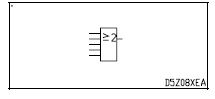
Threshold element
The output variable will be 1 only if at least two input variables are 1.
The number in the symbol may be replaced by any other number.
[Schneider Electric]Мажоритарный элемент
Значение переменной на выходе равно 1, если не менее двух входных переменных равны 1.
Число, указанное в условном графическом обозначении, может быть заменено любым другим числом.
[Перевод Интент]Тематики
- Булева алгебра, элементы цифровой техники
Синонимы
EN
Русско-английский словарь нормативно-технической терминологии > мажоритарный элемент
-
104 элемент И
элемент И
логический элемент И
-
[Интент]
(логический) элемент И
(логическая) схема И
схема логического сложения
—
[Я.Н.Лугинский, М.С.Фези-Жилинская, Ю.С.Кабиров. Англо-русский словарь по электротехнике и электроэнергетике, Москва]Параллельные тексты EN-RU
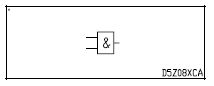
AND element
The output variable will be 1 only if all input variables are 1.
[Schneider Electric]Элемент И
Значение переменной на выходе равно 1, если все входные переменные равны 1.
[Перевод Интент]Тематики
- Булева алгебра, элементы цифровой техники
Синонимы
EN
Русско-английский словарь нормативно-технической терминологии > элемент И
См. также в других словарях:
input variable — įėjimo kintamasis statusas T sritis automatika atitikmenys: angl. input variable vok. Eingangsvariable, f rus. входная переменная, f pranc. variable d entrée, f … Automatikos terminų žodynas
input variable — The object of measurement and control; e.g., pressure, temperature, etc … Dictionary of automotive terms
Input — is the term denoting either an entrance or changes which are inserted into a system and which activate/modify a process. It is an abstract concept, used in the modeling, system(s) design and system(s) exploitation. It is usually connected with… … Wikipedia
variable d'entrée — įėjimo kintamasis statusas T sritis automatika atitikmenys: angl. input variable vok. Eingangsvariable, f rus. входная переменная, f pranc. variable d entrée, f … Automatikos terminų žodynas
variable — See infinitely variable transmission input variable … Dictionary of automotive terms
Variable bitrate — (VBR) is a term used in telecommunications and computing that relates to the bitrate used in sound or video encoding. As opposed to constant bitrate (CBR), VBR files vary the amount of output data per time segment. VBR allows a higher bitrate… … Wikipedia
Variable-Data Intelligent PostScript Printware — ist eine Seitenbeschreibungssprache, die von Xerox entwickelt wurde. Die Sprache basiert auf PostScript und ermöglicht die Trennung zwischen variablen und fixen Bestandteilen einer zu druckenden Seite. Der Vorteil besteht in einem geringeren… … Deutsch Wikipedia
Variable-frequency drive — A variable frequency drive (VFD) is a system for controlling the rotational speed of an alternating current (AC) electric motor by controlling the frequency of the electrical power supplied to the motor.cite book | first=Sylvester J. |… … Wikipedia
Variable capacitor — Rotary variable capacitor A variable capacitor (also known as a variable air condenser ) is a capacitor whose capacitance may be intentionally and repeatedly changed mechanically or electronically. Variable capacitors are often used in L/C… … Wikipedia
Variable — A variable (pronEng|ˈvɛərɪəbl) is an attribute of a physical or an abstract system which may change its value while it is under observation. Examples include the height of a child, the temperature across a state, or the input to a function. This… … Wikipedia
Variable-length buffer — In telecommunication, a variable length buffer is a buffer into which data may be entered at one rate and removed at another rate without changing the data sequence. Most first in first out (FIFO) storage devices are variable length buffers in… … Wikipedia
