

-
1 appareillage recouvert de métal
комплектное распределительное устройство в металлической оболочке
-EN
metal-enclosed switchgear
switchgear assemblies with an external metallic enclosure intended to be earthed and complete except for external connections
NOTE The metal-enclosed switchgear is subdivided into three types:
– metal-clad switchgear;
– compartmented switchgear (with one or more non-metallic partitions);
– cubicle switchgear
[IEC 61992-1, ed. 2.0 (2006-02)]
metal-clad switchgear
metal-enclosed switchgear in which components are arranged in separate compartments with metal partitions intended to be earthed
NOTE 1 This term applies to metal-enclosed switchgear with metal partitions providing the degree of protection (or higher) included in IEC 61992-6 and having separate compartments at least for the following components:
– each main switching device;
– components connected to one side of a main switching device, for example, feeder circuit;
– components connected to the other side of the main switching device, for example, busbars; where more than one set of busbars is provided, each set is in a separate compartment.
NOTE 2 Metal-enclosed switchgear having metal partitions and meeting all the requirements of NOTE 1 may utilise an insulating shutter barrier as a part of a shutter arrangement, the combination of which provides the degree of protection included in Table 1 of IEC 61992-6 (or higher) and satisfies the requirements of the standard for partitions and shutters made of insulating material.
[IEC 61992-1, ed. 2.0 (2006-02)]
compartmented switchgear (with non-metallic partitions)
metal-enclosed switchgear in which components are arranged in separate compartments as for metal-clad switchgear, but with one or more non-metallic partitions providing the degree of protection (or higher) included in Table 1 of IEC 61992-6
NOTE Metal-enclosed switchgear in which the main circuit components are individually embedded in solid insulating material can be considered as an alternative, provided that the conditions specified in IEC 60466 are met.
[IEC 61992-1, ed. 2.0 (2006-02)]
cubicle switchgear
switchgear, other than metal-clad and compartmented switchgear
NOTE This term applies to switchgear having a metal enclosure and having
– a number of compartments fewer than required for metal-clad or compartmented switchgear, or
– partitions having a degree of protection lower than those indicated in Table 1 of IEC 61992-6, or
– no partitions.
[IEC 61992-1, ed. 2.0 (2006-02)]FR
appareillage sous enveloppe métallique
ensemble d’appareillage avec une enveloppe métallique externe destinée à être mise à la terre, entièrement terminé, à l’exception des connexions extérieures
NOTE L’appareillage sous enveloppe métallique se subdivise en trois types:
– appareillage recouvert de métal;
– appareillage à compartiments (avec une ou plusieurs cloisons non métalliques);
– appareillage d’armoire.
[IEC 61992-1, ed. 2.0 (2006-02)]
appareillage recouvert de métal
appareillage sous enveloppe métallique dans lequel les éléments constitutifs sont disposés dans des compartiments séparés par des cloisons métalliques destinées à être mises à la terre
NOTE 1 Ce terme s’applique à l’appareillage sous enveloppe métallique avec des cloisons métalliques offrant le degré de protection de la CEI 61992-6 (ou un degré supérieur) et ayant des compartiments séparés au moins pour les éléments constitutifs suivants:
– chaque appareil principal de connexion;
– les éléments constitutifs connectés à une face de l'appareil principal de connexion, par exemple le circuit d’alimentation;
– les éléments constitutifs connectés à l’autre face de l'appareil principal de connexion, par exemple les jeux de barres; lorsqu’il y a plus d’un jeu de barres, chaque jeu est dans un compartiment séparé.
NOTE 2 L’appareillage sous enveloppe métallique qui possède des cloisons métalliques et qui répond à toutes les dispositions de la note 1 peut utiliser une barrière en volet isolant comme une partie d’une disposition de volet, dont la combinaison fournit un degré de protection inclus au Tableau 1 de la CEI 61992-6 (ou un degré supérieur) et satisfait aux exigences de la norme pour les cloisons et les volets en matériau isolant.
[IEC 61992-1, ed. 2.0 (2006-02)]
appareillage à compartiments (avec cloisons non métalliques)
appareillage sous enveloppe métallique dans lequel les éléments constitutifs sont disposés dans des compartiments séparés comme pour l’appareillage recouvert de métal, mais avec une ou plusieurs cloisons non métalliques fournissant le degré de protection du Tableau 1 de la CEI 61992-6 (ou un degré supérieur)
NOTE L’appareillage sous enveloppe métallique dans lequel les éléments constitutifs du circuit principal sont noyés individuellement dans un matériau isolant solide peut être considéré comme une alternative, si les conditions spécifiées dans la CEI 60466 sont satisfaites.
[IEC 61992-1, ed. 2.0 (2006-02)]
pareillage d’armoire
appareillage, autre que l’appareillage recouvert de métal ou à compartiments
NOTE Ce terme s’applique à l’appareillage ayant une enveloppe métallique et ayant:
– soit un nombre de compartiments inférieur à celui exigé pour les appareillages recouverts de métal ou à compartiments;
– soit des cloisons d’un degré de protection inférieur à ceux du Tableau 1 de la CEI 61992-6;
– soit pas de cloisons.
[IEC 61992-1, ed. 2.0 (2006-02)]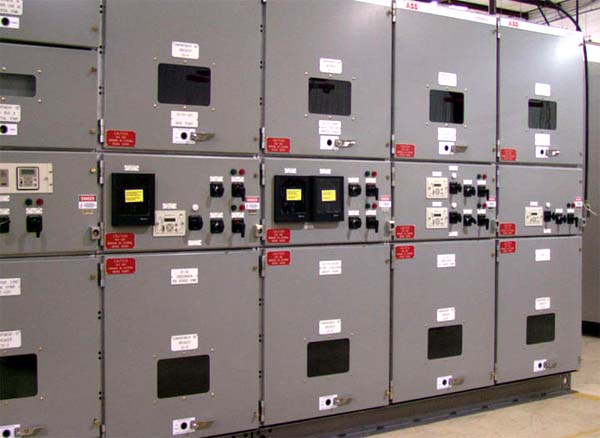
Комплектное распределительное устройство в металлической оболочке
Рис. ABBГОСТ 14693-90 - Устройства комплектные распределительные негерметизированные в металлической оболочке на напряжение до 10 кВ
Тематики
- комплектное распред. устройство (КРУ)
Синонимы
EN
- compartmented switchgear (with non-metallic partitions)
- cubicle switchgear
- MCSG
- MESG
- metal clad switch gear
- metal clad switchgear
- metal-enclosed switchgear
- metalclad switch gear
- metalclad switchgear
FR
Франко-русский словарь нормативно-технической терминологии > appareillage recouvert de métal
-
2 appareillage sous enveloppe métallique
- комплектное устройство в металлической оболочке
- комплектное распределительное устройство в металлической оболочке
комплектное распределительное устройство в металлической оболочке
-EN
metal-enclosed switchgear
switchgear assemblies with an external metallic enclosure intended to be earthed and complete except for external connections
NOTE The metal-enclosed switchgear is subdivided into three types:
– metal-clad switchgear;
– compartmented switchgear (with one or more non-metallic partitions);
– cubicle switchgear
[IEC 61992-1, ed. 2.0 (2006-02)]
metal-clad switchgear
metal-enclosed switchgear in which components are arranged in separate compartments with metal partitions intended to be earthed
NOTE 1 This term applies to metal-enclosed switchgear with metal partitions providing the degree of protection (or higher) included in IEC 61992-6 and having separate compartments at least for the following components:
– each main switching device;
– components connected to one side of a main switching device, for example, feeder circuit;
– components connected to the other side of the main switching device, for example, busbars; where more than one set of busbars is provided, each set is in a separate compartment.
NOTE 2 Metal-enclosed switchgear having metal partitions and meeting all the requirements of NOTE 1 may utilise an insulating shutter barrier as a part of a shutter arrangement, the combination of which provides the degree of protection included in Table 1 of IEC 61992-6 (or higher) and satisfies the requirements of the standard for partitions and shutters made of insulating material.
[IEC 61992-1, ed. 2.0 (2006-02)]
compartmented switchgear (with non-metallic partitions)
metal-enclosed switchgear in which components are arranged in separate compartments as for metal-clad switchgear, but with one or more non-metallic partitions providing the degree of protection (or higher) included in Table 1 of IEC 61992-6
NOTE Metal-enclosed switchgear in which the main circuit components are individually embedded in solid insulating material can be considered as an alternative, provided that the conditions specified in IEC 60466 are met.
[IEC 61992-1, ed. 2.0 (2006-02)]
cubicle switchgear
switchgear, other than metal-clad and compartmented switchgear
NOTE This term applies to switchgear having a metal enclosure and having
– a number of compartments fewer than required for metal-clad or compartmented switchgear, or
– partitions having a degree of protection lower than those indicated in Table 1 of IEC 61992-6, or
– no partitions.
[IEC 61992-1, ed. 2.0 (2006-02)]FR
appareillage sous enveloppe métallique
ensemble d’appareillage avec une enveloppe métallique externe destinée à être mise à la terre, entièrement terminé, à l’exception des connexions extérieures
NOTE L’appareillage sous enveloppe métallique se subdivise en trois types:
– appareillage recouvert de métal;
– appareillage à compartiments (avec une ou plusieurs cloisons non métalliques);
– appareillage d’armoire.
[IEC 61992-1, ed. 2.0 (2006-02)]
appareillage recouvert de métal
appareillage sous enveloppe métallique dans lequel les éléments constitutifs sont disposés dans des compartiments séparés par des cloisons métalliques destinées à être mises à la terre
NOTE 1 Ce terme s’applique à l’appareillage sous enveloppe métallique avec des cloisons métalliques offrant le degré de protection de la CEI 61992-6 (ou un degré supérieur) et ayant des compartiments séparés au moins pour les éléments constitutifs suivants:
– chaque appareil principal de connexion;
– les éléments constitutifs connectés à une face de l'appareil principal de connexion, par exemple le circuit d’alimentation;
– les éléments constitutifs connectés à l’autre face de l'appareil principal de connexion, par exemple les jeux de barres; lorsqu’il y a plus d’un jeu de barres, chaque jeu est dans un compartiment séparé.
NOTE 2 L’appareillage sous enveloppe métallique qui possède des cloisons métalliques et qui répond à toutes les dispositions de la note 1 peut utiliser une barrière en volet isolant comme une partie d’une disposition de volet, dont la combinaison fournit un degré de protection inclus au Tableau 1 de la CEI 61992-6 (ou un degré supérieur) et satisfait aux exigences de la norme pour les cloisons et les volets en matériau isolant.
[IEC 61992-1, ed. 2.0 (2006-02)]
appareillage à compartiments (avec cloisons non métalliques)
appareillage sous enveloppe métallique dans lequel les éléments constitutifs sont disposés dans des compartiments séparés comme pour l’appareillage recouvert de métal, mais avec une ou plusieurs cloisons non métalliques fournissant le degré de protection du Tableau 1 de la CEI 61992-6 (ou un degré supérieur)
NOTE L’appareillage sous enveloppe métallique dans lequel les éléments constitutifs du circuit principal sont noyés individuellement dans un matériau isolant solide peut être considéré comme une alternative, si les conditions spécifiées dans la CEI 60466 sont satisfaites.
[IEC 61992-1, ed. 2.0 (2006-02)]
pareillage d’armoire
appareillage, autre que l’appareillage recouvert de métal ou à compartiments
NOTE Ce terme s’applique à l’appareillage ayant une enveloppe métallique et ayant:
– soit un nombre de compartiments inférieur à celui exigé pour les appareillages recouverts de métal ou à compartiments;
– soit des cloisons d’un degré de protection inférieur à ceux du Tableau 1 de la CEI 61992-6;
– soit pas de cloisons.
[IEC 61992-1, ed. 2.0 (2006-02)]
Комплектное распределительное устройство в металлической оболочке
Рис. ABBГОСТ 14693-90 - Устройства комплектные распределительные негерметизированные в металлической оболочке на напряжение до 10 кВ
Тематики
- комплектное распред. устройство (КРУ)
Синонимы
EN
- compartmented switchgear (with non-metallic partitions)
- cubicle switchgear
- MCSG
- MESG
- metal clad switch gear
- metal clad switchgear
- metal-enclosed switchgear
- metalclad switch gear
- metalclad switchgear
FR
комплектное устройство в металлической оболочке
-EN
metal-enclosed switchgear and controlgear
switchgear and controlgear assemblies with an external metal enclosure intended to be earthed, and complete except for external connections
[IEC 62271-203, ed. 1.0 (2003-11)]FR
appareillage sous enveloppe métallique
appareillage avec une enveloppe métallique externe destinée à être mise à la terre, entièrement terminé, à l'exception des connexions extérieures
[IEC 62271-203, ed. 1.0 (2003-11)]

 Комплектные устройства в металлической оболочке
Тематики
- НКУ (шкафы, пульты,...)
EN
FR
Франко-русский словарь нормативно-технической терминологии > appareillage sous enveloppe métallique
3 appareillage à compartiments (avec cloisons non métalliques)
комплектное распределительное устройство в металлической оболочке
-EN
metal-enclosed switchgear
switchgear assemblies with an external metallic enclosure intended to be earthed and complete except for external connections
NOTE The metal-enclosed switchgear is subdivided into three types:
– metal-clad switchgear;
– compartmented switchgear (with one or more non-metallic partitions);
– cubicle switchgear
[IEC 61992-1, ed. 2.0 (2006-02)]
metal-clad switchgear
metal-enclosed switchgear in which components are arranged in separate compartments with metal partitions intended to be earthed
NOTE 1 This term applies to metal-enclosed switchgear with metal partitions providing the degree of protection (or higher) included in IEC 61992-6 and having separate compartments at least for the following components:
– each main switching device;
– components connected to one side of a main switching device, for example, feeder circuit;
– components connected to the other side of the main switching device, for example, busbars; where more than one set of busbars is provided, each set is in a separate compartment.
NOTE 2 Metal-enclosed switchgear having metal partitions and meeting all the requirements of NOTE 1 may utilise an insulating shutter barrier as a part of a shutter arrangement, the combination of which provides the degree of protection included in Table 1 of IEC 61992-6 (or higher) and satisfies the requirements of the standard for partitions and shutters made of insulating material.
[IEC 61992-1, ed. 2.0 (2006-02)]
compartmented switchgear (with non-metallic partitions)
metal-enclosed switchgear in which components are arranged in separate compartments as for metal-clad switchgear, but with one or more non-metallic partitions providing the degree of protection (or higher) included in Table 1 of IEC 61992-6
NOTE Metal-enclosed switchgear in which the main circuit components are individually embedded in solid insulating material can be considered as an alternative, provided that the conditions specified in IEC 60466 are met.
[IEC 61992-1, ed. 2.0 (2006-02)]
cubicle switchgear
switchgear, other than metal-clad and compartmented switchgear
NOTE This term applies to switchgear having a metal enclosure and having
– a number of compartments fewer than required for metal-clad or compartmented switchgear, or
– partitions having a degree of protection lower than those indicated in Table 1 of IEC 61992-6, or
– no partitions.
[IEC 61992-1, ed. 2.0 (2006-02)]FR
appareillage sous enveloppe métallique
ensemble d’appareillage avec une enveloppe métallique externe destinée à être mise à la terre, entièrement terminé, à l’exception des connexions extérieures
NOTE L’appareillage sous enveloppe métallique se subdivise en trois types:
– appareillage recouvert de métal;
– appareillage à compartiments (avec une ou plusieurs cloisons non métalliques);
– appareillage d’armoire.
[IEC 61992-1, ed. 2.0 (2006-02)]
appareillage recouvert de métal
appareillage sous enveloppe métallique dans lequel les éléments constitutifs sont disposés dans des compartiments séparés par des cloisons métalliques destinées à être mises à la terre
NOTE 1 Ce terme s’applique à l’appareillage sous enveloppe métallique avec des cloisons métalliques offrant le degré de protection de la CEI 61992-6 (ou un degré supérieur) et ayant des compartiments séparés au moins pour les éléments constitutifs suivants:
– chaque appareil principal de connexion;
– les éléments constitutifs connectés à une face de l'appareil principal de connexion, par exemple le circuit d’alimentation;
– les éléments constitutifs connectés à l’autre face de l'appareil principal de connexion, par exemple les jeux de barres; lorsqu’il y a plus d’un jeu de barres, chaque jeu est dans un compartiment séparé.
NOTE 2 L’appareillage sous enveloppe métallique qui possède des cloisons métalliques et qui répond à toutes les dispositions de la note 1 peut utiliser une barrière en volet isolant comme une partie d’une disposition de volet, dont la combinaison fournit un degré de protection inclus au Tableau 1 de la CEI 61992-6 (ou un degré supérieur) et satisfait aux exigences de la norme pour les cloisons et les volets en matériau isolant.
[IEC 61992-1, ed. 2.0 (2006-02)]
appareillage à compartiments (avec cloisons non métalliques)
appareillage sous enveloppe métallique dans lequel les éléments constitutifs sont disposés dans des compartiments séparés comme pour l’appareillage recouvert de métal, mais avec une ou plusieurs cloisons non métalliques fournissant le degré de protection du Tableau 1 de la CEI 61992-6 (ou un degré supérieur)
NOTE L’appareillage sous enveloppe métallique dans lequel les éléments constitutifs du circuit principal sont noyés individuellement dans un matériau isolant solide peut être considéré comme une alternative, si les conditions spécifiées dans la CEI 60466 sont satisfaites.
[IEC 61992-1, ed. 2.0 (2006-02)]
pareillage d’armoire
appareillage, autre que l’appareillage recouvert de métal ou à compartiments
NOTE Ce terme s’applique à l’appareillage ayant une enveloppe métallique et ayant:
– soit un nombre de compartiments inférieur à celui exigé pour les appareillages recouverts de métal ou à compartiments;
– soit des cloisons d’un degré de protection inférieur à ceux du Tableau 1 de la CEI 61992-6;
– soit pas de cloisons.
[IEC 61992-1, ed. 2.0 (2006-02)]
Комплектное распределительное устройство в металлической оболочке
Рис. ABBГОСТ 14693-90 - Устройства комплектные распределительные негерметизированные в металлической оболочке на напряжение до 10 кВ
Тематики
- комплектное распред. устройство (КРУ)
Синонимы
EN
- compartmented switchgear (with non-metallic partitions)
- cubicle switchgear
- MCSG
- MESG
- metal clad switch gear
- metal clad switchgear
- metal-enclosed switchgear
- metalclad switch gear
- metalclad switchgear
FR
Франко-русский словарь нормативно-технической терминологии > appareillage à compartiments (avec cloisons non métalliques)
4 pareillage d’armoire
комплектное распределительное устройство в металлической оболочке
-EN
metal-enclosed switchgear
switchgear assemblies with an external metallic enclosure intended to be earthed and complete except for external connections
NOTE The metal-enclosed switchgear is subdivided into three types:
– metal-clad switchgear;
– compartmented switchgear (with one or more non-metallic partitions);
– cubicle switchgear
[IEC 61992-1, ed. 2.0 (2006-02)]
metal-clad switchgear
metal-enclosed switchgear in which components are arranged in separate compartments with metal partitions intended to be earthed
NOTE 1 This term applies to metal-enclosed switchgear with metal partitions providing the degree of protection (or higher) included in IEC 61992-6 and having separate compartments at least for the following components:
– each main switching device;
– components connected to one side of a main switching device, for example, feeder circuit;
– components connected to the other side of the main switching device, for example, busbars; where more than one set of busbars is provided, each set is in a separate compartment.
NOTE 2 Metal-enclosed switchgear having metal partitions and meeting all the requirements of NOTE 1 may utilise an insulating shutter barrier as a part of a shutter arrangement, the combination of which provides the degree of protection included in Table 1 of IEC 61992-6 (or higher) and satisfies the requirements of the standard for partitions and shutters made of insulating material.
[IEC 61992-1, ed. 2.0 (2006-02)]
compartmented switchgear (with non-metallic partitions)
metal-enclosed switchgear in which components are arranged in separate compartments as for metal-clad switchgear, but with one or more non-metallic partitions providing the degree of protection (or higher) included in Table 1 of IEC 61992-6
NOTE Metal-enclosed switchgear in which the main circuit components are individually embedded in solid insulating material can be considered as an alternative, provided that the conditions specified in IEC 60466 are met.
[IEC 61992-1, ed. 2.0 (2006-02)]
cubicle switchgear
switchgear, other than metal-clad and compartmented switchgear
NOTE This term applies to switchgear having a metal enclosure and having
– a number of compartments fewer than required for metal-clad or compartmented switchgear, or
– partitions having a degree of protection lower than those indicated in Table 1 of IEC 61992-6, or
– no partitions.
[IEC 61992-1, ed. 2.0 (2006-02)]FR
appareillage sous enveloppe métallique
ensemble d’appareillage avec une enveloppe métallique externe destinée à être mise à la terre, entièrement terminé, à l’exception des connexions extérieures
NOTE L’appareillage sous enveloppe métallique se subdivise en trois types:
– appareillage recouvert de métal;
– appareillage à compartiments (avec une ou plusieurs cloisons non métalliques);
– appareillage d’armoire.
[IEC 61992-1, ed. 2.0 (2006-02)]
appareillage recouvert de métal
appareillage sous enveloppe métallique dans lequel les éléments constitutifs sont disposés dans des compartiments séparés par des cloisons métalliques destinées à être mises à la terre
NOTE 1 Ce terme s’applique à l’appareillage sous enveloppe métallique avec des cloisons métalliques offrant le degré de protection de la CEI 61992-6 (ou un degré supérieur) et ayant des compartiments séparés au moins pour les éléments constitutifs suivants:
– chaque appareil principal de connexion;
– les éléments constitutifs connectés à une face de l'appareil principal de connexion, par exemple le circuit d’alimentation;
– les éléments constitutifs connectés à l’autre face de l'appareil principal de connexion, par exemple les jeux de barres; lorsqu’il y a plus d’un jeu de barres, chaque jeu est dans un compartiment séparé.
NOTE 2 L’appareillage sous enveloppe métallique qui possède des cloisons métalliques et qui répond à toutes les dispositions de la note 1 peut utiliser une barrière en volet isolant comme une partie d’une disposition de volet, dont la combinaison fournit un degré de protection inclus au Tableau 1 de la CEI 61992-6 (ou un degré supérieur) et satisfait aux exigences de la norme pour les cloisons et les volets en matériau isolant.
[IEC 61992-1, ed. 2.0 (2006-02)]
appareillage à compartiments (avec cloisons non métalliques)
appareillage sous enveloppe métallique dans lequel les éléments constitutifs sont disposés dans des compartiments séparés comme pour l’appareillage recouvert de métal, mais avec une ou plusieurs cloisons non métalliques fournissant le degré de protection du Tableau 1 de la CEI 61992-6 (ou un degré supérieur)
NOTE L’appareillage sous enveloppe métallique dans lequel les éléments constitutifs du circuit principal sont noyés individuellement dans un matériau isolant solide peut être considéré comme une alternative, si les conditions spécifiées dans la CEI 60466 sont satisfaites.
[IEC 61992-1, ed. 2.0 (2006-02)]
pareillage d’armoire
appareillage, autre que l’appareillage recouvert de métal ou à compartiments
NOTE Ce terme s’applique à l’appareillage ayant une enveloppe métallique et ayant:
– soit un nombre de compartiments inférieur à celui exigé pour les appareillages recouverts de métal ou à compartiments;
– soit des cloisons d’un degré de protection inférieur à ceux du Tableau 1 de la CEI 61992-6;
– soit pas de cloisons.
[IEC 61992-1, ed. 2.0 (2006-02)]
Комплектное распределительное устройство в металлической оболочке
Рис. ABBГОСТ 14693-90 - Устройства комплектные распределительные негерметизированные в металлической оболочке на напряжение до 10 кВ
Тематики
- комплектное распред. устройство (КРУ)
Синонимы
EN
- compartmented switchgear (with non-metallic partitions)
- cubicle switchgear
- MCSG
- MESG
- metal clad switch gear
- metal clad switchgear
- metal-enclosed switchgear
- metalclad switch gear
- metalclad switchgear
FR
Франко-русский словарь нормативно-технической терминологии > pareillage d’armoire
5 coup de pied de but
Reprise du jeu exécutée par un joueur de l' équipe défendante d'un point quelconque de la surface de but quand le ballon, touché en dernier par un joueur de l' équipe attaquante, a franchi entièrement la ligne de but, sans qu'un but n'ait été marqué.Method of restarting play in which a player of the defending team kicks the ball from any point within the goal area when the whole of the ball, having last touched a player of the attacking team, passes over the goal line, without a goal having been scored.Dictionnaire Français-Anglais (UEFA Football) > coup de pied de but
6 dégagement aux six mètres
Reprise du jeu exécutée par un joueur de l' équipe défendante d'un point quelconque de la surface de but quand le ballon, touché en dernier par un joueur de l' équipe attaquante, a franchi entièrement la ligne de but, sans qu'un but n'ait été marqué.Method of restarting play in which a player of the defending team kicks the ball from any point within the goal area when the whole of the ball, having last touched a player of the attacking team, passes over the goal line, without a goal having been scored.Dictionnaire Français-Anglais (UEFA Football) > dégagement aux six mètres
7 dégagement des six mètres
Reprise du jeu exécutée par un joueur de l' équipe défendante d'un point quelconque de la surface de but quand le ballon, touché en dernier par un joueur de l' équipe attaquante, a franchi entièrement la ligne de but, sans qu'un but n'ait été marqué.Method of restarting play in which a player of the defending team kicks the ball from any point within the goal area when the whole of the ball, having last touched a player of the attacking team, passes over the goal line, without a goal having been scored.Dictionnaire Français-Anglais (UEFA Football) > dégagement des six mètres
8 bouton à tirer (tirette)
вытяжная кнопка
Аппарат для цепей управления, снабженный органом управления, предназначенным для вытягивания его рукой, и имеющий возвратный элемент (пружину).
[ ГОСТ 50030.5.1-2005]EN
pull-button
a control switch having an actuator intended to be operated by manual pull, and having stored energy (spring) return
[IEC 60947-5-1, ed. 3.0 (2003-11)]FR
bouton à tirer (tirette)
auxiliaire de commande muni d'un organe de commande destiné à être actionné en le tirant à la main et possédant une énergie de rappel accumulée (ressort)
[IEC 60947-5-1, ed. 3.0 (2003-11)]Тематики
- аппарат, изделие, устройство...
- выключатель кнопочный, кнопка
Обобщающие термины
EN
FR
Франко-русский словарь нормативно-технической терминологии > bouton à tirer (tirette)
9 relais bistable
двустабильное электрическое реле
Электрическое реле, которое, изменив свое состояние под воздействием входной воздействующей или характеристической величины, после устранения воздействия не изменяет своего состояния до приложения другого необходимого воздействия
[ ГОСТ 16022-83]EN
bistable relay
electrical relay which, having responded to an energizing quantity and having changed its condition, remains in that condition after the quantity has been removed; a further appropriate energization is required to make it change its condition
[IEV number 444-01-08]FR
relais bistable, m
relais électrique qui, ayant changé d'état sous l'action d'une grandeur d'alimentation d'entrée, reste dans le même état lorsqu'on supprime cette grandeur ; une autre action appropriée est nécessaire pour le faire changer d'état
[IEV number 444-01-08]Параллельные тексты EN-RU
In a bistable relay with one winding, the opposite energizing is created by a voltage with opposite polarity being applied to the same winding.
In a bistable relay with two windings, the opposing energizing is created by a voltage being applied to the second winding with opposite winding sense.
[Tyco Electronics]В двустабильном реле с одной обмоткой изменение коммутационного положения осуществляется подачей напряжения противоположной полярности на эту же самую обмотку.
В двустабильном реле с двумя обмотками изменение коммутационного положения осуществляется подачей напряжения на другую обмотку (т. е. на обмотку, действие которой противоположно действию предыдущей обмотки).
[Перевод Интент]A remanent, bistable relay which adopts a particular switching position following an energizing direct current in any direction and is then held in this position by the remanence in the magnetic circuit, i.e. through the magnetization of parts of the magnetic circuit. The contacts return to their original position following a small energizing current of limited amplitude of the opposite polarity. This demagnetises the magnetic circuit.
[Tyco Electronics]Двустабильное реле с остаточной намагниченностью переходит в определенное коммутационное положение при подаче постоянного тока любой полярности и затем удерживается в этом положении за счет остаточной намагниченности частей магнитопровода. Контакты реле возвращаются в исходное положение после воздействия небольшого тока обратной полярности. При этом происходит размагничивание магнитопровода.
[Перевод Интент]Недопустимые, нерекомендуемые
- бистабильное реле
- реле с механической блокировкой
- реле с самоудерживанием
- реле самозамыкающее
- реле самоудерживающее
Тематики
Классификация
>>>EN
DE
FR
14. Двустабильное электрическое реле
D. Bistabiles Relais
Е. Bistable relay
F. Relais bistable
Электрическое реле, которое, изменив свое состояние под воздействием входной воздействующей или характеристической величины, после устранения воздействия не изменяет своего состояния до приложения другого необходимого воздействия
Источник: ГОСТ 16022-83: Реле электрические. Термины и определения оригинал документа
Франко-русский словарь нормативно-технической терминологии > relais bistable
10 courant admissible, m
(длительный) допустимый ток
Максимальное значение электрического тока, который может протекать длительно по проводнику, устройству или аппарату при определенных условиях без превышения определенного значения их температуры в установившемся режиме
[ ГОСТ Р МЭК 60050-826-2009]
Этот ток обозначают IZ
[ ГОСТ Р 50571. 1-2009 ( МЭК 60364-1: 2005)]EN
(continuous) current-carrying capacity
ampacity (US)
maximum value of electric current which can be carried continuously by a conductor, a device or an apparatus, under specified conditions without its steady-state temperature exceeding a specified value
[IEV number 826-11-13]
ampacity
The current in amperes that a conductor can carry continuously under the conditions of use without exceeding its temperature rating.
[National Electrical Cod]FR
courant (permanent) admissible, m
valeur maximale du courant électrique qui peut parcourir en permanence, un conducteur, un dispositif ou un appareil, sans que sa température de régime permanent, dans des conditions données, soit supérieure à la valeur spécifiée
[IEV number 826-11-13]Ampacity, the term is defined as the maximum amount of current a cable can carry before sustaining immediate or progressive deterioration. Also described as current rating or current-carrying capacity, is the RMS electric current which a device can continuously carry while remaining within its temperature rating. The ampacity of a cable depends on:
- its insulation temperature rating;
- conductor electrical properties for current;
- frequency, in the case of alternating currents;
- ability to dissipate heat, which depends on cable geometry and its surroundings;
- ambient temperature.
Electric wires have some resistance, and electric current flowing through them causes voltage drop and power dissipation, which heats the cable. Copper or aluminum can conduct a large amount of current before melting, but long before the conductors melt, their insulation would be damaged by the heat.
The ampacity for a power cable is thus based on physical and electrical properties of the material & construction of the conductor and of its insulation, ambient temperature, and environmental conditions adjacent to the cable. Having a large overall surface area may dissipate heat well if the environment can absorb the heat.
In a long run of cable, different conditions govern, and installation regulations normally specify that the most severe condition along the run governs the cable's rating. Cables run in wet or oily locations may carry a lower temperature rating than in a dry installation. Derating is necessary for multiple circuits in close proximity. When multiple cables are near, each contributes heat to the others and diminishes the amount of cooling air that can flow past the individual cables. The overall ampacity of the insulated conductors in a bundle of more than 3 must be derated, whether in a raceway or cable. Usually the de-rating factor is tabulated in a nation's wiring regulations.
Depending on the type of insulating material, common maximum allowable temperatures at the surface of the conductor are 60, 75 and 90 degrees Celsius, often with an ambient air temperature of 30°C. In the U.S., 105°C is allowed with ambient of 40°C, for larger power cables, especially those operating at more than 2 kV. Likewise, specific insulations are rated 150, 200 or 250°C.
The allowed current in cables generally needs to be decreased (derated) when the cable is covered with fireproofing material.
For example, the United States National Electric Code, Table 310-16, specifies that up to three 8 AWG copper wires having a common insulating material (THWN) in a raceway, cable, or direct burial has an ampacity of 50 A when the ambient air is 30°C, the conductor surface temperature allowed to be 75°C. A single insulated conductor in air has 70 A rating.
Ampacity rating is normally for continuous current, and short periods of overcurrent occur without harm in most cabling systems. The acceptable magnitude and duration of overcurrent is a more complex topic than ampacity.
When designing an electrical system, one will normally need to know the current rating for the following:- Wires
- Printed Circuit Board traces, where included
- Fuses
- Circuit breakers
- All or nearly all components used
Some devices are limited by power rating, and when this power rating occurs below their current limit, it is not necessary to know the current limit to design a system. A common example of this is lightbulb holders.
[http://en.wikipedia.org/wiki/Ampacity]
Тематики
- электротехника, основные понятия
Синонимы
EN
DE
- Dauerstrombelastbarkeit, f
- Strombelastbarkeit, f
FR
- courant admissible, m
- courant permanent admissible, m
Франко-русский словарь нормативно-технической терминологии > courant admissible, m
11 courant permanent admissible, m
(длительный) допустимый ток
Максимальное значение электрического тока, который может протекать длительно по проводнику, устройству или аппарату при определенных условиях без превышения определенного значения их температуры в установившемся режиме
[ ГОСТ Р МЭК 60050-826-2009]
Этот ток обозначают IZ
[ ГОСТ Р 50571. 1-2009 ( МЭК 60364-1: 2005)]EN
(continuous) current-carrying capacity
ampacity (US)
maximum value of electric current which can be carried continuously by a conductor, a device or an apparatus, under specified conditions without its steady-state temperature exceeding a specified value
[IEV number 826-11-13]
ampacity
The current in amperes that a conductor can carry continuously under the conditions of use without exceeding its temperature rating.
[National Electrical Cod]FR
courant (permanent) admissible, m
valeur maximale du courant électrique qui peut parcourir en permanence, un conducteur, un dispositif ou un appareil, sans que sa température de régime permanent, dans des conditions données, soit supérieure à la valeur spécifiée
[IEV number 826-11-13]Ampacity, the term is defined as the maximum amount of current a cable can carry before sustaining immediate or progressive deterioration. Also described as current rating or current-carrying capacity, is the RMS electric current which a device can continuously carry while remaining within its temperature rating. The ampacity of a cable depends on:
- its insulation temperature rating;
- conductor electrical properties for current;
- frequency, in the case of alternating currents;
- ability to dissipate heat, which depends on cable geometry and its surroundings;
- ambient temperature.
Electric wires have some resistance, and electric current flowing through them causes voltage drop and power dissipation, which heats the cable. Copper or aluminum can conduct a large amount of current before melting, but long before the conductors melt, their insulation would be damaged by the heat.
The ampacity for a power cable is thus based on physical and electrical properties of the material & construction of the conductor and of its insulation, ambient temperature, and environmental conditions adjacent to the cable. Having a large overall surface area may dissipate heat well if the environment can absorb the heat.
In a long run of cable, different conditions govern, and installation regulations normally specify that the most severe condition along the run governs the cable's rating. Cables run in wet or oily locations may carry a lower temperature rating than in a dry installation. Derating is necessary for multiple circuits in close proximity. When multiple cables are near, each contributes heat to the others and diminishes the amount of cooling air that can flow past the individual cables. The overall ampacity of the insulated conductors in a bundle of more than 3 must be derated, whether in a raceway or cable. Usually the de-rating factor is tabulated in a nation's wiring regulations.
Depending on the type of insulating material, common maximum allowable temperatures at the surface of the conductor are 60, 75 and 90 degrees Celsius, often with an ambient air temperature of 30°C. In the U.S., 105°C is allowed with ambient of 40°C, for larger power cables, especially those operating at more than 2 kV. Likewise, specific insulations are rated 150, 200 or 250°C.
The allowed current in cables generally needs to be decreased (derated) when the cable is covered with fireproofing material.
For example, the United States National Electric Code, Table 310-16, specifies that up to three 8 AWG copper wires having a common insulating material (THWN) in a raceway, cable, or direct burial has an ampacity of 50 A when the ambient air is 30°C, the conductor surface temperature allowed to be 75°C. A single insulated conductor in air has 70 A rating.
Ampacity rating is normally for continuous current, and short periods of overcurrent occur without harm in most cabling systems. The acceptable magnitude and duration of overcurrent is a more complex topic than ampacity.
When designing an electrical system, one will normally need to know the current rating for the following:- Wires
- Printed Circuit Board traces, where included
- Fuses
- Circuit breakers
- All or nearly all components used
Some devices are limited by power rating, and when this power rating occurs below their current limit, it is not necessary to know the current limit to design a system. A common example of this is lightbulb holders.
[http://en.wikipedia.org/wiki/Ampacity]
Тематики
- электротехника, основные понятия
Синонимы
EN
DE
- Dauerstrombelastbarkeit, f
- Strombelastbarkeit, f
FR
- courant admissible, m
- courant permanent admissible, m
Франко-русский словарь нормативно-технической терминологии > courant permanent admissible, m
12 isomčre
изомер
—
[ http://www.eionet.europa.eu/gemet/alphabetic?langcode=en]EN
isomer
1) Two or more compounds having the same molecular formula, but a different arrangement of atoms within the molecule. 2) One of two or more chemical substances having the same elementary percentage composition and molecular weight but differing in structure, and therefore in properties; there are many ways in which such structural differences occur. (Source: CED / MGH)
[http://www.eionet.europa.eu/gemet/alphabetic?langcode=en]Тематики
EN
DE
FR
Франко-русский словарь нормативно-технической терминологии > isomčre
13 composante interharmonique
интергармоника
Интергармониками называют токи (напряжения) частота которых не кратна частоте основной гармоники.EN
interharmonic component
sinusoidal component of a periodic quantity having a an interharmonic frequency
NOTE 1 For brevity, such a component may be referred to simply as an interharmonic.
NOTE 2 For practical analysis, an approximation of the periodicity may be necessary.
NOTE 3 The value is normally expressed as an r.m.s. value.
NOTE 4 As stated in IEC 61000-4-7, the time window has a width of 10 fundamental periods (50 Hz systems) or 12 fundamental periods (60 Hz systems), i.e. approximately 200 ms. The difference in frequency between two consecutive interharmonic components is, therefore, approximately 5 Hz. In the case of other fundamental frequencies, the time window should be selected between 6 fundamental periods (approximately 1 000 ms at 6 Hz) and 18 fundamental periods (approximately 100 ms at 180 Hz).
[IEC 60146-1-1, ed. 4.0 (2009-06)]FR
composante interharmonique
composante sinusoïdale d’une grandeur périodique dont la fréquence est une fréquence interharmonique
NOTE 1 Pour des raisons de concision, ce type de composante peut être désigné simplement par le terme « interharmonique ».
NOTE 2 Pour l’analyse pratique, il peut être nécessaire de procéder à une approximation de la périodicité.
NOTE 3 La valeur est normalement exprimée comme une valeur efficace.
NOTE 4 Comme indiqué dans la CEI 61000-4-7, la fenêtre temporelle a une largeur de 10 périodes fondamentales (systèmes de 50 Hz) ou de 12 périodes fondamentales (systèmes de 60 Hz), c’est-à-dire approximativement 200 ms. La différence de fréquence entre deux composantes interharmoniques consécutives est, par conséquent, d’environ 5 Hz. Dans le cas d’autres fréquences fondamentales, il convient de choisir la fenêtre temporelle entre 6 périodes fondamentales (environ 1 000 ms à 6 Hz) et 18 périodes fondamentales (environ 100 ms à 180 Hz). [IEC 60146-1-1, ed. 4.0 (2009-06)]
Токи и напряжения интергармоник могут возникать как в низковольтных электрических сетях, так и в сетях среднего и высокого напряжения. Интергармоники, возникающие в электрических сетях среднего и высокого напряжения, передаются в питаемые ими низковольтные электрические сети. Возможен обратный процесс передачи интергармоник из электрических сетей низкого напряжения в сети среднего и высокого напряжения. [ ГОСТ Р 51317.4.13-2006]
На частотах, расположенных между частотами гармонических составляющих тока и напряжения, могут наблюдаться интергармоники. Интергармоники могут возникать на дискретных частотах или иметь спектральные составляющие в достаточно широкой полосе частот. Суммарное воздействие различных источников интергармоник маловероятно и в настоящем стандарте не учитывается.
Полного понимания природы электромагнитных возмущений, ассоциирующихся с интергармониками, еще нет, и в настоящее время к этому явлению возник повышенный интерес. Интергармоники всегда присутствуют в системе электроснабжения, но в последнее время с резким увеличением силовых электронных систем их практическое влияние стало более ощутимым.
[Збигнев Ханзелка (Zbigniew Hanzelka), Анжей Бьень (Andrzej Bien) AGH-UST, Краков, Республика Польша. Энергосбережение №7/2005]Тематики
Действия
Синонимы
EN
FR
интергармоническая составляющая
Составляющая на частоте интергармоники.
Значение интергармонической составляющей обычно выражается среднеквадратическим значением. Для краткости вместо термина "интергармоническая составляющая" допускается применение термина "интергармоника".
[ ГОСТ Р 51317.4.30-2008 (МЭК 61000-4-30:2008)]EN
interharmonic component
component having an interharmonic frequency
NOTE Its value is normally expressed as an r.m.s. value. For brevity, such a component may be referred to simply as an interharmonic.
[IEC 61000-4-30, ed. 2.0 (2008-10)]FR
composante interharmonique
composante ayant une fréquence interharmonique
NOTE Sa valeur est en général exprimée sous la forme d’une valeur efficace. Pour des raisons de concision, cette composante peut être simplement appelée interharmonique
[IEC 61000-4-30, ed. 2.0 (2008-10)]Тематики
Синонимы
EN
FR
Франко-русский словарь нормативно-технической терминологии > composante interharmonique
14 caniveau, m
кабельный канал
Кабельным каналом называется закрытое и заглубленное (частично или полностью) в грунт, пол, перекрытие и т. п. непроходное сооружение, предназначенное для размещения в нем кабелей, укладку, осмотр и ремонт которых возможно производить лишь при снятом перекрытии.
[ПУЭ. Раздел 2]
кабельный канал
Элемент системы электропроводки, расположенный над землей или полом или в земле или в полу, открытый, вентилируемый или замкнутый, размеры которого не позволяют вход людей, но обеспечивают доступ к трубам и (или) кабелям по всей длине в процессе монтажа и после него.
Примечание - Кабельный канал может составлять или не составлять часть конструкции здания
[ ГОСТ Р МЭК 60050-826-2009]
канал кабельный
Подземный непроходной канал, предназначенный для размещения электрических кабелей
[Терминологический словарь по строительству на 12 языках (ВНИИИС Госстроя СССР)]EN
cable channel
element of a wiring system above or in the ground or floor, open, ventilated or closed, and having dimensions which do not permit the entry of persons but allow access to the conduits and/or cables throughout their length during and after installation
NOTE – A cable channel may or may not form part of the building construction.
[IEV number 826-15-06]FR
caniveau, m
élément de canalisation situé au-dessus ou dans le sol ou le plancher, ouvert, ventilé ou fermé, ayant des dimensions ne permettant pas aux personnes d'y circuler, mais dans lequel les conduits ou câbles sont accessibles sur toute leur longueur, pendant et après installation
NOTE – Un caniveau peut ou non faire partie de la construction du bâtiment.
[IEV number 826-15-06]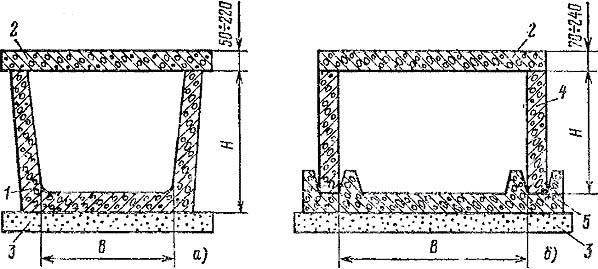
Кабельные каналы:
а — лотковый типа ЛК; б — из сборных плит типа СК:1 — лоток; 2 — плита перекрытия; 3 — подготовка; 4 — плита стеновая; 5 — основание
Высота кабельных каналов в свету не ограничивается, но бывает не более 1200 мм. Ширина каналов определяется в зависимости от размеров применяемых кабельных конструкций из условия сохранения прохода не менее 300 мм при глубине канала до 600 мм, 450 мм — от более 600 до 900 мм, 600 мм при более 900 мм.
Полы в каналах выполняют с уклоном не менее 0,5% в сторону водосборников или ливневой канализации.
Для крепления кабельных конструкций в стенах каналов через каждые 0,8—1 м (по длине) устанавливают закладные детали. При заводском изготовлении стеновых панелей детали устанавливают на предприятии-изготовителе. Закладные детали в каналах глубиной до 600 мм располагают в один ряд, при большей глубине каналов — в два ряда.
В местах поворота и разветвления трассы устраивают уширительные камеры, размеры которых выбирают с учетом допускаемого радиуса изгиба прокладываемого кабеля.
[ http://forca.ru/knigi/oborudovanie/priemka-zdaniy-i-sooruzheniy-pod-montazh-elektrooborudovaniya-11.html]Недопустимые, нерекомендуемые
Примечание(1)- Мнение автора карточкиТематики
- кабели, провода...
- электропроводка, электромонтаж
- электроустановки
Обобщающие термины
EN
- cable channel
- cable duct
- cable trench
- cabling
- conduit
- duct
- electric raceway
- raceway
- trench for cabling
DE
FR
- caniveau du câble
- caniveau, m
- conduite du câble
кабельный туннель
Коридор, размеры которого допускают проход людей по всей его длине, содержащий поддерживающие конструкции для кабелей, а также соединительные и (или) другие элементы электропроводок
[ ГОСТ Р МЭК 60050-826-2009]
кабельный туннель
Кабельным туннелем называется закрытое сооружение (коридор) с расположенными в нем опорными конструкциями для размещения на них кабелей и кабельных муфт, со свободным проходом по всей длине, позволяющим производить прокладку кабелей, ремонты и осмотры кабельных линий.
[ПУЭ. Раздел 2 ]EN
cable channel
element of a wiring system above or in the ground or floor, open, ventilated or closed, and having dimensions which do not permit the entry of persons but allow access to the conduits and/or cables throughout their length during and after installation
NOTE – A cable channel may or may not form part of the building construction.
[IEV number 826-15-06]FR
caniveau, m
élément de canalisation situé au-dessus ou dans le sol ou le plancher, ouvert, ventilé ou fermé, ayant des dimensions ne permettant pas aux personnes d'y circuler, mais dans lequel les conduits ou câbles sont accessibles sur toute leur longueur, pendant et après installation
NOTE – Un caniveau peut ou non faire partie de la construction du bâtiment.
[IEV number 826-15-06]Кабельный туннель – это подземное сооружение (коридор) с расположенными в нем опорными конструкциями для размещения на них кабелей и муфт, позволяющее производить прокладку, ремонты и осмотры со свободным проходом по всей длине.
КТ сооружают из сборного ж/б и снаружи покрывают гидроизоляцией. Заглубление – 0,5 м.
Проходы в кабельных туннелях, как правило, должны быть не менее 1 м, однако допускается уменьшение проходов до 800 мм на участках длиной не более 500 мм.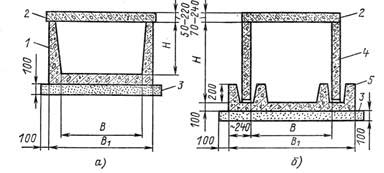
Сборные железобетонные кабельные туннели:
а – лотковые типа ЛК; б – из сборных плит типа СК;
1 – лоток;
2 – плита перекрытия;
3 – подготовка песчаная;
4 – плита;
5 – основание.
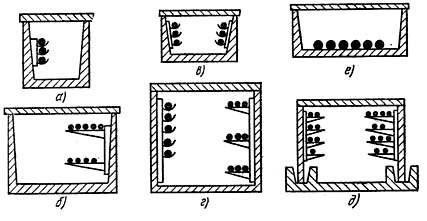
Варианты прокладки кабелей в кабельных туннелях:
а – расположение кабелей на одной стенке на подвесках;
б – то же на полках;
в – то же на обеих стенках на подвесах;
г – то же на одной стенке на подвесах, на другой на полках;
д – то же на обеих стенках на полках;
е – то же на дне туннеляПол туннеля должен быть выполнен с уклоном не менее 1 % в сторону водосборников или ливневой канализации. При отсутствии дренажного устройства через каждые 25 м должны быть устроены водосборные колодцы размером 0,4 х 0,4 х 0,3 м, перекрываемые металлическими решетками. При необходимости перехода с одной отметки на другую должны быть устроены пандусы с уклоном не более 15°.
В туннелях должна быть предусмотрена защита от попадания грунтовых и технологических вод и обеспечен отвод почвенных и ливневых вод.
Туннели должны быть обеспечены в первую очередь естественной вентиляцией. Выбор системы вентиляции и расчет вентиляционных устройств производятся на основании тепловыделений, указанных в строительных заданиях. Перепад температуры между поступающим и удаляемым воздухом в туннеле не должен превышать 10 ºС. Вентиляционные устройства должны автоматически отключаться, а воздуховоды снабжаться заслонками с дистанционным или ручным управлением для прекращения доступа воздуха в туннель в случае возникновения пожара.
В туннеле должны быть предусмотрены стационарные средства для дистанционного и автоматического пожаротушения. Источником возникновения пожара могут быть кабели, соединительные кабельные муфты. К пожару может привести небрежное обращение с огнем и легко воспламеняющимися материалами при монтажных или ремонтных работах. Выбор пожарогасящих средств производится специализированной организацией.
В туннелях должны быть установлены датчики, реагирующие на появление дыма и повышение температуры окружающей среды выше 50 °С. Коллекторы и туннели должны быть оборудованы электрическим освещением и сетью питания переносных светильников и инструмента.
Протяженные кабельные туннели разделяют по длине огнестойкими перегородками на отсеки длиной не более 150 м с устройством в них дверей шириной не менее 0,8 м. Двери из крайних отсеков должны открываться в помещение или наружу. Дверь в помещение должна открываться ключом с двух сторон. Наружная дверь должна быть снабжена самозакрывающимся замком, открывающимся ключом снаружи. Двери в средних отсеках должны открываться в сторону лестницы и быть снабжены устройствами, фиксирующими их закрытое положение. Открываются эти двери с обеих сторон без ключа.
Прокладка кабелей в коллекторах и туннелях рассчитывается с учетом возможности дополнительной прокладки кабелей в количестве не менее 15 %.
Силовые кабели напряжением до 1 кВ следует прокладывать под кабелями напряжением выше 1 кВ и разделять их горизонтальной перегородкой. Различные группы кабелей, а именно рабочие и резервные напряжением выше 1 кВ, рекомендуется прокладывать на разных полках с разделением их горизонтальными несгораемыми перегородками. В качестве перегородок рекомендуются асбоцементные плиты, прессованные неокрашенные тол-щиной не менее 8 мм. Прокладку бронированных кабелей всех сечений и небронированных сечением жил 25 мм2 и выше следует выполнять по конструкциям (полкам), а небронированных кабелей сечением жил 16 мм2 и менее – на лотках, уложенных на кабельные конструкции.
Кабели, проложенные в туннелях, должны быть жестко закреплены в конечных точках, с обеих сторон изгибов и у соединительных муфт.
Во избежание установки дополнительных соединительных муфт следует выбирать строительную длину кабелей.
Каждую соединительную муфту на силовых кабелях нужно укладывать на отдельной полке опорных конструкций и заключать в защитный противопожарный кожух, который должен быть отделен от верхних и нижних кабелей по всей ширине полок защитными асбоцементными перегородками. В каждом туннеле и канале необходимо предусмотреть свободные ряды полок для укладки соединительных муфт.
Для прохода кабелей через перегородки, стены и перекрытия должны быть установлены патрубки из несгораемых труб.
В местах прохода кабелей в трубах зазоры в них должны быть тщательно уплотнены несгораемым материалом. Материал заполнения должен обеспечивать схватывание и легко поддаваться разрушению в случае прокладки дополнительных кабелей или их частичной замены.
Небронированные кабели с пластмассовой оболочкой допускается крепить скобами (хомутами) без прокладок.
Металлическая броня кабелей, прокладываемых в туннелях, должна иметь антикоррозионное покрытие. Расстояние между полками кабельных конструкций при прокладке силовых кабелей напряжением до 10 кВ должно быть не менее 200 мм. Расстояние между полками при установке огнестойкой перегородки при прокладке кабелей должно быть не менее 200 мм, а при укладке соединительной муфты 250 или 300 мм – в зависимости от типоразмера муфты.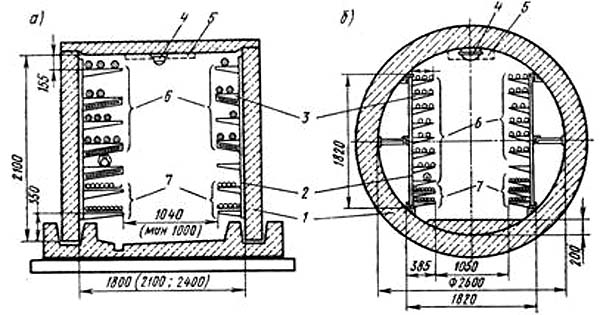
Расположение кабелей в туннеле:
а – туннель прямоугольного сечения; б – туннель круглого сечения;
1 – блок туннеля;
2 – стойка;
3 – полка;
4 – светильник;
5 – зона пожароизвещателей и трубопроводов механизированной уборки пыли и пожаротушения;
6 – силовые кабели;
7 – контрольные кабели
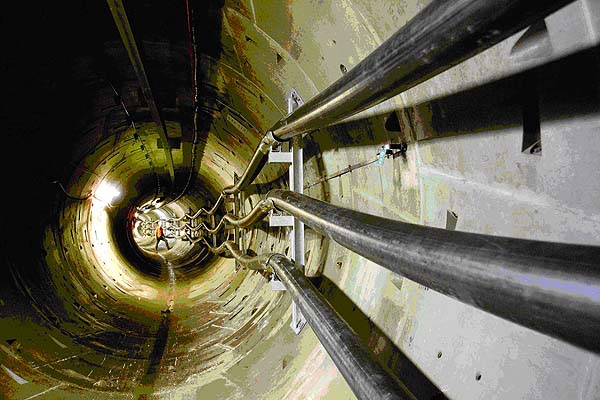
Кабельный туннель круглого сечения
Тематики
- электропроводка, электромонтаж
- электроустановки
Обобщающие термины
EN
DE
- Kabelkanal, m
FR
- caniveau, m
Франко-русский словарь нормативно-технической терминологии > caniveau, m
15 câble multiconducteur
многожильный кабель
многожильный провод
многожильный шнур
Кабель (провод, шнур), в котором число жил более трех.
[ ГОСТ 15845-80]EN
multicore cable
cable having more than one core
Note – The French term «câble multipolaire» is more specifically used to designate the cable constituting the phases of a multiphase system (example: three-core cable).
[EV ref 461-06-04]
multiconductor cable
cable having more than one conductor, some of which may be uninsulated
[IEV ref 461-06-03]FR
câble multiconducteur
câble multipolaire
câble comprenant plus d'un conducteur isolé
Note – Le terme câble multipolaire est plus particulièrement utilisé pour désigner le câble constituant les phases d'un système polyphasé (exemple: câble tripolaire).
[EV ref 461-06-04]
câble multiconducteur
câble multipolaire
câble comprenant plus d'une âme, dont éventuellement certaines non isolées
[IEV ref 461-06-03]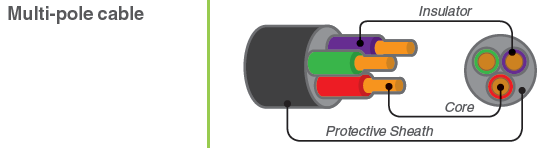
Core - (токопроводящая) жила;
Insulator - изоляция жилы;
Protective Sheath - оболочка кабеля.Недопустимые, нерекомендуемые
Примечание(1) Мнение автора карточкиТематики
- кабели, провода...
EN
- bundled cable
- multi-pole cable
- multiconductor cable
- multicore cable
- multiple cable
- multiple-conductor cable
- multiple-core cable
- multistrand cable
- N-conductor cable
- polycore cable
DE
- mehradriges Kabel, n
- Mehrleiterkabel, n
FR
Франко-русский словарь нормативно-технической терминологии > câble multiconducteur
16 câble multipolaire
многожильный кабель
многожильный провод
многожильный шнур
Кабель (провод, шнур), в котором число жил более трех.
[ ГОСТ 15845-80]EN
multicore cable
cable having more than one core
Note – The French term «câble multipolaire» is more specifically used to designate the cable constituting the phases of a multiphase system (example: three-core cable).
[EV ref 461-06-04]
multiconductor cable
cable having more than one conductor, some of which may be uninsulated
[IEV ref 461-06-03]FR
câble multiconducteur
câble multipolaire
câble comprenant plus d'un conducteur isolé
Note – Le terme câble multipolaire est plus particulièrement utilisé pour désigner le câble constituant les phases d'un système polyphasé (exemple: câble tripolaire).
[EV ref 461-06-04]
câble multiconducteur
câble multipolaire
câble comprenant plus d'une âme, dont éventuellement certaines non isolées
[IEV ref 461-06-03]Core - (токопроводящая) жила;
Insulator - изоляция жилы;
Protective Sheath - оболочка кабеля.Недопустимые, нерекомендуемые
Примечание(1) Мнение автора карточкиТематики
- кабели, провода...
EN
- bundled cable
- multi-pole cable
- multiconductor cable
- multicore cable
- multiple cable
- multiple-conductor cable
- multiple-core cable
- multistrand cable
- N-conductor cable
- polycore cable
DE
- mehradriges Kabel, n
- Mehrleiterkabel, n
FR
Франко-русский словарь нормативно-технической терминологии > câble multipolaire
17 bouton-poussoir
нажимная кнопка
Орган управления, предназначенный для оперирования усилием, создаваемым частью человеческого тела, обычно ладонью или пальцем руки, и имеющий устройство возврата накопленной энергии (пружину).
МЭК 60050(441-14-53).
[ ГОСТ Р 50030. 1-2000 ( МЭК 60947-1-99)]
нажимная кнопка
Аппарат для цепей управления, снабженный органом управления, предназначенным для приведения в действие нажимным усилием руки оператора, как правило, пальца или ладони, и имеющий возвратный элемент (пружину).
[ГОСТР 50030.5.1-2005(МЭК 60947-5-1:2003)]EN
push-button
a control switch having an actuator intended to be operated by force exerted by a part of the human body, usually the finger or palm of the hand, and having stored energy (spring) return
[IEV number 441-14-53]FR
bouton-poussoir
auxiliaire de commande muni d'un organe de commande destiné à être actionné par l'effort exercé par une partie du corps humain, généralement le doigt ou la paume de la main, et possédant une énergie de rappel accumulée (ressort)
[IEV number 441-14-53]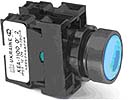
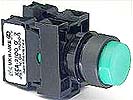
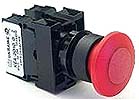
Нажимные кнопки (кнопочные выключатели)Тематики
- аппарат, изделие, устройство...
- выключатель кнопочный, кнопка
Обобщающие термины
Синонимы
EN
DE
FR
Франко-русский словарь нормативно-технической терминологии > bouton-poussoir
18 relais monostable
одностабильное электрическое реле
Электрическое реле, которое, изменив свое состояние под воздействием входной воздействующей или характеристической величины, возвращается в начальное состояние, когда устраняют это воздействие
[ ГОСТ 16022-83]EN
monostable relay
electrical relay which, having responded to an energizing quantity and having changed its condition, returns to its previous condition when that quantity is removed
[IEV number 444-01-07]FR
relais monostable, m
relais électrique qui, ayant changé d'état sous l'action d'une grandeur d'alimentation d'entrée, retourne à l'état précédent lorsqu'on supprime cette grandeur
[IEV number 444-01-07]Тематики
EN
DE
FR
13. Одностабильное электрическое реле
D. Monostabiles Relais
E. Monostable relay
F. Relais monostable
Электрическое реле, которое, изменив свое состояние под воздействием входной воздействующей или характеристической величины, возвращается в начальное состояние, когда устраняют это воздействие
Источник: ГОСТ 16022-83: Реле электрические. Термины и определения оригинал документа
Франко-русский словарь нормативно-технической терминологии > relais monostable
19 électrode négative, f
отрицательный электрод
-
[IEV number 151-13-04]EN
negative electrode
for a device having two electrodes, that electrode having the lower electric potential
NOTE – In some cases (e.g. electronic tubes and semiconductor devices), the term "negative electrode" is applied to one or another electrode, depending on the electric operating condition of the device. In other cases (e.g. electrochemical cells), the term "negative electrode" is assigned to a specific electrode.
[IEV number 151-13-04]FR
électrode négative, f
pour un dispositif à deux électrodes, celle des électrodes dont le potentiel électrique est le plus bas
NOTE – Dans certains cas (par exemple pour les tubes électroniques et les dispositifs semiconducteurs), le terme "électrode négative" désigne l’une ou l’autre électrode selon le régime électrique du dispositif. Dans d’autres cas (par exemple pour les éléments électrochimiques), le terme "électrode négative" désigne une électrode particulière.
[IEV number 151-13-04]EN
DE
FR
- électrode négative, f
Франко-русский словарь нормативно-технической терминологии > électrode négative, f
20 électrode positive, f
положительный электрод
-
[IEV number 151-13-05]EN
positive electrode
for a device having two electrodes, that electrode having the higher electric potential
NOTE – In some cases (e.g. electronic tubes and semiconductor devices), the term "positive electrode" is applied to one or another electrode, depending on the electric operating condition of the device. In other cases (e.g. electrochemical cells), the term "positive electrode" is assigned to a specific electrode.
[IEV number 151-13-05]FR
électrode positive, f
pour un dispositif à deux électrodes, celle des électrodes dont le potentiel électrique est le plus élevé
NOTE – Dans certains cas (par exemple pour les tubes électroniques et les dispositifs semiconducteurs), le terme "électrode positive" désigne l’une ou l’autre électrode selon le régime électrique du dispositif. Dans d’autres cas (par exemple pour les éléments électrochimiques), le terme "électrode positive" désigne une électrode particulière.
[IEV number 151-13-05]EN
DE
FR
- électrode positive, f
Франко-русский словарь нормативно-технической терминологии > électrode positive, f
См. также в других словарях:
HAVING — HAVING необязательный (опциональный) параметр оператора SELECT для указания условия на результат агрегатных функций (MAX, SUM, AVG, …). HAVING <условия> аналогичен WHERE <условия> за исключением того, что строки отбираются не по … Википедия
Having — Hav ing (h[a^]v [i^]ng), n. Possession; goods; estate. [1913 Webster] I ll lend you something; my having is not much. Shak. [1913 Webster] … The Collaborative International Dictionary of English
Having — Lage Having Die Having, Blick von Moritzburg … Deutsch Wikipedia
Having — Infobox Album | Name = having Type = Album Artist = Trespassers William Released = February 28 2006 Recorded = 2004 2005 Genre = Indie rock Length = 55:59 Label = Nettwerk Records Producer = David Fridmann Reviews = AllMusic Rating|3.5|5… … Wikipedia
Having — Have Have (h[a^]v), v. t. [imp. & p. p. {Had} (h[a^]d); p. pr. & vb. n. {Having}. Indic. present, I {have}, thou {hast}, he {has}; we, ye, they {have}.] [OE. haven, habben, AS. habben (imperf. h[ae]fde, p. p. geh[ae]fd); akin to OS. hebbian, D.… … The Collaborative International Dictionary of English
having said that — spoken phrase used for adding an opinion that seems to be the opposite of what you have just said, although you think both are true It’s expensive. Having said that, I must admit that it is very well made. Thesaurus: ways of giving your… … Useful english dictionary
HAVING (SQL) — HAVING необязательный (опциональный) параметр оператора SELECT для указания условия на результат агрегатных функций (MAX, SUM, AVG, …). HAVING <условия> аналогичен WHERE <условия> за исключением того, что строки отбираются не по … Википедия
Having (SQL) — HAVING необязательный (опциональный) параметр оператора SELECT для указания условия на результат агрегатных функций (MAX, SUM, AVG, …). HAVING <условия> аналогичен WHERE <условия> за исключением того, что строки отбираются не по … Википедия
having done something — having done something/having been/ phrase after you have done something after something has happened to you Having spent over £100 on repairs, she wasn’t expecting any more problems. Having been warned of the danger, I took extra precautions.… … Useful english dictionary
having been — having done something/having been/ phrase after you have done something after something has happened to you Having spent over £100 on repairs, she wasn’t expecting any more problems. Having been warned of the danger, I took extra precautions.… … Useful english dictionary
Having a Rave Up — Álbum recopilatorio de The Yardbirds Publicación Noviembre de 1965 Grabación 1964 1965 Género(s) Blues rock Discogr … Wikipedia Español
Перевод: с французского на русский
с русского на французский- С русского на:
- Французский
- С французского на:
- Все языки
- Английский
- Русский
having

18+
© Академик, 2000-2026
- Обратная связь: Техподдержка, Реклама на сайте
Экспорт словарей на сайты, сделанные на PHP, Joomla, Drupal, WordPress, MODx.