

-
1 dioxide de carbone
сущ.хим. диоксид углерода, углекислота, углекислый газФранцузско-русский универсальный словарь > dioxide de carbone
-
2 dioxyde de titane
диоксид титана
—
[ http://www.eionet.europa.eu/gemet/alphabetic?langcode=en]EN
titanium dioxide
A white, water-insoluble powder that melts at 1560Đ°C, and which is produced commercially from the titanium dioxide minerals ilmenite and rutile; used in paints and cosmetics. (Source: MGH)
[http://www.eionet.europa.eu/gemet/alphabetic?langcode=en]Тематики
EN
DE
FR
пигментная двуокись титана
Синтетический неорганический пигмент белого цвета, изготавливаемый в виде двух кристаллических форм: анатазной и рутильной.
[ ГОСТ 19487-74]Тематики
Обобщающие термины
EN
DE
FR
ОСНОВНЫЕ НЕОРГАНИЧЕСКИЕ ПИГМЕНТЫ
11. Пигментная двуокись титана
D. Titandioxyd-Pigment
Е. Titanium dioxide
F. Dioxyde de titane
Синтетический неорганический пигмент белого цвета, изготавливаемый в виде двух кристаллических форм: анатазной и рутильной
Источник: ГОСТ 19487-74: Пигменты и наполнители неорганические. Термины и определения оригинал документа
Франко-русский словарь нормативно-технической терминологии > dioxyde de titane
-
3 dioxyde de soufre
диоксид серы
—
[ http://www.eionet.europa.eu/gemet/alphabetic?langcode=en]EN
sulphur dioxide
Emissions of the gas given off during the burning of fossil fuels in power stations and other boilers. Sulphur dioxide is created because sulphur is an impurity in most coal and oils. When the fuel is burned the hot sulphur reacts with oxygen in the atmosphere to form sulphur dioxide. (Source: WRIGHT)
[http://www.eionet.europa.eu/gemet/alphabetic?langcode=en]Тематики
EN
DE
FR
Франко-русский словарь нормативно-технической терминологии > dioxyde de soufre
-
4 taxe sur le dioxyde de carbone
налог на выброс диоксид углерода
—
[ http://www.eionet.europa.eu/gemet/alphabetic?langcode=en]EN
carbon dioxide tax
Compulsory charges levied on fuels to reduce the output of carbon dioxide (CO2), which is a colourless and odourless gas substance that is incombustible. (Source: ODE / RHW)
[http://www.eionet.europa.eu/gemet/alphabetic?langcode=en]Тематики
EN
DE
FR
Франко-русский словарь нормативно-технической терминологии > taxe sur le dioxyde de carbone
-
5 dioxyde d'azote
диоксид азота
—
[ http://www.eionet.europa.eu/gemet/alphabetic?langcode=en]EN
nitrogen dioxide
A reddish-brown gas; it exists in varying degrees of concentration in equilibrium with other nitrogen oxides; used to produce nitric acid. (Source: MGH)
[http://www.eionet.europa.eu/gemet/alphabetic?langcode=en]Тематики
EN
DE
FR
Франко-русский словарь нормативно-технической терминологии > dioxyde d'azote
-
6 dioxyde de charbon en charbonate
диоксид углерода из карбонатов угля
Ндп. углекислота карбонатов
Диоксид углерода, выделяющийся из карбонатов, содержащихся в минеральной массе угля, при обработке кислотами в установленных стандартом условиях.
[ ГОСТ 17070-87]Недопустимые, нерекомендуемые
Тематики
Обобщающие термины
- состав, свойства и анализ углей
EN
DE
FR
92. Диоксид углерода из карбонатов угля
D. Karbonat-Kohlendioxyd
Е. Carbon dioxide in carbonates
F. Dioxyde de charbon en charbonate
Диоксид углерода, выделяющийся из карбонатов, содержащихся в минеральной массе угля, при обработке кислотами в установленных стандартом условиях
Источник: ГОСТ 17070-87: Угли. Термины и определения оригинал документа
Франко-русский словарь нормативно-технической терминологии > dioxyde de charbon en charbonate
-
7 traitement des gaz
обработка газа
—
[ http://www.eionet.europa.eu/gemet/alphabetic?langcode=en]EN
treatment of gases
Gas is treated before it can be supplied to the marketplace. The extent to which gas needs to be processed will depend on its quality, the amount of associated impurities such as water, carbon dioxide and sulphur compounds, and the ultimate end-use for the gas. Common gaseous impurities found in natural gas are carbon dioxide and sulphur compounds. Both have an acidic reaction and are given the generic name 'acid gases'. These gases can be removed by a number of commercial processes, using either a physical or a chemical solvent. Physical solvent processes tend to be used where gas pressures are high and for gases with lower levels of propane and heavier hydrocarbons. (Source: SHELL)
[http://www.eionet.europa.eu/gemet/alphabetic?langcode=en]Тематики
EN
DE
FR
Франко-русский словарь нормативно-технической терминологии > traitement des gaz
-
8 poumon
poumon mOrgane de la respiration fournissant l'oxygène à tout le corps et éliminant le gaz carbonique du sang.One of a pair of organs in the chest that supplies the body with oxygen, and removes carbon dioxide from the body. -
9 sang
-
10 alvéole
альвеола
—
[ http://www.eionet.europa.eu/gemet/alphabetic?langcode=en]EN
alveolus
A tiny, thin-walled, capillary-rich sac in the lungs where the exchange of oxygen and carbon dioxide takes place. Also called air sac. (Source: AMHER)
[http://www.eionet.europa.eu/gemet/alphabetic?langcode=en]Тематики
EN
DE
FR
гнездовая контакт-деталь
Контакт-деталь, предназначенная для ввода штыревой контакт-детали и электрического контактирования с ней по своей внутренней поверхности
[ ГОСТ 14312-79]
гнездовой контакт
-
[IEV number 151-12-17]EN
socket contact
female contact
contact member intended to make electric engagement on its inner surface for mating with the outer surface of another contact member
NOTE – In English, the term "socket contact" does not imply that socket contacts are always mounted in a socket nor that sockets have only socket contacts.
Source: 581-02-07 MOD, 151-12-20
[IEV number 151-12-17]FR
contact femelle, m
élément de contact destiné à établir la liaison électrique sur ses faces intérieures en s'accouplant avec les faces extérieures d'un autre élément de contact
NOTE – L’emploi en anglais du terme "socket contact" n’implique pas qu’un contact femelle est toujours monté dans un socle, ni que les socles ne comportent que des contacts femelles.
Source: 581-02-07 MOD, 151-12-20
[IEV number 151-12-17]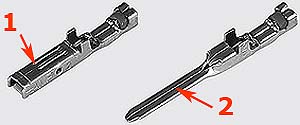
Рис. Tyco Electronics1 - Гнездовая контакт-деталь (гнездовой контакт)
2 - Штыревая контакт-деталь (штыревой контакт)Параллельные тексты EN-RU
Under the CEE/IEC system, pins and sleeves must be differently spaced in devices with different numbers of poles, and the earthing pin and earthing sleeve are larger than the other pins and sleeves.
[ABB]В соответствии с требованиями CEE/МЭК расположение штыревых и гнездовых контактов в соединителях с разным числом полюсов не должно быть одинаковым. Кроме того, размеры заземляющего штыря и гнезда должны быть больше размеров остальных штырей и гнезд.
[Перевод Интент]Недопустимые, нерекомендуемые
Тематики
Обобщающие термины
Синонимы
EN
- contact sleeve
- female contact
- module female contact
- module socket contact
- receptacle contact
- sleeve
- socket contact
DE
FR
- alvéole
- contact femelle, m
смазочный карман (5.4)
Углубление на поверхности подшипника скольжения, служащее для накопления смазочного материала и его распределения.
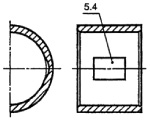
[ ГОСТ ИСО 4378-1-2001]Тематики
Обобщающие термины
EN
FR
Франко-русский словарь нормативно-технической терминологии > alvéole
-
11 traitement biologique
биологическая обработка
—
[ http://www.eionet.europa.eu/gemet/alphabetic?langcode=en]EN
biological treatment
Process that uses microorganisms to decompose organic wastes either into water, carbon dioxide, and simple inorganic substances, or into simpler organic substances, such as aldehydes and acids. The purpose of a biological treatment system is to control the environment for microorganisms so that their growth and activity are enhanced, and provide a means for maintaining high concentration of the microorganisms in contact with the wastes. (Source: PARCOR)
[http://www.eionet.europa.eu/gemet/alphabetic?langcode=en]Тематики
EN
DE
FR
Франко-русский словарь нормативно-технической терминологии > traitement biologique
-
12 traitement biologique des déchets
биологическая утилизация отходов
—
[ http://www.eionet.europa.eu/gemet/alphabetic?langcode=en]EN
biological waste treatment
A generic term applied to processes that use microorganisms to decompose organic wastes either into water, carbon dioxide, and simple inorganic substances, such as aldehydes and acids. The purpose of biological waste treatment is to control either the environment for microorganisms so that their growth and activity are enhanced, and to provide a means for maintaining high concentrations of the microorganisms in contact with the wastes.
[http://www.eionet.europa.eu/gemet/alphabetic?langcode=en]Тематики
EN
DE
FR
Франко-русский словарь нормативно-технической терминологии > traitement biologique des déchets
-
13 impact des ménages sur l'environnement
воздействие быта на окружающую среду
—
[ http://www.eionet.europa.eu/gemet/alphabetic?langcode=en]EN
environmental impact of households
Household impacts on the environment include domestic heating emissions (hot air, carbon dioxide, carbon monoxide, water vapour and oxide of nitrogen, sulphur and other trace gases); domestic sewage consisting of human bodily discharges, water from kitchens, bathrooms and laundries; the dumping of bulky wastes such as old washing machines, refrigerators, cars and other objects that will not fit into the standard dustbin and which are often dumped about the countryside, etc. (Source: WPR / GILP96)
[http://www.eionet.europa.eu/gemet/alphabetic?langcode=en]Тематики
EN
DE
FR
Франко-русский словарь нормативно-технической терминологии > impact des ménages sur l'environnement
-
14 gaz ŕ effet de serre
- газ, способствующий парниковому эффекту
газ, способствующий парниковому эффекту
—
[ http://www.eionet.europa.eu/gemet/alphabetic?langcode=en]EN
greenhouse gas
A collective expression for those components of the atmosphere that influence the greenhouse effect, namely carbon dioxide, methane, nitrous oxides, ozone, CFCs and water vapour. (Source: GILP96)
[http://www.eionet.europa.eu/gemet/alphabetic?langcode=en]Тематики
EN
DE
FR
Франко-русский словарь нормативно-технической терминологии > gaz ŕ effet de serre
-
15 énergie géothermique
геотермальная энергия
—
[ http://www.eionet.europa.eu/gemet/alphabetic?langcode=en]EN
geothermal energy
An energy produced by tapping the earth's internal heat. At present, the only available technologies to do this are those that extract heat from hydrothermal convection systems, where water or steam transfer the heat from the deeper part of the earth to the areas where the energy can be tapped. The amount of pollutants found in geothermal vary from area to area but may contain arsenic, boron, selenium, lead, cadmium, and fluorides. They also may contain hydrogen sulphide, mercury, ammonia, radon, carbon dioxide, and methane. (Source: KOREN)
[http://www.eionet.europa.eu/gemet/alphabetic?langcode=en]Тематики
EN
DE
FR
Франко-русский словарь нормативно-технической терминологии > énergie géothermique
-
16 dégradation des ressources naturelles
деградация природных ресурсов
—
[ http://www.eionet.europa.eu/gemet/alphabetic?langcode=en]EN
degradation of natural resources
The result of the cumulative activities of farmers, households, and industries, all trying to improve their socio-economic well being. These activities tend to be counterproductive for several reasons. People may not completely understand the long-term consequences of their activities on the natural resource base. The most important ways in which human activity is interfering with the global ecosystem are: a) fossil fuel burning which may double the atmospheric carbon dioxide concentration by the middle of the next century, as well as further increasing the emissions of sulphur and nitrogen very significantly; b) expanding agriculture and forestry and the associated use of fertilizers (nitrogen and phosphorous) are significantly altering the natural circulation of these nutrients; c) increased exploitation of the freshwater system both for irrigation in agriculture and industry and for waste disposal. (Source: WPR)
[http://www.eionet.europa.eu/gemet/alphabetic?langcode=en]Тематики
EN
DE
FR
Франко-русский словарь нормативно-технической терминологии > dégradation des ressources naturelles
-
17 désulfuration
десульфуризация (обессеривание)
—
[ http://www.eionet.europa.eu/gemet/alphabetic?langcode=en]EN
desulphurisation
The removal of sulphur, as from molten metals or petroleum oil. Sulphur residues in fuels end up as sulphur dioxide when the fuel is burned causing acid rain. (Source: MGH)
[http://www.eionet.europa.eu/gemet/alphabetic?langcode=en]Тематики
EN
DE
FR
Франко-русский словарь нормативно-технической терминологии > désulfuration
-
18 désulfuration des combustibles
десульфуризация (обессеривание) топлива
—
[ http://www.eionet.europa.eu/gemet/alphabetic?langcode=en]EN
desulphurisation of fuel
Removal of sulfur from fossil fuels (or removal of sulfur dioxide from combustion fuel gases) to reduce pollution. (Source: LEE)
[http://www.eionet.europa.eu/gemet/alphabetic?langcode=en]Тематики
EN
DE
FR
Франко-русский словарь нормативно-технической терминологии > désulfuration des combustibles
-
19 pot catalytique
каталитический конвертер
—
[ http://www.eionet.europa.eu/gemet/alphabetic?langcode=en]EN
catalytic converter
Catalytic converters are designed to clean up the exhaust fumes from petrol-driven vehicles, which are otherwise the major threat to air quality standards in congested urban streets and on motorways. Converters remove carbon monoxide, the unburned hydrocarbons and the oxides of nitrogen. These compounds are damaging to human health and the environment in a variety of ways. The converter is attached to the vehicle' s exhaust near the engine. Exhaust gases pass through the cellular ceramic substrate, a honeycomb-like filter. While compact, the intricate honeycomb structure provides a surface area of 23.000 square metres. This is coated with a thin layer of platinum, palladium and rhodium metals, which act as catalysts that simulate a reaction to changes in the chemical composition of the gases. Platinum and palladium convert hydrocarbons and carbon monoxide into carbon dioxide and water vapour. Rhodium changes nitrogen oxides and hydrocarbons into nitrogen and water, which are harmless. (Source: WRIGHT)
[http://www.eionet.europa.eu/gemet/alphabetic?langcode=en]Тематики
EN
DE
FR
Франко-русский словарь нормативно-технической терминологии > pot catalytique
-
20 retombée acide
кислотные осадки
—
[ http://www.eionet.europa.eu/gemet/alphabetic?langcode=en]EN
acid deposition
A type of pollution which washes out of the atmosphere as dilute sulphuric and nitric acids. It tends to be a regional rather than a global phenomenon, linked to particular industrial activities and meteorological conditions. It includes rain, more than normally acidic snow, mist, sleet, fog, gas and dry particles. It upsets the balance of nature, disrupting ecosystems, and destroys forests and woodlands, plants and crops; kills aquatic life by altering the chemical balance of lakes and rivers and corrodes building materials and fabrics. The pollutants are caused principally by discharges from power station chimneys of sulphur dioxide and nitrogen oxides released by burning fossil fuels, coal and oil. (Source: WRIGHT)
[http://www.eionet.europa.eu/gemet/alphabetic?langcode=en]Тематики
EN
DE
FR
Франко-русский словарь нормативно-технической терминологии > retombée acide
- 1
- 2
См. также в других словарях:
Dioxide — Di*ox ide (?; 104), n. [Pref. di + oxide.] (Chem.) (a) An oxide containing two atoms of oxygen in each molecule; binoxide. (b) An oxide containing but one atom or equivalent of oxygen to two of a metal; a suboxide. [Obs.] [1913 Webster] {Carbon… … The Collaborative International Dictionary of English
dioxide — ► NOUN Chemistry ▪ an oxide containing two atoms of oxygen in its molecule or empirical formula … English terms dictionary
dioxide — [dī äks′īd΄, dī äksid] n. an oxide containing two atoms of oxygen per molecule … English World dictionary
dioxide — A molecule containing two atoms of oxygen; e.g., carbon d., CO2. * * * di·ox·ide ( )dī äk .sīd n an oxide (as carbon dioxide) containing two atoms of oxygen in a molecule * * * di·ox·ide (di okґsīd) 1. a binary compound containing two oxide… … Medical dictionary
dioxide — /duy ok suyd, sid/, n. Chem. an oxide containing two atoms of oxygen, each of which is bonded directly to an atom of a second element, as manganese dioxide, MnO2, or nitrogen dioxide, NO2. [1840 50; DI 1 + OXIDE] * * * … Universalium
dioxide — Deutoxide Deu*tox ide (?; 104), n. [Pref. deut + oxide.] (Chem.) A compound containing in the molecule two atoms of oxygen united with some other element or radical; usually called {dioxide}, or less frequently, {binoxide}. [1913 Webster] || … The Collaborative International Dictionary of English
dioxide — noun Etymology: International Scientific Vocabulary Date: circa 1847 an oxide (as carbon dioxide) containing two atoms of oxygen in the molecule … New Collegiate Dictionary
dioxide — di|ox|ide [daıˈɔksaıd US ˈa:k ] n [U and C] a chemical ↑compound that contains two atoms of oxygen and one atom of another chemical ↑element →↑carbon dioxide … Dictionary of contemporary English
dioxide — [[t]daɪɒ̱ksaɪd[/t]] see carbon dioxide … English dictionary
dioxide — noun (C, U) technical a chemical compound containing two atoms of oxygen to every atom of another element (=simple substance) see also: carbon dioxide … Longman dictionary of contemporary English
dioxide — /daɪˈɒksaɪd/ (say duy oksuyd) noun 1. an oxide containing two atoms of oxygen per molecule, as manganese dioxide, MnO2. 2. (loosely) peroxide. {di 1 + oxide} …
