

-
1 déséquilibre de tension
небаланс напряжений
Отличие по модулю значения хотя бы одного из фазных или линейных напряжений многофазной системы электроснабжения от значений напряжений других фаз.
[ ГОСТ 23875-88]EN
voltage unbalance
phenomenon due to the differences between voltage deviations on the various phases, at a point of a polyphase system, resulting from differences between the phase currents or geometrical asymmetry in the line
[IEV number 604-01-29]
voltage unbalance (imbalance)
in a polyphase system, a condition in which the magnitudes of the phase voltages or the phase angles between consecutive phases are not all equal (fundamental component)
NOTE In three phase systems, the degree of inequality is usually expressed as the ratio of the negative and zero sequence components to the positive sequence component. In this technical report, voltage unbalance is considered in relation to three-phase systems and negative sequence only
[IEC 61000-3-13, ed. 1.0 (2008-02)]
voltage unbalance
condition in a polyphase system in which the r.m.s. values of the line voltages (fundamental component), and/or the phase angles between consecutive line voltages, are not all equal
NOTE 1 The degree of the inequality is usually expressed as the ratios of the negative- and zero-sequence components to the positive-sequence component.
NOTE 2 In this standard, voltage unbalance is considered in relation to 3-phase systems.
[IEC 61000-4-30, ed. 2.0 (2008-10)]FR
déséquilibre des tensions d'un réseau
phénomène résultant des différences de charge ou des dissymétries géométriques de lignes et qui provoque des différences entre les écarts de tension sur les diverses phases en un point d'un réseau polyphasé
[IEV number 604-01-29]
déséquilibre de tension
dans un réseau d’énergie électrique polyphasé, état dans lequel les valeurs efficaces des tensions entre conducteurs (composante fondamentale), et/ou les différences de phase entre conducteurs successifs, ne sont pas toutes égales
NOTE 1 Le taux de déséquilibre s’exprime habituellement par le rapport de la composante inverse ou homopolaire à la composante directe.
NOTE 2 Dans la présente norme, le déséquilibre de tension est relatif aux réseaux triphasés
[IEC 61000-4-30, ed. 2.0 (2008-10)]Параллельные тексты EN-RU
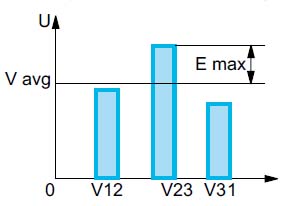
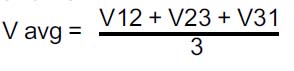
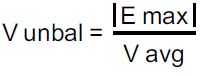
Voltage unbalance
Voltage unbalance on the most unbalanced phase, displayed as a percentage of Vavg.
[Schneider Electric]Небаланс напряжений
Самое значительное отличие по модулю значения одного из линейных напряжений, выраженное в процентах от среднего напряжения Vavg.
[Перевод Интент]
Недопустимые, нерекомендуемые
Тематики
EN
DE
FR
Смотри также
несимметрия напряжений
Состояние системы энергоснабжения трехфазного переменного тока, в которой среднеквадратические значения основных составляющих междуфазных напряжений или углы сдвига фаз между основными составляющими междуфазных напряжений не равны между собой.
Примечания
1 Степень несимметрии обычно выражают отношением напряжений обратной и нулевой последовательностей к напряжению прямой последовательности.
2 В настоящем стандарте несимметрия напряжений рассматривается применительно только к трехфазным системам энергоснабжения.
[ ГОСТ Р 51317.4.30-2008 (МЭК 61000-4-30:2008)]EN
voltage unbalance
condition in a polyphase system in which the r.m.s. values of the line voltages (fundamental component), and/or the phase angles between consecutive line voltages, are not all equal
NOTE 1 The degree of the inequality is usually expressed as the ratios of the negative- and zero-sequence components to the positive-sequence component.
NOTE 2 In this standard, voltage unbalance is considered in relation to 3-phase systems.
[IEC 61000-4-30, ed. 2.0 (2008-10)]FR
déséquilibre de tension
dans un réseau d’énergie électrique polyphasé, état dans lequel les valeurs efficaces des tensions entre conducteurs (composante fondamentale), et/ou les différences de phase entre conducteurs successifs, ne sont pas toutes égales
NOTE 1 Le taux de déséquilibre s’exprime habituellement par le rapport de la composante inverse ou homopolaire à la composante directe.
NOTE 2 Dans la présente norme, le déséquilibre de tension est relatif aux réseaux triphasés.
[IEC 61000-4-30, ed. 2.0 (2008-10)]Тематики
EN
FR
Франко-русский словарь нормативно-технической терминологии > déséquilibre de tension
2 caractéristiques assignées
номинальное значение
Количественное значение, указанное, как правило, изготовителем для определенного рабочего состояния детали, устройства или аппарата.
МЭК 60050(151-04-03).
[ ГОСТ Р 50030. 1-2000 ( МЭК 60947-1-99)]
номинальное значение
Значение величины, установленное обычно изготовителем для определенных рабочих условий компонента, прибора или оборудования.
[ ГОСТ Р 52319-2005 (МЭК 60050-151 [10], позиция 151-04-03)]
номинальное значение
Значение параметра электротехнического изделия (устройства), указанное изготовителем, при котором оно должно работать, являющееся исходным для отсчета отклонений.
Примечание
К числу параметров относятся, например, ток, напряжение, мощность.
[ ГОСТ 18311-80]
номинальное значение
-
[IEV number 442-01-01]EN
nominal value
value of a quantity used to designate and identify a component, device, equipment, or system
NOTE – The nominal value is generally a rounded value.
[IEV number 151-16-09]
rated value
a quantity value assigned, generally by a manufacturer, for a specified operating condition of a component, device or equipment
Source: 151-04-03
[IEV number 442-01-01]FR
valeur nominale, f
valeur de dénomination, f
valeur d'une grandeur, utilisée pour dénommer et identifier un composant, un dispositif, un matériel ou un système
NOTE – La valeur nominale est généralement une valeur arrondie.
[IEV number 151-16-09]
valeur assignée
valeur d'une grandeur fixée, généralement par le constructeur, pour un fonctionnement spécifié d'un composant, d'un dispositif ou d'un matériel
Source: 151-04-03
[IEV number 442-01-01]Синонимы
EN
DE
FR
номинальный параметр
Значение параметра для указанных условий эксплуатации детали, устройства или оборудования, как правило, устанавливаемое изготовителем.
[ ГОСТ Р МЭК 60050-426-2006]
номинальный параметр
Система номинальных значений и рабочих условий.
МЭК 60050(151-04-04).
[ ГОСТ Р 50030. 1-2000 ( МЭК 60947-1-99)]EN
rating
set of rated values and operating conditions
[IEC 60947-1, ed. 5.0 (2007-06)]
[IEV 151-16-11]FR
caractéristiques assignées
ensemble des valeurs assignées et des conditions de fonctionnement
[IEC 60947-1, ed. 5.0 (2007-06)]
[IEV 151-16-11]Тематики
- электротехника, основные понятия
EN
FR
оценка
-
[IEV number 151-16-11]
оценка
Понятие математической статистики, эконометрики, метрологии, квалиметрии и других дисциплин, по-разному определяемое в каждой из них. С помощью экономических О. характеризуется и соизмеряется эффективность различных ресурсов (см. Оценка природных ресурсов, Оценка трудовых ресурсов, а также Объективно-обусловленные оценки, Нормативы). Статистическая О. определяется как «функция от результатов наблюдений, при¬меняемая для оценки неизвестных параметров распределения вероятностей изучаемых случайных величин»[1]. О. применяются для количественного определения параметров экономико-матема¬тических моделей с помощью статистического преобразования выборочной (наблюдае¬мой) информации. Применяются точечная О. и интервальная О. См. также Выборка, Метод наименьших квадратов, Метод максимального правдоподобия, Оценка параметров модели. [1] СЭС, с.1270
[ http://slovar-lopatnikov.ru/]EN
rating
set of rated values and operating conditions
[IEV number 151-16-11]FR
caractéristiques assignées, f, pl
ensemble des valeurs assignées et des conditions de fonctionnement
[IEV number 151-16-11]Тематики
EN
DE
FR
Франко-русский словарь нормативно-технической терминологии > caractéristiques assignées
3 déséquilibre des tensions d'un réseau
небаланс напряжений
Отличие по модулю значения хотя бы одного из фазных или линейных напряжений многофазной системы электроснабжения от значений напряжений других фаз.
[ ГОСТ 23875-88]EN
voltage unbalance
phenomenon due to the differences between voltage deviations on the various phases, at a point of a polyphase system, resulting from differences between the phase currents or geometrical asymmetry in the line
[IEV number 604-01-29]
voltage unbalance (imbalance)
in a polyphase system, a condition in which the magnitudes of the phase voltages or the phase angles between consecutive phases are not all equal (fundamental component)
NOTE In three phase systems, the degree of inequality is usually expressed as the ratio of the negative and zero sequence components to the positive sequence component. In this technical report, voltage unbalance is considered in relation to three-phase systems and negative sequence only
[IEC 61000-3-13, ed. 1.0 (2008-02)]
voltage unbalance
condition in a polyphase system in which the r.m.s. values of the line voltages (fundamental component), and/or the phase angles between consecutive line voltages, are not all equal
NOTE 1 The degree of the inequality is usually expressed as the ratios of the negative- and zero-sequence components to the positive-sequence component.
NOTE 2 In this standard, voltage unbalance is considered in relation to 3-phase systems.
[IEC 61000-4-30, ed. 2.0 (2008-10)]FR
déséquilibre des tensions d'un réseau
phénomène résultant des différences de charge ou des dissymétries géométriques de lignes et qui provoque des différences entre les écarts de tension sur les diverses phases en un point d'un réseau polyphasé
[IEV number 604-01-29]
déséquilibre de tension
dans un réseau d’énergie électrique polyphasé, état dans lequel les valeurs efficaces des tensions entre conducteurs (composante fondamentale), et/ou les différences de phase entre conducteurs successifs, ne sont pas toutes égales
NOTE 1 Le taux de déséquilibre s’exprime habituellement par le rapport de la composante inverse ou homopolaire à la composante directe.
NOTE 2 Dans la présente norme, le déséquilibre de tension est relatif aux réseaux triphasés
[IEC 61000-4-30, ed. 2.0 (2008-10)]Параллельные тексты EN-RU
Voltage unbalance
Voltage unbalance on the most unbalanced phase, displayed as a percentage of Vavg.
[Schneider Electric]Небаланс напряжений
Самое значительное отличие по модулю значения одного из линейных напряжений, выраженное в процентах от среднего напряжения Vavg.
[Перевод Интент]
Недопустимые, нерекомендуемые
Тематики
EN
DE
FR
Смотри также
Франко-русский словарь нормативно-технической терминологии > déséquilibre des tensions d'un réseau
4 protection à composantes superposées
защита по аварийным составляющим
Защита, которая зависит от измерения или сравнения аварийных составляющих тока, напряжения и других величин, т.е. от разности между соответствующими аварийными и доаварийными значениями
[Разработка типовых структурных схем микропроцессорных устройств РЗА на объектах ОАО "ФКС ЕЭС". Пояснительная записка. Новосибирск 2006 г.]EN
superimposed component protection
protection which depends on the measurement or comparison of extracted superimposed quantities, i.e. on the differences between appropriate prefault and fault values of current, voltage, etc
[IEV ref 448-14-39]FR
protection à composantes superposées
protection qui dépend de la mesure ou de la comparaison de grandeurs superposées extraites, c'est-à-dire des différences entre les valeurs appropriées des courants, des tensions, etc., avant et pendant le défaut
[IEV ref 448-14-39]Тематики
EN
DE
- Überlagerungskomponentenschutz, m
FR
Франко-русский словарь нормативно-технической терминологии > protection à composantes superposées
5 taux de déséqui
коэффициент нулевой последовательности напряжения (тока)
Величина, равная отношению напряжения (тока) нулевой последовательности к фазному напряжению (току) прямой последовательности в многофазной системе электроснабжения.
Примечание. Для целей стандартизации допускается относить к номинальному напряжению (току).
[ ГОСТ 23875-88]EN
unbalance factor
in a three-phase system, the degree of unbalance expressed by the ratio (in per cent) between the r.m.s. values of the negative sequence (or the zero sequence) component and the positive sequence component of voltage or current
[IEV number 604-01-30]FR
taux de déséquilibre
dans un réseau triphasé, expression du degré de déséquilibre par le rapport, exprimé en pourcentage, entre la valeur efficace de chacune des composantes inverse ou homopolaire et celle de la composante directe de la tension ou du courant
[IEV number 604-01-30]Тематики
EN
DE
FR
Смотри также
Франко-русский словарь нормативно-технической терминологии > taux de déséqui
6 taux de déséquilibre
- коэффициент обратной последовательности напряжения (тока)
- Коэффициент нулевой последовательности напряжения (тока)
коэффициент обратной последовательности напряжения (тока)
Величина, равная отношению напряжения (тока) обратной последовательности к напряжению (току) прямой последовательности в многофазной системе электроснабжения.
Примечание. Для целей стандартизации допускается относить к номинальному напряжению (току).
[ ГОСТ 23875-88]EN
unbalance factor
in a three-phase system, the degree of unbalance expressed by the ratio (in per cent) between the r.m.s. values of the negative sequence (or the zero sequence) component and the positive sequence component of voltage or current
[IEV number 604-01-30]FR
taux de déséquilibre
dans un réseau triphasé, expression du degré de déséquilibre par le rapport, exprimé en pourcentage, entre la valeur efficace de chacune des composantes inverse ou homopolaire et celle de la composante directe de la tension ou du courant
[IEV number 604-01-30]Тематики
EN
DE
FR
Смотри также
42. Коэффициент обратной последовательности напряжения (тока)
D. Unsymmetriegrad
E. Unbalance factor
F. Taux de déséquilibre
Величина, равная отношению напряжения (тока) обратной последовательности к напряжению (току) прямой последовательности в многофазной системе электроснабжения.
Примечание. Для целей стандартизации допускается относить к номинальному напряжению (току)
Источник: ГОСТ 23875-88: Качество электрической энергии. Термины и определения оригинал документа
43. Коэффициент нулевой последовательности напряжения (тока)
D. Unsymmetriegrad
E. Unbalance factor
F. Taux de déséquilibre
Величина, равная отношению напряжения (тока) нулевой последовательности к фазному напряжению (току) прямой последовательности в многофазной системе электроснабжения.
Примечание. Для целей стандартизации допускается относить к номинальному напряжению (току)
Источник: ГОСТ 23875-88: Качество электрической энергии. Термины и определения оригинал документа
Франко-русский словарь нормативно-технической терминологии > taux de déséquilibre
7 tension assignée
номинальное напряжение
Напряжение, установленное изготовителем для прибора
[ ГОСТ Р 52161. 1-2004 ( МЭК 60335-1: 2001)]
номинальное напряжение Uном, кВ
Номинальное междуфазное напряжение электрической сети, для работы в которой предназначены коммутационные аппараты.
[ ГОСТ Р 52726-2007]
номинальное напряжение
Un
Напряжение, применяемое для обозначения или идентификации системы электроснабжения.
[ ГОСТ Р 51317.4.30-2008 (МЭК 61000-4-30:2008)]EN
rated voltage
voltage assigned to the appliance by the manufacturer
[IEC 60335-1, ed. 4.0 (2001-05)]
rated voltage
quantity value assigned, generally by the manufacturer, for a specified operating condition of a machine
[IEC 60034-18-41, ed. 1.0 (2006-10)]
rated voltage
input or output supply voltage for which equipment is designed or specified
[IEC 88528-11, ed. 1.0 (2004-03)]
rated voltage
specified value of the voltage at the terminals of the machine when operating at a rating. If unidirectional, the voltage is the arithmetic mean of the recurring waveform and if alternating it is the root mean square value of the fundamental frequency component of the recurring waveform
NOTE - In the case of a machine with a protective resistor permanently in series, the resistor is considered as an integral part of the machine
[IEC 60349-1, ed. 1.0 (1999-11)]
rated voltage
the value of voltage assigned by the manufacturer to a component, device or equipment and to which operation and performance characteristics are referred
NOTE - Equipment may have more than one rated voltage value or may have a rated voltage range.
[IEC 62497-1, ed. 1.0 (2010-02)]
rated voltage
reference voltage for which the cable is designed, and which serves to define the electrical tests
NOTE 1 - The rated voltage is expressed by the combination of two values: Uo/U expressed in volts (V):
Uo being the r.m.s. value between any insulated conductor and "earth" (metal covering of the cable or the surrounding medium);
U being the r.m.s. value between any two phase conductors of a multicore cable or of a system of single-core cables.
In an alternating-current system, the rated voltage of a cable is at least equal to the nominal voltage of the system for which it is intended.
This condition applies both to the value Uo and to the value U.
In a direct current system, the nominal voltage of the system is not higher than 1,5 times the rated voltage of the cable.
NOTE 2 - The operating voltage of a system may permanently exceed the nominal voltage of such a system by 10 %. A cable can be used at a 10 % higher operating voltage than its rated voltage if the latter is at least equal to the nominal voltage of the system
[IEC 60245-1, ed. 4.0 (2003-12)]
rated voltage
highest allowable voltage between the conductors in a twin and multi conductor cable, or between one conductor and an electrical conductive screen, or between the two ends of a single core cable, or earth in unscreened cables
[IEC 60800, ed. 3.0 (2009-07)]
rated voltage
the r.m.s. line-to-line voltage under rated conditions
Primary side of input transformer: ULN
Converter input: UVN
Converter output: UaN
Motor voltage: UAN
[IEC 61800-4, ed. 1.0 (2002-09)]
rated voltage
input or output voltage (for three-phase supply, the phase-to-phase voltage) as declared by the manufacturer
[IEC 62040-1, ed. 1.0 (2008-06)]
nominal voltage, Un
voltage by which a system is designated or identified
[IEC 61000-4-30, ed. 2.0 (2008-10)]FR
tension assignée
tension attribuée à l'appareil par le fabricant
[IEC 60335-1, ed. 4.0 (2001-05)]
tension nominale
tension assignée, généraleme<>value of voltage assigned by the manufacturer, to a componentnt par le constructeur pour des conditions spécifiées de fonctionnement de la machine
[IEC 60034-18-41, ed. 1.0 (2006-10)]
tension assignée
tension spécifiée aux bornes de la machine quand celle-ci fonctionne au régime assigné. Dans le cas d'une tension redressée, sa valeur est égale à la valeur moyenne de l'onde périodique. Dans le cas d'une tension alternative, sa valeur est égale à la valeur efficace de la composante fondamentale de l'onde périodique
NOTE - Dans le cas d'une machine équipée d'une résistance de protection connectée en permanence en série, la résistance est considérée comme faisant partie intégrante de la machine
[IEC 60349-1, ed. 1.0 (1999-11)]
tension assignée
valeur de la tension, assignée par le constructeur à un composant, à un dispositif ou à un matériel, et à laquelle on se réfère pour le fonctionnement et pour les caractéristiques fonctionnelles
NOTE - Les matériels peuvent avoir plusieurs valeurs ou une plage de tensions assignées.
[IEC 62497-1, ed. 1.0 (2010-02)]
tension assignée
tension de référence pour laquelle le conducteur ou le câble est prévu et qui sert à définir les essais électriques
NOTE 1 - La tension assignée est exprimée par la combinaison de deux valeurs Uo /U, exprimées en volts (V):
Uo étant la valeur efficace entre l'âme d'un conducteur isolé quelconque et la «terre» (revêtement métallique du câble au milieu environnant);
U étant la valeur efficace entre les âmes conductrices de deux conducteurs de phase quelconques d'un câble multiconducteur ou d'un système de câbles monoconducteurs ou de conducteurs.
Dans un système à courant alternatif, la tension assignée d'un conducteur ou d’un câble est au moins égale à la tension nominale du système pour lequel il est prévu.
Cette condition s'applique à la fois à la valeur Uo et à la valeur U.
Dans un système à courant continu, la tension nominale admise du système n’est pas supérieure à 1,5 fois la tension assignée du conducteur ou du câble.
NOTE 2 - La tension de service d'un système peut en permanence dépasser la tension nominale dudit système de 10 %. Un conducteur ou un câble peut être utilisé à une tension de service supérieure de 10 % à sa tension assignée si cette dernière est au moins égale à la tension nominale du système
[IEC 60245-1, ed. 4.0 (2003-12)]
tension assignée
tension maximale admissible entre les âmes dans un câble ayant une paire ou multi conducteur ou entre une âme et un écran conducteur électrique ou avec la terre pour un câble non écranté ou encore entre les deux extrémités d’un câble à âme unique
[IEC 60800, ed. 3.0 (2009-07)]
tension assignée
valeur efficace de la tension de ligne (entre phases) dans les conditions assignées
Primaire du transformateur d’entrée: ULN
Entrée du convertisseur: UVN
Sortie du convertisseur: UaN
Moteur: UAN
[IEC 61800-4, ed. 1.0 (2002-09)]
tension assignée
tension d’alimentation d’entrée ou de sortie (dans le cas d’une alimentation triphasée, tension entre phases) déclarée par le constructeur
[IEC 62040-1, ed. 1.0 (2008-06)]
tension nominale, Un
tension par laquelle un réseau est désigné ou identifié
[IEC 61000-4-30, ed. 2.0 (2008-10)]Тематики
- аппарат, изделие, устройство...
- высоковольтный аппарат, оборудование...
- прибор электрический
- электроснабжение в целом
Синонимы
- Un
EN
FR
Франко-русский словарь нормативно-технической терминологии > tension assignée
8 tension nominale
номинальное напряжение
Напряжение, установленное изготовителем для прибора
[ ГОСТ Р 52161. 1-2004 ( МЭК 60335-1: 2001)]
номинальное напряжение Uном, кВ
Номинальное междуфазное напряжение электрической сети, для работы в которой предназначены коммутационные аппараты.
[ ГОСТ Р 52726-2007]
номинальное напряжение
Un
Напряжение, применяемое для обозначения или идентификации системы электроснабжения.
[ ГОСТ Р 51317.4.30-2008 (МЭК 61000-4-30:2008)]EN
rated voltage
voltage assigned to the appliance by the manufacturer
[IEC 60335-1, ed. 4.0 (2001-05)]
rated voltage
quantity value assigned, generally by the manufacturer, for a specified operating condition of a machine
[IEC 60034-18-41, ed. 1.0 (2006-10)]
rated voltage
input or output supply voltage for which equipment is designed or specified
[IEC 88528-11, ed. 1.0 (2004-03)]
rated voltage
specified value of the voltage at the terminals of the machine when operating at a rating. If unidirectional, the voltage is the arithmetic mean of the recurring waveform and if alternating it is the root mean square value of the fundamental frequency component of the recurring waveform
NOTE - In the case of a machine with a protective resistor permanently in series, the resistor is considered as an integral part of the machine
[IEC 60349-1, ed. 1.0 (1999-11)]
rated voltage
the value of voltage assigned by the manufacturer to a component, device or equipment and to which operation and performance characteristics are referred
NOTE - Equipment may have more than one rated voltage value or may have a rated voltage range.
[IEC 62497-1, ed. 1.0 (2010-02)]
rated voltage
reference voltage for which the cable is designed, and which serves to define the electrical tests
NOTE 1 - The rated voltage is expressed by the combination of two values: Uo/U expressed in volts (V):
Uo being the r.m.s. value between any insulated conductor and "earth" (metal covering of the cable or the surrounding medium);
U being the r.m.s. value between any two phase conductors of a multicore cable or of a system of single-core cables.
In an alternating-current system, the rated voltage of a cable is at least equal to the nominal voltage of the system for which it is intended.
This condition applies both to the value Uo and to the value U.
In a direct current system, the nominal voltage of the system is not higher than 1,5 times the rated voltage of the cable.
NOTE 2 - The operating voltage of a system may permanently exceed the nominal voltage of such a system by 10 %. A cable can be used at a 10 % higher operating voltage than its rated voltage if the latter is at least equal to the nominal voltage of the system
[IEC 60245-1, ed. 4.0 (2003-12)]
rated voltage
highest allowable voltage between the conductors in a twin and multi conductor cable, or between one conductor and an electrical conductive screen, or between the two ends of a single core cable, or earth in unscreened cables
[IEC 60800, ed. 3.0 (2009-07)]
rated voltage
the r.m.s. line-to-line voltage under rated conditions
Primary side of input transformer: ULN
Converter input: UVN
Converter output: UaN
Motor voltage: UAN
[IEC 61800-4, ed. 1.0 (2002-09)]
rated voltage
input or output voltage (for three-phase supply, the phase-to-phase voltage) as declared by the manufacturer
[IEC 62040-1, ed. 1.0 (2008-06)]
nominal voltage, Un
voltage by which a system is designated or identified
[IEC 61000-4-30, ed. 2.0 (2008-10)]FR
tension assignée
tension attribuée à l'appareil par le fabricant
[IEC 60335-1, ed. 4.0 (2001-05)]
tension nominale
tension assignée, généraleme<>value of voltage assigned by the manufacturer, to a componentnt par le constructeur pour des conditions spécifiées de fonctionnement de la machine
[IEC 60034-18-41, ed. 1.0 (2006-10)]
tension assignée
tension spécifiée aux bornes de la machine quand celle-ci fonctionne au régime assigné. Dans le cas d'une tension redressée, sa valeur est égale à la valeur moyenne de l'onde périodique. Dans le cas d'une tension alternative, sa valeur est égale à la valeur efficace de la composante fondamentale de l'onde périodique
NOTE - Dans le cas d'une machine équipée d'une résistance de protection connectée en permanence en série, la résistance est considérée comme faisant partie intégrante de la machine
[IEC 60349-1, ed. 1.0 (1999-11)]
tension assignée
valeur de la tension, assignée par le constructeur à un composant, à un dispositif ou à un matériel, et à laquelle on se réfère pour le fonctionnement et pour les caractéristiques fonctionnelles
NOTE - Les matériels peuvent avoir plusieurs valeurs ou une plage de tensions assignées.
[IEC 62497-1, ed. 1.0 (2010-02)]
tension assignée
tension de référence pour laquelle le conducteur ou le câble est prévu et qui sert à définir les essais électriques
NOTE 1 - La tension assignée est exprimée par la combinaison de deux valeurs Uo /U, exprimées en volts (V):
Uo étant la valeur efficace entre l'âme d'un conducteur isolé quelconque et la «terre» (revêtement métallique du câble au milieu environnant);
U étant la valeur efficace entre les âmes conductrices de deux conducteurs de phase quelconques d'un câble multiconducteur ou d'un système de câbles monoconducteurs ou de conducteurs.
Dans un système à courant alternatif, la tension assignée d'un conducteur ou d’un câble est au moins égale à la tension nominale du système pour lequel il est prévu.
Cette condition s'applique à la fois à la valeur Uo et à la valeur U.
Dans un système à courant continu, la tension nominale admise du système n’est pas supérieure à 1,5 fois la tension assignée du conducteur ou du câble.
NOTE 2 - La tension de service d'un système peut en permanence dépasser la tension nominale dudit système de 10 %. Un conducteur ou un câble peut être utilisé à une tension de service supérieure de 10 % à sa tension assignée si cette dernière est au moins égale à la tension nominale du système
[IEC 60245-1, ed. 4.0 (2003-12)]
tension assignée
tension maximale admissible entre les âmes dans un câble ayant une paire ou multi conducteur ou entre une âme et un écran conducteur électrique ou avec la terre pour un câble non écranté ou encore entre les deux extrémités d’un câble à âme unique
[IEC 60800, ed. 3.0 (2009-07)]
tension assignée
valeur efficace de la tension de ligne (entre phases) dans les conditions assignées
Primaire du transformateur d’entrée: ULN
Entrée du convertisseur: UVN
Sortie du convertisseur: UaN
Moteur: UAN
[IEC 61800-4, ed. 1.0 (2002-09)]
tension assignée
tension d’alimentation d’entrée ou de sortie (dans le cas d’une alimentation triphasée, tension entre phases) déclarée par le constructeur
[IEC 62040-1, ed. 1.0 (2008-06)]
tension nominale, Un
tension par laquelle un réseau est désigné ou identifié
[IEC 61000-4-30, ed. 2.0 (2008-10)]Тематики
- аппарат, изделие, устройство...
- высоковольтный аппарат, оборудование...
- прибор электрический
- электроснабжение в целом
Синонимы
- Un
EN
FR
номинальное напряжение конденсатора
Максимальное напряжение, при котором конденсатор может работать в течение минимальной наработки в условиях, указанных в нормативно-технической документации
[ ГОСТ 21415-75]
номинальное напряжение конденсатора
Действующее значение синусоидального переменного напряжения при номинальной частоте, на которое рассчитан конденсатор. Номинальное напряжение многофазного конденсатора - значение напряжения между выводами.
[ ГОСТ 1282-88]Тематики
- конденсаторы для повыш. коэф. мощности
- конденсаторы для электронной аппаратуры
EN
DE
FR
Франко-русский словарь нормативно-технической терминологии > tension nominale
9 Un
номинальное напряжение
Напряжение, установленное изготовителем для прибора
[ ГОСТ Р 52161. 1-2004 ( МЭК 60335-1: 2001)]
номинальное напряжение Uном, кВ
Номинальное междуфазное напряжение электрической сети, для работы в которой предназначены коммутационные аппараты.
[ ГОСТ Р 52726-2007]
номинальное напряжение
Un
Напряжение, применяемое для обозначения или идентификации системы электроснабжения.
[ ГОСТ Р 51317.4.30-2008 (МЭК 61000-4-30:2008)]EN
rated voltage
voltage assigned to the appliance by the manufacturer
[IEC 60335-1, ed. 4.0 (2001-05)]
rated voltage
quantity value assigned, generally by the manufacturer, for a specified operating condition of a machine
[IEC 60034-18-41, ed. 1.0 (2006-10)]
rated voltage
input or output supply voltage for which equipment is designed or specified
[IEC 88528-11, ed. 1.0 (2004-03)]
rated voltage
specified value of the voltage at the terminals of the machine when operating at a rating. If unidirectional, the voltage is the arithmetic mean of the recurring waveform and if alternating it is the root mean square value of the fundamental frequency component of the recurring waveform
NOTE - In the case of a machine with a protective resistor permanently in series, the resistor is considered as an integral part of the machine
[IEC 60349-1, ed. 1.0 (1999-11)]
rated voltage
the value of voltage assigned by the manufacturer to a component, device or equipment and to which operation and performance characteristics are referred
NOTE - Equipment may have more than one rated voltage value or may have a rated voltage range.
[IEC 62497-1, ed. 1.0 (2010-02)]
rated voltage
reference voltage for which the cable is designed, and which serves to define the electrical tests
NOTE 1 - The rated voltage is expressed by the combination of two values: Uo/U expressed in volts (V):
Uo being the r.m.s. value between any insulated conductor and "earth" (metal covering of the cable or the surrounding medium);
U being the r.m.s. value between any two phase conductors of a multicore cable or of a system of single-core cables.
In an alternating-current system, the rated voltage of a cable is at least equal to the nominal voltage of the system for which it is intended.
This condition applies both to the value Uo and to the value U.
In a direct current system, the nominal voltage of the system is not higher than 1,5 times the rated voltage of the cable.
NOTE 2 - The operating voltage of a system may permanently exceed the nominal voltage of such a system by 10 %. A cable can be used at a 10 % higher operating voltage than its rated voltage if the latter is at least equal to the nominal voltage of the system
[IEC 60245-1, ed. 4.0 (2003-12)]
rated voltage
highest allowable voltage between the conductors in a twin and multi conductor cable, or between one conductor and an electrical conductive screen, or between the two ends of a single core cable, or earth in unscreened cables
[IEC 60800, ed. 3.0 (2009-07)]
rated voltage
the r.m.s. line-to-line voltage under rated conditions
Primary side of input transformer: ULN
Converter input: UVN
Converter output: UaN
Motor voltage: UAN
[IEC 61800-4, ed. 1.0 (2002-09)]
rated voltage
input or output voltage (for three-phase supply, the phase-to-phase voltage) as declared by the manufacturer
[IEC 62040-1, ed. 1.0 (2008-06)]
nominal voltage, Un
voltage by which a system is designated or identified
[IEC 61000-4-30, ed. 2.0 (2008-10)]FR
tension assignée
tension attribuée à l'appareil par le fabricant
[IEC 60335-1, ed. 4.0 (2001-05)]
tension nominale
tension assignée, généraleme<>value of voltage assigned by the manufacturer, to a componentnt par le constructeur pour des conditions spécifiées de fonctionnement de la machine
[IEC 60034-18-41, ed. 1.0 (2006-10)]
tension assignée
tension spécifiée aux bornes de la machine quand celle-ci fonctionne au régime assigné. Dans le cas d'une tension redressée, sa valeur est égale à la valeur moyenne de l'onde périodique. Dans le cas d'une tension alternative, sa valeur est égale à la valeur efficace de la composante fondamentale de l'onde périodique
NOTE - Dans le cas d'une machine équipée d'une résistance de protection connectée en permanence en série, la résistance est considérée comme faisant partie intégrante de la machine
[IEC 60349-1, ed. 1.0 (1999-11)]
tension assignée
valeur de la tension, assignée par le constructeur à un composant, à un dispositif ou à un matériel, et à laquelle on se réfère pour le fonctionnement et pour les caractéristiques fonctionnelles
NOTE - Les matériels peuvent avoir plusieurs valeurs ou une plage de tensions assignées.
[IEC 62497-1, ed. 1.0 (2010-02)]
tension assignée
tension de référence pour laquelle le conducteur ou le câble est prévu et qui sert à définir les essais électriques
NOTE 1 - La tension assignée est exprimée par la combinaison de deux valeurs Uo /U, exprimées en volts (V):
Uo étant la valeur efficace entre l'âme d'un conducteur isolé quelconque et la «terre» (revêtement métallique du câble au milieu environnant);
U étant la valeur efficace entre les âmes conductrices de deux conducteurs de phase quelconques d'un câble multiconducteur ou d'un système de câbles monoconducteurs ou de conducteurs.
Dans un système à courant alternatif, la tension assignée d'un conducteur ou d’un câble est au moins égale à la tension nominale du système pour lequel il est prévu.
Cette condition s'applique à la fois à la valeur Uo et à la valeur U.
Dans un système à courant continu, la tension nominale admise du système n’est pas supérieure à 1,5 fois la tension assignée du conducteur ou du câble.
NOTE 2 - La tension de service d'un système peut en permanence dépasser la tension nominale dudit système de 10 %. Un conducteur ou un câble peut être utilisé à une tension de service supérieure de 10 % à sa tension assignée si cette dernière est au moins égale à la tension nominale du système
[IEC 60245-1, ed. 4.0 (2003-12)]
tension assignée
tension maximale admissible entre les âmes dans un câble ayant une paire ou multi conducteur ou entre une âme et un écran conducteur électrique ou avec la terre pour un câble non écranté ou encore entre les deux extrémités d’un câble à âme unique
[IEC 60800, ed. 3.0 (2009-07)]
tension assignée
valeur efficace de la tension de ligne (entre phases) dans les conditions assignées
Primaire du transformateur d’entrée: ULN
Entrée du convertisseur: UVN
Sortie du convertisseur: UaN
Moteur: UAN
[IEC 61800-4, ed. 1.0 (2002-09)]
tension assignée
tension d’alimentation d’entrée ou de sortie (dans le cas d’une alimentation triphasée, tension entre phases) déclarée par le constructeur
[IEC 62040-1, ed. 1.0 (2008-06)]
tension nominale, Un
tension par laquelle un réseau est désigné ou identifié
[IEC 61000-4-30, ed. 2.0 (2008-10)]Тематики
- аппарат, изделие, устройство...
- высоковольтный аппарат, оборудование...
- прибор электрический
- электроснабжение в целом
Синонимы
- Un
EN
FR
Франко-русский словарь нормативно-технической терминологии > Un
См. также в других словарях:
Component business model — (CBM) is a technique developed by IBM to model and analyze an enterprise. It is a logical representation or map of business components or building blocks and can be depicted on a single page. It can be used to analyze the alignment of enterprise… … Wikipedia
Component Manager — In Apple Macintosh computer programming, Component Manager was one of many approaches to sharing code that originated on the pre PowerPC Macintosh. It was originally introduced as part of QuickTime, which remained the part of Mac OS that used it… … Wikipedia
Component Object Model — Not to be confused with COM file. Component Object Model (COM) is a binary interface standard for software componentry introduced by Microsoft in 1993. It is used to enable interprocess communication and dynamic object creation in a large range… … Wikipedia
Component signal — PP An analog video signal with luminance, color and saturation values encoded separately, resulting in greater picture quality than composite signals … Audio and video glossary
Principal component analysis — PCA of a multivariate Gaussian distribution centered at (1,3) with a standard deviation of 3 in roughly the (0.878, 0.478) direction and of 1 in the orthogonal direction. The vectors shown are the eigenvectors of the covariance matrix scaled by… … Wikipedia
World Values Survey — Type Non profit association Founded 1981 Location … Wikipedia
Connected-component labeling — (alternatively connected component analysis, blob extraction, region labeling, blob discovery, or region extraction) is an algorithmic application of graph theory, where subsets of connected components are uniquely labeled based on a given… … Wikipedia
Connected Component Labeling — (alternatively connected component analysis) is an algorithmic application of graph theory, where subsets of connected components are uniquely labeled based on a given heuristic. Connected component labeling is not to be confused with… … Wikipedia
Service component architecture — (SCA) is a relatively new initiative advocated by major software vendors. Its proponents claim it is more natively suited for the delivery of applications that conform with the principles of service oriented architecture. As such, SCA components… … Wikipedia
Distributed Component Object Model — (DCOM) is a proprietary Microsoft technology for communication among software components distributed across networked computers. DCOM, which originally was called Network OLE , extends Microsoft s COM, and provides the communication substrate… … Wikipedia
Grey component replacement — Within the CMY color space, any hue angle can be achieved by combining two of the three primaries. The intention of the third color is to move that hue towards grey (decrease saturation), and is known as the greying agent. However, as that… … Wikipedia
 18+© Академик, 2000-2025
- Обратная связь: Техподдержка, Реклама на сайте
Экспорт словарей на сайты, сделанные на PHP, Joomla, Drupal, WordPress, MODx.
Перевод: с французского на русский
с русского на французский- С русского на:
- Французский
- С французского на:
- Русский