

-
1 основная ссылка
1) Advertising: basic ref2) Patents: basic reference, primary reference -
2 связанный с риском, превышающим заданный уровень
Engineering: risk-significant (http://www.nrc.gov/reading-rm/basic-ref/glossary/risk-significant.html)Универсальный русско-английский словарь > связанный с риском, превышающим заданный уровень
-
3 ἐπί
ἐπί prep. w. gen., dat., or acc.; s. the lit. on ἀνά, beg. (Hom.+). The basic idea is ‘upon’ (opp. ὑπό) Kühner-G. I 495; s. also Rob 600–605. (In the foll. classifications case use is presented seriatim; in earlier editions of this lexicon all sections, except 13, 17, and 18 [of time], were included under the general rubric ‘Place’.)① marker of location or surface, answering the question ‘where?’ on, upon, nearⓐ w. gen., marking a position on a surface ἐ. (τῆς) γῆς on (the) earth (cp. En 9:1; 98:1; ἐ. γῆς 25:6; PsSol 17:2) Mt 6:10, 19; 9:6; 23:9; Mk 6:47 al. (Ar. 12, 1; Just., A I, 54, 7 al.). ἐ. τῆς θαλάσσης on the sea (cp. Job 9:8; Dio Chrys. 10 [11], 129 βαδίζειν ἐ. τῆς θαλ.; Lucian, Philops. 13 βαδίζειν ἐφʼ ὕδατος, VH 2, 4; Artem. 3, 16 ἐ. τ. θαλάσσης περιπατεῖν; schol. on Nicander, Ther. 15 p. 5, 26ff relying on the testimony of Hesiod: Orion was given a gift [δωρεά] by the gods καὶ ἐ. κυμάτων πορεύεσθαι καὶ ἐ. τῆς γῆς) Mt 14:26; Mk 6:48f; J 6:19 (w. acc. P75; s. 4bβ below). ἐ. τῶν νεφελῶν on the clouds Mt 24:30; 26:64 (Da 7:13; cp. Philo, Praem. 8). ἐ. κλίνης 9:2; Lk 17:34. ἐ. τοῦ δώματος on the roof vs. 31; Mt 24:17; 10:27 foll. by pl. W. verbs: κάθημαι ἐ. τινος sit on someth. (Job 2:8; ἐ. τοῦ ἅρματος GrBar 6:2; cp. JosAs 27:1 ἐ. τοῦ ὀχήματος καθεζόμενος; Just., D. 90, 5 ἐ. λίθου καθεζόμενος) Mt 24:3; 27:19; Ac 8:28; Rv 6:16; 9:17 (the same prep. used in Rv w. κάθημαι and dat. s. bα below, and w. acc. cα). ἑστηκέναι ἐ. τινος stand on someth. Ac 21:40; Rv 10:5, 8 (Just., D. 86, 2 ἐστηρίχθαι). With parts of the body: ἐ. χειρῶν αἴρειν carry on (i.e. in/with) their hands Mt 4:6; Lk 4:11 (both Ps 90:12). ἐ. κεφαλῆς on the head (Hdt. 5, 12, 4) J 20:7; 1 Cor 11:10; Rv 12:1. ἐ. τοῦ μετώπου Rv 7:3; 9:4. ἐ. γυμνοῦ on the naked body Mk 14:51. Cp. use of ἐπί w. καθίζω and gen., and ἐπί w. κάθημαι and acc. Mt 19:28.—In a gener. and fig. sense Ac 21:23.ⓑ w. dat., gener. suggesting contiguity on, in, above.α. answering the question ‘where?’ (Hom. et al.; ins, pap, LXX; Just., D. 105, 5 ἐ. τῷ σταυρῷ; Tat., 9:1 ἐ. τοῖς ὄρεσι; Ath. 20, 1 ἐ. τῷ μετώπῳ; Mel., P. 19, 131 ἐ. σάκκῳ καὶ σποδῷ) ἐ. πίνακι on a platter Mt 14:8, 11; Mk 6:25, 28. ἀνακλῖναι ἐ. τῷ χλωρῷ χόρτῳ on the green grass 6:39. ἐ. τοῖς κραβάττοις vs. 55. ἐπέκειτο ἐπʼ αὐτῷ lay on it (or before it) J 11:38. καθήμενος ἐ. τῷ θρόνῳ Rv 4:9 (cp. gen. w. καθ. 1a above, and acc. cα below) 5:13; 7:10 and oft. ἐφʼ ἵπποις λευκοῖς on white horses 19:14. ἐ. σανίσιν on planks Ac 27:44. ἐ. τῇ στοᾷ in the colonnade 3:11. τὰ ἐ. τοῖς οὐρανοῖς what is above (or in) the heavens Eph 1:10. ἐπʼ αὐτῷ above him, at his head Lk 23:38 (=Mt 27:37 ἐπάνω τ. κεφαλῆς αὐτοῦ).β. answering the question ‘whither?’ on, upon (Hom. et al.) w. verbs that indicate a direction: οἰκοδομεῖν ἐ. τινι build upon someth. Mt 16:18. ἐποικοδομεῖν Eph 2:20. ἐπιβάλλειν ἐπίβλημα ἐ. ἱματίῳ παλαιῷ put a patch on an old garment Mt 9:16. ἐπιπίπτειν ἐ. τινι Ac 8:16. ἐκάθισεν ἐ. τῷ θρόνῳ he sat down on the throne GJs 11:1. λίθον ἐπʼ αὐτῇ βαλέτω J 8:7 v.l. (cp. 12a below).ⓒ w. acc., answering the question ‘where?’ (Hom. et al.; LXX; JosAs 29:2 φορῶν ἐ. τὸν μηρὸν αὐτοῦ ῥομφαίαν; Just., D. 53, 1 ζυγὸν ἐ. αὐχένα μὴ ἔχων)α. on, over someth. καθεύδειν ἐ. τι sleep on someth. Mk 4:38. καθῆσθαι ἐ. τι sit on someth. Mt 19:28 (in the same vs. καθίζω w. gen., s. a above) J 12:15; Rv 4:4; 6:2; 11:16 al.; cp. Lk 21:35b; κεῖσθαι ἐ. τι lie upon someth. 2 Cor 3:15. κατακεῖσθαι Lk 5:25. ἑστηκέναι ἐ. τὸν αἰγιαλόν stand on the shore Mt 13:2; cp. Rv 14:1. ἑστῶτας ἐ. τὴν θάλασσαν standing beside the sea 15:2. ἔστη ἐ. τὴν κεφαλὴν τοῦ παιδίου (the star) remained stationary over the head of the child GJs 21:3. σκηνοῦν ἐ. τινα spread a tent over someone Rv 7:15. ἐ. τὴν δεξιάν at the right hand 5:1. λίθος ἐ. λίθον stone upon stone Mt 24:2.β. ἐ. τὸ αὐτό at the same place, together (Ps.-X., Respublica Athen. [The Old Oligarch] 2, 2; Pla., Rep. 329a; SIG 736, 66 [92 B.C.]. In pap=‘in all’: PTebt 14, 20 [114 B.C.]; PFay 102, 6.—2 Km 2:13; En 100:2) εἶναι ἐ. τὸ αὐτό be together Lk 17:35; Ac 1:15; 2:1, 44. In 1 Cor 7:5 it is a euphemistic expr. for sexual union. κατοικεῖν ἐ. τὸ αὐτό live in the same place (Dt 25:5) Hm 5, 1, 4. Also w. verbs of motion (Sus 14 Theod.) συνέρχεσθαι ἐ. τὸ αὐτό come together to the same place 1 Cor 11:20; 14:23; cp. B 4:10 (Just., A I, 67, 3 συνέλευσις γίνεται). συνάγεσθαι (Phlegon of Tralles [Hadr.]: 257 Fgm. 36 III 9 Jac.; PsSol 2:2; TestJob 28:5 Jos., Bell. 2, 346) Mt 22:34; Ac 4:26 (Ps 2:2); 1 Cl 34:7. ἐ. τὸ αὐτὸ μίγνυσθαι be mixed together Hm 10, 3, 3. προσετίθει ἐ. τὸ αὐτό added to their number Ac 2:47.γ. at, by, near someone or someth. καθῆσθαι ἐ. τὸ τελώνιον sit at the tax-office Mt 9:9 (ἐ. τὰς ὡραίας πύλας GrBar prol. 2); Mk 2:14. ἑστηκέναι ἐ. τὴν θύραν stand at the door Rv 3:20. σὺ ἔστης ἐ. τὸ θυσιαστήριον you are standing (ἕστηκας deStrycker) as priest at the altar GJs 8:2. ἐφʼ ὑμᾶς among you 2 Th 1:10; cp. Ac 1:21.—Of pers., over whom someth. is done ὀνομάζειν τὸ ὄνομα Ἰησοῦ ἐ. τινα speak the name of Jesus over someone Ac 19:13. ἐπικαλεῖν τὸ ὄνομά τινος ἐ. τινα=to claim someone for one’s own (Jer 14:9; 2 Ch 7:14; 2 Macc 8:15) Ac 15:17 (Am 9:12); Js 2:7; Hs 8, 6, 4. προσεύχεσθαι ἐ. τινα pray over someone Js 5:14.② marker of presence or occurrence near an object or area, at, nearⓐ w. gen., of immediate proximity to things at, near (Hdt. 7, 115; X., An. 4, 3, 28 al.; LXX, Just.) ἐ. τ. θυρῶν at the gates (Plut., C. Gracch. 841 [14, 3]; PRyl 127, 8f [29 A.D.] κοιμωμένου μου ἐ. τῆς θύρας; 1 Macc 1:55; Just., D. 111, 4) Ac 5:23 (s. b below for dat. in 5:9). ἐ. τῆς θαλάσσης near the sea (Polyb. 1, 44, 4; Ex 14:2; Dt 1:40; 1 Macc 14:34) J 21:1. ἐ. τῆς ὁδοῦ by the road Mt 21:19. ἐσθίειν ἐ. τῆς πραπέζης τινός eat at someone’s table Lk 22:30 (cp. POxy 99, 14 [55 A.D.] τράπεζα, ἐφʼ ἧς Σαραπίων καὶ μέτοχοι; Da 11:27 LXX ἐ. μιᾶς τραπέζης). ἐ. τοῦ (τῆς) βάτου at the thornbush = in the passage about the thornbush (i.e. Ex 3:1ff) Mk 12:26; Lk 20:37.ⓑ with dat., of immediate proximity at, near by (Hom.+) ἦν ἔτι ἐ. τῷ τόπῳ ὅπου was still at the place, where J 11:30 v.l. (for ἐν; cp. Just., D. 402). ἐ. τῇ θύρᾳ (ἐ. θύραις) at the door (Hom. et al.; Wsd 19:17; Jos., Ant. 17, 90; Just., D. 32, 3) Mt 24:33; Mk 13:29; Ac 5:9 (s. a above). ἐ. τοῖς πυλῶσιν Rv 21:12. ἐ. τῇ πηγῇ J 4:6 (Jos., Ant. 5, 58 ἐ. τινι πηγῇ; Just., A I, 64, 1 ἐ. ταῖς … πηγαῖς). ἐ. τῇ προβατικῇ (sc. πύλῃ) near the sheepgate 5:2; cp. Ac 3:10. ἐ. τῷ ποταμῷ near the river (since Il. 7, 133; Jos., Ant. 4, 176 ἐ. τ. Ἰορδάνῳ) Rv 9:14.—Of pers. (Diod S 14, 113, 6; Just., A I, 40, 7) ἐφʼ ὑμῖν among you 2 Cor 7:7; cp. Ac 28:14 v.l.③ marker of involvement in an official proceeding, before, w. gen., of pers., esp. in the language of lawsuits (Pla., Leg. 12, 943d; Isaeus 5, 1 al.; UPZ 71, 15; 16 [152 B.C.]; POxy 38, 11; Mitt-Wilck. I/2, 382, 23=BGU 909, 23; Jos., Vi. 258; Just., A II, 1, 1 ἐ. Οὐρβίκου). ἐ. τοῦ ἡγεμόνος in the governor’s presence Mt 28:14. ἐ. ἡγεμόνων καὶ βασιλέων Mk 13:9. ἐ. σου before you (the procurator) Ac 23:30. ἐ. Τερτούλλου Phlm subscr. v.l.; στάντος μου ἐ. τοῦ συνεδρίου Ac 24:20 (cp. Diod S 11, 55, 4 ἐ. τοῦ κοινοῦ συνεδρίου τ. Ἑλλήνων). γυναικὸς … διαβληθείσης ἐ. τοῦ κυρίου Papias (2:17). κρίνεσθαι ἐ. τῶν ἀδίκων go to law before the unrighteous 1 Cor 6:1. κριθήσεται ἐφʼ ὑμῶν before your tribunal D 11:11. μαρτυρεῖν ἐ. Ποντίου Πιλάτου testify before Pontius Pilate 1 Ti 6:13 (s. μαρτυρέω 1c). ἐ. τοῦ βήματος (POxy 37 I, 3 [49 A.D.]) ἑστὼς ἐ. τοῦ βήματος Καίσαρός εἰμι I am standing before Caesar’s tribunal Ac 25:10 (Appian says Prooem. c. 15 §62 of himself: δίκαις ἐν Ῥώμῃ συναγορεύσας ἐ. τῶν βασιλέων=I acted as attorney in lawsuits in Rome before the emperors).—Gener. in someone’s presence (Appian, Syr. 61 §324 ἐφʼ ὑμῶν=in your presence) ἐ. Τίτου before Titus 2 Cor 7:14. Cp.10 below.④ marker of movement to or contact w. a goal, toward, in direction of, onⓐ w. gen., marking contact with the goal that is reached, answering the question ‘whither?’ toward, on, at w. verbs of motion (Appian, Iber. 98 §427 ἀπέπλευσεν ἐπʼ οἴκου=he sailed [toward] home; PGM 4, 2468f ἀναβὰς ἐ. δώματος; JosAs 27:1 ἀνέδραμε … ἐ. πέτρας; Jos., Ant. 4, 91 ἔφευγον ἐ. τ. πόλεων; Tat. 33:3 Εὐρώπην ἐ. τοῦ ταύρου καθιδρύσαντος) βάλλειν τὸν σπόρον ἐ. τῆς γῆς Mk 4:26; also σπείρειν vs. 31. πίπτειν (Wsd 18:23; TestAbr A 3 p. 80, 11 [Stone p. 8]; JosAs 9:1) 9:20; 14:35. καθιέναι Ac 10:11. τιθέναι (Sir 17:4) Lk 8:16; J 19:19; Ac 5:15. ἔρχεσθαι Hb 6:7; Rv 3:10; γίνεσθαι ἐ. reach, be at J 6:21. γενόμενος ἐ. τοῦ τόπου when he reached the place Lk 22:40. καθίζειν take one’s seat ἐ. θρόνου (JosAs 7:1 al.) Mt 19:28 (s. 1a end); 23:2; 25:31; J 19:13 (ἐ. βήματος of Pilate as Jos., Bell. 2, 172; of Jesus Just., A I, 35, 6). κρεμαννύναι ἐ. ξύλου hang on a tree (i.e. cross) (Gen 40:19; cp. Just., D. 86, 6 σταυρωθῆναι ἐ. τοῦ ξύλου) Ac 5:30; 10:39; cp. Gal 3:13 (Dt 21:23).ⓑ w. acc.α. specifying direction (En 24:2 ἐ. νότον ‘southward’ of position of the mountain) of motion that takes a particular direction, to, toward ἐκτείνας τ. χεῖρα ἐ. τοὺς μαθητάς Mt 12:49; cp. Lk 22:53 (JosAs 12:8). πορεύεσθαι ἐ. τὸ ἀπολωλός go after the one that is lost 15:4. ἐ. τὴν ῏Ασσον in the direction of Assos Ac 20:13. ἐπιστρέφειν ἐ. τι turn to someth. 2 Pt 2:22 (cp. Pr 26:11; En 99:5). ὡς ἐ. λῃστήν as if against a robber Mt 26:55; Mk 14:48; Lk 22:52.β. from one point to another across, over w. motion implied (Hom.+; LXX) περιπατεῖν, ἐλθεῖν ἐ. τ. θάλασσαν or ἐ. τ. ὕδατα Mt 14:25, 28f; J 6:19 P75. Of spreading across the land (PsSol 17:10): famine Ac 7:11; 11:28; darkness Mt 27:45; Lk 23:44. ἐ. σταδίους δώδεκα χιλιάδων across twelve thousand stades Rv 21:16 v.l. (Polyaenus 5, 44, 4 ἐ. στάδια δέκα); ἐ. πλεῖον further (1 Esdr 2:24; 2 Macc 10:27) Ac 4:17.γ. of goal attained (Hom. et al.; LXX) on, upon someone or someth. πέσατε ἐφʼ ἡμᾶς Lk 23:30 (Hos 10:8). ἔπεσεν ἐ. τὰ πετρώδη Mt 13:5; cp. Lk 13:4. ἔρχεσθαι ἐ. τινα come upon someone Mt 3:16; also καταβαίνειν fr. above J 1:33; cp. Rv 16:21. ἀναβαίνειν (Jos., Ant. 13, 138; Just., A II, 12, 7) Lk 5:19. ἐπιβαίνειν Mt 21:5 (Zech 9:9).—Ac 2:3; 9:4 al.; διασωθῆναι ἐ. τ. γῆν be brought safely to the land 27:44; cp. vs. 43; Lk 8:27. ἐ. τὸ πλοῖον to the ship Ac 20:13. ἀναπεσεῖν ἐ. τὴν γῆν lie down or sit down on the ground Mt 15:35. ἔρριψεν αὐτὸν χαμαὶ ἐ. τὸν σάκκον he threw himself down on the sackcloth GJs 13:1. τιθέναι τι ἐ. τι put someth. on someth. (JosAs 16:11) Mt 5:15; Lk 11:33; Mk 8:25 v.l.; likew. ἐπιτιθέναι (JosAs 29:5) Mt 23:4; Mk 8:25; Lk 15:5; J 9:6, 15; Ac 15:10. ἐπιβάλλειν τ. χεῖρας ἐ. τινα (Gen 22:12 al.) Mt 26:50; Lk 21:12; Ac 5:18. Mainly after verbs of placing, laying, putting, bringing, etc. on, to: ἀναβιβάζω, ἀναφέρω, βάλλω, γράφω, δίδωμι, ἐγγίζω, ἐπιβιβάζω, ἐπιγράφω, ἐποικοδομέω, ἐπιρ(ρ)ίπτω, θεμελιόω, ἵστημι, κατάγω, οἰκοδομέω, σωρεύω; s. these entries. Sim. βρέχειν ἐ. τινα cause rain to fall upon someone Mt 5:45 (cp. PsSol 17:18); also τ. ἥλιον ἀνατέλλειν ἐ. τινα cause the sun to rise so that its rays fall upon someone *ibid. τύπτειν τινὰ ἐ. τὴν σιαγόνα strike on the cheek Lk 6:29. πίπτειν ἐ. (τὸ) πρόσωπον (Jdth 14:6) on the face Mt 17:6; 26:39; Lk 5:12; 17:16; 1 Cor 14:25; Rv 7:11.—To, upon w. acc. of thing πορεύεσθαι ἐ. τὴν ὁδόν go to the road Ac 8:26; cp. 9:11. ἐ. τὰς διεξόδους Mt 22:9. ἵνα μὴ πνέῃ ἄνεμος ἐ. πᾶν δένδρον so that no wind should blow upon any tree Rv 7:1.δ. of closeness to someth. or someone to, up to, in the neighborhood of, on ἐ. τὸ μνημεῖον up to the tomb Mk 16:2; Lk 24:1 v.l., 22, 24; cp. ἐ. τὸ μνῆμα Mk 16:2 v.l.; Lk 24:1. ἔρχεσθαι ἐ. τι ὕδωρ come to some water Ac 8:36. ἐ. τὴν πύλην τὴν σιδηρᾶν to the iron gate 12:10. καταβαίνειν ἐ. τὴν θάλασσαν go down to the sea J 6:16. ἐ. τὸν Ἰορδάνην Mt 3:13 (Just., D. 88, 3 al.). ἀναπίπτειν ἐ. τὸ στῆθος he leaned back on (Jesus’) breast J 13:25; 21:20. πίπτειν ἐ. τοὺς πόδας fall at (someone’s) feet Ac 10:25 (JosAs 14:10 ἔπεσεν ἐ πρόσωπον ἐ. τοὺς πόδας αὐτοῦ). ἐ. τ. ἀκάνθας among the thorns Mt 13:7.—W. acc. of pers. to someone ἐ. τὸν Ἰησοῦν ἐλθόντες they came to Jesus J 19:33; cp. Mt 27:27; Mk 5:21.ε. in imagery of goal or objective to, toward (Just., A II, 7, 6 ἐπʼ ἀμφότερα τρέπεσθαι) ἐπιστρέφειν, ἐπιστρέφεσθαι ἐ. τινα turn to (Dt 30:10; 31:20 al.; Ar. 2, 1 ἔλθωμεν καὶ ἐ. τὸ ἀνθρώπινον γένος ‘let us now turn to …’; Just., D. 56, 11 ἐ. τὰς γραφὰς ἐπανελθών) Lk 1:17; Ac 9:35; 11:21; 14:15; 26:20; Gal 4:9; 1 Pt 2:25.⑤ marker of manner, corresponding to an adv., w. dat. (Aeschyl., Suppl. 628 ἐπʼ ἀληθείᾳ; UPZ 162 VI, 3 [117 B.C.] κακοτρόπως καὶ ἐ. ῥαδιουργίᾳ; POxy 237 VI, 21 ἐ. τῇ τῶν ἀνθρ. σωτηρίᾳ; ἐφʼ ὁράσει En 14:8; Just., A I, 9, 3 ἐφʼ ὕβρει; 55, 7 ἐ. τούτῳ τῷ σχήματι ‘in this form’; Tat. 17, 1 ἐπʼ ἀκριβείᾳ; Ath. 33, 2 ἐφʼ ἑνὶ γάμῳ) ὁ σπείρων ἐπʼ εὐλογίαις (in contrast to ὁ σπείρων φειδομένως one who sows sparingly) one who sows in blessing (i.e. generously) 2 Cor 9:6. ἐπʼ εὐλογίαις θερίζειν reap generously ibid.⑥ marker of basis for a state of being, action, or result, on, w. dat. (Hom. et al.)ⓐ ἐπʼ ἄρτῳ ζῆν live on bread Mt 4:4; Lk 4:4 (both Dt 8:3. cp. Ps.-Pla., Alcib. 1, 105c; Plut., Mor. 526d; Alciphron 3, 7, 5; SibOr 4, 154). ἐ. τῷ ῥήματί σου depending on your word Lk 5:5. οὐ συνῆκαν ἐ. τοῖς ἄρτοις they did not arrive at an understanding (of it) (by reflecting) on (the miracle of) the loaves Mk 6:52 (cp. Demosth. 18, 121 τί σαυτὸν οὐκ ἐλλεβορίζεις ἐ. τούτοις [sc. λόγοις];=why do you not come to an understanding concerning these words?). ἐ. τῇ πίστει on the basis of faith Ac 3:16; Phil 3:9. ἐπʼ ἐλπίδι on the basis of hope, supporting itself on hope Ac 2:26 (? s. ἐλπίς 1bα); Ro 4:18; 8:20; 1 Cor 9:10; Tit 1:2.—Ac 26:6 ἐπʼ ἐλπίδι gives the basis of the trial at law, as does ἐ. εὐεργεσίᾳ 4:9. ἀπολύειν τ. γυναῖκα ἐ. πορνείᾳ Mt 19:9 (cp. Dio Chrys. 26 [43], 10 ἀπολύειν ἐπʼ ἀργυρίῳ; Ath. 2, 3 κρίνεσθαι … μὴ ἐ. τῷ ὀνόματι, ἐ. δὲ τῷ ἀδικήματι). γυναικὸς ἐ. πόλλαις ἁμαρτίαις διαβληθείσης Papias (2:17). On the basis of the testimony of two witnesses (cp. Appian, Iber. 79 §343 ἤλεγχον ἐ. μάρτυσι) Hb 10:28 (Dt 17:6); sim. use of ἐ. τινί on the basis of someth.: 8:6; 9:10, 15 (here it may also be taken in the temporal sense; s. 18 below), 17. ἁμαρτάνειν ἐ. τῷ ὁμοιώματι τ. παραβάσεως Ἀδάμ Ro 5:14 (ὁμοίωμα 1). δαπανᾶν ἐ. τινι pay the expenses for someone Ac 21:24. ἀρκεῖσθαι ἐ. τινι be content w. someth. 3J 10.ⓑ w. verbs of believing, hoping, trusting: πεποιθέναι (Wsd 3:9; Sus 35; 1 Macc 10:71; 2 Macc 7:40 and oft.) Lk 11:22; 18:9; 2 Cor 1:9; Hb 2:13 (2 Km 22:3). πιστεύειν Lk 24:25; Ro 9:33; 10:11; 1 Pt 2:6 (the last three Is 28:16). ἐλπίζειν (2 Macc 2:18; Sir 34:7) Ro 15:12 (Is 11:10); 1 Ti 4:10; 6:17; cp. 1J 3:3. παρρησιάζεσθαι Ac 14:3.ⓒ after verbs which express feelings, opinions, etc.: at, because of, from, with (Hom. et al.) διαταράσσεσθαι Lk 1:29. ἐκθαυμάζειν Mk 12:17. ἐκπλήσσεσθαι Mt 7:28; Mk 1:22; Lk 4:32; Ac 13:12. ἐξίστασθαι (Jdth 11:16; Wsd 5:2 al.) Lk 2:47. ἐπαισχύνεσθαι (Is 1:29) Ro 6:21. εὐφραίνεσθαι (Sir 16:1; 18:32; 1 Macc 11:44) Rv 18:20. θαμβεῖσθαι Mk 10:24; cp. Lk 5:9; Ac 3:10. θαυμάζειν (Lev 26:32; Jdth 10:7 al.; Jos., Ant. 10, 277) Mk 12:17 v.l. μακροθυμεῖν (Sir 18:11; 29:8; 35:19) Mt 18:26, 29; Lk 18:7; Js 5:7. μετανοεῖν (Plut., Ag. 803 [19, 5]; Ps.-Lucian, Salt. 84; Prayer of Manasseh [=Odes 12] 7; Just., A I, 61, 10; D. 95, 3 al.) 2 Cor 12:21. ὀδυνᾶσθαι (cp. Tob 6:15) Ac 20:38. ὀργίζεσθαι Rv 12:17. σπλαγχνίζεσθαι Mt 14:14; Lk 7:13. συλλυπεῖσθαι Mk 3:5. στυγνάζειν 10:22. χαίρειν (PEleph 13, 3; Jos., Ant. 1, 294; Tob 13:15; Bar 4:33; JosAs 4:2; Ar. 15, 7) Mt 18:13; Lk 1:14; 13:17; Ro 16:19 al. χαρὰν καὶ παράκλησιν ἔχειν Phlm 7. χαρὰ ἔσται Lk 15:7; cp. vs. 10 (Jos., Ant. 6, 116 ἡ ἐ. τῇ νίκῃ χαρά). Also w. verbs that denote aroused feelings παραζηλοῦν and παροργίζειν make jealous and angry at Ro 10:19 (Dt 32:21). παρακαλεῖν 1 Th 3:7a (cp. Just., D. 78:8 παράκλησιν ἐχουσῶν ἐ.), as well as those verbs that denote an expression of the emotions ἀγαλλιᾶσθαι (cp. Tob 13:15; Ps 69:5) Lk 1:47; Hs 8, 1, 18; 9, 24, 2. καυχᾶσθαι (Diod S 16, 70; Sir 30:2) Ro 5:2. κοπετὸν ποιεῖν (cp. 3 Macc 4:3) Ac 8:2. ὀλολύζειν Js 5:1. αἰνεῖν (cp. X., An. 3, 1, 45 al.) Lk 2:20. δοξάζειν (Polyb. 6, 53, 10; cp. Diod S 17, 21, 4 δόξα ἐ. ἀνδρείᾳ=fame because of bravery) Ac 4:21; 2 Cor 9:13. εὐχαριστεῖν give thanks for someth. (s. εὐχαριστέω 2; UPZ 59, 10 [168 B.C.] ἐ. τῷ ἐρρῶσθαί σε τ. θεοῖς εὐχαρίστουν) 1 Cor 1:4; cp. 2 Cor 9:15; 1 Th 3:9.—ἐφʼ ᾧ = ἐπὶ τούτῳ ὅτι for this reason that, because (Diod S 19, 98; Appian, Bell. Civ. 1, 112 §520; Ael. Aristid. 53 p. 640 D.; Synes., Ep. 73 p. 221c; Damasc., Vi. Isid. 154; Syntipas p. 12, 9; 127, 8; Thomas Mag. ἐφʼ ᾧ ἀντὶ τοῦ διότι; cp. W-S. §24, 5b and 12f. S. WKümmel, D. Bild des Menschen im NT ’48, 36–40) Ro 5:12 (SLyonnet, Biblica 36, ’55, 436–56 [denies a causal sense here]. On the probability of commercial idiom s. FDanker, FGingrich Festschr. ’72, 104f, also Ro 5:12, Sin under Law: NTS 14, ’68, 424–39; against him SPorter, TynBull 41, ’90, 3–30, also NTS 39, ’93, 321–33; difft. JFitzmyer, Anchor Bible Comm.: Romans, ad loc. ‘w. the result that all have sinned’); 2 Cor 5:4; Phil 3:12; for, indeed 4:10.⑦ marker of addition to what is already in existence, to, in addition to. W. dat. (Hom. et al.; PEleph 5, 17 [284/283 B.C.] μηνὸς Τῦβι τρίτῃ ἐπʼ εἰκάδι; Tob 2:14; Sir 3:27; 5:5) προσέθηκεν τοῦτο ἐ. πᾶσιν he added this to everything else Lk 3:20 (cp. Lucian, Luct. [On Funerals], 24). ἐ. τ. παρακλήσει ἡμῶν in addition to our comfort 2 Cor 7:13. λύπη ἐ. λύπῃ grief upon grief Phil 2:27 v.l. (cp. Soph., Oed. C. 544, also Polyb. 1, 57, 1 πληγὴ ἐ. πληγῇ; Plut., Mor. 123f; Polyaenus 5, 52 ἐ. φόνῳ φόνον; Quint. Smyrn. 5, 602 ἐ. πένθει πένθος=sorrow upon sorrow; Sir 26:15). ἐ. τῇ σῇ εὐχαριστίᾳ to your prayer of thanks 1 Cor 14:16. So perh. also Hb 8:1. ἐ. πᾶσι τούτοις to all these Col 3:14; Lk 16:26 v.l. (X., Mem. 1, 2, 25 al.; Sir 37:15; cp. 1 Macc 10:42; Just., D. 133, 1 ἐ. τούτοις πᾶσι).—W. acc.: addition to someth. of the same kind Mt 6:27; Lk 12:25; Rv 22:18a. λύπην ἐ. λύπην sorrow upon sorrow Phil 2:27 (cp. Is 28:10, 13; Ezk 7:26; Ps 68:28).⑧ marker of perspective, in consideration of, in regard to, on the basis of, concerning, about, w. gen. (Antig. Car. 164 ἐ. τῶν οἴνων ἀλλοιοῦσθαι; 4 Macc. 2:9 ἐ. τῶν ἑτέρων … ἔστιν ἐπιγνῶναι τοῦτο, ὅτι …; Ath. 29, 2 τὰ ἐ. τῆς μανίας πάθη) ἐ. δύο ἢ τριῶν μαρτύρων on the evidence of two or three witnesses 1 Ti 5:19 (cp. TestAbr A 13 p. 92, 22ff. [Stone p. 32]). Sim. in the expr. ἐ. στόματος δύο μαρτύρων (Dt 19:15) Mt 18:16; 2 Cor 13:1. ἐπʼ αὐτῆς on the basis of it Hb 7:11. ἐπʼ ἀληθείας based on truth = in accordance w. truth, truly (Demosth. 18, 17 ἐπʼ ἀληθείας οὐδεμιᾶς εἰρημένα; POxy 255, 16 [48 A.D.]; Da 2:8; Tob 8:7; En 104:11) Mk 12:14, 32; Lk 4:25; 20:21; Ac 4:27. ἐφʼ ἑαυτοῦ based on himself = to or by himself (X., An. 2, 4, 10; Demosth. 18, 224 ἐκρίνετο ἐφʼ ἑαυτοῦ; Dionys. Hal., Comp. Verb. 16 ἐ. σεαυτοῦ. Cp. Kühner-G. I 498e) 2 Cor 10:7.—To introduce the object which is to be discussed or acted upon λέγειν ἐ. τινος speak of, about someth. (Pla., Charm., 155d, Leg. 2, 662d; Isocr. 6, 41; Aelian, VH 1, 30; Jer 35:8; EpArist 162; 170; Ath. 5:1 ἐ. τοῦ νοητοῦ … δογματίζειν) Gal 3:16. Do someth. on, in the case of (cp. 1 Esdr 1:22) σημεῖα ποιεῖν ἐ. τῶν ἀσθενούντων work miracles on the sick J 6:2.—On B 13:6 s. τίθημι 1bζ.—In ref. to someth. (Aristot., Pol. 1280a, 17; 4 Macc 12:5 τῶν ἐ. τῆς βασιλείας … πραγμάτων; Just., A I, 5, 1 ἐφʼ ἡμῶν ‘in our case’, D. 131, 4; Ath. 15, 3 ἐ. τῆς ὕλης καὶ τοῦ θεοῦ ‘as respects God and matter, so …’) ἐ. τινων δεῖ ἐγκρατεύεσθαι in certain matters one must practice self-control Hm 8:1. οὔτε … οἴδασι τὸν ἐ. τοῦ πυροῦ σπόρον nor do they comprehend (the figurative sense of) the sowing of wheat AcPlCor 2:26 (cp. 1 Cor 15:36f).⑨ marker of power, authority, control of or over someone or someth., overⓐ w. gen. (Hdt. 5, 109 al.; Mitt-Wilck. I/1, 124, 1=BGU 1120, 1 [5 B.C.] πρωτάρχῳ ἐ. τοῦ κριτηρίου; 287, 1; LXX; AscIs 2:5 τοῦ ἐ. τῶν πραγματε[ι] ῶν=Denis p. 109) βασιλεύειν ἐ. τινος (Judg 9:8, 10; 1 Km 8:7) Rv 5:10. ἔχειν βασιλείαν ἐ. τῶν βασιλέων 17:18. ἐξουσίαν ἔχειν ἐ. τινος have power over someone 20:6. διδόναι ἐξουσίαν ἐ. τινος 2:26. καθιστάναι τινὰ ἐ. τινος set someone over, put someone in charge, of someth. or someone (Pla., Rep. 5, 460b; Demosth. 18, 118; Gen 39:4f; 1 Macc 6:14; 10:37; 2 Macc 12:20 al.; EpArist 281; τεταγμένος En 20:5) Mt 24:45; Lk 12:42; Ac 6:3. εἶναι ἐ. τινος (Synes., Ep. 79 p. 224d; Tob 1:22; Jdth 14:13; 1 Macc 10:69) ὸ̔ς ἦν ἐ. πάσης τῆς γάζης αὐτῆς who was in charge of all her treasure 8:27. Of God ὁ ὢν ἐ. πάντων (Apollonius of Tyana [I A.D.] in Eus., PE 4, 13) Ro 9:5; cp. Eph 4:6. ὁ ἐ. τινος w. ὤν to be supplied (Demosth. 18, 247 al.; Diod S 13, 47, 6; Plut., Pyrrh. 385 [5, 7], Aemil. Paul. 267 [23, 6]; PTebt 5, 88 [118 B.C.] ὁ ἐ. τ. προσόδων; 1 Macc 6:28; 2 Macc 3:7; 3 Macc 6:30 al.; EpArist 110; 174) ὁ ἐ. τοῦ κοιτῶνος the chamberlain Ac 12:20.ⓑ w dat. (X., Cyr. 1, 2, 5; 2, 4, 25 al., An. 4, 1, 13; Demosth. 19, 113; Aeschines 2, 73; Esth 8:12e; Just., A II, 5, 2 ἀγγέλοις οὓς ἐ. τούτοις ἔταξε; cp. Ath. 24, 3; Ath. 6, 4 τὸν ἐ. τῇ κινήσει τοῦ σώματος λόγον) Mt 24:47; Lk 12:44.ⓒ w. acc. (X., Hell. 3, 4, 20 al.; Dionys. Byz. §56 θεῷ ἐ. πάντα δύναμις; LXX; PsSol 17:3, 32) βασιλεύειν ἐ. τινα rule over someone (Gen 37:8; Judg 9:15 B al.) Lk 1:33; 19:14, 27; Ro 5:14. καθιστάναι τινὰ ἐ. τινα set someone over someone (X., Cyr. 4, 5, 58) κριτὴν ἐφʼ ὑμᾶς as judge over you Lk 12:14; ἡγούμενον ἐπʼ Αἴγυπτον Ac 7:10; cp. Hb 2:7 v.l. (Ps 8:7); 3:6; 10:21. ἐξουσίαν ἔχειν ἐ. τι Rv 16:9. ἐξουσίαν διδόναι ἐ. τι (Sir 33:20) Lk 9:1; 10:19; Rv 6:8; cp. 22:14. φυλάσσειν φυλακὰς ἐ. τι Lk 2:8 (cp. En 100:5). ὑπεραίρεσθαι ἐ. τινα exalt oneself above someone 2 Th 2:4 (cp. Da 11:36); but here the mng. against is also poss. (s. 12b below). πιστὸς ἐ. τι faithful over someth. Mt 25:21, 23.⑩ marker of legal proceeding, before, w. acc. in the lang. of the law-courts ἐ. ἡγεμόνας καὶ βασιλεῖς ἄγεσθαι be brought before governors and kings Mt 10:18; cp. Lk 21:12 (cp. BGU 22, 36 [114 A.D.] ἀξιῶ ἀκθῆναι [=ἀχθῆναι] τ. ἐνκαλουμένους ἐ. σὲ πρὸς δέουσαν ἐπέξοδον; Just., A II, 2, 12 ἐ. Οὔρβικον). ὑπάγεις ἐπʼ ἄρχοντα you are going before the magistrate Lk 12:58; cp. Ac 16:19. ἤγαγον αὐτὸν ἐ. τὸν Πιλᾶτον Lk 23:1. ἐ. τοὺς ἀρχιερεῖς Ac 9:21. ἐ. Καίσαρα πορεύεσθαι come before the emperor 25:12. ἐ. τὰς συναγωγάς Lk 12:11. ἐ. τὸ βῆμα Ac 18:12. Cp. 3 above. Here the focus is on transfer to the judiciary.⑪ marker of purpose, goal, result, to, for, w. acc. (Demetr.: 722 Fgm. 2, 3 Jac. ἐ. κατοικίαν) ἐ. τὸ βάπτισμα for baptism=to have themselves baptized Mt 3:7 (cp. Just., A I, 61, 10 ἐ. τὸ λουτρόν; D. 56, 1 ἐ. τὴν … κρίσιν πεμφθεῖσι). ἐ. τὴν θεωρίαν ταύτην for (i.e. to see) this sight Lk 23:48 (sim. Hom. et al.; POxy 294, 18 [22 A.D.]; LXX; Tat. 23, 2 ἐ. τὴν θέαν). ἐ. τὸ συμφέρον to (our) advantage Hb 12:10 (cp. Tat. 6, 1; 34, 2 οὐκ ἐ. τι χρήσιμον ‘to no purpose’). ἐ. σφαγήν Ac 8:32 (Is 53:7); cp. Mt 22:5; ἐ. τ. τελειότητα Hb 6:1. ἐ. τοῦτο for this (X., An. 2, 5, 22; Jos., Ant. 12, 23) Lk 4:43. ἐφʼ ὅ; for what (reason)? Mt 26:50 v.l. (s. ὅς 1bα and 1iβ). Cp. 16.⑫ marker of hostile opposition, againstⓐ w. dat. (Hom. et al.; 2 Macc 13:19; Sir 28:23 v.l.; fig. Ath. 22, 7 τοὺς ἐπʼ αὐτοῖς λόγους ‘counter-evidence’) Lk 12:52f (s. use of acc. b below); Ac 11:19. Cp. J 8:7 v.l. (1bβ above).ⓑ w. acc. (Hdt. 1, 71; X., Hell. 3, 4, 20 al.; Jos., Ant. 13, 331; LXX; En; TestJud 3:1 al.; JosAs 19:2; Just., D. 103, 7; Tat. 36, 2) ὥρμησαν ἐ. αὐτόν Ac 7:57. ἔρχεσθαι Lk 14:31. ἐπαναστήσονται τέκνα ἐ. γονεῖς Mt 10:21; Mk 13:12; cp. ἔθνος ἐ. ἔθνος Mt 24:7; Mk 13:8. ἐφʼ ἑαυτόν divided against himself Mt 12:26; Mk 3:24f, 26; Lk 11:17f; cp. J 13:18 (s. Ps 40:10); Ac 4:27; 13:50 al.—Lk 12:53 (4 times; the first and third occurrences w. the acc. are prob. influenced by usage in Mic 7:6; the use of the dat. Lk 12:52f [s. a above] w. a verb expressing a circumstance is in accord with older Gk. [Il. et al.], which prefers the acc. with verbs of motion in ref. to hostility). Cp. 15.⑬ marker of number or measure, w. acc. (Hdt. et. al.; LXX; GrBar 3:6) ἐ. τρίς (CIG 1122, 9; PHolm α18) three times Ac 10:16; 11:10. So also ἐ. πολύ more than once Hm 4, 1, 8. ἐ. πολύ (also written ἐπιπολύ) in a different sense to a great extent, carefully (Hdt., Thu. et al.; Lucian, D. Deor. 6, 2; 25, 2; 3 Macc 5:17; Jos., Ant. 17, 107) B 4:1. ἐ. πλεῖον to a greater extent, further (Hdt., Thu. et al.; Diod S 11, 60, 5 al.; prob. 2 Macc 12:36; TestGad 7:2; Ar. 4, 3; Ath. 7, 1 ἐ. το πλεῖστον) 2 Ti 3:9; 1 Cl 18:3 (Ps 50:4). ἐ. τὸ χεῖρον 2 Ti 3:13. ἐφʼ ὅσον to the degree that, in so far as (Diod S 1, 93, 2; Maximus Tyr. 11, 3c ἐφʼ ὅσον δύναται; Hierocles 14 p. 451) Mt 25:40, 45; B 4:11; 17:1; Ro 11:13.⑭ marker indicating the one to whom, for whom, or about whom someth. is done, to, on, aboutⓐ w. dat. πράσσειν τι ἐ. τινι do someth. to someone Ac 5:35 (thus Appian, Bell. Civ. 3, 15 §51; cp. δρᾶν τι ἐ. τινι Hdt. 3, 14; Aelian, NA 11, 11); about γεγραμμένα ἐπʼ αὐτῷ J 12:16 (cp. Hdt. 1, 66). προφητεύειν ἐ. τινι Rv 10:11. μαρτυρεῖν bear witness about Hb 11:4; Rv 22:16. ἐ. σοὶ … φανερώσει κύριος τὸ λύτρον the Lord will reveal the salvation to you GJs 7:2.ⓑ w. acc.α. ὁ ἄνθρωπος ἐφʼ ὸ̔ν γεγόνει τὸ σημεῖον the man on whom the miracle had been performed Ac 4:22 (cp. Just., D. 128, 1 κρίσεως γεγενημένης ἐ. Σόδομα). ἐφʼ ὸ̔ν λέγεται ταῦτα the one about whom this was said Hb 7:13 (cp. ἐ. πόρρω οὖσαν [γενεὰν] ἐγὼ λαλῶ En 1:2). γέγραπται ἐπʼ αὐτόν Mk 9:12f; cp. Ro 4:9; 1 Ti 1:18; βάλλειν κλῆρον ἐ. τι for someth. Mk 15:24; J 19:24 (Ps 21:19). ἀνέβη ὁ κλῆρος ἐ. Συμεών the lot came up in favor of Simeon GJs 24:4.β. of powers, conditions, etc., which come upon someone or under whose influence someone is: on, upon, to, over ἐγένετο ῥῆμα θεοῦ ἐ. Ἰωάννην the word of God came to John Lk 3:2 (cp. Jer 1:1). Of divine blessings (cp. En 1:8; ParJer 5:28) Mt 10:13; 12:28; Lk 10:6; 11:20; cp. 10:9; Ac 10:10. ἵνα ἐπισκηνώσῃ ἐπʼ ἐμὲ ἡ δύναμις τ. Χριστοῦ that the power of Christ may rest upon me 2 Cor 12:9. χάρις θεοῦ ἦν ἐπʼ αὐτό Lk 2:40. Various verbs are used in ref. to the Holy Spirit, either in pass. or act. role, in connection w. ἐ. τινα: ἐκχεῖν Ac 2:17f (Jo 3:1f); cp. 10:45; Tit 3:6. ἀποστέλλειν (ἐξαποστέλλειν v.l.) Lk 24:49. ἐπέρχεσθαι 1:35; Ac 1:8 (Just., D. 87, 3; cp. ἔρχεσθαι A I, 33, 6; D. 49, 7 ἀπὸ τοῦ Ἠλίου ἐ. τὸν Ἰωάννην ἐλθεῖν). ἐπιπίπτειν 10:44. καταβαίνειν Lk 3:22; J 1:33. τίθεσθαι Mt 12:18 (cp. Is 42:1). Also εἶναι Lk 2:25. μένειν J 1:32f. ἀναπαύεσθαι 1 Pt 4:14. Of unpleasant or startling experiences Lk 1:12, 65; 4:36; Ac 13:11; 19:17; Rv 11:11.—Lk 19:43; 21:35, cp. vs. 34; J 18:4; Eph 5:6; cp. Rv 3:3.—Ro 2:2, 9; 15:3 (Ps 68:10). Of the blood of the righteous, that comes over or upon the murderers Mt 23:35; 27:25; Ac 5:28. Of care, which one casts on someone else 1 Pt 5:7 (Ps 54:23).⑮ marker of feelings directed toward someone, in, on, for, toward, w. acc., after words that express belief, trust, hope: πιστεύειν ἐ. τινα, w. acc. (Wsd 12:2; Just., D. 16:4 al.) Ac 9:42; 11:17; 16:31; 22:19; Ro 4:24. πίστις Hb 6:1. πεποιθέναι (Is 58:14) Mt 27:43; 2 Th 3:4; 2 Cor 2:3. ἐλπίζειν (1 Ch 5:20; 2 Ch 13:18 al.; PsSol 9:10; 17:3; Just., D. 16:4 al.) 1 Pt 1:13; 1 Ti 5:5. After words that characterize an emotion or its expression: for κόπτεσθαι (Zech 12:10) Rv 1:7; 18:9. κλαίειν Lk 23:28; Rv 18:9 (cp. JosAs 15:9 χαρήσεται ἐ. σέ). σπλαγχνίζεσθαι Mt 15:32; Mk 8:2; 9:22; Hm 4, 3, 5; Hs 9, 24, 2. χρηστός toward Lk 6:35. χρηστότης Ro 11:22; Eph 2:7; cp. Ro 9:23. Esp. also if the feelings or their expressions are of a hostile nature: toward, against (cp. λοιδορεῖν Just., D. 137, 2) ἀποτομία Ro 11:22. μαρτύριον Lk 9:5. μάρτυς ἐ. τ. ἐμὴν ψυχήν a witness against my soul (cp. Dssm., LO 258; 355 [LAE 304; 417]) 2 Cor 1:23. ἀσχημονεῖν 1 Cor 7:36. μοιχᾶσθαι Mk 10:11. τολμᾶν 2 Cor 10:2 (En 7:4). βρύχειν τ. ὀδόντας Ac 7:54. Cp. 12.⑯ marker of object or purpose, with dat. in ref. to someth. (Hom., Thu. et al.; SIG 888, 5 ἐ. τῇ τῶν ἀνθρ. σωτηρίᾳ; PTebt 44, 6 [114 B.C.] ὄντος μου ἐ. θεραπείᾳ ἐν τῷ Ἰσιείω; LXX; TestJob 3:5 ὁ ἐ. τῇ σωτηρίᾳ τῆς ἐμῆς ψυχῆς ἐλθών; Jos., Ant. 5, 101; Just., A I, 29, 1 ἐ. παίδων ἀναστροφῇ; D. 91, 4 ἐ. σωτηρίᾳ τῶν πιστευόντων) καλείν τινα ἐ. τινι call someone for someth. Gal 5:13 (on ἐπʼ ἐλευθερίᾳ cp. Demosth. 23, 124; [59], 32); ἐ. ἀκαθαρσίᾳ for impurity, i.e. so that we should be impure 1 Th 4:7. κτισθέντες ἐ. ἔργοις ἀγαθοῖς for good deeds Eph 2:10. λογομαχεῖν ἐ. καταστροφῇ τῶν ἀκουόντων for the ruin of those who hear 2 Ti 2:14 (cp. Eur., Hipp. 511; X., Mem. 2, 3, 19 ἐ. βλάβη; Hdt. 1, 68 ἐ. κακῷ ἀνθρώπου; Polyb. 27, 7, 13 and PGM 4, 2440 ἐπʼ ἀγαθῷ=‘for good’). Cp. 11.⑰ marker in idiom of authorization, w. dat.: the formula ἐ. τῷ ὀνοματί τινος, in the name of someone, used w. many verbs (Just., D. 39, 6 w. γίνεσθαι, otherw. ἐ. ὀνόματος, e.g. A I, 61, 13; w. διὰ τοῦ ὀ. and in oaths κατὰ τοῦ ὀ. A II, 6, 6, D. 30, 3; 85, 2.—Ath. 23, 1 ἐ. ὀνόματι εἰδώλων.—ἐν τῷ ὀνόματι LXX; JosAs 9:1), focuses on the authorizing function of the one named in the gen. (cp. WHeitmüller [‘Im Namen Jesu’ 1903, 13ff], ‘in connection with, or by the use of, i.e. naming, or calling out, or calling upon the name’ [88]): βαπτίζειν Ac 2:38. δέχεσθαί τινα Mt 18:5; Mk 9:37; Lk 9:48. διδάσκειν Ac 4:18; 5:28. δύναμιν ποιεῖν Mk 9:39. ἐκβάλλειν δαιμόνια Lk 9:49 v.l. ἔρχεσθαι Mt 24:5; Mk 13:6; Lk 21:8. κηρύσσειν 24:47. λαλεῖν Ac 4:17; 5:40. Semantically divergent from the preceding, but formulaically analogous, is καλεῖν τινα ἐ. τῷ ὀν. τινος name someone after someone (2 Esdr 17:63) Lk 1:59.—ὄνομα 1dγג.—M-M.⑱ marker of temporal associations, in the time of, at, on, forⓐ w. gen., time within which an event or condition takes place (Hom.+) in the time of, under (kings or other rulers): in the time of Elisha Lk 4:27 (cp. Just., D. 46, 6 ἐ. Ἠλίου). ἐ. τῆς μετοικεσίας at the time of the exile Mt 1:11. Under=during the rule or administration of (Hes., Op. 111; Hdt. 6, 98 al.; OGI 90, 15; PAmh 43, 2 [173 B.C.]; UPZ 162 V, 5 [117 B.C.]; 1 Esdr 2:12; 1 Macc 13:42; 2 Macc 15:22; Jos., Ant. 12, 156 ἐ. ἀρχιερέως Ὀ.) ἐ. Ἀβιαθὰρ ἀρχιερέως under, in the time of, Abiathar the high priest Mk 2:26. ἐ. ἀρχιερέως Ἅννα καὶ Καιάφα Lk 3:2. ἐ. Κλαυδίου Ac 11:28 (Just., A I, 26, 2). ἐ. τῶν πατέρων in the time of the fathers 1 Cl 23:3. ἐπʼ ἐσχάτων τῶν ἡμερῶν in the last days (Gen 49:1; Num 24:14; Mi 4:1; Jer 37:24; Da 10:14) 2 Pt 3:3; Hs 9, 12, 3; cp. Hb 1:2. ἐπʼ ἐσχάτου τοῦ χρόνου in the last time Jd 18. ἐπʼ ἐσχάτου τῶν χρόνων at the end of the times/ages 1 Pt 1:20. ἐ. τῶν προσευχῶν μου when I pray, in my prayers (cp. PTebt 58, 31 [111 B.C.] ἐ. τ. διαλόγου, ‘in the discussion’; 4 Macc 15:19 ἐ. τ. βασάνων ‘during the tortures’; Sir 37:29; 3 Macc 5:40; Demetr.: 722, Fgm. 1, 14 Jac. ἐ. τοῦ ἀρίστου; Synes., Ep. 121 p. 258c ἐ. τῶν κοινῶν ἱερῶν) Ro 1:10; Eph 1:16; 1 Th 1:2; Phlm 4.ⓑ w. dat., time at or during which (Hom. et al.; PTebt 5, 66 [118 B.C.]; PAmh 157; LXX; Just., A I, 13, 3 ἐ. χρόνοις Τίερίου) at, in, at the time of, during: ἐ. τοῖς νῦν χρόνοις in these present times 2 Cl 19:4. ἐ. τῇ πρώτῃ διαθήκῃ at the time of the first covenant Hb 9:15. ἐ. συντελείᾳ τ. αἰώνων at the close of the age 9:26 (Tat. 13, 1 ἐ. ς. τοῦ κόσμου; cp. Sir 22:10 and PLond III, 954, 18 p. 154 [260 A.D.] ἐ. τέλει τ. χρόνου; POxy 275, 20 [66 A.D.] ἐ. συνκλεισμῷ τ. χρόνου; En 27:3 ἐπʼ ἐσχάτοις αἰώσιν). ἐ. τῇ θυσίᾳ at the time of, together with, the sacrifice Phil 2:17. ἐ. πάσῃ τῇ μνείᾳ ὑμῶν at every remembrance of you Phil 1:3. ἐ. παροργισμῷ ὑμῶν during your wrath, i.e. while you are angry Eph 4:26. ἐ. πάσῃ τῇ ἀνάγκῃ in all (our) distress 1 Th 3:7b. ἐ. πάσῃ τῇ θλίψει 2 Cor 1:4. ἐ. τούτῳ in the meanwhile J 4:27 (Lucian, Dial. Deor. 17, 2, cp. Philops. 14 p. 41; Syntipas p. 76, 2 ἐφʼ ἡμέραις ἑπτα; 74, 6).ⓒ w. acc.α. answering the question ‘when?’ on: ἐ. τὴν αὔριον (Sb 6011, 14 [I B.C.]; PRyl 441 ἐ. τὴν ἐπαύριον) (on) the next day Lk 10:35; Ac 4:5. ἐ. τὴν ὥραν τ. προσευχῆς at the hour of prayer 3:1 (Polyaenus 8, 17 ἐ. ὥραν ὡρισμένην).β. answering the qu. ‘how long?’ for, over a period of (Hom. et al.; Mitt-Wilck. II/2, 170, 8=BGU 1058, 9 [13 B.C.]; POxy 275, 9; 15 ἐ. τὸν ὅλον χρόνον; PTebt 381, 19 ἐφʼ ὸ̔ν χρόνον περίεστιν ἡ μήτηρ; LXX; En 106:15; TestJob 30:2 ἐ. ὥρας τρεῖς; TestJud 3:4; TestGad 5:11; Jos., Ant. 11, 2; Just., D. 142, 1 ἐ. ποσόν ‘for awhile’) ἐ. ἔτη τρία for three years (Phlegon: 257 Fgm. 36, 2, 1 Jac.) Lk 4:25. ἐ. τρεῖς ἡμέρας for three days (Diod S 13, 19, 2; Arrian, Anab. 4, 9, 4; GDI 4706, 119 [Thera] ἐπʼ ἀμέρας τρεῖς) GPt 8:30 al. ἐ. ἡμέρας πλείους over a period of many days (Jos., Ant. 4, 277) Ac 13:31.—16:18 (ἐ. πολλὰς ἡμέρας as Appian, Liby. 29 §124; cp. Diod S 3, 16, 4); 17:2; 19:8, 10, 34; 27:20; Hb 11:30. ἐ. χρόνον for a while (cp. Il. 2, 299; Hdt. 9, 22, 1; Apollon. Rhod. 4, 1257; Jos., Vi. 2) Lk 18:4. ἐ. πλείονα χρόνον (Diod S 3, 16, 6; Hero Alex. I p. 344, 17) Ac 18:20. ἐφʼ ὅσον χρόνον as long as Ro 7:1; 1 Cor 7:39; Gal 4:1. Also ἐφʼ ὅσον as long as Mt 9:15; 2 Pt 1:13 (for other mngs. of ἐφʼ ὅσον s. above under 13). ἐφʼ ἱκανόν (sc. χρόνον) for a considerable time (EpArist 109) Ac 20:11. ἐ. χρόνον ἱκανόν Qua. ἐ. πολύ for a long time, throughout a long period of time (Thu. 1, 7; 1, 18, 1; 2, 16, 1 al.; Appian, Liby. 5 §21; Arrian, Cyneg. 23, 1; Lucian, Toxar. 20; Wsd 18:20; Sir 49:13; JosAs 19:3; Jos., Vi. 66: Just., A I, 65, 3) Ac 28:6. ἐ. πλεῖον the same (schol. on Pind., N. 7, 56b; PLille 3, 16 [III B.C.]; Jdth 13:1; Sir prol. l. 7; Jos., Ant. 18, 150) Ac 20:9; any longer (Lucian, D. Deor. 5, 3; Appian, Hann. 54 §227; 3 Macc 5:8; Wsd 8:12; Ath. 12, 3) Ac 24:4; 1 Cl 55:1. -
4 στοιχεῖον
στοιχεῖον, ου, τό (since Aristoph., X., Pla.; also BGU 959, 2) in our lit. only pl.① basic components of someth., elementsⓐ of substances underlying the natural world, the basic elements fr. which everything in the world is made and of which it is composed (Pla. et al.; PGM 4, 440; Wsd 7:17; 19:18; 4 Macc 12:13; Ath., R. 3 p. 51, 17), to disappear in the world conflagration at the end of time 2 Pt 3:10, 12 (Ath. 22, 3; lit. s.v. καυσόω). The four elements of the world (earth, air, fire, water) Hv 3, 13, 3 (cp. Diog. L. 7, 137 [Zeno the Stoic] ἔστι δὲ στοιχεῖον, ἐξ οὗ πρώτου γίνεται τὰ γινόμενα καὶ εἰς ὸ̔ ἔσχατον ἀναλύεται … τὸ πῦρ, τὸ ὕδωρ, ὁ ἀήρ, ἡ γῆ; Plut., Mor. 875c; Philo, Cher. 127 τὰ τέσσαρα στοιχεῖα; Jos., Ant. 3, 183.—JKroll, Die Lehren des Hermes Trismegistos 1914, 178ff; ESchweizer, JBL 107, ’88, 455–68). πῦρ … ὕδωρ … ἄλλο τι τῶν στοιχείων Dg 8:2; cp. 7:2 (s. b).ⓑ of basic components of celestial constellations, heavenly bodies (Ar. 3, 2; Just., A II, 5, 2; Diog. L. 6. 102 τὰ δώδεκα στοιχεῖα of the signs of the zodiac; POsl 4, 18 δώδεκα στ. τοῦ οὐρανοῦ; Ps.-Callisth. 13, 1.—PGM 4, 1303 the ‘Bear’ is called a στοιχεῖον ἄφθαρτον.—Rtzst., Poim. 69ff, Herr der Grösse 13ff; Diels [s. below] 53f; JvanWageningen, Τὰ στοιχεῖα τοῦ κόσμου: ThSt 35, 1917, 1–6; FColson, The Week 1926, 95ff) Dg 7:2.ⓒ of things that constitute the foundation of learning, fundamental principles (X., Mem. 2, 1, 1; Isocr. 2, 16; Plut., Lib. Educ. 16, 2; Just., A I, 60, 11) or even letters of the alphabet, ABC’s (Pla. et al.) τὰ στ. τῆς ἀρχῆς τῶν λογίων τοῦ θεοῦ the very elements of the truths of God Hb 5:12. This mng. is also prob. for the passages in Gal (4:3, 9 NEB ‘elementary ideas belonging to this world’; cp. LBelleville, JSNT 26, ’86, 53–78) and Col; s. next.② transcendent powers that are in control over events in this world, elements, elemental spirits. The mng. of στ. in τὰ στοιχεῖα τοῦ κόσμου Gal 4:3; Col 2:8, 20 (for the expr. στοιχ. τ. κόσμου cp. SibOr 2, 206; 3, 80f; 8, 337) and τὰ ἀσθενῆ καὶ πτωχὰ στοιχεῖα Gal 4:9 is much disputed. For a survey s. EBurton, ICC Gal 1921, 510–18. Some (e.g. Burton, Goodsp.) prefer to take it in sense 1c above, as referring to the elementary forms of religion, Jewish and polytheistic, which have been superseded by the new revelation in Christ (so also WKnox, St. Paul and the Church of the Gentiles ’39, 108f; RGrant, HTR 39, ’46, 71–3; ACramer, Stoicheia Tou Kosmou, ’61 [the unregenerate tendencies within humans]).—Others (e.g. WBauer, Mft., NRSV) hold that the ref. is to the elemental spirits which the syncretistic religious tendencies of later antiquity associated w. the physical elements (Herm. Wr. Κόρη κόσμου in Stob. I 409 W.=Sc. 486ff, esp. 486, 23; 25; 490, 14: the στοιχεῖα, fire, air, water, earth, complain to the deity who is over all; Orph. Hymn. 5, 4; 66, 4 Qu.; Ps.-Callisth. 1, 3 [s. below Pfister p. 416f]; Simplicius In Aristot. De Caelo 1, 3 p. 107, 15 Heiberg.—MDibelius, Geisterwelt 78ff; 228ff, Hdb. z. NT2 exc. on Col 2:8; ELohmeyer, Col 1930, 4–8; 103–5; FPfister, Die στοιχεῖα τοῦ κόσμου in den Briefen des Ap. Pls: Philol. 69, 1910, 411–27; GMacgregor: ACPurdy Festschr. ’60, 88–104); they were somet. worshiped as divinities (Vett. Val. 293, 27; Philo, Vita Cont. 3 τοὺς τὰ στοιχεῖα τιμῶντας, γῆν, ὕδωρ, ἀέρα, πῦρ. Cp. Diels [s. below] 45ff; Schweizer 1a above). It is not always easy to differentiate betw. this sense and that of 1b above, since heavenly bodies were also regarded as personal beings and given divine honors.—HDiels, Elementum 1899; ABonhöffer, Epiktet u. das NT 1911, 130ff; OLagercrantz, Elementum 1911 (p. 41 στοιχεῖα τοῦ κόσμου=θεμέλια τοῦ κόσμου); BEaston, The Pauline Theol. and Hellenism: AJT 21, 1917, 358–82; KDieterich, Hellenist. Volksreligion u. byz.-neugriech. Volksglaube: Αγγελος I 1925, 2–23; on Gal 4 and Col 2, GKurze, D. στοιχεῖα τ. κόσμου: BZ 15, 1927, 335; WHatch, Τὰ στοιχεῖα in Paul and Bardaisân: JTS 28, 1927, 181f; JHuby, Στοιχεῖα dans Bardesane et dans St. Paul: Biblica 15, ’34, 365–68; on Gal 4:3, 9 and Col 2:8, 20, LScheu, Die ‘Weltelemente’ beim Ap. Pls: diss. Cath. Univ., Washington ’34; BReicke, JBL 70, ’51, 259–76 (Gal 4:1–11); WBrownlee, Messianic Motifs of Qumran and the NT, NTS 3, ’56/57, 195–210; MKiley, SBLSP 25, ’86, 236–45.—RAC IV 1073–1100; B. 1501. DELG s.v. στείχω. M-M. EDNT. TW. Sv. -
5 κατηχέω
κατηχέω 1 aor. κατήχησα, pass. κατηχήθην; pf. pass. κατήχημαι (late word; PStras 41, 37 [III A.D.]; not LXX, but ParJer 5:19; Philo, Joseph.) gener. ‘to communicate’.① to share a communication that one receives, report, inform (Jos., Vi. 366 αὐτός σε πολλὰ κατηχήσω=‘I will personally give you much information’) pass. be informed, learn (Philo, Leg. ad Gai. 198; Ps.-Plut., Fluv. 7, 2; 8, 1; 17, 1 κατηχηθεὶς περὶ συμβεβηκότων; PPrinc II, 20, 1 [II A.D.]) ἵνα ἐπιγνῷς περὶ ὧν κατηχήθης λόγων τὴν ἀσφάλειαν (=τὴν ἀ. τῶν λόγων περὶ ὧν κ.) so that you may be certain about the things you have heard or been informed of Lk 1:4 (so, Zahn, JWeiss, EKlostermann; FVogel, NKZ 44, ’33, 203–5; Beyer, RSV; prob. in ref. to variations in reports or stories relating to the career of Jesus; s. ἀσφάλεια 2; others prefer mng. 2a). In a forensic context κατηχήθησαν περὶ σοῦ ὅτι they have been informed concerning you that Ac 21:21; cp. vs. 24.② teach, instruct (Lucian, Jupp. Trag. 39; Ps.-Lucian, Asin. 48; in our lit. only of instruction in theological matters. The noun κατήχησις normally refers to ‘instruction’ [LAlexander, The Preface to Luke’s Gospel ’93, 139, s. also 141f]).ⓐ gener. τινά someone 1 Cor 14:19. ὁ κατηχῶν the teacher Gal 6:6b. Pass. (Ps.-Lucian, Philopatr. 17 of teaching about God: κατηχούμενος πείθου παρʼ ἐμοῦ) κατηχούμενος ἐκ τοῦ νόμου instructed in the law Ro 2:18. W. acc. of what is taught κατηχημένος τὴν ὁδὸν τοῦ κυρίου in the way of the Lord Ac 18:25 (cp. Iren. 3, 12, 7 [Harv. II 61, 2f]; Hippol., Ref. 6, 36, 2]). ὁ κατηχούμενος τὸν λόγον in (Christian) teaching Gal 6:6a (B-D-F §159, 1. BWeiss, HHoltzmann, FHauck, Rengstorf, Goodsp., NRSV, et al. prefer this mng. Lk 1:4 [but s. 1 above]: that you may know the truth about the things you have been taught. S. on παρακολουθέω 3.).ⓑ in the specif. sense of basic Christian instruction for new converts give instruction 2 Cl 17:1.—PCarrington, The Primitive Christian Catechism ’40; CDodd in NT Essays (TWManson memorial vol.) ’59, 106–18.—DELG s.v. ἠχή. M-M. EDNT. TW. Spicq. Sv. -
6 μετά
μετά (Hom.+) prep. w. gen. and acc., in the NT not (B-D-F §203; Rob. 610) w. dat.—For lit. s. ἀνά, beg.; also for μετά (and σύν) Tycho Mommsen, Beiträge zu d. Lehre v. den griech. Präp. 1895. Basic idea: ‘in the vicinity of ’.A. w. gen. with① marker of placement, with, among, in company with someone (Gen 42:5; EpArist 180; En 22:13; 99:10; PsSol 4:6; JosAs 10:3 al.) or someth. ἦν μετὰ τῶν θηρίων he was among the wild animals Mk 1:13 (Diog. L. 6, 92 μόσχοι μετὰ λύκων). ἦν συγκαθήμενος μ. τῶν ὑπηρετῶν he sat down among the servants 14:54. μετὰ ἀνόμων ἐλογίσθη he was classed among the criminals Mk 15:28; Lk 22:37. τὸ μέρος αὐτοῦ μ. τῶν ἀπίστων θήσει he will assign him his lot among the faithless (unbelievers?) Lk 12:46; cp. Mt 24:51. ζῆτειν τὸν ζῶντα μ. τῶν νεκρῶν seek the living among the dead Lk 24:5. μὴ γογγύζετε μετʼ ἀλλήλων do not grumble among yourselves J 6:43. εἱστήκει Ἰούδας μετʼ αὐτῶν 18:5. ἡ σκηνὴ τ. θεοῦ μετὰ τ. ἀνθρώπων Rv 21:3a. μετὰ τῶν νεφελῶν in the midst of the clouds 1:7.② marker of assoc. in gener. sense denoting the company within which someth. takes place, withⓐ w. gen. of pers. in company w. whom someth. takes placeα. w. verbs of going, remaining, etc. προσέρχεσθαι μ. τινος come (in company) with someone Mt 20:20; cp. 5:41; Mk 1:29; 3:7; 5:24, 37; 11:11; 14:17; Lk 2:51; 6:17; 9:49; 14:31; J 3:22b; 11:54; Ac 24:1; Gal 2:1. Angels accompanying the Messiah Mt 25:31; cp. 16:27; Mk 8:38; 1 Th 3:13; 2 Th 1:7. περιπατεῖν μ. τινος (Menand., Fgm. 178 Kö., Sam. 587f S. [242f Kö.]; ApcEsdr 6:12) J 6:66. γίνεσθαι μ. τινος be, remain with someone Ac 7:38; 9:19; 20:18; AcPlCor 2:4 (ApcMos 2 ἐγένοντο μ. ἀλλήλων). οἱ μ. αὐτοῦ γενόμενοι his companions Mk 16:10. μένειν μ. τινος stay with someone 1J 2:19 (ParJer 3:15). ζήσασα μ. ἀνδρός Lk 2:36. ἀκολουθεῖν μ. τινος follow (after) someone Rv 6:8; 14:13 (s. ἀκολουθέω 2).β. used w. trans. verbs ἄγειν τινὰ μ. ἑαυτοῦ bring someone along (s. ἄγω 1b) 2 Ti 4:11. παραλαμβάνειν τινὰ μεθʼ ἑαυτοῦ take or bring someone along (as a companion) (Gen 22:3) Mt 12:45; 18:16; Mk 14:33. ἔχειν τι μ. ἑαυτοῦ have someth. with oneself: bread 8:14; τινά someone (PGM 4, 1952): the lame Mt 15:30; the poor Mk 14:7; Mt 26:11; J 12:8; the bridegroom Mk 2:19b. Pass. συγκατεψηφίσθη μετὰ τ. ἕνδεκα ἀποστόλων he was chosen (to serve) with the eleven apostles Ac 1:26 (cp. Himerius, Or. 44 [=Or. 8], 3 μετὰ τῶν θεῶν ἀριθμούμενος=numbered with the gods).γ. esp. εἶναι μ. τινος be with someone, in someone’s company.א. lit. of close association: the disciples w. Jesus Mt 26:69, 71; Mk 3:14; 14:67; Lk 22:59; J 15:27; 17:24. Also of accompaniment for a short time Mt 5:25; J 3:26; 9:40; 12:17; 20:24, 26. Of Jesus’ association w. his disciples 13:33; 14:9; 16:4; 17:12. Of relations between the superintendent and the congregation μετὰ τ. ἐπισκόπου εἶναι be with, on the side of, the supervisor/bishop IPhld 3:2. οἱ μ. τινος (sc. ὄντες) someone’s friends, companions, etc. (Diod S 17, 96, 2 οἱ μεθʼ Ἡρακλέους; SIG 175, 5; 659, 5; 826e II, 30; Am 4:2; 8:10; Gen 24:59; 1 Macc 7:23; JosAs 27:7; AscIs 2:15; 3:6, 14; Jos., Vi. 397, Ant. 7, 20; Just., D. 8, 3 al.) Mt 12:3f; 26:51; Mk 1:36; 2:25; Lk 6:3f. Of things ἄλλα πλοῖα ἦν μ. αὐτοῦ other boats were with him, accompanied him Mk 4:36. ὁ μισθός μου μετʼ ἐμοῦ (sc. ἐστιν) Rv 22:12. τὸ πῦρ ἐστι μετʼ αὐτοῦ the fire (of judgment) awaits him (the interpretation of the Armenian text; sim. the Lat.) AcPlCor 2:37.ב. in ref. to supportiveness be with someone, stand by, help someone of God’s help (Gen 21:20; 26:3; 28:20 al.; Jos., Ant. 15, 138) J 3:2; 8:29; 16:32; Ac 7:9 (cp. Gen 39:2, 21); 10:38; cp. Mt 1:23 (Is 8:8); Lk 1:28; Ro 15:33. Of God’s hand (1 Ch 4:10) Lk 1:66; Ac 11:21. Of Christ: Mt 28:20; Ac 18:10.ג. a favorite expr. in conclusions of letters ὁ θεὸς τῆς ἀγάπης καὶ εἰρήνης ἔσται μ. ὑμῶν will be with you 2 Cor 13:11; cp. Phil 4:9; ὁ κύριος κτλ. 2 Th 3:16 (cp. Ruth 2:4); 2 Ti 4:22. ἡ χάρις τοῦ κυρίου Ἰησοῦ μ. ὑμῶν (sc. ἔσται) 1 Cor 16:23; cp. 1 Th 5:28; 1 Cl 65:2. μ. τοῦ πνεύματος ὑμῶν Gal 6:18; Phil 4:23; Phlm 25; 21:9. μ. πάντων ὑμῶν 2 Th 3:18; cp. Eph 6:24. Short and to the point: ἡ χάρις μ. ὑμῶν Col 4:18; 1 Ti 6:21; cp. Tit 3:15; Hb 13:25. ἔσται μεθʼ ἡμῶν χάρις ἔλεος εἰρήνη 2J 3.—ἡ ἀγάπη μου μ. πάντων ὑμῶν ἐν Χριστῷ Ἰησοῦ my love is with you all in Christ Jesus 1 Cor 16:24. ἡ χάρις τοῦ κυρίου Ἰ. Χρ. καὶ ἡ ἀγάπη τ. θεοῦ καὶ ἡ κοινωνία τοῦ ἁγίου πνεύματος μετὰ πάντων ὑμῶν 2 Cor 13:13 (WvanUnnik, Dominus Vobiscum: liturg. formula, TManson memorial vol., ’59, 270–305; on the Trinitarian formula s. the lit. on πνεῦμα 8).—In the expr. ὅσα ἐποίησεν ὁ θεὸς μ. αὐτῶν Ac 14:27; 15:4 (cp. Hs 5, 1, 1) ὤν could be supplied what God has done in helping them; but ποιεῖν can just as well go w. μ. αὐτῶν has done for them, after the analogy of עָשָׂה עִם פּ׳ (Tob 12:6; 13:7 ἃ ποιήσει μεθʼ ὑμῶν; Jdth 8:26 ὅσα ἐποίησεν μετὰ Ἀβραάμ; 15:10; 1 Macc 10:27. In addition, cp. BGU 798, 8 εὐχαριστοῦμεν τῇ ἡμῶν δεσποίνῃ εἰς πάντα τὰ καλὰ ἃ ἐποίησεν μετὰ τ. δούλων αὐτῆς. But s. also LMaloney, ‘All That God Had Done with Them’ ’91, 118–21: God works ‘with’ the apostles and ‘through’ them). Here also belongs ποιεῖν ἔλεος μ. τινος have mercy on someone, show mercy to someone (Gen 24:12; 2 Km 3:8; JosAs 23:4) Lk 1:72; 10:37 (MWilcox, The Semitisms in Ac, ’65, 84f). ἐμεγάλυνεν κύριος τὸ ἔλεος αὐτοῦ μετʼ αὐτῆς the Lord has shown great mercy to her 1:58 (cp. 1 Km 12:24; Ps 125:2f).—In πληρώσεις με εὐφροσύνης μ. τοῦ προσώπου σου Ac 2:28=Ps 15:11 the LXX has literally translated אֶת־פָּנֶיךָ; it means in your presence.ד. in ref. to taking sides or being allied in some way with someone: in contrast to εἶναι κατά τινος be against someone is εἶναι μ. τινος be with someone, on someone’s side Mt 12:30a; Lk 11:23a (AFridrichsen, ZNW 13, 1912, 273–80).ⓑ to denote the company in which an activity or experience takes place: ἀνακεῖσθαι μ. τινος recline at table with someone (for a meal) Mt 26:20. ἀνακλιθῆναι 8:11; cp. Lk 24:30. βασιλεύειν Rv 20:4, 6. γρηγορεῖν Mt 26:38, 40. δειπνεῖν Rv 3:20 (TestJob 15:2). δουλεύειν Gal 4:25. ἐμπαίζειν Mt 27:41. ἐσθίειν 9:11; 24:49; Mk 2:16ab; 14:14, 18; Lk 5:30 (TestAbr A 4 p. 81, 9 [Stone p. 10]). ἠρώτα … ἵνα φάγῃ μ. αὐτοῦ he asked (him) to eat with him 7:36 (cp. TestAbr B 6 p. 110, 21 [Stone p. 68]; JosAs 7:1). εὐφραίνεσθαι 15:29; Ro 15:10 (Dt 32:43). κλαίειν 12:15b. κληρονομεῖν Gal 4:30 (Gen 21:10; Just., D. 26, 1; cp. συγκληρονομεῖν JosAs 24:9). πίνειν Mt 26:29. ποιεῖν τὸ πάσχα celebrate the Passover (with someone) 26:18. συνάγειν 12:30b; Lk 11:23b. συνεσθίειν Gal 2:12. ταράττεσθαι Mt 2:3. τρώγειν J 13:1 v.l. χαίρειν Ro 12:15a.ⓒ The associative aspect can also derive expression from the fact that two opposite parties exert influence upon one another or that one party brings the other to adopt a corresponding, and therefore common, attitudeα. in friendly, or at least not in hostile, fashion: εἰρηνεύειν (3 Km 22:45) Ro 12:18; cp. 2 Ti 2:22; Hb 12:14. εὐθηνίαν ἔχειν Hm 2:3. κοινωνίαν ἔχειν 1J 1:3a, 7. λαλεῖν μετά τινος (cp. Gen 31:24, 29; 1 Macc 7:15) Mk 6:50; J 4:27ab. συλλαλεῖν μ. τινος Mt 17:3; Ac 25:12. συμβούλιον διδόναι Mk 3:6. συνάγεσθαι Mt 28:12; J 18:2. συνᾶραι λόγον Mt 18:23; 25:19. ἐγένοντο φίλοι ὅ τε. Ἡρῴδης καὶ ὁ Πιλᾶτος μετʼ ἀλλήλων Lk 23:12. οἱ μοιχεύοντες μετʼ αὐτῆς those who commit adultery with her Rv 2:22. πορνεύειν (cp. Ezk 16:34; TestAbr A 10 p. 88, 7 [Stone p. 24]) 17:2; 18:3, 9. μολύνεσθαι 14:4 (cp. En 12:4 τῶν γυναικῶν ἐμιάνθησαν).β. in hostile fashion; after verbs of fighting, quarreling, etc. to denote the pers. w. whom the strife is being carried on πολεμεῖν μ. τινος carry on war with = against someone (נִלְחַם עִם פּ׳ 1 Km 17:33; 3 Km 12:24; ParJer 7:10. But s. also OGI 201, 3 ἐπολέμησα μετὰ τῶν Βλεμύων; BGU 1035, 9; 11. Also in Mod. Gk. [AThumb, Hdb. der neugriech. Volkssprache2 1910 §162, 1 note]) Rv 2:16; 12:7; 13:4; 17:14 (B-D-F §193, 4; Rob. 610). Also πόλεμον ποιεῖν (Gen 14:2; 1 Ch 5:19) 11:7; 12:17; 13:7 (Da 7:21 Theod.); 19:19. ζητεῖν μ. τινος deliberate or dispute w. someone J 16:19; cp. 3:25 (cp. ApcEsdr 2:6 δικάζου μεθʼ ἡμῶν). κρίνεσθαι go to law w. someone 1 Cor 6:6. κρίματα ἔχειν μ. τινος have lawsuits w. someone vs. 7.ⓓ of any other relation betw. persons, whether already existing or brought about in some manner εἶδον τὸ παιδίον μ. Μαρίας Mt 2:11. ἀνταποδοῦναι ὑμῖν ἄνεσιν μ. ἡμῶν 2 Th 1:7. ἐκδέχομαι αὐτὸν μ. τῶν ἀδελφῶν 1 Cor 16:11. Of delegations, composed of several units Mt 22:16; 2 Cor 8:18. συμφωνεῖν Mt 20:2.ⓔ of things ὧν τὸ αἷμα ἔμιξεν μ. τῶν θυσιῶν αὐτῶν Lk 13:1. Pass. πιεῖν οἶνον μ. χολῆς μεμιγμένον Mt 27:34.ⓕ to show a close connection betw. two nouns, upon the first of which the main emphasis lies (Thu. 7, 75, 3 λύπη μ. φόβου; Pla., Rep. 9, 591b ἰσχύν τε καὶ κάλλος μετὰ ὑγιείας λαμβάνειν; Ar. 11:2 τόξον ἔχειν μ. φαρέτρας) ἀγάπη μ. πίστεως Eph 6:23. πίστις μ. σωφροσύνης 1 Ti 2:15. εὐσέβεια μ. αὐταρκείας 6:6. Cp. Eph 4:2b; Col 1:11; 1 Ti 1:14. φάρμακον μ. οἰνομέλιτος ITr 6:2.③ marker of attendant circumstances of someth. that takes place, withⓐ of moods, emotions, wishes, feelings, excitement, states of mind or body (Xenophon Eph. 1, 15, 5 μ. ἀδείας; 2, 10, 4 μ. ἐπιμελείας; PAmh II, 133, 11 μετὰ πολλῶν κόπων; PLond II, 358, 8 p. 172 [II A.D.]; SIG index IV p. 445f; LXX [Johannessohn, Präp. 209ff]; En et al.) μ. αἰδοῦς with modesty 1 Ti 2:9. μ. αἰσχύνης with shame (s. αἰσχύνη 2) Lk 14:9. μ. εὐνοίας Eph 6:7. μ. εὐχαριστίας Phil 4:6; 1 Ti 4:3f; cp. Ac 24:3. μετὰ χαρᾶς (2 Macc 15:28; 3 Macc 5:21; 6:34; En 10:16; PsSol 8:16 al.; s. χαρά 1a) 1 Th 1:6; Hb 10:34; 13:17; cp. Phil 2:29. μ. φόβου καὶ τρόμου 2 Cor 7:15; Eph 6:5; Phil 2:12. μ. φόβου καὶ χαρᾶς Mt 28:8. μ. πραΰτητος καὶ φόβου 1 Pt 3:16. μ. παρρησίας (Lev 26:13; 1 Macc 4:18; s. παρρησία 3a) Ac 2:29; 4:29, 31; 28:31; Hb 4:16. μ. πεποιθήσεως 1 Cl 31:3. μ. σπουδῆς (3 Macc 5:24, 27; Mel., P. 12, 80) Mk 6:25; Lk 1:39. μ. ταπεινοφροσύνης Eph 4:2a; cp. Ac 20:19. μ. ὀργῆς (3 Macc 6:23; TestJob 4:4) Mk 3:5. μ. δακρύων in tears (3 Macc 1:16; 4:2; 5:7; TestAbr A 9 p. 86, 19 [Stone p. 20]; 14 p. 94, 21 [St. p. 36]; JosAs 28:8; ApcEsdr 6:23; s. δάκρυον) Mk 9:24 v.l.; Hb 5:7; 12:17. μ. εἰρήνης (s. εἰρήνη 1b) Ac 15:33; Hb 11:31.ⓑ of other accompanying phenomena (Antig. Car. 148 μετὰ φλογὸς καίεσθαι) μ. διωγμῶν though with persecutions Mk 10:30. μ. ἐπιθέσεως τῶν χειρῶν 1 Ti 4:14. μ. νηστειῶν Ac 14:23. μ. θορύβου (Jos., Ant. 5, 216) 24:18. μ. παρακλήσεως 2 Cor 8:4. μ. παρατηρήσεως Lk 17:20. μ. ὕβρεως καὶ πολλῆς ζημίας Ac 27:10 (s. ὕβρις 3). μ. φαντασίας 25:23. μ. δυνάμεως καὶ δόξης Mt 24:30; Mk 13:26; Lk 21:27 (Just., A I, 50, 1 al. μ. δόξης, D. 132, 1 w. δυνάμεως). μ. ἐξουσίας καὶ ἐπιτροπῆς Ac 26:12 (Jos., Ant. 20, 180 μετʼ ἐξουσίας). μ. βραχίονος ὑψηλοῦ ἐξάγειν τινά (s. βραχίων) Ac 13:17. μ. φωνῆς μεγάλης w. a loud voice Lk 17:15 (cp. EpArist 235; 281; JosAs 28:9). μ. σάλπιγγος with a trumpet call Mt 24:31 (Plut., Mor. 1135f μετʼ αὐλῶν=with the sound of flutes). σφραγίσαντες τ. λίθον μετὰ τ. κουστωδίας makes the stationing of the guard an accompaniment to the sealing of the stone Mt 27:66 (another possibility here is the instrumental use of μετά [Lycurgus the orator 124 μ. παραδειγμάτων διδάσκειν; SEG VIII, 246, 8 μετὰ κυνῶν—an instrument of torture—βασανίσαι; CWessely, Neue griech. Zauberpap. 1893, 234 γράφε μ. μέλανος; 2 Macc 6:16]: secure the stone by means of a guard; s. σφραγίζω 1).ⓒ of concrete objects, which serve as equipment (Appian, Maced. 9 §4 μετὰ χρυσῶν στεφάνων; POxy 123, 15; 19 μετὰ τῶν χλαμύδων εἰσβῆναι; 1 Esdr 5:57; Jdth 15:13; TestJob 24:10 μ. ψαλίδος; JosAs 7:4 μ. χρυσίου καὶ ἀργύριου; ParJer 9:31 μ. πολλῶν λίθων; ApcSed 7:10 μ. χαλιναρίου; ApcMos 40 μ. τῶν σινδόνων) μ. μαχαιρῶν καὶ ξύλων Mt 26:47; 55; Mk 14:43, 48; Lk 22:52. μ. φανῶν καὶ λαμπάδων καὶ ὅπλων (Xenophon Eph. p. 336, 20 μ. λαμπάδων) J 18:3.B. w. acc. In our lit. only in the mng. after, behind① marker of position that is behind someth., behind (Hom.+; Polyb.; Just., A I, 13, 4; Tat. 2, 2; not LXX) μ. τὸ δεύτερον καταπέτασμα behind the second curtain Hb 9:3.② marker of time after another point of time, after (Hom.+; ins, pap, LXX)ⓐ with the time expressly given μ. πολὺν χρόνον (2 Macc 6:1.—μετʼ οὐ πολὺν χρ.: Hero Alex. I p. 340, 6; SIG 1169, 54; Jos., Vi. 407) Mt 25:19. μ. τοσοῦτον χρόνον (4 Macc 5:7; ParJer 5:18) Hb 4:7. μ. χρόνον τινά (Diod S 9, 10, 2; Witkowski 26, 9 [III B.C.]; Jos., Ant. 8, 398; cp. En 106:1 μ. δὲ χρόνον; ApcSed 13:3 μ. χρόνον) Hv 1, 1, 2f; Hs 5, 2, 5; 9, 13, 8. μ. ἡμέρας ἕξ after six days Mt 17:1; Mk 9:2 (ApcMos 42 μ. τὰς ἓξ ἡμέρας). μ. τρεῖς ἡμέρας (Artem. 4, 33 p. 224, 5; Polyaenus 6, 53; 8, 62; EpArist 301; TestJob 52:1f; 53:7; ParJer 9:14; Jos., Ant 7, 280) Mt 27:63; Mk 8:31; 10:34; Lk 2:46; cp. μ. τρεῖς ἡμέρας καὶ τρεῖς νύκτας AcPlCor 2:30. μ. δύο ἡμέρας Mt 26:2; Mk 14:1 (cp. Caesar, Bell. Gall. 4, 9, 1 post tertiam diem=on the third day). μ. τινας ἡμέρας Ac 15:36; 24:24. μετʼ οὐ πολλὰς ἡμέρας (Artem. 1, 78 p. 72, 30; Jos., Ant. 5, 328, Vi. 309) Lk 15:13. οὐ μ. πολλὰς ταύτας ἡμέρας not long after these days = within a few days Ac 1:5 (B-D-F §226; 433, 3; Rob. 612; 1158; Dssm., ZVS 45, 1913, 60). W. gen. foll. μ. ἡμέρας εἴκοσι τῆς προτέρας ὁράσεως twenty days after the former vision Hv 4, 1, 1 (cp. Biogr. p. 31 μετὰ ξ´ ἔτη τοῦ Ἰλιακοῦ πολέμου; Gen 16:3). μ. τρεῖς μῆνας Ac 28:11. μ. τρία ἔτη Gal 1:18. ὁ μ. τετρακόσια καὶ τριάκοντα ἔτη γεγονὼς νόμος 3:17.ⓑ w. designations that are general, but include the idea of time: μ. τὴν ἄφιξίν μου Ac 20:29. μ. τὸ πάσχα after the Passover 12:4. μ. τὴν μετοικεσίαν Βαβυλῶνος Mt 1:12.ⓒ gener. μ. τὴν θλῖψιν after the (time of) tribulation Mk 13:24; cp. μ. τὴν θλῖψιν τῶν ἡμερῶν ἐκείνων Mt 24:29. μ. τὴν ἔγερσιν 27:53. μ. τὴν ἀνάγνωσιν Ac 13:15. μ. τὸ βάπτισμα 10:37. μ. μίαν καὶ δευτέραν νουθεσίαν Tit 3:10. μ. τὸ ψωμίον after he had eaten the piece of bread J 13:27.—Quite gener. μ. τοῦτο after this, afterward (Lucian, Hermot. 31; Gen 18:5; Lev 14:19; EpArist 258; TestJob 11:4; TestReub 1:9; TestLevi 6:3; Just., D. 57, 4) J 2:12; 11:7, 11; 19:28; Hb 9:27; Rv 7:1. μ. ταῦτα after this (Aeneas Tact. 240; 350; Diod S 1, 7, 1; Ex 3:20; 11:8 and oft.; TestJob 21:4; TestLevi 6:5; TestJos 19:5; JosAs 10:15; ParJer 3:10; ApcEsdr 4:36; ApcMos 2; Just., A I, 32, 6) Mk 16:12; Lk 5:27; 10:1 and oft. μ. οὐ πολύ (Dio Chrys. 56 [73], 8; Lucian, Scyth. 1; Herodian 1, 9, 7; BGU 614, 14; Mitt-Wilck. II/2, 96 II, 9; 1 Esdr 3:22; Jos., Ant. 12, 132) not long afterward Ac 27:14. μ. μικρόν a short while afterward Mt 26:73; Mk 14:70 (Just., D. 56, 17). Also μ. βραχύ Lk 22:58 (cp. μετʼ ὀλίγον: Lucian, Dial, Mort. 15, 3; PRyl 77, 41; Wsd 15:8; Jdth 13:9; TestAbrA 7 p. 84, 8 [Stone p. 16]; GrBar 9:3; Jos., Ant. 12, 136; 10:15; Just., D. 56, 18).ⓓ w. subst. aor. inf. foll.α. w. acc. (SIG 633, 105; 640, 13; 695, 78; 1233, 1; Sir 46:20; Jdth 16:25; Bar 1:9; 1 Macc 1:1, 9; TestAbr B 12 p. 116, 11 [Stone p. 80]; 117, 5 [St. p. 82]; TestJob 5:2; TestLevi 18:1; ApcMos 1; Just., A I, 50, 12.—B-D-F §406, 3; Rob. 979) μ. τὸ ἐγερθῆναί με after I am raised up Mt 26:32; Mk 14:28. μ. τὸ παραδοθῆναι τὸν Ἰωάννην after John was arrested Mk 1:14.—Ac 1:3; 7:4; 10:41; 15:13; 19:21; 20:1; Hv 2, 1, 3; m 4, 1, 7; Hs 8, 1, 3; 8, 2, 5.β. without acc. (Aelian, VH 12, 1 p. 118, 27; Herodian 2, 9, 5; SIG 976, 39; UPZ 110, 193 [164 B.C.]; Sir 23:20; 32:18 v.l.; 1 Macc 1:20; ApcMos 26:42f; Just., A I, 14, 1; Tat. 16, 1) μ. τὸ λαλῆσαι αὐτοῖς after he had spoken to them Mk 16:19.—Lk 12:5; 1 Cor 11:25; Hb 10:26.—W. perf. inf. 10:15.—M-M. EDNT. TW. -
7 οἰκοδομέω
οἰκοδομέω (οἰκοδόμος; Hdt.; ins, pap, LXX, En, EpArist, Philo, Joseph., Test12Patr) impf. ᾠκοδόμουν; fut. οἰκοδομήσω; 1 aor. ᾠκοδόμησα also without augment οἰκοδόμησα (ApcMos 40; on the augment s. W-S. §12, 5a; Mlt-H. 191); pf. ᾠκοδόμηκα LXX; plpf. 3 sg. ᾠκοδομήκει (Just., D. 127, 3). Pass.: impf. 3 sg. ᾠκοδομεῖτο; 1 fut. οἰκοδομηθήσομαι; 1 aor. ᾠκοδομήθην (v.l.) or οἰκοδομήθην (other edd., J 2:20); perf. inf. ᾠκοδομῆσθαι (οἰ-Lk 6:48b); ptc. οἰκοδομημένος (Ox 1 recto, 15f [GTh 32]); ᾠκοδομημένος Hv 3, 2, 6; plpf. 3 sg. ᾠκοδόμητο.① to construct a building, buildⓐ w. obj. acc. build, erect (oft. pap [Mayser II/2 p. 315, 30ff]; Jos., Ant. 15, 403 al.; Did., Gen 29, 7) οἰκίαν (Diod S 14, 116, 8; Lucian, Charon 17) Lk 6:48a. τὰς οἰκοδομάς GJs 9:3; pass. (Sb 5104, 2 [163 B.C.] οἰκία ᾠκοδομημένη; PAmh 51, 11; 23) Lk 6:48b. πύργον (Is 5:2) Mt 21:33; Mk 12:1; Lk 14:28; Hs 9, 3, 1; 4; 9, 12, 6; pass. Hv 3, 2, 4ff; 3, 3, 3; 3, 5, 5; 3, 8, 9; Hs 9, 3, 2; 9, 5, 2; 9, 9, 7; cp. 9, 9, 4. ναόν Mk 14:58; 16:3 (Is 49:17); pass. J 2:20 (Heliodorus Periegeta of Athens [II B.C.]: 373 Fgm. 1 Jac. says of the Acropolis: ἐν ἔτεσι ε̄ παντελῶς ἐξεποιήθη; Orig., C. Cels. 5, 33, 13); 16:6 (cp. below; the ‘scripture’ pass. is interpreted spiritually). ἀποθήκας Lk 12:18 (opp. καθαιρεῖν; s. this 2aα). τοὺς τάφους τῶν προφητῶν the tombs of the prophets Mt 23:29 (s. EKlosterman2 ad loc.). τὰ μνημεῖα τῶν προφητῶν the monuments for the prophets Lk 11:47 (μνημεῖον 1).—οἰκ. τινί τι build someth. for someone (Gen 8:20; Ex 1:11; Ezk 16:24) συναγωγὴν οἰκ. τινί Lk 7:5. οἰκ. τινὶ οἶκον Ac 7:47, 49; 16:2 (the last two Is 66:1).—W. the obj. acc. and foll. by ἐπί w. acc. or w. gen: τὴν οἰκίαν ἐπὶ τὴν πέτραν build the house on the rock Mt 7:24. ἐπὶ τὴν ἄμμον on the sand vs. 26 (proverbial: Plut. VII p. 463, 10 Bern. εἰς ψάμμον οἰκοδομεῖς). πόλις ἐπὶ τ. ὄρους Lk 4:29 (cp. Jos., Ant. 8, 97). ἐπὶ τὴν γῆν 6:49. πόλις οἰκοδομημένη ἐπʼ ἄκρον ὄρους ὑψηλοῦ a city that is built on the top of a high mountain Ox 1 recto, 15f (GTh 32). πύργος ἐπὶ ὑδάτων Hv 3, 3, 5; ἐπὶ τὴν πέτραν Hs 9, 14, 4 (opp. χαμαὶ οὐκ ᾠκοδόμηται).ⓑ abs.α. when the obj. can be supplied fr. the context (Did., Gen. 33, 27) Lk 11:48; 14:30.—Cp. Hv 3, 1, 7; 3, 4, 1a; 3, 10, 1; Hs 9, 4, 1.β. but also entirely without an obj. (Theoph. Ant. 2, 13 [p. 132, 4f]) ᾠκοδόμουν they erected buildings Lk 17:28. οἱ οἰκοδομοῦντες the builders, the masons (after Ps 117:22) Mt 21:42; Mk 12:10; Lk 20:17; Ac 4:11 v.l.; 1 Pt 2:7; 6:4. Also with no ref. to the Ps passage: Hs 9, 4, 4; 9, 6, 6.γ. οἱ λίθοι οἱ ἤδη ᾠκοδομημένοι the stones already used in the building Hv 3, 5, 2; cp. Hs 9, 6, 3.ⓒ build up again, restore, a sense that οἰκ. can receive fr. the context (Josh 6:26; Ps 50:20; 68:36) Mt 26:61; 27:40; Mk 15:29; 16:3 (Is 49:17).—S. also 2.② to construct in a transcendent sense (as in Hermas passages given under 1, where the tower is a symbol of the church) build: of the building up of the Christian congregation/church (cp. Ruth 4:11; θεμελιώσαντες καὶ οἰκοδομήσαντες οἱ μακάριοι ἀπόστολοι τὴν ἐκκλησίαν Iren. 3, 3, 3 [Harv. II 10, 1]) ἐπὶ ταύτῃ τῇ πέτρᾳ οἰκοδομήσω μου τὴν ἐκκλησίαν on this rock I will build my congregation/church Mt 16:18. ὡς λίθοι ζῶντες οἰκοδομεῖσθε οἶκος πνευματικός like living stones let yourselves be built up (pass.) or build yourselves up (mid., so Goodsp., Probs. 194f) into a spiritual house 1 Pt 2:5. Paul refers to missionary work where another Christian has begun activities as ἐπʼ ἀλλότριον θεμέλιον οἰκ. building on another’s foundation Ro 15:20. He also refers to his negative view of law in relation to the Christ-event as a building, and speaks of its refutation as a tearing down (καταλύειν), and of returning to it as a rebuilding (s. 1c above) Gal 2:18. This is prob. where 11:1 belongs, where (followed by citations of Scripture) it is said of the Israelites that they do not accept the baptism that removes sin, but ἑαυτοῖς οἰκοδομήσουσιν will build up someth. for themselves. In another pass. B calls the believer a πνευματικὸς ναὸς οἰκοδομούμενος τῷ κυρίῳ a spiritual temple built for the Lord 16:10; cp. vs. 6f.—Hermas’ temple-building discourse mentions angels entrusted by God with οἰκοδομεῖν building up or completion of his whole creation Hv 3, 4, 1b.—(In this connection cp. Orig., C. Cels. 4, 38, 16 γυνὴ οἰκοδομηθεῖσα ὑπὸ τοῦ θεοῦ [of Eve]).③ to help improve ability to function in living responsibly and effectively, strengthen, build up, make more able. οἰκ. is thus used in a nonliteral sense and oft. without consciousness of its basic mng. (Straub p. 27), somewhat like edify in our moral parlance (this extended use is found as early as X., Cyr. 8, 7, 15 and in LXX: Ps 27:5; Jer 40:7. Also TestBenj 8:3.—JWeiss on 1 Cor 8:1). Of the Lord, who is able to strengthen the believers Ac 20:32. Of the congregation, which was being built up 9:31.—Esp. in Paul: ἡ ἀγάπη οἰκοδομεῖ love builds up (in contrast to γνῶσις, which ‘puffs up’) 1 Cor 8:1 (=Dg 12:5). πάντα ἔξεστιν, ἀλλʼ οὐ πάντα οἰκοδομεῖ everything is permitted, but not everything is beneficial 10:23. ὁ λαλῶν γλώσσῃ ἑαυτὸν οἰκοδομεῖ• ὁ δὲ προφητεύων ἐκκλησίαν οἰκοδομεῖ 14:4; cp. vs. 17. οἰκοδομεῖτε εἷς τὸν ἕνα strengthen one another 1 Th 5:11. In 1 Cor 8:10 the apostle is prob. speaking ironically, w. ref. to the ‘strong’ party at Corinth, who declare that by their example they are benefiting the ‘weak’: οὐχὶ ἡ συνείδησις αὐτοῦ οἰκοδομηθήσεται εἰς τὸ τὰ εἰδωλόθυτα ἐσθίειν; will not his conscience be ‘strengthened’ so that he will eat meat offered to idols? (difft. MargaretThrall, TU 102, ’68, 468–72).—Of Paul’s letters, by which δυνηθήσεσθε οἰκοδομεῖσθαι εἰς τὴν δοθεῖσαν ὑμῖν πίστιν you will be able to build yourselves up in the faith that has been given you Pol 3:2.—HCremer, Über den bibl. Begriff der Erbauung 1863; HScott, The Place of οἰκοδομή in the NT: PT 2, 1904, 402–24; HBassermann, Über den Begriff ‘Erbauung’: Zeitschr. für prakt. Theol. 4 1882, 1–22; CTrossen, Erbauen: ThGl 6, 1914, 804ff; PVielhauer, Oikodome (d. Bild vom Bau vom NT bis Clem. Alex.), diss. Hdlbg. ’39; PBonnard, Jésus-Christ édifiant son Église ’48.—B. 590. DELG s.v. δέμω. M-M. TW. Sv. -
8 ἀρχή
ἀρχή, ῆς, ἡ (Hom.+)① the commencement of someth. as an action, process, or state of being, beginning, i.e. a point of time at the beginning of a duration.ⓐ gener. (opp. τέλος; cp. Diod S 16, 1, 1 ἀπʼ ἀρχῆς μέχρι τοῦ τέλους; Ael. Aristid. 30, 24 K.=10 p. 123 D.: ἐξ ἀ. εἰς τέλος; Appian, Bell. Civ. 5, 9, §36; Wsd 7:18) B 1:6; IEph 14:1; IMg 13:1; IRo 1:2, cp. vs. 1. W. gen. foll. (OGI 458, 10 life) ἡμέρας ὀγδόης B 15:8; ἡμερῶν (2 Km 14:26) Hb 7:3; τῶν σημείων first of the signs J 2:11 (ἀ. τοῦ ἡμετέρου δόγματος Orig., C. Cels. 2, 4, 20; cp. Isocr., Paneg. 10:38 Blass ἀλλʼ ἀρχὴν μὲν ταύτην ἐποιήσατο τ. εὐεργεσιῶν, τροφὴν τοῖς δεομένοις εὑρεῖν=but [Athens] made this the starting point of her benefactions: to provide basic needs for livelihood; Pr 8:22; Jos., Ant. 8, 229 ἀ. κακῶν); ὠδίνων Mt 24:8; Mk 13:8; κακῶν ISm 7:2. As the beginning, i.e. initial account, in a book (Ion of Chios [V B.C.] 392 Fgm. 24 Jac. [=Leurini no. 114] ἀρχὴ τοῦ λόγου; Polystrat. p. 28; Diod S 17, 1, 1 ἡ βύβλος τὴν ἀ. ἔσχε ἀπὸ …; Ael. Aristid. 23, 2 K.=42 p. 768 D.: ἐπʼ ἀρχῇ τοῦ συγγράμματος; Diog. L. 3, 37 ἡ ἀρχὴ τῆς Πολιτείας; cp. Sb 7696, 53; 58 [250 A.D.]) ἀ. τοῦ εὐαγγελίου Ἰ. Χ. Beginning of the gospel of J. C. Mk 1:1 (cp. Hos 1:2 ἀ. λόγου κυρίου πρὸς Ὡσηέ; s. RHarris, Exp. 8th ser., 1919, 113–19; 1920, 142–50; 334–50; FDaubanton, NThSt 2, 1919, 168–70; AvanVeldhuizen, ibid., 171–75; EEidem, Ingressen til Mkevangeliet: FBuhl Festschr. 1925, 35–49; NFreese, StKr 104, ’32, 429–38; AWikgren, JBL 61, ’42, 11–20 [ἀρχή=summary]; LKeck, NTS 12, ’65/66, 352–70). ἀ. τῆς ὑποστάσεως original commitment Hb 3:14. ἀρχὴν ἔχειν w. gen. of the inf. begin to be someth. IEph 3:1. ἀρχὴν λαμβάνειν begin (Polyb.; Aelian, VH 2, 28; 12, 53; Diog. L., Prooem. 3, 4; Sext. Emp., Phys. 1, 366; Philo, Mos. 1, 81) λαλεῖσθαι to be proclaimed at first Hb 2:3; cp. IEph 19:3.—W. prep. ἀπʼ ἀρχῆς from the beginning (Paus. 3, 18, 2; SIG 741, 20; UPZ 160, 15 [119 B.C.]; BGU 1141, 44; JosAs 23:4; Jos., Ant. 8, 350; 9, 30) J 6:64 v.l.; 15:27; 1J 2:7, 24; 3:11; 2J 5f; Ac 26:4; MPol 17:1; Hs 9, 11, 9; Dg 12:3. οἱ ἀπʼ ἀ. αὐτόπται those who fr. the beginning were eyewitnesses Lk 1:2. Also ἐξ ἀρχῆς (Diod. Sic. 18, 41, 7; Appian, Bell. Civ. 5, 45 [189]; SIG 547, 9; 634, 4; UPZ 185 II 5; PGen 7, 8; BGU 1118, 21; Jos., Bell. 7, 358) J 6:64; 16:4; 1 Cl 19:2; Pol 7:2; Dg 2:1. πάλιν ἐξ ἀ. (Ael. Aristid. 21, 10 K.=22 p. 443 D.; SIG 972, 174) again fr. the beginning (=afresh, anew; a common expr., Renehan ’75, 42) B 16:8. ἐν ἀρχῇ (Diod S 19, 110, 5; Palaeph. p. 2, 3; OGI 56, 57; PPetr II, 37, 2b verso, 4; PTebt 762, 9; POxy 1151, 15; BGU 954, 26; ViHab 14 [p. 87, 4 Sch.]) at the beginning, at first Ac 11:15; AcPlCor 2:4. ἐν ἀ. τοῦ εὐαγγελίου when the gospel was first preached Phil 4:15; sim., word for word, w. ref. to beg. of 1 Cor: 1 Cl 47:2.—τὴν ἀ. J 8:25, as nearly all the Gk. fathers understood it, is emphatically used adverbially=ὅλως at all (Plut., Mor. 115b; Dio Chrys. 10 [11], 12; 14 [31], 5; 133; Lucian, Eunuch. 6 al.; Ps.-Lucian, Salt. 3; POxy 472, 17 [c. 130 A.D.]; Philo, Spec. Leg. 3, 121; Jos., Ant. 1, 100; 15, 235 al.; as a rule in neg. clauses, but the negation can inhere in the sense: 48th letter of Apollonius of Tyana [Philostrat. I 356, 17]; Philo, Abrah. 116, Decal. 89; Ps.-Clem., Hom. 6, 11; without art. ApcSed 10:3; cp. Hs 2:5 cj. by W., endorsed by Joly; s. Field, Notes, 93f) τὴν ἀ. ὅτι καὶ λαλῶ ὑμῖν (how is it) that I even speak to you at all? But s. B-D-F §300, 2. More prob. the mng. is somewhat as follows: What I said to you from the first (so NT in Basic English; sim. REB et al.; cp. τὴν ἀρχήν ‘at the beginning’ Thu 2, 74, 2; s. also RFunk, HTR 51, ’58, 95–100; B-D-F §300, 2, but appeal to P66 is specious, s. EMiller, TZ 36, ’80, 261).ⓑ beginning, origin in the abs. sense (ἀ. τῆς τῶν πάντων ὑποστάσεως Orig. C. Cels. 6, 65, 4) ἀ. πάντων χαλεπῶν Pol 4:1; ἀ. κακῶν ISm 7:2 (cp. 1 Ti 6:10, which has ῥίζα for ἀ., and s. e.g. Ps 110:10; Sir 10:13); ἀ. κόσμου B 15:8; ἀ. πάντων PtK 2, p. 13, 21. ἀπʼ ἀρχῆς fr. the very beginning (Is 43:13; Wsd 9:8; 12:11; Sir 24:9 al.; PsSol 8:31; GrBar 17:2) Mt 19:4, 8; J 8:44; 1J 1:1 (of the Hist. beg. of Christianity: HWendt, D. Johannesbriefe u. d. joh. Christent. 1925, 31f; HWindisch, Hdb. ad loc.; difft. HConzelmann, RBultmann Festschr., ’54, 194–201); 3:8; 2 Th 2:13; ὁ ἀπʼ ἀ. 1J 2:13f; Dg 11:4; οἱ ἀπʼ ἀ. those at the very beginning, the first people 12:3; τὰ ἀπʼ ἀ. γενόμενα 1 Cl 31:1; ἀπʼ ἀ. κτίσεως Mk 10:6; 13:19; 2 Pt 3:4 (on ἀ. κτίσεως cp. En 15:9); ἀπʼ ἀ. κόσμου Mt 24:21. Also ἐξ ἀ. (X., Mem. 1, 4, 5; Ael. Aristid. 43, 9 K.=1 p. 3 D. [of the existence of Zeus]; TestAbr A 15 p. 96, 11 [Stone p. 40]; B 4 p. 109, 7 [St. p. 66]; Ath., R. 16, p. 67, 18; Philo, Aet. M. 42, Spec. Leg. 1, 300; Did., Gen. 50, 1) Dg 8:11; ἐν ἀ. in the beginning (Simplicius in Epict. p. 104, 2; Did., Gen. 29, 25 al.) J 1:1f; ἐν ἀ. τῆς κτίσεως B 15:3. κατʼ ἀρχάς in the beg. Hb 1:10 (Ps 101:26; cp. Hdt. 3, 153 et al.; Diod S; Plut.; Philo, Leg. All. 3, 92, Det. Pot. Insid. 118; Ps 118:152; Just., D. 2, 3).② one with whom a process begins, beginning fig., of pers. (Gen 49:3 Ῥουβὴν σὺ ἀρχὴ τέκνων μου; Dt 21:17): of Christ Col 1:18. W. τέλος of God or Christ Rv 1:8 v.l.; 21:6; 22:13 (Hymn to Selene 35 ἀ. καὶ τέλος εἶ: Orphica p. 294, likew. PGM 4, 2836; 13, 362; 687; Philo, Plant. 93; Jos., Ant. 8, 280; others in Rtzst., Poim. 270ff and cp. SIG 1125, 7–11 Αἰών, … ἀρχὴν μεσότητα τέλος οὐκ ἔχων, expressed from the perspective of historical beginning).③ the first cause, the beginning (philos. t.t. ODittrich, D. Systeme d. Moral I 1923, 360a, 369a;—Ael. Aristid. 43, 9 K.=1 p. 3 D.: ἀρχὴ ἁπάντων Ζεύς τε καὶ ἐκ Διὸς πάντα; Jos., C. Ap. 2, 190 God as ἀρχὴ κ. μέσα κ. τέλος τῶν πάντων [contrast SIG 1125, 10f]) of Christ ἡ ἀ. τῆς κτίσεως Rv 3:14; but the mng. beginning=‘first created’ is linguistically probable (s. above 1b and Job 40:19; also CBurney, Christ as the Ἀρχή of Creation: JTS 27, 1926, 160–77). [ὁ γὰ]ρ π̣̄ρ̣̄ (=πατὴρ) [ἀρ]|χή ἐ[ς]τ̣[ιν τῶν μ]ελλόν|των for the Father is the source of all who are to come into being in contrast to the προπάτωρ, who is without a beginning Ox 1081, 38f (SJCh 91, 1 ἀρχή; on the context, s. WTill, TU 60/5, ’55 p. 57).④ a point at which two surfaces or lines meet, corner (from the perspective of an observer the object appears to begin at that point), pl. corners of a sheet Ac 10:11; 11:5 (cp. Hdt. 4, 60; Diod S 1, 35, 10).⑤ a basis for further understanding, beginning τὰ στοιχεῖα τῆς ἀ. elementary principles Hb 5:12 (perh. w. an element of gentle satire: ‘the discrete items or ABC’s that compose the very beginning [of divine instructions]’; cp. MKiley, SBLSP 25, ’86, 236–45, esp. 239f). ὁ τῆς ἀ. τοῦ Χ. λόγος elementary Christian teaching 6:1.⑥ an authority figure who initiates activity or process, ruler, authority (Aeschyl., Thu. et al.; ins; pap, e.g. PHal 1, 226 μαρτυρείτω ἐπὶ τῇ ἀρχῇ καὶ ἐπὶ τῷ δικαστηρίῳ; Gen 40:13, 21; 41:13; 2 Macc 4:10, 50 al., s. Magie 26; so as a loanw. in rabb. ἀ. = νόμιμος ἐπιστασία Did., Gen. 60, 9) w. ἐξουσία Lk 20:20; pl. (Oenomaus in Eus., PE 6, 7, 26 ἀρχαὶ κ. ἐξουσίαι; 4 Macc 8:7; Jos., Ant. 4, 220) Lk 12:11; Tit 3:1; MPol 10:2 (αἱ ἀρχαί can also be the officials as persons, as those who took part in the funeral procession of Sulla: Appian, Bell. Civ. 1, 106 §497.—The same mng. 2, 106 §442; 2, 118 §498 al. Likewise Diod S 34+35 Fgm. 2, 31).—Also of angelic or transcendent powers, since they were thought of as having a political organization (Damascius, Princ. 96 R.) Ro 8:38; 1 Cor 15:24; Eph 1:21; 3:10; 6:12; Col 1:16; 2:10, 15; AcPl Ha 1, 7. Cp. TestJob 49, 2; Just., D. 120, 6 end.⑦ the sphere of one’s official activity, rule, office (Diod S 3, 53, 1; Appian, Bell. Civ. 1, 13 §57; Jos., C. Ap. 2, 177, Ant. 19, 273), or better domain, sphere of influence (Diod S 17, 24, 2; Appian, Syr. 23 §111; Arrian, Anab. 6, 29, 1; Polyaen. 8:55; Procop. Soph., Ep. 139) of angels Jd 6. Papias (4 v.l. for ἄρχω).—S. the lit. on ἄγγελος and HSchlier, Mächte u. Gewalten im NT: ThBl 9, 1930, 289–97.—144–50 (‘Archai’). EDNT. DELG s.v. ἄρχω D. M-M. TW. Sv. -
9 ὑπόστασις
ὑπόστασις, εως, ἡ (ὑφίστημι; Hippocr.+; Polyb. 4, 50, 10; 6, 55, 2; Diod S 16, 32, 3; 16, 33, 1; M. Ant. 10, 5; ins, pap, LXX; PsSol 15:5; 17:24; TestReub 2:7; TestZeb 2:4; Tat.; Ath. 21, 3; Iren. 5, 36, 1 [Harv. II 426, 1]; Hippol., Ref. 10, 17, 2; Did., Gen. 128, 11 in widely different meanings. See Dörrie 4 below.)① the essential or basic structure/nature of an entity, substantial nature, essence, actual being, reality (underlying structure, oft. in contrast to what merely seems to be: Ps.-Aristot., De Mundo 4 p. 395a, 29f; Plut., Mor. 894b; Diog. L., Pyrrh. 9, 91; Artem. 3, 14; Ps 38:6; Wsd 16:21; TestReub 2:7; SJCh 78, 30; Philo, Aet. M. 88; 92; Jos., C. Ap. 1, 1; Tat. 6, 2; Ath. 21, 3; cp. the answer of a certain Secundus, who, when asked ‘Quid fides?’, answered: ‘ignotae rei mira certitudo’=a marvelous certainty about someth. otherwise unknown [FPhGr I 516]; s. also Lexicon Sabbaiticum: Lexica Graeca Minora ’65, 53)ⓐ of the Son of God as χαρακτὴρ τῆς ὑποστάσεως αὐτοῦ a(n) exact representation of (God’s) real being (i.e. as one who is in charge of the universe) Hb 1:3. Sim. of polytheists’ deities, whose basic reality is someth. material like stone, metal etc. Dg 2:1.ⓑ of things: among the meanings that can be authenticated for Hb 11:1 a strong claim can be made for realization (Diod S 1, 3, 2 of the realization of a plan; Cornutus 9 p. 9, 3 of the realization of humanity; Jos., C. Ap. 1, 1 that of the Jewish people, both by a divine act; Tat. 5, 1 of God τοῦ παντὸς ἡ ὑπόστασις): ἔστιν πίστις ἐλπιζομένων ὑπ.=in faith things hoped for become realized, or things hoped for take on (but s. 3 and 4 below) reality. Conversely, ‘without faith things hoped for would have no reality’. HKöster (s. bibliog. 4 below) argues for this sense also in 3:14, but s. 2. Cp. the rendering ‘substance’ (e.g. KJV, REB).② a plan that one devises for action, plan, project, undertaking, endeavor (Diod. Sic 15, 70, 2; 16, 32, 3; 16, 82, 6; 17, 69, 7; Ezk 19:5) ἐν τῇ ὑποστάσει ταύτῃ in connection with this undertaking i.e. the collection for Jerusalem 2 Cor 9:4. The fact that meeting a financial obligation is the main theme (vss. 1–2) might well suggest association of ὑπ. with its use e.g. as a t.t. of expectation of rent due PTebt 61b, 194. To emphasize the importance of steadfast commitment to professed obligation (opp. καρδία πονηρὰ ἀπιστίας ἐν τῷ ἀποστῆναι), the author of Hb 3:14 uses ὑπ. in a way that invites an addressee to draw on the semantic component of obligation familiar in commercial usage of the term (s. PTebt above), an association that is invited by use of μέτοχος, a standard term for a business partner (PHib 109, 3; PCairZen 176, 102 [both III B.C.]), μέχρι τέλους (s.v. τέλος 2bβ), and βέβαιος (s. M-M s.v.). S. Köster 1b above for focus of ὑπ. on ‘reality’.—Satirically, ἐν ταύτῃ τῇ ὑποστάσει τῆς καυχήσεως in this boasting project of mine 2 Cor 11:17.③ The interp. situation, condition (Cicero, Ad Attic. 2, 3, 3 ὑπόστασιν nostram=our situation), also specif. frame of mind (Dio Cass. 49, 9; Themist., Or. 13 p. 178b; Jos., Ant. 18, 24 of determination in desperate circumstances; sim. Polyb. 6, 55, 2) has been suggested for some of the passages cited in 1 and 2 above: 2 Cor 9:4 (explained in a v.l. via the epexegetical gen. καυχήσεως); 11:17; Hb 3:14 (s. Dörrie [bibliog. 4 below], p. 39: the frame of mind described in Hb 3:6). The sense ‘confidence’, ‘assurance’ (based on LXX [Ruth 1:12; Ps 38:8; Ezk 19:5], where it renders תִּקְוָה etc.) favored by Melanchthon and Luther (also Tyndale, NRSV, but not KJV) for Hb 11:1 has enjoyed much favor but must be eliminated, since examples of it cannot be found (s. Dörrie and Köster [4 below]). More prob. for Hb 4:11 is④ guarantee of ownership/entitlement, title deed (Sb 9086 III, 1–11 [104 A.D.]; Spicq III 423 n. 14; cp. M-M s.v.) Hb 11:1 (cp. 2 above for commercial use of ὕπ.).—ASchlatter, Der Glaube im NT4 1927, 614ff; MMathis, The Pauline πίστισ-ὑπόστασις acc. to Hb 11:1, diss. Cath. Univ. of Amer., Washington, D.C. 1920, also Biblica 3, 1922, 79–87; RWitt, Hypostasis: ‘Amicitiae Corolla’ (RHarris Festschr.) ’33, 319–43; MSchumpp, D. Glaubensbegriff des Hb: Divus Thomas 11, ’34, 397–410; FErdin, D. Wort Hypostasis, diss. Freiburg ’39; CArpe, Philologus 94, ’41, 65–78; HDörrie, Ὑπόστασις, Wort-u. Bedeutungsgeschichte: NAWG 1955, no. 3, ZNW 46, ’55, 196–202; HKöster, TW VIII 571–88 (Köster prefers plan, project [Vorhaben] for the passages in 2 Cor, and reality [Wirklichkeit] for all 3 occurrences in Hb, contrasting the reality of God with the transitory character of the visible world). S. also the lit. s.v. πίστις 2a.—DELG s.v. ἵστημι. M-M. EDNT. TW. Spicq. Sv. -
10 программируемый логический контроллер
программируемый логический контроллер
ПЛК
-
[Интент]
контроллер
Управляющее устройство, осуществляющее автоматическое управление посредством программной реализации алгоритмов управления.
[Сборник рекомендуемых терминов. Выпуск 107. Теория управления.
Академия наук СССР. Комитет научно-технической терминологии. 1984 г.]EN
storage-programmable logic controller
computer-aided control equipment or system whose logic sequence can be varied via a directly or remote-control connected programming device, for example a control panel, a host computer or a portable terminal
[IEV ref 351-32-34]FR
automate programmable à mémoire
См. также:
équipement ou système de commande assisté par ordinateur dont la séquence logique peut être modifiée directement ou par l'intermédiaire d'un dispositif de programmation relié à une télécommande, par exemple un panneau de commande, un ordinateur hôte ou un terminal de données portatif
[IEV ref 351-32-34]
- архитектура контроллера;
- производительность контроллера;
- время реакции контроллера;
КЛАССИФИКАЦИЯ
Основным показателем ПЛК является количество каналов ввода-вывода. По этому признаку ПЛК делятся на следующие группы:- нано- ПЛК (менее 16 каналов);
- микро-ПЛК (более 16, до 100 каналов);
- средние (более 100, до 500 каналов);
- большие (более 500 каналов).
- моноблочными - в которых устройство ввода-вывода не может быть удалено из контроллера или заменено на другое. Конструктивно контроллер представляет собой единое целое с устройствами ввода-вывода (например, одноплатный контроллер). Моноблочный контроллер может иметь, например, 16 каналов дискретного ввода и 8 каналов релейного вывода;
- модульные - состоящие из общей корзины (шасси), в которой располагаются модуль центрального процессора и сменные модули ввода-вывода. Состав модулей выбирается пользователем в зависимости от решаемой задачи. Типовое количество слотов для сменных модулей - от 8 до 32;
- распределенные (с удаленными модулями ввода-вывода) - в которых модули ввода-вывода выполнены в отдельных корпусах, соединяются с модулем контроллера по сети (обычно на основе интерфейса RS-485) и могут быть расположены на расстоянии до 1,2 км от процессорного модуля.
Многие контроллеры имеют набор сменных процессорных плат разной производительности. Это позволяет расширить круг потенциальных пользователей системы без изменения ее конструктива.
По конструктивному исполнению и способу крепления контроллеры делятся на:- панельные (для монтажа на панель или дверцу шкафа);
- для монтажа на DIN-рейку внутри шкафа;
- для крепления на стене;
- стоечные - для монтажа в стойке;
- бескорпусные (обычно одноплатные) для применения в специализированных конструктивах производителей оборудования (OEM - "Original Equipment Manufact urer").
По области применения контроллеры делятся на следующие типы:- универсальные общепромышленные;
- для управления роботами;
- для управления позиционированием и перемещением;
- коммуникационные;
- ПИД-контроллеры;
- специализированные.
По способу программирования контроллеры бывают:- программируемые с лицевой панели контроллера;
- программируемые переносным программатором;
- программируемые с помощью дисплея, мыши и клавиатуры;
- программируемые с помощью персонального компьютера.
Контроллеры могут программироваться на следующих языках:- на классических алгоритмических языках (C, С#, Visual Basic);
- на языках МЭК 61131-3.
Контроллеры могут содержать в своем составе модули ввода-вывода или не содержать их. Примерами контроллеров без модулей ввода-вывода являются коммуникационные контроллеры, которые выполняют функцию межсетевого шлюза, или контроллеры, получающие данные от контроллеров нижнего уровня иерархии АСУ ТП. Контроллеры для систем автоматизации
Слово "контроллер" произошло от английского "control" (управление), а не от русского "контроль" (учет, проверка). Контроллером в системах автоматизации называют устройство, выполняющее управление физическими процессами по записанному в него алгоритму, с использованием информации, получаемой от датчиков и выводимой в исполнительные устройства.
Первые контроллеры появились на рубеже 60-х и 70-х годов в автомобильной промышленности, где использовались для автоматизации сборочных линий. В то время компьютеры стоили чрезвычайно дорого, поэтому контроллеры строились на жесткой логике (программировались аппаратно), что было гораздо дешевле. Однако перенастройка с одной технологической линии на другую требовала фактически изготовления нового контроллера. Поэтому появились контроллеры, алгоритм работы которых мог быть изменен несколько проще - с помощью схемы соединений реле. Такие контроллеры получили название программируемых логических контроллеров (ПЛК), и этот термин сохранился до настоящего времени. Везде ниже термины "контроллер" и "ПЛК" мы будем употреблять как синонимы.
Немного позже появились ПЛК, которые можно было программировать на машинно-ориентированном языке, что было проще конструктивно, но требовало участия специально обученного программиста для внесения даже незначительных изменений в алгоритм управления. С этого момента началась борьба за упрощение процесса программирования ПЛК, которая привела сначала к созданию языков высокого уровня, затем - специализированных языков визуального программирования, похожих на язык релейной логики. В настоящее время этот процесс завершился созданием международного стандарта IEC (МЭК) 1131-3, который позже был переименован в МЭК 61131-3. Стандарт МЭК 61131-3 поддерживает пять языков технологического программирования, что исключает необходимость привлечения профессиональных программистов при построении систем с контроллерами, оставляя для них решение нестандартных задач.
В связи с тем, что способ программирования является наиболее существенным классифицирующим признаком контроллера, понятие "ПЛК" все реже используется для обозначения управляющих контроллеров, которые не поддерживают технологические языки программирования. Жесткие ограничения на стоимость и огромное разнообразие целей автоматизации привели к невозможности создания универсального ПЛК, как это случилось с офисными компьютерами. Область автоматизации выдвигает множество задач, в соответствии с которыми развивается и рынок, содержащий сотни непохожих друг на друга контроллеров, различающихся десятками параметров.
Выбор оптимального для конкретной задачи контроллера основывается обычно на соответствии функциональных характеристик контроллера решаемой задаче при условии минимальной его стоимости. Учитываются также другие важные характеристики (температурный диапазон, надежность, бренд изготовителя, наличие разрешений Ростехнадзора, сертификатов и т. п.).
Несмотря на огромное разнообразие контроллеров, в их развитии заметны следующие общие тенденции:- уменьшение габаритов;
- расширение функциональных возможностей;
- увеличение количества поддерживаемых интерфейсов и сетей;
- использование идеологии "открытых систем";
- использование языков программирования стандарта МЭК 61131-3;
- снижение цены.
[ http://bookasutp.ru/Chapter6_1.aspx]
Программируемый логический контроллер (ПЛК, PLC) – микропроцессорное устройство, предназначенное для управления технологическим процессом и другими сложными технологическими объектами.
Принцип работы контроллера состоит в выполнение следующего цикла операций:
1. Сбор сигналов с датчиков;
2. Обработка сигналов согласно прикладному алгоритму управления;
3. Выдача управляющих воздействий на исполнительные устройства.
В нормальном режиме работы контроллер непрерывно выполняет этот цикл с частотой от 50 раз в секунду. Время, затрачиваемое контроллером на выполнение полного цикла, часто называют временем (или периодом) сканирования; в большинстве современных ПЛК сканирование может настраиваться пользователем в диапазоне от 20 до 30000 миллисекунд. Для быстрых технологических процессов, где критична скорость реакции системы и требуется оперативное регулирование, время сканирования может составлять 20 мс, однако для большинства непрерывных процессов период 100 мс считается вполне приемлемым.
Аппаратно контроллеры имеют модульную архитектуру и могут состоять из следующих компонентов:
1. Базовая панель ( Baseplate). Она служит для размещения на ней других модулей системы, устанавливаемых в специально отведенные позиции (слоты). Внутри базовой панели проходят две шины: одна - для подачи питания на электронные модули, другая – для пересылки данных и информационного обмена между модулями.
2. Модуль центрального вычислительного устройства ( СPU). Это мозг системы. Собственно в нем и происходит математическая обработка данных. Для связи с другими устройствами CPU часто оснащается сетевым интерфейсом, поддерживающим тот или иной коммуникационный стандарт.
3. Дополнительные коммуникационные модули. Необходимы для добавления сетевых интерфейсов, неподдерживаемых напрямую самим CPU. Коммуникационные модули существенно расширяют возможности ПЛК по сетевому взаимодействию. C их помощью к контроллеру подключают узлы распределенного ввода/вывода, интеллектуальные полевые приборы и станции операторского уровня.
4. Блок питания. Нужен для запитки системы от 220 V. Однако многие ПЛК не имеют стандартного блока питания и запитываются от внешнего.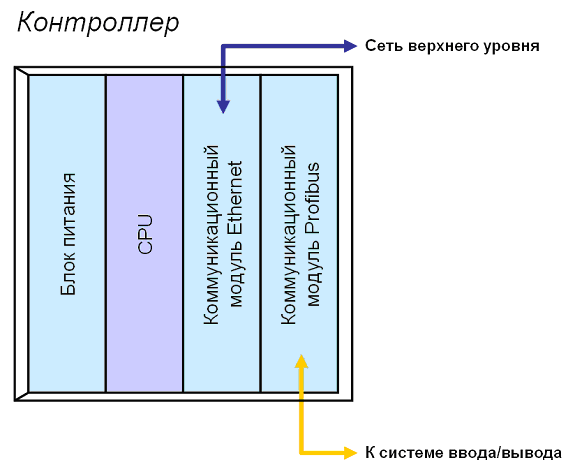 Рис.1. Контроллер РСУ с коммуникациями Profibus и Ethernet.
Иногда на базовую панель, помимо указанных выше, допускается устанавливать модули ввода/вывода полевых сигналов, которые образуют так называемый локальный ввод/вывод. Однако для большинства РСУ (DCS) характерно использование именно распределенного (удаленного) ввода/вывода.
Отличительной особенностью контроллеров, применяемых в DCS, является возможность их резервирования. Резервирование нужно для повышения отказоустойчивости системы и заключается, как правило, в дублировании аппаратных модулей системы.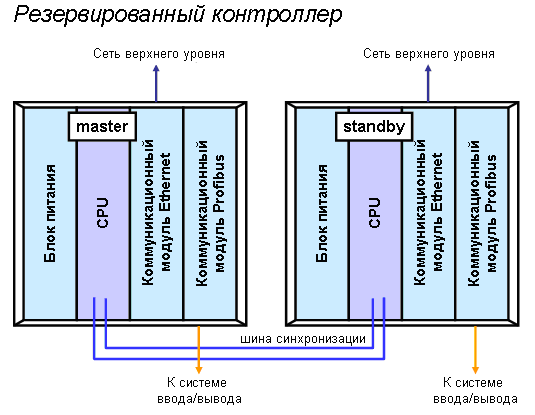 Рис. 2. Резервированный контроллер с коммуникациями Profibus и Ethernet.
Резервируемые модули работают параллельно и выполняют одни и те же функции. При этом один модуль находится в активном состоянии, а другой, являясь резервом, – в режиме “standby”. В случае отказа активного модуля, система автоматически переключается на резерв (это называется “горячий резерв”).
Обратите внимание, контроллеры связаны шиной синхронизации, по которой они мониторят состояние друг друга. Это решение позволяет разнести резервированные модули на значительное расстояние друг от друга (например, расположить их в разных шкафах или даже аппаратных).
Допустим, в данный момент активен левый контроллер, правый – находится в резерве. При этом, даже находясь в резерве, правый контроллер располагает всеми процессными данными и выполняет те же самые математические операции, что и левый. Контроллеры синхронизированы. Предположим, случается отказ левого контроллера, а именно модуля CPU. Управление автоматически передается резервному контроллеру, и теперь он становится главным. Здесь очень большое значение имеют время, которое система тратит на переключение на резерв (обычно меньше 0.5 с) и отсутствие возмущений (удара). Теперь система работает на резерве. Как только инженер заменит отказавший модуль CPU на исправный, система автоматически передаст ему управление и возвратится в исходное состояние.
На рис. 3 изображен резервированный контроллер S7-400H производства Siemens. Данный контроллер входит в состав РСУ Simatic PCS7. Рис. 3. Резервированный контроллер S7-400H. Несколько другое техническое решение показано на примере резервированного контроллера FCP270 производства Foxboro (рис. 4). Данный контроллер входит в состав системы управления Foxboro IA Series.
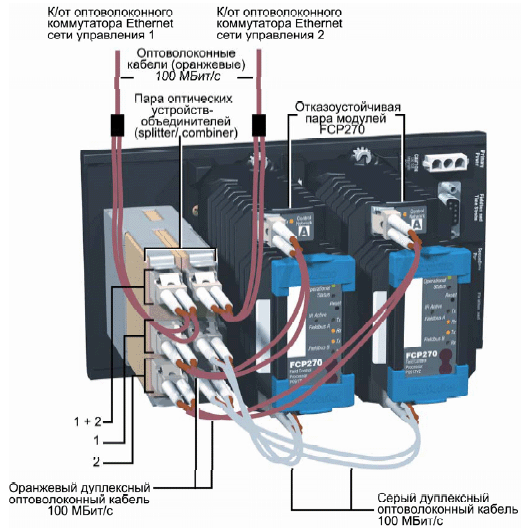 Рис. 4. Резервированный контроллер FCP270.
На базовой панели инсталлировано два процессорных модуля, работающих как резервированная пара, и коммуникационный модуль для сопряжения с оптическими сетями стандарта Ethernet. Взаимодействие между модулями происходит по внутренней шине (тоже резервированной), спрятанной непосредственно в базовую панель (ее не видно на рисунке).
На рисунке ниже показан контроллер AC800M производства ABB (часть РСУ Extended Automation System 800xA). Рис. 5. Контроллер AC800M.
Это не резервированный вариант. Контроллер состоит из двух коммуникационных модулей, одного СPU и одного локального модуля ввода/вывода. Кроме этого, к контроллеру можно подключить до 64 внешних модулей ввода/вывода.
При построении РСУ важно выбрать контроллер, удовлетворяющий всем техническим условиям и требованиям конкретного производства. Подбирая оптимальную конфигурацию, инженеры оперируют определенными техническими характеристиками промышленных контроллеров. Наиболее значимые перечислены ниже:
1. Возможность полного резервирования. Для задач, где отказоустойчивость критична (химия, нефтехимия, металлургия и т.д.), применение резервированных конфигураций вполне оправдано, тогда как для других менее ответственных производств резервирование зачастую оказывается избыточным решением.
2. Количество и тип поддерживаемых коммуникационных интерфейсов. Это определяет гибкость и масштабируемость системы управления в целом. Современные контроллеры способны поддерживать до 10 стандартов передачи данных одновременно, что во многом определяет их универсальность.
3. Быстродействие. Измеряется, как правило, в количестве выполняемых в секунду элементарных операций (до 200 млн.). Иногда быстродействие измеряется количеством обрабатываемых за секунду функциональных блоков (что такое функциональный блок – будет рассказано в следующей статье). Быстродействие зависит от типа центрального процессора (популярные производители - Intel, AMD, Motorola, Texas Instruments и т.д.)
4. Объем оперативной памяти. Во время работы контроллера в его оперативную память загружены запрограммированные пользователем алгоритмы автоматизированного управления, операционная система, библиотечные модули и т.д. Очевидно, чем больше оперативной памяти, тем сложнее и объемнее алгоритмы контроллер может выполнять, тем больше простора для творчества у программиста. Варьируется от 256 килобайт до 32 мегабайт.
5. Надежность. Наработка на отказ до 10-12 лет.
6. Наличие специализированных средств разработки и поддержка различных языков программирования. Очевидно, что существование специализированный среды разработки прикладных программ – это стандарт для современного контроллера АСУ ТП. Для удобства программиста реализуется поддержка сразу нескольких языков как визуального, так и текстового (процедурного) программирования (FBD, SFC, IL, LAD, ST; об этом в следующей статье).
7. Возможность изменения алгоритмов управления на “лету” (online changes), т.е. без остановки работы контроллера. Для большинства контроллеров, применяемых в РСУ, поддержка online changes жизненно необходима, так как позволяет тонко настраивать систему или расширять ее функционал прямо на работающем производстве.
8. Возможность локального ввода/вывода. Как видно из рис. 4 контроллер Foxboro FCP270 рассчитан на работу только с удаленной подсистемой ввода/вывода, подключаемой к нему по оптическим каналам. Simatic S7-400 может спокойно работать как с локальными модулями ввода/вывода (свободные слоты на базовой панели есть), так и удаленными узлами.
9. Вес, габаритные размеры, вид монтажа (на DIN-рейку, на монтажную панель или в стойку 19”). Важно учитывать при проектировании и сборке системных шкафов.
10. Условия эксплуатации (температура, влажность, механические нагрузки). Большинство промышленных контроллеров могут работать в нечеловеческих условиях от 0 до 65 °С и при влажности до 95-98%.
[ http://kazanets.narod.ru/PLC_PART1.htm]Тематики
Синонимы
EN
DE
- speicherprogrammierbare Steuerung, f
FR
Русско-английский словарь нормативно-технической терминологии > программируемый логический контроллер
11 διάβολος
διάβολος, ον (s. διαβολή)① pert. to engagement in slander, slanderous (since Aristoph.; Thuc. 6, 15, 2 as adv.; Herm. Wr. 13, 13b; 22b; Philo, Sacr. Abel. 32 p. 215, 6) Pol 5:2. γυναῖκες 1 Ti 3:11. πρεσβύτιδες Tit 2:3.—2 Ti 3:3.② subst. ὁ δ. one who engages in slander (since X., Ages. 11, 5; Athen. 11, 508e; Esth 7:4; 8:1; pap first Christian; cp. PLond VI, 1923, 9 [IV A.D.] ‘the devil’; Tat. 22, 1), in our lit. as title of the principal transcendent evil being the adversary/devil, already current in the LXX as transl. of הַשָּׂטָן (Job 2:1, but here not ‘as an entity opposed to the divine will’, JGammie, HUCA 56, ’85, 1–19 [s. p. 13]; Zech 3:1f; 1 Ch 21:1; cp. Wsd 2:24; TestNapht 8:4, 6; TestSol, TestJob; JosAs 12:9; GrBar 4:8; ApcSed, ApcMos, AssMos; Just., Mel., P. 67, 477 al.; δ. ὁ ἄρχων τοῦ κόσμου τούτου Hippol., Ref. 6, 33) Mt 4:1, 5, 8, 11; 13:39; 25:41; Lk 4:2f, 6, 13; 8:12; J 13:2; Ac 10:38; Eph 4:27; 6:11; Hb 2:14; Js 4:7. κρίμα … τοῦ διαβόλου the judgment that befalls the devil 1 Ti 3:6; παγὶς τοῦ διαβόλου devil’s trap 3:7; 2 Ti 2:26 (s. IScheftelowitz, Das Schlingen-u. Netzmotiv 1912, 11). ὁ ἀντίδικος ὑμῶν διάβολος your adversary, the devil 1 Pt 5:8; Μιχαὴλ … τῷ δ. διακρινόμενος Jd 9. In Rv 12:9; 20:2 w. ὄφις and σατανᾶς; s. also 2:10; 12:12; 20:10. τοῦ δ. βοτάνη weed of the devil IEph 10:3; ἐνέδραι τοῦ δ. the devil’s ambuscades ITr 8:1; cp. MPol 3:1. Of tortures inflicted by the devil IRo 5:3. τῷ δ. λατρεύειν serve the devil ISm 9:1; ὄργανα τοῦ δ. tools of the devil (of non-Christians) 2 Cl 18:2; πολυπλοκία τοῦ δ. the devil’s cunning Hm 4, 3, 4; tempting to sin (cp. πειράζων τὸν σωτῆρα δ. Orig., C. Cels. 6, 43, 29) m 4, 3, 6; dwells in anger m 5, 1, 3; ἔργα τοῦ δ. m 7:3; doubt described as the devil’s daughter m 9:9; likew. evil desire m 12, 2, 2. The πνεῦμα or basic character of the devil is mentioned m 11:3; it is a πνεῦμα ἐπίγειον m 11:17 (Just., D. 82, 3 ἀκάθαρτον); ἐντολαὶ τοῦ δ. m 12, 4, 6; παλαίειν μετὰ τοῦ δ. Hs 8, 3, 6.—In imagery, those who oppose divine interests or purpose (s. πατήρ 3b) are υἱοὶ δ. Ac 13:10; τέκνα τοῦ δ. 1J 3:10; they are descended ἐκ τοῦ δ. vs. 8; the devil is their father J 8:44. (Cp. οἱ μὲν τοῦ θεοῦ, οἱ δὲ τοῦ διαβόλου Orig., C. Cels. 8, 25, 16.) On the designation of Judas as δ. 6:70 (sim. Peter as σατανᾶς Mk 8:33), cp. 13:2 (cp. εἰσῆλθεν εἰς ἐκεῖνον ὁ σατανᾶς 13:27).—Lit. under δαιμόνιον end, and ἄγγελος end. BNoack, Satanas u. Soteria ’48, 55f.—B. 1487. EDNT. TW.12 συντέλεια
συντέλεια, ας, ἡ (orig. ‘community contribution’ [the basic semantic component relates to someth. that complements someth. already present]; in various senses Pla., Demosth. et al.; ins, pap, LXX; En 106:18; TestSol; TestJob 4:6; Test12Patr; ApcEsdr 2:31 p. 26, 25 Tdf.; Aristobul., in Eus., PE 8, 10, 9[=Denis p. 219 ln. 11f; Holladay Fgm. 2, 55 p. 138]; Jos., Ant. 15, 389; 20, 262; Tat.; Ath., R. 12 p. 61, 31 ‘increment’; Theoph. Ant. 2, 31 [p. 176, 14] ‘posterity’) in our lit. only in a temporal sense: a point of time marking completion of a duration, completion, close, end (Polyb. 1, 3, 3; 1, 4, 3 al.; SIG 695, 13 [II B.C.]; POxy 1270, 42 [II A.D.] ς. τοῦ ἔτους; LXX; Iren. 1, 6, 1 [Harv. I 53, 2]) συντέλεια (τοῦ) αἰῶνος the end of the (present; αἰών 2a) age (TestBenj 11:3; TestJob 4:6) Mt 13:39f, 49; 24:3; 28:20. τοῦ αἰῶνος τούτου of this age 13:40 v.l., 49 v.l. τῶν αἰώνων of the ages (TestLevi 10:2; Did., Gen. 115, 19. Cp. in gnostic speculation ς. καὶ ἐκπύρωσις τοῦ παντός Hippol., Ref. 9, 30, 8) Hb 9:26. τῶν καιρῶν (Da 9:27) Hv 3, 8, 9. τοῦ κόσμου Mt 13:49 D. ἐπʼ ἐσχάτων τῶν ἡμερῶν τῆς συντελείας in the last days of the consummation (of the age) Hs 9, 12, 3 (cp. TestZeb 9:9 καιρὸς συντελείας; ApcEsdr 2:31 τὴν ἡμέραν τῆς συντελείας; cp. ViJer 13).—DELG s.v. τέλος. M-M. TW.13 ἀνίστημι
ἀνίστημι (α-priv., ἵστημι; Hom. +) fut. ἀναστήσω; 1 aor. ἀνέστησα; pf. 3 sg. ἀνέστακεν 1 Km 15:12; 2 aor. ἀνέστην, impv. ἀνάστηθι and ἀνάστα: Eph 5:14, Ac 9:11 v.l.; 11:7 v.l.; 12:7 (cp. TestAbr B 2 p. 106, 2 [Stone p. 60] al.; ParJer 1:1 opp. vs. 10). Ptc. ἀναστάς, W-S. §14, 15, B-D-F §95, 3; fut. mid. ἀναστήσομαι; aor. pass. subj. 3 sg. ἀνασταθῇ 1 Esdr 2:18, n. ptc. ἀνασταθέντα 2 Macc 5:16. Trans. (1–5 below): fut. and 1 aor. act.; intr. (6–11 below): 2 aor. and all mid. forms.① to cause to stand or be erect, raise, erect, raise up trans.,ⓐ of images of deities (oft. of statues SIG 867, 68; 1073, 45; BGU 362 VI, 4 et al.). PtK 2 p. 14, 16 (Ath. 26, 2 [pass.])ⓑ of one lying down, esp. one sick (Artem. 2, 37 p. 139, 23 τοὺς νοσοῦντας ἀνίστησιν; Jos., Ant. 7, 193) δοὺς αὐτῇ χεῖρα ἀνέστησεν αὐτήν he gave her his hand and raised her up Ac 9:41.② to raise up by bringing back to life, raise, raise up, trans.—esp. of the dead raise up, bring to life (Ps.-X., Cyn. 1, 6; Paus. 2, 26, 5 [Asclepius] ἀνίστησι τεθνεῶτας; Ael. Aristid. 45, 29 K. = 8 p. 95 D.: [Sarapis] κειμένους ἀνέστησεν; Palaeph. p. 35, 8; Himerius, Or. [Ecl.] 5, 32; 2 Macc 7:9; Just., D. 46, 7 al.; Orig., C. Cels. 2, 48, 20) J 6:39f, 44, 54; in full ἀ. ἐκ νεκρῶν Ac 13:34 (Herodas 1, 43 ἐκ νερτέρων ἀνίστημί τινα). Esp. of Jesus’ resurrection Ac 2:24, 30 v.l., 32; 3:26 (in wordplay w. ἀ. vs. 22); 13:33f; 17:31. Ign. says of Jesus ἀνέστησεν ἑαυτόν ISm 2 (cp. Theodore Prodr. 5, 88 H. ἂν … ἑαυτὸν αὐτὸς ἐξαναστήσῃ πάλιν).③ to cause to be born, raise up, trans., in the idiom ἀνιστάναι σπέρμα raise up seed=to beget, to procreate σπέρμα τῷ ἀδελφῷ children for his brother Mt 22:24 (Gen 38:8) w. ref. to levirate marriage. Of procreation in gener. σπέρμα ἐν τῷ Ἰσραὴλ ἀνέστησαν the upright have left descendants in Is. GJs 1:3 (s. ἐξανίστημι 2).④ to cause to appear for a role or function, raise up, trans. (Plut., Marcell. 314 [27, 2]; Synes., Ep. 67 p. 210c; EpJer 52; PsSol 17:21; cp. Did., Gen. 139, 7) προφήτην ὑμῖν Ac 3:22 (after Dt 18:15 and in wordplay w. ἀ. Ac. 3:26, s. 2 above). Through election τίνα ἀναστήσουσιν εἰς τὸν τόπον τοῦ Ζαχαρίου GJs 24:4.⑤ to erect a structure, trans. (Jos., Ant. 19, 329 ναούς) Mk 14:58 D.⑥ to stand up from a recumbent or sitting position, stand up, rise to speak, intr. (X., An. 3, 2, 34 ἀναστὰς εἶπε) ἀναστὰς ὁ ἀρχιερεὺς εἶπεν Mt 26:62; cp. Mk 14:57, 60; Lk 17:12 v.l.; out of bed (2 Km 11:2; cp. of God Just., D. 127, 2 οὔτε καθεύδει οὔτε ἀνίσταται) 11:7, 8. Rise and come together for consultation (Mitt-Wilck. II/2, 83, 15f: ἀναστὰς εἰς συμβούλιον καὶ σκεψάμενος μετὰ τῶν …) Ac 26:30. Of one recovered from illness Mk 9:27 or come back to life (Proverbia Aesopi 101 P.) ἀνέστη τὸ κοράσιον Mk 5:42; cp. Lk 8:55. W. inf. foll. to show purpose ἀ. ἀναγνῶναι stand up to read (scripture) Lk 4:16; ἀ. παίζειν 1 Cor 10:7 (Ex 32:6); ἀ. ἄρχειν Ro 15:12; Is 11:10). Short for stand up and go (Sus 34) ἀναστὰς ὁ ἀρχιερεὺς εἰς μέσον he stood up and went before them Mk 14:60; ἀ. ἀπὸ τῆς συναγωγῆς Lk 4:38; ἀ. ἀπὸ τῆς προσευχῆς 22:45. ἀπὸ τοῦ σάκκου GJs 13:2; ἀπο τοῦ ὕπνου 14:2. Of a tree that is bent over and rises again B 12:1.⑦ to come back to life from the dead, rise up, come back from the dead, intr. (Il. 21, 56; Hdt. 3, 62, 4) J 11:23f; 1 Cor 15:51 D (PBrandhuber, D. sekund. LAA b. 1 Cor 15:51: Biblica 18, ’37, 303–33; 418–38); 1 Th 4:16; IRo 4:3; ISm 7:1; B 11:7 (Ps 1:5); 2 Cl 9:1; AcPl BMM verso 38; in full ἐκ νεκρῶν ἀ. (Phlegon: 257 Fgm. 36, 3, 3 Jac. ἀνέστη ὁ Βούπλαγος ἐκ τῶν νεκρῶν) Mk 9:10; 12:25; Qua (apolog.). Lk 16:30 v.l. w. ἀπό. Partic. of Jesus’ resurrection (cp. Hos 6:2 ἐν τῇ ἡμέρᾳ τῇ τρίτῃ ἀναστησόμεθα; -->cp. 1 Cor 15:4) Mt 17:9 v.l.; 20:19 v.l.; Mk 8:31; 9:9f, 31; 10:34; 16:9; Lk 18:33; 24:7, 46; J 20:9; Ac 17:3; Ro 14:9 v.l.; 1 Th 4:14; IRo 6:1; B 15:9. Intr. used for the pass. ὑπὸ τ. θεοῦ ἀναστάντα raised by God (from the dead) Pol 9:2; περὶ τῶν ὑπὸ τοῦ χριστοῦ ἐκ νεκρῶν ἀναστάντων Papias (11:2). Fig., of a spiritual reawakening ἀνάστα ἐκ τ. νεκρῶν arise from the dead Eph 5:14 (cp. Cleopatra ln. 127f and Rtzst., Erlösungsmyst. 6; 135ff).—For lit. s. ἀνάστασις, end.⑧ to show oneself eager to help, arise, intr., to help the poor, of God 1 Cl 15:6 (Ps 11:6).⑨ to come/appear to carry out a function or role, rise up, arise, intr. (1 Macc 2:1; 14:41; Jdth 8:18; 1 Esdr 5:40) of a king Ac 7:18 (Ex 1:8). Of a priest Hb 7:11, 15. Of accusers in court Mt 12:41; Lk 11:32 (s. ἐγείρω 12); Mk 14:57 (cp. the use of קום ‘stand up’ in 11Q Temple 61, 7). Of a questioner who appears in a group of disciples Lk 10:25, cp. Ac 6:9 (s. 2 Ch 20:5). Of an enemy ἀ. ἐπί τινα (Gen 4:8; 2 Ch 20:23; Sus 61 Theod.; ApcEsdr 3:12 p. 27, 23 Tdf. [for ἐπαναστήσονται Mt 10:21; Mk 13:12]) rise up or rebel against someone Mk 3:26.⑩ to initiate an action, intr., gener., w. weakened basic mng., to indicate the beginning of an action (usu. motion) expr. by another verb: rise, set out, get ready (X., Cyr. 5, 2, 14; Gen 13:17; 19:14; 1 Macc 16:5; Tob 8:10; 10:10; Sus 19 Theod.; Jos., Ant. 14, 452; Just., D. 9, 2) ἀναστὰς ἠκολούθησεν αὐτῷ he got ready and followed him Mt 9:9; Lk 5:28; Mk 2:14. ἀ. ἐξῆλθεν 1:35; ἀ. ἀπῆλθεν 7:24; ἀ. ἔρχεται 10:1; ἀ. ἔδραμεν Lk 24:12; ἀναστᾶσα ἐπορεύθη (cp. Gen 43:8) Lk 1:39, cp. 15:18. ἀναστάντες ἐξέβαλον 4:29; ἀναστᾶσα διηκόνει vs. 39; ἀ. ἔστη 6:8; ἀ. ἦλθεν 15:20; ἀνάστηθι καὶ πορεύου get up and go! Ac 8:26, cp. 27. For this ἀναστὰς πορεύθητι (but v.l. ἀνάστα πορ.) 9:11. ἀνάστηθι καὶ εἴσελθε vs. 6. ἀνάστηθι καὶ στρῶσον vs. 34. ἀναστὰς κατάβηθι 10:20 al.⑪ to become a standing structure, rise, go up, intr. (Mel., P. 36 ἔργον) Mk 13:2 v.l.—Dalman, Worte 18f. B. 668. DELG s.v. ἵστημι. M-M. TW. Sv.14 ἀπό
ἀπό (Hom.+) prep. w. gen. (see the lit. on ἀνά, beg., also for ἀπό: KDieterich, IndogF 24, 1909, 93–158; LfgrE s.v.). Basic sense ‘separation from’ someone or someth., fr. which the other uses have developed. In the NT it has encroached on the domain of Att. ἐκ, ὑπό, παρά, and the gen. of separation; s. Mlt. 102; 246; Mlt-Turner 258f.① a marker to indicate separation from a place, whether person or thing, from, away fromⓐ w. all verbs denoting motion, esp. those compounded w. ἀπό: ἀπάγεσθαι, ἀπαλλάσσεσθαι, ἀπελαύνειν, ἀπέρχεσθαι, ἀπολύεσθαι, ἀποπλανᾶσθαι, ἀποστέλλειν, ἀποφεύγειν, ἀποχωρεῖν, ἀποχωρίζεσθαι; but also w. ἀνίστασθαι, διαστῆναι, διέρχεσθαι, ἐκδημεῖν, ἐκκινεῖν, ἐκπλεῖν, ἐκπορεύεσθαι, ἐξέρχεσθαι, ἐξωθεῖν, ἐπιδιδόναι, μεταβαίνειν, μετατίθεσθαι, νοσφίζειν, παραγίνεσθαι, πλανᾶσθαι, πορεύεσθαι, ὑπάγειν, ὑποστρέφειν, φεύγειν; s. the entries in question.ⓑ w. all verbs expressing the idea of separation ἐκβάλλειν τὸ κάρφος ἀ. τοῦ ὀφθαλμοῦ remove the splinter fr. the eye Mt 7:4 v.l. (for ἐκ). ἐξέβαλον ἀπὸ τῆς πήρας αὐτῶν δῶρα they set forth gifts out of their travel bags GJs 21:3. ἀπολύεσθαι ἀ. ἀνδρός be divorced fr. her husband Lk 16:18, cp. Ac 15:33. ἀποκυλίειν, ἀπολαμβάνεσθαι, ἀποστρέφειν, ἐπιστρέφεσθαι, ἐπανάγειν, αἴρειν, ἀφαιρεῖν, ἀπολέσθαι, μερίζειν et al., s. the pertinent entries. So also κενὸς ἀ. τινος Hs 9, 19, 2. ἔρημος ἀ. τινος (Jer 51:2) 2 Cl 2:3. W. verbs which express the concept of separation in the wider sense, like loose, free, acquit et al. ἀπορφανίζειν, ἀποσπᾶν, διεγείρεσθαι, δικαιοῦν, ἐκδικοῦν, ἐλευθεροῦν, λούειν, λύειν, λυτροῦν, ῥαντίζειν, σαλεύειν, στέλλειν, σῴζειν, φθείρειν, s. the entries; hence also ἀθῷος (Sus 46 Theod. v.l.) Mt 27:24. καθαρὸς ἀ. τινος (Tob 3:14; but s. Dssm. NB 24 [BS 196; 216]) Ac 20:26; cp. Kuhring 54.ⓒ verbs meaning be on guard, be ashamed, etc., take ἀπό to express the occasion or object of their caution, shame, or fear; so αἰσχύνεσθαι, βλέπειν, μετανοεῖν, προσέχειν, φοβεῖσθαι, φυλάσσειν, φυλάσσεσθαι; s. 5 below.ⓓ w. verbs of concealing, hiding, hindering, the pers. from whom someth. is concealed is found w. ἀπό; so κρύπτειν τι ἀπό τινος, παρακαλύπτειν τι ἀπό τινος, κωλύειν τι ἀπό τινος; s. the entries.ⓔ in pregnant constr. like ἀνάθεμα εἶναι ἀ. τοῦ Χριστοῦ be separated fr. Christ by a curse Ro 9:3. μετανοεῖν ἀ. τ. κακίας (Jer 8:6) Ac 8:22. ἀποθνῄσκειν ἀ. τινος through death become free from Col 2:20. φθείρεσθαι ἀ. τ. ἁπλότητος be ruinously diverted from wholehearted commitment 2 Cor 11:3. Cp. Hs 6, 2, 4.ⓕ as a substitute for the partitive gen. (Hdt. 6, 27, 2; Thu. 7, 87, 6; PPetr III, 11, 20; PIand 8, 6; Kuhring 20; Rossberg 22; Johannessohn, Präp. 17) τίνα ἀ. τῶν δύο; Mt 27:21, cp. Lk 9:38; 19:39 (like PTebt 299, 13; 1 Macc 1:13; 3:24; Sir 6:6; 46:8). τὰ ἀ. τοῦ πλοίου pieces of the ship Ac 27:44. ἐκχεῶ ἀ. τοῦ πνεύματός μου Ac 2:17f (Jo 3:1f). λαμβάνειν ἀ. τ. καρπῶν get a share of the vintage Mk 12:2 (cp. Just., A I, 65, 5 μεταλαβεῖν ἀπὸ τοῦ … ἄρτου).—Of foods (as in Da 1:13, 4:33a; 2 Macc 7:1) ἐσθίειν ἀ. τ. ψιχίων eat some of the crumbs Mt 15:27; Mk 7:28. χορτάζεσθαι ἀ. τινος eat one’s fill of someth. Lk 16:21. αἴρειν ἀ. τῶν ἰχθύων pick up the remnants of the fish Mk 6:43. ἐνέγκατε ἀ. τ. ὀψαρίων bring some of the fish J 21:10 (the only instance of this usage in J; s. M-EBoismard, Le chapitre 21 de Saint Jean: RB 54 [’47] 492).—Of drink (cp. Sir 26:12) πίνειν ἀπὸ τ. γενήματος τῆς ἀμπέλου drink the product of the vine Lk 22:18.② to indicate the point from which someth. begins, whether lit. or fig.ⓐ of place from, out from (Just., D. 86, 1 ἀπὸ τῆς πέτρας ὕδωρ ἀναβλύσαν ‘gushing out of the rock’) σημεῖον ἀ. τ. οὐρανοῦ a sign fr. heaven Mk 8:11. ἀ. πόλεως εἰς πόλιν from one city to another Mt 23:34. ἀπʼ ἄκρων οὐρανῶν ἕως ἄκρων αὐτῶν (Dt 30:4; Ps 18:7) from one end of heaven to the other 24:31, cp. Mk 13:27. ἀπʼ ἄνωθεν ἕως κάτω from top to bottom Mt 27:51. ἀρξάμενοι ἀ. Ἰερουσαλήμ beginning in Jerusalem Lk 24:47 (s. also Lk 23:5; Ac 1:22; 10:37). ἀφʼ ὑμῶν ἐξήχηται ὁ λόγος τ. κυρίου the word of the Lord has gone out from you and sounded forth 1 Th 1:8. ἀπὸ βορρᾶ, ἀπὸ νότου in the north, in the south (PCairGoodsp 6, 5 [129 B.C.] ἐν τῷ ἀπὸ νότου πεδίῳ; Mitt-Wilck. I/2, 11A col. 1, 12f [123 B.C.] τὸ ἀπὸ νότου τῆς πόλεως χῶμα; ln. 7 ἀπὸ βορρᾶ τῆς πόλεως; 70, 16 al.; Josh 18:5; 19:34; 1 Km 14:5) Rv 21:13.ⓑ of time from … (on), since (POxy 523, 4; Mel., HE 4, 26, 8; s. Kuhring 54ff).α. ἀ. τῶν ἡμερῶν Ἰωάννου from the days of John Mt 11:12. ἀ. τῆς ὥρας ἐκείνης 9:22. ἀπʼ ἐκείνης τ. ἡμέρας (Jos., Bell. 4, 318, Ant. 7, 382) Mt 22:46; J 11:53. ἔτη ἑπτὰ ἀ. τῆς παρθενίας αὐτῆς for seven years fr. the time she was a virgin Lk 2:36. ἀ. ἐτῶν δώδεκα for 12 years 8:43. ἀ. τρίτης ὥρας τῆς νυκτός Ac 23:23. ἀ. κτίσεως κόσμου Ro 1:20. ἀ. πέρυσι since last year, a year ago 2 Cor 8:10; 9:2.—ἀπʼ αἰῶνος, ἀπʼ ἀρχῆς, ἀπʼ ἄρτι (also ἀπαρτί and ἄρτι), ἀπὸ καταβολῆς κόσμου, ἀπὸ τότε, ἀπὸ τοῦ νῦν; s. the pertinent entries.β. w. the limits defined, forward and backward: ἀπὸ … ἕως (Jos., Ant. 6, 364) Mt 27:45. ἀπὸ … ἄχρι Phil 1:5. ἀπὸ … μέχρι Ac 10:30; Ro 5:14; 15:19.γ. ἀφʼ ἧς (sc. ὥρας or ἡμέρας, which is found Col 1:6, 9; but ἀφʼ ἧς became a fixed formula: ParJer 7:28; Plut., Pelop. [285] 15, 5; s. B-D-F §241, 2) since Lk 7:45 (Renehan ’75, 36f); Ac 24:11; 2 Pt 3:4 (cp. X., Hell. 4, 6, 6; 1 Macc 1:11). ἀφʼ οὗ (sc.—as in X., Cyr. 1, 2, 13—χρόνου; Att. ins in Meisterhans.3-Schw. and s. Witkowski, index 163; ἀφʼ οὗ is also a formula) since, when once (X., Symp. 4, 62; Demetr.: 722 Fgm. 1, 16 Jac.; Lucian, Dial. Mar. 15, 1; Ex 5:23 GrBar 3:6) Lk 13:25; 24:21; Rv 16:18 (cp. Da 12:1; 1 Macc 9:29; 16:24; 2 Macc 1:7; TestAbr B 13 p. 117, 23; GrBar; Jos., Ant. 4, 78). τρία ἔτη ἀφʼ οὗ (cp. Tob 5:35 S) Lk 13:7. ἀφότε s. ὅτε 1aγ end.ⓒ the beg. of a series from … (on).α. ἀρξάμενος ἀ. Μωϋσέως καὶ ἀ. πάντων τ. προφητῶν beginning w. Moses and all the prophets Lk 24:27. ἕβδομος ἀ. Ἀδάμ Jd 14 (Diod S 1, 50, 3 ὄγδοος ὁ ἀπὸ τοῦ πατρός [ancestor]; Appian, Mithrid. 9 §29 τὸν ἕκτον ἀπὸ τοῦ πρώτου Μιθριδάτην; Arrian, Anab. 7, 12, 4; Diog. L. 3, 1: Plato in the line of descent was ἕκτος ἀπὸ Σόλωνος; Biogr. p. 31: Homer δέκατος ἀπὸ Μουσαίου). ἀ. διετοῦς καὶ κατωτέρω Mt 2:16 (cp. Num 1:20; 2 Esdr 3:8).β. w. both beg. and end given ἀπὸ … ἕως (Sir 18:26; 1 Macc 9:13) Mt 1:17; 23:35; Ac 8:10. Sim., ἀ. δόξης εἰς δόξαν fr. glory to glory 2 Cor 3:18.③ to indicate origin or source, fromⓐ lit., with verbs of motionα. down from πίπτειν ἀ. τραπέζης Mt 15:27. καθεῖλεν δυνάστας ἀ. θρόνων God has dethroned rulers Lk 1:52.β. from ἔρχεσθαι ἀ. θεοῦ J 3:2; cp. 13:3; 16:30. παραγίνεται ἀ. τῆς Γαλιλαίας Mt 3:13; ἀ. ἀνατολῶν ἥξουσιν 8:11 (Is 49:12; 59:19); ἀ. τοῦ ἱεροῦ ἐπορεύετο 24:1; ἀ. Παμφυλίας Ac 15:38. ἐγείρεσθαι ἀ. τ. νεκρῶν be raised from the dead Mt 14:2.ⓑ lit., to indicate someone’s local origin from (Hom. et al.; Soph., El. 701; Hdt. 8, 114; ins [RevArch 4 sér. IV 1904 p. 9 ἀπὸ Θεσσαλονίκης]; pap [HBraunert, Binnenwanderung ’64, 384, s.v.; PFlor 14, 2; 15, 5; 17, 4; 22, 13 al.]; Judg 12:8; 13:2; 17:1 [all three acc. to B]; 2 Km 23:20 al.; Jos., Bell. 3, 422, Vi. 217; Just., A I, 1 τῶν ἀπὸ Φλαουί̈ας Νέας πόλεως; s. B-D-F §209, 3; Rob. 578) ἦν ἀ. Βηθσαϊδά he was from B. J 1:44; cp. 12:21. ὄχλοι ἀ. τῆς Γαλιλαίας crowds fr. Galilee Mt 4:25. ἄνδρες ἀ. παντὸς ἔθνους Ac 2:5. ἀνὴρ ἀ. τοῦ ὄχλου a man fr. the crowd Lk 9:38. ὁ προφήτης ὁ ἀ. Ναζαρέθ Mt 21:11. οἱ ἀ. Κιλικίας the Cilicians Ac 6:9. οἱ ἀδελφοὶ οἱ ἀ. Ἰόππης 10:23 (Musaeus 153 παρθένος ἀπʼ Ἀρκαδίας; Just., A I, 58, 1 Μακρίωνα … τὸν ἀπὸ Πόντου). οἱ ἀ. Θεσσαλονίκης Ἰουδαῖοι 17:13. οἱ ἀ. τῆς Ἰταλίας the Italians Hb 13:24, who could be inside as well as outside Italy (cp. Dssm., Her. 33, 1898, 344, LO 167, 1 [LAE 200, 3]; Mlt. 237; B-D-F §437).—Rather denoting close association οἱ ἀ. τῆς ἐκκλησίας members of the church Ac 12:1; likew. 15:5 (cp. Plut., Cato Min. 4, 2 οἱ ἀπὸ τ. στοᾶς φιλόσοφοι; Ps.-Demetr. c. 68 οἱ ἀπʼ αὐτοῦ=his [Isocrates’] pupils; Synes., Ep. 4 p. 162b; 66 p. 206c; PTebt 33, 3 [112 B.C.], Ῥωμαῖος τῶν ἀπὸ συγκλήτου; Ar. 15, 1 Χριστιανοὶ γενεαλογοῦνται ἀπὸ … Ἰησοῦ Χριστοῦ; Ath.).—To indicate origin in the sense of material fr. which someth. is made (Hdt. 7, 65; Theocr. 15, 117; IPriene 117, 72 ἀπὸ χρυσοῦ; 1 Esdr 8:56; Sir 43:20 v.l.) ἔνδυμα ἀ. τριχῶν καμήλου clothing made of camel’s hair Mt 3:4.ⓒ fig., w. verbs of asking, desiring, to denote the pers. of or from whom a thing is asked (Ar. 11, 3): δανίσασθαι ἀπό τινος borrow fr. someone Mt 5:42. ἐκζητεῖν ἀ. τῆς γενεᾶς ταύτης Lk 11:51. ἀπαιτεῖν τι ἀπό τινος Lk 12:20. ζητεῖν τι ἀπό τινος 1 Th 2:6. λαμβάνειν τι ἀπό τινος Mt 17:25f; 3J 7.ⓓ fig., w. verbs of perceiving, to indicate source of the perception (Lysias, Andoc. 6; Ps.-Aristot., De Mundo 6, 399b ἀπʼ αὐτῶν τῶν ἔργων θεωρεῖται ὁ θεός; Appian, Liby. 104 §493 ἀπὸ τῆς σφραγῖδος=[recognize a corpse] by the seal-ring; Demetr.: 722 Fgm. 2, 1 στοχάζεσθαι ἀπὸ τῶν ὀνομάτων; Just., D. 60, 1 τοῦτο νοοῦμεν ἀπὸ τῶν λόγων τῶν προλελεγμένων; 100, 2 ἀπὸ τῶν γραφῶν): ἀ. τῶν καρπῶν αὐτῶν ἐπιγνώσεσθε αὐτούς by their fruits you will know them Mt 7:16, 20. μανθάνειν παραβολὴν ἀ. τῆς συκῆς learn a lesson from the fig tree 24:32; Mk 13:28. ἀπὸ τῶν σπερμάτων μὴ ποιεῖσθαι τὴν παραβολήν if we are not to derive our parable solely from reference to seeds (cp. 1 Cor 15:37) AcPlCor 2:28.—Also μανθάνειν τι ἀπό τινος learn someth. fr. someone Gal 3:2; Col 1:7.ⓔ γράψαι ἀφʼ ὧν ἠδυνήθην, lit., write from what I was able, i.e. as well as I could B 21:9 (cp. Tat. 12, 5 οὐκ ἀπὸ γλώττης οὐδὲ ἀπὸ τῶν εἰκότων οὐδὲ ἀπʼ ἐννοιῶν etc.).④ to indicate distance fr. a point, away from, for μακρὰν ἀ. τινος far fr. someone, ἀπὸ μακρόθεν fr. a great distance s. μακράν, μακρόθεν. ἀπέχειν ἀπό τινος s. ἀπέχω 4. W. detailed measurements (corresp. to Lat. ‘a’, s. B-D-F §161, 1; Rob. 575; WSchulze, Graeca Latina 1901, 15ff; Hdb. on J 11:18; Appian, Bell. Civ. 3, 12 §42; CB I/2, 390 no. 248) ἦν Βηθανία ἐγγὺς τῶν Ἱεροσολύμων ὡς ἀπὸ σταδίων δεκατέντε Bethany was near Jerusalem, about 15 stades (less than 3 km.) away J 11:18. ὡς ἀπὸ πηχῶν διακοσίων about 200 cubits (c. 90 meters) 21:8. ἀπὸ σταδίων χιλίων ἑξακοσίων about 1600 stades (c. 320 km.) Rv 14:20; cp. Hv 4, 1, 5 (for other examples of this usage, s. Rydbeck 68).—Hebraistically ἀπὸ προσώπου τινός (Gen 16:6; Jer 4:26; Jdth 2:14; Sir 21:2; 1 Macc 5:34; En 103:4; Just., A I, 37, 1 ἀπὸ προσώπου τοῦ πατρὸς ἐλέχθησαν διὰ Ἠσαίου … οἵδε οἱ λόγοι ‘in the name of the father … through Isaiah’; 38, 1 al.)=מִפְּנֵי פ׳ ( away) from the presence of someone 2 Th 1:9 (Is 2:10, 19, 21); Rv 12:14 (B-D-F §140; 217, 1; Mlt-H. 466).⑤ to indicate cause, means, or outcomeⓐ gener., to show the reason for someth. because of, as a result of, for (numerous ref. in FBleek on Hb 5:7; PFay 111, 4; POxy 3314, 7 [from falling off a horse]; Jdth 2:20; 4 [6] Esdr [POxy 1010]; AscIs 3:13; Jos., Ant. 9, 56) οὐκ ἠδύνατο ἀ. τοῦ ὄχλου he could not because of the crowd Lk 19:3; cp. Mk 2:4 D. οὐκ ἐνέβλεπον ἀπὸ τῆς δόξης τοῦ φωτός I could not see because of the brilliance of the light Ac 22:11. ἀ. τοῦ πλήθους τ. ἰχθύων J 21:6 (M-EBoismard, ad loc.: s. 1f end). ἀ. τοῦ ὕδατος for the water Hs 8, 2, 8. ἀ. τῆς θλίψεως because of the persecution Ac 11:19. οὐαὶ τῷ κόσμῳ ἀ. τ. σκανδάλων Mt 18:7 (s. B-D-F §176, 1; Mlt. 246). εἰσακουσθεὶς ἀ. τῆς εὐλαβείας heard because of his piety Hb 5:7 (but the text may be corrupt; at any rate it is obscure and variously interpr.; besides the comm. s. KRomaniuk, Die Gottesfürchtigen im NT: Aegyptus 44, ’64, 84; B-D-F §211; Rob. 580; s. on εὐλάβεια).ⓑ to indicate means with the help of, with (Hdt. et al.; Ael. Aristid. 37, 23 K.=2 p. 25 D.; PGM 4, 2128f σφράγιζε ἀπὸ ῥύπου=seal with dirt; En 97:8) γεμίσαι τὴν κοιλίαν ἀ. τ. κερατίων fill one’s stomach w. the husks Lk 15:16 v.l. (s. ἐκ 4aζ; cp. Pr 18:20). οἱ πλουτήσαντες ἀπʼ αὐτῆς Rv 18:15 (cp. Sir 11:18).ⓒ to indicate motive or reason for, from, with (Appian, Bell. Civ. 5, 13 §52 ἀπʼ εὐνοίας=with goodwill; 1 Macc 6:10; pap exx. in Kuhring 35) κοιμᾶσθαι ἀ. τῆς λύπης sleep from sorrow Lk 22:45. ἀ. τῆς χαρᾶς αὐτοῦ Mt 13:44; cp. Lk 24:41; Ac 12:14. ἀ. τοῦ φόβου κράζειν Mt 14:26, ἀ. φόβου καὶ προσδοκίας with fear and expectation Lk 21:26. Hence verbs of fearing, etc., take ἀ. to show the cause of the fear (s. above 1c) μὴ φοβεῖσθαι ἀ. τ. ἀποκτεννόντων τὸ σῶμα not be afraid of those who kill only the body Mt 10:28; Lk 12:4 (cp. Jdth 5:23; 1 Macc 2:62; 3:22; 8:12; En 106:4).ⓓ to indicate the originator of the action denoted by the verb from (Trag., Hdt. et al.) ἀ. σοῦ σημεῖον ἰδεῖν Mt 12:38. γινώσκειν ἀπό τινος learn fr. someone Mk 15:45. ἀκούειν ἀ. τοῦ στόματός τινος hear fr. someone’s mouth, i.e. fr. him personally Lk 22:71 (Dionys. Hal. 3, 8 ἀ. στόματος ἤκουσεν); cp. Ac 9:13; 1J 1:5. τὴν ἀ. σοῦ ἐπαγγελίαν a promise given by you Ac 23:21 (cp. Ath. 2, 3 ταῖς ἀπὸ τῶν κατηγόρων αἰτίαις ‘the charges made by the accusers’). ἀφʼ ἑνὸς ἐγενήθησαν Hb 11:12. Prob. παραλαμβάνειν ἀ. τοῦ κυρίου 1 Cor 11:23 is to be understood in the same way: Paul is convinced that he is taught by the Lord himself (for direct teaching s. EBröse, Die Präp. ἀπό 1 Cor 11:23: StKr 71, 1898, 351–60; Dssm.; BWeiss; Ltzm.; H-DWendland. But for indirect communication: Zahn et al.). παραλαβὼν ἀπὸ τῶν θυγατέρων Φιλίππου, ὅτι Papias (11:2); opp. παρειληφέναι ὑπὸ τῶν θ. Φ. (2:9).—Of the more remote cause ἀπʼ ἀνθρώπων from human beings (as opposed to transcendent revelation; w. διʼ ἀνθρώπου; cp. Artem. 1, 73 p. 66, 11 ἀπὸ γυναικῶν ἢ διὰ γυναικῶν; 2, 36 p. 135, 26) Gal 1:1. ἀ. κυρίου πνεύματος fr. the Lord, who is the Spirit 2 Cor 3:18. ἔχειν τι ἀπό τινος have (received) someth. fr. someone 1 Cor 6:19; 1 Ti 3:7; 1J 2:20; 4:21.—In salutation formulas εἰρήνη ἀ. θεοῦ πατρός ἡμῶν peace that comes from God, our father Ro 1:7; 1 Cor 1:3; 2 Cor 1:2; Gal 1:3; Eph 1:2; cp. 6:23; Phil 1:2; Col 1:2; 1 Th 1:1 v.l.; 2 Th 1:2; 1 Ti 1:2; 2 Ti 1:2; Tit 1:4; Phlm 3. σοφία ἀ. θεοῦ wisdom that comes fr. God 1 Cor 1:30. ἔπαινος ἀ. θεοῦ praise fr. God 4:5. καὶ τοῦτο ἀ. θεοῦ and that brought about by God Phil 1:28. The expr. εἰρήνη ἀπὸ ‘ὁ ὢν καὶ ὁ ἦν καὶ ὁ ἐρχόμενος’ Rv 1:4 is quite extraordinary. It may be an interpretation of the name Yahweh already current, or an attempt to show reverence for the divine name by preserving it unchanged, or simply one more of the grammatical peculiarities so frequent in Rv (Meyer6-Bousset 1906, 159ff; Mlt. 9, note 1; cp. PParis 51, 33 ἀπὸ ἀπηλιότης; Mussies 93f, 328).ⓔ to indicate responsible agents for someth., from, ofα. the self, st. Gk. usage (Thu. 5, 60, 1; X., Mem. 2, 10, 3; Andoc., Orat. 2, 4 οὗτοι οὐκ ἀφʼ αὑτῶν ταῦτα πράττουσιν; Diod S 17, 56; Num 16:28; 4 Macc 11:3; En 98:4; TestAbr A 15 p. 95, 26 [Stone p. 38]; 18 p. 101, 6 [Stone p. 50]; Just., A I, 43, 8) the expr. ἀφʼ ἑαυτοῦ (pl. ἀφʼ ἑαυτῶν) of himself and ἀπʼ ἐμαυτοῦ of myself are common Lk 12:57; 21:30; 2 Cor 3:5, esp. so in J: 5:19, 30; 8:28; 10:18; 15:4.—7:17f; 11:51; 14:10; 16:13; 18:34. So also ἀπʼ ἐμαυτοῦ οὐκ ἐλήλυθα I did not come of myself (opp. the Father sent me) 7:28; 8:42.β. fr. others. W. verbs in the pass. voice or pass. mng. ὑπό is somet. replaced by ἀπό (in isolated cases in older Gk. e.g. Thu. 1, 17 et al. [Kühner-G. II/1 p. 457f]; freq. in later Gk.: Polyb. 1, 79, 14; Hero I 152, 6; 388, 11; Nicol. Dam.: 90 Fgm. 130, 130 Jac.; IG XII/5, 29, 1; SIG 820, 9; PLond III, 1173, 12 p. 208; BGU 1185, 26; PFlor 150, 6 ἀ. τῶν μυῶν κατεσθιόμενα; PGM 4, 256; Kuhring 36f; 1 Macc 15:17; Sir 16:4; ParJer 1:1 ᾐχμαλωτεύθησαν … ἀπὸ τοῦ βασιλέως; Philo, Leg. All. 3, 62; Just., A I, 68, 6 ἐπιστολὴν … γραφεῖσάν μοι ἀπὸ Σερήνου, D. 121, 3 ἀπὸ παντὸς [γένους] μετάνοιαν πεποιῆσθαι. See B-D-F §210; Rob. 820; GHatzidakis, Einl. in d. neugriech. Gramm. 1892, 211; AJannaris, An Histor. Gk. Grammar 1897, §1507). Yet just at this point the textual tradition varies considerably, and the choice of prep. is prob. at times influenced by the wish to express special nuances of mng. Lk 8:29b v.l. (ὑπό text); 43b (ὑπό v.l.); 10:22 D; ἀποδεδειγμένος ἀ. τ. θεοῦ attested by God Ac 2:22. ἐπικληθεὶς Βαρναβᾶς ἀ. (ὑπό v.l.) τ. ἀποστόλων named B. by the apostles 4:36. κατενεχθεὶς ἀ. τοῦ ὕπνου overcome by sleep 20:9. ἀθετούμενος ἀπὸ τῶν παραχαρασσόντων τὰ λόγια αὐτοῦ inasmuch as (Jesus) is being rejected by those who falsify his words AcPlCor 2:3. νεκροῦ βληθέντος ἀπὸ τῶν υἱῶν Ἰσραὴλ ἐπʼ αὐτά when a corpse was cast upon them (the bones of Elisha) 2:32. In such cases ἀπό freq. denotes the one who indirectly originates an action, and can be transl. at the hands of, by command of: πολλὰ παθεῖν ἀ. τ. πρεσβυτέρων suffer much at the hands of the elders Mt 16:21; cp. Lk 9:22; 17:25, where the emphasis is to be placed on παθεῖν, not on ἀποδοκιμασθῆναι. In ἀ. θεοῦ πειράζομαι the thought is that the temptation is caused by God, though not actually carried out by God Js 1:13. ἡτοιμασμένος ἀ. τοῦ θεοῦ prepared by God’s command, not by God in person Rv 12:6.⑥ In a few expr. ἀπό helps to take the place of an adverb. ἀπὸ μέρους, s. μέρος 1c.—ἡμέρᾳ ἀφʼ ἡμέρας day by day GJs 12:3.—ἀπὸ μιᾶς (acc. to Wlh., Einl.2 26, an Aramaism, min ḥădā˒=at once [s. MBlack, An Aramaic Approach3, ’67, 113]; but this does not explain the fem. gender, found also in the formulaic ἐπὶ μιᾶς Maxim. Tyr. 6, 3f En 99:9 [s. SAalen, NTS 13, ’67, 3] and in Mod. Gk. μὲ μιᾶς at once [Thumb §162 note 2]. PSI 286, 22 uses ἀπὸ μιᾶς of a payment made ‘at once’; on the phrase s. New Docs 2, 189. Orig. γνώμης might have been a part of the expr. [Philo, Spec. Leg. 3, 73], or ὁρμῆς [Thu. 7, 71, 6], or γλώσσης [Cass. Dio 44, 36, 2], or φωνῆς [Herodian 1, 4, 8]; cp. ἀπὸ μιᾶς φωνῆς Plut., Mor. 502d of an echo; s. B-D-F §241, 6) unanimously, alike, in concert Lk 14:18. Sim. ἀπὸ τ. καρδιῶν fr. (your) hearts, sincerely Mt 18:35.—Himerius, Or. 39 [=Or. 5], 6 has as a formula διὰ μιᾶς, probably = continuously, uninterruptedly, Or. 44 [=Or. 8], 2 fuller διὰ μιᾶς τῆς σπουδῆς=with one and the same, or with quite similar zeal.—M-M.15 ὄχλος
ὄχλος, ου, ὁ (Pind., Hdt.+; ins, pap, LXX; TestJob 24:10; TestJud 7:1; ApcrEzk [Epiph. 70, 8]; EpArist, Philo, Joseph.; Ath. 1, 4; on relation of ὄχλος to ὀχλέω s. MMeier-Brüjger, Glotta 71, ’93, 28 [basic idea: a ‘pile’ that requires a ‘heap’ of workers, but s. DELG and Frisk s.v. ὄχλος]; loanw. in rabb.—In the NT only in the gospels [in Mk most freq. in sg. in contrast to Mt and Lk, s. RBorger, TRu 52, ’87, 28], Ac, and Rv).① a relatively large number of people gathered together, crowdⓐ a casual gathering of large numbers of people without reference to classification crowd, throng Mt 9:23, 25; 15:35; Mk 2:4 (s. DDaube, ET 50, ’38, 138f); 3:9; Lk 5:1; J 5:13; 6:22; Ac 14:14; 21:34f and oft.; AcPl Ha 5, 11. τὶς ἐκ τοῦ ὄχλου someone from the crowd Lk 12:13; cp. 11:27. ἀνὴρ ἀπὸ τοῦ ὄχ. 9:38. τινὲς τῶν Φαρισαίων ἀπὸ τοῦ ὄχλου some of the Pharisees in the crowd 19:39. ἀπὸ τοῦ ὄχλου away from the crowd Mk 7:17, 33. οὐκ ἠδύνατο ἀπὸ τοῦ ὄχλου he could not because of the crowd Lk 19:3 (s. ἀπό 5a). οὐ μετὰ ὄχλου without a crowd (present) Ac 24:18 (cp. vs. 12). This is equivalent in mng. to ἄτερ ὄχλου (s. ἄτερ) when there was no crowd present Lk 22:6 (s. WLarfeld, Die ntl. Evangelien nach ihrer Eigenart 1925, 190), unless ὄχ. means disturbance (Hdt.+) here (so Goodsp.). ἐν τῷ θεάτρῳ μετὰ τοῦ ὄχλου AcPl Ha 1, 24.—πᾶς ὁ ὄχλος (Aelian, VH 2, 6) the whole crowd, all the people Mt 13:2b; Mk 2:13; 4:1b; 9:15; Lk 13:17; Ac 21:27; MPol 9:2; 16:1. Also ὅλος ὁ ὄχλος AcPl Ha 4, 35.—πολὺς ὄχ. (Jos., Vi. 133; 277) Mt 14:14; Mk 6:34. ὄχ. πολύς (Cebes 1, 2; IG IV2/1, 123, 25; several times LXX) Mt 20:29; Mk 5:21, 24; 9:14; Lk 8:4; J 6:2. ὁ πολὺς ὄχ. Mk 12:37. ὁ ὄχ. πολύς J 12:9, 12.—ὄχ. ἱκανός a considerable throng Mk 10:46; Lk 7:12; Ac 11:24, 26; cp. 19:26. ὄχ. τοσοῦτος Mt 15:33. ὁ πλεῖστος ὄχ. the great throng or greater part of the crowd 21:8 (the verb in the pl. with a collective noun as Memnon [I B.C./I A.D.]: 434 Fgm. 1, 28, 6 Jac. εἷλον … ἡ Ῥωμαίων δύναμις. Cp. B-D-F §134, 1). Cp. Mk 4:1a. τὸ πλεῖον μέρος τοῦ ὄχ. the greater part of the throng Hs 8, 1, 16; τὸ πλῆθος τοῦ ὄχ. 9, 4, 4; αἱ μυριάδες τοῦ ὄχ. the crowd in myriads Lk 12:1.—The pl. is common in Mt, Lk, and Ac (acc. to later usage: X., Mem. 3, 7, 5; Dionys. Hal.; Ael. Aristid. 34, 47 K.=50 p. 564 D.; Jos., Ant. 6, 25 al. Schwyzer II 43; cp. Mussies 71 and 85) οἱ ὄχλοι the crowds, the people (the latter plainly Posidon.: 87 Fgm. 36, 51 Jac. συλλαλήσαντες αὑτοῖς οἱ ὄχ.; Diod S 1, 36, 10; 1, 83, 8 ἐν ταῖς τῶν ὄχλων ψυχαῖς; 1, 72, 5 μυριάδες τῶν ὄχλων; 4, 42, 3; 14, 7, 2 ὄχλων πλῆθος=a crowd of people; 36, 15, 2 οἱ κατὰ τὴν πόλιν ὄχλοι=the people in the city; Artem. 1, 51 p. 59, 13 Pack; Vi. Aesopi G 124 P; Ps.-Aeschines, Ep. 10, 4 ἡμεῖς ἅμα τ. ἄλλοις ὄχλοις; Ps.-Demetr., Form. Ep. p. 7, 11; OGI 383, 151 [I B.C.]; Jos., Ant. 9, 3) Mt 5:1; 7:28; 9:8, 33, 36 and oft. Lk 3:7, 10; 4:42; 5:3; 8:42, 45 and oft. Ac 8:6; 13:45; 14:11, 13, 18f; 17:13. Mk only 6:33 v.l. J only 7:12a (v.l. ἐν τῷ ὄχλῳ). MPol 13:1. Without art. Mk 10:1 (on the textual problem RBorger, TRu 52, ’87, 28); ὄχ. πολλοί (s. πολύς 2aαב) Mt 4:25; 8:1; 12:15; 13:2a; 15:30; 19:2; Lk 5:15; 14:25. πάντες οἱ ὄχ. Mt 12:23.—A linguistic parallel to the pl. ὄχλοι and a parallel to the type of political maneuvering in Mk 15:15 (ὁ Πιλᾶτος βουλόμενος τῷ ὄχλῳ τὸ ἱκανὸν ποιῆσαι ἀπέλυσεν αὐτοῖς τὸν Βαραββᾶν καὶ παρέδωκεν τὸν Ἰησοῦν φραγελλώσας ἵνα σταυρωθῇ) is offered by PFlor 61, 59ff [85 A.D.], where, according to the court record, G. Septimius Vegetus says to a certain Phibion: ἄξιος μὲν ἦς μαστιγωθῆναι … χαρίζομαι δέ σε τοῖς ὄχλοις (s. Dssm., LO 229 [LAE 266f], and on the favor of the ὄχλοι PGM 36, 275).ⓑ a gathering of people that bears some distinguishing characteristic or status.α. a large number of people of relatively low status the (common) people, populace (PJoüon, RSR 27, ’37, 618f) in contrast to the rulers: Mt 14:5; 15:10; 21:26; Mk 11:18, 32 (v.l. λαόν, q.v. 2); 12:12. Likew. the pl. οἱ ὄχ. (EpArist 271) Mt 21:46. The lower classes (X., Cyr. 2, 2, 21, Hier. 2, 3 al.) ἐπίστασις ὄχλου a disturbance among the people Ac 24:12. Contemptuously rabble J 7:49 (Bultmann ad loc. [w. lit.]).β. a group or company of people with common interests or of distinctive status a large number (company, throng), w. gen. (Eur., Iph. A. 191 ἵππων al.; Jos., Ant. 3, 66; Ath, 1, 4 ὄχλον ἐγκλημάτων) ὄχ. τελωνῶν a crowd of tax-collectors Lk 5:29. ὄχ. μαθητῶν 6:17. ὄχ. ὀνομάτων Ac 1:15. ὄχ. τῶν ἱερέων 6:7② a large mass of people, without ref. to status or circumstances leading to its composition, horde, mass pl. ὄχλοι as a synonym beside λαοί and ἔθνη Rv 17:15 (cp. Da 3:4).—VHunter, Thucydides and the Sociology of the Crowd: ClJ 84, ’88, 17–30, esp. 17 n. 5 (lit. on study of crowds); WCarter, CBQ 55, ’93, 56 n. 9 (lit. on sociological perspective).—B. 929. DELG. M-M. TW.16 ὅσιος
ὅσιος, ία, ον (Aeschyl., Hdt.+ [the noun ὁσίη is found as early as Hom.]. Mostly of three endings, but-ος, ον Pla., Leg. 8, 831d; Dionys. Hal. 5, 71; 1 Ti 2:8. B-D-F §59, 2; W-S. §11, 1; Mlt-H. 157). Superl. ὁσιώτατος (Pla.; OGI 718, 1; Philo; 1 Cl 58:1). In the Gr-Rom. world this term for the most part described that which helps maintain the delicate balance between the interests of society and the expectations of the transcendent realm. For example, the ὅσιος pers. prays and sacrifices to the gods (Pl., Euthyph. 14b), is conscious of basic taboos (hence wary of pollution because of bloodshed [ibid. 4de; cp. Od. 16, 423]), and observes traditions of hospitality (on Zeus as protector of the stranger, s. Od. 9, 270f). For contrast of τὸ ὅσιον and τὸ δίκαιον s. Pla., Gorgias 507b, Polit. 301d; X., Hell. 4, 1, 33 al.① pert. to being without fault relative to deity, devout, pious, pleasing to God, holyⓐ of ordinary human beings: w. δίκαιος (cp. Pla., Leg. 2, 663b, Gorg. 507b; Polyb. 22, 10, 8 παραβῆναι καὶ τὰ πρὸς τοὺς ἀνθρώπους δίκαια καὶ τὰ πρὸς τ. θεοὺς ὅσια; SIG 800, 20f: ἀναστρέφεται πρός τε θεοὺς καὶ πάντας ἀνθρώπους ὁσίως κ. δικαίως; En 104:12; TestGad 5:4; TestBenj 3:1 and 5:4; Jos., Ant. 9, 35; Just., D. 96, 3 [after Mt 5:45]; Theoph. Ant. 2, 9 [p. 120, 3]) 1 Cl 45:3; 2 Cl 15:3; and still other virtues Tit 1:8. ἔργα ὅσια κ. δίκαια (Jos., Ant. 8, 245) 2 Cl 6:9. δίκαιον κ. ὅσιον w. acc. and inf. foll. (Dicaearchus. p. 408, line 2 fr. bottom, Fuhr; cp. ὅσιον εἶναι w. acc. and inf., Orig., C. Cels. 5, 26, 13) 1 Cl 14:1. ὀφείλομεν ὅσια 2 Cl 1:3. (W. ἄμωμος) ἐν ὁς. κ. ἀμώμῳ προθέσει δουλεύειν τῷ θεῷ serve God with a holy and blameless purpose 1 Cl 45:7. ἄνδρες 45:3. ὁς. βουλή 2:3.—ὅσιοι χεῖρες (Aeschyl., Choëph. 378; Soph., Oed. Col. 470: ‘consecrated’, ‘ceremonially pure’) 1 Ti 2:8 transferred to the religio-ethical field (Philip of Perg. [II A.D.]: 95 Fgm. 1 Jac. writes ὁσίῃ χειρί).—The word was prob. used in a cultic sense in the mysteries (ERohde, Psyche9/10, 1925 I 288, 1): Aristoph., Ran. 335 ὅσιοι μύσται. The mystae of the Orphic Mysteries are called οἱ ὅσιοι: Pla., Rep. 2, 363c; Orph., Hymn. 84, 3 Qu.; cp. Ps.-Pla., Axioch. 371d. Sim. the Essenes are called ὅσιοι in Philo, Omn. Prob. Liber 91; cp. 75 ὁσιότης; PParis 68c, 14 ὅσιοι Ἰουδαῖοι (s. Dssm., B 62, 4 [BS 68, 2]); PGM 5, 417 of a worshiper of Hermes.ⓑ of Christ, the Heavenly High Priest (w. ἄκακος; cp. the opposition Od. 16, 423) Hb 7:26. As subst. ὁ ὅσιός σου (after Ps 15:10) Ac 2:27; 13:35 (cp. ὁ ὅσιος of Abraham Did., Gen. 228, 8).② pert. to being the standard for what constitutes holiness, holy of God (rarely of deities outside our lit.: Orph., Hymn. 77, 2 Qu.; Arg. 27; CIG 3594; 3830).ⓐ as adj., of God (Dt 32:4; Ps 144:17) holy μόνος ὅσιος Rv 15:4. ἡ ὁς. παιδεία holy (i.e. divine) discipline 1 Cl 56:16. τὸ ὁσιώτατον ὄνομα most holy name 58:1.ⓑ as subst. ὁ ὅσιος Rv 16:5.③ The ref. to ὅς. in δώσω ὑμῖν τὰ ὅς. Δαυὶδ τὰ πιστά I will grant to you (pl.) the unfailing divine assurances or decrees relating to David Ac 13:34 is of special interest (for τὰ ὅς. in the sense of divine decrees or ordinances s. Wsd 6:10; Jos., Ant. 8, 115—). This quot. fr. Is 55:3 is evidently meant to show that the quot. fr. Ps 15:10, which follows immediately, could not refer to the Psalmist David, but to Christ alone (cp. a sim. line of argument relating to a referent Hb 2:6–9). The promises to David have solemnly been transferred to ‘you’. But David himself served not you, but his own generation (vs. 36). So the promises of God refer not to him, but to his Messianic descendant.—Lit. s.v. ἅγιος. JBolkestein, Ὅσιος en Εὐσεβής, diss. Amsterdam ’36; WTerstegen, Εὐσεβής en Ὅσιος in het Grieksch taalgebruik na de 4e eeuw, diss. Utrecht ’41; JMontgomery, HTR 32, ’39, 97–102; MvanderValk, Z. Worte ὅσιος: Mnemosyne 10, ’41; Dodd 62–64.—B. 1475. DELG. M-M. EDNT. TW. Sv.См. также в других словарях:
BASIC 8 — (or BASIC 8.0) mdash; The Enhanced Graphics System For The C128 mdash; developed by Walrusoft of Gainesville, Florida and published in 1986 by Patech Software of Somerset, New Jersey, USA, was an extension of Commodore s BASIC 7.0 for the C128… … Wikipedia
BASIC — Pour les articles homonymes, voir Basic. Sigles d’une seule lettre Sigles de deux lettres Sigles de trois lettres Sigles de quatre lettres > Sigles de cinq lettres … Wikipédia en Français
Basic Life Support — Unter einer Herz Lungen Wiederbelebung (HLW) oder Kardiopulmonalen Reanimation (CPR), vereinfacht auch oft Wiederbelebung oder Reanimation genannt, versteht man das Durchführen von Maßnahmen, die einen Atem und Kreislaufstillstand beenden sollen … Deutsch Wikipedia
List of BASIC dialects by platform — List of BASIC dialects by platform: This is a list of dialects of the BASIC computer programming language, sorted into groups for better conceptual organization.There is also an alphabetical list of BASIC dialects. These two lists should contain… … Wikipedia
Applesoft BASIC — Applesoft BASIC версия интерпретатора языка программирования Бейсик, использовавшаяся на компьютерах Apple II с 1977 года … Википедия
Comparison of programming languages (basic instructions) — Programming language comparisons General comparison Basic syntax Basic instructions Arrays Associative arrays String operations … Wikipedia
Visual Basic — Cet article concerne le langage Visual Basic, commercialisé avec Microsoft Visual Studio 6.0 et antérieur. Pour la version de Visual Basic commercialisée avec Microsoft Visual Studio .Net, voir Visual Basic .NET. Visual Basic Auteur … Wikipédia en Français
Visual Basic for Applications — (VBA) Paradigm(s) Multi paradigm Appeared in 1993 Developer Microsoft … Wikipedia
Free basic — FreeBASIC Basisdaten Entwickler: Quelloffen (Open Source) Aktuelle Version … Deutsch Wikipedia
Handley Page Basic Trainer — Infobox Aircraft name=H.P.R.2 Basic Trainer caption= type=Basic training aircraft manufacturer=Handley Page designer=Edward Gray first flight=May 1949 introduced= retired= status= primary user= more users= produced= number built= unit cost=… … Wikipedia
Social Policy (Basic Aims and Standards) Convention, 1962 — Infobox ILO convention code= C117 name= Social Policy (Basic Aims and Standards) Convention, 1962 adopt= June 22, 1962 force= April 23, 1964 classify= Economic and Social Policy subject= Social Policy prev= Final Articles Revision Convention,… … Wikipedia
 18+© Академик, 2000-2025
- Обратная связь: Техподдержка, Реклама на сайте
Экспорт словарей на сайты, сделанные на PHP, Joomla, Drupal, WordPress, MODx.
Перевод: со всех языков на английский
с английского на все языки- С английского на:
- Все языки
- Со всех языков на:
- Все языки
- Английский
- Немецкий
- Русский
- Французский