

-
101 уровень видимости
General subject: scoping level (корпорация Microsoft в языке Visual Basic ввела для идентификаторов три уровня видимости: на уровне процедуры (procedure-level), на закрытом уровне модуля (private module-level) и на открытом уровне модуля (public mod) -
102 схема
chart, circuit, connection, circuit design, design, device, diagram, drawing, element, ( расчетная или эквивалентная) model, net, network, outline, pattern, plan, plot, project, ( логическая структура данных) schema, schematic, scheme, setup, sheet, structure* * *схе́ма ж.1. (графическое изображение, чертёж) diagram2. ( совокупность элементов и цепей связи) circuit; (разновидность какой-л. схемы) circuit designвозбужда́ть схе́му — drive a circuitзапуска́ть схе́му — trigger a circuitподгота́вливать схе́му — arm a circuit, set up a circuit in readiness for operation… со́бран по схе́ме ё́мкостной трёхто́чки … — connected in the Hartley oscillator circuitсоставля́ть схе́му — draw (up) a circuitсуществу́ет не́сколько схем супергетероди́нного приё́мника — superhets come in several circuit designs3. (изображение, образ действия последовательность событий) scheme, planавтоди́нная схе́ма — autodyne circuitсхе́ма автомати́ческой подстро́йки частоты́ [АПЧ] — automatic frequency control [AFC] circuitанало́говая схе́ма — analog circuitсхе́ма ано́дного повтори́теля — see-saw circuitсхе́ма антисовпаде́ний — anticoincidence circuitбала́нсная схе́ма — balanced circuitсхе́ма Берну́лли ( в теории вероятностей) — Bernoulli trialsве́нтильная схе́ма — gate (circuit)схе́ма вентиля́ции — ventilation (system), ventilation planсхе́ма вентиля́ции, за́мкнутая — closed-circuit ventilation (system)схе́ма вентиля́ции, осева́я — axial ventilation (system)схе́ма вентиля́ции, протяжна́я — open-circuit ventilation (system)схе́ма вентиля́ции, радиа́льная — radial ventilation (system)схе́ма включа́ющее ИЛИ — inclusive OR circuitсхе́ма вычисле́ния — computational scheme, pattern of calculationсхе́ма вычита́ния — subtract(ion) circuitсхе́ма гаше́ния луча́ — blanking circuitгерметизи́рованная схе́ма — potted circuitгибри́дная схе́ма — hybrid circuitдвухта́ктная схе́ма — push-pull circuitдвухта́ктная схе́ма с о́бщим като́дным сопротивле́нием — long-tailed pairсхе́ма деле́ния — dividing circuitсхе́ма деле́ния на два — divide-by-two circuit, binary scalerдифференци́рующая схе́ма — differentiating circuitсхе́ма заде́ржки — delay circuitсхе́ма замеще́ния — equivalent circuitзаостря́ющая схе́ма — peaking circuitзапомина́ющая схе́ма — memory [storage] circuitсхе́ма запре́та ( логический элемент) — NOT-AND [NAND] circuit, NOT-AND [NAND] gate, inhibitor circuit, inhibit gateсхе́ма за́пуска — trigger circuitсхе́ма засве́та развё́ртки рлк. — intensifier gate circuitсхе́ма И — AND circuit, AND gateсхе́ма И-И — AND-to-AND circuitсхе́ма И-ИЛИ — AND-to-OR circuitсхе́ма ИЛИ — OR circuit, OR gateсхе́ма ИЛИ-И — OR-to-AND circuitсхе́ма ИЛИ-ИЛИ — OR-to-OR circuitи́мпульсная схе́ма — pulse circuitсхе́ма И-НЕТ — NOT-AND [NAND] circuit, NOT-AND [NAND] gateинтегра́льная схе́ма — integrated circuitпомеща́ть интегра́льную схе́му в ко́рпус — encase an integrated circuitинтегра́льная, больша́я схе́ма [БИС] — large-scale integrated [LSI] circuitинтегра́льная, гибри́дная схе́ма — hybrid integrated circuit, hybrid IC, HICинтегра́льная, моноли́тная схе́ма — monolithic integrated circuit, MICинтегра́льная, осаждё́нная схе́ма — deposited integrated circuitинтегра́льная, плана́рная эпитаксиа́льная схе́ма — planex integrated circuitинтегра́льная, полупроводнико́вая схе́ма — semiconductor integrated circuitинтегра́льная схе́ма СВЧ диапазо́на — microwave integrated circuitинтегра́льная схе́ма с инжекцио́нным возбужде́нием — integrated-injection-logic [I2 L] circuitинтегра́льная, толстоплё́ночная схе́ма — thick-film integrated circuitинтегри́рующая схе́ма — integrating circuit, integrating networkсхе́ма исключа́ющее ИЛИ — exclusive OR circuit, exclusive or [nonequivalent] elementкаско́дная схе́ма — cascode circuitквадрату́рная схе́ма — quadrature networkкинемати́ческая схе́ма — mechanical diagramкольцева́я схе́ма — ring circuitкоммутацио́нная схе́ма — diagram of connections; wiring diagramкомпоно́вочная схе́ма — lay-out diagramсхе́ма корре́кции часто́тной характери́стики — compensating networkсхе́ма корре́кции часто́тной характери́стики, проста́я — series frequency compensating networkсхе́ма корре́кции часто́тной характери́стики, сло́жная — shunt frequency compensating networkкриотро́нная схе́ма — cryotron circuitлоги́ческая схе́ма — ( материальный объект) logic(al) (circuit); ( совокупность логических элементов) logic systemстро́ить логи́ческую схе́му на ба́зе реле́ — mechanize the logic system with relaysлоги́ческая схе́ма без па́мяти — combinational logic networkлоги́ческая, дио́дная схе́ма — diode logic circuitлоги́ческая, дио́дно-транзи́сторная схе́ма — diode-transistor logic, DTLлоги́ческая, микроминиатю́рная схе́ма — micrologic circuitлоги́ческая схе́ма на магни́тных серде́чниках — core logicлоги́ческая схе́ма на параметро́нах — parametron logicсхе́ма логи́ческая схе́ма на поро́говых элеме́нтах — threshold logicлоги́ческая схе́ма на транзи́сторах и рези́сторах — resistor-transistor logicлоги́ческая, потенциа́льная схе́ма — level logicлоги́ческая, рези́сторно-транзи́сторная схе́ма — resistor-transistor logicлоги́ческая схе́ма с па́мятью — sequential logic circuit, sequential logic networkлоги́ческая, транзи́сторная схе́ма с непосре́дственными свя́зями — direct-coupled transistor logicмаке́тная схе́ма — breadboard modelма́тричная схе́ма — matrix circuitмикроминиатю́рная схе́ма — microminiature [micromin] circuitмикроэлектро́нная схе́ма — microelectronic circuitмнемони́ческая схе́ма — mimic diagramмногофункциона́льная схе́ма — multifunction circuitмодели́рующая схе́ма — analog circuitмо́дульная схе́ма — modular(ized) circuitмолекуля́рная схе́ма — molecular circuitмонта́жная схе́ма — wiring diagram, wiring lay-outмостова́я схе́ма эл. — bridge circuitсхе́ма набо́ра зада́чи, структу́рная вчт. — problem set-upнагля́дная схе́ма — pictorial diagramсхе́ма нака́чки — pump(ing) circuitсхе́ма на не́скольких криста́лликах — multichip circuitсхе́ма на не́скольких чи́пах — multichip circuitсхе́ма на то́лстых плё́нках — thick-film circuitсхе́ма на то́нких плё́нках — thin-film circuitсхе́ма на транзи́сторах — transistor circuitсхе́ма НЕ — NOT circuit, NOT gateневзаи́мная схе́ма — unilateral [nonreciprocal] networkсхе́ма НЕ И — NOT AND [NAND] circuit, NOT AND [NAND] gateсхе́ма НЕ ИЛИ — NOT OR circuit, NOT OR circuit, NOT OR gateнелине́йная схе́ма — non-linear circuit, non-linear networkсхе́ма несовпаде́ния — non-coincidence [anticoincidence] circuitсхе́ма образова́ния дополне́ния (числа́) вчт. — complementerсхе́ма образова́ния дополни́тельного ко́да (числа́) вчт. — 2's complementerсхе́ма образова́ния обра́тного ко́да (числа́) вчт. — 1's complementerсхе́ма обра́тной корре́кции радио — deemphasis circuitсхе́ма обра́тной свя́зи — feedback circuitсхе́ма объедине́ния — OR circuit, OR gateоднолине́йная схе́ма эл. — single-line diagram, single-line schemeоднота́ктная схе́ма — single-ended circuitопти́ческая схе́ма (напр. микроскопа) — optical trainпереключа́ющая схе́ма — switch(ing) [commutation] circuitпереключа́ющая схе́ма на криотро́нах — cryotron switching [commutation] circuitпересчё́тная схе́ма — scaler, scaling circuitпересчё́тная, бина́рная схе́ма — scale-of-two circuit, binary scalerпересчё́тная, дека́дная схе́ма — scale-of-ten circuit, decade scalerпересчё́тная, кольцева́я схе́ма — ring scalerпересчё́тная схе́ма с коэффицие́нтом пересчё́та — N scale-of-N circuit, modulo-N scalerпеча́тная схе́ма — printed circuitпеча́тная, микроминиатю́рная схе́ма — microprinted circuitсхе́ма пита́ния, однони́точная тепл. — single-run feeding systemсхе́ма пита́ния, паралле́льная радио — parallel feedсхе́ма пита́ния ано́дной це́пи ла́мпы, паралле́льная — parallel feed is used in the anode circuitплана́рная схе́ма — planar circuitпневмати́ческая схе́ма — pneumatic circuitсхе́ма повтори́теля ( логический элемент) — OR circuit, OR gateпоро́говая схе́ма — threshold circuitпотенциа́льная схе́ма — level circuitпринципиа́льная схе́ма1. ( изображение) schematic (diagram); (неэлектрическая, напр. механического устройства) (simplified) line diagram; ( пневматического или гидравлического устройства) flow diagram (of an apparatus)2. ( материальный объект) fundamental [basic] circuit arrangementсхе́ма прове́рки — test set-upсобра́ть схе́му прове́рки по рис. 1 — establish the test set-up shown in Fig. 1схе́ма прове́рки чё́тности — parity checkerсхе́ма произво́дственного проце́сса, маршру́тная — plant flow diagram, route sheetсхе́ма прока́тки — rolling scheduleпротивоколеба́тельная схе́ма — antihurt circuitпротивоме́стная схе́ма тлф. — antisidetone circuitсхе́ма проце́сса, технологи́ческая1. ( диаграмма) flow chart, flow sheet, flow diagram2. ( размещение производственного оборудования) plant layoutсхе́ма пупиниза́ции свз. — loading schemeпускова́я схе́ма1. тепл. start-up system2. элк. trigger circuitпускова́я, однора́зовая схе́ма элк. — single-shot trigger circuitразвя́зывающая схе́ма свз. — isolation networkсхе́ма разделе́ния — separation circuitсхе́ма разноимё́нности — exclusive OR circuit; exclusive OR [non-equivalence] elementсхе́ма распа́да физ. — decay [disintegration] schemeсхе́ма расположе́ния — lay-out diagramсхе́ма расположе́ния ламп радио — tube-location diagramсхе́ма распределе́ния па́мяти — memory allocation schemeрегенерати́вная схе́ма — regenerative [positive feedback] circuitреже́кторная схе́ма — rejector circuitрелаксацио́нная схе́ма — relaxation circuitреле́йно-конта́ктная схе́ма — (relay) switching circuitсхе́ма самолё́та, аэродинами́ческая — airplane configurationсхе́ма с двумя́ усто́йчивыми состоя́ниями — bistable circuitсхе́ма селе́кции дви́жущихся це́лей — moving target indicator [MTI] cancellerсхе́ма с заземлё́нной се́ткой — grounded-grid [common-grid] circuitсхе́ма с заземлё́нным като́дом — grounded-cathode [common-emitter] circuitсхе́ма с заземлё́нным колле́ктором — grounded-collector [common-collector] circuitсхе́ма с заземлё́нным эми́ттером — grounded-emitter [common-emitter] circuitсимметри́чная схе́ма — symmetrical circuitсхе́ма синхрониза́ции — sync(hronizing) circuitсхе́ма синхрониза́ции, гла́вная — master clockсхе́ма с като́дной свя́зью — cathode-coupled circuitскеле́тная схе́ма — skeleton diagramсхе́ма сма́зки — lubrication diagram, lubrication chartсхе́ма смеще́ния це́нтра развё́ртки — off-centring circuitсобира́тельная схе́ма — OR circuit, OR gateсхе́ма с о́бщей като́дной нагру́зкой, парафа́зная — long-tail-pair circuitсхе́ма совпаде́ния — AND [coincidence] circuit, AND gateсхе́ма с одни́м усто́йчивым состоя́нием — monostable circuitсхе́ма соедине́ний — (diagram of) connectionsсхе́ма соедине́ния трансформа́тора — winding connection(s)спускова́я схе́ма элк. — trigger circuitсхе́ма сравне́ния — comparison circuitсхе́ма с разделе́нием сигна́лов по частоте́ ( форма организации связи или системы) — frequency-division multiplex [FDM] workingстабилизи́рующая схе́ма — stabilizing circuitструкту́рная схе́ма — block diagramсумми́рующая схе́ма — ( дискретных сигналов) add(ing) circuit; ( аналоговых сигналов) summing circuitсхе́ма счё́та ( последовательность арифметических и логических операторов в алгоритме ЭВМ) — path of controlсчё́тная схе́ма — counting circuitтвердоте́льная схе́ма — solid-state circuitтвердоте́льная, эпитаксиа́льная схе́ма — epitaxial solid circuitТ-обра́зная схе́ма — T-circuit, T-networkсхе́ма токопрохожде́ния — signal-flow diagramтолстоплё́ночная схе́ма — thick-film circuitтонкоплё́ночная схе́ма — thin-film circuitтранзи́сторная схе́ма — transistor(ized) circuitсхе́ма трёхто́чки, ё́мкостная — Colpitts oscillator (circuit)схе́ма трёхто́чки, индукти́вная — Hartley oscillator (circuit)схе́ма удвое́ния — doubling circuit, doublerсхе́ма удлине́ния и́мпульсов — pulse stretcherсхе́ма умноже́ния — multiply(ing) circuitсхе́ма умноже́ния на два — multiply-by-2 circuitсхе́ма управле́ния — control circuitусредня́ющая схе́ма — averaging circuit, averagerсхе́ма фа́зовой автомати́ческой подстро́йки частоты́ [ФАПЧ] — phase-lock loop, PLLфазовраща́тельная схе́ма — phase-shifting networkфикси́рующая схе́ма — clamp(ing) circuit, clamperформиру́ющая схе́ма — shaping circuit, shaperфункциона́льная схе́ма — functional (block) diagram; вчт. logic diagramцепна́я схе́ма — ladder circuit, ladder [recurrent] networkэквивале́нтная схе́ма — equivalent circuitсхе́ма экскава́ции горн. — excavation schemeэлектри́ческая схе́ма — circuit diagramэлектро́нная схе́ма — electronic circuitсхе́ма электропрово́дки — wiring diagramсхе́ма энергети́ческих у́ровней — energy-level diagram* * *1) circuit design; 2) diagram -
103 Artificial Intelligence
In my opinion, none of [these programs] does even remote justice to the complexity of human mental processes. Unlike men, "artificially intelligent" programs tend to be single minded, undistractable, and unemotional. (Neisser, 1967, p. 9)Future progress in [artificial intelligence] will depend on the development of both practical and theoretical knowledge.... As regards theoretical knowledge, some have sought a unified theory of artificial intelligence. My view is that artificial intelligence is (or soon will be) an engineering discipline since its primary goal is to build things. (Nilsson, 1971, pp. vii-viii)Most workers in AI [artificial intelligence] research and in related fields confess to a pronounced feeling of disappointment in what has been achieved in the last 25 years. Workers entered the field around 1950, and even around 1960, with high hopes that are very far from being realized in 1972. In no part of the field have the discoveries made so far produced the major impact that was then promised.... In the meantime, claims and predictions regarding the potential results of AI research had been publicized which went even farther than the expectations of the majority of workers in the field, whose embarrassments have been added to by the lamentable failure of such inflated predictions....When able and respected scientists write in letters to the present author that AI, the major goal of computing science, represents "another step in the general process of evolution"; that possibilities in the 1980s include an all-purpose intelligence on a human-scale knowledge base; that awe-inspiring possibilities suggest themselves based on machine intelligence exceeding human intelligence by the year 2000 [one has the right to be skeptical]. (Lighthill, 1972, p. 17)4) Just as Astronomy Succeeded Astrology, the Discovery of Intellectual Processes in Machines Should Lead to a Science, EventuallyJust as astronomy succeeded astrology, following Kepler's discovery of planetary regularities, the discoveries of these many principles in empirical explorations on intellectual processes in machines should lead to a science, eventually. (Minsky & Papert, 1973, p. 11)5) Problems in Machine Intelligence Arise Because Things Obvious to Any Person Are Not Represented in the ProgramMany problems arise in experiments on machine intelligence because things obvious to any person are not represented in any program. One can pull with a string, but one cannot push with one.... Simple facts like these caused serious problems when Charniak attempted to extend Bobrow's "Student" program to more realistic applications, and they have not been faced up to until now. (Minsky & Papert, 1973, p. 77)What do we mean by [a symbolic] "description"? We do not mean to suggest that our descriptions must be made of strings of ordinary language words (although they might be). The simplest kind of description is a structure in which some features of a situation are represented by single ("primitive") symbols, and relations between those features are represented by other symbols-or by other features of the way the description is put together. (Minsky & Papert, 1973, p. 11)[AI is] the use of computer programs and programming techniques to cast light on the principles of intelligence in general and human thought in particular. (Boden, 1977, p. 5)The word you look for and hardly ever see in the early AI literature is the word knowledge. They didn't believe you have to know anything, you could always rework it all.... In fact 1967 is the turning point in my mind when there was enough feeling that the old ideas of general principles had to go.... I came up with an argument for what I called the primacy of expertise, and at the time I called the other guys the generalists. (Moses, quoted in McCorduck, 1979, pp. 228-229)9) Artificial Intelligence Is Psychology in a Particularly Pure and Abstract FormThe basic idea of cognitive science is that intelligent beings are semantic engines-in other words, automatic formal systems with interpretations under which they consistently make sense. We can now see why this includes psychology and artificial intelligence on a more or less equal footing: people and intelligent computers (if and when there are any) turn out to be merely different manifestations of the same underlying phenomenon. Moreover, with universal hardware, any semantic engine can in principle be formally imitated by a computer if only the right program can be found. And that will guarantee semantic imitation as well, since (given the appropriate formal behavior) the semantics is "taking care of itself" anyway. Thus we also see why, from this perspective, artificial intelligence can be regarded as psychology in a particularly pure and abstract form. The same fundamental structures are under investigation, but in AI, all the relevant parameters are under direct experimental control (in the programming), without any messy physiology or ethics to get in the way. (Haugeland, 1981b, p. 31)There are many different kinds of reasoning one might imagine:Formal reasoning involves the syntactic manipulation of data structures to deduce new ones following prespecified rules of inference. Mathematical logic is the archetypical formal representation. Procedural reasoning uses simulation to answer questions and solve problems. When we use a program to answer What is the sum of 3 and 4? it uses, or "runs," a procedural model of arithmetic. Reasoning by analogy seems to be a very natural mode of thought for humans but, so far, difficult to accomplish in AI programs. The idea is that when you ask the question Can robins fly? the system might reason that "robins are like sparrows, and I know that sparrows can fly, so robins probably can fly."Generalization and abstraction are also natural reasoning process for humans that are difficult to pin down well enough to implement in a program. If one knows that Robins have wings, that Sparrows have wings, and that Blue jays have wings, eventually one will believe that All birds have wings. This capability may be at the core of most human learning, but it has not yet become a useful technique in AI.... Meta- level reasoning is demonstrated by the way one answers the question What is Paul Newman's telephone number? You might reason that "if I knew Paul Newman's number, I would know that I knew it, because it is a notable fact." This involves using "knowledge about what you know," in particular, about the extent of your knowledge and about the importance of certain facts. Recent research in psychology and AI indicates that meta-level reasoning may play a central role in human cognitive processing. (Barr & Feigenbaum, 1981, pp. 146-147)Suffice it to say that programs already exist that can do things-or, at the very least, appear to be beginning to do things-which ill-informed critics have asserted a priori to be impossible. Examples include: perceiving in a holistic as opposed to an atomistic way; using language creatively; translating sensibly from one language to another by way of a language-neutral semantic representation; planning acts in a broad and sketchy fashion, the details being decided only in execution; distinguishing between different species of emotional reaction according to the psychological context of the subject. (Boden, 1981, p. 33)Can the synthesis of Man and Machine ever be stable, or will the purely organic component become such a hindrance that it has to be discarded? If this eventually happens-and I have... good reasons for thinking that it must-we have nothing to regret and certainly nothing to fear. (Clarke, 1984, p. 243)The thesis of GOFAI... is not that the processes underlying intelligence can be described symbolically... but that they are symbolic. (Haugeland, 1985, p. 113)14) Artificial Intelligence Provides a Useful Approach to Psychological and Psychiatric Theory FormationIt is all very well formulating psychological and psychiatric theories verbally but, when using natural language (even technical jargon), it is difficult to recognise when a theory is complete; oversights are all too easily made, gaps too readily left. This is a point which is generally recognised to be true and it is for precisely this reason that the behavioural sciences attempt to follow the natural sciences in using "classical" mathematics as a more rigorous descriptive language. However, it is an unfortunate fact that, with a few notable exceptions, there has been a marked lack of success in this application. It is my belief that a different approach-a different mathematics-is needed, and that AI provides just this approach. (Hand, quoted in Hand, 1985, pp. 6-7)We might distinguish among four kinds of AI.Research of this kind involves building and programming computers to perform tasks which, to paraphrase Marvin Minsky, would require intelligence if they were done by us. Researchers in nonpsychological AI make no claims whatsoever about the psychological realism of their programs or the devices they build, that is, about whether or not computers perform tasks as humans do.Research here is guided by the view that the computer is a useful tool in the study of mind. In particular, we can write computer programs or build devices that simulate alleged psychological processes in humans and then test our predictions about how the alleged processes work. We can weave these programs and devices together with other programs and devices that simulate different alleged mental processes and thereby test the degree to which the AI system as a whole simulates human mentality. According to weak psychological AI, working with computer models is a way of refining and testing hypotheses about processes that are allegedly realized in human minds.... According to this view, our minds are computers and therefore can be duplicated by other computers. Sherry Turkle writes that the "real ambition is of mythic proportions, making a general purpose intelligence, a mind." (Turkle, 1984, p. 240) The authors of a major text announce that "the ultimate goal of AI research is to build a person or, more humbly, an animal." (Charniak & McDermott, 1985, p. 7)Research in this field, like strong psychological AI, takes seriously the functionalist view that mentality can be realized in many different types of physical devices. Suprapsychological AI, however, accuses strong psychological AI of being chauvinisticof being only interested in human intelligence! Suprapsychological AI claims to be interested in all the conceivable ways intelligence can be realized. (Flanagan, 1991, pp. 241-242)16) Determination of Relevance of Rules in Particular ContextsEven if the [rules] were stored in a context-free form the computer still couldn't use them. To do that the computer requires rules enabling it to draw on just those [ rules] which are relevant in each particular context. Determination of relevance will have to be based on further facts and rules, but the question will again arise as to which facts and rules are relevant for making each particular determination. One could always invoke further facts and rules to answer this question, but of course these must be only the relevant ones. And so it goes. It seems that AI workers will never be able to get started here unless they can settle the problem of relevance beforehand by cataloguing types of context and listing just those facts which are relevant in each. (Dreyfus & Dreyfus, 1986, p. 80)Perhaps the single most important idea to artificial intelligence is that there is no fundamental difference between form and content, that meaning can be captured in a set of symbols such as a semantic net. (G. Johnson, 1986, p. 250)Artificial intelligence is based on the assumption that the mind can be described as some kind of formal system manipulating symbols that stand for things in the world. Thus it doesn't matter what the brain is made of, or what it uses for tokens in the great game of thinking. Using an equivalent set of tokens and rules, we can do thinking with a digital computer, just as we can play chess using cups, salt and pepper shakers, knives, forks, and spoons. Using the right software, one system (the mind) can be mapped into the other (the computer). (G. Johnson, 1986, p. 250)19) A Statement of the Primary and Secondary Purposes of Artificial IntelligenceThe primary goal of Artificial Intelligence is to make machines smarter.The secondary goals of Artificial Intelligence are to understand what intelligence is (the Nobel laureate purpose) and to make machines more useful (the entrepreneurial purpose). (Winston, 1987, p. 1)The theoretical ideas of older branches of engineering are captured in the language of mathematics. We contend that mathematical logic provides the basis for theory in AI. Although many computer scientists already count logic as fundamental to computer science in general, we put forward an even stronger form of the logic-is-important argument....AI deals mainly with the problem of representing and using declarative (as opposed to procedural) knowledge. Declarative knowledge is the kind that is expressed as sentences, and AI needs a language in which to state these sentences. Because the languages in which this knowledge usually is originally captured (natural languages such as English) are not suitable for computer representations, some other language with the appropriate properties must be used. It turns out, we think, that the appropriate properties include at least those that have been uppermost in the minds of logicians in their development of logical languages such as the predicate calculus. Thus, we think that any language for expressing knowledge in AI systems must be at least as expressive as the first-order predicate calculus. (Genesereth & Nilsson, 1987, p. viii)21) Perceptual Structures Can Be Represented as Lists of Elementary PropositionsIn artificial intelligence studies, perceptual structures are represented as assemblages of description lists, the elementary components of which are propositions asserting that certain relations hold among elements. (Chase & Simon, 1988, p. 490)Artificial intelligence (AI) is sometimes defined as the study of how to build and/or program computers to enable them to do the sorts of things that minds can do. Some of these things are commonly regarded as requiring intelligence: offering a medical diagnosis and/or prescription, giving legal or scientific advice, proving theorems in logic or mathematics. Others are not, because they can be done by all normal adults irrespective of educational background (and sometimes by non-human animals too), and typically involve no conscious control: seeing things in sunlight and shadows, finding a path through cluttered terrain, fitting pegs into holes, speaking one's own native tongue, and using one's common sense. Because it covers AI research dealing with both these classes of mental capacity, this definition is preferable to one describing AI as making computers do "things that would require intelligence if done by people." However, it presupposes that computers could do what minds can do, that they might really diagnose, advise, infer, and understand. One could avoid this problematic assumption (and also side-step questions about whether computers do things in the same way as we do) by defining AI instead as "the development of computers whose observable performance has features which in humans we would attribute to mental processes." This bland characterization would be acceptable to some AI workers, especially amongst those focusing on the production of technological tools for commercial purposes. But many others would favour a more controversial definition, seeing AI as the science of intelligence in general-or, more accurately, as the intellectual core of cognitive science. As such, its goal is to provide a systematic theory that can explain (and perhaps enable us to replicate) both the general categories of intentionality and the diverse psychological capacities grounded in them. (Boden, 1990b, pp. 1-2)Because the ability to store data somewhat corresponds to what we call memory in human beings, and because the ability to follow logical procedures somewhat corresponds to what we call reasoning in human beings, many members of the cult have concluded that what computers do somewhat corresponds to what we call thinking. It is no great difficulty to persuade the general public of that conclusion since computers process data very fast in small spaces well below the level of visibility; they do not look like other machines when they are at work. They seem to be running along as smoothly and silently as the brain does when it remembers and reasons and thinks. On the other hand, those who design and build computers know exactly how the machines are working down in the hidden depths of their semiconductors. Computers can be taken apart, scrutinized, and put back together. Their activities can be tracked, analyzed, measured, and thus clearly understood-which is far from possible with the brain. This gives rise to the tempting assumption on the part of the builders and designers that computers can tell us something about brains, indeed, that the computer can serve as a model of the mind, which then comes to be seen as some manner of information processing machine, and possibly not as good at the job as the machine. (Roszak, 1994, pp. xiv-xv)The inner workings of the human mind are far more intricate than the most complicated systems of modern technology. Researchers in the field of artificial intelligence have been attempting to develop programs that will enable computers to display intelligent behavior. Although this field has been an active one for more than thirty-five years and has had many notable successes, AI researchers still do not know how to create a program that matches human intelligence. No existing program can recall facts, solve problems, reason, learn, and process language with human facility. This lack of success has occurred not because computers are inferior to human brains but rather because we do not yet know in sufficient detail how intelligence is organized in the brain. (Anderson, 1995, p. 2)Historical dictionary of quotations in cognitive science > Artificial Intelligence
-
104 номинальный уровень выдерживаемого импульсного напряжения при грозовом разряде
номинальный уровень выдерживаемого импульсного напряжения при грозовом разряде
УВИГ
Представляет собой значение необходимого выдерживаемого уровня между фазой и землей (фаза-заземление), между фазами и между разомкнутыми контактами выключателя. Значение выражается в кВ ампл.
При напряжениях более 300 кВ МЭК требует указывать два значения - выдерживаемое напряжение при грозовом разряде на одном из главных выводов и напряжение промышленной частоты на другом. Кроме того, выдерживаемое напряжение грозового импульса с суммой двух напряжений может быть приложено к одному из выводов при заземлении другого вывода.
Английская аббревиатура BIL (Basic insulating Level) (Основной уровень прочности изоляции), применявшаяся ранее, обозначает то же самое, что и термин LIWL.
Термин « номинальный полный импульс» ( Rated Full Wave), часто применявшийся в прежних стандартах США (ANSI/IEEE), обозначает то же самое, что и уровень выдерживаемого напряжения грозового разряда ( LIWL).
[http://forca.ru/info/spravka/uroven-vyderzhivaemogo-impulsa-pri-groze.html]
Синонимы
EN
Русско-английский словарь нормативно-технической терминологии > номинальный уровень выдерживаемого импульсного напряжения при грозовом разряде
-
105 фотоэлектрическая установка
фотоэлектрическая установка
-
[Интент]Параллельные тексты EN-RU
Photovoltaic plants
A photovoltaic plant permits to convert the energy associated with solar irradiation into electrical energy of direct type; these plants are constituted by panels of semiconducting material, which can generate electrical power once exposed to the rays of the sun.
Photovoltaic plants can be grid-connected or supply a single load (stand alone plant).
In this last case an accumulator battery shall be present to provide power supply in case of lack of solar radiation.
The basic element of a photovoltaic plant is the photovoltaic cell constituted by semiconducting material (amorphous silicon or monocrystalline silicon); this cell, exposed to the rays of the sun, is able to supply a maximum current Impp at a maximum voltage Vmpp, which a maximum power called Wp corresponds to.
More photovoltaic cells are connected in series to form a string to raise the voltage level; by connecting more strings in parallel, the current level is increased.
For example, if a single cell can provide 5A at 35.5 Vd.c., in order to reach the level of 100A at 500 Vd.c., it is necessary to connect 20 strings in parallel, each of them constituted by 15 cells.
Generally speaking, a stand alone photovoltaic plant is constituted by the following devices:
- photovoltaic array: constituted by the photovoltaic cells suitably interconnected and used for the conversion of sunlight energy into electrical energy;
- charge regulator: it is an electronic device able to regulate charging and discharging of accumulators;
- accumulator batteries: they can provide power supply in case of lack of solar radiation;
- DC/AC inverter: it has the function of turning direct current into alternating current by controlling it and stabilizing its frequency and waveform.
The following figure shows the block diagram of a stand alone photovoltaic plant..
[ABB]Фотоэлектрические установки
Фотоэлектрические установки осуществляют прямое преобразование солнечной энергии в электрическую. Такие установки состоят из панелей полупроводникового материала, вырабатывающего электрическую энергию под воздействием солнечного излучения.
Фотоэлектрические установки являться частью общей энергосистемы или снабжать электроэнергией отдельную нагрузку (автономную установку).
В последнем случае в состав системы должна входить аккумуляторная батарея, обеспечивающая бесперебойную подачу электроэнергии в случае недостаточного солнечного излучения.
Основной частью фотоэлектрической установки являются фотоэлементы, изготовленные из полупроводникового материала (аморфного или монокристаллического кремния). При облучении солнечными лучами фотоэлемент генерирует максимальный ток Iмакс. при максимальном напряжении Uмакс, что соответствует максимальной мощности Wмакс..
Для увеличения выходного напряжения несколько фотоэлементов соединяют последовательно в ряд. Для увеличения тока несколько рядов соединяют параллельно.
Так, например, если один фотоэлемент может произвести ток 5 А при напряжении 35,5 В пост. тока, то для получения источника электроэнергии с током 100 А при напряжении 500 В пост. тока требуется соединить параллельно 20 рядов по 15 фотоэлементов в каждом.
Обычно автономная фотоэлектрическая установка состоит из следующих устройств:
- фотоэлектрическая батарея: состоит из соединенных между собой фотоэлементов, преобразующих солнечную энергию в электрическую;
- регулятор заряда: электронное устройство, предназначенное для регулирования заряда и разряда аккумуляторов;
- аккумуляторная батарея: обеспечивает электропитание нагрузки при недостаточном солнечном излучении.
- инвертор: преобразует постоянный ток в переменный ток стабильной частоты и формы.
На следующем рисунке показана функциональная схема автономной фотоэлектрической установки
[Перевод Интент]Русско-английский словарь нормативно-технической терминологии > фотоэлектрическая установка
106 основной
1) basal
2) base
3) basic
4) basis
5) dominant
6) <chem.> elemental
7) fundamental
8) ground
9) main
10) major
11) <engin.> master
12) matrix
13) pivotal
14) primal
15) primary
16) principal
17) underlying
– вид колебаний основной
– капитал основной
– код основной
– кронштейн основной
– материал основной
– носитель основной
– обмен основной
– основной активатор
– основной аэродром
– основной блок
– основной бойлер
– основной вектор
– основной вид
– основной горизонт
– основной допуск
– основной закон
– основной кирпич
– основной конденсат
– основной круг
– основной масштаб
– основной меридиан
– основной металл
– основной модуль
– основной негатив
– основной огнеупор
– основной окисел
– основной парашют
– основной пароперегреватель
– основной период
– основной поддон
– основной поток
– основной тон
– основной файл
– основной флюс
– основной цвет
– основной цех
– основной шлак
завод основной химии — heavy-chemicals plant
конвертер с основной футеровкой — basic converter
основной балансный контур — basis network
основной мартеновский процесс — basis open-hearth process
основной штрих буквы — thick stroke
основной энергетический уровень — ground level
прядение основной пряжи — warp spinning
частота основной гармоники — <phys.> fundamental frequency
107 базисный
1) General subject: primary, reference, bp (Одна сотая часть процента. Употребляется применительно к рынку долговых обязательств. Наименьшая единица, используемая при котировании доходности. Каждый процент доходности равен 100 базисным пунктам.)2) Geology: basal4) Law: institutional6) Information technology: bottom-level7) Cartography: base-line8) Drilling: datum9) Investment: underlying10) Makarov: basis, fundamental108 базисный
1) General subject: primary, reference, bp (Одна сотая часть процента. Употребляется применительно к рынку долговых обязательств. Наименьшая единица, используемая при котировании доходности. Каждый процент доходности равен 100 базисным пунктам.)2) Geology: basal4) Law: institutional6) Information technology: bottom-level7) Cartography: base-line8) Drilling: datum9) Investment: underlying10) Makarov: basis, fundamental109 основной обмен
1) General subject: Base-Exchange2) Biology: fasting metabolism, standard metabolism3) Medicine: basal metabolic rate, basal metabolism, resting metabolic rate, resting metabolism, basal energy expenditure (минимальное количество энергии, необходимое для обеспечения нормальной жизнедеятельности в условиях относительного физического и психического покоя)4) Chemistry: basic metabolism5) Psychology: background energy, basic energy level6) Makarov: fasting metabolism (обмен веществ, определяемый при полном покое организма натощак в ккал/сут или ккал/м час), resting metabolism (обмен веществ, определяемый при полном покое организма натощак в ккал/сут или ккал/м час), standard metabolism (обмен веществ, определяемый при полном покое организма натощак в ккал/сут или ккал/м час)110 основные требования
1) Military: basic needs, basic requirements, fundamental needs, fundamental requirements2) Astronautics: top level requirements3) Power engineering: concept (Noice Protection Concept - основные требования к защите от шума)4) Makarov: basis requirementsУниверсальный русско-английский словарь > основные требования
111 Anfangs- und Endstelle
Anfangs- und Endstelle
(Busroute) stage points of a bus route;
• Anfangsstellung initial assignment, entry[-level] (beginning) job;
• Anfangssteuersatz (Einkommensteuer) basic rate of personal tax;
• verkürzten Anfangssteuersatz von 20% für Einkünfte bis zu 225 Pfund einführen to introduce a reduced band of income tax at 20% for the first L 225 of taxable income;
• Anfangsstufen der Industrialisierung initial stages of industrialization;
• Anfangstarif starting rate;
• Anfangstarif nach der Einkommensteuertabelle basic rate income tax;
• Anfangstermin commencing (starting) date;
• frühestmöglicher Anfangstermin earliest possible start;
• Anfangsunterricht grounding;
• Anfangsvermögen original assets (property);
• Anfangswarenbestand original inventory;
• Anfangswartezeit (Versicherung) initial waiting period;
• Anfangswert initial value;
• Anfangszeile first line;
• Anfangszeit starting (initial) period.112 Mindestsaldogebühren
Mindestsaldogebühren
minimum-balance charges;
• Mindestsatz minimum rate (price), lowest [possible] rate, (Spediteur) minimum charge;
• tariflicher Mindestsatz union rate;
• gesetzlich zulässiger Mindestsatz (Steuer) legal minimum;
• sozialer Mindestschutz (EU) minimum social protection;
• einheitlicher Mindestschutz für Arbeitnehmer standardized minimum level of employee protection;
• Mindestschwelle minimum threshold;
• Mindestsozialhilfe minimum social allowance;
• Mindeststandards festlegen to lay down minimum standards;
• Mindeststärke (Papier) basic size;
• Mindeststeuersatz marginal relief (Br.), basic rate of personal tax;
• Mindeststeuersatz für Mineralöle minimum duty on mineral oils;
• Mindeststückgutgewicht minimum carload weight (US);
• Mindeststücklohntarif minimum piece rate;
• Mindeststundenlöhne minimum hourly rates of pay;
• Mindesttantieme minimum royalty;
• Mindesttarif minimum (line) rate, minimum scales, (Löhne) minimum wage, (Steuer) threshold tariff;
• Mindesttarifsatz line rate;
• Mindesttemperatur minimum temperature;
• Mindestumfang einer Einkommensteuererklärung minimum income statement content;
• Mindestumsatz minimum turnover;
• Mindestunterhalt minimum maintenance;
• Mindestunternehmergewinn normal profit;
• Mindestunterstützungssatz minimum benefit;
• Mindesturlaub garantieren to grant a minimum period of leave;
• Mindestverdienst minimum pay;
• Mindestverhältnis minimum ratio.113 máximo
adj.maximum, greatest, maximal, top.m.1 maximum, high point, peak.2 Máximo.3 maximum, acme of a process or disease.* * *► adjetivo1 (velocidad) maximum; (puntuación, condecoración) highest1 maximum————————1 maximum* * *1. noun m. - como máximo 2. (f. - máxima)adj.* * *1.ADJ [altura, temperatura, velocidad, carga] maximummáximo jefe o líder — esp LAm President, leader
2.SM maximum•
al máximo — to the maximumdebemos aprovechar al máximo nuestros recursos — we must exploit our resources to the maximum, we must make the best of the resources we have
te costará 5.000 como máximo — it'll cost you 5,000 at the most
* * *I- ma adjetivo <temperatura/velocidad> top (before n), maximum (before n); <carga/altura> maximum (before n); < punto> highest; < esfuerzo> greatest, maximum (before n)era su máxima ilusión/ambición — it was her great dream/greatest ambition
IIlo máximo que puede ocurrir es... — the worst that can happen is...
masculino maximum100 palabras como máximo — 100 words, maximum
rendir al máximo — < persona> to give a hundred percent; < máquina> to work to its full capacity
* * *= maximum, utmost, peak, maximal, ultimate, upper bound.Ex. When used by skilled abstractors this mixture of styles can achieve the maximum transmission of information, within a minimum length.Ex. Indeed, he must take the utmost care never to jump to conclusions.Ex. Peak use of the libraries occurs during lunch hours.Ex. Summaries typically convey maximal information in minimal space.Ex. The whole project is undeniably full of sentimental, cinephiliac rapture, but it provided the ultimate opportunity for filmmakers to talk feverishly about the basic nature of their medium.Ex. It also provides a simple yet powerful mechanism for establishing the upper bound of the maximal substructural commonality of a series of compounds.----* alcanzar el máximo = reach + a head.* al máximo = to the full, to the utmost, to the hilt, to the extreme, at full stretch.* a lo máximo = at best, at most, at the most.* aprovechamiento al máximo = optimisation [optimization, -USA].* aprovechar al máximo = maximise [maximize, -USA], optimise [optimize, -USA], realise + to its full potential, exploit + full potential, take + full advantage (of), get + the best out of, take + the best advantage, get + the most out of, realise + the potential, make + the best possible use of.* aprovechar al máximo las oportunidades = maximise + opportunities.* aprovecharse al máximo de = make + the best of.* aspirar a lo máximo = shoot (for) + the moon.* búsqueda por máxima proximidad = nearest neighbour searching.* cargado al máximo = fully-loaded.* coste máximo = maximum cost.* de máxima categoría = top-class.* de máxima seguridad = safety critical [safety-critical].* disfrutar al máximo = enjoy + every minute of, love + every minute of it.* enojado al máximo = mad as hell.* esforzarse al máximo = do + Posesivo + utmost, stretch + Reflexivo, stretch + Nombre + to the limit, give + Posesivo + utmost, lean over + backwards, work + hard, give + Posesivo + best.* estar al máximo = overstretch.* explotar al máximo = realise + to its full potential, realise + the potential.* funcionando al máximo = overstretched.* funcionar al máximo = stretch + Nombre + to the limit.* hasta el máximo de las posibilidades de Algo = to + Posesivo + full potential.* hasta un máximo de + Número = up to + Número.* lleno al máximo = packed to capacity, packed to the rafters.* lo máximo = the be all and end all, the bee's knees, the cat's pyjamas, the cat's meow, the cat's whiskers, the dog's bollocks.* máximo anotador = highest scorer, top scorer, leading scorer.* máximo goleador = leading scorer, top scorer, highest scorer.* máximo interés = maximum interest.* nivel máximo del agua = high-water mark.* obtener el máximo beneficio = reap + full potential.* ofrecer lo máximo = shoot (for) + the moon.* premio máximo = jackpot.* producir el rendimiento máximo = come into + Posesivo + own.* prueba de la máxima proximidad = nearest neighbour test.* sacar el máximo partido = exploit + full potential, take + full advantage (of), take + the best advantage.* sacar el máximo partido a = get + the most out of.* sacar el máximo partido a Algo = reach + the full potential of.* sacar el máximo partido de = make + the best of, harness + the power of.* sacar el máximo partido de Algo = make + the most of.* sacar el máximo provecho de = get + the most out of.* sacar el máximo provecho de Algo = make + the most of.* ser el máximo = be the limit.* temperatura máxima = maximum temperature.* utilizar al máximo = stretch + Nombre + to the limit.* utilizar al máximo por medio del ordenador = explode.* velocidad máxima = speed limit.* velocidad máxima permitida = speed limit.* vivir la vida al máximo = live + life to the full.* * *I- ma adjetivo <temperatura/velocidad> top (before n), maximum (before n); <carga/altura> maximum (before n); < punto> highest; < esfuerzo> greatest, maximum (before n)era su máxima ilusión/ambición — it was her great dream/greatest ambition
IIlo máximo que puede ocurrir es... — the worst that can happen is...
masculino maximum100 palabras como máximo — 100 words, maximum
rendir al máximo — < persona> to give a hundred percent; < máquina> to work to its full capacity
* * *= maximum, utmost, peak, maximal, ultimate, upper bound.Ex: When used by skilled abstractors this mixture of styles can achieve the maximum transmission of information, within a minimum length.
Ex: Indeed, he must take the utmost care never to jump to conclusions.Ex: Peak use of the libraries occurs during lunch hours.Ex: Summaries typically convey maximal information in minimal space.Ex: The whole project is undeniably full of sentimental, cinephiliac rapture, but it provided the ultimate opportunity for filmmakers to talk feverishly about the basic nature of their medium.Ex: It also provides a simple yet powerful mechanism for establishing the upper bound of the maximal substructural commonality of a series of compounds.* alcanzar el máximo = reach + a head.* al máximo = to the full, to the utmost, to the hilt, to the extreme, at full stretch.* a lo máximo = at best, at most, at the most.* aprovechamiento al máximo = optimisation [optimization, -USA].* aprovechar al máximo = maximise [maximize, -USA], optimise [optimize, -USA], realise + to its full potential, exploit + full potential, take + full advantage (of), get + the best out of, take + the best advantage, get + the most out of, realise + the potential, make + the best possible use of.* aprovechar al máximo las oportunidades = maximise + opportunities.* aprovecharse al máximo de = make + the best of.* aspirar a lo máximo = shoot (for) + the moon.* búsqueda por máxima proximidad = nearest neighbour searching.* cargado al máximo = fully-loaded.* coste máximo = maximum cost.* de máxima categoría = top-class.* de máxima seguridad = safety critical [safety-critical].* disfrutar al máximo = enjoy + every minute of, love + every minute of it.* enojado al máximo = mad as hell.* esforzarse al máximo = do + Posesivo + utmost, stretch + Reflexivo, stretch + Nombre + to the limit, give + Posesivo + utmost, lean over + backwards, work + hard, give + Posesivo + best.* estar al máximo = overstretch.* explotar al máximo = realise + to its full potential, realise + the potential.* funcionando al máximo = overstretched.* funcionar al máximo = stretch + Nombre + to the limit.* hasta el máximo de las posibilidades de Algo = to + Posesivo + full potential.* hasta un máximo de + Número = up to + Número.* lleno al máximo = packed to capacity, packed to the rafters.* lo máximo = the be all and end all, the bee's knees, the cat's pyjamas, the cat's meow, the cat's whiskers, the dog's bollocks.* máximo anotador = highest scorer, top scorer, leading scorer.* máximo goleador = leading scorer, top scorer, highest scorer.* máximo interés = maximum interest.* nivel máximo del agua = high-water mark.* obtener el máximo beneficio = reap + full potential.* ofrecer lo máximo = shoot (for) + the moon.* premio máximo = jackpot.* producir el rendimiento máximo = come into + Posesivo + own.* prueba de la máxima proximidad = nearest neighbour test.* sacar el máximo partido = exploit + full potential, take + full advantage (of), take + the best advantage.* sacar el máximo partido a = get + the most out of.* sacar el máximo partido a Algo = reach + the full potential of.* sacar el máximo partido de = make + the best of, harness + the power of.* sacar el máximo partido de Algo = make + the most of.* sacar el máximo provecho de = get + the most out of.* sacar el máximo provecho de Algo = make + the most of.* ser el máximo = be the limit.* temperatura máxima = maximum temperature.* utilizar al máximo = stretch + Nombre + to the limit.* utilizar al máximo por medio del ordenador = explode.* velocidad máxima = speed limit.* velocidad máxima permitida = speed limit.* vivir la vida al máximo = live + life to the full.* * *le fue conferido el máximo galardón she was awarded the highest honorsu máxima ilusión/ambición es llegar a ser senadora her great dream/greatest ambition is to become a senatorel máximo dirigente francés the French leaderlo máximo que puede ocurrir es que llegue con retraso the worst that can happen is that she'll arrive lateCompuestos:masculine highest common factormaximumel máximo de tiempo que le concedieron para pagar fue un año he was given a maximum of one year in which to payel trabajo puede tener un máximo de 20 folios the piece can be up to 20 pages longcomo máximo te costará mil pesetas it'll cost you a thousand pesetas at the most o at the outsidecomo máximo llegaremos a las once we'll get there at eleven at the latestaprovechó las vacaciones al máximo he enjoyed his vacation to the full, he made the most of his vacationlas máquinas están rindiendo al máximo the machines are working flat outse esforzó al máximo she did her utmost* * *
máximo 1
‹carga/altura› maximum ( before n);
‹ punto› highest;
‹esfuerzo/ambición› greatest ( before n);
máximo 2 sustantivo masculino
maximum;
como máximo at the most;
aprovechar algo al máximo to make the most of sth;
se esforzó al máximo she did her utmost;
rendir al máximo [ persona] to give a hundred percent;
[ máquina] to work to its full capacity
máximo,-a
I adjetivo maximum, highest
carga máxima autorizada, maximum load allowed
el máximo esplendor del imperio, the most brilliant period of the empire
II m (tope) maximum: nos esforzamos al máximo, we did our utmost
un máximo de cinco personas, a maximum of five people
como máximo, (como mucho) at the most
(a más tardar) at the latest
' máximo' also found in these entries:
Spanish:
límite
- máxima
- suma
- sumo
- tasar
- techo
- tope
English:
absolute
- aim
- level
- max
- maximum
- most
- N
- nth degree
- out
- peak
- top
- ultimate
- limit
- live
- load
- mileage
- outside
- stretch
- take
- utmost
* * *máximo, -a♦ superlativover grande♦ adj[capacidad, cantidad, temperatura] maximum; [honor, galardón] highest;la máxima puntuación [posible] the maximum score;[entre varias] the highest score;el máximo goleador the top scorer;soy el máximo responsable del proyecto I am the most senior person on the project;los máximos responsables políticos del partido the party's senior politiciansMat máximo común denominador highest common denominator; Mat máximo común divisor highest common factor♦ nmmaximum;trabajan un máximo de 35 horas they work a maximum of 35 hours;al máximo to the utmost;llegar al máximo to reach the limit;pon la calefacción al máximo put the heating on maximum o as high as it will go;están trabajando al máximo they're working flat out;la libra alcanzó un máximo histórico frente al dólar the pound reached an all-time high against the dollar♦ como máximo loc adv[a más tardar] at the latest; [como mucho] at the most;llegaremos como máximo a las seis we'll be there by six at the latest;podemos gastar como máximo cinco millones we can spend up to a maximum of five million* * *adj maximum* * *máximo, -ma adj: maximum, greatest, highestmáximo nm1) : maximum2)al máximo : to the utmost3)como máximo : at the most, at the latest* * *máximo1 adj maximum¿cuál es la velocidad máxima? what's the maximum speed?máximo2 n maximum114 volumen
m.1 volume.subir/bajar el volumen to turn up/down the volumesube el volumen que no te oímos speak up, please, we can't hear youa todo volumen at full volume2 volume (commerce & finance).volumen de negocio o ventas turnover3 size, bulk (espacio ocupado).ocupa poco volumen it doesn't take up a lot of spaceel sofá tiene un volumen excesivo para la habitación the sofa is too big for the room4 volume (libro).5 tome, volume.6 loudness, level of sound, volume.7 sum.* * *1 (gen) volume2 (tamaño) size\bajar el volumen / subir el volumen to turn the volume down / turn the volume upde mucho volumen sizeable, importantvolumen de negocios turnover* * *noun m.1) volume2) amount3) size* * *SM(pl volúmenes)1) [de cuerpo] volumecajas de gran volumen — large o bulky boxes
2) [de sonido] volume3) (Com) volumevolumen de negocios, volumen de operaciones — turnover
4) (=tomo) volume5) [de cabello] body* * *1)a) ( de un cuerpo) volumeb) (magnitud, cantidad) volumevolumen de ventas — volume of sales, turnover
2) ( de sonido) volumebajar/subir el volumen — to turn the volume down/up
a todo volumen — on full volume, at full blast (colloq)
3) ( tomo) volume* * *1)a) ( de un cuerpo) volumeb) (magnitud, cantidad) volumevolumen de ventas — volume of sales, turnover
2) ( de sonido) volumebajar/subir el volumen — to turn the volume down/up
a todo volumen — on full volume, at full blast (colloq)
3) ( tomo) volume* * *volumen11 = volume.Ex: Projection is really a matter of energy rather than volume, and the energy comes from the diaphragm, which propels the breath like stones from a catapult so that the words are lobbed from speaker to listeners.
* a todo volumen = at full blast.* control de volumen = volume controller, volume control.* subir el volumen = pump up + the volume.volumen22 = bulk, corpus [corpora, -pl.], size.Ex: The sheer bulk of the headings and the complexity of references structures is sufficient to confirm that a more systematic approach might prove fruitful.
Ex: I would be inclined to go one step further and treat the entire corpus of an author's writings as his/her work.Ex: The height of a book is of minor importance, except in that it indicates the overall size of the text.* un gran volumen de = a vast corpus of.* volumen de agua = volume of water.* volumen de negocios = turnover, stock turnover, turnover of stock.* volumen de ventas = turnover, stock turnover, turnover of stock.volumen33 = item, vol. (volume), volume.Nota: Obra, parte de ella o conjunto de ellas comprendidas en una sola encuadernación.Ex: The basic phisical unit which is used in the handling, storage and retrieval of archives is termed an item.
Ex: He has published Malay Manuscripts, a Bibliographic Guide and Main Entry for Serials in the LC Information Bulletin, vol. 33, no. 47 (November 22, 1974).Ex: Either option (1) or (2) above may be used as the basic sequence for bound volumes of periodicals.* colección en varios volúmenes = multivolume set.* de dos volúmenes = two-volume.* de millones de volúmenes = million-volume.* de un único volumen = single-volume.* de un volumen = one-volume.* en dos volúmenes = two-volume.* en un volumen = one-volume.* en varios volúmenes = multi-volume [multivolume].* monografía en varios volúmenes = multi-part item, multi-volume monograph.* número de volumen = volume number.* obra en varios volúmenes = multi-volume work.* volumen acumulativo = cumulation.* volumen anterior = back volume.* volumen conmemorativo = Festschrift [Festschriften, -pl.], commemorative volume, memorial volume.* volúmenes anteriores = backset.* * *A1 [ Vocabulary notes (Spanish) ] (de un cuerpo) volumevolumen molecular molecular volumebultos de ese volumen pieces of luggage that size o as large as that2 (magnitud, cantidad) volumevolumen de trabajo workflowvolumen de ventas volume of sales, turnoverB (de sonido) volumebajar/subir el volumen to turn the volume down/uppor favor, baja el volumen de ese televisor turn that television down pleasela radio está puesta a todo volumen the radio is on full volume o ( colloq) at full blastC (tomo) volumeun diccionario en dos volúmenes a two-volume dictionary, a dictionary in two volumes* * *
volumen sustantivo masculino
1 ( en general) volume;
bajar/subir el volumen to turn the volume down/up;
a todo volumen on full volume, at full blast (colloq)
2 ( tomo) volume
volumen sustantivo masculino
1 (magnitud, capacidad) volume
2 (sonido) volume: sube el volumen, turn the volume up
3 (de una enciclopedia, etc) volume
' volumen' also found in these entries:
Spanish:
bajar
- bulto
- condicionar
- facturación
- fuerte
- inferior
- subir
- vol.
- ajustar
- alto
- aumentar
- bajo
- botón
- cantidad
- facturar
English:
blare out I
- blast
- blast out
- body
- bulk
- low
- lower
- turn up
- volume
- volume control
- cubic
- rise
- sale
- turn
- up
- work
* * *volumen nm1. [nivel, cantidad] volumeEcon volumen de contratación trading volume;volumen de negocio turnover;volumen de ventas turnover2. [de sonido] volume;subir/bajar el volumen to turn up/down the volume;sube el volumen que no te oímos speak up, please, we can't hear you;a todo volumen at full volume3. [espacio ocupado] size, bulk;ocupa poco volumen it doesn't take up a lot of space;el sofá tiene un volumen excesivo para la habitación the sofa is too big for the room4. [tomo] volume* * *m volume;a todo volumen at full volume o blast;en tres volúmenes diccionario three-volume atr* * *1) tomo: volume, book2) : capacity, size, bulk3) cantidad: amountel volumen de ventas: the volume of sales4) : volume, loudness* * *volumen n volume115 эталон
master form, gage, master, master plate, reference, standard sample, standard, template* * *этало́н м.1. standardзначе́ние да́нного этало́на устана́вливается по этало́ну на бо́лее высо́ком у́ровне пове́рочной схе́мы — a given standard is traceable to one at a higher echelon of the calibration hierarchyэтало́н обеспе́чивает хране́ние (узако́ненной) едини́цы какой-л. величины́ — a standard serves to preserve the value of an (adopted) unitповеря́ть по этало́ну — verify against a standardслича́ть этало́ны — intercompare standardsэтало́н слу́жит для переда́чи разме́ра едини́цы сре́дствам измере́ния — a standard serves to transfer the size of a unit to instruments in the lower echelon of the calibration hierarchyснабжа́ть этало́н сертифика́том — certify a standardучрежда́ть [устана́вливать] этало́н — establish a standard2. опт. etalonвтори́чный этало́н — secondary standard, substandardгосуда́рственный этало́н — national standardгруппово́й этало́н — collective standardмеждунаро́дный этало́н — international prototype standardодино́чный этало́н — individual standardперви́чный этало́н — primary [basic] standardперви́чный этало́н обеспе́чивает наивы́сшую то́чность воспроизведе́ния да́нной едини́цы — a primary [basic] standard reproduces a given unit to the highest level of accuracy attainable at the present state of the artрабо́чий этало́н — working standardспециа́льный этало́н — special standardэтало́н сравне́ния — comparison standard116 Grundsicherung
Grundsicherung f POL, SOZ basic benefit, minimum level of income; basic security benefits (für bedürftige Arbeitslose in Deutschland; setzt sich zusammen aus Arbeitslosengeld II und Sozialgeld; for needy job-seekers)117 стоимость
эк.value; costзавышать стоимость (напр. акций) — to overrate
балансовая стоимость — balance value / cost
истинная стоимость — true cost / value
конечная стоимость (включающая все виды дополнительных затрат) — final / ultimate cost
номинальная стоимость, стоимость по номиналу — par, nominal / par value
общая стоимость — global value, total cost
первоначальная стоимость — undepreciated value, original cost
рыночная стоимость — commercial / market value
чистая стоимость — net value / cost
повышение / рост стоимостьи жизни — soaring of the cost of living
стоимость, (выраженная) в деньгах — money equivalent
стоимость жизни — cost of living, living costs
стоимость, определяемая дефицитностью / редкостью ресурса — scarcity value
стоимость рабочей силы — value of manpower / labour
стоимость резервирования (напр., мест в самолёте) — reservation cost
118 нагрузка
load
- (нервно-психическая и физическая) — workload
-, асимметричная — unsymmetrical load
асимметричная нагрузка на самолет может возникнуть при отказе критического двигателя. — the airplane must be designed for unsymmetrical loads resulting from the failure of the critical engine.
-, аэродинамическая — aerodynamic load
-, безопасная — safe load
-, боковая — side load
для случая боковой нагрузки предполагается что самолет находится в горизонтальном положении при условии касания земли только колесами основных опор. — for the side load condition, the airplane is assumed to be in the level attitude with only the main wheels contacting the ground.
-, вертикальная — vertical load
-, вибрационная — vibration load
-, воздушная — air load
-, вызванная отказом двигателя, асимметричная — unsymmetrical load due to engine failure
- генератора — generator load
-, гидравлическая — hydraulic load
-, гироскопическая — gyroscopic load
-, десантная — air-delivery load
-, десантная (парашютная) — paradrop load
-, динамическая — dynamic load
нагрузка, возникающая при воздействии положительного (ипи отрицательного) ускорения на конструкцию ла. — any load due to acceleration (or deceleration) of an aircraft, and therefore proportional to its mass.
-, динамическая, при полном вытягивании строп парашюта до наполнения купола — (parachute) deployment shock load the load which occurs when the rigging lines become taut prior to inflation of the canopy.
-, динамическая, при раскрытии купола парашюта — (parachute) opening shock load
maximum load developed during rapid inflation of the canopy.
-, длительная — permanent load
-, допускаемая прочностью самолета — load not exceeding airplane structural limitations
-, допустимая — allowable load
-, знакопеременная — alternate load
-, индуктивная (эл.) — inductive load
-, инерционная — inertia load
-, коммерческая bес пассажиров, груза и багажа. — payload (p/l) weight of passengers, cargo, and baggage.
- коммерческая, располагаемая — payload available
-, максимальная коммерческая — maximum payload
разность между максимальным расчетным весом без топлива и весом пустого снаряженного ла. — maximum design zero fuel weight minus operational empty weight.
-, максимальная предельная радиальная (на колесо) — maximum radial limit load (rating of each wheel)
-, максимальная статическая (на колесо) — maximum static load (rating of each wheel)
-, маневренная — maneuvering load
-, минимальная расчетная — minimum design load
при определении минимальных расчетных нагрузок необходимо учитывать влияние возможных усталостных нагрузок и нагрузок от трения и заклинивания. — the minimum design loads must provide а rugged system for service use, including consideration of fatigua, jamming and friction loads.
-, моментная (напр. поворотного срезного болта водила) — torque load
- на вал (ротор) — shaft (rotor) load
- на генератор — generator load
- на гермокабину (от избыточного давления) — pressurized cabin pressure differential load
конструкция самолета допжна выдерживать полетные нагрузки в сочетании с нагрузками от избыточного давления в гермокабине. — the airplane structure must be strong enough to withstand the flight loads combined with pressure differential loads.
- на двигатель — power load on engine
prevent too sudden and great power load being thrown on the engine.
- на единицу площади — load per unit area
- на колесо — wheel load
- на колонку (или штурвал, ручку) при продольном yправлении — elevator pressure (felt when deflecting control column (wheel or stick)
- на конструкцию, выраженная в единицах ускорения (статическая и динамическая) — (static and dynamic) loads on structure expressed in g units
- на крыло, удельная — wing loading
часть веса самолета, приходящаяся на единицу поверхности крыла и равная частномy от деления полетного веса самолета на площадь крыла. — wing loading is gross weight of aeroplane divided by gross wing area.
- на лопасть, удельная — blade loading
- на мотораму — load on engine mount
- на мотораму, боковая — side load on engine mount
- на мощность, удельная часть веса самолета, приходящаяся на единицу силы тяги, развиваемой его силовой установкой при нормальном режиме работы. — power loading the gross weight of an aircraft divided by the horsepower of the engine(s).
- на орган управления (усилие) — control pressure
- на орган управления, пропорциональная величине отклонения поверхности управнения — control pressure proportional to amount of control surface deflection
- на орган управления (штурвал, колонку, ручку управления, педали), создаваемая загрузочным механизмом — control pressure created by feel unit /or spring/
- на орган управления (штурвал, колонку или педали), создаваемая отклоняемой поверхностью управления — control pressure created by control surface
- на педали при путевом управлении — rudder pressure (felt when deflecting pedals)
- на площадь, сметаемую несущим винтом — rotor disc loading
величина подъемной силы (тяги) несущего винта, деленная на площадь ометаемую винтом. — the thrust of the rotor divided by the rotor disc area.
- на поверхность управления — control surface load, backpressure on control surface
- на поверхность управления от порыва ветра — control surface gust load
- на поверхность управления, удельная — control surface loading the mean normal force per unit area carried by an aerofoil.
- на пол — floor load
- на пол, удельная — floor loading
-, направленная к продольной оси самолета, боковая — inward acting side load
-, направленная от продольной оси самолета, боковая — outward acting side load
- на размах, удельная — span loading
полетный вес самолета, деленный на квадрат размаха крыла. — the gross weight of an airplane divided by the square of the span.
- на растяжение — tensile load /stress, strain/
- на руль высоты (усилие при отклонении) — backpressure on elevator
- на руль направления (усилие при отклонении) — backpressure on rudder
- на сжатие — compression load
- на систему управления — control system load
максимальные и минимальные усилия летчика, прикладываемые к органам управления (в условиях полета) и передаваемые в точку крепления проводки управления к рычагу поверхности управления. — the maximum and minimum pilot forces are assumed to act at the appropriate control grips or pads (in a manner simulating flight conditions) and to be reacted at the attachment of the control system to control surface horn.
- на скручивание — torsional load
- на срез — shear load
- на тягу, удельная — thrust loading
отношение веса реактивного самолета к тяге, развиваемой его двигателем (двигателями), — the weight-thrust ratio of а jet aircraft expressed as gross weight (in kg) divided by thrust (in kg).
- на шасси при посадке — ground load on the landing gear at touch-down
- на шину (колеса) — load on tire
- на штурвал (ручку) при управлении no крену — aileron pressure (felt when deflecting control wheel (or stick)
- на элерон (усилие при отклонении) — backpressure on aileron
-, номинальная (эл.) — rated load
-, нормальная — normal load
-, нормальная эксплуатационная (в системах управления) — normal operating load control system load that can be obtained in normal operation.
-, ограниченная весом, коммерческая (платная) — weight limited payload (wlp)
коммерческая нагрузка, oграниченная одним наиболее перечисленных ниже): — payload as restricted by the most critical of the following:
1. взлетным весом снаряженного самолета за вычетом веса пустого снаряженного самолета и минимального запаса расходуемого топлива. — 1. operational takeoff weight minus operational empty weight minus minimum usable fuel.
2. посадочным весом снаряженного самолета за вычетом веса пустого снаряженнаго самолета и анз топлива. — 2. operational landing weight minus operational empty weight minus flight reserve fuel.
3. ограничениями по использованию отсеков. данная нагрузка не должна превышать макс. коммерческую нагрузку. — 3. compartment and other related limits. (it must not exceed maximum payload).
-, ограниченная объемом, коммерческая (платная) — space limited payload (slp)
нагрузка, ограниченная числом мест, объемными и другими пределами кабины, грузовых и багажных отсеков, — payload as restricted by seating,volumetric, and other related limits of the cabin, cargo, and baggage compartments. (it must not exceed maximum payload).
-, омическая (эл.) — resistive load
-, осевая — axial load
-, основная — basic load
- от встречного порыва (ветpa) — load resulting from encountering head-on gust
- от заклинивания (подвижных элементов) — jamming load
- от избыточного давления (в гермокабине) — pressure differential load
- от порыва (ветра) — gust load
случай нагружения конструкции самолета, особенного крыла, в результате воздействия на самолет вертикальных и горизонтальных воздушных течений (порывов), — the load condition which is imposed on an airplane, especially the wings, as a result of the airplane's flying into vertical or horizontal air currents.
- от трения — friction load
-, параллельная линия шарниров (узлов подвески поверхностей управления). — load parallel to (control surface) hinge line
-, переменная (по величине) — varying load, load of variable magnitude
-, пиковая — peak load
-, платная (коммерческая) — payload (p/l)
beс пассажиров, груза и багажа. — weight of passengers, cargo, and baggage.
-, повторная — repeated load
расчеты и испытания конструкции должны продемонстрировать ее способность выдерживать повторные переменные нагрузки возможные при эксплуатации. — the structure must be shown by analysis, tests, or both, to be able to withstand the repeated load of variable magnitude expected in service.
-, погонная — load per unit length
-, полезная — payload (p/l)
вес пассажиров, груза, багажа — weight of passengers, cargo, and baggage.
-, полезная — useful load
разность между взлетным весом снаряженного и весом пустого снаряженного ла. (включает: коммерческую нагрузку, вырабатываемые топливо и др. жидкости, не входящие в состав снаряжения ла). — difference between operational takeoff weight and operational empty weight. (it includes payload, usable fuel, and other usable fluids not included as operational items).
-, полетная — flight load
отношение составляющей аэродинамической силы (действующей перпендикулярно продольной оси самолета) к весу самолета. — flight load factors represent the ratio of the aerodynamic force component (acting normal to the assumed longitudinal axis of the airplane) to the weight of the airplane.
-, полная — full load
включает вес экипажа, снаряжения, топлива и полезной нагрузки.
-, постоянная — permanent load
- предельная, разрушающая (по терминологии икао) — ultimate load
-, продольная — longitudinal load
-, равномерная — uniform load
-, радиальная эксплуатационная (на каждое колесо шасcи) — radial limit load (rating of each wheel)
-, разрушающая (расчетная) — ultimate load
нагрузка, в результате которой возникает, или может возникнуть на основании расчетов, разрушение элемента конструкции. — the load which will, or is computed to, cause failure in any structural member.
-, разрушающая (способная вызывать разрушение) — destructive load
торможение может привести к появлению разрушающей нагрузки на переднее колесо. — braking can cause destructive loads on nosewheel.
-, распределенная — distributed load
-, рассредоточенная — distributed load
-, расчетная — ultimate load
расчетная нагрузка опрелеляется как произведение эксплуатационной нагрузки на коэффициент безопасности. — ultimate load is the limit load multiplied by the prescribed factor of safety.
-, расчетная (по терминологии икао) — proof load
-, расчетная (по усилиям в системе управления) — design load design loads are accepted in the absence of a rational analysis.
-, скручивающая — torsional load
-, служебная — operational items /load/
включает экипаж, парашюты, кислородное оборудование экипажа, масло для двигателей и невырабатываемое топливо. — includes: crew, parachutes, crew's oxygen equipment, engine oil, unusable fuel.
-, служебная (стандартная) — standard items
служебная нагрузка может включать: нерасходуемые топливо и жидкости, масло для двигателей, огнетушители, аварийное кислородное оборудоавние, конструкции в буфете, дополнительное электронное оборудование. — may include, unusable fuel and other fluids, engine oil, toilet fluid, fire extinguishers, emergency oxygen equipment, structure in galley, buffet, supplementary electronic equipment.
- снаряженного (самолета) — operational load
-, сосредоточенная — concentrated load
-, статическая — static load
постоянно действующая нагрузка, постепенно возрастающая от нуля до своего максимума при нулевом ускорении. — а stationary load or one that is gradually increased from zero to its maximum. it is an unaccelerated basic load.
-, суммарная — total load
-, ударная — impact load
-, уравновешивающая — balancing load
-, усталостная — fatigue load
-, фрикционная — friction load
-, центробежная (на ротор) — centrifugal loading (on rotor)
-, частичная — partial load
-, чрезмерная — overload(ing)
-, эксплуатационная — limit load
максимальная нагрузка, воздействующая на самолет в эксплуатации, — the strength requirements are specified in terms of limit loads (the maximum loads to be expected in service).
-, эксплуатационная нормальная (на систему управления) — normal operating load, load obtained in normal operationtained in normal operation
-, электрическая — (electrical) load
весовая отдача по полезной н. — useful load-to-takeoff weight ratio
зависимость платной н. от дальности полета — payload-range curve
под н. — under load
при установившемся режиме работы с полной н. — at steady full-load conditions
распределение н. — load distribution
точка приложения н. — point of load application
характеристика н. — load characteristic
включать (эл.) н. — activate load
включать (эл.) н. на генератор, (аккумулятор) — apply load to (generator, battery)
воспринимать н. — take up load
выдерживать н. — withstand /support/ load
испытывать h. — be subjected to load
нести h. — carry load
передавать н. — transmit load
подключать (эл.) н. к... — apply load to...
прикладывать — apply load to...
работать без н. (об электродвигателе, преобразователе) — run unloaded
сбрасывать (эл.) н. — deactivate load
снимать н. (руля высоты) — relieve elevator pressure, adjust elevator trim tab, relieve pressure by adjusting elevator trim control
создавать (маханическую) н. — impose load on...
устанавливать за счет платной h. — install (smth) with payload penaltyРусско-английский сборник авиационно-технических терминов > нагрузка
119 predetermined motion-time system
Gen Mgta work measurement technique that uses a set of established times for basic human motions to build up standard times for jobs and processes at a specific level of performance. The predetermined motiontime system is based on the idea, first conceived by Frederick Winslow Taylor and later developed by Frank and Lillian Gilbreth, that the same length of time is required for basic human motions in whatever context they are performed. These standard times are established using time study techniques and can then be combined to provide a standard time for specific work tasks. The first PMTS, called motion time analysis, was developed in 1927, and others appeared in the United States during the 1930s. Interest in the use of PMTS increased during and after World War II. The most widely used system is methods-time measurement.Abbr. PMTSThe ultimate business dictionary > predetermined motion-time system
120 Bollée, Ernest-Sylvain
[br]b. 19 July 1814 Clefmont (Haute-Marne), Franced. 11 September 1891 Le Mans, France[br]French inventor of the rotor-stator wind engine and founder of the Bollée manufacturing industry.[br]Ernest-Sylvain Bollée was the founder of an extensive dynasty of bellfounders based in Le Mans and in Orléans. He and his three sons, Amédée (1844–1917), Ernest-Sylvain fils (1846–1917) and Auguste (1847-?), were involved in work and patents on steam-and petrol-driven cars, on wind engines and on hydraulic rams. The presence of the Bollées' car industry in Le Mans was a factor in the establishment of the car races that are held there.In 1868 Ernest-Sylvain Bollée père took out a patent for a wind engine, which at that time was well established in America and in England. In both these countries, variable-shuttered as well as fixed-blade wind engines were in production and patented, but the Ernest-Sylvain Bollée patent was for a type of wind engine that had not been seen before and is more akin to the water-driven turbine of the Jonval type, with its basic principle being parallel to the "rotor" and "stator". The wind drives through a fixed ring of blades on to a rotating ring that has a slightly greater number of blades. The blades of the fixed ring are curved in the opposite direction to those on the rotating blades and thus the air is directed onto the latter, causing it to rotate at a considerable speed: this is the "rotor". For greater efficiency a cuff of sheet iron can be attached to the "stator", giving a tunnel effect and driving more air at the "rotor". The head of this wind engine is turned to the wind by means of a wind-driven vane mounted in front of the blades. The wind vane adjusts the wind angle to enable the wind engine to run at a constant speed.The fact that this wind engine was invented by the owner of a brass foundry, with all the gear trains between the wind vane and the head of the tower being of the highest-quality brass and, therefore, small in scale, lay behind its success. Also, it was of prefabricated construction, so that fixed lengths of cast-iron pillar were delivered, complete with twelve treads of cast-iron staircase fixed to the outside and wrought-iron stays. The drive from the wind engine was taken down the inside of the pillar to pumps at ground level.Whilst the wind engines were being built for wealthy owners or communes, the work of the foundry continued. The three sons joined the family firm as partners and produced several steam-driven vehicles. These vehicles were the work of Amédée père and were l'Obéissante (1873); the Autobus (1880–3), of which some were built in Berlin under licence; the tram Bollée-Dalifol (1876); and the private car La Mancelle (1878). Another important line, in parallel with the pumping mechanism required for the wind engines, was the development of hydraulic rams, following the Montgolfier patent. In accordance with French practice, the firm was split three ways when Ernest-Sylvain Bollée père died. Amédée père inherited the car side of the business, but it is due to Amédée fils (1867– 1926) that the principal developments in car manufacture came into being. He developed the petrol-driven car after the impetus given by his grandfather, his father and his uncle Ernest-Sylvain fils. In 1887 he designed a four-stroke single-cylinder engine, although he also used engines designed by others such as Peugeot. He produced two luxurious saloon cars before putting Torpilleur on the road in 1898; this car competed in the Tour de France in 1899. Whilst designing other cars, Amédée's son Léon (1870–1913) developed the Voiturette, in 1896, and then began general manufacture of small cars on factory lines. The firm ceased work after a merger with the English firm of Morris in 1926. Auguste inherited the Eolienne or wind-engine side of the business; however, attracted to the artistic life, he sold out to Ernest Lebert in 1898 and settled in the Paris of the Impressionists. Lebert developed the wind-engine business and retained the basic "stator-rotor" form with a conventional lattice tower. He remained in Le Mans, carrying on the business of the manufacture of wind engines, pumps and hydraulic machinery, describing himself as a "Civil Engineer".The hydraulic-ram business fell to Ernest-Sylvain fils and continued to thrive from a solid base of design and production. The foundry in Le Mans is still there but, more importantly, the bell foundry of Dominique Bollée in Saint-Jean-de-Braye in Orléans is still at work casting bells in the old way.[br]Further ReadingAndré Gaucheron and J.Kenneth Major, 1985, The Eolienne Bollée, The International Molinological Society.Cénomane (Le Mans), 11, 12 and 13 (1983 and 1984).KMСтраницыСм. также в других словарях:
Basic Color Terms — Dieser Artikel oder Abschnitt bedarf einer Überarbeitung. Näheres ist auf der Diskussionsseite angegeben. Hilf mit, ihn zu verbessern, und entferne anschließend diese Markierung. Die Prototypensemantik ist eine spezielle Semantik, die aus der… … Deutsch Wikipedia
level — {{Roman}}I.{{/Roman}} noun 1 amount/size/number ADJECTIVE ▪ elevated, high, significant, substantial ▪ record ▪ Industrial output has reached record levels. ▪ … Collocations dictionary
level — Used in the context of general equities. Price measure of an indication. Bloomberg Financial Dictionary * * * ▪ I. level lev‧el 1 [ˈlevl] noun 1. [countable] the measured amount of something that exists at a particular time or in a particular… … Financial and business terms
basic — [[t]be͟ɪsɪk[/t]] ♦♦ 1) ADJ GRADED: usu ADJ n You use basic to describe things, activities, and principles that are very important or necessary, and on which others depend. One of the most basic requirements for any form of angling is a sharp hook … English dictionary
Basic English — Basic English, also known as Simple English, is an English based controlled language created (in essence as a simplified subset of English) by linguist and philosopher Charles Kay Ogden as an international auxiliary language, and as an aid for… … Wikipedia
Basic writing — Basic writing, or developmental writing, is a discipline of composition studies which focuses on the writing of students sometimes otherwise called remedial or underprepared , usually freshman college students. Contents 1 Defining Basic Writing 2 … Wikipedia
Basic Linear Algebra Subprograms — (BLAS) is a de facto application programming interface standard for publishing libraries to perform basic linear algebra operations such as vector and matrix multiplication. They were first published in 1979, and are used to build larger packages … Wikipedia
Basic skills — can be compared to higher order thinking skills. Facts and methods are highly valued under the back to basics approach to education.* Facts are learned one at a time, in isolation, as compared to an integrated curriculum which combines fields of… … Wikipedia
Level 9 Computing — Level 9 was a British computer adventure game company which produced some of the most advanced games of the 1980s. Founded in 1981 by Michael, Nicholas and Pete Austin, the company produced about 20 games for BBC Micro, Nascom, ZX Spectrum,… … Wikipedia
Basic life support — (BLS) is a specific level of prehospital medical care provided by trained responders, including emergency medical technicians, in the absence of advanced medical care. Basic Life Support consists of a number of life saving techniques focused on… … Wikipedia
BASIC-PLUS — was an extended dialect of the BASIC programming language developed by Digital Equipment Corporation (DEC) for use on its RSTS/E time sharing operating system for the PDP 11 series of 16 bit minicomputers in the early 1970s through the… … Wikipedia
Перевод: со всех языков на английский
с английского на все языкиbasic+level
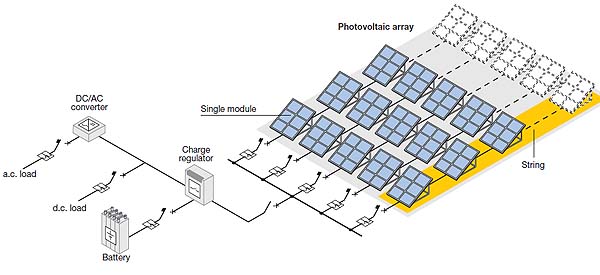

18+
© Академик, 2000-2026
- Обратная связь: Техподдержка, Реклама на сайте
Экспорт словарей на сайты, сделанные на PHP, Joomla, Drupal, WordPress, MODx.