

-
21 Grundbestand
-
22 Partition
-
23 Exportgesellschaft
Exportgesellschaft
export company (house, merchant);
• Exportgroßhändler customer agent (coll.);
• Exportgrundmenge basic export tonnage;
• Exportgut, Exportgüter exports, exported commodities, merchandise intended for export;
• Exporthafen port of exportation;
• Exporthandel export (active) trade;
• Exporthändler exporter, export dealer, [merchant] shipper (Br.);
• selbstständiger Exporthändler combination export manager (US);
• Exporthaus export house. -
24 parti
I.parti1 [paʀti]1. masculine nouna. ( = groupe) partyb. ( = solution) option• prendre parti pour qn ( = donner raison à qn) to stand up for sb• prendre parti (dans une affaire) ( = dire ce qu'on pense) to take a stand (on an issue)c. ( = personne à marier) match• beau or bon or riche parti good match2. compounds► parti pris ( = préjugé) prejudice• parti pris artistique/esthétique ( = choix) artistic/aesthetic choice━━━━━━━━━━━━━━━━━Among the many active right-wing political parties in France, one of the most prominent is the UMP (« Union pour un mouvement populaire »). On the centre right is the MODEM (Mouvement démocrate), and the foremost extreme right-wing party is the FN (« Front National »). On the left, the most influential party is the PS (« Parti socialiste »). The PCF (« Parti communiste français ») has lost a lot of ground and new parties such as the PG (« Parti de gauche ») and the MRG (« Mouvement radical de gauche ») have emerged. The LO (« Lutte ouvrière ») and the NPA (« Nouveau parti anticapitaliste ») are both extreme left-wing parties. The most prominent of France's ecological parties is « Europe écologie-Les Verts ». → ÉLECTIONS━━━━━━━━━━━━━━━━━II.( = ivre) tipsy* * *
1.
être parti — to be tight (colloq)
être complètement parti — to be plastered (colloq)
2.
nom masculin1) ( groupe de personnes) group; Politique party2) ( solution) optionprendre parti pour/contre quelque chose — to be for/against something
3) (dated) ( personne à marier) suitable match•Phrasal Verbs:••tirer parti de — to take advantage of [situation]; to turn [something] to good account [leçon, invention]
* * *paʀti nm1) POLITIQUE party2) (= décision)prendre le parti de faire — to make up one's mind to do, to resolve to do
prendre parti pour — to take sides for, to take a stand for
prendre parti pour — to take sides against, to take a stand against
prendre le parti de qn — to stand up for sb, to side with sb
3) (= personne à marier) match4)tirer parti de — to take advantage of, to turn to good account
* * *A ○adj ( ivre) être parti to be tight○; être un peu parti to be tipsy○; être complètement parti to be plastered○.B nm1 ( groupe de personnes) group; le parti des mécontents the dissatisfied;2 Pol party; les partis de l'opposition the opposition parties; avoir la carte d'un parti to be a card-carrying member of a party; le système du parti unique the one-party system;3 ( solution) option; hésiter entre deux partis to hesitate between two options; prendre parti to commit oneself (sur qch on sth); prendre parti pour qn to take sb's side; prendre parti contre qn to be against sb; prendre parti pour/contre qch to be for/against sth; prendre le parti de qn to side with sb (contre qn against sb); prendre le parti de qch to opt for sth; prendre le parti de faire to decide to do; il a pris le parti de ne rien dire he decided not to say anything; ne pas savoir quel parti prendre not to know what to do for the best;4 †( personne à marier) suitable match; être un beau or bon parti [homme] to be an eligible bachelor; [homme, femme] to be a catch○.C partie nf1 ( élément d'un tout) gén part; (d'une somme, d'un salaire) proportion, part; une partie de la population/des électeurs a proportion ou section of the population/of the voters; une partie des bénéfices/salaires a proportion of the profits/wages; les parties du corps the parts of the body; la première/deuxième partie de the first/second part of [livre, film, spectacle]; un feuilleton en six parties a television serial in six parts; une bonne or grande partie de a good ou large number of [personnes, objets, éléments]; a high proportion of [masse, ensemble, ressources]; la majeure partie des gens most people; la majeure partie de la population/des cas the majority of the population/of cases; en partie partly, in part; en grande partie to a large ou great extent; pour partie liter partly, in part; tout ou partie de all or part of; se faire rembourser tout ou partie des frais to have all or some of one's expenses paid; faire partie de to be part of [groupe, processus, idéologie, pays]; il fait partie de la famille he's one of the family; faire partie des premiers/derniers to be among the first/last; cela fait partie de leurs avantages that's one of their advantages; faire partie du passé to belong to the past; être or faire partie intégrante de qch to be an integral part of sth;2 ( division de l'espace) part; dans cette partie du monde/de l'Afrique in this part of the world/of Africa; la partie est/ouest de Jérusalem the eastern/western part of Jerusalem;3 ( division temporelle) part; il a plu une partie de la journée/nuit it rained for part of the day/night; ça m'a occupé une bonne partie de la matinée it took me a good part of the morning; il leur consacre une partie de son temps libre he devotes some of his free time to them; elle passe la majeure partie de son temps au travail/à dormir she spends most of her time at work/sleeping;4 ( profession) line (of work); dans ma partie in my line (of work); il est de la partie it's in his line (of work); je ne suis pas du tout de la partie that's not at all in my line;5 ⇒ Les jeux et les sports Jeux, Sport game; une partie de poker/de billard/d'échecs a game of poker/of billiards/of chess; une partie de tennis a game of tennis; une partie de cache-cache a game of hide-and-seek; une partie de golf a round of golf; faire or jouer une partie to have a game; la partie qui se joue entre les deux pays est difficile fig the ongoing situation between the two countries is tense; gagner/perdre une partie Jeux, Sport to win/lose a game; gagner/perdre la partie fig to win/lose the day; abandonner la partie Jeux, Sport to abandon the game; fig to give up (the fight); avoir la partie belle or facile fig to have an easy time of it; être de la partie fig to be in on it○; je fête mes trente ans, j'espère que tu seras de la partie I'm having a thirtieth birthday party, I hope you can come; nous ne pouvons pas venir à votre fête mais ce n'est que partie remise we can't make it to your party but maybe next time;6 (dans une négociation, un contrat) party; les parties en présence/conflit the parties (involved)/the opposing parties; les parties contractantes/concernées the contracting/interested parties; les deux parties ont signé un accord the two parties signed an agreement; les parties belligérantes the warring parties ou factions; être partie prenante dans qch to be actively involved in [conflit, contrat, négociation];7 Jur party; la partie adverse the opposing party;8 Mus part; la partie de soprano/basse the soprano/bass part;9 Math part.D parties○ nfpl privates○.parti pris bias; parti pris esthétique/politique aesthetic/political bias; parti pris de réalisme/modernité bias toward(s) realism/modernity; Parti conservateur Conservative Party; Parti communiste, PC Communist Party; Parti communiste français, PCF French Communist Party; Parti démocrate Democrat Party; Parti républicain Republican Party; Parti socialiste, PS Socialist Party; Parti travailliste Labour Party; partie carrée○ wife-swapping party; partie de chasse Chasse hunting party; partie civile Jur plaintiff; l'avocat de la partie civile the counsel for the plaintiff; se constituer or porter partie civile to take civil action; partie du discours Ling part of speech; partie fine orgy; partie de jambes en l'air○ legover◑ GB, screw◑; partie de pêche fishing trip; partie de plaisir fun; tu parles d'une partie de plaisir! iron that's not my idea of fun!; parties génitales or honteuses† private parts.prendre son parti de qch to come to terms with sth; tirer parti de qch to take advantage of [situation, événement]; to turn [sth] to good account [leçon, invention]; faire un mauvais parti à qn to ill-treat sb; avoir affaire à forte partie to have a tough opponent; prendre qn à partie to take sb to task; ⇒ lier.ⓘ Partis politiques In general, French political parties reflect a basic left/right divide. On the left, the main parties are the parti socialiste (PS) and the parti communiste français ( PCF) while the principal parties on the right are the Rassemblement pour la République ( RPR) and the Union pour la démocratie française ( UDF). These two groups regularly run a joint list known as the Alliance pour la France as part of an electoral pact. There are in addition more extreme groupings at both ends of the political spectrum. Beyond the left/right divide generally, the ecological movement is represented by Les Verts and Génération Écologie.III[parti] nom masculin1. POLITIQUEle parti communiste/conservateur/démocrate/républicain/socialiste the Communist/Conservative/Democratic/Republican/Socialist Partyles partis de droite/gauche the parties of the right/left, the right-wing/left-wing partiesprendre le parti de faire quelque chose to make up one's mind to do something, to decide to do somethingprendre parti [prendre position] to take sides ou a standprendre parti pour/contre quelque chose to come out for/against somethingprendre parti pour quelqu'un to side ou to take sides with somebodyen prendre son parti: elle ne sera jamais musicienne, il faut que j'en prenne mon/qu'elle en prenne son parti she'll never be a musician, I'll/she'll just have to accept it3. [avantage]a. [situation] to take advantage ofb. [équipement] to put to good useelle ne sait pas tirer parti de ses qualifications she doesn't know how to get the most out of her qualifications4. (humoristique) [personne à marier]c'est un beau ou bon parti he's/she's a good match————————parti pris nom masculin1. [prise de position] commitmentavoir un parti pris de modernisme/clarté to be committed to modernism/clear-thinking2. [préjugé] biasje n'ai aucun parti pris contre le tennis professionnel, mais... I'm not biased against professional tennis, but...être sans parti pris to be unbiased ou objectiveje dirais, sans parti pris, qu'elle est la meilleure without any bias on my part, I'd say that she's the best -
25 participer
participer [paʀtisipe]➭ TABLE 1 indirect transitive verb• participer à ( = prendre part à) to take part in ; [+ aventure, complot] to be involved in ; ( = payer sa part de) [+ frais, dépenses] to share in• on demande aux élèves de participer davantage pendant le cours pupils are asked to take a more active part in class* * *paʀtisipe
1.
participer à verbe transitif indirect1) ( personnellement)participer à — to participate in, to take part in [réunion, soulèvement]; to be involved in [crime, complot]
ce projet est immoral, je n'y participerai pas — this project is immoral, I will have no part in it
2) ( financièrement)
2.
participer de verbe transitif indirect fmlparticiper de la névrose — to be akin to ou to have some of the characteristics of neurosis
* * *paʀtisipe vi1) (à un événement, une compétition) to take part, (à des frais) to contributeparticiper à [course, réunion, manifestation] — to take part in, [profits] to share in, [frais] to contribute to, [chagrin, succès de qn] to share in
André va participer à la course. — André is going to take part in the race.
Je voudrais participer aux frais. — I would like to contribute to the cost.
2)participer de (= émaner) — to partake of
* * *participer verb table: aimerA participer à vtr ind1 ( prendre part) participer à to participate in, to take part in [travail, réunion, soulèvement, manifestation]; to be involved in [crime, complot, attentat]; il ne participe pas assez en classe he doesn't participate enough in class; ce projet est immoral, je n'y participerai pas this project is immoral, I will have no part in it; participer à la destruction de l'environnement to contribute to the destruction of the environment;2 ( contribuer financièrement à) participer à to contribute to; participer à l'aide internationale to contribute to international aid;3 Écon, Entr participer aux bénéfices to share in the profits; participer aux frais to share in the cost, to contribute to the cost;4 ( partager) participer à la joie/tristesse/douleur de qn to share sb's joy/sadness/pain.B participer de vtr ind fml son comportement participe de la névrose his/her behaviour is akin to ou has some of the characteristics of neurosis; des idées qui participent de l'idéologie dominante ideas which draw on the dominant ideology.[partisipe]participer à verbe plus préposition1. [prendre part à - concours, négociation, cérémonie] to take part in ; [ - discussion] to contribute to ; [ - projet] to be involved in ; [ - aventure] to be involved in, to be part of ; [ - épreuve sportive] to take part ou to be in ; [ - attentat, vol] to be involved in, to take part in ; [ - jeu] to join in ; [ - émission] to take part inj'aimerais te voir participer plus souvent aux tâches ménagères! I'd like to see you taking on a greater share of the household chores![à l'école] to contribute (during class)l'idée principale du metteur en scène est de faire participer le public the director's basic idea is to get the public to participate in the show2. [partager] to share (in)participer à la douleur/joie de quelqu'un to share in somebody's pain/joytous ses collègues ont participé au cadeau all her colleagues contributed something towards the present————————participer de verbe plus prépositiontout ce qui participe de la philosophie everything pertaining ou relating to philosophy -
26 principe
c black principe [pʀɛ̃sip]masculine nouna. ( = règle) principle• il n'est pas dans mes principes de... it's against my principles to...► de principe [hostilité, objection, opposition, soutien] automaticc black b. ( = hypothèse) assumption• partir du principe que... to work on the assumption that...━━━━━━━━━━━━━━━━━✎ Le mot anglais se termine par - ple.* * *pʀɛ̃sip
1.
nom masculin1) ( règle) principle2) ( hypothèse) assumption3) ( concept) principleles principes d'une science/d'un art — ( rudiments) the rudiments of a science/an art
4) Chimie principle
2.
en principe locution adverbiale1) ( habituellement) as a rule2) ( en théorie) in theory* * *pʀɛ̃sip nmpartir du principe que — to work on the principle that, to work on the assumption that
pour le principe — on principle, for the sake of it
en principe (= habituellement) — as a rule, (= théoriquement) in theory
Il déjeune en principe à midi et demi. — As a rule he has lunch at 12.30.
En principe Anne doit arriver lundi. — In theory, Anne should arrive on Monday.
* * *A nm1 ( règle) principle; avoir des principes to have principles; par principe on principle; pour le principe as a matter of principle; c'est une question de principe it's a matter of principle; objection de principe objection on the grounds of principle; principe de non-ingérence principle of noninterference; il a pour principe de ne jamais emprunter d'argent he never borrows money as a matter of principle; accord de principe provisional agreement;2 ( hypothèse) assumption; partir du principe que, poser comme principe que to work on the assumption that;3 ( concept) principle; ils ont accepté le principe d'une conférence de paix they have accepted the principle of a peace conference; quel est le principe de la machine à vapeur how does a steam engine work?, what's the principle behind the steam engine?; selon quel principe cette machine fonctionne-t-elle? on what principle does this machine work?; les principes d'une science/d'un art ( rudiments) the rudiments of a science/an art;4 Chimie, Pharm principle; les principes actifs contenus dans un médicament the active principles of a medicine;5 ( origine) principle; Dieu comme principe de toute chose God as the principle behind all things; remonter au principe des choses to go back to first principles.B en principe loc adv1 ( habituellement) as a rule; en principe je rentre chez moi vers 18 heures as a rule I get home at around six o'clock;2 ( en théorie) in theory; en principe on part vendredi in theory we're leaving on Friday.principe d'Archimède Phys Archimedes' principle; principe de causalité Philos causality; principe d'exclusion de Pauli Nucl, Phys Pauli exclusion principle; principe de plaisir Psych pleasure principle; principe de réalité Psych reality principle.[prɛ̃sip] nom masculinj'ai toujours eu pour principe d'agir honnêtement I have always made it a principle to act with honestyje pars du principe que... I start from the principle ou I assume that...posons comme principe que nous avons les crédits nécessaires let us assume that we get the necessary credits3. [notion - d'une science] principle4. [fonctionnement] principlele principe de la vente par correspondance, c'est... the (basic) principle of mail-order selling is...votre déclaration contredit le principe même de notre Constitution your statement goes against the very principle ou basis of our Constitution6. [origine] origin8. ÉCONOMIE [produit]————————de principe locution adjectivale[accord, approbation] provisional————————en principe locution adverbiale[d'habitude]en principe, nous descendons à l'hôtel we usually stop at a hotelpar principe locution adverbialepour le principe locution adverbialetu refuses de signer pour le principe ou pour des raisons personnelles? are you refusing to sign for reasons of principle or for personal reasons? -
27 vocabulaire
vocabulaire [vɔkabylεʀ]masculine noun* * *vɔkabylɛʀnom masculin vocabulary* * *vɔkabylɛʀ nm* * *vocabulaire nm vocabulary; vocabulaire actif/passif/fondamental active/passive/basic vocabulary; le vocabulaire de Racine/de la botanique the vocabulary of Racine/of botany; ‘vocabulaire bilingue d'informatique’ ‘a bilingual vocabulary of computer technology’; leur vocabulaire est ésotérique/très riche/limité their vocabulary is esoteric/very rich/poor.[vɔkabylɛr] nom masculinquel vocabulaire! [réprimande] language! -
28 длина
length, run, stretch* * *длина́ ж.
lengthв длину́ — endways, endwise, lengthwiseво всю длину́ — the full lengthна едини́цу длины́ — per unit (of) lengthнареза́ть [отреза́ть] что-л. по длине́ — cut smth. to the length of …по всей длине́ — along [through] the full length (e. g., of the building)длина́ анкеро́вки — anchorage lengthдлина́ анте́нны, действи́тельная — effective [radiation] length of an aerialдлина́ ба́зиса — base lengthдлина́ ба́зы1. геод. base length2. ( в гиперболических системах навигации) base-line distanceдлина́ ве́ктора — modulus [absolute value] of a vectorдлина́ взаимоде́йствия ( частиц) — interaction lengthдлина́ взлё́тно-поса́дочной полосы́, исхо́дная — selected basic length of a runwayдлина́ витка́, сре́дняя (в обмо́тках) — length of an average [mean] turn of a coil, average [mean] length of a coil turnдлина́ волны́ — wave-lengthдлина́ волны́, грани́чная — cut-off [critical] wave-lengthдлина́ волны́ де Бро́йля — de Broglie wave-lengthдлина́ волны́, компто́новская — Compton wave-lengthдлина́ волны́, крити́ческая — cut-off [critical] wave lengthдлина́ волны́, основна́я — fundamental wave-lengthдлина́ волны́, поро́говая — threshold wave-lengthдлина́ волны́, преоблада́ющая — dominant wave-lengthдлина́ волны́, со́бственная — natural wave-lengthдлина́ вы́бега — coasting distanceдлина́ вы́лета (напр. струи воды) — rangeгабари́тная длина́ — overall lengthдлина́ геодези́ческой ли́нии — geodetic distanceдеба́евская длина́ — Debye lengthдлина́ деба́евского экрани́рования — Debye shielding lengthдиффузио́нная длина́ — diffusion lengthдлина́ дуги́ геод. — arc distanceедини́чная длина́ — unit lengthдлина́ забо́рной ча́сти ( метчика) — chamfer lengthдлина́ заде́лки армату́ры — length of an embedmentдлина́ заклё́пки, защемлё́нная — grip of a rivetдлина́ зацепле́ния ( шестерён) — gear contact [engagement] length, length of actionдлина́ зо́нда — spacing of the sondeдлина́ ка́меры горн. — depth of a roomдлина́ ка́меры сгора́ния ракет. — combustion-chamber lengthдлина́ ка́меры сгора́ния, характеристи́ческая ракет. — characteristic combustion-chamber lengthдлина́ когере́нтности — coherent wave [interrupted wave-train] lengthдлина́ ко́довой комбина́ции вчт. — word lengthкомпари́рованная длина́ геод. — standard lengthдлина́ консо́ли стр. — length of overhang, unsupported lengthкра́тная длина́ — multiple lengthдлина́ кривоши́па — throw of a crankдлина́ лё́тного по́ля — field lengthдлина́ ма́зера, рабо́чая — active length of a maserдлина́ математи́ческого ма́ятника — length of a simple pendulum, length of a pendulumдлина́ ма́ятника, приведё́нная — the equivalent length of a pendulumдлина́ нахлё́стки — lap of a spliceнесу́щая длина́ — bearing lengthдлина́ о́бласти генера́ции — lasing lengthдлина́ образу́ющей ко́нуса — slant height of a coneдлина́ образца́ до испыта́ния — original length of a specimenдлина́ образца́, расчё́тная ( для испытания материалов) — gauge length of a specimenобра́тная длина́ — reciprocal [inverse] lengthдлина́ обто́чки — turning [machining] lengthопо́рная длина́ — bearing lengthдлина́ опти́ческой волны́ — optical wave-lengthдлина́ орби́ты — orbit circumferenceдлина́ перено́са физ. — transport mean free path, transport lengthдлина́ плато́ — plateau lengthдлина́ плеча́ — reach of an armдлина́ поглоще́ния — absorption length, absorption path; опт. absorption thicknessдлина́ полосы́ набо́ра полигр. — depth of a pageприведё́нная длина́ (напр. вала) — reduced lengthприведё́нная длина́ ма́ятника — length of an equivalent simple pendulumдлина́ при продо́льном изги́бе, расчё́тная — effective lengthдлина́ пробе́га1. ( частиц) range, track (path) length, path length2. ( самолета) landing runдлина́ пробе́га до захва́та ( о частицах) — capture lengthдлина́ пробе́га, по́лная ( о частицах) — maximum range, integral track [path] lengthдлина́ прока́тки — mill lengthдлина́ пролё́та стр. — span lengthдлина́ прохо́дки горн. — amount of advanceдлина́ пути́ (напр. распространения волн, частиц) — path lengthдлина́ пути́ луча́ — beam path lengthдлина́ пути́, опти́ческая — optical length, optical pathдлина́ пути́, фа́зовая — phase-path lengthдлина́ рабо́чей ча́сти шкалы́ — effective scale lengthдлина́ разбе́га ( самолета) — take-off runдлина́ разго́на волны́ (расстояние, пройденное ветром) — the fetch (the distance over which the fetch has been blowing)разрывна́я длина́ (напр. волокна) — breaking lengthдлина́ распростране́ния — propagation distanceдлина́ рассе́яния — scattering length, scattering mean free pathдлина́ ре́зания — cutting lengthдлина́ ре́зки прока́та, кра́тная — multiple lengthдлина́ ре́зки прока́та, ме́рная — cut lengthдлина́ ре́зки прока́та, неме́рная — random lengthдлина́ руло́на прок. — coil lengthдлина́ свобо́дного пробе́га ( частиц) — (mean) free pathдлина́ свобо́дного пробе́га для рассе́яния, столкнове́ния и т. п. ( о частицах) — scattering, collision, etc. (mean) free pathдлина́ свобо́дного пробе́га, сре́дняя ( о частицах) — mean free path lengthдлина́ свя́зи хим. — bond lengthдлина́ сло́ва вчт. — word length, (word) formatсо́бственная длина́ — proper lengthдлина́ сообще́ния — message lengthдлина́ спа́йки текст. — length of overlappingдлина́ сте́ржня заклё́пки — grip length of a rivetдлина́ сте́ржня, приведё́нная — unsupported length of a columnдлина́ сте́ржня, свобо́дная — unsupported length of a columnдлина́ стороны́ — lateral lengthдлина́ строга́ния — planing lengthстрои́тельная длина́ — face-to-face lengthдлина́ строки́ телегр. — length of a scanning lineдлина́ строки́, поле́зная телегр. — available lineдлина́ су́дна ме́жду перпендикуля́рами — (ship's) length between perpendicularsдлина́ су́дна, наибо́льшая — (ship's) length overallдлина́ су́дна по ватерли́нии — (ship's) length on the water-lineдлина́ су́дна по конструкти́вной ватерли́нии — (ship's) length on the designed water-lineдлина́ су́дна, по́лная — (ship's) extreme length, (ship's) length overallдлина́ торго́вого прока́та, норма́льная — commercial stock lengthдлина́ траекто́рии ( частиц) — path lengthдлина́ уча́стка разго́на ав. — (gross) distance to accelerateдлина́ хо́да по́ршня — strokeэлектри́ческая длина́ ( линии передачи) — phase(-path) [electric] lengthэтало́нная длина́ — standard length -
29 закон
юр.law; (акт) act, statuteвводить законы — to make / to introduce laws
вводить закон в действие — to enact / to implement the law, to put the law into effect / operation
вступать в силу как закон — to become law, to enter in force
вступить в противоречие с законом — to come into conflict with law, to contradict the law
изымать из-под действия закона — to except from operation of the law, to exempt
нарушать закон — to break / to infringe / to contravene / to violate / to disobey a law
издать закон — to make / to issue a law обнародовать закон to promulgate / to issue the law
обходить закон — to evade the law, to go beyond the law
отменять закон — to abrogate / to annul / to repeal an act / a law, to abate a law
преступать закон — to transgress / to violate / to break the law
принимать закон — to adopt / to pass legislation / a law
соблюдать закон — to follow / to observe / to abide by / to comply with the law
устанавливать законом — to establish by decree / law
эти законы скорее разрешают, чем предписывают — these laws are permissive rather than mandatory
соответствующий закону, установленный законом — statutory
действующие законы — laws in force / vigour, active laws
драконовские законы — Draconic / harsh / rigorous laws
избирательный закон — election / electoral law
неписаный закон — imperscriptible law / right, unwritten code / law
непреложный закон — indefeasible law, unalterable law
основной закон — fundamental / basic law
введение закона в силу, принятие закона — enactment
законы об охоте — hunting / game laws
закон о приостановке конституционных гарантий — Coercion Act / Bill
закон о пэрстве (1963 г., предоставляет право пэрам на отказ от титула, что даёт им возможность баллотироваться в палату общин, Великобритания) — Peerage Act
закон об обороне — defence act, act of defence
закон об образовании новой "территории" или превращении "территории" в штат (США) — organic act
закон об освобождении от уголовной ответственности (Великобритания) — Act / Bill of Indemnity
нарушение закона — offence against the law, breach / contravention / infringement / transgression / violation of the law
в нарушение законов — in contravention / violation of the law
несоблюдение / неисполнение законов — failure to comply with the laws
отмена закона — abrogation / repeal of the law
подписание закона (президентом, королём) — enactment
постановляющая часть / преамбула закона — enacting clause
свод законов — code, code of laws, statute book; corpus juris лат.
вопреки закону — against / contrary / in spite of the law, unlawfully
-
30 мертвый капитал
1. deadstock capital2. idle capital3. idle money«горячие» деньги; спекулятивный денежный капитал — hot money
4. unapplied funds5. unemployed capital6. unproductive capital7. unrealizable capital -
31 основной капитал
1. basic capital2. capital assets3. capital stock4. fixed assetsоборотный капитал; оборотные средства — floating assets
5. fixed capital6. original capital7. stock of capital8. fixed capital stock9. principalкапитал и\или процент — principal and/or interest
10. stockпакет акций; доля в акционерном капитале — share of stock
акционерный капитал; капитал товарищества — joint stock
Русско-английский большой базовый словарь > основной капитал
-
32 равновесие платежных балансов
Русско-английский большой базовый словарь > равновесие платежных балансов
-
33 четырехполюсник
1. two-port network2. two-terminal deviceэлемент с двумя выводами; двухполюсник; четырехполюсник — two-terminal device
3. four-terminal network4. networkсимметричная цепь; симметричный четырехполюсник — bilateral network
5. quadripole6. quadrupole -
34 Cookworthy, William
SUBJECT AREA: Domestic appliances and interiors[br]b. 1705 Kings bridge, Devon, Englandd. 16 October 1780 Plymouth, England[br]English pioneer of porcelain manufacture in England.[br]The family fortunes having been extinguished by the South Sea Bubble of 1720, Cookworthy and his brother had to fend for themselves. They set up, and succeeded, in the pharmacy trade. At the age of 31, however, William left the business, and after a period of probation he became a minister in the Society of Friends. In a letter of 5 May 1745, Cookworthy mentions some samples of kaolin and china or growan stone that had been brought to him from Virginia. He found similar materials at Treginning Hill in Cornwall, and between 1755 and 1758 he found sufficiently pure china clay and china stone to make a pure white porcelain. Cookworthy took out a patent for his discovery in 1768 which covered the manufacture of porcelain from moonstone or growan and growan clay, with a glaze made from china stone to which lime and fern ash or magnesia alba (basic carbonate of magnesium) were added. Cookworthy's experiments had been carried out on the property of Lord Camelford, who later assisted him, in the company of other Quakers, in setting up a works at Coxside, Plymouth, to manufacture the ware; the works employed between fifty and sixty people. In the absence of coal, Cookworthy resorted to wood as fuel, but this was scarce, so in 1770 he transferred his operation to Castle Green, Bristol. However, he had no greater success there, and in 1773 he sold the entire interest in porcelain manufacture to Richard Champion (1743–91), although Cookworthy and his heirs were to receive royalties for ninety-nine years. Champion, who had been working with Cookworthy since 1764 and was active in Bristol city affairs, continued the firm as Richard Champion \& Co., but when in 1775 Champion tried to renew Cookworthy's patent, Wedgwood and other Staffordshire potters challenged him. After litigation, the use of kaolin and china stone was thrown open to general use. The Staffordshire potters made good use of this new-found freedom and Champion was forced to sell the patent to them and dispose of his factory the following year. The potters of Staffordshire said of Cookworthy, "the greatest service ever conferred by one person on the pottery manufacturers is that of making them acquainted with china clay".[br]Further ReadingW.Harrison, 1854, Memoir of William Cookworthy by His Grandson, London. F.S.Mackenna, 1946, Cookworthy's Plymouth and Bristol Porcelain, Leigh on Sea: Lewis.A.D.Selleck, 1978, Cookworthy 1705–80 and his Circle, privately published.LRD -
35 Evans, Oliver
SUBJECT AREA: Agricultural and food technology[br]b. 13 September 1755 Newport, Delaware, USAd. 15 April 1819 New York, USA[br]American millwright and inventor of the first automatic corn mill.[br]He was the fifth child of Charles and Ann Stalcrop Evans, and by the age of 15 he had four sisters and seven brothers. Nothing is known of his schooling, but at the age of 17 he was apprenticed to a Newport wheelwright and wagon-maker. At 19 he was enrolled in a Delaware Militia Company in the Revolutionary War but did not see active service. About this time he invented a machine for bending and cutting off the wires in textile carding combs. In July 1782, with his younger brother, Joseph, he moved to Tuckahoe on the eastern shore of the Delaware River, where he had the basic idea of the automatic flour mill. In July 1782, with his elder brothers John and Theophilus, he bought part of his father's Newport farm, on Red Clay Creek, and planned to build a mill there. In 1793 he married Sarah Tomlinson, daughter of a Delaware farmer, and joined his brothers at Red Clay Creek. He worked there for some seven years on his automatic mill, from about 1783 to 1790.His system for the automatic flour mill consisted of bucket elevators to raise the grain, a horizontal screw conveyor, other conveying devices and a "hopper boy" to cool and dry the meal before gathering it into a hopper feeding the bolting cylinder. Together these components formed the automatic process, from incoming wheat to outgoing flour packed in barrels. At that time the idea of such automation had not been applied to any manufacturing process in America. The mill opened, on a non-automatic cycle, in 1785. In January 1786 Evans applied to the Delaware legislature for a twenty-five-year patent, which was granted on 30 January 1787 although there was much opposition from the Quaker millers of Wilmington and elsewhere. He also applied for patents in Pennsylvania, Maryland and New Hampshire. In May 1789 he went to see the mill of the four Ellicot brothers, near Baltimore, where he was impressed by the design of a horizontal screw conveyor by Jonathan Ellicot and exchanged the rights to his own elevator for those of this machine. After six years' work on his automatic mill, it was completed in 1790. In the autumn of that year a miller in Brandywine ordered a set of Evans's machinery, which set the trend toward its general adoption. A model of it was shown in the Market Street shop window of Robert Leslie, a watch-and clockmaker in Philadelphia, who also took it to England but was unsuccessful in selling the idea there.In 1790 the Federal Plant Laws were passed; Evans's patent was the third to come within the new legislation. A detailed description with a plate was published in a Philadelphia newspaper in January 1791, the first of a proposed series, but the paper closed and the series came to nothing. His brother Joseph went on a series of sales trips, with the result that some machinery of Evans's design was adopted. By 1792 over one hundred mills had been equipped with Evans's machinery, the millers paying a royalty of $40 for each pair of millstones in use. The series of articles that had been cut short formed the basis of Evans's The Young Millwright and Miller's Guide, published first in 1795 after Evans had moved to Philadelphia to set up a store selling milling supplies; it was 440 pages long and ran to fifteen editions between 1795 and 1860.Evans was fairly successful as a merchant. He patented a method of making millstones as well as a means of packing flour in barrels, the latter having a disc pressed down by a toggle-joint arrangement. In 1801 he started to build a steam carriage. He rejected the idea of a steam wheel and of a low-pressure or atmospheric engine. By 1803 his first engine was running at his store, driving a screw-mill working on plaster of Paris for making millstones. The engine had a 6 in. (15 cm) diameter cylinder with a stroke of 18 in. (45 cm) and also drove twelve saws mounted in a frame and cutting marble slabs at a rate of 100 ft (30 m) in twelve hours. He was granted a patent in the spring of 1804. He became involved in a number of lawsuits following the extension of his patent, particularly as he increased the licence fee, sometimes as much as sixfold. The case of Evans v. Samuel Robinson, which Evans won, became famous and was one of these. Patent Right Oppression Exposed, or Knavery Detected, a 200-page book with poems and prose included, was published soon after this case and was probably written by Oliver Evans. The steam engine patent was also extended for a further seven years, but in this case the licence fee was to remain at a fixed level. Evans anticipated Edison in his proposal for an "Experimental Company" or "Mechanical Bureau" with a capital of thirty shares of $100 each. It came to nothing, however, as there were no takers. His first wife, Sarah, died in 1816 and he remarried, to Hetty Ward, the daughter of a New York innkeeper. He was buried in the Bowery, on Lower Manhattan; the church was sold in 1854 and again in 1890, and when no relative claimed his body he was reburied in an unmarked grave in Trinity Cemetery, 57th Street, Broadway.[br]Further ReadingE.S.Ferguson, 1980, Oliver Evans: Inventive Genius of the American Industrial Revolution, Hagley Museum.G.Bathe and D.Bathe, 1935, Oliver Evans: Chronicle of Early American Engineering, Philadelphia, Pa.IMcN -
36 Artificial Intelligence
In my opinion, none of [these programs] does even remote justice to the complexity of human mental processes. Unlike men, "artificially intelligent" programs tend to be single minded, undistractable, and unemotional. (Neisser, 1967, p. 9)Future progress in [artificial intelligence] will depend on the development of both practical and theoretical knowledge.... As regards theoretical knowledge, some have sought a unified theory of artificial intelligence. My view is that artificial intelligence is (or soon will be) an engineering discipline since its primary goal is to build things. (Nilsson, 1971, pp. vii-viii)Most workers in AI [artificial intelligence] research and in related fields confess to a pronounced feeling of disappointment in what has been achieved in the last 25 years. Workers entered the field around 1950, and even around 1960, with high hopes that are very far from being realized in 1972. In no part of the field have the discoveries made so far produced the major impact that was then promised.... In the meantime, claims and predictions regarding the potential results of AI research had been publicized which went even farther than the expectations of the majority of workers in the field, whose embarrassments have been added to by the lamentable failure of such inflated predictions....When able and respected scientists write in letters to the present author that AI, the major goal of computing science, represents "another step in the general process of evolution"; that possibilities in the 1980s include an all-purpose intelligence on a human-scale knowledge base; that awe-inspiring possibilities suggest themselves based on machine intelligence exceeding human intelligence by the year 2000 [one has the right to be skeptical]. (Lighthill, 1972, p. 17)4) Just as Astronomy Succeeded Astrology, the Discovery of Intellectual Processes in Machines Should Lead to a Science, EventuallyJust as astronomy succeeded astrology, following Kepler's discovery of planetary regularities, the discoveries of these many principles in empirical explorations on intellectual processes in machines should lead to a science, eventually. (Minsky & Papert, 1973, p. 11)5) Problems in Machine Intelligence Arise Because Things Obvious to Any Person Are Not Represented in the ProgramMany problems arise in experiments on machine intelligence because things obvious to any person are not represented in any program. One can pull with a string, but one cannot push with one.... Simple facts like these caused serious problems when Charniak attempted to extend Bobrow's "Student" program to more realistic applications, and they have not been faced up to until now. (Minsky & Papert, 1973, p. 77)What do we mean by [a symbolic] "description"? We do not mean to suggest that our descriptions must be made of strings of ordinary language words (although they might be). The simplest kind of description is a structure in which some features of a situation are represented by single ("primitive") symbols, and relations between those features are represented by other symbols-or by other features of the way the description is put together. (Minsky & Papert, 1973, p. 11)[AI is] the use of computer programs and programming techniques to cast light on the principles of intelligence in general and human thought in particular. (Boden, 1977, p. 5)The word you look for and hardly ever see in the early AI literature is the word knowledge. They didn't believe you have to know anything, you could always rework it all.... In fact 1967 is the turning point in my mind when there was enough feeling that the old ideas of general principles had to go.... I came up with an argument for what I called the primacy of expertise, and at the time I called the other guys the generalists. (Moses, quoted in McCorduck, 1979, pp. 228-229)9) Artificial Intelligence Is Psychology in a Particularly Pure and Abstract FormThe basic idea of cognitive science is that intelligent beings are semantic engines-in other words, automatic formal systems with interpretations under which they consistently make sense. We can now see why this includes psychology and artificial intelligence on a more or less equal footing: people and intelligent computers (if and when there are any) turn out to be merely different manifestations of the same underlying phenomenon. Moreover, with universal hardware, any semantic engine can in principle be formally imitated by a computer if only the right program can be found. And that will guarantee semantic imitation as well, since (given the appropriate formal behavior) the semantics is "taking care of itself" anyway. Thus we also see why, from this perspective, artificial intelligence can be regarded as psychology in a particularly pure and abstract form. The same fundamental structures are under investigation, but in AI, all the relevant parameters are under direct experimental control (in the programming), without any messy physiology or ethics to get in the way. (Haugeland, 1981b, p. 31)There are many different kinds of reasoning one might imagine:Formal reasoning involves the syntactic manipulation of data structures to deduce new ones following prespecified rules of inference. Mathematical logic is the archetypical formal representation. Procedural reasoning uses simulation to answer questions and solve problems. When we use a program to answer What is the sum of 3 and 4? it uses, or "runs," a procedural model of arithmetic. Reasoning by analogy seems to be a very natural mode of thought for humans but, so far, difficult to accomplish in AI programs. The idea is that when you ask the question Can robins fly? the system might reason that "robins are like sparrows, and I know that sparrows can fly, so robins probably can fly."Generalization and abstraction are also natural reasoning process for humans that are difficult to pin down well enough to implement in a program. If one knows that Robins have wings, that Sparrows have wings, and that Blue jays have wings, eventually one will believe that All birds have wings. This capability may be at the core of most human learning, but it has not yet become a useful technique in AI.... Meta- level reasoning is demonstrated by the way one answers the question What is Paul Newman's telephone number? You might reason that "if I knew Paul Newman's number, I would know that I knew it, because it is a notable fact." This involves using "knowledge about what you know," in particular, about the extent of your knowledge and about the importance of certain facts. Recent research in psychology and AI indicates that meta-level reasoning may play a central role in human cognitive processing. (Barr & Feigenbaum, 1981, pp. 146-147)Suffice it to say that programs already exist that can do things-or, at the very least, appear to be beginning to do things-which ill-informed critics have asserted a priori to be impossible. Examples include: perceiving in a holistic as opposed to an atomistic way; using language creatively; translating sensibly from one language to another by way of a language-neutral semantic representation; planning acts in a broad and sketchy fashion, the details being decided only in execution; distinguishing between different species of emotional reaction according to the psychological context of the subject. (Boden, 1981, p. 33)Can the synthesis of Man and Machine ever be stable, or will the purely organic component become such a hindrance that it has to be discarded? If this eventually happens-and I have... good reasons for thinking that it must-we have nothing to regret and certainly nothing to fear. (Clarke, 1984, p. 243)The thesis of GOFAI... is not that the processes underlying intelligence can be described symbolically... but that they are symbolic. (Haugeland, 1985, p. 113)14) Artificial Intelligence Provides a Useful Approach to Psychological and Psychiatric Theory FormationIt is all very well formulating psychological and psychiatric theories verbally but, when using natural language (even technical jargon), it is difficult to recognise when a theory is complete; oversights are all too easily made, gaps too readily left. This is a point which is generally recognised to be true and it is for precisely this reason that the behavioural sciences attempt to follow the natural sciences in using "classical" mathematics as a more rigorous descriptive language. However, it is an unfortunate fact that, with a few notable exceptions, there has been a marked lack of success in this application. It is my belief that a different approach-a different mathematics-is needed, and that AI provides just this approach. (Hand, quoted in Hand, 1985, pp. 6-7)We might distinguish among four kinds of AI.Research of this kind involves building and programming computers to perform tasks which, to paraphrase Marvin Minsky, would require intelligence if they were done by us. Researchers in nonpsychological AI make no claims whatsoever about the psychological realism of their programs or the devices they build, that is, about whether or not computers perform tasks as humans do.Research here is guided by the view that the computer is a useful tool in the study of mind. In particular, we can write computer programs or build devices that simulate alleged psychological processes in humans and then test our predictions about how the alleged processes work. We can weave these programs and devices together with other programs and devices that simulate different alleged mental processes and thereby test the degree to which the AI system as a whole simulates human mentality. According to weak psychological AI, working with computer models is a way of refining and testing hypotheses about processes that are allegedly realized in human minds.... According to this view, our minds are computers and therefore can be duplicated by other computers. Sherry Turkle writes that the "real ambition is of mythic proportions, making a general purpose intelligence, a mind." (Turkle, 1984, p. 240) The authors of a major text announce that "the ultimate goal of AI research is to build a person or, more humbly, an animal." (Charniak & McDermott, 1985, p. 7)Research in this field, like strong psychological AI, takes seriously the functionalist view that mentality can be realized in many different types of physical devices. Suprapsychological AI, however, accuses strong psychological AI of being chauvinisticof being only interested in human intelligence! Suprapsychological AI claims to be interested in all the conceivable ways intelligence can be realized. (Flanagan, 1991, pp. 241-242)16) Determination of Relevance of Rules in Particular ContextsEven if the [rules] were stored in a context-free form the computer still couldn't use them. To do that the computer requires rules enabling it to draw on just those [ rules] which are relevant in each particular context. Determination of relevance will have to be based on further facts and rules, but the question will again arise as to which facts and rules are relevant for making each particular determination. One could always invoke further facts and rules to answer this question, but of course these must be only the relevant ones. And so it goes. It seems that AI workers will never be able to get started here unless they can settle the problem of relevance beforehand by cataloguing types of context and listing just those facts which are relevant in each. (Dreyfus & Dreyfus, 1986, p. 80)Perhaps the single most important idea to artificial intelligence is that there is no fundamental difference between form and content, that meaning can be captured in a set of symbols such as a semantic net. (G. Johnson, 1986, p. 250)Artificial intelligence is based on the assumption that the mind can be described as some kind of formal system manipulating symbols that stand for things in the world. Thus it doesn't matter what the brain is made of, or what it uses for tokens in the great game of thinking. Using an equivalent set of tokens and rules, we can do thinking with a digital computer, just as we can play chess using cups, salt and pepper shakers, knives, forks, and spoons. Using the right software, one system (the mind) can be mapped into the other (the computer). (G. Johnson, 1986, p. 250)19) A Statement of the Primary and Secondary Purposes of Artificial IntelligenceThe primary goal of Artificial Intelligence is to make machines smarter.The secondary goals of Artificial Intelligence are to understand what intelligence is (the Nobel laureate purpose) and to make machines more useful (the entrepreneurial purpose). (Winston, 1987, p. 1)The theoretical ideas of older branches of engineering are captured in the language of mathematics. We contend that mathematical logic provides the basis for theory in AI. Although many computer scientists already count logic as fundamental to computer science in general, we put forward an even stronger form of the logic-is-important argument....AI deals mainly with the problem of representing and using declarative (as opposed to procedural) knowledge. Declarative knowledge is the kind that is expressed as sentences, and AI needs a language in which to state these sentences. Because the languages in which this knowledge usually is originally captured (natural languages such as English) are not suitable for computer representations, some other language with the appropriate properties must be used. It turns out, we think, that the appropriate properties include at least those that have been uppermost in the minds of logicians in their development of logical languages such as the predicate calculus. Thus, we think that any language for expressing knowledge in AI systems must be at least as expressive as the first-order predicate calculus. (Genesereth & Nilsson, 1987, p. viii)21) Perceptual Structures Can Be Represented as Lists of Elementary PropositionsIn artificial intelligence studies, perceptual structures are represented as assemblages of description lists, the elementary components of which are propositions asserting that certain relations hold among elements. (Chase & Simon, 1988, p. 490)Artificial intelligence (AI) is sometimes defined as the study of how to build and/or program computers to enable them to do the sorts of things that minds can do. Some of these things are commonly regarded as requiring intelligence: offering a medical diagnosis and/or prescription, giving legal or scientific advice, proving theorems in logic or mathematics. Others are not, because they can be done by all normal adults irrespective of educational background (and sometimes by non-human animals too), and typically involve no conscious control: seeing things in sunlight and shadows, finding a path through cluttered terrain, fitting pegs into holes, speaking one's own native tongue, and using one's common sense. Because it covers AI research dealing with both these classes of mental capacity, this definition is preferable to one describing AI as making computers do "things that would require intelligence if done by people." However, it presupposes that computers could do what minds can do, that they might really diagnose, advise, infer, and understand. One could avoid this problematic assumption (and also side-step questions about whether computers do things in the same way as we do) by defining AI instead as "the development of computers whose observable performance has features which in humans we would attribute to mental processes." This bland characterization would be acceptable to some AI workers, especially amongst those focusing on the production of technological tools for commercial purposes. But many others would favour a more controversial definition, seeing AI as the science of intelligence in general-or, more accurately, as the intellectual core of cognitive science. As such, its goal is to provide a systematic theory that can explain (and perhaps enable us to replicate) both the general categories of intentionality and the diverse psychological capacities grounded in them. (Boden, 1990b, pp. 1-2)Because the ability to store data somewhat corresponds to what we call memory in human beings, and because the ability to follow logical procedures somewhat corresponds to what we call reasoning in human beings, many members of the cult have concluded that what computers do somewhat corresponds to what we call thinking. It is no great difficulty to persuade the general public of that conclusion since computers process data very fast in small spaces well below the level of visibility; they do not look like other machines when they are at work. They seem to be running along as smoothly and silently as the brain does when it remembers and reasons and thinks. On the other hand, those who design and build computers know exactly how the machines are working down in the hidden depths of their semiconductors. Computers can be taken apart, scrutinized, and put back together. Their activities can be tracked, analyzed, measured, and thus clearly understood-which is far from possible with the brain. This gives rise to the tempting assumption on the part of the builders and designers that computers can tell us something about brains, indeed, that the computer can serve as a model of the mind, which then comes to be seen as some manner of information processing machine, and possibly not as good at the job as the machine. (Roszak, 1994, pp. xiv-xv)The inner workings of the human mind are far more intricate than the most complicated systems of modern technology. Researchers in the field of artificial intelligence have been attempting to develop programs that will enable computers to display intelligent behavior. Although this field has been an active one for more than thirty-five years and has had many notable successes, AI researchers still do not know how to create a program that matches human intelligence. No existing program can recall facts, solve problems, reason, learn, and process language with human facility. This lack of success has occurred not because computers are inferior to human brains but rather because we do not yet know in sufficient detail how intelligence is organized in the brain. (Anderson, 1995, p. 2)Historical dictionary of quotations in cognitive science > Artificial Intelligence
-
37 диспетчерский пункт управления (в SCADA)
диспетчерский пункт управления
диспетчерский пункт
ДП
главный терминал
-
[Интент]Master Terminal Unit (MTU), Master Station (MS) диспетчерский пункт управления (главный терминал); осуществляет обработку данных и управление высокого уровня, как правило, в режиме мягкого (квази-) реального времени; одна из основных функций обеспечение интерфейса между человеком-оператором и системой (HMI, MMI). В зависимости от конкретной системы MTU может быть реализован в самом разнообразном виде от одиночного компьютера с дополнительными устройствами подключения к каналам связи до больших вычислительных систем (мэйнфреймов) и/или объединенных в локальную сеть рабочих станций и серверов. Как правило, и при построении MTU используются различные методы повышения надежности и безопасности работы системы.
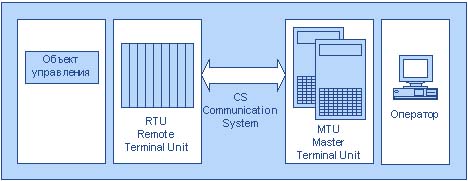
Рис. 2. Основные структурные компоненты SCADA-системыГлавной тенденцией развития MTU (диспетчерских пунктов управления) является переход большинства разработчиков SCADA-систем на архитектуру клиент-сервер, состоящую из 4-х функциональных компонентов.
1. User (Operator) Interface (интерфейс пользователя/оператора) исключительно важная составляющая систем SCADA. Для нее характерны
а) стандартизация интерфейса пользователя вокруг нескольких платформ;
б) все более возрастающее влияние Windows NT;
в) использование стандартного графического интерфейса пользователя (GUI);
г) технологии объектно-ориентированного программирования: DDE, OLE, Active X, OPC (OLE for Process Control), DCOM;
д) стандартные средства разработки приложений, наиболее популярные среди которых, Visual Basic for Applications (VBA), Visual C++;
е) появление коммерческих вариантов программного обеспечения класса SCADA/MMI для широкого спектра задач. Объектная независимость позволяет интерфейсу пользователя представлять виртуальные объекты, созданные другими системами. Результат расширение возможностей по оптимизации HMI-интерфейса.
2. Data Management (управление данными) - отход от узкоспециализированных баз данных в сторону поддержки большинства корпоративных реляционных баз данных (Microsoft SQL, Oracle). Функции управления данными и генерации отчетов осуществляются стандартными средствами SQL, 4GL; эта независимость данных изолирует функции доступа и управления данными от целевых задач SCADA, что позволяет легко разрабатывать дополнительные приложения по анализу и управлению данными.
3. Networking & Services (сети и службы) - переход к использованию стандартных сетевых технологий и протоколов. Службы сетевого управления, защиты и управления доступом, мониторинга транзакций, передачи почтовых сообщений, сканирования доступных ресурсов (процессов) могут выполняться независимо от кода целевой программы SCADA, разработанной другим вендором.
4. Real-Time Services (службы реального времени) - освобождение MTU от нагрузки перечисленных выше компонентов дает возможность сконцентрироваться на требованиях производительности для задач реального и квази-реального времени. Данные службы представляют собой быстродействующие процессоры, которые управляют обменом информацией с RTU и SCADA-процессами, осуществляют управление резидентной частью базы данных, оповещение о событиях, выполняют действия по управлению системой, передачу информации о событиях на интерфейс пользователя (оператора).
[ http://www.mka.ru/?p=41524]Тематики
Синонимы
EN
Русско-английский словарь нормативно-технической терминологии > диспетчерский пункт управления (в SCADA)
-
38 центр доставки и распределения программ
центр доставки и распределения программ
Основными функциями данного центра являются:
• прекращение работы цепи доставки всех поступающих видеосигналов и напрямую связанных с ними аудиосигналов и коммуникационных цепей с объектов;
• отслеживание поступающих сигналов с возможностью их идентификации с помощью декодеров данных в вертикальном интервале (измерительных устройств);
• коррекция уровней входящих сигналов и устранение любых возможных проблем, связанных с ITVR-сигналами,
синхронизация видеосигналов со всех находящихся в эфире объектов;
• распределение всех ITVR-сигналами между всеми пользователями в МВЦ.
[Департамент лингвистических услуг Оргкомитета «Сочи 2014». Глоссарий терминов]EN
contribution and distribution (CDT) center
Basic functions of this facility are:
• termination of all contribution network, for all incoming vision and directly associated audio and communications circuits from venues
• monitoring of incoming signals, with the possibility of identifying them through vertical interval data decoders (measuring devices)
• correction of incoming signal levels and any possible problems the ITVR signals may have synchronization of vision signals from all active venues
• distribution of all ITVR signals to the users in the IBC.
[Департамент лингвистических услуг Оргкомитета «Сочи 2014». Глоссарий терминов]Тематики
EN
Русско-английский словарь нормативно-технической терминологии > центр доставки и распределения программ
- 1
- 2
См. также в других словарях:
Active Format Description — In television technology, Active Format Description (AFD) is a standard set of codes that can be sent in the MPEG video stream or in the baseband SDI video signal that carries information about their aspect ratio and active picture… … Wikipedia
Active Worlds — Developer(s) Active Worlds, Inc. Publisher(s) … Wikipedia
Active Scripting — (formerly known as ActiveX Scripting) is the technology used in Windows to implement component based scripting support. It is based on COM (more precisely, OLE Automation) and allows installation of additional scripting engines in the form of COM … Wikipedia
Active Directory — (AD) is a directory service created by Microsoft for Windows domain networks. It is included in most Windows Server operating systems. Server computers on which Active Directory is running are called domain controllers. Active Directory serves as … Wikipedia
Active suspension — Active or adaptive suspension is an automotive technology that controls the vertical movement of the wheels with an onboard system rather than the movement being determined entirely by the road surface. The system virtually eliminates body roll… … Wikipedia
Active learning — is an umbrella term that refers to several models of instruction that focus the responsibility of learning on learners. Bonwell and Eison (1991) popularized this approach to instruction. This buzz word of the 1980s became their 1990s report to… … Wikipedia
Active Directory — (AD) es el término que usa Microsoft para referirse a su implementación de servicio de directorio en una red distribuida de computadores. Utiliza distintos protocolos (principalmente LDAP, DNS, DHCP, Kerberos...). Su estructura jerárquica permite … Wikipedia Español
Active citizenship — generally refers to a philosophy espoused by some organizations and educational institutions. It often states that members of companies or nation states have certain roles and responsibilities to society and the environment, although those… … Wikipedia
Active Oberon — Класс языка: императивный, структурированный, модульный Появился в: 2000 Автор(ы): Patrik Reali, B. Meyer, Brinch Hansen, Pieter Muller, Jurg Gutknecht (Юрг Гуткн … Википедия
Active measures — (Russian: Активные мероприятия ) were a form of political warfare conducted by the Soviet security services (Cheka, OGPU, NKVD, KGB, and SVR) to influence the course of world events, in addition to collecting intelligence and producing… … Wikipedia
Active Calendar — is a PHP class that generates calendars as HTML tables (XHTML Valid). It can produce static calendars without any links or calendars with navigation controls, a date picker control, event days and content with event URLs, and linkable days… … Wikipedia
