

-
1 document
документ
Объект информационного взаимодействия в социальной среде, предназначен-ный для формального выражения социальных отношений между другими объектами этой среды.
[ ГОСТ Р 52292-2004]
документ
Текст, имеющий наименование, определенную структуру и обозначение, который может быть сохранен, отредактирован, найден и заменен как единое целое.
[ ГОСТ Р ИСО/МЭК 2382-23-2004]
документ
документированная информация
Зафиксированная на материальном носителе информация с реквизитами, позволяющими ее идентифицировать.
[ ГОСТ Р 51141-98]
документ
Зафиксированная на материальном носителе информация с реквизитами, позволяющими ее идентифицировать. Документ может иметь бумажную, электронную (или другую) форму представления и изменять ее в процессе документооборота.
[ОАО РАО "ЕЭС России" СТО 17330282.27.010.001-2008]
документ
Материальный объект, содержащий в зафиксированном виде информацию, оформленную установленным образом на определенном языке и носителе информации, имеющий в соответствии с действующим законодательством правовое значение.
[МУ 64-01-001-2002]
документ
Информация, представленная на соответствующем носителе.
Пример
Записи, спецификация, процедурный документ, чертеж, отчет, стандарт.
Примечания
1. Носитель может быть бумажным, магнитным, электронным или оптическим, компьютерным диском, фотографией или эталонным образцом, или их комбинацией.
2. Комплект документов, например, спецификаций и записей, часто называется "документацией".
3. Некоторые требования (например, требование к разборчивости текста) относятся ко всем видам документов, однако могут быть особые требования к спецификациям(например, требование к управлению пересмотрами) и записям (например, требование к восстановлению).
[ ГОСТ Р ИСО 9000-2008]
документ
Объединяющее звено разнотипной информации, присутствующее на всех стадиях цифровой печати и меняющее свою форму от физического оригинала или цифрового файла в электронных средах до тиражируемой твердой копии на бумаге.
Материальный объект, содержащий в зафиксированном виде информацию, оформленную установленным порядком и имеющую в соответствии с действующим законодательством правовое значение [http://www.rol.ru/files/dict/internet/].
[ http://www.morepc.ru/dict/]
документ
Информационный объект в виде текста. В качестве документов могут выступать: нормативные, распорядительные, организационные, договорные, плановые, другие внутренние и внешние документы.
[Департамент лингвистических услуг Оргкомитета «Сочи 2014». Глоссарий терминов]
документ
Информация, представленная в удобной для чтения форме. Документ может быть бумажным или электронным. Например, политика, соглашение об уровне услуги, запись об инциденте или план компьютерного зала. См. тж. запись.
[Словарь терминов ITIL версия 1.0, 29 июля 2011 г.]
документ
1. Носитель информации, используемый в любых системах управления, в том числе и автоматизированных. Их информационная база — документы разного вида (плановая, статистическая, бухгалтерская, техническая документация и т.д.). 2. В информационно-поисковых системах (ИПС) документом называют любой объект, внесенный в «память» системы: книгу, Д. в обычном смысле слова, статистическую таблицу, заметку из газеты, патент, чертеж и т.д. Каждый Д. в ИПС имеет «поисковый образ«, по которому при поступлении соответствующего запроса его и находит компьютер.
[ http://slovar-lopatnikov.ru/]EN
document
fixed and structured amount of information intended for human perception that can be managed and interchanged as a unit between users and systems
NOTE 1 The term document is not restricted to its meaning in a legal sense.
NOTE 2 A document can be designated in accordance with the type of information and the form of presentation, for example overview diagram, connection table, function chart.
[IEC 61082-1, ed. 2.0 (2006-04)]
document
information on a data medium
NOTE 1 The term document is not restricted to its meaning in a legal sense.
NOTE 2 Normally a document is designated in accordance with the type of information and the form of presentation, for example overview diagram, connection table, function chart.
NOTE 3 Information may appear in a static manner on paper and microform or dynamically on (video) display devices.
[IEC 62023, ed. 1.0 (2000-04)]
document
Information object in textual form. Documents can be regulatory, administrative, organizing, contractual, planning or other internal and external documents.
[Департамент лингвистических услуг Оргкомитета «Сочи 2014». Глоссарий терминов]
document
Information in readable form. A document may be paper or electronic – for example, a policy statement, service level agreement, incident record or diagram of a computer room layout. See also record.
[Словарь терминов ITIL версия 1.0, 29 июля 2011 г.]FR
document
quantité d'informations fixe et structurée destinée à être perçue par les personnes et qui peut être gérée et échangée comme un tout entre utilisateurs et systèmes
NOTE 1 Le terme document n'est pas réduit à sa signification au sens légal.
NOTE 2 Un document peut être désigné selon le type d'information et la forme de présentation, par exemple schéma d'ensemble, tableau de connexion, diagramme fonctionnel.
[IEC 61082-1, ed. 2.0 (2006-04)]
document
information sur un support de données
NOTE 1 Le terme «document» n’est pas réduit à son sens légal.
NOTE 2 Normalement, un document est désigné conformément au type d’information et à la forme de présentation, par exemple schéma de système, tableau des connexions, diagramme fonctionnel.
NOTE 3 Les informations peuvent apparaître d’une manière statique sur papier et microforme ou d’une manière dynamique sur des dispositifs d’affichage (vidéo).
[IEC 62023, ed. 1.0 (2000-04)]
Тематики
- делопроизводство и архивное дело
- информационные технологии в целом
- обработка текста
- производство лекарственных средств
- системы менеджмента качества
- экономика
- электронный обмен информацией
Синонимы
EN
FR
Франко-русский словарь нормативно-технической терминологии > document
-
2 moteur primaire
первичный двигатель
Любое устройство, обеспечивающее создание механической энергии, необходимой для выполнения управляющим устройством функции передачи; таким устройством может быть электрическое управляющее устройство, электрический клапан, механизм с электрическим приводом или управляющее устройство с отсчетом времени.
Примечание. Это может быть механизм, накапливающий механическую энергию (например, часовая пружина), электромагнитное устройство (например, электромотор или шаговый соленоид), электротермическое устройство (например, нагревательный элемент регулятора энергии) или любой другой механизм, создающий механическую энергию.
[ГОСТ IЕС 60730-1-2011]EN
prime mover
any device used to produce the mechanical energy required to provide the transmission for an automatic control, such as an electrically operated control, an electrically operated valve, an electrically operated mechanism or a time based control
Note 1 to entry: It may be a mechanical storage device (for example, a clockwork spring), an electro magnetic device (for example, an electric motor, or stepping solenoid), an electro thermal device (for example, the heating element of an energy regulator) or any other mechanism producing mechanical energy.
[IEC 60730-1, ed. 5.0 (2013-11)]FR
moteur primaire
tout dispositif fournissant l'énergie mécanique nécessaire à la transmission pour un dispositif de commande automatique, tel qu'un dispositif de commande à fonctionnement électrique, une électrovanne, un mécanisme à fonctionnement électrique ou un dispositif de commande à base de temps
Note 1 à l'article: Ce peut être un mécanisme à accumulation d'énergie (tel qu'un moteur à ressort), un dispositif électromagnétique (tel qu'un moteur électrique, un électro-aimant pas à pas), un dispositif électrothermique (tel que l'élément chauffant d'un régulateur d'énergie), ou toute autre source d'énergie mécanique
[IEC 60730-1, ed. 5.0 (2013-11)]Тематики
- электротехника, основные понятия
EN
FR
Франко-русский словарь нормативно-технической терминологии > moteur primaire
-
3 ruban d'étanchéité
гигроскопичная лента
водонабухающая лента
лента, применяемая под оболочкой или в промежутках между жилами кабеля или проволоками многопроволочной жилы кабеля для предотвращения протекания воды вдоль кабеля под оболочкой, например, при повреждении оболочки, или вдоль проводника жилы кабеля, например, при повреждении всех слоев покрытий кабеля вплоть до проводника
[IEV number 461-05-16]EN
water blocking tape
swelling tape
tape applied under a sheath or into the interstices of a conductor in order to prevent water migration along the cable
NOTE – Water migration can occur a) under the sheath, for example when the sheath has been damaged, or b) through the conductor, for example when cable layers through to the conductor have become damaged.
[IEV number 461-05-16]FR
ruban d'étanchéité
ruban gonflant
ruban appliqué sous une gaine ou dans les interstices d'une âme conductrice de façon à empêcher la propagation de l'eau le long du câble
NOTE – La propagation de l'eau peut avoir lieu a) sous la gaine, par exemple lorsque la gaine a été endommagée, ou b) à travers l'âme conductrice, par exemple lorsque les différentes couches constitutives du câble ont été endommagées jusqu'à l'âme conductrice.
[IEV number 461-05-16]Тематики
- кабели, провода...
Синонимы
EN
DE
- Quellband, n
FR
Франко-русский словарь нормативно-технической терминологии > ruban d'étanchéité
-
4 ruban gonflant
гигроскопичная лента
водонабухающая лента
лента, применяемая под оболочкой или в промежутках между жилами кабеля или проволоками многопроволочной жилы кабеля для предотвращения протекания воды вдоль кабеля под оболочкой, например, при повреждении оболочки, или вдоль проводника жилы кабеля, например, при повреждении всех слоев покрытий кабеля вплоть до проводника
[IEV number 461-05-16]EN
water blocking tape
swelling tape
tape applied under a sheath or into the interstices of a conductor in order to prevent water migration along the cable
NOTE – Water migration can occur a) under the sheath, for example when the sheath has been damaged, or b) through the conductor, for example when cable layers through to the conductor have become damaged.
[IEV number 461-05-16]FR
ruban d'étanchéité
ruban gonflant
ruban appliqué sous une gaine ou dans les interstices d'une âme conductrice de façon à empêcher la propagation de l'eau le long du câble
NOTE – La propagation de l'eau peut avoir lieu a) sous la gaine, par exemple lorsque la gaine a été endommagée, ou b) à travers l'âme conductrice, par exemple lorsque les différentes couches constitutives du câble ont été endommagées jusqu'à l'âme conductrice.
[IEV number 461-05-16]Тематики
- кабели, провода...
Синонимы
EN
DE
- Quellband, n
FR
Франко-русский словарь нормативно-технической терминологии > ruban gonflant
-
5 poudre d'étanchéité
гигроскопичная пудра
водонабухающая пудра
порошковый наполнитель, применяемый под оболочкой или в промежутках между жилами кабеля или проволоками многопроволочной жилы кабеля для предотвращения протекания воды вдоль кабеля под оболочкой, например, при повреждении оболочки, или вдоль проводника жилы кабеля, например, при повреждении всех слоев покрытий кабеля вплоть до проводника
[IEV number 461-05-14]EN
water blocking powder
swelling powder
powder applied under a sheath or into the interstices of a conductor in order to prevent water migration along the cable
NOTE – Water migration can occur a) under the sheath, for example when the sheath has been damaged, or b) through the conductor, for example when cable layers through to the conductor have become damaged.
[IEV number 461-05-14]FR
poudre d'étanchéité
poudre gonflante
poudre appliquée sous une gaine ou dans les interstices d'une âme conductrice de façon à empêcher la propagation de l'eau le long du câble
NOTE – La propagation de l'eau peut avoir lieu a) sous la gaine, par exemple lorsque la gaine a été endommagée, ou b) à travers l'âme conductrice, par exemple lorsque les différentes couches constitutives du câble ont été endommagées jusqu'à l'âme conductrice.
[IEV number 461-05-14]Тематики
- кабели, провода...
Синонимы
EN
DE
- Quellpulver, n
FR
Франко-русский словарь нормативно-технической терминологии > poudre d'étanchéité
-
6 poudre gonflante
гигроскопичная пудра
водонабухающая пудра
порошковый наполнитель, применяемый под оболочкой или в промежутках между жилами кабеля или проволоками многопроволочной жилы кабеля для предотвращения протекания воды вдоль кабеля под оболочкой, например, при повреждении оболочки, или вдоль проводника жилы кабеля, например, при повреждении всех слоев покрытий кабеля вплоть до проводника
[IEV number 461-05-14]EN
water blocking powder
swelling powder
powder applied under a sheath or into the interstices of a conductor in order to prevent water migration along the cable
NOTE – Water migration can occur a) under the sheath, for example when the sheath has been damaged, or b) through the conductor, for example when cable layers through to the conductor have become damaged.
[IEV number 461-05-14]FR
poudre d'étanchéité
poudre gonflante
poudre appliquée sous une gaine ou dans les interstices d'une âme conductrice de façon à empêcher la propagation de l'eau le long du câble
NOTE – La propagation de l'eau peut avoir lieu a) sous la gaine, par exemple lorsque la gaine a été endommagée, ou b) à travers l'âme conductrice, par exemple lorsque les différentes couches constitutives du câble ont été endommagées jusqu'à l'âme conductrice.
[IEV number 461-05-14]Тематики
- кабели, провода...
Синонимы
EN
DE
- Quellpulver, n
FR
Франко-русский словарь нормативно-технической терминологии > poudre gonflante
-
7 matière d'étanchéité
гигроскопичный клей
водонабухающий клей
клей, применяемый под оболочкой или в промежутках между жилами кабеля или проволоками многопроволочной жилы кабеля для предотвращения протекания воды вдоль кабеля под оболочкой, например, при повреждении оболочки, или вдоль проводника жилы кабеля, например, при повреждении всех слоев покрытий кабеля вплоть до проводника
[IEV number 461-05-17]EN
water blocking glue
swelling glue
glue applied under a sheath or into the interstices of a conductor in order to prevent water migration along the cable
NOTE – Water migration can occur a) under the sheath, for example when the sheath has been damaged, or b) through the conductor, for example when cable layers through to the conductor have become damaged.
[IEV number 461-05-17]FR
matière d'étanchéité
matière appliquée sous une gaine ou dans les interstices d'une âme conductrice de façon à empêcher la propagation de l'eau le long du câble
NOTE – La propagation de l'eau peut avoir lieu a) sous la gaine, par exemple lorsque la gaine a été endommagée, ou b) à travers l'âme conductrice, par exemple lorsque les différentes couches constitutives du câble ont été endommagées jusqu'à l'âme conductrice.
[IEV number 461-05-17]
Тематики
- кабели, провода...
Синонимы
EN
DE
- Quellmasse, f
FR
Франко-русский словарь нормативно-технической терминологии > matière d'étanchéité
-
8 courant admissible, m
(длительный) допустимый ток
Максимальное значение электрического тока, который может протекать длительно по проводнику, устройству или аппарату при определенных условиях без превышения определенного значения их температуры в установившемся режиме
[ ГОСТ Р МЭК 60050-826-2009]
Этот ток обозначают IZ
[ ГОСТ Р 50571. 1-2009 ( МЭК 60364-1: 2005)]EN
(continuous) current-carrying capacity
ampacity (US)
maximum value of electric current which can be carried continuously by a conductor, a device or an apparatus, under specified conditions without its steady-state temperature exceeding a specified value
[IEV number 826-11-13]
ampacity
The current in amperes that a conductor can carry continuously under the conditions of use without exceeding its temperature rating.
[National Electrical Cod]FR
courant (permanent) admissible, m
valeur maximale du courant électrique qui peut parcourir en permanence, un conducteur, un dispositif ou un appareil, sans que sa température de régime permanent, dans des conditions données, soit supérieure à la valeur spécifiée
[IEV number 826-11-13]Ampacity, the term is defined as the maximum amount of current a cable can carry before sustaining immediate or progressive deterioration. Also described as current rating or current-carrying capacity, is the RMS electric current which a device can continuously carry while remaining within its temperature rating. The ampacity of a cable depends on:
- its insulation temperature rating;
- conductor electrical properties for current;
- frequency, in the case of alternating currents;
- ability to dissipate heat, which depends on cable geometry and its surroundings;
- ambient temperature.
Electric wires have some resistance, and electric current flowing through them causes voltage drop and power dissipation, which heats the cable. Copper or aluminum can conduct a large amount of current before melting, but long before the conductors melt, their insulation would be damaged by the heat.
The ampacity for a power cable is thus based on physical and electrical properties of the material & construction of the conductor and of its insulation, ambient temperature, and environmental conditions adjacent to the cable. Having a large overall surface area may dissipate heat well if the environment can absorb the heat.
In a long run of cable, different conditions govern, and installation regulations normally specify that the most severe condition along the run governs the cable's rating. Cables run in wet or oily locations may carry a lower temperature rating than in a dry installation. Derating is necessary for multiple circuits in close proximity. When multiple cables are near, each contributes heat to the others and diminishes the amount of cooling air that can flow past the individual cables. The overall ampacity of the insulated conductors in a bundle of more than 3 must be derated, whether in a raceway or cable. Usually the de-rating factor is tabulated in a nation's wiring regulations.
Depending on the type of insulating material, common maximum allowable temperatures at the surface of the conductor are 60, 75 and 90 degrees Celsius, often with an ambient air temperature of 30°C. In the U.S., 105°C is allowed with ambient of 40°C, for larger power cables, especially those operating at more than 2 kV. Likewise, specific insulations are rated 150, 200 or 250°C.
The allowed current in cables generally needs to be decreased (derated) when the cable is covered with fireproofing material.
For example, the United States National Electric Code, Table 310-16, specifies that up to three 8 AWG copper wires having a common insulating material (THWN) in a raceway, cable, or direct burial has an ampacity of 50 A when the ambient air is 30°C, the conductor surface temperature allowed to be 75°C. A single insulated conductor in air has 70 A rating.
Ampacity rating is normally for continuous current, and short periods of overcurrent occur without harm in most cabling systems. The acceptable magnitude and duration of overcurrent is a more complex topic than ampacity.
When designing an electrical system, one will normally need to know the current rating for the following:- Wires
- Printed Circuit Board traces, where included
- Fuses
- Circuit breakers
- All or nearly all components used
Some devices are limited by power rating, and when this power rating occurs below their current limit, it is not necessary to know the current limit to design a system. A common example of this is lightbulb holders.
[http://en.wikipedia.org/wiki/Ampacity]
Тематики
- электротехника, основные понятия
Синонимы
EN
DE
- Dauerstrombelastbarkeit, f
- Strombelastbarkeit, f
FR
- courant admissible, m
- courant permanent admissible, m
Франко-русский словарь нормативно-технической терминологии > courant admissible, m
-
9 courant permanent admissible, m
(длительный) допустимый ток
Максимальное значение электрического тока, который может протекать длительно по проводнику, устройству или аппарату при определенных условиях без превышения определенного значения их температуры в установившемся режиме
[ ГОСТ Р МЭК 60050-826-2009]
Этот ток обозначают IZ
[ ГОСТ Р 50571. 1-2009 ( МЭК 60364-1: 2005)]EN
(continuous) current-carrying capacity
ampacity (US)
maximum value of electric current which can be carried continuously by a conductor, a device or an apparatus, under specified conditions without its steady-state temperature exceeding a specified value
[IEV number 826-11-13]
ampacity
The current in amperes that a conductor can carry continuously under the conditions of use without exceeding its temperature rating.
[National Electrical Cod]FR
courant (permanent) admissible, m
valeur maximale du courant électrique qui peut parcourir en permanence, un conducteur, un dispositif ou un appareil, sans que sa température de régime permanent, dans des conditions données, soit supérieure à la valeur spécifiée
[IEV number 826-11-13]Ampacity, the term is defined as the maximum amount of current a cable can carry before sustaining immediate or progressive deterioration. Also described as current rating or current-carrying capacity, is the RMS electric current which a device can continuously carry while remaining within its temperature rating. The ampacity of a cable depends on:
- its insulation temperature rating;
- conductor electrical properties for current;
- frequency, in the case of alternating currents;
- ability to dissipate heat, which depends on cable geometry and its surroundings;
- ambient temperature.
Electric wires have some resistance, and electric current flowing through them causes voltage drop and power dissipation, which heats the cable. Copper or aluminum can conduct a large amount of current before melting, but long before the conductors melt, their insulation would be damaged by the heat.
The ampacity for a power cable is thus based on physical and electrical properties of the material & construction of the conductor and of its insulation, ambient temperature, and environmental conditions adjacent to the cable. Having a large overall surface area may dissipate heat well if the environment can absorb the heat.
In a long run of cable, different conditions govern, and installation regulations normally specify that the most severe condition along the run governs the cable's rating. Cables run in wet or oily locations may carry a lower temperature rating than in a dry installation. Derating is necessary for multiple circuits in close proximity. When multiple cables are near, each contributes heat to the others and diminishes the amount of cooling air that can flow past the individual cables. The overall ampacity of the insulated conductors in a bundle of more than 3 must be derated, whether in a raceway or cable. Usually the de-rating factor is tabulated in a nation's wiring regulations.
Depending on the type of insulating material, common maximum allowable temperatures at the surface of the conductor are 60, 75 and 90 degrees Celsius, often with an ambient air temperature of 30°C. In the U.S., 105°C is allowed with ambient of 40°C, for larger power cables, especially those operating at more than 2 kV. Likewise, specific insulations are rated 150, 200 or 250°C.
The allowed current in cables generally needs to be decreased (derated) when the cable is covered with fireproofing material.
For example, the United States National Electric Code, Table 310-16, specifies that up to three 8 AWG copper wires having a common insulating material (THWN) in a raceway, cable, or direct burial has an ampacity of 50 A when the ambient air is 30°C, the conductor surface temperature allowed to be 75°C. A single insulated conductor in air has 70 A rating.
Ampacity rating is normally for continuous current, and short periods of overcurrent occur without harm in most cabling systems. The acceptable magnitude and duration of overcurrent is a more complex topic than ampacity.
When designing an electrical system, one will normally need to know the current rating for the following:- Wires
- Printed Circuit Board traces, where included
- Fuses
- Circuit breakers
- All or nearly all components used
Some devices are limited by power rating, and when this power rating occurs below their current limit, it is not necessary to know the current limit to design a system. A common example of this is lightbulb holders.
[http://en.wikipedia.org/wiki/Ampacity]
Тематики
- электротехника, основные понятия
Синонимы
EN
DE
- Dauerstrombelastbarkeit, f
- Strombelastbarkeit, f
FR
- courant admissible, m
- courant permanent admissible, m
Франко-русский словарь нормативно-технической терминологии > courant permanent admissible, m
-
10 transducteur de mesure (à sortie électrique)
измерительный преобразователь (с электрическим выходом)
-
[IEV number 312-02-15]EN
measuring transducer (with electrical output)
device intended to transform, with a specified accuracy and according to a given law, the measurand, or a quantity already transformed therefrom, into an electrical quantity
NOTE 1 – If the input quantity is electrical, the input and output quantities may not be of the same kind, for example, a voltage and a current.
NOTE 2 – In certain instances, measuring transducers also have a specific name in respect of their function, (for example, amplifier, converter, transformer, frequency transducer, etc.).
Source: ≈ VIM 4.3
[IEV number 312-02-15]FR
transducteur de mesure (à sortie électrique)
dispositif destiné à transformer, avec une précision spécifiée et suivant une loi déterminée, le mesurande, ou la grandeur déjà transformée à partir du mesurande, en une grandeur électrique
NOTE 1 – Si la grandeur d'entrée est électrique, les grandeurs d'entrée et de sortie peuvent ne pas être de même nature, par exemple une tension et un courant.
NOTE 2 – Dans certains cas, les transducteurs de mesure ont également compte tenu de leur fonction, une dénomination spécifique, (par exemple, amplificateur, convertisseur, transformateur, transducteur de fréquence, etc.).
Source: ≈ VIM 4.3
[IEV number 312-02-15]Тематики
- измерение электр. величин в целом
EN
DE
FR
Франко-русский словарь нормативно-технической терминологии > transducteur de mesure (à sortie électrique)
-
11 appareillage recouvert de métal
комплектное распределительное устройство в металлической оболочке
-EN
metal-enclosed switchgear
switchgear assemblies with an external metallic enclosure intended to be earthed and complete except for external connections
NOTE The metal-enclosed switchgear is subdivided into three types:
– metal-clad switchgear;
– compartmented switchgear (with one or more non-metallic partitions);
– cubicle switchgear
[IEC 61992-1, ed. 2.0 (2006-02)]
metal-clad switchgear
metal-enclosed switchgear in which components are arranged in separate compartments with metal partitions intended to be earthed
NOTE 1 This term applies to metal-enclosed switchgear with metal partitions providing the degree of protection (or higher) included in IEC 61992-6 and having separate compartments at least for the following components:
– each main switching device;
– components connected to one side of a main switching device, for example, feeder circuit;
– components connected to the other side of the main switching device, for example, busbars; where more than one set of busbars is provided, each set is in a separate compartment.
NOTE 2 Metal-enclosed switchgear having metal partitions and meeting all the requirements of NOTE 1 may utilise an insulating shutter barrier as a part of a shutter arrangement, the combination of which provides the degree of protection included in Table 1 of IEC 61992-6 (or higher) and satisfies the requirements of the standard for partitions and shutters made of insulating material.
[IEC 61992-1, ed. 2.0 (2006-02)]
compartmented switchgear (with non-metallic partitions)
metal-enclosed switchgear in which components are arranged in separate compartments as for metal-clad switchgear, but with one or more non-metallic partitions providing the degree of protection (or higher) included in Table 1 of IEC 61992-6
NOTE Metal-enclosed switchgear in which the main circuit components are individually embedded in solid insulating material can be considered as an alternative, provided that the conditions specified in IEC 60466 are met.
[IEC 61992-1, ed. 2.0 (2006-02)]
cubicle switchgear
switchgear, other than metal-clad and compartmented switchgear
NOTE This term applies to switchgear having a metal enclosure and having
– a number of compartments fewer than required for metal-clad or compartmented switchgear, or
– partitions having a degree of protection lower than those indicated in Table 1 of IEC 61992-6, or
– no partitions.
[IEC 61992-1, ed. 2.0 (2006-02)]FR
appareillage sous enveloppe métallique
ensemble d’appareillage avec une enveloppe métallique externe destinée à être mise à la terre, entièrement terminé, à l’exception des connexions extérieures
NOTE L’appareillage sous enveloppe métallique se subdivise en trois types:
– appareillage recouvert de métal;
– appareillage à compartiments (avec une ou plusieurs cloisons non métalliques);
– appareillage d’armoire.
[IEC 61992-1, ed. 2.0 (2006-02)]
appareillage recouvert de métal
appareillage sous enveloppe métallique dans lequel les éléments constitutifs sont disposés dans des compartiments séparés par des cloisons métalliques destinées à être mises à la terre
NOTE 1 Ce terme s’applique à l’appareillage sous enveloppe métallique avec des cloisons métalliques offrant le degré de protection de la CEI 61992-6 (ou un degré supérieur) et ayant des compartiments séparés au moins pour les éléments constitutifs suivants:
– chaque appareil principal de connexion;
– les éléments constitutifs connectés à une face de l'appareil principal de connexion, par exemple le circuit d’alimentation;
– les éléments constitutifs connectés à l’autre face de l'appareil principal de connexion, par exemple les jeux de barres; lorsqu’il y a plus d’un jeu de barres, chaque jeu est dans un compartiment séparé.
NOTE 2 L’appareillage sous enveloppe métallique qui possède des cloisons métalliques et qui répond à toutes les dispositions de la note 1 peut utiliser une barrière en volet isolant comme une partie d’une disposition de volet, dont la combinaison fournit un degré de protection inclus au Tableau 1 de la CEI 61992-6 (ou un degré supérieur) et satisfait aux exigences de la norme pour les cloisons et les volets en matériau isolant.
[IEC 61992-1, ed. 2.0 (2006-02)]
appareillage à compartiments (avec cloisons non métalliques)
appareillage sous enveloppe métallique dans lequel les éléments constitutifs sont disposés dans des compartiments séparés comme pour l’appareillage recouvert de métal, mais avec une ou plusieurs cloisons non métalliques fournissant le degré de protection du Tableau 1 de la CEI 61992-6 (ou un degré supérieur)
NOTE L’appareillage sous enveloppe métallique dans lequel les éléments constitutifs du circuit principal sont noyés individuellement dans un matériau isolant solide peut être considéré comme une alternative, si les conditions spécifiées dans la CEI 60466 sont satisfaites.
[IEC 61992-1, ed. 2.0 (2006-02)]
pareillage d’armoire
appareillage, autre que l’appareillage recouvert de métal ou à compartiments
NOTE Ce terme s’applique à l’appareillage ayant une enveloppe métallique et ayant:
– soit un nombre de compartiments inférieur à celui exigé pour les appareillages recouverts de métal ou à compartiments;
– soit des cloisons d’un degré de protection inférieur à ceux du Tableau 1 de la CEI 61992-6;
– soit pas de cloisons.
[IEC 61992-1, ed. 2.0 (2006-02)]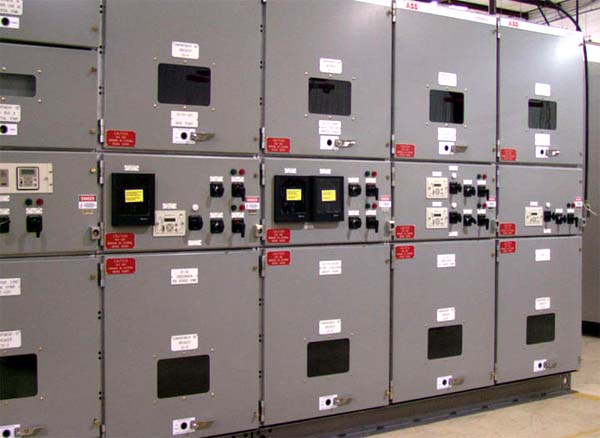
Комплектное распределительное устройство в металлической оболочке
Рис. ABBГОСТ 14693-90 - Устройства комплектные распределительные негерметизированные в металлической оболочке на напряжение до 10 кВ
Тематики
- комплектное распред. устройство (КРУ)
Синонимы
EN
- compartmented switchgear (with non-metallic partitions)
- cubicle switchgear
- MCSG
- MESG
- metal clad switch gear
- metal clad switchgear
- metal-enclosed switchgear
- metalclad switch gear
- metalclad switchgear
FR
Франко-русский словарь нормативно-технической терминологии > appareillage recouvert de métal
-
12 appareillage sous enveloppe métallique
- комплектное устройство в металлической оболочке
- комплектное распределительное устройство в металлической оболочке
комплектное распределительное устройство в металлической оболочке
-EN
metal-enclosed switchgear
switchgear assemblies with an external metallic enclosure intended to be earthed and complete except for external connections
NOTE The metal-enclosed switchgear is subdivided into three types:
– metal-clad switchgear;
– compartmented switchgear (with one or more non-metallic partitions);
– cubicle switchgear
[IEC 61992-1, ed. 2.0 (2006-02)]
metal-clad switchgear
metal-enclosed switchgear in which components are arranged in separate compartments with metal partitions intended to be earthed
NOTE 1 This term applies to metal-enclosed switchgear with metal partitions providing the degree of protection (or higher) included in IEC 61992-6 and having separate compartments at least for the following components:
– each main switching device;
– components connected to one side of a main switching device, for example, feeder circuit;
– components connected to the other side of the main switching device, for example, busbars; where more than one set of busbars is provided, each set is in a separate compartment.
NOTE 2 Metal-enclosed switchgear having metal partitions and meeting all the requirements of NOTE 1 may utilise an insulating shutter barrier as a part of a shutter arrangement, the combination of which provides the degree of protection included in Table 1 of IEC 61992-6 (or higher) and satisfies the requirements of the standard for partitions and shutters made of insulating material.
[IEC 61992-1, ed. 2.0 (2006-02)]
compartmented switchgear (with non-metallic partitions)
metal-enclosed switchgear in which components are arranged in separate compartments as for metal-clad switchgear, but with one or more non-metallic partitions providing the degree of protection (or higher) included in Table 1 of IEC 61992-6
NOTE Metal-enclosed switchgear in which the main circuit components are individually embedded in solid insulating material can be considered as an alternative, provided that the conditions specified in IEC 60466 are met.
[IEC 61992-1, ed. 2.0 (2006-02)]
cubicle switchgear
switchgear, other than metal-clad and compartmented switchgear
NOTE This term applies to switchgear having a metal enclosure and having
– a number of compartments fewer than required for metal-clad or compartmented switchgear, or
– partitions having a degree of protection lower than those indicated in Table 1 of IEC 61992-6, or
– no partitions.
[IEC 61992-1, ed. 2.0 (2006-02)]FR
appareillage sous enveloppe métallique
ensemble d’appareillage avec une enveloppe métallique externe destinée à être mise à la terre, entièrement terminé, à l’exception des connexions extérieures
NOTE L’appareillage sous enveloppe métallique se subdivise en trois types:
– appareillage recouvert de métal;
– appareillage à compartiments (avec une ou plusieurs cloisons non métalliques);
– appareillage d’armoire.
[IEC 61992-1, ed. 2.0 (2006-02)]
appareillage recouvert de métal
appareillage sous enveloppe métallique dans lequel les éléments constitutifs sont disposés dans des compartiments séparés par des cloisons métalliques destinées à être mises à la terre
NOTE 1 Ce terme s’applique à l’appareillage sous enveloppe métallique avec des cloisons métalliques offrant le degré de protection de la CEI 61992-6 (ou un degré supérieur) et ayant des compartiments séparés au moins pour les éléments constitutifs suivants:
– chaque appareil principal de connexion;
– les éléments constitutifs connectés à une face de l'appareil principal de connexion, par exemple le circuit d’alimentation;
– les éléments constitutifs connectés à l’autre face de l'appareil principal de connexion, par exemple les jeux de barres; lorsqu’il y a plus d’un jeu de barres, chaque jeu est dans un compartiment séparé.
NOTE 2 L’appareillage sous enveloppe métallique qui possède des cloisons métalliques et qui répond à toutes les dispositions de la note 1 peut utiliser une barrière en volet isolant comme une partie d’une disposition de volet, dont la combinaison fournit un degré de protection inclus au Tableau 1 de la CEI 61992-6 (ou un degré supérieur) et satisfait aux exigences de la norme pour les cloisons et les volets en matériau isolant.
[IEC 61992-1, ed. 2.0 (2006-02)]
appareillage à compartiments (avec cloisons non métalliques)
appareillage sous enveloppe métallique dans lequel les éléments constitutifs sont disposés dans des compartiments séparés comme pour l’appareillage recouvert de métal, mais avec une ou plusieurs cloisons non métalliques fournissant le degré de protection du Tableau 1 de la CEI 61992-6 (ou un degré supérieur)
NOTE L’appareillage sous enveloppe métallique dans lequel les éléments constitutifs du circuit principal sont noyés individuellement dans un matériau isolant solide peut être considéré comme une alternative, si les conditions spécifiées dans la CEI 60466 sont satisfaites.
[IEC 61992-1, ed. 2.0 (2006-02)]
pareillage d’armoire
appareillage, autre que l’appareillage recouvert de métal ou à compartiments
NOTE Ce terme s’applique à l’appareillage ayant une enveloppe métallique et ayant:
– soit un nombre de compartiments inférieur à celui exigé pour les appareillages recouverts de métal ou à compartiments;
– soit des cloisons d’un degré de protection inférieur à ceux du Tableau 1 de la CEI 61992-6;
– soit pas de cloisons.
[IEC 61992-1, ed. 2.0 (2006-02)]
Комплектное распределительное устройство в металлической оболочке
Рис. ABBГОСТ 14693-90 - Устройства комплектные распределительные негерметизированные в металлической оболочке на напряжение до 10 кВ
Тематики
- комплектное распред. устройство (КРУ)
Синонимы
EN
- compartmented switchgear (with non-metallic partitions)
- cubicle switchgear
- MCSG
- MESG
- metal clad switch gear
- metal clad switchgear
- metal-enclosed switchgear
- metalclad switch gear
- metalclad switchgear
FR
комплектное устройство в металлической оболочке
-EN
metal-enclosed switchgear and controlgear
switchgear and controlgear assemblies with an external metal enclosure intended to be earthed, and complete except for external connections
[IEC 62271-203, ed. 1.0 (2003-11)]FR
appareillage sous enveloppe métallique
appareillage avec une enveloppe métallique externe destinée à être mise à la terre, entièrement terminé, à l'exception des connexions extérieures
[IEC 62271-203, ed. 1.0 (2003-11)]

 Комплектные устройства в металлической оболочке
Тематики
- НКУ (шкафы, пульты,...)
EN
FR
Франко-русский словарь нормативно-технической терминологии > appareillage sous enveloppe métallique
13 appareillage à compartiments (avec cloisons non métalliques)
комплектное распределительное устройство в металлической оболочке
-EN
metal-enclosed switchgear
switchgear assemblies with an external metallic enclosure intended to be earthed and complete except for external connections
NOTE The metal-enclosed switchgear is subdivided into three types:
– metal-clad switchgear;
– compartmented switchgear (with one or more non-metallic partitions);
– cubicle switchgear
[IEC 61992-1, ed. 2.0 (2006-02)]
metal-clad switchgear
metal-enclosed switchgear in which components are arranged in separate compartments with metal partitions intended to be earthed
NOTE 1 This term applies to metal-enclosed switchgear with metal partitions providing the degree of protection (or higher) included in IEC 61992-6 and having separate compartments at least for the following components:
– each main switching device;
– components connected to one side of a main switching device, for example, feeder circuit;
– components connected to the other side of the main switching device, for example, busbars; where more than one set of busbars is provided, each set is in a separate compartment.
NOTE 2 Metal-enclosed switchgear having metal partitions and meeting all the requirements of NOTE 1 may utilise an insulating shutter barrier as a part of a shutter arrangement, the combination of which provides the degree of protection included in Table 1 of IEC 61992-6 (or higher) and satisfies the requirements of the standard for partitions and shutters made of insulating material.
[IEC 61992-1, ed. 2.0 (2006-02)]
compartmented switchgear (with non-metallic partitions)
metal-enclosed switchgear in which components are arranged in separate compartments as for metal-clad switchgear, but with one or more non-metallic partitions providing the degree of protection (or higher) included in Table 1 of IEC 61992-6
NOTE Metal-enclosed switchgear in which the main circuit components are individually embedded in solid insulating material can be considered as an alternative, provided that the conditions specified in IEC 60466 are met.
[IEC 61992-1, ed. 2.0 (2006-02)]
cubicle switchgear
switchgear, other than metal-clad and compartmented switchgear
NOTE This term applies to switchgear having a metal enclosure and having
– a number of compartments fewer than required for metal-clad or compartmented switchgear, or
– partitions having a degree of protection lower than those indicated in Table 1 of IEC 61992-6, or
– no partitions.
[IEC 61992-1, ed. 2.0 (2006-02)]FR
appareillage sous enveloppe métallique
ensemble d’appareillage avec une enveloppe métallique externe destinée à être mise à la terre, entièrement terminé, à l’exception des connexions extérieures
NOTE L’appareillage sous enveloppe métallique se subdivise en trois types:
– appareillage recouvert de métal;
– appareillage à compartiments (avec une ou plusieurs cloisons non métalliques);
– appareillage d’armoire.
[IEC 61992-1, ed. 2.0 (2006-02)]
appareillage recouvert de métal
appareillage sous enveloppe métallique dans lequel les éléments constitutifs sont disposés dans des compartiments séparés par des cloisons métalliques destinées à être mises à la terre
NOTE 1 Ce terme s’applique à l’appareillage sous enveloppe métallique avec des cloisons métalliques offrant le degré de protection de la CEI 61992-6 (ou un degré supérieur) et ayant des compartiments séparés au moins pour les éléments constitutifs suivants:
– chaque appareil principal de connexion;
– les éléments constitutifs connectés à une face de l'appareil principal de connexion, par exemple le circuit d’alimentation;
– les éléments constitutifs connectés à l’autre face de l'appareil principal de connexion, par exemple les jeux de barres; lorsqu’il y a plus d’un jeu de barres, chaque jeu est dans un compartiment séparé.
NOTE 2 L’appareillage sous enveloppe métallique qui possède des cloisons métalliques et qui répond à toutes les dispositions de la note 1 peut utiliser une barrière en volet isolant comme une partie d’une disposition de volet, dont la combinaison fournit un degré de protection inclus au Tableau 1 de la CEI 61992-6 (ou un degré supérieur) et satisfait aux exigences de la norme pour les cloisons et les volets en matériau isolant.
[IEC 61992-1, ed. 2.0 (2006-02)]
appareillage à compartiments (avec cloisons non métalliques)
appareillage sous enveloppe métallique dans lequel les éléments constitutifs sont disposés dans des compartiments séparés comme pour l’appareillage recouvert de métal, mais avec une ou plusieurs cloisons non métalliques fournissant le degré de protection du Tableau 1 de la CEI 61992-6 (ou un degré supérieur)
NOTE L’appareillage sous enveloppe métallique dans lequel les éléments constitutifs du circuit principal sont noyés individuellement dans un matériau isolant solide peut être considéré comme une alternative, si les conditions spécifiées dans la CEI 60466 sont satisfaites.
[IEC 61992-1, ed. 2.0 (2006-02)]
pareillage d’armoire
appareillage, autre que l’appareillage recouvert de métal ou à compartiments
NOTE Ce terme s’applique à l’appareillage ayant une enveloppe métallique et ayant:
– soit un nombre de compartiments inférieur à celui exigé pour les appareillages recouverts de métal ou à compartiments;
– soit des cloisons d’un degré de protection inférieur à ceux du Tableau 1 de la CEI 61992-6;
– soit pas de cloisons.
[IEC 61992-1, ed. 2.0 (2006-02)]
Комплектное распределительное устройство в металлической оболочке
Рис. ABBГОСТ 14693-90 - Устройства комплектные распределительные негерметизированные в металлической оболочке на напряжение до 10 кВ
Тематики
- комплектное распред. устройство (КРУ)
Синонимы
EN
- compartmented switchgear (with non-metallic partitions)
- cubicle switchgear
- MCSG
- MESG
- metal clad switch gear
- metal clad switchgear
- metal-enclosed switchgear
- metalclad switch gear
- metalclad switchgear
FR
Франко-русский словарь нормативно-технической терминологии > appareillage à compartiments (avec cloisons non métalliques)
14 pareillage d’armoire
комплектное распределительное устройство в металлической оболочке
-EN
metal-enclosed switchgear
switchgear assemblies with an external metallic enclosure intended to be earthed and complete except for external connections
NOTE The metal-enclosed switchgear is subdivided into three types:
– metal-clad switchgear;
– compartmented switchgear (with one or more non-metallic partitions);
– cubicle switchgear
[IEC 61992-1, ed. 2.0 (2006-02)]
metal-clad switchgear
metal-enclosed switchgear in which components are arranged in separate compartments with metal partitions intended to be earthed
NOTE 1 This term applies to metal-enclosed switchgear with metal partitions providing the degree of protection (or higher) included in IEC 61992-6 and having separate compartments at least for the following components:
– each main switching device;
– components connected to one side of a main switching device, for example, feeder circuit;
– components connected to the other side of the main switching device, for example, busbars; where more than one set of busbars is provided, each set is in a separate compartment.
NOTE 2 Metal-enclosed switchgear having metal partitions and meeting all the requirements of NOTE 1 may utilise an insulating shutter barrier as a part of a shutter arrangement, the combination of which provides the degree of protection included in Table 1 of IEC 61992-6 (or higher) and satisfies the requirements of the standard for partitions and shutters made of insulating material.
[IEC 61992-1, ed. 2.0 (2006-02)]
compartmented switchgear (with non-metallic partitions)
metal-enclosed switchgear in which components are arranged in separate compartments as for metal-clad switchgear, but with one or more non-metallic partitions providing the degree of protection (or higher) included in Table 1 of IEC 61992-6
NOTE Metal-enclosed switchgear in which the main circuit components are individually embedded in solid insulating material can be considered as an alternative, provided that the conditions specified in IEC 60466 are met.
[IEC 61992-1, ed. 2.0 (2006-02)]
cubicle switchgear
switchgear, other than metal-clad and compartmented switchgear
NOTE This term applies to switchgear having a metal enclosure and having
– a number of compartments fewer than required for metal-clad or compartmented switchgear, or
– partitions having a degree of protection lower than those indicated in Table 1 of IEC 61992-6, or
– no partitions.
[IEC 61992-1, ed. 2.0 (2006-02)]FR
appareillage sous enveloppe métallique
ensemble d’appareillage avec une enveloppe métallique externe destinée à être mise à la terre, entièrement terminé, à l’exception des connexions extérieures
NOTE L’appareillage sous enveloppe métallique se subdivise en trois types:
– appareillage recouvert de métal;
– appareillage à compartiments (avec une ou plusieurs cloisons non métalliques);
– appareillage d’armoire.
[IEC 61992-1, ed. 2.0 (2006-02)]
appareillage recouvert de métal
appareillage sous enveloppe métallique dans lequel les éléments constitutifs sont disposés dans des compartiments séparés par des cloisons métalliques destinées à être mises à la terre
NOTE 1 Ce terme s’applique à l’appareillage sous enveloppe métallique avec des cloisons métalliques offrant le degré de protection de la CEI 61992-6 (ou un degré supérieur) et ayant des compartiments séparés au moins pour les éléments constitutifs suivants:
– chaque appareil principal de connexion;
– les éléments constitutifs connectés à une face de l'appareil principal de connexion, par exemple le circuit d’alimentation;
– les éléments constitutifs connectés à l’autre face de l'appareil principal de connexion, par exemple les jeux de barres; lorsqu’il y a plus d’un jeu de barres, chaque jeu est dans un compartiment séparé.
NOTE 2 L’appareillage sous enveloppe métallique qui possède des cloisons métalliques et qui répond à toutes les dispositions de la note 1 peut utiliser une barrière en volet isolant comme une partie d’une disposition de volet, dont la combinaison fournit un degré de protection inclus au Tableau 1 de la CEI 61992-6 (ou un degré supérieur) et satisfait aux exigences de la norme pour les cloisons et les volets en matériau isolant.
[IEC 61992-1, ed. 2.0 (2006-02)]
appareillage à compartiments (avec cloisons non métalliques)
appareillage sous enveloppe métallique dans lequel les éléments constitutifs sont disposés dans des compartiments séparés comme pour l’appareillage recouvert de métal, mais avec une ou plusieurs cloisons non métalliques fournissant le degré de protection du Tableau 1 de la CEI 61992-6 (ou un degré supérieur)
NOTE L’appareillage sous enveloppe métallique dans lequel les éléments constitutifs du circuit principal sont noyés individuellement dans un matériau isolant solide peut être considéré comme une alternative, si les conditions spécifiées dans la CEI 60466 sont satisfaites.
[IEC 61992-1, ed. 2.0 (2006-02)]
pareillage d’armoire
appareillage, autre que l’appareillage recouvert de métal ou à compartiments
NOTE Ce terme s’applique à l’appareillage ayant une enveloppe métallique et ayant:
– soit un nombre de compartiments inférieur à celui exigé pour les appareillages recouverts de métal ou à compartiments;
– soit des cloisons d’un degré de protection inférieur à ceux du Tableau 1 de la CEI 61992-6;
– soit pas de cloisons.
[IEC 61992-1, ed. 2.0 (2006-02)]
Комплектное распределительное устройство в металлической оболочке
Рис. ABBГОСТ 14693-90 - Устройства комплектные распределительные негерметизированные в металлической оболочке на напряжение до 10 кВ
Тематики
- комплектное распред. устройство (КРУ)
Синонимы
EN
- compartmented switchgear (with non-metallic partitions)
- cubicle switchgear
- MCSG
- MESG
- metal clad switch gear
- metal clad switchgear
- metal-enclosed switchgear
- metalclad switch gear
- metalclad switchgear
FR
Франко-русский словарь нормативно-технической терминологии > pareillage d’armoire
15 optimisation
оптимизация
Процесс отыскания варианта, соответствующего критерию оптимальности
[Терминологический словарь по строительству на 12 языках (ВНИИИС Госстроя СССР)]
оптимизация
1. Процесс нахождения экстремума функции, т.е. выбор наилучшего варианта из множества возможных, процесс выработки оптимальных решений; 2. Процесс приведения системы в наилучшее (оптимальное) состояние. Иначе говоря, первое определение трактует термин «О.» как факт выработки и принятия оптимального решения (в широком смысле этих слов); мы выясняем, какое состояние изучаемой системы будет наилучшим с точки зрения предъявляемых к ней требований (критерия оптимальности) и рассматриваем такое состояние как цель. В этом смысле применяется также термин «субоптимизация» в случаях, когда отыскивается оптимум по какому-либо одному критерию из нескольких в векторной задаче оптимизации (см. Оптимальность по Парето, Векторная оптимизация). Второе определение имеет в виду процесс выполнения этого решения: т.е. перевод системы от существующего к искомому оптимальному состоянию. В зависимости от вида используемых критериев оптимальности (целевых функций или функционалов) и ограничений модели (множества допустимых решений) различают скалярную О., векторную О., мно¬гокритериальную О., стохастическую О (см. Стохастическое программирование), гладкую и негладкую (см. Гладкая функция), дискретную и непрерывную (см. Дискретность, Непрерывность), выпуклую и вогнутую (см. Выпуклость, вогнутость) и др. Численные методы О., т.е. методы построения алгоритмов нахождения оп¬тимальных значений целевых функций и соответствующих точек области допустимых значений — развитой отдел современной вычислительной математики. См. Оптимальная задача.
[ http://slovar-lopatnikov.ru/]Параллельные тексты EN-RU из ABB Review. Перевод компании Интент
The quest for the optimumВопрос оптимизацииThroughout the history of industry, there has been one factor that has spurred on progress more than any other. That factor is productivity. From the invention of the first pump to advanced computer-based optimization methods, the key to the success of new ideas was that they permitted more to be achieved with less. This meant that consumers could, over time and measured in real terms, afford to buy more with less money. Luxuries restricted to a tiny minority not much more than a generation ago are now available to almost everybody in developed countries, with many developing countries rapidly catching up.На протяжении всей истории промышленности существует один фактор, подстегивающий ее развитие сильнее всего. Он называется «производительность». Начиная с изобретения первого насоса и заканчивая передовыми методами компьютерной оптимизации, успех новых идей зависел от того, позволяют ли они добиться большего результата меньшими усилиями. На языке потребителей это значит, что они всегда хотят купить больше, а заплатить меньше. Меньше чем поколение назад, многие предметы считались роскошью и были доступны лишь немногим. Сейчас в развитых странах, число которых быстро увеличивается, подобное может позволить себе почти каждый.With industry and consumers expecting the trend towards higher productivity to continue, engineering companies are faced with the challenge of identifying and realizing further optimization potential. The solution often lies in taking a step back and looking at the bigger picture. Rather than optimizing every step individually, many modern optimization techniques look at a process as a whole, and sometimes even beyond it. They can, for example, take into account factors such as the volatility of fuel quality and price, the performance of maintenance and service practices or even improved data tracking and handling. All this would not be possible without the advanced processing capability of modern computer and control systems, able to handle numerous variables over large domains, and so solve optimization problems that would otherwise remain intractable.На фоне общей заинтересованности в дальнейшем росте производительности, машиностроительные и проектировочные компании сталкиваются с необходимостью определения и реализации возможностей по оптимизации своей деятельности. Для того чтобы найти решение, часто нужно сделать шаг назад, поскольку большое видится на расстоянии. И поэтому вместо того, чтобы оптимизировать каждый этап производства по отдельности, многие современные решения охватывают процесс целиком, а иногда и выходят за его пределы. Например, они могут учитывать такие факторы, как изменение качества и цены топлива, результативность ремонта и обслуживания, и даже возможности по сбору и обработке данных. Все это невозможно без использования мощных современных компьютеров и систем управления, способных оперировать множеством переменных, связанных с крупномасштабными объектами, и решать проблемы оптимизации, которые другим способом решить нереально.Whether through a stunning example of how to improve the rolling of metal, or in a more general overview of progress in optimization algorithms, this edition of ABB Review brings you closer to the challenges and successes of real world computer-based optimization tasks. But it is not in optimization and solving alone that information technology is making a difference: Who would have thought 10 years ago, that a technician would today be able to diagnose equipment and advise on maintenance without even visiting the factory? ABB’s Remote Service makes this possible. In another article, ABB Review shows how the company is reducing paperwork while at the same time leveraging quality control through the computer-based tracking of production. And if you believed that so-called “Internet communities” were just about fun, you will be surprised to read how a spin-off of this idea is already leveraging production efficiency in real terms. Devices are able to form “social networks” and so facilitate maintenance.Рассказывая об ошеломляющем примере того, как был усовершенствован процесс прокатки металла, или давая общий обзор развития алгоритмов оптимизации, этот выпуск АББ Ревю знакомит вас с практическими задачами и достигнутыми успехами оптимизации на основе компьютерных технологий. Но информационные технологии способны не только оптимизировать процесс производства. Кто бы мог представить 10 лет назад, что сервисный специалист может диагностировать производственное оборудование и давать рекомендации по его обслуживанию, не выходя из офиса? Это стало возможно с пакетом Remote Service от АББ. В другой статье этого номера АББ Ревю рассказывается о том, как компания смогла уменьшить бумажный документооборот и одновременно повысить качество управления с помощью компьютерного контроля производства. Если вы считаете, что так называемые «интернет-сообщества» служат только для развлечения,то очень удивитесь, узнав, что на основе этой идеи можно реально повысить производительность. Формирование «социальной сети» из автоматов значительно облегчает их обслуживание.This edition of ABB Review also features several stories of service and consulting successes, demonstrating how ABB’s expertise has helped customers achieve higher levels of productivity. In a more fundamental look at the question of what reliability is really about, a thought-provoking analysis sets out to find the definition of that term that makes the greatest difference to overall production.В этом номере АББ Ревю есть несколько статей, рассказывающих об успешных решениях по организации дистанционного сервиса и консультирования. Из них видно, как опыт АББ помогает нашим заказчикам повысить производительность своих предприятий. Углубленные размышления о самой природе термина «надежность» приводят к парадоксальным выводам, способным в корне изменить представления об оптимизации производства.Robots have often been called “the extended arm of man.” They are continuously advancing productivity by meeting ever-tightening demands on precision and efficiency. This edition of ABB Review dedicates two articles to robots.Робот – это могучее «продолжение» человеческой руки. Применение роботов способствует постоянному повышению производительности, поскольку они отвечают самым строгим требованиям точности и эффективности. Две статьи в этом номере АББ Ревю посвящены роботам.Further technological breakthroughs discussed in this issue look at how ABB is keeping water clean or enabling gas to be shipped more efficiently.Говоря о других технологических достижениях, обсуждаемых на страницах журнала, следует упомянуть о том, как компания АББ обеспечивает чистоту воды, а также более эффективную перевозку сжиженного газа морским транспортом.The publication of this edition of ABB Review is timed to coincide with ABB Automation and Power World 2009, one of the company’s greatest customer events. Readers visiting this event will doubtlessly recognize many technologies and products that have been covered in this and recent editions of the journal. Among the new products ABB is launching at the event is a caliper permitting the flatness of paper to be measured optically. We are proud to carry a report on this product on the very day of its launch.Публикация этого номера АББ Ревю совпала по времени с крупнейшей конференцией для наших заказчиков «ABB Automation and Power World 2009». Читатели, посетившие ее, смогли воочию увидеть многие технологии и изделия, описанные в этом и предыдущих выпусках журнала. Среди новинок, представленных АББ на этой конференции, был датчик, позволяющий измерять толщину бумаги оптическим способом. Мы рады сообщить, что сегодня он готов к выпуску.Тематики
EN
DE
FR
Франко-русский словарь нормативно-технической терминологии > optimisation
16 unité (de mesure) de base
основная единица системы единиц физических величин
основная единица
Единица основной физической величины в данной системе единиц.
Пример. Основные единицы Международной системы единиц (СИ): метр (м), килограмм (кг), секунда.
[РМГ 29-99]EN
base unit
unit of measurement that is adopted by convention for a base quantity
NOTE 1 – In each coherent system of units, there is only one base unit for each base quantity. In the SI for example, the metre is the base unit of length. The centimetre and the kilometre are also units of length, but they are not base units in the SI. However, in the CGS systems, the centimetre is the base unit of length.
NOTE 2 – A base unit may also serve for a derived quantity of the same dimension. For example, rainfall, when defined as volume per area (areic volume), has the metre as a coherent derived unit in the SI. The ampere, base unit of electric current, is also the coherent derived unit of scalar magnetic potential.
NOTE 3 – For the quantity “number of entities”, the number one, symbol 1, can be regarded as a base unit in any system of units.
Source: ISO/IEC GUIDE 99:2007 1.10
[IEV number 112-01-18]FR
unité de base, f
unité de mesure adoptée par convention pour une grandeur de base
NOTE 1 – Dans chaque système cohérent d'unités, il y a une seule unité de base pour chaque grandeur de base. Dans le SI par exemple, le mètre est l'unité de base de longueur. Le centimètre et le kilomètre sont aussi des unités de longueur, mais ils ne sont pas des unités de base dans le SI. Cependant, dans les systèmes CGS, le centimètre est l'unité de base de longueur.
NOTE 2 – Une unité de base peut aussi servir pour une grandeur dérivée de même dimension. Par exemple, la hauteur de pluie, définie comme un volume surfacique (volume par aire) a le mètre comme unité dérivée cohérente dans le SI. L’ampère, unité de base de courant électrique, est aussi l’unité dérivée cohérente de potentiel magnétique scalaire.
NOTE 3 – Pour la grandeur « nombre d'entités », on peut considérer le nombre un, de symbole 1, comme une unité de base dans tout système d'unités.
Source: ISO/IEC GUIDE 99:2007 1.10
[IEV number 112-01-18]Тематики
- метрология, основные понятия
Синонимы
EN
DE
FR
Франко-русский словарь нормативно-технической терминологии > unité (de mesure) de base
17 système
система
Группа взаимодействующих объектов, выполняющих общую функциональную задачу. В ее основе лежит некоторый механизм связи.
[ ГОСТ Р МЭК 61850-5-2011]
система
Набор элементов, которые взаимодействуют в соответствии с проектом, в котором элементом системы может быть другая система, называемая подсистемой; система может быть управляющей системой или управляемой системой и включать аппаратные средства, программное обеспечение и взаимодействие с человеком.
Примечания
1 Человек может быть частью системы. Например, человек может получать информацию от программируемого электронного устройства и выполнять действие, связанное с безопасностью, основываясь на этой информации, либо выполнять действие с помощью программируемого электронного устройства.
2 Это определение отличается от приведенного в МЭС 351-01-01.
[ ГОСТ Р МЭК 61508-4-2007]
система
Множество (совокупность) материальных объектов (элементов) любой, в том числе различной физической природы, а также информационных объектов, взаимосвязанных и взаимодействующих между собой для достижения общей цели.
[ ГОСТ Р 43.0.2-2006]
система
Совокупность элементов, объединенная связями между ними и обладающая определенной целостностью.
[ ГОСТ 34.003-90]
система
Совокупность взаимосвязанных и взаимодействующих элементов.
[ ГОСТ Р ИСО 9000-2008]
система
-
[IEV number 151-11-27]
система
Набор связанных элементов, работающих совместно для достижения общей Цели. Например: • Компьютерная система, состоящая из аппаратного обеспечения, программного обеспечения и приложений. • Система управления, состоящая из множества процессов, которые планируются и управляются совместно. Например, система менеджмента качества. • Система управления базами данных или операционная система, состоящая из множества программных модулей, разработанных для выполнения набора связанных функций.
[Словарь терминов ITIL версия 1.0, 29 июля 2011 г.]
система
Множество элементов, находящихся в отношениях и связях друг с другом, которое образует определенную целостность, единство. Следует отметить, что это определение (взятое нами из Большой Советской Энциклопедии) не является ни единственным, ни общепризнанным. Есть десятки определений понятия “С.”, которые с некоторой условностью можно поделить на три группы. Определения, принадлежащие к первой группе, рассматривают С. как комплекс процессов и явлений, а также связей между ними, существующий объективно, независимо от наблюдателя. Его задача состоит в том, чтобы выделить эту С. из окружающей среды, т.е. как минимум определить ее входы и выходы (тогда она рассматривается как “черный ящик”), а как максимум — подвергнуть анализу ее структуру (произвести структуризацию), выяснить механизм функционирования и, исходя из этого, воздействовать на нее в нужном направлении. Здесь С. — объект исследования и управления. Определения второй группы рассматривают С. как инструмент, способ исследования процессов и явлений. Наблюдатель, имея перед собой некоторую цель, конструирует (синтезирует) С. как некоторое абстрактное отображение реальных объектов. При этом С. (“абстрактная система”) понимается как совокупность взаимосвязанных переменных, представляющих те или иные свойства, характеристики объектов, которые рассматриваются в данной С. В этой трактовке понятие С. практически смыкается с понятием модели, и в некоторых работах эти два термина вообще употребляются как взаимозаменяемые. Говоря о синтезе С., в таких случаях имеют в виду формирование макромодели, анализ же С. совпадает в этой трактовке с микромоделированием отдельных элементов и процессов. Третья группа определений представляет собой некий компромисс между двумя первыми. С. здесь — искусственно создаваемый комплекс элементов (например, коллективов людей, технических средств, научных теорий и т.д.), предназначенный для решения сложной организационной, экономической, технической задачи. Следовательно, здесь наблюдатель не только выделяет из среды С. (и ее отдельные части), но и создает, синтезирует ее. С. является реальным объектом и одновременно — абстрактным отображением связей действительности. Именно в этом смысле понимает С. наука системотехника. Между этими группами определений нет непроходимых границ. Во всех случаях термин “С.” включает понятие о целом, состоящем из взаимосвязанных, взаимодействующих, взаимозависимых частей, причем свойства этих частей зависят от С. в целом, свойства С. — от свойств ее частей. Во всех случаях имеется в виду наличие среды, в которой С. существует и функционирует. Для исследуемой С. среда может рассматриваться как надсистема, соответственно, ее части — как подсистемы, а также элементы С., если их внутренняя структура не является предметом рассмотрения. С. делятся на материальные и нематериальные. К первым относятся, например, железная дорога, народное хозяйство, ко вторым — С. уравнений в математике, математика как наука, далее — С. наук. Автоматизированная система управления включает как материальные элементы (ЭВМ, документация, люди), так и нематериальные — математические модели, знания людей. Разделение это тоже неоднозначно: железную дорогу можно рассматривать не только как материальную С., но и как нематериальную С. взаимосвязей, соотношений, потоков информации и т.д. Закономерности функционирования систем изучаются общей теорией систем, оперирующей понятием абстрактной С. Наибольшее значение среди абстрактных С. имеют кибернетические С. Есть два понятия, близкие понятию С.: комплекс, совокупность (множество объектов). Они, однако, не тождественны ему, как нередко утверждают. Их можно рассматривать как усеченные, неполные понятия по отношению к С.: комплекс включает части, не обязательно обладающие системными свойствами (в том смысле, как это указано выше), но эти части сами могут быть системами, и элементы последних такими свойствами по отношению к ним способны обладать. Совокупность же есть множество элементов, не обязательно находящихся в системных отношениях и связях друг с другом. В данном словаре мы стремимся по возможности последовательно различать понятия С. и модели, рассматривая С. как некий объект (реальной действительности или воображаемый — безразлично), который подвергается наблюдению и изучению, а модель — как средство этого наблюдения и изучения. Разумеется, и модель, если она сама оказывается объектом наблюдения и изучения, в свою очередь рассматривается как С. (в частности, как моделируемая С.) — и так до бесконечности. Все это означает, что такие, например, понятия, как переменная или параметр, мы (в отличие от многих авторов) относим не к С., а к ее описанию, т.е. к модели (см. Параметры модели, Переменная модели), численные же их значения, характеризующие С., — к С. (например, координаты С.). • Системы математически описываются различными способами. Каждая переменная модели, выражающая определенную характеристику С., может быть задана множеством конкретных значений, которые эта переменная может принимать. Состояние С. описывается вектором (или кортежем, если учитываются также величины, не имеющие численных значений), каждая компонента которого соответствует конкретному значению определенной переменной. С. в целом может быть описана соответственно множеством ее состояний. Например, если x = (1, 2, … m) — вектор существенных переменных модели, каждая из которых может принять y значений (y = 1, 2, …, n), то матрица S = [ Sxy ] размерностью m ? n представляет собой описание данной С. Широко применяется описание динамической С. с помощью понятий, связанных с ее функционированием в среде. При этом С. определяется как три множества: входов X, выходов Y и отношений между ними R. Полученный “портрет системы” может записываться так: XRY или Y = ®X. Аналитическое описание С. представляет собой систему уравнений, характеризующих преобразования, выполняемые ее элементами и С. в целом в процессе ее функционирования: в непрерывном случае применяется аппарат дифференциальных уравнений, в дискретном — аппарат разностных уравнений. Графическое описание С. чаще всего состоит в построении графа, вершины которого соответствуют элементам С., а дуги — их связям. Существует ряд классификаций систем. Наиболее известны три: 1) Ст. Бир делит все С. (в природе и обществе), с одной стороны, на простые, сложные и очень сложные, с другой — на детерминированные и вероятностные; 2) Н.Винер исходит из особенностей поведения С. (бихевиористский подход) и строит дихотомическую схему: С., характеризующиеся пассивным и активным поведением; среди последних — нецеленаправленным (случайным) и целенаправленным; в свою очередь последние подразделяются на С. без обратной связи и с обратной связью и т.д.; 3) К.Боулдинг выделяет восемь уровней иерархии С., начиная с простых статических (например, карта земли) и простых кибернетических (механизм часов), продолжая разного уровня сложности кибернетическими С., вплоть до самых сложных — социальных организаций. Предложены также классификации по другим основаниям, в том числе более частные, например, ряд классификаций С. управления. См. также: Абстрактная система, Адаптирующиеся, адаптивные системы, Большая система, Вероятностная система, Выделение системы, Входы и выходы системы, Детерминированная система, Динамическая система, Дискретная система, Диффузная система, Замкнутая (закрытая) система, Иерархическая структура, Имитационная система, Информационная система, Информационно-развивающаяся система, Кибернетическая система, Координаты системы, Надсистема, Нелинейная система, Непрерывная система, Открытая система, Относительно обособленная система, Память системы, Подсистема, Портрет системы, Разомкнутая система, Рефлексная система, Решающая система, Самонастраивающаяся система, Самообучающаяся система, Самоорганизующаяся система, Сложная система, Состояние системы, Статическая система, Стохастическая система, Структура системы, Структуризация системы, Управляющая система, Устойчивость системы, Целенаправленная система, Экономическая система, Функционирование экономической системы..
[ http://slovar-lopatnikov.ru/]EN
system
set of interrelated elements considered in a defined context as a whole and separated from their environment
NOTE 1 – A system is generally defined with the view of achieving a given objective, e.g. by performing a definite function.
NOTE 2 – Elements of a system may be natural or man-made material objects, as well as modes of thinking and the results thereof (e.g. forms of organisation, mathematical methods, programming languages).
NOTE 3 – The system is considered to be separated from the environment and the other external systems by an imaginary surface, which cuts the links between them and the system.
NOTE 4 – The term "system" should be qualified when it is not clear from the context to what it refers, e.g. control system, colorimetric system, system of units, transmission system.
Source: 351-01-01 MOD
[IEV number 151-11-27]
system
A number of related things that work together to achieve an overall objective. For example: • A computer system including hardware, software and applications • A management system, including the framework of policy, processes, functions, standards, guidelines and tools that are planned and managed together – for example, a quality management system • A database management system or operating system that includes many software modules which are designed to perform a set of related functions.
[Словарь терминов ITIL версия 1.0, 29 июля 2011 г.]FR
système, m
ensemble d'éléments reliés entre eux, considéré comme un tout dans un contexte défini et séparé de son environnement
NOTE 1 – Un système est en général défini en vue d'atteindre un objectif déterminé, par exemple en réalisant une certaine fonction.
NOTE 2 – Les éléments d'un système peuvent être aussi bien des objets matériels, naturels ou artificiels, que des modes de pensée et les résultats de ceux-ci (par exemple des formes d'organisation, des méthodes mathématiques, des langages de programmation).
NOTE 3 – Le système est considéré comme séparé de l'environnement et des autres systèmes extérieurs par une surface imaginaire qui coupe les liaisons entre eux et le système.
NOTE 4 – Il convient de qualifier le terme "système" lorsque le concept ne résulte pas clairement du contexte, par exemple système de commande, système colorimétrique, système d'unités, système de transmission.
Source: 351-01-01 MOD
[IEV number 151-11-27]Тематики
- автоматизированные системы
- информационные технологии в целом
- релейная защита
- системы менеджмента качества
- экономика
EN
DE
FR
Франко-русский словарь нормативно-технической терминологии > système
18 barre omnibus
система шин
Комплект элементов, связывающих между собой все присоединения электрического распределительного устройства.
[ ГОСТ 24291-90]EN
busbars (commonly called busbar)
in a substation, the busbar assembly necessary to make a common connection for several circuits
Example: three busbars for a three-phase system.
[IEV number 605-02-02]FR
jeu de barres (omnibus)
dans un poste, ensemble des barres omnibus nécessaires pour connecter des circuits
Exemple: trois barres pour un réseau triphasé.
[IEV number 605-02-02]Различают следующие системы:
-
одиночная система шин:
- одиночная несекционированная система шин;
- одиночная секционированная система шин;
-
двойная система шин
-
полуторная система шин
-
обходная система шин
- несекционированная система шин
-
секционированная система шин
- рабочая система шин
- резервная система шин
Тематики
- электротехника, основные понятия
Синонимы
EN
DE
FR
шина
Проводник с низким сопротивлением, к которому можно подсоединить несколько отдельных электрических цепей.
Примечание — Термин «шина» не включает в себя геометрическую форму, габариты или размеры проводника.
[ ГОСТ Р 51321. 1-2000 ( МЭК 60439-1-92)]
[ ГОСТ Р МЭК 61439.1-2013]
шина
Конструктивный элемент низковольтного комплектного устройства (НКУ).
Такой конструктивный элемент предназначен для того, чтобы к нему можно было легко присоединить отдельные электрические цепи (другие шины, отдельные проводники). Такие шины могут иметь различную конструкцию, геометрическую форму и размеры.
[Интент]
шинопроводшина
Медная, алюминиевая, реже стальная полоса, служащая для присоединения кабелей электрогенераторов, трансформаторов и т.д. к проводам питающей сети
[Терминологический словарь по строительству на 12 языках (ВНИИИС Госстроя СССР)]
общаяшина
-
[IEV number 151-12-30]
шина
-
[Я.Н.Лугинский, М.С.Фези-Жилинская, Ю.С.Кабиров. Англо-русский словарь по электротехнике и электроэнергетике, Москва]EN
busbar
low-impedance conductor to which several electric circuits can be connected at separate points
NOTE – In many cases, the busbar consists of a bar.
[IEV number 151-12-30]
busbar
An electrical conductor that makes a common connection between several circuits. Sometimes, electrical wire cannot accommodate high-current applications, and electricity must be conducted using a more substantial busbar — a thick bar of solid metal (usually copper or aluminum). Busbars are uninsulated, but are physically supported by insulators. They are used in electrical substations to connect incoming and outgoing transmission lines and transformers; in a power plant to connect the generator and the main transformers; in industry, to feed large amounts of electricity to equipment used in the aluminum smelting process, for example, or to distribute electricity in large buildings
[ABB. Glossary of technical terms. 2010]FR
barre omnibus, f
conducteur de faible impédance auquel peuvent être reliés plusieurs circuits électriques en des points séparés
NOTE – Dans de nombreux cas, une barre omnibus est constituée d’une barre.
[IEV number 151-12-30]
2. Проводник прямоугольного сечения из меди, предназначенный для электротехнических целей
(см. ГОСТ 434-78).
Поставляется в бухтах, а также в полосах длиной не менее 2,5 м; По существу, это просто проволока прямоугольного сечения. В указанном ГОСТе и в технической документации, в которой она применяется, обязательно указываются размеры этой проволоки. Например, "Шина ШММ 8,00х40,00 ГОСТ 434-78"
шина
Пруток прямоугольного сечения, применяемый в электротехнике в качестве проводника тока, изготовляемый прессованием или волочением.
[ ГОСТ 25501-82]Тематики
- НКУ (шкафы, пульты,...)
- заготовки и полуфабрикаты в металлургии
- кабели, провода...
Действия
- расположение шин «на ребро» [ПУЭ]
- расположение шин «плашмя» [ПУЭ]
Сопутствующие термины
- гибкая шина
- жесткая шина [ПУЭ]
- изолированные шины [ПУЭ]
- круглые шины [ПУЭ]
- неизолированные шины [ПУЭ]
- обходные шины [ПУЭ]
- профильные шины [ПУЭ]
- секционные шины [ПУЭ]
- фазная шина [ ГОСТ Р 51321.1-2000]
- четырехполосные шины с расположением полос по сторонам квадрата ("полый пакет") [ПУЭ]
- шина PEN-проводника
- шина для присоединения защитных проводников
- шина нулевого защитного проводника
- шина фазы А (B, C) [ПУЭ]
- шины однофазного тока [ПУЭ]
- шины прямоугольного (круглого, трубчатого, коробчатого) сечения [ПУЭ]
- шины трехфазного тока [ПУЭ]
EN
DE
FR
Франко-русский словарь нормативно-технической терминологии > barre omnibus
19 plaque signalétique
табличка электротехнического изделия
Часть электротехнического изделия, на которой расположены надписи и (или) знаки, содержащие информацию, относящуюся к изделию.
Примечание. Табличку, содержащую номинальные данные, рекомендуется называть «паспортная табличка».
[ ГОСТ 18311-80]
заводская табличка с паспортными данными
заводская табличка
—
[Я.Н.Лугинский, М.С.Фези-Жилинская, Ю.С.Кабиров. Англо-русский словарь по электротехнике и электроэнергетике, Москва, 1999 г.]
паспортная табличка
Название набора данных, обычно указываемых на элементе оборудования, которое однозначно отражает идентичность и атрибуты этого устройства.
[ ГОСТ Р 54325-2011 (IEC/TS 61850-2:2003)]
табличка номинальных данных (оборудования)
табличка с основными характеристиками (оборудования)
—
[А.С.Гольдберг. Англо-русский энергетический словарь. 2006 г.]EN
name plate
rating plate
plate, permanently affixed on an electric device, which indelibly states the rating and other information as required by the relevant standard
[IEV number 151-16-12]
name plate
name for the set of data typically found on an item of a plant for example a power transformer, or an IED for example a protection relay, that uniquely describes that device’s identity and attributes
[IEC 61850-2, ed. 1.0 (2003-08)]FR
plaque signalétique, f
plaque, fixée de façon permanente sur un dispositif électrique, où sont inscrites de façon indélébile les caractéristiques assignées et d'autres informations, selon les exigences de la norme applicable
[IEV number 151-16-12]
Рис. Schneider ElectricНа заводской табличке должна быть приведена полная информация...
[ ГОСТ 30830-2002]
6.1.2 Требования к паспортной табличке
Табличка должна быть долговечной, это касается как материала, так и надписи. Надпись должна быть стойкой к истиранию. При нормальных условиях табличка не должна выцветать до такой степени, чтобы информация стала неразборчивой.
Самоклеящиеся таблички не должны открепляться из-за высокой влажности и температуры.
[ ГОСТ Р 51382-99]
Значение вторичной нагрузки, указанное на паспортной табличке трансформатора тока...
[ ГОСТ 18685-73]Паспортная табличка
На каждое НКУ должна быть прикреплена одна или несколько табличек со стойкой к внешним воздействиям маркировкой, которые после установки НКУ должны быть расположены на видном месте.
[ ГОСТ Р 51321. 1-2007 ( МЭК 60439-1: 2004)]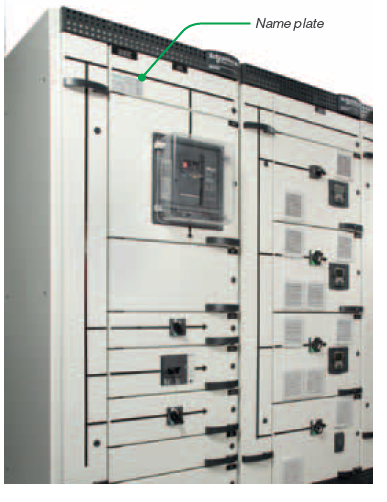
Рис. Schneider Electric
Паспортная табличка НКУНедопустимые, нерекомендуемые
Тематики
Синонимы
- заводская табличка
- заводская табличка аппарата
- заводская табличка с паспортными данными
- паспортная табличка
EN
- data plate
- designation label
- device name plate
- escutcheon plate
- label plate
- name plate
- nameplate
- plate
- rating nameplate
- rating plate
- rating/performance label
- type identification label
DE
FR
Франко-русский словарь нормативно-технической терминологии > plaque signalétique
20 graphismes
graphismes mplÉléments graphiques insérés dans un film ou une émission télévisée tels que titres, génériques, cartons illustrés, diapositives, illustrations.См. также в других словарях:
Example — Ex*am ple, n. [A later form for ensample, fr. L. exemplum, orig., what is taken out of a larger quantity, as a sample, from eximere to take out. See {Exempt}, and cf. {Ensample}, {Sample}.] 1. One or a portion taken to show the character or… … The Collaborative International Dictionary of English
.example — est un domaine de premier niveau réservé. Un domaine de premier niveau réservé est un domaine de premier niveau qui n’est pas destiné à être utilisé dans le système de nom de domaine (Domain Name System) d’Internet, mais qui est réservé à un… … Wikipédia en Français
example — [eg zam′pəl, igzam′pəl; eg′zämpəl, igzämpəl] n. [ME < OFr example, essample < L exemplum, sample, example < eximere, to take out < ex , out + emere, to buy < IE base * em , to take > Lith imù] 1. something selected to show the… … English World dictionary
.example — Введение 1999 Тип домена зарезервированный общий домен верхнего уровня Статус действующий Регистратор IANA Назначение для доменов, которые следует использовать в качестве при … Википедия
example — ► NOUN 1) a thing characteristic of its kind or illustrating a general rule. 2) a person or thing regarded in terms of their fitness to be imitated. ● for example Cf. ↑for example ● make an example of Cf. ↑make an example of … English terms dictionary
Example — may refer to:*Example (rapper), a British rapper *example.com and .example, domain names reserved for use in documentation as examples ee also*Exemplum, medieval collections of short stories to be told in sermons *Exemplar, a prototype or model… … Wikipedia
example — UK US /ɪgˈzɑːmpl/ noun [C] ► something used to represent other things because it has all the main qualities or characteristics that they also have: as an example of how/what/why »Economists point to the auto industry as an example of how low… … Financial and business terms
Example — Ex*am ple, v. t. [imp. & p. p. {Exampled}; p. pr. & vb. n. {Exampling}.] To set an example for; to give a precedent for; to exemplify; to give an instance of; to instance. [Obs.] I may example my digression by some mighty precedent. Shak. [1913… … The Collaborative International Dictionary of English
example — late 14c., partial re Latinization of earlier essample, asaumple (mid 13c.), from O.Fr. essemple sample, model, example, precedent, cautionary tale, from L. exemplum a sample, lit. that which is taken out, from eximere take out, remove (see… … Etymology dictionary
example — I noun archetype, case, case in point, demonstration, documentum, exemplar, exemplification, exemplum, exponent, guide, ideal, illustration, instance, metaphor, model, norm, paradigm, pattern, point of comparison, representation, representative,… … Law dictionary
example — 1 sample, specimen, instance, case, illustration Contrasted words: anomaly, *paradox 2 *model, exemplar, pattern, ideal, standard, beau ideal, mirror Analogous words: *paragon, apotheosis Contrasted words: precept, rule, *law … New Dictionary of Synonyms
 18+© Академик, 2000-2025
- Обратная связь: Техподдержка, Реклама на сайте
Экспорт словарей на сайты, сделанные на PHP, Joomla, Drupal, WordPress, MODx.
Перевод: с французского на русский
с русского на французский- С русского на:
- Французский
- С французского на:
- Все языки
- Английский
- Болгарский
- Русский